AB 413: Vehicles: stopping, standing, and parking.
- Session Year: 2023-2024
- House: Assembly
- Latest Version Date: 2023-10-10
Current Status:
Passed
(2023-10-10: Chaptered by Secretary of State - Chapter 652, Statutes of 2023.)
Introduced
In Committee
First Chamber
In Committee
Second Chamber
Enacted
Existing law prohibits the stopping, standing, or parking of a vehicle in certain places and under certain conditions, including within an intersection, on a sidewalk or crosswalk, or in front of a fire station. Existing law additionally authorizes local jurisdictions to, by ordinance, restrict parking in certain areas, at certain times, and for certain reasons, and to establish metered parking.
This bill would prohibit the stopping, standing, or parking of a vehicle within 20 feet of the vehicle approach side of any unmarked or marked crosswalk or 15 feet of any crosswalk where a curb extension is present, as specified. The bill would, prior to January 1, 2025, authorize jurisdictions to only issue a warning for a violation, and would prohibit them from issuing a citation for a violation, unless the violation occurs in an area marked using paint or a sign.
By restricting parking in certain areas, this bill would impose a state-mandated local program.
The California Constitution requires the state to reimburse local agencies and school districts for certain costs mandated by the state. Statutory provisions establish procedures for making that reimbursement.
This bill would provide that, if the Commission on State Mandates determines that the bill contains costs mandated by the state, reimbursement for those costs shall be made pursuant to the statutory provisions noted above.
Existing law prohibits the stopping, standing, or parking of a vehicle in certain places and under certain conditions, including within an intersection, on a sidewalk or crosswalk, or in front of a fire station, Existing law additionally authorizes local jurisdictions to, by ordinance, restrict parking in certain areas, at certain times, and for certain reasons, and to establish metered parking.
This bill would prohibit the stopping, standing, or parking of a vehicle within 20 feet of the vehicle approach side of any unmarked or marked crosswalk or 15 feet of any crosswalk where a curb extension is present, as specified. The bill would require the issuance of a warning notice rather than a notice of violation to a first-time offender of these provisions. would, prior to January 1, 2025, authorize jurisdictions to only issue a warning for a violation, and would prohibit them from issuing a citation for a violation, unless the violation occurs in an area marked using paint or a sign.
By restricting parking in certain areas, this bill would impose a state-mandated local program.
The California Constitution requires the state to reimburse local agencies and school districts for certain costs mandated by the state. Statutory provisions establish procedures for making that reimbursement.
This bill would provide that, if the Commission on State Mandates determines that the bill contains costs mandated by the state, reimbursement for those costs shall be made pursuant to the statutory provisions noted above.
Existing law prohibits the stopping, standing, or parking of a vehicle in certain places and under certain conditions, including within an intersection, on a sidewalk or crosswalk, or in front of a fire station, Existing law additionally authorizes local jurisdictions to, by ordinance, restrict parking in certain areas, at certain times, and for certain reasons, and to establish metered parking.
This bill would prohibit the stopping, standing, or parking of a vehicle within 20 feet of the vehicle approach side of any unmarked or marked crosswalk, crosswalk or 15 feet of any crosswalk where a curb extension is present, as specified. The bill would require the issuance of a warning notice rather than a notice of violation to a first-time offender of these provisions.
By restricting parking in certain areas, this bill would impose a state-mandated local program.
The California Constitution requires the state to reimburse local agencies and school districts for certain costs mandated by the state. Statutory provisions establish procedures for making that reimbursement.
This bill would provide that, if the Commission on State Mandates determines that the bill contains costs mandated by the state, reimbursement for those costs shall be made pursuant to the statutory provisions noted above.
Existing law prohibits the stopping, standing, or parking of a vehicle in certain places and under certain conditions, including within an intersection, on a sidewalk or crosswalk, or in front of a fire station, Existing law additionally authorizes local jurisdictions to, by ordinance, restrict parking in certain areas, at certain times, and for certain reasons, and to establish metered parking.
This bill would prohibit the stopping, standing, or parking of a vehicle within 20 feet of any unmarked or marked crosswalk. crosswalk, as specified.
By restricting parking in certain areas, this bill would impose a state-mandated local program.
The California Constitution requires the state to reimburse local agencies and school districts for certain costs mandated by the state. Statutory provisions establish procedures for making that reimbursement.
This bill would provide that, if the Commission on State Mandates determines that the bill contains costs mandated by the state, reimbursement for those costs shall be made pursuant to the statutory provisions noted above.
Existing law prohibits the stopping, standing, or parking of a vehicle in certain places and under certain conditions, including within an intersection, on a sidewalk or crosswalk, or in front of a fire station, Existing law additionally authorizes local jurisdictions to, by ordinance, restrict parking in certain areas, at certain times, and for certain reasons, and to establish metered parking.
This bill would prohibit the stopping, standing, or parking of a vehicle within 20 feet of any unmarked or marked crosswalk.
By restricting parking in certain areas, this bill would impose a state-mandated local program.
The California Constitution requires the state to reimburse local agencies and school districts for certain costs mandated by the state. Statutory provisions establish procedures for making that reimbursement.
This bill would provide that, if the Commission on State Mandates determines that the bill contains costs mandated by the state, reimbursement for those costs shall be made pursuant to the statutory provisions noted above.
A person shall not stop, park, or leave standing any vehicle whether attended or unattended, except when necessary to avoid conflict with other traffic or in compliance with the directions of a peace officer or official traffic control device, in any of the following places:
(a)Within an intersection, except adjacent to curbs as may be permitted by local ordinance.
(b)On a crosswalk, except that a bus engaged as a common carrier or a taxicab may stop in an unmarked crosswalk to load or unload passengers when authorized by the legislative body of a city pursuant to an ordinance.
(c)Between a safety zone and the adjacent right-hand curb or within the area between the zone and the curb as may be indicated by a sign or red paint on the curb, which sign or paint was erected or placed by local authorities pursuant to an ordinance.
(d)Within 15 feet of the driveway entrance to a fire station. This subdivision does not apply to any vehicle owned or operated by a fire department and clearly marked as a fire department vehicle.
(e)(1)In front of a public or private driveway, except that a bus engaged as a common carrier, schoolbus, or a taxicab may stop to load or unload passengers when authorized by local authorities pursuant to an ordinance.
(2)In unincorporated territory, where the entrance of a private road or driveway is not delineated by an opening in a curb or by other curb construction, so much of the surface of the ground as is paved, surfaced, or otherwise plainly marked by vehicle use as a private road or driveway entrance, shall constitute a driveway.
(f)On a portion of a sidewalk, or with the body of the vehicle extending over a portion of a sidewalk, except electric carts when authorized by local ordinance, as specified in Section 21114.5. Lights, mirrors, or devices that are required to be mounted upon a vehicle under this code may extend from the body of the vehicle over the sidewalk to a distance of not more than 10 inches.
(g)Alongside or opposite a street or highway excavation or obstruction when stopping, standing, or parking would obstruct traffic.
(h)On the roadway side of a vehicle stopped, parked, or standing at the curb or edge of a highway, except for a schoolbus when stopped to load or unload pupils in a business or residence district where the speed limit is 25 miles per hour or less.
(i)Except as provided under Section 22500.5, alongside curb space authorized for the loading and unloading of passengers of a bus engaged as a common carrier in local transportation when indicated by a sign or red paint on the curb erected or painted by local authorities pursuant to an ordinance.
(j)In a tube or tunnel, except vehicles of the authorities in charge, being used in the repair, maintenance, or inspection of the facility.
(k)Upon a bridge, except vehicles of the authorities in charge, being used in the repair, maintenance, or inspection of the facility, and except that buses engaged as a common carrier in local transportation may stop to load or unload passengers upon a bridge where sidewalks are provided, when authorized by local authorities pursuant to an ordinance, and except that local authorities pursuant to an ordinance or the Department of Transportation pursuant to an order, within their respective jurisdictions, may permit parking on bridges having sidewalks and shoulders of sufficient width to permit parking without interfering with the normal movement of traffic on the roadway. Local authorities, by ordinance or resolution, may permit parking on these bridges on state highways in their respective jurisdictions if the ordinance or resolution is first approved in writing by the Department of Transportation. Parking shall not be permitted unless there are signs in place, as may be necessary, to indicate the provisions of local ordinances or the order of the Department of Transportation.
(l)In front of or upon that portion of a curb that has been cut down, lowered, or constructed to provide wheelchair accessibility to the sidewalk.
(m)In a portion of a highway that has been designated for the exclusive use of public transit buses.
(n)(1)(A)Within 20 feet of the vehicle approach side of any marked or unmarked crosswalk or within 15 feet of any crosswalk where a curb extension is present.
(B)Notwithstanding subparagraph (A), a local authority may establish a different distance if both of the following requirements are met:
(i)A local authority establishes the different distance by ordinance that includes a finding that the different distance is justified by established traffic safety standards.
(ii)A local authority has marked the different distance at the intersection using paint or a sign.
(2)Notwithstanding paragraph (1), a local authority may permit commercial vehicle loading or unloading within 20 feet of the vehicle approach side of any marked or unmarked crosswalk or within 15 feet of any crosswalk where a curb extension is present if both of the following requirements are met:
(A)A local authority authorizes the commercial vehicle loading and unloading by ordinance and identifies the crosswalk or crosswalks in the ordinance.
(B)A local authority has marked the commercial loading and unloading areas with paint or signage.
(3)Notwithstanding paragraph (1), a local authority may permit parking for bicycles or motorized scooters within 20 feet of a crosswalk.
(4)Prior to January 1, 2025, jurisdictions may only issue a warning, and shall not issue a citation, for a violation unless the violation occurs in an area marked using paint or a sign.
SEC. 2.If the Commission on State Mandates determines that this act contains costs mandated by the state, reimbursement to local agencies and school districts for those costs shall be made pursuant to Part 7 (commencing with Section 17500) of Division 4 of Title 2 of the Government Code.
A person shall not stop, park, or leave standing any vehicle whether attended or unattended, except when necessary to avoid conflict with other traffic or in compliance with the directions of a peace officer or official traffic control device, in any of the following places:
(a)Within an intersection, except adjacent to curbs as may be permitted by local ordinance.
(b)On a crosswalk, except that a bus engaged as a common carrier or a taxicab may stop in an unmarked crosswalk to load or unload passengers when authorized by the legislative body of a city pursuant to an ordinance.
(c)Between a safety zone and the adjacent right-hand curb or within the area between the zone and the curb as may be indicated by a sign or red paint on the curb, which sign or paint was erected or placed by local authorities pursuant to an ordinance.
(d)Within 15 feet of the driveway entrance to a fire station. This subdivision does not apply to any vehicle owned or operated by a fire department and clearly marked as a fire department vehicle.
(e)(1)In front of a public or private driveway, except that a bus engaged as a common carrier, schoolbus, or a taxicab may stop to load or unload passengers when authorized by local authorities pursuant to an ordinance.
(2)In unincorporated territory, where the entrance of a private road or driveway is not delineated by an opening in a curb or by other curb construction, so much of the surface of the ground as is paved, surfaced, or otherwise plainly marked by vehicle use as a private road or driveway entrance, shall constitute a driveway.
(f)On a portion of a sidewalk, or with the body of the vehicle extending over a portion of a sidewalk, except electric carts when authorized by local ordinance, as specified in Section 21114.5. Lights, mirrors, or devices that are required to be mounted upon a vehicle under this code may extend from the body of the vehicle over the sidewalk to a distance of not more than 10 inches.
(g)Alongside or opposite a street or highway excavation or obstruction when stopping, standing, or parking would obstruct traffic.
(h)On the roadway side of a vehicle stopped, parked, or standing at the curb or edge of a highway, except for a schoolbus when stopped to load or unload pupils in a business or residence district where the speed limit is 25 miles per hour or less.
(i)Except as provided under Section 22500.5, alongside curb space authorized for the loading and unloading of passengers of a bus engaged as a common carrier in local transportation when indicated by a sign or red paint on the curb erected or painted by local authorities pursuant to an ordinance.
(j)In a tube or tunnel, except vehicles of the authorities in charge, being used in the repair, maintenance, or inspection of the facility.
(k)Upon a bridge, except vehicles of the authorities in charge, being used in the repair, maintenance, or inspection of the facility, and except that buses engaged as a common carrier in local transportation may stop to load or unload passengers upon a bridge where sidewalks are provided, when authorized by local authorities pursuant to an ordinance, and except that local authorities pursuant to an ordinance or the Department of Transportation pursuant to an order, within their respective jurisdictions, may permit parking on bridges having sidewalks and shoulders of sufficient width to permit parking without interfering with the normal movement of traffic on the roadway. Local authorities, by ordinance or resolution, may permit parking on these bridges on state highways in their respective jurisdictions if the ordinance or resolution is first approved in writing by the Department of Transportation. Parking shall not be permitted unless there are signs in place, as may be necessary, to indicate the provisions of local ordinances or the order of the Department of Transportation.
(l)In front of or upon that portion of a curb that has been cut down, lowered, or constructed to provide wheelchair accessibility to the sidewalk.
(m)In a portion of a highway that has been designated for the exclusive use of public transit buses.
(n)(1)(A)Within 20 feet of the vehicle approach side of any marked or unmarked crosswalk or within 15 feet of any crosswalk where a curb extension is present.
(B)Notwithstanding subparagraph (A), a local authority may establish a different distance if both of the following requirements are met:
(i)A local authority establishes the different distance by ordinance that includes a finding that the different distance is justified by established traffic safety standards.
(ii)A local authority has marked the different distance at the intersection using paint or a sign.
(2)Notwithstanding paragraph (1), a local authority may permit commercial vehicle loading or unloading at a crosswalk within 20 feet of the vehicle approach side of any marked or unmarked crosswalk or within 15 feet of any crosswalk where a curb extension is present if both of the following requirements are met:
(A)A local authority authorizes the commercial vehicle loading and unloading by ordinance and identifies the crosswalk or crosswalks in the ordinance.
(B)A local authority has marked the commercial loading and unloading areas with paint or signage.
(3)Notwithstanding paragraph (1), a local authority may permit parking for bicycles or motorized scooters within 20 feet of a crosswalk.
(4)A warning notice shall be issued rather than a notice of violation to a first-time offender for a violation of this subdivision.(4)Prior to January 1, 2025, jurisdictions may only issue a warning, and shall not issue a citation, for a violation unless the violation occurs in an area marked using paint or a sign.
SEC. 2.If the Commission on State Mandates determines that this act contains costs mandated by the state, reimbursement to local agencies and school districts for those costs shall be made pursuant to Part 7 (commencing with Section 17500) of Division 4 of Title 2 of the Government Code.
A person shall not stop, park, or leave standing any vehicle whether attended or unattended, except when necessary to avoid conflict with other traffic or in compliance with the directions of a peace officer or official traffic control device, in any of the following places:
(a)Within an intersection, except adjacent to curbs as may be permitted by local ordinance.
(b)On a crosswalk, except that a bus engaged as a common carrier or a taxicab may stop in an unmarked crosswalk to load or unload passengers when authorized by the legislative body of a city pursuant to an ordinance.
(c)Between a safety zone and the adjacent right-hand curb or within the area between the zone and the curb as may be indicated by a sign or red paint on the curb, which sign or paint was erected or placed by local authorities pursuant to an ordinance.
(d)Within 15 feet of the driveway entrance to a fire station. This subdivision does not apply to any vehicle owned or operated by a fire department and clearly marked as a fire department vehicle.
(e)(1)In front of a public or private driveway, except that a bus engaged as a common carrier, schoolbus, or a taxicab may stop to load or unload passengers when authorized by local authorities pursuant to an ordinance.
(2)In unincorporated territory, where the entrance of a private road or driveway is not delineated by an opening in a curb or by other curb construction, so much of the surface of the ground as is paved, surfaced, or otherwise plainly marked by vehicle use as a private road or driveway entrance, shall constitute a driveway.
(f)On a portion of a sidewalk, or with the body of the vehicle extending over a portion of a sidewalk, except electric carts when authorized by local ordinance, as specified in Section 21114.5. Lights, mirrors, or devices that are required to be mounted upon a vehicle under this code may extend from the body of the vehicle over the sidewalk to a distance of not more than 10 inches.
(g)Alongside or opposite a street or highway excavation or obstruction when stopping, standing, or parking would obstruct traffic.
(h)On the roadway side of a vehicle stopped, parked, or standing at the curb or edge of a highway, except for a schoolbus when stopped to load or unload pupils in a business or residence district where the speed limit is 25 miles per hour or less.
(i)Except as provided under Section 22500.5, alongside curb space authorized for the loading and unloading of passengers of a bus engaged as a common carrier in local transportation when indicated by a sign or red paint on the curb erected or painted by local authorities pursuant to an ordinance.
(j)In a tube or tunnel, except vehicles of the authorities in charge, being used in the repair, maintenance, or inspection of the facility.
(k)Upon a bridge, except vehicles of the authorities in charge, being used in the repair, maintenance, or inspection of the facility, and except that buses engaged as a common carrier in local transportation may stop to load or unload passengers upon a bridge where sidewalks are provided, when authorized by local authorities pursuant to an ordinance, and except that local authorities pursuant to an ordinance or the Department of Transportation pursuant to an order, within their respective jurisdictions, may permit parking on bridges having sidewalks and shoulders of sufficient width to permit parking without interfering with the normal movement of traffic on the roadway. Local authorities, by ordinance or resolution, may permit parking on these bridges on state highways in their respective jurisdictions if the ordinance or resolution is first approved in writing by the Department of Transportation. Parking shall not be permitted unless there are signs in place, as may be necessary, to indicate the provisions of local ordinances or the order of the Department of Transportation.
(l)In front of or upon that portion of a curb that has been cut down, lowered, or constructed to provide wheelchair accessibility to the sidewalk.
(m)In a portion of a highway that has been designated for the exclusive use of public transit buses.
(n)(1)(A)Within 20 feet of either the vehicle approach side of any marked or unmarked crosswalk, crosswalk or within 15 feet of any crosswalk where a curb extension is present.
(B)Notwithstanding subparagraph (A), a local authority may establish a different distance if both of the following requirements are met:
(i)A local authority establishes the different distance by ordinance that includes a finding that the different distance is justified by established traffic safety standards.
(ii)A local authority has marked the different distance at the intersection using paint or a sign.
(2)Notwithstanding paragraph (1), a local authority may permit commercial vehicle loading or unloading at a crosswalk if both of the following requirements are met:
(A)A local authority authorizes the commercial vehicle loading and unloading by ordinance and identifies the crosswalk or crosswalks in the ordinance.
(B)A local authority has marked the commercial loading and unloading areas with paint or signage.
(2)(3)Notwithstanding paragraph (1), a local authority may permit parking for bicycles or motorized scooters within 20 feet of a crosswalk.
(4)A warning notice shall be issued rather than a notice of violation to a first-time offender for a violation of this subdivision.
SEC. 2.If the Commission on State Mandates determines that this act contains costs mandated by the state, reimbursement to local agencies and school districts for those costs shall be made pursuant to Part 7 (commencing with Section 17500) of Division 4 of Title 2 of the Government Code.
A person shall not stop, park, or leave standing any vehicle whether attended or unattended, except when necessary to avoid conflict with other traffic or in compliance with the directions of a peace officer or official traffic control device, in any of the following places:
(a)Within an intersection, except adjacent to curbs as may be permitted by local ordinance.
(b)On a crosswalk, except that a bus engaged as a common carrier or a taxicab may stop in an unmarked crosswalk to load or unload passengers when authorized by the legislative body of a city pursuant to an ordinance.
(c)Between a safety zone and the adjacent right-hand curb or within the area between the zone and the curb as may be indicated by a sign or red paint on the curb, which sign or paint was erected or placed by local authorities pursuant to an ordinance.
(d)Within 15 feet of the driveway entrance to a fire station. This subdivision does not apply to any vehicle owned or operated by a fire department and clearly marked as a fire department vehicle.
(e)(1)In front of a public or private driveway, except that a bus engaged as a common carrier, schoolbus, or a taxicab may stop to load or unload passengers when authorized by local authorities pursuant to an ordinance.
(2)In unincorporated territory, where the entrance of a private road or driveway is not delineated by an opening in a curb or by other curb construction, so much of the surface of the ground as is paved, surfaced, or otherwise plainly marked by vehicle use as a private road or driveway entrance, shall constitute a driveway.
(f)On a portion of a sidewalk, or with the body of the vehicle extending over a portion of a sidewalk, except electric carts when authorized by local ordinance, as specified in Section 21114.5. Lights, mirrors, or devices that are required to be mounted upon a vehicle under this code may extend from the body of the vehicle over the sidewalk to a distance of not more than 10 inches.
(g)Alongside or opposite a street or highway excavation or obstruction when stopping, standing, or parking would obstruct traffic.
(h)On the roadway side of a vehicle stopped, parked, or standing at the curb or edge of a highway, except for a schoolbus when stopped to load or unload pupils in a business or residence district where the speed limit is 25 miles per hour or less.
(i)Except as provided under Section 22500.5, alongside curb space authorized for the loading and unloading of passengers of a bus engaged as a common carrier in local transportation when indicated by a sign or red paint on the curb erected or painted by local authorities pursuant to an ordinance.
(j)In a tube or tunnel, except vehicles of the authorities in charge, being used in the repair, maintenance, or inspection of the facility.
(k)Upon a bridge, except vehicles of the authorities in charge, being used in the repair, maintenance, or inspection of the facility, and except that buses engaged as a common carrier in local transportation may stop to load or unload passengers upon a bridge where sidewalks are provided, when authorized by local authorities pursuant to an ordinance, and except that local authorities pursuant to an ordinance or the Department of Transportation pursuant to an order, within their respective jurisdictions, may permit parking on bridges having sidewalks and shoulders of sufficient width to permit parking without interfering with the normal movement of traffic on the roadway. Local authorities, by ordinance or resolution, may permit parking on these bridges on state highways in their respective jurisdictions if the ordinance or resolution is first approved in writing by the Department of Transportation. Parking shall not be permitted unless there are signs in place, as may be necessary, to indicate the provisions of local ordinances or the order of the Department of Transportation.
(l)In front of or upon that portion of a curb that has been cut down, lowered, or constructed to provide wheelchair accessibility to the sidewalk.
(m)In a portion of a highway that has been designated for the exclusive use of public transit buses.
(n)(1)Within 20 feet of either side of any marked or unmarked crosswalk. crosswalk, or within 15 feet of any crosswalk where a curb extension is present.
(2)Notwithstanding paragraph (1), a local authority may permit parking for bicycles or motorized scooters within 20 feet of a crosswalk.
SEC. 2.If the Commission on State Mandates determines that this act contains costs mandated by the state, reimbursement to local agencies and school districts for those costs shall be made pursuant to Part 7 (commencing with Section 17500) of Division 4 of Title 2 of the Government Code.
A person shall not stop, park, or leave standing any vehicle whether attended or unattended, except when necessary to avoid conflict with other traffic or in compliance with the directions of a peace officer or official traffic control device, in any of the following places:
(a)Within an intersection, except adjacent to curbs as may be permitted by local ordinance.
(b)On a crosswalk, except that a bus engaged as a common carrier or a taxicab may stop in an unmarked crosswalk to load or unload passengers when authorized by the legislative body of a city pursuant to an ordinance.
(c)Between a safety zone and the adjacent right-hand curb or within the area between the zone and the curb as may be indicated by a sign or red paint on the curb, which sign or paint was erected or placed by local authorities pursuant to an ordinance.
(d)Within 15 feet of the driveway entrance to a fire station. This subdivision does not apply to any vehicle owned or operated by a fire department and clearly marked as a fire department vehicle.
(e)(1)In front of a public or private driveway, except that a bus engaged as a common carrier, schoolbus, or a taxicab may stop to load or unload passengers when authorized by local authorities pursuant to an ordinance.
(2)In unincorporated territory, where the entrance of a private road or driveway is not delineated by an opening in a curb or by other curb construction, so much of the surface of the ground as is paved, surfaced, or otherwise plainly marked by vehicle use as a private road or driveway entrance, shall constitute a driveway.
(f)On a portion of a sidewalk, or with the body of the vehicle extending over a portion of a sidewalk, except electric carts when authorized by local ordinance, as specified in Section 21114.5. Lights, mirrors, or devices that are required to be mounted upon a vehicle under this code may extend from the body of the vehicle over the sidewalk to a distance of not more than 10 inches.
(g)Alongside or opposite a street or highway excavation or obstruction when stopping, standing, or parking would obstruct traffic.
(h)On the roadway side of a vehicle stopped, parked, or standing at the curb or edge of a highway, except for a schoolbus when stopped to load or unload pupils in a business or residence district where the speed limit is 25 miles per hour or less.
(i)Except as provided under Section 22500.5, alongside curb space authorized for the loading and unloading of passengers of a bus engaged as a common carrier in local transportation when indicated by a sign or red paint on the curb erected or painted by local authorities pursuant to an ordinance.
(j)In a tube or tunnel, except vehicles of the authorities in charge, being used in the repair, maintenance, or inspection of the facility.
(k)Upon a bridge, except vehicles of the authorities in charge, being used in the repair, maintenance, or inspection of the facility, and except that buses engaged as a common carrier in local transportation may stop to load or unload passengers upon a bridge where sidewalks are provided, when authorized by local authorities pursuant to an ordinance, and except that local authorities pursuant to an ordinance or the Department of Transportation pursuant to an order, within their respective jurisdictions, may permit parking on bridges having sidewalks and shoulders of sufficient width to permit parking without interfering with the normal movement of traffic on the roadway. Local authorities, by ordinance or resolution, may permit parking on these bridges on state highways in their respective jurisdictions if the ordinance or resolution is first approved in writing by the Department of Transportation. Parking shall not be permitted unless there are signs in place, as may be necessary, to indicate the provisions of local ordinances or the order of the Department of Transportation.
(l)In front of or upon that portion of a curb that has been cut down, lowered, or constructed to provide wheelchair accessibility to the sidewalk.
(m)In a portion of a highway that has been designated for the exclusive use of public transit buses.
(n)Within 20 feet of either side of any marked or unmarked crosswalk.
SEC. 2.If the Commission on State Mandates determines that this act contains costs mandated by the state, reimbursement to local agencies and school districts for those costs shall be made pursuant to Part 7 (commencing with Section 17500) of Division 4 of Title 2 of the Government Code.
|
Date
|
Status
|
|---|---|
| Oct 10, 2023 | Chaptered by Secretary of State - Chapter 652, Statutes of 2023. |
| Oct 10, 2023 | Approved by the Governor. |
| Sep 20, 2023 | Enrolled and presented to the Governor at 4 p.m. |
| Sep 13, 2023 | Senate amendments concurred in. To Engrossing and Enrolling. (Ayes 57. Noes 18. Page 3381.). |
| Sep 12, 2023 | In Assembly. Concurrence in Senate amendments pending. |
| Sep 12, 2023 | Read third time. Passed. Ordered to the Assembly. (Ayes 29. Noes 7. Page 2640.). |
| Sep 11, 2023 | Read second time. Ordered to third reading. |
| Sep 8, 2023 | Read third time and amended. Ordered to second reading. |
| Sep 5, 2023 | Read second time. Ordered to third reading. |
| Sep 1, 2023 | From committee: Do pass. (Ayes 5. Noes 2.) (September 1). |
| Aug 21, 2023 | In committee: Referred to APPR suspense file. |
| Jul 13, 2023 | Read second time and amended. Re-referred to Com. on APPR. |
| Jul 12, 2023 | From committee: Amend, and do pass as amended and re-refer to Com. on APPR. (Ayes 13. Noes 2.) (July 11). |
| Jun 22, 2023 | In committee: Set, first hearing. Hearing canceled at the request of author. |
| May 31, 2023 | Referred to Com. on TRANS. |
| May 23, 2023 | In Senate. Read first time. To Com. on RLS. for assignment. |
| May 22, 2023 | Read third time. Passed. Ordered to the Senate. (Ayes 56. Noes 16. Page 1692.) |
| May 11, 2023 | Read second time. Ordered to third reading. |
| May 10, 2023 | From committee: Do pass. (Ayes 12. Noes 3.) (May 10). |
| May 3, 2023 | In committee: Hearing postponed by committee. |
| Apr 26, 2023 | In committee: Hearing postponed by committee. |
| Mar 23, 2023 | Re-referred to Com. on APPR. |
| Mar 22, 2023 | Read second time and amended. |
| Mar 21, 2023 | From committee: Amend, and do pass as amended and re-refer to Com. on APPR. (Ayes 11. Noes 4.) (March 20). |
| Feb 9, 2023 | Referred to Com. on TRANS. |
| Feb 3, 2023 | From printer. May be heard in committee March 5. |
| Feb 2, 2023 | Read first time. To print. |
|
Date
|
Description
|
Location
|
Votes
|
|
|---|---|---|---|---|
| Sep 13, 2023 | AB 413 Lee Concurrence in Senate Amendments | Assembly Floor |
Passed |
|
| Sep 12, 2023 | Assembly 3rd Reading AB413 Lee By Blakespear | Senate Floor |
Passed |
|
| Sep 1, 2023 | Do pass | Senate Standing Committee on Appropriations |
Passed |
|
| Aug 21, 2023 | Placed on suspense file | Senate Standing Committee on Appropriations |
Passed |
|
| Jul 11, 2023 | Do pass as amended, but first amend, and re-refer to the Committee on [Appropriations] | Senate Standing Committee on Transportation |
Passed |
|
| May 22, 2023 | AB 413 Lee Assembly Third Reading | Assembly Floor |
Passed |
|
| May 10, 2023 | Do pass. | Assembly Standing Committee on Appropriations |
Passed |
|
| Mar 20, 2023 | Do pass as amended and be re-referred to the Committee on [Appropriations] | Assembly Standing Committee on Transportation |
Passed |
This list shows positions taken on this bill by organizations on the date displayed, which is linked to the original source.
Positions by individuals are not included.
|
Organization
|
Position
|
Date
|
|---|---|---|
| AARP | ** Support | |
| Active San Gabriel Valley | ** Support | |
| Alameda County Transportation Commission | ** Support | |
| CalBike | ** Support | |
| California Association of Bicycling Organizations | ** Support | |
| California Association Of Joint Powers Authorities | ** Support | |
| California Bicycle Coalition | ** Support | |
| California Contract Cities Association | ** Against | |
| California Teamsters Public Affairs Council | ** Against | |
| California Trucking Association | ** Against | |
| Circulate San Diego | ** Support | |
| City of Alameda | ** Support | |
| City of Fremont | ** Support | |
| City of Manhattan Beach | ** Against | |
| City of Norwalk | ** Against | |
| City of Rancho Cucamonga | ** Support | |
| City of San Marcos | ** Against | |
| City of Santa Clarita | ** Against | |
| City of Whittier | ** Against | |
| Climate Resolve | ** Support | |
| Culver City Democratic Club | ** Support | |
| Disability Rights California | ** Support | |
| Happy City Coalition | ** Support | |
| Marin County Bicycle Coalition | ** Support | |
| Metropolitan Transportation Commission | ** Support | |
| Move Santa Barbara County | ** Support | |
| Napa County Bicycle Coalition | ** Support | |
| National Association of City Transportation Officials | ** Support | |
| Northern California Association of Commuter Transportation | ** Support | |
| Norwalk Unides | ** Support | |
| NRDC | ** Support | |
| Safer Streets LA | ** Against | |
| San Diego County Bicycle Coalition | ** Support | |
| San Diego Downtown Community Planning Council | ** Support | |
| Stop4Aidan | ** Support | |
| Streets Are For Everyone | ** Support | |
| Streets for All | ** Support |
CONCURRENCE IN SENATE AMENDMENTS
CSA1 Bill Id:AB 413
Author:(Lee)
As Amended Ver:September 8, 2023
Majority vote
SUMMARY
Prohibits a person from parking a vehicle within 20 feet of either side of any marked or unmarked crosswalk, or within 15 feet of any crosswalk where a curb extension is present, but permits a local government to allow parking for bicycles or motorized scooters within 20 feet of a crosswalk.
Senate Amendments
- Authorizes a local authority to establish a different distance if both of the following requirements are met:
- A local authority establishes the different distance by ordinance that includes a finding that the different distance is justified by established traffic safety standards.
- A local authority has marked the different distance at the intersection using paint or a sign.
- Allows a local authority to permit commercial vehicle loading or unloading at a crosswalk if both of the following requirements are met:
- A local authority authorizes the commercial vehicle loading and unloading by ordinance and identifies the crosswalk or crosswalks in the ordinance.
- A local authority has marked the commercial loading and unloading areas with paint or signage.
- Delays enforcement until January 1, 2025, unless the area is marked using paint or a sign.
COMMENTS
Intersections are dangerous. According to the Federal Highway Administration (FHWA), Of the 38,824 traffic fatalities in the United States in 2020, 10,626 of them were at an intersection. 1,674 of those fatalities were pedestrians representing nearly 25% of all pedestrian fatalities. Nearly half of all traffic injuries occur at intersections.
The National Association of City Transportation Officials (NACTO) recommends improving visibility at intersections through a strategy referred to as "daylighting" which involves removing parking within 20-25 feet of an intersection. Parking at intersections reduces visibility for oncoming traffic in several ways. It reduces visibility of pedestrians about to cross the street. It also obstructs traffic signals like stop signs both for the driver approaching the intersection and the driver behind that driver, increasing the likelihood of getting rear ended because they do not expect the first driver to come to a complete stop. It also can reduce visibility for drivers seeing oncoming traffic at an intersection only contains a stop sign for one direction of traffic.
This bill would prohibit parking within 20 feet of a crosswalk to improve visibility. The prohibition in this bill was part of the 1923 Uniform Law Commission created to provide a standardized set of motor vehicle laws across the country. According to a California Research Bureau (CRB) memo requested by this committee in June of 2022, 43 states already prohibit parking within a certain distance of a crosswalk, with most states prohibiting parking within 20 feet of an intersection. When California adopted the model code for parking restrictions in 1935, it did not include the restriction on parking near to intersections.
Daylighting has been shown to reduce collisions at intersections. According to data collected by CRB, daylighting in the Tenderloin district in San Francisco resulted in 14% fewer collisions at intersections. Hoboken, New Jersey had a 30% decrease in pedestrian injuries when they coupled daylighting with vertical delineators.
Committee concerns: Improving intersection safety is imperative for the state to reach its goal of zero traffic fatalities. Daylighting is an easy way to improve safety at intersections that is the law in 43 other states. Daylighting improves a driver's line of sight at intersections, making both pedestrians and other drivers safer.
Senate amendments permit cities to designate parking spots near crosswalks as loading zones for trucks. A city that does so by simply updating their city ordinance to reflect this new law would likely be placing both pedestrians and drivers in danger. Delivery vehicles tend to be larger and taller than most passenger vehicles and can significantly reduce the visibility and increased safety for drivers, pedestrians and cyclists that this bill intends to provide.
For example, the size and height of delivery vehicles are more likely to block the visibility of a stop sign. This could potentially lead to a driver missing the stop sign and getting into a collision or getting rear-ended by the vehicle behind them that may be unaware the vehicle in front of them is about to stop.
According to the Author
"California's pedestrian fatality rate is almost 25% higher than the national average. This bill will implement "daylighting" which would increase visibility by prohibiting parking within 20 feet of intersections and crosswalks, which will improve safety for pedestrians, bicyclists, and motor vehicles."
Arguments in Support
Streets for All, the sponsor of this bill, argues "Parked cars near crosswalks and intersections make it difficult or impossible to see oncoming traffic, bicyclists, and pedestrians. To deal with this problem, 43 states already have some form of daylighting in statute. San Francisco and Alameda have also begun implementing this policy and have seen increases in safety as a result. For example, San Francisco found 14% fewer reported collisions at intersections where daylighting was implemented.
This bill would increase street safety by implementing daylighting throughout the state. With California's pedestrian fatality rate over 25% higher than the national average, this measure is clearly needed."
Arguments in Opposition
According to the California Contract Cities Association, "CCCA appreciates the intent behind AB 413 which aims to make streets safer in communities across the state. Further, we recognize that the bill's requirements are flexible, as the legislation allows cities to pass ordinances authorizing different daylighting standards in their jurisdictions. However, our organization remains concerned about the added burden placed upon cities to mark their parking distance requirements should they decide to diverge from the statewide standard in their jurisdictions. If cities decide to decrease the amount of daylighting, the legislation requires cities to erect new signage and paint curbs, which will come at a cost and pull resources away from other community priorities."
FISCAL COMMENTS
According to the Senate Appropriations Committee, unknown mandated costs for local agencies to adopt and enforce policies to restrict parking within a specified distance of crosswalks, and to establish a process for issuing warning notices for first-time violations of the bill's prohibition. Some local costs associated with the bill may be reimbursable from the state General Fund, subject to a determination by the Commission on State Mandates.
VOTES:
ASM TRANSPORTATION: 11-4-0
YES: Friedman, Berman, Juan Carrillo, Gipson, Hart, Jackson, Kalra, Lowenthal, Stephanie Nguyen, Ward, Wicks
NO: Vince Fong, Davies, Sanchez, Wallis
ASM APPROPRIATIONS: 12-3-1
YES: Holden, Bryan, Calderon, Wendy Carrillo, Mike Fong, Addis, Lowenthal, Papan, Pellerin, Robert Rivas, Weber, Wilson
NO: Megan Dahle, Dixon, Sanchez
ABS, ABST OR NV: Mathis
ASSEMBLY FLOOR: 53-16-11
YES: Addis, Alvarez, Arambula, Bauer-Kahan, Bennett, Berman, Boerner, Bonta, Bryan, Juan Carrillo, Wendy Carrillo, Cervantes, Connolly, Mike Fong, Friedman, Gabriel, Garcia, Gipson, Grayson, Haney, Hart, Holden, Irwin, Jackson, Jones-Sawyer, Kalra, Lee, Low, Lowenthal, Maienschein, McCarty, McKinnor, Muratsuchi, Stephanie Nguyen, Ortega, Pacheco, Papan, Pellerin, Petrie-Norris, Reyes, Luz Rivas, Robert Rivas, Santiago, Schiavo, Ting, Valencia, Villapudua, Ward, Weber, Wicks, Wilson, Zbur, Rendon
NO: Alanis, Megan Dahle, Davies, Dixon, Essayli, Flora, Vince Fong, Gallagher, Hoover, Mathis, Jim Patterson, Joe Patterson, Sanchez, Ta, Waldron, Wallis
ABS, ABST OR NV: Aguiar-Curry, Bains, Calderon, Chen, Lackey, Quirk-Silva, Ramos, Rodriguez, Blanca Rubio, Soria, Wood
UPDATED
VERSION: September 8, 2023
CONSULTANT: David Sforza / TRANS. / (916) 319-2093 FN: 0002269
SENATE RULES COMMITTEE Office of Senate Floor Analyses (916) 651-1520 Fax: (916) 327-4478 | AB 413 |
THIRD READING
Bill No: AB 413
Author: Lee (D)
Amended: 9/8/23 in Senate
Vote: 21
SENATE TRANSPORTATION COMMITTEE: 13-2, 7/11/23
AYES: Gonzalez, Niello, Allen, Archuleta, Becker, Blakespear, Cortese, Durazo, Laird, Limón, McGuire, Newman, Umberg
NOES: Nguyen, Seyarto
NO VOTE RECORDED: Dahle
ASSEMBLY FLOOR: 53-16, 5/22/23 - See last page for vote
SUBJECT: Vehicles: stopping, standing, and parking
SOURCE: CalBike
Streets For All
DIGEST:
This bill prohibits a person from stopping, parking, or leave standing any vehicle within 20 feet of the vehicle approach side of a marked or unmarked crosswalk, unless otherwise authorized by a local ordinance.
Senate Floor Amendments of 9/8/23 replace a provision specifying that a first violation of this bill should only result in a warning, delaying enforcement of the bill, for one year and to make clarifying changes.
ANALYSIS:
Existing law:
- Prohibits a person from stopping, parking or leave standing any vehicle whether attended or unattended, except when necessary to avoid conflict with other traffic or the directions of a peace officer or official traffic control devices: (Vehicle Code Section (VEH) §22500)
- Within an intersection, except adjacent to curbs as may be permitted by local ordinance;
- On a crosswalk or in front of a public or private driveway, except that a bus or a taxicab may stop to load or unload passengers when authorized by a city ordinance;
- Between a safety zone and the adjacent right-hand curb or within the area between the zone and the curb as indicated by a sign or red paint pursuant to an ordinance.
- Within 15 feet of the driveway entrance to a fire station;
- In unincorporated territory where the entrance of a private road or driveway is paved, surfaced, or otherwise plainly marked as a private road or driveway entrance;
- On a portion of a sidewalk, or with the body of the vehicle extending over a sidewalk, except electric carts when authorized by local ordinance;
- Alongside or opposite a street or highway excavation or obstruction when stopping, standing, or parking would obstruct traffic;
- On the roadway side of a vehicle stopped, parked, or standing at the curb or edge of a highway, except for a schoolbus in a business or residence district where the speed limit is 25 miles per hour or less;
- In a tube or tunnel, except vehicles of the authorities in charge, being used in the repair, maintenance, or inspection of the facility;
- Upon a bridge, except vehicles being used in the repair, maintenance, or inspection of the facility, buses loading or unloading passengers where sidewalks are provided and authorized by local ordinance, or parking on bridges having sidewalks and shoulders of sufficient width to permit parking by ordinance;
- In front of or upon that portion of a curb that has been cut down, lowered, or constructed to provide wheelchair accessibility to the sidewalk;
- Alongside curb space authorized for the loading and unloading of passengers of a bus; and
- In a portion of a highway that has been designated for the exclusive use of public transit buses.
- Provides that any violation of any regulation that is not a misdemeanor governing the standing or parking a vehicle is subject to a civil penalty. (VEH §40200)
This bill:
- Prohibits a person from parking a vehicle within 20 feet of the approach side of any marked or unmarked crosswalk, or within 15 feet of any crosswalk where a curb extension is present.
- Authorizes a local authority to establish a different distance if:
- The authority establishes the different distance by an ordinance that includes a finding that the different distance is justified by established traffic safety standards; and
- The local authority has marked the different distance at the intersection using paint or a sign.
- Authorizes a local authority to permit commercial vehicle loading or unloading within 20 feet of the approach side of a crosswalk, or within 15 feet of crosswalks where a curb extension is present, if:
- The authority authorizes the loading by ordinance that identifies the specific crosswalk (s); and
- The authority has marked the commercial loading and unloading areas with paint or signage.
- Authorizes a local authority to permit parking for bicycles or motorized scooters within 20 feet of a crosswalk.
- Requires jurisdictions, prior to January 1, 2025, to only issue a warning and not issue a citation for a violation of this bill, unless the violation occurs in an area marked with paint or a sign.
Comments
- Purpose of bill. According to the author, “California’s pedestrian fatality rate is almost 25% higher than the national average. This bill will implement “daylighting” which would increase visibility by prohibiting parking within 20 feet of intersections and crosswalks, which will improve safety for pedestrians, bicyclists, and motor vehicles.”
- Traffic safety crisis. Nearly 95% of people who die using the nation’s transportation networks are killed on our streets, roads, and highways. The roadway fatality rate declined consistently for 30 years, but progress has stalled over the past decade and numbers have worsened since 2020. According to the latest projections from the National Highway Traffic Safety Administration, more than 4,400 people were killed in traffic crashes in California in 2022, or 12 people every day. This is a 3% increase in fatalities from the previous year. A disproportionate number of those deaths affect Californians of color and low-income communities. As part of the state’s response the Office of Traffic Safety (OTS) has launched the “Go Safely Movement” public safety campaign to establish a stronger road safety culture. Policies can and should be developed to work alongside these education and cultural efforts to improve traffic safety.
- Intersections and visibility. Intersecting roadways are necessary to connect people driving, walking and bicycling from one route to another. However, where roads intersect and paths cross the resulting conflict points create circumstances where crashes can occur. In fact, each year roughly one–quarter of traffic fatalities and about one–half of all traffic injuries in the United States are attributed to intersections. In 2020, 26% of bicyclist and other cyclist fatalities occurred at intersections.
The California Department of Transportation (Caltrans) requires that all transportation projects funded or overseen by Caltrans will provide comfortable, convenient, and connected complete street facilities for people walking and driving. In 2019, Caltrans adopted a statewide guide to reconstructing intersections and interchanges for bicyclists and pedestrians, based on the Complete Streets program. The guide, “Complete Intersections,” advises state and local engineers on designs for safe travel related to intersections. To improve visibility, the guide recommends providing ample sight distance in advance of crossings, regularly trimming vegetation such as trees and shrubbery, and restricting parking at least 20 feet in advance of crossings, a practice commonly referred to as “daylighting.” (see diagram below)
Daylighting an intersection makes it easier to see pedestrians and cyclists as they enter the crosswalk, helping drivers avoid collisions. The National Association of City Transportation Officials (NACTO) recommends that intersection designers daylight intersections by removing parking within 20–25 feet of the intersection. This bill proposes to make the 20-foot daylight recommendation state law. While this would seem to align with NACTO recommendations, a prescriptive statewide policy is actually contrary to their guidance. According to a letter submitted to this committee from NACTO, their daylighting recommendation is “is intended to promote the practice of daylighting but is not intended as a blanket requirement. Especially for topics as contextually specific as daylighting and curbside use, there might be some unintended consequences of directly copying that relatively simple guidance into law. For example, a City may determine that less than 10 feet – or more than 20 feet – is appropriate for a specific intersection.”
That recommendation is further caveated. On their website and in their design guide NACTO notes that daylighting on its own can create longer, highway-like “clear zones” that actually may decrease safety. Wide corners with large sight triangles may create visibility, but in turn may cause cars to speed through the intersection, losing the peripheral vision they might have retained at a slower and more cautious speed. This effect can be mitigated by installing sings, objects, or markings that encourage slower speeds. According to NACTO “reducing vehicle speeds is the primary way to increase the rate at which drivers see and yield to people with the right of way.”

Parked cars block line of sight to pedestrians. (left) Daylighting intersections improves visibility by clearing sightlines. (right)
- Daylighting in other jurisdictions. To conform with federal law, many state and local jurisdictions in the United States have adapted their original vehicle codes from statutory language written by the Uniform Law Commission, a body of state-appointed attorneys who work together to study and review the laws of states to determine which areas of law should be standard between states. Since 1956 the Uniform Vehicle Code developed by the Commission has included provisions that would prohibit parking within 20 feet of a crosswalk at an intersection.
The California Research Bureau found that 43 states have adapted their vehicle codes to include some or all of this language. It is important to note that many of these states adopted this language long ago, eliminating problems that arise from implementing new changes to roadways and users that were designed for and are used to different standards. Even then there can be problems. For example, the city of Portland didn’t start enforcing Oregon’s daylighting law until 2018 and even then only at specific intersections. Seven states (California, Hawaii, Iowa, Kentucky, Maine, Massachusetts, and Virginia) do not regulate on-street parking related to crosswalks at the state level. However local jurisdictions in California, such as Los Angeles, San Diego, Fresno, and Long Beach have adopted restrictions of parking a minimum number of feet from a crosswalk. The San Francisco Metropolitan Transportation Authority (SFMTA) has begun adopting daylighting principles at intersections and in areas identified as the most dangerous in the city’s High Injury Network. The city’s Tenderloin district was converted in early 2015; SFMTA reports 14 percent fewer collisions at intersections in the Tenderloin after conversion.
- “Phantom” no parking zones. While daylighting may be implemented in other states and some cities in California, it is not current policy across the state. This bill includes no requirement for local jurisdictions to paint, sign, or otherwise indicate that it will not be legal to park within 20 feet of intersection. As such this bill will cause large change in parking laws across the state and people will have no way of knowing such a change took place. Over time media stories, parking tickets, and perhaps updates to drivers education materials by the DMV will educate people about the provisions of the law. But without a visual marker at an intersection there will likely be many Californians who will have find unpleasant surprise parking ticket after parking in a space that they believe to be available. Even once this restriction becomes widely known it will be difficult for a driver to “eyeball” 20 feet while searching for parking places, which may lead to many people contesting tickets for being a few feet too close to the crosswalk. To allow the public more time to learn about this change and reduce ticketing due to lack of knowledge, this bill delays enforcement until January 1, 2025.
- Local flexibility vs statewide consistency. It is generally of interest in the state for rules of the road to be consistent statewide, to prevent confusion and unsafe behavior when drivers cross invisible political boundaries between jurisdictions. However if policies are too broad and inflexible they can fail to account for local context. Not all intersections have the same safety concerns. The number of lanes, the speed limit, the presence of permanent structures along the road, the amount of available space, and the average amount pedestrian and vehicular use all are important factors that play into how much space can and should be set aside for visibility. This bill allows local authorities to establish alternate daylighting distances through ordinance, as long as those ordinances include findings regarding the safety of the new distances.
FISCAL EFFECT: Appropriation: No Fiscal Com.: Yes Local: Yes
According to the Senate Appropriations Committee, this bill will have unknown mandated costs for local agencies to adopt and enforce policies to restrict parking within a specified distance of crosswalks, and to establish a process for issuing warning notices for first-time violations of this bill’s prohibition. Some local costs associated with the bill may be reimbursable from the state General Fund, subject to a determination by the Commission on State Mandates.
SUPPORT: (Verified 9/1/23)
CalBike (co-source)
Streets For All (co-source)
AARP
Active San Gabriel Valley
Alameda County Transportation Commission
California Association of Bicycling Organizations
California Association of Joint Powers Authorities
California Bicycle Coalition
Circulate San Diego
City of Alameda
City of Fremont
City of Rancho Cucamonga
Climate Resolve
Culver City Democratic Club
Disability Rights California
Happy City Coalition
Marin County Bicycle Coalition
Metropolitan Transportation Commission
Move Santa Barbara County
Napa County Bicycle Coalition
National Association of City Transportation Officials
Northern California Association of Commuter Transportation
Norwalk Unides
NRDC
San Diego County Bicycle Coalition
San Diego Downtown Community Planning Council
Stop4aidan
Streets are For Everyone
OPPOSITION: (Verified 9/1/23)
California Contract Cities Association
City of Manhattan Beach
City of Norwalk
City of San Marcos
City of Santa Clarita
City of Whittier
Safer Streets LA
ARGUMENTS IN SUPPORT: According to Streets For All, “Parked cars near crosswalks and intersections make it difficult or impossible to see oncoming traffic, bicyclists, and pedestrians. To deal with this problem, 43 states already have some form of daylighting in statute. San Francisco and Alameda have also begun implementing this policy and have seen increases in safety as a result. For example, San Francisco found 14% fewer reported collisions at intersections where daylighting was implemented. This bill would increase street safety by implementing daylighting throughout the state. With California’s pedestrian fatality rate over 25% higher than the national average, this measure is clearly needed.”
ARGUMENTS IN OPPOSITION: According to the California Contract Cities Association, “CCCA appreciates the intent behind AB 413 which aims to make streets safer in communities across the state. Further, we recognize that the bill’s requirements are flexible, as the legislation allows cities to pass ordinances authorizing different daylighting standards in their jurisdictions. However, our organization remains concerned about the added burden placed upon cities to mark their parking distance requirements should they decide to diverge from the statewide standard in their jurisdictions. If cities decide to decrease the amount of daylighting, the legislation requires cities to erect new signage and paint curbs, which will come at a cost and pull resources away from other community priorities.”
ASSEMBLY FLOOR: 53-16, 5/22/23
AYES: Addis, Alvarez, Arambula, Bauer-Kahan, Bennett, Berman, Boerner, Bonta, Bryan, Juan Carrillo, Wendy Carrillo, Cervantes, Connolly, Mike Fong, Friedman, Gabriel, Garcia, Gipson, Grayson, Haney, Hart, Holden, Irwin, Jackson, Jones-Sawyer, Kalra, Lee, Low, Lowenthal, Maienschein, McCarty, McKinnor, Muratsuchi, Stephanie Nguyen, Ortega, Pacheco, Papan, Pellerin, Petrie-Norris, Reyes, Luz Rivas, Robert Rivas, Santiago, Schiavo, Ting, Valencia, Villapudua, Ward, Weber, Wicks, Wilson, Zbur, Rendon
NOES: Alanis, Megan Dahle, Davies, Dixon, Essayli, Flora, Vince Fong, Gallagher, Hoover, Mathis, Jim Patterson, Joe Patterson, Sanchez, Ta, Waldron, Wallis
NO VOTE RECORDED: Aguiar-Curry, Bains, Calderon, Chen, Lackey, Quirk-Silva, Ramos, Rodriguez, Blanca Rubio, Soria, Wood
Prepared by: Jacob O'Connor / TRANS. / (916) 651-4121
9/11/23 12:52:39
**** END ****
SENATE RULES COMMITTEE Office of Senate Floor Analyses (916) 651-1520 Fax: (916) 327-4478 | AB 413 |
THIRD READING
Bill No: AB 413
Author: Lee (D)
Amended: 7/13/23 in Senate
Vote: 21
SENATE TRANSPORTATION COMMITTEE: 13-2, 7/11/23
AYES: Gonzalez, Niello, Allen, Archuleta, Becker, Blakespear, Cortese, Durazo, Laird, Limón, McGuire, Newman, Umberg
NOES: Nguyen, Seyarto
NO VOTE RECORDED: Dahle
SENATE APPROPRIATIONS COMMITTEE: 5-2, 9/1/23
AYES: Portantino, Ashby, Bradford, Wahab, Wiener
NOES: Jones, Seyarto
ASSEMBLY FLOOR: 53-16, 5/22/23 - See last page for vote
SUBJECT: Vehicles: stopping, standing, and parking
SOURCE: CalBike
Streets for All
DIGEST:
This bill prohibits a person from stopping, parking, or leave standing any vehicle within 20 feet of the vehicle approach side of a marked or unmarked crosswalk, unless otherwise authorized by a local ordinance.
ANALYSIS:
Existing law:
- Prohibits a person from stopping, parking or leave standing any vehicle whether attended or unattended, except when necessary to avoid conflict with other traffic or the directions of a peace officer or official traffic control devices: (Vehicle Code Section (VEH) §22500)
- Within an intersection, except adjacent to curbs as may be permitted by local ordinance;
- On a crosswalk or in front of a public or private driveway, except that a bus or a taxicab may stop to load or unload passengers when authorized by a city ordinance;
- Between a safety zone and the adjacent right-hand curb or within the area between the zone and the curb as indicated by a sign or red paint pursuant to an ordinance;
- Within 15 feet of the driveway entrance to a fire station;
- In unincorporated territory where the entrance of a private road or driveway is paved, surfaced, or otherwise plainly marked as a private road or driveway entrance;
- On a portion of a sidewalk, or with the body of the vehicle extending over a sidewalk, except electric carts when authorized by local ordinance;
- Alongside or opposite a street or highway excavation or obstruction when stopping, standing, or parking would obstruct traffic;
- On the roadway side of a vehicle stopped, parked, or standing at the curb or edge of a highway, except for a schoolbus in a business or residence district where the speed limit is 25 miles per hour or less;
- In a tube or tunnel, except vehicles of the authorities in charge, being used in the repair, maintenance, or inspection of the facility;
- Upon a bridge, except vehicles being used in the repair, maintenance, or inspection of the facility, buses loading or unloading passengers where sidewalks are provided and authorized by local ordinance, or parking on bridges having sidewalks and shoulders of sufficient width to permit parking by ordinance;
- In front of or upon that portion of a curb that has been cut down, lowered, or constructed to provide wheelchair accessibility to the sidewalk;
- Alongside curb space authorized for the loading and unloading of passengers of a bus; and
- In a portion of a highway that has been designated for the exclusive use of public transit buses.
- Provides that any violation of any regulation that is not a misdemeanor governing the standing or parking a vehicle is subject to a civil penalty. (VEH §40200)
This bill:
- Prohibits a person from parking a vehicle within 20 feet of the approach side of any marked or unmarked crosswalk, or within 15 feet of any crosswalk where a curb extension is present.
- Authorizes a local authority to establish a different distance if:
- The authority establishes the different distance by an ordinance that includes a finding that the different distance is justified by established traffic safety standards; and
- The local authority has marked the different distance at the intersection using paint or a sign.
- Authorizes a local authority to permit commercial vehicle loading or unloading at a crosswalk if:
- The authority authorizes the loading by ordinance that identifies the specific crosswalk (s); and
- The authority has marked the commercial loading and unloading areas with paint or signage.
- Authorizes a local authority to permit parking for bicycles or motorized scooters within 20 feet of a crosswalk.
- Requires that a warning notice shall be issued rather than a notice of violation to a first-time offender for a violation of this bill.
Comments
- Purpose of bill. According to the author, “California’s pedestrian fatality rate is almost 25% higher than the national average. This bill will implement “daylighting” which would increase visibility by prohibiting parking within 20 feet of intersections and crosswalks, which will improve safety for pedestrians, bicyclists, and motor vehicles.”
- Traffic safety crisis. Nearly 95% of people who die using the nation’s transportation networks are killed on our streets, roads, and highways. The roadway fatality rate declined consistently for 30 years, but progress has stalled over the past decade and numbers have worsened since 2020. According to the latest projections from the National Highway Traffic Safety Administration, more than 4,400 people were killed in traffic crashes in California in 2022, or 12 people every day. This is a 3% increase in fatalities from the previous year. A disproportionate number of those deaths affect Californians of color and low-income communities. As part of the state’s response the Office of Traffic Safety (OTS) has launched the “Go Safely Movement” public safety campaign to establish a stronger road safety culture. Policies can and should be developed to work alongside these education and cultural efforts to improve traffic safety.
- Intersections and visibility. Intersecting roadways are necessary to connect people driving, walking and bicycling from one route to another. However, where roads intersect and paths cross the resulting conflict points create circumstances where crashes can occur. In fact, each year roughly one–quarter of traffic fatalities and about one–half of all traffic injuries in the United States are attributed to intersections. In 2020, 26% of bicyclist and other cyclist fatalities occurred at intersections.
The California Department of Transportation (Caltrans) requires that all transportation projects funded or overseen by Caltrans will provide comfortable, convenient, and connected complete street facilities for people walking and driving. In 2019, Caltrans adopted a statewide guide to reconstructing intersections and interchanges for bicyclists and pedestrians, based on the Complete Streets program. The guide, “Complete Intersections,” advises state and local engineers on designs for safe travel related to intersections. To improve visibility, the guide recommends providing ample sight distance in advance of crossings, regularly trimming vegetation such as trees and shrubbery, and restricting parking at least 20 feet in advance of crossings, a practice commonly referred to as “daylighting.” (see diagram below)
Daylighting an intersection makes it easier to see pedestrians and cyclists as they enter the crosswalk, helping drivers avoid collisions. The National Association of City Transportation Officials (NACTO) recommends that intersection designers daylight intersections by removing parking within 20–25 feet of the intersection. This bill proposes to make the 20-foot daylight recommendation state law. While this would seem to align with NACTO recommendations, a prescriptive statewide policy is actually contrary to their guidance. According to a letter submitted to this committee from NACTO, their daylighting recommendation is “is intended to promote the practice of daylighting but is not intended as a blanket requirement. Especially for topics as contextually specific as daylighting and curbside use, there might be some unintended consequences of directly copying that relatively simple guidance into law. For example, a City may determine that less than 10 feet – or more than 20 feet – is appropriate for a specific intersection.”
That recommendation is further caveated. On their website and in their design guide NACTO notes that daylighting on its own can create longer, highway-like “clear zones” that actually may decrease safety. Wide corners with large sight triangles may create visibility, but in turn may cause cars to speed through the intersection, losing the peripheral vision they might have retained at a slower and more cautious speed. This effect can be mitigated by installing sings, objects, or markings that encourage slower speeds. According to NACTO “reducing vehicle speeds is the primary way to increase the rate at which drivers see and yield to people with the right of way.”
Parked cars block line of sight to pedestrians. (left) Daylighting intersections improves visibility by clearing sightlines. (right)
- Daylighting in other jurisdictions. To conform with federal law, many state and local jurisdictions in the United States have adapted their original vehicle codes from statutory language written by the Uniform Law Commission, a body of state-appointed attorneys who work together to study and review the laws of states to determine which areas of law should be standard between states. Since 1956 the Uniform Vehicle Code developed by the Commission has included provisions that would prohibit parking within 20 feet of a crosswalk at an intersection.
The California Research Bureau found that 43 states have adapted their vehicle codes to include some or all of this language. It is important to note that many of these states adopted this language long ago, eliminating problems that arise from implementing new changes to roadways and users that were designed for and are used to different standards. Even then there can be problems. For example, the city of Portland didn’t start enforcing Oregon’s daylighting law until 2018 and even then only at specific intersections. Seven states (California, Hawaii, Iowa, Kentucky, Maine, Massachusetts, and Virginia) do not regulate on-street parking related to crosswalks at the state level. However local jurisdictions in California, such as Los Angeles, San Diego, Fresno, and Long Beach have adopted restrictions of parking a minimum number of feet from a crosswalk. The San Francisco Metropolitan Transportation Authority (SFMTA) has begun adopting daylighting principles at intersections and in areas identified as the most dangerous in the city’s High Injury Network. The city’s Tenderloin district was converted in early 2015; SFMTA reports 14 percent fewer collisions at intersections in the Tenderloin after conversion.
- “Phantom” no parking zones. While daylighting may be implemented in other states and some cities in California, it is not current policy across the state. This bill includes no requirement for local jurisdictions to paint, sign, or otherwise indicate that it will not be legal to park within 20 feet of intersection. As such this bill will cause large change in parking laws across the state and people will have no way of knowing such a change took place. Over time media stories, parking tickets, and perhaps updates to drivers education materials by the DMV will educate people about the provisions of the law. But without a visual marker at an intersection there will likely be many Californians who will have find unpleasant surprise parking ticket after parking in a space that they believe to be available. Even once this restriction becomes widely known it will be difficult for a driver to “eyeball” 20 feet while searching for parking places, which may lead to many people contesting tickets for being a few feet too close to the crosswalk. In order to avoid penalizing people for not knowing about the new law, this bill requires that first violations of this bill shall only result in a warning.
- Local flexibility vs statewide consistency. It is generally of interest in the state for rules of the road to be consistent statewide, to prevent confusion and unsafe behavior when drivers cross invisible political boundaries between jurisdictions. However if policies are too broad and inflexible they can fail to account for local context. Not all intersections have the same safety concerns. The number of lanes, the speed limit, the presence of permanent structures along the road, the amount of available space, and the average amount pedestrian and vehicular use all are important factors that play into how much space can and should be set aside for visibility. This bill allows local authorities to establish alternate daylighting distances through ordinance, as long as those ordinances include findings regarding the safety of the new distances.
FISCAL EFFECT: Appropriation: No Fiscal Com.: Yes Local: Yes
According to the Senate Appropriations Committee, this bill will have unknown mandated costs for local agencies to adopt and enforce policies to restrict parking within a specified distance of crosswalks, and to establish a process for issuing warning notices for first-time violations of this bill’s prohibition. Some local costs associated with the bill may be reimbursable from the state General Fund, subject to a determination by the Commission on State Mandates.
SUPPORT: (Verified 9/1/23)
CalBike (co-source)
Streets For All (co-source)
AARP
Active San Gabriel Valley
Alameda County Transportation Commission
CalBike
California Association of Bicycling Organizations
California Association of Joint Powers Authorities
California Bicycle Coalition
Circulate San Diego
City of Alameda
City of Fremont
City of Rancho Cucamonga
Climate Resolve
Culver City Democratic Club
Disability Rights California
Happy City Coalition
Marin County Bicycle Coalition
Metropolitan Transportation Commission
Move Santa Barbara County
Napa County Bicycle Coalition
National Association of City Transportation Officials
Northern California Association of Commuter Transportation
Norwalk Unides
NRDC
San Diego County Bicycle Coalition
San Diego Downtown Community Planning Council
Stop4aidan
Streets are For Everyone
Streets for All
OPPOSITION: (Verified 9/1/23)
California Contract Cities Association
City of Norwalk
Safer Streets LA
ARGUMENTS IN SUPPORT: According to Streets For All, “Parked cars near crosswalks and intersections make it difficult or impossible to see oncoming traffic, bicyclists, and pedestrians. To deal with this problem, 43 states already have some form of daylighting in statute. San Francisco and Alameda have also begun implementing this policy and have seen increases in safety as a result. For example, San Francisco found 14% fewer reported collisions at intersections where daylighting was implemented. This bill would increase street safety by implementing daylighting throughout the state. With California’s pedestrian fatality rate over 25% higher than the national average, this measure is clearly needed.”
ARGUMENTS IN OPPOSITION: According to the California Contract Cities Association, “CCCA appreciates the intent behind AB 413 which aims to make streets safer in communities across the state. Further, we recognize that the bill’s requirements are flexible, as the legislation allows cities to pass ordinances authorizing different daylighting standards in their jurisdictions. However, our organization remains concerned about the added burden placed upon cities to mark their parking distance requirements should they decide to diverge from the statewide standard in their jurisdictions. If cities decide to decrease the amount of daylighting, the legislation requires cities to erect new signage and paint curbs, which will come at a cost and pull resources away from other community priorities.”
ASSEMBLY FLOOR: 53-16, 5/22/23
AYES: Addis, Alvarez, Arambula, Bauer-Kahan, Bennett, Berman, Boerner, Bonta, Bryan, Juan Carrillo, Wendy Carrillo, Cervantes, Connolly, Mike Fong, Friedman, Gabriel, Garcia, Gipson, Grayson, Haney, Hart, Holden, Irwin, Jackson, Jones-Sawyer, Kalra, Lee, Low, Lowenthal, Maienschein, McCarty, McKinnor, Muratsuchi, Stephanie Nguyen, Ortega, Pacheco, Papan, Pellerin, Petrie-Norris, Reyes, Luz Rivas, Robert Rivas, Santiago, Schiavo, Ting, Valencia, Villapudua, Ward, Weber, Wicks, Wilson, Zbur, Rendon
NOES: Alanis, Megan Dahle, Davies, Dixon, Essayli, Flora, Vince Fong, Gallagher, Hoover, Mathis, Jim Patterson, Joe Patterson, Sanchez, Ta, Waldron, Wallis
NO VOTE RECORDED: Aguiar-Curry, Bains, Calderon, Chen, Lackey, Quirk-Silva, Ramos, Rodriguez, Blanca Rubio, Soria, Wood
Prepared by: Jacob O'Connor / TRANS. / (916) 651-4121
9/2/23 14:58:41
**** END ****
SENATE COMMITTEE ON APPROPRIATIONS
Senator Anthony Portantino, Chair
2023 - 2024 Regular Session
AB 413 (Lee) - Vehicles: stopping, standing, and parking
Version: July 13, 2023 | Policy Vote: TRANS. 13 - 2 |
Urgency: No | Mandate: Yes |
Hearing Date: August 21, 2023 | Consultant: Mark McKenzie |
Bill Summary:
AB 413 would prohibit a person from parking a vehicle within 20 feet of the vehicle approach side of any marked or unmarked crosswalk, or within 15 feet of a crosswalk where a curb extension is present, except as authorized by a local authority, as specified. The bill requires that a warning notice be issued for a first-time violation.
Fiscal Impact:
- Unknown mandated costs for local agencies to adopt and enforce policies to restrict parking within a specified distance of crosswalks, and to establish a process for issuing warning notices for first-time violations of the bill’s prohibition. Some local costs associated with the bill may be reimbursable from the state General Fund, subject to a determination by the Commission on State Mandates. See staff comments.
Background:
Existing law prohibits a person from stopping, parking, or leaving a vehicle in specified locations, including in an intersection, on a crosswalk, in front of a driveway, in a tunnel, on a bridge, within 15 feet of a fire hydrant, and in passenger loading zones, including bus stops, except as specified. Any violation of a regulation related to the standing or parking of a vehicle that is not a misdemeanor is subject to a civil penalty, and parking penalties are paid directly to the local authority that issues a notice of violation. Existing law requires the governing body of a city or county to establish the schedule of parking violation penalties within its jurisdiction, and requires issuing agencies within the same county to standardize parking penalties, to the extent possible.
The California Department of Transportation (Caltrans) requires that all transportation projects funded or overseen by Caltrans will provide comfortable, convenient, and connected complete street facilities for people walking and driving. In 2019, Caltrans adopted a statewide guide to reconstructing intersections and interchanges for bicyclists and pedestrians, based on the Complete Streets program. The guide, “Complete Intersections,” advises state and local engineers on designs for safe travel related to intersections. To improve visibility, the guide recommends providing ample sight distance in advance of crossings, regularly trimming vegetation such as trees and shrubbery, and restricting parking at least 20 feet in advance of crossings, a practice commonly referred to as “daylighting.”
Proposed Law:
AB 413 would prohibit a person from stopping, parking, or leaving standing any vehicle within 20 feet of the vehicle approach side of any marked or unmarked crosswalk, or within 15 feet of a crosswalk where a curb extension is present, except a local authority may do any of the following:
- Establish a different distance by an ordinance, if a different distance is justified by established safety standards and the local authority has marked the distance at the intersection with paint or signage.
- Permit commercial vehicle loading or unloading at a crosswalk by an ordinance that identifies the authorized crosswalks, and the local authority has marked the loading areas with paint or signage.
- Permit parking for bicycles or motorized scooters within 20 feet of a crosswalk.
The bill would also require a local authority to issue a warning notice, rather than a notice of violation, to a first-time offender for a violation of the bill’s prohibition.
Staff Comments:
This bill has been keyed as a state mandated local program by Legislative Counsel because it requires local agencies to restrict parking near intersections, including the issuance of warning notices for first-time violations. To the extent that local agencies have adopted restrictions on parking near crosswalks that are inconsistent with the bill’s prohibition, or have not adopted any such restrictions, the bill would require local agencies to adopt policies and procedures to establish and enforce the requirements of the bill. Staff notes that local agencies have the authority to establish the schedule of parking penalties, which includes by extension, the authority to adjust those penalties to ensure full cost recovery for any administrative and enforcement costs, and existing law disclaims the requirement for state reimbursement if a local agency has sufficient fee authority to offset any mandated costs imposed by a statute. Practically speaking, the bill may result in many local agencies removing metered parking spaces within 20 feet of a crosswalk (resulting in the loss of parking revenues derived from those spaces), removing or relocating signage, and repainting curbs to indicate the restricted parking areas. Staff notes, however, the bill does not include explicit requirements for local agencies to paint, sign, or otherwise indicate how to implement the specified parking restrictions, so any such costs and local revenue losses are unlikely to require state-reimbursement. The bill does, however, require local agencies to issue a warning notice, rather than a notice of violation, to a first-time offender, necessitating the establishment of a new citation process that would result in local costs that could be subject to reimbursement by the state. Ultimately, the Commission on State Mandates would determine what costs incurred by local agencies are subject to reimbursement, to the extent a local agency files a test claim.
-- END --
13
SENATE COMMITTEE ON TRANSPORTATION
Senator Lena Gonzalez, Chair
2023 - 2024 Regular
Bill No: AB 413 Hearing Date: 7/11/2023
Author: | Lee | ||
Version: | 3/22/2023 Amended | ||
Urgency: | No | Fiscal: | Yes |
Consultant: | Jacob O'Connor | ||
SUBJECT: Vehicles: stopping, standing, and parking
DIGEST: This bill prohibits a person from stopping, parking, or leave standing any vehicle within 20 feet of the vehicle approach side of a marked or unmarked crosswalk.
ANALYSIS:
Existing law:
- Prohibits a person from stopping, parking or leave standing any vehicle whether attended or unattended, except when necessary to avoid conflict with other traffic or the directions of a peace officer or official traffic control devices: (Vehicle Code Section (VEH) 22500)
- Within an intersection, except adjacent to curbs as may be permitted by local ordinance;
- On a crosswalk or in front of a public or private driveway, except that a bus or a taxicab may stop to load or unload passengers when authorized by a city ordinance;
- Between a safety zone and the adjacent right-hand curb or within the area between the zone and the curb as indicated by a sign or red paint pursuant to an ordinance.
- Within 15 feet of the driveway entrance to a fire station;
- In unincorporated territory where the entrance of a private road or driveway is paved, surfaced, or otherwise plainly marked as a private road or driveway entrance;
- On a portion of a sidewalk, or with the body of the vehicle extending over a sidewalk, except electric carts when authorized by local ordinance;
- Alongside or opposite a street or highway excavation or obstruction when stopping, standing, or parking would obstruct traffic;
- On the roadway side of a vehicle stopped, parked, or standing at the curb or edge of a highway, except for a schoolbus in a business or residence district where the speed limit is 25 miles per hour or less;
- In a tube or tunnel, except vehicles of the authorities in charge, being used in the repair, maintenance, or inspection of the facility;
- Upon a bridge, except vehicles being used in the repair, maintenance, or inspection of the facility, buses loading or unloading passengers where sidewalks are provided and authorized by local ordinance, or parking on bridges having sidewalks and shoulders of sufficient width to permit parking by ordinance;
- In front of or upon that portion of a curb that has been cut down, lowered, or constructed to provide wheelchair accessibility to the sidewalk;
- Alongside curb space authorized for the loading and unloading of passengers of a bus;
- In a portion of a highway that has been designated for the exclusive use of public transit buses.
- Provides that any violation of any regulation that is not a misdemeanor governing the standing or parking a vehicle is subject to a civil penalty. (VEH 40200)
This bill:
- Prohibits a person from parking a vehicle within 20 feet of either side of any marked or unmarked crosswalk, or within 15 feet of any crosswalk where a curb extension is present.
- Authorizes a local authority to permit parking for bicycles or motorized scooters within 20 feet of a crosswalk.
COMMENTS:
- Purpose of bill. According to the author, “California’s pedestrian fatality rate is almost 25% higher than the national average. This bill will implement “daylighting” which would increase visibility by prohibiting parking within 20 feet of intersections and crosswalks, which will improve safety for pedestrians, bicyclists, and motor vehicles.”
- Traffic safety crisis. Nearly 95% of people who die using the nation’s transportation networks are killed on our streets, roads, and highways. The roadway fatality rate declined consistently for 30 years, but progress has stalled over the past decade and numbers have worsened since 2020. According to the latest projections from the National Highway Traffic Safety Administration, more than 4,400 people were killed in traffic crashes in California in 2022, or 12 people every day. This is a 3% increase in fatalities from the previous year. A disproportionate number of those deaths affect Californians of color and low-income communities. As part of the state’s response the Office of Traffic Safety (OTS) has launched the “Go Safely Movement” public safety campaign to establish a stronger road safety culture. Policies can and should be developed to work alongside these education and cultural efforts to improve traffic safety.
- Intersections and visibility. Intersecting roadways are necessary to connect people driving, walking and bicycling from one route to another. However, where roads intersect and paths cross the resulting conflict points create circumstances where crashes can occur. In fact, each year roughly one–quarter of traffic fatalities and about one–half of all traffic injuries in the United States are attributed to intersections. In 2020, 26% of bicyclist and other cyclist fatalities occurred at intersections.
The California Department of Transportation (Caltrans) requires that all transportation projects funded or overseen by Caltrans will provide comfortable, convenient, and connected complete street facilities for people walking and driving. In 2019, Caltrans adopted a statewide guide to reconstructing intersections and interchanges for bicyclists and pedestrians, based on the Complete Streets program. The guide, “Complete Intersections,” advises state and local engineers on designs for safe travel related to intersections. To improve visibility, the guide recommends providing ample sight distance in advance of crossings, regularly trimming vegetation such as trees and shrubbery, and restricting parking at least 20 feet in advance of crossings, a practice commonly referred to as “daylighting.” (see diagram below)
Daylighting an intersection makes it easier to see pedestrians and cyclists as they enter the crosswalk, helping drivers avoid collisions. The National Association of City Transportation Officials (NACTO) recommends that intersection designers daylight intersections by removing parking within 20–25 feet of the intersection. This bill proposes to make the 20 foot daylight recommendation state law. While this would seem to align with NACTO recommendations, a prescriptive statewide policy is actually contrary to their guidance. According to a letter submitted to this committee from NACTO, their daylighting recommendation is “is intended to promote the practice of daylighting but is not intended as a blanket requirement. Especially for topics as contextually specific as daylighting and curbside use, there might be some unintended consequences of directly copying that relatively simple guidance into law. For example, a City may determine that less than 10 feet – or more than 20 feet – is appropriate for a specific intersection.”
That recommendation is further caveated. On their website and in their design guide NACTO notes that daylighting on its own can create longer, highway-like “clear zones” that actually may decrease safety. Wide corners with large sight triangles may create visibility, but in turn may cause cars to speed through the intersection, losing the peripheral vision they might have retained at a slower and more cautious speed. This effect can be mitigated by installing sings, objects, or markings that encourage slower speeds. According to NACTO “reducing vehicle speeds is the primary way to increase the rate at which drivers see and yield to people with the right of way.”
Parked cars block line of sight to pedestrians. (left) Daylighting intersections improves visibility by clearing sightlines. (right)
- Daylighting in other jurisdictions. To conform with federal law, many state and local jurisdictions in the United States have adapted their original vehicle codes from statutory language written by the Uniform Law Commission, a body of state-appointed attorneys who work together to study and review the laws of states to determine which areas of law should be standard between states. Since 1956 the Uniform Vehicle Code developed by the Commission has included provisions that would prohibit parking within 20 feet of a crosswalk at an intersection.
The California Research Bureau found that 43 states have adapted their vehicle codes to include some or all of this language. It is important to note that many of these states adopted this language long ago, eliminating problems that arise from implementing new changes to roadways and users that were designed for and are used to different standards. Even then there can be problems. For example, the city of Portland didn’t start enforcing Oregon’s daylighting law until 2018 and even then only at specific intersections. Seven states (California, Hawaii, Iowa, Kentucky, Maine, Massachusetts, and Virginia) do not regulate on-street parking related to crosswalks at the state level. However local jurisdictions in California, such as Los Angeles, San Diego, Fresno, and Long Beach have adopted restrictions of parking a minimum number of feet from a crosswalk. The San Francisco Metropolitan Transportation Authority (SFMTA) has begun adopting daylighting principles at intersections and in areas identified as the most dangerous in the city’s High Injury Network. The city’s Tenderloin district was converted in early 2015; SFMTA reports 14 percent fewer collisions at intersections in the Tenderloin after conversion.
- “Phantom” no parking zones. While daylighting may be implemented in other states and some cities in California, it is not current policy across the state. This bill includes no requirement for local jurisdictions to paint, sign, or otherwise indicate that it will not be legal to park within 20 feet of intersection. As such this bill will cause large change in parking laws across the state and people will have no way of knowing such a change took place. Over time media stories, parking tickets, and perhaps updates to drivers education materials by the DMV will educate people about the provisions of the law. But without a visual marker at an intersection there will likely be many Californians who will have find unpleasant surprise parking ticket after parking in a space that they believe to be available. Even once this restriction becomes widely known it will be difficult for a driver to “eyeball” 20 feet while searching for parking places, which may lead to many people contesting tickets for being a few feet too close to the crosswalk. In order to avoid penalizing people for not knowing about the new law, the author and committee may wish to amend the bill so that only the first violation of this provision only results in a warning.
- Local flexibility vs statewide consistency. It is generally of interest in the state for rules of the road to be consistent statewide, to prevent confusion and unsafe behavior when drivers cross invisible political boundaries between jurisdictions. However if policies are too broad and inflexible they can fail to account for local context. Not all intersections have the same safety concerns. The number of lanes, the speed limit, the presence of permanent structures along the road, the amount of available space, and the average amount pedestrian and vehicular use all are important factors that play into how much space can and should be set aside for visibility. Allowing local jurisdictions to develop their own daylighting distances in a public manner based on the local context would give them more flexibility to preserve valuable parking space in crowded downtowns if spaces can safely be parked in. The author and committee may wish to amend the bill to allow local jurisdictions to set a different daylighting distance if they clearly mark the new difference through paint or signage and they authorize the different distance through an ordinance.
Delivery vehicle parking. The California Trucker’s Association and California Teamsters Public Affair Council have written in opposition to this bill because of concerns that the parking spaces eliminated by daylighting will be spaces where their workers will be able to park last-mile delivery vehicles in dense cities. This is an issue that increasingly leads to workers illegally stopping or parking delivery vehicles at unsafe locations in order to complete their deliveries, exposing them to dangerous traffic. If a city finds one intersection to only need 5 feet of daylighting the additional 15 feet could be turned into loading and unloading space if the city desired. The committee and author may wish to amend the bill to allow local jurisdictions to permit commercial loading and unloading in otherwise daylighted areas near specific crosswalks.
Related Legislation:
AB 73 (Boerner) would allow bicycles to treat stop signs as yield signs at specified intersections. The bill is pending before this committee.
FISCAL EFFECT: Appropriation: Fiscal Com.: Local:
According to the Assembly Appropriations Committee, this bill will have no direct state costs.
POSITIONS: (Communicated to the committee before noon on Wednesday,
July 5th.)
SUPPORT:
AARP
Active San Gabriel Valley
Alameda County Transportation Commission
Calbike
California Association of Bicycling Organizations
California Association of Joint Powers Authorities
California Bicycle Coalition (co-sponsor)
City of Alameda
City of Fremont
City of Rancho Cucamonga
Climate Resolve
Culver City Democratic Club
Disability Rights California
Happy City Coalition
Marin County Bicycle Coalition
Metropolitan Transportation Commission
Move Santa Barbara County
Napa County Bicycle Coalition (napa Bike)
National Association of City Transportation Officials
Northern California Association of Commuter Transportation
Norwalk Unides
Nrdc
San Diego County Bicycle Coalition
Stop4aidan
Streets are For Everyone (SAFE)
Streets for All (co-sponsor)
OPPOSITION:
California Contract Cities Association
California Teamsters Public Affairs Council
California Trucking Association
ARGUMENTS IN SUPPORT: According to Streets for All, “Parked cars near crosswalks and intersections make it difficult or impossible to see oncoming traffic, bicyclists, and pedestrians. To deal with this problem, 43 states already have some form of daylighting in statute. San Francisco and Alameda have also begun implementing this policy and have seen increases in safety as a result. For example, San Francisco found 14% fewer reported collisions at intersections where daylighting was implemented. This bill would increase street safety by implementing daylighting throughout the state. With California’s pedestrian fatality rate over 25% higher than the national average, this measure is clearly needed.”
ARGUMENTS IN OPPOSITION: According to the California Trucking Association, “While we understand and support the intent of the bill to better roadway safety by implementing daylighting at intersections throughout the state, we are concerned that further reducing parking capacity in densely populated settings will increase driver safety issues related to lack of parking in these same areas. Daylighting has traditionally been implemented on a limited basis in high traffic incident intersections as a means to increase pedestrian and bicyclist visibility. Expanding this practice to all streets would decrease as many as two spots per city block or more… Therefore, we would respectfully ask that AB 413 be amended to exempt short-term commercial vehicle loading or unloading.”
-- END --
SENATE COMMITTEE ON TRANSPORTATION
Senator Lena Gonzalez, Chair
2023 - 2024 Regular
Bill No: Hearing Date: 6/27/2023
Author: | Lee | ||
Version: | 3/22/2023 > | ||
Urgency: | No | Fiscal: | Yes |
Consultant: | Jacob O'Connor | ||
SUBJECT:
DIGEST: This bill prohibits a person from stopping, parking, or leave standing any vehicle within 20 feet of the vehicle approach side of a marked or unmarked crosswalk, unless a local jurisdiction passes an ordinance authorizing a different distance and marks the crosswalks accordingly.
ANALYSIS:
Existing law:
- Prohibits a person from stopping, parking or leave standing any vehicle whether attended or unattended, except when necessary to avoid conflict with other traffic or the directions of a peace officer or official traffic control devices: (Vehicle Code Section (VEH) 22500)
- Within an intersection, except adjacent to curbs as may be permitted by local ordinance;
- On a crosswalk or in front of a public or private driveway, except that a bus or a taxicab may stop to load or unload passengers when authorized by a city ordinance;
- Between a safety zone and the adjacent right-hand curb or within the area between the zone and the curb as indicated by a sign or red paint pursuant to an ordinance.
- Within 15 feet of the driveway entrance to a fire station;
- In unincorporated territory where the entrance of a private road or driveway is paved, surfaced, or otherwise plainly marked as a private road or driveway entrance;
- On a portion of a sidewalk, or with the body of the vehicle extending over a sidewalk, except electric carts when authorized by local ordinance;
- Alongside or opposite a street or highway excavation or obstruction when stopping, standing, or parking would obstruct traffic;
- On the roadway side of a vehicle stopped, parked, or standing at the curb or edge of a highway, except for a schoolbus in a business or residence district where the speed limit is 25 miles per hour or less;
- In a tube or tunnel, except vehicles of the authorities in charge, being used in the repair, maintenance, or inspection of the facility;
- Upon a bridge, except vehicles being used in the repair, maintenance, or inspection of the facility, buses loading or unloading passengers where sidewalks are provided and authorized by local ordinance, or parking on bridges having sidewalks and shoulders of sufficient width to permit parking by ordinance;
- In front of or upon that portion of a curb that has been cut down, lowered, or constructed to provide wheelchair accessibility to the sidewalk;
- Alongside curb space authorized for the loading and unloading of passengers of a bus;
- In a portion of a highway that has been designated for the exclusive use of public transit buses.
- Provides that any violation of any regulation that is not a misdemeanor governing the standing or parking a vehicle is subject to a civil penalty. (VEH 40200)
This bill:
- Prohibits a person from parking a vehicle within 20 feet of either side of any marked or unmarked crosswalk, or within 15 feet of any crosswalk where a curb extension is present.
- Authorizes a local authority to permit parking for bicycles or motorized scooters within 20 feet of a crosswalk.
COMMENTS:
- Purpose of bill. According to the author, “California’s pedestrian fatality rate is almost 25% higher than the national average. This bill will implement “daylighting” which would increase visibility by prohibiting parking within 20 feet of intersections and crosswalks, which will improve safety for pedestrians, bicyclists, and motor vehicles.”
- Traffic safety crisis. Nearly 95% of people who die using the nation’s transportation networks are killed on our streets, roads, and highways. The roadway fatality rate declined consistently for 30 years, but progress has stalled over the past decade and numbers have worsened since 2020. According to the latest projections from the National Highway Traffic Safety Administration, more than 4,400 people were killed in traffic crashes in California in 2022, or 12 people every day. This is a 3% increase in fatalities from the previous year. A disproportionate number of those deaths affect Californians of color and low-income communities. As part of the state’s response the Office of Traffic Safety (OTS) has launched the “Go Safely Movement” public safety campaign to establish a stronger road safety culture. Policies can and should be developed to work alongside these education and cultural efforts to improve traffic safety.
- Intersections and visibility. Intersecting roadways are necessary to connect people driving, walking and bicycling from one route to another. However, where roads intersect and paths cross the resulting conflict points create circumstances where crashes can occur. In fact, each year roughly one–quarter of traffic fatalities and about one–half of all traffic injuries in the United States are attributed to intersections. In 2020, 26% of bicyclist and other cyclist fatalities occurred at intersections.
The California Department of Transportation (Caltrans) requires that all transportation projects funded or overseen by Caltrans will provide comfortable, convenient, and connected complete streets facilities for people walking and driving. In 2019, Caltrans adopted a statewide guide to reconstructing intersections and interchanges for bicyclists and pedestrians, based on the Complete Streets program. The guide, “Complete Intersections,” advises state and local engineers on designs for safe travel related to intersections. To improve visibility, the guide recommends providing ample sight distance in advance of crossings, regularly trimming vegetation such as trees and shrubbery, and restricting parking at least 20 feet in advance of crossings, a practice commonly referred to as “daylighting.” (see diagram below)
Daylighting an intersection makes it easier to see pedestrians and cyclists as they enter the crosswalk, helping drivers avoid collisions. The National Association of City Transportation Officials (NACTO) recommends that intersection designers daylight intersections by removing parking within 20–25 feet of the intersection. This bill proposes to make the 20 foot daylight recommendation state law. While this would seem to align with NACTO recommendations, a prescriptive statewide policy is actually contrary to their guidance. According to a letter submitted to this committee from NACTO, their daylighting recommendation is “is intended to promote the practice of daylighting but is not intended as a blanket requirement. Especially for topics as contextually specific as daylighting and curbside use, there might be some unintended consequences of directly copying that relatively simple guidance into law. For example, a City may determine that less than 10 feet – or more than 20 feet – is appropriate for a specific intersection.”
That recommendation is further caveated. On their website and in their design guide NACTO notes that daylighting on its own can create longer, highway-like “clear zones” that actually may decrease safety. Wide corners with large sight triangles may create visibility, but in turn may cause cars to speed through the intersection, losing the peripheral vision they might have retained at a slower and more cautious speed. This affect can be mitigated by installing sings, objects, or markings that encourage slower speeds. According to NACTO “reducing vehicle speeds is the primary way to increase the rate at which drivers see and yield to people with the right of way.”
Parked cars block line of sight to pedestrians. (left) Daylighting intersections improves visibility by clearing sightlines. (right)
- Daylighting in other jurisdictions. To conform with federal law, many state and local jurisdictions in the United States have adapted their original vehicle codes from statutory language written by the Uniform Law Commission, a body of state-appointed attorneys who work together to study and review the laws of states to determine which areas of law should be standard between states. Since 1956 the Uniform Vehicle Code developed by the Commission has included provisions that would prohibit parking within 20 feet of a crosswalk at an intersection.
The California Research Bureau found that 43 states have adapted their vehicle codes to include some or all of this language. It is important to note that many of these states adopted this language long ago, eliminating problems that arise from implementing new changes to roadways and users that were designed for and are used to different standards. Even then there can be problems. For example, the city of Portland didn’t start enforcing Oregon’s daylighting law until 2018 and even then only at specific intersections. Seven states (California, Hawaii, Iowa, Kentucky, Maine, Massachusetts, and Virginia) do not regulate on-street parking related to crosswalks at the state level. However local jurisdictions in California, such as Los Angeles, San Diego, Fresno, and Long Beach have adopted restrictions of parking a minimum number of feet from a crosswalk. The San Francisco Metropolitan Transportation Authority (SFMTA) has begun adopting daylighting principles at intersections and in areas identified as the most dangerous in the city’s High Injury Network. The city’s Tenderloin district was converted in early 2015; SFMTA reports 14 percent fewer collisions at intersections in the Tenderloin after conversion.
- “Phantom” parking zones. While daylighting may be implemented in other states and some cities in California, it is not current policy across the state. This bill includes no requirement for local jurisdictions to paint, sign, or otherwise indicate that it will not be legal to park within 20 feet of intersection. As such this bill will cause large change in parking laws across the state and people will have no way of knowing such a change took place. Over time media stories, parking tickets, and perhaps updates to drivers education materials by the DMV will educate people about the provisions of the law. But without a visual marker at an intersection there will likely be many Californians who will have find unpleasant surprise parking ticket after parking in a space that they believe to be available. Even once this restriction becomes widely known it will be difficult for a driver to “eyeball” 20 feet while searching for parking places, which may lead to many people contesting tickets for being a few feet too close to the crosswalk.
- Local flexibility vs statewide consistency. It is generally of interest in the state for rules of the road to be consistent statewide, to prevent confusion and unsafe behavior when drivers cross invisible political boundaries between jurisdictions. However if policies are too broad and inflexible they can fail to account for local context. Not all intersections have the same safety concerns. The number of lanes, the speed limit, the presence of permanent structures along the road, the amount of available space, and the average amount pedestrian and vehicular use all are important factors that play into how much space can and should be set aside for visibility. This bill gives local jurisdictions the flexibility to alter the amount of space used for daylighting through ordinance, in order to ensure there is a public process. It additionally requires local jurisdictions, if they diverge from the statewide 20-foot daylighting standard, to mark the new prohibited parking distance through paint or signage. This will help prevent confusion to drivers entering new jurisdictions who would otherwise have no way of knowing if a local jurisdiction has set different distances from the crosswalk than the statewide 20-foot daylighting policy.
- Delivery vehicle parking. The California Trucker’s Association and California Teamsters Public Affair Council have written in opposition to this bill because of concerns that the parking spaces eliminated by daylighting will spaces where their workers will be able to park last-mile delivery vehicles in dense cities. This is an issue that increasingly leads to workers illegally stopping or parking delivery vehicles at unsafe locations in order to complete their deliveries, exposing them to dangerous traffic. They have asked the bill be amended to allow local jurisdictions to permit daylighted areas for commercial loading and unloading.
While this bill would result in a significant decrease in available parking in some cities, the authors have made several modifications to this bill to mitigate that impact. Firstly they have amended the bill so that it only requires daylighting on the side of the road approaching the intersection – effectively cutting down the reduction in parking space by half. Secondly they have given local jurisdictions the flexibility to further decrease the amount of daylighting if they find it to be safe. There is no limitation on what cities do with the space that would have been daylit and no longer is. If a city finds one intersection to only need 5 feet of daylighting the additional 15 feet could be turned into loading and unloading space if the city desired.
The lack of loading space is a real safety concern, but allowing delivery vehicles does block lines of sight. Allowing them to park in the areas specifically determined by cities to be necessary to be cleared for safety seems counterproductive to the goals of this bill. In the future the Legislature may wish to consider a policy regarding the creation of minimum amounts of loading and unloading zones away from intersections in dense city spaces in order to address worker concerns.
Related Legislation:
AB 73 (Boerner) would allow bicycles to treat stop signs as yield signs at specified intersections. The bill is pending before this committee.
FISCAL EFFECT: Appropriation: No Fiscal Com.: Yes Local: Yes
According to the Assembly Appropriations Committee, this bill will have no direct state costs.
POSITIONS: (Communicated to the committee before noon on Wednesday, June 21st.)
SUPPORT:
AARP
California Association of Joint Powers Authorities
California Bicycle Coalition (co-sponsor)
City of Fremont
Culver City Democratic Club
Disability Rights California
Happy City Coalition
Metropolitan Transportation Commission
National Association of City Transportation Officials
Norwalk Unides
San Diego County Bicycle Coalition
Streets are For Everyone (SAFE)
Streets for All (co-sponsor)
OPPOSITION:
California Teamsters Public Affairs Council
California Trucking Association
ARGUMENTS IN SUPPORT: According to Streets for All, “Parked cars near crosswalks and intersections make it difficult or impossible to see oncoming traffic, bicyclists, and pedestrians. To deal with this problem, 43 states already have some form of daylighting in statute. San Francisco and Alameda have also begun implementing this policy and have seen increases in safety as a result. For example, San Francisco found 14% fewer reported collisions at intersections where daylighting was implemented. This bill would increase street safety by implementing daylighting throughout the state. With California’s pedestrian fatality rate over 25% higher than the national average, this measure is clearly needed.”
ARGUMENTS IN OPPOSITION: According to the California Trucking Association, “While we understand and support the intent of the bill to better roadway safety by implementing daylighting at intersections throughout the state, we are concerned that further reducing parking capacity in densely populated settings will increase driver safety issues related to lack of parking in these same areas. Daylighting has traditionally been implemented on a limited basis in high traffic incident intersections as a means to increase pedestrian and bicyclist visibility. Expanding this practice to all streets would decrease as many as two spots per city block or more… Therefore, we would respectfully ask that AB 413 be amended to exempt short-term commercial vehicle loading or unloading.”
-- END --
ASSEMBLY THIRD READING
ATR Bill Id:AB 413
Author:(Lee)
As Amended Ver:March 22, 2023
Majority vote
SUMMARY
This bill prohibits a person from parking a vehicle within 20 feet of either side of any marked or unmarked crosswalk, or within 15 feet of any crosswalk where a curb extension is present. Despite the general prohibition, the bill permits a local government to allow parking for bicycles or motorized scooters within 20 feet of a crosswalk.
Major Provisions
COMMENTS
Intersections are dangerous. According to the Federal Highway Administration (FHWA), of the 38,824 traffic fatalities in the United States in 2020, 10,626 of them were at an intersection. 1,674 of those fatalities were pedestrians representing nearly 25% of all pedestrian fatalities. Nearly half of all traffic injuries occur at intersections.
The National Association of City Transportation Officials (NACTO) recommends improving visibility at intersections through a strategy referred to as "daylighting" which involves removing parking within 20-25 feet of an intersection. Parking at intersections reduces visibility for oncoming traffic in several ways. It reduces visibility of pedestrians about to cross the street. It also obstructs traffic signals like stop signs both for the driver approaching the intersection and the driver behind that driver, increasing the likelihood of getting rear ended because they do not expect the first driver to come to a complete stop. It also can reduce visibility for drivers seeing oncoming traffic at an intersection only contains a stop sign for one direction of traffic.
This bill would prohibit parking within 20 feet of a crosswalk to improve visibility. The prohibition in this bill was part of the 1923 Uniform Law Commission created to provide a standardized set of motor vehicle laws across the country. According to a California Research Bureau (CRB) memo requested by this committee in June of 2022, 43 states already prohibit parking within a certain distance of a crosswalk, with most states prohibiting parking within 20 feet of an intersection. When California adopted the model code for parking restrictions in 1935, it did not include the restriction on parking near to intersections.
Daylighting has been shown to reduce collisions at intersections. According to data collected by CRB, daylighting in the Tenderloin district in San Francisco resulted in 14% fewer collisions at intersections. Hoboken, New Jersey had a 30% decrease in pedestrian injuries when they coupled daylighting with vertical delineators.
According to the Author
"California's pedestrian fatality rate is almost 25% higher than the national average. This bill will implement "daylighting" which would increase visibility by prohibiting parking within 20 feet of intersections and crosswalks, which will improve safety for pedestrians, bicyclists, and motor vehicles."
Arguments in Support
Streets for All, the sponsor of this bill, argues "Parked cars near crosswalks and intersections make it difficult or impossible to see oncoming traffic, bicyclists, and pedestrians. To deal with this problem, 43 states already have some form of daylighting in statute. San Francisco and Alameda have also begun implementing this policy and have seen increases in safety as a result. For example, San Francisco found 14% fewer reported collisions at intersections where daylighting was implemented.
This bill would increase street safety by implementing daylighting throughout the state. With California's pedestrian fatality rate over 25% higher than the national average, this
measure is clearly needed."
Arguments in Opposition
According to The California Trucking Association "While we understand and support the intent of the bill to better roadway safety by implementing daylighting at intersections throughout the state, we are concerned that further reducing parking capacity in densely populated settings will increase driver safety issues related to lack of parking in these same areas.
Daylighting has traditionally been implemented on a limited basis in high traffic incident intersections as a means to increase pedestrian and bicyclist visibility. Expanding this practice to all streets would decrease as many as two spots per city block or more."
FISCAL COMMENTS
According to Assembly Appropriations Committee, "No direct state costs."
VOTES
ASM TRANSPORTATION: 11-4-0
YES: Friedman, Berman, Juan Carrillo, Gipson, Hart, Jackson, Kalra, Lowenthal, Stephanie Nguyen, Ward, Wicks
NO: Vince Fong, Davies, Sanchez, Wallis
ASM APPROPRIATIONS: 12-3-1
YES: Holden, Bryan, Calderon, Wendy Carrillo, Mike Fong, Addis, Lowenthal, Papan, Pellerin, Robert Rivas, Weber, Wilson
NO: Megan Dahle, Dixon, Sanchez
ABS, ABST OR NV: Mathis
UPDATED
VERSION: March 22, 2023
CONSULTANT: David Sforza / TRANS. / (916) 319-2093 FN: 0000334
Date of Hearing: May 10, 2023
ASSEMBLY COMMITTEE ON APPROPRIATIONS
Chris Holden, Chair
ABPCA Bill Id:AB 413
Author:(Lee) – As Amended Ver:March 22, 2023
Policy Committee: | Transportation | Vote: | 11 - 4 |
|
| ||
|
|
Urgency: No State Mandated Local Program: Yes Reimbursable: Yes
SUMMARY:
This bill prohibits a person from parking a vehicle within 20 feet of either side of any marked or unmarked crosswalk, or within 15 feet of any crosswalk where a curb extension is present. Despite the general prohibition, the bill permits a local government to allow parking for bicycles or motorized scooters within 20 feet of a crosswalk.
FISCAL EFFECT:
No direct state costs.
COMMENTS:
Background. Pedestrian fatalities in California are common, and increasingly so. The California Office of Traffic Safety reports that, in recent years, pedestrian fatalities accounted for more than a quarter of traffic-related deaths in the state. And California pedestrians are dying at an increasing rate, as shown in the table below. Disturbingly, the data reveal a nearly 49% increase in the California pedestrian fatality rate, when comparing 2020 to 2011.
Year | Pedestrian Fatalities in California | Pedestrian Fatality Rate per 100,000 Population |
2020 | 986 | 2.50 |
2019 | 1,011 | 2.56 |
2018 | 978 | 2.48 |
2017 | 940 | 2.39 |
2016 | 933 | 2.38 |
2015 | 819 | 2.11 |
2014 | 709 | 1.84 |
2013 | 734 | 1.92 |
2012 | 653 | 1.72 |
2011 | 633 | 1.68 |
See National Highway Traffic Safety Administration (NHTSA) state-by-state crash statistics at https://www-fars.nhtsa.dot.gov/states/statespedestrians.aspx. | ||
California law does not allow a person to park a vehicle within a crosswalk. However, and unlike 43 other states (as reported in the policy committee analysis of this bill), California law has no “daylighting” requirement; that is, California law does not prohibit a person from parking a vehicle within a certain distance—say, 20 feet—of a crosswalk.
The author describes this bill as introducing daylighting to California law. According to the bill’s sponsor, Streets for All:
Parked cars near crosswalks and intersections make it difficult or impossible to see oncoming traffic, bicyclists, and pedestrians. To deal with this problem, 43 states already have some form of daylighting in statute. San Francisco and Alameda have also begun implementing this policy and have seen increases in safety as a result. For example, San Francisco found 14% fewer reported collisions at intersections where daylighting was implemented.
This bill would increase street safety by implementing daylighting throughout the state. With California’s pedestrian fatality rate over 25% higher than the national average, this measure is clearly needed.
The California Trucking Association and the California Teamsters Public Affairs Council each oppose the bill, both expressing concern about the effect of the bill on driver safety. According to the Teamsters:
Unfortunately, this measure will eliminate countless opportunities for our members to find a safe space to do their jobs, forcing them unnecessarily to be exposed in traffic in more instances.
Analysis Prepared by: Jay Dickenson / APPR. / (916) 319-2081
Date of Hearing: March 20, 2023
ASSEMBLY COMMITTEE ON TRANSPORTATION
Laura Friedman, Chair
ABPCA Bill Id:AB 413 (
Author:Lee) – As Introduced Ver:February 2, 2023
SUBJECT: Vehicles: stopping, standing, and parking
SUMMARY: Prohibits a person from stopping, parking, or leave standing any vehicle whether attended or unattended within 20 feet of a marked or unmarked crosswalk.
EXISTING LAW:
- Prohibits a person from stopping, parking or leave standing any vehicle whether attended or unattended, except when necessary to avoid conflict with other traffic or in compliance with the directions of a peace officer or official traffic control device, in any of the following places:
- Within an intersection, except adjacent to curbs as may be permitted by local ordinance.
- On a crosswalk, except that a bus engaged as a common carrier or a taxicab may stop in an unmarked crosswalk to load or unload passengers when authorized by the legislative body of a city pursuant to an ordinance.
- Between a safety zone and the adjacent right-hand curb or within the area between the zone and the curb as may be indicated by a sign or red paint on the curb, which sign or paint was erected or placed by local authorities pursuant to an ordinance.
- Within 15 feet of the driveway entrance to a fire station. This subdivision does not apply to any vehicle owned or operated by a fire department and clearly marked as a fire department vehicle.
- In front of a public or private driveway, except that a bus engaged as a common carrier, schoolbus, or a taxicab may stop to load or unload passengers when authorized by local authorities pursuant to an ordinance.
- In unincorporated territory, where the entrance of a private road or driveway is not delineated by an opening in a curb or by other curb construction, so much of the surface of the ground as is paved, surfaced, or otherwise plainly marked by vehicle use as a private road or driveway entrance, shall constitute a driveway.
- On a portion of a sidewalk, or with the body of the vehicle extending over a portion of a sidewalk, except electric carts when authorized by local ordinance, as specified in Section 21114.5. Lights, mirrors, or devices that are required to be mounted upon a vehicle under this code may extend from the body of the vehicle over the sidewalk to a distance of not more than 10 inches.
- Alongside or opposite a street or highway excavation or obstruction when stopping, standing, or parking would obstruct traffic.
- On the roadway side of a vehicle stopped, parked, or standing at the curb or edge of a highway, except for a schoolbus when stopped to load or unload pupils in a business or residence district where the speed limit is 25 miles per hour or less.
- Except as provided under Section 22500.5, alongside curb space authorized for the loading and unloading of passengers of a bus engaged as a common carrier in local transportation when indicated by a sign or red paint on the curb erected or painted by local authorities pursuant to an ordinance.
- In a tube or tunnel, except vehicles of the authorities in charge, being used in the repair, maintenance, or inspection of the facility.
- Upon a bridge, except vehicles of the authorities in charge, being used in the repair, maintenance, or inspection of the facility, and except that buses engaged as a common carrier in local transportation may stop to load or unload passengers upon a bridge where sidewalks are provided, when authorized by local authorities pursuant to an ordinance, and except that local authorities pursuant to an ordinance or the Department of Transportation pursuant to an order, within their respective jurisdictions, may permit parking on bridges having sidewalks and shoulders of sufficient width to permit parking without interfering with the normal movement of traffic on the roadway. Local authorities, by ordinance or resolution, may permit parking on these bridges on state highways in their respective jurisdictions if the ordinance or resolution is first approved in writing by the Department of Transportation. Parking shall not be permitted unless there are signs in place, as may be necessary, to indicate the provisions of local ordinances or the order of the Department of Transportation.
- In front of or upon that portion of a curb that has been cut down, lowered, or constructed to provide wheelchair accessibility to the sidewalk.
- In a portion of a highway that has been designated for the exclusive use of public transit buses. (Vehicle Code Section (VEH) 22500)
2) Provides that any violation of any regulation that is not a misdemeanor governing the standing or parking a vehicle is subject to a civil penalty. (VEH 40200)
FISCAL EFFECT: Unknown
COMMENTS:
Intersections are dangerous. According to the Federal Highway Administration (FHWA), Of the 38,824 traffic fatalities in the United States in 2020, 10,626 of them were at an intersection. 1,674 of those fatalities were pedestrians representing nearly 25% of all pedestrian fatalities. Nearly half of all traffic injuries occur at intersections.
According to the author, “California’s pedestrian fatality rate is almost 25% higher than the national average. This bill will implement “daylighting” which would increase visibility by prohibiting parking within 20 feet of intersections and crosswalks, which will improve safety for pedestrians, bicyclists, and motor vehicles.”
FHWA notes that “insufficient sight distance can be a contributing factor in intersection traffic crashes. Intersection sight distance is typically defined as the distance a motorist can see approaching vehicles before their line of sight is blocked by an obstruction near the intersection. The driver of a vehicle approaching or departing from a stopped position at an intersection should have an unobstructed view of the intersection, including any traffic control devices, and sufficient lengths along the intersecting roadway to permit the driver to anticipate and avoid potential collisions.”
The National Association of City Transportation Officials (NACTO) recommends improving visibility at intersections through a strategy referred to as “daylighting” which involves removing parking within 20-25 feet of an intersection. Parking at intersections reduces visibility for oncoming traffic in several ways. It reduces visibility of pedestrians about to cross the street. It also obstructs traffic signals like stop signs both for the driver approaching the intersection and the driver behind that driver, increasing the likelihood of getting rear ended because they do not expect the first driver to come to a complete stop. It also can reduce visibility for drivers seeing oncoming traffic at an intersection only contains a stop sign for one direction of traffic.
This bill would prohibit parking within 20 feet of a crosswalk to improve visibility. The prohibition in this bill was part of the 1923 Uniform Law Commission created to provide a standardized set of motor vehicle laws across the country. According to a California Research Bureau (CRB) memo requested by this committee in June of 2022, 43 states already prohibit parking within a certain distance of a crosswalk, with most states prohibiting parking within 20 feet of an intersection. When California adopted the model code for parking restrictions in 1935, it did not include the restriction on parking near to intersections.
Daylighting has been shown to reduce collisions at intersections. According to data collected by CRB, daylighting in the Tenderloin district in San Francisco resulted in 14% fewer collisions at intersections. Hoboken, New Jersey had a 30% decrease in pedestrian injuries when they coupled daylighting with vertical delineators.
Streets for All, the sponsor of this bill, argues “Parked cars near crosswalks and intersections make it difficult or impossible to see oncoming traffic, bicyclists, and pedestrians. To deal with this problem, 43 states already have some form of daylighting in statute. San Francisco and Alameda have also begun implementing this policy and have seen increases in safety as a result. For example, San Francisco found 14% fewer reported collisions at intersections where daylighting was implemented.
This bill would increase street safety by implementing daylighting throughout the state.
With California’s pedestrian fatality rate over 25% higher than the national average, this
measure is clearly needed.”
The California Trucking Association (CTA) is opposing the bill and requesting an amendment. They argue, “While we understand and support the intent of the bill to better roadway safety by implementing daylighting at intersections throughout the state, we are concerned that further reducing parking capacity in densely populated settings will increase driver safety issues related to lack of parking in these same areas.
Daylighting has traditionally been implemented on a limited basis in high traffic incident intersections as a means to increase pedestrian and bicyclist visibility. Expanding this practice to all streets would decrease as many as two spots per city block or more.” CTA argues that the loss of parking spots will reduce the availability of places for drivers to deliver packages, and is asking for an amendment to exempt short term-commercial vehicle loading or unloading.
Committee comments: Improving intersection safety is imperative for the state to reach its goal of zero traffic fatalities. Daylighting is an easy way to improve safety at intersections that is the law in 43 other states.
While The CTA is correct that this bill will reduce available parking spots the suggested amendment may pose additional safety concerns. Delivery vehicles tend to be larger and taller than traditional vehicles, Their size is even more likely to significantly reduce the visibility this bill intends to provide for drivers, pedestrians and cyclists for safety purposes.
More concerning, the size and height of these delivery vehicles are more likely to block the visibility of a stop sign. This could potentially lead to a driver missing the stop sign and getting into a collision or getting rear ended by the vehicle behind them that may be unawares the vehicle in front of them is about to stop. CTA may wish to work with cities on providing curb space away from intersections for package delivery instead of getting authorization to park in spaces that provide a safety risk to motorists and pedestrians alike.
Other road treatments, like curb extensions, can provide physical barriers to cars for parking at intersections, while also improving visibility of pedestrians. They also help narrow the road, which will reduce speeds at intersections. In order to encourage cities that are concerned about losing parking space as a result of this bill to build curb extensions that can add further safety benefits, the committee recommends allowing vehicles to park within 15 feet of an intersection if the street contains a curb extension (similar to Connecticut and New Jersey).
The extra parking space may also be a good place for motorized scooter and bicycle parking, both of which are substantially smaller than cars and unlikely to cause the visibility issues a car would at an intersection. Racks for parking for these devices to lock to may also provide the added benefit of a physical barrier to cars parking in these spots. As such the committee recommends permitting local authorities to authorize the parking of motorized scooters and bicycles in those locations.
The committee recommends the following amendment:
(n) Within 20 feet of either side of any marked or unmarked crosswalk, or within 15 feet if the crosswalk has a curb extension. A local authority may permit parking for bicycles and motorized scooters within 20 feet of a crosswalk.
REGISTERED SUPPORT / OPPOSITION:
Support
Streets for All (sponsor)
AARP
California Bicycle Coalition
City of Fremont
Disability Rights California
Happy City Coalition
Norwalk Unides
San Diego County Bicycle Coalition
Opposition
California Trucking Association (unless amended)
Analysis Prepared by: David Sforza / TRANS. / (916) 319-2093
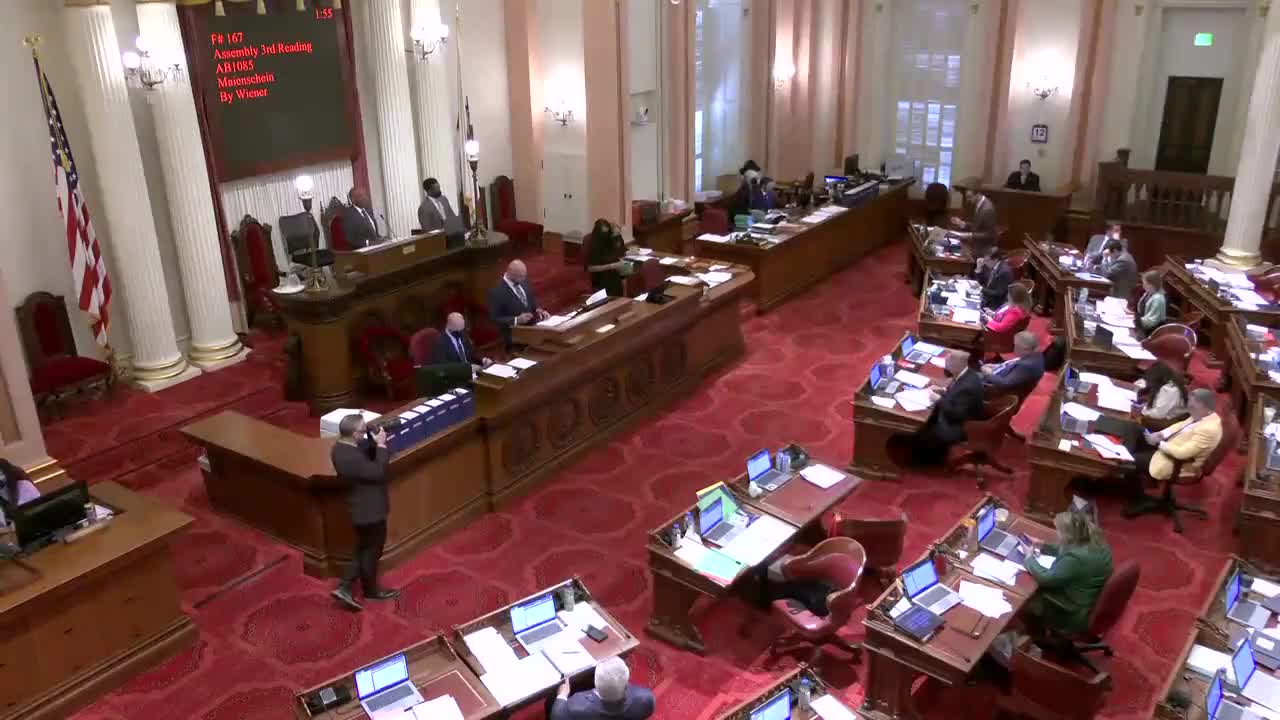
Bill Author

Bill Co-Author(s):