AB 436: Vehicles.
- Session Year: 2023-2024
- House: Assembly
- Latest Version Date: 2023-10-13
Current Status:
Passed
(2023-10-13: Chaptered by Secretary of State - Chapter 803, Statutes of 2023.)
Introduced
In Committee
First Chamber
In Committee
Second Chamber
Enacted
Existing law prohibits a local authority from enacting or enforcing an ordinance on matters covered by the Vehicle Code unless expressly authorized by the Vehicle Code. Existing law authorizes local authorities to adopt rules and regulations by ordinance or resolution regarding specified matters, including, among others, crossing guards, the operation of bicycles, the removal of illegally parked vehicles, and cruising, as defined.
This bill would remove the authorization for a local authority to adopt rules and regulations by ordinance or regulation regarding cruising.
Existing law makes it unlawful to operate a passenger vehicle, or commercial vehicle under 6,000 pounds, that has been modified from its original design so that any portion of the vehicle, other than the wheels, has less clearance from the surface of a level roadway than the clearance between the roadway and the lowermost portion of any rim of any wheel in contact with the roadway.
This bill would repeal that prohibition.
This bill would incorporate additional changes to Section 21100 of the Vehicle Code proposed by AB 825 and SB 50 to be operative only if this bill and AB 825, this bill and SB 50, or this bill, AB 825, and SB 50 are enacted and this bill is enacted last.
Existing law prohibits a local authority from enacting or enforcing an ordinance on matters covered by the Vehicle Code unless expressly authorized by the Vehicle Code. Existing law authorizes local authorities to adopt rules and regulations by ordinance or resolution regarding specified matters, including, among others, crossing guards, the operation of bicycles, the removal of illegally parked vehicles, and cruising, as defined.
This bill would remove the authorization for a local authority to adopt rules and regulations by ordinance or regulation regarding cruising.
Existing law makes it unlawful to operate a passenger vehicle, or commercial vehicle under 6,000 pounds, that has been modified from its original design so that any portion of the vehicle, other than the wheels, has less clearance from the surface of a level roadway than the clearance between the roadway and the lowermost portion of any rim of any wheel in contact with the roadway.
This bill would repeal that prohibition.
Local authorities may adopt rules and regulations by ordinance or resolution regarding all of the following matters:
(a)Regulating or prohibiting a procession or assemblage on the highways.
(b)Licensing and regulating the operation of vehicles for hire and drivers of passenger vehicles for hire.
(c)Regulating traffic by means of traffic officers.
(d)Regulating traffic by means of official traffic control devices meeting the requirements of Section 21400.
(e)(1)Regulating traffic by means of a person given temporary or permanent appointment for that duty by the local authority when official traffic control devices are disabled or otherwise inoperable, at the scene of an accident or disaster, or at a location that may require traffic direction for orderly traffic flow.
(2)A person shall not be appointed pursuant to this subdivision unless and until the local authority has submitted to the commissioner or to the chief law enforcement officer exercising jurisdiction in the enforcement of traffic laws within the area in which the person is to perform the duty, for review, a proposed program of instruction for the training of a person for that duty and unless and until the commissioner or other chief law enforcement officer approves the proposed program. The commissioner or other chief law enforcement officer shall approve a proposed program if they reasonably determine that the program will provide sufficient training for persons assigned to perform the duty described in this subdivision.
(f)Regulating traffic at the site of road or street construction or maintenance by a person authorized for that duty by the local authority.
(g)(1)Licensing and regulating the operation of tow truck service or tow truck drivers whose principal place of business or employment is within the jurisdiction of the local authority, excepting the operation and operators of any auto dismantlers tow vehicle licensed under Section 11505 or any tow truck operated by a repossessing agency licensed under Chapter 11 (commencing with Section 7500) of Division 3 of the Business and Professions Code and its registered employees.
(2)The Legislature finds that the safety and welfare of the general public is promoted by permitting local authorities to regulate tow truck service companies and operators by requiring licensure, insurance, and proper training in the safe operation of towing equipment, thereby ensuring against towing mistakes that may lead to violent confrontation, stranding motorists in dangerous situations, impeding the expedited vehicle recovery, and wasting state and local law enforcements limited resources.
(3)This subdivision does not limit the authority of a city or city and county pursuant to Section 12111.
(h)Operation of bicycles and, as specified in Section 21114.5, electric carts by physically disabled persons or persons 50 years of age or older, on public sidewalks.
(i)Providing for the appointment of nonstudent school crossing guards for the protection of persons who are crossing a street or highway in the vicinity of a school or while returning thereafter to a place of safety.
(j)Regulating the methods of deposit of garbage and refuse in streets and highways for collection by the local authority or by any person authorized by the local authority.
(k)Regulating or authorizing the removal by peace officers of vehicles unlawfully parked in a fire lane, as described in Section 22500.1, on private property. A removal pursuant to this subdivision shall be consistent, to the extent possible, with the procedures for removal and storage set forth in Chapter 10 (commencing with Section 22650).
(l)Regulating mobile billboard advertising displays, as defined in Section 395.5, including the establishment of penalties, which may include, but are not limited to, removal of the mobile billboard advertising display, civil penalties, and misdemeanor criminal penalties for a violation of the ordinance or resolution. The ordinance or resolution may establish a minimum distance that a mobile billboard advertising display shall be moved after a specified time period.
(m)Licensing and regulating the operation of pedicabs for hire, as defined in Section 467.5, and operators of pedicabs for hire, including requiring one or more of the following documents:
(1)A valid California drivers license.
(2)Proof of successful completion of a bicycle safety training course certified by the League of American Bicyclists or an equivalent organization as determined by the local authority.
(3)A valid California identification card and proof of successful completion of the written portion of the California drivers license examination administered by the department. The department shall administer, without charging a fee, the original drivers license written examination on traffic laws and signs to a person who states that they are, or intend to become, a pedicab operator and who holds a valid California identification card or has successfully completed an application for a California identification card. If the person achieves a passing score on the examination, the department shall issue a certificate of successful completion of the examination bearing the persons name and identification card number. The certificate shall not serve in lieu of successful completion of the required examination administered as part of any subsequent application for a drivers license. The department is not required to enter the results of the examination into the computerized record of the persons identification card or otherwise retain a record of the examination or results.
(n)(1)This section does not authorize a local authority to enact or enforce an ordinance or resolution that establishes a violation if a violation for the same or similar conduct is provided in this code, nor does it authorize a local authority to enact or enforce an ordinance or resolution that assesses a fine, penalty, assessment, or fee for a violation if a fine, penalty, assessment, or fee for a violation involving the same or similar conduct is provided in this code.
(2)This section does not preclude a local authority from enacting parking ordinances pursuant to existing authority in Chapter 9 (commencing with Section 22500) of Division 11.
(o)(1)Regulating advertising signs on motor vehicles parked or left standing upon a public street. The ordinance or resolution may establish a minimum distance that the advertising sign shall be moved after a specified time period.
(2)Paragraph (1) does not apply to any of the following:
(A)Advertising signs that are permanently affixed to the body of, an integral part of, or a fixture of a motor vehicle for permanent decoration, identification, or display and that do not extend beyond the overall length, width, or height of the vehicle.
(B)If the license plate frame is installed in compliance with Section 5201, paper advertisements issued by a dealer contained within that license plate frame or any advertisements on that license plate frame.
(3)As used in paragraph (2), permanently affixed means any of the following:
(A)Painted directly on the body of a motor vehicle.
(B)Applied as a decal on the body of a motor vehicle.
(C)Placed in a location on the body of a motor vehicle that was specifically designed by a vehicle manufacturer, as defined in Section 672, and licensed pursuant to Section 11701, in compliance with both state and federal law or guidelines, for the express purpose of containing an advertising sign.
SEC. 1.1.Section 21100 of the Vehicle Code is amended to read:21100.Local authorities may adopt rules and regulations by ordinance or resolution regarding all of the following matters:
(a)Regulating or prohibiting a procession or assemblage on the highways.
(b)Licensing and regulating the operation of vehicles for hire and drivers of passenger vehicles for hire.
(c)Regulating traffic by means of traffic officers.
(d)Regulating traffic by means of official traffic control devices meeting the requirements of Section 21400.
(e)(1)Regulating traffic by means of a person given temporary or permanent appointment for that duty by the local authority when official traffic control devices are disabled or otherwise inoperable, at the scene of an accident or disaster, or at a location that may require traffic direction for orderly traffic flow.
(2)A person shall not be appointed pursuant to this subdivision unless and until the local authority has submitted to the commissioner or to the chief law enforcement officer exercising jurisdiction in the enforcement of traffic laws within the area in which the person is to perform the duty, for review, a proposed program of instruction for the training of a person for that duty and unless and until the commissioner or other chief law enforcement officer approves the proposed program. The commissioner or other chief law enforcement officer shall approve a proposed program if they reasonably determine that the program will provide sufficient training for persons assigned to perform the duty described in this subdivision.
(f)Regulating traffic at the site of road or street construction or maintenance by a person authorized for that duty by the local authority.
(g)(1)Licensing and regulating the operation of tow truck service or tow truck drivers whose principal place of business or employment is within the jurisdiction of the local authority, excepting the operation and operators of any auto dismantlers tow vehicle licensed under Section 11505 or any tow truck operated by a repossessing agency licensed under Chapter 11 (commencing with Section 7500) of Division 3 of the Business and Professions Code and its registered employees.
(2)The Legislature finds that the safety and welfare of the general public is promoted by permitting local authorities to regulate tow truck service companies and operators by requiring licensure, insurance, and proper training in the safe operation of towing equipment, thereby ensuring against towing mistakes that may lead to violent confrontation, stranding motorists in dangerous situations, impeding the expedited vehicle recovery, and wasting state and local law enforcements limited resources.
(3)This subdivision does not limit the authority of a city or city and county pursuant to Section 12111.
(h)(1)Operation of bicycles and, as specified in Section 21114.5, electric carts by physically disabled persons or persons 50 years of age or older, on public sidewalks.
(2)(A)Notwithstanding paragraph (1), until January 1, 2031, a local authority shall not prohibit the operation of a bicycle on a sidewalk adjacent to a highway or corridor that does not include a Class I, Class II, or Class IV bikeway, as defined in Section 890.4 of the Streets and Highways Code, except in any of the following circumstances:
(i)A local authority enacts an ordinance prohibiting the operation of a bicycle on a sidewalk within a business activity district that includes findings demonstrating the operation of a bicycle on a sidewalk within the business activity district is unsafe given pedestrian traffic conditions.
(ii)A local authority enacts an ordinance prohibiting the operation of a bicycle on a sidewalk adjacent to a street with a posted speed limit not exceeding 20 miles per hour.
(iii)A local authority enacts an ordinance prohibiting the operation of a bicycle on a sidewalk at a speed or in a manner that is not reasonable or endangers the safety of persons or property.
(iv)A local authority enacts an ordinance that requires a person riding a bicycle upon a sidewalk to yield the right-of-way to any pedestrian, and to yield the right-of-way to any other vehicle upon entering a roadway or driveway from a sidewalk.
(v)A local authority enacts an ordinance that prohibits the operation of an electric bicycle, as defined in Section 312.5, on a sidewalk.
(B)(i)The Commissioner of the California Highway Patrol shall submit a report to the Legislature, on or before January 1, 2029, about the effects of bicycles operating under subparagraph (A). The report shall include, but not be limited to, information about statewide injury and fatal traffic crash data and any associated traffic- or pedestrian-related safety issues, including, but not limited to, a detailed analysis of bicycle collisions, including collisions with pedestrians, and all of the following issues:
(I)Changes in the frequency of collisions.
(II)Changes in the severity of collisions.
(III)Causes of, and contributing factors in, collisions.
(IV)Location of collisions, including an analysis of collision data.
(V)Time of day of collisions.
(VI)Ages of bicyclists involved, including a breakdown of minors versus adults.
(VII)Types of bicycles involved in collisions, specifically differences between traditional bicycles and electric bicycles.
(ii)The report required by this subparagraph shall be submitted in compliance with Section 9795 of the Government Code.
(i)Providing for the appointment of nonstudent school crossing guards for the protection of persons who are crossing a street or highway in the vicinity of a school or while returning thereafter to a place of safety.
(j)Regulating the methods of deposit of garbage and refuse in streets and highways for collection by the local authority or by any person authorized by the local authority.
(k)Regulating or authorizing the removal by peace officers of vehicles unlawfully parked in a fire lane, as described in Section 22500.1, on private property. A removal pursuant to this subdivision shall be consistent, to the extent possible, with the procedures for removal and storage set forth in Chapter 10 (commencing with Section 22650).
(l)Regulating mobile billboard advertising displays, as defined in Section 395.5, including the establishment of penalties, which may include, but are not limited to, removal of the mobile billboard advertising display, civil penalties, and misdemeanor criminal penalties for a violation of the ordinance or resolution. The ordinance or resolution may establish a minimum distance that a mobile billboard advertising display shall be moved after a specified time period.
(m)Licensing and regulating the operation of pedicabs for hire, as defined in Section 467.5, and operators of pedicabs for hire, including requiring one or more of the following documents:
(1)A valid California drivers license.
(2)Proof of successful completion of a bicycle safety training course certified by the League of American Bicyclists or an equivalent organization as determined by the local authority.
(3)A valid California identification card and proof of successful completion of the written portion of the California drivers license examination administered by the department. The department shall administer, without charging a fee, the original drivers license written examination on traffic laws and signs to a person who states that they are, or intend to become, a pedicab operator and who holds a valid California identification card or has successfully completed an application for a California identification card. If the person achieves a passing score on the examination, the department shall issue a certificate of successful completion of the examination bearing the persons name and identification card number. The certificate shall not serve in lieu of successful completion of the required examination administered as part of any subsequent application for a drivers license. The department is not required to enter the results of the examination into the computerized record of the persons identification card or otherwise retain a record of the examination or results.
(n)(1)This section does not authorize a local authority to enact or enforce an ordinance or resolution that establishes a violation if a violation for the same or similar conduct is provided in this code, nor does it authorize a local authority to enact or enforce an ordinance or resolution that assesses a fine, penalty, assessment, or fee for a violation if a fine, penalty, assessment, or fee for a violation involving the same or similar conduct is provided in this code.
(2)This section does not preclude a local authority from enacting parking ordinances pursuant to existing authority in Chapter 9 (commencing with Section 22500) of Division 11.
(o)(1)Regulating advertising signs on motor vehicles parked or left standing upon a public street. The ordinance or resolution may establish a minimum distance that the advertising sign shall be moved after a specified time period.
(2)Paragraph (1) does not apply to any of the following:
(A)Advertising signs that are permanently affixed to the body of, an integral part of, or a fixture of a motor vehicle for permanent decoration, identification, or display and that do not extend beyond the overall length, width, or height of the vehicle.
(B)If the license plate frame is installed in compliance with Section 5201, paper advertisements issued by a dealer contained within that license plate frame or any advertisements on that license plate frame.
(3)As used in paragraph (2), permanently affixed means any of the following:
(A)Painted directly on the body of a motor vehicle.
(B)Applied as a decal on the body of a motor vehicle.
(C)Placed in a location on the body of a motor vehicle that was specifically designed by a vehicle manufacturer, as defined in Section 672, and licensed pursuant to Section 11701, in compliance with both state and federal law or guidelines, for the express purpose of containing an advertising sign.
SEC. 1.2.Section 21100 of the Vehicle Code is amended to read:21100.Local authorities may adopt rules and regulations by ordinance or resolution regarding all of the following matters:
(a)Regulating or prohibiting a procession or assemblage on the highways.
(b)Licensing and regulating the operation of vehicles for hire and drivers of passenger vehicles for hire.
(c)Regulating traffic by means of traffic officers, or other government employees if they are enforcing a nonmoving or equipment violation provided in this code.
(d)Regulating traffic by means of official traffic control devices meeting the requirements of Section 21400.
(e)(1)Regulating traffic by means of a person given temporary or permanent appointment for that duty by the local authority when official traffic control devices are disabled or otherwise inoperable, at the scene of an accident or disaster, or at a location that may require traffic direction for orderly traffic flow.
(2)A person shall not be appointed pursuant to this subdivision unless and until the local authority has submitted to the commissioner or to the chief law enforcement officer exercising jurisdiction in the enforcement of traffic laws within the area in which the person is to perform the duty, for review, a proposed program of instruction for the training of a person for that duty and unless and until the commissioner or other chief law enforcement officer approves the proposed program. The commissioner or other chief law enforcement officer shall approve a proposed program if they reasonably determine that the program will provide sufficient training for persons assigned to perform the duty described in this subdivision.
(f)Regulating traffic at the site of road or street construction or maintenance by a person authorized for that duty by the local authority.
(g)(1)Licensing and regulating the operation of tow truck service or tow truck drivers whose principal place of business or employment is within the jurisdiction of the local authority, excepting the operation and operators of any auto dismantlers tow vehicle licensed under Section 11505 or any tow truck operated by a repossessing agency licensed under Chapter 11 (commencing with Section 7500) of Division 3 of the Business and Professions Code and its registered employees.
(2)The Legislature finds that the safety and welfare of the general public is promoted by permitting local authorities to regulate tow truck service companies and operators by requiring licensure, insurance, and proper training in the safe operation of towing equipment, thereby ensuring against towing mistakes that may lead to violent confrontation, stranding motorists in dangerous situations, impeding the expedited vehicle recovery, and wasting state and local law enforcements limited resources.
(3)This subdivision does not limit the authority of a city or city and county pursuant to Section 12111.
(h)Operation of bicycles and, as specified in Section 21114.5, electric carts by physically disabled persons or persons 50 years of age or older, on public sidewalks.
(i)Providing for the appointment of nonstudent school crossing guards for the protection of persons who are crossing a street or highway in the vicinity of a school or while returning thereafter to a place of safety.
(j)Regulating the methods of deposit of garbage and refuse in streets and highways for collection by the local authority or by any person authorized by the local authority.
(k)Regulating or authorizing the removal by peace officers of vehicles unlawfully parked in a fire lane, as described in Section 22500.1, on private property. A removal pursuant to this subdivision shall be consistent, to the extent possible, with the procedures for removal and storage set forth in Chapter 10 (commencing with Section 22650).
(l)Regulating mobile billboard advertising displays, as defined in Section 395.5, including the establishment of penalties, which may include, but are not limited to, removal of the mobile billboard advertising display, civil penalties, and misdemeanor criminal penalties for a violation of the ordinance or resolution. The ordinance or resolution may establish a minimum distance that a mobile billboard advertising display shall be moved after a specified time period.
(m)Licensing and regulating the operation of pedicabs for hire, as defined in Section 467.5, and operators of pedicabs for hire, including requiring one or more of the following documents:
(1)A valid California drivers license.
(2)Proof of successful completion of a bicycle safety training course certified by the League of American Bicyclists or an equivalent organization as determined by the local authority.
(3)A valid California identification card and proof of successful completion of the written portion of the California drivers license examination administered by the department. The department shall administer, without charging a fee, the original drivers license written examination on traffic laws and signs to a person who states that they are or that they intend to become, a pedicab operator and who holds a valid California identification card or has successfully completed an application for a California identification card. If the person achieves a passing score on the examination, the department shall issue a certificate of successful completion of the examination bearing the persons name and identification card number. The certificate shall not serve in lieu of successful completion of the required examination administered as part of any subsequent application for a drivers license. The department is not required to enter the results of the examination into the computerized record of the persons identification card or otherwise retain a record of the examination or results.
(n)(1)This section does not authorize a local authority to enact or enforce an ordinance or resolution that establishes a violation if a violation for the same or similar conduct is provided in this code, nor does it authorize a local authority to enact or enforce an ordinance or resolution that assesses a fine, penalty, assessment, or fee for a violation if a fine, penalty, assessment, or fee for a violation involving the same or similar conduct is provided in this code.
(2)This section does not preclude a local authority from enacting parking ordinances pursuant to existing authority in Chapter 9 (commencing with Section 22500) of Division 11.
(3)This section does not preclude a county, city, municipality, or any other local authority from enforcing a nonmoving or equipment violation provided in this code through government employees who are not peace officers.
(o)(1)Regulating advertising signs on motor vehicles parked or left standing upon a public street. The ordinance or resolution may establish a minimum distance that the advertising sign shall be moved after a specified time period.
(2)Paragraph (1) does not apply to any of the following:
(A)Advertising signs that are permanently affixed to the body of, an integral part of, or a fixture of a motor vehicle for permanent decoration, identification, or display and that do not extend beyond the overall length, width, or height of the vehicle.
(B)If the license plate frame is installed in compliance with Section 5201, paper advertisements issued by a dealer contained within that license plate frame or any advertisements on that license plate frame.
(3)As used in paragraph (2), permanently affixed means any of the following:
(A)Painted directly on the body of a motor vehicle.
(B)Applied as a decal on the body of a motor vehicle.
(C)Placed in a location on the body of a motor vehicle that was specifically designed by a vehicle manufacturer, as defined in Section 672, and licensed pursuant to Section 11701, in compliance with both state and federal law or guidelines, for the express purpose of containing an advertising sign.
SEC. 1.3.Section 21100 of the Vehicle Code is amended to read:21100.Local authorities may adopt rules and regulations by ordinance or resolution regarding all of the following matters:
(a)Regulating or prohibiting a procession or assemblage on the highways.
(b)Licensing and regulating the operation of vehicles for hire and drivers of passenger vehicles for hire.
(c)Regulating traffic by means of traffic officers, or other government employees if they are enforcing a nonmoving or equipment violation provided in this code.
(d)Regulating traffic by means of official traffic control devices meeting the requirements of Section 21400.
(e)(1)Regulating traffic by means of a person given temporary or permanent appointment for that duty by the local authority when official traffic control devices are disabled or otherwise inoperable, at the scene of an accident or disaster, or at a location that may require traffic direction for orderly traffic flow.
(2)A person shall not be appointed pursuant to this subdivision unless and until the local authority has submitted to the commissioner or to the chief law enforcement officer exercising jurisdiction in the enforcement of traffic laws within the area in which the person is to perform the duty, for review, a proposed program of instruction for the training of a person for that duty and unless and until the commissioner or other chief law enforcement officer approves the proposed program. The commissioner or other chief law enforcement officer shall approve a proposed program if they reasonably determine that the program will provide sufficient training for persons assigned to perform the duty described in this subdivision.
(f)Regulating traffic at the site of road or street construction or maintenance by a person authorized for that duty by the local authority.
(g)(1)Licensing and regulating the operation of tow truck service or tow truck drivers whose principal place of business or employment is within the jurisdiction of the local authority, excepting the operation and operators of any auto dismantlers tow vehicle licensed under Section 11505 or any tow truck operated by a repossessing agency licensed under Chapter 11 (commencing with Section 7500) of Division 3 of the Business and Professions Code and its registered employees.
(2)The Legislature finds that the safety and welfare of the general public is promoted by permitting local authorities to regulate tow truck service companies and operators by requiring licensure, insurance, and proper training in the safe operation of towing equipment, thereby ensuring against towing mistakes that may lead to violent confrontation, stranding motorists in dangerous situations, impeding the expedited vehicle recovery, and wasting state and local law enforcements limited resources.
(3)This subdivision does not limit the authority of a city or city and county pursuant to Section 12111.
(h)(1)Operation of bicycles and, as specified in Section 21114.5, electric carts by physically disabled persons or persons 50 years of age or older, on public sidewalks.
(2)(A)Notwithstanding paragraph (1), until January 1, 2031, a local authority shall not prohibit the operation of a bicycle on a sidewalk adjacent to a highway or corridor that does not include a Class I, Class II, or Class IV bikeway, as defined in Section 890.4 of the Streets and Highways Code, except in any of the following circumstances:
(i)A local authority enacts an ordinance prohibiting the operation of a bicycle on a sidewalk within a business activity district that includes findings demonstrating the operation of a bicycle on a sidewalk within the business activity district is unsafe given pedestrian traffic conditions.
(ii)A local authority enacts an ordinance prohibiting the operation of a bicycle on a sidewalk adjacent to a street with a posted speed limit not exceeding 20 miles per hour.
(iii)A local authority enacts an ordinance prohibiting the operation of a bicycle on a sidewalk at a speed or in a manner that is not reasonable or endangers the safety of persons or property.
(iv)A local authority enacts an ordinance that requires a person riding a bicycle upon a sidewalk to yield the right-of-way to any pedestrian, and to yield the right-of-way to any other vehicle upon entering a roadway or driveway from a sidewalk.
(v)A local authority enacts an ordinance that prohibits the operation of an electric bicycle, as defined in Section 312.5, on a sidewalk.
(B)(i)The Commissioner of the California Highway Patrol shall submit a report to the Legislature, on or before January 1, 2029, about the effects of bicycles operating under subparagraph (A). The report shall include, but not be limited to, information about statewide injury and fatal traffic crash data and any associated traffic- or pedestrian-related safety issues, including, but not limited to, a detailed analysis of bicycle collisions, including collisions with pedestrians, and all of the following issues:
(I)Changes in the frequency of collisions.
(II)Changes in the severity of collisions.
(III)Causes of, and contributing factors in, collisions.
(IV)Location of collisions, including an analysis of collision data.
(V)Time of day of collisions.
(VI)Ages of bicyclists involved, including a breakdown of minors versus adults.
(VII)Types of bicycles involved in collisions, specifically differences between traditional bicycles and electric bicycles.
(ii)The report required by this subparagraph shall be submitted in compliance with Section 9795 of the Government Code.
(i)Providing for the appointment of nonstudent school crossing guards for the protection of persons who are crossing a street or highway in the vicinity of a school or while returning thereafter to a place of safety.
(j)Regulating the methods of deposit of garbage and refuse in streets and highways for collection by the local authority or by any person authorized by the local authority.
(k)Regulating or authorizing the removal by peace officers of vehicles unlawfully parked in a fire lane, as described in Section 22500.1, on private property. A removal pursuant to this subdivision shall be consistent, to the extent possible, with the procedures for removal and storage set forth in Chapter 10 (commencing with Section 22650).
(l)Regulating mobile billboard advertising displays, as defined in Section 395.5, including the establishment of penalties, which may include, but are not limited to, removal of the mobile billboard advertising display, civil penalties, and misdemeanor criminal penalties for a violation of the ordinance or resolution. The ordinance or resolution may establish a minimum distance that a mobile billboard advertising display shall be moved after a specified time period.
(m)Licensing and regulating the operation of pedicabs for hire, as defined in Section 467.5, and operators of pedicabs for hire, including requiring one or more of the following documents:
(1)A valid California drivers license.
(2)Proof of successful completion of a bicycle safety training course certified by the League of American Bicyclists or an equivalent organization as determined by the local authority.
(3)A valid California identification card and proof of successful completion of the written portion of the California drivers license examination administered by the department. The department shall administer, without charging a fee, the original drivers license written examination on traffic laws and signs to a person who states that they are or that they intend to become, a pedicab operator and who holds a valid California identification card or has successfully completed an application for a California identification card. If the person achieves a passing score on the examination, the department shall issue a certificate of successful completion of the examination bearing the persons name and identification card number. The certificate shall not serve in lieu of successful completion of the required examination administered as part of any subsequent application for a drivers license. The department is not required to enter the results of the examination into the computerized record of the persons identification card or otherwise retain a record of the examination or results.
(n)(1)This section does not authorize a local authority to enact or enforce an ordinance or resolution that establishes a violation if a violation for the same or similar conduct is provided in this code, nor does it authorize a local authority to enact or enforce an ordinance or resolution that assesses a fine, penalty, assessment, or fee for a violation if a fine, penalty, assessment, or fee for a violation involving the same or similar conduct is provided in this code.
(2)This section does not preclude a local authority from enacting parking ordinances pursuant to existing authority in Chapter 9 (commencing with Section 22500) of Division 11.
(3)This section does not preclude a county, city, municipality, or any other local authority from enforcing a nonmoving or equipment violation provided in this code through government employees who are not peace officers.
(o)(1)Regulating advertising signs on motor vehicles parked or left standing upon a public street. The ordinance or resolution may establish a minimum distance that the advertising sign shall be moved after a specified time period.
(2)Paragraph (1) does not apply to any of the following:
(A)Advertising signs that are permanently affixed to the body of, an integral part of, or a fixture of a motor vehicle for permanent decoration, identification, or display and that do not extend beyond the overall length, width, or height of the vehicle.
(B)If the license plate frame is installed in compliance with Section 5201, paper advertisements issued by a dealer contained within that license plate frame or any advertisements on that license plate frame.
(3)As used in paragraph (2), permanently affixed means any of the following:
(A)Painted directly on the body of a motor vehicle.
(B)Applied as a decal on the body of a motor vehicle.
(C)Placed in a location on the body of a motor vehicle that was specifically designed by a vehicle manufacturer, as defined in Section 672, and licensed pursuant to Section 11701, in compliance with both state and federal law or guidelines, for the express purpose of containing an advertising sign.
SEC. 2.Section 24008 of the Vehicle Code is repealed.SEC. 3.(a)Section 1.1 of this bill incorporates amendments to Section 21100 of the Vehicle Code proposed by both this bill and Assembly Bill 825. That section of this bill shall only become operative if (1) both bills are enacted and become effective on or before January 1, 2024, (2) each bill amends Section 21100 of the Vehicle Code, and (3) Senate Bill 50 is not enacted or as enacted does not amend that section, and (4) this bill is enacted after Assembly Bill 825, in which case Sections 1, 1.2, and 1.3 of this bill shall not become operative.
(b)Section 1.2 of this bill incorporates amendments to Section 21100 of the Vehicle Code proposed by both this bill and Senate Bill 50. That section of this bill shall only become operative if (1) both bills are enacted and become effective on or before January 1, 2024, (2) each bill amends Section 21100 of the Vehicle Code, (3) Assembly Bill 825 is not enacted or as enacted does not amend that section, and (4) this bill is enacted after Senate Bill 50, in which case Sections 1, 1.1, and 1.3 of this bill shall not become operative.
(c)Section 1.3 of this bill incorporates amendments to Section 21100 of the Vehicle Code proposed by this bill, Assembly Bill 825, and Senate Bill 50. That section of this bill shall only become operative if (1) all three bills are enacted and become effective on or before January 1, 2024, (2) all three bills amend Section 21100 of the Vehicle Code, and (3) this bill is enacted after Assembly Bill 825 and Senate Bill 50, in which case Sections 1, 1.1, and 1.2 of this bill shall not become operative.
Local authorities may adopt rules and regulations by ordinance or resolution regarding all of the following matters:
(a)Regulating or prohibiting a procession or assemblage on the highways.
(b)Licensing and regulating the operation of vehicles for hire and drivers of passenger vehicles for hire.
(c)Regulating traffic by means of traffic officers.
(d)Regulating traffic by means of official traffic control devices meeting the requirements of Section 21400.
(e)(1)Regulating traffic by means of a person given temporary or permanent appointment for that duty by the local authority when official traffic control devices are disabled or otherwise inoperable, at the scene of an accident or disaster, or at a location that may require traffic direction for orderly traffic flow.
(2)A person shall not be appointed pursuant to this subdivision unless and until the local authority has submitted to the commissioner or to the chief law enforcement officer exercising jurisdiction in the enforcement of traffic laws within the area in which the person is to perform the duty, for review, a proposed program of instruction for the training of a person for that duty and unless and until the commissioner or other chief law enforcement officer approves the proposed program. The commissioner or other chief law enforcement officer shall approve a proposed program if they reasonably determine that the program will provide sufficient training for persons assigned to perform the duty described in this subdivision.
(f)Regulating traffic at the site of road or street construction or maintenance by a person authorized for that duty by the local authority.
(g)(1)Licensing and regulating the operation of tow truck service or tow truck drivers whose principal place of business or employment is within the jurisdiction of the local authority, excepting the operation and operators of any auto dismantlers tow vehicle licensed under Section 11505 or any tow truck operated by a repossessing agency licensed under Chapter 11 (commencing with Section 7500) of Division 3 of the Business and Professions Code and its registered employees.
(2)The Legislature finds that the safety and welfare of the general public is promoted by permitting local authorities to regulate tow truck service companies and operators by requiring licensure, insurance, and proper training in the safe operation of towing equipment, thereby ensuring against towing mistakes that may lead to violent confrontation, stranding motorists in dangerous situations, impeding the expedited vehicle recovery, and wasting state and local law enforcements limited resources.
(3)This subdivision does not limit the authority of a city or city and county pursuant to Section 12111.
(h)Operation of bicycles and, as specified in Section 21114.5, electric carts by physically disabled persons or persons 50 years of age or older, on public sidewalks.
(i)Providing for the appointment of nonstudent school crossing guards for the protection of persons who are crossing a street or highway in the vicinity of a school or while returning thereafter to a place of safety.
(j)Regulating the methods of deposit of garbage and refuse in streets and highways for collection by the local authority or by any person authorized by the local authority.
(k)Regulating or authorizing the removal by peace officers of vehicles unlawfully parked in a fire lane, as described in Section 22500.1, on private property. A removal pursuant to this subdivision shall be consistent, to the extent possible, with the procedures for removal and storage set forth in Chapter 10 (commencing with Section 22650).
(l)Regulating mobile billboard advertising displays, as defined in Section 395.5, including the establishment of penalties, which may include, but are not limited to, removal of the mobile billboard advertising display, civil penalties, and misdemeanor criminal penalties for a violation of the ordinance or resolution. The ordinance or resolution may establish a minimum distance that a mobile billboard advertising display shall be moved after a specified time period.
(m)Licensing and regulating the operation of pedicabs for hire, as defined in Section 467.5, and operators of pedicabs for hire, including requiring one or more of the following documents:
(1)A valid California drivers license.
(2)Proof of successful completion of a bicycle safety training course certified by the League of American Bicyclists or an equivalent organization as determined by the local authority.
(3)A valid California identification card and proof of successful completion of the written portion of the California drivers license examination administered by the department. The department shall administer, without charging a fee, the original drivers license written examination on traffic laws and signs to a person who states that they are, or intend to become, a pedicab operator and who holds a valid California identification card or has successfully completed an application for a California identification card. If the person achieves a passing score on the examination, the department shall issue a certificate of successful completion of the examination bearing the persons name and identification card number. The certificate shall not serve in lieu of successful completion of the required examination administered as part of any subsequent application for a drivers license. The department is not required to enter the results of the examination into the computerized record of the persons identification card or otherwise retain a record of the examination or results.
(n)(1)This section does not authorize a local authority to enact or enforce an ordinance or resolution that establishes a violation if a violation for the same or similar conduct is provided in this code, nor does it authorize a local authority to enact or enforce an ordinance or resolution that assesses a fine, penalty, assessment, or fee for a violation if a fine, penalty, assessment, or fee for a violation involving the same or similar conduct is provided in this code.
(2)This section does not preclude a local authority from enacting parking ordinances pursuant to existing authority in Chapter 9 (commencing with Section 22500) of Division 11.
(o)(1)Regulating advertising signs on motor vehicles parked or left standing upon a public street. The ordinance or resolution may establish a minimum distance that the advertising sign shall be moved after a specified time period.
(2)Paragraph (1) does not apply to any of the following:
(A)Advertising signs that are permanently affixed to the body of, an integral part of, or a fixture of a motor vehicle for permanent decoration, identification, or display and that do not extend beyond the overall length, width, or height of the vehicle.
(B)If the license plate frame is installed in compliance with Section 5201, paper advertisements issued by a dealer contained within that license plate frame or any advertisements on that license plate frame.
(3)As used in paragraph (2), permanently affixed means any of the following:
(A)Painted directly on the body of a motor vehicle.
(B)Applied as a decal on the body of a motor vehicle.
(C)Placed in a location on the body of a motor vehicle that was specifically designed by a vehicle manufacturer, as defined in Section 672, and licensed pursuant to Section 11701, in compliance with both state and federal law or guidelines, for the express purpose of containing an advertising sign.
SEC. 1.1.Section 21100 of the Vehicle Code is amended to read:21100.Local authorities may adopt rules and regulations by ordinance or resolution regarding all of the following matters:
(a)Regulating or prohibiting processions a procession or assemblages assemblage on the highways.
(b)Licensing and regulating the operation of vehicles for hire and drivers of passenger vehicles for hire.
(c)Regulating traffic by means of traffic officers.
(d)Regulating traffic by means of official traffic control devices meeting the requirements of Section 21400.
(e)(1)Regulating traffic by means of a person given temporary or permanent appointment for that duty by the local authority when official traffic control devices are disabled or otherwise inoperable, at the scenes scene of accidents an accident or disasters, disaster, or at locations as a location that may require traffic direction for orderly traffic flow.
(2)A person shall not be appointed pursuant to this subdivision unless and until the local authority has submitted to the commissioner or to the chief law enforcement officer exercising jurisdiction in the enforcement of traffic laws within the area in which the person is to perform the duty, for review, a proposed program of instruction for the training of a person for that duty, duty and unless and until the commissioner or other chief law enforcement officer approves the proposed program. The commissioner or other chief law enforcement officer shall approve a proposed program if he or she reasonably determines they reasonably determine that the program will provide sufficient training for persons assigned to perform the duty described in this subdivision.
(f)Regulating traffic at the site of road or street construction or maintenance by persons a person authorized for that duty by the local authority.
(g)(1)Licensing and regulating the operation of tow truck service or tow truck drivers whose principal place of business or employment is within the jurisdiction of the local authority, excepting the operation and operators of any auto dismantlers tow vehicle licensed under Section 11505 or any tow truck operated by a repossessing agency licensed under Chapter 11 (commencing with Section 7500) of Division 3 of the Business and Professions Code and its registered employees.
(2)The Legislature finds that the safety and welfare of the general public is promoted by permitting local authorities to regulate tow truck service companies and operators by requiring licensure, insurance, and proper training in the safe operation of towing equipment, thereby ensuring against towing mistakes that may lead to violent confrontation, stranding motorists in dangerous situations, impeding the expedited vehicle recovery, and wasting state and local law enforcements limited resources.
(3)This subdivision does not limit the authority of a city or city and county pursuant to Section 12111.
(h)(1)Operation of bicycles, bicycles and, as specified in Section 21114.5, electric carts by physically disabled persons, persons or persons 50 years of age or older, on public sidewalks.
(2)(A)Notwithstanding paragraph (1), until January 1, 2031, a local authority shall not prohibit the operation of a bicycle on a sidewalk adjacent to a highway or corridor that does not include a Class I, Class II, or Class IV bikeway, as defined in Section 890.4 of the Streets and Highways Code, except in any of the following circumstances:
(i)A local authority enacts an ordinance prohibiting the operation of a bicycle on a sidewalk within a business activity district that includes findings demonstrating the operation of a bicycle on a sidewalk within the business activity district is unsafe given pedestrian traffic conditions.
(ii)A local authority enacts an ordinance prohibiting the operation of a bicycle on a sidewalk adjacent to a street with a posted speed limit not exceeding 20 miles per hour.
(iii)A local authority enacts an ordinance prohibiting the operation of a bicycle on a sidewalk at a speed or in a manner that is not reasonable or endangers the safety of persons or property.
(iv)A local authority enacts an ordinance that requires a person riding a bicycle upon a sidewalk to yield the right-of-way to any pedestrian, and to yield the right-of-way to any other vehicle upon entering a roadway or driveway from a sidewalk.
(v)A local authority enacts an ordinance that prohibits the operation of an electric bicycle, as defined in Section 312.5, on a sidewalk.
(B)(i)The Commissioner of the California Highway Patrol shall submit a report to the Legislature, on or before January 1, 2029, about the effects of bicycles operating under subparagraph (A). The report shall include, but not be limited to, information about statewide injury and fatal traffic crash data and any associated traffic- or pedestrian-related safety issues, including, but not limited to, a detailed analysis of bicycle collisions, including collisions with pedestrians, and all of the following issues:
(I)Changes in the frequency of collisions.
(II)Changes in the severity of collisions.
(III)Causes of, and contributing factors in, collisions.
(IV)Location of collisions, including an analysis of collision data.
(V)Time of day of collisions.
(VI)Ages of bicyclists involved, including a breakdown of minors versus adults.
(VII)Types of bicycles involved in collisions, specifically differences between traditional bicycles and electric bicycles.
(ii)The report required by this subparagraph shall be submitted in compliance with Section 9795 of the Government Code.
(i)Providing for the appointment of nonstudent school crossing guards for the protection of persons who are crossing a street or highway in the vicinity of a school or while returning thereafter to a place of safety.
(j)Regulating the methods of deposit of garbage and refuse in streets and highways for collection by the local authority or by any person authorized by the local authority.
(k)(1)Regulating cruising.(2)The ordinance or resolution adopted pursuant to this subdivision shall regulate cruising, which is the repetitive driving of a motor vehicle past a traffic control point in traffic that is congested at or near the traffic control point, as determined by the ranking peace officer on duty within the affected area, within a specified time period and after the vehicle operator has been given an adequate written notice that further driving past the control point will be a violation of the ordinance or resolution.(3)A person is not in violation of an ordinance or resolution adopted pursuant to this subdivision unless both of the following apply:(A)That person has been given the written notice on a previous driving trip past the control point and then again passes the control point in that same time interval.(B)The beginning and end of the portion of the street subject to cruising controls are clearly identified by signs that briefly and clearly state the appropriate provisions of this subdivision and the local ordinance or resolution on cruising.(l)(k)Regulating or authorizing the removal by peace officers of vehicles unlawfully parked in a fire lane, as described in Section 22500.1, on private property. A removal pursuant to this subdivision shall be consistent, to the extent possible, with the procedures for removal and storage set forth in Chapter 10 (commencing with Section 22650).
(m)(l)Regulating mobile billboard advertising displays, as defined in Section 395.5, including the establishment of penalties, which may include, but are not limited to, removal of the mobile billboard advertising display, civil penalties, and misdemeanor criminal penalties, penalties for a violation of the ordinance or resolution. The ordinance or resolution may establish a minimum distance that a mobile billboard advertising display shall be moved after a specified time period.
(n)(m)Licensing and regulating the operation of pedicabs for hire, as defined in Section 467.5, and operators of pedicabs for hire, including requiring one or more of the following documents:
(1)A valid California drivers license.
(2)Proof of successful completion of a bicycle safety training course certified by the League of American Bicyclists or an equivalent organization as determined by the local authority.
(3)A valid California identification card and proof of successful completion of the written portion of the California drivers license examination administered by the department. The department shall administer, without charging a fee, the original drivers license written examination on traffic laws and signs to a person who states that he or she is, or intends they are, or intend to become, a pedicab operator, operator and who holds a valid California identification card or has successfully completed an application for a California identification card. If the person achieves a passing score on the examination, the department shall issue a certificate of successful completion of the examination, examination bearing the persons name and identification card number. The certificate shall not serve in lieu of successful completion of the required examination administered as part of any subsequent application for a drivers license. The department is not required to enter the results of the examination into the computerized record of the persons identification card or otherwise retain a record of the examination or results.
(o)(n)(1)This section does not authorize a local authority to enact or enforce an ordinance or resolution that establishes a violation if a violation for the same or similar conduct is provided in this code, nor does it authorize a local authority to enact or enforce an ordinance or resolution that assesses a fine, penalty, assessment, or fee for a violation if a fine, penalty, assessment, or fee for a violation involving the same or similar conduct is provided in this code.
(2)This section does not preclude a local authority from enacting parking ordinances pursuant to existing authority in Chapter 9 (commencing with Section 22500) of Division 11.
(p)(o)(1)Regulating advertising signs on motor vehicles parked or left standing upon a public street. The ordinance or resolution may establish a minimum distance that the advertising sign shall be moved after a specified time period.
(2)Paragraph (1) does not apply to any of the following:
(A)Advertising signs that are permanently affixed to the body of, an integral part of, or a fixture of a motor vehicle for permanent decoration, identification, or display and that do not extend beyond the overall length, width, or height of the vehicle.
(B)If the license plate frame is installed in compliance with Section 5201, paper advertisements issued by a dealer contained within that license plate frame or any advertisements on that license plate frame.
(3)As used in paragraph (2), permanently affixed means any of the following:
(A)Painted directly on the body of a motor vehicle.
(B)Applied as a decal on the body of a motor vehicle.
(C)Placed in a location on the body of a motor vehicle that was specifically designed by a vehicle manufacturer manufacturer, as defined in Section 672 672, and licensed pursuant to Section 11701, in compliance with both state and federal law or guidelines, for the express purpose of containing an advertising sign.
SEC. 1.2.Section 21100 of the Vehicle Code is amended to read:21100.Local authorities may adopt rules and regulations by ordinance or resolution regarding all of the following matters:
(a)Regulating or prohibiting processions a procession or assemblages assemblage on the highways.
(b)Licensing and regulating the operation of vehicles for hire and drivers of passenger vehicles for hire.
(c)Regulating traffic by means of traffic officers. officers, or other government employees if they are enforcing a nonmoving or equipment violation provided in this code.
(d)Regulating traffic by means of official traffic control devices meeting the requirements of Section 21400.
(e)(1)Regulating traffic by means of a person given temporary or permanent appointment for that duty by the local authority when official traffic control devices are disabled or otherwise inoperable, at the scenes scene of accidents an accident or disasters, disaster, or at locations as a location that may require traffic direction for orderly traffic flow.
(2)A person shall not be appointed pursuant to this subdivision unless and until the local authority has submitted to the commissioner or to the chief law enforcement officer exercising jurisdiction in the enforcement of traffic laws within the area in which the person is to perform the duty, for review, a proposed program of instruction for the training of a person for that duty, duty and unless and until the commissioner or other chief law enforcement officer approves the proposed program. The commissioner or other chief law enforcement officer shall approve a proposed program if he or she reasonably determines they reasonably determine that the program will provide sufficient training for persons assigned to perform the duty described in this subdivision.
(f)Regulating traffic at the site of road or street construction or maintenance by persons a person authorized for that duty by the local authority.
(g)(1)Licensing and regulating the operation of tow truck service or tow truck drivers whose principal place of business or employment is within the jurisdiction of the local authority, excepting the operation and operators of any auto dismantlers tow vehicle licensed under Section 11505 or any tow truck operated by a repossessing agency licensed under Chapter 11 (commencing with Section 7500) of Division 3 of the Business and Professions Code and its registered employees.
(2)The Legislature finds that the safety and welfare of the general public is promoted by permitting local authorities to regulate tow truck service companies and operators by requiring licensure, insurance, and proper training in the safe operation of towing equipment, thereby ensuring against towing mistakes that may lead to violent confrontation, stranding motorists in dangerous situations, impeding the expedited vehicle recovery, and wasting state and local law enforcements limited resources.
(3)This subdivision does not limit the authority of a city or city and county pursuant to Section 12111.
(h)Operation of bicycles, bicycles and, as specified in Section 21114.5, electric carts by physically disabled persons, persons or persons 50 years of age or older, on public sidewalks.
(i)Providing for the appointment of nonstudent school crossing guards for the protection of persons who are crossing a street or highway in the vicinity of a school or while returning thereafter to a place of safety.
(j)Regulating the methods of deposit of garbage and refuse in streets and highways for collection by the local authority or by any person authorized by the local authority.
(k)(1)Regulating cruising.(2)The ordinance or resolution adopted pursuant to this subdivision shall regulate cruising, which is the repetitive driving of a motor vehicle past a traffic control point in traffic that is congested at or near the traffic control point, as determined by the ranking peace officer on duty within the affected area, within a specified time period and after the vehicle operator has been given an adequate written notice that further driving past the control point will be a violation of the ordinance or resolution.(3)A person is not in violation of an ordinance or resolution adopted pursuant to this subdivision unless both of the following apply:(A)That person has been given the written notice on a previous driving trip past the control point and then again passes the control point in that same time interval.(B)The beginning and end of the portion of the street subject to cruising controls are clearly identified by signs that briefly and clearly state the appropriate provisions of this subdivision and the local ordinance or resolution on cruising.(l)(k)Regulating or authorizing the removal by peace officers of vehicles unlawfully parked in a fire lane, as described in Section 22500.1, on private property. A removal pursuant to this subdivision shall be consistent, to the extent possible, with the procedures for removal and storage set forth in Chapter 10 (commencing with Section 22650).
(m)(l)Regulating mobile billboard advertising displays, as defined in Section 395.5, including the establishment of penalties, which may include, but are not limited to, removal of the mobile billboard advertising display, civil penalties, and misdemeanor criminal penalties, penalties for a violation of the ordinance or resolution. The ordinance or resolution may establish a minimum distance that a mobile billboard advertising display shall be moved after a specified time period.
(n)(m)Licensing and regulating the operation of pedicabs for hire, as defined in Section 467.5, and operators of pedicabs for hire, including requiring one or more of the following documents:
(1)A valid California drivers license.
(2)Proof of successful completion of a bicycle safety training course certified by the League of American Bicyclists or an equivalent organization as determined by the local authority.
(3)A valid California identification card and proof of successful completion of the written portion of the California drivers license examination administered by the department. The department shall administer, without charging a fee, the original drivers license written examination on traffic laws and signs to a person who states that he or she is, or intends they are or that they intend to become, a pedicab operator, operator and who holds a valid California identification card or has successfully completed an application for a California identification card. If the person achieves a passing score on the examination, the department shall issue a certificate of successful completion of the examination, examination bearing the persons name and identification card number. The certificate shall not serve in lieu of successful completion of the required examination administered as part of any subsequent application for a drivers license. The department is not required to enter the results of the examination into the computerized record of the persons identification card or otherwise retain a record of the examination or results.
(o)(n)(1)This section does not authorize a local authority to enact or enforce an ordinance or resolution that establishes a violation if a violation for the same or similar conduct is provided in this code, nor does it authorize a local authority to enact or enforce an ordinance or resolution that assesses a fine, penalty, assessment, or fee for a violation if a fine, penalty, assessment, or fee for a violation involving the same or similar conduct is provided in this code.
(2)This section does not preclude a local authority from enacting parking ordinances pursuant to existing authority in Chapter 9 (commencing with Section 22500) of Division 11.
(3)This section does not preclude a county, city, municipality, or any other local authority from enforcing a nonmoving or equipment violation provided in this code through government employees who are not peace officers.
(p)(o)(1)Regulating advertising signs on motor vehicles parked or left standing upon a public street. The ordinance or resolution may establish a minimum distance that the advertising sign shall be moved after a specified time period.
(2)Paragraph (1) does not apply to any of the following:
(A)Advertising signs that are permanently affixed to the body of, an integral part of, or a fixture of a motor vehicle for permanent decoration, identification, or display and that do not extend beyond the overall length, width, or height of the vehicle.
(B)If the license plate frame is installed in compliance with Section 5201, paper advertisements issued by a dealer contained within that license plate frame or any advertisements on that license plate frame.
(3)As used in paragraph (2), permanently affixed means any of the following:
(A)Painted directly on the body of a motor vehicle.
(B)Applied as a decal on the body of a motor vehicle.
(C)Placed in a location on the body of a motor vehicle that was specifically designed by a vehicle manufacturer manufacturer, as defined in Section 672 672, and licensed pursuant to Section 11701, in compliance with both state and federal law or guidelines, for the express purpose of containing an advertising sign.
SEC. 1.3.Section 21100 of the Vehicle Code is amended to read:21100.Local authorities may adopt rules and regulations by ordinance or resolution regarding all of the following matters:
(a)Regulating or prohibiting processions a procession or assemblages assemblage on the highways.
(b)Licensing and regulating the operation of vehicles for hire and drivers of passenger vehicles for hire.
(c)Regulating traffic by means of traffic officers. officers, or other government employees if they are enforcing a nonmoving or equipment violation provided in this code.
(d)Regulating traffic by means of official traffic control devices meeting the requirements of Section 21400.
(e)(1)Regulating traffic by means of a person given temporary or permanent appointment for that duty by the local authority when official traffic control devices are disabled or otherwise inoperable, at the scenes scene of accidents an accident or disasters, disaster, or at locations as a location that may require traffic direction for orderly traffic flow.
(2)A person shall not be appointed pursuant to this subdivision unless and until the local authority has submitted to the commissioner or to the chief law enforcement officer exercising jurisdiction in the enforcement of traffic laws within the area in which the person is to perform the duty, for review, a proposed program of instruction for the training of a person for that duty, duty and unless and until the commissioner or other chief law enforcement officer approves the proposed program. The commissioner or other chief law enforcement officer shall approve a proposed program if he or she reasonably determines they reasonably determine that the program will provide sufficient training for persons assigned to perform the duty described in this subdivision.
(f)Regulating traffic at the site of road or street construction or maintenance by persons a person authorized for that duty by the local authority.
(g)(1)Licensing and regulating the operation of tow truck service or tow truck drivers whose principal place of business or employment is within the jurisdiction of the local authority, excepting the operation and operators of any auto dismantlers tow vehicle licensed under Section 11505 or any tow truck operated by a repossessing agency licensed under Chapter 11 (commencing with Section 7500) of Division 3 of the Business and Professions Code and its registered employees.
(2)The Legislature finds that the safety and welfare of the general public is promoted by permitting local authorities to regulate tow truck service companies and operators by requiring licensure, insurance, and proper training in the safe operation of towing equipment, thereby ensuring against towing mistakes that may lead to violent confrontation, stranding motorists in dangerous situations, impeding the expedited vehicle recovery, and wasting state and local law enforcements limited resources.
(3)This subdivision does not limit the authority of a city or city and county pursuant to Section 12111.
(h)(1)Operation of bicycles, bicycles and, as specified in Section 21114.5, electric carts by physically disabled persons, persons or persons 50 years of age or older, on public sidewalks.
(2)(A)Notwithstanding paragraph (1), until January 1, 2031, a local authority shall not prohibit the operation of a bicycle on a sidewalk adjacent to a highway or corridor that does not include a Class I, Class II, or Class IV bikeway, as defined in Section 890.4 of the Streets and Highways Code, except in any of the following circumstances:
(i)A local authority enacts an ordinance prohibiting the operation of a bicycle on a sidewalk within a business activity district that includes findings demonstrating the operation of a bicycle on a sidewalk within the business activity district is unsafe given pedestrian traffic conditions.
(ii)A local authority enacts an ordinance prohibiting the operation of a bicycle on a sidewalk adjacent to a street with a posted speed limit not exceeding 20 miles per hour.
(iii)A local authority enacts an ordinance prohibiting the operation of a bicycle on a sidewalk at a speed or in a manner that is not reasonable or endangers the safety of persons or property.
(iv)A local authority enacts an ordinance that requires a person riding a bicycle upon a sidewalk to yield the right-of-way to any pedestrian, and to yield the right-of-way to any other vehicle upon entering a roadway or driveway from a sidewalk.
(v)A local authority enacts an ordinance that prohibits the operation of an electric bicycle, as defined in Section 312.5, on a sidewalk.
(B)(i)The Commissioner of the California Highway Patrol shall submit a report to the Legislature, on or before January 1, 2029, about the effects of bicycles operating under subparagraph (A). The report shall include, but not be limited to, information about statewide injury and fatal traffic crash data and any associated traffic- or pedestrian-related safety issues, including, but not limited to, a detailed analysis of bicycle collisions, including collisions with pedestrians, and all of the following issues:
(I)Changes in the frequency of collisions.
(II)Changes in the severity of collisions.
(III)Causes of, and contributing factors in, collisions.
(IV)Location of collisions, including an analysis of collision data.
(V)Time of day of collisions.
(VI)Ages of bicyclists involved, including a breakdown of minors versus adults.
(VII)Types of bicycles involved in collisions, specifically differences between traditional bicycles and electric bicycles.
(ii)The report required by this subparagraph shall be submitted in compliance with Section 9795 of the Government Code.
(i)Providing for the appointment of nonstudent school crossing guards for the protection of persons who are crossing a street or highway in the vicinity of a school or while returning thereafter to a place of safety.
(j)Regulating the methods of deposit of garbage and refuse in streets and highways for collection by the local authority or by any person authorized by the local authority.
(k)(1)Regulating cruising.(2)The ordinance or resolution adopted pursuant to this subdivision shall regulate cruising, which is the repetitive driving of a motor vehicle past a traffic control point in traffic that is congested at or near the traffic control point, as determined by the ranking peace officer on duty within the affected area, within a specified time period and after the vehicle operator has been given an adequate written notice that further driving past the control point will be a violation of the ordinance or resolution.(3)A person is not in violation of an ordinance or resolution adopted pursuant to this subdivision unless both of the following apply:(A)That person has been given the written notice on a previous driving trip past the control point and then again passes the control point in that same time interval.(B)The beginning and end of the portion of the street subject to cruising controls are clearly identified by signs that briefly and clearly state the appropriate provisions of this subdivision and the local ordinance or resolution on cruising.(l)(k)Regulating or authorizing the removal by peace officers of vehicles unlawfully parked in a fire lane, as described in Section 22500.1, on private property. A removal pursuant to this subdivision shall be consistent, to the extent possible, with the procedures for removal and storage set forth in Chapter 10 (commencing with Section 22650).
(m)(l)Regulating mobile billboard advertising displays, as defined in Section 395.5, including the establishment of penalties, which may include, but are not limited to, removal of the mobile billboard advertising display, civil penalties, and misdemeanor criminal penalties, penalties for a violation of the ordinance or resolution. The ordinance or resolution may establish a minimum distance that a mobile billboard advertising display shall be moved after a specified time period.
(n)(m)Licensing and regulating the operation of pedicabs for hire, as defined in Section 467.5, and operators of pedicabs for hire, including requiring one or more of the following documents:
(1)A valid California drivers license.
(2)Proof of successful completion of a bicycle safety training course certified by the League of American Bicyclists or an equivalent organization as determined by the local authority.
(3)A valid California identification card and proof of successful completion of the written portion of the California drivers license examination administered by the department. The department shall administer, without charging a fee, the original drivers license written examination on traffic laws and signs to a person who states that he or she is, or intends they are or that they intend to become, a pedicab operator, operator and who holds a valid California identification card or has successfully completed an application for a California identification card. If the person achieves a passing score on the examination, the department shall issue a certificate of successful completion of the examination, examination bearing the persons name and identification card number. The certificate shall not serve in lieu of successful completion of the required examination administered as part of any subsequent application for a drivers license. The department is not required to enter the results of the examination into the computerized record of the persons identification card or otherwise retain a record of the examination or results.
(o)(n)(1)This section does not authorize a local authority to enact or enforce an ordinance or resolution that establishes a violation if a violation for the same or similar conduct is provided in this code, nor does it authorize a local authority to enact or enforce an ordinance or resolution that assesses a fine, penalty, assessment, or fee for a violation if a fine, penalty, assessment, or fee for a violation involving the same or similar conduct is provided in this code.
(2)This section does not preclude a local authority from enacting parking ordinances pursuant to existing authority in Chapter 9 (commencing with Section 22500) of Division 11.
(3)This section does not preclude a county, city, municipality, or any other local authority from enforcing a nonmoving or equipment violation provided in this code through government employees who are not peace officers.
(p)(o)(1)Regulating advertising signs on motor vehicles parked or left standing upon a public street. The ordinance or resolution may establish a minimum distance that the advertising sign shall be moved after a specified time period.
(2)Paragraph (1) does not apply to any of the following:
(A)Advertising signs that are permanently affixed to the body of, an integral part of, or a fixture of a motor vehicle for permanent decoration, identification, or display and that do not extend beyond the overall length, width, or height of the vehicle.
(B)If the license plate frame is installed in compliance with Section 5201, paper advertisements issued by a dealer contained within that license plate frame or any advertisements on that license plate frame.
(3)As used in paragraph (2), permanently affixed means any of the following:
(A)Painted directly on the body of a motor vehicle.
(B)Applied as a decal on the body of a motor vehicle.
(C)Placed in a location on the body of a motor vehicle that was specifically designed by a vehicle manufacturer manufacturer, as defined in Section 672 672, and licensed pursuant to Section 11701, in compliance with both state and federal law or guidelines, for the express purpose of containing an advertising sign.
SEC. 2.Section 24008 of the Vehicle Code is repealed.SEC. 3.(a)Section 1.1 of this bill incorporates amendments to Section 21100 of the Vehicle Code proposed by both this bill and Assembly Bill 825. That section of this bill shall only become operative if (1) both bills are enacted and become effective on or before January 1, 2024, (2) each bill amends Section 21100 of the Vehicle Code, and (3) Senate Bill 50 is not enacted or as enacted does not amend that section, and (4) this bill is enacted after Assembly Bill 825, in which case Sections 1, 1.2, and 1.3 of this bill shall not become operative.
(b)Section 1.2 of this bill incorporates amendments to Section 21100 of the Vehicle Code proposed by both this bill and Senate Bill 50. That section of this bill shall only become operative if (1) both bills are enacted and become effective on or before January 1, 2024, (2) each bill amends Section 21100 of the Vehicle Code, (3) Assembly Bill 825 is not enacted or as enacted does not amend that section, and (4) this bill is enacted after Senate Bill 50, in which case Sections 1, 1.1, and 1.3 of this bill shall not become operative.
(c)Section 1.3 of this bill incorporates amendments to Section 21100 of the Vehicle Code proposed by this bill, Assembly Bill 825, and Senate Bill 50. That section of this bill shall only become operative if (1) all three bills are enacted and become effective on or before January 1, 2024, (2) all three bills amend Section 21100 of the Vehicle Code, and (3) this bill is enacted after Assembly Bill 825 and Senate Bill 50, in which case Sections 1, 1.1, and 1.2 of this bill shall not become operative.
Local authorities may adopt rules and regulations by ordinance or resolution regarding all of the following matters:
(a)Regulating or prohibiting a procession or assemblage on the highways.
(b)Licensing and regulating the operation of vehicles for hire and drivers of passenger vehicles for hire.
(c)Regulating traffic by means of traffic officers.
(d)Regulating traffic by means of official traffic control devices meeting the requirements of Section 21400.
(e)(1)Regulating traffic by means of a person given temporary or permanent appointment for that duty by the local authority when official traffic control devices are disabled or otherwise inoperable, at the scene of an accident or disaster, or at a location that may require traffic direction for orderly traffic flow.
(2)A person shall not be appointed pursuant to this subdivision unless and until the local authority has submitted to the commissioner or to the chief law enforcement officer exercising jurisdiction in the enforcement of traffic laws within the area in which the person is to perform the duty, for review, a proposed program of instruction for the training of a person for that duty and unless and until the commissioner or other chief law enforcement officer approves the proposed program. The commissioner or other chief law enforcement officer shall approve a proposed program if they reasonably determine that the program will provide sufficient training for persons assigned to perform the duty described in this subdivision.
(f)Regulating traffic at the site of road or street construction or maintenance by a person authorized for that duty by the local authority.
(g)(1)Licensing and regulating the operation of tow truck service or tow truck drivers whose principal place of business or employment is within the jurisdiction of the local authority, excepting the operation and operators of any auto dismantlers tow vehicle licensed under Section 11505 or any tow truck operated by a repossessing agency licensed under Chapter 11 (commencing with Section 7500) of Division 3 of the Business and Professions Code and its registered employees.
(2)The Legislature finds that the safety and welfare of the general public is promoted by permitting local authorities to regulate tow truck service companies and operators by requiring licensure, insurance, and proper training in the safe operation of towing equipment, thereby ensuring against towing mistakes that may lead to violent confrontation, stranding motorists in dangerous situations, impeding the expedited vehicle recovery, and wasting state and local law enforcements limited resources.
(3)This subdivision does not limit the authority of a city or city and county pursuant to Section 12111.
(h)Operation of bicycles and, as specified in Section 21114.5, electric carts by physically disabled persons, persons or persons 50 years of age or older, on public sidewalks.
(i)Providing for the appointment of nonstudent school crossing guards for the protection of persons who are crossing a street or highway in the vicinity of a school or while returning thereafter to a place of safety.
(j)Regulating the methods of deposit of garbage and refuse in streets and highways for collection by the local authority or by any person authorized by the local authority.
(k)Regulating or authorizing the removal by peace officers of vehicles unlawfully parked in a fire lane, as described in Section 22500.1, on private property. A removal pursuant to this subdivision shall be consistent, to the extent possible, with the procedures for removal and storage set forth in Chapter 10 (commencing with Section 22650).
(l)
(l)Regulating mobile billboard advertising displays, as defined in Section 395.5, including the establishment of penalties, which may include, but are not limited to, removal of the mobile billboard advertising display, civil penalties, and misdemeanor criminal penalties for a violation of the ordinance or resolution. The ordinance or resolution may establish a minimum distance that a mobile billboard advertising display shall be moved after a specified time period.
(m)Licensing and regulating the operation of pedicabs for hire, as defined in Section 467.5, and operators of pedicabs for hire, including requiring one or more of the following documents:
(1)A valid California drivers license.
(2)Proof of successful completion of a bicycle safety training course certified by the League of American Bicyclists or an equivalent organization as determined by the local authority.
(3)A valid California identification card and proof of successful completion of the written portion of the California drivers license examination administered by the department. The department shall administer, without charging a fee, the original drivers license written examination on traffic laws and signs to a person who states that they are, or intend to become, a pedicab operator and who holds a valid California identification card or has successfully completed an application for a California identification card. If the person achieves a passing score on the examination, the department shall issue a certificate of successful completion of the examination bearing the persons name and identification card number. The certificate shall not serve in lieu of successful completion of the required examination administered as part of any subsequent application for a drivers license. The department is not required to enter the results of the examination into the computerized record of the persons identification card or otherwise retain a record of the examination or results.
(n)(1)This section does not authorize a local authority to enact or enforce an ordinance or resolution that establishes a violation if a violation for the same or similar conduct is provided in this code, nor does it authorize a local authority to enact or enforce an ordinance or resolution that assesses a fine, penalty, assessment, or fee for a violation if a fine, penalty, assessment, or fee for a violation involving the same or similar conduct is provided in this code.
(2)This section does not preclude a local authority from enacting parking ordinances pursuant to existing authority in Chapter 9 (commencing with Section 22500) of Division 11.
(o)(1)Regulating advertising signs on motor vehicles parked or left standing upon a public street. The ordinance or resolution may establish a minimum distance that the advertising sign shall be moved after a specified time period.
(2)Paragraph (1) does not apply to any of the following:
(A)Advertising signs that are permanently affixed to the body of, an integral part of, or a fixture of a motor vehicle for permanent decoration, identification, or display and that do not extend beyond the overall length, width, or height of the vehicle.
(B)If the license plate frame is installed in compliance with Section 5201, paper advertisements issued by a dealer contained within that license plate frame or any advertisements on that license plate frame.
(3)As used in paragraph (2), permanently affixed means any of the following:
(A)Painted directly on the body of a motor vehicle.
(B)Applied as a decal on the body of a motor vehicle.
(C)Placed in a location on the body of a motor vehicle that was specifically designed by a vehicle manufacturer, as defined in Section 672, and licensed pursuant to Section 11701, in compliance with both state and federal law or guidelines, for the express purpose of containing an advertising sign.
SEC. 2.Section 24008 of the Vehicle Code is repealed.Local authorities may adopt rules and regulations by ordinance or resolution regarding all of the following matters:
(a)Regulating or prohibiting processions or assemblages a procession or assemblage on the highways.
(b)Licensing and regulating the operation of vehicles for hire and drivers of passenger vehicles for hire.
(c)Regulating traffic by means of traffic officers.
(d)Regulating traffic by means of official traffic control devices meeting the requirements of Section 21400.
(e)(1)Regulating traffic by means of a person given temporary or permanent appointment for that duty by the local authority when official traffic control devices are disabled or otherwise inoperable, at the scenes of accidents or disasters, scene of an accident or disaster, or at locations as a location that may require traffic direction for orderly traffic flow.
(2)A person shall not be appointed pursuant to this subdivision unless and until the local authority has submitted to the commissioner or to the chief law enforcement officer exercising jurisdiction in the enforcement of traffic laws within the area in which the person is to perform the duty, for review, a proposed program of instruction for the training of a person for that duty, duty and unless and until the commissioner or other chief law enforcement officer approves the proposed program. The commissioner or other chief law enforcement officer shall approve a proposed program if he or she they reasonably determines determine that the program will provide sufficient training for persons assigned to perform the duty described in this subdivision.
(f)Regulating traffic at the site of road or street construction or maintenance by persons a person authorized for that duty by the local authority.
(g)(1)Licensing and regulating the operation of tow truck service or tow truck drivers whose principal place of business or employment is within the jurisdiction of the local authority, excepting the operation and operators of any auto dismantlers tow vehicle licensed under Section 11505 or any tow truck operated by a repossessing agency licensed under Chapter 11 (commencing with Section 7500) of Division 3 of the Business and Professions Code and its registered employees.
(2)The Legislature finds that the safety and welfare of the general public is promoted by permitting local authorities to regulate tow truck service companies and operators by requiring licensure, insurance, and proper training in the safe operation of towing equipment, thereby ensuring against towing mistakes that may lead to violent confrontation, stranding motorists in dangerous situations, impeding the expedited vehicle recovery, and wasting state and local law enforcements limited resources.
(3)This subdivision does not limit the authority of a city or city and county pursuant to Section 12111.
(h)Operation of bicycles, bicycles and, as specified in Section 21114.5, electric carts by physically disabled persons, or persons 50 years of age or older, on public sidewalks.
(i)Providing for the appointment of nonstudent school crossing guards for the protection of persons who are crossing a street or highway in the vicinity of a school or while returning thereafter to a place of safety.
(j)Regulating the methods of deposit of garbage and refuse in streets and highways for collection by the local authority or by any person authorized by the local authority.
(k)(1)Regulating cruising.(2)The ordinance or resolution adopted pursuant to this subdivision shall regulate cruising, which is the repetitive driving of a motor vehicle past a traffic control point in traffic that is congested at or near the traffic control point, as determined by the ranking peace officer on duty within the affected area, within a specified time period and after the vehicle operator has been given an adequate written notice that further driving past the control point will be a violation of the ordinance or resolution.(3)A person is not in violation of an ordinance or resolution adopted pursuant to this subdivision unless both of the following apply:(A)That person has been given the written notice on a previous driving trip past the control point and then again passes the control point in that same time interval.(B)The beginning and end of the portion of the street subject to cruising controls are clearly identified by signs that briefly and clearly state the appropriate provisions of this subdivision and the local ordinance or resolution on cruising.(l)(k)Regulating or authorizing the removal by peace officers of vehicles unlawfully parked in a fire lane, as described in Section 22500.1, on private property. A removal pursuant to this subdivision shall be consistent, to the extent possible, with the procedures for removal and storage set forth in Chapter 10 (commencing with Section 22650).
(m)(l)Regulating mobile billboard advertising displays, as defined in Section 395.5, including the establishment of penalties, which may include, but are not limited to, removal of the mobile billboard advertising display, civil penalties, and misdemeanor criminal penalties, penalties for a violation of the ordinance or resolution. The ordinance or resolution may establish a minimum distance that a mobile billboard advertising display shall be moved after a specified time period.
(n)(m)Licensing and regulating the operation of pedicabs for hire, as defined in Section 467.5, and operators of pedicabs for hire, including requiring one or more of the following documents:
(1)A valid California drivers license.
(2)Proof of successful completion of a bicycle safety training course certified by the League of American Bicyclists or an equivalent organization as determined by the local authority.
(3)A valid California identification card and proof of successful completion of the written portion of the California drivers license examination administered by the department. The department shall administer, without charging a fee, the original drivers license written examination on traffic laws and signs to a person who states that he or she is, or intends they are, or intend to become, a pedicab operator, operator and who holds a valid California identification card or has successfully completed an application for a California identification card. If the person achieves a passing score on the examination, the department shall issue a certificate of successful completion of the examination, examination bearing the persons name and identification card number. The certificate shall not serve in lieu of successful completion of the required examination administered as part of any subsequent application for a drivers license. The department is not required to enter the results of the examination into the computerized record of the persons identification card or otherwise retain a record of the examination or results.
(o)(n)(1)This section does not authorize a local authority to enact or enforce an ordinance or resolution that establishes a violation if a violation for the same or similar conduct is provided in this code, nor does it authorize a local authority to enact or enforce an ordinance or resolution that assesses a fine, penalty, assessment, or fee for a violation if a fine, penalty, assessment, or fee for a violation involving the same or similar conduct is provided in this code.
(2)This section does not preclude a local authority from enacting parking ordinances pursuant to existing authority in Chapter 9 (commencing with Section 22500) of Division 11.
(p)(o)(1)Regulating advertising signs on motor vehicles parked or left standing upon a public street. The ordinance or resolution may establish a minimum distance that the advertising sign shall be moved after a specified time period.
(2)Paragraph (1) does not apply to any of the following:
(A)Advertising signs that are permanently affixed to the body of, an integral part of, or a fixture of a motor vehicle for permanent decoration, identification, or display and that do not extend beyond the overall length, width, or height of the vehicle.
(B)If the license plate frame is installed in compliance with Section 5201, paper advertisements issued by a dealer contained within that license plate frame or any advertisements on that license plate frame.
(3)As used in paragraph (2), permanently affixed means any of the following:
(A)Painted directly on the body of a motor vehicle.
(B)Applied as a decal on the body of a motor vehicle.
(C)Placed in a location on the body of a motor vehicle that was specifically designed by a vehicle manufacturer manufacturer, as defined in Section 672 672, and licensed pursuant to Section 11701, in compliance with both state and federal law or guidelines, for the express purpose of containing an advertising sign.
SEC. 2.Section 24008 of the Vehicle Code is repealed.24008.It is unlawful to operate any passenger vehicle, or commercial vehicle under 6,000 pounds, which has been modified from the original design so that any portion of the vehicle, other than the wheels, has less clearance from the surface of a level roadway than the clearance between the roadway and the lowermost portion of any rim of any wheel in contact with the roadway. REVISIONS: HeadingLine 5. CORRECTIONS: HeadingLine 6.|
Date
|
Status
|
|---|---|
| Oct 13, 2023 | Chaptered by Secretary of State - Chapter 803, Statutes of 2023. |
| Oct 13, 2023 | Approved by the Governor. |
| Sep 21, 2023 | Enrolled and presented to the Governor at 3:30 p.m. |
| Sep 14, 2023 | Senate amendments concurred in. To Engrossing and Enrolling. (Ayes 77. Noes 0. Page 3594.). |
| Sep 14, 2023 | In Assembly. Concurrence in Senate amendments pending. |
| Sep 14, 2023 | Read third time. Passed. Ordered to the Assembly. (Ayes 30. Noes 3. Page 2791.). |
| Sep 12, 2023 | Read second time. Ordered to third reading. |
| Sep 11, 2023 | Joint Rule 61(a)(13) suspended. (Page 2527.) |
| Sep 11, 2023 | Read third time and amended. Ordered to second reading. |
| Aug 29, 2023 | Read second time. Ordered to third reading. |
| Aug 28, 2023 | Read third time and amended. Ordered to second reading. |
| Aug 23, 2023 | Introduced measure version corrected. |
| Aug 15, 2023 | Read second time. Ordered to third reading. |
| Aug 14, 2023 | From committee: Be ordered to second reading pursuant to Senate Rule 28.8. |
| Jul 13, 2023 | From committee: Do pass and re-refer to Com. on APPR. (Ayes 5. Noes 2.) (July 12). Re-referred to Com. on APPR. |
| Jun 14, 2023 | From committee: Do pass and re-refer to Com. on GOV. & F. (Ayes 13. Noes 1.) (June 13). Re-referred to Com. on GOV. & F. |
| May 10, 2023 | Referred to Coms. on TRANS. and GOV. & F. |
| Apr 27, 2023 | In Senate. Read first time. To Com. on RLS. for assignment. |
| Apr 27, 2023 | Read third time. Passed. Ordered to the Senate. (Ayes 79. Noes 0. Page 1362.) |
| Apr 20, 2023 | Read second time. Ordered to Consent Calendar. |
| Apr 19, 2023 | From committee: Do pass. To Consent Calendar. (Ayes 14. Noes 0.) (April 19). |
| Apr 19, 2023 | Coauthors revised. |
| Mar 23, 2023 | From committee: Do pass and re-refer to Com. on APPR. (Ayes 8. Noes 0.) (March 22). Re-referred to Com. on APPR. |
| Mar 14, 2023 | From committee: Do pass and re-refer to Com. on L. GOV. (Ayes 14. Noes 0.) (March 13). Re-referred to Com. on L. GOV. |
| Mar 14, 2023 | Coauthors revised. |
| Feb 17, 2023 | Referred to Coms. on TRANS. and L. GOV. |
| Feb 7, 2023 | From printer. May be heard in committee March 9. |
| Feb 6, 2023 | Read first time. To print. |
|
Date
|
Description
|
Location
|
Votes
|
|
|---|---|---|---|---|
| Sep 14, 2023 | AB 436 Alvarez Concurrence in Senate Amendments | Assembly Floor |
Passed |
|
| Sep 14, 2023 | Assembly 3rd Reading AB436 Alvarez et al. By Durazo | Senate Floor |
Passed |
|
| Jul 12, 2023 | Do pass, but first be re-referred to the Committee on [Appropriations] | Senate Standing Committee on Governance and Finance |
Passed |
|
| Jun 13, 2023 | Do pass, but first be re-referred to the Committee on [Governance and Finance] | Senate Standing Committee on Transportation |
Passed |
|
| Apr 27, 2023 | AB 436 Alvarez Consent Calendar Second Day Regular Session | Assembly Floor |
Passed |
|
| Apr 19, 2023 | Do pass. To Consent Calendar. | Assembly Standing Committee on Appropriations |
Passed |
|
| Mar 22, 2023 | Do pass and be re-referred to the Committee on [Appropriations] | Assembly Standing Committee on Local Government |
Passed |
|
| Mar 13, 2023 | Do pass and be re-referred to the Committee on [Local Government] | Assembly Standing Committee on Transportation |
Passed |
This list shows positions taken on this bill by organizations on the date displayed, which is linked to the original source.
Positions by individuals are not included.
|
Organization
|
Position
|
Date
|
|---|---|---|
| 50th Chicano Moratorium Committee | ** Support | |
| Automotive Service Councils Of California | ** Support | |
| Black Lowrider Association of San Diego | ** Support | |
| California Contract Cities Association | ** Against | |
| California Lowrider Alliance | ** Support | |
| City Of Beverly Hills | ** Against | |
| City of Ceres Council District 2 | ** Support | |
| City of Pico Rivera | ** Against | |
| City of Santa Rosa | ** Support | |
| Cruising is Not a Crime | ** Support | |
| East LA Coalition | ** Against | |
| Lawyers' Committee for Civil Rights of the San Francisco Bay Area | ** Support | |
| Los Angeles Lowrider Alliance | ** Support | |
| Monica Montgomery Steppe - City of San Diego Council President Pro Tem | ** Support | |
| Peace Officers Research Association Of California | ** Against | |
| Sacramento Lowrider Commission | ** Support | |
| United Lowrider Coalition | ** Support | |
| United Lowrider Council of San Jose | ** Support | |
| Whittier Blvd Merchant Association of East Los Angeles | ** Against |
CONCURRENCE IN SENATE AMENDMENTS
CSA1 Bill Id:AB 436
Author:(Alvarez, et al.)
As Amended Ver:September 11, 2023
Majority vote
SUMMARY
Repeals the authority for local authorities to regulate cruising and repeals a provision prohibiting the operation of a vehicle that has been modified from the original design so that any portion of the vehicle has less clearance from the surface of a level roadway than the clearance between the roadway and the lowermost portion of any rim of any wheel in contact with the roadway.
Senate Amendments
Add chaptering out amendments with SB 50 (Bradford) and AB 825 (Bryan), both of the current legislative session.
COMMENTS
Cities across California began to enact bans on cruising starting in the 1970s during the oil embargo. In 1974, Los Angeles started taking actions against cruising by banning parking on the San Fernando Valley's Van Nuys Boulevard and turning it into a one-way street. The following summer 15,000 people converged on Van Nuys Boulevard to protest the police actions.
In 1982, the California Legislature authorized cities to pass ordinances prohibiting cruising, declaring "the cruising of vehicles in business areas of cities and communities in this state for the purpose of socializing and assembling interferes with the conduct of business, wasted precious energy, resources, impedes the progress of general traffic and emergency vehicles, and promotes the generation of local concentrations of air pollution and undesirable noise levels."
This bill would repeal the authority given to local authorities to prohibit cruising in 1982. This bill would also remove a provision prohibiting a common modification made to cars used in cruising to have the vehicles ride low to the ground, often referred to as "low riding," That provision is meant to prohibit a modification to vehicles that could result in the vehicle losing control as a result of a tire failure, which would cause the vehicle's frame from striking the pavement before the wheel.
"Candy paint jobs with glimmering specks of metallic. Custom upholstery of magenta velvet. Bouncing hydraulics cruising low and slow. The names 'Purple Rain' and 'Erotic City' gleaming from the lacquered frames." According to Smithsonian Magazine, these are the words that could only describe the famous lowriders belonging to L.A.'s Chicano community.
Cruising in lowriders has been an important subculture in California for decades, popularized by Chicano communities after World War II as the "hot rod" trend began to sweep the country. Lowriders are customized cars with lowered bodies, often painted in colorful designs that are often fitted with hydraulics to allow height adjustable suspension. Lowriders are displayed in events involving cars slowly moving down a street in a repetitive manner, referred to as cruising. Lowriders have taken on a political function, with cruising events serving as fundraisers for the United Farm Workers Labor Union, political fundraisers, COVID-19 vaccine drives, and participating in the census.
Cruising became popularized nationally after the release of American Graffiti, the breakout film for George Lucas and Harrison Ford. American Graffiti, released in 1973, was a coming of age comedy-drama set in 1960s Modesto, California featuring a group of friends cruising the streets before heading off to college. The film went on to be nominated for an Oscar for "best film", and has been recognized by the Library of Congress as a film for preservation in the National Film Registry. It remains one of the most profitable movies ever made, grossing $200 million on a less than a $1 million budget. The summer after the movie came out, San Rafael's main street was clogged with cars seeking to reenact the movie's cruising scenes, but was subsequently shut down by police.
When Modesto enacted its cruising ban in the 1990s, the Modesto Bee editorial page protested, arguing that cruising was the cities' claim to fame because of American Graffiti, and that "Generations of former young people remember cruising with nostalgia…Mainly, though, do we want police at blockades writing down license numbers and busting young people whose only crime is riding up and down?"
More recently, the lowrider community has been working with city officials to lift these bans. National City lifted its ban temporarily on May 6, 2022. Sacramento's city council unanimously lifted their ban on May 31, 2022. An estimated 175 vehicles participated in an event celebrating the lifting of the ban, with cars meeting at Sweetwater high School where students held mariachi performances and a bake sale. San Jose lifted their cruising ban in September of 2022.
In 2022, the California Legislature unanimously passed ACR 176 (Luz Rivas), Chapter 161, commemorating the history of cruising in California and encouraging law enforcement to work with local car clubs to conduct safe cruising events.
According to the Author
"Cruising is part of culture for many multicultural communities, a way of expressing love for art, and bringing unity. Last year, the Legislature was clear that it supports and recognizes the history and culture of cruising. Since the 1980s, cities across that state began permitting these local bans. That was an unfair and targeting move. It is time that we repeal this local ordinances to allow multicultural communities to express their love for these amazing vehicles."
Arguments in Support
According to the Sacramento Lowrider Commission, "The No Cruising laws are an application of the inequities and racial profiling of a car culture that is family oriented and in itself an expression of the vehicle owner's art on wheels. Ask the California Highway Patrol how often have they enforced the law on lowered vehicles and their response is 19 times since 1959. We asked the City and County of Sacramento law enforcement how many times have they enforced the no cruising law through their ordinance and the answer is "zero." Asking the same question to Modesto, San Francisco, Los Angeles, San Diego, Fresno, San Jose, Santa Rosa and others, the answer is the same, "zero." So why criminalize lowriders with a No Cruising and lowered vehicle laws if the need for the laws and ordinance does not exist.
Lowriders are known across the State to voluntarily contribute to civic duties and economic recovery within our recognized cities and counties as we organize food drives, toy drives, water drives, clothing drives, and school supply drives, feed the unhoused, bringing prosperity to businesses when there are car shows and cruises and we contribute to non-profit organizations through fundraisers in the areas of humanities and participating in social service organizations. Moving forward, stop the oppression on cruising and lowered vehicles."
Arguments in Opposition
According to PORAC, "We believe all the rationale used for the original laws banning cruising still holds true today. In addition, we have seen a host of associated crimes at similar events. These include, but are not limited to:
- Narcotics activity
- Driving under the influence
- Violent assaults
- Use/possession of firearms
- Negative impact on normal business operations
- Gang violence
- Department of Motor Vehicles (DMV)/Court fraud in attempts to make purpose-built cars "street legal"
Associated criminal activity is rampant with our already vibrant Takeover/Sideshow meets, Park and Chills and Street Racing."
FISCAL COMMENTS
According to the Senate Appropriations Committee, pursuant to Senate Rule 28.8, negligible state costs.
VOTES:
ASM TRANSPORTATION: 14-0-1
YES: Friedman, Joe Patterson, Berman, Juan Carrillo, Davies, Gipson, Hart, Jackson, Lowenthal, Stephanie Nguyen, Sanchez, Wallis, Ward, Wicks
ABS, ABST OR NV: Kalra
ASM LOCAL GOVERNMENT: 8-0-0
YES: Aguiar-Curry, Flora, Boerner Horvath, Pacheco, Ramos, Robert Rivas, Waldron, Wilson
ASM APPROPRIATIONS: 14-0-2
YES: Holden, Megan Dahle, Calderon, Wendy Carrillo, Dixon, Mike Fong, Hart, Lowenthal, Mathis, Papan, Robert Rivas, Sanchez, Weber, Wilson
ABS, ABST OR NV: Bryan, Pellerin
ASSEMBLY FLOOR: 79-0-1
YES: Addis, Aguiar-Curry, Alanis, Alvarez, Arambula, Bains, Bauer-Kahan, Bennett, Berman, Boerner, Bonta, Bryan, Calderon, Juan Carrillo, Wendy Carrillo, Cervantes, Chen, Connolly, Megan Dahle, Davies, Dixon, Essayli, Flora, Mike Fong, Vince Fong, Friedman, Gabriel, Gallagher, Garcia, Gipson, Grayson, Haney, Hart, Holden, Hoover, Irwin, Jackson, Jones‑Sawyer, Kalra, Lackey, Lee, Low, Lowenthal, Maienschein, Mathis, McCarty, McKinnor, Muratsuchi, Stephanie Nguyen, Ortega, Pacheco, Papan, Joe Patterson, Pellerin, Petrie-Norris, Quirk-Silva, Ramos, Reyes, Luz Rivas, Robert Rivas, Rodriguez, Blanca Rubio, Sanchez, Santiago, Schiavo, Soria, Ta, Ting, Valencia, Villapudua, Waldron, Wallis, Ward, Weber, Wicks, Wilson, Wood, Zbur, Rendon
ABS, ABST OR NV: Jim Patterson
UPDATED
VERSION: September 11, 2023
CONSULTANT: David Sforza / TRANS. / (916) 319-2093 FN: 0002319
SENATE RULES COMMITTEE Office of Senate Floor Analyses (916) 651-1520 Fax: (916) 327-4478 | AB 436 |
THIRD READING
Bill No: AB 436
Author: Alvarez (D), Ramos (D) and Luz Rivas (D), et al.
Amended: 9/11/23 in Senate
Vote: 21
SENATE TRANSPORTATION COMMITTEE: 13-1, 6/13/23
AYES: Gonzalez, Allen, Archuleta, Becker, Blakespear, Cortese, Dahle, Dodd, Limón, McGuire, Newman, Umberg, Wahab
NOES: Nguyen
NO VOTE RECORDED: Niello, Seyarto
SENATE GOVERNANCE & FIN. COMMITTEE: 5-2, 7/12/23
AYES: Blakespear, Dahle, Durazo, Skinner, Wiener
NOES: Caballero, Seyarto
NO VOTE RECORDED: Glazer
SENATE APPROPRIATIONS COMMITTEE: Senate Rule 28.8
ASSEMBLY FLOOR: 79-0, 4/27/23 (Consent) - See last page for vote
SUBJECT: Vehicles
SOURCE: Author
DIGEST:
This bill removes the authorization for a local authority to regulate cruising and repeals the prohibition on cruising.
ANALYSIS:
Senate Floor Amendments of 9/11/23 resolve potential chaptering conflicts with AB 825 (Bryan) and SB 50 (Bradford).
Senate Floor Amendments of 8/28/23 add coauthors to the bill.
Existing law:
- Defines “cruising” as the repetitive driving of a motor vehicle past a traffic control point in traffic that is congested at or near the traffic control point, as determined by the ranking peace officer on duty within the affected area, within a specified time period and after the vehicle operator has been given an adequate written notice that further driving past the control point will be a violation of the ordinance. (Vehicle Code (VEH) §21100)
- Authorizes local to authorities adopt rules and regulations by ordinance or resolution regarding several matters including cruising.
- Specifies that a person will not be in violation of an ordinance or resolution adopted to regulate cruising unless:
- That person has been given written notice on a previous driving trip past the control point and then again passes the control point in that same time interval; and
- The beginning and end of the portion of the street subject to cruising controls are clearly identified by signs that briefly and clearly state the appropriate provisions of this subdivision and the local ordinance or resolution on cruising.
- Prohibits drivers from operating a vehicle at such a slow speed as to impede or block the normal and reasonable movement of traffic unless the reduced speed is necessary for safe operation, because of a grade, or in compliance with law. (VEH §22400)
- Prohibits the operation of a vehicle that has been modified from the original design so that any portion of the vehicle has less clearance from the surface of a level roadway than the clearance between the roadway and the lowermost portion of any rim of any wheel in contact with the roadway. (VEH §24008)
This bill:
- Repeals the authority of local authorities to adopt rules and regulations regulating cruising.
- Repeals the prohibition of vehicles modified to have less clearance from the surface of a level roadway than the clearance between the roadway and the lowermost portion of any rim of any wheel in contact with the roadway.
Comments
- Purpose of bill. According to the author “Cruising is part of culture for many multicultural communities, a way of expressing love for art, and bringing unity. Last year, the Legislature was clear that it supports and recognizes the history and culture of cruising. Since the 1980s, cities across that state began permitting these local bans. That was an unfair and targeting move. It is time that we repeal this local ordinances to allow multicultural communities to express their love for these amazing vehicles.
“A number of cities through California have repealed the ordinance. I am happy to share that in my own district National City has repealed their local ordinance. A historic moment was made, now it’s time for the California Legislature to fully implement repealing the local cruising ordinance.”
- Cruising and lowriders. Lowriders are customized cars with a lowered body often painted in colorful designs and fitted with hydraulics to allow height adjustable suspension. Lowriders are displayed in events involving cars slowly moving down a street in a repetitive manner, referred to as cruising. According to an NPR article published on February 16, 2023: “Cruising and lowriders both have their roots in postwar Southern California, where Chicanos made an art form out of car customization and turned to driving as a means of socializing and community organizing.” Cruising is often a social activity, encouraging groups of owners to gather, show their pride for their vehicles, and enjoy the sights and community of a thoroughfare. Cruising in lowriders has been an important subculture in California for decades, popularized by Chicano communities after World War II as the “hot rod” trend began to sweep the country. Lowriders have taken on a political function, with cruising events serving as fundraisers for the United Farm Workers Labor Union, political fundraisers, COVID-19 vaccine drives, and participating in the census.
- Regulating cruising in California. Despite the general popularity for cruising among Chicano communities, others began associating cruising with gang violence or disruptions to traffic and business. Cities across California began to enact bans on cruising starting in the 1970s during the oil embargo. In 1974, Los Angeles started taking actions against cruising by banning parking on the San Fernando Valley’s Van Nuys Boulevard and turning it into a one-way street. The following summer 15,000 people converged on Van Nuys Boulevard to protest the police actions.
In 1982, the California Legislature authorized cities to pass ordinances prohibiting cruising, declaring “the cruising of vehicles in business areas of cities and communities in this state for the purpose of socializing and assembling interferes with the conduct of business, wasted precious energy, resources, impedes the progress of general traffic and emergency vehicles, and promotes the generation of local concentrations of air pollution and undesirable noise levels.” Following this authorization several more local communities enacted bans on low riding.
- Resolving to change. In more recent years local jurisdictions have increasingly moved to remove these bans. Lowriding groups have been making the case that these initial bans were discriminatory, targeting a cultural practice and not actually improving safety. Businesses along drags that used to be frequented by cruising also raised concerns about loss of traffic to their businesses caused by the bans. National City lifted its ban temporarily on May 6, 2022. Sacramento’s city council unanimously lifted their ban on May 31, 2022. An estimated 175 vehicles participated in an event celebrating the lifting of the ban, with cars meeting at Sweetwater high School where students held mariachi performances and a bake sale. San Jose lifted their cruising ban in September of 2022. However, despite these local efforts many cruising prohibitions still exist.
Last year the California Legislature unanimously passed Assembly Concurrent Resolution 176 (Luz Rivas, Resolution Chapter 161, Statutes of 2022) which celebrates the history of cruising in California and encourages law enforcement to work with local car clubs to conduct safe cruising events.
- Encouraging fun while protecting safety and commerce. This bill retains existing prohibitions on operating vehicles at such a slow speed as to impede or block the normal and reasonable movement of traffic. As such traffic enforcement will still be able to ensure that any vehicles, including lowriders, are not disrupting traffic. Local and state laws also generally address each of the other concerns related to cruising, such as noise levels or possibly associated criminal activity.
- Operating modified vehicles. In addition to removing the ability for cities to regulate cruising this bill also repeals requirements preventing operation of vehicles that have been altered to have a very low-riding frame. This prohibition mirrors other restrictions on modifications to vehicles in statute that are designed to maintain safety on the road. A lowered frame can make cars more likely to scrape on the road when driving over speed bumps and potholes, leading to damage to the road and the vehicle. If a vehicle is modified beyond the manufactured suggestions it could significantly damage vehicle components permanently without the operator being aware. This could cause the vehicle to experience a dangerous malfunction, especially when driven at highway speeds. As such repealing this section of the vehicle code may decrease traffic safety.
However existing law may have a limited effect in preventing vehicle modification. The existing vehicle code passed in 1958 is primarily enforceable for vehicles that have been permanently lowered. In 1959 a customizer named Ron Aguirre developed a way of bypassing the law with the use of hydraulic pumps and valves that allowed for changing the height of the vehicle with a switch. Using these systems many modern lowriders are able to adjust to normal heights when passing over road hazards or traveling by a law enforcement vehicle. According to the CHP, they have issued 85 citations for violations of this prohibition over the last 4.5 years. They also note that enforcement of this provision is primarily performed by local jurisdictions so rates are likely much higher.
FISCAL EFFECT: Appropriation: No Fiscal Com.: Yes Local: No
SUPPORT: (Verified 8/28/23)
50th Chicano Moratorium Committee
Automotive Service Councils of California
Black Lowrider Association of San Diego
California Lowrider Alliance
City of Ceres Council District 2
City of Santa Rosa
Cruising Is Not a Crime
Lawyers' Committee for Civil Rights of the San Francisco Bay Area
Los Angeles Lowrider Alliance
Monica Montgomery Steppe - City of San Diego Council President Pro Tem
Sacramento Lowrider Commission
United Lowrider Coalition
United Lowrider Council of San Jose
OPPOSITION: (Verified 8/28/23)
California Contract Cities Association
City of Beverly Hills
City of Pico Rivera
East LA Coalition
Peace Officers Research Association of California
Whittier Blvd Merchant Association of East Los Angeles
ARGUMENTS IN SUPPORT: According to the Sacramento Lowrider Alliance, “The No Cruising and lower profiled vehicle laws were enacted as a means to control minorities who cruise. The law on lowered vehicles is from 1959. The cruising law is from 1988. The laws target minority and women individuals who own low-profile vehicles, known as “lowriders.” The law profiles and stigmatizes lowriders as criminals for owning and driving beautiful vehicles. Lowriders are not “sideshows.” We do not spin out, violently perform donuts, burn-out our tires and endanger the sightseeing public. We are low and slow!”
“… Lowriders are known across the State to voluntarily contribute to civic duties and economic recovery within our recognized cities and counties as we organize food drives, toy drives, water drives, clothing drives, and school supply drives, feed the unhoused, bringing prosperity to businesses when there are car shows and cruises and we contribute to non-profit organizations through fundraisers in the areas of humanities and participating in social service organizations. Moving forward, stop the oppression on cruising and lowered vehicles. Pass AB 436 so that lowriders can embrace who we are -- Art on wheels.”
ARGUMENTS IN OPPOSITION: According to the California Contract Cities Association (CCCA), “Existing law in the Vehicle Code authorizes local jurisdictions to develop regulations in regards to various local transportation and public safety matters, including the operation of bicycles, the removal of illegally parked vehicles, and cruising. CCCA feels this authorization is of great importance, as cruising activity is a public safety issue in many of our member cities. The activity can create traffic control and congestion problems that then generate major logistical challenges for cities and their respective local agencies. Further, cruising can lead to street takeovers that are extremely dangerous. As an organization, we regularly voice our concern about reckless driving, street racing, takeovers, and sideshows. These activities are recurring issues that have overwhelmed many California communities and have had deadly impacts on activity participants as well as nearby pedestrians.
CCCA represents over 85 cities throughout California. For more than 65 years, CCCA’s mission has been to advance the benefits of the contracting model and strengthen local control. With collaborative governance as a focal point, CCCA has advanced its mission through education, advocacy, networking, and legislative access to protect and enhance the quality of life for more than 7.5 million residents. As a matter of policy, our organization supports and defends the rights of cities on policy issues pertinent to them, including public safety. We thank you in advance for your consideration of our opposition to AB 436”
ASSEMBLY FLOOR: 79-0, 4/27/23
AYES: Addis, Aguiar-Curry, Alanis, Alvarez, Arambula, Bains, Bauer-Kahan, Bennett, Berman, Boerner, Bonta, Bryan, Calderon, Juan Carrillo, Wendy Carrillo, Cervantes, Chen, Connolly, Megan Dahle, Davies, Dixon, Essayli, Flora, Mike Fong, Vince Fong, Friedman, Gabriel, Gallagher, Garcia, Gipson, Grayson, Haney, Hart, Holden, Hoover, Irwin, Jackson, Jones-Sawyer, Kalra, Lackey, Lee, Low, Lowenthal, Maienschein, Mathis, McCarty, McKinnor, Muratsuchi, Stephanie Nguyen, Ortega, Pacheco, Papan, Joe Patterson, Pellerin, Petrie-Norris, Quirk-Silva, Ramos, Reyes, Luz Rivas, Robert Rivas, Rodriguez, Blanca Rubio, Sanchez, Santiago, Schiavo, Soria, Ta, Ting, Valencia, Villapudua, Waldron, Wallis, Ward, Weber, Wicks, Wilson, Wood, Zbur, Rendon
NO VOTE RECORDED: Jim Patterson
Prepared by: Jacob O'Connor / TRANS. / (916) 651-4121
9/12/23 18:08:45
**** END ****
SENATE RULES COMMITTEE Office of Senate Floor Analyses (916) 651-1520 Fax: (916) 327-4478 | AB 436 |
THIRD READING
Bill No: AB 436
Author: Alvarez (D), Ramos (D) and Luz Rivas (D), et al.
Amended: 8/28/23 in Senate
Vote: 21
SENATE TRANSPORTATION COMMITTEE: 13-1, 6/13/23
AYES: Gonzalez, Allen, Archuleta, Becker, Blakespear, Cortese, Dahle, Dodd, Limón, McGuire, Newman, Umberg, Wahab
NOES: Nguyen
NO VOTE RECORDED: Niello, Seyarto
SENATE GOVERNANCE & FIN. COMMITTEE: 5-2, 7/12/23
AYES: Blakespear, Dahle, Durazo, Skinner, Wiener
NOES: Caballero, Seyarto
NO VOTE RECORDED: Glazer
SENATE APPROPRIATIONS COMMITTEE: Senate Rule 28.8
ASSEMBLY FLOOR: 79-0, 4/27/23 (Consent) - See last page for vote
SUBJECT: Vehicles
SOURCE: Author
DIGEST:
This bill removes the authorization for a local authority to regulate cruising and repeals the prohibition on cruising.
ANALYSIS:
Senate Floor Amendments of 8/28/23 add coauthors to the bill.
Existing law:
- Defines “cruising” as the repetitive driving of a motor vehicle past a traffic control point in traffic that is congested at or near the traffic control point, as determined by the ranking peace officer on duty within the affected area, within a specified time period and after the vehicle operator has been given an adequate written notice that further driving past the control point will be a violation of the ordinance. (Vehicle Code (VEH) §21100)
- Authorizes local to authorities adopt rules and regulations by ordinance or resolution regarding several matters including cruising.
- Specifies that a person will not be in violation of an ordinance or resolution adopted to regulate cruising unless:
- That person has been given written notice on a previous driving trip past the control point and then again passes the control point in that same time interval; and
- The beginning and end of the portion of the street subject to cruising controls are clearly identified by signs that briefly and clearly state the appropriate provisions of this subdivision and the local ordinance or resolution on cruising.
- Prohibits drivers from operating a vehicle at such a slow speed as to impede or block the normal and reasonable movement of traffic unless the reduced speed is necessary for safe operation, because of a grade, or in compliance with law. (VEH §22400)
- Prohibits the operation of a vehicle that has been modified from the original design so that any portion of the vehicle has less clearance from the surface of a level roadway than the clearance between the roadway and the lowermost portion of any rim of any wheel in contact with the roadway. (VEH §24008)
This bill:
- Repeals the authority of local authorities to adopt rules and regulations regulating cruising.
- Repeals the prohibition of vehicles modified to have less clearance from the surface of a level roadway than the clearance between the roadway and the lowermost portion of any rim of any wheel in contact with the roadway.
Comments
- Purpose of bill. According to the author “Cruising is part of culture for many multicultural communities, a way of expressing love for art, and bringing unity. Last year, the Legislature was clear that it supports and recognizes the history and culture of cruising. Since the 1980s, cities across that state began permitting these local bans. That was an unfair and targeting move. It is time that we repeal this local ordinances to allow multicultural communities to express their love for these amazing vehicles.
“A number of cities through California have repealed the ordinance. I am happy to share that in my own district National City has repealed their local ordinance. A historic moment was made, now it’s time for the California Legislature to fully implement repealing the local cruising ordinance.”
- Cruising and lowriders. Lowriders are customized cars with a lowered body often painted in colorful designs and fitted with hydraulics to allow height adjustable suspension. Lowriders are displayed in events involving cars slowly moving down a street in a repetitive manner, referred to as cruising. According to an NPR article published on February 16, 2023: “Cruising and lowriders both have their roots in postwar Southern California, where Chicanos made an art form out of car customization and turned to driving as a means of socializing and community organizing.” Cruising is often a social activity, encouraging groups of owners to gather, show their pride for their vehicles, and enjoy the sights and community of a thoroughfare. Cruising in lowriders has been an important subculture in California for decades, popularized by Chicano communities after World War II as the “hot rod” trend began to sweep the country. Lowriders have taken on a political function, with cruising events serving as fundraisers for the United Farm Workers Labor Union, political fundraisers, COVID-19 vaccine drives, and participating in the census.
- Regulating cruising in California. Despite the general popularity for cruising among Chicano communities, others began associating cruising with gang violence or disruptions to traffic and business. Cities across California began to enact bans on cruising starting in the 1970s during the oil embargo. In 1974, Los Angeles started taking actions against cruising by banning parking on the San Fernando Valley’s Van Nuys Boulevard and turning it into a one-way street. The following summer 15,000 people converged on Van Nuys Boulevard to protest the police actions.
In 1982, the California Legislature authorized cities to pass ordinances prohibiting cruising, declaring “the cruising of vehicles in business areas of cities and communities in this state for the purpose of socializing and assembling interferes with the conduct of business, wasted precious energy, resources, impedes the progress of general traffic and emergency vehicles, and promotes the generation of local concentrations of air pollution and undesirable noise levels.” Following this authorization several more local communities enacted bans on low riding.
- Resolving to change. In more recent years local jurisdictions have increasingly moved to remove these bans. Lowriding groups have been making the case that these initial bans were discriminatory, targeting a cultural practice and not actually improving safety. Businesses along drags that used to be frequented by cruising also raised concerns about loss of traffic to their businesses caused by the bans. National City lifted its ban temporarily on May 6, 2022. Sacramento’s city council unanimously lifted their ban on May 31, 2022. An estimated 175 vehicles participated in an event celebrating the lifting of the ban, with cars meeting at Sweetwater high School where students held mariachi performances and a bake sale. San Jose lifted their cruising ban in September of 2022. However, despite these local efforts many cruising prohibitions still exist.
Last year the California Legislature unanimously passed Assembly Concurrent Resolution 176 (Luz Rivas, Resolution Chapter 161, Statutes of 2022) which celebrates the history of cruising in California and encourages law enforcement to work with local car clubs to conduct safe cruising events.
- Encouraging fun while protecting safety and commerce. This bill retains existing prohibitions on operating vehicles at such a slow speed as to impede or block the normal and reasonable movement of traffic. As such traffic enforcement will still be able to ensure that any vehicles, including lowriders, are not disrupting traffic. Local and state laws also generally address each of the other concerns related to cruising, such as noise levels or possibly associated criminal activity.
- Operating modified vehicles. In addition to removing the ability for cities to regulate cruising this bill also repeals requirements preventing operation of vehicles that have been altered to have a very low-riding frame. This prohibition mirrors other restrictions on modifications to vehicles in statute that are designed to maintain safety on the road. A lowered frame can make cars more likely to scrape on the road when driving over speed bumps and potholes, leading to damage to the road and the vehicle. If a vehicle is modified beyond the manufactured suggestions it could significantly damage vehicle components permanently without the operator being aware. This could cause the vehicle to experience a dangerous malfunction, especially when driven at highway speeds. As such repealing this section of the vehicle code may decrease traffic safety.
However existing law may have a limited effect in preventing vehicle modification. The existing vehicle code passed in 1958 is primarily enforceable for vehicles that have been permanently lowered. In 1959 a customizer named Ron Aguirre developed a way of bypassing the law with the use of hydraulic pumps and valves that allowed for changing the height of the vehicle with a switch. Using these systems many modern lowriders are able to adjust to normal heights when passing over road hazards or traveling by a law enforcement vehicle. According to the CHP, they have issued 85 citations for violations of this prohibition over the last 4.5 years. They also note that enforcement of this provision is primarily performed by local jurisdictions so rates are likely much higher.
FISCAL EFFECT: A/ppropriation: No Fiscal Com.: Yes Local: No
SUPPORT: (Verified 8/28/23)
50th Chicano Moratorium Committee
Automotive Service Councils of California
Black Lowrider Association of San Diego
California Lowrider Alliance
City of Ceres Council District 2
City of Santa Rosa
Cruising Is Not a Crime
Lawyers' Committee for Civil Rights of the San Francisco Bay Area
Los Angeles Lowrider Alliance
Monica Montgomery Steppe - City of San Diego Council President Pro Tem
Sacramento Lowrider Commission
United Lowrider Coalition
United Lowrider Council of San Jose
OPPOSITION: (Verified 8/28/23)
California Contract Cities Association
City of Beverly Hills
City of Pico Rivera
East LA Coalition
Peace Officers Research Association of California
Whittier Blvd Merchant Association of East Los Angeles
ARGUMENTS IN SUPPORT: According to the Sacramento Lowrider Alliance, “The No Cruising and lower profiled vehicle laws were enacted as a means to control minorities who cruise. The law on lowered vehicles is from 1959. The cruising law is from 1988. The laws target minority and women individuals who own low-profile vehicles, known as “lowriders.” The law profiles and stigmatizes lowriders as criminals for owning and driving beautiful vehicles. Lowriders are not “sideshows.” We do not spin out, violently perform donuts, burn-out our tires and endanger the sightseeing public. We are low and slow!”
“… Lowriders are known across the State to voluntarily contribute to civic duties and economic recovery within our recognized cities and counties as we organize food drives, toy drives, water drives, clothing drives, and school supply drives, feed the unhoused, bringing prosperity to businesses when there are car shows and cruises and we contribute to non-profit organizations through fundraisers in the areas of humanities and participating in social service organizations. Moving forward, stop the oppression on cruising and lowered vehicles. Pass AB 436 so that lowriders can embrace who we are -- Art on wheels.”
ARGUMENTS IN OPPOSITION: According to the California Contract Cities Association (CCCA), “Existing law in the Vehicle Code authorizes local jurisdictions to develop regulations in regards to various local transportation and public safety matters, including the operation of bicycles, the removal of illegally parked vehicles, and cruising. CCCA feels this authorization is of great importance, as cruising activity is a public safety issue in many of our member cities. The activity can create traffic control and congestion problems that then generate major logistical challenges for cities and their respective local agencies. Further, cruising can lead to street takeovers that are extremely dangerous. As an organization, we regularly voice our concern about reckless driving, street racing, takeovers, and sideshows. These activities are recurring issues that have overwhelmed many California communities and have had deadly impacts on activity participants as well as nearby pedestrians.
CCCA represents over 85 cities throughout California. For more than 65 years, CCCA’s mission has been to advance the benefits of the contracting model and strengthen local control. With collaborative governance as a focal point, CCCA has advanced its mission through education, advocacy, networking, and legislative access to protect and enhance the quality of life for more than 7.5 million residents. As a matter of policy, our organization supports and defends the rights of cities on policy issues pertinent to them, including public safety. We thank you in advance for your consideration of our opposition to AB 436”
ASSEMBLY FLOOR: 79-0, 4/27/23
AYES: Addis, Aguiar-Curry, Alanis, Alvarez, Arambula, Bains, Bauer-Kahan, Bennett, Berman, Boerner, Bonta, Bryan, Calderon, Juan Carrillo, Wendy Carrillo, Cervantes, Chen, Connolly, Megan Dahle, Davies, Dixon, Essayli, Flora, Mike Fong, Vince Fong, Friedman, Gabriel, Gallagher, Garcia, Gipson, Grayson, Haney, Hart, Holden, Hoover, Irwin, Jackson, Jones-Sawyer, Kalra, Lackey, Lee, Low, Lowenthal, Maienschein, Mathis, McCarty, McKinnor, Muratsuchi, Stephanie Nguyen, Ortega, Pacheco, Papan, Joe Patterson, Pellerin, Petrie-Norris, Quirk-Silva, Ramos, Reyes, Luz Rivas, Robert Rivas, Rodriguez, Blanca Rubio, Sanchez, Santiago, Schiavo, Soria, Ta, Ting, Valencia, Villapudua, Waldron, Wallis, Ward, Weber, Wicks, Wilson, Wood, Zbur, Rendon
NO VOTE RECORDED: Jim Patterson
Prepared by: Jacob O'Connor / TRANS. / (916) 651-4121
9/2/23 8:31:00
**** END ****
SENATE COMMITTEE ON GOVERNANCE AND FINANCE
Senator Anna M. Caballero, Chair
2023 - 2024 Regular
Bill No: | AB 436 | Hearing Date: | 7/12/2023 |
Author: | Alvarez | Tax Levy: | No |
Version: | 2/6/23 | Fiscal: | Yes |
Consultant: | Krueger | ||
Vehicles
Prohibits local governments from regulating cruising and repeals a prohibition on certain lowrider vehicles.
Background
Police Powers. The California Constitution allows cities and counties to “make and enforce within its limits, all local, police, sanitary and other ordinances and regulations not in conflict with general laws.” It is from this fundamental power (commonly called the police power) that cities and counties derive their authority to regulate behavior to preserve the health, safety, and welfare of the public.
Despite this, California law explicitly grants local authorities the discretion to regulate traffic on public roads only when they are expressly authorized to do so in statute. The law spells out several instances in which local authorities may regulate vehicular flow, including to regulate a procession (slow movement of vehicles, animals, etc.) or assemblage (movement of people) on public roads. Local authorities may also adopt rules and ordinances to provide that if traffic load is inhibiting the natural flow of traffic and a significant number of vehicles are not promptly moving when given the opportunity, then a peace officer may divert vehicles to restore the reasonable flow of traffic. Additionally, California law prohibits vehicles from being driven at such slow speeds on public roads that they impede or block the normal and reasonable movement of traffic.
Cruising. Cruising can be described as repetitive recreational driving up and down a road, generally in a lowrider vehicle at slow speeds. Lowrider vehicles are heavily modified, often colorfully designed cars with lowered bodies and height-adjustable suspension. According to an NPR article published on February 16, 2023, “Cruising and lowriders both have their roots in postwar Southern California, where Chicanos made an art form out of car customization and turned to driving as a means of socializing and community organizing.”
Cruising developed a reputation among some members of law enforcement and local officials for being associated with traffic congestion and gang activity. In response, California banned certain lowrider vehicles in the 1950s. Then, after cruising surged in popularity in the 1970s, the Legislature enacted AB 2579 (Konnyu, 1982), which declared that cruising “interferes with the conduct of business, wastes precious energy resources, impedes the progress of general traffic and emergency vehicles, and promotes the generation of local concentrations of air pollution and undesirable noise levels.” The bill went on to authorize local governments to regulate cruising. AB 2579 defined cruising as the repetitive driving of a motor vehicle past a traffic control point (such as a stop-sign or crosswalk) in traffic that is congested at or near the traffic control point, within a time period specified by the local ordinance. As defined in the law, cruising does not require the use of lowrider vehicles nor does it require that a driver be moving slowly.
Many cities including San Jose, Los Angeles, and National City subsequently enacted cruising bans, which triggered some protests and accusations that the bans were discriminatory towards Chicano culture. Some believed the law was effective in easing traffic congestion and other issues associated with cruising, while others believed it was selectively used by law enforcement to harass people of color.
As defined in law today, a person cannot be found in violation of a cruising ordinance unless:
- A traffic control officer has provided the driver with an adequate written notice that continuing to drive past the traffic control point will be a violation of the law, and the driver continues to drive in the same fashion past the control point, and
- Signs that clearly prohibit the cruising activity sit at the beginning and end portion of the street subject to the cruising controls.
California also outlaws the operation of any passenger vehicle, or commercial vehicle under 6,000 pounds, which has been modified so any non-wheel portion of the vehicle has less clearance from the surface of the roadway than the lowermost portion of any wheel’s rim.
Several cities that once banned cruising, including San Jose, National City, and Sacramento, have removed their cruising bans over the past few years. However, according to the author’s office, several cities still ban cruising in part or all of their jurisdictions, including Fremont, Livermore, Los Gatos, Los Angeles, Oakland, Redding, Oxnard, San Diego, Santa Ana, and Visalia. To ensure that people throughout the state can enjoy cruising, the California Lowrider Alliance, Sacramento Lowrider Commission, and United Lowrider Coalition want to prohibit local governments from regulating cruising.
Proposed Law
AB 436 removes the ability of local governments to regulate cruising, defined as the repetitive driving of a motor vehicle past a traffic control point in traffic that is congested at or near the local control point. AB 436 also repeals a prohibition on certain lowrider vehicles, defined as passenger vehicles, or commercial vehicles under 6,000 pounds, which have been modified so any non-wheel portion of the vehicle has less clearance from the surface of the roadway than the lowermost portion of any wheel’s rim.
State Revenue Impact
No estimate.
Comments
1. Purpose of the bill. According to the author, “Cruising is part of culture for many multicultural communities, a way of expressing love for art, and bringing unity. Last year, the Legislature was clear that it supports and recognizes the history and culture of cruising. Since the 1980s, cities across that state began permitting these local bans. That was an unfair and targeting move. It is time that we repeal this local ordinances to allow multicultural communities to express their love for these amazing vehicles.”
“A number of cities through California have repealed the ordinance. I am happy to share that in my own district National City has repealed their local ordinance. Additionally, other cities such as the City of San Jose, City of Salinas, City of Modesto, City of Santa Rosa, and the City of Sacramento have repealed the ordinance. A historic moment was made, now it’s time for the California Legislature to fully implement repealing the local cruising ordinance.”
2. Local Control. Prohibiting local governments from regulating cruising would not prohibit them from regulating traffic flow. Local and state laws also generally address each of the other concerns related to cruising, such as noise levels or possibly associated criminal activity. However, by maintaining the ability to regulate cruising, local governments can proactively stop potentially disruptive activities, so they do not have to divert resources. Those who want to cruise in jurisdictions where local agencies regulate cruising can contact their locally elected officials, who have to weigh the merits of cruising against any of its impacts. Under existing law, local governments can still choose not to regulate cruising at all. However, AB 436 strips local governments of the flexibility to decide upon the right approach for regulating cruising, an activity that may manifest as a family-friendly activity in some circumstances and as a disruptive activity in others. The Committee may wish to consider whether decisions about regulating cruising should be in the hands of local elected officials or the Legislature.
3. Prior Legislation. ACR 176 (L. Rivas, 2022) recounted the history of cruising, and encouraged local officials and law enforcement to work with local car clubs to conduct safe cruising events.
4. Coming and going. The Senate Rules Committee has double referred AB 436, first to the Senate Transportation Committee, where it passed on a 13-1 vote on June 13, 2023, and then to the Senate Governance and Finance Committee.
Assembly Actions
Assembly Transportation Committee: 14-0
Assembly Local Government Committee: 8-0
Assembly Appropriations Committee: 14-0
Assembly Floor: 79-0
Support and Opposition
(7/7/23)
Support: Monica Montgomery Steppe - City of San Diego Council President Pro Tem
50th Chicano Moratorium Committee
California Lowrider Alliance
City of Santa Rosa
Lawyers' Committee for Civil Rights of The San Francisco Bay Area
Los Angeles Lowrider Alliance
United Lowrider Coalition
United Lowrider Council of San Jose
3 Individuals
Opposition: California Contract Cities Association
City of Pico Rivera
East LA Coalition
Peace Officers Research Association of California (PORAC)
3 Individuals
-- END –
SENATE COMMITTEE ON TRANSPORTATION
Senator Lena Gonzalez, Chair
2023 - 2024 Regular
Bill No: Hearing Date: 6/13/2023
Author: | Alvarez | ||
Version: | 2/6/2023 Introduced | ||
Urgency: | No | Fiscal: | Yes |
Consultant: | Jacob O'Connor | ||
SUBJECT:
DIGEST: This bill would remove the authorization for a local authority to regulate cruising and repeal the prohibition on cruising.
ANALYSIS:
Existing law:
- Defines “cruising” as the repetitive driving of a motor vehicle past a traffic control point in traffic that is congested at or near the traffic control point, as determined by the ranking peace officer on duty within the affected area, within a specified time period and after the vehicle operator has been given an adequate written notice that further driving past the control point will be a violation of the ordinance. (Vehicle Code (VEH) §21100)
- Authorizes local to authorities adopt rules and regulations by ordinance or resolution regarding several matters including cruising.
- Specifies that a person will not be in violation of an ordinance or resolution adopted to regulate cruising unless:
- That person has been given written notice on a previous driving trip past the control point and then again passes the control point in that same time interval; and
- The beginning and end of the portion of the street subject to cruising controls are clearly identified by signs that briefly and clearly state the appropriate provisions of this subdivision and the local ordinance or resolution on cruising.
- Prohibits drivers from operating a vehicle at such a slow speed as to impede or block the normal and reasonable movement of traffic unless the reduced speed is necessary for safe operation, because of a grade, or in compliance with law. (VEH §22400)
- Prohibits the operation of a vehicle that has been modified from the original design so that any portion of the vehicle has less clearance from the surface of a level roadway than the clearance between the roadway and the lowermost portion of any rim of any wheel in contact with the roadway. (VEH §24008)
This bill:
- Repeals the authority of local authorities to adopt rules and regulations regulating cruising.
- Repeals the prohibition of vehicles modified to have less clearance from the surface of a level roadway than the clearance between the roadway and the lowermost portion of any rim of any wheel in contact with the roadway.
- Makes numerous conforming and technical changes.
COMMENTS:
- Purpose of bill. According to the author “Cruising is part of culture for many multicultural communities, a way of expressing love for art, and bringing unity. Last year, the Legislature was clear that it supports and recognizes the history and culture of cruising. Since the 1980s, cities across that state began permitting these local bans. That was an unfair and targeting move. It is time that we repeal this local ordinances to allow multicultural communities to express their love for these amazing vehicles.
“A number of cities through California have repealed the ordinance. I am happy to share that in my own district National City has repealed their local ordinance. A historic moment was made, now it’s time for the California Legislature to fully implement repealing the local cruising ordinance.”
- Cruising and lowriders. Lowriders are customized cars with a lowered body often painted in colorful designs and fitted with hydraulics to allow height adjustable suspension. Lowriders are displayed in events involving cars slowly moving down a street in a repetitive manner, referred to as cruising. According to an NPR article published on February 16, 2023: “Cruising and lowriders both have their roots in postwar Southern California, where Chicanos made an art form out of car customization and turned to driving as a means of socializing and community organizing.” Cruising is often a social activity, encouraging groups of owners to gather, show their pride for their vehicles, and enjoy the sights and community of a thoroughfare. Cruising in lowriders has been an important subculture in California for decades, popularized by Chicano communities after World War II as the “hot rod” trend began to sweep the country. Lowriders have taken on a political function, with cruising events serving as fundraisers for the United Farm Workers Labor Union, political fundraisers, COVID-19 vaccine drives, and participating in the census.
- Regulating cruising in California. Despite the general popularity for cruising among Chicano communities, others began associating cruising with gang violence or disruptions to traffic and business. Cities across California began to enact bans on cruising starting in the 1970s during the oil embargo. In 1974, Los Angeles started taking actions against cruising by banning parking on the San Fernando Valley’s Van Nuys Boulevard and turning it into a one-way street. The following summer 15,000 people converged on Van Nuys Boulevard to protest the police actions.
In 1982, the California Legislature authorized cities to pass ordinances prohibiting cruising, declaring “the cruising of vehicles in business areas of cities and communities in this state for the purpose of socializing and assembling interferes with the conduct of business, wasted precious energy, resources, impedes the progress of general traffic and emergency vehicles, and promotes the generation of local concentrations of air pollution and undesirable noise levels.” Following this authorization several more local communities enacted bans on low riding.
- Resolving to change. In more recent years local jurisdictions have increasingly moved to remove these bans. Lowriding groups have been making the case that these initial bans were discriminatory, targeting a cultural practice and not actually improving safety. Businesses along drags that used to be frequented by cruising also raised concerns about loss of traffic to their businesses caused by the bans. National City lifted its ban temporarily on May 6, 2022. Sacramento’s city council unanimously lifted their ban on May 31, 2022. An estimated 175 vehicles participated in an event celebrating the lifting of the ban, with cars meeting at Sweetwater high School where students held mariachi performances and a bake sale. San Jose lifted their cruising ban in September of 2022. However, despite these local efforts many cruising prohibitions still exist.
Last year the California Legislature unanimously passed Assembly Concurrent Resolution (ACR) 176 (Luz Rivas) which celebrates the history of cruising in California and encourages law enforcement to work with local car clubs to conduct safe cruising events.
- Encouraging fun while protecting safety and commerce. This bill retains existing prohibitions on operating vehicles at such a slow speed as to impede or block the normal and reasonable movement of traffic. As such traffic enforcement will still be able to ensure that any vehicles, including lowriders, are not disrupting traffic.
- Operating modified vehicles. In addition to removing the ability for cities to regulate cruising this bill also repeals requirements preventing operation of vehicles that have been altered to have a very low-riding frame. This prohibition mirrors other restrictions on modifications to vehicles in statute that are designed to maintain safety on the road. A lowered frame can make cars more likely to scrape on the road when driving over speed bumps and potholes, leading to damage to the road and the vehicle. If a vehicle is modified beyond the manufactured suggestions it could significantly damage vehicle components permanently without the operator being aware. This could cause the vehicle to experience a dangerous malfunction, especially when driven at highway speeds. As such repealing this section of the vehicle code may decrease traffic safety.
However existing law may have a limited effect in preventing vehicle modification. The existing vehicle code passed in 1958 is primarily enforceable for vehicles that have been permanently lowered. In 1959 a customizer named Ron Aguirre developed a way of bypassing the law with the use of hydraulic pumps and valves that allowed for changing the height of the vehicle with a switch. Using these systems many modern lowriders are able to adjust to normal heights when passing over road hazards or traveling by a law enforcement vehicle. According to the CHP, they have issued 85 citations for violations of this prohibition over the last 4.5 years. They also note that enforcement of this provision is primarily performed by local jurisdictions so rates are likely much higher.
- Double Referral. This bill has been double referred to the Senate Committee on Governance and Finance.
Related Legislation:
ACR 176 (L. Rivas, Chapter 161, Statutes of 2022) celebrated the history and culture of cruising and encouraged local officials and law enforcement to work with local car clubs to conduct safe cruising events.
FISCAL EFFECT: Appropriation: No Fiscal Com.: Yes Local: No
According to the Assembly Appropriations Committee this bill will have negligible state costs, if any.
POSITIONS: (Communicated to the committee before noon on Wednesday, June 7th.)
SUPPORT:
50th Chicano Moratorium Committee
Automotive Service Councils of California
California Lowrider Alliance
City of Ceres Council District 2
Cruising Is Not a Crime
Sacramento Lowrider Commission
United Lowrider Coalition
United Lowrider Council of San Jose
OPPOSITION:
California Contract Cities Association
Peace Officers Research Association of California
Whittier Blvd Merchant Association of East Los Angeles
ARGUMENTS IN SUPPORT: According to the Sacramento Lowrider Alliance, “The No Cruising and lower profiled vehicle laws were enacted as a means to control minorities who cruise. The law on lowered vehicles is from 1959. The cruising law is from 1988. The laws target minority and women individuals who own low-profile vehicles, known as “lowriders.” The law profiles and stigmatizes lowriders as criminals for owning and driving beautiful vehicles. Lowriders are not “sideshows.” We do not spin out, violently perform donuts, burn-out our tires and endanger the sightseeing public. We are low and slow!”
“… Lowriders are known across the State to voluntarily contribute to civic duties and economic recovery within our recognized cities and counties as we organize food drives, toy drives, water drives, clothing drives, and school supply drives, feed the unhoused, bringing prosperity to businesses when there are car shows and cruises and we contribute to non-profit organizations through fundraisers in the areas of humanities and participating in social service organizations. Moving forward, stop the oppression on cruising and lowered vehicles. Pass AB 436 so that lowriders can embrace who we are -- Art on wheels.”
ARGUMENTS IN OPPOSITION: According to the California Contract Cities Association, “Existing law in the Vehicle Code authorizes local jurisdictions to develop regulations in regards to various local transportation and public safety matters, including the operation of bicycles, the removal of illegally parked vehicles, and cruising. CCCA feels this authorization is of great importance, as cruising activity is a public safety issue in many of our member cities. The activity can create traffic control and congestion problems that then generate major logistical challenges for cities and their respective local agencies. Further, cruising can lead to street takeovers that are extremely dangerous. As an organization, we regularly voice our concern about reckless driving, street racing, takeovers, and sideshows. These activities are recurring issues that have overwhelmed many California communities and have had deadly impacts on activity participants as well as nearby pedestrians.
CCCA represents over 85 cities throughout California. For more than 65 years, CCCA’s mission has been to advance the benefits of the contracting model and strengthen local control. With collaborative governance as a focal point, CCCA has advanced its mission through education, advocacy, networking, and legislative access to protect and enhance the quality of life for more than 7.5 million residents. As a matter of policy, our organization supports and defends the rights of cities on policy issues pertinent to them, including public safety. We thank you in advance for your consideration of our opposition to AB 436”
-- END --
Date of Hearing: April 19, 2023
ASSEMBLY COMMITTEE ON APPROPRIATIONS
Chris Holden, Chair
ABPCA Bill Id:AB 436
Author:(Alvarez) – As Introduced Ver:February 6, 2023
Policy Committee: | Transportation | Vote: | 14 - 0 |
Local Government | 8 - 0 | ||
|
|
Urgency: No State Mandated Local Program: No Reimbursable: No
SUMMARY:
This bill repeals existing law that authorizes a local government to regulate vehicular “cruising.”
FISCAL EFFECT:
Negligible state costs, if any.
COMMENTS:
The state Vehicle Code explicitly authorizes local authorities to adopt rules and regulations by ordinance to control or prohibit various activities on the state’s roadways. One of the activities is “cruising,” which the Vehicle Code defines as:
The repetitive driving of a motor vehicle past a traffic control point in traffic that is congested at or near the traffic control point, as determined by the ranking peace officer on duty within the affected area, within a specified time period and after the vehicle operator has been given an adequate written notice that further driving past the control point will be a violation of the ordinance or resolution.
Many local governments have acted on this authority to ban cruising. And many Californians have found enactment and application of these bans unnecessary, harmful and discriminatory.
Last year, the Legislature passed ACR 176 (Rivas, L.), Chapter 161, Statutes of 2022, to celebrate the history and culture of cruising and encourage local officials and law enforcement to work with local car clubs to conduct safe cruising events. This bill removes from the Vehicle Code the ability of a local government to ban cruising, for, as the author puts it, “It is time that we repeal this local ordinances to allow multicultural communities to express their love for these amazing vehicles.”
Analysis Prepared by: Jay Dickenson / APPR. / (916) 319-2081
Date of Hearing: March 22, 2023
ASSEMBLY COMMITTEE ON LOCAL GOVERNMENT
Cecilia Aguiar-Curry, Chair
ABPCA Bill Id:AB 436 (
Author:Alvarez and L. Rivas) – As Introduced Ver:February 6, 2023
SUBJECT: Vehicles.
SUMMARY: Repeals the authorization for a local agency to regulate cruising and removes a prohibition on the operation of certain modified vehicles. Specifically, this bill:
- Repeals the authority of local authorities to adopt rules and regulations by ordinance or resolution regulating cruising, including the following provisions:
- The adopted ordinance or resolution shall regulate cruising, which is the repetitive driving of a motor vehicle past a traffic control point in traffic that is congested at or near the traffic control point, as determined by the ranking peace officer on duty within the affected area, within a specified time period and after the vehicle operator has been given an adequate written notice that further driving past the control point will be a violation of the ordinance or resolution.
- A person is not in violation of an adopted ordinance or resolution unless both of the following comply:
- That person has been given the written notice on a previous driving trip past the control point and then again passes the control point in that same travel interval.
- The beginning and end of the portion of the street subject to cruising controls are clearly identified by signs that briefly and clearly state the appropriate provisions and the local ordinance or resolution on cruising.
- Repeals existing law making it unlawful to operate any passenger vehicle, or commercial vehicle under 6,000 pounds, which has been modified from the original design so that any portion of the vehicle, other than the wheels, has less clearance from the surface of a level roadway than the clearance between the roadway and the lowermost portion of any rim of any wheel in contact with the roadway.
- Makes numerous conforming and technical changes.
EXISTING LAW:
- Specifies that, except as otherwise expressly provided, the provisions of the Vehicle Code (VC) are applicable and uniform throughout the state and in all counties and municipalities therein, and a local authority shall not enact or enforce any ordinance or resolution on the matters covered by the VC, including ordinances or resolutions that establish regulations or procedures for, or assess a fine, penalty, assessment, or fee for a violation of, matters covered by the VC, unless expressly authorized by the VC. (VC § 21)
- Authorizes local authorities to pass an ordinance regulating cruising. (VC § 21100)
- Defines “cruising” as the repetitive driving of a motor vehicle past a traffic control point in traffic that is congested at or near the traffic control point, as determined by the ranking peace officer on duty within the affected area, within a specified time period and after the vehicle operator has been given an adequate written notice that further driving past the control point will be a violation of the ordinance. (VC § 21100)
- Prohibits drivers from operating a vehicle at such a slow speed as to impede or block the normal and reasonable movement of traffic unless the reduced speed is necessary for safe operation, because of a grade, or in compliance with law. (VC § 22400)
- Prohibits the operation of any passenger vehicle, or commercial vehicle under 6,000 pounds, which has been modified from the original design so that any portion of the vehicle, other than the wheels, has less clearance from the surface of a level roadway than the clearance between the roadway and the lowermost portion of any rim of any wheel in contact with the roadway. (VC § 24008)
FISCAL EFFECT: This bill is keyed fiscal.
COMMENTS:
- Bill Summary and Author’s Statement. This bill repeals the authority for local authorities to regulate cruising. This bill also repeals a provision prohibiting the operation of a vehicle that has been modified from the original design so that any portion of the vehicle has less clearance from the surface of a level roadway than the clearance between the roadway and the lowermost portion of any rim of any wheel in contact with the roadway. This bill is sponsored by the California Lowrider Alliance, Sacramento Lowrider Commission, and the United Lowrider Coalition.
According to the author, “Cruising is part of culture for many multicultural communities, a way of expressing love for art, and bringing unity. Last year, the Legislature was clear that it supports and recognizes the history and culture of cruising. Since the 1980s, cities across that state began permitting these local bans. That was an unfair and targeting move. It is time that we repeal this local ordinances to allow multicultural communities to express their love for these amazing vehicles.”
- Cruising in California. In 1982, the Legislature adopted AB 2579 (Konnyu), Chapter 710, Statutes of 1982, which authorized the adoption of local ordinances to regulate cruising, among other provisions. In this bill, the Legislature declared, “that the cruising of vehicles in business areas of cities and communities in this state for the purpose of socializing and assembling interferes with the conduct of business, wastes precious energy resources, impedes the progress of general traffic and emergency vehicles, and promotes the generation of local concentrations of air pollution and undesirable noise levels.”
According to the NPR article published on February 16, 2023, “California is the birthplace of lowrider culture. Modifying cars with advanced hydraulics systems and elaborate paint jobs and then taking them on a slow cruise down a main drag is a decades-old tradition. But certain lowrider vehicles are illegal in California, and many cities still have bans on cruising....
“Cruising and lowriders both have their roots in postwar Southern California, where Chicanos made an art form out of car customization and turned to driving as a means of socializing and community organizing. But among outsiders, lowriding developed a reputation for clogging traffic and having links to gang activity. In the late 1950s, California enacted a state law regulating lowriders. And in the late 1980s, the state began permitting cities and towns to put in place cruising bans over fears of traffic congestion and crime, lawmakers said. Lowriders have long argued that the ordinances designed to curb cruising unfairly targeted Latinos.”
Recently, a number of California cities have removed their bans on cruising. For example, in 2022, both San Jose and Sacramento repealed their cruising regulations, while National City lifted its ban temporarily on May 6, 2022. However, despite these local efforts many cruising prohibitions still exist.
- Previous Legislation. ACR 176 (L. Rivas), Chapter 161 of 2022 celebrates the history and culture of cruising and encouraged local officials and law enforcement to work with local car clubs to conduct safe cruising events.
- Arguments in Support. According to the California Lowrider Alliance, “Since the 1950s, car clubs and family members have converted older cars for cruising, shows, and competitions at events. Cruising is a historic and important part of culture for many multicultural communities. The prohibition on operating an automobile below a certain point was enacted in state law soon thereafter (1958). California is one of the few states that regulate this attribute of an automobile. During the late 1980s, the state amended the Vehicle Code to authorize local authorities to enact anti-cruising ordinances in response to the concern over traffic congestion and generalized fear of crime. Several cities and counties soon enacted ordinances that ban traveling along a certain route more than a few times within a specified time period.
“Last year, Assembly Concurrent Resolution 176 by Luz Rivas, was strongly supported and passed by the Legislature. ACR 176 was a great step into recognizing that the cultural significance of cruising throughout the State. We strongly support AB 436, which will remove the local ordinances bans on cruising and remove the restrictions of having a lowered vehicle.”
- Arguments in Opposition. None on file.
- Double Referral. This bill was heard in the Assembly Transportation Committee on March 13th and passed with a vote of 14-0
REGISTERED SUPPORT / OPPOSITION:
Support
California Lowrider Alliance [SPONSOR]
Sacramento Lowrider Commission [SPONSOR]
United Lowrider Coalition [SPONSOR]
Automotive Service Councils of California
Opposition
None on file
Analysis Prepared by: Jimmy MacDonald / L. GOV. / (916) 319-3958
Date of Hearing: March 13, 2023
ASSEMBLY COMMITTEE ON TRANSPORTATION
Laura Friedman, Chair
ABPCA Bill Id:AB 436 (
Author:Alvarez) – As Introduced Ver:February 6, 2023
SUBJECT: Vehicles
SUMMARY: Repeals the authority for local authorities to regulate cruising and repeals a provision prohibiting the operation of a vehicle that has been modified from the original design so that any portion of the vehicle has less clearance from the surface of a level roadway than the clearance between the roadway and the lowermost portion of any rim of any wheel in contact with the roadway.
EXISTING LAW:
- Authorizes local authorities to pass an ordinance prohibiting cruising. (Vehicle Code (VEH) 21100)
- Defines “cruising” as the repetitive driving of a motor vehicle past a traffic control point in traffic that is congested at or near the traffic control point, as determined by the ranking peace officer on duty within the affected area, within a specified time period and after the vehicle operator has been given an adequate written notice that further driving past the control point will be a violation of the ordinance. (VEH 21100)
- Prohibits drivers from operating a vehicle at such a slow speed as to impede or block the normal and reasonable movement of traffic unless the reduced speed is necessary for safe operation, because of a grade, or in compliance with law. (VEH 22400)
- Prohibits the operation of a vehicle that has been modified from the original design so that any portion of the vehicle has less clearance from the surface of a level roadway than the clearance between the roadway and the lowermost portion of any rim of any wheel in contact with the roadway. (VEH 24008)
FISCAL EFFECT: Unknown
COMMENTS:
Cities across California began to enact bans on cruising starting in the 1970s during the oil embargo. In 1974, Los Angeles started taking actions against cruising by banning parking on the San Fernando Valley’s Van Nuys Boulevard and turning it into a one-way street. The following summer 15,000 people converged on Van Nuys Boulevard to protest the police actions.
In 1982, the California Legislature authorized cities to pass ordinances prohibiting cruising, declaring “the cruising of vehicles in business areas of cities and communities in this state for the purpose of socializing and assembling interferes with the conduct of business, wasted precious energy, resources, impedes the progress of general traffic and emergency vehicles, and promotes the generation of local concentrations of air pollution and undesirable noise levels.”
This bill would repeal the authority given to local authorities to prohibit cruising in 1982. This bill would also remove a provision prohibiting a common modification made to cars used in cruising to have the vehicles ride low to the ground, often referred to as “low riding,” That provision is meant to prohibit a modification to vehicles that could result in the vehicle losing control as a result of a tire failure, which would cause the vehicle’s frame from striking the pavement before the wheel.
According to the author, “Cruising is part of culture for many multicultural communities, a way of expressing love for art, and bringing unity. Last year, the Legislature was clear that it supports and recognizes the history and culture of cruising. Since the 1980s, cities across that state began permitting these local bans. That was an unfair and targeting move. It is time that we repeal this local ordinances to allow multicultural communities to express their love for these amazing vehicles. “
“Candy paint jobs with glimmering specks of metallic. Custom upholstery of magenta velvet. Bouncing hydraulics cruising low and slow. The names ‘Purple Rain’ and ‘Erotic City’ gleaming from the lacquered frames.” According to Smithsonian Magazine, these are the words that could only describe the famous lowriders belonging to L.A.’s Chicano community.
Cruising in lowriders has been an important subculture in California for decades, popularized by Chicano communities after World War II as the “hot rod” trend began to sweep the country. Lowriders are customized cars with lowered bodies, often painted in colorful designs that are often fitted with hydraulics to allow height adjustable suspension. Lowriders are displayed in events involving cars slowly moving down a street in a repetitive manner, referred to as cruising. Lowriders have taken on a political function, with cruising events serving as fundraisers for the United Farm Workers Labor Union, political fundraisers, COVID-19 vaccine drives, and participating in the census.
Cruising became popularized nationally after the release of American Graffiti, the breakout film for George Lucas and Harrison Ford. American Graffiti, released in 1973, was a coming of age comedy-drama set in 1960s Modesto, California featuring a group of friends cruising the streets before heading off to college. The film went on to be nominated for an Oscar for “best film”, and has been recognized by the Library of Congress as a film for preservation in the National Film Registry. It remains one of the most profitable movies ever made, grossing $200 million on a less than a $1 million budget. The summer after the movie came out, San Rafael’s main street was clogged with cars seeking to reenact the movie’s cruising scenes, but was subsequently shut down by police.
When Modesto enacted its cruising ban in the 1990s, the Modesto Bee editorial page protested, arguing that cruising was the cities’ claim to fame because of American Graffiti, and that “Generations of former young people remember cruising with nostalgia…Mainly, though, do we want police at blockades writing down license numbers and busting young people whose only crime is riding up and down?”
More recently, the lowrider community has been working with city officials to lift these bans. National City lifted its ban temporarily on May 6, 2022. Sacramento’s city council unanimously lifted their ban on May 31, 2022. An estimated 175 vehicles participated in an event celebrating the lifting of the ban, with cars meeting at Sweetwater high School where students held mariachi performances and a bake sale. San Jose lifted their cruising ban in September of 2022.
In 2022, the California Legislature unanimously passed Assembly Concurrent Resolution (ACR) 176 (Luz Rivas), Chapter 161 commemorating the history of cruising in California and encouraging law enforcement to work with local car clubs to conduct safe cruising events.
Previous Legislation:
ACR 176 (Luz Rivas), Chapter 161 of 2022 commemorated the history of cruising in California and encouraging law enforcement to work with local car clubs to conduct safe cruising events.
REGISTERED SUPPORT / OPPOSITION:
Support
California Lowrider Alliance (co-sponsor)
United Lowrider Coalition (co-sponsor)
Automotive Services Council of California
Opposition
None on file
Analysis Prepared by: David Sforza / TRANS. / (916) 319-2093
Discussed in Hearing
 6MIN
Senate Floor
 11MIN
Assembly Floor
 45MIN
Senate Standing Committee on Governance and Finance
 35MIN
Senate Standing Committee on Transportation
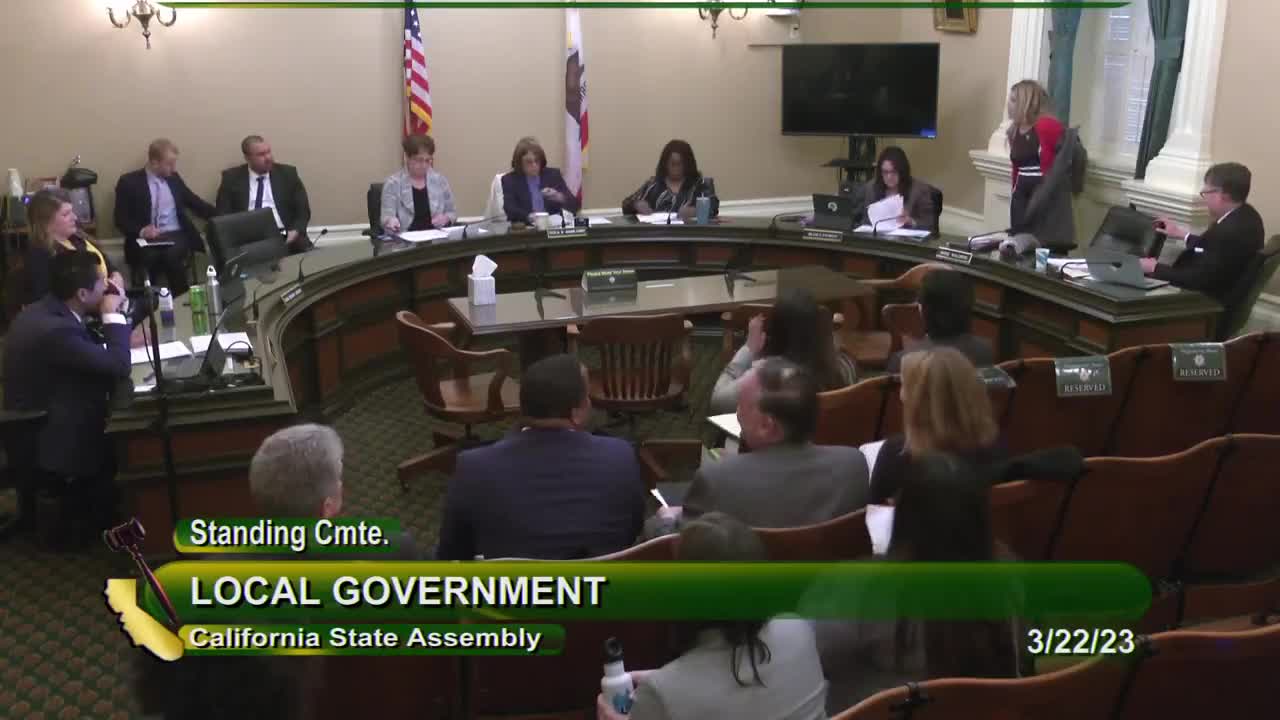 9MIN
Assembly Standing Committee on Local Government
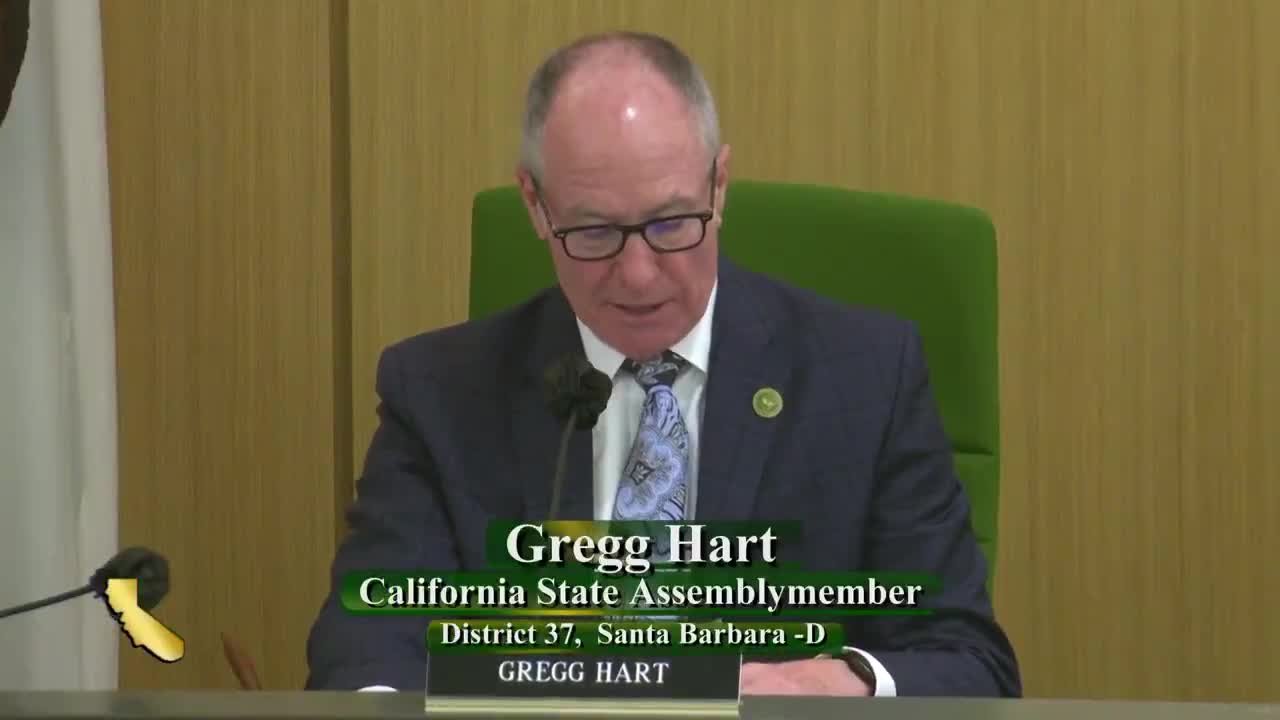 18MIN
Assembly Standing Committee on Transportation


Bill Co-Author(s):