AB 449: Hate crimes: law enforcement policies.
- Session Year: 2023-2024
- House: Assembly
- Latest Version Date: 2023-10-08
Current Status:
Passed
(2023-10-08: Chaptered by Secretary of State - Chapter 524, Statutes of 2023.)
Introduced
In Committee
First Chamber
In Committee
Second Chamber
Enacted
Existing law defines a hate crime as a criminal act committed, in whole or in part, because of actual or perceived characteristics of the victim, including, among other things, race, religion, disability, and sexual orientation. Existing law requires state law enforcement agencies and authorizes local law enforcement agencies to adopt a framework or other formal policy on hate crimes created by the Commission on Peace Officer Standards and Training. Existing law requires any local law enforcement agency that adopts or updates a hate crime policy to include specified information in that policy, including the content of the model policy framework developed by the commission.
This bill would make adoption of a hate crimes policy by a state and local law enforcement agency mandatory by July 1, 2024. The bill would require those policies to include the supplemental hate crime report in the model policy framework developed by the commission and a schedule of hate crime or related trainings the agency conducts. By imposing requirements on local agencies, this bill would impose a state-mandated local program.
Existing law requires the Department of Justice to collect specified information from law enforcement agencies relative to hate crimes, including formal hate crimes policies, and requires the Department of Justice and local law enforcement agencies to post that information on their internet websites.
This bill would require the Attorney General to review the submitted materials from those that law enforcement agencies submit and would require the Department of Justice to instruct agencies that did not submit materials or submitted noncompliant materials to submit compliant materials. The bill would require law enforcement agencies to submit the specified materials by a specified date. The bill would also require the Department of Justice to post the names of agencies that submitted compliant materials on its internet website. By imposing these requirements on law enforcement agencies, this bill would impose a state-mandated local program.
Existing law requires the Commission on Peace Officer Standards and Training to develop guidelines for instruction and training of law enforcement officers addressing hate crimes.
This bill would require the commission to consult with specified subject matter experts if the commission updates the guidelines, and would state that the guidelines and course of instruction are not regulations for purposes of the Administrative Procedures Act.
The California Constitution requires the state to reimburse local agencies and school districts for certain costs mandated by the state. Statutory provisions establish procedures for making that reimbursement.
This bill would provide that, if the Commission on State Mandates determines that the bill contains costs mandated by the state, reimbursement for those costs shall be made pursuant to the statutory provisions noted above.
Existing law defines a hate crime as a criminal act committed, in whole or in part, because of actual or perceived characteristics of the victim, including, among other things, race, religion, disability, and sexual orientation. Existing law requires state law enforcement agencies and authorizes local law enforcement agencies to adopt a framework or other formal policy on hate crimes created by the commission. Existing law requires any local law enforcement agency that adopts or updates a hate crime policy to include specified information in that policy, including the content of the model policy framework developed by the commission.
This bill would make adoption of a hate crimes policy by a local law enforcement agency mandatory. The bill would require those policies to include the supplemental hate crime report in the model policy framework developed by the commission and a schedule of hate crime or related trainings the agency conducts. By imposing requirements on local agencies, this bill would impose a state-mandated local program.
Existing law requires the Department of Justice to collect specified information from law enforcement agencies relative to hate crimes, including formal hate crimes policies, and requires the Department of Justice and local law enforcement agencies to post that information on their internet websites.
This bill would require the Department of Justice to select a sample of Attorney General to review the submitted materials from those that law enforcement agencies submit and would require the Department of Justice to instruct agencies that did not submit materials or submitted noncompliant materials to submit compliant materials. The bill would require law enforcement agencies to submit the specified materials by a specified date. The bill would also require the Department of Justice to post the names of agencies that submitted compliant materials on its internet website. By imposing these requirements on law enforcement agencies, this bill would impose a state-mandated local program.
Existing law requires the Commission on Peace Officer Standards and Training to develop guidelines for instruction and training of law enforcement officers addressing hate crimes.
This bill would require the commission to consult with specified subject matter experts if the commission updates the guidelines, and would state that the guidelines and course of instruction are not regulations for purposes of the Administrative Procedures Act.
The California Constitution requires the state to reimburse local agencies and school districts for certain costs mandated by the state. Statutory provisions establish procedures for making that reimbursement.
This bill would provide that, if the Commission on State Mandates determines that the bill contains costs mandated by the state, reimbursement for those costs shall be made pursuant to the statutory provisions noted above.
Existing law defines a hate crime as a criminal act committed, in whole or in part, because of actual or perceived characteristics of the victim, including, among other things, race, religion, disability, and sexual orientation. Existing law requires state law enforcement agencies and authorizes local law enforcement agencies to adopt a framework or other formal policy on hate crimes created by the commission. Existing law requires any local law enforcement agency that adopts or updates a hate crime policy to include specified information in that policy, including the content of the model policy framework developed by the commission.
This bill would make adoption of a hate crimes policy by a local law enforcement agency mandatory. The bill would require those policies to include the supplemental hate crime report in the model policy framework developed by the commission and a schedule of hate crime or related trainings the agency conducts. By imposing requirements on local agencies, this bill would impose a state-mandated local program.
Existing law requires the Department of Justice to collect specified information from law enforcement agencies relative to hate crimes, including formal hate crimes policies, and requires the Department of Justice and local law enforcement agencies to post that information on their internet websites.
This bill would require the Department of Justice to select a sample of submitted materials from those that law enforcement agencies submit and instruct agencies that did not submit materials or submitted noncompliant materials to submit compliant materials. The bill would require the Department of Justice to post the names of agencies that submitted compliant materials on its internet website.
Existing law requires the Commission on Peace Officer Standards and Training to develop guidelines for instruction and training of law enforcement officers addressing hate crimes.
This bill would require the commission to consult with specified subject matter experts if the commission updates the guidelines, and would state that the guidelines and course of instruction are not regulations for purposes of the Administrative Procedures Act.
The California Constitution requires the state to reimburse local agencies and school districts for certain costs mandated by the state. Statutory provisions establish procedures for making that reimbursement.
This bill would provide that, if the Commission on State Mandates determines that the bill contains costs mandated by the state, reimbursement for those costs shall be made pursuant to the statutory provisions noted above.
(a)Each state and local law enforcement agency shall, by July 1, 2024, adopt a hate crimes policy that shall include, but not be limited to, all of the following:
(1)The definitions in Sections 422.55 and 422.56.
(2)The content of the model policy framework that the Commission on Peace Officer Standards and Training developed pursuant to Section 13519.6, and any content that the commission may revise or add in the future, including any policy, definitions, response and reporting responsibilities, training resources, the supplemental hate crime report, and planning and prevention methods.
(3)(A)Information regarding bias motivation.
(B)For the purposes of this paragraph, bias motivation is a preexisting negative attitude toward actual or perceived characteristics referenced in Section 422.55. Depending on the circumstances of each case, bias motivation may include, but is not limited to, hatred, animosity, discriminatory selection of victims, resentment, revulsion, contempt, unreasonable fear, paranoia, callousness, thrill-seeking, desire for social dominance, desire for social bonding with those of ones own kind, or a perception of the vulnerability of the victim due to the victim being perceived as being weak, worthless, or fair game because of a protected characteristic, including, but not limited to, disability or gender.
(C)(i)In recognizing suspected disability-bias hate crimes, the policy shall instruct officers to consider whether there is any indication that the perpetrator was motivated by hostility or other bias, occasioned by factors such as, but not limited to, dislike of persons who arouse fear or guilt, a perception that persons with disabilities are inferior and therefore deserving victims, a fear of persons whose visible traits are perceived as being disturbing to others, or resentment of those who need, demand, or receive alternative educational, physical, or social accommodations.
(ii)In recognizing suspected disability-bias hate crimes, the policy also shall instruct officers to consider whether there is any indication that the perpetrator perceived the victim to be vulnerable and, if so, if this perception is grounded, in whole or in part, in antidisability bias. This includes, but is not limited to, if a perpetrator targets a person with a particular perceived disability while avoiding other vulnerable-appearing persons such as inebriated persons or persons with perceived disabilities different than those of the victim, those circumstances could be evidence that the perpetrators motivations included bias against persons with the perceived disability of the victim and that the crime must be reported as a suspected hate crime and not a mere crime of opportunity.
(D)In recognizing suspected religion-bias hate crimes, the policy shall instruct officers to consider whether there were targeted attacks on, or biased references to, symbols of importance to a particular religion or articles considered of spiritual significance in a particular religion. Examples of religions and such symbols and articles include, but are not limited to:
(i)In Buddhism, statues of the Buddha.
(ii)In Christianity, crosses.
(iii)In Hinduism, forehead markings, known as bindis and tilaks, Aum/Om symbols, and images of deities known as murtis.
(iv)In Islam, hijabs.
(v)In Judaism, Stars of David, menorahs, and yarmulke.
(vi)In Sikhism, turbans, head coverings, and unshorn hair, including beards.
(4)Information regarding the general underreporting of hate crimes and the more extreme underreporting of antidisability and antigender hate crimes and a plan for the agency to remedy this underreporting.
(5)A protocol for reporting suspected hate crimes to the Department of Justice pursuant to Section 13023.
(6)A checklist of first responder responsibilities, including, but not limited to, being sensitive to effects of the crime on the victim, determining whether any additional resources are needed on the scene to assist the victim or whether to refer the victim to appropriate community and legal services, and giving the victims and any interested persons the agencys hate crimes brochure, as required by Section 422.92.
(7)A specific procedure for transmitting and periodically retransmitting the policy and any related orders to all officers, including a simple and immediate way for officers to access the policy in the field when needed.
(8)The title or titles of the officer or officers responsible for ensuring that the department has a hate crime brochure as required by Section 422.92 and ensuring that all officers are trained to distribute the brochure to all suspected hate crime victims and all other interested persons.
(9)A requirement that all officers be familiar with the policy and carry out the policy at all times unless directed by the chief, sheriff, director, or other chief executive of the law enforcement agency or other command-level officer to whom the chief executive officer formally delegates this responsibility.
(10)A schedule of the hate crime training required by Section 13519.6 and any other hate crime or related training the agency may conduct.
(b)A law enforcement agency that updates an existing hate crimes policy or adopts a new hate crimes policy may include any of the provisions of a model hate crime policy and other relevant documents developed by the International Association of Chiefs of Police that are relevant to California and consistent with this chapter.
SEC. 2.Section 13023 of the Penal Code is amended to read:13023.(a) This section shall be subject to the availability of adequate funding.
(b)(1)The Attorney General shall direct state and local law enforcement agencies to report to the Department of Justice, in a manner to be prescribed by the Attorney General, any information that may be required relative to hate crimes.
(2)The Attorney General shall review state and local agencies formal policies on hate crimes required by Section 422.87 and the hate crime brochure required pursuant to Section 422.92. The department shall review the policies and brochures for compliance with law. The department shall instruct any agency that did not submit a policy or brochure, or that submitted a legally noncompliant policy or brochure, to submit compliant documents.
(c)(1)Law enforcement agencies are required to submit the hate crime documents required by the Attorney General as follows:
(A)On or before January 1, 2025, each law enforcement agency in the Counties of Los Angeles, Orange, San Luis Obispo, Santa Barbara, and Ventura shall produce their hate crime materials to the Department of Justice.
(B)On or before January 1, 2026, each law enforcement agency in the Counties of Alameda, Contra Costa, Del Norte, Humboldt, Lake, Marin, Mendocino, Monterey, Napa, San Benito, San Francisco, San Mateo, Santa Clara, Santa Cruz, Solano, and Sonoma shall produce their hate crime materials to the Department of Justice.
(C)On or before January 1, 2027, each law enforcement agency in the Counties of Colusa, Glenn, Lassen, Modoc, Nevada, Plumas, Shasta, Sierra, Siskiyou, Sutter, Tehama, Trinity, Yuba, Alpine, Amador, Calaveras, El Dorado, Placer, Sacramento, San Joaquin, Stanislaus, Tuolumne, and Yolo and the special districts of the San Francisco Bay Area Rapid Transit District, the Department of the California Highway Patrol, the Department of State Hospitals, and the state park system shall produce their hate crime materials to the Department of Justice.
(D)On or before January 1, 2028, each law enforcement agency in the Counties of Fresno, Kern, Kings, Madera, Mariposa, Merced, Tulare, Imperial, Inyo, Mono, Riverside, San Bernardino, and San Diego shall produce their hate crime materials to the Department of Justice.
(2)The production of hate crime materials pursuant to paragraph (1) shall proceed on a four-year schedule and shall be ongoing. All law enforcement agencies, including special districts, shall produce to the Attorney Generals office their hate crime materials on the specified date listed above, and then every four years thereafter in perpetuity.
(d)On or before July 1 of each year, the Department of Justice shall update the OpenJustice Web portal with the information obtained from law enforcement agencies pursuant to this section. The information shall include the names of agencies that submitted compliant policies and brochures, including any agency that submitted revised compliant documents. The department shall submit its analysis of this information to the Legislature in the manner described in subdivision (g) of Section 13010.
(e)Law enforcement agencies shall additionally post the information required in paragraph (1) of subdivision (b) to their internet websites on a monthly basis.
(f)For purposes of this section, hate crime has the same meaning as in Section 422.55.
SEC. 3.Section 13519.6 of the Penal Code is amended to read:13519.6.(a)(1)The commission, in consultation with subject-matter experts, including, but not limited to, law enforcement agencies, civil rights groups, and academic experts, and the Department of Justice, shall develop guidelines and a course of instruction and training for law enforcement officers who are employed as peace officers, or who are not yet employed as a peace officer but are enrolled in a training academy for law enforcement officers, addressing hate crimes. Hate crimes, for purposes of this section, has the same meaning as in Section 422.55.
(2)The commission shall consult with the subject-matter experts in paragraph (1) if the guidelines or course of instruction are updated.
(3)The guidelines and course of instruction developed pursuant to this section are not regulations as that term is used in the Administrative Procedure Act (Chapter 3.5 commencing with Section 11340 of Part 1 of Division 3 of the Government Code). This paragraph is declaratory of existing law.
(b)The course shall make maximum use of audio and video communication and other simulation methods and shall include instruction in each of the following:
(1)Indicators of hate crimes.
(2)The impact of these crimes on the victim, the victims family, and the community, and the assistance and compensation available to victims.
(3)Knowledge of the laws dealing with hate crimes and the legal rights of, and the remedies available to, victims of hate crimes.
(4)Law enforcement procedures, reporting, and documentation of hate crimes.
(5)Techniques and methods to handle incidents of hate crimes in a noncombative manner.
(6)Multimission criminal extremism, which means the nexus of certain hate crimes, antigovernment extremist crimes, anti-reproductive-rights crimes, and crimes committed in whole or in part because of the victims actual or perceived homelessness.
(7)The special problems inherent in some categories of hate crimes, including gender-bias crimes, disability-bias crimes, including those committed against homeless persons with disabilities, anti-immigrant crimes, and anti-Arab and anti-Islamic crimes, and techniques and methods to handle these special problems.
(8)Preparation for, and response to, possible future anti-Arab/Middle Eastern and anti-Islamic hate crimewaves, and any other future hate crime waves that the Attorney General determines are likely.
(c)The guidelines developed by the commission shall incorporate the procedures and techniques specified in subdivision (b) and shall include the model hate crimes policy framework for use by law enforcement agencies in adopting a hate crimes policy pursuant to Section 422.87. The elements of the model hate crimes policy framework shall include, but not be limited to, all of the following:
(1)A message from the law enforcement agencys chief executive officer to the agencys officers and staff concerning the importance of hate crime laws and the agencys commitment to enforcement.
(2)The definition of hate crime in Section 422.55.
(3)References to hate crime statutes including Section 422.6.
(4)A title-by-title specific protocol that agency personnel are required to follow, including, but not limited to, the following:
(A)Preventing and preparing for likely hate crimes by, among other things, establishing contact with persons and communities who are likely targets, and forming and cooperating with community hate crime prevention and response networks.
(B)Responding to reports of hate crimes, including reports of hate crimes committed under the color of authority.
(C)Accessing assistance, by, among other things, activating the Department of Justice hate crime rapid response protocol when necessary.
(D)Providing victim assistance and followup, including community followup.
(E)Reporting.
(5)A list of all requirements that Section 422.87 or any other law mandates a law enforcement agency to include in its hate crime policy.
(d)(1)The course of training leading to the basic certificate issued by the commission shall include the course of instruction described in subdivision (a).
(2)Every state law enforcement and correctional agency, and every local law enforcement and correctional agency to the extent that this requirement does not create a state-mandated local program cost, shall provide its peace officers with the basic course of instruction as revised pursuant to the act that amends this section in the 200304 session of the Legislature, beginning with officers who have not previously received the training. Correctional agencies shall adapt the course as necessary.
(e)(1)The commission shall, subject to an appropriation of funds for this purpose in the annual Budget Act or other statute, for any basic course, incorporate the November 2017 video course developed by the commission entitled Hate Crimes: Identification and Investigation, or any successor video, into the basic course curriculum.
(2)The commission shall make the video course described in paragraph (1) available to stream via the learning portal.
(3)Each peace officer shall, within one year of the commission making the course available to stream via the learning portal, be required to complete the November 2017 video facilitated course developed by the commission entitled Hate Crimes: Identification and Investigation, the course identified in paragraph (4), or any other commission-certified hate crimes course via the learning portal or in-person instruction.
(4)The commission shall develop and periodically update an interactive course of instruction and training for in-service peace officers on the topic of hate crimes and make the course available via the learning portal. The course shall cover the fundamentals of hate crime law and preliminary investigation of hate crime incidents, and shall include updates on recent changes in the law, hate crime trends, and best enforcement practices.
(5)The commission shall require the course described in paragraph (3) to be taken by in-service peace officers every six years.
(f)As used in this section, peace officer means any person designated as a peace officer by Section 830.1 or 830.2.
SEC. 4.If the Commission on State Mandates determines that this act contains costs mandated by the state, reimbursement to local agencies and school districts for those costs shall be made pursuant to Part 7 (commencing with Section 17500) of Division 4 of Title 2 of the Government Code.
(a)Each state and local law enforcement agency shall, by July 1, 2024, adopt a hate crimes policy that shall include, but not be limited to, all of the following:
(1)The definitions in Sections 422.55 and 422.56.
(2)The content of the model policy framework that the Commission on Peace Officer Standards and Training developed pursuant to Section 13519.6, and any content that the commission may revise or add in the future, including any policy, definitions, response and reporting responsibilities, training resources, the supplemental hate crime report, and planning and prevention methods.
(3)(A)Information regarding bias motivation.
(B)For the purposes of this paragraph, bias motivation is a preexisting negative attitude toward actual or perceived characteristics referenced in Section 422.55. Depending on the circumstances of each case, bias motivation may include, but is not limited to, hatred, animosity, discriminatory selection of victims, resentment, revulsion, contempt, unreasonable fear, paranoia, callousness, thrill-seeking, desire for social dominance, desire for social bonding with those of ones own kind, or a perception of the vulnerability of the victim due to the victim being perceived as being weak, worthless, or fair game because of a protected characteristic, including, but not limited to, disability or gender.
(C)(i)In recognizing suspected disability-bias hate crimes, the policy shall instruct officers to consider whether there is any indication that the perpetrator was motivated by hostility or other bias, occasioned by factors such as, but not limited to, dislike of persons who arouse fear or guilt, a perception that persons with disabilities are inferior and therefore deserving victims, a fear of persons whose visible traits are perceived as being disturbing to others, or resentment of those who need, demand, or receive alternative educational, physical, or social accommodations.
(ii)In recognizing suspected disability-bias hate crimes, the policy also shall instruct officers to consider whether there is any indication that the perpetrator perceived the victim to be vulnerable and, if so, if this perception is grounded, in whole or in part, in antidisability bias. This includes, but is not limited to, if a perpetrator targets a person with a particular perceived disability while avoiding other vulnerable-appearing persons such as inebriated persons or persons with perceived disabilities different than those of the victim, those circumstances could be evidence that the perpetrators motivations included bias against persons with the perceived disability of the victim and that the crime must be reported as a suspected hate crime and not a mere crime of opportunity.
(D)In recognizing suspected religion-bias hate crimes, the policy shall instruct officers to consider whether there were targeted attacks on, or biased references to, symbols of importance to a particular religion or articles considered of spiritual significance in a particular religion. Examples of religions and such symbols and articles include, but are not limited to:
(i)In Buddhism, statues of the Buddha.
(ii)In Christianity, crosses.
(iii)In Hinduism, forehead markings, known as bindis and tilaks, Aum/Om symbols, and images of deities known as murtis.
(iv)In Islam, hijabs.
(v)In Judaism, Stars of David, menorahs, and yarmulke.
(vi)In Sikhism, turbans, head coverings, and unshorn hair, including beards.
(4)Information regarding the general underreporting of hate crimes and the more extreme underreporting of antidisability and antigender hate crimes and a plan for the agency to remedy this underreporting.
(5)A protocol for reporting suspected hate crimes to the Department of Justice pursuant to Section 13023.
(6)A checklist of first responder responsibilities, including, but not limited to, being sensitive to effects of the crime on the victim, determining whether any additional resources are needed on the scene to assist the victim or whether to refer the victim to appropriate community and legal services, and giving the victims and any interested persons the agencys hate crimes brochure, as required by Section 422.92.
(7)A specific procedure for transmitting and periodically retransmitting the policy and any related orders to all officers, including a simple and immediate way for officers to access the policy in the field when needed.
(8)The title or titles of the officer or officers responsible for ensuring that the department has a hate crime brochure as required by Section 422.92 and ensuring that all officers are trained to distribute the brochure to all suspected hate crime victims and all other interested persons.
(9)A requirement that all officers be familiar with the policy and carry out the policy at all times unless directed by the chief, sheriff, director, or other chief executive of the law enforcement agency or other command-level officer to whom the chief executive officer formally delegates this responsibility.
(10)A schedule of the hate crime training required by Section 13519.6 and any other hate crime or related training the agency may conduct.
(b)A law enforcement agency that updates an existing hate crimes policy or adopts a new hate crimes policy may include any of the provisions of a model hate crime policy and other relevant documents developed by the International Association of Chiefs of Police that are relevant to California and consistent with this chapter.
SEC. 2.Section 13023 of the Penal Code is amended to read:13023.(a) This section shall be subject to the availability of adequate funding.
(b)(1)The Attorney General shall direct state and local law enforcement agencies to report to the Department of Justice, in a manner to be prescribed by the Attorney General, any information that may be required relative to hate crimes.
(2)In 2024 and in any year thereafter that the Attorney General requires, this information shall include the formal policies on hate crimes required by Section 422.87 and the hate crime pamphlet required pursuant to Section 422.92.(c)The department shall select a sample of policies and brochures from among those that law enforcement agencies submit. The sample shall include all of the following:(1)Several policies and brochures from agencies that employ the business that the largest number of law enforcement agencies in the state employ to develop their policies.(2)All policies and brochures from agencies that habitually report no hate crimes.(3)All policies and brochures from large agencies that develop their own policies if an initial department examination of their hate crime policies reveals any noncompliance with legal requirements.(d)The department shall review the sample of policies and brochures for compliance with law. It shall instruct any agency that submitted no policy or brochure, or that submitted a legally noncompliant policy or brochure, to submit compliant documents.(2)The Attorney General shall review state and local agencies formal policies on hate crimes required by Section 422.87 and the hate crime brochure required pursuant to Section 422.92. The department shall review the policies and brochures for compliance with law. The department shall instruct any agency that did not submit a policy or brochure, or that submitted a legally noncompliant policy or brochure, to submit compliant documents.
(c)(1)Law enforcement agencies are required to submit the hate crime documents required by the Attorney General as follows:
(A)On or before January 1, 2025, each law enforcement agency in the Counties of Los Angeles, Orange, San Luis Obispo, Santa Barbara, and Ventura shall produce their hate crime materials to the Department of Justice.
(B)On or before January 1, 2026, each law enforcement agency in the Counties of Alameda, Contra Costa, Del Norte, Humboldt, Lake, Marin, Mendocino, Monterey, Napa, San Benito, San Francisco, San Mateo, Santa Clara, Santa Cruz, Solano, and Sonoma shall produce their hate crime materials to the Department of Justice.
(C)On or before January 1, 2027, each law enforcement agency in the Counties of Colusa, Glenn, Lassen, Modoc, Nevada, Plumas, Shasta, Sierra, Siskiyou, Sutter, Tehama, Trinity, Yuba, Alpine, Amador, Calaveras, El Dorado, Placer, Sacramento, San Joaquin, Stanislaus, Tuolumne, and Yolo and the special districts of the San Francisco Bay Area Rapid Transit District, the Department of the California Highway Patrol, the Department of State Hospitals, and the state park system shall produce their hate crime materials to the Department of Justice.
(D)On or before January 1, 2028, each law enforcement agency in the Counties of Fresno, Kern, Kings, Madera, Mariposa, Merced, Tulare, Imperial, Inyo, Mono, Riverside, San Bernardino, and San Diego shall produce their hate crime materials to the Department of Justice.
(2)The production of hate crime materials pursuant to paragraph (1) shall proceed on a four-year schedule and shall be ongoing. All law enforcement agencies, including special districts, shall produce to the Attorney Generals office their hate crime materials on the specified date listed above, and then every four years thereafter in perpetuity.
(e)(d)On or before July 1 of each year, the Department of Justice shall update the OpenJustice Web portal with the information obtained from law enforcement agencies pursuant to this section. The information shall include the names of agencies that submitted compliant policies and brochures, including any agency that submitted revised compliant documents. The department shall submit its analysis of this information to the Legislature in the manner described in subdivision (g) of Section 13010.
(f)(e)Law enforcement agencies shall additionally post the information required in subdivision (a) paragraph (1) of subdivision (b) to their internet websites on a monthly basis.
(g)(f)For purposes of this section, hate crime has the same meaning as in Section 422.55.
SEC. 3.Section 13519.6 of the Penal Code is amended to read:13519.6.(a)(1)The commission, in consultation with subject-matter experts, including, but not limited to, law enforcement agencies, civil rights groups, and academic experts, and the Department of Justice, shall develop guidelines and a course of instruction and training for law enforcement officers who are employed as peace officers, or who are not yet employed as a peace officer but are enrolled in a training academy for law enforcement officers, addressing hate crimes. Hate crimes, for purposes of this section, has the same meaning as in Section 422.55.
(2)The commission shall consult with the subject-matter experts in paragraph (1) if the guidelines or course of instruction are updated.
(3)The guidelines and course of instruction developed pursuant to this section are not regulations as that term is used in the Administrative Procedure Act (Chapter 3.5 commencing with Section 11340 of Part 1 of Division 3 of the Government Code). This paragraph is declaratory of existing law.
(b)The course shall make maximum use of audio and video communication and other simulation methods and shall include instruction in each of the following:
(1)Indicators of hate crimes.
(2)The impact of these crimes on the victim, the victims family, and the community, and the assistance and compensation available to victims.
(3)Knowledge of the laws dealing with hate crimes and the legal rights of, and the remedies available to, victims of hate crimes.
(4)Law enforcement procedures, reporting, and documentation of hate crimes.
(5)Techniques and methods to handle incidents of hate crimes in a noncombative manner.
(6)Multimission criminal extremism, which means the nexus of certain hate crimes, antigovernment extremist crimes, anti-reproductive-rights crimes, and crimes committed in whole or in part because of the victims actual or perceived homelessness.
(7)The special problems inherent in some categories of hate crimes, including gender-bias crimes, disability-bias crimes, including those committed against homeless persons with disabilities, anti-immigrant crimes, and anti-Arab and anti-Islamic crimes, and techniques and methods to handle these special problems.
(8)Preparation for, and response to, possible future anti-Arab/Middle Eastern and anti-Islamic hate crimewaves, and any other future hate crime waves that the Attorney General determines are likely.
(c)The guidelines developed by the commission shall incorporate the procedures and techniques specified in subdivision (b) and shall include the model hate crimes policy framework for use by law enforcement agencies in adopting a hate crimes policy pursuant to Section 422.87. The elements of the model hate crimes policy framework shall include, but not be limited to, all of the following:
(1)A message from the law enforcement agencys chief executive officer to the agencys officers and staff concerning the importance of hate crime laws and the agencys commitment to enforcement.
(2)The definition of hate crime in Section 422.55.
(3)References to hate crime statutes including Section 422.6.
(4)A title-by-title specific protocol that agency personnel are required to follow, including, but not limited to, the following:
(A)Preventing and preparing for likely hate crimes by, among other things, establishing contact with persons and communities who are likely targets, and forming and cooperating with community hate crime prevention and response networks.
(B)Responding to reports of hate crimes, including reports of hate crimes committed under the color of authority.
(C)Accessing assistance, by, among other things, activating the Department of Justice hate crime rapid response protocol when necessary.
(D)Providing victim assistance and followup, including community followup.
(E)Reporting.
(5)A list of all requirements that Section 422.87 or any other law mandates a law enforcement agency to include in its hate crime policy.
(d)(1)The course of training leading to the basic certificate issued by the commission shall include the course of instruction described in subdivision (a).
(2)Every state law enforcement and correctional agency, and every local law enforcement and correctional agency to the extent that this requirement does not create a state-mandated local program cost, shall provide its peace officers with the basic course of instruction as revised pursuant to the act that amends this section in the 200304 session of the Legislature, beginning with officers who have not previously received the training. Correctional agencies shall adapt the course as necessary.
(e)(1)The commission shall, subject to an appropriation of funds for this purpose in the annual Budget Act or other statute, for any basic course, incorporate the November 2017 video course developed by the commission entitled Hate Crimes: Identification and Investigation, or any successor video, into the basic course curriculum.
(2)The commission shall make the video course described in paragraph (1) available to stream via the learning portal.
(3)Each peace officer shall, within one year of the commission making the course available to stream via the learning portal, be required to complete the November 2017 video facilitated course developed by the commission entitled Hate Crimes: Identification and Investigation, the course identified in paragraph (4), or any other commission-certified hate crimes course via the learning portal or in-person instruction.
(4)The commission shall develop and periodically update an interactive course of instruction and training for in-service peace officers on the topic of hate crimes and make the course available via the learning portal. The course shall cover the fundamentals of hate crime law and preliminary investigation of hate crime incidents, and shall include updates on recent changes in the law, hate crime trends, and best enforcement practices.
(5)The commission shall require the course described in paragraph (3) to be taken by in-service peace officers every six years.
(f)As used in this section, peace officer means any person designated as a peace officer by Section 830.1 or 830.2.
SEC. 4.If the Commission on State Mandates determines that this act contains costs mandated by the state, reimbursement to local agencies and school districts for those costs shall be made pursuant to Part 7 (commencing with Section 17500) of Division 4 of Title 2 of the Government Code.
(a)Each state and local law enforcement agency may shall, by July 1, 2024, adopt a hate crimes policy. Any local law enforcement agency that updates an existing hate crimes policy or adopts a new hate crimes policy that shall include, but not be limited to, all of the following:
(1)The definitions in Sections 422.55 and 422.56.
(2)The content of the model policy framework that the Commission on Peace Officer Standards and Training developed pursuant to Section 13519.6, and any content that the commission may revise or add in the future, including any policy, definitions, response and reporting responsibilities, training resources, the supplemental hate crime report, and planning and prevention methods.
(3)(A)Information regarding bias motivation.
(B)For the purposes of this paragraph, bias motivation is a preexisting negative attitude toward actual or perceived characteristics referenced in Section 422.55. Depending on the circumstances of each case, bias motivation may include, but is not limited to, hatred, animosity, discriminatory selection of victims, resentment, revulsion, contempt, unreasonable fear, paranoia, callousness, thrill-seeking, desire for social dominance, desire for social bonding with those of ones own kind, or a perception of the vulnerability of the victim due to the victim being perceived as being weak, worthless, or fair game because of a protected characteristic, including, but not limited to, disability or gender.
(C)(i)In recognizing suspected disability-bias hate crimes, the policy shall advise instruct officers to consider whether there is any indication that the perpetrator was motivated by hostility or other bias, occasioned by factors such as, but not limited to, dislike of persons who arouse fear or guilt, a perception that persons with disabilities are inferior and therefore deserving victims, a fear of persons whose visible traits are perceived as being disturbing to others, or resentment of those who need, demand, or receive alternative educational, physical, or social accommodations.
(ii)In recognizing suspected disability-bias hate crimes, the policy also shall advise instruct officers to consider whether there is any indication that the perpetrator perceived the victim to be vulnerable and, if so, if this perception is grounded, in whole or in part, in antidisability bias. This includes, but is not limited to, if a perpetrator targets a person with a particular perceived disability while avoiding other vulnerable-appearing persons such as inebriated persons or persons with perceived disabilities different than those of the victim, those circumstances could be evidence that the perpetrators motivations included bias against persons with the perceived disability of the victim and that the crime must be reported as a suspected hate crime and not a mere crime of opportunity.
(D)In recognizing suspected religion-bias hate crimes, the policy shall instruct officers to consider whether there were targeted attacks on, or biased references to, symbols of importance to a particular religion or articles considered of spiritual significance in a particular religion. Examples of religions and such symbols and articles include, but are not limited to:
(i)In Buddhism, statutes statues of the Buddha.
(ii)In Christianity, crosses.
(iii)In Hinduism, forehead markings, known as bindis and tilaks, Aum/Om symbols, and images of deities known as murtis.
(iv)In Islam, hijabs.
(v)In Judaism, Stars of David, menorahs, and yarmulke.
(vi)In Sikhism, turbans, head coverings, and unshorn hair, including beards.
(4)Information regarding the general underreporting of hate crimes and the more extreme underreporting of antidisability and antigender hate crimes and a plan for the agency to remedy this underreporting.
(5)A protocol for reporting suspected hate crimes to the Department of Justice pursuant to Section 13023.
(6)A checklist of first responder responsibilities, including, but not limited to, being sensitive to effects of the crime on the victim, determining whether any additional resources are needed on the scene to assist the victim or whether to refer the victim to appropriate community and legal services, and giving the victims and any interested persons the agencys hate crimes brochure, as required by Section 422.92.
(7)A specific procedure for transmitting and periodically retransmitting the policy and any related orders to all officers, including a simple and immediate way for officers to access the policy in the field when needed.
(8)The title or titles of the officer or officers responsible for ensuring that the department has a hate crime brochure as required by Section 422.92 and ensuring that all officers are trained to distribute the brochure to all suspected hate crime victims and all other interested persons.
(9)A requirement that all officers be familiar with the policy and carry out the policy at all times unless directed by the chief, sheriff, director, or other chief executive of the law enforcement agency or other command-level officer to whom the chief executive officer formally delegates this responsibility.
(10)A schedule of the hate crime training required by Section 13519.6 and any other hate crime or related training the agency may conduct.
(b)Any local A law enforcement agency that updates an existing hate crimes policy or adopts a new hate crimes policy may include any of the provisions of a model hate crime policy and other relevant documents developed by the International Association of Chiefs of Police that are relevant to California and consistent with this chapter.
SEC. 2.Section 13023 of the Penal Code is amended to read:13023.(a)Subject to the availability of adequate funding, the Attorney This section shall be subject to the availability of adequate funding.
(b)(1)The Attorney General shall direct state and local law enforcement agencies to report to the Department of Justice, in a manner to be prescribed by the Attorney General, any information that may be required relative to hate crimes. This information may include any general orders or formal policies on hate crimes and
(2)In 2024 and in any year thereafter that the Attorney General requires, this information shall include the formal policies on hate crimes required by Section 422.87 and the hate crime pamphlet required pursuant to Section 422.92.
(c)The department shall select a sample of policies and brochures from among those that law enforcement agencies submit. The sample shall include all of the following:
(1)Several policies and brochures from agencies that employ the business that the largest number of law enforcement agencies in the state employ to develop their policies.
(2)All policies and brochures from agencies that habitually report no hate crimes.
(3)All policies and brochures from large agencies that develop their own policies if an initial department examination of their hate crime policies reveals any noncompliance with legal requirements.
(d)The department shall review the sample of policies and brochures for compliance with law. It shall instruct any agency that submitted no policy or brochure, or that submitted a legally noncompliant policy or brochure, to submit compliant documents.
(b)(e)On or before July 1 of each year, the Department of Justice shall update the OpenJustice Web portal with the information obtained from local law enforcement agencies pursuant to this section. The information shall include the names of agencies that submitted compliant policies and brochures, including any agency that submitted revised compliant documents. The department shall submit its analysis of this information to the Legislature in the manner described in subdivision (g) of Section 13010.
(c)Local law(f)Law enforcement agencies shall additionally post the information required in subdivision (a) to their internet websites on a monthly basis.
(d)(g)For purposes of this section, hate crime has the same meaning as in Section 422.55.
SEC. 3.Section 13519.6 of the Penal Code is amended to read:13519.6.(a)(1)The commission, in consultation with subject-matter experts, including, but not limited to, law enforcement agencies, civil rights groups, and academic experts, and the Department of Justice, shall develop guidelines and a course of instruction and training for law enforcement officers who are employed as peace officers, or who are not yet employed as a peace officer but are enrolled in a training academy for law enforcement officers, addressing hate crimes. Hate crimes, for purposes of this section, has the same meaning as in Section 422.55.
(2)The commission shall consult with the subject-matter experts in paragraph (1) if the guidelines or course of instruction are updated.
(3)The guidelines and course of instruction developed pursuant to this section are not regulations as that term is used in the Administrative Procedure Act (Chapter 3.5 commencing with Section 11340 of Part 1 of Division 3 of the Government Code). This paragraph is declaratory of existing law.
(b)The course shall make maximum use of audio and video communication and other simulation methods and shall include instruction in each of the following:
(1)Indicators of hate crimes.
(2)The impact of these crimes on the victim, the victims family, and the community, and the assistance and compensation available to victims.
(3)Knowledge of the laws dealing with hate crimes and the legal rights of, and the remedies available to, victims of hate crimes.
(4)Law enforcement procedures, reporting, and documentation of hate crimes.
(5)Techniques and methods to handle incidents of hate crimes in a noncombative manner.
(6)Multimission criminal extremism, which means the nexus of certain hate crimes, antigovernment extremist crimes, anti-reproductive-rights crimes, and crimes committed in whole or in part because of the victims actual or perceived homelessness.
(7)The special problems inherent in some categories of hate crimes, including gender-bias crimes, disability-bias crimes, including those committed against homeless persons with disabilities, anti-immigrant crimes, and anti-Arab and anti-Islamic crimes, and techniques and methods to handle these special problems.
(8)Preparation for, and response to, possible future anti-Arab/Middle Eastern and anti-Islamic hate crimewaves, and any other future hate crime waves that the Attorney General determines are likely.
(c)The guidelines developed by the commission shall incorporate the procedures and techniques specified in subdivision (b), and shall include a framework and possible content of a general order or other formal policy on hate crimes that all state law enforcement agencies shall adopt and the commission shall encourage all local law enforcement agencies to adopt. (b) and shall include the model hate crimes policy framework for use by law enforcement agencies in adopting a hate crimes policy pursuant to Section 422.87. The elements of the model hate crimes policy framework shall include, but not be limited to, all of the following:
(1)A message from the law enforcement agencys chief executive officer to the agencys officers and staff concerning the importance of hate crime laws and the agencys commitment to enforcement.
(2)The definition of hate crime in Section 422.55.
(3)References to hate crime statutes including Section 422.6.
(4)A title-by-title specific protocol that agency personnel are required to follow, including, but not limited to, the following:
(A)Preventing and preparing for likely hate crimes by, among other things, establishing contact with persons and communities who are likely targets, and forming and cooperating with community hate crime prevention and response networks.
(B)Responding to reports of hate crimes, including reports of hate crimes committed under the color of authority.
(C)Accessing assistance, by, among other things, activating the Department of Justice hate crime rapid response protocol when necessary.
(D)Providing victim assistance and followup, including community followup.
(E)Reporting.
(5)A list of all requirements that Section 422.87 or any other law mandates a law enforcement agency to include in its hate crime policy.
(d)(1)The course of training leading to the basic certificate issued by the commission shall include the course of instruction described in subdivision (a).
(2)Every state law enforcement and correctional agency, and every local law enforcement and correctional agency to the extent that this requirement does not create a state-mandated local program cost, shall provide its peace officers with the basic course of instruction as revised pursuant to the act that amends this section in the 200304 session of the Legislature, beginning with officers who have not previously received the training. Correctional agencies shall adapt the course as necessary.
(e)(1)The commission shall, subject to an appropriation of funds for this purpose in the annual Budget Act or other statute, for any basic course, incorporate the November 2017 video course developed by the commission entitled Hate Crimes: Identification and Investigation, or any successor video, into the basic course curriculum.
(2)The commission shall make the video course described in paragraph (1) available to stream via the learning portal.
(3)Each peace officer shall, within one year of the commission making the course available to stream via the learning portal, be required to complete the November 2017 video facilitated course developed by the commission entitled Hate Crimes: Identification and Investigation, the course identified in paragraph (4), or any other POST commission-certified hate crimes course via the learning portal or in-person instruction.
(4)The commission shall develop and periodically update an interactive course of instruction and training for in-service peace officers on the topic of hate crimes and make the course available via the learning portal. The course shall cover the fundamentals of hate crime law and preliminary investigation of hate crime incidents, and shall include updates on recent changes in the law, hate crime trends, and best enforcement practices.
(5)The commission shall require the course described in paragraph (3) to be taken by in-service peace officers every six years.
(f)As used in this section, peace officer means any person designated as a peace officer by Section 830.1 or 830.2.
SEC. 4.If the Commission on State Mandates determines that this act contains costs mandated by the state, reimbursement to local agencies and school districts for those costs shall be made pursuant to Part 7 (commencing with Section 17500) of Division 4 of Title 2 of the Government Code.
|
Date
|
Status
|
|---|---|
| Oct 8, 2023 | Chaptered by Secretary of State - Chapter 524, Statutes of 2023. |
| Oct 8, 2023 | Approved by the Governor. |
| Sep 18, 2023 | Enrolled and presented to the Governor at 3:30 p.m. |
| Sep 11, 2023 | In Assembly. Ordered to Engrossing and Enrolling. |
| Sep 11, 2023 | Read third time. Passed. Ordered to the Assembly. (Ayes 39. Noes 0. Page 2556.). |
| Sep 5, 2023 | Read second time. Ordered to third reading. |
| Sep 1, 2023 | From committee: Do pass. (Ayes 7. Noes 0.) (September 1). |
| Aug 14, 2023 | In committee: Referred to APPR suspense file. |
| Jun 28, 2023 | From committee: Do pass and re-refer to Com. on APPR. (Ayes 5. Noes 0.) (June 27). Re-referred to Com. on APPR. |
| Jun 7, 2023 | Referred to Com. on PUB S. |
| May 26, 2023 | In Senate. Read first time. To Com. on RLS. for assignment. |
| May 25, 2023 | Read third time. Passed. Ordered to the Senate. (Ayes 75. Noes 0. Page 1802.) |
| May 22, 2023 | Read second time. Ordered to third reading. |
| May 18, 2023 | Read second time and amended. Ordered returned to second reading. |
| May 18, 2023 | From committee: Amend, and do pass as amended. (Ayes 11. Noes 0.) (May 18). |
| May 10, 2023 | In committee: Set, first hearing. Referred to APPR. suspense file. |
| May 3, 2023 | In committee: Hearing postponed by committee. |
| Apr 26, 2023 | In committee: Hearing postponed by committee. |
| Mar 14, 2023 | From committee: Do pass and re-refer to Com. on APPR. (Ayes 8. Noes 0.) (March 14). Re-referred to Com. on APPR. |
| Feb 17, 2023 | Referred to Com. on PUB. S. |
| Feb 7, 2023 | From printer. May be heard in committee March 9. |
| Feb 6, 2023 | Read first time. To print. |
|
Date
|
Description
|
Location
|
Votes
|
|
|---|---|---|---|---|
| Sep 11, 2023 | Assembly 3rd Reading AB449 Ting et al. By Min | Senate Floor |
Passed |
|
| Sep 1, 2023 | Do pass | Senate Standing Committee on Appropriations |
Passed |
|
| Aug 14, 2023 | Placed on suspense file | Senate Standing Committee on Appropriations |
Passed |
|
| Jun 27, 2023 | Do pass, but first be re-referred to the Committee on [Appropriations] | Senate Standing Committee on Public Safety |
Passed |
|
| May 25, 2023 | AB 449 Ting Assembly Third Reading | Assembly Floor |
Passed |
|
| May 18, 2023 | Do pass as amended. | Assembly Standing Committee on Appropriations |
Passed |
|
| Mar 14, 2023 | Do pass and be re-referred to the Committee on [Appropriations] | Assembly Standing Committee on Public Safety |
Passed |
This list shows positions taken on this bill by organizations on the date displayed, which is linked to the original source.
Positions by individuals are not included.
|
Organization
|
Position
|
Date
|
|---|---|---|
| American Jewish Committee, Los Angeles | ** Support | |
| American Jewish Committee, San Diego | ** Support | |
| American Jewish Committee, San Francisco | ** Support | |
| Anti-Defamation League | ** Support | |
| Asian Law Alliance | ** Support | |
| Association Of Regional Center Agencies | ** Support | |
| Autism Speaks | ** Support | |
| California Alliance For Retired Americans | ** Support | |
| California Asian American Bar Association | ** Support | |
| California Asian Pacific American Bar Association | ** Support | |
| California Church Impact | ** Support | |
| California Community Living Network | ** Support | |
| California District Attorneys Association | ** Against | |
| California Faculty Association | ** Support | |
| California-Hawaii State Conference Of The Naacp | ** Support | |
| California League of United Latin American Citizens | ** Support | |
| Center for The Study of Hate & Extremism - California State University, San Bernardino | ** Support | |
| Coalition for Humane Immigrant Rights | ** Support | |
| Compassion in Oakland | ** Support | |
| Dear Community | ** Support | |
| Delta Chinatown Initiative | ** Support | |
| Disability Rights California | ** Support | |
| ETTA | ** Support | |
| Feminist Majority | ** Support | |
| Hadassah | ** Support | |
| Hindu American Foundation | ** Support | |
| Holocaust Museum LA | ** Support | |
| Japanese-American Citizens League – San Jose Chapter | ** Support | |
| JCRC Bay Area | ** Support | |
| Jewish Center for Justice | ** Support | |
| jewish community relations council of sacramento | ** Support | |
| Jewish Community Relations Council of Silicon Valley | ** Support | |
| Jewish Democratic Club of Silicon Valley | ** Support | |
| Jewish Democratic Club of Solano County | ** Support | |
| Jewish Family and Children’s Service of Long Beach and Orange County | ** Support | |
| Jewish Family and Community Services East Bay | ** Support | |
| Jewish Family Services of San Francisco, the Peninsula, Marin and Sonoma Counties | ** Support | |
| Jewish Family Services of Silicon Valley | ** Support | |
| Jewish Family Services San Diego | ** Support | |
| Jewish Federation of Greater Los Angeles | ** Support | |
| Jewish Federation of Greater Santa Barbara | ** Support | |
| Jewish Federation of The Greater San Gabriel and Pomona Valleys | ** Support | |
| Jewish Federation Of The Sacramento Region | ** Support | |
| Jewish Long Beach | ** Support | |
| Jewish Public Affairs Committee Of California | ** Support | |
| JVS SoCal | ** Support | |
| National Asian Pacific American Bar Association | ** Support | |
| Not in Our Town | ** Support | |
| PathPoint | ** Support | |
| Progressive Zionists of California | ** Support | |
| sikh american legal defense and education fund | ** Support | |
| Stand With Asian Americans | ** Support | |
| Stand With Asians | ** Support | |
| The Arc California | ** Support | |
| The Arc of Ventura County | ** Support | |
| The Sikh Coalition | ** Support |
SENATE RULES COMMITTEE Office of Senate Floor Analyses (916) 651-1520 Fax: (916) 327-4478 | AB 449 |
THIRD READING
Bill No: AB 449
Author: Ting (D), et al.
Amended: 5/18/23 in Assembly
Vote: 21
SENATE PUBLIC SAFETY COMMITTEE: 5-0, 6/27/23
AYES: Wahab, Ochoa Bogh, Bradford, Skinner, Wiener
SENATE APPROPRIATIONS COMMITTEE: 7-0, 9/1/23
AYES: Portantino, Jones, Ashby, Bradford, Seyarto, Wahab, Wiener
ASSEMBLY FLOOR: 75-0, 5/25/23 - See last page for vote
SUBJECT: Hate crimes: law enforcement policies
SOURCE: California Asian American Bar Association
The ARC California
DIGEST:
This bill require any state or local law enforcement agency to adopt a hate crime policy by July 1, 2024, and to report that policy to the Department of Justice, as provided. This bill also requires the Commission on Peace Officer Standards and Training to update its model hate crimes policy framework.
ANALYSIS:
Existing law:
- Defines “hate crime” as a criminal act committed in whole or in part because of one or more of the following actual or perceived characteristics of the victim:
- Disability;
- Gender;
- Nationality;
- Race or ethnicity;
- Religion;
- Sexual orientation; or
- Association with a person or group with one or more of these actual or perceived characteristics. (Pen. Code, § 422.55, subd. (a) (1)-(7).)
- Provides that all state and local agencies shall use the definition of “hate crime” stated above except as other explicit provisions of state or federal law may require otherwise. (Pen. Code, § 422.9.)
- Specifies that “hate crimes” include, but are not limited to, violating or interfering with the exercise of civil rights, or knowingly defacing, destroying, or damaging property because of actual or perceived characteristics of the victim that fit the definition of hate crime. (Pen. Code, §§ 422.55, subd. (b). & 422.6., subd. (a) and (b).)
- Provides that any person convicted for violating or interfering with the civil rights of another on the basis of actual or perceived characteristics of the victim that fit the hate crime definition shall be punished by imprisonment in a county jail not to exceed one year, or by a fine not to exceed $5,000, or by both imprisonment and fine. The court shall also order community service, not to exceed 400 hours. (Pen. Code, §, 422.6 subd. (c).)
- Authorizes each state law enforcement agency to adopt a hate crime policy, and that when such a policy is adopted, it must include, but not necessarily be limited to, all of the following:
- Definitions of hate crimes and associated terms;
- The content of the model policy framework developed by the Commission on Peace Officer Standards and Training (POST), as specified;
- Information regarding “bias motivation,” including disability-bias and religion bias, as specified;
- Information regarding the general underreporting of hate crimes and the more extreme underreporting of anti-disability and anti-gender hate crimes and a plan for the agency to remedy this underreporting;
- A protocol for reporting suspected hate crimes to the Department of Justice (DOJ), as specified;
- A checklist of first responder responsibilities, including, but not limited to, being sensitive to effects of the crime on the victim, determining whether any additional resources are needed on the scene to assist the victim or whether to refer the victim to appropriate community and legal services, and giving the victims and any interested persons the agency’s hate crimes brochure;
- A specific procedure for transmitting and periodically retransmitting the policy and any related orders to all officers, including a simple and immediate way for officers to access the policy in the field when needed;
- The title or titles of the officer or officers responsible for ensuring that the department has a hate crime brochure and ensuring that all officers are trained to distribute the brochure to all suspected hate crime victims and all other interested persons; and,
- A requirement that all officers be familiar with the policy and carry out the policy at all times unless directed by the chief, sheriff, director, or other chief executive of the law enforcement agency or other command-level officer to whom the chief executive officer formally delegates this responsibility. (Pen. Code, § 422.87, subd. (a).)
- Permits any local law enforcement agency that updates an existing hate crimes policy or adopts a new hate crimes policy to include any of the provisions of a model hate crime policy and other relevant documents developed by the International Association of Police Chiefs that are relevant to California and consistent with specified existing law. (Pen. Code, § 422.87, subd. (b).)
- Provides that every state and local law enforcement agency in this state shall make available a brochure on hate crimes to victims of these crimes and the public. (Pen. Code, § 422.92, subd. (a).)
- Requires local law enforcement agencies, upon adequate funding, to report to the DOJ in a timely manner prescribed by the Attorney General any information relative to hate crimes. (Pen. Code, § 13023, subd. (a).)
- Requires DOJ, on or before July 1 of each year, to update the OpenJustice Web portal with information obtained from local law enforcement agencies regarding hate crimes. (Pen. Code, § 13023, subd. (b).)
- Requires POST, in consultation with subject-matter experts including, but not limited to, law enforcement agencies, civil rights groups, academic experts, and the DOJ, to develop guidelines and a course of instruction and training for law enforcement officers who are employed as peace officers, or who are not yet employed as a peace officer but are enrolled in a training academy for law enforcement officers, addressing hate crimes. (Pen. Code, § 13519.6, subd. (a).)
- Requires the POST course on hate crimes to include instruction in each of the following:
- Indicators of hate crimes;
- The impact of these crimes on the victim, the victim’s family, and the community, and the assistance and compensation available to victims;
- Knowledge of the laws dealing with hate crimes and the legal rights of, and the remedies available to, victims of hate crimes;
- Law enforcement procedures, reporting, and documentation of hate crimes;
- Techniques and methods to handle incidents of hate crimes in a non-combative manner;
- Multimission criminal extremism, which means the nexus of certain hate crimes, antigovernment extremist crimes, anti-reproductive-rights crimes, and crimes committed in whole or in part because of the victims’ actual or perceived homelessness;
- The special problems inherent in some categories of hate crimes, including gender-bias crimes, disability-bias crimes, including those committed against homeless persons with disabilities, anti-immigrant crimes, and anti-Arab and anti-Islamic crimes, and techniques and methods to handle these special problems; and
- Preparation for, and response to, possible future anti-Arab/Middle Eastern and anti-Islamic hate crime waves, and any other future hate crime waves that the AG determines are likely. (Pen. Code, § 13519.6, subd. (b).)
- Requires POST guidelines to include a framework and possible content of a general order or other formal policy on hate crimes that all state law enforcement agencies shall adopt and the commission shall encourage all local law enforcement agencies to adopt. (Pen. Code, § 13519.6, subd. (c).)
- Defines “anti-reproductive rights crime” and “subject matter experts” for purposes of POST training. (Pen. Code, § 13776.)
This bill:
- Makes the adoption of a hate crimes policy by law enforcement agencies mandatory rather than permissive.
- Requires that state and local law enforcement agencies adopt a hate crimes policy, as specified, by July 1, 2024.
- Specifies that the hate crimes policy adopted by a state and local law enforcement agency must include the supplemental hate crime report developed by POST, a schedule of POST's required hate crime training, as specified, and any other hate crime or related training the state or local law enforcement agency may conduct.
- Extends to state law enforcement agencies the requirement to report to the DOJ, in a manner as prescribed and directed by the Attorney General, any information that may be required relative to hate crimes.
- Requires the Attorney General to review state and local agencies’ formal policies on hate crimes and the required hate crimes brochure for compliance with law, and shall instruct any agency that did not submit a policy or brochure, or that submitted a legally noncompliant policy or brochure, to submit compliant documents.
- Establishes a tiered schedule for the submission of hate crime documents to the DOJ, broken down by county, as follows:
- On or before January 1, 2025: each law enforcement agency in Los Angeles, Orange, San Luis Obispo and Ventura Counties.
- On or before January 1, 2026: each law enforcement agency in Alameda, Contra Costa, Del Norte, Humboldt, Lake, Marin, Mendocino, Monterey, Napa, San Benito, San Francisco, San Mateo, Santa Clara, Santa Cruz, Solano, and Sonoma Counties.
- On or before January 1, 2027: each law enforcement agency in Colusa, Glenn, Lassen, Modoc, Nevada, Plumas, Shasta, Sierra, Siskiyou, Sutter, Tehama, Trinity, Yuba, Alpine, Amador, Calaveras, El Dorado, Placer, Sacramento, San Joaquin, Stanislaus, Tuolumne, and Yolo Counties, as well as the special districts of the San Francisco Bay Area Rapid Transit District, the Department of the California Highway Patrol, the Department of State Hospitals, and the state park system.
- On or before January 1, 2028: Fresno, Kern, Kings, Madera, Mariposa, Merced, Tulare, Imperial, Inyo, Mono, Riverside, San Bernardino, and San Diego Counties.
- Provides that the submission of hate crime materials pursuant to the above shall proceed on a four year schedule, beginning with the date above, and continuing every four years in perpetuity.
- Requires DOJ, in its annual update to the OpenJustice Web portal, to include the names of agencies that submitted compliant policies and brochures, including any agency that submitted revised compliant documents.
- Requires POST to consult with subject matter experts, as specified, when updating the guidelines or course of instruction for law enforcement officers who are employed as peace officers, or who are not yet employed as a peace officer but are enrolled in a training academy for law enforcement officers, addressing hate crimes.
- Provides that the guidelines and course of instruction POST develops are not regulations under the Administrative Procedures Act.
- Requires guidelines developed by POST related to its course of instruction on hate crimes to include a model hate crimes policy framework for use by law enforcement agencies in adopting a hate crimes policy, as specified.
- Adds to the required elements for POST's model hate crime policy framework the requirements for hate crime policies developed by state and local law enforcement agencies, as specified.
Comments
According to the author, “Unbelievably, California does not require law enforcement agencies to have a hate crimes policy. As we have seen the Asian Pacific Islander American community faced a major surge in violence and harassment solely based on their race, we must have guidelines that allow for consistent response by law enforcement across the State. AB 449 would resolve this issue by requiring all California law enforcement agencies to adopt a hate crimes policy and follow specific guidelines.”
California has experienced challenges regarding hate crime reporting by local law enforcement agencies. The DOJ requires law enforcement agencies (including police, sheriffs, CHP, and prosecutorial agencies) to submit information on all hate crimes occurring in their jurisdictions on a monthly basis, then transmits these data to the FBI and creates its annual report to the Legislature. However, a report published by the California State Auditor in 2018 found that several agencies had failed to report some hate crimes to the DOJ. Additionally, the audit found that although DOJ guidance requires agencies to submit information on a monthly basis, the DOJ had made no recent effort to ensure that all agencies complied with this requirement. According to the report:
When we asked DOJ to provide us with a list of agencies that it requires to report information to its hate crimes database, we found that it did not maintain a complete or accurate listing of all law enforcement agencies in the State. Specifically, a number of law enforcement agencies were not present on the list, and much of the contact information on the list was incorrect. Moreover, DOJ does not verify that all law enforcement agencies it requires to report do so, nor does it review the data that the agencies submit to ensure its accuracy. DOJ’s lack of proactive guidance and oversight of law enforcement agencies is contributing to the underreporting of hate crime information that it provides to the public, the Legislature, and the FBI.
The audit also found that local law enforcement agencies lacked the tools and training to identify hate crimes appropriately. The audit states:
Officers at…law enforcement agencies might have been better equipped to identify hate crimes if their agencies had implement better methods for doing so and provided periodic training. […] At local law enforcement agencies we reviewed, a lack of hate crime training and protocols, in addition to little proactive guidance and oversight from DOJ, have contributed to the underreporting of hate crimes.” […] “Law enforcement agencies need to improve their response to hate crimes by providing outreach that encourages individuals to report hate crimes.
Existing law authorizes, but does not require, local law enforcement agencies to adopt a hate crimes policy. Existing law also requires POST to develop a model policy on hate crimes, which must consist of several specified elements, and which all state law enforcement agencies must adopt. If a local law enforcement agency does elect to adopt a hate crimes policy, existing law requires the policy to include a host of specific elements (laid out in Penal Code § 422.87), including existing statutory hate crime-related definitions, the elements of POST’s model policy, information regarding bias motivation, a checklist of first responder responsibilities, and a protocol for reporting hate crimes to the DOJ, among others.
This bill requires all state and local law enforcement agencies, by July 1, 2024, to adopt a hate crimes policy that includes all the elements set forth in Penal Code Section 422.87, including a new element regarding the schedule of hate crime training required by existing law and any other hate crime training the agency may conduct. Additionally, this bill provides that if POST updates the hate crimes guidelines (of which the model policy is a part) and training that it is required to develop under existing law, it must consult certain subject matter experts.
As referenced above, existing law requires local law enforcement agencies to report relevant hate crimes information to the DOJ, and in turn requires the DOJ to post this information on its OpenJustice web portal. This bill requires both local and state agencies to report this information to DOJ, and requires the Attorney General to review agencies’ formal hate crimes policies for compliance with the requirements outlined above. This bill also establishes a tiered reporting timeline, with various specified counties/agencies required to report on or before January 1 of each year beginning with 2025 through 2028, and then every four years on that date in perpetuity. So, for instance, under this bill, Santa Cruz County is required to report its hate crime materials to DOJ on or before January 1, 2026, and then would be required to report again in 2030, 2034, etc.
FISCAL EFFECT: Appropriation: No Fiscal Com.: Yes Local: Yes
According to the Senate Appropriations Committee:
- The DOJ reports costs of $1.1 million in 2023-24 and $1.7 million annually thereafter to receive reports from law enforcement agencies throughout the state and to post information regarding compliance and noncompliance with the provisions of AB 449 (General Fund)
- Unknown, potentially reimbursable costs to hundreds of local law enforcement agencies within California (Local Funds, General Fund).
- The Department of Insurance reports it would need 0.19 PY and $60,000 in 2024-25 in order to revise its existing hate crimes policy and implement AB 449 (Insurance Fund).
- Minor and absorbable costs to POST to update its model hate crimes policy framework.
SUPPORT: (Verified 9/1/23)
California Asian American Bar Association (co-source)
The ARC California (co-source)
American Jewish Committee Los Angeles
American Jewish Committee San Diego
American Jewish Committee San Francisco
Anti-Defamation League
Asian Law Alliance
Association of Regional Center Agencies
Autism Speaks
California Church Impact
California Community Living Network
California Faculty Association
California-Hawaii State Conference of the NAACP
Center for the Study of Hate & Extremism – California State University, San Bernardino
Coalition for Humane Immigrant Rights
Compassion in Oakland
ETTA
Hadassah
Hindu American Foundation
Holocaust Museum LA
Japanese-American Citizens League – San Jose Chapter
JCRC Bay Area
Jewish Center for Justice
Jewish Community Relations Council of Sacramento
Jewish Community Relations Council of Silicon Valley
Jewish Democratic Club of Silicon Valley
Jewish Democratic Club of Solano County
Jewish Family and Children’s Service of Long Beach and Orange County
Jewish Family and Community Services East Bay
Jewish Family Service San Diego
Jewish Family Services of San Francisco, the Peninsula, Marin and Sonoma Counties
Jewish Family Services of Silicon Valley
Jewish Federation of Greater Los Angeles
Jewish Federation of Greater Santa Barbara
Jewish Federation of the Greater San Gabriel and Pomona Valleys
Jewish Federation of the Sacramento Region
Jewish Long Beach
Jewish Public Affairs Committee of California
JVS SoCal
Not in Our Town
Pathpoint
Progressive Zionists of California
The Arc of Ventura County
The Sikh Coalition
OPPOSITION: (Verified 9/1/23)
California District Attorneys Association
ASSEMBLY FLOOR: 75-0, 5/25/23
AYES: Addis, Alanis, Alvarez, Arambula, Bains, Bauer-Kahan, Bennett, Berman, Boerner, Bonta, Bryan, Calderon, Juan Carrillo, Wendy Carrillo, Cervantes, Chen, Connolly, Megan Dahle, Davies, Dixon, Flora, Mike Fong, Vince Fong, Friedman, Gabriel, Gallagher, Garcia, Gipson, Grayson, Haney, Hart, Holden, Hoover, Irwin, Jackson, Jones-Sawyer, Kalra, Lackey, Lee, Low, Lowenthal, Maienschein, McCarty, McKinnor, Muratsuchi, Stephanie Nguyen, Ortega, Pacheco, Jim Patterson, Joe Patterson, Pellerin, Petrie-Norris, Quirk-Silva, Ramos, Reyes, Luz Rivas, Robert Rivas, Blanca Rubio, Sanchez, Santiago, Schiavo, Soria, Ta, Ting, Valencia, Villapudua, Waldron, Wallis, Ward, Weber, Wicks, Wilson, Wood, Zbur, Rendon
NO VOTE RECORDED: Aguiar-Curry, Essayli, Mathis, Papan, Rodriguez
Prepared by: Alex Barnett / PUB. S. /
9/2/23 14:58:42
**** END ****
SENATE COMMITTEE ON APPROPRIATIONS
Senator Anthony Portantino, Chair
2023 - 2024 Regular Session
AB 449 (Ting) - Hate crimes: law enforcement policies
Version: May 18, 2023 | Policy Vote: PUB. S. 5 - 0 |
Urgency: No | Mandate: Yes |
Hearing Date: August 14, 2023 | Consultant: Matthew Fleming |
Bill Summary:
AB 449 would require state or local law enforcement agencies to adopt a hate crimes policy by July 1, 2024, and report that policy to the Department of Justice (DOJ), as provided.
Fiscal Impact:
- The DOJ reports costs of $1.1 million in 2023-24 and $1.7 million annually thereafter to receive reports from law enforcement agencies throughout the state and to post information regarding compliance and noncompliance with the provisions of AB 449 (General Fund).*
- Unknown, potentially reimbursable costs to hundreds of local law enforcement agencies within California (Local Funds, General Fund).*
- The Department of Insurance (CDI) reports it would need 0.19 PY and $60,000 in 2024-25 in order to revise its existing hate crimes policy and implement AB 449 (Insurance Fund).
- Minor and absorbable costs to the Commission on Peace Officer Standards and Training (POST) to update its model hate crimes policy framework.
*See Staff Comments for additional detail.
Background:
In 1995, the DOJ began collecting and annually reporting data regarding hate crimes in California, and beginning in 2017, the DOJ was further required to publish that data on its OpenJustice Web Portal. The most recent DOJ hate crimes report, presenting data collected from local law enforcement agencies in 2020, revealed some disturbing trends. Although the number of hate crime vents has fluctuated over the last decade, overall, hate crime events have increased by 25.5 percent, with 1,060 reported in 2011 and 1,330 reported in 2020. Since the prior year (2019), hate crime events had increased by 31 percent and the number of victims of reported hate crimes increased 23.2 percent. Additionally, the 2020 report found that anti-Black hate crime events were the most prevalent that year, and anti-Asian hate crime events saw the greatest overall increase, up 107 percent from the prior year.
Generally, the DOJ’s annual hate crime reports are accompanied by updated guidance for local law enforcement agencies and prosecutors on various topics related to hate crimes, including relevant state laws and best practices for hate crime investigation, training and reporting. California has experienced challenges regarding hate crime reporting by local law enforcement agencies. The DOJ requires law enforcement agencies (including police, sheriffs, CHP, and prosecutorial agencies) to submit information on all hate crimes occurring in their jurisdictions on a monthly basis, then transmits these data to the FBI and creates its annual report to the Legislature. However, a report published by the California State Auditor in 2018 found that several agencies had failed to report some hate crimes to the DOJ. Additionally, the audit found that although DOJ guidance requires agencies to submit information on a monthly basis, the DOJ had made no recent effort to ensure that all agencies complied with this requirement.
Proposed Law:
- Provides that the adoption of a hate crimes policy by law enforcement agencies mandatory rather than permissive.
- Requires that state and local law enforcement agencies adopt a hate crimes policy, as specified, by July 1, 2024.
- Specifies that the hate crimes policy adopted by a state and local law enforcement agency must include the supplemental hate crime report developed by the POST, a schedule of POST's required hate crime training, as specified, and any other hate crime or related training the state or local law enforcement agency may conduct.
- Extends to state law enforcement agencies the requirement to report to the DOJ, in a manner as prescribed and directed by the Attorney General, any information that may be required relative to hate crimes.
- Requires the Attorney General to review state and local agencies’ formal policies on hate crimes and the required hate crimes brochure for compliance with law, and shall instruct any agency that did not submit a policy or brochure, or that submitted a legally noncompliant policy or brochure, to submit compliant documents.
- Establishes a tiered schedule for the submission of hate crime documents to the DOJ, broken down by county, as specified.
- Provides that the submission of hate crime materials pursuant to the above shall proceed on a four year schedule, beginning with the date above, and continuing every four years in perpetuity.
- Requires the DOJ, in its annual update to the OpenJustice Web portal, to include the names of agencies that submitted compliant policies and brochures, including any agency that submitted revised compliant documents.
- Requires POST to consult with subject matter experts, as specified, when updating the guidelines or course of instruction for law enforcement officers who are employed as peace officers, or who are not yet employed as a peace officer but are enrolled in a training academy for law enforcement officers, addressing hate crimes.
- Provides that the guidelines and course of instruction POST develops are not regulations under the Administrative Procedures Act.
- Requires guidelines developed by POST related to its course of instruction on hate crimes to include a model hate crimes policy framework for use by law enforcement agencies in adopting a hate crimes policy, as specified.
- Adds to the required elements for POST's model hate crime policy framework the requirements for hate crime policies developed by state and local law enforcement agencies, as specified.
Related Legislation:
- AB 1947 (Ting) would have required local law enforcement agencies to adopt a hate crimes policy, and require the Department of Justice (DOJ) to monitor compliance with this mandate. AB 1947 died on Senate inactive file.
- AB 557 (Muratsuchi) Ch. 853, Stats. of 2022 would have required the DOJ to establish a grant program for the purpose of creating, supporting, or expanding vertical prosecution units for the prosecutions of hate crimes.
Staff Comments:
- DOJ: AB 449 would expand the provisions of existing law related to the adoption of hate crime policies by local law enforcement agencies. Among other things, the bill would require each law enforcement agency to report their hate crime policy to the Department of Justice (DOJ). Additionally, the DOJ will be required to post information regarding the compliance and noncompliance of agencies required to report under provisions of the bill.
In order to implement AB 449, the DOJ anticipates needing 9.0 additional permanent positions, 8.0 in the Public Rights Division (PRD) and 1.0 in the Criminal Justice Information Services Division (CJIS). Additional Deputy Attorney General positions within PRD would coordinate and consult with CJIS on the development of the process for submission, review law enforcement submissions for compliance, review agencies' actual implementation of the policies, and conduct engagement with members of the public reporting hate crimes. Staff would also be needed to support the collection and organization of the reviews of the policies submitted and to general track, coordinate and ensure timeliness of the agency reviews. Separately, 1.0 permanent Staff Services Analyst in CJIS would be necessary to collect hate crime materials and post them to the Department’s OpenJustice website. - Local Law Enforcement Reimbursements: This bill requires each law enforcement agency to adopt a hate crime policy and report the policy to DOJ to ensure the policy is in compliance with state law. Some agencies may already have compliant policies in place, but it is likely that many LEAs will incur additional workload in drafting policies, sending them to DOJ for approval, revising as needed to achieve compliance, and adopting the policies. LEAs may incur additional materials costs to print updated brochures as required but this bill. General Fund costs will depend on whether the duties imposed by this bill constitute a reimbursable state mandate, as determined by the Commission on State Mandates.
-- END --
SENATE COMMITTEE ON PUBLIC SAFETY
Senator Aisha Wahab, Chair
2023 - 2024 Regular
Bill No: AB 449 Hearing Date: June 27, 2023
Author: | Ting | ||
Version: | May 18, 2023 | ||
Urgency: | No | Fiscal: | Yes |
Consultant: | AB | ||
Subject: Hate crimes: law enforcement policies
HISTORY
Source: The ARC California; California Asian American Bar Association
Prior Legislation: AB 1947 (Ting, 2022), died on Senate inactive file
AB 485 (Nguyen, Ch. 852, Stats. of 2022)
AB 2282 (Bauer-Kahan, Ch. 397, Stats. of 2022)
AB 2879 (Chu, 2020), not heard in Assembly Public Safety
SB 1165 (Jones, 2020), not heard in Senate Public Safety
AB 300 (Chu, 2019), held in Senate Appropriations
AB 301 (Chu, 2019), held in Assembly Appropriations
AB 1985 (Ting, Ch. 26, Stats. of 2018)
AB 39 (Bocanegra, 2017), held in Assembly Appropriations
Support: Anti-Defamation League; Asian Law Alliance; Autism Speaks; California Church Impact; California Community Living Network; California Faculty Association; California-Hawaii State Conference of the NAACP; Center for the Study of Hate & Extremism – California State University, San Bernardino; Coalition for Humane Immigrant Rights; Compassion in Oakland; Hindu American Foundation; Japanese-American Citizens League – San Jose Chapter; Not in Our Town; Pathpoint; The Arc of Ventura County; The Sikh Coalition
Opposition: California District Attorneys Association (unless amended)
Assembly Floor Vote: 75 - 0
PURPOSE
The purpose of this bill is to require any state or local law enforcement agency to adopt a hate crime policy by July 1, 2024, and to report that policy to the Department of Justice, as provided. The bill also requires the Commission on Peace Officer Standards and Training to update its model hate crimes policy framework.
Existing law defines “hate crime” as a criminal act committed in whole or in part because of one or more of the following actual or perceived characteristics of the victim:
- Disability;
- Gender;
- Nationality;
- Race or ethnicity;
- Religion;
- Sexual orientation; or
- Association with a person or group with one or more of these actual or perceived characteristics. (Pen. Code, § 422.55, subd. (a) (1)-(7).)
- Disability;
Existing law provides that all state and local agencies shall use the definition of “hate crime” stated above except as other explicit provisions of state or federal law may require otherwise. (Pen. Code, § 422.9.)
Existing law specifies that “hate crimes” include, but are not limited to, violating or interfering with the exercise of civil rights, or knowingly defacing, destroying, or damaging property because of actual or perceived characteristics of the victim that fit the definition of hate crime. (Pen. Code, §§ 422.55, subd. (b). & 422.6., subd. (a) and (b).)
Existing law provides that any person convicted for violating or interfering with the civil rights of another on the basis of actual or perceived characteristics of the victim that fit the hate crime definition shall be punished by imprisonment in a county jail not to exceed one year, or by a fine not to exceed $5000, or by both imprisonment and fine. The court shall also order community service, not to exceed 400 hours. (Pen. Code, §, 422.6 subd. (c).)
Existing law authorizes each state law enforcement agency to adopt a hate crime policy, and that when such a policy is adopted, it must include, but not necessarily be limited to, all of the following:
- Definitions of hate crimes and associated terms;
- The content of the model policy framework developed by POST, as specified;
- Information regarding “bias motivation,” including disability-bias and religion bias, as specified;
- Information regarding the general underreporting of hate crimes and the more extreme underreporting of anti-disability and anti-gender hate crimes and a plan for the agency to remedy this underreporting;
- A protocol for reporting suspected hate crimes to the DOJ, as specified;
- A checklist of first responder responsibilities, including, but not limited to, being sensitive to effects of the crime on the victim, determining whether any additional resources are needed on the scene to assist the victim or whether to refer the victim to
- Definitions of hate crimes and associated terms;
appropriate community and legal services, and giving the victims and any interested persons the agency’s hate crimes brochure;
- A specific procedure for transmitting and periodically retransmitting the policy and any related orders to all officers, including a simple and immediate way for officers to access the policy in the field when needed;
- The title or titles of the officer or officers responsible for ensuring that the department has a hate crime brochure and ensuring that all officers are trained to distribute the brochure to all suspected hate crime victims and all other interested persons; and,
- A requirement that all officers be familiar with the policy and carry out the policy at all times unless directed by the chief, sheriff, director, or other chief executive of the law enforcement agency or other command-level officer to whom the chief executive officer formally delegates this responsibility. (Pen. Code, § 422.87, subd. (a).)
- A specific procedure for transmitting and periodically retransmitting the policy and any related orders to all officers, including a simple and immediate way for officers to access the policy in the field when needed;
Existing law permits any local law enforcement agency that updates an existing hate crimes policy or adopts a new hate crimes policy to include any of the provisions of a model hate crime policy and other relevant documents developed by the International Association of Police Chiefs that are relevant to California and consistent with specified existing law. (Pen. Code, § 422.87, subd. (b).)
Existing law provides that every state and local law enforcement agency in this state shall make available a brochure on hate crimes to victims of these crimes and the public. (Pen. Code, § 422.92, subd. (a).)
Existing law requires local law enforcement agencies, upon adequate funding, to report to the DOJ in a timely manner prescribed by the Attorney General any information relative to hate crimes. (Pen. Code, § 13023, subd. (a).)
Existing law requires DOJ, on or before July 1 of each year, to update the OpenJustice Web portal with information obtained from local law enforcement agencies regarding hate crimes. (Pen. Code, § 13023, subd. (b).)
Existing law requires POST, in consultation with subject-matter experts including, but not limited to, law enforcement agencies, civil rights groups, academic experts, and the DOJ, to develop guidelines and a course of instruction and training for law enforcement officers who are employed as peace officers, or who are not yet employed as a peace officer but are enrolled in a training academy for law enforcement officers, addressing hate crimes. (Pen. Code, § 13519.6, subd. (a).)
Existing law requires the POST course on hate crimes to include instruction in each of the following:
- Indicators of hate crimes;
- The impact of these crimes on the victim, the victim’s family, and the community, and the assistance and compensation available to victims;
- Indicators of hate crimes;
- Knowledge of the laws dealing with hate crimes and the legal rights of, and the remedies available to, victims of hate crimes;
- Law enforcement procedures, reporting, and documentation of hate crimes;
- Techniques and methods to handle incidents of hate crimes in a non-combative manner;
- Multimission criminal extremism, which means the nexus of certain hate crimes, antigovernment extremist crimes, anti-reproductive-rights crimes, and crimes committed in whole or in part because of the victims’ actual or perceived homelessness;
- The special problems inherent in some categories of hate crimes, including gender-bias crimes, disability-bias crimes, including those committed against homeless persons with disabilities, anti-immigrant crimes, and anti-Arab and anti-Islamic crimes, and techniques and methods to handle these special problems; and
- Preparation for, and response to, possible future anti-Arab/Middle Eastern and anti-Islamic hate crime waves, and any other future hate crime waves that the AG determines are likely. (Pen. Code, § 13519.6, subd. (b).)
- Knowledge of the laws dealing with hate crimes and the legal rights of, and the remedies available to, victims of hate crimes;
Existing law requires POST guidelines to include a framework and possible content of a general order or other formal policy on hate crimes that all state law enforcement agencies shall adopt and the commission shall encourage all local law enforcement agencies to adopt. (Pen. Code, § 13519.6, subd. (c).)
Existing law defines “anti-reproductive rights crime” and “subject matter experts” for purposes of POST training. (Pen. Code, § 13776.)
This bill makes the adoption of a hate crimes policy by law enforcement agencies mandatory rather than permissive.
This bill requires that state and local law enforcement agencies adopt a hate crimes policy, as specified, by July 1, 2024.
This bill specifies that the hate crimes policy adopted by a state and local law enforcement agency must include the supplemental hate crime report developed by the Commission on Peace Officer Standards and Training (POST), a schedule of POST's required hate crime training, as specified, and any other hate crime or related training the state or local law enforcement agency may conduct.
This bill extends to state law enforcement agencies the requirement to report to the DOJ, in a manner as prescribed and directed by the Attorney General, any information that may be required relative to hate crimes.
This bill requires the Attorney General to review state and local agencies’ formal policies on hate crimes and the required hate crimes brochure for compliance with law, and shall instruct any agency that did not submit a policy or brochure, or that submitted a legally noncompliant policy or brochure, to submit compliant documents.
This bill establishes a tiered schedule for the submission of hate crime documents to the DOJ, broken down by county, as follows:
- On or before January 1, 2025: each law enforcement agency in Los Angeles, Orange, San Luis Obispo and Ventura counties.
- On or before January 1, 2026: each law enforcement agency in Alameda, Contra Costa, Del Norte, Humboldt, Lake, Marin, Mendocino, Monterey, Napa, San Benito, San Francisco, San Mateo, Santa Clara, Santa Cruz, Solano, and Sonoma counties.
- On or before January 1, 2027: each law enforcement agency in Colusa, Glenn, Lassen, Modoc, Nevada, Plumas, Shasta, Sierra, Siskiyou, Sutter, Tehama, Trinity, Yuba, Alpine, Amador, Calaveras, El Dorado, Placer, Sacramento, San Joaquin, Stanislaus, Tuolumne, and Yolo counties, as well as the special districts of the San Francisco Bay Area Rapid Transit District, the Department of the California Highway Patrol, the Department of State Hospitals, and the state park system.
- On or before January 1, 2028: Fresno, Kern, Kings, Madera, Mariposa, Merced, Tulare, Imperial, Inyo, Mono, Riverside, San Bernardino, and San Diego counties.
This bill provides that the submission of hate crime materials pursuant to the above shall proceed on a four year schedule, beginning with the date above, and continuing every four years in perpetuity.
This bill requires DOJ, in its annual update to the OpenJustice Web portal, to include the names of agencies that submitted compliant policies and brochures, including any agency that submitted revised compliant documents.
This bill requires POST to consult with subject matter experts, as specified, when updating the guidelines or course of instruction for law enforcement officers who are employed as peace officers, or who are not yet employed as a peace officer but are enrolled in a training academy for law enforcement officers, addressing hate crimes.
This bill provides that the guidelines and course of instruction POST develops are not regulations under the Administrative Procedures Act.
This bill requires guidelines developed by POST related to its course of instruction on hate crimes to include a model hate crimes policy framework for use by law enforcement agencies in adopting a hate crimes policy, as specified.
This bill adds to the required elements for POST's model hate crime policy framework the requirements for hate crime policies developed by state and local law enforcement agencies, as specified.
COMMENTS
- Need for This Bill
According to the Author:
Unbelievably, California does not require law enforcement agencies to have a hate crimes policy. As we have seen the Asian Pacific Islander American community faced a major surge in violence and harassment solely based on their race, we must have guidelines that allow for consistent response by law enforcement across the State. AB 449 would resolve this issue by requiring all California law enforcement agencies to adopt a hate crimes policy and follow specific guidelines.
- DOJ Hate Crime Data and Reporting
In 1995, the DOJ began collecting and annually reporting data regarding hate crimes in California, and beginning in 2017, the DOJ was further required to publish that data on its OpenJustice Web Portal.[1] The most recent DOJ hate crimes report, presenting data collected from local law enforcement agencies in 2020, revealed some disturbing trends. Although the number of hate crime vents has fluctuated over the last decade, overall, hate crime events have increased by 25.5 percent, with 1,060 reported in 2011 and 1,330 reported in 2020.[2] Since the prior year (2019), hate crime events had increased by 31 percent and the number of victims of reported hate crimes increased 23.2 percent.[3] Additionally, the 2020 report found that anti-Black hate crime events were the most prevalent that year, and anti-Asian hate crime events saw the greatest overall increase, up 107 percent from the prior year.[4]
Generally, the DOJ’s annual hate crime reports are accompanied by updated guidance for local law enforcement agencies and prosecutors on various topics related to hate crimes, including relevant state laws and best practices for hate crime investigation, training and reporting.[5] The latest law enforcement bulletin issued by the DOJ included the following best practices for hate crime data reporting:
- Ensure that hate crimes are properly investigated, documented, and reported to the California Department of Justice, pursuant to Penal Code section 13023, so that they may be reported by the State to the federal government.
- When documenting incidents, ensure hate crimes are clearly flagged to allow for required reporting. This can be indicated by the title/penal code section identifying the report as a hate crime.
- The agency head or their designee should make a final determination as to whether the incident should be classified as a hate crime by the agency.
- Agencies shall develop procedures to preserve hate crime reports, ensure timely communication of crimes to prosecutors’ offices, and comply with legally mandated reporting.[6]
- Deficiencies in Hate Crime Reporting and Response
California has experienced challenges regarding hate crime reporting by local law enforcement agencies. The DOJ requires law enforcement agencies (including police, sheriffs, CHP, and prosecutorial agencies) to submit information on all hate crimes occurring in their jurisdictions on a monthly basis, then transmits these data to the FBI and creates its annual report to the Legislature. However, a report published by the California State Auditor in 2018 found that several agencies had failed to report some hate crimes to the DOJ.[7] Additionally, the audit found that although DOJ guidance requires agencies to submit information on a monthly basis, the DOJ had made no recent effort to ensure that all agencies complied with this requirement. According to the report:
When we asked DOJ to provide us with a list of agencies that it requires to report information to its hate crimes database, we found that it did not maintain a complete or accurate listing of all law enforcement agencies in the State. Specifically, a number of law enforcement agencies were not present on the list, and much of the contact information on the list was incorrect. Moreover, DOJ does not verify that all law enforcement agencies it requires to report do so, nor does it review the data that the agencies submit to ensure its accuracy. DOJ’s lack of proactive guidance and oversight of law enforcement agencies is contributing to the underreporting of hate crime information that it provides to the public, the Legislature, and the FBI.[8]
The audit also found that local law enforcement agencies lacked the tools and training to identify hate crimes appropriately. The audit states:
Officers at…law enforcement agencies might have been better equipped to identify hate crimes if their agencies had implement better methods for doing so and provided periodic training. […] At local law enforcement agencies we reviewed, a lack of hate crime training and protocols, in addition to little proactive guidance and oversight from DOJ, have contributed to the underreporting of hate crimes.” […] “Law enforcement agencies need to improve their response to hate crimes by providing outreach that encourages individuals to report hate crimes.[9]
Existing law authorizes, but does not require, local law enforcement agencies to adopt a hate crimes policy. Existing law also requires POST to develop a model policy on hate crimes, which must consist of several specified elements, and which all state law enforcement agencies must adopt. If a local law enforcement agency does elect to adopt a hate crimes policy, existing law requires the policy to include a host of specific elements (laid out in Penal Code § 422.87), including existing statutory hate crime-related definitions, the elements of POST’s model policy, information regarding bias motivation, a checklist of first responder responsibilities, and a protocol for reporting hate crimes to the DOJ, among others.
This bill requires all state and local law enforcement agencies, by July 1, 2024 to adopt a hate crimes policy that includes all the elements set forth in Penal Code §422.87, including a new element regarding the schedule of hate crime training required by existing law and any other hate crime training the agency may conduct. Additionally, the bill provides that if POST updates the hate crimes guidelines (of which the model policy is a part) and training that it is required to develop under existing law, it must consult certain subject matter experts.
As referenced above, existing law requires local law enforcement agencies to report relevant hate crimes information to the Department of Justice, and in turn requires the DOJ to post this information on its OpenJustice web portal. This bill requires both local and state agencies to report this information to DOJ, and requires the Attorney General to review agencies’ formal hate crimes policies for compliance with the requirements outlined above. The bill also establishes a tiered reporting timeline, with various specified counties/agencies required to report on or before January 1 of each year beginning with 2025 through 2028, and then every 4 years on that date in perpetuity. So, for instance, under the bill, Santa Cruz County is required to report its hate crime materials to DOJ on or before January 1, 2026, and then would be required to report again in 2030, 2034, etc.
- Prior legislation
This bill is substantially similar to AB 1947 (Ting, 2022), which passed out of this committee last year but died on the Senate Inactive file. As this committee’s analysis of AB 1947 noted, that measure suffered from several flaws, including an unnecessarily truncated implementation timeline, confusingly interdependent provisions, and a policy framework that was overly prescriptive for law enforcement agencies. This measure has none of those problems, and sets forth its requirements in a much clearer, more realistic way.
- Argument in Support
According to the Sikh Coalition:
By way of background, the Sikh religion, founded in India, is the fifth-largest organized religion in the world, with over 500,000 followers in the United States. Sikhs, who originated from Punjab, first entered California in 1899 through the Angel Island Immigration Station in San Francisco, California and by 1910, these pioneers turned to farming in the Sacramento, San Joaquin, and Imperial Valleys. On October 14, 1912, the first gurdwara (Sikh house of worship) in the United States, the Stockton Sikh Temple, was founded and there are now close to 300 known gurdwaras in the United States, 82 of which are in California.
While Sikhs have been an integral part of the American fabric for over 125 years, they remain disproportionately targeted in cases of bigotry, bias, bullying, and backlash. Relative to other vulnerable minorities, Sikhs are disproportionately targeted for discrimination because they wear turbans and maintain unshorn hair (including facial hair) in accordance with their faith. In a post-9/11 climate, these identifiable characteristics make Sikhs vulnerable targets for hate crimes and bias-based incidents.
According to the most recent FBI data, Sikhs were among the top two most targeted faith groups for hate crimes across the country in 2021. At the same time, the data also shows that fewer law enforcement organizations are participating in reporting hate crimes to the FBI. Taken together, these two points underscore the urgent need for California to demonstrate greater leadership on policy solutions to combat hate in our country. According to media reports and legal intake cases that the Sikh Coalition receives directly, California remains one of the top states in the nation for Sikh hate crimes and bias-related incidents. […]In the majority of these cases, law enforcement has not been unable to identify either a suspect or a motive, leaving the Sikh community with several unsolved cases. Based on our review of bias incidents involving Sikhs, California has been documented as one of the least welcoming states for Sikhs due to bias incidents, school bullying, and discrimination. This finding is not surprising given the large number of hate groups across the state.
California must continue to address the critical hate crime problem. We strongly believe this bill will improve how officers identify, respond to, and report hate crimes.
- Argument in Opposition
According to the California District Attorneys Association, which has an oppose unless amended position:
[CDAA] must respectfully oppose your AB 449 unless it is amended to include the definition of ‘law enforcement agency’ set forth in Penal Code Section 13519 (b) or to otherwise exempt non-first-response agencies from the requirements.
Existing law provides that local law enforcement agencies may adopt a hate crimes policy, and that agencies that develop such a policy or update an existing policy must follow the POST framework. This flexibility allows specialized law enforcement agencies that do not respond to hate crimes or hate incidents (coroner’s offices, welfare fraud investigations agencies, arson investigation units, and district attorney bureaus of investigation) to opt-out.
Under AB 449, those agencies, along with many other specialized state law enforcement agencies (Alcoholic Beverage Control, Contractors State Licensing Board Investigations, Horse Racing Board Investigations, etc.) would be required to implement a policy framework that is clearly and solely applicable to law enforcement first-response agencies that are responsible for investigating hate crimes. Not only would this put an unnecessary operational burden on these agencies, but it would also do a disservice to victims by causing duplication of investigative steps and confusion around the process of reporting hate crimes.
-- END –
AB 2524 (Irwin), Ch. 418, Stats. of 2016, the OpenJustice Data Act of 2016. ↑
“Hate Crime in California 2020.” California Department of Justice. Published June 30, 2021. https://data-openjustice.doj.ca.gov/sites/default/files/2021-06/Hate%20Crime%20In%20CA%202020.pdf ↑
Ibid. ↑
Ibid. Anti-Black hate crime events increased 87%, from 243 in 2019 to 456 in 2020; see the DOJ’s special report on Anti-Asian Hate Crime Events During the COVID-19 Pandemic, here: Anti-Asian Hate Crime Events During the COVID-19 Pandemic - Report - CJSC Publications - California Department of Justice ↑
The law enforcement bulletin can be found here: https://www.oag.ca.gov/system/files/media/2021-dle-05.pdf; the guidance for prosecutors can be found here: https://oag.ca.gov/system/files/media/hc-prosecutor-guidance.pdf ↑
“Information Bulletin: California Laws That Prohibit Hate Crimes and/or Provide Enhanced Penalties for Specific Hate Related Acts.” Bulletin 2021-DLE-05. Published 30 June 2021. Page 13. ↑
“Hate Crimes in California: Law Enforcement Has Not Adequately Identified, Reported or Responded to Hate Crimes.” Report 2017-131. California State Auditor. Published May 2018. https://www.auditor.ca.gov/pdfs/reports/2017-131.pdf , page. 26. ↑
Ibid at 3; it is unclear whether DOJ has taken steps since the publication of this audit to improve its data collection processes with regard to hate crimes. ↑
Id. at 2, 9-10, 27. ↑
ASSEMBLY THIRD READING
ATR Bill Id:AB 449
Author:(Ting)
As Amended Ver:May 18, 2023
Majority vote
SUMMARY
Requires any state or local law enforcement agencies to adopt a hate crime policy by July 1, 2024, and to report to that policy to Department of Justice (DOJ). Also requires the Commission on Peace Officer Standards and Training (POST) to update its model hate crimes policy framework.
Major Provisions
- Makes the adoption of a hate crimes policy by local law enforcement agencies mandatory rather than permissive, and extends the requirement to include state law enforcement agencies.
- Requires state and local law enforcement agencies to adopt a hate crimes policy, as specified, by July 1, 2024.
- Adds that the hate crimes policy adopted by a state and local law enforcement agency must include the POST supplemental hate crime report, and a schedule of POST's required hate crime training, as specified, and any other hate crime or related training the state or local law enforcement agency may conduct.
- Extends to state law enforcement agencies the requirement to report to the DOJ, in a manner as prescribed and directed by the Attorney General, any information that may be required relative to hate crimes.
- Requires, in 2024 and in any year thereafter that the Attorney General requires, state and local law enforcement agencies to report the formal policies on hate crimes adopted by the agencies, as required.
- Requires the Attorney General to review state and local agencies' formal polices on hate crimes, as specified.
- Requires DOJ to review policies and brochures for compliance with law and instruct any agency that did not submit a policy or brochure, or that submitted a legally noncompliant policy or brochure, to submit compliant documents.
- Requires law enforcement agencies to submit the required hate crime documents according to the following timeline:
- On or before January 1, 2025, each law enforcement agency in the Counties of Los Angeles, Orange, San Luis Obispo, Santa Barbara, and Ventura shall produce their hate crime materials to the DOJ.
- On or before January 1, 2026, each law enforcement agency in the Counties of Alameda, Contra Costa, Del Norte, Humboldt, Lake, Marin, Mendocino, Monterey, Napa, San Benito, San Francisco, San Mateo, Santa Clara, Santa Cruz, Solano, and Sonoma shall produce their hate crime materials to the DOJ.
- On or before January 1, 2027, each law enforcement agency in the Counties of Colusa, Glenn, Lassen, Modoc, Nevada, Plumas, Shasta, Sierra, Siskiyou, Sutter, Tehama, Trinity, Yuba, Alpine, Amador, Calaveras, El Dorado, Placer, Sacramento, San Joaquin, Stanislaus, Tuolumne, and Yolo and the special districts of the San Francisco Bay Area Rapid Transit District, the Department of the California Highway Patrol, the Department of State Hospitals, and the state park system shall produce their hate crime materials to the DOJ.
- On or before January 1, 2028, each law enforcement agency in the Counties of Fresno, Kern, Kings, Madera, Mariposa, Merced, Tulare, Imperial, Inyo, Mono, Riverside, San Bernardino, and San Diego shall produce their hate crime materials to the DOJ.
- Requires all law enforcement agencies, including special districts, to produce to the Attorney General's office their hate crime materials on the specified date and then every four years thereafter in perpetuity.
- Require DOJ to instruct any agency that submitted no policy or brochure, or that submitted a legally noncompliance policy or brochure, to submit compliant documents.
- Requires DOJ, in its annual update to the OpenJustice Web portal, to include the names of agencies that submitted compliant policies and brochures, including any agency that submitted revised compliant documents.
- Requires POST to consult with subject matter experts, as specified, when updating the guidelines or course of instruction for law enforcement officers who are employed as peace officers, or who are not yet employed as a peace officer but are enrolled in a training academy for law enforcement officers, addressing hate crimes.
- Provides that the guidelines and course of instruction POST develops are not regulations under the Administrative Procedures Act.
- Requires guidelines developed by POST to include a model hate crimes policy framework for use by law enforcement agencies in adopting a hate crimes policy, as specified.
- Adds to the required elements for POST's model hate crime policy framework the requirements for hate crime policies developed by state and local law enforcement agencies, as specified.
COMMENTS
Hate Crimes and Reporting: The DOJ is required to report hate crime statistics on their website by July 1st of each year. The DOJ sources the report with data from local law enforcement agencies, which the DOJ receives on a monthly basis. Monthly reporting is required to comply with federal standards imposed by the Federal Bureau of Investigation (FBI).
Although hate crimes make a small percentage of total reported crimes, the number of reported hate crimes in California has increased. In 2020, the DOJ reported hate crime events increased 31.0 percent from 1,015 in 2019 to 1,330 in 2020. The report also found hate crime offenses increased 23.9 percent from 1,261 in 2019 to 1,563 in 2020. (DOJ, Hate Crime in California 2020 <https://data-openjustice.doj.ca.gov/sites/default/files/2021-06/Hate%20Crime%20In%20CA%202020.pdf> [as of Feb. 28, 2022].) According to DOJ's 2021 report on hate crimes, "hate crime events" reported to law enforcement "increased 32.6 percent from 1,330 in 2020 to 1,763 in 2021," and "hate crime offense increased 42.1 percent from 1,563 in 2020 to 2,221 in 2021." (DOJ, Hate Crime in California 2021 <https://oag.ca.gov/system/files/attachments/press-docs/Hate Crime In CA 2021 FINAL.pdf> [last visited Mar. 7, 2023].) Specifically, the DOJ found that "[v]iolent [hate] crime offenses increased 47.4 percent from 1,088 in 2020 to 1,604 in 2021." (Ibid.)
Yet, hate crimes are still underreported by law enforcement. A 2018 report by the California State Auditor found that law enforcement had not taken sufficient action to identify, report, and respond to hate crimes. According to the report, "Officers at…law enforcement agencies might have been better equipped to identify hate crimes if their agencies had implement better methods for doing so and provided periodic training." (California State Auditor, Hate Crimes in California (May 2018) at p. 2 <https://www.auditor.ca.gov/pdfs/reports/2017-131.pdf> [last visited Mar. 15, 2022]) It added, "At local law enforcement agencies we reviewed, a lack of hate crime training and protocols, in addition to little proactive guidance and oversight from DOJ, have contributed to the underreporting of hate crimes." (Id. at 26.)
Current law authorizes law enforcement agencies to adopt a hate crimes policy, but it does not require one. This bill, among other things, would require all state and local law enforcement agencies to adopt such a policy. It would also require POST to create a model hate crimes policy framework for local law enforcement agencies to adopt and/or work from. And, this bill would require state and local law enforcement agencies, beginning in 2024 and in any year thereafter as required by the Attorney General, to report to DOJ the formal policies on hate crimes adopted by the agencies.
According to the Author
"Unbelievably, California does not require law enforcement agencies to have a hate crimes policy. As we have seen the Asian Pacific Islander American community faced a major surge in violence and harassment solely based on their race, we must have guidelines that allow for consistent response by law enforcement across the State. AB 1947 would resolve this issue by requiring all California law enforcement agencies to adopt a hate crimes policy and follow specific guidelines."
Arguments in Support
According to the California Alliance for Retired Americans: "The pandemic has served as a catalyst: expediting transformative innovation to revolutionize public service (distance learning, telehealth, etc.) while also exacerbating disparities across the intersectional spectrum. As our nation and state have struggled to combat rising hate crimes since 2015, the pandemic, coupled with the hyper polarization of xenophobic and racist policies espoused by the previous federal administration, have fueled, in part, the massive rise of hate crimes against seniors, BIPOC, and LGBTQIA individuals and communities, especially our AAPI family, and all marginalized groups. As a grassroots senior and disability advocacy organization, our members have firsthand experience with incidents of hate, and what is more disconcerting is the dramatic underreporting of such incidents - as stated by the California State Auditor.
"With the rise of extremist activity over the last six years now surging through the pandemic by disproportionately targeting our senior, AAPI, BIPOC, Jewish and LGBTQIA communities - California is in dire need of immediate action. AB 449 will equip our law enforcement agencies with the tools and training to be more effective identifying, responding to, and reporting hate crimes. Additionally, the Department of Justice will be tasked with ensuring each law enforcement agencies' hate crime policies, brochures and training schedules remain in compliance with this new law.
"Affording Seniors viable resources to age with grace, dignity and independence - such as protecting our personal safety and reducing the likelihood of hate crimes - not only represent CARA's foundational principles but we believe will ensure a safer, more accessible and inclusive California for our aging community; AB 449 (Ting) codifies these aspirations into law by enhancing the safety of our Seniors, marginalized communities and all Californians."
Arguments in Opposition
According to the California District Attorneys Association, "As currently written, this bill would require all state and local law enforcement agencies to adopt a hate crimes policy, including the content of the model policy framework developed by the Commission on Peace Officer Standards and Training (POST). It would also require all state and local law enforcement agencies to complete specified reporting to the Department of Justice.
"Existing law provides that local law enforcement agencies may adopt a hate crimes policy, and that agencies that develop such a policy or update an existing policy must follow the POST framework. This flexibility allows specialized law enforcement agencies that do not respond to hate crimes or hate incidents (coroner's offices, welfare fraud investigations agencies, arson investigation units, and district attorney bureaus of investigation) to opt-out.
"Under AB 449, the aforementioned agencies, with the addition of many specialized state law enforcement agencies (Alcoholic Beverage Control, Contractors State Licensing Board Investigations, Horse Racing Board Investigations, etc.) would be required to implement a policy framework that is clearly and solely applicable only to law enforcement first-response agencies that are responsible for investigating hate crimes. Not only would that put an unnecessary operational burden on these agencies, it would do a disservice to victims by causing duplication of investigative steps and confusion around the process of reporting hate crimes.
"We would remove our opposition to AB 449 if it included a narrower definition of "state and local law enforcement agency" that restricted the application of the POST framework to agencies tasked with responding to and investigating hate crimes and hate incidents. (For reference, California Penal Code Section 13519(b) contains a definition that identifies specific law enforcement officers required to take specialized training in the handling of domestic violence complaints.)"
FISCAL COMMENTS
According to the Assembly Appropriations Committee:
- Possibly reimbursable costs (local funds, General Fund (GF)) to law enforcement agencies (LEA) of an unknown but significant amount. This bill requires each LEA to adopt a hate crime policy and report the policy to DOJ to ensure the policy is in compliance with state law. Some LEAs may already have compliant policies in place, but it is likely that many LEAs will incur additional workload in drafting policies, sending them to DOJ for approval, revising as needed to achieve compliance, and adopting the policies. LEAs may incur additional materials costs to print updated brochures as required but this bill. General Fund costs will depend on whether the duties imposed by this bill constitute a reimbursable state mandate, as determined by the Commission on State Mandates.
- Costs (GF) to DOJ, potentially in the hundreds of thousands of dollars annually. The bill requires DOJ to review LEA policies to ensure they comply with this law, instruct LEAs that have not submitted policies that they must do so, and post on DOJ's website a list of LEAs that submitted compliant policies or policies that were revised to become compliant. The bill establishes an initial four-year timeline during which each county must submit materials to DOJ for review, and creates a four-year cycle of review thereafter. DOJ reports that it will need additional staffing to fulfill these duties. Costs to DOJ may taper off over time once all LEAs have adopted compliant policies, making DOJ's review less onerous.
- Minor, likely absorbable costs (GF) to POST. POST reports that the guidelines and training referenced in the bill have already been implemented by previous legislation, so this bill would not result in significant additional workload to POST.
VOTES
ASM PUBLIC SAFETY: 8-0-0
YES: Jones-Sawyer, Alanis, Bonta, Bryan, Lackey, Ortega, Santiago, Zbur
ASM APPROPRIATIONS: 11-0-5
YES: Holden, Bryan, Calderon, Wendy Carrillo, Mike Fong, Hart, Lowenthal, Papan, Pellerin, Weber, Ortega
ABS, ABST OR NV: Megan Dahle, Dixon, Mathis, Robert Rivas, Sanchez
UPDATED
VERSION: May 18, 2023
CONSULTANT: Andrew Ironside / PUB. S. / (916) 319-3744 FN: 0000840
Date of Hearing: May 10, 2023
ASSEMBLY COMMITTEE ON APPROPRIATIONS
Chris Holden, Chair
ABPCA Bill Id:AB 449
Author:(Ting) – As Introduced Ver:February 6, 2023
Policy Committee: | Public Safety | Vote: | 8 - 0 |
|
| ||
|
|
Urgency: No State Mandated Local Program: Yes Reimbursable: Yes
SUMMARY:
This bill requires each law enforcement agency (LEA) to adopt a hate crime policy and report the policy to the Department of Justice (DOJ). DOJ must review the policies to ensure they comply with the law. The bill also requires the Commission on Peace Officer Standards (POST) to update its model hate crimes policy framework.
Specifically, this bill:
- Requires state and local LEAs to adopt a hate crimes policy, as specified, by July 1, 2024, and requires state LEAs to report specified hate crimes information to DOJ.
- Adds that the hate crimes policy adopted by a state and local LEA must include the POST supplemental hate crime report, a schedule of POST’s required hate crime training, as specified, and any other hate crime or related training the state or local LEA may conduct.
- Requires, in 2024 and in any year thereafter that the Attorney General requires, state and local LEAs to report the formal policies on hate crimes adopted by the agencies, as required.
- Requires DOJ to review a sample, as specified, of policies and brochures from among those submitted by LEAs for compliance with the law.
- Requires DOJ to instruct any agency that submitted no policy or brochure, or that submitted a legally noncompliance policy or brochure, to submit compliant documents.
- Requires DOJ to include the names of agencies that submitted compliant policies and brochures on its OpenJustice Web portal.
- Requires guidelines developed by POST to include a model hate crimes policy framework for use by law enforcement agencies in adopting a hate crimes policy, as specified.
FISCAL EFFECT:
- Possibly reimbursable costs (local funds, General Fund (GF)) to law enforcement agencies (LEA) of an unknown but significant amount. This bill requires each LEA to adopt a hate crime policy and report the policy to DOJ to ensure the policy is in compliance with state law. Some LEAs may already have compliant policies in place, but it is likely that many LEAs will incur additional workload in drafting policies, sending them to DOJ for approval, revising as needed to achieve compliance, and adopting the policies. LEAs may incur additional materials costs to print updated brochures as required but this bill. General Fund costs will depend on whether the duties imposed by this bill constitute a reimbursable state mandate, as determined by the Commission on State Mandates.
- Costs (GF) to DOJ in the low millions of dollars annually. The bill requires DOJ to review a sample of LEA policies to ensure they comply with this law, instruct LEAs that have not submitted policies that they must do so, and post on DOJ’s website a list of LEAs that submitted compliant policies or policies that were revised to become compliant. DOJ reports needing nine additional positions costing approximately $1.1 million in Fiscal Year (FY) 2023-24 and $1.7 million in FY 2024-25 and ongoing. Costs to DOJ may taper off over time once all LEAs have adopted compliant policies.
- Minor, likely absorbable costs (GF) to POST. POST reports that the guidelines and training referenced in the bill have already been implemented by previous legislation, so this bill would not result in significant additional workload to POST.
COMMENTS:
- Author’s Statement. According to the author:
Unbelievably, California does not require law enforcement agencies to have a hate crimes policy. As we have seen the Asian Pacific Islander American community faced a major surge in violence and harassment solely based on their race, we must have guidelines that allow for consistent response by law enforcement across the State. AB 1947 would resolve this issue by requiring all California law enforcement agencies to adopt a hate crimes policy and follow specific guidelines.
- Background. According to data from the Department of Justice, the number of reported hate crimes in California has increased in recent years. Although hate crimes make up a relatively small percentage of overall crime, hate crimes severely impact the physical, mental, and emotional health of individual victims. Hate crimes can have long-lasting effects on the communities their perpetrators target. Current law authorizes, but does not require, LEAs to adopt hate crimes policies. If adequate funds are available, this bill would require each LEA in the state to adopt a hate crimes policy and submit it to DOJ to ensure the policy complies with the law.
- Prior Legislation. AB 1947 (Ting), of the 2021-2022 Legislative Session, was similar to this bill and would have required each local LEA to adopt a hate crimes policy with specific parameters and would have required POST to develop a model hate crimes policy. AB 1947 was held on the Senate inactive file.
AB 301 (Chu), of the 2019-2020 Legislative Session, would have required the DOJ to carry out various duties related to documenting and responding to hate crimes. AB 301 was held in this committee.
Analysis Prepared by: Annika Carlson / APPR. / (916) 319-2081
Date of Hearing: March 14, 2023
Counsel: Andrew Ironside
ASSEMBLY COMMITTEE ON
Reginald Byron Jones-Sawyer, Sr., Chair
ABPCA Bill Id:
Author:() – As Ver:
SUMMARY:
Requires any state or local law enforcement agencies to adopt a hate crime policy by July 1, 2024, and to report to that policy to Department of Justice (DOJ). Also requires the Commission on Peace Officer Standards and Training (POST) to update its model hate crimes policy framework. Specifically, this bill:
- Makes the adoption of a hate crimes policy by local law enforcement agencies mandatory rather than permissive, and extends the requirement to include state law enforcement agencies.
- Requires state and local law enforcement agencies to adopt a hate crimes policy, as specified, by July 1, 2024.
- Adds that the hate crimes policy adopted by a state and local law enforcement agency must include the POST supplemental hate crime report, and a schedule of POST’s required hate crime training, as specified, and any other hate crime or related training the state or local law enforcement agency may conduct.
- Extends to state law enforcement agencies the requirement to report to the DOJ, in a manner as prescribed and directed by the Attorney General, any information that may be required relative to hate crimes.
- Requires, in 2024 and in any year thereafter that the Attorney General requires, state and local law enforcement agencies to report the formal policies on hate crimes adopted by the agencies, as required.
- Requires DOJ to select a sample of policies and brochures from among those that law enforcement agencies submit for review.
- Requires the sample to include all of the following:
- Several policies and brochures from agencies that employ the business that the largest number of law enforcement agencies in the state employ to develop their policies;
- All policies and brochures from agencies that habitually report no hate crimes;
- All policies and brochures from large agencies that develop their own policies if an initial department examination of their hate crime policies reveals any noncompliance with legal requirements.
- Several policies and brochures from agencies that employ the business that the largest number of law enforcement agencies in the state employ to develop their policies;
- Requires DOJ to review the sample of policies and brochures for compliance with the law.
- Require DOJ to instruct any agency that submitted no policy or brochure, or that submitted a legally noncompliance policy or brochure, to submit compliant documents.
- Requires DOJ, in its annual update to the OpenJusice Web portal, to include the names of agencies that submitted compliant policies and brochures, including any agency that submitted revised compliant documents.
- Requires POST to consult with subject matter experts, as specified, when updating the guidelines or course of instruction for law enforcement officers who are employed as peace officers, or who are not yet employed as a peace officer but are enrolled in a training academy for law enforcement officers, addressing hate crimes.
- Provides that the guidelines and course of instruction POST develops are not regulations under the Administrative Procedures Act.
- Requires guidelines developed by POST to include a model hate crimes policy framework for use by law enforcement agencies in adopting a hate crimes policy, as specified.
- Adds to the required elements for POST’s model hate crime policy framework the requirements for hate crime policies developed by state and local law enforcement agencies, as specified.
EXISTING LAW:
- Defines “hate crime” as a criminal act committed, in whole or in part because of one or more of the following actual or perceived characteristics of the victim:
- Disability;
- Gender;
- Nationality;
- Race or ethnicity;
- Religion;
- Sexual orientation; or
- Association with a person or group with one or more of these actual or perceived characteristics. (Pen. Code, § 422.55, subd. (a)(1)-(7).)
- Disability;
- Provides that all state and local agencies shall use the definition of “hate crime” stated above except as other explicit provisions of state or federal law may require otherwise. (Pen. Code, § 422.9.)
- Specifies “hate crimes” include, but are not limited to violating or interfering with the exercise of civil rights, or knowingly defacing, destroying, or damaging property because of actual or perceived characteristics of the victim that fit the “hate crime definition.” (Pen. Code, §§ 422.55, subd. (b). & 422.6., subd. (a) and (b).)
- Authorizes each state law enforcement agency to adopt a hate crime policy. (Pen. Code, § 422.87, subd. (a).)
- Provides that when a local law enforcement agency updates an existing hate crimes policy or adopts a new hate crimes policy, the policy must include, but is not limited to, all of the following:
- Definitions of hate crimes and associated terms;
- The content of the model policy framework developed by POST, as specified;
- Information regarding “bias motivation,” including disability-bias and religion bias, as specified;
- Information regarding the general underreporting of hate crimes and the more extreme underreporting of anti-disability and anti-gender hate crimes and a plan for the agency to remedy this underreporting;
- A protocol for reporting suspected hate crimes to the DOJ, as specified;
- A checklist of first responder responsibilities, including, but not limited to, being sensitive to effects of the crime on the victim, determining whether any additional resources are needed on the scene to assist the victim or whether to refer the victim to appropriate community and legal services, and giving the victims and any interested persons the agency’s hate crimes brochure;
- A specific procedure for transmitting and periodically retransmitting the policy and any related orders to all officers, including a simple and immediate way for officers to access the policy in the field when needed;
- The title or titles of the officer or officers responsible for ensuring that the department has a hate crime brochure and ensuring that all officers are trained to distribute the brochure to all suspected hate crime victims and all other interested persons; and,
- A requirement that all officers be familiar with the policy and carry out the policy at all times unless directed by the chief, sheriff, director, or other chief executive of the law enforcement agency or other command-level officer to whom the chief executive officer formally delegates this responsibility. (Pen. Code, § 422.87, subd. (a).)
- Definitions of hate crimes and associated terms;
- Requires local law enforcement agencies, upon adequate funding, to report to the DOJ in a manner prescribed by the Attorney General (AG) any information relative to hate crimes. (Pen. Code, § 13023, subd. (a).)
- Requires DOJ, on or before July 1st of each year, to update the OpenJustice Web portal with information obtained from local law enforcement agencies regarding hate crimes. (Pen. Code, § 13023, subd. (b).)
- Requires POST, in consultation with subject-matter experts, including, but not limited to, law enforcement agencies, civil rights groups, academic experts, and the DOJ, to develop guidelines and a course of instruction and training for law enforcement officers who are employed as peace officers, or who are not yet employed as a peace officer but are enrolled in a training academy for law enforcement officers, addressing hate crimes. (Pen. Code, § 13519.6, subd. (a).)
- Requires the POST course to include instruction in each of the following:
- Indicators of hate crimes;
- The impact of these crimes on the victim, the victim’s family, and the community, and the assistance and compensation available to victims;
- Knowledge of the laws dealing with hate crimes and the legal rights of, and the remedies available to, victims of hate crimes;
- Law enforcement procedures, reporting, and documentation of hate crimes;
- Techniques and methods to handle incidents of hate crimes in a non-combative manner;
- Multimission criminal extremism, which means the nexus of certain hate crimes, antigovernment extremist crimes, anti-reproductive-rights crimes, and crimes committed in whole or in part because of the victims’ actual or perceived homelessness;
- The special problems inherent in some categories of hate crimes, including gender-bias crimes, disability-bias crimes, including those committed against homeless persons with disabilities, anti-immigrant crimes, and anti-Arab and anti-Islamic crimes, and techniques and methods to handle these special problems; and,
- Preparation for, and response to, possible future anti-Arab/Middle Eastern and anti-Islamic hate crime waves, and any other future hate crime waves that the AG determines are likely. (Pen. Code, § 13519.6, subd. (b).)
- Indicators of hate crimes;
- Requires POST guidelines to include a framework and possible content of a general order or other formal policy on hate crimes that all state law enforcement agencies shall adopt and the commission shall encourage all local law enforcement agencies to adopt. (Pen. Code, § 13519.6, subd. (c).)
FISCAL EFFECT:
Unknown
COMMENTS:
- Author's Statement: According to the author, “Unbelievably, California does not require law enforcement agencies to have a hate crimes policy. As we have seen the Asian Pacific Islander American community faced a major surge in violence and harassment solely based on their race, we must have guidelines that allow for consistent response by law enforcement across the State. AB 1947 would resolve this issue by requiring all California law enforcement agencies to adopt a hate crimes policy and follow specific guidelines.”
- Hate Crimes and Reporting: The DOJ is required to report hate crime statistics on their website by July 1st of each year. The DOJ sources the report with data from local law enforcement agencies, which the DOJ receives on a monthly basis. Monthly reporting is required to comply with federal standards imposed by the Federal Bureau of Investigation (FBI).
Although hate crimes make a small percentage of total reported crimes, the number of reported hate crimes in California has increased. In 2020, the DOJ reported hate crime events increased 31.0 percent from 1,015 in 2019 to 1,330 in 2020. The report also found hate crime offenses increased 23.9 percent from 1,261 in 2019 to 1,563 in 2020. (DOJ, Hate Crime in California 2020 <https://data-openjustice.doj.ca.gov/sites/default/files/2021-06/Hate%20Crime%20In%20CA%202020.pdf> [as of Feb. 28, 2022].) According to DOJ’s 2021 report on hate crimes, “hate crime events” reported to law enforcement “increased 32.6 percent from 1,330 in 2020 to 1,763 in 2021,” and “hate crime offense increased 42.1 percent from 1,563 in 2020 to 2,221 in 2021.” (DOJ, Hate Crime in California 2021 <https://oag.ca.gov/system/files/attachments/press-docs/Hate Crime In CA 2021 FINAL.pdf> [last visited Mar. 7, 2023].) Specifically, the DOJ found that “[v]iolent [hate] crime offenses increased 47.4 percent from 1,088 in 2020 to 1,604 in 2021.” (Ibid.)
Yet, hate crimes are still underreported by law enforcement. A 2018 report by the California State Auditor found that law enforcement had not taken sufficient action to identify, report, and respond to hate crimes. According to the report, “Officers at…law enforcement agencies might have been better equipped to identify hate crimes if their agencies had implement better methods for doing so and provided periodic training.” (California State Auditor, Hate Crimes in California (May 2018) at p. 2 <https://www.auditor.ca.gov/pdfs/reports/2017-131.pdf> [last visited Mar. 15, 2022]) It added, “At local law enforcement agencies we reviewed, a lack of hate crime training and protocols, in addition to little proactive guidance and oversight from DOJ, have contributed to the underreporting of hate crimes.” (Id. at 26.)
Current law authorizes law enforcement agencies to adopt a hate crimes policy, but it does not require one. This bill, among other things, would require all state and local law enforcement agencies to adopt such a policy. It would also require POST to create a model hate crimes policy framework for local law enforcement agencies to adopt and/or work from. And, this bill would require state and local law enforcement agencies, beginning in 2024 and in any year thereafter as required by the Attorney General, to report to DOJ the formal policies on hate crimes adopted by the agencies.
- The Toll of Hate Crimes on Victims: Hate crimes severely impact victims. The emotional effect can be significant, with victims experiencing “more psychological distress than victims of other violent crimes.” (Id. at p. 11.) Experts have observed that “[e]xperiences of hate are associated with poor emotional well-being such as feelings of anger, shame, and fear. Moreover, victims tend to experience poor mental health, including depression, anxiety, posttraumatic stress, and suicidal behavior.” (Cramer et al., Hate-Motivated Behavior: Impacts, Risk Factors, and Interventions, Health Affairs (Nov. 9, 2020) <https://www.healthaffairs.org/do/10.1377/hpb20200929.601434/> [last visited Mar. 8, 2023].) The physical health of victims also suffers. The “impacts include poor overall physical health, physical injury, stress, and difficulty accessing medical care.” (Cramer et al., supra.)
Hate crimes also impact the victim’s community. According to the California State Auditor, “[T]hese crimes likely had a significant impact on the groups to which victims belonged… [by] communicat[ing] to members of the victims’ groups that they are unwelcome and unsafe in their communities.” (California State Auditor, supra, at p. 11; see e.g., Brown et al., How hate crime affects a whole community, BBC (Jan. 12, 2018) <https://www.bbc.com/news/uk-42622767> [last visited Mar. 8, 2023].) Indeed, “Entire communities can feel the impacts of victimization. Members of the targeted community may experience vicarious trauma symptoms resulting from witnessing others being victimized. In addition, a review of structural discrimination shows that for a targeted vulnerable group, long-standing, systemic inequalities can be seen in economic, housing, and educational disparities.” (Cramer et al., supra.) - Argument in Support: According to the California Alliance for Retired Americans: “The pandemic has served as a catalyst: expediting transformative innovation to revolutionize public service (distance learning, telehealth, etc.) while also exacerbating disparities across the intersectional spectrum. As our nation and state have struggled to combat rising hate crimes since 2015, the pandemic, coupled with the hyper polarization of xenophobic and racist policies espoused by the previous federal administration, have fueled, in part, the massive rise of hate crimes against seniors, BIPOC, and LGBTQIA individuals and communities, especially our AAPI family, and all marginalized groups. As a grassroots senior and disability advocacy organization, our members have firsthand experience with incidents of hate, and what is more disconcerting is the dramatic underreporting of such incidents - as stated by the California State Auditor.
“With the rise of extremist activity over the last six years now surging through the pandemic by disproportionately targeting our senior, AAPI, BIPOC, Jewish and LGBTQIA communities - California is in dire need of immediate action. AB 449 will equip our law enforcement agencies with the tools and training to be more effective identifying, responding to, and reporting hate crimes. Additionally, the Department of Justice will be tasked with ensuring each law enforcement agencies’ hate crime policies, brochures and training schedules remain in compliance with this new law.
“Affording Seniors viable resources to age with grace, dignity and independence - such as protecting our personal safety and reducing the likelihood of hate crimes - not only represent CARA’s foundational principles but we believe will ensure a safer, more accessible and inclusive California for our aging community; AB 449 (Ting) codifies these aspirations into law by enhancing the safety of our Seniors, marginalized communities and all Californians.” - Argument in Opposition: According to the California District Attorneys Association, “As currently written, this bill would require all state and local law enforcement agencies to adopt a hate crimes policy, including the content of the model policy framework developed by the Commission on Peace Officer Standards and Training (POST). It would also require all state and local law enforcement agencies to complete specified reporting to the Department of Justice.
“Existing law provides that local law enforcement agencies may adopt a hate crimes policy, and that agencies that develop such a policy or update an existing policy must follow the POST framework. This flexibility allows specialized law enforcement agencies that do not respond to hate crimes or hate incidents (coroner’s offices, welfare fraud investigations agencies, arson investigation units, and district attorney bureaus of investigation) to opt-out.
“Under AB 449, the aforementioned agencies, with the addition of many specialized state law enforcement agencies (Alcoholic Beverage Control, Contractors State Licensing Board Investigations, Horse Racing Board Investigations, etc.) would be required to implement a policy framework that is clearly and solely applicable only to law enforcement first-response agencies that are responsible for investigating hate crimes. Not only would that put an unnecessary operational burden on these agencies, it would do a disservice to victims by causing duplication of investigative steps and confusion around the process of reporting hate crimes.
“We would remove our opposition to AB 449 if it included a narrower definition of “state and local law enforcement agency” that restricted the application of the POST framework to agencies tasked with responding to and investigating hate crimes and hate incidents. (For reference, California Penal Code § 13519 (b) contains a definition that identifies specific law enforcement officers required to take specialized training in the handling of domestic violence complaints.)” - Related Legislation:
- AB 644 (Jones-Sawyer), would require public postsecondary educational institutions to, among other things, develop survey questions with student participation to determine student perspectives on campus climate related to hate crimes and, if a campus already has a survey, to meet as specified to review an update the survey. AB 644 is currently pending in the Higher Education Committee.
- AB 1064 (Low), would define “bias against” as a preexisting negative attitude toward actual or perceived characteristics of a person, and states that bias motivation may include, among other things, hatred, animosity, resentment, revulsion, contempt, unreasonable fear, paranoia, callousness, and thrill-seeking. AB 1064 is currently pending referral in the Assembly Rules Committee.
- AB 644 (Jones-Sawyer), would require public postsecondary educational institutions to, among other things, develop survey questions with student participation to determine student perspectives on campus climate related to hate crimes and, if a campus already has a survey, to meet as specified to review an update the survey. AB 644 is currently pending in the Higher Education Committee.
- Prior Legislation:
- AB 1947 (Ting), of the 2021-2022 Legislative Session, would have required each local law enforcement agency to adopt a hate crimes policy with specific parameters and requires the Commission on Peace Officers Standards and Training (POST) to develop a model hate crimes policy. AB 1947 was held on the Senate inactive file.
- AB 485 (Nguyen), Chapter 852, Statutes of 2022, requires local law enforcement agencies to post information relative to hate crimes on their internet websites on a monthly basis.
- AB 2282 (Bauer-Kahan), Chapter 397, Statutes of 2022, expands existing hate crimes offenses to include specified conduct on the premises of public properties and increase the associated fines imposed for committing such offenses.
- AB 300 (Chu), of the 2019-2020 Legislative Session, would have required a law enforcement agency to indicate in an incident report if the underlying incident is a “hate crime” or “hate incident.” AB 300 was held in the Senate Appropriations Committee.
- AB 301 (Chu), of the 2019-2020 Legislative Session, would have required the DOJ to carry out various duties related to documenting and responding to hate crimes. AB 301 was held in the Assembly Appropriations Committee.
- AB 2879 (Chu), of the 2019-2020 Legislative Session, would have required a law enforcement agency to complete a supplemental hate crime or hate incident report form for each suspected hate crime or hate incident. AB 2869 was never heard in this Committee.
- SB 1165 (Jones), of the 2019-2020 Legislative Session, would have required law enforcement agencies, when collecting data on hate crimes, to additionally collect the ZIP Code of where the hate crime took place. SB 1165 was never heard in committee.
- AB 39 (Bocanegra), of the 2017-2018 Legislative Session, would have required local law enforcement agencies to forward a summary of any hate crime to the human relations commission in their jurisdiction. AB 39 was held in the Assembly Appropriations Committee.
- AB 1985 (Ting), Chapter 26, Statutes of 2018, requires local law enforcement agencies to include certain requirements and definitions into a hate crimes policy manual if they decide to adopt or update one.
- AB 1947 (Ting), of the 2021-2022 Legislative Session, would have required each local law enforcement agency to adopt a hate crimes policy with specific parameters and requires the Commission on Peace Officers Standards and Training (POST) to develop a model hate crimes policy. AB 1947 was held on the Senate inactive file.
REGISTERED SUPPORT / OPPOSITION:
Support
Asian Law Alliance
California Alliance for Retired Americans
California Asian Pacific American Bar Association
California Church Impact
California League of United Latin American Citizens
Center for The Study of Hate & Extremism - California State University, San Bernardino
Dear Community
Feminist Majority
Hindu American Foundation, INC.
Japanese American Citizens League, Northern California-w. Nevada-pacific District
Sikh Coalition
Stand With Asians
The Arc and United Cerebral Palsy California Collaboration
Anti-Defamation League
California Community Living Network
California-hawaii State Conference of The NAACP
Coalition for Humane Immigrant Rights (CHIRLA)
Delta Chinatown Initiative
Disability Rights California
Japanese American Citizens League - San Jose Chapter
National Asian Pacific American Bar Association
Pathpoint
Sikh American Legal Defense and Education Fund (SALDEF)
Stand With Asian Americans
1 Private Individual
Opposition
California District Attorneys Association
Analysis Prepared by:
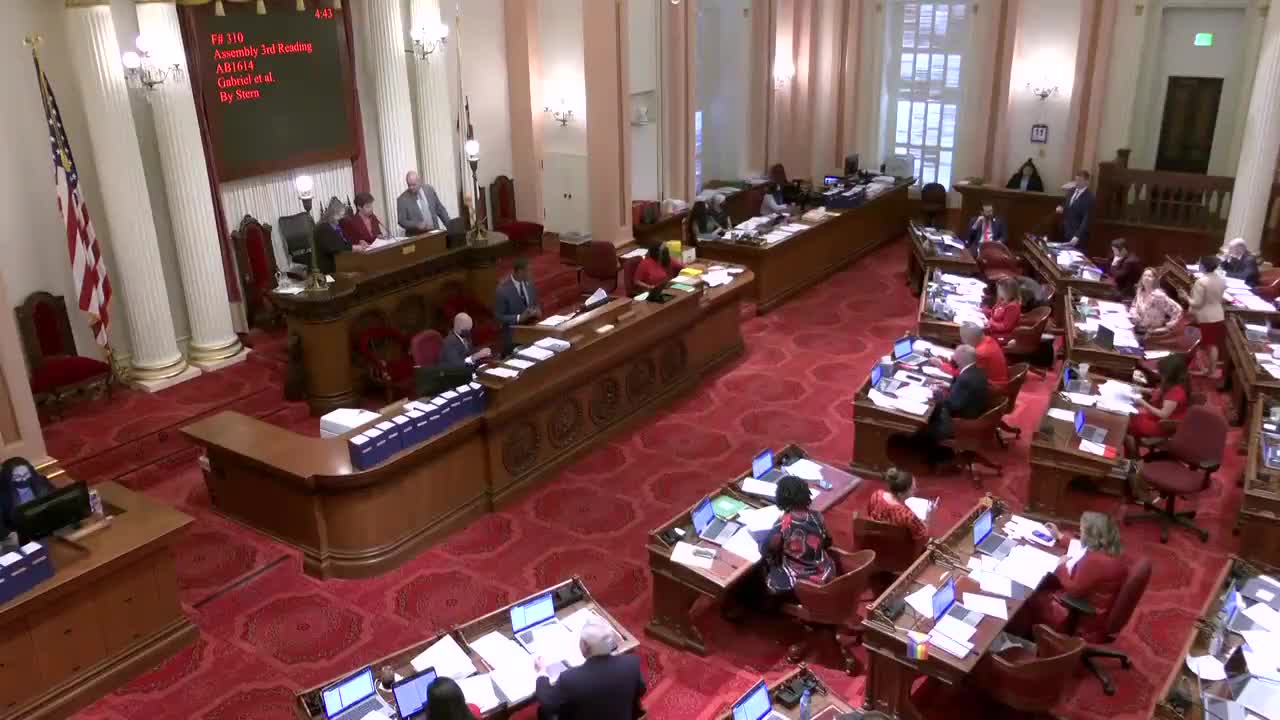

Bill Author

Bill Co-Author(s):
