AB 452: Childhood sexual assault: statute of limitations.
- Session Year: 2023-2024
- House: Assembly
- Latest Version Date: 2023-10-10
Current Status:
Passed
(2023-10-10: Chaptered by Secretary of State - Chapter 655, Statutes of 2023.)
Introduced
In Committee
First Chamber
In Committee
Second Chamber
Enacted
Existing law requires that specified actions for recovery of damages suffered as a result of childhood sexual assault, as defined, be commenced within 22 years of the date the plaintiff attains the age of majority or within 5 years of the date the plaintiff discovers or reasonably should have discovered that psychological injury or illness occurring after the age of majority was caused by the sexual assault, whichever occurs later. Existing law prohibits certain of those actions from commencing on or after the plaintiffs 40th birthday unless the person or entity knew or had reason to know, or was otherwise on notice, of any misconduct that creates a risk of childhood sexual assault by an employee, volunteer, representative, or agent, or the person or entity failed to take reasonable steps or to implement reasonable safeguards to avoid acts of childhood sexual assault, as specified. Existing law revives claims that would otherwise have been barred as of January 1, 2020, because the applicable statute of limitations, claim presentation deadline, or any other time limit had expired and authorizes the claims to be commenced within specified time periods.
This bill would eliminate time limits for the commencement of actions for the recovery of damages suffered as a result of childhood sexual assault, as specified. The bill would eliminate the prohibition on certain actions proceeding on or after the plaintiffs 40th birthday unless specified conditions are met. The bill would specify that its provisions apply to any claim in which the childhood sexual assult occurred on and after January 1, 2024.
Existing law requires that specified actions for recovery of damages suffered as a result of childhood sexual assault, as defined, be commenced within 22 years of the date the plaintiff attains the age of majority or within 5 years of the date the plaintiff discovers or reasonably should have discovered that psychological injury or illness occurring after the age of majority was caused by the sexual assault, whichever occurs later. Existing law prohibits certain of those actions from commencing on or after the plaintiffs 40th birthday unless the person or entity knew or had reason to know, or was otherwise on notice, of any misconduct that creates a risk of childhood sexual assault by an employee, volunteer, representative, or agent, or the person or entity failed to take reasonable steps or to implement reasonable safeguards to avoid acts of childhood sexual assault, as specified. Existing law revives claims that would otherwise have been barred as of January 1, 2020, because the applicable statute of limitations, claim presentation deadline, or any other time limit had expired and authorizes the claims to be commenced within specified time periods.
This bill would eliminate time limits for the commencement of actions for the recovery of damages suffered as a result of childhood sexual assault, as specified. The bill would eliminate the prohibition on certain actions proceeding on or after the plaintiffs 40th birthday unless specified conditions are met. The bill would specify that its provisions apply to any action claim arising on and after January 1, 2024.
Existing law requires that specified actions for recovery of damages suffered as a result of childhood sexual assault, as defined, be commenced within 22 years of the date the plaintiff attains the age of majority or within 5 years of the date the plaintiff discovers or reasonably should have discovered that psychological injury or illness occurring after the age of majority was caused by the sexual assault, whichever occurs later. Existing law prohibits certain of those actions from commencing on or after the plaintiffs 40th birthday unless the person or entity knew or had reason to know, or was otherwise on notice, of any misconduct that creates a risk of childhood sexual assault by an employee, volunteer, representative, or agent, or the person or entity failed to take reasonable steps or to implement reasonable safeguards to avoid acts of childhood sexual assault, as specified. Existing law revives claims that would otherwise have been barred as of January 1, 2020, because the applicable statute of limitations, claim presentation deadline, or any other time limit had expired and authorizes the claims to be commenced within specified time periods.
This bill would eliminate time limits for the commencement of actions for the recovery of damages suffered as a result of childhood sexual assault, as specified. The bill would eliminate the prohibition on certain actions proceeding on or after the plaintiffs 40th birthday unless specified conditions are met. The bill would specify that its provisions apply to any claim action arising on and after January 1, 2024.
Existing law requires that specified actions for recovery of damages suffered as a result of childhood sexual assault, as defined, be commenced within 22 years of the date the plaintiff attains the age of majority or within 5 years of the date the plaintiff discovers or reasonably should have discovered that psychological injury or illness occurring after the age of majority was caused by the sexual assault, whichever occurs later. Existing law prohibits certain of those actions from commencing on or after the plaintiffs 40th birthday unless the person or entity knew or had reason to know, or was otherwise on notice, of any misconduct that creates a risk of childhood sexual assault by an employee, volunteer, representative, or agent, or the person or entity failed to take reasonable steps or to implement reasonable safeguards to avoid acts of childhood sexual assault, as specified. Existing law revives claims that would otherwise have been barred as of January 1, 2020, because the applicable statute of limitations, claim presentation deadline, or any other time limit had expired and authorizes the claims to be commenced within specified time periods.
This bill would eliminate time limits for the commencement of actions for the recovery of damages suffered as a result of childhood sexual assault, as specified. The bill would eliminate the prohibition on certain actions proceeding on or after the plaintiffs 40th birthday unless specified conditions are met. The bill would specify that its provisions apply to any claim arising on and after January 1, 2024.
Existing law requires that specified actions for recovery of damages suffered as a result of childhood sexual assault, as defined, be commenced within 22 years of the date the plaintiff attains the age of majority or within 5 years of the date the plaintiff discovers or reasonably should have discovered that psychological injury or illness occurring after the age of majority was caused by the sexual assault, whichever occurs later. Existing law prohibits certain of those actions from commencing on or after the plaintiffs 40th birthday unless the person or entity knew or had reason to know, or was otherwise on notice, of any misconduct that creates a risk of childhood sexual assault by an employee, volunteer, representative, or agent, or the person or entity failed to take reasonable steps or to implement reasonable safeguards to avoid acts of childhood sexual assault, as specified.
This bill would eliminate time limits for the commencement of actions for the recovery of damages suffered as a result of childhood sexual assault, as specified. The bill would eliminate the prohibition on certain actions proceeding on or after the plaintiffs 40th birthday unless specified conditions are met.
(a)There is no time limit for the commencement of any of the following actions for recovery of damages suffered as a result of childhood sexual assault:
(1)An action against any person for committing an act of childhood sexual assault.
(2)An action for liability against any person or entity who owed a duty of care to the plaintiff, if a wrongful or negligent act by that person or entity was a legal cause of the childhood sexual assault that resulted in the injury to the plaintiff.
(3)An action for liability against any person or entity if an intentional act by that person or entity was a legal cause of the childhood sexual assault that resulted in the injury to the plaintiff.
(b)(1)In an action described in subdivision (a), a person who is sexually assaulted and proves it was as the result of a cover up may recover up to treble damages against a defendant who is found to have covered up the sexual assault of a minor, unless prohibited by another law.
(2)For purposes of this subdivision, a cover up is a concerted effort to hide evidence relating to childhood sexual assault.
(c)Childhood sexual assault as used in this section includes any act committed against the plaintiff that occurred when the plaintiff was under the age of 18 years and that would have been proscribed by Section 266j of the Penal Code; Section 285 of the Penal Code; paragraph (1) or (2) of subdivision (b), or of subdivision (c), of Section 286 of the Penal Code; subdivision (a) or (b) of Section 288 of the Penal Code; paragraph (1) or (2) of subdivision (b), or of subdivision (c), of Section 287 or of former Section 288a of the Penal Code; subdivision (h), (i), or (j) of Section 289 of the Penal Code; any sexual conduct as defined in paragraph (1) of subdivision (d) of Section 311.4 of the Penal Code; Section 647.6 of the Penal Code; or any prior laws of this state of similar effect at the time the act was committed. This subdivision does not limit the availability of causes of action permitted under subdivision (a), including causes of action against persons or entities other than the alleged perpetrator of the abuse.
(d)This section shall not be construed to alter the otherwise applicable burden of proof, as defined in Section 115 of the Evidence Code, that a plaintiff has in a civil action subject to this section.
(e)Every plaintiff 40 years of age or older at the time the action is filed shall file certificates of merit as specified in subdivision (f).
(f)Certificates of merit setting forth the facts that support the declaration shall be executed by the attorney for the plaintiff and by a licensed mental health practitioner selected by the plaintiff declaring, respectively, as follows:
(1)That the attorney has reviewed the facts of the case, consulted with at least one mental health practitioner who the attorney reasonably believes is knowledgeable of the relevant facts and issues involved in the particular action, and concluded on the basis of that review and consultation that there is reasonable and meritorious cause for the filing of the action.
(2)That the mental health practitioner consulted is licensed to practice and practices in this state and is not a party to the action, that the practitioner is not treating and has not treated the plaintiff, and that the practitioner has interviewed the plaintiff and is knowledgeable of the relevant facts and issues involved in the particular action, and has concluded, on the basis of the practitioners knowledge of the facts and issues, that in the practitioners professional opinion there is a reasonable basis to believe that the plaintiff had been subject to childhood sexual abuse.
(g)If certificates are required pursuant to subdivision (e), the attorney for the plaintiff shall execute a separate certificate of merit for each defendant named in the complaint.
(h)In any action subject to subdivision (e), a defendant shall not be served, and the duty to serve a defendant with process does not attach, until the court has reviewed the certificates of merit filed pursuant to subdivision (f) with respect to that defendant, and has found, in camera, based solely on those certificates of merit, that there is reasonable and meritorious cause for the filing of the action against that defendant. At that time, the duty to serve that defendant with process shall attach.
(i)A violation of this section may constitute unprofessional conduct and may be the grounds for discipline against the attorney.
(j)The failure to file certificates in accordance with this section shall be grounds for a demurrer pursuant to Section 430.10 or a motion to strike pursuant to Section 435.
(k)In any action subject to subdivision (e), a defendant shall be named by Doe designation in any pleadings or papers filed in the action until there has been a showing of corroborative fact as to the charging allegations against that defendant.
(l)At any time after the action is filed, the plaintiff may apply to the court for permission to amend the complaint to substitute the name of the defendant or defendants for the fictitious designation, as follows:
(1)The application shall be accompanied by a certificate of corroborative fact executed by the attorney for the plaintiff. The certificate shall declare that the attorney has discovered one or more facts corroborative of one or more of the charging allegations against a defendant or defendants, and shall set forth in clear and concise terms the nature and substance of the corroborative fact. If the corroborative fact is evidenced by the statement of a witness or the contents of a document, the certificate shall declare that the attorney has personal knowledge of the statement of the witness or of the contents of the document, and the identity and location of the witness or document shall be included in the certificate. For purposes of this section, a fact is corroborative of an allegation if it confirms or supports the allegation. The opinion of any mental health practitioner concerning the plaintiff shall not constitute a corroborative fact for purposes of this section.
(2)If the application to name a defendant is made before that defendants appearance in the action, neither the application nor the certificate of corroborative fact by the attorney shall be served on the defendant or defendants, nor on any other party or their counsel of record.
(3)If the application to name a defendant is made after that defendants appearance in the action, the application shall be served on all parties and proof of service provided to the court, but the certificate of corroborative fact by the attorney shall not be served on any party or their counsel of record.
(m)The court shall review the application and the certificate of corroborative fact in camera and, based solely on the certificate and any reasonable inferences to be drawn from the certificate, shall, if one or more facts corroborative of one or more of the charging allegations against a defendant has been shown, order that the complaint may be amended to substitute the name of the defendant or defendants.
(n)The court shall keep under seal and confidential from the public and all parties to the litigation, other than the plaintiff, any and all certificates of corroborative fact filed pursuant to subdivision (l).
(o)Upon the favorable conclusion of the litigation with respect to any defendant for whom a certificate of merit was filed or for whom a certificate of merit should have been filed pursuant to this section, the court may, upon the motion of a party or upon the courts own motion, verify compliance with this section by requiring the attorney for the plaintiff who was required by subdivision (f) to execute the certificate to reveal the name, address, and telephone number of the person or persons consulted with pursuant to subdivision (f) that were relied upon by the attorney in preparation of the certificate of merit. The name, address, and telephone number shall be disclosed to the trial judge in camera and in the absence of the moving party. If the court finds there has been a failure to comply with this section, the court may order a party, a partys attorney, or both, to pay any reasonable expenses, including attorneys fees, incurred by the defendant for whom a certificate of merit should have been filed.
(p)This section applies to any claim in which the childhood sexual assault occurred on and after January 1, 2024. Notwithstanding any other law, a claim for damages based on conduct described in paragraphs (1) through (3), inclusive, of subdivision (a), in which the childhood sexual assault occurred on or before December 31, 2023 may only be commenced pursuant to the applicable statute of limitations set forth in existing law as it read on December 31, 2023.
(q)Notwithstanding any other law, including Chapter 1 of Part 3 of Division 3.6 of Title 1 of the Government Code (commencing with Section 900) and Chapter 2 of Part 3 of Division 3.6 of Title 1 of the Government Code (commencing with Section 910), a claim for damages described in paragraphs (1) through (3), inclusive, of subdivision (a), is not required to be presented to any government entity prior to the commencement of an action.
(a)There is no time limit for the commencement of any of the following actions for recovery of damages suffered as a result of childhood sexual assault:
(1)An action against any person for committing an act of childhood sexual assault.
(2)An action for liability against any person or entity who owed a duty of care to the plaintiff, if a wrongful or negligent act by that person or entity was a legal cause of the childhood sexual assault that resulted in the injury to the plaintiff.
(3)An action for liability against any person or entity if an intentional act by that person or entity was a legal cause of the childhood sexual assault that resulted in the injury to the plaintiff.
(b)(1)In an action described in subdivision (a), a person who is sexually assaulted and proves it was as the result of a cover up may recover up to treble damages against a defendant who is found to have covered up the sexual assault of a minor, unless prohibited by another law.
(2)For purposes of this subdivision, a cover up is a concerted effort to hide evidence relating to childhood sexual assault.
(c)Childhood sexual assault as used in this section includes any act committed against the plaintiff that occurred when the plaintiff was under the age of 18 years and that would have been proscribed by Section 266j of the Penal Code; Section 285 of the Penal Code; paragraph (1) or (2) of subdivision (b), or of subdivision (c), of Section 286 of the Penal Code; subdivision (a) or (b) of Section 288 of the Penal Code; paragraph (1) or (2) of subdivision (b), or of subdivision (c), of Section 287 or of former Section 288a of the Penal Code; subdivision (h), (i), or (j) of Section 289 of the Penal Code; any sexual conduct as defined in paragraph (1) of subdivision (d) of Section 311.4 of the Penal Code; Section 647.6 of the Penal Code; or any prior laws of this state of similar effect at the time the act was committed. This subdivision does not limit the availability of causes of action permitted under subdivision (a), including causes of action against persons or entities other than the alleged perpetrator of the abuse.
(d)This section shall not be construed to alter the otherwise applicable burden of proof, as defined in Section 115 of the Evidence Code, that a plaintiff has in a civil action subject to this section.
(e)Every plaintiff 40 years of age or older at the time the action is filed shall file certificates of merit as specified in subdivision (f).
(f)Certificates of merit setting forth the facts that support the declaration shall be executed by the attorney for the plaintiff and by a licensed mental health practitioner selected by the plaintiff declaring, respectively, as follows:
(1)That the attorney has reviewed the facts of the case, consulted with at least one mental health practitioner who the attorney reasonably believes is knowledgeable of the relevant facts and issues involved in the particular action, and concluded on the basis of that review and consultation that there is reasonable and meritorious cause for the filing of the action.
(2)That the mental health practitioner consulted is licensed to practice and practices in this state and is not a party to the action, that the practitioner is not treating and has not treated the plaintiff, and that the practitioner has interviewed the plaintiff and is knowledgeable of the relevant facts and issues involved in the particular action, and has concluded, on the basis of the practitioners knowledge of the facts and issues, that in the practitioners professional opinion there is a reasonable basis to believe that the plaintiff had been subject to childhood sexual abuse.
(g)If certificates are required pursuant to subdivision (e), the attorney for the plaintiff shall execute a separate certificate of merit for each defendant named in the complaint.
(h)In any action subject to subdivision (e), a defendant shall not be served, and the duty to serve a defendant with process does not attach, until the court has reviewed the certificates of merit filed pursuant to subdivision (f) with respect to that defendant, and has found, in camera, based solely on those certificates of merit, that there is reasonable and meritorious cause for the filing of the action against that defendant. At that time, the duty to serve that defendant with process shall attach.
(i)A violation of this section may constitute unprofessional conduct and may be the grounds for discipline against the attorney.
(j)The failure to file certificates in accordance with this section shall be grounds for a demurrer pursuant to Section 430.10 or a motion to strike pursuant to Section 435.
(k)In any action subject to subdivision (e), a defendant shall be named by Doe designation in any pleadings or papers filed in the action until there has been a showing of corroborative fact as to the charging allegations against that defendant.
(l)At any time after the action is filed, the plaintiff may apply to the court for permission to amend the complaint to substitute the name of the defendant or defendants for the fictitious designation, as follows:
(1)The application shall be accompanied by a certificate of corroborative fact executed by the attorney for the plaintiff. The certificate shall declare that the attorney has discovered one or more facts corroborative of one or more of the charging allegations against a defendant or defendants, and shall set forth in clear and concise terms the nature and substance of the corroborative fact. If the corroborative fact is evidenced by the statement of a witness or the contents of a document, the certificate shall declare that the attorney has personal knowledge of the statement of the witness or of the contents of the document, and the identity and location of the witness or document shall be included in the certificate. For purposes of this section, a fact is corroborative of an allegation if it confirms or supports the allegation. The opinion of any mental health practitioner concerning the plaintiff shall not constitute a corroborative fact for purposes of this section.
(2)If the application to name a defendant is made before that defendants appearance in the action, neither the application nor the certificate of corroborative fact by the attorney shall be served on the defendant or defendants, nor on any other party or their counsel of record.
(3)If the application to name a defendant is made after that defendants appearance in the action, the application shall be served on all parties and proof of service provided to the court, but the certificate of corroborative fact by the attorney shall not be served on any party or their counsel of record.
(m)The court shall review the application and the certificate of corroborative fact in camera and, based solely on the certificate and any reasonable inferences to be drawn from the certificate, shall, if one or more facts corroborative of one or more of the charging allegations against a defendant has been shown, order that the complaint may be amended to substitute the name of the defendant or defendants.
(n)The court shall keep under seal and confidential from the public and all parties to the litigation, other than the plaintiff, any and all certificates of corroborative fact filed pursuant to subdivision (l).
(o)Upon the favorable conclusion of the litigation with respect to any defendant for whom a certificate of merit was filed or for whom a certificate of merit should have been filed pursuant to this section, the court may, upon the motion of a party or upon the courts own motion, verify compliance with this section by requiring the attorney for the plaintiff who was required by subdivision (f) to execute the certificate to reveal the name, address, and telephone number of the person or persons consulted with pursuant to subdivision (f) that were relied upon by the attorney in preparation of the certificate of merit. The name, address, and telephone number shall be disclosed to the trial judge in camera and in the absence of the moving party. If the court finds there has been a failure to comply with this section, the court may order a party, a partys attorney, or both, to pay any reasonable expenses, including attorneys fees, incurred by the defendant for whom a certificate of merit should have been filed.
(p)Notwithstanding any other law, a claim for damages described in paragraphs (1) through (3), inclusive, of subdivision (a), as that subdivision read on December 31, 2023, that has not been litigated to finality and that would otherwise have been barred as of January 1, 2020, because the applicable statute of limitations, claim presentation deadline, or any other time limit had expired, is revived, and these claims may be commenced within the time periods authorized by subdivision (q) of this section as that subdivision read on December 31, 2023.This section applies to any claim in which the childhood sexual assault occurred on and after January 1, 2024. Notwithstanding any other law, a claim for damages based on conduct described in paragraphs (1) through (3), inclusive, of subdivision (a), in which the childhood sexual assault occurred on or before December 31, 2023 may only be commenced pursuant to the applicable statute of limitations set forth in existing law as it read on December 31, 2023.
(q)The changes made to the time period described in subdivision (a), as that subdivision read on December 31, 2023, by the act amending that subdivision in 2019 apply to and revive any action commenced on or after the date of the enactment of that act and before January 1, 2024, and to any action filed before the date of enactment and still pending on that date, including any action or causes of action that would have been barred by the laws in effect before the date of enactment. (r)(q)Notwithstanding any other law, including Chapter 1 of Part 3 of Division 3.6 of Title 1 of the Government Code (commencing with Section 900) and Chapter 2 of Part 3 of Division 3.6 of Title 1 of the Government Code (commencing with Section 910), a claim for damages described in paragraphs (1) through (3), inclusive, of subdivision (a), is not required to be presented to any government entity prior to the commencement of an action.
(s)The changes made to this section by the act adding this subdivision in 2023 apply to any action arising on and after January 1, 2024.(a)There is no time limit for the commencement of any of the following actions for recovery of damages suffered as a result of childhood sexual assault:
(1)An action against any person for committing an act of childhood sexual assault.
(2)An action for liability against any person or entity who owed a duty of care to the plaintiff, if a wrongful or negligent act by that person or entity was a legal cause of the childhood sexual assault that resulted in the injury to the plaintiff.
(3)An action for liability against any person or entity if an intentional act by that person or entity was a legal cause of the childhood sexual assault that resulted in the injury to the plaintiff.
(b)(1)In an action described in subdivision (a), a person who is sexually assaulted and proves it was as the result of a cover up may recover up to treble damages against a defendant who is found to have covered up the sexual assault of a minor, unless prohibited by another law.
(2)For purposes of this subdivision, a cover up is a concerted effort to hide evidence relating to childhood sexual assault.
(c)Childhood sexual assault as used in this section includes any act committed against the plaintiff that occurred when the plaintiff was under the age of 18 years and that would have been proscribed by Section 266j of the Penal Code; Section 285 of the Penal Code; paragraph (1) or (2) of subdivision (b), or of subdivision (c), of Section 286 of the Penal Code; subdivision (a) or (b) of Section 288 of the Penal Code; paragraph (1) or (2) of subdivision (b), or of subdivision (c), of Section 287 or of former Section 288a of the Penal Code; subdivision (h), (i), or (j) of Section 289 of the Penal Code; any sexual conduct as defined in paragraph (1) of subdivision (d) of Section 311.4 of the Penal Code; Section 647.6 of the Penal Code; or any prior laws of this state of similar effect at the time the act was committed. This subdivision does not limit the availability of causes of action permitted under subdivision (a), including causes of action against persons or entities other than the alleged perpetrator of the abuse.
(d)This section shall not be construed to alter the otherwise applicable burden of proof, as defined in Section 115 of the Evidence Code, that a plaintiff has in a civil action subject to this section.
(e)Every plaintiff 40 years of age or older at the time the action is filed shall file certificates of merit as specified in subdivision (f).
(f)Certificates of merit setting forth the facts that support the declaration shall be executed by the attorney for the plaintiff and by a licensed mental health practitioner selected by the plaintiff declaring, respectively, as follows:
(1)That the attorney has reviewed the facts of the case, consulted with at least one mental health practitioner who the attorney reasonably believes is knowledgeable of the relevant facts and issues involved in the particular action, and concluded on the basis of that review and consultation that there is reasonable and meritorious cause for the filing of the action.
(2)That the mental health practitioner consulted is licensed to practice and practices in this state and is not a party to the action, that the practitioner is not treating and has not treated the plaintiff, and that the practitioner has interviewed the plaintiff and is knowledgeable of the relevant facts and issues involved in the particular action, and has concluded, on the basis of the practitioners knowledge of the facts and issues, that in the practitioners professional opinion there is a reasonable basis to believe that the plaintiff had been subject to childhood sexual abuse.
(g)If certificates are required pursuant to subdivision (e), the attorney for the plaintiff shall execute a separate certificate of merit for each defendant named in the complaint.
(h)In any action subject to subdivision (e), a defendant shall not be served, and the duty to serve a defendant with process does not attach, until the court has reviewed the certificates of merit filed pursuant to subdivision (f) with respect to that defendant, and has found, in camera, based solely on those certificates of merit, that there is reasonable and meritorious cause for the filing of the action against that defendant. At that time, the duty to serve that defendant with process shall attach.
(i)A violation of this section may constitute unprofessional conduct and may be the grounds for discipline against the attorney.
(j)The failure to file certificates in accordance with this section shall be grounds for a demurrer pursuant to Section 430.10 or a motion to strike pursuant to Section 435.
(k)In any action subject to subdivision (e), a defendant shall be named by Doe designation in any pleadings or papers filed in the action until there has been a showing of corroborative fact as to the charging allegations against that defendant.
(l)At any time after the action is filed, the plaintiff may apply to the court for permission to amend the complaint to substitute the name of the defendant or defendants for the fictitious designation, as follows:
(1)The application shall be accompanied by a certificate of corroborative fact executed by the attorney for the plaintiff. The certificate shall declare that the attorney has discovered one or more facts corroborative of one or more of the charging allegations against a defendant or defendants, and shall set forth in clear and concise terms the nature and substance of the corroborative fact. If the corroborative fact is evidenced by the statement of a witness or the contents of a document, the certificate shall declare that the attorney has personal knowledge of the statement of the witness or of the contents of the document, and the identity and location of the witness or document shall be included in the certificate. For purposes of this section, a fact is corroborative of an allegation if it confirms or supports the allegation. The opinion of any mental health practitioner concerning the plaintiff shall not constitute a corroborative fact for purposes of this section.
(2)If the application to name a defendant is made before that defendants appearance in the action, neither the application nor the certificate of corroborative fact by the attorney shall be served on the defendant or defendants, nor on any other party or their counsel of record.
(3)If the application to name a defendant is made after that defendants appearance in the action, the application shall be served on all parties and proof of service provided to the court, but the certificate of corroborative fact by the attorney shall not be served on any party or their counsel of record.
(m)The court shall review the application and the certificate of corroborative fact in camera and, based solely on the certificate and any reasonable inferences to be drawn from the certificate, shall, if one or more facts corroborative of one or more of the charging allegations against a defendant has been shown, order that the complaint may be amended to substitute the name of the defendant or defendants.
(n)The court shall keep under seal and confidential from the public and all parties to the litigation, other than the plaintiff, any and all certificates of corroborative fact filed pursuant to subdivision (l).
(o)Upon the favorable conclusion of the litigation with respect to any defendant for whom a certificate of merit was filed or for whom a certificate of merit should have been filed pursuant to this section, the court may, upon the motion of a party or upon the courts own motion, verify compliance with this section by requiring the attorney for the plaintiff who was required by subdivision (f) to execute the certificate to reveal the name, address, and telephone number of the person or persons consulted with pursuant to subdivision (f) that were relied upon by the attorney in preparation of the certificate of merit. The name, address, and telephone number shall be disclosed to the trial judge in camera and in the absence of the moving party. If the court finds there has been a failure to comply with this section, the court may order a party, a partys attorney, or both, to pay any reasonable expenses, including attorneys fees, incurred by the defendant for whom a certificate of merit should have been filed.
(p)Notwithstanding any other law, a claim for damages described in paragraphs (1) through (3), inclusive, of subdivision (a), as that subdivision read on December 31, 2023, that has not been litigated to finality and that would otherwise have been barred as of January 1, 2020, because the applicable statute of limitations, claim presentation deadline, or any other time limit had expired, is revived, and these claims may be commenced within the time periods authorized by subdivision (q) of this section as that subdivision read on December 31, 2023.
(q)The changes made to the time period described in subdivision (a), as that subdivision read on December 31, 2023, by the act amending that subdivision in 2019 apply to and revive any action commenced on or after the date of the enactment of that act and before January 1, 2024, and to any action filed before the date of enactment and still pending on that date, including any action or causes of action that would have been barred by the laws in effect before the date of enactment.
(r)Notwithstanding any other law, including Chapter 1 of Part 3 of Division 3.6 of Title 1 of the Government Code (commencing with Section 900) and Chapter 2 of Part 3 of Division 3.6 of Title 1 of the Government Code (commencing with Section 910), a claim for damages described in paragraphs (1) through (3), inclusive, of subdivision (a), is not required to be presented to any government entity prior to the commencement of an action.
(s)The changes made to this section by the act adding this subdivision in 2023 apply to any claim action arising on and after January 1, 2024.
(a)There is no time limit for the commencement of any of the following actions for recovery of damages suffered as a result of childhood sexual assault:
(1)An action against any person for committing an act of childhood sexual assault.
(2)An action for liability against any person or entity who owed a duty of care to the plaintiff, if a wrongful or negligent act by that person or entity was a legal cause of the childhood sexual assault that resulted in the injury to the plaintiff.
(3)An action for liability against any person or entity if an intentional act by that person or entity was a legal cause of the childhood sexual assault that resulted in the injury to the plaintiff.
(b)(1)In an action described in subdivision (a), a person who is sexually assaulted and proves it was as the result of a cover up may recover up to treble damages against a defendant who is found to have covered up the sexual assault of a minor, unless prohibited by another law.
(2)For purposes of this subdivision, a cover up is a concerted effort to hide evidence relating to childhood sexual assault.
(c)Childhood sexual assault as used in this section includes any act committed against the plaintiff that occurred when the plaintiff was under the age of 18 years and that would have been proscribed by Section 266j of the Penal Code; Section 285 of the Penal Code; paragraph (1) or (2) of subdivision (b), or of subdivision (c), of Section 286 of the Penal Code; subdivision (a) or (b) of Section 288 of the Penal Code; paragraph (1) or (2) of subdivision (b), or of subdivision (c), of Section 287 or of former Section 288a of the Penal Code; subdivision (h), (i), or (j) of Section 289 of the Penal Code; any sexual conduct as defined in paragraph (1) of subdivision (d) of Section 311.4 of the Penal Code; Section 647.6 of the Penal Code; or any prior laws of this state of similar effect at the time the act was committed. This subdivision does not limit the availability of causes of action permitted under subdivision (a), including causes of action against persons or entities other than the alleged perpetrator of the abuse.
(d)This section shall not be construed to alter the otherwise applicable burden of proof, as defined in Section 115 of the Evidence Code, that a plaintiff has in a civil action subject to this section.
(e)Every plaintiff 40 years of age or older at the time the action is filed shall file certificates of merit as specified in subdivision (f).
(f)Certificates of merit setting forth the facts that support the declaration shall be executed by the attorney for the plaintiff and by a licensed mental health practitioner selected by the plaintiff declaring, respectively, as follows:
(1)That the attorney has reviewed the facts of the case, consulted with at least one mental health practitioner who the attorney reasonably believes is knowledgeable of the relevant facts and issues involved in the particular action, and concluded on the basis of that review and consultation that there is reasonable and meritorious cause for the filing of the action.
(2)That the mental health practitioner consulted is licensed to practice and practices in this state and is not a party to the action, that the practitioner is not treating and has not treated the plaintiff, and that the practitioner has interviewed the plaintiff and is knowledgeable of the relevant facts and issues involved in the particular action, and has concluded, on the basis of the practitioners knowledge of the facts and issues, that in the practitioners professional opinion there is a reasonable basis to believe that the plaintiff had been subject to childhood sexual abuse.
(g)If certificates are required pursuant to subdivision (e), the attorney for the plaintiff shall execute a separate certificate of merit for each defendant named in the complaint.
(h)In any action subject to subdivision (e), a defendant shall not be served, and the duty to serve a defendant with process does not attach, until the court has reviewed the certificates of merit filed pursuant to subdivision (f) with respect to that defendant, and has found, in camera, based solely on those certificates of merit, that there is reasonable and meritorious cause for the filing of the action against that defendant. At that time, the duty to serve that defendant with process shall attach.
(i)A violation of this section may constitute unprofessional conduct and may be the grounds for discipline against the attorney.
(j)The failure to file certificates in accordance with this section shall be grounds for a demurrer pursuant to Section 430.10 or a motion to strike pursuant to Section 435.
(k)In any action subject to subdivision (e), a defendant shall be named by Doe designation in any pleadings or papers filed in the action until there has been a showing of corroborative fact as to the charging allegations against that defendant.
(l)At any time after the action is filed, the plaintiff may apply to the court for permission to amend the complaint to substitute the name of the defendant or defendants for the fictitious designation, as follows:
(1)The application shall be accompanied by a certificate of corroborative fact executed by the attorney for the plaintiff. The certificate shall declare that the attorney has discovered one or more facts corroborative of one or more of the charging allegations against a defendant or defendants, and shall set forth in clear and concise terms the nature and substance of the corroborative fact. If the corroborative fact is evidenced by the statement of a witness or the contents of a document, the certificate shall declare that the attorney has personal knowledge of the statement of the witness or of the contents of the document, and the identity and location of the witness or document shall be included in the certificate. For purposes of this section, a fact is corroborative of an allegation if it confirms or supports the allegation. The opinion of any mental health practitioner concerning the plaintiff shall not constitute a corroborative fact for purposes of this section.
(2)If the application to name a defendant is made before that defendants appearance in the action, neither the application nor the certificate of corroborative fact by the attorney shall be served on the defendant or defendants, nor on any other party or their counsel of record.
(3)If the application to name a defendant is made after that defendants appearance in the action, the application shall be served on all parties and proof of service provided to the court, but the certificate of corroborative fact by the attorney shall not be served on any party or their counsel of record.
(m)The court shall review the application and the certificate of corroborative fact in camera and, based solely on the certificate and any reasonable inferences to be drawn from the certificate, shall, if one or more facts corroborative of one or more of the charging allegations against a defendant has been shown, order that the complaint may be amended to substitute the name of the defendant or defendants.
(n)The court shall keep under seal and confidential from the public and all parties to the litigation, other than the plaintiff, any and all certificates of corroborative fact filed pursuant to subdivision (l).
(o)Upon the favorable conclusion of the litigation with respect to any defendant for whom a certificate of merit was filed or for whom a certificate of merit should have been filed pursuant to this section, the court may, upon the motion of a party or upon the courts own motion, verify compliance with this section by requiring the attorney for the plaintiff who was required by subdivision (f) to execute the certificate to reveal the name, address, and telephone number of the person or persons consulted with pursuant to subdivision (f) that were relied upon by the attorney in preparation of the certificate of merit. The name, address, and telephone number shall be disclosed to the trial judge in camera and in the absence of the moving party. If the court finds there has been a failure to comply with this section, the court may order a party, a partys attorney, or both, to pay any reasonable expenses, including attorneys fees, incurred by the defendant for whom a certificate of merit should have been filed.
(p)Notwithstanding any other law, a claim for damages described in paragraphs (1) through (3), inclusive, of subdivision (a) (a), as that subdivision read on December 31, 2023, that has not been litigated to finality and that was barred would otherwise have been barred as of January 1, 2020, because the applicable statute of limitations, claim presentation deadline, or any other time limit had expired, is revived. revived, and these claims may be commenced within the time periods authorized by subdivision (q) of this section as that subdivision read on December 31, 2023.
(q)The changes made to the time period described in subdivision (a), as that subdivision read on December 31, 2023, by the act amending that subdivision in 2019 apply to and revive any action commenced on or after the date of the enactment of that act and before January 1, 2024, and to any action filed before the date of enactment and still pending on that date, including any action or causes of action that would have been barred by the laws in effect before the date of enactment.
(q)(r)Notwithstanding any other law, including Chapter 1 of Part 3 of Division 3.6 of Title 1 of the Government Code (commencing with Section 900) and Chapter 2 of Part 3 of Division 3.6 of Title 1 of the Government Code (commencing with Section 910), a claim for damages described in paragraphs (1) through (3), inclusive, of subdivision (a), is not required to be presented to any government entity prior to the commencement of an action.
(s)The changes made to this section by the act adding this subdivision in 2023 apply to any claim arising on and after January 1, 2024.
(a)There is no time limit for the commencement of any of the following actions for recovery of damages suffered as a result of childhood sexual assault:
(1)An action against any person for committing an act of childhood sexual assault.
(2)An action for liability against any person or entity who owed a duty of care to the plaintiff, if a wrongful or negligent act by that person or entity was a legal cause of the childhood sexual assault that resulted in the injury to the plaintiff.
(3)An action for liability against any person or entity if an intentional act by that person or entity was a legal cause of the childhood sexual assault that resulted in the injury to the plaintiff.
(b)(1)In an action described in subdivision (a), a person who is sexually assaulted and proves it was as the result of a cover up may recover up to treble damages against a defendant who is found to have covered up the sexual assault of a minor, unless prohibited by another law.
(2)For purposes of this subdivision, a cover up is a concerted effort to hide evidence relating to childhood sexual assault.
(c)Childhood sexual assault as used in this section includes any act committed against the plaintiff that occurred when the plaintiff was under the age of 18 years and that would have been proscribed by Section 266j of the Penal Code; Section 285 of the Penal Code; paragraph (1) or (2) of subdivision (b), or of subdivision (c), of Section 286 of the Penal Code; subdivision (a) or (b) of Section 288 of the Penal Code; paragraph (1) or (2) of subdivision (b), or of subdivision (c), of Section 287 or of former Section 288a of the Penal Code; subdivision (h), (i), or (j) of Section 289 of the Penal Code; any sexual conduct as defined in paragraph (1) of subdivision (d) of Section 311.4 of the Penal Code; Section 647.6 of the Penal Code; or any prior laws of this state of similar effect at the time the act was committed. This subdivision does not limit the availability of causes of action permitted under subdivision (a), including causes of action against persons or entities other than the alleged perpetrator of the abuse.
(d)This section shall not be construed to alter the otherwise applicable burden of proof, as defined in Section 115 of the Evidence Code, that a plaintiff has in a civil action subject to this section.
(e)Every plaintiff 40 years of age or older at the time the action is filed shall file certificates of merit as specified in subdivision (f).
(f)Certificates of merit setting forth the facts that support the declaration shall be executed by the attorney for the plaintiff and by a licensed mental health practitioner selected by the plaintiff declaring, respectively, as follows, setting forth the facts which support the declaration: follows:
(1)That the attorney has reviewed the facts of the case, consulted with at least one mental health practitioner who the attorney reasonably believes is knowledgeable of the relevant facts and issues involved in the particular action, and concluded on the basis of that review and consultation that there is reasonable and meritorious cause for the filing of the action.
(2)That the mental health practitioner consulted is licensed to practice and practices in this state and is not a party to the action, that the practitioner is not treating and has not treated the plaintiff, and that the practitioner has interviewed the plaintiff and is knowledgeable of the relevant facts and issues involved in the particular action, and has concluded, on the basis of the practitioners knowledge of the facts and issues, that in the practitioners professional opinion there is a reasonable basis to believe that the plaintiff had been subject to childhood sexual abuse.
(g)If certificates are required pursuant to subdivision (e), the attorney for the plaintiff shall execute a separate certificate of merit for each defendant named in the complaint.
(h)In any action subject to subdivision (e), a defendant shall not be served, and the duty to serve a defendant with process does not attach, until the court has reviewed the certificates of merit filed pursuant to subdivision (f) with respect to that defendant, and has found, in camera, based solely on those certificates of merit, that there is reasonable and meritorious cause for the filing of the action against that defendant. At that time, the duty to serve that defendant with process shall attach.
(i)A violation of this section may constitute unprofessional conduct and may be the grounds for discipline against the attorney.
(j)The failure to file certificates in accordance with this section shall be grounds for a demurrer pursuant to Section 430.10 or a motion to strike pursuant to Section 435.
(k)In any action subject to subdivision (e), a defendant shall be named by Doe designation in any pleadings or papers filed in the action until there has been a showing of corroborative fact as to the charging allegations against that defendant.
(l)At any time after the action is filed, the plaintiff may apply to the court for permission to amend the complaint to substitute the name of the defendant or defendants for the fictitious designation, as follows:
(1)The application shall be accompanied by a certificate of corroborative fact executed by the attorney for the plaintiff. The certificate shall declare that the attorney has discovered one or more facts corroborative of one or more of the charging allegations against a defendant or defendants, and shall set forth in clear and concise terms the nature and substance of the corroborative fact. If the corroborative fact is evidenced by the statement of a witness or the contents of a document, the certificate shall declare that the attorney has personal knowledge of the statement of the witness or of the contents of the document, and the identity and location of the witness or document shall be included in the certificate. For purposes of this section, a fact is corroborative of an allegation if it confirms or supports the allegation. The opinion of any mental health practitioner concerning the plaintiff shall not constitute a corroborative fact for purposes of this section.
(2)If the application to name a defendant is made before that defendants appearance in the action, neither the application nor the certificate of corroborative fact by the attorney shall be served on the defendant or defendants, nor on any other party or their counsel of record.
(3)If the application to name a defendant is made after that defendants appearance in the action, the application shall be served on all parties and proof of service provided to the court, but the certificate of corroborative fact by the attorney shall not be served on any party or their counsel of record.
(m)The court shall review the application and the certificate of corroborative fact in camera and, based solely on the certificate and any reasonable inferences to be drawn from the certificate, shall, if one or more facts corroborative of one or more of the charging allegations against a defendant has been shown, order that the complaint may be amended to substitute the name of the defendant or defendants.
(n)The court shall keep under seal and confidential from the public and all parties to the litigation, other than the plaintiff, any and all certificates of corroborative fact filed pursuant to subdivision (l).
(o)Upon the favorable conclusion of the litigation with respect to any defendant for whom a certificate of merit was filed or for whom a certificate of merit should have been filed pursuant to this section, the court may, upon the motion of a party or upon the courts own motion, verify compliance with this section by requiring the attorney for the plaintiff who was required by subdivision (f) to execute the certificate to reveal the name, address, and telephone number of the person or persons consulted with pursuant to subdivision (f) that were relied upon by the attorney in preparation of the certificate of merit. The name, address, and telephone number shall be disclosed to the trial judge in camera and in the absence of the moving party. If the court finds there has been a failure to comply with this section, the court may order a party, a partys attorney, or both, to pay any reasonable expenses, including attorneys fees, incurred by the defendant for whom a certificate of merit should have been filed.
(p)Notwithstanding any other law, a claim for damages described in paragraphs (1) through (3), inclusive, of subdivision (a) that has not been litigated to finality and that was barred because the applicable statute of limitations, claim presentation deadline, or any other time limit had expired, is revived.
(q)Notwithstanding any other law, including Chapter 1 of Part 3 of Division 3.6 of Title 1 of the Government Code (commencing with Section 900) and Chapter 2 of Part 3 of Division 3.6 of Title 1 of the Government Code (commencing with Section 910), a claim for damages described in paragraphs (1) through (3), inclusive, of subdivision (a), is not required to be presented to any government entity prior to the commencement of an action.
(a)In an action for recovery of damages suffered as a result of childhood sexual assault, the time for commencement of the action shall be within 22 years of the date the plaintiff attains the age of majority or within five years of the date the plaintiff discovers or reasonably should have discovered that psychological injury or illness occurring after the age of majority was caused by the sexual assault, whichever period expires later, for any of the following actions: There is no time limit for the commencement of any of the following actions for recovery of damages suffered as a result of childhood sexual assault:
(1)An action against any person for committing an act of childhood sexual assault.
(2)An action for liability against any person or entity who owed a duty of care to the plaintiff, if a wrongful or negligent act by that person or entity was a legal cause of the childhood sexual assault that resulted in the injury to the plaintiff.
(3)An action for liability against any person or entity if an intentional act by that person or entity was a legal cause of the childhood sexual assault that resulted in the injury to the plaintiff.
(b)(1)In an action described in subdivision (a), a person who is sexually assaulted and proves it was as the result of a cover up may recover up to treble damages against a defendant who is found to have covered up the sexual assault of a minor, unless prohibited by another law.
(2)For purposes of this subdivision, a cover up is a concerted effort to hide evidence relating to childhood sexual assault.
(c)An action described in paragraph (2) or (3) of subdivision (a) shall not be commenced on or after the plaintiffs 40th birthday unless the person or entity knew or had reason to know, or was otherwise on notice, of any misconduct that creates a risk of childhood sexual assault by an employee, volunteer, representative, or agent, or the person or entity failed to take reasonable steps or to implement reasonable safeguards to avoid acts of childhood sexual assault. For purposes of this subdivision, providing or requiring counseling is not sufficient, in and of itself, to constitute a reasonable step or reasonable safeguard. Nothing in this subdivision shall be construed to constitute a substantive change in negligence law.(d)(c)Childhood sexual assault as used in this section includes any act committed against the plaintiff that occurred when the plaintiff was under the age of 18 years and that would have been proscribed by Section 266j of the Penal Code; Section 285 of the Penal Code; paragraph (1) or (2) of subdivision (b), or of subdivision (c), of Section 286 of the Penal Code; subdivision (a) or (b) of Section 288 of the Penal Code; paragraph (1) or (2) of subdivision (b), or of subdivision (c), of Section 287 or of former Section 288a of the Penal Code; subdivision (h), (i), or (j) of Section 289 of the Penal Code; any sexual conduct as defined in paragraph (1) of subdivision (d) of Section 311.4 of the Penal Code; Section 647.6 of the Penal Code; or any prior laws of this state of similar effect at the time the act was committed. This subdivision does not limit the availability of causes of action permitted under subdivision (a), including causes of action against persons or entities other than the alleged perpetrator of the abuse.
(e)(d)This section shall not be construed to alter the otherwise applicable burden of proof, as defined in Section 115 of the Evidence Code, that a plaintiff has in a civil action subject to this section.
(f)(e)Every plaintiff 40 years of age or older at the time the action is filed shall file certificates of merit as specified in subdivision (g). (f).
(g)(f)Certificates of merit shall be executed by the attorney for the plaintiff and by a licensed mental health practitioner selected by the plaintiff declaring, respectively, as follows, setting forth the facts which support the declaration:
(1)That the attorney has reviewed the facts of the case, consulted with at least one mental health practitioner who the attorney reasonably believes is knowledgeable of the relevant facts and issues involved in the particular action, and concluded on the basis of that review and consultation that there is reasonable and meritorious cause for the filing of the action.
(2)That the mental health practitioner consulted is licensed to practice and practices in this state and is not a party to the action, that the practitioner is not treating and has not treated the plaintiff, and that the practitioner has interviewed the plaintiff and is knowledgeable of the relevant facts and issues involved in the particular action, and has concluded, on the basis of the practitioners knowledge of the facts and issues, that in the practitioners professional opinion there is a reasonable basis to believe that the plaintiff had been subject to childhood sexual abuse.
(3)That the attorney was unable to obtain the consultation required by paragraph (1) because a statute of limitations would impair the action and that the certificates required by paragraphs (1) and (2) could not be obtained before the impairment of the action. If a certificate is executed pursuant to this paragraph, the certificates required by paragraphs (1) and (2) shall be filed within 60 days after filing the complaint.(h)(g)If certificates are required pursuant to subdivision (f), (e), the attorney for the plaintiff shall execute a separate certificate of merit for each defendant named in the complaint.
(i)(h)In any action subject to subdivision (f), (e), a defendant shall not be served, and the duty to serve a defendant with process does not attach, until the court has reviewed the certificates of merit filed pursuant to subdivision (g) (f) with respect to that defendant, and has found, in camera, based solely on those certificates of merit, that there is reasonable and meritorious cause for the filing of the action against that defendant. At that time, the duty to serve that defendant with process shall attach.
(j)(i)A violation of this section may constitute unprofessional conduct and may be the grounds for discipline against the attorney.
(k)(j)The failure to file certificates in accordance with this section shall be grounds for a demurrer pursuant to Section 430.10 or a motion to strike pursuant to Section 435.
(l)(k)In any action subject to subdivision (f), (e), a defendant shall be named by Doe designation in any pleadings or papers filed in the action until there has been a showing of corroborative fact as to the charging allegations against that defendant.
(m)(l)At any time after the action is filed, the plaintiff may apply to the court for permission to amend the complaint to substitute the name of the defendant or defendants for the fictitious designation, as follows:
(1)The application shall be accompanied by a certificate of corroborative fact executed by the attorney for the plaintiff. The certificate shall declare that the attorney has discovered one or more facts corroborative of one or more of the charging allegations against a defendant or defendants, and shall set forth in clear and concise terms the nature and substance of the corroborative fact. If the corroborative fact is evidenced by the statement of a witness or the contents of a document, the certificate shall declare that the attorney has personal knowledge of the statement of the witness or of the contents of the document, and the identity and location of the witness or document shall be included in the certificate. For purposes of this section, a fact is corroborative of an allegation if it confirms or supports the allegation. The opinion of any mental health practitioner concerning the plaintiff shall not constitute a corroborative fact for purposes of this section.
(2)If the application to name a defendant is made before that defendants appearance in the action, neither the application nor the certificate of corroborative fact by the attorney shall be served on the defendant or defendants, nor on any other party or their counsel of record.
(3)If the application to name a defendant is made after that defendants appearance in the action, the application shall be served on all parties and proof of service provided to the court, but the certificate of corroborative fact by the attorney shall not be served on any party or their counsel of record.
(n)(m)The court shall review the application and the certificate of corroborative fact in camera and, based solely on the certificate and any reasonable inferences to be drawn from the certificate, shall, if one or more facts corroborative of one or more of the charging allegations against a defendant has been shown, order that the complaint may be amended to substitute the name of the defendant or defendants.
(o)(n)The court shall keep under seal and confidential from the public and all parties to the litigation, other than the plaintiff, any and all certificates of corroborative fact filed pursuant to subdivision (m). (l).
(p)(o)Upon the favorable conclusion of the litigation with respect to any defendant for whom a certificate of merit was filed or for whom a certificate of merit should have been filed pursuant to this section, the court may, upon the motion of a party or upon the courts own motion, verify compliance with this section by requiring the attorney for the plaintiff who was required by subdivision (g) (f) to execute the certificate to reveal the name, address, and telephone number of the person or persons consulted with pursuant to subdivision (g) (f) that were relied upon by the attorney in preparation of the certificate of merit. The name, address, and telephone number shall be disclosed to the trial judge in camera and in the absence of the moving party. If the court finds there has been a failure to comply with this section, the court may order a party, a partys attorney, or both, to pay any reasonable expenses, including attorneys fees, incurred by the defendant for whom a certificate of merit should have been filed.
(q)(p)Notwithstanding any other law, a claim for damages described in paragraphs (1) through (3), inclusive, of subdivision (a) that has not been litigated to finality and that would otherwise be barred as of January 1, 2020, was barred because the applicable statute of limitations, claim presentation deadline, or any other time limit had expired, is revived, and these claims may be commenced within three years of January 1, 2020. A plaintiff shall have the later of the three-year time period under this subdivision or the time period under subdivision (a) as amended by the act that added this subdivision. revived.
(r)The changes made to the time period under subdivision (a) as amended by the act that amended this subdivision in 2019 apply to and revive any action commenced on or after the date of enactment of that act, and to any action filed before the date of enactment, and still pending on that date, including any action or causes of action that would have been barred by the laws in effect before the date of enactment.(s)(q)Notwithstanding any other law, including Chapter 1 of Part 3 of Division 3.6 of Title 1 of the Government Code (commencing with Section 900) and Chapter 2 of Part 3 of Division 3.6 of Title 1 of the Government Code (commencing with Section 910), a claim for damages described in paragraphs (1) through (3), inclusive, of subdivision (a), is not required to be presented to any government entity prior to the commencement of an action.
|
Date
|
Status
|
|---|---|
| Oct 10, 2023 | Chaptered by Secretary of State - Chapter 655, Statutes of 2023. |
| Oct 10, 2023 | Approved by the Governor. |
| Sep 19, 2023 | Enrolled and presented to the Governor at 4 p.m. |
| Sep 12, 2023 | Senate amendments concurred in. To Engrossing and Enrolling. (Ayes 79. Noes 1. Page 3233.). |
| Sep 12, 2023 | Assembly Rule 77 suspended. (Page 3228.) |
| Sep 11, 2023 | In Assembly. Concurrence in Senate amendments pending. May be considered on or after September 13 pursuant to Assembly Rule 77. |
| Sep 11, 2023 | Read third time. Passed. Ordered to the Assembly. (Ayes 36. Noes 0. Page 2552.). |
| Sep 5, 2023 | Read second time. Ordered to third reading. |
| Sep 1, 2023 | From committee: Do pass. (Ayes 6. Noes 0.) (September 1). |
| Aug 14, 2023 | In committee: Referred to APPR suspense file. |
| Jul 13, 2023 | From committee chair, with author's amendments: Amend, and re-refer to committee. Read second time, amended, and re-referred to Com. on APPR. |
| Jun 28, 2023 | From committee: Do pass and re-refer to Com. on APPR. (Ayes 9. Noes 0.) (June 27). Re-referred to Com. on APPR. |
| Jun 7, 2023 | Referred to Com. on JUD. |
| May 26, 2023 | In Senate. Read first time. To Com. on RLS. for assignment. |
| May 25, 2023 | Read third time. Passed. Ordered to the Senate. (Ayes 75. Noes 0. Page 1796.) |
| May 18, 2023 | Read second time. Ordered to third reading. |
| May 18, 2023 | From committee: Do pass. (Ayes 15. Noes 0.) (May 18). |
| Apr 19, 2023 | In committee: Set, first hearing. Referred to APPR. suspense file. |
| Mar 23, 2023 | Re-referred to Com. on APPR. |
| Mar 22, 2023 | Read second time and amended. |
| Mar 21, 2023 | From committee: Amend, and do pass as amended and re-refer to Com. on APPR. (Ayes 11. Noes 0.) (March 21). |
| Mar 14, 2023 | Re-referred to Com. on JUD. |
| Mar 13, 2023 | From committee chair, with author's amendments: Amend, and re-refer to Com. on JUD. Read second time and amended. |
| Feb 21, 2023 | Re-referred to Com. on JUD. |
| Feb 17, 2023 | From committee chair, with author's amendments: Amend, and re-refer to Com. on JUD. Read second time and amended. |
| Feb 17, 2023 | Referred to Com. on JUD. |
| Feb 7, 2023 | From printer. May be heard in committee March 9. |
| Feb 6, 2023 | Read first time. To print. |
|
Date
|
Description
|
Location
|
Votes
|
|
|---|---|---|---|---|
| Sep 12, 2023 | AB 452 Addis Concurrence in Senate Amendments | Assembly Floor |
Passed |
|
| Sep 11, 2023 | Assembly 3rd Reading AB452 Addis et al. By Skinner | Senate Floor |
Passed |
|
| Sep 1, 2023 | Do pass | Senate Standing Committee on Appropriations |
Passed |
|
| Aug 14, 2023 | Placed on suspense file | Senate Standing Committee on Appropriations |
Passed |
|
| Jun 27, 2023 | Do pass, but first be re-referred to the Committee on [Appropriations] | Senate Standing Committee on Judiciary |
Passed |
|
| May 25, 2023 | AB 452 Addis Assembly Third Reading | Assembly Floor |
Passed |
|
| May 18, 2023 | Do pass. | Assembly Standing Committee on Appropriations |
Passed |
|
| Mar 21, 2023 | Do pass as amended and be re-referred to the Committee on [Appropriations] | Assembly Standing Committee on Judiciary |
Passed |
This list shows positions taken on this bill by organizations on the date displayed, which is linked to the original source.
Positions by individuals are not included.
|
Organization
|
Position
|
Date
|
|---|---|---|
| Advocates for Child Empowerment and Safety | ** Support | |
| American Association Of University Women - California | ** Support | |
| Association Of California School Administrators | ** Against | |
| California Association Of Joint Powers Authorities | ** Against | |
| California Association Of Marriage And Family Therapists | ** Support | |
| California Association Of Recreation & Park Districts | ** Against | |
| California Association Of School Business Officials | ** Against | |
| California Coalition for Women Prisoners | ** Support | |
| California State Association Of Counties | ** Against | |
| Child Abuse Prevention Center | ** Support | |
| CHILD USA | ** Support | |
| CHILD USAdvocacy | ** Support | |
| Civil Justice Association Of California | ** Against | |
| Consumer Attorneys Of California | ** Support | |
| Crime Survivors for Safety and Justice | ** Support | |
| John Burton Advocates for Youth | ** Support | |
| Kern County Superintendent Of Schools | ** Against | |
| National Association Of Social Workers, California Chapter | ** Support | |
| Northern California Regional Liability Excess Fund | ** Against | |
| Peace Officers Research Association Of California | ** Support | |
| Public Risk Innovation Solutions and Management | ** Against | |
| Schools Association for Excess Risk | ** Against | |
| Schools Excess Liability Fund | ** Against | |
| Schools Insurance Authority | ** Against | |
| Sister Warriors Freedom Coalition | ** Support | |
| Southern California Regional Liability Excess Fund | ** Against | |
| Statewide Association of Community Colleges | ** Against | |
| Survived & Punished | ** Support | |
| Survivors Network of Those Abused by Priests | ** Support | |
| Valorus | ** Support | |
| Youth Power Project | ** Support |
CONCURRENCE IN SENATE AMENDMENTS
CSA1 Bill Id:AB 452
Author:(Addis)
As Amended Ver:July 13, 2023
Majority vote
SUMMARY
Eliminates the time limit for the commencement of actions for recovery of damages suffered as a result of childhood sexual assault for civil actions that arise on or after the date when the bill takes effect.
Major Provisions
- Eliminates the time limit for the commencement of actions for recovery of damages suffered as a result of childhood sexual assault, as specified.
- Clarifies that the changes made by this bill apply to any claim in which the childhood sexual assault occurred on after January 1, 2024, and that claims made for conduct that occurred on or before December 31, 2023, may only be commenced pursuant to the applicable statute of limitations set forth in existing law as it read on December 31, 2023.
Senate Amendments
Clarify that this bill applies to any claim in which the childhood sexual assault occurred on and after January 1, 2024, and that claims made for conduct that occurred on or before December 31, 2023 may only be commenced pursuant to the applicable statute of limitations set forth in existing law as it read on December 31, 2023.
COMMENTS
Unless there is a statute providing otherwise, the time for bringing a tort action is two years after the injury occurs or, depending upon the type of injury, two years after the plaintiff discovered, or reasonably should have discovered, the injury. Statutes of limitation (SOLs) reflect the reality that, over time, evidence is lost or destroyed and witnesses' memories fade. However, current laws regarding the statute of limitations for childhood sexual abuse claims reflect another reality, namely that victims often delay coming forward for a variety of reasons, including threats, shame, lack of trust, fear, or some combination thereof. Indeed, child victims may not even understand what has happened to them, let alone know of their right to take timely legal action. Recognizing this, several states have already eliminated SOLs for childhood sexual assault. According to the Child USA online tracker, 15 states and two United States (U.S.) territories have already eliminated SOLs for civil actions alleging sexual assault of a child, and 33 states (including California) have such bills pending. (See Child USA, National Overview of Statute of Limitations for Child Sex Abuse: 2023 SOL Reform Legislation and Best Current Civil and Criminal SOLs, at [https//www.childusa.org], last visited March 17, 2023.) Last year, President Biden signed the "Eliminating Limits to Justice for Child Sex Abuse Victims Act of 2022," which eliminated the SOL for childhood sexual assault cases brought in federal court. Previously such federal actions were subject to a 10-year limitations period. (United States Code (USC) Title18, Section 2255.)
California has long recognized the unique problem that SOLs create in child sexual assault cases, even if the state has not yet gone so far as to eliminate the SOL altogether. The state's existing SOL for childhood sexual abuse has been amended several times. For example, SB 108 (Lockyer), Chapter 1578, Statutes of 1990 provided that actions for childhood sexual abuse could be brought within eight years of the age of majority (generally up to 26 years of age), or within three years of the date when the plaintiff discovered or reasonably should have discovered that the psychological injury or illness they are experiencing in adulthood was caused by childhood sexual abuse. This statute has also been amended multiple times as it applies to third parties that might have a duty of care to the plaintiff, such as a school. Prior to 1998, actions against third parties had to be commenced within a year of the plaintiff's 18th birthday. AB 1651 (Ortiz), Chapter 1032, Statutes of 1998 made the time to commence actions against third parties the same as actions against abusers, so long as the suits were commenced before the plaintiff's 26th birthday. In 2002, in response to revelations about abuse in the Catholic Church, SB 1779 (Burton), Chapter 149 amended the law yet again to allow delayed-discovery suits against third parties, at least in certain circumstances, to be brought beyond the plaintiff's 26th birthday. Most recently, AB 218 (Gonzalez), Chapter 861, Statutes of 2019 extended the SOL for such actions by another 14 years, from eight to 22 years after the age of majority, or typically from 26 to 40 years of age, and extended the delayed discovery provision from three to five years. AB 218 also created a three-year revival period for any lapsed case not litigated to finality before the bill's enactment. This bill takes the next logical step by eliminating the SOL going forward. This bill would only apply prospectively to causes of action that arise – that is, when the sexual assault occurs – after January 1, 2024.
Opposition concerns, while legitimate, relate in large part to existing law. This bill is opposed by a coalition of associations representing school districts, school professionals, and joint powers authorities. Opponents fear that eliminating the SOL altogether will expose them to even more liability than they already face in the wake of AB 218. In addition to pointing out the usual rationale for SOLs – loss of evidence, fading memories, etc. – the opponents point out that legislation extending the time to commence actions, or reviving actions that had otherwise expired, creates a great deal of uncertainty for schools. For example, in the wake of AB 218, it has become virtually impossible for schools to obtain liability insurance on the private market, except at prohibitively high costs that take money away from the core educational mission. Instead of private insurance, school districts use the joint powers authority mechanism to self-fund their liability and other risk-related obligations in a non-profit, public entity risk pool. Because these entities do not have the capital reserves of a large insurance company, they are funded by the revenues of their local government members. The unpredictability of litigation, which is made worse by exposing schools to liability stemming from employee conduct that may have occurred decades earlier, makes it very difficult to calculate future liability into their budgeting or other financial planning. Although the opposition has not provided specific data on the amount of money that schools have spent on litigation or settlements relating to claims of childhood sexual assault, there is no reason to doubt their assumption that lawsuits stemming from decades-old incidents could burden schools with substantial, and perhaps even overwhelming, financial obligations.
In addition to exposing schools to liability for older claims, the opposition contends that recent legislation has made it much more difficult to defend actions arising from a childhood sexual assault. For example, while most statutes make third parties liable for things that they "knew or should of known" about and took no reasonable steps to address it, existing law holds third parties liable if they know or should have known of any conduct that creates "a risk" of childhood sexual assault. Any number of things could increase the risk of childhood sexual assault. Since statistics demonstrate that men are much more likely than women to commit acts of sexual assault, administrators hiring male teachers is arguably conduct that increases the risk of sexual assault. This may seem a farfetched example, to be sure; nonetheless, liability for constructive knowledge of a "risk" of sexual assault, as opposed to constructive knowledge of improper conduct, does indeed create greater uncertainty. The opponents also note that, under existing law, schools are liable if they knew or should have known about a risk OR they failed to take reasonable steps to avoid acts of childhood sexual assault. The opponents believe they should be liable if they knew or should have known about the conduct AND failed to take reasonable steps to address it.
In sum, the opposition raises reasonable points, but they relate mostly to existing law rather than to this bill. One could argue that this bill clarifies what is effectively already the case. Existing law allows plaintiffs to bring an action until they are 40 years old or, under the delayed discovery rule, five years after they discovered or should have discovered that the injury they are now suffering was caused by the childhood sexual assault. This could conceivably occur when the survivor is in their 50s or 60s or beyond. With such delayed discovery, schools and other third party entities could already face unpredictable suits for assaults that occurred decades ago. In light of this, it is difficult to see how removing the SOL will greatly increase the number of cases that schools can expect. If other parts of existing law, such as the broad knowledge standard, need to be changed, then it might make more sense to do that in a separate bill. Perhaps there are more creative solutions than litigation, such as better tracking systems that will prevent the hiring of known offenders, greater resources for immediate and ongoing medical care and counseling, or even victim compensation funds that guarantee adequate and defined recoveries. The author of this bill, however, has a more limited aim: to simplify the issue by eliminating the SOL, as 15 other states and the federal government have done, for claims that arise on or after the date when the bill takes effect.
According to the Author
According to the author, for many survivors, "disclosing their abuse is a long and painful process." Many factors, according to the author, prevent survivors of childhood abuse from reporting their abuser, including "feelings of shame; lacking trusted adults and opportunities to disclose; fear of additional victimization and or not being believed." Unfortunately, the author maintains, this results in far too many survivors who never report their abuser. Others, when they feel ready to seek justice, learn that the statute of limitations (SOL) has already passed. "It is an unacceptable tragedy," the author writes, "that victims of abuse are unable to hold their abuser accountable simply because the law arbitrarily says their time to report has run out." AB 452, therefore, seeks to address this tragedy by eliminating—for claims that arise on or after the bill takes effect--all time limits for commencing a civil action for damages resulting from the sexual assault of a child.
Arguments in Support
The Youth Power Project (YPP) supports AB 452 because, for most survivors "disclosing their abuse is a long and painful process." YPP points out many factors that prevent children from reporting their abuse: "the inability to recognize they were abused; feelings of shame; lacking trusted adults and opportunities to disclose; fear of additional victimization and/or not being believed." Even when survivors become adults, YPP observes, various social, institutional, and psychological barriers can prevent a survivor from reporting their abuser. As a result, too many survivors, when they finally make the decision to bring an action, discover that they have missed the deadline. YPP also cites studies reported by Child USA showing that "over half of Child Sex Abuse (CSA) survivors first disclose they were abused at age 50 or older. Another study suggests that 44.8% of adult survivors of CSA never disclose abuse." YPP believes that "AB 452 will end California's arbitrary civil statute of limitations for minors who experience sexual abuse and remove barriers that prevent survivors from seeking justice against their abusers and the institutions that concealed or ignored their claims."
Arguments in Opposition
This bill is opposed by several associations representing school districts, school officials, and joint powers associations. In their joint letter they claim that this bill would "expose public schools and others to claims of abuse going back 40 years ago or longer." This makes it "impossible for employers to effectively defend against claims when evidence is likely gone, witnesses have moved or passed away, and there has been a turnover of staff. These barriers have resulted in a substantial diversion of education dollars to finance increased legal costs, whether or not the claim is valid."
The opposition also notes that, since AB 218 was signed into law in 2019 and took effect in 2020, "the current statute of limitations allows claims to be made 22 years after the age of majority (i.e. 40 years old) or anytime thereafter within five years of [discovery]." Opponents note that AB 218 also "retroactively revived all claims, for three years, that were otherwise barred because of the previously applicable statute of limitations. No monetary reserves were ever set aside for these historic claims." As a result, the opposition claims, "schools have been required to pay hundreds of millions of dollars to resolve claims for which they had no part." Opponents contend that since AB 218 became law, it has been nearly impossible for schools to purchase liability insurance on the private market. Instead, many school districts use the joint powers authority mechanism to "self-fund their liability and other risk-related obligations in a non-profit, public entity risk pool. These public entity risk pools are not insurance companies with large capital reserves. Instead, risk pools are funded by the revenues of their local government members."
Finally, the opponents point to the provision in existing law that allows an action to be commenced for third party liability after the victim's 40th birthday if the third-party person or entity knew or had reason to know of any misconduct on the part of an agent or employee that "creates a risk" of childhood sexual assault. It is one thing, the opposition claims, to hold a third party liable for failing to take action for when they knew "or should have known" of a childhood sexual assault or related improper behavior, but holding the entity liable for failing to take action against any "risk" that they "should have known about" is a broad and vague standard.
FISCAL COMMENTS
According to the Senate Appropriations Committee:
- Unknown, potentially major costs due to settlements and judgments that must be paid out by state entities, school districts, and local governments as a result of claims that are successfully brought by plaintiffs that would have otherwise been barred by the existing statute of limitations (local funds, Proposition 98 General Fund, General Fund).
- Unknown, potentially significant court workload cost pressures in order to adjudicate sexual assault claims that would have otherwise been barred by the statute of limitations (Trial Court Trust Fund, General Fund).
- Ongoing costs, likely in the hundreds of thousands, impacting the Department of Justice (DOJ), to represent state agencies in litigation made possible by the passage and implementation of this bill.
VOTES:
ASM JUDICIARY: 11-0-0
YES: Maienschein, Essayli, Connolly, Dixon, Haney, Kalra, Pacheco, Papan, Reyes, Robert Rivas, Sanchez
ASM APPROPRIATIONS: 15-0-1
YES: Holden, Megan Dahle, Bryan, Calderon, Wendy Carrillo, Dixon, Mike Fong, Hart, Lowenthal, Mathis, Papan, Pellerin, Sanchez, Weber, Ortega
ABS, ABST OR NV: Robert Rivas
ASSEMBLY FLOOR: 75-0-5
YES: Addis, Alanis, Alvarez, Arambula, Bains, Bauer-Kahan, Bennett, Berman, Boerner, Bonta, Bryan, Calderon, Juan Carrillo, Wendy Carrillo, Cervantes, Chen, Connolly, Megan Dahle, Davies, Essayli, Flora, Mike Fong, Friedman, Gabriel, Gallagher, Garcia, Gipson, Grayson, Haney, Hart, Holden, Hoover, Irwin, Jackson, Jones-Sawyer, Kalra, Lackey, Lee, Low, Lowenthal, Maienschein, McCarty, McKinnor, Muratsuchi, Stephanie Nguyen, Ortega, Pacheco, Jim Patterson, Joe Patterson, Pellerin, Petrie-Norris, Quirk-Silva, Ramos, Reyes, Luz Rivas, Robert Rivas, Rodriguez, Blanca Rubio, Sanchez, Santiago, Schiavo, Soria, Ta, Ting, Valencia, Villapudua, Waldron, Wallis, Ward, Weber, Wicks, Wilson, Wood, Zbur, Rendon
ABS, ABST OR NV: Aguiar-Curry, Dixon, Vince Fong, Mathis, Papan
SENATE FLOOR: 36-0-4
YES: Allen, Archuleta, Ashby, Atkins, Becker, Blakespear, Bradford, Cortese, Dahle, Dodd, Durazo, Eggman, Glazer, Gonzalez, Grove, Hurtado, Laird, Limón, McGuire, Menjivar, Min, Newman, Nguyen, Ochoa Bogh, Padilla, Portantino, Roth, Rubio, Seyarto, Skinner, Smallwood‑Cuevas, Stern, Umberg, Wahab, Wiener, Wilk
ABS, ABST OR NV: Alvarado-Gil, Caballero, Jones, Niello
UPDATED
VERSION: July 13, 2023
CONSULTANT: Tom Clark / JUD. / (916) 319-2334 FN: 0001969
SENATE RULES COMMITTEE Office of Senate Floor Analyses (916) 651-1520 Fax: (916) 327-4478 | AB 452 |
THIRD READING
Bill No: AB 452
Author: Addis (D), et al.
Amended: 7/13/23 in Senate
Vote: 21
SENATE JUDICIARY COMMITTEE: 9-0, 6/27/23
AYES: Umberg, Wilk, Allen, Ashby, Durazo, Laird, Min, Stern, Wiener
NO VOTE RECORDED: Caballero, Niello
SENATE APPROPRIATIONS COMMITTEE: 6-0, 9/1/23
AYES: Portantino, Ashby, Bradford, Seyarto, Wahab, Wiener
NO VOTE RECORDED: Jones
ASSEMBLY FLOOR: 75-0, 5/25/23 - See last page for vote
SUBJECT: Childhood sexual assault: statute of limitations
SOURCE: Author
DIGEST:
This bill eliminates the statute of limitations for civil actions for damages as a result of childhood sexual assault.
ANALYSIS:
Existing law:
- Provides that in an action for recovery of damages suffered as a result of childhood sexual assault, the time for commencement of the action shall be within 22 years of the date the plaintiff attains the age of majority or within five years of the date the plaintiff discovers or reasonably should have discovered that psychological injury or illness occurring after the age of majority was caused by the sexual assault, whichever period expires later, for any of the following actions:
- An action against any person for committing an act of childhood sexual assault;
- An action for liability against any person or entity who owed a duty of care to the plaintiff, if a wrongful or negligent act by that person or entity was a legal cause of the childhood sexual assault that resulted in the injury to the plaintiff; or,
- An action for liability against any person or entity if an intentional act by that person or entity was a legal cause of the childhood sexual assault that resulted in the injury to the plaintiff. (Code Civ. Proc. § 340.1(a).)
- Authorizes a person who is sexually assaulted and proves it was the result of a cover up to recover up to treble damages against a defendant who is found to have covered up the sexual assault of a minor, unless prohibited by another law. (Code Civ. Proc. § 340.1(b).)
- Provides that the actions above, not including those against the actual perpetrator of the assault, shall not be commenced on or after the plaintiff’s 40th birthday unless the person or entity knew or had reason to know, or was otherwise on notice, of any misconduct that creates a risk of childhood sexual assault by an employee, volunteer, representative, or agent, or the person or entity failed to take reasonable steps or to implement reasonable safeguards to avoid acts of childhood sexual assault. (Code Civ. Proc. § 340.1(c).)
- Provides that, notwithstanding any other provision of law, any such claim for damages that has not been litigated to finality and that would otherwise be barred as of January 1, 2020, because the applicable statute of limitations, claim presentation deadline, or any other time limit had expired, is revived, and these claims may be commenced within three years of January 1, 2020. (Code Civ. Proc. § 340.1(q).)
- Provides that claims pursuant to Section 340.1 are not required to be presented to any government entity prior to the commencement of an action. (Code Civ. Proc. § 340.1(s).)
- Defines “sexual conduct” to mean any of the following, whether actual or simulated: sexual intercourse, oral copulation, anal intercourse, anal oral copulation, masturbation, bestiality, sexual sadism, sexual masochism, penetration of the vagina or rectum by any object in a lewd or lascivious manner, exhibition of the genitals or pubic or rectal area for the purpose of sexual stimulation of the viewer, any lewd or lascivious sexual act as defined in Section 288, or excretory functions performed in a lewd or lascivious manner, whether or not any of the above conduct is performed alone or between members of the same or opposite sex or between humans and animals. An act is simulated when it gives the appearance of being sexual conduct. (Pen. Code § 311.4(d).)
This bill eliminates the statute of limitations applicable to civil actions for damages as a result of childhood sexual assaults that occur on or after January 1, 2024.
Background
The past decades have brought waves of revelations of long covered up sexual abuse by major institutions in this country, from the Catholic Church to United States Gymnastics to the Boy Scouts. California has repeatedly bolstered its law providing a cause of action for damages suffered as a result of childhood sexual assault. This has involved expanding the conduct that is included, extended the relevant statute of limitations, and provided revival periods for expired claims.
Many of these changes reveal an appreciation for the especially acute trauma child survivors of this sexual assault experience. Scientific research and studies make clear that many victims of these crimes repress memories of their assault or are incredibly fearful of reporting it. It is therefore not surprising that childhood sexual assault is grossly underreported. Making matters worse, many of the institutions where the crimes have occurred have played a role in covering up the sexual assaults and failing to prevent further damage.
This author-sponsored bill finally puts an end to the piecemeal legislative efforts of expanding the applicable statute of limitations and creating temporary periods of revival by completely eliminating the limitations period for childhood sexual assault claims that arise after January 1, 2024. It is supported by various organizations and individuals, including the National Association of Social Workers – California Chapter. It is opposed by various organizations, many representing educational institutions, including the California Association of School Business Officials.
Comment
- Author’s statement. According to the author:
For many survivors, disclosing their abuse is a long and painful process. Numerous factors prevent survivors, especially those abused as children, from reporting their abuse including: feelings of shame; lacking trusted adults and opportunities to disclose; fear of additional victimization and or not being believed. Even once survivors become adults, various societal, institutional, and psychological barriers impede their ability to report their abuser. This unfortunately results in the vast majority of survivors never disclosing their abuse. Most survivors therefore miss the deadline to obtain justice because trauma affects them in a way that causes them to delay disclosure of their abuse until they are older. It is an unacceptable tragedy that victims of abuse are unable to hold their abuser accountable simply because the law arbitrarily says their time to report has run out.
AB 452 ends California’s cruel and arbitrary civil statute of limitations for minors who have experienced sexual abuse and removes barriers that prevent survivors from seeking justice against their abusers and the institutions that concealed or ignored their claims. With AB 452, California will join the federal government and the growing list [of] states in taking action for survivors. This will codify a survivor’s right to justice, regardless of their age or how long it took them to come forward. In doing so, California will stand with all survivors, at all ages.
- Childhood sexual assault: statute of limitations and scope. A statute of limitations is a requirement to commence legal proceedings (either civil or criminal) within a specific period of time. Statutes of limitations are tailored to the cause of action at issue – for example, cases involving injury must be brought within two years from the date of injury, cases relating to written contracts must be brought four years from the date the contract was broken, and, as commonly referenced in the media, there is no statute of limitations for murder. Although it may appear unfair to bar actions after the statute of limitations has elapsed, that limitations period serves important policy goals that help to preserve both the integrity of our legal system and the due process rights of individuals.
For example, one significant reason that a limitations period is necessary in many cases is that evidence may disappear over time – paperwork gets lost, witnesses forget details or pass away, and physical locations that may be critical to a case change over time. Limitations periods also promote finality by encouraging an individual who has been wronged to bring an action sooner rather than later – timely actions arguably ensure that the greatest amount of evidence is available to all parties.
In general, California law requires all civil actions be commenced within applicable statutes of limitations. (Code Civ. Proc. § 312.) Under existing law, the general statute of limitations in California to bring an action for assault, battery, or injury to, or for the death of, an individual caused by the wrongful act or neglect of another, is two years. (Code Civ. Proc. § 335.1)
Previously, certain actions for childhood sexual abuse were required to be commenced within eight years of the date the plaintiff attains the age of majority or within three years of the date the plaintiff discovers or reasonably should have discovered that psychological injury or illness occurring after the age of majority was caused by the sexual abuse, whichever period expires later.
AB 218 (Gonzalez, Chapter 861, Statutes 2019) extended the time for commencement of actions for childhood sexual assault to 40 years of age or five years from discovery of the injury; provided enhanced damages for a cover up, as defined, of the assault; and provided a three-year window in which expired claims are revived. There is a wide range of approaches among the states.
According to Civil Procedure Code Section 340.1, this lengthy limitations period in California applies to actions against:
- The person alleged to have committed the childhood sexual assault;
- Any person or entity who owed a duty of care to the plaintiff, where a wrongful or negligent act by that person or entity was a legal cause of the childhood sexual assault which resulted in the injury to the plaintiff; and
- Any person or entity where an intentional act by that person or entity was a legal cause of the childhood sexual assault which resulted in the injury to the plaintiff.
AB 218 also replaced “childhood sexual abuse” throughout the statute with “childhood sexual assault.” The main difference in the relevant definition was the addition of “any sexual conduct” as defined in Penal Code Section 311.4(d)(1). That definition includes certain sexual acts or displays whether actual or simulated. (Pen. Code § 311.4.) This change increased the conduct to which the extended limitations period and the enhanced damages apply.
- Elimination of the statute of limitations. This bill amends Section 340.1 to completely eliminate the statute of limitations that applies to childhood sexual assault claims. This change applies prospectively to actions arising on and after January 1, 2024.
A number of states have no specific limitations period applying to child sexual abuse, including Colorado and Delaware. Maine does not even apply limits to when actions based upon sexual acts toward minors may be brought. Just last year, President Biden signed the “Eliminating Limits to Justice for Child Sex Abuse Victims Act of 2022,” which eliminated the statute of limitations for childhood sexual assault cases brought in federal court. Previously such federal actions were subject to a 10-year limitations period, as specified. (18 U.S.C. § 2255.)
FISCAL EFFECT: Appropriation: No Fiscal Com.: Yes Local: No
According to the Senate Appropriations Committee:
- Unknown, potentially major costs due to settlements and judgments that must be paid out by state entities, school districts, and local governments as a result of claims that are successfully brought by plaintiffs that would have otherwise been barred by the existing statute of limitations (local funds, Proposition 98 General Fund, General Fund).
- Unknown, potentially significant court workload cost pressures in order to adjudicate sexual assault claims that would have otherwise been barred by the statute of limitations (Trial Court Trust Fund, General Fund).
- Ongoing costs, likely in the hundreds of thousands, impacting the Department of Justice (DOJ), to represent state agencies in litigation made possible by the passage and implementation of this bill.
SUPPORT: (Verified 9/1/23)
Advocates for Child Empowerment and Safety
California Association of Marriage and Family Therapists
Child Abuse Prevention Center
CHILD USA
Child USAdvocacy
Consumer Attorneys of California
John Burton Advocates for Youth
National Association of Social Workers, California Chapter
Peace Officers Research Association of California
Sister Warriors Freedom Coalition
Survivors Network of those Abused by Priests
ValorUS
9 individuals
OPPOSITION: (Verified 9/1/23)
Association of California School Administrators
California Association of Joint Powers Authorities
California Association of Recreation & Park Districts
California Association of School Business Officials
California State Association of Counties
Kern County Superintendent of Schools
Northern California Regional Liability Excess Fund
Public Risk Innovation, Solutions, and Management
Schools Association for Excess Risk
Schools Excess Liability Fund
Schools Insurance Authority
Southern California Regional Liability Excess Fund
Statewide Association of Community Colleges
2 individuals
ARGUMENTS IN SUPPORT: John Burton Advocates for Youth writes:
Statutes of limitations exist for both civil and criminal causes of action, and begin to run from the date of the injury, or the date it was discovered, or the date on which it would have been discovered with reasonable efforts. Historically, statutes of limitation (SOLs), the arbitrary deadlines for prosecuting crimes and filing civil claims, have been unfairly short. . . .
According to Child USA, over half of Child Sex Abuse (CSA) survivors first disclose they were abused at age 50 or older. Another study suggests that 44.8% of adult survivors of CSA never disclose abuse.
ARGUMENTS IN OPPOSITION: The California Association of Joint Powers Authorities write in opposition:
Following the passage of AB 218, there was an immediate fiscal impact on our organizations due to the need to assess and fund costly older exposures. Public entities are finding that liability coverage is drastically more expensive and difficult to obtain as a result of, among other things, the revival of these previously barred claims. Whether or not they have any claims, our members are facing significantly increased rates, hard caps, exclusions, settlement inflation, lower limits of coverage, and stricter underwriting processes. The liability and related cost pressures are leaving our public-school students, education partners, local governments, and the risk pools they are members of, without coverage and exposed to the direct cost of these claims.
The current fiscal reality makes the timing of AB 452 challenging. Even with the clarification that the bill is intended to be applied prospectively, significant financial reserves funded with Prop 98 dollars will need to be collected and retained for the possibility of decades of liability exposure that may be realized in the future. Assessments to fund the associated risk addressed by AB 452 will be levied on today’s schools. These assessments will be happening concurrently with assessments on all schools to continue funding historic claims being brought forward under the current five-year psychiatric injury window that is available to all victims- regardless of age.
ASSEMBLY FLOOR: 75-0, 5/25/23
AYES: Addis, Alanis, Alvarez, Arambula, Bains, Bauer-Kahan, Bennett, Berman, Boerner, Bonta, Bryan, Calderon, Juan Carrillo, Wendy Carrillo, Cervantes, Chen, Connolly, Megan Dahle, Davies, Essayli, Flora, Mike Fong, Friedman, Gabriel, Gallagher, Garcia, Gipson, Grayson, Haney, Hart, Holden, Hoover, Irwin, Jackson, Jones-Sawyer, Kalra, Lackey, Lee, Low, Lowenthal, Maienschein, McCarty, McKinnor, Muratsuchi, Stephanie Nguyen, Ortega, Pacheco, Jim Patterson, Joe Patterson, Pellerin, Petrie-Norris, Quirk-Silva, Ramos, Reyes, Luz Rivas, Robert Rivas, Rodriguez, Blanca Rubio, Sanchez, Santiago, Schiavo, Soria, Ta, Ting, Valencia, Villapudua, Waldron, Wallis, Ward, Weber, Wicks, Wilson, Wood, Zbur, Rendon
NO VOTE RECORDED: Aguiar-Curry, Dixon, Vince Fong, Mathis, Papan
Prepared by: Christian Kurpiewski / JUD. / (916) 651-4113
9/2/23 14:57:29
**** END ****
SENATE COMMITTEE ON APPROPRIATIONS
Senator Anthony Portantino, Chair
2023 - 2024 Regular Session
AB 452 (Addis) - Childhood sexual assault: statute of limitations
Version: July 13, 2023 | Policy Vote: JUD. 9 - 0 |
Urgency: No | Mandate: No |
Hearing Date: August 14, 2023 | Consultant: Matthew Fleming |
Bill Summary:
AB 452 would eliminate the statute of limitations for civil actions for damages arising from cases of childhood sexual assault.
Fiscal Impact:
- Unknown, potentially major costs due to settlements and judgments that must be paid out by state entities, school districts, and local governments as a result of claims that are successfully brought by plaintiffs that would have otherwise been barred by the existing statute of limitations (local funds, Proposition 98 General Fund, General Fund).*
- Unknown, potentially significant court workload cost pressures in order to adjudicate sexual assault claims that would have otherwise been barred by the statute of limitations (Trial Court Trust Fund, General Fund).*
- Ongoing costs, likely in the hundreds of thousands, impacting the Department of Justice (DOJ), to represent state agencies in litigation made possible by the passage and implementation of AB 452 (Legal Services Revolving Fund).*
*See Staff Comments for additional detail.
Background:
A statute of limitations is a requirement to commence legal proceedings (either civil or criminal) within a specific period of time. Statutes of limitations are tailored to the cause of action at issue – for example, cases involving injury must be brought within two years from the date of injury, cases relating to written contracts must be brought four years from the date the contract was broken, and, as commonly referenced in the media, there is no statute of limitations for murder. Although it may appear unfair to bar actions after the statute of limitations has elapsed, that limitations period serves important policy goals that help to preserve both the integrity of our legal system and the due process rights of individuals.
For example, one significant reason that a limitations period is necessary in many cases is that evidence may disappear over time – paperwork gets lost, witnesses forget details or pass away, and physical locations that may be critical to a case change over time. Limitations periods also promote finality by encouraging an individual who has been wronged to bring an action sooner rather than later – timely actions arguably ensure that the greatest amount of evidence is available to all parties. In general, California law requires all civil actions be commenced within applicable statutes of limitations. Under existing law, the general statute of limitations in California to bring an action for assault, battery, or injury to, or for the death of, an individual caused by the wrongful act or neglect of another, is two years.
Previously, certain actions for childhood sexual abuse were required to be commenced within eight years of the date the plaintiff attains the age of majority or within three years of the date the plaintiff discovers or reasonably should have discovered that psychological injury or illness occurring after the age of majority was caused by the sexual abuse, whichever period expires later. AB 218 (Gonzalez, Ch. 861, Stats. 2019) extended the time for commencement of actions for childhood sexual assault to 40 years of age or five years from discovery of the injury; provided enhanced damages for a cover up of the assault; and provided a three-year window in which expired claims are revived.
This bill would eliminate the statute of limitations that applies to childhood sexual assault claims. The bill specifies that this change applies prospectively to actions arising on and after January 1, 2024.
Proposed Law:
Eliminates the statute of limitations applicable to civil actions for damages as a result of childhood sexual assault that arise on or after January 1, 2024.
Related Legislation:
- AB 1455 (Wicks, Ch. 595, Stats. 2021) amended the statute of limitations for seeking damages arising out of a sexual assault committed by a law enforcement officer, eliminated the claim presentation requirements for such claims, and revived such claims that would otherwise be barred by the existing statute of limitations.
- AB 218 (Gonzalez, Ch. 861, Stats. 2019) extended the time for commencement of actions for childhood sexual assault to 40 years of age or five years from discovery of the injury.
Staff Comments:
- Liability for state and local entities: AB 452 would altogether eliminate the statute of limitations for actions for liability against any person or entity who owed a duty of care to the plaintiff, and was a legal cause of the childhood sexual assault by way of a negligent or wrongful act. This bill is similar to AB 218 (Gonzalez, 2018), which also expanded the statute of limitations for childhood sexual assault and revived historic claims for a period of three years. School agencies report they have paid hundreds of millions of dollars to date to resolve historic childhood sexual assault claims using the Proposition 98 General Fund. The recently-approved Los Angeles County Budget estimates the county could require anywhere from $1.6 to $3 billion to address liability and settlement costs attributable to AB 218.
- Courts: It is unknown how many additional actions would be brought as a result of the implementation of this bill. However, it generally costs about $8,000 to operate a courtroom for one eight-hour day. Although courts are not funded on the basis of workload, increased pressure on the trial courts and staff may create a need for increased funding for courts from the General Fund (GF) to perform existing duties. Numerous trial court operations are funded through the imposition and collection of criminal fines and fees. However, the Legislature has reduced and eliminated criminal fines and fees over the past decade. As a result, the 2023-24 budget includes an ongoing annual allocation of $105.1 million backfill from the General Fund in order to address declining revenue to the Trial Court Trust Fund.
- DOJ: The DOJ reports that the Tort and Condemnation Section (T&C), within the Civil Law Division anticipates an increase in workload representing state agencies in litigation upon the enactment of AB 452. To address the additional workload, T&C will require additional resources consisting of 1.0 Deputy Attorney General and the legal complement of 1.0 Legal Secretary, beginning in FY 2023-24 and ongoing. The DOJ anticipates that this bill will have an impact on the Legal Services Revolving Fund but that costs will be reimbursable through direct billings to the client agency.
-- END --
Senator Thomas Umberg, Chair
2023-2024 Regular Session
Bill No: AB 452 (Author:Addis)
Version: March 22, 2023
Hearing Date: June 27, 2023
Fiscal: Yes
Urgency: No
Consultant: CK
SUBJECT
Childhood sexual assault: statute of limitations
DIGEST
This bill eliminates the statute of limitations for civil actions for damages as a result of childhood sexual assault.
EXECUTIVE SUMMARY
The past decades have brought waves of revelations of long covered up sexual abuse by major institutions in this country, from the Catholic Church to United States Gymnastics to the Boy Scouts. California has repeatedly bolstered its law providing a cause of action for damages suffered as a result of childhood sexual assault. This has involved expanding the conduct that is included, extended the relevant statute of limitations, and provided revival periods for expired claims.
Many of these changes reveal an appreciation for the especially acute trauma child survivors of this sexual assault experience. Scientific research and studies make clear that many victims of these crimes repress memories of their assault or are incredibly fearful of reporting it. It is therefore not surprising that childhood sexual assault is grossly underreported. Making matters worse, many of the institutions where the crimes have occurred have played a role in covering up the sexual assaults and failing to prevent further damage.
This author-sponsored bill finally puts an end to the piecemeal legislative efforts of expanding the applicable statute of limitations and creating temporary periods of revival by completely eliminating the limitations period for childhood sexual assault claims that arise after January 1, 2024. It is supported by various organizations and individuals, including the National Association of Social Workers – California Chapter. It is opposed by various organizations, many representing educational institutions, including the California Association of School Business Officials.
PROPOSED CHANGES TO THE LAW
Existing law:
- Provides that in an action for recovery of damages suffered as a result of childhood sexual assault, the time for commencement of the action shall be within 22 years of the date the plaintiff attains the age of majority or within five years of the date the plaintiff discovers or reasonably should have discovered that psychological injury or illness occurring after the age of majority was caused by the sexual assault, whichever period expires later, for any of the following actions:
- an action against any person for committing an act of childhood sexual assault;
- an action for liability against any person or entity who owed a duty of care to the plaintiff, if a wrongful or negligent act by that person or entity was a legal cause of the childhood sexual assault that resulted in the injury to the plaintiff; or
- an action for liability against any person or entity if an intentional act by that person or entity was a legal cause of the childhood sexual assault that resulted in the injury to the plaintiff. (Code Civ. Proc. § 340.1(a).)
- Authorizes a person who is sexually assaulted and proves it was the result of a cover up to recover up to treble damages against a defendant who is found to have covered up the sexual assault of a minor, unless prohibited by another law. (Code Civ. Proc. § 340.1(b).)
- Provides that the actions above, not including those against the actual perpetrator of the assault, shall not be commenced on or after the plaintiff’s 40th birthday unless the person or entity knew or had reason to know, or was otherwise on notice, of any misconduct that creates a risk of childhood sexual assault by an employee, volunteer, representative, or agent, or the person or entity failed to take reasonable steps or to implement reasonable safeguards to avoid acts of childhood sexual assault. (Code Civ. Proc. § 340.1(c).)
- Provides that, notwithstanding any other provision of law, any such claim for damages that has not been litigated to finality and that would otherwise be barred as of January 1, 2020, because the applicable statute of limitations, claim presentation deadline, or any other time limit had expired, is revived, and these claims may be commenced within three years of January 1, 2020. (Code Civ. Proc. § 340.1(q).)
- Provides that claims pursuant to Section 340.1 are not required to be presented to any government entity prior to the commencement of an action. (Code Civ. Proc. § 340.1(s).)
- Defines “sexual conduct” to mean any of the following, whether actual or simulated: sexual intercourse, oral copulation, anal intercourse, anal oral copulation, masturbation, bestiality, sexual sadism, sexual masochism, penetration of the vagina or rectum by any object in a lewd or lascivious manner, exhibition of the genitals or pubic or rectal area for the purpose of sexual stimulation of the viewer, any lewd or lascivious sexual act as defined in Section 288, or excretory functions performed in a lewd or lascivious manner, whether or not any of the above conduct is performed alone or between members of the same or opposite sex or between humans and animals. An act is simulated when it gives the appearance of being sexual conduct. (Pen. Code § 311.4(d).)
This bill eliminates the statute of limitations applicable to civil actions for damages as a result of childhood sexual assault that arise on or after January 1, 2024.
COMMENTS
- Background on laws governing childhood sexual assault
In 2002, the Legislature enacted SB 1779 (Burton, Ch. 149, Stats. 2002), to provide that an action for recovery of damages suffered as a result of childhood sexual abuse may be commenced on or after the plaintiff’s 26th birthday if the third party defendant person or entity knew, had reason to know, or was otherwise on notice, of any unlawful sexual conduct by an employee, volunteer, representative, or agent, and failed to take reasonable steps and implement reasonable safeguards to avoid future acts of unlawful sexual conduct. (Code Civ. Proc. § 340.1(b)(2).) SB 1779 also enacted Section 340.1(c) to allow a claim under Section 340.1(b)(2) to be brought within a one-year window, January 1, 2003, to December 31, 2003, even if that claim would otherwise be time barred as of January 1, 2003, because of an applicable statute of limitations.
The Government Tort Claims Act (the Act) generally governs damage claims brought against public entities. (Gov. Code § 815 et seq.) In addition to any time limitations placed by other statutes on such claims, the Act requires that a claim that is brought against a public entity relating to a cause of action for death or for injury to a person be presented in writing to the public entity not later than six months after accrual of the cause or causes of action. (Gov. Code § 911.2.)
In Shirk v. Vista Unified School District (2007) 42 Cal.4th 201, the California Supreme Court held that, notwithstanding Section 340.1, a timely claim to a public entity pursuant to the Act is a prerequisite to maintaining an action for childhood sexual abuse against a public entity school district. The Court based its holding primarily on its finding that nothing in the express language of SB 1779 or the bill’s legislative history indicated an intent by the Legislature to exempt Section 340.1 claims from the Act and its six-month claim presentation requirement. Essentially, many claims for childhood sexual abuse against a public entity could not benefit from the change to Section 340.1 because the six-month presentation requirement for such claims was not addressed by SB 1779.
To address this loophole for childhood sexual abuse claims against public entities, SB 640 (Simitian, Ch. 383, Stats. of 2008) was enacted into law. It added an explicit exception to the claims presentation requirements to Section 905 of the Act for “[c]laims made pursuant to Section 340.1 of the Code of Civil Procedure for the recovery of damages suffered as a result of childhood sexual abuse.” (Gov. Code § 905(m).) Section 905(m) applied to claims arising out of conduct occurring on or after January 1, 2009.
Despite this additional legislation making it clear the Legislature intended Section 340.1 to apply to claims against local public entities, numerous public entities, including school districts, were using another statute, Section 935 of the Government Code, to circumvent and undermine SB 640 and Section 905(m) of the Government Code. These public entities were attempting to defeat lawsuits alleging claims of childhood sexual abuse based on claims-presentations requirements the local public entities have set in their own charter, ordinance, or regulation.
To address this issue, SB 1053 (Beall, Ch. 153, Stats. 2018) provided that the procedures authorized to be prescribed by Section 935 relating to claims for money or damages against local public entities do not apply to claims of childhood sexual abuse made as described in Section 905(m). SB 1053 thereafter effectuated the intent of the Legislature in enacting SB 640, thereby ensuring the delayed discovery provisions in Section 340.1 apply to all childhood sexual abuse claims against local public entities.
These bills exempted claims for childhood sexual assault from claims presentation requirements pursuant to the Act, but only as against local public entities. AB 2959 (Committee on Judiciary, Ch. 444, Stats. 2022) took the next step and provided that claims for childhood sexual assault are not required to be presented to any governmental entity prior to the commencement of an action.
- Childhood sexual assault: statute of limitations and scope
A statute of limitations is a requirement to commence legal proceedings (either civil or criminal) within a specific period of time. Statutes of limitations are tailored to the cause of action at issue – for example, cases involving injury must be brought within two years from the date of injury, cases relating to written contracts must be brought four years from the date the contract was broken, and, as commonly referenced in the media, there is no statute of limitations for murder. Although it may appear unfair to bar actions after the statute of limitations has elapsed, that limitations period serves important policy goals that help to preserve both the integrity of our legal system and the due process rights of individuals.
For example, one significant reason that a limitations period is necessary in many cases is that evidence may disappear over time – paperwork gets lost, witnesses forget details or pass away, and physical locations that may be critical to a case change over time. Limitations periods also promote finality by encouraging an individual who has been wronged to bring an action sooner rather than later – timely actions arguably ensure that the greatest amount of evidence is available to all parties.
In general, California law requires all civil actions be commenced within applicable statutes of limitations. (Code Civ. Proc. § 312.) Under existing law, the general statute of limitations in California to bring an action for assault, battery, or injury to, or for the death of, an individual caused by the wrongful act or neglect of another, is two years. (Code Civ. Proc. § 335.1)
Previously, certain actions for childhood sexual abuse were required to be commenced within eight years of the date the plaintiff attains the age of majority or within three years of the date the plaintiff discovers or reasonably should have discovered that psychological injury or illness occurring after the age of majority was caused by the sexual abuse, whichever period expires later.
AB 218 (Gonzalez, Ch. 861, Stats. 2019) extended the time for commencement of actions for childhood sexual assault to 40 years of age or five years from discovery of the injury; provided enhanced damages for a cover up, as defined, of the assault; and provided a three-year window in which expired claims are revived. There is a wide range of approaches among the states.
This lengthy limitations period in California applies to actions against:
- the person alleged to have committed the childhood sexual assault;
- any person or entity who owed a duty of care to the plaintiff, where a wrongful or negligent act by that person or entity was a legal cause of the childhood sexual assault which resulted in the injury to the plaintiff; and
- any person or entity where an intentional act by that person or entity was a legal cause of the childhood sexual assault which resulted in the injury to the plaintiff.
(Code Civ. Proc. § 340.1.)
AB 218 also replaced “childhood sexual abuse” throughout the statute with “childhood sexual assault.” The main difference in the relevant definition was the addition of “any sexual conduct” as defined in Penal Code Section 311.4(d)(1). That definition includes certain sexual acts or displays whether actual or simulated. (Pen. Code § 311.4.) This change increased the conduct to which the extended limitations period and the enhanced damages apply.
- Elimination of the statute of limitations
This bill amends Section 340.1 to completely eliminate the statute of limitations that applies to childhood sexual assault claims. This change applies prospectively to actions arising on and after January 1, 2024.
A number of states have no specific limitations period applying to child sexual abuse, including Colorado and Delaware. Maine does not even apply limits to when actions based upon sexual acts toward minors may be brought. Just last year, President Biden signed the “Eliminating Limits to Justice for Child Sex Abuse Victims Act of 2022,” which eliminated the statute of limitations for childhood sexual assault cases brought in federal court. Previously such federal actions were subject to a 10-year limitations period, as specified. (18 U.S.C. § 2255.)
According to the author:
For many survivors, disclosing their abuse is a long and painful process. Numerous factors prevent survivors, especially those abused as children, from reporting their abuse including: feelings of shame; lacking trusted adults and opportunities to disclose; fear of additional victimization and or not being believed. Even once survivors become adults, various societal, institutional, and psychological barriers impede their ability to report their abuser. This unfortunately results in the vast majority of survivors never disclosing their abuse. Most survivors therefore miss the deadline to obtain justice because trauma affects them in a way that causes them to delay disclosure of their abuse until they are older. It is an unacceptable tragedy that victims of abuse are unable to hold their abuser accountable simply because the law arbitrarily says their time to report has run out.
AB 452 ends California’s cruel and arbitrary civil statute of limitations for minors who have experienced sexual abuse and removes barriers that prevent survivors from seeking justice against their abusers and the institutions that concealed or ignored their claims. With AB 452, California will join the federal government and the growing list [of] states in taking action for survivors. This will codify a survivor’s right to justice, regardless of their age or how long it took them to come forward. In doing so, California will stand with all survivors, at all ages.
Writing in support, John Burton Advocates for Youth explains the need for the bill:
Statutes of limitations exist for both civil and criminal causes of action, and begin to run from the date of the injury, or the date it was discovered, or the date on which it would have been discovered with reasonable efforts. Historically, statutes of limitation (SOLs), the arbitrary deadlines for prosecuting crimes and filing civil claims, have been unfairly short. . . .
According to Child USA, over half of Child Sex Abuse (CSA) survivors first disclose they were abused at age 50 or older. Another study suggests that 44.8% of adult survivors of CSA never disclose abuse.
A large coalition of organizations representing insurance funds, school officials, governmental representatives, including the California Association of Joint Powers Authorities write in opposition:
Since AB 218 (Gonzalez) was signed into law in 2019 the current statute of limitations allows claims to be made either 22 years after the age of majority (i.e., 40 years old) or anytime thereafter within five years of discovering a related psychological injury for a plaintiff to bring a civil suit against the employer of an accused perpetrator. That bill also retroactively revived all claims, for three years, that were otherwise barred because of the previously applicable statute of limitations. No monetary reserves were ever set aside by school agencies for these historic claims. As a result, today’s schools have been required to pay hundreds of millions of dollars to resolve claims for which they had no part.
Following the passage of AB 218, there was an immediate fiscal impact on our organizations due to the need to assess and fund costly older exposures. Public entities are finding that liability coverage is drastically more expensive and difficult to obtain as a result of, among other things, the revival of these previously barred claims. Whether or not they have any claims, our members are facing significantly increased rates, hard caps, exclusions, settlement inflation, lower limits of coverage, and stricter underwriting processes. The liability and related cost pressures are leaving our public-school students, education partners, local governments, and the risk pools they are members of, without coverage and exposed to the direct cost of these claims.
The current fiscal reality makes the timing of AB 452 challenging. Even with the clarification that the bill is intended to be applied prospectively, significant financial reserves funded with Prop 98 dollars will need to be collected and retained for the possibility of decades of liability exposure that may be realized in the future. Assessments to fund the associated risk addressed by AB 452 will be levied on today’s schools. These assessments will be happening concurrently with assessments on all schools to continue funding historic claims being brought forward under the current five-year psychiatric injury window that is available to all victims- regardless of age.
SUPPORT
Advocates for Child Empowerment and Safety
California Association of Marriage and Family Therapists (CAMFT)
Child Abuse Prevention Center
Consumer Attorneys of California
John Burton Advocates for Youth
National Association of Social Workers, California Chapter
Peace Officers Research Association of California (PORAC)
Survivors Network of those Abused by Priests
ValorUS
9 individuals
OPPOSITION
Association of California School Administrators
California Association of Joint Powers Authorities
California Association of Recreation & Park Districts
California Association of School Business Officials (CASBO)
California State Association of Counties
Kern County Superintendent of Schools
Northern California Regional Liability Excess Fund
Public Risk Innovation, Solutions, and Management (PRISM)
Schools Association for Excess Risk (SAFER)
Schools Excess Liability Fund (SELF)
Schools Insurance Authority
Southern California Regional Liability Excess Fund
Statewide Association of Community Colleges
RELATED LEGISLATION
Pending Legislation:
SB 558 (Rubio, 2023) expands the definition of childhood sexual assault to include specified violations of Penal Code Sections 311.1 and 311.2, which provide criminal penalties for, among other things, the sale, production, distribution, or exhibition of obscene matter depicting children engaging in or simulating sexual conduct. SB 558 slightly extends the statute of limitations where the underlying sexual assault relates to violations of those Penal Code provisions. Such actions must be brought within 22 years of the date the plaintiff attains the age of majority or within 10 years (five years longer than other forms of childhood sexual assault) of the date the plaintiff discovers or reasonably should have discovered that psychological injury or illness occurring after the age of majority was caused by the sexual assault. SB 558 is currently in the Assembly Public Safety Committee.
AB 1547 (McKinnor, 2023) revives, for one year, claims seeking to recover damages arising out of a sexual assault by an employee of a juvenile probation camp or detention facility owned and operated by a county or of a youth facility owned and operated by the Division of Juvenile Justice, that would otherwise be barred because the statute of limitations has expired. AB 1547 is currently in the Assembly Judiciary Committee.
Prior Legislation:
AB 2959 (Committee on Judiciary, Ch. 444, Stats. 2022) See Comment 1.
AB 1455 (Wicks, Ch. 595, Stats. 2021) amended the statute of limitations for seeking damages arising out of a sexual assault committed by a law enforcement officer, eliminated the claim presentation requirements for such claims, and revived such claims that would otherwise be barred by the existing statute of limitations.
AB 218 (Gonzalez, Ch. 861, Stats. 2019) See Comment 2.
SB 1053 (Beall, Ch. 153, Stats. 2018) See Comment 1.
SB 640 (Simitian, Ch. 383, Stats. 2008) See Comment 1.
SB 1779 (Burton, Ch. 149, Stats. 2002) See Comment 1.
PRIOR VOTES:
Assembly Floor (Ayes 75, Noes 0)
Assembly Appropriations Committee (Ayes 15, Noes 0)
Assembly Judiciary Committee (Ayes 11, Noes 0)
**************
ASSEMBLY THIRD READING
ATR Bill Id:AB 452
Author:(Addis)
As Amended Ver:March 22, 2023
Majority vote
SUMMARY
Eliminates the time limit for the commencement of actions for recovery of damages suffered as a result of childhood sexual assault for civil actions that arise on or after the date when the bill takes effect.
Major Provisions
- Eliminates the time limit for the commencement of actions for recovery of damages suffered as a result of childhood sexual assault, as specified.
- Specifies that the changes made by this bill only apply to causes of action arising on or after January 1, 2024. Any action arising prior to that date, but brought after that date, will be treated according to the law as it existed on December 31, 2023.
COMMENTS
Unless there is a statute providing otherwise, the time for bringing a tort action is two years after the injury occurs or, depending upon the type of injury, two years after the plaintiff discovered, or reasonably should have discovered, the injury. Statutes of limitation (SOLs) reflect the reality that, over time, evidence is lost or destroyed and witnesses' memories fade. However, current laws regarding the statute of limitations for childhood sexual abuse claims reflect another reality, namely that victims often delay coming forward for a variety of reasons, including threats, shame, lack of trust, fear, or some combination thereof. Indeed, child victims may not even understand what has happened to them, let alone know of their right to take timely legal action. Recognizing this, several states have already eliminated SOLs for childhood sexual assault. According to the Child USA online tracker, 15 states and two United States (U.S.) territories have already eliminated SOLs for civil actions alleging sexual assault of a child, and 33 states (including California) have such bills pending. (See Child USA, National Overview of Statute of Limitations for Child Sex Abuse: 2023 SOL Reform Legislation and Best Current Civil and Criminal SOLs, at [https//www.childusa.org], last visited March 17, 2023.) Last year, President Biden signed the "Eliminating Limits to Justice for Child Sex Abuse Victims Act of 2022," which eliminated the SOL for childhood sexual assault cases brought in federal court. Previously such federal actions were subject to a 10-year limitations period. (United States Code (USC) Title18, Section 2255.)
California has long recognized the unique problem that SOLs create in child sexual assault cases, even if the state has not yet gone so far as to eliminate the SOL altogether. The state's existing SOL for childhood sexual abuse has been amended several times. For example, SB 108 (Lockyer), Chapter 1578, Statutes of 1990 provided that actions for childhood sexual abuse could be brought within eight years of the age of majority (generally up to 26 years of age), or within three years of the date when the plaintiff discovered or reasonably should have discovered that the psychological injury or illness they are experiencing in adulthood was caused by childhood sexual abuse. This statute has also been amended multiple times as it applies to third parties that might have a duty of care to the plaintiff, such as a school. Prior to 1998, actions against third parties had to be commenced within a year of the plaintiff's 18th birthday. AB 1651 (Ortiz), Chapter 1032, Statutes of 1998 made the time to commence actions against third parties the same as actions against abusers, so long as the suits were commenced before the plaintiff's 26th birthday. In 2002, in response to revelations about abuse in the Catholic Church, SB 1779 (Burton), Chapter 149 amended the law yet again to allow delayed-discovery suits against third parties, at least in certain circumstances, to be brought beyond the plaintiff's 26th birthday. Most recently, AB 218 (Gonzalez), Chapter 861, Statutes of 2019 extended the SOL for such actions by another 14 years, from eight to 22 years after the age of majority, or typically from 26 to 40 years of age, and extended the delayed discovery provision from three to five years. AB 218 also created a three-year revival period for any lapsed case not litigated to finality before the bill's enactment. This bill takes the next logical step by eliminating the SOL going forward. This bill would only apply prospectively to causes of action that arise – that is, when the sexual assault occurs – after January 1, 2024.
Opposition concerns, while legitimate, relate in large part to existing law. This bill is opposed by a coalition of associations representing school districts, school professionals, and joint powers authorities. Opponents fear that eliminating the SOL altogether will expose them to even more liability than they already face in the wake of AB 218. In addition to pointing out the usual rationale for SOLs – loss of evidence, fading memories, etc. – the opponents point out that legislation extending the time to commence actions, or reviving actions that had otherwise expired, creates a great deal of uncertainty for schools. For example, in the wake of AB 218, it has become virtually impossible for schools to obtain liability insurance on the private market, except at prohibitively high costs that take money away from the core educational mission. Instead of private insurance, school districts use the joint powers authority mechanism to self-fund their liability and other risk-related obligations in a non-profit, public entity risk pool. Because these entities do not have the capital reserves of a large insurance company, they are funded by the revenues of their local government members. The unpredictability of litigation, which is made worse by exposing schools to liability stemming from employee conduct that may have occurred decades earlier, makes it very difficult to calculate future liability into their budgeting or other financial planning. Although the opposition has not provided specific data on the amount of money that schools have spent on litigation or settlements relating to claims of childhood sexual assault, there is no reason to doubt their assumption that lawsuits stemming from decades-old incidents could burden schools with substantial, and perhaps even overwhelming, financial obligations.
In addition to exposing schools to liability for older claims, the opposition contends that recent legislation has made it much more difficult to defend actions arising from a childhood sexual assault. For example, while most statutes make third parties liable for things that they "knew or should of known" about and took no reasonable steps to address it, existing law holds third parties liable if they know or should have known of any conduct that creates "a risk" of childhood sexual assault. Any number of things could increase the risk of childhood sexual assault. Since statistics demonstrate that men are much more likely than women to commit acts of sexual assault, administrators hiring male teachers is arguably conduct that increases the risk of sexual assault. This may seem a farfetched example, to be sure; nonetheless, liability for constructive knowledge of a "risk" of sexual assault, as opposed to constructive knowledge of improper conduct, does indeed create greater uncertainty. The opponents also note that, under existing law, schools are liable if they knew or should have known about a risk OR they failed to take reasonable steps to avoid acts of childhood sexual assault. The opponents believe they should be liable if they knew or should have known about the conduct AND failed to take reasonable steps to address it.
In sum, the opposition raises reasonable points, but they relate mostly to existing law rather than to this bill. One could argue that this bill clarifies what is effectively already the case. Existing law allows plaintiffs to bring an action until they are 40 years old or, under the delayed discovery rule, five years after they discovered or should have discovered that the injury they are now suffering was caused by the childhood sexual assault. This could conceivably occur when the survivor is in their 50s or 60s or beyond. With such delayed discovery, schools and other third party entities could already face unpredictable suits for assaults that occurred decades ago. In light of this, it is difficult to see how removing the SOL will greatly increase the number of cases that schools can expect. If other parts of existing law, such as the broad knowledge standard, need to be changed, then it might make more sense to do that in a separate bill. Perhaps there are more creative solutions than litigation, such as better tracking systems that will prevent the hiring of known offenders, greater resources for immediate and ongoing medical care and counseling, or even victim compensation funds that guarantee adequate and defined recoveries. The author of this bill, however, has a more limited aim: to simplify the issue by eliminating the SOL, as 15 other states and the federal government have done, for claims that arise on or after the date when the bill takes effect.
According to the Author
According to the author, for many survivors, "disclosing their abuse is a long and painful process." Many factors, according to the author, prevent survivors of childhood abuse from reporting their abuser, including "feelings of shame; lacking trusted adults and opportunities to disclose; fear of additional victimization and or not being believed." Unfortunately, the author maintains, this results in far too many survivors who never report their abuser. Others, when they feel ready to seek justice, learn that the statute of limitations (SOL) has already passed. "It is an unacceptable tragedy," the author writes, "that victims of abuse are unable to hold their abuser accountable simply because the law arbitrarily says their time to report has run out." AB 452, therefore, seeks to address this tragedy by eliminating—for claims that arise on or after the bill takes effect--all time limits for commencing a civil action for damages resulting from the sexual assault of a child.
Arguments in Support
The Youth Power Project (YPP) supports AB 452 because, for most survivors "disclosing their abuse is a long and painful process." YPP points out many factors that prevent children from reporting their abuse: "the inability to recognize they were abused; feelings of shame; lacking trusted adults and opportunities to disclose; fear of additional victimization and/or not being believed." Even when survivors become adults, YPP observes, various social, institutional, and psychological barriers can prevent a survivor from reporting their abuser. As a result, too many survivors, when they finally make the decision to bring an action, discover that they have missed the deadline. YPP also cites studies reported by Child USA showing that "over half of Child Sex Abuse (CSA) survivors first disclose they were abused at age 50 or older. Another study suggests that 44.8% of adult survivors of CSA never disclose abuse." YPP believes that "AB 452 will end California's arbitrary civil statute of limitations for minors who experience sexual abuse and remove barriers that prevent survivors from seeking justice against their abusers and the institutions that concealed or ignored their claims."
Arguments in Opposition
This bill is opposed by several associations representing school districts, school officials, and joint powers associations. In their joint letter they claim that AB 452 would "expose public schools and others to claims of abuse going back 40 years ago or longer." This makes it "impossible for employers to effectively defend against claims when evidence is likely gone, witnesses have moved or passed away, and there has been a turnover of staff. These barriers have resulted in a substantial diversion of education dollars to finance increased legal costs, whether or not the claim is valid."
The opposition also notes that, since AB 218 was signed into law in 2019 and took effect in 2020, "the current statute of limitations allows claims to be made 22 years after the age of majority (i.e. 40 years old) or anytime thereafter within five years of [discovery]." Opponents note that AB 218 also "retroactively revived all claims, for three years, that were otherwise barred because of the previously applicable statute of limitations. No monetary reserves were ever set aside for these historic claims." As a result, the opposition claims, "schools have been required to pay hundreds of millions of dollars to resolve claims for which they had no part." Opponents contend that since AB 218 became law, it has been nearly impossible for schools to purchase liability insurance on the private market. Instead, many school districts use the joint powers authority mechanism to "self-fund their liability and other risk-related obligations in a non-profit, public entity risk pool. These public entity risk pools are not insurance companies with large capital reserves. Instead, risk pools are funded by the revenues of their local government members."
Finally, the opponents point to the provision in existing law that allows an action to be commenced for third party liability after the victim's 40th birthday if the third-party person or entity knew or had reason to know of any misconduct on the part of an agent or employee that "creates a risk" of childhood sexual assault. It is one thing, the opposition claims, to hold a third party liable for failing to take action for when they knew "or should have known" of a childhood sexual assault or related improper behavior, but holding the entity liable for failing to take action against any "risk" that they "should have known about" is a broad and vague standard. As such, the opposition asks that, if this bill is going to eliminate the SOL, then it should "clearly define the standard of knowledge" in order to eliminate the reference to "risk" and only hold the school or other public employers liable if they had constructive knowledge of the employee's conduct and they failed to take steps to prevent abuse. Additionally, the opponents urge more creative alternatives, such as better tracking systems that will prevent the hiring of known offenders, greater resources for immediate and ongoing medical care and counseling, and victim compensation funds that guarantee adequate and defined recoveries.
FISCAL COMMENTS
According to the Assembly Appropriations analysis:
- Unknown, potentially significant costs (General Fund) to state entities if litigation is successfully brought against them outside the current statute of limitations.
- Unknown, potentially significant workload cost pressures (General Fund) to the courts to adjudicate cases that would have been time-barred by the current statute of limitation, but are no longer barred. A significant increase in workload to the courts could result in delays of court services, and prioritization of court cases, and may impact access to justice, and would put pressure on the General Fund to fund additional staff and resources.
- Costs of an unknown, but potentially significant, amount to school districts and other local entities in litigation expenses, settlements, and payment of damages for related lawsuits. School agencies report they have paid hundreds of millions of dollars to date to resolve historic childhood sexual assault claims. School districts report they have made these payments using the Proposition 98 General Fund they receive from the state intended for general education purposes. In addition, if eliminating the statute of limitations affects liability insurance premiums, school districts may experience costs of an unknown, but potentially significant, amount in obtaining liability insurance, separate from costs for individual claims.
VOTES
ASM JUDICIARY: 11-0-0
YES: Maienschein, Essayli, Connolly, Dixon, Haney, Kalra, Pacheco, Papan, Reyes, Robert Rivas, Sanchez
ASM APPROPRIATIONS: 15-0-1
YES: Holden, Megan Dahle, Bryan, Calderon, Wendy Carrillo, Dixon, Mike Fong, Hart, Lowenthal, Mathis, Papan, Pellerin, Sanchez, Weber, Ortega
ABS, ABST OR NV: Robert Rivas
UPDATED
VERSION: March 22, 2023
CONSULTANT: Tom Clark / JUD. / (916) 319-2334 FN: 0000429
Date of Hearing: April 19, 2023
ASSEMBLY COMMITTEE ON APPROPRIATIONS
Chris Holden, Chair
ABPCA Bill Id:AB 452
Author:(Addis) – As Amended Ver:March 22, 2023
Policy Committee: | Judiciary | Vote: | 11 - 0 |
|
| ||
|
|
Urgency: No State Mandated Local Program: No Reimbursable: No
SUMMARY:
This bill would eliminate time limitations on when people may file civil lawsuits seeking damages for childhood sexual assault against specified defendants, including state and local agencies and public schools. The bill specifies that the change in time limits would apply only to causes of action arising on or after January 1, 2024.
FISCAL EFFECT:
- Unknown, potentially significant costs (General Fund) to state entities if litigation is successfully brought against them outside the current statute of limitations.
- Unknown, potentially significant workload cost pressures (General Fund) to the courts to adjudicate cases that would have been time-barred by the current statute of limitation, but are no longer barred. A significant increase in workload to the courts could result in delays of court services, and prioritization of court cases, and may impact access to justice, and would put pressure on the General Fund to fund additional staff and resources.
- Costs of an unknown, but potentially significant, amount to school districts and other local entities in litigation expenses, settlements, and payment of damages for related lawsuits. School agencies report they have paid hundreds of millions of dollars to date to resolve historic childhood sexual assault claims. School districts report they have made these payments using the Proposition 98 General Fund they receive from the state intended for general education purposes. In addition, if eliminating the statute of limitations affects liability insurance premiums, school districts may experience costs of an unknown, but potentially significant, amount in obtaining liability insurance, separate from costs for individual claims.
COMMENTS:
- Author’s Statement. According to the author, “By eliminating the civil statute of limitations for child sexual abuse, we are helping survivors come forward to seek the critical closure they need. It’s time to end this arbitrary and cruel time limit on justice.”
- Statute of Limitations. As chronicled in the analysis of this bill by the Assembly Committee on Judiciary, the statute of limitations for childhood sexual assault has been extended several times to give survivors more time to file claims based on abuse they experienced. These changes in law were made in acknowledgment that victims of childhood sexual assault often delay reporting the abuse they experienced, or may not even understand that they experienced abuse until well into their adulthood. Most recently, AB 218 (Gonzalez) Chapter 861, Statutes of 2019, allowed a plaintiff to file a lawsuit up to 22 years after they turned 18, or within five years of when the plaintiff discovered or reasonably should have discovered a psychological injury stemmed from childhood sexual assault. That bill also created a three-year revival period for any earlier claims that were otherwise barred by the existing statute of limitations. That revival period ended on January 1, 2023.
This bill would eliminate the statute of limitations for future civil actions based on childhood sexual assault. Under this bill, anyone who experiences childhood sexual assault on or after January 1, 2024, may bring a civil lawsuit seeking damages at any time in the future. The costs of this bill are largely dependent on the number of additional plaintiffs who file and successfully litigate actions for childhood sexual assault. The number of historical, actionable offenses is static. Removing the statute of limitations will likely result in more actions being brought over time, but the number and cost of those actions is uncertain.
- Statement in Support. According to Californians for Safety and Justice:
For most survivors, disclosing their abuse is a long and painful process. Numerous factors prevent children from reporting their abuse including: the inability to recognize they were abused; feelings of shame; lacking trusted adults and opportunities to disclose; fear of additional victimization and/or not being believed; etc. Even once survivors become adults, various societal, institutional, and psychological barriers impede their ability to report their abuser. This unfortunately results in the vast majority of survivors never disclosing their abuse…AB 452 will end California’s arbitrary civil statute of limitations for minors who experience sexual abuse and removes barriers that prevent survivors from seeking justice against their abusers and the institutions that concealed or ignored their claims.
- Statement in Opposition. According to the California Association of Joint Powers Authorities:
As drafted, AB 452 continuously exposes public schools and others to claims of abuse going back 40 years ago and longer. It is impossible for employers to effectively defend against claims when evidence is likely gone, witnesses have moved or passed away, and there has been a turnover of staff. These barriers have resulted in a substantial diversion of education dollars to finance increased legal costs… Public entities are finding that liability coverage is drastically more expensive and difficult to obtain as a result of, among other things, the revival of these previously barred claims. Whether or not they have any claims, our members are facing significantly increased rates, hard caps, exclusions, settlement inflation, lower limits of coverage, and stricter underwriting processes. The liability and related cost pressures are leaving our public-school students, education partners, local governments, and the risk pools they are members of, without coverage and exposed to the direct cost of these claims.
Analysis Prepared by: Annika Carlson / APPR. / (916) 319-2081
Date of Hearing: March 21, 2023
ASSEMBLY COMMITTEE ON JUDICIARY
Brian Maienschein, Chair
ABPCA Bill Id:AB 452
Author:(Addis) – As Amended Ver:March 13, 2023
As Proposed to be Amended
SUBJECT: Childhood sexual assault: statute of limitations
KEY ISSUE: should the time limits for bringing an action for damages for child sexual assaUlt be eliminated?
SYNOPSIS
This bill would eliminate the statute of limitations (SOL) for private actions alleging childhood sexual assault. In the past three decades, and especially after the shocking revelations of sexual assault and related cover-ups in the Catholic Church, the Legislature has extended or otherwise modified the SOL a number of times or revived certain types of claims otherwise barred by the SOL. Most recently, AB 218 (Chap. 861, Stats. 2019) extended the SOL for childhood sexual assault actions until 22 years after the age of majority (typically 40 years of age) and revived most expired claims for a period of three years. These extensions reflect increasing awareness, and substantial evidence, that children only reluctantly report assaults or, in some cases, only recover memories of sexual assault several years later.
This bill abandons the piecemeal, and complicated, approaches of past legislation by eliminating the SOL for a civil action seeking damages for childhood sexual assault. The bill follows a trend among other states and the federal government in eliminating SOLs in this regard. This bill is expressly prospective in application; it eliminates the SOL only for causes of action that arise – that is, when the injury occurs or is reasonably discovered – on or after January 1, 2024. Sexual assaults that occurred before that date, even if the action is filed after that date, will be subject to the existing statutory framework. The author will take minor amendments in this Committee to further clarify the prospective effect of the bill. The proposed amendments are incorporated into summary of the bill and explained in the analysis. This bill is supported by several groups dedicated to protecting the rights and interests of children; it is opposed by associations representing school districts, school officials, and joint powers authorities, who claim that removing the SOL will be financially ruinous and make it nearly impossible for them to calculate and insure risks. The opponents raise other issues that seem more germane to AB 218 and existing law than to the bill before the Committee.
SUMMARY: Eliminates the time limit for the commencement of actions for recovery of damages suffered as a result of childhood sexual assault for civil actions that arise on or after the date when the bill takes effect. Specifically, this bill:
- Eliminates the time limit for the commencement of actions for recovery of damages suffered as a result of childhood sexual assault, as specified.
- Specifies that the changes made by this bill only apply to causes of action arising on or after January 1, 2024. Any action arising prior to that date, but brought after that date, will be treated according to the law as it existed on December 31, 2023.
EXISTING LAW:
- Requires an action for recovery of damages suffered as a result of childhood sexual assault to commence within 22 years of the date the plaintiff attains the age of majority or within five years of the date the plaintiff discovers or reasonably should have discovered that psychological injury or illness occurring after the age of majority was caused by the sexual assault, whichever period expires later, for any of the following actions:
- An action against any person for committing an act of childhood sexual assault.
- An action against any person or entity who owed a duty of care to the plaintiff, if a wrongful or negligent act by that person or entity legally caused the childhood sexual assault.
- An action against any person or entity if an intentional act by that person or entity legally caused the childhood sexual assault.
- Specifies that an action described in b) or c) above shall not commence on or after the plaintiff’s 40th birthday unless the defendant person or entity knew or had reason to know that conduct by an employee, volunteer, representative, or agent that created risk of childhood sexual assault, or the person or entity failed to implement reasonable safeguards to avoid childhood sexual assault. (Code of Civil Procedure Section 340.1.)
FISCAL EFFECT: As currently in print this bill is keyed fiscal.
COMMENTS: According to the author, for many survivors, “disclosing their abuse is a long and painful process.” Many factors, according to the author, prevent survivors of childhood abuse from reporting their abuser, including “feelings of shame; lacking trusted adults and opportunities to disclose; fear of additional victimization and or not being believed.” Unfortunately, the author maintains, this results in far too many survivors who never report their abuser. Others, when they feel ready to seek justice, learn that the statute of limitations (SOL) has already passed. “It is an unacceptable tragedy,” the author writes, “that victims of abuse are unable to hold their abuser accountable simply because the law arbitrarily says their time to report has run out.” AB 452, therefore, seeks to address this tragedy by eliminating—for claims that arise on or after the bill takes effect--all time limits for commencing a civil action for damages resulting from the sexual assault of a child.
The purpose of SOLs and their evolving application to actions alleging childhood sexual assault. Unless there is a statute providing otherwise, the time for bringing a tort action is two years after the injury occurs or, depending upon the type of injury, two years after the plaintiff discovered, or reasonably should have discovered, the injury. Statutes of limitation reflect the reality that, over time, evidence is lost or destroyed and witnesses’ memories fade. However, current laws regarding the statute of limitations for childhood sexual abuse claims reflect another reality, namely that victims often delay coming forward for a variety of reasons, including threats, shame, lack of trust, fear, or some combination thereof. Indeed, child victims may not even understand what has happened to them, let alone know of their right to take timely legal action. Recognizing this, several states have already eliminated SOLs for childhood sexual assault. According to the Child USA online tracker, 15 states and two U.S. territories have already eliminated SOLs for civil actions alleging sexual assault of a child, and 33 states (including California) have such bills pending. (See Child USA, National Overview of Statute of Limitations for Child Sex Abuse: 2023 SOL Reform Legislation and Best Current Civil and Criminal SOLs, at https//www.childusa.org, last visited March 17, 2023.) Last year, President Biden signed the “Eliminating Limits to Justice for Child Sex Abuse Victims Act of 2022,” which eliminated the SOL for childhood sexual assault cases brought in federal court. Previously such federal actions were subject to a 10-year limitations period. (18 U.S.C. Section 2255.)
California has long recognized the unique problem that SOLs create in child sexual assault cases, even if the state has not yet gone so far as to eliminate the SOL altogether. The state’s existing SOL for childhood sexual abuse has been amended several times. For example, SB 108 (Chap. 1578, Stats. 1990) provided that actions for childhood sexual abuse could be brought within eight years of the age of majority (generally up to 26 years of age), or within three years of the date when the plaintiff discovered or reasonably should have discovered that the psychological injury or illness they are experiencing in adulthood was caused by childhood sexual abuse. This statute has also been amended multiple times as it applies to third parties that might have a duty of care to the plaintiff, such as a school. Prior to 1998, actions against third parties had to be commenced within a year of the plaintiff’s 18th birthday. AB 1651 (Chap. 1032, Stats. 1998) made the time to commence actions against third parties the same as actions against abusers, so long as the suits were commenced before the plaintiff’s 26th birthday. In 2002, in response to revelations about abuse in the Catholic Church, SB 1179 (Chap. 149, Stats. 2002) amended the law yet again to allow delayed-discovery suits against third parties, at least in certain circumstances, to be brought beyond the plaintiff’s 26th birthday. Most recently, AB 218 (Chap. 861, Stats. 2019) extended the SOL for such actions by another fourteen years, from eight to 22 years after the age of majority, or typically from 26 to 40 years of age, and extended the delayed discovery provision from three to five years. AB 218 also created a three-year revival period for any lapsed case not litigated to finality before the bill's enactment. This bill now under consideration takes the next logical step by eliminating the SOL going forward. This bill would only apply prospectively to causes of action that arise – that is, when the sexual assault occurs – after January 1, 2024.
Opposition concerns, while legitimate, relate in large part to existing law. This bill is opposed by a coalition of associations representing school districts, school professionals, and joint powers authorities. Opponents fear that eliminating the SOL altogether will expose them to even more liability than they already face in the wake of AB 218. In addition to pointing out the usual rationale for SOLs – loss of evidence, fading memories, etc. – the opponents point out that legislation extending the time to commence actions, or reviving actions that had otherwise expired, creates a great deal of uncertainty for schools. For example, in the wake of AB 218, it has become virtually impossible for schools to obtain liability insurance on the private market, except at prohibitively high costs that take money away from the core educational mission. Instead of private insurance, school districts use the joint powers authority mechanism to self-fund their liability and other risk-related obligations in a non-profit, public entity risk pool. Because these entities do not have the capital reserves of a large insurance company, they are funded by the revenues of their local government members. The unpredictability of litigation, which is made worse by exposing schools to liability stemming from employee conduct that may have occurred decades earlier, makes it very difficult to calculate future liability into their budgeting or other financial planning. Although the opposition has not provided specific data on the amount of money that schools have spent on litigation or settlements relating to claims of childhood sexual assault, there is no reason to doubt their assumption that lawsuits stemming from decades-old incidents could burden schools with substantial, and perhaps even overwhelming, financial obligations.
In addition to exposing schools to liability for older claims, the opposition contends that recent legislation has made it much more difficult to defend actions arising from a childhood sexual assault. For example, while most statutes make third parties liable for things that they “knew or should of known” about and took no reasonable steps to address it, existing law holds third parties liable if they know or should have known of any conduct that creates “a risk” of childhood sexual assault. Any number of things could increase the risk of childhood sexual assault. Since statistics demonstrate that men are much more likely than women to commit acts of sexual assault, administrators hiring male teachers is arguably conduct that increases the risk of sexual assault. This may seem a farfetched example, to be sure; nonetheless, liability for constructive knowledge of a “risk” of sexual assault, as opposed to constructive knowledge of improper conduct, does indeed create greater uncertainty. The opponents also note that, under existing law, schools are liable if they knew or should have known about a risk OR they failed to take reasonable steps to avoid acts of childhood sexual assault. The opponents believe they should be liable if they knew or should have known about the conduct AND failed to take reasonable steps to address it. (Conjunctions matter.)
In sum, the opponents raise very legitimate and serious concerns about existing law and the ability of schools to meet their obligations should they be subjected to multiple childhood sexual assault suits. They quite reasonably argue that in our efforts to afford justice to survivors of childhood sexual assault – which opponents agree must be done – we should not destroy the economic foundations of schools that are also essential to our children’s well-being. Yet it appears that the opposition’s primary grievance is not with this bill, per se, but with existing law, especially as modified by AB 218 in 2019. Perhaps they are correct that the knowledge standard in existing law should relate to the actual conduct of employees, not to more ambiguous “risks.” Perhaps they are correct that they should be liable if they knew or should have known of the risks AND took no steps to address them, as opposed to making them liable if they knew or should have known of the risks OR they failed to take steps to safeguard against the risk.
In sum, the opposition raises reasonable points, but they relate mostly to existing law rather than to this bill. One could argue that this bill clarifies what is effectively already the case. Existing law allows plaintiffs to bring an action until they are 40 years old or, under the delayed discovery rule, five years after they discovered or should have discovered that the injury they are now suffering was caused by the childhood sexual assault. This could conceivably occur when the survivor is in their 50s or 60s or beyond. With such delayed discovery, schools and other third party entities could already face unpredictable suits for assaults that occurred decades ago. In light of this, it is difficult to see how removing the SOL will greatly increase the number of cases that schools can expect. If other parts of existing law, such as the broad knowledge standard, need to be changed, then it might make more sense to do that in a separate bill. Perhaps there are more creative solutions than litigation, such as better tracking systems that will prevent the hiring of known offenders, greater resources for immediate and ongoing medical care and counseling, or even victim compensation funds that guarantee adequate and defined recoveries. The author of this bill, however, has a more limited aim: to simplify the issue by eliminating the SOL, as 15 other states and the federal government have done, for claims that arise on or after the date when the bill takes effect.
Proposed Author Amendments: In order to better clarify the prospective nature of this bill, the author wishes to take the following amendments in this Committee:
- On page 6, line 21: Delete the word “claim” and insert: action
ARGUMENTS IN SUPPORT: The Youth Power Project (YPP) supports AB 452 because, for most survivors “disclosing their abuse is a long and painful process.” YPP points out many factors that prevent children from reporting their abuse: “the inability to recognize they were abused; feelings of shame; lacking trusted adults and opportunities to disclose; fear of additional victimization and/or not being believed.” Even when survivors become adults, YPP observes, various social, institutional, and psychological barriers can prevent a survivor from reporting their abuser. As a result, too many survivors, when they finally make the decision to bring an action, discover that they have missed the deadline. YPP also cites studies reported by Child USA showing that “over half of Child Sex Abuse (CSA) survivors first disclose they were abused at age 50 or older. Another study suggests that 44.8% of adult survivors of CSA never disclose abuse.” YPP believes that “AB 452 will end California’s arbitrary civil statute of limitations for minors who experience sexual abuse and remove barriers that prevent survivors from seeking justice against their abusers and the institutions that concealed or ignored their claims.”
Several other organizations support the bill for substantially the same reasons as those articulated above, noting the special circumstances that cause survivors of childhood sexual assault to delay reporting their accuser and the denial of justice that results.
ARGUMENTS IN OPPOSITION: This bill is opposed by several associations representing school districts, school officials, and joint powers associations. In their joint letter they claim that AB 452 would “expose public schools and others to claims of abuse going back 40 years ago or longer.” This makes it “impossible for employers to effectively defend against claims when evidence is likely gone, witnesses have moved or passed away, and there has been a turnover of staff. These barriers have resulted in a substantial diversion of education dollars to finance increased legal costs, whether or not the claim is valid.”
The opposition also notes that, since AB 218 was signed into law in 2019 and took effect in 2020, “the current statute of limitations allows claims to be made 22 years after the age of majority (i.e. 40 years old) or anytime thereafter within five years of [discovery].” Opponents note that AB 218 also “retroactively revived all claims, for three years, that were otherwise barred because of the previously applicable statute of limitations. No monetary reserves were ever set aside for these historic claims.” As a result, the opposition claims, “schools have been required to pay hundreds of millions of dollars to resolve claims for which they had no part.” Opponents contend that since AB 218 became law, it has been nearly impossible for schools to purchase liability insurance on the private market. Instead, many school districts use the joint powers authority mechanism to “self-fund their liability and other risk-related obligations in a non-profit, public entity risk pool. These public entity risk pools are not insurance companies with large capital reserves. Instead, risk pools are funded by the revenues of their local government members.”
Finally, the opponents point to the provision in existing law that allows an action to be commenced for third party liability after the victim’s 40th birthday if the third-party person or entity knew or had reason to know of any misconduct on the part of an agent or employee that “creates a risk” of childhood sexual assault. It is one thing, the opposition claims, to hold a third party liable for failing to take action for when they knew “or should have known” of a childhood sexual assault or related improper behavior, but holding the entity liable for failing to take action against any “risk” that they “should have known about” is a broad and vague standard. As such, the opposition asks that, if this bill is going to eliminate the SOL, then it should “clearly define the standard of knowledge” in order to eliminate the reference to “risk” and only hold the school or other public employers liable if they had constructive knowledge of the employee’s conduct and they failed to take steps to prevent abuse. Additionally, the opponents urge more creative alternatives, such as better tracking systems that will prevent the hiring of known offenders, greater resources for immediate and ongoing medical care and counseling, and victim compensation funds that guarantee adequate and defined recoveries.
In sum, the opponents – representing schools that dedicate themselves to our children on a daily basis – write that they are fully committed to taking urgent steps to eradicate the problem of child sexual abuse and make sure that survivors have access to justice. However, they also argue that this should not be done in a way that destroys the financial solvency of our schools.
REGISTERED SUPPORT / OPPOSITION:
Support
American Association of University Women - California
California Coalition for Women Prisoners
Consumer Attorneys of California
Crime Survivors for Safety and Justice
John Burton Advocates for Youth
Sister Warriors Freedom Coalition
Survived & Punished
Survivors Network of Those Abused by Priests
Valorcalifornia / Valorus
Youth Power Project
Opposition
Association of California School Administrators
California Association of Joint Powers Authorities
California Association of School Business Officials (CASBO)
Civil Justice Association of California
Kern County Superintendent of Schools
Northern California Regional Liability Excess Fund
Public Risk Innovation, Solutions, and Management (PRISM)
Schools Association for Excess Risk (SAFER)
Schools Excess Liability Fund (SELF)
Schools Insurance Authority
Southern California Regional Liability Excess Fund
Statewide Association of Community Colleges
Analysis Prepared by: Tom Clark / JUD. / (916) 319-2334
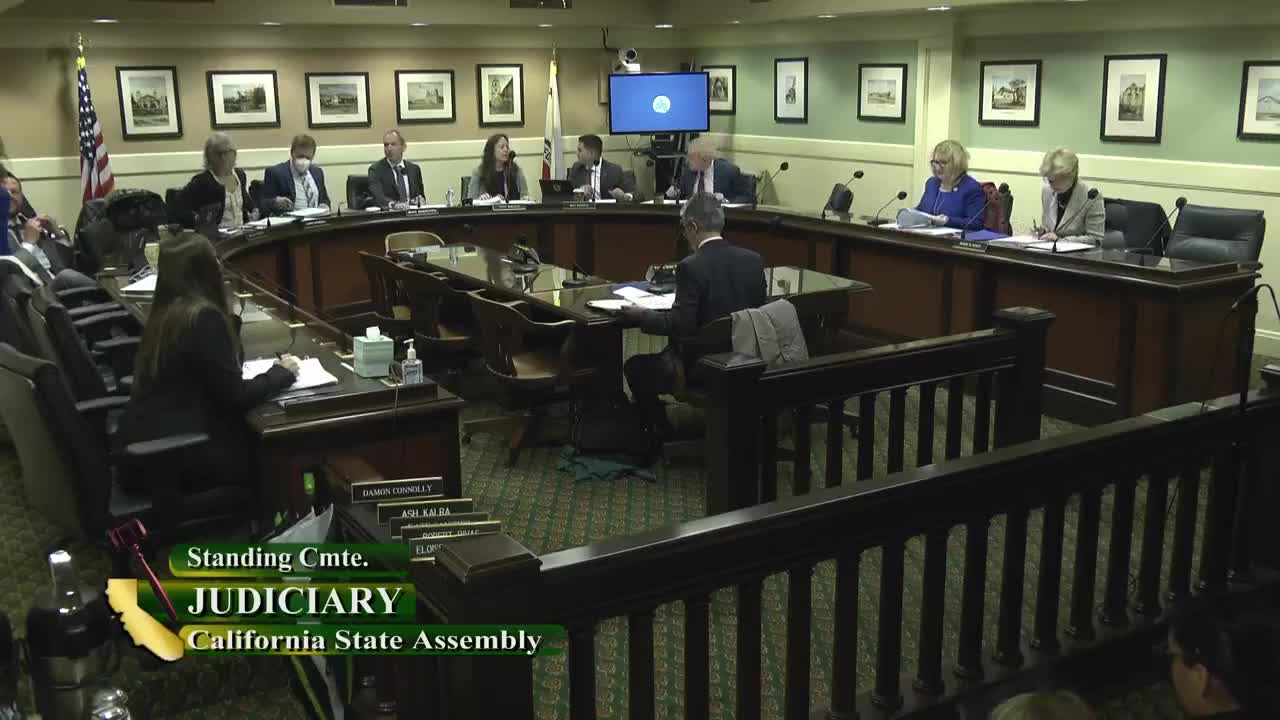
Bill Author