AB 458: Shared mobility devices: insurance.
- Session Year: 2023-2024
- House: Assembly
- Latest Version Date: 2023-10-08
Current Status:
Passed
(2023-10-08: Chaptered by Secretary of State - Chapter 440, Statutes of 2023.)
Introduced
In Committee
First Chamber
In Committee
Second Chamber
Enacted
Existing law requires a shared mobility service provider, as defined, to enter into an agreement with, or obtain a permit from, the city or county with jurisdiction over the area of use before distribution of a shared mobility device, as defined. Existing law requires that agreement or permit to require that the shared mobility service provider maintains a specified amount of commercial general liability insurance with, among other things, limits not less than $5,000,000 aggregate for all occurrences during the policy period. Existing law also requires that agreement or permit to require the shared mobility service provider to offer or make available, or confirm that the user of a shared mobility device maintains, insurance coverage for bodily injury or death suffered by a pedestrian when the injury or death involves, in whole or in part, the negligent conduct of the shared mobility device user, as specified.
This bill would provide that insurance coverage offered, made available, or confirmed under the above-described provisions is not a group insurance policy. The bill would also provide that the requirement on shared mobility service providers to offer, make available, or confirm insurance coverage for bodily injury or death suffered by a pedestrian involving the negligent conduct of the user does not prohibit an aggregated cap on that insurance coverage, and does not limit or supersede the requirement that the commercial general liability insurance maintained by the shared mobility service provider has limits not less than $5,000,000 aggregate for all occurrences during the policy period.
Existing law requires a shared mobility service provider, as defined, to enter into an agreement with, or obtain a permit from, the city or county with jurisdiction over the area of use before distribution of a shared mobility device, as defined. Existing law requires that agreement or permit to require that the shared mobility service provider maintains a specified amount of commercial general liability insurance with, among other things, limits not less than $5,000,000 aggregate for all occurrences during the policy period. Existing law also requires that agreement or permit to require the shared mobility service provider to offer or make available, or confirm that the user of a shared mobility device maintains, insurance coverage for bodily injury or death suffered by a pedestrian when the injury or death involves, in whole or in part, the negligent conduct of the shared mobility device user, as specified.
This bill would prohibit group provide that insurance policies from being coverage offered, made available, or confirmed under the above-described provisions. provisions is not a group insurance policy. The bill would also provide that the requirement on shared mobility service providers to offer, make available, or confirm insurance coverage for bodily injury or death suffered by a pedestrian involving the negligent conduct of the user does not prohibit an aggregated cap on that insurance coverage, and does not limit or supersede the requirement that the commercial general liability insurance maintained by the shared mobility service provider has limits not less than $5,000,000 aggregate for all occurrences during the policy period.
Existing law requires all drivers and owners of a motor vehicle to be able to establish financial responsibility at all times and prescribes certain minimum requirements for an insurance policy to be filed as evidence of financial responsibility requirements.This bill would specify that the requirement for a shared mobility service provider to enter into an agreement with, or obtain a permit from, the city or county that specifies the insurance coverage requirements for a shared mobility service provider, as described above, applies notwithstanding those insurance requirements on drivers and owners of a motor vehicle.Existing law requires a shared mobility service provider, as defined, to enter into an agreement with, or obtain a permit from, the city or county with jurisdiction over the area of use before distribution of a shared mobility device, as defined. Existing law requires that agreement or permit to require that the shared mobility service provider maintains a specified amount of commercial general liability insurance with, among other things, limits not less than $5,000,000 aggregate for all occurrences during the policy period. Existing law also requires that agreement or permit to require the shared mobility service provider to offer or make available, or confirm that the user of a shared mobility device maintains, insurance coverage for bodily injury or death suffered by a pedestrian when the injury or death involves, in whole or in part, the negligent conduct of the shared mobility device user, as specified.
This bill would prohibit group insurance policies from being offered, made available, or confirmed under the above-described provisions. The bill would also provide that the requirement on shared mobility service providers to offer, make available, or confirm insurance coverage for bodily injury or death suffered by a pedestrian involving the negligent conduct of the user does not limit or supersede the requirement that the commercial general liability insurance maintained by the shared mobility service provider has limits not less than $5,000,000 aggregate for all occurrences during the policy period.
Existing law requires all drivers and owners of a motor vehicle to be able to establish financial responsibility at all times and prescribes certain minimum requirements for an insurance policy to be filed as evidence of financial responsibility requirements.
This bill would specify that the requirement for a shared mobility service provider to enter into an agreement with, or obtain a permit from, the city or county that specifies the insurance coverage requirements for a shared mobility service provider, as described above, applies notwithstanding those insurance requirements on drivers and owners of a motor vehicle.
Existing law requires the Commission on Peace Officer Standards and Training to establish a certification program for specified peace officers, including officers of the Department of the California Highway Patrol. Existing law requires the commission to establish, among others, basic certificates for the purpose of fostering the education and experience necessary to perform general police service duties. Existing law requires certificates to be awarded on the basis of a combination of training, education, experience, and other prerequisites, as determined by the commission.Existing law requires the Chancellor of the California Community Colleges, in consultation with specified entities, to develop a modern policing degree program and to prepare and submit a report to the Legislature by no later than June 1, 2023, outlining a plan to implement the program.Existing law requires peace officers in this state to meet specified minimum standards, including age and education requirements.Commencing on January 1, 2028, this bill would require a peace officer to attain a modern policing degree, as specified, or a bachelors or other advanced degree from an accredited college or university prior to receiving a basic certificate from the commission.Existing law requires the Commission on Peace Officer Standards and Training to establish a certification program for specified peace officers, including officers of the Department of the California Highway Patrol. Existing law requires the commission to establish, among others, basic certificates for the purpose of fostering the education and experience necessary to perform general police service duties. Existing law requires certificates to be awarded on the basis of a combination of training, education, experience, and other prerequisites, as determined by the commission.
Existing law requires the Chancellor of the California Community Colleges, in consultation with specified entities, to develop a modern policing degree program and to prepare and submit a report to the Legislature by no later than June 1, 2023, outlining a plan to implement the program.
This bill would extend the due date of the report to June 30, 2023.Existing law requires peace officers in this state to meet specified minimum standards, including age and education requirements.
Commencing on January 1, 2028, this bill would require a peace officer to attain a modern policing degree, as specified, or a bachelors or other advanced degree from an accredited college or university prior to receiving a basic certificate from the commission.
Existing law requires the Chancellor of the California Community Colleges, in consultation with specified entities, to develop a modern policing degree program and to prepare and submit a report to the Legislature by no later than June 1, 2023, outlining a plan to implement the program.
This bill would extend the due date of the report to June 30, 2023.
(a)For purposes of this title:
(1)Assistive technology device has the same meaning as in Section 7002 of Title 9 of the California Code of Regulations.
(2)Shared mobility device means an electrically motorized board as defined in Section 313.5 of the Vehicle Code, motorized scooter as defined in Section 407.5 of the Vehicle Code, electric bicycle as defined in Section 312.5 of the Vehicle Code, bicycle as defined in Section 231 of the Vehicle Code, or other similar personal transportation device, except as provided in subdivision (b) of Section 415 of the Vehicle Code, that is made available to the public by a shared mobility service provider for shared use and transportation in exchange for financial compensation via a digital application or other electronic or digital platform.
(3)Shared mobility service provider or provider means a person or entity that offers, makes available, or provides a shared mobility device in exchange for financial compensation or membership via a digital application or other electronic or digital platform.
(b)(1)Before distribution of a shared mobility device, a shared mobility service provider shall enter into an agreement with, or obtain a permit from, the city or county with jurisdiction over the area of use. The agreement or permit shall, at a minimum, require that the shared mobility service provider maintain commercial general liability insurance coverage with an admitted insurer, or a nonadmitted insurer that is eligible to insure a home state insured under Chapter 6 (commencing with Section 1760) of Part 2 of Division 1 of the Insurance Code, with limits not less than one million dollars ($1,000,000) for each occurrence for bodily injury or property damage, including contractual liability, personal injury, and product liability and completed operations, and not less than five million dollars ($5,000,000) aggregate for all occurrences during the policy period. The insurance shall not exclude coverage for injuries or damages caused by the shared mobility service provider to the shared mobility device user.
(2)(A)(i)(I)Notwithstanding any other law, effective July 1, 2023, the agreement or permit required pursuant to paragraph (1) shall require, in addition to the coverage required by paragraph (1), a shared mobility service provider to offer or make available, or to confirm the user of a shared mobility device maintains, insurance coverage for bodily injury or death suffered by a pedestrian when the injury or death involves, in whole or in part, the negligent conduct of the shared mobility device user, of ten thousand dollars ($10,000) for each occurrence of bodily injury to, or death of, one pedestrian in any one accident, and for property damage to an assistive technology device, of one thousand dollars ($1,000), for each occurrence. This paragraph shall not be interpreted to require coverage as provided in Division 7 (commencing with Section 16000) of the Vehicle Code.
(II)This clause shall not be interpreted to limit or supersede the requirement pursuant to paragraph (1) that the shared mobility service provider, in its agreement with or permit from the city or county with jurisdiction over the area of use, maintain commercial general liability insurance coverage with limits not less than five million dollars ($5,000,000) aggregate for all occurrences during the policy period.
(III)This clause shall not be interpreted to prohibit an aggregated cap on the insurance required by subclause (I).
(IV)Insurance coverage offered, made available, or confirmed pursuant to this clause shall not be considered a group insurance policy.
(ii)Notwithstanding clause (i) or any other law, a shared mobility service provider or user of a shared mobility device is not required to maintain insurance coverage, as described in clause (i), for injuries of, or death to, a pedestrian or property damage involving the following devices:
(I)A bicycle propelled exclusively by human power, as described in Section 231 of the Vehicle Code. For purposes of this paragraph, bicycle shall not include an electric bicycle.
(II)A class 1 electric bicycle as defined in paragraph (1) of subdivision (a) of Section 312.5 of the Vehicle Code.
(III)A class 2 electric bicycle as defined in paragraph (2) of subdivision (a) of Section 312.5 of the Vehicle Code.
(iii)The Legislature finds and declares that bicycles may be recognized as safer than motorized devices when in use, and recognizes there may remain a propensity for pedestrian injuries or death resulting from shared mobility bicycles and shared mobility electric bicycles being left negligently abandoned on pedestrian walkways.
(B)A shared mobility service provider may partner with an insurer to provide an option to its users via its digital application or other electronic platform where the user may purchase insurance coverage that meets or exceeds the requirements of subparagraph (A). The shared mobility service provider shall disclose via its digital application or other electronic platform the name, contact information, and location to make a claim with the insurer they chose to partner with. The shared mobility service provider may fund the cost of providing this coverage itself and pass the cost on in its standard fee to users, or through a separate charge to users. If a user of a shared mobility device does not maintain their own insurance policy, then that coverage shall be offered or made available by the shared mobility service provider. A shared mobility service provider shall not allow a user or individual to operate or utilize a shared mobility device without the coverage identified in subparagraph (A). If a user or individual gains access to a shared mobility device without obtaining coverage through the options outlined in this subparagraph or subparagraph (C), and uses or operates it uninsured, the shared mobility service provider shall be required to provide the insurance coverage identified in subparagraph (A).
(C)(i)A shared mobility service provider may enter into separate individual agreements with users maintaining their own liability insurance coverage that meets or exceeds the requirements of subparagraph (A), to exclude the user from the providers insurance coverage required in subparagraph (A) when, in consideration for such an agreement, the user shall not pay a separate charge for the coverage or shall be refunded the portion of the providers fee that pays for the providers coverage. The agreement shall be null and void upon lapse, cancellation, or expiration of the users policy. If a shared mobility device user entering into an agreement under this subparagraph misrepresents their maintenance of a policy or through an error or act of omission does not provide coverage, the shared mobility service provider shall be required to maintain the insurance to cover any claims resulting in injury, death, or property damage described in subparagraph (A).
(ii)It is the intent of the Legislature that, in enacting this subparagraph, shared mobility service providers have the flexibility to offer or make available insurance options to their users, while also ensuring the shared mobility service providers insurance serves as the backstop to cover any pedestrian injuries or death, or property damage, should there be any unintended gaps in coverage as a result of users misrepresenting or not maintaining the insurance.
(D)A shared mobility service provider shall keep an up-to-date list of its users that maintain their own liability insurance coverage that meets or exceeds the requirements of subparagraph (A). The provider shall annually transmit information on the percentage of its total users in the state that maintain their own insurance coverage, in the same manner as proscribed in subdivision (b) of Section 2505.5 of the Civil Code, to the Department of Insurance.
(3)Effective July 1, 2023, nothing in this section shall prohibit a provider from requiring a user to enter into an indemnity contract whereby the user will indemnify the provider for the users proportionate share of liability. The indemnity contract shall not require the user to defend or indemnify the provider for the providers negligence or willful misconduct. This section shall not be waived or modified by contractual agreement, act, or omission of the parties.
(c)(1)A city or county that authorizes a provider to operate within its jurisdiction on or after January 1, 2021, shall adopt rules for the operation, parking, and maintenance of shared mobility devices before a provider may offer any shared mobility device for rent or use in the city or county by any of the following:
(A)Ordinance.
(B)Agreement.
(C)Permit terms.
(2)A city or county that authorized a provider to operate within its jurisdiction before January 1, 2021, and continues to provide that authorization shall adopt rules for the operation, parking, and maintenance of shared mobility devices by January 1, 2022, by any of the following:
(A)Ordinance.
(B)Agreement.
(C)Permit terms.
(3)A provider shall comply with all applicable rules, agreements, and permit terms established pursuant to this subdivision.
(d)Nothing in this section shall prohibit a city or county from adopting any ordinance or regulation that is not inconsistent with this title.
(e)On or before July 1, 2023, a shared mobility service provider shall disclose to its customers that the customers existing homeowners, renters, or automobile insurance policies might not provide coverage for liability resulting from the use of shared mobility devices and that the customer should contact their insurance company or insurance agent to determine if coverage is provided, prior to allowing a user to initiate their first use of a device.
(1)The disclosure shall be made to, and acknowledged by, the customer via the providers digital application or electronic platform and posted on the providers internet website.
(2)The disclosure shall include the following language in capital letters:
YOUR HOMEOWNERS, RENTERS, OR AUTOMOBILE INSURANCE POLICIES MIGHT NOT PROVIDE COVERAGE FOR ACCIDENTS INVOLVING THE USE OF THIS DEVICE. TO DETERMINE IF COVERAGE IS PROVIDED YOU SHOULD CONTACT YOUR INSURANCE COMPANY OR AGENT.
(a)For purposes of this title:
(1)Assistive technology device has the same meaning as in Section 7002 of Title 9 of the California Code of Regulations.
(2)Shared mobility device means an electrically motorized board as defined in Section 313.5 of the Vehicle Code, motorized scooter as defined in Section 407.5 of the Vehicle Code, electric bicycle as defined in Section 312.5 of the Vehicle Code, bicycle as defined in Section 231 of the Vehicle Code, or other similar personal transportation device, except as provided in subdivision (b) of Section 415 of the Vehicle Code, that is made available to the public by a shared mobility service provider for shared use and transportation in exchange for financial compensation via a digital application or other electronic or digital platform.
(3)Shared mobility service provider or provider means a person or entity that offers, makes available, or provides a shared mobility device in exchange for financial compensation or membership via a digital application or other electronic or digital platform.
(b)(1)Notwithstanding Section 16056 of the Vehicle Code, before Before distribution of a shared mobility device, a shared mobility service provider shall enter into an agreement with, or obtain a permit from, the city or county with jurisdiction over the area of use. The agreement or permit shall, at a minimum, require that the shared mobility service provider maintain commercial general liability insurance coverage with an admitted insurer, or a nonadmitted insurer that is eligible to insure a home state insured under Chapter 6 (commencing with Section 1760) of Part 2 of Division 1 of the Insurance Code, with limits not less than one million dollars ($1,000,000) for each occurrence for bodily injury or property damage, including contractual liability, personal injury, and product liability and completed operations, and not less than five million dollars ($5,000,000) aggregate for all occurrences during the policy period. The insurance shall not exclude coverage for injuries or damages caused by the shared mobility service provider to the shared mobility device user.
(2)(A)(i)(I)Notwithstanding any other law, effective July 1, 2023, the agreement or permit required pursuant to paragraph (1) shall require, in addition to the coverage required by paragraph (1), a shared mobility service provider to offer or make available, or to confirm the user of a shared mobility device maintains, insurance coverage for bodily injury or death suffered by a pedestrian when the injury or death involves, in whole or in part, the negligent conduct of the shared mobility device user, of ten thousand dollars ($10,000) for each occurrence of bodily injury to, or death of, one pedestrian in any one accident, and for property damage to an assistive technology device, of one thousand dollars ($1,000), for each occurrence. This paragraph shall not be interpreted to require coverage as provided in Division 7 (commencing with Section 16000) of the Vehicle Code.
(II)This clause shall not be interpreted to limit or supersede the requirement pursuant to paragraph (1) that the shared mobility service provider, in its agreement with or permit from the city or county with jurisdiction over the area of use, maintain commercial general liability insurance coverage with limits not less than five million dollars ($5,000,000) aggregate for all occurrences during the policy period.
(III)This clause shall not be interpreted to prohibit an aggregated cap on the insurance required by subclause (I).
(III)(IV)Insurance coverage offered, made available, or confirmed pursuant to this clause shall not be considered a group insurance policy.
(ii)Notwithstanding clause (i) or any other law, a shared mobility service provider or user of a shared mobility device is not required to maintain insurance coverage, as described in clause (i), for injuries of, or death to, a pedestrian or property damage involving the following devices:
(I)A bicycle propelled exclusively by human power, as described in Section 231 of the Vehicle Code. For purposes of this paragraph, bicycle shall not include an electric bicycle.
(II)A class 1 electric bicycle as defined in paragraph (1) of subdivision (a) of Section 312.5 of the Vehicle Code.
(III)A class 2 electric bicycle as defined in paragraph (2) of subdivision (a) of Section 312.5 of the Vehicle Code.
(iii)The Legislature finds and declares that bicycles may be recognized as safer than motorized devices when in use, and recognizes there may remain a propensity for pedestrian injuries or death resulting from shared mobility bicycles and shared mobility electric bicycles being left negligently abandoned on pedestrian walkways.
(B)A shared mobility service provider may partner with an insurer to provide an option to its users via its digital application or other electronic platform where the user may purchase insurance coverage that meets or exceeds the requirements of subparagraph (A). The shared mobility service provider shall disclose via its digital application or other electronic platform the name, contact information, and location to make a claim with the insurer they chose to partner with. The shared mobility service provider may fund the cost of providing this coverage itself and pass the cost on in its standard fee to users, or through a separate charge to users. If a user of a shared mobility device does not maintain their own insurance policy, then that coverage shall be offered or made available by the shared mobility service provider. A shared mobility service provider shall not allow a user or individual to operate or utilize a shared mobility device without the coverage identified in subparagraph (A). If a user or individual gains access to a shared mobility device without obtaining coverage through the options outlined in this subparagraph or subparagraph (C), and uses or operates it uninsured, the shared mobility service provider shall be required to provide the insurance coverage identified in subparagraph (A).
(C)(i)A shared mobility service provider may enter into separate individual agreements with users maintaining their own liability insurance coverage that meets or exceeds the requirements of subparagraph (A), to exclude the user from the providers insurance coverage required in subparagraph (A) when, in consideration for such an agreement, the user shall not pay a separate charge for the coverage or shall be refunded the portion of the providers fee that pays for the providers coverage. The agreement shall be null and void upon lapse, cancellation, or expiration of the users policy. If a shared mobility device user entering into an agreement under this subparagraph misrepresents their maintenance of a policy or through an error or act of omission does not provide coverage, the shared mobility service provider shall be required to maintain the insurance to cover any claims resulting in injury, death, or property damage described in subparagraph (A).
(ii)It is the intent of the Legislature that, in enacting this subparagraph, shared mobility service providers have the flexibility to offer or make available insurance options to their users, while also ensuring the shared mobility service providers insurance serves as the backstop to cover any pedestrian injuries or death, or property damage, should there be any unintended gaps in coverage as a result of users misrepresenting or not maintaining the insurance.
(D)A shared mobility service provider shall keep an up-to-date list of its users that maintain their own liability insurance coverage that meets or exceeds the requirements of subparagraph (A). The provider shall annually transmit information on the percentage of its total users in the state that maintain their own insurance coverage, in the same manner as proscribed in subdivision (b) of Section 2505.5 of the Civil Code, to the Department of Insurance.
(3)Effective July 1, 2023, nothing in this section shall prohibit a provider from requiring a user to enter into an indemnity contract whereby the user will indemnify the provider for the users proportionate share of liability. The indemnity contract shall not require the user to defend or indemnify the provider for the providers negligence or willful misconduct. This section shall not be waived or modified by contractual agreement, act, or omission of the parties.
(c)(1)A city or county that authorizes a provider to operate within its jurisdiction on or after January 1, 2021, shall adopt rules for the operation, parking, and maintenance of shared mobility devices before a provider may offer any shared mobility device for rent or use in the city or county by any of the following:
(A)Ordinance.
(B)Agreement.
(C)Permit terms.
(2)A city or county that authorized a provider to operate within its jurisdiction before January 1, 2021, and continues to provide that authorization shall adopt rules for the operation, parking, and maintenance of shared mobility devices by January 1, 2022, by any of the following:
(A)Ordinance.
(B)Agreement.
(C)Permit terms.
(3)A provider shall comply with all applicable rules, agreements, and permit terms established pursuant to this subdivision.
(d)Nothing in this section shall prohibit a city or county from adopting any ordinance or regulation that is not inconsistent with this title.
(e)On or before July 1, 2023, a shared mobility service provider shall disclose to its customers that the customers existing homeowners, renters, or automobile insurance policies might not provide coverage for liability resulting from the use of shared mobility devices and that the customer should contact their insurance company or insurance agent to determine if coverage is provided, prior to allowing a user to initiate their first use of a device.
(1)The disclosure shall be made to, and acknowledged by, the customer via the providers digital application or electronic platform and posted on the providers internet website.
(2)The disclosure shall include the following language in capital letters:
YOUR HOMEOWNERS, RENTERS, OR AUTOMOBILE INSURANCE POLICIES MIGHT NOT PROVIDE COVERAGE FOR ACCIDENTS INVOLVING THE USE OF THIS DEVICE. TO DETERMINE IF COVERAGE IS PROVIDED YOU SHOULD CONTACT YOUR INSURANCE COMPANY OR AGENT.
(a)For purposes of this title:
(1)Assistive technology device has the same meaning as in Section 7002 of Title 9 of the California Code of Regulations.
(2)Shared mobility device means an electrically motorized board as defined in Section 313.5 of the Vehicle Code, motorized scooter as defined in Section 407.5 of the Vehicle Code, electric bicycle as defined in Section 312.5 of the Vehicle Code, bicycle as defined in Section 231 of the Vehicle Code, or other similar personal transportation device, except as provided in subdivision (b) of Section 415 of the Vehicle Code, that is made available to the public by a shared mobility service provider for shared use and transportation in exchange for financial compensation via a digital application or other electronic or digital platform.
(3)Shared mobility service provider or provider means a person or entity that offers, makes available, or provides a shared mobility device in exchange for financial compensation or membership via a digital application or other electronic or digital platform.
(b)(1)Before Notwithstanding Section 16056 of the Vehicle Code, before distribution of a shared mobility device, a shared mobility service provider shall enter into an agreement with, or obtain a permit from, the city or county with jurisdiction over the area of use. The agreement or permit shall, at a minimum, require that the shared mobility service provider maintain commercial general liability insurance coverage with an admitted insurer, or a nonadmitted insurer that is eligible to insure a home state insured under Chapter 6 (commencing with Section 1760) of Part 2 of Division 1 of the Insurance Code, with limits not less than one million dollars ($1,000,000) for each occurrence for bodily injury or property damage, including contractual liability, personal injury, and product liability and completed operations, and not less than five million dollars ($5,000,000) aggregate for all occurrences during the policy period. The insurance shall not exclude coverage for injuries or damages caused by the shared mobility service provider to the shared mobility device user.
(2)(A)(i)(I)Notwithstanding any other law, effective July 1, 2023, the agreement or permit required pursuant to paragraph (1) shall require, in addition to the coverage required by paragraph (1), a shared mobility service provider to offer or make available, or to confirm the user of a shared mobility device maintains, insurance coverage for bodily injury or death suffered by a pedestrian when the injury or death involves, in whole or in part, the negligent conduct of the shared mobility device user, of ten thousand dollars ($10,000) for each occurrence of bodily injury to, or death of, one pedestrian in any one accident, and for property damage to an assistive technology device, of one thousand dollars ($1,000), for each occurrence.
(II)This clause shall not be interpreted to limit or supersede the requirement pursuant to paragraph (1) that the shared mobility service provider, in its agreement with or permit from the city or county with jurisdiction over the area of use, maintain commercial general liability insurance coverage with limits not less than five million dollars ($5,000,000) aggregate for all occurrences during the policy period.
(III)Insurance coverage offered, made available, or confirmed pursuant to this clause shall not be a group insurance policy.
(ii)Notwithstanding clause (i) or any other law, a shared mobility service provider or user of a shared mobility device is not required to maintain insurance coverage, as described in clause (i), for injuries of, or death to, a pedestrian or property damage involving the following devices:
(I)A bicycle propelled exclusively by human power, as described in Section 231 of the Vehicle Code. For purposes of this paragraph, bicycle shall not include an electric bicycle.
(II)A class 1 electric bicycle as defined in paragraph (1) of subdivision (a) of Section 312.5 of the Vehicle Code.
(III)A class 2 electric bicycle as defined in paragraph (2) of subdivision (a) of Section 312.5 of the Vehicle Code.
(iii)The Legislature finds and declares that bicycles may be recognized as safer than motorized devices when in use, and recognizes there may remain a propensity for pedestrian injuries or death resulting from shared mobility bicycles and shared mobility electric bicycles being left negligently abandoned on pedestrian walkways.
(B)A shared mobility service provider may partner with an insurer to provide an option to its users via its digital application or other electronic platform where the user may purchase insurance coverage that meets or exceeds the requirements of subparagraph (A). The shared mobility service provider shall disclose via its digital application or other electronic platform the name, contact information, and location to make a claim with the insurer they chose to partner with. The shared mobility service provider may fund the cost of providing this coverage itself and pass the cost on in its standard fee to users, or through a separate charge to users. If a user of a shared mobility device does not maintain their own insurance policy, then that coverage shall be offered or made available by the shared mobility service provider. A shared mobility service provider shall not allow a user or individual to operate or utilize a shared mobility device without the coverage identified in subparagraph (A). If a user or individual gains access to a shared mobility device without obtaining coverage through the options outlined in this subparagraph or subparagraph (C), and uses or operates it uninsured, the shared mobility service provider shall be required to provide the insurance coverage identified in subparagraph (A).
(C)(i)A shared mobility service provider may enter into separate individual agreements with users maintaining their own liability insurance coverage that meets or exceeds the requirements of subparagraph (A), to exclude the user from the providers insurance coverage required in subparagraph (A) when, in consideration for such an agreement, the user shall not pay a separate charge for the coverage or shall be refunded the portion of the providers fee that pays for the providers coverage. The agreement shall be null and void upon lapse, cancellation, or expiration of the users policy. If a shared mobility device user entering into an agreement under this subparagraph misrepresents their maintenance of a policy or through an error or act of omission does not provide coverage, the shared mobility service provider shall be required to maintain the insurance to cover any claims resulting in injury, death, or property damage described in subparagraph (A).
(ii)It is the intent of the Legislature that, in enacting this subparagraph, shared mobility service providers have the flexibility to offer or make available insurance options to their users, while also ensuring the shared mobility service providers insurance serves as the backstop to cover any pedestrian injuries or death, or property damage, should there be any unintended gaps in coverage as a result of users misrepresenting or not maintaining the insurance.
(D)A shared mobility service provider shall keep an up-to-date list of its users that maintain their own liability insurance coverage that meets or exceeds the requirements of subparagraph (A). The provider shall annually transmit information on the percentage of its total users in the state that maintain their own insurance coverage, in the same manner as proscribed in subdivision (b) of Section 2505.5 of the Civil Code, to the Department of Insurance.
(3)Effective July 1, 2023, nothing in this section shall prohibit a provider from requiring a user to enter into an indemnity contract whereby the user will indemnify the provider for the users proportionate share of liability. The indemnity contract shall not require the user to defend or indemnify the provider for the providers negligence or willful misconduct. This section shall not be waived or modified by contractual agreement, act, or omission of the parties.
(c)(1)A city or county that authorizes a provider to operate within its jurisdiction on or after January 1, 2021, shall adopt rules for the operation, parking, and maintenance of shared mobility devices before a provider may offer any shared mobility device for rent or use in the city or county by any of the following:
(A)Ordinance.
(B)Agreement.
(C)Permit terms.
(2)A city or county that authorized a provider to operate within its jurisdiction before January 1, 2021, and continues to provide that authorization shall adopt rules for the operation, parking, and maintenance of shared mobility devices by January 1, 2022, by any of the following:
(A)Ordinance.
(B)Agreement.
(C)Permit terms.
(3)A provider shall comply with all applicable rules, agreements, and permit terms established pursuant to this subdivision.
(d)Nothing in this section shall prohibit a city or county from adopting any ordinance or regulation that is not inconsistent with this title.
(e)On or before July 1, 2023, a shared mobility service provider shall disclose to its customers that the customers existing homeowners, renters, or automobile insurance policies might not provide coverage for liability resulting from the use of shared mobility devices and that the customer should contact their insurance company or insurance agent to determine if coverage is provided, prior to allowing a user to initiate their first use of a device.
(1)The disclosure shall be made to, and acknowledged by, the customer via the providers digital application or electronic platform and posted on the providers internet website.
(2)The disclosure shall include the following language in capital letters:
YOUR HOMEOWNERS, RENTERS, OR AUTOMOBILE INSURANCE POLICIES MIGHT NOT PROVIDE COVERAGE FOR ACCIDENTS INVOLVING THE USE OF THIS DEVICE. TO DETERMINE IF COVERAGE IS PROVIDED YOU SHOULD CONTACT YOUR INSURANCE COMPANY OR AGENT.
SECTION 1.Section 1031.4 of the Government Code is amended to read:1031.4.(a)In addition to the standards in Section 1031, each state officer and employee designated as a peace officer as described in Section 830.1, with the exception of a person described in subdivision (c) of that section, 830.2, with the exception of a person described in subdivision (d) of that section, 830.3, 830.32, or 830.33 of the Penal Code, or any other peace officer employed by an agency that participates in the Peace Officer Standards and Training (POST) program shall be at least 21 years of age at the time of appointment.(b)Subdivision (a) shall not apply to any person who, as of December 31, 2021, is currently enrolled in a basic academy or is employed as a peace officer by a public entity in California.(c)Commencing on January 1, 2028, an officer specified in subdivision (a) shall attain one of the following degrees prior to receiving a basic certificate pursuant to Section 13510.1 of the Penal Code:(1)A modern policing degree, as described in subdivision (a) of Section 13511.1 of the Penal Code, from a California Community College.(2)A bachelors degree or other advanced degree from an accredited college or university.(d)Subdivision (c) does not apply to any person who, as of December 31, 2027, is currently enrolled in a basic academy or is employed as a peace officer by a public entity in California.
(a)In addition to the standards in Section 1031, each state officer and employee designated as a peace officers officer as described in Section 830.1, with the exception of those a person described in subdivision (c) of that section, 830.2, with the exception of those a person described in subdivision (d) of that section, 830.3, 830.32, or 830.33 of the Penal Code, or any other peace officer employed by an agency that participates in the Peace Officer Standards and Training (POST) program shall be at least 21 years of age at the time of appointment.
(b)This section Subdivision (a) shall not apply to any person who, as of December 31, 2021, is currently enrolled in a basic academy or is employed as a peace officer by a public entity in California.
(c)Commencing on January 1, 2028, an officer specified in subdivision (a) shall attain one of the following degrees prior to receiving a basic certificate pursuant to Section 13510.1 of the Penal Code:
(1)A modern policing degree, as described in subdivision (a) of Section 13511.1 of the Penal Code, from a California Community College.
(2)A bachelors degree or other advanced degree from an accredited college or university.
(d)Subdivision (c) does not apply to any person who, as of December 31, 2027, is currently enrolled in a basic academy or is employed as a peace officer by a public entity in California.
SECTION 1.Section 13511.1 of the Penal Code is amended to read:13511.1.(a)The commission, stakeholders from law enforcement, including representatives of law enforcement administration and law enforcement employees, the California State University, including administration and faculty members, and community organizations shall serve as advisors to the office of the Chancellor of the California Community Colleges to develop a modern policing degree program. By June 30, 2023, the office of the Chancellor of the California Community Colleges, in consultation with the stakeholders, shall submit a report on recommendations to the Legislature outlining a plan to implement this program. The recommendations in the report shall:(1)Focus on courses pertinent to law enforcement, which shall include, but not be limited to, psychology, communications, history, ethnic studies, law, and those determined to develop necessary critical thinking skills and emotional intelligence.(2)Include allowances for prior law enforcement experience, and appropriate work experience, postsecondary education experience, or military experience to satisfy a portion of the employment eligibility requirements.(A)It is the intent of the Legislature that allowances for prior experience in this paragraph for those with military experience may be provided to those with military specializations pertinent to law enforcement, including those specializations in community relations, deescalation, foreign language translators, and those determined to require necessary critical thinking skills and emotional intelligence.(B)It is the intent of the Legislature that allowances for prior experience specified in this paragraph shall be granted to those of good moral character, and shall not be granted to those with prior sustained disciplinary actions taken against them, except that the Commission on Peace Officer Standards and Training may, after considering the severity of the sustained misconduct or violation, grant a partial allowance.(3)Include both the modern policing degree program and bachelors degree in the discipline of their choosing as minimum education requirements for employment as a peace officer.(4)Include recommendations to adopt financial assistance for students of historically underserved and disadvantaged communities with barriers to higher education access that fulfill the minimum education requirements to be adopted, pursuant to this section, for employment as a peace officer.(b)The report to be submitted pursuant to subdivision (a) shall be submitted in compliance with Section 9795 of the Government Code.(c)Within two years of the submission of the report to the Legislature, the commission shall approve and adopt the education criteria for peace officers, based on the recommendations in the report by the office of the Chancellor of the California Community Colleges in consultation with the stakeholders specified in subdivision (a).(a)The commission, stakeholders from law enforcement, including representatives of law enforcement administration and law enforcement employees, the California State University, including administration and faculty members, and community organizations shall serve as advisors to the office of the Chancellor of the California Community Colleges to develop a modern policing degree program. By June 1, 2023, June 30, 2023, the office of the Chancellor of the California Community Colleges, in consultation with the stakeholders, shall submit a report on recommendations to the Legislature outlining a plan to implement this program. The recommendations in the report shall:
(1)Focus on courses pertinent to law enforcement, which shall include, but not be limited to, psychology, communications, history, ethnic studies, law, and those determined to develop necessary critical thinking skills and emotional intelligence.
(2)Include allowances for prior law enforcement experience, and appropriate work experience, postsecondary education experience, or military experience to satisfy a portion of the employment eligibility requirements.
(A)It is the intent of the Legislature that allowances for prior experience in this paragraph for those with military experience may be provided to those with military specializations pertinent to law enforcement, including those specializations in community relations, deescalation, foreign language translators, and those determined to require necessary critical thinking skills and emotional intelligence.
(B)It is the intent of the Legislature that allowances for prior experience specified in this paragraph shall be granted to those of good moral character, and shall not be granted to those with prior sustained disciplinary actions taken against them, except that the Commission on Peace Officer Standards and Training may, after considering the severity of the sustained misconduct or violation, grant a partial allowance.
(3)Include both the modern policing degree program and bachelors degree in the discipline of their choosing as minimum education requirements for employment as a peace officer.
(4)Include recommendations to adopt financial assistance for students of historically underserved and disadvantaged communities with barriers to higher education access that fulfill the minimum education requirements to be adopted, pursuant to this section, for employment as a peace officer.
(b)The report to be submitted pursuant to subdivision (a) shall be submitted in compliance with Section 9795 of the Government Code.
(c)Within two years of the submission of the report to the Legislature, the commission shall approve and adopt the education criteria for peace officers, based on the recommendations in the report by the office of the Chancellor of the California Community Colleges in consultation with the stakeholders specified in subdivision (a).
|
Date
|
Status
|
|---|---|
| Oct 8, 2023 | Chaptered by Secretary of State - Chapter 440, Statutes of 2023. |
| Oct 8, 2023 | Approved by the Governor. |
| Sep 13, 2023 | Enrolled and presented to the Governor at 3 p.m. |
| Sep 6, 2023 | Senate amendments concurred in. To Engrossing and Enrolling. (Ayes 79. Noes 0. Page 2954.). |
| Aug 31, 2023 | From committee: That the Senate amendments be concurred in. (Ayes 13. Noes 0.) (August 31). |
| Aug 24, 2023 | Re-referred to Com. on INS. pursuant to Assembly Rule 77.2. |
| Aug 17, 2023 | In Assembly. Concurrence in Senate amendments pending. May be considered on or after August 19 pursuant to Assembly Rule 77. |
| Aug 17, 2023 | Read third time. Passed. Ordered to the Assembly. (Ayes 38. Noes 0. Page 2138.). |
| Jul 13, 2023 | Read second time. Ordered to Consent Calendar. |
| Jul 12, 2023 | From committee: Do pass. To Consent Calendar. (Ayes 11. Noes 0.) (July 11). |
| Jul 3, 2023 | Read second time and amended. Re-referred to Com. on JUD. |
| Jun 29, 2023 | From committee: Amend, and do pass as amended and re-refer to Com. on JUD. (Ayes 7. Noes 0.) (June 28). |
| Jun 22, 2023 | Re-referred to Coms. on INS. and JUD. |
| Jun 22, 2023 | Re-referred to Com. on RLS pursuant to Senate Rule 29.10c. |
| Jun 20, 2023 | Read second time. Ordered to third reading. |
| Jun 19, 2023 | Read third time and amended. Ordered to second reading. |
| Jun 8, 2023 | Ordered to third reading. |
| Jun 8, 2023 | From Consent Calendar. |
| Jun 7, 2023 | Read second time. Ordered to Consent Calendar. |
| Jun 6, 2023 | From committee: Do pass. To Consent Calendar. (Ayes 5. Noes 0.) (June 6). |
| May 17, 2023 | Referred to Com. on PUB S. |
| May 9, 2023 | In Senate. Read first time. To Com. on RLS. for assignment. |
| May 8, 2023 | Read third time. Passed. Ordered to the Senate. (Ayes 70. Noes 0. Page 1486.) |
| Apr 27, 2023 | Read second time. Ordered to third reading. |
| Apr 26, 2023 | From committee: Do pass. (Ayes 12. Noes 0.) (April 25). |
| Mar 28, 2023 | From committee: Do pass and re-refer to Com. on HIGHER ED. with recommendation: To Consent Calendar. (Ayes 8. Noes 0.) (March 28). Re-referred to Com. on HIGHER ED. |
| Mar 8, 2023 | Re-referred to Com. on PUB. S. |
| Mar 7, 2023 | From committee chair, with author's amendments: Amend, and re-refer to Com. on PUB. S. Read second time and amended. |
| Feb 23, 2023 | Referred to Coms. on PUB. S. and HIGHER ED. |
| Feb 7, 2023 | From printer. May be heard in committee March 9. |
| Feb 6, 2023 | Read first time. To print. |
|
Date
|
Description
|
Location
|
Votes
|
|
|---|---|---|---|---|
| Sep 6, 2023 | AB 458 Jones-Sawyer Concurrence in Senate Amendments | Assembly Floor |
Passed |
|
| Aug 31, 2023 | With recommendation: That Senate amendments be concurred in. | Assembly Standing Committee on Insurance |
Passed |
|
| Aug 17, 2023 | Consent Calendar 2nd AB458 Jones-Sawyer | Senate Floor |
Passed |
|
| Jul 11, 2023 | Do pass and be ordered to the Consent Calendar | Senate Standing Committee on Judiciary |
Passed |
|
| Jun 28, 2023 | Do pass as amended, but first amend, and re-refer to the Committee on [Judiciary] | Senate Standing Committee on Insurance |
Passed |
|
| Jun 6, 2023 | Do pass and be ordered to the Consent Calendar | Senate Standing Committee on Public Safety |
Passed |
|
| May 8, 2023 | AB 458 Jones-Sawyer Assembly Third Reading | Assembly Floor |
Passed |
|
| Apr 25, 2023 | Do pass. | Assembly Standing Committee on Higher Education |
Passed |
|
| Mar 28, 2023 | Do pass and be re-referred to the Committee on [Higher Education] with recommendation: To Consent Calendar | Assembly Standing Committee on Public Safety |
Passed |
This list shows positions taken on this bill by organizations on the date displayed, which is linked to the original source.
Positions by individuals are not included.
|
Organization
|
Position
|
Date
|
|---|---|---|
| Bird | ** Support | |
| California Department of Insurance | ** Support | |
| Los Angeles Brotherhood Crusade – Black United Front | ** Support | |
| Peace Officers Research Association Of California | ** Support | |
| Smart Justice California | ** Support |
CONCURRENCE IN SENATE AMENDMENTS
CSA2 Bill Id:AB 458
Author:(Jones-Sawyer)
As Amended Ver:July 3, 2023
Majority vote
SUMMARY
Makes clarifying changes related to the insurance requirements for shared mobility devices.
Senate Amendments
Delete the Assembly version of this bill and instead:
- Provide that automobile insurance requirements do not apply to shared mobility devices.
- Provide that the requirement for shared mobility service providers to maintain commercial general liability insurance of not less than $5 million is aggregate for all occurrences during the policy period.
- Specify that the insurance required shall not be considered a group policy.
COMMENTS
This bill seeks to clarify language from AB 371 (Jones-Sawyer) Chapter 740, Statutes of 2022. Specifically, this bill clarifies that the requirement on shared mobility service providers to offer, make available, or confirm insurance coverage for bodily injury or death suffered by a pedestrian involving the negligent conduct of the user does not limit or supersede the requirement that the commercial general liability insurance maintained by the shared mobility service provider has limits not less than $5 million aggregate for all occurrences during the policy period; specifies that insurance maintained by a shared mobility device provider is not group insurance; and clarifies that automobile liability insurance requirements do not apply to shared mobility devices.
According to the Author
This bill seeks to clarify language from my bill last year, AB 371. AB 371 did not explicitly state an aggregate limit and insurers have misinterpreted that to mean aggregate limits are prohibited. This is not what was intended. Without clarifying language, this will be a continued problem for providers, as the current insurance quotes are prohibitively expensive.
Arguments in Support
None on file.
Arguments in Opposition
None on file.
FISCAL COMMENTS
None. This bill is keyed non-fiscal by the Office of Legislative Counsel.
VOTES
ASM PUBLIC SAFETY: 8-0-0
YES: Jones-Sawyer, Alanis, Bonta, Bryan, Lackey, Jackson, Santiago, Zbur
ASM HIGHER EDUCATION: 12-0-0
YES: Mike Fong, Ta, Addis, Arambula, Gabriel, Irwin, Low, Ortega, Sanchez, Santiago, Wallis, Weber
ASSEMBLY FLOOR: 70-0-10
YES: Addis, Aguiar-Curry, Alanis, Alvarez, Bains, Bauer-Kahan, Bennett, Berman, Boerner, Bonta, Bryan, Calderon, Wendy Carrillo, Chen, Connolly, Megan Dahle, Davies, Dixon, Essayli, Flora, Mike Fong, Friedman, Gabriel, Gallagher, Gipson, Grayson, Haney, Holden, Hoover, Irwin, Jackson, Jones-Sawyer, Kalra, Lackey, Low, Lowenthal, Maienschein, Mathis, McKinnor, Muratsuchi, Stephanie Nguyen, Pacheco, Papan, Jim Patterson, Joe Patterson, Pellerin, Petrie- Norris, Quirk-Silva, Ramos, Reyes, Luz Rivas, Robert Rivas, Rodriguez, Blanca Rubio, Sanchez, Santiago, Schiavo, Soria, Ta, Ting, Valencia, Villapudua, Waldron, Wallis, Weber, Wicks, Wilson, Wood, Zbur, Rendon
ABS, ABST OR NV: Arambula, Juan Carrillo, Cervantes, Vince Fong, Garcia, Hart, Lee, McCarty, Ortega, Ward
SENATE FLOOR: 38-0-2
YES: Allen, Alvarado-Gil, Archuleta, Ashby, Atkins, Becker, Blakespear, Bradford, Caballero, Cortese, Dahle, Dodd, Durazo, Glazer, Gonzalez, Grove, Hurtado, Jones, Limón, McGuire, Menjivar, Min, Newman, Nguyen, Niello, Ochoa Bogh, Padilla, Portantino, Roth, Rubio, Seyarto, Skinner, Smallwood-Cuevas, Stern, Umberg, Wahab, Wiener, Wilk
ABS, ABST OR NV: Eggman, Laird
ASM INSURANCE: 13-0-1
YES: Calderon, Essayli, Berman, Cervantes, Vince Fong, Gipson, Grayson, Jones-Sawyer, Ortega, Bonta, Lee, Valencia, Wood
ABS, ABST OR NV: Chen
UPDATED
VERSION: July 3, 2023
CONSULTANT: Claire Wendt / INS. / (916) 319-2086 FN: 0001429
Date of Hearing: August 31, 2023
ASSEMBLY COMMITTEE ON INSURANCE
Lisa Calderon, Chair
ABPCA Bill Id:AB 458 (
Author:Jones-Sawyer) – As Amended Ver:July 3, 2023
PURSUANT TO ASSEMBLY RULE 77.2
SUBJECT: Shared mobility devices: insurance
SUMMARY: Makes clarifying changes related to the insurance requirements for shared mobility devices. Specifically, this bill:
- Provides that automobile insurance requirements do not apply to shared mobility devices.
- Provides that the requirement for shared mobility service providers to maintain commercial general liability insurance of not less than $5 million is aggregate for all occurrences during the policy period.
- Specifies that the insurance required shall not be considered a group policy.
EXISTING LAW:
- Requires a shared mobility service provider, before distribution of a shared mobility device, to enter into an agreement with, or obtain a permit from, the city or county with jurisdiction over the area of use. The agreement or permit shall, at a minimum, require that the shared mobility service provider maintain commercial general liability insurance coverage with a carrier doing business in California. (Civil Code Section 2505(b)(1))
- Requires the above coverage to have limits not less than $1 million for each occurrence for bodily injury or property damage, including contractual liability, personal injury, and product liability and completed operations, and not less than $5 million aggregate for all occurrences during the policy period. Prohibits the insurance from excluding coverage for injuries or damages caused by the shared mobility service provider to the shared mobility device user. (Civil Code Section 2505(b)(1))
- Requires, effective July 1, 2023, a shared mobility service provider, in addition to the coverage currently required, to offer or make available, or to confirm the user of a shared mobility device maintains, insurance coverage for bodily injury or death suffered by a pedestrian when the injury or death involves, in whole or in part, the negligent conduct of the shared mobility device user, of $10,000 for each occurrence of bodily injury to, or death of, one pedestrian in any one accident, and for property damage to an assistive technology device, of $1,000 for each occurrence. Permits providers to partner with insurers or to enter into individual agreements with users, as specified. (Civil Code Section 2505(b)(2))
- Provides that nothing therein shall prohibit a provider from requiring a user to enter into an indemnity contract whereby the user will indemnify the provider for the user’s proportionate share of liability. The indemnity contract shall not require the user to defend or indemnify the provider for the provider’s negligence or willful misconduct. This provision cannot be waived or modified by contractual agreement, act, or omission of the parties. (Civil Code Section 2505(b)(3))
- Allows the required commercial general liability insurance coverage to be secured with an admitted insurer, or a nonadmitted insurer that is eligible to insure a home state insured, as provided. (Civil Code Section 2505(b)(1))
- Requires providers to disclose to their customers that the customer’s existing homeowner’s, renter’s, or automobile insurance policies might not provide coverage for liability resulting from the use of shared mobility devices and that the customer should contact their insurance company or insurance agent to determine if coverage is provided, prior to allowing a user to initiate their first use of a device. (Civil Code Section 2505(e))
- Defines “shared mobility device” to mean an electrically motorized board, motorized scooter, electric bicycle, bicycle, as those terms are defined, or other similar personal transportation device that is made available to the public by a shared mobility service provider for shared use and transportation in exchange for financial compensation via a digital application or other electronic or digital platform, but exempts specified bicycles and electric bicycles from this definition. Defines “shared mobility service provider” as a person or entity that offers, makes available, or provides a shared mobility device in exchange for financial compensation or membership via a digital application or other electronic or digital platform. Defines “assistive technology device” to have the same meaning as in Section 7002 of Title 9 of the California Code of Regulations. (Civil Code Section 2505(a))
FISCAL EFFECT: None. This bill is keyed non-fiscal by the Office of Legislative Counsel.
COMMENTS:
- This measure is referred to the committee pursuant to Assembly Rule 77.2 for concurrence in Senate amendments. Senate amendments removed all prior provisions that addressed an unrelated subject previously passed by the Assembly, and add provisions as stated in the summary above.
- Purpose. According to the author:
AB 458 is a technical and clarifying bill that ensures explicitly aligns the third-party insurance requirements for rental e-scooters with that of the modeled-after existing insurance product, which first stemmed from Cincinnati’s third-party insurance requirement. The requirements of this bill were always intended in existing law, as established by AB 371 (Jones-Sawyer, 2021-2022); however, it has come to my attention that explicit clarification is needed.
- Need for the bill. This bill seeks to clarify language from AB 371 (Jones-Sawyer), Chapter 740, Statutes of 2022. Specifically, this bill clarifies that the requirement on shared mobility service providers to offer, make available, or confirm insurance coverage for bodily injury or death suffered by a pedestrian involving the negligent conduct of the user does not limit or supersede the requirement that the commercial general liability insurance maintained by the shared mobility service provider has limits not less than $5 million aggregate for all occurrences during the policy period; specifies that insurance maintained by a shared mobility device provider is not group insurance; and clarifies that automobile liability insurance requirements do not apply to shared mobility devices.
- Prior legislation.
- AB 371 (Jones-Sawyer), Chapter 740, Statutes of 2022 expanded and clarified insurance requirements for shared mobility service providers pertaining to injury, death, or property damage resulting from the negligent conduct of a shared mobility device user.
- AB 1286 (Muratsuchi), Chapter 91, Statutes of 2020 required a shared mobility service provider maintain commercial general liability insurance in amounts not less than $1 million per event, $5 million in the aggregate. Defined shared mobility device to mean an electrically motorized board, motorized scooter, electric bicycle, bicycle, or other similar personal transportation device, except as provided. Additionally required cities and counties that authorizes a shared mobility device provider to operate within its jurisdiction to adopt operation, parking, and maintenance rules, as provided, regarding the use of the shared mobility devices in its jurisdiction before the provider may offer shared mobility devices for rent or use.
- AB 2989 (Flora), Chapter 552, Statutes of 2018 permitted a local authority to authorize the operation of a motorized scooter on a highway with a speed limit of up to 35 miles per hour and would additionally allow for operation of a motorized scooter on a highway with a higher speed limit if the motorized scooter is operated within a Class IV bikeway.
- AB 604 (Olsen), Chapter 777, Statutes of 2015 allowed electrically motorized skateboards to be operated on sidewalks, roads and bike paths unless prohibited by a local government, with specified restrictions.
- AB 1096 (Chiu), Chapter 568, Statutes of 2015 established new categories of electric bicycles and placed restrictions on their operation.
- SB 441 (Chesbro), Chapter 722, Statutes of 1999 defined a "motorized scooter," and required these devices to meet certain operational requirements.
REGISTERED SUPPORT / OPPOSITION:
Support
None on file.
Opposition
None on file.
Analysis Prepared by: Claire Wendt / INS. / (916) 319-2086
CONCURRENCE IN SENATE AMENDMENTS
CSA1 Bill Id:AB 458
Author:(Jones-Sawyer)
As Amended Ver:July 3, 2023
Majority vote
SUMMARY
Makes clarifying changes related to the insurance requirements for shared mobility devices.
Senate Amendments
Delete the Assembly version of this bill and instead:
- Provide that automobile insurance requirements do not apply to shared mobility devices.
- Provide that the requirement for shared mobility service providers to maintain commercial general liability insurance of not less than $5 million is aggregate for all occurrences during the policy period.
- Specify that the insurance required shall not be considered a group policy.
COMMENTS
This bill seeks to clarify language from AB 371 (Jones-Sawyer) Chapter 740, Statutes of 2022. Specifically, this bill clarifies that the requirement on shared mobility service providers to offer, make available, or confirm insurance coverage for bodily injury or death suffered by a pedestrian involving the negligent conduct of the user does not limit or supersede the requirement that the commercial general liability insurance maintained by the shared mobility service provider has limits not less than $5 million aggregate for all occurrences during the policy period; specifies that insurance maintained by a shared mobility device provider is not group insurance; and clarifies that automobile liability insurance requirements do not apply to shared mobility devices.
According to the Author
This bill seeks to clarify language from my bill last year, AB 371. AB 371 did not explicitly state an aggregate limit and insurers have misinterpreted that to mean aggregate limits are prohibited. This is not what was intended. Without clarifying language, this will be a continued problem for providers, as the current insurance quotes are prohibitively expensive.
Arguments in Support
None on file.
Arguments in Opposition
None on file.
FISCAL COMMENTS
None. This bill is keyed non-fiscal by the Office of Legislative Counsel.
VOTES:
ASM PUBLIC SAFETY: 8-0-0
YES: Jones-Sawyer, Alanis, Bonta, Bryan, Lackey, Jackson, Santiago, Zbur
ASM HIGHER EDUCATION: 12-0-0
YES: Mike Fong, Ta, Addis, Arambula, Gabriel, Irwin, Low, Ortega, Sanchez, Santiago, Wallis, Weber
ASSEMBLY FLOOR: 70-0-10
YES: Addis, Aguiar-Curry, Alanis, Alvarez, Bains, Bauer-Kahan, Bennett, Berman, Boerner, Bonta, Bryan, Calderon, Wendy Carrillo, Chen, Connolly, Megan Dahle, Davies, Dixon, Essayli, Flora, Mike Fong, Friedman, Gabriel, Gallagher, Gipson, Grayson, Haney, Holden, Hoover, Irwin, Jackson, Jones-Sawyer, Kalra, Lackey, Low, Lowenthal, Maienschein, Mathis, McKinnor, Muratsuchi, Stephanie Nguyen, Pacheco, Papan, Jim Patterson, Joe Patterson, Pellerin, Petrie‑Norris, Quirk-Silva, Ramos, Reyes, Luz Rivas, Robert Rivas, Rodriguez, Blanca Rubio, Sanchez, Santiago, Schiavo, Soria, Ta, Ting, Valencia, Villapudua, Waldron, Wallis, Weber, Wicks, Wilson, Wood, Zbur, Rendon
ABS, ABST OR NV: Arambula, Juan Carrillo, Cervantes, Vince Fong, Garcia, Hart, Lee, McCarty, Ortega, Ward
SENATE FLOOR: 38-0-2
YES: Allen, Alvarado-Gil, Archuleta, Ashby, Atkins, Becker, Blakespear, Bradford, Caballero, Cortese, Dahle, Dodd, Durazo, Glazer, Gonzalez, Grove, Hurtado, Jones, Limón, McGuire, Menjivar, Min, Newman, Nguyen, Niello, Ochoa Bogh, Padilla, Portantino, Roth, Rubio, Seyarto, Skinner, Smallwood-Cuevas, Stern, Umberg, Wahab, Wiener, Wilk
ABS, ABST OR NV: Eggman, Laird
UPDATED
VERSION: July 3, 2023
CONSULTANT: Claire Wendt / INS. / (916) 319-2086 FN: 0001271
SENATE RULES COMMITTEE Office of Senate Floor Analyses (916) 651-1520 Fax: (916) 327-4478 | AB 458 |
CONSENT
Bill No: AB 458
Author: Jones-Sawyer (D)
Amended: 7/3/23 in Senate
Vote: 21
PRIOR VOTES NOT RELEVANT
SENATE INSURANCE COMMITTEE: 7-0, 6/28/23 (Pursuant to Senate Rule 29.10)
AYES: Rubio, Nguyen, Ashby, Jones, McGuire, Niello, Portantino
SENATE JUDICIARY COMMITTEE: 11-0, 7/11/23
AYES: Umberg, Wilk, Allen, Ashby, Caballero, Durazo, Laird, Min, Niello, Stern, Wiener
SUBJECT: Shared mobility devices: insurance
SOURCE: Author
DIGEST:
This bill clarifies that the requirement on shared mobility service providers to offer, make available, or confirm insurance coverage for bodily injury or death suffered by a pedestrian involving the negligent conduct of the user does not limit or supersede the requirement that the commercial general liability insurance maintained by the shared mobility service provider has limits not less than $5 million aggregate for all occurrences during the policy period; specifies that insurance maintained by a shared mobility device provider is not group insurance; and clarifies that automobile liability insurance requirements do not apply to shared mobility devices.
ANALYSIS:
Existing law:
- Requires a shared mobility service provider, before distribution of a shared mobility device, to enter into an agreement with, or obtain a permit from, the city or county with jurisdiction over the area of use. The agreement or permit shall, at a minimum, require that the shared mobility service provider maintain commercial general liability insurance coverage with a carrier doing business in California
- Requires the above coverage to have limits not less than $1 million for each occurrence for bodily injury or property damage, including contractual liability, personal injury, and product liability and completed operations, and not less than $5 million aggregate for all occurrences during the policy period. Prohibits the insurance from excluding coverage for injuries or damages caused by the shared mobility service provider to the shared mobility device user.
- Requires, effective July 1, 2023, a shared mobility service provider, in addition to the coverage currently required, to offer or make available, or to confirm the user of a shared mobility device maintains, insurance coverage for bodily injury or death suffered by a pedestrian when the injury or death involves, in whole or in part, the negligent conduct of the shared mobility device user, of $10,000 for each occurrence of bodily injury to, or death of, one pedestrian in any one accident, and for property damage to an assistive technology device, of $1,000 for each occurrence. Permits providers to partner with insurers or to enter into individual agreements with users, as specified.
- Provides that nothing therein shall prohibit a provider from requiring a user to enter into an indemnity contract whereby the user will indemnify the provider for the user’s proportionate share of liability. The indemnity contract shall not require the user to defend or indemnify the provider for the provider’s negligence or willful misconduct. This provision cannot be waived or modified by contractual agreement, act, or omission of the parties.
- Allows the required commercial general liability insurance coverage to be secured with an admitted insurer, or a nonadmitted insurer that is eligible to insure a home state insured, as provided.
- Requires, providers to disclose to their customers that the customer’s existing homeowner’s, renter’s, or automobile insurance policies might not provide coverage for liability resulting from the use of shared mobility devices and that the customer should contact their insurance company or insurance agent to determine if coverage is provided, prior to allowing a user to initiate their first use of a device.
- Defines “shared mobility device” to mean an electrically motorized board, motorized scooter, electric bicycle, bicycle, as those terms are defined, or other similar personal transportation device that is made available to the public by a shared mobility service provider for shared use and transportation in exchange for financial compensation via a digital application or other electronic or digital platform, but exempts specified bicycles and electric bicycles from this definition. Defines “shared mobility service provider” as a person or entity that offers, makes available, or provides a shared mobility device in exchange for financial compensation or membership via a digital application or other electronic or digital platform.
This bill:
- Clarifies that automobile insurance requirements do not apply to shared mobility devices.
- Clarifies that the requirement for shared mobility service providers to maintain commercial general liability insurance of not less than $5 million is aggregate for all occurrences during the policy period.
- Specifies that the insurance required shall not be considered a group policy.
Comments
According to the author, this bill seeks to clarify language from last year’s AB 371 (Jones-Sawyer, Chapter 740, Statutes of 2022) that aggregate limits on third-party liability insurance aren’t prohibited; scooter insurance doesn’t have the same requirements as automobile insurance; and, third-party liability insurance isn’t a group policy. AB 371 did not explicitly state an aggregate limit and insurers have misinterpreted that to mean aggregate limits are prohibited. This is not what was intended by author last year and the stakeholders that worked on this bill in good faith. Also, the existing insurance product that AB 371 was modeled after allows for aggregate limits on third-party insurance even with that policy being similarly silent on aggregate limits. Without clarifying language, this will be a continued problem for providers, as the current insurance quotes are prohibitively expensive.
FISCAL EFFECT: Appropriation: No Fiscal Com.: No Local: No
SUPPORT: (Verified 8/2/23)
Bird
California Department of Insurance
OPPOSITION: (Verified 8/2/23)
None received
Prepared by: Erin Ryan / INS. / (916) 651-4110
8/10/23 15:21:35
**** END ****
Senator Thomas Umberg, Chair
2023-2024 Regular Session
Bill No: AB 458 (Author:Jones-Sawyer)
Version: July 3, 2023
Hearing Date: July 11, 2023
Fiscal: No
Urgency: No
Consultant: CK
SUBJECT
Shared mobility devices: insurance
DIGEST
This bill makes technical clarifications regarding the insurance requirements applicable to shared mobility service providers.
EXECUTIVE SUMMARY
Over the last few years, numerous cities in California have witnessed the boom in shared bikes, scooters, and other devices. These “shared mobility devices” have been welcomed in some areas and severely restricted or banned in others. Various legal questions arise around whether and how these devices and the companies providing them should be regulated.
Recently enacted legislation requires cities and counties to adopt rules for the operation, parking, and maintenance of shared mobility devices allowed to operate in their respective jurisdictions. It also requires shared mobility service providers to maintain certain levels of commercial general liability insurance coverage, including coverage covering damages suffered by a pedestrian as a result of the negligent conduct of the shared mobility device owner or user.
In response to some confusion in the industry, this bill makes technical clarification to these insurance requirements.
This bill is author-sponsored. The bill is supported by Bird, a shared mobility service provider. There is no known opposition. The bill passed out of the Senate Insurance Committee on a 7 to 0 vote.
PROPOSED CHANGES TO THE LAW
Existing law:
- Requires a shared mobility service provider, before distribution of a shared mobility device, to enter into an agreement with, or obtain a permit from, the city or county with jurisdiction over the area of use. The agreement or permit shall, at a minimum, require that the shared mobility service provider maintain commercial general liability insurance coverage. (Civ. Code § 2505(b)(1).)
- Requires the above coverage to have limits not less than $1 million for each occurrence for bodily injury or property damage, including contractual liability, personal injury, and product liability and completed operations, and not less than $5 million aggregate for all occurrences during the policy period. Prohibits the insurance from excluding coverage for injuries or damages caused by the shared mobility service provider to the shared mobility device user. (Civ. Code § 2505(b)(1).)
- Requires localities that authorize providers to operate in their jurisdictions to adopt rules for the operation, parking, and maintenance of shared mobility devices by ordinance, agreement, or permit terms, as specified. Providers are required to comply therewith. (Civ. Code § 2505(c).)
- Defines “shared mobility device” to mean an electrically motorized board, motorized scooter, electric bicycle, bicycle, as those terms are defined, or other similar personal transportation device that is made available to the public by a shared mobility service provider for shared use and transportation in exchange for financial compensation via a digital application or other electronic or digital platform. Defines “shared mobility service provider” as a person or entity that offers, makes available, or provides a shared mobility device in exchange for financial compensation or membership via a digital application or other electronic or digital platform. (Civ. Code § 2505(a)(2).)
- Requires a shared mobility service provider, in addition to the coverage currently required, to offer or make available, or to confirm the user of a shared mobility device maintains, insurance coverage for bodily injury or death suffered by a pedestrian when the injury or death involves, in whole or in part, the negligent conduct of the shared mobility device user, of $10,000 for each occurrence of bodily injury to, or death of, one pedestrian in any one accident, and for property damage to an assistive technology device, of $1,000 for each occurrence. Permits providers to partner with insurers or to enter into individual agreements with users, as specified. (Civ. Code § 2505(b)(2).)
- Provides that nothing therein shall prohibit a provider from requiring a user to enter into an indemnity contract whereby the user will indemnify the provider for the user’s proportionate share of liability. The indemnity contract shall not require the user to defend or indemnify the provider for the provider’s negligence or willful misconduct. This provision cannot be waived or modified by contractual agreement, act, or omission of the parties. (Civ. Code § 2505(b)(2).)
- Requires providers to disclose to their customers that the customer’s existing homeowner’s, renter’s, or automobile insurance policies might not provide coverage for liability resulting from the use of shared mobility devices and that the customer should contact their insurance company or insurance agent to determine if coverage is provided, prior to allowing a user to initiate their first use of a device. (Civ. Code § 2505(e).)
- Makes the operative date of various provisions July 1, 2023. (Civ. Code § 2505(b)(2), (e).)
- Requires CDI to conduct a study, and report its findings to the Legislature by December 31, 2026, that assesses appropriate coverage requirements, the relevant insurance market, and existing practices. (Civ. Code § 2505.5.)
This bill:
- Clarifies that the requirement for insurance coverage for bodily injury or death suffered by a pedestrian when the injury or death involves, in whole or in part, the negligent conduct of the shared mobility device user shall not be interpreted to do any of the following:
- prohibit an aggregated cap on that coverage;
- limit or supersede the requirement to maintain commercial general liability insurance coverage with limits of not less than $5,000,000 aggregate; or
- require coverage as provided in Division 7 of the Vehicle Code.
- Provides that the insurance coverage for bodily injury or death suffered by a pedestrian when the injury or death involves, in whole or in part, the negligent conduct of the shared mobility device user shall not be considered a group insurance policy.
COMMENTS
- Regulating shared mobility devices
In California, state law provides certain baseline safety requirements around equipment that should be worn or affixed to devices and where such transportation devices can be operated and at what speeds. These state laws also explicitly provide for further regulation at the local level not inconsistent with those state laws.
Shared mobility service providers have made the use of shared mobility devices much easier, providing ready availability and the ease of securing a device with the push of a smartphone button. However, many local jurisdictions have lamented that these shared mobility devices have appeared out of nowhere without any warning from providers. One electric scooter company, Bird, previously made their position clear: “Where there’s no laws, that’s where we go in.”[1] Local authorities, consumer groups, and disability rights advocates complain of safety concerns for users and pedestrians, as well as the sight of these devices scattered throughout these jurisdictions. In response, AB 1286 (Muratsuchi, Ch. 91, Stats. 2020) enacted Section 2505 of the Civil Code (Section 2505).
AB 1286 set a baseline regulation requirement for the local jurisdictions. Section 2505 requires local authorities to adopt rules governing the operation, parking, and maintenance of shared mobility devices, either by adopting ordinances, entering into agreements, or providing for permits, before providers are allowed to operate in those jurisdictions.
Relevant here, Section 2505 also requires providers, at a minimum, to maintain commercial general liability insurance coverage with a carrier doing business in California, with limits of at least $1 million for each occurrence for bodily injury or property damage, including contractual liability, personal injury, and product liability and completed operations. The provider is also required to have at least $5 million aggregate for all occurrences during the policy period. To ensure users were protected, the law prohibits the required insurance from excluding coverage for injuries or damages caused by the provider to the user. The statute includes a clause that it does not restrict local jurisdictions from implementing more rigorous regulations not inconsistent with Section 2505.
However, concerns were subsequently raised that those provisions that require that users be covered by the liability insurance shared mobility service providers must carry was driven by the many injuries faced by users of these devices. However, it is not just users that are being injured or impacted by the widespread use of shared mobility devices:
For months, public officials, doctors and scooter company employees have warned about the dangers associated with riding electric scooters, which have appeared in more than 100 cities worldwide since last year. At the same time, in emergency rooms across the country, trauma doctors have reported an influx of severe injuries among users of the devices that began as soon as they appeared on city streets.
Now, many of these people are beginning to warn about the dangers the devices pose to pedestrians. There are no official numbers illustrating how frequently pedestrians are injured by scooters, but doctors interviewed in five cities say badly injured pedestrians are showing up in trauma centers multiple times a week.
In San Diego — where thousands of e-scooters have flooded the streets — the founder of one neighborhood group told the city council’s public safety committee that his elderly neighbors are afraid to set foot outside, knowing a broken hip can be a debilitating injury requiring surgery. Curt Decker, executive director of the National Disability Rights Network, said the devices are a commuting nightmare for the visually impaired and those who get around via wheelchair.
While able-bodied people can usually maneuver around e-scooters, the elderly and disabled can have a much harder time, said Wally Ghurabi, medical director of the Nethercutt Emergency Center at the UCLA Medical Center in Santa Monica.
“I’ve seen pedestrians injured by scooters with broken hips, multiple bone fractures, broken ribs and joint injuries and soft tissue injuries like lacerations and deep abrasions,” he said, estimating he sees several people injured by e-scooters each week.[2]
In response, AB 371 (Jones-Sawyer, Ch. 740, Stats. 2022) bolstered the insurance requirements in Section 2505 by requiring a shared mobility service provider to offer or make available, or to confirm the user of a shared mobility device maintains, insurance coverage for bodily injury or death suffered by a pedestrian when the injury or death involves, in whole or in part, the negligent conduct of the shared mobility device user, of $10,000 for each occurrence of bodily injury to, or death of, one pedestrian in any one accident, and for property damage to an assistive technology device, of $1,000, for each occurrence. Therefore, shared mobility service providers, as of July 1, 2023, are required to ensure they have coverage that covers not only damages to users caused by their own actions or omissions, but damages to others as well, even where the user of the device is to blame.
- Clarification of the liability insurance requirements
The author has asserted that the changes made to Section 2505 by AB 371 have created some confusion and are at risk of being misinterpreted. The author states that because the new insurance requirement does not explicitly state an aggregate limit, insurers have misinterpreted that to mean aggregate limits are prohibited, which was clearly not the intention. There were also claims that the interplay between the requirements first required by AB 1286 and those required by AB 371 has led to varying interpretations.
Therefore, this bill clarifies that the requirement for insurance coverage for bodily injury or death suffered by a pedestrian when the injury or death involves, in whole or in part, the negligent conduct of the shared mobility device user, established pursuant to AB 371, shall not be interpreted to do any of the following:
- prohibit an aggregated cap on that coverage;
- limit or supersede the requirement to maintain commercial general liability insurance coverage with limits of not less than $5,000,000 aggregate, as established by AB 1286; or
- require coverage as provided in Division 7 of the Vehicle Code.
The bill further provides that the insurance coverage for bodily injury or death suffered by a pedestrian when the injury or death involves, in whole or in part, the negligent conduct of the shared mobility device user shall not be considered a group insurance policy.
According to the author:
AB 458 is a technical and clarifying bill that ensures explicitly aligns the third-party insurance requirements for rental e-scooters with that of the modeled-after existing insurance product, which first stemmed from Cincinnati’s third-party insurance requirement. The requirements of this bill were always intended in AB 371, however, it has come to my attention that explicit clarification is needed.
Writing in support, Bird states:
AB 458 makes necessary updates to existing law; this bill would highlight that insurance coverage required for pedestrian harm is not considered group insurance and can have an aggregate limit, which will allow companies greater access to affordable policies. Additionally, this bill would clarify that the insurance coverage for pedestrians struck by scooter riders is governed by the bill itself and not the historical Vehicle Code Division 7 written to requires minimum financial responsibility for drivers of motor vehicles/automobiles. Finally, the bill would ensure that liability insurance coverage of users would not supersede the general liability insurance coverage of shared mobility service providers.
We believe this legislation will help clarify existing insurance requirement laws, as well as allowing shared mobility service providers to more effectively comply with the provisions laid out by AB 371 (Jones-Sawyer), Chapter 740, Statutes of 2022).
SUPPORT
Bird
OPPOSITION
None known
RELATED LEGISLATION
Pending Legislation: AB 410 (Jones-Sawyer, 2023) delays the operative date of, and modifies the specifications for, the law requiring tactile signs to be affixed to shared mobility devices. AB 410 is currently on the Senate Floor.
Prior Legislation:
AB 371 (Jones-Sawyer, Ch. 740, Stats. 2022) See Comment 1 & 2.
AB 1286 (Muratsuchi, Ch. 91, Stats. 2020) See Comment 1 & 2.
AB 1112 (Friedman, 2020) would have prohibited an unauthorized person from removing an unattended micromobility device from a highway to a storage facility, garage, or other place. The bill would have authorized persons and peace officers to relocate such devices, as specified. AB 1112 died in the Senate Transportation Committee.
AB 3116 (Irwin, 2020) would have authorized a public agency to require a mobility services operator to periodically submit anonymized trip data, and clarified that trip data is personal information as defined in the California Consumer Privacy Act and subject to the Electronic Communications Privacy Act. AB 3116 died in the Assembly Appropriations Committee.
AB 2989 (Flora, Ch. 552, Stats. 2018) required an operator of a motorized scooter to wear a helmet, only if they are under the age of 18, and permits local authorities to authorize the operation of motorized scooters on roads with speed limits up to 35 miles per hour.
PRIOR VOTES:
Senate Insurance Committee (Ayes 7, Noes 0)
Other prior votes not relevant to current version of the bill.
**************
Dara Kerr, Bird scooters CEO: 'Where there's no laws, that's where we go in' (October 9, 2018) cnet, https://www.cnet.com/news/bird-scooters-ceo-where-theres-no-laws-thats-where-we-go-in/. All internet citations herein are current as of June 29, 2023. ↑
Peter Holley, Pedestrians and e-scooters are clashing in the struggle for sidewalk space (January 11, 2019) The Washington Post, https://www.washingtonpost.com/business/economy/pedestrians-and-e-scooters-are-clashing-in-the-struggle-for-sidewalk-space/2019/01/11/4ccc60b0-0ebe-11e9-831f-3aa2c2be4cbd_story.html. ↑
SENATE COMMITTEE ON INSURANCE
Senator Susan Rubio, Chair
2023 - 2024 Regular
Bill No: AB 458 Hearing Date: June 28, 2023
Author: | Jones-Sawyer | ||
Version: | June 19, 2023 | ||
Urgency: | No | Fiscal: | No |
Consultant: | Erin Ryan | ||
SUBJECT: Shared mobility devices: insurance
DIGEST:
Clarifies that the requirement on shared mobility service providers to offer, make available, or confirm insurance coverage for bodily injury or death suffered by a pedestrian involving the negligent conduct of the user does not limit or supersede the requirement that the commercial general liability insurance maintained by the shared mobility service provider has limits not less than $5,000,000 aggregate for all occurrences during the policy period; specifies that insurance maintained by a shared mobility device provider is not group insurance; and clarifies that automobile liability insurance requirements do not apply to shared mobility devices.
ANALYSIS:
Existing law:
- Requires a shared mobility service provider, before distribution of a shared mobility device, to enter into an agreement with, or obtain a permit from, the city or county with jurisdiction over the area of use. The agreement or permit shall, at a minimum, require that the shared mobility service provider maintain commercial general liability insurance coverage with a carrier doing business in California
- Requires the above coverage to have limits not less than $1 million for each occurrence for bodily injury or property damage, including contractual liability, personal injury, and product liability and completed operations, and not less than $5 million aggregate for all occurrences during the policy period. Prohibits the insurance from excluding coverage for injuries or damages caused by the shared mobility service provider to the shared mobility device user.
- Effective July 1, 2023, requires a shared mobility service provider, in addition to the coverage currently required, to offer or make available, or to confirm the user of a shared mobility device maintains, insurance coverage for bodily injury or death suffered by a pedestrian when the injury or death involves, in whole or in part, the negligent conduct of the shared mobility device user, of $10,000 for each occurrence of bodily injury to, or death of, one pedestrian in any one accident, and for property damage to an assistive technology device, of $1,000 for each occurrence. Permits providers to partner with insurers or to enter into individual agreements with users, as specified.
- Provides that nothing therein shall prohibit a provider from requiring a user to enter into an indemnity contract whereby the user will indemnify the provider for the user’s proportionate share of liability. The indemnity contract shall not require the user to defend or indemnify the provider for the provider’s negligence or willful misconduct. This provision cannot be waived or modified by contractual agreement, act, or omission of the parties.
- Allows the required commercial general liability insurance coverage to be secured with an admitted insurer, or a nonadmitted insurer that is eligible to insure a home state insured, as provided.
- Effective July 1, 2023 requires providers to disclose to their customers that the customer’s existing homeowner’s, renter’s, or automobile insurance policies might not provide coverage for liability resulting from the use of shared mobility devices and that the customer should contact their insurance company or insurance agent to determine if coverage is provided, prior to allowing a user to initiate their first use of a device.
- Defines “shared mobility device” to mean an electrically motorized board, motorized scooter, electric bicycle, bicycle, as those terms are defined, or other similar personal transportation device that is made available to the public by a shared mobility service provider for shared use and transportation in exchange for financial compensation via a digital application or other electronic or digital platform, but exempts specified bicycles and electric bicycles from this definition. Defines “shared mobility service provider” as a person or entity that offers, makes available, or provides a shared mobility device in exchange for financial compensation or membership via a digital application or other electronic or digital platform.
This bill:
- Would clarify that automobile insurance requirements do not apply to shared mobility devices.
- Would clarify that the requirement for shared mobility service providers to maintain commercial general liability insurance of not less than $5,000,000 is aggregate for all occurrences during the policy period.
- Would specify that the insurance required shall not be considered a group policy.
Background
According to the author, AB 458 seeks to clarify language from last year’s AB 371 (Jones-Sawyer, Chap. 740, Statutes of 2022) that aggregate limits on third-party liability insurance aren’t prohibited; scooter insurance doesn’t have the same requirements as automobile insurance; and, third-party liability insurance isn’t a group policy. AB 371 did not explicitly state an aggregate limit and insurers have misinterpreted that to mean aggregate limits are prohibited. This is not what was intended by author last year and the stakeholders that worked on the bill in good faith. Also, the existing insurance product that AB 371 was modeled after allows for aggregate limits on third-party insurance even with that policy being similarly silent on aggregate limits. Without clarifying language, this will be a continued problem for providers, as the current insurance quotes are prohibitively expensive.
The author is also asking to revise the recently amended bill to ensure the bill accomplishes its task of clarifying the insurance requirements for mobility device providers. With these amendments CDI is neutral on the bill.
Suggested Amendments
On Page 3, line 21, DELETE “Notwithstanding Section 16056 of the Vehicle Code,”
On Page 4, line 12, after “occurrence.” ADD “This paragraph shall not be interpreted to require coverage as provided in Division 7 of the Vehicle Code”
On Page 4, line 20 ADD a new subparagraph III: “(III) This clause shall not be interpreted to prohibit an aggregated cap on the insurance required by paragraph (2)(A)(i)(I)”
On Page 4, line 20, renumber subparagraph III as (IV) and ADD shall not be “considered” a group policy.
Related/Prior Legislation
AB 371 (Jones-Sawyer, Chap. 740, Statutes of 2022) required shared mobility service providers to maintain third party liability insurance of at least $10,000 to cover personal injuries or death to a pedestrian as a result of the user’s negligence, if the user does not obtain such coverage, as specified; required providers to notify customers of the liklihood that their existing insurance policies, as specified, will not cover liability related to the use of a shared mobility device; and required the California Department of Insurance (CDI) to study coverage levels and make recommendations in a report if necessary.
AB 1286 (Muratsuchi, Chap.91, Statutes of 2020) required shared mobility device providers to obtain liability insurance coverage of at least $1 million for bodily injury or property damage for each occurrence/ $5 million aggregate for all occurrences during the policy period. This bill was not heard by the Senate Insurance Committee.
ARGUMENTS IN SUPPORT:
None received
ARGUMENTS IN OPPOSITION:
None received
SUPPORT:
None received
OPPOSITION:
None received
-- END --
SENATE RULES COMMITTEE Office of Senate Floor Analyses (916) 651-1520 Fax: (916) 327-4478 | AB 458 |
THIRD READING
Bill No: AB 458
Author: Jones-Sawyer (D)
Amended: 3/7/23 in Assembly
Vote: 21
SENATE PUBLIC SAFETY COMMITTEE: 5-0, 6/6/23
AYES: Wahab, Ochoa Bogh, Bradford, Skinner, Wiener
ASSEMBLY FLOOR: 70-0, 5/8/23 - See last page for vote
SUBJECT: Peace officers
SOURCE: Author
DIGEST:
This bill, commencing January 1, 2028, requires a peace officer to obtain a modern policing degree, or a bachelor’s or other advanced degree from an accredited college or university prior to receiving a basic certificate from the Commission on Peace Officer Standards and Training.
ANALYSIS:
Existing law:
- Establishes the Commission on Peace Officer Standards and Training (POST) to set minimum standards for the recruitment and training of peace officers, develop training courses and curriculum, and establish a professional certificate program that awards different levels of certification based on training, education, experience, and other relevant prerequisites. (Pen. Code, §§ 830-832.10; 13500 et seq.)
- Establishes the powers of POST, including among others, to develop and implement programs to increase the effectiveness of law enforcement, to secure the cooperation of state-level peace officers, agencies, and bodies having jurisdiction over systems of public higher education in continuing the development of college-level training and education programs. (Pen. Code, §§ 830-832.10; 13500 et seq.)
- Provides that each class of public officers or employees declared by law to be peace officers shall meet specified minimum standards, including that they be a high school graduate, pass the General Education Development Test or other high school equivalency test, as specified. (Gov. Code § 1031.)
- Requires any person designated as a peace officer, notwithstanding designated exceptions, or any peace officer employed by an agency that participates in a POST program must be at least 21 years of age at the time of appointment. (Gov. Code, § 1031.4, subd. (a).)
- Provides that any person, who as of December 31, 2021, is currently enrolled in a basic academy or is employed as a peace officer by a public entity in California is not subject to the age requirement of 21 years of age. (Gov. Code, § 1031.4, subd. (b).)
- Requires representatives from POST, stakeholders from law enforcement, the California State University, and community organizations to serve as advisors to the office of the Chancellor of the Community Colleges to develop a modern policing degree program. (Pen. Code, § 13511.1, subd (a).)
- Requires the office of the Chancellor of the Community Colleges to report recommendations to the Legislature outlining a plan to implement the modern policing degree program on, or by, June 1, 2023. (Pen. Code, § 13511.1, subd (a).)
- Requires the report above to include the following:
- Focus on courses pertinent on law enforcement including, but not limited to, psychology, communications, history, ethnic studies, law, and courses determined to develop necessary critical thinking skills and emotional intelligence;
- Allowances for prior law enforcement experience, appropriate work experience, postsecondary education experience, or military experience;
- Both the modern policing degree program and bachelor’s degree program in the discipline of their choosing as minimum education requirements for employment as a peace officer.
- Recommendations to adopt financial assistance for students of historically underserved and disadvantaged communities with barriers to higher education access to fulfill the minimum requirements to be adopted for employment as a peace officer. (Pen. Code, § 13511.1, subd (a)(1-4).)
- Requires POST to approve and adopt the education criteria for peace officers within two years from the submission of the report to the Legislature. (Pen. Code, § 13511.1, subd (c).)
- Requires POST to adopt rules establishing minimum standards relating to the recruitment, training and fitness of state and local law enforcement officers. (Pen. Code, §§ 13510 & 13510.5.)
This bill:
- Requires, commencing on January 1, 2028, a peace officer to attain one of the following degrees prior to receiving a basic certificate from POST:
- A modern policing degree from a California Community College, as defined.
- A bachelor’s degree or other advanced degree from an accredited college or university.
- Specifies that the requirement above does not apply to any person who, as of December 31, 2027, is currently enrolled in a basic academy or is employed as a peace officer by a public entity in California.
Comments
According to the author,
Decades of data showcases more mature and better educated officers perform better in the academy, receive higher supervisor evaluations, have fewer disciplinary problems and accidents, are assaulted less often, and miss fewer days of work than their counterparts. With the support of law enforcement, community advocates, and higher education experts, Assemblymember Jones-Sawyer’s AB 89, the PEACE Act (2021), was signed into law. This established a Task Force of higher education experts, law enforcement, and advocates to develop the framework for a modern policing degree program and financial aid program for low-income students from underrepresented, disadvantaged communities. This vital work ensures the modern policing profession is accessible and that the workforce reflects the communities they serve. As such, this bill, AB 458, incorporates the AB 89 Task Force’s recommendations on the degree program, financial aid, and credits for prior learning, thus enhancing implementation of the PEACE Act.
In 2021, multiple bills were introduced which would have increased educational requirements for prospective California peace officers. Senate Bill 387 (Portantino) would have required peace officer applicants to complete at least some college courses in order to obtain a basic certificate from POST, but was never taken up on the Senate Floor. AB 89 (Jones-Sawyer, Chapter 405, Statutes of 2021) as originally introduced would have required prospective peace officers to be at least 25 years of age or, if the prospective officer is under 25, to have a bachelor’s degree. However, that measure was ultimately amended to change the age requirement from 18 to 21 years of age, and to require the Office of the Chancellor of California Community Colleges to develop a modern policing degree program with POST and other stakeholders. AB 89 also required that stakeholder group to submit a report to the Legislature outlining a plan to implement that program by June 1, 2023.
Although this analysis was finalized just prior to the publication of that report, AB 89 specified that the report’s recommendations must include both the modern policing degree program and bachelor’s degree in the discipline of the work group’s choosing as minimum education requirements for employment as a peace officer. This bill merely codifies that expected recommendation, and will likely be amended after it is heard in this committee to include any additional criteria or requirements recommended by the work group. Specifically, this bill provides that beginning January 1, 2028, prospective peace officers must obtain a modern policing degree or bachelor’s degree prior to receiving their basic certificate from POST, unless that peace officer, as of December 31, 2027, is already employed by a public agency or is enrolled in a basic academy.
FISCAL EFFECT: Appropriation: No Fiscal Com.: No Local: No
SUPPORT: (Verified 6/6/23)
Los Angeles Brotherhood Crusade – Black United Front
Peace Officers Research Association of California
Smart Justice California
OPPOSITION: (Verified 6/6/23)
None received
ASSEMBLY FLOOR: 70-0, 5/8/23
AYES: Addis, Aguiar-Curry, Alanis, Alvarez, Bains, Bauer-Kahan, Bennett, Berman, Boerner, Bonta, Bryan, Calderon, Wendy Carrillo, Chen, Connolly, Megan Dahle, Davies, Dixon, Essayli, Flora, Mike Fong, Friedman, Gabriel, Gallagher, Gipson, Grayson, Haney, Holden, Hoover, Irwin, Jackson, Jones-Sawyer, Kalra, Lackey, Low, Lowenthal, Maienschein, Mathis, McKinnor, Muratsuchi, Stephanie Nguyen, Pacheco, Papan, Jim Patterson, Joe Patterson, Pellerin, Petrie-Norris, Quirk-Silva, Ramos, Reyes, Luz Rivas, Robert Rivas, Rodriguez, Blanca Rubio, Sanchez, Santiago, Schiavo, Soria, Ta, Ting, Valencia, Villapudua, Waldron, Wallis, Weber, Wicks, Wilson, Wood, Zbur, Rendon
NO VOTE RECORDED: Arambula, Juan Carrillo, Cervantes, Vince Fong, Garcia, Hart, Lee, McCarty, Ortega, Ward
Prepared by: Alex Barnett / PUB. S. /
6/8/23 10:00:09
**** END ****
SENATE COMMITTEE ON PUBLIC SAFETY
Senator Aisha Wahab, Chair
2023 - 2024 Regular
Bill No: AB 458 Hearing Date: June 6, 2023
Author: | Jones-Sawyer | ||
Version: | March 7, 2023 | ||
Urgency: | No | Fiscal: | No |
Consultant: | AB | ||
Subject: Peace officers
HISTORY
Source: Author
Prior Legislation: AB 2229 (L. Rivas, Ch. 959, Stats. of 2022)
AB 655 (Kalra, Ch. 854, Stats. of 2022)
SB 960 (Skinner, Ch. 825, Stats. of 2022)
AB 89 (Jones-Sawyer, Ch. 405, Stats. of 2021)
AB 846 (Burke, Ch. 322, Stats. of 2020)
Support: Los Angeles Brotherhood Crusade – Black United Front; Peace Officers Research Association of California; Smart Justice California
Opposition: None known
Assembly Floor Vote: 70 - 0
PURPOSE
The purpose of this bill commencing January 1, 2028, is to require a peace officer to obtain a modern policing degree, or a bachelor’s or other advanced degree from an accredited college or university prior to receiving a basic certificate from the Commission on Peace Officer Standards and Training.
Existing law establishes the Commission on Peace Officer Standards and Training (POST) to set minimum standards for the recruitment and training of peace officers, develop training courses and curriculum, and establish a professional certificate program that awards different levels of certification based on training, education, experience, and other relevant prerequisites. (Pen. Code, §§ 830-832.10; 13500 et seq.)
Existing law establishes the powers of POST, including among others, to develop and implement programs to increase the effectiveness of law enforcement, to secure the cooperation of state-level peace officers, agencies, and bodies having jurisdiction over systems of public higher education in continuing the development of college-level training and education programs. (Pen. Code, §§ 830-832.10; 13500 et seq.)
Existing law provides that each class of public officers or employees declared by law to be peace officers shall meet specified minimum standards, including that they be a high school graduate, pass the General Education Development Test or other high school equivalency test, as specified. (Gov. Code § 1031.)
Existing law requires any person designated as a peace officer, notwithstanding designated exceptions, or any peace officer employed by an agency that participates in a POST program must be at least 21 years of age at the time of appointment. (Gov. Code, § 1031.4, subd. (a).)
Existing law provides that any person, who as of December 31, 2021, is currently enrolled in a basic academy or is employed as a peace officer by a public entity in California is not subject to the age requirement of 21 years of age. (Gov. Code, § 1031.4, subd. (b).)
Existing law requires representatives from POST, stakeholders from law enforcement, the California State University, and community organizations to serve as advisors to the office of the Chancellor of the Community Colleges to develop a modern policing degree program. (Pen. Code, § 13511.1, subd (a).)
Existing law requires the office of the Chancellor of the Community Colleges to report recommendations to the Legislature outlining a plan to implement the modern policing degree program on, or by, June 1, 2023. (Pen. Code, § 13511.1, subd (a).)
Existing law requires the report above to include the following:
- Focus on courses pertinent on law enforcement including, but not limited to, psychology, communications, history, ethnic studies, law, and courses determined to develop necessary critical thinking skills and emotional intelligence;
- Allowances for prior law enforcement experience, appropriate work experience, postsecondary education experience, or military experience;
- Both the modern policing degree program and bachelor’s degree program in the discipline of their choosing as minimum education requirements for employment as a peace officer.
- Recommendations to adopt financial assistance for students of historically underserved and disadvantaged communities with barriers to higher education access to fulfill the minimum requirements to be adopted for employment as a peace officer. (Pen. Code, § 13511.1, subd (a)(1-4).)
Existing law requires POST to approve and adopt the education criteria for peace officers within two years from the submission of the report to the Legislature. (Pen. Code, § 13511.1, subd (c).)
Existing law requires POST to adopt rules establishing minimum standards relating to the recruitment, training and fitness of state and local law enforcement officers. (Pen. Code, §§ 13510 & 13510.5.)
This bill, commencing on January 1, 2028, requires a peace officer to attain one of the following degrees prior to receiving a basic certificate from POST:
- A modern policing degree from a California Community College, as defined.
- A bachelor’s degree or other advanced degree from an accredited college or university.
This bill specifies that the requirement above does not apply to any person who, as of December 31, 2027, is currently enrolled in a basic academy or is employed as a peace officer by a public entity in California.
COMMENTS
- Need for This Bill
According to the Author:
Decades of data showcases more mature and better educated officers perform better in the academy, receive higher supervisor evaluations, have fewer disciplinary problems and accidents, are assaulted less often, and miss fewer days of work than their counterparts. With the support of law enforcement, community advocates, and higher education experts, Assemblymember Jones-Sawyer’s AB 89, the PEACE Act (2021), was signed into law. This established a Task Force of higher education experts, law enforcement, and advocates to develop the framework for a modern policing degree program and financial aid program for low-income students from underrepresented, disadvantaged communities. This vital work ensures the modern policing profession is accessible and that the workforce reflects the communities they serve. As such, this bill, AB 458, incorporates the AB 89 Task Force’s recommendations on the degree program, financial aid, and credits for prior learning, thus enhancing implementation of the PEACE Act.
- Academic Requirements for Law Enforcement and Effect of This Bill
Law enforcement education requirements vary by jurisdiction and depending on the type and level of peace officer position. In California, prospective officers are required to have no more than a high school diploma or GED and complete a certain number of training hours through POST. However, California law enforcement officers are already much more likely to have some college education or an associate degree compared to full-time workers in other occupations, and California has more college-educated officers than all but three states.[1] Though with recent increases in and public focus on incidents of excessive force by peace officers, there have been growing efforts to establish higher baseline educational requirements for officers. Studies have shown that officers with education beyond a GED or high school diploma use force less often, use lower levels of force, and receive fewer complaints and disciplinary actions than their non-college educated counterparts.[2]
In 2021, multiple bills were introduced which would have increased educational requirements for prospective California peace officers. Senate Bill 387 (Portantino) would have required peace officer applicants to complete at least some college courses in order to obtain a basic certificate from POST, but was never taken up on the Senate Floor.[3] AB 89 (Jones-Sawyer, Ch. 405, Stats. of 2021) as originally introduced would have required prospective peace officers to be at least 25 years of age or, if the prospective officer is under 25, to have a bachelor’s degree. However, that measure was ultimately amended to change the age requirement from 18 to 21 years of age, and to require the Office of the Chancellor of California Community Colleges to develop a modern policing degree program with POST and other stakeholders. AB 89 also required that stakeholder group to submit a report to the Legislature outlining a plan to implement that program by June 1, 2023.
Although this analysis was finalized just prior to the publication of that report, AB 89 specified that the report’s recommendations must include both the modern policing degree program and bachelor’s degree in the discipline of the work group’s choosing as minimum education requirements for employment as a peace officer. This bill merely codifies that expected recommendation, and will likely be amended after it is heard in this committee to include any additional criteria or requirements recommended by the work group. Specifically, this bill provides that beginning January 1, 2028, prospective peace officers must obtain a modern policing degree or bachelor’s degree prior to receiving their basic certificate from POST, unless that peace officer, as of December 31, 2027, is already employed by a public agency or is enrolled in a basic academy.
- Argument in Support
According to Smart Justice California:
Studies show that college educated officers perform better in the academy, receive higher supervisor performance evaluations, have fewer accidents and disciplinary problems, use force less often, and miss fewer work days. Existing law requires the Chancellor of the California Community Colleges, in consultation with other entities, to develop a modern policing degree program and to prepare and submit a report to the Legislature by no later than June 1, 2023, outlining a plan to implement the program.
AB 458 would require (commencing January 1, 2028) that incoming recruits are equipped with the present-day responsibilities of law enforcement by ensuring they either hold a California Community College modern policing degree or a bachelor’s degree in the discipline of their choosing. AB 458 will increase diversity amongst the ranks, professionalize community policing, enhance public safety, and transform department culture across California.
-- END –
“New Law Raises Standards for Police Officers.” Public Police Institute of California. 26 January 2022. New Law Raises Standards for Police Officers - Public Policy Institute of California (ppic.org) ; “Mandate Higher Education for California Police Officers.” Calmatters. 26 March 2021. Mandate higher education for California police officers - CalMatters ↑
Ibid; Rydberg, Jason et. al. “The Effect of Higher Education on Police Behavior.” Police Quarterly: Volume 13, Issue 1. 10 January 2010. The Effect of Higher Education on Police Behavior - Jason Rydberg, William Terrill, 2010 (sagepub.com) ; Mcelvain, James and Augustine Kposowa. “Police Officer Characteristics and the Likelihood of Using Deadly Force.” Criminal Justice and Behavior: Vol. 35, No 4. https://heinonline.org/HOL/Page?handle=hein.journals/crmjusbhv35&id=486&collection=journals&index= ↑
The police-related contents of SB 387 were ultimately removed and new language was inserted related to pupil health. ↑
ASSEMBLY THIRD READING
ATR Bill Id:AB 458
Author:(Jones-Sawyer)
As Amended Ver:March 7, 2023
Majority vote
SUMMARY
Requires specified educational standards to become a peace officer.
Major Provisions
- Requires an officer to attain either of the following degrees prior to receiving a basic certificate beginning on January 1, 2028:
- A modern policing degree from a California Community College; or,
- A bachelor's degree or other advanced degree from an accredited college or university.
- Provides that any person who is employed as peace officer or is currently enrolled in basic academy as of December 31, 2027 does not need to obtain a degree
COMMENTS
According to the Author
"Decades of data showcases more mature and better educated officers perform better in the academy, receive higher supervisor evaluations, have fewer disciplinary problems and accidents, are assaulted less often, and miss fewer days of work than their counterparts. With the support of law enforcement, community advocates, and higher education experts, Assemblymember Jones-Sawyer's AB 89 [(Jones Sawyer) Chapter 405, Statutes of 2021], the PEACE Act (2021), was signed into law. This set in motion the framework for a modern policing degree program and financial aid program for low-income students from underrepresented, disadvantaged communities. The vital work accomplished as a result of the PEACE Act ensures the modern policing profession is accessible and that the workforce reflects the communities they serve. As such, this bill, AB 458, codifies in statute that incoming recruits are equipped with the present-day responsibilities of law enforcement by ensuring they either hold a modern policing degree or bachelor's degree."
Arguments in Support
According to the Peace Officers Research Association of California (PORAC), "Representing 75,000 public safety members and 930 public safety associations. We are pleased to support AB 458 relating to peace officers.
"Current law requires the Chancellor of the California Community Colleges, in consultation with specified entities, to develop a modern policing degree program and to prepare and submit a report to the Legislature by no later than June 1, 2023, outlining a plan to implement the program. Current law requires peace officers in this state to meet specified minimum standards, including age and education requirements. Commencing on January 1, 2028, this bill would require a peace officer to attain a modern policing degree, as specified, or a bachelor's or other advanced degree from an accredited college or university prior to receiving a basic certificate from the commission."
Arguments in Opposition
None on file.
FISCAL COMMENTS
Unknown. This bill is keyed non-fiscal by the Legislative Counsel.
VOTES
ASM PUBLIC SAFETY: 8-0-0
YES: Jones-Sawyer, Alanis, Bonta, Bryan, Lackey, Jackson, Santiago, Zbur
ASM HIGHER EDUCATION: 12-0-0
YES: Mike Fong, Ta, Addis, Arambula, Gabriel, Irwin, Low, Ortega, Sanchez, Santiago, Wallis, Weber
UPDATED
VERSION: March 7, 2023
CONSULTANT: Elizabeth Potter / PUB. S. / (916) 319-3744 FN: 0000277
Date of Hearing: April 25, 2023
ASSEMBLY COMMITTEE ON HIGHER EDUCATION
Mike Fong, Chair
ABPCA Bill Id:AB 458 (
Author:Jones-Sawyer) – As Amended Ver:March 7, 2023
SUBJECT: Peace officers
SUMMARY: Requires specified educational standards to become a peace officer. Specifically, this bill:
- Requires an officer to attain either of the following degrees prior to receiving a basic certificate beginning on January 1, 2028:
- A modern policing degree from a California Community College (CCC); or,
- A bachelor’s degree or other advanced degree from an accredited college or university.
- Provides that any person who is employed as peace officer or is currently enrolled in basic academy as of December 31, 2027, does not need to obtain a degree.
EXISTING LAW:
- Establishes the Commission on Peace Officer Standards and Training (POST) to set minimum standards for the recruitment and training of peace officers, develop training courses and curriculum, and establish a professional certificate program that awards different levels of certification based on training, education, experience, and other relevant prerequisites. (Penal Code (PEN), Sections 830-832.10; 13500 et seq.)
- States the powers of POST, including among others, to develop and implement programs to increase the effectiveness of law enforcement, to secure the cooperation of state-level peace officers, agencies, and bodies having jurisdiction over systems of public higher education in continuing the development of college-level training and education programs. (PEN Sections 830-832.10; 13500, et seq.)
- Requires any person designated as a peace officer, notwithstanding designated exceptions, or any peace officer employed by an agency that participates in a POST program must be at least 21 years of age at the time of appointment. (Government Code (GOV) Section 1031.4(a).)
- Provides that any person, who as of December 31, 2021, is currently enrolled in a basic academy or is employed as a peace officer by a public entity in California is not subject to the age requirement of 21 years of age. (GOV Section 1031.4(b).)
- Requires representatives from POST, stakeholders from law enforcement, the California State University (CSU), and community organizations to serve as advisors to the office of the Chancellor of the CCC (CCCCO) to develop a modern policing degree program. (PEN Section 13511.1(a).)
- Requires the CCCCO to report recommendations to the Legislature outlining a plan to implement the modern policing degree program on, or by, June 1, 2023. (PEN Section 13511.1 (a).)
- Requires the report to the Legislature to include the following:
- Focus on courses pertinent on law enforcement including, but not limited to, psychology, communications, history, ethnic studies, law, and courses determined to develop necessary critical thinking skills and emotional intelligence;
- Allowances for prior law enforcement experience, appropriate work experience, postsecondary education experience, or military experience;
- Both the modern policing degree program and bachelor’s degree program in the discipline of their choosing as minimum education requirements for employment as a peace officer; and,
- Recommendations to adopt financial assistance for students of historically underserved and disadvantaged communities with barriers to higher education access to fulfill the minimum requirements to be adopted for employment as a peace officer. (PEN Section 13511.1 (a)(1-4).)
- Requires POST to approve and adopt the education criteria for peace officers within two years from the submission of the report to the Legislature. (PEN Section 13511.1, (c).)
- Requires POST to adopt rules establishing minimum standards relating to the recruitment, training and fitness of state and local law enforcement officers. (PEN Sections 13510 & 13510.5.)
FISCAL EFFECT: Unknown
COMMENTS: Double-referral. AB 458 (Jones-Sawyer) was heard in the Assembly Committee on Public Safety on March 28, 2023, where it passed with an 8-0 vote. Policy issues under the purview of the Committee on Public Safety can be found in their analysis.
Purpose. According to the author, “data shows that officers with a previous shooting record, also known as high-rate offices, are more than 51% more likely to be engaged in a shooting than officers without a prior shooting history. The majority of high-rate officers who use excessive force more often tend to be younger than their counterparts. Further, studies show that officers with no more than a high school education made up 75% of all disciplinary violations. Additionally, college educated officers perform better in the academy, receive higher supervisor evaluations, have fewer disciplinary problems and accidents, are assaulted less often, and miss fewer days of work than their counterparts. As such, it is imperative we codify the enhanced education standards of incoming officers to both train them to the present-day responsibilities of modern policing as well as better community trust in law enforcement….the enactment of this bill codifies the requirement that all incoming law enforcement officers hold either a California Community College modern policing degree or a bachelor’s degree in the discipline of their choosing. In doing so, AB 458 will not only increase diversity amongst the ranks but also minimize excessive force against community members.”
Forthcoming report. Existing law requires the CCCCO to report recommendations to the Legislature outlining a plan to implement the modern policing degree program on, or by, June 1, 2023. The CCCCO’s “AB 89 Task Force” has met six times since November of 2022, and has two additional meetings before the final report will be presented on June 1st, 2023. The March 10, 2023 meeting included discussions regarding the minimum qualifications for faculty and how diversity, equity, inclusion, and accessibility (DEIA) can be incorporated into the Modern Policing Degree program. This meeting focused on recommendations that will be used to support the student graduate profile and other legislative requirements. Task Force members revisited the AB 89 legislation and conversations around Task Force recommendations and were introduced to the California Community Colleges apprenticeship model, for further discussions to be held in the next meeting.
Committee staff notes that the Task Force is still at work constructing recommendations as to exactly how the Modern Policing Degree program will look. Moving forward, the author may wish to incorporate the findings of the AB 89 Task Force report into the provisions AB 458 following publication in June of 2023. This will ensure that implementation deadlines and relevant academic guidance is consistent with the Task Force’s work, and that the final implementation date can align with common academic calendars.
Arguments in support. Smart Justice California wrote in support of AB 458 (Jones-Sawyer), noting that “studies show that college educated officers perform better in the academy, receive higher supervisor performance evaluations, have fewer accidents and disciplinary problems, use force less often, and miss fewer work days. Existing law requires the Chancellor of the California Community Colleges, in consultation with other entities, to develop a modern policing degree program and to prepare and submit a report to the Legislature by no later than June 1, 2023, outlining a plan to implement the program. AB 458 would require (commencing January 1, 2028) that incoming recruits are equipped with the present-day responsibilities of law enforcement by ensuring they either hold a California Community College modern policing degree or a bachelor’s degree in the discipline of their choosing. AB 458 will increase diversity amongst the ranks, professionalize community policing, enhance public safety, and transform department culture across California.”
Prior legislation. AB 89 (Jones-Sawyer), Chapter 405, Statutes of 2021, raised the minimum age for peace officers to 21 and requires the Commission on POST and educational stakeholders develop a modern policing degree program.
AB 2229 (L. Rivas), Chapter 959, Statutes of 2022, reenacts the requirement that peace officers be found to be free from any physical, emotional, or mental condition that might adversely affect the exercise of their powers, including bias against race or ethnicity, gender, nationality, religion, disability, or sexual orientation.
AB 655 (Kalra), Chapter 854, Statutes of 2022, required background checks to determine whether a person seeking to be employed as a peace officer exhibits unlawful bias by engaging in a hate group.
SB 960 (Skinner), Chapter 825, Statutes of 2022, removed provisions of existing law requiring peace officers to either be a citizen of the United States or be a permanent resident who is eligible for and has applied for citizenship.
AB 846 (Burke), Chapter 322, Statutes of 2020, provided that evaluations of peace officers shall include an evaluation of bias against race or ethnicity, gender, nationality, religion, disability, or sexual orientation
REGISTERED SUPPORT / OPPOSITION:
Support
Los Angeles Brotherhood Crusade - Black United Fund
Peace Officers Research Association of California (PORAC)
Smart Justice California
Opposition
None on file.
Analysis Prepared by: Kevin J. Powers / HIGHER ED. / (916) 319-3960
Date of Hearing: March 28, 2023
Consultant: Elizabeth Potter
ASSEMBLY COMMITTEE ON
Reginald Byron Jones-Sawyer, Sr., Chair
ABPCA Bill Id:
Author:() – As Ver:
SUMMARY: Requires specified educational standards to become a peace officer. Specifically, this bill:
- Requires an officer to attain either of the following degrees prior to receiving a basic certificate beginning on January 1, 2028:
- A modern policing degree from a California Community College; or,
- A bachelor’s degree or other advanced degree from an accredited college or university.
- A modern policing degree from a California Community College; or,
- Provides that any person who is employed as peace officer or is currently enrolled in basic academy as of December 31, 2027 does not need to obtain a degree.
EXISTING LAW:
- Establishes the Commission on Peace Officer Standards and Training (POST) to set minimum standards for the recruitment and training of peace officers, develop training courses and curriculum, and establish a professional certificate program that awards different levels of certification based on training, education, experience, and other relevant prerequisites. (Pen. Code, §§ 830-832.10; 13500 et seq.)
- States the powers of POST, including among others, to develop and implement programs to increase the effectiveness of law enforcement, to secure the cooperation of state-level peace officers, agencies, and bodies having jurisdiction over systems of public higher education in continuing the development of college-level training and education programs. (Pen. Code, §§ 830-832.10; 13500 et seq.)
- Requires any person designated as a peace officer, notwithstanding designated exceptions, or any peace officer employed by an agency that participates in a POST program must be at least 21 years of age at the time of appointment. (Gov. Code, § 1031.4, subd. (a).)
- Provides that any person, who as of December 31, 2021, is currently enrolled in a basic academy or is employed as a peace officer by a public entity in California is not subject to the age requirement of 21 years of age. (Gov. Code, § 1031.4, subd. (b).)
- Requires representatives from POST, stakeholders from law enforcement, the California State University, and community organizations to serve as advisors to the office of the Chancellor of the Community Colleges to develop a modern policing degree program. (Pen. Code, § 13511.1, subd (a).)
- Requires the office of the Chancellor of the Community Colleges to report recommendations to the Legislature outlining a plan to implement the modern policing degree program on, or by, June 1, 2023. (Pen. Code, § 13511.1, subd (a).)
- Requires the report to the Legislature to include the following:
- Focus on courses pertinent on law enforcement including, but not limited to, psychology, communications, history, ethnic studies, law, and courses determined to develop necessary critical thinking skills and emotional intelligence;
- Allowances for prior law enforcement experience, appropriate work experience, postsecondary education experience, or military experience;
- Both the modern policing degree program and bachelor’s degree program in the discipline of their choosing as minimum education requirements for employment as a peace officer.
- Recommendations to adopt financial assistance for students of historically underserved and disadvantaged communities with barriers to higher education access to fulfill the minimum requirements to be adopted for employment as a peace officer. (Pen. Code, § 13511.1, subd (a)(1-4).)
- Focus on courses pertinent on law enforcement including, but not limited to, psychology, communications, history, ethnic studies, law, and courses determined to develop necessary critical thinking skills and emotional intelligence;
- Requires POST to approve and adopt the education criteria for peace officers within two years from the submission of the report to the Legislature. (Pen. Code, § 13511.1, subd (c).)
- Requires POST to adopt rules establishing minimum standards relating to the recruitment, training and fitness of state and local law enforcement officers. (Pen. Code, §§ 13510 & 13510.5.)
FISCAL EFFECT: Unknown
COMMENTS:
- Author's Statement: According to the author, “Decades of data showcases more mature and better educated officers perform better in the academy, receive higher supervisor evaluations, have fewer disciplinary problems and accidents, are assaulted less often, and miss fewer days of work than their counterparts. With the support of law enforcement, community advocates, and higher education experts, Assemblymember Jones-Sawyer’s AB 89, the PEACE Act (2021), was signed into law. This set in motion the framework for a modern policing degree program and financial aid program for low-income students from underrepresented, disadvantaged communities. The vital work accomplished as a result of the PEACE Act ensures the modern policing profession is accessible and that the workforce reflects the communities they serve. As such, this bill, AB 458, codifies in statute that incoming recruits are equipped with the present-day responsibilities of law enforcement by ensuring they either hold a modern policing degree or bachelor’s degree.”
- The Peace Officers Education and Age Conditions for Employment (PEACE) Act: AB 89 (Jones-Sawyer), Chapter 405, Statutes of 2021, enacted the PEACE Act. The PEACE Act changed the age requirement from 18 years of age to 21 years of age to become a California peace officer. The PEACE Act requires the office of the Chancellor of California Community Colleges to develop a modern policing degree program with POST and other stakeholders and submit a report on the recommendations to the Legislature outlining a plan to implement the program on or before June 1, 2023.
According to the analysis from AB 89, the author stated, “Excessive force at the hands of law enforcement that leads to grave injury or death not only tears apart families and communities but erodes trust in law enforcement. This data-driven bill relies on years of study and new understandings of brain development to ensure that only those officers capable of high level decision-making and judgment in tense situations are entrusted with working in our communities and correctional facilities. By requiring new peace officer candidates to be more mature and highly educated, the PEACE Act not only professionalizes policing, but also creates a culture that is significantly less reliant on excessive force. The PEACE Act will transform departments across the state and mark a transition in addressing the root causes behind excessive use of force.”
As excessive use of force by peace officers has come into question, the training and education of peace officers has also come into question. A joint study by the Riverside Sheriff’s association and UC Riverside stated that “Although not one of the more common topics discussed in police shootings research, the level of education possessed by officers has found its way into other police-related topics such as an officer's commitment to the profession, ability to effectively communicate with others, officer attitude, ability to relate to others, and use of force generally. In their study examining officer education, experience, and use of force, Paoline and Terrill (2007) have provided a comprehensive overview of the literature regarding the effects of education in police work In their own research, Paoline and Terrill found that officers with some higher education (i,e,, some college versus high school diploma) and a 4-year degree were less likely to resort to verbal coercion than officers with a high school education. Moreover, officers with a bachelor's degree were less likely to use physical force than officers with only a high school education.” (Law Journal Library - HeinOnline.org, Kposowa, J. P. (2008). Police officer characteristics and the likelihood of using deadly force. Criminal justice and behavior, 2008, at p.6)
This bill would require, beginning January 1, 2028, a peace officer to obtain a modern policing degree or a bachelor’s degree prior to receiving their basic certificate, unless that peace officer is currently employed or enrolled in basic training as of December 31, 2027. - Argument in Support: According to the Peace Officers Research Association of California (PORAC), “Representing 75,000 public safety members and 930 public safety associations. We are pleased to support AB 458 relating to peace officers.
“Current law requires the Chancellor of the California Community Colleges, in consultation with specified entities, to develop a modern policing degree program and to prepare and submit a report to the Legislature by no later than June 1, 2023, outlining a plan to implement the program. Current law requires peace officers in this state to meet specified minimum standards, including age and education requirements. Commencing on January 1, 2028, this bill would require a peace officer to attain a modern policing degree, as specified, or a bachelor’s or other advanced degree from an accredited college or university prior to receiving a basic certificate from the commission.” - Prior Legislation:
- AB 89 (Jones-Sawyer), Chapter 405, Statutes of 2021, raised the minimum age for peace officers to 21 and requires the Commission on Peace Officer Standards and Training (POST) and educational stakeholders develop a modern policing degree program.
- AB 2229 (L. Rivas), Chaptered by Secretary of State - Chapter 959, Statutes of 2022, reenacts the requirement that peace officers be found to be free from any physical, emotional, or mental condition that might adversely affect the exercise of their powers, including bias against race or ethnicity, gender, nationality, religion, disability, or sexual orientation.
- AB 655 (Kalra), Chaptered by Secretary of State - Chapter 854, Statutes of 2022, required background checks to determine whether a person seeking to be employed as a peace officer exhibits unlawful bias by engaging in a hate group.
- SB 960 (Skinner), Chaptered by Secretary of State. Chapter 825, Statutes of 2022, removed provisions of existing law requiring peace officers to either be a citizen of the United States or be a permanent resident who is eligible for and has applied for citizenship.
- AB 846 (Burke), Chapter 322, Statutes of 2020, provided that evaluations of peace officers shall include an evaluation of bias against race or ethnicity, gender, nationality, religion, disability, or sexual orientation
- AB 89 (Jones-Sawyer), Chapter 405, Statutes of 2021, raised the minimum age for peace officers to 21 and requires the Commission on Peace Officer Standards and Training (POST) and educational stakeholders develop a modern policing degree program.
REGISTERED SUPPORT / OPPOSITION:
Support
Peace Officers Research Association of California (PORAC)
Opposition
None
Analysis Prepared by:
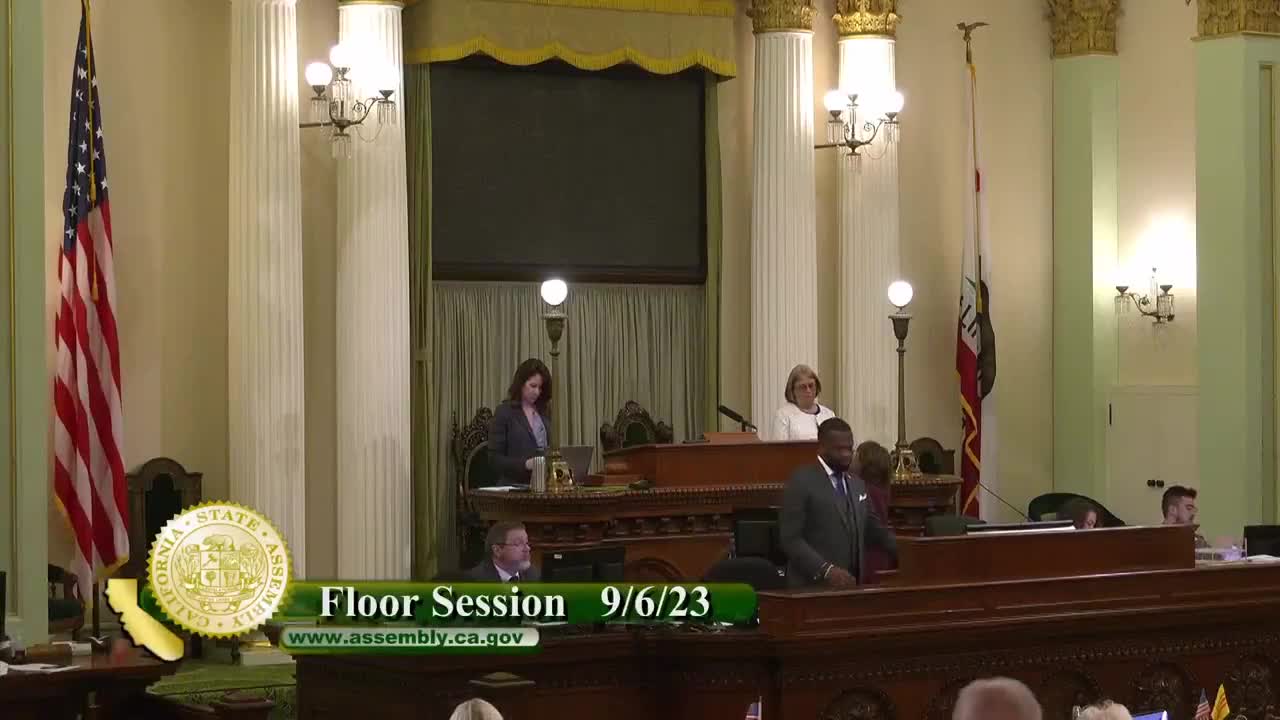
Bill Author

Bill Co-Author(s):