AB 462: Overdose response teams.
- Session Year: 2023-2024
- House: Assembly
- Latest Version Date: 2023-03-02
Current Status:
Failed
(2024-02-01: From committee: Filed with the Chief Clerk pursuant to Joint Rule 56.)
Introduced
In Committee
First Chamber
In Committee
Second Chamber
Enacted
Existing law requires the State Department of Public Health, subject to an appropriation in the Budget Act of 2016, to award funding to local health departments, local government agencies, or on a competitive basis to other organizations, as specified, to support or establish programs that provide naloxone to first responders and to at-risk opioid users through programs that serve at-risk drug users.
This bill would authorize the Counties of San Bernardino, Riverside, and Orange, until January 1, 2029, would, until January 1, 2029, establish the Overdose Response Team Fund, to be available upon appropriation by the Legislature, for the administration of grants by the Board of State and Community Corrections to county sheriffs departments task forces established for overdose response. The bill would authorize a department receiving a grant to establish and implement overdose response teams with the sheriffs sheriffs departments of those counties. The bill would require the teams to only respond to and investigate overdose deaths and nonfatal overdoses involving juveniles and multiple victims, with a focus on overdose deaths related to fentanyl. overdoses. The bill would require counties participating in these programs to send annual reports to the Assembly Select Committee on Fentanyl, Opioid Addiction, and Overdose Prevention, Committee on Public Safety, including the number of arrests of drug dealers in each county, for specified crimes, the amount of fentanyl and opioids seized in each county, and the number of units of opioid antagonists found at each overdose scene. administered, distributed, or recovered at each overdose scene.
Existing law requires the State Department of Public Health, subject to an appropriation in the Budget Act of 2016, to award funding to local health departments, local government agencies, or on a competitive basis to other organizations, as specified, to support or establish programs that provide naloxone to first responders and to at-risk opioid users through programs that serve at-risk drug users.
This bill would authorize the Counties of San Bernardino, Riverside, and Orange, until January 1, 2029, to establish and implement overdose response teams with the sheriffs departments of those counties. The bill would require the teams to only respond to and investigate overdose deaths and nonfatal overdoses involving juveniles and multiple victims, with a focus on overdose deaths related to fentanyl. The bill would require counties participating in these programs to send annual reports to the Assembly Select Committee on Fentanyl, Opioid Addiction, and Overdose Prevention, including the number of arrests of drug dealers in each county, the amount of fentanyl and opioids seized in each county, and the number of units of opioid antagonists found at each overdose scene.
(a)The sheriffs There is hereby established in the State Treasury the Overdose Response Team Fund. Moneys in the fund shall be available upon appropriation by the Legislature for the purposes of this section.
(b)The Board of State and Community Corrections shall administer overdose response team grants from the fund, upon appropriation by the Legislature, to county sheriffs departments tasks forces established for overdose response. Preference in the Overdose Response Team Fund shall be given to existing overdose response teams, including, but not limited to, the San Bernardino County Sheriffs Overdose Response Team.
(c)The sheriffs departments of Counties of San Bernardino, Riverside, and Orange, a county receiving a grant pursuant to subdivision (b), until January 1, 2029, may create pilot programs establishing and implementing overdose response teams to combat the ongoing opioid crisis in local communities.
(b)(d)The overdose response teams shall only respond to and investigate fatal overdose deaths and nonfatal overdoses deaths, and may respond to and investigate nonfatal overdoses, including those involving juveniles and multiple victims. The responses shall focus on overdoses related to fentanyl.
(c)(e)(1)A pilot program created pursuant to this section shall collect all of the following statistics:
(A)The number of peace officers assigned to the overdose response team, and any changes to the number of peace officers assigned to the overdose response team.
(B)The number of fatal overdoses investigated by the overdose response team.
(C)The number of nonfatal overdoses investigated by the overdose response team.
(A)(D)Number of arrests of drug dealers in each county pursuant to Section 11351 Sections 11351, 11352, 11353, and 11379.6 of the Health and Safety Code. Code as a result of investigations by the overdose response team.
(B)(E)Amount of fentanyl and opioids seized in each county. as a result of investigations by the overdose response team.
(C)(F)The number of units of opioid antagonists approved by the United States Food and Drug Administration found at each overdose scene. administered, distributed, or recovered at each overdose scene.
(G)Any additional data that is relevant and appropriate to describe the activities conducted under the pilot program.
(2)(A)Counties participating in the program shall, on July 1, 2025, and on July 1 each year thereafter, send a report to the Assembly Select Committee on Fentanyl, Opioid Addiction, and Overdose Prevention Committee on Public Safety containing the statistics described in paragraph (1). this subdivision.
(B)The report to be submitted pursuant to this paragraph shall be submitted in compliance with Section 9795 of the Government Code.
11185.This part shall remain in effect only until January 1, 2030, and as of that date is repealed.
REVISIONS: HeadingLine 2.(a)The sheriffs departments of Counties of San Bernardino, Riverside, and Orange, until January 1, 2029, may create pilot programs establishing and implementing overdose response teams to combat the ongoing opioid crisis in local communities.
(b)The overdose response teams shall only respond to and investigate fatal overdose deaths and nonfatal overdoses involving juveniles and multiple victims. The responses shall focus on overdoses related to fentanyl.
(c)(1)A pilot program created pursuant to this section shall collect all of the following statistics:
(A)Number of arrests of drug dealers in each county pursuant to Section 11351 of the Health and Safety Code.
(B)Amount of fentanyl and opioids seized in each county.
(C)The number of units of opioid antagonists approved by the United States Food and Drug Administration found at each overdose scene.
(2)Counties participating in the program shall, on July 1, 2025, and on July 1 each year thereafter, send a report to the Assembly Select Committee on Fentanyl, Opioid Addiction, and Overdose Prevention containing the statistics described in paragraph (1).
11185.This part shall remain in effect only until January 1, 2030, and as of that date is repealed.
|
Date
|
Status
|
|---|---|
| Feb 1, 2024 | From committee: Filed with the Chief Clerk pursuant to Joint Rule 56. |
| Jan 31, 2024 | Died pursuant to Art. IV, Sec. 10(c) of the Constitution. |
| May 18, 2023 | In committee: Held under submission. |
| Apr 19, 2023 | In committee: Set, first hearing. Referred to APPR. suspense file. |
| Mar 14, 2023 | From committee: Do pass and re-refer to Com. on APPR. (Ayes 7. Noes 0.) (March 14). Re-referred to Com. on APPR. |
| Mar 14, 2023 | Coauthors revised. |
| Mar 6, 2023 | Re-referred to Com. on PUB. S. |
| Mar 2, 2023 | From committee chair, with author's amendments: Amend, and re-refer to Com. on PUB. S. Read second time and amended. |
| Feb 17, 2023 | Referred to Com. on PUB. S. |
| Feb 7, 2023 | From printer. May be heard in committee March 9. |
| Feb 6, 2023 | Read first time. To print. |
|
Date
|
Description
|
Location
|
Votes
|
|
|---|---|---|---|---|
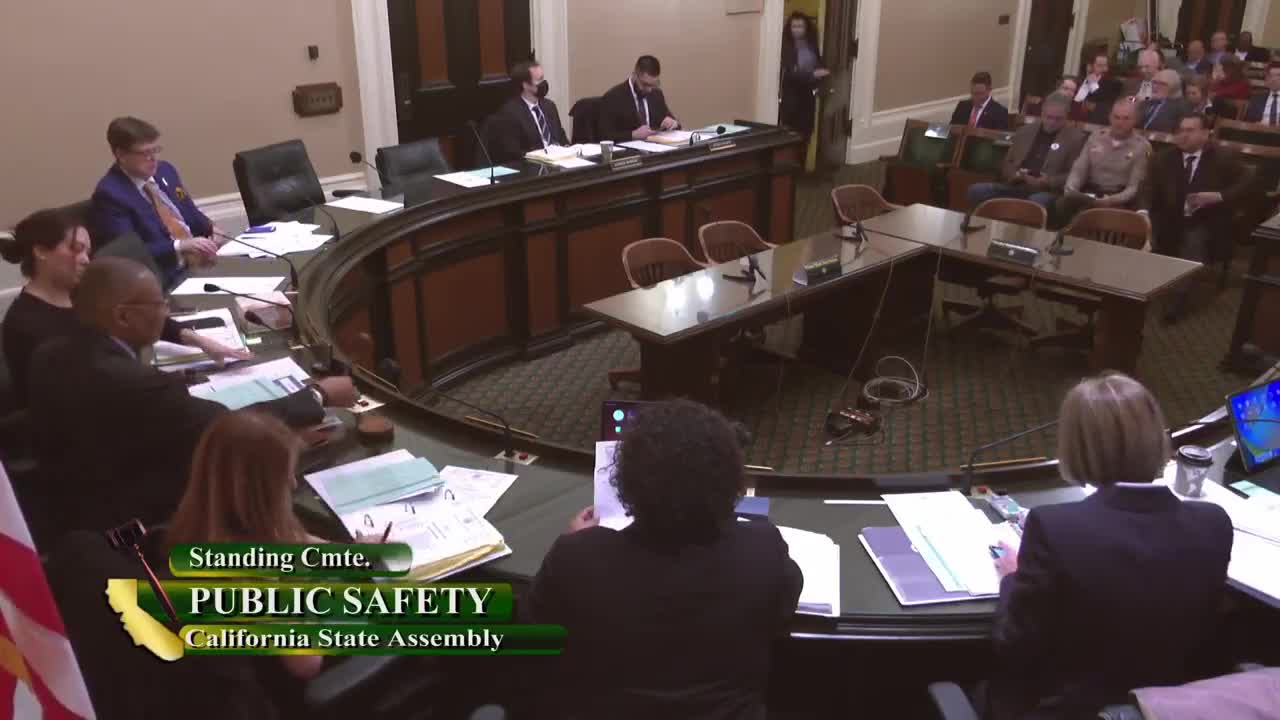
| Mar 14, 2023 | Do pass and be re-referred to the Committee on [Appropriations] | Assembly Standing Committee on Public Safety |
Passed |
This list shows positions taken on this bill by organizations on the date displayed, which is linked to the original source.
Positions by individuals are not included.
|
Organization
|
Position
|
Date
|
|---|---|---|
| Communities United for Restorative Youth Justice | ** Against | |
| Deputy Sheriffs Association of Monterey County | ** Support | |
| Initiate Justice | ** Against | |
| Placer County Deputy Sheriffs' Assocation | ** Support | |
| Riverside Sheriffs' Association | ** Support | |
| San Bernardino County Sheriff'S Department | ** Support | |
| Victims of Illicit Drugs INC. | ** Support |
Date of Hearing: April 19, 2023
ASSEMBLY COMMITTEE ON APPROPRIATIONS
Chris Holden, Chair
ABPCA Bill Id:AB 462
Author:(Ramos) – As Amended Ver:March 2, 2023
Policy Committee: | Public Safety | Vote: | 7 - 0 |
|
| ||
|
|
Urgency: No State Mandated Local Program: No Reimbursable: No
SUMMARY:
This bill creates the Overdose Response Team Fund, which will fund overdose response team grants to be administered by the Board of State and Community Corrections (BSCC). Grants will be provided to county sheriffs’ departments to establish and implement overdose response teams to “respond to and investigate” drug overdoses. Additionally, this bill requires each participating county to report information about its operations to the Assembly Committee on Public Safety annually, starting on July 1, 2025.
FISCAL EFFECT:
- This bill will require a significant General Fund appropriation, likely in the millions of dollars, to fund grants to overdose response teams within county sheriffs’ departments. The bill is currently contingent on appropriation. The author has submitted a budget request of $6 million in one-time funding.
- General Fund costs to BSCC, likely in the hundreds of thousands of dollars, to administer the grants. BSCC estimates that its administrative costs would be up to 5% of grant funds disbursed. If the Overdose Response Team Fund disburses $6 million in grant funds, BSCC’s estimated administrative costs would be approximately $300,000.
COMMENTS:
- Author’s Statement. According to the author:
Fentanyl overdose deaths have not been thoroughly investigated by law enforcement, leading to unsolved cases and families languishing for closure. Additionally, law enforcement is unable to locate and determine the source of the fentanyl, leading to more potential fatal overdoses. This bill would help solve both these issues allowing the state to create a pilot program giving law enforcement the tools to solve these cases and bring closure.
- Background. According to the California Department of Public Health, deaths and overdoses in California due to opioids have increased dramatically in recent years. Between 2012 and 2018, opioid-related overdose deaths increased by 42%, and fentanyl overdose deaths increased by more than 800%. California experienced more than 7,000 opioid-related overdose deaths in 2021. Statewide, there were more than 21,000 emergency room visits related to opioid overdoses in 2021.
This bill would fund law enforcement efforts to investigate overdoses through grants to sheriffs’ departments to establish overdose response teams. The bill does not precisely state the goals or the nature of the work of these response teams, but, based on the data reporting requirements in the bill, it appears that the response teams would primarily investigate overdose deaths, make related arrests, and seize fentanyl and other opioids. The bill requires grant recipients to annually report certain statistics about their operations to the Assembly Committee on Public Safety. Because the bill does not include an appropriation, it is uncertain how many overdose response teams would be created or funded by these grants, and what the scope of their operations would be.
Analysis Prepared by: Annika Carlson / APPR. / (916) 319-2081
Date of Hearing: March 14, 2023
Counsel: Andrew Ironside
ASSEMBLY COMMITTEE ON
Reginald Byron Jones-Sawyer, Sr., Chair
ABPCA Bill Id:
Author:() – As Ver:
SUMMARY:
Establishes the Overdose Response Team Fund within the State Treasury, to be administered by the Board of State and Community Corrections (BSCC), for grants to fund efforts by county sheriffs’ departments to establish overdose response teams to investigate fatal overdoses. Specifically, this bill:
- Establishes in the State Treasury the Overdose Response Team Fund.
- Provides that moneys in the fund become available upon appropriation by the Legislature for overdose response teams.
- Requires BSCC to administer overdose response team grants from the fund, upon appropriation by the Legislature, to county sheriffs’ departments’ task forces established for overdose response.
- Requires BSCC to give preference to existing overdose response teams, including, but not limited to, the San Bernardino County Sheriff’s Overdoes Response Team.
- Authorizes sheriffs’ department receiving funds to, until January 1, 2029, create pilot programs establishing and implementing overdose response teams to combat the ongoing opioid crisis in local communities.
- Requires overdose response teams to respond to and investigate fatal overdose deaths.
- Permits overdose response teams to respond to and investigate nonfatal overdoses, including those involving juveniles and multiple victims.
- Requires a pilot program to collect all of the following statistics:
- The number of peace officers assigned to the overdose response team, and any changes to the number of peace officers assigned to the overdose response team;
- The number of fatal overdoses investigated by the overdose response team;
- The number of nonfatal overdoses investigated by the overdose response team;
- The number of arrests for specified drug trafficking offenses resulting from overdose response team investigations;
- The amount of fentanyl and opioids seized as a result of investigations by the overdose response team;
- The number of units of opioid antagonists approved by the United States Food and Drug Administration administered, distributed, or recovered at each overdose scene; and,
- Any additional data that is relevant and appropriate to describe the activities conducted under the pilot program.
- The number of peace officers assigned to the overdose response team, and any changes to the number of peace officers assigned to the overdose response team;
- Requires counties receiving funds to send a report on July 1, 2025, and on July 1 each year thereafter, to the Assembly Committee on Public Safety containing the collected statistics, as specified.
- Sunsets the Overdose Response Team Fund on January 1, 2030.
EXISTING LAW:
- Establishes the BSCC. (Pen. Code, § 6024, subd. (a).)
- Requires the BSCC to do the following, among other things:
- Develop recommendations for the improvement of criminal justice and delinquency and gang prevention activity throughout the state;
- Identify, promote, and provide technical assistance relating to evidence-based programs, practices, and promising and innovative projects consistent with the mission of the board;
- Receive and disburse federal funds, and perform all necessary and appropriate services in the performance of its duties as established by federal acts;
- Develop procedures to ensure that applications for grants are processed fairly, efficiently, and in a manner consistent with the mission of the board;
- Identify delinquency and gang intervention and prevention grants that have the same or similar program purpose, are allocated to the same entities, serve the same target populations, and have the same desired outcomes for the purpose of consolidating grant funds and programs and moving toward a unified single delinquency intervention and prevention grant application process in adherence with all applicable federal guidelines and mandates;
- Cooperate with and render technical assistance to the Legislature, state agencies, local governments, or other public or private agencies, organizations, or institutions in matters relating to criminal justice and delinquency prevention;
- Develop incentives for units of local government to develop comprehensive regional partnerships whereby adjacent jurisdictions pool grant funds in order to deliver services, to a broader target population and maximize the impact of state funds at the local level;
- Conduct evaluation studies of the programs and activities assisted by the federal acts; and,
- Identify and evaluate state, local, and federal gang and youth violence suppression, intervention, and prevention programs and strategies, along with funding for those efforts. (Pen. Code, § 6027, subd. (b).)
- Provides that a person who possesses specified controlled substances for sale or purchases specified controlled substances for purposes of sale shall be punished by imprisonment in county jail for two, three, or four years. (Health & Saf. Code, § 11351.)
- Provides that a person who sells or transports specified controlled substances, or offers to do so, unless upon a written prescription, as specified, shall be punished by imprisonment in county jail for three, four, or five years. (Health & Saf. Code, § 11352, subd. (a).)
- Provides that a person who transports specified controlled substances within this state from one county to another noncontiguous county shall be punished by imprisonment in county jail for three, six, or nine years. (Health & Saf. Code, § 11352, subd. (b).)
- Provides that a person 18 years of age or older who voluntarily solicits, induces, encourages, or intimidates any minor to violate specified drug offenses shall be punished by imprisonment in the state prison for a period of three, six, or nine years. (Health & Saf. Code, § 11353.)
- Provides that a person 18 years of age or older who hires, employs, or uses a minor to unlawfully traffic a controlled substance, as specified, shall be punished by imprisonment in the state prison for a period of three, six, or nine years. (Health & Saf. Code, § 11353.)
- Specifies that it is a felony to manufacture specified controlled substances, including fentanyl, and makes that conduct punishable by imprisonment for three, five, or seven years in the county jail. (Health & Saf. Code, § 11379.6.)
FISCAL EFFECT:
Unknown
COMMENTS:
- Author's Statement: According to the author, “Fentanyl overdose deaths have not been thoroughly investigated by law enforcement, leading to unsolved cases and families languishing for closure. Additionally, law enforcement is unable to locate and determine the source of the fentanyl, leading to more potential fatal overdoses. This bill would help solve both these issues allowing the state to create a pilot program giving law enforcement the tools to solve these cases and bring closure.”
- BSCC Grant Administration: Established in 2012, the BSCC is an independent agency that provides leadership to the adult and juvenile criminal justice systems, expertise on Public Safety Realignment issues, acts as a data and information clearinghouse, and provides technical assistance on a wide range of community corrections issues. The BSCC also promulgates regulations for adult and juvenile detention facilities, conducts regular inspections of those facilities, develops standards for the selection and training of local corrections and probation officers. The BSCC also administers significant public safety-related grant funding. (https://www.bscc.ca.gov/m_bsccboard/; see also Pen. Code, §§ 6024-6025 & 6030-6031.)
This bill would require the BSCC to establish a grant program to provide funding for county sheriffs’ departments to create overdose response teams to address rising overdose rates in their communities. The Corrections Planning and Grant Programs Division of the BSCC is responsible for administering state and federal grant programs to community-based organizations, tribes, and local governments, including grant programs financing public safety initiatives. (BSCC, Corrections Planning and Grant Programs <https://www.bscc.ca.gov/s_correctionsplanningandprograms/> [last viewed Mar. 24, 2022].) BSCC administers grant programs like the one contemplated by this bill. - Drug Overdoses in California: In California, the number of deaths involving opioids, and fentanyl in particular, has increased significantly over the course of the last decade. Between 2012 and 2018, opioid-related overdose deaths increased by 42%; fentanyl overdose deaths increased by more than 800%—from 82 to 786. (CDPH, Overdose Prevention Initiative <https://www.cdph.ca.gov/Programs/CCDPHP/DCDIC/SACB/Pages/PrescriptionDrugOverdoseProgram.aspx?msclkid=99f1af92b9e411ec97e3e1fe58cde884> [last viewed Mar. 7, 2023].) In 2021, there were 21,016 emergency room visits resulting from an opioid overdose, 7,176 opioid-related overdose deaths, and 5,961 overdose deaths from fentanyl. (CDPH, California Overdose Surveillance Dashboard < https://skylab.cdph.ca.gov/ODdash/?tab=Home> [last visited Mar. 7, 2023].).
- Argument in Support: According to the San Bernardino County Sheriff’s Department, “In recent years, Fentanyl, a powerful, cheaply produced synthetic opioid, has flooded the illicit drug market. Due to the strength of Fentanyl, determining dose size is notoriously difficult for users, leading to an increase in the likelihood of an overdose. There have been many notable cases of individuals purchasing substances believing them to be cocaine, methamphetamine, or a prescription pill, only for that substance to be laced with a dangerous quantity of Fentanyl that the user knowingly ingests.
“AB 462 would create overdose response teams within Sheriff’s Departments to investigate fentanyl-related fatal and nonfatal overdoees involving juveniles and multiple victims. These teams would collect evidence for potential criminal activity. The passage of AB 462 would ensure that law enforcement thoroughly investigated overdose deaths and eliminate concerns from victims’ parents and family members.” - Argument in Opposition: According to Initiate Justice: “It has become evident that a criminal justice response to drugs and drug use has not only perpetrated racial disparities in the legal system but also contributed to the unprecedented overdose crisis impacting jurisdictions across the state. Specifically, it’s due to the prioritization of the enforcement of punitive drug policies as well as arrests and incarceration that we now find ourselves ill equipped to properly respond to the overdose crisis.
“Need for a Public Health Led Approach
“With the state facing a budget deficit, it’s important to invest in responses that have proven to save lives and connect people to life affirming services. Any strategies and ideas aimed at reducing the negative consequences of drugs and drug use must be guided by science and evidence. AB 462 seeks to prioritize funding for Sheriff Departments to establish overdose response teams. We strongly believe that the state’s response to the overdose crisis must be guided by a public health approach and investments must be made to community-based health organizations as opposed to law enforcement entities. A more effective approach would be to fund syringe service programs (SSPs), providers at these programs have been on the forefront of this overdose crisis ensuring that people have adequate access to Naloxone, overdose prevention education, and equipment to keep themselves and their peers safe. These are trusted messengers that have proven to reach vulnerable community members, in a culturally and linguistic manner, something that is essential for the communities currently impacted by the alarming overdose rates.
“According to a recent report over 9,462 Californians died from a drug related overdose from June 2020 to June 2021. The infiltration of fentanyl in the drug supply has led to a dramatic spike in accidental overdose, in 2021 alone 5,722 Californians lost their life to a fentanyl related overdose. However, these deaths could have been prevented had people been given access to harm reduction tools such as drug testing, naloxone, and access to overdose prevention centers. With a contaminated drug supply, the urgency to strengthen a public health response rooted in community and health system settings is needed now more than ever. For instance, an analysis on the impact of the California Harm Reduction Initiative released early this year demonstrates that the state funding provided to syringe service programs has improved their ability to distribute naloxone, fentanyl test strips, and offer buprenorphine to their participants, either through in- person consultations or telemedicine. A much smarter and effective investment would be for the state to fund these programs and strengthen their infrastructure to continue serving the most vulnerable people in our communities.” - Related Legislation:
- AB 268 (Weber), would require the BSCC to develop standards for mental health care in local correctional facilities, commencing on July 1, 2024. AB 268 is currently pending hearing in the Assembly Appropriations Committee.
- AB 695 (Pacheco), would establish the Juvenile Detention Facilities Improvement Grant Program, to be administered by BSCC, to address the inadequate and dilapidated state of county juvenile detention facilities. AB 695 is currently pending in this committee.
- AB 862 (Bauer-Kahan), would require county sheriffs to compile and submit data to the BSCC. AB 862 is currently pending in this committee.
- AB 898 (Lackey), would require every juvenile probation department to annually report to the BSCC all injuries to juvenile hall staff resulting from an interaction with a resident. AB 898 is pending hearing in this committee.
- AB 268 (Weber), would require the BSCC to develop standards for mental health care in local correctional facilities, commencing on July 1, 2024. AB 268 is currently pending hearing in the Assembly Appropriations Committee.
- Prior Legislation:
- AB 1836 (Maienschein), of the 2021-2022 Legislative Session, would have established the Officer Wellness and Mental Health Grant Program within the BSCC to award funds to local law enforcement agencies and associations to develop wellness and mental health programing for peace officers. AB 1836 was held in the Senate Appropriations Committee.
- SB 1418 (Newman), of the 2021-2022 Legislative Session, would have created the Public Safety Collaborative Fund to be administered by the BSCC to regional public safety collaboratives established for the purpose of violence prevention, intervention, and suppression activities. SB 1418 was held in the Assembly Appropriations Committee.
- AB 2914 (Rivas), of the 2019-2020 Legislative Session, would have established the Mental Health Response and Treatment Challenge Grant Program to be administered by the BSCC. AB 2914 did not receive a hearing in this committee.
- SB 1112 (Chang), of the 2019-2020 Legislative Session, would have required the BSCC to collect data on police departments and sheriff’s departments receiving funds from a proposed $50,000,000 General Fund appropriation allocated for, among other things, codeployment teams for crisis intervention. SB 1112 did not receive a hearing in the Senate Public Safety Committee.
- AB 1836 (Maienschein), of the 2021-2022 Legislative Session, would have established the Officer Wellness and Mental Health Grant Program within the BSCC to award funds to local law enforcement agencies and associations to develop wellness and mental health programing for peace officers. AB 1836 was held in the Senate Appropriations Committee.
REGISTERED SUPPORT / OPPOSITION:
Support
Victims of Illicit Drugs INC.
Deputy Sheriffs' Association of Monterey County
Placer County Deputy Sheriffs' Assocation
Riverside Sheriffs' Association
San Bernardino County Sheriff's Department
Opposition
Communities United for Restorative Youth Justice (CURYJ)
Initiate Justice
Analysis Prepared by:
Discussed in Hearing
 11MIN
Assembly Standing Committee on Public Safety
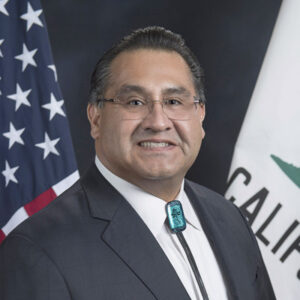
Bill Author
Bill Co-Author(s):
