AB 469: California Public Records Act Ombudsperson.
- Session Year: 2023-2024
- House: Assembly
- Latest Version Date: 2023-09-18
Current Status:
Failed
(2024-01-30: Consideration of Governor's veto stricken from file.)
Introduced
In Committee
First Chamber
In Committee
Second Chamber
Enacted
The California Public Records Act requires state and local agencies to make their records available for public inspection, unless an exemption from disclosure applies. The act declares that access to information concerning the conduct of the peoples business is a fundamental and necessary right of every person in this state.
This bill would, subject to appropriation, establish the Office of the California Public Records Act Ombudsperson. The bill would require the Governor to appoint the ombudsperson subject to certain requirements. The bill would require the ombudsperson to receive and investigate requests for review, as defined, determine whether the denials of original requests, as defined, complied with the California Public Records Act, and issue written opinions of its determination, as provided. The bill would require the ombudsperson to create a process to that effect, and would authorize a member of the public to submit a request for review to the ombudsperson consistent with that process. The bill would require the ombudsperson, within 30 days from receipt of a request for review, to make a determination, as provided, and would require the state agency to provide the public record if the ombudsperson determines that it was improperly denied. The bill would require the ombudsperson to create a process through which a person whose information is contained in a record being reviewed may intervene to assert their privacy and confidentiality rights, and would otherwise require the ombudsperson to maintain the privacy and confidentiality of records, as provided. The bill would require the ombudsperson to report to the Legislature, on or before March 31, 2025, and annually thereafter, on, among other things, the number of requests for review the ombudsperson has received in the prior year.
The California Public Records Act requires state and local agencies to make their records available for public inspection, unless an exemption from disclosure applies. The act declares that access to information concerning the conduct of the peoples business is a fundamental and necessary right of every person in this state.
This bill would would, subject to appropriation, establish the Office of the California Public Records Act Ombudsperson. The bill would require the Governor to appoint the ombudsperson subject to certain requirements. The bill would require the ombudsperson to receive and investigate requests for review, as defined, determine whether the denials of original requests, as defined, complied with the California Public Records Act, and issue written opinions of its determination, as provided. The bill would require the ombudsperson to create a process to that effect, and would authorize a member of the public to submit a request for review to the ombudsperson consistent with that process. The bill would require the ombudsperson, within 30 days from receipt of a request for review, to make a determination, as provided, and would require the state agency to provide the public record if the ombudsperson determines that it was improperly denied. The bill would require the ombudsperson to create a process through which a person whose information is contained in a record being reviewed may intervene to assert their privacy and confidentiality rights, and would otherwise require the ombudsperson to maintain the privacy and confidentiality of records, as provided. The bill would require the ombudsperson to report to the Legislature, on or before March 31, 2025, and annually thereafter, on, among other things, the number of requests for review the ombudsperson has received in the prior year.
The California Public Records Act requires state and local agencies to make their records available for public inspection, unless an exemption from disclosure applies. The act declares that access to information concerning the conduct of the peoples business is a fundamental and necessary right of every person in this state.
Existing law creates the California State Auditors Office, which is independent of the executive branch and legislative control, to examine and report annually upon the financial statements prepared by the executive branch. Existing law establishes, within the State Treasury, the State Audit Fund, which is a continuously appropriated fund, for the expenses of the California State Auditor.This bill would establish, within the California State Auditors Office, subject to appropriation, establish the Office of the California Public Records Act Ombudsperson. The bill would require the California State Auditor Governor to appoint the ombudsperson subject to certain requirements. The bill would require the ombudsperson to receive and investigate requests for review, as defined, determine whether the denials of original requests, as defined, complied with the California Public Records Act, and issue written opinions of its determination, as provided. The bill would require the ombudsperson to create a process to that effect, and would authorize a member of the public to submit a request for review to the ombudsperson consistent with that process. The bill would require the ombudsperson, within 30 days from receipt of a request for review, to make a determination, as provided, and would require the state agency to provide the public record if the ombudsperson determines that it was improperly denied. The bill would require the ombudsperson to create a process through which a person whose information is contained in a record being reviewed may intervene to assert their privacy and confidentiality rights, and would otherwise require the ombudsperson to maintain the privacy and confidentiality of records, as provided. The bill would require the ombudsperson to report to the Legislature, on or before March 31, 2025, and annually thereafter, on, among other things, the number of requests for review the ombudsperson has received in the prior year.
By expanding the duties of the California State Auditors Office, this bill would create an appropriation.The California Public Records Act requires state and local agencies to make their records available for public inspection, unless an exemption from disclosure applies. The act declares that access to information concerning the conduct of the peoples business is a fundamental and necessary right of every person in this state.
Existing law creates the California State Auditors Office, which is independent of the executive branch and legislative control, to examine and report annually upon the financial statements prepared by the executive branch. Existing law establishes, within the State Treasury, the State Audit Fund, which is a continuously appropriated fund, for the expenses of the California State Auditor.
This bill would establish, within the California State Auditors Office, the California Public Records Act Ombudsperson. The bill would require the California State Auditor to appoint the ombudsperson subject to certain requirements. The bill would require the ombudsperson to receive and investigate requests for review, as defined, determine whether the denials of original requests, as defined, complied with the California Public Records Act, and issue written opinions of its determination, as provided. The bill would require the ombudsperson to create a process to that effect, and would authorize a member of the public to submit a request for review to the ombudsperson consistent with that process. The bill would require the ombudsperson, within 30 days from receipt of a request for review, to make a determination, as provided, and would require the state agency to provide the public record if the ombudsperson determines that it was improperly denied. The bill would, if requested by the ombudsperson, require any state agency determined to have improperly denied a request to reimburse the ombudsperson for its costs to investigate the request for review. The bill would require the ombudsperson to create a process through which a person whose information is contained in a record being reviewed may intervene to assert their privacy and confidentiality rights, and would otherwise require the ombudsperson to maintain the privacy and confidentiality of records, as provided. The bill would require the ombudsperson to report to the Legislature, on or before January 1, March 31, 2025, and annually thereafter, on, among other things, the number of requests for review the ombudsperson has received in the prior year.
By expanding the duties of the California State Auditors Office, this bill would create an appropriation.
The California Public Records Act requires state and local agencies to make their records available for public inspection, unless an exemption from disclosure applies. The act declares that access to information concerning the conduct of the peoples business is a fundamental and necessary right of every person in this state.
Existing law creates the California State Auditors Office, which is independent of the executive branch and legislative control, to examine and report annually upon the financial statements prepared by the executive branch. Existing law establishes, within the State Treasury, the State Audit Fund, which is a continuously appropriated fund, for the expenses of the California State Auditor.
This bill would establish, within the California State Auditors Office, the California Public Records Act Ombudsperson. The bill would require the California State Auditor to appoint the ombudsperson subject to certain requirements. The bill would require the ombudsperson to receive and investigate requests for review, as defined, determine whether the denials of original requests, as defined, complied with the California Public Records Act, and issue written opinions of its determination, as provided. The bill would require the ombudsperson to create a process to that effect, and would authorize a member of the public to submit a request for review to the ombudsperson consistent with that process. The bill would require the ombudsperson, within 30 days from receipt of a request for review, to make a determination, as provided, and would require the state agency to provide the public record if the ombudsperson determines that it was improperly denied. The bill would, if requested by the ombudsperson, require any state agency determined to have improperly denied a request to reimburse the ombudsperson for its costs to investigate the request for review. The bill would require the ombudsperson to create a process through which a person whose information is contained in a record being reviewed may intervene to assert their privacy and confidentiality rights, and would otherwise require the ombudsperson to maintain the privacy and confidentiality of records, as provided. The bill would require the ombudsperson to report to the Legislature, on or before January 1, 2025, and annually thereafter, on, among other things, the number of requests for review the ombudsperson has received in the prior year.
By expanding the duties of the California State Auditors Office, this bill would create an appropriation.
For purposes of this chapter, the following terms have the following meanings:
(a)California Public Records Act means the California Public Records Act (Division 10 (commencing with Section 7920.000) of Title 1).
(b)Local agency has the same meaning as defined in Section 7920.510.
(c)Member of the public has the same meaning as defined in Section 7920.515.
(d)Ombudsperson means the California Public Records Act Ombudsperson created pursuant to this chapter.
(e)Original request means a request for records retained by a state agency made by a member of the public pursuant to the California Public Records Act.
(f)Public agencies has the same meaning as defined in Section 7920.525.
(g)State agency has the same meaning as defined in Section 7920.540.
(h)Request for review means a request for the ombudsperson to review a denial by a state agency of an original request.
(i)Unusual circumstances has the same meaning as defined in subdivision (c) of Section 7922.535.
8549.1.(a)There is hereby created in state government the Office of the California Public Records Act Ombudsperson. The ombudsperson shall receive and investigate requests for review, determine whether the denials of original requests complied with the California Public Records Act, and issue written opinions of determination.
(b)(1)(A)The ombudsperson shall be appointed by the Governor. The appointee shall have, at a minimum, expertise in the California Public Records Act and be admitted to practice law in this state for at least five years immediately preceding appointment.
(B)In the event of a vacancy or if the ombudsperson is unable to fulfill the duties of the ombudsperson for a period of 30 days, the Governor shall appoint a new ombudsperson within 30 days.
(2)The Governor shall provide necessary staff to the ombudsperson to perform the functions and carry out the objectives of the ombudsperson.
(c)(1)The ombudsperson shall create a process that allows members of the public to submit a request for review. The ombudsperson shall create a process for a person whose information is contained in a record being reviewed by the ombudsperson to intervene as an interested party to assert their privacy rights or preserve the confidentiality of the information.
(2)A member of the public who believes that a state agency improperly denied an original request made by that member of the public may, in the form and manner prescribed by the ombudsperson pursuant to paragraph (1), submit a request for review.
(3)(A)(i)The ombudsperson shall, within 30 days from receipt of a request for review, determine whether the original request, in whole or in part, sought copies of disclosable public records that were in the possession of the state agency and whether the agencys denial of the request complied with the California Public Records Act.
(ii)Upon completion of its review, the ombudsperson shall promptly notify the member of the public who submitted the request for review and the state agency of its determination and the reasons therefor.
(iii)In unusual circumstances, the time limit specified in clause (i) may be extended by written notice to the member of the public who submitted the request for review and the state agency, setting forth the reasons for the extension and the date on which a determination is reasonably expected to be dispatched. The ombudsperson shall reassess the circumstances necessitating the extension of the time period specified in clause (i) every 30 days and, in the event the date on which a determination is reasonably expected to be dispatched changes, notify the requester and the state agency.
(B)If the ombudsperson determines that the state agency improperly denied disclosure of the public record or records, the state agency shall, subject to the provisions of subdivision (f), provide the public record or records to the member of the public who submitted the request for review.
(4)A state agency that is the subject of a request to review shall provide the ombudsperson access to all relevant information, documents, and other records upon which the agency relied in denying the original request, or that the ombudsperson requests to assist in its review of the agencys determination.
(5)The ombudsperson shall not require a state agency to disclose any records that are prohibited or exempted from disclosure by express provisions of law, including, but not limited to, the California Public Records Act.
(6)The ombudsperson shall maintain the privacy and confidentiality of records being reviewed in the same manner as required of the state agency in possession of the record under existing law.
(7)The ombudsperson shall establish policies and procedures for transferring, receiving, possessing, or reviewing records for review under this section, including for maintaining the privacy and confidentiality of any information contained in the records.
(d)(1)The ombudsperson shall maintain a copy of any written opinion issued pursuant to this section and shall post the opinion on its internet website.
(2)An opinion of the ombudsperson shall not be considered binding precedent, but may be considered persuasive by public agencies and the courts.
(e)(1)A determination issued under this section does not affect the right of a person to enforce their right to inspect or to receive a copy of any public record through an action pursuant to Section 7923.000. A member of the public is not required to exhaust the administrative remedies available under this section prior to filing a legal action. A determination issued under this section shall not be considered as evidence that a requesters action is clearly frivolous under subdivision (b) of Section 7923.115.
(2)If a person elects to bring an action under Section 7923.000 while a request for review under this section of the same original request is pending, the person shall immediately notify the ombudsperson and the ombudsperson shall cease investigation of the request. The ombudsperson shall not consider a request for review under this section of an original request that is or has been subject to a pending or completed action under Section 7923.000.
(3)A person may withdraw, by written notice, their request for review under this section if the withdrawal notice is received by the ombudsperson prior to the issuance of an opinion.
(f)(1)A state agency may appeal a determination by the ombudsperson that it improperly denied disclosure of a public record or records by filing a petition with the superior court in accordance with the procedures set forth in Part 4 (commencing with Section 7923.000) of Division 10 of Title 1 for judicial review of a decision to withhold records. The superior court shall review the determination of the ombudsperson de novo. If the court affirms the determination of the ombudsperson, the member of the public shall be entitled to court costs and reasonable attorneys fees in accordance with Section 7923.115.
(2)A person whose information is contained in a record that the ombudsperson has reviewed and required the state agency to disclose under this section may seek declaratory relief or a writ of mandamus to obtain a judicial ruling precluding the state agency from improperly disclosing confidential documents or information.
(g)Notwithstanding any other provision of this section, the ombudsperson may provide written information, guidance, and advice to both public agencies and members of the public regarding the California Public Records Act, including by posting such information, guidance, and advice on its internet website.
(h)(1)On or before March 31, 2025, and every year thereafter, the ombudsperson shall provide a report to the Legislature on all of the following:
(A)The activities of the ombudsperson in the prior year.
(B)The number of requests for review that were submitted to the ombudsperson in the prior calendar year and the number of determinations made by the ombudsperson that a state agency improperly denied a request for a public record or records.
(C)Any proposals, both legislative and administrative, that would allow the ombudsperson to function more independently and provide more transparency to the records of public agencies.
(D)The amounts of reimbursements sought and obtained from state agencies for the cost of investigating requests for review conducted by the ombudsperson pursuant to this section.
(E)In the report due on or before March 1, 2026, an assessment of whether a local agency should be subject to the same review process as a state agency under this section.
(2)The report shall comply with Section 9795.
8549.2.This chapter shall remain in effect only until January 1, 2027, and as of that date is repealed.
8549.3.Implementation of this chapter shall be subject to appropriation by the Legislature, in the Budget Act or another statute, for the purposes of this chapter.
For purposes of this article, chapter, the following terms have the following meanings:
(a)California Public Records Act means the California Public Records Act (Division 10 (commencing with Section 7920.000) of Title 1).
(b)Local agency has the same meaning as defined in Section 7920.510.
(c)Member of the public has the same meaning as defined in Section 7920.515.
(d)Ombudsperson means the California Public Records Act Ombudsperson created pursuant to this chapter.
(e)Original request means a request for records retained by a state agency made by a member of the public pursuant to the California Public Records Act.
(f)Public agencies has the same meaning as defined in Section 7920.525.
(g)State agency has the same meaning as defined in Section 7920.540.
(h)Request for review means a request for the ombudsperson to review a denial by a state agency of an original request.
(i)Unusual circumstances has the same meaning as defined in subdivision (c) of Section 7922.535.
8549.1.(a)There is hereby created in state government the Office of the California Public Records Act Ombudsperson. The ombudsperson shall receive and investigate requests for review, determine whether the denials of original requests complied with the California Public Records Act, and issue written opinions of determination.
(b)(1)(A)The ombudsperson shall be appointed by the Governor. The appointee shall have, at a minimum, expertise in the California Public Records Act and be admitted to practice law in this state for at least five years immediately preceding appointment.
(B)In the event of a vacancy or if the ombudsperson is unable to fulfill the duties of the ombudsperson for a period of 30 days, the Governor shall appoint a new ombudsperson within 30 days.
(2)The Governor shall provide necessary staff to the ombudsperson to perform the functions and carry out the objectives of the ombudsperson.
(c)(1)The ombudsperson shall create a process that allows members of the public to submit a request for review. The ombudsperson shall create a process for a person whose information is contained in a record being reviewed by the ombudsperson to intervene as an interested party to assert their privacy rights or preserve the confidentiality of the information.
(2)A member of the public who believes that a state agency improperly denied an original request made by that member of the public may, in the form and manner prescribed by the ombudsperson pursuant to paragraph (1), submit a request for review.
(3)(A)(i)The ombudsperson shall, within 30 days from receipt of a request for review, determine whether the original request, in whole or in part, sought copies of disclosable public records that were in the possession of the state agency and whether the agencys denial of the request complied with the California Public Records Act.
(ii)Upon completion of its review, the ombudsperson shall promptly notify the member of the public who submitted the request for review and the state agency of its determination and the reasons therefor.
(iii)In unusual circumstances, the time limit specified in clause (i) may be extended by written notice to the member of the public who submitted the request for review and the state agency, setting forth the reasons for the extension and the date on which a determination is reasonably expected to be dispatched. The ombudsperson shall reassess the circumstances necessitating the extension of the time period specified in clause (i) every 30 days and, in the event the date on which a determination is reasonably expected to be dispatched changes, notify the requester and the state agency.
(B)If the ombudsperson determines that the state agency improperly denied disclosure of the public record or records, the state agency shall, subject to the provisions of subdivision (f), provide the public record or records to the member of the public who submitted the request for review.
(4)A state agency that is the subject of a request to review shall provide the ombudsperson access to all relevant information, documents, and other records upon which the agency relied in denying the original request, or that the ombudsperson requests to assist in its review of the agencys determination.
(5)The ombudsperson shall not require a state agency to disclose any records that are prohibited or exempted from disclosure by express provisions of law, including, but not limited to, the California Public Records Act.
(6)The ombudsperson shall maintain the privacy and confidentiality of records being reviewed in the same manner as required of the state agency in possession of the record under existing law.
(7)The ombudsperson shall establish policies and procedures for transferring, receiving, possessing, or reviewing records for review under this section, including for maintaining the privacy and confidentiality of any information contained in the records.
(d)(1)The ombudsperson shall maintain a copy of any written opinion issued pursuant to this section and shall post the opinion on its internet website.
(2)An opinion of the ombudsperson shall not be considered binding precedent, but may be considered persuasive by public agencies and the courts.
(e)(1)A determination issued under this section does not affect the right of a person to enforce their right to inspect or to receive a copy of any public record through an action pursuant to Section 7923.000. A member of the public is not required to exhaust the administrative remedies available under this section prior to filing a legal action. A determination issued under this section shall not be considered as evidence that a requesters action is clearly frivolous under subdivision (b) of Section 7923.115.
(2)If a person elects to bring an action under Section 7923.000 while a request for review under this section of the same original request is pending, the person shall immediately notify the ombudsperson and the ombudsperson shall cease investigation of the request. The ombudsperson shall not consider a request for review under this section of an original request that is or has been subject to a pending or completed action under Section 7923.000.
(3)A person may withdraw, by written notice, their request for review under this section if the withdrawal notice is received by the ombudsperson prior to the issuance of an opinion.
(f)(1)A state agency may appeal a determination by the ombudsperson that it improperly denied disclosure of a public record or records by filing a petition with the superior court in accordance with the procedures set forth in Part 4 (commencing with Section 7923.000) of Division 10 of Title 1 for judicial review of a decision to withhold records. The superior court shall review the determination of the ombudsperson de novo. If the court affirms the determination of the ombudsperson, the member of the public shall be entitled to court costs and reasonable attorneys fees in accordance with Section 7923.115.
(2)A person whose information is contained in a record that the ombudsperson has reviewed and required the state agency to disclose under this section may seek declaratory relief or a writ of mandamus to obtain a judicial ruling precluding the state agency from improperly disclosing confidential documents or information.
(g)Notwithstanding any other provision of this section, the ombudsperson may provide written information, guidance, and advice to both public agencies and members of the public regarding the California Public Records Act, including by posting such information, guidance, and advice on its internet website.
(h)(1)On or before March 31, 2025, and every year thereafter, the ombudsperson shall provide a report to the Legislature on all of the following:
(A)The activities of the ombudsperson in the prior year.
(B)The number of requests for review that were submitted to the ombudsperson in the prior calendar year and the number of determinations made by the ombudsperson that a state agency improperly denied a request for a public record or records.
(C)Any proposals, both legislative and administrative, that would allow the ombudsperson to function more independently and provide more transparency to the records of public agencies.
(D)The amounts of reimbursements sought and obtained from state agencies for the cost of investigating requests for review conducted by the ombudsperson pursuant to this section.
(E)In the report due on or before March 1, 2026, an assessment of whether a local agency should be subject to the same review process as a state agency under this section.
(2)The report shall comply with Section 9795.
8549.2.This article chapter shall remain in effect only until January 1, 2027, and as of that date is repealed.
8549.3.Implementation of this chapter shall be subject to appropriation by the Legislature, in the Budget Act or another statute, for the purposes of this chapter.
For purposes of this article, the following terms have the following meanings:
(a)California Public Records Act means the California Public Records Act (Division 10 (commencing with Section 7920.000) of Title 1).
(b)Local agency has the same meaning as defined in Section 7920.510.
(c)Member of the public has the same meaning as defined in Section 7920.515.
(d)Ombudsperson means the California Public Records Act Ombudsperson created pursuant to this chapter.
(e)Original request means a request for records retained by a state agency made by a member of the public pursuant to the California Public Records Act.
(f)Public agencies has the same meaning as defined in Section 7920.525.
(g)State agency has the same meaning as defined in Section 7920.540.
(h)Request for review means a request for the ombudsperson to review a denial by a state agency of an original request.
(i)Unusual circumstances has the same meaning as defined in subdivision (c) of Section 7922.535.
8549.1.(a)There is hereby created in state government the Office of the California Public Records Act Ombudsperson. The ombudsperson shall receive and investigate requests for review, determine whether the denials of original requests complied with the California Public Records Act, and issue written opinions of determination.
(b)(1)(A)The ombudsperson shall be appointed by the Governor. The appointee shall have, at a minimum, expertise in the California Public Records Act and be admitted to practice law in this state for at least five years immediately preceding appointment.
(B)In the event of a vacancy or if the ombudsperson is unable to fulfill the duties of the ombudsperson for a period of 30 days, the Governor shall appoint a new ombudsperson within 30 days.
(2)The Governor shall provide necessary staff to the ombudsperson to perform the functions and carry out the objectives of the ombudsperson.
(c)(1)The ombudsperson shall create a process that allows members of the public to submit a request for review. The ombudsperson shall create a process for a person whose information is contained in a record being reviewed by the ombudsperson to intervene as an interested party to assert their privacy rights or preserve the confidentiality of the information.
(2)A member of the public who believes that a state agency improperly denied an original request made by that member of the public may, in the form and manner prescribed by the ombudsperson pursuant to paragraph (1), submit a request for review.
(3)(A)(i)The ombudsperson shall, within 30 days from receipt of a request for review, determine whether the original request, in whole or in part, sought copies of disclosable public records that were in the possession of the state agency and whether the agencys denial of the request complied with the California Public Records Act.
(ii)Upon completion of its review, the ombudsperson shall promptly notify the member of the public who submitted the request for review and the state agency of its determination and the reasons therefor.
(iii)In unusual circumstances, the time limit specified in clause (i) may be extended by written notice to the member of the public who submitted the request for review and the state agency, setting forth the reasons for the extension and the date on which a determination is reasonably expected to be dispatched. The ombudsperson shall reassess the circumstances necessitating the extension of the time period specified in clause (i) every 30 days and, in the event the date on which a determination is reasonably expected to be dispatched changes, notify the requester and the state agency.
(B)If the ombudsperson determines that the state agency improperly denied disclosure of the public record or records, the state agency shall, subject to the provisions of subdivision (f), provide the public record or records to the member of the public who submitted the request for review.
(4)A state agency that is the subject of a request to review shall provide the ombudsperson access to all relevant information, documents, and other records upon which the agency relied in denying the original request, or that the ombudsperson requests to assist in its review of the agencys determination.
(5)The ombudsperson shall not require a state agency to disclose any records that are prohibited or exempted from disclosure by express provisions of law, including, but not limited to, the California Public Records Act.
(6)The ombudsperson shall maintain the privacy and confidentiality of records being reviewed in the same manner as required of the state agency in possession of the record under existing law.
(7)The ombudsperson shall establish policies and procedures for transferring, receiving, possessing, or reviewing records for review under this section, including for maintaining the privacy and confidentiality of any information contained in the records.
(d) (1)The ombudsperson shall maintain a copy of any written opinion issued pursuant to this section and shall post the opinion on its internet website.
(2)An opinion of the ombudsperson shall not be considered binding precedent, but may be considered persuasive by public agencies and the courts.
(e)(1) A determination issued under this section does not affect the right of a person to enforce their right to inspect or to receive a copy of any public record through an action pursuant to Section 7923.000. A member of the public is not required to exhaust the administrative remedies available under this section prior to filing a legal action. A determination issued under this section shall not be considered as evidence that a requesters action is clearly frivolous under subdivision (b) of Section 7923.115.
(2)If a person elects to bring an action under Section 7923.000 while a request for review under this section of the same original request is pending, the person shall immediately notify the ombudsperson and the ombudsperson shall cease investigation of the request. The ombudsperson shall not consider a request for review under this section of an original request that is or has been subject to a pending or completed action under Section 7923.000.
(3)A person may withdraw, by written notice, their request for review under this section if the withdrawal notice is received by the ombudsperson prior to the issuance of an opinion.
(f)(1)A state agency may appeal a determination by the ombudsperson that it improperly denied disclosure of a public record or records by filing a petition with the superior court in accordance with the procedures set forth in Part 4 (commencing with Section 7923.000) of Division 10 of Title 1 for judicial review of a decision to withhold records. The superior court shall review the determination of the ombudsperson de novo. If the court affirms the determination of the ombudsperson, the member of the public shall be entitled to court costs and reasonable attorneys fees in accordance with Section 7923.115.
(2)A person whose information is contained in a record that the ombudsperson has reviewed and required the state agency to disclose under this section may seek declaratory relief or a writ of mandamus to obtain a judicial ruling precluding the state agency from improperly disclosing confidential documents or information.
(g)Notwithstanding any other provision of this section, the ombudsperson may provide written information, guidance, and advice to both public agencies and members of the public regarding the California Public Records Act, including by posting such information, guidance, and advice on its internet website.
(h)(1)On or before March 31, 2025, and every year thereafter, the ombudsperson shall provide a report to the Legislature on all of the following:
(A)The activities of the ombudsperson in the prior year.
(B)The number of requests for review that were submitted to the ombudsperson in the prior calendar year and the number of determinations made by the ombudsperson that a state agency improperly denied a request for a public record or records.
(C)Any proposals, both legislative and administrative, that would allow the ombudsperson to function more independently and provide more transparency to the records of public agencies.
(D)The amounts of reimbursements sought and obtained from state agencies for the cost of investigating requests for review conducted by the ombudsperson pursuant to this section.
(E)In the report due on or before March 1, 2026, an assessment of whether a local agency should be subject to the same review process as a state agency under this section.
(2)The report shall comply with Section 9795.
8549.2.This article shall remain in effect only until January 1, 2027, and as of that date is repealed.
8549.3.Implementation of this chapter shall be subject to appropriation by the Legislature, in the Budget Act or another statute, for the purposes of this chapter.
SECTION 1.Article 5 (commencing with Section 8549) is added to Chapter 6.5 of Division 1 of Title 2 of the Government Code, to read: 5.California Public Records Act Ombudsperson 8549. For purposes of this article, the following terms have the following meanings: (a)California Public Records Act means the California Public Records Act (Division 10 (commencing with Section 7920.000) of Title 1). (b)Local agency has the same meaning as defined in Section 7920.510. (c)Member of the public has the same meaning as defined in Section 7920.515. (d)Ombudsperson means the California Public Records Act Ombudsperson created pursuant to this article. (e)Original request means a request for records retained by a state agency made by a member of the public pursuant to the California Public Records Act. (f)Public agencies has the same meaning as defined in Section 7920.525. (g)State agency has the same meaning as defined in Section 7920.540. (h)Request for review means a request for the ombudsperson to review a denial by a state agency of an original request. (i)Unusual circumstances has the same meaning as defined in subdivision (c) of Section 7922.535. 8549.1. (a)There is, within the California State Auditors Office, a California Public Records Act Ombudsperson. The ombudsperson shall receive and investigate requests for review, determine whether the denials of original requests complied with the California Public Records Act, and issue written opinions of determination. (b)(1)(A)The ombudsperson shall be appointed by the California State Auditor. The appointee shall have, at a minimum, expertise in the California Public Records Act and be admitted to practice law in this state for at least five years immediately preceding appointment. (B)In the event of a vacancy or if the ombudsperson is unable to fulfill the duties of the ombudsperson for a period of 30 days, the California State Auditor shall appoint a new ombudsperson within 30 days. (2)The California State Auditor shall provide necessary staff to the ombudsperson to perform the functions and carry out the objectives of the ombudsperson. (c)(1)The ombudsperson shall create a process that allows members of the public to submit a request for review. The ombudsperson shall create a process for a person whose information is contained in a record being reviewed by the ombudsperson to intervene as an interested party to assert their privacy rights or preserve the confidentiality of the information. (2)A member of the public who believes that a state agency improperly denied an original request made by that member of the public may, in the form and manner prescribed by the ombudsperson pursuant to paragraph (1), submit a request for review. (3)(A)(i)The ombudsperson shall, within 30 days from receipt of a request for review, determine whether the original request, in whole or in part, sought copies of disclosable public records that were in the possession of the state agency and whether the agencys denial of the request complied with the California Public Records Act. (ii)Upon completion of its review, the ombudsperson shall promptly notify the member of the public who submitted the request for review and the state agency of its determination and the reasons therefor. (iii)In unusual circumstances, the time limit specified in clause (i) may be extended by written notice to the member of the public who submitted the request for review and the state agency, setting forth the reasons for the extension and the date on which a determination is reasonably expected to be dispatched. The ombudsperson shall reassess the circumstances necessitating the extension of the time period specified in clause (i) every 30 days and, in the event the date on which a determination is reasonably expected to be dispatched changes, notify the requester and the state agency. (B)If the ombudsperson determines that the state agency improperly denied disclosure of the public record or records, the state agency shall, subject to the provisions of subdivision (f), provide the public record or records to the member of the public who submitted the request for review. (4)A state agency that is the subject of a request to review shall provide the ombudsperson access to all relevant information, documents, and other records upon which the agency relied in denying the original request, or that the ombudsperson requests to assist in its review of the agencys determination. (5)The ombudsperson shall not require a state agency to disclose any records that are prohibited or exempted from disclosure by express provisions of law, including, but not limited to, the California Public Records Act. (6)The ombudsperson shall maintain the privacy and confidentiality of records being reviewed in the same manner as required of the state agency in possession of the record under existing law. (7)The ombudsperson shall establish policies and procedures for transferring, receiving, possessing, or reviewing records for review under this section, including for maintaining the privacy and confidentiality of any information contained in the records. (d) (1)The ombudsperson shall maintain a copy of any written opinion issued pursuant to this section and shall post the opinion on its internet website. (2)An opinion of the ombudsperson shall not be considered binding precedent, but may be considered persuasive by public agencies and the courts. (e)(1) A determination issued under this section does not affect the right of a person to enforce their right to inspect or to receive a copy of any public record through an action pursuant to Section 7923.000. A member of the public is not required to exhaust the administrative remedies available under this section prior to filing a legal action. A determination issued under this section shall not be considered as evidence that a requesters action is clearly frivolous under subdivision (b) of Section 7923.115. (2)If a person elects to bring an action under Section 7923.000 while a request for review under this section of the same original request is pending, the person shall immediately notify the ombudsperson and the ombudsperson shall cease investigation of the request. The ombudsperson shall not consider a request for review under this section of an original request that is or has been subject to a pending or completed action under Section 7923.000. (3)A person may withdraw, by written notice, their request for review under this section if the withdrawal notice is received by the ombudsperson prior to the issuance of an opinion. (f)(1)A state agency may appeal a determination by the ombudsperson that it improperly denied disclosure of a public record or records by filing a petition with the superior court in accordance with the procedures set forth in Part 4 (commencing with Section 7923.000) of Division 10 of Title 1 for judicial review of a decision to withhold records. The superior court shall review the determination of the ombudsperson de novo. If the court affirms the determination of the ombudsperson, the member of the public shall be entitled to court costs and reasonable attorneys fees in accordance with Section 7923.115. (2)A person whose information is contained in a record that the ombudsperson has reviewed and required the state agency to disclose under this section may seek declaratory relief or a writ of mandamus to obtain a judicial ruling precluding the state agency from improperly disclosing confidential documents or information. (g)Notwithstanding any other provision of this section, the ombudsperson may provide written information, guidance, and advice to both public agencies and members of the public regarding the California Public Records Act, including by posting such information, guidance, and advice on its internet website. (h)(1)On or before March 31, 2025, and every year thereafter, the ombudsperson shall provide a report to the Legislature on all of the following: (A)The activities of the ombudsperson in the prior year. (B)The number of requests for review that were submitted to the ombudsperson in the prior calendar year and the number of determinations made by the ombudsperson that a state agency improperly denied a request for a public record or records. (C)Any proposals, both legislative and administrative, that would allow the ombudsperson to function more independently and provide more transparency to the records of public agencies. (D)The amounts of reimbursements sought and obtained from state agencies for the cost of investigating requests for review conducted by the ombudsperson pursuant to this section. (E)In the report due on or before March 1, 2026, an assessment of whether a local agency should be subject to the same review process as a state agency under this section. (2)The report shall comply with Section 9795. 8549.2. This article shall remain in effect only until January 1, 2027, and as of that date is repealed.For purposes of this article, the following terms have the following meanings:
(a)California Public Records Act means the California Public Records Act (Division 10 (commencing with Section 7920.000) of Title 1).
(b)Local agency has the same meaning as defined in Section 7920.510.
(c)Member of the public has the same meaning as defined in Section 7920.515.
(d)Ombudsperson means the California Public Records Act Ombudsperson created pursuant to this article.
(e)Original request means a request for records retained by a state agency made by a member of the public pursuant to the California Public Records Act.
(f)Public agencies has the same meaning as defined in Section 7920.525.
(g)State agency has the same meaning as defined in Section 7920.540.
(h)Request for review means a request for the ombudsperson to review a denial by a state agency of an original request.
(i)Unusual circumstances has the same meaning as defined in subdivision (c) of Section 7922.535.
8549.1.(a)There is, within the California State Auditors Office, a California Public Records Act Ombudsperson. The ombudsperson shall receive and investigate requests for review, determine whether the denials of original requests complied with the California Public Records Act, and issue written opinions of determination.
(b)(1)(A)The ombudsperson shall be appointed by the California State Auditor. The appointee shall have, at a minimum, expertise in the California Public Records Act and be admitted to practice law in this state for at least five years immediately preceding appointment.
(B)In the event of a vacancy or if the ombudsperson is unable to fulfill the duties of the ombudsperson for a period of 30 days, the California State Auditor shall appoint a new ombudsperson within 30 days.
(2)The California State Auditor shall provide necessary staff to the ombudsperson to perform the functions and carry out the objectives of the ombudsperson.
(c)(1)The ombudsperson shall create a process that allows members of the public to submit a request for review. The ombudsperson shall create a process for a person whose information is contained in a record being reviewed by the ombudsperson to intervene as an interested party to assert their privacy rights or preserve the confidentiality of the information.
(2)A member of the public who believes that a state agency improperly denied an original request made by that member of the public may, in the form and manner prescribed by the ombudsperson pursuant to paragraph (1), submit a request for review.
(3)(A)(i)The ombudsperson shall, within 30 days from receipt of a request for review, determine whether the original request, in whole or in part, sought copies of disclosable public records that were in the possession of the state agency and whether the agencys denial of the request complied with the California Public Records Act.
(ii)Upon completion of its review, the ombudsperson shall promptly notify the member of the public who submitted the request for review and the state agency of its determination and the reasons therefor.
(iii)In unusual circumstances, the time limit specified in clause (i) may be extended by written notice to the member of the public who submitted the request for review and the state agency, setting forth the reasons for the extension and the date on which a determination is reasonably expected to be dispatched. The ombudsperson shall reassess the circumstances necessitating the extension of the time period specified in clause (i) every 30 days and, in the event the date on which a determination is reasonably expected to be dispatched changes, notify the requester and the state agency.
(B)If the ombudsperson determines that the state agency improperly denied disclosure of the public record or records, the state agency shall do the following, shall, subject to the provisions of subdivision (f): (f), provide the public record or records to the member of the public who submitted the request for review.
(i)Provide the public record or records to the member of the public who submitted the request for review.(ii)Reimburse the ombudsperson for its costs to investigate the request for review, if the ombudsperson requests reimbursement.(4)A state agency that is the subject of a request to review shall provide the ombudsperson access to all relevant information, documents, and other records upon which the agency relied in denying the original request, or that the ombudsperson requests to assist in its review of the agencys determination.
(5)The ombudsperson shall not require a state agency to disclose any records that are prohibited or exempted from disclosure by express provisions of law, including, but not limited to, the California Public Records Act.
(6)The ombudsperson shall maintain the privacy and confidentiality of records being reviewed in the same manner as required of the state agency in possession of the record under existing law.
(7)The ombudsperson shall establish policies and procedures for transferring, receiving, possessing, or reviewing records for review under this section, including for maintaining the privacy and confidentiality of any information contained in the records.
(d) (1)The ombudsperson shall maintain a copy of any written opinion issued pursuant to this section and shall post the opinion on its internet website.
(2)An opinion of the ombudsperson shall not be considered binding precedent, but may be considered persuasive by public agencies and the courts.
(e)(1) A determination issued under this section does not affect the right of a person to enforce their right to inspect or to receive a copy of any public record through an action pursuant to Section 7923.000. A member of the public is not required to exhaust the administrative remedies available under this section prior to filing a legal action. A determination issued under this section shall not be considered as evidence that a requesters action is clearly frivolous under subdivision (b) of Section 7923.115.
(2)If a person elects to bring an action under Section 7923.000 while a request for review under this section of the same original request is pending, the person shall immediately notify the ombudsperson and the ombudsperson shall cease investigation of the request. The ombudsperson shall not consider a request for review under this section of an original request that is or has been subject to a pending or completed action under Section 7923.000.
(3)A person may withdraw, by written notice, their request for review under this section if the withdrawal notice is received by the ombudsperson prior to the issuance of an opinion.
(f)(1)A state agency may appeal a determination by the ombudsperson that it improperly denied disclosure of a public record or records by filing a petition with the superior court in accordance with the procedures set forth in Part 4 (commencing with Section 7923.000) of Division 10 of Title 1 for judicial review of a decision to withhold records. The superior court shall review the determination of the ombudsperson de novo. If the court affirms the determination of the ombudsperson, the member of the public shall be entitled to court costs and reasonable attorneys fees in accordance with Section 7923.115.
(2)A person whose information is contained in a record that the ombudsperson has reviewed and required the state agency to disclose under this section may seek declaratory relief or a writ of mandamus to obtain a judicial ruling precluding the state agency from improperly disclosing confidential documents or information.
(g)Notwithstanding any other provision of this section, the ombudsperson may provide written information, guidance, and advice to both public agencies and members of the public regarding the California Public Records Act, including by posting such information, guidance, and advice on its internet website.
(h)(1)On or before January 1, March 31, 2025, and every year thereafter, the ombudsperson shall provide a report to the Legislature on all of the following:
(A)The activities of the ombudsperson in the prior year.
(B)The number of requests for review that were submitted to the ombudsperson in the prior calendar year and the number of determinations made by the ombudsperson that a state agency improperly denied a request for a public record or records.
(C)Any proposals, both legislative and administrative, that would allow the ombudsperson to function more independently and provide more transparency to the records of public agencies.
(D)The amounts of reimbursements sought and obtained from state agencies for the cost of investigating requests for review conducted by the ombudsperson pursuant to this section.
(E)In the report due on or before January 1, 2027, March 1, 2026, an assessment of whether a local agency should be subject to the same review process as a state agency under this section.
(2)The report shall comply with Section 9795.
8549.2.This article shall remain in effect only until January 1, 2027, and as of that date is repealed.
For purposes of this article, the following terms have the following meanings:
(a)California Public Records Act means the California Public Records Act (Division 10 (commencing with Section 7920.000) of Title 1).
(b)Local agency has the same meaning as defined in Section 7920.510.
(c)Member of the public has the same meaning as defined in Section 7920.515.
(d)Ombudsperson means the California Public Records Act Ombudsperson created pursuant to this article.
(e)Original request means a request for records retained by a state agency made by a member of the public pursuant to the California Public Records Act.
(f)Public agencies has the same meaning as defined in Section 7920.525.
(g)State agency has the same meaning as defined in Section 7920.540.
(h)Request for review means a request for the ombudsperson to review a denial by a state agency of an original request.
(i)Unusual circumstances has the same meaning as defined in subdivision (c) of Section 7922.535.
8549.1.(a)There is, within the California State Auditors Office, a California Public Records Act Ombudsperson. The ombudsperson shall receive and investigate requests for review, determine whether the denials of original requests complied with the California Public Records Act, and issue written opinions of determination.
(b)(1)(A)The ombudsperson shall be appointed by the California State Auditor. The appointee shall have, at a minimum, expertise in the California Public Records Act and be admitted to practice law in this state for at least five years immediately preceding appointment.
(B)In the event of a vacancy or if the ombudsperson is unable to fulfill the duties of the ombudsperson for a period of 30 days, the California State Auditor shall appoint a new ombudsperson within 30 days.
(2)The California State Auditor shall provide necessary staff to the ombudsperson to perform the functions and carry out the objectives of the ombudsperson.
(c)(1)The ombudsperson shall create a process that allows members of the public to submit a request for review. The ombudsperson shall create a process for a person whose information is contained in a record being reviewed by the ombudsperson to intervene as an interested party to assert their privacy rights or preserve the confidentiality of the information.
(2)A member of the public who believes that a state agency improperly denied an original request made by that member of the public may, in the form and manner prescribed by the ombudsperson pursuant to paragraph (1), submit a request for review.
(3)(A)(i)The ombudsperson shall, within 30 days from receipt of a request for review, determine whether the original request, in whole or in part, sought copies of disclosable public records that were in the possession of the state agency and whether the agencys denial of the request complied with the California Public Records Act.
(ii)Upon completion of its review, the ombudsperson shall promptly notify the member of the public who submitted the request for review and the state agency of its determination and the reasons therefor.
(iii)In unusual circumstances, the time limit specified in clause (i) may be extended by written notice to the member of the public who submitted the request for review and the state agency, setting forth the reasons for the extension and the date on which a determination is reasonably expected to be dispatched. The ombudsperson shall reassess the circumstances necessitating the extension of the time period specified in clause (i) every 30 days and, in the event the date on which a determination is reasonably expected to be dispatched changes, notify the requester and the state agency.
(B)If the ombudsperson determines that the state agency improperly denied disclosure of the public record or records, the state agency shall do the following, subject to the provisions of subdivision (f):
(i)Provide the public record or records to the member of the public who submitted the request for review.
(ii)Reimburse the ombudsperson for its costs to investigate the request for review, if the ombudsperson requests reimbursement.
(4)A state agency that is the subject of a request to review shall provide the ombudsperson access to all relevant information, documents, and other records upon which the agency relied in denying the original request, or that the ombudsperson requests to assist in its review of the agencys determination.
(5)The ombudsperson shall not require a state agency to disclose any records that are prohibited or exempted from disclosure by express provisions of law, including, but not limited to, the California Public Records Act.
(6)The ombudsperson shall maintain the privacy and confidentiality of records being reviewed in the same manner as required of the state agency in possession of the record under existing law.
(7)The ombudsperson shall establish policies and procedures for transferring, receiving, possessing, or reviewing records for review under this section, including for maintaining the privacy and confidentiality of any information contained in the records.
(d) (1)The ombudsperson shall maintain a copy of any written opinion issued pursuant to this section and shall post the opinion on its internet website.
(2)An opinion of the ombudsperson shall not be considered binding precedent, but may be considered persuasive by public agencies and the courts.
(e)(1) A determination issued under this section does not affect the right of a person to enforce their right to inspect or to receive a copy of any public record through an action pursuant to Section 7923.000. A member of the public is not required to exhaust the administrative remedies available under this section prior to filing a legal action. A determination issued under this section shall not be considered as evidence that a requesters action is clearly frivolous under subdivision (b) of Section 7923.115.
(2)If a person elects to bring an action under Section 7923.000 while a request for review under this section of the same original request is pending, the person shall immediately notify the ombudsperson and the ombudsperson shall cease investigation of the request. The ombudsperson shall not consider a request for review under this section of an original request that is or has been subject to a pending or completed action under Section 7923.000.
(3)A person may withdraw, by written notice, their request for review under this section if the withdrawal notice is received by the ombudsperson prior to the issuance of an opinion.
(f)(1)A state agency may appeal a determination by the ombudsperson that it improperly denied disclosure of a public record or records by filing a petition with the superior court in accordance with the procedures set forth in Part 4 (commencing with Section 7923.000) of Division 10 of Title 1 for judicial review of a decision to withhold records. The superior court shall review the determination of the ombudsperson de novo. If the court affirms the determination of the ombudsperson, the member of the public shall be entitled to court costs and reasonable attorneys fees in accordance with Section 7923.115.
(2)A person whose information is contained in a record that the ombudsperson has reviewed and required the state agency to disclose under this section may seek declaratory relief or a writ of mandamus to obtain a judicial ruling precluding the state agency from improperly disclosing confidential documents or information.
(g)Notwithstanding any other provision of this section, the ombudsperson may provide written information, guidance, and advice to both public agencies and members of the public regarding the California Public Records Act, including by posting such information, guidance, and advice on its internet website.
(h)(1)On or before January 1, 2025, and every year thereafter, the ombudsperson shall provide a report to the Legislature on all of the following:
(A)The activities of the ombudsperson in the prior year.
(B)The number of requests for review that were submitted to the ombudsperson in the prior calendar year and the number of determinations made by the ombudsperson that a state agency improperly denied a request for a public record or records.
(C)Any proposals, both legislative and administrative, that would allow the ombudsperson to function more independently and provide more transparency to the records of public agencies.
(D)The amounts of reimbursements sought and obtained from state agencies for the cost of investigating requests for review conducted by the ombudsperson pursuant to this section.
(E)In the report due on or before January 1, 2027, an assessment of whether a local agency should be subject to the same review process as a state agency under this section.
(2)The report shall comply with Section 9795.
8549.2.This article shall remain in effect only until January 1, 2027, and as of that date is repealed.
REVISIONS: HeadingLine 2.|
Date
|
Status
|
|---|---|
| Jan 30, 2024 | Consideration of Governor's veto stricken from file. |
| Jan 3, 2024 | Consideration of Governor's veto pending. |
| Oct 7, 2023 | Vetoed by Governor. |
| Sep 20, 2023 | Enrolled and presented to the Governor at 4 p.m. |
| Sep 13, 2023 | Senate amendments concurred in. To Engrossing and Enrolling. (Ayes 78. Noes 0. Page 3474.). |
| Sep 13, 2023 | In Assembly. Concurrence in Senate amendments pending. |
| Sep 13, 2023 | Read third time. Passed. Ordered to the Assembly. (Ayes 39. Noes 0. Page 2705.). |
| Sep 11, 2023 | Read second time. Ordered to third reading. |
| Sep 7, 2023 | Read third time and amended. Ordered to second reading. |
| Sep 5, 2023 | Read second time. Ordered to third reading. |
| Sep 1, 2023 | Read second time and amended. Ordered returned to second reading. |
| Sep 1, 2023 | From committee: Amend, and do pass as amended. (Ayes 7. Noes 0.) (September 1). |
| Aug 14, 2023 | In committee: Referred to APPR suspense file. |
| Jul 11, 2023 | From committee: Do pass and re-refer to Com. on APPR. (Ayes 14. Noes 0.) (July 11). Re-referred to Com. on APPR. |
| Jul 3, 2023 | From committee chair, with author's amendments: Amend, and re-refer to committee. Read second time, amended, and re-referred to Com. on G.O. |
| Jun 21, 2023 | From committee: Do pass and re-refer to Com. on G.O. with recommendation: To Consent Calendar. (Ayes 11. Noes 0.) (June 20). Re-referred to Com. on G.O. |
| Jun 7, 2023 | Referred to Coms. on JUD. and G.O. |
| May 26, 2023 | In Senate. Read first time. To Com. on RLS. for assignment. |
| May 25, 2023 | Read third time. Passed. Ordered to the Senate. (Ayes 77. Noes 0. Page 1799.) |
| May 18, 2023 | Read second time. Ordered to third reading. |
| May 18, 2023 | From committee: Do pass. (Ayes 15. Noes 0.) (May 18). |
| Apr 26, 2023 | In committee: Set, first hearing. Referred to APPR. suspense file. |
| Apr 11, 2023 | From committee: Do pass and re-refer to Com. on APPR. with recommendation: To Consent Calendar. (Ayes 11. Noes 0.) (April 11). Re-referred to Com. on APPR. |
| Mar 29, 2023 | From committee: Do pass and re-refer to Com. on JUD. (Ayes 7. Noes 0.) (March 29). Re-referred to Com. on JUD. |
| Mar 29, 2023 | Coauthors revised. |
| Mar 15, 2023 | In committee: Set, first hearing. Hearing canceled at the request of author. |
| Feb 17, 2023 | Referred to Coms. on A. & A.R. and JUD. |
| Feb 7, 2023 | From printer. May be heard in committee March 9. |
| Feb 6, 2023 | Read first time. To print. |
|
Date
|
Description
|
Location
|
Votes
|
|
|---|---|---|---|---|
| Sep 13, 2023 | AB 469 Vince Fong Concurrence in Senate Amendments | Assembly Floor |
Passed |
|
| Sep 13, 2023 | Assembly 3rd Reading AB469 Vince Fong et al. By Umberg | Senate Floor |
Passed |
|
| Sep 1, 2023 | Do pass as amended | Senate Standing Committee on Appropriations |
Passed |
|
| Aug 14, 2023 | Placed on suspense file | Senate Standing Committee on Appropriations |
Passed |
|
| Jul 11, 2023 | Do pass, but first be re-referred to the Committee on [Appropriations] | Senate Standing Committee on Governmental Organization |
Passed |
|
| Jun 20, 2023 | Do pass, but first be re-referred to the Committee on [Governmental Organization] with the recommendation: To Consent Calendar | Senate Standing Committee on Judiciary |
Passed |
|
| May 25, 2023 | AB 469 Vince Fong Assembly Third Reading | Assembly Floor |
Passed |
|
| May 18, 2023 | Do pass. | Assembly Standing Committee on Appropriations |
Passed |
|
| Apr 11, 2023 | Do pass and be re-referred to the Committee on [Appropriations] with recommendation: To Consent Calendar | Assembly Standing Committee on Judiciary |
Passed |
|
| Mar 29, 2023 | Do pass and be re-referred to the Committee on [Judiciary] | Assembly Standing Committee on Accountability and Administrative Review |
Passed |
This list shows positions taken on this bill by organizations on the date displayed, which is linked to the original source.
Positions by individuals are not included.
|
Organization
|
Position
|
Date
|
|---|---|---|
| California Association of Bond Oversight Committees | ** Support | |
| California Association Of Licensed Investigators | ** Support | |
| California Broadcasters Association | ** Support | |
| California News Publishers Association | ** Support | |
| Howard Jarvis Taxpayers Association | ** Support | |
| National Press Photographers Association | ** Support | |
| Oakland Privacy | ** Support | |
| Radio Television Digital News Association | ** Support | |
| Radio Television Digital News Directors Association | ** Support | |
| Retired Public Employees Association | ** Support | |
| Ryan, LLC | ** Support | |
| Society of Professional Journalists, Greater Los Angeles Chapter | ** Support |
GOVERNOR'S VETO
GV Bill Id:AB 469
Author:(Vince Fong)
As Enrolled Ver:September 18, 2023
2/3 vote
SUMMARY
This bill establishes in state government until January 1, 2027, subject to appropriations, the position of the California Public Records Act Ombudsperson, appointed by the Governor, to review a state agency's denial of a request for records under the California Public Records Act (CPRA).
Senate Amendments
- Establish the Office of the Ombudsperson as a stand-alone office in state government appointed by the Governor, rather than in the State Auditor's Office;
- Remove the reimbursement requirement if the Ombudsperson determines that an agency improperly denied a records request; and
- Make implementation of this bill subject to appropriation.
Governor’s Veto Message
State agencies diligently comply with the Public Records Act, and relief is currently available through the courts for those who feel an agency's decision was incorrect. This bill would create an unnecessary layer of review by an official who would interpret the law in a manner that may or may not be consistent with case law. Additionally, establishment of this office would result in tens of millions of dollars in cost pressures not considered in the annual budget process.
In partnership with the Legislature, we enacted a budget that closed a shortfall of more than $30 billion through balanced solutions that avoided deep program cuts and protected education, health care, climate, public safety, and social service programs that are relied on by millions of Californians. This year, however, the Legislature sent me bills outside of this budget process that, if all enacted, would add nearly $19 billion of unaccounted costs in the budget, of which $11 billion would be ongoing.
With our state facing continuing economic risk and revenue uncertainty, it is important to remain disciplined when considering bills with significant fiscal implications, such as this measure.
COMMENTS
The CPRA makes every document and writing of state and local agencies open to public inspection upon request by any person, unless the record is otherwise exempt from public disclosure. If a public agency denies a request citing one of these exemptions, the requester can file a civil suit against the agency in superior court. Thus, unlike open records laws in many other states, the CPRA relies on individuals going to court, rather than the Attorney General or an administrative body, to resolve disputes over access to public records.
This bill establishes for two years ending December 31, 2026, an alternative way to enforce CPRA rights by establishing the Ombudsperson to investigate denied CPRA requests. The bill requires the Ombudsperson to investigate a claim of improper denial within 30 days and issue a written decision on whether the denial was improper. The CPRA applies to state and local agencies, but this bill empowers the Ombudsperson to investigate denials by a state agency only. However, the Ombudsperson must assess and report to the Legislature, before its authority is repealed, whether a local agency should also be subject to the Ombudsperson's purview.
According to the Author
"State agencies are permitted to reject [CPRA] requests citing irrelevant and inappropriate exemptions, and the [CPRA] does not include any provisions regarding a requestor's right to appeal a denied [CPRA] request. This loophole has created an avenue for state agencies to deny [CPRA] requests without repercussion, knowing that the public has no recourse other than to file a costly lawsuit against the agency."
Arguments in Support
According to the California News Publishers Association, California Broadcasters Association, National Press Photographer's Association, Radio Television Digital News Directors Association, and Society of Professional Journalists LA:
The CPRA is the most important law providing the California Public with access to records held by state and local agencies. Unfortunately, too often agencies view the task of responding to public records requests as a nuisance rather than as an important part of the agencies' service to the public.
Under existing law, the only legal remedy available to a requester whose public records request has been improperly denied is to file a lawsuit in superior courts to compel disclosure of the records. Without a mechanism in place for decision review, many community newspapers, small non-profit groups, and individual citizens without the financial means to hire an attorney to represent them in a lawsuit are left without a viable remedy. Having the option to utilized a less formal review process like the one proposed by AB 469 would give requesters the ability to have their rights adjudicated without necessarily having to retain legal counsel.
Arguments in Opposition
No opposition on file.
FISCAL COMMENTS
According to the Senate Appropriations Committee:
- Unknown costs, likely in the tens of millions in order to establish the Office of the CPRA Ombudsperson with staff support, IT infrastructure, administrative costs, and operating expenses and equipment (General Fund).
- Unknown costs, potentially in the millions to tens of millions, for additional staffing and administrative costs to the hundreds of state agencies that would be subject to a request for review by the CPRA Ombudsperson established by this bill. The Department of Social Services (CDSS), for example, reported costs of $220,000 annually (General Fund) and the Department of Justice (DOJ) reported staffing costs of $306,000 annually (General Fund).
Unknown court workload cost pressures as a result of the fact that AB 469 would allow a state agency to appeal a determination by the Ombudsperson in superior court (Trial Court Trust Fund, General Fund).
VOTES
ASM ACCOUNTABILITY AND ADMINISTRATIVE REVIEW: 7-0-0
YES: Petrie-Norris, Dixon, Bains, Davies, Stephanie Nguyen, Rodriguez, Wilson
ASM JUDICIARY: 11-0-0
YES: Maienschein, Essayli, Connolly, Dixon, Haney, Kalra, Pacheco, Papan, Reyes, Robert Rivas, Sanchez
ASM APPROPRIATIONS: 15-0-1
YES: Holden, Megan Dahle, Bryan, Calderon, Wendy Carrillo, Dixon, Mike Fong, Hart, Lowenthal, Mathis, Papan, Pellerin, Sanchez, Weber, Ortega
ABS, ABST OR NV: Robert Rivas
ASSEMBLY FLOOR: 77-0-3
YES: Addis, Alanis, Alvarez, Arambula, Bains, Bauer-Kahan, Bennett, Berman, Boerner, Bonta, Bryan, Calderon, Juan Carrillo, Wendy Carrillo, Cervantes, Chen, Connolly, Megan Dahle, Davies, Dixon, Essayli, Flora, Mike Fong, Vince Fong, Friedman, Gabriel, Gallagher, Garcia, Gipson, Grayson, Haney, Hart, Holden, Hoover, Irwin, Jackson, Jones-Sawyer, Kalra, Lackey, Lee, Low, Lowenthal, Maienschein, McCarty, McKinnor, Muratsuchi, Stephanie Nguyen, Ortega, Pacheco, Jim Patterson, Joe Patterson, Pellerin, Petrie-Norris, Quirk-Silva, Ramos, Reyes, Luz Rivas, Robert Rivas, Rodriguez, Blanca Rubio, Sanchez, Santiago, Schiavo, Soria, Ta, Ting, Valencia, Villapudua, Waldron, Wallis, Ward, Weber, Wicks, Wilson, Wood, Zbur, Rendon
ABS, ABST OR NV: Aguiar-Curry, Mathis, Papan
SENATE FLOOR: 39-0-1
YES: Allen, Alvarado-Gil, Archuleta, Ashby, Atkins, Becker, Blakespear, Bradford, Cortese, Dahle, Dodd, Durazo, Eggman, Glazer, Gonzalez, Grove, Hurtado, Jones, Laird, Limón, McGuire, Menjivar, Min, Newman, Nguyen, Niello, Ochoa Bogh, Padilla, Portantino, Roth, Rubio, Seyarto, Skinner, Smallwood-Cuevas, Stern, Umberg, Wahab, Wiener, Wilk
ABS, ABST OR NV: Caballero
ASSEMBLY FLOOR: 78-0-2
YES: Addis, Aguiar-Curry, Alanis, Alvarez, Arambula, Bains, Bennett, Berman, Boerner, Bonta, Bryan, Calderon, Juan Carrillo, Wendy Carrillo, Cervantes, Chen, Connolly, Megan Dahle, Davies, Dixon, Essayli, Flora, Mike Fong, Vince Fong, Friedman, Gabriel, Gallagher, Gipson, Grayson, Haney, Hart, Holden, Hoover, Irwin, Jackson, Jones-Sawyer, Kalra, Lackey, Lee, Low, Lowenthal, Maienschein, Mathis, McCarty, McKinnor, Muratsuchi, Stephanie Nguyen, Ortega, Pacheco, Papan, Jim Patterson, Joe Patterson, Pellerin, Petrie-Norris, Quirk-Silva, Ramos, Rendon, Reyes, Luz Rivas, Rodriguez, Blanca Rubio, Sanchez, Santiago, Schiavo, Soria, Ta, Ting, Valencia, Villapudua, Waldron, Wallis, Ward, Weber, Wicks, Wilson, Wood, Zbur, Robert Rivas
ABS, ABST OR NV: Bauer-Kahan, Garcia
UPDATED
VERSION: September 18, 2023
CONSULTANT: Bernie Orozco / A. & A.R. / (916) 319-3600 FN: 0002548
CONCURRENCE IN SENATE AMENDMENTS
CSA1 Bill Id:AB 469
Author:(Vince Fong)
As Amended Ver:September 7, 2023
Majority vote
SUMMARY
This bill establishes in state government until January 1, 2027, subject to appropriation, the position of the California Public Records Act Ombudsperson, appointed by the Governor, to review a state agency's denial of a request for records under the California Public Records Act (CPRA).
Senate Amendments
- Establish the Office of the Ombudsperson as a stand-alone office in state government appointed by the Governor, rather than in the State Auditor's Office;
- Remove the reimbursement requirement if the Ombudsperson determines that an agency improperly denied a records request; and
- Make implementation of this bill subject to appropriation.
COMMENTS
The CPRA makes every document and writing of state and local agencies open to public inspection upon request by any person, unless the record is otherwise exempt from public disclosure. If a public agency denies a request citing one of these exemptions, the requester can file a civil suit against the agency in superior court. Thus, unlike open records laws in many other states, the CPRA relies on individuals going to court, rather than the Attorney General or an administrative body, to resolve disputes over access to public records.
This bill establishes for two years ending December 31, 2026, an alternative way to enforce CPRA rights by establishing the Ombudsperson to investigate denied CPRA requests. The bill requires the Ombudsperson to investigate a claim of improper denial within 30 days and issue a written decision on whether the denial was improper. The CPRA applies to state and local agencies, but this bill empowers the Ombudsperson to investigate denials by a state agency only. However, the Ombudsperson must assess and report to the Legislature, before its authority is repealed, whether a local agency should also be subject to the Ombudsperson's purview.
According to the Author
"State agencies are permitted to reject [CPRA] requests citing irrelevant and inappropriate exemptions, and the [CPRA] does not include any provisions regarding a requestor's right to appeal a denied [CPRA] request. This loophole has created an avenue for state agencies to deny [CPRA] requests without repercussion, knowing that the public has no recourse other than to file a costly lawsuit against the agency."
Arguments in Support
According to the California News Publishers Association, California Broadcasters Association, National Press Photographer's Association, Radio Television Digital News Directors Association, and Society of Professional Journalists LA:
"The CPRA is the most important law providing the California public with access to records held by state and local agencies. Unfortunately, too often agencies view the task of responding to public records requests as a nuisance rather than as an important part of the agencies' service to the public.
Under existing law, the only legal remedy available to a requester whose public records request has been improperly denied is to file a lawsuit in superior court to compel disclosure of the records. Without a mechanism in place for decision review, many community newspapers, small non-profit groups, and individual citizens without the financial means to hire an attorney to represent them in a lawsuit are [] left without a viable remedy. Having the option to utilize a less formal review process like the one proposed by AB 469 would give requesters the ability to have their rights adjudicated without necessarily having to retain legal counsel."
Arguments in Opposition
No opposition on file.
FISCAL COMMENTS
According to the Senate Appropriations Committee:
- Unknown costs, likely in the tens of millions in order to establish the Office of the CPRA Ombudsperson with staff support, IT infrastructure, administrative costs, and operating expenses and equipment (General Fund).
- Unknown costs, potentially in the millions to tens of millions, for additional staffing and administrative costs to the hundreds of state agencies that would be subject to a request for review by the CPRA Ombudsperson established by this bill. The Department of Social Services (CDSS), for example, reported costs of $220,000 annually (General Fund) and the Department of Justice (DOJ) reported staffing costs of $306,000 annually (General Fund).
- Unknown court workload cost pressures as a result of the fact that AB 469 would allow a state agency to appeal a determination by the Ombudsperson in superior court (Trial Court Trust Fund, General Fund).
VOTES:
ASM ACCOUNTABILITY AND ADMINISTRATIVE REVIEW: 7-0-0
YES: Petrie-Norris, Dixon, Bains, Davies, Stephanie Nguyen, Rodriguez, Wilson
ASM JUDICIARY: 11-0-0
YES: Maienschein, Essayli, Connolly, Dixon, Haney, Kalra, Pacheco, Papan, Reyes, Robert Rivas, Sanchez
ASM APPROPRIATIONS: 15-0-1
YES: Holden, Megan Dahle, Bryan, Calderon, Wendy Carrillo, Dixon, Mike Fong, Hart, Lowenthal, Mathis, Papan, Pellerin, Sanchez, Weber, Ortega
ABS, ABST OR NV: Robert Rivas
ASSEMBLY FLOOR: 77-0-3
YES: Addis, Alanis, Alvarez, Arambula, Bains, Bauer-Kahan, Bennett, Berman, Boerner, Bonta, Bryan, Calderon, Juan Carrillo, Wendy Carrillo, Cervantes, Chen, Connolly, Megan Dahle, Davies, Dixon, Essayli, Flora, Mike Fong, Vince Fong, Friedman, Gabriel, Gallagher, Garcia, Gipson, Grayson, Haney, Hart, Holden, Hoover, Irwin, Jackson, Jones‑Sawyer, Kalra, Lackey, Lee, Low, Lowenthal, Maienschein, McCarty, McKinnor, Muratsuchi, Stephanie Nguyen, Ortega, Pacheco, Jim Patterson, Joe Patterson, Pellerin, Petrie‑Norris, Quirk-Silva, Ramos, Reyes, Luz Rivas, Robert Rivas, Rodriguez, Blanca Rubio, Sanchez, Santiago, Schiavo, Soria, Ta, Ting, Valencia, Villapudua, Waldron, Wallis, Ward, Weber, Wicks, Wilson, Wood, Zbur, Rendon
ABS, ABST OR NV: Aguiar-Curry, Mathis, Papan
UPDATED
VERSION: September 7, 2023
CONSULTANT: Jacqueline Kinney / A. & A.R. / (916) 319-3600 FN: 0002425
SENATE RULES COMMITTEE Office of Senate Floor Analyses (916) 651-1520 Fax: (916) 327-4478 | AB 469 |
THIRD READING
Bill No: AB 469
Author: Vince Fong (R), et al.
Amended: 9/7/23 in Senate
Vote: 21
SENATE JUDICIARY COMMITTEE: 11-0, 6/20/23
AYES: Umberg, Wilk, Allen, Ashby, Caballero, Durazo, Laird, Min, Niello, Stern, Wiener
SENATE GOVERNMENTAL ORG. COMMITTEE: 14-0, 7/11/23
AYES: Dodd, Wilk, Alvarado-Gil, Archuleta, Ashby, Bradford, Glazer, Jones, Ochoa Bogh, Padilla, Portantino, Roth, Rubio, Seyarto
NO VOTE RECORDED: Grove
SENATE APPROPRIATIONS COMMITTEE: 7-0, 9/1/23
AYES: Portantino, Jones, Ashby, Bradford, Seyarto, Wahab, Wiener
ASSEMBLY FLOOR: 77-0, 5/25/23 - See last page for vote
SUBJECT: California Public Records Act Ombudsperson
SOURCE: Author
DIGEST:
This bill establishes the position of the California Public Records Act Ombudsperson, subject to appropriation, to review a denial of a state agency to an original request by a member of the public to access records under the provisions of the California Public Records Act (CPRA), as provided. This bill repeals these provisions on January 1, 2027.
Senate Floor Amendments of 9/7/23, make technical, nonsubstantive changes to the bill.
ANALYSIS:
Existing law:
- Provides, pursuant to the California Constitution, that the people have the right of access to information concerning the conduct of the people’s business, and, therefore, the meetings of public bodies and the writings of public officials and agencies are required to be open to public scrutiny. (Cal. const. art. I, § 3(b)(1).)
- Requires a statute to be broadly construed if it furthers the people’s right of access, and narrowly construed if it limits the right of access. (Cal. const. art. I, § 3(b)(1).)
- Requires a statute that limits the public’s right of access to be adopted with findings demonstrating the interest protected by the limitation and the need for protecting that interest. (Cal. const. art. I, § 3(b)(1).)
- Governs the disclosure of information collected and maintained by public agencies pursuant to the CPRA. (Gov. Code §§ 792.000 et seq.)
- Provides that all public records are accessible to the public upon request, unless the record requested is exempt from public disclosure. (Gov. Code § 7922.525.)
- Some records are prohibited from being disclosed and other records are permissively exempted from being disclosed. (See e.g. Gov. Code §§ 7920.505 & 7922.200.) There are several general categories of documents or information that are permissively exempt from disclosure under the CPRA essentially due to the character of the information. The exempt information can be withheld by the public agency with custody of the information, but it also may be disclosed if it is shown that the public’s interest in disclosure outweighs the public’s interest in non-disclosure of the information. (CBS, Inc. v. Block (1986) 42 Cal.3d 646, at 652 (hereafter CBS)).
- Requires a public agency withholding any public record to demonstrate that the record in question is exempt under express provisions of the CPRA or that the public interest served by not disclosing the record clearly outweighs the public interest served by disclosure of the record. (Gov. Code § 7922.000.)
- Authorizes any person to institute proceedings for injunctive or declarative relief or writ of mandate in any court of competent jurisdiction to enforce the public’s right to inspect or to receive a copy of any public record or class of public records under the CPRA. (Gov. Code § 7923.000.)
- The court shall decide the case after examining the record in camera if permitted by subdivision (b) of Section 915 of the Evidence Code, papers filed by the parties, and any oral argument and additional evidence as the court may allow. (Gov. Code § 7923.100-7923.105.)
- If the court finds that the public official’s decision to refuse disclosure is not justified, the judge will order the public official to make the record public. (Gov. Code § 7923.110.)
- If the judge determines that the public official was justified in refusing to make the record public, the judge will return the item to the public official without disclosing its content with an order supporting the decision refusing disclosure. (Gov. Code § § 7923.110.)
- Requires the court to award court costs and reasonable attorney’s fees to the requester should the requester prevail in litigation filed pursuant to the CPRA, and requires the costs and fees to be paid by the public agency. Requires the requester to pay the agency’s costs and attorney fees if the court finds that the requester’s case is clearly frivolous. (Gov. Code § 7923.115(a)-(b).)
This bill:
- Establishes the position of Ombudsperson, upon appropriation.
- The Ombudsperson is to be appointed by the Governor. The appointee must have, at a minimum, expertise in the CPRA and be admitted to practice law in this state for at least five years.
- Requires the Ombudsperson to receive and investigate original requests for review, determine whether the denials of original requests complied with the CPRA, and issue written opinions.
- Authorizes a member of the public who believes that a state agency improperly denied an original request for records made by that member of the public to submit a request for review to the Ombudsperson.
- A determination issued by the Ombudsperson does not affect the right of a person to enforce their right to inspect or to receive a copy of any public record by instituting proceedings for injunctive or declarative relief or writ of mandate pursuant to the CPRA. A member of the public is not required to exhaust this administrative remedy prior to filing a legal action in superior court.
- Prohibits the Ombudsperson from considering a request for review of an original request that is or has been subject to a pending or completed action for injunctive or declarative relief or writ of mandate pursuant to the CPRA.
- Requires the Ombudsperson to, within 30 days from receipt of a request for review, determine whether the original request sought copies of disclosable public records that were in the possession of the state agency and whether the agency’s denial of the request complied with the CPRA.
- Prohibits the Ombudsperson from requiring a state agency to disclose any records that are prohibited or exempted from disclosure by express provisions of law, including, but not limited to, the CPRA.
- Requires a state agency to provide the Ombudsperson access to all relevant information, documents, and other records upon which the agency relied in denying the original request or that the Ombudsperson requests.
- Requires the Ombudsperson to maintain the privacy and confidentiality of records being reviewed in the same manner as required of the state agency in possession of the record under existing law, and to establish policies and procedures for transferring, receiving, possessing, or reviewing records for review.
- Requires a state agency to provide the public records to the member of the public who submitted the request for review if the Ombudsperson determines that the state agency improperly denied disclosure of the records.
- Authorizes a state agency to appeal the determination by the Ombudsperson by filing a petition with the superior court pursuant to existing provisions under the CPRA for injunctive or declarative relief or writ of mandate.
- Requires the court to review the Ombudsperson’s decision de novo.
- Provides that if the court affirms the decision of the Ombudsperson, the member of the public is entitled to court costs and reasonable attorney fees in the same manner as afforded under the CPRA if the member of the public had instituted a cause of action under the CRPA.
- Authorizes a person whose information is contained in a record being reviewed and that the Ombudsperson required to be disclosed to seek declaratory relief or a writ of mandamus to obtain a judicial ruling to preclude the state agency from improperly disclosing confidential documents or information.
- Requires the Ombudsperson to require any state agency determined to have improperly denied a request for public records to reimburse the Ombudsperson for the costs of investigating, if requested.
- Authorizes the Ombudsperson to provide written information, guidance, and advice to both public agencies and members of the public regarding the CPRA, including by posting such information, guidance, and advice on its internet website.
- Provides that an opinion of the Ombudsperson is not to be considered binding precedent, but may be considered persuasive by public agencies and the courts.
- Requires the Ombudsperson to provide a report to the Legislature on all of the following:
- The activities of the Ombudsperson in the prior year;
- The number of requests for review that were submitted in the prior calendar year and the number of determinations made that a state agency improperly denied a request for public records;
- Any proposals, both legislative and administrative, that would allow the Ombudsperson to function more independently and provide more transparency to the records of public agencies; and
- The amounts of reimbursements sought and obtained from state agencies for the cost of investigating requests for review conducted by the Ombudsperson; and
- In the report due on or before January 1, 2027 an assessment of whether local agencies should be subject to the same review process.
- Defines the certain terms for these purposes.
- Repeals these provisions on January 1, 2027.
Comments
Access to information concerning the conduct of the people’s business is a fundamental and necessary right of every person in this state. (Gov. Cod § 7921.000.) Under the CPRA, public records are open to inspection at all times during the office hours of a public agency for inspection by the public, unless exempted. (Gov. Cod § 7922.252.) A public record is defined as any writing containing information relating to the conduct of the public’s business prepared, owned, used, or retained by any public agency regardless of physical form or characteristics. (Gov. Code § 7920.530.) The CPRA allows a public agency 10 days or, in specified “unusual circumstances,” within 14 days of the 10-day period to disclose the requested public record, and authorizes the agency to charge a fee for its “direct costs of duplication” to the record. (Gov. Code § 7922.530(a) & 7922.5353.) The CPRA was enacted to balance the privacy rights of individuals and the right of the people to know about the conduct of public business. (Gov. Code § 7921.000.) Certain records and information are prohibited from being disclosed under the CPRA, while other records are permissively exempt from disclosure. A record prohibited from disclosure is generally done expressly. A permissive exemption provides an agency discretion regarding whether or not to disclose specified records, and courts construe these permissive exemptions narrowly. A majority of litigation under the CPRA deals with the issue of whether or not a record was properly held within the permissive exemptions under the CPRA.
The CPRA grants the public the right to institute proceedings in superior court for injunctive or declaratory relief or writ of mandate to enforce their rights to inspect or receive a copy of any public record. (Gov. Code § 7923.000-7923.005.) This has been the exclusive remedy a member of the public to adjudicate the denial of records by an agency under the CPRA since its inception. For most members of the public, enforcing one’s right under the CPRA would require the assistance of an attorney in filing a cause of action in superior court. Cognizant of this, the CPRA provides that if a member of the public prevails in the cause of action alleging that a public agency improperly withheld a public record under the CPRA and the court finds that the record is disclosable, the court is required to award court costs and reasonable attorney’s fees to the member of the public to be paid for by the public agency. (Gov. Code § 7923.115(a)-(b).) This provision helps alleviate the cost of hiring an attorney for members of the public to enforce their rights and creates a deterrent to public agencies denying access to disclosable public records, lest they be on the hook for costs and fees. A public agency can only get costs and fees paid if the court finds that the requester’s case is clearly frivolous. (Ibid.) Either party may appeal the decision of the superior court by petition to the appellate court for the issuance of an extraordinary writ, as specified. (Gov. Code § 7923.500.) A person who is potentially affected by the disclosure of the records in question in the proceeding may intervene as a real party in interest in order to assert their rights that the records should not be disclosed.
This bill establishes an alternative forum for members of the public to contest a state agency’s denial of a request for records under the CPRA by creating the position of the Ombudsperson to review denials of a request to review records by a state agency. The essential policy question posed by this bill is should a single individual be given the power to decide what records are disclosable under the CPRA when this determination has been exclusively a judicial function, especially when taking into account the need to carefully balance two fundamental constitutional rights—privacy and public access— when making these determinations.
This bill allows a member of the public who believes they were improperly denied disclosure of a public record to submit a request for review to the Ombudsperson. The Ombudsperson would be required to investigate the claim within 30 days from receipt, or longer in “unusual circumstances,” and requires the Ombudsperson to issue a written decision regarding whether or not the requested records were improperly withheld under the CPRA. This bill requires a state agency to provide the Ombudsperson access to all relevant information, documents, and other records upon which the agency relied in denying the original request or that the Ombudsperson requests to assist in review of the agency’s determination. As recently amended, this bill provides enhanced protections for privacy and confidentiality by requiring the Ombudsperson to maintain the privacy and confidentiality of records being reviewed in the same manner as required of the state agency in possession of the record under existing law, and to establish policies and procedures for transferring, receiving, possessing, or reviewing records for review.
If the Ombudsperson determines that the state agency improperly withheld records under the CPRA, the state agency is required to release those records. As recently amended, the bill authorizes a state agency to appeal the Ombudsperson’s determination to a court in the same manner as existing law authorizes a member of the public to institute a review of a denial for a public record in superior court. The bill requires the court to review the Ombudsperson’s decision de novo. This bill specifies that, if the court affirms the decision of the Ombudsperson, the member of the public who initiated the original request for review by the Ombudsperson is entitled to court costs and reasonable attorney fees in the same manner as afforded under the CPRA if the member of the public had instituted a cause of action under the CRPA.
In order to preserve the right of individuals to assert their rights in their private and confidential information, the bill does two things. First, it requires the Ombudsperson to create a process for a person whose information is contained in a record being reviewed to intervene as an interested party to assert their privacy rights or preserve the confidentiality of the information. Second, this bill explicitly authorizes such a person to seek declaratory relief or a writ of mandamus to preclude the state agency from improperly releasing a record pursuant to a decision of the Ombudsperson.
FISCAL EFFECT: Appropriation: No Fiscal Com.: Yes Local: No
According to the Senate Appropriations Committee:
- Unknown costs, likely in the tens of millions in order to establish the Office of the CPRA Ombudsperson with staff support, IT infrastructure, administrative costs, and operating expenses and equipment (General Fund).
- Unknown costs, potentially in the millions to tens of millions, for additional staffing and administrative costs to the hundreds of state agencies that would be subject to a request for review by the CPRA Ombudsperson established by AB 469. The Department of Social Services (CDSS), for example, reported costs of $220,000 annually (General Fund) and the Department of Justice (DOJ) reported staffing costs of $306,000 annually (General Fund).
- Unknown court workload cost pressures as a result of the fact that AB 469 would allow a state agency to appeal a determination by the Ombudsperson in superior court (Trial Court Trust Fund, General Fund).
SUPPORT: (Verified 9/7/23)
California Association of Bond Oversight Committees
California Association of Licensed Investigators
California Broadcasters Association
California News Publishers Association
Howard Jarvis Taxpayers Association
National Press Photographers Association
Oakland Privacy
Radio Television Digital News Association
Retired Public Employees Association
Ryan, LLC
Society of Professional Journalists, Greater Los Angeles Chapter
OPPOSITION: (Verified 9/7/23)
None received
ARGUMENTS IN SUPPORT: The California News Publishers Association (CNPA), California Broadcasters Association, National Press Photographers Association, Radio Television Digital News Association, and Society of Professional Journalists, Greater Los Angeles Chapter write in support stating:
Access to public records is of such paramount importance that it is enshrined in Article I, Section 3 of the California Constitution. The CPRA is the most important law providing the California public with access to records held by state and local agencies. Unfortunately, too often agencies view the task of responding to public records requests as a nuisance rather than as an important part of the agencies’ service to the public.
Under existing law, the only legal remedy available to a requester whose public records request has been improperly denied is to file a lawsuit in superior court to compel disclosure of the records. Without a mechanism in place for decision review, many community newspapers, small non-profit groups, and individual citizens without the financial means to hire an attorney to represent them in a lawsuit are not left without a viable remedy. Having the option to utilize a less formal review process like the one proposed by AB 469 would give requesters the ability to have their rights adjudicated without necessarily having to retain legal counsel.
ASSEMBLY FLOOR: 77-0, 5/25/23
AYES: Addis, Alanis, Alvarez, Arambula, Bains, Bauer-Kahan, Bennett, Berman, Boerner, Bonta, Bryan, Calderon, Juan Carrillo, Wendy Carrillo, Cervantes, Chen, Connolly, Megan Dahle, Davies, Dixon, Essayli, Flora, Mike Fong, Vince Fong, Friedman, Gabriel, Gallagher, Garcia, Gipson, Grayson, Haney, Hart, Holden, Hoover, Irwin, Jackson, Jones-Sawyer, Kalra, Lackey, Lee, Low, Lowenthal, Maienschein, McCarty, McKinnor, Muratsuchi, Stephanie Nguyen, Ortega, Pacheco, Jim Patterson, Joe Patterson, Pellerin, Petrie-Norris, Quirk-Silva, Ramos, Reyes, Luz Rivas, Robert Rivas, Rodriguez, Blanca Rubio, Sanchez, Santiago, Schiavo, Soria, Ta, Ting, Valencia, Villapudua, Waldron, Wallis, Ward, Weber, Wicks, Wilson, Wood, Zbur, Rendon
NO VOTE RECORDED: Aguiar-Curry, Mathis, Papan
Prepared by: Amanda Mattson / JUD. / (916) 651-4113
9/8/23 10:18:35
**** END ****
SENATE RULES COMMITTEE Office of Senate Floor Analyses (916) 651-1520 Fax: (916) 327-4478 | AB 469 |
THIRD READING
Bill No: AB 469
Author: Vince Fong (R), et al.
Amended: 9/7/23 in Senate
Vote: 21
SENATE JUDICIARY COMMITTEE: 11-0, 6/20/23
AYES: Umberg, Wilk, Allen, Ashby, Caballero, Durazo, Laird, Min, Niello, Stern, Wiener
SENATE GOVERNMENTAL ORG. COMMITTEE: 14-0, 7/11/23
AYES: Dodd, Wilk, Alvarado-Gil, Archuleta, Ashby, Bradford, Glazer, Jones, Ochoa Bogh, Padilla, Portantino, Roth, Rubio, Seyarto
NO VOTE RECORDED: Grove
SENATE APPROPRIATIONS COMMITTEE: 7-0, 9/1/23
AYES: Portantino, Jones, Ashby, Bradford, Seyarto, Wahab, Wiener
ASSEMBLY FLOOR: 77-0, 5/25/23 - See last page for vote
SUBJECT: California Public Records Act Ombudsperson
SOURCE: Author
DIGEST:
This bill establishes the position of the California Public Records Act Ombudsperson, subject to appropriation, to review a denial of a state agency to an original request by a member of the public to access records under the provisions of the California Public Records Act (CPRA), as provided. This bill repeals these provisions on January 1, 2027.
Senate Floor Amendments of 9/7/23, make technical, nonsubstantive changes to the bill.
ANALYSIS:
Existing law:
- Provides, pursuant to the California Constitution, that the people have the right of access to information concerning the conduct of the people’s business, and, therefore, the meetings of public bodies and the writings of public officials and agencies are required to be open to public scrutiny. (Cal. const. art. I, § 3(b)(1).)
- Requires a statute to be broadly construed if it furthers the people’s right of access, and narrowly construed if it limits the right of access. (Cal. const. art. I, § 3(b)(1).)
- Requires a statute that limits the public’s right of access to be adopted with findings demonstrating the interest protected by the limitation and the need for protecting that interest. (Cal. const. art. I, § 3(b)(1).)
- Governs the disclosure of information collected and maintained by public agencies pursuant to the CPRA. (Gov. Code §§ 792.000 et seq.)
- Provides that all public records are accessible to the public upon request, unless the record requested is exempt from public disclosure. (Gov. Code § 7922.525.)
- Some records are prohibited from being disclosed and other records are permissively exempted from being disclosed. (See e.g. Gov. Code §§ 7920.505 & 7922.200.) There are several general categories of documents or information that are permissively exempt from disclosure under the CPRA essentially due to the character of the information. The exempt information can be withheld by the public agency with custody of the information, but it also may be disclosed if it is shown that the public’s interest in disclosure outweighs the public’s interest in non-disclosure of the information. (CBS, Inc. v. Block (1986) 42 Cal.3d 646, at 652 (hereafter CBS)).
- Requires a public agency withholding any public record to demonstrate that the record in question is exempt under express provisions of the CPRA or that the public interest served by not disclosing the record clearly outweighs the public interest served by disclosure of the record. (Gov. Code § 7922.000.)
- Authorizes any person to institute proceedings for injunctive or declarative relief or writ of mandate in any court of competent jurisdiction to enforce the public’s right to inspect or to receive a copy of any public record or class of public records under the CPRA. (Gov. Code § 7923.000.)
- The court shall decide the case after examining the record in camera if permitted by subdivision (b) of Section 915 of the Evidence Code, papers filed by the parties, and any oral argument and additional evidence as the court may allow. (Gov. Code § 7923.100-7923.105.)
- If the court finds that the public official’s decision to refuse disclosure is not justified, the judge will order the public official to make the record public. (Gov. Code § 7923.110.)
- If the judge determines that the public official was justified in refusing to make the record public, the judge will return the item to the public official without disclosing its content with an order supporting the decision refusing disclosure. (Gov. Code § § 7923.110.)
- Requires the court to award court costs and reasonable attorney’s fees to the requester should the requester prevail in litigation filed pursuant to the CPRA, and requires the costs and fees to be paid by the public agency. Requires the requester to pay the agency’s costs and attorney fees if the court finds that the requester’s case is clearly frivolous. (Gov. Code § 7923.115(a)-(b).)
This bill:
- Establishes the position of Ombudsperson, upon appropriation.
- The Ombudsperson is to be appointed by the Governor. The appointee must have, at a minimum, expertise in the CPRA and be admitted to practice law in this state for at least five years.
- Requires the Ombudsperson to receive and investigate original requests for review, determine whether the denials of original requests complied with the CPRA, and issue written opinions.
- Authorizes a member of the public who believes that a state agency improperly denied an original request for records made by that member of the public to submit a request for review to the Ombudsperson.
- A determination issued by the Ombudsperson does not affect the right of a person to enforce their right to inspect or to receive a copy of any public record by instituting proceedings for injunctive or declarative relief or writ of mandate pursuant to the CPRA. A member of the public is not required to exhaust this administrative remedy prior to filing a legal action in superior court.
- Prohibits the Ombudsperson from considering a request for review of an original request that is or has been subject to a pending or completed action for injunctive or declarative relief or writ of mandate pursuant to the CPRA.
- Requires the Ombudsperson to, within 30 days from receipt of a request for review, determine whether the original request sought copies of disclosable public records that were in the possession of the state agency and whether the agency’s denial of the request complied with the CPRA.
- Prohibits the Ombudsperson from requiring a state agency to disclose any records that are prohibited or exempted from disclosure by express provisions of law, including, but not limited to, the CPRA.
- Requires a state agency to provide the Ombudsperson access to all relevant information, documents, and other records upon which the agency relied in denying the original request or that the Ombudsperson requests.
- Requires the Ombudsperson to maintain the privacy and confidentiality of records being reviewed in the same manner as required of the state agency in possession of the record under existing law, and to establish policies and procedures for transferring, receiving, possessing, or reviewing records for review.
- Requires a state agency to provide the public records to the member of the public who submitted the request for review if the Ombudsperson determines that the state agency improperly denied disclosure of the records.
- Authorizes a state agency to appeal the determination by the Ombudsperson by filing a petition with the superior court pursuant to existing provisions under the CPRA for injunctive or declarative relief or writ of mandate.
- Requires the court to review the Ombudsperson’s decision de novo.
- Provides that if the court affirms the decision of the Ombudsperson, the member of the public is entitled to court costs and reasonable attorney fees in the same manner as afforded under the CPRA if the member of the public had instituted a cause of action under the CRPA.
- Authorizes a person whose information is contained in a record being reviewed and that the Ombudsperson required to be disclosed to seek declaratory relief or a writ of mandamus to obtain a judicial ruling to preclude the state agency from improperly disclosing confidential documents or information.
- Requires the Ombudsperson to require any state agency determined to have improperly denied a request for public records to reimburse the Ombudsperson for the costs of investigating, if requested.
- Authorizes the Ombudsperson to provide written information, guidance, and advice to both public agencies and members of the public regarding the CPRA, including by posting such information, guidance, and advice on its internet website.
- Provides that an opinion of the Ombudsperson is not to be considered binding precedent, but may be considered persuasive by public agencies and the courts.
- Requires the Ombudsperson to provide a report to the Legislature on all of the following:
- The activities of the Ombudsperson in the prior year;
- The number of requests for review that were submitted in the prior calendar year and the number of determinations made that a state agency improperly denied a request for public records;
- Any proposals, both legislative and administrative, that would allow the Ombudsperson to function more independently and provide more transparency to the records of public agencies; and
- The amounts of reimbursements sought and obtained from state agencies for the cost of investigating requests for review conducted by the Ombudsperson; and
- In the report due on or before January 1, 2027 an assessment of whether local agencies should be subject to the same review process.
- Defines the certain terms for these purposes.
- Repeals these provisions on January 1, 2027.
Comments
Access to information concerning the conduct of the people’s business is a fundamental and necessary right of every person in this state. (Gov. Cod § 7921.000.) Under the CPRA, public records are open to inspection at all times during the office hours of a public agency for inspection by the public, unless exempted. (Gov. Cod § 7922.252.) A public record is defined as any writing containing information relating to the conduct of the public’s business prepared, owned, used, or retained by any public agency regardless of physical form or characteristics. (Gov. Code § 7920.530.) The CPRA allows a public agency 10 days or, in specified “unusual circumstances,” within 14 days of the 10-day period to disclose the requested public record, and authorizes the agency to charge a fee for its “direct costs of duplication” to the record. (Gov. Code § 7922.530(a) & 7922.5353.) The CPRA was enacted to balance the privacy rights of individuals and the right of the people to know about the conduct of public business. (Gov. Code § 7921.000.) Certain records and information are prohibited from being disclosed under the CPRA, while other records are permissively exempt from disclosure. A record prohibited from disclosure is generally done expressly. A permissive exemption provides an agency discretion regarding whether or not to disclose specified records, and courts construe these permissive exemptions narrowly. A majority of litigation under the CPRA deals with the issue of whether or not a record was properly held within the permissive exemptions under the CPRA.
The CPRA grants the public the right to institute proceedings in superior court for injunctive or declaratory relief or writ of mandate to enforce their rights to inspect or receive a copy of any public record. (Gov. Code § 7923.000-7923.005.) This has been the exclusive remedy a member of the public to adjudicate the denial of records by an agency under the CPRA since its inception. For most members of the public, enforcing one’s right under the CPRA would require the assistance of an attorney in filing a cause of action in superior court. Cognizant of this, the CPRA provides that if a member of the public prevails in the cause of action alleging that a public agency improperly withheld a public record under the CPRA and the court finds that the record is disclosable, the court is required to award court costs and reasonable attorney’s fees to the member of the public to be paid for by the public agency. (Gov. Code § 7923.115(a)-(b).) This provision helps alleviate the cost of hiring an attorney for members of the public to enforce their rights and creates a deterrent to public agencies denying access to disclosable public records, lest they be on the hook for costs and fees. A public agency can only get costs and fees paid if the court finds that the requester’s case is clearly frivolous. (Ibid.) Either party may appeal the decision of the superior court by petition to the appellate court for the issuance of an extraordinary writ, as specified. (Gov. Code § 7923.500.) A person who is potentially affected by the disclosure of the records in question in the proceeding may intervene as a real party in interest in order to assert their rights that the records should not be disclosed.
This bill establishes an alternative forum for members of the public to contest a state agency’s denial of a request for records under the CPRA by creating the position of the Ombudsperson to review denials of a request to review records by a state agency. The essential policy question posed by this bill is should a single individual be given the power to decide what records are disclosable under the CPRA when this determination has been exclusively a judicial function, especially when taking into account the need to carefully balance two fundamental constitutional rights—privacy and public access— when making these determinations.
This bill allows a member of the public who believes they were improperly denied disclosure of a public record to submit a request for review to the Ombudsperson. The Ombudsperson would be required to investigate the claim within 30 days from receipt, or longer in “unusual circumstances,” and requires the Ombudsperson to issue a written decision regarding whether or not the requested records were improperly withheld under the CPRA. This bill requires a state agency to provide the Ombudsperson access to all relevant information, documents, and other records upon which the agency relied in denying the original request or that the Ombudsperson requests to assist in review of the agency’s determination. As recently amended, this bill provides enhanced protections for privacy and confidentiality by requiring the Ombudsperson to maintain the privacy and confidentiality of records being reviewed in the same manner as required of the state agency in possession of the record under existing law, and to establish policies and procedures for transferring, receiving, possessing, or reviewing records for review.
If the Ombudsperson determines that the state agency improperly withheld records under the CPRA, the state agency is required to release those records. As recently amended, the bill authorizes a state agency to appeal the Ombudsperson’s determination to a court in the same manner as existing law authorizes a member of the public to institute a review of a denial for a public record in superior court. The bill requires the court to review the Ombudsperson’s decision de novo. This bill specifies that, if the court affirms the decision of the Ombudsperson, the member of the public who initiated the original request for review by the Ombudsperson is entitled to court costs and reasonable attorney fees in the same manner as afforded under the CPRA if the member of the public had instituted a cause of action under the CRPA.
In order to preserve the right of individuals to assert their rights in their private and confidential information, the bill does two things. First, it requires the Ombudsperson to create a process for a person whose information is contained in a record being reviewed to intervene as an interested party to assert their privacy rights or preserve the confidentiality of the information. Second, this bill explicitly authorizes such a person to seek declaratory relief or a writ of mandamus to preclude the state agency from improperly releasing a record pursuant to a decision of the Ombudsperson.
FISCAL EFFECT: Appropriation: No Fiscal Com.: Yes Local: No
According to the Senate Appropriations Committee:
- Unknown costs, likely in the tens of millions in order to establish the Office of the CPRA Ombudsperson with staff support, IT infrastructure, administrative costs, and operating expenses and equipment (General Fund).
- Unknown costs, potentially in the millions to tens of millions, for additional staffing and administrative costs to the hundreds of state agencies that would be subject to a request for review by the CPRA Ombudsperson established by AB 469. The Department of Social Services (CDSS), for example, reported costs of $220,000 annually (General Fund) and the Department of Justice (DOJ) reported staffing costs of $306,000 annually (General Fund).
- Unknown court workload cost pressures as a result of the fact that AB 469 would allow a state agency to appeal a determination by the Ombudsperson in superior court (Trial Court Trust Fund, General Fund).
SUPPORT: (Verified 9/7/23)
California Association of Bond Oversight Committees
California Association of Licensed Investigators
California Broadcasters Association
California News Publishers Association
Howard Jarvis Taxpayers Association
National Press Photographers Association
Oakland Privacy
Radio Television Digital News Association
Retired Public Employees Association
Ryan, LLC
Society of Professional Journalists, Greater Los Angeles Chapter
OPPOSITION: (Verified 9/7/23)
None received
ARGUMENTS IN SUPPORT: The California News Publishers Association (CNPA), California Broadcasters Association, National Press Photographers Association, Radio Television Digital News Association, and Society of Professional Journalists, Greater Los Angeles Chapter write in support stating:
Access to public records is of such paramount importance that it is enshrined in Article I, Section 3 of the California Constitution. The CPRA is the most important law providing the California public with access to records held by state and local agencies. Unfortunately, too often agencies view the task of responding to public records requests as a nuisance rather than as an important part of the agencies’ service to the public.
Under existing law, the only legal remedy available to a requester whose public records request has been improperly denied is to file a lawsuit in superior court to compel disclosure of the records. Without a mechanism in place for decision review, many community newspapers, small non-profit groups, and individual citizens without the financial means to hire an attorney to represent them in a lawsuit are not left without a viable remedy. Having the option to utilize a less formal review process like the one proposed by AB 469 would give requesters the ability to have their rights adjudicated without necessarily having to retain legal counsel.
ASSEMBLY FLOOR: 77-0, 5/25/23
AYES: Addis, Alanis, Alvarez, Arambula, Bains, Bauer-Kahan, Bennett, Berman, Boerner, Bonta, Bryan, Calderon, Juan Carrillo, Wendy Carrillo, Cervantes, Chen, Connolly, Megan Dahle, Davies, Dixon, Essayli, Flora, Mike Fong, Vince Fong, Friedman, Gabriel, Gallagher, Garcia, Gipson, Grayson, Haney, Hart, Holden, Hoover, Irwin, Jackson, Jones-Sawyer, Kalra, Lackey, Lee, Low, Lowenthal, Maienschein, McCarty, McKinnor, Muratsuchi, Stephanie Nguyen, Ortega, Pacheco, Jim Patterson, Joe Patterson, Pellerin, Petrie-Norris, Quirk-Silva, Ramos, Reyes, Luz Rivas, Robert Rivas, Rodriguez, Blanca Rubio, Sanchez, Santiago, Schiavo, Soria, Ta, Ting, Valencia, Villapudua, Waldron, Wallis, Ward, Weber, Wicks, Wilson, Wood, Zbur, Rendon
NO VOTE RECORDED: Aguiar-Curry, Mathis, Papan
Prepared by: Amanda Mattson / JUD. / (916) 651-4113
9/8/23 16:25:29
**** END ****
SENATE RULES COMMITTEE Office of Senate Floor Analyses (916) 651-1520 Fax: (916) 327-4478 | AB 469 |
THIRD READING
Bill No: AB 469
Author: Vince Fong (R), et al.
Amended: 9/1/23 in Senate
Vote: 21
SENATE JUDICIARY COMMITTEE: 11-0, 6/20/23
AYES: Umberg, Wilk, Allen, Ashby, Caballero, Durazo, Laird, Min, Niello, Stern, Wiener
SENATE GOVERNMENTAL ORG. COMMITTEE: 14-0, 7/11/23
AYES: Dodd, Wilk, Alvarado-Gil, Archuleta, Ashby, Bradford, Glazer, Jones, Ochoa Bogh, Padilla, Portantino, Roth, Rubio, Seyarto
NO VOTE RECORDED: Grove
SENATE APPROPRIATIONS COMMITTEE: 7-0, 9/1/23
AYES: Portantino, Jones, Ashby, Bradford, Seyarto, Wahab, Wiener
ASSEMBLY FLOOR: 77-0, 5/25/23 - See last page for vote
SUBJECT: California Public Records Act Ombudsperson
SOURCE: Author
DIGEST:
This bill establishes the position of the California Public Records Act Ombudsperson, subject to appropriation, to review a denial of a state agency to an original request by a member of the public to access records under the provisions of the California Public Records Act (CPRA), as provided. This bill repeals these provisions on January 1, 2027.
ANALYSIS:
Existing law:
- Provides, pursuant to the California Constitution, that the people have the right of access to information concerning the conduct of the people’s business, and, therefore, the meetings of public bodies and the writings of public officials and agencies are required to be open to public scrutiny. (Cal. const. art. I, § 3(b)(1).)
- Requires a statute to be broadly construed if it furthers the people’s right of access, and narrowly construed if it limits the right of access. (Cal. const. art. I, § 3(b)(1).)
- Requires a statute that limits the public’s right of access to be adopted with findings demonstrating the interest protected by the limitation and the need for protecting that interest. (Cal. const. art. I, § 3(b)(1).)
- Governs the disclosure of information collected and maintained by public agencies pursuant to the CPRA. (Gov. Code §§ 792.000 et seq.)
- Provides that all public records are accessible to the public upon request, unless the record requested is exempt from public disclosure. (Gov. Code § 7922.525.)
- Some records are prohibited from being disclosed and other records are permissively exempted from being disclosed. (See e.g. Gov. Code §§ 7920.505 & 7922.200.) There are several general categories of documents or information that are permissively exempt from disclosure under the CPRA essentially due to the character of the information. The exempt information can be withheld by the public agency with custody of the information, but it also may be disclosed if it is shown that the public’s interest in disclosure outweighs the public’s interest in non-disclosure of the information. (CBS, Inc. v. Block (1986) 42 Cal.3d 646, at 652 (hereafter CBS)).
- Requires a public agency withholding any public record to demonstrate that the record in question is exempt under express provisions of the CPRA or that the public interest served by not disclosing the record clearly outweighs the public interest served by disclosure of the record. (Gov. Code § 7922.000.)
- Authorizes any person to institute proceedings for injunctive or declarative relief or writ of mandate in any court of competent jurisdiction to enforce the public’s right to inspect or to receive a copy of any public record or class of public records under the CPRA. (Gov. Code § 7923.000.)
- The court shall decide the case after examining the record in camera if permitted by subdivision (b) of Section 915 of the Evidence Code, papers filed by the parties, and any oral argument and additional evidence as the court may allow. (Gov. Code § 7923.100-7923.105.)
- If the court finds that the public official’s decision to refuse disclosure is not justified, the judge will order the public official to make the record public. (Gov. Code § 7923.110.)
- If the judge determines that the public official was justified in refusing to make the record public, the judge will return the item to the public official without disclosing its content with an order supporting the decision refusing disclosure. (Gov. Code § § 7923.110.)
- Requires the court to award court costs and reasonable attorney’s fees to the requester should the requester prevail in litigation filed pursuant to the CPRA, and requires the costs and fees to be paid by the public agency. Requires the requester to pay the agency’s costs and attorney fees if the court finds that the requester’s case is clearly frivolous. (Gov. Code § 7923.115(a)-(b).)
This bill:
- Establishes the position of Ombudsperson, upon appropriation.
- The Ombudsperson is to be appointed by the Governor. The appointee must have, at a minimum, expertise in the CPRA and be admitted to practice law in this state for at least five years.
- Requires the Ombudsperson to receive and investigate original requests for review, determine whether the denials of original requests complied with the CPRA, and issue written opinions.
- Authorizes a member of the public who believes that a state agency improperly denied an original request for records made by that member of the public to submit a request for review to the Ombudsperson.
- A determination issued by the Ombudsperson does not affect the right of a person to enforce their right to inspect or to receive a copy of any public record by instituting proceedings for injunctive or declarative relief or writ of mandate pursuant to the CPRA. A member of the public is not required to exhaust this administrative remedy prior to filing a legal action in superior court.
- Prohibits the Ombudsperson from considering a request for review of an original request that is or has been subject to a pending or completed action for injunctive or declarative relief or writ of mandate pursuant to the CPRA.
- Requires the Ombudsperson to, within 30 days from receipt of a request for review, determine whether the original request sought copies of disclosable public records that were in the possession of the state agency and whether the agency’s denial of the request complied with the CPRA.
- Prohibits the Ombudsperson from requiring a state agency to disclose any records that are prohibited or exempted from disclosure by express provisions of law, including, but not limited to, the CPRA.
- Requires a state agency to provide the Ombudsperson access to all relevant information, documents, and other records upon which the agency relied in denying the original request or that the Ombudsperson requests.
- Requires the Ombudsperson to maintain the privacy and confidentiality of records being reviewed in the same manner as required of the state agency in possession of the record under existing law, and to establish policies and procedures for transferring, receiving, possessing, or reviewing records for review.
- Requires a state agency to provide the public records to the member of the public who submitted the request for review if the Ombudsperson determines that the state agency improperly denied disclosure of the records.
- Authorizes a state agency to appeal the determination by the Ombudsperson by filing a petition with the superior court pursuant to existing provisions under the CPRA for injunctive or declarative relief or writ of mandate.
- Requires the court to review the Ombudsperson’s decision de novo.
- Provides that if the court affirms the decision of the Ombudsperson, the member of the public is entitled to court costs and reasonable attorney fees in the same manner as afforded under the CPRA if the member of the public had instituted a cause of action under the CRPA.
- Authorizes a person whose information is contained in a record being reviewed and that the Ombudsperson required to be disclosed to seek declaratory relief or a writ of mandamus to obtain a judicial ruling to preclude the state agency from improperly disclosing confidential documents or information.
- Requires the Ombudsperson to require any state agency determined to have improperly denied a request for public records to reimburse the Ombudsperson for the costs of investigating, if requested.
- Authorizes the Ombudsperson to provide written information, guidance, and advice to both public agencies and members of the public regarding the CPRA, including by posting such information, guidance, and advice on its internet website.
- Provides that an opinion of the Ombudsperson is not to be considered binding precedent, but may be considered persuasive by public agencies and the courts.
- Requires the Ombudsperson to provide a report to the Legislature on all of the following:
- The activities of the Ombudsperson in the prior year;
- The number of requests for review that were submitted in the prior calendar year and the number of determinations made that a state agency improperly denied a request for public records;
- Any proposals, both legislative and administrative, that would allow the Ombudsperson to function more independently and provide more transparency to the records of public agencies; and
- The amounts of reimbursements sought and obtained from state agencies for the cost of investigating requests for review conducted by the Ombudsperson; and
- In the report due on or before January 1, 2027 an assessment of whether local agencies should be subject to the same review process.
- Defines the certain terms for these purposes.
- Repeals these provisions on January 1, 2027.
Comments
Access to information concerning the conduct of the people’s business is a fundamental and necessary right of every person in this state. (Gov. Cod § 7921.000.) Under the CPRA, public records are open to inspection at all times during the office hours of a public agency for inspection by the public, unless exempted. (Gov. Cod § 7922.252.) A public record is defined as any writing containing information relating to the conduct of the public’s business prepared, owned, used, or retained by any public agency regardless of physical form or characteristics. (Gov. Code § 7920.530.) The CPRA allows a public agency 10 days or, in specified “unusual circumstances,” within 14 days of the 10-day period to disclose the requested public record, and authorizes the agency to charge a fee for its “direct costs of duplication” to the record. (Gov. Code § 7922.530(a) & 7922.5353.) The CPRA was enacted to balance the privacy rights of individuals and the right of the people to know about the conduct of public business. (Gov. Code § 7921.000.) Certain records and information are prohibited from being disclosed under the CPRA, while other records are permissively exempt from disclosure. A record prohibited from disclosure is generally done expressly. A permissive exemption provides an agency discretion regarding whether or not to disclose specified records, and courts construe these permissive exemptions narrowly. A majority of litigation under the CPRA deals with the issue of whether or not a record was properly held within the permissive exemptions under the CPRA.
The CPRA grants the public the right to institute proceedings in superior court for injunctive or declaratory relief or writ of mandate to enforce their rights to inspect or receive a copy of any public record. (Gov. Code § 7923.000-7923.005.) This has been the exclusive remedy a member of the public to adjudicate the denial of records by an agency under the CPRA since its inception. For most members of the public, enforcing one’s right under the CPRA would require the assistance of an attorney in filing a cause of action in superior court. Cognizant of this, the CPRA provides that if a member of the public prevails in the cause of action alleging that a public agency improperly withheld a public record under the CPRA and the court finds that the record is disclosable, the court is required to award court costs and reasonable attorney’s fees to the member of the public to be paid for by the public agency. (Gov. Code § 7923.115(a)-(b).) This provision helps alleviate the cost of hiring an attorney for members of the public to enforce their rights and creates a deterrent to public agencies denying access to disclosable public records, lest they be on the hook for costs and fees. A public agency can only get costs and fees paid if the court finds that the requester’s case is clearly frivolous. (Ibid.) Either party may appeal the decision of the superior court by petition to the appellate court for the issuance of an extraordinary writ, as specified. (Gov. Code § 7923.500.) A person who is potentially affected by the disclosure of the records in question in the proceeding may intervene as a real party in interest in order to assert their rights that the records should not be disclosed.
This bill establishes an alternative forum for members of the public to contest a state agency’s denial of a request for records under the CPRA by creating the position of the Ombudsperson to review denials of a request to review records by a state agency. The essential policy question posed by this bill is should a single individual be given the power to decide what records are disclosable under the CPRA when this determination has been exclusively a judicial function, especially when taking into account the need to carefully balance two fundamental constitutional rights—privacy and public access— when making these determinations.
This bill allows a member of the public who believes they were improperly denied disclosure of a public record to submit a request for review to the Ombudsperson. The Ombudsperson would be required to investigate the claim within 30 days from receipt, or longer in “unusual circumstances,” and requires the Ombudsperson to issue a written decision regarding whether or not the requested records were improperly withheld under the CPRA. This bill requires a state agency to provide the Ombudsperson access to all relevant information, documents, and other records upon which the agency relied in denying the original request or that the Ombudsperson requests to assist in review of the agency’s determination. As recently amended, this bill provides enhanced protections for privacy and confidentiality by requiring the Ombudsperson to maintain the privacy and confidentiality of records being reviewed in the same manner as required of the state agency in possession of the record under existing law, and to establish policies and procedures for transferring, receiving, possessing, or reviewing records for review.
If the Ombudsperson determines that the state agency improperly withheld records under the CPRA, the state agency is required to release those records. As recently amended, the bill authorizes a state agency to appeal the Ombudsperson’s determination to a court in the same manner as existing law authorizes a member of the public to institute a review of a denial for a public record in superior court. The bill requires the court to review the Ombudsperson’s decision de novo. This bill specifies that, if the court affirms the decision of the Ombudsperson, the member of the public who initiated the original request for review by the Ombudsperson is entitled to court costs and reasonable attorney fees in the same manner as afforded under the CPRA if the member of the public had instituted a cause of action under the CRPA.
In order to preserve the right of individuals to assert their rights in their private and confidential information, the bill does two things. First, it requires the Ombudsperson to create a process for a person whose information is contained in a record being reviewed to intervene as an interested party to assert their privacy rights or preserve the confidentiality of the information. Second, this bill explicitly authorizes such a person to seek declaratory relief or a writ of mandamus to preclude the state agency from improperly releasing a record pursuant to a decision of the Ombudsperson.
FISCAL EFFECT: Appropriation: No Fiscal Com.: Yes Local: No
According to the Senate Appropriations Committee:
- Unknown costs, likely in the tens of millions in order to establish the Office of the CPRA Ombudsperson with staff support, IT infrastructure, administrative costs, and operating expenses and equipment (General Fund).
- Unknown costs, potentially in the millions to tens of millions, for additional staffing and administrative costs to the hundreds of state agencies that would be subject to a request for review by the CPRA Ombudsperson established by AB 469. The Department of Social Services (CDSS), for example, reported costs of $220,000 annually (General Fund) and the Department of Justice (DOJ) reported staffing costs of $306,000 annually (General Fund).
- Unknown court workload cost pressures as a result of the fact that AB 469 would allow a state agency to appeal a determination by the Ombudsperson in superior court (Trial Court Trust Fund, General Fund).
SUPPORT: (Verified 9/1/23)
California Association of Bond Oversight Committees
California Association of Licensed Investigators
California Broadcasters Association
California News Publishers Association
Howard Jarvis Taxpayers Association
National Press Photographers Association
Oakland Privacy
Radio Television Digital News Association
Retired Public Employees Association
Ryan, LLC
Society of Professional Journalists, Greater Los Angeles Chapter
OPPOSITION: (Verified 9/1/23)
None received
ARGUMENTS IN SUPPORT: The California News Publishers Association (CNPA), California Broadcasters Association, National Press Photographers Association, Radio Television Digital News Association, and Society of Professional Journalists, Greater Los Angeles Chapter write in support stating:
Access to public records is of such paramount importance that it is enshrined in Article I, Section 3 of the California Constitution. The CPRA is the most important law providing the California public with access to records held by state and local agencies. Unfortunately, too often agencies view the task of responding to public records requests as a nuisance rather than as an important part of the agencies’ service to the public.
Under existing law, the only legal remedy available to a requester whose public records request has been improperly denied is to file a lawsuit in superior court to compel disclosure of the records. Without a mechanism in place for decision review, many community newspapers, small non-profit groups, and individual citizens without the financial means to hire an attorney to represent them in a lawsuit are not left without a viable remedy. Having the option to utilize a less formal review process like the one proposed by AB 469 would give requesters the ability to have their rights adjudicated without necessarily having to retain legal counsel.
ASSEMBLY FLOOR: 77-0, 5/25/23
AYES: Addis, Alanis, Alvarez, Arambula, Bains, Bauer-Kahan, Bennett, Berman, Boerner, Bonta, Bryan, Calderon, Juan Carrillo, Wendy Carrillo, Cervantes, Chen, Connolly, Megan Dahle, Davies, Dixon, Essayli, Flora, Mike Fong, Vince Fong, Friedman, Gabriel, Gallagher, Garcia, Gipson, Grayson, Haney, Hart, Holden, Hoover, Irwin, Jackson, Jones-Sawyer, Kalra, Lackey, Lee, Low, Lowenthal, Maienschein, McCarty, McKinnor, Muratsuchi, Stephanie Nguyen, Ortega, Pacheco, Jim Patterson, Joe Patterson, Pellerin, Petrie-Norris, Quirk-Silva, Ramos, Reyes, Luz Rivas, Robert Rivas, Rodriguez, Blanca Rubio, Sanchez, Santiago, Schiavo, Soria, Ta, Ting, Valencia, Villapudua, Waldron, Wallis, Ward, Weber, Wicks, Wilson, Wood, Zbur, Rendon
NO VOTE RECORDED: Aguiar-Curry, Mathis, Papan
Prepared by: Amanda Mattson / JUD. / (916) 651-4113
9/4/23 9:25:08
**** END ****
SENATE COMMITTEE ON APPROPRIATIONS
Senator Anthony Portantino, Chair
2023 - 2024 Regular Session
AB 469 (Vince Fong) - California Public Records Act Ombudsperson
Version: July 3, 2023 | Policy Vote: JUD. 11 - 0, G.O. 14 - 0 |
Urgency: No | Mandate: No |
Hearing Date: September 1, 2023 | Consultant: Matthew Fleming |
Bill Summary:
AB 469 would, until January 1, 2027, establish the position of the California Public Records Act Ombudsperson, within the California State Auditor’s Office, to review a denial of a California Public Records Act (CPRA) request to a state entity.
*********** ANALYSIS ADDENDUM – SUSPENSE FILE ***********
The following information is revised to reflect amendments
adopted by the committee on September 1, 2023
Fiscal Impact:
- Unknown costs, likely in the tens of millions in order to establish the Office of the CPRA Ombudsperson with staff support, IT infrastructure, administrative costs, and operating expenses and equipment (General Fund).
- Unknown costs, potentially in the millions to tens of millions, for additional staffing and administrative costs to the hundreds of state agencies that would be subject to a request for review by the CPRA Ombudsperson established by AB 469. The Department of Social Services (CDSS), for example, reported costs of $220,000 annually (General Fund) and the Department of Justice (DOJ) reported staffing costs of $306,000 annually (General Fund).
- Unknown court workload cost pressures as a result of the fact that AB 469 would allow a state agency to appeal a determination by the Ombudsperson in superior court (Trial Court Trust Fund, General Fund).
Author Amendments:
Establish a standalone office of the CPRA Ombudsperson rather than placing the Ombudsperson within the State Auditor’s office.
Committee Amendments:
Make the creation of the office subject to an appropriation by the Legislature.
-- END --
SENATE COMMITTEE ON
Senator Anthony Portantino, Chair
2023 - 2024 Regular Session
AB 469 (Vince Fong) - California Public Records Act Ombudsperson
Version: | Policy Vote: |
Urgency: | Mandate: |
Hearing Date: | Consultant: |
Bill Summary:
AB 469 would, until January 1, 2027, establish the position of the California Public Records Act Ombudsperson, within the California State Auditor’s Office, to review a denial of a California Public Records Act (CPRA) request to a state entity.
Fiscal Impact:
- Unknown costs to the Office of the California State Auditor (CSA) likely in the millions in order to establish the CPRA Ombudsperson within the CSA, staffing support for the Ombudsperson, IT costs to create an online review request system, and administrative costs (General Fund).*
- Unknown costs, potentially in the millions to tens of millions, for additional staffing and administrative costs to the hundreds of state agencies that would be subject to a request for review by the CPRA Ombudsperson established by AB 469 (General Fund).*
- Unknown court workload cost pressures as a result of the fact that AB 469 would allow a state agency to appeal a determination by the Ombudsperson in superior court (Trial Court Trust Fund, General Fund).*
*See Staff Comments for additional detail.
Background:
Access to information concerning the conduct of the people’s business is a fundamental and necessary right of every person in this state. In 2004, the right of public access was enshrined in the California Constitution with the passage of Proposition 59 (Nov. 3, 2004, statewide general election), which amended the California Constitution to specifically protect the right of the public to access and obtain government records: “The people have the right of access to information concerning the conduct of the people’s business, and therefore . . . the writings of public officials and agencies shall be open to public scrutiny.” (Cal. Const., art. I, sec. 3 (b)(1).) In 2014, voters approved Proposition 42 (Jun. 3, 2014, statewide direct primary election) to further increase public access to government records by requiring local agencies to comply with the CPRA and the Ralph M. Brown Act , and with any subsequent statutory enactment amending either act.
Under the CPRA, public records are open to inspection at all times during the office hours of a public agency for inspection by the public, unless exempted. A public record is defined as any writing containing information relating to the conduct of the public’s business prepared, owned, used, or retained by any public agency regardless of physical form or characteristics. The CPRA allows a public agency 10 days or, in specified “unusual circumstances,” within 14 days of the 10-day period to disclose the requested public record, and authorizes the agency to charge a fee for its costs.
The CPRA was enacted to balance the privacy rights of individuals and the right of the people to know about the conduct of public business. (Gov. Code § 7921.000.) Certain records and information are prohibited from being disclosed under the CPRA, while other records are permissively exempt from disclosure. A record prohibited from disclosure is generally done expressly. A permissive exemption provides an agency discretion regarding whether or not to disclose specified records, and courts construe these permissive exemptions narrowly. A majority of litigation under the CPRA deals with the issue of whether or not a record was properly held within the permissive exemptions under the CPRA.
Proposed Law:
- Establishes the California Public Records Act Ombudsperson within the State Auditor’s Office to receive and investigate requests for review, determine whether the denials of original requests complied with the CPRA, and issue written opinions.
- Provides that the ombudsperson shall be appointed by the California State Auditor.
- Requires the California State Auditor to provide necessary staff to the ombudsperson to perform the functions and carry out the objectives of the ombudsperson.
- Requires the Ombudsperson to create a process that allows members of the public to submit a request for review.
- Requires the Ombudsperson to create a process for a person whose information is contained in a record being reviewed to intervene as an interested party to assert their privacy rights or preserve the confidentiality of the information.
- Requires the Ombudsperson to maintain a copy of any written opinion issued and to post the opinion on its website.
- Authorizes a member of the public who believes that a state agency improperly denied an original request for records made by that member of the public to submit a request for review to the Ombudsperson.
- Requires the Ombudsperson to, within 30 days from receipt of a request for review, determine whether the original request sought copies of disclosable public records that were in the possession of the state agency and whether the agency’s denial of the request complied with the CPRA.
- Prohibits the Ombudsperson from requiring a state agency to disclose any records that are prohibited or exempted from disclosure by express provisions of law, including, but not limited to, the CPRA.
- Requires a state agency to provide the Ombudsperson access to all relevant information, documents, and other records upon which the agency relied in denying the original request or that the Ombudsperson requests.
- Requires the Ombudsperson to maintain the privacy and confidentiality of records being reviewed in the same manner as required of the state agency in possession of the record under existing law, and to establish policies and procedures for transferring, receiving, possessing, or reviewing records for review.
- Requires a state agency to provide the public records to the member of the public who submitted the request for review if the Ombudsperson determines that the state agency improperly denied disclosure of the records.
Related Legislation:
- AB 343 (Fong, 2022) was substantially similar to this bill. AB 343 was never heard in the Senate Governmental Organization Committee.
- AB 289 (Fong) was substantially similar to this bill. AB 289 failed passage in the Senate Judiciary Committee.
Staff Comments:
- AB 469 would create a new program within the CSA and the resulting work is largely unknown. It cannot be known how many individuals will seek requests for review upon having a California Public Records Act (CPRA) request denied under this bill, though it is possible that number could be quite voluminous. There over 200 agencies that would be subject to the provisions of this bill. The CSA estimates that it will require approximately $5 million annually until 2026-27, in order to handle an estimated 200 requests for review each month. Those include salary and benefits for a Chief Executive Assignment (the Ombudsperson), 15.0 Associate Governmental Program Analyst positions, and 10.0 Attorney III positions. These staffing costs are approximately $4,262,000 including salary and benefits. The CSA further estimates additional costs related to the promulgation of new regulations ($100,000), the creation and publication of required legislative reports ($150,000), and the establishment of a new electronic system and process by which members of the public could request review by the Ombudsman ($30,000). There would also be associated costs for additional workspace ($275,000 annually) and technology equipment for the newly established office ($40,000). The CSA also notes the potential for costs associated with litigation.
Staff notes that the CSA is uniquely tasked with auditing state agencies that would be subject to the provisions of this bill, and those audit requests may include reviews of the agency’s compliance with CPRA. Audit reports may include recommendations for improvement and potential findings of non-compliance. Placement of the Ombudsman within the CSA could create a potential for conflict or appearance of bias if the Ombudsman is reviewing an agency’s CPRA denial under the provisions of this bill for an agency that has already been audited by the CSA in terms of its compliance with CPRA, or one that could be audited in the future. - This bill would allow anyone who receives a denied request from a state agency to request that that decision be reviewed by the CPRA Ombudsman. There are over 200 agencies that would be subject to the provisions of this bill. An agency subject to a review would be required to prepare requested documents for the Ombudsperson’s investigation and would incur additional litigation costs if the agency files an appeal of the Ombudsperson’s determination. The Department of Social Services (CDSS), for example, reports that it would require 1.0 Attorney III within its Information, Technology and Administrative Litigation Branch to provide all necessary legal assistance and advice at a cost of $220,000 annually (General Fund). There would additionally be a workload impact among all Divisions within CDSS, with unknown state operations costs. The Department of Justice reports that it would require 2.0 additional permanent staff at a cost of $306,000 annually and ongoing.
- It is unknown how many reviews of CPRA decisions would occur as a result of the implementation of this bill and of those, how many would be appealed. However, it generally costs about $8,000 to operate a courtroom for one eight-hour day. Although courts are not funded on the basis of workload, increased pressure on the trial courts and staff may create a need for increased funding for courts from the General Fund to perform existing duties. Numerous trial court operations are funded through the imposition and collection of criminal fines and fees. However, the Legislature has reduced and eliminated criminal fines and fees over the past decade. As a result, the 2023-24 budget includes an ongoing annual allocation of $105.1 million backfill from the General Fund in order to address declining revenue to the Trial Court Trust Fund.
-- END --
SENATE COMMITTEE ON GOVERNMENTAL ORGANIZATION
Senator Bill Dodd
Chair
2023 - 2024 Regular
Bill No: Hearing Date: 7/11/2023
Author: | , et al. | ||
Version: | Introduced | ||
Urgency: | Fiscal: | ||
Consultant: | |||
SUBJECT:
DIGEST: This bill creates, until January 1, 2027, the California Public Records Act Ombudsperson (Ombudsperson), within the California State Auditor’s Office (Auditor), to review a denial of a state agency to an original request by a member of the public to access records the provisions of the California Public Records Act (CPRA), as provided.
ANALYSIS:
Existing law:
- Requires, under the CPRA, state and local agencies to make their records available for public inspection, unless an exemption from disclosure applies. The CPRA declares that access to information concerning the conduct of the people’s business is a fundamental and necessary right of every person in this state.
- Provides, pursuant to the California constitution, that the people have the right of access to information concerning the conduct of the people’s business, and, therefore, the meetings of public bodies and the writing of public officials and agencies are required to be open to public scrutiny.
- Requires a public agency withholding any public record to demonstrate that the record in question is exempt under express provisions of the CPRA or that the public interest
- Authorizes any person to institute proceedings for injunctive or declarative relief or writ of mandate in any court of competent jurisdiction to enforce the public’s right to inspect or to receive a copy of any public record or class of public records under the CPRA. If the court finds that the public official’s decision to refuse disclosure is not justified, the judge will order the public official to make the record public. Existing law requires the court to award court costs and reasonable attorney’s fees to the requester should the requester prevail in litigation filed pursuant to the CPRA, and requires the costs and fees to be paid by the public agency.
- Defines “public records,” for purposes of the CPRA, as any writing containing information relating to the conduct of the public’s business prepared, owned, used, or retained by any state or local agency regardless of physical form or characteristic.
- Creates the Auditor’s Office, which is independent of the executive brand and legislative control, to examine and report annually upon the financial statements prepared by the executive branch.
- Establishes, within the State Treasury, the State Audit Fund, which is continuously appropriated fund, for the expenses of the Auditor.
This bill:
- Establishes, within the Auditor’s Office, the Ombudsperson. The Ombudsperson shall receive and investigate requests for review, determine whether the denials of original requests complied with the CPRA, and issue written opinions of determination.
- Requires the Ombudsperson to be appointed by the Auditor. The appointee shall have, at a minimum, expertise in the CPRA and be admitted to practice law in this state for at least five years immediately preceding appointment.
- Provides that in the event of a vacancy or if the Ombudsperson is unable to fulfill its duties for a period of 30 days, the Auditor shall appoint a new Ombudsperson within 30 days.
- Requires the Auditor to provide necessary staff to the Ombudsperson to perform the functions and carry out the objectives of the Ombudsperson.
- Requires the Ombudsperson to create a process that allows members of the public to submit a request for review.
- Requires the Ombudsperson to create a process for a person whose information is contained in a record being reviewed by the Ombudsperson to intervene as an interested party to assert their privacy rights or preserve the confidentiality of the information.
- Provides that a member of the public who believes that a state agency improperly denied an original request made by that member of the public may submit a request for review, as specified.
- Requires the Ombudsperson, within 30 days from receipt of a request of review and unless unusual circumstances exist, determine whether the original request sought copies of disclosable public records that were in the possession of the state agency and whether the agency’s denial of the request complied with the CPRA.
- Requires, if the Ombudsperson determines that the state agency improperly denied disclosure of the public record, the state agency to provide the public record or records to the member of the public who submitted the request for review.
- Requires a state agency to provide the Ombudsperson access to all relevant information, documents, and other records upon which the agency relied in denying the original request, or that the Ombudsperson requests to assist in its review of the agency’s determination.
- Prohibits the Ombudsperson from requiring a state agency to disclose any records that are prohibited or exempted from disclosure by express provisions of law, including, but not limited to, the CPRA.
- Requires the Ombudsperson to maintain the privacy and confidentiality of records being reviewed in the same manner as required of the state agency in possession of the records under existing law.
- Requires the Ombudsperson to establish policies and procedures for transferring, receiving, possessing, or reviewing records, including for maintaining the privacy and confidentiality of any information contained in the records.
- Provides that an opinion of the Ombudsperson shall not be considered binding precedent, but may be considered persuasive by public agencies and the courts.
- Authorizes a state agency to appeal a determination by the Ombudsperson that is improperly denied disclosure by filing a petition with the superior court, as specified.
- Authorizes a person whose information is contained in a record that the Ombudsperson has review and require the state agency to disclose to seek a declaratory relief or a writ of mandamus to obtain a judicial ruling precluding the state agency form improperly disclosing confidential documents or information.
- Authorizes the Ombudsperson to provide written information, guidance, and advice to both public agencies and members of the public regarding the CPRA.
- Requires the Ombudsperson, on or before March 1, 2025, and every year thereafter, to provide a report, as specified, to the Legislature on all of the following:
- The activities of the Ombudsperson in the prior year.
- The number of requests for review that were submitted to the Ombudsperson in the prior calendar year and the number of determinations made by the Ombudsperson that a state agency improperly denied a request for a public record.
- Any proposals, both legislative and administrative, that would allow the Ombudsperson to function more independently and provide more transparency to the records of public agencies.
- The amounts of reimbursement sought and obtained from state agencies for the cost of investigating requests for review conducted by the Ombudsperson.
- Provides that in the report due March 1, 2026, include an assessment of whether a local agency should be subject to the same review process as a state agency.
- Defines “state agency” to mean every state office, officer, department, division, bureau, board, and commission or other state body or agency. State agency does not include the California Legislature, the California Supreme Court, courts of appeal, and superior courts.
- Includes a sunset date of January 1, 2027.
Background
Author Statement. According to the author’s office, “the intent of the [CPRA] is to make government transparent and accountable to the public they serve. State agencies should not be able to abuse the CPRA by denying public records requests by simply citing irrelevant CPRA exemptions. This bill seeks to end this abuse by establishing a CPRA Ombudsperson to referee whether the CPRA request is legitimate.”
The California Public Records Act. The CPRA provides the public with the right to access and inspect records held by public agencies in California. It allows individuals to request and obtain a copy of any public record, unless the records are otherwise exempt from public disclosure. The CPRA is intended to promote transparency, accountability, and openness in government by ensuring public access to information. Generally, exemptions focus on protecting certain types of sensitive information from disclosure.
If a request is denied and the requester believes a public agency has improperly denied a request, the requester can file a civil suit against the agency in superior court; however, most members of the public are unable to do so without the assistance of an attorney. Existing law requires a court to provide court costs and reasonable attorney’s fees to a requester that prevails in an action against a public agency under the CPRA and requires the public agency to pay those costs and fees. If the court finds that the action was clearly frivolous, the court is required to award those costs and fees to the public agency.
CPRA Ombudsperson. This bill establishes the Ombudsperson, within the Auditor’s office, as an alternative forum for members of the public to contest a state agency’s denial of a request for records under the CPRA. The bill would allow a member of the public who believes they were improperly denied their request to have a public record disclosed to submit a request for review to the Ombudsperson. The Ombudsperson would be required to investigate the claim within 30 days from receipt, or longer in unusual circumstances, and require the Ombudsperson to issue a written decision regarding whether or not the requested records were improperly withheld under the CPRA.
The bill would require a state agency to provide the Ombudsperson access to all relevant information, documents, and other records upon which the agency relied in denying the original request or that the Ombudsperson requests to assist in review of the agency’s determination. The Ombudsperson would be required to maintain the privacy and confidentially of records being reviewed in the same manner as required of the state agency in possession of the record under existing law, and to establish policies and procedures for transferring, receiving, possessing, or reviewing records for review.
It should be noted that the bill only applies to state agencies and not local agencies. This could create a two-tier system for enforcing a person’s right to access under the CPRA.
Possible Conflict. The placement of the Ombudsperson in the Auditor’s office could result in a conflict of interest since the Auditor is subject to the CPRA and is also responsible for appointing the Ombudsperson. This could result in the potential that the Ombudsperson would have to review a decision by the Auditor’s office to deny disclosure of a public records, which could lead to a conflict of interest as the Ombudsperson is appointed by the Auditor. However, this conflict is likely to exist no matter what state agency the Ombudsperson is place, unless the Ombudsperson was placed as an independent office. Such an outcome might solve this issue but could dramatically increase the cost of this bill.
Prior/Related Legislation
AB 343 (Fong, 2022) would have similarly created the Ombudsperson, within the Auditor’s Office, to review a denial of a state agency to an original request by a member of the public to access records under the provisions of the CPRA. (Never Heard in the Senate Governmental Organization Committee)
AB 289 (Fong, 2029) would have similarly created the Ombudsperson, within the Auditor’s Office, to review a denial of a state agency to an original request by a member of the public to access records under the provisions of the CPRA. (Failed Passage in the Senate Judiciary Committee)
FISCAL EFFECT: Appropriation: Fiscal Com.: Local:
SUPPORT:
California Association of Bond Oversight Committee
California Association of Licensed Investigators
California Broadcasters Association
California News Publishers Association
Howard Jarvis Taxpayers Association
National Press Photographer’s Association
Oakland Privacy
Radio Television Digital News Directors Association
Ryan, LLC
Society of Professional Journalists LA
OPPOSITION:
None received
ARGUMENTS IN SUPPORT: According to supporters of the bill, “under existing law, the only legal remedy available to a requester whose public records request has been improperly denies is to file a lawsuit in superior court to compel disclosure of the records. Without a mechanism in place for decision review, many community newspapers, small non-profit groups, and individual citizens without the financial means to hire an attorney to represent them in a lawsuit are not left without a viable remedy. Having the option to utilize a less formal review process like the one proposed by AB 469 would give requesters the ability to have their rights adjudicated without necessarily having to retain legal counsel.”
DUAL REFERRAL: Senate Judiciary Committee (11-0) & Senate Governmental Organization Committee
Senator Thomas Umberg, Chair
2023-2024 Regular Session
Bill No: AB 469 (Author:Vince Fong)
Version: February 6, 2023
Hearing Date: June 20, 2023
Fiscal: Yes
Urgency: No
Consultant: AM
SUBJECT
California Public Records Act Ombudsperson
DIGEST
This bill establishes the position of the California Public Records Act Ombudsperson, within the California State Auditor’s Office, to review a denial of a state agency to an original request by a member of the public to access records under the provisions of the California Public Records Act (CPRA), as provided. The bill repeals these provisions on January 1, 2027.
EXECUTIVE SUMMARY
The CPRA makes all public records of a public agency open to public inspection upon request and grants the public the right to obtain a copy of any public record, unless the records are otherwise exempt from public disclosure. If a requester believes a public agency improperly denied a request for records under the CPRA, the requester can file a civil suit against the agency in superior court; however, most members of the public are unable to do so without the assistance of an attorney. Existing law requires a court to provide court costs and reasonable attorney’s fees to a requester that prevails in an action against a public agency under the CPRA and requires the public agency to pay those costs and fees. If the court finds that the action was clearly frivolous, the court is required to award those costs and fees to the public agency. This bill seeks to provide an alternative mechanism for members of the public to appeal the denial of a request for records under the CPRA by establishing the position of the Ombudsperson to review such denials for records by state agencies.
The bill is author-sponsored. The bill is supported by various organizations, including associations representing news organizations and those in the journalism profession. There is no known opposition. Should this bill pass out of this Committee, it will be heard next in the Senate Governmental Organization Committee.
PROPOSED CHANGES TO THE LAW
Existing law:
- Provides, pursuant to the California Constitution, that the people have the right of access to information concerning the conduct of the people’s business, and, therefore, the meetings of public bodies and the writings of public officials and agencies are required to be open to public scrutiny. (Cal. const. art. I, § 3(b)(1).)
- Requires a statute to be broadly construed if it furthers the people’s right of access, and narrowly construed if it limits the right of access. (Cal. const. art. I, § 3(b)(1).)
- Requires a statute that limits the public’s right of access to be adopted with findings demonstrating the interest protected by the limitation and the need for protecting that interest. (Cal. const. art. I, § 3(b)(1).)
- Governs the disclosure of information collected and maintained by public agencies pursuant to the CPRA. (Gov. Code §§ 792.000 et seq.)
- States that, the Legislature, mindful of the right of individuals to privacy, finds and declares that access to information concerning the conduct of the people’s business is a fundamental and necessary right of every person in this state. (Gov. Code § 7921.000.)
- Defines “public records” as any writing containing information relating to the conduct of the public’s business prepared, owned, used, or retained by any state or local agency regardless of physical form or characteristics. (Gov. Code § 7920.530.)
- Defines “public agency” as any state or local agency. (Gov. Code § 7920.525(a).)
- Provides that all public records are accessible to the public upon request, unless the record requested is exempt from public disclosure. (Gov. Code § 7922.525.)
- Some records are prohibited from being disclosed and other records are permissively exempted from being disclosed. (See e.g. Gov. Code §§ 7920.505 & 7922.200.) There are several general categories of documents or information that are permissively exempt from disclosure under the CPRA essentially due to the character of the information. The exempt information can be withheld by the public agency with custody of the information, but it also may be disclosed if it is shown that the public’s interest in disclosure outweighs the public’s interest in non-disclosure of the information. (CBS, Inc. v. Block (1986) 42 Cal.3d 646, at 652 (hereafter CBS)). [1]
- Requires a public agency withholding any public record to demonstrate that the record in question is exempt under express provisions of the CPRA or that the public interest served by not disclosing the record clearly outweighs the public interest served by disclosure of the record. (Gov. Code § 7922.000.)
- Authorizes any person to institute proceedings for injunctive or declarative relief or writ of mandate in any court of competent jurisdiction to enforce the public’s right to inspect or to receive a copy of any public record or class of public records under the CPRA. (Gov. Code § 7923.000.)
- The court shall decide the case after examining the record in camera if permitted by subdivision (b) of Section 915 of the Evidence Code, papers filed by the parties, and any oral argument and additional evidence as the court may allow. (Gov. Code § 7923.100-7923.105.)
- If the court finds that the public official’s decision to refuse disclosure is not justified, the judge will order the public official to make the record public. (Gov. Code § 7923.110.)
- If the judge determines that the public official was justified in refusing to make the record public, the judge will return the item to the public official without disclosing its content with an order supporting the decision refusing disclosure. (Gov. Code § § 7923.110.)
- Requires the court to award court costs and reasonable attorney’s fees to the requester should the requester prevail in litigation filed pursuant to the CPRA, and requires the costs and fees to be paid by the public agency. Requires the requester to pay the agency’s costs and attorney fees if the court finds that the requester’s case is clearly frivolous. (Gov. Code § 7923.115(a)-(b).)
This bill:
- Establishes the position of Ombudsperson, within the California State Auditor’s Office.
- The Ombudsperson is to be appointed by the California State Auditor. The appointee must have, at a minimum, expertise in the CPRA and be admitted to practice law in this state for at least five years.
- In the event of a vacancy or if the Ombudsperson is unable to fulfill the duties of the Ombudsperson for a period of 30 days, the State Auditor shall appoint a new Ombudsperson within 30 days.
- The California State Auditor shall provide necessary staff to the Ombudsperson, as provided.
- Requires the Ombudsperson to receive and investigate original requests for review, determine whether the denials of original requests complied with the CPRA, and issue written opinions.
- Requires the Ombudsperson to create a process that allows members of the public to submit a request for review.
- Requires the Ombudsperson to create a process for a person whose information is contained in a record being reviewed to intervene as an interested party to assert their privacy rights or preserve the confidentiality of the information.
- The Ombudsperson is required to maintain a copy of any written opinion issued and to post the opinion on its website.
- Authorizes a member of the public who believes that a state agency improperly denied an original request for records made by that member of the public to submit a request for review to the Ombudsperson.
- A determination issued by the Ombudsperson does not affect the right of a person to enforce their right to inspect or to receive a copy of any public record by instituting proceedings for injunctive or declarative relief or writ of mandate pursuant to the CPRA. A member of the public is not required to exhaust this administrative remedy prior to filing a legal action in superior court.
- A determination is not to be considered as evidence that a requester’s action is clearly frivolous under the CPRA.
- A person may withdraw, by written notice, their request for review under this section if the withdrawal notice is received by the Ombudsperson prior to the issuance of an opinion.
- Provides that if a person institutes proceedings for injunctive or declarative relief or writ of mandate pursuant to the CPRA while a request for review of the same original request is pending, the person is to immediately notify the Ombudsperson and the ombudsperson is required to cease investigation of the request.
- Prohibits the Ombudsperson from considering a request for review of an original request that is or has been subject to a pending or completed action for injunctive or declarative relief or writ of mandate pursuant to the CPRA.
- Requires the Ombudsperson to, within 30 days from receipt of a request for review, determine whether the original request sought copies of disclosable public records that were in the possession of the state agency and whether the agency’s denial of the request complied with the CPRA.
- Upon completion of its review, the Ombudsperson must promptly notify the member of the public who submitted the request for review and the state agency of its determination and the reasons therefor.
- In unusual circumstances, the 30-day time period to respond may be extended by written notice to the member of the public and the state agency, setting forth the reasons for the extension and the date on which a determination is reasonably expected to be completed.
- The Ombudsperson is required to reassess the circumstances necessitating the extension of the time period every 30 days and, in the event the date on which a determination is reasonably expected to be dispatched changes, notify the requester and the state agency.
- Prohibits the Ombudsperson from requiring a state agency to disclose any records that are prohibited or exempted from disclosure by express provisions of law, including, but not limited to, the CPRA.
- Requires a state agency to provide the Ombudsperson access to all relevant information, documents, and other records upon which the agency relied in denying the original request or that the Ombudsperson requests.
- Requires the Ombudsperson to maintain the privacy and confidentiality of records being reviewed in the same manner as required of the state agency in possession of the record under existing law, and to establish policies and procedures for transferring, receiving, possessing, or reviewing records for review.
- Requires a state agency to provide the public records to the member of the public who submitted the request for review if the Ombudsperson determines that the state agency improperly denied disclosure of the records.
- Authorizes a state agency to appeal the determination by the Ombudsperson by filing a petition with the superior court pursuant to existing provisions under the CPRA for injunctive or declarative relief or writ of mandate.
- Requires the court to review the Ombudsperson’s decision de novo.
- Provides that if the court affirms the decision of the Ombudsperson, the member of the public is entitled to court costs and reasonable attorney fees in the same manner as afforded under the CPRA if the member of the public had instituted a cause of action under the CRPA.
- Authorizes a person whose information is contained in a record being reviewed and that the Ombudsperson required to be disclosed to seek declaratory relief or a writ of mandamus to obtain a judicial ruling to preclude the state agency from improperly disclosing confidential documents or information.
- Requires the Ombudsperson to require any state agency determined to have improperly denied a request for public records to reimburse the Ombudsperson for the costs of investigating, if requested.
- Authorizes the Ombudsperson to provide written information, guidance, and advice to both public agencies and members of the public regarding the CPRA, including by posting such information, guidance, and advice on its internet website.
- Provides that an opinion of the Ombudsperson is not to be considered binding precedent, but may be considered persuasive by public agencies and the courts.
- Requires the Ombudsperson, on or before January 1, 2025, and every year thereafter, to provide a report to the Legislature on all of the following;
- the activities of the Ombudsperson in the prior year;
- the number of requests for review that were submitted in the prior calendar year and the number of determinations made that a state agency improperly denied a request for public records;
- any proposals, both legislative and administrative, that would allow the Ombudsperson to function more independently and provide more transparency to the records of public agencies; and
- the amounts of reimbursements sought and obtained from state agencies for the cost of investigating requests for review conducted by the Ombudsperson; and
- in the report due on or before January 1, 2027 an assessment of whether local agencies should be subject to the same review process.
- Defines the following terms for these purposes:
- “California Public Records Act” means the CPRA ((Division 10 (commencing with Section 7920.000) of Title 1).
- “Local agency” has the same meaning as defined in Section 7920.510 of the Government Code.
- “Member of the public” has the same meaning as defined in Section 7920.515 of the Government Code.
- “Ombudsperson” means the CPRA Ombudsperson created pursuant to this bill.
- “Original request” means a request for records retained by a state agency made by a member of the public pursuant to the CPRA.
- “Public agency” has the same meaning as defined in Section 7920.525 of the Government Code.
- “State agency” has the same meaning as defined in Section 7920.540 of the Government Code.
- “Request for review” means a request for the ombudsperson to review a denial by a state agency of an original request.
- “Unusual circumstances” has the same meaning as defined in subdivision (c) of Section 7922.535 of the Government Code.
- Repeals these provisions on January 1, 2027.
COMMENTS
- Stated need for the bill
The author writes:
Transparency in government is a cornerstone of democracy. The intent of the California Public Records Act is to make government transparent and accountable to the public they serve. State agencies should not be able to skirt the CPRA by denying public records requests by simply citing irrelevant CPRA exemptions. This bill seeks to end this abuse by establishing a CPRA ombudsperson to referee whether the CPRA request is legitimate.
- Public right of access under the CPRA
- Public access is a fundamental right
Access to information concerning the conduct of the people’s business is a fundamental and necessary right of every person in this state. (Gov. Cod § 7921.000.) In 2004, the right of public access was enshrined in the California Constitution with the passage of Proposition 59 (Nov. 3, 2004, statewide general election),[2] which amended the California Constitution to specifically protect the right of the public to access and obtain government records: “The people have the right of access to information concerning the conduct of the people’s business, and therefore . . . the writings of public officials and agencies shall be open to public scrutiny.” (Cal. Const., art. I, sec. 3 (b)(1).) In 2014, voters approved Proposition 42 (Jun. 3, 2014, statewide direct primary election)[3] to further increase public access to government records by requiring local agencies to comply with the CPRA and the Ralph M. Brown Act[4], and with any subsequent statutory enactment amending either act, as provided. (Cal. Const., art. I, sec. 3 (b)(7).)
Under the CPRA, public records are open to inspection at all times during the office hours of a public agency for inspection by the public, unless exempted. (Gov. Cod § 7922.252.) A public record is defined as any writing containing information relating to the conduct of the public’s business prepared, owned, used, or retained by any public agency regardless of physical form or characteristics. (Gov. Code § 7920.530.) The CPRA allows a public agency 10 days or, in specified “unusual circumstances,” within 14 days of the 10-day period to disclose the requested public record, and authorizes the agency to charge a fee for its “direct costs of duplication” to the record. (Gov. Code § 7922.530(a) & 7922.5353.)
- Enforcement of rights under the CPRA is a judicial function
The CPRA was enacted to balance the privacy rights of individuals[5] and the right of the people to know about the conduct of public business.[6] (Gov. Code § 7921.000.) Certain records and information are prohibited from being disclosed under the CPRA, while other records are permissively exempt from disclosure. A record prohibited from disclosure is generally done expressly. [7] A permissive exemption provides an agency discretion regarding whether or not to disclose specified records, and courts construe these permissive exemptions narrowly.[8] A majority of litigation under the CPRA deals with the issue of whether or not a record was properly held within the permissive exemptions under the CPRA, specifically former Section 6254[9] of the Government Code.
The CPRA grants the public the right to institute proceedings in superior court for injunctive or declaratory relief or writ of mandate to enforce their rights to inspect or receive a copy of any public record. (Gov. Code § 7923.000-7923.005.) This has been the exclusive remedy a member of the public to adjudicate the denial of records by an agency under the CPRA since its inception. This provision only applies to members of the public and not a public agency.[10] For most members of the public, enforcing one’s right under the CPRA would require the assistance of an attorney in filing a cause of action in superior court. Cognizant of this, the CPRA provides that if a member of the public prevails in the cause of action alleging that a public agency improperly withheld a public record under the CPRA and the court finds that the record is disclosable, the court is required to award court costs and reasonable attorney’s fees to the member of the public to be paid for by the public agency. (Gov. Code § 7923.115(a)-(b).) This provision helps alleviate the cost of hiring an attorney for members of the public to enforce their rights and creates a deterrent to public agencies denying access to disclosable public records, lest they be on the hook for costs and fees. A public agency can only get costs and fees paid if the court finds that the requester’s case is clearly frivolous. (Ibid.) Either party may appeal the decision of the superior court by petition to the appellate court for the issuance of an extraordinary writ, as specified. (Gov. Code § 7923.500.) A person who is potentially affected by the disclosure of the records in question in the proceeding may intervene as a real party in interest in order to assert their rights that the records should not be disclosed.[11] This right of intervention is especially important when the records seeking to be disclosed are of a sensitive nature and allows members of the public to assert their right to privacy, as guaranteed under the California Constitution.
The decision of whether or not a record is disclosable under the CPRA is a judicial decision, and one that requires the delicate balancing of two fundamental constitutional rights, public access and the privacy of individuals:
The California Constitution guarantees both the individual's right of and the public's “right of access to information concerning the public's business” including ‘the writings of public officials and agencies’ […] In the CPRA the Legislature has sought to reconcile these two fundamental, but sometimes conflicting, conditional rights. While ‘mindful of the right of individuals to privacy’ the Legislature has declared ‘access to information concerning the conduct of the people's business is a fundamental and necessary right of every person in this state.’ Thus, the CPRA generally provides ‘every person has a right to inspect any public record … ‘[e]xcept with respect to public records exempt from disclosure by express provisions of law …in turn, lists 29 categories of documents exempt from the requirement of public disclosure, many of which are designed to protect individual privacy, including, ‘[p]ersonnel, medical, or similar files, the disclosure of which would constitute an unwarranted invasion of personal privacy.’[12] Section 6255, subdivision (a), [now Section 7922.000] also permits a public agency to withhold other records if it can demonstrate ‘on the facts of the particular case the public interest served by not disclosing the record clearly outweighs the public interest served by disclosure of the record.’ These statutory exemptions from mandatory disclosure under the CPRA must be narrowly construed. Moreover, the exemptions from disclosure provided by Section 6254 [of the Government Code] are permissive, not mandatory: They allow nondisclosure but do not prohibit disclosure. Indeed, the penultimate sentence of Section 6254 [now Section 76921.500] provides, ‘Nothing in this section prevents any agency from opening its records concerning the administration of the agency to public inspection, unless disclosure is otherwise prohibited by law.’[13] (footnotes and citations omitted)
- Writ prohibiting disclosure of records under the CPRA
Existing law provides for what are sometimes referred to as reverse-CPRA actions. This type of action allows a person to seek a writ from the court prohibiting a public agency from releasing information that is prohibited from being disclosed under existing law.[14]
The court has found that:
[…] although the CPRA provides a specific statutory procedure for the resolution of disputes between the party seeking disclosure and the public agency, no comparable procedure exists for an interested third party to obtain a judicial ruling precluding a public agency from improperly disclosing confidential documents. If the public agency elects to disclose records in response to a CPRA request, absent an independent action for declaratory relief or traditional mandamus, no judicial forum will exist in which a party adversely affected by the disclosure can challenge the lawfulness of the agency's action […] the Legislature has not specified any special procedures to resolve the issue. A petition for writ of mandate is the appropriate procedure to present the issue to the court.[15]
- Reintroduction of AB 343 (Fong, 2022)
This bill is a reintroduction of AB 343 (Fong, 2022), which passed this Committee but was never set for a hearing in the Senate Governmental Organization Committee. AB 343, as introduced, was a reintroduction of AB 289 (Fong, 2019), which failed to pass this Committee. The analysis for AB 289 highlighted several issues with the proposed language, including, among others:
- the experience and qualifications the Ombudsperson should possess;
- the precedent, if any, the determination of the Ombudsperson should have;
- ability of a state agency to appeal the determination of the Ombudsperson to the superior court;
- standard of review a court should use to review the Ombudsperson’s determination if a state agency is authorized to appeal their determination; and
- placement of the Ombudsperson in the State Auditor’s Office and potential conflict;
- the rights of an interested party in the records at issue to intervene;
- two-tier system of enforcing one’s rights under the CPRA; and
- treatment of records that fall within a permissive exemption under the CPRA.
AB 343 was amended prior to being heard in this Committee to address many of the concerns raised in the analysis for AB 289, and this bill contains all of those amendments. The concerns raised in the Committee analysis of AB 289 are addressed in this bill by:
- specifying the Ombudsperson must have, at a minimum, expertise in the CPRA and be admitted to practice law in this state for at least five years;
- providing that an opinion of the Ombudsperson is not to be considered binding precedent, but may be considered persuasive by public agencies;
- authorizing a state agency to appeal the decision of the Ombudsperson, and providing that a court reviewing a decision of the Ombudsperson should do so de novo;
- requiring the Ombudsperson to create a process for a person whose information is contained in a record being reviewed to intervene as an interested party to assert their privacy rights or preserve the confidentiality of the information; prohibiting the Ombudsperson from requiring a state agency to disclose any records that are prohibited or exempted from disclosure by express provisions of law, including, but not limited to, the CPRA; and
- requiring a report be provided by the Ombudsperson to the Legislature and repealing these provisions in order to allow the Legislature to review the work of the Ombudsperson.
- CPRA Ombudsperson
- Establishes an alternative forum for members of the public to contest a state agency’s denial of a request for records under the CPRA
This bill establishes an alternative forum for members of the public to contest a state agency’s denial of a request for records under the CPRA by creating the position of the Ombudsperson to review denials of a request to review records by a state agency. The essential policy question posed by the bill is should a single individual be given the power to decide what records are disclosable under the CPRA when this determination has been exclusively a judicial function, especially when taking into account the need to carefully balance two fundamental constitutional rights—privacy and public access— when making these determinations.
The bill allows a member of the public who believes they were improperly denied disclosure of a public record to submit a request for review to the Ombudsperson. The Ombudsperson would be required to investigate the claim within 30 days from receipt, or longer in “unusual circumstances,”[16] and requires the Ombudsperson to issue a written decision regarding whether or not the requested records were improperly withheld under the CPRA. The bill requires a state agency to provide the Ombudsperson access to all relevant information, documents, and other records upon which the agency relied in denying the original request or that the Ombudsperson requests to assist in review of the agency’s determination. As recently amended, the bill provides enhanced protections for privacy and confidentiality by requiring the Ombudsperson to maintain the privacy and confidentiality of records being reviewed in the same manner as required of the state agency in possession of the record under existing law, and to establish policies and procedures for transferring, receiving, possessing, or reviewing records for review.
- The bill allows a state agency to appeal a decision of the Ombudsperson
If the Ombudsperson determines that the state agency improperly withheld records under the CPRA, the state agency is required to release those records. As recently amended, the bill authorizes a state agency to appeal the Ombudsperson’s determination to a court in the same manner as existing law authorizes a member of the public to institute a review of a denial for a public record in superior court. The bill requires the court to review the Ombudsperson’s decision de novo. The bill specifies that, if the court affirms the decision of the Ombudsperson, the member of the public who initiated the original request for review by the Ombudsperson is entitled to court costs and reasonable attorney fees in the same manner as afforded under the CPRA if the member of the public had instituted a cause of action under the CRPA.
- Addressing issue of reverse-CPRA actions
In order to preserve the right of individuals to assert their rights in their private and confidential information, the bill does two things. First, it requires the Ombudsperson to create a process for a person whose information is contained in a record being reviewed to intervene as an interested party to assert their privacy rights or preserve the confidentiality of the information. Second, the bill explicitly authorizes such a person to seek declaratory relief or a writ of mandamus to preclude the state agency from improperly releasing a record pursuant to a decision of the Ombudsperson.
- Potential issues that still remain
- Placement in the State Auditor’s Office
The placement of the Ombudsperson in the California State Auditor’s Office could be problematic for several reasons. The State Auditor is subject to the CPRA, so there is the potential that the Ombudsperson would have to review a decision by the State Auditor’s Office to deny disclosure of a public record, which could lead to a conflict of interest as the Ombudsperson is appointed by the State Auditor. However, this conflict would likely exist no matter what state agency the Ombudsperson is placed in short of being established as an independent office.
Under existing law, the State Auditor’s Office is exempt from the requirements of the Administrative Procedures Act (APA) in regards to issuing regulations. (Gov. Code § 8546(g).) That provision authorizes, but does not require the State Auditor to adopt regulations pursuant to the APA, and specifically exempts the regulations from review by the Office of Administrative Law. (Ibid.) (Gov. Code § 8546(g).) The APA requires very specific procedures to be met when promulgating regulations and allows for public comment and input when an agency is making regulations. (Gov. Code §§ 11340 et. seq.) The procedures and policies developed by the Ombudsperson would not be subject to the APA under existing law, as the Ombudsperson is placed within the State Auditor’s Office. The author may wish to clarify whether the Ombudsperson is subject to the provisions of the APA.
- Two-tier system for enforcing a person’s rights under the CPRA
As the bill only applies to state agencies, the bill potentially creates a two-tier system for enforcing a person’s right to access under the CPRA. This bill requires the Ombudsperson to submit annual report to the Legislature detailing the activities of the Ombudsperson in the prior year. This report is to include, among other things, the number of requests for review that were submitted in the prior calendar year and the number of determinations made that a state agency improperly denied a request for public records. Additionally, the bill includes a provision to sunset these provisions on January 1, 2026. The required reports should provide data and information for the Legislature to assess the activities of the Ombudsperson and efficacy of these provisions in assisting the public in asserting their rights to access public information. Additionally, the sunset date it will allow the Legislature to revisit the issue of whether or not local agencies should be subject to these same provisions.
- Statements in support
Oakland Privacy writes in support stating:
Public record ombudspersons are a model in use in several U.S states, so there is a track record to review. And it is largely a positive track record. Independent ombudsperson offices provide services much like conflict mediation, potentially providing expert guidance before a dispute hits the court system with the expense that can entail. States that use an ombudsperson system include Alaska, Arizona, Connecticut, Hawaii, Illinois, Indiana, Iowa, Kansas, Massachusetts, New Jersey, and Pennsylvania.
Assembly Bill 469 hits the right balance by not depriving records seekers of their legal rights under the law, but providing an additional resource for encouraging compliance. As frequent filers of public records act requests, with more than a few that go unanswered, we are aware of the delicate balancing act required to balance the taking on of legal expenses, and we have better access to public interest legal resources than many others.
It is simply good policy to encourage the unfettered revelation of findings that inform constituents in the community on local and state government activities. An ombudsman provides a valuable and proven service to the journalists, citizen groups, and researchers that rely on California's Public Records Act.
SUPPORT
California Association of Bond Oversight Committees
California Association of Licensed Investigators
California Broadcasters Association
California News Publishers Association
Howard Jarvis Taxpayers Association
National Press Photographers Association
Oakland Privacy
Radio Television Digital News Association
Ryan, LLC
Society of Professional Journalists, Greater Los Angeles Chapter
OPPOSITION
None known
RELATED LEGISLATION
Pending Legislation: None known.
Prior Legislation:
AB 343 (Vince Fong, 2022) was substantially similar to this bill. AB 343 was never set for a hearing in the Senate Governmental Organization Committee.
AB 289 (Vince Fong, 2019) was similar to this bill. AB 289 failed passage in this Committee.
PRIOR VOTES
Assembly Floor (Ayes 77, Noes 0)
Assembly Appropriations Committee (Ayes 15, Noes 0)
Assembly Judiciary Committee (Ayes 11, Noes 0)
Assembly Accountability and Administrative Review Committee (Ayes 7, Noes 0)
**************
CBS, Inc. v. Block (1986) 42 Cal.3d 646, at 652 (stating that “[t]wo exceptions to the general policy of disclosure are set forth in the [CPRA]. Section 6254 lists 19 categories of disclosure-exempt material. These exemptions are permissive, not mandatory. The [CPRA] endows the agency with discretionary authority to override the statutory exceptions when a dominating public interest favors disclosure.”). The exemptions in Section 6254 were continued under the reorganization of the CPRA and may be referred to as former Section 6254 provisions. (Gov. Code § 7920.505.) ↑
Prop. 59 was placed on the ballot by a unanimous vote of both houses of the Legislature. (SCA 1 (Burton, Ch. 1, Stats. 2004). ↑
Prop. 42 was placed on the ballot by a unanimous vote of both houses of the Legislature. (SCA 3 (Leno, Ch. 123, Stats. 2013). ↑
The Ralph M. Brown Act is the open meetings laws that apply to local agencies. (Gov. Code §§ 59450 et. seq.) ↑
Article I, Section 1 of the California Constitution provides: “All people are by nature free and independent and have inalienable rights. Among these are enjoying and defending life and liberty, acquiring, possessing, and protecting property, and pursuing and obtaining safety, happiness, and privacy.” (emphasis added) ↑
N.Y. Times v. Superior Court (1990) 218 Cal. App. 3d 1579, at 1584. ↑
See e.g. § 8592.45 of the Government Code: “any public records relating to any communication made pursuant to, or in furtherance of the purposes of, subdivision (c) of Section 8592.40 are confidential and shall not be disclosed pursuant to any state law, including, but not limited to, the California Public Records Act[…].” (emphasis added) ↑
E.g. former Section 6254 of the Government Code. See N.Y. Times supra at 1585: (“Specific exemptions from this general requirement of disclosure are listed in [former] section 6254 [of the Government Code] and are construed narrowly to ensure maximum disclosure of the conduct of governmental operations.”). ↑
See Gov. Code § 7927.700, which provides a list of the former Section 6254 exemptions and where they are codified currently after the recodification of the CPRA. ↑
Filarsky v. Superior Court, 28 Cal. 4th 419, at 426 (finding that the “plain language of this provision [Gov. Code § 7923.000] contemplates a declaratory relief proceeding commenced only by an individual or entity seeking disclosure of public records, and not by the public agency from which disclosure is sought.”) ↑
See Int. Federation of Prof. & Tech. Engineers v. Superior Court (2007) Cal. 4th 319. ↑
The 29 categories refer to the permissive exemptions in former Section 6254 of the Government Code (see Gov. Code § 7927.700.). ↑
Marken v. Santa Monica-Malibu Unified School Dist. (2012) 202 Cal. App 4th 1250, at 1261. ↑
Marken v. Santa Monica-Malibu Unified School Dist. (2012) Cal. App. 4th 1250, at 1267. ↑
Id. at 1267. ↑
“Unusual circumstances” means the following, but only to the extent reasonably necessary to the proper processing of the particular request:
(1) The need to search for and collect the requested records from field facilities or other establishments that are separate from the office processing the request.
(2) The need to search for, collect, and appropriately examine a voluminous amount of separate and distinct records that are demanded in a single request.
(3) The need for consultation, which shall be conducted with all practicable speed, with another agency having substantial interest in the determination of the request or among two or more components of the agency having substantial subject matter interest therein.
(4) The need to compile data, to write programming language or a computer program, or to construct a computer report to extract data. ↑
ASSEMBLY THIRD READING
ATR Bill Id:AB 469
Author:(Vince Fong)
As Introduced Ver:February 6, 2023
2/3 vote
SUMMARY
This bill establishes, until January 1, 2027, the California Public Records Act (CPRA) Ombudsperson within the California State Auditor's Office (Auditor) to review requests from members of the public who believe a state agency improperly denied a request for public records under CPRA.
Major Provisions
- Requires the Auditor to appoint an Ombudsperson who is admitted to practice law and has CPRA expertise to investigate, within 30 days of receiving a "request for review," whether a state agency complied with CPRA in denying a public records request and issue written opinions of determination. The Ombudsperson must maintain a copy of such written opinions and post them online. The Auditor must provide the Ombudsperson with necessary staff to carry out these duties.
- Requires a state agency that is the subject of a request to review to provide the Ombudsperson access to all relevant information and documents upon which the agency relied in denying the original CPRA request. If the Ombudsperson determines the state agency improperly denied the original request, the agency must provide the public records to the member of the public who submitted the request for review and reimburse, upon request, the Ombudsperson for investigatory costs.
- Allows a state agency to appeal a determination by the Ombudsperson by filing a petition in superior court for judicial review of a decision to withhold records. If the court affirms the Ombudsperson's determination, the member of the public is entitled to court costs and reasonable attorney's fees.
- Requires, by January 1, 2025, the Ombudsperson to provide an annual report to the Legislature detailing the prior year's activities. The Ombudsperson must also assess, by January 1, 2027, whether a local agency should be subject to this request for review process.
COMMENTS
- CPRA. The CPRA makes every document and writing of a public agency open to public inspection upon request, unless the record is otherwise exempt from public disclosure. If a public agency denies a request citing one of these exemptions, the requestor can enforce their rights under the CPRA by filing a civil suit against the agency in superior court. Thus, the CPRA, unlike open records laws in many other states, relies on individuals, rather than the Attorney General or an administrative body, to resolve disputes over public records. This bill establishes an alternative way a member of the public can enforce their rights under the CPRA by establishing the Ombudsperson to investigate denied CPRA requests. Although the CPRA covers both state and local agencies, this bill empowers the Ombudsperson to investigate denials by a state agency only. However, the Ombudsperson must assess, before its authority is repealed on January 1, 2027, whether a local agency should also be subject to the Ombudsperson's purview.
- Role of the Auditor. Existing law establishes the Auditor independent of the executive branch and legislative control, with statutory authority granting full access to all records, accounts, correspondence, property, and other files of any publicly created entity, including state agencies, cities, counties, school districts, and special districts. In order to avoid bias, or the perception of bias, the Auditor cannot perform an audit on a matter on which it also advises. Since the Auditor routinely reviews CPRA compliance as part of an audit, establishing the Ombudsperson under the Auditor may inadvertently create an inherent conflict within the office.
- Prior Legislation. AB 343 (Fong), of the 2021-22 Legislative Session, was substantively identical to this bill. AB 343 was referred to, but not heard by, the Senate Governmental Organization Committee.
AB 289 (Fong), of the 2019-20 Legislative Session, was substantively similar to this bill. AB 289 failed passage in the Senate Judiciary Committee.
According to the Author
According to the author:
State agencies are permitted to reject [CPRA] requests citing irrelevant and inappropriate exemptions, and the [CPRA] does not include any provisions regarding a requestor's right to appeal a denied [CPRA] request. This loophole has created an avenue for state agencies to deny [CPRA] requests without repercussion, knowing that the public has no recourse other than to file a costly lawsuit against the agency.
Arguments in Support
This bill is supported by various organizations advocating for increased public transparency and government oversight, including the Howard Jarvis Taxpayers Association and Oakland Privacy.
Oakland Privacy writes in support of the concept of public record ombudspersons and the approach of the bill in particular:
Public record ombudspersons are a model in use in several U.S states, so there is a track record to review. And it is largely a positive track record. Independent ombudsperson offices provide services much like conflict mediation, potentially providing expert guidance before a dispute hits the court system with the expense that can entail. States that use an ombudsperson system include Alaska, Arizona, Connecticut, Hawaii, Illinois, Indiana, Iowa, Kansas, Massachusetts, New Jersey, and Pennsylvania.
Assembly Bill 469 hits the right balance by not depriving records seekers of their legal rights under the law, but providing an additional resource for encouraging compliance. As frequent filers of public records act requests, with more than a few that go unanswered, we are aware of the delicate balancing act required to balance the taking on of legal expenses, and we have better access to public interest legal resources than many others.
The Howard Jarvis Taxpayers Association writes that that it supports the bill because it will help increase transparency and avoid costly litigation over CPRA disputes:
Currently, in the event of a dispute over a PRA request, the only recourse for the person or entity requesting the records is to file a lawsuit in civil court. Under your proposal, an ombudsman would review denials of public records act requests within 30 days, render opinions, and order public agencies to grant requests unless disclosure falls within one of the statutorily recognized exceptions of the PRA. The bill would also allow the ombudsman to require reimbursement from any state agency determined to have improperly denied a request for public records for its costs to investigate.
Having an ombudsman overseen by a neutral party, the State Auditor, would be a victory for transparency. Right now, it is easy for a state agency to circumvent PRA requests through a variety of means and individual taxpayers often don't have the financial resources to file a lawsuit to pursue the matter further. AB 469 will alleviate this problem, return a voice to the taxpayer, and prevent needless PRA lawsuits from clogging our judicial system.
Arguments in Opposition
None on file.
FISCAL COMMENTS
According to the Assembly Appropriations Committee:
- Annual costs of at least $1 million to the Auditor to establish the Ombudsperson and hire several additional attorneys and support staff to receive and investigate denials, issue written opinions within 30 days, and set up a process allowing an individual to challenge a request for review when the original CPRA request involves the individual's personal information. Costs ultimately depend on the number and complexity of requests for review received. By expanding the duties of the Auditor, for which expenses are continuously appropriated from State Audit Fund, this bill creates an appropriation.
It is also unclear whether the Auditor would be a defendant in a case brought by a person claiming the Ombudsperson required the person's confidential information to be released, as no provision of immunity is granted to the Ombudsperson or Auditor, thus resulting in additional litigation costs.
- Costs of an unknown, but likely significant, amount to state agencies subject to a request to review by the Ombudsperson (General Fund (GF)). An agency under review must prepare requested documents for the Ombudsperson's investigation and would incur additional litigation costs if the agency files an appeal of the Ombudsperson's determination.
- Cost pressures (GF or Trial Court Trust Fund) in the low hundreds of thousands of dollars annually to the courts in additional workload. This bill allows a state agency to appeal a determination by the Ombudsperson in superior court and, if the Ombudsperson is affirmed, entitles the member of the public to court costs and attorney's fees. It is unclear how many appeals may be filed, but the estimated workload cost of one hour of court time is $1,000. If 10 cases are filed statewide resulting in 20 hours of court time for each case, costs would be approximately $200,000. Although courts are not funded on the basis of workload, increased pressure on staff and the TCTF may create a need for increased court funding from the GF to perform existing duties. The Governor's 2023-24 state budget already proposes $109.3 million in ongoing GF revenue to continue backfilling the TCTF for expected revenue declines.
VOTES
ASM ACCOUNTABILITY AND ADMINISTRATIVE REVIEW: 7-0-0
YES: Petrie-Norris, Dixon, Bains, Davies, Stephanie Nguyen, Rodriguez, Wilson
ASM JUDICIARY: 11-0-0
YES: Maienschein, Essayli, Connolly, Dixon, Haney, Kalra, Pacheco, Papan, Reyes, Robert Rivas, Sanchez
ASM APPROPRIATIONS: 15-0-1
YES: Holden, Megan Dahle, Bryan, Calderon, Wendy Carrillo, Dixon, Mike Fong, Hart, Lowenthal, Mathis, Papan, Pellerin, Sanchez, Weber, Ortega
ABS, ABST OR NV: Robert Rivas
UPDATED
VERSION: February 6, 2023
CONSULTANT: Jacqueline Kinney / A. & A.R. / (916) 319-3600 FN: 0000577
Date of Hearing: April 26, 2023
ASSEMBLY COMMITTEE ON APPROPRIATIONS
Chris Holden, Chair
ABPCA Bill Id:AB 469
Author:(Vince Fong) – As Introduced Ver:February 6, 2023
Policy Committee: | Accountability and Administrative Review | Vote: | 7 - 0 |
Judiciary | 11 - 0 | ||
|
|
Urgency: No State Mandated Local Program: No Reimbursable: No
SUMMARY:
This bill establishes, until January 1, 2027, the California Public Records Act (CPRA) Ombudsperson within the California State Auditor’s Office (Auditor) to review requests from members of the public who believe a state agency improperly denied a request for public records under CPRA.
Specifically, this bill:
- Requires the Auditor to appoint an Ombudsperson who is admitted to practice law and has CPRA expertise to investigate, within 30 days of receiving a “request for review,” whether a state agency complied with CPRA in denying a public records request and issue written opinions of determination. The Ombudsperson must maintain a copy of such written opinions and post them online. The Auditor must provide the Ombudsperson with necessary staff to carry out these duties.
- Requires a state agency that is the subject of a request to review to provide the Ombudsperson access to all relevant information and documents upon which the agency relied in denying the original CPRA request. If the Ombudsperson determines the state agency improperly denied the original request, the agency must provide the public records to the member of the public who submitted the request for review and reimburse, upon request, the Ombudsperson for investigatory costs.
- Allows a state agency to appeal a determination by the Ombudsperson by filing a petition in superior court for judicial review of a decision to withhold records. If the court affirms the Ombudsperson’s determination, the member of the public is entitled to court costs and reasonable attorney’s fees.
- Requires, by January 1, 2025, the Ombudsperson to provide an annual report to the Legislature detailing the prior year’s activities. The Ombudsperson must also assess, by January 1, 2027, whether a local agency should be subject to this request for review process.
FISCAL EFFECT:
- Annual costs of at least $1 million to the Auditor to establish the Ombudsperson and hire several additional attorneys and support staff to receive and investigate denials, issue written opinions within 30 days, and set up a process allowing an individual to challenge a request for review when the original CPRA request involves the individual’s personal information. Costs ultimately depend on the number and complexity of requests for review received. By expanding the duties of the Auditor, for which expenses are continuously appropriated from State Audit Fund, this bill creates an appropriation.
It is also unclear whether the Auditor would be a defendant in a case brought by a person claiming the Ombudsperson required the person’s confidential information to be released, as no provision of immunity is granted to the Ombudsperson or Auditor, thus resulting in additional litigation costs.
- Costs of an unknown, but likely significant, amount to state agencies subject to a request to review by the Ombudsperson (General Fund (GF)). An agency under review must prepare requested documents for the Ombudsperson’s investigation and would incur additional litigation costs if the agency files an appeal of the Ombudsperson’s determination.
- Cost pressures (GF or Trial Court Trust Fund) in the low hundreds of thousands of dollars annually to the courts in additional workload. This bill allows a state agency to appeal a determination by the Ombudsperson in superior court and, if the Ombudsperson is affirmed, entitles the member of the public to court costs and attorney’s fees. It is unclear how many appeals may be filed, but the estimated workload cost of one hour of court time is $1,000. If 10 cases are filed statewide resulting in 20 hours of court time for each case, costs would be approximately $200,000. Although courts are not funded on the basis of workload, increased pressure on staff and the TCTF may create a need for increased court funding from the GF to perform existing duties. The Governor’s 2023-24 state budget already proposes $109.3 million in ongoing GF revenue to continue backfilling the TCTF for expected revenue declines.
COMMENTS:
- Purpose. According to the author:
State agencies are permitted to reject [CPRA] requests citing irrelevant and inappropriate exemptions, and the [CPRA] does not include any provisions regarding a requestor’s right to appeal a denied [CPRA] request. This loophole has created an avenue for state agencies to deny [CPRA] requests without repercussion, knowing that the public has no recourse other than to file a costly lawsuit against the agency.
This bill is supported by various organizations advocating for increased public transparency and government oversight, including the Howard Jarvis Taxpayers Association and Oakland Privacy.
- CPRA. The CPRA makes every document and writing of a public agency open to public inspection upon request, unless the record is otherwise exempt from public disclosure. If a public agency denies a request citing one of these exemptions, the requestor can enforce their rights under the CPRA by filing a civil suit against the agency in superior court. Thus, the CPRA, unlike open records laws in many other states, relies on individuals, rather than the Attorney General or an administrative body, to resolve disputes over public records. This bill establishes an alternative way a member of the public can enforce their rights under the CPRA by establishing the Ombudsperson to investigate denied CPRA requests. Although the CPRA covers both state and local agencies, this bill empowers the Ombudsperson to investigate denials by a state agency only. However, the Ombudsperson must assess, before its authority is repealed on January 1, 2027, whether a local agency should also be subject to the Ombudsperson’s purview.
- Role of the Auditor. Existing law establishes the Auditor independent of the executive branch and legislative control, with statutory authority granting full access to all records, accounts, correspondence, property, and other files of any publicly created entity, including state agencies, cities, counties, school districts, and special districts. In order to avoid bias, or the perception of bias, the Auditor cannot perform an audit on a matter on which it also advises. Since the Auditor routinely reviews CPRA compliance as part of an audit, establishing the Ombudsperson under the Auditor may inadvertently create an inherent conflict within the office.
- Prior Legislation. AB 343 (Fong), of the 2021-22 Legislative Session, was substantively identical to this bill. AB 343 was referred to, but not heard by, the Senate Governmental Organization Committee.
AB 289 (Fong), of the 2019-20 Legislative Session, was substantively similar to this bill. AB 289 failed passage in the Senate Judiciary Committee.
Analysis Prepared by: Irene Ho / APPR. / (916) 319-2081
Date of Hearing: April 11, 2023
ASSEMBLY COMMITTEE ON JUDICIARY
Brian Maienschein, Chair
ABPCA Bill Id:AB 469
Author:(Vince Fong) – As Introduced Ver:February 6, 2023
PROPOSED CONSENT
SUBJECT: California Public Records Act Ombudsperson
KEY ISSUE: SHOULD THE OFFICE OF THE CALIFORNIA PUBLIC RECORDS ACT OMBUDSPERSON BE CREATED WITHIN THE CALIFORNIA STATE AUDITOR’S OFFICE TO FACILITATE THE REVIEW OF REQUESTS BY MEMBERS OF THE PUBLIC FOR RECORDS OF STATE AGENCIES THAT ARE DENIED BY THE AGENCIES IN ORDER TO DETERMINE WHETHER THE DENIALS COMPLY WITH THE CALIFORNIA PUBLIC RECORDS ACT?
SYNOPSIS
The California Public Records Act (CPRA) makes all documents and “writings” of a public agency open to public inspection upon request, unless the records are otherwise exempt from public disclosure. The CPRA also gives the public the right to obtain a copy of any public record. In order to enforce these rights, current law provides a process for the person or entity who requests records from a public agency to enforce their rights, but requires that they do so by filing a civil suit against the agency in a superior court (See Government Code Section 7920 et seq.), something the average member of the public is unable to do without hiring an attorney. This bill seeks to establish an alternative way for members of the public to enforce their rights under the CPRA by making a request for review by the California Public Records Act Ombudsperson.
California law relies on individuals, rather than on the AG or an administrative body to resolve disputes over public records. Unlike open records laws in many other states, the CPRA does not specifically authorize the AG to initiate enforcement proceedings against a public agency to disclose public records unless the Attorney General has been denied access to public records. To the extent that an Ombudsperson is currently involved in CPRA decisions, it is likely only as the result of a local ordinance. This bill would create a California Public Records Act Ombudsperson who would be available to the public to review denials by state agencies of requests for public records. Thus, it would establish an alternative way for members of the public to enforce their rights under the CPRA that would be both affordable and accessible. The Ombudsperson, appointed by the California State Auditor and housed within the Auditor’s Office, would have expertise in the subject of public records law and would have the authority to review denials of requests for public records, issue opinions about the merits of denials, and order public agencies to provide records when required by the CPRA.
This author-sponsored bill, which previously passed the Assembly Accountability and Administrative Review Committee by a vote of 7-0, is supported by California Association of Bond Oversight Committees, California Association of Licensed Investigators,
Ryan, LLC, Howard Jarvis Taxpayers Association, and Oakland Privacy. It has no opposition on file.
SUMMARY: Establishes, within the California State Auditor’s Office, the California Public Records Act Ombudsperson, who would receive requests for review from members of the public who believe that a public agency has improperly denied their request for public records. Specifically, this bill:
- Defines the following terms to have the following meanings:
“California Public Records Act” means the California Public Records Act (Chapter 3.5 (commencing with Government Code Section 7920) of Division 7 of Title 1, hereafter “CPRA”).
“Local agency” has the same meaning as defined in Government Code Section 7920.510. All further statutory references are to this code, unless otherwise indicated.)
“Member of the public” has the same meaning as defined in Section 7920.515.
“Ombudsperson” means the CPRA Ombudsperson created pursuant to this article.
“Original request” means a request for records retained by a state agency made by a member of the public pursuant to the CPRA.
“Public agencies” has the same meaning as defined in Section 7920.525.
“State agency” has the same meaning as defined in Section 7920.540.
“Request for review” means a request for the ombudsperson to review a denial by a state agency of an original request.
“Unusual circumstances” has the same meaning as defined in subdivision (c) of Section 7922.535.
- Creates, within the California State Auditor’s Office, a CPRA Ombudsperson who is required to receive and investigate “requests for review” from members of the public who believe that a state agency improperly denied an original request, determine whether the denials complied with the CPRA, and issue written opinions of its determinations.
- Requires that the Ombudsperson shall be appointed by the California State Auditor and requires, among other things, the following:
- The appointee shall have expertise in the CPRA and be admitted to practice law in this state for at least five years immediately preceding appointment. In the event of a vacancy or if the ombudsperson is unable to fulfill the duties of the ombudsperson for a period of 30 days, the California State Auditor shall appoint a new ombudsperson within 30 days.
- The California State Auditor shall provide necessary staff to the Ombudsperson to perform the functions and carry out the objectives of the Ombudsperson.
- The Ombudsperson shall create a process that allows members of the public to request a review of a denial of a public records request by a state agency pursuant to the CPRA.
- Allows a member of the public who believes that a state agency improperly denied an original request for public records made by that member of the public, in the form and manner prescribed by the Ombudsperson, to submit a request for review of that denial in order to determine whether it complied with the CPRA.
- Requires the Ombudsperson to respond to a request to review a denial within 30 business days, except in specified circumstances.
Upon completion of its review, requires the Ombudsperson to promptly notify the member of the public who submitted the request for review and the state agency of its determination and the reasons therefor.
In unusual circumstances, allows the 30-day time limit to be extended by written notice to the member of the public who submitted the request for review and the state agency, setting forth the reasons for the extension and the date on which a determination is reasonably expected to be dispatched. Requires the Ombudsperson to reassess the circumstances necessitating the extension of the time period every 30 days and, in the event the date on which a determination is reasonably expected to be dispatched changes, notify the requester and the state agency.
- Requires the state agency, if the ombudsperson determines that the state agency improperly denied disclosure of the public record or records, to do the following, subject to the provisions of 12), below:
- Provide the public record or records to the member of the public who submitted the request for review.
- Reimburse the ombudsperson for its costs to investigate the request for review, if the ombudsperson requests reimbursement.
- Requires a state agency that is the subject of a request to review to provide the ombudsperson access to all relevant information, documents, and other records upon which the agency relied in denying the original request, or that the ombudsperson requests to assist in its review of the agency’s determination.
- Provides that the ombudsperson shall not require a state agency to disclose any records that are prohibited or exempted from disclosure by express provisions of law, including, but not limited to, the California Public Records Act.
- Requires the ombudsperson to maintain the privacy and confidentiality of records being reviewed in the same manner as required of the state agency in possession of the record under existing law. Also requires the ombudsperson to establish policies and procedures for transferring, receiving, possessing, or reviewing records for review under this section, including for maintaining the privacy and confidentiality of any information contained in the records.
- Requires the ombudsperson to maintain a copy of any written opinion issued pursuant to this section and shall post the opinion on its internet website.
- Clarifies that an opinion of the ombudsperson shall not be considered binding precedent, but may be considered persuasive by public agencies and the courts; and also clarifies the following:
- A determination issued under this section does not affect the right of a person to enforce their right to inspect or to receive a copy of any public record through a civil action authorized under existing law.
- A member of the public is not required to exhaust the administrative remedies available under this section prior to filing a legal action.
- A determination issued by the ombudsperson shall not be considered as evidence that a requester’s action is clearly frivolous.
- If a person elects to bring a civil action for enforcement of the CPRA while a request for review by the ombudsperson of the same original request is pending, the person shall immediately notify the ombudsperson and the ombudsperson shall cease investigation of the request. The ombudsperson shall not consider a request for review under this section of an original request that is or has been subject to a pending or completed action.
- A person may withdraw, by written notice, their request for review under this section if the withdrawal notice is received by the ombudsperson prior to the issuance of an opinion.
- Allows a state agency to appeal a determination by the ombudsperson that it improperly denied disclosure of a public record or records by filing a petition with the superior court for judicial review of a decision to withhold records. The superior court shall review the determination of the ombudsperson de novo. If the court affirms the determination of the ombudsperson, the member of the public shall be entitled to court costs and reasonable attorney’s fees in accordance with existing law.
- Allows a person whose information is contained in a record that the ombudsperson has reviewed and required the state agency to disclose under this section may seek declaratory relief or a writ of mandamus to obtain a judicial ruling precluding the state agency from improperly disclosing confidential documents or information.
- Allows, notwithstanding any other provision of the bill, the ombudsperson to provide written information, guidance, and advice to both public agencies and members of the public regarding the California Public Records Act, including by posting such information, guidance, and advice on its internet website.
- Requires, on or before January 1, 2025, and every year thereafter, the Ombudsperson to provide a report (which complies with the requirements of existing law governing the form of such reports) to the Legislature on all of the following:
- The activities of the Ombudsperson in the prior year.
- The number of requests to review submitted to the Ombudsperson in the prior year and the number of determinations made by the Ombudsperson that a state agency improperly denied a request for a public record or records.
- Any proposals, both legislative and administrative, that would allow the Ombudsperson to function more independently and provide more transparency to the records of public agencies.
- The amounts of reimbursements sought and obtained from state agencies for the cost of investigating requests for review conducted by the Ombudsperson pursuant to this section.
- In the report due on or before January 1, 2027, an assessment of whether a local agency should be subject to the same review process as a state agency under this section.
- Provides that the bill shall remain in effect only until January 1, 2027, and as of that date is repealed.
EXISTING LAW:
- Provides that the people have the right of access to information concerning the conduct of the people’s business and, therefore, the writings of public officials and agencies shall be open to public scrutiny. Specifies that any law or rule that limits the public right of access shall be adopted with findings demonstrating the interest protected by the limitation. (California Constitution, art. I, Section 3.)
- Provides that, in enacting the California Public Records Act (CPRA), the Legislature, mindful of the right of individuals to privacy, finds and declares that access to information concerning the conduct of the people’s business is a fundamental and necessary right of every person in this state. (Government Code Section 7921.000. All further statutory references are to this code, unless otherwise indicated.)
- Provides that public records are open to inspection at all times during the office hours of a state or local agency and every person has a right to inspect any public record, exempted as otherwise provided; and that any reasonably segregable portion of a record shall be available for inspection by any person requesting the record after deletion of the portions that are exempted by law. (Section 7922.525.)
- Requires a public agency to justify withholding any record by demonstrating that the record in question is exempt under express provisions of this division, or that on the facts of the particular case the public interest served by not disclosing the record clearly outweighs the public interest served by disclosure of the record. (Section 7922.000.)
- Gives the public the right to obtain a copy of any public record within ten days or, in specified “unusual circumstances,” within 14 days of the ten-day period. (Section 7922.535.)
- Authorizes any person to institute proceedings for injunctive or declarative relief or writ of mandate in any court of competent jurisdiction to enforce his or her right to inspect or to receive a copy of any public record or class of public records under the CPRA; and requires the times for responsive pleadings and for hearings in these proceedings shall be set by the judge of the court with the object of securing a decision as to these matters at the earliest possible time. (Sections 7923.000, 7923.005.)
- Provides that whenever it is made to appear by verified petition to the superior court of the county where the records or some part thereof are situated that certain public records are being improperly withheld from a member of the public, the court shall order the officer or person charged with withholding the records to disclose the public record or show cause why they should not do so. The court shall decide the case after examining the record in camera, papers filed by the parties and any oral argument and additional evidence as the court may allow. (Sections 7923.100 7923.105.)
- Requires the court to award court costs and reasonable attorney’s fees to the requester should the requester prevail in litigation filed pursuant to the CPRA; and requires the costs and fees to be paid by the public agency, while only requiring the requester to pay the agency’s costs and attorney fees if the court finds that the requester’s case is clearly frivolous. (Section 7923.115.)
FISCAL EFFECT: As currently in print this bill is keyed fiscal.
COMMENTS: The California Public Records Act (CPRA) makes all documents and “writings” of a public agency open to public inspection upon request, unless the records are otherwise exempt from public disclosure. The CPRA also gives the public the right to obtain a copy of any public record. In order to enforce these rights, current law provides a process for the person or entity who requests records from a public agency to enforce their rights, but requires that they do so by filing a civil suit against the agency in a superior court (See Section 7923.000), something that the average member of the public is unlikely to do.
This bill seeks to establish an alternative mechanism for the public to enforce their rights under the CPRA by establishing a process for the public to request for review by the California Public Records Act Ombudsperson. The Ombudsperson, appointed by the California State Auditor and housed within the Auditor’s Office, would be required to have expertise in the subject of public records law and would have the authority to review denials by state agencies of requests from the public for public records, to issue opinions about the merits of denials, and to order public agencies to provide records when required by the CPRA.
According to the author, a new CPRA Ombudsperson could help the public pursue their rights under the CPRA while also helping government agencies avoid costly litigation:
State agencies are permitted to reject Public Records Act (PRA) requests citing irrelevant and inappropriate exemptions, and the PRA does not include any provisions regarding a requestor’s right to appeal a denied PRA request. This loophole has created an avenue for state agencies to deny PRA requests without repercussion, knowing that the public has no recourse other than to file a costly lawsuit against the agency. . . .
Government exists to serve the public. The government must transparent and accountable to the people we serve. State agencies should not be able to abuse the PRA by denying public records requests by simply citing irrelevant PRA exemptions. This bill seeks to end this abuse by establishing a PRA ombudsperson to referee whether the PRA request is legitimate.
California law relies on individuals, rather than on the AG or an administrative body to resolve disputes over public records. Under Section 7923.000, “[a]ny person may institute proceedings for injunctive or declaratory relief or writ of mandate in any court of competent jurisdiction to enforce his or her right to inspect or to receive a copy of any public record or class of public records under this chapter.” The plain meaning of this provision "contemplates a declaratory relief proceeding commenced only by an individual or entity seeking disclosure of public records, and not by the public agency from which disclosure is sought." (Filarsky v. Superior Court, 28 Cal. 4th 419, 426 [city may not initiate ordinary declaratory relief action to determine its obligation to disclose records to a member of the public as CPRA provides exclusive means for litigating question of whether records must be disclosed].) Unlike open records laws in many other states, the CPRA does not specifically authorize the AG to initiate enforcement proceedings against a public agency to disclose public records unless the Attorney General has been denied access to public records.
Likewise, county district attorneys (but interestingly not city attorneys or county counsels) may petition a court to require a state or local agency to allow them to inspect or receive copies of public records which are not otherwise exempt from disclosure when the agency fails to allow inspection or copying within 10 working days of a request. (Section 7921.705.) To the extent that an ombudsperson is currently involved in CPRA decisions, it is likely only as the result of a local ordinance. As of April 2019, a dozen local governments in California were reported to have enacted such laws, including Alameda, Benicia, Brea, Contra Costa County, Gilroy, Milpitas, Oakland, Riverside, San Francisco and Vallejo. (Hanna, Gigi. Opinion: “It’s time to bring sunshine to local governments,” San Bernardino Sun (April 7, 2019), available at https://www.sbsun.com/2019/04/07/its-time-to-bring-sunshine-to-local-government/.)
Other states have public records ombudspersons to assist the public to obtain public records or otherwise resolve or mediate disputes over access to public records. According to the Reporter’s Committee for Freedom of the Press (RCFFP), most states in the nation—including Alaska, Arizona, Connecticut , Georgia, Hawaii, Idaho, Indiana, Iowa, Kansas, Maine, Maryland, New Jersey, North Carolina, Oregon, Tennessee, Vermont, Virginia, and Washington--have some type of public records ombudsperson, or some other administrative process for resolving disputes about access to public records. (See https://www.rcfp.org/open-government-sections/2-availability-of-an-ombudsman/.) The function and authority of these ombudspersons vary greatly. Some have binding authority; others are only advisory. Some are general, statewide ombudsperson or administrative appeal agencies that also handle public records disputes (7 states); while others are specifically tasked with helping to resolve public access issues (12 states). For a comprehensive list of state laws regarding access to public records, specifically whether a state provides a public records ombudsperson, See Reporters Committee for Freedom of the Press, Availability of an ombudsperson, at https://www.rcfp.org/open-government-sections/2-availability-of-an-ombudsman/.
In California, some state agencies now have ombudspersons to help the public navigate issues of loved ones who are under the authority of the agency. For example, the California Department of Corrections and Rehabilitation (CDCR) has an ombudsperson who “works independently as an intermediary to provide individuals with a confidential avenue to address complaints and resolve issues at the lowest possible level.” (See Office of the Ombudsman/Mission, available at https://www.cdcr.ca.gov/ombuds/.) Likewise, the Medi-Cal Managed Care and Mental Health Office of the Ombudsman within the California Department of Health Care Services can “help resolve problems from a neutral standpoint to ensure that our members receive all medically necessary covered services and information for which plans are contractually responsible.” (See Medi-Cal Managed Care and Mental Health Office of the Ombudsman, available at https://www.dhcs.ca.gov/services/mh/Pages/MH-Ombudsman.aspx.) And the California Office of the Foster Care Ombudsperson, an autonomous entity with the California Department of Social Services, that is “empowered to investigate and informally resolve complaints impacting foster youth, increase awareness about foster youth rights, and make recommendations to help support systemic change.” (California Foster Care Ombudsperson, About Us, Mission, available at https://fosteryouthhelp.ca.gov/about/.) While these offices do not specifically handle CPRA disputes, they do investigate and resolve complex issues that may involve disputes between a government agency and a member of the public. Therefore, a public records ombudsperson could likely do the same for disputes about access to public records.
California Law does not give the Attorney General authority to enforce the CPRA. At least 20 states provide their state attorneys general with authority to enforce the public records laws in those states. For example, the Office of the Indiana Public Access Counselor was created in 1999. (Ind. Code § 5-14-4-6.) The Public Access Counselor is appointed by the governor for a four-year term, and is responsible for conducting research, preparing educational materials, responding to informal inquiries made by the public and public agencies concerning the public access laws, and issuing advisory opinions to interpret the public access laws upon the request of a person or a public agency. (Ind. Code Section 5-14-4-10.) Members of the public are advised to seek an opinion of the Public Access Counselor before filing a civil suit because of the impact of such an opinion on the ability to recover attorney fees:
Public agencies must cooperate with the Public Access Counselor in any investigation or proceeding. Ind. Code § 5-14-5-5. However, seeking the opinion of the Public Access Counselor is separate from the enforcement process that occurs in the courts. Consulting the Public Access Counselor is not required, Ind. Code § 5-14-5-4, but is advisable because failing to do so precludes a prevailing plaintiff from collecting attorney fees if litigation becomes necessary, with a limited exception. Ind. Code § 5-14-3-9(i). (See https://www.rcfp.org/open-government-sections/1-attorney-generals-role/)
Regardless of whether there is a specific office designated for the job, when an ombudsperson or other independent official is tasked with enforcing the public records act, citizens have a way to enforce their rights and appeal a denial of a request for public records without resorting to filing a lawsuit in state court.
This bill would create a California Public Records Act Ombudsperson who would be available to the public to review denials by state agencies of requests for public records. Thus, the bill seeks to establish an alternative way for members of the public to enforce their rights under the CPRA that is both affordable and accessible. The bill also recognizes that while many organizations and advocacy groups may have the resources to bring civil actions in court in order to enforce their rights, most members of the public do not. The Ombudsperson, appointed by the California State Auditor and housed within the Auditor’s Office, would have expertise in the subject of public records law and would have the authority to review denials of requests for public records, issue opinions about the merits of denials, and order public agencies to provide records when required by the CPRA.
The bill provides timelines for the Ombudsperson to respond to a request to review a denial within 30 business days, but also provides the Ombudsperson with the flexibility to extend that deadline in the event that additional time is needed to investigate and determine whether the denial complied with the CPRA. The 30-day time period may be extended by written notice to the member of the public who submitted the request for review and the state agency, setting forth the reasons for the extension and the date on which a determination is reasonably expected to be dispatched.
Under the bill, the Ombudsperson would have the explicit authority to obtain access to all relevant information, documents, and other records that the Ombudsperson requires to make a determination on the request to review a denial and to require the state agency to provide the public record or records in question to the member of the public who requested them.
The bill imposes additional reporting requirements on the Ombudsperson. It would require, on or before January 1, 2025, and for two years thereafter, the Ombudsperson to provide a report to the Legislature on all of the following: the activities of the Ombudsperson in the prior year; the number of requests to review that were submitted to the Ombudsperson in the prior year; the number of determinations made by the Ombudsperson that a state agency improperly denied a request for a public record or records; and any proposals, both legislative and administrative, that would allow the Ombudsperson to function more independently and provide more transparency to the records of public agencies. It would also give the Ombudsperson authority to order any state agency determined to have improperly denied a request for public records to reimburse the Office of the Ombudsperson for its costs to investigate the request for review.
The bill also clarifies that a member of the public is not required to use the Ombudsperson process in order to pursue the legal remedies available under existing law. The bill allows a person to withdraw, by written notice, their request for review if the withdrawal notice is received by the Ombudsperson prior to the issuance of an opinion. It also prohibits the Ombudsperson from releasing an opinion if the person does not seek a request for review.
Finally, the bill, unlike similar prior similar bills (see below), has a sunset provision. It provides that the bill “shall remain in effect only until January 1, 2027, and as of that date is repealed.”
The bill’s application to only state agencies may limit its effectiveness. The bill’s provisions would only allow the public to seek a request for review of a CPRA denial by a state agency and would not apply to denials by local governments. This could limit the effectiveness of an Ombudsperson program, given that local agencies receive (and inappropriately deny) far more CPRA requests than state agencies do. Should the Ombudsperson program become operational and prove to be effective, it theoretically could be expanded to apply to local agencies, as well. In addition, the Ombudsperson’s published opinions may help local agencies to appropriately interpret the CPRA, which applies to local agencies as well as state agencies, even though the opinions would only directly deal with state agency decisions.
In order to start to assess the advisability of a CPRA ombudsperson being required to mediate disputes at the local level, the bill would require, in the report by the state ombudsperson due on or before January 1, 2027, that the ombudsperson assess whether a local agency should be subject to the same review process as a state agency.
ARGUMENTS IN SUPPORT: Oakland Privacy writes in support of the concept of public record ombudspersons and the approach of the bill in particular:
Public record ombudspersons are a model in use in several U.S states, so there is a track record to review. And it is largely a positive track record. Independent ombudsperson offices provide services much like conflict mediation, potentially providing expert guidance before a dispute hits the court system with the expense that can entail. States that use an ombudsperson system include Alaska, Arizona, Connecticut, Hawaii, Illinois, Indiana, Iowa, Kansas, Massachusetts, New Jersey, and Pennsylvania.
Assembly Bill 469 hits the right balance by not depriving records seekers of their legal rights under the law, but providing an additional resource for encouraging compliance. As frequent filers of public records act requests, with more than a few that go unanswered, we are aware of the delicate balancing act required to balance the taking on of legal expenses, and we have better access to public interest legal resources than many others.
The Howard Jarvis Taxpayers Association writes that that it supports the bill because it will help increase transparency and avoid costly litigation over CPRA disputes:
Currently, in the event of a dispute over a PRA request, the only recourse for the person or entity requesting the records is to file a lawsuit in civil court. Under your proposal, an ombudsman would review denials of public records act requests within 30 days, render opinions, and order public agencies to grant requests unless disclosure falls within one of the statutorily recognized exceptions of the PRA. The bill would also allow the ombudsman to require reimbursement from any state agency determined to have improperly denied a request for public records for its costs to investigate.
Having an ombudsman overseen by a neutral party, the State Auditor, would be a victory for transparency. Right now, it is easy for a state agency to circumvent PRA requests through a variety of means and individual taxpayers often don’t have the financial resources to file a lawsuit to pursue the matter further. AB 469 will alleviate this problem, return a voice to the taxpayer, and prevent needless PRA lawsuits from clogging our judicial system.
Similar And Related Legislation: AB 343 (Fong, 2021-22), as amended on June 15, 2021, was virtually identical to this measure. It died without a hearing in the Senate Governmental Organization Committee after being approved by the Assembly Accountability and Administrative Review Committee, this Committee, the Assembly Floor, and the Senate Judiciary Committee without a single No vote.
AB 289 (Fong, 2019-20), as amended on April 24, 2019, was similar to this measure. AB 289 failed passage in the Senate Judiciary Committee after being passed unanimously by this Committee, the Assembly Appropriations Committee, and the full Assembly.
AB 473 (Chau, 2021-22) recodified and reorganized the provisions of the CPRA in the CPRA Recodification Act of 2021 without making any substantive changes to the act and made related findings.
AB 474 (Chau, 2021-22) made various conforming and technical changes related to AB 473 (Chau), above, that recodified and reorganized the CPRA.
REGISTERED SUPPORT / OPPOSITION:
Support
California Association of Bond Oversight Committees
California Association of Licensed Investigators
Howard Jarvis Taxpayers Association (HJTA)
Oakland Privacy
Ryan, LLC
Opposition
None on file
Analysis Prepared by: Alison Merrilees / JUD. / (916) 319-2334
Date of Hearing: March 29, 2023
ASSEMBLY COMMITTEE ON ACCOUNTABILITY AND ADMINISTRATIVE REVIEW
Cottie Petrie-Norris, Chair
ABPCA Bill Id:AB 469 (
Author:Vince Fong) – As Introduced Ver:February 6, 2023
SUBJECT: California Public Records Act Ombudsperson
SUMMARY: Establishes a California Public Records Act (CPRA) Ombudsperson within the California State Auditor’s (CSA) Office to review CPRA requests denied by state agencies. Specifically, this bill:
- Creates the CPRA Ombudsperson (ombudsperson) within the CSA to receive requests for review from members of the public who believe that a state agency improperly denied their CPRA requests.
- Requires the ombudsperson to have expertise in the CPRA, have been admitted to practice law in the state for at least five years immediately preceding appointment, and be appointed by the CSA.
- Directs the CSA to appoint a new ombudsperson within 30 days in the event of a vacancy or if the ombudsperson is unable to fulfill the duties for a period of 30 days.
- Requires the CSA to provide the ombudsperson with the necessary staff to perform the functions and carry out the objectives of the ombudsperson.
- Directs the ombudsperson to create a process that allows a member of the public to request a review of a CPRA request that has been denied by a state agency, as specified.
- Mandates the ombudsperson shall promptly notify the member of the public who submitted the request and the state agency of its determination and the reasons for the judgment, as specified.
- Specifies that the ombudsperson must respond to a request to review a CPRA denial within 30 business days.
- Provides that in unusual circumstances the time limit of 30 business days may be extended by written notice to the member of the public who submitted the request for review and the state agency. This notice shall set forth the reasons for the extension and the date on which a determination is reasonably expected to be made, as specified.
- Provides that the ombudsperson may require any state agency that improperly denied a request for public records to reimburse the ombudsperson for its investigation costs.
- Permits the office of the ombudsperson to require a state agency to provide the requesting member of the public with the public record or records if the ombudsperson determines the agency improperly denied the disclosure.
- Requires the state agency that is the subject of a request to review a CPRA denial to provide the ombudsperson access to all relevant information, documents, and other records that the ombudsperson requires to make a determination on the request.
- Provides that the ombudsperson shall not disclose any records that are exempt from disclosure under law, including under the CPRA.
- States the ombudsperson shall maintain the privacy and confidentiality of reviewed records in the same manner as required of the possessing state agency under existing law.
- Mandates the ombudsperson to establish policies and procedures for transferring, receiving, possessing, or reviewing records, including for maintaining the privacy and confidentiality.
- Requires the ombudsperson to maintain a copy of any written opinion issued and to post on its internet website.
- States the opinion of the ombudsperson shall not be considered binding precedent, but may be considered persuasive by public agencies and the courts.
- States that a determination by the ombudsperson does not affect the right of a person to inspect or receive a copy of any public record under the CPRA, nor shall they be required to exhaust all administrative actions with the ombudsperson prior to filing a legal action.
- If a person chooses to bring legal action under the CPRA while a request for the same issue is pending with the ombudsperson, they shall immediately notify the ombudsperson and the ombudsperson shall cease investigation of the request.
- A person may also withdraw their request for review if the written withdrawal notice is received prior to the ombudsperson issuing an opinion.
- Permits a state agency to appeal a determination by the ombudsperson that it improperly denied disclosure of a public record or records by filing a petition with the superior court, as specified.
- States a person whose information is contained in a record the ombudsperson has reviewed and required disclosure of may seek declaratory relief or a writ of mandamus to obtain a judicial ruling precluding the state agency from improperly disclosing confidential information.
- Permits the ombudsperson to provide written information, guidance, and advice to both public agencies and members of the public regarding the CPRA, including posting this information online.
- Requires the ombudsperson to report specified information to the Legislature by January 1, 2025, and annually thereafter.
- Sunsets the provisions of this bill as of January 1, 2027.
EXISTING LAW:
- Establishes the CPRA, which governs the disclosure of information collected and maintained by state and local agencies. (Government Code Sections 7920 et seq.)
- Generally requires public agencies to make public records available for inspection, unless an exemption from disclosure under the CPRA applies. (Government Code Section 7921.3)
- Exempts numerous types of records from disclosure under the CPRA based on the character of the information in the records. (Government Code Section 7921.505)
- Specifies that a public agency must justify withholding any record that is responsive to a CPRA request by demonstrating that the record in question is exempt under provisions of the CPRA (Government Code Section 7922).
- Requires a public agency, within 10 days of receiving a request, to make a preliminary determination whether the request, in whole or in part, seeks copies of disclosable public records in the possession of the agency and to promptly notify the person making the request of its determination. (Government Code Section 7922.535)
- Requires a response to a written request for inspection or copies of public records that includes a denial of the CPRA request to be in writing. (Government Code Section 7922.54)
- Authorizes any person to institute proceedings for injunctive or declarative relief or writ of mandate in any court of competent jurisdiction to enforce his or her right to inspect or to receive a copy of any public record or class of public records pursuant to CPRA. (Government Code Section 7923)
- Provides for the mandatory award of court costs and attorneys’ fees to plaintiffs who successfully obtain a court ruling ordering disclosure of withheld public records. (Government Code Section 7923.115)
- Entitles the California State Auditor or their authorized representative to access all records and property of any public or private entity or person subject to review or regulation by the public agency being audited or investigated, unless expressly prohibited by law. (Government Code Section 8545.2)
FISCAL EFFECT: Unknown, this bill has not been analyzed by a fiscal committee.
COMMENTS:
This bill creates a CPRA Ombudsperson to receive requests for review from members of the public who believe a CPRA request was improperly denied by a state agency.
The CPRA requires documents and records of state and local agencies to be open and available for public inspection unless they are exempt from disclosure. Exemptions generally include personnel records, investigative records, drafts, and material made confidential by other state or federal statutes. In addition, CPRA authorizes a record to be withheld whenever the public interest in nondisclosure clearly outweighs the public interest in disclosure.
Under CPRA, when a state or local agency withholds a record because it is exempt from disclosure, the agency must notify the requester of the reasons for withholding it. This bill applies only to requests denied by state agencies.
Currently, the only remedy available to a requester whose public records request has been denied is to file a lawsuit in superior court to compel disclosure of the records. This bill establishes an alternative mechanism for a member of the public to seek an appeal of a CPRA denial.
According to the Author:
“Government exists to serve the public. The government must be transparent and accountable to the people we serve. State agencies should not be able to abuse the PRA by denying public records requests by simply citing irrelevant PRA exemptions. This bill seeks to end this abuse by establishing a PRA ombudsperson to referee whether the PRA request is legitimate.”
Arguments in Support:
According to Oakland Privacy, “Independent ombudsperson offices provide services much like conflict mediation, potentially providing expert guidance before a dispute hits the court system with the expense that can entail. States that use an ombudsperson system include Alaska, Arizona, Connecticut, Hawaii, Illinois, Indiana, Iowa, Kansas, Massachusetts, New Jersey, and Pennsylvania. […] It is simply good policy to encourage the unfettered revelation of findings that inform constituents in the community on local and state government activities. An ombudsman provides a valuable and proven service to the journalists, citizen groups, and researchers that rely on California's Public Records Act.”
Arguments in Opposition: None received.
PRIOR LEGISLATION:
AB 343 (Fong) of 2022 was very similar to this bill and would have established a California Public Records Act Ombudsperson within the California State Auditor's Office to review CPRA requests denied by state agencies. This measure failed passage in the Senate Governmental Organization Committee.
AB 289 (Fong) of 2019 was very similar to this bill and would have established a California Public Records Act Ombudsperson within the California State Auditor's Office to review CPRA requests denied by state agencies. This measure failed passage in the Senate Judiciary Committee.
AB 1479 (Bonta) of 2017 would have required, until January 1, 2023, a public agency to designate a person or office to act as the agency's custodian of records in order to respond to any request made for a public record and any inquiry from the public about a decision by the agency to deny a request for records. This measure was vetoed by the Governor, who stated, in part, “I am not convinced this bill would have any measurable impact on the speed or accuracy in responding to CPRA requests… this bill has the potential to further confuse an already complex process.”
AB 1707 (Linder) of 2016 would have required a public agency, when withholding a record requested pursuant to the CPRA, to demonstrate in a written response that the record in question is expressly exempt and would have also required the agency to identify the type or types of record withheld and the specific exemption that justifies withholding that type of record. This measure was held in the Assembly Local Government Committee.
DOUBLE REFERRAL: This bill has been double referred. Should it pass this committee, it will be re-referred to the Assembly Judiciary Committee.
REGISTERED SUPPORT / OPPOSITION:
Support
California Association of Licensed Investigators
Howard Jarvis Taxpayers Association
Oakland Privacy
Ryan, LLC
Opposition: None received.
Analysis Prepared by: Korinne Sugasawara / A. & A.R. / (916) 319-3600
Discussed in Hearing
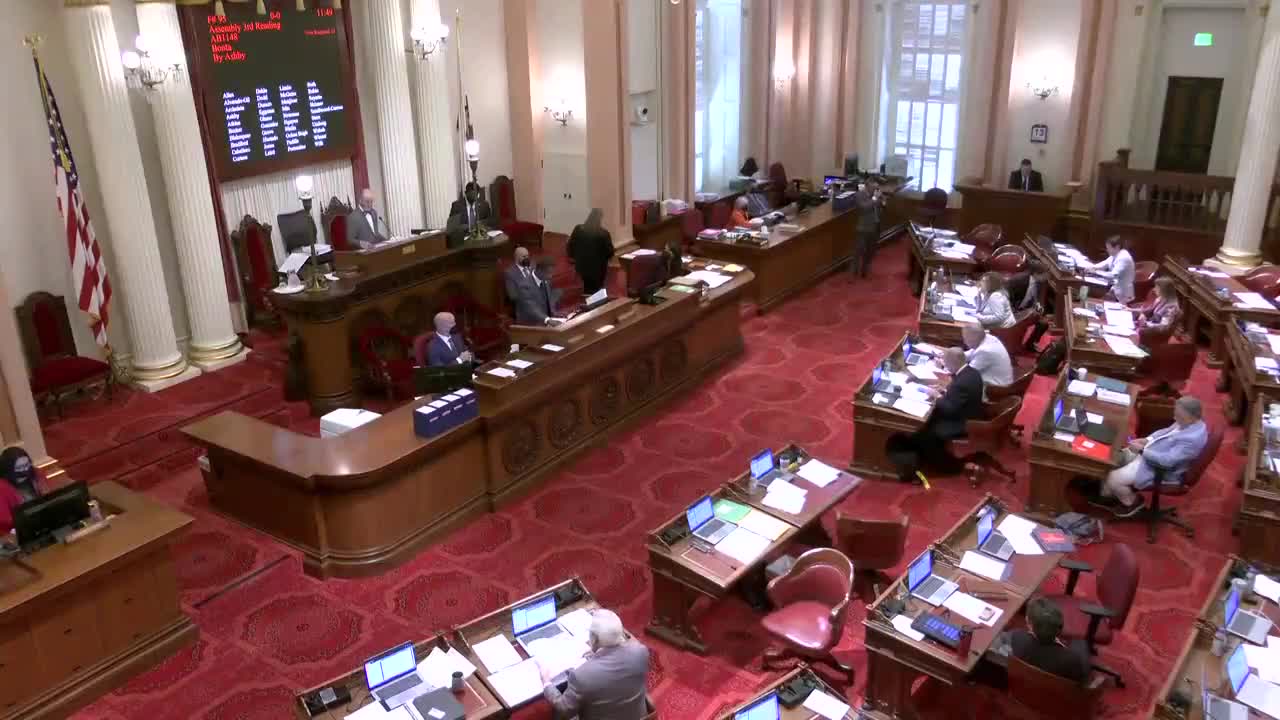 53SEC
Senate Floor
 46SEC
Assembly Floor
 2MIN
Senate Standing Committee on Appropriations
 8MIN
Senate Standing Committee on Governmental Organization
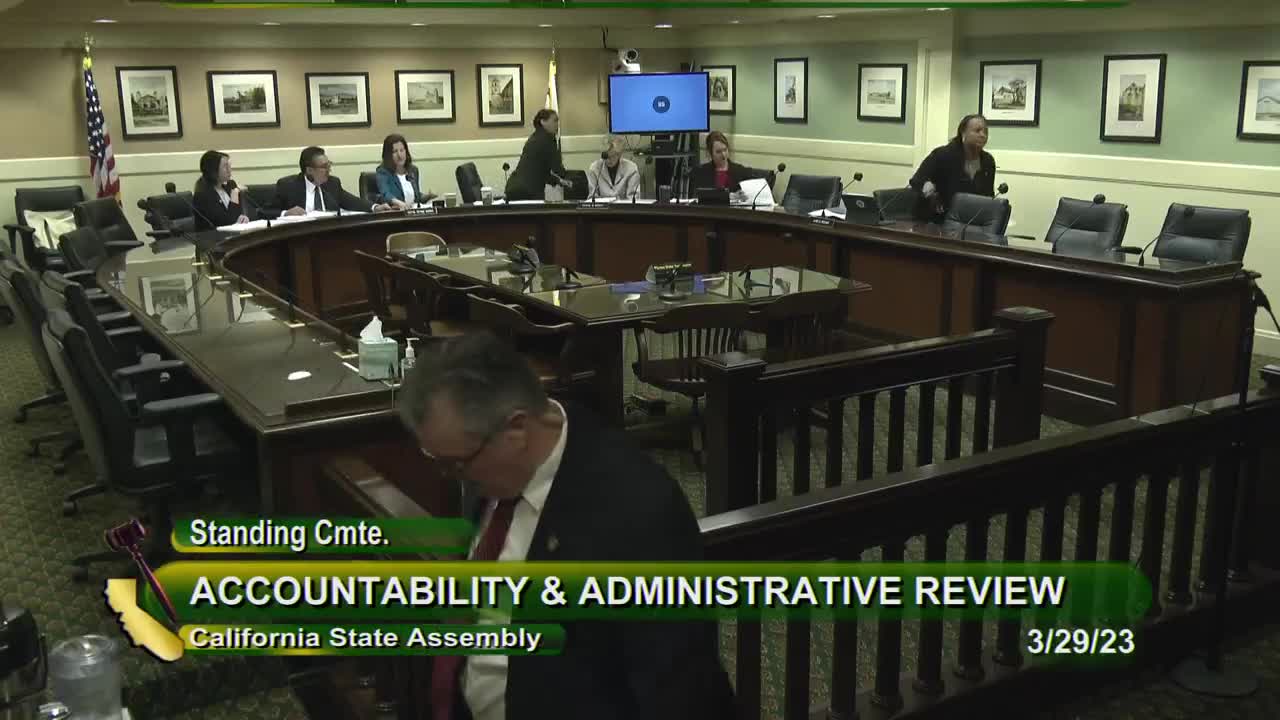 4MIN
Assembly Standing Committee on Accountability and Administrative Review
Bill Author

Bill Co-Author(s):
