AB 484: Sentencing enhancements: property loss.
- Session Year: 2023-2024
- House: Assembly
- Latest Version Date: 2023-03-16
Current Status:
Failed
(2024-02-01: From committee: Filed with the Chief Clerk pursuant to Joint Rule 56.)
Introduced
In Committee
First Chamber
In Committee
Second Chamber
Enacted
State law, repealed as of January 1, 2018, required a court to impose an additional term of imprisonment, as specified, on any person who takes, damages, or destroys any property in the commission or attempted commission of a felony, as specified.
This bill would, until January 1, 2028, authorize the court, if a person takes, damages, or destroys property in the commission or attempted commission of a felony, with the intent to cause that taking, damage, or destruction, to impose an additional term of imprisonment of up to 2 years if the property loss exceeds $235,000, $275,000, an additional term of imprisonment of up to 3 years if the property loss exceeds $1,500,000, $1,750,000, or an additional term of imprisonment of up to 4 years if the property loss exceeds $3,700,000. $4,400,000.
Existing law provides for enhanced penalties against a person who commits 2 or more related felonies, a material element of which is fraud or embezzlement, that involve a pattern of related felony conduct, and the pattern of related felony conduct involves the taking or loss of more than $100,000. Existing law makes the additional punishment, if it involves the taking or loss of more than $500,000, a term of 2, 3, or 5 years in the state prison. Existing law, until January 1, 2018, due to an obsolete cross-reference to the repealed provisions described above, made the additional punishment, if it involves a taking or loss of more than $100,000 but less than $500,000, punishable by 2 years in the state prison if the loss was more than $200,000, and one year if the loss was less than that.
This bill would remove that obsolete cross-reference and make that additional punishment equal to 2 years in the state prison.
Because this bill would increase the penalty for existing felonies, it would impose a state-mandated local program.
The California Constitution requires the state to reimburse local agencies and school districts for certain costs mandated by the state. Statutory provisions establish procedures for making that reimbursement.
This bill would provide that no reimbursement is required by this act for a specified reason.
State law, repealed as of January 1, 2018, required a court to impose an additional term of imprisonment, as specified, on any person who takes, damages, or destroys any property in the commission or attempted commission of a felony, as specified.
This bill would, until January 1, 2028, authorize the court, if a person takes, damages, or destroys property in the commission or attempted commission of a felony, with the intent to cause that taking, damage, or destruction, to impose an additional term of imprisonment of up to 2 years if the property loss exceeds $235,000, an additional term of imprisonment of up to 3 years if the property loss exceeds $1,500,000, or an additional term of imprisonment of up to 4 years if the property loss exceeds $3,700,000.
Existing law provides for enhanced penalties against a person who commits 2 or more related felonies, a material element of which is fraud or embezzlement, that involve a pattern of related felony conduct, and the pattern of related felony conduct involves the taking or loss of more than $100,000. Existing law makes the additional punishment, if it involves the taking or loss of more than $500,000, a term of 2, 3, or 5 years in the state prison. Existing law, until January 1, 2018, due to an obsolete cross-reference to the repealed provisions described above, made the additional punishment, if it involves a taking or loss of more than $100,000 but less than $500,000, punishable by 2 years in the state prison if the loss was more than $200,000, and one year if the loss was less than that.
This bill would remove that obsolete cross-reference and make that additional punishment equal to 2 years in the state prison.
Because this bill would increase the penalty for existing felonies, it would impose a state-mandated local program.
The California Constitution requires the state to reimburse local agencies and school districts for certain costs mandated by the state. Statutory provisions establish procedures for making that reimbursement.
This bill would provide that no reimbursement is required by this act for a specified reason.
(a)(1)Any person who commits two or more related felonies, a material element of which is fraud or embezzlement, which involve a pattern of related felony conduct, and the pattern of related felony conduct involves the taking of, or results in the loss by another person or entity of, more than one hundred thousand dollars ($100,000), shall be punished, upon conviction of two or more felonies in a single criminal proceeding, in addition and consecutive to the punishment prescribed for the felony offenses of which they have been convicted, by an additional term of imprisonment in the state prison as specified in paragraph (2) or (3). This enhancement shall be known as the aggravated white collar crime enhancement. The aggravated white collar crime enhancement shall only be imposed once in a single criminal proceeding. For purposes of this section, pattern of related felony conduct means engaging in at least two felonies that have the same or similar purpose, result, principals, victims, or methods of commission, or are otherwise interrelated by distinguishing characteristics, and that are not isolated events. For purposes of this section, two or more related felonies means felonies committed against two or more separate victims, or against the same victim on two or more separate occasions.
(2)If the pattern of related felony conduct involves the taking of, or results in the loss by another person or entity of, more than five hundred thousand dollars ($500,000), the additional term of punishment shall be two, three, or five years in the state prison.
(3)If the pattern of related felony conduct involves the taking of, or results in the loss by another person or entity of, more than one hundred thousand dollars ($100,000), but not more than five hundred thousand dollars ($500,000), the additional term of punishment shall be two years in state prison.
(b)(1)The additional prison term and penalties provided for in subdivisions (a), (c), and (d) shall not be imposed unless the facts set forth in subdivision (a) are charged in the accusatory pleading and admitted or found to be true by the trier of fact.
(2)The additional prison term provided in paragraph (2) of subdivision (a) shall be in addition to any other punishment provided by law, including Section 12022.6, and shall not be limited by any other provision of law.
(c)Any person convicted of two or more felonies, as specified in subdivision (a), shall also be liable for a fine not to exceed five hundred thousand dollars ($500,000) or double the value of the taking, whichever is greater, if the existence of facts that would make the person subject to the aggravated white collar crime enhancement have been admitted or found to be true by the trier of fact. However, if the pattern of related felony conduct involves the taking of more than one hundred thousand dollars ($100,000), but not more than five hundred thousand dollars ($500,000), the fine shall not exceed one hundred thousand dollars ($100,000) or double the value of the taking, whichever is greater.
(d)(1)If a person is alleged to have committed two or more felonies, as specified in subdivision (a), and the aggravated white collar crime enhancement is also charged, or a person is charged in an accusatory pleading with a felony, a material element of which is fraud or embezzlement, that involves the taking or loss of more than one hundred thousand dollars ($100,000), and an allegation as to the existence of those facts, any asset or property that is in the control of that person, and any asset or property that has been transferred by that person to a third party, subsequent to the commission of any criminal act alleged pursuant to subdivision (a), other than in a bona fide purchase, whether found within or outside the state, may be preserved by the superior court in order to pay restitution and fines. Upon conviction of two or more felonies, as specified in subdivision (a), or a felony, a material element of which is fraud or embezzlement, that involves the taking or loss of more than one hundred thousand dollars ($100,000), this property may be levied upon by the superior court to pay restitution and fines if the existence of facts that would make the person subject to the aggravated white collar crime enhancement or that demonstrate the taking or loss of more than one hundred thousand dollars ($100,000) in the commission of a felony, a material element of which is fraud or embezzlement, have been charged in the accusatory pleading and admitted or found to be true by the trier of fact.
(2)To prevent dissipation or secreting of assets or property, the prosecuting agency may, at the same time as or subsequent to the filing of a complaint or indictment charging two or more felonies, as specified in subdivision (a), and the enhancement specified in subdivision (a), or a felony, a material element of which is fraud or embezzlement, that involves the taking or loss of more than one hundred thousand dollars ($100,000), and an allegation as to the existence of those facts, file a petition with the criminal division of the superior court of the county in which the accusatory pleading was filed, seeking a temporary restraining order, preliminary injunction, the appointment of a receiver, or any other protective relief necessary to preserve the property or assets. This petition shall commence a proceeding that shall be pendent to the criminal proceeding and maintained solely to affect the criminal remedies provided for in this section. The proceeding shall not be subject to or governed by the provisions of the Civil Discovery Act as set forth in Title 4 (commencing with Section 2016.010) of Part 4 of the Code of Civil Procedure. The petition shall allege that the defendant has been charged with two or more felonies, as specified in subdivision (a), and is subject to the aggravated white collar crime enhancement specified in subdivision (a) or that the defendant has been charged with a felony, a material element of which is fraud or embezzlement, that involves the taking or loss of more than one hundred thousand dollars ($100,000), and an allegation as to the existence of those facts. The petition shall identify that criminal proceeding and the assets and property to be affected by an order issued pursuant to this section.
(3)A notice regarding the petition shall be provided, by personal service or registered mail, to every person who may have an interest in the property specified in the petition. Additionally, the notice shall be published for at least three successive weeks in a newspaper of general circulation in the county where the property affected by an order issued pursuant to this section is located. The notice shall state that any interested person may file a verified claim with the superior court stating the nature and amount of their claimed interest. The notice shall set forth the time within which a claim of interest in the protected property is required to be filed.
(4)If the property to be preserved is real property, the prosecuting agency shall record, at the time of filing the petition, a lis pendens in each county in which the real property is situated which specifically identifies the property by legal description, the name of the owner of record as shown on the latest equalized assessment roll, and the assessors parcel number.
(5)If the property to be preserved are assets under the control of a banking or financial institution, the prosecuting agency, at the time of the filing of the petition, may obtain an order from the court directing the banking or financial institution to immediately disclose the account numbers and value of the assets of the accused held by the banking or financial institution. The prosecuting agency shall file a supplemental petition, specifically identifying which banking or financial institution accounts shall be subject to a temporary restraining order, preliminary injunction, or other protective remedy.
(6)Any person claiming an interest in the protected property may, at any time within 30 days from the date of the first publication of the notice of the petition, or within 30 days after receipt of actual notice, file with the superior court of the county in which the action is pending a verified claim stating the nature and amount of their interest in the property or assets. A verified copy of the claim shall be served by the claimant on the Attorney General or district attorney, as appropriate.
(7)The imposition of fines and restitution pursuant to this section shall be determined by the superior court in which the underlying criminal offense is sentenced. Any judge who is assigned to the criminal division of the superior court in the county where the petition is filed may issue a temporary restraining order in conjunction with, or subsequent to, the filing of an allegation pursuant to this section. Any subsequent hearing on the petition shall also be heard by a judge assigned to the criminal division of the superior court in the county in which the petition is filed. At the time of the filing of an information or indictment in the underlying criminal case, any subsequent hearing on the petition shall be heard by the superior court judge assigned to the underlying criminal case.
(e)Concurrent with or subsequent to the filing of the petition, the prosecuting agency may move the superior court for, and the superior court may issue, the following pendente lite orders to preserve the status quo of the property alleged in the petition:
(1)An injunction to restrain any person from transferring, encumbering, hypothecating, or otherwise disposing of that property.
(2)Appointment of a receiver to take possession of, care for, manage, and operate the assets and properties so that the property may be maintained and preserved. The court may order that a receiver appointed pursuant to this section shall be compensated for all reasonable expenditures made or incurred by them in connection with the possession, care, management, and operation of any property or assets that are subject to the provisions of this section.
(3)A bond or other undertaking, in lieu of other orders, of a value sufficient to ensure the satisfaction of restitution and fines imposed pursuant to this section.
(f)(1)No preliminary injunction may be granted or receiver appointed by the court without notice that meets the requirements of paragraph (3) of subdivision (d) to all known and reasonably ascertainable interested parties and upon a hearing to determine that an order is necessary to preserve the property pending the outcome of the criminal proceedings. A temporary restraining order may be issued by the court, ex parte, pending that hearing in conjunction with or subsequent to the filing of the petition upon the application of the prosecuting attorney. The temporary restraining order may be based upon the sworn declaration of a peace officer with personal knowledge of the criminal investigation that establishes probable cause to believe that aggravated white collar crime or a felony, a material element of which is fraud or embezzlement, that involves the taking or loss of more than one hundred thousand dollars ($100,000) has taken place and that the amount of restitution and fines exceeds or equals the worth of the assets subject to the temporary restraining order. The declaration may include the hearsay statements of witnesses to establish the necessary facts. The temporary restraining order may be issued without notice upon a showing of good cause to the court.
(2)The defendant, or a person who has filed a verified claim as provided in paragraph (6) of subdivision (d), shall have the right to have the court conduct an order to show cause hearing within 10 days of the service of the request for hearing upon the prosecuting agency, in order to determine whether the temporary restraining order should remain in effect, whether relief should be granted from any lis pendens recorded pursuant to paragraph (4) of subdivision (d), or whether any existing order should be modified in the interests of justice. Upon a showing of good cause, the hearing shall be held within two days of the service of the request for hearing upon the prosecuting agency.
(3)In determining whether to issue a preliminary injunction or temporary restraining order in a proceeding brought by a prosecuting agency in conjunction with or subsequent to the filing of an allegation pursuant to this section, the court has the discretion to consider any matter that it deems reliable and appropriate, including hearsay statements, in order to reach a just and equitable decision. The court shall weigh the relative degree of certainty of the outcome on the merits and the consequences to each of the parties of granting the interim relief. If the prosecution is likely to prevail on the merits and the risk of the dissipation of assets outweighs the potential harm to the defendants and the interested parties, the court shall grant injunctive relief. The court shall give significant weight to the following factors:
(A)The public interest in preserving the property or assets pendente lite.
(B)The difficulty of preserving the property or assets pendente lite where the underlying alleged crimes involve issues of fraud and moral turpitude.
(C)The fact that the requested relief is being sought by a public prosecutor on behalf of alleged victims of white collar crimes.
(D)The likelihood that substantial public harm has occurred where aggravated white collar crime is alleged to have been committed.
(E)The significant public interest involved in compensating the victims of white collar crime and paying court-imposed restitution and fines.
(4)The court, in making its orders, may consider a defendants request for the release of a portion of the property affected by this section in order to pay reasonable legal fees in connection with the criminal proceeding, any necessary and appropriate living expenses pending trial and sentencing, and for the purpose of posting bail. The court shall weigh the needs of the public to retain the property against the needs of the defendant to a portion of the property. The court shall consider the factors listed in paragraph (3) prior to making any order releasing property for these purposes.
(5)The court, in making its orders, shall seek to protect the interests of any innocent third persons, including an innocent spouse, who were not involved in the commission of any criminal activity.
(6)Any petition filed pursuant to this section is part of the criminal proceedings for purposes of appointment of counsel and shall be assigned to the criminal division of the superior court of the county in which the accusatory pleading was filed.
(7)Based upon a noticed motion brought by the receiver appointed pursuant to paragraph (2) of subdivision (e), the court may order an interlocutory sale of property named in the petition when the property is liable to perish, to waste, or to be significantly reduced in value, or when the expenses of maintaining the property are disproportionate to the value thereof. The proceeds of the interlocutory sale shall be deposited with the court or as directed by the court pending determination of the proceeding pursuant to this section.
(8)The court may make any orders that are necessary to preserve the continuing viability of any lawful business enterprise that is affected by the issuance of a temporary restraining order or preliminary injunction issued pursuant to this action.
(9)In making its orders, the court shall seek to prevent any asset subject to a temporary restraining order or preliminary injunction from perishing, spoiling, going to waste, or otherwise being significantly reduced in value. Where the potential for diminution in value exists, the court shall appoint a receiver to dispose of or otherwise protect the value of the property or asset.
(10)A preservation order shall not be issued against any assets of a business that are not likely to be dissipated and that may be subject to levy or attachment to meet the purposes of this section.
(g)If the allegation that the defendant is subject to the aggravated white collar crime enhancement or has committed a felony, a material element of which is fraud or embezzlement, that involves the taking or loss of more than one hundred thousand dollars ($100,000) is dismissed or found by the trier of fact to be untrue, any preliminary injunction or temporary restraining order issued pursuant to this section shall be dissolved. If a jury is the trier of fact, and the jury is unable to reach a unanimous verdict, the court shall have the discretion to continue or dissolve all or a portion of the preliminary injunction or temporary restraining order based upon the interests of justice. However, if the prosecuting agency elects not to retry the case, any preliminary injunction or temporary restraining order issued pursuant to this section shall be dissolved.
(h)(1)(A)If the defendant is convicted of two or more felonies, as specified in subdivision (a), and the existence of facts that would make the person subject to the aggravated white collar crime enhancement have been admitted or found to be true by the trier of fact, or the defendant is convicted of a felony, a material element of which is fraud or embezzlement, that involves the taking or loss of more than one hundred thousand dollars ($100,000), and an allegation as to the existence of those facts has been admitted or found to be true by the trier of fact, the trial judge shall continue the preliminary injunction or temporary restraining order until the date of the criminal sentencing and shall make a finding at that time as to what portion, if any, of the property or assets subject to the preliminary injunction or temporary restraining order shall be levied upon to pay fines and restitution to victims of the crime. The order imposing fines and restitution may exceed the total worth of the property or assets subjected to the preliminary injunction or temporary restraining order. The court may order the immediate transfer of the property or assets to satisfy any judgment and sentence made pursuant to this section. Additionally, upon motion of the prosecution, the court may enter an order as part of the judgment and sentence making the order imposing fines and restitution pursuant to this section enforceable pursuant to Title 9 (commencing with Section 680.010) of Part 2 of the Code of Civil Procedure.
(B)Additionally, the court shall order the defendant to make full restitution to the victim. The payment of the restitution ordered by the court pursuant to this section shall be made a condition of any probation granted by the court if the existence of facts that would make the defendant subject to the aggravated white collar crime enhancement or of facts demonstrating the person committed a felony, a material element of which is fraud or embezzlement, that involves the taking or loss of more than one hundred thousand dollars ($100,000) have been admitted or found to be true by the trier of fact. Notwithstanding any other provision of law, the court may order that the period of probation continue for up to 10 years or until full restitution is made to the victim, whichever is earlier.
(C)The sentencing court shall retain jurisdiction to enforce the order to pay additional fines and restitution and, in appropriate cases, may initiate probation violation proceedings or contempt of court proceedings against a defendant who is found to have willfully failed to comply with any lawful order of the court.
(D)If the execution of judgment is stayed pending an appeal of an order of the superior court pursuant to this section, the preliminary injunction or temporary restraining order shall be maintained in full force and effect during the pendency of the appellate period.
(2)The order imposing fines and restitution shall not affect the interest in real property of any third party that was acquired prior to the recording of the lis pendens, unless the property was obtained from the defendant other than as a bona fide purchaser for value. If any assets or property affected by this section are subject to a valid lien, mortgage, security interest, or interest under a conditional sales contract and the amount due to the holder of the lien, mortgage, interest, or contract is less than the appraised value of the property, that person may pay to the state or the local government that initiated the proceeding the amount of the difference between the appraised value of the property and the amount of the lien, mortgage, security interest, or interest under a conditional sales contract. Upon that payment, the state or local entity shall relinquish all claims to the property. If the holder of the interest elects not to make that payment to the state or local governmental entity, the interest in the property shall be deemed transferred to the state or local governmental entity and any indicia of ownership of the property shall be confirmed in the state or local governmental entity. The appraised value shall be determined as of the date judgment is entered either by agreement between the holder of the lien, mortgage, security interest, or interest under a conditional sales contract and the governmental entity involved, or, if they cannot agree, then by a court-appointed appraiser for the county in which the action is brought. A person holding a valid lien, mortgage, security interest, or interest under a conditional sales contract shall be paid the appraised value of their interest.
(3)In making its final order, the court shall seek to protect the legitimately acquired interests of any innocent third persons, including an innocent spouse, who were not involved in the commission of any criminal activity.
(i)In all cases where property is to be levied upon pursuant to this section, a receiver appointed by the court shall be empowered to liquidate all property or assets which shall be distributed in the following order of priority:
(1)To the receiver, or court-appointed appraiser, for all reasonable expenditures made or incurred by them in connection with the sale of the property or liquidation of assets, including all reasonable expenditures for any necessary repairs, storage, or transportation of any property levied upon under this section.
(2)To any holder of a valid lien, mortgage, or security interest up to the amount of their interest in the property or proceeds.
(3)To any victim as restitution for any fraudulent or unlawful acts alleged in the accusatory pleading that were proven by the prosecuting agency as part of the pattern of fraudulent or unlawful acts.
(4)For payment of any fine imposed pursuant to this section. The proceeds obtained in payment of a fine shall be paid to the treasurer of the county in which the judgment was entered, or if the action was undertaken by the Attorney General, to the Treasurer. If the payment of any fine imposed pursuant to this section involved losses resulting from violation of Section 550 of this code or Section 1871.4 of the Insurance Code, one-half of the fine collected shall be paid to the treasurer of the county in which the judgment was entered, and one-half of the fine collected shall be paid to the Department of Insurance for deposit in the appropriate account in the Insurance Fund. The proceeds from the fine first shall be used by a county to reimburse local prosecutors and enforcement agencies for the reasonable costs of investigation and prosecution of cases brought pursuant to this section.
(5)To the Restitution Fund, or in cases involving convictions relating to insurance fraud, to the Insurance Fund as restitution for crimes not specifically pleaded and proven in the accusatory pleading.
(j)If, after distribution pursuant to paragraphs (1) and (2) of subdivision (i), the value of the property to be levied upon pursuant to this section is insufficient to pay for restitution and fines, the court shall order an equitable sharing of the proceeds of the liquidation of the property, and any other recoveries, which shall specify the percentage of recoveries to be devoted to each purpose. At least 70 percent of the proceeds remaining after distribution pursuant to paragraphs (1) and (2) of subdivision (i) shall be devoted to restitution.
(k)Unless otherwise expressly provided, the remedies or penalties provided by this section are cumulative to each other and to the remedies or penalties available under all other laws of this state, except that two separate actions against the same defendant and pertaining to the same fraudulent or unlawful acts may not be brought by a district attorney or the Attorney General pursuant to this section and Chapter 5 (commencing with Section 17200) of Part 2 of Division 7 of the Business and Professions Code. If a fine is imposed under this section, it shall be in lieu of all other fines that may be imposed pursuant to any other provision of law for the crimes for which the defendant has been convicted in the action.
SEC. 2.Section 12022.6 is added to the Penal Code, to read:12022.6.(a)If a person takes, damages, or destroys property in the commission or attempted commission of a felony, with the intent to cause that taking, damage, or destruction, the court may impose an additional term as follows:
(1)If the property loss exceeds two hundred thirty-five thousand dollars ($235,000), two hundred seventy-five thousand dollars ($275,000), the court, in addition and consecutive to the punishment prescribed for the felony or attempted felony of which the defendant has been convicted, may impose an additional term of up to two years.
(2)If the property loss exceeds one million five hundred thousand dollars ($1,500,000), one million seven hundred fifty thousand dollars ($1,750,000), the court, in addition and consecutive to the punishment prescribed for the felony or attempted felony of which the defendant has been convicted, may impose an additional term of up to three years.
(3)If the property loss exceeds three million seven hundred thousand dollars ($3,700,000), four million four hundred thousand dollars ($4,400,000), the court, in addition and consecutive to the punishment prescribed for the felony or attempted felony of which the defendant has been convicted, may impose an additional term of up to four years.
(b)In any accusatory pleading involving multiple charges of taking, damage, or destruction, the additional terms provided in this section may be imposed if the aggregate losses to the victims from all felonies exceed the amounts specified in this section and arise from a common scheme or plan. All pleadings under this section shall remain subject to the rules of joinder and severance described in Section 954.
(c)The additional terms provided in this section shall not be imposed unless the facts of the taking, damage, or destruction in excess of the amounts provided in this section are charged in the accusatory pleading and admitted or found to be true by the trier of fact.
(d)This section applies to, but is not limited to, property taken, damaged, or destroyed in violation of Section 502 or subdivision (b) of Section 502.7. This section shall also apply to applicable prosecutions for a violation of Section 350, 653h, 653s, or 653w.
(e)For the purposes of this section, the term loss has the following meanings:
(1)When counterfeit items of computer software are manufactured or possessed for sale, the loss from the counterfeiting of those items shall be equivalent to the retail price or fair market value of the true items that are counterfeited.
(2)When counterfeited but unassembled components of computer software packages are recovered, including, but not limited to, counterfeited computer diskettes, instruction manuals, or licensing envelopes, the loss from the counterfeiting of those components of computer software packages shall be equivalent to the retail price or fair market value of the number of completed computer software packages that could have been made from those components.
(f)It is the intent of the Legislature to review the threshold amounts in subdivision (a) every five years and adjust them for inflation. For that reason, this section shall remain in effect only until January 1, 2028, and as of that date is repealed, unless a later enacted statute that is enacted before January 1, 2028, deletes or extends that date.
SEC. 3.No reimbursement is required by this act pursuant to Section 6 of Article XIIIB of the California Constitution because the only costs that may be incurred by a local agency or school district will be incurred because this act creates a new crime or infraction, eliminates a crime or infraction, or changes the penalty for a crime or infraction, within the meaning of Section 17556 of the Government Code, or changes the definition of a crime within the meaning of Section 6 of Article XIIIB of the California Constitution.
(a)(1)Any person who commits two or more related felonies, a material element of which is fraud or embezzlement, which involve a pattern of related felony conduct, and the pattern of related felony conduct involves the taking of, or results in the loss by another person or entity of, more than one hundred thousand dollars ($100,000), shall be punished, upon conviction of two or more felonies in a single criminal proceeding, in addition and consecutive to the punishment prescribed for the felony offenses of which he or she has they have been convicted, by an additional term of imprisonment in the state prison as specified in paragraph (2) or (3). This enhancement shall be known as the aggravated white collar crime enhancement. The aggravated white collar crime enhancement shall only be imposed once in a single criminal proceeding. For purposes of this section, pattern of related felony conduct means engaging in at least two felonies that have the same or similar purpose, result, principals, victims, or methods of commission, or are otherwise interrelated by distinguishing characteristics, and that are not isolated events. For purposes of this section, two or more related felonies means felonies committed against two or more separate victims, or against the same victim on two or more separate occasions.
(2)If the pattern of related felony conduct involves the taking of, or results in the loss by another person or entity of, more than five hundred thousand dollars ($500,000), the additional term of punishment shall be two, three, or five years in the state prison.
(3)If the pattern of related felony conduct involves the taking of, or results in the loss by another person or entity of, more than one hundred thousand dollars ($100,000), but not more than five hundred thousand dollars ($500,000), the additional term of punishment shall be the term specified in paragraph (1) or (2) of subdivision (a) of Section 12022.6. two years in state prison.
(b)(1)The additional prison term and penalties provided for in subdivisions (a), (c), and (d) shall not be imposed unless the facts set forth in subdivision (a) are charged in the accusatory pleading and admitted or found to be true by the trier of fact.
(2)The additional prison term provided in paragraph (2) of subdivision (a) shall be in addition to any other punishment provided by law, including Section 12022.6, and shall not be limited by any other provision of law.
(c)Any person convicted of two or more felonies, as specified in subdivision (a), shall also be liable for a fine not to exceed five hundred thousand dollars ($500,000) or double the value of the taking, whichever is greater, if the existence of facts that would make the person subject to the aggravated white collar crime enhancement have been admitted or found to be true by the trier of fact. However, if the pattern of related felony conduct involves the taking of more than one hundred thousand dollars ($100,000), but not more than five hundred thousand dollars ($500,000), the fine shall not exceed one hundred thousand dollars ($100,000) or double the value of the taking, whichever is greater.
(d)(1)If a person is alleged to have committed two or more felonies, as specified in subdivision (a), and the aggravated white collar crime enhancement is also charged, or a person is charged in an accusatory pleading with a felony, a material element of which is fraud or embezzlement, that involves the taking or loss of more than one hundred thousand dollars ($100,000), and an allegation as to the existence of those facts, any asset or property that is in the control of that person, and any asset or property that has been transferred by that person to a third party, subsequent to the commission of any criminal act alleged pursuant to subdivision (a), other than in a bona fide purchase, whether found within or outside the state, may be preserved by the superior court in order to pay restitution and fines. Upon conviction of two or more felonies, as specified in subdivision (a), or a felony, a material element of which is fraud or embezzlement, that involves the taking or loss of more than one hundred thousand dollars ($100,000), this property may be levied upon by the superior court to pay restitution and fines if the existence of facts that would make the person subject to the aggravated white collar crime enhancement or that demonstrate the taking or loss of more than one hundred thousand dollars ($100,000) in the commission of a felony, a material element of which is fraud or embezzlement, have been charged in the accusatory pleading and admitted or found to be true by the trier of fact.
(2)To prevent dissipation or secreting of assets or property, the prosecuting agency may, at the same time as or subsequent to the filing of a complaint or indictment charging two or more felonies, as specified in subdivision (a), and the enhancement specified in subdivision (a), or a felony, a material element of which is fraud or embezzlement, that involves the taking or loss of more than one hundred thousand dollars ($100,000), and an allegation as to the existence of those facts, file a petition with the criminal division of the superior court of the county in which the accusatory pleading was filed, seeking a temporary restraining order, preliminary injunction, the appointment of a receiver, or any other protective relief necessary to preserve the property or assets. This petition shall commence a proceeding that shall be pendent to the criminal proceeding and maintained solely to affect the criminal remedies provided for in this section. The proceeding shall not be subject to or governed by the provisions of the Civil Discovery Act as set forth in Title 4 (commencing with Section 2016.010) of Part 4 of the Code of Civil Procedure. The petition shall allege that the defendant has been charged with two or more felonies, as specified in subdivision (a), and is subject to the aggravated white collar crime enhancement specified in subdivision (a) or that the defendant has been charged with a felony, a material element of which is fraud or embezzlement, that involves the taking or loss of more than one hundred thousand dollars ($100,000), and an allegation as to the existence of those facts. The petition shall identify that criminal proceeding and the assets and property to be affected by an order issued pursuant to this section.
(3)A notice regarding the petition shall be provided, by personal service or registered mail, to every person who may have an interest in the property specified in the petition. Additionally, the notice shall be published for at least three successive weeks in a newspaper of general circulation in the county where the property affected by an order issued pursuant to this section is located. The notice shall state that any interested person may file a verified claim with the superior court stating the nature and amount of their claimed interest. The notice shall set forth the time within which a claim of interest in the protected property is required to be filed.
(4)If the property to be preserved is real property, the prosecuting agency shall record, at the time of filing the petition, a lis pendens in each county in which the real property is situated which specifically identifies the property by legal description, the name of the owner of record as shown on the latest equalized assessment roll, and the assessors parcel number.
(5)If the property to be preserved are assets under the control of a banking or financial institution, the prosecuting agency, at the time of the filing of the petition, may obtain an order from the court directing the banking or financial institution to immediately disclose the account numbers and value of the assets of the accused held by the banking or financial institution. The prosecuting agency shall file a supplemental petition, specifically identifying which banking or financial institution accounts shall be subject to a temporary restraining order, preliminary injunction, or other protective remedy.
(6)Any person claiming an interest in the protected property may, at any time within 30 days from the date of the first publication of the notice of the petition, or within 30 days after receipt of actual notice, file with the superior court of the county in which the action is pending a verified claim stating the nature and amount of his or her their interest in the property or assets. A verified copy of the claim shall be served by the claimant on the Attorney General or district attorney, as appropriate.
(7)The imposition of fines and restitution pursuant to this section shall be determined by the superior court in which the underlying criminal offense is sentenced. Any judge who is assigned to the criminal division of the superior court in the county where the petition is filed may issue a temporary restraining order in conjunction with, or subsequent to, the filing of an allegation pursuant to this section. Any subsequent hearing on the petition shall also be heard by a judge assigned to the criminal division of the superior court in the county in which the petition is filed. At the time of the filing of an information or indictment in the underlying criminal case, any subsequent hearing on the petition shall be heard by the superior court judge assigned to the underlying criminal case.
(e)Concurrent with or subsequent to the filing of the petition, the prosecuting agency may move the superior court for, and the superior court may issue, the following pendente lite orders to preserve the status quo of the property alleged in the petition:
(1)An injunction to restrain any person from transferring, encumbering, hypothecating, or otherwise disposing of that property.
(2)Appointment of a receiver to take possession of, care for, manage, and operate the assets and properties so that the property may be maintained and preserved. The court may order that a receiver appointed pursuant to this section shall be compensated for all reasonable expenditures made or incurred by him or her them in connection with the possession, care, management, and operation of any property or assets that are subject to the provisions of this section.
(3)A bond or other undertaking, in lieu of other orders, of a value sufficient to ensure the satisfaction of restitution and fines imposed pursuant to this section.
(f)(1)No preliminary injunction may be granted or receiver appointed by the court without notice that meets the requirements of paragraph (3) of subdivision (d) to all known and reasonably ascertainable interested parties and upon a hearing to determine that an order is necessary to preserve the property pending the outcome of the criminal proceedings. A temporary restraining order may be issued by the court, ex parte, pending that hearing in conjunction with or subsequent to the filing of the petition upon the application of the prosecuting attorney. The temporary restraining order may be based upon the sworn declaration of a peace officer with personal knowledge of the criminal investigation that establishes probable cause to believe that aggravated white collar crime or a felony, a material element of which is fraud or embezzlement, that involves the taking or loss of more than one hundred thousand dollars ($100,000) has taken place and that the amount of restitution and fines exceeds or equals the worth of the assets subject to the temporary restraining order. The declaration may include the hearsay statements of witnesses to establish the necessary facts. The temporary restraining order may be issued without notice upon a showing of good cause to the court.
(2)The defendant, or a person who has filed a verified claim as provided in paragraph (6) of subdivision (d), shall have the right to have the court conduct an order to show cause hearing within 10 days of the service of the request for hearing upon the prosecuting agency, in order to determine whether the temporary restraining order should remain in effect, whether relief should be granted from any lis pendens recorded pursuant to paragraph (4) of subdivision (d), or whether any existing order should be modified in the interests of justice. Upon a showing of good cause, the hearing shall be held within two days of the service of the request for hearing upon the prosecuting agency.
(3)In determining whether to issue a preliminary injunction or temporary restraining order in a proceeding brought by a prosecuting agency in conjunction with or subsequent to the filing of an allegation pursuant to this section, the court has the discretion to consider any matter that it deems reliable and appropriate, including hearsay statements, in order to reach a just and equitable decision. The court shall weigh the relative degree of certainty of the outcome on the merits and the consequences to each of the parties of granting the interim relief. If the prosecution is likely to prevail on the merits and the risk of the dissipation of assets outweighs the potential harm to the defendants and the interested parties, the court shall grant injunctive relief. The court shall give significant weight to the following factors:
(A)The public interest in preserving the property or assets pendente lite.
(B)The difficulty of preserving the property or assets pendente lite where the underlying alleged crimes involve issues of fraud and moral turpitude.
(C)The fact that the requested relief is being sought by a public prosecutor on behalf of alleged victims of white collar crimes.
(D)The likelihood that substantial public harm has occurred where aggravated white collar crime is alleged to have been committed.
(E)The significant public interest involved in compensating the victims of white collar crime and paying court-imposed restitution and fines.
(4)The court, in making its orders, may consider a defendants request for the release of a portion of the property affected by this section in order to pay reasonable legal fees in connection with the criminal proceeding, any necessary and appropriate living expenses pending trial and sentencing, and for the purpose of posting bail. The court shall weigh the needs of the public to retain the property against the needs of the defendant to a portion of the property. The court shall consider the factors listed in paragraph (3) prior to making any order releasing property for these purposes.
(5)The court, in making its orders, shall seek to protect the interests of any innocent third persons, including an innocent spouse, who were not involved in the commission of any criminal activity.
(6)Any petition filed pursuant to this section is part of the criminal proceedings for purposes of appointment of counsel and shall be assigned to the criminal division of the superior court of the county in which the accusatory pleading was filed.
(7)Based upon a noticed motion brought by the receiver appointed pursuant to paragraph (2) of subdivision (e), the court may order an interlocutory sale of property named in the petition when the property is liable to perish, to waste, or to be significantly reduced in value, or when the expenses of maintaining the property are disproportionate to the value thereof. The proceeds of the interlocutory sale shall be deposited with the court or as directed by the court pending determination of the proceeding pursuant to this section.
(8)The court may make any orders that are necessary to preserve the continuing viability of any lawful business enterprise that is affected by the issuance of a temporary restraining order or preliminary injunction issued pursuant to this action.
(9)In making its orders, the court shall seek to prevent any asset subject to a temporary restraining order or preliminary injunction from perishing, spoiling, going to waste, or otherwise being significantly reduced in value. Where the potential for diminution in value exists, the court shall appoint a receiver to dispose of or otherwise protect the value of the property or asset.
(10)A preservation order shall not be issued against any assets of a business that are not likely to be dissipated and that may be subject to levy or attachment to meet the purposes of this section.
(g)If the allegation that the defendant is subject to the aggravated white collar crime enhancement or has committed a felony, a material element of which is fraud or embezzlement, that involves the taking or loss of more than one hundred thousand dollars ($100,000) is dismissed or found by the trier of fact to be untrue, any preliminary injunction or temporary restraining order issued pursuant to this section shall be dissolved. If a jury is the trier of fact, and the jury is unable to reach a unanimous verdict, the court shall have the discretion to continue or dissolve all or a portion of the preliminary injunction or temporary restraining order based upon the interests of justice. However, if the prosecuting agency elects not to retry the case, any preliminary injunction or temporary restraining order issued pursuant to this section shall be dissolved.
(h)(1)(A)If the defendant is convicted of two or more felonies, as specified in subdivision (a), and the existence of facts that would make the person subject to the aggravated white collar crime enhancement have been admitted or found to be true by the trier of fact, or the defendant is convicted of a felony, a material element of which is fraud or embezzlement, that involves the taking or loss of more than one hundred thousand dollars ($100,000), and an allegation as to the existence of those facts has been admitted or found to be true by the trier of fact, the trial judge shall continue the preliminary injunction or temporary restraining order until the date of the criminal sentencing and shall make a finding at that time as to what portion, if any, of the property or assets subject to the preliminary injunction or temporary restraining order shall be levied upon to pay fines and restitution to victims of the crime. The order imposing fines and restitution may exceed the total worth of the property or assets subjected to the preliminary injunction or temporary restraining order. The court may order the immediate transfer of the property or assets to satisfy any judgment and sentence made pursuant to this section. Additionally, upon motion of the prosecution, the court may enter an order as part of the judgment and sentence making the order imposing fines and restitution pursuant to this section enforceable pursuant to Title 9 (commencing with Section 680.010) of Part 2 of the Code of Civil Procedure.
(B)Additionally, the court shall order the defendant to make full restitution to the victim. The payment of the restitution ordered by the court pursuant to this section shall be made a condition of any probation granted by the court if the existence of facts that would make the defendant subject to the aggravated white collar crime enhancement or of facts demonstrating the person committed a felony, a material element of which is fraud or embezzlement, that involves the taking or loss of more than one hundred thousand dollars ($100,000) have been admitted or found to be true by the trier of fact. Notwithstanding any other provision of law, the court may order that the period of probation continue for up to 10 years or until full restitution is made to the victim, whichever is earlier.
(C)The sentencing court shall retain jurisdiction to enforce the order to pay additional fines and restitution and, in appropriate cases, may initiate probation violation proceedings or contempt of court proceedings against a defendant who is found to have willfully failed to comply with any lawful order of the court.
(D)If the execution of judgment is stayed pending an appeal of an order of the superior court pursuant to this section, the preliminary injunction or temporary restraining order shall be maintained in full force and effect during the pendency of the appellate period.
(2)The order imposing fines and restitution shall not affect the interest in real property of any third party that was acquired prior to the recording of the lis pendens, unless the property was obtained from the defendant other than as a bona fide purchaser for value. If any assets or property affected by this section are subject to a valid lien, mortgage, security interest, or interest under a conditional sales contract and the amount due to the holder of the lien, mortgage, interest, or contract is less than the appraised value of the property, that person may pay to the state or the local government that initiated the proceeding the amount of the difference between the appraised value of the property and the amount of the lien, mortgage, security interest, or interest under a conditional sales contract. Upon that payment, the state or local entity shall relinquish all claims to the property. If the holder of the interest elects not to make that payment to the state or local governmental entity, the interest in the property shall be deemed transferred to the state or local governmental entity and any indicia of ownership of the property shall be confirmed in the state or local governmental entity. The appraised value shall be determined as of the date judgment is entered either by agreement between the holder of the lien, mortgage, security interest, or interest under a conditional sales contract and the governmental entity involved, or, if they cannot agree, then by a court-appointed appraiser for the county in which the action is brought. A person holding a valid lien, mortgage, security interest, or interest under a conditional sales contract shall be paid the appraised value of his or her their interest.
(3)In making its final order, the court shall seek to protect the legitimately acquired interests of any innocent third persons, including an innocent spouse, who were not involved in the commission of any criminal activity.
(i)In all cases where property is to be levied upon pursuant to this section, a receiver appointed by the court shall be empowered to liquidate all property or assets which shall be distributed in the following order of priority:
(1)To the receiver, or court-appointed appraiser, for all reasonable expenditures made or incurred by him or her them in connection with the sale of the property or liquidation of assets, including all reasonable expenditures for any necessary repairs, storage, or transportation of any property levied upon under this section.
(2)To any holder of a valid lien, mortgage, or security interest up to the amount of his or her their interest in the property or proceeds.
(3)To any victim as restitution for any fraudulent or unlawful acts alleged in the accusatory pleading that were proven by the prosecuting agency as part of the pattern of fraudulent or unlawful acts.
(4)For payment of any fine imposed pursuant to this section. The proceeds obtained in payment of a fine shall be paid to the treasurer of the county in which the judgment was entered, or if the action was undertaken by the Attorney General, to the Treasurer. If the payment of any fine imposed pursuant to this section involved losses resulting from violation of Section 550 of this code or Section 1871.4 of the Insurance Code, one-half of the fine collected shall be paid to the treasurer of the county in which the judgment was entered, and one-half of the fine collected shall be paid to the Department of Insurance for deposit in the appropriate account in the Insurance Fund. The proceeds from the fine first shall be used by a county to reimburse local prosecutors and enforcement agencies for the reasonable costs of investigation and prosecution of cases brought pursuant to this section.
(5)To the Restitution Fund, or in cases involving convictions relating to insurance fraud, to the Insurance Fund as restitution for crimes not specifically pleaded and proven in the accusatory pleading.
(j)If, after distribution pursuant to paragraphs (1) and (2) of subdivision (i), the value of the property to be levied upon pursuant to this section is insufficient to pay for restitution and fines, the court shall order an equitable sharing of the proceeds of the liquidation of the property, and any other recoveries, which shall specify the percentage of recoveries to be devoted to each purpose. At least 70 percent of the proceeds remaining after distribution pursuant to paragraphs (1) and (2) of subdivision (i) shall be devoted to restitution.
(k)Unless otherwise expressly provided, the remedies or penalties provided by this section are cumulative to each other and to the remedies or penalties available under all other laws of this state, except that two separate actions against the same defendant and pertaining to the same fraudulent or unlawful acts may not be brought by a district attorney or the Attorney General pursuant to this section and Chapter 5 (commencing with Section 17200) of Part 2 of Division 7 of the Business and Professions Code. If a fine is imposed under this section, it shall be in lieu of all other fines that may be imposed pursuant to any other provision of law for the crimes for which the defendant has been convicted in the action.
SEC. 2.Section 12022.6 is added to the Penal Code, to read:12022.6.(a)If a person takes, damages, or destroys property in the commission or attempted commission of a felony, with the intent to cause that taking, damage, or destruction, the court may impose an additional term as follows:
(1)If the property loss exceeds two hundred thirty-five thousand dollars ($235,000), the court, in addition and consecutive to the punishment prescribed for the felony or attempted felony of which the defendant has been convicted, may impose an additional term of up to two years.
(2)If the property loss exceeds one million five hundred thousand dollars ($1,500,000), the court, in addition and consecutive to the punishment prescribed for the felony or attempted felony of which the defendant has been convicted, may impose an additional term of up to three years.
(3)If the property loss exceeds three million seven hundred thousand dollars ($3,700,000), the court, in addition and consecutive to the punishment prescribed for the felony or attempted felony of which the defendant has been convicted, may impose an additional term of up to four years.
(b)In any accusatory pleading involving multiple charges of taking, damage, or destruction, the additional terms provided in this section may be imposed if the aggregate losses to the victims from all felonies exceed the amounts specified in this section and arise from a common scheme or plan. All pleadings under this section shall remain subject to the rules of joinder and severance described in Section 954.
(c)The additional terms provided in this section shall not be imposed unless the facts of the taking, damage, or destruction in excess of the amounts provided in this section are charged in the accusatory pleading and admitted or found to be true by the trier of fact.
(d)This section applies to, but is not limited to, property taken, damaged, or destroyed in violation of Section 502 or subdivision (b) of Section 502.7. This section shall also apply to applicable prosecutions for a violation of Section 350, 653h, 653s, or 653w.
(e)For the purposes of this section, the term loss has the following meanings:
(1)When counterfeit items of computer software are manufactured or possessed for sale, the loss from the counterfeiting of those items shall be equivalent to the retail price or fair market value of the true items that are counterfeited.
(2)When counterfeited but unassembled components of computer software packages are recovered, including, but not limited to, counterfeited computer diskettes, instruction manuals, or licensing envelopes, the loss from the counterfeiting of those components of computer software packages shall be equivalent to the retail price or fair market value of the number of completed computer software packages that could have been made from those components.
(f)It is the intent of the Legislature to review the threshold amounts in subdivision (a) every five years and adjust them for inflation. For that reason, this section shall remain in effect only until January 1, 2028, and as of that date is repealed, unless a later enacted statute that is enacted before January 1, 2028, deletes or extends that date.
SEC. 3.No reimbursement is required by this act pursuant to Section 6 of Article XIIIB of the California Constitution because the only costs that may be incurred by a local agency or school district will be incurred because this act creates a new crime or infraction, eliminates a crime or infraction, or changes the penalty for a crime or infraction, within the meaning of Section 17556 of the Government Code, or changes the definition of a crime within the meaning of Section 6 of Article XIIIB of the California Constitution.
|
Date
|
Status
|
|---|---|
| Feb 1, 2024 | From committee: Filed with the Chief Clerk pursuant to Joint Rule 56. |
| Jan 31, 2024 | Died pursuant to Art. IV, Sec. 10(c) of the Constitution. |
| May 18, 2023 | In committee: Held under submission. |
| May 3, 2023 | In committee: Set, first hearing. Referred to APPR. suspense file. |
| Apr 26, 2023 | In committee: Hearing postponed by committee. |
| Mar 20, 2023 | Re-referred to Com. on APPR. |
| Mar 16, 2023 | Read second time and amended. |
| Mar 15, 2023 | From committee: Amend, and do pass as amended and re-refer to Com. on APPR. (Ayes 8. Noes 0.) (March 14). |
| Feb 17, 2023 | Referred to Com. on PUB. S. |
| Feb 8, 2023 | From printer. May be heard in committee March 10. |
| Feb 7, 2023 | Read first time. To print. |
|
Date
|
Description
|
Location
|
Votes
|
|
|---|---|---|---|---|
| Mar 14, 2023 | Do pass as amended and be re-referred to the Committee on [Appropriations] | Assembly Standing Committee on Public Safety |
Passed |
This list shows positions taken on this bill by organizations on the date displayed, which is linked to the original source.
Positions by individuals are not included.
|
Organization
|
Position
|
Date
|
|---|---|---|
| California Attorneys For Criminal Justice | ** Against | |
| California CattlemenS Association | ** Support | |
| California Public Defenders Association | ** Against | |
| California State Sheriffs Association | ** Support | |
| Peace Officers Research Association Of California | ** Support | |
| Santa Clara District Attorney's Office | ** Support |
Date of Hearing: May 3, 2023
ASSEMBLY COMMITTEE ON APPROPRIATIONS
Chris Holden, Chair
ABPCA Bill Id:AB 484
Author:(Gabriel) – As Amended Ver:March 16, 2023
Policy Committee: | Public Safety | Vote: | 8 - 0 |
|
| ||
|
|
Urgency: No State Mandated Local Program: Yes Reimbursable: No
SUMMARY:
This bill enacts a sentence enhancement that may be issued to a defendant who intentionally takes, damages, or destroys property in the commission or attempted commission of a felony, where the property loss exceeds specified dollar amounts.
Specifically, this bill allows a court to impose a sentence enhancement if a person intentionally takes, damages, or destroys any property over a certain value in the commission or attempted commission of a felony. On top of the punishment prescribed for the felony or attempted felony of which the defendant has been convicted, this bill allows a court to impose:
- An additional two-year term if the property loss exceeds $275,000.
- An additional three-year term if the property loss exceeds $1.75 million.
- An additional four-year term if the property loss exceeds $4.4 million.
FISCAL EFFECT:
Incarceration costs in the low millions of dollars (General Fund) annually to the California Department of Corrections and Rehabilitation (CDCR). Total costs from this bill depend on the number of enhancements imposed by the courts and the length of each enhancement that must be served. From 2015 to 2017, CDCR admitted an average of 48 offenders with a similar enhancement each year, though some of those enhancements were stayed. The Legislative Analyst’s Office estimates that the average annual incarceration cost for one person incarcerated in CDCR is $106,000. If CDCR admits 25 new offenders who each must serve a two-year sentence enhancement under this bill, the total cost of their incarceration resulting from this bill will be approximately $5.3 million over two years.
COMMENTS:
- Author’s Statement. According to the author:
Currently, in California statute, penalties for the theft of property worth millions of dollars are the same as the theft of property worth a few hundred dollars. AB 484 will re-impose sentencing enhancements related the most severe and costly incidents of theft and property loss—more commonly known as “white collar” crimes. These crimes may not be violent, but they are certainly not victimless. White-collar crimes can destroy a company, wipe out a person’s life savings, cost families billions of dollars, and erode the public's trust in institutions. Moreover, white collar crimes often target some of our most vulnerable populations, such as the elderly and disabled. AB 484 reinstates an important sentencing enhancement and crucial tool used by law enforcement to help address these devastating and sophisticated fraud schemes.
- Background. As thoroughly summarized in the analysis of this bill by the Assembly Committee on Public Safety, this bill re-enacts a previous enhancement for property crimes resulting in high-value property loss. The previous version of this enhancement was allowed to sunset, and was therefore repealed on January 1, 2018.
This bill would allow a court, when a defendant is convicted of a specified felony or attempted felony, to add an additional prison term if they took, damaged, or destroyed property above a certain dollar value during the commission of the crime. The length of the sentence enhancement that may be imposed is tied to the value of the property loss of the crime. The bill establishes a sunset date of January 1, 2028, and states that the Legislature’s intent is to review the property loss values established by the bill every five years and adjust them for inflation.
- Deterrence. Studies have shown that, in most circumstances, lengthy criminal sentences do not effectively deter crime. According to the Committee on Revision of the Penal Code, a “major analysis of more than 100 studies concluded that it was a ‘criminological fact’ that incarceration is no better at reducing reoffending than noncustodial sanctions such as probation.” (Committee on Revision of the Penal Code, “Annual Report and Recommendations,” 2021.) In light of the growing cost of incarceration and its limited utility in deterring crime, both the Little Hoover Commission and the Committee on Revision of the Penal Code have encouraged sentencing reform in California, which includes limiting sentencing enhancements. Additionally, in 2014, the Little Hoover Commission highlighted several evidence-based approaches to reducing crime, including programs and treatment that address underlying factors that can contribute to crime, such as poverty, homelessness, mental health issues, and substance and alcohol abuse disorders. Research has shown that, unlike lengthy prison terms, these approaches have improved public safety outcomes.
- Prior Legislation. AB 1511 (Low) of the 2017-2018 Legislative Session, was substantially similar to this bill. AB 1511 was vetoed by the Governor, who wrote, “I see no reason to now permanently re-enact a repealed sentencing enhancement without corresponding evidence that it was effective in deterring crime.”
AB 1705 (Niello), Chapter 420, Statutes of 2007, raised the dollar limits on the excessive takings enhancement and set a sunset date of January 1, 2018.
Analysis Prepared by: Annika Carlson / APPR. / (916) 319-2081
Date of Hearing: March 14, 2023
Chief Counsel: Sandy Uribe
ASSEMBLY COMMITTEE ON PUBLIC SAFETY
Reginald Byron Jones-Sawyer, Sr., Chair
ABPCA Bill Id:AB 484
Author:(Gabriel) – As Introduced Ver:February 7, 2023
CORRECTED
As Proposed to be Amended in Committee
SUMMARY:
Re-enacts a sentence enhancement for specified property-related offenses for a person who intentionally takes, damages, or destroys property, when the loss exceeds specified dollar amounts. Specifically, this bill:
- Provides that if a person takes, damages or destroys any property in the commission or attempted commission of a felony, with the intent to cause that taking, damage, or destruction, the court may impose an additional term as follows:
- If the loss exceeds $275,000, the court, in addition and consecutive to the punishment prescribed for the felony or attempted felony of which the defendant has been convicted, may impose an additional term of two years;
- If the loss exceeds $1.75 million, the court, in addition and consecutive to the punishment prescribed for the felony or attempted felony of which the defendant has been convicted, may impose an additional term of three years; and,
- If the loss exceeds $4.4 million, the court, in addition and consecutive to the punishment prescribed for the felony or attempted felony of which the defendant has been convicted, may impose an additional term of four years.
- If the loss exceeds $275,000, the court, in addition and consecutive to the punishment prescribed for the felony or attempted felony of which the defendant has been convicted, may impose an additional term of two years;
- Prohibits imposition of the enhancement unless the facts are charged in the accusatory pleading and admitted by the defendant or found to be true by the trier of fact.
- Defines “loss” as specified.
- Raises the dollar limits required to impose enhancements for taking or destroying property during the commission of a felony, compared to the prior statute, but keeps the penalties consistent with the prior statute.
- States legislative intent to review the threshold amounts every five years and adjust them for inflation.
- Repeals these provisions on January 1, 2028.
EXISTING LAW:
- Defines grand theft as any theft where the money, labor, or real or personal property taken is of a value exceeding $950. (Pen. Code, § 487, subd. (a).)
- Defines embezzlement as the fraudulent appropriation of property by a person to whom it has been intrusted. (Pen. Code, § 503.)
- States that every person guilty of embezzlement is punishable in the manner prescribed for theft of property of the value or kind embezzled. (Pen. Code, § 514.)
- Specifies that if the embezzlement is of the public funds of the United States, or of this state, the offense is a felony punishable in the state prison, and the person convicted is prohibited from holding any office of honor, trust, or profit in this state. (Pen. Code, § 514.)
- Provides for a “white collar crime” enhancement which specifies that any person who commits two or more related felonies which involve a pattern of related felony conduct, and the pattern of related felony conduct involves fraud or embezzlement, shall receive an additional term of imprisonment in the state prison as specified, depending on the value of the property taken or the loss resulting from that conduct. (Pen. Code, § 186.11.)
PRIOR LAW:
- Provided that when any person takes, damages or destroys any property in the commission or attempted commission of a felony, with the intent to cause that taking, damage, or destruction, the court shall impose an additional term as follows:
- If the loss exceeds $65,000, the court, in addition and consecutive to the punishment prescribed for the felony or attempted felony of which the defendant has been convicted, shall impose an additional term of one year;
- If the loss exceeds $200,000, the court, in addition and consecutive to the punishment prescribed for the felony or attempted felony of which the defendant has been convicted, shall impose an additional term of two years;
- If the loss exceeds $1.3 million, the court, in addition and consecutive to the punishment prescribed for the felony or attempted felony of which the defendant has been convicted, shall impose an additional term of three years; and,
- If the loss exceeds $3.2 million, the court, in addition and consecutive to the punishment prescribed for the felony or attempted felony of which the defendant has been convicted, shall impose an additional term of four years. (Former Pen. Code, § 12022.6 (Repealed as of January 1, 2017).)
FISCAL EFFECT:
Unknown
COMMENTS:
- Author's Statement: According to the author, “Currently, in California statute, penalties for the theft of property worth millions of dollars are the same as the theft of property worth a few hundred dollars. AB 484 will re-impose sentencing enhancements related the most severe and costly incidents of theft and property loss—more commonly known as “white collar” crimes. These crimes may not be violent, but they are certainly not victimless. White-collar crimes can destroy a company, wipe out a person's life savings, cost families billions of dollars, and erode the public's trust in institutions. Moreover, white collar crimes often target some of our most vulnerable populations, such as the elderly and disabled. AB 484 reinstates an important sentencing enhancement and crucial tool used by law enforcement to help address these devastating and sophisticated fraud schemes.”
- Great Takings Enhancement: Until January 1, 2018, state law required the court to impose an additional term of imprisonment, as specified, when any person takes, damages, or destroys any property in the commission or attempted commission of a felony, as specified.
This enhancement, known as the “great takings” enhancement, in former Penal Code section 12022.6 became effective in 1977. It appears that a sunset provision became effective in 1990. The sunset clause was re-written through legislation in 1992. The sunset was then extended from 1998 to 2008 by AB 293 (Cunneen), Chapter 551, Statutes of 1997. The sunset provision stated that the purpose of the provision is to allow the Legislature to consider the effects of inflation on the enhancement thresholds in the law.
AB 1705 (Niello), Chapter 420, Statutes of 2007, raised the dollar limits and contained a sunset date of January 1, 2018. Again, accompanying the sunset date was a statement of legislative intent which indicated that the provisions would be reviewed within 10 years to consider the effects of inflation on the additional terms imposed. For that reason section 12022.6 remained in effect only until January 1, 2018. AB 1511 (Low) of the 2017-2018 legislative session would have raised the amounts to trigger the enhancement to reflect the 2017 levels of inflation, but would have removed the sunset date. That bill was vetoed. Therefore, by virtue of the sunset date in the prior legislation, the enhancement was repealed.
This bill would re-enact the statutory framework providing enhanced punishment when an individual is convicted of crimes which result in the loss of specified dollar amounts of property. It authorizes, but does not require, the court to impose the enhancement. This bill raises the dollar limits required to trigger the respective levels of punishment to account for inflation.[1] The bill establishes a sunset date of January 1, 2028, and expresses and intent that the Legislature review the dollar thresholds every five years and adjust them to consider the effects of inflation.
- Governor’s Veto Message: As noted above, in 2018, the Legislature passed AB 1511 (Low) which was the same as this bill; however, the measure was vetoed by former Governor Brown. In his veto message, the Governor said:
“This bill re-enacts and re-casts a previous enhancement for excessive takings which was allowed to sunset on January 1, 2018.
“Penal Code Section 12022.6 was enacted in 1977, and in 1990, AB 3087 added a sunset provision, repealing the statute as of July 1, 1992. That sunset date has been extended several times since then, first in 1992 (AB 939) extending the date to 1998, then in 1997 (AB 293) extending the date by 10 years, to 2008. In 2007, via AB 1705, the Legislature again extended the sunset 10 more years to 2018. The statute was not further extended at that time, and Penal Code Section 12022.6 was therefore repealed on January 1, 2018.
“AB 1511 now seeks to re-enact this repealed enhancement, but omits any sunset provision similar to those that have been included with this statute since 1990. I see no reason to now permanently re-enact a repealed sentencing enhancement without corresponding evidence that it was effective in deterring crime. As I have said before, California has over 5,000 criminal provisions covering almost every conceivable form of human misbehavior. We can effectively manage our criminal justice system without 5,001.”
In contrast to the vetoed bill, this bill does contain a sunset provision.
Research on the Deterrent Effect and Impact on State Prisons: According the U.S. Department of Justice, “Laws and policies designed to deter crime by focusing mainly on increasing the severity of punishment are ineffective partly because criminals know little about the sanctions for specific crimes. More severe punishments do not ‘chasten’ individuals convicted of crimes, and prisons may exacerbate recidivism.” (National Institute of Justice, U.S. Department of Justice, Five Things About Deterrence (June 5, 2016) <https://nij.ojp.gov/topics/articles/five-things-about-deterrence>)
In a 2014 report, the Little Hoover Commission also addressed the disconnect between science and sentencing – that is, putting away offenders for increasingly longer periods of time, with no evidence that lengthy incarceration, for many, brings any additional public safety benefit. (Little Hoover Commission, Sensible Sentencing for a Safer California (2014) at p. 4 https://lhc.ca.gov/sites/lhc.ca.gov/files/Reports/219/Report219.pdf.) Additionally, the Commission also explained how California’s sentencing structure and enhancements contributed to a 20-year state prison building boom: “California policymakers enacted hundreds of laws increasing sentence length, adding sentence enhancements and creating new sentencing laws. The end result was that every new prison the state built was quickly filled to capacity.” (Id. at p. 9.)
CDCR has informed this committee that in the three years preceding the repeal of this enhancement, the following number of admissions had one or more great taking enhancements applied to their case:
Year[2] | Number of Unique Offenders | Number of Unique Cases Per Offender | Number of PC 12022.6(a)(2) Enhancements | Number of PC 12022.6(a)(3) Enhancements | Number of PC 12022.6(a)(4) Enhancements | Aggregate Number of Enhancements |
2015 | 43 | 43 | 192 | 45 | 4 | 241 |
2016 | 49 | 49 | 159 | 38 | 4 | 201 |
2017 | 53 | 54 | 130 | 7 | 35 | 172 |
It should be noted, however, that some of these enhancements were stayed by the court and so did not affect the actual term of incarceration.
- Argument in Support: According to the Santa Clara County District Attorney’s Office, “Former Penal Code section 12022.6 allowed for an additional term of imprisonment when someone intentionally took, damaged, or destroyed property over a certain amount in the commission or attempted commission of a felony. Originally enacted in 1977, this statute was overwhelmingly supported by the legislature to enhance the law enforcement and judicial process for prosecuting these crimes. The statute sunsetted in 2018. Now, without this statute, penalties for the theft of property worth millions of dollars are the same as the theft of property worth a few hundred dollars.
“AB 484 will revive the previous statute that allowed for an additional term of imprisonment when someone intentionally took, damaged, or destroyed property over a certain amount in the commission or attempted commission of a felony.
“These crimes may not be violent, but they are certainly not victimless. White-collar crimes can destroy a company, wipe out a person’s life savings, cost families billions of dollars, and erode the public’s trust in institutions. Moreover white collar crimes often target some of our most vulnerable populations, such as the elderly and disabled.” - Argument in Opposition: According to the California Attorneys for Criminal Justice, “This bill creates 1) a new regime of increased incarceration via sentencing enhancements for certain property crimes involving taking, damage, or destruction of property and 2) reinstates additional punishment for property crimes associated with a cross-reference to a statute that had been repealed (while simultaneously increasing the baseline of punishment for those crimes). CACJ opposes all these provisions, believing that current law is sufficiently punitive and additional incarceration is generally not needed for crimes involving destruction of property.
“As explained by the legislative counsel’s digest, this bill would create a triad of sentencing enhancements for felonies in which a person takes, damages, or destroys property in the commission or attempted commission of a felony, with the intent to cause that taking, damage, or destruction. The bill authorizes an additional term of imprisonment of up to 2 years if the property loss exceeds $235,000, 3 years if the property loss exceeds $1,500,000, or up to 4 years if the property loss exceeds $3,700,000. Increased prison time is not the solution to crimes involving economic loss. Prison time—in the form of lengthy prison sentences—are already available for crimes involving taking and/or destruction of highly valued property. In the area of property crimes, the focus ought to be on increased enforcement. Moreover, because ‘loss’ calculations are notoriously difficult to ascertain with precision in cases involving large losses, enhancements tied to valuation of loss are generally problematic and increase arbitrariness in the system.
“In addition, this bill reinstates an enhancement that had been available for certain patterns of felonious conduct that involved the taking of property. Currently, an enhancement is only available for a pattern of related felony conduct involving more than $500,000. This bill 1) reinstates an enhancement for cases involving between $100,000 and $500,000 dollars, and 2) increases the length of prison time available for that enhancement. Again, lengthy prison terms are already available for such crimes, with a wide area of enhancements depending on the facts of the case. Increasing terms of incarceration for crimes involving economic loss will be costly to taxpayers, will do little to deter these crimes, and will ultimately increase arbitrariness in sentencing due to the uncertainties inherent in economic calculations of large magnitude.” - Prior Legislation:
- AB 1511 (Low) of the 2017-2018 Legislative Session, was substantially similar to this bill. AB 1511 was vetoed by the Governor.
- AB 1705 (Niello), Chapter 420, Statutes of 2007, raised the dollar limits on the excessive takings enhancement and set a sunset date of January 1, 2018.
- AB 293 (Cunneen), Chapter 551, Statutes of 1997, extended the sunset date of the excessive takings enhancement for 10 years, from 1998 to 2008.
- AB 1511 (Low) of the 2017-2018 Legislative Session, was substantially similar to this bill. AB 1511 was vetoed by the Governor.
REGISTERED SUPPORT / OPPOSITION:
Support
California Cattlemen’s Association
California State Sheriff’s Association
Santa Clara District Attorney’s Office
Peace Officers Research Association of California
Opposition
California Attorneys for Criminal Justice
California Public Defenders Association
Analysis Prepared by:
Sandy Uribe / PUB. S. / (916) 319-3744
As introduced, the bill reflected amounts which took into account the effects of inflation in 2017, when AB 1511 (Low) was introduced. The committee amendments raise the amount to reflect the effects of inflation today, using the Bureau of Labor Statistics inflation calculator: https://www.bls.gov/data/inflation_calculator.htm ↑
Year is based on the case's sentence pronounced date. For cases that were resentenced, the information is based on the original sentencing and excludes information post-resentencing. ↑
Discussed in Hearing
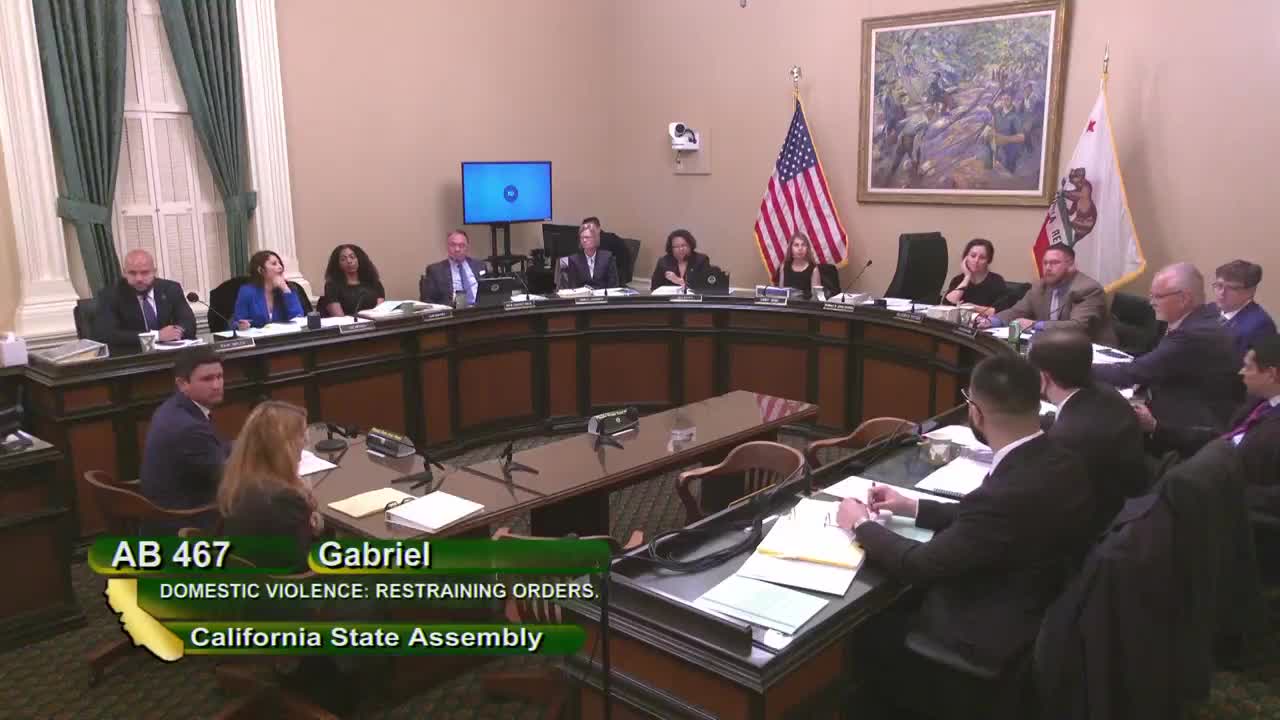 25MIN
Assembly Standing Committee on Public Safety
Bill Author


