AB 504: State and local public employees: labor relations: strikes.
- Session Year: 2023-2024
- House: Assembly
- Latest Version Date: 2023-09-18
Current Status:
Failed
(2024-01-29: Consideration of Governor's veto stricken from file.)
Introduced
In Committee
First Chamber
In Committee
Second Chamber
Enacted
Existing law, the Meyers-Milias-Brown Act and the Ralph C. Dills Act, regulate the labor relations of employees and employers of local public agencies and the state, respectively. Those acts grant specified employees, including, among others, certain employees of fire departments, of local public agencies and the state the right to form, join, and participate in the activities of employee organizations of their choosing and require public agency employers, among other things, to meet and confer with representatives of recognized employee organizations and exclusive representatives on terms and conditions of employment. The acts grant the Public Employment Relations Board the power to hear specified disputes in relation to these provisions and to make determinations regarding them.
With regard to certain employees of fire departments, existing law provides that those persons do not have the right to strike or recognize a picket line of a labor organization while in the course of the performance of their official duties.
This bill would provide, except as specified, that it is not unlawful or a cause for discipline or other adverse action against a public employee for that public employee to refuse to enter property that is the site of a primary strike, perform work for a public employer involved in a primary strike, or go through or work behind a primary strike line. The bill would prohibit a public employer from directing a public employee to take those actions. The bill would authorize a recognized employee organization to inform employees of these rights and encourage them to exercise those rights. The bill would also state that a provision in a public employer policy or collective bargaining agreement that purports to limit or waive the rights set forth in this provision shall be void as against public policy, except that the bill would require the parties to negotiate over the bills provisions if the bill is in conflict with a collective bargaining agreement entered into before January 1, 2024, as prescribed. The bill would exempt certain public employees of fire departments and certain peace officers from these provisions. The bill would include related legislative findings.
Existing law, the Meyers-Milias-Brown Act and the Ralph C. Dills Act, regulate the labor relations of employees and employers of local public agencies and the state, respectively. Those acts grant specified employees, including, among others, certain employees of fire departments, of local public agencies and the state the right to form, join, and participate in the activities of employee organizations of their choosing and require public agency employers, among other things, to meet and confer with representatives of recognized employee organizations and exclusive representatives on terms and conditions of employment. The acts grant the Public Employment Relations Board the power to hear specified disputes in relation to these provisions and to make determinations regarding them.
With regard to certain employees of fire departments, existing law provides that those persons do not have the right to strike or recognize a picket line of a labor organization while in the course of the performance of their official duties.
This bill would provide, except as specified, that it is not unlawful or a cause for discipline or other adverse action against a public employee for that public employee to refuse to enter property that is the site of a primary strike, perform work for a public employer involved in a primary strike, or go through or work behind a primary strike line. The bill would prohibit a public employer from directing a public employee to take those actions. The bill would authorize a recognized employee organization to inform employees of these rights and encourage them to exercise those rights. The bill would also state that a provision in a public employer policy or collective bargaining agreement that purports to limit or waive the rights set forth in this provision shall be void against public policy, except that the bill would require the parties to negotiate over the bills provisions if the bill is in conflict with a collective bargaining agreement entered into before January 1, 2024, as prescribed. The bill would exempt certain public employees of fire departments and certain peace officers from these provisions. The bill would include related legislative findings.
Existing law, the Meyers-Milias-Brown Act and the Ralph C. Dills Act, regulate the labor relations of employees and employers of local public agencies and the state, respectively. Those acts grant specified employees, including, among others, certain employees of fire departments, of local public agencies and the state the right to form, join, and participate in the activities of employee organizations of their choosing and require public agency employers, among other things, to meet and confer with representatives of recognized employee organizations and exclusive representatives on terms and conditions of employment. The acts grant the Public Employment Relations Board the power to hear specified disputes in relation to these provisions and to make determinations regarding them.
With regard to certain employees of fire departments, existing law provides that those persons do not have the right to strike or recognize a picket line of a labor organization while in the course of the performance of their official duties.
This bill would provide provide, except as specified, that it is not unlawful or a cause for discipline or other adverse action against a public employee for that public employee to refuse to enter property that is the site of a primary labor dispute, strike, perform work for a public employer involved in a primary labor dispute, strike, or go through or work behind a primary picket strike line. The bill would prohibit a public employer from directing a public employee to take those actions. The bill would authorize a recognized employee organization to inform employees of these rights and encourage them to exercise those rights. The bill would also state that a provision in a public employer policy or collective bargaining agreement that purports to limit or waive the rights set forth in this provision shall be void against public policy. policy, except that the bill would require the parties to negotiate over the bills provisions if the bill is in conflict with a collective bargaining agreement entered into before January 1, 2024, as prescribed. The bill would exempt certain public employees of fire departments and certain peace officers from these provisions. The bill would include related legislative findings.
Existing law, the Meyers-Milias-Brown Act and the Ralph C. Dills Act, regulate the labor relations of employees and employers of local public agencies and the state, respectively. The Those acts grant specified employees, including, among others, certain employees of fire departments, of local public agencies and the state the right to form, join, and participate in the activities of employee organizations of their choosing and require public agency employers, among other things, to meet and confer with representatives of recognized employee organizations and exclusive representatives on terms and conditions of employment. The acts grant the Public Employment Relations Board the power to hear specified disputes in relation to these provisions and to make determinations regarding them.
With regard to certain employees of fire departments, existing law provides that those persons do not have the right to strike or recognize a picket line of a labor organization while in the course of the performance of their official duties.
This bill would provide that it is not unlawful or a cause for discipline or other adverse action against a state or local public employee for that public employee to refuse to enter property that is the site of a primary labor dispute, perform work for an a public employer involved in a primary labor dispute, or go through or work behind a primary picket line. The bill would prohibit an a public employer from directing an a public employee to take those actions. The bill would authorize a recognized employee organization to inform employees of these rights and encourage them to exercise those rights. The bill would also state that a provision in a public employer policy or collective bargaining agreement that purports to limit or waive the rights set forth in this provision shall be void against public policy. The bill would exempt certain state or local public employees of fire departments from these provisions. The bill would include related legislative findings.
Existing law, the Meyers-Milias-Brown Act and the Ralph C. Dills Act, regulate the labor relations of employees and employers of local public agencies and the state, respectively. The acts grant specified employees employees, including, among others, certain employees of fire departments, of local public agencies and the state the right to form, join, and participate in the activities of employee organizations of their choosing and require public agency employers, among other things, to meet and confer with representatives of recognized employee organizations and exclusive representatives on terms and conditions of employment. The acts grant the Public Employment Relations Board the power to hear specified disputes in relation to these provisions and to make determinations regarding them.
With regard to certain employees of fire departments, existing law provides that those persons do not have the right to strike or recognize a picket line of a labor organization while in the course of the performance of their official duties.
This bill would provide that it is not unlawful or a cause for discipline or other adverse action against a state or local public employee for that employee to refuse to enter property that is the site of a primary labor dispute, perform work for an employer involved in a primary labor dispute, or go through or work behind a primary picket line. The bill would prohibit an employer from directing an employee to take those actions. The bill would authorize a recognized employee organization to inform employees of these rights and encourage them to exercise those rights. The bill would also state that a provision in a public employer policy or collective bargaining agreement that purports to limit or waive the rights set forth in this provision shall be void against public policy. The bill would exempt certain state or local public employees of fire departments from these provisions. The bill would include related legislative findings.
Existing law, the Meyers-Milias-Brown Act and the Ralph C. Dills Act, regulate the labor relations of employees and employers of local public agencies and the state, respectively. The acts grant specified employees of local public agencies and the state the right to form, join, and participate in the activities of employee organizations of their choosing and require public agency employers, among other things, to meet and confer with representatives of recognized employee organizations and exclusive representatives on terms and conditions of employment. The acts grant the Public Employment Relations Board the power to hear specified disputes in relation to these provisions and to make determinations regarding them.
This bill would provide that it is not unlawful or a cause for discipline or other adverse action against a state or local public employee for that employee to refuse to enter property that is the site of a primary labor dispute, perform work for an employer involved in a primary labor dispute, or go through or work behind a primary picket line. The bill would prohibit an employer from directing an employee to take those actions. The bill would authorize a recognized employee organization to inform employees of these rights and encourage them to exercise those rights. The bill would also state that a provision in a public employer policy or collective bargaining agreement that purports to limit or waive the rights set forth in this provision shall be void against public policy. The bill would include related legislative findings.
Existing law requires, except as prescribed, a person who, for money or other valuable consideration, knowingly advises an employer to treat an individual as an independent contractor to avoid employee status for that individual to be jointly and severally liable with the employer if the individual is found not to be an independent contractor.This bill would make a nonsubstantive change to that provision.Existing law requires, except as prescribed, a person who, for money or other valuable consideration, knowingly advises an employer to treat an individual as an independent contractor to avoid employee status for that individual to be jointly and severally liable with the employer if the individual is found not to be an independent contractor.
This bill would make a nonsubstantive change to that provision.
(a)The Legislature finds and declares that the right of a public employee to demonstrate solidarity with other public employees by honoring a strike or by refusing to enter upon the premises or perform work for a public employer engaged in a primary strike is a fundamental human right protected by the California Constitution and laws of this state.
(b)Notwithstanding any other law, and except as provided in subdivision (g), it shall not be unlawful or a cause for discipline or other adverse action against a public employee for that public employee to refuse to do any of the following:
(1)Enter property that is the site of a primary strike.
(2)Perform work for a public employer involved in a primary strike.
(3)Go through or work behind any primary strike line.
(c)A public employer shall not direct a public employee to take any of the actions set forth in subdivision (b).
(d)A recognized employee organization may inform employees of their rights and encourage employees to exercise their rights under this section.
(e)(1)Except as provided in paragraph (2), a provision in a public employer policy or collective bargaining agreement that purports to limit or waive the rights set forth in this section shall be void as against public policy.
(2)If this section is in conflict with a collective bargaining agreement entered into before January 1, 2024, upon request of the employer or the exclusive representative, the parties shall negotiate over this section. A request to meet and confer pursuant to this section shall reopen the existing collective bargaining agreement solely for the purpose of negotiating an agreement regarding this section. Following the expiration of a collective bargaining agreement that was entered into before January 1, 2024, this section shall apply.
(f)This section shall not apply to any public employee who is subject to Section 1962 of the Labor Code or to any employee who is a peace officer under any of the following:
(1)Subdivision (a) or (b) of Section 830.1 of the Penal Code.
(2)Subdivision (a), (b), (c), (d), or (g) of Section 830.2 of the Penal Code.
(3)Section 830.31 of the Penal Code.
(4)Section 830.32 of the Penal Code.
(5)Section 830.33 of the Penal Code.
(6)Section 830.34 of the Penal Code.
(7)Subdivision (c) of Section 830.35 of the Penal Code.
(8)Subdivision (a), (b), or (d) of Section 830.37.
(9)Section 830.38 of the Penal Code.
(10)Subdivision (a) of Section 830.5 of the Penal Code.
(11)Section 830.15 of the Penal Code.
(g)This section does not alter existing law relating to strikes by essential employees as set forth in judicial decisions and decisions of the Public Employee Relations Board, as promulgated or revised from time to time.
(h)For the purposes of this section, honoring a strike means a refusal to perform work for a public employer in response to a primary strike by an exclusive representative of a public employer.
(a)The Legislature finds and declares that the right of a public employee to demonstrate solidarity with other public employees by honoring a strike or by refusing to enter upon the premises or perform work for a public employer engaged in a primary strike is a fundamental human right protected by the California Constitution and laws of this state.
(b)Notwithstanding any other law, and except as provided in subdivision (g), it shall not be unlawful or a cause for discipline or other adverse action against a public employee for that public employee to refuse to do any of the following:
(1)Enter property that is the site of a primary strike.
(2)Perform work for a public employer involved in a primary strike.
(3)Go through or work behind any primary strike line.
(c)A public employer shall not direct a public employee to take any of the actions set forth in subdivision (b).
(d)A recognized employee organization may inform employees of their rights and encourage employees to exercise their rights under this section.
(e)(1)Except as provided in paragraph (2), a provision in a public employer policy or collective bargaining agreement that purports to limit or waive the rights set forth in this section shall be void as against public policy.
(2)If this section is in conflict with a collective bargaining agreement entered into before January 1, 2024, upon request of the employer or the exclusive representative, the parties shall negotiate over this section. A request to meet and confer pursuant to this section shall reopen the existing collective bargaining agreement solely for the purpose of negotiating an agreement regarding this section. Following the expiration of a collective bargaining agreement that was entered into before January 1, 2024, this section shall apply.
(f)This section shall not apply to any public employee who is subject to Section 1962 of the Labor Code or to any employee working as a peace officer under subdivision (a) of Section 830.1 of the Penal Code or subdivision (a) of Section 830.2 of the Penal Code. who is a peace officer under any of the following:
(1)Subdivision (a) or (b) of Section 830.1 of the Penal Code.
(2)Subdivision (a), (b), (c), (d), or (g) of Section 830.2 of the Penal Code.
(3)Section 830.31 of the Penal Code.
(4)Section 830.32 of the Penal Code.
(5)Section 830.33 of the Penal Code.
(6)Section 830.34 of the Penal Code.
(7)Subdivision (c) of Section 830.35 of the Penal Code.
(8)Subdivision (a), (b), or (d) of Section 830.37.
(9)Section 830.38 of the Penal Code.
(10)Subdivision (a) of Section 830.5 of the Penal Code.
(11)Section 830.15 of the Penal Code.
(g)This section does not alter existing law relating to strikes by essential employees as set forth in judicial decisions and decisions of the Public Employee Relations Board, as promulgated or revised from time to time.
(h)For the purposes of this section, honoring a strike means a refusal to perform work for a public employer in response to a primary strike by an exclusive representative of a public employer.
(a)The Legislature finds and declares that the right of a public employee to demonstrate solidarity with other public employees by honoring a strike or by refusing to enter upon the premises or perform work for a public employer engaged in a primary strike is a fundamental human right protected by the California Constitution and laws of this state.
(b)Notwithstanding any other law, and except as provided in subdivision (g), it shall not be unlawful or a cause for discipline or other adverse action against a public employee for that public employee to refuse to do any of the following:
(1)Enter property that is the site of a primary strike.
(2)Perform work for a public employer involved in a primary strike.
(3)Go through or work behind any primary strike line.
(c)A public employer shall not direct a public employee to take any of the actions set forth in subdivision (b).
(d)A recognized employee organization may inform employees of their rights and encourage employees to exercise their rights under this section.
(e)(1)Except as provided in paragraph (2), a provision in a public employer policy or collective bargaining agreement that purports to limit or waive the rights set forth in this section shall be void as against public policy.
(2)If this section is in conflict with a collective bargaining agreement entered into before January 1, 2024, upon request of the employer or the exclusive representative, the parties shall negotiate over this section. A request to meet and confer pursuant to this section shall reopen the existing collective bargaining agreement solely for the purpose of negotiating an agreement regarding this section. Following the expiration of a collective bargaining agreement that was entered into before January 1, 2024, this section shall apply.
(f)This section shall not apply to any public employee who is subject to Section 1962 of the Labor Code or to any employee working as a peace officer under subdivision (a) of Section 830.1 of the Penal Code or subdivision (a) of Section 830.2 of the Penal Code.
(g)The Public Employment Relations Board may seek injunctive relief to enjoin essential employees from striking as that term is described in County Sanitation Dist. No. 2 v. Los Angeles County Employees Assn., (1985) 38 Cal.3d 564, consistent with board precedent.(g)This section does not alter existing law relating to strikes by essential employees as set forth in judicial decisions and decisions of the Public Employee Relations Board, as promulgated or revised from time to time.
(h)For the purposes of this section, honoring a strike means a refusal to perform work for a public employer in response to a primary strike by an exclusive representative of a public employer.
(a)The Legislature finds and declares that the right of a public employee to demonstrate solidarity with other public employees by honoring a picket line, strike or by refusing to enter upon the premises or perform work for a public employer engaged in a primary labor dispute, strike is a fundamental human right protected by the California Constitution and laws of this state.
(b)Notwithstanding any other law, policy, or collective bargaining agreement, law, and except as provided in subdivision (g), it shall not be unlawful or a cause for discipline or other adverse action against a public employee for that public employee to refuse to do any of the following:
(1)Enter property that is the site of a primary labor dispute. strike.
(2)Perform work for a public employer involved in a primary labor dispute. strike.
(3)Go through or work behind any primary picket strike line.
(c)A public employer shall not direct a public employee to take any of the actions set forth in subdivision (b).
(d)A recognized employee organization may inform employees of their rights and encourage employees to exercise their rights under this section.
(e)A(e)(1)Except as provided in paragraph (2), a provision in a public employer policy or collective bargaining agreement that purports to limit or waive the rights set forth in this section shall be void as against public policy.
(2)If this section is in conflict with a collective bargaining agreement entered into before January 1, 2024, upon request of the employer or the exclusive representative, the parties shall negotiate over this section. A request to meet and confer pursuant to this section shall reopen the existing collective bargaining agreement solely for the purpose of negotiating an agreement regarding this section. Following the expiration of a collective bargaining agreement that was entered into before January 1, 2024, this section shall apply.
(f)This section shall not apply to any public employee who is subject to Section 1962 of the Labor Code. Code or to any employee working as a peace officer under subdivision (a) of Section 830.1 of the Penal Code or subdivision (a) of Section 830.2 of the Penal Code.
(g)The Public Employment Relations Board may seek injunctive relief to enjoin essential employees from striking as that term is described in County Sanitation Dist. No. 2 v. Los Angeles County Employees Assn., (1985) 38 Cal.3d 564, consistent with board precedent.
(h)For the purposes of this section, honoring a strike means a refusal to perform work for a public employer in response to a primary strike by an exclusive representative of a public employer.
(a)The Legislature finds and declares that the right of a public employee to demonstrate solidarity with other public employees by honoring a picket line, or by refusing to enter upon the premises or perform work for an a public employer engaged in a primary labor dispute, is a fundamental human right protected by the Constitution and laws of this state.
(b)Notwithstanding any other law, policy, or collective bargaining agreement, it shall not be unlawful or a cause for discipline or other adverse action against a public employee for that public employee to refuse to do any of the following:
(1)Enter property that is the site of a primary labor dispute.
(2)Perform work for an a public employer involved in a primary labor dispute.
(3)Go through or work behind any primary picket line.
(c)A public employer shall not direct a public employee to take any of the actions set forth in subdivision (b).
(d)A recognized employee organization may inform employees of their rights and encourage employees to exercise their rights under this section.
(e)A provision in a public employer policy or collective bargaining agreement that purports to limit or waive the rights set forth in this section shall be void as against public policy.
(f)This section shall not apply to any public employee who is subject to Section 1962 of the Labor Code.
REVISIONS: HeadingLine 4.(a)The Legislature finds and declares that the right of a public employee to demonstrate solidarity with other employees by honoring a picket line, or by refusing to enter upon the premises or perform work for an employer engaged in a primary labor dispute, is a fundamental human right protected by the Constitution and laws of this state.
(b)Notwithstanding any other law, policy, or collective bargaining agreement, it shall not be unlawful or a cause for discipline or other adverse action against a public employee for that public employee to refuse to do any of the following:
(1)Enter property that is the site of a primary labor dispute.
(2)Perform work for an employer involved in a primary labor dispute.
(3)Go through or work behind any primary picket line.
(c)A public employer shall not direct a public employee to take any of the actions set forth in subdivision (b).
(d)A recognized employee organization may inform employees of their rights and encourage employees to exercise their rights under this section.
(e)A provision in a public employer policy or collective bargaining agreement that purports to limit or waive the rights set forth in this section shall be void as against public policy.
(f)This section shall not apply to any public employee who is subject to Section 1962 of the Labor Code.
SEC. 2.Section 3515.3 is added to the Government Code, to read:3515.3.(a)The Legislature finds and declares that the right of a state employee to demonstrate solidarity with other employees by honoring a picket line, or by refusing to enter upon the premises or perform work for an employer engaged in a primary labor dispute, is a fundamental human right protected by the Constitution and laws of this state.
(b)Notwithstanding any other law, policy, or collective bargaining agreement, it shall not be unlawful or a cause for discipline or other adverse action against a state employee for that state employee to refuse to do any of the following:
(1)Enter property that is the site of a primary labor dispute.
(2)Perform work for an employer involved in a primary labor dispute.
(3)Go through or work behind any primary picket line.
(c)A state employer shall not direct a state employee to take any of the actions set forth in subdivision (b).
(d)A recognized employee organization may inform employees of their rights and encourage employees to exercise their rights under this section.
(e)A provision in a public employer policy or collective bargaining agreement that purports to limit or waive the rights set forth in this section shall be void as against public policy.
(f)This section shall not apply to any public employee who is subject to Section 1962 of the Labor Code.
REVISIONS: HeadingLine 2.(a)The Legislature finds and declares that the right of a public employee to demonstrate solidarity with other employees by honoring a picket line, or by refusing to enter upon the premises or perform work for an employer engaged in a primary labor dispute, is a fundamental human right protected by the Constitution and laws of this state.
(b)Notwithstanding any other law, policy, or collective bargaining agreement, it shall not be unlawful or a cause for discipline or other adverse action against a public employee for that public employee to refuse to do any of the following:
(1)Enter property that is the site of a primary labor dispute.
(2)Perform work for an employer involved in a primary labor dispute.
(3)Go through or work behind any primary picket line.
(c)A public employer shall not direct a public employee to take any of the actions set forth in subdivision (b).
(d)A recognized employee organization may inform employees of their rights and encourage employees to exercise their rights under this section.
(e)A provision in a public employer policy or collective bargaining agreement that purports to limit or waive the rights set forth in this section shall be void as against public policy.
SEC. 2.Section 3515.3 is added to the Government Code, to read:3515.3.(a)The Legislature finds and declares that the right of a state employee to demonstrate solidarity with other employees by honoring a picket line, or by refusing to enter upon the premises or perform work for an employer engaged in a primary labor dispute, is a fundamental human right protected by the Constitution and laws of this state.
(b)Notwithstanding any other law, policy, or collective bargaining agreement, it shall not be unlawful or a cause for discipline or other adverse action against a state employee for that state employee to refuse to do any of the following:
(1)Enter property that is the site of a primary labor dispute.
(2)Perform work for an employer involved in a primary labor dispute.
(3)Go through or work behind any primary picket line.
(c)A state employer shall not direct a state employee to take any of the actions set forth in subdivision (b).
(d)A recognized employee organization may inform employees of their rights and encourage employees to exercise their rights under this section.
(e)A provision in a public employer policy or collective bargaining agreement that purports to limit or waive the rights set forth in this section shall be void as against public policy.
SECTION 1.Section 2753 of the Labor Code is amended to read:2753.(a)A person who, for money or other valuable consideration, knowingly advises an employer to treat an individual as an independent contractor to avoid employee status for that individual shall be jointly and severally liable with the employer if the individual is found not to be an independent contractor.(b)This section does not apply to the following persons:(1)A person who provides advice to that persons employer.(2)An attorney authorized to practice law in California or another United States jurisdiction who provides legal advice in the course of the practice of law.(a)A person who, for money or other valuable consideration, knowingly advises an employer to treat an individual as an independent contractor to avoid employee status for that individual shall be jointly and severally liable with the employer if the individual is found not to be an independent contractor.
(b)This section does not apply to the following persons:
(1)A person who provides advice to his or her that persons employer.
(2)An attorney authorized to practice law in California or another United States jurisdiction who provides legal advice in the course of the practice of law.
|
Date
|
Status
|
|---|---|
| Jan 29, 2024 | Consideration of Governor's veto stricken from file. |
| Jan 3, 2024 | Consideration of Governor's veto pending. |
| Oct 8, 2023 | Vetoed by Governor. |
| Sep 20, 2023 | Enrolled and presented to the Governor at 4 p.m. |
| Sep 13, 2023 | Senate amendments concurred in. To Engrossing and Enrolling. (Ayes 62. Noes 13. Page 3358.). |
| Sep 12, 2023 | In Assembly. Concurrence in Senate amendments pending. |
| Sep 12, 2023 | Read third time. Passed. Ordered to the Assembly. (Ayes 27. Noes 8. Page 2627.). |
| Sep 11, 2023 | Read second time. Ordered to third reading. |
| Sep 7, 2023 | Read third time and amended. Ordered to second reading. |
| Sep 5, 2023 | Read second time. Ordered to third reading. |
| Sep 1, 2023 | Read second time and amended. Ordered returned to second reading. |
| Sep 1, 2023 | From committee: Amend, and do pass as amended. (Ayes 5. Noes 2.) (September 1). |
| Aug 14, 2023 | In committee: Referred to APPR suspense file. |
| Jul 13, 2023 | Read second time and amended. Re-referred to Com. on APPR. |
| Jul 12, 2023 | From committee: Amend, and do pass as amended and re-refer to Com. on APPR. (Ayes 9. Noes 2.) (July 11). |
| Jun 28, 2023 | From committee: Do pass and re-refer to Com. on JUD. (Ayes 4. Noes 1.) (June 28). Re-referred to Com. on JUD. |
| Jun 14, 2023 | Referred to Coms. on L., P.E. & R. and JUD. |
| Jun 1, 2023 | In Senate. Read first time. To Com. on RLS. for assignment. |
| May 31, 2023 | Read third time. Passed. Ordered to the Senate. (Ayes 63. Noes 13. Page 1986.) |
| May 18, 2023 | Read second time. Ordered to third reading. |
| May 18, 2023 | From committee: Do pass. (Ayes 11. Noes 4.) (May 18). |
| May 18, 2023 | Coauthors revised. |
| May 3, 2023 | In committee: Set, first hearing. Referred to APPR. suspense file. |
| Apr 18, 2023 | From committee: Do pass and re-refer to Com. on APPR. (Ayes 8. Noes 3.) (April 18). Re-referred to Com. on APPR. |
| Apr 18, 2023 | Coauthors revised. |
| Apr 17, 2023 | Re-referred to Com. on JUD. |
| Apr 13, 2023 | From committee chair, with author's amendments: Amend, and re-refer to Com. on JUD. Read second time and amended. |
| Apr 12, 2023 | From committee: Do pass and re-refer to Com. on JUD. (Ayes 5. Noes 1.) (April 12). Re-referred to Com. on JUD. |
| Apr 12, 2023 | Coauthors revised. |
| Apr 3, 2023 | Re-referred to Com. on P.E. & R. |
| Mar 30, 2023 | From committee chair, with author's amendments: Amend, and re-refer to Com. on P.E. & R. Read second time and amended. |
| Mar 14, 2023 | Re-referred to Com. on P.E. & R. |
| Mar 13, 2023 | From committee chair, with author's amendments: Amend, and re-refer to Com. on P.E. & R. Read second time and amended. |
| Mar 9, 2023 | Referred to Coms. on P.E. & R. and JUD. |
| Feb 8, 2023 | From printer. May be heard in committee March 10. |
| Feb 7, 2023 | Read first time. To print. |
|
Date
|
Description
|
Location
|
Votes
|
|
|---|---|---|---|---|
| Sep 13, 2023 | AB 504 Reyes Concurrence in Senate Amendments | Assembly Floor |
Passed |
|
| Sep 12, 2023 | Assembly 3rd Reading AB504 Reyes et al. By Smallwood-Cuevas | Senate Floor |
Passed |
|
| Sep 1, 2023 | Do pass as amended | Senate Standing Committee on Appropriations |
Passed |
|
| Aug 14, 2023 | Placed on suspense file | Senate Standing Committee on Appropriations |
Passed |
|
| Jul 11, 2023 | Do pass as amended, but first amend, and re-refer to the Committee on [Appropriations] | Senate Standing Committee on Judiciary |
Passed |
|
| Jun 28, 2023 | Do pass, but first be re-referred to the Committee on [Judiciary] | Senate Standing Committee on Labor, Public Employment and Retirement |
Passed |
|
| May 31, 2023 | AB 504 Reyes Assembly Third Reading | Assembly Floor |
Passed |
|
| May 18, 2023 | Do pass. | Assembly Standing Committee on Appropriations |
Passed |
|
| Apr 18, 2023 | Do pass and be re-referred to the Committee on [Appropriations] | Assembly Standing Committee on Judiciary |
Passed |
|
| Apr 12, 2023 | Do pass and be re-referred to the Committee on [Judiciary] | Assembly Standing Committee on Public Employment and Retirement |
Passed |
This list shows positions taken on this bill by organizations on the date displayed, which is linked to the original source.
Positions by individuals are not included.
|
Organization
|
Position
|
Date
|
|---|---|---|
| American Federation of State, County and Municipal Employees | ** Support | |
| American Federation Of State County And Municipal Employees Local 3299 | ** Support | |
| Association of California Healthcare Districts | ** Against | |
| Attorney General Rob Bonta | ** Support | |
| California Association Of Joint Powers Authorities | ** Against | |
| California Conference Board Of The Amalgamated Transit Union | ** Support | |
| California Conference Of Machinists | ** Support | |
| California County of Superintendents | ** Against | |
| California County Superintendents | ** Against | |
| California Democratic Party | ** Support | |
| California Faculty Association | ** Support | |
| California Federation Of Teachers | ** Support | |
| California Labor Federation | ** Support | |
| California Professional Firefighters | ** Support | |
| California School Employees Association | ** Support | |
| California Special Districts Association | ** Against | |
| California State Association Of Counties | ** Against | |
| California State Council of Service Employees International Union | ** Support | |
| California State Legislative Board, Sheet Metal, Air, Rail and Transportation Workers - Transportation Division | ** Support | |
| California State University Employees Union | ** Support | |
| California State University, Office Of The Chancellor | ** Against | |
| California Teachers Association | ** Support | |
| California Teamsters Public Affairs Council | ** Support | |
| City of Brentwood | ** Against | |
| City Of Burbank | ** Against | |
| City of Chowchilla | ** Against | |
| City Of Garden Grove | ** Against | |
| City of Glendora | ** Against | |
| City of Hesperia | ** Against | |
| City of Indio | ** Against | |
| City of Kerman, CA | ** Against | |
| City of King | ** Against | |
| City of La Habra | ** Against | |
| City of Manhattan Beach | ** Against | |
| City of Moorpark | ** Against | |
| City of Murrieta | ** Against | |
| City of Napa | ** Against | |
| City of Oceanside | ** Against | |
| city of paramount | ** Against | |
| City Of Placentia | ** Against | |
| City of Placerville | ** Against | |
| City Of Redlands | ** Against | |
| City of Riverbank | ** Against | |
| City of Roseville | ** Against | |
| City of San Luis Obispo | ** Against | |
| City of Santa Cruz City Council | ** Against | |
| City of Shasta Lake | ** Against | |
| City of Sunnyvale | ** Against | |
| City of Thousand Oaks | ** Against | |
| City of Tulare | ** Against | |
| City of Whittier | ** Against | |
| City Of Willows | ** Against | |
| El Dorado Irrigation District | ** Against | |
| Engineers and Scientists of California, IFPTE Local 20 | ** Support | |
| International Longshore & Warehouse Union Southern California District Council | ** Support | |
| League Of California Cities | ** Against | |
| Orange County Employees Association | ** Support | |
| Public Risk Innovation Solutions and Management | ** Against | |
| Rural County Representatives of California | ** Against | |
| San Bernardino County | ** Against | |
| San Francisco Building and Construction Trades Council | ** Support | |
| Solano County Board of Supervisors | ** Against | |
| State Building And Construction Trades Council Of Ca | ** Support | |
| Town Of Mammoth Lakes | ** Against | |
| Transportation Division | ** Support | |
| United Auto Workers Locals 2865, 4123, 5810, and Region 6 | ** Support | |
| UNITE HERE International Union | ** Support | |
| University Council-American Federation of Teachers | ** Support | |
| University of California | ** Against | |
| University Professional And Technical Employees, Cwa, Local 9119 | ** Support | |
| Urban Counties of California | ** Against | |
| Utility Workers Union of America | ** Support |
GOVERNOR'S VETO
GV Bill Id:AB 504
Author:(Reyes)
As Enrolled Ver:September 18, 2023
2/3 vote
SUMMARY
Establishes public employees' right to demonstrate solidarity with other public employees by honoring a picket line, strike, and refusing to enter upon the premises or perform work for a public employer engaged in a primary strike, among other provisions.
Senate amendments:
- Maintain that a provision in a public employer policy or collective bargaining agreement (CBA) that purports to limit or waive the rights provided in this bill, must be void as against public policy; thus, nullifying an employer policy or "no strike" and/or "no sympathy strike" provision or clause within a CBA after the effectuation of this bill, including an agreement reached thereafter among the parties to a CBA to include such provisions.
- Maintain that firefighters are excluded pursuant to exiting law.
- Expressly provide that if the provisions of this bill are in conflict with a collective bargaining agreement (CBA) entered into before January 1, 2024, the parties must negotiate over the provisions of this bill upon request of the employer or exclusive representative. Further, a request to meet and confer regarding these provisions must reopen the CBA solely for the purpose of negotiating an agreement regarding the provisions of this bill; however, following the expiration of a CBA entered into before January 1, 2024, the provisions of this bill must apply.
- Expressly provide that the provisions of this bill do not apply to some, but not all, peace officers referenced by various sections of the Penal Code as follows:
- Sheriffs, police chiefs, and their respective deputies and officers;
- The Attorney General and the Department of Justice's special agents and investigators;
- California Highway Patrol officers; University of California (UC) police (but not UC San Francisco College of the Law peace officers); California State University police; and Department of Corrections and Rehabilitation officers and investigators, as provided;
- Los Angeles County property protection officers, local agency park rangers, City of Los Angeles General Services Department property protection officers, and city and county housing authority peace officers, as provided;
- K-14 school and Community College peace officers;
- San Francisco Bay Area Rapid Transit District, harbor and port, other transit, airport, and railroad peace officers, as provided;
- Utility district peace officers, as provided;
- County coroners and deputy coroners;
- Department of State Hospital and Department of Developmental Services peace officers; and,
- California Department of Corrections and Rehabilitation probation, parole, and juvenile correctional officers, as provided.
- Do not exclude other categories of Penal Code peace officers, including, but not limited to:
- Certain sheriff deputies employed in custodial assignments;
- Department of Fish and Game deputies;
- Department of Parks and Recreations officers;
- Department of Alcoholic and Beverage Control officers;
- California State Fair marshals and police;
- Department of Cannabis Control officers, and peace officer employees of several other state departments, including Consumer Affairs, CAL FIRE (volunteer wardens), Department of Motor Vehicles, California Horseracing Board; State Fire Marshall, Health and Safety food inspectors, Division of Labor Standards Enforcement, the Office of Emergency Services, et al; and, welfare fraud and child support investigators and inspectors; and,
- Sergeants-At-Arms of each house of the Legislature; Marshals of the California Supreme Court, appellate court bailiffs, county court service officers, and other security coordinators for the judicial branch whom are designated as peace officers.
- Establish that these provisions do not alter existing law relating to strikes by essential employees as set forth in judicial decisions and decisions of the Public Employment Relations Board (PERB), as promulgated or revised from time to time.
- Define for these purposes, "honoring a strike" to mean a refusal to perform work for a public employer in response to a primary strike by an exclusive representative of a public employer.
Governor's Veto Message
"Unfortunately, thus bill is overly broad in scope and impact. The bill has the potential to seriously disrupt or even halt the delivery of critical public services, particularly in places where public services are co-located. This could have significant, negative impacts on a variety of government functions including academic operations for students, provision of services in rural communities where co-location of government agencies is common, and accessibility of a variety of safety net programs for millions of Californians."
COMMENTS
- Background
Current law governs collective bargaining in the private sector under the Federal National Labor Relations Act (NLRA) but leaves it to the states to regulate collective bargaining in their respective public sectors. While the NLRA and the decisions of its National Labor Relations Board often provide persuasive precedent in interpreting state collective bargaining law, public employees have no collective bargaining rights absent specific statutory authority establishing those rights.
In California, several statutory frameworks provide public employees collective bargaining rights and govern public employer-employee relations. The express purposes of these statutes are to limit labor strife and economic disruption in the public sector through a reasonable method of resolving disputes regarding wages, hours and other terms and conditions of employment between public employers and recognized public employee organizations or their exclusive representatives.
A memorandum of understanding (MOU) or CBA (as both terms are, at times, interchangeably used) entered into between a labor organization and the public employer may include provisions commonly referred to as a "no strike" or "no sympathy strike" clause. Generally, such clauses prohibit the employees covered by its terms from engaging in a strike, sickout, walkout, secondary strike, or other form of workplace stoppage or disruption. In addition, such agreements also may contain a "no lockout" clause, which contractually prohibits the employer from engaging in such activity.
Although a number of public employer-employee MOUs or CBAs entered into pursuant to the various public sector collective bargaining statutes include such clauses, not all MOUs or CBAs do so for various reasons. This demonstrates that such clauses are a permissive subject of negotiation and are a negotiable item within the confines of the public sector collective bargaining arena.
- Previously Passed by the Assembly, and Senate Amendments
As previously passed by the Assembly, this bill did not include provisions that were aligned with the overall "spirit" and legislative intent expressly prescribed in each of the state's various public sector collective bargaining statutes. In addition, it also did not clarify whether its provisions would apply to certain employees whom are prohibited from engaging in such activity pursuant to judicial decisions or those of the PERB. The scope of this bill was somewhat narrowed prior to advancing to the Senate.
The Senate amendments provide some consistency relating to the "spirit" and legislative intent expressly prescribed in each of the state's various public sector collective bargaining statutes by requiring the parties to a CBA to meet and confer, as provided, over conflicting provisions relating to this bill and those in a CBA entered into before January 1, 2024, and simultaneously expressly provide that its provisions must apply following the expiration of a CBA entered into before that same date; thus, providing for prospective application of these provisions.
Notwithstanding these changes, consistent with its codified legislative finding and declaration, this bill maintains to void as against public policy, among other things, a "no strike" and "no sympathy strike" clauses in a public employer policy or negotiated CBA, which would broadly apply to all public employers and their employees. Such clauses negotiated and agreed to by both parties for inclusion in a CBA after the effectuation of this bill, would be nullified as against public policy.
As such, questions remain as to the extent that this bill may affect the following, including, but not limited to:
- The operations of, and continuity in the provision of public services by, not only a single state, local or municipal public employer, but also multiple state, local or municipal public employers, including those that occupy the same real property or location in which one public employer is the subject of a primary strike;
- The potential effects relating to the collective bargaining process governed by various statewide public sector collective bargaining statutes, and resulting outcomes of that process;
- The effect, if any, that the rights granted and limitations imposed pursuant to this bill may have on the Legislature, its operations, and security (see Section 830.36 (a) of the Penal Code), in relation to rights and obligations proposed by Assembly Bill 1 (McKinnor, 2023), if also enacted;
- The operational security of the judicial branch of government (see Section 830.36 (b) and (c) of the Penal Code); and,
- Potential conflicts (including variations among the rights and obligations afforded to certain, but not all, peace officers) that may exist within this bill by its provisions, as well as among its provisions and judicial decisions regarding the right to strike by some, but not all, peace officers whom are excluded and not excluded by these provisions.
- Equity Solutions and Maximizing Benefits for Underserved and Marginalized Communities
Pursuant to House Resolution (HR) 39 (Gipson, 2021), to continue the Assembly's commitment to investing in equity solutions and maximizing benefits for underserved and marginalized communities, legislative analyses of the Assembly must discuss the equity impact that a bill will, or may, have on such communities, if any.
This bill does not present a particular focus towards addressing equity in relation to maximizing benefits for underserved or marginalized communities as articulated in HR 39.
- Please see the various policy committee analyses for a full discussion of this bill.
According to the Author
"[This bill] will protect a public employee's right to honor a picket line when a public employer is engaged in a primary labor dispute. In 2022, the University of California (UC) engaged in a labor dispute on low wages and unfair labor practices with graduate workers represented by the United Auto Workers (UAW). As a result, UAW members mobilized and orchestrated a strike. While non-UAW employees wanted to honor the picket line and support their colleagues on these issues that inherently affect every worker, they could not due to clauses in their contracts. California has long led the way in protecting workers' rights in the private and public sector and [this bill] confirms that standard by allowing public employees to have the opportunity and protection to engage in fair labor practices without facing the fear of retaliation from their employers. [This bill] is a step towards protecting our public employees."
Arguments in Support
Among other things, several supporters state that, "[w]hen Academic Workers went on strike at UC [during] the Fall of 2022, they witnessed firsthand the moral injury that is caused when public employers do not respect the First Amendment rights of workers to abide by their conscience and honor a picket line. By enshrining this right in California law, [this bill] will ensure that California's public employees are not forced to choose between crossing a picket line in violation of their conscience and facing discipline from their employer for their refusal to do so."
Further, "[t]he prohibition of honoring picket lines in UC contracts undermines the right to strike because the purpose of a strike is to compel an employer to bargain for and agree to terms and conditions of employment including wages, benefits, and non-economic issues. When wages and benefits increase for one set of workers, it raises the floor for all workers at the same employer. Not only does this benefit workers, their families, and the community, but it also protects against inequality across job classifications at the employer."
Arguments in Opposition
Among the various opponents, among other things, some express that "[s]tate laws governing collective bargaining ensure a fair process for both unions and public entities and thoughtfully create a framework for when unions can engage in protected strike activity. That current framework ensures good faith and structured negotiations and aims to maximize labor peace. Under [this bill], bargaining units with closed contracts could engage in "sympathy strikes" with other bargaining units. [Under this bill] there would be little incentive for any party to negotiate and settle contracts early."
Others express in part that, "[l]ocal agencies provide critical health and safety functions, including disaster response emergency services, dispatch, mobile crisis response, health care, law enforcement, corrections, elections, and road maintenance. Local MOU provisions around [strikes and sympathy strikes] ensure local governments can continue to provide critical services. Shutting down government operations for sympathy strikes is an extreme approach that goes well beyond what is allowed for primary strikes and risks the public's health and safety."
FISCAL COMMENTS
The Senate Appropriations Committee analysis states that, "[t]he California Department of Human Resources (CalHR) indicates that this bill would result in unknown, but potentially significant, unbudgeted costs related to overtime, contracting, and other mechanisms that would need to be used to keep public services functioning during a sympathy strike (General Fund and/or special funds)." In addition, "[t]he PERB anticipates minor and absorbable costs as a result of the bill (General Fund)."
VOTES
ASM PUBLIC EMPLOYMENT AND RETIREMENT: 5-1-1
YES: McKinnor, Addis, Haney, Stephanie Nguyen, Schiavo
NO: Vince Fong
ABS, ABST OR NV: Lackey
ASM JUDICIARY: 8-3-0
YES: Maienschein, Connolly, Haney, Kalra, Pacheco, Papan, Reyes, Robert Rivas
NO: Essayli, Dixon, Sanchez
ASM APPROPRIATIONS: 11-4-1
YES: Holden, Bryan, Calderon, Wendy Carrillo, Mike Fong, Hart, Lowenthal, Papan, Pellerin, Weber, Ortega
NO: Megan Dahle, Dixon, Mathis, Sanchez
ABS, ABST OR NV: Robert Rivas
ASSEMBLY FLOOR: 63-13-4
YES: Addis, Aguiar-Curry, Alanis, Alvarez, Arambula, Bains, Bauer-Kahan, Bennett, Berman, Boerner, Bonta, Bryan, Calderon, Juan Carrillo, Wendy Carrillo, Cervantes, Chen, Connolly, Mike Fong, Friedman, Gabriel, Garcia, Gipson, Grayson, Haney, Hart, Holden, Jackson, Jones-Sawyer, Kalra, Lee, Low, Lowenthal, Maienschein, McCarty, McKinnor, Muratsuchi, Stephanie Nguyen, Ortega, Pacheco, Papan, Pellerin, Petrie-Norris, Quirk-Silva, Ramos, Reyes, Luz Rivas, Robert Rivas, Rodriguez, Blanca Rubio, Santiago, Schiavo, Soria, Ting, Valencia, Villapudua, Ward, Weber, Wicks, Wilson, Wood, Zbur, Rendon
NO: Megan Dahle, Dixon, Essayli, Vince Fong, Gallagher, Hoover, Mathis, Jim Patterson, Joe Patterson, Sanchez, Ta, Waldron, Wallis
ABS, ABST OR NV: Davies, Flora, Irwin, Lackey
SENATE FLOOR: 27-8-5
YES: Allen, Archuleta, Ashby, Atkins, Becker, Blakespear, Bradford, Cortese, Durazo, Gonzalez, Hurtado, Laird, Limón, McGuire, Menjivar, Min, Newman, Padilla, Portantino, Roth, Rubio, Skinner, Smallwood-Cuevas, Stern, Umberg, Wahab, Wiener
NO: Alvarado-Gil, Dahle, Jones, Nguyen, Niello, Ochoa Bogh, Seyarto, Wilk
ABS, ABST OR NV: Caballero, Dodd, Eggman, Glazer, Grove
ASSEMBLY FLOOR: 62-13-5
YES: Addis, Aguiar-Curry, Alanis, Alvarez, Arambula, Bains, Bauer-Kahan, Bennett, Berman, Boerner, Bonta, Bryan, Calderon, Juan Carrillo, Wendy Carrillo, Cervantes, Chen, Connolly, Mike Fong, Friedman, Gabriel, Garcia, Gipson, Grayson, Haney, Hart, Holden, Jackson, Jones-Sawyer, Kalra, Lee, Low, Lowenthal, Maienschein, McCarty, McKinnor, Muratsuchi, Stephanie Nguyen, Ortega, Pacheco, Papan, Pellerin, Petrie-Norris, Quirk-Silva, Ramos, Rendon, Reyes, Luz Rivas, Rodriguez, Blanca Rubio, Santiago, Schiavo, Soria, Ting, Valencia, Ward, Weber, Wicks, Wilson, Wood, Zbur, Robert Rivas
NO: Megan Dahle, Dixon, Essayli, Vince Fong, Gallagher, Hoover, Mathis, Jim Patterson, Joe Patterson, Sanchez, Ta, Waldron, Wallis
ABS, ABST OR NV: Davies, Flora, Irwin, Lackey, Villapudua
UPDATED
VERSION: September 18, 2023
CONSULTANT: Michael Bolden / P. E. & R. / (916) 319-3957 FN: 0002479
CONCURRENCE IN SENATE AMENDMENTS
CSA1 Bill Id:AB 504
Author:(Reyes)
As Amended Ver:September 7, 2023
Majority vote
SUMMARY
Establishes public employees' right to demonstrate solidarity with other public employees by honoring a picket line, strike, and refusing to enter upon the premises or perform work for a public employer engaged in a primary strike, among other provisions.
Senate Amendments
- Maintain that a provision in a public employer policy or collective bargaining agreement (CBA) that purports to limit or waive the rights provided in this bill, must be void as against public policy; thus, nullifying an employer policy or "no strike" and/or "no sympathy strike" provision or clause within a CBA after the effectuation of this bill, including an agreement reached thereafter among the parties to a CBA to include such provisions.
- Maintain that firefighters are excluded pursuant to exiting law.
- Expressly provide that if the provisions of this bill are in conflict with a collective bargaining agreement (CBA) entered into before January 1, 2024, the parties must negotiate over the provisions of this bill upon request of the employer or exclusive representative. Further, a request to meet and confer regarding these provisions must reopen the CBA solely for the purpose of negotiating an agreement regarding the provisions of this bill; however, following the expiration of a CBA entered into before January 1, 2024, the provisions of this bill must apply.
- Expressly provide that the provisions of this bill do not apply to some, but not all, peace officers referenced by various sections of the Penal Code as follows:
- Sheriffs, police chiefs, and their respective deputies and officers;
- The Attorney General and the Department of Justice's special agents and investigators;
- California Highway Patrol officers; University of California (UC) police (but not UC San Francisco College of the Law peace officers); California State University police; and Department of Corrections and Rehabilitation officers and investigators, as provided;
- Los Angeles County property protection officers, local agency park rangers, City of Los Angeles General Services Department property protection officers, and city and county housing authority peace officers, as provided;
- K-14 school and Community College peace officers;
- San Francisco Bay Area Rapid Transit District, harbor and port, other transit, airport, and railroad peace officers, as provided;
- Utility district peace officers, as provided;
- County coroners and deputy coroners;
- Department of State Hospital and Department of Developmental Services peace officers; and,
- California Department of Corrections and Rehabilitation probation, parole, and juvenile correctional officers, as provided.
- Do not exclude other categories of Penal Code peace officers, including, but not limited to:
- Certain sheriff deputies employed in custodial assignments;
- Department of Fish and Game deputies;
- Department of Parks and Recreations officers;
- Department of Alcoholic and Beverage Control officers;
- California State Fair marshals and police;
- Department of Cannabis Control officers, and peace officer employees of several other state departments, including Consumer Affairs, CAL FIRE (volunteer wardens), Department of Motor Vehicles, California Horseracing Board; State Fire Marshall, Health and Safety food inspectors, Division of Labor Standards Enforcement, the Office of Emergency Services, et al; and, welfare fraud and child support investigators and inspectors; and,
- Sergeants-At-Arms of each house of the Legislature; Marshals of the California Supreme Court, appellate court bailiffs, county court service officers, and other security coordinators for the judicial branch whom are designated as peace officers.
- Establish that these provisions do not alter existing law relating to strikes by essential employees as set forth in judicial decisions and decisions of the Public Employment Relations Board (PERB), as promulgated or revised from time to time.
- Define for these purposes, "honoring a strike" to mean a refusal to perform work for a public employer in response to a primary strike by an exclusive representative of a public employer.
COMMENTS
- Background
Current law governs collective bargaining in the private sector under the Federal National Labor Relations Act (NLRA) but leaves it to the states to regulate collective bargaining in their respective public sectors. While the NLRA and the decisions of its National Labor Relations Board often provide persuasive precedent in interpreting state collective bargaining law, public employees have no collective bargaining rights absent specific statutory authority establishing those rights.
In California, several statutory frameworks provide public employees collective bargaining rights and govern public employer-employee relations. The express purposes of these statutes are to limit labor strife and economic disruption in the public sector through a reasonable method of resolving disputes regarding wages, hours and other terms and conditions of employment between public employers and recognized public employee organizations or their exclusive representatives.
A memorandum of understanding (MOU) or CBA (as both terms are, at times, interchangeably used) entered into between a labor organization and the public employer may include provisions commonly referred to as a "no strike" or "no sympathy strike" clause. Generally, such clauses prohibit the employees covered by its terms from engaging in a strike, sickout, walkout, secondary strike, or other form of workplace stoppage or disruption. In addition, such agreements also may contain a "no lockout" clause, which contractually prohibits the employer from engaging in such activity.
Although a number of public employer-employee MOUs or CBAs entered into pursuant to the various public sector collective bargaining statutes include such clauses, not all MOUs or CBAs do so for various reasons. This demonstrates that such clauses are a permissive subject of negotiation and are a negotiable item within the confines of the public sector collective bargaining arena.
- Previously Passed by the Assembly, and Senate Amendments
As previously passed by the Assembly, this bill did not include provisions that were aligned with the overall "spirit" and legislative intent expressly prescribed in each of the state's various public sector collective bargaining statutes. In addition, it also did not clarify whether its provisions would apply to certain employees whom are prohibited from engaging in such activity pursuant to judicial decisions or those of the PERB. The scope of this bill was somewhat narrowed prior to advancing to the Senate.
The Senate amendments provide some consistency relating to the "spirit" and legislative intent expressly prescribed in each of the state's various public sector collective bargaining statutes by requiring the parties to a CBA to meet and confer, as provided, over conflicting provisions relating to this bill and those in a CBA entered into before January 1, 2024, and simultaneously expressly provide that its provisions must apply following the expiration of a CBA entered into before that same date; thus, providing for prospective application of these provisions.
Notwithstanding these changes, consistent with its codified legislative finding and declaration, this bill maintains to void as against public policy, among other things, a "no strike" and "no sympathy strike" clauses in a public employer policy or negotiated CBA, which would broadly apply to all public employers and their employees. Such clauses negotiated and agreed to by both parties for inclusion in a CBA after the effectuation of this bill, would be nullified as against public policy.
As such, questions remain as to the extent that this bill may affect the following, including, but not limited to:
a) The operations of, and continuity in the provision of public services by, not only a single state, local or municipal public employer, but also multiple state, local or municipal public employers, including those that occupy the same real property or location in which one public employer is the subject of a primary strike;
b) The potential effects relating to the collective bargaining process governed by various statewide public sector collective bargaining statutes, and resulting outcomes of that process;
c) The effect, if any, that the rights granted and limitations imposed pursuant to this bill may have on the Legislature, its operations, and security (see Penal Code Section 830.36 (a)), in relation to rights and obligations proposed by Assembly Bill 1 (McKinnor, 2023), if also enacted;
d) The operational security of the judicial branch of government (see Penal Code Section 830.36 (b) and (c)); and,
e) Potential conflicts (including variations among the rights and obligations afforded to certain, but not all, peace officers) that may exist within this bill by its provisions, as well as among its provisions and judicial decisions regarding the right to strike by some, but not all, peace officers whom are excluded and not excluded by these provisions.
- Equity Solutions and Maximizing Benefits for Underserved and Marginalized Communities
Pursuant to HR 39 (Gipson) of 2021, to continue the Assembly's commitment to investing in equity solutions and maximizing benefits for underserved and marginalized communities, legislative analyses of the Assembly must discuss the equity impact that a bill will, or may, have on such communities, if any.
This bill does not present a particular focus towards addressing equity in relation to maximizing benefits for underserved or marginalized communities as articulated in HR 39.
- Please see the various policy committee analyses for a full discussion of this bill.
According to the Author
"[This bill] will protect a public employee's right to honor a picket line when a public employer is engaged in a primary labor dispute. In 2022, the University of California (UC) engaged in a labor dispute on low wages and unfair labor practices with graduate workers represented by the United Auto Workers (UAW). As a result, UAW members mobilized and orchestrated a strike. While non-UAW employees wanted to honor the picket line and support their colleagues on these issues that inherently affect every worker, they could not due to clauses in their contracts. California has long led the way in protecting workers' rights in the private and public sector and [this bill] confirms that standard by allowing public employees to have the opportunity and protection to engage in fair labor practices without facing the fear of retaliation from their employers. [This bill] is a step towards protecting our public employees."
Arguments in Support
"Among other things, other things, several supporters state that, "[w]hen Academic Workers went on strike at UC [during] the Fall of 2022, they witnessed firsthand the moral injury that is caused when public employers do not respect the First Amendment rights of workers to abide by their conscience and honor a picket line. By enshrining this right in California law, [this bill] will ensure that California's public employees are not forced to choose between crossing a picket line in violation of their conscience and facing discipline from their employer for their refusal to do so."
Further, "[t]he prohibition of honoring picket lines in UC contracts undermines the right to strike because the purpose of a strike is to compel an employer to bargain for and agree to terms and conditions of employment including wages, benefits, and non-economic issues. When wages and benefits increase for one set of workers, it raises the floor for all workers at the same employer. Not only does this benefit workers, their families, and the community, but it also protects against inequality across job classifications at the employer."
Arguments in Opposition
Among the various opponents, among other things, some express that "[s]tate laws governing collective bargaining ensure a fair process for both unions and public entities and thoughtfully create a framework for when unions can engage in protected strike activity. That current framework ensures good faith and structured negotiations and aims to maximize labor peace. Under [this bill], bargaining units with closed contracts could engage in "sympathy strikes" with other bargaining units. [Under this bill] there would be little incentive for any party to negotiate and settle contracts early."
Others express in part that, "[l]ocal agencies provide critical health and safety functions, including disaster response emergency services, dispatch, mobile crisis response, health care, law enforcement, corrections, elections, and road maintenance. Local MOU provisions around [strikes and sympathy strikes] ensure local governments can continue to provide critical services. Shutting down government operations for sympathy strikes is an extreme approach that goes well beyond what is allowed for primary strikes and risks the public's health and safety."
FISCAL COMMENTS
The Senate Appropriations Committee analysis states that, "[t]he California Department of Human Resources (CalHR) indicates that this bill would result in unknown, but potentially significant, unbudgeted costs related to overtime, contracting, and other mechanisms that would need to be used to keep public services functioning during a sympathy strike (General Fund and/or special funds)." In addition, "[t]he PERB anticipates minor and absorbable costs as a result of the bill (General Fund)."
VOTES:
ASM PUBLIC EMPLOYMENT AND RETIREMENT: 5-1-1
YES: McKinnor, Addis, Haney, Stephanie Nguyen, Schiavo
NO: Vince Fong
ABS, ABST OR NV: Lackey
ASM JUDICIARY: 8-3-0
YES: Maienschein, Connolly, Haney, Kalra, Pacheco, Papan, Reyes, Robert Rivas
NO: Essayli, Dixon, Sanchez
ASM APPROPRIATIONS: 11-4-1
YES: Holden, Bryan, Calderon, Wendy Carrillo, Mike Fong, Hart, Lowenthal, Papan, Pellerin, Weber, Ortega
NO: Megan Dahle, Dixon, Mathis, Sanchez
ABS, ABST OR NV: Robert Rivas
ASSEMBLY FLOOR: 63-13-4
YES: Addis, Aguiar-Curry, Alanis, Alvarez, Arambula, Bains, Bauer-Kahan, Bennett, Berman, Boerner, Bonta, Bryan, Calderon, Juan Carrillo, Wendy Carrillo, Cervantes, Chen, Connolly, Mike Fong, Friedman, Gabriel, Garcia, Gipson, Grayson, Haney, Hart, Holden, Jackson, Jones- Sawyer, Kalra, Lee, Low, Lowenthal, Maienschein, McCarty, McKinnor, Muratsuchi, Stephanie Nguyen, Ortega, Pacheco, Papan, Pellerin, Petrie-Norris, Quirk-Silva, Ramos, Reyes, Luz Rivas, Robert Rivas, Rodriguez, Blanca Rubio, Santiago, Schiavo, Soria, Ting, Valencia, Villapudua, Ward, Weber, Wicks, Wilson, Wood, Zbur, Rendon
NO: Megan Dahle, Dixon, Essayli, Vince Fong, Gallagher, Hoover, Mathis, Jim Patterson, Joe Patterson, Sanchez, Ta, Waldron, Wallis
ABS, ABST OR NV: Davies, Flora, Irwin, Lackey
UPDATED
VERSION: September 7, 2023
CONSULTANT: Michael Bolden / P. E. & R. / (916) 319-3957 FN: 0002402
SENATE RULES COMMITTEE Office of Senate Floor Analyses (916) 651-1520 Fax: (916) 327-4478 | AB 504 |
THIRD READING
Bill No: AB 504
Author: Reyes (D), et al.
Amended: 9/7/23 in Senate
Vote: 21
SENATE LABOR, PUB. EMP. & RET. COMMITTEE: 4-1, 6/28/23
AYES: Cortese, Durazo, Laird, Smallwood-Cuevas
NOES: Wilk
SENATE JUDICIARY COMMITTEE: 9-2, 7/11/23
AYES: Umberg, Allen, Ashby, Caballero, Durazo, Laird, Min, Stern, Wiener
NOES: Wilk, Niello
SENATE APPROPRIATIONS COMMITTEE: 5-2, 9/1/23
AYES: Portantino, Ashby, Bradford, Wahab, Wiener
NOES: Jones, Seyarto
ASSEMBLY FLOOR: 63-13, 5/31/23 - See last page for vote
SUBJECT: State and local public employees: labor relations: strikes
SOURCE: California Labor Federation
California Teamsters Public Affairs Council
United Auto Workers Locals 2865, 4123, 5810, and Region 6 University Council-American Federation of Teachers
DIGEST:
This bill prohibits public employers from disciplining or taking other adverse action against public employees, except firefighters and specified peace officers, for refusing to enter property of, or perform work for, a public employer involved in a primary strike, or for refusing to cross a primary strike line.
Senate Floor Amendments of 9/7/23 expand the bill’s exclusion of peace officers to cover several but not all peace officer categories defined in the Penal Code. The bill’s provisions would still apply to the remaining peace officer categories.
ANALYSIS:
Existing law:
Existing law:
- Governs collective bargaining in the private sector under the federal National Relations Labor Relations Act (NLRA) but leaves to the states the regulation of collective bargaining in their respective public sectors. (29 USC 151-169)
- Provides that while the NLRA and the decisions of its National Labor Relations Board (NLRB) often provide persuasive precedent in interpreting state collective bargaining law, public employees generally have no collective bargaining rights absent specific statutory authority establishing those rights and are not subject to the NLRA. (29 USC 152)
- Provides several statutory frameworks under California law to provide public employees collective bargaining rights, govern public employer-employee relations, and limit labor strife and economic disruption in the public sector through a reasonable method of resolving disputes regarding wages, hours and other terms and conditions of employment between public employers and recognized public employee organizations or their exclusive representatives. These include, among others, the Meyers-Milias-Brown Act (MMBA), which authorizes collective bargaining for local agency public employees; the Dills Act, which provides collective bargaining for state employees of the executive branch; and the Higher Education Employer-Employee Relations Act (HEERA), which provides a statutory framework to regulate labor relations between the University of California (UC) and its respective employees. (Government Code (GC) § 3500 et seq.)
- Prohibits a public employer from deterring or discouraging public employees from becoming or remaining members of an employee organization, or from authorizing representation by an employee organization, or from authorizing dues or fee deductions to an employee organization. (GC § 3550)
- Defines a “public employer,” for purposes of Chapter 11 of the Government Code relating to the prohibition on public employers deterring or discouraging public employees from exercising their collective bargaining rights to mean “any employer subject to Chapter 10 (commencing with Section 3500), Chapter 10.3 (commencing with Section 3512), Chapter 10.4 (commencing with Section 3524.50), Chapter 10.7 (commencing with Section 3540), or Chapter 12 (commencing with Section 3560) of Division 4 of Title 1, Chapter 7 (commencing with Section 71600) or Chapter 7.5 (commencing with Section 71800) of Title 8 of this code, or Chapter 7 (commencing with Section 99560) of Part 11 of Division 10 of the Public Utilities Code, or Section 12302.25 of the Welfare and Institutions Code. This chapter also applies to public transit districts with respect to their public employees who are in bargaining units not subject to the provisions listed in this subdivision.” (GC § 3552(c))
- Defines “public employee” to mean an employee granted rights by the provisions listed under (5) above or an employee of a public transit agency, the labor relations of which are regulated by provisions in the Public Utilities Code. (GC § 3552(b))
- Prohibits a California higher education employer from imposing or threatening to impose reprisals on employees, discriminating or threatening to discriminate against employees, or otherwise interfering with, restraining, or coercing employees because of their exercise of rights guaranteed by HEERA. Nor may the employer dominate or interfere with the formation or administration of any employee organization, or contribute financial or other support to it, or in any way encourage employees to join any organization in preference to another. (GC § 3571)
- Provides that the expression of any views, arguments, or opinions, or the dissemination thereof, whether in written, printed, graphic, or visual form, shall not constitute, or be evidence of, an unfair labor practice under any provision of HEERA, unless such expression contains a threat of reprisal, force, or promise of benefit; provided, however, that the employer shall not express a preference for one employee organization over another employee organization. (GC § 3575.5)
- Provides public employee firefighters with several collective bargaining rights but prohibits them from having the right to strike, or to recognize a picket line of a labor organization while in the course of the performance of their official duties. (Labor Code (LC) § 1962)
- Provides under case law that public employees generally have a right to strike unless prohibited by statute, waived, or there is a clear showing that the strike poses a substantial and immediate threat to public health and safety, but that firefighters, generally peace officers, and essential employees are prohibited from striking (see inter alia, County Sanitation Dist. No 2 v. Los Angeles County Employees Assn. (1958) 38 Cal. 3d 564, 586; City of Santa Ana v. Santa Ana Police Benevolent Association (1989) 207 Cal. App. 3d 1568.)
This bill:
- Prohibits public employers from taking disciplinary or other adverse action against public employees who refuse to do any of the following acts (whose refusal by the employee this bill declares is not unlawful or a cause for discipline):
- Enter property that is the site of a primary strike.
- Perform work for a public employer involved in a primary strike.
- Go through or work behind any primary strike line.
- Prohibits public employers, as defined in Government Code Section 3552(c), from directing a public employee, as defined in Government Code Section 3552(b), from taking any of the above actions.
- Authorizes a recognized union to inform public employees of their rights as listed above and to encourage the employees to exercise those rights.
- Voids a public employer policy provision or collective bargaining agreement provision that limits or waives the rights set forth in this section as against public policy unless doing so conflicts with a collective bargaining agreement entered into before January 1, 2024, whereupon the parties shall negotiate over the provisions, as specified below.
- Requires the parties, upon either party’s request, to negotiate over this bill’s provisions if the provisions conflict with a collective bargaining agreement entered into before January 1, 2024.
- Specifies that a party’s request to meet and confer shall reopen the existing collective bargaining agreement solely to negotiate an agreement regarding this bill’s provisions.
- Following the expiration of the collective bargaining agreement, this bill’s provisions shall apply.
- Excludes firefighters from the bill’s application.
- Excludes specified peace officers in the bill’s application, including:
- Sheriffs, police chiefs, and their respective deputies and officers. (Penal Code § 830.1 (a))
- The Attorney General and the Department of Justice’s special agents and investigators. (PC § 830.1 (b))
- California Highway Patrol officers; University of California police (but not the peace officers of UC, College of the Law, San Francisco); California State University police; and Department of Corrections and Rehabilitation officers and investigators. (PC § 830.2 (a) - (d))
- LA County property protection officers, local agency park rangers, LA City General Services Department property protection officers, and city and county housing authority peace officers. (PC § 830.31 (a) - (d))
- K-14 School and Community College peace officers. (PC § 830.32 (a) - (c))
- BART, harbor and port, transit, airport, and railroad peace officers. (PC § 830.33)
- Utility district peace officers. (PC § 830.34)
- County coroners and deputy coroners. (PC § 830.35 (c))
- Department of State Hospital and Department of Developmental Services peace officers. (PC § 830.38)
- California Department of Corrections and Rehabilitation parole officers and juvenile correctional officers (PC § 830.5)
- Does not exclude other categories of peace officers, including, but not limited to:
- Certain sheriff deputies employed in custodial assignments (PC § 830.1 (b))
- Department of Fish and Game deputies (PC § 830.2 (e))
- Department of Parks and Recreations officers. (PC § 830.2 (f))
- Department of Alcoholic and Beverage Control officers. (PC § 830.2 (h))
- California State Fair marshals and police. (PC § 830.2 (i))
- Department of Cannabis Control officers. (PC § 830.2 (j))
- Peace officer employees of several state departments, including Consumer Affairs, CalFIRE (volunteer wardens), DMV, California Horseracing Board, State Fire Marshall, Health and Safety food inspectors, Division of Labor Standards Enforcement, the Office of Emergency Services, et al. (PC § 830.3 (a) – (v))
- Welfare fraud and child support investigators and inspectors. (PC § 830.35 (a) – (b))
- Clarifies that this bill does not alter existing law relating to strikes by essential employees as set forth in judicial decisions and PERB decisions as promulgated or revised from time to time.
- Finds and declares that the right of a public employee to demonstrate solidarity with other public employees by honoring a strike or by refusing to enter upon the premises or perform work for a public employer engaged in a primary strike is a fundamental human right protected by the California Constitution and laws of this state.
- Defines “honoring a strike” to mean a refusal to perform work for a public employer in response to a primary strike by an exclusive representative of a public employer.
FISCAL EFFECT: Appropriation: No Fiscal Com.: Yes Local: No
According to the Senate Appropriations Committee:
- The California Department of Human Resources (CalHR) indicates that this bill would result in unknown, but potentially significant, unbudgeted costs related to overtime, contracting, and other mechanisms that would need to be used to keep public services functioning during a sympathy strike (General Fund and/or special funds).
- The Public Employment Relations Board (PERB) anticipates minor and absorbable costs as a result of the bill (General Fund).
SUPPORT: (Verified 9/8/23)
California Labor Federation (co-source)
California Teamsters Public Affairs Council (co-source)
United Auto Workers Locals 2865, 4123, 5810, and Region 6 (co-source)
University Council-American Federation of Teachers (co-source)
Attorney General Rob Bonta
American Federation of State, County and Municipal Employees
American Federation of State, County and Municipal Employees, Local 3299
California Conference Board of the Amalgamated Transit Union
California Conference of Machinists
California Democratic Party
California Faculty Association
California Federation of Teachers
California Professional Firefighters
California School Employees Association
California State Council of Service Employees International Union
California State Legislative Board, Sheet Metal, Air, Rail and Transportation Workers, Transportation Division
California State University Employees Union
California Teachers Association
Engineers and Scientists of California, IFPTE Local 20
International Longshore & Warehouse Union Southern California District Council
Orange County Employees Association
San Francisco Building and Construction Trades Council
State Building and Construction Trades Council of Ca
Unite Here International Union
University Professional and Technical Employees, CWA Local 9119
Utility Workers Union of America
OPPOSITION: (Verified 9/8/23)
Association of California Healthcare Districts
California Association of Joint Powers Authorities
California County Superintendents
California Special Districts Association
California State Association of Counties
California State University, Office of the Chancellor
City of Brentwood
City of Burbank
City of Chowchilla
City of Garden Grove
City of Glendora
City of Hesperia
City of Indio
City of Kerman, CA
City of King
City of La Habra
City of Manhattan Beach
City of Moorpark
City of Murrieta
City of Napa
City of Oceanside
City of Paramount
City of Placentia
City of Placerville
City of Redlands
City of Riverbank
City of Roseville
City of San Luis Obispo
City of Santa Cruz City Council
City of Shasta Lake
City of Sunnyvale
City of Thousand Oaks
City of Tulare
City of Whittier
City of Willows
El Dorado Irrigation District
League of California Cities
Public Risk Innovation, Solutions, and Management
Rural County Representatives of California
San Bernardino County
Solano County Board of Supervisors
Town of Mammoth Lakes
University of California
Urban Counties of California
ARGUMENTS IN SUPPORT: According to the United Auto Workers Local 2865, 5810, 4123, and Region 6:
“When Academic Workers went on strike at UC in Fall 2022, they witnessed firsthand the moral injury that is caused when public employers do not respect the First Amendment rights of workers to abide by their conscience and honor a picket line. By enshrining this right in California law, AB 504 (Reyes) will ensure that California’s public employees are not forced to choose between crossing a picket line in violation of their conscience and facing discipline from their employer for their refusal to do so.”
“Striking Academic Workers also witnessed solidarity from the California labor movement, including UPS Teamsters who sanctioned the strikes and have the contractual right to respect picket lines. However, other workers at UC were forced to cross the picket lines due to UC’s insistence on strict no-strikes clauses that prohibit workers from honoring picket lines. AB 504 (Reyes) will remedy the existing imbalance in who has the right to honor picket lines by extending this right to all public employees.”
According to the California Labor Federation:
“The prohibition of honoring picket lines in UC contracts undermines the right to strike because the purpose of a strike is to compel an employer to bargain for and agree to terms and conditions of employment including wages, benefits, and non-economic issues. When wages and benefits increase for one set of workers, it raises the floor for all workers at the same employer. Not only does this benefit workers, their families, and the community, but it also protects against inequality across job classifications at the employer.”
ARGUMENTS IN OPPOSITION: According to the University of California:
“State laws governing collective bargaining ensure a fair process for both unions and public entities and thoughtfully create a framework for when unions can engage in protected strike activity. That current framework ensures good faith and structured negotiations and aims to maximize labor peace. Under AB 540, bargaining units with closed contracts could engage in “sympathy strikes” with other bargaining units. The bill would risk constant disruptions for public entities in California and hinder their ability to serve the state. Further, the requirements of AB 504 void no strike provisions in existing contracts – provisions that were agreed to by both parties through good faith bargaining and concessions. These concessions were likely made because it is critical for public entities to ensure operational continuity and labor peace during the term of their agreements. In the absence of enforceable provisions, contracts will be thrown into disarray and the threat of mass disruption across all bargaining units would distort future contract negotiations, to an extent that there would be little incentive for any party to negotiate and settle contracts early.”
According to a coalition of public agency associations, including the League of California Cities,
“Local agencies provide critical health and safety functions, including disaster response emergency services, dispatch, mobile crisis response, health care, law enforcement, corrections, elections, and road maintenance. Local MOU provisions around striking and sympathy striking ensure local governments can continue to provide critical services. In many circumstances, counties must meet minimum staff requirements, e.g., in jails and juvenile facilities, to ensure adequate safety requirements. AB 504 overrides the essential employee process at PERB, thereby creating a system where any employee can sympathy strike, which could result in workforce shortages that jeopardize our ability to operate. In addition, it is unclear if this bill would apply to public employees with job duties that require work in a multi-jurisdiction function, like a law enforcement task force, where one entity is on strike. Shutting down government operations for sympathy strikes is an extreme approach that goes well beyond what is allowed for primary strikes and risks the public’s health and safety.”
ASSEMBLY FLOOR: 63-13, 5/31/23
AYES: Addis, Aguiar-Curry, Alanis, Alvarez, Arambula, Bains, Bauer-Kahan, Bennett, Berman, Boerner, Bonta, Bryan, Calderon, Juan Carrillo, Wendy Carrillo, Cervantes, Chen, Connolly, Mike Fong, Friedman, Gabriel, Garcia, Gipson, Grayson, Haney, Hart, Holden, Jackson, Jones-Sawyer, Kalra, Lee, Low, Lowenthal, Maienschein, McCarty, McKinnor, Muratsuchi, Stephanie Nguyen, Ortega, Pacheco, Papan, Pellerin, Petrie-Norris, Quirk-Silva, Ramos, Reyes, Luz Rivas, Robert Rivas, Rodriguez, Blanca Rubio, Santiago, Schiavo, Soria, Ting, Valencia, Villapudua, Ward, Weber, Wicks, Wilson, Wood, Zbur, Rendon
NOES: Megan Dahle, Dixon, Essayli, Vince Fong, Gallagher, Hoover, Mathis, Jim Patterson, Joe Patterson, Sanchez, Ta, Waldron, Wallis
NO VOTE RECORDED: Davies, Flora, Irwin, Lackey
Prepared by: Glenn Miles / L., P.E. & R. / (916) 651-1556
9/11/23 8:52:26
SENATE COMMITTEE ON APPROPRIATIONS
Senator Anthony Portantino, Chair
2023 - 2024 Regular Session
AB 504 (Reyes) - State and local public employees: labor relations: strikes
Version: July 13, 2023 | Policy Vote: L., P.E. & R. 4 - 1, JUD. 9 - 2 |
Urgency: No | Mandate: No |
Hearing Date: September 1, 2023 | Consultant: Robert Ingenito |
Bill Summary:
AB 504 would (1) protect public employees’ rights to engage in sympathy strikes, as specified, (2) void any policy or collective bargaining agreement prohibiting sympathy strikes, as specified, and (3) prohibit a public employer from requiring an employee to break a strike of other workers.
*********** ANALYSIS ADDENDUM – SUSPENSE FILE ***********
The following information is revised to reflect amendments
adopted by the committee on September 1, 2023
Fiscal Impact:
- The California Department of Human Resources (CalHR) indicates that this bill would result in unknown, but potentially significant, unbudgeted costs related to overtime, contracting, and other mechanisms that would need to be used to keep public services functioning during a sympathy strike (General Fund and/or special funds).
- The Public Employment Relations Board (PERB) anticipates minor and absorbable costs as a result of the bill (General Fund).
Author Amendments:
Clarify that the bill does not alter existing law related to strikes by essential employees as set forth in judicial and PERB decisions.
-- END --
SENATE COMMITTEE ON APPROPRIATIONS
Senator Anthony Portantino, Chair
2023 - 2024 Regular Session
AB 504 (Reyes) - State and local public employees: labor relations: strikes
Version: July 13, 2023 | Policy Vote: L., P.E. & R. 4 - 1, JUD. 9 - 2 |
Urgency: No | Mandate: No |
Hearing Date: August 14, 2023 | Consultant: Robert Ingenito |
Bill Summary:
AB 504 would (1) protect public employees’ rights to engage in sympathy strikes, as specified, (2) void any policy or collective bargaining agreement prohibiting sympathy strikes, as specified, and (3) prohibit a public employer from requiring an employee to break a strike of other workers.
Fiscal Impact:
- The California Department of Human Resources (CalHR) indicates that this bill would result in unknown, but potentially significant, unbudgeted costs related to overtime, contracting, and other mechanisms that would need to be used to keep public services functioning during a sympathy strike (General Fund and/or special funds).
- The Public Employment Relations Board (PERB) anticipates minor and absorbable costs as a result of the bill (General Fund).
Background:
Current law governs collective bargaining in the private sector under the federal National Relations Labor Relations Act (NLRA); however, the regulation of collective bargaining in their respective public sectors is left to the states. While the NLRA and the decisions of its National Labor Relations Board (NLRB) often provide precedent in interpreting state collective bargaining law, public employees generally have no collective bargaining rights absent specific statutory authority establishing those rights and are not subject to the NLRA.
Specifically, existing law provides several statutory frameworks to provide public employees collective bargaining rights, govern public employer-employee relations, and limit labor strife and economic disruption in the public sector through a reasonable method of resolving disputes regarding wages, hours and other terms and conditions of employment between public employers and recognized public employee organizations or their exclusive representatives. These include, among others, the Meyers-Milias-Brown Act (MMBA), which authorizes collective bargaining for local agency public employees; the Dills Act, which provides collective bargaining for state employees of the executive branch; and the Higher Education Employer-Employee Relations Act (HEERA), which provides a statutory framework to regulate labor relations between the University of California (UC) and its respective employees.
Public employees generally have a right to strike unless prohibited by statute, waived, or there is a clear showing that the strike poses a substantial and immediate threat to public health and safety; however, firefighters, generally peace officers, and essential employees are prohibited from striking.
Proposed Law:
This bill would, among other things, do the following:
- Provide, except as specified, that it is not unlawful or a cause for discipline or other adverse action against a public employee for that public employee to refuse to enter property that is the site of a primary strike, perform work for a public employer involved in a primary strike, or go through or work behind a primary strike line.
- Prohibit a public employer from directing a public employee to take the above actions.
- State that a provision in a public employer policy or collective bargaining agreement that purports to limit or waive the rights set forth in this provision shall be void against public policy, except that the bill would require the parties to negotiate over the bill’s provisions if the bill is in conflict with a collective bargaining agreement entered into before January 1, 2024, as prescribed.
- Exempt certain public employees of fire departments and specified peace officers from these provisions.
- Permit PERB to seek injunctive relief to enjoin essential employees from striking as that term is described in County Sanitation Dist. No. 2 v. Los Angeles County Employees Assn., (1985) 38 Cal.3d 564, consistent with board precedent.
Related Legislation:
- AB 1 (McKinnor) would establish collective bargaining rights for Legislative employees. The bill is currently pending in this Committee.
- SCA 7 (Umberg), if approved by the voters, would establish a constitutional right to collective bargaining and prohibit state and local government, on or after January 1, 2023, from passing, enacting, or adopting any law that interferes with, negates, or diminishes the right of employees to organize and bargain collectively over their wages, hours, and other terms and conditions of employment and workplace safety. The measure is currently pending in this Committee.
Staff Comments:
Last year, roughly 48,000 graduate workers, postdoctoral scholars, and academic researchers represented by the United Auto Workers at the University of California (UC) went on a 40-day strike after contract negotiations stalled. During that time, members of unions not affiliated with UC were able to cease work at UC during the strike, but certain UC workers represented by other campus unions were required to continue to work at UC despite the strike. This is because these workers had clauses in their UC contracts preventing sympathy strikes.
As noted above, if a public employer attempted to take any adverse action against an employee exercising their right to sympathy strike, PERB would adjudicate the matter as an unfair practice. PERB notes that this bill, however, would not likely increase the number of unfair practice charges filed for several reasons. First, public employees presently have the right to strike absent a contractual prohibition, and any discipline or adverse action taken against a striking worker is already generally unlawful. Second, public employers rarely take disciplinary action against striking employees, even where PERB later determines that a strike was unlawful. Public employers generally seek a remedy against the union rather than the individual employees. Finally, because this would expressly authorize specific strike activity and make reprisals unlawful, the bill would place public employers on notice of that right, which PERB expects to further deter public employers from taking adverse actions against employees who exercise their right to strike.
-- END --
Senator Thomas Umberg, Chair
2023-2024 Regular Session
Bill No: AB 504 (Author:Reyes)
Version: April 13, 2023
Hearing Date: July 11, 2023
Fiscal: Yes
Urgency: No
Consultant: ID
SUBJECT
State and local public employees: labor relations: disputes
DIGEST
This bill protects public employee’s rights to engage in sympathy strikes, voids any policy or collective bargaining agreement prohibiting sympathy strikes, and prohibits a public employer from requiring an employee to break a strike of other workers.
EXECUTIVE SUMMARY
The right to strike is a fundamental right of workers in their exercise of their rights for freedom of association. This includes the right to honor the strikes of other unions and engage in sympathy strikes in solidarity with those workers. However, in the context of public employees, many are prohibited from honoring the picket lines of their striking co-workers by explicit clauses or public employer policies prohibiting such actions. In light of such prohibitions, many public employees are required to break picket lines of their co-workers, cover the work of striking employees, and are subject to discipline for exercising their rights to refuse to do so. AB 504 explicitly guarantees public employees’ right to engage in sympathy strikes and refuse to break the picket lines of other employees’ strikes, and prohibits a public employer from disciplining an employee for exercising this right. AB 504 also explicitly makes void as against public policy any public employer policy or collective bargaining agreement provision that purports to limit or waive the right to sympathy strike. AB 504 includes an exemption from its rights and protections of public employees for firefighters.
AB 504 is sponsored by the California Labor Federation, the California Teamsters, the United Auto Workers (UAW) locals 2865, 5810, 4123, and 6, and the California Federation of Teachers. It is supported by various other unions and employee organizations, including the California Professional Firefighters, the California Teachers Association, UNITE-HERE, and the California State University Employees Union. It is opposed by the University of California, the California State Association of Counties, the Association of California Healthcare Districts, and numerous cities and other associations.
PROPOSED CHANGES TO THE LAW
Existing law:
- Prohibits Congress from making any law abridging the freedom of speech or the right of people to peaceably assemble. (U.S. Const. 1st Amend.; Cal. Const., Art. 1, Sec. 2.)
- Prohibits the states from passing any law that impairs the obligation of contracts. (U.S. Const., Art. I, Sec. 10, Clause 1; Cal. Const., Art. I, Sec. 9.)
- Grants states the ability to pass laws which may impair the obligation of contracts in order to accommodate the inherent police power of the state to safeguard the vital interests of its people. (Energy Reserves Group v. Kansas Power & Light Company, 459 U.S. 400 (1983).)
- Grants employees the right to engage in concerted activities, including lawful strike actions, for the purpose of collective bargaining or other mutual aid or protection, and the right to refrain from any or all such activities. (29 U.S.C. § 157.)
- Creates a protected right of public sector employees to participate in union activities. (Fresno County In-Home Supportive Services Public Authority (PERB Decision No. 2418-M (2015).)
- Establishes the Meyers-Milias-Brown Act which governs collective bargaining procedures for California’s municipal, county, and local special district employees. (Gov. Code §§ 3500 - 3511.)
- Establishes the State Employer-Employee Relations Act of 1978, or the Dills Act, which governs collective bargaining procedures for state government employees. (Gov. Code §§ 3512 – 3524.)
- Establishes the Higher Education Employer-Employee Relations Act (HEERA) which governs collective bargaining for the California State University System, the University of California System and what was formerly known as Hastings College of Law. (Gov. Code §§ 3560 – 3599.)
- Establishes the Prohibition on Public Employers Deterring or Discouraging Union Membership (PEDD). Among other things, the PEDD prohibits a public employer from deterring or discouraging current or prospective public employees from being members of a union or exercising specified collective bargaining rights. (Gov. Code §§ 3550 – 3553.)
- Subject to limited exceptions, establishes Public Employment Relations Board’s (PERB) jurisdiction over the enforcement of laws relating to the union activities of public employees. (Gov. Code § 3551.)
- Permits an employee organization subject to the jurisdiction of PERB to bring a claim before the Board for a violation of an employee’s right to engage in the PEDD’s outlined collective bargaining rights, and directs that, if the Board finds such a violation, the employer shall be subject to a civil penalty as specified and attorney’s fees and costs. (Gov. Code § 3551.5.)
This bill:
- Finds and declares, relating to the rights of public employees to demonstrate solidarity with other public employees by honoring a picket line, or by refusing to enter upon the premises or perform work for a public employer engaged in a primary labor dispute, that it is a fundamental human right protected by the Constitution and laws of the United States.
- Protects a public employee from legal or disciplinary or any other adverse action arising from that public employee’s refusal to:
- enter property that is the site of a primary labor dispute;
- perform work for an employer involved in a primary labor dispute; and
- go through or work behind any primary picket line.
- Prohibits a public employer from directing a public employee to take any of the actions listed above.
- Authorizes a recognized employee organization to inform employees of their rights and encourage employees to exercise their rights under the provisions of this bill.
- Makes void as against public policy any provision in a public employer policy or collective bargaining agreement that purports to limit or waive the rights set forth in the provisions of AB 504.
- Exempts from its provisions any public employee of the fire departments and fire services of the State, counties, cities, cities and counties, districts, and other political subdivisions of the State.
COMMENTS
- Author’s Statement
According to the author:
AB 504 will protect a public employee’s right to honor a picket line when a public employer is engaged in a primary labor dispute. In 2022, the University of California (UC) engaged in a labor dispute on low wages and unfair labor practices with graduate workers represented by the United Auto Workers (UAW). As a result UAW members mobilized and orchestrated a strike. While non-UAW employees wanted to honor the picket line and support their colleagues on these issues that inherently affect every worker, they could not due to clauses in their contracts. California has long led the way in protecting workers’ rights in the private and public sector and AB 504 confirms that standard by allowing public employees to have the opportunity and protection to engage in fair labor practices without facing the fear of retaliation from their employers. AB 504 is a step towards protecting our public employees.
- The right to concerted activity
The right of workers to organize and engage in bargaining with their employer collectively is a fundamental right. This right is enshrined in the National Labor Relations Act, which states that employees “shall have the right to self-organization, to form, join, or assist labor organizations, to bargain collectively through representatives of their own choosing, and to engage in other concerted activities for the purpose of collective bargaining or other mutual aid or protection.” (29 U.S.C. § 157.) That Act also makes clear that nothing in the Act “shall be construed so as either to interfere with or impede or diminish in any way the right to strike or to affect the limitations or qualifications on that right.” (29 U.S.C. § 163.)
These rights, and the right to strike, came as a result of the Labor Movement that swept the United States in the early Twentieth Century. Tens of thousands of workers across the United States marched, picketed, and struck for their rights, better working conditions, and for the guarantees the NLRA and labor law now provide. That movement, and the prosperity of organized labor today, would not be possible without the right to strike. The NLRA and Wagner Act that preceded it became law after thousands of American workers struck at their workplaces demanding a change. In doing so, they faced threats from their employers, the risk of losing their jobs, and harassment and violence by police. One of the most effective tools to ensure that employers go to the negotiating table with workers was the sympathy strike, where workers from different factories or workplaces would strike in support and solidarity with the workers striking for their rights or better pay. It was the strike, and the sympathy strike, that helped unionize the auto industry and bring Henry Ford to the bargaining table in the 1930’s and 40’s. The right to strike, and the right of other workers to sympathy strike, righted the imbalance of power, forced their employers to actually negotiate with their employees, and ultimately led to the creation of the labor protections that exist today.
- The right to strike and sympathy strikes in the context of public employment in California
The proponents of AB 504 argue that it is needed to ensure the fundamental rights of public employees to strike in solidarity with their colleagues are protected when those colleagues are in a labor dispute with their employer. Currently, public employees have the right to strike, but not the right to strike in solidarity with colleagues who are striking their employer. In fact, in some public employee contracts, there are explicit clauses prohibiting a covered employee from striking in solidarity with fellow workers’ primary strikes. The consequence of these prohibitions and the lack of the right to engage in solidarity strikes is that such public employees are required to cross picket lines, and cover the work of their striking colleagues. This undermines the right to strike by allowing the public employer to avoid the major economic pressure of the strike itself, such that it can continue to refuse to bargain and draw out the strike. In effect, the public employer would be able to use its non-striking workers as strikebreakers. Not complying with orders to work through a strike could lead to a worker losing pay, being disciplined, or terminated.
The proponents of AB 504 point to a specific example of this in action. In 2022, academic workers represented by the United Auto Workers (UAW) went on strike at the University of California after negotiations with the university stalled. During the strike, university workers represented by other unions were required to continue to work and break the picket line because of the non-sympathy strike clauses in their contracts. Unionized workers that were not employees of the university, such as UPS drivers, were able to engage in sympathy strikes and were able to honor the picket line. Proponents of AB 504 state that this inequity and required strike breaking creates tension between workers and allows for a divide and conquer strategy whereby co-workers and different unions are pitted against each other. Proponents of AB 504 also assert that the provisions act to prolong negotiations and strikes, as the public employer forces its other employees to break the strike and lessen the economic impact of the strike itself.
- AB 504 guarantees a right to sympathy strike for public employees when their employer is engaged in a labor dispute with other unionized workers
To right this wrong and ensure that public employees can honor the strikes of their co-workers, AB 504 seeks to prohibit adverse employer actions against a public employee who engages in a sympathy strike. It specifies that it shall not be unlawful or a cause for discipline for a public employee to honor a picket line by not entering property that is the site of a primary labor dispute, not performing work for a public employer involved in a primary labor dispute, or not going through or working behind a primary picket line. AB 504 further prohibits a public employer from directing an employee to break a strike in any of those ways, and states that any provision in a public employer policy or collective bargaining agreement (CBA) that limits or waives an employee’s right to sympathy strike or honor a picket line is void as against public policy. Lastly, AB 504 allows recognized employee unions to inform employees of their rights and encourage their employees to exercise the rights that AB 504 protects.
However, it should be noted that AB 504 does not cover all employees of a public employer. It exempts from its provisions employees subject to section 1962 of the Labor Code; namely, firefighters. Under that section of the Labor Code, firefighters are already statutorily exempted from the right to strike or engage in sympathy strikes in the performance of their official duties.
- AB 504 would not violate the Federal or California Contracts Clauses
The United States Constitution prohibits states from passing “any law impairing the obligation of contracts.” (U.S. Const. Art. I, § 10, Cl. 1.) Although this clause is fairly short, it is not absolute or without restraint. The United States Supreme Court has determined that the prohibition against the impairment of contracts “must be accommodated to the inherent police power of the state to safeguard the vital interests of its people.” (Energy Reserves Group v. Kan. Power & Light Co., 459 U.S. 400, 410 (1983).) To determine whether there has been an impermissible violation of the Contracts Clause, the Supreme Court has created a three-pronged test. The first question is whether the law has “operated as a substantial impairment of a contractual relationship.” (Energy Reserves Group, 459 U.S. at 411.) If that question is satisfied, the second inquiry is whether the substantial impairment has a “significant and legitimate public purpose.” (Id.) If a substantial and legitimate public purpose underlies the law that impairs contract rights, the final question is whether the adjustment of the rights and responsibilities under the contract is based on reasonable conditions appropriate to the public purpose justifying the impairment. (Id. at 412.) If the first prong fails, then there was no unconstitutional impairment. However, even if the first prong is satisfied, such impairment can be overcome if that impairment meets the second two prongs of the test.
- AB 504’s provisions would not substantially impair collective bargaining agreements
In determining substantial impairment, the relevant inquiry is whether there was a contractual relationship, whether the law impairs the contractual relationship, and whether that impairment is substantial. (AFSME, Local 2957 v. City of Benton, 513 F.3d 874, 879 (2008.) In Energy Reserves Group, the Supreme Court stated that “the severity of the impairment increases the level of scrutiny to which the legislation will be subjected.” (Energy Reserves Group, 459 U.S. at 411.) While total destruction of contractual expectations is not necessary for substantial impairment, “state regulation that restricts a party to gains it reasonably expected from the contract does not necessarily constitute a substantial impairment.” (Id.) In determining the extent of the impairment, a court is to consider whether the industry the complaining party has entered has been regulated in the past. (Id.)
Here, AB 504 would not substantially impair the contractual relationship between public employees and their public employer. This is because the bill does not invalidate the entire CBA between workers and their employers; rather, it only restricts one potential clause. It is true that, in impairing the provision, employees would be able to engage in sympathy strikes that might occasionally interrupt the workplace, but the fact that the provision relates to striking does not mean that eliminating it from the employer and employees’ contracts would substantially impair or alter the contractual relationship. Employers are still capable of maintaining a CBA, and including in it various provisions currently still included relating to employees’ work, compensation, hours, and procedures for termination of employment. Those other terms will remain valid. Moreover, whatever expenses are incurred by the employer as a result of the impairment also would not make the impairment substantial, as the elimination of a no-strike clause does not necessarily mean the employer will encounter a sympathy strike. If the employer negotiates with its employees in good faith, there may never be a need for a strike. Such a strike would require a labor dispute to arise, and then in the course of that dispute for the labor union to call for a strike. The provisions of a lawful strike are thoroughly outlined in law, such that the right to strike is not itself absolute, and therefore not frequently exercised. If employees do engage in a sympathy strike, an employer has a simple solution to avoiding costs of such a strike: negotiate a contract with their employees.
Lastly, it should be acknowledged that the nature of the contract – an employment contract through a CBA – is an area of law that is well-regulated. This regulation includes the protected rights of employees to collectively bargain with their employers, when and how employees can strike, and restrictions on and obligations of employers so as to ensure employees’ rights. As a well-regulated area of law, the impairment of a provision in a CBA that AB 504 may impose should not be considered substantial. The employer should be on notice of such possibility, considering the well-regulated nature of labor law.
- AB 504 has a significant and legitimate public purpose
Thus, AB 504 would not destroy any contractual arrangement between a public employer and its employees; the contractual arrangement between employers and their employees will be able to continue largely unaffected outside of the outlawed provision. However, even if one were to determine that AB 504 does substantially impair contracts prohibiting sympathy strikes, it nonetheless does not violate the Contracts Clause on the basis of the second two prongs of the legal test. That is because the Legislature has a significant and legitimate public purpose; namely, the protection of the fundamental rights of public employees to engage in concerted activity and bargaining with their employer. Where current law does not explicitly prohibit or allow for non-sympathy strike provisions that limit public employees’ right to sympathy strike, AB 504 would be guaranteeing this right. In so doing, it will ensure that public employees who exercise their right to concerted activity and solidarity actions on behalf of colleagues in a labor dispute with their employer are not retaliated against. AB 504 protects an employee’s right to sympathy strike, and their livelihood and employment if they choose to do so. Lastly, if AB 504’s prohibition on non-sympathy strike clauses was considered a substantial impairment, it would be a reasonable condition appropriate to the state’s public purpose, as ensuring workers’ rights to strike and collectively organize is the very purpose meant to be guaranteed by AB 504.
Thus, AB 504 would likely be constitutional under the Supreme Court’s standard for impermissible impairments of contracts. It should also be noted that some case law on the Contracts Clause recognizes the unique, potential issues of state laws that impair contracts entered into by the state (or what is considered a public contract). However, these cases are about state laws that impair the state’s obligations under its own contracts. Here, to the contrary, AB 504 does not impair a state’s obligations under its existing contracts, but rather impairs its rights under its existing contracts. It stands, if anything, to benefit other parties to contracts with the state, rather than allow the state to shirk its contractual responsibilities as is the case in most of the case law on public contracts.
- Economic costs and disruption is the entire purpose of strikes
Opposition primarily argues that AB 504 would risk constant disruptions for public entities and cost public entities significantly through the sympathy strikes allowed under AB 504. Opposition also argues that no-strike clauses are negotiated between employees and their public employer, such that eliminating it through statute would distort the bargaining process.
As the opposition has conceded, strikes are not that common. Moreover, current contractual prohibitions against sympathy strikes actually prolongs strikes, such that their impact is felt longer. Without sympathy strikes, public entities can withstand and outlast a strike by compartmentalizing the strike and utilizing non-striking employees to cover the work of those who are on strike. Thus, AB 504 may well result in shorter strikes, and more labor peace through greater bargaining between the parties in a labor dispute.
Additionally, the fact that public entities may encounter some economic loss as a result of AB 504 and employees’ right to sympathy strike, that argument is not itself an argument against the right to strike. That is because the very purpose of a strike is to withhold one’s labor so to prevent an employer from being able to operate its enterprise. The economic costs exacted by a strike, or threatened by the spectre of such a shutdown of operations, is what makes a strike a powerful tool for workers and their unions. Contrary to the opposition’s argument that AB 504 would distort future contract negotiations, the fact that non-sympathy strike clauses exist in an employee’s contract currently distorts the negotiation process, as it significantly weakens one of workers’ most powerful tools for negotiations. Prohibitions against striking effectively weaken or eliminate this tool, and should only be allowed in very narrow and exceptional circumstances if the right to organize and engage in concerted activity is to mean anything. Thus, AB 504 can rightly be seen as righting the balance of power in negotiations, not the opposite.
- There are reasonable exceptions in AB 504’s application
As previously mentioned, firefighters are exempt from AB 504’s provisions. This exception conforms with exceptions in current law, as firefighters are already statutorily prohibited from striking or engaging in sympathy strikes. (Gov. Code § 1962.) Thus, regardless of the merits of such an exception in the current law or in this bill, the exception in AB 504 nonetheless aligns with current public policy decisions to exempt some particular, unique classes of workers from the right to strike.
The author has agreed to amend the bill to ensure that other public workers who are prohibited from striking against their own employer for their own benefit, whether those prohibitions are statutory or through case law, are also prohibited from engaging in sympathy strikes.[1] A mock-up of those amendments are attached at the end of this analysis.
- Arguments in Support
According to the California Labor Federation, who is a co-sponsor of AB 504:
The right to collectively bargain and strike are fundamental democratic rights of Americans. The National Labor Relations Act gives private sector employees the right to strike and goes even further by specifying that nothing in the Act can “interfere with or impede or diminish in any way the right to strike, or to affect the limitations or qualifications on that right.”
Like the federal law, California has enacted laws giving public-sector workers the right to strike. The Public Employment Relations Board has affirmed that public sector employees have the statutorily protected right to strike and that public employees that go on strike are protected from discipline by an employer for participation.
In 2022, an estimated 48,000 graduate workers, postdoctoral scholars, and academic researchers represented by the United Auto Workers (UAW) began contract negotiations with the University of California (UC) for living wages, childcare subsidies, and job security. After negotiations stalled, UAW members went on strike in the largest higher education strike in the nation’s history.
During the 40-day strike, unions representing non-UC unions, such as UPS drivers and construction workers, were able to honor the picket lines and cease work serving the UC. However, certain UC workers represented by other campus unions, such as Teamsters 2010 and UC-AFT, were unable to honor the picket lines and had to continue work for the UC, unlike unions representing non-UC workers. Contract clauses pushed by the UC prevented unions representing UC workers from honoring their fellow workers’ picket line and acting according to their conscience due to clauses present in contracts preventing sympathy strikes.
The prohibition of honoring picket lines in UC contracts undermines the right to strike because the purpose of a strike is to compel an employer to bargain for and agree to terms and conditions of employment, including wages, benefits, and non-economic issues. When wages and benefits increase for one set of workers, it raises the floor for all workers at the same employer. Not only does this benefit workers, their families, and the community, but it also protects against inequality across job classifications at the employer.
Forcing workers to cross picket lines of their co-workers they see every day also contributes to a hostile work environment. At times, members of the same family are divided across the picket line, with one member crossing a line that another is walking, forcing that worker to act against their family’s interests and well-being. The hostility created by strike ban clauses can linger and fester when workers return to the same workplace with potential negative consequences. In addition, the right to honor a picket line is not just a democratic right, it is a matter of conscience for many Californians. It is a choice that people make according to what they believe is morally right.
AB 504 remedies the issues raised by non-sympathy strike clauses by declaring that the right to strike and honor a picket line is a fundamental human right. AB 504 also voids provisions in public employer policies or collective bargaining agreements limiting or preventing an employee’s right to sympathy strike.
According to the United Auto Workers (UAW), locals 2865, 5810, 4123, and 6, who are also co-sponsors of AB 504:
When Academic Workers went on strike at UC in Fall 2022, they witnessed firsthand the moral injury that is caused when public employers do not respect the First Amendment rights of workers to abide by their conscience and honor a picket line. By enshrining this right in California law, AB 504 (Reyes) will ensure that California’s public employees are not forced to choose between crossing a picket line in violation of their conscience and facing discipline from their employer for their refusal to do so.
Striking Academic Workers also witnessed solidarity from the California labor movement, including UPS Teamsters who sanctioned the strikes and have the contractual right to respect picket lines. However, other workers at UC were forced to cross the picket lines due to UC’s insistence on strict no-strikes clauses that prohibit workers from honoring picket lines. AB 504 (Reyes) will remedy the existing imbalance in who has the right to honor picket lines by extending this right to all public employees.
When workers are forced to cross a picket line, this is not only a violation of their dignity, it also creates an environment in which they may be pressured by their supervisors to pick up struck work. AB 504 (Reyes) will limit this kind of interference with the bargaining process. This will allow employers and workers to focus on dispute resolutions so that workers can get back to the work they want to do – serving the people of California.
The working conditions of public employees are an issue of statewide concern, and when public sector employees are forced to make the difficult decision to go on strike, that decision must be respected while the parties work towards swift resolution. Current law enables public employers to infringe on the rights of public employees by forcing them to act against their conscience. AB 504 (Reyes) will protect the right to honor picket lines as an essential right for all public employees and enshrine into California law this First Amendment freedom.
- Arguments in Opposition
According to the University of California, which opposes AB 504:
[AB 504] would invalidate agreed-upon provisions in public collective bargaining agreements. These provisions support labor peace and operational continuity during the term of the contracts. While the University opposes AB 504, UC is dedicated to ensuring that employees can engage in protected activities, as provided in state and federal law.
State laws governing collective bargaining ensure a fair process for both unions and public entities and thoughtfully creates a framework for when unions can engage in protected strike activity. That current framework ensures good faith and structured negotiations and aims to maximize labor peace. Under AB 504, bargaining units with closed contracts could engage in “sympathy strikes” with other bargaining units. The bill would risk constant disruptions for public entities in California and hinder their ability to serve the state. Further, the requirements of AB 504 void no strike provisions in existing contracts – provisions that were agreed to by both parties through good faith bargaining and concessions. These concessions were likely made because it is critical for public entities to ensure operational continuity and labor peace during the term of their agreements. In the absence of enforceable provisions, contracts will be thrown into disarray and the threat of mass disruption across all bargaining units would distort future contract negotiations, to an extent that there would be little incentive for any party to negotiate and settle contracts early.
The bill will also have significant fiscal implications for the University. Strikes, though infrequent, can cost the University of California millions of dollars daily with sympathy strikes compounding that.
The League of California Cities also opposes AB 504. According to the League:
[AB 504] poses a serious problem for public agencies that are providing public services on a limited budget and in a time of a workforce shortage. Allowing for any public employee, with limited exception, to join a striking bargaining unit in which that employee is not a member could lead to a severe workforce stoppage. When a labor group is preparing to engage in protected union activities, local agencies have the ability to plan for coverage and can take steps to limit the impact on the community. This bill would remove an agency's ability to plan and provide services to the community in the event any bargaining unit decides to strike. A local agency cannot make contingency plans for an unknown number of public employees refusing to work.
Our organizations are not disputing the right of the employee organization to engage in the protected activity of striking. State law has created a framework for when unions can engage in protected strike activity that has been honored by local government and unions alike. Unfortunately, this bill would allow those who have not gone through the negotiation process to now refuse to work simply because another bargaining unit is engaging in striking.
AB 504 would void locally bargained memorandums of understanding (MOUs) regardless of what they say about the employee's ability to sympathy strike and would insert the ability for employees to engage in sympathy striking. No-strike provisions in local contracts have been agreed to by both parties in good faith often due to the critical nature of the employees' job duty. By overriding local MOUs, AB 504 would grant sympathy strikers greater rights than the employees engaged in a primary strike. Under current law, both primary and sympathy strikes may be precluded by an appropriate no-strike clause in the MOU, which this bill proposes to override only for sympathy strikes. Additionally, under current law, essential employees of a local public agency as defined by the California Public Employment Relations Board (PERB) law and further described in more detail by the collective bargaining agreement, cannot engage in a primary or sympathy strike. This bill would override these safeguards for sympathy strikers.
This bill declares sympathy striking a human right but exempts any public employee who is subject to Section 1962 of the Labor Code from having that right. Given that this bill would void local MOU no-sympathy strike agreements while exempting a specific job type, at the same time as declaring a new human right, it would only create confusion regarding which public employees cannot engage in sympathy striking.
Local agencies provide critical health and safety functions, including disaster response, emergency services, dispatch, mobile crisis response, health care, law enforcement, corrections, elections, and road maintenance. Local MOU provisions around striking and sympathy striking ensure local governments can continue to provide critical services. In many circumstances, counties must meet minimum staff requirements, e.g., in jails and juvenile facilities, to ensure adequate safety requirements. AB 504 overrides the essential employee process at PERB, thereby creating a system where any employee can sympathy strike, which could result in workforce shortages that jeopardize our ability to operate. In addition, it is unclear if this bill would apply to public employees with job duties that require work in a multi-jurisdiction function, like a law enforcement task force, where one entity is on strike. Shutting down government operations for sympathy strikes is an extreme approach that goes well beyond what is allowed for primary strikes and risks the public’s health and safety.
SUPPORT
California Labor Federation, AFL-CIO (co-sponsor)
UAW Local 2865 (co-sponsor)
UAW Local 4123 (co-sponsor)
UAW Local 5810 (co-sponsor)
UAW Region 6 (co-sponsor)
University Council- American Federation of Teachers (co-sponsor)
California Faculty Association
California School Employees Association
California State Legislative Board, Sheet Metal, Air, Rail and Transportation Workers - Transportation Division (SMART-TD)
California Teachers Association
California State University Employees Union
OPPOSITION
Association of California Healthcare Districts (ACHD)
California Association of Joint Powers Authorities (CAJPA)
California Special Districts Association
City of Glendora
City of Placentia
City of Santa Cruz City Council
City of Whittier
City of Kerman
City of Shasta Lake
City of Burbank
City of Tulare
City of Placerville
City of Riverbank
City of La Habra
California State Association of Counties (CSAC)
Public Risk Innovation, Solutions, and Management (PRISM)
Rural County Representatives of California (RCRC)
Solano County Board of Supervisors
Urban Counties of California (UCC)
League of California Cities
California County of Superintendents
RELATED LEGISLATION
Pending Legislation:
AB 1 (McKinnor, 2023) would establish collective bargaining rights for Legislative employees. The bill is pending before the Senate Judiciary Committee and is set to be heard on the same day as this bill.
SCA 7 (Umberg, 2023) would establish a constitutional right to collective bargaining and prohibit state and local government, on or after January 1, 2023, from passing, enacting, or adopting any law that interferes with, negates, or diminishes the right of employees to organize and bargain collectively over their wages, hours, and other terms and conditions of employment and workplace safety. If adopted, SCA 7 would be put before the voters for approval. The measure is pending before the Senate Elections and Constitutional Amendments Committee.
Prior Legislation: None known.
PRIOR VOTES:
Senate Labor, Public Employment and Retirement Committee (Ayes 4, Noes 1)
Assembly Floor (Ayes 63, Noes 13)
Assembly Appropriations Committee (Ayes 11, Noes 4)
Assembly Judiciary Committee (Ayes 8, Noes 3)
Assembly Public Employment and Retirement Committee (Ayes 5, Noes 1)
**************
Mock-up of Amendments to AB 504 (Reyes)
SECTION 1.
Section 3550.1 is added to the Government Code, to read:
3550.1.
(a) The Legislature finds and declares that the right of a public employee to demonstrate solidarity with other public employees by honoring a picket linestrike, or by refusing to enter upon the premises or perform work for a public employer engaged in a primary labor disputestrike, is a fundamental human right protected by the Constitution and laws of this state.
(b) Notwithstanding any other law, policy, or collective bargaining agreement, it shall not be unlawful or a cause for discipline or other adverse action against a public employee for that public employee to refuse to do any of the following:
(1) Enter property that is the site of a primary labor disputestrike.
(2) Perform work for an a public employer involved in a primary labor disputestrike.
(3) Go through or work behind any primary picketstrike line.
(c) For the purposes of this section only, the term “honor a strike picket line” shall mean a refusal to perform work for a public employer in response to a primary strike by an exclusive representative of a public employer.
(c)(d) A public employer shall not direct a public employee to take any of the actions set forth in subdivision (b).
(d)(e) A recognized employee organization may inform employees of their rights and encourage employees to exercise their rights under this section.
(e)(f) A provision in a public employer policy or collective bargaining agreement that purports to limit or waive the rights set forth in this section shall be void as against public policy, with the sole limited exception of section g herein.
(g) If at the time of the effective date of this statute the provisions of this section are in conflict with the provisions of an existing collective bargaining agreement, then upon request of the employer or the exclusive representative, the parties shall negotiate over this section. A request to meet and confer pursuant to this article shall reopen the existing collective bargaining agreement solely for the purpose of negotiating an agreement regarding this section. Following the expiration of an existing collective bargaining agreement, this section shall apply.
(f)(h) This section shall not apply to any public employee who is subject to Section 1962 of the Labor Code or to any employee working as a peace officer under Penal Code section 830.1, subdivision (a) and 830.2 (a)
(i) This section shall not prevent the Public Employment Relations Board from seeking injunctive relief from a superior court to enjoin “essential employees” from striking as that term is described in County Sanitation Dist. No 2 v Los Angeles County Employees Association consistent with PERB law.
The amendments may be subject to any non-substantive amendments by Legislative Counsel. ↑
SENATE COMMITTEE ON LABOR, PUBLIC EMPLOYMENT AND RETIREMENT
Senator Dave Cortese, Chair
2023 - 2024 Regular
Bill No: AB 504 Hearing Date: June 28, 2023
Author: | Reyes | ||
Version: | April 13, 2023 | ||
Urgency: | No | Fiscal: | Yes |
Consultant: | Glenn Miles | ||
SUBJECT: State and local public employees: labor relations: disputes
KEY ISSUE
Should the state 1) prohibit public employers from disciplining or taking other adverse action against public employees, except firefighters, for refusing to cross a picket line or other specified action for an employer in a primary labor dispute; and 2) make MOU provisions that limit public employees from participating in “sympathy strikes” void as against public policy?
ANALYSIS
Existing law:
- Governs collective bargaining in the private sector under the federal National Relations Labor Relations Act (NLRA) but leaves to the states the regulation of collective bargaining in their respective public sectors. (29 USC 151-169)
- Provides that while the NLRA and the decisions of its National Labor Relations Board (NLRB) often provide persuasive precedent in interpreting state collective bargaining law, public employees generally have no collective bargaining rights absent specific statutory authority establishing those rights and are not subject to the NLRA. (29 USC 152)
- Provides several statutory frameworks under California law to provide public employees collective bargaining rights, govern public employer-employee relations, and limit labor strife and economic disruption in the public sector through a reasonable method of resolving disputes regarding wages, hours and other terms and conditions of employment between public employers and recognized public employee organizations or their exclusive representatives. These include, among others, the Meyers-Milias-Brown Act (MMBA), which authorizes collective bargaining for local agency public employees; the Dills Act, which provides collective bargaining for state employees of the executive branch; and the Higher Education Employer-Employee Relations Act (HEERA), which provides a statutory framework to regulate labor relations between the University of California (UC) and its respective employees. (Government Code (GC) § 3500 et seq.)
- Prohibits a public employer from deterring or discouraging public employees from becoming or remaining members of an employee organization, or from authorizing representation by an employee organization, or from authorizing dues or fee deductions to an employee organization. (GC § 3550)
- Prohibits a California higher education employer from imposing or threatening to impose reprisals on employees, discriminating or threatening to discriminate against employees, or otherwise interfering with, restraining, or coercing employees because of their exercise of rights guaranteed by HEERA. Nor may the employer dominate or interfere with the formation or administration of any employee organization, or contribute financial or other support to it, or in any way encourage employees to join any organization in preference to another. (GC § 3571)
- Provides that the expression of any views, arguments, or opinions, or the dissemination thereof, whether in written, printed, graphic, or visual form, shall not constitute, or be evidence of, an unfair labor practice under any provision of HEERA, unless such expression contains a threat of reprisal, force, or promise of benefit; provided, however, that the employer shall not express a preference for one employee organization over another employee organization. (GC § 3575.5)
- Provides public employee firefighters with several collective bargaining rights but prohibits them from having the right to strike, or to recognize a picket line of a labor organization while in the course of the performance of their official duties. (Labor Code (LC) § 1962)
- Provides under case law that public employees generally have a right to strike unless prohibited by statute, waived, or there is a clear showing that the strike poses a substantial and immediate threat to public health and safety, but that firefighters, generally peace officers, and essential employees are prohibited from striking (see inter alia, County Sanitation Dist. No 2 v. Los Angeles County Employees Assn. (1958) 38 Cal. 3d 564, 586; City of Santa Ana v. Santa Ana Police Benevolent Association (1989) 207 Cal. App. 3d 1568.)
This bill:
- Finds and declares that the right of a public employee to demonstrate solidarity with other public employees by honoring a picket line, or by refusing to enter upon the premises or perform work for a public employer engaged in a primary labor dispute, is a fundamental human right protected by the Constitution and laws of this state.
- Provides that, notwithstanding any other law, policy, or collective bargaining agreement, it shall not be unlawful or a cause for discipline or other adverse action against a public employee for that public employee to refuse to do any of the following:
- Enter property that is the site of a primary labor dispute.
- Perform work for a public employer involved in a primary labor dispute.
- Go through or work behind any primary picket line.
- Prohibits a public employer from directing a public employee to take any of the actions set forth above, as specified.
- Authorizes a recognized employee organization to inform employees of their rights and encourage employees to exercise their rights under this bill’s provisions.
- Makes void as against public policy a provision in a public employer policy or collective bargaining agreement that purports to limit or waive the rights set forth in this bill’s provisions.
- Clarifies that the bill’s provisions shall not apply to any public employee who is subject to Section 1962 of the Labor Code. That provision, while providing public employee firefighters with several collective bargaining rights, provides that they shall not have the right to strike, or to recognize a picket line of a labor organization while in the course of the performance of their official duties.
COMMENTS
1. Need for this bill?
According to the author,
“AB 504 will protect a public employee’s right to honor a picket line when a public employer is engaged in a primary labor dispute. In 2022, the University of California (UC) engaged in a labor dispute on low wages and unfair labor practices with graduate workers represented by the United Auto Workers (UAW). As a result UAW members mobilized and orchestrated a strike. While non-UAW employees wanted to honor the picket line and support their colleagues on these issues that inherently affect every worker, they could not due to clauses in their contracts. California has long led the way in protecting workers’ rights in the private and public sector and AB504 confirms that standard by allowing public employees to have the opportunity and protection to engage in fair labor practices without facing the fear of retaliation from their employers. AB 504 is a step towards protecting our public employees.”
2. Proponent Arguments
According to the United Auto Workers Local 2865, 5810, 4123, and Region 6,
“When Academic Workers went on strike at UC in Fall 2022, they witnessed firsthand the moral injury that is caused when public employers do not respect the First Amendment rights of workers to abide by their conscience and honor a picket line. By enshrining this right in California law, AB 504 (Reyes) will ensure that California’s public employees are not forced to choose between crossing a picket line in violation of their conscience and facing discipline from their employer for their refusal to do so.”
“Striking Academic Workers also witnessed solidarity from the California labor movement, including UPS Teamsters who sanctioned the strikes and have the contractual right to respect picket lines. However, other workers at UC were forced to cross the picket lines due to UC’s insistence on strict no-strikes clauses that prohibit workers from honoring picket lines. AB 504 (Reyes) will remedy the existing imbalance in who has the right to honor picket lines by extending this right to all public employees.”
According to the California Labor Federation,
“The prohibition of honoring picket lines in UC contracts undermines the right to strike because the purpose of a strike is to compel an employer to bargain for and agree to terms and conditions of employment including wages, benefits, and non-economic issues. When wages and benefits increase for one set of workers, it raises the floor for all workers at the same employer. Not only does this benefit workers, their families, and the community, but it also protects against inequality across job classifications at the employer.”
3. Opponent Arguments:
According to the University of California,
“State laws governing collective bargaining ensure a fair process for both unions and public entities and thoughtfully create a framework for when unions can engage in protected strike activity. That current framework ensures good faith and structured negotiations and aims to maximize labor peace. Under AB 540, bargaining units with closed contracts could engage in “sympathy strikes” with other bargaining units. The bill would risk constant disruptions for public entities in California and hinder their ability to serve the state. Further, the requirements of AB 504 void no strike provisions in existing contracts – provisions that were agreed to by both parties through good faith bargaining and concessions. These concessions were likely made because it is critical for public entities to ensure operational continuity and labor peace during the term of their agreements. In the absence of enforceable provisions, contracts will be thrown into disarray and the threat of mass disruption across all bargaining units would distort future contract negotiations, to an extent that there would be little incentive for any party to negotiate and settle contracts early.”
According to a coalition of public agency associations, including the League of California Cities,
“Local agencies provide critical health and safety functions, including disaster response emergency services, dispatch, mobile crisis response, health care, law enforcement, corrections, elections, and road maintenance. Local MOU provisions around striking and sympathy striking ensure local governments can continue to provide critical services. In many circumstances, counties must meet minimum staff requirements, e.g., in jails and juvenile facilities, to ensure adequate safety requirements. AB 504 overrides the essential employee process at PERB, thereby creating a system where any employee can sympathy strike, which could result in workforce shortages that jeopardize our ability to operate. In addition, it is unclear if this bill would apply to public employees with job duties that require work in a multi-jurisdiction function, like a law enforcement task force, where one entity is on strike. Shutting down government operations for sympathy strikes is an extreme approach that goes well beyond what is allowed for primary strikes and risks the public’s health and safety.”
4. Committee Concerns/ Issues
This bill seeks to invalidate existing MOUs where the parties have negotiated over the terms and reached agreements according to the statutory frameworks that provide collective bargaining rights to public employees.
Under this bill’s provisions, future employer-employee labor negotiations are likely to be significantly more difficult and more disruptive to the public because public employers will understandably place more emphasis on winning back concessions from their employees that were based on extracting a no-strike clause while employee groups will likely believe that their ability to pressure employers into meeting their demands will increase with the expanded support of other unions when engaging in labor actions that heretofore have been impeded.
Given the increasing probability of a deep recession in the near future, one can expect this bill to contribute to what will already likely be increased labor strife in the public sector as public employers grapple with decreasing revenues, higher labor costs, and increased service demands while employees seek to capitalize on a new wave of labor strength seeking to improve employee wages, benefits, and working conditions.
This outlook contravenes the Legislature’s stated rationale for originally passing the state’s public sector collective bargaining statutes, i.e., to address then existing labor strife in the public sector that significantly interfered with the public agencies’ ability to provide services to the public while giving employers and employees a system “to promote full communication between public employers and their employees by providing a reasonable method of resolving disputes regarding wages, hours, and other terms and conditions of employment between public employers and public employee organizations.” [1]
Additionally, the committee has concerns that this bill could unintentionally affect existing case law balancing the right of public employees to strike with the responsibility of public employers to ensure public health and safety. This concern is particularly acute taken together with existing legislative efforts to place a constitutional amendment on the ballot to guarantee collective bargaining rights for all Californians (see, SCA 7 (Umberg)), which raise the specter of conflicting constitutional mandates whose outcome cannot presently be determined.
5. Recommended Amendments:
For the reasons outlined above, and to assuage the committee’s concerns, the author ought to consider an amendment to apply this bill’s provisions prospectively only after existing MOUs expire and an amendment to clarify that nothing in this bill is intended to change existing case law determining when public employee strikes are prohibited.
3550.1.
...
(g) If the provisions of this section are in conflict with the provisions of an existing memorandum of understanding, the memorandum of understanding shall be controlling until its expiration. Thereafter, this section shall apply.
(h) This section shall not be interpreted as invalidating any judicial case law determining who is an essential public employee.
6. Dual Referral:
The Senate Rules Committee referred this bill to the Senate Labor, Public Employment and Retirement Committee and the Senate Judiciary Committee.
7. Related Legislation:
AB 1 (McKinnor) would establish collective bargaining rights for Legislative employees. The bill is in the Senate Labor, Public Employee and Retirement Committee.
SCA 7 (Umberg), if approved by the voters, would establish a constitutional right to collective bargaining and prohibit state and local government, on or after January 1, 2023, from passing, enacting, or adopting any law that interferes with, negates, or diminishes the right of employees to organize and bargain collectively over their wages, hours, and other terms and conditions of employment and workplace safety. The measure is in the Senate Elections Committee.
SUPPORT
California Labor Federation (co-sponsor)
California Teamsters Public Affairs Council (co-sponsor)
United Auto Workers Local 2865 (co-sponsor)
United Auto Workers Local 4123 (co-sponsor)
United Auto Workers Local 5810 (co-sponsor)
United Auto Workers Region 6 (co-sponsor)
University Council-American Federation of Teachers (co-sponsor)
American Federation of State, County and Municipal Employees
American Federation of State, County and Municipal Employees, Local 3299
California Conference Board of the Amalgamated Transit Union
California Conference of Machinists
California Faculty Association
California Federation of Teachers
California Professional Firefighters
California School Employees Association
California State Council of Service Employees International Union
California State Legislative Board, Sheet Metal, Air, Rail and Transportation Workers - Transportation Division (SMART-TD)
California State University Employees Union
California Teachers Association
Engineers and Scientists of California, IFPTE Local 20
International Longshore & Warehouse Union Southern California District Council
San Francisco Building and Construction Trades Council
State Building and Construction Trades Council of Ca
Unite Here
University Professional and Technical Employees, CWA Local 9119
Utility Workers Union of America
OPPOSITION
Association of California Healthcare Districts
California Association of Joint Powers Authorities
California Special Districts Association
California State Association of Counties
City of Sunnyvale
El Dorado Irrigation District
League of California Cities
Public Risk Innovation, Solutions, and Management
Rural County Representatives of California
San Bernardino County
Solano County Board of Supervisors
University of California
Urban Counties of California
-- END --
We note that the Assembly Judiciary Committee did not address this fundamental premise and existential rationale for public sector collective bargaining rights in its dismissive commentary on the Assembly PERS Committee’s legitimate and noteworthy analysis and preoccupation with the wholesale destruction of contract rights explicit in this bill’s current provisions. ↑
ASSEMBLY THIRD READING
ATR Bill Id:AB 504
Author:(Reyes)
As Amended Ver:April 13, 2023
Majority vote
SUMMARY
Amends existing law known as the Prohibition on Public Employers Deterring or Discouraging Union Membership (PEDD) by adding certain prohibitions against a public employer from taking disciplinary or other adverse action against a state or local public employee, and would void as against public policy, employer policies or a provision in a collective bargaining agreement (CBA) that would limit certain prescribed rights, among other provisions.
Major Provisions
- Make a finding and declaration regarding the right of a public employee to demonstrate solidarity with other public employees by honoring a picket line, refusing to enter the premises or perform work for a public employer engaged in a primary labor dispute and finds it to be a fundamental human right protected by the Constitution and laws of this state.
- Protect a public employee from legal, disciplinary, or any other adverse action arising from that public employee's refusal to do any of the following:
- Enter property that is the site of a primary labor dispute;
- Perform work for a public employer involved in a primary labor dispute; and
- Go through or work behind any primary picket line.
- Prohibit a public employer from directing a public employee to take any of the actions above.
- Authorize a recognized employee organization to inform employees of their rights and encourage employees to exercise their rights under the provisions of this bill.
- Make void as against public policy any provision in a public employer policy or collective bargaining agreement that purports to limit or waive the rights set forth in this bill.
- Exempt employees of the fire departments and fire services of the State, counties, cities, cities and counties, districts, and other political subdivisions of the State consistent with existing law.
COMMENTS
- Background
Labor strikes play a pivotal role in the development of workers' rights and the maintenance of any balance in the relationship between employers and employees. Throughout modern history, workers have used their power over the country's economy to force their employers to address grievances. Demonstrations such as the Pullman Strike of 1894, the United States Postal Strike of 1970, and writers' strike of the Writers Guild of America in 2008 have created sufficient disruption, not just in their relevant industries, but nationwide, so as to increase the standard of living for all workers. A similarly important tool in the labor toolkit is what is referred to as a "sympathy strike," or a strike action in which non-striking workers refuse to cross the picket line and instead appear in solidarity with the striking workers. A sympathy strike can be particularly effective where employees of a single employer are represented by multiple unions. In the event a single union elects to go on strike, the pressure on larger employers may be insufficient to create any meaningful change. In that case, the solidarity of a sympathy strike helps increase workers' leverage to encourage their employer to address the concerns of the striking union.
In California, the various public sector employer-employee relations statutes provide for a scope of representation that is historically limited to wages, hours, and other terms and conditions of employment. These are commonly referred to as "mandatory subjects" of collective bargaining. While there are mandatory subjects of bargaining, there are also permissive subjects in which the parties may bargain over subject matters that are of mutual interest to both. Here, the parties do not have a duty to bargain over permissive subjects if one party declines, and such subjects cannot be insisted upon towards an impasse. Moreover, permissive subjects are not transmuted to mandatory subjects by inclusion in a CBA or memorandum of understanding (MOU).
The Supreme Court and various other California judicial decisions have held that every public employee has a right to participate in a strike, unless it is statutorily prohibited, or unless there has been a clear showing that the strike poses a substantial and immediate threat to public health and safety. "The right to strike is fundamental to the viability of a labor union," and that therefore, "strikes by public employees are not unlawful at common law …." (County Sanitation Dist. No. 2 v. Los Angeles County Employees' Assn. (1985) 38 Cal.3d 564, 586). The exceptions to the right to strike are: (i) Firefighters (Section 1962 of the Labor Code, and supported by County Sanitation District No. 2, ibid.), (ii) Peace Officers (City of Santa Ana v. Santa Ana Police Benevolent Association (1989) 207 Cal.App.3d 1568.); and, essential employees (see County Sanitation Dist. No. 2 (id.).)
Many CBAs or MOUs include a provision or provisions in which employee organizations and their represented members are prohibited from engaging in a strike or other form of workplace stoppage or slowdown, including a sympathy strike during the term of the agreement. Generally, such provisions may be permissive subjects within bargaining, if they are not within the mandatary subjects of bargaining, and are commonly referred to as a "no strike clause." The good faith contractual waiver of this right can be found in a number of MOUs between the state and the various bargaining units of the state covered by the Dills Act, as well as within a multitude of CBAs or MOUs throughout California local government and educational jurisdictions covered by the various public sector employer-employee relations statutes.
- Equity Solutions and Maximizing Benefits for Underserved and Marginalized Communities
Pursuant to House Resolution (HR) 39 (Gipson, 2021), to continue the Assembly's commitment to investing in equity solutions and maximizing benefits for underserved and marginalized communities, legislative analyses of the Assembly must discuss the equity impact that a bill will, or may, have on such communities, if any.
This bill does not present a particular focus towards addressing equity in relation to maximizing benefits for underserved or marginalized communities as articulated in HR 39.
- Because it is questionable whether the provisions of this bill may withstand legal scrutiny and whether its provisions are duplicative of existing laws that grant certain rights and establish certain prohibitions relating to public sector employer-employee relations, please see the respective policy committee analyses for a full discussion of this bill.
According to the Author
"[This bill] will protect a public employee's right to honor a picket line when a public employer is engaged in a primary labor dispute…," that, "…California has long led the way in protecting workers' rights in the private and public sector and [this bill] confirms that standard by allowing public employees to have the opportunity and protection to engage in fair labor practices without facing the fear of retaliation from their employers. [This bill] is a step towards protecting our public employees."
Arguments in Support
The California Labor Federation, AFL-CIO states in part that, "[t]he prohibition of honoring picket lines in UC contracts undermines the right to strike because the purpose of a strike is to compel an employer to bargain for and agree to terms and conditions of employment, including wages, benefits, and non-economic issues. When wages and benefits increase for one set of workers, it raises the floor for all workers at the same employer. Not only does this benefit workers, their families, and the community, but it also protects against inequality across job classifications at the employer. Forcing workers to cross picket lines of their co-workers they see every day also contributes to a hostile work environment. At times, members of the same family are divided across the picket line with one member crossing a line that another is walking, forcing that worker to act against their family's interests and well-being. The hostility created by strike ban clauses can linger and fester when workers return to the same workplace with potential negative consequences. In addition, the right to honor a picket line is not just a democratic right, it is a matter of conscience for many Californians. It is a choice that people make according to what they believe is morally right. [This bill] remedies the issues raised in non-sympathy strike clauses by declaring that the right to strike and honor a picket line is a fundamental human right."
A coalition letter consisting of the California Conference of Machinists, California Conference of the Amalgamated Transit Union, Engineers and Scientists of California, IFPTE Local 20, AFL-CIO, UNITE HERE, AFL-CIO, and Utility Workers Union of America states in part that, "[this bill] was inspired by the six-week strike [UC] academic workers last fall. Because UC has imposed contractual provisions in all its bargaining units that prohibit acts of solidarity such as sympathy strikes, UC workers were forced to cross their coworkers' picket line. All the while, private sector unions were able to sanction the strike and bring about collective pressure on the UC to negotiate with its graduate students in good faith. We believe that these provisions in public sector collective bargaining agreements are troubling…," and, "[a]s a matter of state policy, we believe strongly that public employers should not have the ability to negotiate away any workers' ability to honor their coworkers' right to take part in concerted activity."
Arguments in Opposition
A coalition letter by the Association of California Healthcare Districts, California Association of Joint Powers Authorities, California State Association of Counties, League of California Cities, Rural County Representatives of California, and Urban Counties of California states, among other things, that the provisions of this bill "[pose] a serious problem for public agencies that are providing public services on a limited budget and in a time of a workforce shortage. Allowing for any public employee, with limited exception, to join a striking bargaining unit in which that employee is not a member could lead to a severe workforce stoppage. When a labor group is preparing to engage in protected union activities, local agencies have the ability to plan for coverage and can take steps to limit the impact on the community. This bill would remove an agency's ability to plan and provide services to the community in the event any bargaining unit decides to strike. A local agency cannot make contingency plans for an unknown number of public employees refusing to work."
In addition, "[o]ur organizations are not disputing the right of the employee organization to engage in the protected activity of striking. State law has created a framework for when unions can engage in protected strike activity that has been honored by local government and unions alike. Unfortunately, this bill would allow those who have not gone through the negotiation process to now refuse to work simply because another bargaining unit is engaging in striking. [This bill] would void locally bargained memorandums of understanding (MOUs) regardless of what they say about the employee's ability to sympathy strike and insert the ability for employees to engage in sympathy striking. No strike provisions in local contracts have been agreed to by both parties in good faith often due to the critical nature of the employees' job duty. By overriding local MOUs, [this bill] would grant sympathy strikers greater rights than the employees engaged in a primary strike. Under current law, both primary and sympathy strikes may be precluded by an appropriate no-strike clause in the MOU, which this bill proposes to override only for sympathy strikes."
FISCAL COMMENTS
According to the Assembly Appropriations Committee, this bill would result in ongoing General Fund and Special Fund costs of an unknown, but likely significant amount, for costs related to governmental operations in the area of state employment, such as increases in overtime costs to cover striking workers.
VOTES
ASM PUBLIC EMPLOYMENT AND RETIREMENT: 5-1-1
YES: McKinnor, Addis, Haney, Stephanie Nguyen, Schiavo
NO: Vince Fong
ABS, ABST OR NV: Lackey
ASM JUDICIARY: 8-3-0
YES: Maienschein, Connolly, Haney, Kalra, Pacheco, Papan, Reyes, Robert Rivas
NO: Essayli, Dixon, Sanchez
ASM APPROPRIATIONS: 11-4-1
YES: Holden, Bryan, Calderon, Wendy Carrillo, Mike Fong, Hart, Lowenthal, Papan, Pellerin, Weber, Ortega
NO: Megan Dahle, Dixon, Mathis, Sanchez
ABS, ABST OR NV: Robert Rivas
UPDATED
VERSION: April 13, 2023
CONSULTANT: Michael Bolden / P. E. & R. / (916) 319-3957 FN: 0000534
Date of Hearing: May 3, 2023
ASSEMBLY COMMITTEE ON APPROPRIATIONS
Chris Holden, Chair
ABPCA Bill Id:AB 504
Author:(Reyes) – As Amended Ver:April 13, 2023
Policy Committee: | Public Employment and Retirement | Vote: | 5 - 1 |
Judiciary | 8 - 3 | ||
|
|
Urgency: No State Mandated Local Program: No Reimbursable: No
SUMMARY:
This bill establishes and protects the right of public employees, except firefighters, to engage in sympathy strikes.
Specifically, this bill prohibits public employers from disciplining or otherwise engaging in any adverse action against an employee for their refusal to enter the site of a labor dispute, perform work for an employer involved in a labor dispute, or cross a picket line. The bill also prohibits a public employer from directing a public employee to engage in these activities. In addition, this bill expressly authorizes a recognized employee organization to inform employees of these rights, and to encourage employees to exercise these rights. Finally, the bill voids any provision in a public employer policy or collective bargaining agreement that limits or waives these rights.
FISCAL EFFECT:
Ongoing General Fund and Special Fund costs of an unknown, but likely significant amount, for costs related to governmental operations in the area of state employment, such as increases in overtime costs to cover striking workers.
COMMENTS:
- Purpose. According to the author:
AB 504 will protect a public employee’s right to honor a picket line when a public employer is engaged in a primary labor dispute. In 2022, the University of California (UC) engaged in a labor dispute on low wages and unfair labor practices with graduate workers represented by the United Auto Workers (UAW). As a result UAW members mobilized and orchestrated a strike. While non-UAW employees wanted to honor the picket line and support their colleagues on these issues that inherently affect every worker, they could not due to clauses in their contracts. California has long led the way in protecting workers’ rights in the private and public sector and AB504 confirms that standard by allowing public employees to have the opportunity and protection to engage in fair labor practices without facing the fear of retaliation from their employers. AB 504 is a step towards protecting our public employees.
- Background. In 2022, an estimated 48,000 graduate workers, postdoctoral scholars, and academic researchers represented by the United Auto Workers at the University of California (UC) went on a 40-day strike after contract negotiations stalled. During that time, members of unions not affiliated with UC were able to cease work at the UC during the strike, but certain UC workers represented by other campus unions were required to continue to work at UC despite the strike. This is because these workers had clauses in their UC contracts preventing sympathy strikes.
This bill would prohibit the practice of preventing public employees from engaging in sympathy strikes, among other provisions.
Analysis Prepared by: Natasha Collins / APPR. / (916) 319-2081
Date of Hearing: April 18, 2023
ASSEMBLY COMMITTEE ON JUDICIARY
Brian Maienschein, Chair
ABPCA Bill Id:AB 504
Author:(Reyes) – As Amended Ver:April 13, 2023
SUBJECT: State and local public employees: labor relations: disputes
KEY ISSUE: IN ORDER TO PROTECT PUBLIC EMPLOYEES’ CONSTITUTIONAL RIGHTS IN THE WORK PLACE, SHOULD THE LEGISLATURE CREATE A STATUTORILY PROTECTED RIGHT TO SYMPATHY STRIKE FOR ALL PUBLIC EMPLOYEES?
SYNOPSIS
Labor strikes play a pivotal role in the development of workers’ rights and the maintenance of any balance in the relationship between employers and employees. Throughout modern history, workers have used their power in the country’s economy to force their employers to address grievances. Demonstrations such as the Pullman Strike of 1894, the U.S. Postal Strike of 1970, and writers’ strike by the Writers Guild of America in 2008 have created sufficient disruption, not just in their relevant industries, but nationwide, so as to increase the standard of living for workers across the board. A similarly important tool in the labor toolkit is what is referred to as a “sympathy strike,” or a strike action in which the individuals striking do not necessarily have a grievance against their employer, but are appearing in solidarity with the striking workers. A sympathy strike can be particularly effective where employees of a single employer are represented by multiple unions. In the event one union elects to go on strike, it may be insufficient depending on the size of that union to do so alone. In that case, the solidarity of a sympathy strike helps put significant pressure on the employer to address the concerns of the striking union.
However, many collective bargaining agreements include prohibitions against sympathy strikes. Perhaps recognizing the power of a sympathy strike, these clauses are often intended to help ensure the continuity of services for the employer. While the goal is understandable, such clauses often undermine the power of a lawful strike, and often risk creating significant tensions between workers as many non-striking workers may often be expected to help fill the vacancies left by striking workers.
This bill would establish the right of public employees, except firefighters, to engage in sympathy strikes by prohibiting public employers from disciplining or otherwise engaging in any adverse action against an employee for their refusal to enter the site of a primary labor dispute, perform work for an employer involved in a primary labor dispute, or cross a picket line. Additionally, the bill would prohibit a public employer from directing a public employee to engage in any of the previously listed activities. The bill also expressly authorizes a recognized employee organization to inform employees of their rights, and to encourage employees to exercise said rights. Finally, the bill voids any provision in a public employer policy or collective bargaining agreement that purports to limit or waive the rights covered in the bill.
This bill is sponsored by California Federation of Teachers (CFT), the California Labor Federation, the California Teamsters Public Affairs Council, the University Council-American Federation of Teachers, and the United Auto Workers Local 2865. It is further supported by a large coalition of labor organizations and workers advocates. It is opposed by the University of California and the El Dorado Irrigation District. This bill was previously heard by the Assembly Committee on Public Employment and Retirement and passed out on a vote of 5-1.
SUMMARY: Establishes and protects the right of public employees to demonstrate solidarity with, and participate in, labor disputes. Specifically, this bill:
- Makes a finding and declaration regarding the right of a public employee to demonstrate solidarity with other employees by honoring a picket line, refusing to enter the premises or perform work for an employer engaged in a primary labor dispute and finds it to be a fundamental human right protected by the Constitution and laws of this state.
- Protects a public employee from legal or disciplinary or any other adverse action arising from that public employee’s refusal to do any of the following:
- Enter property that is the site of a primary labor dispute;
- Perform work for another employer involved in a primary labor dispute; and
- Go through or work behind any primary picket line.
- Prohibits a public employer from directing a public employee to take any of the actions above.
- Authorizes a recognized employee organization to inform employees of their rights and encourage employees to exercise their rights under the provisions of this bill.
- Makes void as against public policy any provision in a public employer policy or collective bargaining agreement that purports to limit or waive the rights set forth in this bill.
- Exempts employees of the fire departments and fire services of the State, counties, cities, cities and counties, districts, and other political subdivisions of the State.
EXISTING LAW:
- Prohibits Congress from making any law abridging the freedom of speech or the right of people to peaceably assemble. (United States Const. First Amendment applied to the states by Amendment XIV; Cal. Const., Article 1, Section 2.)
- Prohibits the states from passing any law that impairs the obligation of contracts. (United States Const., Art. I, Section 10, Clause 1; Cal. Const., Art. I, Section 9.)
- Grants states the ability to pass laws which may impair the obligation of contracts in order to accommodate the inherent police power of the state to safeguard the vital interests of its people. (Energy Reserves Group v. Kansas Power & Light Company, 459 U.S. 400.)
- Grants employees the right to engage in concerted activities, including lawful strike actions, for the purpose of collective bargaining or other mutual aid or protection, and the right to refrain from any or all such activities. (29 U.S.C Section 157.)
- Creates a protected right of public sector employees to participate in union activities. (Fresno County In-Home Supportive Services Public Authority (PERB Decision No. 2418-M (2015).)
- Establishes the Meyers-Milias-Brown Act which governs collective bargaining procedures for California’s municipal, county, and local special district employees. (Government Code Sections 3500 - 3511. Unless otherwise noted all future references are to the Government Code.)
- Establishes the State Employer-Employee Relations Act of 1978, or the Dills Act, which governs collective bargaining procedures for state government employees. (Sections 3512 – 3524.)
- Establishes the Higher Education Employer-Employee Relations Act (HEERA) which governs collective bargaining for the California State University System, the University of California System and Hastings College of Law. (Sections 3560 – 3599.)
- Establishes the Prohibition on Public Employers Deterring or Discouraging Union Membership (PEDD). Among other things, the PEDD prohibits a public employer from deterring or discouraging current or prospective public employees from exercising specified collective bargaining rights. (Sections 3550 – 3553.)
- Subject to limited exceptions, establishes Public Employment Relations Board’s (PERB) jurisdiction over the enforcement of 6) – 9).
FISCAL EFFECT: As currently in print this bill is keyed fiscal.
COMMENTS: Labor strikes play a pivotal role in the development of workers’ rights and the maintenance of any balance in the relationship between employers and employees. Throughout modern history, workers have used their power over the country’s economy to force their employers to address grievances. Demonstrations such as the Pullman Strike of 1894, the U.S. Postal Strike of 1970, and writers strike of the Writers Guild of America in 2008 have created sufficient disruption, not just in their relevant industries, but nationwide, so as to increase the standard of living for all workers. A similarly important tool in the labor toolkit is what is referred to as a “sympathy strike,” or a strike action in which non-striking workers refuse to cross the picket line and instead appear in solidarity with the striking workers. A sympathy strike can be particularly effective where employees of a single employer are represented by multiple unions. In the event a single union elects to go on strike, the pressure on larger employers may be insufficient to create any meaningful change. In that case, the solidarity of a sympathy strike helps increase workers’ leverage to encourage their employer to address the concerns of the striking union.
However, many collective bargaining agreements (CBAs) include prohibitions against sympathy strikes, thereby allowing employers to direct their employees to cross a picket line in order to appear at work, and discipline them for their failure to do so. Perhaps recognizing the power of a sympathy strike, the intent of these clauses is often to help ensure the continuity of services for the employer. While the goal is understandable, such clauses often undermine the power of a strike, and risk creating significant tensions between workers as non-striking workers may often be expected to help fill the vacancies left by striking workers. The threat of being viewed by their own colleagues as a real life “Scabby the Rat” can risk significant tension in the workplace, to say nothing of the discomfort in contradicting one’s own conscience.
According to the author:
AB 504 will protect a public employee’s right to honor a picket line when a public employer is engaged in a primary labor dispute. In 2022, the University of California (UC) engaged in a labor dispute on low wages and unfair labor practices with graduate workers represented by the United Auto Workers (UAW). As a result UAW members mobilized and orchestrated a strike. While non-UAW employees wanted to honor the picket line and support their colleagues on these issues that inherently affect every worker, they could not due to clauses in their contracts. California has long led the way in protecting workers’ rights in the private and public sector and AB504 confirms that standard by allowing public employees to have the opportunity and protection to engage in fair labor practices without facing the fear of retaliation from their employers. AB 504 is a step towards protecting our public employees.
Scope of committee jurisdiction. This bill was primarily referred to the Assembly Committee on Public Employment and Retirement. The previous committee raised significant concerns regarding the implementation and viability of the bill. However, beyond exempting certain first responders, the previous committee did not significantly amend any portion of the bill’s language. Therefore, we see no need to second guess the decisions of that committee regarding the validity of the policy proposal. While the jurisdiction of the previous committee focused on who should, or should not, be included in this bill’s provisions, as well as any concerns regarding the impact on collective bargaining agreements with state employers, this committee’s jurisdiction includes any potential federal and state constitutionality concerns. These issues will be discussed in full below.
This bill would establish the right of public employees, except firefighters, to engage in sympathy strikes by prohibiting public employers from disciplining or otherwise engaging in any adverse action against an employee for their refusal to enter the site of a primary labor dispute, perform work for an employer involved in a primary labor dispute, or cross a picket line. Additionally, the bill would prohibit a public employer from directing a public employee to engaging in any of the previously listed activities. The bill also expressly authorizes a recognized employee organization to inform employees of their rights, and to encourage employees to exercise said rights. Finally, the bill voids any provision in a public employer policy or collective bargaining agreement that purports to limit or waive the rights covered in the bill. In effect, this bill would allow a public employee who is a member of one union (or not covered by a CBA at all), to express solidarity with colleagues who are members of a different, striking union. While appearing broad in scope, the actual effect of this bill is limited. For example, the bill would not grant a public employee the right to refuse to appear at their job with a state agency if the workers of the private coffee shop down the street are striking. Rather, this bill would allow the public employee to refuse to appear for work at the state agency if the state agency itself is the site of a primary labor dispute, refuse to cross a primary picket line if the picket line is at the state agency, or perform work for the state agency if the state agency is involved in a labor dispute.
Contracts Clause analysis. The previous committee analysis engaged in a lengthy discussion regarding the validity of this bill under both the Federal and California Constitutions’ Contracts Clause. While the issue is relevant to the bill, it is more appropriately discussed by the committee tasked with analyzing matters of constitutional concern.
Article I, Section 10 of the U.S. Constitution, and Article I, Section 9 of the California Constitution prohibit any law “impairing the obligation of contracts.” Typically, this clause is considered when a state passes legislation that somehow modifies an expectation of a party to a contract. This may arise in the context of a contract between two private parties, or a contract between the state and a private party. In order to determine whether a law is unconstitutional under the Contracts Clause, the Supreme Court has established a three-pronged test. The first issue is whether the change in state law operates as a substantial impairment of a contractual relationship.
The Court has held the following regarding whether an impairment is to be considered “substantial”:
[T]he severity of the impairment increases the level of scrutiny to which the legislation will be subjected […] total destruction of contractual expectations is not necessary for a finding of substantial impairment [while] on the other hand, state regulation that restricts a party to gains it reasonably expected from the contract does not necessarily constitute a substantial impairment [and] in determining the extent of the impairment, the court is to consider whether the industry the complaining party has entered has been regulated in the past. (Energy Reserves Group v. Kansas Power & Light Company, 459 U.S. 400, 411.)
At this point one could arguably terminate the analysis in favor of upholding the apparent impairment imposed by this bill as insufficiently substantial to violate the Contracts Clause on several grounds. First, the bill does not propose to terminate all existing CBAs, but rather would invalidate one negotiated clause existing in some, but not all, CBAs. Although a statute need not substantially impair countless contracts in full to violate a contracts clause, the narrow nature of the bill’s impact is worth noting. Moreover, the effected clause prohibiting sympathy strikes is not an element of the CBA that impacts the everyday functioning of either the employers or employees, rather it is one that is only triggered under certain circumstances. In other words, absent an active labor dispute or strike involving the public employer, this bill does nothing to impact the daily obligations of public employees or the functioning of employers. Therefore, it is plausible that a court would consider this impairment to only restrict a party to its reasonably expected gains. Further, the industry of the theoretical complaining party in this analysis is the state government – arguably the most highly regulated industry of any. This would plausibly be the conclusion of a court’s Contracts Clause analysis, and result in an ultimate determination that the burden imposed by this bill in invalidating provisions of CBAs prohibiting sympathy strikes does not constitute a “substantial impairment.”
For the sake of argument, let us continue with the subsequent steps of the Court’s three-part test. The second step requires a determination of whether the state, in imposing the impairment, has a “significant and legitimate purpose […] such as the remedying of a broad and general social or economic problem.” (Id. at p. 411.) To the extent the argument was not already leaning in favor of upholding this bill’s constitutionality, the second prong of this analysis would likely ensure its success. There is undoubtedly a significant and legitimate purpose for the proposed bill – to safeguard the First Amendment rights of all public employees.
The First Amendment of the United States Constitution states that “Congress shall make no law respecting an establishment of religion, or prohibiting the free exercise thereof; or abridging the freedom of speech, or of the press; or the right of the people to peaceably assemble, and to petition the Government for a redress of grievances.” (U.S. Const., 1st Amend; emphasis added.) The freedom of speech has, since the adoption of the First Amendment, been a foundational tenet of American democracy, and a rallying cry for Americans across the political spectrum. The importance of the freedom of speech to the people of California is underscored by the inclusion of a similar assertion of that freedom in Article I, Section 2 of the California Constitution.
Further, since 1940, the Supreme Court has recognized “[t]he dissemination of information concerning the facts of a labor dispute […] as within that area of free discussion which is guaranteed by the Constitution.” (Thornhill v. Alabama (310 U.S. 88,103) 1940.) In Thornhill, a picketer was arrested and convicted under an Alabama law which made it a crime for any person to essentially participate in a picket line. The Supreme Court ultimately overturned the petitioner’s conviction, writing:
The range of activities proscribed by [the Alabama law], whether characterized as picketing or loitering or otherwise, embraces nearly every practicable, effective means whereby those interested – including the employees directly affected – may enlighten the public on the nature and causes of a labor dispute. The safeguarding of these means is essential to the securing of an informed and educated public opinion with respect to a matter which is of public concern. […] Abridgment of the liberty of such discussion can be justified only where the clear danger of substantive evils arises under circumstances affording no opportunity to test the merits of ideas by competition for acceptance in the market of public opinion. We hold that the danger of injury to an industrial concern is neither so serious nor so imminent as to justify the sweeping proscription of freedom of discussion embodied in [the Alabama statute].
In sum, the ability of workers to disseminate information regarding a labor dispute, including in the form of formal protests such as a strike, is a practice wholly protected by the First Amendment. Moreover, both federal law, through the National Labor Relations Act, and state law have since recognized the right of employees to strike, and protected employees who choose to strike from discipline based on their strike actions. It would be incredibly unlikely for a court to rule this bill unconstitutional on grounds of a Contracts Clause violation when the bill is structured to provide safeguards to one of the most fundamental rights all.
However, in the interest of the academic endeavor, let’s complete the final portion of this three-part analysis. In Energy Reserves, the Court further held that a state law that was found to substantially impair an existing contract and did not identify a significant and legitimate purpose may still avoid invalidation depending on “whether the adjustment of rights and responsibilities of contracting parties is based upon reasonable conditions and is of a character appropriate to the public purpose justifying the legislation’s adoption.” (Id. at p. 413.) In other words, is the alleged impairment appropriate to address the state’s purpose for modifying or impairing the affected contracts?
Assuming that the “legitimate purpose” identified by the language of the bill is to protect the right of workers to engage in full freedom of expression, the answer to this final question is arguably affirmative. In order to allow workers to engage in sympathy strikes and avoid pressuring them to contradict their own values and, arguably, their own self interests in the work place, it is plausible that a full denunciation of sympathy strike provisions as contrary to public policy is appropriate. It is true that negotiating sympathy strike clauses that would prevent employees who are not engaged in their own strike action from participating in a sympathy strike may facilitate some of the functioning of the public employer. That is to say that a clause that ensures that employees are obligated to continue working while their colleagues may be on the front lines of a labor dispute may help ensure the employer can continue functioning. However, arguably the entire purpose of a labor strike is to create discomfort for the employer and provide leverage for the workers. While the opponents make valid points that all of the currently existing sympathy strike provisions were negotiated with employee representatives, that does not necessarily negate the legitimate purpose in ensuring public employees may benefit from the full protections of the First Amendment through participating in sympathy strikes with colleagues. It is quite possible that a court would find the impairment proposed by this bill to be appropriately structured to address the concern of protecting all public employees’ right to free speech.
It should also be noted that this bill functions in a unique way to impair the state’s own interest in a contract. That is to say that while much of the other case law regarding the Contracts Clause analyzes a state’s action to impair a private party’s interest in a contract – or bolster the state’s own benefit in a contract with a private party – this bill arguably creates the opposite effect. By protecting workers’ right to engage in sympathy strikes, the bill would burden the state’s own interest as the obligor to a contract. It is hard to imagine that any court would find that a state’s decision to burden itself was an unreasonable approach to protecting its employee’s rights in the work place, or would decline to grant the Legislature deference in its decision to do so.
Finally, it is worth noting that nearly every bill considered by this Legislature risks impairing existing contracts, and an in-depth of analysis of each would be impractical if not impossible. It is intriguing that out of the thousands of bills debated by this body each session, it is this one – a bill protecting public employees’ fundamental constitutional rights in the work place – that has triggered this concern.
The value of a strike is often in the disruption it causes. Much of the opposition’s concerns lie in the potential of disruption to the regular order of business. However, particularly for large employers such as the state or the University of California, disruption is often the purpose behind a union’s decision to strike. There is always a power imbalance between an employer and its employees, with the employer exerting enormous influence over each worker’s daily life. The ability of workers and their unions to advocate for better working conditions is pivotal to the ongoing health of the state’s workforce, and is better accomplished through increased solidarity.
Additionally, the opponents argue that CBAs and local Memorandum of Operations (MOUs) are negotiated by both parties with attention to granting employers “the ability to plan for coverage [and] take steps to limit the impact on the community.” Acknowledging the value that local governments provide, and the fact that strike actions may impact their services, once again the response to this position appears to be that the disruption is the point. In fact, it is possible that with the added possibility of a sympathy strike, public employers may be more active in engaging their unions and reach an agreement earlier to the benefit of both parties, in order to avoid a strike. Ultimately, while understandable, the opponent’s position appears to underline the purpose of labor strikes and emphasize the importance of this bill.
Support if amended. The California Nurses Association has submitted a position of “support if amended,” arguing that the bill’s placement within the MMBA and Dills Act inadvertently excludes workers within the University of California and California State University systems. However, recent amendments place the bill within the Prohibition on Public Employers Deterring or Discouraging Union Membership (PEDD), which appears to apply universally to all public employers. Therefore, this concern appears to have been addressed.
ARGUMENTS IN SUPPORT: This bill is co-sponsored by the California Federation of Teachers (CFT), the California Labor Federation, the California Teamsters Public Affairs Council, the University Council-American Federation of Teachers, and the United Auto Workers. It is further supported by a large coalition of labor organizations and workers advocates. In support of the bill the California Labor Federation writes:
In 2022, an estimated 48,000 graduate workers, postdoctoral scholars, and academic researchers represented by the United Auto Workers (UAW) began contract negotiations with the University of California (UC) for living wages, childcare subsidies, and job security. After negotiations stalled, UAW members went on strike in the largest higher education strike in the nation’s history.
During the 40-day strike, unions representing non-UC unions, such as UPS drivers and construction workers, were able to honor the picket lines and cease work serving the UC. However, certain UC workers represented by other campus unions, such as Teamsters 2010 and UC-AFT, were unable to honor the picket lines and had to continue work for UC, unlike unions representing non-UC workers. Contract clauses pushed by the UC prevented unions representing UC workers from honoring their fellow workers’ picket line and acting according to their conscience, due to clauses present in contracts preventing sympathy strikes.
The prohibition of honoring picket lines in UC contracts undermines the right to strike because the purpose of a strike is to compel an employer to bargain for and agree to terms and conditions of employment, including wages, benefits, and non-economic issues. When wages and benefits increase for one set of workers, it raises the floor for all workers at the same employer. Not only does this benefit workers, their families, and the community, but it also protects against inequality across job classifications at the employer.
Forcing workers to cross picket lines of their co-workers they see every day also contributes to a hostile work environment. At times, members of the same family are divided across the picket line with one member crossing a line that another is walking, forcing that worker to act against their family’s interests and well-being. The hostility created by strike ban clauses can linger and fester when workers return to the same workplace with potential negative consequences. In addition, the right to honor a picket line is not just a democratic right, it is a matter of conscience for many Californians. It is a choice that people make according to what they believe is morally right.
AB 504 remedies the issues raised in non-sympathy strike clauses by declaring that the right to strike and honor a picket line is a fundamental human right. AB 504 also voids provisions in public employer policies or collective bargaining agreements limiting or preventing an employee’s right to sympathy strike
ARGUMENTS IN OPPOSITION: This bill is opposed by the University of California and several local government divisions. The University of California writes:
State laws governing collective bargaining ensure a fair process for both unions and public entities and thoughtfully creates a framework for when unions can engage in protected strike activity. That current framework ensures good faith, structured negotiations and aims to maximize labor peace. Under AB 504, bargaining units with closed contracts could engage in “sympathy strikes” with other bargaining units. The bill would risk constant disruptions for public entities in California and hinder their ability to serve the state. Further, the requirements of AB 504 void no strike provisions in existing contracts – provisions that were agreed to by both parties through good faith bargaining and concessions. These concessions were likely made because it is critical for public entities to ensure operational continuity and labor peace during the term of their agreements. In the absence of enforceable provisions, contracts will be thrown into disarray and the threat of mass disruption across all bargaining units would distort future contract negotiations, to an extent that there would be little incentive for any party to negotiate and settle contracts early.
The University is committed to our responsibilities as a public employer and ensuring that we meet the needs of our students, patients, staff, and faculty. AB 504 puts the delivery of public services in grave danger by undermining critical operational continuity and eliminating the value of collective bargaining agreements. For these reasons, we urge your NO vote on AB 504.
Additionally, the League of California Cities writes:
[AB 504] poses a serious problem for public agencies that are providing public services on a limited budget and in a time of a workforce shortage. Allowing for any public employee, with limited exception, to join a striking bargaining unit in which that employee is not a member could lead to a severe workforce stoppage. When a labor group is preparing to engage in protected union activities, local agencies have the ability to plan for coverage and can take steps to limit the impact on the community. This bill would remove an agency's ability to plan and provide services to the community in the event any bargaining unit decides to strike. A local agency cannot make contingency plans for an unknown number of public employees refusing to work.
Our organizations are not disputing the right of the employee organization to engage in the protected activity of striking. State law has created a framework for when unions can engage in protected strike activity that has been honored by local government and unions alike. Unfortunately, this bill would allow those who have not gone through the negotiation process to now refuse to work simply because another bargaining unit is engaging in striking.
AB 504 would void locally bargained memorandums of understanding (MOUs) regardless of what they say about the employee's ability to sympathy strike and insert the ability for employees to engage in sympathy striking. No strike provisions in local contracts have been agreed to by both parties in good faith often due to the critical nature of the employees' job duty. By overriding local MOUs, AB 504 would grant sympathy strikers greater rights than the employees engaged in a primary strike. Under current law, both primary and sympathy strikes may be precluded by an appropriate no-strike clause in the MOU, which this bill proposes to override only for sympathy strikes. Additionally, under current law, essential employees of a local public agency as defined by the California Public Empliyment Relations Board (PERB) law and further described in more detail by the collective bargaining agreement, cannot engage in a primary or sympathy strike. This bill would override these safeguards for sympathy strikers.
REGISTERED SUPPORT / OPPOSITION:
Support
California Federation of Teachers (co-sponsor)
California Labor Federation (co-sponsor)
California Teamsters Public Affairs Council (co-sponsor)
United Auto Workers Local 2865 (co-sponsor)
United Auto Workers Local 5810 (co-sponsor)
United Auto Workers Local 4123 (co-sponsor)
University Council – American Federation of Teachers (co-sponsor)
AFSCME Local 3299
American Federation of State, County and Municipal Employees, AFL-CIO
California Conference Board of The Amalgamated Transit Union
California Conference of Machinists
California School Employees Association
California State Council of Service Employees International Union (SEIU California)
California State Legislative Board, Sheet Metal, Air, Rail and Transportation Workers - Transportation Division (SMART-TD)
California State University Employees Union (CSUEU)
Engineers and Scientists of California, IFPTE Local 20, AFL-CIO
International Longshore & Warehouse Union Southern California District Council
San Francisco Building and Construction Trades Council
Unite Here, AFL-CIO
Unite-here International Union, AFL-CIO
UPTE-CWA 9119
Utility Workers Union of America
Opposition
Association of California Healthcare Districts (ACHD)
California Association of Joint Powers Authorities (CAJPA)
California State Association of Counties (CSAC)
El Dorado Irrigation District
League of California Cities
Rural County Representatives of California (RCRC)
University of California
Urban Counties of California (UCC)
Analysis Prepared by: Manuela Boucher-de la Cadena / JUD. / (916) 319-2334
Date of Hearing: April 12, 2023
ASSEMBLY COMMITTEE ON PUBLIC EMPLOYMENT AND RETIREMENT
Tina S. McKinnor, Chair
ABPCA Bill Id:AB 504 (
Author:Reyes) – As Amended Ver:March 30, 2023
SUBJECT: State and local public employees: labor relations: disputes
SUMMARY: Amends the Ralph C. Dills Act (Dills Act) and Meyers-Milias-Brown Act (MMBA), respectively, to add certain prohibitions against a public employer from taking disciplinary or other adverse action against a state or local public employee, and would void as against public policy, employer policies or a provision in a collective bargaining agreement (CBA) that would limit certain prescribed rights, among other provisions. Specifically, this bill:
- Establishes that it must not be unlawful or a cause for discipline or other adverse action against a public employee for the employee to refuse to:
- Enter the property that is the site of a primary labor dispute.
- Perform work for an employer involved in a primary labor dispute.
- Go through or work behind any primary picket line.
- Prohibits a public employer from directing public employees to take action as to any of the aforementioned activities.
- Authorizes a recognized employee organization to inform employees of their rights and encourage them to exercise their rights, as provided.
- Establishes that a provision in a public employer policy or CBA that purports to limit or waive the aforementioned rights must be void against public policy.
- Exempts state and local public employee firefighters from the application of these provisions pursuant to Section 1962 of the Labor Code.[1]
- Includes related codified legislative findings and declarations for these purposes.
EXISTING LAW:
- Federal
- Prohibits, among other things, laws that interfere with the right to peaceable assembly.[2] Thus, individuals have a constitution right to peaceful assembly.
- Prohibits, pursuant to Section 10, clause 1 of article I of the United States (U.S.) Constitution, the states from passing any law that impairs the obligation of contracts, among other things. This is commonly referred to as the “Contract Clause” under the U.S. Constitution.
- Governs collective bargaining in the private sector under the Federal National Labor Relations Act (NLRA) but leaves it to the states to regulate collective bargaining in their respective public sectors.[3]
While the NLRA and the decisions of its National Labor Relations Board often provide persuasive precedent in interpreting state collective bargaining law, public employees have no collective bargaining rights absent specific statutory authority establishing those rights.
- State
- Establishes, among other things, that the people have the right to assemble freely to consult for the common good.[4]
- Prohibits a bill of attainder, ex post facto law, or law impairing the obligations of contracts from being passed.[5]
- Provides several statutory frameworks under California law to provide public employees collective bargaining rights, govern public employer-employee relations, and limit labor strife and economic disruption in the public sector through a reasonable method of resolving disputes regarding wages, hours and other terms and conditions of employment between public employers and recognized public employee organizations or their exclusive representatives. These include the Dills Act and MMBA which provides for state public employer-employee relations and local government employer-employee relations, respectively.[6]
- Establishes the Public Employment Relations Board (PERB), a quasi-judicial administrative agency charged with administering certain statutory frameworks governing employer-employee relations, resolving disputes, and enforcing the statutory duties and rights of public agency employers and employee organizations, but provides the City and County of Los Angeles a local alternative to PERB oversight. [7]
- Establishes as unlawful, certain actions by the state pursuant to the Dills Act. These include the state, as an employer, from imposing or threatening to impose reprisal on employees; discriminating or threatening to discriminate against employees or, otherwise interfering with, restraining, or coercing employees because of their exercise of rights guaranteed by the act.[8]
- Establishes as unlawful, certain actions by an employee organization pursuant to the Dills Act. These include, among other things, actions by an employee organization similar to those in “e),” above.[9]
- Prohibits local public agencies and employee organizations from interfering with, intimidating, restraining, coercing, or discriminating against local public employees because of their exercise of rights under the MMBA, as specified.[10]
- Establishes as unlawful certain actions by a local public employer pursuant to the MMBA. These include, among other things, engaging in actions stated in “e),” above.[11]
- Authorizes a local public employer to adopt reasonable rules and regulations after consultation in good faith with representatives of a recognized employee organization or organization for administration of employer-employee relations pursuant to the MMBA. Among these, a local public employer may adopt reasonable rules and regulations regarding additional procedures for the resolution of disputes regarding wages, hours, and other terms and conditions of employment.[12]
- Establishes that the provisions of the MMBA must be interpreted and applied by the PERB in a manner consistent, and in accordance, with judicial interpretations of the MMBA.[13]
FISAL EFFECT: Unknown. This bill is flagged as fiscal by Legislative Counsel.
COMMENTS: According to information provided by the author, “[this bill] seeks to protect a public employees’ right to honor a picket line and sympathy strike. In 2022 the University of California (UC) engaged in a labor dispute with graduate workers, postdoctoral scholars, and academic researchers represented by the United Auto Workers (UAW). The dispute was focused primarily on low wages and unfair labor practices conducted by the UC. Despite performing the majority of teaching and cutting-edge research at UC campuses, 92 percent of UAW graduate workers and 61 percent of post-doctoral scholars reported being rent burdened – spending over 30 percent of their gross income on housing costs.[14]
“In response, UAW members called for living wages, childcare subsidies, and job security. As a result of the labor dispute, an estimated 48,000 academic workers participated in largest higher education strike in the nation’s history. During the 40-day strike, UAW members picketed and rallied to build and momentum. However, certain UC workers represented by different unions, such as Teamsters [Local] 2010 and UC-AFT, were unable to participate in these rallies during working hours due to clauses present in contracts preventing sympathy strikes. Due to these clauses, non-UAW union members could not support their colleagues in their search for fair-wages and job security – issues that inherently affect every worker”.
Further, “[w]hile the six-week strike came to an eventual end with notable success, non-UAW represented employees at UC were forced to enter hostile environments and withhold support to their colleagues during a challenging and trying time.”
For these purposes, the author states that, “[this bill] will protect a public employee’s right to honor a picket line when a public employer is engaged in a primary labor dispute…,” that, “…California has long led the way in protecting workers’ rights in the private and public sector and [this bill] confirms that standard by allowing public employees to have the opportunity and protection to engage in fair labor practices without facing the fear of retaliation from their employers. [This bill] is a step towards protecting our public employees.”
- Dual Referral
The committee is informed that this bill is also referred to the Assembly Committee on Judiciary.
- Whether This Bill Implicates The Contract Clause of the U.S. Constitution and its Application to the States?
As stated under “Existing Law,” the United States (U.S.) Constitution prohibits the states from passing laws that impair the obligations of contracts. A contract is a legal duty or a set of duties created by an enforceable agreement between two or more parties to do or not do a thing or set of things. Stated another way, a contract is an exchange of enforceable promises by, and among, each party to the agreement to which each is obligated to perform.
What constitutes “obligation” of contract under this context? Here, the “obligation” of contract is a duty to perform the terms of the agreement (i.e., contract) which is recognized and enforced by laws. (Sturges v. Crowninshield (1819) 17 U.S. 122, limited, Ogden v. Saunders (1827) 25 U.S. 213; Curran v. Arkansas (1853) 56 U.S. 304, and Walker v. Whitehead (1873) 83 U.S. 314.) It is a law which binds the parties to perform their agreement. (Bedford v. Eastern Bldg. & Loan Assn. (1901) 181 U.S. 2227, and Home Bldg. & Loan Assn. v. Blaisdell (1934) 290 U.S. 398.)
What then, does “impair” also mean in this context? Generally, it is a term that is commonly used in reference to diminishing the value of a contractual obligation to the point that the contract becomes invalid or a party loses the benefit of the contract. (Black’s Law Dictionary, Deluxe 11th Edition.)
As applied to the States, historical judicial decisions have consistently held that this prohibition applies only to the states, including their subdivisions, as the obligor. (McNeil v. U.S. (2007) 78 Fed. Cl. 211; Walsh v. School Dist. (1941) 343 Pa.178 (cert. denied in 315 U.S. 823; Washington Star Co. v. Int’l Typographical Union Negotiated Pension Plan (1984) 729 F.2d 1502; Thorpe v. Housing Auth. of Durham (1969) 393 U.S. 268; Wall v. Chicago Park Dist. (1941) 378 Ill. 81; Thornberg v. Jorgensen (1932) 729 F.2d 1502).) It is aimed at the legislative power of the state, and not at decisions of its courts, or acts of administrative or executive boards or officers, or doings of corporations or individuals. (New Orleans Waterworks Co. v. Louisiana Sugar Refining Co. (1881) 125 U.S. 18; Hanford v. Davies (1896) 163 U.S. 273; Weber v. Rogan (1903) 188 U.S. 10; Nat’l. Mut. Bldg. & Loan Assn. v. Brahan (1904) 193 U.S. 635; Cleveland & P. R. Co. v. Cleveland (1914) 235 U.S. 50; Kryger v. Wilson (1916) 242 U.S. 171; McCoy v. Union E. R. Co. (1918) 247 U.S. 354; Rooker v. Fidelity Trust Co. (1923) 261 U.S. 114; Tidal Oil Co. v. Flanagan (1924) 263 U.S. 444; Fleming v. Fleming (1924) 264 U.S. 29; and, Morton v. Dardanelle Special School Dist. (8th Cir. 1941) 121 F.2d 423 (cert. denied in 314 U.S. 655, and rehearing denied, 314 U.S. 711).)
- Judicial Interpretation of the Federal Contract Clause as Applied to the States
Although the Federal Contact Clause language could be read as completely prohibiting a state’s legislative impairment of contracts, the U.S. Supreme court has interpreted the clause to limit a state’s power to enact legislation that: (i) breaches or modifies its own contracts; or, (ii) regulates contracts between private parties. (Emphasis added.)
Many of these judicial decisions center on a common holding that the prohibition is not absolute, and it is not intended to literally be read as absolute. Moreover, the Contract Clause generally does not prevent the states from enacting laws to protect the welfare of its citizens. (Blaisdell, id.) The prohibition is not an absolute one and is not to be read with literal exactness like a mathematical formula. (U.S. Trust Co. v. New Jersey (1977) 431 U.S. 1, 17.) The Contract Clause does not prohibit the States from repealing or amending statutes generally, or from enacting legislation with retroactive effects. (City of El Paso v. Simmons (1965) 379 U.S. 497, 506–09.) It is not every modification of a contractual promise that impairs the obligation of contract under Federal law…. The State has the sovereign right… to protect the… general welfare of its people…. Once we are in this domain of the reserve power of a State we must respect the wide discretion on the part of the legislature in determining what is and what is not necessary, quoting E. New York. Savings Bank v. Hahn (1945) 326 U.S. 230, 232–33, and Trustees of Dartmouth Coll. v. Woodward (1819) 17 U.S. (4 Wheat.) 518, 628–30. Taken in its broad unlimited sense, the [Contract Clause] would be an unprofitable and vexatious interference with the internal concerns of a State…. The framers of the constitution could never have intended to insert in that instrument a provision so unnecessary, so mischievous, and so repugnant to its general spirit.
Further, “[i]n the legitimate exercise of its police power, a State may “impair” by altering” the terms of a private contract, and the legislation may either lighten or increase the obligations of the contractual obligor.” (White Motor Corp. v. Malone (8th Cir. 1979) 599 F.2d 283.). “…if the State undertakes to alter substantially the terms of a contract, it must justify the alteration, and the burden that is on the State varies directly with the substantiality of the alteration.” (White Motor Corp., ibid.). “A serious alteration of the terms of a contract resulting from state legislation is permissible if, but only if, the legislation is necessary to meet a broad and pressing social or economic need, if the legislation is reasonably adapted to the solution of the problem involved, and if it is not overbroad or over harsh.” (id.)
- The Nature of the Contract is an Important Factor in Determining Whether a State’s Action Impairs a Contractual Obligation
A number of historical judicial decisions have held that the prohibition of the U.S. Constitution forbidding states to pass laws impairing the obligation of contracts does not embrace other contracts than those which respect property or some object of value and confer rights which may be asserted in court. (Trustees of Dartmouth Coll. v. Woodward (id).)
Contracts in which the [Federal] Constitution protects are those that relate to property rights, not governmental. (Stone v. Mississippi (1880) 101 U.S. 814; Love v. McDonald (1941) 201 Ark. 882.) Moreover, the prohibition against impairment of contract embraces all contracts, executed or executory, whether between individuals or between the state and others, (Green v. Biddle (1823) 21 U.S. 1; Thompson v. Auditor General (1933) 261 Mich. 624), and those made to the public and for the public benefit, as well as strictly private contracts. (Cotton v. Walton-Verona Ind. Graded School Dist. (1933) 261 Mich. 624.) However, the clause has no application to political rights and privileges. (State v. Miami (Fla. 1931) 137 So. 261.)
- Who Has Standing to Raise a Legal Compliant Regarding a Violation of the Federal Contract Clause?
In terms of the Federal Contract Clause as to who has standing (i.e., those who rightfully may bring a legal claim), courts have consistently held that a person who is not a party to the contract is not in a position to invoke protection of the Contract Clause. (De Mejias v. Lamont (2d Cir. 2020) 963 F.3d 196); E&E Hauling, Inc. v. Forest Preserve Dist. (7th Cir. 1980) 613 F.2d 675; Williams v. Eggleston (1898) 170 U.S. 304), and Hagar v. Reclamation Dist. No 108 (1884) 111 U.S. 304.)
- This Bill
This bill, in practical effect, proposes to change statute that could modify, including may retroactively modify, the terms of existing CBAs or MOUs under the affected public employer-employee relations acts. If [a] contract when made was valid by the Constitution and laws of State as then expounded by the highest State authorities, no subsequent action by the State legislature or judiciary can impair its obligation. (Chicago v. Sheldon (1869) 76 U.S. 50; Gelpcke v. Dubuque (1864) 68 U.S. 175, limited, Brinkerhoff-Faris Trust & Savings. Co. v. Hill (1930) 281 U.S. 673.)
As proposed, this bill may be construed as “state action” that impairs the obligation of contracts contrary to the Federal Constitution and historical judicial interpretation of the Federal Contract Clause given this history.
- Whether This Bill Violates the Contract Clause of California’s Constitution?
Previously stated under “Existing Law,” the California Constitution expressly prohibits passage of a bill of attainder, ex post facto law, or law impairing the obligation of contracts. Among other things, this bill would void as against public policy, a provision in public employer policy or CBA that purports to limit or waive the rights proposed by this bill.
Where a contract is made and executed in pursuance of a statute, which also prescribes the parties against whom and the mode in which it may be enforced, the right to enforce it in the manner prescribed is a part of the contract, and is not affected by a subsequent act repealing the provisions in reference to the enforcement of the contracts. (Creighton v. Pragg (Cal. 1862) 21 Cal. 115.); and, [t]he State can no more impair the obligation of a contract made by it with an individual, than if the contract were between two citizens; but a party, asserting the unconstitutionality of an act on this ground, must make out a clear case, free from all reasonable ambiguity. (Floyd v. Blanding (Cal. 1879) 54 Cal. 41.)
Where the action of a municipality which is claimed to impair the obligation of contracts is alleged to be in violation of the law of the State, no “state action” is shown. (City and County of San Francisco v. United RR. of San Francisco (1911) 190 F. 507.) The contract clause of the Federal Constitution applies to any enactment to which the state gives the force of law, including its constitution. (Lyon v. Flournoy (1969) 271 Cal.App.2d 774, 76). The constitutional prohibition against contract impairment does not exact a rigidly literal fulfillment but demands that contracts be enforced according to their just and reasonable purport; not only is the existing law read into contracts in order to fix their obligations, but the reservation of the essential attributes of continuing governmental power is also read into contracts as a postulate of the legal order. (Coast Bank v. Holmes (1971) 19 Cal.App.3d 581, 97.)
- This Bill
In effect, the provisions of this bill propose to void as against public policy, certain provisions relating to a “no strike” clause in an agreement between the parties to the agreement made pursuant to the Dills Act and the MMBA.
Absent evidence that demonstrates whether such provisions in an agreement are repugnant, or that such an agreement is an adhesion contact, or its terms are unenforceable, or was made under some form of compulsion or fraud committed upon one party by the other to the agreement, it may reasonably be presumed that the agreement was made in good faith by both parties.
Although the circumstances regarding such a provision in an agreement that, in hindsight borne by one party who accepted the terms of the agreement and now disagrees with its terms because of its affect, may not necessarily rise to a level equating to an adhesion contract, unenforceability, compulsion, or fraud sufficient to void or invalidate the cognizable terms of the agreement. Thus, to materially alter the terms of a CBA or MOU may render the historically recognized state policy established by the intents and purposes within the affected public employer-employee relations statutes of this bill, meaningless.
As the law enters into the contract and forms a part of it, the obligation of such a contract must depend upon the law existing at the time the contract was made; the Legislature cannot, by subsequent act, impair its obligation by requiring performance of other conditions. (Robinson v. Magee (1858) 9 Cal. 81.). The Legislature cannot, under guise of police power, enact a measure which deprives one of a right bound to be respected and protected by the State, or which impairs the obligation of contract. (Castleman v. Scudder (1947) 81 Cal.App.2d 737.) Legislation of the state impairing the obligation of contracts made under its authority is void, and courts in enforcing contracts will pursue the same course and apply the same remedies as though such invalid legislation had never existed. (Louisiana v. Pilsbury (1882) 105 U.S. 278.) Neither the court nor the Legislature may impair the obligation of a valid contract. (Rabwin v. Chotiner (1967) 249 Cal.App.2d 675, 57.)
As proposed, this bill may be construed as to violate the state constitution given this history.
- Acknowledgment
The committee is informed that although this analysis includes the prior discussions relating to whether the provisions of this bill implicate the Contract Clause of both Federal and State Constitutions, these subjects are not within the subject matter jurisdiction of this committee. Therefore, while those discussions provide information to this committee, such matters are wholly within the purview of the judicial branch of government for a determination should this bill become law followed by a legal challenge.
- California Public Sector Collective Bargaining: Purposes and Core Mechanics Under the Dills Act and MMBA
Both the Dills Act and the MMBA provide a framework for, and govern, public employer-employee relations for state and local public employees, respectively. Both acts include provisions relating to the manner in which negotiation is to occur and the resolution of disputes, including impasse.
As previously stated, the core purposes or principles of these acts are to limit labor strife and economic disruption in the public sector through a reasonable method of resolving disputes regarding wages, hours and other terms and conditions of employment between public employers and their employees or their exclusive representatives.
The core mechanics of collective bargaining are twofold: (i) each party must give up something to get something else in return to, (ii) achieve the manifestation of the art of compromise represented by a written and signed agreement that is formally executed as a CBA or MOU. Thus, achieving the agreement (i.e., an enforceable contract) is identical to the common law principles of the formation of a contract (i.e., offer, acceptance, and exchange of consideration among, and by, the parties).
Here, to achieve an agreement assumes that the collective bargaining process and negotiation strategy or tactics used by both parties (i.e., employer and labor organization) are in good faith and neither party is striving to reach an impasse, nor the employer driving negotiations in a manner ultimately to be able to unilaterally implement (also commonly referred to by labor unions as “impose”) what might be considered by the labor organization as an unfair or objectionable contract, which ultimately could lead to the fomenting of, or impetus to, a strike or other form of workplace stoppage or slowdown disruption by the aggrieved labor organization and its members.[15] It also assumes that through good faith efforts by both parties, reasonable minds can prevail towards achieving agreement.
a) Strikes: A “No Strike” Clause or Prohibition Against a Strike is Negotiable Within Collective Bargaining
Within the scope of representation, the right to strike or engage in another form of a workplace stoppage, disruption or slowdown, has been negotiated within the confines of the statutory frameworks of the Dills Act and MMBA, and their respective collective bargaining processes.
The Supreme Court and various other California judicial decisions have held that every public employee has a right to participate in a strike, unless it is statutorily prohibited, or unless there has been a clear showing that the strike poses a substantial and immediate threat to public health and safety. “The right to strike is fundamental to the viability of a labor union," and that therefore, "strikes by public employees are not unlawful at common law ….” (County Sanitation Dist. No. 2 v. Los Angeles County Employees’ Assn. (1985) 38 Cal.3d 564, 586). The exceptions to the right to strike are: (i) Firefighters (Section 1962 of the Labor Code, and supported by County Sanitation District No. 2, ibid.), (ii) Peace Officers (City of Santa Ana v. Santa Ana Police Benevolent Association (1989) 207 Cal.App.3d 1568.); and, essential employees (See County Sanitation Dist. No. 2 (id.).)
The MMBA also expressly provides that, “[t]he provisions of the [MMBA] shall be interpreted by the [PERB] in a manner consistent with and in accordance with judicial interpretations of [the MMBA].”[16] Along these lines, and primarily guided by Supreme Court and appellate court cases, the PERB has also decided that, “[w]hile not absolute, the right to strike falls within the statutorily-protected right of public-sector employees to participate in union activities.”[17]
Although the right to strike is a protected activity, subject to certain exceptions or limitations regarding this right previously discussed, a prohibition against strikes or other similar activity that has been negotiated as part of an agreement is a matter that has been demonstrated to be within the bounds of the collective bargaining domain, as evidenced by CBAs or MOUs containing a waiver of such protected rights, discussed further below. This reasonably goes to follow that, the lack of waiver of such protected rights being included in an agreement also is a matter that has been demonstrated to be within the collective bargaining domain. As to this latter point, for example, an agreement between the City of Colton and the Teamsters, Local 1932 does not include “no strike” provisions,[18] as well as an agreement between the City of Colton and the International Brotherhood of Electrical Workers (IBEW), Local 47.[19]
b) Sympathy or Secondary Strikes and Recognizing a Picket Line
Generally, a sympathy strike (also commonly referred to as a “secondary strike”) is when a labor organization or labor association engage in a strike in support of another employee organization involved in a labor dispute even though the first union is not engaged in a labor dispute with the employer. For example: Clerical personnel are not engaged in a labor dispute with their public employer; however, the mechanics of the same employer are engaged in a labor dispute and are on strike, and may be participating in a picket line. The administrative personnel join the strike and picket line in support of the mechanics who are on strike. The action of the administrative personnel is a secondary strike in which the action itself, is an expression of sympathy for, and in support of, their aggrieved employee-colleagues.
In sum, a secondary strike is a “solidarity action” among unions and their members in support of the cause of another. In many instances, unionized employees may or may not choose to cross a picket line of another employee organization or its members engaged in a strike, and/or encourage others to not do the same, where the striking employees are outside of the workplace to verbally and visually inform others that a labor dispute has occurred. Although the prior example offers a simplified explanation of a sympathy strike, participation in such strikes are not limited to a single or same employer.
Existing law under the Dills Act and the MMBA grant public employees the right to “…participate in the activities of employee organizations....”[20] Such participation includes the statutory right to strike as well as the right to engage in a sympathy strike, and individual employees have the right to honor a picket line. Moreover, a California court of appeal has held that the Educational Employment Relations Act protects not only an employee’s activities on behalf of their own union, but also the employee’s activities on behalf of a different union representing a different bargaining unit. Here, the court analogized Section 3543 of the Government Code to Section 7 of the NLRA, and adopted the private sector standard that an employee in one union is protected when engaging in activity on behalf of another union.[21]
The waiver of a statutory right must be clear and unmistakable. At times, the terms of an agreement may be ambiguous; thereby, leaving the parties to determine the meaning or effect of a term or terms, or requiring them to resort to litigation or interest arbitration for example, to determine the meaning or effect of the term or terms within an agreement.
In the absence of a clear and unmistakable provision in a CBA or MOU that prohibits sympathy strike activity, a general “no strike clause” that does not explicitly specify whether sympathy strikes are permitted, generally permits such activity. And, these same principles apply when a sympathy strike supports employees of a different employer. Where a “no strike clause” uses broad and imprecise terms such as, “other concerted activities” for example, and the employer claims that the parties mutually intended, by this phrasing, to prohibit sympathy strikes, the employer has the right to present evidence in support of its factual claim. Here, it is noted that the PERB has declined to find that a sympathy strike occurred where employees made individual decisions not to cross a picket line, and their union only informed them of their rights, without urging employees to strike in sympathy.[22]
- Collective Bargaining: CBAs and MOUs Are Agreements (i.e., Contracts) that Include Contractual Obligations That Must be Performed by Both Parties Pursuant to the Terms of the Agreement
Such agreements between a public employer and labor organization contain numerous provisions that have been negotiated and agreed to by employers and employee organizations under the Dills Act and MMBA, respectively. Such provisions cover those matters that are within the subjects of bargaining and the scope of representation which are limited to wages, hours, and other terms and conditions of employment.
While there are mandatory subjects of bargaining, there are also permissive subjects in which the parties may bargain over subject matters that are of mutual interest to both. Here, the parties do not have a duty to bargain over permissive subjects if one party declines, and such subjects cannot be insisted upon towards an impasse. Moreover, permissive subjects are not transmuted to mandatory subjects by inclusion in a CBA or MOU.
Many CBAs or MOUs include a provision or provisions in which employee organizations and their represented members are prohibited from engaging in a strike or other form of workplace stoppage or slowdown, including a sympathy strike during the term of the agreement. Generally, such provisions may be permissive subjects within bargaining, if they are not within the mandatary subjects of bargaining, and are commonly referred to as a “no strike clause.” Indeed, these provisions can be found in a number of MOUs between the state and the various bargaining units of the state covered by the Dills Act, as well as within a multitude of CBAs or MOUs throughout California local government jurisdictions, discussed below.
a) Examples of “No-Strike” Provisions in State-Level MOUs
Specifically, in Section 5.1 (“No Strike”), Article 5 of an agreement between the State and Bargaining Units 1, 3, 4, 11, 14, 15, 17, 20, and 21 (Service Employees International Union, Local 1000), the terms of the agreement clearly express that, “[d]uring the term of this contract, neither the union nor its agents nor any employee, for an reason, will authorize, institute, aid, condone, or engage in a work slowdown, work stoppage, strike, or any other interference with the work and statutory functions or obligations of the State.” In addition, this section also provides that the union is responsible for maintaining compliance to this section, and to ensure that employees remain at work during any activity which may be caused or initiated by others, and to encourage employees violating this section to return to work.”[23]
Similar provisions can also be found in Section 4.1 (“No-Strike/No Lockout Clause”) of Article 4 of the agreement between the State and Bargaining Unit 2 (Attorneys and Hearing Officers)[24]; Section 5 (“No-Strike) of Article IV of the agreement between the State and Bargaining Unit 5 (Highway Patrol)[25]; in Section 5.01 (“No Strike) of Article V of the agreement between the State and Bargaining Unit 6 (Corrections)[26]; Section 5.1 (“No-Strike”) of Article 5 of the agreement between the State and Bargaining Unit 7 (Protective Services and Public Safety)[27]; Section 21.1 (“No-Strike Clause”) of Article 21 of the agreement between the State and Bargaining Unit 9 (Professional Engineers)).[28]
Section 13.1 (“No Strike”) of Article 13 of the agreement between the State and Bargaining Unit 10 (Professional Scientific)[29]; Section 20.1 (“No Strike”) of Article 20 of an agreement between the State and Bargaining Unit 12 (Craft and Maintenance)[30]; Section 4.1 (“No-Strike”) of Article 4 of the agreement between the State and Bargaining Unit 13 (Stationary Engineers)[31]; Section 5.3 (“No Strike Clause”) of Article 5 of the agreement between the State and Bargaining Unit 16 (Physicians, Dentists and Podiatrists)[32]; Section 1.2 (“No Strike”) of Article 1 of the agreement between the State and Bargaining Unit 18 (PsychiatricTechnicians)[33], and Section 19.3 (“No Strike Clause”) of Article 19 of the agreement between the State and Bargaining Unit 19 (Health and Social Services/Professional).[34]
- Examples of “No Strike” Provisions in Local-Level CBAs or MOUs
Similar provisions also can be found among local-level CBAs or MOUs. For example: Section 22.12 (“Strikes and Lockouts”) of an agreement between the City of Sacramento and IUOE, Local 39 states that, “[f]or the duration of this Agreement the Union and its members agree that it shall not call, sanction or engage in any strike, slowdown, suspension or stoppage of work activity, and the City agrees that it shall not cause or engage in any lockout….”[35] In paragraph 10, Section I.E (“No Work Stoppages”) of Article I, of an agreement between the City and County of San Francisco and Teamsters Local 856, a similar provision is included.[36] In Article IV (“No Strike”) of an agreement between the City of Elk Grove and the Elk Grove Police Managers’ Association, similar provisions are included.[37] Similarly, Section XIII (“No Strike Clause”) is included in an agreement between the City of Pomona and Pomona City Employees’ Chapter (PCEA) of Teamsters.[38]
Although a number of MOUs or CBAs contain similar provisions, conversely, an agreement between the City of Santa Clarita and SEIU Local 721, does not include provisions relating to strikes or other forms of a workplace stoppage or slowdown.[39] Although not as common as “no strike” provisions in CBAs or MOUs, there are a number of other agreements that also do not contain such provisions.
It is acknowledged that the prior examples of agreements that include “no strike” or other similar provisions, and those that do not include such provisions is not exhaustive given the multitude of such agreements that exist throughout local-level government (and, which does not include other sectors of California’s public employment such as higher education, education, etc.), and also because there is no single central or centralized statewide statutory repository for all public sector CBAs or MOUs. Nevertheless, these examples may serve as indicia as to the likely prevalence that such provisions exist throughout state and local government CBAs or MOUs, and as evidence that the inclusion of such provisions in an agreement are negotiable.
It is important to note that the agreement, including a “no strike” or other similar clause in an agreement, have a finite date for which its terms are effective. Meaning, the agreement has a date certain in which its terms begin, apply to both parties, and end. Even though such agreements have a finite date and will expire on a specific date as agreed to among the parties, the Dills Act, for example, expressly states that if a memorandum of understanding (MOU) has expired; a new MOU has not been agreed to; and, the parties have not reached an impasse, the expired agreement must continue to give effect…, including any no strike provisions, until a new or successor agreement has been reached.[40]
- Legislative Intrusion Into the Collective Bargaining Process?
Because the mandatory subjects of collective bargaining within the scope of representation include wages, hours, and other terms and conditions of employment; and, the negotiation of a waiver of rights relating to strikes may be permissive subjects as evidenced by specific examples of provisions in MOUs or CBAs that waived such rights, the prohibitions against strike and/or sympathy strikes in such agreements that have been negotiated are within the public sector collective bargaining domain.
This bill may be viewed as legislative intrusion into that domain, and in a manner which may offend the express intents and purposes for which the Dills Act and MMBA were originally enacted and continue to exist.
- Whether This Bill Covers the Appropriate Statewide Public Sector Collective Bargaining Statutory Framework?
The provisions of this bill apply to Dills Act- and MMBA-covered public employers and their employees. However, the stated purposes of this bill largely rely on employer-employee relations at the UC.
As a higher education employer, the UC is not subject to either the Dills Act or the MMBA for purposes of public employer-employee relations. It is, however, subject to the Higher Education Employer-Employee Relations Act (HEERA).[41] If the intent of the author is to affect UC employer-employee relations, the bill must appropriately be amended. If, however, the intent of this bill is to affect other statewide public sector employer-employee relations statutes in addition to the UC, then the bill must appropriately be amended.
- Whether Certain Provisions In This Bill Are Duplicative of Existing Rights and Prohibitions Under Current Law for Public Employees, Employee Organizations, and Public Employers?
The provisions of this bill explicitly provide that it is must not be unlawful or a cause for discipline or other adverse action against a public employee, if the employee refuses to enter the property that is the site of primary labor dispute; perform work for the employer involved in such a dispute; and, go through or work behind any primary picket line.
In addition, its provisions prohibit Dills Act- and MMBA-covered public employers from directing an employee to not engage in those activities; and, authorizes recognized employee organizations to inform employees of the rights provided by this bill.
- Duplication of Existing Public Employee Rights?
Existing law pursuant to the Dills Act and MMBA prescribe the statutory rights afforded to public employees covered by them.[42] As to these rights, public employees covered by these acts have a right to form, join, and participate in the activities of an employee organization, as prescribed. As previously discussed, the activities of an employee organization include, strikes and sympathy strikes/participating in picket lines. However, such rights may be waived in a CBA or MOU as agreed to among, and by, the parties to the agreement. It is also important to note that, generally, if a statute provides that the provisions of a MOU or CBA are controlling if a conflict exists between the statute and the provisions of an agreement, then the provisions of the agreement supersede the statute.
Because existing law expressly provides rights to “… participate in the activities of an employee organization...,” the proposed rights prescribed by this bill may effectively be construed to be duplicative of existing law; and therefore, deemed as unnecessary. Such rights are not only prescribed by statute, but also historically supported by case law, and decisions of the PERB.
- Duplication of Employee Organizations Informing Public Employees of Their Rights?
Among other things, this bill proposes to authorize a recognized employee organization to inform employees of their rights provided by its provisions.
However, existing law, known as the Public Employee Communication Chapter (PECC), gives labor organizations as exclusive representatives of California’s public employees specific rights designed to provide them with meaningful access to, and the ability to effectively communicate with, their members.[43] The PECC is under the jurisdiction of the PERB.
Because this bill proposes to avail recognized employee organizations with certain rights relating to “informing” their members, where such “informing” is a communication which could be construed as covered under the PECC, this provision also may effectively be construed to be duplicative of existing law; and therefore, deemed as unnecessary.
- Duplication of Public Employer Prohibitions in Existing Law?
Existing law pursuant to the Dills Act and MMBA makes it unlawful for public employers covered by these acts to engage in specific activity relating to public employees.[44]
Because this bill proposes certain prohibitions relating to employer activity that intrude upon the existing statutory rights of the public employees covered by these acts and such prohibitions exist under current law, these provisions also may effectively be construed to be duplicative of existing law; and therefore, deemed as unnecessary.
- The Role of the PERB: Unfair Labor Practice Charges
As stated under “Existing Law,” the PERB is a quasi-judicial agency charged with administering the various statewide collective bargaining statutes, including the Dills Act and MMBA, among other statutes that involve employer-employee relations, rights, and prohibitions.
It is noted that information provided by the author notes that, non-UAW members were not permitted to participate in UAW’s strike, due to “no strike” clauses in non-UAW member contracts.
Here, since non-UAW member contracts waived their statutory right to strike, then its recognized exclusive representative is bound to honor the terms of the agreement. If, however, such organizations that waived such rights believe that the waiver was not made in good faith, they may bring an unfair practice charge claim to the PERB for resolution.
- This Bill
The provisions of this bill would void, as against public policy, certain provisions in Dills Act- and MMBA-covered agreements, including potentially retroactively, and in a manner that disregards the quasi-judicial processes of the PERB for which the PERB was expressly established to address charges of unfair practice, among other matters that involve public employer-employee relations within its jurisdiction.
As such, allegations of an unfair practice charge should appropriately be filed as a complaint with the PERB against the specific public employer by the aggrieved party for resolution, consistent with the express purposes for which the PERB exists, and as provided by the provisions within the various statewide collective bargaining frameworks.
- Summary of Items for the Committee
- Because this bill proposes to void, as against public policy, provisions within a CBA or MOU, it may run afoul of both the Federal and State Constitutions that prohibit passing a law that impairs the obligations of contract.
Although it is not for the Legislature to determine whether a bill violates the law, the judicial branch of government would decide whether this bill does present a violation, if it were challenged in a court of competent jurisdiction.
- Because this bill proposes to void, as against public policy, provisions within a CBA or MOU, it may be viewed as legislative intrusion into the collective bargaining domain since “no strike” or other similar provisions, among other things, have been demonstrated to be within the confines of the collective bargaining domain, as previously evidenced.
Further, because “no strike” or other similar clauses in a CBA or MOU can be negotiated or not negotiated for inclusion in an agreement, recognized employee organizations may negotiate for the removal or non-inclusion of such existing provisions and those in the future. Therefore, such legislative intrusion may offend and be in conflict with the express intents and purposes of the Legislature’s original enactment of the affected collective bargaining statutes, and in which those intents and purposes are also expressly stated in those statutes.
- Because this bill proposes to void, as against public policy, public employer policies that purport to limit or waive certain rights, as provided, it presumes that such policies are not a part of the employer’s negotiating strategy or internal policy for those responsible for negotiating on the employer’s behalf, or that the existence of such a policy is illegal, repugnant, or is lacking of good faith.
For example, a public employer may hold, as a policy, that inclusion of a “no strike” or other similar provision in a CBA or MOU is critical to ensure that it maintains its public service functions, or at least, a certain level of its functions. While an employer may negotiate for inclusion of such provisions in a CBA or MOU and concede as to certain other subjects to achieve this objective, this may be part of its overall pro forma negotiating strategy, as part of its policy on negotiations. Although some, if not many or all, labor organizations may disfavor inclusion of such provisions for various reasons, it is evidenced that it is within the collective bargaining domain. Unless a “no strike” policy is mandated upon the labor organization and its members covered by the Dills Act and MMBA, and in a manner that is external to the statutory requirements of “meet and confer” and “good faith” within collective bargaining frameworks, the inclusion of such provisions in a CBA or MOU via the collective bargaining process may not be found to be repugnant.
- Because of potential legislative intrusion into the collective bargaining process, if this bill were to become law, it may tilt the scales of collective bargaining in a manner that is substantially more favorable to one party over the other. In this regard, such a tilt may encourage the maintaining of bargaining or negotiating positions that could be increasingly untenable to the other party, and if that party is unable or unwilling to concede certain bargaining positions, the provision of services to the public may substantially be affected.
- Because this bill proposes several potential duplicative rights that exist in current law, including those that are supported by judicial or PERB decision, and present issues that have been, and may continue to be, raised in a PERB complaint or filing as an unfair labor practice charge, as evidenced by PERB decisions previously discussed, this bill may be viewed as unnecessary.
The PERB is the appropriate forum with jurisdiction for matters proposed to be addressed by this bill – consistent with the express purposes for which the PERB was established and continues to exist.[45]
- Because numerous communications regarding this bill largely rely on certain and relatively recent events at the UC as to its need, but the bill proposes to amend statewide public sector collective bargaining statutes that do not cover the UC, and instead, cover state and local public employees, it is unclear as to the intended public sector collective bargaining framework that it intended to be affected.
- Important Suggestions to the Author for Consideration
Given the potential legal implications or ramifications that this bill may have, the author should consider appropriately amending this bill. Several suggestions for consideration by the author are:
- Remove subdivision (e) in Sections 3502.2 and 3515.3 of this bill to mitigate, if not eliminate, the potential of a successful legal challenge to, and invalidation of, the statute if enacted and signed into law.
- In the absence of amending this bill suggested in “a),” above, include a severability clause to potentially shield otherwise valid provisions from becoming invalid should the effectuation of this bill be successfully challenged in a court of competent jurisdiction.
- Expressly establish that the provisions of this bill are prospective upon the expiration of existing CBAs or MOUs under the appropriate or applicable statutory public sector collective bargaining frameworks; thus, assisting to nullify a notion or interpretation that it applies to existing CBAs or MOUs that may conflict with federal and/or state constitutions.
- Amend the bill to affect the appropriate public employer-employee relations statute or statutes that support the impetus and rationale for this bill, while simultaneously considering addressing the aforementioned suggestions.
It is important to note that amending this bill as suggested for consideration in option “a);” or, “a)” and “b),” might assist in resolving potential constitutional issues that could be avoided; however, these subjects are deferred to the appropriate standing committee of jurisdiction. However, amending this bill with a combination of the other suggested amendments for consideration by the author may not assist in resolving issues or concerns relating to legislative intrusion into the collective bargaining domain, duplication of rights and prohibitions in existing law, those with respect to the authorities and duties of the PERB, nor establishing a public policy that may materially tilt the scales of negotiations and collective bargaining in favor of one party over the other that could substantially affect the provisions of services to the public by governmental entities.
- Equity Solutions and Maximizing Benefits for Underserved and Marginalized Communities
Pursuant to House Resolution (HR) 39 (Gipson, 2021), to continue the Assembly’s commitment to investing in equity solutions and maximizing benefits for underserved and marginalized communities, legislative analyses of the Assembly must discuss the equity impact that a bill will, or may, have on such communities, if any.
This bill does not present a particular focus towards addressing equity in relation to maximizing benefits for underserved or marginalized communities as articulated in HR 39.
- Comments by Supporters
The California Labor Federation, AFL-CIO states in part that, “[t]he prohibition of honoring picket lines in UC contracts undermines the right to strike because the purpose of a strike is to compel an employer to bargain for and agree to terms and conditions of employment, including wages, benefits, and non-economic issues. When wages and benefits increase for one set of workers, it raises the floor for all workers at the same employer. Not only does this benefit workers, their families, and the community, but it also protects against inequality across job classifications at the employer. Forcing workers to cross picket lines of their co-workers they see every day also contributes to a hostile work environment. At times, members of the same family are divided across the picket line with one member crossing a line that another is walking, forcing that worker to act against their family’s interests and well-being. The hostility created by strike ban clauses can linger and fester when workers return to the same workplace with potential negative consequences. In addition, the right to honor a picket line is not just a democratic right, it is a matter of conscience for many Californians. It is a choice that people make according to what they believe is morally right. [This bill] remedies the issues raised in non-sympathy strike clauses by declaring that the right to strike and honor a picket line is a fundamental human right.”
A coalition letter consisting of the California Conference of Machinists, California Conference of the Amalgamated Transit Union, Engineers and Scientists of California, IFPTE Local 20, AFL-CIO, UNITE HERE, AFL-CIO, and Utility Workers Union of America states in part that, “[this bill] was inspired by the six-week strike [UC] academic workers last fall. Because UC has imposed contractual provisions in all its bargaining units that prohibit acts of solidarity such as sympathy strikes, UC workers were forced to cross their coworkers’ picket line. All the while, private sector unions were able to sanction the strike and bring about collective pressure on the UC to negotiate with its graduate students in good faith. We believe that these provisions in public sector collective bargaining agreements are troubling…,” and, “[a]s a matter of state policy, we believe strongly that public employers should not have the ability to negotiate away any workers’ ability to honor their coworkers’ right to take part in concerted activity.”
The Service Employees International Union (SEIU), California states in part that, “[w]hen workers are forced to cross a picket line, this is not only a violation of their dignity, it also creates an environment in which they may be pressured by their supervisors to pick up struck work. [This bill] will limit this kind of interference with the bargaining process,” and, “…[t]his will allow employers and workers to focus on dispute resolutions so that workers can get back to the work they want to do – serving the people of California.” Further, “[t]he working conditions of public employees are an issue of statewide concern, and when public sector employees are forced to make the difficult decision to go on strike, that decision must be respected while the parties work towards swift resolution. Current law enables public employers to infringe on the rights of public employees by forcing them to act against their conscience. “[This bill] will protect the right to honor picket lines as an essential right for all public employees and enshrine into California law this First Amendment freedom.”
The San Francisco Building and Construction Trades Council makes statements similar to those of SEIU California.
- Comments by Opponents
A coalition letter by the Association of California Healthcare Districts, California Association of Joint Powers Authorities, California State Association of Counties, League of California Cities, Rural County Representatives of California, and Urban Counties of California states, among other things, that the provisions of this bill “[pose] a serious problem for public agencies that are providing public services on a limited budget and in a time of a workforce shortage. Allowing for any public employee, with limited exception, to join a striking bargaining unit in which that employee is not a member could lead to a severe workforce stoppage. When a labor group is preparing to engage in protected union activities, local agencies have the ability to plan for coverage and can take steps to limit the impact on the community. This bill would remove an agency's ability to plan and provide services to the community in the event any bargaining unit decides to strike. A local agency cannot make contingency plans for an unknown number of public employees refusing to work.”
In addition, “[o]ur organizations are not disputing the right of the employee organization to engage in the protected activity of striking. State law has created a framework for when unions can engage in protected strike activity that has been honored by local government and unions alike. Unfortunately, this bill would allow those who have not gone through the negotiation process to now refuse to work simply because another bargaining unit is engaging in striking. [This bill] would void locally bargained memorandums of understanding (MOUs) regardless of what they say about the employee's ability to sympathy strike and insert the ability for employees to engage in sympathy striking. No strike provisions in local contracts have been agreed to by both parties in good faith often due to the critical nature of the employees' job duty. By overriding local MOUs, [this bill] would grant sympathy strikers greater rights than the employees engaged in a primary strike. Under current law, both primary and sympathy strikes may be precluded by an appropriate no-strike clause in the MOU, which this bill proposes to override only for sympathy strikes.”
Further, “[l]ocal agencies provide critical health and safety functions, including disaster response, emergency services, dispatch, mobile crisis response, health care, law enforcement, corrections, elections, and road maintenance. Local MOU provisions around striking and sympathy striking ensure local governments can continue to provide critical services. In many circumstances, counties must meet minimum staff requirements, e.g. in jails and juvenile facilities, to ensure adequate safety requirements. [This bill] overrides the essential employee process at [the] PERB, thereby creating a system where any employee can sympathy strike, which could result in workforce shortages that jeopardize our ability to operate. As local agencies, we have statutory responsibility to provide services to our communities throughout the state. This bill jeopardizes the delivery of those services and undermines the collective bargaining process.”
The UC states that, “[s]tate laws governing collective bargaining ensure a fair process for both unions and public entities and thoughtfully creates a framework for when unions can engage in protected strike activity. That current framework ensures good faith, structured negotiations and aims to maximize labor peace. Under [this bill], bargaining units with closed contracts could engage in “sympathy strikes” with other bargaining units. The bill would risk constant disruptions for public entities in California and hinder their ability to serve the state. Further, the requirements of [this bill] void no strike provisions in existing contracts – provisions that were agreed to by both parties through good faith bargaining and concessions. These concessions were likely made because it is critical for public entities to ensure operational continuity and labor peace during the term of their agreements. In the absence of enforceable provisions, contracts will be thrown into disarray and the threat of mass disruption across all bargaining units would distort future contract negotiations, to an extent that there would be little incentive for any party to negotiate and settle contracts early. The [UC] is committed to our responsibilities as a public employer and ensuring that we meet the needs of our students, patients, staff, and faculty. [This bill] puts the delivery of public services in grave danger by undermining critical operational continuity and eliminating the value of collective bargaining agreements.”
REGISTERED SUPPORT / OPPOSITION:
Support
California Labor Federation, AFL-CIO (Sponsor)
California Federation of Teachers, AFT, AFL-CIO (Co-sponsor)
California Teamsters Public Affairs Council (Co-sponsor)
American Federation of State, County and Municipal Employees, Local 3299
California Conference Board of the Amalgamated Transit Union
California Conference of Machinists
California School Employees Association
California State Legislative Board, Sheet Metal, Air, Rail and Transportation Workers,
Transportation Division (SMART-TD)
California State University Employees Union
Engineers and Scientists of California, IFPTE Local 20, AFL-CIO
International Longshore & Warehouse Union Southern California District Council
San Francisco Building and Construction Trades Council
Service Employees International Union, California
Unite Here, AFL-CIO
Unite-HERE International Union, AFL-CIO
United Auto Workers, Local 2865
University Council-American Federation of Teachers
University Professional and Technical Employees-Communications Workers of America
Utility Workers Union of America
Opposition
Association of California Healthcare Districts
California Association of Joint Powers Authorities
California State Association of Counties
El Dorado Irrigation District
League of California Cities
Rural County Representatives of California
University of California
Urban Counties of California
Analysis Prepared by: Michael Bolden / P. E. & R. / (916) 319-3957
Incorporated by reference, and among other things, this section explicitly prohibits public employee firefighters from the right to strike, or to recognize a picket line of a labor organization while in the course of the performance of their duties. ↑
First Amendment, U.S. Const. ↑
Sections 151 et seq., Title 29, United States Code. ↑
Section 3 (a), art. I, Cal. Const. ↑
Section 9, art. I, ibid. ↑
Sections 3512 et seq. (Dills Act) and 3500 et seq. (MMBA) of the Government (Gov.) Code. ↑
Sections 3541 et seq., ibid. ↑
Sections 3519, inclusive, of the Gov. Code. ↑
Sections 3519.5, inclusive, ibid. ↑
Section 3506 of the Gov. Code. ↑
Sections 3506.5, inclusive, ibid. ↑
Sections 3507 et seq., ibid. ↑
Section 3510 (a) of the Gov. Code. ↑
“Mansions for chancellors, rent burden for workers: How University of California leaders are worsening the housing crisis for academic workers, and what must be done.” United for a Workplace – A report by the Academic Student Employees, Student Researchers, Postdocs, and Academic Researchers at the UC. (2022.) ↑
See Section 3517.8 (b), ibid, for context regarding impasse in negotiations under the Dills Act. ↑
Section 3510 of the Gov. Code. ↑
PERB Decision 2418M – Fresno County In-Home Supportive Services, SA-CE-671-M. March 30, 2015. ↑
“MOU between the City of Colton and the Teamsters, Local 1932 (General Employees Unit).”
Effective July 1, 2021, through June 30, 2025. ↑
“MOU between the City of Colton and the IBEW, Local 47 (Water and Wastewater Divisions).”
Effective July 1, 2021, through December 31, 2024. ↑
Sections 3515 (re: the Dills Act) and 3502 (re: the MMBA) of the Gov. Code. ↑
McPherson v. Public Employment Relations Bd. (1987) 189 Cal.App.3d 293, 308-311, reversing Carlsbad Unified School Distr. (1985) PERB Decision No. 529. ↑
SEIU Local 1021 v. City & County of San Francisco (2017) PERB Decision No. 2536-M; Oxnard Harbor District v. SEIU Local 998 (2004) PERB Decision No. 1580-M; Regents of the Univ. of Cal. v. Cal. Nurses Assn. (2004) PERB Decision NO. 1638-H (reversing General Counsel’s dismissal of a charge alleging the sympathy strike of the union violated the “no strike clause” of the parties’ agreement. PERB’s decision allowed the employer, on remand, to provide bargaining history evidence showing that in drafting and agreeing to the clause, both parties intended the phrase “other concerted activities” to include sympathy strikes). ↑
“SEIU Master Contract.” Effective January 2, 2020, through June 30, 2023. ↑
“Agreement between the State of California and California Attorneys, Administrative Law Judges and Hearing Officers in State Employment (CASE).” Effective July 1, 2022, through June 30, 2025. ↑
“Agreement between State of California and California Association of Highway Patrolmen (CAHP).”
Effective July 2, 2019, through July 1, 2023. ↑
“CCPOA Agreement between the State of California and California Correctional Peace Officers Association (CCPOA).” Effective July 3, 2020, through July 2, 2023. ↑
“Agreement Between the State of California and California Statewide Law Enforcement Association (CSLEA).” Effective July 2, 2019, through July 1, 2023. ↑
“Agreement between the State of California and the Professional Engineers in California Government (PECG).” Effective July 1, 2022, through June 30, 2025. ↑
“Agreement between the State of California and the California Association of Professional Scientists (CAPS).” Effective July 1, 2018, through July 1, 2020. ↑
“Agreement between the State of California and the International Union of Operating Engineers (IUOE).” Effective July 1, 2021, through June 30, 2023. ↑
“Agreement between the State of California and the IOUE Locals 39 and 501, AFL-CIO.” Effective July 1, 2022, through June 30, 2025. ↑
“Agreement between the State of California and the Union of American Physicians and Dentists (UAPD).” Effective July 1, 2020, through July 1, 2022. ↑
“Agreement between the State of California and the California Association of Psychiatric Technicians (CAPT).” Effective July 1, 2022, through July 1, 2025. ↑
“Agreement between the State of California and the American Federation of State, County and Municipal Employees (AFSCME). Effective July 2, 2020, through July 1, 2023. ↑
“City of Sacramento and IUOE, Local 39 Labor Agreement Covering All Employees In the Operations and Maintenance, Office and Technical, And Professional Units. Effective 2021-2023. ↑
“MOU Between and For The City and County of San Francisco and Teamsters Local 856, San Francisco Building Inspectors.” Effective July 1, 2022, through June 30, 2024. ↑
“MOU between Elk Grove Police Managers’ Association and City of Elk Grove.”
Effective July 1, 2022, through June 30, 2024. ↑
“MOU between the City of Pomona and PCEA of Teamsters Local No. 1932.” Effective 2021 through 2023. ↑
“MOU: City of Santa Clarita and SEIU Local 721.” Effective July 1, 2022, through June 30, 2025. ↑
Section 3517.8 (a) of the Gov. Code. ↑
Sections 3560 et seq. of the Gov. Code. ↑
Sections 3512 et seq. (regarding the Dills Act) and 3500 et seq. (regarding the MMBA) of the Gov. Code, respectively. ↑
Section 3555 et seq. of the Gov. Code. ↑
Ref. fn 8, 9, and 11. ↑
Ref. fn. 6. ↑
Discussed in Hearing
 1MIN
Assembly Floor
 2MIN
Senate Floor
 1MIN
Senate Standing Committee on Appropriations
 25MIN
Senate Standing Committee on Judiciary
 20MIN
Senate Standing Committee on Labor, Public Employment and Retirement
 15MIN
Assembly Standing Committee on Judiciary
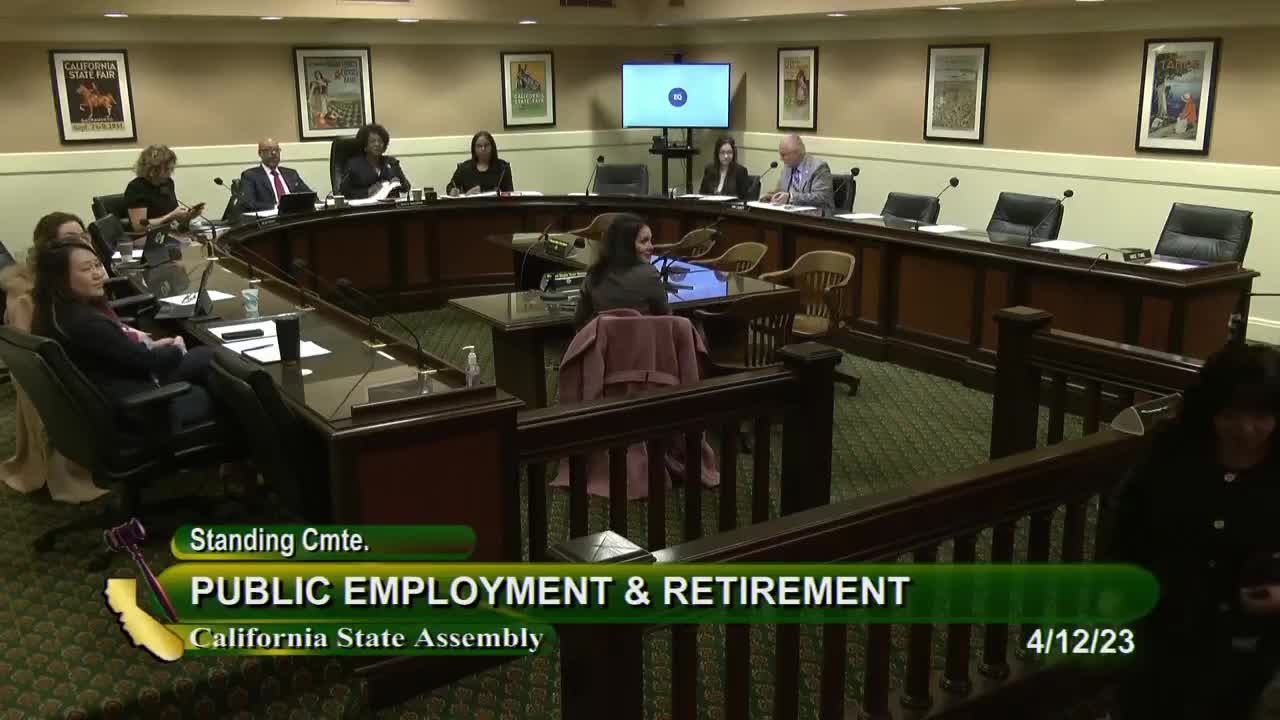 15MIN
Assembly Standing Committee on Public Employment and Retirement
Bill Author






