AB 541: California Safe Drinking Water Act: wildfire aftermath: benzene testing.
- Session Year: 2023-2024
- House: Assembly
- Latest Version Date: 2023-10-08
Current Status:
Passed
(2023-10-08: Chaptered by Secretary of State - Chapter 530, Statutes of 2023.)
Introduced
In Committee
First Chamber
In Committee
Second Chamber
Enacted
The California Safe Drinking Water Act provides for the operation of public water systems and imposes on the State Water Resources Control Board various responsibilities and duties relating to the regulation of drinking water to protect public health.
This bill would direct the board to require a public water system that has experienced a wildfire event meeting specified criteria to perform sample collection and analysis of its source waters, treatment facilities, conveyance facilities, distribution systems, or a combination thereof, for the presence of benzene as soon as it is safe to do so. The bill would authorize the state board to require a public water system response that includes specified measures if a public water system conducts sampling and finds detectable concentrations of benzene.
The California Safe Drinking Water Act provides for the operation of public water systems and imposes on the State Water Resources Control Board various responsibilities and duties relating to the regulation of drinking water to protect public health.
This bill would direct the board, on or after January 1, 2024, board to require a public water system that has experienced a wildfire event meeting specified criteria to perform sample collection and analysis of its source waters, treatment facilities, conveyance facilities, distribution systems, or a combination thereof, for the presence of benzene no more than 15 days after the wildfire event or, if an evacuation order prevents access to the water source for more than 15 days after the wildfire event, immediately when access to the water source is restored. as soon as it is safe to do so.
The California Safe Drinking Water Act provides for the operation of public water systems and imposes on the State Water Resources Control Board various responsibilities and duties relating to the regulation of drinking water to protect public health.
This bill would direct the board, on or after January 1, 2024, to require a public water system, water corporation, or water district that has experienced a major wildfire event within their service territory to test their water source for the presence of benzene immediately following that major wildfire event. system that has experienced a wildfire event meeting specified criteria to perform sample collection and analysis for the presence of benzene no more than 15 days after the wildfire event or, if an evacuation order prevents access to the water source for more than 15 days after the wildfire event, immediately when access to the water source is restored.
The California Safe Drinking Water Act provides for the operation of public water systems and imposes on the State Water Resources Control Board various responsibilities and duties relating to the regulation of drinking water to protect public health.
This bill would direct the board, on or after January 1, 2024, to require a public water system, water corporation, or water district that has experienced a major wildfire event within their service territory to test their water source for the presence of benzene immediately following that major wildfire event.
The Legislature finds and declares all of the following:
(a)Wildfires have been increasing in frequency and severity in California. Recent wildfires have severely damaged critical infrastructure unable to withstand wildfire temperatures, underscoring the need to fire harden critical infrastructure.
(b)Recent fires have left communities such as Santa Rosa and Paradise with unforeseen wildfire recovery challenges due to the presence of contaminants, including benzene, within water system infrastructure.
(c)Benzene is both a natural and human-made compound used as a building block for industrial products such as plastic, lubricants, rubber, detergents, and pesticide. It is also found in crude oil, gasoline, and wildfire smoke. It has been connected to various physical ailments, according to federal warnings, including skin and eye irritation, and vomiting from short-term exposure. Long-term exposure has been linked to anemia and leukemia.
(d)Water transmission and distribution infrastructure can be impacted during wildfires, disrupting the ability to supply safe drinking water to occupancies during postfire recovery.
SEC. 2.Section 116596 is added to the Health and Safety Code, to read:116596.(a)The state board shall require a public water system that has experienced a wildfire event of 300 acres or more, if the event damaged or destroyed a structure or structures connected to the public water systems water distribution system, to perform sample collection and analysis of its source waters, treatment facilities, conveyance facilities, distribution systems, or a combination thereof, for the presence of benzene as soon as it is safe to do so.
(b)If a public water system conducts sampling and finds detectable concentrations of benzene, the state board may require a public water system response, including all the following:
(1)A requirement that investigation and additional testing be completed in consultation with, or at the direction of, the state board.
(2)Timelines for investigation and additional testing.
(3)Additional testing frequency and duration.
(4)Additional testing locations, such as specific locations within a distribution system.
(5)Flushing prior to confirmed detections of contamination.
(6)Requirements to provide notice to affected customers upon a finding of contamination, including the form and content of the notices and when the notice shall be provided.
(7)Remediation measures if contamination is found in the source waters, treatment facilities, conveyance facilities, distribution systems, or a combination thereof, such as taking sources offline, flushing within the distribution system, repairs, and replacements.
(c)For purposes of this section, wildfire has the same meaning as defined in Section 51177 of the Government Code.
(d)This section does not limit the state boards authority under any other law.
The Legislature finds and declares all of the following:
(a)Wildfires have been increasing in frequency and severity in California. Recent wildfires have severely damaged critical infrastructure unable to withstand wildfire temperatures, underscoring the need to fire harden critical infrastructure.
(b)Recent fires have left the communities of such as Santa Rosa and Paradise with unforeseen wildfire recovery challenges due to the presence of contaminants, including benzene, in water sources. within water system infrastructure.
(c)Benzene is both a natural and human-made compound used as a building block for industrial products such as plastic, lubricants, rubber, detergents, and pesticide. It is also found in crude oil, gasoline, and wildfire smoke. It has been connected to various physical ailments, according to federal warnings, including skin and eye irritation, and vomiting from short-term exposure. Long-term exposure has been linked to anemia and leukemia.
(d)Water transmission and distribution infrastructure can be impacted during wildfires, disrupting the ability to supply safe drinking water to occupancies during postfire recovery.
SEC. 2.Section 116596 is added to the Health and Safety Code, to read:116596.(a)For purposes of this section, wildfire has the same meaning as defined in Section 51177 of the Government Code.(b)116596.(a)The state board shall require a public water system that has experienced a wildfire event of 300 acres or more, if the event damaged or destroyed a structure or structures connected to the public water systems water distribution system, to perform sample collection and analysis of its source waters, treatment facilities, conveyance facilities, distribution systems, or a combination thereof, for the presence of benzene as soon as it is safe to do so.
(b)If a public water system conducts sampling and finds detectable concentrations of benzene, the state board may require a public water system response, including all the following:
(1)A requirement that investigation and additional testing be completed in consultation with, or at the direction of, the state board.
(2)Timelines for investigation and additional testing.
(3)Additional testing frequency and duration.
(4)Additional testing locations, such as specific locations within a distribution system.
(5)Flushing prior to confirmed detections of contamination.
(6)Requirements to provide notice to affected customers upon a finding of contamination, including the form and content of the notices and when the notice shall be provided.
(7)Remediation measures if contamination is found in the source waters, treatment facilities, conveyance facilities, distribution systems, or a combination thereof, such as taking sources offline, flushing within the distribution system, repairs, and replacements.
(c)For purposes of this section, wildfire has the same meaning as defined in Section 51177 of the Government Code.
(d)This section does not limit the state boards authority under any other law.
The Legislature finds and declares all of the following:
(a)Wildfires have been increasing in frequency and severity in California. Recent wildfires have severely damaged critical infrastructure unable to withstand wildfire temperatures, underscoring the need to fire harden critical infrastructure.
(b)Recent fires have left the communities of Santa Rosa and Paradise with unforeseen wildfire recovery challenges due to the presence of contaminants, including benzene, in water sources.
(c)Benzene is both a natural and human-made compound used as a building block for industrial products such as plastic, lubricants, rubber, detergents, and pesticide. It is also found in crude oil, gasoline, and wildfire smoke. It has been connected to various physical ailments, according to federal warnings, including skin and eye irritation, and vomiting from short-term exposure. Long-term exposure has been linked to anemia and leukemia.
(d)Water transmission and distribution infrastructure can be impacted during wildfires, disrupting the ability to supply safe drinking water to occupancies during postfire recovery.
SEC. 2.Section 116596 is added to the Health and Safety Code, to read:116596.(a)For purposes of this section, wildfire has the same meaning as defined in Section 51177 of the Government Code.
(b)On or after January 1, 2024, the The state board shall require a public water system that has experienced a wildfire event of 300 acres or more, if the event damaged or destroyed a dwelling or dwellings structure or structures connected to the public water systems water distribution system, to perform sample collection and analysis of its source waters, treatment facilities, conveyance facilities, distribution systems, or a combination thereof, for the presence of benzene no more than 15 days after the wildfire event. as soon as it is safe to do so.
(c)If an evacuation order prevents a public water system from accessing its water source for more than 15 days after a wildfire event, the public water system shall perform sample collection and analysis for the presence of benzene immediately when access to the water source is restored.The Legislature finds and declares all of the following:
(a)Wildfires have been increasing in frequency and severity in California. Recent wildfires have severely damaged critical infrastructure unable to withstand wildfire temperatures, underscoring the need to fire harden critical infrastructure.
(b)Recent fires have left the communities of Santa Rosa and Paradise with unforeseen wildfire recovery challenges due to the presence of contaminants, including benzene, in water sources due to pipe failures and the permeation of fire residues during wildfires. sources.
(c)Benzene is both a natural and human-made compound used as a building block for industrial products such as plastic, lubricants, rubber, detergents, and pesticide. It is also found in crude oil, gasoline, and wildfire smoke. It has been connected to various physical ailments, according to federal warnings, including skin and eye irritation, and vomiting from short-term exposure. Long-term exposure has been linked to anemia and leukemia.
(d)Certain water Water transmission and distribution infrastructure components can lose their integrity when heated, burned, or melted during a fire. The resulting loss of water system integrity can cause leeching, emission, and permeation of contaminants, exposing first responders, the public, and the environment to pollutants, and disrupts can be impacted during wildfires, disrupting the ability to supply safe drinking water to occupancies during postfire recovery.
SEC. 2.Section 116596 is added to the Health and Safety Code, to read:116596.(a)For purposes of this section, the following definitions apply:(1)Water corporation has the same meaning as defined in Section 241 of the Public Utilities Code.(2)Water district has the same meaning as defined in Section 20200 of the Water Code.(b)On or after January 1, 2024, the board shall require a public water system, water corporation, or water district that has experienced a major wildfire event within their service territory to test their water source for the presence of benzene immediately following the major wildfire event.SEC. 2.Section 116596 is added to the Health and Safety Code, to read:116596.(a)For purposes of this section, wildfire has the same meaning as defined in Section 51177 of the Government Code.
(b)On or after January 1, 2024, the state board shall require a public water system that has experienced a wildfire event of 300 acres or more, if the event damaged or destroyed a dwelling or dwellings connected to the public water systems water distribution system, to perform sample collection and analysis for the presence of benzene no more than 15 days after the wildfire event.
(c)If an evacuation order prevents a public water system from accessing its water source for more than 15 days after a wildfire event, the public water system shall perform sample collection and analysis for the presence of benzene immediately when access to the water source is restored.
The Legislature finds and declares all of the following:
(a)Wildfires have been increasing in frequency and severity in California. Recent wildfires have severely damaged critical infrastructure unable to withstand wildfire temperatures, underscoring the need to fire harden critical infrastructure.
(b)Recent fires have left the communities of Santa Rosa and Paradise with unforeseen wildfire recovery challenges due to the presence of contaminants, including benzene, in water sources due to pipe failures and the permeation of fire residues during wildfires.
(c)Benzene is both a natural and human-made compound used as a building block for industrial products such as plastic, lubricants, rubber, detergents, and pesticide. It is also found in crude oil, gasoline, and wildfire smoke. It has been connected to various physical ailments, according to federal warnings, including skin and eye irritation, and vomiting from short-term exposure. Long-term exposure has been linked to anemia and leukemia.
(d)Certain water transmission and distribution infrastructure components can lose their integrity when heated, burned, or melted during a fire. The resulting loss of water system integrity can cause leeching, emission, and permeation of contaminants, exposing first responders, the public, and the environment to pollutants, and disrupts the ability to supply safe drinking water to occupancies during postfire recovery.
SEC. 2.Section 116596 is added to the Health and Safety Code, to read:116596.(a)For purposes of this section, the following definitions apply:
(1)Water corporation has the same meaning as defined in Section 241 of the Public Utilities Code.
(2)Water district has the same meaning as defined in Section 20200 of the Water Code.
(b)On or after January 1, 2024, the board shall require a public water system, water corporation, or water district that has experienced a major wildfire event within their service territory to test their water source for the presence of benzene immediately following the major wildfire event.
|
Date
|
Status
|
|---|---|
| Oct 8, 2023 | Chaptered by Secretary of State - Chapter 530, Statutes of 2023. |
| Oct 8, 2023 | Approved by the Governor. |
| Sep 20, 2023 | Enrolled and presented to the Governor at 4 p.m. |
| Sep 13, 2023 | Senate amendments concurred in. To Engrossing and Enrolling. (Ayes 80. Noes 0. Page 3384.). |
| Sep 12, 2023 | In Assembly. Concurrence in Senate amendments pending. |
| Sep 12, 2023 | Read third time. Passed. Ordered to the Assembly. (Ayes 38. Noes 0. Page 2649.). |
| Sep 11, 2023 | Read second time. Ordered to third reading. |
| Sep 8, 2023 | Read third time and amended. Ordered to second reading. |
| Jul 5, 2023 | Read second time. Ordered to third reading. |
| Jul 3, 2023 | From committee: Be ordered to second reading pursuant to Senate Rule 28.8. |
| Jun 22, 2023 | In committee: Hearing postponed by committee. |
| Jun 8, 2023 | Read second time and amended. Re-referred to Com. on APPR. |
| Jun 7, 2023 | From committee: Amend, and do pass as amended and re-refer to Com. on APPR. (Ayes 7. Noes 0.) (June 7). |
| May 30, 2023 | From committee chair, with author's amendments: Amend, and re-refer to committee. Read second time, amended, and re-referred to Com. on E.Q. |
| May 10, 2023 | Referred to Com. on E.Q. |
| Apr 27, 2023 | In Senate. Read first time. To Com. on RLS. for assignment. |
| Apr 27, 2023 | Read third time. Passed. Ordered to the Senate. (Ayes 79. Noes 0. Page 1363.) |
| Apr 20, 2023 | Read second time. Ordered to Consent Calendar. |
| Apr 19, 2023 | From committee: Do pass. To Consent Calendar. (Ayes 14. Noes 0.) (April 19). |
| Mar 15, 2023 | From committee: Do pass and re-refer to Com. on APPR. with recommendation: To Consent Calendar. (Ayes 9. Noes 0.) (March 14). Re-referred to Com. on APPR. |
| Feb 17, 2023 | Referred to Com. on E.S. & T.M. |
| Feb 9, 2023 | From printer. May be heard in committee March 11. |
| Feb 8, 2023 | Read first time. To print. |
|
Date
|
Description
|
Location
|
Votes
|
|
|---|---|---|---|---|
| Sep 13, 2023 | AB 541 Wood Concurrence in Senate Amendments | Assembly Floor |
Passed |
|
| Sep 12, 2023 | Assembly 3rd Reading AB541 Wood By Dahle | Senate Floor |
Passed |
|
| Jun 7, 2023 | Do pass as amended, but first amend, and re-refer to the Committee on [Appropriations] | Senate Standing Committee on Environmental Quality |
Passed |
|
| Apr 27, 2023 | AB 541 Wood Consent Calendar Second Day Regular Session | Assembly Floor |
Passed |
|
| Apr 19, 2023 | Do pass. To Consent Calendar. | Assembly Standing Committee on Appropriations |
Passed |
|
| Mar 14, 2023 | Do pass and be re-referred to the Committee on [Appropriations] with recommendation: To Consent Calendar | Assembly Standing Committee on Environmental Safety and Toxic Materials |
Passed |
This list shows positions taken on this bill by organizations on the date displayed, which is linked to the original source.
Positions by individuals are not included.
|
Organization
|
Position
|
Date
|
|---|---|---|
| BlueGreen Alliance | ** Support | |
| BuildStrong California | ** Support | |
| Consumer Attorneys Of California | ** Support | |
| El Dorado Irrigation District | ** Against | |
| Elsinore Valley Municipal Water District | ** Against | |
| Rowland Water District | ** Against | |
| Santa Clara Valley Water District | ** Support | |
| Walnut Valley Water District | ** Against |
CONCURRENCE IN SENATE AMENDMENTS
CSA1 Bill Id:AB 541
Author:(Wood)
As Amended Ver:September 8, 2023
Majority vote
SUMMARY
Requires the State Water Resources Control Board (State Water Board) to require a public water system that has experienced a major wildfire event of 300 acres or more and under specified conditions to perform sample collection and analysis of its source waters for the presence of benzene as soon as it is safe to do so. Authorizes the State Water Board to require the public water system to take specified response actions if benzene is detected.
Senate Amendments
1) Delete the authorization date of January 1, 2024 for the State Water Board to require public water systems to test for benzene.
2) Add further specifications when the State Water Board can require a public water system to test for benzene including after a wildfire event of 300 acres or more; sampling the source waters, treatment facilities, conveyance facilities, distribution systems, or a combination thereof; and, sampling when it is safe to do so.
3) Authorize the State Water Board, if a public water system's sampling finds detectable concentrations of benzene, to require a series of response actions.
4) State that the changes made in this bill do not limit the State Water Board's authority under any other law.
COMMENTS
Human right to water: In 2012, California became the first state to enact a Human Right to Water law, AB 685 (Eng), Chapter 524, Statutes of 2012. Public policy continues to be focused on the right of every human being to have safe, clean, affordable, and accessible water adequate for human consumption, cooking, and sanitation. Water supply, contaminants, costs of treatment and distribution systems, the number and nature of small public water systems, especially in disadvantaged communities, and many other factors will continue to challenge progress in addressing the Human Right to Water.
Federal Safe Drinking Water Act (SDWA): The federal SDWA was enacted in 1974 to protect public health by regulating drinking water. The US EPA enforces the federal SDWA at the national level. California has enacted its own safe drinking water act to implement the federal law and establish state standards under the state SDWA. Most states, including California, have been granted "primacy" by the US EPA, giving them the authority to implement and enforce the federal SDWA at the state level.
California’s drinking water program: Through its Division of Drinking Water (DDW), the State Water Board is responsible for enforcing federal and state drinking water statutes and regulating public water systems. The State Water Board directly enforces the federal SDWA for all water systems with 200 or more service connections. For water systems with less than 200 connections, regulatory authority can be delegated to local health departments. The State Water Board adopts regulations for drinking water standards, monitoring requirements, cross-connections, design and operational standards, and operator certification.
Drinking water risks to human health and the environment are managed by federal and state standards for permissible levels of certain contaminants, known as MCLs. A drinking water contaminant's MCL is required to be established at a level as close to its public health goal (PHG) as is technologically and economically feasible, placing primary emphasis on the protection of public health. A PHG, which is established by the Office of Health Hazard Assessment, is the level of a contaminant in drinking water that does not pose a significant risk to health.
Benzene: Benzene is a regulated chemical with an established MCL in drinking water of 1 µg/L. Benzene is a colorless highly flammable liquid that evaporates quickly into air and dissolves slightly in water. It is found in crude oil and gasoline, but also occurs naturally in volcanic gases and smoke resulting from forest fires. Benzene can volatilize into air from soil and water. Once in the atmosphere, benzene breaks down (biodegrades) within a few days. In soil and groundwater, the biodegradation process is slower. Benzene is slightly soluble in water and can migrate through the soil column into groundwater. Because benzene is a light "non-aqueous phase liquid" it can collect on top of the water table. Benzene biodegradation in groundwater can take days to years, depending on oxygen concentration, temperature, and the presence of favorable bacteria.
Benzene is a known carcinogen both in humans and in laboratory animals. Exposure to benzene can occur through the lungs (inhalation), gastrointestinal tract (ingestion), and through skin (dermal contact). Health effects depend on two main factors: length of exposure and concentration (amount of benzene a person is exposed to). Brief exposure to very high levels of benzene in air can result in death, while breathing lower levels can cause drowsiness, confusion, dizziness, headaches, tremors, and unconsciousness. The major effect of benzene exposure is to the blood. Long term exposure to benzene can affect the body’s ability to produce red blood cells. When the bone marrow is affected, the result is usually a form of leukemia. It can also cause blood (hematologic) diseases, anemia, and cancers of blood-forming organs.
Issue with benzene in drinking water after a wildfire: According to the article, "Fire and Water: Assessing Drinking Water Contamination After a Major Wildfire," published in August, 2021: "Drinking water systems in wildfire-damaged areas may be contaminated with benzene and other volatile organic compounds, requiring prevention and rapid response to protect the health of returning residents. Massive wildfires tore through towns in California in recent years. A new and unanticipated problem arose after recent California fires: the contamination of drinking water systems by volatile organic compounds (VOCs). Benzene and other VOC contamination in tap water was first reported after the Tubbs Fire in Santa Rosa, California in 2017. The contamination of drinking water systems during wildfire events is a new environmental health challenge. Addressing the root causes of wildland-urban interface extreme fire events (e.g., climate change, forest management) are important components but must be supplemented by resilience measures for water systems. The ability to quickly shut-off sections of water systems that depressurize, coupled with backflow prevention, may reduce contamination from smoke being pulled into service lines and other pipes. Rapid post-fire testing throughout the system, with a focus on initially clearing water mains, followed by service lines to standing homes, is a critical element. Finally, the strategies of flushing pipes that have low levels of contaminants and the replacement of highly contaminated pipes appear to have been effective in the area impacted by the Camp Fire. Further research to test water that has stagnated in galvanized pipe is needed, especially because the implications may extend beyond the relatively few fire-impacted water systems."
This bill: This bill requires the State Water Board to require public water systems to test for benzene after a major wildfire event under specified conditions. If benzene is detected, the bill also authorizes the State Water Board to require the public water system to perform further response actions, with the goal of investigating and remediating benzene contamination. There are several reasons for this requirement: 1) to protect public health and safety from a cancer-causing chemical; 2) provide data to the State Water Board and the water systems as to the presence of benzene so that contamination can be further investigated; and, 3) provide data to the State Water Board and water systems to better inform them about the potential hazards posed by benzene so they can prevent exposure before a wildfire event.
According to the Author
"Six years ago, the devastating Tubbs Fire burned through North Bay communities. As Santa Rosa began the process of rebuilding a few weeks after the fire, survivors reported to city officials that their tap water smelled like diesel. The culprit, tests proved, was benzene, a known carcinogen. The next year, the same thing happened to the survivors of the Camp Fire in Paradise.
Devastating wildfires are increasingly ravaging California, but our state policies haven't always kept up with this unfortunate trend. The last thing impacted communities should have to worry about in the aftermath of a wildfire is whether their drinking water is poisonous. AB 541 requires the state to develop common sense procedures to ensure Californians have access to safe drinking water after wildfire disasters."
Arguments in Support
According to the sponsor of this bill, BuildStrong California (BSCA):
"Wildfires in California have repeatedly compromised water infrastructure causing loss of integrity, contamination and/or failure. After the 2017 Tubbs Fire, Santa Rosa determined that wildfire conditions allowed for their water system to reach conditions of pyrolysis, leading to benzene contamination of drinking water. Paradise, California found similar widespread benzene contamination during the Camp Fire in 2018 after following Santa Rosa’s example of testing their drinking water following a major wildfire. These two cities and others throughout the state are under no requirement to test for benzene immediately following major wildfires in their localities. Based on the State's monitoring requirements, a water system in California may not have to test for the presence of benzene for years, even though a wildfire may have unknowingly contaminated their drinking water system."
Arguments in Opposition
None on file.
FISCAL COMMENTS
This bill has little to no fiscal impact to the state as it met the conditions under Senate Rule 28.8.
VOTES:
ASM ENVIRONMENTAL SAFETY AND TOXIC MATERIALS: 9-0-0
YES: Lee, Hoover, Arambula, Bauer-Kahan, Connolly, McKinnor, Pacheco, Ta, Zbur
ASM APPROPRIATIONS: 14-0-2
YES: Holden, Megan Dahle, Calderon, Wendy Carrillo, Dixon, Mike Fong, Hart, Lowenthal, Mathis, Papan, Robert Rivas, Sanchez, Weber, Wilson
ABS, ABST OR NV: Bryan, Pellerin
ASSEMBLY FLOOR: 79-0-1
YES: Addis, Aguiar-Curry, Alanis, Alvarez, Arambula, Bains, Bauer-Kahan, Bennett, Berman, Boerner, Bonta, Bryan, Calderon, Juan Carrillo, Wendy Carrillo, Cervantes, Chen, Connolly, Megan Dahle, Davies, Dixon, Essayli, Flora, Mike Fong, Vince Fong, Friedman, Gabriel, Gallagher, Garcia, Gipson, Grayson, Haney, Hart, Holden, Hoover, Irwin, Jackson, Jones- Sawyer, Kalra, Lackey, Lee, Low, Lowenthal, Maienschein, Mathis, McCarty, McKinnor, Muratsuchi, Stephanie Nguyen, Ortega, Pacheco, Papan, Joe Patterson, Pellerin, Petrie-Norris, Quirk-Silva, Ramos, Reyes, Luz Rivas, Robert Rivas, Rodriguez, Blanca Rubio, Sanchez, Santiago, Schiavo, Soria, Ta, Ting, Valencia, Villapudua, Waldron, Wallis, Ward, Weber, Wicks, Wilson, Wood, Zbur, Rendon
ABS, ABST OR NV: Jim Patterson
UPDATED
VERSION: September 8, 2023
CONSULTANT: Josh Tooker / E.S. & T.M. / (916) 319-3965 FN: 0002296
SENATE RULES COMMITTEE Office of Senate Floor Analyses (916) 651-1520 Fax: (916) 327-4478 | AB 541 |
THIRD READING
Bill No: AB 541
Author: Wood (D)
Amended: 9/8/23 in Senate
Vote: 21
SENATE ENVIRONMENTAL QUALITY COMMITTEE: 7-0, 6/7/23
AYES: Allen, Dahle, Gonzalez, Hurtado, Menjivar, Nguyen, Skinner
SENATE APPROPRIATIONS COMMITTEE: Senate Rule 28.8
ASSEMBLY FLOOR: 79-0, 4/27/23 (Consent) - See last page for vote
SUBJECT: California Safe Drinking Water Act: wildfire aftermath: benzene testing
SOURCE: BuildStrong California
DIGEST:
This bill requires the State Water Resources Control Board (State Water Board) to require a public water system that has experienced a wildfire event of 300 acres or more that damaged or destroyed a structure or structures connected to its distribution system to perform sample collection and analysis for the presence of benzene.
Senate Floor Amendments of 9/8/23 allow the State Water Board to require a public water system to take specified follow-up actions if benzene is detected in water following testing after a wildfire as described in this bill, including further testing, providing notice to customers, and taking remediation actions.
ANALYSIS:
Exisiting law:
- Establishes as the policy of the state that every human being has the right to safe, clean, affordable, and accessible water adequate for human consumption, cooking, and sanitary purposes. (Water Code (WC) § 106.3)
- Establishes the California Safe Drinking Water Act (SDWA) and requires the State Water Board to maintain a drinking water program to regulate drinking water and to enforce the federal SDWA and other regulations. (HSC § 116270, et seq.)
- Requires the State Water Board to adopt regulations needed to carry out the purposes of the California SWDA, including the monitoring of contaminants that include the frequency and method of sampling and testing and the reporting of results. (HSC § 116375)
- Defines "maximum contaminant level" (MCL) to mean the maximum permissible level of a contaminant in water. (HSC § 116275 (f))
- Defines "water distribution system" to mean any combination of pipes, tanks, pumps, and other physical features that deliver water from the source or water treatment plant to the customer. (HSC § 116275 (x))
- Defines a "public water system" as a system for the provision of water for human consumption through pipes or other constructed conveyances that has 15 or more service connections or regularly serves at least 25 individuals daily at least 60 days out of the year. (HSC § 116275)
This bill:
- Requires the State Water Board to require a public water system that has experienced a wildfire event of 300 acres or more, if the event damaged or destroyed a structure or structures connected to their water distribution system, to perform sample collection and analysis of its source waters, treatment facilities, conveyance facilities, distribution systems, or a combination thereof, for the presence of benzene as soon as it is safe to do so.
- Allows the State Water Board to require a public water system to include specific actions in its response to detecting benzene in water following the testing that is required by this bill. Those requirements placed on a public water system may include:
- A requirement that investigation and additional testing be completed in consultation with, or at the direction of, the Water Board;
- Timelines for investigation and additional testing;
- Additional testing frequency and duration;
- Additional testing locations, such as specific locations within a distribution system;
- Flushing prior to confirmed detections of contamination;
- Requirements to provide notice to affected customers upon finding benzene contamination, including the form, content, and timing of such notice; and
- Remediation measures if contamination is detected in source waters, treatment facilities, conveyance facilities, distribution systems, or a combination thereof, such as taking sources offline, flushing within the distribution system, repairs, and replacements.
- States that the provisions in this bill do not limit the State Water Board’s authority under any other law.
Background
- California’s drinking water program. Through its Division of Drinking Water (DDW), the State Water Board is responsible for enforcing federal and state drinking water statutes and regulating public water systems. The State Water Board directly enforces the federal Safe Drinking Water Act (SDWA) for all water systems with 200 or more service connections. For water systems with less than 200 connections, regulatory authority can be delegated to local health departments. The State Water Board adopts regulations for drinking water standards, monitoring requirements, cross-connections, design and operational standards, and operator certification.
Drinking water risks to human health and the environment are managed by federal and state standards for permissible levels of certain contaminants, known as maximum contaminant levels (MCLs). The State Water Board regulates drinking water systems in California and requires suppliers to notify them and the public when a primary or secondary MCL has been violated and take appropriate action to correct the contamination of their systems.
- Wildfire and water infrastructure. Wildfires in California have repeatedly compromised plastic water infrastructure causing loss of integrity, contamination and/or failure. Fire can contaminate drinking water systems by thermally damaging plastic pipes causing chemicals to leach into the water or by depressurizing water distribution systems allowing intrusion of smoke and contaminants. Depressurization of the distribution network can transport contaminated water to undamaged infrastructure. Potentially hazardous compounds can soak into plastic pipes and coat metals and other materials. Flushing water and/or replacing infrastructure may be necessary to mitigate the contamination. Benzene contamination has received the most attention following the 2017 Tubbs Fire in Sonoma County and the 2018 Camp Fire in Butte County.
- Benzene. Benzene is a volatile organic compound (VOC) with an established state MCL of 1 µg/L and federal MCL of 5 µg/L. One month after the Tubbs Fire, following customer complaints about concerning odors from their water, Santa Rosa sampled hydrants and found benzene concentrations of up to 6.9 µg/L. Testing following the Camp Fire in Butte County found benzene concentrations of up to 8.1 µg/L. Far higher concentrations up to 40,000 µg/L were detected after more extensive testing.
Benzene is a colorless highly flammable liquid that evaporates quickly into air and dissolves slightly in water. It is found in crude oil and gasoline, but also occurs naturally in volcanic gases and smoke resulting from forest fires. Benzene can volatilize into air from soil and water. Benzene biodegradation in groundwater can take days to years, depending on oxygen concentration, temperature, and the presence of bacteria.
Benzene is a known carcinogen both in humans and in laboratory animals. Exposure to benzene can occur through the lungs (inhalation), gastrointestinal tract (ingestion), and through skin (dermal contact). Brief exposure to very high levels of benzene in air can result in death, while breathing lower levels can cause drowsiness, confusion, dizziness, headaches, tremors, and unconsciousness. Long-term exposure to benzene can affect the body’s ability to produce red blood cells. When the bone marrow is affected, the result is usually a form of leukemia. It can also cause blood (hematologic) diseases, anemia, and cancers of blood-forming organs.
- Existing water testing requirements. In accordance with federal regulations, California requires public water systems to sample their water sources and have the samples analyzed for inorganic and organic substances to determine compliance with drinking water standards (MCLs). Periodic testing is required for organic chemicals, which include benzene and other VOCs. Water systems under the jurisdiction of the State Water Board are required to collect four quarterly samples from each water source to test for listed VOCs, including benzene, during a year designated by the State Water Board based on historical monitoring frequency and laboratory capacity.
Water systems can apply for monitoring waivers for VOCs if they meet certain requirements. As a result, a water system in California that has received a testing waiver may not have to test for the presence of organic chemicals such as benzene for up to three or six years (depending on if they are using groundwater or surface water), even though a wildfire may have contaminated their water system.
- What is a public water system? A public water system is defined as a system that provides water for human consumption to 15 or more connections or regularly serves 25 or more people daily for at least 60 days out of the year. Many people think of public water systems as large city or regional water suppliers, but they also include small housing communities, businesses, and even schools and restaurants that provide water. A public water system is not necessarily a public entity, and most public water systems are privately owned. There are three legal distinctions between the types of public water systems: community, non-transient non-community, and transient. The type of water system is based on how often people consume the water. Drinking water regulations impose the most stringent monitoring requirements on community and non-transient non-community water systems because the people they serve obtain all or much of their water from that system each day. Community water systems are city, county, regulated utilities, regional water systems, and even small water companies and districts where people live. Non-community non-transient water systems are places like schools and businesses that provide their own water. Transient water systems include entities like rural gas stations, restaurants, and State and National parks that provide their own potable water.
Comments
- Purpose of Bill. According to the author, “Six years ago, the devastating Tubbs Fire burned through North Bay communities. As Santa Rosa began the process of rebuilding a few weeks after the fire, survivors reported to city officials that their tap water smelled like diesel. The culprit, tests proved, was benzene, a known carcinogen. The next year, the same thing happened to the survivors of the Camp Fire in Paradise.
“Devastating wildfires are increasingly ravaging California, but our state policies haven’t always kept up with this unfortunate trend. The last thing impacted communities should have to worry about in the aftermath of a wildfire is whether their drinking water is poisonous. AB 541 requires the state to develop common sense procedures to ensure Californians have access to safe drinking water after wildfire disasters.”
- Defining testing triggers. This bill triggers water testing for benzene following a wildfire of 300 acres or more in which a structure or structure connected to a public water system’s water distribution system is damaged or destroyed. This bill seeks to ensure that public water systems test for benzene after wildfires when needed to protect public health while at the same time not requiring unnecessary testing. Requiring water testing following any fire, no matter the size or whether damage to water infrastructure has occurred, may be an inefficient use of resources. The 300 acre threshold is based on wildfire classes established by the National Wildfire Coordinating Group, but small fires can also burn very hot and significantly damage water infrastructure, endangering public health. A wildfire can impact water infrastructure and cause dangerous water contamination without damaging or destroying any structures.
- What comes next? While detecting contamination following a wildfire is a critical first step, there are important follow-up actions needed as soon as possible to protect the public and curtail further damage. These may include determining the extent of contamination, informing the public, and remediating the contamination through methods such as by flushing distribution systems, taking sources offline, or repairing or replacing infrastructure. Existing regulations require further monitoring following detection of contamination, though these are only at one to three month intervals and are limited in scope to water sources. The State Water Board may direct a water supplier to discontinue use of a contaminated water source if the concentration of the contaminant in the water source exceeds ten times the MCL. Some water systems have not followed State Water Board recommendations for follow-up testing or remediation steps following wildfires. This has resulted in the spreading of water contamination and increased damage, and therefore increased costs, that may have been avoided if testing and remediation had occurred as soon as practically possible. This bill grants the State Water Board the authority to require certain follow-up actions, which could protect public health and help avoid escalating costs due to inaction. It could also help water systems: the Federal Emergency Management Agency (FEMA) has in the past declined funding assistance to water systems due to a lack of statutory context specifying the requirement for actions taken.
- Not just benzene. Other health-harming chemicals have been detected in water following wildfires, including methylene chloride, napthalene, tert-butanol, toluene, and vinyl chloride. Although benzene has received the most attention in these events and benzene contamination can act as a “canary in a coal mine” indicating that other contaminants may be present, some contaminants have exceeded their exposure limits without the presence of benzene. This happened, for example, in Santa Rosa following the Tubbs Fire.
Related/Prior Legislation
AB 249 (Holden, 2023) requires a community water system to test for lead in potable water system outlets of a school site following specified procedures before January 1, 2027. The bill further requires parent or guardian notification and immediate remediation action if lead levels exceed a specified concentration. This bill is currently pending in the Senate.
AB 756 (Cristina Garcia, Chapter 162, Statutes of 2019) authorized the State Water Board to order a public water system to monitor for per- and polyfluoroalkyl substances (PFAS) and requires specified water systems to take certain actions upon detection of PFAS.
SB 1422 (Portantino, Chapter 902, Statutes of 2018) required the State Water Board to adopt a methodology for and requirements to test drinking water for microplastics, including public disclosure of results.
FISCAL EFFECT: Appropriation: No Fiscal Com.: Yes Local: No
SUPPORT: (Verified 9/8/23)
BuildStrong California (source)
Bluegreen Alliance
Consumer Attorneys of California
Santa Clara Valley Water District
OPPOSITION: (Verified 9/8/23)
None received
ARGUMENTS IN SUPPORT: According to BuildStrong California, “Wildfires in California have repeatedly compromised water infrastructure causing loss of integrity, contamination and/or failure. After the 2017 Tubbs Fire, Santa Rosa determined that wildfire conditions allowed for their water system to reach conditions of pyrolysis, leading to benzene contamination of drinking water. Paradise, California found similar widespread benzene contamination during the Camp Fire in 2018 after following Santa Rosa’s example of testing their drinking water following a major wildfire. These two cities and others throughout the state are under no requirement to test for benzene immediately following major wildfires in their localities. […] Based on the State’s monitoring requirements, a water system in California may not have to test for the presence of benzene for years, even though a wildfire may have unknowingly contaminated their drinking water system.”
ASSEMBLY FLOOR: 79-0, 4/27/23
AYES: Addis, Aguiar-Curry, Alanis, Alvarez, Arambula, Bains, Bauer-Kahan, Bennett, Berman, Boerner, Bonta, Bryan, Calderon, Juan Carrillo, Wendy Carrillo, Cervantes, Chen, Connolly, Megan Dahle, Davies, Dixon, Essayli, Flora, Mike Fong, Vince Fong, Friedman, Gabriel, Gallagher, Garcia, Gipson, Grayson, Haney, Hart, Holden, Hoover, Irwin, Jackson, Jones-Sawyer, Kalra, Lackey, Lee, Low, Lowenthal, Maienschein, Mathis, McCarty, McKinnor, Muratsuchi, Stephanie Nguyen, Ortega, Pacheco, Papan, Joe Patterson, Pellerin, Petrie-Norris, Quirk-Silva, Ramos, Reyes, Luz Rivas, Robert Rivas, Rodriguez, Blanca Rubio, Sanchez, Santiago, Schiavo, Soria, Ta, Ting, Valencia, Villapudua, Waldron, Wallis, Ward, Weber, Wicks, Wilson, Wood, Zbur, Rendon
NO VOTE RECORDED: Jim Patterson
Prepared by: Theresa Keates / E.Q. / (916) 651-4108
9/11/23 13:12:58
**** END ****
SENATE RULES COMMITTEE Office of Senate Floor Analyses (916) 651-1520 Fax: (916) 327-4478 | AB 541 |
THIRD READING
Bill No: AB 541
Author: Wood (D)
Amended: 6/8/23 in Senate
Vote: 21
SENATE ENVIRONMENTAL QUALITY COMMITTEE: 7-0, 6/7/23
AYES: Allen, Dahle, Gonzalez, Hurtado, Menjivar, Nguyen, Skinner
SENATE APPROPRIATIONS COMMITTEE: Senate Rule 28.8
ASSEMBLY FLOOR: 79-0, 4/27/23 (Consent) - See last page for vote
SUBJECT: California Safe Drinking Water Act: wildfire aftermath: benzene testing
SOURCE: BuildStrong California
DIGEST:
This bill requires the State Water Resources Control Board (State Water Board) to require a public water system that has experienced a wildfire event of 300 acres or more that damaged or destroyed a structure or structures connected to its distribution system to perform sample collection and analysis for the presence of benzene.
ANALYSIS:
Exisiting law:
- Establishes as the policy of the state that every human being has the right to safe, clean, affordable, and accessible water adequate for human consumption, cooking, and sanitary purposes. (Water Code (WC) § 106.3)
- Establishes the California Safe Drinking Water Act (SDWA) and requires the State Water Board to maintain a drinking water program to regulate drinking water and to enforce the federal SDWA and other regulations. (HSC § 116270, et seq.)
- Requires the State Water Board to adopt regulations needed to carry out the purposes of the California SWDA, including the monitoring of contaminants that include the frequency and method of sampling and testing and the reporting of results. (HSC § 116375)
- Defines "maximum contaminant level" (MCL) to mean the maximum permissible level of a contaminant in water. (HSC § 116275 (f))
- Defines "water distribution system" to mean any combination of pipes, tanks, pumps, and other physical features that deliver water from the source or water treatment plant to the customer. (HSC § 116275 (x))
- Defines a "public water system" as a system for the provision of water for human consumption through pipes or other constructed conveyances that has 15 or more service connections or regularly serves at least 25 individuals daily at least 60 days out of the year. (HSC § 116275)
This bill requires the State Water Board to require a public water system that has experienced a wildfire event of 300 acres or more, if the event damaged or destroyed a structure or structures connected to their water distribution system, to perform sample collection and analysis of its source waters, treatment facilities, conveyance facilities, distribution systems, or a combination thereof, for the presence of benzene as soon as it is safe to do so.
Background
- California’s drinking water program. Through its Division of Drinking Water (DDW), the State Water Board is responsible for enforcing federal and state drinking water statutes and regulating public water systems. The State Water Board directly enforces the federal Safe Drinking Water Act (SDWA) for all water systems with 200 or more service connections. For water systems with less than 200 connections, regulatory authority can be delegated to local health departments. The State Water Board adopts regulations for drinking water standards, monitoring requirements, cross-connections, design and operational standards, and operator certification.
Drinking water risks to human health and the environment are managed by federal and state standards for permissible levels of certain contaminants, known as maximum contaminant levels (MCLs). The State Water Board regulates drinking water systems in California and requires suppliers to notify them and the public when a primary or secondary MCL has been violated and take appropriate action to correct the contamination of their systems.
- Wildfire and water infrastructure. Wildfires in California have repeatedly compromised plastic water infrastructure causing loss of integrity, contamination and/or failure. Fire can contaminate drinking water systems by thermally damaging plastic pipes causing chemicals to leach into the water or by depressurizing water distribution systems allowing intrusion of smoke and contaminants. Depressurization of the distribution network can transport contaminated water to undamaged infrastructure. Potentially hazardous compounds can soak into plastic pipes and coat metals and other materials. Flushing water and/or replacing infrastructure may be necessary to mitigate the contamination. Benzene contamination has received the most attention following the 2017 Tubbs Fire in Sonoma County and the 2018 Camp Fire in Butte County.
- Benzene. Benzene is a volatile organic compound (VOC) with an established state MCL of 1 µg/L and federal MCL of 5 µg/L. One month after the Tubbs Fire, following customer complaints about concerning odors from their water, Santa Rosa sampled hydrants and found benzene concentrations of up to 6.9 µg/L. Testing following the Camp Fire in Butte County found benzene concentrations of up to 8.1 µg/L. Far higher concentrations up to 40,000 µg/L were detected after more extensive testing.
Benzene is a colorless highly flammable liquid that evaporates quickly into air and dissolves slightly in water. It is found in crude oil and gasoline, but also occurs naturally in volcanic gases and smoke resulting from forest fires. Benzene can volatilize into air from soil and water. Benzene biodegradation in groundwater can take days to years, depending on oxygen concentration, temperature, and the presence of bacteria.
Benzene is a known carcinogen both in humans and in laboratory animals. Exposure to benzene can occur through the lungs (inhalation), gastrointestinal tract (ingestion), and through skin (dermal contact). Brief exposure to very high levels of benzene in air can result in death, while breathing lower levels can cause drowsiness, confusion, dizziness, headaches, tremors, and unconsciousness. Long term exposure to benzene can affect the body’s ability to produce red blood cells. When the bone marrow is affected, the result is usually a form of leukemia. It can also cause blood (hematologic) diseases, anemia, and cancers of blood-forming organs.
- Existing water testing requirements. In accordance with federal regulations, California requires public water systems to sample their water sources and have the samples analyzed for inorganic and organic substances to determine compliance with drinking water standards (MCLs). Periodic testing is required for organic chemicals, which include benzene and other VOCs. Water systems under the jurisdiction of the State Water Board are required to collect four quarterly samples from each water source to test for listed VOCs, including benzene, during a year designated by the State Water Board based on historical monitoring frequency and laboratory capacity.
Water systems can apply for monitoring waivers for VOCs if they meet certain requirements. As a result, a water system in California that has received a testing waiver may not have to test for the presence of organic chemicals such as benzene for up to three or six years (depending on if they are using groundwater or surface water), even though a wildfire may have contaminated their water system.
- What is a public water system? A public water system is defined as a system that provides water for human consumption to 15 or more connections or regularly serves 25 or more people daily for at least 60 days out of the year. Many people think of public water systems as large city or regional water suppliers, but they also include small housing communities, businesses, and even schools and restaurants that provide water. A public water system is not necessarily a public entity, and most public water systems are privately owned. There are three legal distinctions between the types of public water systems: community, non-transient non-community, and transient. The type of water system is based on how often people consume the water. Drinking water regulations impose the most stringent monitoring requirements on community and non-transient non-community water systems because the people they serve obtain all or much of their water from that system each day. Community water systems are city, county, regulated utilities, regional water systems, and even small water companies and districts where people live. Non-community non-transient water systems are places like schools and businesses that provide their own water. Transient water systems include entities like rural gas stations, restaurants, and State and National parks that provide their own potable water.
Comments
- Purpose of Bill. According to the author, “Six years ago, the devastating Tubbs Fire burned through North Bay communities. As Santa Rosa began the process of rebuilding a few weeks after the fire, survivors reported to city officials that their tap water smelled like diesel. The culprit, tests proved, was benzene, a known carcinogen. The next year, the same thing happened to the survivors of the Camp Fire in Paradise.
“Devastating wildfires are increasingly ravaging California, but our state policies haven’t always kept up with this unfortunate trend. The last thing impacted communities should have to worry about in the aftermath of a wildfire is whether their drinking water is poisonous. AB 541 requires the state to develop common sense procedures to ensure Californians have access to safe drinking water after wildfire disasters.”
- Defining testing triggers. This bill triggers water testing for benzene following a wildfire of 300 acres or more in which a structure or structure connected to a public water system’s water distribution system is damaged or destroyed. This bill seeks to ensure that public water systems test for benzene after wildfires when needed to protect public health while at the same time not requiring unnecessary testing. Requiring water testing following any fire, no matter the size or whether damage to water infrastructure has occurred, may be an inefficient use of resources. The 300 acre threshold is based on wildfire classes established by the National Wildfire Coordinating Group, but small fires can also burn very hot and significantly damage water infrastructure, endangering public health. A wildfire can impact water infrastructure and cause dangerous water contamination without damaging or destroying any structures.
- What comes next? While detecting contamination following a wildfire is a critical first step, there are important follow-up actions needed as soon as possible to protect the public and curtail further damage. These may include determining the extent of contamination, informing the public, and remediating the contamination through methods such as by flushing distribution systems, taking sources offline, or repairing or replacing infrastructure. Existing regulations require further monitoring following detection of contamination, though these are only at one to three month intervals and are limited in scope to water sources. The State Water Board may direct a water supplier to discontinue use of a contaminated water source if the concentration of the contaminant in the water source exceeds ten times the MCL. Some water systems have not followed State Water Board recommendations for follow-up testing or remediation steps following wildfires. This has resulted in the spreading of water contamination and increased damage, and therefore increased costs, that may have been avoided if testing and remediation had occurred as soon as practically possible. Expanding the State Water Board’s authority to require follow-up action could therefore protect public health and help avoid escalating costs due to inaction. It could also help water systems: the Federal Emergency Management Agency (FEMA) has in the past declined funding assistance to water systems due to a lack of statutory context specifying the requirement for actions taken.
- Not just benzene. Other health-harming chemicals have been detected in water following wildfires, including methylene chloride, napthalene, tert-butanol, toluene, and vinyl chloride. Although benzene has received the most attention in these events and benzene contamination can act as a “canary in a coal mine” indicating that other contaminants may be present, some contaminants have exceeded their exposure limits without the presence of benzene. This happened, for example, in Santa Rosa following the Tubbs Fire.
Related/Prior Legislation
AB 249 (Holden, 2023) requires a community water system to test for lead in potable water system outlets of a school site following specified procedures before January 1, 2027. The bill further requires parent or guardian notification and immediate remediation action if lead levels exceed a specified concentration. The bill is currently pending before the Senate Environmental Quality Committee.
AB 756 (Cristina Garcia, Chapter 162, Statutes of 2019) authorized the State Water Board to order a public water system to monitor for per- and polyfluoroalkyl substances (PFAS) and requires specified water systems to take certain actions upon detection of PFAS.
SB 1422 (Portantino, Chapter 902, Statutes of 2018) required the State Water Board to adopt a methodology for and requirements to test drinking water for microplastics, including public disclosure of results.
FISCAL EFFECT: Appropriation: No Fiscal Com.: Yes Local: No
SUPPORT: (Verified 7/3/23)
BuildStrong California (source)
Consumer Attorneys of California
Santa Clara Valley Water District
OPPOSITION: (Verified 7/3/23)
El Dorado Irrigation District
ARGUMENTS IN SUPPORT: According to BuildStrong California, “Wildfires in California have repeatedly compromised water infrastructure causing loss of integrity, contamination and/or failure. After the 2017 Tubbs Fire, Santa Rosa determined that wildfire conditions allowed for their water system to reach conditions of pyrolysis, leading to benzene contamination of drinking water. Paradise, California found similar widespread benzene contamination during the Camp Fire in 2018 after following Santa Rosa’s example of testing their drinking water following a major wildfire. These two cities and others throughout the state are under no requirement to test for benzene immediately following major wildfires in their localities. […] Based on the State’s monitoring requirements, a water system in California may not have to test for the presence of benzene for years, even though a wildfire may have unknowingly contaminated their drinking water system.”
ASSEMBLY FLOOR: 79-0, 4/27/23
AYES: Addis, Aguiar-Curry, Alanis, Alvarez, Arambula, Bains, Bauer-Kahan, Bennett, Berman, Boerner, Bonta, Bryan, Calderon, Juan Carrillo, Wendy Carrillo, Cervantes, Chen, Connolly, Megan Dahle, Davies, Dixon, Essayli, Flora, Mike Fong, Vince Fong, Friedman, Gabriel, Gallagher, Garcia, Gipson, Grayson, Haney, Hart, Holden, Hoover, Irwin, Jackson, Jones-Sawyer, Kalra, Lackey, Lee, Low, Lowenthal, Maienschein, Mathis, McCarty, McKinnor, Muratsuchi, Stephanie Nguyen, Ortega, Pacheco, Papan, Joe Patterson, Pellerin, Petrie-Norris, Quirk-Silva, Ramos, Reyes, Luz Rivas, Robert Rivas, Rodriguez, Blanca Rubio, Sanchez, Santiago, Schiavo, Soria, Ta, Ting, Valencia, Villapudua, Waldron, Wallis, Ward, Weber, Wicks, Wilson, Wood, Zbur, Rendon
NO VOTE RECORDED: Jim Patterson
Prepared by: Theresa Keates / E.Q. / (916) 651-4108
7/5/23 14:50:51
**** END ****
SENATE COMMITTEE ON ENVIRONMENTAL QUALITY
Senator Allen, Chair
2023 - 2024 Regular
Bill No. | AB 541 | Hearing Date: | 6/7/2023 |
Author: | Wood | ||
Version: | 5/30/2023 | ||
Urgency: | No | Fiscal: | Yes |
Consultant: | Theresa Keates | ||
SUBJECT: California Safe Drinking Water Act: wildfire aftermath: benzene testing
DIGEST: This bill requires the State Water Resources Control Board (State Water Board), on or after January 1, 2024, to require a public water system that has experienced a wildfire event of 300 acres or more in which a dwelling or dwellings connected to its distribution system was damaged or destroyed to perform sample collection and analysis for the presence of benzene within 15 days following the wildfire event.
ANALYSIS:
Existing federal law authorizes, pursuant to the federal Safe Drinking Water Act (SDWA), the United States Environmental Protection Agency (US EPA) to set standards for drinking water quality and to oversee the states, localities, and water suppliers that implement those standards. (United States Code Title 42 § 300 (f), et seq.)
Exisiting state law:
- Establishes as the policy of the state that every human being has the right to safe, clean, affordable, and accessible water adequate for human consumption, cooking, and sanitary purposes. (Water Code (WC) § 106.3)
- Establishes the California Safe Drinking Water Act (SDWA) and requires the State Water Board to maintain a drinking water program to regulate drinking water and to enforce the federal SDWA and other regulations. (HSC § 116270, et seq.)
- Requires the State Water Board to adopt regulations needed to carry out the purposes of the California SWDA, including the monitoring of contaminants that include the frequency and method of sampling and testing and the reporting of results. (HSC § 116375)
- Defines "maximum contaminant level" (MCL) to mean the maximum permissible level of a contaminant in water. (HSC § 116275 (f))
- Defines "water distribution system" to mean any combination of pipes, tanks, pumps, and other physical features that deliver water from the source or water treatment plant to the customer. (HSC § 116275 (x))
- Defines a "public water system" as a system for the provision of water for human consumption through pipes or other constructed conveyances that has 15 or more service connections or regularly serves at least 25 individuals daily at least 60 days out of the year. (HSC § 116275)
This bill:
- Requires the State Water Board, on or after January 1, 2024, to require a public water system that has experienced a wildfire event of 300 acres or more, if the event damaged or destroyed a dwelling or dwellings connected to their water distribution system, to perform sample collection and analysis for the presence of benzene no more than 15 days following the wildfire event.
- Allows sample collection and analysis to occur immediately upon restoration of access to the public water system’s water source if an evacuation order prevents access to the water source for more than 15 days.
Background
- California’s drinking water program. Through its Division of Drinking Water (DDW), the State Water Board is responsible for enforcing federal and state drinking water statutes and regulating public water systems. The State Water Board directly enforces the federal Safe Drinking Water Act (SDWA) for all water systems with 200 or more service connections. For water systems with less than 200 connections, regulatory authority can be delegated to local health departments. The State Water Board adopts regulations for drinking water standards, monitoring requirements, cross-connections, design and operational standards, and operator certification.
Drinking water risks to human health and the environment are managed by federal and state standards for permissible levels of certain contaminants, known as maximum contaminant levels (MCLs). The State Water Board regulates drinking water systems in California and requires suppliers to notify them and the public when a primary or secondary MCL has been violated and take appropriate action to correct the contamination of their systems.
- Wildfire and water infrastructure. Wildfires in California have repeatedly compromised plastic water infrastructure causing loss of integrity, contamination and/or failure. Fire can contaminate drinking water systems by thermally damaging plastic pipes causing chemicals to leach into the water or by depressurizing water distribution systems allowing intrusion of smoke and contaminants. Depressurization of the distribution network can transport contaminated water to undamaged infrastructure. Potentially hazardous compounds can soak into plastic pipes and coat metals and other materials. Flushing water and/or replacing infrastructure may be necessary to mitigate the contamination. Benzene contamination has received the most attention following the 2017 Tubbs Fire in Sonoma County and the 2018 Camp Fire in Butte County.
- Benzene. Benzene is a volatile organic compound (VOC) with an established state MCL of 1 µg/L and federal MCL of 5 µg/L. One month after the Tubbs Fire, following customer complaints about concerning odors from their water, Santa Rosa sampled hydrants and found benzene concentrations of up to 6.9 µg/L. Testing following the Camp Fire in Butte County found benzene concentrations of up to 8.1 µg/L. Far higher concentrations up to 40,000 µg/L were detected after more extensive testing.
Benzene is a colorless highly flammable liquid that evaporates quickly into air and dissolves slightly in water. It is found in crude oil and gasoline, but also occurs naturally in volcanic gases and smoke resulting from forest fires. Benzene can volatilize into air from soil and water. Benzene biodegradation in groundwater can take days to years, depending on oxygen concentration, temperature, and the presence of bacteria.
Benzene is a known carcinogen both in humans and in laboratory animals. Exposure to benzene can occur through the lungs (inhalation), gastrointestinal tract (ingestion), and through skin (dermal contact). Brief exposure to very high levels of benzene in air can result in death, while breathing lower levels can cause drowsiness, confusion, dizziness, headaches, tremors, and unconsciousness. Long term exposure to benzene can affect the body’s ability to produce red blood cells. When the bone marrow is affected, the result is usually a form of leukemia. It can also cause blood (hematologic) diseases, anemia, and cancers of blood-forming organs.
- Existing water testing requirements. In accordance with federal regulations, California requires public water systems to sample their water sources and have the samples analyzed for inorganic and organic substances to determine compliance with drinking water standards (MCLs). Periodic testing is required for organic chemicals, which include benzene and other VOCs. Water systems under the jurisdiction of the State Water Board are required to collect four quarterly samples from each water source to test for listed VOCs, including benzene, during a year designated by the State Water Board based on historical monitoring frequency and laboratory capacity.
Water systems can apply for monitoring waivers for VOCs if they meet certain requirements. As a result, a water system in California that has received a testing waiver may not have to test for the presence of organic chemicals such as benzene for up to three or six years (depending on if they are using groundwater or surface water), even though a wildfire may have contaminated their water system.
- What is a public water system? A public water system is defined as a system that provides water for human consumption to 15 or more connections or regularly serves 25 or more people daily for at least 60 days out of the year. Many people think of public water systems as large city or regional water suppliers, but they also include small housing communities, businesses, and even schools and restaurants that provide water. A public water system is not necessarily a public entity, and most public water systems are privately owned. There are three legal distinctions between the types of public water systems: community, non-transient non-community, and transient. The type of water system is based on how often people consume the water. Drinking water regulations impose the most stringent monitoring requirements on community and non-transient non-community water systems because the people they serve obtain all or much of their water from that system each day. Community water systems are city, county, regulated utilities, regional water systems, and even small water companies and districts where people live. Non-community non-transient water systems are places like schools and businesses that provide their own water. Transient water systems include entities like rural gas stations, restaurants, and State and National parks that provide their own potable water.
Comments
- Purpose of Bill. According to the author, “Six years ago, the devastating Tubbs Fire burned through North Bay communities. As Santa Rosa began the process of rebuilding a few weeks after the fire, survivors reported to city officials that their tap water smelled like diesel. The culprit, tests proved, was benzene, a known carcinogen. The next year, the same thing happened to the survivors of the Camp Fire in Paradise.
“Devastating wildfires are increasingly ravaging California, but our state policies haven’t always kept up with this unfortunate trend. The last thing impacted communities should have to worry about in the aftermath of a wildfire is whether their drinking water is poisonous. AB 541 requires the state to develop common sense procedures to ensure Californians have access to safe drinking water after wildfire disasters.”
- Where to test? The bill directs sample collection and analysis to occur but does not specify where those water samples are to be taken from. As a result, samples may not be taken from appropriate sources that would indicate whether customers are receiving contaminated water. A single requirement of where testing is to occur, such as at a water source, may not be appropriate for all situations. For example, if a wildfire damages a house in San Francisco, a city which gets much of its water from Hetch Hetchy Reservoir about 200 miles away, testing the water source for wildfire-related contaminants may do little to protect public health. The committee may wish to amend the bill to specify that the State Board may require public water systems to test their source water(s), treatment facilities, conveyance facilities, and/or distribution facilities.
- When to test? The bill triggers water testing for benzene following a wildfire of 300 acres or more in which a dwelling or dwellings connected to a public water system’s water distribution system is damaged or destroyed. This bill seeks to ensure that public water systems test for benzene after wildfires when needed to protect public health while at the same time not requiring unnecessary testing. Requiring water testing following any fire, no matter the size or whether damage to water infrastructure has occurred, may be an inefficient use of resources. However, the testing thresholds in the bill may be too high. The 300 acre threshold is based on wildfire classes established by the National Wildfire Coordinating Group, but small fires can also burn very hot and significantly damage water infrastructure, endangering public health. Importantly, a wildfire can impact water infrastructure and cause dangerous water contamination without damaging or destroying any dwellings in which people live. To be less restrictive, the committee may wish to amend the bill to replace “dwelling” with “structure.” The committee may also wish to direct the author to continue working with committee staff and the State Water Board to develop an appropriate trigger for testing that better ensures benzene testing occurs following wildfire-induced damage to water infrastructure.
The bills states that testing is to occur within 15 days or, if an evacuation order prevents access to a public water system’s water source, as soon as access to the water source is restored. To expedite testing while addressing the concern regarding the safety of access concern and to remove the reference to the water source for the reasons discussed in the comment “Where to test?”, the committee may wish to amend the bill to instead allow the State Water Board to require testing as soon as it is safe to do so.
- What comes next? While detecting contamination following a wildfire is a critical first step, there are important follow-up actions needed as soon as possible to protect the public and curtail further damage. These may include determining the extent of contamination, informing the public, and remediating the contamination through methods such as by flushing distribution systems, taking sources offline, or repairing or replacing infrastructure. Existing regulations require further monitoring following detection of contamination, though these are only at one to three month intervals and are limited in scope to water sources. The State Water Board may direct a water supplier to discontinue use of a contaminated water source if the concentration of the contaminant in the water source exceeds ten times the MCL. Some water systems have not followed State Water Board recommendations for follow-up testing or remediation steps following wildfires. This has resulted in the spreading of water contamination and increased damage, and therefore increased costs, that may have been avoided if testing and remediation had occurred as soon as practically possible. Expanding the State Water Board’s authority to require follow-up action could therefore protect public health and help avoid escalating costs due to inaction. It could also help water systems: the Federal Emergency Management Agency (FEMA) has in the past declined funding assistance to water systems due to a lack of statutory context specifying the requirement for actions taken.
- Not just benzene. Other health-harming chemicals have been detected in water following wildfires, including methylene chloride, napthalene, tert-butanol, toluene, and vinyl chloride. Although benzene has received the most attention in these events and benzene contamination can act as a “canary in a coal mine” indicating that other contaminants may be present, some contaminants have exceeded their exposure limits without the presence of benzene. This happened, for example, in Santa Rosa following the Tubbs Fire. Granting the State Water Board the authority to require a public water system to test for further contaminants as deemed necessary to protect public health and safety could be a beneficial addition to this bill.
- Committee amendments. Staff recommends the committee adopt the bolded amendments contained in comments 2 and 3 above.
Related/Prior Legislation
AB 249 (Holden) would require a community water system to test for lead in potable water system outlets of a school site following specified procedures before January 1, 2027. The bill would further require parent or guardian notification and immediate remediation action if lead levels exceed a specified concentration. This bill is currently eligible for an Assembly Floor vote.
AB 756 (Cristina Garcia, Chapter 162, Statutes of 2019) authorizes the State Water Board to order a public water system to monitor for per- and polyfluoroalkyl substances (PFAS) and requires specified water systems to take certain actions upon detection of PFAS.
SB 1422 (Portantino, Chapter 902, Statutes of 2018) requires the State Water Board to adopt a methodology for and requirements to test drinking water for microplastics, including public disclosure of results.
SOURCE:
BuildStrong California
SUPPORT:
BuildStrong California
Consumer Attorneys of California
Santa Clara Valley Water District
OPPOSITION:
Elsinore Valley Municipal Water District
Rowland Water District
Walnut Valley Water District
ARGUMENTS IN SUPPORT:
According to the Consumer Attorneys of California, “California has seen repeated fires that have compromised water infrastructure, causing loss of integrity, contamination, and even failure. After the 2017 Tubbs Fire, Santa Rosa determined that wildfire conditions led to its water system reaching conditions of pyrolysis, leading to benzene contamination of drinking water. In 2018, the town of Paradise also found widespread benzene contamination during the Camp Fire after following Santa Rosa’s example of testing its drinking water following a major wildfire. Cities still, however, are not required to test for benzene immediately following major wildfires.
Several CAOC members represent cities and counties as they try to rebuild in a safe manner and supports the testing of water required in AB 541. The author may wish to consider requiring other contaminate testing in addition to benzene.”
-- END --
Date of Hearing: April 19, 2023
ASSEMBLY COMMITTEE ON APPROPRIATIONS
Chris Holden, Chair
ABPCA Bill Id:AB 541
Author:(Wood) – As Introduced Ver:February 8, 2023
Policy Committee: | Environmental Safety and Toxic Materials | Vote: | 9 - 0 |
|
| ||
|
|
Urgency: No State Mandated Local Program: No Reimbursable: No
SUMMARY:
This bill requires the State Water Resources Control Board (State Water Board), on or after January 1, 2024, to require a public water system, water corporation, or water district that has experienced a major wildfire event within their service territory to test their water source for the presence of benzene immediately following the major wildfire event.
FISCAL EFFECT:
The State Water Board anticipates minor and absorbable costs as a result of this bill.
COMMENTS:
1) Purpose. According to the author:
Six years ago, the devastating Tubbs Fire burned through North Bay communities. As Santa Rosa began the process of rebuilding a few weeks after the fire, survivors reported to city officials that their tap water smelled like diesel. The culprit, tests proved, was benzene, a known carcinogenic. The next year, the same thing happened to the survivors of the Camp Fire in Paradise. Devastating wildfires are increasingly ravaging California, but our state policies haven’t always kept up with this unfortunate trend. The last thing impacted communities should have to worry about in the aftermath of a wildfire is whether their drinking water is poisonous. AB 541 requires the state to develop common sense procedures to ensure Californians have access to safe drinking water after wildfire disasters.
2) Background. Benzene is a regulated chemical with an established California State Maximum Contaminant Level (MCL) in drinking water of one microgram per liter (µg/L). It is found in crude oil and gasoline, but also occurs naturally in volcanic gases and smoke resulting from forest fires. Benzene is a known carcinogen both in humans and in laboratory animals. Brief exposure to very high levels of benzene in air can result in death, while breathing lower levels can cause drowsiness, confusion, dizziness, headaches, tremors, and unconsciousness. The major effect of benzene exposure is to the blood. Long term exposure to benzene can affect the body’s ability to produce red blood cells. When the bone marrow is affected, the result is usually a form of leukemia. It can also cause blood diseases, anemia, and cancers of blood-forming organs.
According to a CalMatters article, “Unsafe to Drink: Wildfires Threaten Rural Towns with Tainted Water,” testing in Santa Rosa following the Tubbs Fire in 2017 revealed contaminants, including benzene as high as 40,000 times the state’s limits. Drinking water in Paradise also was contaminated with chemicals, including benzene at levels at least 2,000 times the state limit in one sample. According to the Paradise Irrigation District, the cost for combatting the contamination in Paradise is estimated at $50 million, plus $80 to $100 million for additional repairs.
According to the article, "Fire and Water: Assessing Drinking Water Contamination after a Major Wildfire," published in August 2021:
A new and unanticipated problem arose after recent California fires: the contamination of drinking water systems by volatile organic compounds (VOCs)…The ability to quickly shut-off sections of water systems that depressurize, coupled with backflow prevention, may reduce contamination from smoke being pulled into service lines and other pipes. Rapid post-fire testing throughout the system, with a focus on initially clearing water mains, followed by service lines to standing homes, is a critical element. Finally, the strategies of flushing pipes that have low levels of contaminants and the replacement of highly contaminated pipes appear to have been effective in the area impacted by the Camp Fire.
The State Water Board notes it has the authority to require water systems to sample for benzene after wildfire events and to provide notice to customers about benzene contamination. The Division of Drinking Water also provides technical assistance and guidance to water systems as they navigate wildfire impacts. The State Water Board does not have the authority to require flushing, which is a key remediation measure if contamination is detected following a wildfire. However, according to BuildStrong California, the sponsor of this bill, current monitoring and testing requirements only require a water system to test for the presence of benzene periodically, even though a wildfire may have unknowingly contaminated its drinking water.
Analysis Prepared by: Nikita Koraddi / APPR. / (916) 319-2081
Date of Hearing: March 14, 2023
ASSEMBLY COMMITTEE ON ENVIRONMENTAL SAFETY AND TOXIC MATERIALS
Alex Lee, Chair
ABPCA Bill Id:AB 541 (
Author:Wood) – As Introduced Ver:February 8, 2023
SUBJECT: California Safe Drinking Water Act: wildfire aftermath: benzene testing
SUMMARY: Requires the State Water Resources Control Board (State Water Board), on or after January 1, 2024, to require a public water system, water corporation, or water district that has experienced a major wildfire event within their service territory to test their water source for the presence of benzene immediately following the major wildfire event.
EXISTING LAW:
- Authorizes, pursuant to the federal Safe Drinking Water Act (SDWA), the United States Environmental Protection Agency (US EPA) to set standards for drinking water quality and to oversee the states, localities, and water suppliers that implement those standards. (42 United States Code § 300 (f), et seq.)
2) Establishes as the policy of the state that every human being has the right to safe, clean, affordable, and accessible water adequate for human consumption, cooking, and sanitary purposes. (Water Code (WC) § 106.3)
3) Establishes the California Safe Drinking Water Act (SDWA) and requires the State Water Board to maintain a drinking water program to regulate drinking water and to enforce the federal SDWA and other regulations. (HSC § 116270, et seq.)
4) Pursuant to the California SWDA:
- Requires the State Water Board to adopt regulations needed to carry out the purposes of the California SWDA, including the monitoring of contaminants that include the frequency and method of sampling and testing and the reporting of results. (HSC § 116375)
- Defines "maximum contaminant level" (MCL) to mean the maximum permissible level of a contaminant in water. (HSC § 116275 (f))
- Defines "water distribution system" to mean any combination of pipes, tanks, pumps, and other physical features that deliver water from the source or water treatment plant to the customer. (HSC § 116275 (x))
- Defines a "public water system" as a system for the provision of water for human consumption through pipes or other constructed conveyances that has 15 or more service connections or regularly serves at least 25 individuals daily at least 60 days out of the year. (HSC § 116275)
5) Defines a "water corporation" to include every corporation or person owning, controlling, operating, or managing any water system for compensation within this state. (Public Utilities Code § 241)
6) Defines "water district" as any district or other political subdivision, other than a city or county, a primary function of which is the irrigation, reclamation, or drainage of land or the diversion, storage, management, or distribution of water primarily for domestic, municipal, agricultural, industrial, recreation, fish and wildlife enhancement, flood control, or power production purposes. "Water districts" include, but are not limited to, irrigation districts, county water districts, California water districts, water storage districts, reclamation districts, county waterworks districts, drainage districts, water replenishment districts, levee districts, municipal water districts, water conservation districts, community services districts, water management districts, flood control districts, flood control and floodwater conservation districts, flood control and water conservation districts, water management agencies, water agencies, and public utility districts. (WC § 20200)
FISCAL EFFECT: Unknown.
COMMENTS:
Need for the bill: According to the author, "Six years ago, the devastating Tubbs Fire burned through North Bay communities. As Santa Rosa began the process of rebuilding a few weeks after the fire, survivors reported to city officials that their tap water smelled like diesel. The culprit, tests proved, was benzene, a known carcinogenic. The next year, the same thing happened to the survivors of the Camp Fire in Paradise.
Devastating wildfires are increasingly ravaging California, but our state policies haven’t always kept up with this unfortunate trend. The last thing impacted communities should have to worry about in the aftermath of a wildfire is whether their drinking water is poisonous. AB 541 requires the state to develop common sense procedures to ensure Californians have access to safe drinking water after wildfire disasters."
Human right to water: In 2012, California became the first state to enact a Human Right to Water law, AB 685 (Eng, Chapter 524, Statutes of 2012). Public policy continues to be focused on the right of every human being to have safe, clean, affordable, and accessible water adequate for human consumption, cooking, and sanitation. Water supply, contaminants, costs of treatment and distribution systems, the number and nature of small public water systems, especially in disadvantaged communities, and many other factors will continue to challenge progress in addressing the Human Right to Water.
Federal Safe Drinking Water Act (SDWA): The federal SDWA was enacted in 1974 to protect public health by regulating drinking water. The US EPA enforces the federal SDWA at the national level. California has enacted its own safe drinking water act to implement the federal law and establish state standards under the state SDWA. Most states, including California, have been granted "primacy" by the US EPA, giving them the authority to implement and enforce the federal SDWA at the state level.
California’s drinking water program: Through its Division of Drinking Water (DDW), the State Water Board is responsible for enforcing federal and state drinking water statutes and regulating public water systems. The State Water Board directly enforces the federal SDWA for all water systems with 200 or more service connections. For water systems with less than 200 connections, regulatory authority can be delegated to local health departments. The State Water Board adopts regulations for drinking water standards, monitoring requirements, cross-connections, design and operational standards, and operator certification.
Drinking water risks to human health and the environment are managed by federal and state standards for permissible levels of certain contaminants, known as MCLs. A drinking water contaminant's MCL is required to be established at a level as close to its public health goal (PHG) as is technologically and economically feasible, placing primary emphasis on the protection of public health. A PHG, which is established by OEHHA, is the level of a contaminant in drinking water that does not pose a significant risk to health.
What is a public water system? A public water system is defined as a system that provides water for human consumption to 15 or more connections or regularly serves 25 or more people daily for at least 60 days out of the year. Many people think of public water systems as large city or regional water suppliers, but they also include small housing communities, businesses, and even schools and restaurants that provide water. A public water system is not necessarily a public entity, and most public water systems are privately owned. There are three legal distinctions between the types of public water systems: community, non-transient non-community, and transient. The type of water system is based on how often people consume the water. Drinking water regulations impose the most stringent monitoring requirements on community and non-transient non-community water systems because the people they serve obtain all or much of their water from that system each day. Community water systems are city, county, regulated utilities, regional water systems, and even small water companies and districts where people live. Non-community non-transient water systems are places like schools and businesses that provide their own water. Transient water systems include entities like rural gas stations, restaurants, and State and National parks that provide their own potable water.
Benzene: Benzene is a regulated chemical with an established California State Maximum Contaminant Level (MCL) in drinking water of 1 µg/L. Benzene is a colorless highly flammable liquid that evaporates quickly into air and dissolves slightly in water. It is found in crude oil and gasoline, but also occurs naturally in volcanic gases and smoke resulting from forest fires.
Benzene can volatilize into air from soil and water. Once in the atmosphere, benzene breaks down (biodegrades) within a few days. In soil and groundwater, the biodegradation process is slower. Benzene is slightly soluble in water and can migrate through the soil column into groundwater. Because benzene is a light "non-aqueous phase liquid" it can collect on top of the water table. Benzene biodegradation in groundwater can take days to years, depending on oxygen concentration, temperature, and the presence of favorable bacteria.
Benzene is a known carcinogen both in humans and in laboratory animals. Exposure to benzene can occur through the lungs (inhalation), gastrointestinal tract (ingestion), and through skin (dermal contact). Health effects depend on two main factors: length of exposure and concentration (amount of benzene a person is exposed to). Brief exposure to very high levels of benzene in air can result in death, while breathing lower levels can cause drowsiness, confusion, dizziness, headaches, tremors, and unconsciousness. The major effect of benzene exposure is to the blood. Long term exposure to benzene can affect the body’s ability to produce red blood cells. When the bone marrow is affected, the result is usually a form of leukemia. It can also cause blood (hematologic) diseases, anemia, and cancers of blood-forming organs.
Issue with benzene in drinking water after a wildfire: According to the article, "Fire and Water: Assessing Drinking Water Contamination After a Major Wildfire," published in August, 2021; "Drinking water systems in wildfire-damaged areas may be contaminated with benzene and other volatile organic compounds, requiring prevention and rapid response to protect the health of returning residents. Massive wildfires tore through towns in California in recent years. A new and unanticipated problem arose after recent California fires: the contamination of drinking water systems by volatile organic compounds (VOCs). Benzene and other VOC contamination in tap water was first reported after the Tubbs Fire in Santa Rosa, California in 2017. The contamination of drinking water systems during wildfire events is a new environmental health challenge. Addressing the root causes of wildland-urban interface extreme fire events (e.g., climate change, forest management) are important components but must be supplemented by resilience measures for water systems. The ability to quickly shut-off sections of water systems that depressurize, coupled with backflow prevention, may reduce contamination from smoke being pulled into service lines and other pipes. Rapid post-fire testing throughout the system, with a focus on initially clearing water mains, followed by service lines to standing homes, is a critical element. Finally, the strategies of flushing pipes that have low levels of contaminants and the replacement of highly contaminated pipes appear to have been effective in the area impacted by the Camp Fire. Further research to test water that has stagnated in galvanized pipe is needed, especially because the implications may extend beyond the relatively few fire-impacted water systems."
This bill: AB 541 requires the State Water Board to require water systems to test for benzene after a major wildfire event. There are several reasons for this requirement: 1) protect public health and safety from a cancer-causing chemical; 2) provide data to the State Water Board and the water systems as to the presence of benzene so that contamination can be further investigated; and, 3) provide data to the State Water Board and water systems to better inform them about the potential hazards posed by benzene so they can prevent exposure before a wildfire event.
A few details to work out: The author and stakeholders of the bill will likely be working to clarify a few points in the bill. Specifically, they will work to define, "major wildfire event". Additionally, there may be some clarification to ensure that the State Water Board's authority for any water systems in a smaller wildfire or similar event is not limited. Finally, clarification is needed to provide the State Water Board with flexibility in regards to the testing component of the bill.
Arguments in support: According to the sponsor of the bill, BuildStrong California (BSCA),
"Wildfires in California have repeatedly compromised water infrastructure causing loss of integrity, contamination and/or failure. After the 2017 Tubbs Fire, Santa Rosa determined that wildfire conditions allowed for their water system to reach conditions of pyrolysis, leading to benzene contamination of drinking water. Paradise, California found similar widespread benzene contamination during the Camp Fire in 2018 after following Santa Rosa’s example of testing their drinking water following a major wildfire. These two cities and others throughout the state are under no requirement to test for benzene immediately following major wildfires in their localities. Based on the State’s monitoring requirements, a water system in California may not have to test for the presence of benzene for years, even though a wildfire may have unknowingly contaminated their drinking water system."
Arguments in Opposition:
None on file.
REGISTERED SUPPORT / OPPOSITION:
Support
BuildStrong California (BSCA) (Sponsor)
Consumer Attorneys of California
Opposition
None on file.
Analysis Prepared by: Josh Tooker / E.S. & T.M. /
Discussed in Hearing
View Older Hearings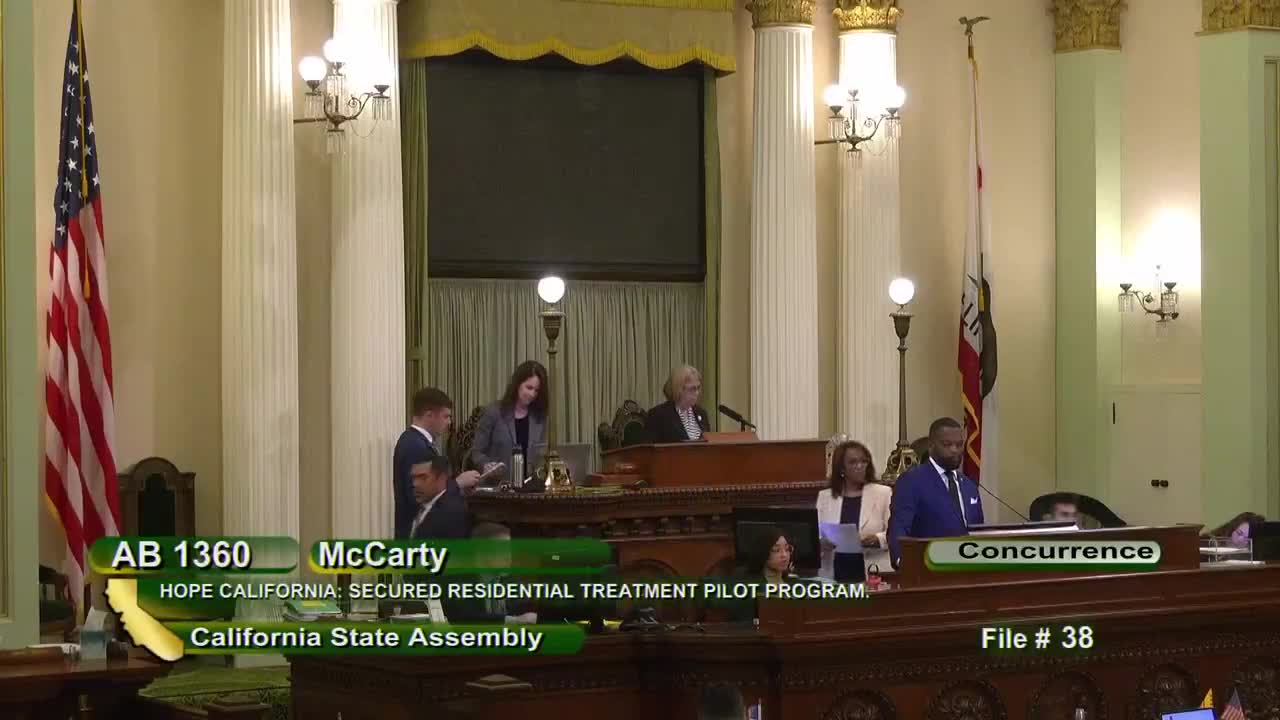
Bill Author

Bill Co-Author(s):