AB 562: Local government finance: the County of Los Angeles.
- Session Year: 2023-2024
- House: Assembly
- Latest Version Date: 2023-07-21
Current Status:
Passed
(2023-07-21: Chaptered by Secretary of State - Chapter 90, Statutes of 2023.)
Introduced
In Committee
First Chamber
In Committee
Second Chamber
Enacted
Existing law requires the County of Los Angeles to annually submit its proposed budget to the Governor, the Legislature, and the State Auditor, including estimated actual expenditures and revenues for the current year, an analysis of the impact of the Governors Budget for the next fiscal year, and any other pertinent information, as specified. Existing law requires the county to provide actual expenditure data for each program in its budget, as specified. Existing law also requires the Legislative Analyst to conduct a review of the county fiscal emergency and to make specified recommendations.
This bill would repeal these provisions.
|
Date
|
Status
|
|---|---|
| Jul 21, 2023 | Chaptered by Secretary of State - Chapter 90, Statutes of 2023. |
| Jul 21, 2023 | Approved by the Governor. |
| Jul 11, 2023 | Enrolled and presented to the Governor at 3 p.m. |
| Jun 29, 2023 | In Assembly. Ordered to Engrossing and Enrolling. |
| Jun 29, 2023 | Read third time. Passed. Ordered to the Assembly. (Ayes 39. Noes 0. Page 1827.). |
| Jun 27, 2023 | Read second time. Ordered to Consent Calendar. |
| Jun 26, 2023 | From committee: Be ordered to second reading file pursuant to Senate Rule 28.8 and ordered to Consent Calendar. |
| Jun 14, 2023 | From committee: Do pass and re-refer to Com. on APPR with recommendation: To Consent Calendar. (Ayes 8. Noes 0.) (June 14). Re-referred to Com. on APPR. |
| May 10, 2023 | Referred to Com. on GOV. & F. |
| Apr 27, 2023 | In Senate. Read first time. To Com. on RLS. for assignment. |
| Apr 27, 2023 | Read third time. Passed. Ordered to the Senate. (Ayes 79. Noes 0. Page 1363.) |
| Apr 20, 2023 | Read second time. Ordered to Consent Calendar. |
| Apr 19, 2023 | From committee: Do pass. To Consent Calendar. (Ayes 14. Noes 0.) (April 19). |
| Mar 23, 2023 | From committee: Do pass and re-refer to Com. on APPR. (Ayes 8. Noes 0.) (March 22). Re-referred to Com. on APPR. |
| Feb 17, 2023 | Referred to Com. on L. GOV. |
| Feb 9, 2023 | From printer. May be heard in committee March 11. |
| Feb 8, 2023 | Read first time. To print. |
|
Date
|
Description
|
Location
|
Votes
|
|
|---|---|---|---|---|
| Jun 29, 2023 | Consent Calendar AB562 Wendy Carrillo | Senate Floor |
Passed |
|
| Jun 14, 2023 | Do pass, but first be re-referred to the Committee on [Appropriations] with the recommendation: To Consent Calendar | Senate Standing Committee on Governance and Finance |
Passed |
|
| Apr 27, 2023 | AB 562 Wendy Carrillo Consent Calendar Second Day Regular Session | Assembly Floor |
Passed |
|
| Apr 19, 2023 | Do pass. To Consent Calendar. | Assembly Standing Committee on Appropriations |
Passed |
|
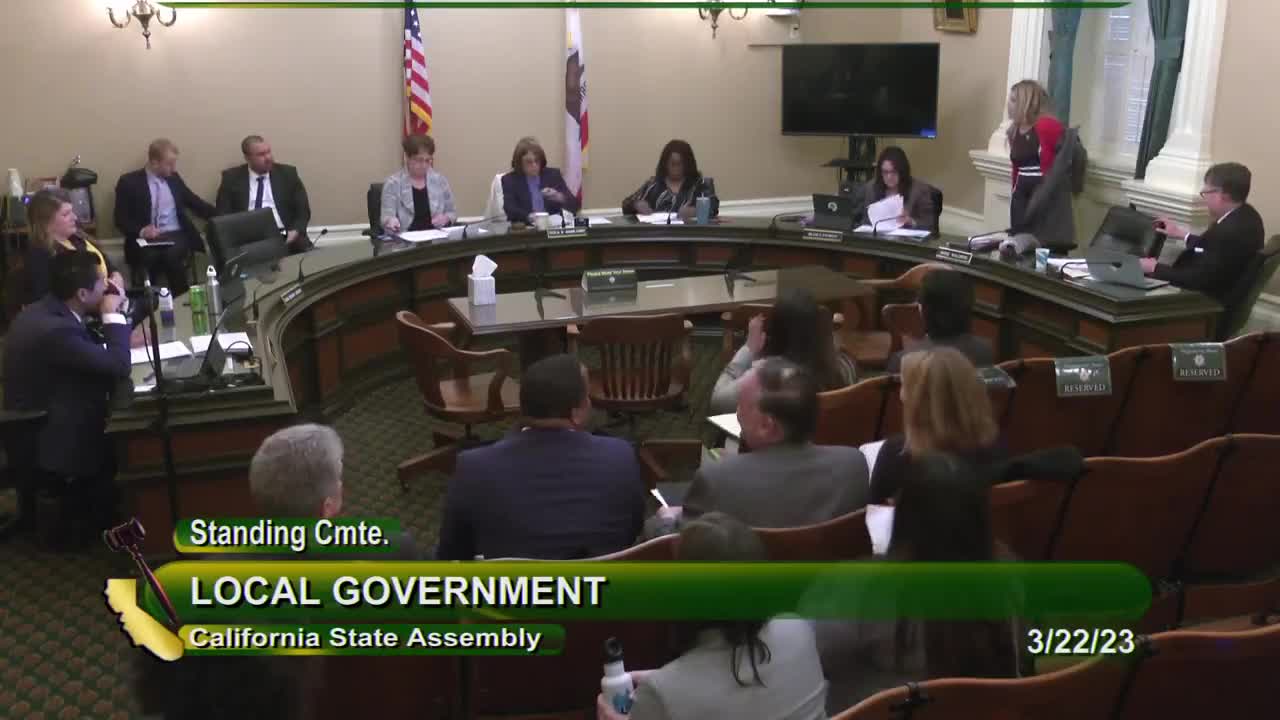
| Mar 22, 2023 | Do pass and be re-referred to the Committee on [Appropriations] | Assembly Standing Committee on Local Government |
Passed |
This list shows positions taken on this bill by organizations on the date displayed, which is linked to the original source.
Positions by individuals are not included.
|
Organization
|
Position
|
Date
|
|---|---|---|
| County Of Los Angeles | ** Support |
SENATE RULES COMMITTEE Office of Senate Floor Analyses (916) 651-1520 Fax: (916) 327-4478 | AB 562 |
CONSENT
Bill No: AB 562
Author: Wendy Carrillo (D)
Introduced: 2/8/23
Vote: 21
SENATE GOVERNANCE & FIN. COMMITTEE: 8-0, 6/14/23
AYES: Caballero, Seyarto, Blakespear, Dahle, Durazo, Glazer, Skinner, Wiener
SENATE APPROPRIATIONS COMMITTEE: Senate Rule 28.8
ASSEMBLY FLOOR: 79-0, 4/27/23 (Consent) - See last page for vote
SUBJECT: Local government finance: the County of Los Angeles
SOURCE: County of Los Angeles
DIGEST:
This bill repeals a requirement for Los Angeles County to submit its budget to the Governor, Legislature, and State Auditor each year, among other requirements.
ANALYSIS:
Existing law:
- Requires the County of Los Angeles to:
- Annually submit its proposed budget to the Governor, Legislature, and State Auditor, including estimated expenditures and revenues for the current year, an analysis of the impact of the Governor’s Budget for the next fiscal year, and any other information pertinent to the county’s fiscal situation for the next fiscal year.
- Provide past actual expenditure data for each program and show expenditures by funding source.
- Comply with Accounting Standards and Procedures for Counties, as promulgated by the Controller, in reporting on all fiscal matters.
- Required the Legislative Analyst’s Office to conduct a review of Los Angeles County’s 1995 fiscal emergency and make specified recommendations.
- Requires all counties to provide the State Controller’s Office (SCO) with a report on all financial transactions from a fiscal year, within seven months of the fiscal year’s close or within a time prescribed by the SCO.
- Requires a County Board of Supervisors to, in its multi-step budget processes:
- Make its recommended budget available to the public by September 8th of each year, and conduct a subsequent hearing with the public’s perspectives.
- Make appropriate revisions to the budget and, by resolution, adopt the final budget by October 2nd of each year.
- Include, for comparative purposes, the amounts of financing sources and uses on an actual basis for the prior two fiscal year (with estimates for the immediate prior fiscal year when necessary).
This bill:
- Removes the statutory requirement for Los Angeles County to annually submit specified information to the Governor, Legislature, and State Auditor, including estimated expenditures and revenues for the current year, actual expenditure data, and an analysis of the impact of the Governor’s Budget for the next fiscal year.
- Removes the requirement that the Legislative Analyst Office (LAO) conduct a fiscal review of the county fiscal emergency.
Background
In June 1995, the Los Angeles County Chief Administrative Officer estimated the county would face a $1.3 billion budget shortfall in the 1995-96 fiscal year, representing 10% of the county’s overall 1994-1995 budget ($12.4 billion). The Legislative Analyst’s Office (LAO) published a report in July 1995 that identified several factors contributing to Los Angeles County’s fiscal shortfall, including a property tax shift, past reliance on one-time measures, employee pay increases, and pressures on the county healthcare system from declining federal funds.
In response to the Los Angeles County fiscal crisis, the Legislature enacted SB 727 (Hayden, Chapter 518, Statutes of 1995) to require Los Angeles County to submit its annual budget to the Governor, Legislature, and State Auditor, among other specified requirements.
Today, the County is subject to additional reporting requirements. To comply with the County Budget Act, Los Angeles County published all of its budgets from 1997 to 2022 online, including the 2023 recommended budget. As required by SB 727, the most recent recommended budget transmittal letters include a summary of the anticipated impacts of the Governor’s Proposed Budget. The County posts these letters on its website.
Comment
Under this bill, the County Budget Act would continue to require Los Angeles County to make its recommended budget publicly available and adopt its final budget as a resolution. Los Angeles County currently fulfills this requirement by posting its recommended and adopted budget on its website, and has done so since 1997. If the Governor, Legislature, and State Auditor want to access and review the County’s recommended and adopted budgets, they could still find them on the County’s website. Most other provisions that the bill is repealing, including that the County comply with Accounting Standards and Procedures for Counties and that the County provide actual expenditure data for each program, appear to be covered by the California Budget Act and the SCO’s reporting requirements.
FISCAL EFFECT: Appropriation: No Fiscal Com.: Yes Local: No
SUPPORT: (Verified 6/27/23)
County of Los Angeles (source)
OPPOSITION: (Verified 6/27/23)
None received
ARGUMENTS IN SUPPORT: According to the author, “AB 562 repeals outdated reporting requirements, bringing what the State requires of Los Angeles County in line with the requirements for other counties. The County of Los Angeles has long since recovered from the fiscal crisis that necessitated Government Code Sections 30600-30608. The County has earned an AAA credit rating, the highest possible rating from S&P Global, as well as credit ratings of Aa1 and AA+ from Fitch Ratings and Moody’s Investors Services, respectively. Even more so, since the passage of these provisions nearly 30 years ago, technological improvements now allow the County to post its recommended and approved budget on its website for the public to view, including the Governor, the Legislature, and the State Auditor. Additionally, the County’s website provides budget resources in multiple languages, including English and Spanish, as well as a budget archive that dates back to Fiscal Year 1997-98.”
ASSEMBLY FLOOR: 79-0, 4/27/23
AYES: Addis, Aguiar-Curry, Alanis, Alvarez, Arambula, Bains, Bauer-Kahan, Bennett, Berman, Boerner, Bonta, Bryan, Calderon, Juan Carrillo, Wendy Carrillo, Cervantes, Chen, Connolly, Megan Dahle, Davies, Dixon, Essayli, Flora, Mike Fong, Vince Fong, Friedman, Gabriel, Gallagher, Garcia, Gipson, Grayson, Haney, Hart, Holden, Hoover, Irwin, Jackson, Jones-Sawyer, Kalra, Lackey, Lee, Low, Lowenthal, Maienschein, Mathis, McCarty, McKinnor, Muratsuchi, Stephanie Nguyen, Ortega, Pacheco, Papan, Joe Patterson, Pellerin, Petrie-Norris, Quirk-Silva, Ramos, Reyes, Luz Rivas, Robert Rivas, Rodriguez, Blanca Rubio, Sanchez, Santiago, Schiavo, Soria, Ta, Ting, Valencia, Villapudua, Waldron, Wallis, Ward, Weber, Wicks, Wilson, Wood, Zbur, Rendon
NO VOTE RECORDED: Jim Patterson
Prepared by: Kyle Krueger / GOV. & F. / (916) 651-4119
6/28/23 11:05:21
**** END ****
SENATE COMMITTEE ON GOVERNANCE AND FINANCE
Senator Anna M. Caballero, Chair
2023 - 2024 Regular
Bill No: | AB 562 | Hearing Date: | 6/14/23 |
Author: | Wendy Carrillo | Tax Levy: | No |
Version: | 2/8/23 | Fiscal: | Yes |
Consultant: | Krueger | ||
Local government finance: the County of Los Angeles
Repeals a requirement for Los Angeles County to submit its budget to the Governor, Legislature, and State Auditor each year, among other requirements.
Background
Los Angeles County Fiscal Crisis. In June 1995, the Los Angeles County Chief Administrative Officer estimated the county would face a $1.3 billion budget shortfall in the 1995-96 fiscal year, representing 10% of the county’s overall 1994-1995 budget ($12.4 billion). The Legislative Analyst’s Office (LAO) published a report in July 1995 that identified several factors contributing to Los Angeles County’s fiscal shortfall, including a property tax shift, past reliance on one-time measures, employee pay increases, and pressures on the county healthcare system from declining federal funds.
In response to the Los Angeles County fiscal crisis, the Legislature enacted SB 727 (Hayden, 1995) to impose the following requirements on Los Angeles County:
- The County must submit its annual budget to the Governor, Legislature, and State Auditor, including estimated expenditures and revenues for the current year, an analysis of the impact of the Governor’s Budget for the next fiscal year, and any other information pertinent to the county’s fiscal situation for the next fiscal year.
- The County must provide past actual expenditure data for each program and show expenditures by funding source.
- LAO must conduct a review of the county fiscal emergency and make specified recommendations.
- The County must comply with Accounting Standards and Procedures for Counties, as promulgated by the Controller, in reporting on all fiscal matters.
The State Controller’s Office Reporting Requirements. The State Controller’s Office (SCO) prescribes uniform accounting procedures for counties after consultation with and approval by the Committee on County Accounting Procedures (CCAP). CCAP includes 10 members appointed by the SCO; five are county auditors or equivalent county officers, three are county administrative or executive officers, and two are members of a county board of supervisors.
Each county must provide the SCO with a report on all financial transactions from a fiscal year, within seven months of the fiscal year’s close or within a time prescribed by the SCO. SCO must then publish the report and make it publicly available in a downloadable and printable format, on or before November 1 of each year. The report is available upon request of the Legislature on or before April 1 of each year.
The County Budget Act. In 2009, the Legislature enacted SB 113 (Committee on Local Government, 2009) or the “County Budget Act”, which revised county budget processes. Among its provisions, the Act required counties to use a multi-step budget process each year:
- The County Administrative Officer or County Auditor must submit a recommended budget, for approval by the County’s Board of Supervisors (BOS) by June 30th of each year.
- The BOS must make the recommended budget available to the public and publish a notice in the newspaper with specified information by September 8th. They must conduct a subsequent public hearing to consider the public’s perspectives.
- The County BOS must make appropriate revisions to the budget and, by a resolution, adopt the final budget no later than October 2nd. The adopted budget must include, for comparative purposes, the amounts of financing sources and uses on an actual basis for the prior two fiscal years (with estimates for the immediate prior fiscal year when necessary).
Los Angeles County. To comply with the County Budget Act, the Los Angeles County published all of its budgets from 1997 to 2022 online, including the 2023 recommended budget. Los Angeles County’s 2023 recommended expenditures total $43 billion, $1.6 billion less than the current year. Los Angeles County enjoys the highest possible rating (AAA) from S&P Global, an independent source of credit ratings. S&P Global states the “county has a strong revenue base in property taxes” and a “broad and diverse economy and extremely long-term creditworthiness.”
As required by SB 727, the most recent recommended budget transmittal letters include a summary of the anticipated impacts of the Governor’s Proposed Budget. The County posts these letters on its website. In its most recent proposed budget, the County anticipates “growing fiscal uncertainty” due to the state budget deficit, economic environment, and the state’s expansion of the statute of limitations on childhood sexual assault claims.
Los Angeles County is still currently required to submit its annual budget to the Governor, State Auditor, and Legislature each year, which was done most recently via e-mail. The author wants to relieve Los Angeles County of the time and inconvenience associated with sending this e-mail.
Proposed Law
Assembly Bill 562 removes the SB 727 requirement for Los Angeles County to annually submit specified information to the Governor, Legislature, and State Auditor, including estimated expenditures and revenues for the current year, actual expenditure data, and an analysis of the impact of the Governor’s Budget for the next fiscal year. The measure also removes the requirement that the LAO conduct a fiscal review of the county fiscal emergency.
State Revenue Impact
No estimate.
Comments
1. Purpose of the bill. According to the author, “AB 562 repeals outdated reporting requirements, bringing what the State requires of Los Angeles County in line with the requirements for other counties. The County of Los Angeles has long since recovered from the fiscal crisis that necessitated Government Code Sections 30600-30608. The County has earned an AAA credit rating, the highest possible rating from S&P Global, as well as credit ratings of Aa1 and AA+ from Fitch Ratings and Moody’s Investors Services, respectively. Even more so, since the passage of these provisions nearly 30 years ago, technological improvements now allow the County to post its recommended and approved budget on its website for the public to view, including the Governor, the Legislature, and the State Auditor. Additionally, the County’s website provides budget resources in multiple languages, including English and Spanish, as well as a budget archive that dates back to Fiscal Year 1997-98.”
2. Already Covered. Under this bill, Los Angeles County need not submit its budget to the Governor, Legislature, and State Auditor. However, the County Budget Act would continue to require Los Angeles County to make its recommended budget publicly available and adopt its final budget as a resolution. Los Angeles County currently fulfills this requirement by posting its recommended and adopted budget on its website, and has done so since 1997. If the Governor, Legislature, and State Auditor want to access and review the County’s recommended and adopted budgets, they can find them on the County’s website. Most other provisions that the bill is repealing, including that the County comply with Accounting Standards and Procedures for Counties and that the County provide actual expenditure data for each program, appear to be covered by the California Budget Act and the SCO’s reporting requirements.
Assembly Actions
Assembly Local Government: 8-0
Assembly Appropriations: 14-0
Assembly Floor: 79-0
Support and Opposition (6/9/23)
Support: Los Angeles County (Sponsor)
Opposition: None received.
-- END --
Date of Hearing: April 19, 2023
ASSEMBLY COMMITTEE ON APPROPRIATIONS
Chris Holden, Chair
ABPCA Bill Id:AB 562
Author:(Wendy Carrillo) – As Introduced Ver:February 8, 2023
Policy Committee: | Local Government | Vote: | 8 - 0 |
|
| ||
|
|
Urgency: No State Mandated Local Program: No Reimbursable: No
SUMMARY:
This bill repeals Chapter 12 (commencing with Section 30600) of Division 3 of Title 3 of the Government Code containing language and data reporting requirements pertaining to the fiscal emergency experienced by the Los Angeles County government in 1995.
Specifically, this bill:
- Repeals the 1995 Legislative declaration of a severe fiscal emergency in the County of Los Angeles (county) and the corresponding need for the requirements of this chapter.
- Repeals the requirement the county annually submit its proposed budget, including specified information, analyses, and other pertinent information, including actual expenditure data for each program in its budget, to the Governor, the Legislature, and the State Auditor.
- Repeals the requirement the Legislative Analyst (LAO) conduct a review of the county fiscal emergency, including identification of the principal factors contributing to the fiscal emergency, and to make specified recommendations.
FISCAL EFFECT:
- Negligible state costs. No state-level entity is required to use the information.
- Potential cost savings to Los Angeles County. Because the county now provides the required documents and information by email, any savings to the county is likely minor.
COMMENTS:
- Purpose. This bill, sponsored by the County of Los Angeles, seeks to repeal obsolete provisions of law pertaining to the 1995 Los Angeles County fiscal crisis. According to the author:
[This bill] repeals outdated reporting requirements, bringing what the State requires of Los Angeles County in line with the requirements for other counties. The County of Los Angeles has long since recovered from the fiscal crisis that necessitated Government Code Sections 30600-30608. The County has earned an AAA credit rating, the highest possible rating from S&P Global, as well as credit ratings of Aa1 and AA+ from Fitch Ratings and Moody’s Investors Services, respectively. Even more so, since the passage of these provisions nearly 30 years ago, technological improvements now allow the County to post its recommended and approved budget on its website for the public to view, including the Governor, the Legislature, and the State Auditor. Additionally, the County’s website provides budget resources in multiple languages, including English and Spanish, as well as a budget archive that dates back to Fiscal Year 1997-98.
- Background. In June 1995, the county’s chief administrative officer estimated the county was facing a $1.3 billion budget shortfall for fiscal year 1995-96, approximately 10% of the county’s overall 1994-95 budget. In response, the Legislature adopted SB 727 (Polanco and Hayden), Chapter 518, Statutes of 1995, which, among other things, imposed the requirements this bill is repealing, including studies by the LAO and the State Auditor.
In anticipation of the directive in SB 727, the LAO published its study of the Los Angeles County fiscal crisis in July of 1995, prior to SB 727 taking affect. SB 787 also required the State Auditor to perform an audit to assess the county’s fiscal condition as well as conditions and actions contributing to the budget shortfall. The State Auditor submitted their findings to the Legislature and the Governor on March 11, 1996, and continued, as required by SB 787, to conduct semiannual reviews of the county through March 1998.
The code sections pertaining to the State Auditor requirements have since been repealed by the Legislature. This bill repeals the remaining provisions of SB 727 pertaining to the 1995 Los Angeles County fiscal emergency, including the now-obsolete LAO study provisions, as well as the county budget reporting requirements, which no longer support a state study or reporting purpose.
Analysis Prepared by: Jennifer Swenson / APPR. / (916) 319-2081
Date of Hearing: March 22, 2023
ASSEMBLY COMMITTEE ON LOCAL GOVERNMENT
Cecilia Aguiar-Curry, Chair
ABPCA Bill Id:AB 562 (
Author:Wendy Carrillo) – As Introduced Ver:February 8, 2023
SUBJECT: Local government finance: the County of Los Angeles.
SUMMARY: Repeals financial reporting requirements and associated fiscal oversight for the County of Los Angeles (LA County). Specifically, this bill:
- Repeals the following requirements for LA County:
- In reporting on all fiscal matters, LA County shall comply with the Accounting Standards and Procedures for Counties as promulgated by the Controller.
- LA County shall annually submit its proposed budget to the Governor, the Legislature, and the State Auditor, including estimated annual expenditures and revenues for the current year, an analysis of the impact of the Governor’s Budget for the next fiscal year, and any other pertinent information which may impact LA County’s fiscal situation for the next fiscal year.
- LA County shall, for each program in the budget, provide actual expenditure data to enable comparison of actual expenditures with the current estimated and proposed levels and to show expenditures by funding source.
- Repeals requirements for the Legislative Analyst’s Office (LAO) to conduct a review including the identification of the principal factors contributing to LA County’s fiscal emergency and making recommendations concerning the following:
- Structural changes in federal, state, and county fiscal program relationships.
- County operations that will minimize future county fiscal emergencies and promote long-term fiscal viability.
FISCAL EFFECT: This bill is keyed fiscal.
COMMENTS:
- Bill Summary. LA County is currently required to annually submit its proposed budget to the Governor, the Legislature, and the State Auditor, including estimated actual expenditures and revenues for the current year, an analysis of the impact of the Governor’s Budget for the next fiscal year, and any other pertinent information, as specified. Existing law also requires LA County to provide actual expenditure data for each program in its budget, as specified. Existing law also required the LAO to conduct a review of the county fiscal emergency and to make specified recommendations. This bill repeals all of these provisions. LA County is the sponsor of this bill.
- Los Angeles County Fiscal Crisis. The County’s Chief Administrative Officer estimated in June 1995 that LA County was facing a $1.3 billion budget shortfall in 1995-96. Total LA County spending in the previous fiscal year was approximately $12.4 billion and the estimated shortfall represented about 10% of LA County’s overall 1994-95 budget. The LAO published a study on LA County’s fiscal crisis on July 11, 1995 and found that the following factors contributed to LA County’s budget problems:
- Property tax shifts: The state’s 1992-93 and 1993-94 Budget Acts shifted about $1 billion of property taxes from LA County to public schools.
- Costs related to LA County health program utilization and financing.
- Major loss of federal funds: Total federal Medi-Cal related payments to the county Department of Health Services were estimated to fall from $1.3 billion in 1994-95 to $982 million in 1995-96.
- State offset: The loss in federal funding had been compounded by the state offset of specified federal funds that would otherwise go to counties. In 1995-96, LA County estimated that its loss due to the state offset would be $120 million.
- Slow growth in local taxes: Property taxes, sales taxes, and vehicle license fees were impacted by the recession. For example, the single largest general purpose revenue source, property taxes, increased by almost 10% per year in the 1980s, but was projected by LA County to decline by 1.6% in 1995-96.
- Employee pay increases: In many county departments, employee salaries increased faster than inflation since 1988-89. The salary increases contributed to cost pressures within LA County’s budget.
- One-time measures: LA County had relied on one-time measures to cover recent budget shortfalls, including the issuance of bonds, it depleted its reserves, deferred obligations to its workers’ compensation fund, and deferred certain employee costs.
- Property tax shifts: The state’s 1992-93 and 1993-94 Budget Acts shifted about $1 billion of property taxes from LA County to public schools.
In response to the fiscal emergency, the Legislature adopted SB 727 (Hayden & Polanco), Chapter 518, Statutes of 1995, which, among other things, imposed the requirements that this bill would repeal. LA County proclaims it has since recovered from the emergency and currently enjoys a strong financial position, including the highest possible credit rating from S&P Global and that these are now obsolete.
- Author’s Statement. According to the author, “AB 562 repeals outdated reporting requirements, bringing what the State requires of Los Angeles County in line with the requirements for other counties. The County of Los Angeles has long since recovered from the fiscal crisis that necessitated Government Code Sections 30600-30608. The County has earned an AAA credit rating, the highest possible rating from S&P Global, as well as credit ratings of Aa1 and AA+ from Fitch Ratings and Moody’s Investors Services, respectively.
- Even more so, since the passage of these provisions nearly 30 years ago, technological improvements now allow the County to post its recommended and approved budget on its website for the public to view, including the Governor, the Legislature, and the State Auditor. Additionally, the County’s website provides budget resources in multiple languages, including English and Spanish, as well as a budget archive that dates back to Fiscal Year 1997-98.”
- Controller Reports. Each city, county, and special district is currently required to provide to the State Controller’s Office (SCO) a report of all the financial transactions during the preceding year. The report must contain data from financial statements prepared in accordance with Generally Accepted Accounting Principles (GAAP), if the data is available. The report must be provided seven months after the close of each fiscal year or within the time prescribed by the SCO, whichever is later, and shall be in the form required by the SCO.
Once submitted, the SCO must compile, publish, and make publicly available on its website, in a format that can be printed and downloaded, reports on the financial transactions and information on annual compensation of each county, city, and special district. The SCO must publish the reports of the financial transactions on or before November 1 of each year following the end of the annual reporting period. This data is available upon request of the Legislature on or before April 1 of each year.
- County Accounting Procedures. The SCO currently prescribes uniform accounting procedures for counties that conform to the GAAP. The SCO prescribes such procedures after consultation with and approval by the Committee on County Accounting Procedures (CCAP). CCAP consists of 10 members appointed by the SCO. Five members must be county auditors or county officers in equivalent positions, three must be county administrative officers, and two shall be members of a county board of supervisors.
- Arguments in Support. According to LA County “AB 562 would delete outdated provisions that are specific to the County of Los Angeles (County). These provisions were enacted nearly 30 years ago when the County was facing a fiscal emergency, requiring the County to annually submit its proposed budget to the Governor, the Legislature, and the State Auditor.
“Government Code § 30600-30608 is no longer needed, as the County no longer experiences a fiscal emergency. Considering technological advancements since these provisions took effect nearly 30 years ago, the County currently publishes budget information on its website for the public to view, including the Governor, the Legislature, and the State Auditor. Additionally, the County’s website provides budget resources in multiple languages, including English and Spanish, as well as a budget archive dating back to Fiscal Year 1997-98. The County of Los Angeles has utilized its website to provide greater transparency and accessibility to its budget process. AB 562 simply removes obsolete provisions to align with the 21st century.”
- Arguments in Opposition. None on file.
REGISTERED SUPPORT / OPPOSITION:
Support
Los Angeles County [SPONSOR]
Opposition
None on file
Analysis Prepared by: Jimmy MacDonald / L. GOV. / (916) 319-3958
Discussed in Hearing
 3MIN
Assembly Standing Committee on Local Government
Bill Author

Bill Co-Author(s):