AB 579: Schoolbuses: zero-emission vehicles.
- Session Year: 2023-2024
- House: Assembly
- Latest Version Date: 2023-10-08
Current Status:
Passed
(2023-10-08: Chaptered by Secretary of State - Chapter 445, Statutes of 2023.)
Introduced
In Committee
First Chamber
In Committee
Second Chamber
Enacted
Existing law authorizes state funds, upon appropriation by the Legislature, to be distributed to the Superintendent of Public Instruction for distribution to certain local educational agencies for the purchase of low- or zero-emission schoolbuses that replace, or increase the number of, schoolbuses in the existing schoolbus fleet or for retrofitting existing schoolbuses to achieve reductions in emissions, as specified.
This bill would require, commencing January 1, 2035, 100% of all newly purchased or contracted schoolbuses of a school district, county office of education, or charter school to be zero-emission vehicles, where feasible. The bill would, in order to comply with that requirement, authorize local educational agencies, as defined, to request a one-time extension for a term not to exceed 5 years if a local educational agency determines that the purchase or contracting of a zero-emission schoolbus is not feasible due to both terrain and route constraints, provided that certain conditions are met. The bill would also, commencing January 1, 2040, authorize frontier local educational agencies, as defined, to apply for annual extensions, through January 1, 2045, to that requirement, if the frontier local educational agency determines that the purchase or contracting of a zero-emission schoolbus is not feasible due to both terrain and route constraints, provided that certain conditions are met. To the extent this requirement imposes additional duties on local educational agencies in connection with federally required pupil transportation services that go beyond the requirements in federal law, the bill would impose a state-mandated local program.
Existing law requires a continuing contract for pupil transportation services in school districts or schoolbus lease or rental to not exceed a 5-year term, or for a schoolbus lease or rental contract containing a purchase or cancel option, as specified, not to exceed a 10-year term.
For the furnishing of transportation of pupils in school districts to and from school using schoolbuses that are zero-emission vehicles and for the lease or rental of schoolbuses that are zero-emission vehicles, the bill would extend the term limit to 15 years for a continuing contract and to 20 years for a schoolbus lease or rental contract containing a purchase or cancel option, as specified. The bill also would apply these contracting provisions to county offices of education and charter schools.
The California Constitution requires the state to reimburse local agencies and school districts for certain costs mandated by the state. Statutory provisions establish procedures for making that reimbursement.
This bill would provide that, if the Commission on State Mandates determines that the bill contains costs mandated by the state, reimbursement for those costs shall be made pursuant to the statutory provisions noted above.
Existing law authorizes state funds, upon appropriation by the Legislature, to be distributed to the Superintendent of Public Instruction for distribution to certain local educational agencies for the purchase of low- or zero-emission schoolbuses that replace, or increase the number of, schoolbuses in the existing schoolbus fleet or for retrofitting existing schoolbuses to achieve reductions in emissions, as specified.
This bill would require, commencing January 1, 2035, 100% of all newly purchased or contracted schoolbuses of a school district, county office of education, or charter school to be zero-emission vehicles, where feasible. The bill would, in order to comply with that requirement, authorize local educational agencies, as defined, to request a one-time extension for a term not to exceed 5 years if a local educational agency determines that the purchase or contracting of a zero-emission schoolbus is not feasible due to both terrain and route constraints, provided that certain conditions are met. The bill would also, commencing January 1, 2040, authorize frontier school districts, local educational agencies, as defined, to apply for annual extensions, through January 1, 2045, to that requirement, if the frontier school district local educational agency determines that the purchase or contracting of a zero-emission schoolbus is not feasible due to both terrain and route constraints, provided that certain conditions are met. To the extent this requirement imposes additional duties on local educational agencies in connection with federally required pupil transportation services that go beyond the requirements in federal law, the bill would impose a state-mandated local program.
Existing law requires a continuing contract for pupil transportation services in school districts or schoolbus lease or rental to not exceed a 5-year term, or for a schoolbus lease or rental contract containing a purchase or cancel option, as specified, not to exceed a 10-year term.
For the furnishing of transportation of pupils in school districts to and from school using schoolbuses that are zero-emission vehicles and for the lease or rental of schoolbuses that are zero-emission vehicles, the bill would extend the term limit to 15 years for a continuing contract and to 20 years for a schoolbus lease or rental contract containing a purchase or cancel option, as specified. The bill also would apply these contracting provisions to county offices of education and charter schools.
The California Constitution requires the state to reimburse local agencies and school districts for certain costs mandated by the state. Statutory provisions establish procedures for making that reimbursement.
This bill would provide that, if the Commission on State Mandates determines that the bill contains costs mandated by the state, reimbursement for those costs shall be made pursuant to the statutory provisions noted above.
Existing law authorizes state funds, upon appropriation by the Legislature, to be distributed to the Superintendent of Public Instruction for distribution to certain local educational agencies for the purchase of low- or zero-emission schoolbuses that replace, or increase the number of, schoolbuses in the existing schoolbus fleet or for retrofitting existing schoolbuses to achieve reductions in emissions, as specified.
This bill would require, commencing January 1, 2035, 100% of all newly purchased or contracted schoolbuses of a school district, county office of education, or charter school to be zero-emission vehicles, where feasible. The bill would, in order to comply with that requirement, authorize local educational agencies, as defined, to request a one-time extension for a term not to exceed 5 years if a local educational agency determines that the purchase or contracting of a zero-emission schoolbus is not feasible due to both terrain and route constraints, provided that certain conditions are met. The bill would also, commencing January 1, 2040, authorize frontier school districts, as defined, to apply for annual extensions, through January 1, 2045, to that requirement, if the frontier school district determines that the purchase or contracting of a zero-emission schoolbus is not feasible due to both terrain and route constraints, provided that certain conditions are met. To the extent this requirement imposes additional duties on local educational agencies in connection with federally required pupil transportation services that go beyond the requirements in federal law, the bill would impose a state-mandated local program.
Existing law requires a continuing contract for pupil transportation services in school districts or schoolbus lease or rental to not exceed a 5-year term, or for a schoolbus lease or rental contract containing a purchase or cancel option, as specified, not to exceed a 10-year term.
For the furnishing of transportation of pupils in school districts to and from school using schoolbuses that are zero-emission vehicles and for the lease or rental of schoolbuses that are zero-emission vehicles, the bill would extend the term limit to 15 years for a continuing contract and to 20 years for a schoolbus lease or rental contract containing a purchase or cancel option, as specified. The bill also would apply these contracting provisions to county offices of education and charter schools.
The California Constitution requires the state to reimburse local agencies and school districts for certain costs mandated by the state. Statutory provisions establish procedures for making that reimbursement.
This bill would provide that, if the Commission on State Mandates determines that the bill contains costs mandated by the state, reimbursement for those costs shall be made pursuant to the statutory provisions noted above.
Existing law authorizes state funds, upon appropriation by the Legislature, to be distributed to the Superintendent of Public Instruction for distribution to certain local educational agencies for the purchase of low- or zero-emission schoolbuses that replace, or increase the number of, schoolbuses in the existing schoolbus fleet or for retrofitting existing schoolbuses to achieve reductions in emissions, as specified.
This bill would require, commencing January 1, 2035, 100% of all newly purchased or contracted schoolbuses of a school district, county office of education, or charter school to be zero-emission vehicles, where feasible. The bill would, in order to comply with that requirement, authorize local educational agencies, as defined, to request a one-time extension for a term not to exceed 5 years if a local educational agency determines that the purchase or contracting of a zero-emission schoolbus is not feasible due to both terrain and route constraints, provided that certain conditions are met. To the extent this requirement imposes additional duties on local educational agencies in connection with federally required pupil transportation services that go beyond the requirements in federal law, the bill would impose a state-mandated local program.
Existing law requires a continuing contract for pupil transportation services in school districts or schoolbus lease or rental to not exceed a 5-year term, or for a schoolbus lease or rental contract containing a purchase or cancel option, as specified, not to exceed a 10-year term.
For the furnishing of transportation of pupils in school districts to and from school using schoolbuses that are zero-emission vehicles and for the lease or rental of schoolbuses that are zero-emission vehicles, the bill would extend the term limit to 15 years for a continuing contract and to 20 years for a schoolbus lease or rental contract containing a purchase or cancel option, as specified. The bill also would apply these contracting provisions to county offices of education and charter schools.
The California Constitution requires the state to reimburse local agencies and school districts for certain costs mandated by the state. Statutory provisions establish procedures for making that reimbursement.
This bill would provide that, if the Commission on State Mandates determines that the bill contains costs mandated by the state, reimbursement for those costs shall be made pursuant to the statutory provisions noted above.
(a)The Legislature finds and declares all of the following:
(1)Of the estimated 24,000 schoolbuses operating in California, about 500 are zero-emission vehicles either in operation or on order.
(2)On September 23, 2020, Governor Gavin Newsom issued Executive Order No. N-79-20, requiring all medium- and heavy-duty vehicles such as trucks and buses to be 100 percent zero-emission vehicles by 2045.
(3)Many schoolbuses have an operational lifetime of 30 years or more. Over 100 schoolbuses in the state are the model year 1988 or older. A diesel bus sold today could be operating past 2050.
(4)Vehicle-to-grid programs have the potential to create additional revenue streams or, at a minimum, operational cost savings, thereby improving the value proposition and shortening the necessary loan terms.
(5)The federal Infrastructure Investment and Jobs Act (Public Law 117-58) directs additional investment in electrifying schoolbuses through a competitive grant program administered by the United States Environmental Protection Agency.
(b)It is the intent of the Legislature to codify a timeline for schoolbus electrification that sets a clear deadline for schoolbus fleet transition.
SEC. 2.Section 17927 is added to the Education Code, immediately following Section 17926, to read:17927.(a)Commencing January 1, 2035, 100 percent of all newly purchased or contracted schoolbuses of a local educational agency shall be zero-emission vehicles, where feasible.
(b)If a local educational agency determines that the purchase or contracting of a zero-emission schoolbus is not feasible due to both terrain and route constraints, the local educational agency may request a one-time extension for a term not to exceed five years, in order to meet the requirements in subdivision (a), provided that both of the following conditions are met:
(1)The local educational agency can reasonably demonstrate that a daily planned bus route for transporting pupils to and from school cannot be serviced through available zero-emission technology in 2035.
(2)The State Air Resources Board, in consultation with the department and the State Energy Resources Conservation and Development Commission, receives and evaluates a local educational agencys request, and grants a one-time extension based on the local educational agency reasonably demonstrating the condition in paragraph (1).
(c)Commencing January 1, 2040, if a frontier local educational agency determines that the purchase or contracting of a zero-emission schoolbus is not feasible due to both terrain and route constraints, the frontier local educational agency may request annual extensions, with the last extension expiring on January 1, 2045, in order to meet the requirements in subdivision (a), provided that both of the following conditions are met:
(1)The frontier local educational agency can reasonably demonstrate that a daily planned bus route for transporting pupils to and from school cannot be serviced through available zero-emission technology in the period in which the annual waiver is sought.
(2)The State Air Resources Board, in consultation with the department and the State Energy Resources Conservation and Development Commission, receives and evaluates the frontier local educational agencys request, and grants an annual extension based on the frontier local educational agency reasonably demonstrating the condition in paragraph (1).
(d)For purposes of this section, the following definitions apply:
(1)Frontier local educational agency means a local educational agency that meets either of the following conditions:
(A)The total number of pupils in average daily attendance at all of the schools served by the local educational agency is fewer than 600.
(B)Each county in which a school operated by the local educational agency is located has a total population density fewer than 10 persons per square mile.
(2)Local educational agency means a school district, county office of education, or charter school.
SEC. 3.Section 39803.5 is added to the Education Code, to read:39803.5.(a)Notwithstanding Section 39803 or any other law, this section shall apply to the furnishing of transportation of pupils in local educational agencies to and from school using schoolbuses that are zero-emission vehicles and for the lease or rental of schoolbuses that are zero-emission vehicles.
(b)If a continuing contract for the furnishing of transportation of pupils in local educational agencies to and from school is made, it shall be made for a term not to exceed 15 years. A contract is renewable at the option of the local educational agency and the party contracting to provide transportation services, jointly, at the end of the term of the contract. The contract as renewed shall include all of the terms and conditions of the previous contract, including any provisions increasing rates based on increased costs.
(c)A continuing contract may be made for the lease or rental of schoolbuses, not to exceed 15 years, except that if a lease or rental contract provides that the local educational agency may exercise an option either to purchase the buses or to cancel the lease at the end of each annual period during the period of the contract, the contract may be made for a term not to exceed 20 years.
(d)Notwithstanding any other law to the contrary, a continuing contract executed under this section may be negotiated annually within the contract period when economic factors indicate negotiation is necessary to maintain an equitable pricing structure. Renegotiation is subject to the approval of both contracting parties.
(e)Any rental, lease, or lease-purchase of a schoolbus shall comply with all applicable provisions of Article 3 (commencing with Section 17450) of Chapter 4 of Part 10.5 of Division 1 of Title 1.
(f)For purposes of this section, local educational agency means a school district, county office of education, or charter school.
(g)This section is effective January 1, 2024.
SEC. 4.If the Commission on State Mandates determines that this act contains costs mandated by the state, reimbursement to local agencies and school districts for those costs shall be made pursuant to Part 7 (commencing with Section 17500) of Division 4 of Title 2 of the Government Code.
(a)The Legislature finds and declares all of the following:
(1)Of the estimated 24,000 schoolbuses operating in California, about 500 are zero-emission vehicles either in operation or on order.
(2)On September 23, 2020, Governor Gavin Newsom issued Executive Order No. N-79-20, requiring all medium- and heavy-duty vehicles such as trucks and buses to be 100 percent zero-emission vehicles by 2045.
(3)Many schoolbuses have an operational lifetime of 30 years or more. Over 100 schoolbuses in the state are the model year 1988 or older. A diesel bus sold today could be operating past 2050.
(4)Vehicle-to-grid programs have the potential to create additional revenue streams or, at a minimum, operational cost savings, thereby improving the value proposition and shortening the necessary loan terms.
(5)The federal Infrastructure Investment and Jobs Act (Public Law 117-58) directs additional investment in electrifying schoolbuses through a competitive grant program administered by the United States Environmental Protection Agency.
(b)It is the intent of the Legislature to codify a timeline for schoolbus electrification that sets a clear deadline for schoolbus fleet transition.
SEC. 2.Section 17927 is added to the Education Code, immediately following Section 17926, to read:17927.(a)Commencing January 1, 2035, 100 percent of all newly purchased or contracted schoolbuses of a local educational agency shall be zero-emission vehicles, where feasible.
(b)If a local educational agency determines that the purchase or contracting of a zero-emission schoolbus is not feasible due to both terrain and route constraints, the local educational agency may request a one-time extension for a term not to exceed five years, in order to meet the requirements in subdivision (a), provided that both of the following conditions are met:
(1)The local educational agency can reasonably demonstrate that a daily planned bus route for transporting pupils to and from school cannot be serviced through available zero-emission technology in 2035.
(2)The State Air Resources Board, in consultation with the department and the State Energy Resources Conservation and Development Commission, receives and evaluates a local educational agencys request, and grants a one-time extension based on the local educational agency reasonably demonstrating the condition in paragraph (1).
(c)Commencing January 1, 2040, if a frontier school district, as defined in Section 94, local educational agency determines that the purchase or contracting of a zero-emission schoolbus is not feasible due to both terrain and route constraints, the frontier school district local educational agency may request annual extensions, with the last extension expiring on January 1, 2045, in order to meet the requirements in subdivision (a), provided that both of the following conditions are met:
(1)The frontier school district local educational agency can reasonably demonstrate that a daily planned bus route for transporting pupils to and from school cannot be serviced through available zero-emission technology in the period in which the annual waiver is sought.
(2)The State Air Resources Board, in consultation with the department and the State Energy Resources Conservation and Development Commission, receives and evaluates the frontier school districts local educational agencys request, and grants an annual extension based on the frontier school district local educational agency reasonably demonstrating the condition in paragraph (1).
(d)For purposes of this section, local educational agency means a school district, county office of education, or charter school. the following definitions apply:
(1)Frontier local educational agency means a local educational agency that meets either of the following conditions:
(A)The total number of pupils in average daily attendance at all of the schools served by the local educational agency is fewer than 600.
(B)Each county in which a school operated by the local educational agency is located has a total population density fewer than 10 persons per square mile.
(2)Local educational agency means a school district, county office of education, or charter school.
SEC. 3.Section 39803.5 is added to the Education Code, to read:39803.5.(a)Notwithstanding Section 39803 or any other law, this section shall apply to the furnishing of transportation of pupils in local educational agencies to and from school using schoolbuses that are zero-emission vehicles and for the lease or rental of schoolbuses that are zero-emission vehicles.
(b)If a continuing contract for the furnishing of transportation of pupils in local educational agencies to and from school is made, it shall be made for a term not to exceed 15 years. A contract is renewable at the option of the local educational agency and the party contracting to provide transportation services, jointly, at the end of the term of the contract. The contract as renewed shall include all of the terms and conditions of the previous contract, including any provisions increasing rates based on increased costs.
(c)A continuing contract may be made for the lease or rental of schoolbuses, not to exceed 15 years, except that if a lease or rental contract provides that the local educational agency may exercise an option either to purchase the buses or to cancel the lease at the end of each annual period during the period of the contract, the contract may be made for a term not to exceed 20 years.
(d)Notwithstanding any other law to the contrary, a continuing contract executed under this section may be negotiated annually within the contract period when economic factors indicate negotiation is necessary to maintain an equitable pricing structure. Renegotiation is subject to the approval of both contracting parties.
(e)Any rental, lease, or lease-purchase of a schoolbus shall comply with all applicable provisions of Article 3 (commencing with Section 17450) of Chapter 4 of Part 10.5 of Division 1 of Title 1.
(f)For purposes of this section, local educational agency means a school district, county office of education, or charter school.
(g)This section is effective January 1, 2024.
SEC. 4.If the Commission on State Mandates determines that this act contains costs mandated by the state, reimbursement to local agencies and school districts for those costs shall be made pursuant to Part 7 (commencing with Section 17500) of Division 4 of Title 2 of the Government Code.
(a)The Legislature finds and declares all of the following:
(1)Of the estimated 24,000 schoolbuses operating in California, about 500 are zero-emission vehicles either in operation or on order.
(2)On September 23, 2020, Governor Gavin Newsom issued Executive Order No. N-79-20, requiring all medium- and heavy-duty vehicles such as trucks and buses to be 100 percent zero-emission vehicles by 2045.
(3)Many schoolbuses have an operational lifetime of 30 years or more. Over 100 schoolbuses in the state are the model year 1988 or older. A diesel bus sold today could be operating past 2050.
(4)Vehicle-to-grid programs have the potential to create additional revenue streams or, at a minimum, operational cost savings, thereby improving the value proposition and shortening the necessary loan terms.
(5)The federal Infrastructure Investment and Jobs Act (Public Law 117-58) directs additional investment in electrifying schoolbuses through a competitive grant program administered by the United States Environmental Protection Agency.
(b)It is the intent of the Legislature to codify a timeline for schoolbus electrification that sets a clear deadline for schoolbus fleet transition.
SEC. 2.Section 17927 is added to the Education Code, immediately following Section 17926, to read:17927.(a)Commencing January 1, 2035, 100 percent of all newly purchased or contracted schoolbuses of a local educational agency shall be zero-emission vehicles, where feasible.
(b)If a local educational agency determines that the purchase or contracting of a zero-emission schoolbus is not feasible due to both terrain and route constraints, the local educational agency may request a one-time extension for a term not to exceed five years, in order to meet the requirements in subdivision (a), provided that both of the following conditions are met:
(1)The local educational agency can reasonably demonstrate that a daily planned bus route for transporting pupils to and from school cannot be serviced through available zero-emission technology in 2035.
(2)The State Air Resources Board, in consultation with the department and the State Energy Resources Conservation and Development Commission, receives and evaluates a local educational agencys request, and grants a one-time extension based on the local educational agency reasonably demonstrating the condition in paragraph (1).
(c)Commencing January 1, 2040, if a frontier school district, as defined in Section 94, determines that the purchase or contracting of a zero-emission schoolbus is not feasible due to both terrain and route constraints, the frontier school district may request annual extensions, with the last extension expiring on January 1, 2045, in order to meet the requirements in subdivision (a), provided that both of the following conditions are met:
(1)The frontier school district can reasonably demonstrate that a daily planned bus route for transporting pupils to and from school cannot be serviced through available zero-emission technology in the period in which the annual waiver is sought.
(2)The State Air Resources Board, in consultation with the department and the State Energy Resources Conservation and Development Commission, receives and evaluates the frontier school districts request, and grants an annual extension based on the frontier school district reasonably demonstrating the condition in paragraph (1).
(c)(d)For purposes of this section, local educational agency means a school district, county office of education, or charter school.
SEC. 3.Section 39803.5 is added to the Education Code, to read:39803.5.(a)Notwithstanding Section 39803 or any other law, this section shall apply to the furnishing of transportation of pupils in local educational agencies to and from school using schoolbuses that are zero-emission vehicles and for the lease or rental of schoolbuses that are zero-emission vehicles.
(b)If a continuing contract for the furnishing of transportation of pupils in local educational agencies to and from school is made, it shall be made for a term not to exceed 15 years. A contract is renewable at the option of the local educational agency and the party contracting to provide transportation services, jointly, at the end of the term of the contract. The contract as renewed shall include all of the terms and conditions of the previous contract, including any provisions increasing rates based on increased costs.
(c)A continuing contract may be made for the lease or rental of schoolbuses, not to exceed 15 years, except that if a lease or rental contract provides that the local educational agency may exercise an option either to purchase the buses or to cancel the lease at the end of each annual period during the period of the contract, the contract may be made for a term not to exceed 20 years.
(d)Notwithstanding any other law to the contrary, a continuing contract executed under this section may be negotiated annually within the contract period when economic factors indicate negotiation is necessary to maintain an equitable pricing structure. Renegotiation is subject to the approval of both contracting parties.
(e)Any rental, lease, or lease-purchase of a schoolbus shall comply with all applicable provisions of Article 3 (commencing with Section 17450) of Chapter 4 of Part 10.5 of Division 1 of Title 1.
(f)For purposes of this section, local educational agency means a school district, county office of education, or charter school.
(g)This section is effective January 1, 2024.
SEC. 4.If the Commission on State Mandates determines that this act contains costs mandated by the state, reimbursement to local agencies and school districts for those costs shall be made pursuant to Part 7 (commencing with Section 17500) of Division 4 of Title 2 of the Government Code.
(a)The Legislature finds and declares all of the following:
(1)Of the estimated 24,000 schoolbuses operating in California, about 500 are zero-emission vehicles either in operation or on order.
(2)On September 23, 2020, Governor Gavin Newsom issued Executive Order No. N-79-20, requiring all medium- and heavy-duty vehicles such as trucks and buses to be 100 percent zero-emission vehicles by 2045.
(3)Many schoolbuses have an operational lifetime of 30 years or more. Over 100 schoolbuses in the state are the model year 1988 or older. A diesel bus sold today could be operating past 2050.
(4)Vehicle-to-grid programs have the potential to create additional revenue streams or, at a minimum, operational cost savings, thereby improving the value proposition and shortening the necessary loan terms.
(5)The federal Infrastructure Investment and Jobs Act will direct (Public Law 117-58) directs additional investment in electrifying schoolbuses through a competitive grant program administered by the United States Environmental Protection Agency.
(b)It is the intent of the Legislature to codify a timeline for schoolbus electrification that sets a clear deadline for schoolbus fleet transition.
SEC. 2.Section 17927 is added to the Education Code, immediately following Section 17926, to read:17927.(a)Commencing January 1, 2035, 100 percent of all newly purchased or contracted schoolbuses of a local educational agency shall be zero-emission vehicles, where feasible.
(b)If a local educational agency determines that the purchase or contracting of a zero-emission schoolbus is not feasible due to both terrain and route constraints, the local educational agency may request a one-time extension for a term not to exceed five years, in order to meet the requirements in subdivision (a), provided that both of the following conditions are met:
(1)The local educational agency can reasonably demonstrate that a daily planned bus route for transporting pupils to and from school cannot be serviced through available zero-emission technology in 2035.
(2)The State Air Resources Board, in consultation with the department, department and the State Energy Resources Conservation and Development Commission, receives and evaluates a local educational agencys request, and grants a one-time extension based on the local educational agency reasonably demonstrating the condition in paragraph (1).
(c)For purposes of this section, local educational agency means a school district, county office of education, or charter school.
SEC. 3.Section 39803.5 is added to the Education Code, to read:39803.5.(a)Notwithstanding Section 39803 or any other law, this section shall apply to the furnishing of transportation of pupils in local educational agencies to and from school using schoolbuses that are zero-emission vehicles and for the lease or rental of schoolbuses that are zero-emission vehicles.
(b)If a continuing contract for the furnishing of transportation of pupils in local educational agencies to and from school is made, it shall be made for a term not to exceed 15 years. A contract is renewable at the option of the local educational agency and the party contracting to provide transportation services, jointly, at the end of the term of the contract. The contract as renewed shall include all of the terms and conditions of the previous contract, including any provisions increasing rates based on increased costs.
(c)A continuing contract may be made for the lease or rental of schoolbuses, not to exceed 15 years, except that if a lease or rental contract provides that the local educational agency may exercise an option either to purchase the buses or to cancel the lease at the end of each annual period during the period of the contract, the contract may be made for a term not to exceed 20 years.
(d)Notwithstanding any other law to the contrary, a continuing contract executed under this section may be negotiated annually within the contract period when economic factors indicate negotiation is necessary to maintain an equitable pricing structure. Renegotiation is subject to the approval of both contracting parties.
(e)Any rental, lease, or lease-purchase of a schoolbus shall comply with all applicable provisions of Article 3 (commencing with Section 17450) of Chapter 4 of Part 10.5 of Division 1 of Title 1.
(f)For purposes of this section, local educational agency means a school district, county office of education, or charter school.
(g)This section is effective January 1, 2024.
SEC. 4.If the Commission on State Mandates determines that this act contains costs mandated by the state, reimbursement to local agencies and school districts for those costs shall be made pursuant to Part 7 (commencing with Section 17500) of Division 4 of Title 2 of the Government Code.
(a)The Legislature finds and declares all of the following:
(1)Of the estimated 24,000 schoolbuses operating in California, about 500 are zero-emission vehicles either in operation or on order.
(2)On September 23, 2020, Governor Gavin Newsom issued Executive Order No. N-79-20, requiring all medium- and heavy-duty vehicles such as trucks and buses to be 100 percent zero-emission vehicles by 2045.
(3)Many schoolbuses have an operational lifetime of 30 years or more. Over 100 schoolbuses in the state are the model year 1988 or older. A diesel bus sold today could be operating past 2050.
(4)Vehicle-to-grid programs have the potential to create additional revenue streams or, at a minimum, operational cost savings, thereby improving the value proposition and shortening the necessary loan terms.
(5)The federal Infrastructure Investment and Jobs Act will direct additional investment in electrifying schoolbuses through a competitive grant program administered by the United States Environmental Protection Agency.
(b)It is the intent of the Legislature to codify a timeline for schoolbus electrification that sets a clear deadline for schoolbus fleet transition.
SEC. 2.Section 17927 is added to the Education Code, immediately following Section 17926, to read:17927.(a)Commencing January 1, 2035, 100 percent of all newly purchased or contracted schoolbuses of a local educational agency shall be zero-emission vehicles, where feasible.
(b)If a local educational agency determines that the purchase or contracting of a zero-emission schoolbus is not feasible due to both terrain and route constraints, the local educational agency may request a one-time extension for a term not to exceed five years, in order to meet the requirements in subdivision (a), provided that both of the following conditions are met:
(1)The local educational agency can reasonably demonstrate that a daily planned bus route for transporting pupils to and from school cannot be serviced through available zero-emission technology in 2035.
(2)The State Air Resources Board, in consultation with the department, receives and evaluates a local educational agencys request, and grants a one-time extension based on the local educational agency reasonably demonstrating the condition in paragraph (1).
(c)For purposes of this section, local educational agency means a school district, county office of education, or charter school.
SEC. 3.Section 39803.5 is added to the Education Code, to read:39803.5.(a)Notwithstanding Section 39803 or any other law, this section shall apply to the furnishing of transportation of pupils in local educational agencies to and from school using schoolbuses that are zero-emission vehicles and for the lease or rental of schoolbuses that are zero-emission vehicles.
(b)If a continuing contract for the furnishing of transportation of pupils in local educational agencies to and from school is made, it shall be made for a term not to exceed 15 years. A contract is renewable at the option of the local educational agency and the party contracting to provide transportation services, jointly, at the end of the term of the contract. The contract as renewed shall include all of the terms and conditions of the previous contract, including any provisions increasing rates based on increased costs.
(c)A continuing contract may be made for the lease or rental of schoolbuses, not to exceed 15 years, except that if a lease or rental contract provides that the local educational agency may exercise an option either to purchase the buses or to cancel the lease at the end of each annual period during the period of the contract, the contract may be made for a term not to exceed 20 years.
(d)Notwithstanding any other law to the contrary, a continuing contract executed under this section may be negotiated annually within the contract period when economic factors indicate negotiation is necessary to maintain an equitable pricing structure. Renegotiation is subject to the approval of both contracting parties.
(e)Any rental, lease, or lease-purchase of a schoolbus shall comply with all applicable provisions of Article 3 (commencing with Section 17450) of Chapter 4 of Part 10.5 of Division 1 of Title 1.
(f)For purposes of this section, local educational agency means a school district, county office of education, or charter school.
(g)This section is effective January 1, 2024.
SEC. 4.If the Commission on State Mandates determines that this act contains costs mandated by the state, reimbursement to local agencies and school districts for those costs shall be made pursuant to Part 7 (commencing with Section 17500) of Division 4 of Title 2 of the Government Code.
|
Date
|
Status
|
|---|---|
| Oct 8, 2023 | Chaptered by Secretary of State - Chapter 445, Statutes of 2023. |
| Oct 8, 2023 | Approved by the Governor. |
| Sep 19, 2023 | Enrolled and presented to the Governor at 4 p.m. |
| Sep 12, 2023 | Senate amendments concurred in. To Engrossing and Enrolling. (Ayes 63. Noes 11. Page 3235.). |
| Sep 12, 2023 | Assembly Rule 77 suspended. (Page 3228.) |
| Sep 11, 2023 | In Assembly. Concurrence in Senate amendments pending. May be considered on or after September 13 pursuant to Assembly Rule 77. |
| Sep 11, 2023 | Read third time. Passed. Ordered to the Assembly. (Ayes 31. Noes 8. Page 2553.). |
| Sep 5, 2023 | Read second time. Ordered to third reading. |
| Sep 1, 2023 | From committee: Do pass. (Ayes 5. Noes 2.) (September 1). |
| Aug 14, 2023 | In committee: Referred to APPR suspense file. |
| Jun 29, 2023 | Read second time and amended. Re-referred to Com. on APPR. |
| Jun 28, 2023 | From committee: Amend, and do pass as amended and re-refer to Com. on APPR. (Ayes 6. Noes 1.) (June 28). |
| Jun 19, 2023 | From committee chair, with author's amendments: Amend, and re-refer to committee. Read second time, amended, and re-referred to Com. on ED. |
| Jun 14, 2023 | Referred to Com. on ED. |
| Jun 1, 2023 | In Senate. Read first time. To Com. on RLS. for assignment. |
| May 31, 2023 | Read third time. Passed. Ordered to the Senate. (Ayes 61. Noes 14. Page 2024.) |
| May 18, 2023 | Read second time. Ordered to third reading. |
| May 18, 2023 | From committee: Do pass. (Ayes 11. Noes 3.) (May 18). |
| May 3, 2023 | In committee: Set, first hearing. Referred to APPR. suspense file. |
| Apr 26, 2023 | In committee: Hearing postponed by committee. |
| Mar 30, 2023 | From committee: Do pass and re-refer to Com. on APPR. (Ayes 5. Noes 2.) (March 29). Re-referred to Com. on APPR. |
| Mar 16, 2023 | In committee: Set, first hearing. Hearing canceled at the request of author. |
| Mar 14, 2023 | Re-referred to Com. on ED. |
| Mar 13, 2023 | From committee chair, with author's amendments: Amend, and re-refer to Com. on ED. Read second time and amended. |
| Feb 17, 2023 | Referred to Com. on ED. |
| Feb 9, 2023 | From printer. May be heard in committee March 11. |
| Feb 8, 2023 | Read first time. To print. |
|
Date
|
Description
|
Location
|
Votes
|
|
|---|---|---|---|---|
| Sep 12, 2023 | AB 579 Ting Concurrence in Senate Amendments | Assembly Floor |
Passed |
|
| Sep 11, 2023 | Assembly 3rd Reading AB579 Ting By Newman | Senate Floor |
Passed |
|
| Sep 1, 2023 | Do pass | Senate Standing Committee on Appropriations |
Passed |
|
| Aug 14, 2023 | Placed on suspense file | Senate Standing Committee on Appropriations |
Passed |
|
| Jun 28, 2023 | Do pass as amended, but first amend, and re-refer to the Committee on [Appropriations] | Senate Standing Committee on Education |
Passed |
|
| May 31, 2023 | AB 579 Ting Assembly Third Reading | Assembly Floor |
Passed |
|
| May 18, 2023 | Do pass. | Assembly Standing Committee on Appropriations |
Passed |
|
| Mar 29, 2023 | Do pass and be re-referred to the Committee on [Appropriations] | Assembly Standing Committee on Education |
Passed |
This list shows positions taken on this bill by organizations on the date displayed, which is linked to the original source.
Positions by individuals are not included.
|
Organization
|
Position
|
Date
|
|---|---|---|
| 1000 Grandmothers for Future Generations | ** Support | |
| 350 Bay Area Action | ** Support | |
| 350 Sacramento | ** Support | |
| 350 Southland Legislative Alliance | ** Support | |
| Active San Gabriel Valley | ** Support | |
| Advanced Energy United | ** Support | |
| Alliance of Nurses for Healthy Environments | ** Support | |
| Association Of California School Administrators | ** Against | |
| Ban Single Use Plastic | ** Support | |
| Bp Pulse Fleet | ** Support | |
| California Association Of School Business Officials | ** Against | |
| California Electric Transportation Coalition | ** Support | |
| California Environmental Voters | ** Support | |
| California Federation Of Teachers | ** Support | |
| California Interfaith Power & Light | ** Support | |
| California Medical Association | ** Support | |
| California Nurses for Environmental Health and Justice | ** Support | |
| California Public Interest Research Group | ** Support | |
| California School Boards Association | ** Against | |
| California State Parent Teacher Association | ** Support | |
| California State PTA | ** Support | |
| Calstart | ** Support | |
| Ceres | ** Support | |
| Citizens Climate Lobby Sacramento / Roseville Chapter | ** Support | |
| Clean Earth 4 Kids | ** Support | |
| Climate 911 | ** Support | |
| Climate Action California | ** Support | |
| Climate Health Now | ** Support | |
| Climate Reality Project, Los Angeles Chapter | ** Support | |
| Climate Reality Project – Silicon Valley Chapter | ** Support | |
| Community 2.0 | ** Support | |
| Community Action to Fight Asthma | ** Support | |
| Democrats of Rossmoor | ** Support | |
| Elders Climate Action, California | ** Support | |
| First Student | ** Support | |
| Generation Up | ** Support | |
| Glendale Environmental Coalition | ** Support | |
| Indivisible Alta Pasadena | ** Support | |
| National Express | ** Support | |
| Regional Asthma Management & Prevention | ** Support | |
| Sacramento Area Congregations Together | ** Support | |
| San Francisco Bay Physicians for Social Responsibility | ** Support | |
| San Ramon Valley Climate Coalition | ** Support | |
| Santa Cruz Climate Action Network | ** Support | |
| Small School Districts Association | ** Against | |
| Social Justice Committee of Pasadena Jewish Temple and Center | ** Support | |
| Streets for All | ** Support | |
| Sunflower Alliance | ** Support | |
| Sustainable Claremont | ** Support | |
| Sustainable Rossmoor | ** Support | |
| Transform | ** Support | |
| Transformative Wealth Management, LLC | ** Support | |
| UndauntedK12 | ** Support | |
| USGBC | ** Support | |
| World Resources Institute | ** Support |
CONCURRENCE IN SENATE AMENDMENTS
CSA1 Bill Id:AB 579
Author:(Ting)
As Amended Ver:June 29, 2023
Majority vote
SUMMARY
Requires, commencing January 1, 2035, all newly purchased or contracted schoolbuses of a local educational agency (LEA) be zero-emission vehicles.
Senate Amendments
- Authorizes, commencing January 1, 2040, frontier LEAs, as defined, to apply for annual extensions, through January 1, 2045, to the requirement of all newly purchased or contracted schoolbuses of an LEA be zero-emission vehicles, if the frontier LEA determines that the purchase or contracting of a zero-emission schoolbus is not feasible due to both terrain and route constraints, provided that certain conditions are met.
- Defines "Frontier LEA" to mean an LEA that meets either of the following conditions:
- The total number of pupils in average daily attendance at all of the schools served by the local educational agency is fewer than 600; or
- Each county in which a school operated by the local educational agency is located has a total population density fewer than 10 persons per square mile.
- Defines "LEA" to mean a school district, county office of education, or charter school.
COMMENTS
Schoolbus fleets in California. According to a 2022 report from the Legislative Analyst's Office (LAO), The 2022-23 Budget: Green School Bus Grant, school districts that operate their own transportation services own about 15,800 schoolbuses, including small (10 people capacity) and large buses (50 or more people capacity). An additional 9,000 buses are owned by contractors. Out of the 15,800 schoolbuses owned by districts, 10,200 are powered by diesel, constituting nearly two-thirds of their fleet. According to Appendix E of the CARB 2022 report, SB 1403 School Bus Incentive Program, staff estimates there are approximately 23,800 school buses operating in California. Nearly 200 school districts in California have at least one battery electric schoolbus. Approximately 570 battery electric schoolbuses are operating in the state.
Diesel bus emissions can have harmful health effects. Diesel buses emit several pollutants that can have negative effects on human health. According to a 2005 study in the Journal of Exposure Analysis and Environmental Epidemiology, Characterizing the Range of Children's Air Pollutant Exposure During School Bus Commutes, minimizing commute times, using the cleanest buses for the longest routes, and reducing bus caravanning and idling time will reduce children's exposure to bus-related pollutants. The 2022 LAO report lists the most concerning pollutants to be nitrogen oxides and particulate matter (PM). Nitrogen oxides can irritate the human respiratory tract and can increase the risk of asthma and other respiratory diseases, and PM refers to tiny solid particles and liquid droplets that can become embedded in the lungs or bloodstream. Sustained exposure can cause breathing problems and lung damage. According to California Air Resources Board (CARB), in 1998, California identified diesel PM as a toxic air contaminant based on its potential to cause cancer. Other agencies, such as the National Toxicology Program, the U.S. Environmental Protection Agency, and the National Institute of Occupational Safety and Health have concluded that exposure to diesel exhaust likely causes cancer.
Governor Newsom's Zero Emission by 2035 Executive Order (EO). Signed in 2020, the Governor's EO (N-79-20) sets a goal to end sales of internal combustion vehicles by 2045. Specifically, it states that 100% of new passenger cars, light-duty trucks, drayage trucks, off-road vehicles and equipment sales will be zero-emission by 2035. It also states that medium- and heavy-duty truck sales will be zero-emission by 2045. This EO includes sales of new schoolbuses.
Limitation of electric schoolbuses. According to the 2022 LAO report, the main limitation for electric school buses is the limited range they can operate between charges. Early models often had a maximum range of between 70 and 90 miles. Recent models have longer ranges, often between 120 and 150 miles; however, pricing for electric schoolbuses varies based on battery capacity and range. These ranges are also highly dependent on the usage and terrain. Other factors affecting the range include the number of stops along the route, driving behavior, and usage of air conditioning and heating. Buses powered by diesel, compressed natural gas (CNG), or propane all have significantly longer ranges than electric buses.
Some school districts in rural and remote parts of the state necessitate long bus routes over difficult terrain to transport students between home and school. Many have raised concerns that the range limitations of the models of electric school buses currently available would require additional charging stations throughout their school district, which would increase costs as well as time the electric bus would be unavailable to transport students while charging. In order to reduce costs, many school districts use one bus to run multiple routes at staggered times throughout the school day. This model may no longer be feasible given the additional time needed to charge the vehicles, and districts may need to purchase additional electric school buses to maintain the same number of routes. Rural school districts also expressed serious concerns regarding the ability of some of their power grid to support the necessary schoolbus charging infrastructure, availability of qualified technicians to repair and maintain schoolbuses and charging stations, availability of replacement parts, and rolling energy blackouts making charging stations unreliable.
Home-to-school transportation in California. California does not require districts to transport students to and from school. Instead, state law gives discretion to the district governing board to provide pupil transportation, "whenever in the judgment of the board the transportation is advisable and good reasons exist." Federal law requires districts to provide transportation to students with disabilities, if required by their individualized education plan (IEP), and to homeless students.
According to the Author
"California has gathered substantial data on the impact of school bus emissions on children and the environment, with some studies noting that bus commutes account for 33% (or one-third) of a child's daily exposure to toxic air pollutants. While the state has made significant investments in grants and incentives to support the widespread adoption of school buses with reduced tailpipe emissions, electric school buses make up only 2% of school bus fleets. A consistent statewide planning goal to obtain zero-emission buses is critical to improving air quality and student health outcomes, especially in communities already disproportionately impacted by severe air pollution. To that end, AB 579 requires that all purchases of new school buses be zero emission by 2035 and extends the maximum length of transportation service and leasing contracts for zero emission buses. AB 579 is a timely and thoughtful approach to building a healthier future for our next generation."
Arguments in Support
The Advanced Energy United, sponsor of the bill, states, "AB 579 will accelerate the transition to clean and safe school transportation, so all school districts statewide have the ability to reap significant public health, environmental, and economic benefits for their communities. Expanding electric school bus adoption over the next decade will free up funding for more school districts to put back into the classroom by substantially reducing maintenance and fuel costs by thousands of dollars annually. This bill's 2035 purchasing goal leaves more than enough time for school districts to make the planning decisions necessary to adopt cleaner vehicles. It also makes a one-time five-year hardship extension available in the event of extenuating range and terrain constraints impacting a school or local education agency's ability to purchase or lease a zero-emission school bus."
Arguments in Opposition
The Association of California School Administrators, states, "AB 579 creates a statewide purchase mandate with no exceptions, no funding, and no assurances that zero-emission vehicles will even have the ability to drive the miles and routes necessary to transport students to school. Districts that are trying to transition to zero-emission vehicles are facing a myriad of issues including the inability to install vehicle chargers due to grid constraints, lack of replacement parts necessary for routine maintenance, and buses that do not have capacity to travel the distance needed to complete routes. AB 579 will put districts in the position of not being able to transport their most vulnerable student populations as required by law or utilizing outside contractors to get kids to school."
FISCAL COMMENTS
According to the Senate Appropriations Committee, assuming that beginning with the 2035 calendar year, up to five percent of LEAs statewide would need to purchase an electric school bus each year at a cost of $350,000 each, this bill could result in Proposition 98 General Fund costs in the tens of millions of dollars each year. This estimate includes the cost to construct a charging station for the vehicle. At full implementation, the total cost to replace the entire fleet of school buses in the state (assuming 15,800) would be $5.53 billion over time. LEAs would be able to continue to purchase or lease non zero-emission school buses until 2035, or until 2040 if it is granted an exemption. However, these upfront costs could be offset by savings in fuel and maintenance costs over the lifetime of the vehicles when compared to diesel buses. The amount would vary by fuel and energy costs throughout the state but could be $5,000 to $10,000 per year. The lifespan of an electric schoolbus could be 12 to 15 years. Additionally, for LEAs that elect to lease, rather than purchase an electric school bus, the cost could be significantly lower, especially if the lease terms are extended to between 10 and 15 years. These estimates could also be offset by funding provided for related purposes in the budget.
It is unclear if this bill's requirements would constitute a reimbursable state mandate since the provision of home-to-school transportation for students is not mandated. However, this bill would likely impose a state mandate for transportation related to the activities of special education students that are deemed in excess of that required by federal law.
VOTES:
ASM EDUCATION: 5-2-0
YES: Muratsuchi, Juan Carrillo, Lee, McCarty, Quirk-Silva
NO: Megan Dahle, Hoover
ASM APPROPRIATIONS: 11-3-2
YES: Holden, Bryan, Calderon, Wendy Carrillo, Mike Fong, Hart, Lowenthal, Papan, Pellerin, Weber, Ortega
NO: Megan Dahle, Dixon, Mathis
ABS, ABST OR NV: Robert Rivas, Sanchez
ASSEMBLY FLOOR: 61-14-5
YES: Addis, Alvarez, Arambula, Bauer-Kahan, Bennett, Berman, Boerner, Bonta, Bryan, Calderon, Juan Carrillo, Wendy Carrillo, Cervantes, Connolly, Mike Fong, Friedman, Gabriel, Garcia, Gipson, Grayson, Haney, Hart, Holden, Irwin, Jackson, Jones-Sawyer, Kalra, Lee, Low, Lowenthal, Maienschein, Mathis, McCarty, McKinnor, Muratsuchi, Stephanie Nguyen, Ortega, Pacheco, Papan, Pellerin, Petrie-Norris, Quirk-Silva, Ramos, Reyes, Luz Rivas, Robert Rivas, Blanca Rubio, Santiago, Schiavo, Soria, Ting, Valencia, Villapudua, Wallis, Ward, Weber, Wicks, Wilson, Wood, Zbur, Rendon
NO: Alanis, Chen, Megan Dahle, Davies, Dixon, Essayli, Flora, Vince Fong, Gallagher, Hoover, Jim Patterson, Joe Patterson, Ta, Waldron
ABS, ABST OR NV: Aguiar-Curry, Bains, Lackey, Rodriguez, Sanchez
SENATE FLOOR: 31-8-1
YES: Allen, Archuleta, Ashby, Atkins, Becker, Blakespear, Bradford, Cortese, Dodd, Durazo, Eggman, Glazer, Gonzalez, Hurtado, Laird, Limón, McGuire, Menjivar, Min, Newman, Padilla, Portantino, Roth, Rubio, Skinner, Smallwood-Cuevas, Stern, Umberg, Wahab, Wiener, Wilk
NO: Alvarado-Gil, Dahle, Grove, Jones, Nguyen, Niello, Ochoa Bogh, Seyarto
ABS, ABST OR NV: Caballero
UPDATED
VERSION: June 29, 2023
CONSULTANT: Marguerite Ries / ED. / (916) 319-2087 FN: 0002357
SENATE RULES COMMITTEE Office of Senate Floor Analyses (916) 651-1520 Fax: (916) 327-4478 | AB 579 |
THIRD READING
Bill No: AB 579
Author: Ting (D)
Amended: 6/29/23 in Senate
Vote: 21
SENATE EDUCATION COMMITTEE: 6-1, 6/28/23
AYES: Newman, Ochoa Bogh, Cortese, Glazer, McGuire, Smallwood-Cuevas
NOES: Wilk
SENATE APPROPRIATIONS COMMITTEE: 5-2, 9/1/23
AYES: Portantino, Ashby, Bradford, Wahab, Wiener
NOES: Jones, Seyarto
ASSEMBLY FLOOR: 61-14, 5/31/23 - See last page for vote
SUBJECT: Schoolbuses: zero-emission vehicles
SOURCE: Advanced Energy United
CALSTART
Generation Up
DIGEST:
This bill requires that, commencing January 1, 2035, all newly purchased or contracted schoolbuses of a local educational agency (LEA) be zero-emission vehicles, with specified exceptions.
ANALYSIS:
Existing law:
- Defines a “schoolbus” as a motor vehicle designed, used, or maintained for the transportation of any school pupil at 6 or below the 12th grade level to or from a public or private school or to or from public or private school activities.
- Defines a “frontier school district” as a school district that meets either of the following:
a) The total number of pupils in average daily attendance at all of the schools served by the school district is fewer than 600.
b) Each county in which a school operated by the school district is located has a total population density fewer than 10 persons per square mile.
- Requires the California Highway Patrol to inspect every schoolbus at least once each school year to ascertain whether its construction, design, equipment, and color comply with all provisions of law.
- Requires all diesel-fueled schoolbuses with a Gross Vehicle Weight Rating (GVWR) over 14,000 pounds to have a Level 3 PM filter, the highest level verified retrofit, or an original equipment manufactured particulate matter (PM) filter that most commonly comes installed on 2007 model year and newer engines. Prohibits, as of January 1, 2012, schoolbuses manufactured before April 1, 1977, to operate in California. Requires recordkeeping to demonstrate compliance in lieu of a report.
- Authorizes the governing board of any school district to provide for the transportation of pupils to and from school whenever in the judgment of the board the transportation is advisable and good reasons exist therefor. Authorizes the governing board to purchase or rent and provide for the upkeep, care, and operation of vehicles, or to contract and pay for the transportation of pupils to and from school by common carrier or municipally owned transit system, or to contract with and pay responsible private parties for the transportation. Authorizes these contracts to be made with the parent or guardian of the pupil being transported.
- Requires, in order to procure the service at the lowest possible figure consistent with proper and satisfactory service, the governing board to, whenever an expenditure of more than $10,000 is involved, secure bids pursuant to the Public Contract Code whenever it is contemplated that a contract may be made with a person or corporation other than a common carrier or a municipally owned transit system or a parent or guardian of the pupils to be transported. Authorizes the governing board to award the contract for the service to those that are not the lowest bidder.
- Requires, if a continuing contract for the furnishing of transportation of pupils in school districts to and from school is made it must be made for a term not to exceed five years. Authorizes a contract to be renewable at the option of the school district and the party contracting to provide transportation services, jointly, at the end of the term of the contract. Requires the contract as renewed to include all of the terms and conditions of the previous contract, including any provisions increasing rates based on increased costs.
This bill:
- Requires LEAs to have all newly purchased or contracted schoolbuses be zero-emission vehicles commencing January 1, 2035, where feasible.
- Authorizes LEAs to request a one-time extension with the California Air Resources Board (CARB), in consultation with the State Energy Resources Conservation and Development (Energy) Commission, for no more than five years if the LEA determines that the purchase or contracting of a zero-emission schoolbus is not feasible due to both terrain and route constraints.
- Authorizes, from January 1, 2040, to January 1, 2045, a frontier LEA to request an annual extension with CARB, in consultation with the Energy Commission, if the frontier LEA determines that the purchase or contracting of a zero-emission schoolbus is not feasible due to both terrain and route constraints.
- Authorizes a continuing contract to be made for the lease or rental of schoolbuses, and requires that contract not to exceed 15 years, except that if a lease or rental contract provides that the district may exercise an option either to purchase the buses or to cancel the lease at the end of each annual period during the period of the contract, the contract may be made for a term not to exceed 20 years.
- Authorizes a continuing contract to be negotiated annually within the contract period when economic factors indicate negotiation is necessary to maintain an equitable pricing structure. Requires renegotiation to be subject to the approval of both contracting parties.
- Makes these provisions effective January 1, 2024.
Comments
- Need for the bill. According to the author, “California has gathered substantial data on the impact of school bus emissions on children and the environment, with some studies noting that bus commutes account for 33% (or one-third) of a child's daily exposure to toxic air pollutants. While the state has made significant investments in grants and incentives to support the widespread adoption of school buses with reduced tailpipe emissions, electric school buses make up only 2% of school bus fleets. A consistent statewide planning goal to obtain zero-emission buses is critical to improving air quality and student health outcomes, especially in communities already disproportionately impacted by severe air pollution. To that end, AB 579 requires that all purchases of new school buses be zero emission by 2035 and extends the maximum length of transportation service and leasing contracts for zero emission buses. AB 579 is a timely and thoughtful approach to building a healthier future for our next generation.”
- Schoolbus fleets in California. According to a 2022 report from the Legislative Analyst's Office (LAO), The 2022-23 Budget: Green School Bus Grant, school districts that operate their own transportation services own about 15,800 schoolbuses, including small (10 people capacity) and large buses (50 or more people capacity). An additional 9,000 buses are owned by contractors. Out of 15,800 schoolbuses owned by districts, 10,200 of them are powered by diesel constituting nearly two-thirds of their fleet. Among other fuel types like gasoline, compressed natural gas, propane, and diesel, electric buses remain the least common as there are only a few hundred schoolbuses used statewide.
- Diesel bus emissions can have harmful health effects. Diesel buses emit several pollutants that can have negative effects on human health. According to a 2005 study, “Characterizing the Range of Children's Air Pollutant Exposure During School Bus Commutes, minimizing commute times, using the cleanest buses for the longest routes, and reducing bus caravanning and idling time will reduce children's exposure to bus-related pollutants.” The 2022 LAO report lists the most concerning pollutants to be nitrogen oxides and PM. Nitrogen oxides can irritate the human respiratory tract and can increase the risk of asthma and other respiratory diseases, and PM refers to tiny solid particles and liquid droplets that can become embedded in the lungs or bloodstream. Sustained exposure can cause breathing problems and lung damage. According to CARB, in 1998, California identified diesel PM as a toxic air contaminant based on its potential to cause cancer. Other agencies, such as the National Toxicology Program, the U.S. Environmental Protection Agency, and the National Institute of Occupational Safety and Health have concluded that exposure to diesel exhaust likely causes cancer.
- The 2022-23 state budget includes additional funding for greening school bus fleets. The 2022-23 state budget includes $1.5 billion one-time Proposition 98 General Fund, available over five years, to support greening school bus fleets through programs that will be operated by the CARB and the Energy Commission. This is part of a larger $6.1 billion package to accelerate the state’s transition to Zero-Emission Vehicles.
FISCAL EFFECT: Appropriation: No Fiscal Com.: Yes Local: Yes
According to the Senate Appropriations Committee, assuming that beginning with the 2035 calendar year, up to five percent of LEAs statewide would need to purchase an electric school bus each year at a cost of $350,000 each, this bill could result in Proposition 98 General Fund costs in the tens of millions of dollars each year. This estimate includes the cost to construct a charging station for the vehicle. At full implementation, the total cost to replace the entire fleet of school buses in the state (assuming 15,800) would be $5.53 billion over time. LEAs would be able to continue to purchase or lease non zero-emission school buses until 2035, or until 2040 if it is granted an exemption. However, these upfront costs could be offset by savings in fuel and maintenance costs over the lifetime of the vehicles when compared to diesel buses. The amount would vary by fuel and energy costs throughout the state but could be $5,000 to $10,000 per year. The lifespan of an electric schoolbus could be 12 to 15 years. Additionally, for LEAs that elect to lease, rather than purchase an electric school bus, the cost could be significantly lower, especially if the lease terms are extended to between 10 and 15 years. These estimates could also be offset by funding provided for related purposes in the budget.
It is unclear if this bill’s requirements would constitute a reimbursable state mandate since the provision of home-to-school transportation for students is not mandated. However, this bill would likely impose a state mandate for transportation related to the activities of special education students that are deemed in excess of that required by federal law.
SUPPORT: (Verified 9/1/23)
Advanced Energy United (co-source)
CALSTART (co-source)
Generation Up (co-source)
109 Medical Professionals From Across California
350 Bay Area Action
350 Sacramento
350 Southland Legislative Alliance
Alliance of Nurses for Healthy Environments
Ban Single Use Plastic
California Electric Transportation Coalition
California Environmental Voters
California Federation of Teachers
California Interfaith Power & Light
California Medical Association
California Nurses for Environmental Health and Justice
California Public Interest Research Group
California State PTA
Ceres
Clean Earth 4 Kids
Climate 911
Climate Action California
Climate Health Now
Climate Reality Project, Los Angeles Chapter
Climate Reality Project, Silicon Valley Chapter
Community 2.0
Community Action to Fight Asthma
Democrats of Rossmoor
Elders Climate Action, California
First Student
Glendale Environmental Coalition
Indivisible Alta Pasadena
National Express
Sacramento Area Congregations Together
Social Justice Committee of Pasadena Jewish Temple and Center
Sustainable Claremont
Sustainable Rossmoor
Undauntedk12
USGBC
World Resources Institute
OPPOSITION: (Verified 9/1/23)
Association of California School Administrators
California Association of School Business Officials
California School Boards Association
Small School Districts Association
ARGUMENTS IN SUPPORT: The Advanced Energy United, sponsor of this bill, states, “AB 579 will accelerate the transition to clean and safe school transportation, so all school districts statewide have the ability to reap significant public health, environmental, and economic benefits for their communities. Expanding electric school bus adoption over the next decade will free up funding for more school districts to put back into the classroom by substantially reducing maintenance and fuel costs by thousands of dollars annually. AB 579 also extends the amount of time school districts can lease electric school buses, allowing schools to maximize longer-term savings from longer lease terms.
“California already has a range of programs and finance tools–including the California Energy Commission’s School Bus Replacement program, and Air Resources Board’s Clean Truck and Bus Vouchers (HVIP) program—in place to defray the costs of transitioning to electric school buses. Additionally, the FY 2022-2023 budget provides $1.5 billion to the CEC and CARB to help school districts purchase electric school buses and construct charging stations.
“AB 579 focuses and speeds the progress already being made by these core programs and existing investments by providing a practical, consistent, and achievable goal for all schools to drive towards. This bill’s 2035 purchasing goal leaves more than enough time for school districts to make the planning decisions necessary to adopt cleaner vehicles. It also makes a one-time five-year hardship extension available in the event of extenuating range and terrain constraints impacting a school or local education agency’s ability to purchase or lease a zero-emission school bus.”
ARGUMENTS IN OPPOSITION: The Association of California School Administrators states, “The Association of California School Administrators, states, “AB 579 creates a statewide purchase mandate with no exceptions, no funding, and no assurances that zero-emission vehicles will even have the ability to drive the miles and routes necessary to transport students to school. Districts that are trying to transition to zero-emission vehicles are facing a myriad of issues including the inability to install vehicle chargers due to grid constraints, lack of replacement parts necessary for routine maintenance, and buses that do not have capacity to travel the distance needed to complete routes. AB 579 will put districts in the position of not being able to transport their most vulnerable student populations as required by law or utilizing outside contractors to get kids to school.”
ASSEMBLY FLOOR: 61-14, 5/31/23
AYES: Addis, Alvarez, Arambula, Bauer-Kahan, Bennett, Berman, Boerner, Bonta, Bryan, Calderon, Juan Carrillo, Wendy Carrillo, Cervantes, Connolly, Mike Fong, Friedman, Gabriel, Garcia, Gipson, Grayson, Haney, Hart, Holden, Irwin, Jackson, Jones-Sawyer, Kalra, Lee, Low, Lowenthal, Maienschein, Mathis, McCarty, McKinnor, Muratsuchi, Stephanie Nguyen, Ortega, Pacheco, Papan, Pellerin, Petrie-Norris, Quirk-Silva, Ramos, Reyes, Luz Rivas, Robert Rivas, Blanca Rubio, Santiago, Schiavo, Soria, Ting, Valencia, Villapudua, Wallis, Ward, Weber, Wicks, Wilson, Wood, Zbur, Rendon
NOES: Alanis, Chen, Megan Dahle, Davies, Dixon, Essayli, Flora, Vince Fong, Gallagher, Hoover, Jim Patterson, Joe Patterson, Ta, Waldron
NO VOTE RECORDED: Aguiar-Curry, Bains, Lackey, Rodriguez, Sanchez
Prepared by: Ian Johnson / ED. / (916) 651-4105
9/4/23 8:53:05
**** END ****
SENATE COMMITTEE ON
Senator Anthony Portantino, Chair
2023 - 2024 Regular Session
AB 579 (Ting) - Schoolbuses: zero-emission vehicles
Version: | Policy Vote: |
Urgency: | Mandate: |
Hearing Date: | Consultant: |
Bill Summary:
This bill requires that, commencing January 1, 2035, all newly purchased or contracted schoolbuses of a local educational agency (LEA) be zero-emission vehicles, with specified exceptions.
Fiscal Impact:
Assuming that beginning with the 2035 calendar year, up to five percent of LEAs statewide would need to purchase an electric school bus each year at a cost of $350,000 each, this bill could result in Proposition 98 General Fund costs in the tens of millions of dollars each year. This estimate includes the cost to construct a charging station for the vehicle. At full implementation, the total cost to replace the entire fleet of school buses in the state (assuming 15,800) would be $5.53 billion over time. LEAs would be able to continue to purchase or lease non zero-emission school buses until 2035, or until 2040 if it is granted an exemption. However, these upfront costs could be offset by savings in fuel and maintenance costs over the lifetime of the vehicles when compared to diesel buses. The amount would vary by fuel and energy costs throughout the state but could be $5,000 to $10,000 per year. The lifespan of an electric schoolbus could be 12 to 15 years. Additionally, for LEAs that elect to lease, rather than purchase an electric school bus, the cost could be significantly lower, especially if the lease terms are extended to between 10 and 15 years. These estimates could also be offset by funding provided for related purposes in the budget.
It is unclear if the bill’s requirements would constitute a reimbursable state mandate since the provision of home-to-school transportation for students is not mandated. However, the bill would likely impose a state mandate for transportation related to the activities of special education students that are deemed in excess of that required by federal law.
Background:
Existing law requires all diesel-fueled schoolbuses with a Gross Vehicle Weight Rating (GVWR) over 14,000 pounds to have a Level 3 PM filter, the highest level verified retrofit, or an original equipment manufactured particulate matter filter that most commonly comes installed on 2007 model year and newer engines. The law prohibits, as of January 1, 2012, schoolbuses manufactured before April 1, 1977, to operate in California.
Existing law authorizes the governing board of any school district to provide for the transportation of pupils to and from school whenever in the judgment of the board the transportation is advisable and good reasons exist therefor. It authorizes the governing board to purchase or rent and provide for the upkeep, care, and operation of vehicles, or to contract and pay for the transportation of pupils to and from school by common carrier or municipally owned transit system, or to contract with and pay responsible private parties for the transportation. The law also authorizes these contracts to be made with the parent or guardian of the pupil being transported.
Proposed Law:
This bill requires LEAs to have all newly purchased or contracted schoolbuses be zero-emission vehicles commencing January 1, 2035, where feasible.
This bill authorizes LEAs to request a one-time extension with the California Air Resources Board (CARB), in consultation with the State Energy Resources Conservation and Development (Energy) Commission, for no more than five years if the LEA determines that the purchase or contracting of a zero-emission schoolbus is not feasible due to both terrain and route constraints.
This bill authorizes, from January 1, 2040 to January 1, 2045, a frontier school district, as specified, to request an annual extension with CARB, in consultation with the Energy Commission, if the frontier school district determines that the purchase or contracting of a zero-emission schoolbus is not feasible due to both terrain and route constraints.
This bill authorizes a continuing contract to be made for the lease or rental of schoolbuses, and requires that contract not to exceed 15 years, except that if a lease or rental contract provides that the district may exercise an option either to purchase the buses or to cancel the lease at the end of each annual period during the period of the contract, the contract may be made for a term not to exceed 20 years. It also authorizes a continuing contract to be negotiated annually within the contract period when economic factors indicate negotiation is necessary to maintain an equitable pricing structure and provides that renegotiation shall be subject to the approval of both contracting parties.
Related Legislation:
AB 2731 (Ting, 2022) was nearly identical to this bill, and was held on the Suspense File in this Committee.
Staff Comments:
According to a 2022 report from the Legislative Analyst's Office, school districts that operate their own transportation services own about 15,800 schoolbuses, including small (10 people capacity) and large buses (50 or more people capacity). An additional 9,000 buses are owned by contractors. Out of the 15,800 schoolbuses owned by districts, 10,200 of them are powered by diesel constituting nearly two-thirds of their fleet.
The 2022 Budget Act includes $1.5 billion in one-time Proposition 98 General Fund, available over five years, to support school transportation programs with a focus on greening school bus fleets through programs that will be operated by the CARB and the Energy Commission. Specifically, grants of at least $500,000 would be available with priority for LEAs with high concentrations of low-income students, youth in foster care, and English language learners, as well as small and rural local educational agencies.
-- END --
SENATE COMMITTEE ON EDUCATION
Senator Josh Newman, Chair
2023 - 2024 Regular
Bill No: AB 579 Hearing Date: June 28, 2023
Author: | |||
Version: | June 19, 2023 | ||
Urgency: | No | Fiscal: | Yes |
Consultant: | Ian Johnson | ||
Subject: Schoolbuses: zero-emission vehicles.
SUMMARY
This bill requires that, commencing January 1, 2035, all newly purchased or contracted schoolbuses of a local educational agency (LEA) be zero-emission vehicles, with specified exceptions.
BACKGROUND
Existing law:
- Defines a “schoolbus” as a motor vehicle designed, used, or maintained for the transportation of any school pupil at 6 or below the 12th grade level to or from a public or private school or to or from public or private school activities.
- Defines a “frontier school district” as a school district that meets either of the following:
a) The total number of pupils in average daily attendance at all of the schools served by the school district is fewer than 600.
b) Each county in which a school operated by the school district is located has a total population density fewer than 10 persons per square mile.
- Requires the California Highway Patrol to inspect every schoolbus at least once each school year to ascertain whether its construction, design, equipment, and color comply with all provisions of law.
- Requires all diesel-fueled schoolbuses with a Gross Vehicle Weight Rating (GVWR) over 14,000 pounds to have a Level 3 PM filter, the highest level verified retrofit, or an original equipment manufactured particulate matter (PM) filter that most commonly comes installed on 2007 model year and newer engines. Prohibits, as of January 1, 2012, schoolbuses manufactured before April 1, 1977, to operate in California. Requires recordkeeping to demonstrate compliance in lieu of a report.
- Authorizes the governing board of any school district to provide for the transportation of pupils to and from school whenever in the judgment of the board the transportation is advisable and good reasons exist therefor. Authorizes the governing board to purchase or rent and provide for the upkeep, care, and operation of vehicles, or to contract and pay for the transportation of pupils to and from school by common carrier or municipally owned transit system, or to contract with and pay responsible private parties for the transportation. Authorizes these contracts to be made with the parent or guardian of the pupil being transported.
- Requires, in order to procure the service at the lowest possible figure consistent with proper and satisfactory service, the governing board to, whenever an expenditure of more than $10,000 is involved, secure bids pursuant to the Public Contract Code whenever it is contemplated that a contract may be made with a person or corporation other than a common carrier or a municipally owned transit system or a parent or guardian of the pupils to be transported. Authorizes the governing board to award the contract for the service to those that are not the lowest bidder.
7) Requires, if a continuing contract for the furnishing of transportation of pupils in school districts to and from school is made it must be made for a term not to exceed five years. Authorizes a contract to be renewable at the option of the school district and the party contracting to provide transportation services, jointly, at the end of the term of the contract. Requires the contract as renewed to include all of the terms and conditions of the previous contract, including any provisions increasing rates based on increased costs.
ANALYSIS
This bill:
- Requires LEAs to have all newly purchased or contracted schoolbuses be zero-emission vehicles commencing January 1, 2035, where feasible.
- Authorizes LEAs to request a one-time extension with the California Air Resources Board (CARB), in consultation with the State Energy Resources Conservation and Development (Energy) Commission, for no more than five years if the LEA determines that the purchase or contracting of a zero-emission schoolbus is not feasible due to both terrain and route constraints.
- From January 1, 2040 to January 1, 2045, authorizes a frontier school district to request an annual extension with CARB, in consultation with the Energy Commission, if the frontier school district determines that the purchase or contracting of a zero-emission schoolbus is not feasible due to both terrain and route constraints.
- Authorizes a continuing contract to be made for the lease or rental of schoolbuses, and requires that contract not to exceed 15 years, except that if a lease or rental contract provides that the district may exercise an option either to purchase the buses or to cancel the lease at the end of each annual period during the period of the contract, the contract may be made for a term not to exceed 20 years.
- Authorizes a continuing contract to be negotiated annually within the contract period when economic factors indicate negotiation is necessary to maintain an equitable pricing structure. Requires renegotiation to be subject to the approval of both contracting parties.
6) Makes these provisions effective January 1, 2024.
STAFF COMMENTS
- Need for the bill. According to the author, “California has gathered substantial data on the impact of school bus emissions on children and the environment, with some studies noting that bus commutes account for 33% (or one-third) of a child's daily exposure to toxic air pollutants. While the state has made significant investments in grants and incentives to support the widespread adoption of school buses with reduced tailpipe emissions, electric school buses make up only 2% of school bus fleets. A consistent statewide planning goal to obtain zero-emission buses is critical to improving air quality and student health outcomes, especially in communities already disproportionately impacted by severe air pollution. To that end, AB 579 requires that all purchases of new school buses be zero emission by 2035 and extends the maximum length of transportation service and leasing contracts for zero emission buses. AB 579 is a timely and thoughtful approach to building a healthier future for our next generation.”
- Schoolbus fleets in California. According to a 2022 report from the Legislative Analyst's Office (LAO), The 2022-23 Budget: Green School Bus Grant, school districts that operate their own transportation services own about 15,800 schoolbuses, including small (10 people capacity) and large buses (50 or more people capacity). An additional 9,000 buses are owned by contractors. Out of 15,800 schoolbuses owned by districts, 10,200 of them are powered by diesel constituting nearly two-thirds of their fleet. Among other fuel types like gasoline, compressed natural gas, propane, and diesel, electric buses remain the least common as there are only a few hundred schoolbuses used statewide.
- Diesel bus emissions can have harmful health effects. Diesel buses emit several pollutants that can have negative effects on human health. According to a 2005 study, “Characterizing the Range of Children's Air Pollutant Exposure During School Bus Commutes, minimizing commute times, using the cleanest buses for the longest routes, and reducing bus caravanning and idling time will reduce children's exposure to bus-related pollutants.” The 2022 LAO report lists the most concerning pollutants to be nitrogen oxides and PM. Nitrogen oxides can irritate the human respiratory tract and can increase the risk of asthma and other respiratory diseases, and PM refers to tiny solid particles and liquid droplets that can become embedded in the lungs or bloodstream. Sustained exposure can cause breathing problems and lung damage. According to CARB, in 1998, California identified diesel PM as a toxic air contaminant based on its potential to cause cancer. Other agencies, such as the National Toxicology Program, the U.S. Environmental Protection Agency, and the National Institute of Occupational Safety and Health have concluded that exposure to diesel exhaust likely causes cancer.
- The 2022-23 state budget includes additional funding for greening school bus fleets. The 2022-23 state budget includes $1.5 billion one-time Proposition 98 General Fund, available over five years, to support greening school bus fleets through programs that will be operated by the CARB and the Energy Commission. This is part of a larger $6.1 billion package to accelerate the state’s transition to Zero-Emission Vehicles.
- Arguments in support. The Advanced Energy United, sponsor of the bill, states, “AB 579 will accelerate the transition to clean and safe school transportation, so all school districts statewide have the ability to reap significant public health, environmental, and economic benefits for their communities. Expanding electric school bus adoption over the next decade will free up funding for more school districts to put back into the classroom by substantially reducing maintenance and fuel costs by thousands of dollars annually. AB 579 also extends the amount of time school districts can lease electric school buses, allowing schools to maximize longer-term savings from longer lease terms.
California already has a range of programs and finance tools–including the California Energy Commission’s School Bus Replacement program, and Air Resources Board’s Clean Truck and Bus Vouchers (HVIP) program—in place to defray the costs of transitioning to electric school buses. Additionally, the FY 2022-2023 budget provides $1.5 billion to the CEC and CARB to help school districts purchase electric school buses and construct charging stations.
AB 579 focuses and speeds the progress already being made by these core programs and existing investments by providing a practical, consistent, and achievable goal for all schools to drive towards. This bill’s 2035 purchasing goal leaves more than enough time for school districts to make the planning decisions necessary to adopt cleaner vehicles. It also makes a one-time five-year hardship extension available in the event of extenuating range and terrain constraints impacting a school or local education agency’s ability to purchase or lease a zero-emission school bus.”
- Arguments in opposition. The Association of California School Administrators states, “The Association of California School Administrators, states, “AB 579 creates a statewide purchase mandate with no exceptions, no funding, and no assurances that zero-emission vehicles will even have the ability to drive the miles and routes necessary to transport students to school. Districts that are trying to transition to zero-emission vehicles are facing a myriad of issues including the inability to install vehicle chargers due to grid constraints, lack of replacement parts necessary for routine maintenance, and buses that do not have capacity to travel the distance needed to complete routes. AB 579 will put districts in the position of not being able to transport their most vulnerable student populations as required by law or utilizing outside contractors to get kids to school.”
- Committee amendment. As currently drafted, only frontier school districts can apply for an annual extension from January 1, 2040 to January 1, 2045. Existing law defines a frontier school district as a district in which either (1) the total number of pupils in average daily attendance at all of the schools served by the school district is fewer than 600, or (2) each county in which a school operated by the school district is located has a total population density fewer than 10 persons per square mile. It is unclear why county offices of education and charter schools meeting the definition of a frontier school district are not able to request this extension. If it is the desire of the Committee to pass this measure, staff recommends amending the bill to specify that any LEA meeting the definition of a frontier school is authorized to request this annual extension.
SUPPORT
Generation Up (co-sponsor)
California Electric Transportation Coalition
California Environmental Voters
California Medical Association
California Public Interest Research Group
Ceres
Climate Reality Project - Silicon Valley Chapter
Democrats of Rossmoor
First Student
National Express
Sacramento Area Congregations Together
Sustainable Rossmoor
World Resources Institute
OPPOSITION
Association of California School Administrators
California Association of School Business Officials
California School Boards Association
Small School Districts Association
-- END --
ASSEMBLY THIRD READING
ATR Bill Id:AB 579
Author:(Ting)
As Amended Ver:March 13, 2023
Majority vote
SUMMARY
Requires, commencing January 1, 2035, all newly purchased or contracted schoolbuses of a local educational agency (LEA) be zero-emission vehicles.
Major Provisions
- Authorizes, if an LEA determines that the purchase or contracting of a zero-emission schoolbus is not feasible due to both terrain and route constraints, the LEA to request a one-time extension for a term not to exceed five years, provided that both of the following conditions are met:
- The LEA can reasonably demonstrate that a daily planned bus route for transporting pupils to and from school cannot be serviced through available zero-emission technology in 2035; and
- The California Air Resources Board (CARB), in consultation with the California Department of Education (CDE) and the State Energy Resources Conservation and Development Commission, receives and evaluates an LEA's request, and grants a one-time extension based on the LEA reasonably demonstrating that a daily planned bus route for transporting pupils to and from school cannot be serviced through available zero-emission technology in 2035.
- Defines "local educational agency" to mean a school district, county office of education (COE), or charter school.
COMMENTS
Schoolbus fleets in California. According to a 2022 report from the Legislative Analyst's Office (LAO), The 2022-23 Budget: Green School Bus Grant, school districts that operate their own transportation services own about 15,800 schoolbuses, including small (10 people capacity) and large buses (50 or more people capacity). An additional 9,000 buses are owned by contractors. Out of the 15,800 schoolbuses owned by districts, 10,200 are powered by diesel, constituting nearly two-thirds of their fleet. According to Appendix E of the CARB 2022 report, SB 1403 School Bus Incentive Program, staff estimates there are approximately 23,800 school buses operating in California. Nearly 200 school districts in California have at least one battery electric schoolbus. Approximately 570 battery electric schoolbuses are operating in the state.
Diesel bus emissions can have harmful health effects. Diesel buses emit several pollutants that can have negative effects on human health. According to a 2005 study in the Journal of Exposure Analysis and Environmental Epidemiology, Characterizing the Range of Children's Air Pollutant Exposure During School Bus Commutes, minimizing commute times, using the cleanest buses for the longest routes, and reducing bus caravanning and idling time will reduce children's exposure to bus-related pollutants. The 2022 LAO report lists the most concerning pollutants to be nitrogen oxides and particulate matter (PM). Nitrogen oxides can irritate the human respiratory tract and can increase the risk of asthma and other respiratory diseases, and PM refers to tiny solid particles and liquid droplets that can become embedded in the lungs or bloodstream. Sustained exposure can cause breathing problems and lung damage. According to CARB, in 1998, California identified diesel PM as a toxic air contaminant based on its potential to cause cancer. Other agencies, such as the National Toxicology Program, the U.S. Environmental Protection Agency, and the National Institute of Occupational Safety and Health have concluded that exposure to diesel exhaust likely causes cancer.
Governor Newsom's Zero Emission by 2035 Executive Order (EO). Signed in 2020, the Governor's EO (N-79-20) sets a goal to end sales of internal combustion vehicles by 2045. Specifically, it states that 100% of new passenger cars, light-duty trucks, drayage trucks, off-road vehicles and equipment sales will be zero-emission by 2035. It also states that medium- and heavy-duty truck sales will be zero-emission by 2045. This EO includes sales of new schoolbuses.
Limitation of electric schoolbuses. According to the 2022 LAO report, the main limitation for electric school buses is the limited range they can operate between charges. Early models often had a maximum range of between 70 and 90 miles. Recent models have longer ranges, often between 120 and 150 miles; however, pricing for electric schoolbuses varies based on battery capacity and range. These ranges are also highly dependent on the usage and terrain. Other factors affecting the range include the number of stops along the route, driving behavior, and usage of air conditioning and heating. Buses powered by diesel, CNG, or propane all have significantly longer ranges than electric buses.
Some school districts in rural and remote parts of the state necessitate long bus routes over difficult terrain to transport students between home and school. Many have raised concerns that the range limitations of the models of electric school buses currently available would require additional charging stations throughout their school district, which would increase costs as well as time the electric bus would be unavailable to transport students while charging. In order to reduce costs, many school districts use one bus to run multiple routes at staggered times throughout the school day. This model may no longer be feasible given the additional time needed to charge the vehicles, and districts may need to purchase additional electric school buses to maintain the same number of routes. Rural school districts also expressed serious concerns regarding the ability of some of their power grid to support the necessary schoolbus charging infrastructure, availability of qualified technicians to repair and maintain schoolbuses and charging stations, availability of replacement parts, and rolling energy blackouts making charging stations unreliable.
Home-to-school transportation in California. California does not require districts to transport students to and from school. Instead, state law gives discretion to the district governing board to provide pupil transportation, "whenever in the judgment of the board the transportation is advisable and good reasons exist." Federal law requires districts to provide transportation to students with disabilities, if required by their individualized education plan (IEP), and to homeless students.
According to the Author
"California has gathered substantial data on the impact of school bus emissions on children and the environment, with some studies noting that bus commutes account for 33% (or one-third) of a child's daily exposure to toxic air pollutants. While the state has made significant investments in grants and incentives to support the widespread adoption of school buses with reduced tailpipe emissions, electric school buses make up only 2% of school bus fleets. A consistent statewide planning goal to obtain zero-emission buses is critical to improving air quality and student health outcomes, especially in communities already disproportionately impacted by severe air pollution. To that end, AB 579 requires that all purchases of new school buses be zero emission by 2035 and extends the maximum length of transportation service and leasing contracts for zero emission buses. AB 579 is a timely and thoughtful approach to building a healthier future for our next generation."
Arguments in Support
The Advanced Energy United, sponsor of this bill, states, "AB 579 will accelerate the transition to clean and safe school transportation, so all school districts statewide have the ability to reap significant public health, environmental, and economic benefits for their communities. Expanding electric school bus adoption over the next decade will free up funding for more school districts to put back into the classroom by substantially reducing maintenance and fuel costs by thousands of dollars annually. This bill's 2035 purchasing goal leaves more than enough time for school districts to make the planning decisions necessary to adopt cleaner vehicles. It also makes a one-time five-year hardship extension available in the event of extenuating range and terrain constraints impacting a school or local education agency's ability to purchase or lease a zero-emission school bus."
Arguments in Opposition
The Association of California School Administrators, states, "AB 579 creates a statewide purchase mandate with no exceptions, no funding, and no assurances that zero-emission vehicles will even have the ability to drive the miles and routes necessary to transport students to school. Districts that are trying to transition to zero-emission vehicles are facing a myriad of issues including the inability to install vehicle chargers due to grid constraints, lack of replacement parts necessary for routine maintenance, and buses that do not have capacity to travel the distance needed to complete routes. AB 579 will put districts in the position of not being able to transport their most vulnerable student populations as required by law or utilizing outside contractors to get kids to school."
FISCAL COMMENTS
According to the Assembly Appropriations Committee:
- "Ongoing Proposition 98 General Fund costs to LEAs, potentially in the tens of millions to hundreds of millions of dollars annually, to replace non zero-emission school buses with zero-emission school buses, beginning in 2035. These costs would be incurred over the next several decades, as an LEA may continue to purchase or lease non zero-emission school buses until 2035, and until 2040 if it is granted an exemption, and non zero-emission school buses have a life of up to 20 years. Annual costs would depend on the number of zero-emissions school buses LEAs purchase, and whether LEAs purchase or lease zero-emissions school buses.
At full implementation, the total cost to replace the entire fleet of school buses with zero-emission school buses in the state (assuming 23,000 school buses must be purchased, as about 1,000 school buses in California are already zero-emissions vehicles) would be about $5 billion over time, less the cost of what LEAs would otherwise spend to replace the entire fleet of diesel buses (assuming diesel buses cost $130,000 each). This estimate assumes the cost of $350,000 per zero-emission school bus and includes the cost to construct a charging station for the vehicle (about $25,000). These upfront costs could be offset by savings in fuel and maintenance costs over the lifetime of the school buses when compared to diesel buses. Costs could also be offset by other fund sources designated for cleaner school buses, as described in Comment 2.
Current law requires LEAs to provide home-to-school transportation for students with disabilities, but it does not require transportation of other students. Therefore, this bill would likely impose a state mandate for the transportation of students with disabilities. If the Commission on State Mandates determines the bill's requirements to be a reimbursable state mandate, the state would need to reimburse these costs to LEAs or provide funding through the K-12 Mandate Block Grant.
- Minor and absorbable General Fund costs to CARB and CDE to review extension requests."
VOTES
ASM EDUCATION: 5-2-0
YES: Muratsuchi, Juan Carrillo, Lee, McCarty, Quirk-Silva
NO: Megan Dahle, Hoover
ASM APPROPRIATIONS: 11-3-2
YES: Holden, Bryan, Calderon, Wendy Carrillo, Mike Fong, Hart, Lowenthal, Papan, Pellerin, Weber, Ortega
NO: Megan Dahle, Dixon, Mathis
ABS, ABST OR NV: Robert Rivas, Sanchez
UPDATED
VERSION: March 13, 2023
CONSULTANT: Marguerite Ries / ED. / (916) 319-2087 FN: 0000821
Date of Hearing: May 3, 2023
ASSEMBLY COMMITTEE ON APPROPRIATIONS
Chris Holden, Chair
ABPCA Bill Id:AB 579
Author:(Ting) – As Amended Ver:March 13, 2023
Policy Committee: | Education | Vote: | 5 - 2 |
|
| ||
|
|
Urgency: No State Mandated Local Program: Yes Reimbursable: Yes
SUMMARY:
This bill requires, commencing January 1, 2035, all newly purchased or contracted schoolbuses of a local educational agency (LEA) to be zero-emission vehicles, where feasible. In situations where an LEA determines this goal is not feasible due to both terrain and route constraints, the bill authorizes an LEA to request a one-time extension with the California Department of Education (CDE) for five years. Extension requests are to be reviewed by the California Air Resources Board (CARB) in consultation with CDE.
FISCAL EFFECT:
- Ongoing Proposition 98 General Fund costs to LEAs, potentially in the tens of millions to hundreds of millions of dollars annually, to replace non zero-emission school buses with zero-emission school buses, beginning in 2035. These costs would be incurred over the next several decades, as an LEA may continue to purchase or lease non zero-emission school buses until 2035, and until 2040 if it is granted an exemption, and non zero-emission school buses have a life of up to 20 years. Annual costs would depend on the number of zero-emissions school buses LEAs purchase, and whether LEAs purchase or lease zero-emissions school buses.
At full implementation, the total cost to replace the entire fleet of school buses with zero-emission school buses in the state (assuming 23,000 school buses must be purchased, as about 1,000 school buses in California are already zero-emissions vehicles) would be about $5 billion over time, less the cost of what LEAs would otherwise spend to replace the entire fleet of diesel buses (assuming diesel buses cost $130,000 each). This estimate assumes the cost of $350,000 per zero-emission school bus and includes the cost to construct a charging station for the vehicle (about $25,000). These upfront costs could be offset by savings in fuel and maintenance costs over the lifetime of the school buses when compared to diesel buses. Costs could also be offset by other fund sources designated for cleaner school buses, as described in Comment 2.
Current law requires LEAs to provide home-to-school transportation for students with disabilities, but it does not require transportation of other students. Therefore, this bill would likely impose a state mandate for the transportation of students with disabilities. If the Commission on State Mandates determines the bill’s requirements to be a reimbursable state mandate, the state would need to reimburse these costs to LEAs or provide funding through the K-12 Mandate Block Grant.
- Minor and absorbable General Fund costs to CARB and CDE to review extension requests.
COMMENTS:
- Purpose. According to the author:
While the state has made significant investments in grants and incentives to support the widespread adoption of school buses with reduced tailpipe emissions, electric school buses make up only 2% of school bus fleets. A consistent statewide planning goal to obtain zero-emission buses is critical to improving air quality and student health outcomes, especially in communities already disproportionately impacted by severe air pollution.
- Background. In 2020, the Governor issued Executive Order (N-79-20), which sets a goal to end sales of internal combustion vehicles by 2045. This executive order includes sales of new school buses.
In recent years, various programs have provided funding to retrofit buses, purchase cleaner buses, and provide infrastructure. The Budget Act of 2022 provided $1.5 billion in Proposition 98 General Fund for one-time grants to support the adoption of zero-emission school buses. California also is eligible for $500 million of the $5 billion that the Environmental Protection Agency has earmarked for the Clean School Bus program. LEAs may also apply to a $117 million set aside within the California “HVIP” program to purchase cleaner school buses.
- Arguments in Opposition. The Association of California School Administrators, states:
Districts that are trying to transition to zero-emission vehicles are facing a myriad of issues including the inability to install vehicle chargers due to grid constraints, lack of replacement parts necessary for routine maintenance, and buses that do not have capacity to travel the distance needed to complete routes. AB 579 will put districts in the position of not being able to transport their most vulnerable student populations as required by law or utilizing outside contractors to get kids to school.
- Related Legislation. AB 2731 (Ting), of the 2021-22 Legislative Session, was nearly identical to this bill. AB 2731 was held in the Senate Appropriations Committee.
Analysis Prepared by: Natasha Collins / APPR. / (916) 319-2081
Date of Hearing: March 29, 2023
ASSEMBLY COMMITTEE ON EDUCATION
Al Muratsuchi, Chair
ABPCA Bill Id:AB 579 (
Author:Ting) – As Amended Ver:March 13, 2023
SUBJECT: Schoolbuses: zero-emission vehicles
SUMMARY: Requires that, commencing January 1, 2035, all newly purchased or contracted schoolbuses of a local educational agency (LEA) be zero-emission vehicles. Specifically, this bill:
- Requires, commencing January 1, 2035, 100% of all newly purchased or contracted schoolbuses of an LEA to be zero-emission vehicles, where feasible.
- Authorizes, if an LEA determines that the purchase or contracting of a zero-emission schoolbus is not feasible due to both terrain and route constraints, the LEA to request a one-time extension for a term not to exceed five years, provided that both of the following conditions are met:
- The LEA can reasonably demonstrate that a daily planned bus route for transporting pupils to and from school cannot be serviced through available zero-emission technology in 2035; and
- The California Air Resources Board (CARB), in consultation with the California Department of Education (CDE) and the State Energy Resources Conservation and Development Commission, receives and evaluates an LEA’s request, and grants a one-time extension based on the LEA reasonably demonstrating that a daily planned bus route for transporting pupils to and from school cannot be serviced through available zero-emission technology in 2035.
- Defines “local educational agency” to mean a school district, county office of education (COE), or charter school.
- Requires, if a continuing contract for the furnishing of transportation of pupils in LEAs to and from school is made, to be made for a term not to exceed 15 years. Authorizes a contract to be renewable at the option of the LEA and the party contracting to provide transportation services, jointly, at the end of the term of the contract. Requires the contract as renewed to include all of the terms and conditions of the previous contract, including any provisions increasing rates based on increased costs.
- Authorizes a continuing contract to be made for the lease or rental of schoolbuses, not to exceed 15 years, except that if a lease or rental contract provides that the LEA may exercise an option either to purchase the buses or to cancel the lease at the end of each annual period during the period of the contract, the contract may be made for a term not to exceed 20 years.
- Authorizes a continuing contract executed under this section to be negotiated annually within the contract period when economic factors indicate negotiation is necessary to maintain an equitable pricing structure. Requires renegotiation to be subject to the approval of both contracting parties.
- Requires these provisions to apply to the furnishing of transportation of pupils in LEAs to and from school using schoolbuses that are zero-emission vehicles and for the lease or rental of schoolbuses that are zero-emission vehicles.
EXISTING LAW:
- Defines a “schoolbus” as a motor vehicle designed, used, or maintained for the transportation of any school pupil at or below the 12th grade level to or from a public or private school or to or from public or private school activities. (Vehicle Code (VEH) 545)
- Requires the California Highway Patrol to inspect every schoolbus at least once each school year to ascertain whether its construction, design, equipment, and color comply with all provisions of law. (VEH 2807)
- Requires all diesel-fueled schoolbuses with a Gross Vehicle Weight Rating (GVWR) over 14,000 pounds to have a Level 3 PM filter, the highest level verified retrofit, or an original equipment manufactured particulate matter (PM) filter that most commonly comes installed on 2007 model year and newer engines. Prohibits, as of January 1, 2012, schoolbuses manufactured before April 1, 1977, to operate in California. Requires recordkeeping to demonstrate compliance in lieu of a report. (California Code of Regulations (CCR), Title 13, 2025(k))
- Authorizes the governing board of any school district to provide for the transportation of pupils to and from school whenever in the judgment of the board the transportation is advisable and good reasons exist therefor. Authorizes the governing board to purchase or rent and provide for the upkeep, care, and operation of vehicles, or to contract and pay for the transportation of pupils to and from school by common carrier or municipally owned transit system, or to contract with and pay responsible private parties for the transportation. Authorizes these contracts to be made with the parent or guardian of the pupil being transported. (Education Code (EC) 39800)
- Requires, in order to procure the service at the lowest possible figure consistent with proper and satisfactory service, the governing board to, whenever an expenditure of more than $10,000 is involved, secure bids pursuant to the Public Contract Code whenever it is contemplated that a contract may be made with a person or corporation other than a common carrier or a municipally owned transit system or a parent or guardian of the pupils to be transported. Authorizes the governing board to award the contract for the service to those that are not the lowest bidder. (EC 39802)
- Requires, if a continuing contract for the furnishing of transportation of pupils in school districts to and from school is made it must be made for a term not to exceed five years. Authorizes a contract to be renewable at the option of the school district and the party contracting to provide transportation services, jointly, at the end of the term of the contract. Requires the contract as renewed to include all of the terms and conditions of the previous contract, including any provisions increasing rates based on increased costs. (EC 39803)
- Defines “frontier school district” to mean a school district that meets either of the following conditions:
- The total number of pupils in average daily attendance at all of the schools served by the school district is fewer than 600; or
- Each county in which a school operated by the school district is located has a total population density fewer than 10 persons per square mile. (EC 94)
FISCAL EFFECT: This bill has been keyed as a possible mandate if the Commission on State Mandates determines that this act contains costs mandated by the state, reimbursement to local agencies and school districts for those costs shall be made pursuant to Part 7 (commencing with Section 17500) of Division 4 of Title 2 of the Government Code.
COMMENTS:
Need for the bill. According to the author, “California has gathered substantial data on the impact of school bus emissions on children and the environment, with some studies noting that bus commutes account for 33% (or one-third) of a child's daily exposure to toxic air pollutants. While the state has made significant investments in grants and incentives to support the widespread adoption of school buses with reduced tailpipe emissions, electric school buses make up only 2% of school bus fleets. A consistent statewide planning goal to obtain zero-emission buses is critical to improving air quality and student health outcomes, especially in communities already disproportionately impacted by severe air pollution. To that end, AB 579 requires that all purchases of new school buses be zero emission by 2035 and extends the maximum length of transportation service and leasing contracts for zero emission buses. AB 579 is a timely and thoughtful approach to building a healthier future for our next generation.”
Schoolbus fleets in California. According to a 2022 report from the Legislative Analyst’s Office (LAO), The 2022-23 Budget: Green School Bus Grant, school districts that operate their own transportation services own about 15,800 schoolbuses, including small (10 people capacity) and large buses (50 or more people capacity). An additional 9,000 buses are owned by contractors. Out of the 15,800 schoolbuses owned by districts, 10,200 are powered by diesel, constituting nearly two-thirds of their fleet. According to Appendix E of the CARB 2022 report, SB 1403 School Bus Incentive Program, staff estimates there are approximately 23,800 school buses operating in California. Figure 1 depicts the California School Bus Population by fuel type:
Figure 1: California School Bus Population by fuel type

Source: Appendix E SB 1403 School Bus Incentive Program Report, CARB
Nearly 200 school districts in California have at least one battery electric schoolbus. Approximately 570 battery electric schoolbuses are operating in the state. Among other fuel types like gasoline, compressed natural gas, propane, and diesel, electric buses remain the least common.
Diesel bus emissions can have harmful health effects. Diesel buses emit several pollutants that can have negative effects on human health. According to a 2005 study in the Journal of Exposure Analysis and Environmental Epidemiology, Characterizing the Range of Children’s Air Pollutant Exposure During School Bus Commutes, minimizing commute times, using the cleanest buses for the longest routes, and reducing bus caravanning and idling time will reduce children's exposure to bus-related pollutants. The 2022 LAO report lists the most concerning pollutants to be nitrogen oxides and particulate matter (PM). Nitrogen oxides can irritate the human respiratory tract and can increase the risk of asthma and other respiratory diseases, and PM refers to tiny solid particles and liquid droplets that can become embedded in the lungs or bloodstream. Sustained exposure can cause breathing problems and lung damage. According to California Air Resources Board (CARB), in 1998, California identified diesel PM as a toxic air contaminant based on its potential to cause cancer. Other agencies, such as the National Toxicology Program, the U.S. Environmental Protection Agency, and the National Institute of Occupational Safety and Health have concluded that exposure to diesel exhaust likely causes cancer.
Reducing children’s exposure to diesel PM. According to the LAO report, the CARB has taken several actions to reduce children’s exposure to vehicle-related pollutants during their commute by schoolbus. In terms of regulatory requirements, all schoolbuses are required to have a PM exhaust filter or be designated as low-use, are restricted from idling; and are required to have routine smoke tests. The filters are at least 85% effective at reducing PM if schoolbuses are regularly maintained. Schoolbuses that weigh over 14,000 GVWR and transport pupils to and from school are under the schoolbus provisions of the Truck and Bus Rule (CCR 2025). In addition to the requirements already stated, school districts with schoolbuses under the Truck and Bus Rule must retire pre-1977 schoolbuses and maintain specified records of the vehicle. Overall, the Truck and Bus rule requires old heavy-duty trucks and buses to be retired in order to reduce diesel PM and other pollutants to meet the state’s emission reduction goals and comply with the federal Clean Air Act.
Governor Newsom’s Zero Emission by 2035 Executive Order (EO). Signed in 2020, the Governor’s EO (N-79-20) sets a goal to end sales of internal combustion vehicles by 2045. Specifically, it states that 100% of new passenger cars, light-duty trucks, drayage trucks, off-road vehicles and equipment sales will be zero-emission by 2035. It also states that medium- and heavy-duty truck sales will be zero-emission by 2045. The Executive Order falls under the purview of the Governor’s Office of Business and Economic Development which works with multiple agencies including the CARB, California Energy Commission (CEC), PUC, Department of Finance, State Transportation Agency, local agencies and private entities to develop the Zero-Emissions Vehicle Market Development Strategy (ZEV Strategy). The ZEV Strategy prioritizes accelerating large scale, affordable, and equitable ZEV market development to improve air quality, reduce greenhouse gas emissions, provide access to ZEV, and improve the workforce needed to maintain ZEV infrastructure. This EO includes sales of new schoolbuses.
New Grant Program to Fund Zero-Emission School Buses. The Budget Act of 2023 (AB 181, Chapter 52, Statutes of 2022) provided $1.5 billion for one-time grants to support the adoption of zero-emission school buses. Trailer legislation (AB 185, Chapter 571, Statutes of 2022) makes these funds available in installments of $300 million per year beginning in 2023-24. Of the annual amount, $225 million (75%) will be allocated by the CARB for the replacement of internal combustion buses with zero-emission buses. The remaining $75 million (25%) will be allocated by the CEC for infrastructure to support these buses, such as charging stations and electrical equipment. School districts, COEs, classroom-based charter schools, and joint powers authorities are eligible to apply. Applicants will receive priority if they 1) have high shares of English learner or low income students, 2) have older buses compared with other applicants, 3) are a small and rural school district, or 4) propose purchasing buses with bidirectional charging capability. The administering agencies may fund buses powered by renewable fuels (such as compressed natural gas) for applicants demonstrating that zero-emission buses would be infeasible in their specific situation. To reduce costs for grant recipients, the Department of General Services, in consultation with the CEC and the California Workforce Development Board, will establish statewide contracts with school bus manufacturers to make zero- and low-emission school buses available for purchase by grantees. These contracts are required to comply with certain labor and wage standards.
Funding for cleaner schoolbuses. The CEC, the CARB, and school and local air districts have invested funds to retrofit and replace schoolbuses with cleaner and zero-emission schoolbuses (i.e. electric or hydrogen fueled schoolbuses with zero tailpipe emissions). Since 2001, CARB and local entities have spent over $500 million to clean-up old schoolbuses by retrofitting or replacing the oldest schoolbuses in the state. Table 1 on the next page highlights the State’s past and current schoolbus funding that has gone to schoolbus cleanup to support exhaust retrofits, full vehicle replacements, and supporting infrastructure.
- Hybrid and Zero-Emission Truck and Bus Voucher Incentive Project (HVIP). Although not exclusively a schoolbus incentive program, the HVIP allows schoolbus operators to use vouchers to offset the cost of purchasing cleaner buses. The HVIP provides a voucher of up to $250,000 per zero-emission schoolbus.
- Rural School Bus Pilot program. The Rural School Bus Pilot project, administered by North Coast Unified Air Quality Management District and funded with cap-and-trade funds, prioritizes funds to rural schools and the oldest buses with the most miles. Schools can get up to $400,000 for zero-emission bus technologies, an additional $5,000 for charging infrastructure, and $165,000 for a hybrid bus.
- The Carl Moyer Program. The Carl Moyer Program is administered via collaborative effort between CARB and local air districts and is a competitive program open to vehicle owners that can prove that the incentive funds will be used to realize “cleaner” than required vehicle emission reductions. School bus operators can apply for funds to purchase zero-emission buses and the incentive will depend on numerous factors including the amount of pollution reduced.
- Proposition 39 School Bus replacement program. According to the CEC, SB 110 allocated $75 million from Proposition 39 funding to create the California Energy Commission School Bus Replacement Program to replace California's oldest diesel buses with all-new battery electric buses and install supporting charging infrastructure. A dashboard on CEC’s website is updated quarterly to display the progress in delivering CEC-awarded electric school buses and installing charging infrastructure throughout California. The $75 million was used exclusively for the purchase of battery-electric school buses and up to $26 million in Alternative and Renewable Fuel and Vehicle Technology Program (ARFVTP) funds was available to provide the necessary charging infrastructure to operate the buses. Workforce training and development funding through ARFVTP was also provided to school districts that purchased an electric bus. Each school district/COE is eligible to receive a maximum of 10 school buses under the application and up to $60,000 per school bus for electric charging infrastructure. Additionally, because charging electric buses can have significant impacts on the grid, CEC has made it a requirement that all eligible buses be vehicle grid integration capable. As part of this program, CEC notes that it is also, “using our established relationships with IOUs and POUs such as Sacramento Municipal Utility District (SMUD), we are coordinating program efforts to maximum electric infrastructure financial incentives for school districts receiving an electric school bus from CEC.”
- AB 617 – Community Air Protection Incentives. Community Air Protection incentives are available to support early action emissions reductions in communities most affected by air pollution, as well as to support communities selected for air monitoring or emissions reduction programs and those under consideration for future selection.
- CEC Clean Transportation Program. CEC allocated $6 million from Clean Transportation Program funds for 25 compressed natural gas (CNG) school bus replacements and supporting fueling infrastructure. All 25 school buses were delivered by December 2020, and the supporting CNG fueling infrastructure is completed.
- Clean Mobility in Schools Pilot Project. CARB administers fund from the Low Carbon Transportation Investment Program to increase the visibility of, and access to, zero-emission transportation options by placing various commercially available zero-emission technologies, along with the supporting charting/fueling infrastructure, including battery electric school buses and Level 2 and 3 charters, in one or more disadvantaged communities in California. As of May 2022, 40 school buses have been approved through the project for the El Monte Union High School District, San Diego Unified School District, Stockton Unified School District and Twin Rivers Unified School District.
- Volkswagen Environmental Mitigation Trust. Volkswagen’s settlement allocates $423 million to California to mitigate the excess oxides of nitrogen emissions caused by their illegal actions. California’s Beneficiary Mitigation Plan designates $130 million of the State’s allocation for zero-emission bus replacements including shuttle, transit, and school buses.
Table 1. Summary of State School Bus Incentives – Through May 2022
Funding Source | Amount Spent/ Allocated | Projects | Zero-Emission School Buses |
Carl Moyer Program & Carl Moyer State Reserve* since 1998 | $17.4 million | 110 school buses, 32 infrastructure projects | 9 |
Assembly Bill 923* since 2008 | $245.9 million | Retrofits, school buses, compressed natural gas (CNG) tanks, & infrastructure | N/A |
Lower-Emission School Bus Program+ since 2001 | $310 million | 7,456 retrofits, 1,642 school buses | 0 |
Diesel Emissions Reduction Act since 2008 | $15.8 million (Federal & State contribution) | 549 retrofits, 115 school buses | 36 |
Clean Truck and Bus Vouchers (HVIP)* since 2010 | $157.2 million | 962 school buses | 905 |
Supplemental Environmental Projects for School Buses+ since 2012 | $5.1 million | 11 retrofits, 20 school buses, 297 recalled filter replacements | 0 |
Clean Transportation Program (CEC) since 2012 | $21.3 million | 25 CNG school buses, 5 CNG & 62 electric infrastructure projects, & workforce training | 0 |
Rural School Bus Pilot Project+* since 2016 | $62 million | 180 school buses | 108 |
Community Air Protection (CAP) Incentives* since 2017 | $71.4 million | 317 school buses, 30 infrastructure projects | 208 |
Sacramento Regional Zero-Emission School Bus Deployment Project since 2017 | $14.5 million (State & match contribution) | 28 school buses & infrastructure | 28 |
Volkswagen Mitigation Trust since 2018* | Up to $65 million | 74 school buses for first installment | 74 |
Clean Mobility in Schools Pilot Project* since 2018 | $34.6 million | 40 school buses & infrastructure | 40 |
School Bus Replacement Program (CEC)+ since 2019 | $75 million | 228 battery electric school buses | 228 |
HVIP Public School Bus Set-Aside* (CARB and CEC) since 2021 | $150 million in 1st year | 300 school buses with infrastructure | 300 |
Total** | $1.24 billion | 1,836** |
+ Represents funding sources that are dedicated to school bus cleanup
* Represents funding sources and figures that have been updated since the 2021 SB 1403 State School Bus Incentive Programs Report
** About 100 school buses were co-funded by the Carl Moyer Program and HVIP, so 100 was subtracted from the total to avoid double-counting them.
Source: Appendix E SB 1403 School Bus Incentive Program Report, CARB
No hydrogen-powered schoolbuses are used. According to a 2021 report by the National Renewable Energy Laboratory, Fuel Cell Buses in U.S. Transit Fleets: Current Status 2020, hydrogen fuel cell buses are zero-emission vehicles and offer a greater range per bus. However, the report found that hydrogen fuel cell buses have problems making them an unfeasible choice of transportation for school districts. Problems include a lack of fueling stations and infrastructure, cost of hydrogen fuel, and reliability of the buses. Currently, there are no reports of school districts adopting hydrogen fuel cell schoolbuses in California.
Limitation of electric schoolbuses. According to the 2022 LAO report, the main limitation for electric school buses is the limited range they can operate between charges. Early models often had a maximum range of between 70 and 90 miles. Recent models have longer ranges, often between 120 and 150 miles; however, pricing for electric schoolbuses varies based on battery capacity and range. These ranges are also highly dependent on the usage and terrain. Other factors affecting the range include the number of stops along the route, driving behavior, and usage of air conditioning and heating. Buses powered by diesel, CNG, or propane all have significantly longer ranges than electric buses.
Some school districts in rural and remote parts of the state necessitate long bus routes over difficult terrain to transport students between home and school. Many have raised concerns that the range limitations of the models of electric school buses currently available would require additional charging stations throughout their school district, which would increase costs as well as time the electric bus would be unavailable to transport students while charging. In order to reduce costs, many school districts use one bus to run multiple routes at staggered times throughout the school day. This model may no longer be feasible given the additional time needed to charge the vehicles, and districts may need to purchase additional electric school buses to maintain the same number of routes. Rural school districts also expressed serious concerns regarding the ability of some of their power grid to support the necessary schoolbus charging infrastructure, availability of qualified technicians to repair and maintain schoolbuses and charging stations, availability of replacement parts, and rolling energy blackouts making charging stations unreliable.
Schoolbus replacement may be limited by capacity, funding, and geography. Recent school bus replacement programs have received more applications than they could fund. According to information provided by the author’s office. The CEC and the CARB estimate that existing state funding commitments will enable replacement of about 20% of the school bus fleet with electric schoolbuses. The LAO report states the School Bus Replacement Program administered by the CEC received requests for 1,549 electric buses from 196 districts. The $75 million available for the program funded 236 buses for 63 districts. The Volkswagen Environmental Mitigation Trust received requests for nearly 500 electric buses and the $65 million available for the first round of applications allowed it to fund approximately 80 buses. The Rural School Bus Pilot Project received requests for nearly 600 electric and nonelectric buses and the $62 million available allowed it to fund approximately 180 buses. Urban and suburban districts indicated that replacement with ZEV schoolbuses is feasible. However, rural school districts expressed significant concerns about the length of their routes and strenuous operating conditions as one of several reasons for not adopting electric buses.
Home-to-school transportation in California. California does not require districts to transport students to and from school. Instead, state law gives discretion to the district governing board to provide pupil transportation, “whenever in the judgment of the board the transportation is advisable and good reasons exist.” Federal law requires districts to provide transportation to students with disabilities, if required by their individualized education plan (IEP), and to homeless students. Starting in the 1970s several school districts ran large transportation programs to comply with court-ordered desegregation requirements.
According to a 2014 report by the Legislative Analyst’s Office (LAO), “Review of School Transportation in California,” approximately 12% of California students rode the school bus on a daily basis in 2011-12. Nationally, up to 50% of students ride the bus to school. The report suggests the lower rate of school bus usage in California may be partially due to the greater proportion of students who live within two miles of school in California, an estimated 70%, versus 50% nationally. The decline in statewide support for school funding after the passage of Proposition 13 in 1978 likely also had an impact.
According to 2009 data, California students travel to and from school using a variety of modes: 54% by automobile, 28% walking/biking, 14% by school bus, and 4% using public transit or other methods.
Approximately 275 districts, or one-quarter of the districts in the state, transport fewer than 10% of their students, while 100 districts transport more than half of their students. The districts transporting larger shares of students tended to have smaller enrollments, be located in more rural areas, and enroll larger proportions of students from low-income families. Many districts running larger transportation programs reported that they offer such services because many of their students lack viable alternatives for getting to school. Other reasons included long distances between homes and schools, and unsafe conditions affecting travel between home and school.
Due to a lack of universal transportation programs, and historic minimal state funding for this purpose, many LEAs now contract with third-party private transportation companies to transport specific student populations – primarily students with disabilities and homeless youth. LEAs that contract with third-party providers report economies of scale, but few state laws directly govern this type of student transportation.
Recent changes and increases to funding for Home-to-School Transportation. Prior to the 2022-23 school year, school districts and COEs received an “add-on” to their LCFF allotments based on the amount of funding they received for school transportation in 2012-13. These add-ons total $496 million statewide. Beginning in 2022-23, the Budget Act of 2022 (Chapter 52, Statutes of 2022) established a new funding stream to supplement these add-ons. Specifically, school districts and COEs will receive an annual allotment equal to the difference between their add-on amounts and 60% of the eligible transportation expenditures they reported in the previous year. The estimate of the associated increase in funding for 2022-23 is $637 million. To qualify for this funding, districts and COEs must adopt local plans describing the transportation services they will provide for their students. These plans must prioritize transportation for students in grade 6 or below and low income students.
Arguments in support. The Advanced Energy United, sponsor of the bill, states, “AB 579 will accelerate the transition to clean and safe school transportation, so all school districts statewide have the ability to reap significant public health, environmental, and economic benefits for their communities. Expanding electric school bus adoption over the next decade will free up funding for more school districts to put back into the classroom by substantially reducing maintenance and fuel costs by thousands of dollars annually. AB 579 also extends the amount of time school districts can lease electric school buses, allowing schools to maximize longer-term savings from longer lease terms.
California already has a range of programs and finance tools–including the California Energy
Commission’s School Bus Replacement program, and Air Resources Board’s Clean Truck and
Bus Vouchers (HVIP) program—in place to defray the costs of transitioning to electric school buses. Additionally, the FY 2022-2023 budget provides $1.5 billion to the CEC and CARB to help school districts purchase electric school buses and construct charging stations.
AB 579 focuses and speeds the progress already being made by these core programs and existing investments by providing a practical, consistent, and achievable goal for all schools to drive towards. This bill’s 2035 purchasing goal leaves more than enough time for school districts to make the planning decisions necessary to adopt cleaner vehicles. It also makes a one-time five-year hardship extension available in the event of extenuating range and terrain constraints impacting a school or local education agency’s ability to purchase or lease a zero-emission school bus.”
Arguments in opposition. The Association of California School Administrators, states, “AB 579 creates a statewide purchase mandate with no exceptions, no funding, and no assurances that zero-emission vehicles will even have the ability to drive the miles and routes necessary to transport students to school. Districts that are trying to transition to zero-emission vehicles are facing a myriad of issues including the inability to install vehicle chargers due to grid constraints, lack of replacement parts necessary for routine maintenance, and buses that do not have capacity to travel the distance needed to complete routes. AB 579 will put districts in the position of not being able to transport their most vulnerable student populations as required by law or utilizing outside contractors to get kids to school.”
Related legislation. AB 2731 (Ting) of the 2021-22 Session would have required that, commencing January 1, 2035, all newly purchased or contracted schoolbuses of an LEA be zero-emission vehicles. This bill was held in the Senate Appropriations Committee.
AB 2337 (Megan Dahle), Chapter 83, Statutes of 2022, defines “frontier school district” as a school district with a total average daily attendance at all of its schools of fewer than 600 students, or is in a county in which the total population density is fewer than 10 people per square mile.
AB 33 (Ting), Chapter 226, Statutes of 2021, requires the CEC to provide grants and loans to local governments and public institutions to maximize energy use savings, expand installation of energy storage systems, and expand the availability of electric vehicle charging infrastructure, including technical assistance, demonstrations, and identification and implementation of cost-effective energy efficiency, energy storage, and electric vehicle charging infrastructure measures and programs in existing and planned buildings or facilities.
AB 841 (Ting), Chapter 372, Statutes of 2020, requires the PUC to approve specified pending transportation electrification vehicle charging applications by electric IOUs, including an application that has yet to be filed. This bill also makes changes to allow electric IOUs to more easily recover costs from electric ratepayers for the deployment of transportation electrification vehicle charging infrastructure and require specified training certification for any state funded or authorized funding for EV charging infrastructure. This bill also establishes a stimulus program at the CEC to fund appliance, plumbing and heating, ventilation, and air conditioning (HVAC) upgrades to LEAs using ratepayer funded energy efficiency incentives.
AB 1418 (Chiu) of the 2019-20 Session would have required the PUC to assess if the applications filed by an electrical corporation regarding transportation electrification provide sufficient resources to achieve a 100% shift to zero emissions for schoolbuses in that electrical corporation’s territory. The bill would have required the PUC, if the PUC makes a determination that more needs to be done to support the advancement to 100% zero-emission schoolbuses, to direct electrical corporations to file additional applications to provide sufficient electrical charging infrastructure for the transformation of schoolbuses away from diesel, gasoline, propane, and natural gas combustion to zero-emission options. This bill was held in the Assembly Utilities and Energy Committee.
SB 1403 (Lara), Chapter 370, Statutes of 2018, mandates the CARB to include a 3-year investment strategy for zero- and near-zero-emission heavy-duty vehicles and equipment commensurate with meeting certain goals and require the funding plan to include information related to milestones achieved by the state’s schoolbus incentive programs and the projected need for funding.
AB 1082 (Burke), Chapter 637, Statutes of 2017, authorizes an electrical corporation to file with the PUC, by July 30, 2018, a pilot program proposal for the installation of vehicle charging stations at school facilities and other educational institutions, giving priority to school facilities and other educational institutions located in disadvantaged communities.
SB 110 (Committee on Budget and Fiscal Review), Chapter 55, Statutes of 2017, re-established the Clean Energy Job Creation Program at the CEC to reallocate unspent Proposition 39 funds to finance energy efficiency and renewable energy upgrades at LEAs. The bill also established a program to replace and retrofit diesel schoolbuses to reduce emissions from these vehicles.
SB 350 (de León), Chapter 547, Statutes of 2015, required greenhouse gas reduction targets to be achieved by 2030 through a variety of measures, including supporting electrification of the transportation system and established requirements of the CPUC in adopting EV charging proposals from the IOUs.
SB 1275 (de León), Chapter 530, Statutes of 2014, established the Charge Ahead California Initiative, administered by the CARB, in consultation with the California Air Commission, air pollution control and air quality management districts, and the public. Specifies that the goals of the initiative is to, among other things, place in service at least one million zero-emission vehicles by January 1, 2023, and to increase access for disadvantaged, low-income, and moderate-income communities and consumers.
SB 1204 (Lara), Chapter 524, Statutes of 2014, created the Clean Truck Program to fund development, demonstration, pre-commercial pilot, and early commercial deployment of zero- and near-zero-emission truck, bus, and off-road vehicle and equipment technologies.
REGISTERED SUPPORT / OPPOSITION:
Support
1000 Grandmothers for Future Generation
350 Bay Area Action
350 Conejo / San Fernando Valley
350 Sacramento
350 South Bay Los Angeles
350 Southland Legislative Alliance
Active San Gabriel Valley
Advanced Energy United
BP Pulse Fleet
California Climate Action
California Environmental Voters (formerly CLCV)
California Interfaith Power and Light
California State Parent Teacher Association
Calpirg, California Public Interest Research Group
Calstart
Citizens Climate Lobby Sacramento / Roseville Chapter
Climate Action California
Climate Health Now
Elders Climate Action NorCal Chapter
Elders Climate Action, NorCal and SoCal Chapters
First Student
GenUp (generation Up)
National Express
Peninsula Interfaith Climate Action
Regional Asthma Management & Prevention
San Francisco Bay Physicians for Social Responsibility
San Ramon Valley Climate Coalition
Santa Cruz Climate Action Network
Streets for All
Sunflower Alliance
Sustainable Rossmoor
Transform
Transformative Wealth Management LLC
World Resources Institute
Opposition
Association of California School Administrators
Analysis Prepared by: Marguerite Ries / ED. / (916) 319-2087
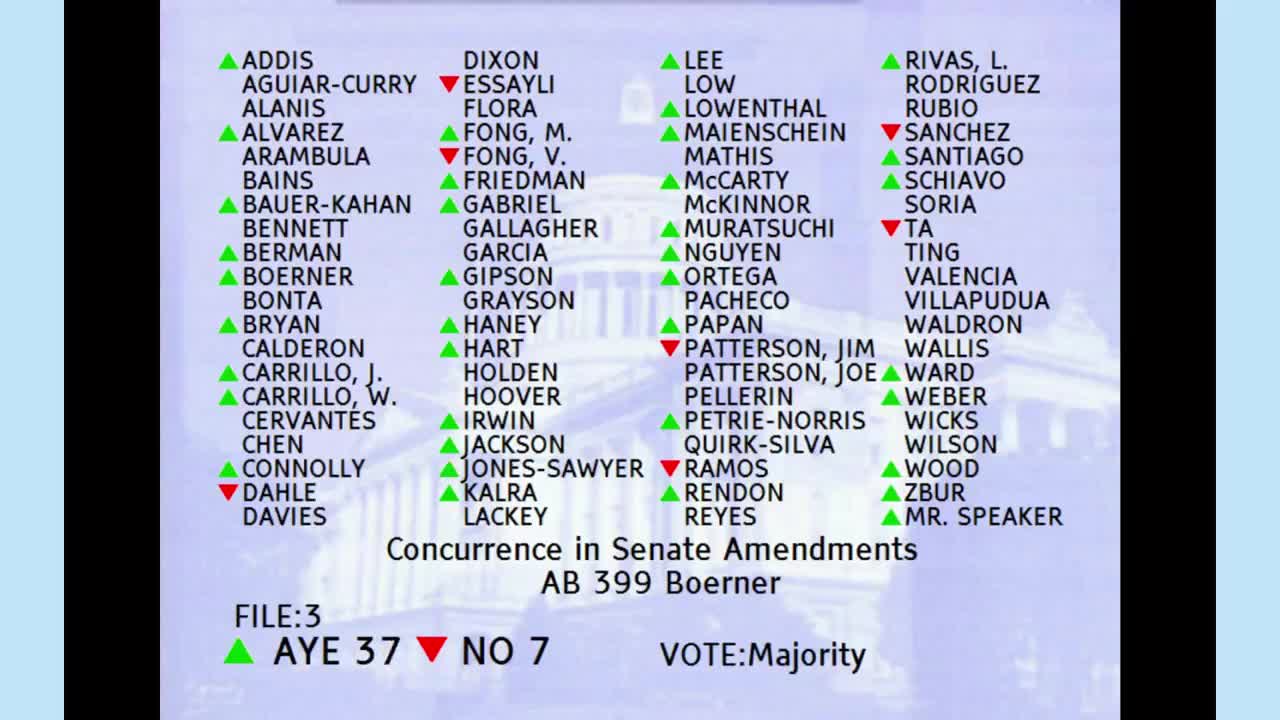
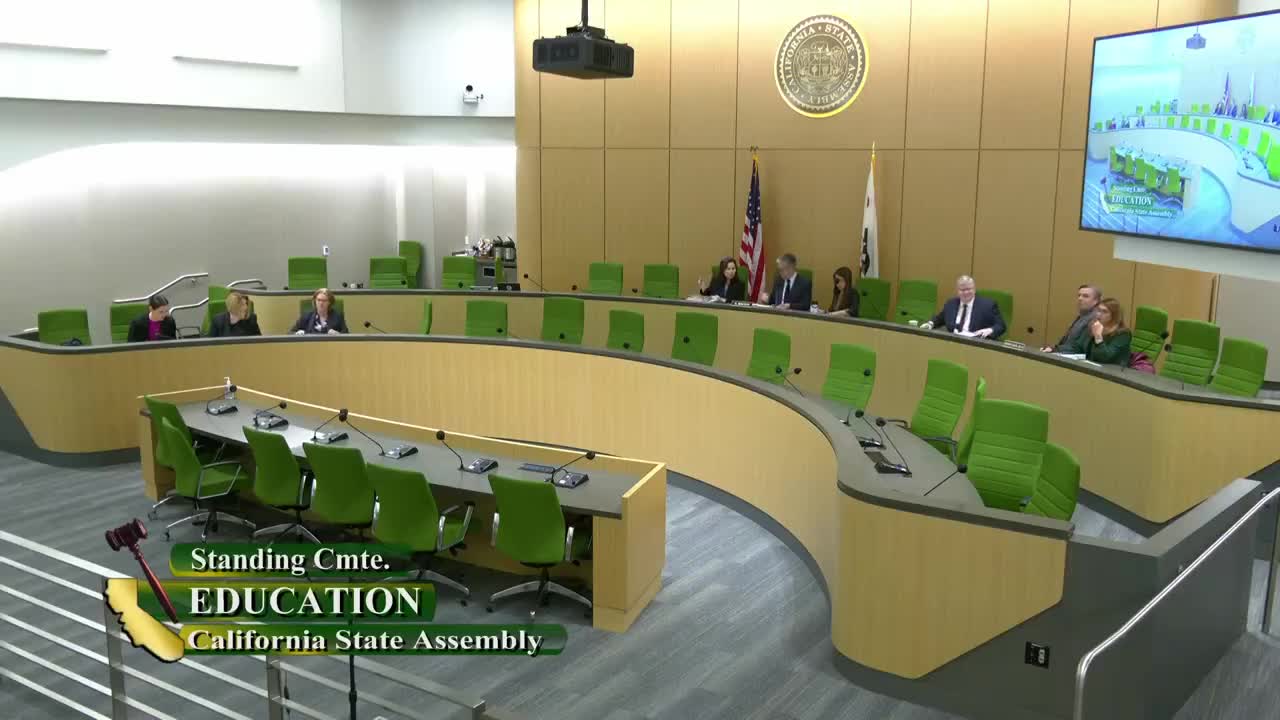
Bill Author

Bill Co-Author(s):