AB 587: Public works: payroll records.
- Session Year: 2023-2024
- House: Assembly
- Latest Version Date: 2023-10-13
Current Status:
Passed
(2023-10-13: Chaptered by Secretary of State - Chapter 806, Statutes of 2023.)
Introduced
In Committee
First Chamber
In Committee
Second Chamber
Enacted
Existing law requires the Labor Commissioner to investigate allegations that a contractor or subcontractor violated the law regulating public works projects, including the payment of prevailing wages. Existing law requires each contractor and subcontractor on a public works project to keep accurate payroll records, showing the name, address, social security number, work classification, straight time and overtime hours worked each day and week, and the actual per diem wages paid to each journeyman, apprentice, worker, or other employee employed by the contractor or subcontractor in connection with the public work. Existing law requires any copy of records made available for inspection as copies and furnished upon request to the public or any public agency to be marked or obliterated to prevent disclosure of an individuals name, address, and social security number but specifies that any copy of records made available to a Taft-Hartley trust fund for the purposes of allocating contributions to participants be marked or obliterated only to prevent disclosure of an individuals full social security number, as specified. Existing law makes any contractor, subcontractor, agent, or representative who neglects to comply with the requirements to keep accurate payroll records guilty of a misdemeanor.
This bill would require any copy of records requested by, and made available for inspection by or furnished to, a multiemployer Taft-Hartley trust fund or joint labor-management committee be provided on forms provided by the Division of Labor Standards Enforcement or contain the same information as the forms provided by the division. The bill would specify that copies of electronic certified payroll records do not satisfy payroll records requests made by Taft-Hartley trust funds and joint labor-management committees. To the extent that this bill would impose additional duties on any contractor, subcontractor, agent, or representative, the bill would expand the scope of a crime and impose a state-mandated local program.
The California Constitution requires the state to reimburse local agencies and school districts for certain costs mandated by the state. Statutory provisions establish procedures for making that reimbursement.
This bill would provide that no reimbursement is required by this act for a specified reason.
Existing law requires the Labor Commissioner to investigate allegations that a contractor or subcontractor violated the law regulating public works projects, including the payment of prevailing wages. Existing law requires each contractor and subcontractor on a public works project to keep accurate payroll records, showing the name, address, social security number, work classification, straight time and overtime hours worked each day and week, and the actual per diem wages paid to each journeyman, apprentice, worker, or other employee employed by the contractor or subcontractor in connection with the public work. Existing law requires any copy of records made available for inspection as copies and furnished upon request to the public or any public agency to be marked or obliterated to prevent disclosure of an individuals name, address, and social security number but specifies that any copy of records made available to a Taft-Hartley trust fund for the purposes of allocating contributions to participants be marked or obliterated only to prevent disclosure of an individuals full social security number, as specified. Existing law makes any contractor, subcontractor, agent, or representative who neglects to comply with the requirements to keep accurate payroll records guilty of a misdemeanor.
This bill would require any copy of records requested by, and made available for inspection by, by or furnished to, a multiemployer Taft-Hartley trust fund or joint labor-management committee be provided on forms provided by the Division of Labor Standards Enforcement or contain the same information as those forms. the forms provided by the division. The bill would specify that copies of electronic certified payroll records do not satisfy payroll records requests made by Taft-Hartley trust funds and joint labor-management committees. To the extent that this bill would impose additional duties on any contractor, subcontractor, agent, or representative, the bill would expand the scope of a crime and impose a state-mandated local program.
The California Constitution requires the state to reimburse local agencies and school districts for certain costs mandated by the state. Statutory provisions establish procedures for making that reimbursement.
This bill would provide that no reimbursement is required by this act for a specified reason.
Existing law requires the Labor Commissioner to investigate allegations that a contractor or subcontractor violated the law regulating public works projects, including the payment of prevailing wages. Existing law requires each contractor and subcontractor on a public works project to keep accurate payroll records, showing the name, address, social security number, work classification, straight time and overtime hours worked each day and week, and the actual per diem wages paid to each journeyman, apprentice, worker, or other employee employed by the contractor or subcontractor in connection with the public work. Existing law requires any copy of records made available for inspection as copies and furnished upon request to the public or any public agency to be marked or obliterated to prevent disclosure of an individuals name, address, and social security number but specifies that any copy of records made available to a Taft-Hartley trust fund for the purposes of allocating contributions to participants be marked or obliterated only to prevent disclosure of an individuals full social security number, as specified. Existing law makes any contractor, subcontractor, agent, or representative who neglects to comply with the requirements to keep accurate payroll records guilty of a misdemeanor.
This bill would require any copy of records made available for inspection by, or furnished to, a multiemployer Taft-Hartley trust fund or joint labor-management committee be provided on forms provided by the Division of Labor Standards Enforcement or contain the same information as those forms. The bill would specify that copies of electronic certified payroll records do not satisfy payroll records requests made by Taft-Hartley trust funds and joint labor-management committees. To the extent that this bill would impose additional duties on any contractor, subcontractor, agent, or representative, the bill would expand the scope of a crime and impose a state-mandated local program.
The California Constitution requires the state to reimburse local agencies and school districts for certain costs mandated by the state. Statutory provisions establish procedures for making that reimbursement.
This bill would provide that no reimbursement is required by this act for a specified reason.
(a)Each contractor and subcontractor shall keep accurate payroll records, showing the name, address, social security number, work classification, straight time and overtime hours worked each day and week, and the actual per diem wages paid to each journeyman, apprentice, worker, or other employee employed by the contractor or subcontractor in connection with the public work. Each payroll record shall contain or be verified by a written declaration that it is made under penalty of perjury, stating both of the following:
(1)The information contained in the payroll record is true and correct.
(2)The employer has complied with the requirements of Sections 1771, 1811, and 1815 for any work performed by that persons employees on the public works project.
(b)The payroll records enumerated under subdivision (a) shall be certified and shall be available for inspection at all reasonable hours at the principal office of the contractor on the following basis:
(1)A certified copy of an employees payroll record shall be made available for inspection or furnished to the employee or the employees authorized representative on request.
(2)A certified copy of all payroll records enumerated in subdivision (a) shall be made available for inspection or furnished upon request to a representative of the body awarding the contract and the Division of Labor Standards Enforcement of the Department of Industrial Relations.
(3)A certified copy of all payroll records enumerated in subdivision (a) shall be made available upon request by the public for inspection or for copies thereof. However, a request by the public shall be made through either the body awarding the contract or the Division of Labor Standards Enforcement. If the requested payroll records have not been provided pursuant to paragraph (2), the requesting party shall, prior to being provided the records, reimburse the costs of preparation by the contractor, subcontractors, and the entity through which the request was made. The public may not be given access to the records at the principal office of the contractor.
(c)Unless required to be furnished directly to the Labor Commissioner in accordance with paragraph (3) of subdivision (a) of Section 1771.4, the certified payroll records shall be on forms provided by the Division of Labor Standards Enforcement or shall contain the same information as the forms provided by the division. The payroll records may consist of printouts of payroll data that are maintained as computer records, if the printouts contain the same information as the forms provided by the division and the printouts are verified in the manner specified in subdivision (a).
(d)A contractor or subcontractor shall file a certified copy of the records enumerated in subdivision (a) with the entity that requested the records within 10 days after receipt of a written request.
(e)(1)Except as provided in subdivision (f), any copy of records made available for inspection as copies and furnished upon request to the public or any public agency by the awarding body or the Division of Labor Standards Enforcement shall be marked or obliterated to prevent disclosure of an individuals name, address, and social security number. The name and address of the contractor awarded the contract or the subcontractor performing the contract shall not be marked or obliterated. Any copy of records made available for inspection by, or furnished to, a multiemployer Taft-Hartley trust fund (29 U.S.C. Sec. 186(c)(5)) that requests the records for the purposes of allocating contributions to participants shall be marked or obliterated only to prevent disclosure of an individuals full social security number, but shall provide the last four digits of the social security number. Any copy of records made available for inspection by, or furnished to, a joint labor-management committee established pursuant to the federal Labor Management Cooperation Act of 1978 (29 U.S.C. Sec. 175a) shall be marked or obliterated only to prevent disclosure of an individuals social security number.
(2)Copies of electronic certified payroll records shall not satisfy payroll records requests made by Taft-Hartley trust funds and joint labor-management committees. Any copy of records requested by, and made available for inspection by or furnished to, a Taft-Hartley trust fund or joint labor-management committee shall be on forms provided by the Division of Labor Standards Enforcement or shall contain the same information as the forms provided by the division.
(f)(1)Notwithstanding any other provision of law, agencies that are included in the Joint Enforcement Strike Force on the Underground Economy established pursuant to Section 329 of the Unemployment Insurance Code and other law enforcement agencies investigating violations of law shall, upon request, be provided nonredacted copies of certified payroll records. Any copies of records or certified payroll made available for inspection and furnished upon request to the public by an agency included in the Joint Enforcement Strike Force on the Underground Economy or to a law enforcement agency investigating a violation of law shall be marked or redacted to prevent disclosure of an individuals name, address, and social security number.
(2)An employer shall not be liable for damages in a civil action for any reasonable act or omission taken in good faith in compliance with this subdivision.
(g)The contractor shall inform the body awarding the contract of the location of the records enumerated under subdivision (a), including the street address, city, and county, and shall, within five working days, provide a notice of a change of location and address.
(h)The contractor or subcontractor has 10 days in which to comply subsequent to receipt of a written notice requesting the records enumerated in subdivision (a). In the event that the contractor or subcontractor fails to comply within the 10-day period, the contractor or subcontractor shall, as a penalty to the state or political subdivision on whose behalf the contract is made or awarded, forfeit one hundred dollars ($100) for each calendar day, or portion thereof, for each worker, until strict compliance is effectuated. Upon the request of the Division of Labor Standards Enforcement, these penalties shall be withheld from progress payments then due. A contractor is not subject to a penalty assessment pursuant to this section due to the failure of a subcontractor to comply with this section.
(i)The body awarding the contract shall cause to be inserted in the contract stipulations to effectuate this section.
(j)The director shall adopt rules consistent with the California Public Records Act (Division 10 (commencing with Section 7920.000) of Title 1 of the Government Code) and the Information Practices Act of 1977 (Title 1.8 (commencing with Section 1798) of Part 4 of Division 3 of the Civil Code) governing the release of these records, including the establishment of reasonable fees to be charged for reproducing copies of records required by this section.
SEC. 2.No reimbursement is required by this act pursuant to Section 6 of Article XIIIB of the California Constitution because the only costs that may be incurred by a local agency or school district will be incurred because this act creates a new crime or infraction, eliminates a crime or infraction, or changes the penalty for a crime or infraction, within the meaning of Section 17556 of the Government Code, or changes the definition of a crime within the meaning of Section 6 of Article XIIIB of the California Constitution.
(a)Each contractor and subcontractor shall keep accurate payroll records, showing the name, address, social security number, work classification, straight time and overtime hours worked each day and week, and the actual per diem wages paid to each journeyman, apprentice, worker, or other employee employed by the contractor or subcontractor in connection with the public work. Each payroll record shall contain or be verified by a written declaration that it is made under penalty of perjury, stating both of the following:
(1)The information contained in the payroll record is true and correct.
(2)The employer has complied with the requirements of Sections 1771, 1811, and 1815 for any work performed by that persons employees on the public works project.
(b)The payroll records enumerated under subdivision (a) shall be certified and shall be available for inspection at all reasonable hours at the principal office of the contractor on the following basis:
(1)A certified copy of an employees payroll record shall be made available for inspection or furnished to the employee or the employees authorized representative on request.
(2)A certified copy of all payroll records enumerated in subdivision (a) shall be made available for inspection or furnished upon request to a representative of the body awarding the contract and the Division of Labor Standards Enforcement of the Department of Industrial Relations.
(3)A certified copy of all payroll records enumerated in subdivision (a) shall be made available upon request by the public for inspection or for copies thereof. However, a request by the public shall be made through either the body awarding the contract or the Division of Labor Standards Enforcement. If the requested payroll records have not been provided pursuant to paragraph (2), the requesting party shall, prior to being provided the records, reimburse the costs of preparation by the contractor, subcontractors, and the entity through which the request was made. The public may not be given access to the records at the principal office of the contractor.
(c)Unless required to be furnished directly to the Labor Commissioner in accordance with paragraph (3) of subdivision (a) of Section 1771.4, the certified payroll records shall be on forms provided by the Division of Labor Standards Enforcement or shall contain the same information as the forms provided by the division. The payroll records may consist of printouts of payroll data that are maintained as computer records, if the printouts contain the same information as the forms provided by the division and the printouts are verified in the manner specified in subdivision (a).
(d)A contractor or subcontractor shall file a certified copy of the records enumerated in subdivision (a) with the entity that requested the records within 10 days after receipt of a written request.
(e)(1)Except as provided in subdivision (f), any copy of records made available for inspection as copies and furnished upon request to the public or any public agency by the awarding body or the Division of Labor Standards Enforcement shall be marked or obliterated to prevent disclosure of an individuals name, address, and social security number. The name and address of the contractor awarded the contract or the subcontractor performing the contract shall not be marked or obliterated. Any copy of records made available for inspection by, or furnished to, a multiemployer Taft-Hartley trust fund (29 U.S.C. Sec. 186(c)(5)) that requests the records for the purposes of allocating contributions to participants shall be marked or obliterated only to prevent disclosure of an individuals full social security number, but shall provide the last four digits of the social security number. Any copy of records made available for inspection by, or furnished to, a joint labor-management committee established pursuant to the federal Labor Management Cooperation Act of 1978 (29 U.S.C. Sec. 175a) shall be marked or obliterated only to prevent disclosure of an individuals social security number.
(2)Any copy of records made available for inspection by, or furnished to, a multiemployer Taft-Hartley trust fund or joint labor-management committee shall be provided in a manner consistent with subdivision (c). Copies of electronic certified payroll records shall not satisfy payroll records requests made by Taft-Hartley trust funds and joint labor-management committees. Any copy of records requested by, and made available for inspection by or furnished to, a Taft-Hartley trust fund or joint labor-management committee shall be on forms provided by the Division of Labor Standards Enforcement or shall contain the same information as the forms provided by the division.
(f)(1)Notwithstanding any other provision of law, agencies that are included in the Joint Enforcement Strike Force on the Underground Economy established pursuant to Section 329 of the Unemployment Insurance Code and other law enforcement agencies investigating violations of law shall, upon request, be provided nonredacted copies of certified payroll records. Any copies of records or certified payroll made available for inspection and furnished upon request to the public by an agency included in the Joint Enforcement Strike Force on the Underground Economy or to a law enforcement agency investigating a violation of law shall be marked or redacted to prevent disclosure of an individuals name, address, and social security number.
(2)An employer shall not be liable for damages in a civil action for any reasonable act or omission taken in good faith in compliance with this subdivision.
(g)The contractor shall inform the body awarding the contract of the location of the records enumerated under subdivision (a), including the street address, city, and county, and shall, within five working days, provide a notice of a change of location and address.
(h)The contractor or subcontractor has 10 days in which to comply subsequent to receipt of a written notice requesting the records enumerated in subdivision (a). In the event that the contractor or subcontractor fails to comply within the 10-day period, the contractor or subcontractor shall, as a penalty to the state or political subdivision on whose behalf the contract is made or awarded, forfeit one hundred dollars ($100) for each calendar day, or portion thereof, for each worker, until strict compliance is effectuated. Upon the request of the Division of Labor Standards Enforcement, these penalties shall be withheld from progress payments then due. A contractor is not subject to a penalty assessment pursuant to this section due to the failure of a subcontractor to comply with this section.
(i)The body awarding the contract shall cause to be inserted in the contract stipulations to effectuate this section.
(j)The director shall adopt rules consistent with the California Public Records Act (Division 10 (commencing with Section 7920.000) of Title 1 of the Government Code) and the Information Practices Act of 1977 (Title 1.8 (commencing with Section 1798) of Part 4 of Division 3 of the Civil Code) governing the release of these records, including the establishment of reasonable fees to be charged for reproducing copies of records required by this section.
SEC. 2.No reimbursement is required by this act pursuant to Section 6 of Article XIIIB of the California Constitution because the only costs that may be incurred by a local agency or school district will be incurred because this act creates a new crime or infraction, eliminates a crime or infraction, or changes the penalty for a crime or infraction, within the meaning of Section 17556 of the Government Code, or changes the definition of a crime within the meaning of Section 6 of Article XIIIB of the California Constitution.
(a)Each contractor and subcontractor shall keep accurate payroll records, showing the name, address, social security number, work classification, straight time and overtime hours worked each day and week, and the actual per diem wages paid to each journeyman, apprentice, worker, or other employee employed by the contractor or subcontractor in connection with the public work. Each payroll record shall contain or be verified by a written declaration that it is made under penalty of perjury, stating both of the following:
(1)The information contained in the payroll record is true and correct.
(2)The employer has complied with the requirements of Sections 1771, 1811, and 1815 for any work performed by that persons employees on the public works project.
(b)The payroll records enumerated under subdivision (a) shall be certified and shall be available for inspection at all reasonable hours at the principal office of the contractor on the following basis:
(1)A certified copy of an employees payroll record shall be made available for inspection or furnished to the employee or the employees authorized representative on request.
(2)A certified copy of all payroll records enumerated in subdivision (a) shall be made available for inspection or furnished upon request to a representative of the body awarding the contract and the Division of Labor Standards Enforcement of the Department of Industrial Relations.
(3)A certified copy of all payroll records enumerated in subdivision (a) shall be made available upon request by the public for inspection or for copies thereof. However, a request by the public shall be made through either the body awarding the contract or the Division of Labor Standards Enforcement. If the requested payroll records have not been provided pursuant to paragraph (2), the requesting party shall, prior to being provided the records, reimburse the costs of preparation by the contractor, subcontractors, and the entity through which the request was made. The public may not be given access to the records at the principal office of the contractor.
(c)Unless required to be furnished directly to the Labor Commissioner in accordance with paragraph (3) of subdivision (a) of Section 1771.4, the certified payroll records shall be on forms provided by the Division of Labor Standards Enforcement or shall contain the same information as the forms provided by the division. The payroll records may consist of printouts of payroll data that are maintained as computer records, if the printouts contain the same information as the forms provided by the division and the printouts are verified in the manner specified in subdivision (a).
(d)A contractor or subcontractor shall file a certified copy of the records enumerated in subdivision (a) with the entity that requested the records within 10 days after receipt of a written request.
(e)(1)Except as provided in subdivision (f), any copy of records made available for inspection as copies and furnished upon request to the public or any public agency by the awarding body or the Division of Labor Standards Enforcement shall be marked or obliterated to prevent disclosure of an individuals name, address, and social security number. The name and address of the contractor awarded the contract or the subcontractor performing the contract shall not be marked or obliterated. Any copy of records made available for inspection by, or furnished to, a multiemployer Taft-Hartley trust fund (29 U.S.C. Sec. 186(c)(5)) that requests the records for the purposes of allocating contributions to participants shall be marked or obliterated only to prevent disclosure of an individuals full social security number, but shall provide the last four digits of the social security number. Any copy of records made available for inspection by, or furnished to, a joint labor-management committee established pursuant to the federal Labor Management Cooperation Act of 1978 (29 U.S.C. Sec. 175a) shall be marked or obliterated only to prevent disclosure of an individuals social security number.
(2)Any copy of records made available for inspection by, or furnished to, a multiemployer Taft-Hartley trust fund or joint labor-management committee shall be provided in a manner consistent with subdivision (c). Copies of electronic certified payroll records shall not satisfy payroll records requests made by Taft-Hartley trust funds and joint labor-management committees.
(f)(1)Notwithstanding any other provision of law, agencies that are included in the Joint Enforcement Strike Force on the Underground Economy established pursuant to Section 329 of the Unemployment Insurance Code and other law enforcement agencies investigating violations of law shall, upon request, be provided nonredacted copies of certified payroll records. Any copies of records or certified payroll made available for inspection and furnished upon request to the public by an agency included in the Joint Enforcement Strike Force on the Underground Economy or to a law enforcement agency investigating a violation of law shall be marked or redacted to prevent disclosure of an individuals name, address, and social security number.
(2)An employer shall not be liable for damages in a civil action for any reasonable act or omission taken in good faith in compliance with this subdivision.
(g)The contractor shall inform the body awarding the contract of the location of the records enumerated under subdivision (a), including the street address, city, and county, and shall, within five working days, provide a notice of a change of location and address.
(h)The contractor or subcontractor has 10 days in which to comply subsequent to receipt of a written notice requesting the records enumerated in subdivision (a). In the event that the contractor or subcontractor fails to comply within the 10-day period, the contractor or subcontractor shall, as a penalty to the state or political subdivision on whose behalf the contract is made or awarded, forfeit one hundred dollars ($100) for each calendar day, or portion thereof, for each worker, until strict compliance is effectuated. Upon the request of the Division of Labor Standards Enforcement, these penalties shall be withheld from progress payments then due. A contractor is not subject to a penalty assessment pursuant to this section due to the failure of a subcontractor to comply with this section.
(i)The body awarding the contract shall cause to be inserted in the contract stipulations to effectuate this section.
(j)The director shall adopt rules consistent with the California Public Records Act (Division 10 (commencing with Section 7920.000) of Title 1 of the Government Code) and the Information Practices Act of 1977 (Title 1.8 (commencing with Section 1798) of Part 4 of Division 3 of the Civil Code) governing the release of these records, including the establishment of reasonable fees to be charged for reproducing copies of records required by this section.
SEC. 2.No reimbursement is required by this act pursuant to Section 6 of Article XIIIB of the California Constitution because the only costs that may be incurred by a local agency or school district will be incurred because this act creates a new crime or infraction, eliminates a crime or infraction, or changes the penalty for a crime or infraction, within the meaning of Section 17556 of the Government Code, or changes the definition of a crime within the meaning of Section 6 of Article XIIIB of the California Constitution.
|
Date
|
Status
|
|---|---|
| Oct 13, 2023 | Chaptered by Secretary of State - Chapter 806, Statutes of 2023. |
| Oct 13, 2023 | Approved by the Governor. |
| Sep 5, 2023 | Enrolled and presented to the Governor at 3 p.m. |
| Aug 31, 2023 | Senate amendments concurred in. To Engrossing and Enrolling. (Ayes 77. Noes 0. Page 2858.). |
| Aug 24, 2023 | In Assembly. Concurrence in Senate amendments pending. May be considered on or after August 26 pursuant to Assembly Rule 77. |
| Aug 24, 2023 | Read third time. Passed. Ordered to the Assembly. (Ayes 33. Noes 0. Page 2181.). |
| Jun 27, 2023 | Read second time. Ordered to third reading. |
| Jun 26, 2023 | From committee: Be ordered to second reading pursuant to Senate Rule 28.8. |
| Jun 14, 2023 | From committee: Do pass and re-refer to Com. on APPR. (Ayes 5. Noes 0.) (June 14). Re-referred to Com. on APPR. |
| May 17, 2023 | From committee chair, with author's amendments: Amend, and re-refer to committee. Read second time, amended, and re-referred to Com. on L., P.E. & R. |
| May 3, 2023 | Referred to Com. on L., P.E. & R. |
| Apr 24, 2023 | In Senate. Read first time. To Com. on RLS. for assignment. |
| Apr 24, 2023 | Read third time. Passed. Ordered to the Senate. (Ayes 72. Noes 8. Page 1299.) |
| Apr 20, 2023 | Read second time. Ordered to third reading. |
| Apr 19, 2023 | From committee: Do pass. (Ayes 15. Noes 0.) (April 19). |
| Mar 22, 2023 | From committee: Do pass and re-refer to Com. on APPR. (Ayes 7. Noes 0.) (March 22). Re-referred to Com. on APPR. |
| Feb 17, 2023 | Referred to Com. on L. & E. |
| Feb 10, 2023 | From printer. May be heard in committee March 12. |
| Feb 9, 2023 | Read first time. To print. |
|
Date
|
Description
|
Location
|
Votes
|
|
|---|---|---|---|---|
| Aug 31, 2023 | AB 587 Robert Rivas Concurrence in Senate Amendments | Assembly Floor |
Passed |
|
| Aug 24, 2023 | Assembly 3rd Reading AB587 Robert Rivas By Smallwood-Cuevas | Senate Floor |
Passed |
|
| Jun 14, 2023 | Do pass, but first be re-referred to the Committee on [Appropriations] | Senate Standing Committee on Labor, Public Employment and Retirement |
Passed |
|
| Apr 24, 2023 | AB 587 Robert Rivas Assembly Third Reading | Assembly Floor |
Passed |
|
| Apr 19, 2023 | Do pass. | Assembly Standing Committee on Appropriations |
Passed |
|
| Mar 22, 2023 | Do pass and be re-referred to the Committee on [Appropriations] | Assembly Standing Committee on Labor and Employment |
Passed |
This list shows positions taken on this bill by organizations on the date displayed, which is linked to the original source.
Positions by individuals are not included.
|
Organization
|
Position
|
Date
|
|---|---|---|
| American Federation of State, County and Municipal Employees (AFSCME) | ** Support | |
| California Conference Board Of The Amalgamated Transit Union | ** Support | |
| California Conference Of Machinists | ** Support | |
| California Labor Federation, Afl-Cio | ** Support | |
| California State Council Of Laborers | ** Support | |
| California Teamsters Public Affairs Council | ** Support | |
| District Council 16, Painters and Allied Trades | ** Support | |
| District Council Of Iron Workers Of The State Of California And Vicinity | ** Support | |
| Engineers and Scientists of California, IFPTE Local 20, AFL-CIO | ** Support | |
| International Union of Operating Engineers, Cal-Nevada Conference | ** Support | |
| Southern California Contractors Association | ** Support | |
| State Building and Construction Trades Council of California | ** Support | |
| UNITE-HERE, AFL-CIO | ** Support | |
| Utility Workers Union of America | ** Support |
CONCURRENCE IN SENATE AMENDMENTS
CSA1 Bill Id:AB 587
Author:(Robert Rivas)
As Amended Ver:May 17, 2023
Majority vote
SUMMARY
Requires any copy of records requested by, and made available for inspection by or furnished to, a Taft-Hartley trust fund or joint labor-management committee to be on forms provided by the Division of Labor Standards Enforcement (DLSE) or contain the same information as the forms provided by DLSE. Additionally, this bill clarifies that copies of electronic certified payroll records do not satisfy payroll records requests made by Taft-Hartley trust funds and joint labor-management committees.
Senate Amendments
Make technical non-substantive changes.
COMMENTS
Prevailing Wage Policies and Enforcement
The policy behind paying a prevailing wage is to ensure that contractors are not awarded public works contracts by virtue of paying low wages and undercutting competitors who provide higher compensation. Prevailing wage creates a level playing field by requiring an across-the-board rate for all bidders on publically subsidized projects. According to a joint report by the Illinois Economic Policy Institute and the Project for Middle Class Renewal, "the minimum compensation standard provided by prevailing wage ensures that all workers-regardless of age, race, ethnicity, sex, gender identification, sexual orientation, religious affiliation, marital status, and veteran status-are paid local market rates in the county where they are building a project."[1] Additionally this report found that state prevailing wage laws raise the incomes of underprivileged groups, reduce overall inequality without having negative impacts on participation in the trades, and reduce wage discrimination in construction.[2]
An important component of prevailing wage policy is the requirement that contractors and subcontractors submit their payroll records to DIR, to ensure compliance with various pay requirements under public works laws. Joint-Labor Management Committees and Taft-Hartley Trusts play a critical role in verifying the accuracy and thoroughness of payroll records and filing complaints with the Labor Commissioner for suspected violations pertaining to the payment of prevailing wages on public works projects.
The California Labor Commissioner's Bureau of Field Enforcement (BOFE) Public Works Unit investigates complaints arising from violations of the state's prevailing wage and apprenticeship laws and conducts audits on behalf of workers for back wages owed. According to the 2020-2021 Labor Commissioner's BOFE report, the Public Works Unit opened 1,964 audits and issued 516 civil wage and penalty assessments.[3] Additionally, the BOFE Public Works Unit assessed approximately $10.6 million to contractors for failure to pay prevailing wages.[4]
According to the Author
"Current law requires that contractors and subcontractors on public works projects keep accurate payroll records (CPR), including employees' names, address, social security number, work classification, straight time and overtime hours worked each day. Contractors are required to make these records available for inspection for authorized labor representatives, as well as for the Division of Labor Standards Enforcement.
While electronic submission of these records has streamlined and improved the way in which labor representatives access payroll records, these entities will often notice inconsistencies on an e-CPR and still need to request the traditional paper records to ensure the inaccuracy they have spotted isn't a violation of labor law. Specifically, the issue occurs when labor representatives see an error or omission on an e-CPR and make a request to the awarding agency to verify the record (by checking the paper copy), only to be provided a copy of the e-CPR that they already have access to. This misunderstanding of law leads to compliance entities not receiving vital information that they are entitled to under existing law.
[This bill] ensures accurate reporting of earned prevailing wages and benefits to public works employees by aligning the reporting criteria in both the physical and electronic copies of certified payroll records. By doing so, [this bill] provides greater efficiency and a verifiable method to ensure labor compliance on public works projects moving forward."
In addition, the author points out that this bill will promote equity solutions and maximize benefits for underserved and marginalized communities by "ensuring public works employees receive just compensation for the wages and benefits earned while employed on such projects.”
Arguments in Support
The California-Nevada Conference of Operating Engineers, sponsor of the bill, states "Outside of the traditional requirements contractors must abide by related to maintaining payroll records and allowing access to those records, existing law additionally provides a separate requirement that mandates contractors and subcontractors must also electronically submit Certified Payroll records (e-CPR) directly to the Labor Commissioner at least once every 30 days while work is being performed on the project, and within 30 days after the final day of work performed on a project. Further, SB 954 (Archuleta) [Chapter 824, Statutes of 2022] which was signed into law in 2022, required that the Department of Industrial Relations establish a database of these payroll records that are accessible to both Joint Labor Management Committee and Taft-Hartley Trust Funds.
While the electronic submission of these records has streamlined and improved the way in which Joint-Labor Management Committees and Taft-Hartley Trusts access payroll records, these entities will often notice inconsistencies on an e-CPR and still need to request the traditional records of a public works contractor to ensure the inaccuracy they have spotted isn't a violation of labor law.
Recently, JLMC's and Taft-Hartley Trusts have noticed an issue whereby they see an error or omission on an e-CPR and make a request to the awarding agency to verify the record, only to be provided a copy of the e-CPR that they already have access to. This misunderstanding of law leads to compliance entities missing out on vital information that they have historically been entitled to under existing law.
In effort to remedy this issue, [this bill] would clarify that any copies of records made available to a Taft-Hartley Trust Fund or a federally approved Joint Labor-Management Committee be provided in the manner specified in Labor Code Section 1776 (c). The bill would provide further clarity by specifying that copies of electronic certified payroll records shall not satisfy a payroll records request made by either a multi-employer Taft-Hartley trust fund (29 United State Code Section 186(c)(5)) or a joint labor-management committee.”
Arguments in Opposition
None on file.
FISCAL COMMENTS
According to the Senate Appropriations Committee, pursuant to Senate Rule 28.8, negligible state costs.
VOTES:
ASM LABOR AND EMPLOYMENT: 7-0-0
YES: Kalra, Flora, Chen, Haney, Ortega, Reyes, Ward
ASM APPROPRIATIONS: 15-0-1
YES: Holden, Megan Dahle, Calderon, Wendy Carrillo, Dixon, Mike Fong, Hart, Lowenthal, Mathis, Papan, Pellerin, Robert Rivas, Sanchez, Weber, Wilson
ABS, ABST OR NV: Bryan
ASSEMBLY FLOOR: 72-0-8
YES: Addis, Aguiar-Curry, Alanis, Alvarez, Arambula, Bains, Bauer-Kahan, Berman, Boerner, Bonta, Bryan, Calderon, Juan Carrillo, Wendy Carrillo, Cervantes, Connolly, Davies, Dixon, Mike Fong, Vince Fong, Friedman, Gabriel, Garcia, Gipson, Grayson, Haney, Hoover, Irwin, Jackson, Jones-Sawyer, Kalra, Lackey, Lee, Low, Lowenthal, Maienschein, Mathis, McCarty, McKinnor, Muratsuchi, Stephanie Nguyen, Ortega, Pacheco, Papan, Jim Patterson, Joe Patterson, Pellerin, Petrie-Norris, Quirk-Silva, Ramos, Reyes, Luz Rivas, Robert Rivas, Rodriguez, Blanca Rubio, Sanchez, Santiago, Schiavo, Soria, Ta, Ting, Valencia, Villapudua, Waldron, Wallis, Ward, Weber, Wicks, Wilson, Wood, Zbur, Rendon
ABS, ABST OR NV: Bennett, Chen, Megan Dahle, Essayli, Flora, Gallagher, Hart, Holden
SENATE FLOOR: 33-0-7
YES: Allen, Alvarado-Gil, Archuleta, Ashby, Atkins, Becker, Blakespear, Bradford, Caballero, Cortese, Dodd, Durazo, Eggman, Glazer, Gonzalez, Hurtado, Laird, Limón, McGuire, Menjivar, Min, Newman, Padilla, Portantino, Roth, Rubio, Skinner, Smallwood-Cuevas, Stern, Umberg, Wahab, Wiener, Wilk
ABS, ABST OR NV: Dahle, Grove, Jones, Nguyen, Niello, Ochoa Bogh, Seyarto
UPDATED
VERSION: May 17, 2023
CONSULTANT: Martin Vindiola / L. & E. / (916) 319-2092 FN: 0001331
SENATE RULES COMMITTEE Office of Senate Floor Analyses (916) 651-1520 Fax: (916) 327-4478 | AB 587 |
THIRD READING
Bill No: AB 587
Author: Robert Rivas (D)
Amended: 5/17/23 in Senate
Vote: 21
SENATE LABOR, PUB. EMP. & RET. COMMITTEE: 5-0, 6/14/23
AYES: Cortese, Wilk, Durazo, Laird, Smallwood-Cuevas
SENATE APPROPRIATIONS COMMITTEE: Senate Rule 28.8
ASSEMBLY FLOOR: 72-0, 4/24/23 - See last page for vote
SUBJECT: Public works: payroll records
SOURCE: International Union of Operating Engineers, CA-Nevada Conference
DIGEST:
This bill requires any copy of records requested by, and made available for inspection, by or furnished to (pursuant to existing law), a multiemployer Taft-Hartley trust fund or joint labor-management committee be provided on forms provided by the Division of Labor Standards Enforcement or contain the same information as the forms provided by the division.
ANALYSIS: Existing federal law permits, pursuant to the Labor-Management Relations Act of 1947, the creation of trust funds, managed and governed by both labor unions and employers, to provide various benefits to employees of multiple employers in the same industry or geographic area. (29 U.S.C. § 186)
Existing state law:
- Requires that not less than the general prevailing rate of per diem wages be paid to all workers employed on a "public works" project costing over $1,000 and imposes misdemeanor penalties for violation of this requirement. (Labor Code §1771)
- Defines "public work" to include, among other things, construction, alteration, demolition, installation or repair work done under contract and paid for in whole or in part out of public funds, except work done directly by a public utility company pursuant to order of the Public Utilities Commission or other public authority. (Labor Code §1720(a))
- Requires contractors and subcontractors, while performing public works, to keep accurate payroll records showing the name, address, social security number, work classification, straight time and overtime hours worked each day and week, and the actual per diem wages paid to each journeyman, apprentice, worker, or other employee employed by the contractor or subcontractor in connection with the public work. (Labor Code, § 1776 (a))
- Requires contractors and subcontractors, while performing public works, to furnish specified payroll records at least once a month directly to the Labor Commissioner (LC), in an electronic format, in the manner prescribed by the LC, on the department’s internet website. (Labor Code, §1771.4 (a)(3))
- Requires the Department of Industrial Relations (DIR), by July 1, 2024, to develop and implement an online database, accessible only to multiemployer Taft-Hartley trust funds and joint-labor management committees, of electronic certified payroll records submitted in compliance with public works requirements. (Labor Code, §1771.4 (e))
- Requires certified payroll records, submitted in compliance with public works requirements, to be on forms provided by the Division of Labor Standards Enforcement (DLSE) or to contain the same information as the forms provided by DLSE and provides that payroll records may consist of printouts of payroll data that are maintained as computer records if the printouts contain the same specified information as the forms provided by DLSE. (Labor Code, § 1776 (c))
- Specifies that any records made available for inspection as copies and furnished upon request to the public or any public agency by the awarding body or the DLSE shall be marked or obliterated to prevent disclosure of an individual’s name, address, and social security number. The name and address of the contractor awarded the contract or the subcontractor performing the contract shall not be marked or obliterated. (Labor Code, §1776 (e))
- Specifies that any copy of records made available for inspection by, or furnished to, a multiemployer Taft-Hartley trust fund that requests the records for the purposes of allocating contributions to participants shall be marked or obliterated only to prevent disclosure of an individual’s full social security number, but shall provide the last four digits of the social security number. Any copy of records made available for inspection by, or furnished to, a joint labor-management committee shall be marked or obliterated only to prevent disclosure of an individual’s social security number. (Labor Code, §1776 (e))
- Requires, upon request, agencies included in the Joint Enforcement Strike Force on the Underground Economy (JESF) and other law enforcement agencies investigating violations of law, to be provided nonredacted copies of certified payroll records, as specified. (Lab. Code, §1776 (f)(1))
This bill provides that copies of electronic certified payroll records shall not satisfy payroll records request made by Taft-Hartley trust funds and join labor-management committees and instead specifies that any requests by these entities shall be made available on forms provided by DLSE or shall contain the same information as the forms provided by the division.
Background
Prevailing Wages and Payroll Records
In general, "public works" is defined to include construction, alteration, demolition, installation or repair work done under contract and "paid for in whole or in part out of public funds." The determination of whether a project is deemed to constitute a "public work" is important because the Labor Code requires (except for projects of $1,000 or less) that the "prevailing wage," as determined by the DIR, be paid to all workers employed on public works projects. The prevailing wage rate is the basic hourly rate paid on public works projects to a majority of workers engaged in a particular craft, classification or type of work within the locality and in the nearest labor market area.
California's prevailing wage laws ensure that the ability to get a public works contract is not based on paying lower wage rates than a competitor. All bidders are required to use the same wage rates when bidding on a public works project, creating a level playing field for all. Current law requires that contractors and subcontractors on public works projects keep accurate payroll records, including employees’ names, addresses, social security numbers, work classifications, and straight time and overtime hours worked each day.
An important component of prevailing wage policy is the requirement that contractors and subcontractors submit their payroll records to the LC, to ensure compliance with various pay and records keeping requirements. Contractors and subcontractors are required to submit the payroll records at least monthly and in an electronic format, in the manner prescribed by the LC, on the department’s website. Contractors are also required to make employee payroll records available for inspection at reasonable hours at their principal office when requested by an employee or their authorized representative or a member of the public.
As noted under existing law, copy of records made available for inspection must be marked or obliterated to prevent disclosure of certain identifiable information, with the exception of copy of records made available for inspection by, or furnished to, a multiemployer Taft-Hartley trust fund or joint labor-management committees that need certain information from these records to fulfill their purposes. Taft-Hartley trust funds provide group health insurance plans for employees covered under a collective bargaining agreement between a union and employers. Taft-Hartley trust funds request records for purposes of allocating contributions to participants.
In 2022, SB 954 (Archuleta, Chapter 824, Statutes of 2022) was passed requiring the DIR to establish an online database, no later than July 1, 2024, of electronic certified payroll records, which are required to be accessible only to multiemployer Taft-Hartley trust funds and joint labor-management committees. The bill also specified that the database contain only non-redacted information that may be legally provided to multiemployer Taft-Hartley trust funds and joint labor-management committees.
Need for this bill? According to the author, “Current law requires that contractors and subcontractors on public works projects keep accurate payroll records (CPR), including employees’ names, addresses, social security numbers, work classifications, and straight time and overtime hours worked each day. Contractors are required to make these records available for inspection by labor compliance entities such as Joint Labor-Management Committees and Taft-Hartley Trusts as well as the Division of Labor Standards Enforcement.
“While electronic submission of these records has streamlined and improved the way in which labor representatives access payroll records, these entities will often notice inconsistencies on an e-CPR and still need to request the traditional paper records (the source material for the e-CPR) to ensure the inaccuracy they have spotted isn’t a violation of labor law. Specifically, the issue occurs when labor representatives see an error or omission on an e-CPR and make a request to the awarding agency to verify the record (by checking the paper copy), only to be provided a copy of the e-CPR that they already have access to. This misunderstanding of law leads to labor compliance entities not receiving vital information that they are entitled to under existing law.
“AB 587 ensures accurate reporting of earned prevailing wages and benefits to public works employees by clarifying that labor compliance entities are entitled to review the source material when they detect an inconsistency in an e-CPR. By doing so, AB 587 provides greater efficiency and a verifiable method to ensure labor compliance on public works projects moving forward.”
Related/Prior Legislation
SB 954 (Archuleta, Chapter 824, Statutes of 2022) required the DIR to develop and implement an online database of certified payroll records submitted to comply with public works requirements.
AB 1023 (Flora, Chapter 326, Statutes of 2021) revised the requirement to furnish payroll records monthly to require that the contractor or subcontractor furnish those records at least once every 30 days while work is being performed on the project and within 30 days after the final day of work performed on the project. The bill also required that the contractor or subcontractor furnish these records in an electronic format, in the manner prescribed by the LC, on the department’s internet website.
FISCAL EFFECT: Appropriation: No Fiscal Com.: Yes Local: Yes
SUPPORT: (Verified 6/27/23)
International Union of Operating Engineers, CA-Nevada Conference (source)
American Federation of State, County and Municipal Employees – AFSCME
California Conference Board of the Amalgamated Transit Union
California Conference of Machinists
California Labor Federation, AFL-CIO
California State Council of Laborers
California Teamsters Public Affairs Council
District Council 16, Painters and Allied Trades
District Council of Iron Workers of the State of California and Vicinity
Engineers and Scientists of California, IFPTE Local 20, AFL-CIO
Southern California Contractors Association
State Building and Construction Trades Council of California
UNITE-HERE, AFL-CIO
Utility Workers Union of America
OPPOSITION: (Verified 6/27/23)
None received
ARGUMENTS IN SUPPORT: According to the sponsors of this bill, “existing law additionally provides a separate requirement that mandates contractors and subcontractors must also electronically submit Certified Payroll records (e-CPR) directly to the Labor Commissioner at least once every 30 days while work is being performed on the project, and within 30 days after the final day of work performed on a project. Further, SB 954 (Archuleta), which was signed into law in 2022, required that the Department of Industrial Relations establish a database of these payroll records that are accessible to both Joint Labor Management Committee and Taft-Hartley Trust Funds.
“While the electronic submission of these records has streamlined and improved the way in which Joint-Labor Management Committees and Taft-Hartley Trusts access payroll records, these entities will often notice inconsistencies on an e-CPR and still need to request the traditional records of a public works contractor to ensure the inaccuracy they have spotted isn’t a violation of labor law.
“Recently, JLMC’s and Taft-Hartley Trusts have noticed an issue whereby they see an error or omission on an e-CPR and make a request to the awarding agency to verify the record, only to be provided a copy of the e-CPR that they already have access to. This misunderstanding of law leads to compliance entities missing out on vital information that they have historically been entitled to under existing law.
“In effort to remedy this issue, AB 587 (Rivas) would clarify that any copies of records made available to a Taft-Hartley Trust Fund or a federally approved Joint Labor-Management Committee be provided in the manner specified in Labor Code Section 1776 (c). The bill would provide further clarity by specifying that copies of electronic certified payroll records shall not satisfy a payroll records request made by either a multi-employer Taft-Hartley trust fund (29 U.S.C. Sec. 186(c)(5)) or a joint labor-management committee.”
ASSEMBLY FLOOR: 72-0, 4/24/23
AYES: Addis, Aguiar-Curry, Alanis, Alvarez, Arambula, Bains, Bauer-Kahan, Berman, Boerner, Bonta, Bryan, Calderon, Juan Carrillo, Wendy Carrillo, Cervantes, Connolly, Davies, Dixon, Mike Fong, Vince Fong, Friedman, Gabriel, Garcia, Gipson, Grayson, Haney, Hoover, Irwin, Jackson, Jones-Sawyer, Kalra, Lackey, Lee, Low, Lowenthal, Maienschein, Mathis, McCarty, McKinnor, Muratsuchi, Stephanie Nguyen, Ortega, Pacheco, Papan, Jim Patterson, Joe Patterson, Pellerin, Petrie-Norris, Quirk-Silva, Ramos, Reyes, Luz Rivas, Robert Rivas, Rodriguez, Blanca Rubio, Sanchez, Santiago, Schiavo, Soria, Ta, Ting, Valencia, Villapudua, Waldron, Wallis, Ward, Weber, Wicks, Wilson, Wood, Zbur, Rendon
NO VOTE RECORDED: Bennett, Chen, Megan Dahle, Essayli, Flora, Gallagher, Hart, Holden
Prepared by: Alma Perez-Schwab / L., P.E. & R. / (916) 651-1556
6/28/23 11:08:35
**** END ****
SENATE COMMITTEE ON LABOR, PUBLIC EMPLOYMENT AND RETIREMENT
Senator Dave Cortese, Chair
2023 - 2024 Regular
Bill No: AB 587 Hearing Date: June 14, 2023
Author: | Robert Rivas | ||
Version: | May 17, 2023 | ||
Urgency: | No | Fiscal: | Yes |
Consultant: | Alma Perez-Schwab | ||
SUBJECT: Public works: payroll records
KEY ISSUE
Should the Legislature direct contractors and subcontractors, when fulfilling a request for payroll records access by authorized entities, to provide such records on forms provided by the Division of Labor Standards Enforcement or on forms that contain the same information as would be found in such forms in order to provide clarity and transparency in public works contracts?
ANALYSIS
Existing federal law:
- Permits, pursuant to the Labor-Management Relations Act of 1947, the creation of trust funds, managed and governed by both labor unions and employers, to provide various benefits to employees of multiple employers in the same industry or geographic area. (29 U.S.C. § 186)
Existing state law:
- Requires that not less than the general prevailing rate of per diem wages be paid to all workers employed on a "public works" project costing over $1,000 dollars and imposes misdemeanor penalties for violation of this requirement. (Labor Code §1771)
- Defines "public work" to include, among other things, construction, alteration, demolition, installation or repair work done under contract and paid for in whole or in part out of public funds, except work done directly by a public utility company pursuant to order of the Public Utilities Commission or other public authority. (Labor Code §1720(a))
- Requires contractors and subcontractors, while performing public works, to keep accurate payroll records showing the name, address, social security number, work classification, straight time and overtime hours worked each day and week, and the actual per diem wages paid to each journeyman, apprentice, worker, or other employee employed by the contractor or subcontractor in connection with the public work. (Labor Code, § 1776 (a))
- Requires contractors and subcontractors, while performing public works, to furnish specified payroll records at least once a month directly to the Labor Commissioner (LC), in an electronic format, in the manner prescribed by the LC, on the department’s internet website. (Labor Code, §1771.4 (a)(3))
- Requires the Department of Industrial Relations (DIR), by July 1, 2024, to develop and implement an online database, accessible only to multiemployer Taft-Hartley trust funds and joint-labor management committees, of electronic certified payroll records submitted in compliance with public works requirements. (Labor Code, §1771.4 (e))
- Requires certified payroll records, submitted in compliance with public works requirements, to be on forms provided by the Division of Labor Standards Enforcement (DLSE) or to contain the same information as the forms provided by DLSE and provides that payroll records may consist of printouts of payroll data that are maintained as computer records if the printouts contain the same specified information as the forms provided by DLSE. (Labor Code, § 1776 (c))
- Specifies that any records made available for inspection as copies and furnished upon request to the public or any public agency by the awarding body or the DLSE shall be marked or obliterated to prevent disclosure of an individual’s name, address, and social security number. The name and address of the contractor awarded the contract or the subcontractor performing the contract shall not be marked or obliterated. (Labor Code, §1776 (e))
- Specifies that any copy of records made available for inspection by, or furnished to, a multiemployer Taft-Hartley trust fund that requests the records for the purposes of allocating contributions to participants shall be marked or obliterated only to prevent disclosure of an individual’s full social security number, but shall provide the last four digits of the social security number. Any copy of records made available for inspection by, or furnished to, a joint labor-management committee shall be marked or obliterated only to prevent disclosure of an individual’s social security number. (Labor Code, §1776 (e))
- Requires, upon request, agencies included in the Joint Enforcement Strike Force on the Underground Economy (JESF) and other law enforcement agencies investigating violations of law, to be provided nonredacted copies of certified payroll records, as specified. (Lab. Code, §1776 (f)(1))
This bill:
- Provides that copies of electronic certified payroll records shall not satisfy payroll records request made by Taft-Hartley trust funds and join labor-management committees and instead specifies that any requests by these entities shall be made available on forms provided by the Division of Labor Standards Enforcement or shall contain the same information as the forms provided by the division.
COMMENTS
1. Background: Prevailing Wages and Payroll Records
In general, "public works" is defined to include construction, alteration, demolition, installation or repair work done under contract and "paid for in whole or in part out of public funds." The determination of whether a project is deemed to constitute a "public work" is important because the Labor Code requires (except for projects of $1,000 or less) that the "prevailing wage," as determined by the Department of Industrial Relations (DIR), be paid to all workers employed on public works projects. The prevailing wage rate is the basic hourly rate paid on public works projects to a majority of workers engaged in a particular craft, classification or type of work within the locality and in the nearest labor market area.
California's prevailing wage laws ensure that the ability to get a public works contract is not based on paying lower wage rates than a competitor. All bidders are required to use the same wage rates when bidding on a public works project, creating a level playing field for all. Current law requires that contractors and subcontractors on public works projects keep accurate payroll records, including employees’ names, addresses, social security numbers, work classifications, and straight time and overtime hours worked each day.
An important component of prevailing wage policy is the requirement that contractors and subcontractors submit their payroll records to the Labor Commissioner (DIR), to ensure compliance with various pay and records keeping requirements. Contractors and subcontractors are required to submit the payroll records at least monthly and in an electronic format, in the manner prescribed by the Labor Commissioner, on the department’s website.
Contractors are also required to make employee payroll records available for inspection at reasonable hours at their principal office when requested by an employee or their authorized representative or a member of the public.
As noted under existing law, copy of records made available for inspection must be marked or obliterated to prevent disclosure of certain identifiable information, with the exception of copy of records made available for inspection by, or furnished to, a multiemployer Taft-Hartley trust fund or joint labor-management committees that need certain information from these records to fulfill their purposes. Taft-Hartley trust funds provide group health insurance plans for employees covered under a collective bargaining agreement between a union and employers. Taft-Hartley trust funds request records for purposes of allocating contributions to participants.
In 2022, SB 954 (Archuleta, Chapter 824, Statutes of 2022) was passed requiring the Department of Industrial Relations to establish an online database, no later than July 1, 2024, of electronic certified payroll records, which are required to be accessible only to multiemployer Taft-Hartley trust funds and joint labor-management committees. The bill also specified that the database contain only non-redacted information that may be legally provided to multiemployer Taft-Hartley trust funds and joint labor-management committees.
2. Need for this bill?
According to the author, “Current law requires that contractors and subcontractors on public works projects keep accurate payroll records (CPR), including employees’ names, addresses, social security numbers, work classifications, and straight time and overtime hours worked each day. Contractors are required to make these records available for inspection by labor compliance entities such as Joint Labor-Management Committees and Taft-Hartley Trusts as well as the Division of Labor Standards Enforcement.
While electronic submission of these records has streamlined and improved the way in which labor representatives access payroll records, these entities will often notice inconsistencies on an e-CPR and still need to request the traditional paper records (the source material for the e-CPR) to ensure the inaccuracy they have spotted isn’t a violation of labor law. Specifically, the issue occurs when labor representatives see an error or omission on an e-CPR and make a request to the awarding agency to verify the record (by checking the paper copy), only to be provided a copy of the e-CPR that they already have access to. This misunderstanding of law leads to labor compliance entities not receiving vital information that they are entitled to under existing law.
AB 587 ensures accurate reporting of earned prevailing wages and benefits to public works employees by clarifying that labor compliance entities are entitled to review the source material when they detect an inconsistency in an e-CPR. By doing so, AB 587 provides greater efficiency and a verifiable method to ensure labor compliance on public works projects moving forward.”
3. Proponent Arguments:
According to the sponsors of the measure, the California-Nevada Conference of Operating Engineers, “Outside of the traditional requirements contractors must abide by related to maintaining payroll records and allowing access to those records, existing law additionally provides a separate requirement that mandates contractors and subcontractors must also electronically submit Certified Payroll records (e-CPR) directly to the Labor Commissioner at least once every 30 days while work is being performed on the project, and within 30 days after the final day of work performed on a project. Further, SB 954 (Archuleta), which was signed into law in 2022, required that the Department of Industrial Relations establish a database of these payroll records that are accessible to both Joint Labor Management Committee and Taft-Hartley Trust Funds.
While the electronic submission of these records has streamlined and improved the way in which Joint-Labor Management Committees and Taft-Hartley Trusts access payroll records, these entities will often notice inconsistencies on an e-CPR and still need to request the traditional records of a public works contractor to ensure the inaccuracy they have spotted isn’t a violation of labor law.
Recently, JLMC’s and Taft-Hartley Trusts have noticed an issue whereby they see an error or omission on an e-CPR and make a request to the awarding agency to verify the record, only to be provided a copy of the e-CPR that they already have access to. This misunderstanding of law leads to compliance entities missing out on vital information that they have historically been entitled to under existing law.
In effort to remedy this issue, AB 587 (Rivas) would clarify that any copies of records made available to a Taft-Hartley Trust Fund or a federally approved Joint Labor-Management Committee be provided in the manner specified in Labor Code Section 1776 (c). The bill would provide further clarity by specifying that copies of electronic certified payroll records shall not satisfy a payroll records request made by either a multi-employer Taft-Hartley trust fund (29 U.S.C. Sec. 186(c)(5)) or a joint labor-management committee.”
4. Opponent Arguments:
None received.
5. Prior Legislation:
SB 954 (Archuleta, Chapter 824, Statutes of 2022) requires the Department of Industrial Relations to develop and implement an online database of certified payroll records submitted to comply with public works requirements.
AB 1023 (Flora, Chapter 326, Statutes of 2021) revised the requirement to furnish payroll records monthly to require that the contractor or subcontractor furnish those records at least once every 30 days while work is being performed on the project and within 30 days after the final day of work performed on the project. The bill also requires that the contractor or subcontractor furnish these records in an electronic format, in the manner prescribed by the Labor Commissioner, on the department’s internet website.
SUPPORT
International Union of Operating Engineers, California-Nevada Conference (Sponsor)
American Federation of State, County and Municipal Employees – AFSCME
California Conference Board of the Amalgamated Transit Union
California Conference of Machinists
California Labor Federation, AFL-CIO
California State Council of Laborers
California Teamsters Public Affairs Council
District Council 16, Painters and Allied Trades
District Council of Iron Workers of the State of California and Vicinity
Engineers and Scientists of CA, IFPTE Local 20, AFL-CIO
Southern California Contractors Association
State Building and Construction Trades Council of California
UNITE-HERE, AFL-CIO
Utility Workers Union of America
OPPOSITION
None received
-- END --
ASSEMBLY THIRD READING
ATR Bill Id:AB 587
Author:(Robert Rivas)
As Introduced Ver:February 9, 2023
Majority vote
SUMMARY
Requires any copy of records made available for inspection by, or furnished to, a multiemployer Taft-Hartley trust fund or joint-labor management committee, to be on forms provided by the Division of Labor Standards Enforcement (DLSE) or have the same information as the forms provided by DLSE. Additionally, this bill clarifies that electronic certified payroll records cannot be used to satisfy payroll record requests made by Taft-Hartley trust funds and joint labor-management committees.
Major Provisions
See summary.
COMMENTS
Prevailing Wage Policies & Enforcement
The policy behind paying a prevailing wage is to ensure that contractors are not awarded public works contracts by virtue of paying low wages and undercutting competitors who provide higher compensation. Prevailing wage creates a level playing field by requiring an across-the-board rate for all bidders on publically subsidized projects. According to a joint report by the Illinois Economic Policy Institute and the Project for Middle Class Renewal, "the minimum compensation standard provided by prevailing wage ensures that all workers-regardless of age, race, ethnicity, sex, gender identification, sexual orientation, religious affiliation, marital status, and veteran status-are paid local market rates in the county where they are building a project."[1] Additionally this report found that state prevailing wage laws raise the incomes of underprivileged groups, reduce overall inequality without having negative impacts on participation in the trades, and reduce wage discrimination in construction.[2]
An important component of prevailing wage policy is the requirement that contractors and subcontractors submit their payroll records to DIR, to ensure compliance with various pay requirements under public works laws. Joint-Labor Management Committees and Taft-Hartley Trusts play a critical role in verifying the accuracy and thoroughness of payroll records and filing complaints with the Labor Commissioner for suspected violations pertaining to the payment of prevailing wages on public works projects.
The California Labor Commissioner's Bureau of Field Enforcement (BOFE) Public Works Unit investigates complaints arising from violations of the state's prevailing wage and apprenticeship laws and conducts audits on behalf of workers for back wages owed. According to the 2020-2021 Labor Commissioner's BOFE report, the Public Works Unit opened 1,964 audits and issued 516 civil wage and penalty assessments.[3] Additionally, the BOFE Public Works Unit assessed approximately $10.6 million to contractors for failure to pay prevailing wages.[4]
According to the Author
"Current law requires that contractors and subcontractors on public works projects keep accurate payroll records (CPR), including employees' names, address, social security number, work classification, straight time and overtime hours worked each day. Contractors are required to make these records available for inspection for authorized labor representatives, as well as for the Division of Labor Standards Enforcement.
While electronic submission of these records has streamlined and improved the way in which labor representatives access payroll records, these entities will often notice inconsistencies on an e-CPR and still need to request the traditional paper records to ensure the inaccuracy they have spotted isn't a violation of labor law. Specifically, the issue occurs when labor representatives see an error or omission on an e-CPR and make a request to the awarding agency to verify the record (by checking the paper copy), only to be provided a copy of the e-CPR that they already have access to. This misunderstanding of law leads to compliance entities not receiving vital information that they are entitled to under existing law.
[This bill] ensures accurate reporting of earned prevailing wages and benefits to public works employees by aligning the reporting criteria in both the physical and electronic copies of certified payroll records. By doing so, [this bill] provides greater efficiency and a verifiable method to ensure labor compliance on public works projects moving forward."
In addition, the author points out that this bill will promote equity solutions and maximize benefits for underserved and marginalized communities by "ensuring public works employees receive just compensation for the wages and benefits earned while employed on such projects."
Arguments in Support
The California-Nevada Conference of Operating Engineers, sponsor of the bill, states "Outside of the traditional requirements contractors must abide by related to maintaining payroll records and allowing access to those records, existing law additionally provides a separate requirement that mandates contractors and subcontractors must also electronically submit Certified Payroll records (e-CPR) directly to the Labor Commissioner at least once every 30 days while work is being performed on the project, and within 30 days after the final day of work performed on a project. Further, SB 954 (Archuleta) [Chapter 824, Statutes of 2022] which was signed into law in 2022, required that the Department of Industrial Relations establish a database of these payroll records that are accessible to both Joint Labor Management Committee and Taft-Hartley Trust Funds.
While the electronic submission of these records has streamlined and improved the way in which Joint-Labor Management Committees and Taft-Hartley Trusts access payroll records, these entities will often notice inconsistencies on an e-CPR and still need to request the traditional records of a public works contractor to ensure the inaccuracy they have spotted isn't a violation of labor law.
Recently, JLMC's and Taft-Hartley Trusts have noticed an issue whereby they see an error or omission on an e-CPR and make a request to the awarding agency to verify the record, only to be provided a copy of the e-CPR that they already have access to. This misunderstanding of law leads to compliance entities missing out on vital information that they have historically been entitled to under existing law.
In effort to remedy this issue, [this bill] would clarify that any copies of records made available to a Taft-Hartley Trust Fund or a federally approved Joint Labor-Management Committee be provided in the manner specified in Labor Code Section 1776 (c). The bill would provide further clarity by specifying that copies of electronic certified payroll records shall not satisfy a payroll records request made by either a multi-employer Taft-Hartley trust fund (29 U.S.C. Sec. 186(c)(5)) or a joint labor-management committee."
Arguments in Opposition
None on file.
FISCAL COMMENTS
According to the Assembly Appropriations Committee, no costs to the Division of Labor Standards Enforcement (DLSE), as there is no mechanism for DLSE enforcement of this bill's requirements
VOTES
ASM LABOR AND EMPLOYMENT: 7-0-0
YES: Kalra, Flora, Chen, Haney, Ortega, Reyes, Ward
ASM APPROPRIATIONS: 15-0-1
YES: Holden, Megan Dahle, Calderon, Wendy Carrillo, Dixon, Mike Fong, Hart, Lowenthal, Mathis, Papan, Pellerin, Robert Rivas, Sanchez, Weber, Wilson
ABS, ABST OR NV: Bryan
UPDATED
VERSION: February 9, 2023
CONSULTANT: Martin Vindiola / L. & E. / (916) 319-2091 FN: 0000209
Date of Hearing: April 19, 2023
ASSEMBLY COMMITTEE ON APPROPRIATIONS
Chris Holden, Chair
ABPCA Bill Id:AB 587
Author:(Robert Rivas) – As Introduced Ver:February 9, 2023
Policy Committee: | Labor and Employment | Vote: | 7 - 0 |
|
| ||
|
|
Urgency: No State Mandated Local Program: Yes Reimbursable: No
SUMMARY:
This bill prohibits a copy of an electronic certified payroll record (eCPR) from satisfying a certified payroll record (CPR) request made by a multi-employer Taft-Hartley trust fund (THTF) or joint labor-management committee (JLMC).
FISCAL EFFECT:
No costs to the Division of Labor Standards Enforcement (DLSE), as there is no mechanism for DLSE enforcement of this bill’s requirements.
COMMENTS:
- Purpose. According to the author:
While electronic submission of [CPRs] has streamlined and improved the way in which labor representatives access payroll records, these entities will often notice inconsistencies on an e-CPR and still need to request the traditional paper records to ensure the inaccuracy they have spotted isn’t a violation of labor law. Specifically, the issue occurs when labor representatives see an error or omission on an e-CPR and make a request to the awarding agency to verify the record (by checking the paper copy), only to be provided a copy of the e-CPR that they already have access to. This misunderstanding of the law leads to compliance entities not receiving vital information that they are entitled to under existing law.
This bill is sponsored by the California-Nevada Conference of Operating Engineers and supported by a dozen other labor organizations.
- THTFs and JLMCs. Multi-employer THTFs provide group health insurance plans for employees negotiated through a collective bargaining agreement. Such funds are generally administered by joint boards of both labor and management trustees representing participants from many organizations, usually within the same or related industries. JLMCs are formed to allow labor and management to address issues of mutual concern beyond the scope of traditional bargaining, such as improved labor management relationships and organizational effectiveness, with assistance and financial support from the Federal Mediation and Conciliation Service.
- CPRs. CPRs reflect a company’s accounting of funds paid out on a contract performed for a public works project, detailing the hours worked, wages paid to each employee and the jobs performed. The primary purpose of a CPR is to provide the contracting agency with a method of oversight to guarantee contractors compensate employees with prevailing wages.
Existing law requires a public works contractor to keep accurate CPRs and make a copy of any CPR available for inspection at the contractor’s principal office by an employee or the employee’s authorized representative. A THTF or JLMC may request, through the body awarding the contract or DLSE, a copy of a CPR with the individual’s social security number redacted.
Existing law also requires a public works contractor to furnish CPRs to the Labor Commissioner (also known as DLSE), at least monthly, via the Department of Industrial Relations’ (DIR’s) eCPR system. Accordingly, payroll records with an individual’s name, address and social security number redacted are currently accessible to the public on DIR’s website using its Payroll Search tool.
SB 954 (Archuleta), Chapter 824, Statutes of 2022, required DIR to establish an eCPR database specifically for THTFs and JLMCs, through which these entities can gain easier access to more detailed CPRs than records published on DIR’s website, without having to rely on the awarding body or DLSE to facilitate inspection of a paper copy. However, since there may be times when a THTF or JLMC still wishes to inspect a paper CPR copy, despite having access to the eCPR, the author intends this bill to ensure these entities maintain access to paper records. Accordingly, the author may wish to consider further specifying the exact manner a copy of records must be made available to a THTF or JLMC.
Analysis Prepared by: Irene Ho / APPR. / (916) 319-2081
Date of Hearing: March 22, 2023
ASSEMBLY COMMITTEE ON LABOR AND EMPLOYMENT
Ash Kalra, Chair
ABPCA Bill Id:AB 587 (
Author:Robert Rivas) – As Introduced Ver:February 9, 2023
SUBJECT: Public works: payroll records
SUMMARY: Requires any copy of records made available for inspection by, or furnished to, a multiemployer Taft-Hartley trust fund or joint-labor management committee, to be on forms provided by the Division of Labor Standards Enforcement (DLSE) or have the same information as the forms provided by DLSE. Additionally, this bill clarifies that electronic certified payroll records cannot be used to satisfy payroll record requests made by Taft-Hartley trust funds and joint labor-management committees.
EXISTING FEDERAL LAW:
Permits, pursuant to the Labor-Management Relations Act of 1947, the creation of trust funds, managed and governed by both labor unions and employers, to provide various benefits to employees of multiple employers in the same industry or geographic area. (29 U.S.C. § 186)
EXISTING LAW:
- Requires contractors and subcontractors, while performing public works, to furnish specified payroll records at least once a month directly to the Labor Commissioner (LC), in an electronic format, in the manner prescribed by the LC, on the department’s internet website. (Lab. Code, § 1771.4 (a)(3).)
- Requires the Department of Industrial Relations (DIR), by July 1, 2024, to develop and implement an online database, accessible only to multiemployer Taft-Hartley trust funds and joint-labor management committees, of electronic certified payroll records submitted in compliance with public works requirements. (Lab. Code, §1771.4 (e).)
- Requires contractors and subcontractors, while performing public works, to keep accurate payroll records showing the name, address, social security number, work classification, straight time and overtime hours worked each day and week, and the actual per diem wages paid to each journeyman, apprentice, worker, or other employee employed by the contractor or subcontractor in connection with the public work. (Lab. Code, § 1776 (a).)
- Requires certified payroll records, submitted in compliance with public works requirements, to be on forms provided by DLSE or to contain the same information as the forms provided by DLSE and provides that payroll records may consist of printouts of payroll data that are maintained as computer records if the printouts contain the same specified information as the forms provided by DLSE. (Lab. Code, § 1776 (c).)
- Specifies that if a multiemployer Taft-Hartley trust fund or joint-labor management committee requests records to allocate contributions to participants, the records must only be redacted to prevent the disclosure of a person's full social security number, while the last four digits of the social security number must still be provided. (Lab. Code, § 1776 (e).)
- Requires, upon request, agencies included in the Joint Enforcement Strike Force on the Underground Economy (JESF) and other law enforcement agencies investigating violations of law, to be provided nonredacted copies of certified payroll records, as specified. (Lab. Code, § 1776 (f)(1).)
FISCAL EFFECT: Unknown
COMMENTS: According to the author, “Current law requires that contractors and subcontractors on public works projects keep accurate payroll records (CPR), including employees’ names, address, social security number, work classification, straight time and overtime hours worked each day. Contractors are required to make these records available for inspection for authorized labor representatives, as well as for the Division of Labor Standards Enforcement.
While electronic submission of these records has streamlined and improved the way in which labor representatives access payroll records, these entities will often notice inconsistencies on an e-CPR and still need to request the traditional paper records to ensure the inaccuracy they have spotted isn’t a violation of labor law. Specifically, the issue occurs when labor representatives see an error or omission on an e-CPR and make a request to the awarding agency to verify the record (by checking the paper copy), only to be provided a copy of the e-CPR that they already have access to. This misunderstanding of law leads to compliance entities not receiving vital information that they are entitled to under existing law.
[This bill] ensures accurate reporting of earned prevailing wages and benefits to public works employees by aligning the reporting criteria in both the physical and electronic copies of certified payroll records. By doing so, [this bill] provides greater efficiency and a verifiable method to ensure labor compliance on public works projects moving forward.”
In addition, the author points out that this bill will promote equity solutions and maximize benefits for underserved and marginalized communities by “ensuring public works employees receive just compensation for the wages and benefits earned while employed on such projects.”
Prevailing Wage Policies & Enforcement
The policy behind paying a prevailing wage is to ensure that contractors are not awarded public works contracts by virtue of paying low wages and undercutting competitors who provide higher compensation. Prevailing wage creates a level playing field by requiring an across-the-board rate for all bidders on publically subsidized projects. According to a joint report by the Illinois Economic Policy Institute and the Project for Middle Class Renewal, “the minimum compensation standard provided by prevailing wage ensures that all workers-regardless of age, race, ethnicity, sex, gender identification, sexual orientation, religious affiliation, marital status, and veteran status-are paid local market rates in the county where they are building a project.”[1] Additionally this report found that state prevailing wage laws raise the incomes of underprivileged groups, reduce overall inequality without having negative impacts on participation in the trades, and reduce wage discrimination in construction.[2]
An important component of prevailing wage policy is the requirement that contractors and subcontractors submit their payroll records to DIR, to ensure compliance with various pay requirements under public works laws. Joint-Labor Management Committees and Taft-Hartley Trusts play a critical role in verifying the accuracy and thoroughness of payroll records and filing complaints with the Labor Commissioner for suspected violations pertaining to the payment of prevailing wages on public works projects.
The California Labor Commissioner’s Bureau of Field Enforcement (BOFE) Public Works Unit investigates complaints arising from violations of the state’s prevailing wage and apprenticeship laws and conducts audits on behalf of workers for back wages owed. According to the 2020-2021 Labor Commissioner’s BOFE report, the Public Works Unit opened 1,964 audits and issued 516 civil wage and penalty assessments.[3] Additionally, the BOFE Public Works Unit assessed approximately $10.6 million to contractors for failure to pay prevailing wages.[4]
Arguments in Support
The California-Nevada Conference of Operating Engineers, sponsor of the bill, states “Outside of the traditional requirements contractors must abide by related to maintaining payroll records and allowing access to those records, existing law additionally provides a separate requirement that mandates contractors and subcontractors must also electronically submit Certified Payroll records (e-CPR) directly to the Labor Commissioner at least once every 30 days while work is being performed on the project, and within 30 days after the final day of work performed on a project. Further, SB 954 (Archuleta), which was signed into law in 2022, required that the Department of Industrial Relations establish a database of these payroll records that are accessible to both Joint Labor Management Committee and Taft-Hartley Trust Funds.
While the electronic submission of these records has streamlined and improved the way in which Joint-Labor Management Committees and Taft-Hartley Trusts access payroll records, these entities will often notice inconsistencies on an e-CPR and still need to request the traditional records of a public works contractor to ensure the inaccuracy they have spotted isn’t a violation of labor law.
Recently, JLMC’s and Taft-Hartley Trusts have noticed an issue whereby they see an error or omission on an e-CPR and make a request to the awarding agency to verify the record, only to be provided a copy of the e-CPR that they already have access to. This misunderstanding of law leads to compliance entities missing out on vital information that they have historically been entitled to under existing law.
In effort to remedy this issue, [this bill] would clarify that any copies of records made available to a Taft-Hartley Trust Fund or a federally approved Joint Labor-Management Committee be provided in the manner specified in Labor Code Section 1776 (c). The bill would provide further clarity by specifying that copies of electronic certified payroll records shall not satisfy a payroll records request made by either a multi-employer Taft-Hartley trust fund (29 U.S.C. Sec. 186(c)(5)) or a joint labor-management committee.”
Arguments in Opposition
None on file.
Prior Legislation
SB 954 (Archuleta) Chapter 824, Statutes of 2022, requires DIR, by July 1, 2024, to develop and implement an online database, accessible only to Taft-Hartley trust funds and joint-labor management committees, of electronic certified payroll records submitted in compliance with public works requirements.
AB 1023 (Flora) Chapter 326, Statutes of 2021, allows the LC to impose a penalty on a contractor or subcontractor on a public works project if they fail to furnish payroll records to the LC as required by public works standards.
SB 854 (Committee on Budget and Fiscal Review) Chapter 28, Statutes of 2014, required, among other things, that DIR establish an Electronic Certified Payroll Reporting (eCPR) system and beginning January 1, 2016, required that all contractors and subcontractors furnish electronic certified payroll records directly to the LC, as specified.
SB 1038 (Committee on Budget and Fiscal Review) Chapter 46, Statutes of 2012, eliminated the Division of Labor Statistics and Research and established consolidated public works enforcement within DLSE.
SB 588 (Burton) Chapter 804, Statutes of 2001, permits joint labor-management committees access to limited employee information on payroll records, and authorizes such committees to bring civil actions to enforce prevailing wage laws.
REGISTERED SUPPORT / OPPOSITION:
Support
International Union of Operating Engineers, Cal-Nevada Conference (Sponsor)
California Conference Board of The Amalgamated Transit Union
California Conference of Machinists
California Labor Federation
California State Council of Laborers
California Teamsters Public Affairs Council
District Council of Iron Workers of The State of California and Vicinity
Engineers and Scientists of California, IFPTE Local 20
State Building and Construction Trades Council of CA
Unite-HERE
Utility Workers Union of America
Opposition
None on file.
Analysis Prepared by: Martin Vindiola / L. & E. /
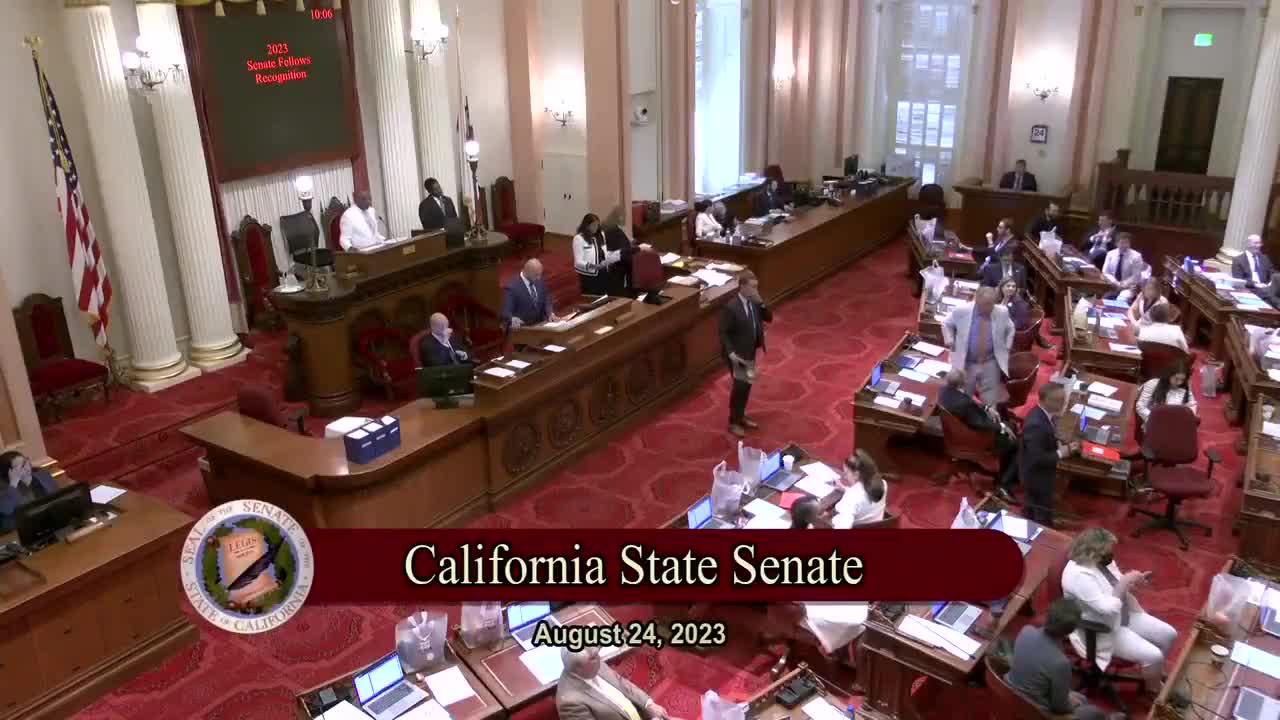
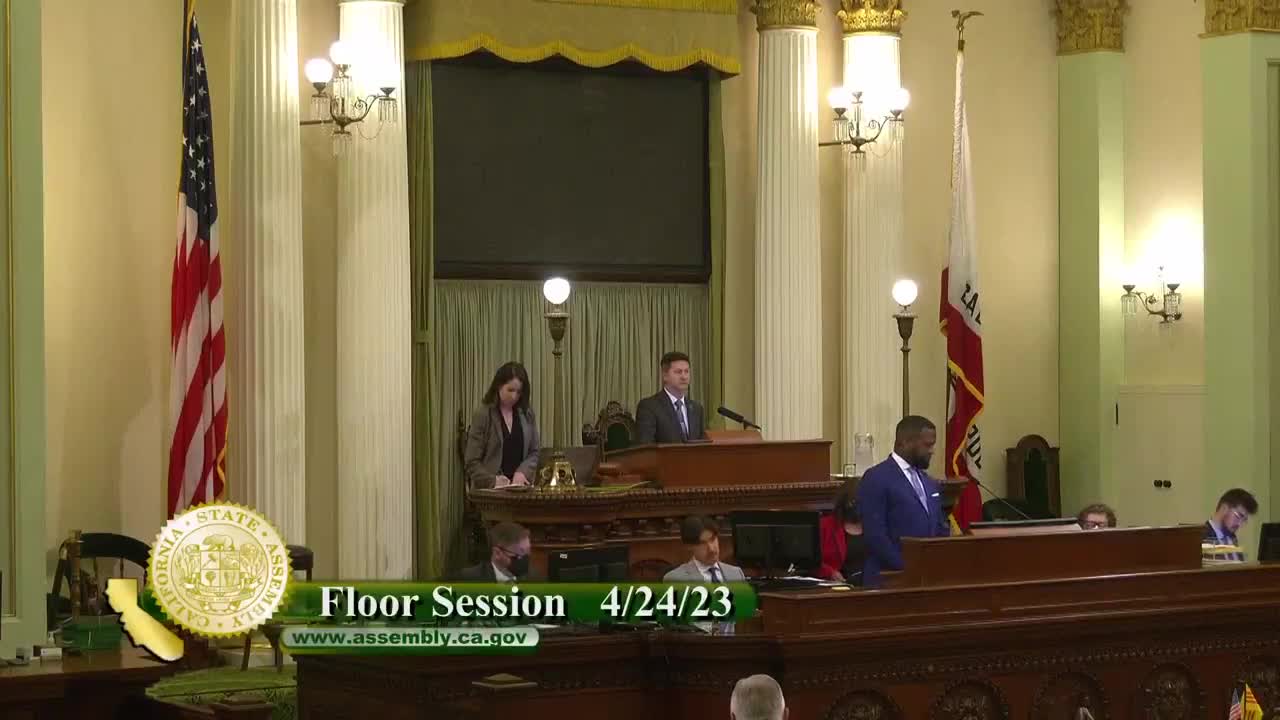
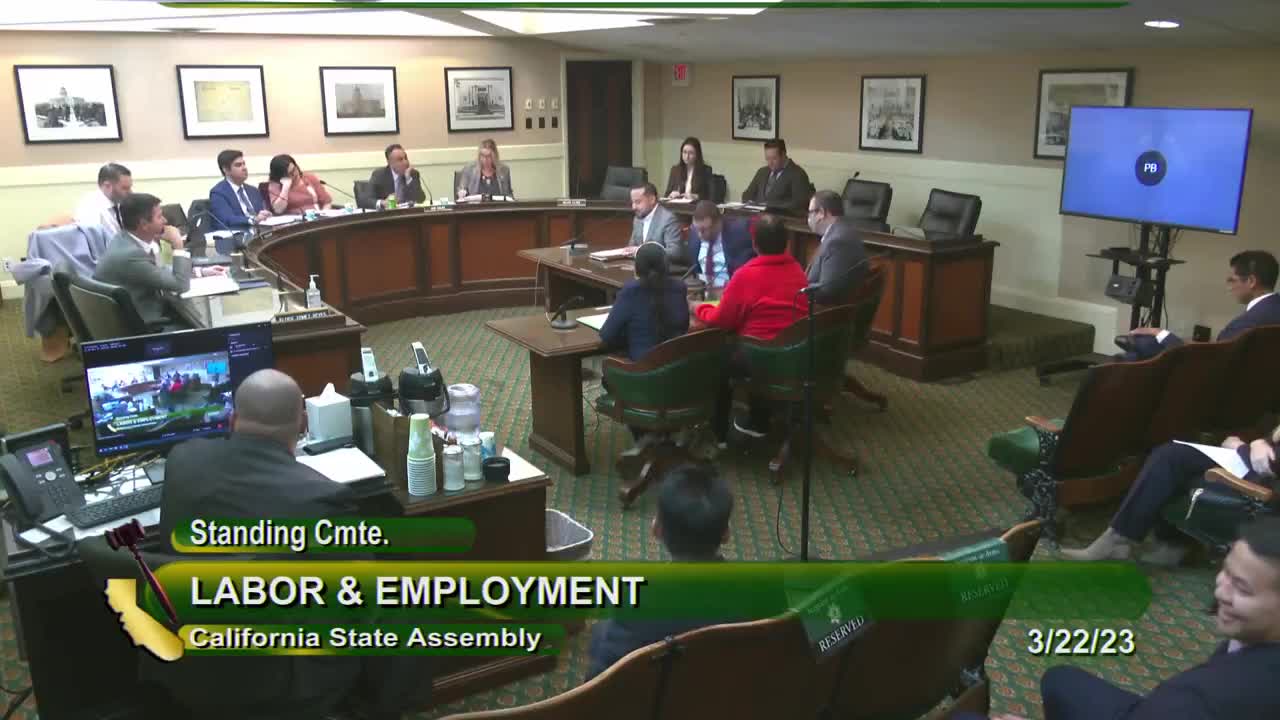
Bill Author

Bill Co-Author(s):