AB 590: State-funded assistance grants and contracts: advance payments.
- Session Year: 2023-2024
- House: Assembly
- Latest Version Date: 2023-10-08
Current Status:
Passed
(2023-10-08: Chaptered by Secretary of State - Chapter 535, Statutes of 2023.)
Introduced
In Committee
First Chamber
In Committee
Second Chamber
Enacted
Existing law authorizes specified state departments and authorities, upon determination that an advance payment is essential for the effective implementation of a program, to advance to a community-based private nonprofit agency with which it has contracted for the delivery of services funds not exceeding 25% of the annual allocation to be made to the agency during the fiscal year.
Existing law also establishes a pilot program, which is repealed on July 1, 2025, to explore possible improvements to the states existing advance payment practices for state-funded assistance grants. Existing law authorizes an administering state agency of a grant program to advance a payment to a recipient entity, which means a local agency or a nongovernmental entity that is awarded a grant by an administering state agency and with whom the administering state agency has entered into a contract pursuant to that grant, in accordance with specified procedures. These procedures include stipulating an advance payment structure and request process within the grant agreement or contract and ensuring that the advance payment to the recipient entity does not exceed 25% of the total grant amount awarded to the recipient entity, except in specified circumstances. Existing law establishing the pilot program further authorizes an administering state agency to advance payment to a recipient state agency awarded a grant in accordance with specified procedures, including stipulating an advance payment structure and request process within the grant agreement or contract between the state agency administering the program and the recipient state agency and requiring the recipient state agency to provide an itemized budget, spending timeline, and workplan.
This bill would declare the intent of the Legislature to improve and expand the states existing advance payment practices for state grants and contracts with nonprofits. The bill would authorize an administering state agency to advance a payment to a recipient entity, defined to mean a private, nonprofit organization qualified under federal law, subject to meeting specified requirements. The bill would require the administering state agency to prioritize recipient entities and projects serving disadvantaged, low-income, and under-resourced communities, and to ensure an advance payment to the recipient entity does not exceed 25% of the total grant or contract amount. The bill would require the recipient entity to satisfy certain minimum requirements, including providing an itemized budget and submitting documentation, as required by the administering state agency, to support the need for advance payment.
The bill would require the Department of Finance or its designee to audit a state agency subject to these provisions or any recipient or subrecipient that received an advance payment.
Existing law authorizes specified state departments and authorities, upon determination that an advance payment is essential for the effective implementation of a program, to advance to a community-based private nonprofit agency with which it has contracted for the delivery of services funds not exceeding 25% of the annual allocation to be made to the agency during the fiscal year.
Existing law also establishes a pilot program, which is repealed on July 1, 2025, to explore possible improvements to the states existing advance payment practices for state-funded assistance grants. Existing law authorizes an administering state agency of a grant program to advance a payment to a recipient entity, which means a local agency or a nongovernmental entity that is awarded a grant by an administering state agency and with whom the administering state agency has entered into a contract pursuant to that grant, in accordance with specified procedures. These procedures include stipulating an advance payment structure and request process within the grant agreement or contract and ensuring that the advance payment to the recipient entity does not exceed 25% of the total grant amount awarded to the recipient entity, except in specified circumstances. Existing law establishing the pilot program further authorizes an administering state agency to advance payment to a recipient state agency awarded a grant in accordance with specified procedures, including stipulating an advance payment structure and request process within the grant agreement or contract between the state agency administering the program and the recipient state agency and requiring the recipient state agency to provide an itemized budget, spending timeline, and workplan.
This bill would declare the intent of the Legislature to improve and expand the states existing advance payment practices for state grants and contracts with nonprofits. The bill would authorize an administering state agency to advance a payment to a recipient entity, defined to mean a private, nonprofit organization qualified under federal law, subject to meeting specified requirements. The bill would require the administering state agency to prioritize recipient entities and projects serving disadvantaged, low-income, and under-resourced communities, and to ensure an advance payment to the recipient entity does not exceed 25% of the total grant or contract amount. The bill would require the recipient entity to satisfy certain minimum requirements, including providing an itemized budget and submitting documentation, as required by the administering state agency, to support the need for advance payment.
The bill would require the Department of Finance or its designee to audit a state agency subject to these provisions or any recipient or subrecipient that received an advance payment. The bill would further require the Department of Finance, on or before January 10, 2027, to report to the Legislature on the outcomes of the advance payments authorized by these provisions.
(a)It is the intent of the Legislature to improve and expand the states existing advance payment practices for state grants and contract with nonprofits.
(b)For purposes of this section, all of the following definitions apply:
(1)Administering state agency means a state agency that administers a grant program or contract.
(2)Recipient entity means a private, nonprofit organization that qualifies under Section 501(c)(3) of the Internal Revenue Code.
(3)State agency has the same meaning as in Section 11000.
(c)An administering state agency may advance a payment to a recipient entity subject to all of the following requirements:
(1)The administering state agency shall do all of the following:
(A)Prioritize recipient entities and projects serving disadvantaged, low-income, and under-resourced communities or organizations with modest reserves and potential cashflow problems.
(B)Stipulate an advance payment structure and request process within the grant agreement or contract between the administering state agency and the recipient entity.
(C)Ensure the advance payment to the recipient entity does not exceed 25 percent of the total grant amount or contract awarded to that recipient entity. An administering state agency may exceed the 25-percent limit if the administering state agency determines that the project requires a larger advance and the recipient entity provides sufficient justification and documentation for that larger advance to the administering state agency.
(2)(A)The recipient entity shall satisfy the following minimum requirements:
(i)Provide an itemized budget for the eligible costs the advanced payment will fund, indirect or other costs needed to operate, a spending timeline, and a workplan developed in a form and manner specified by the administering state agency.
(ii)Submit documentation, as required by the administering state agency, to support the need for advance payment, which may include, but is not be limited to, invoices, contracts, estimates, payroll records, and financial records.
(iii)Demonstrate its current status in good standing as an organization exempt from taxation under Section 501(c)(3) of the Internal Revenue Code.
(iv)Obtain insurance in an amount commensurate with the assessed risk, if required by the administering state agency and stipulated within the grant agreement or contract.
(v)Deposit any funds received as an advance payment into a federally insured account of the recipient entity that provides the ability to track interest earned and withdrawals. Any accumulated interest shall be deemed to be grant or contract moneys, subject to federal and state laws and regulations, and the recipient shall report interest earned on the advance payment to the administering state agency. The recipient entitys account shall be in the recipient entitys name, and not in the name of any of its directors or officers.
(vi)Establish procedures to minimize the amount of time that elapses between the transfer of funds and the expenditure of those funds by the recipient or subrecipient. Further advance payments may be made if a grantee or contract recipient is able to demonstrate that a sufficient amount of previously advanced funds has been expended or that a plan is in place to ensure the expenditure of those funds in a timely manner, as determined by the administering state agency.
(vii)Provide progress reports on the expenditure of advanced funds no less than on a quarterly basis and as otherwise required by the administering state agency. All unused funding provided as an advance payment, but not expended within the grant or contract timeline, shall be returned to the state.
(viii)Provide a progress report to the administering state agency following the expenditure of an advance payment that includes a summary of work completed, proof of expenditure, and other associated information as determined by the administering state agency.
(B)(i)Recipient entities may provide moneys from the advance payment to subrecipients in accordance with their grant program requirements or contract.
(ii)Recipients shall require all entities they subcontract with or award grant moneys to comply with state statutes, regulations, requirements and the terms and conditions of the state award.
(iii)Regardless of any transfer or assignment of advance payments to subrecipients, recipients shall be liable to the state agency for any failures by subrecipients to ensure the award is used in accordance with state statutes, regulations, requirements, and the terms and conditions of the state award.
(d)Advance payments authorized under this section shall be limited to the minimum immediate cash requirements necessary to carry out the purpose of the approved activity, program, or project, as determined by the administering state agency and subject to that administering state agencys approval of the recipient entitys or recipient state agencys workplan and written justification.
(e)The Department of Finance or its designee may audit, during or after the conclusion of the term of the grant agreement, any state agency subject to this section or any recipient or subrecipient that received an advance payment under this section. The state agency, recipient, or subrecipient shall cooperate fully with the audit, including, but not limited to, providing access to its staff, books, records, accounts, or other materials, as requested.
(f)This section shall not be construed as limiting, prohibiting, or superseding any existing payment or grantmaking authorizations or powers of state agencies utilizing this section.
(a)It is the intent of the Legislature to improve and expand the states existing advance payment practices for state grants and contract with nonprofits.
(b)For purposes of this section, all of the following definitions apply:
(1)Administering state agency means a state agency that administers a grant program or contract.
(2)Recipient entity means a private, nonprofit organization that qualifies under Section 501(c)(3) of the Internal Revenue Code.
(3)State agency has the same meaning as in Section 11000.
(c)An administering state agency may advance a payment to a recipient entity subject to all of the following requirements:
(1)The administering state agency shall do all of the following:
(A)Prioritize recipient entities and projects serving disadvantaged, low-income, and under-resourced communities or organizations with modest reserves and potential cashflow problems.
(B)Stipulate an advance payment structure and request process within the grant agreement or contract between the administering state agency and the recipient entity.
(C)Ensure the advance payment to the recipient entity does not exceed 25 percent of the total grant amount or contract awarded to that recipient entity. An administering state agency may exceed the 25-percent limit if the administering state agency determines that the project requires a larger advance and the recipient entity provides sufficient justification and documentation for that larger advance to the administering state agency.
(2)(A)The recipient entity shall satisfy the following minimum requirements:
(i)Provide an itemized budget for the eligible costs the advanced payment will fund, indirect or other costs needed to operate, a spending timeline, and a workplan developed in a form and manner specified by the administering state agency.
(ii)Submit documentation, as required by the administering state agency, to support the need for advance payment, which may include, but is not be limited to, invoices, contracts, estimates, payroll records, and financial records.
(iii)Demonstrate its current status in good standing as an organization exempt from taxation under Section 501(c)(3) of the Internal Revenue Code.
(iv)Obtain insurance in an amount commensurate with the assessed risk, if required by the administering state agency and stipulated within the grant agreement or contract.
(v)Deposit any funds received as an advance payment into a federally insured account of the recipient entity that provides the ability to track interest earned and withdrawals. Any accumulated interest shall be deemed to be grant or contract moneys, subject to federal and state laws and regulations, and the recipient shall report interest earned on the advance payment to the administering state agency. The recipient entitys account shall be in the recipient entitys name, and not in the name of any of its directors or officers.
(vi)Establish procedures to minimize the amount of time that elapses between the transfer of funds and the expenditure of those funds by the recipient or subrecipient. Further advance payments may be made if a grantee or contract recipient is able to demonstrate that a sufficient amount of previously advanced funds has been expended or that a plan is in place to ensure the expenditure of those funds in a timely manner, as determined by the administering state agency.
(vii)Provide progress reports on the expenditure of advanced funds no less than on a quarterly basis and as otherwise required by the administering state agency. All unused funding provided as an advance payment, but not expended within the grant or contract timeline, shall be returned to the state.
(viii)Provide a progress report to the administering state agency following the expenditure of an advance payment that includes a summary of work completed, proof of expenditure, and other associated information as determined by the administering state agency.
(B)(i)Recipient entities may provide moneys from the advance payment to subrecipients in accordance with their grant program requirements or contract.
(ii)Recipients shall require all entities they subcontract with or award grant moneys to comply with clauses (vi) and (viii) of subparagraph (A). state statutes, regulations, requirements and the terms and conditions of the state award.
(iii)Regardless of any transfer or assignment of advance payments to subrecipients, recipients shall be liable to the state agency for complying with this subparagraph and for any failures by subrecipients to perform contractual obligations or to comply with the requirements of this section. any failures by subrecipients to ensure the award is used in accordance with state statutes, regulations, requirements, and the terms and conditions of the state award.
(d)Advance payments authorized under this section shall be limited to the minimum immediate cash requirements necessary to carry out the purpose of the approved activity, program, or project, as determined by the administering state agency and subject to that administering state agencys approval of the recipient entitys or recipient state agencys workplan and written justification.
(e)The Department of Finance or its designee may audit, during or after the conclusion of the term of the grant agreement, any state agency subject to this section or any recipient or subrecipient that received an advance payment under this section. The state agency, recipient, or subrecipient shall cooperate fully with the audit, including, but not limited to, providing access to its staff, books, records, accounts, or other materials, as requested.
(f)This section shall not be construed as limiting, prohibiting, or superseding any existing payment or grantmaking authorizations or powers of state agencies utilizing this section.
(a)It is the intent of the Legislature to improve and expand the states existing advance payment practices for state grants and contract with nonprofits.
(b)For purposes of this section, all of the following definitions apply:
(1)Administering state agency means a state agency that administers a grant program or contract.
(2)Recipient entity means a private, nonprofit organization that qualifies under Section 501(c)(3) of the Internal Revenue Code.
(3)State agency has the same meaning as in Section 11000.
(c)An administering state agency may advance a payment to a recipient entity subject to all of the following requirements:
(1)The administering state agency shall do all of the following:
(A)Prioritize recipient entities and projects serving disadvantaged, low-income, and under-resourced communities or organizations with modest reserves and potential cashflow problems.
(B)Stipulate an advance payment structure and request process within the grant agreement or contract between the administering state agency and the recipient entity.
(C)Ensure the advance payment to the recipient entity does not exceed 25 percent of the total grant amount or contract awarded to that recipient entity. An administering state agency may exceed the 25-percent limit if the administering state agency determines that the project requires a larger advance and the recipient entity provides sufficient justification and documentation for that larger advance to the administering state agency.
(2)(A)The recipient entity shall satisfy the following minimum requirements:
(i)Provide an itemized budget, budget for the eligible costs the advanced payment will fund, indirect or other costs needed to operate, a spending timeline, and a workplan developed in a form and manner specified by the administering state agency.
(ii)Submit documentation, as required by the administering state agency, to support the need for advance payment, which may include, but is not be limited to, invoices, contracts, estimates, payroll records, and financial records.
(iii)Demonstrate good standing with the Internal Revenue Service. its current status in good standing as an organization exempt from taxation under Section 501(c)(3) of the Internal Revenue Code.
(iv)Obtain insurance in an amount commensurate with the assessed risk, if required by the administering state agency and stipulated within the grant agreement or contract.
(v)Deposit any funds received as an advance payment into a federally insured, interest-bearing account insured account of the recipient entity that provides the ability to track interest earned and withdrawals. Any accumulated interest shall be deemed to be grant or contract moneys, subject to federal and state laws and regulations, and the recipient shall report interest earned on the advance payment to the administering state agency. The recipient entitys account shall be in the recipient entitys name, and not in the name of any of its directors or officers.
(vi)Establish procedures to minimize the amount of time that elapses between the transfer of funds and the expenditure of those funds by the recipient or subrecipient. Further advance payments may be made if a grantee or contract recipient is able to demonstrate that a sufficient amount of previously advanced funds has been expended or that a plan is in place to ensure the expenditure of those funds in a timely manner, as determined by the administering state agency.
(vii)Provide progress reports on the expenditure of advanced funds no less than on a quarterly basis and as otherwise required by the administering state agency. All unused funding provided as an advance payment, but not expended within the grant or contract timeline, shall be returned to the state.
(viii)Provide a progress report to the administering state agency following the expenditure of an advance payment that includes a summary of work completed, proof of expenditure, and other associated information. information as determined by the administering state agency.
(B)(i)Recipient entities may provide moneys from the advance payment to subrecipients in accordance with their grant program requirements or contract.
(ii)Recipients shall require all entities they subcontract with or award grant moneys to comply with clauses (vi) and (viii) of subparagraph (A).
(iii)Regardless of any transfer or assignment of advance payments to subrecipients, recipients shall be liable to the state agency for complying with this subparagraph and for any failures by subrecipients to perform contractual obligations or to comply with the requirements of this section.
(d)Advance payments authorized under this section shall be limited to the minimum immediate cash requirements necessary to carry out the purpose of the approved activity, program, or project, as determined by the administering state agency and subject to that administering state agencys approval of the recipient entitys or recipient state agencys workplan and written justification.
(e)The Department of Finance or its designee may audit, during or after the conclusion of the term of the grant agreement, any state agency subject to this section or any recipient or subrecipient that received an advance payment under this section. The state agency, recipient, or subrecipient shall cooperate fully with the audit, including, but not limited to, providing access to its staff, books, records, accounts, or other materials, as requested.
(f)This section shall not be construed as limiting, prohibiting, or superseding any existing payment or grantmaking authorizations or powers of state agencies utilizing this section.
(g)On or before January 10, 2027, the Department of Finance shall provide a report to the Legislature, in compliance with Section 9795, that identifies outcomes of the advance payments authorized in this section. The report shall include, but is not limited to, all of the following:(1)The number of payments advanced pursuant to this section, including by administering state agency and geographic location.(2)The number of payments advanced pursuant to this section that exceeded the 25-percent limit allowed in subparagraph (C) of paragraph (1) of subdivision (c), including by administering state agency and geographic location.(3)A summary of any adverse audit findings associated with audits conducted pursuant to subdivision (e).(a)It is the intent of the Legislature to improve and expand the states existing advance payment practices for state grants and contract with nonprofits.
(b)For purposes of this section, all of the following definitions apply:
(1)Administering state agency means a state agency that administers a grant program or contract.
(2)Recipient entity means a private, nonprofit organization that qualifies under Section 501(c)(3) of the Internal Revenue Code.
(3)State agency has the same meaning as in Section 11000.
(c)An administering state agency may advance a payment to a recipient entity subject to all of the following requirements:
(1)The administering state agency shall do all of the following:
(A)Prioritize recipient entities and projects serving disadvantaged, low-income, and under-resourced communities or organizations with modest reserves and potential cashflow problems.
(B)Stipulate an advance payment structure and request process within the grant agreement or contract between the administering state agency and the recipient entity.
(C)Ensure the advance payment to the recipient entity does not exceed 25 percent of the total grant amount or contract awarded to that recipient entity. An administering state agency may exceed the 25-percent limit if the administering state agency determines that the project requires a larger advance and the recipient entity provides sufficient justification and documentation for that larger advance to the administering state agency.
(2)(A)The recipient entity shall satisfy the following minimum requirements:
(i)Provide an itemized budget, indirect or other costs needed to operate, a spending timeline, and a workplan developed in a form and manner specified by the administering state agency.
(ii)Submit documentation, as required by the administering state agency, to support the need for advance payment, which may include, but is not be limited to, invoices, contracts, estimates, payroll records, and financial records.
(iii)Demonstrate good standing with the Internal Revenue Service.
(iv)Obtain insurance in an amount commensurate with the assessed risk, if required by the administering state agency and stipulated within the grant agreement or contract.
(v)Deposit any funds received as an advance payment into a federally insured, interest-bearing account that provides the ability to track interest earned and withdrawals. Any accumulated interest shall be deemed to be grant or contract moneys, subject to federal laws and regulations, and the recipient shall report interest earned on the advance payment to the administering state agency.
(vi)Establish procedures to minimize the amount of time that elapses between the transfer of funds and the expenditure of those funds by the recipient or subrecipient. Further advance payments may be made if a grantee or contract recipient is able to demonstrate that a sufficient amount of previously advanced funds has been expended or that a plan is in place to ensure the expenditure of those funds in a timely manner, as determined by the administering state agency.
(vii)Provide progress reports on the expenditure of advanced funds no less than on a quarterly basis and as otherwise required by the administering state agency. All unused funding provided as an advance payment, but not expended within the grant or contract timeline, shall be returned to the state.
(viii)Provide a progress report to the administering state agency following the expenditure of an advance payment that includes a summary of work completed, proof of expenditure, and other associated information.
(B)(i)Recipient entities may provide moneys from the advance payment to subrecipients in accordance with their grant program requirements or contract.
(ii)Recipients shall require all entities they subcontract with or award grant moneys to comply with clauses (vi) and (viii) of subparagraph (A).
(iii)Regardless of any transfer or assignment of advance payments to subrecipients, recipients shall be liable to the state agency for complying with this subparagraph and for any failures by subrecipients to perform contractual obligations or to comply with the requirements of this section.
(d)Advance payments authorized under this section shall be limited to the minimum immediate cash requirements necessary to carry out the purpose of the approved activity, program, or project, as determined by the administering state agency and subject to that administering state agencys approval of the recipient entitys or recipient state agencys workplan and written justification.
(e)The Department of Finance or its designee may audit, during or after the conclusion of the term of the grant agreement, any state agency subject to this section or any recipient or subrecipient that received an advance payment under this section. The state agency, recipient, or subrecipient shall cooperate fully with the audit, including, but not limited to, providing access to its staff, books, records, accounts, or other materials, as requested.
(f)This section shall not be construed as limiting, prohibiting, or superseding any existing payment or grantmaking authorizations or powers of state agencies utilizing this section.
(g)On or before January 10, 2027, the Department of Finance shall provide a report to the Legislature, in compliance with Section 9795, that identifies outcomes of the advance payments authorized in this section. The report shall include, but is not limited to, all of the following:
(1)The number of payments advanced pursuant to this section, including by administering state agency and geographic location.
(2)The number of payments advanced pursuant to this section that exceeded the 25-percent limit allowed in subparagraph (C) of paragraph (1) of subdivision (c), including by administering state agency and geographic location.
(3)A summary of any adverse audit findings associated with audits conducted pursuant to subdivision (e).
REVISIONS: HeadingLine 2.|
Date
|
Status
|
|---|---|
| Oct 8, 2023 | Chaptered by Secretary of State - Chapter 535, Statutes of 2023. |
| Oct 8, 2023 | Approved by the Governor. |
| Sep 20, 2023 | Enrolled and presented to the Governor at 4 p.m. |
| Sep 13, 2023 | Senate amendments concurred in. To Engrossing and Enrolling. (Ayes 80. Noes 0. Page 3401.). |
| Sep 12, 2023 | In Assembly. Concurrence in Senate amendments pending. |
| Sep 12, 2023 | Read third time. Passed. Ordered to the Assembly. (Ayes 38. Noes 0. Page 2640.). |
| Sep 11, 2023 | Read second time. Ordered to third reading. |
| Sep 8, 2023 | Read third time and amended. Ordered to second reading. |
| Sep 5, 2023 | Read second time. Ordered to third reading. |
| Sep 1, 2023 | From committee: Amend, and do pass as amended. (Ayes 7. Noes 0.) (September 1). |
| Sep 1, 2023 | Read second time and amended. Ordered returned to second reading. |
| Aug 21, 2023 | In committee: Referred to APPR suspense file. |
| Jul 11, 2023 | From committee: Do pass and re-refer to Com. on APPR. (Ayes 14. Noes 0.) (July 11). Re-referred to Com. on APPR. |
| Jun 14, 2023 | Referred to Com. on G.O. |
| Jun 1, 2023 | In Senate. Read first time. To Com. on RLS. for assignment. |
| May 31, 2023 | Read third time. Passed. Ordered to the Senate. (Ayes 80. Noes 0. Page 2024.) |
| May 18, 2023 | Read second time. Ordered to third reading. |
| May 18, 2023 | From committee: Do pass. (Ayes 15. Noes 0.) (May 18). |
| May 18, 2023 | Coauthors revised. |
| Apr 19, 2023 | In committee: Set, first hearing. Referred to APPR. suspense file. |
| Mar 29, 2023 | From committee: Do pass and re-refer to Com. on APPR. (Ayes 7. Noes 0.) (March 29). Re-referred to Com. on APPR. |
| Mar 29, 2023 | Coauthors revised. |
| Mar 16, 2023 | Referred to Com. on A. & A.R. |
| Feb 10, 2023 | From printer. May be heard in committee March 12. |
| Feb 9, 2023 | Read first time. To print. |
|
Date
|
Description
|
Location
|
Votes
|
|
|---|---|---|---|---|
| Sep 13, 2023 | AB 590 Hart Concurrence in Senate Amendments | Assembly Floor |
Passed |
|
| Sep 12, 2023 | Assembly 3rd Reading AB590 Hart et al. By Limón | Senate Floor |
Passed |
|
| Sep 1, 2023 | Do pass as amended | Senate Standing Committee on Appropriations |
Passed |
|
| Aug 21, 2023 | Placed on suspense file | Senate Standing Committee on Appropriations |
Passed |
|
| Jul 11, 2023 | Do pass, but first be re-referred to the Committee on [Appropriations] | Senate Standing Committee on Governmental Organization |
Passed |
|
| May 31, 2023 | AB 590 Hart Assembly Third Reading | Assembly Floor |
Passed |
|
| May 18, 2023 | Do pass. | Assembly Standing Committee on Appropriations |
Passed |
|
| Mar 29, 2023 | Do pass and be re-referred to the Committee on [Appropriations] | Assembly Standing Committee on Accountability and Administrative Review |
Passed |
This list shows positions taken on this bill by organizations on the date displayed, which is linked to the original source.
Positions by individuals are not included.
|
Organization
|
Position
|
Date
|
|---|---|---|
| Able Community Development Foundation | ** Support | |
| Achievement House, INC. | ** Support | |
| Advanced Network Consulting, So Cal Inc. | ** Support | |
| Advancing Steps | ** Support | |
| African Women and Children | ** Support | |
| Alameda Post Inc. | ** Support | |
| Alchemist CDC | ** Support | |
| Amanecer | ** Support | |
| A Manna Group Grantwriter | ** Support | |
| A Meaningful Goal Housing Shelter | ** Support | |
| American Academy of Pediatrics, CA Chapter 3 | ** Support | |
| American Academy of Pediatrics - Orange County Chapter | ** Support | |
| Amigos de los Rios | ** Support | |
| Amity Foundation | ** Support | |
| Angelenos for Trees | ** Support | |
| API Equality-LA | ** Support | |
| Arts District Community Council LA | ** Support | |
| Arts for Healing and Justice Network | ** Support | |
| Arts for LA | ** Support | |
| Arts Habitat | ** Support | |
| Arts & Learning Conservatory | ** Support | |
| Asian Americans for Community Involvement | ** Support | |
| Asian Business Association | ** Support | |
| Asociacion De Emprendedor@s | ** Support | |
| Association For Environmental And Outdoor Education | ** Support | |
| Association of California Symphony Orchestras | ** Support | |
| Association Of Community Human Service Agencies | ** Support | |
| A Step to Freedom | ** Support | |
| Autism Society Inland Empire | ** Support | |
| Awoke | ** Support | |
| Bakersfield Senior Center | ** Support | |
| Bay Area Urban Forest Ecosystem Council | ** Support | |
| Bay Redwood Consulting LLC | ** Support | |
| Bc Global Organization | ** Support | |
| Becky Foreman Facilitation and Training | ** Support | |
| Being Alive/people With Aids Action Coalition | ** Support | |
| Belle Haven Action | ** Support | |
| Best Friends of Lapl | ** Support | |
| Bet Tzedek | ** Support | |
| Big Brothers Big Sisters of the North Coast | ** Support | |
| Bill Wilson Center | ** Support | |
| Booker T. Washington Community Service Center | ** Support | |
| Boys & Girls Club of Laguna Beach | ** Support | |
| Breathe California | ** Support | |
| Breathe Southern Califoria | ** Support | |
| Brilliant Corners | ** Support | |
| Brooke Frost & Associates | ** Support | |
| Buckelew Programs | ** Support | |
| CalChamber | ** Support | |
| California Access Coalition | ** Support | |
| California Alliance For Community Composting | ** Support | |
| California Alliance Of Child And Family Services | ** Support | |
| California Arts Advocates | ** Support | |
| California Association Of Nonprofits | ** Support | |
| California Chapter 1, American Academy of Pediatrics | ** Support | |
| California Child Care Resource and Referral Network | ** Support | |
| California Coalition for Community Investment | ** Support | |
| California Council Of Community Behavioral Health Agencies | ** Support | |
| california council on economic education | ** Support | |
| California Family Resource Association | ** Support | |
| Californians Against Waste | ** Support | |
| California Partnership To End Domestic Violence | ** Support | |
| California Releaf | ** Support | |
| California Urban Forests Council | ** Support | |
| CAMEO | ** Support | |
| Caminar | ** Support | |
| Camp Ocean Pines, INC | ** Support | |
| Canopy | ** Support | |
| Carry the Vision | ** Support | |
| Catholic Big Brothers Big Sisters | ** Support | |
| Caulder Lamm Alliance for Children, Inc. | ** Support | |
| Cause Communications | ** Support | |
| Cedaw Challenge Team | ** Support | |
| Center for Human Services | ** Support | |
| Center for Living and Learning | ** Support | |
| Center for Nonprofit Management | ** Support | |
| Central Coast Urban Forests Council | ** Support | |
| Central Coast YMCA | ** Support | |
| Child Abuse Prevention Center | ** Support | |
| Child Action, Inc. | ** Support | |
| Child & Family Center | ** Support | |
| Children's Bureau of Southern California | ** Support | |
| ChildrenS Institute | ** Support | |
| Chinatown Community Development Corporation | ** Support | |
| Chip | ** Support | |
| Christ-centered Ministries | ** Support | |
| Chrysalis | ** Support | |
| Civica | ** Support | |
| Clean & Green Pomona | ** Support | |
| Climate Action Now | ** Support | |
| ClimatePlan | ** Support | |
| Coachart | ** Support | |
| Coastal Watershed Council | ** Support | |
| Community Access Center | ** Support | |
| Community Action Board Of Santa Cruz County, Inc. | ** Support | |
| Community Action Marin | ** Support | |
| Community Alliance With Family Farmers | ** Support | |
| Community Bridges | ** Support | |
| Community Forest Advisory Committee | ** Support | |
| Community Initiatives | ** Support | |
| Community Investment Strategies | ** Support | |
| Community Services Agency | ** Support | |
| Community Vision Capital and Consulting | ** Support | |
| Community Water Center | ** Support | |
| Compasspoint Nonprofit Services | ** Support | |
| Cope Family Center | ** Support | |
| Cora - Community Overcoming Relationship Abuse | ** Support | |
| CORA- Community Overcoming Relationship Abuse | ** Support | |
| Cottonwood Community Center & Park | ** Support | |
| County of Sonoma Department of Health Services | ** Support | |
| Cre8 Innovations | ** Support | |
| CY Volunteers in Medicine | ** Support | |
| Daly City Youth Health Center | ** Support | |
| Desert Sanctuary Inc. | ** Support | |
| Developing Organizing Visions for Everyone | ** Support | |
| Developing Organizing Visions for Everyone (dove B | ** Support | |
| Dientes Community Dental Care | ** Support | |
| Disability Rights California | ** Support | |
| Downtown Streets Team | ** Support | |
| East Contra Costa Community Alliance | ** Support | |
| Easterseals Central California | ** Support | |
| Eden United Church of Christ | ** Support | |
| El Concilio | ** Support | |
| El Concilio of Stockton | ** Support | |
| Elementary Institute of Science | ** Support | |
| Elk Grove Writers Guild, Inc. | ** Support | |
| Elkhorn Slough Foundation | ** Support | |
| El Sol Neighborhood Educational Center | ** Support | |
| Empire Recovery Center | ** Support | |
| Encompass Community Services | ** Support | |
| Environteers.org | ** Support | |
| Equality California | ** Support | |
| Exceptional Parents Unlimited | ** Support | |
| Exposher | ** Support | |
| Extraordinary Families | ** Support | |
| Family Service Association | ** Support | |
| Fixin San Mateo County | ** Support | |
| Foodcycle | ** Support | |
| Food Exploration and Discovery | ** Support | |
| Free At Last | ** Support | |
| Freedom Assembly, Inc. | ** Support | |
| Fresno Arts Council | ** Support | |
| fresno building healthy communities | ** Support | |
| Friends Committee On Legislation Of California | ** Support | |
| Friends of The Santa Cruz Public Libraries | ** Support | |
| Funded W/Lady K | ** Support | |
| Gang Alternatives Program | ** Support | |
| Gateway Center of Monterey County | ** Support | |
| Girl Scouts of Greater Los Angeles | ** Support | |
| Global Urban Cultural Community-LA | ** Support | |
| Goat Rescue of Sonoma County | ** Support | |
| Goodwill | ** Support | |
| Grantland L Johnson Institute of Leadership Development | ** Support | |
| Greater Farallones Association | ** Support | |
| GreenInfo Network | ** Support | |
| Greenlining Institute | ** Support | |
| Growing Together | ** Support | |
| Guadalupe River Park Conservancy | ** Support | |
| Habitat for Humanity Greater San Francisco | ** Support | |
| Healing to You | ** Support | |
| Health Improvement Partnership of Santa Cruz | ** Support | |
| Health Right 360 | ** Support | |
| HealthRight 360 | ** Support | |
| Healthy Aging Association | ** Support | |
| Heard Kids | ** Support | |
| High Desert Community Foundation | ** Support | |
| Highlands Senior Service Center Inc. | ** Support | |
| Hispanic Foundation of Silicon Valley | ** Support | |
| Hively | ** Support | |
| Hollywood Blackdoor Alliance United, Inc. | ** Support | |
| Home Consulting | ** Support | |
| Hopefulyouth INC. | ** Support | |
| Hospice of Santa Cruz | ** Support | |
| House Of Ruth | ** Support | |
| Housing Matters | ** Support | |
| Huckleberry Youth Programs | ** Support | |
| Impact Philanthropy LLC | ** Support | |
| Industrial District Green | ** Support | |
| Ink People | ** Support | |
| Inland Empire Community Collaborative | ** Support | |
| Inland Empire United Way | ** Support | |
| Inland Southern California United Way | ** Support | |
| Inland Urban Forest Council | ** Support | |
| Instituto De Avance Integral Latino CDC | ** Support | |
| Instituto de Educacion Popular del Sur de California | ** Support | |
| International Society of Arboriculture, Western Chapter | ** Support | |
| Jenesse Center, Inc. | ** Support | |
| Jenn Raley Miller LLC | ** Support | |
| Jewish Family Service of Los Angeles | ** Support | |
| JobTrain | ** Support | |
| Joshua Home an Lgbtq Safe Haven | ** Support | |
| J-Sei, Inc. | ** Support | |
| Judi Sherman & Associates | ** Support | |
| Justice Brilliance Advocacy | ** Support | |
| JVS SoCal | ** Support | |
| Korean American Community Services | ** Support | |
| Korean American Silver Lining Initiative | ** Support | |
| Koreatown Youth and Community Center INC. | ** Support | |
| Koreatown Youth + Community Center | ** Support | |
| L.A. Compost | ** Support | |
| LA Conservation Corps | ** Support | |
| Lake County Behavioral Health | ** Support | |
| LA N Sync | ** Support | |
| Larkin Street Youth Services | ** Support | |
| Latino Community Foundation | ** Support | |
| Leading Purpose, INC. | ** Support | |
| Legal Aid Society of San Mateo County | ** Support | |
| Liberateme | ** Support | |
| Life Lab | ** Support | |
| Lighthouse Silicon Valley | ** Support | |
| Live Violence Free | ** Support | |
| Loaves, Fishes and Computers | ** Support | |
| Loaves & Fishes Family Kitchen | ** Support | |
| Loma Linda University Health | ** Support | |
| Long Beach Gray Panthers | ** Support | |
| Los Angeles Area Chamber Of Commerce | ** Support | |
| Los Angeles Beautification Team | ** Support | |
| Los Angeles Center for Law and Justice | ** Support | |
| Los Angeles Neighborhood Land Trust | ** Support | |
| Los Angeles Regional Reentry Partnership | ** Support | |
| LTSC Community Development Corporation | ** Support | |
| Lumber Cycle | ** Support | |
| Madera Coalition for Community Justice | ** Support | |
| Making Hope Happen Foundation | ** Support | |
| Malo Motivating Action Leadership Opportunity | ** Support | |
| Manos Que Sobreviven | ** Support | |
| Meals On Wheels California | ** Support | |
| Meals on Wheels Orange County | ** Support | |
| Meal Wheels California | ** Support | |
| Media Alliance | ** Support | |
| Mexican American Opportunity Foundation | ** Support | |
| MicroEnterprise Collaborative of Inland Southern California | ** Support | |
| Midpeninsula Regional Open Space District | ** Support | |
| Mnm Project H.O.P.E. | ** Support | |
| Mountain Counseling & Training | ** Support | |
| Mountain Homeless Coalition | ** Support | |
| Mujeres de la Tierra | ** Support | |
| NAACP | ** Support | |
| National Harm Reduction Coalition | ** Support | |
| National Sobering Collaborative | ** Support | |
| National Stewardship Action Council | ** Support | |
| Network Impact | ** Support | |
| New Genesis Housing Development Corporation | ** Support | |
| New Horizons | ** Support | |
| New Way Group SCC | ** Support | |
| Next Door Solutions to Domestic Violence | ** Support | |
| Nonprofit Alliance of Monterey County | ** Support | |
| Nonprofit Connection SCC | ** Support | |
| Nonprofit Finance Fund | ** Support | |
| Nonprofit Insurance Alliance of California | ** Support | |
| Nonprofit Solutions | ** Support | |
| North East Trees | ** Support | |
| Northern California Grantmakers | ** Support | |
| North Fair Oaks Community Alliance | ** Support | |
| North Valley Community Foundation | ** Support | |
| Nuestra Casa De East Palo Alto | ** Support | |
| Oakbrook Park Chumash Indian Corporation | ** Support | |
| O'Neill Sea Odyssey | ** Support | |
| OneJustice | ** Support | |
| Operation New Hope | ** Support | |
| Orangewood Foundation | ** Support | |
| Parca | ** Support | |
| Parents for Public Schools of San Francisco | ** Support | |
| Path | ** Support | |
| PathPoint | ** Support | |
| PATH Ventures | ** Support | |
| Patriots and Paws | ** Support | |
| Project Eden/Horizon Services, Inc. | ** Support | |
| Project Sentinel | ** Support | |
| Project Sister Family Services | ** Support | |
| Protection of The Educational Rights of Kids | ** Support | |
| Pro Youth and Families | ** Support | |
| Raiseachild | ** Support | |
| Raise the Barr | ** Support | |
| Raphael House of San Francisco | ** Support | |
| Ratna Ling Retreat Center | ** Support | |
| REACH LA | ** Support | |
| Reach Out | ** Support | |
| Rebuilding Together Peninsula | ** Support | |
| Redwood City Parks and Arts Foundation | ** Support | |
| Renaissance Fabrics Study Collection | ** Support | |
| Rescape California | ** Support | |
| Richmond Community Foundation | ** Support | |
| Rise South City | ** Support | |
| Riverside Arts Academy | ** Support | |
| Roseville Urban Forest Foundation | ** Support | |
| Rural Community Assistance Corporation | ** Support | |
| Sacramento Tree Foundation | ** Support | |
| Sacramento Urban Forest Council | ** Support | |
| Sacred Life Recovery Services | ** Support | |
| Safe Parking LA | ** Support | |
| Safequest Solano | ** Support | |
| San Diego Regional Urban Forests Council | ** Support | |
| San Fernando Valley Youth Chorus | ** Support | |
| San Francisco Estuary Institute | ** Support | |
| San Joaquin Urban Forest Council | ** Support | |
| Santa Barbara Foundation | ** Support | |
| Santa Cruz Museum of Art & History | ** Support | |
| Santa Cruz Volunteer Center | ** Support | |
| Say San Diego | ** Support | |
| Sbcc Foundation | ** Support | |
| Sea Hugger | ** Support | |
| Sebastopol Area Senior Center | ** Support | |
| Self-Help Enterprises | ** Support | |
| Senior Advocacy Network-senior Law Project | ** Support | |
| Senior Coastsiders | ** Support | |
| Senior Nutrition Program of SLO County | ** Support | |
| Sequoia Riverlands Trust | ** Support | |
| Seymour Marine Discovery Center | ** Support | |
| Shadow Husky Rescue, Inc. | ** Support | |
| Sheedy Consulting, LLC | ** Support | |
| Shelter From the Storm, Inc. | ** Support | |
| Silicon Valley Council of Nonprofits | ** Support | |
| Silicon Valley Independent Living Center | ** Support | |
| Sitike Counseling Center | ** Support | |
| S & L Foster Family Agency | ** Support | |
| Socal Grantmakers | ** Support | |
| Solé of The Community | ** Support | |
| Sonoma Ecology Center | ** Support | |
| Sonrisas Dental Health | ** Support | |
| Southern California Black Chamber of Commerce | ** Support | |
| SPIRITT Family Services | ** Support | |
| Stanford | ** Support | |
| Sterling Solutions | ** Support | |
| St. Matthias | ** Support | |
| Stopping Pressure on Teens | ** Support | |
| Straight Talk Clinic, Inc. | ** Support | |
| Streets Team Enterprises | ** Support | |
| Street Tree Seminar | ** Support | |
| Studio Creativo Cultural Art Foundation | ** Support | |
| St Vincent De Paul, Queen of Peace | ** Support | |
| Success In Challenges, Inc. | ** Support | |
| Sustainable Claremont | ** Support | |
| Sweetwater Collaborative | ** Support | |
| Switzer Learning Center | ** Support | |
| Sycamores | ** Support | |
| TabiMOMS | ** Support | |
| Taulama For Tongans | ** Support | |
| Theatreofhearts Inc. Youth First | ** Support | |
| The Children's Movement of Fresno | ** Support | |
| The Climate Center | ** Support | |
| The Greenlining Institute | ** Support | |
| The New Children'S Museum | ** Support | |
| The Nonprofit Partnership | ** Support | |
| The Paz and Esperanza Project for Relief and Education | ** Support | |
| The People Concern | ** Support | |
| The Power of Forgiveness Foundation | ** Support | |
| The Reading Channel | ** Support | |
| The Read to Me Project | ** Support | |
| The Right Kind of Black Girl | ** Support | |
| the River Project | ** Support | |
| The San Diego Foundation | ** Support | |
| The Z Bridge | ** Support | |
| Transfamily Support Services | ** Support | |
| Transform Collaborative, LLC | ** Support | |
| Tree Foundation of Kern | ** Support | |
| Tree Fresno | ** Support | |
| Treepeople | ** Support | |
| Trust for Public Land | ** Support | |
| Tuleyome | ** Support | |
| United Way California Capital Region | ** Support | |
| United Ways Of California | ** Support | |
| Upvalley Family Centers of Napa County | ** Support | |
| Urban Ecos | ** Support | |
| Urban Strategies Council | ** Support | |
| Valley Caregiver Resource Center | ** Support | |
| Valley Clean Air Now | ** Support | |
| Vietnamese American Roundtable | ** Support | |
| Viet Rainbow of Orange County | ** Support | |
| Voice.gladiator Program | ** Support | |
| Voices of Recovery San Mateo County | ** Support | |
| Walden Family Services | ** Support | |
| walnut avenue family & women's center | ** Support | |
| Watsonville Wetlands Watch | ** Support | |
| WEAVE | ** Support | |
| Westcare California Inc | ** Support | |
| western center on law & poverty | ** Support | |
| Wholly H2O | ** Support | |
| Women'S Foundation California | ** Support | |
| Women's Theatre Collective | ** Support | |
| Woodland Volunteer Bureau Food Closet | ** Support | |
| Wopumnes Nisenan and Mewuk Heritage Preservation Society | ** Support | |
| Yes Ma’am Food Service | ** Support | |
| Your Children's Trees | ** Support | |
| Youthbuild Inland Empire | ** Support | |
| Youth Recovery Connections | ** Support |
CONCURRENCE IN SENATE AMENDMENTS
CSA1 Bill Id:AB 590
Author:(Hart)
As Amended Ver:September 8, 2023
Majority vote
SUMMARY
Authorizes a state agency administering a grant program to provide for advance payments to a recipient 501(c)(3) nonprofit organization, as specified.
Senate Amendments
- Specifies that advance payments be deposited into the recipient entity's account in the recipient entity’s name, and not in the name of any of its directors or officers.
- Deletes Department of Finance reporting requirements.
- Makes technical and clarifying changes.
COMMENTS
- AB 590 authorizes a state agency administering a grant program to provide an advance payment to a recipient 501(c)(3) nonprofit organization if the administering state agency does all the following:
- Prioritize recipient entities and projects serving disadvantaged, low-income, and under-resourced communities or organizations with modest reserves and potential cash flow problems;
- Stipulate an advance payment structure and request process within the grant agreement or contract; and,
- Ensure the advance payment does not exceed 25% of the total grant or contract amount, unless the state agency determines that the project requires a larger advance and the recipient entity provides sufficient justification and documentation for that larger amount.
- Requires a recipient entity to satisfy the following minimum requirements:
- Provide an itemized budget for the eligible costs the advance payment will fund, indirect or other costs needed to operate, a spending timeline, and a work plan developed in a form and manner specified by the administering state agency;
- Submit documentation to support the need for advance payment, as specified;
- Demonstrate its current status in good standing as an organization exempt from taxation under the Internal Revenue Code;
- Obtain insurance in an amount commensurate with the addressed risk, if required by the administering state agency and stipulated with the grant agreement or contra; and,
- Deposit any funds received as an advance payment into federally insured account of the recipient entity that provides the ability to track interest earned and withdrawals, as specified.
According to the Author
"AB 590 will remove a key funding barrier to bolster the nonprofit sector and outcomes for communities, while ensuring all nonprofits have fair and equitable access to state grants and contracts."
Arguments in Support
Nonprofit organizations argue that providing critical services to Californians depends on a successful partnership between the state and nonprofits with access to sufficient start-up funds to initiate and implement programs.
People Assisting the Homeless (PATH) write:
"Advance payments play a critical role in expanding opportunities to a more diverse base of nonprofits and supporting financial stability for many more. Because many state grants and contracts are reimbursement-based, nonprofit partners resort to taking out lines of credit or loans to start-up services. For nonprofits that take on the financial risk of a contract for which payments can take multiple months to receive from the state or third-party administrator, they have to “float” the funds, often times putting at risk other programs, or when securing a line of credit, never being able to cover the costs of the interest associated with these financial options."
Arguments in Opposition
None on file.
FISCAL COMMENTS
According to the Senate Appropriations Committee, unknown, potentially significant fiscal impact to expand advance payment authorization to all state agencies administering grant programs to eligible recipient nonprofit organizations (General Fund, special funds, or federal funds).
VOTES:
ASM ACCOUNTABILITY AND ADMINISTRATIVE REVIEW: 7-0-0
YES: Petrie-Norris, Dixon, Bains, Davies, Stephanie Nguyen, Rodriguez, Wilson
ASM APPROPRIATIONS: 15-0-1
YES: Holden, Megan Dahle, Bryan, Calderon, Wendy Carrillo, Dixon, Mike Fong, Hart, Lowenthal, Mathis, Papan, Pellerin, Sanchez, Weber, Ortega
ABS, ABST OR NV: Robert Rivas
ASSEMBLY FLOOR: 80-0-0
YES: Addis, Aguiar-Curry, Alanis, Alvarez, Arambula, Bains, Bauer-Kahan, Bennett, Berman, Boerner, Bonta, Bryan, Calderon, Juan Carrillo, Wendy Carrillo, Cervantes, Chen, Connolly, Megan Dahle, Davies, Dixon, Essayli, Flora, Mike Fong, Vince Fong, Friedman, Gabriel, Gallagher, Garcia, Gipson, Grayson, Haney, Hart, Holden, Hoover, Irwin, Jackson, Jones- Sawyer, Kalra, Lackey, Lee, Low, Lowenthal, Maienschein, Mathis, McCarty, McKinnor, Muratsuchi, Stephanie Nguyen, Ortega, Pacheco, Papan, Jim Patterson, Joe Patterson, Pellerin, Petrie-Norris, Quirk-Silva, Ramos, Reyes, Luz Rivas, Robert Rivas, Rodriguez, Blanca Rubio, Sanchez, Santiago, Schiavo, Soria, Ta, Ting, Valencia, Villapudua, Waldron, Wallis, Ward, Weber, Wicks, Wilson, Wood, Zbur, Rendon
UPDATED
VERSION: September 8, 2023
CONSULTANT: Bernie Orozco / A. & A.R. / (916) 319-3600 FN: 0002410
SENATE RULES COMMITTEE Office of Senate Floor Analyses (916) 651-1520 Fax: (916) 327-4478 | AB 590 |
THIRD READING
Bill No: AB 590
Author: Hart (D), et al.
Amended: 9/8/23 in Senate
Vote: 21
SENATE GOVERNMENTAL ORG. COMMITTEE: 14-0, 7/11/23
AYES: Dodd, Wilk, Alvarado-Gil, Archuleta, Ashby, Bradford, Glazer, Jones, Ochoa Bogh, Padilla, Portantino, Roth, Rubio, Seyarto
NO VOTE RECORDED: Grove
SENATE APPROPRIATIONS COMMITTEE: 7-0, 9/1/23
AYES: Portantino, Jones, Ashby, Bradford, Seyarto, Wahab, Wiener
ASSEMBLY FLOOR: 80-0, 5/31/23 - See last page for vote
SUBJECT: State-funded assistance grants and contracts: advance payments
SOURCE: California Association of Nonprofits
DIGEST: This bill authorizes a state agency administering a grant program to provide for advance payments to a recipient 501 (c)(3) non-profit organization, as specified.
Senate Floor Amendments of 9/8/23 are technical and clarifying.
ANALYSIS:
Existing law:
- Authorizes specified state departments and authorities, upon determination that an advance payment is essential for the effective implementation of a program, to advance to a community-based private nonprofit agency with which it has contracted for the delivery of services funds not exceeding 25% of the annual allocation to be made to the agency during the fiscal year.
- Establishes a pilot program, which is repealed on July 1, 2025, to explore possible improvements to the state’s existing advance payment practices for state-funded assistance grants.
- Authorizes an administering state agency of a grant program to advance a payment to a recipient entity, in accordance with specified procedures. Some of these procedures include stipulating an advance payment structure and request process within the grant agreement or contract and ensuring that the advance payment does not exceed 25%.
This bill:
- Authorizes a state agency administering a grant program to provide an advance payment to a recipient 501 (c)(3) non-profit organization if the administering state agency does all of the following:
- Prioritize recipient entities and projects serving disadvantaged, low-income, and under-resourced communities or organizations with modest reserves and potential cashflow problems.
- Stipulate an advance payment structure and request process within the grant agreement or contract.
- Ensure the advance payment does not exceed 25% of the total grant or contract amount, unless the state agency determines that the project requires a larger advance and the recipient entity provides sufficient justification and documentation for that larger advance.
- Requires a recipient entity to satisfy the following minimum requirements:
- Provide an itemized budget for the eligible costs the advanced payment will fund, indirect or other costs needed to operate, a spending timeline, and a workplan developed in a form and manner specified by the administering state agency.
- Submit documentation to support the need for advance payment, as specified.
- Demonstrate its current status in good standing as an organization exempt from taxation under the Internal Revenue Code.
- Obtain insurance in an amount commensurate with the assessed risk, if required by the administering state agency and stipulated within the grant agreement or contract.
- Deposit any funds received as an advance payment into a federally insured account of the recipient entity that provides the ability to track interest earned and withdrawals, as specified.
- Establish procedures to minimize the amount of time that elapses between the transfer of funds and the expenditure of those funds by the recipient or subrecipient, as specified.
- Provide progress reports, as specified.
- Provides that advance payments shall be limited to the minimum immediate cash requirements necessary to carry out the purposes of the approved activity, program, or project, as determined by the administering state agency, as specified.
- Authorizes the Department of Finance (DOF) to audit any state agency subject to the provisions of this bill or any recipient that received an advance payment. The state agency, recipient, or subrecipient shall cooperate fully with the audit.
- Defines a “recipient entity” to mean a private, nonprofit organization that qualifies under Section 501 (c)(3) of the Internal Revenue Code.
- Defines a “state agency” to mean every state office, officer, department division, bureau, board, and commission. A “state agency” does not include the California State University.
- Provides that nothing in this bill shall be construed as limiting, prohibiting, or superseding any existing payment or grantmaking authorizations or powers of state agencies utilizing the provisions of this bill.
Background
Author Statement. According to the author’s office, “AB 590 will remove a key funding barrier to bolster the nonprofit sector and outcomes for communities, while ensuring all nonprofits have fair and equitable access to state grants and contracts.”
Advanced Payment Pilot. As part of last year’s state budget, AB 156 (Chapter 569, Statutes of 2022) authorized, until July 1, 2025, state agencies administering specified programs to advance payments to local agencies, nongovernmental entities, and other state agencies if certain criteria are met, including requiring advance payment recipients to provide an itemized budget, spending timeline, and work plan. The bill limited the advance payment to a local agency or nongovernmental entity to 25% of the total grant amount awarded to that recipient, unless the administering state agency determines that the project requires a larger advance.
The pilot program requires the recipient or any sub-recipients to cooperate with audits by the DOF related to the advanced payments. It also requires the administering state agency to prioritize local agency or nongovernmental entity recipients and projects serving disadvantaged, low-income, and under-resourced communities or organizations with modest reserves and potential cash flow problems. Additionally, the program requires the local agency and nongovernmental entity recipients to submit additional documentation and progress reports on the spend-down of funds, and to demonstrate good standing with the federal Internal Revenue Service. Finally, the bill required the DOF, by January 10, 2025, to report to the Legislature on this program.
While this bill’s provisions are very similar to AB 156’s pilot program parameters, there are some notable differences. First, this bill lacks a sunset date. Second, this bill modifies the definition of an administering state agency to cover any agency administering a grant or contract to a nonprofit organization. AB 156 limited advance payment authority to a small number of specified agencies, such as the Wildlife Conservation Board and the Department of Housing and Community Development for specified contacts or grants, to assess and mitigate risk.
Related/Prior Legislation
SB 336 (Umberg, 2023) requires the Department of General Services to establish a process for nonprofits to negotiate a state standard negotiated cost agreement, as defined, and requires state agencies administering grant programs to use the same terms as contained in a grantee’s existing negotiated indirect cost rate agreement policies approved by the federal government, or the same terms contained in the state standard negotiated cost agreement, as specified. (Pending in the Assembly Appropriations Committee)
SB 557 (Limon, 2023) expands the definition of a grant for the purposes of the California Prompt Payment Act requiring timely payments to include nonprofits by changing what is considered a grant and sets a specific monetary threshold of $250 or 5% of the invoiced amount (whichever is lower) for when a state agency can dispute a bill related to property or services delivered. (Pending in the Assembly Appropriations Committee)
AB 619 (V. Fong, 2023) authorizes a process for nonprofit entities contracted with the state to request an alteration to the services provided in the event of a state of war, state of emergency, or other disruption. (Held in the Senate Appropriations Suspense File)
AB 696 (Lowenthal, 2023) enacts the California State Grants and Contracts Modernization Act and requires a state agency that administers a grant or enters into a contract to provide for and accept electronic signatures and offer the option of payment by electronic funds, as specified. (Pending in the Senate Governmental Organization Committee)
AB 860 (Valencia, 2023) imposes new requirements on the administration of short-term grants of $20,000 or less made by a state agency or third-party contractor using state funds. The bill also requires the expansion of the California Grants Portal to include specified information about such grants. (Held in the Senate Appropriations Suspense File)
AB 885 (Luz Rivas, 2023) establishes the “California Nonprofit Fairness in Contracting Act” which would provide nonprofits preferential treatment when contracting with the state for goods or services or when contracting with a local agency using state funds. (Pending in the Assembly Accountability and Administrative Review Committee)
AB 156 (Committee on Budget, Chapter 569, Statutes of 2022) authorized, until July 1, 2025, state agencies administering specified programs to advance payments to local agencies, nongovernmental entities, and other state agencies if certain criteria are met including requiring advance payment recipients to provide an itemized budget, spending timeline, and work plan.
AB 2252 (Limon, Chapter 318, Statutes of 2018) required the CSL to create a funding opportunities Internet Web portal that provides a centralized location for grant seekers to find state grant opportunities, as specified.
AB 1348 (Irwin, Chapter 444, Statutes of 2016) established the position of federal grant administrator within the State Clearinghouse, to serve as the state’s primary point of contact for information on federal grants related to community, economic, and local development.
AB 187 (Hertzberg, Chapter 405, Statutes of 1999), the Grant Information Act of 1999, authorized state agencies to make available on their Internet Web sites a listing of all grants administered by that agency, as specified.
FISCAL EFFECT: Appropriation: No Fiscal Com.: Yes Local: No
According to the Senate Appropriations Committee, unknown, potentially significant impact to expand advance payment authorization to all state agencies administering grant programs to eligible recipient nonprofit organizations (General Fund, special funds, or federal funds).
SUPPORT: (Verified 9/1/23)
California Association of Nonprofits (source)
A Manna Group Grantwriter
A Meaningful Goal Housing Shelter
A Step to Freedom
Able Community Development Foundation
Achievement House, Inc.
Advanced Network Consulting, So Cal Inc.
Advancing Steps
African Women and Children
Alameda Post Inc.
Alchemist CDC
Amanecer
American Academy of Pediatrics - Orange County Chapter
American Academy of Pediatrics, CA Chapter 3
Amigos De Los Rios
Amity Foundation
Angelenos for Trees
API Equality-LA
Arts & Learning Conservatory
Arts District Community Council LA
Arts for Healing and Justice Network
Arts for LA
Arts Habitat
Asian Americans for Community Involvement
Asian Business Association
Asociacion De Emprendedor@s
Association for Environmental and Outdoor Education
Association of California Symphony Orchestras
Association of Community Human Service Agencies
Autism Society Inland Empire
Awoke
Bakersfield Senior Center
Bay Area Urban Forest Ecosystem Council
Bay Redwood Consulting LLC
Bc Global Organization
Becky Foreman Facilitation and Training
Being Alive/people With Aids Action Coalition
Belle Haven Action
Best Friends of LAPL
Bet Tzedek
Big Brothers Big Sisters Association of California
Big Brothers Big Sisters Northern Sierra
Big Brothers Big Sisters of San Diego County
Big Brothers Big Sisters of San Luis Obispo County
Big Brothers Big Sisters of Santa Cruz County
Big Brothers Big Sisters of the Desert, Inc.
Big Brothers Big Sisters of the North Coast
Bill Wilson Center
Booker T. Washington Community Service Center
Boys & Girls Club of Laguna Beach
Breathe California
Breathe Southern California
Brilliant Corners
Brooke Frost & Associates
Buckelew Programs
CalChamber
California Access Coalition
California Alliance for Community Composting
California Alliance of Child and Family Services
California Arts Advocates
California Association of Nonprofits
California Chapter 1, American Academy of Pediatrics
California Child Care Resource and Referral Network
California Coalition for Community Investment
California Council of Community Behavioral Health Agencies
California Council on Economic Education
California Family Resource Association
California Partnership to End Domestic Violence
California ReLeaf
California Urban Forests Council
Californians Against Waste
Cameo
Caminar
Camp Ocean Pines, Inc.
Canopy
Carry the Vision
Catholic Big Brothers Big Sisters
Caulder Lamm Alliance for Children, Inc.
CAUSE Communications
Cedaw Challenge Team
Center for Human Services
Center for Living and Learning
Center for Nonprofit Management
Central Coast Urban Forests Council
Central Coast YMCA
Child & Family Center
Child Abuse Prevention Center
Child Action, Inc.
Children's Bureau of Southern California
Children's Institute
Chinatown Community Development Corporation
Chip
Christ-centered Ministries
Chrysalis
Civica
Clean & Green Pomona
Climate Action Now
ClimatePlan
Coachart
Coastal Watershed Council
Communitiy Water Center
Community Access Center
Community Action Board of Santa Cruz County, INC.
Community Action Marin
Community Alliance with Family Farmers
Community Bridges
Community Forest Advisory Committee
Community Initiatives
Community Investment Strategies
Community Services Agency
Community Vision Capital and Consulting
CompassPoint Nonprofit Services
Cope Family Center
CORA- Community Overcoming Relationship Abuse
Cottonwood Community Center & Park
County of Sonoma Department of Health Services
Cre8 Innovations
CY Volunteers in Medicine
Daly City Youth Health Center
Desert Sanctuary Inc.
Developing Organizing Visions for Everyone
Dientes Community Dental Care
Disability Rights California
Downtown Streets Team
East Contra Costa Community Alliance
Easterseals Central California
Eden United Church of Christ
El Concilio
El Concilio of Stockton
El Sol Neighborhood Educational Center
Elementary Institute of Science
Elk Grove Writers Guild, Inc.
Elkhorn Slough Foundation
Empire Recovery Center
Encompass Community Services
Environteers.org
Equality California
Exceptional Parents Unlimited
Exposher
Extraordinary Families
Family Service Association
Fixin San Mateo County
Food Exploration and Discovery
Foodcycle
Free At Last
Freedom Assembly, Inc.
Fresno Arts Council
Fresno Building Healthy Communities
Friends Committee on Legislation of California
Friends of the Santa Cruz Public Libraries
Funded W/Lady K
Gang Alternatives Program
Gateway Center of Monterey County
Girl Scouts of Greater Los Angeles
Global Urban Cultural Community-LA
Goat Rescue of Sonoma County
Goodwill
Grantland L Johnson Institute of Leadership Development
Greater Farallones Association
Greeninfo Network
Greenlining Institute
Growing Together
Guadalupe River Park Conservancy
Habitat for Humanity Greater San Francisco
Healing to You
Health Improvement Partnership of Santa Cruz
Health Right 360
Healthy Aging Association
Heard Kids
High Desert Community Foundation
Highlands Senior Service Center Inc.
Hispanic Foundation of Silicon Valley
Hively
Hollywood Blackdoor Alliance United, Inc.
Home Consulting
Hopefulyouth INC.
Hospice of Santa Cruz
House of Ruth
Housing Matters
Huckleberry Youth Programs
Impact Philanthropy LLC
Industrial District Green
Ink People
Inland Empire Community Collaborative
Inland Empire United Way
Inland Southern California United Way
Inland Urban Forest Council
Instituto De Avance Integral Latino CDC
Instituto De Educacion Popular Del Sur De California
International Society of Arboriculture Western Chapter
Jenesse Center, Inc.
Jenn Raley Miller LLC
Jewish Family Service of Los Angeles
Jobtrain
Joshua Home an Lgbtq Safe Haven
J-Sei, Inc.
Judi Sherman & Associates
Justice Brilliance Advocacy
JVS SoCal
Korean American Community Services
Korean American Silver Lining Initiative
Koreatown Youth + Community Center
L.A. Compost
LA Conservation Corps
LA N Sync
Lake County Behavioral Health
Larkin Street Youth Services
Latino Community Foundtion
Leading Purpose, INC.
Legal Aid Society of San Mateo County
Liberateme
Life Lab
Lighthouse Silicon Valley
Live Violence Free
Loaves & Fishes Family Kitchen
Loaves, Fishes and Computers
Loma Linda University Health
Long Beach Gray Panthers
Los Angeles Area Chamber of Commerce
Los Angeles Beautification Team
Los Angeles Center for Law and Justice
Los Angeles Neighborhood Land Trust
Los Angeles Regional Reentry Partnership
LTSC Community Development Corporation
Lumber Cycle
Madera Coalition for Community Justice
Making Hope Happen Foundation
Malo Motivating Action Leadership Opportunity
Manos Que Sobreviven
Meals on Wheels California
Meals on Wheels Orange County
Media Alliance
Mexican American Opportunity Foundation
Microenterprise Collaborative of Inland Southern California
Midpeninsula Regional Open Space District
Mnm Project H.O.P.E.
Mountain Counseling & Training
Mountain Homeless Coalition
Mujeres De LA Tierra
NAACP
National Harm Reduction Coalition
National Sobering Collaborative
National Stewardship Action Council
Network Impact
New Genesis Housing Development Corporation
New Horizons
New Way Group SCC
Next Door Solutions to Domestic Violence
Nonprofit Alliance of Monterey County
Nonprofit Connection SCC
Nonprofit Finance Fund
Nonprofit Insurance Alliance of California
Nonprofit Solutions
North East Trees
North Fair Oaks Community Alliance
North Valley Community Foundation
Northern California Grantmakers
Nuestra Casa De East Palo Alto
Oakbrook Park Chumash Indian Corporation
O'Neill Sea Odyssey
Onejustice
Operation New Hope
Orangewood Foundation
Parca
Parents for Public Schools of San Francisco
Path
Path Ventures
Pathpoint
Patriots and Paws
Portia Bell Hume Behavioral Health and Training Center
Pro Youth and Families
Project Eden/Horizon Services, Inc.
Project Sentinel
Project Sister Family Services
Protection of the Educational Rights for Kids
Raise the Barr
Raiseachild
Raphael House of San Francisco
Ratna Ling Retreat Center
Reach LA
Reach Out
Rebuilding Together Peninsula
Redwood City Parks and Arts Foundation
Renaissance Fabrics Study Collection
Rescape California
Richmond Community Foundation
Rise South City
Riverside Arts Academy
Roseville Urban Forest Foundation
Rural Community Assistance Corporation
S & L Foster Family Agency
Sacramento Tree Foundation
Sacramento Urban Forest Council
Sacred Life Recovery Services
Safe Parking LA
Safequest Solano
San Diego Regional Urban Forests Council
San Fernando Valley Youth Chorus
San Francisco Estuary Institute
San Joaquin Urban Forest Council
Santa Barbara Foundation
Santa Cruz Museum of Art & History
Santa Cruz Volunteer Center
Say San Diego
Sbcc Foundation
Sea Hugger
Sebastopol Area Senior Center
Self-Help Enterprises
Senior Advocacy Network-senior Law Project
Senior Coastsiders
Senior Nutrition Program of SLO County
Sequoia Riverlands Trust
Seymour Marine Discovery Center
Shadow Husky Rescue, Inc.
Sheedy Consulting, LLC
Shelter from the Storm, Inc.
Silicon Valley Council of Nonprofits
Silicon Valley Independent Living Center
Sitike Counseling Center
Socal Grantmakers
Solé of the Community
Sonoma Ecology Center
Sonrisas Dental Health
Sos Meals on Wheels
Southern California Black Chamber of Commerce
Spiritt Family Services
St Vincent De Paul, Queen of Peace
St. Matthias
Stanford
Sterling Solutions
Stopping Pressure on Teens
Straight Talk Clinic, Inc.
Street Tree Seminar
Streets Team Enterprises
Studio Creativo Cultural Art Foundation
Success in Challenges, Inc.
Sustainable Claremont
Sweetwater Collaborative
Switzer Learning Center
Sycamores
Tabimoms
Taulama for Tongans
The Children's Movement of Fresno
The Climate Center
The Greenlining Institute
The New Children's Museum
The Nonprofit Partnership
The Paz and Esperanza Project for Relief and Education
The People Concern
The Power of Forgiveness Foundation
The Read to Me Project
The Reading Channel
The Right Kind of Black Girl
The River Project
The San Diego Foundation
The Z Bridge
Theatreofhearts Inc. Youth First
Transfamily Support Services
Transform Collaborative, LLC
Tree Foundation of Kern
Tree Fresno
Treepeople
Trust for Public Land
Tuleyome
United Way California Capital Region
United Ways of California
Upvalley Family Centers of Napa County
Urban Ecos
Urban Strategies Council
Valley Caregiver Resource Center
Valley Clean Air Now
Viet Rainbow of Orange County
Vietnamese American Roundtable
Voice.gladiator Program
Voices of Recovery San Mateo County
Walden Family Services
Walnut Avenue Family & Women's Center
Watsonville Wetlands Watch
Weave
Westcare California Inc.
Western Center on Law & Poverty
Wholly H2o
Women's Foundation California
Women's Theatre Collective
Woodland Volunteer Bureau Food Closet
Wopumnes Nisenan and Mewuk Heritage Preservation Society
Yes Ma’am Food Service
Your Children's Trees
Youth Recovery Connections
Youthbuild Inland Empire
OPPOSITION: (Verified 9/1/23)
None received
ARGUMENTS IN SUPPORT: According to supporters of this bill, “advance payments play a critical role in expanding opportunities to a more diverse base of nonprofits and supporting financial stability for many more. Because many state grants and contracts are reimbursement-based, nonprofit partners resort to taking out lines of credit or loans to start-up services. For nonprofits that take on the financial risk of a contract for which payments can take multiple months to receive from the state or third-party administrator, they have to ‘float’ the funds, often times putting at risk other programs, or when securing a line of credit, never being able to cover the cost of the interest associated with these financial options.”
Supporters further argue that, “in effect, nonprofits are collectively acting as a major financial service for the state, taking on risk and interest cost without support. When this is the case, even a nonprofit that begins with a strong cash position will find their cash balance eroded over time as they use cash on hand to fund the contract-imposed structural deficits for their service delivery. AB 590 builds off the pilot language put in place by the Legislature and Administration last year and sets in statute authority for administering agencies to implement advance payments for all grants and contracts with nonprofits.”
ASSEMBLY FLOOR: 80-0, 5/31/23
AYES: Addis, Aguiar-Curry, Alanis, Alvarez, Arambula, Bains, Bauer-Kahan, Bennett, Berman, Boerner, Bonta, Bryan, Calderon, Juan Carrillo, Wendy Carrillo, Cervantes, Chen, Connolly, Megan Dahle, Davies, Dixon, Essayli, Flora, Mike Fong, Vince Fong, Friedman, Gabriel, Gallagher, Garcia, Gipson, Grayson, Haney, Hart, Holden, Hoover, Irwin, Jackson, Jones-Sawyer, Kalra, Lackey, Lee, Low, Lowenthal, Maienschein, Mathis, McCarty, McKinnor, Muratsuchi, Stephanie Nguyen, Ortega, Pacheco, Papan, Jim Patterson, Joe Patterson, Pellerin, Petrie-Norris, Quirk-Silva, Ramos, Reyes, Luz Rivas, Robert Rivas, Rodriguez, Blanca Rubio, Sanchez, Santiago, Schiavo, Soria, Ta, Ting, Valencia, Villapudua, Waldron, Wallis, Ward, Weber, Wicks, Wilson, Wood, Zbur, Rendon
Prepared by: Felipe Lopez / G.O. / (916) 651-1530
9/11/23 12:48:39
SENATE RULES COMMITTEE Office of Senate Floor Analyses (916) 651-1520 Fax: (916) 327-4478 | AB 590 |
THIRD READING
Bill No: AB 590
Author: Hart (D), et al.
Amended: 9/1/23 in Senate
Vote: 21
SENATE GOVERNMENTAL ORG. COMMITTEE: 14-0, 7/11/23
AYES: Dodd, Wilk, Alvarado-Gil, Archuleta, Ashby, Bradford, Glazer, Jones, Ochoa Bogh, Padilla, Portantino, Roth, Rubio, Seyarto
NO VOTE RECORDED: Grove
SENATE APPROPRIATIONS COMMITTEE: 7-0, 9/1/23
AYES: Portantino, Jones, Ashby, Bradford, Seyarto, Wahab, Wiener
ASSEMBLY FLOOR: 80-0, 5/31/23 - See last page for vote
SUBJECT: State-funded assistance grants and contracts: advance payments
SOURCE: California Association of Nonprofits
DIGEST: This bill authorizes a state agency administering a grant program to provide for advance payments to a recipient 501 (c)(3) non-profit organization, as specified.
ANALYSIS:
Existing law:
- Authorizes specified state departments and authorities, upon determination that an advance payment is essential for the effective implementation of a program, to advance to a community-based private nonprofit agency with which it has contracted for the delivery of services funds not exceeding 25% of the annual allocation to be made to the agency during the fiscal year.
- Establishes a pilot program, which is repealed on July 1, 2025, to explore possible improvements to the state’s existing advance payment practices for state-funded assistance grants.
- Authorizes an administering state agency of a grant program to advance a payment to a recipient entity, in accordance with specified procedures. Some of these procedures include stipulating an advance payment structure and request process within the grant agreement or contract and ensuring that the advance payment does not exceed 25%.
This bill:
- Authorizes a state agency administering a grant program to provide an advance payment to a recipient 501 (c)(3) non-profit organization if the administering state agency does all of the following:
- Prioritize recipient entities and projects serving disadvantaged, low-income, and under-resourced communities or organizations with modest reserves and potential cashflow problems.
- Stipulate an advance payment structure and request process within the grant agreement or contract.
- Ensure the advance payment does not exceed 25% of the total grant or contract amount, unless the state agency determines that the project requires a larger advance and the recipient entity provides sufficient justification and documentation for that larger advance.
- Requires a recipient entity to satisfy the following minimum requirements:
- Provide an itemized budget for the eligible costs the advanced payment will fund, indirect or other costs needed to operate, a spending timeline, and a workplan developed in a form and manner specified by the administering state agency.
- Submit documentation to support the need for advance payment, as specified.
- Demonstrate its current status in good standing as an organization exempt from taxation under the Internal Revenue Code.
- Obtain insurance in an amount commensurate with the assessed risk, if required by the administering state agency and stipulated within the grant agreement or contract.
- Deposit any funds received as an advance payment into a federally insured account of the recipient entity that provides the ability to track interest earned and withdrawals, as specified.
- Establish procedures to minimize the amount of time that elapses between the transfer of funds and the expenditure of those funds by the recipient or subrecipient, as specified.
- Provide progress reports, as specified.
- Provides that advance payments shall be limited to the minimum immediate cash requirements necessary to carry out the purposes of the approved activity, program, or project, as determined by the administering state agency, as specified.
- Authorizes the Department of Finance (DOF) to audit any state agency subject to the provisions of this bill or any recipient that received an advance payment. The state agency, recipient, or subrecipient shall cooperate fully with the audit.
- Defines a “recipient entity” to mean a private, nonprofit organization that qualifies under Section 501 (c)(3) of the Internal Revenue Code.
- Defines a “state agency” to mean every state office, officer, department division, bureau, board, and commission. A “state agency” does not include the California State University.
- Provides that nothing in this bill shall be construed as limiting, prohibiting, or superseding any existing payment or grantmaking authorizations or powers of state agencies utilizing the provisions of this bill.
Background
Author Statement. According to the author’s office, “AB 590 will remove a key funding barrier to bolster the nonprofit sector and outcomes for communities, while ensuring all nonprofits have fair and equitable access to state grants and contracts.”
Advanced Payment Pilot. As part of last year’s state budget, AB 156 (Chapter 569, Statutes of 2022) authorizes, until July 1, 2025, state agencies administering specified programs to advance payments to local agencies, nongovernmental entities, and other state agencies if certain criteria are met, including requiring advance payment recipients to provide an itemized budget, spending timeline, and work plan. The bill limits the advance payment to a local agency or nongovernmental entity to 25% of the total grant amount awarded to that recipient, unless the administering state agency determines that the project requires a larger advance.
The pilot program requires the recipient or any sub-recipients to cooperate with audits by the DOF related to the advanced payments. It also requires the administering state agency to prioritize local agency or nongovernmental entity recipients and projects serving disadvantaged, low-income, and under-resourced communities or organizations with modest reserves and potential cash flow problems. Additionally, the program requires the local agency and nongovernmental entity recipients to submit additional documentation and progress reports on the spend-down of funds, and to demonstrate good standing with the federal Internal Revenue Service. Finally, the bill required the DOF, by January 10, 2025, to report to the Legislature on this program.
While this bill’s provisions are very similar to AB 156’s pilot program parameters, there are some notable differences. First, this bill lacks a sunset date. Second, this bill modifies the definition of an administering state agency to cover any agency administering a grant or contract to a nonprofit organization. AB 156 limited advance payment authority to a small number of specified agencies, such as the Wildlife Conservation Board and the Department of Housing and Community Development for specified contacts or grants, to assess and mitigate risk.
Related/Prior Legislation
SB 336 (Umberg, 2023) requires the Department of General Services to establish a process for nonprofits to negotiate a state standard negotiated cost agreement, as defined, and requires state agencies administering grant programs to use the same terms as contained in a grantee’s existing negotiated indirect cost rate agreement policies approved by the federal government, or the same terms contained in the state standard negotiated cost agreement, as specified. (Pending in the Assembly Appropriations Committee)
SB 557 (Limon, 2023) expands the definition of a grant for the purposes of the California Prompt Payment Act requiring timely payments to include nonprofits by changing what is considered a grant and sets a specific monetary threshold of $250 or 5% of the invoiced amount (whichever is lower) for when a state agency can dispute a bill related to property or services delivered. (Pending in the Assembly Appropriations Committee)
AB 619 (V. Fong, 2023) authorizes a process for nonprofit entities contracted with the state to request an alteration to the services provided in the event of a state of war, state of emergency, or other disruption. (Held in the Senate Appropriations Suspense File)
AB 696 (Lowenthal, 2023) enacts the California State Grants and Contracts Modernization Act and requires a state agency that administers a grant or enters into a contract to provide for and accept electronic signatures and offer the option of payment by electronic funds, as specified. (Pending in the Senate Governmental Organization Committee)
AB 860 (Valencia, 2023) imposes new requirements on the administration of short-term grants of $20,000 or less made by a state agency or third-party contractor using state funds. The bill also requires the expansion of the California Grants Portal to include specified information about such grants. (Held in the Senate Appropriations Suspense File)
AB 885 (Luz Rivas, 2023) establishes the “California Nonprofit Fairness in Contracting Act” which would provide nonprofits preferential treatment when contracting with the state for goods or services or when contracting with a local agency using state funds. (Pending in the Assembly Accountability and Administrative Review Committee)
AB 156 (Chapter 569, Statutes of 2022) authorized, until July 1, 2025, state agencies administering specified programs to advance payments to local agencies, nongovernmental entities, and other state agencies if certain criteria are met including requiring advance payment recipients to provide an itemized budget, spending timeline, and work plan.
AB 2252 (Limon, Chapter 318, Statutes of 2018) required the CSL to create a funding opportunities Internet Web portal that provides a centralized location for grant seekers to find state grant opportunities, as specified.
AB 1348 (Irwin, Chapter 444, Statutes of 2016) established the position of federal grant administrator within the State Clearinghouse, to serve as the state’s primary point of contact for information on federal grants related to community, economic, and local development.
AB 187 (Hertzberg, Chapter 405, Statutes of 1999) the Grant Information Act of 1999 authorized state agencies to make available on their Internet Web sites a listing of all grants administered by that agency, as specified.
FISCAL EFFECT: Appropriation: No Fiscal Com.: Yes Local: No
According to the Senate Appropriations Committee, unknown, potentially significant impact to expand advance payment authorization to all state agencies administering grant programs to eligible recipient nonprofit organizations (General Fund, special funds, or federal funds).
SUPPORT: (Verified 9/1/23)
California Association of Nonprofits (source)
A Manna Group Grantwriter
A Meaningful Goal Housing Shelter
A Step to Freedom
Able Community Development Foundation
Achievement House, INC.
Advanced Network Consulting, So Cal Inc.
Advancing Steps
African Women and Children
Alameda Post Inc.
Alchemist CDC
Amanecer
American Academy of Pediatrics - Orange County Chapter
American Academy of Pediatrics, CA Chapter 3
Amigos De Los Rios
Amity Foundation
Angelenos for Trees
Api Equality-la
Arts & Learning Conservatory
Arts District Community Council LA
Arts for Healing and Justice Network
Arts for La
Arts Habitat
Asian Americans for Community Involvement
Asian Business Association
Asociacion De Emprendedor@s
Association for Environmental and Outdoor Education
Association of California Symphony Orchestras
Association of Community Human Service Agencies
Autism Society Inland Empire
Awoke
Bakersfield Senior Center
Bay Area Urban Forest Ecosystem Council
Bay Redwood Consulting LLC
Bc Global Organization
Becky Foreman Facilitation and Training
Being Alive/people With Aids Action Coalition
Belle Haven Action
Best Friends of Lapl
Bet Tzedek
Big Brothers Big Sisters Association of California
Big Brothers Big Sisters Northern Sierra
Big Brothers Big Sisters of San Diego County
Big Brothers Big Sisters of San Luis Obispo County
Big Brothers Big Sisters of Santa Cruz County
Big Brothers Big Sisters of The Desert, Inc.
Big Brothers Big Sisters of The North Coast
Bill Wilson Center
Booker T. Washington Community Service Center
Boys & Girls Club of Laguna Beach
Breathe California
Breathe Southern California
Brilliant Corners
Brooke Frost & Associates
Buckelew Programs
CalChamber
California Access Coalition
California Alliance for Community Composting
California Alliance of Child and Family Services
California Arts Advocates
California Association of Nonprofits
California Chapter 1, American Academy of Pediatrics
California Child Care Resource and Referral Network
California Coalition for Community Investment
California Council of Community Behavioral Health Agencies
California Council on Economic Education
California Family Resource Association
California Partnership to End Domestic Violence
California Releaf
California Urban Forests Council
Californians Against Waste
Cameo
Caminar
Camp Ocean Pines, Inc.
Canopy
Carry the Vision
Catholic Big Brothers Big Sisters
Caulder Lamm Alliance for Children, Inc.
CAUSE Communications
Cedaw Challenge Team
Center for Human Services
Center for Living and Learning
Center for Nonprofit Management
Central Coast Urban Forests Council
Central Coast YMCA
Child & Family Center
Child Abuse Prevention Center
Child Action, Inc.
Children's Bureau of Southern California
Children's Institute
Chinatown Community Development Corporation
Chip
Christ-centered Ministries
Chrysalis
Civica
Clean & Green Pomona
Climate Action Now
Climateplan
Coachart
Coastal Watershed Council
Communitiy Water Center
Community Access Center
Community Action Board of Santa Cruz County, INC.
Community Action Marin
Community Alliance With Family Farmers
Community Bridges
Community Forest Advisory Committee
Community Initiatives
Community Investment Strategies
Community Services Agency
Community Vision Capital and Consulting
Compasspoint Nonprofit Services
Cope Family Center
Cora - Community Overcoming Relationship Abuse
Cottonwood Community Center & Park
County of Sonoma Department of Health Services
Cre8 Innovations
CY Volunteers in Medicine
Daly City Youth Health Center
Desert Sanctuary Inc.
Developing Organizing Visions for Everyone (dove B
Dientes Community Dental Care
Disability Rights California
Downtown Streets Team
East Contra Costa Community Alliance
Easterseals Central California
Eden United Church of Christ
El Concilio
El Concilio of Stockton
El Sol Neighborhood Educational Center
Elementary Institute of Science
Elk Grove Writers Guild, Inc.
Elkhorn Slough Foundation
Empire Recovery Center
Encompass Community Services
Environteers.org
Equality California
Exceptional Parents Unlimited
Exposher
Extraordinary Families
Family Service Association
Fixin San Mateo County
Food Exploration and Discovery
Foodcycle
Free At Last
Freedom Assembly, Inc.
Fresno Arts Council
Fresno Building Healthy Communities
Friends Committee on Legislation of California
Friends of The Santa Cruz Public Libraries
Funded W/Lady K
Gang Alternatives Program
Gateway Center of Monterey County
Girl Scouts of Greater Los Angeles
Global Urban Cultural Community-LA
Goat Rescue of Sonoma County
Goodwill
Grantland L Johnson Institute of Leadership Development
Greater Farallones Association
Greeninfo Network
Greenlining Institute
Growing Together
Guadalupe River Park Conservancy
Habitat for Humanity Greater San Francisco
Healing to You
Health Improvement Partnership of Santa Cruz
Health Right 360
Healthy Aging Association
Heard Kids
High Desert Community Foundation
Highlands Senior Service Center Inc.
Hispanic Foundation of Silicon Valley
Hively
Hollywood Blackdoor Alliance United, Inc.
Home Consulting
Hopefulyouth INC.
Hospice of Santa Cruz
House of Ruth
Housing Matters
Huckleberry Youth Programs
Impact Philanthropy LLC
Industrial District Green
Ink People
Inland Empire Community Collaborative
Inland Empire United Way
Inland Southern California United Way
Inland Urban Forest Council
Instituto De Avance Integral Latino CDC
Instituto De Educacion Popular Del Sur De California
International Society of Arboriculture Western Chapter
Jenesse Center, Inc.
Jenn Raley Miller LLC
Jewish Family Service of Los Angeles
Jobtrain
Joshua Home an Lgbtq Safe Haven
J-Sei, Inc.
Judi Sherman & Associates
Justice Brilliance Advocacy
Jvs Socal
Korean American Community Services
Korean American Silver Lining Initiative
Koreatown Youth + Community Center
L.A. Compost
LA Conservation Corps
LA N Sync
Lake County Behavioral Health
Larkin Street Youth Services
Latino Community Foundtion
Leading Purpose, INC.
Legal Aid Society of San Mateo County
Liberateme
Life Lab
Lighthouse Silicon Valley
Live Violence Free
Loaves & Fishes Family Kitchen
Loaves, Fishes and Computers
Loma Linda University Health
Long Beach Gray Panthers
Los Angeles Area Chamber of Commerce
Los Angeles Beautification Team
Los Angeles Center for Law and Justice
Los Angeles Neighborhood Land Trust
Los Angeles Regional Reentry Partnership
LTSC Community Development Corporation
Lumber Cycle
Madera Coalition for Community Justice
Making Hope Happen Foundation
Malo Motivating Action Leadership Opportunity
Manos Que Sobreviven
Meals on Wheels California
Meals on Wheels Orange County
Media Alliance
Mexican American Opportunity Foundation
Microenterprise Collaborative of Inland Southern California
Midpeninsula Regional Open Space District
Mnm Project H.O.P.E.
Mountain Counseling & Training
Mountain Homeless Coalition
Mujeres De LA Tierra
NAACP
National Harm Reduction Coalition
National Sobering Collaborative
National Stewardship Action Council
Network Impact
New Genesis Housing Development Corporation
New Horizons
New Way Group SCC
Next Door Solutions to Domestic Violence
Nonprofit Alliance of Monterey County
Nonprofit Connection SCC
Nonprofit Finance Fund
Nonprofit Insurance Alliance of California
Nonprofit Solutions
North East Trees
North Fair Oaks Community Alliance
North Valley Community Foundation
Northern California Grantmakers
Nuestra Casa De East Palo Alto
Oakbrook Park Chumash Indian Corporation
O'Neill Sea Odyssey
Onejustice
Operation New Hope
Orangewood Foundation
Parca
Parents for Public Schools of San Francisco
Path
Path Ventures
Pathpoint
Patriots and Paws
Portia Bell Hume Behavioral Health and Training Center
Pro Youth and Families
Project Eden/Horizon Services, Inc.
Project Sentinel
Project Sister Family Services
Protection of the Educational Rights for Kids
Raise the Barr
Raiseachild
Raphael House of San Francisco
Ratna Ling Retreat Center
Reach LA
Reach Out
Rebuilding Together Peninsula
Redwood City Parks and Arts Foundation
Renaissance Fabrics Study Collection
Rescape California
Richmond Community Foundation
Rise South City
Riverside Arts Academy
Roseville Urban Forest Foundation
Rural Community Assistance Corporation
S & L Foster Family Agency
Sacramento Tree Foundation
Sacramento Urban Forest Council
Sacred Life Recovery Services
Safe Parking LA
Safequest Solano
San Diego Regional Urban Forests Council
San Fernando Valley Youth Chorus
San Francisco Estuary Institute
San Joaquin Urban Forest Council
Santa Barbara Foundation
Santa Cruz Museum of Art & History
Santa Cruz Volunteer Center
Say San Diego
Sbcc Foundation
Sea Hugger
Sebastopol Area Senior Center
Self-help Enterprises
Senior Advocacy Network-senior Law Project
Senior Coastsiders
Senior Nutrition Program of SLO County
Sequoia Riverlands Trust
Seymour Marine Discovery Center
Shadow Husky Rescue, Inc.
Sheedy Consulting, LLC
Shelter From the Storm, Inc.
Silicon Valley Council of Nonprofits
Silicon Valley Independent Living Center
Sitike Counseling Center
Socal Grantmakers
Solé of The Community
Sonoma Ecology Center
Sonrisas Dental Health
Sos Meals on Wheels
Southern California Black Chamber of Commerce
Spiritt Family Services
St Vincent De Paul, Queen of Peace
St. Matthias
Stanford
Sterling Solutions
Stopping Pressure on Teens
Straight Talk Clinic, Inc.
Street Tree Seminar
Streets Team Enterprises
Studio Creativo Cultural Art Foundation
Success in Challenges, Inc.
Sustainable Claremont
Sweetwater Collaborative
Switzer Learning Center
Sycamores
Tabimoms
Taulama for Tongans
The Children's Movement of Fresno
The Climate Center
The Greenlining Institute
The New Children's Museum
The Nonprofit Partnership
The Paz and Esperanza Project for Relief and Education
The People Concern
The Power of Forgiveness Foundation
The Read to Me Project
The Reading Channel
The Right Kind of Black Girl
The River Project
The San Diego Foundation
The Z Bridge
Theatreofhearts Inc. Youth First
Transfamily Support Services
Transform Collaborative, LLC
Tree Foundation of Kern
Tree Fresno
Treepeople
Trust for Public Land
Tuleyome
United Way California Capital Region
United Ways of California
Upvalley Family Centers of Napa County
Urban Ecos
Urban Strategies Council
Valley Caregiver Resource Center
Valley Clean Air Now
Viet Rainbow of Orange County
Vietnamese American Roundtable
Voice.gladiator Program
Voices of Recovery San Mateo County
Walden Family Services
Walnut Avenue Family & Women's Center
Watsonville Wetlands Watch
Weave
Westcare California Inc.
Western Center on Law & Poverty
Wholly H2o
Women's Foundation California
Women's Theatre Collective
Woodland Volunteer Bureau Food Closet
Wopumnes Nisenan and Mewuk Heritage Preservation Society
Yes Ma’am Food Service
Your Children's Trees
Youth Recovery Connections
Youthbuild Inland Empire
OPPOSITION: (Verified 9/1/23)
None received
ARGUMENTS IN SUPPORT: According to supporters of the bill, “advance payments play a critical role in expanding opportunities to a more diverse base of nonprofits and supporting financial stability for many more. Because many state grants and contracts are reimbursement-based, nonprofit partners resort to taking out lines of credit or loans to start-up services. For nonprofits that take on the financial risk of a contract for which payments can take multiple months to receive from the state or third-party administrator, they have to ‘float’ the funds, often times putting at risk other programs, or when securing a line of credit, never being able to cover the cost of the interest associated with these financial options.”
Supporters further argue that, “in effect, nonprofits are collectively acting as a major financial service for the state, taking on risk and interest cost without support. When this is the case, even a nonprofit that begins with a strong cash position will find their cash balance eroded over time as they use cash on hand to fund the contract-imposed structural deficits for their service delivery. AB 590 builds off the pilot language put in place by the Legislature and Administration last year and sets in statute authority for administering agencies to implement advance payments for all grants and contracts with nonprofits.”
ASSEMBLY FLOOR: 80-0, 5/31/23
AYES: Addis, Aguiar-Curry, Alanis, Alvarez, Arambula, Bains, Bauer-Kahan, Bennett, Berman, Boerner, Bonta, Bryan, Calderon, Juan Carrillo, Wendy Carrillo, Cervantes, Chen, Connolly, Megan Dahle, Davies, Dixon, Essayli, Flora, Mike Fong, Vince Fong, Friedman, Gabriel, Gallagher, Garcia, Gipson, Grayson, Haney, Hart, Holden, Hoover, Irwin, Jackson, Jones-Sawyer, Kalra, Lackey, Lee, Low, Lowenthal, Maienschein, Mathis, McCarty, McKinnor, Muratsuchi, Stephanie Nguyen, Ortega, Pacheco, Papan, Jim Patterson, Joe Patterson, Pellerin, Petrie-Norris, Quirk-Silva, Ramos, Reyes, Luz Rivas, Robert Rivas, Rodriguez, Blanca Rubio, Sanchez, Santiago, Schiavo, Soria, Ta, Ting, Valencia, Villapudua, Waldron, Wallis, Ward, Weber, Wicks, Wilson, Wood, Zbur, Rendon
Prepared by: Felipe Lopez / G.O. / (916) 651-1530
9/2/23 9:57:21
SENATE COMMITTEE ON
Senator Anthony Portantino, Chair
2023 - 2024 Regular Session
AB 590 (Hart) - State-funded assistance grants and contracts: advance payments
Version: | Policy Vote: |
Urgency: | Mandate: |
Hearing Date: | Consultant: |
Bill Summary:
AB 590 authorizes a state agency administering a grant program to provide for advance payments to a recipient 501 (c)(3) nonprofit organization, as specified.
*********** ANALYSIS ADDENDUM – SUSPENSE FILE ***********
The following information is revised to reflect amendments
adopted by the committee on September 1, 2023
Fiscal Impact:
- Unknown, potentially significant fiscal impact to expand advance payment authorization to all state agencies administering grant programs to eligible recipient nonprofit organizations (General Fund, special funds, or federal funds).
Author Amendments:
- Specify that advance payments be deposited into the recipient entity’s account in the recipient entity’s name, and not in the name of any of its directors or officers.
- Delete Department of Finance reporting requirements.
- Make technical and clarifying changes.
-- END --
SENATE COMMITTEE ON
Senator Anthony Portantino, Chair
2023 - 2024 Regular Session
AB 590 (Hart) - State-funded assistance grants and contracts: advance payments
Version: | Policy Vote: |
Urgency: | Mandate: |
Hearing Date: | Consultant: |
Bill Summary:
AB 590 authorizes a state agency administering a grant program to provide for advance payments to a recipient 501 (c)(3) nonprofit organization, as specified.
Fiscal Impact:
- Unknown, potentially significant fiscal impact to expand advance payment authorization to all state agencies administering grant programs to eligible recipient nonprofit organizations (General Fund, special funds, or federal funds).
- Unknown, likely significant costs for the Department of Finance (DOF) to conduct audits and report outcomes of advance payments to the Legislature. Actual costs to DOF would depend on the number of agencies exercising advance payment authority and recipient entities.
Background:
As part of last year’s state budget, AB 156 (Chapter 569, Statutes of 2022) authorizes, until July 1, 2025, state agencies administering specified programs to advance payments to local agencies, nongovernmental entities, and other state agencies if certain criteria are met, including requiring advance payment recipients to provide an itemized budget, spending timeline, and work plan. AB 156 limits the advance payment to a local agency or nongovernmental entity to 25% of the total grant amount awarded to that recipient, unless the administering state agency determines that the project requires a larger advance.
The pilot program requires the recipient or any sub-recipients to cooperate with audits by DOF related to the advanced payments. It also requires the administering state agency to prioritize local agency or nongovernmental entity recipients and projects serving disadvantaged, low-income, and under-resourced communities or organizations with modest reserves and potential cash flow problems. Additionally, the program requires the local agency and nongovernmental entity recipients to submit additional documentation and progress reports on the spend-down of funds, and to demonstrate good standing with the federal Internal Revenue Service. Finally, AB 156 requires DOF, by January 10, 2025, to report to the Legislature on this program.
Proposed Law:
- Authorizes a state agency administering a grant program to provide an advance payment to a recipient 501 (c)(3) nonprofit organization if the administering state agency does all of the following:
- Prioritize recipient entities and projects serving disadvantaged, low-income, and under-resourced communities or organizations with modest reserves and potential cashflow problems.
- Stipulate an advance payment structure and request process within the grant agreement or contract.
- Ensure the advance payment does not exceed 25% of the total grant or contract amount, unless the state agency determines that the project requires a larger advance and the recipient entity provides sufficient justification and documentation for that larger advance.
- Requires a recipient entity to satisfy specified minimum requirements.
- Provides that advance payments shall be limited to the minimum immediate cash requirements necessary to carry out the purposes of the approved activity, program, or project, as determined by the administering state agency, as specified.
- Authorizes DOF to audit any state agency subject to the provisions of this bill or any recipient that received an advance payment. The state agency, recipient, or subrecipient shall cooperate fully with the audit.
- Defines a “recipient entity” to mean a private, nonprofit organization that qualifies under Section 501 (c)(3) of the Internal Revenue Code.
- Defines a “state agency” to mean every state office, officer, department division, bureau, board, and commission. A “state agency” does not include the California State University.
- Requires, by January 10, 2027, DOF to provide a report to the Legislature that identifies outcomes of the advance payment authorized by this bill.
- Provides that nothing in this bill shall be construed as limiting, prohibiting, or superseding any existing payment or grantmaking authorizations or powers of state agencies utilizing the provisions of this bill.
Related Legislation:
AB 619 (Vince Fong, 2023) authorizes a process for nonprofit entities contracted with the state to request an alteration to the services provided in the event of a state of war, state of emergency, or other disruption. AB 619 is pending on the Suspense File in this committee.
AB 696 (Lowenthal, 2023) establishes the California State Grants and Contracts Modernization Act, which beginning July 1, 2025, requires a state agency that administers a grant or enters into contracts with eligible entities to provide for and accept electronic signatures and offer electronic payment options. AB 696 is pending on the Suspense File in this committee.
AB 860 (Valencia, 2023) imposes requirements on the administration of covered grants by state agencies and third-party contractors. AB 860 is pending on the Suspense File in this committee.
Staff Comments:
While the fiscal impact to all affected state agencies is unknown at this time, it may be significant. For example, the California Air Resources Board (CARB) reports total costs of approximately $665,000 in Fiscal Year (FY) 2024-25, $662,000 in FY 2025-26, and $488,000 in FY 2026-27 and ongoing to review grants and contracts, promulgate regulations, and develop enforcement plans and strategies to ensure recipient compliance. While not all impacted state entities will require the same resources, to the extent that other agencies experience similar workload pressures, the cost of the bill may be significant
Additionally, to the extent that misappropriation of grant funds occur that warrant enforcement or other cost recovery activities including legal action, there may be additional but indeterminate state costs.
-- END --
SENATE COMMITTEE ON GOVERNMENTAL ORGANIZATION
Senator Bill Dodd
Chair
2023 - 2024 Regular
Bill No: Hearing Date: 7/11/2023
Author: | , et al. | ||
Version: | Introduced | ||
Urgency: | Fiscal: | ||
Consultant: | |||
SUBJECT:
DIGEST: This bill authorizes a state agency administering a grant program to provide for advance payments to a recipient 501 (c)(3) non-profit organization, as specified.
ANALYSIS:
Existing law:
- Authorizes specified state departments and authorities, upon determination that an advance payment is essential for the effective implementation of a program, to advance to a community-based private nonprofit agency with which it has contracted for the delivery of services funds not exceeding 25% of the annual allocation to be made to the agency during the fiscal year.
- Establishes a pilot program, which is repealed on July 1, 2025, to explore possible improvements to the state’s existing advance payment practices for state-funded assistance grants.
- Authorizes an administering state agency of a grant program to advance a payment to a recipient entity, in accordance with specified procedures. Some of these procedures include stipulating an advance payment structure and request process within the grant agreement or contract and ensuring that the advance payment does not exceed 25%.
This bill:
- Authorizes a state agency administering a grant program to provide an advance payment to a recipient 501 (c)(3) non-profit organization if the administering state agency does all of the following:
- Prioritize recipient entities and projects serving disadvantaged, low-income, and under-resourced communities or organizations with modest reserves and potential cashflow problems.
- Stipulate an advance payment structure and request process within the grant agreement or contract.
- Ensure the advance payment does not exceed 25% of the total grant or contract amount, unless the state agency determines that the project requires a larger advance and the recipient entity provides sufficient justification and documentation for that larger advance.
- Requires a recipient entity to satisfy the following minimum requirements:
- Provide an itemized budget, a spending timeline, and a workplan developed in a form and manner specified by the administering state agency.
- Submit documentation to support the need for advance payment, as specified.
- Demonstrate good standing with the Internal Revenue Service (IRS).
- Obtain insurance in an amount commensurate with the assessed risk, if required by the administering state agency and stipulated within the grant agreement or contract.
- Deposit any funds received as an advance payment into a federally insured, interest bearing account that provides the ability to track interest earned and withdrawals.
- Establish procedures to minimize the amount of time that elapses between the transfer of funds and the expenditure of those funds by the recipient or subrecipient, as specified.
- Provide progress reports, as specified.
- Provides that advance payments shall be limited to the minimum immediate cash requirements necessary to carry out the purposes of the approved activity, program, or project, as determined by the administering state agency, as specified.
- Authorizes the Department of Finance (DOF) to audit any state agency subject to the provisions of this bill or any recipient that received an advance payment. The state agency, recipient, or subrecipient shall cooperate fully with the audit.
- Defines a “recipient entity” to mean a private, nonprofit organization that qualifies under Section 501 (c)(3) of the Internal Revenue Code.
- Defines a “state agency” to mean every state office, officer, department division, bureau, board, and commission. A “state agency” does not include the California State University.
- Requires, on or before January 10, 2027, the DOF to provide a report to the Legislature that identifies outcomes of the advance payment authorized by this bill. The report shall include, but is not limited to, all of the following:
- The number of payments advanced under this bill, including by administering state agency and geographic location.
- The number of payments advanced pursuant to this bill that exceeded the 25% limit, including by the administering state agency and geographic location.
- Provides that nothing in this bill shall be construed as limiting, prohibiting, or superseding any existing payment or grantmaking authorizations or powers of state agencies utilizing the provisions of this bill.
Background
Author Statement. According to the author’s office, “AB 590 will remove a key funding barrier to bolster the nonprofit sector and outcomes for communities, while ensuring all nonprofits have fair and equitable access to state grants and contracts.”
Advanced Payment Pilot. As part of last year’s state budget, AB 156 (Chapter 569, Statutes of 2022) authorizes, until July 1, 2025, state agencies administering specified programs to advance payments to local agencies, nongovernmental entities, and other state agencies if certain criteria are met, including requiring advance payment recipients to provide an itemized budget, spending timeline, and work plan. The bill limits the advance payment to a local agency or nongovernmental entity to 25% of the total grant amount awarded to that recipient, unless the administering state agency determines that the project requires a larger advance.
The pilot program requires the recipient or any sub-recipients to cooperate with audits by the DOF related to the advanced payments. It also requires the administering state agency to prioritize local agency or nongovernmental entity recipients and projects serving disadvantaged, low-income, and under-resourced communities or organizations with modest reserves and potential cash flow problems. Additionally, the program requires the local agency and nongovernmental entity recipients to submit additional documentation and progress reports on the spend-down of funds, and to demonstrate good standing with the federal Internal Revenue Service. Finally, the bill required the DOF, by January 10, 2025, to report to the Legislature on this program.
While this bill’s provisions are very similar to AB 156’s pilot program parameters, there are some notable differences. First, this bill lacks a sunset date. Second, this bill modifies the definition of an administering state agency to cover any agency administering a grant or contract to a nonprofit organization. AB 156 limited advance payment authority to a small number of specified agencies, such as the Wildlife Conservation Board and the Department of Housing and Community Development for specified contacts or grants, to assess and mitigate risk.
Policy Consideration. As previously discussed, last year AB 156 created a pilot program that is nearly identical to the provisions of this bill and required DOF to submit a report to the Legislature by January 10, 2025. Given the infancy of the pilot program and the upcoming report, the committee may wish to consider whether is premature to make this program permanent before the report is submitted to the Legislature.
Prior/Related Legislation
SB 336 (Umberg, 2023) requires the Department of General Services to establish a process for nonprofits to negotiate a state standard negotiated cost agreement, as defined, and requires state agencies administering grant programs to use the same terms as contained in a grantee’s existing negotiated indirect cost rate agreement policies approved by the federal government, or the same terms contained in the state standard negotiated cost agreement, as specified. (Pending in the Assembly Accountability and Administrative Review Committee)
SB 557 (Limon, 2023) expands the definition of a grant for the purposes of the California Prompt Payment Act requiring timely payments to include nonprofits by changing what is considered a grant and sets a specific monetary threshold of $250 or 5% of the invoiced amount (whichever is lower) for when a state agency can dispute a bill related to property or services delivered. (Pending in the Assembly Appropriations Committee)
AB 619 (V. Fong, 2023) authorizes a process for nonprofit entities contracted with the state to request an alteration to the services provided in the event of a state of war, state of emergency, or other disruption. (Pending in the Senate Governmental Organization Committee)
AB 696 (Lowenthal, 2023) enacts the California State Grants and Contracts Modernization Act and requires a state agency that administers a grant or enters into a contract to provide for and accept electronic signatures and offer the option of payment by electronic funds, as specified. (Pending in the Senate Governmental Organization Committee)
AB 860 (Valencia, 2023) imposes new requirements on the administration of short-term grants of $20,000 or less made by a state agency or third-party contractor using state funds. The bill also requires the expansion of the California Grants Portal to include specified information about such grants. (Pending in the Senate Appropriations Committee)
AB 885 (Luz Rivas, 2023) establishes the “California Nonprofit Fairness in Contracting Act” which would provide nonprofits preferential treatment when contracting with the state for goods or services or when contracting with a local agency using state funds. (Pending in the Assembly Accountability and Administrative Review Committee)
AB 156 (Chapter 569, Statutes of 2022) authorizes, until July 1, 2025, state agencies administering specified programs to advance payments to local agencies, nongovernmental entities, and other state agencies if certain criteria are met including requiring advance payment recipients to provide an itemized budget, spending timeline, and work plan.
AB 2252 (Limon, Chapter 318, Statutes of 2018) requires the CSL to create a funding opportunities Internet Web portal that provides a centralized location for grant seekers to find state grant opportunities, as specified.
AB 1348 (Irwin, Chapter 444, Statutes of 2016) established the position of federal grant administrator within the State Clearinghouse, to serve as the state’s primary point of contact for information on federal grants related to community, economic, and local development.
AB 187 (Hertzberg, Chapter 405, Statutes of 1999) the Grant Information Act of 1999 authorized state agencies to make available on their Internet Web sites a listing of all grants administered by that agency, as specified.
FISCAL EFFECT: Appropriation: Fiscal Com.: Local:
SUPPORT:
California Association of Nonprofits (Source)
Amigos de los Rios
Amity Foundation
Asian Americans for Community Involvement
Angelenos for Trees
Arts District Community Council LA
Bay Area Urban Forest Ecosystem Council
Breathe California
California Access Coalition
California Alliance of Child and Family Services
California Chamber of Commerce
California Coalition for Community Investment
California Council of Community Behavioral Health Agencies
California Family Resource Association
California Partnership to End Domestic Violence
California Releaf
California Urban Forests Council
Canopy
Center for Nonprofit Management
Central Coast Urban Forests Council
Child Abuse Prevention Center
Children’s Institute
Clean & Green Pomona
Climate Action Now
The Climate Center
Community Alliance with Family Farmers
Community Bridges
Community Forest Advisory Committee
Disability Rights California
Fresno Building Healthy Communities
El Concilio of Stockton
Goodwill
The Greenlining Institute
Growing Together
Health Right 360
Industrial District Green
Inland Empire Community Collaborative
Inland Urban Forest Council
International Society of Arboriculture Western Chapter
Koreatown Youth and Community Center Inc.
Los Angeles Beautification Team
Los Angeles Neighborhood Land Trust
Lumber Cycle
Madera Coalition for Community Justice
Meal Wheels California
Meals on Wheels Orange County
MidPeninsula Regional Open Space District
Nonprofit Finance Fund
North East Trees
PATH
Pathpoint
Protection of the Educational Rights for Kids
Rural Community Assistance Corporation
Sacramento Tree Foundation
Sacramento Urban Forest Council
San Diego Regional Urban Forests Council
San Joaquin Urban Forest Council
Santa Cruz Volunteer Center
Self-Help Enterprises
Street Tree Seminar
Sustainable Claremont
Sycamores
Tree Fresno
Treepeople
United Ways of California
Urban Ecos
Watsonville Wetlands Watch
Westcare California Inc.
Your Children’s Trees
OPPOSITION:
None received
ARGUMENTS IN SUPPORT: According to supporters of the bill, “advance payments play a critical role in expanding opportunities to a more diverse base of nonprofits and supporting financial stability for many more. Because many state grants and contracts are reimbursement-based, nonprofit partners resort to taking out lines of credit or loans to start-up services. For nonprofits that take on the financial risk of a contract for which payments can take multiple months to receive from the state or third-party administrator, they have to ‘float’ the funds, often times putting at risk other programs, or when securing a line of credit, never being able to cover the cost of the interest associated with these financial options.”
Supporters further argue that, “in effect, nonprofits are collectively acting as a major financial service for the state, taking on risk and interest cost without support. When this is the case, even a nonprofit that begins with a strong cash position will find their cash balance eroded over time as they use cash on hand to fund the contract-imposed structural deficits for their service delivery. AB 590 builds off the pilot language put in place by the Legislature and Administration last year and sets in statute authority for administering agencies to implement advance payments for all grants and contracts with nonprofits.”
ASSEMBLY THIRD READING
ATR Bill Id:AB 590
Author:(Hart)
As Introduced Ver:February 9, 2023
Majority vote
SUMMARY
This bill authorizes a state agency administering a grant program to provide an advance payment to a recipient 501(c)(3) non-profit organization.
Major Provisions
- Requires an "administering state agency" of a grant program or contract to do the following when making an advance payment to a "recipient entity," meaning a private, 501(c)(3) nonprofit organization:
- Prioritize recipient entities serving disadvantaged, low-income, and under-resourced communities or organizations with modest reserves and potential cash flow problems.
- Stipulate an advance payment structure and request process within the grant agreement or contract.
- Ensure the advance payment does not exceed 25% of the total grant or contract amount awarded to a recipient entity, unless the state agency determines the project requires a larger advance and the recipient entity provides sufficient justification. Advance payments must also be limited to the minimum immediate cash requirements necessary to carry out the project's purpose, unless otherwise permitted by the state agency.
- Requires a recipient entity to meet minimum requirements for an advance payment and allows a recipient entity to provide money from the advance payment to sub-recipients.
Requires the Department of Finance (DOF) or its designee to audit an administering state agency, recipient, or sub-recipient that receives an advance payment. DOF must also submit, by January 10, 2027, a report to the Legislature identifying outcomes of advance payments made under these provisions.
COMMENTS
Existing law allows over 20 specified state agencies to provide an advance payment of up to 25% of the annual contract amount to a nonprofit organization contracted for the delivery of services. AB 156 (Committee on Budget), Chapter 569, Statutes of 2022, established, until July 1, 2025, a new pilot program to explore possible improvements to the state's existing advance payment practices for state-funded local assistance grants. This bill additionally authorizes an administering state agency to advance a grant or contract payment to a 501(c)(3) non-profit organization.
Is the proposal premature? While this bill's provisions are very similar to AB 156's pilot program parameters, there are some notable differences. First, this bill lacks a sunset date. Second, this bill modifies the definition of an administering state agency to cover any agency administering a grant or contract to a nonprofit organization. AB 156 limited advance payment authority to a small number of specified agencies, such as the Wildlife Conservation Board and the Department of Housing and Community Development for specified contacts or grants, to assess and mitigate risk. By January 10, 2025, the pilot program requires a report on the number of advanced payments, by program and geographic location, with a summary of any adverse audit findings.
According to the Author
"AB 590 will remove a key funding barrier to bolster the nonprofit sector and outcomes for communities, while ensuring all nonprofits have fair and equitable access to state grants and contracts."
Arguments in Support
According to the California Association of Nonprofits:
"Advance payments play a critical role in expanding opportunities to a more diverse base of nonprofits and supporting financial stability for many more. Because many state grants and contracts are reimbursement-based, nonprofit partners resort to taking out lines of credit or loans to start-up services…
In effect, nonprofits are collectively acting as a major financial service for the state, taking on risk and interest costs without support…This makes partnering an extraordinarily expensive and burdensome proposition for those organizations with the ability to access this capital – and impossible for many others who are prevented from accessing public dollars to serve their communities."
CalNonprofits shares the example of a nonprofit that paid over $28,000 in interest in 2022 to carry a $350,000 balance on a commercial credit line while waiting on a state grant payment. And, due to interest rate hikes, this nonprofit budgeted $40,000 in 2023 for this purpose.
Arguments in Opposition
None on file.
FISCAL COMMENTS
- Costs of an unknown, but potentially significant, amount to the state by expanding advance payment authorization across all state agencies (General Fund, special fund, or bond funds). This bill covers a broad range of grants and contracts and is not limited to those providing services for the public. For example, this bill covers a consulting services contract for research, studies, or reports. When the outcome of a contract is a one-time deliverable, such as a report, advance payments carry additional risks in comparison to contracts providing ongoing deliverables through the duration of the contract.
While some state agencies are already familiar with advance payment practices and would incur minor and absorbable implementation costs, such costs may be significant for agencies unfamiliar with advance payments. Additionally, to the extent an agency is unable to recover unused or misused advanced funds from recipient entities, this bill could result in losses of state monies, potentially in the hundreds of thousands of dollars. It is costly for the state to legally pursue recoupment of payments if the recipient entity fails to perform. And, nonprofits may have no resources to pay what is owed even if the state wins a judgment.
- Costs of an unknown, but likely significant, amount to conduct audits related to an advance payment (General Fund, special fund, or bond funds). Audit costs to DOF would be reimbursed by the relevant administering state agency or DOF could instruct a state agency to use the agency's internal audit functions for this purpose. The magnitude of costs depends on the number of potential auditees. However, DOF estimates costs of approximately $200,000 per audit for the existing advance payment pilot program. Additionally, DOF's costs to prepare the legislative report depend on the number of agencies using this bill's authority, but are likely minor and absorbable.
VOTES
ASM ACCOUNTABILITY AND ADMINISTRATIVE REVIEW: 7-0-0
YES: Petrie-Norris, Dixon, Bains, Davies, Stephanie Nguyen, Rodriguez, Wilson
ASM APPROPRIATIONS: 15-0-1
YES: Holden, Megan Dahle, Bryan, Calderon, Wendy Carrillo, Dixon, Mike Fong, Hart, Lowenthal, Mathis, Papan, Pellerin, Sanchez, Weber, Ortega
ABS, ABST OR NV: Robert Rivas
UPDATED
VERSION: February 9, 2023
CONSULTANT: Bernie Orozco / A. & A.R. / (916) 319-3600 FN: 0000642
Date of Hearing: April 19, 2023
ASSEMBLY COMMITTEE ON APPROPRIATIONS
Chris Holden, Chair
ABPCA Bill Id:AB 590
Author:(Hart) – As Introduced Ver:February 9, 2023
Policy Committee: | Accountability and Administrative Review | Vote: | 7 - 0 |
|
| ||
|
|
Urgency: No State Mandated Local Program: No Reimbursable: No
SUMMARY:
This bill authorizes a state agency administering a grant program or contract to provide an advance payment to a recipient 501(c)(3) non-profit organization.
Specifically, this bill:
- Requires an “administering state agency” of a grant program or contract to do the following when making an advance payment to a “recipient entity,” meaning a private, 501(c)(3) nonprofit organization:
- Prioritize recipient entities serving disadvantaged, low-income, and under-resourced communities or organizations with modest reserves and potential cash flow problems.
- Stipulate an advance payment structure and request process within the grant agreement or contract.
- Ensure the advance payment does not exceed 25% of the total grant or contract amount awarded to a recipient entity, unless the state agency determines the project requires a larger advance and the recipient entity provides sufficient justification. Advance payments must also be limited to the minimum immediate cash requirements necessary to carry out the project’s purpose, unless otherwise permitted by the state agency.
- Requires a recipient entity to meet minimum requirements for an advance payment and allows a recipient entity to provide money from the advance payment to sub-recipients.
- Requires the Department of Finance (DOF) or its designee to audit an administering state agency, recipient, or sub-recipient that receives an advance payment. DOF must also submit, by January 10, 2027, a report to the Legislature identifying outcomes of advance payments made under these provisions.
FISCAL EFFECT:
- Costs of an unknown, but potentially significant, amount to the state by expanding advance payment authorization across all state agencies (General Fund, special fund, or bond funds). This bill covers a broad range of grants and contracts and is not limited to those providing services for the public. For example, this bill covers a consulting services contract for research, studies, or reports. When the outcome of a contract is a one-time deliverable, such as a report, advance payments carry additional risks in comparison to contracts providing ongoing deliverables through the duration of the contract.
While some state agencies are already familiar with advance payment practices and would incur minor and absorbable implementation costs, such costs may be significant for agencies unfamiliar with advance payments. Additionally, to the extent an agency is unable to recover unused or misused advanced funds from recipient entities, this bill could result in losses of state monies, potentially in the hundreds of thousands of dollars. It is costly for the state to legally pursue recoupment of payments if the recipient entity fails to perform. And, nonprofits may have no resources to pay what is owed even if the state wins a judgment.
- Costs of an unknown, but likely significant, amount to conduct audits related to an advance payment (General Fund, special fund, or bond funds). Audit costs to DOF would be reimbursed by the relevant administering state agency or DOF could instruct a state agency to use the agency’s internal audit functions for this purpose. The magnitude of costs depends on the number of potential auditees. However, DOF estimates costs of approximately $200,000 per audit for the existing advance payment pilot program. Additionally, DOF’s costs to prepare the legislative report depend on the number of agencies using this bill’s authority, but are likely minor and absorbable.
COMMENTS:
- Purpose. According to the author, this bill “will remove a key funding barrier to bolster the nonprofit sector and outcomes for communities, while ensuring all nonprofits have fair and equitable access to state grants and contracts.”
This bill is part of the California Nonprofit Equity Initiative, a package of legislation developed by the California Association of Nonprofits (CalNonprofits) intended to improve how state government contracts with nonprofits. This bill is supported by CalNonprofits and a range of individual nonprofit organizations.
- Need for Advance Payments. According to CalNonprofits:
Advance payments play a critical role in expanding opportunities to a more diverse base of nonprofits and supporting financial stability for many more. Because many state grants and contracts are reimbursement-based, nonprofit partners resort to taking out lines of credit or loans to start-up services…
In effect, nonprofits are collectively acting as a major financial service for the state, taking on risk and interest costs without support…This makes partnering an extraordinarily expensive and burdensome proposition for those organizations with the ability to access this capital – and impossible for many others who are prevented from accessing public dollars to serve their communities.
CalNonprofits shares the example of a nonprofit that paid over $28,000 in interest in 2022 to carry a $350,000 balance on a commercial credit line while waiting on a state grant payment. And, due to interest rate hikes, this nonprofit budgeted $40,000 in 2023 for this purpose.
- Existing Advance Payment Authorizations. Existing law allows over 20 specified state agencies to provide an advance payment of up to 25% of the annual contract amount to a nonprofit organization contracted for the delivery of services. AB 156 (Committee on Budget), Chapter 569, Statutes of 2022, established, until July 1, 2025, a new pilot program to explore possible improvements to the state’s existing advance payment practices for state-funded local assistance grants. This bill additionally authorizes an administering state agency to advance a grant or contract payment to a 501(c)(3) non-profit organization.
While this bill’s provisions are very similar to AB 156’s pilot program parameters, there are some notable differences. First, this bill lacks a sunset date. Second, this bill modifies the definition of an administering state agency to cover any agency administering a grant or contract to a nonprofit organization. AB 156 limited advance payment authority to a small number of specified agencies, such as the Wildlife Conservation Board and the Department of Housing and Community Development for specified contacts or grants, to assess and mitigate risk. The committee may wish to consider whether it is premature to expand the practice of advance payments in light of the nascent pilot program, for which a report on the number of payments advanced, including by program and geographic location, with a summary of any adverse audit findings, is due January 10, 2025.
- Related Legislation. AB 297 (Vince Fong) extends the sunset date, from January 1, 2024, to January 1, 2034, for the director of the Department of Forestry and Fire Protection to authorize advance payments from a local assistance grant for fire prevention and home hardening education activities. AB 297 is pending hearing in this committee.
AB 345 (Wilson) authorizes the Department of Water Resources and the Central Valley Flood Protection Board to provide advance payments to local agencies for projects that restore habitat for threatened and endangered species or improve flood protection. AB 345 is pending hearing in this committee.
AB 882 (Davies) authorizes the State Coastal Conservancy to allow advance payments on specified contracts or grants awarded in accordance with the pilot program established by AB 156. AB 882 is pending hearing in this committee.
Analysis Prepared by: Irene Ho / APPR. / (916) 319-2081
Date of Hearing: March 29, 2023
ASSEMBLY COMMITTEE ON ACCOUNTABILITY AND ADMINISTRATIVE REVIEW
Cottie Petrie-Norris, Chair
ABPCA Bill Id:AB 590 (
Author:Hart) – As Introduced Ver:February 9, 2023
SUBJECT: State-funded assistance grants and contracts: advance payments
SUMMARY: Would declare the intent of the Legislature to improve and expand the state’s existing advance payment practices for state grants and contracts with nonprofits. Specifically, this bill would:
- Authorize an administering state agency to advance a payment to a recipient entity, defined to mean a private, nonprofit organization qualified under federal law, subject to meeting specified requirements.
- Require the administering state agency to prioritize recipient entities and projects serving disadvantaged, low-income, and under-resourced communities, and to ensure an advance payment to the recipient entity does not exceed 25% of the total grant or contract amount.
- Require the recipient entity to satisfy certain minimum requirements, including providing an itemized budget and submitting documentation, as required by the administering state agency, to support the need for advance payment.
- Require the Department of Finance or its designee to audit a state agency subject to these provisions or any recipient or subrecipient that received an advance payment.
- Require the Department of Finance, on or before January 10, 2027, to report to the Legislature on the outcomes of the advance payments authorized by these provisions.
EXISTING LAW:
Authorizes a limited number of specified state departments and authorities, upon determination that an advance payment is essential for the effective implementation of a program, to advance to a community-based private nonprofit agency with which it has contracted for the delivery of services, funds not exceeding 25% of the annual allocation to be made to the agency during the fiscal year. Requires these specified departments to develop a plan, approved by the Department of Finance, to establish control procedures for advance payments. (Government Code Section 11019(a))
Also, authorizes a county, upon determining that an advance payment is essential for the effective implementation of a program within the provisions of this section, and to the extent funds are available, and not more frequently than once each fiscal year, advance to a community-based private nonprofit agency with which it has contracted for the delivery of services, not to exceed 25 percent of the annual allocation to be made pursuant to the contract, during the fiscal year to the private nonprofit agency. (Government Code Section 11019(c))
Establishes a pilot program, which is repealed on July 1, 2025, to explore improvements to the states existing advance payment practices for state-funded assistance grants. (Government Code Section 11019.1)
FISCAL EFFECT: Unknown, this bill has not been analyzed by a fiscal committee.
COMMENTS:
Proponents of this measure note that without access to advance payments, many nonprofits are unable to compete for state funding, while others are forced to pursue loans, with the associated interest, to cover initial costs with stating up state-contracted projects and services. According to a 2019 study, the inconsistent and limited access to advance payments contributes to and exacerbates inequities in the nonprofit sector. For example, 34 percent of Bay Area nonprofits receive government funding, while only 5 percent do in the Inland Empire, and only 1 percent in the Sierras. (“Causes Count, The Economic Power of California’s Nonprofit Sector,” 2019)
A February 17, 2022 joint legislative informational hearing of the Assembly and Senate Select Committees on Nonprofit Sector found that nonprofits play a vital role in building healthy communities, especially in areas of “high concentration of poverty, communities of color, and rural areas. Nonprofit services such as homeless shelters, senior food programs and health programs aim to meet the needs of less affluent communities.”
Advanced Payment Pilot. As part of last year’s state budget, AB 156 (Chapter 569, Statutes of 2022) authorizes, until July 1, 2025, state agencies administering specified programs to advance payments to local agencies, nongovernmental entities, and other state agencies if certain criteria are met, including requiring advance payment recipients to provide an itemized budget, spending timeline, and work plan. Limits the advance payment to a local agency or nongovernmental entity to 25 percent of the total grant amount awarded to that recipient, unless the administering state agency determines that the project requires a larger advance.
The pilot program requires the recipient or any sub-recipients to cooperate with audits by the Department of Finance related to the advanced payments. Requires the administering state agency to prioritize local agency or nongovernmental entity recipients and projects serving disadvantaged, low-income, and under-resourced communities or organizations with modest reserves and potential cash flow problems. Requires local agency and nongovernmental entity recipients to submit additional documentation and progress reports on the spend-down of funds, and to demonstrate good standing with the federal Internal Revenue Service.
Is this proposal premature? Although there is currently an advance payment pilot program, providing advanced payments to private entities contracting with the state is not unique and has been selective permitted for a few decades. Today, there are over two dozen provisions in the California Codes authorizing various state agencies to provide advance payments when there is a justifiable need. What new information or lessons could be learn from a new pilot program that the state has not already learned over the past few decades?
According to the Author:
“AB 590 will remove a key funding barrier to bolster the nonprofit sector and outcomes for communities, while ensuring all nonprofits have fair and equitable access to state grants and contracts.”
Arguments in Support:
There is strong broad support for AB 590 from the nonprofit sector with a consistent message: The state relies on nonprofits to provide critical services to Californians in need of those services. However, a successful partnership between the state and nonprofits in providing these critical services depends on fair and equitable access to sufficient start-up funds to initiate and implement the programs.
Arguments in Opposition:
None on file.
PREVIOUS LEGISLATION:
AB 156 (Budget Committee), Chapter 569, Statutes of 2022, Section 15, until July 1, 2025, authorizes state agencies administering specified programs to advance payments to local agencies, nongovernmental entities, and other state agencies if certain criteria are met, including requiring advance payment recipients to provide an itemized budget, spending timeline, and work plan.
AB 156 limits the advance payment to a local agency or nongovernmental entity to 25% of the total grant amount awarded to that recipient, unless the administering state agency determines that the project requires a larger advance. It requires the recipient or any sub-recipients to cooperate with audits by the Department of Finance related to the advanced payments.
REGISTERED SUPPORT / OPPOSITION:
Support
California Access Coalition
California Alliance of Child and Family Services
California Association of Nonprofits
California Council of Community Behavioral Health Agencies (CBHA)
California Partnership to End Domestic Violence
California Releaf
Center for Nonprofit Management
Children's Institute
Community Alliance With Family Farmers
Community Bridges
El Concilio
Fresno Building Healthy Communities
Healthright 360
Inland Empire Community Collaborative
Inland Southern California United Way
Koreatown Youth + Community Center
Meals on Wheels California
Nonprofit Finance Fund (NFF)
Path (people Assisting the Homeless)
Rural Community Assistance Corporation (RCAC)
Santa Cruz Volunteer Center
Self-help Enterprises
Treepeople
United Ways of California (UWCA)
Opposition
None on file.
Analysis Prepared by: Bernie Orozco / A. & A.R. / (916) 319-3600
Discussed in Hearing
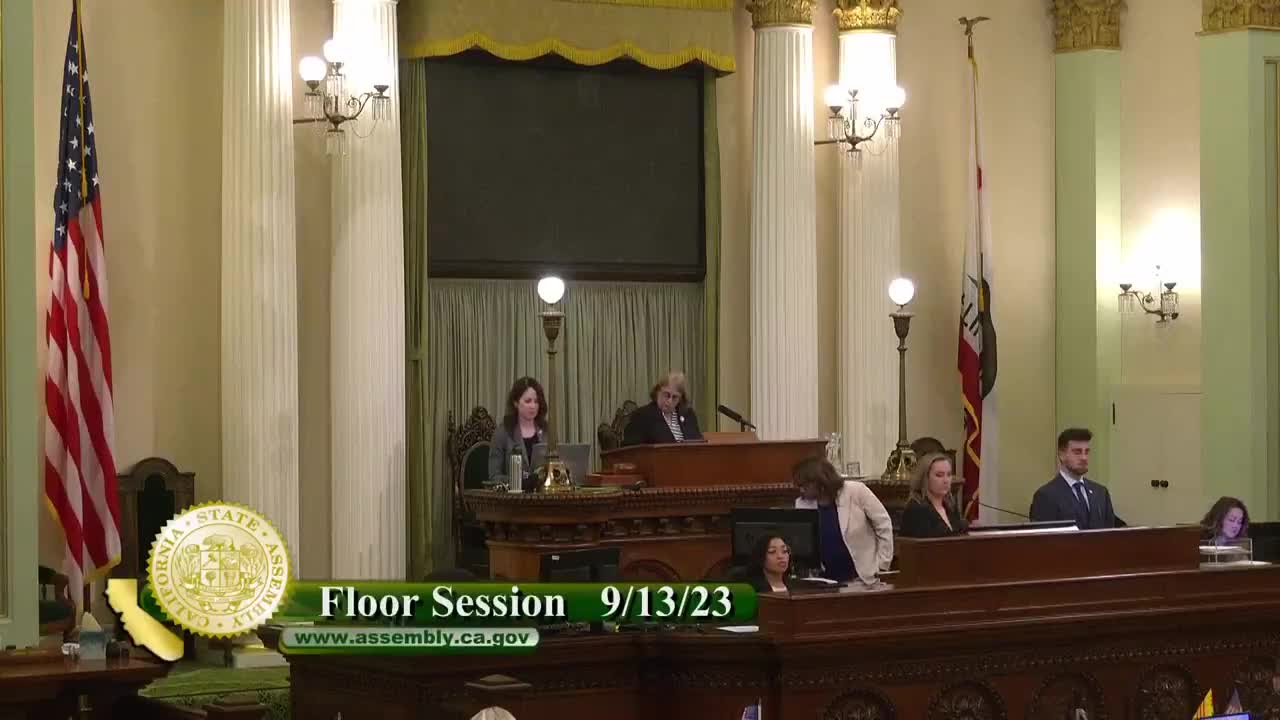 46SEC
Assembly Floor
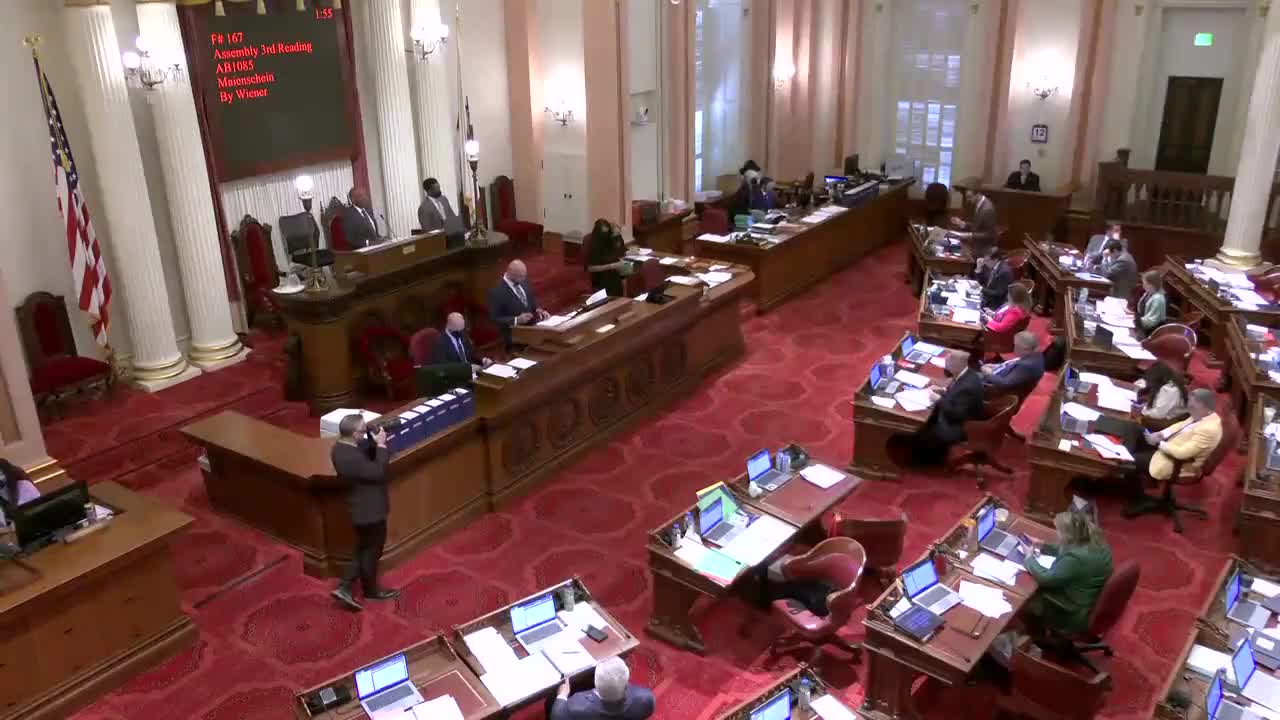 1MIN
Senate Floor
 1MIN
Senate Standing Committee on Appropriations
 9MIN
Senate Standing Committee on Governmental Organization
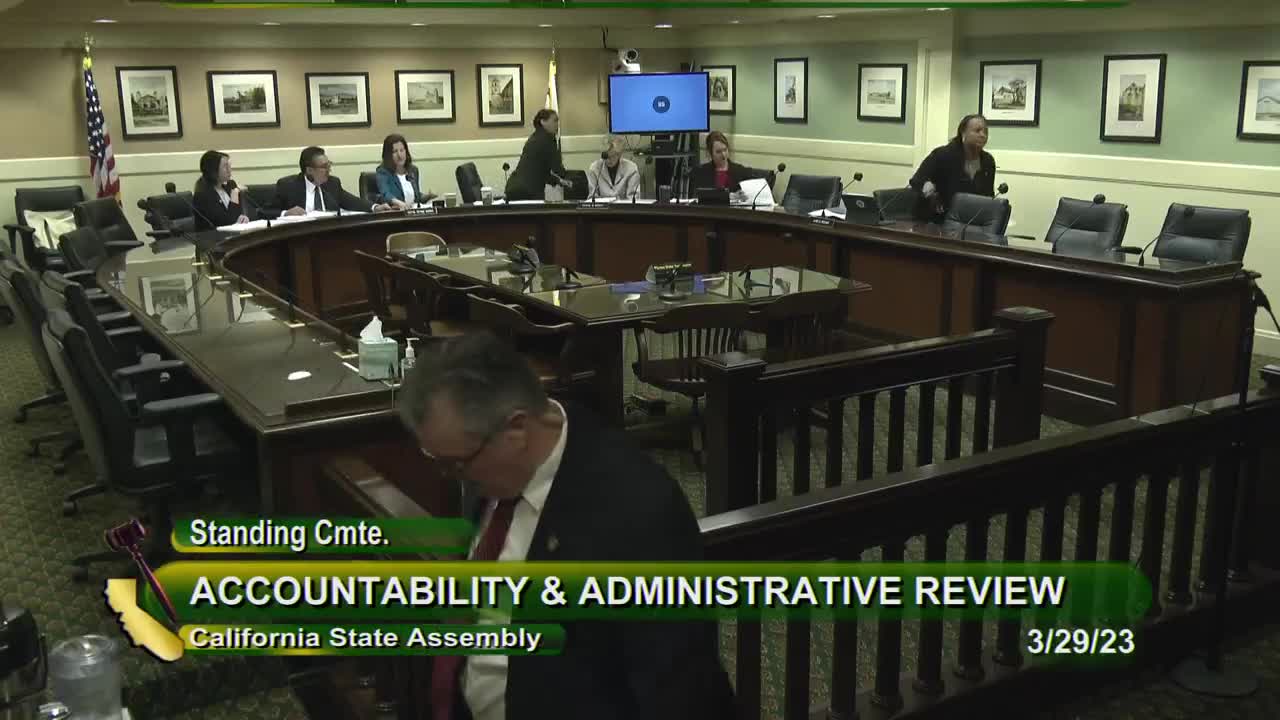 8MIN
Assembly Standing Committee on Accountability and Administrative Review
Bill Author

Bill Co-Author(s):