AB 592: Vehicles: commercial nonfranchise solid waste haulers: pilot program.
- Session Year: 2023-2024
- House: Assembly
- Latest Version Date: 2023-09-22
Current Status:
Passed
(2023-09-22: Chaptered by Secretary of State - Chapter 202, Statutes of 2023.)
Introduced
In Committee
First Chamber
In Committee
Second Chamber
Enacted
Existing law authorizes local authorities to adopt rules and regulations by ordinance or resolution regarding specified matters, including, among other things, the methods of deposit of garbage and refuse in streets and highways for collection by the local authority or by any person authorized by the local authority.
This bill, until January 1, 2028, would authorize the Counties of Alameda, Contra Costa, and Solano to create a 3-year pilot program to regulate the transport of solid waste by commercial nonfranchise solid waste haulers, as defined, on public roads in unincorporated areas of the county, as provided.
This bill would make legislative findings and declarations as to the necessity of a special statute for the Counties of Alameda, Contra Costa, and Solano.
Existing law authorizes local authorities to adopt rules and regulations by ordinance or resolution regarding specified matters, including, among other things, the methods of deposit of garbage and refuse in streets and highways for collection by the local authority or by any person authorized by the local authority.
This bill bill, until January 1, 2028, would authorize a county to adopt an ordinance the Counties of Alameda, Contra Costa, and Solano to create a 3-year pilot program to regulate the transport of solid waste by commercial nonfranchise solid waste haulers haulers, as defined, on public roads in unincorporated areas of the county, as provided.
This bill would make legislative findings and declarations as to the necessity of a special statute for the Counties of Alameda, Contra Costa, and Solano.
Existing law authorizes local authorities to adopt rules and regulations by ordinance or resolution regarding specified matters, including, among other things, the methods of deposit of garbage and refuse in streets and highways for collection by the local authority or by any person authorized by the local authority.
This bill would authorize the County of Contra Costa and any other county to create a program to regulate nonfranchise waste hauling operations within the county. a county to adopt an ordinance to regulate the transport of solid waste by nonfranchise solid waste haulers on public roads in unincorporated areas of the county, as provided.
Existing law authorizes local authorities to adopt rules and regulations by ordinance or resolution regarding specified matters, including, among other things, the methods of deposit of garbage and refuse in streets and highways for collection by the local authority or by any person authorized by the local authority.
This bill would authorize the County of Contra Costa and any other county to create a program to regulate nonfranchise waste hauling operations within the county.
(a)The Counties of Alameda, Contra Costa, and Solano may create a three-year pilot program to regulate the transport of solid waste by commercial nonfranchise solid waste haulers on public roads in unincorporated areas of the county and may adopt an ordinance, as described in subdivision (b), as part of the pilot program.
(b)An ordinance adopted pursuant to this section may include, but is not limited to, provisions requiring commercial nonfranchise solid waste haulers to do any or all of the following:
(1)Obtain a permit to transport solid waste on public roads in unincorporated areas.
(2)Display evidence of the permit described in paragraph (1) when transporting solid waste.
(3)Notwithstanding Section 9400.8, pay a fee to cover the countys reasonable regulatory cost of enforcing the ordinance.
(c)This section does not grant a county any new authority over solid waste hauling operations pursuant to a franchise agreement and does not affect, limit, or abrogate in any manner any franchise granted to a solid waste enterprise for the handling of solid waste.
(d)For purposes of this section, the following definitions apply:
(1)Commercial nonfranchise solid waste hauler means an entity that charges a fee to haul and dispose of solid waste that is not part of any exclusive or nonexclusive franchise contract or agreement.
(2)Solid waste has the same meaning as defined in Section 40191 of the Public Resources Code.
(e)This section shall remain in effect only until January 1, 2028, and as of that date is repealed.
SEC. 2.The Legislature finds and declares that a special statute is necessary and that a general statute cannot be made applicable within the meaning of Section 16 of Article IV of the California Constitution because of the unique needs of the Counties of Alameda, Contra Costa, and Solano to address issues related to the unlawful disposal of solid waste.
(a)A county may adopt an ordinance The Counties of Alameda, Contra Costa, and Solano may create a three-year pilot program to regulate the transport of solid waste by commercial nonfranchise solid waste haulers on public roads in unincorporated areas of the county. county and may adopt an ordinance, as described in subdivision (b), as part of the pilot program.
(b)An ordinance adopted pursuant to this section may include, but is not limited to, provisions requiring commercial nonfranchise solid waste haulers to do any or all of the following:
(1)Obtain a permit to transport solid waste on public roads in unincorporated areas.
(2)Display evidence of the permit described in paragraph (1) when transporting solid waste.
(3)Notwithstanding Section 9400.8, pay a fee to cover the countys reasonable regulatory cost of enforcing the ordinance.
(c)This section does not grant a county any new authority over solid waste hauling operations pursuant to a franchise agreement and does not affect, limit, or abrogate in any manner any franchise granted to a solid waste enterprise for the handling of solid waste.
(d)For purposes of this section, solid the following definitions apply:
(1)Commercial nonfranchise solid waste hauler means an entity that charges a fee to haul and dispose of solid waste that is not part of any exclusive or nonexclusive franchise contract or agreement.
(2)Solid waste has the same meaning as defined in Section 40191 of the Public Resources Code.
(e)This section shall remain in effect only until January 1, 2028, and as of that date is repealed.
SEC. 2.The Legislature finds and declares that a special statute is necessary and that a general statute cannot be made applicable within the meaning of Section 16 of Article IV of the California Constitution because of the unique needs of the Counties of Alameda, Contra Costa, and Solano to address issues related to the unlawful disposal of solid waste.
(a)A county may adopt an ordinance to regulate the transport of solid waste by nonfranchise solid waste haulers on public roads in unincorporated areas of the county.
(b)An ordinance adopted pursuant to this section may include, but is not limited to, provisions requiring nonfranchise solid waste haulers to do any or all of the following:
(1)Obtain a permit to transport solid waste on public roads in unincorporated areas.
(2)Display evidence of the permit described in paragraph (1) when transporting solid waste.
(3)Notwithstanding Section 9400.8, pay a fee to cover the countys reasonable regulatory cost of enforcing the ordinance.
(c)This section does not grant a county any new authority over solid waste hauling operations pursuant to a franchise agreement and does not affect, limit, or abrogate in any manner any franchise granted to a solid waste enterprise for the handling of solid waste.
(d)For purposes of this section, solid waste has the same meaning as defined in Section 40191 of the Public Resources Code.
SECTION 1.Section 21100.6 is added to the Vehicle Code, to read:21100.6.(a)The County of Contra Costa and any other county may create a pilot program to regulate nonfranchise waste hauling operations within the county, including, but not limited to: (1)Waste loads that initiated within the boundary of an incorporated area within the county.(2)Waste being hauled on county roadways.(b)A county participating in the pilot program may adopt regulations necessary to achieve the goals as set out in subdivision (a), including, but not limited to:(1)Requiring a permit to haul waste within the county and on county roadways.(2)Requiring the display of a permit when hauling waste.(3)Requiring a fee to cover the countys reasonable costs to create and oversee the pilot program.(c)This section does not grant the pilot county any new authority over waste hauling operations pursuant to a franchise agreement.(a)The County of Contra Costa and any other county may create a pilot program to regulate nonfranchise waste hauling operations within the county, including, but not limited to:
(1)Waste loads that initiated within the boundary of an incorporated area within the county.
(2)Waste being hauled on county roadways.
(b)A county participating in the pilot program may adopt regulations necessary to achieve the goals as set out in subdivision (a), including, but not limited to:
(1)Requiring a permit to haul waste within the county and on county roadways.
(2)Requiring the display of a permit when hauling waste.
(3)Requiring a fee to cover the countys reasonable costs to create and oversee the pilot program.
(c)This section does not grant the pilot county any new authority over waste hauling operations pursuant to a franchise agreement.
|
Date
|
Status
|
|---|---|
| Sep 22, 2023 | Chaptered by Secretary of State - Chapter 202, Statutes of 2023. |
| Sep 22, 2023 | Approved by the Governor. |
| Sep 13, 2023 | Enrolled and presented to the Governor at 3 p.m. |
| Sep 7, 2023 | Senate amendments concurred in. To Engrossing and Enrolling. (Ayes 77. Noes 0. Page 3020.). |
| Sep 5, 2023 | In Assembly. Concurrence in Senate amendments pending. May be considered on or after September 7 pursuant to Assembly Rule 77. |
| Sep 5, 2023 | Read third time. Passed. Ordered to the Assembly. (Ayes 38. Noes 0. Page 2372.). |
| Jun 22, 2023 | Read second time. Ordered to third reading. |
| Jun 21, 2023 | From committee: Do pass. (Ayes 8. Noes 0.) (June 21). |
| Jun 15, 2023 | From committee chair, with author's amendments: Amend, and re-refer to committee. Read second time, amended, and re-referred to Com. on GOV. & F. |
| Jun 12, 2023 | In committee: Set, first hearing. Hearing canceled at the request of author. |
| Jun 7, 2023 | In committee: Hearing postponed by committee. |
| May 24, 2023 | Referred to Com. on GOV. & F. |
| May 16, 2023 | In Senate. Read first time. To Com. on RLS. for assignment. |
| May 15, 2023 | Read third time. Passed. Ordered to the Senate. (Ayes 75. Noes 0. Page 1556.) |
| May 4, 2023 | Read second time. Ordered to third reading. |
| May 3, 2023 | From committee: Do pass. (Ayes 8. Noes 0.) (May 3). |
| Apr 19, 2023 | Re-referred to Com. on L. GOV. |
| Apr 18, 2023 | From committee chair, with author's amendments: Amend, and re-refer to Com. on L. GOV. Read second time and amended. |
| Mar 16, 2023 | Referred to Com. on L. GOV. |
| Feb 10, 2023 | From printer. May be heard in committee March 12. |
| Feb 9, 2023 | Read first time. To print. |
|
Date
|
Description
|
Location
|
Votes
|
|
|---|---|---|---|---|
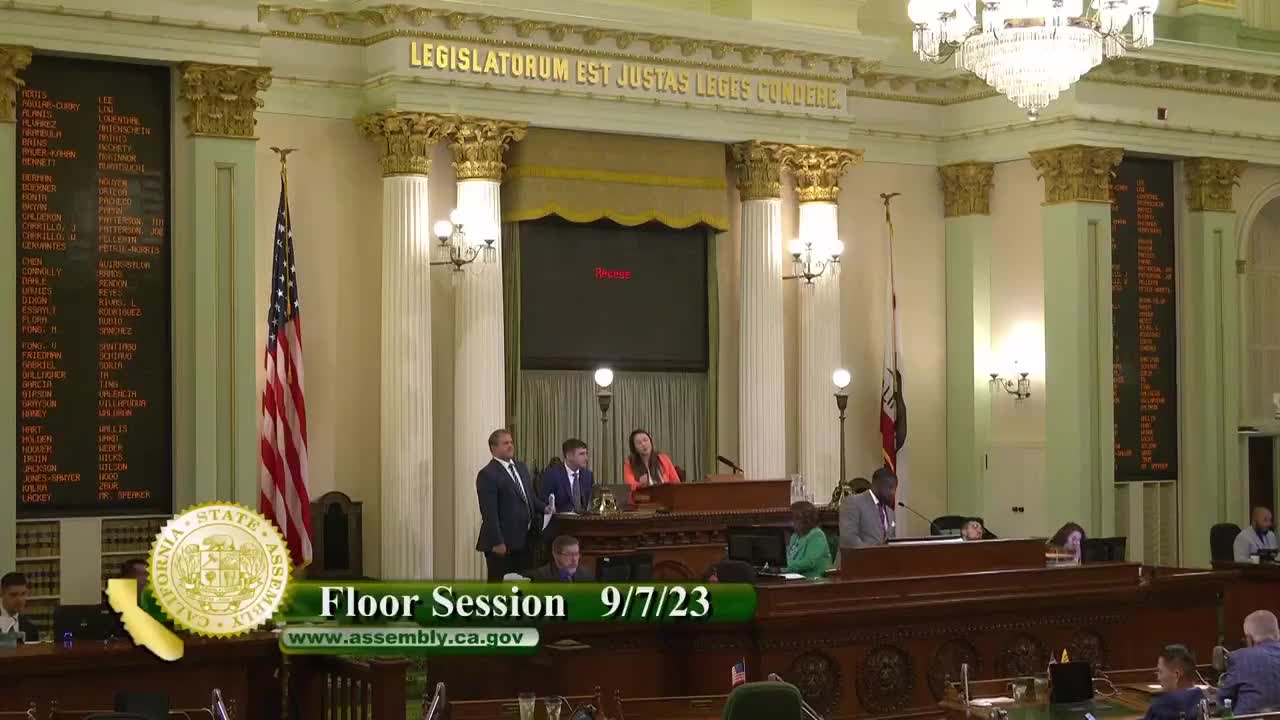
| Sep 7, 2023 | AB 592 Wilson Concurrence in Senate Amendments | Assembly Floor |
Passed |
|
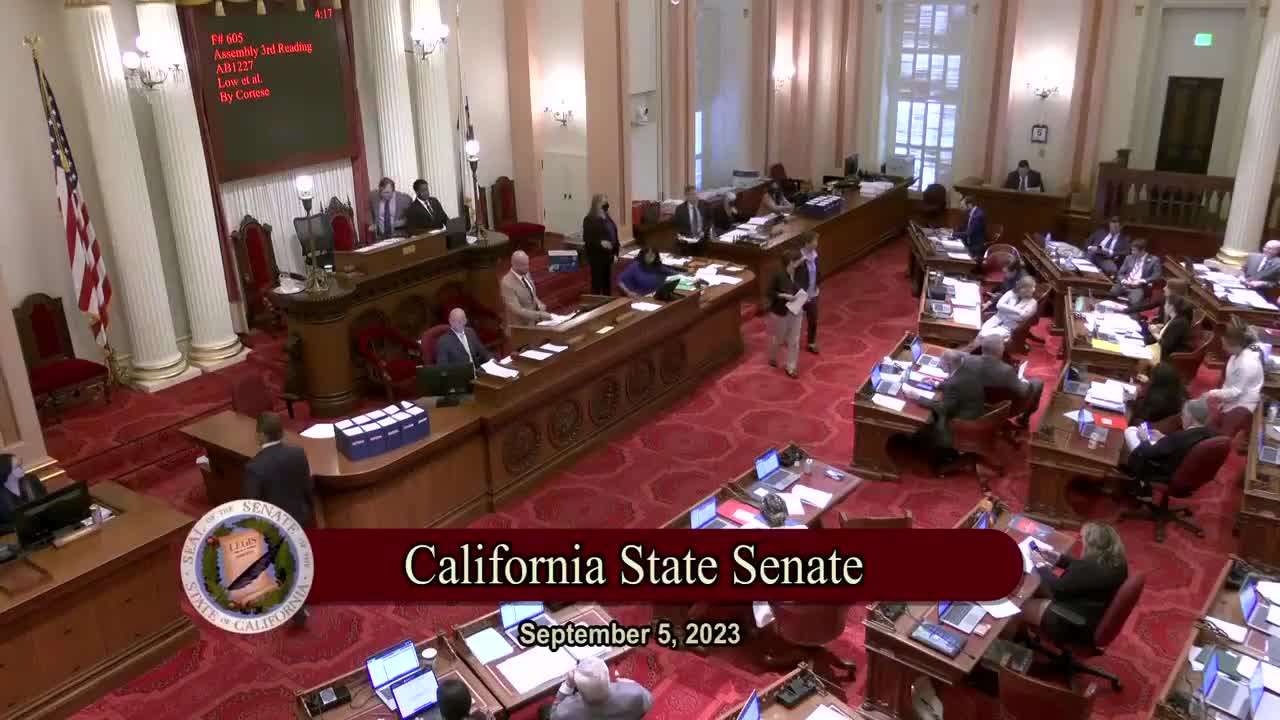
| Sep 5, 2023 | Assembly 3rd Reading AB592 Wilson By Glazer | Senate Floor |
Passed |
|
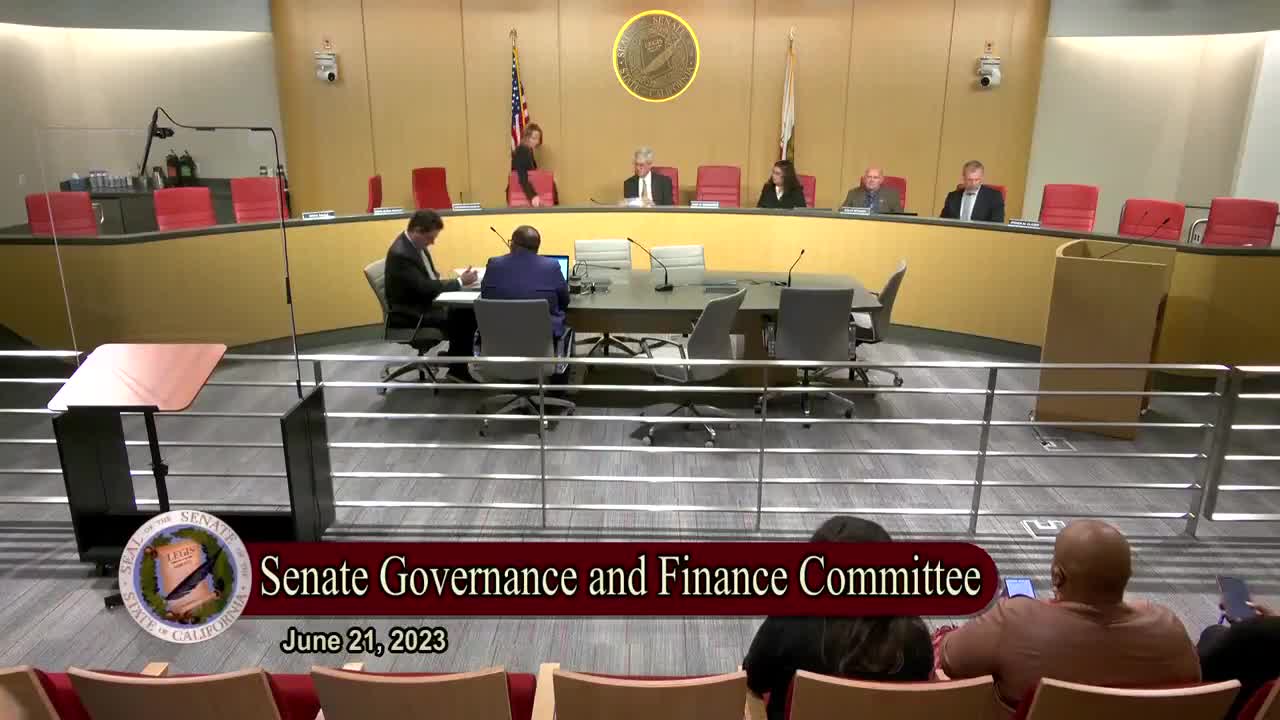
| Jun 21, 2023 | Do pass | Senate Standing Committee on Governance and Finance |
Passed |
|
| May 15, 2023 | AB 592 Wilson Assembly Third Reading | Assembly Floor |
Passed |
|
| May 3, 2023 | Do pass. | Assembly Standing Committee on Local Government |
Passed |
This list shows positions taken on this bill by organizations on the date displayed, which is linked to the original source.
Positions by individuals are not included.
|
Organization
|
Position
|
Date
|
|---|---|---|
| California State Association Of Counties | ** Support | |
| Contra Costa County | ** Support | |
| County of Santa Clara | ** Support | |
| National Stewardship Action Council | ** Support | |
| Rural County Representatives of California | ** Support |
CONCURRENCE IN SENATE AMENDMENTS
CSA1 Bill Id:AB 592
Author:(Wilson)
As Amended Ver:June 15, 2023
Majority vote
SUMMARY
Allows the Counties of Alameda, Contra Costa, and Solano to adopt an ordinance as part of a three-year pilot program to regulate commercial nonfranchise solid waste haulers that haul solid waste on public roads in unincorporated areas of each county.
Senate Amendments
- Narrow the provisions of this bill, from a statewide application to only three counties.
- Limit the bill's authorization to a three-year pilot program and add a sunset date of January 1, 2028.
- Apply the provisions of the bill only to commercial nonfranchise solid waste haulers, defined to mean an entity that charges a fee to haul and dispose of solid waste that is not part of any exclusive or nonexclusive franchise contract or agreement.
COMMENTS
Illegal dumping is the disposal of waste matter, commonly mattresses, tires, appliances, and construction debris, at an unpermitted location. Often done out of convenience or for economic gain, illegal dumping causes significant social, environmental, and economic costs statewide. Local agencies spends tens of millions of dollars each year to remove illegally disposed materials, and private property owners also incur significant costs for the removal of dumped waste matter. If left undealt with, a single act of illegal dumping can often lead to more widely used illegal solid waste disposal sites.
Illegal dumping is subject to investigation, cleanup, and enforcement by CalRecycle and local code enforcement departments. No state or local entity is solely responsible for combatting and responding to illegal dumping, resulting in a wide variety of responses across the state from law enforcement, public works, and code enforcement.
According to the Author
Illegal dumping has been a serious and growing problem in California for many years. Nonfranchise haulers are illegally dumping in an attempt to 'cut corners' and maximize their total profit. Violators assume little risk in doing so because it is economically feasible, law enforcement has no 'probable cause' to pull over nonfranchise haulers, and district attorneys throughout California report having difficulty in prosecuting cases.
Arguments in Support
The Contra Costa County Board of Supervisors writes in support, "Illegal dumping by non-franchise haulers has been a serious and growing problem in California for many years. Illegal dumping poses significant health, social, environmental, and economic impacts to communities. Specifically, illegal dumping contributes to a loss of community pride, discourages investment and development, decreases property values, and increases a community's vulnerability to crime."
Arguments in Opposition
None on file.
FISCAL COMMENTS
None.
VOTES:
ASM LOCAL GOVERNMENT: 8-0-0
YES: Aguiar-Curry, Dixon, Boerner, Pacheco, Ramos, Robert Rivas, Waldron, Wilson
ASSEMBLY FLOOR: 75-0-5
YES: Addis, Aguiar-Curry, Alanis, Alvarez, Arambula, Bains, Bauer-Kahan, Bennett, Berman, Boerner, Bonta, Bryan, Calderon, Juan Carrillo, Wendy Carrillo, Cervantes, Chen, Connolly, Megan Dahle, Davies, Dixon, Flora, Mike Fong, Vince Fong, Gabriel, Gallagher, Garcia, Gipson, Grayson, Haney, Hart, Holden, Hoover, Irwin, Jackson, Jones-Sawyer, Kalra, Lee, Low, Lowenthal, Maienschein, Mathis, McCarty, McKinnor, Muratsuchi, Stephanie Nguyen, Ortega, Pacheco, Papan, Jim Patterson, Joe Patterson, Pellerin, Petrie-Norris, Quirk-Silva, Ramos, Reyes, Luz Rivas, Robert Rivas, Rodriguez, Blanca Rubio, Sanchez, Santiago, Schiavo, Soria, Ting, Valencia, Villapudua, Wallis, Ward, Weber, Wicks, Wilson, Wood, Zbur, Rendon
ABS, ABST OR NV: Essayli, Friedman, Lackey, Ta, Waldron
SENATE FLOOR: 39-0-1
YES: Allen, Alvarado-Gil, Archuleta, Ashby, Atkins, Becker, Blakespear, Bradford, Caballero, Cortese, Dahle, Dodd, Durazo, Eggman, Glazer, Gonzalez, Grove, Hurtado, Jones, Laird, Limón, McGuire, Menjivar, Min, Newman, Nguyen, Niello, Ochoa Bogh, Portantino, Roth, Rubio, Seyarto, Skinner, Smallwood-Cuevas, Stern, Umberg, Wahab, Wiener, Wilk
ABS, ABST OR NV: Padilla
UPDATED
VERSION: June 15, 2023
CONSULTANT: Angela Mapp / L. GOV. / (916) 319-3958 FN: 0001291
SENATE RULES COMMITTEE Office of Senate Floor Analyses (916) 651-1520 Fax: (916) 327-4478 | AB 592 |
THIRD READING
Bill No: AB 592
Author: Wilson (D)
Amended: 6/15/23 in Senate
Vote: 21
SENATE GOVERNANCE & FIN. COMMITTEE: 8-0, 6/21/23
AYES: Caballero, Seyarto, Blakespear, Dahle, Durazo, Glazer, Skinner, Wiener
ASSEMBLY FLOOR: 75-0, 5/15/23 - See last page for vote
SUBJECT: Vehicles: commercial nonfranchise solid waste haulers: pilot program
SOURCE: Author
DIGEST:
This bill allows three counties to adopt ordinances to require nonfranchise solid waste haulers to obtain a permit to carry waste on public roads in unincorporated areas of the county.
ANALYSIS:
Existing law:
- Authorizes local authorities to adopt rules and regulations by ordinance or resolution on a number of subjects, including, among other things, the methods of disposing of garbage.
- Defines “solid waste” to mean “solid waste” means all putrescible and nonputrescible solid, semisolid, and liquid wastes, including garbage, trash, refuse, paper, rubbish, ashes, industrial wastes, demolition and construction wastes, abandoned vehicles and parts thereof, discarded home and industrial appliances, dewatered, treated, or chemically fixed sewage sludge which is not hazardous waste, manure, vegetable or animal solid and semisolid wastes, and other discarded solid and semisolid wastes.
This bill:
- Allows three counties (Alameda, Contra Costa, & Solano) to adopt an ordinance as part of a three-year pilot program to regulate nonfranchise solid waste haulers that haul solid waste on public roads in unincorporated areas of the county.
- Provides the ordinance can include, but is not limited to, provisions requiring commercial nonfranchise solid waste haulers to:
- Obtain a permit to transport solid waste on public roads in unincorporated areas.
- Display evidence of the permit when transporting solid waste.
- Pay a fee to cover the county’s reasonable regulatory cost of enforcing the ordinance.
- Defines a “commercial nonfranchise solid waste hauler” to mean an entity that charges a fee to haul and dispose of solid waste that is not part of any exclusive or nonexclusive franchise contract or agreement.
- States it does not grant a county any new authority over solid waste hauling operations pursuant to a franchise agreement and does not affect, limit, or abrogate in any manner any franchise granted to a solid waste enterprise for the handling of solid waste.
- Sunsets the pilot program on January 1, 2028.
Background
Local governments spend tens of millions of dollars each year to remove illegally dumped materials, and private property owners also incur significant costs to clean up illegally dumped items. No state or local entity is solely responsible for addressing the illegal dumping problem, resulting in a wide variety of responses across the state from law enforcement, public works, and code enforcement agencies.
Under the Penal Code, the fines for illegal dumping start at $250 for a first conviction and range as high as $3,000 for a third or subsequent conviction. For businesses that employee more than 10 people, AB 2374 (Bauer-Kahan, Chapter 784, Statutes of 2022) increased the fines to $1,000 for a first conviction and $20,000 for a third or subsequent conviction, and required a person or company convicted of illegal dumping to remove or pay the cost of removing the illegally dumped waste.
The hauling of solid waste can be big business in California and traditionally, cities and counties enter into franchise agreements with a company or companies to collect and dispose of solid waste within the city or county limits on a regular basis. A person or business may also enter into a nonfranchise solid waste agreement with a solid waste company to pick up and dispose of solid waste on a one-time or infrequent basis.
Comments
- Purpose of the bill. According to the author, “Illegal dumping has been a serious and growing problem in California for many years. Nonfranchise haulers are illegally dumping in an attempt to ‘cut corners’ and maximize their total profit. Violators assume little risk in doing so because it is economically feasible, law enforcement has no “probable cause” to pull over nonfranchise haulers, and district attorneys throughout California report having difficulty in prosecuting cases. AB 592 would authorize Contra Costa, Solano and Alameda counties to regulate nonfranchise waste haulers regardless of the origin of the waste to permit and enforce the non-franchise collection or transport of waste in their county.”
- Catch me if you can. There is no doubt illegal dumping is a problem. For example, a 2021 report from the City of Los Angeles found that in 2020, the city received an average of 2,494 requests per month – nearly three times the number of requests they received in 2017 – to clean up illegally dumped waste. In 2019, the city collected 15,825 tons of illegally dumped solid waste – 78% more than it had to pick up in 2015. Despite increased penalties for illegally dumping solid waste, the problem has not gone away in part because it’s not easy to catch someone in the act, nor is it easy to track illegally dumped waste back to the entity that dumped it.
The premise of this bill is that by requiring nonfranchise solid waste haulers to pay for and display a permit on their vehicles, law enforcement can pull over those vehicles that aren’t displaying a permit to potentially cite them for failure to have a permit and to ensure they are going to dump the waste in an approved facility. Presumably law enforcement could also pull over those haulers who are displaying a permit to ensure they, too, are going to dump the waste in an approved facility.
Absent following the nonfranchise solid waste hauler to ensure it is taking the waste to an approved disposal facility or somehow identifying the waste to allow law enforcement to tie it back to a particular hauler should it be found illegally dumped, it’s not clear how requiring nonfranchise solid waste haulers to be permitted will reduce illegal dumping.
While nonfranchise solid waste haulers likely contribute to the illegal dumping problem, it’s equally likely that people and businesses who don’t want to pay dump disposal fees or hire a nonfranchise solid waste hauler to take their waste away contribute significantly to the problem as well.
3) Pilot but no report to ground control. The three-year pilot project created by this bill would sunset on January 1, 2028, giving the three counties wanting to take part in it one year to pass an ordinance and set up the program, then three years to operate it.
Often times, bills creating pilot projects require a report back to the Legislature. In the interest of minimizing costs, this bill does not require such a report, presuming instead the counties taking part in the pilot will collect adequate data to make the case to extend and expand the pilot in the future, presuming it is successful.
FISCAL EFFECT: Appropriation: No Fiscal Com.: No Local: No
SUPPORT: (Verified 6/23/23)
None received
OPPOSITION: (Verified 6/23/23)
None received
ASSEMBLY FLOOR: 75-0, 5/15/23
AYES: Addis, Aguiar-Curry, Alanis, Alvarez, Arambula, Bains, Bauer-Kahan, Bennett, Berman, Boerner, Bonta, Bryan, Calderon, Juan Carrillo, Wendy Carrillo, Cervantes, Chen, Connolly, Megan Dahle, Davies, Dixon, Flora, Mike Fong, Vince Fong, Gabriel, Gallagher, Garcia, Gipson, Grayson, Haney, Hart, Holden, Hoover, Irwin, Jackson, Jones-Sawyer, Kalra, Lee, Low, Lowenthal, Maienschein, Mathis, McCarty, McKinnor, Muratsuchi, Stephanie Nguyen, Ortega, Pacheco, Papan, Jim Patterson, Joe Patterson, Pellerin, Petrie-Norris, Quirk-Silva, Ramos, Reyes, Luz Rivas, Robert Rivas, Rodriguez, Blanca Rubio, Sanchez, Santiago, Schiavo, Soria, Ting, Valencia, Villapudua, Wallis, Ward, Weber, Wicks, Wilson, Wood, Zbur, Rendon
NO VOTE RECORDED: Essayli, Friedman, Lackey, Ta, Waldron
Prepared by: Evan Goldberg / GOV. & F. / (916) 651-4119
6/23/23 12:29:05
**** END ****
SENATE COMMITTEE ON GOVERNANCE AND FINANCE
Senator Anna M. Caballero, Chair
2023 - 2024 Regular
Bill No: | AB 592 | Hearing Date: | 6/21/23 |
Author: | Wilson | Tax Levy: | No |
Version: | 6/15/23 | Fiscal: | No |
Consultant: | Goldberg | ||
Vehicles: nonfranchise solid waste haulers
Allows three counties to adopt ordinances to require nonfranchise solid waste haulers to obtain a permit to carry waste on public roads in unincorporated areas of the county.
Background
Local governments spend tens of millions of dollars each year to remove illegally dumped materials, and private property owners also incur significant costs to clean up illegally dumped items. No state or local entity is solely responsible for addressing the illegal dumping problem, resulting in a wide variety of responses across the state from law enforcement, public works, and code enforcement agencies.
Under the Penal Code, the fines for illegal dumping start at $250 for a first conviction and range as high as $3,000 for a third or subsequent conviction. For businesses that employee more than 10 people, AB 2374 (Bauer-Kahan, 2022) increased the fines to $1,000 for a first conviction and $20,000 for a third or subsequent conviction, and required a person or company convicted of illegal dumping to remove or pay the cost of removing the illegally dumped waste.
The hauling of solid waste can be big business in California and traditionally, cities and counties enter into franchise agreements with a company or companies to collect and dispose of solid waste within the city or county limits on a regular basis. A person or business may also enter into a nonfranchise solid waste agreement with a solid waste company to pick up and dispose of solid waste on a one-time or infrequent basis.
The Contra Costa County Board of Supervisors, asserts it is having trouble dealing with nonfranchise solid waste haulers who illegally dump solid waste in unincorporated areas of the county, and wants to be able to adopt an ordinance requiring these companies to obtain a permit when operating in unincorporated areas of the county.
Proposed Law
Assembly Bill 592 allows three counties (Alameda, Contra Costa, & Solano) to adopt an ordinance as part of a three-year pilot program to regulate nonfranchise solid waste haulers that haul solid waste on public roads in unincorporated areas of the county. The pilot program would sunset on December 31, 2027.
The ordinance can require the hauler to obtain and display a permit, pay a fee to cover the county’s reasonable regulatory cost of enforcing the ordinance, and impose other requirements a local agency may deem appropriate.
The bill specifies it does not give a county any new authority over solid waste hauling operations and has no impact on any solid waste franchise agreements.
The bill defines “commercial nonfranchise solid waste hauler” as an entity that charges a fee to haul and dispose of solid waste that is not part of any exclusive or non-exclusive franchise contract or agreement.
State Revenue Impact
No estimate.
Comments
1. Purpose of the bill. According to the author, “Illegal dumping has been a serious and growing problem in California for many years. Nonfranchise haulers are illegally dumping in an attempt to ‘cut corners’ and maximize their total profit. Violators assume little risk in doing so because it is economically feasible, law enforcement has no “probable cause” to pull over nonfranchise haulers, and district attorneys throughout California report having difficulty in prosecuting cases. AB 592 would authorize Contra Costa, Solano and Alameda counties to regulate nonfranchise waste haulers regardless of the origin of the waste to permit and enforce the non-franchise collection or transport of waste in their county.”
2. Catch me if you can. There is no doubt illegal dumping is a problem. For example, a 2021 report from the City of Los Angeles found that in 2020, the city received an average of 2,494 requests per month – nearly three times the number of requests they received in 2017 – to clean up illegally dumped waste. In 2019, the city collected 15,825 tons of illegally dumped solid waste – 78% more than it had to pick up in 2015. Despite increased penalties for illegally dumping solid waste, the problem has not gone away in part because it’s not easy to catch someone in the act, nor is it easy to track illegally dumped waste back to the entity that dumped it.
The premise of this bill is that by requiring nonfranchise solid waste haulers to pay for and display a permit on their vehicles, law enforcement can pull over those vehicles that aren’t displaying a permit to potentially cite them for failure to have a permit and to ensure they are going to dump the waste in an approved facility. Presumably law enforcement could also pull over those haulers who are displaying a permit to ensure they, too, are going to dump the waste in an approved facility.
Absent following the nonfranchise solid waste hauler to ensure it is taking the waste to an approved disposal facility or somehow identifying the waste to allow law enforcement to tie it back to a particular hauler should it be found illegally dumped, it’s not clear how requiring nonfranchise solid waste haulers to be permitted will reduce illegal dumping.
While nonfranchise solid waste haulers likely contribute to the illegal dumping problem, it’s equally likely that people and businesses who don’t want to pay dump disposal fees or hire a nonfranchise solid waste hauler to take their waste away contribute significantly to the problem as well.
3. Pilot but no report to ground control. The three-year pilot project created by this bill would sunset on December 31, 2027, giving the three counties wanting to take part in it one year to pass an ordinance and set up the program, then three years to operate it.
Often times, bills creating pilot projects require a report back to the Legislature. In the interest of minimizing costs, this bill does not require such a report, presuming instead the counties taking part in the pilot will collect adequate data to make the case to extend and expand the pilot in the future, presuming it is successful.
4. Special legislation. Section 16 of Article IV of the California Constitution prohibits special legislation when a general law can apply. AB 592 contains findings and declarations explaining the need for legislation that applies only to Alameda, Contra Costa, and Solano counties.
Assembly Actions
Assembly Local Government Committee: 8-0
Assembly Floor: 75-0
Support and Opposition
(6/16/23)
Support: Contra Costa County (Sponsor)
California State Association of Counties
County of Santa Clara
National Stewardship Action Council
Rural County Representatives of California
Opposition: None submitted.
-- END --
SENATE COMMITTEE ON GOVERNANCE AND FINANCE
Senator Anna M. Caballero, Chair
2023 - 2024 Regular
Bill No: | AB 592 | Hearing Date: | 6/7/23 |
Author: | Wilson | Tax Levy: | No |
Version: | 4/18/23 | Fiscal: | No |
Consultant: | Goldberg | ||
Vehicles: nonfranchise solid waste haulers
Allows counties to adopt ordinances to require nonfranchise solid waste haulers to obtain a permit to carry waste on public roads in unincorporated areas of the county.
Background
Local governments spend tens of millions of dollars each year to remove illegally dumped materials, and private property owners also incur significant costs to clean up illegally dumped items. No state or local entity is solely responsible for addressing the illegal dumping problem, resulting in a wide variety of responses across the state from law enforcement, public works, and code enforcement agencies.
The Legislature has considered several bills on the subject of illegal dumping over the years, and most recently enacted AB 2374 (Bauer-Kahan, 2022). It increased the maximum fines for businesses with 10 or more employees that illegally dump materials and required a person or company convicted of illegal dumping to remove or pay the cost of removing the illegally dumped waste.
Under the Penal Code, the fines for illegal dumping start at $250 for a first conviction and range as high as $3,000 for a third or subsequent conviction. For businesses that employee more than 10 people, AB 2374 increased the fines to $1,000 for a first conviction and $20,000 for a third or subsequent conviction.
The hauling of solid waste can be big business in California and traditionally, cities and counties enter into franchise agreements with a company or companies to collect and dispose of solid waste within the city or county limits on a regular basis. A nonfranchise solid waste agreement is something a person or business may enter into with a solid waste company to pick up and dispose of solid waste on a one-time or infrequent basis.
The Contra Costa County Board of Supervisors, asserts it is having trouble dealing with nonfranchise solid waste haulers who illegally dump solid waste in unincorporated areas of the county, and wants to be able to adopt an ordinance requiring these companies to obtain a permit when operating in unincorporated areas of the county.
Proposed Law
Assembly Bill 592 allows a county to adopt an ordinance regulating nonfranchise solid waste haulers that haul solid waste on public roads in unincorporated areas of the county.
The ordinance can require the hauler to obtain and display a permit, pay a fee to cover the county’s reasonable regulatory cost of enforcing the ordinance, and impose other requirements a local agency may deem appropriate.
The bill specifies it does not give a county any new authority over solid waste hauling operations and has no impact on any solid waste franchise agreements.
State Revenue Impact
No estimate.
Comments
1. Purpose of the bill. According to the author, “Illegal dumping has been a serious and growing problem in California for many years. Nonfranchise haulers are illegally dumping in an attempt to ‘cut corners’ and maximize their total profit. Violators assume little risk in doing so because it is economically feasible, law enforcement has no ‘probable cause’ to pull over nonfranchise haulers, and district attorneys throughout California report having difficulty in prosecuting cases. AB 592 would authorize Contra Costa and other counties that opt-in to regulate nonfranchise waste haulers regardless of the origin of the waste to permit and enforce the non-franchise collection or transport of waste in the county.”
2. Catch me if you can. There is no doubt illegal dumping is a problem. For example, a 2021 report from the City of Los Angeles found that in 2020, the city received an average of 2,494 requests per month – nearly three times the number of requests they received in 2017 – to clean up illegally dumped waste. In 2019, the city collected 15,825 tons of illegally dumped solid waste – 78% more than it had to pick up in 2015. Despite increased penalties for illegally dumping solid waste, the problem has not gone away in part because it’s not easy to catch someone in the act, nor is it easy to track illegally dumped waste back to the entity that dumped it.
The premise of this bill is that by requiring nonfranchise solid waste haulers to pay for and display a permit on their vehicles, law enforcement can pull over those vehicles that aren’t displaying a permit to potentially cite them for failure to have a permit and to ensure they are going to dump the waste in an approved facility. Presumably law enforcement could also pull over those haulers who are displaying a permit to ensure they, too, are going to dump the waste in an approved facility.
Absent following the nonfranchise solid waste hauler to ensure it is taking the waste to an approved disposal facility or somehow identifying the waste to allow law enforcement to tie it back to a particular hauler should it be found illegally dumped, it’s not clear how requiring nonfranchise solid waste haulers to be permitted will reduce illegal dumping.
While nonfranchise solid waste haulers likely contribute to the illegal dumping problem, it’s equally likely that people and businesses who don’t want to pay dump disposal fees or hire a nonfranchise solid waste hauler to take their waste away contribute significantly to the problem as well.
Given the absence of evidence showing the degree to which nonfranchise solid waste haulers significantly and uniquely contribute to the illegal dumping problem and how requiring these haulers to be permitted will reduce illegal dumping, the Committee may wish to consider narrowing the bill to simply allow one or two counties to operate a three- or four-year pilot program.
3. You’re not talking about me, are you? The intent of this bill is to subject commercial solid waste haulers to a permitting-related ordinance that a county may adopt. However, the language of the bill would allow a county to impose this requirement on any person taking any item to a solid waste facility.
The Committee may wish to consider adopting language specifying a county can only apply the permitting requirement created by this bill to commercial enterprises that charge a fee for hauling a person’s or a business’s solid waste to an approved disposal site.
Assembly Actions
Assembly Local Government Committee: 8-0
Assembly Floor: 75-0
Support and Opposition
(6/2/23)
Support: Contra Costa County (Sponsor)
California State Association of Counties
County of Santa Clara
National Stewardship Action Council
Rural County Representatives of California
Opposition: None submitted.
-- END --
ASSEMBLY THIRD READING
ATR Bill Id:AB 592
Author:(Wilson)
As Amended Ver:April 18, 2023
Majority vote
SUMMARY
Authorizes counties to adopt ordinances to regulate the transport of solid waste by nonfranchise solid waste haulers on public roads in unincorporated areas of the county.
Major Provisions
- Authorizes a county to adopt an ordinance to regulate the transport of solid waste by nonfranchise solid waste haulers on public roads in unincorporated areas of the county. Provides that an ordinance adopted under this bill may include, but is not limited to, requiring nonfranchise solid waste haulers to do any or all of the following:
- Obtain a permit to transport solid waste on public roads in unincorporated areas.
- Display evidence of the permit when transporting solid waste.
- Pay a fee to cover the county's reasonable regulatory cost of enforcing the ordinance without regard to fee limitations in Vehicle Code Section 9400.8.
- Provides that this bill does not grant a county any new authority over solid waste hauling operations pursuant to a franchise agreement and does not affect, limit, or abrogate in any manner any franchise granted to a solid waste enterprise for the handling of solid waste
COMMENTS
Illegal dumping is the disposal of waste matter, commonly mattresses, tires, appliances, and construction debris, at an unpermitted location. Often done out of convenience or for economic gain, illegal dumping causes significant social, environmental, and economic costs statewide. Local agencies spends tens of millions of dollars each year to remove illegally disposed materials, and private property owners also incur significant costs for the removal of dumped waste matter. If left undealt with, a single act of illegal dumping can often lead to more widely used illegal solid waste disposal sites.
Illegal dumping is subject to investigation, cleanup, and enforcement by CalRecycle and local code enforcement departments. No state or local entity is solely responsible for combatting and responding to illegal dumping, resulting in a wide variety of responses across the state from law enforcement, public works, and code enforcement.
This bill authorizes counties to adopt an ordinance to regulate nonfranchise solid waste haulers on public roads in the unincorporated areas in the county. The bill specifies that counties may require regulated haulers to obtain a permit to transport solid waste on public roads within the county's unincorporated area, and authorizes the county to impose a fee on regulated haulers to cover the county's reasonable regulatory cost of enforcing the ordinance.
According to the Author
According to the author, "Illegal dumping has been a serious and growing problem in California for many years. Nonfranchise haulers are illegally dumping in an attempt to 'cut corners' and maximize their total profit. Violators assume little risk in doing so because it is economically feasible, law enforcement has no 'probable cause' to pull over nonfranchise haulers, and district attorneys throughout California report having difficulty in prosecuting cases."
Arguments in Support
The Contra Costa County Board of Supervisors writes in support, "Illegal dumping by non-franchise haulers has been a serious and growing problem in California for many years. Illegal dumping poses significant health, social, environmental, and economic impacts to communities. Specifically, illegal dumping contributes to a loss of community pride, discourages investment and development, decreases property values, and increases a community's vulnerability to crime."
Arguments in Opposition
None on file.
FISCAL COMMENTS
None.
VOTES
ASM LOCAL GOVERNMENT: 8-0-0
YES: Aguiar-Curry, Dixon, Boerner, Pacheco, Ramos, Robert Rivas, Waldron, Wilson
UPDATED
VERSION: April 18, 2023
CONSULTANT: Hank Brady / L. GOV. / (916) 319-3958 FN: 0000322
Date of Hearing: May 3, 2023
ASSEMBLY COMMITTEE ON LOCAL GOVERNMENT
Cecilia Aguiar-Curry, Chair
ABPCA Bill Id:AB 592 (
Author:Wilson) – As Amended Ver:April 18, 2023
SUBJECT: Vehicles: nonfranchise solid waste haulers.
SUMMARY: Authorizes counties to adopt ordinances to regulate the transport of solid waste by nonfranchise solid waste haulers on public roads in unincorporated areas of the county. Specifically, this bill:
- Authorizes a county to adopt an ordinance to regulate the transport of solid waste by nonfranchise solid waste haulers on public roads in unincorporated areas of the county. Provides that an ordinance adopted under this bill may include, but is not limited to, requiring nonfranchise solid waste haulers to do any or all of the following:
- Obtain a permit to transport solid waste on public roads in unincorporated areas.
- Display evidence of the permit when transporting solid waste.
- Pay a fee to cover the county’s reasonable regulatory cost of enforcing the ordinance without regard to fee limitations in Section 9400.8 of the Vehicle Code.
- Provides that this bill does not grant a county any new authority over solid waste hauling operations pursuant to a franchise agreement and does not affect, limit, or abrogate in any manner any franchise granted to a solid waste enterprise for the handling of solid waste.
- Defines “solid waste” to have the same meaning defined in the Public Resources Code.
EXISTING LAW:
- Establishes the Integrated Waste Management Act (IWMA), which is administered by the Department of Resources Recycling and Recovery (CalRecycle), and generally regulates solid waste disposal, management, and recycling. Among other provisions, the IWMA defines solid waste as follows:
- “Solid waste” means all putrescible and nonputrescible solid, semisolid, and liquid wastes, including garbage, trash, refuse, paper, rubbish, ashes, industrial wastes, demolition and construction wastes, abandoned vehicles and parts thereof, discarded home and industrial appliances, dewatered, treated, or chemically fixed sewage sludge which is not hazardous waste, manure, vegetable or animal solid and semisolid wastes, and other discarded solid and semisolid wastes.
- “Solid waste” does not include any of the following wastes:
- Hazardous waste, as defined.
- Radioactive waste regulated pursuant to the Radiation Control Law (Chapter 8 (commencing with Section 114960) of Part 9 of Division 104 of the Health and Safety Code).
- Medical waste regulated pursuant to the Medical Waste Management Act (Part 14 (commencing with Section 117600) of Division 104 of the Health and Safety Code). Untreated medical waste shall not be disposed of in a solid waste landfill, as defined in Section 40195.1. Medical waste that has been treated and deemed to be solid waste shall be regulated pursuant to the provisions of the IWMA (Public Resources Code § 40050 et seq.).
- Establishes registration and weight fees for vehicles in the Vehicle Code. Provides that if the voters approve Senate Constitutional Amendment 1 of the 1989–90 Regular Session, no local agency may impose a tax, permit fee, or other charge for the privilege of using its streets or highways, other than a permit fee for extra legal loads, after December 31, 1990, unless the local agency had imposed the fee prior to June 1, 1989 (Vehicle Code § 9400.8).
- Under Senate Constitutional Amendment 1 of the 1989–90 Regular Session, Approved by voters as Proposition 111 The Traffic Congestion Relief And Spending Limitation Act Of 1990, the voters approved changes to the California Constitution including changes in state and local appropriations limits, and changes in the K-14 education funding guarantee. Several transportation funding measures separately adopted by the Legislature, including increases to state gas tax, and increases in truck weight fees, and limitations on fees, took effect upon voter approval of Proposition 111 (California Constitution Articles XIII B and XVI).
- Establishes a series of penalties and fine schedules for illegal dumping by individuals and companies with more than 10 employees (Penal Code § 374.3).
FISCAL EFFECT: None.
COMMENTS:
- Bill Summary and Author’s Statement. This bill authorizes counties to adopt an ordinance to regulate nonfranchise solid waste haulers on public roads in the unincorporated areas in the county. The bill specifies that counties may require regulated haulers to obtain a permit to transport solid waste on public roads within the county’s unincorporated area, and authorizes the county to impose a fee on regulated haulers to cover the county’s reasonable regulatory cost of enforcing the ordinance.
According to the author, “Illegal dumping has been a serious and growing problem in California for many years. Nonfranchise haulers are illegally dumping in an attempt to ‘cut corners’ and maximize their total profit. Violators assume little risk in doing so because it is economically feasible, law enforcement has no ‘probable cause’ to pull over nonfranchise haulers, and district attorneys throughout California report having difficulty in prosecuting cases.”
This bill is sponsored by Contra Costa County Board of Supervisors.
- Illegal Dumping. Illegal dumping is the disposal of waste matter, commonly mattresses, tires, appliances, and construction debris, at an unpermitted location. Often done out of convenience or for economic gain, illegal dumping causes significant social, environmental, and economic costs statewide. Local agencies spends tens of millions of dollars each year to remove illegally disposed materials, and private property owners also incur significant costs for the removal of dumped waste matter. If left undealt with, a single act of illegal dumping can often lead to more widely used illegal solid waste disposal sites.
Illegal dumping is subject to investigation, cleanup, and enforcement by CalRecycle and local code enforcement departments. No state or local entity is solely responsible for combatting and responding to illegal dumping, resulting in a wide variety of responses across the state from law enforcement, public works, and code enforcement. According to recent reports, California communities have experienced an increase in illegal dumping. The Los Angeles Controller recently stated that “businesses and individuals are illegally dumping garbage and debris…with increasing frequency.”[1] The City of Oakland found that illegal dumping increased 100 percent between 2012 and 2017.[2] Finally, according to one recent article, “Rural land and roadsides have become dumping grounds. Old mattresses, sofas, appliances, tires and household garbage are routinely dumped along the sides of rural roadways, causing an unsightly mess and bringing added cost for the farmer or the county, who must pay to have the mess cleared or taken to the dump.”[3]
- Previous Legislation. AB 2374 (Bauer-Kahan), Chapter 784, Statutes of 2022, increased the maximum fines for illegal dumping for persons employing more than 10 full-time employees, and required any person convicted of illegal dumping to remove or pay the cost of removing the waste matter they were convicted of illegally dumping.
SB 409 (Wilk) of 2020 would have increased the fines for dumping of waste in non-commercial quantities and make it a crime to transport and dump waste and other materials. SB 409 was held in the Assembly Appropriations Committee.
AB 215 (Mathis) of 2019 would have made a fourth violation of illegal dumping on private property a misdemeanor punishable by up to 30 days in the county jail and created a fine of not less than $750 nor more than $3,000. AB 215 was held in the Assembly Appropriations Committee.
AB 1216 (Bauer-Kahan) of 2019 would have created a pilot program to employ a single law enforcement officer in both Alameda and Contra Costa counties to enforce laws prohibiting dumping. AB 1216 was held in the Assembly Appropriations Committee.
AB 144 (Mathis) of 2015 would have made a fourth violation of illegal dumping on private property a misdemeanor punishable by up to 30 days in the county jail. AB 144 was vetoed by the Governor.
AB 1992 (Canciamilla), Chapter 416, Statutes of 2006, imposed graduated penalties and increased fines for second and third violations of illegal dumping offenses.
- Arguments in Support. The Contra Costa County Board of Supervisors writes in support, “Illegal dumping by non-franchise haulers has been a serious and growing problem in California for many years. Illegal dumping poses significant health, social, environmental, and economic impacts to communities. Specifically, illegal dumping contributes to a loss of community pride, discourages investment and development, decreases property values, and increases a community’s vulnerability to crime.
“AB 592 would authorize Contra Costa County and any other county to create a program to regulate nonfranchise waste hauling operations within the county, including waste loads that initiated within an incorporated area within the county and waste being hauled on county roadways. A participating county may adopt regulations to require a permit for non-franchise haulers to haul waste within the county and on county roadways, require the display of a permit, and require a fee to cover the county’s reasonable costs to create and oversee the program. These regulations would improve enforcement and reduce illegal dumping.”
- Arguments in Opposition. None on file.
REGISTERED SUPPORT / OPPOSITION:
Support
Contra Costa County Board of Supervisors [SPONSOR]
California State Association of Counties
Opposition
None on file
Analysis Prepared by: Hank Brady / L. GOV. / (916) 319-3958
L.A. Controller, Piling Up: Addressing L.A.’s Illegal Dumping Problem (Mar. 24, 2021) at p. 1 <https://lacontroller.org/audits-and-reports/illegaldumping/> .) ↑
oaklandca.gov/resources/illegal-dumping-data ↑
(Souza, Illegal dumping plagues rural California, The Sun-Gazette (May 1, 2019). https://thesungazette.com/article/news/2019/05/01/illegal-dumping-plagues-rural-california/>; ↑
Bill Author
Bill Co-Author(s):