AB 600: Criminal procedure: resentencing.
- Session Year: 2023-2024
- House: Assembly
- Latest Version Date: 2023-10-08
Current Status:
Passed
(2023-10-08: Chaptered by Secretary of State - Chapter 446, Statutes of 2023.)
Introduced
In Committee
First Chamber
In Committee
Second Chamber
Enacted
Existing law authorizes, when a defendant has been committed to the state prison or to a county jail for the commission of a felony, the court to recall the sentence and either reduce a defendants term by modifying the sentence, or vacate the conviction and impose judgment on any necessarily included lesser offense or lesser related offense and, with the agreement of the district attorney or attorney general, resentence the defendant to a reduced term. Existing law authorizes a defendant to be resentenced pursuant to these provisions upon the courts own motion within 120 days of the date of commitment, or upon the recommendation of specified individuals, including, among others, the district attorney of the county in which the defendant was sentenced. Existing law authorizes the court to consider postconviction factors, including evidence that reflects that circumstances have changed since the original sentencing so that continued incarceration is no longer in the interest of justice. Existing law establishes a presumption favoring recall and resentencing of the defendant that can only be overcome if a court finds the defendant is an unreasonable risk of danger to public safety.
This bill would additionally authorize the court to recall a sentence, on its own motion, at any time if the applicable sentencing laws at the time of original sentencing are subsequently changed due to new statutory or case law authority. The bill would specify that recall and resentencing under these provisions may be initiated by the original sentencing judge, a judge designated by the presiding judge, or any judge with jurisdiction in the case. The bill would eliminate the requirement that the district attorney or Attorney General concur with the resentencing courts decision to vacate the defendants conviction and resentence the defendant to a reduced term of imprisonment. The bill would prohibit a court that has recalled the sentence on its own motion from imposing a judgment on a necessarily included lesser offense or lesser related offense without the concurrence of both the defendant and the prosecutor if the conviction was the result of a plea bargain. The bill would require the court to consider postconviction factors and would specify that evidence that the defendants incarceration is no longer in the interest of justice includes, but is not limited to, evidence that the defendants constitutional rights were violated in the proceedings related to the conviction or sentence at issue. The bill would require the presumption favoring recall and resentencing to be overcome if a court finds that the defendant currently poses an unreasonable risk of danger to public safety. The bill would require the court, after ruling on a referral brought pursuant to these provisions, to advise the defendant of their right to appeal and the necessary steps and time for taking an appeal.
This bill would incorporate additional changes to Section 1172.1 of the Penal Code proposed by AB 88 to be operative only if this bill and AB 88 are enacted and this bill is enacted last.
Existing law authorizes, when a defendant has been committed to the state prison or to a county jail for the commission of a felony, the court to recall the sentence and either reduce a defendants term by modifying the sentence, or vacate the conviction and impose judgment on any necessarily included lesser offense or lesser related offense and, with the agreement of the district attorney or attorney general, resentence the defendant to a reduced term. Existing law authorizes a defendant to be resentenced pursuant to these provisions upon the courts own motion within 120 days of the date of commitment, or upon the recommendation of specified individuals, including, among others, the district attorney of the county in which the defendant was sentenced. Existing law authorizes the court to consider postconviction factors, including evidence that reflects that circumstances have changed since the original sentencing so that continued incarceration is no longer in the interest of justice. Existing law establishes a presumption favoring recall and resentencing of the defendant that can only be overcome if a court finds the defendant is an unreasonable risk of danger to public safety.
This bill would additionally authorize the court to recall a sentence, on its own motion, at any time if the applicable sentencing laws at the time of original sentencing are subsequently changed due to new statutory or case law authority. The bill would specify that recall and resentencing under these provisions may be initiated by the original sentencing judge, a judge designated by the presiding judge, or any judge with jurisdiction in the case. The bill would eliminate the requirement that the district attorney or Attorney General concur with the resentencing courts decision to vacate the defendants conviction and resentence the defendant to a reduced term of imprisonment. The bill would prohibit a court that has recalled the sentence on its own motion from imposing a judgment on a necessarily included lesser offense or lesser related offense without the concurrence of both the defendant and the prosecutor if the conviction was the result of a plea bargain. The bill would require the court to consider postconviction factors and would specify that evidence that the defendants incarceration is no longer in the interest of justice includes, but is not limited to, evidence that the defendants constitutional rights were violated in the proceedings related to the conviction or sentence at issue. The bill would require the presumption favoring recall and resentencing to be overcome if a court finds that the defendant currently poses an unreasonable risk of danger to public safety. The bill would require the court, after ruling on a referral brought pursuant to these provisions, to advise the defendant of their right to appeal and the necessary steps and time for taking an appeal.
Existing law authorizes, when a defendant has been committed to the state prison or to a county jail for the commission of a felony, the court to recall the sentence and either reduce a defendants term by modifying the sentence, or vacate the conviction and impose judgment on any necessarily included lesser offense or lesser related offense and, with the agreement of the district attorney or attorney general, resentence the defendant to a reduced term. Existing law authorizes a defendant to be resentenced pursuant to these provisions upon the courts own motion within 120 days of the date of commitment, or upon the recommendation of specified individuals, including, among others, the district attorney of the county in which the defendant was sentenced. Existing law authorizes the court to consider postconviction factors, including evidence that reflects that circumstances have changed since the original sentencing so that continued incarceration is no longer in the interest of justice. Existing law establishes a presumption favoring recall and resentencing of the defendant that can only be overcome if a court finds the defendant is an unreasonable risk of danger to public safety.
This bill would additionally authorize the court to recall a sentence, on its own motion, at any time if the applicable sentencing laws at the time of original sentencing are subsequently changed due to new statutory or case law authority. The bill would eliminate the requirement that the district attorney or Attorney General concur with the resentencing courts decision to vacate the defendants conviction and resentence the defendant to a reduced term of imprisonment. The bill would require the court to consider postconviction factors and would specify that evidence that the defendants incarceration is no longer in the interest of justice includes, but is not limited to, evidence that the defendants constitutional rights were violated in the proceedings related to the conviction or sentence at issue. The bill would require the presumption favoring recall and resentencing to be overcome if a court finds that the defendant currently poses an unreasonable risk of danger to public safety. The bill would require the court, after ruling on a referral brought pursuant to these provisions, to advise the defendant of their right to appeal and the necessary steps and time for taking an appeal.
The Legislature finds and declares all of the following:
(a)It is the intent of the Legislature that, in resentencing proceedings pursuant to Section 1172.1 of the Penal Code, all ameliorative laws and court decisions allowing discretionary relief should be applied regardless of the date of the offense or conviction.
(b)It is the further intent of the Legislature that courts have full discretion in resentencing proceedings pursuant to Section 1172.1 of the Penal Code to reconsider past decisions to impose prior strikes. The list of factors considered in People v. Superior Court (Romero) (1996) 13 Cal.4th 497, is not exhaustive. Courts should consider Section 1385 of the Penal Code, postconviction factors, or any other evidence that continued incarceration is no longer in the interests of justice.
(c)Consistent with the California Racial Justice Act, it is the intent of the Legislature to provide remedies that ameliorate discriminative practices in the criminal justice system, including discrimination in seeking or obtaining convictions or imposing sentences.
(d)It is the intent of the Legislature that, in cases where the judge concludes that recall and resentencing pursuant to Section 1172.1 of the Penal Code is appropriate, the resentencing result in a meaningful modification. Meaningful modification means it will cause some actual change in the persons circumstances, including, but not limited to, immediate release, earlier release, and newly acquired entitlement to review by the Board of Parole Hearings or the advancement of eligibility for a parole hearing.
SEC. 2.Section 1172.1 of the Penal Code is amended to read:1172.1.(a)(1)When a defendant, upon conviction for a felony offense, has been committed to the custody of the Secretary of the Department of Corrections and Rehabilitation or to the custody of the county correctional administrator pursuant to subdivision (h) of Section 1170, the court may, on its own motion, within 120 days of the date of commitment or at any time if the applicable sentencing laws at the time of original sentencing are subsequently changed by new statutory authority or case law, at any time upon the recommendation of the secretary or the Board of Parole Hearings in the case of a defendant incarcerated in state prison, the county correctional administrator in the case of a defendant incarcerated in county jail, the district attorney of the county in which the defendant was sentenced, or the Attorney General if the Department of Justice originally prosecuted the case, recall the sentence and commitment previously ordered and resentence the defendant in the same manner as if they had not previously been sentenced, whether or not the defendant is still in custody, and provided the new sentence, if any, is no greater than the initial sentence. Recall and resentencing under this section may be initiated by the original sentencing judge, a judge designated by the presiding judge, or any judge with jurisdiction in the case.
(2)The court, in recalling and resentencing under this subdivision, shall apply the sentencing rules of the Judicial Council and apply any changes in law that reduce sentences or provide for judicial discretion so as to eliminate disparity of sentences and to promote uniformity of sentencing.
(3)The resentencing court may, in the interest of justice and regardless of whether the original sentence was imposed after a trial or plea agreement, do the following:
(A)Reduce a defendants term of imprisonment by modifying the sentence.
(B)Vacate the defendants conviction and impose judgment on any necessarily included lesser offense or lesser related offense, whether or not that offense was charged in the original pleading, with the concurrence of the defendant, and then resentence the defendant to a reduced term of imprisonment.
(4)If the court has recalled the sentence on its own motion, the court shall not impose a judgment on any necessarily included lesser offense or lesser related offense if the conviction was a result of a plea bargain without the concurrence of both the defendant and the district attorney of the county in which the defendant was sentenced, or the Attorney General if the Department of Justice originally prosecuted the case.
(5)In recalling and resentencing pursuant to this provision, the court shall consider postconviction factors, including, but not limited to, the disciplinary record and record of rehabilitation of the defendant while incarcerated, evidence that reflects whether age, time served, and diminished physical condition, if any, have reduced the defendants risk for future violence, and evidence that reflects that circumstances have changed since the original sentencing so that continued incarceration is no longer in the interest of justice. Evidence that the defendants incarceration is no longer in the interest of justice includes, but is not limited to, evidence that the defendants constitutional rights were violated in the proceedings related to the conviction or sentence at issue, and any other evidence that undermines the integrity of the underlying conviction or sentence. The court shall consider if the defendant has experienced psychological, physical, or childhood trauma, including, but not limited to, abuse, neglect, exploitation, or sexual violence, if the defendant was a victim of intimate partner violence or human trafficking prior to or at the time of the commission of the offense, or if the defendant is a youth or was a youth as defined under subdivision (b) of Section 1016.7 at the time of the commission of the offense, and whether those circumstances were a contributing factor in the commission of the offense.
(6)Credit shall be given for time served.
(7)The court shall state on the record the reasons for its decision to grant or deny recall and resentencing.
(8)Resentencing may be granted without a hearing upon stipulation by the parties.
(9)Resentencing shall not be denied, nor a stipulation rejected, without a hearing where the parties have an opportunity to address the basis for the intended denial or rejection. If a hearing is held, the defendant may appear remotely and the court may conduct the hearing through the use of remote technology, unless counsel requests their physical presence in court.
(b)If a resentencing request pursuant to subdivision (a) is from the Secretary of the Department of Corrections and Rehabilitation, the Board of Parole Hearings, a county correctional administrator, a district attorney, or the Attorney General, all of the following shall apply:
(1)The court shall provide notice to the defendant and set a status conference within 30 days after the date that the court received the request. The courts order setting the conference shall also appoint counsel to represent the defendant.
(2)There shall be a presumption favoring recall and resentencing of the defendant, which may only be overcome if a court finds the defendant currently poses an unreasonable risk of danger to public safety, as defined in subdivision (c) of Section 1170.18.
(c)A defendant is not entitled to file a petition seeking relief from the court under this section. If a defendant requests consideration for relief under this section, the court is not required to respond.
(d)After ruling on a referral authorized by this section, the court shall advise the defendant of their right to appeal and the necessary steps and time for taking an appeal.
SEC. 2.5.Section 1172.1 of the Penal Code is amended to read:1172.1.(a)(1)When a defendant, upon conviction for a felony offense, has been committed to the custody of the Secretary of the Department of Corrections and Rehabilitation or to the custody of the county correctional administrator pursuant to subdivision (h) of Section 1170, the court may, on its own motion, within 120 days of the date of commitment or at any time if the applicable sentencing laws at the time of original sentencing are subsequently changed by new statutory authority or case law, at any time upon the recommendation of the secretary or the Board of Parole Hearings in the case of a defendant incarcerated in state prison, the county correctional administrator in the case of a defendant incarcerated in county jail, the district attorney of the county in which the defendant was sentenced, or the Attorney General if the Department of Justice originally prosecuted the case, recall the sentence and commitment previously ordered and resentence the defendant in the same manner as if they had not previously been sentenced, whether or not the defendant is still in custody, and provided the new sentence, if any, is no greater than the initial sentence. Recall and resentencing under this section may be initiated by the original sentencing judge, a judge designated by the presiding judge, or any judge with jurisdiction in the case.
(2)The court, in recalling and resentencing under this subdivision, shall apply the sentencing rules of the Judicial Council and apply any changes in law that reduce sentences or provide for judicial discretion so as to eliminate disparity of sentences and to promote uniformity of sentencing.
(3)The resentencing court may, in the interest of justice and regardless of whether the original sentence was imposed after a trial or plea agreement, do the following:
(A) Reduce a defendants term of imprisonment by modifying the sentence.
(B)Vacate the defendants conviction and impose judgment on any necessarily included lesser offense or lesser related offense, whether or not that offense was charged in the original pleading, with the concurrence of the defendant, and then resentence the defendant to a reduced term of imprisonment.
(4)If the court has recalled the sentence on its own motion, the court shall not impose a judgment on any necessarily included lesser offense or lesser related offense if the conviction was a result of a plea bargain without the concurrence of both the defendant and the district attorney of the county in which the defendant was sentenced, or the Attorney General if the Department of Justice originally prosecuted the case.
(5)In recalling and resentencing pursuant to this provision, the court shall consider postconviction factors, including, but not limited to, the disciplinary record and record of rehabilitation of the defendant while incarcerated, evidence that reflects whether age, time served, and diminished physical condition, if any, have reduced the defendants risk for future violence, and evidence that reflects that circumstances have changed since the original sentencing so that continued incarceration is no longer in the interest of justice. Evidence that the defendants incarceration is no longer in the interest of justice includes, but is not limited to, evidence that the defendants constitutional rights were violated in the proceedings related to the conviction or sentence at issue, and any other evidence that undermines the integrity of the underlying conviction or sentence. The court shall consider if the defendant has experienced psychological, physical, or childhood trauma, including, but not limited to, abuse, neglect, exploitation, or sexual violence, if the defendant was a victim of intimate partner violence or human trafficking prior to or at the time of the commission of the offense, or if the defendant is a youth or was a youth as defined under subdivision (b) of Section 1016.7 at the time of the commission of the offense, and whether those circumstances were a contributing factor in the commission of the offense.
(6)Credit shall be given for time served.
(7)The court shall state on the record the reasons for its decision to grant or deny recall and resentencing.
(8)(A)Resentencing may be granted without a hearing upon stipulation by the parties.
(B)Notwithstanding subparagraph (A), if a victim of a crime wishes to be heard pursuant to the provisions of Section 28 of Article I of the California Constitution, or pursuant to any other provision of law applicable to the hearing, the victim shall notify the prosecution of their request to be heard within 15 days of being notified that resentencing is being sought and the court shall provide an opportunity for the victim to be heard.
(9)Resentencing shall not be denied, nor a stipulation rejected, without a hearing where the parties have an opportunity to address the basis for the intended denial or rejection. If a hearing is held, the defendant may appear remotely and the court may conduct the hearing through the use of remote technology, unless counsel requests their physical presence in court.
(b)If a resentencing request pursuant to subdivision (a) is from the Secretary of the Department of Corrections and Rehabilitation, the Board of Parole Hearings, a county correctional administrator, a district attorney, or the Attorney General, all of the following shall apply:
(1)The court shall provide notice to the defendant and set a status conference within 30 days after the date that the court received the request. The courts order setting the conference shall also appoint counsel to represent the defendant.
(2)There shall be a presumption favoring recall and resentencing of the defendant, which may only be overcome if a court finds the defendant currently poses an unreasonable risk of danger to public safety, as defined in subdivision (c) of Section 1170.18.
(c)A defendant is not entitled to file a petition seeking relief from the court under this section. If a defendant requests consideration for relief under this section, the court is not required to respond.
(d)After ruling on a referral authorized by this section, the court shall advise the defendant of their right to appeal and the necessary steps and time for taking an appeal.
SEC. 3.Section 2.5 of this bill incorporates amendments to Section 1172.1 of the Penal Code proposed by both this bill and Assembly Bill 88. That section of this bill shall only become operative if (1) both bills are enacted and become effective on or before January 1, 2024, (2) each bill amends Section 1172.1 of the Penal Code, and (3) this bill is enacted after Assembly Bill 88, in which case Section 2 of this bill shall not become operative.
The Legislature finds and declares all of the following:
(a)It is the intent of the Legislature that, in resentencing proceedings pursuant to Section 1172.1 of the Penal Code, all ameliorative laws and court decisions allowing discretionary relief should be applied regardless of the date of the offense or conviction.
(b)It is the further intent of the Legislature that courts have full discretion in resentencing proceedings pursuant to Section 1172.1 of the Penal Code to reconsider past decisions to impose prior strikes. The list of factors considered in People v. Superior Court (Romero) (1996) 13 Cal.4th 497, is not exhaustive. Courts should consider Section 1385 of the Penal Code, postconviction factors, or any other evidence that continued incarceration is no longer in the interests of justice.
(c)Consistent with the California Racial Justice Act, it is the intent of the Legislature to provide remedies that ameliorate discriminative practices in the criminal justice system, including discrimination in seeking or obtaining convictions or imposing sentences.
(d)It is the intent of the Legislature that, in cases where the judge concludes that recall and resentencing pursuant to Section 1172.1 of the Penal Code is appropriate, the resentencing result in a meaningful modification. Meaningful modification means it will cause some actual change in the persons circumstances, including, but not limited to, immediate release, earlier release, and newly acquired entitlement to review by the Board of Parole Hearings or the advancement of eligibility for a parole hearing.
SEC. 2.Section 1172.1 of the Penal Code is amended to read:1172.1.(a)(1)When a defendant, upon conviction for a felony offense, has been committed to the custody of the Secretary of the Department of Corrections and Rehabilitation or to the custody of the county correctional administrator pursuant to subdivision (h) of Section 1170, the court may, on its own motion, within 120 days of the date of commitment or at any time if the applicable sentencing laws at the time of original sentencing are subsequently changed by new statutory authority or case law, at any time upon the recommendation of the secretary or the Board of Parole Hearings in the case of a defendant incarcerated in state prison, the county correctional administrator in the case of a defendant incarcerated in county jail, the district attorney of the county in which the defendant was sentenced, or the Attorney General if the Department of Justice originally prosecuted the case, recall the sentence and commitment previously ordered and resentence the defendant in the same manner as if they had not previously been sentenced, whether or not the defendant is still in custody, and provided the new sentence, if any, is no greater than the initial sentence. Recall and resentencing under this section may be initiated by the original sentencing judge, a judge designated by the presiding judge, or any judge with jurisdiction in the case.
(2)The court, in recalling and resentencing under this subdivision, shall apply the sentencing rules of the Judicial Council and apply any changes in law that reduce sentences or provide for judicial discretion so as to eliminate disparity of sentences and to promote uniformity of sentencing.
(3)The resentencing court may, in the interest of justice and regardless of whether the original sentence was imposed after a trial or plea agreement, do the following:
(A)Reduce a defendants term of imprisonment by modifying the sentence.
(B)Vacate the defendants conviction and impose judgment on any necessarily included lesser offense or lesser related offense, whether or not that offense was charged in the original pleading, with the concurrence of the defendant, and then resentence the defendant to a reduced term of imprisonment.
(4)If the court has recalled the sentence on its own motion, the court shall not impose a judgment on any necessarily included lesser offense or lesser related offense if the conviction was a result of a plea bargain without the concurrence of both the defendant and the district attorney of the county in which the defendant was sentenced, or the Attorney General if the Department of Justice originally prosecuted the case.
(5)In recalling and resentencing pursuant to this provision, the court shall consider postconviction factors, including, but not limited to, the disciplinary record and record of rehabilitation of the defendant while incarcerated, evidence that reflects whether age, time served, and diminished physical condition, if any, have reduced the defendants risk for future violence, and evidence that reflects that circumstances have changed since the original sentencing so that continued incarceration is no longer in the interest of justice. Evidence that the defendants incarceration is no longer in the interest of justice includes, but is not limited to, evidence that the defendants constitutional rights were violated in the proceedings related to the conviction or sentence at issue, and any other evidence that undermines the integrity of the underlying conviction or sentence. The court shall consider if the defendant has experienced psychological, physical, or childhood trauma, including, but not limited to, abuse, neglect, exploitation, or sexual violence, if the defendant was a victim of intimate partner violence or human trafficking prior to or at the time of the commission of the offense, or if the defendant is a youth or was a youth as defined under subdivision (b) of Section 1016.7 at the time of the commission of the offense, and whether those circumstances were a contributing factor in the commission of the offense.
(6)Credit shall be given for time served.
(7)The court shall state on the record the reasons for its decision to grant or deny recall and resentencing.
(8)Resentencing may be granted without a hearing upon stipulation by the parties.
(9)Resentencing shall not be denied, nor a stipulation rejected, without a hearing where the parties have an opportunity to address the basis for the intended denial or rejection. If a hearing is held, the defendant may appear remotely and the court may conduct the hearing through the use of remote technology, unless counsel requests their physical presence in court.
(b)If a resentencing request pursuant to subdivision (a) is from the Secretary of the Department of Corrections and Rehabilitation, the Board of Parole Hearings, a county correctional administrator, a district attorney, or the Attorney General, all of the following shall apply:
(1)The court shall provide notice to the defendant and set a status conference within 30 days after the date that the court received the request. The courts order setting the conference shall also appoint counsel to represent the defendant.
(2)There shall be a presumption favoring recall and resentencing of the defendant, which may only be overcome if a court finds the defendant currently poses an unreasonable risk of danger to public safety, as defined in subdivision (c) of Section 1170.18.
(c)A defendant is not entitled to file a petition seeking relief from the court under this section. If a defendant requests consideration for relief under this section, the court is not required to respond.
(d)After ruling on a referral authorized by this section, the court shall advise the defendant of their right to appeal and the necessary steps and time for taking an appeal.
SEC. 2.5.Section 1172.1 of the Penal Code is amended to read:1172.1.(a)(1)When a defendant, upon conviction for a felony offense, has been committed to the custody of the Secretary of the Department of Corrections and Rehabilitation or to the custody of the county correctional administrator pursuant to subdivision (h) of Section 1170, the court may, on its own motion, within 120 days of the date of commitment on its own motion, or at any time if the applicable sentencing laws at the time of original sentencing are subsequently changed by new statutory authority or case law, at any time upon the recommendation of the secretary or the Board of Parole Hearings in the case of a defendant incarcerated in state prison, the county correctional administrator in the case of a defendant incarcerated in county jail, the district attorney of the county in which the defendant was sentenced, or the Attorney General if the Department of Justice originally prosecuted the case, recall the sentence and commitment previously ordered and resentence the defendant in the same manner as if they had not previously been sentenced, whether or not the defendant is still in custody, and provided the new sentence, if any, is no greater than the initial sentence. Recall and resentencing under this section may be initiated by the original sentencing judge, a judge designated by the presiding judge, or any judge with jurisdiction in the case.
(2)The court, in recalling and resentencing under this subdivision, shall apply the sentencing rules of the Judicial Council and apply any changes in law that reduce sentences or provide for judicial discretion so as to eliminate disparity of sentences and to promote uniformity of sentencing.
(3)The resentencing court may, in the interest of justice and regardless of whether the original sentence was imposed after a trial or plea agreement, do the following:
(A) Reduce a defendants term of imprisonment by modifying the sentence.
(B)Vacate the defendants conviction and impose judgment on any necessarily included lesser offense or lesser related offense, whether or not that offense was charged in the original pleading, with the concurrence of the defendant, and then resentence the defendant to a reduced term of imprisonment, with the concurrence of both the defendant and the district attorney of the county in which the defendant was sentenced or the Attorney General if the Department of Justice originally prosecuted the case. imprisonment.
(4)If the court has recalled the sentence on its own motion, the court shall not impose a judgment on any necessarily included lesser offense or lesser related offense if the conviction was a result of a plea bargain without the concurrence of both the defendant and the district attorney of the county in which the defendant was sentenced, or the Attorney General if the Department of Justice originally prosecuted the case.
(4)(5)In recalling and resentencing pursuant to this provision, the court may shall consider postconviction factors, including, but not limited to, the disciplinary record and record of rehabilitation of the defendant while incarcerated, evidence that reflects whether age, time served, and diminished physical condition, if any, have reduced the defendants risk for future violence, and evidence that reflects that circumstances have changed since the original sentencing so that continued incarceration is no longer in the interest of justice. Evidence that the defendants incarceration is no longer in the interest of justice includes, but is not limited to, evidence that the defendants constitutional rights were violated in the proceedings related to the conviction or sentence at issue, and any other evidence that undermines the integrity of the underlying conviction or sentence. The court shall consider if the defendant has experienced psychological, physical, or childhood trauma, including, but not limited to, abuse, neglect, exploitation, or sexual violence, if the defendant was a victim of intimate partner violence or human trafficking prior to or at the time of the commission of the offense, or if the defendant is a youth or was a youth as defined under subdivision (b) of Section 1016.7 at the time of the commission of the offense, and whether those circumstances were a contributing factor in the commission of the offense.
(5)(6)Credit shall be given for time served.
(6)(7)The court shall state on the record the reasons for its decision to grant or deny recall and resentencing.
(7)(8)(A)Resentencing may be granted without a hearing upon stipulation by the parties.
(B)Notwithstanding subparagraph (A), if a victim of a crime wishes to be heard pursuant to the provisions of Section 28 of Article I of the California Constitution, or pursuant to any other provision of law applicable to the hearing, the victim shall notify the prosecution of their request to be heard within 15 days of being notified that resentencing is being sought and the court shall provide an opportunity for the victim to be heard.
(8)(9)Resentencing shall not be denied, nor a stipulation rejected, without a hearing where the parties have an opportunity to address the basis for the intended denial or rejection. If a hearing is held, the defendant may appear remotely and the court may conduct the hearing through the use of remote technology, unless counsel requests their physical presence in court.
(b)If a resentencing request pursuant to subdivision (a) is from the Secretary of the Department of Corrections and Rehabilitation, the Board of Parole Hearings, a county correctional administrator, a district attorney, or the Attorney General, all of the following shall apply:
(1)The court shall provide notice to the defendant and set a status conference within 30 days after the date that the court received the request. The courts order setting the conference shall also appoint counsel to represent the defendant.
(2)There shall be a presumption favoring recall and resentencing of the defendant, which may only be overcome if a court finds the defendant is currently poses an unreasonable risk of danger to public safety, as defined in subdivision (c) of Section 1170.18.
(c)A defendant is not entitled to file a petition seeking relief from the court under this section. If a defendant requests consideration for relief under this section, the court is not required to respond.
(d)After ruling on a referral authorized by this section, the court shall advise the defendant of their right to appeal and the necessary steps and time for taking an appeal.
SEC. 3.Section 2.5 of this bill incorporates amendments to Section 1172.1 of the Penal Code proposed by both this bill and Assembly Bill 88. That section of this bill shall only become operative if (1) both bills are enacted and become effective on or before January 1, 2024, (2) each bill amends Section 1172.1 of the Penal Code, and (3) this bill is enacted after Assembly Bill 88, in which case Section 2 of this bill shall not become operative.
The Legislature finds and declares all of the following:
(a)It is the intent of the Legislature that, in resentencing proceedings pursuant to Section 1172.1 of the Penal Code, all ameliorative laws and court decisions allowing discretionary relief should be applied regardless of the date of the offense or conviction.
(b)It is the further intent of the Legislature that courts have full discretion in resentencing proceedings pursuant to Section 1172.1 of the Penal Code to reconsider past decisions to impose prior strikes. The list of factors considered in People v. Superior Court (Romero) (1996) 13 Cal.4th 497, is not exhaustive. Courts should consider Section 1385 of the Penal Code, postconviction factors, or any other evidence that continued incarceration is no longer in the interests of justice.
(c)Consistent with the California Racial Justice Act, it is the intent of the Legislature to provide remedies that ameliorate discriminative practices in the criminal justice system, including discrimination in seeking or obtaining convictions or imposing sentences.
(d)It is the intent of the Legislature that, in cases where the judge concludes that recall and resentencing pursuant to Section 1172.1 of the Penal Code is appropriate, the resentencing result in a meaningful modification. Meaningful modification means it will cause some actual change in the persons circumstances, including, but not limited to, immediate release, earlier release, and newly acquired entitlement to review by the Board of Parole Hearings or the advancement of eligibility for a parole hearing.
SEC. 2.Section 1172.1 of the Penal Code is amended to read:1172.1.(a)(1)When a defendant, upon conviction for a felony offense, has been committed to the custody of the Secretary of the Department of Corrections and Rehabilitation or to the custody of the county correctional administrator pursuant to subdivision (h) of Section 1170, the court may, on its own motion, within 120 days of the date of commitment or at any time if the applicable sentencing laws at the time of original sentencing are subsequently changed by new statutory authority or case law, at any time upon the recommendation of the secretary or the Board of Parole Hearings in the case of a defendant incarcerated in state prison, the county correctional administrator in the case of a defendant incarcerated in county jail, the district attorney of the county in which the defendant was sentenced, or the Attorney General if the Department of Justice originally prosecuted the case, recall the sentence and commitment previously ordered and resentence the defendant in the same manner as if they had not previously been sentenced, whether or not the defendant is still in custody, and provided the new sentence, if any, is no greater than the initial sentence. Recall and resentencing under this section may be initiated by the original sentencing judge, a judge designated by the presiding judge, or any judge with jurisdiction in the case.
(2)The court, in recalling and resentencing under this subdivision, shall apply the sentencing rules of the Judicial Council and apply any changes in law that reduce sentences or provide for judicial discretion so as to eliminate disparity of sentences and to promote uniformity of sentencing.
(3)The resentencing court may, in the interest of justice and regardless of whether the original sentence was imposed after a trial or plea agreement, do the following:
(A)Reduce a defendants term of imprisonment by modifying the sentence.
(B)Vacate the defendants conviction and impose judgment on any lesser included necessarily included lesser offense or lesser related offense, whether or not that offense was charged in the original pleading, with the concurrence of the defendant, and then resentence the defendant to a reduced term of imprisonment with the concurrence of the defendant. imprisonment.
(4)If the court has recalled the sentence on its own motion, the court shall not impose a judgment on any necessarily included lesser offense or lesser related offense if the conviction was a result of a plea bargain without the concurrence of both the defendant and the district attorney of the county in which the defendant was sentenced, or the Attorney General if the Department of Justice originally prosecuted the case.
(4)(5)In recalling and resentencing pursuant to this provision, the court shall consider postconviction factors, including, but not limited to, the disciplinary record and record of rehabilitation of the defendant while incarcerated, evidence that reflects whether age, time served, and diminished physical condition, if any, have reduced the defendants risk for future violence, and evidence that reflects that circumstances have changed since the original sentencing so that continued incarceration is no longer in the interest of justice. Evidence that the defendants incarceration is no longer in the interest of justice includes, but is not limited to, evidence that the defendants constitutional rights were violated in the proceedings related to the conviction or sentence at issue, and any other evidence that undermines the integrity of the underlying conviction or sentence. The court shall consider if the defendant has experienced psychological, physical, or childhood trauma, including, but not limited to, abuse, neglect, exploitation, or sexual violence, if the defendant was a victim of intimate partner violence or human trafficking prior to or at the time of the commission of the offense, or if the defendant is a youth or was a youth as defined under subdivision (b) of Section 1016.7 at the time of the commission of the offense, and whether those circumstances were a contributing factor in the commission of the offense.
(5)(6)Credit shall be given for time served.
(6)(7)The court shall state on the record the reasons for its decision to grant or deny recall and resentencing.
(7)(8)Resentencing may be granted without a hearing upon stipulation by the parties.
(8)(9)Resentencing shall not be denied, nor a stipulation rejected, without a hearing where the parties have an opportunity to address the basis for the intended denial or rejection. If a hearing is held, the defendant may appear remotely and the court may conduct the hearing through the use of remote technology, unless counsel requests their physical presence in court.
(b)If a resentencing request pursuant to subdivision (a) is from the Secretary of the Department of Corrections and Rehabilitation, the Board of Parole Hearings, a county correctional administrator, a district attorney, or the Attorney General, all of the following shall apply:
(1)The court shall provide notice to the defendant and set a status conference within 30 days after the date that the court received the request. The courts order setting the conference shall also appoint counsel to represent the defendant.
(2)There shall be a presumption favoring recall and resentencing of the defendant, which may only be overcome if a court finds the defendant currently poses an unreasonable risk of danger to public safety, as defined in subdivision (c) of Section 1170.18.
(c)A defendant is not entitled to file a petition seeking relief from the court under this section. If a defendant requests consideration for relief under this section, the court is not required to respond.
(c)(d)After ruling on a referral authorized by this section, the court shall advise the defendant of their right to appeal and the necessary steps and time for taking an appeal.
The Legislature finds and declares all of the following:
(a)It is the intent of the Legislature that, in resentencing proceedings pursuant to Section 1172.1 of the Penal Code, all ameliorative laws and court decisions allowing discretionary relief should be applied regardless of the date of the offense or conviction.
(b)It is the further intent of the Legislature that courts have full discretion in resentencing proceedings pursuant to Section 1172.1 of the Penal Code to reconsider past decisions to impose prior strikes. The list of factors considered in People v. Superior Court (Romero) (1996) 13 Cal.4th 497, is not exhaustive. Courts should consider Section 1385 of the Penal Code, postconviction factors, or any other evidence that continued incarceration is no longer in the interests of justice.
(c)Consistent with the California Racial Justice Act, it is the intent of the Legislature to provide remedies that ameliorate discriminative practices in the criminal justice system, including discrimination in seeking or obtaining convictions or imposing sentences.
(d)It is the intent of the Legislature that, in cases where the judge concludes that recall and resentencing pursuant to Section 1172.1 of the Penal Code is appropriate, the resentencing result in a meaningful modification. Meaningful modification means it will cause some actual change in the persons circumstances, including, but not limited to, immediate release, earlier release, and newly acquired entitlement to review by the Board of Parole Hearings or the advancement of eligibility for a parole hearing.
SEC. 2.Section 1172.1 of the Penal Code is amended to read:1172.1.(a)(1)When a defendant, upon conviction for a felony offense, has been committed to the custody of the Secretary of the Department of Corrections and Rehabilitation or to the custody of the county correctional administrator pursuant to subdivision (h) of Section 1170, the court may, on its own motion, within 120 days of the date of commitment or at any time if the applicable sentencing laws at the time of original sentencing are subsequently changed by new statutory authority or case law, at any time upon the recommendation of the secretary or the Board of Parole Hearings in the case of a defendant incarcerated in state prison, the county correctional administrator in the case of a defendant incarcerated in county jail, the district attorney of the county in which the defendant was sentenced, or the Attorney General if the Department of Justice originally prosecuted the case, recall the sentence and commitment previously ordered and resentence the defendant in the same manner as if they had not previously been sentenced, whether or not the defendant is still in custody, and provided the new sentence, if any, is no greater than the initial sentence.
(2)The court, in recalling and resentencing under this subdivision, shall apply the sentencing rules of the Judicial Council and apply any changes in law that reduce sentences or provide for judicial discretion so as to eliminate disparity of sentences and to promote uniformity of sentencing.
(3)The resentencing court may, in the interest of justice and regardless of whether the original sentence was imposed after a trial or plea agreement, do the following:
(A) Reduce a defendants term of imprisonment by modifying the sentence.
(B)Vacate the defendants conviction and impose judgment on any lesser included offense or lesser related offense, whether or not that offense was charged in the original pleading, and then resentence the defendant to a reduced term of imprisonment. imprisonment with the concurrence of the defendant.
(4)In recalling and resentencing pursuant to this provision, the court shall consider postconviction factors, including, but not limited to, the disciplinary record and record of rehabilitation of the defendant while incarcerated, evidence that reflects whether age, time served, and diminished physical condition, if any, have reduced the defendants risk for future violence, and evidence that reflects that circumstances have changed since the original sentencing so that continued incarceration is no longer in the interest of justice. Evidence that the defendants incarceration is no longer in the interest of justice includes, but is not limited to, evidence that the defendants constitutional rights were violated in the proceedings related to the conviction or sentence at issue, and any other evidence that undermines the integrity of the underlying conviction or sentence. The court shall consider if the defendant has experienced psychological, physical, or childhood trauma, including, but not limited to, abuse, neglect, exploitation, or sexual violence, if the defendant was a victim of intimate partner violence or human trafficking prior to or at the time of the commission of the offense, or if the defendant is a youth or was a youth as defined under subdivision (b) of Section 1016.7 at the time of the commission of the offense, and whether those circumstances were a contributing factor in the commission of the offense.
(5)Credit shall be given for time served.
(6)The court shall state on the record the reasons for its decision to grant or deny recall and resentencing.
(7)Resentencing may be granted without a hearing upon stipulation by the parties.
(8)Resentencing shall not be denied, nor a stipulation rejected, without a hearing where the parties have an opportunity to address the basis for the intended denial or rejection. If a hearing is held, the defendant may appear remotely and the court may conduct the hearing through the use of remote technology, unless counsel requests their physical presence in court.
(b)If a resentencing request pursuant to subdivision (a) is from the Secretary of the Department of Corrections and Rehabilitation, the Board of Parole Hearings, a county correctional administrator, a district attorney, or the Attorney General, all of the following shall apply:
(1)The court shall provide notice to the defendant and set a status conference within 30 days after the date that the court received the request. The courts order setting the conference shall also appoint counsel to represent the defendant.
(2)There shall be a presumption favoring recall and resentencing of the defendant, which may only be overcome if a court finds the defendant currently poses an unreasonable risk of danger to public safety, as defined in subdivision (c) of Section 1170.18.
(c)After ruling on a referral authorized by this section, the court shall advise the defendant of their right to appeal and the necessary steps and time for taking an appeal.
REVISIONS: HeadingLine 2.The Legislature finds and declares all of the following:
(a)It is the intent of the Legislature that, in resentencing proceedings pursuant to Section 1172.1 of the Penal Code, all ameliorative laws and court decisions allowing discretionary relief should be applied regardless of the date of the offense or conviction.
(b)It is the further intent of the Legislature that courts have full discretion in resentencing proceedings pursuant to Section 1172.1 of the Penal Code to reconsider past decisions to impose prior strikes. The list of factors considered in People v. Superior Court (Romero) (1996) 13 Cal.4th 497, is not exhaustive. Courts should consider Section 1385 of the Penal Code, postconviction factors, or any other evidence that continued incarceration is no longer in the interests of justice.
(c)Consistent with the California Racial Justice Act, it is the intent of the Legislature to provide remedies that ameliorate discriminative practices in the criminal justice system, including discrimination in seeking or obtaining convictions or imposing sentences.
(d)It is the intent of the Legislature that, in cases where the judge concludes that recall and resentencing pursuant to Section 1172.1 of the Penal Code is appropriate, the resentencing result in a meaningful modification. Meaningful modification means it will cause some actual change in the persons circumstances, including, but not limited to, immediate release, earlier release, and newly acquired entitlement to review by the Board of Parole Hearings or the advancement of eligibility for a parole hearing.
SEC. 2.Section 1172.1 of the Penal Code is amended to read:1172.1.(a)(1)When a defendant, upon conviction for a felony offense, has been committed to the custody of the Secretary of the Department of Corrections and Rehabilitation or to the custody of the county correctional administrator pursuant to subdivision (h) of Section 1170, the court may, on its own motion, within 120 days of the date of commitment on its own motion, or at any time if the applicable sentencing laws at the time of original sentencing are subsequently changed by new statutory authority or case law, at any time upon the recommendation of the secretary or the Board of Parole Hearings in the case of a defendant incarcerated in state prison, the county correctional administrator in the case of a defendant incarcerated in county jail, the district attorney of the county in which the defendant was sentenced, or the Attorney General if the Department of Justice originally prosecuted the case, recall the sentence and commitment previously ordered and resentence the defendant in the same manner as if they had not previously been sentenced, whether or not the defendant is still in custody, and provided the new sentence, if any, is no greater than the initial sentence.
(2)The court, in recalling and resentencing under this subdivision, shall apply the sentencing rules of the Judicial Council and apply any changes in law that reduce sentences or provide for judicial discretion so as to eliminate disparity of sentences and to promote uniformity of sentencing.
(3)The resentencing court may, in the interest of justice and regardless of whether the original sentence was imposed after a trial or plea agreement, do the following:
(A) Reduce a defendants term of imprisonment by modifying the sentence.
(B)Vacate the defendants conviction and impose judgment on any necessarily included lesser included offense or lesser related offense, whether or not that offense was charged in the original pleading, and then resentence the defendant to a reduced term of imprisonment, with the concurrence of both the defendant and the district attorney of the county in which the defendant was sentenced or the Attorney General if the Department of Justice originally prosecuted the case. imprisonment.
(4)In recalling and resentencing pursuant to this provision, the court may shall consider postconviction factors, including, but not limited to, the disciplinary record and record of rehabilitation of the defendant while incarcerated, evidence that reflects whether age, time served, and diminished physical condition, if any, have reduced the defendants risk for future violence, and evidence that reflects that circumstances have changed since the original sentencing so that continued incarceration is no longer in the interest of justice. Evidence that the defendants incarceration is no longer in the interest of justice includes, but is not limited to, evidence that the defendants constitutional rights were violated in the proceedings related to the conviction or sentence at issue, and any other evidence that undermines the integrity of the underlying conviction or sentence. The court shall consider if the defendant has experienced psychological, physical, or childhood trauma, including, but not limited to, abuse, neglect, exploitation, or sexual violence, if the defendant was a victim of intimate partner violence or human trafficking prior to or at the time of the commission of the offense, or if the defendant is a youth or was a youth as defined under subdivision (b) of Section 1016.7 at the time of the commission of the offense, and whether those circumstances were a contributing factor in the commission of the offense.
(5)Credit shall be given for time served.
(6)The court shall state on the record the reasons for its decision to grant or deny recall and resentencing.
(7)Resentencing may be granted without a hearing upon stipulation by the parties.
(8)Resentencing shall not be denied, nor a stipulation rejected, without a hearing where the parties have an opportunity to address the basis for the intended denial or rejection. If a hearing is held, the defendant may appear remotely and the court may conduct the hearing through the use of remote technology, unless counsel requests their physical presence in court.
(b)If a resentencing request pursuant to subdivision (a) is from the Secretary of the Department of Corrections and Rehabilitation, the Board of Parole Hearings, a county correctional administrator, a district attorney, or the Attorney General, all of the following shall apply:
(1)The court shall provide notice to the defendant and set a status conference within 30 days after the date that the court received the request. The courts order setting the conference shall also appoint counsel to represent the defendant.
(2)There shall be a presumption favoring recall and resentencing of the defendant, which may only be overcome if a court finds the defendant is currently poses an unreasonable risk of danger to public safety, as defined in subdivision (c) of Section 1170.18.
(c)After ruling on a referral authorized by this section, the court shall advise the defendant of their right to appeal and the necessary steps and time for taking an appeal.
|
Date
|
Status
|
|---|---|
| Oct 8, 2023 | Chaptered by Secretary of State - Chapter 446, Statutes of 2023. |
| Oct 8, 2023 | Approved by the Governor. |
| Sep 20, 2023 | Enrolled and presented to the Governor at 4 p.m. |
| Sep 13, 2023 | Senate amendments concurred in. To Engrossing and Enrolling. (Ayes 50. Noes 17. Page 3470.). |
| Sep 13, 2023 | In Assembly. Concurrence in Senate amendments pending. |
| Sep 13, 2023 | Read third time. Passed. Ordered to the Assembly. (Ayes 28. Noes 10. Page 2704.). |
| Sep 11, 2023 | Read second time. Ordered to third reading. |
| Sep 7, 2023 | Read third time and amended. Ordered to second reading. |
| Sep 5, 2023 | Read second time. Ordered to third reading. |
| Sep 1, 2023 | Read second time and amended. Ordered returned to second reading. |
| Sep 1, 2023 | From committee: Amend, and do pass as amended. (Ayes 5. Noes 2.) (September 1). |
| Aug 14, 2023 | In committee: Referred to APPR suspense file. |
| Jun 28, 2023 | From committee: Do pass and re-refer to Com. on APPR. (Ayes 4. Noes 1.) (June 27). Re-referred to Com. on APPR. |
| Jun 14, 2023 | Referred to Com. on PUB S. |
| Jun 1, 2023 | In Senate. Read first time. To Com. on RLS. for assignment. |
| May 31, 2023 | Read third time. Passed. Ordered to the Senate. (Ayes 48. Noes 17. Page 2026.) |
| May 18, 2023 | Read second time. Ordered to third reading. |
| May 18, 2023 | From committee: Do pass. (Ayes 11. Noes 4.) (May 18). |
| Apr 26, 2023 | In committee: Set, first hearing. Referred to APPR. suspense file. |
| Mar 14, 2023 | From committee: Do pass and re-refer to Com. on APPR. (Ayes 6. Noes 2.) (March 14). Re-referred to Com. on APPR. |
| Mar 14, 2023 | Coauthors revised. |
| Mar 8, 2023 | Re-referred to Com. on PUB. S. |
| Mar 7, 2023 | From committee chair, with author's amendments: Amend, and re-refer to Com. on PUB. S. Read second time and amended. |
| Feb 17, 2023 | Referred to Com. on PUB. S. |
| Feb 10, 2023 | From printer. May be heard in committee March 12. |
| Feb 9, 2023 | Read first time. To print. |
|
Date
|
Description
|
Location
|
Votes
|
|
|---|---|---|---|---|
| Sep 13, 2023 | AB 600 Ting Concurrence in Senate Amendments | Assembly Floor |
Passed |
|
| Sep 13, 2023 | Assembly 3rd Reading AB600 Ting et al. By Bradford | Senate Floor |
Passed |
|
| Sep 1, 2023 | Do pass as amended | Senate Standing Committee on Appropriations |
Passed |
|
| Aug 14, 2023 | Placed on suspense file | Senate Standing Committee on Appropriations |
Passed |
|
| Jun 27, 2023 | Do pass, but first be re-referred to the Committee on [Appropriations] | Senate Standing Committee on Public Safety |
Passed |
|
| May 31, 2023 | AB 600 Ting Assembly Third Reading | Assembly Floor |
Passed |
|
| May 18, 2023 | Do pass. | Assembly Standing Committee on Appropriations |
Passed |
|
| Mar 14, 2023 | Do pass and be re-referred to the Committee on [Appropriations] | Assembly Standing Committee on Public Safety |
Passed |
This list shows positions taken on this bill by organizations on the date displayed, which is linked to the original source.
Positions by individuals are not included.
|
Organization
|
Position
|
Date
|
|---|---|---|
| Aclu California Action | ** Support | |
| California Alliance for Youth and Community Justice | ** Support | |
| California Attorneys For Criminal Justice | ** Support | |
| California Catholic Conference | ** Support | |
| California Coalition for Women Prisoners | ** Support | |
| California District Attorneys Association | ** Against | |
| California for Safety and Justice | ** Support | |
| California Innocence Coalition: Northern California Innocence Project, California Innocence Project, Loyola Project for The Innocent | ** Support | |
| California Public Defenders Association | ** Support | |
| Communities United for Restorative Youth Justice | ** Support | |
| Ella Baker Center For Human Rights | ** Support | |
| Fresno Barrios Unidos | ** Support | |
| Friends Committee On Legislation Of California | ** Support | |
| Initiate Justice | ** Support | |
| Initiate Justice Action | ** Support | |
| Last Prisoner Project | ** Support | |
| milpa | ** Support | |
| monterey county district attorney | ** Against | |
| National Association Of Social Workers, California Chapter | ** Support | |
| Pacific Juvenile Defender | ** Support | |
| Prosecutors Alliance California | ** Support | |
| San Francisco Public Defender | ** Support | |
| Santa Cruz Barrios Unidos INC. | ** Support | |
| Smart Justice California | ** Support | |
| Survived & Punished | ** Support | |
| Uncommon Law | ** Support | |
| Ventura County District Attorney | ** Against | |
| Young Women's Freedom Center | ** Support |
CONCURRENCE IN SENATE AMENDMENTS
CSA1 Bill Id:AB 600
Author:(Ting)
As Amended Ver:September 7, 2023
Majority vote
SUMMARY
Allows a court to recall a sentence at any time if applicable sentencing laws are subsequently changed due to new statutes or case law, and makes changes to the procedural requirements to be followed when requests for recall are made.
Senate Amendments
- Specify that recall and resentencing may be initiated by the original sentencing judge, a judge designated by the presiding judge, or any judge with jurisdiction in the case.
- State that a defendant is not entitled to file a petition seeking relief under these provisions. If a defendant requests consideration for relief, the court is not required to respond.
- Provide that if the court has recalled the sentence on its own motion, the court shall not impose a judgment on any necessarily included lesser offense or lesser related offense if the conviction was a result of a plea bargain without the concurrence of both the defendant and the district attorney of the county in which the defendant was sentenced, or the Attorney General (AG) if the Department of Justice originally prosecuted the case.
- Make technical, non-substantive changes.
COMMENTS
As Passed by the Assembly: This bill allowed a court to recall a sentence at any time if applicable sentencing laws are subsequently changed due to new statutes or case law, and makes changes to the procedural requirements to be followed when requests for recall are made.
Major Provisions
- Authorized the court to recall a sentence, on its own motion, at any time if the applicable sentencing laws have subsequently changed due to new statutory or case law authority.
- Eliminated the requirement that the district attorney or AG must concur with resentencing and imposing judgment on any lesser included or lesser related offense, whether or not that offense was charged in the original pleading, and then sentence the defendant to the reduced term based on that offense.
- Required, instead of allows, the court to consider postconviction factors at resentencing.
- Specified that in considering whether to resentence, evidence that the defendant's incarceration is no longer in the interest of justice includes:
- Evidence that the defendant's constitutional rights were violated in the proceedings related to the conviction or sentence at issue; and
- Any other evidence that undermines the integrity of the underlying conviction or sentence.
- Clarified that the presumption favoring recall and resentencing may only be overcome if a court finds that the defendant currently poses an unreasonable risk of danger to public safety.
- Required the court, after ruling on a motion for recall and resentencing, to advise the defendant of the right to appeal and of the necessary steps and time for taking an appeal.
- Made legislative findings and declarations.
According to the Author
"California's Penal Code allows for law enforcement authorities to request a person be resentenced if the circumstances have changed since the original sentencing and/or if the person's incarceration is no longer in the interest of justice. AB 600 addresses remaining procedural and technical issues, expand[s] judicial authority and provide[s] clarity for courts when applying the law."
Arguments in Support
According to the Prosecutors Alliance of California, the sponsor of this bill, "Nearly 100,000 Californians are currently incarcerated in our overcrowded state prisons. Over a quarter of those people are over the age of 50 and many are serving exceptionally long sentences. Research has shown that criminal involvement diminishes dramatically after an individual reaches 40 years of age (even more after age 50), and that lengthy sentences and high rates of incarceration have diminishing returns in reducing crime rates.
"The recall and resentencing law allows the modification of lengthy sentences when the interests of justice warrant a reduction. Currently, recall and resentence can be recommended by CDCR, Board of Parole Hearings, or the prosecuting agency. This bill would also provide the courts the ability to recall and resentence at any time if the applicable sentencing laws at the time of original sentencing are subsequently changed by new statutory authority or case law. This bill would also allow courts to vacate convictions and sentence the individual to a lesser included offense without the concurrence of the prosecuting agency, under certain circumstances.
"These reforms will continue the quest to promote due process and the equitable application of the law, and to ensure that Penal Code Section 1172.1 is applied by the courts as the Legislature intended."
Arguments in Opposition
According to the California District Attorneys Association, "The bill modifies Penal Code section 1172.1 (previously Penal Code section 1170.03), which requires District Attorney or Attorney General assent for a court to resentence within 120 days of the commitment. This requirement would be removed, allowing a court, on its own motion, at any time, even after the time period, to recall and resentence if sentencing laws at the time of the original sentence have been changed either by a new statutory authority or case law.
"The bill violates Separation of Powers as well as Marsy's Rights ([California Constitution Article I, Section 28(a)(6). Further, it appears to violate California Constitution Article VI, Section 13:
No judgment shall be set aside, or new trial granted, in any cause, on the ground of misdirection of the jury, or of the improper admission or rejection of evidence, or for any error as to any matter of pleading, or for any error as to any matter of procedure, unless, after an examination of the entire cause, including the evidence, the court shall be of the opinion that the error complained of has resulted in a miscarriage of justice.
"The bill does not contain any requirement of a showing of prejudice."
FISCAL COMMENTS
According to the Senate Appropriations Committee:
- Unknown court workload cost pressures to review imposed sentences and how they may be affected by legislative changes to pertinent statutory authority and case law, as well as to hold resentencing hearings permitted under the provisions this bill (Trial Court Trust Fund, General Fund).
- Unknown potential savings in incarceration and supervisions costs to the Department of Corrections and Rehabilitation (CDCR) to the extent that inmates are released from State custody, and parole supervision is completed, sooner than it would be without the passage of AB 600 (General Fund).
VOTES:
ASM PUBLIC SAFETY: 6-2-0
YES: Jones-Sawyer, Bonta, Bryan, Ortega, Santiago, Zbur
NO: Alanis, Lackey
ASM APPROPRIATIONS: 11-4-1
YES: Holden, Bryan, Calderon, Wendy Carrillo, Mike Fong, Hart, Lowenthal, Papan, Pellerin, Weber, Ortega
NO: Megan Dahle, Dixon, Mathis, Sanchez
ABS, ABST OR NV: Robert Rivas
ASSEMBLY FLOOR: 48-17-15
YES: Addis, Aguiar-Curry, Alvarez, Bennett, Berman, Bonta, Bryan, Calderon, Juan Carrillo, Wendy Carrillo, Connolly, Mike Fong, Friedman, Gabriel, Garcia, Gipson, Grayson, Haney, Hart, Holden, Jackson, Jones-Sawyer, Kalra, Lee, Low, Lowenthal, Maienschein, McCarty, McKinnor, Ortega, Papan, Pellerin, Ramos, Reyes, Luz Rivas, Robert Rivas, Blanca Rubio, Santiago, Ting, Villapudua, Waldron, Ward, Weber, Wicks, Wilson, Wood, Zbur, Rendon
NO: Alanis, Chen, Megan Dahle, Davies, Dixon, Essayli, Flora, Vince Fong, Gallagher, Hoover, Lackey, Mathis, Jim Patterson, Joe Patterson, Sanchez, Ta, Wallis
ABS, ABST OR NV: Arambula, Bains, Bauer-Kahan, Boerner, Cervantes, Irwin, Muratsuchi, Stephanie Nguyen, Pacheco, Petrie-Norris, Quirk-Silva, Rodriguez, Schiavo, Soria, Valencia
UPDATED
VERSION: September 7, 2023
CONSULTANT: Cheryl Anderson / PUB. S. / (916) 319-3744 FN: 0001818
SENATE RULES COMMITTEE Office of Senate Floor Analyses (916) 651-1520 Fax: (916) 327-4478 | AB 600 |
THIRD READING
Bill No: AB 600
Author: Ting (D), et al.
Amended: 9/7/23 in Senate
Vote: 21
SENATE PUBLIC SAFETY COMMITTEE: 4-1, 6/27/23
AYES: Wahab, Bradford, Skinner, Wiener
NOES: Ochoa Bogh
ASSEMBLY FLOOR: 48-17, 5/31/23 - See last page for vote
SUBJECT: Criminal procedure: resentencing
SOURCE: Prosecutors Alliance of California
DIGEST:
This bill authorizes a court, on its own motion, to recall and resentence a defendant at any time if the applicable sentencing laws at the time of the original sentencing are subsequently changed by new statutory authority or case law.
Senate Floor Amendments of 9/7/23 double-joint this bill with AB 88 (Sanchez, 2023) to avoid chaptering issues.
ANALYSIS:
Existing law:
- Provides that when a defendant has been convicted of a felony offense and imprisoned, the court may, within 120 days of the date of commitment on its own motion, or at any time upon the recommendation of the secretary of the Board of Parole Hearings (BPH) in the case of state prison inmates, the county correctional administrator in the case of county jail inmates, the district attorney of the county in which the defendant was sentenced, or the Attorney General (AG) if the Department of Justice (DOJ) originally prosecuted the case, recall the sentence and commitment previously ordered and resentence the defendant in the same manner as if they had not previously been sentenced, whether or not the defendant is still in custody, provided the new sentence, if any, is not greater than the initial sentence. (Pen. Code, § 1172.1, subd. (a)(1).)
- States that the resentencing court shall apply the sentencing rules of the Judicial Council and apply any changes in law that reduce sentences or provide for judicial discretion so as to eliminate disparity of sentences and to promote uniformity of sentencing. (Pen. Code, § 1172.1, subd. (a)(2).)
- Provides that the resentencing court may, in the interest of justice regardless of whether the original sentence was imposed after a trial or plea agreement, do the following:
- Reduce a defendant’s term of imprisonment by modifying the sentence; or,
- Vacate the defendant’s conviction and impose judgment on any necessarily included lesser offense or lesser related offense, whether or not that offense was charged in the original pleading, and then resentence the defendant to a reduced term of imprisonment, with the concurrence of both the defendant and the district attorney of the county in which the defendant was sentenced or the AG if DOJ originally prosecuted the case. (Pen. Code, § 1172.1, subd. (a)(3).)
- States that the court may consider postconviction factors, including, but not limited to, the disciplinary record and record of rehabilitation of the defendant while incarcerated, evidence that reflects whether age, time served, and diminished physical condition, if any, have reduced the defendant’s risk for future violence, and evidence that reflects that circumstances have changed since the original sentencing so that continued incarceration is no longer in the interest of justice. (Pen. Code, § 1172.1, subd. (a)(4).)
- Requires the court to consider if the defendant has experienced psychological, physical, or childhood trauma, including, but not limited to, abuse, neglect, exploitation, or sexual violence, if the defendant was a victim of intimate partner violence or human trafficking prior to or at the time of the commission of the offense, or if the defendant is a youth or was a youth, as defined, at the time of the commission of the offense, and whether those circumstances were a contributing factor in the commission of the offense. (Ibid.)
- Requires the court to state on the record the reasons for its decision to grant or deny recall and resentencing. (Pen. Code, § 1172.1, subd. (a)(6).)
- Provides that resentencing may be granted without a hearing upon stipulation by the parties. (Pen. Code, § 1172.1, subd. (a)(7).)
- States that resentencing shall not be denied, nor a stipulation rejected, without a hearing where the parties have an opportunity to address the basis for the intended denial or rejection. If a hearing is held, the defendant may appear remotely and the court may conduct the hearing through the use of remote technology, unless counsel requests their physical presence in court. (Pen. Code, § 1172.1, subd. (a)(8).)
- Specifies that if a resentencing request is from the Secretary of CDCR, BPH, a county correctional administrator, a district attorney, or the AG, all of the following shall apply:
- The court shall provide notice to the defendant and set a status conference within 30 days after the date that the court received the request. The court’s order setting the conference shall also appoint counsel to represent the defendant.
- There shall be a presumption favoring recall and resentencing of the defendant, which may only be overcome if a court finds the defendant is an unreasonable risk of danger to public safety, as defined. (Pen. Code, § 1172.1, subd. (a).)
This bill:
- Authorizes a court to recall the sentence and commitment previously ordered and resentence the defendant if the applicable sentencing laws at the time of the original sentence are subsequently changed by a new statutory authority or case law.
- Specifies that recall and resentencing under the above provision may be initiated by the original sentencing judge, a judge designated by the presiding judge, or any judge with jurisdiction in the case.
- Strikes the requirement that the district attorney or the AG must concur in vacating the conviction and imposing judgement on a necessarily included lesser offense or lesser related offense.
- Provides that if the court has recalled the sentence on its own motion, the court shall not impose a judgement on any necessarily included lesser offense or lesser related offense if the conviction was a result of a plea bargain without the concurrence of both the defendant and the district attorney or the AG if the Department of Justice originally prosecuted the case.
- Requires the court to consider postconviction factors and states that evidence that the defendant’s incarceration is no longer in the interest of justice includes, but is not limited to, evidence that the defendant’s constitutional rights were violated in the proceedings related to the conviction or sentence at issue, and any other evidence that undermines the integrity of the underlying conviction or sentence.
- Clarifies that the presumption in favor of recall and resentencing of the defendant may only be overcome if a court finds the defendant currently poses an unreasonable risk of danger to public safety.
- States that a defendant is not entitled to file a petition seeking relief form the court and if a defendant requests consideration for relief, the court is not required to respond.
- Requires, after a ruling on a referral for recall and resentencing, the court to advise the defendant of their right to an appeal and the necessary steps and time for taking an appeal.
- Contains the following legislative findings and declarations:
- It is the intent of the Legislature that, in resentencing proceedings pursuant to Section 1172.1 of the Penal Code, all ameliorative laws and court decisions allowing discretionary relief should be applied regardless of the date of the offense or conviction;
- It is the further intent of the Legislature that courts have full discretion in resentencing proceedings pursuant to Section 1172.1 of the Penal Code to reconsider past decisions to impose prior strikes. The list of factors considered in People v. Superior Court (Romero) (1996) 13 Cal.4th 497, is not exhaustive. Courts should consider Section 1385 of the Penal Code, postconviction factors, or any other evidence that continued incarceration is no longer in the interests of justice;
- Consistent with the California Racial Justice Act, it is the intent of the Legislature to provide remedies that ameliorate discriminative practices in the criminal justice system, including discrimination in seeking or obtaining convictions or imposing sentences
- It is the intent of the Legislature that, in cases where the judge concludes that recall and resentencing pursuant to Section 1172.1 of the Penal Code is appropriate, the resentencing result in a meaningful modification. “Meaningful modification” means it will cause some actual change in the person’s circumstances, including, but not limited to, immediate release, earlier release, and newly acquired entitlement to review by the Board of Parole Hearings or the advancement of eligibility for a parole hearing
Comments
According to the author of this bill:
California’s Penal Code allows for law enforcement authorities to request a person be resentenced if the circumstances have changed since the original sentencing and/or if the person’s incarceration is no longer in the interest of justice. AB 600 addresses remaining procedural and technical issues, expands judicial authority and provides clarity for courts when applying the law.
Over the past few years, the CDCR Secretary and District Attorneys have begun using their resentencing authority more frequently. However, this increase in referrals has exposed several procedural issues that resulted in the law not being applied as intended. AB 1540 (Ting) in 2021 addressed many of the procedural issues and resulted in the safe releases of many more incarcerated people in the last year; however, there are still some implementation barriers identified and ways the state can improve the current process.
AB 600 fills in the gaps to create equity and due process in resentencing by:
- Expanding judicial authority to recall sentences at any time versus 120 days;
- Providing judicial discretion to impose judgement on lesser related or lesser included offenses without requiring the District Attorney’s approval;
- Clarifying that the factors and presumption guiding the judge’s use of discretion apply uniformly to each step of the process in recall and resentencing;
- Expanding the list of factors for judges to consider when making determinations related to the “interest of justice” and “changed circumstances”;
- Requiring judges to inform petitioners of their right to appeal a denial; and.
- Ensuring the standard applied reflects the parole hearing standard—that the person must pose a current unreasonable risk to public safety.
FISCAL EFFECT: Appropriation: No Fiscal Com.: Yes Local: No
According to the Senate Appropriations Committee:
- Unknown court workload cost pressures to review imposed sentences and how they may be affected by legislative changes to pertinent statutory authority and case law, as well as to hold resentencing hearings permitted under the provisions this bill (Trial Court Trust Fund, General Fund).
- Unknown potential savings in incarceration and supervisions costs to the Department of Corrections and Rehabilitation (CDCR) to the extent that inmates are released from State custody, and parole supervision is completed, sooner than it would be without the passage of AB 600 (General Fund).
SUPPORT: (Verified 9/7/23)
Prosecutors Alliance California (source)
ACLU California Action
California Attorneys for Criminal Justice
California Catholic Conference
California Public Defenders Association
Ella Baker Center for Human Rights
Friends Committee on Legislation of California
National Association of Social Workers, California Chapter
Pacific Juvenile Defender
Smart Justice California
OPPOSITION: (Verified 9/7/23)
California District Attorneys Association
Monterey County District Attorney
Ventura County District Attorney
ARGUMENTS IN SUPPORT: According to the Prosecutors Alliance of California, the sponsor of this bill:
The recall and resentencing law allows the modification of lengthy sentences when the interests of justice warrant a reduction. Currently, recall and resentence can be recommended by CDCR, Board of Parole Hearings, or the prosecuting agency. This bill would also provide the courts the ability to recall and resentence at any time if the applicable sentencing laws at the time of original sentencing are subsequently changed by new statutory authority or case law. This bill would also allow courts to vacate convictions and sentence the individual to a lesser included offense without the concurrence of the prosecuting agency, under certain circumstances.
These reforms will continue the quest to promote due process and the equitable application of the law, and to ensure that Penal Code Section 1172.1 is applied by the courts as the Legislature intended.
ARGUMENTS IN OPPOSITION: According to the California District Attorneys Association:
The bill violates Separation of Powers as well as Marsy’s Rights (Cal. Const., art. I, § 28, subd. (a)(6)).
Further, it appears to violate Cal. Con. Article VI, section 13: No judgment shall be set aside, or new trial granted, in any cause, on the ground of misdirection of the jury, or of the improper admission or rejection of evidence, or for any error as to any matter of pleading, or for any error as to any matter of procedure, unless, after an examination of the entire cause, including the evidence, the court shall be of the opinion that the error complained of has resulted in a miscarriage of justice.
The bill does not contain any requirement of a showing of prejudice. We must therefore oppose AB 600.
ASSEMBLY FLOOR: 48-17, 5/31/23
AYES: Addis, Aguiar-Curry, Alvarez, Bennett, Berman, Bonta, Bryan, Calderon, Juan Carrillo, Wendy Carrillo, Connolly, Mike Fong, Friedman, Gabriel, Garcia, Gipson, Grayson, Haney, Hart, Holden, Jackson, Jones-Sawyer, Kalra, Lee, Low, Lowenthal, Maienschein, McCarty, McKinnor, Ortega, Papan, Pellerin, Ramos, Reyes, Luz Rivas, Robert Rivas, Blanca Rubio, Santiago, Ting, Villapudua, Waldron, Ward, Weber, Wicks, Wilson, Wood, Zbur, Rendon
NOES: Alanis, Chen, Megan Dahle, Davies, Dixon, Essayli, Flora, Vince Fong, Gallagher, Hoover, Lackey, Mathis, Jim Patterson, Joe Patterson, Sanchez, Ta, Wallis
NO VOTE RECORDED: Arambula, Bains, Bauer-Kahan, Boerner, Cervantes, Irwin, Muratsuchi, Stephanie Nguyen, Pacheco, Petrie-Norris, Quirk-Silva, Rodriguez, Schiavo, Soria, Valencia
Prepared by: Stella Choe / PUB. S. /
9/8/23 16:30:23
**** END ****
SENATE RULES COMMITTEE Office of Senate Floor Analyses (916) 651-1520 Fax: (916) 327-4478 | AB 600 |
THIRD READING
Bill No: AB 600
Author: Ting (D), et al.
Amended: 9/1/23 in Senate
Vote: 21
SENATE PUBLIC SAFETY COMMITTEE: 4-1, 6/27/23
AYES: Wahab, Bradford, Skinner, Wiener
NOES: Ochoa Bogh
SENATE APPROPRIATIONS COMMITTEE: 5-2, 9/1/23
AYES: Portantino, Ashby, Bradford, Wahab, Wiener
NOES: Jones, Seyarto
ASSEMBLY FLOOR: 48-17, 5/31/23 - See last page for vote
SUBJECT: Criminal procedure: resentencing
SOURCE: Prosecutors Alliance of California
DIGEST:
This bill authorizes a court, on its own motion, to recall and resentence a defendant at any time if the applicable sentencing laws at the time of the original sentencing are subsequently changed by new statutorily authority or case law.
ANALYSIS:
Existing law:
- Provides that when a defendant has been convicted of a felony offense and imprisoned, the court may, within 120 days of the date of commitment on its own motion, or at any time upon the recommendation of the secretary of the California Board of Parole Hearings (BPH) in the case of state prison inmates, the county correctional administrator in the case of county jail inmates, the district attorney of the county in which the defendant was sentenced, or the Attorney General (AG) if the Department of Justice (DOJ) originally prosecuted the case, recall the sentence and commitment previously ordered and resentence the defendant in the same manner as if they had not previously been sentenced, whether or not the defendant is still in custody, provided the new sentence, if any, is not greater than the initial sentence. (Pen. Code, § 1172.1, subd. (a)(1).)
- States that the resentencing court shall apply the sentencing rules of the Judicial Council and apply any changes in law that reduce sentences or provide for judicial discretion so as to eliminate disparity of sentences and to promote uniformity of sentencing. (Pen. Code, § 1172.1, subd. (a)(2).)
- Provides that the resentencing court may, in the interest of justice regardless of whether the original sentence was imposed after a trial or plea agreement, do the following:
- Reduce a defendant’s term of imprisonment by modifying the sentence; or,
- Vacate the defendant’s conviction and impose judgment on any necessarily included lesser offense or lesser related offense, whether or not that offense was charged in the original pleading, and then resentence the defendant to a reduced term of imprisonment, with the concurrence of both the defendant and the district attorney of the county in which the defendant was sentenced or the AG if DOJ originally prosecuted the case. (Pen. Code, § 1172.1, subd. (a)(3).)
- States that the court may consider postconviction factors, including, but not limited to, the disciplinary record and record of rehabilitation of the defendant while incarcerated, evidence that reflects whether age, time served, and diminished physical condition, if any, have reduced the defendant’s risk for future violence, and evidence that reflects that circumstances have changed since the original sentencing so that continued incarceration is no longer in the interest of justice. (Pen. Code, § 1172.1, subd. (a)(4).)
- Requires the court to consider if the defendant has experienced psychological, physical, or childhood trauma, including, but not limited to, abuse, neglect, exploitation, or sexual violence, if the defendant was a victim of intimate partner violence or human trafficking prior to or at the time of the commission of the offense, or if the defendant is a youth or was a youth, as defined, at the time of the commission of the offense, and whether those circumstances were a contributing factor in the commission of the offense. (Ibid.)
- Requires the court to state on the record the reasons for its decision to grant or deny recall and resentencing. (Pen. Code, § 1172.1, subd. (a)(6).)
- Provides that resentencing may be granted without a hearing upon stipulation by the parties. (Pen. Code, § 1172.1, subd. (a)(7).)
- States that resentencing shall not be denied, nor a stipulation rejected, without a hearing where the parties have an opportunity to address the basis for the intended denial or rejection. If a hearing is held, the defendant may appear remotely and the court may conduct the hearing through the use of remote technology, unless counsel requests their physical presence in court. (Pen. Code, § 1172.1, subd. (a)(8).)
- Specifies that if a resentencing request is from the Secretary of CDCR, BPH, a county correctional administrator, a district attorney, or the AG, all of the following shall apply:
- The court shall provide notice to the defendant and set a status conference within 30 days after the date that the court received the request. The court’s order setting the conference shall also appoint counsel to represent the defendant.
- There shall be a presumption favoring recall and resentencing of the defendant, which may only be overcome if a court finds the defendant is an unreasonable risk of danger to public safety, as defined. (Pen. Code, § 1172.1, subd. (a).)
This bill:
- Authorizes a court to recall the sentence and commitment previously ordered and resentence the defendant if the applicable sentencing laws at the time of the original sentence are subsequently changed by a new statutory authority or case law.
- Specifies that recall and resentencing under the above provision may be initiated by the original sentencing judge, a judge designated by the presiding judge, or any judge with jurisdiction in the case.
- Strikes the requirement that the district attorney or the AG must concur in vacating the conviction and imposing judgement on a necessarily included lesser offense or lesser related offense.
- Provides that if the court has recalled the sentence on its own motion, the court shall not impose a judgement on any necessarily included lesser offense or lesser related offense if the conviction was a result of a plea bargain without the concurrence of both the defendant and the district attorney or the AG if the Department of Justice originally prosecuted the case.
- Requires the court to consider postconviction factors and states that evidence that the defendant’s incarceration is no longer in the interest of justice includes, but is not limited to, evidence that the defendant’s constitutional rights were violated in the proceedings related to the conviction or sentence at issue, and any other evidence that undermines the integrity of the underlying conviction or sentence.
- Clarifies that the presumption in favor of recall and resentencing of the defendant may only be overcome if a court finds the defendant currently poses an unreasonable risk of danger to public safety.
- States that a defendant is not entitled to file a petition seeking relief form the court and if a defendant requests consideration for relief, the court is not required to respond.
- Requires, after a ruling on a referral for recall and resentencing, the court to advise the defendant of their right to an appeal and the necessary steps and time for taking an appeal.
- Contains the following legislative findings and declarations:
- It is the intent of the Legislature that, in resentencing proceedings pursuant to Section 1172.1 of the Penal Code, all ameliorative laws and court decisions allowing discretionary relief should be applied regardless of the date of the offense or conviction;
- It is the further intent of the Legislature that courts have full discretion in resentencing proceedings pursuant to Section 1172.1 of the Penal Code to reconsider past decisions to impose prior strikes. The list of factors considered in People v. Superior Court (Romero) (1996) 13 Cal.4th 497, is not exhaustive. Courts should consider Section 1385 of the Penal Code, postconviction factors, or any other evidence that continued incarceration is no longer in the interests of justice;
- It is the intent of the Legislature to provide remedies that ameliorate discriminative practices in the criminal justice system, including discrimination in seeking or obtaining convictions or imposing sentences, that is consistent with the California Racial Justice Act; and,
- It is the intent of the Legislature that, in cases where the judge concludes that recall and resentencing pursuant to Section 1172.1 of the Penal Code is appropriate, the resentencing result in a meaningful modification. “Meaningful modification” means it will cause some actual change in the person’s circumstances, including, but not limited to, immediate release, earlier release, and newly acquired entitlement to review by the Board of Parole Hearings or the advancement of eligibility for a parole hearing.
Comments
According to the author of this bill:
California’s Penal Code allows for law enforcement authorities to request a person be resentenced if the circumstances have changed since the original sentencing and/or if the person’s incarceration is no longer in the interest of justice. AB 600 addresses remaining procedural and technical issues, expands judicial authority and provides clarity for courts when applying the law.
Over the past few years, the CDCR Secretary and District Attorneys have begun using their resentencing authority more frequently. However, this increase in referrals has exposed several procedural issues that resulted in the law not being applied as intended. AB 1540 (Ting) in 2021 addressed many of the procedural issues and resulted in the safe releases of many more incarcerated people in the last year; however, there are still some implementation barriers identified and ways the state can improve the current process.
AB 600 fills in the gaps to create equity and due process in resentencing by:
- Expanding judicial authority to recall sentences at any time versus 120 days;
- Providing judicial discretion to impose judgement on lesser related or lesser included offenses without requiring the District Attorney’s approval;
- Clarifying that the factors and presumption guiding the judge’s use of discretion apply uniformly to each step of the process in recall and resentencing;
- Expanding the list of factors for judges to consider when making determinations related to the “interest of justice” and “changed circumstances”;
- Requiring judges to inform petitioners of their right to appeal a denial; and.
- Ensuring the standard applied reflects the parole hearing standard—that the person must pose a current unreasonable risk to public safety.
FISCAL EFFECT: Appropriation: No Fiscal Com.: Yes Local: No
According to the Senate Appropriations Committee:
- Unknown court workload cost pressures to review imposed sentences and how they may be affected by legislative changes to pertinent statutory authority and case law, as well as to hold resentencing hearings permitted under the provisions this bill (Trial Court Trust Fund, General Fund).
- Unknown potential savings in incarceration and supervisions costs to CDCR to the extent that inmates are released from State custody, and parole supervision is completed, sooner than it would be without the passage of this bill (General Fund).
SUPPORT: (Verified 9/1/23)
Prosecutors Alliance of California (source)
ACLU California Action
California Attorneys for Criminal Justice
California Catholic Conference
California Public Defenders Association
Friends Committee on Legislation of California
National Association of Social Workers, California Chapter
Pacific Juvenile Defender
Smart Justice California
OPPOSITION: (Verified 9/1/23)
California District Attorneys Association
Ventura County District Attorney
ARGUMENTS IN SUPPORT: According to the Prosecutors Alliance of California, the sponsor of this bill:
The recall and resentencing law allows the modification of lengthy sentences when the interests of justice warrant a reduction. Currently, recall and resentence can be recommended by CDCR, Board of Parole Hearings, or the prosecuting agency. This bill would also provide the courts the ability to recall and resentence at any time if the applicable sentencing laws at the time of original sentencing are subsequently changed by new statutory authority or case law. This bill would also allow courts to vacate convictions and sentence the individual to a lesser included offense without the concurrence of the prosecuting agency, under certain circumstances.
These reforms will continue the quest to promote due process and the equitable application of the law, and to ensure that Penal Code Section 1172.1 is applied by the courts as the Legislature intended.
ARGUMENTS IN OPPOSITION: According to the California District Attorneys Association:
The bill violates Separation of Powers as well as Marsy’s Rights (Cal. Const., art. I, § 28, subd. (a)(6)).
Further, it appears to violate Cal. Con. Article VI, section 13: No judgment shall be set aside, or new trial granted, in any cause, on the ground of misdirection of the jury, or of the improper admission or rejection of evidence, or for any error as to any matter of pleading, or for any error as to any matter of procedure, unless, after an examination of the entire cause, including the evidence, the court shall be of the opinion that the error complained of has resulted in a miscarriage of justice.
The bill does not contain any requirement of a showing of prejudice. We must therefore oppose AB 600.
ASSEMBLY FLOOR: 48-17, 5/31/23
AYES: Addis, Aguiar-Curry, Alvarez, Bennett, Berman, Bonta, Bryan, Calderon, Juan Carrillo, Wendy Carrillo, Connolly, Mike Fong, Friedman, Gabriel, Garcia, Gipson, Grayson, Haney, Hart, Holden, Jackson, Jones-Sawyer, Kalra, Lee, Low, Lowenthal, Maienschein, McCarty, McKinnor, Ortega, Papan, Pellerin, Ramos, Reyes, Luz Rivas, Robert Rivas, Blanca Rubio, Santiago, Ting, Villapudua, Waldron, Ward, Weber, Wicks, Wilson, Wood, Zbur, Rendon
NOES: Alanis, Chen, Megan Dahle, Davies, Dixon, Essayli, Flora, Vince Fong, Gallagher, Hoover, Lackey, Mathis, Jim Patterson, Joe Patterson, Sanchez, Ta, Wallis
NO VOTE RECORDED: Arambula, Bains, Bauer-Kahan, Boerner, Cervantes, Irwin, Muratsuchi, Stephanie Nguyen, Pacheco, Petrie-Norris, Quirk-Silva, Rodriguez, Schiavo, Soria, Valencia
Prepared by: Stella Choe / PUB. S. /
9/2/23 14:57:30
**** END ****
SENATE COMMITTEE ON APPROPRIATIONS
Senator Anthony Portantino, Chair
2023 - 2024 Regular Session
AB 600 (Ting) - Criminal procedure: resentencing
Version: March 7, 2023 | Policy Vote: PUB. S. 4 - 1 |
Urgency: No | Mandate: No |
Hearing Date: September 1, 2023 | Consultant: Matthew Fleming |
Bill Summary:
AB 600 would authorize a court to recall a sentence at any time if applicable sentencing laws are subsequently changed due to new statutes or case law, and make changes to the procedural requirements to be followed when requests for recall and resentencing are made.
*********** ANALYSIS ADDENDUM – SUSPENSE FILE ***********
The following information is revised to reflect amendments
adopted by the committee on September 1, 2023
Fiscal Impact:
- Unknown court workload cost pressures to review imposed sentences and how they may be affected by legislative changes to pertinent statutory authority and case law, as well as to hold resentencing hearings permitted under the provisions this bill (Trial Court Trust Fund, General Fund).
- Unknown potential savings in incarceration and supervisions costs to the Department of Corrections and Rehabilitation (CDCR) to the extent that inmates are released from State custody, and parole supervision is completed, sooner than it would be without the passage of AB 600 (General Fund).
Author Amendments:
- Specify that recall and resentencing under these provisions may be initiated by the original sentencing judge, a judge designated by the presiding judge, or any judge with jurisdiction in the case.
- Prohibit a court that has recalled the sentence on its own motion from imposing a judgment on a necessarily included lesser offense, or a lesser related offense, without the concurrence of both the defendant and the prosecutor when the conviction was the result of a plea bargain.
- Specify that a defendant is not entitled to file a petition seeking relief from the court under these provisions, and that if a defendant requests relief under these provisions, the court is not required to respond.
-- END --
SENATE COMMITTEE ON APPROPRIATIONS
Senator Anthony Portantino, Chair
2023 - 2024 Regular Session
AB 600 (Ting) - Criminal procedure: resentencing
Version: March 7, 2023 | Policy Vote: PUB. S. 4 - 1 |
Urgency: No | Mandate: No |
Hearing Date: August 14, 2023 | Consultant: Matthew Fleming |
Bill Summary:
AB 600 would authorize a court to recall a sentence at any time if applicable sentencing laws are subsequently changed due to new statutes or case law, and make changes to the procedural requirements to be followed when requests for recall and resentencing are made.
Fiscal Impact:
- Unknown court workload cost pressures to review imposed sentences and how they may be affected by legislative changes to pertinent statutory authority and case law, as well as to hold resentencing hearings permitted under the provisions this bill (Trial Court Trust Fund, General Fund).*
- Unknown potential savings in incarceration and supervisions costs to the Department of Corrections and Rehabilitation (CDCR) to the extent that inmates are released from State custody, and parole supervision is completed, sooner than it would be without the passage of AB 600 (General Fund).*
*See Staff Comments for additional details.
Background:
As a general matter, a court typically loses jurisdiction over a sentence when the sentence begins. Once the defendant has been committed on a sentence pronounced by the court, the court no longer has the legal authority to increase, reduce, or otherwise alter the defendant’s sentence. However, the Legislature has created limited statutory exceptions allowing a court to recall a sentence and resentence the defendant. Specifically, within 120 days of commitment, the court has the ability to resentence the defendant as if it had never imposed sentence to begin with. In addition, the Secretary of CDCR, BPH, the county correctional administrator, the district attorney, or the AG can make a recommendation for resentencing at any time.
When a request resentencing is properly made, a hearing is required to be set to determine whether the person should be resentenced, unless otherwise stipulated to by the parties the defendant must be appointed counsel, and the court’s decision to grant or deny the petition must be stated on the record. When resentencing is recommended by one of the specified law enforcement entities statutorily authorized to do so, the court must provide notice to the defendant, set a status conference within 30 days of receiving the petition and appoint counsel. A presumption in favor of resentencing applies to petitions submitted by law enforcement entities unless overcome by an unreasonable risk to public safety.
At resentencing, the current statute allows the court to consider postconviction factors, including the defendant’s disciplinary record and record of rehabilitation while incarcerated, evidence reflecting whether age, time served, and diminished physical condition have reduced the defendant’s risk of future violence, and evidence of changed circumstances reflecting that incarceration is no longer in the interests of justice.
Proposed Law:
- Authorizes the court to recall a sentence, on its own motion, at any time if the applicable sentencing laws have subsequently changed due to new statutory or case law authority.
- Eliminates the requirement that the district attorney or Attorney General (AG) must concur with resentencing and imposing judgment on any lesser included or lesser related offense, whether or not that offense was charged in the original pleading, and then sentence the defendant to the reduced term based on that offense.
- Requires, instead of allows, the court to consider postconviction factors at resentencing.
- Specifies that in considering whether to resentence, evidence that the defendant’s incarceration is no longer in the interest of justice includes:
- Evidence that the defendant’s constitutional rights were violated in the proceedings related to the conviction or sentence at issue; and
- Any other evidence that undermines the integrity of the underlying conviction or sentence.
- Clarifies that the presumption favoring recall and resentencing may only be overcome if a court finds that the defendant currently poses an unreasonable risk of danger to public safety.
- Requires the court, after ruling on a motion for recall and resentencing, to advise the defendant of the right to appeal and of the necessary steps and time for taking an appeal.
Related Legislation:
- AB 124 (Kamlager), Chapter 695, Statutes of 2021, in relevant part, required courts to consider whether specified trauma to a defendant and other factors contributed to the commission of an offense when making sentencing and resentencing determinations.
- AB 1540 (Ting), Chapter 719, Statutes of 2021, required the court to provide counsel for the defendant when there is recommendation from CDCR, the BPH, the sheriff, or the prosecuting agency, to recall an inmate's sentence and resentence that inmate to a lesser sentence. AB 1540 also created a presumption favoring recall and resentencing, as specified, when the recommendation has been made by one of these agencies.
- AB 2942 (Ting), Chapter 1001, Statutes of 2018, allowed the district attorney of the county where a defendant was convicted and sentenced to make a recommendation that the court recall and resentence the defendant.
- AB 1156 (Brown), Chapter 378, Statutes of 2015, provided, in pertinent part, that when a defendant is sentenced to the county jail under the 2011 Realignment Act, the court may, within 120 days of the date of commitment on its own motion, or upon the recommendation of the county correctional administrator, recall the sentence previously ordered and resentence the defendant in the same manner as if they had not previously been sentenced, provided the new sentence, if any, is no greater than the original sentence.
Staff Comments:
- Court costs: It is unknown how much additional court time will be required by the implementation of this bill. Under AB 600, the courts themselves would be responsible for identifying sentences that are affected by changes in the law, and it would therefore be up to them to determine how many resources to dedicate to implementation of the bill. It generally costs about $8,000 to operate a courtroom for one eight-hour day. Although courts are not funded on the basis of workload, increased pressure on the trial courts and staff may create a need for increased funding for courts from the General Fund (GF) to perform existing duties. Numerous trial court operations are funded through the imposition and collection of criminal fines and fees. However, the Legislature has reduced and eliminated criminal fines and fees over the past decade. As a result, the 2023-24 budget includes an ongoing annual allocation of $105.1 million backfill from the General Fund in order to address declining revenue to the Trial Court Trust Fund.
- Incarceration savings: The annual marginal rate to detain a person in state prison is approximately $13,000. The proposed FY 2023-2024 per capita cost to supervise a person on parole $15,597 annually. To the extent that a person has their sentence recalled under AB 600 and they are resentenced to a lesser term, and they also complete their parole supervision earlier than would be possible under their original sentence, AB 600 could result in significant savings in incarceration and supervision costs. Actual savings will depend on numerous factors that cannot be known with certainty, including how frequently courts review sentence they have imposed for possible resentencing under AB 600, whether the court ultimately decides to impose a lesser sentence, and factors unique to each case.
-- END --
SENATE COMMITTEE ON PUBLIC SAFETY
Senator Aisha Wahab, Chair
2023 - 2024 Regular
Bill No: AB 600 Hearing Date: June 27, 2023
Author: | Ting | ||
Version: | March 7, 2023 | ||
Urgency: | No | Fiscal: | Yes |
Consultant: | SC | ||
Subject: Criminal procedure: resentencing
HISTORY
Source: Prosecutors Alliance of California
Prior Legislation: AB 200 (Committee on Budget), Ch. 58, Stats. 2022
AB 124 (Kamlger), Ch. 695, Stats. 2021
AB 1540 (Ting), Ch. 719, Stats. 2021
AB 2942 (Ting), Ch. 1001, Stats. 2018
AB 1156 (Brown), Ch. 378, Stats. 2015
Support: ACLU California Action; California Attorneys for Criminal Justice; California Public Defenders Association; Friends Committee on Legislation of California; National Association of Social Workers – California Chapter; Smart Justice California
Opposition: California District Attorneys Association
Assembly Floor Vote: 48 - 17
PURPOSE
The purpose of this bill is to authorize a court, on its own motion, to recall and resentence a defendant at any time if the applicable sentencing laws at the time of the original sentencing are subsequently changed by new statutorily authority or case law.
Existing law provides that when a defendant has been convicted of a felony offense and imprisoned, the court may, within 120 days of the date of commitment on its own motion, or at any time upon the recommendation of the secretary of BPH in the case of state prison inmates, the county correctional administrator in the case of county jail inmates, the district attorney of the county in which the defendant was sentenced, or the Attorney General (AG) if the Department of Justice (DOJ) originally prosecuted the case, recall the sentence and commitment previously ordered and resentence the defendant in the same manner as if they had not previously been sentenced, whether or not the defendant is still in custody, provided the new sentence, if any, is not greater than the initial sentence. (Pen. Code, § 1172.1, subd. (a)(1).)
This bill additionally authorizes a court to recall the sentence and commitment previously ordered and resentence the defendant if the applicable sentencing laws at the time of the original sentence are subsequently changed by a new statutory authority or case law.
Existing law states that the resentencing court shall apply the sentencing rules of the Judicial Council and apply any changes in law that reduce sentences or provide for judicial discretion so as to eliminate disparity of sentences and to promote uniformity of sentencing. (Pen. Code, § 1172.1, subd. (a)(2).)
Existing law provides that the resentencing court may, in the interest of justice regardless of whether the original sentence was imposed after a trial or plea agreement, do the following:
- Reduce a defendant’s term of imprisonment by modifying the sentence; or,
- Vacate the defendant’s conviction and impose judgment on any necessarily included lesser offense or lesser related offense, whether or not that offense was charged in the original pleading, and then resentence the defendant to a reduced term of imprisonment, with the concurrence of both the defendant and the district attorney of the county in which the defendant was sentenced or the AG if DOJ originally prosecuted the case. (Pen. Code, § 1172.1, subd. (a)(3).)
This bill strikes the requirement that the district attorney or the AG must concur in vacating the conviction and imposing judgement on a necessarily included lesser offense or lesser related offense.
Existing law states that the court may consider postconviction factors, including, but not limited to, the disciplinary record and record of rehabilitation of the defendant while incarcerated, evidence that reflects whether age, time served, and diminished physical condition, if any, have reduced the defendant’s risk for future violence, and evidence that reflects that circumstances have changed since the original sentencing so that continued incarceration is no longer in the interest of justice. (Pen. Code, § 1172.1, subd. (a)(4).)
Existing law requires the court to consider if the defendant has experienced psychological, physical, or childhood trauma, including, but not limited to, abuse, neglect, exploitation, or sexual violence, if the defendant was a victim of intimate partner violence or human trafficking prior to or at the time of the commission of the offense, or if the defendant is a youth or was a youth, as defined, at the time of the commission of the offense, and whether those circumstances were a contributing factor in the commission of the offense. (Ibid.)
This bill requires the court to consider postconviction factors and states that evidence that the defendant’s incarceration is no longer in the interest of justice includes, but is not limited to, evidence that the defendant’s constitutional rights were violated in the proceedings related to the conviction or sentence at issue, and any other evidence that undermines the integrity of the underlying conviction or sentence.
Existing law requires the court to state on the record the reasons for its decision to grant or deny recall and resentencing. (Pen. Code, § 1172.1, subd. (a)(6).)
Existing law provides that resentencing may be granted without a hearing upon stipulation by the parties. (Pen. Code, § 1172.1, subd. (a)(7).)
Existing law states that resentencing shall not be denied, nor a stipulation rejected, without a hearing where the parties have an opportunity to address the basis for the intended denial or
rejection. If a hearing is held, the defendant may appear remotely and the court may conduct the hearing through the use of remote technology, unless counsel requests their physical presence in court. (Pen. Code, § 1172.1, subd. (a)(8).)
Existing law specifies that if a resentencing request is from the Secretary of CDCR, BPH, a county correctional administrator, a district attorney, or the AG, all of the following shall apply:
- The court shall provide notice to the defendant and set a status conference within 30 days after the date that the court received the request. The court’s order setting the conference shall also appoint counsel to represent the defendant.
- There shall be a presumption favoring recall and resentencing of the defendant, which may only be overcome if a court finds the defendant is an unreasonable risk of danger to public safety, as defined. (Pen. Code, § 1172.1, subd. (a).)
This bill clarifies that the presumption in favor of recall and resentencing of the defendant may only be overcome if a court finds the defendant currently poses un unreasonable risk of danger to public safety.
This bill requires, after a ruling on a referral for recall and resentencing, the court to advise the defendant of their right to an appeal and the necessary steps and time for taking an appeal.
This bill contains the following legislative findings and declarations:
- It is the intent of the Legislature that, in resentencing proceedings pursuant to Section 1172.1 of the Penal Code, all ameliorative laws and court decisions allowing discretionary relief should be applied regardless of the date of the offense or conviction;
- It is the further intent of the Legislature that courts have full discretion in resentencing proceedings pursuant to Section 1172.1 of the Penal Code to reconsider past decisions to impose prior strikes. The list of factors considered in People v. Superior Court (Romero) (1996) 13 Cal.4th 497, is not exhaustive. Courts should consider Section 1385 of the Penal Code, postconviction factors, or any other evidence that continued incarceration is no longer in the interests of justice;
- Consistent with the California Racial Justice Act, it is the intent of the Legislature to provide remedies that ameliorate discriminative practices in the criminal justice system, including discrimination in seeking or obtaining convictions or imposing sentences
- It is the intent of the Legislature that, in cases where the judge concludes that recall and resentencing pursuant to Section 1172.1 of the Penal Code is appropriate, the resentencing result in a meaningful modification. “Meaningful modification” means it will cause some actual change in the person’s circumstances, including, but not limited to, immediate release, earlier release, and newly acquired entitlement to review by the Board of Parole Hearings or the advancement of eligibility for a parole hearing.
COMMENTS
- Need for This Bill
According to the author of this bill:
California’s Penal Code allows for law enforcement authorities to request a person be resentenced if the circumstances have changed since the original sentencing and/or if the person’s incarceration is no longer in the interest of justice. AB 600 addresses remaining procedural and technical issues, expands judicial authority and provides clarity for courts when applying the law.
Over the past few years, the CDCR Secretary and District Attorneys have begun using their resentencing authority more frequently. However, this increase in referrals has exposed several procedural issues that resulted in the law not being applied as intended. AB 1540 (Ting) in 2021 addressed many of the procedural issues and resulted in the safe releases of many more incarcerated people in the last year; however, there are still some implementation barriers identified and ways the state can improve the current process.
AB 600 fills in the gaps to create equity and due process in resentencing by:
- Expanding judicial authority to recall sentences at any time versus 120 days;
- Providing judicial discretion to impose judgement on lesser related or lesser included offenses without requiring the District Attorney’s approval;
- Clarifying that the factors and presumption guiding the judge’s use of discretion apply uniformly to each step of the process in recall and resentencing;
- Expanding the list of factors for judges to consider when making determinations related to the “interest of justice” and “changed circumstances”;
- Requiring judges to inform petitioners of their right to appeal a denial; and.
- Ensuring the standard applied reflects the parole hearing standard—that the person must pose a current unreasonable risk to public safety.
- Recall and Resentencing Law
As a general matter, a court typically loses jurisdiction over a sentence when the sentence begins. (Dix v. Superior Court (1991) 53 Cal. 3d 442, 455.) Once the defendant has been committed on a sentence pronounced by the court, the court no longer has the legal authority to increase, reduce, or otherwise alter the defendant’s sentence. (Id.)
However, the Legislature has created limited statutory exceptions allowing a court to recall a sentence and resentence the defendant. Specifically, within 120 days of commitment for a felony conviction, the court has the ability to resentence the defendant as if it had never imposed sentence, provided the new sentence is no greater than the original sentence. In addition, CDCR, BPH, the county correctional administrator, the district attorney, or the Attorney General can make a recommendation for resentencing at any time. (Pen. Code, § 1172.1, subd. (a).)
The recall and resentencing law was originally added to Penal Code section 1170 related to sentencing but was recast into a separate code section, Penal Code section 1170.03, and amended to include specified procedures for recall and resentencing such as when a hearing is required, that defendant is entitled to appointment of counsel, and requiring the court to state on the record the reasons for its decision to grant or deny recall and resentencing. (AB 1540 (Ting), Chapter 719, Statutes of 2021.) The statute was again recast into Penal Code section 1172.1 in 2022. (AB 200 (Committee on Budget), Chapter 58, Statutes of 2022.)
The recall and resentencing process set forth in Penal Code section 1172.1 requires a hearing to be set to determine whether the person should be resentenced, unless otherwise stipulated to by the parties, and requires the court’s decision to grant or deny the petition to be stated on the record. When resentencing is recommended by one of the specified law enforcement entities statutorily authorized to do so, the court must provide notice to the defendant, set a status conference within 30 days of receiving the petition, and appoint counsel. A presumption in favor of resentencing applies to petitions submitted by law enforcement entities unless overcome by a finding by the court that the defendant poses an unreasonable risk to public safety
This bill additionally authorizes a court, at any time, to recall the sentence and commitment previously ordered and resentence the defendant if the applicable sentencing laws at the time of original sentencing are subsequently changed by new statutory authority or case law. This bill also removes the requirement that if the court vacates a conviction and imposes judgment on any lesser included or lesser related offense there must be concurrence by the district attorney of the county in which the defendant was sentenced or the AG if DOJ originally prosecuted the case but leaves intact the requirement that the defendant must concur. The bill also provides clarification of postconviction factors to be considered by the court including evidence that the defendant’s constitutional rights were violated in the proceedings related to the conviction or sentence at issue, and any other evidence that undermines the integrity of the underlying conviction or sentence in determining that the defendant’s incarceration is no longer in the interest of justice. This bill requires the court to advise the defendant of their right to appeal and the necessary steps and time for taking an appeal.
- Marsy’s Law and Post-Conviction Proceedings
Among the enumerated rights in Marsy’s Law, otherwise known as the California Victims Bill of Rights, is the victim’s right to “a speedy trial and a prompt and final conclusion of the case and any related post-judgment proceedings.” (Cal. Const., art. I, § 28, subd. (b)(9).) As noted by the court in People v. Lamoureux (2019) 42 Cal.App.5th 241, Marsy’s Law “did not foreclose post-judgment proceedings altogether. On the contrary, it expressly contemplated the availability of such postjudgment proceedings, including in section 28, subdivision (b)(7) of the Constitution, which affords victims a right to reasonable notice of ‘parole [and] other post-conviction release proceedings,” and in subdivision (b)(8), which grants victims a right to be heard at “post-conviction release decision[s] … .’” (Id. at pp. 264-265.)
According to the court in Lamoureux, “Both the Legislature and courts have recognized that victims may exercise these rights during postjudgment proceedings that existed at the time the
electorate approved Marsy's Law, as well as postjudgment proceedings that did not exist when Marsy's Law was approved … It would be anomalous and untenable . . . to conclude . . . that the voters intended to categorically foreclose the creation of any new postjudgment proceedings not in existence at the time Marsy's Law was approved simply because the voters granted crime victims a right to a ‘prompt and final conclusion’ of criminal cases.” (Lamoureux, supra, 42 Cal.App.5that p. 265 [citations, quotations, footnote omitted].)
- Separation of Powers: Removing concurrence of the prosecution for resentencing to a lesser included or lesser related offense
This bill would remove the required concurrence of the prosecution for resentencing to a lesser included or lesser related offense in the existing recall and resentencing law. Opponents or the bill argue this may violate the separation of powers doctrine.
The California Supreme Court in People v. Birks (1998) 19 Cal.4th 108 (Birks) discussed the separation of powers doctrine as it related to jurors being given instructions to consider lesser related offenses to those charged without the prosecution’s concurrence. The Court highlighted that the prosecution controls the charging document and questioned whether instructing on lesser related offenses absent the prosecution’s concurrence could be reconciled with the separation of powers clause. The Court, however, did not resolve this issue. (Id. at pp. 134-135.)
This bill would not alter the prosecution’s control of charging documents; it would instead allow the court to, in the interest of justice, resentence a defendant to a lesser related offense without the concurrence of the prosecution. The Birks decision does not discuss separation of powers in this different context of post-conviction relief.
More recently, the court in Lamoureux, supra, 42 Cal.App.5th 241 addressed separation of powers in a somewhat more analogous context -- that of a petition to vacate a first degree murder conviction and obtain resentencing under SB 1437 (Skinner), Chapter 1015, Statutes of 2018, as set forth in former Penal Code section 1170.95 (renumbered Pen. Code, § 1172.6). Relief under former section 1170.95 includes allowing the court to vacate a first degree murder conviction and resentence on an uncharged target offense.
The Lamoureux court rejected the prosecution’s separation of powers arguments that former section 1170.95 usurped the executive's clemency power and impaired the core function of the judiciary. Although noting it was not a sufficient reason on its own for affirming the constitutionality of former section 1170.95, the court noted the prevalence of such remedial legislation. In the court’s view, this “confirm[ed] there is nothing especially unique about section 1170.95, which appear[ed] to [the court] to constitute a legitimate and ordinary exercise of legislative authority.” (Lamoureux, supra, 42 Cal.App.5th at p. 263.)
The court also noted the fundamental purposes underlying the separation of powers doctrine is that “[p]ower is diffused between coequal branches of government not as an end to itself, but rather to protect the liberty of individuals.” (Lamoureux, supra, 42 Cal.App.5th at p. 260.) This bill, similar to SB 1437, in that it would “provide[] potentially ameliorative benefits to the only individuals whose individual liberty interests are at stake in a criminal prosecution—the criminal defendant [themselves].” (Id. at p. 261.)
- Argument in Support
According to the Prosecutors Alliance of California, the sponsor of this bill:
The recall and resentencing law allows the modification of lengthy sentences when the interests of justice warrant a reduction. Currently, recall and resentence can be recommended by CDCR, Board of Parole Hearings, or the prosecuting agency. This bill would also provide the courts the ability to recall and resentence at any time if the applicable sentencing laws at the time of original sentencing are subsequently changed by new statutory authority or case law. This bill would also allow courts to vacate convictions and sentence the individual to a lesser included offense without the concurrence of the prosecuting agency, under certain circumstances.
These reforms will continue the quest to promote due process and the equitable application of the law, and to ensure that Penal Code Section 1172.1 is applied by the courts as the Legislature intended.
- Argument in Opposition
According to the California District Attorneys Association:
The bill violates Separation of Powers as well as Marsy’s Rights (Cal. Const., art. I, § 28, subd. (a)(6)).
Further, it appears to violate Cal. Con. Article VI, section 13: No judgment shall be set aside, or new trial granted, in any cause, on the ground of misdirection of the jury, or of the improper admission or rejection of evidence, or for any error as to any matter of pleading, or for any error as to any matter of procedure, unless, after an examination of the entire cause, including the evidence, the court shall be of the opinion that the error complained of has resulted in a miscarriage of justice.
The bill does not contain any requirement of a showing of prejudice. We must therefore oppose AB 600.
-- END –
ASSEMBLY THIRD READING
ATR Bill Id:AB 600
Author:(Ting)
As Amended Ver:March 7, 2023
Majority vote
SUMMARY
Allows a court to recall a sentence at any time if applicable sentencing laws are subsequently changed due to new statutes or case law, and makes changes to the procedural requirements to be followed when requests for recall are made.
Major Provisions
- Authorizes the court to recall a sentence, on its own motion, at any time if the applicable sentencing laws have subsequently changed due to new statutory or case law authority.
- Eliminates the requirement that the district attorney or Attorney General (AG) must concur with resentencing and imposing judgment on any lesser included or lesser related offense, whether or not that offense was charged in the original pleading, and then sentence the defendant to the reduced term based on that offense.
- Requires, instead of allows, the court to consider postconviction factors at resentencing.
- Specifies that in considering whether to resentence, evidence that the defendant's incarceration is no longer in the interest of justice includes:
- Evidence that the defendant's constitutional rights were violated in the proceedings related to the conviction or sentence at issue; and
- Any other evidence that undermines the integrity of the underlying conviction or sentence.
- Clarifies that the presumption favoring recall and resentencing may only be overcome if a court finds that the defendant currently poses an unreasonable risk of danger to public safety.
- Requires the court, after ruling on a motion for recall and resentencing, to advise the defendant of the right to appeal and of the necessary steps and time for taking an appeal.
- Makes legislative findings and declarations.
COMMENTS
According to the Author
"California's Penal Code allows for law enforcement authorities to request a person be resentenced if the circumstances have changed since the original sentencing and/or if the person's incarceration is no longer in the interest of justice. AB 600 addresses remaining procedural and technical issues, expand[s] judicial authority and provide[s] clarity for courts when applying the law."
Argument in Support
According to the Prosecutors Alliance of California, the sponsor of this bill, "Nearly 100,000 Californians are currently incarcerated in our overcrowded state prisons. Over a quarter of those people are over the age of 50 and many are serving exceptionally long sentences. Research has shown that criminal involvement diminishes dramatically after an individual reaches 40 years of age (even more after age 50), and that lengthy sentences and high rates of incarceration have diminishing returns in reducing crime rates.
"The recall and resentencing law allows the modification of lengthy sentences when the interests of justice warrant a reduction. Currently, recall and resentence can be recommended by CDCR, Board of Parole Hearings, or the prosecuting agency. This bill would also provide the courts the ability to recall and resentence at any time if the applicable sentencing laws at the time of original sentencing are subsequently changed by new statutory authority or case law. This bill would also allow courts to vacate convictions and sentence the individual to a lesser included offense without the concurrence of the prosecuting agency, under certain circumstances.
"These reforms will continue the quest to promote due process and the equitable application of the law, and to ensure that Penal Code Section 1172.1 is applied by the courts as the Legislature intended."
Argument in Opposition
According to the California District Attorneys Association, "The bill modifies Penal Code section 1172.1 (previously Penal Code Section 1170.03), which requires District Attorney or Attorney General assent for a court to resentence within 120 days of the commitment. This requirement would be removed, allowing a court, on its own motion, at any time, even after the time period, to recall and resentence if sentencing laws at the time of the original sentence have been changed either by a new statutory authority or case law.
"The bill violates Separation of Powers as well as Marsy's Rights (California Constiution, Article I, Section 28, subd. (a)(6)). Further, it appears to violate California Constiution, Article VI, Section 13:
No judgment shall be set aside, or new trial granted, in any cause, on the ground of misdirection of the jury, or of the improper admission or rejection of evidence, or for any error as to any matter of pleading, or for any error as to any matter of procedure, unless, after an examination of the entire cause, including the evidence, the court shall be of the opinion that the error complained of has resulted in a miscarriage of justice.
"The bill does not contain any requirement of a showing of prejudice."
FISCAL COMMENTS
According to the Assembly Appropriations Committee:
- Potential costs in the hundreds of thousands of dollars annually (Trial Court Trust Fund, General Fund) for courts to handle the additional petitions for recall and resentencing permitted by this bill. It is difficult to estimate potential fiscal impact because whether petitions are initiated under this bill is entirely at the discretion of individual judges. The estimated cost of one court day is approximately $7,644. If 50 cases are initiated by judges for recall and resentencing and each case takes approximately four hours of court time, the resulting costs would be approximately $191,100. Although courts are not funded on the basis of workload, increased pressure on the Trial Court Trust Fund and staff workload may create a need for increased funding for courts from the General Fund to perform existing duties.
- Potentially significant cost savings (General Fund) to the California Department of Corrections and Rehabilitation (CDCR) due to shorter prison terms resulting from resentencing. The Legislative Analyst's Office has estimated that removing one person from state prison for one year results in approximately $15,000 in cost savings. If 50 sentences are recalled and resentenced as a result of this bill, and each of those sentences is reduced by five years, the resulting cost savings would be approximately $3,750,000.
VOTES
ASM PUBLIC SAFETY: 6-2-0
YES: Jones-Sawyer, Bonta, Bryan, Ortega, Santiago, Zbur
NO: Alanis, Lackey
ASM APPROPRIATIONS: 12-3-1
YES: Holden, Bryan, Calderon, Wendy Carrillo, Mike Fong, Hart, Lowenthal, Papan, Pellerin, Sanchez, Weber, Ortega
NO: Megan Dahle, Dixon, Mathis
ABS, ABST OR NV: Robert Rivas
UPDATED
VERSION: March 7, 2023
CONSULTANT: Cheryl Anderson / PUB. S. / (916) 319-3744 FN: 0000724
Date of Hearing: April 26, 2023
ASSEMBLY COMMITTEE ON APPROPRIATIONS
Chris Holden, Chair
ABPCA Bill Id:AB 600
Author:(Ting) – As Amended Ver:March 7, 2023
Policy Committee: | Public Safety | Vote: | 6 - 2 |
|
| ||
|
|
Urgency: No State Mandated Local Program: No Reimbursable: No
SUMMARY:
This bill gives courts more discretion in recalling and resentencing criminal convictions, while also requiring that courts consider postconviction factors when reviewing a petition for recall and resentencing.
Specifically, this bill:
- Removes a time restriction on when a court may, on its own motion, petition for resentencing someone convicted of a felony offense. This would allow a court to recall a felony sentence at any time if the applicable sentencing laws at the time of the original sentencing had later changed due to new legislation or case law.
- Removes the requirement that a court must obtain consent from a district attorney or the Attorney General before the court may vacate a conviction, impose judgment on a lesser included or lesser related offense, and give the defendant to a shorter sentence.
- Makes a court’s consideration of postconviction factors mandatory rather than permissive when the court is considering a petition for recall and resentencing.
FISCAL EFFECT:
- Potential costs in the hundreds of thousands of dollars annually (Trial Court Trust Fund, General Fund) for courts to handle the additional petitions for recall and resentencing permitted by this bill. It is difficult to estimate potential fiscal impact because whether petitions are initiated under this bill is entirely at the discretion of individual judges. The estimated cost of one court day is approximately $7,644. If 50 cases are initiated by judges for recall and resentencing and each case takes approximately four hours of court time, the resulting costs would be approximately $191,100. Although courts are not funded on the basis of workload, increased pressure on the Trial Court Trust Fund and staff workload may create a need for increased funding for courts from the General Fund to perform existing duties.
- Potentially significant cost savings (General Fund) to the California Department of Corrections and Rehabilitation (CDCR) due to shorter prison terms resulting from resentencing. The Legislative Analyst’s Office has estimated that removing one person from state prison for one year results in approximately $15,000 in cost savings. If 50 sentences are recalled and resentenced as a result of this bill, and each of those sentences is reduced by five years, the resulting cost savings would be approximately $3,750,000.
COMMENTS:
- Author’s Statement. According to the author:
California’s Penal Code allows for law enforcement authorities to request a person be resentenced if the circumstances have changed since the original sentencing and/or if the person’s incarceration is no longer in the interest of justice. AB 600 addresses remaining procedural and technical issues, expand[s] judicial authority and provide[s] clarity for courts when applying the law.
- Recall and Resentencing. Generally, once a criminal sentence begins, the court no longer has authority over the sentence and may not change it. However, existing law provides several circumstances in which a criminal conviction may be recalled for resentencing. (See Penal Code section 1172.1.) This statute allows a court to recall someone’s original sentence and give them a new sentence. Current law allows a judge to independently recall and resentence someone within 120 days of the original commitment. This bill would remove that time limit and allow a judge to independently recall and resentence someone at any time, as long as the original laws that applied at resentencing had subsequently been changed by new statutory authority or case law. It is difficult to predict how many petitions would result from this portion of the bill because it depends entirely on the discretion of individual judges. The fiscal estimate above is based on 50 judge-initiated petitions for resentencing – fewer than one per county annually. If significantly more (or significantly fewer) judges initiate petitions for resentencing, costs would vary accordingly.
Additionally, existing law requires a court to obtain consent from a district attorney or the Attorney General before the court may, when acting on a petition for resentencing, vacate a conviction, impose judgment on a lesser included or lesser related offense, and impose a shorter sentence. This bill removes the requirement of consent from a prosecutor, allowing courts to independently issue shorter sentences in response to any petition for resentencing. Because this provision makes it easier for a judge to impose a shorter sentence when acting on a petition for resentencing, it may result in cost savings to CDCR due to shorter prison commitments, independent of the judge-initiated resentencing described above.
Analysis Prepared by: Annika Carlson / APPR. / (916) 319-2081
Date of Hearing:
Counsel: Cheryl Anderson
ASSEMBLY COMMITTEE ON PUBLIC SAFETY
Reginald Byron Jones-Sawyer, Sr., Chair
ABPCA Bill Id:AB 600
Author:(Ting) – As Amended Ver:March 7, 2023
SUMMARY:
Allows a court to recall a sentence at any time if applicable sentencing laws are subsequently changed due to new statutes or case law, and makes changes to the procedural requirements to be followed when requests for recall are made. Specifically, this bill:
- Authorizes the court to recall a sentence, on its own motion, at any time if the applicable sentencing laws have subsequently changed due to new statutory or case law authority.
- Eliminates the requirement that the district attorney or Attorney General (AG) must concur with resentencing and imposing judgment on any lesser included or lesser related offense, whether or not that offense was charged in the original pleading, and then sentence the defendant to the reduced term based on that offense.
- Requires, instead of allows, the court to consider postconviction factors at resentencing.
- Specifies that in considering whether to resentence, evidence that the defendant’s incarceration is no longer in the interest of justice includes:
- Evidence that the defendant’s constitutional rights were violated in the proceedings related to the conviction or sentence at issue; and
- Any other evidence that undermines the integrity of the underlying conviction or sentence.
- Clarifies that the presumption favoring recall and resentencing may only be overcome if a court finds that the defendant currently poses an unreasonable risk of danger to public safety.
- Requires the court, after ruling on a motion for recall and resentencing, to advise the defendant of the right to appeal and of the necessary steps and time for taking an appeal.
- Makes legislative findings and declarations.
EXISTING LAW:
- Provides that the purpose of sentencing for crime is public safety achieved through punishment, rehabilitation, and restorative justice. When a sentence includes incarceration, this purpose is best served by terms that are proportionate to the seriousness of the offense with provision for uniformity in the sentences of offenders committing the same offense under similar circumstances. (Pen. Code, § 1170, subd. (a)(1).)
- Provides that when a judgment of imprisonment is to be imposed and the statute specifies three possible terms, the court shall, in its discretion, impose a sentence not to exceed the middle term, unless there are circumstances in aggravation, as specified. (Pen. Code, § 1170, subd. (b).)
- Provides that when an enhancement is to be imposed and the statute specifies three possible terms, the court shall, in its discretion, impose a sentence not to exceed the middle term, unless there are circumstances in aggravation, as specified. (Pen. Code, § 1170, subd. (d).)
- Provides that when a defendant has been sentenced to be imprisoned, the court may, within 120 days of the date of commitment on its own motion, recall the sentence and commitment previously ordered and resentence the defendant in the same manner as if they had not previously been sentenced. (Pen. Code, § 1172.1, subd. (a)(1).)
- Authorizes the court also to recall and resentence at any time upon the recommendation of the secretary of the California Department of Corrections and Rehabilitation (CDCR) or the Board of Parole Hearings (BPH) in the case of state prison inmates, the county correctional administrator in the case of county jail inmates, the district attorney of the county in which the defendant was sentenced, or the AG if the Department of Justice (DOJ) initially prosecuted the case. (Pen. Code, § 1172.1, subd. (a)(1).)
- Provides that the new sentence cannot be greater than the initial sentence. (Pen. Code, § 1172.1, subd. (a)(1).)
- Requires the court, in recalling and resentencing, to apply the sentencing rules of the Judicial Council and aany changes in law that reduce sentences or provide for judicial discretion so as to eliminate disparity and to promote uniformity of sentences. (Pen. Code, § 1172.1, subd. (a)(2).)
- States the resentencing court may, in the interest of justice and regardless of whether the original sentence was imposed after a trial or plea agreement, do the following:
- Reduce a defendant’s term of imprisonment by modifying the sentence; or
- Vacate the defendant’s conviction and impose judgment on any necessarily included lesser offense or lesser related offense, whether or not that offense was charged in the original pleading, and then resentence the defendant to a reduced term of imprisonment, with the concurrence of both the defendant and the district attorney of the county in which the defendant was sentenced or the AG if the DOJ originally prosecuted the case. (Pen. Code, § 1172.1, subd. (a)(3).)
- Allows the court to consider post-conviction factors, including, but not limited to, the inmate’s disciplinary record and record of rehabilitation while incarcerated, evidence that reflects whether age, time served, and diminished physical condition, if any, have reduced the inmate’s risk for future violence, and evidence that reflects that circumstances have changed since the inmate’s original sentencing so that the inmate’s continued incarceration is no longer in the interest of justice. (Pen. Code, § 1172.1, subd. (a)(4).)
- Requires the court, to consider if the defendant has experienced psychological, physical, or childhood trauma, including, but not limited to, abuse, neglect, exploitation, or sexual violence, if the defendant was a victim of intimate partner violence or human trafficking prior to or at the time of the commission of the offense, or if the defendant is a youth or was a youth, as defined, at the time of the commission of the offense, and whether those circumstances were a contributing factor in the commission of the offense. (Pen. Code, § 1172.1, subd. (a)(4).)
- Requires credits to be given for time served. (Pen. Code, § 1172.1, subd. (a)(5).)
- Requires the court to state on the record the reasons for its decision to grant or deny recall and resentencing. (Pen. Code, § 1172.1, subd. (a)(6).)
- States that resentencing may be granted without a hearing upon stipulation of the parties. (Pen. Code, § 1172.1, subd. (a)(7).)
- States that resentencing shall not be denied, nor a stipulation rejected, without a hearing where the parties have an opportunity to address the basis for the intended denial or rejection. (Pen. Code, § 1172.1, subd. (a)(8).)
- Provides that if a hearing is held, the defendant may appear remotely and the court may conduct the hearing through the use of remote technology, unless counsel requests their physical presence in court. (Pen. Code, § 1172.1, subd. (a)(8).)
- Provides that if a resentencing request is from CDCR, BPH, a county correctional administrator, a district attorney, or the AG, all of the following apply:
- The court must provide notice to the defendant and set a status conference within 30 days after the date that the court received the request and appoint counsel to represent the defendant; and,
- There shall be a presumption favoring recall and resentencing of the defendant, which may only be overcome if a court finds the defendant is an unreasonable risk of danger to public safety, as defined. (Pen. Code, § 1172.1, subd. (b).)
FISCAL EFFECT:
Unknown
COMMENTS:
- Author's Statement: According to the author, “California’s Penal Code allows for law enforcement authorities to request a person be resentenced if the circumstances have changed since the original sentencing and/or if the person’s incarceration is no longer in the interest of justice. AB 600 addresses remaining procedural and technical issues, expand[s] judicial authority and provide[s] clarity for courts when applying the law.”
- Recall and Resentencing Provisions – Second Look Sentencing: As a general matter, a court typically loses jurisdiction over a sentence when the sentence begins. (Dix v. Superior Court (1991) 53 Cal.3d 442, 455.) Once the defendant has been committed on a sentence pronounced by the court, the court no longer has the legal authority to increase, reduce, or otherwise alter the defendant’s sentence. (Ibid.)
However, the Legislature has created limited statutory exceptions allowing a court to recall a sentence and resentence the defendant. (Dix, supra, 53 Cal.3d at p. 455; see e.g., Pen. Code, § 1172.1, subd. (a).) Specifically, within 120 days of commitment, the court has the ability to resentence the defendant as if it had never imposed sentence to begin with. (Pen. Code, § 1172.1, subd. (a).) In addition, the Secretary of CDCR, BPH, the county correctional administrator, the district attorney, or the AG can make a recommendation for resentencing at any time. (Ibid.)
This bill would allow the court to recall and resentence, on its own motion, at any time (as opposed to within 120 days) if the applicable sentencing laws at the time of original sentencing are subsequently changed by new statutory authority or case law.
The current statute specifies the required procedure and guidelines to be followed when requests for recall are made. In particular, a hearing is required to be set to determine whether the person should be resentenced, unless otherwise stipulated to by the parties the defendant must be appointed counsel, and the court’s decision to grant or deny the petition must be stated on the record. (Pen. Code, § 1172.1, subd. (b).) When resentencing is recommended by one of the specified law enforcement entities statutorily authorized to do so, the court must provide notice to the defendant, set a status conference within 30 days of receiving the petition and appoint counsel. A presumption in favor of resentencing applies to petitions submitted by law enforcement entities unless overcome by an unreasonable risk to public safety. (Pen. Code, § 1172.1, subd. (b).)
At resentencing, the current statute allows the court to consider postconviction factors, including the defendant’s disciplinary record and record of rehabilitation while incarcerated, evidence reflecting whether age, time served, and diminished physical condition have reduced the defendant’s risk of future violence, and evidence of changed circumstances reflecting that incarceration is no longer in the interests of justice. (Pen. Code, § 1172.1, subd. (a)(4).)
This bill would require (instead of allow) the court to consider these factors. Additionally, this bill would specify that evidence that incarceration is no longer in the interests of justice includes the defendant’s constitutional rights having been violated in proceedings related to the conviction or sentence and any other evidence undermining the integrity of the conviction or sentence.
Under the current statute, the court is not bound by the terms of an earlier plea agreement when resentencing. (People v. Pillsbury (2021) 69 Cal.App.5th 776, 787-788.) However, the new sentence cannot be greater than the initial sentence. (Pen. Code, § 1172.1, subd. (a)(1).) If it’s in the interests of justice, the resentencing court can reduce the defendant’s sentence. Alternatively, the court can vacate the defendant’s conviction and impose judgment/sentence on any necessarily included (otherwise known as lesser included) offense or lesser related offense, whether or not it was charged, provided the defendant and the prosecution both concur. (Pen. Code, § 1172.1, subd. (a)(3).)
This bill would delete the requirement that the prosecution concur in order for a court to impose a lesser included or lesser related offense. The requirement that the defendant concur would remain; as it may violate due process were the court to impose an uncharged lesser related offense without the defendant’s concurrence. (See People v. Lohbauer (1981) 29 Cal.3d 364.)
Lastly, this bill would require the court, after ruling on a request for resentencing under these provisions, to advise the defendant of their right to appeal and the necessary steps and time for taking the appeal. - Marsy’s Law: Among the enumerated rights in Marsy’s Law, otherwise known as the California Victims Bill of Rights, is the victim’s right to “a speedy trial and a prompt and final conclusion of the case and any related post-judgment proceedings.” (Cal. Const., art. I, § 28, subd. (b)(9).) As noted by the court in People v. Lamoureux (2019) 42 Cal.App.5th 241, Marsy’s Law “did not foreclose post-judgment proceedings altogether. On the contrary, it expressly contemplated the availability of such postjudgment proceedings, including in section 28, subdivision (b)(7) of the Constitution, which affords victims a right to reasonable notice of ‘parole [and] other post-conviction release proceedings,” and in subdivision (b)(8), which grants victims a right to be heard at “post-conviction release decision[s] … .’” (Id. at pp. 264-265.)
According to the court in Lamoureux, “Both the Legislature and courts have recognized that victims may exercise these rights during postjudgment proceedings that existed at the time the electorate approved Marsy's Law, as well as postjudgment proceedings that did not exist when Marsy's Law was approved … It would be anomalous and untenable . . . to conclude . . . that the voters intended to categorically foreclose the creation of any new postjudgment proceedings not in existence at the time Marsy's Law was approved simply because the voters granted crime victims a right to a ‘prompt and final conclusion’ of criminal cases.” (Lamoureux, supra, 42 Cal.App.5that p. 265 [citations, quotations, footnote omitted].) - Separation of Powers: This bill would remove the required concurrence of the prosecution for resentencing to a lesser included or lesser related offense. In People v. Birks (1998) 19 Cal.4th 108 (Birks), the California Supreme Court discussed the separation of powers doctrine as it related to jurors being given instructions to consider lesser related offenses to those charged without the prosecution’s concurrence. The Court highlighted that the prosecution controls the charging document and questioned whether instructing on lesser related offenses absent the prosecution’s concurrence could be reconciled with the separation of powers clause. The Court, however, did not resolve this issue. (Id. at pp. 134-135.)
That being said, this bill would not alter the prosecution’s control of charging documents. It would instead allow the court to, in the interest of justice, resentence a defendant to a lesser related offense without the concurrence of the prosecution. The Birks decision does not discuss separation of powers in this different context of post-conviction relief.
More recently, the court in Lamoureux, supra, 42 Cal.App.5th 241 addressed separation of powers in a somewhat more analogous context -- that of a petition to vacate a first degree murder conviction and obtain resentencing under SB 1437 (Skinner), Chapter 1015, Statutes of 2018, as set forth in former Penal Code section 1170.95 (renumbered Pen. Code, § 1172.6). Relief under former section 1170.95 includes allowing the court to vacate a first degree murder conviction and resentence on an uncharged target offense.
The Lamoureux court rejected the prosecution’s separation of powers arguments that former section 1170.95 usurped the executive's clemency power and impaired the core function of the judiciary. Although noting it was not a sufficient reason on its own for affirming the constitutionality of former section 1170.95, the court noted the prevalence of such remedial legislation. In the court’s view, this “confirm[ed] there is nothing especially unique about section 1170.95, which appear[ed] to [the court] to constitute a legitimate and ordinary exercise of legislative authority.” (Lamoureux, supra, 42 Cal.App.5th at p. 263.)
The court also noted the fundamental purposes underlying the separation of powers doctrine is that “[p]ower is diffused between coequal branches of government not as an end to itself, but rather to protect the liberty of individuals.” (Lamoureux, supra, 42 Cal.App.5th at p. 260.) This bill appears similar to SB 1437, in that it would “provide[] potentially ameliorative benefits to the only individuals whose individual liberty interests are at stake in a criminal prosecution—the criminal defendant [themselves].” (Id. at p. 261.) - Argument in Support: According to the Prosecutors Alliance of California, the sponsor of this bill, “Nearly 100,000 Californians are currently incarcerated in our overcrowded state prisons. Over a quarter of those people are over the age of 50 and many are serving exceptionally long sentences. Research has shown that criminal involvement diminishes dramatically after an individual reaches 40 years of age (even more after age 50), and that lengthy sentences and high rates of incarceration have diminishing returns in reducing crime rates.
“The recall and resentencing law allows the modification of lengthy sentences when the interests of justice warrant a reduction. Currently, recall and resentence can be recommended by CDCR, Board of Parole Hearings, or the prosecuting agency. This bill would also provide the courts the ability to recall and resentence at any time if the applicable sentencing laws at the time of original sentencing are subsequently changed by new statutory authority or case law. This bill would also allow courts to vacate convictions and sentence the individual to a lesser included offense without the concurrence of the prosecuting agency, under certain circumstances.
“These reforms will continue the quest to promote due process and the equitable application of the law, and to ensure that Penal Code Section 1172.1 is applied by the courts as the Legislature intended.” - Argument in Opposition: According to the California District Attorneys Association, “The bill modifies Penal Code section 1172.1 (previously Penal Code section 1170.03), which requires District Attorney or Attorney General assent for a court to resentence within 120 days of the commitment. This requirement would be removed, allowing a court, on its own motion, at any time, even after the time period, to recall and resentence if sentencing laws at the time of the original sentence have been changed either by a new statutory authority or case law.
“The bill violates Separation of Powers as well as Marsy’s Rights (Cal. Const., art. I, § 28, subd. (a)(6)). Further, it appears to violate Cal. Con. Article VI, section 13:
No judgment shall be set aside, or new trial granted, in any cause, on the ground of misdirection of the jury, or of the improper admission or rejection of evidence, or for any error as to any matter of pleading, or for any error as to any matter of procedure, unless, after an examination of the entire cause, including the evidence, the court shall be of the opinion that the error complained of has resulted in a miscarriage of justice.
“The bill does not contain any requirement of a showing of prejudice.”
- Related Legislation: AB 88 (Sanchez) would require a court to hold a resentencing hearing if the victim notifies the prosecution of their request to be heard. AB 88 is pending hearing in the Assembly Appropriations Committee.
- Prior Legislation:
- AB 124 (Kamlager), Chapter 695, Statutes of 2021, in relevant part, required courts to consider whether specified trauma to a defendant and other factors contributed to the commission of an offense when making sentencing and resentencing determinations.
- AB 1540 (Ting), Chapter 719, Statutes of 2021, required the court to provide counsel for the defendant when there is recommendation from CDCR, the BPH, the sheriff, or the prosecuting agency, to recall an inmate's sentence and resentence that inmate to a lesser sentence. AB 1540 also created a presumption favoring recall and resentencing, as specified, when the recommendation has been made by one of these agencies.
- AB 2942 (Ting), Chapter 1001, Statutes of 2018, allowed the district attorney of the county where a defendant was convicted and sentenced to make a recommendation that the court recall and resentence the defendant.
- AB 1156 (Brown), Chapter 378, Statutes of 2015, provided, in pertinent part, that when a defendant is sentenced to the county jail under the 2011 Realignment Act, the court may, within 120 days of the date of commitment on its own motion, or upon the recommendation of the county correctional administrator, recall the sentence previously ordered and resentence the defendant in the same manner as if they had not previously been sentenced, provided the new sentence, if any, is no greater than the original sentence.
REGISTERED SUPPORT / OPPOSITION:
Support
Prosecutors Alliance California (Sponsor)
California Alliance for Youth and Community Justice
California Attorneys for Criminal Justice
California Coalition for Women Prisoners
California for Safety and Justice
California Innocence Coalition: Northern California Innocence Project, California Innocence Project, Loyola Project for the Innocent
California Public Defenders Association (CPDA)
Communities United for Restorative Youth Justice (CURYJ)
Fresno Barrios Unidos
Initiate Justice
Initiate Justice Action
Last Prisoner Project
Milpa (motivating Individual Leadership for Public Advancement)
Pacific Juvenile Defender Center
San Francisco Public Defender
Santa Cruz Barrios Unidos INC.
Smart Justice California
Survived & Punished
Uncommon Law
Young Women's Freedom Center
Opposition
California District Attorneys Association
Analysis Prepared by:
Cheryl Anderson / PUB. S. / (916) 319-3744
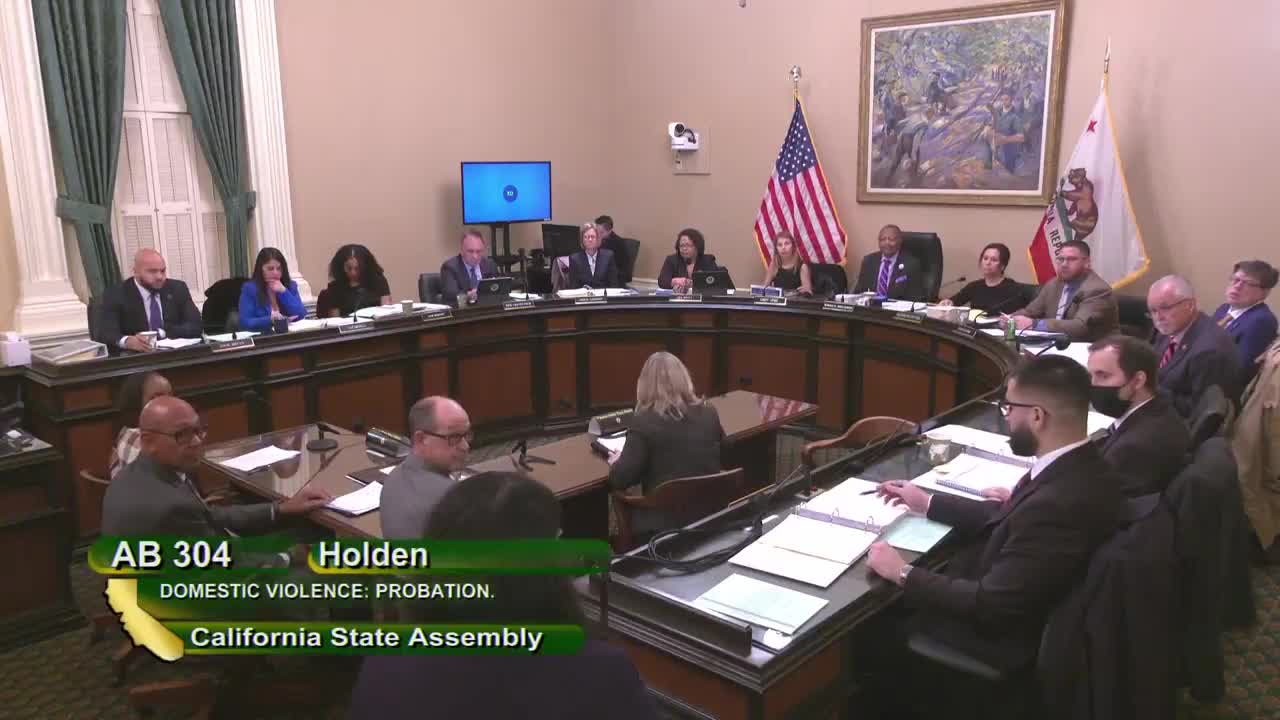
Bill Author


