AB 610: Fast food restaurant industry: Fast Food Council: health, safety, employment, and minimum wage.
- Session Year: 2023-2024
- House: Assembly
- Latest Version Date: 2024-03-25
Current Status:
Passed
(2024-03-25: Chaptered by Secretary of State - Chapter 4, Statutes of 2024.)
Introduced
In Committee
First Chamber
In Committee
Second Chamber
Enacted
Existing law, until January 1, 2029, establishes the Fast Food Council and prescribes the councils purposes, duties, and limitations, as described. Existing law establishes an hourly minimum wage for fast food restaurant employees, as described, authorizes the council to increase the hourly minimum wage pursuant to specified parameters, and sets forth requirements, limitations, and procedures for adopting and reviewing fast food restaurant health, safety, and employment standards. Existing law defines terms for these purposes, including defining fast food restaurant to mean a limited-service restaurant in the state that is part of a national fast food chain. Existing law exempts from the definition of fast food restaurant an establishment that on September 15, 2023, operates a bakery in a prescribed manner, as long as it continues to operate such a bakery. Existing law also exempts certain restaurants in grocery establishments.
This bill would exempt additional restaurants from the definition of fast food restaurant, including such restaurants in airports, hotels, event centers, theme parks, museums, and certain other locations, as prescribed.
This bill would declare that it is to take effect immediately as an urgency statute.
Existing law declares that the fostering, continuance, and development of public transportation systems are a matter of state concern. Existing law authorizes the Department of Transportation to administer various programs and allocates moneys for various public transportation purposes.Upon the appropriation of moneys by the Legislature, this bill would create the Youth Transit Pass Pilot Program, administered by the department, for purposes of awarding grants to transit agencies for the costs of creating, designing, developing, advertising, distributing, and implementing free youth transit passes to persons attending certain educational institutions, providing free transit service to holders of those passes, and administering and participating in the program, as specified. The bill would authorize a transit agency to submit a grant application in partnership with one or more educational institutions and would also authorize grant funds to be used to maintain, subsidize, or expand an existing fare-free program, as provided. The bill would authorize a transit agency with an existing fare-free program that enables a person 18 years of age or younger to use a transit agencys bus and rail services without paying any additional fare or charge to submit an application without an educational institution partner, as provided. The bill would require the department to submit a report to specified committees of the Legislature on or before January 1, 2027, on, among other things, the outcomes of the program and the funding conditions associated with offering free youth transit passes, the status of transit pass programs statewide, and whether these provisions led to reductions in the emissions of greenhouse gases and vehicle miles traveled, as provided.The bill would repeal its provisions as of January 1, 2028.Existing law declares that the fostering, continuance, and development of public transportation systems are a matter of state concern. Existing law authorizes the Department of Transportation to administer various programs and allocates moneys for various public transportation purposes.
Upon the appropriation of moneys by the Legislature, this bill would create the Youth Transit Pass Pilot Program, administered by the department, for purposes of awarding grants to transit agencies for the costs of creating, designing, developing, advertising, distributing, and implementing free youth transit passes to persons attending certain educational institutions, providing free transit service to holders of those passes, and administering and participating in the program, as specified. The bill would authorize a transit agency to submit a grant application in partnership with one or more educational institutions and would also authorize grant funds to be used to maintain, subsidize, or expand an existing fare-free program, as provided. The bill would authorize a transit agency with an existing fare-free program that enables a person 18 years of age or younger to use a transit agencys bus and rail services without paying any additional fare or charge to submit an application without an educational institution partner, as provided. The bill would require the department to submit a report to specified committees of the Legislature on or before January 1, 2027, on, among other things, the outcomes of the program and the funding conditions associated with offering free youth transit passes, the status of transit pass programs statewide, and whether these provisions led to reductions in the emissions of greenhouse gases and vehicle miles traveled, as provided.
The bill would repeal its provisions as of January 1, 2028.
Existing law declares that the fostering, continuance, and development of public transportation systems are a matter of state concern. Existing law authorizes the Department of Transportation to administer various programs and allocates moneys for various public transportation purposes.
Upon the appropriation of moneys by the Legislature, this bill would create the Student Youth Transit Pass Pilot Program, administered by the department, for purposes of awarding grants to transit agencies for the costs of creating, designing, developing, advertising, distributing, and implementing free student youth transit passes to persons attending public certain educational institutions, and persons 18 years of age or younger, providing free transit service to holders of those passes, and administering and participating in the program, as specified. The bill would authorize a transit agency to submit a grant application in partnership with one or more public educational institutions and would also authorize grant funds to be used to create a new fare free student transit pass program or to maintain, subsidize, or expand an existing fare free student transit pass fare-free program, as provided. The bill would authorize a transit agency with an existing fare free fare-free program that enables a person 18 years of age or younger to use a transit agencys bus and rail services without paying any additional fare or charge to submit an application without a public an educational institution partner, as provided. The bill would require the department to submit a report to specified committees of the Legislature on or before January 1, 2027, on, among other things, the outcomes of the program and the funding conditions associated with offering free student youth transit passes, the status of transit pass programs statewide, and whether these provisions led to reductions in the emissions of greenhouse gases and vehicle miles traveled, as provided.
The bill would repeal its provisions as of January 1, 2028.
Existing law declares that the fostering, continuance, and development of public transportation systems are a matter of state concern. Existing law authorizes the Department of Transportation to administer various programs and allocates moneys for various public transportation purposes.
Upon the appropriation of moneys by the Legislature, this bill would create the Youth Student Transit Pass Pilot Program, administered by the department, for purposes of awarding grants to transit agencies for the costs of creating, designing, developing, advertising, distributing, and implementing free youth student transit passes to persons attending certain public educational institutions, and persons 18 years of age or younger, providing free transit service to holders of those passes, and administering and participating in the program, as specified. The bill would authorize a transit agency to submit a grant application in partnership with one or more public educational institutions and would also authorize grant funds to be used to create a new fare free student transit pass program or to maintain, subsidize, or expand an existing fare free student transit pass program, as provided. The bill would authorize a transit agency with an existing fare free program that enables a person 18 years of age or younger to use a transit agencys bus and rail services without paying any additional fare or charge to submit an application without an a public educational institution partner, as provided. The bill would require the department to submit a report to specified committees of the Legislature on or before January 1, 2028, 2027, on, among other things, the outcomes of the program and the funding conditions associated with offering free youth student transit passes, the status of transit pass programs statewide, and whether these provisions led to reductions in the emissions of greenhouse gases and vehicle miles traveled, as provided.
The bill would repeal its provisions as of January 1, 2029. 2028.
Existing law declares that the fostering, continuance, and development of public transportation systems are a matter of state concern. Existing law authorizes the Department of Transportation to administer various programs and allocates moneys for various public transportation purposes.
Upon the appropriation of moneys by the Legislature, this bill would create the Youth Transit Pass Pilot Program, administered by the department, for purposes of awarding grants to transit agencies for the costs of creating, designing, developing, advertising, distributing, and implementing free youth transit passes to persons attending certain educational institutions, providing free transit service to holders of those passes, and administering and participating in the program, as specified. The bill would authorize a transit agency to submit a grant application in partnership with one or more educational institutions and would also authorize grant funds to be used to maintain, subsidize, or expand an existing fare free program, as provided. The bill would authorize a transit agency with an existing fare free program that enables a person 18 years of age or younger to use a transit agencys bus and rail services without paying any additional fare or charge to submit an application without an educational institution partner, as provided. The bill would require the department to submit a report to specified committees of the Legislature on or before January 1, 2028, on, among other things, the outcomes of the program and the funding conditions associated with offering free youth transit passes, the status of transit pass programs statewide, and whether these provisions led to reductions in the emissions of greenhouse gases and vehicle miles traveled, as provided.
The bill would repeal its provisions as of January 1, 2029.
The Legislature finds and declares the following:
(a)The goals of the Fast Food Council created pursuant to Section 1475 of the Labor Code will be furthered by clarifying the scope of fast food restaurants and fast food restaurant workers covered by its terms.
(b)Restaurants that are operated in conjunction with larger enterprises such as airports, hotels, large event centers, theme parks, museums, gambling establishments, corporate campuses, and certain public lands, generally do not share the same characteristics as traditional fast food restaurants that are part of national fast food chains, because restaurants operated in conjunction with larger enterprises have distinct economics and a captive customer base, are often operated subject to concession or food service contracts, and have different employment structures.
(c)The amendments to Section 1474 of the Labor Code will not interfere with the objectives of Sections 1474, 1475, and 1476 of the Labor Code, including allowing the state to improve wages and working conditions in the fast food restaurant industry, which employs some of Californias lowest income workers.
SEC. 2.Section 1474 of the Labor Code is amended to read:1474.For purposes of this part:
(a)National fast food chain means a set of limited-service restaurants consisting of more than 60 establishments nationally that share a common brand, or that are characterized by standardized options for decor, marketing, packaging, products, and services, and which are primarily engaged in providing food and beverages for immediate consumption on or off premises where patrons generally order or select items and pay before consuming, with limited or no table service. For purposes of the definitions in this part, limited-service restaurant includes, but is not limited to, an establishment with the North American Industry Classification System Code 722513.
(b)Council means the Fast Food Council.
(c)Except as provided in subdivisions (i) to (k), inclusive, fast food restaurant means a limited-service restaurant in the state that is part of a national fast food chain.
(d)Fast food restaurant franchisee means a person to whom a fast food restaurant franchise is granted.
(e)Fast food restaurant franchisor means a person who grants or has granted a fast food restaurant franchise.
(f)Fast food restaurant operator means a person who operates a fast food restaurant.
(g)Franchise, franchisee, and franchisor have the definitions set forth in Article 1 (commencing with Section 20000) of Chapter 5.5 of Division 8 of the Business and Professions Code.
(h)Working conditions include, but are not limited to, wages, conditions affecting fast food restaurant employees health and safety, security in the workplace, the right to take time off work for protected purposes, and the right to be free from discrimination and harassment in the workplace.
(i)When a restaurant is located and operates within a grocery establishment, as defined in subdivision (d) of Section 2502, and the grocery establishment employer employs the individuals working in the restaurant, the restaurant shall not be considered a fast food restaurant.
(j)Fast food restaurant shall not include an establishment that on September 15, 2023, operates a bakery that produces for sale on the establishments premises bread, as defined under Part 136 of Subchapter B of Chapter I of Title 21 of the Code of Federal Regulations, so long as it continues to operate such a bakery. This exemption applies only where the establishment produces for sale bread as a stand-alone menu item, and does not apply if the bread is available for sale solely as part of another menu item.
(k)Fast food restaurant shall not include a restaurant that is any of the following:
(1)Located in an airport, as defined in Section 21013 of the Public Utilities Code, but excluding any military base or federally operated facility.
(2)Connected to or operated in conjunction with a hotel. For purposes of this paragraph, hotel means a residential building that is designated or used for lodging and other related services for the public and includes any contracted, leased, or sublet premises connected to or operated in conjunction with the buildings purpose, or providing services at the building.
(3)Connected to or operated in conjunction with an event center. For purposes of this paragraph, event center means a publicly or privately owned structure of more than 20,000 square feet or 1,000 seats that is used for the purposes of public performances, sporting events, business meetings, or similar events, and includes concert halls, stadiums, sports arenas, racetracks, coliseums, and convention centers. Event center also includes any contracted, leased, or sublet premises connected to or operated in conjunction with the event centers purpose.
(4)Connected to or operated in conjunction with a theme park. For purposes of this paragraph, theme park means a commercially operated, admission-based grounds or enclosure featuring amusement park rides of a permanent or semipermanent nature, shows, and attractions that are presented, shown, staged, or offered to the public, along with games, merchandise, and food offered for sale in the park, and any contracted, leased, or sublet premises that are connected to, located within, or operated in conjunction with that park, whether or not an admissions ticket is required for entry.
(5)Connected to or operated in conjunction with a public or private museum, within the meaning of Section 1899.1 of the Civil Code.
(6)Connected to or operated in conjunction with a gambling establishment, as defined in subdivision (o) of Section 19805 of the Business and Professions Code.
(7)A restaurant that is all of the following:
(A)Located in and operated in conjunction with a building, group of buildings, or campus used for office purposes primarily or exclusively by a single, for-profit corporation and its affiliates.
(B)Primarily or exclusively serves employees of that corporation or its affiliates rather than the general public.
(C)Is part of, or subject to, a concession or food service contract covering the building, group of buildings, or campus.
(8)Located on land owned by the state, a city or county, or other political subdivision of the state, that is part of a port district or land managed by a port authority or port commission, a public beach, public pier, state park, municipal or regional park, or historic district, and is operated pursuant to a concession agreement or food service contract.
SEC. 3.This act is an urgency statute necessary for the immediate preservation of the public peace, health, or safety within the meaning of Article IV of the California Constitution and shall go into immediate effect. The facts constituting the necessity are:
Due to how the immediate operation of new regulation of the fast food industry in California affects portions of the industry and existing local ordinances and pending regulatory and ballot measures, it is necessary for this statute to take effect immediately.
The Legislature finds and declares the following:
(a)The goals of the Fast Food Council created pursuant to Section 1475 of the Labor Code will be furthered by clarifying the scope of fast food restaurants and fast food restaurant workers covered by its terms.
(b)Restaurants that are operated in conjunction with larger enterprises such as airports, hotels, large event centers, theme parks, museums, gambling establishments, corporate campuses, and certain public lands, generally do not share the same characteristics as traditional fast food restaurants that are part of national fast food chains, because restaurants operated in conjunction with larger enterprises have distinct economics and a captive customer base, are often operated subject to concession or food service contracts, and have different employment structures.
(c)The amendments to Section 1474 of the Labor Code will not interfere with the objectives of Sections 1474, 1475, and 1476 of the Labor Code, including allowing the state to improve wages and working conditions in the fast food restaurant industry, which employs some of Californias lowest income workers.
SECTION 1.SEC. 2.Section 1474 of the Labor Code is amended to read:1474.For purposes of this part:
(a)National fast food chain means a set of limited-service restaurants consisting of more than 60 establishments nationally that share a common brand, or that are characterized by standardized options for decor, marketing, packaging, products, and services, and which are primarily engaged in providing food and beverages for immediate consumption on or off premises where patrons generally order or select items and pay before consuming, with limited or no table service. For purposes of the definitions in this part, limited-service restaurant includes, but is not limited to, an establishment with the North American Industry Classification System Code 722513.
(b)Council means the Fast Food Council.
(c)Except as provided in subdivisions (i) to (k), inclusive, fast food restaurant means a limited-service restaurant in the state that is part of a national fast food chain.
(d)Fast food restaurant franchisee means a person to whom a fast food restaurant franchise is granted.
(e)Fast food restaurant franchisor means a person who grants or has granted a fast food restaurant franchise.
(f)Fast food restaurant operator means a person who operates a fast food restaurant.
(g)Franchise, franchisee, and franchisor have the definitions set forth in Article 1 (commencing with Section 20000) of Chapter 5.5 of Division 8 of the Business and Professions Code.
(h)Working conditions include, but are not limited to, wages, conditions affecting fast food restaurant employees health and safety, security in the workplace, the right to take time off work for protected purposes, and the right to be free from discrimination and harassment in the workplace.
(i)When a restaurant is located and operates within a grocery establishment, as defined in subdivision (d) of Section 2502, and the grocery establishment employer employs the individuals working in the restaurant, the restaurant shall not be considered a fast food restaurant.
(j)Fast food restaurant shall not include an establishment that on September 15, 2023, operates a bakery that produces for sale on the establishments premises bread, as defined under Part 136 of Subchapter B of Chapter I of Title 21 of the Code of Federal Regulations, so long as it continues to operate such a bakery. This exemption applies only where the establishment produces for sale bread as a stand-alone menu item, and does not apply if the bread is available for sale solely as part of another menu item.
(k)Fast food restaurant shall not include a restaurant that is any of the following:
(1)Located in an airport, as defined in Section 21013 of the Public Utilities Code, but excluding any military base or federally operated facility.
(2)Connected to or operated in conjunction with a hotel. For purposes of this paragraph, hotel means a residential building that is designated or used for lodging and other related services for the public and includes any contracted, leased, or sublet premises connected to or operated in conjunction with the buildings purpose, or providing services at the building.
(3)Connected to or operated in conjunction with an event center. For purposes of this paragraph, event center means a publicly or privately owned structure of more than 20,000 square feet or 1,000 seats that is used for the purposes of public performances, sporting events, business meetings, or similar events, and includes concert halls, stadiums, sports arenas, racetracks, coliseums, and convention centers. Event center also includes any contracted, leased, or sublet premises connected to or operated in conjunction with the event centers purpose.
(4)Connected to or operated in conjunction with a theme park. For purposes of this paragraph, theme park means a commercially operated, admission-based grounds or enclosure featuring amusement park rides of a permanent or semipermanent nature, shows, and attractions that are presented, shown, staged, or offered to the public, along with games, merchandise, and food offered for sale in the park, and any contracted, leased, or sublet premises that are connected to, located within, or operated in conjunction with that park, whether or not an admissions ticket is required for entry.
(5)Connected to or operated in conjunction with a public or private museum, within the meaning of Section 1899.1 of the Civil Code.
(6)Connected to or operated in conjunction with a gambling establishment, as defined in subdivision (o) of Section 19805 of the Business and Professions Code.
(7)A restaurant that is all of the following:
(A)Located in and operated in conjunction with a building, group of buildings, or campus used for office purposes primarily or exclusively by a single, for-profit corporation and its affiliates.
(B)Primarily or exclusively serves employees of that corporation or its affiliates rather than the general public.
(C)Is part of, or subject to, a concession or food service contract covering the building, group of buildings, or campus.
(8)Located on land owned by the state, a city or county, or other political subdivision of the state, that is part of a port district or land managed by a port authority or port commission, a public beach, public pier, state park, municipal or regional park, or historic district, and is operated pursuant to a concession agreement or food service contract.
SEC. 2.SEC. 3.This act is an urgency statute necessary for the immediate preservation of the public peace, health, or safety within the meaning of Article IV of the California Constitution and shall go into immediate effect. The facts constituting the necessity are:
Due to how the immediate operation of new regulation of the fast food industry in California affects portions of the industry and existing local ordinances and pending regulatory and ballot measures, it is necessary for this statute to take effect immediately.
For purposes of this part:
(a)National fast food chain means a set of limited-service restaurants consisting of more than 60 establishments nationally that share a common brand, or that are characterized by standardized options for decor, marketing, packaging, products, and services, and which are primarily engaged in providing food and beverages for immediate consumption on or off premises where patrons generally order or select items and pay before consuming, with limited or no table service. For purposes of the definitions in this part, limited-service restaurant includes, but is not limited to, an establishment with the North American Industry Classification System Code 722513.
(b)Council means the Fast Food Council.
(c) (1) Except as provided in paragraph (2), subdivisions (i) to (k), inclusive, fast food restaurant means a limited-service restaurant in the state that is part of a national fast food chain.
(2)Fast food restaurant shall not include an establishment that on September 15, 2023, operates a bakery that produces for sale on the establishments premises bread, as defined under Part 136 of Subchapter B of Chapter I of Title 21 of the Code of Federal Regulations, so long as it continues to operate such a bakery. This exemption applies only where the establishment produces for sale bread as a stand-alone menu item, and does not apply if the bread is available for sale solely as part of another menu item.(d)Fast food restaurant franchisee means a person to whom a fast food restaurant franchise is granted.
(e)Fast food restaurant franchisor means a person who grants or has granted a fast food restaurant franchise.
(f)Fast food restaurant operator means a person who operates a fast food restaurant.
(g)Franchise, franchisee, and franchisor have the definitions set forth in Article 1 (commencing with Section 20000) of Chapter 5.5 of Division 8 of the Business and Professions Code.
(h)Working conditions include, but are not limited to, wages, conditions affecting fast food restaurant employees health and safety, security in the workplace, the right to take time off work for protected purposes, and the right to be free from discrimination and harassment in the workplace.
(i)When a restaurant is located and operates within a grocery establishment, as defined in subdivision (d) of Section 2502, and the grocery establishment employer employs the individuals working in the restaurant, the restaurant shall not be considered a fast food restaurant.
(j)Fast food restaurant shall not include an establishment that on September 15, 2023, operates a bakery that produces for sale on the establishments premises bread, as defined under Part 136 of Subchapter B of Chapter I of Title 21 of the Code of Federal Regulations, so long as it continues to operate such a bakery. This exemption applies only where the establishment produces for sale bread as a stand-alone menu item, and does not apply if the bread is available for sale solely as part of another menu item.
(k)Fast food restaurant shall not include a restaurant that is any of the following:
(1)Located in an airport, as defined in Section 21013 of the Public Utilities Code, but excluding any military base or federally operated facility.
(2)Connected to or operated in conjunction with a hotel. For purposes of this paragraph, hotel means a residential building that is designated or used for lodging and other related services for the public and includes any contracted, leased, or sublet premises connected to or operated in conjunction with the buildings purpose, or providing services at the building.
(3)Connected to or operated in conjunction with an event center. For purposes of this paragraph, event center means a publicly or privately owned structure of more than 20,000 square feet or 1,000 seats that is used for the purposes of public performances, sporting events, business meetings, or similar events, and includes concert halls, stadiums, sports arenas, racetracks, coliseums, and convention centers. Event center also includes any contracted, leased, or sublet premises connected to or operated in conjunction with the event centers purpose.
(4)Connected to or operated in conjunction with a theme park. For purposes of this paragraph, theme park means a commercially operated, admission-based grounds or enclosure featuring amusement park rides of a permanent or semipermanent nature, shows, and attractions that are presented, shown, staged, or offered to the public, along with games, merchandise, and food offered for sale in the park, and any contracted, leased, or sublet premises that are connected to, located within, or operated in conjunction with that park, whether or not an admissions ticket is required for entry.
(5)Connected to or operated in conjunction with a public or private museum, within the meaning of Section 1899.1 of the Civil Code.
(6)Connected to or operated in conjunction with a gambling establishment, as defined in subdivision (o) of Section 19805 of the Business and Professions Code.
(7)A restaurant that is all of the following:
(A)Located in and operated in conjunction with a building, group of buildings, or campus used for office purposes primarily or exclusively by a single, for-profit corporation and its affiliates.
(B)Primarily or exclusively serves employees of that corporation or its affiliates rather than the general public.
(C)Is part of, or subject to, a concession or food service contract covering the building, group of buildings, or campus.
(8)Located on land owned by the state, a city or county, or other political subdivision of the state, that is part of a port district or land managed by a port authority or port commission, a public beach, public pier, state park, municipal or regional park, or historic district, and is operated pursuant to a concession agreement or food service contract.
SEC. 2.This act is an urgency statute necessary for the immediate preservation of the public peace, health, or safety within the meaning of Article IV of the California Constitution and shall go into immediate effect. The facts constituting the necessity are:
Due to how the immediate operation of new regulation of the fast food industry in California affects portions of the industry and existing local ordinances and pending regulatory and ballot measures, it is necessary for this statute to take effect immediately.
SECTION 1.Chapter 2 (commencing with Section 99100) is added to Part 11 of Division 10 of the Public Utilities Code, to read:2.Youth Transit Pass Pilot Program99100.For purposes of this chapter, the following definitions apply:(a)Department means the Department of Transportation.(b)Educational institution means a local educational agency as defined in Section 56026.3 of the Education Code, the California Community Colleges, the California State University, or the University of California.(c)Eligible purposes means those purposes specified in Sections 99102 and 99103.(d)Free youth transit pass means a pass that enables a person attending an educational institution to use, without limitation, a transit agencys bus and rail services without paying any additional fare or charge.(e)Program means the Youth Transit Pass Pilot Program created pursuant to Section 99101.(f)Transit agency means an STA-eligible operator, as defined in Section 99312.2, or the public agencies, including joint powers agencies, responsible for state-supported intercity rail or commuter rail services and eligible for funding under Section 99312.3.99101.(a)Upon an appropriation for purposes of the program, the Youth Transit Pass Pilot Program is hereby created, to be administered by the department, for purposes of awarding grants to transit agencies for eligible purposes pursuant to this chapter.(b)On or before June 30, 2024, the department shall develop, in consultation with transit agencies, educational institutions, metropolitan planning organizations, and regional transportation planning agencies, guidelines for the administration of the program.(c)(1)A transit agency may submit, in partnership with one or more educational institutions, a single-year or multiyear application for the program pursuant to Section 99102.(2)A transit agency may submit a single-year or multiyear application for the program pursuant to Section 99103.(d)(1)The department shall establish a target share amount for each eligible transit agency applicant based on the allocation under the State Transit Assistance Program pursuant to paragraphs (1) and (2) of subdivision (a) of Section 99312.1.(2)The department shall establish the target share amount described in paragraph (1) in consultation with regional transportation planning agencies as part of the guidelines developed pursuant to subdivision (b).(e)The department may use no more than 2 percent of the moneys appropriated for purposes of the program to recover its costs of administering the program.99102.(a)Grant moneys awarded pursuant to this section for purposes of the program may only be used for the following purposes agreed to by a transit agency and the relevant educational institutions in their grant application, until fully expended:(1)The costs of creating, designing, developing, advertising, distributing, and implementing free youth transit passes pursuant to the program.(2)The costs of providing free transit service to holders of free youth transit passes pursuant to the program.(3)The costs of maintaining, subsidizing, or expanding an existing fare-free program.(4)Other costs of administering and participating in the program.(b)An educational institution shall be prohibited from participating in, and receiving funds from, the program, if its participation in the program would invalidate an existing agreement with a transit agency for free youth transit passes entered into before the operative date of this section. An educational institution that receives funds from the program and that invalidates an existing agreement with a transit agency for free youth transit passes before this chapter is repealed shall be required to reimburse the state for funds received.99103.(a)A transit agency with an existing fare-free program that enables a person 18 years of age or younger to use, without limitation, a transit agencys bus and rail services without paying any additional fare or charge may submit an application for the program without an educational institution partner.(b)Grant moneys awarded pursuant to this section for purposes of the program may only be used for the following purposes:(1)The costs of creating, designing, developing, advertising, distributing, and implementing free youth transit passes pursuant to the program.(2)The costs of providing free transit service to holders of free youth transit passes pursuant to the program.(3)The costs of maintaining or expanding the existing fare-free program.(4)The costs of enhancing or expanding transit service by supporting new or expanded bus, rail, or ferry services.(5)The cost associated with other operational improvements to improve access to transit service or to increase transit mode share.(6)Other costs of administering and participating in the program.99104.For purposes of calculating the ratio of fare revenues to operating costs under Article 4 (commencing with Section 99260) of Chapter 4, transit agencies participating in the program shall comply with the process described in Section 99268.19. Free youth transit passes shall be counted as free and reduced transit fares pursuant to Section 99268.19.99105.(a)On or before January 1, 2027, the department shall submit, in compliance with Section 9795 of the Government Code, a report on the outcomes of the program and the status of transit pass programs statewide to the fiscal and policy committees of the Legislature that oversee transportation programs. The report shall be produced in consultation with transit agencies and educational institutions that participated in the program.(b)The report shall include, but is not limited to, all of the following:(1)The number of free transit passes provided to persons attending an educational institution.(2)Any change in transit ridership among persons attending an educational institution.(3)An assessment of how many transit agencies and educational institutions have created or expanded a transit pass program.(4)Recommendations to expand transit pass programs to ensure that all persons attending an educational institution have access to a transit pass program.(5)Whether, over its lifetime, the program achieved reductions in vehicle miles traveled, reduced emissions of greenhouse gases, enhanced transit accessibility for pupils and students, and ensured equity.(6)Whether the program minimized administrative requirements for both program management and user access.(7)Identification of best practices being implemented to enhance youth transit ridership.99106.This chapter shall remain in effect only until January 1, 2028, and as of that date is repealed.For purposes of this chapter, the following definitions apply:
(a)Department means the Department of Transportation.
(b)Educational institution means a local educational agency as defined in Section 56026.3 of the Education Code, the California Community Colleges, the California State University, or the University of California.
(c)Eligible purposes means those purposes specified in Sections 99102 and 99103.
(d)Free youth transit pass means a pass that enables a person attending an educational institution to use, without limitation, a transit agencys bus and rail services without paying any additional fare or charge.
(e)Program means the Youth Transit Pass Pilot Program created pursuant to Section 99101.
(f)Transit agency means an STA-eligible operator, as defined in Section 99312.2, or the public agencies, including joint powers agencies, responsible for state-supported intercity rail or commuter rail services and eligible for funding under Section 99312.3.
99101.(a)Upon an appropriation for purposes of the program, the Youth Transit Pass Pilot Program is hereby created, to be administered by the department, for purposes of awarding grants to transit agencies for eligible purposes pursuant to this chapter.
(b)On or before June 30, 2024, the department shall develop, in consultation with transit agencies, educational institutions, metropolitan planning organizations, and regional transportation planning agencies, guidelines for the administration of the program.
(c)(1)A transit agency may submit, in partnership with one or more educational institutions, a single-year or multiyear application for the program pursuant to Section 99102.
(2)A transit agency may submit a single-year or multiyear application for the program pursuant to Section 99103.
(d)The department shall award a grant to each eligible transit agency applicant based on its proportional share, relative to the other eligible transit agency applicants, of total statewide farebox revenues in the 201819 fiscal year.(d)(1)The department shall establish a target share amount for each eligible transit agency applicant based on the allocation under the State Transit Assistance Program pursuant to paragraphs (1) and (2) of subdivision (a) of Section 99312.1.
(2)The department shall establish the target share amount described in paragraph (1) in consultation with regional transportation planning agencies as part of the guidelines developed pursuant to subdivision (b).
(e)The department may use no more than 2 percent of the moneys appropriated for purposes of the program to recover its costs of administering the program.
99102.(a)Grant moneys awarded pursuant to this section for purposes of the program may only be used for the following purposes agreed to by a transit agency and the relevant educational institutions in their grant application, until fully expended:
(1)The costs of creating, designing, developing, advertising, distributing, and implementing free youth transit passes pursuant to the program.
(2)The costs of providing free transit service to holders of free youth transit passes pursuant to the program.
(3)The costs of maintaining, subsidizing, or expanding an existing fare-free program.
(4)Other costs of administering and participating in the program.
(b)An educational institution shall be prohibited from participating in, and receiving funds from, the program, if its participation in the program would invalidate an existing agreement with a transit agency for free youth transit passes entered into before the operative date of this section. An educational institution that receives funds from the program and that invalidates an existing agreement with a transit agency for free youth transit passes before this chapter is repealed shall be required to reimburse the state for funds received.
99103.(a)A transit agency with an existing fare-free program that enables a person 18 years of age or younger to use, without limitation, a transit agencys bus and rail services without paying any additional fare or charge may submit an application for the program without an educational institution partner.
(b)Grant moneys awarded pursuant to this section for purposes of the program may only be used for the following purposes:
(1)The costs of creating, designing, developing, advertising, distributing, and implementing free youth transit passes pursuant to the program.
(2)The costs of providing free transit service to holders of free youth transit passes pursuant to the program.
(3)The costs of maintaining or expanding the existing fare-free program.
(4)The costs of enhancing or expanding transit service by supporting new or expanded bus, rail, or ferry services.
(5)The cost associated with other operational improvements to improve access to transit service or to increase transit mode share.
(6)Other costs of administering and participating in the program.
99104.For purposes of calculating the ratio of fare revenues to operating costs under Article 4 (commencing with Section 99260) of Chapter 4, transit agencies participating in the program shall comply with the process described in Section 99268.19. Free youth transit passes shall be counted as free and reduced transit fares pursuant to Section 99268.19.
99105.(a)On or before January 1, 2027, the department shall submit, in compliance with Section 9795 of the Government Code, a report on the outcomes of the program and the status of transit pass programs statewide to the fiscal and policy committees of the Legislature that oversee transportation programs. The report shall be produced in consultation with transit agencies and educational institutions that participated in the program.
(b)The report shall include, but is not limited to, all of the following:
(1)The number of free transit passes provided to persons attending an educational institution.
(2)Any change in transit ridership among persons attending an educational institution.
(3)An assessment of how many transit agencies and educational institutions have created or expanded a transit pass program.
(4)Recommendations to expand transit pass programs to ensure that all persons attending an educational institution have access to a transit pass program.
(5)Whether, over its lifetime, the program achieved reductions in vehicle miles traveled, reduced emissions of greenhouse gases, enhanced transit accessibility for pupils and students, and ensured equity.
(6)Whether the program minimized administrative requirements for both program management and user access.
(7)Identification of best practices being implemented to enhance youth transit ridership.
99106.This chapter shall remain in effect only until January 1, 2028, and as of that date is repealed.
For purposes of this chapter, the following definitions apply:
(a)Department means the Department of Transportation.
(b)Educational institution means a local educational agency, agency as defined in Section 56026.3 of the Education Code, the California Community Colleges, the California State University, or the University of California.
(c)Eligible purposes means those purposes specified in Sections 99102 and 99103.
(d)Free student youth transit pass means a pass that enables a person attending an educational institution, or any person 18 years of age or younger, institution to use, without limitation, a transit agencys bus and rail services without paying any additional fare or charge.
(e)Local educational agency means a school district, charter school, or county office of education.(f)(e)Program means the Student Youth Transit Pass Pilot Program created pursuant to Section 99101.
(g)Student means any student enrolled in part-time, full-time, or noncredit courses at an educational institution, and any person 18 years of age or younger irrespective of their enrollment in an educational institution.(h)(f)Transit agency means an STA-eligible operator, as defined in Section 99312.2, or the public agencies, including joint powers agencies, responsible for state-supported intercity rail or commuter rail services and eligible for funding under Section 99312.3.
99101.(a)Upon an appropriation for purposes of the program, the Student Youth Transit Pass Pilot Program is hereby created, to be administered by the department, for purposes of awarding grants to transit agencies for eligible purposes pursuant to this chapter.
(b)On or before June 30, 2024, the department shall develop, in consultation with transit agencies, educational institutions, metropolitan planning organizations, and regional transportation planning agencies, guidelines for the administration of the program.
(c)(1)A transit agency may submit, in partnership with one or more educational institutions, a single-year or multiyear application for the program pursuant to Section 99102.
(2)A transit agency may submit a single-year or multiyear application for the program pursuant to Section 99103.
(d)The department shall establish target share amounts award a grant to each eligible transit agencies agency applicant based on the aggregate enrollment of students at eligible educational institutions within the county served by those transit agencies. its proportional share, relative to the other eligible transit agency applicants, of total statewide farebox revenues in the 201819 fiscal year.
(e)The department may use no more than 2 percent of the moneys appropriated for purposes of the program to recover its costs of administering the program.
99102.(a)Grant moneys awarded pursuant to this section for purposes of the program may only be used for the following purposes agreed to by a transit agency and the relevant educational institutions in their grant application, until fully expended:
(1)The costs of creating, designing, developing, advertising, distributing, and implementing free student youth transit passes pursuant to the program.
(2)The costs of providing free transit service to holders of free student youth transit passes pursuant to the program.
(3)The costs of creating a new fare free student transit pass program or maintaining, subsidizing, or expanding an existing fare free student transit pass fare-free program.
(4)Other costs of administering and participating in the program.
(b)An educational institution shall be prohibited from participating in, and receiving funds from, the program, if its participation in the program would invalidate an existing agreement with a transit agency for free student youth transit passes entered into before the operative date of this section. An educational institution that receives funds from the program and that invalidates an existing agreement with a transit agency for free student youth transit passes before this chapter is repealed shall be required to reimburse the state for funds received.
99103.(a)A transit agency with an existing fare free fare-free program that enables a person 18 years of age or younger to use, without limitation, a transit agencys bus and rail services without paying any additional fare or charge may submit an application for the program without an educational institution partner.
(b)Grant moneys awarded pursuant to this section for purposes of the program may only be used for the following purposes:
(1)The costs of creating, designing, developing, advertising, distributing, and implementing free student youth transit passes pursuant to the program.
(2)The costs of providing free transit service to holders of free student youth transit passes pursuant to the program.
(3)The costs of maintaining or expanding the existing fare free fare-free program.
(4)The costs of enhancing or expanding transit service by supporting new or expanded bus, rail, or ferry services.
(5)The cost associated with other operational improvements to improve access to transit service or to increase transit mode share.
(6)Other costs of administering and participating in the program.
99104.For purposes of calculating the ratio of fare revenues to operating costs under Article 4 (commencing with Section 99260) of Chapter 4, transit agencies participating in the program shall comply with the process described in Section 99268.19. Free student youth transit passes shall be counted as free and reduced transit fares pursuant to Section 99268.19.
99105.(a)On or before January 1, 2027, the department shall submit, in compliance with Section 9795 of the Government Code, a report on the outcomes of the program and the status of transit pass programs statewide to the fiscal and policy committees of the Legislature that oversee transportation programs. The report shall be produced in consultation with transit agencies and educational institutions that participated in the program.
(b)The report shall include, but is not limited to, all of the following:
(1)The number of free transit passes provided to persons attending an educational institution.
(2)Any change in transit ridership among persons attending an educational institution.
(3)An assessment of how many transit agencies and educational institutions have created or expanded a transit pass program.
(4)Recommendations to expand transit pass programs to ensure that all persons attending an educational institution have access to a transit pass program.
(5)Whether, over its lifetime, the program achieved reductions in vehicle miles traveled, reduced emissions of greenhouse gases, enhanced transit accessibility for pupils, students, as that term is defined in Section 99100, and all other individuals enrolled in private institutions of higher education, pupils and students, and ensured equity.
(6)Whether the program minimized administrative requirements for both program management and user access.
(7)Identification of best practices being implemented to enhance youth transit ridership.
99106.This chapter shall remain in effect only until January 1, 2028, and as of that date is repealed.
For purposes of this chapter, the following definitions apply:
(a)Department means the Department of Transportation.
(b)Educational institution means a local educational agency as defined in Section 56026.3 of the Education Code, agency, the California Community Colleges, the California State University, or the University of California.
(c)Eligible purposes means those purposes specified in Sections 99102 and 99103.
(d)Free youth student transit pass means a pass that enables a person attending an educational institution institution, or any person 18 years of age or younger, to use, without limitation, a transit agencys bus and rail services without paying any additional fare or charge.
(e)Local educational agency means a school district, charter school, or county office of education.
(e)(f)Program means the Youth Student Transit Pass Pilot Program created pursuant to Section 99101.
(g)Student means any student enrolled in part-time, full-time, or noncredit courses at an educational institution, and any person 18 years of age or younger irrespective of their enrollment in an educational institution.
(f)(h)Transit agency means an STA-eligible operator, as defined in Section 99312.2, or the public agencies, including joint powers agencies, responsible for state-supported intercity rail or commuter rail services and eligible for funding under Section 99312.3.
99101.(a)Upon an appropriation for purposes of the program, the Youth Student Transit Pass Pilot Program is hereby created, to be administered by the department, for purposes of awarding grants to transit agencies for eligible purposes pursuant to this chapter.
(b)On or before June 30, 2024, the department shall develop, in consultation with transit agencies, educational institutions, metropolitan planning organizations, and regional transportation planning agencies, guidelines for the administration of the program.
(c)(1)A transit agency may submit, in partnership with one or more educational institutions, a single-year or multiyear application for the program pursuant to Section 99102.
(2)A transit agency may submit a single-year or multiyear application for the program pursuant to Section 99103.
(d)The department shall award a grant to each establish target share amounts to eligible transit agency applicant agencies based on its proportional share, relative to the other eligible transit agency applicants, of total statewide farebox revenues in the 201819 fiscal year. the aggregate enrollment of students at eligible educational institutions within the county served by those transit agencies.
(e)The department may use no more than 2 percent of the moneys appropriated for purposes of the program to recover its costs of administering the program.
99102.(a)Grant moneys awarded pursuant to this section for purposes of the program may only be used for the following purposes agreed to by a transit agency and the relevant educational institutions in their grant application, until fully expended:
(1)The costs of creating, designing, developing, advertising, distributing, and implementing free youth student transit passes pursuant to the program.
(2)The costs of providing free transit service to holders of free youth student transit passes pursuant to the program.
(3)The costs of creating a new fare free student transit pass program or maintaining, subsidizing, or expanding an existing fare free student transit pass program.
(4)Other costs of administering and participating in the program.
(b)An educational institution shall be prohibited from participating in, and receiving funds from, the program, if its participation in the program would invalidate an existing agreement with a transit agency for free youth student transit passes entered into before the operative date of this section. An educational institution that receives funds from the program and that invalidates an existing agreement with a transit agency for free youth student transit passes before this chapter is repealed shall be required to reimburse the state for funds received.
99103.(a)A transit agency with an existing fare free program that enables a person 18 years of age or younger to use, without limitation, a transit agencys bus and rail services without paying any additional fare or charge may submit an application for the program without an educational institution partner.
(b)Grant moneys awarded pursuant to this section for purposes of the program may only be used for the following purposes:
(1)The costs of creating, designing, developing, advertising, distributing, and implementing free youth student transit passes pursuant to the program.
(2)The costs of providing free transit service to holders of free youth student transit passes pursuant to the program.
(3)The costs of maintaining or expanding the existing fare free program.
(4)The costs of enhancing or expanding transit service by supporting new or expanded bus, rail, or ferry services.
(5)The cost associated with other operational improvements to improve access to transit service or to increase transit mode share.
(6)Other costs of administering and participating in the program.
99104.For purposes of calculating the ratio of fare revenues to operating costs under Article 4 (commencing with Section 99260) of Chapter 4, transit agencies participating in the program shall comply with the process described in Section 99268.19. Free youth student transit passes shall be counted as free and reduced transit fares pursuant to Section 99268.19.
99105.(a)On or before January 1, 2028, 2027, the department shall submit, in compliance with Section 9795 of the Government Code, a report on the outcomes of the program and the status of transit pass programs statewide to the fiscal and policy committees of the Legislature that oversee transportation programs. The report shall be produced in consultation with transit agencies and educational institutions that participated in the program.
(b)The report shall include, but is not limited to, all of the following:
(1)The number of free transit passes provided to persons attending an educational institution.
(2)Any change in transit ridership among persons attending an educational institution.
(3)An assessment of how many transit agencies and educational institutions have created or expanded a transit pass program.
(4)Recommendations to expand transit pass programs to ensure that all persons attending an educational institution have access to a transit pass program.
(5)Whether, over its lifetime, the program achieved reductions in vehicle miles traveled, reduced emissions of greenhouse gases, enhanced transit accessibility for pupils and students, pupils, students, as that term is defined in Section 99100, and all other individuals enrolled in private institutions of higher education, and ensured equity.
(6)Whether the program minimized administrative requirements for both program management and user access.
(7)Identification of best practices being implemented to enhance youth transit ridership.
99106.This chapter shall remain in effect only until January 1, 2029, 2028, and as of that date is repealed.
For purposes of this chapter, the following definitions apply:
(a)Department means the Department of Transportation.
(b)Educational institution means a local educational agency as defined in Section 56026.3 of the Education Code, the California Community Colleges, the California State University, or the University of California.
(c)Eligible purposes means those purposes specified in Sections 99102 and 99103.
(d)Free youth transit pass means a pass that enables a person attending an educational institution to use, without limitation, a transit agencys bus and rail services without paying any additional fare or charge.
(e)Program means the Youth Transit Pass Pilot Program created pursuant to Section 99101.
(f)Transit agency means an STA-eligible operator, as defined in Section 99312.2, or the public agencies, including joint powers agencies, responsible for state-supported intercity rail or commuter rail services and eligible for funding under Section 99312.3.
99101.(a)Upon an appropriation for purposes of the program, the Youth Transit Pass Pilot Program is hereby created, to be administered by the department, for purposes of awarding grants to transit agencies for eligible purposes pursuant to this chapter.
(b)On or before June 30, 2024, the department shall develop, in consultation with transit agencies, educational institutions, metropolitan planning organizations, and regional transportation planning agencies, guidelines for the administration of the program.
(c)(1)A transit agency may submit, in partnership with one or more educational institutions, a single-year or multiyear application for the program pursuant to Section 99102.
(2)A transit agency may submit a single-year or multiyear application for the program pursuant to Section 99103.
(d)The department shall award a grant to each eligible transit agency applicant based on its proportional share, relative to the other eligible transit agency applicants, of total statewide farebox revenues in the 201819 fiscal year.
(e)The department may use no more than 2 percent of the moneys appropriated for purposes of the program to recover its costs of administering the program.
99102.(a)Grant moneys awarded pursuant to this section for purposes of the program may only be used for the following purposes agreed to by a transit agency and the relevant educational institutions in their grant application, until fully expended:
(1)The costs of creating, designing, developing, advertising, distributing, and implementing free youth transit passes pursuant to the program.
(2)The costs of providing free transit service to holders of free youth transit passes pursuant to the program.
(3)The costs of maintaining, subsidizing, or expanding an existing fare free program.
(4)Other costs of administering and participating in the program.
(b)An educational institution shall be prohibited from participating in, and receiving funds from, the program, if its participation in the program would invalidate an existing agreement with a transit agency for free youth transit passes entered into before the operative date of this section. An educational institution that receives funds from the program and that invalidates an existing agreement with a transit agency for free youth transit passes before this chapter is repealed shall be required to reimburse the state for funds received.
99103.(a)A transit agency with an existing fare free program that enables a person 18 years of age or younger to use, without limitation, a transit agencys bus and rail services without paying any additional fare or charge may submit an application for the program without an educational institution partner.
(b)Grant moneys awarded pursuant to this section for purposes of the program may only be used for the following purposes:
(1)The costs of creating, designing, developing, advertising, distributing, and implementing free youth transit passes pursuant to the program.
(2)The costs of providing free transit service to holders of free youth transit passes pursuant to the program.
(3)The costs of maintaining or expanding the existing fare free program.
(4)The costs of enhancing or expanding transit service by supporting new or expanded bus, rail, or ferry services.
(5)The cost associated with other operational improvements to improve access to transit service or to increase transit mode share.
(6)Other costs of administering and participating in the program.
99104.For purposes of calculating the ratio of fare revenues to operating costs under Article 4 (commencing with Section 99260) of Chapter 4, transit agencies participating in the program shall comply with the process described in Section 99268.19. Free youth transit passes shall be counted as free and reduced transit fares pursuant to Section 99268.19.
99105.(a)On or before January 1, 2028, the department shall submit, in compliance with Section 9795 of the Government Code, a report on the outcomes of the program and the status of transit pass programs statewide to the fiscal and policy committees of the Legislature that oversee transportation programs. The report shall be produced in consultation with transit agencies and educational institutions that participated in the program.
(b)The report shall include, but is not limited to, all of the following:
(1)The number of free transit passes provided to persons attending an educational institution.
(2)Any change in transit ridership among persons attending an educational institution.
(3)An assessment of how many transit agencies and educational institutions have created or expanded a transit pass program.
(4)Recommendations to expand transit pass programs to ensure that all persons attending an educational institution have access to a transit pass program.
(5)Whether, over its lifetime, the program achieved reductions in vehicle miles traveled, reduced emissions of greenhouse gases, enhanced transit accessibility for pupils and students, and ensured equity.
(6)Whether the program minimized administrative requirements for both program management and user access.
(7)Identification of best practices being implemented to enhance youth transit ridership.
99106.This chapter shall remain in effect only until January 1, 2029, and as of that date is repealed.
CORRECTIONS: HeadingLine 2.|
Date
|
Status
|
|---|---|
| Mar 25, 2024 | Chaptered by Secretary of State - Chapter 4, Statutes of 2024. |
| Mar 25, 2024 | Approved by the Governor. |
| Mar 21, 2024 | Enrolled and presented to the Governor at 3 p.m. |
| Mar 18, 2024 | Urgency clause adopted. Senate amendments concurred in. To Engrossing and Enrolling. (Ayes 57. Noes 5. Page 4398.). |
| Feb 29, 2024 | In Assembly. Concurrence in Senate amendments pending. May be considered on or after March 2 pursuant to Assembly Rule 77. |
| Feb 29, 2024 | Read third time. Urgency clause adopted. Passed. Ordered to the Assembly. (Ayes 31. Noes 4. Page 3224.). |
| Feb 27, 2024 | Read second time. Ordered to third reading. |
| Feb 26, 2024 | From committee: Do pass. (Ayes 6. Noes 0.) (February 26). |
| Feb 22, 2024 | From committee chair, with author's amendments: Amend, and re-refer to committee. Read second time, amended, and re-referred to Com. on APPR. |
| Feb 21, 2024 | From committee: Do pass and re-refer to Com. on APPR. (Ayes 5. Noes 0.) (February 21). Re-referred to Com. on APPR. |
| Feb 14, 2024 | Re-referred to Com. on L., P.E. & R. |
| Jan 30, 2024 | Re-referred to Com. on RLS pursuant to Senate Rule 29.10(c). |
| Jan 30, 2024 | Read second time. Ordered to third reading. |
| Jan 29, 2024 | Read second time and amended. Ordered returned to second reading. |
| Jan 29, 2024 | Ordered to second reading. |
| Jan 29, 2024 | From inactive file. |
| Sep 11, 2023 | Ordered to inactive file at the request of Senator Dahle. |
| Sep 11, 2023 | From special consent calendar |
| Sep 8, 2023 | Ordered to special consent calendar. |
| Sep 5, 2023 | Read second time. Ordered to third reading. |
| Sep 1, 2023 | From committee: Do pass. (Ayes 7. Noes 0.) (September 1). |
| Aug 21, 2023 | In committee: Referred to APPR suspense file. |
| Aug 14, 2023 | From committee chair, with author's amendments: Amend, and re-refer to committee. Read second time, amended, and re-referred to Com. on APPR. |
| Jul 12, 2023 | From committee: Do pass and re-refer to Com. on APPR with recommendation: To Consent Calendar. (Ayes 16. Noes 0.) (July 11). Re-referred to Com. on APPR. |
| Jul 3, 2023 | From committee chair, with author's amendments: Amend, and re-refer to committee. Read second time, amended, and re-referred to Com. on TRANS. |
| Jun 7, 2023 | Referred to Com. on TRANS. |
| May 31, 2023 | In Senate. Read first time. To Com. on RLS. for assignment. |
| May 30, 2023 | Read third time. Passed. Ordered to the Senate. (Ayes 80. Noes 0. Page 1908.) |
| May 22, 2023 | Read second time. Ordered to third reading. |
| May 18, 2023 | Read second time and amended. Ordered returned to second reading. |
| May 18, 2023 | From committee: Amend, and do pass as amended. (Ayes 11. Noes 0.) (May 18). |
| May 10, 2023 | In committee: Set, first hearing. Referred to APPR. suspense file. |
| May 3, 2023 | In committee: Hearing postponed by committee. |
| Apr 26, 2023 | In committee: Hearing postponed by committee. |
| Apr 20, 2023 | Introduced measure version corrected. |
| Mar 14, 2023 | From committee: Do pass and re-refer to Com. on APPR. (Ayes 14. Noes 0.) (March 13). Re-referred to Com. on APPR. |
| Feb 17, 2023 | Referred to Com. on TRANS. |
| Feb 10, 2023 | From printer. May be heard in committee March 12. |
| Feb 9, 2023 | Read first time. To print. |
|
Date
|
Description
|
Location
|
Votes
|
|
|---|---|---|---|---|
| Mar 18, 2024 | AB 610 Holden Concurrence - Urgency Added | Assembly Floor |
Passed |
|
| Feb 29, 2024 | Assembly 3rd Reading AB610 Holden By Limón Urgency Clause | Senate Floor |
Passed |
|
| Feb 26, 2024 | Do pass | Senate Standing Committee on Appropriations |
Passed |
|
| Feb 21, 2024 | Do pass, but first be re-referred to the Committee on [Appropriations] | Senate Standing Committee on Labor, Public Employment and Retirement |
Passed |
|
| Sep 1, 2023 | Do pass | Senate Standing Committee on Appropriations |
Passed |
|
| Aug 21, 2023 | Placed on suspense file | Senate Standing Committee on Appropriations |
Passed |
|
| Jul 11, 2023 | Do pass, but first be re-referred to the Committee on [Appropriations] with the recommendation: To Consent Calendar | Senate Standing Committee on Transportation |
Passed |
|
| May 30, 2023 | AB 610 Holden Assembly Third Reading | Assembly Floor |
Passed |
|
| May 18, 2023 | Do pass as amended. | Assembly Standing Committee on Appropriations |
Passed |
|
| Mar 13, 2023 | Do pass and be re-referred to the Committee on [Appropriations] | Assembly Standing Committee on Transportation |
Passed |
This list shows positions taken on this bill by organizations on the date displayed, which is linked to the original source.
Positions by individuals are not included.
|
Organization
|
Position
|
Date
|
|---|---|---|
| Active San Gabriel Valley | ** Support | |
| Activesgv | ** Support | |
| Alliance For Community Transit-Los Angeles | ** Support | |
| Association Of California Community College Administrators | ** Support | |
| Bike LA | ** Support | |
| CalBike | ** Support | |
| California Catholic Conference | ** Support | |
| California Charter Schools Association | ** Support | |
| California Community Colleges Chancellor's Office | ** Support | |
| California Environmental Voters | ** Support | |
| California Faculty Association | ** Support | |
| California Hotel & Lodging Association | ** Support | |
| California Walks | ** Support | |
| Casa Familiar | ** Support | |
| Center for Community Action and Environmental Justice | ** Support | |
| Center on Policy Initiatives | ** Support | |
| Cerritos College | ** Support | |
| Circulate San Diego | ** Support | |
| Citrus College | ** Support | |
| City of Rancho Cucamonga | ** Support | |
| City of Redwood City | ** Support | |
| City Of San Diego | ** Support | |
| City of Thousand Oaks | ** Support | |
| cleanearth4kids.org | ** Support | |
| Climate Action Campaign | ** Support | |
| ClimatePlan | ** Support | |
| Climate Plan | ** Support | |
| Coalition For Clean Air | ** Support | |
| Community College League of California | ** Support | |
| Culver City Democratic Club | ** Support | |
| Equity Transit | ** Support | |
| Faculty Association Of California Community Colleges | ** Support | |
| Glendale Community College | ** Support | |
| Glendale Community College District | ** Support | |
| IBEW Local Union 569 | ** Support | |
| Investing in Place | ** Support | |
| LAANE | ** Support | |
| Labor Network for Sustainability | ** Support | |
| Long Beach City College | ** Support | |
| Long Beach Community College District | ** Support | |
| Los Angeles Community College District | ** Support | |
| Los Angeles Neighborhood Initiative | ** Support | |
| Mid-City Community Action Network | ** Support | |
| Mid-City Community Advocacy Network | ** Support | |
| Move LA | ** Support | |
| Mt. San Antonio College | ** Support | |
| National Association Of Social Workers, California Chapter | ** Support | |
| North Orange Community College District | ** Support | |
| Nossaman LLP | ** Support | |
| Nrdc Action Fund | ** Support | |
| Olivewood Gardens & Learning Center | ** Support | |
| Orange County Transportation Authority | ** Support | |
| Pasadena Area Community College District | ** Support | |
| Pasadena City College | ** Support | |
| Pepperdine University Student Government Association | ** Support | |
| Rancho Santiago Community College District | ** Support | |
| San Diego 350 | ** Support | |
| San Diego Association Of Governments | ** Support | |
| San Diego County Bicycle Coalition | ** Support | |
| San Diego Unified School District | ** Support | |
| San Francisco Transit Riders | ** Support | |
| San Jose-Evergreen Community College District | ** Support | |
| Santa Monica College | ** Support | |
| Santa Monica College Associated Students | ** Support | |
| Santa Monica Democratic Club | ** Support | |
| SEIU California | ** Support | |
| Solano County Democratic Central Committee | ** Support | |
| Southern California Association Of Governments | ** Support | |
| Southern California College Attainment Network | ** Support | |
| South Los Angeles Transit Empowerment Zone | ** Support | |
| Streets Are For Everyone | ** Support | |
| Streets for All | ** Support | |
| Student Senate for California Community Colleges | ** Support | |
| Student Sustainability Coalition of Cal Poly Pomona | ** Support | |
| Sustainability Coalition of Cal Poly Pomona | ** Support | |
| The Greenlining Institute | ** Support | |
| Unite Here! | ** Support | |
| Youth for Climate Justice | ** Support |
CONCURRENCE IN SENATE AMENDMENTS
CSA1 Bill Id:AB 610
Author:(Holden)
As Amended Ver:February 22, 2024
2/3 vote. Urgency
SUMMARY
Amends the Fast Food Accountability and Standards Recovery Act to exempt specified restaurants from the definition of "fast food restaurant."
Senate Amendments
Gut the provisions of the bill and instead insert provisions that:
- Make findings and declarations relating to the need to clarify the scope of fast food restaurants and fast food restaurant workers covered by the Fast Food Council.
- Provide that a "fast food restaurant" shall not include a restaurant that is any of the following:
- Located in an airport, as defined, but excluding any military base or federally operated facility.
- Connected to or operated in conjunction with a hotel, as specified.
- Connected to or operated in conjunction with an event center. "Event center" means a publicly or privately owned structure of more than 20,000 square feet or 1,000 seats that is used for the purposes of public performances, sporting events, business meetings, or similar events, and includes concert halls, stadiums, sports arenas, racetracks, coliseums, and convention centers. "Event center" also includes any contracted, leased, or sublet premises connected to or operated in conjunction with the event center's purpose.
- Connected to or operated in conjunction with a theme park, as specified.
- Connected to or operated in conjunction with a public or private museum, as defined.
- Connected to or operated in conjunction with a gambling establishment, as defined.
- A restaurant that is all of the following:
- Located in and operated in conjunction with a building, group of buildings, or campus used for office purposes primarily or exclusively by a single, for-profit corporation and its affiliates.
- Primarily or exclusively serves employees of that corporation or its affiliates rather than the general public.
- Is part of, or subject to, a concession or food service contract covering the building, group of buildings, or campus.
- Located on land owned by the state, a city or county, or other political subdivision of the state, that is part of a port district or land managed by a port authority or port commission, a public beach, public pier, state park, municipal or regional park, or historic district, and is operated pursuant to a concession agreement or food service contract.
- Add an urgency clause.
COMMENTS
According to the Senate Floor Analysis, "AB 257 (Holden), Chapter 246, Statutes of 2022 enacted the Fast Food Accountability and Standards Recovery Act (FAST Act). The FAST Act created the Fast Food Council to establish sector-wide minimum standards on wages, working hours, and other working conditions to ensure the health, safety, and welfare of, and to supply the necessary cost of proper living to, fast food restaurant workers. AB 257 was opposed by various organizations, including the California Chamber of Commerce, California Restaurant Association and the International Franchise Association.
Not long after AB 257 was signed by the Governor, a coalition of California small business owners, restauranteurs, franchisees and related entities, organized as Save Local Restaurants, submitted a referendum petition challenging AB 257. On January 24, 2023, the California Secretary of State completed its verification process and qualified the referendum (Referendum No. 1939 (Attorney General No. 22-0005)) for the November 5, 2024 ballot.
AB 1228 (Holden), Chapter 262, Statutes of 2023, as amended on September 11, 2023, codified an agreement reached between the proponents of AB 257 and opposition (Save Local Restaurants) that would repeal the FAST Act provisions, revise and recast them but only if the AB 257 referendum was withdrawn by its proponents by January 1, 2024. On December 29, 2023, the AB 257 referendum was withdrawn by its proponents so that it will not appear on the November 5, 2024 election ballot or any other election ballot."
According to the Author
"AB 610 makes technical amendments to clarify that certain workers at restaurants that are operated in conjunction with larger enterprises, many of whom have historically established compensation and working conditions in excess of the new standards set by AB 1228, do not fall within the fast food industry covered by the law."
Arguments in Support
SEIU California and UNITE HERE are in support of the bill and state, "Under AB 610, fast food restaurants in the following locations will be exempted from AB 1228:
• Airports
• Hotels
• Large event centers
• Theme parks
• Museums
• Gambling establishments
• Corporate campus cafeterias
• Publicly owned lands including ports, piers, beaches and parks
These facilities include worksites where, across many parts of California, workers are often not directly employed by a fast food franchisor, franchisee, or restaurant operator, and compensation already exceeds that which might be provided for under AB 1228 (in some cases, by more than $10 and even $20 per hour). By recognizing the separate status of such restaurants, AB 610 upholds the original intent of AB 1228 – that is, to improve conditions in the fast food restaurant industry, which employs some of California's lowest income workers."
Arguments in Opposition
None on file.
FISCAL COMMENTS
According to the Senate Appropriations Committee, the Department of Industrial Relations (DIR) indicates that it would incur annual costs of $1.1 million to implement the provisions of the bill (Labor Enforcement and Compliance Fund and Occupational Safety and Health Fund.)
VOTES:
ASM TRANSPORTATION: 14-0-1
YES: Friedman, Joe Patterson, Berman, Juan Carrillo, Davies, Gipson, Hart, Jackson, Lowenthal, Stephanie Nguyen, Sanchez, Wallis, Ward, Wicks
ABS, ABST OR NV: Kalra
ASM APPROPRIATIONS: 11-0-5
YES: Holden, Bryan, Calderon, Wendy Carrillo, Mike Fong, Hart, Lowenthal, Papan, Pellerin, Weber, Ortega
ABS, ABST OR NV: Megan Dahle, Dixon, Mathis, Robert Rivas, Sanchez
ASSEMBLY FLOOR: 80-0-0
YES: Addis, Aguiar-Curry, Alanis, Alvarez, Arambula, Bains, Bauer-Kahan, Bennett, Berman, Boerner, Bonta, Bryan, Calderon, Juan Carrillo, Wendy Carrillo, Cervantes, Chen, Connolly, Megan Dahle, Davies, Dixon, Essayli, Flora, Mike Fong, Vince Fong, Friedman, Gabriel, Gallagher, Garcia, Gipson, Grayson, Haney, Hart, Holden, Hoover, Irwin, Jackson, Jones‑Sawyer, Kalra, Lackey, Lee, Low, Lowenthal, Maienschein, Mathis, McCarty, McKinnor, Muratsuchi, Stephanie Nguyen, Ortega, Pacheco, Papan, Jim Patterson, Joe Patterson, Pellerin, Petrie-Norris, Quirk-Silva, Ramos, Reyes, Luz Rivas, Robert Rivas, Rodriguez, Blanca Rubio, Sanchez, Santiago, Schiavo, Soria, Ta, Ting, Valencia, Villapudua, Waldron, Wallis, Ward, Weber, Wicks, Wilson, Wood, Zbur, Rendon
SENATE FLOOR: 31-4-5
YES: Allen, Alvarado-Gil, Archuleta, Ashby, Becker, Blakespear, Bradford, Caballero, Cortese, Dodd, Durazo, Eggman, Glazer, Gonzalez, Hurtado, Laird, Limón, McGuire, Menjivar, Min, Newman, Padilla, Portantino, Roth, Rubio, Skinner, Smallwood-Cuevas, Stern, Umberg, Wahab, Wiener
NO: Dahle, Nguyen, Niello, Seyarto
ABS, ABST OR NV: Atkins, Grove, Jones, Ochoa Bogh, Wilk
UPDATED
VERSION: February 22, 2024
CONSULTANT: Megan Lane / L. & E. /(916) 319-2091 FN: 0002645
SENATE RULES COMMITTEE Office of Senate Floor Analyses (916) 651-1520 Fax: (916) 327-4478 | AB 610 |
THIRD READING
Bill No: AB 610
Author: Holden (D)
Amended: 2/22/24 in Senate
Vote: 27 - Urgency
PRIOR VOTES NOT RELEVANT
SENATE LABOR, PUB. EMP. & RET. COMMITTEE: 5-0, 2/21/24
AYES: Smallwood-Cuevas, Wilk, Cortese, Durazo, Laird
SENATE APPROPRIATIONS COMMITTEE: 6-0, 2/26/24
AYES: Portantino, Jones, Ashby, Bradford, Wahab, Wiener
NO VOTE RECORDED: Seyarto
SUBJECT: Fast food restaurant industry: Fast Food Council: health, safety, employment, and minimum wage
SOURCE: Author
DIGEST:
This bill amends existing fast food worker provisions requiring a $20 an hour minimum wage for fast food workers, among other things, to exempt specified restaurants from the definition of “fast food restaurant,” including restaurants in airports, hotels, event centers, theme parks, museums and other locations, as prescribed.
ANALYSIS:
Existing law:
- Provides that the California Occupational Safety and Health Act assures safe and healthful working conditions for all workers by authorizing the enforcement of effective standards, assisting and encouraging employers to maintain safe and healthful working conditions, and by providing for research, information, education, training, and enforcement in the field of occupational safety and health. (Labor Code §6300)
- Establishes the Division of Occupational Safety and Health within the Department of Industrial Relations (DIR) to, among other things, protect and improve the health and safety of workers by proposing, administering, and enforcing occupational safety and health standards. (Labor Code §140 et seq.; §6300 et seq.)
- Establishes, also within DIR, the Division of Labor Standards and Enforcement under the direction of the Labor Commissioner, with the duty to investigate employee complaints and enforce labor laws. (Labor Code §79 et seq.)
- Creates the Fast Food Council within the DIR for the purpose of establishing fast food restaurant minimum standards on wages, working hours, and other working conditions to adequately ensure and maintain the health, safety, and welfare of, and to supply the necessary cost of proper living to, fast food restaurant workers and to ensure interagency coordination and prompt agency responses regarding issues affecting the health, safety, and employment of fast food restaurant workers. (Labor Code §1474-1477)
- Establishes a statewide minimum wage for fast food restaurant employees of $20 per hour, effective April 1, 2024. Thereafter, the council may establish minimum wages for fast food restaurant employees that take effect on an annual basis, as specified, beginning on January 1, 2025. (Labor Code §1475(d)(2))
- Authorizes the Fast Food Council, in establishing the statewide fast food restaurant employees’ minimum wage, to set minimum wage standards that vary by region or to set a statewide minimum wage increase. (Labor Code §1475(d)(2))
- Defines, for purposes of these provisions, various terms including:
- “Fast food restaurant” to mean a limited-service restaurant in the state that is part of a national fast food chain.
- “National fast food chain” to mean a set of limited-service restaurants consisting of more than 60 establishments nationally that share a common brand, or that are characterized by standardized options for decor, marketing, packaging, products, and services, and which are primarily engaged in providing food and beverages for immediate consumption on or off premises where patrons generally order or select items and pay before consuming, with limited or no table service, as specified.
- Exempts from the definition of “fast food restaurant” (a) an establishment that on September 15, 2023, operates a bakery in a prescribed manner as long as it continues to operate such a bakery, as specified; and (b) a restaurant located and operated within a “grocery establishment,” as defined, when the grocery establishment employer employs the individuals working in the restaurant, as specified. (Labor Code §1474)
- Provides that specified provisions relevant to fast food under Labor Code Sections 1474-1477 shall become inoperative as of January 1, 2029, and the Fast Food Council shall cease operations. Provides that any standards adopted by the appropriate agencies pursuant to these provisions shall not be impacted by the cessation of the council. (Labor Code §1475(m))
This bill:
- Exempts from the definition of “fast food restaurant,” for purposes of existing fast food worker requirements, a restaurant that is in any of the following:
- Located in an airport, as defined, but excluding any military base or federally operated facility.
- Connected to or operated in conjunction with a hotel, as defined.
- Connected to or operated in conjunction with an event center, as defined.
- Connected to or operated in conjunction with a theme park, as defined.
- Connected to or operated in conjunction with a public or private museum, as specified.
- Connected to or operated in conjunction with a gambling establishment, as defined.
- A restaurant that is all of the following:
- Located in and operated in conjunction with a building, group of buildings, or campus used for office purposes primarily or exclusively by a single, for-profit corporation and its affiliates.
- Primarily or exclusively serves employees of that corporation or its affiliates rather than the general public.
- Is part of, or subject to, a concession of food service contract covering the building, group of buildings, or campus.
- Located on land owned by the state, a city or county, or other political subdivision of the state, that is part of a port district or land managed by a port authority or port commission, a public beach, public pier, state park, municipal or regional park, or historic district, and is operated pursuant to a concession agreement or food service contract.
- Includes an urgency clause specifying its necessity due to how the immediate operation of new regulation of the fast food industry in California affects portions of the industry and existing local ordinances and pending regulatory and ballot measures.
- Includes findings and declarations regarding the goals of the Fast Food Council and the need to clarify the scope of its provisions.
Background
According to the author, “AB 610 makes technical amendments to clarify that certain workers at restaurants that are operated in conjunction with larger enterprises, many of whom have historically established compensation and working conditions in excess of the new standards set by AB 1228, do not fall within the fast food industry covered by the law.”
AB 257 (Holden, Chapter 246, Statutes of 2022) enacted the Fast Food Accountability and Standards Recovery Act (FAST Act). The FAST Act created the Fast Food Council to establish sector-wide minimum standards on wages, working hours, and other working conditions to ensure the health, safety, and welfare of, and to supply the necessary cost of proper living to, fast food restaurant workers. AB 257 was opposed by various organizations, including the California Chamber of Commerce, California Restaurant Association and the International Franchise Association.
Not long after AB 257 was signed by the Governor, a coalition of California small business owners, restauranteurs, franchisees and related entities, organized as Save Local Restaurants, submitted a referendum petition challenging AB 257. On January 24, 2023, the California Secretary of State completed its verification process and qualified the referendum (Referendum No. 1939 (Attorney General No. 22-0005)) for the November 5, 2024 ballot.
AB 1228 (Holden, Chapter 262, Statutes of 2023), as amended on September 11, 2023, codified an agreement reached between the proponents of AB 257 and opposition (Save Local Restaurants) that would repeal the FAST Act provisions, revise and recast them but only if the AB 257 referendum was withdrawn by its proponents by January 1, 2024. On December 29, 2023, the AB 257 referendum was withdrawn by its proponents so that it will not appear on the November 5, 2024 election ballot or any other election ballot.
Related/Prior Legislation
AB 1228 (Holden, Chapter 262, Statutes of 2023) repealed, revised and recast provisions of the FAST Act to codify changes that were negotiated and agreed to by both proponents and opponents (seeking a referendum) of AB 257 (Holden, Chapter 246, Statutes of 2022) but only if the referendum was withdrawn by January 1, 2024.
AB 257 (Holden, Chapter 246, Statutes of 2022) enacted the FAST Act to, among other things, establish the Fast Food Council within the DIR, with a sunset date of January 1, 2029, for the purpose of establishing sector-wide minimum standards on wages, working hours, and other working conditions related to the health, safety, and welfare of, and supplying the necessary cost of proper living to, fast food restaurant workers.
FISCAL EFFECT: Appropriation: No Fiscal Com.: Yes Local: No
According to the Senate Appropriations Committee, the DIR indicates that it would incur annual costs of $1.1 million to implement the provisions of the bill (Labor Enforcement and Compliance Fund and Occupational Safety and Health Fund).
SUPPORT: (Verified 2/28/24)
California Hotel & Lodging Association
SEIU California
UNITE HERE!
OPPOSITION: (Verified 2/28/24)
None received
ARGUMENTS IN SUPPORT: According to SEIU California and UNITE HERE!, “These facilities include worksites where, across many parts of California, workers are often not directly employed by a fast food franchisor, franchisee, or restaurantoperator, and compensation already exceeds that which might be provided for under AB 1228 (in some cases, by more than $10 and even $20 per hour). By recognizing the separate status of such restaurants, AB 610 upholds the original intent of AB 1228 – that is, to improve conditions in the fast food restaurant industry, which employs some of California’s lowest income workers.”
Prepared by: Alma Perez-Schwab / L., P.E. & R. / (916) 651-1556
2/28/24 12:48:47
**** END ****
SENATE COMMITTEE ON APPROPRIATIONS
Senator Anthony Portantino, Chair
2023 - 2024 Regular Session
AB 610 (Holden) - Fast food restaurant industry: Fast Food Council: health, safety, employment, and minimum wage
Version: February 22, 2024 | Policy Vote: L., P.E. & R. 5 - 0 |
Urgency: Yes | Mandate: No |
Hearing Date: February 26, 2024 | Consultant: Robert Ingenito |
Bill Summary:
AB 610 would amend the Fast Food Accountability and Standards Recovery Act to exempt specified restaurants from the definition of “fast food restaurant.”
Fiscal Impact:
The Department of Industrial Relations (DIR) indicates that it would incur annual costs of $1.1 million to implement the provisions of the bill (Labor Enforcement and Compliance Fund and Occupational Safety and Health Fund, See Staff Comments).
Background:
Current law establishes a statewide minimum wage, generally set at $16 per hour in 2024. However, the minimum wage for fast food restaurant employees (as defined) will be $20 per hour, effective April 1, 2024. The increased minimum wage for this sector of the State’s economy was initially the result of AB 257 (Holden, 2022). More broadly, AB 257 enacted the Fast Food Accountability and Standards Recovery Act (FAST Recovery Act), which created the Fast Food Council to establish sector-wide minimum standards on wages, hours, and other working conditions for fast food restaurant workers. Soon after it was signed into law, opponents submitted a referendum petition challenging AB 257. The referendum qualified for the November 5, 2024 ballot.
Last year, AB 1228 (Holden, 2023) codified an agreement between AB 257’s proponents and opponents that would (1) repeal the FAST Recovery Act provisions, and (2) revise and recast them, but only if the AB 257 referendum was withdrawn by its proponents by January 1, 2024; the withdrawal occurred on December 29, 2023.
Proposed Law:
This bill would, among other things, exempt from the definition of “fast food restaurant,” for purposes of the FAST Recovery Act and its requirements, a restaurant that is any of the following:
- Located in an airport, as defined, but excluding any military base or federally operated facility.
- Connected to or operated in conjunction with a hotel, as defined.
- Connected to or operated in conjunction with an event center, as defined.
- Connected to or operated in conjunction with a theme park, as defined.
- Connected to or operated in conjunction with public or private museum, as specified.
- Connected to or operated in conjunction with a gambling establishment, as defined.
- A restaurant that is all of the following:
- Located in and operated in conjunction with a building, group of buildings, or campus used for office purposes primarily or exclusively by a single, for-profit corporation and its affiliates.
- Primarily or exclusively serves employees of that corporation or its affiliates rather than the general public.
- Is part of, or subject to, a concession of food service contract covering the building, group of buildings, or campus.
- Located on land owned by the State, a city or county, or other political subdivision of the State, that is part of a port district or land managed by a port authority or port commission, a public beach, public pier, state park, municipal or regional park, or historic district, and is operated pursuant to a concession agreement or food service contract.
Related Legislation:
- AB 1228 (Holden, Chapter 262, Statutes of 2023) repealed, revised and recast provisions of the FAST Recovery Act to codify changes that were negotiated and agreed to by both proponents and opponents of AB 257, as specified.
- AB 257 (Holden, Chapter 246, Statutes of 2022) enacted the Fast Food Accountability and Standards Recovery Act to, among other things, establish the Fast Food Council within DIR, with a sunset date of January 1, 2029, for the purpose of establishing sector-wide minimum standards on wages, working hours, and other working conditions related to the health, safety, and welfare of fast food restaurant workers.
Staff Comments:
This bill could result in confusion such that employees working in restaurants in exempted locations believe that they are subject to the new $20 per hour minimum wage when this is not the case. Consequently, DIR anticipates increased administrative workload resulting from the bill’s exemptions. Cost drivers would include processing inquiries and additional wage claims from employees working in exempted restaurants, and resulting investigative and legal workload.
-- END --
SENATE COMMITTEE ON LABOR, PUBLIC EMPLOYMENT AND RETIREMENT
Senator Lola Smallwood-Cuevas, Chair
2023 - 2024 Regular
Bill No: AB 610 Hearing Date: February 21, 2024
Author: | Holden | ||
Version: | January 29, 2024 | ||
Urgency: | Yes | Fiscal: | Yes |
Consultant: | Alma Perez-Schwab | ||
SUBJECT: Fast food restaurant industry: Fast Food Council: health, safety, employment, and minimum wage
KEY ISSUE
Should the Legislature amend the Fast Food Accountability and Standards Recovery Act to exempt specified restaurants from the definition of “fast food restaurant,” including restaurants in airports, hotels, event centers, theme parks, and museums?
ANALYSIS
Existing law:
- Provides that the California Occupational Safety and Health Act assures safe and healthful working conditions for all workers by authorizing the enforcement of effective standards, assisting and encouraging employers to maintain safe and healthful working conditions, and by providing for research, information, education, training, and enforcement in the field of occupational safety and health. (Labor Code §6300)
- Establishes the Division of Occupational Safety and Health (known as Cal/OSHA) within the Department of Industrial Relations (DIR) to, among other things, protect and improve the health and safety of workers by proposing, administering, and enforcing occupational safety and health standards. (Labor Code §140 et seq.; §6300 et seq.)
- Establishes, also within DIR, the Division of Labor Standards and Enforcement (DLSE) under the direction of the Labor Commissioner (LC), with the duty to investigate employee complaints and enforce labor laws. (Labor Code §79 et seq.)
- Creates the Fast Food Council within the Department of Industrial Relations (DIR) for the purpose of establishing fast food restaurant minimum standards on wages, working hours, and other working conditions to adequately ensure and maintain the health, safety, and welfare of, and to supply the necessary cost of proper living to, fast food restaurant workers and to ensure interagency coordination and prompt agency responses regarding issues affecting the health, safety, and employment of fast food restaurant workers. (Labor Code §1474-1477)
- Establishes a statewide minimum wage for fast food restaurant employees of twenty dollars ($20) per hour, effective April 1, 2024. Thereafter, the council may establish minimum wages for fast food restaurant employees that take effect on an annual basis, as specified, beginning on January 1, 2025. (Labor Code §1475(d)(2))
- Authorizes the Fast Food Council, in establishing the statewide fast food restaurant employees’ minimum wage, to set minimum wage standards that vary by region or to set a statewide minimum wage increase. (Labor Code §1475(d)(2))
- Defines, for purposes of these provisions, various terms including:
- “National fast food chain” to mean a set of limited-service restaurants consisting of more than 60 establishments nationally that share a common brand, or that are characterized by standardized options for decor, marketing, packaging, products, and services, and which are primarily engaged in providing food and beverages for immediate consumption on or off premises where patrons generally order or select items and pay before consuming, with limited or no table service, as specified.
- Exempts from the definition of “fast food restaurant” 1) an establishment that on September 15, 2023, operates a bakery in a prescribed manner as long as it continues to operate such a bakery, as specified; and 2) a restaurant located and operated within a “grocery establishment,” as defined, when the grocery establishment employer employs the individuals working in the restaurant, as specified. (Labor Code §1474)
- Provides that specified provisions relevant to fast food under Labor Code sections 1474-1477 shall become inoperative as of January 1, 2029 and the Fast Food Council shall cease operations. However, any standards adopted by the appropriate agencies pursuant to these provisions shall not be impacted by the cessation of the council. (Labor Code §1475(m))
This bill:
- Exempts from the definition of “fast food restaurant,” for purposes of the FAST Recovery Act and its requirements, a restaurant that is in any of the following:
- Located in an airport, as defined, but excluding any military base or federally operated facility.
- Connected to or operated in conjunction with a hotel, as defined.
- Connected to or operated in conjunction with an event center, as defined.
- Connected to or operated in conjunction with a theme park, as defined.
- Connected to or operated in conjunction with public or private museum, as specified.
- Connected to or operated in conjunction with a gambling establishment, as defined.
- A restaurant that is all of the following:
- Located in and operated in conjunction with a building, group of buildings, or campus used for office purposes primarily or exclusively by a single, for-profit corporation and its affiliates.
- Primarily or exclusively serves employees of that corporation or its affiliates rather than the general public.
- Is part of, or subject to, a concession of food service contract covering the building, group of buildings, or campus.
- Located on land owned by the state, a city or county, or other political subdivision of the state, that is part of a port district or land managed by a port authority or port commission, a public beach, public pier, state park, municipal or regional park, or historic district, and is operated pursuant to a concession agreement or food service contract.
- Includes an urgency clause specifying its necessity due to how the immediate operation of new regulation of the fast food industry in California affects portions of the industry and existing local ordinances and pending regulatory and ballot measures.
COMMENTS
1. Background: AB 257 and AB 1228
AB 257 (Holden, Chapter 246, Statutes of 2022) enacted the Fast Food Accountability and Standards Recovery Act or FAST Recovery Act. The FAST Act created the Fast Food Council to establish sector-wide minimum standards on wages, working hours, and other working conditions to ensure the health, safety, and welfare of, and to supply the necessary cost of proper living to, fast food restaurant workers. AB 257 was opposed by various organizations, including the California Chamber of Commerce, California Restaurant Association and the International Franchise Association.
Not long after AB 257 was signed by the Governor, a coalition of California small business owners, restauranteurs, franchisees and related entities, organized as Save Local Restaurants, submitted a referendum petition challenging AB 257. On January 24, 2023, the California Secretary of State completed its verification process and qualified the referendum (Referendum No. 1939 (Attorney General No. 22-0005)) for the November 5, 2024 ballot.
AB 1228 (Holden, Chapter 262, Statutes of 2023), as amended on September 11, 2023, codified an agreement reached between the proponents of AB 257 and opposition (Save Local Restaurants) that would repeal the FAST Act provisions, revise and recast them but only if the AB 257 referendum was withdrawn by its proponents by January 1, 2024. On December 29, 2023, the AB 257 referendum was withdrawn by its proponents so that it will not appear on the November 5, 2024 election ballot or any other election ballot.
2. Need for this bill?
According to the author, “AB 610 makes technical amendments to clarify that certain workers at restaurants that are operated in conjunction with larger enterprises, many of whom have historically established compensation and working conditions in excess of the new standards set by AB 1228, do not fall within the fast food industry covered by the law.”
3. Proponent Arguments:
According to SEIU and UNITE HERE!, “Under AB 610, fast food restaurants in the following locations will be exempted from AB 1228:
• Airports
• Hotels
• Large event centers
• Theme parks
• Museums
• Gambling establishments
• Corporate campus cafeterias
• Publicly owned lands including ports, piers, beaches and parks
These facilities include worksites where, across many parts of California, workers are
often not directly employed by a fast food franchisor, franchisee, or restaurant
operator, and compensation already exceeds that which might be provided for under
AB 1228 (in some cases, by more than $10 and even $20 per hour). By recognizing the
separate status of such restaurants, AB 610 upholds the original intent of AB 1228 – that
is, to improve conditions in the fast food restaurant industry, which employs some of
California’s lowest income workers.”
4. Opponent Arguments:
None received.
5. Prior Legislation:
AB 1228 (Holden, Chapter 262, Statutes of 2023) repealed, revised and recast provisions of the Fast Food Accountability and Standards Recovery Act (FAST Act) to codify changes that were negotiated and agreed to by both proponents and opponents (seeking a referendum) of AB 257 (Holden, 2022) but only if the referendum was withdrawn by January 1, 2024.
AB 257 (Holden, Chapter 246, Statutes of 2022) enacted the Fast Food Accountability and Standards Recovery Act to, among other things, establish the Fast Food Council within the Department of Industrial Relations, with a sunset date of January 1, 2029, for the purpose of establishing sector-wide minimum standards on wages, working hours, and other working conditions related to the health, safety, and welfare of, and supplying the necessary cost of proper living to, fast food restaurant workers.
SUPPORT
SEIU California
UNITE HERE!
OPPOSITION
None received
-- END --
SENATE RULES COMMITTEE Office of Senate Floor Analyses (916) 651-1520 Fax: (916) 327-4478 | AB 610 |
THIRD READING
Bill No: AB 610
Author: Holden (D), et al.
Amended: 8/14/23 in Senate
Vote: 21
SENATE TRANSPORTATION COMMITTEE: 16-0, 7/11/23
AYES: Gonzalez, Niello, Allen, Archuleta, Becker, Blakespear, Cortese, Dahle, Durazo, Laird, Limón, McGuire, Newman, Nguyen, Seyarto, Umberg
SENATE APPROPRIATIONS COMMITTEE: 7-0, 9/1/23
AYES: Portantino, Jones, Ashby, Bradford, Seyarto, Wahab, Wiener
ASSEMBLY FLOOR: 80-0, 5/30/23 - See last page for vote
SUBJECT: Youth Transit Pass Pilot Program: free youth transit passes
SOURCE: Mid-City Community Advocacy Network
Move LA
Youth for Climate Justice
DIGEST:
This bill creates a Youth Transit Pass Pilot Program to provide grants to transit agencies to create or expand free fare transit programs for college and K-12 students.
ANALYSIS:
Existing law:
- Provides, under the Transportation Development Act (TDA) of 1971, funding for transit and non-transit related purposes that comply with regional transportation plans. It serves to improve existing public transportation services and encourage regional transportation coordination.
- Provides, under TDA, funding for public transit from two funding sources:
- Local Transportation Fund (LTF), which is derived from a 1/4 cent of the general sales tax collected statewide; and,
- State Transit Assistance (STA), which is derived from the statewide sales tax on diesel fuel.
- Authorizes Regional Transportation Planning Agencies (RTPAs) to administer transit funding made available under the TDA. Imposes certain financial requirements on transit operators making claims for transit funds, including requirements that fares collected by the operator cover a specified percentage of operating costs, and that an operator’s total operating cost per revenue vehicle hour not exceed operating revenues and the percentage change in the Consumer Price Index (CPI). Establishes different farebox recovery requirements depending upon population.
- Authorizes an operator to satisfy farebox recovery requirements by supplementing its fare revenues with local funds and calculating all free and reduced transit fares at their current full retail value, if fare revenues are insufficient to meet the applicable ratio of fare revenues to operating cost. Defines “local funds” to mean any non-state grant funds or other revenues generated by, earned by, or distributed to an operator.
- Establishes the Low Carbon Transportation Operations Program (LCTOP), administered by the California Department of Transportation (Caltrans), and continuously appropriates 5% of greenhouse gas reduction fund (GGRF) proceeds to the program for transit operating and capital assistance to reduce GHG emissions and improve mobility, with a priority on serving DACs.
This bill:
- Defines “department” to mean the Department of Transportation.
- Defines “educational institution” to mean a local educational agency, as defined, the California Community Colleges, the California State University, or the University of California.
- Defines “eligible purposes” to mean those purposes specified in the bill.
- Defines “free youth transit pass” to mean a pass that enables a person attending an educational institution to use, without limitation, a transit agency’s bus and rail services without paying any additional fare or charge.
- Defines “program” to mean the Youth Transit Pass Pilot Program created by the bill.
- Defines “transit agency” to mean the same as STA-eligible “operator,” as defined, or the public agencies responsible for state-supported intercity rail or commuter rail services, as defined.
- Creates the Youth Transit Pass Pilot Program, upon an appropriation for purposes of the program, to be administered by Caltrans, for purposes of awarding grants to transit agencies for eligible purposes, as specified.
- Requires, on or before June 30, 2024, Caltrans to develop guidelines for the administration of the program, in consultation with transit agencies, educational institutions, metropolitan planning organizations (MPOs), and RTPAs.
- Authorizes a transit agency to submit, in partnership with one or more educational institutions, a single-year or multiyear application for the program, as specified.
- Authorizes a transit agency to submit a single-year or multiyear application for the program, as specified.
- Requires Caltrans to establish a target share amount for each eligible transit agency applicant based on the allocation under the STA program, as specified. Requires Caltrans to establish the target share amount in consultation with RTPAs as part of the guidelines process.
- Authorizes Caltrans to use no more than 2% of the moneys appropriated for purposes of the program to recover its costs of administering the program.
- Requires that grant moneys awarded to the transit agency and education institutions may only be used for the following purposes agreed to by a transit agency and the relevant educational institutions in their grant application, until fully expended:
- The costs of creating, designing, developing, advertising, distributing, and implementing free youth transit passes pursuant to the program.
- The costs of providing free transit service to holders of free youth transit passes pursuant to the program.
- The costs of maintaining, subsidizing, or expanding an existing fare free program.
- Other costs of administering and participating in the program.
- Stipulates that an educational institution shall be prohibited from participating in, and receiving funds from, the program, if its participation in the program would invalidate an existing agreement with a transit agency for free youth transit passes entered into before the operative date the bill. Also, stipulates that an educational institution that receives funds from the program and that invalidates an existing agreement with a transit agency for free youth transit passes before this chapter is repealed shall be required to reimburse the state for funds received.
- Authorizes a transit agency with an existing free fare program that enables a person 18 years of age or younger to use, without limitation, a transit agency’s bus and rail services without paying any additional fare or charge, to submit an application for the program without an educational institution partner.
- Requires that grant moneys awarded to a transit agency with existing free fare program may only be used for the following purposes:
- The costs of creating, designing, developing, advertising, distributing, and implementing free youth transit passes pursuant to the program.
- The costs of providing free transit service to holders of free youth transit passes pursuant to the program.
- The costs of maintaining or expanding the existing fare free program.
- The costs of enhancing or expanding transit service by supporting new or expanded bus, rail, or ferry services.
- The cost associated with other operational improvements to improve access to transit service or to increase transit mode share.
- Other costs of administering and participating in the program.
- Requires that for purposes of calculating farebox recovery requirements, if fare revenues are insufficient to meet the applicable ratio of fare revenues to operating cost, transit agencies participating in the program can calculate all free and reduced transit fares at their current full retail value.
- Requires Caltrans, on or before January 1, 2027, to submit a report to the Legislature on the outcomes of the program and the status of transit pass programs statewide. Requires the report to be produced in consultation with transit agencies and educational institutions that participated in the program. Requires the report to include, but is not limited to, all of the following:
The number of free transit passes provided to persons attending an educational institution.
- Any change in transit ridership among persons attending an educational institution.
- An assessment of how many transit agencies and educational institutions have created or expanded a transit pass program.
- Recommendations to expand transit pass programs to ensure that all persons attending an educational institution have access to a transit pass program.
- Whether, over its lifetime, the program achieved reductions in vehicle miles traveled, reduced emissions of greenhouse gases, enhanced transit accessibility for pupils and students, and ensured equity.
- Whether the program minimized administrative requirements for both program management and user access.
- Identification of best practices being implemented to enhance youth transit ridership.
- Sunsets the program on January 1, 2028.
Comments
- Purpose of the bill. “Assembly Bill 610 creates the Youth Transit Pass Pilot Program to fund the development, dispensation, and administration of fare-free transit passes to California students. The bill also requires a report on the program’s outcomes, including whether the program increased transit ridership among student users, to be submitted to the Legislature.”
- Transit ridership on the decline. Prior to COVID-19, nationwide, based on data from the American Public Transit Association, transit ridership for both light rail and buses had declined to levels seen in 2012 for light rail and ridership for buses has dropped to the levels of the early 1990s. California, except for the Bay Area which has seen flat ridership levels, had experienced similar declines.
With the onset of the COVID-19 pandemic, during the first half of 2020, transit ridership plunged 50% to as much as 94%. In efforts to stave off financial losses from declining transit ridership the federal government provided relief for transit operators across the country. In March 2020, Congress passed and the President signed into law the Coronavirus Aid, Relief and Economic Security (CARES) Act, which provided $25 billion in relief to transit agencies. The Coronavirus Response and Relief Supplemental Appropriations Act of 2021 added an additional $14 billion in transit relief. The American Rescue Plan in March of 2021 provided an additional $30.5 billion.
- Federal COVID-19 relief running out, transit agencies face a “fiscal cliff.” Transit ridership has improved since 2020, but is still far below pre-pandemic levels. In California, ridership return has varied by agency. Fare dependent systems like the Bay Area Rapid Transit (BART) and Caltrain have seen the slowest transit ridership returns and face the largest financial problems as a result. Prior to COVID-19, farebox revenues made up 70% of BARTs operating budget, accounting for nearly $600 million of their operating budget. BART anticipates that federal relief money will run out by fiscal year 2026-27, with projected annual deficits of $140 million.
The California Transit Association estimates that, “California transit agencies statewide require at least $6 billion from FY 2023-24 to FY 2027-28 to address pandemic-induced operating deficits that threaten transit service and jobs statewide, undermine transit agencies’ work to support the state’s environmental and mobility objectives, and stymie transit agencies’ – and our most vulnerable communities’ – recovery from the pandemic.”
- State provides fiscal relief, with accountability. In June 2023, the Legislature passed and Governor Newsom signed into law the 2023-24 state budget which provides $5.1 billion for transit agencies to use for both capital and operating expenditures. $4 billion (General Fund) of this was approved as part of last year’s state budget and will be allocated to RTPAs through a population-based formula. The additional $1.1 billion (GGRF), will be allocated via the existing STA formula and is available for the purchase of zero-emission buses or overall operating costs. SB 125 (Committee on Budget and Fiscal Review), outlines a so-called accountability framework for transit operators and RTPAs to access the funding. And to support long term reform, the bill creates the Transit Transformation Task Force, led by CalSTA to look at ridership growth strategies, operation innovations, and the reform of TDA.
- Recent free fare program had unintended consequences. Free or reduced fare transit has had mixed results on increasing transit ridership. The COVID-19 pandemic recovery funds allowed many transit agencies to provide free fares to bring riders back. For example, LA Metro provided free transit rides on all bus services, paid for by emergency funding grants from the Federal Government. However, transit agencies experienced some unintended consequences. According to a recent report by UCLA ITS, Transit(ory) Finance, The Past, Present, and Future Fiscal Effects of COVID-19 on Public Transit in Southern California, transit agencies that offered free transit during the early stages of the pandemic “cited benefits of charging fares and expressed a desire to maintain them. Some staff mentioned an observed rise in homelessness on fare-free vehicles as one significant reason, especially given increases in homelessness during the pandemic. Homelessness was the second-most commonly given drawback in our survey. In the view of several interviewees, housed travelers stopped riding transit, decided not to start riding, or felt unsafe when they did ride, due to behaviors of unhoused riders (or those perceived to be unhoused).”
- Focused programs have more success. Currently, transit agencies offer a wide variety of free and reduced fare programs. In 2019, UCITS conducted a statewide survey of transit agencies to learn more about these programs. UCITS found that three quarters of the respondent transit agencies offered one or more free or reduced fare programs, with the most common being programs for students and for the elderly, and only a few programs targeting a certain income level. The study found that free or reduced fare transit programs increase ridership, but transit agencies had concerns over the long term fiscal health of their agency to support them. Most transit agencies subsidize the free or reduced fare programs as part of their existing operating budget or utilize funding from other state, local, or private sources. They determined that the most successful programs are ones that are partnerships between the recipients and the transit agencies, such as a University. In many cases, students pay a portion of the fare through student fees and the transit agencies subsidizes the remainder of the cost. This is referred to as an “insurance model.”
Additionally, many transit agencies are launching more programs for younger students. For example, SF MUNI offers the Free Muni for Youth Program to all youth 18 and under, with the City of San Francisco subsidizing transit at $2 million for lost revenue a year. The program is planned to run through June 30, 2024. More recently, LA Metro launched the GoPass program for fareless transit for K-14 students. According to LA Metro, GoPass provides students from participating schools a free transit pass, unlimited access to public transportation to school, extracurricular activities, and work; and removal of transportation cost barrier, improving student attendance. In April, 2023, LA Metro extended the GoPASS program for one more year, through June 2024.
Additionally, in May 2022, the Metropolitan Transit System (MTS) in San Diego launched the Youth Opportunity Pass pilot program. The program provides all riders 18 and under can ride both MTS and North County Transit District (NCTD) for free with a Youth PRONTO app account, or a Youth PRONTO card. The Youth Opportunity Pass is funded by the San Diego Association of Governments (SANDAG) and County of San Diego, through June 30, 2024. Specifically, the program was funded through a combination of federal transportation funds, including the Congestion Mitigation Air Quality (CMAQ) program, with $6.13 million allocated through SANDAG and $1.5 million through the County of San Diego. SANDAG has committed to extend the program through 2024 with an additional $6.5 million.
- AB 610 aims to build on successful partnerships. AB 610 creates a Youth Transit Pass Pilot Program to provide free transit passes students from K-12 schools, community colleges, CSU, and UC. Upon appropriation by the Legislature, the program, administered by Caltrans, would provide grants to transit agencies for the costs of creating, designing, developing, advertising, distributing, and implementing free youth transit passes. Funding can also be used to maintain, subsidize, or expand existing fare free programs. Transit agencies can partner with an educational institution for the grant application. As resources for the program would be limited, the program would work to expand but not supplant existing funding agreements with educational institutions. Therefore, the bill prohibits educational institutions from participating in the program if it would invalidate existing agreements with transit agencies.
Additionally, a transit agency that has an existing fare free program for 18 and younger can apply alone to maintain or expand the program or enhance service and access to increase transit mode share. Finally, the pilot would sunset on January 1, 2028, and prior to that date, Caltrans is required to submit a report to the Legislature.
- How do we pay for it? AB 610 is nearly identical to legislation carried by the author last year, AB 1919. That bill was ultimately vetoed by Governor Newsom. His veto message states, “While I agree with the intent of this bill to supplement and expand those existing programs, the bill requires the creation of a new grant program that was not funded in the budget. Instead, it requires a future appropriation from an unidentified fund source, which creates a significant cost pressure for either the General Fund or the redirection of existing state transportation resources. These costs will likely exceed $115 million annually.
“With our state facing lower-than-expected revenues over the first few months of this fiscal year, it is important to remain disciplined when it comes to spending, particularly spending that is ongoing. We must prioritize existing obligations and priorities, including education, health care, public safety and safety-net programs.”
As previously discussed, transit agencies have a wide variety of existing free or reduced fare transit pass programs. Transit agencies can utilize almost any of the existing state funding streams to help support these programs, including TDA and LCTOP. Additionally, local governments, through local tax measures or other funds, contribute to success. The biggest concerns for transit agencies is how to keep the programs going.
As mentioned, the Legislature recently approved funding for transit operators to ward off drastic operational and service cuts, and help stabilize and build ridership in the coming years. Per SB 125, CalSTA will be developing guidelines, with RTPAs and transit operators, outlining the requirements for the financial plans and what types of activities can be funded. It is unclear if the program envisioned in AB 610 would be eligible. Although successful reduced and free fare transit programs have shown to increase ridership, the problem has always been predictable, long-term funding.
FISCAL EFFECT: Appropriation: No Fiscal Com.: Yes Local: No
According to the Senate Appropriations Committee:
- Unknown major General Fund cost pressures, potentially in the low tens of millions annually until 2028, to provide funding for the Youth Transit Pass Pilot Program.
- Caltrans indicates that costs to establish and administer the new grant program are unknown, and would depend upon the amount of funds appropriated for the program as well as the funding source. Based upon earlier legislation to establish a similar program, staff estimates administrative costs would be at least in the mid hundreds of thousands of dollars annually for limited term staff through the 2027-28 fiscal year. Initial costs would be incurred to develop and adopt guidelines, performance measures, and reporting requirements related to establishing the program, and ongoing costs would be related to administering the program, including application review and any necessary monitoring, evaluations, and audits of grant recipients, as well as the report. The bill authorizes Caltrans to dedicate up to two percent of funds appropriated for the program for administrative purposes. The bill could create additional cost pressures to the extent the allowable administrative amounts are insufficient to fully cover Caltrans’ staffing costs. (General Fund and potentially special funds)
SUPPORT: (Verified 9/1/23)
Mid-City Community Advocacy Network (co-source)
Move LA (co-source)
Youth for Climate Justice (co-source)
Active San Gabriel Valley
ActiveSGV
Alliance for Community Transit-Los Angeles
Association of California Community College Administrators
Bike LA
Calbike
California Catholic Conference
California Charter Schools Association
California Community Colleges Chancellor's Office
California Environmental Voters
California Faculty Association
California Walks
Casa Familiar
Center for Community Action and Environmental Justice
Center on Policy Initiatives
Cerritos College
Circulate San Diego
City of Rancho Cucamonga
City of Redwood City
City of San Diego
City of Thousand Oaks
Cleanearth4kids.org
Climate Action Campaign
Climate Plan
Climateplan
Coalition for Clean Air
Community College League of California
Culver City Democratic Club
Equity Transit
Faculty Association of California Community Colleges
Glendale Community College District
IBEW Local Union 569
Investing in Place
LAANE (Los Angeles Alliance for A New Economy)
Labor Network for Sustainability
Long Beach City College
Long Beach Community College District
Los Angeles Community College District
Los Angeles Neighborhood Initiative
Mid-City Community Action Network
Mt. San Antonio College
National Association of Social Workers, California Chapter
North Orange Community College District
Nossaman LLP
NRDC Action Fund
Olivewood Gardens & Learning Center
Orange County Transportation Authority
Pasadena Area Community College District
Pasadena City College
Pepperdine University Student Government Association
Rancho Santiago Community College District
San Diego 350
San Diego Association of Governments
San Diego County Bicycle Coalition
San Diego Unified School District
San Francisco Transit Riders
San Jose-Evergreen Community College District
Santa Monica College
Santa Monica College Associated Students
Santa Monica Democratic Club
Solano County Democratic Central Committee
South Los Angeles Transit Empowerment Zone
Southern California Association of Governments
Southern California College Attainment Network
Streets are For Everyone
Streets for All
Student Senate for California Community Colleges
Student Sustainability Coalition of Cal Poly Pomona
The Greenlining Institute
OPPOSITION: (Verified 9/1/23)
None received
ARGUMENTS IN SUPPORT: Writing in support, a broad coalition of transit, bike and ped, environmental, and education advocates state, “AB 610 is our opportunity to build on these successful programs by creating a comprehensive, statewide program that provides immediate and tangible benefits to students, to transit operators, and to schools and colleges.
“We believe that this would be an excellent and wise use of public funds. First year costs are estimated at $94 Million; this level of investment could result in an estimated 1.3 Million California students gaining access to fare-free transit and save California families $375 Million (based on an average savings of $288 per student per year).
“The reasons couldn’t be more urgent; as we persistently experience record-breaking extreme heat, as well as unprecedented inflation, we must support every conceivable way to get people out of polluting cars, immediately, and with a societal benefit that reduces poverty, quickly. We support AB 610 because it will make public transit a truly public good for millions of California.”
ASSEMBLY FLOOR: 80-0, 5/30/23
AYES: Addis, Aguiar-Curry, Alanis, Alvarez, Arambula, Bains, Bauer-Kahan, Bennett, Berman, Boerner, Bonta, Bryan, Calderon, Juan Carrillo, Wendy Carrillo, Cervantes, Chen, Connolly, Megan Dahle, Davies, Dixon, Essayli, Flora, Mike Fong, Vince Fong, Friedman, Gabriel, Gallagher, Garcia, Gipson, Grayson, Haney, Hart, Holden, Hoover, Irwin, Jackson, Jones-Sawyer, Kalra, Lackey, Lee, Low, Lowenthal, Maienschein, Mathis, McCarty, McKinnor, Muratsuchi, Stephanie Nguyen, Ortega, Pacheco, Papan, Jim Patterson, Joe Patterson, Pellerin, Petrie-Norris, Quirk-Silva, Ramos, Reyes, Luz Rivas, Robert Rivas, Rodriguez, Blanca Rubio, Sanchez, Santiago, Schiavo, Soria, Ta, Ting, Valencia, Villapudua, Waldron, Wallis, Ward, Weber, Wicks, Wilson, Wood,
Zbur, Rendon
Prepared by: Melissa White / TRANS. / (916) 651-4121
9/2/23 16:58:09
**** END ****
SENATE COMMITTEE ON
Senator Anthony Portantino, Chair
2023 - 2024 Regular Session
AB 610 (Holden) - Youth Transit Pass Pilot Program: free youth transit passes
Version: | Policy Vote: |
Urgency: | Mandate: |
Hearing Date: | Consultant: |
Bill Summary:
AB 610 would create a Youth Transit Pass Pilot Program, administered by the Department of Transportation (Caltrans) and upon appropriation of funds, to provide grants to transit agencies for specified costs, including to create, maintain, subsidize, or expand free youth transit pass programs for students attending college or K-12 schools. The bill would require Caltrans to submit a specified report to the Legislature on the outcomes of the program and the status of transit pass programs statewide by January 1, 2027.
Fiscal Impact:
- Unknown major General Fund cost pressures, potentially in the low tens of millions annually until 2028, to provide funding for the Youth Transit Pass Pilot Program.
- Caltrans indicates that costs to establish and administer the new grant program are unknown, and would depend upon the amount of funds appropriated for the program as well as the funding source. Based upon earlier legislation to establish a similar program, staff estimates administrative costs would be at least in the mid hundreds of thousands of dollars annually for limited term staff through the 2027-28 fiscal year. Initial costs would be incurred to develop and adopt guidelines, performance measures, and reporting requirements related to establishing the program, and ongoing costs would be related to administering the program, including application review and any necessary monitoring, evaluations, and audits of grant recipients, as well as the report. The bill authorizes Caltrans to dedicate up to two percent of funds appropriated for the program for administrative purposes. The bill could create additional cost pressures to the extent the allowable administrative amounts are insufficient to fully cover Caltrans’ staffing costs. (General Fund and potentially special funds)
Background:
Existing law provides funding for public transportation through the Transportation Development Act (TDA), including the State Transit Assistance (STA) Program. STA funds, which are derived from the state sales tax on diesel fuel, are annually appropriated by the Legislature and allocated by the State Controller’s Office to transportation planning agencies pursuant to specified formulas based on population and transit operator revenues. STA funds are distributed to transit operators and can be used for transit operations or capital purposes. The TDA also provides funding for public transit through the Local Transportation Fund, which is derived from a ¼ cent of the general sales tax collected statewide. Existing law requires transit operators to meet a specified farebox recovery ratio as a condition of receiving funding under the TDA, but authorizes operators to supplement fare revenues with local funds and calculate reduced transit fares at their full retail value if fare revenues are insufficient to meet the specified farebox recovery ratio.
Existing law requires that a specified percentage of cap-and-trade funds deposited into the Greenhouse Gas Reduction Fund (GGRF) are continuously appropriated for the Transit and Intercity Rail Capital Program (TIRCP) and for the Low-Carbon Transit Operations Program (LCTOP). TIRCP is a competitive grant program that funds capital improvements to reduce greenhouse gas emissions and modernize California’s intercity, commuter, and urban rail and bus systems to achieve specific policy objectives. LCTOP provides operating and capital assistance for transit agencies to reduce GHG emissions and improve mobility, with a priority on serving disadvantaged communities. LCTOP funds are allocated to transit agencies pursuant to the STA statutory formula. Free or reduced-fare transit programs are an eligible expenditure under the LCTOP.
Proposed Law:
AB 610 would establish the Youth Transit Pass Pilot Program, administered by Caltrans, to award grants to transit agencies to create, support, or expand programs that provide free youth transit passes to students, upon appropriation of funds for that purpose. Specifically, this bill would:
- Define “educational institution” as a K-12 local education agency, the California Community Colleges, the California State University, and the University of California.
- Define “free youth transit pass” as a pass that enables a person attending an educational institution to use transit bus and rail services without paying additional fares or charges.
- Require Caltrans to develop guidelines for administering the program by June 30, 2024, in consultation with transit agencies, educational institutions, metropolitan planning organizations, and regional transportation planning agencies (RTPAs).
- Require Caltrans to establish a target share amount for each eligible transit agency applicant based on its allocation of funds under the STA Program. The target share amount must be established in consultation with RTPAs as part of the guidelines.
- Authorize Caltrans to use up to 2 percent of the funds appropriated for the program to recover its administrative costs.
- Authorize a transit agency, in partnership with an educational institution to submit a single-year or multiyear application to fund the following:
- Costs of creating, designing, developing, advertising, distributing, and implementing free youth transit passes.
- Costs of providing free transit service to holders of free youth transit passes.
- Costs of maintaining, subsidizing, or expanding an existing fare free program.
- Other costs of administering and participating in the program.
- Prohibit an educational institution from participating in the program if it would invalidate an existing agreement with a transit agency for free youth transit passes, and require repayment of program funds if that occurs.
- Authorize a transit agency to submit an application without an education institution partner if it has an existing fare free program that enables persons 18 years of age or younger to use bus and rail services without paying additional fares or charges. Grant funding may be used for the above purposes as well as costs of enhancing or expanding transit service, and costs associated with other operational improvements to improve access to transit service or increase transit mode share, as specified.
- Specify the process for calculating the ratio of fare revenues to operating costs, and require free youth transit passes to be counted as free and reduced transit fares, as specified.
- Require Caltrans, in consultation with transit agencies and educational institution participants, to submit a report on the outcomes of the program and the status of transit pass programs statewide to the Legislature by January 1, 2027, as specified.
- Repeal the provisions of the bill on January 1, 2028.
Related Legislation:
AB 1919 (Holden), which was vetoed by the Governor last year, was substantially similar to this bill. The veto message included the following:
“Many of California's transit agencies provide reduced or free transit for certain populations, including students. While I agree with the intent of this bill to supplement and expand those existing programs, the bill requires the creation of a new grant program that was not funded in the budget. Instead, it requires a future appropriation from an unidentified fund source, which creates a significant cost pressure for either the General Fund or the redirection of existing state transportation resources. These costs will likely exceed $115 million annually….Bills with significant fiscal impact, such as this measure, should be considered and accounted for as part of the annual budget process.”
SB 942 (Newman), Chap. 988/2022, authorized a transit agency that uses LCTOP program moneys to fund a free or reduced fare transit program to continue to use those moneys to maintain that program on an ongoing basis without demonstrating continued compliance with specified program requirements.
AB 17 (Holden), which was vetoed by the Governor in 2017, would have established a five-year Transit Pass Pilot Program, administered by Caltrans, to provide funding to eligible participants for free or reduced-fare transit passes for specified pupils and students, and appropriated $20 million from the PTA for that purposes. The veto message included the following statement: “Before we create this new statewide program, I think we should have a fuller discussion on how local transit discount programs work and how any new ones should be paid for.”
AB 2222 (Holden), which was held on this Committee’s Suspense File in 2016, would have established the Transit Pass Program to provide transit providers with funding to support new or existing transit pass programs that provide free or reduced-fare passes to low-income pupils and students, upon appropriation of funds for that purpose.
Staff Comments:
Currently, transit agencies offer a wide variety of free and reduced fare programs. In 2019, the University of California Institute of Transportation Studies (UCITS) conducted a statewide survey of transit agencies to learn more about these programs. UCITS found that three quarters of the respondent transit agencies offered one or more free or reduced fare programs, with the most common being programs for students and for the elderly. The study found that free or reduced fare transit programs increase ridership, but many transit agencies expressed concerns regarding the long term capability to financially support them. Most transit agencies subsidize the free or reduced fare programs as part of their existing operating budget or utilize funding from other state, local, or private sources. They determined that the most successful programs use a partnership model between a transit agency and partner institution, such as University. Many of these programs offer free or reduced transit passes for specific student groups, and students pay a portion of the fare through student fees and the transit agencies subsidize the remainder of the cost.
The UCITS report concluded that “free or reduced transit fare programs have an important role to play in transportation policy at a time when transit ridership remains well below its peak and keeps on declining in many parts of California. In particular, the “insurance” model, where a large group of potential transit riders (such as all students at a college or all employees in a large firm) periodically pays a lump sum to a transit agency while only a subset of that group actually uses transit, has the potential to enhance mobility and increase transit ridership, while improving the financial health of the participating transit agency.”
AB 610 would establish a statewide Youth Transit Pass Program, based on the partnership model between transit agencies and educational institutions. The establishment of the program is contingent upon an appropriation of funding, creating a significant General Fund cost pressure. Based upon previous legislation and budget requests, staff assumes that General Fund cost pressures could be in the low tens of millions of dollars annually for at least three years (the 2024-25, 2025-26, and 2026-27 fiscal years) until the program sunsets in 2028. Caltrans indicates that costs to administer the program are unknown, and would depend upon the level of funding provided for the program, as well as the source of those funds. It is unclear whether the authority provided in the bill for Caltrans to use up to 2 percent of appropriated funds to recover its administrative costs would be sufficient to fully offset its actual costs.
-- END --
SENATE COMMITTEE ON APPROPRIATIONS
Senator Anthony Portantino, Chair
2023 - 2024 Regular Session
AB 610 (Holden) - Youth Transit Pass Pilot Program: free youth transit passes
Version: August 14, 2023 | Policy Vote: TRANS. 16 - 0 |
Urgency: No | Mandate: No |
Hearing Date: August 21, 2023 | Consultant: Mark McKenzie |
Bill Summary:
AB 1919 would create a Youth Transit Pass Pilot Program, administered by the Department of Transportation (Caltrans) and upon appropriation of funds, to provide grants to transit agencies for specified costs, including to create, maintain, subsidize, or expand free youth transit pass programs for students attending college or K-12 schools. The bill would require Caltrans to submit a specified report to the Legislature on the outcomes of the program and the status of transit pass programs statewide by January 1, 2027.
Fiscal Impact:
- Unknown major General Fund cost pressures, potentially in the low tens of millions annually until 2028, to provide funding for the Youth Transit Pass Pilot Program.
- Caltrans indicates that costs to establish and administer the new grant program are unknown, and would depend upon the amount of funds appropriated for the program as well as the funding source. Based upon earlier legislation to establish a similar program, staff estimates administrative costs would be at least in the mid hundreds of thousands of dollars annually for limited term staff through the 2027-28 fiscal year. Initial costs would be incurred to develop and adopt guidelines, performance measures, and reporting requirements related to establishing the program, and ongoing costs would be related to administering the program, including application review and any necessary monitoring, evaluations, and audits of grant recipients, as well as the report. The bill authorizes Caltrans to dedicate up to two percent of funds appropriated for the program for administrative purposes. The bill could create additional cost pressures to the extent the allowable administrative amounts are insufficient to fully cover Caltrans’ staffing costs. (General Fund and potentially special funds)
Background:
Existing law provides funding for public transportation through the Transportation Development Act (TDA), including the State Transit Assistance (STA) Program. STA funds, which are derived from the state sales tax on diesel fuel, are annually appropriated by the Legislature and allocated by the State Controller’s Office to transportation planning agencies pursuant to specified formulas based on population and transit operator revenues. STA funds are distributed to transit operators and can be used for transit operations or capital purposes. The TDA also provides funding for public transit through the Local Transportation Fund, which is derived from a ¼ cent of the general sales tax collected statewide. Existing law requires transit operators to meet a specified farebox recovery ratio as a condition of receiving funding under the TDA, but authorizes operators to supplement fare revenues with local funds and calculate reduced transit fares at their full retail value if fare revenues are insufficient to meet the specified farebox recovery ratio.
Existing law requires that a specified percentage of cap-and-trade funds deposited into the Greenhouse Gas Reduction Fund (GGRF) are continuously appropriated for the Transit and Intercity Rail Capital Program (TIRCP) and for the Low-Carbon Transit Operations Program (LCTOP). TIRCP is a competitive grant program that funds capital improvements to reduce greenhouse gas emissions and modernize California’s intercity, commuter, and urban rail and bus systems to achieve specific policy objectives. LCTOP provides operating and capital assistance for transit agencies to reduce GHG emissions and improve mobility, with a priority on serving disadvantaged communities. LCTOP funds are allocated to transit agencies pursuant to the STA statutory formula. Free or reduced-fare transit programs are an eligible expenditure under the LCTOP.
Proposed Law:
AB 610 would establish the Youth Transit Pass Pilot Program, administered by Caltrans, to award grants to transit agencies to create, support, or expand programs that provide free youth transit passes to students, upon appropriation of funds for that purpose. Specifically, this bill would:
- Define “educational institution” as a K-12 local education agency, the California Community Colleges, the California State University, and the University of California.
- Define “free youth transit pass” as a pass that enables a person attending an educational institution to use transit bus and rail services without paying additional fares or charges.
- Require Caltrans to develop guidelines for administering the program by June 30, 2024, in consultation with transit agencies, educational institutions, metropolitan planning organizations, and regional transportation planning agencies (RTPAs).
- Require Caltrans to establish a target share amount for each eligible transit agency applicant based on its allocation of funds under the STA Program. The target share amount must be established in consultation with RTPAs as part of the guidelines.
- Authorize Caltrans to use up to 2 percent of the funds appropriated for the program to recover its administrative costs.
- Authorize a transit agency, in partnership with an educational institution to submit a single-year or multiyear application to fund the following:
- Costs of creating, designing, developing, advertising, distributing, and implementing free youth transit passes.
- Costs of providing free transit service to holders of free youth transit passes.
- Costs of maintaining, subsidizing, or expanding an existing fare free program.
- Other costs of administering and participating in the program.
- Prohibit an educational institution from participating in the program if it would invalidate an existing agreement with a transit agency for free youth transit passes, and require repayment of program funds if that occurs.
- Authorize a transit agency to submit an application without an education institution partner if it has an existing fare free program that enables persons 18 years of age or younger to use bus and rail services without paying additional fares or charges. Grant funding may be used for the above purposes as well as costs of enhancing or expanding transit service, and costs associated with other operational improvements to improve access to transit service or increase transit mode share, as specified.
- Specify the process for calculating the ratio of fare revenues to operating costs, and require free youth transit passes to be counted as free and reduced transit fares, as specified.
- Require Caltrans, in consultation with transit agencies and educational institution participants, to submit a report on the outcomes of the program and the status of transit pass programs statewide to the Legislature by January 1, 2027, as specified.
- Repeal the provisions of the bill on January 1, 2028.
Related Legislation:
AB 1919 (Holden), which was vetoed by the Governor last year, was substantially similar to this bill. The veto message included the following:
“Many of California's transit agencies provide reduced or free transit for certain populations, including students. While I agree with the intent of this bill to supplement and expand those existing programs, the bill requires the creation of a new grant program that was not funded in the budget. Instead, it requires a future appropriation from an unidentified fund source, which creates a significant cost pressure for either the General Fund or the redirection of existing state transportation resources. These costs will likely exceed $115 million annually….Bills with significant fiscal impact, such as this measure, should be considered and accounted for as part of the annual budget process.”
SB 942 (Newman), Chap. 988/2022, authorized a transit agency that uses LCTOP program moneys to fund a free or reduced fare transit program to continue to use those moneys to maintain that program on an ongoing basis without demonstrating continued compliance with specified program requirements.
AB 17 (Holden), which was vetoed by the Governor in 2017, would have established a five-year Transit Pass Pilot Program, administered by Caltrans, to provide funding to eligible participants for free or reduced-fare transit passes for specified pupils and students, and appropriated $20 million from the PTA for that purposes. The veto message included the following statement: “Before we create this new statewide program, I think we should have a fuller discussion on how local transit discount programs work and how any new ones should be paid for.”
AB 2222 (Holden), which was held on this Committee’s Suspense File in 2016, would have established the Transit Pass Program to provide transit providers with funding to support new or existing transit pass programs that provide free or reduced-fare passes to low-income pupils and students, upon appropriation of funds for that purpose.
Staff Comments:
Currently, transit agencies offer a wide variety of free and reduced fare programs. In 2019, the University of California Institute of Transportation Studies (UCITS) conducted a statewide survey of transit agencies to learn more about these programs. UCITS found that three quarters of the respondent transit agencies offered one or more free or reduced fare programs, with the most common being programs for students and for the elderly. The study found that free or reduced fare transit programs increase ridership, but many transit agencies expressed concerns regarding the long term capability to financially support them. Most transit agencies subsidize the free or reduced fare programs as part of their existing operating budget or utilize funding from other state, local, or private sources. They determined that the most successful programs use a partnership model between a transit agency and partner institution, such as University. Many of these programs offer free or reduced transit passes for specific student groups, and students pay a portion of the fare through student fees and the transit agencies subsidize the remainder of the cost.
The UCITS report concluded that “free or reduced transit fare programs have an important role to play in transportation policy at a time when transit ridership remains well below its peak and keeps on declining in many parts of California. In particular, the “insurance” model, where a large group of potential transit riders (such as all students at a college or all employees in a large firm) periodically pays a lump sum to a transit agency while only a subset of that group actually uses transit, has the potential to enhance mobility and increase transit ridership, while improving the financial health of the participating transit agency.”
AB 610 would establish a statewide Youth Transit Pass Program, based on the partnership model between transit agencies and educational institutions. The establishment of the program is contingent upon an appropriation of funding, creating a significant General Fund cost pressure. Based upon previous legislation and budget requests, staff assumes that General Fund cost pressures could be in the low tens of millions of dollars annually for at least three years (the 2024-25, 2025-26, and 2026-27 fiscal years) until the program sunsets in 2028. Caltrans indicates that costs to administer the program are unknown, and would depend upon the level of funding provided for the program, as well as the source of those funds. It is unclear whether the authority provided in the bill for Caltrans to use up to 2 percent of appropriated funds to recover its administrative costs would be sufficient to fully offset its actual costs.
-- END --
SENATE COMMITTEE ON TRANSPORTATION
Senator Lena Gonzalez, Chair
2023 - 2024 Regular
Bill No: Hearing Date: 7/11/2023
Author: | Holden | ||
Version: | 7/3/2023 Amended | ||
Urgency: | No | Fiscal: | Yes |
Consultant: | Melissa White | ||
SUBJECT:
DIGEST: This bill creates a Youth Transit Pass Pilot Program to provide grants to transit agencies to create or expand free fare transit programs for college and K-12 students.
ANALYSIS:
Existing law:
- The Transportation Development Act (TDA) of 1971, provides funding for transit and non-transit related purposes that comply with regional transportation plans. It serves to improve existing public transportation services and encourage regional transportation coordination.
- TDA provides funding for public transit from two funding sources:
- Local Transportation Fund (LTF), which is derived from a 1/4 cent of the general sales tax collected statewide; and,
- State Transit Assistance (STA), which is derived from the statewide sales tax on diesel fuel.
- Authorizes Regional Transportation Planning Agencies (RTPAs) to administer transit funding made available under the TDA. Imposes certain financial requirements on transit operators making claims for transit funds, including requirements that fares collected by the operator cover a specified percentage of operating costs, and that an operator’s total operating cost per revenue vehicle hour not exceed operating revenues and the percentage change in the Consumer Price Index (CPI). Establishes different farebox recovery requirements depending upon population.
- Authorizes an operator to satisfy farebox recovery requirements by supplementing its fare revenues with local funds and calculating all free and reduced transit fares at their current full retail value, if fare revenues are insufficient to meet the applicable ratio of fare revenues to operating cost.
- Defines “local funds” to mean any non-state grant funds or other revenues generated by, earned by, or distributed to an operator.
- Establishes the Low Carbon Transportation Operations Program (LCTOP), administered by the California Department of Transportation (Caltrans), and continuously appropriates 5% of GGRF fund proceeds to the program for transit operating and capital assistance to reduce GHG emissions and improve mobility, with a priority on serving DACs.
This bill:
- Defines “department” to mean the Department of Transportation.
- Defines “educational institution” to mean a local educational agency, as defined, the California Community Colleges, the California State University, or the University of California.
- Defines “eligible purposes” to mean those purposes specified in the bill.
- Defines “free youth transit pass” to mean a pass that enables a person attending an educational institution to use, without limitation, a transit agency’s bus and rail services without paying any additional fare or charge.
- Defines “program” to mean the Youth Transit Pass Pilot Program created by the bill.
- Defines “transit agency” to mean the same as an “operator,” as defined.
- Creates the Youth Transit Pass Pilot Program, upon an appropriation for purposes of the program, to be administered by Caltrans, for purposes of awarding grants to transit agencies for eligible purposes, as specified.
- Requires, on or before June 30, 2024, Caltrans to develop guidelines for the administration of the program, in consultation with transit agencies, educational institutions, metropolitan planning organizations (MPO)s, and RTPAs.
- Authorizes a transit agency to submit, in partnership with one or more educational institutions, a single-year or multiyear application for the program, as specified.
- Authorizes a transit agency to submit a single-year or multiyear application for the program, as specified.
- Requires Caltrans to award a grant to each eligible transit agency applicant based on its proportional share, relative to the other eligible transit agency applicants, of total statewide farebox revenues in the 2018–19 fiscal year.
- Authorizes Caltrans to use no more than 2% of the moneys appropriated for purposes of the program to recover its costs of administering the program.
- Requires that grant moneys awarded to the transit agency and education institutions may only be used for the following purposes agreed to by a transit agency and the relevant educational institutions in their grant application, until fully expended:
- The costs of creating, designing, developing, advertising, distributing, and implementing free youth transit passes pursuant to the program.
- The costs of providing free transit service to holders of free youth transit passes pursuant to the program.
- The costs of maintaining, subsidizing, or expanding an existing fare free program.
- Other costs of administering and participating in the program.
- Stipulates that an educational institution shall be prohibited from participating in, and receiving funds from, the program, if its participation in the program would invalidate an existing agreement with a transit agency for free youth transit passes entered into before the operative date the bill. Also, stipulates that an educational institution that receives funds from the program and that invalidates an existing agreement with a transit agency for free youth transit passes before this chapter is repealed shall be required to reimburse the state for funds received.
- Authorizes a transit agency with an existing free fare program that enables a person 18 years of age or younger to use, without limitation, a transit agency’s bus and rail services without paying any additional fare or charge, to submit an application for the program without an educational institution partner.
- Requires that grant moneys awarded to a transit agency with existing free fare program may only be used for the following purposes:
- The costs of creating, designing, developing, advertising, distributing, and implementing free youth transit passes pursuant to the program.
- The costs of providing free transit service to holders of free youth transit passes pursuant to the program.
- The costs of maintaining or expanding the existing fare free program.
- The costs of enhancing or expanding transit service by supporting new or expanded bus, rail, or ferry services.
- The cost associated with other operational improvements to improve access to transit service or to increase transit mode share.
- Other costs of administering and participating in the program.
- Requires that for purposes of calculating farebox recovery requirements, if fare revenues are insufficient to meet the applicable ratio of fare revenues to operating cost, transit agencies participating in the program can calculate all free and reduced transit fares at their current full retail value.
- Requires Caltrans, on or before January 1, 2027, to submit a report to the Legislature on the outcomes of the program and the status of transit pass programs statewide. Requires the report to be produced in consultation with transit agencies and educational institutions that participated in the program. Requires the report to include, but is not limited to, all of the following:
- The number of free transit passes provided to persons attending an educational institution.
- Any change in transit ridership among persons attending an educational institution.
- An assessment of how many transit agencies and educational institutions have created or expanded a transit pass program.
- Recommendations to expand transit pass programs to ensure that all persons attending an educational institution have access to a transit pass program.
- Whether, over its lifetime, the program achieved reductions in vehicle miles traveled, reduced emissions of greenhouse gases, enhanced transit accessibility for pupils and students, and ensured equity.
- Whether the program minimized administrative requirements for both program management and user access.
- Identification of best practices being implemented to enhance youth transit ridership.
- Sunsets the program on January 1, 2028.
COMMENTS:
- Purpose of the bill. “Assembly Bill 610 creates the Youth Transit Pass Pilot Program to fund the development, dispensation, and administration of fare-free transit passes to California students. The bill also requires a report on the program’s outcomes, including whether the program increased transit ridership among student users, to be submitted to the Legislature.”
- Transit ridership on the decline. Prior to COVID-19, nationwide, based on data from the American Public Transit Association, transit ridership for both light rail and buses had declined to levels seen in 2012 for light rail and ridership for buses has dropped to the levels of the early 1990s. California, except for the Bay Area which has seen flat ridership levels, had experienced similar declines.
According to a University of California, Los Angeles Institute of Transportation Studies (UCLA ITS) report Falling Transit Ridership: California and Southern California, California lost 62.2 million annual transit rides between 2012 and 2016. Ridership declines were worse in southern California, with the six-county Southern California Association of Governments region losing 72 million annual rides, representing 120% of the state’s total losses.
With the onset of the COVID-19 pandemic, during the first half of 2020, transit ridership plunged 50% to as much as 94%. In efforts to stave off financial losses from declining transit ridership the federal government provided relief for transit operators across the country. In March 2020, Congress passed and the President signed into law the Coronavirus Aid, Relief and Economic Security (CARES) Act, which provided $25 billion in relief to transit agencies. The Coronavirus Response and Relief Supplemental Appropriations Act of 2021 added an additional $14 billion in transit relief. The American Rescue Plan in March of 2021 provided an additional $30.5 billion.
- Federal COVID-19 relief running out, transit agencies face a “fiscal cliff.” Transit ridership has improved since 2020, but is still far below pre-pandemic levels. In January of 2021, transit ridership nationally was at 48% of what it was prior to the pandemic. By the start of 2023 national ridership has returned to 73% of where it was pre-pandemic. The Pacific region of the United States has seen a smaller return to transit ridership than national trends, with ridership hovering at 67% of where it was pre-pandemic.
In California, ridership return has varied by agency. Fare dependent systems like the Bay Area Rapid Transit (BART) and Caltrain have seen the slowest transit ridership returns and face the largest financial problems as a result. Prior to COVID-19, farebox revenues made up 70% of BARTs operating budget, accounting for nearly $600 million of their operating budget. For the 2023-24 fiscal year, BART anticipates the collection of $255.2 million in operating revenue, down from $578.8 million in 2019. BART anticipates that federal relief money will run out by fiscal year 2026-27, with projected annual deficits of $140 million. Caltrain is likely to see its federal relief dollars run out in in fiscal year 2024-25, facing a projected $25 million budget deficit in 2024 and a $49 million budget deficit in 2025.
In southern California, Metrolink has also seen a drop in its farebox revenues, however unlike BART, Metrolink has traditionally been less reliant on fares for its operating budget. In 2019, fares made up $70 million of their budget, accounting for 29%. In 2023, fares are projected to account for $49.9 million of their revenue.
In 2022, UC ITS surveyed 44 transit agencies across California regarding the impacts on of COVID-19. Of that, 72% of the agencies anticipated some financial shortfalls once federal pandemic relief funding expires, with 44% foreseeing minor shortfalls and 28% forecasting major shortfalls.
The California Transit Association estimates that, “California transit agencies statewide require at least $6 billion from FY 2023-24 to FY 2027-28 to address pandemic-induced operating deficits that threaten transit service and jobs statewide, undermine transit agencies’ work to support the state’s environmental and mobility objectives, and stymie transit agencies’ – and our most vulnerable communities’ – recovery from the pandemic.”
- State provides fiscal relief, with accountability. In June 2023, the Legislature passed and Governor Newsom signed into law the 2023-24 state budget provides $5.1 billion for transit agencies to use for both capital and operating expenditures. $4 billion (General Fund) of this was approved as part of last year’s state budget and will be allocated to RTPAs through a population-based formula. The additional $1.1 billion (GGRF), will be allocated via the existing STA formula and is available for the purchase of zero-emission buses or overall operating costs. SB 125 (Committee on Budget and Fiscal Review), outlines a so-called accountability framework for transit operators and RTPAs to access the funding. Specifically, the RTPAs are required to provide a regional short term financial plan detailing immediate service retentions strategies for the transit agencies in their region to California State Transportation Agency (CalSTA) by December 31, 2023, to receive first year funding. An updated plan will be required for second year funding. And finally, a long term plan is due in 2026 that addresses transit agencies approach to sustain transit operations, including implementation of ridership retention strategies; and a five year forecast of operating funding needs and all potential sources of funding. And to support long term reform, the bill creates the Transit Transformation Task Force, led by CalSTA to look at ridership growth strategies, operation innovations, and the reform of TDA.
- Recent free fare program had unintended consequences. Free or reduced fare transit has had mixed results on increasing transit ridership. The COVID-19 pandemic recovery funds allowed many transit agencies to provide free fares to bring riders back. For example, LA Metro provided free transit rides on all bus services, paid for by emergency funding grants from the Federal Government. However, transit agencies experienced some unintended consequences. According to a recent report by UCLA ITS, Transit(ory) Finance, The Past, Present, and Future Fiscal Effects of COVID-19 on Public Transit in Southern California, transit agencies that offered free transit during the early stages of the pandemic “cited benefits of charging fares and expressed a desire to maintain them. Some staff mentioned an observed rise in homelessness on fare-free vehicles as one significant reason, especially given increases in homelessness during the pandemic. Homelessness was the second-most commonly given drawback in our survey. In the view of several interviewees, housed travelers stopped riding transit, decided not to start riding, or felt unsafe when they did ride, due to behaviors of unhoused riders (or those perceived to be unhoused).”
- Focused programs have more success. Currently, transit agencies offer a wide variety of free and reduced fare programs. In 2019, UCITS conducted a statewide survey of transit agencies to learn more about these programs. UCITS found that three quarters of the respondent transit agencies offered one or more free or reduced fare programs, with the most common being programs for students and for the elderly, and only a few programs targeting a certain income level. The study found that free or reduced fare transit programs increase ridership, but transit agencies had concerns over the long term fiscal health of their agency to support them. Most transit agencies subsidize the free or reduced fare programs as part of their existing operating budget or utilize funding from other state, local, or private sources. They determined that the most successful programs are ones that are partnerships between the recipients and the transit agencies, such as a University. As noted, many transit agencies offer free or reduced transit passes for specific student groups. In many cases, students pay a portion of the fare through student fees and the transit agencies subsidizes the remainder of the cost. This is referred to as an “insurance model.”
The report concluded that “free or reduced transit fare programs have an important role to play in transportation policy at a time when transit ridership remains well below its peak and keeps on declining in many parts of California. In particular, the “insurance” model, where a large group of potential transit riders (such as all students at a college or all employees in a large firm) periodically pays a lump sum to a transit agency while only a subset of that group actually uses transit, has the potential to enhance mobility and increase transit ridership, while improving the financial health of the participating transit agency.”
Additionally, many transit agencies are launching more programs for younger students. For example, SF MUNI offers the Free Muni for Youth Program to all youth 18 and under, with the City of San Francisco subsidizing transit at $2 million for lost revenue a year. The program is planned to run through June 30, 2024. More recently, LA Metro launched the GoPass program for fareless transit for K-14 students. According to LA Metro, GoPass provides students from participating schools a free transit pass, unlimited access to public transportation to school, extracurricular activities, and work; and removal of transportation cost barrier, improving student attendance. In April, 2023, LA Metro extended the GoPASS program for one more year, through June 2024. The program has grown in popularity among county schools and school districts since its launch, with more than 100 school districts and 1,400 schools now participating. More than 241,000 students have registered as GoPass participants, which represents nearly 20% of the 2+ million students in L.A. County. Students have generated over 16.6 million boardings on the Metro system since the program began, averaging over 1.2 million boardings every month. LA Metro approved $20 million for the extension.
In 2019, the City of Sacramento provided $1 million to Sacramento Regional Transit (SacRT) to offer free transit to students, the “RydeFreeRT” program. Sacramento City Council states that the program was an effort to combat chronic absenteeism in schools and support young people’s overall success. The University of Austin, Texas evaluated SacRT free transit program, sending surveys to students before and after the program’s implementation. Key findings from the report include the program increased ridership, created more access to non-schools destinations, and increased use for after school activities. Specifically, the data found that a statistically significant increase in the share of students reporting SacRT use to get to and from school as well as a corresponding statistically significant decrease in the share of students reporting automobile use. The program is funded with money provided by the City of Sacramento to help cover revenue losses, with additional funding expected from other cities and school districts participating in the program.
Additionally, in May 2022, the Metropolitan Transit System (MTS) in San Diego launched the Youth Opportunity Pass pilot program. The program provides all riders 18 and under can ride both MTS and North County Transit District (NCTD) for free with a Youth PRONTO app account, or a Youth PRONTO card. The Youth Opportunity Pass is funded by the San Diego Association of Governments (SANDAG) and County of San Diego, through June 30, 2024. Specifically, the program was funded through a combination of federal transportation funds, including the Congestion Mitigation Air Quality (CMAQ) program, with $6.13 million allocated through SANDAG and $1.5 million through the County of San Diego. SANDAG has committed to extend the program through 2024 with an additional $6.5 million.
- AB 610 aims to build on successful partnerships. According to the author, “transit use has been found to be heavily associated with ‘student status,’ especially including university and college students. Additionally, it is during this period of life when important transit habits are developed, solidified, and reinforced.” A 2016 UCLA study posited, “What might explain higher transit use among younger adults relative to older adults? For one, lower average incomes tend to be associated with lower levels of automobile access. Young adults, on average, are getting driver licenses at a later age than in previous decades. And, finally, young adults are more likely to reside in central city, transit-rich neighborhoods.”
AB 610 would create a Youth Transit Pass Pilot Program to provide free transit passes students from K-12 schools, community colleges, CSU, and UC. Upon appropriation by the Legislature, the program, administered by Caltrans, would provide grants to transit agencies for the costs of creating, designing, developing, advertising, distributing, and implementing free youth transit passes. Funding can also be used to maintain, subsidize, or expand existing fare free programs. Transit agencies can partner with an educational institution for the grant application. As resources for the program would be limited, the program would work to expand but not supplant existing funding agreements with educational institutions. Therefore, the bill prohibits educational institutions from participating in the program if it would invalidate existing agreements with transit agencies.
Additionally, a transit agency that has an existing fare free program for 18 and younger can apply alone to maintain or expand the program or enhance service and access to increase transit mode share. Overall, currently, AB 610 requires the funds to be allocated based upon the transit agency’s proportional share, relative to the other eligible transit agency applicants, of the statewide farebox revenues from the 2018-19 fiscal year. However, the sponsors of the bill are working with the California Transit Association to potentially use the existing STA formula, which would provide a more accurate reflection of current transit conditions.
Finally, the pilot would sunset on January 1, 2028 and prior to that date, Caltrans is required to submit a report to the Legislature on the outcomes of the program and the status of transit pass programs statewide, including whether the program helped reduce vehicles miles traveled and greenhouse gas emissions.
- How do we pay for it? AB 610 is nearly identical to legislation carried by the author last year, AB 1919. That measure was unanimously approved by this committee, but ultimately vetoed by Governor Newsom. His veto message states, “While I agree with the intent of this bill to supplement and expand those existing programs, the bill requires the creation of a new grant program that was not funded in the budget. Instead, it requires a future appropriation from an unidentified fund source, which creates a significant cost pressure for either the General Fund or the redirection of existing state transportation resources. These costs will likely exceed $115 million annually.
“With our state facing lower-than-expected revenues over the first few months of this fiscal year, it is important to remain disciplined when it comes to spending, particularly spending that is ongoing. We must prioritize existing obligations and priorities, including education, health care, public safety and safety-net programs.”
As previously discussed, transit agencies have a wide variety of existing free or reduced fare transit pass programs. Transit agencies can utilize almost any of the existing state funding streams to help support these programs, including TDA and LCTOP. Additionally, local governments, through local tax measures or other funds, contribute to success. The biggest concerns for transit agencies is how to keep the programs going.
As mention, the Legislature recently approved funding for transit operators to ward off drastic operational and service cuts, and help stabilize and build ridership in the coming years. Per SB 125, CalSTA will be developing guidelines, with RTPAs and transit operators, outlining the requirements for the financial plans and what types of activities can be funded. It is unclear if the program envisioned in AB 610 would be eligible. Although successful reduced and free fare transit programs have shown to increase ridership, the problem has always been predictable, long-term funding.
Writing in support, a broad coalition of transit, bike and ped, environmental, and education advocates state, “AB 610 is our opportunity to build on these successful programs by creating a comprehensive, statewide program that provides immediate and tangible benefits to students, to transit operators, and to schools and colleges.
We believe that this would be an excellent and wise use of public funds. First year costs are estimated at $94 Million; this level of investment could result in an estimated 1.3 Million California students gaining access to fare-free transit and save California families $375 Million (based on an average savings of $288 per student per year).
The reasons couldn’t be more urgent; as we persistently experience record-breaking extreme heat, as well as unprecedented inflation, we must support every conceivable way to get people out of polluting cars, immediately, and with a societal benefit that reduces poverty, quickly. We support AB 610 because it will make public transit a truly public good for millions of California.”
Related/PREVIOUS Legislation:
AB 761 (Friedman, 2023) -- Creates the Transit Transformation Task Force to make recommendations to the Legislature on ways to improve public transit. AB 761 was incorporated into SB 125 (Committee on Budget and Fiscal Review), Transportation budget trailer bill accompanying the 2023-24 state budget.
AB 1919 (Holden, 2022) -- Was nearly identical to this bill. AB 1919 was vetoed by Governor Newsom.
.
SB 942 (Newman, Chapter 988, Statutes of 2022) – Authorized a transit agency that uses LCTOP program moneys to fund a free or reduced fare transit program to continue to use those moneys to maintain that program on an ongoing basis without demonstrating continued compliance with those requirements.
AB 2176 (Holden, 2020) – Would have required transit agencies to offer free student transit passes to persons attending the California Community Colleges, the California State University, or the University of California in order to be eligible for state transit funding. This bill was held in the Assembly Transportation Committee.
AB 1350 (Gonzalez, 2019) – Would have required transit agencies to offer free youth transit passes to persons under 18 years of age in order to be eligible for state funding transit funding. This bill was amended into a bill related to high school diplomas and was signed into law.
AB 1543 (Holden, 2019) – Would have required a transit fare paid pursuant to a reduced fare transit program to be counted as a full adult fare for purposes of calculating any required ratios of fare revenues to operating costs. This bill was held in the Assembly Transportation Committee.
AB 2034 (Holden, 2018) – Would have requested UC ITS to prepare and submit a report on reduced fare transit pass programs to the Governor and Legislature by January 1, 2020. This bill was held in the Senate Rules Committee.
AB 17 (Holden, 2017) – Would have created a reduced fare transit pass pilot program funded at $20 million to be administered by Caltrans to provide free or reduced fare transit passes to low income students. This bill was vetoed by Governor Brown.
AB 2222 (Holden, 2016) – Would have created a reduced fare transit pass program to be administered by Caltrans for low income students. AB 2222 was held on the Senate Appropriations Committee suspense file.
AB 1555 (Gomez, 2016) – Would have appropriated $800 million from the GGRF to fund a variety of programs including $10 million for active transportation and transit pass investments. This bill was referred to the Assembly Committee on Budget and Fiscal Review and returned to the Chief Clerk without being heard.
SB 951 (McGuire, 2016) – Would have created and appropriated $3 million annually from the GGRF through 2020-21 for the Golden State Patriot Passes pilot program to provide veterans with free access to transit. SB 951 was held on the Senate Appropriations Committee suspense file.
SB 862 (Committee on Budget and Fiscal Review, Chapter 36, Statues of 2014) – Created and funded with GGRF, the Affordable Housing and Sustainable Communities, the Low Carbon Transportation, and the LCTOP programs.
AB 1002 (Bloom, 2013) – Would have increased the tax on vehicle registrations by $6. 40% of the revenues would have been appropriated to transportation commissions and transit operators to support transit operations and maintain and expand reduced fare programs, including transit passes for students, low-income youth, seniors, and persons with disabilities. This bill was held in the Assembly Local Government Committee.
FISCAL EFFECT: Appropriation: No Fiscal Com.: Yes Local: No
According to Assembly Appropriations:
- Significant cost pressure, likely in the millions of dollars, to provide an appropriation to fund the grant program (General Fund or other fund).
- Costs to Caltrans to administer the program, likely in the hundreds of thousands of dollars annually. Caltrans would need to cover these costs from a source other than monies appropriated for the grant program, to the extent these cost exceed 2% of funds appropriated for the grant program.
POSITIONS: (Communicated to the committee before noon on Wednesday,
July 5, 2023.)
SUPPORT:
Mid-city Community Advocacy Network (sponsor)
Move LA (sponsor)
Youth for Climate Justice (sponsor)
Active San Gabriel Valley
Activesgv
Alliance for Community Transit-Los Angeles (ACT-LA)
Association of California Community College Administrators
Bike LA
Calbike
California Catholic Conference
California Charter Schools Association
California Community Colleges Chancellor's Office
California Environmental Voters
California Faculty Association
California Walks
Casa Familiar
Center for Community Action and Environmental Justice
Center on Policy Initiatives
Cerritos College
Circulate San Diego
City of Rancho Cucamonga
City of Redwood City
City of San Diego
City of Thousand Oaks
Climate Action Campaign
Climate Plan
Climateplan
Coalition for Clean Air
Community College League of California
Culver City Democratic Club
Equity Transit
Faculty Association of California Community Colleges
Glendale Community College District
Greenlining Institute; the
IBEW Local Union 569
Investing in Place
Laane (Los Angeles Alliance for A New Economy)
Labor Network for Sustainability
Long Beach City College
Long Beach Community College District
Los Angeles Community College District
Los Angeles Neighborhood Initiative
Mt. San Antonio College
National Association of Social Workers, California Chapter
North Orange Community College District
Nossaman LLP
NRDC Action Fund
Olivewood Gardens & Learning Center
Pasadena Area Community College District
Pasadena City College
Pepperdine University Student Government Association
Rancho Santiago Community College District
San Diego 350
San Diego Association of Governments
San Diego County Bicycle Coalition
San Diego Unified School District
San Francisco Transit Riders
San Jose-evergreen Community College District
Santa Monica College
Santa Monica College Associated Students
Solano County Democratic Central Committee
South Los Angeles Transit Empowerment Zone
Southern California Association of Governments (SCAG)
Southern California College Attainment Network
Streets for All
Student Sustainability Coalition of Cal Poly Pomona
The Greenlining Institute
The Santa Monica Democratic Club
Thousand Oaks; City of
OPPOSITION:
None received
-- END --
ASSEMBLY THIRD READING
ATR Bill Id:AB 610
Author:(Holden)
As Amended Ver:May 18, 2023
Majority vote
SUMMARY
Creates a five-year Student Transit Pass Pilot Program to provide grants to transit agencies to create or expand free fare transit programs for college and K-12 students or any youth under the age of 18 regardless of their enrollment status.
Major Provisions
- Creates the Student Transit Pass Pilot Program, upon an appropriation for purposes of the program, to be administered by Caltrans, for purposes of awarding grants to transit agencies for eligible purposes, as specified.
- Requires, on or before June 30, 2024, Caltrans to develop guidelines for the administration of the program, in consultation with transit agencies, educational institutions, metropolitan planning organizations (MPOs), and Regional Transportation Planning Agencies (RTPAs).
- Authorizes a transit agency to submit, in partnership with one or more educational institutions, a single-year or multiyear application for the program, as specified. Authorizes a transit agency to submit a single-year or multiyear application for the program, as specified.
- Requires Caltrans to award a grant to each eligible transit agency applicant based on the aggregate enrollment of students at eligible educational institutions within the county served by those transit agencies.
- Stipulates that an educational institution shall be prohibited from participating in, and receiving funds from, the program, if its participation in the program would invalidate an existing agreement with a transit agency for free student transit passes entered into before the operative date of the bill. Also, stipulates that an educational institution that receives funds from the program and that invalidates an existing agreement with a transit agency for free student transit passes before this chapter is repealed shall be required to reimburse the state for funds received.
- Requires Caltrans, on or before January 1, 2027, to submit a report to the Legislature on the outcomes of the program and the status of transit pass programs statewide. Requires the report to be produced in consultation with transit agencies and educational institutions that participated in the program.
- Sunsets the program on January 1, 2028.
COMMENTS
This bill creates an unfunded grant program for transit agencies to create or expand free fare transit programs for college and K-12 students. Many transit agencies already offer free or reduced fare transit for students. For example, SF MUNI offers the Free Muni for Youth Program to all youth 18 and under, with the City of San Francisco subsidizing transit at $2 million in lost revenue a year. The City of Sacramento paid Sacramento Regional Transit (SacRT) $1 million to offer free transit to students. Los Angeles (LA) Metro more recently provided free transit rides on all bus services, paid for by emergency funding grants from the Federal Government.
A survey by the University of California Institute of Transportation Studies (UC ITS) found that 34 of the 29 transit agencies in the state offered some form of free or reduced fare transit passes for K-12 students during the 2018-2019 fiscal year. Two of the transit agencies reported funding from student fees, while 11 received funds from other sources, including from local sales tax measures, local air districts, and/ or a city's general fund. For post-secondary school programs, 32 of the 59 respondents reported that they offered a reduced of free transit pass program for post-secondary school, college and university students. Eighteen of the programs were funded through student fees, while 14 were paid for by colleges and universities themselves. Thirteen reported funding from other programs, including LCTOP, local air management districts and the county. Only one program received no funding from outside sources.
The University of Austin, Texas evaluated SacRT's free transit program, sending surveys to students before and after the program's implementation. Approximately 5.600 surveys were received. The data found a statistically significant increase in the share of students reporting SacRT use to get to and from school as well as a corresponding statistically significant decrease in the share of students reporting automobile use. Of the 5,600 surveys received, 302 students responded to the first survey, stating only 10% of them used SacRT to get to school before transit was free. 369 students responded to the second survey after implementation of the program, with 15% of students responding they took SacRT to get to school. There was a 4.1% drop in auto use to get to school.
According to UC ITS, "Another study investigated the potential benefits to student health, school attendance, transit ridership, and participation in after-school programs of a proposal to make free unrestricted transit passes available to all local students from preschool to college in Los Angeles County (LAC). In April 2013, the Los Angeles County Education Coordinating Council (ECC) called for LAC school districts to work with the Metropolitan Transportation Authority (MTA) to provide the passes. Based on a review of the available literature and interviews with experts, the LAC Department of Public Health (DPH) and the ECC concluded that providing unrestricted passes to all LAC students could increase transit ridership by 6-14% in the first two years (63,200 to 158,000 extra riders daily), and by as much as 26% after 10 years (284,000 daily riders). It could also improve school attendance and have a number of health and other benefits, but it was not possible to reliably quantify these benefits because of data limitations. MTA's revenues could, however, decrease by more than one-fifth as a result (a loss of roughly $71 million)."
Committee concerns: Transit agencies across the state have reported to the Legislature that they are facing a potential financial cliff and may need to significantly reduce their service in order to continue to operate. The California Transit Association submitted a letter to the Assembly and Senate Budget Committee asking the state to provide funding for transit operations to help transit agencies maintain existing levels of service. In 2022, UC ITS surveyed 44 transit agencies across California regarding the impacts of COVID-19. Of that, 72% of the agencies anticipated some financial shortfalls once federal pandemic relief funding expires, with 44% foreseeing minor shortfalls and 28% forecasting major shortfalls.
Recent amendments change the way the student passes will be distributed. AB 1919 and the prior version of this bill awarded a grant to eligible transit agencies based on their total statewide farebox revenues in the 2018-2019 fiscal year, which generally would have benefited the Bay Area transit agencies facing the most dire fiscal cliffs because of their higher farebox recovery prior to the COVID-19 pandemic. The bill now establishes targeted amounts based on student enrollment by county, likely favoring more populous counties like Los Angeles.
The Legislature may want to consider if it should prioritize providing funding for free transit at a time where transit agencies may be forced to decrease the frequency and quality of transit operations due to operating funding shortfalls.
According to the Author
"Assembly Bill 610 creates the Student Transit Pass Pilot Program to fund the development, dispensation, and administration of fare free transit passes to California students. The bill also requires a report on the program's outcomes, including whether the program increased transit ridership among student users, to be submitted to the Legislature."
Arguments in Support
MoveLA, the sponsors of the bill, argue "Student transit pass programs have multiple co-benefits, making this a very effective investment during a time of fiscal austerity. This is based on at least two peer-reviewed papers1 2 conducted by University of California researchers whose research found fare-free student transit to be an effective program to improve educational outcomes, increase the recruitment and retention of students, increase ridership, decrease VMT, and reduce greenhouse gas emissions."
Arguments in Opposition
No opposition on file.
FISCAL COMMENTS
According to Assembly Appropriations Committee:
- Significant cost pressure, likely in the millions of dollars, to provide an appropriation to fund the grant program (General Fund or other fund).
- Costs to Caltrans to administer the program, likely in the hundreds of thousands of dollars annually. Caltrans would need to cover these costs from a source other than monies appropriated for the grant program, to the extent these cost exceed 2% of funds appropriated for the grant program.
VOTES
ASM TRANSPORTATION: 14-0-1
YES: Friedman, Joe Patterson, Berman, Juan Carrillo, Davies, Gipson, Hart, Jackson, Lowenthal, Stephanie Nguyen, Sanchez, Wallis, Ward, Wicks
ABS, ABST OR NV: Kalra
ASM APPROPRIATIONS: 11-0-5
YES: Holden, Bryan, Calderon, Wendy Carrillo, Mike Fong, Hart, Lowenthal, Papan, Pellerin, Weber, Ortega
ABS, ABST OR NV: Megan Dahle, Dixon, Mathis, Robert Rivas, Sanchez
UPDATED
VERSION: May 18, 2023
CONSULTANT: David Sforza / TRANS. / (916) 319-2093 FN: 0000920
Date of Hearing: May 10, 2023
ASSEMBLY COMMITTEE ON APPROPRIATIONS
Chris Holden, Chair
ABPCA Bill Id:AB 610
Author:(Holden) – As Introduced Ver:February 9, 2023
Policy Committee: | Transportation | Vote: | 14 - 0 |
|
| ||
|
|
Urgency: No State Mandated Local Program: No Reimbursable: No
SUMMARY:
This bill creates the Youth Transit Pass Pilot Program to allow students to use transit services without paying a fare or a charge (“fare-free program”).
Specifically, this bill:
- Upon appropriation, creates the Youth Transit Pass Pilot Program, to be administered by the Department of Transportation (Caltrans), for the purpose of awarding grants to transit agencies for the creation, marketing, provision and administration of fare-free programs.
- Makes students of any of the following educational institutions eligible for the fare-free programs: local education agency, California Community Colleges, California State University and University of California.
- Requires Caltrans, on or before June 30, 2024, to develop—in consultation with transit agencies, educational institutions, metropolitan planning organizations and regional transportation planning agencies—program administrative guidelines.
- Directs Caltrans to award grants to each eligible transit agency applicant based on its proportional share of total farebox revenues in fiscal year 2018-19.
- Limits the amount Caltrans may spend on program administration to 2% of funds appropriated.
- Requires Caltrans, on or before January 1, 2028, to submit to the Legislature a report on the outcomes of the program.
FISCAL EFFECT:
- Significant cost pressure, likely in the millions of dollars, to provide an appropriation to fund the grant program (General Fund or other fund).
- Costs to Caltrans to administer the program, likely in the hundreds of thousands of dollars annually. Caltrans would need to cover these costs from a source other than monies appropriated for the grant program, to the extent these cost exceed 2% of funds appropriated for the grant program.
COMMENTS:
Fare-free programs allow certain transit customers to use transit services free of charge. Many of the state’s public transit agencies discount the price students and young people pay to ride transit. As described in the policy committee analysis of this bill, a survey by the University of California Institute of Transportation Studies (UC ITS) found that 34% of California’s 29 transit agencies offered free or reduced fare transit passes for K-12 students during the 2018-2019 fiscal year. The same survey found 32 of 59 post-secondary institutions reported offering reduced of free transit services to post-secondary school, college and university students. UC ITS reports these transit agencies and educational institutions funded these discount programs from a variety of sources, including Caltrans’ Low Carbon Transportation Operations Program (LCTOP), which receives monies generated by fees paid by emitters of greenhouse gases.
That means many of the state’s transit operators do not offer fare-free transit services to students. The author intends this bill enable more California students to ride transit for free. According to MoveLA (sponsor):
Student transit pass programs have multiple co-benefits, making this a very effective investment during a time of fiscal austerity. This is based on at least two peer-reviewed papers conducted by University of California researchers whose research found farefree student transit to be an effective program to improve educational outcomes, increase the recruitment and retention of students, increase ridership, decrease VMT [vehicle miles travelled], and reduce greenhouse gas emissions.
Last year, the author had a bill, AB 1919, that, similar to this bill, to provide grants to transit agencies to create or expand free-fare transit programs for college and k-12 students. The Legislature supported the bill; however, it was vetoed by the Governor, who wrote “Bills with significant fiscal impact, such as this measure, should be considered and accounted for as part of the annual budget process. For these reasons, I cannot sign this bill.”
Analysis Prepared by: Jay Dickenson / APPR. / (916) 319-2081
Date of Hearing: March 13, 2023
ASSEMBLY COMMITTEE ON TRANSPORTATION
Laura Friedman, Chair
ABPCA Bill Id:AB 610 (
Author:Holden) – As Introduced Ver:February 9, 2023
SUBJECT: Youth Transit Pass Pilot Program: free youth transit passes
SUMMARY: Creates a five-year Youth Transit Pass Pilot Program to provide grants to transit agencies to create or expand free fare transit programs for college and K-12 students. Specifically, this bill:
- Defines “department” to mean the Department of Transportation (Caltrans). Defines “educational institution” to mean a local educational agency, as defined, the California Community Colleges, the California State University, or the University of California. Defines “eligible purposes” to mean those purposes specified in the bill. Defines “free youth transit pass” to mean a pass that enables a person attending an educational institution to use, without limitation, a transit agency’s bus and rail services without paying any additional fare or charge. Defines “program” to mean the Youth Transit Pass Pilot Program created by this bill. Defines “transit agency” to mean the same as a State Transit Assistance (STA)-eligible operator, as specified or the public agencies, including joint powers agencies, responsible for state-supported intercity rail or commuter rail services, as defined.
- Creates the Youth Transit Pass Pilot Program, upon an appropriation for purposes of the program, to be administered by Caltrans, for purposes of awarding grants to transit agencies for eligible purposes, as specified.
- Requires, on or before June 30, 2024, Caltrans to develop guidelines for the administration of the program, in consultation with transit agencies, educational institutions, metropolitan planning organizations (MPOs), and Regional Transportation Planning Agencies (RTPAs).
- Authorizes a transit agency to submit, in partnership with one or more educational institutions, a single-year or multiyear application for the program, as specified. Authorizes a transit agency to submit a single-year or multiyear application for the program, as specified.
- Requires Caltrans to award a grant to each eligible transit agency applicant based on its proportional share, relative to the other eligible transit agency applicants, of total statewide farebox revenues in the 2018–19 fiscal year.
- Authorizes Caltrans to use no more than 2% of the moneys appropriated for purposes of the program to recover its costs of administering the program.
- Requires that grant moneys awarded to the transit agency and education institutions may only be used for the following purposes agreed to by a transit agency and the relevant educational institutions in their grant application, until fully expended:
- The costs of creating, designing, developing, advertising, distributing, and implementing free youth transit passes pursuant to the program.
- The costs of providing free transit service to holders of free youth transit passes pursuant to the program.
- The costs of maintaining, subsidizing, or expanding an existing fare free program.
- Other costs of administering and participating in the program.
- Stipulates that an educational institution shall be prohibited from participating in, and receiving funds from, the program, if its participation in the program would invalidate an existing agreement with a transit agency for free youth transit passes entered into before the operative date of the bill. Also, stipulates that an educational institution that receives funds from the program and that invalidates an existing agreement with a transit agency for free youth transit passes before this chapter is repealed shall be required to reimburse the state for funds received.
- Authorizes a transit agency with an existing free fare program that enables a person 18 years of age or younger to use, without limitation, a transit agency’s bus and rail services without paying any additional fare or charge to submit an application for the program without an educational institution partner.
- Requires that grant moneys awarded to a transit agency with existing free fare program may only be used for the following purposes:
- The costs of creating, designing, developing, advertising, distributing, and implementing free youth transit passes pursuant to the program.
- The costs of providing free transit service to holders of free youth transit passes pursuant to the program.
- The costs of maintaining or expanding the existing fare free program.
- The costs of enhancing or expanding transit service by supporting new or expanded bus, rail, or ferry services.
- The cost associated with other operational improvements to improve access to transit service or to increase transit mode share.
- Other costs of administering and participating in the program.
- Requires that for purposes of calculating farebox recovery requirements, if fare revenues are insufficient to meet the applicable ratio of fare revenues to operating cost, transit agencies participating in the program can calculate all free and reduced transit fares at their current full retail value.
- Requires Caltrans, on or before January 1, 2028, to submit a report to the Legislature on the outcomes of the program and the status of transit pass programs statewide. Requires the report to be produced in consultation with transit agencies and educational institutions that participated in the program. Requires the report to include, but is not limited to, all of the following:
- The number of free transit passes provided to persons attending an educational institution.
- Any change in transit ridership among persons attending an educational institution.
- An assessment of how many transit agencies and educational institutions have created or expanded a transit pass program.
- Recommendations to expand transit pass programs to ensure that all persons attending an educational institution have access to a transit pass program.
- Whether, over its lifetime, the program achieved reductions in vehicle miles traveled, reduced emissions of greenhouse gases, enhanced transit accessibility for pupils and students, and ensured equity.
- Whether the program minimized administrative requirements for both program management and user access.
- Identification of best practices being implemented to enhance youth transit ridership.
- Sunsets the program on January 1, 2029.
EXISTING LAW:
- Provides, under the Transportation Development Act (TDA) of 1971, funding for transit and non-transit related purposes that comply with regional transportation plans. TDA provides funding for public transit from two funding sources:
- Local Transportation Fund (LTF), which is derived from a 1/4 cent of the general sales tax collected statewide; and,
- STA, which is derived from the statewide sales tax on diesel fuel. (Government Code 29530)
- Authorizes RTPAs to administer transit funding made available under TDA. Imposes certain financial requirements on transit operators making claims for transit funds, including requirements that fares collected by the operator cover a specified percentage of operating costs, and that an operator’s total operating cost per revenue vehicle hour not exceed operating revenues and the percentage change in the Consumer Price Index. Establishes different farebox recovery requirements depending upon population. (Public Utilities Code (PUC) 99233 and 99268)
- Authorizes an operator to satisfy farebox recovery requirements by supplementing its fare revenues with local funds and calculating all free and reduced transit fares at their current full retail value, if fare revenues are insufficient to meet the applicable ratio of fare revenues to operating cost. Defines “local funds” to mean any non-state grant funds or other revenues generated by, earned by, or distributed to an operator. (PUC 99268.19)
- Establishes the Low Carbon Transportation Operations Program (LCTOP), administered by Caltrans, and continuously appropriates 5% of Greenhouse Gas Reduction fund (GGRF) proceeds to the program for transit operating and capital assistance to reduce greenhouse gasses (GHG) emissions and improve mobility, with a priority on serving Disadvantaged Communities. (Public Resources Code 75239)
FISCAL EFFECT: Unknown
COMMENTS: This bill creates an unfunded grant program for transit agencies to create or expand free fare transit programs for college and K-12 students. Many transit agencies already offer free or reduced fare transit for students. For example, SF MUNI offers the Free Muni for Youth Program to all youth 18 and under, with the City of San Francisco subsidizing transit at $2 million in lost revenue a year. The City of Sacramento paid Sacramento Regional Transit (SacRT) $1 million to offer free transit to students. Los Angeles (LA) Metro more recently provided free transit rides on all bus services, paid for by emergency funding grants from the Federal Government.
According to the author, “Assembly Bill 610 creates the Student Transit Pass Pilot Program to fund the development, dispensation, and administration of fare free transit passes to California students. The bill also requires a report on the program’s outcomes, including whether the program increased transit ridership among student users, to be submitted to the Legislature.”
A survey by the University of California Institute of Transportation Studies (UC ITS) found that 34 of the 29 transit agencies in the state offered some form of free or reduced fare transit passes for K-12 students during the 2018-2019 fiscal year. Two of the transit agencies reported funding from student fees, while 11 received funds from other sources, including from local sales tax measures, local air districts, and/ or a city's general fund. For post-secondary school programs, 32 of the 59 respondents reported that they offered a reduced of free transit pass program for post-secondary school, college and university students. Eighteen of the programs were funded through student fees, while 14 were paid for by colleges and universities themselves. Thirteen reported funding from other programs, including LCTOP, local air management districts and the county. Only one program received no funding from outside sources.
The University of Austin, Texas evaluated SacRT’s free transit program, sending surveys to students before and after the program's implementation. Approximately 5.600 surveys were received. The data found a statistically significant increase in the share of students reporting SacRT use to get to and from school as well as a corresponding statistically significant decrease in the share of students reporting automobile use. Of the 5,600 surveys received, 302 students responded to the first survey, stating only 10% of them used SacRT to get to school before transit was free. 369 students responded to the second survey after implementation of the program, with 15% of students responding they took SacRT to get to school. There was a 4.1% drop in auto use to get to school.
According to UC ITS, "Another study investigated the potential benefits to student health, school attendance, transit ridership, and participation in after-school programs of a proposal to make free unrestricted transit passes available to all local students from preschool to college in Los Angeles County (LAC). In April 2013, the Los Angeles County Education Coordinating Council (ECC) called for LAC school districts to work with the Metropolitan Transportation Authority (MTA) to provide the passes. Based on a review of the available literature and interviews with experts, the LAC Department of Public Health (DPH) and the ECC concluded that providing unrestricted passes to all LAC students could increase transit ridership by 6-14% in the first two years (63,200 to 158,000 extra riders daily), and by as much as 26% after 10 years (284,000 daily riders). It could also improve school attendance and have a number of health and other benefits, but it was not possible to reliably quantify these benefits because of data limitations. MTA's revenues could, however, decrease by more than one-fifth as a result (a loss of roughly $71 million)."
MoveLA, the sponsors of the bill, argue “Student transit pass programs have multiple co-benefits, making this a very effective investment during a time of fiscal austerity. This is based on at least two peer-reviewed papers1 2 conducted by University of California researchers whose research found fare-free student transit to be an effective program to improve educational outcomes, increase the recruitment and retention of students, increase ridership, decrease VMT, and reduce greenhouse gas emissions.”
Last year the Legislature passed AB 1919 (Holden), which was nearly identical to this bill. Governor Newsom vetoed that bill, writing:
“While I agree with the intent of this bill to supplement and expand those existing programs, the bill requires the creation of a new grant program that was not funded in the budget. Instead, it requires a future appropriation from an unidentified fund source, which creates a significant cost pressure for either the General Fund or the redirection of existing state transportation resources. These costs will likely exceed $115 million annually.
With our state facing lower-than-expected revenues over the first few months of this fiscal year, it is important to remain disciplined when it comes to spending, particularly spending that is ongoing. We must prioritize existing obligations and priorities, including education, health care, public safety and safety-net programs.”
Committee concerns: Transit agencies across the state have reported to the Legislature that they are facing a potential financial cliff and may need to significantly reduce their service in order to continue to operate. The California Transit Association submitted a letter to the Assembly and Senate Budget Committee asking the state to provide funding for transit operations to help transit agencies maintain existing levels of service. In 2022, UC ITS surveyed 44 transit agencies across California regarding the impacts on of COVID-19. Of that, 72% of the agencies anticipated some financial shortfalls once federal pandemic relief funding expires, with 44% foreseeing minor shortfalls and 28% forecasting major shortfalls.
The Legislature may want to consider if it should prioritize providing funding for free transit at a time where transit agencies may be forced to decrease the frequency and quality of transit operations due to operating funding shortfalls.
Related Legislation. AB 761 (Friedman) creates the Transit Transformation Task Force (Task Force) to make recommendations to the Legislature on ways to improve public transit. That bill is in Assembly Transportation Committee.
Previous Legislation. AB 942 (Newman), Chapter 988, Statutes of 2022, allows a transit agency that uses LCTOP moneys to fund a free or reduced fare transit program to continue to use those moneys for ongoing operating costs of the program and eliminates the requirement in current law to annually demonstrate greenhouse gas emission reductions and document other program details.
AB 1919 (Holden) of 2022 was nearly identical to this bill. That bill was vetoed by the Governor.
AB 1350 (Gonzalez), was substantially similar to this bill. That bill was amended into a bill related to high school diplomas and was signed into law.
AB 1543 (Holden), of 2019 requires a fare paid pursuant to a reduced fare transit program to be counted as a full adult fare for purposes of calculating any required ratios of fare revenues to operating costs. AB 1543 died in this committee.
AB 2034 (Holden), of 2018 requested UC ITS to prepare and submit a report on reduced fare transit pass programs to the Governor and Legislature by January 1, 2020. AB 2034 was held in the Senate Rules Committee.
AB 17 (Holden), of 2017, would have created a reduced fare transit pass pilot program funded at $20 million to be administered by Caltrans to provide free or reduced fare transit passes to low income students. AB 17 was vetoed by Governor Brown.
AB 2222 (Holden), of 2016, would have created a reduced fare transit pass program to be administered by Caltrans for low income students. AB 2222 was held on the Senate Appropriations Committee suspense file.
AB 1555 (Gomez), of 2016, would have appropriated $800 million from the GGRF to fund a variety of programs including $10 million for active transportation and transit pass investments. AB 1555 was referred to the Assembly Committee on Budget and Fiscal Review and returned to the Chief Clerk without being heard.
SB 951 (McGuire), of 2016, would have created and appropriated $3 million annually from the GGRF through 2020-21 for the Golden State Patriot Passes pilot program to provide veterans with free access to transit. SB 951 was held on the Senate Appropriations Committee suspense file.
SB 862 (Committee on Budget and Fiscal Review), Chapter 36, Statues of 2014, created and funded with GGRF, the Affordable Housing and Sustainable Communities, the Low Carbon Transportation, and the LCTOP programs.
REGISTERED SUPPORT / OPPOSITION:
Support
Active San Gabriel Valley
California Catholic Conference
California Environmental Voters
Cerritos College
Citrus College
Climate Action Campaign
ClimatePlan
Community College League of California
Glendale Community College
Greenlining Institute
Los Angeles Neighborhood Initiative
Move LA
Pasadena City College
Pepperdine University Student Government Association
San Francisco Transit Riders
Santa Monica College
Streets for All
Sustainability Coalition of Cal Poly Pomona
Youth for Climate Justice
Opposition
None on file
Analysis Prepared by: David Sforza / TRANS. / (916) 319-2093
Discussed in Hearing
 10MIN
Assembly Floor
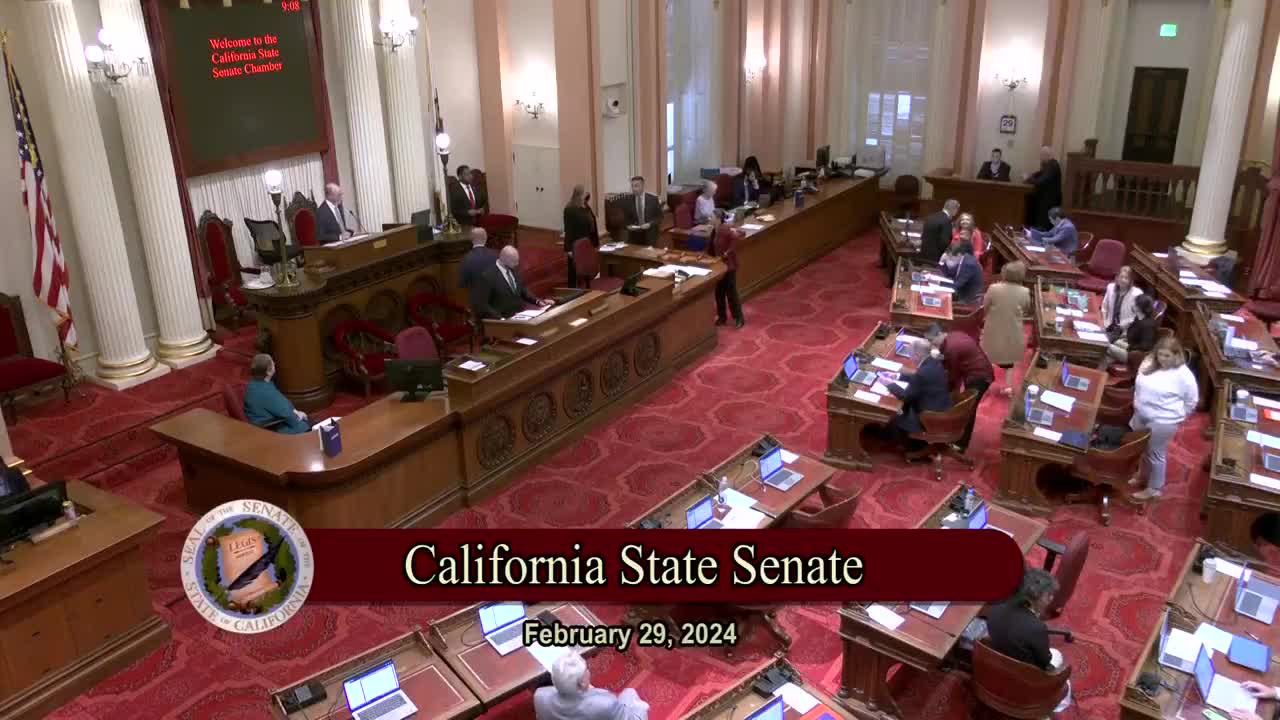 9MIN
Senate Floor
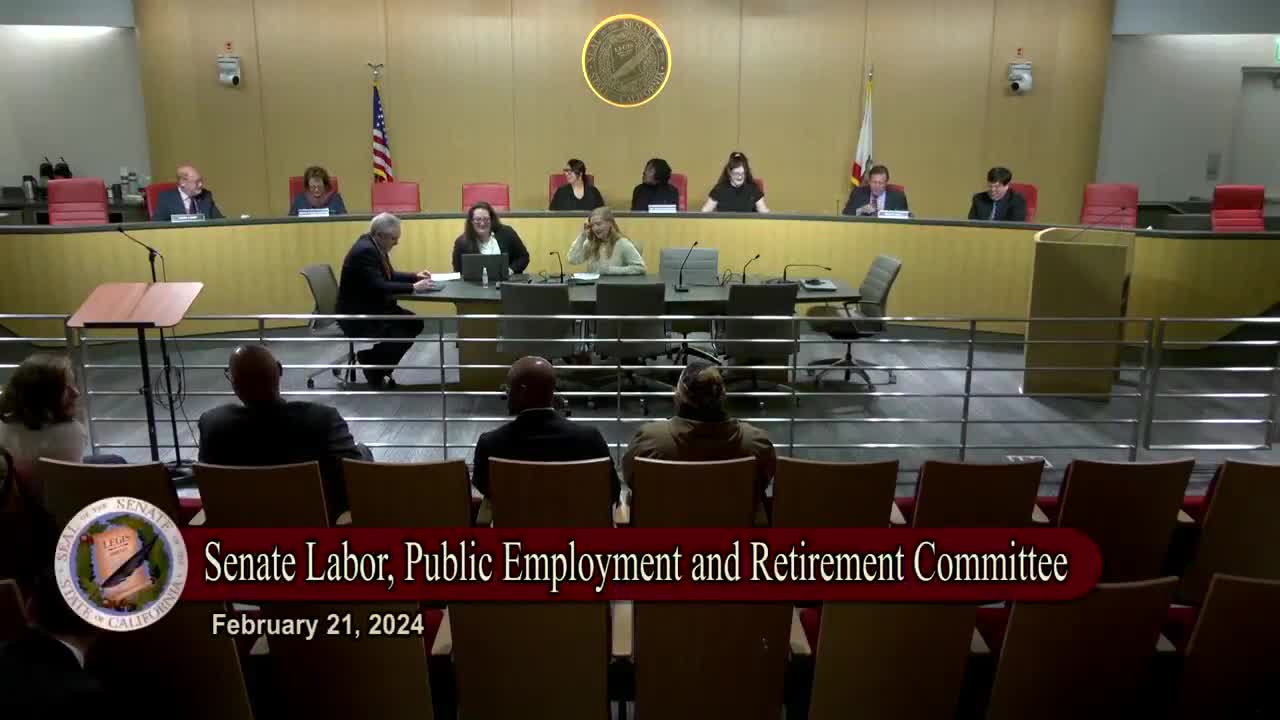 7MIN
Senate Standing Committee on Labor, Public Employment and Retirement
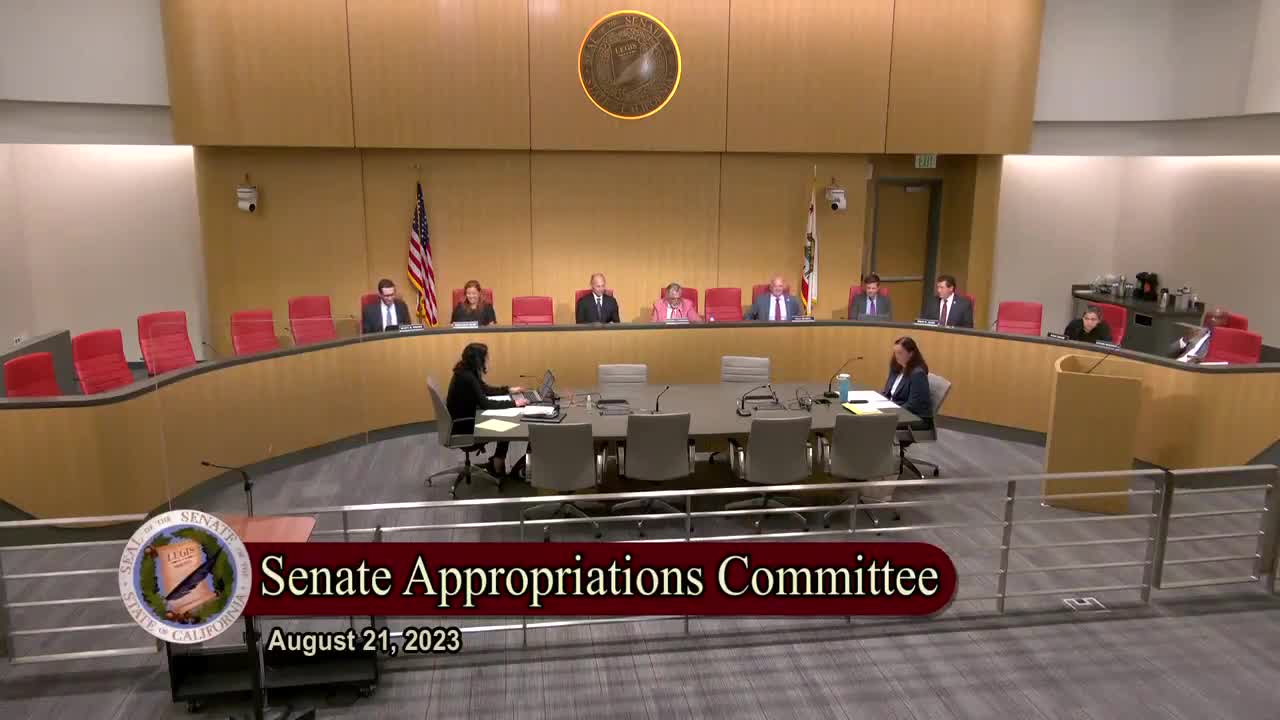 2MIN
Senate Standing Committee on Appropriations
 1MIN
Assembly Floor
 17MIN
Assembly Standing Committee on Transportation
Bill Author