AB 632: Health care coverage: prostate cancer screening.
- Session Year: 2023-2024
- House: Assembly
- Latest Version Date: 2023-09-11
Current Status:
Failed
(2024-02-12: Consideration of Governor's veto stricken from file.)
Introduced
In Committee
First Chamber
In Committee
Second Chamber
Enacted
Existing law, the Knox-Keene Health Care Service Plan Act of 1975, provides for the licensure and regulation of health care service plans by the Department of Managed Health Care, and makes a willful violation of the act a crime. Existing law provides for the regulation of health insurers by the Department of Insurance. Existing law requires an individual and group health care service plan contract or health insurance policy to provide coverage for the screening and diagnosis of prostate cancer when medically necessary and consistent with good professional practice. Under existing law, the application of a deductible or copayment for those services is not prohibited.
This bill would instead require that coverage when medically necessary and consistent with nationally recognized, evidence-based clinical guidelines. The bill would prohibit a health care service plan or a health insurance policy issued, amended, renewed, or delivered on or after January 1, 2024, from applying a deductible, copayment, or coinsurance to coverage for prostate cancer screening services for an enrollee or insured who is at a high risk of prostate cancer, consistent with specified guidelines, and is either 55 years of age or older or 40 years of age or older and high risk, as determined by the attending or treating health care provider. Because a willful violation of these provisions by a health care service plan would be a crime, the bill would impose a state-mandated local program.
The California Constitution requires the state to reimburse local agencies and school districts for certain costs mandated by the state. Statutory provisions establish procedures for making that reimbursement.
This bill would provide that no reimbursement is required by this act for a specified reason.
Existing law, the Knox-Keene Health Care Service Plan Act of 1975, provides for the licensure and regulation of health care service plans by the Department of Managed Health Care, and makes a willful violation of the act a crime. Existing law provides for the regulation of health insurers by the Department of Insurance. Existing law requires an individual and group health care service plan contract or health insurance policy to provide coverage for the screening and diagnosis of prostate cancer when medically necessary and consistent with good professional practice. Under existing law, the application of a deductible or copayment for those services is not prohibited.
This bill would instead require that coverage when medically necessary and consistent with nationally recognized, evidence-based clinical guidelines. The bill would prohibit a health care service plan or a health insurance policy issued, amended, renewed, or delivered on or after January 1, 2024, from applying a deductible, copayment, or coinsurance to coverage for prostate cancer screening services for an enrollee or insured who is at a high risk of prostate cancer, consistent with specified guidelines and is either 55 years of age or older or who is 40 years of age or older and is high risk, as determined by the attending or treating health care provider. Because a willful violation of these provisions by a health care service plan would be a crime, the bill would impose a state-mandated local program.
The California Constitution requires the state to reimburse local agencies and school districts for certain costs mandated by the state. Statutory provisions establish procedures for making that reimbursement.
This bill would provide that no reimbursement is required by this act for a specified reason.
Existing law, the Knox-Keene Health Care Service Plan Act of 1975, provides for the licensure and regulation of health care service plans by the Department of Managed Health Care, and makes a willful violation of the act a crime. Existing law provides for the regulation of health insurers by the Department of Insurance. Existing law requires an individual and group health care service plan contract or health insurance policy to provide coverage for the screening and diagnosis of prostate cancer when medically necessary and consistent with good professional practice. Under existing law, the application of a deductible or copayment for those services is not prohibited.
This bill would prohibit a health care service plan or a health insurance policy issued, amended, renewed, or delivered on or after January 1, 2024, from applying a deductible, copayment, or coinsurance to coverage for prostate cancer screening services for an enrollee or insured who is 55 years of age or older or who is 40 years of age or older and is high risk, as determined by the attending or treating health care provider. Because a willful violation of these provisions by a health care service plan would be a crime, the bill would impose a state-mandated local program.
The California Constitution requires the state to reimburse local agencies and school districts for certain costs mandated by the state. Statutory provisions establish procedures for making that reimbursement.
This bill would provide that no reimbursement is required by this act for a specified reason.
(a) Every individual or group health care service plan contract, except for a specialized health care service plan contract, that is issued, amended, or renewed on or after January 1, 1999, shall be deemed to provide coverage for the screening and diagnosis of prostate cancer, including prostate-specific antigen testing and digital rectal examinations, when medically necessary and consistent with nationally recognized, evidence-based clinical guidelines.
(b)This section does not establish a new mandated benefit or to prevent application of deductible or copayment provisions in a policy or plan, nor does this section require that a policy or plan be extended to cover any other procedures under a health care service plan contract. This section does not authorize an enrollee to receive the services required to be covered by this section if those services are furnished by a nonparticipating provider, unless the enrollee is referred to that provider by a participating physician or nurse practitioner providing care.
(c)(1)Notwithstanding subdivision (b), a health care service plan contract, except a specialized health care service plan contract, that is issued, amended, or renewed on or after January 1, 2024, shall not apply a deductible, copayment, or coinsurance to coverage for screening services for prostate cancer described in subdivision (a) for an enrollee who is at a high risk of prostate cancer, consistent with nationally recognized, evidence-based clinical guidelines, and is either of the following:
(A)A person with a prostate who is 55 years of age or older.
(B)A person with a prostate who is 40 years of age or older and who is high risk, as determined by the attending or treating health care provider. For purposes of this subparagraph, high risk includes a person with a prostate who is Black, has a family history of prostate cancer, has a genetic predisposition to prostate cancer, or is a veteran.
(2)For high deductible plans, this subdivision is subject to federal guidance on the preventive care safe harbor for the absence of a preventive care deductible provided for under Section 223(c)(2)(C) of Title 26 of the United States Code.
SEC. 2.Section 10123.835 of the Insurance Code is amended to read:10123.835.(a)A health insurance policy that is issued, amended, or renewed on or after January 1, 1999, shall be deemed to provide coverage for the screening and diagnosis of prostate cancer, including prostate-specific antigen testing and digital rectal examinations, when medically necessary and consistent with nationally recognized, evidence-based clinical guidelines.
(b)This section does not require a health insurance policy to cover the surgical and other procedures known as radical prostatectomy, external beam radiation therapy, radiation seed implants, and combined hormonal therapy, or to prevent application of deductible or copayment provisions contained in the policy, nor does this section require that coverage under a health insurance policy be extended to any other procedures.
(c)(1)Notwithstanding subdivision (b), a health insurance policy that is issued, amended, or renewed on or after January 1, 2024, shall not apply a deductible, copayment, or coinsurance to coverage for screening services for prostate cancer described in subdivision (a) for an insured who is at a high risk of prostate cancer, consistent with nationally recognized, evidence-based clinical guidelines, and is either of the following:
(A)A person with a prostate who is 55 years of age or older.
(B)A person with a prostate who is 40 years of age or older and who is high risk, as determined by the attending or treating health care provider. For purposes of this subparagraph, high risk includes a person with a prostate who is Black, has a family history of prostate cancer, has a genetic predisposition to prostate cancer, or is a veteran.
(2)For high deductible plans, this subdivision is subject to federal guidance on the preventive care safe harbor for the absence of a preventive care deductible provided for under Section 223(c)(2)(C) of Title 26 of the United States Code.
(d)This section does not apply to specialized health insurance, specified accident, specified disease, hospital indemnity, Medicare supplement, or long-term care health insurance policies.
SEC. 3.No reimbursement is required by this act pursuant to Section 6 of Article XIIIB of the California Constitution because the only costs that may be incurred by a local agency or school district will be incurred because this act creates a new crime or infraction, eliminates a crime or infraction, or changes the penalty for a crime or infraction, within the meaning of Section 17556 of the Government Code, or changes the definition of a crime within the meaning of Section 6 of Article XIIIB of the California Constitution.
(a) Every individual or group health care service plan contract, except for a specialized health care service plan contract, that is issued, amended, or renewed on or after January 1, 1999, shall be deemed to provide coverage for the screening and diagnosis of prostate cancer, including prostate-specific antigen testing and digital rectal examinations, when medically necessary and consistent with good professional practice. nationally recognized, evidence-based clinical guidelines.
(b)This section does not establish a new mandated benefit or to prevent application of deductible or copayment provisions in a policy or plan, nor does this section require that a policy or plan be extended to cover any other procedures under a health care service plan contract. This section does not authorize an enrollee to receive the services required to be covered by this section if those services are furnished by a nonparticipating provider, unless the enrollee is referred to that provider by a participating physician or nurse practitioner providing care.
(c)(1)Notwithstanding subdivision (b), a health care service plan contract, except a specialized health care service plan contract, that is issued, amended, or renewed on or after January 1, 2024, shall not apply a deductible, copayment, or coinsurance to coverage for screening services for prostate cancer described in subdivision (a) for an enrollee who is at a high risk of prostate cancer, consistent with nationally recognized, evidence-based clinical guidelines, and is either of the following:
(A)A person with a prostate who is 55 years of age or older.
(B)A person with a prostate who is 40 years of age or older and who is high risk, as determined by the attending or treating health care provider. High For purposes of this subparagraph, high risk includes a person with a prostate who is Black, has a family history of prostate cancer, has a genetic predisposition to prostate cancer, or is a veteran.
(2)For high deductible plans, this subdivision is subject to federal guidance on the preventive care safe harbor for the absence of a preventive care deductible provided for under Section 223(c)(2)(C) of Title 26 of the United States Code.
SEC. 2.Section 10123.835 of the Insurance Code is amended to read:10123.835.(a)A health insurance policy that is issued, amended, or renewed on or after January 1, 1999, shall be deemed to provide coverage for the screening and diagnosis of prostate cancer, including prostate-specific antigen testing and digital rectal examinations, when medically necessary and consistent with good professional practice. nationally recognized, evidence-based clinical guidelines.
(b)This section does not require a health insurance policy to cover the surgical and other procedures known as radical prostatectomy, external beam radiation therapy, radiation seed implants, and combined hormonal therapy, or to prevent application of deductible or copayment provisions contained in the policy, nor does this section require that coverage under a health insurance policy be extended to any other procedures.
(c)(1)Notwithstanding subdivision (b), a health insurance policy that is issued, amended, or renewed on or after January 1, 2024, shall not apply a deductible, copayment, or coinsurance to coverage for screening services for prostate cancer described in subdivision (a) for an insured who is at a high risk of prostate cancer, consistent with nationally recognized, evidence-based clinical guidelines, and is either of the following:
(A)A person with a prostate who is 55 years of age or older.
(B)A person with a prostate who is 40 years of age or older and who is high risk, as determined by the attending or treating health care provider. High For purposes of this subparagraph, high risk includes a person with a prostate who is Black, has a family history of prostate cancer, has a genetic predisposition to prostate cancer, or is a veteran.
(2)For high deductible plans, this subdivision is subject to federal guidance on the preventive care safe harbor for the absence of a preventive care deductible provided for under Section 223(c)(2)(C) of Title 26 of the United States Code.
(d)This section does not apply to specialized health insurance, specified accident, specified disease, hospital indemnity, Medicare supplement, or long-term care health insurance policies.
SEC. 3.No reimbursement is required by this act pursuant to Section 6 of Article XIIIB of the California Constitution because the only costs that may be incurred by a local agency or school district will be incurred because this act creates a new crime or infraction, eliminates a crime or infraction, or changes the penalty for a crime or infraction, within the meaning of Section 17556 of the Government Code, or changes the definition of a crime within the meaning of Section 6 of Article XIIIB of the California Constitution.
(a) Every individual or group health care service plan contract, except for a specialized health care service plan contract, that is issued, amended, or renewed on or after January 1, 1999, shall be deemed to provide coverage for the screening and diagnosis of prostate cancer, including, but not limited to, including prostate-specific antigen testing and digital rectal examinations, when medically necessary and consistent with good professional practice.
(b)Nothing in this section shall be construed to This section does not establish a new mandated benefit or to prevent application of deductible or copayment provisions in a policy or plan, nor shall does this section be construed to require that a policy or plan be extended to cover any other procedures under an individual or a group a health care service plan contract. Nothing in this section shall be construed to This section does not authorize an enrollee to receive the services required to be covered by this section if those services are furnished by a nonparticipating provider, unless the enrollee is referred to that provider by a participating physician or nurse practitioner providing care.
(c)(1)Notwithstanding subdivision (b), a health care service plan contract, except a specialized health care service plan contract, that is issued, amended, or renewed on or after January 1, 2024, shall not apply a deductible, copayment, or coinsurance to coverage for screening services for prostate cancer described in subdivision (a) for an enrollee who is either of the following:
(A)A person with a prostate who is 55 years of age or older.
(B)A person with a prostate who is 40 years of age or older and who is high risk, as determined by the attending or treating health care provider. High risk includes a person with a prostate who is Black, has a family history of prostate cancer, has a genetic predisposition to prostate cancer, or is a veteran.
(2)For high deductible plans, this subdivision is subject to federal guidance on the preventive care safe harbor for the absence of a preventive care deductible provided for under Section 223(c)(2)(C) of Title 26 of the United States Code.
SEC. 2.Section 10123.835 of the Insurance Code is amended to read:10123.835.(a)Every individual or group policy of disability insurance that covers hospital, medical, or surgical benefits A health insurance policy that is issued, amended, or renewed on or after January 1, 1999, shall be deemed to provide coverage for the screening and diagnosis of prostate cancer, including, but not limited to, including prostate-specific antigen testing and digital rectal examinations, when medically necessary and consistent with good professional practice.
(b)Nothing in this section shall be construed to This section does not require an individual or group a health insurance policy to cover the surgical and other procedures known as radical prostatectomy, external beam radiation therapy, radiation seed implants, and combined hormonal therapy, or to prevent application of deductible or copayment provisions contained in the policy, nor shall does this section be construed to require that coverage under an individual or group a health insurance policy be extended to any other procedures.
(c)(1)Notwithstanding subdivision (b), a health insurance policy that is issued, amended, or renewed on or after January 1, 2024, shall not apply a deductible, copayment, or coinsurance to coverage for screening services for prostate cancer described in subdivision (a) for an insured who is either of the following:
(A)A person with a prostate who is 55 years of age or older.
(B)A person with a prostate who is 40 years of age or older and who is high risk, as determined by the attending or treating health care provider. High risk includes a person with a prostate who is Black, has a family history of prostate cancer, has a genetic predisposition to prostate cancer, or is a veteran.
(2)For high deductible plans, this subdivision is subject to federal guidance on the preventive care safe harbor for the absence of a preventive care deductible provided for under Section 223(c)(2)(C) of Title 26 of the United States Code.
(c)(d)This section shall does not apply to specified accident, specified disease, hospital indemnity, Medicare supplement, or long-term care health insurance policies.
SEC. 3.No reimbursement is required by this act pursuant to Section 6 of Article XIIIB of the California Constitution because the only costs that may be incurred by a local agency or school district will be incurred because this act creates a new crime or infraction, eliminates a crime or infraction, or changes the penalty for a crime or infraction, within the meaning of Section 17556 of the Government Code, or changes the definition of a crime within the meaning of Section 6 of Article XIIIB of the California Constitution.
|
Date
|
Status
|
|---|---|
| Feb 12, 2024 | Consideration of Governor's veto stricken from file. |
| Jan 3, 2024 | Consideration of Governor's veto pending. |
| Oct 7, 2023 | Vetoed by Governor. |
| Sep 13, 2023 | Enrolled and presented to the Governor at 3 p.m. |
| Sep 7, 2023 | Assembly Rule 77 suspended. (Page 3011.) |
| Sep 7, 2023 | Senate amendments concurred in. To Engrossing and Enrolling. (Ayes 76. Noes 0. Page 3068.). |
| Sep 6, 2023 | In Assembly. Concurrence in Senate amendments pending. May be considered on or after September 8 pursuant to Assembly Rule 77. |
| Sep 6, 2023 | Read third time. Passed. Ordered to the Assembly. (Ayes 39. Noes 0. Page 2433.). |
| Sep 5, 2023 | Read second time. Ordered to third reading. |
| Sep 1, 2023 | From committee: Do pass. (Ayes 6. Noes 0.) (September 1). |
| Jun 26, 2023 | In committee: Referred to APPR. suspense file. |
| Jun 15, 2023 | Read second time and amended. Re-referred to Com. on APPR. |
| Jun 14, 2023 | From committee: Amend, and do pass as amended and re-refer to Com. on APPR. (Ayes 12. Noes 0.) (June 14). |
| May 10, 2023 | Referred to Com. on HEALTH. |
| Apr 27, 2023 | In Senate. Read first time. To Com. on RLS. for assignment. |
| Apr 27, 2023 | Read third time. Passed. Ordered to the Senate. (Ayes 79. Noes 0. Page 1364.) |
| Apr 20, 2023 | Read second time. Ordered to Consent Calendar. |
| Apr 19, 2023 | From committee: Do pass. To Consent Calendar. (Ayes 14. Noes 0.) (April 19). |
| Mar 22, 2023 | From committee: Do pass and re-refer to Com. on APPR. (Ayes 14. Noes 0.) (March 21). Re-referred to Com. on APPR. |
| Feb 17, 2023 | Referred to Com. on HEALTH. |
| Feb 10, 2023 | From printer. May be heard in committee March 12. |
| Feb 9, 2023 | Read first time. To print. |
|
Date
|
Description
|
Location
|
Votes
|
|
|---|---|---|---|---|
| Sep 7, 2023 | AB 632 Gipson Concurrence in Senate Amendments | Assembly Floor |
Passed |
|
| Sep 6, 2023 | Assembly 3rd Reading AB632 Gipson By Bradford | Senate Floor |
Passed |
|
| Sep 1, 2023 | Do pass | Senate Standing Committee on Appropriations |
Passed |
|
| Jun 26, 2023 | Placed on suspense file | Senate Standing Committee on Appropriations |
Passed |
|
| Jun 14, 2023 | Do pass as amended, but first amend, and re-refer to the Committee on [Appropriations] | Senate Standing Committee on Health |
Passed |
|
| Apr 27, 2023 | AB 632 Gipson Consent Calendar Second Day Regular Session | Assembly Floor |
Passed |
|
| Apr 19, 2023 | Do pass. To Consent Calendar. | Assembly Standing Committee on Appropriations |
Passed |
|
| Mar 21, 2023 | Do pass and be re-referred to the Committee on [Appropriations] | Assembly Standing Committee on Health |
Passed |
This list shows positions taken on this bill by organizations on the date displayed, which is linked to the original source.
Positions by individuals are not included.
|
Organization
|
Position
|
Date
|
|---|---|---|
| Active Surveillance Patients International | ** Support | |
| American Association Of Clinical Urologists | ** Support | |
| American Cancer Society Cancer Action Network Inc. | ** Support | |
| American College of Surgeons | ** Support | |
| American College Of Surgeons- San Diego-Imperial Chapter | ** Support | |
| American Urological Association | ** Support | |
| Association of California Healthcare Districts | ** Support | |
| California Black Health Network | ** Support | |
| California Chronic Care Coalition | ** Support | |
| California Life Sciences | ** Support | |
| California Urological Association | ** Support | |
| Cancer + Careers | ** Support | |
| City Of Hope National Medical Center | ** Support | |
| Department Of Finance | ** Against | |
| Exon 20 Group | ** Support | |
| Force: Facing Our Risk of Cancer Empowered | ** Support | |
| Health Access California | ** Support | |
| ICAN, International Cancer Advocacy Network | ** Support | |
| International Cancer Advocacy Network | ** Support | |
| Large Urology Group Practice Association | ** Support | |
| National Alliance of State Prostate Cancer Coalitions | ** Support | |
| Pd-l1 Amplifieds | ** Support | |
| Prostate Cancer Foundation | ** Support | |
| Prostate Conditions Education Council | ** Support | |
| Retiresafe | ** Support | |
| Triage Cancer | ** Support | |
| western center on law and poverty | ** Support | |
| Zero Prostate Cancer | ** Support | |
| ZERO The End Of Prostate Cancer | ** Support |
GOVERNOR'S VETO
GV Bill Id:AB 632
Author:(Gipson)
As Enrolled Ver:September 11, 2023
2/3 vote
SUMMARY
Prohibits a health care service plan (health plan) or a health insurance policy issued, amended, renewed, or delivered on or after January 1, 2024, from applying a deductible, copayment, or coinsurance to coverage for prostate cancer screening services for an enrollee or insured who is at high risk of prostate cancer, consistent with nationally recognized evidence-based clinical guidelines, and is either of the following: 1) 55 years of age or older; or, 2) who is 40 years of age or older and is high risk, as determined by the attending or treating health care provider. Defines high risk to include a person with a prostate who is Black, has a family history of prostate cancer, has a genetic predisposition to prostate cancer, or is a veteran. Specifies that for high deductible plans, this bill is subject to federal guidance on the preventive care safe harbor.
Senate Amendments
Clarify coverage for screening services for prostate cancer for an enrollee or insured who is at a high risk of prostate cancer, consistent with nationally recognized, evidence-based clinical guidelines.
Governor’s Veto Message
This bill would prohibit a health plan contract or insurance policy that is amended, renewed, or delivered on or after January 1, 2024, from applying a deductible, copayment, or coinsurance for prostate cancer screening services for an enrollee who is at a heightened risk of prostate cancer.
According to the California Health Benefits Review Program (CHBRP), approximately 97% of enrollees currently have coverage for prostate cancer screening without cost sharing and the remaining 3% pay an estimated $10 per screening. While the author's intent to increase prostate cancer screenings is commendable, this bill exceeds the cost sharing provisions under the Affordable Care Act (ACA). As such, this bill would result in increased costs to consumers through higher premiums. The State must weigh the potential benefits of all new mandates with the comprehensive costs to the entire delivery system.
COMMENTS
- Prostate Cancer Coverage and Screening Guidelines. The ACA requires that nongrandfathered group and individual health insurance plans and policies cover certain preventive services without cost sharing when delivered by in-network providers and as soon as 12 months after a recommendation appears from specified entities, including the USPSTF recommendations. In 2018, the United States Preventive Services Task Force (USPSTF) updated their recommendation for prostate-specific antigen (PSA) test to a C rating for men aged 55 to 69 years and D rating for men aged 70 years or older. According to CHBRP, this bill would not interact with federally selected preventive services if enacted. This bill expands coverage of zero cost sharing to enrollees with a prostate who are either 55 years of age or older, or 40 years of age and older and at high risk for prostate cancer, as determined by the attending or treating health care provider. Under this bill, the high-risk population includes but is not limited to persons with a prostate who are Black, have a family history of prostate cancer, have a genetic predisposition to prostate cancer, or are veterans. Existing law requires all individual and group health plans and policies to provide coverage for prostate cancer screening and diagnosis, including PSA testing and digital rectal examination (DRE), when medically necessary and consistent with good professional practice. In 1998, California established the Prostate Cancer Screening Program under the Department of Health Care Services (DHCS) to assist uninsured men in obtaining screening services for prostate cancer. Men who are uninsured and aged 50 years or older, or 40 years or older and are high risk, at the advice of a physician or request of the patient, are eligible for the program. DHCS also manages the state Prostate Cancer Treatment Program known as IMPACT: IMProving Access, Counseling & Treatment for Californians with Prostate Cancer. IMPACT provides up to 12 months of prostate cancer treatment and prostate cancer–related services, in collaboration with community providers and local health departments, to underinsured and uninsured men.
According to CHBRP, although risk of prostate cancer increases with age, Black men and men of African descent and men with family history are at increased risk of developing prostate cancer and dying from prostate cancer. Black men experience higher rates of prostate cancer, higher mortality, and more aggressive disease than all other racial groups. In a review of the literature on prostate cancer disparities, CHBRP reported that the risk of developing prostate cancer is 1.6 times higher for Black men than for White men, and Black men are also more likely to have prostate cancer at an earlier age, be diagnosed at a late stage of the disease, and have poorer outcomes. In 2017, the prostate cancer mortality rate for Black men was more than double the mortality rate for White men and more than double the overall age-adjusted mortality rate of prostate cancer in California. In the United States from 2005 to 2018, 37% of Black men aged 55 to 69 years reported obtaining PSA tests compared to 40.4% of White men aged 55 to 69 years. PSA screening rates among Latino men are lower than rates for Black or non-Hispanic white men.
- CHBRP analysis. AB 1996 (Thomson), Chapter 795, Statutes of 2002, requests the University of California to assess legislation proposing a mandated benefit or service and prepare a written analysis with relevant data on the medical, economic, and public health impacts of proposed health plan and health insurance benefit mandate legislation. CHBRP was created in response to AB 1996. SB 125 (Hernandez), Chapter 9, Statutes of 2015, added an impact assessment on essential health benefits (EHBs), and legislation that impacts health insurance benefit designs, cost sharing, premiums, and other health insurance topics. CHBRP states the following in its 2021 analysis of AB 1520 (Levine) which is substantially similar to this bill:
- Enrollees covered. At baseline, CHBRP estimated at that time that approximately 97% of enrollees with coverage subject to this bill have coverage for prostate cancer screening with no cost sharing. Among enrollees with no cost sharing at baseline, there are 447,690 prostate cancer screenings annually (444,721 PSA tests and 2,969 DREs). Among enrollees with cost sharing at baseline, there are 14,302 prostate cancer screenings annually (14,207 PSA tests and 95 DREs; 3.19% of the total number of screenings). Postmandate, all enrollees would have prostate cancer screenings with no cost sharing, for a total of 461,992 PSA tests and DREs annually performed with no cost sharing.
- Impact on expenditures. On average, per-unit costs for PSA tests are $41 total, which includes $10 per enrollee for those that have cost sharing at baseline. Per-unit costs for DREs are an average of $8 total, which includes $1 per enrollee for those that have cost sharing at baseline. The total per-unit costs are expected to remain the same postmandate as there is no change in utilization to affect total costs, and the cost sharing would be reduced to $0 for all enrollees. According to CHBRP, this bill would have an estimated overall change to annual expenditures of $35,000 (<0.0001%). This is due to a $177,000 estimated increase in total health insurance premiums paid by employers and enrollees for newly covered benefits, adjusted by an estimated decrease in enrollee expenses for covered benefits of $142,000.
- Medi-Cal. Medi-Cal beneficiaries enrolled in Department of Managed Health Care (DMHC)-regulated plans would not be subject to this bill.
- The California Public Employees' Retirement System (CalPERS). This bill would not impact CalPERS enrollees' benefit coverage, since these plans already include coverage for prostate cancer screening with no cost sharing.
- Number of Uninsured in California. CHBRP expects no measurable change in the number of uninsured persons due to the enactment of this bill since the change in average premiums does not exceed 1% for any market segment.
- EHBs. This bill would not require coverage for a new state benefit mandate and instead modifies cost-sharing terms of an already covered service and appears not to exceed the definition of EHBs in California.
- Medical effectiveness. According to CHBRP, there is insufficient evidence on the impacts of cost sharing for PSA tests or DREs on health outcomes, access to care, and the subsequent utilization of additional health services. There is insufficient evidence that DREs affect health outcomes and subsequent utilization of other health services. There is inconclusive evidence that PSA tests are effective at improving health outcomes, including mortality rates. There is a preponderance of evidence that PSA tests for prostate cancer screening contribute to the utilization of other health services, including biopsy, following a positive PSA test. There is limited evidence that PSA tests for prostate cancer screening contribute to the utilization of other health services, including biopsy, in studies that specifically examine Black men. There is clear and convincing evidence that PSA tests contribute to false positives and overdiagnosis, which contributes to unnecessary additional testing and treatments that can be associated with substantial harms.
- Public health. According to CHBRP, at baseline, approximately 97% of enrollees have coverage with no cost sharing for prostate cancer screening; for the ~3% of screening tests that require cost sharing, CHBRP estimates an average $10 payment per PSA test. This bill would eliminate an average $10 cost-share responsibility for the enrollees who used ~14,300 (of the ~444,700) PSA tests, postmandate. Based on best available evidence, CHBRP projects no change in utilization. CHBRP found insufficient evidence to determine the impacts of cost sharing on health outcomes, access to care, and utilization of services. Therefore, in the first year postmandate, CHBRP projects no measurable public health impact on access to or subsequent rates of prostate cancer screening. Although disparities related to prostate cancer screening exist among Black and Hispanic men, this bill does not address the barriers that prevent these men from obtaining prostate cancer screening (i.e., medical mistrust, lack of health insurance and access to care, and fear of cancer diagnosis or manipulation of the prostate). Given these findings, in the first year postmandate, CHBRP estimates no measurable public health impact from this bill on disparities related to prostate cancer screening rates in California.
The author provided updated information indicating that in 2023, over 26,000 individuals in California will be diagnosed with prostate cancer, making it the second most diagnosed cancer in the state. Prostate cancer is the fifth-leading cause of cancer related deaths in California. Black men are more than twice as likely to die because of lack of access to testing and care. New York, Maryland, Rhode Island, and Illinois currently prohibit cost sharing for covered prostate cancer screening services. New Jersey is currently considering a bill that would prohibit cost sharing for covered prostate cancer screening services.
According to the Author
The American Cancer Society states that prostate cancer is the second most common cancer in America and the most common cancer in men. It is a leading cause of deaths among men of all races, but particularly in African American men. The variation in prostate cancer deaths are due in part to low socioeconomic status. The author states that this bill would eliminate cost sharing for prostate cancer screening for persons at high risk of prostate cancer removing the economic barrier to receiving preventative treatments. The people at higher risk for developing prostate cancer include those who are 55 years of age or older, or over age 40 in specific high risk categories. Specifically, this bill would prohibit a health care service plan or a health insurance policy issued, amended, renewed, or delivered on or after January 1, 2024, from applying a deductible, copayment, or coinsurance to coverage for preventive care screening services for prostate cancer for a person who is enrolled or insured and is at high risk of prostate cancer. The author concludes that prostate cancer is very treatable and nearly all patients will survive if prostate cancer is detected early.
Arguments in Support
ZERO Prostate Cancer, sponsor of this bill, and other patient advocacy groups, write that this bill is specifically tailored to apply to men over the age of 55 and men over the age of 40 who are at high risk, including "a person with a prostate who is Black, has a family history of prostate cancer, has a genetic predisposition to prostate cancer, or is a veteran." These organizations are dedicated to saving lives by improving access to screening services that can help catch prostate cancer early - when the disease is almost 100% survivable. The sponsor concludes that early detection for men at high risk improves outcomes, and targeting men with risk factors for prostate cancer can reduce health disparities in the populations most impacted by this disease.
Arguments in Opposition
The Department of Finance is opposed to this bill, as it creates ongoing costs and pressures to the Managed Care Fund that could lead to increased health care premiums for consumers. The California Health and Human Services Agency notes this bill exceeds ACA requirements regarding cost sharing. Additionally, DMHC generally has concerns with condition-specific legislation, as it creates disparities and inequities for individuals that suffer from other health conditions and potentially increases health care costs for all enrollees.
FISCAL COMMENTS
According to the Senate Appropriation Committee:
- DMHC estimates costs for additional workload for its Help Center to be approximately $160,000 in 2023-24, $169,000 in 2024-25, and $160,000 in 2025-26 and annually thereafter (Managed Care Fund).
- CDI estimates costs of $7,000 (Insurance Fund) in 2023-24 for staffing resources.
VOTES
ASM HEALTH: 14-0-1
YES: Wood, Waldron, Aguiar-Curry, Arambula, Boerner Horvath, Flora, Vince Fong, Maienschein, McCarty, Joe Patterson, Rodriguez, Santiago, Villapudua, Weber
ABS, ABST OR NV: Wendy Carrillo
ASM APPROPRIATIONS: 14-0-2
YES: Holden, Megan Dahle, Calderon, Wendy Carrillo, Dixon, Mike Fong, Hart, Lowenthal, Mathis, Papan, Robert Rivas, Sanchez, Weber, Wilson
ABS, ABST OR NV: Bryan, Pellerin
ASSEMBLY FLOOR: 79-0-1
YES: Addis, Aguiar-Curry, Alanis, Alvarez, Arambula, Bains, Bauer-Kahan, Bennett, Berman, Boerner, Bonta, Bryan, Calderon, Juan Carrillo, Wendy Carrillo, Cervantes, Chen, Connolly, Megan Dahle, Davies, Dixon, Essayli, Flora, Mike Fong, Vince Fong, Friedman, Gabriel, Gallagher, Garcia, Gipson, Grayson, Haney, Hart, Holden, Hoover, Irwin, Jackson, Jones-Sawyer, Kalra, Lackey, Lee, Low, Lowenthal, Maienschein, Mathis, McCarty, McKinnor, Muratsuchi, Stephanie Nguyen, Ortega, Pacheco, Papan, Joe Patterson, Pellerin, Petrie-Norris, Quirk-Silva, Ramos, Reyes, Luz Rivas, Robert Rivas, Rodriguez, Blanca Rubio, Sanchez, Santiago, Schiavo, Soria, Ta, Ting, Valencia, Villapudua, Waldron, Wallis, Ward, Weber, Wicks, Wilson, Wood, Zbur, Rendon
ABS, ABST OR NV: Jim Patterson
SENATE FLOOR: 39-0-1
YES: Allen, Alvarado-Gil, Archuleta, Ashby, Atkins, Becker, Blakespear, Bradford, Caballero, Cortese, Dahle, Dodd, Durazo, Eggman, Glazer, Gonzalez, Grove, Hurtado, Jones, Laird, Limón, McGuire, Menjivar, Min, Newman, Nguyen, Niello, Ochoa Bogh, Padilla, Portantino, Roth, Rubio, Skinner, Smallwood-Cuevas, Stern, Umberg, Wahab, Wiener, Wilk
ABS, ABST OR NV: Seyarto
ASSEMBLY FLOOR: 76-0-4
YES: Addis, Aguiar-Curry, Alanis, Arambula, Bains, Bauer-Kahan, Bennett, Berman, Boerner, Bonta, Bryan, Calderon, Juan Carrillo, Wendy Carrillo, Cervantes, Chen, Connolly, Megan Dahle, Davies, Dixon, Flora, Mike Fong, Vince Fong, Friedman, Gabriel, Gallagher, Garcia, Gipson, Haney, Hart, Holden, Hoover, Irwin, Jackson, Jones-Sawyer, Kalra, Lackey, Lee, Low, Lowenthal, Maienschein, Mathis, McCarty, McKinnor, Muratsuchi, Stephanie Nguyen, Ortega, Pacheco, Papan, Jim Patterson, Joe Patterson, Pellerin, Petrie-Norris, Quirk-Silva, Ramos, Reyes, Luz Rivas, Rodriguez, Blanca Rubio, Sanchez, Santiago, Schiavo, Soria, Ta, Ting, Valencia, Villapudua, Waldron, Wallis, Ward, Weber, Wicks, Wilson, Wood, Zbur, Robert Rivas
ABS, ABST OR NV: Alvarez, Essayli, Grayson, Rendon
UPDATED
VERSION: September 11, 2023
CONSULTANT: Kristene Mapile / HEALTH / (916) 319-2097 FN: 0002504
CONCURRENCE IN SENATE AMENDMENTS
CSA1 Bill Id:AB 632
Author:(Gipson)
As Amended Ver:June 15, 2023
Majority vote
SUMMARY
Prohibits a health care service plan (health plan) or a health insurance policy issued, amended, renewed, or delivered on or after January 1, 2024, from applying a deductible, copayment, or coinsurance to coverage for prostate cancer screening services for an enrollee or insured who is at high risk of prostate cancer, consistent with nationally recognized evidence-based clinical guidelines, and is either of the following: 1) 55 years of age or older; or, 2) who is 40 years of age or older and is high risk, as determined by the attending or treating health care provider. Defines high risk to include a person with a prostate who is Black, has a family history of prostate cancer, has a genetic predisposition to prostate cancer, or is a veteran. Specifies that for high deductible plans, this bill is subject to federal guidance on the preventive care safe harbor.
Senate Amendments
Clarify coverage for screening services for prostate cancer for an enrollee or insured who is at a high risk of prostate cancer, consistent with nationally recognized, evidence-based clinical guidelines.
COMMENTS
- Prostate Cancer Coverage and Screening Guidelines. The federal Patient Protection and Affordable Care Act (ACA) requires that nongrandfathered group and individual health insurance plans and policies cover certain preventive services without cost sharing when delivered by in-network providers and as soon as 12 months after a recommendation appears from specified entities, including the USPSTF recommendations. In 2018, the United States Preventive Services Task Force (USPSTF) updated their recommendation for prostate-specific antigen (PSA) test to a C rating for men aged 55 to 69 years and D rating for men aged 70 years or older. According to the California Health Benefits Review Program (CHBRP), this bill would not interact with federally selected preventive services if enacted. This bill expands coverage of zero cost sharing to enrollees with a prostate who are either 55 years of age or older, or 40 years of age and older and at high risk for prostate cancer, as determined by the attending or treating health care provider. Under this bill, the high-risk population includes but is not limited to persons with a prostate who are Black, have a family history of prostate cancer, have a genetic predisposition to prostate cancer, or are veterans. Existing law requires all individual and group health plans and policies to provide coverage for prostate cancer screening and diagnosis, including PSA testing and digital rectal examination (DRE), when medically necessary and consistent with good professional practice. In 1998, California established the Prostate Cancer Screening Program under the Department of Health Care Services (DHCS) to assist uninsured men in obtaining screening services for prostate cancer. Men who are uninsured and aged 50 years or older, or 40 years or older and are high risk, at the advice of a physician or request of the patient, are eligible for the program. DHCS also manages the state Prostate Cancer Treatment Program known as IMPACT: IMProving Access, Counseling & Treatment for Californians with Prostate Cancer. IMPACT provides up to 12 months of prostate cancer treatment and prostate cancer–related services, in collaboration with community providers and local health departments, to underinsured and uninsured men.
According to CHBRP, although risk of prostate cancer increases with age, Black men and men of African descent and men with family history are at increased risk of developing prostate cancer and dying from prostate cancer. Black men experience higher rates of prostate cancer, higher mortality, and more aggressive disease than all other racial groups. In a review of the literature on prostate cancer disparities, CHBRP reported that the risk of developing prostate cancer is 1.6 times higher for Black men than for White men, and Black men are also more likely to have prostate cancer at an earlier age, be diagnosed at a late stage of the disease, and have poorer outcomes. In 2017, the prostate cancer mortality rate for Black men was more than double the mortality rate for White men and more than double the overall age-adjusted mortality rate of prostate cancer in California. In the United States from 2005 to 2018, 37% of Black men aged 55 to 69 years reported obtaining PSA tests compared to 40.4% of White men aged 55 to 69 years. PSA screening rates among Latino men are lower than rates for Black or non-Hispanic White men.
- CHBRP analysis. AB 1996 (Thomson), Chapter 795, Statutes of 2002, requests the University of California to assess legislation proposing a mandated benefit or service and prepare a written analysis with relevant data on the medical, economic, and public health impacts of proposed health plan and health insurance benefit mandate legislation. CHBRP was created in response to AB 1996. SB 125 (Hernandez), Chapter 9, Statutes of 2015, added an impact assessment on essential health benefits (EHBs), and legislation that impacts health insurance benefit designs, cost sharing, premiums, and other health insurance topics. CHBRP states the following in its 2021 analysis of AB 1520 (Levine) which is substantially similar to this bill:
- Enrollees covered. At baseline, CHBRP estimated at that time that approximately 97% of enrollees with coverage subject to this bill have coverage for prostate cancer screening with no cost sharing. Among enrollees with no cost sharing at baseline, there are 447,690 prostate cancer screenings annually (444,721 PSA tests and 2,969 DREs). Among enrollees with cost sharing at baseline, there are 14,302 prostate cancer screenings annually (14,207 PSA tests and 95 DREs; 3.19% of the total number of screenings). Postmandate, all enrollees would have prostate cancer screenings with no cost sharing, for a total of 461,992 PSA tests and DREs annually performed with no cost sharing.
- Impact on expenditures. On average, per-unit costs for PSA tests are $41 total, which includes $10 per enrollee for those that have cost sharing at baseline. Per-unit costs for DREs are an average of $8 total, which includes $1 per enrollee for those that have cost sharing at baseline. The total per-unit costs are expected to remain the same postmandate as there is no change in utilization to affect total costs, and the cost sharing would be reduced to $0 for all enrollees. According to CHBRP, this bill would have an estimated overall change to annual expenditures of $35,000 (<0.0001%). This is due to a $177,000 estimated increase in total health insurance premiums paid by employers and enrollees for newly covered benefits, adjusted by an estimated decrease in enrollee expenses for covered benefits of $142,000.
- Medi-Cal. Medi-Cal beneficiaries enrolled in Department of Managed Health Care (DMHC)-regulated plans would not be subject to this bill.
- The California Public Employees' Retirement System (CalPERS). This bill would not impact CalPERS enrollees' benefit coverage, since these plans already include coverage for prostate cancer screening with no cost sharing.
- Number of Uninsured in California. CHBRP expects no measurable change in the number of uninsured persons due to the enactment of this bill since the change in average premiums does not exceed 1% for any market segment.
- EHBs. This bill would not require coverage for a new state benefit mandate and instead modifies cost-sharing terms of an already covered service and appears not to exceed the definition of EHBs in California.
- Medical effectiveness. According to CHBRP, there is insufficient evidence on the impacts of cost sharing for PSA tests or DREs on health outcomes, access to care, and the subsequent utilization of additional health services. There is insufficient evidence that DREs affect health outcomes and subsequent utilization of other health services. There is inconclusive evidence that PSA tests are effective at improving health outcomes, including mortality rates. There is a preponderance of evidence that PSA tests for prostate cancer screening contribute to the utilization of other health services, including biopsy, following a positive PSA test. There is limited evidence that PSA tests for prostate cancer screening contribute to the utilization of other health services, including biopsy, in studies that specifically examine Black men. There is clear and convincing evidence that PSA tests contribute to false positives and overdiagnosis, which contributes to unnecessary additional testing and treatments that can be associated with substantial harms.
- Public health. According to CHBRP, the Medical Effectiveness section concludes that the evidence is inconclusive regarding the effectiveness of prostate cancer screening in preventing morbidity and mortality, and that there is insufficient evidence to determine whether cost sharing is a barrier to obtaining prostate cancer screening. At baseline, approximately 97% of enrollees have coverage with no cost sharing for prostate cancer screening; for the ~3% of screening tests that require cost sharing, CHBRP estimates an average $10 payment per PSA test. This bill would eliminate an average $10 cost-share responsibility for the enrollees who used ~14,300 (of the ~444,700) PSA tests, postmandate. Based on best available evidence, CHBRP projects no change in utilization. CHBRP found insufficient evidence to determine the impacts of cost sharing on health outcomes, access to care, and utilization of services. Therefore, in the first year postmandate, CHBRP projects no measurable public health impact on access to or subsequent rates of prostate cancer screening. Although disparities related to prostate cancer screening exist among Black and Hispanic men, this bill does not address the barriers that prevent these men from obtaining prostate cancer screening (i.e., medical mistrust, lack of health insurance and access to care, and fear of cancer diagnosis or manipulation of the prostate). Given these findings, in the first year postmandate, CHBRP estimates no measurable public health impact from this bill on disparities related to prostate cancer screening rates in California.
The author provided updated information indicating that in 2023, over 26,000 individuals in California will be diagnosed with prostate cancer, making it the second most diagnosed cancer in the state. Prostate cancer is the fifth-leading cause of cancer related deaths in California. Black men are more than twice as likely to die because of lack of access to testing and care. New York, Maryland, Rhode Island, and Illinois currently prohibit cost sharing for covered prostate cancer screening services. New Jersey is currently considering a bill that would prohibit cost sharing for covered prostate cancer screening services.
According to the Author
The American Cancer Society states that prostate cancer is the second most common cancer in America and the most common cancer in men. It is a leading cause of deaths among men of all races, but particularly in African American men. The variation in prostate cancer deaths are due in part to low socioeconomic status. The author states that this bill would eliminate cost sharing for prostate cancer screening for persons at high risk of prostate cancer removing the economic barrier to receiving preventative treatments. The people at higher risk for developing prostate cancer include those who are 55 years of age or older, or over age 40 in specific high risk categories. Specifically, this bill would prohibit a health care service plan or a health insurance policy issued, amended, renewed, or delivered on or after January 1, 2024, from applying a deductible, copayment, or coinsurance to coverage for preventive care screening services for prostate cancer for a person who is enrolled or insured and is at high risk of prostate cancer. The author concludes that prostate cancer is very treatable and nearly all patients will survive if prostate cancer is detected early.
Arguments in Support
ZERO Prostate Cancer, sponsor of this bill, and other patient advocacy groups, write that this bill is specifically tailored to apply to men over the age of 55 and men over the age of 40 who are at high risk, including "a person with a prostate who is Black, has a family history of prostate cancer, has a genetic predisposition to prostate cancer, or is a veteran." These organizations are dedicated to saving lives by improving access to screening services that can help catch prostate cancer early - when the disease is almost 100% survivable. The sponsor concludes that early detection for men at high risk improves outcomes, and targeting men with risk factors for prostate cancer can reduce health disparities in the populations most impacted by this disease.
Arguments in Opposition
The Department of Finance is opposed to this bill, as it creates ongoing costs and pressures to the Managed Care Fund that could lead to increased health care premiums for consumers. The California Health and Human Services Agency notes this bill exceeds ACA requirements regarding cost sharing. Additionally, DMHC generally has concerns with condition-specific legislation, as it creates disparities and inequities for individuals that suffer from other health conditions and potentially increases health care costs for all enrollees.
FISCAL COMMENTS
According to the Senate Appropriation Committee:
- DMHC estimates costs for additional workload for its Help Center to be approximately $160,000 in 2023-24, $169,000 in 2024-25, and $160,000 in 2025-26 and annually thereafter (Managed Care Fund).
- CDI estimates costs of $7,000 (Insurance Fund) in 2023-24 for staffing resources.
VOTES:
ASM HEALTH: 14-0-1
YES: Wood, Waldron, Aguiar-Curry, Arambula, Boerner Horvath, Flora, Vince Fong, Maienschein, McCarty, Joe Patterson, Rodriguez, Santiago, Villapudua, Weber
ABS, ABST OR NV: Wendy Carrillo
ASM APPROPRIATIONS: 14-0-2
YES: Holden, Megan Dahle, Calderon, Wendy Carrillo, Dixon, Mike Fong, Hart, Lowenthal, Mathis, Papan, Robert Rivas, Sanchez, Weber, Wilson
ABS, ABST OR NV: Bryan, Pellerin
ASSEMBLY FLOOR: 79-0-1
YES: Addis, Aguiar-Curry, Alanis, Alvarez, Arambula, Bains, Bauer-Kahan, Bennett, Berman, Boerner, Bonta, Bryan, Calderon, Juan Carrillo, Wendy Carrillo, Cervantes, Chen, Connolly, Megan Dahle, Davies, Dixon, Essayli, Flora, Mike Fong, Vince Fong, Friedman, Gabriel, Gallagher, Garcia, Gipson, Grayson, Haney, Hart, Holden, Hoover, Irwin, Jackson, Jones‑Sawyer, Kalra, Lackey, Lee, Low, Lowenthal, Maienschein, Mathis, McCarty, McKinnor, Muratsuchi, Stephanie Nguyen, Ortega, Pacheco, Papan, Joe Patterson, Pellerin, Petrie-Norris, Quirk-Silva, Ramos, Reyes, Luz Rivas, Robert Rivas, Rodriguez, Blanca Rubio, Sanchez, Santiago, Schiavo, Soria, Ta, Ting, Valencia, Villapudua, Waldron, Wallis, Ward, Weber, Wicks, Wilson, Wood, Zbur, Rendon
ABS, ABST OR NV: Jim Patterson
SENATE FLOOR: 39-0-1
YES: Allen, Alvarado-Gil, Archuleta, Ashby, Atkins, Becker, Blakespear, Bradford, Caballero, Cortese, Dahle, Dodd, Durazo, Eggman, Glazer, Gonzalez, Grove, Hurtado, Jones, Laird, Limón, McGuire, Menjivar, Min, Newman, Nguyen, Niello, Ochoa Bogh, Padilla, Portantino, Roth, Rubio, Skinner, Smallwood-Cuevas, Stern, Umberg, Wahab, Wiener, Wilk
ABS, ABST OR NV: Seyarto
UPDATED
VERSION: June 15, 2023
CONSULTANT: Kristene Mapile / HEALTH / (916) 319-2097 FN: 0001702
SENATE RULES COMMITTEE Office of Senate Floor Analyses (916) 651-1520 Fax: (916) 327-4478 | AB 632 |
THIRD READING
Bill No: AB 632
Author: Gipson (D)
Amended: 6/15/23 in Senate
Vote: 21
SENATE HEALTH COMMITTEE: 12-0, 6/14/23
AYES: Eggman, Nguyen, Glazer, Gonzalez, Grove, Hurtado, Limón, Menjivar, Roth, Rubio, Wahab, Wiener
SENATE APPROPRIATIONS COMMITTEE: 6-0, 9/1/23
AYES: Portantino, Jones, Ashby, Bradford, Wahab, Wiener
NO VOTE RECORDED: Seyarto
ASSEMBLY FLOOR: 79-0, 4/27/23 (Consent) - See last page for vote
SUBJECT: Health care coverage: prostate cancer screening
SOURCE: Zero Prostate Cancer
DIGEST:
This bill prohibits a health plan contract, except a specialized health plan contract, and a health insurance policy that is issued, amended, or renewed on or after January 1, 2024, from applying a deductible, copayment, or coinsurance to coverage for screening services for prostate cancer for certain high risk individuals, as specified.
ANALYSIS:
Existing law:
- Establishes the Department of Managed Health Care (DMHC) to regulate health plans under the Knox-Keene Health Care Service Plan Act of 1975 (Knox-Keene Act) and the California Department of Insurance (CDI) to regulate health and other insurers. [HSC §1340, et seq., and INS §106, et seq.]
- Requires every individual or group health plan contract, except for a specialized health plan contract, and every individual or group policy of disability insurance that covers hospital, medical, or surgical benefits, to be deemed to provide coverage for the screening and diagnosis of prostate cancer, including, but not limited to, prostate-specific antigen (PSA) testing and digital rectal examinations, when medically necessary and consistent with good professional practice. [HSC §1367.64 and INS §10123.835]
- Requires a group or individual nongrandfathered health plan contract, at a minimum, to provide coverage, and not impose any cost-sharing requirements, for evidence-based items or services that have in effect a rating of “A” or “B” in the recommendations of the United States Preventive Services Task Force (USPSTF), as periodically updated. Indicates the current recommendations of the USPSTF regarding breast cancer screening, mammography, and prevention is considered the most current other than those issued in or around November 2009. [HSC §1367.002 and INS §10112.2]
This bill:
- Revises existing law to ensure that coverage for the screening and diagnosis of prostate cancer is consistent with nationally recognized, evidence-based clinical guidelines.
- Prohibits a health plan contract, except a specialized health plan contract, and a health insurance policy that is issued, amended, or renewed on or after January 1, 2024, from applying a deductible, copayment, or coinsurance to coverage for screening services for prostate cancer as described in existing law for an enrollee or insured who is at high risk of prostate cancer, consistent with nationally recognized, evidence-based clinical guidelines and is either:
- A person with a prostate who is 55 years of age or older; or,
- A person with a prostate who is 40 years of age or older and who is high risk, as determined by the attending or treating health care provider. “High risk” includes a person with a prostate who is Black, has a family history of prostate cancer, has a genetic predisposition to prostate cancer, or is a veteran.
- Subjects this bill, for high deductible plans, to federal guidance on the preventive care safe harbor for the absence of a preventive care deductible provided for under federal law, as specified. Exempts specialized health insurance.
Comments
According to the author, the American Cancer Society states that prostate cancer is the second most common cancer in America and the most common cancer in men. It is a leading cause of death among men of all races, but particularly higher in African American men. The variation in prostate cancer deaths are due in part to low socioeconomic status. This bill eliminates cost-sharing for prostate cancer screening for persons at high risk of prostate cancer removing the economic barrier to receiving preventative treatments. The people at higher risk for developing prostate cancer include those who are 55 years of age or older, or over age 40 in specific high-risk categories. Prostate cancer is very treatable, and nearly all patients will survive if prostate cancer is detected early.
USPSTF Grades. The USPSTF assigns one of five letter grades (A, B, C, D, or I), and states that describing the strength of a recommendation is an important part of communicating its importance to clinicians and other users. For grades A and B, the USPSTF recommends those health care services, and suggests that practitioners offer them. For grade C, the USPSTF recommends selectively offering or providing this service to individual patients based on professional judgment and patient preferences, as there is at least moderate certainty that the net benefit is small. For grade D, the USPSTF recommends against the service, as there is moderate or high certainty that the service has no net benefit or that the harms outweigh the benefits. For grade I, the USPSTF concludes that the current evidence is insufficient to assess the balance of benefits and harms of the service. Evidence is lacking, of poor quality, or conflicting, and the balance of benefits and harms cannot be determined.
USPSTF Prostate Cancer Screening Recommendation.
Population | Recommendation | Grade |
Men aged 55 to 69 years | For men aged 55 to 69 years, the decision to undergo periodic PSA-based screening for prostate cancer should be an individual one. Before deciding whether to be screened, men should have an opportunity to discuss with their clinician the potential benefits and harms of screening and to incorporate their values and preferences in the decision. Screening offers a small potential benefit of reducing the chance of death from prostate cancer in some men. However, many men will experience potential harms of screening, including false-positive results that require additional testing and possible prostate biopsy; overdiagnosis and overtreatment; and treatment complications, such as incontinence and erectile dysfunction. In determining whether this service is appropriate in individual cases, patients and clinicians should consider the balance of benefits and harms on the basis of family history, race/ethnicity, comorbid medical conditions, patient values about the benefits and harms of screening and treatment-specific outcomes, and other health needs. Clinicians should not screen men who do not express a preference for screening. | C |
Men 70 years and older | The USPSTF recommends against PSA-based screening for prostate cancer in men 70 years and older. | D |
American Urological Association (AUA) guideline. In the 2023 Early Detection of Prostate Cancer Guideline, the authors indicate that there are significant advances for early detection, such as increasing availability and usage of biomarkers and multi-parametric MRI. The guideline emphasizes PSA-based screening, considerations for initial and repeat biopsy, and biopsy technique based on a systematic review of the recently published literature, with the goal of identifying clinically significant prostate cancer, defined as grade group two or higher, as not all clinically significant cancers impact quality or quantity of life. The guideline emphasizes shared decision making “as there is no universally accepted standard definition of low versus elevated risk for prostate cancer detection. In practice, clinicians often resort to an elevated PSA level based on laboratory, prostate size, or age-based “norms” as a surrogate for an elevated prostate cancer risk, but such definitions, while easy to apply, do not suffice for all people and circumstances. Thus, clinicians may tailor the definitions of elevated risk and elevated PSA to the clinical situation at hand. Some examples that may elevate risk of clinically significant prostate cancer are Black ancestry, germline mutations, strong family history of prostate cancer, and other factors that may be indicated by risk calculators (e.g., total PSA, PSA density, percent free PSA, age). More importantly, this guideline emphasizes potential benefit in using validated risk calculators and provides recommendations for the timing and methodology for screening.”
California Health Benefits Review Program (CHBRP) analysis. AB 1996 (Thomson, Chapter 795, Statutes of 2002) requested the University of California to assess legislation proposing a mandated benefit or service and prepare a written analysis with relevant data on the medical, economic, and public health impacts of proposed health plan and health insurance benefit mandate legislation. CHBRP was created in response to AB 1996, and reviewed AB 1520 (Levine, 2021), which is substantially similar to this bill. Key findings include:
- Background. Prostate cancer is the second most prevalent type of cancer among all Californians (25,880 cases diagnosed in 2020). In California, prostate cancer is the most common organ cancer among men and the second leading cause of all-cancer mortality among men (estimated deaths: 4,140 in 2021). Prostate cancer screening is conducted on asymptomatic men to detect cancer at its earliest stage with the goal of reducing prostate cancer mortality. Advanced prostate cancer may be detected through screening (for asymptomatic men) or through diagnostic testing if symptoms are present (e.g., problems urinating, blood in urine or semen, erectile dysfunction, pain in the hips, back, chest, or other areas where cancer may have spread, weakness or numbness in legs or feet, and loss of bladder or bowel control. The most common method for prostate cancer screening is the PSA test, which is typically combined with a digital rectal exam. Both screening methods are controversial due to weak or mixed evidence of effectiveness in diagnosing malignant prostate cancer.
- Highest Risk. The highest risk populations for prostate cancer are men who are Black, from African descent; have a first-degree relative with prostate cancer diagnosed before age 65; and veterans exposed to Agent Orange during the Vietnam War.
- Coverage impacts and enrollees covered. CHBRP estimates that approximately 97% of enrollees with health insurance subject to this bill have coverage for prostate cancer screening with no cost-sharing. The small percentage of enrollees with cost-sharing for prostate cancer screening all had coverage under “grandfathered” plans or policies. Grandfathered plans existed prior to the passage of the ACA.
- Medical effectiveness. CHBRP found insufficient evidence on the impacts of cost-sharing for PSA tests or digital rectal exams on health outcomes, access to care, and the subsequent utilization of additional health services. The primary outcomes of interest for prostate cancer screening are the utilization of other health services, such as biopsy, and the associated health outcomes including prostate cancer incidence, cumulative incidence of metastatic disease, prostate cancer–specific mortality, and all-cause mortality. Harms were measured by frequency of false-positive PSA screening and overdiagnosis. There is insufficient evidence that digital rectal exams affects health outcomes and subsequent utilization of other health services. With regard to outcomes related to PSA tests, CHBRP found:
- There is inconclusive evidence that PSA tests are effective at improving health outcomes, including mortality rates;
- There is a preponderance of evidence that PSA tests for prostate cancer screening contribute to the utilization of other health services following a positive PSA test, such as biopsy; there is limited evidence of such impacts on Black men; and,
- There is clear and convincing evidence that PSA tests contribute to false positives and overdiagnosis, which contributes to unnecessary additional testing and treatments that can be associated with substantial harms.
- Utilization. Among enrollees with no cost-sharing at baseline, there are 447,690 prostate cancer screenings annually (444,721 PSA tests and 2,969 digital rectal exams). Among enrollees with cost-sharing at baseline, there are 14,302 prostate cancer screenings annually (14,207 PSA tests and 95 digital rectal exams; 3.19% of the total number of screenings). Postmandate, all enrollees would have no cost-sharing for coverage of prostate cancer screenings, for a total of 461,992 PSA tests and digital rectal exams annually performed with no cost-sharing. Because of a lack of evidence in the research literature of cost-sharing being a barrier to obtaining a PSA test or digital rectal exams, and with confirmatory input from the content expert, CHBRP projects no change in utilization postmandate.
- Medi-Cal. Medi-Cal enrollees do not have cost-sharing for prostate cancer screening services.
- Impact on expenditures. This bill increases total annual expenditures of $35,000 (<0.0001%). This is due to a $177,000 estimated increase in total health insurance premiums paid by employers and enrollees for newly covered benefits, adjusted by an estimated decrease in enrollee expenses for covered benefits of $142,000. The small percentage of enrollees with cost-sharing for prostate cancer screening all had coverage under “grandfathered” plans or policies. CHBRP estimates these enrollees accounted for 3.19% of all screening claims for prostate cancer. Additionally, according to Milliman’s medical claims data, PSA tests and digital rectal exams have total costs of $41 and $8, respectively, leading to cost-sharing, if applicable, of $10 and $1, respectively. Based on these cost-sharing estimates and baseline coverage of approximately 97%, CHBRP finds there is <0.0001% impact on overall health care costs.
FISCAL EFFECT: Appropriation: No Fiscal Com.: Yes Local: Yes
According to the Senate Appropriation Committee:
- DMHC estimates costs for additional workload for its Help Center to be approximately $160,000 in 2023-24, $169,000 in 2024-25, and $160,000 in 2025-26 and annually thereafter (Managed Care Fund).
- CDI estimates costs of $7,000 (Insurance Fund) in 2023-24 for staffing resources.
SUPPORT: (Verified 8/21/23)
Zero Prostate Cancer (source)
Active Surveillance Patients International
American Association of Clinical Urologists
American Cancer Society Cancer Action Network Inc.
American College of Surgeons
American College of Surgeons: San Diego-Imperial Chapter
American Urological Association
Association of California Healthcare Districts
California Black Health Network
California Chronic Care Coalition
California Life Sciences
California Urological Association
Cancer + Careers
City of Hope National Medical Center
Exon 20 Group
FORCE: Facing Our Risk of Cancer Empowered
Health Access California
International Cancer Advocacy Network
Large Urology Group Practice Association
National Alliance of State Prostate Cancer Coalitions
PD-L1 Amplifieds
Prostate Cancer Foundation
Prostate Conditions Education Council
RetireSafe
Triage Cancer
Western Center on Law and Poverty
OPPOSITION: (Verified 8/21/23)
Department of Finance
ARGUMENTS IN SUPPORT: This bill’s sponsor, Zero Prostate Cancer, writes that clinical value of prostate cancer screening has been scientifically validated and endorsed by the AUA, American Cancer Society, National Comprehensive Cancer Network, American Society of Clinical Oncology, and American College of Physicians-American Society of Internal Medicine. It is a necessary step to diagnose prostate cancer and part of a larger conversation between patient and provider about prostate cancer risk. Late-stage prostate cancer places an increased economic burden on the health care system, including lost worker productivity and increased financial burdens for patients and their caregivers. Existing law requires health insurance policies to provide coverage for the screening and diagnosis of prostate cancer, however deductibles, co-pays, and other out-of-pocket expenses may deter or prevent high-risk and underserved populations from seeking care and detecting early-stage disease.
ARGUMENTS IN OPPOSITION: The Department of Finance is opposed to this bill, as it creates ongoing costs and pressures to the Managed Care Fund that could lead to increased health care premiums for consumers. The California Health and Human Services Agency notes this bill exceeds federal Affordable Care Act requirements regarding cost sharing. Additionally, DMHC generally has concerns with condition-specific legislation, as it creates disparities and inequities for individuals that suffer from other health conditions and potentially increases health care costs for all enrollees.
ASSEMBLY FLOOR: 79-0, 4/27/23
AYES: Addis, Aguiar-Curry, Alanis, Alvarez, Arambula, Bains, Bauer-Kahan, Bennett, Berman, Boerner, Bonta, Bryan, Calderon, Juan Carrillo, Wendy Carrillo, Cervantes, Chen, Connolly, Megan Dahle, Davies, Dixon, Essayli, Flora, Mike Fong, Vince Fong, Friedman, Gabriel, Gallagher, Garcia, Gipson, Grayson, Haney, Hart, Holden, Hoover, Irwin, Jackson, Jones-Sawyer, Kalra, Lackey, Lee, Low, Lowenthal, Maienschein, Mathis, McCarty, McKinnor, Muratsuchi, Stephanie Nguyen, Ortega, Pacheco, Papan, Joe Patterson, Pellerin, Petrie-Norris, Quirk-Silva, Ramos, Reyes, Luz Rivas, Robert Rivas, Rodriguez, Blanca Rubio, Sanchez, Santiago, Schiavo, Soria, Ta, Ting, Valencia, Villapudua, Waldron, Wallis, Ward, Weber, Wicks, Wilson, Wood, Zbur, Rendon
NO VOTE RECORDED: Jim Patterson
Prepared by: Teri Boughton / HEALTH / (916) 651-4111
9/2/23 12:38:44
**** END ****
SENATE COMMITTEE ON
Senator Anthony Portantino, Chair
2023 - 2024 Regular Session
AB 632 (Gipson) - Health care coverage: prostate cancer screening
Version: | Policy Vote: |
Urgency: | Mandate: |
Hearing Date: June 26, 2023 | Consultant: |
Bill Summary:
AB 632 would prohibit a health plan contract or health insurance policy that is issued, amended, or renewed on or after January 1, 2024, from applying a deductible, copayment, or coinsurance to coverage for screening services for prostate cancer for certain high risk individuals, as specified.
Fiscal Impact:
- The Department of Managed Health Care (DMHC) estimates costs for additional workload for its Help Center to be approximately $160,000 in 2023-24, $169,000 in 2024-25, and $160,000 in 2025-26 and annually thereafter (Managed Care Fund).
- The California Department of Insurance (CDI) estimates costs of $7,000 (Insurance Fund) in 2023-24 for staffing resources.
Background:
The DMHC regulates health plans and the CDI regulates health insurance. Current law requires every individual or group health plan contract, except for a specialized health plan contract, and every individual or group policy of disability insurance that covers hospital, medical, or surgical benefits, to be deemed to provide coverage for the screening and diagnosis of prostate cancer, including, but not limited to, prostate-specific antigen testing and digital rectal examinations, when medically necessary and consistent with good professional practice. Current law does not prevent the application of deductibles or copayments for these services.
Proposed Law:
AB 632 would prohibit a health plan contract or health insurance policy, as specified, that is issued, amended, or renewed on or after January 1, 2024, from applying a deductible, copayment, or coinsurance to coverage for screening services for prostate cancer for an enrollee or insured who is at a high risk of prostate cancer, consistent with nationally recognized, evidence-based clinical guidelines, and is either of the following:
- A person with a prostate who is 55 years of age or older.
- A person with a prostate who is 40 years of age or older and who is high risk, as determined by the attending or treating health care provider. “High risk” includes a person with a prostate who is Black, has a family history of prostate cancer, has a genetic predisposition to prostate cancer, or is a veteran.
Related Legislation:
AB 1520 (Levine, 2021) was similar to this bill. The bill was held on the suspense file in the Assembly Appropriations Committee.
Staff Comments:
According to the California Health Benefits Review Program (CHBRP) analysis of AB 1520, the bill would have increased total annual expenditures of $35,000 due to a $177,000 estimated increase in total health insurance premiums paid by employers and enrollees for newly covered benefits, adjusted by an estimated decrease in enrollee expenses for covered benefits of $142,000.
-- END --
SENATE COMMITTEE ON HEALTH
Senator Dr. Susan Talamantes Eggman, Chair
BILL NO: AB 632
AUTHOR: | Gipson | ||
VERSION: | February 9, 2023 | ||
HEARING DATE: | June 14, 2023 | ||
CONSULTANT: | Teri Boughton | ||
SUBJECT: Health care coverage: prostate cancer screening
SUMMARY:
Prohibits a health plan contract, except a specialized health plan contract, and a health insurance policy that is issued, amended, or renewed on or after January 1, 2024, from applying a deductible, copayment, or coinsurance to coverage for screening services for prostate cancer for certain high risk individuals, as specified.
Existing law:
- Establishes the Department of Managed Health Care (DMHC) to regulate health plans under the Knox-Keene Health Care Service Plan Act of 1975 (Knox-Keene Act) and the California Department of Insurance (CDI) to regulate health and other insurers. [HSC §1340, et seq., and INS §106, et seq.]
- Requires every individual or group health plan contract, except for a specialized health plan contract, and every individual or group policy of disability insurance that covers hospital, medical, or surgical benefits, to be deemed to provide coverage for the screening and diagnosis of prostate cancer, including, but not limited to, prostate-specific antigen (PSA) testing and digital rectal examinations, when medically necessary and consistent with good professional practice. [HSC §1367.64 and INS §10123.835]
- Indicates 2) above does not do any of the following:
- Establish a new mandated benefit (for a health plan);
- Require extended coverage for any other procedures;
- Authorize (for a health plan) services required to be covered if provided by a nonparticipating provider, unless the enrollee is referred to that provider by a participating physician or nurse practitioner providing care;
- Require an individual or group insurance policy to cover the surgical and other procedures known as radical prostatectomy, external beam radiation therapy, radiation seed implants, and combined hormonal therapy, or to prevent application of deductible or copayment provisions contained in the policy; or,
- Apply to specified accident, specified disease, hospital indemnity, Medicare supplement, or long-term care health insurance policies. [HSC §1367.64 and INS §10123.835]
- Requires a group or individual nongrandfathered health plan contract, at a minimum, to provide coverage, and not impose any cost-sharing requirements, for any of the following:
- Evidence-based items or services that have in effect a rating of “A” or “B” in the recommendations of the United States Preventive Services Task Force (USPSTF), as periodically updated. Indicates the current recommendations of the USPSTF regarding breast cancer screening, mammography, and prevention is considered the most current other than those issued in or around November 2009;
- Immunizations that have in effect a recommendation, as periodically updated, from the Advisory Committee on Immunization Practices of the federal Centers for Disease Control and Prevention (CDC) with respect to the individual involved;
- With respect to infants, children, and adolescents, evidence-informed preventive care and screenings provided in the comprehensive guidelines, as periodically updated, supported by the United States Health Resources and Services Administration (HRSA); and,
- With respect to women, those additional preventive care and screenings as provided for in comprehensive guidelines supported by HRSA. This codifies 2713 of the Public Health Services Act established under the federal Affordable Care Act (ACA). [HSC §1367.002 and INS §10112.2]
- Establishes Covered California as California’s health benefit exchange for individual and small business purchasers as authorized under the ACA. [GOV §100500 -100522]
- Establishes levels of coverage for the nongrandfathered individual and small group markets that may not vary by more than plus or minus a specified amount, including for a bronze level, which requires a health plan contract or disability policy to provide a level of coverage that is actuarially equivalent to 60% of the full actuarial value of the benefits provided under the plan contract or policy. [HSC §1367.008, §1367.0085, §1367.009 and INS §10112.295, §10112.296, §10112.297]
This bill:
- Prohibits a health plan contract, except a specialized health plan contract, and a health insurance policy that is issued, amended, or renewed on or after January 1, 2024, from applying a deductible, copayment, or coinsurance to coverage for screening services for prostate cancer as described in existing law for an enrollee or insured who is either:
- A person with a prostate who is 55 years of age or older; or,
- A person with a prostate who is 40 years of age or older and who is high risk, as determined by the attending or treating health care provider. “High risk” includes a person with a prostate who is Black, has a family history of prostate cancer, has a genetic predisposition to prostate cancer, or is a veteran.
- Subjects this bill, for high deductible plans, to federal guidance on the preventive care safe harbor for the absence of a preventive care deductible provided for under federal law, as specified.
FISCAL EFFECT:
According to the Assembly Appropriations Committee analysis, minor and absorbable costs to the DMHC. Costs to the CDI of $7,000 in fiscal year 2023-24 for additional staff time (Insurance Fund).
PRIOR VOTES:
Assembly Floor: | 79 - 0 |
Assembly Appropriations Committee: | 14 - 0 |
Assembly Health Committee: | 14 - 0 |
COMMENTS:
- Author’s statement. According to the author, the American Cancer Society states that prostate cancer is the second most common cancer in America and the most common cancer in men. It is a leading cause of death among men of all races, but particularly higher in African American men. The variation in prostate cancer deaths are due in part to low socioeconomic status. This bill would eliminate cost-sharing for prostate cancer screening for persons at high risk of prostate cancer removing the economic barrier to receiving preventative treatments. The people at higher risk for developing prostate cancer include those who are 55 years of age or older, or over age 40 in specific high-risk categories. Specifically, this bill would prohibit a health plan or a health insurance policy issued, amended, renewed, or delivered on or after January 1, 2024, from applying a deductible, copayment, or coinsurance to coverage for preventive care screening services for prostate cancer for a person who is enrolled or insured and is at high risk of prostate cancer. Prostate cancer is very treatable, and nearly all patients will survive if prostate cancer is detected early.
- USPSTF Grades. The USPSTF assigns one of five letter grades (A, B, C, D, or I), and states that describing the strength of a recommendation is an important part of communicating its importance to clinicians and other users. For grades A and B, the USPSTF recommends those health care services, and suggests that practitioners offer them. For grade C, the USPSTF recommends selectively offering or providing this service to individual patients based on professional judgment and patient preferences, as there is at least moderate certainty that the net benefit is small. For grade D, the USPSTF recommends against the service, as there is moderate or high certainty that the service has no net benefit or that the harms outweigh the benefits. For grade I, the USPSTF concludes that the current evidence is insufficient to assess the balance of benefits and harms of the service. Evidence is lacking, of poor quality, or conflicting, and the balance of benefits and harms cannot be determined.
- USPSTF Prostate Cancer Screening Recommendation.
Population | Recommendation | Grade |
Men aged 55 to 69 years | For men aged 55 to 69 years, the decision to undergo periodic PSA-based screening for prostate cancer should be an individual one. Before deciding whether to be screened, men should have an opportunity to discuss with their clinician the potential benefits and harms of screening and to incorporate their values and preferences in the decision. Screening offers a small potential benefit of reducing the chance of death from prostate cancer in some men. However, many men will experience potential harms of screening, including false-positive results that require additional testing and possible prostate biopsy; overdiagnosis and overtreatment; and treatment complications, such as incontinence and erectile dysfunction. In determining whether this service is appropriate in individual cases, patients and clinicians should consider the balance of benefits and harms on the basis of family history, race/ethnicity, comorbid medical conditions, patient values about the benefits and harms of screening and treatment-specific outcomes, and other health needs. Clinicians should not screen men who do not express a preference for screening. | C |
Men 70 years and older | The USPSTF recommends against PSA-based screening for prostate cancer in men 70 years and older. | D |
- American Urological Association (AUA) guideline. In the 2023 Early Detection of Prostate Cancer Guideline, the authors indicate that there are significant advances for early detection, such as increasing availability and usage of biomarkers and multi-parametric MRI. The guideline emphasizes PSA-based screening, considerations for initial and repeat biopsy, and biopsy technique based on a systematic review of the recently published literature, with the goal of identifying clinically significant prostate cancer, defined as grade group two or higher, as not all clinically significant cancers impact quality or quantity of life. The guideline emphasizes shared decision making “as there is no universally accepted standard definition of low versus elevated risk for prostate cancer detection. In practice, clinicians often resort to an elevated PSA level based on laboratory, prostate size, or age-based “norms” as a surrogate for an elevated prostate cancer risk, but such definitions, while easy to apply, do not suffice for all people and circumstances. Thus, clinicians may tailor the definitions of elevated risk and elevated PSA to the clinical situation at hand. Some examples that may elevate risk of clinically significant prostate cancer are Black ancestry, germline mutations, strong family history of prostate cancer, and other factors that may be indicated by risk calculators (e.g., total PSA, PSA density, percent free PSA, age). More importantly, this guideline emphasizes potential benefit in using validated risk calculators and provides recommendations for the timing and methodology for screening.”
- HDHP preventive services. According to notice 19-45 issued by the Internal Revenue Service (IRS), Section 223 of the Internal Revenue Code (IRC) permits eligible individuals to establish Health Savings Accounts (HSAs). Among the requirements to qualify as an eligible individual is that the individual be covered under an HDHP and have no disqualifying health coverage. Only eligible individuals are allowed to make contributions to an HSA or to receive contributions from an employer to their HSA. An HDHP is a health plan that satisfies certain requirements with respect to minimum deductibles and maximum out-of-pocket expenses. An HDHP requires the minimum deductible for that year to be satisfied before most benefits are covered by the plan. However, Section 223 allows coverage of preventive care benefits prior to the deductible requirement being met.
To be a preventive care benefit, the benefit must either be described as preventive care for purposes of the Social Security Act (SSA), which includes prostate cancer screening test, or be determined to be preventive care in guidance issued by the Department of the Treasury (Treasury Department) and the IRS. Prostate Cancer Screening under the SSA is a test that consists of any (or all) of the procedures provided for the purpose of early detection of prostate cancer to a man over 50 years of age who has not had such a test during the preceding year. Specifically those procedures are: a) a digital rectal examination; b) a PSA blood test; and c) other procedures as the federal Health and Human Services Secretary finds appropriate for the purpose of early detection of prostate cancer, taking into account changes in technology and standards of medical practice, availability, effectiveness, costs, and such other factors as the Secretary considers appropriate. - California Health Benefits Review Program (CHBRP) analysis. AB 1996 (Thomson, Chapter 795, Statutes of 2002) requests the University of California to assess legislation proposing a mandated benefit or service and prepare a written analysis with relevant data on the medical, economic, and public health impacts of proposed health plan and health insurance benefit mandate legislation. CHBRP was created in response to AB 1996, and reviewed AB 1520 (Levine of 2021), which is substantially similar to this bill. Key findings include:
- Background. Prostate cancer is the second most prevalent type of cancer among all Californians (25,880 cases diagnosed in 2020). In California, prostate cancer is the most common organ cancer among men and the second leading cause of all-cancer mortality among men (estimated deaths: 4,140 in 2021). Prostate cancer screening is conducted on asymptomatic men to detect cancer at its earliest stage with the goal of reducing prostate cancer mortality. Advanced prostate cancer may be detected through screening (for asymptomatic men) or through diagnostic testing if symptoms are present (e.g., problems urinating, blood in urine or semen, erectile dysfunction, pain in the hips, back, chest, or other areas where cancer may have spread, weakness or numbness in legs or feet, and loss of bladder or bowel control. The most common method for prostate cancer screening is the PSA test, which is typically combined with a digital rectal exam. Both screening methods are controversial due to weak or mixed evidence of effectiveness in diagnosing malignant prostate cancer.
- Highest Risk. The highest risk populations for prostate cancer are men who are Black, from African descent; have a first-degree relative with prostate cancer diagnosed before age 65; and veterans exposed to Agent Orange during the Vietnam War.
- Coverage impacts and enrollees covered. CHBRP estimates that approximately 97%
- Background. Prostate cancer is the second most prevalent type of cancer among all Californians (25,880 cases diagnosed in 2020). In California, prostate cancer is the most common organ cancer among men and the second leading cause of all-cancer mortality among men (estimated deaths: 4,140 in 2021). Prostate cancer screening is conducted on asymptomatic men to detect cancer at its earliest stage with the goal of reducing prostate cancer mortality. Advanced prostate cancer may be detected through screening (for asymptomatic men) or through diagnostic testing if symptoms are present (e.g., problems urinating, blood in urine or semen, erectile dysfunction, pain in the hips, back, chest, or other areas where cancer may have spread, weakness or numbness in legs or feet, and loss of bladder or bowel control. The most common method for prostate cancer screening is the PSA test, which is typically combined with a digital rectal exam. Both screening methods are controversial due to weak or mixed evidence of effectiveness in diagnosing malignant prostate cancer.
of enrollees with health insurance subject to this bill have coverage for prostate cancer screening with no cost-sharing. The small percentage of enrollees with cost-sharing for prostate cancer screening all had coverage under “grandfathered” plans or policies. Grandfathered plans existed prior to the passage of the ACA.
- Medical effectiveness. CHBRP found insufficient evidence on the impacts of cost-sharing for PSA tests or digital rectal exams on health outcomes, access to care, and the subsequent utilization of additional health services. The primary outcomes of interest for prostate cancer screening are the utilization of other health services, such as biopsy, and the associated health outcomes including prostate cancer incidence, cumulative incidence of metastatic disease, prostate cancer–specific mortality, and all-cause mortality. Harms were measured by frequency of false-positive PSA screening and overdiagnosis. There is insufficient evidence that digital rectal exams affects health outcomes and subsequent utilization of other health services. With regard to outcomes related to PSA tests, CHBRP
found:- There is inconclusive evidence that PSA tests are effective at improving health outcomes, including mortality rates;
- There is a preponderance of evidence that PSA tests for prostate cancer screening contribute to the utilization of other health services following a positive PSA test, such as biopsy; there is limited evidence of such impacts on Black men; and,
- There is clear and convincing evidence that PSA tests contribute to false positives and overdiagnosis, which contributes to unnecessary additional testing and treatments that can be associated with substantial harms.
- Utilization. Among enrollees with no cost-sharing at baseline, there are 447,690 prostate cancer screenings annually (444,721 PSA tests and 2,969 digital rectal exams). Among enrollees with cost-sharing at baseline, there are 14,302 prostate cancer screenings annually (14,207 PSA tests and 95 digital rectal exams; 3.19% of the total number of screenings). Postmandate, all enrollees would have no cost-sharing for coverage of prostate cancer screenings, for a total of 461,992 PSA tests and digital rectal exams annually performed with no cost-sharing. Because of a lack of evidence in the research literature of cost-sharing being a barrier to obtaining a PSA test or digital rectal exams, and with confirmatory input from the content expert, CHBRP projects no change in utilization postmandate.
- Medi-Cal. Medi-Cal enrollees do not have cost-sharing for prostate cancer screening services.
- Impact on expenditures. This bill would increase total annual expenditures of
$35,000 (<0.0001%). This is due to a $177,000 estimated increase in total health insurance premiums paid by employers and enrollees for newly covered benefits, adjusted by an estimated decrease in enrollee expenses for covered benefits of $142,000. The small percentage of enrollees with cost-sharing for prostate cancer screening all had coverage under “grandfathered” plans or policies. CHBRP estimates these enrollees accounted for 3.19% of all screening claims for prostate cancer. Additionally, according to Milliman’s medical claims data, PSA tests and digital rectal exams have total costs of $41 and $8, respectively, leading to cost-sharing, if applicable, of $10 and $1, respectively. Based on these cost-sharing estimates and baseline coverage of approximately 97%, CHBRP finds there is <0.0001% impact on overall health care costs. - Public health. CHBRP estimates that, postmandate, this bill would not change utilization, but it would eliminate the average $10 cost-sharing amount affecting 14,302 of the 461,992 prostate cancer screening services that would have been charged to enrollees at baseline. CHBRP found insufficient evidence to determine the impacts of cost-sharing on health outcomes, access to care, and utilization of services. Therefore, CHBRP estimates no measurable short-term public health impact on access to, or subsequent rates of, prostate cancer screening. Although disparities related to prostate cancer screening exist among Black and Hispanic men, this bill does not address the barriers that prevent these men from obtaining prostate cancer screening (i.e., medical mistrust, lack of health insurance and access to care, and fear of cancer diagnosis or manipulation of the prostate). Given these findings, CHBRP estimates no measurable public health impact from this bill on disparities related to prostate cancer screening rates in
California. - Essential health benefits. This bill would not require coverage for a new state benefit mandate and instead modifies cost-sharing terms and conditions of an already covered benefit, and therefore, would not exceed the definition of essential health benefits in California.
- Medical effectiveness. CHBRP found insufficient evidence on the impacts of cost-sharing for PSA tests or digital rectal exams on health outcomes, access to care, and the subsequent utilization of additional health services. The primary outcomes of interest for prostate cancer screening are the utilization of other health services, such as biopsy, and the associated health outcomes including prostate cancer incidence, cumulative incidence of metastatic disease, prostate cancer–specific mortality, and all-cause mortality. Harms were measured by frequency of false-positive PSA screening and overdiagnosis. There is insufficient evidence that digital rectal exams affects health outcomes and subsequent utilization of other health services. With regard to outcomes related to PSA tests, CHBRP
- Prior legislation. AB 1520 was substantially similar to this bill. AB 1520 was held in the Assembly Appropriations Committee.
AB 342 (Gipson, Chapter 342, Statutes of 2021) requires a health plan contract or a health insurance policy, except as specified to provide coverage for a colorectal cancer screening test, and would require the required colonoscopy for a positive result on a test or procedure to be provided without cost-sharing, unless the underlying test or procedure was a colonoscopy. Provides that it does not preclude a health plan or health insurer from imposing cost-sharing requirements for items or services that are delivered by an out-of-network provider.
SB 406 (Pan, Chapter 302, Statutes of 2020) codifies existing ACA law into state law that prohibits lifetime or annual limits in health plan and health insurance policies and requires coverage of preventative health services without cost-sharing.
SB 2020 (Karnette, Chapter 839, Statutes of 1998) requires every health plan contract and health insurance policy to cover specified medically necessary prostate testing and examinations.
- Support. This bill’s sponsor writes that clinical value of prostate cancer screening has been scientifically validated and endorsed by the AUA, American Cancer Society, National Comprehensive Cancer Network, American Society of Clinical Oncology, and American College of Physicians-American Society of Internal Medicine. It is a necessary step to diagnose prostate cancer and part of a larger conversation between patient and provider about prostate cancer risk. Late-stage prostate cancer places an increased economic burden on the health care system, including lost worker productivity and increased financial burdens for patients and their caregivers. Existing law requires health insurance policies to provide coverage for the screening and diagnosis of prostate cancer, however deductibles, co-pays, and other out-of-pocket expenses may deter or prevent high-risk and underserved populations from seeking care and detecting early-stage disease.
- Support if amended. The California Academy of Family Physicians (CAFP) writes CAFP appreciates and supports the efforts to remove cost barriers to screening and related tests for those who are at risk of prostate cancer. CAFP requests that the bill language be amended to ensure patient risk is determined by the USPSTF recommendations or by the patient’s physician. The USPSTF continuously updates its recommendations to guide clinical decisions based on strong evidence. By providing specific guidelines in statute that can change with new evidence rather than referring to the most up-to-date evidence-based guidelines, this bill risks needing continual updates to adhere to the latest science. CAFP believes the following amendment will ensure patients have access to the right care at the right time based on the most current evidence.
SECTION 1. Section 1367.64(c)(1) of the Health and Safety Code (and corresponding change to Sec. 10123.835(c)(1) of the Insurance Code):
(c) (1) Notwithstanding subdivision (b), a health care service plan contract, except a specialized health care service plan contract, that is issued, amended, or renewed on or after January 1, 2024, shall not apply a deductible, copayment, or coinsurance to coverage for screening services for prostate cancer described in subdivision (a) for an enrollee who is at average or high risk as determined by United States Preventive Services Task Force recommendations or their physician. either of the following:
(A) A person with a prostate who is 55 years of age or older.
(B) A person with a prostate who is 40 years of age or older and who is high risk, as determined by the attending or treating health care provider. “High risk” includes a person with a prostate who is Black, has a family history of prostate cancer, has a genetic predisposition to prostate cancer, or is a veteran.
- Policy comments.
- There are tradeoffs that come with cost-sharing prohibitions with respect to certain bronze high deductible health plans offered through Covered California and mirrored products available in the health insurance market outside of Covered California. This bill has been determined by CHBRP not to have an impact on Covered California plans.
- There appears to be some controversy (as CHBRP indicates) and inconsistencies (as AUA indicates) related to uniform standards for determining low vs. elevated risk. Standards of care evolve which is why insurance mandates should be tied to evidence-based clinical guidelines.
- Amendments. The author has agreed to the following amendments (with parallel changes in the Insurance Code):
1367.64. (a) Every individual or group health care service plan contract, except for a specialized health care service plan contract, that is issued, amended, or renewed on or after January 1, 1999, shall be deemed to provide coverage for the screening and diagnosis of prostate cancer, including prostate-specific antigen testing and digital rectal examinations, when medically necessary and consistent with good professional practice consistent with nationally recognized evidence-based clinical guidelines.
(b) This section does not establish a new mandated benefit or to prevent application of deductible or copayment provisions in a policy or plan, nor does this section require that a policy or plan be extended to cover any other procedures under a health care service plan contract. This section does not authorize an enrollee to receive the services required to be covered by this section if those services are furnished by a nonparticipating provider, unless the enrollee is referred to that provider by a participating physician or nurse practitioner providing care.
(c) (1) Notwithstanding subdivision (b), a health care service plan contract, except a specialized health care service plan contract, that is issued, amended, or renewed on or after January 1, 2024, shall not apply a deductible, copayment, or coinsurance to coverage for screening services for prostate cancer described in subdivision (a) for an enrollee who is described below and is at a high risk of prostate cancer consistent with nationally recognized evidence-based clinical guidelines:
either of the following.
(A) A person with a prostate who is 55 years of age or older.
(B) A person with a prostate who is 40 years of age or older and who is high risk, as determined by the attending or treating health care provider. “High risk” includes a person with a prostate who is Black, has a family history of prostate cancer, has a genetic predisposition to prostate cancer, or is a veteran.
(2) For high deductible plans, this subdivision is subject to federal guidance on the preventive care safe harbor for the absence of a preventive care deductible provided for under Section 223(c)(2)(C) of Title 26 of the United States Code.
SUPPORT AND OPPOSITION:
Support: Zero Prostate Cancer (sponsor)
Active Surveillance Patients International
American Association of Clinical Urologists
American Cancer Society Cancer Action Network INC.
American College of Surgeons
American College of Surgeons: San Diego-Imperial Chapter
American Urological Association
Association of California Healthcare Districts
California Black Health Network
California Chronic Care Coalition
California Life Sciences
California Urological Association
Cancer + Careers
Exon 20 Group
FORCE: Facing Our Risk of Cancer Empowered
Health Access California
International Cancer Advocacy Network
Large Urology Group Practice Association
National Alliance of State Prostate Cancer Coalitions
PD-L1 Amplifieds
Prostate Cancer Foundation
Prostate Conditions Education Council
Retiresafe
Triage Cancer
Western Center on Law and Poverty
Oppose: None received
-- END --
Date of Hearing: April 19, 2023
ASSEMBLY COMMITTEE ON APPROPRIATIONS
Chris Holden, Chair
ABPCA Bill Id:AB 632
Author:(Gipson) – As Introduced Ver:February 9, 2023
Policy Committee: | Health | Vote: | 14 - 0 |
|
| ||
|
|
Urgency: No State Mandated Local Program: Yes Reimbursable: No
SUMMARY:
This bill prohibits a health care service plan (health plan) or health insurance policy from requiring a deductible, copayment, or coinsurance for prostate cancer screening services for an enrollee or insured who is either (a) 55 years of age or older, or (b) 40 years of age or older and high-risk, as defined.
FISCAL EFFECT:
Minor and absorbable costs to the Department of Managed Health Care (DMHC).
Costs to the Department of Insurance CDI of $7,000 in fiscal year 2023-24 for additional staff time (Insurance Fund).
COMMENTS:
- Purpose. According to the author:
The American Cancer Society states that prostate cancer is the second most common cancer in America and the most common cancer in men. It is a leading cause of deaths among men of all races, but particularly in African American men. The variation in prostate cancer deaths are due in part to low socioeconomic status. This bill would eliminate cost sharing for prostate cancer screening for persons at high risk of prostate cancer removing the economic barrier to receiving preventative treatments. The people at higher risk for developing prostate cancer include those who are 55 years of age or older, or over age 40 in specific high risk categories…Prostate cancer is very treatable and nearly all patients will survive if prostate cancer is detected early.
- Background.
- Coverage for Prostate Cancer Screening. California law requires individual or group health plan contracts and specified disability insurance to provide coverage for the screening and diagnosis of prostate cancer, including prostate-specific antigen (PSA) testing and digital rectal examinations (DRE), when medically necessary and consistent with good professional practice. (See Health and Safety Code section 367.64 and Insurance Code section 10123.835.)
The federal Patient Protection and Affordable Care Act (ACA) requires most group and individual health insurance plans and policies to cover certain preventive services without cost sharing when delivered by in-network providers and after a recommendation from specified entities, including the U.S. Preventive Services Task Force.
- Prostate Cancer Risk. According to the California Health Benefits Review Program (CHBRP), risk of prostate cancer increases with age. Black men experience higher rates of prostate cancer, higher mortality, and more aggressive disease than all other racial groups. In a review of the literature on prostate cancer disparities, CHBRP reported that the risk of developing prostate cancer is 1.6 times higher for Black men than for white men, and Black men are also more likely to have prostate cancer at an earlier age, be diagnosed at a late stage of the disease, and have poorer outcomes. In 2017, the prostate cancer mortality rate for Black men was more than double the mortality rate for white men and more than double the overall age-adjusted mortality rate of prostate cancer in California.
- CHBRP Analysis. CHBRP analyzed AB 1520 (Levine), of the 2021-22 Legislative Session, which was substantially similar to this bill, and reported the following:
- Enrollees covered. At baseline, CHBRP estimated at that time that approximately 97% of enrollees with coverage subject to this bill have coverage for prostate cancer screening with no cost sharing. If this bill is enacted, all enrollees would have prostate cancer screenings with no cost sharing.
- Effect on expenditures. This bill would increase overall annual expenditures by $35,000 (<0.0001%), by increasing estimated total health insurance premiums paid by employers and enrollees by $177,000 for newly covered benefits, adjusted by an estimated decrease of $142,000 in enrollee expenses for covered benefits. This bill does not affect costs for Medi-Cal beneficiaries or enrollees in the California Public Employees' Retirement System (CalPERS).
- Medical effectiveness. There is insufficient evidence on the impacts of cost sharing for PSA tests or DREs on health outcomes, including mortality rates, access to care, and the subsequent utilization of additional health services. A preponderance of evidence suggests PSA tests for prostate cancer screening increase utilization of other health services, but the evidence specific to Black men is limited.
- Public health. The evidence for the effectiveness of prostate cancer screening in preventing morbidity and mortality is inconclusive. CHBRP also projects no measurable effect on subsequent rates of prostate cancer screening.
- Disparities. This bill does not address the barriers that prevent Black and Hispanic men from obtaining prostate cancer screening, such as medical mistrust, lack of access to care, and fear of cancer diagnosis or manipulation of the prostate.
- Enrollees covered. At baseline, CHBRP estimated at that time that approximately 97% of enrollees with coverage subject to this bill have coverage for prostate cancer screening with no cost sharing. If this bill is enacted, all enrollees would have prostate cancer screenings with no cost sharing.
- Coverage for Prostate Cancer Screening. California law requires individual or group health plan contracts and specified disability insurance to provide coverage for the screening and diagnosis of prostate cancer, including prostate-specific antigen (PSA) testing and digital rectal examinations (DRE), when medically necessary and consistent with good professional practice. (See Health and Safety Code section 367.64 and Insurance Code section 10123.835.)
Analysis Prepared by: Allegra Kim / APPR. / (916) 319-2081
Date of Hearing: March 21, 2023
ASSEMBLY COMMITTEE ON HEALTH
Jim Wood, Chair
ABPCA Bill Id:AB 632
Author:(Gipson) – As Introduced Ver:February 9, 2023
SUBJECT: Health care coverage: prostate cancer screening.
SUMMARY: Prohibits a health care service plan (health plan) or a health insurance policy issued, amended, renewed, or delivered on or after January 1, 2024, from applying a deductible, copayment, or coinsurance to coverage for prostate cancer screening services for an enrollee or insured who is 55 years of age or older or who is 40 years of age or older and is high risk, as determined by the attending or treating health care provider. Defines high risk to include a person with a prostate who is Black, has a family history of prostate cancer, has a genetic predisposition to prostate cancer, or is a veteran. Specifies that for high deductible plans, this bill is subject to federal guidance on the preventive care safe harbor.
EXISTING LAW:
- Establishes the Department of Managed Health Care (DMHC) to regulate health plans, and the California Department of Insurance to regulate health insurance, [Health and Safety Code (HSC) §1340, et seq., Insurance Code (INS) §106, et seq.]
- Requires health plans and insurers, at a minimum to provide coverage for and prohibits any cost-sharing requirements for several services including, but not limited to evidence-based items or services that have in effect a rating of “A” or “B in the recommendations of the U.S. Preventive Services Task Force (USPSTF) and immunizations that have in effect a recommendation from the Advisory Committee on Immunization Practices of the Centers for Disease Control and Prevention. [HSC §1367.002 and INS §10112.2]
- Requires every individual or group health plan contract, and specified disability insurance, that is issued, amended, or renewed on or after January 1, 1999, to provide coverage for the screening and diagnosis of prostate cancer, including, but not limited to, prostate-specific antigen (PSA) testing and digital rectal examinations (DRE), when medically necessary and consistent with good professional practice. [HSC §1367.64 and INS §10123.835]
FISCAL EFFECT: Unknown. This bill has not yet been analyzed by a fiscal committee.
COMMENTS:
- PURPOSE OF THIS BILL. According to the author, the American Cancer Society states that prostate cancer is the second most common cancer in America and the most common cancer in men. It is a leading cause of deaths among men of all races, but particularly in African American men. The variation in prostate cancer deaths are due in part to low socioeconomic status. The author states that this bill would eliminate cost sharing for prostate cancer screening for persons at high risk of prostate cancer removing the economic barrier to receiving preventative treatments. The people at higher risk for developing prostate cancer include those who are 55 years of age or older, or over age 40 in specific high risk categories. Specifically, this bill would prohibit a health care service plan or a health insurance policy issued, amended, renewed, or delivered on or after January 1, 2024, from applying a deductible, copayment, or coinsurance to coverage for preventive care screening services for prostate cancer for a person who is enrolled or insured and is at high risk of prostate cancer. The author concludes that prostate cancer is very treatable and nearly all patients will survive if prostate cancer is detected early.
- BACKGROUND.
- Prostate Cancer Coverage and Screening Guidelines. The federal Patient Protection and Affordable Care Act (ACA) requires that nongrandfathered group and individual health insurance plans and policies cover certain preventive services without cost sharing when delivered by in-network providers and as soon as 12 months after a recommendation appears from specified entities, including the USPSTF recommendations. In 2018, the USPSTF updated their recommendation for PSA test to a C rating for men aged 55 to 69 years and D rating for men aged 70 years or older. According to the California Health Benefits Review Program (CHBRP), this bill would not interact with federally selected preventive services if enacted. This bill expands coverage of zero cost sharing to enrollees with a prostate who are either 55 years of age or older, or 40 years of age and older and at high risk for prostate cancer, as determined by the attending or treating health care provider. Under this bill, the high-risk population includes but is not limited to persons with a prostate who are Black, have a family history of prostate cancer, have a genetic predisposition to prostate cancer, or are veterans. Existing law requires all individual and group health plans and policies to provide coverage for prostate cancer screening and diagnosis, including PSA testing and DRE, when medically necessary and consistent with good professional practice. In 1998, California established the Prostate Cancer Screening Program under the Department of Health Care Services (DHCS) to assist uninsured men in obtaining screening services for prostate cancer. Men who are uninsured and aged 50 years or older, or 40 years or older and are high risk, at the advice of a physician or request of the patient, are eligible for the program. DHCS also manages the state Prostate Cancer Treatment Program known as IMPACT: IMProving Access, Counseling & Treatment for Californians with Prostate Cancer. IMPACT provides up to 12 months of prostate cancer treatment and prostate cancer–related services, in collaboration with community providers and local health departments, to underinsured and uninsured men.
According to CHBRP, although risk of prostate cancer increases with age, Black men and men of African descent and men with family history are at increased risk of developing prostate cancer and dying from prostate cancer. Black men experience higher rates of prostate cancer, higher mortality, and more aggressive disease than all other racial groups. In a review of the literature on prostate cancer disparities, CHBRP reported that the risk of developing prostate cancer is 1.6 times higher for Black men than for White men, and Black men are also more likely to have prostate cancer at an earlier age, be diagnosed at a late stage of the disease, and have poorer outcomes. In 2017, the prostate cancer mortality rate for Black men was more than double the mortality rate for White men and more than double the overall age-adjusted mortality rate of prostate cancer in California. In the United States from 2005 to 2018, 37% of Black men aged 55 to 69 years reported obtaining PSA tests compared to 40.4% of White men aged 55 to 69 years. PSA screening rates among Latino men are lower than rates for Black or non-Hispanic White men.
- Prostate Cancer Coverage and Screening Guidelines. The federal Patient Protection and Affordable Care Act (ACA) requires that nongrandfathered group and individual health insurance plans and policies cover certain preventive services without cost sharing when delivered by in-network providers and as soon as 12 months after a recommendation appears from specified entities, including the USPSTF recommendations. In 2018, the USPSTF updated their recommendation for PSA test to a C rating for men aged 55 to 69 years and D rating for men aged 70 years or older. According to the California Health Benefits Review Program (CHBRP), this bill would not interact with federally selected preventive services if enacted. This bill expands coverage of zero cost sharing to enrollees with a prostate who are either 55 years of age or older, or 40 years of age and older and at high risk for prostate cancer, as determined by the attending or treating health care provider. Under this bill, the high-risk population includes but is not limited to persons with a prostate who are Black, have a family history of prostate cancer, have a genetic predisposition to prostate cancer, or are veterans. Existing law requires all individual and group health plans and policies to provide coverage for prostate cancer screening and diagnosis, including PSA testing and DRE, when medically necessary and consistent with good professional practice. In 1998, California established the Prostate Cancer Screening Program under the Department of Health Care Services (DHCS) to assist uninsured men in obtaining screening services for prostate cancer. Men who are uninsured and aged 50 years or older, or 40 years or older and are high risk, at the advice of a physician or request of the patient, are eligible for the program. DHCS also manages the state Prostate Cancer Treatment Program known as IMPACT: IMProving Access, Counseling & Treatment for Californians with Prostate Cancer. IMPACT provides up to 12 months of prostate cancer treatment and prostate cancer–related services, in collaboration with community providers and local health departments, to underinsured and uninsured men.
- CHBRP analysis. AB 1996 (Thomson), Chapter 795, Statutes of 2002, requests the University of California to assess legislation proposing a mandated benefit or service and prepare a written analysis with relevant data on the medical, economic, and public health impacts of proposed health plan and health insurance benefit mandate legislation. CHBRP was created in response to AB 1996. SB 125 (Hernandez), Chapter 9, Statutes of 2015, added an impact assessment on essential health benefits (EHBs), and legislation that impacts health insurance benefit designs, cost sharing, premiums, and other health insurance topics. CHBRP states the following in its 2021 analysis of AB 1520 (Levine) which is substantially similar to this bill:
- Enrollees covered. At baseline, CHBRP estimated at that time that approximately 97% of enrollees with coverage subject to this bill have coverage for prostate cancer screening with no cost sharing. Among enrollees with no cost sharing at baseline, there are 447,690 prostate cancer screenings annually (444,721 PSA tests and 2,969 DREs). Among enrollees with cost sharing at baseline, there are 14,302 prostate cancer screenings annually (14,207 PSA tests and 95 DREs; 3.19% of the total number of screenings). Postmandate, all enrollees would have prostate cancer screenings with no cost sharing, for a total of 461,992 PSA tests and DREs annually performed with no cost sharing.
- Impact on expenditures. On average, per-unit costs for PSA tests are $41 total, which includes $10 per enrollee for those that have cost sharing at baseline. Per-unit costs for DREs are an average of $8 total, which includes $1 per enrollee for those that have cost sharing at baseline. The total per-unit costs are expected to remain the same postmandate as there is no change in utilization to affect total costs, and the cost sharing would be reduced to $0 for all enrollees. According to CHBRP, this bill would have an estimated overall change to annual expenditures of $35,000 (<0.0001%). This is due to a $177,000 estimated increase in total health insurance premiums paid by employers and enrollees for newly covered benefits, adjusted by an estimated decrease in enrollee expenses for covered benefits of $142,000.
- Medi-Cal. Medi-Cal beneficiaries enrolled in DMHC-regulated plans would not be subject to this bill.
- The California Public Employees' Retirement System (CalPERS). This bill would not impact CalPERS enrollees’ benefit coverage, since these plans already include coverage for prostate cancer screening with no cost sharing.
- Number of Uninsured in California. CHBRP expects no measurable change in the number of uninsured persons due to the enactment of this bill since the change in average premiums does not exceed 1% for any market segment.
- EHBs. This bill would not require coverage for a new state benefit mandate and instead modifies cost-sharing terms of an already covered service and appears not to exceed the definition of EHBs in California.
- Medical effectiveness. According to CHBRP, there is insufficient evidence on the impacts of cost sharing for PSA tests or DREs on health outcomes, access to care, and the subsequent utilization of additional health services. There is insufficient evidence that DREs affect health outcomes and subsequent utilization of other health services. There is inconclusive evidence that PSA tests are effective at improving health outcomes, including mortality rates. There is a preponderance of evidence that PSA tests for prostate cancer screening contribute to the utilization of other health services, including biopsy, following a positive PSA test. There is limited evidence that PSA tests for prostate cancer screening contribute to the utilization of other health services, including biopsy, in studies that specifically examine Black men. There is clear and convincing evidence that PSA tests contribute to false positives and overdiagnosis, which contributes to unnecessary additional testing and treatments that can be associated with substantial harms.
- Utilization. CHBRP projects no change in utilization postmandate in its analysis of the impact of this bill because of a lack of evidence in the research literature of cost sharing being a barrier to obtaining a PSA test or DRE.
- Public health. According to CHBRP, the Medical Effectiveness section concludes that the evidence is inconclusive regarding the effectiveness of prostate cancer screening in preventing morbidity and mortality, and that there is insufficient evidence to determine whether cost sharing is a barrier to obtaining prostate cancer screening. At baseline, approximately 97% of enrollees have coverage with no cost sharing for prostate cancer screening; for the ~3% of screening tests that require cost sharing, CHBRP estimates an average $10 payment per PSA test. This bill would eliminate an average $10 cost-share responsibility for the enrollees who used ~14,300 (of the ~444,700) PSA tests, postmandate. Based on best available evidence, CHBRP projects no change in utilization. CHBRP found insufficient evidence to determine the impacts of cost sharing on health outcomes, access to care, and utilization of services. Therefore, in the first year postmandate, CHBRP projects no measurable public health impact on access to or subsequent rates of prostate cancer screening. Although disparities related to prostate cancer screening exist among Black and Hispanic men, this bill does not address the barriers that prevent these men from obtaining prostate cancer screening (i.e., medical mistrust, lack of health insurance and access to care, and fear of cancer diagnosis or manipulation of the prostate). Given these findings, in the first year postmandate, CHBRP estimates no measurable public health impact from this bill on disparities related to prostate cancer screening rates in California.
- CHBRP analysis. AB 1996 (Thomson), Chapter 795, Statutes of 2002, requests the University of California to assess legislation proposing a mandated benefit or service and prepare a written analysis with relevant data on the medical, economic, and public health impacts of proposed health plan and health insurance benefit mandate legislation. CHBRP was created in response to AB 1996. SB 125 (Hernandez), Chapter 9, Statutes of 2015, added an impact assessment on essential health benefits (EHBs), and legislation that impacts health insurance benefit designs, cost sharing, premiums, and other health insurance topics. CHBRP states the following in its 2021 analysis of AB 1520 (Levine) which is substantially similar to this bill:
The author provided updated information indicating that in 2023, over 26,000 individuals in California will be diagnosed with prostate cancer, making it the second most diagnosed cancer in the state. Prostate cancer is the fifth-leading cause of cancer related deaths in California. Black men are more than twice as likely to die because of lack of access to testing and care. New York, Maryland, Rhode Island, and Illinois currently prohibit cost sharing for covered prostate cancer screening services. New Jersey is currently considering a bill that would prohibit cost sharing for covered prostate cancer screening services.
- SUPPORT. ZERO Prostate Cancer, sponsor of this bill, and other patient advocacy groups, write that this bill is specifically tailored to apply to men over the age of 55 and men over the age of 40 who are at high risk, including “a person with a prostate who is Black, has a family history of prostate cancer, has a genetic predisposition to prostate cancer, or is a veteran.” These organizations are dedicated to saving lives by improving access to screening services that can help catch prostate cancer early - when the disease is almost 100% survivable. The sponsor concludes that early detection for men at high risk improves outcomes, and targeting men with risk factors for prostate cancer can reduce health disparities in the populations most impacted by this disease.
- OPPOSITION.
- RELATED LEGISLATION.
- AB 1645 (Zbur) prohibits a group or individual nongrandfathered health care service plan contract or health insurance policy issued, amended, or renewed on or after January 1, 2024, from imposing a cost-sharing requirement for office visits for specified preventive care services and screenings and for items or services that are integral to their provision. Prohibits those contracts and policies from imposing a cost-sharing requirement, utilization review, or other specified limits on a recommended sexually transmitted infections screening, and from imposing a cost-sharing requirement for any items and services integral to a sexually transmitted infections screening, as specified. AB 1645 is pending in Assembly Health Committee.
- SB 257 (Portantino) requires a health plan contract, a policy of disability insurance that provides hospital, medical, or surgical coverage, or a self-insured employee welfare benefit plan issued, amended, or renewed on or after January 1, 2025, to provide coverage without imposing cost sharing for, among other things, screening mammography and medically necessary diagnostic breast imaging, including diagnostic breast imaging following an abnormal mammography result and for an enrollee or insured indicated to have a risk factor associated with breast cancer, except as specified. Senate 257 is pending in Senate Health Committee.
- SB 421 (Limon) deletes the sunset in existing law that prohibits, until January 1, 2024, an individual or group health plan contract or health insurance policy issued, amended, or renewed on or after January 1, 2015, that provides coverage for prescribed, orally administered anticancer medications used to kill or slow the growth of cancerous cells from requiring an enrollee or insured to pay a total amount of copayments and coinsurance that exceeds $250 for an individual prescription of up to a 30-day supply of a prescribed orally administered anticancer medication, as specified. SB 421 is pending in Senate Health Committee.
- PREVIOUS LEGISLATION.
- AB 1520 was substantially similar to this bill and was held in the Assembly Appropriations Committee.
- AB 342 (Gipson), Chapter 342, Statutes of 2021, requires a health plan contract or a health insurance policy, except as specified, that is issued, amended, or renewed on or after January 1, 2022, to provide coverage for a colorectal cancer screening test, and would require the required colonoscopy for a positive result on a test or procedure to be provided without cost sharing, unless the underlying test or procedure was a colonoscopy. Provides that it does not preclude a health plan or health insurer from imposing cost-sharing requirements for items or services that are delivered by an out-of-network provider.
- SB 406 (Pan), Chapter 302, Statutes of 2020, codifies existing ACA law into state law that prohibits lifetime or annual limits in health plan and health insurance policies and requires coverage of preventative health services without cost sharing.
REGISTERED SUPPORT / OPPOSITION:
Support
Zero - the End of Prostate Cancer (sponsor)
American Association of Clinical Urologists
American Cancer Society Cancer Action Network INC.
American Urological Association
California Black Health Network
California Chronic Care Coalition
California Urological Association
Cancer + Careers
Exon 20 Group
Force: Facing Our Risk of Cancer Empowered
ICAN, International Cancer Advocacy Network
Pd-l1 Amplifieds
Prostate Cancer Foundation
Prostate Conditions Education Council
Retiresafe
Triage Cancer
Opposition
>
Analysis Prepared by: Kristene Mapile / HEALTH / (916) 319-2097
Discussed in Hearing
 1MIN
Assembly Floor
 5SEC
Senate Floor
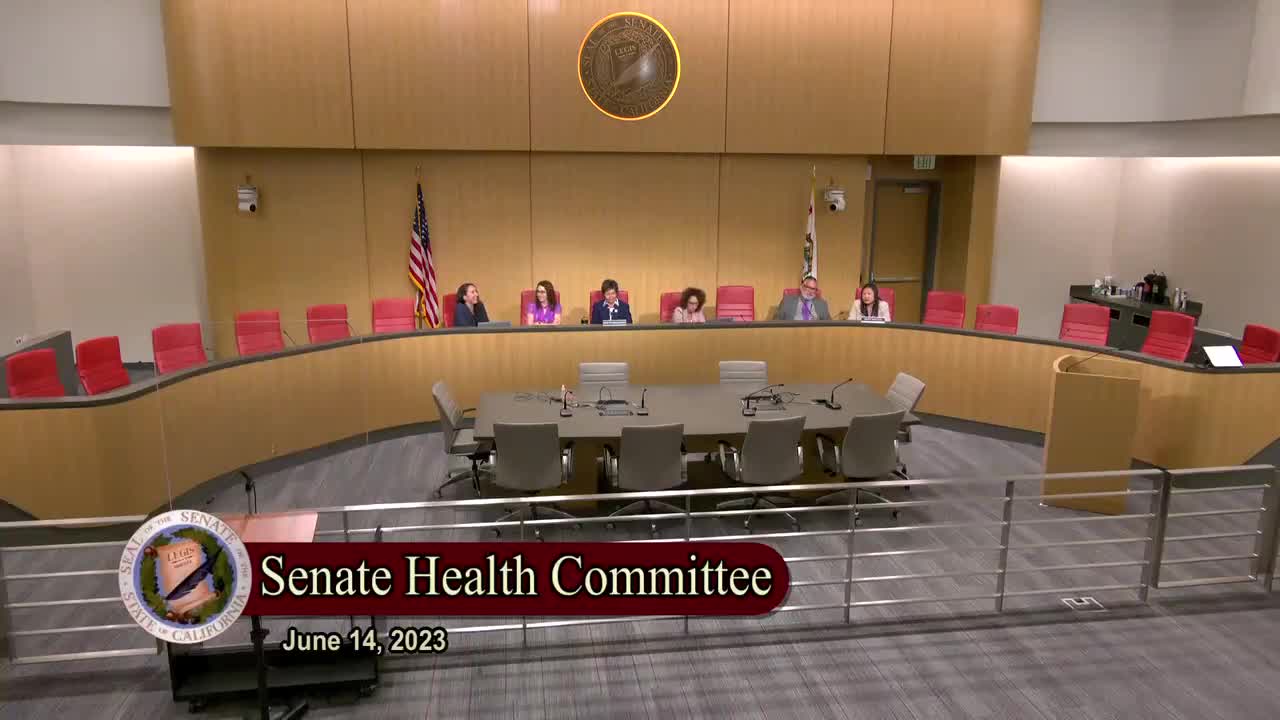 16MIN
Senate Standing Committee on Health
 10MIN
Assembly Standing Committee on Health
Bill Author

Bill Co-Author(s):