AB 674: Electricity: distributed generation.
- Session Year: 2015-2016
- House: Assembly
- Latest Version Date: 2015-05-05
Under existing law, the Public Utilities Commission has regulatory authority over public utilities, including electrical corporations, as defined. Existing law authorizes the Public Utilities Commission to fix the rates and charges for every public utility, and requires that those rates and charges be just and reasonable. Existing law requires the Public Utilities Commission to require each electrical corporation under the operational control of the Independent System Operator as of January 1, 2001, to modify tariffs so that all customers that install new distributed energy resources, as defined, in accordance with specified criteria are served under rates, rules, and requirements identical to those of a customer within the same rate schedule that does not use distributed energy resources, and to withdraw any provisions in otherwise applicable tariffs that activate other tariffs, rates, or rules if a customer uses distributed energy resources. Existing law provides, notwithstanding these requirements, that a customer that installs new distributed energy resources not be exempted from (1) reasonable interconnection charges, (2) charges imposed pursuant to the Reliable Electric Service Investment Act, and (3) charges imposed to repay the Department of Water Resources for electricity procurement expenses incurred in response to the electricity crisis of 200001. Existing law requires the Public Utilities Commission, in establishing the rates applicable to customers that install new distributed energy resources, to create a firewall that segregates distribution cost recovery so that any net costs, taking into account the actual costs and benefits of distributed energy resources, proportional to each customer class, as determined by the Public Utilities Commission, resulting from the tariff modifications granted to members of each customer class may be recovered only from that class.
This bill would, to the extent authorized by federal law, require the Public Utilities Commission, by July 1, 2016, to do both of the following for those electrical corporation customers that have installed install clean distributed energy resources, as defined, after January 1, 2016: (1) require each electrical corporation to collect all applicable nonbypassable charges fixed, implemented, administered, or imposed by the Public Utilities Commission based only on the actual metered consumption of electricity delivered to the customer through the electrical corporations transmission or distribution system, which charges are to be at the same rate per kilowatthour as paid by other customers that do not employ a clean distributed energy resource, and (2) calculate a reserve capacity for standby service, if applicable, based on the capacity needed by an electrical corporation to serve a customers electrical demand during an outage of the clean distributed energy resource providing electric service for that customer. The bill would require each electrical corporation to identify the total amount of nonbypassable charges that would be collected each year from customers served by clean distributed energy resources installed after January 1, 2016, based on gross consumption without any adjustment for the generation of the clean distributed energy resources. The bill would require that this total amount be fully recovered from customers in the same customer class as those customers served by clean distributed energy resources installed after January 1, 2016, and would prohibit any amount from being shifted to any other customer class. The bill would require a customer served by a clean distributed energy resource, upon request, to provide relevant data to the Public Utilities Commission and the State Air Resources Board and the facility be subject to onsite inspection, to verify equipment operation and performance, including capacity, thermal output, and usage to verify criteria air pollutant and greenhouse gases emissions performance. The bill would require the State Energy Resources Conservation and Development Commission to report to the Legislature and the relevant policy committees of the Legislature on the impact of its provisions on specified issues by July 1, 2021.
Under existing law, a violation of the Public Utilities Act or any order, decision, rule, direction, demand, or requirement of the commission is a crime.
Because the provisions of this bill would be a part of the act and because a violation of an order or decision of the commission implementing its requirements would be a crime, the bill would impose a state-mandated local program by creating a new crime.
The California Constitution requires the state to reimburse local agencies and school districts for certain costs mandated by the state. Statutory provisions establish procedures for making that reimbursement.
This bill would provide that no reimbursement is required by this act for a specified reason.
Under existing law, the Public Utilities Commission has regulatory authority over public utilities, including electrical corporations, as defined. Existing law authorizes the commission Public Utilities Commission to fix the rates and charges for every public utility, and requires that those rates and charges be just and reasonable. Existing law requires the commission Public Utilities Commission to require each electrical corporation under the operational control of the Independent System Operator as of January 1, 2001, to modify tariffs so that all customers that install new distributed energy resources, as defined, in accordance with specified criteria are served under rates, rules, and requirements identical to those of a customer within the same rate schedule that does not use distributed energy resources, and to withdraw any provisions in otherwise applicable tariffs that activate other tariffs, rates, or rules if a customer uses distributed energy resources. Existing law provides, notwithstanding these requirements, that a customer that installs new distributed energy resources not be exempted from (1) reasonable interconnection charges, (2) charges imposed pursuant to the Reliable Electric Service Investment Act, and (3) charges imposed to repay the Department of Water Resources for electricity procurement expenses incurred in response to the electricity crisis of 200001. Existing law requires the commission, Public Utilities Commission, in establishing the rates applicable to customers that install new distributed energy resources, to create a firewall that segregates distribution cost recovery so that any net costs, taking into account the actual costs and benefits of distributed energy resources, proportional to each customer class, as determined by the commission, Public Utilities Commission, resulting from the tariff modifications granted to members of each customer class may be recovered only from that class.
This bill would, to the extent authorized by federal law, require the commission, Public Utilities Commission, by July 1, 2016, to do both of the following for those electrical corporation customers that have installed clean distributed energy resources, as defined, after January 1, 2016: (1) require each electrical corporation to collect all applicable nonbypassable charges fixed, implemented, administered, or imposed by the commission Public Utilities Commission based only on the actual metered consumption of electricity delivered to the customer through the electrical corporations transmission or distribution system, which charges are to be at the same rate per kilowatthour as paid by other customers that do not employ a clean distributed energy resource, and (2) calculate a reservation reserve capacity for standby service, if applicable, based on the capacity needed by an electrical corporation to serve a customers electrical demand during an outage of the clean distributed energy resource providing electric service for that customer. The bill would require the State Energy Resources Conservation and Development Commission to report to the Legislature and the relevant policy committees of the Legislature on the impact of its provisions on specified issues by July 1, 2021.
Under existing law, a violation of the Public Utilities Act or any order, decision, rule, direction, demand, or requirement of the commission is a crime.
Because the provisions of this bill would be a part of the act and because a violation of an order or decision of the commission implementing its requirements would be a crime, the bill would impose a state-mandated local program by creating a new crime.
The California Constitution requires the state to reimburse local agencies and school districts for certain costs mandated by the state. Statutory provisions establish procedures for making that reimbursement.
This bill would provide that no reimbursement is required by this act for a specified reason.
Under existing law, the Public Utilities Commission has regulatory authority over public utilities, including electrical corporations, as defined. Existing law authorizes the commission to fix the rates and charges for every public utility, and requires that those rates and charges be just and reasonable. Existing law requires the commission to require each electrical corporation under the operational control of the Independent System Operator as of January 1, 2001, to modify tariffs so that all customers that install new distributed energy resources, as defined, in accordance with specified criteria are served under rates, rules, and requirements identical to those of a customer within the same rate schedule that does not use distributed energy resources, and to withdraw any provisions in otherwise applicable tariffs that activate other tariffs, rates, or rules if a customer uses distributed energy resources. Existing law provides, notwithstanding these requirements, that a customer that installs new distributed energy resources not be exempted from (1) reasonable interconnection charges, (2) charges imposed pursuant to the Reliable Electric Service Investment Act, and (3) charges imposed to repay the Department of Water Resources for electricity procurement expenses incurred in response to the electricity crisis of 200001. Existing law requires the commission, in establishing the rates applicable to customers that install new distributed energy resources, to create a firewall that segregates distribution cost recovery so that any net costs, taking into account the actual costs and benefits of distributed energy resources, proportional to each customer class, as determined by the commission, resulting from the tariff modifications granted to members of each customer class may be recovered only from that class.
This bill would, to the extent authorized by federal law, require the commission, by July 1, 2016, to do both of the following for those electrical corporation customers that have installed clean distributed energy resources, as defined, before after January 1, 2016: (1) require each electrical corporation to collect all applicable nonbypassable charges fixed, implemented, administered, or imposed by the commission based only on the actual metered consumption of electricity delivered to the customer through the electrical corporations transmission or distribution system, which charges are to be at the same rate per kilowatthour as paid by other customers that do not employ a clean distributed energy resource, and (2) calculate a reservation capacity for standby service, if applicable, based on the capacity needed by an electrical corporation to serve a customers electrical demand during an outage of the clean distributed energy resource providing electric service for that customer. The bill would require the State Energy Resources Conservation and Development Commission to report to the Legislature and the relevant policy committees of the Legislature on the impact of its provisions on specified issues by July 1, 2021.
Under existing law, a violation of the Public Utilities Act or any order, decision, rule, direction, demand, or requirement of the commission is a crime.
Because the provisions of this bill would be a part of the act and because a violation of an order or decision of the commission implementing its requirements would be a crime, the bill would impose a state-mandated local program by creating a new crime.
The California Constitution requires the state to reimburse local agencies and school districts for certain costs mandated by the state. Statutory provisions establish procedures for making that reimbursement.
This bill would provide that no reimbursement is required by this act for a specified reason.
Under existing law, the Public Utilities Commission has regulatory authority over public utilities, including electrical corporations, as defined. Existing law authorizes the commission to fix the rates and charges for every public utility, and requires that those rates and charges be just and reasonable. Existing law requires the commission to require each electrical corporation under the operational control of the Independent System Operator as of January 1, 2001, to modify tariffs so that all customers that install new distributed energy resources, as defined, in accordance with specified criteria are served under rates, rules, and requirements identical to those of a customer within the same rate schedule that does not use distributed energy resources, and to withdraw any provisions in otherwise applicable tariffs that activate other tariffs, rates, or rules if a customer uses distributed energy resources. Existing law provides, notwithstanding these requirements, that a customer that installs new distributed energy resources not be exempted from (1) reasonable interconnection charges, (2) charges imposed pursuant to the Reliable Electric Service Investment Act, and (3) charges imposed to repay the Department of Water Resources for electricity procurement expenses incurred in response to the electricity crisis of 200001. Existing law requires the commission, in establishing the rates applicable to customers that install new distributed energy resources, to create a firewall that segregates distribution cost recovery so that any net costs, taking into account the actual costs and benefits of distributed energy resources, proportional to each customer class, as determined by the commission, resulting from the tariff modifications granted to members of each customer class may be recovered only from that class.
This bill would, to the extent authorized by federal law, require the commission, by July 1, 2016, to do both of the following for those electrical corporation customers that have installed clean distributed energy resources, as defined, prior to before January 1, 2016: (1) require each electrical corporation to collect all applicable nonbypassable charges fixed, implemented, administered, or imposed by the commission based only on the actual metered consumption of electricity delivered to the customer through the electrical corporations transmission or distribution system, which charges are to be at the same rate per kilowatthour as paid by other customers that do not employ a clean distributed energy resource, and (2) calculate a reservation capacity for standby service, if applicable, based on the capacity needed by an electrical corporation to serve a customers electrical demand during an outage of the clean distributed energy resource providing electric service for that customer. The bill would require the State Energy Resources Conservation and Development Commission to report to the Legislature and the relevant policy committees of the Legislature on the impact of the program upon specified matter its provisions on specified issues by July 1, 2021.
Under existing law, a violation of the Public Utilities Act or any order, decision, rule, direction, demand, or requirement of the commission is a crime.
Because the provisions of this bill would be a part of the act and because a violation of an order or decision of the commission implementing its requirements would be a crime, the bill would impose a state-mandated local program by creating a new crime.
The California Constitution requires the state to reimburse local agencies and school districts for certain costs mandated by the state. Statutory provisions establish procedures for making that reimbursement.
This bill would provide that no reimbursement is required by this act for a specified reason.
Under existing law, the Public Utilities Commission has regulatory authority over public utilities, including electrical corporations, as defined. Existing law authorizes the commission to fix the rates and charges for every public utility, and requires that those rates and charges be just and reasonable. Existing law requires the commission to require each electrical corporation under the operational control of the Independent System Operator as of January 1, 2001, to modify tariffs so that all customers that install new distributed energy resources, as defined, in accordance with specified criteria are served under rates, rules, and requirements identical to those of a customer within the same rate schedule that does not use distributed energy resources, and to withdraw any provisions in otherwise applicable tariffs that activate other tariffs, rates, or rules if a customer uses distributed energy resources. Existing law provides, notwithstanding these requirements, that a customer that installs new distributed energy resources not be exempted from (1) reasonable interconnection charges, (2) charges imposed pursuant to the Reliable Electric Service Investment Act, and (3) charges imposed to repay the Department of Water Resources for electricity procurement expenses incurred in response to the electricity crisis of 200001. Existing law requires the commission, in establishing the rates applicable to customers that install new distributed energy resources, to create a firewall that segregates distribution cost recovery so that any net costs, taking into account the actual costs and benefits of distributed energy resources, proportional to each customer class, as determined by the commission, resulting from the tariff modifications granted to members of each customer class may be recovered only from that class.
This bill would, to the extent authorized by federal law, require the commission, by July 1, 2016, to do both of the following for those electrical corporation customers that have installed clean distributed energy resources, as defined, prior to January 1, 2016: (1) require each electrical corporation to collect all applicable nonbypassable charges fixed, implemented, administered, or imposed by the commission based only on the actual metered consumption of electricity delivered to the customer through the electrical corporations transmission or distribution system, which charges are to be at the same rate per kilowatthour as paid by other customers that do not employ a clean distributed energy resource, and (2) calculate a reservation capacity for standby service, if applicable, based on the capacity needed by an electrical corporation to serve a customers electrical demand during an outage of the clean distributed energy resource providing electric service for that customer. The bill would require the State Energy Resources Conservation and Development Commission to report to the Legislature and the relevant policy committees of the Legislature on the impact of the program upon specified matter by July 1, 2021.
Under existing law, a violation of the Public Utilities Act or any order, decision, rule, direction, demand, or requirement of the commission is a crime.
Because the provisions of this bill would be a part of the act and because a violation of an order or decision of the commission implementing its requirements would be a crime, the bill would impose a state-mandated local program by creating a new crime.
The California Constitution requires the state to reimburse local agencies and school districts for certain costs mandated by the state. Statutory provisions establish procedures for making that reimbursement.
This bill would provide that no reimbursement is required by this act for a specified reason.
The Legislature finds and declares all of the following:
(a)Clean onsite generation of electricity yields multiple benefits, including increased electrical reliability and efficiency, reduced emissions of greenhouse gases and oxides of nitrogen (NOx), and electrical grid resiliency.
(b)In 2011, Governor Jerry Brown released a Clean Energy Jobs Plan that called for 12,000 megawatts of localized electrical generation, also known as distributed generation, to maximize energy efficiency and minimize environmental impacts, while increasing reliability and security.
(c)Increased deployment of clean onsite electrical generation reduces the need for generation that emits higher levels of greenhouse gases that contribute to climate change and higher levels of NOx that contribute to smog formation.
(d)Several types of clean onsite electrical generation technologies currently exist and others are being developed, with many being developed and manufactured in California.
(e)Residential, commercial, Commercial and industrial customers are willing to invest their own capital to install clean onsite generation technologies.
(f)Nonbypassable charges create an economic barrier to the installation of clean onsite electrical generation and, as a result, prevent cost savings for all ratepayers and environmental benefits for all Californians. generation.
(g)Among states with similarly high energy prices and environmental goals, California is the only state that allows electrical corporations to apply nonbypassable charges to electricity produced and consumed onsite.
(h)Ratepayers would see a net cost savings from increased deployment of onsite electricity generation at customer sites that pay nonbypassable charges only on their electricity purchases from the grid. This ratepayer savings arises because onsite electricity generation reduces demand on the electrical grid, which reduces market electricity prices, and avoids transmission and distribution costs and energy losses.
(i)Other cost-saving benefits to all ratepayers from clean onsite electrical generation include reductions in future generating capacity requirements, reductions in electrical grid congestion prices, reductions in emissions of greenhouse gases and criteria air pollutants, and increases in electrical grid resiliency and security.
SEC. 2.Section 354 is added to the Public Utilities Code, to read:354.(a)As used in this section, clean distributed energy resource means a facility that is located on the customers premises and generates electricity, or electricity and useful heat, where the electricity generated is used for a purpose described in paragraph (1) or (2) of subdivision (b) of Section 218, and that meets either of the following requirements:
(1)It meets all of the following criteria:
(A)Produces emissions of greenhouse gases that are less than the levels established by the commission pursuant to paragraph (2) of subdivision (b) of Section 379.6. average emissions rate for delivered electricity reported by the electrical corporation for the service territory in which the project is located for the calendar year prior to the year the facility is installed.
(B)Produces emissions of nitrogen oxides and sulfur oxides that are less than the levels permitted for an advanced electrical distributed generation technology pursuant to Section 379.8.
(C)Has a nameplate rated generation capacity of 20 megawatts or less.
(D)Is sized to meet the electrical demand of, or use the available waste heat of, the customer that will be served by the generating facility.
(2)It is an eligible renewable energy resource pursuant to the California Renewables Portfolio Standard Program (Article 16 (commencing with Section 399.11)), has a nameplate rated generation capacity of 20 megawatts or less, is sized to meet the electrical demand of the customer that will be served by the generating facility, and will not otherwise be addressed in the commissions implementation of Section 769 or 2827.1.
(b)To the extent authorized by federal law, by July 1, 2016, the commission shall require each electrical corporation to do the following for customers served by clean distributed energy resources installed after January 1, 2016:
(1)(A)Collect all applicable nonbypassable charges fixed, implemented, administered, or imposed by the commission based only on the actual metered consumption of electricity delivered to the customer through the electrical corporations transmission or distribution system. All charges shall be at the same rate per kilowatthour as paid by other customers that do not employ a clean distributed energy resource under the electrical corporations applicable rate schedule.
(B)Identify the total amount of nonbypassable charges that would be collected each year from customers served by clean distributed energy resources installed after January 1, 2016, based on gross consumption without any adjustment for the generation of the clean distributed energy resources. This total amount shall be fully recovered from customers in the same customer class as those customers served by clean distributed energy resources installed after January 1, 2016, and no amount may be shifted to any other customer class.
(2)(A)Calculate a reserve capacity for standby service, if applicable, based on the capacity needed by an electrical corporation to serve a customers electrical demand during an outage of the clean distributed energy resource providing electric service for that customer.
(B)Initial reserve capacity shall be established by the customer for a minimum of 12 months based on the clean distributed energy resource generation technologys historical operation, the number, size, and outage diversity of the clean distributed energy resource, and the annual average reduction of customer load that could occur during an outage.
(C)If after the initial 12-month period, the electrical corporation reasonably determines that the reserve capacity does not reflect the customers actual standby demand, averaged over the previous 12 months, the electrical corporation shall modify the reserve capacity once every 12 months to reflect the customers actual average annual reserve capacity based on the same criteria used to establish the initial reserve capacity. Calculation of actual average annual reserve capacity shall exclude the customers electrical demand served by the electrical corporation within 24 hours following an outage of the clean distributed energy resource resulting from any event on the electrical corporations transmission or distribution grid that is outside of the customers control that requires the customer to reduce onsite generation.
(c)A customer served by a clean distributed energy resource shall, upon request, provide relevant data to the commission and the State Air Resources Board and the facility is subject to onsite inspection to verify equipment operation and performance, including capacity, thermal output, and usage to verify criteria air pollutant and greenhouse gases emissions performance. Requests for relevant data shall occur no more than once per year.
(c)
(d)(1)By July 1, 2021, the Energy Commission, in consultation with the commission, shall report on the impacts of this section to the Legislature and the relevant policy committees of the Legislature in regard to all of the following:
(A)Avoided transmission and distribution costs.
(B)Avoided energy losses.
(C)Wholesale electricity market prices.
(D)Electricity costs to ratepayers.
(E)Air quality.
(F)Emissions of greenhouse gases.
(G)Job creation.
(H)Energy reliability.
(2)The report to be submitted to the Legislature pursuant to this subdivision shall be submitted in compliance with Section 9795 of the Government Code.
(3)The requirement for submitting a report pursuant to this subdivision is inoperative on July 1, 2025, pursuant to Section 10231.5 of the Government Code.
SEC. 3.No reimbursement is required by this act pursuant to Section 6 of Article XIIIB of the California Constitution because the only costs that may be incurred by a local agency or school district will be incurred because this act creates a new crime or infraction, eliminates a crime or infraction, or changes the penalty for a crime or infraction, within the meaning of Section 17556 of the Government Code, or changes the definition of a crime within the meaning of Section 6 of Article XIIIB of the California Constitution.
The Legislature finds and declares all of the following:
(a)Clean onsite generation of electricity yields multiple benefits, including increased electrical reliability and efficiency, reduced emissions of greenhouse gases and oxides of nitrogen (NOx), and electrical grid resiliency.
(b)In 2011, Governor Jerry Brown released a Clean Energy Jobs Plan that called for 12,000 megawatts of localized electrical generation, also known as distributed generation, to maximize energy efficiency and minimize environmental impacts, while increasing reliability and security.
(c)Increased deployment of clean onsite electrical generation reduces the need for generation that emits higher levels of greenhouse gases that contribute to climate change and higher levels of NOx that contribute to smog formation.
(d)Several types of clean onsite electrical generation technologies currently exist and others are being developed, with many being developed and manufactured in California.
(e)Residential, commercial, and industrial customers are willing to invest their own capital to install clean onsite generation technologies.
(f)Nonbypassable charges create an economic barrier to the installation of clean onsite electrical generation and, as a result, prevent cost savings for all ratepayers and environmental benefits for all Californians.
(g)Among states with similarly high energy prices and environmental goals, California is the only state that allows electrical corporations to apply nonbypassable charges to electricity produced and consumed onsite.
(h)Ratepayers would see a net cost savings from increased deployment of onsite electricity generation at customer sites that pay nonbypassable charges only on their electricity purchases from the grid. This ratepayer savings arises because onsite electricity generation reduces demand on the electrical grid, which reduces market electricity prices, and avoids transmission and distribution costs and energy losses.
(i)Other cost-saving benefits to all ratepayers from clean onsite electrical generation include reductions in future generating capacity requirements, reductions in electrical grid congestion prices, reductions in emissions of greenhouse gases and criteria air pollutants, and increases in electrical grid resiliency and security.
SEC. 2.Section 354 is added to the Public Utilities Code, to read:354.(a)As used in this section, clean distributed energy resource means a facility that is located on the customers premises and generates electricity, or electricity and useful heat, where the electricity generated is used for a purpose described in paragraph (1) or (2) of subdivision (b) of Section 218, and that meets either of the following requirements:
(1)It meets all of the following criteria:
(A)Produces emission of carbon dioxide (CO2) at a rate per megawatthour, accounting for waste heat recovery, where applicable, and savings on transmission and distribution losses, that is less than the emissions of CO2 from the marginal generating unit dispatched to meet the demand on the electrical grid that is avoided by the electricity generated by the clean distributed energy resource, as determined by the Energy Commission as of January 30, 2016.
(B)Has an oxide of nitrogen (NOx) emissions rate, including credit for waste heat recovery, when applicable, that is less than or equal to 0.07 pounds per megawatthour, or a lower NOx emissions rate that the State Air Resources Board determines reflects the best performance achieved in practice by existing electrical generation technologies pursuant to Section 41514.9 of the Health and Safety Code.
(A)Produces emissions of greenhouse gases that are less than the levels established by the commission pursuant to paragraph (2) of subdivision (b) of Section 379.6.
(B)Produces emissions of nitrogen oxides and sulfur oxides that are less than the levels permitted for an advanced electrical distributed generation technology pursuant to Section 379.8.
(C)Has a nameplate rated generation capacity of 20 megawatts or less.
(D)Is sized to meet the electrical demand of, or use the available waste heat of, the customer that will be served by the generating facility.
(2)It is an eligible renewable energy resource pursuant to the California Renewables Portfolio Standard Program (Article 16 (commencing with Section 399.11)), has a nameplate rated generation capacity of 20 megawatts or less, is sized to meet the electrical demand of the customer that will be served by the generating facility, and will not otherwise be addressed in the commissions implementation of Section 769 or 2827.1.
(b)To the extent authorized by federal law, by July 1, 2016, the commission shall require each electrical corporation to do the following for customers served by clean distributed energy resources installed after January 1, 2016:
(1)Collect all applicable nonbypassable charges fixed, implemented, administered, or imposed by the commission based only on the actual metered consumption of electricity delivered to the customer through the electrical corporations transmission or distribution system. All charges shall be at the same rate per kilowatthour as paid by other customers that do not employ a clean distributed energy resource under the electrical corporations applicable rate schedule.
(2)(A)Calculate a reservation reserve capacity for standby service, if applicable, based on the capacity needed by an electrical corporation to serve a customers electrical demand during an outage of the clean distributed energy resource providing electric service for that customer.
(B)Initial reservation reserve capacity shall be established by the customer for a minimum of 12 months based on the clean distributed energy resource generation technologys historical operation, the number, size, and outage diversity of the clean distributed energy resource, and the annual average reduction of customer load that could occur during an outage.
(C)If after the initial 12-month period, the electrical corporation reasonably determines that the reservation reserve capacity does not reflect the customers actual standby demand, averaged over the previous 12 months, the electrical corporation shall modify the reservation reserve capacity once every 12 months to reflect the customers actual average annual reservation reserve capacity based on the same criteria used to establish the initial reservation reserve capacity. Calculation of actual average annual reservation reserve capacity shall exclude the customers electrical demand served by the electrical corporation within 24 hours following an outage of the clean distributed energy resource resulting from any event on the electrical corporations transmission or distribution grid that is outside of the customers control that requires the customer to reduce onsite generation.
(c)(1)By July 1, 2021, the Energy Commission, in consultation with the commission, shall report on the impacts of this section to the Legislature and the relevant policy committees of the Legislature in regard to all of the following:
(A)Avoided transmission and distribution costs.
(B)Avoided energy losses.
(C)Wholesale electricity market prices.
(D)Electricity costs to ratepayers.
(E)Air quality.
(F)Emissions of greenhouse gases.
(G)Job creation.
(H)Energy reliability.
(I)The extent to which the incentives provided pursuant to this section contribute to achieving the states distributed generation and combined heat and power goals.
(2)The report to be submitted to the Legislature pursuant to this subdivision shall be submitted in compliance with Section 9795 of the Government Code.
(3)The requirement for submitting a report pursuant to this subdivision is inoperative on July 1, 2025, pursuant to Section 10231.5 of the Government Code.
SEC. 3.No reimbursement is required by this act pursuant to Section 6 of Article XIIIB of the California Constitution because the only costs that may be incurred by a local agency or school district will be incurred because this act creates a new crime or infraction, eliminates a crime or infraction, or changes the penalty for a crime or infraction, within the meaning of Section 17556 of the Government Code, or changes the definition of a crime within the meaning of Section 6 of Article XIIIB of the California Constitution.
The Legislature finds and declares all of the following:
(a)Clean onsite generation of electricity yields multiple benefits, including increased electrical reliability and efficiency, reduced emissions of greenhouse gases and oxides of nitrogen (NOx), and electrical grid resiliency.
(b)In 2011, Governor Jerry Brown released a Clean Energy Jobs Plan that called for 12,000 megawatts of localized electrical generation, also known as distributed generation, to maximize energy efficiency and minimize environmental impacts, while increasing reliability and security.
(c)Increased deployment of clean onsite electrical generation reduces the need for generation that emits higher levels of greenhouse gases that contribute to climate change and higher levels of NOx that contribute to smog formation.
(d)Several types of clean onsite electrical generation technologies currently exist and others are being developed, with many being developed and manufactured in California.
(e)Residential, commercial, and industrial customers are willing to invest their own capital to install clean onsite generation technologies.
(f)Nonbypassable charges create an economic barrier to the installation of clean onsite electrical generation and, as a result, prevent cost savings for all ratepayers and environmental benefits for all Californians.
(g)Among states with similarly high energy prices and environmental goals, California is the only state that allows electrical corporations to apply nonbypassable charges to electricity produced and consumed onsite.
(h)Ratepayers would see a net cost savings from increased deployment of onsite electricity generation at customer sites that pay nonbypassable charges only on their electricity purchases from the grid. This ratepayer savings arises because onsite electricity generation reduces demand on the electrical grid, which reduces market electricity prices, and avoids transmission and distribution costs and energy losses.
(i)Other cost-saving benefits to all ratepayers from clean onsite electrical generation include reductions in future generating capacity requirements, reductions in electrical grid congestion prices, reductions in emissions of greenhouse gases and criteria air pollutants, and increases in electrical grid resiliency and security.
SEC. 2.Section 354 is added to the Public Utilities Code, to read:354.(a)As used in this section, clean distributed energy resource means a facility that is located on the customers premises and generates electricity, or electricity and useful heat, where the electricity generated is used for a purpose described in paragraph (1) or (2) of subdivision (b) of Section 218, and that meets either of the following requirements:
(1)It meets all of the following criteria:
(A)Produces emission of carbon dioxide (CO2) at a rate per megawatthour, accounting for waste heat recovery, where applicable, and savings on transmission and distribution losses, that is less than the emissions of CO2 from the marginal generating unit dispatched to meet the demand on the electrical grid that is avoided by the electricity generated by the clean distributed energy resource, as determined by the Energy Commission as of January 30, 2016.
(B)Has an oxide of nitrogen (NOx) emissions rate, including credit for waste heat recovery, when applicable, that is less than or equal to 0.07 pounds per megawatthour, or a lower NOx emissions rate that the State Air Resources Board determines reflects the best performance achieved in practice by existing electrical generation technologies pursuant to Section 41514.9 of the Health and Safety Code.
(C)Has a nameplate rated generation capacity of 20 megawatts or less.
(D)Is sized to meet the electrical demand of, or use the available waste heat of, the customer that will be served by the generating facility.
(2)It is an eligible renewable energy resource pursuant to the California Renewables Portfolio Standard Program (Article 16 (commencing with Section 399.11)), has a nameplate rated generation capacity of 20 megawatts or less, is sized to meet the electrical demand of the customer that will be served by the generating facility, and will not otherwise be addressed in the commissions implementation of Section 769 or 2827.1.
(b)To the extent authorized by federal law, by July 1, 2016, the commission shall require each electrical corporation to do the following for customers served by clean distributed energy resources installed before after January 1, 2016:
(1)Collect all applicable nonbypassable charges fixed, implemented, administered, or imposed by the commission based only on the actual metered consumption of electricity delivered to the customer through the electrical corporations transmission or distribution system. All charges shall be at the same rate per kilowatthour as paid by other customers that do not employ a clean distributed energy resource under the electrical corporations applicable rate schedule.
(2)(A)Calculate a reservation capacity for standby service, if applicable, based on the capacity needed by an electrical corporation to serve a customers electrical demand during an outage of the clean distributed energy resource providing electric service for that customer.
(B)Initial reservation capacity shall be established by the customer for a minimum of 12 months based on the clean distributed energy resource generation technologys historical operation, the number, size, and outage diversity of the clean distributed energy resource, and the annual average reduction of customer load that could occur during an outage.
(C)If after the initial 12-month period, the electrical corporation reasonably determines that the reservation capacity does not reflect the customers actual standby demand, averaged over the previous 12 months, the electrical corporation shall modify the reservation capacity once every 12 months to reflect the customers actual average annual reservation capacity based on the same criteria used to establish the initial reservation capacity. Calculation of actual average annual reservation capacity shall exclude the customers electrical demand served by the electrical corporation within 24 hours following an outage of the clean distributed energy resource resulting from any event on the electrical corporations transmission or distribution grid that is outside of the customers control that requires the customer to reduce onsite generation.
(c)(1)By July 1, 2021, the Energy Commission, in consultation with the commission, shall report on the impacts of this section to the Legislature and the relevant policy committees of the Legislature in regard to all of the following:
(A)Avoided transmission and distribution costs.
(B)Avoided energy losses.
(C)Wholesale electricity market prices.
(D)Electricity costs to ratepayers.
(E)Air quality.
(F)Emissions of greenhouse gases.
(G)Job creation.
(H)Energy reliability.
(I)The extent to which the incentives provided pursuant to this section contribute to achieving the states distributed generation and combined heat and power goals.
(2)The report to be submitted to the Legislature pursuant to this subdivision shall be submitted in compliance with Section 9795 of the Government Code.
(3)The requirement for submitting a report pursuant to this subdivision is inoperative on July 1, 2025, pursuant to Section 10231.5 of the Government Code.
SEC. 3.No reimbursement is required by this act pursuant to Section 6 of Article XIIIB of the California Constitution because the only costs that may be incurred by a local agency or school district will be incurred because this act creates a new crime or infraction, eliminates a crime or infraction, or changes the penalty for a crime or infraction, within the meaning of Section 17556 of the Government Code, or changes the definition of a crime within the meaning of Section 6 of Article XIIIB of the California Constitution.
The Legislature finds and declares all of the following:
(a)Clean onsite generation of electricity yields multiple benefits, including increased electrical reliability and efficiency, reduced emissions of greenhouse gases and oxides of nitrogen (NOx), and electrical grid resiliency.
(b)In 2011, Governor Jerry Brown released a Clean Energy Jobs Plan that called for 12,000 megawatts of localized electrical generation, also known as distributed generation, to maximize energy efficiency and minimize environmental impacts, while increasing reliability and security.
(c)Increased deployment of clean onsite electrical generation reduces the need for generation that emits higher levels of greenhouse gases that contribute to climate change and higher levels of NOx that contribute to smog formation.
(d)Several types of clean onsite electrical generation technologies currently exist and others are being developed, with many being developed and manufactured in California.
(e)Residential, commercial, and industrial customers are willing to invest their own capital to install clean onsite generation technologies.
(f)Nonbypassable charges create an economic barrier to the installation of clean onsite electrical generation and, as a result, prevent cost savings for all ratepayers and environmental benefits for all Californians.
(g)Among states with similarly high energy prices and environmental goals, California is the only state that allows electrical corporations to apply nonbypassable charges to electricity produced and consumed onsite.
(h)Ratepayers would see a net cost savings from increased deployment of onsite electricity generation at customer sites that pay nonbypassable charges only on their electricity purchases from the grid. This ratepayer savings arises because onsite electricity generation reduces demand on the electrical grid, which reduces market electricity prices, and avoids transmission and distribution costs and energy losses.
(i)Other cost-saving benefits to all ratepayers from clean onsite electrical generation include reductions in future generating capacity requirements, reductions in electrical grid congestion prices, reductions in emissions of greenhouse gases and criteria air pollutants, and increases in electrical grid resiliency and security.
SEC. 2.Section 354 is added to the Public Utilities Code, to read:354.(a)As used in this section, clean distributed energy resource means a facility that is located on the customers premises and generates electricity, or electricity and useful heat, where the electricity generated is used for a purpose described in paragraph (1) or (2) of subdivision (b) of Section 218, and that meets either of the following requirements:
(1)It meets all of the following criteria:
(A)Has a carbon dioxide (CO2) emissions rate, including credit for waste heat recovery, where applicable, and savings on transmission and distribution losses, that is no greater than 437 kilograms per megawatthour.
(A)Produces emission of carbon dioxide (CO2) at a rate per megawatthour, accounting for waste heat recovery, where applicable, and savings on transmission and distribution losses, that is less than the emissions of CO2 from the marginal generating unit dispatched to meet the demand on the electrical grid that is avoided by the electricity generated by the clean distributed energy resource, as determined by the Energy Commission as of January 30, 2016.
(B)Has an oxide of nitrogen (NOx) emissions rate, including credit for waste heat recovery, when applicable, that is less than or equal to 0.07 pounds per megawatthour, or a lower NOx emissions rate that the State Air Resources Board determines reflects the best performance achieved in practice by existing electrical generation technologies pursuant to Section 41514.9 of the Health and Safety Code.
(C)Has a nameplate rated generation capacity of 20 megawatts or less.
(D)Is sized to meet the electrical demand of, or use the available waste heat of, the customer that will be served by the generating facility.
(2)It is an eligible renewable energy resource pursuant to the California Renewables Portfolio Standard Program (Article 16 (commencing with Section 399.11)), has a nameplate rated generation capacity of 20 megawatts or less, is sized to meet the electrical demand of the customer that will be served by the generating facility, and will not otherwise be addressed in the commissions implementation of Section 769 or 2827.1.
(b)To the extent authorized by federal law, by July 1, 2016, the commission shall require each electrical corporation to do the following for customers served by clean distributed energy resources installed prior to before January 1, 2016:
(1)Collect all applicable nonbypassable charges fixed, implemented, administered, or imposed by the commission based only on the actual metered consumption of electricity delivered to the customer through the electrical corporations transmission or distribution system. All charges shall be at the same rate per kilowatthour as paid by other customers that do not employ a clean distributed energy resource under the electrical corporations applicable rate schedule.
(2)(A)Calculate a reservation capacity for standby service, if applicable, based on the capacity needed by an electrical corporation to serve a customers electrical demand during an outage of the clean distributed energy resource providing electric service for that customer.
(B)Initial reservation capacity shall be established by the customer for a minimum of 12 months based on the clean distributed energy resource generation technologys historical operation, the number, size, and outage diversity of the clean distributed energy resource, and the annual average reduction of customer load that could occur during an outage.
(C)If after the initial 12-month period, the electrical corporation reasonably determines that the reservation capacity does not reflect the customers actual standby demand, averaged over the previous 12 months, the electrical corporation shall modify the reservation capacity once every 12 months to reflect the customers actual average annual reservation capacity based on the same criteria used to establish the initial reservation capacity. Calculation of actual average annual reservation capacity shall exclude the customers electrical demand served by the electrical corporation within 24 hours following an outage of the clean distributed energy resource resulting from any event on the electrical corporations transmission or distribution grid that is outside of the customers control that requires the customer to reduce onsite generation.
(c)(1)By July 1, 2021, the Energy Commission, in consultation with the commission, shall report on the impacts of this section to the Legislature and the relevant policy committees of the Legislature on in regard to all of the following:
(A)Avoided transmission and distribution costs.
(B)Avoided energy losses.
(C)Wholesale electricity market prices.
(D)Electricity costs to ratepayers.
(E)Air quality.
(F)Emissions of greenhouse gases.
(G)Job creation.
(H)Energy reliability.
(I)The extent to which the incentives provided by the program pursuant to this section contribute to achieving the states distributed generation and combined heat and power goals.
(2)The report to be submitted to the Legislature pursuant to this subdivision shall be submitted in compliance with Section 9795 of the Government Code.
(3)The requirement for submitting a report pursuant to this subdivision is inoperative on July 1, 2025, pursuant to Section 10231.5 of the Government Code.
SEC. 3.No reimbursement is required by this act pursuant to Section 6 of Article XIIIB of the California Constitution because the only costs that may be incurred by a local agency or school district will be incurred because this act creates a new crime or infraction, eliminates a crime or infraction, or changes the penalty for a crime or infraction, within the meaning of Section 17556 of the Government Code, or changes the definition of a crime within the meaning of Section 6 of Article XIIIB of the California Constitution.
The Legislature finds and declares all of the following:
(a)Clean onsite generation of electricity yields multiple benefits, including increased electrical reliability and efficiency, reduced emissions of greenhouse gases and oxides of nitrogen (NOx), and electrical grid resiliency.
(b)In 2011, Governor Jerry Brown released a Clean Energy Jobs Plan that called for 12,000 megawatts of localized electrical generation, also known as distributed generation, to maximize energy efficiency and minimize environmental impacts, while increasing reliability and security.
(c)Increased deployment of clean onsite electrical generation reduces the need for generation that emits higher levels of greenhouse gases that contribute to climate change and higher levels of NOx that contribute to smog formation.
(d)Several types of clean onsite electrical generation technologies currently exist and others are being developed, with many being developed and manufactured in California.
(e)Residential, commercial, and industrial customers are willing to invest their own capital to install clean onsite generation technologies.
(f)Nonbypassable charges create an economic barrier to the installation of clean onsite electrical generation and, as a result, prevent cost savings for all ratepayers and environmental benefits for all Californians.
(g)Among states with similarly high energy prices and environmental goals, California is the only state that allows electrical corporations to apply nonbypassable charges to electricity produced and consumed onsite.
(h)Ratepayers would see a net cost savings from increased deployment of onsite electricity generation at customer sites that pay nonbypassable charges only on their electricity purchases from the grid. This ratepayer savings arises because onsite electricity generation reduces demand on the electrical grid, which reduces market electricity prices, and avoids transmission and distribution costs and energy losses.
(i)Other cost-saving benefits to all ratepayers from clean onsite electrical generation include reductions in future generating capacity requirements, reductions in electrical grid congestion prices, reductions in emissions of greenhouse gases and criteria air pollutants, and increases in electrical grid resiliency and security.
SEC. 2.Section 354 is added to the Public Utilities Code, to read:354.(a)As used in this section, clean distributed energy resource means a facility that is located on the customers premises and generates electricity, or electricity and useful heat, where the electricity generated is used for a purpose described in paragraph (1) or (2) of subdivision (b) of Section 218, and that meets either of the following requirements:
(1)It meets all of the following criteria:
(A)Has a carbon dioxide (CO2) emissions rate, including credit for waste heat recovery, where applicable, and savings on transmission and distribution losses, that is no greater than 437 kilograms per megawatthour.
(B)Has an oxide of nitrogen (NOx) emissions rate, including credit for waste heat recovery, when applicable, that is less than or equal to 0.07 pounds per megawatthour, or a lower NOx emissions rate that the State Air Resources Board determines reflects the best performance achieved in practice by existing electrical generation technologies pursuant to Section 41514.9 of the Health and Safety Code.
(C)Has a nameplate rated generation capacity of 20 megawatts or less.
(D)Is sized to meet the electrical demand of, or use the available waste heat of, the customer that will be served by the generating facility.
(2)It is an eligible renewable energy resource pursuant to the California Renewables Portfolio Standard Program (Article 16 (commencing with Section 399.11)), has a nameplate rated generation capacity of 20 megawatts or less, is sized to meet the electrical demand of the customer that will be served by the generating facility, and will not otherwise be addressed in the commissions implementation of Section 769 or 2827.1.
(b)To the extent authorized by federal law, by July 1, 2016, the commission shall require each electrical corporation to do the following for customers served by clean distributed energy resources installed prior to January 1, 2016:
(1)Collect all applicable nonbypassable charges fixed, implemented, administered, or imposed by the commission based only on the actual metered consumption of electricity delivered to the customer through the electrical corporations transmission or distribution system. All charges shall be at the same rate per kilowatthour as paid by other customers that do not employ a clean distributed energy resource under the electrical corporations applicable rate schedule.
(2)(A)Calculate a reservation capacity for standby service, if applicable, based on the capacity needed by an electrical corporation to serve a customers electrical demand during an outage of the clean distributed energy resource providing electric service for that customer.
(B)Initial reservation capacity shall be established by the customer for a minimum of 12 months based on the clean distributed energy resource generation technologys historical operation, the number, size, and outage diversity of the clean distributed energy resource, and the annual average reduction of customer load that could occur during an outage.
(C)If after the initial 12-month period, the electrical corporation reasonably determines that the reservation capacity does not reflect the customers actual standby demand, averaged over the previous 12 months, the electrical corporation shall modify the reservation capacity once every 12 months to reflect the customers actual average annual reservation capacity based on the same criteria used to establish the initial reservation capacity. Calculation of actual average annual reservation capacity shall exclude the customers electrical demand served by the electrical corporation within 24 hours following an outage of the clean distributed energy resource resulting from any event on the electrical corporations transmission or distribution grid that is outside of the customers control that requires the customer to reduce onsite generation.
(c)(1)By July 1, 2021, the Energy Commission, in consultation with the commission, shall report to the Legislature and the relevant policy committees of the Legislature on all of the following:
(A)Avoided transmission and distribution costs.
(B)Avoided energy losses.
(C)Wholesale electricity market prices.
(D)Electricity costs to ratepayers.
(E)Air quality.
(F)Emissions of greenhouse gases.
(G)Job creation.
(H)Energy reliability.
(I)The extent to which the incentives provided by the program contribute to achieving the states distributed generation and combined heat and power goals.
(2)The report to be submitted pursuant to this subdivision shall be submitted in compliance with Section 9795 of the Government Code.
(3)The requirement for submitting a report pursuant to this subdivision is inoperative on July 1, 2025, pursuant to Section 10231.5 of the Government Code.
SEC. 3.No reimbursement is required by this act pursuant to Section 6 of Article XIIIB of the California Constitution because the only costs that may be incurred by a local agency or school district will be incurred because this act creates a new crime or infraction, eliminates a crime or infraction, or changes the penalty for a crime or infraction, within the meaning of Section 17556 of the Government Code, or changes the definition of a crime within the meaning of Section 6 of Article XIIIB of the California Constitution.
|
Date
|
Status
|
|---|---|
| Feb 1, 2016 | From committee: Filed with the Chief Clerk pursuant to Joint Rule 56. |
| Jan 31, 2016 | Died pursuant to Article IV, Sec. 10(c) of the Constitution. |
| May 28, 2015 | In committee: Held under submission. |
| May 28, 2015 | Joint Rule 62(a), file notice suspended. (Page 1613.) |
| May 28, 2015 | Joint Rule 62(a), file notice suspended. |
| May 27, 2015 | In committee: Set, first hearing. Referred to APPR. suspense file. |
| May 6, 2015 | Re-referred to Com. on APPR. |
| May 5, 2015 | Read second time and amended. |
| May 4, 2015 | From committee: Amend, and do pass as amended and re-refer to Com. on APPR. (Ayes 8. Noes 1.) (April 27). |
| Apr 20, 2015 | Re-referred to Com. on NAT. RES. |
| Apr 16, 2015 | Re-referred to Com. on NAT. RES. pursuant to Assembly Rule 96. |
| Apr 16, 2015 | Read second time and amended. |
| Apr 15, 2015 | From committee: Amend, and do pass as amended and re-refer to Com. on APPR. (Ayes 10. Noes 4.) (April 13). |
| Apr 7, 2015 | Re-referred to Com. on U. & C. |
| Apr 6, 2015 | From committee chair, with author's amendments: Amend, and re-refer to Com. on U. & C. Read second time and amended. |
| Mar 26, 2015 | Re-referred to Com. on U. & C. |
| Mar 25, 2015 | From committee chair, with author's amendments: Amend, and re-refer to Com. on U. & C. Read second time and amended. |
| Mar 9, 2015 | Referred to Com. on U. & C. |
| Feb 26, 2015 | From printer. May be heard in committee March 28. |
| Feb 25, 2015 | Read first time. To print. |
|
Date
|
Description
|
Location
|
Votes
|
|
|---|---|---|---|---|
| Apr 27, 2015 | Do pass as amended and be re-referred to the Committee on [Appropriations] | Assembly Standing Committee on Natural Resources |
Passed |
|
| Apr 13, 2015 | Do pass as amended and be re-referred to the Committee on [Appropriations] | Assembly Standing Committee on Utilities and Commerce |
Passed |
This list shows positions taken on this bill by organizations on the date displayed, which is linked to the original source.
Positions by individuals are not included.
AB 674
Page 3
Date of Hearing: May 27, 2015
ASSEMBLY COMMITTEE ON APPROPRIATIONS
Jimmy Gomez, Chair
AB 674
(Mullin) – As Amended May 5, 2015
Policy Committee: |
Utilities and Commerce |
Vote: |
10 - 4 |
|
Natural Resources |
|
8 - 1 |
|
|
|
|
Urgency: No State Mandated Local Program: Yes Reimbursable: No
SUMMARY:
This bill exempts customers served by clean distributed energy sources from nonbypassable charges imposed on investor-owned utility (IOU) customers to fund public purpose programs, energy crisis contracts and nuclear decommissioning costs. Specifically, this bill:
Defines "clean distributed energy resource" as a generation facility located on the customer site, up to 20 MW, sized to meet the customer's electrical demand, and that either:
Uses non-renewable fuel (e.g., natural gas), produces GHG emissions less than the average emissions rate for delivered electricity in the same service territory and produces de minimis emissions of oxides of nitrogen (NOx) and sulfur oxides (SOx).
Is an eligible renewable energy resource pursuant to the Renewables Portfolio Standard (RPS) not otherwise addressed in the PUC's implementation of a distribution resources plan or net energy metering.
Requires the PUC, to the extent authorized by federal law and by July 1, 2016, to require electrical corporations to modify rate plans for those customers served by clean distributed energy resources installed after January 1, 2016, to reflect the following:
Nonbypassable charges are based on the actual metered consumption of electricity delivered to the customer through the electrical corporation’s transmission or distribution system. All other charges are assessed at the same rate as other customers who do not use clean distributed energy resources. The calculated total amount of forgone nonbypassable charges must be fully recovered from ratepayers in the same customer class.
Initial reservation capacity is based on a minimum of 12 months of the clean distributed energy resource generation technology's historical operation, the number, size, and outage diversity of resource, and the annual average reduction of customer load that could occur during an outage. The calculation of actual annual reservation capacity excludes the customer's use of electricity within 24 hours after an outage as specified.
Electrical corporations may adjust standby demand charges and modify reservation capacities as specified
Requires the California Energy Commission (CEC) to provide a report to the Legislature on the impacts of these provisions as specified. Requires a clean distributed energy resource to provide relevant data upon request to CEC and the State Air Resources Board, and subjects the resource to onsite inspections as specified.
FISCAL EFFECT:
Unknown cost shifts among ratepayers within the same customer class. Cost shifts may be offset by overall rate reductions (special funds).
This issue is a matter of debate between the proponents and opponents of this bill. Proponents, such as Bloom Energy, point to a study by the Aspen Environmental Group that compared potential cost-savings to potential cost shifts. The study found, from 2010 through 2013, distributed generation would have provided enough economic benefit to other ratepayers to more than offset the value of the shifted utility fees.
Opponents, such as Pacific Gas and Electric Company (PG&E), assert the study is flawed and failed to capture the complexity involved in the determination of energy prices.
Increased contract costs of $450,000 (GF or special fund) in fiscal year 2018-19 for CEC to prepare the report to the Legislature.
Absorbable PUC costs.
COMMENTS:
Purpose. According to the author, customers who choose to invest their own capital to install clean distributed generation (DG) technologies must pay a number of utility-imposed fees on the electricity they generate and consume onsite. The author states these charges are equivalent to accessing an additional 75% to 100% sales tax on clean DG equipment and make the installation of such equipment prohibitively expensive and infeasible for residential, commercial and industrial customers.
According to the author, by exempting onsite clean DG from nonbypassabe charges, this bill will enable more customers to invest their own capital to purchase clean, onsite electricity generation technologies that improve air quality, reduce energy costs for ratepayers, improve energy reliability, and reduce California’s reliance on centralized, fossil-fueled power plants.
Background. IOUs are required to collect nonbypassable charges to fund common system benefits and costs. The largest component of the charges affected by this bill is the public purpose program charge, which funds state-mandated low-income assistance, energy efficiency programs, and Electric Program Investment Charge (EPIC), which funds energy technologies and research.
Smaller components are the Department of Water Resources (DWR) bond charge, which recovers the cost of bonds issued to finance power during the energy crisis, and site restoration associated with nuclear decommissioning.
Some customer generation is exempt from nonbypassable charges through existing programs, depending on the install date, technology, and size. For example, solar projects eligible for NEM pay nonbypassable charges only on net consumption, though NEM is only applicable up to 1 MW in most cases. There is no such existing exemption for the renewable and non-renewable projects up to 20MW included in this bill.
Support and Opposition. This bill is supported by dozens of clean energy technology companies and other companies interested in onsite distributed generation. According to supporters, this bill removes utility-imposed fees charged to customers of clean distributed generation for energy generated and consumed on-site, and instead requires them to pay all applicable fees based only on electricity purchased from a utility through the grid.
This bill is opposed by IOUs and ratepayer advocates. According to the Office of Ratepayer this bill unfairly burdens other utility customers with paying for the resulting revenue shortfall. It would also set a precedent for other customers groups to seek similar exemptions to nonbypassable charges.
PG&E opposes this bill asserting it increases rates for some customers for the benefit of others. San Diego Gas and Electric (SDG&E) is opposed to legislative mandates that restrict the ability of the PUC to design and set rates. Southern California Edison (SCE) raises similar concerns.
Analysis Prepared by: Jennifer Galehouse / APPR. / (916) 319-2081
AB 674
Page 5
Date of Hearing: April 27, 2015
ASSEMBLY COMMITTEE ON NATURAL RESOURCES
Das Williams, Chair
AB 674
(Mullin) – As Amended April 16, 2015
SUBJECT: Electricity: distributed generation
SUMMARY: Exempts customer load served by "clean distributed energy resources," as defined, from nonbypassable charges imposed on investor-owned utility (IOU) customers, which fund public purpose programs (including low-income assistance and energy efficiency), energy crisis contracts, and nuclear decommissioning costs.
EXISTING LAW:
Requires every investor-owned utility (IOU) customer to pay nonbypassable system benefits charges to fund programs including rate assistance for low-income customers, energy efficiency, and the Electric Program Investment Charge (EPIC). Those charges also include the costs of bond repayments from the energy crisis and nuclear decommissioning costs.
Requires each IOU, not later than July 1, 2015, to submit to the Public Utilities Commission (PUC) a distribution resources plan proposal to identify optimal locations for the deployment of distributed resources, including renewable generation resources, energy efficiency, energy storage, electric vehicles, and demand response technologies.
Requires the PUC to develop a standard contract or tariff, which may include net energy metering (NEM), for eligible customer-generators with a renewable electrical generation facility that is a customer of a large IOU no later than December 31, 2015. NEM is generally limited to 1 megawatt (MW).
THIS BILL:
Defines "clean distributed energy resource" as a generation facility located on the customer site, up to 20 MW, sized to meet the customer's electrical demand, and that either:
Uses non-renewable fuel (e.g., natural gas) and produces emissions of greenhouse gases (GHG) less than levels specified by the PUC for eligibility in the Self Generation Incentive Program and produces de minimis emissions of oxides of nitrogen (NOx) and sulfur oxides (SOx).
Is an eligible renewable energy resource pursuant to the Renewables Portfolio Standard (RPS) that will not otherwise be addressed in the PUC's implementation of a distribution resources plan or net energy metering.
Requires the PUC, to the extent authorized by federal law and by July 1, 2016, to require electrical corporations to modify rate plans for those customers served by clean distributed energy resources installed after January 1, 2016:
Nonbypassable charges are based on actual metered consumption of electricity delivered to the customer through the electrical corporation’s transmission or distribution system. All other charges are to be assessed at the same rate as other customers who do not use clean distributed energy resources.
Initial reservation capacity based on a minimum of 12 months of the clean distributed energy resource generation technology’s historical operation, the number, size, and outage diversity of the clean distributed energy resource, and the annual average reduction of customer load that could occur during an outage.
Electrical corporations are allowed to:
Adjust customer standby demand charges after an initial 12-month period to reflect the customer’s actual standby demand, averaged over the previous 12 months.
Modify the reservation capacity once every 12 months to reflect the customer’s actual average annual reservation capacity based on the same criteria used to establish the initial reservation capacity.
Calculation of actual average annual reservation capacity excludes the customer’s electrical demand served by the electrical corporation within 24 hours following an outage of the clean distributed energy resource resulting from any event on the electrical corporation’s transmission or distribution grid that is outside of the customer’s control that requires the customer to reduce onsite generation.
Requires the California Energy Commission (CEC) to provide a report to the Legislature on the impacts of these provisions, including the impacts on avoided transmission and distribution costs, avoided energy losses, wholesale electricity market prices, electricity costs to ratepayers, air quality, emissions of greenhouse gases, job creation, energy reliability, and the extent to which the incentives contribute to achieving the state’s distributed generation and combined heat and power goals.
FISCAL EFFECT: Unknown
COMMENTS:
Background. IOUs are required to collect nonbypassable charges to fund common system benefits and costs. The largest component of the charges affected by this bill is the public purpose program charge, which funds state-mandated low-income assistance, energy efficiency programs, and EPIC, which funds energy technologies and research. Smaller components are the Department of Water Resources (DWR) bond charge, which recovers the cost of bonds issued to finance power purchased by DWR during the energy crisis, and nuclear decommissioning, which provides for the funds required for site restoration when the IOUs’ nuclear power plants are removed from service.
Some customer generation is exempt from nonbypassable charges through existing programs, depending on the install date, technology, and size. For example, solar projects eligible for NEM pay nonbypassable charges only on net consumption, though NEM is only applicable up to 1 MW in most cases. There is no such existing exemption for the renewable and non-renewable projects up to 20MW included in this bill.
Purpose of the bill. According to the author:
California is a leader in clean energy policy, with ambitious goals to improve air quality, efficiency, reliability, and the economy. Clean onsite distributed generation of electricity (“DG”) is valuable as an alternative to traditional centralized power plants. With California’s energy demand expected to double by 2050, deployment of distributed generation technologies is an important piece of meeting the State’s energy, climate, and public health goals.
Unfortunately, customers who choose to invest their own capital to install clean DG technologies must pay a number of utility-imposed fees on the electricity they generate and consume onsite. These charges are equivalent to accessing an additional 75 to 100% sales tax on clean DG equipment. The fees make the installation of clean DG prohibitively expensive and economically infeasible for residential, commercial, and industrial customers in California.
This bill would require customers with clean onsite generation technologies to pay all applicable utility imposed fees based only on electricity purchased from the grid. They will continue to pay standby charges for transmission, distribution, and grid maintenance, and they will continue to pay commodity costs for the electricity they use. This policy will enable more customers to invest their own capital to purchase clean, onsite electricity generation technologies that improve air quality, reduce energy costs for ratepayers, improve energy reliability, and reduce California’s reliance on centralized, fossil-fueled power plants.
The primary effect of this bill is to give similar benefits as NEM to projects that may not be eligible for NEM, such as very large and/or gas-fueled projects. Installation of distributed generation may provide system benefits, including emission benefits, but this is highly variable and dependent on location, technology, and in-use performance. Customer generation is exempt from the RPS, reduces IOUs' RPS procurement, and displaces grid sources, which vary in their emissions rates between the IOUs, but are increasingly low carbon over time due to RPS and other policies. To the extent this bill supports customers making long-term commitments to natural gas, the author and the committee may wish to consider whether that is consistent with the state's long term climate and energy goals.
GHG standard does not assure significant GHG benefits. This bill requires non-renewable technologies to produce GHG emissions less than the emission factor set by the PUC for purposes of eligibility for the Self Generation Incentive Program (SGIP). The PUC set the SGIP GHG emission factor in 2011 using an estimate for avoided grid emissions to determine eligibility. Essentially, the PUC used a figure from ARB for average statewide emissions for existing natural gas power plants, deducted 20% to account for the RPS (which has since been increased to 33%, with pending bills to increase to 50%), and added 7.8% to adjust for avoided line losses. The resulting emissions rate (379 kilograms per megawatthour) is comparable, though in some cases higher, than recently permitted combined-cycle natural gas power plants.
The data and assumptions that the PUC used were outdated in 2011 and they have grown more outdated since. The natural gas plant data that the PUC used is now over 10 years old and more recent data is available from ARB and U.S. EPA. In addition, using a statewide average doesn't provide an accurate baseline because SGIP is not available in many areas of the state served by publicly owned utilities and GHG emissions vary between utilities. Finally, GHG emissions from the grid will continue to decline over the useful life of distributed generation projects as the natural gas fleet becomes more efficient and renewable energy increases to meet the 33% RPS and beyond.
Last year, when the Legislature extended SGIP through 2020, it directed the PUC to update the GHG emissions factor by July 1, 2015, based on the most recent data available to ARB for GHG emissions for each IOU as well as current estimates of GHG emissions over the useful life of the distributed energy resource, including consideration of the effects of the RPS. The purpose of this update is to account for newer, IOU-specific data on GHG emissions and compare emissions of a project over its useful life to the emissions of the IOU where the project is located.
Because the updated SGIP GHG emission factor is unknown at this time and is applicable only to projects installed in the 2015-2020 timeframe under SGIP, it is not a suitable standard for this bill, which applies to a much broader range of projects in perpetuity.
To assure that eligible projects reflect a genuine GHG emissions improvement over the long run, the author and the committee may wish to consider amending the current language (on page 4, lines 38-40) as follows:
(A) Produces emissions of
greenhouse gases that are less than the
levels established by the commission pursuant to paragraph (2) of
subdivision (b) of Section 379.6
the average emissions rate for delivered electricity
reported by the electrical corporation for the service territory in
which the project is located for the calendar year prior to the year
the facility is installed.
To provide an ongoing mechanism to evaluate emissions performance of eligible projects, the author and the committee may wish to consider including the following provision:
A clean distributed energy resource shall provide relevant data to the commission and the State Air Resources Board, upon request, and shall be subject to onsite inspection to verify equipment operation and performance, including capacity, thermal output, and usage to verify criteria air pollutant and greenhouse gas emissions performance.
REGISTERED SUPPORT / OPPOSITION:
Support
Advanced Energy Economy
Audubon California
Bloom Energy
California Large Energy Consumers Association
Capstone Turbine Corporation
Center for Sustainable Energy
Cummins, Inc.
DE Solutions, Inc.
Doosan Fuel Cell America
EtaGen, Inc.
HRL Laboratories, LLC
Holt of California
Inland Empire Foods, Inc.
National Energy Solutions
Park Bellevue Tower Community Association
Pasteurization Technology Group
Peterson CAT
Qualcomm
Regatta Solutions, Inc.
Sierra Nevada Brewing Co.
Solar Turbines
TechNet
Tecogen, Inc.
Western Energy Systems
Opposition
Pacific Gas and Electric Company
San Diego Gas & Electric Company
Southern California Edison
The Utility Reform Network
Analysis Prepared by: Lawrence Lingbloom / NAT. RES. / (916) 319-2092
AB 674
Page 11
Date of Hearing: April 13, 2015
ASSEMBLY COMMITTEE ON UTILITIES AND COMMERCE
Anthony Rendon, Chair
AB 674
Mullin – As Amended April 6, 2015
SUBJECT: Electricity: distributed generation
SUMMARY: AB 674 establishes a definition of a "clean distributed energy resource," and exempts those customers who use a clean distributed energy resource from nonbypassable charges for electricity generated on site. Specifically, this bill:
Creates a definition for a "clean distributed energy resource" that:
Produces carbon dioxide (CO2) emissions less than the emissions of CO2 from a marginal generating unit dispatched to meet the demand on the electric grid that is avoided by the electricity generated by the clean distributed energy resource, including accounting for waste heat recovery where applicable and savings on transmission and distribution losses.
Is sized to meet the electrical demand of, or use the available waste heat of the customer that will be served by the generating facility.
Has an oxide of nitrogen (NOx) emissions rate, including credit for waste heat recovery, when applicable, that is less than or equal to 0.07 pounds per megawatthour, or a lower NOx emissions rate that the State Air Resources Board determines reflects the best performance achieved in practice by existing electrical generation technologies.
Uses an eligible renewable energy resource as defined by the Renewable Portfolio Standard.
Is sized no larger than 20 megawatts (MW).
Requires the California Energy Commission (CEC) is to make the determination of CO2 emissions for clean distributed energy resources by January 1, 2016.
Requires the California Public Utilities Commission (CPUC) to order electrical corporations to modify rate plans for those customers who use clean distributed energy resources so that:
Nonbypassable charges are based on actual metered consumption of electricity delivered to the customer through the electrical corporation’s transmission or distribution system. All other charges are to be assessed at the same rate as other customers who do not use clean distributed energy resources.
Initial reservation capacity based on a minimum of 12 months of the clean distributed energy resource generation technology’s historical operation, the number, size, and outage diversity of the clean distributed energy resource, and the annual average reduction of customer load that could occur during an outage.
Electrical corporations are allowed to:
Adjust customer standby demand charges after an initial 12-month period to reflect the customer’s actual standby demand, averaged over the previous 12 months.
Modify the reservation capacity once every 12 months to reflect the customer’s actual average annual reservation capacity based on the same criteria used to establish the initial reservation capacity.
Calculation of actual average annual reservation capacity excludes the customer’s electrical demand served by the electrical corporation within 24 hours following an outage of the clean distributed energy resource resulting from any event on the electrical corporation’s transmission or distribution grid that is outside of the customer’s control that requires the customer to reduce onsite generation.
Requires the CEC to provide a report to the Legislature on the impacts of these provisions, including the impacts on avoided transmission and distribution costs, avoided energy losses, wholesale electricity market prices, electricity costs to ratepayers, air quality, emissions of greenhouse gases, job creation, energy reliability, and the extent to which the incentives contribute to achieving the state’s distributed generation and combined heat and power goals.
EXISTING LAW:
Defines cogeneration as the sequential use of energy for the production of electrical and useful thermal energy, and specifies that at least 5 percent of the facility’s total annual energy output shall be in the form of useful thermal energy and where useful thermal energy follows power production, the useful annual power output plus one-half the useful annual thermal energy output equals not less than 42.5 percent of any natural gas and oil energy input. (Public Utilities Code 216.6)
Provides that the cost of the competition transition charge exemptions granted to members of the combined class of customers, other than residential and small commercial customers, shall be recovered only from those customers. (Public Utilities Code 330)
Requires the CPUC to separate distribution cost recovery, taking into account actual costs and benefits of distributed energy resources, proportional to each class resulting in tariff modifications granted to members of each customer class may be recovered only from that class. (Public Utilities Code 353.13)
Authorizes allocation of costs for procurement contracts entered into to meet local capacity needs and resource adequacy. (Public Utilities Code 365.1)
Provides that each retail end-use customer should bear a fair share of power purchase costs by the Department of Water Resources, as well as power purchase contract obligations incurred as of January 1, 2003, and to prevent any shifting of recoverable costs between customers. (Public Utilities Code 366.1(d)(1)
Established nonbypassable costs to be paid by all ratepayers: Requires that the cost of divesting generation related assets, nuclear settlements, and power purchase contracts that were part of rates approved by the Public Utilities Commission as of December 20, 1995, are to be recovered from all customers on a nonbypassable basis, amortized over a reasonable period of time. (Public Utilities Code 367)
Provides authorization for cost recovery through rates for specified expenditures by electrical corporations prior to 1998. (Public Utilities Code 368)
Provides that nonbypassable charges will be applied to each customer based on the amount of electricity purchased by the customer from an electrical corporation or alternate supplier of electricity, subject to changes in usage. (Public Utilities Code 371(a)
Defines "change in usage" to generally mean changes occurring in the normal course of business resulting from changes in business cycles, termination of operations, departure from the utility service territory, weather, reduced production, modifications to production equipment or operations, changes in production or manufacturing processes. (Public Utilities Code 371(b)
Exempts fuel cell facilities and replacement of existing cogeneration facilities from nonbypassable charges by including them within the definition of change in usage. (Public Utilities Code 371(b)
Exempts specified cogeneration facilities placed in service or committed to construction prior to December 20, 1995, from specified nonbypassable charges. (Public Utilities Code 374)
Provides the following exemptions from nonbypassable charges and provides that the costs of these exemptions be borne by all ratepayers in the affected service area:
110 megawatts of cogeneration serving irrigation districts served by electrical corporations with specific allocations to Merced Irrigation District and Castle Air Force Base.
Irrigation districts, joint power authorities, and publicly owned utility districts that were owned prior to December 20, 1995.
A federal power marketing agency that existed as of January 1, 1996, or its successor, from nonbypassable charges.
A portion of the load at the University of California campus in Yolo County not served by power from a federal marketing agency, provided that the power is used for the facility load and not directly or indirectly for sale.
(Public Utilities Code 374)
Requires the PUC to approve distributed generation resource plans filed by electrical corporations no later than July 1, 2015. (Public Utilities Code 769)
Provides authorization for cost recovery to accommodate implementation of direct access (Public Utilities Code 376)
Provides incentives for self-generation, including, cogeneration technologies that meet specified performance and emission requirements. (Public Utilities Code 379.6)
Specifies that "advanced electrical distribution generation technologies" meet emission standards adopted by the State Air Resources Control Board (ARB), produce de minimis emissions of sulfur oxides and nitrogen oxides, meet greenhouse gas emission performance standards, have a minimum efficiency of 45%, and is sized to meet onsite demand, uses renewable or nonrenewable fuel. (Public Utilities Code 379.8(a)
Provides that advanced electrical distribution technologies qualify to pay the same rate for gas as that is no higher than the rate paid for gas used in an electric plant located in the same service area of an electric corporation and allows for treatment of these technologies as cogeneration. (Public Utilities Code 379.8 (b))
Provides that the CPUC must establish rates using cost allocation principles that fairly and reasonably assign to different customer classes the costs of providing service to those customer classes, consistent with the policies of affordability and conservation. (Public Utilities Code 739.6)
Provides that the surcharge assessed for natural gas used to generate electricity by a nonutility facility must be the same as the surcharge assessed for gas used to generate electricity by the electric utility for that quantity of gas used to generate electricity. Prohibits surcharges for electricity for the sale of electricity from a cogeneration or nonutility facility to an entity for resale to a retail customer. (Public Utilities Code 6352)
FISCAL EFFECT: Unknown.
COMMENTS:
Author's Statement. "California is a leader in clean energy policy, with ambitious goals to improve air quality, efficiency, reliability, and the economy. Clean onsite distributed generation of electricity (“DG”) is valuable as an alternative to traditional centralized power plants. With California’s energy demand expected to double by 2050, deployment of distributed generation technologies is an important piece of meeting the State’s energy, climate, and public health goals."
"Unfortunately, customers who choose to invest their own capital to install clean DG technologies must pay a number of utility-imposed fees on the electricity they generate and consume onsite. These charges are equivalent to accessing an additional 75 to 100% sales tax on clean DG equipment. The fees make the installation of clean DG prohibitively expensive and economically infeasible for residential, commercial, and industrial customers in California."
"This bill would require customers with clean onsite generation technologies to pay all applicable utility imposed fees based only on electricity purchased from the grid. They will continue to pay standby charges for transmission, distribution, and grid maintenance, and they will continue to pay commodity costs for the electricity they use. This policy will enable more customers to invest their own capital to purchase clean, onsite electricity generation technologies that improve air quality, reduce energy costs for all ratepayers, improve energy reliability, and reduce California’s reliance on centralized, fossil-fueled power plants."
Legislative ratemaking. AB 674 would require the CPUC to order electric corporations to modify rate plans so that users of these technologies would be exempted from contributing, through rates, for costs that the Legislature has previously required all ratepayers to pay. These charges are used to support low income electric customers and to support energy efficiency; renewable energy; self-generation; as well as research, development and demonstration programs. In addition, these charges are used to pay for costs associated with the electricity crisis in the early 2000s.
Providing exemptions for a variety of good purposes has led to many debates in the Legislature about cost-shifting and whether one group of customer is or is not paying their fair share of the cost of maintaining a safe, reliable, and affordable electricity system.
Similarly, it is unclear the extent to which the exemptions proposed in AB 674 will increase bills for other customers. Current law limits cost recovery within a class of customers, in this case, most likely commercial customers. Within commercial customers are small and large business, schools, and municipal government. It is unclear whether those increases will create financial hardships for those customers.
The author may wish to amend the bill to require that, before authorizing changes to rate plans for customers who use clean distributed energy resources, the PUC shall make a finding that the impact will not create a shift in costs to other customers of an electrical corporation that are not offset by a commensurate benefit to those other customers.
Isn't the CPUC already doing this? AB 327, enacted in 2013, requires electrical corporations by July 1, 2015, to submit to the CPUC a distribution resources plan proposal to identify optimal locations for the deployment of distributed resources. The statute requires the CPUC to review each distribution resources plan proposal submitted by an electrical corporation and approve, or modify and approve, a distribution resources plan for the corporation. The bill requires that any electrical corporation spending on distribution infrastructure necessary to accomplish the distribution resources plan be proposed and considered as part of the next general rate case for the corporation.
It is unclear why this new distributed generation program is needed or how it would work with the distributed generation plans that the CPUC will ultimately approve.
In addition, the CPUC authorized a pilot program exempting bottoming-cycle combined heat and power (CHP) from nonbypassable charges in October 14.1 The CPUC's decision granting this program did not make a determination on whether or not CHP can be characterized as energy efficiency. The pilot program could be expanded by the CPUC pending the outcome of the pilot.
Reliability of Clean Distributed Energy Resources. The author opines that existing and new technologies could become more prevalent should AB 674 become law. According to the findings and declarations, "clean onsite generation of electricity yields multiple benefits, including increased electrical reliability and efficiency, reduced emissions of greenhouse gases and oxides of nitrogen (NOx), and electrical grid resiliency."
California currently provides incentives for these and similar technologies, primarily through the Self-Generation Incentive Program (SGIP). SGIP was established in 2000 and continues to provide incentives as a result of statutory extensions. SGIP was recently extended by the Legislature with some modifications to address concerns over performance, emissions, and achieving ratepayer benefits.
As a result of recent evaluations of the SGIP program, a number of deficiencies in the reliability of self-generation have been revealed. For example, a CPUC investigationi on combined heat and power (CHP) performance in 2010 found that CHP projects experienced increased time spent not operating, reductions in output when operating, and decreases in electrical efficiency and thermal heat recovery over time. The investigation further found that unexpected levels of maintenance and economic complexity have dampened participant satisfaction. It is unclear whether the current reliability of SGIP projects are the same, better, or worse than what was reported in 2010. The 2012 SGIP evaluation report could not find operational information on 26% of the projects and another 22% of the projects either were decommissioned or offline.
In addition, it is important to understand that the economics of operating a self-generation facility using natural gas. The difference between the cost of a purchased kilowatt-hour (kWh) of electricity and the cost of natural gas to generate a kWh is known as spark spread. With a high spark spread, system owners may lower their overall costs by buying natural gas to run their systems. When spark spread is low, owners may decide to curtail operation of the system and instead purchase electricity from the utility to meet electrical demands and natural gas to meet on-site thermal energy needs. While this is understandable and smart from a business perspective, the operator's decision not to operate based on spark spread may cause increased load on the electric grid when gas prices are higher and thereby increase energy costs for ratepayers who are not participating in the program.
The author may wish to specify a minimum reliability requirement to ensure that the benefits to the electricity system are realized and require performance reporting to the CPUC verify that facilities are providing benefits consistent with the statute.
Location.
As written, AB 674 would provide exemptions for projects located where vendors and customers want them, which is not necessarily where they could provide ratepayer benefits, i.e., where there is high peak demand coincident with the project's ability to reduce the sites need for electricity from the grid, relieve transmission congestion, or other ratepayer benefits.
The author may wish to specify that the PUC shall establish requirements that the clean distributed energy resources be located in areas where there are benefits to the transmission and distribution system.
Definition of Clean Distributed Energy Resource. In other code sections distributed energy resources have similar definitions which may be "cleaner" than the definition of the clean resource proposed in AB 674. For example, Public Utilities Code 379.8 defines "advanced electrical distribution technology" as one that produces de minimis emissions of sulfur oxides and nitrogen oxides. AB 674 defines clean distributed energy resources as having "oxide of nitrogen (NOx) emissions rate, including credit for waste heat recovery, when applicable, that is less than or equal to 0.07 pounds per megawatthour, or a lower NOx emissions rate that the State Air Resources Board determines reflects the best performance achieved in practice by existing electrical generation technologies." AB 674 does not specify a limit of sulfur oxide emissions.
Similarly, the limitation on GHG emissions is different from what is specified in Section 379.6 of the Public Resources Code for the self-generation incentive program (SGIP). SGIP statute limits the GHG emission factor to a level that is determined by the CPUC, in consultation with ARB that will result in GHG emission reductions. Conversely, AB 674 specifies that allowed GHG emissions are less than the emissions of CO2 from a marginal generating unit dispatched to meet the demand on the electric grid that is avoided by the electricity generated by the clean distributed energy resource.
It is not clear why there is a need to have inconsistent definitions of distributed energy resources in the statute.
It is also not clear what technologies would be considered clean in these definitions.
The author may wish to consider an amendment which specifies a definition of clean distributed energy resources that is cleaner than other definitions of distributed energy resource that are already in statute with respect to GHG emissions, nitrous oxide emissions, and sulfur oxide emissions.
Additional amendments.
AB 674 includes new language in proposed 354 (c) (1)(I) which states, "The extent to which the incentives provided pursuant to this section contribute to achieving the state’s distributed generation and combined heat and power goals."
Currently, there is no statutory requirement for the state to meet distributed generation and combined heat and power goals. Measures have been introduced to implement goals made in the Governor's 2015 Inaugural address, which included goals for increased use of distributed energy resources to meet California climate goals.
The author may wish to consider striking this paragraph.
AB 674 uses the phrase "reservation capacity" in Sections 354(b) (2)(A), (B), (C).
The author may wish to consider changing this to "reserve capacity" to reflect typical nomenclature in rate plans.
Prior Legislation.
2013: AB 327 (Perea) requires electrical corporations to submit plans for deploying distributed energy resources and for the PUC to approve those plans. Chaptered.
2013: AB 427 (Mullin) would exempt bottoming cycle combined heat and power from DLCs. Failed in Assembly Utilities and Commerce Committee.
2014: AB 365 (Mullin) proposed finding and declarations related to clean onsite generation and nonbypassable charges. Failed in the Senate.
2014: AB 2441 (Mullin) would create a pilot program to exempt up to 500 MW of “clean on-site generation” (as defined) from departing load charges. Failed in the Senate.
2014: AB 2649 (Mullin) would specify that departing load charges applied to military facilities would be calculated based on generation delivered through the meter to the military facility. Failed in the Senate.
Suggested Amendments.
354. (a) As used in this section, “clean distributed energy resource” means a facility that is located on the customer’s premises and generates electricity, or electricity and useful heat, where the electricity generated is used for a purpose described in paragraph (1) or (2) of subdivision (b) of Section 218, and that meets either of the following requirements:
(1) It meets all of the following criteria:
(A) Produces emission of carbon dioxide (CO2) at a rate
per megawatthour, accounting for waste heat recovery, where
applicable, and savings on transmission and distribution losses, that
is less than the emissions of CO2 from the marginal generating unit
dispatched to meet the demand on the electrical grid that is avoided
by the electricity generated by the clean distributed energy
resource, as determined by the Energy Commission as of January 30,
2016. Produces greenhouse gas emission that are less
than that which is determined by the commission pursuant to Section
379.6(b)(2).
(B) Has an oxide of nitrogen (NOx) emissions rate,
including credit for waste heat recovery, when applicable, that is
less than or equal to 0.07 pounds per megawatthour, or a lower NOx
emissions rate that the State Air Resources Board determines reflects
the best performance achieved in practice by existing electrical
generation technologies pursuant to Section 41514.9 of the Health and
Safety Code. Produces nitrous oxide and sulfur dioxide
emissions that are less than allowed for advanced distributed energy
resources as specified in Section 379.8.
(C) Has a nameplate rated generation capacity of 20 megawatts or less.
(D) Is sized to meet the electrical demand of, or use the available waste heat of, the customer that will be served by the generating facility.
(2) It is an “eligible renewable energy resource” pursuant to the California Renewables Portfolio Standard Program (Article 16 (commencing with Section 399.11)), has a nameplate rated generation capacity of 20 megawatts or less, is sized to meet the electrical demand of the customer that will be served by the generating facility, and will not otherwise be addressed in the commission’s implementation of Section 769 or 2827.1.
(b) To the extent authorized by federal law, by July 1, 2016, the commission shall require each electrical corporation to do the following for customers served by clean distributed energy resources installed after January 1, 2016 the commission analyzes rate impacts and make a finding that the impact will not create a shift in costs to other customers of an electrical corporation that are not offset by a commensurate benefit to those other customers, specifies a minimum reliability requirement to ensure that benefits to the electricity system are realized, and specifies optimal location requirements:
(1) Collect all applicable nonbypassable charges fixed, implemented, administered, or imposed by the commission based only on the actual metered consumption of electricity delivered to the customer through the electrical corporation’s transmission or distribution system. All charges shall be at the same rate per kilowatthour as paid by other customers that do not employ a clean distributed energy resource under the electrical corporation’s applicable rate schedule.
(2) (A) Calculate a reservation reserve
capacity for standby service, if applicable, based on the capacity
needed by an electrical corporation to serve a customer’s
electrical demand during an outage of the clean distributed energy
resource providing electric service for that customer.
(B) Initial reservation reserve capacity
shall be established by the customer for a minimum of 12 months based
on the clean distributed energy resource generation technology’s
historical operation, the number, size, and outage diversity of the
clean distributed energy resource, and the annual average reduction
of customer load that could occur during an outage.
(C) If after the initial 12-month period, the electrical
corporation reasonably determines that the reservation
reserve capacity does not reflect the customer’s actual
standby demand averaged over the previous 12 months, the electrical
corporation shall modify the reservation reserve
capacity once every 12 months to reflect the customer’s actual
average annual reservation reserve capacity
based on the same criteria used to establish the initial reservation
reserve capacity. Calculation of actual average annual
reservation reserve capacity shall exclude
the customer’s electrical demand served by the electrical
corporation within 24 hours following an outage of the clean
distributed energy resource resulting from any event on the
electrical corporation’s transmission or distribution grid that is
outside of the customer’s control that requires the customer to
reduce onsite generation.
(c)The commission shall specify a minimum reliability requirement to ensure that the benefits to the electricity system are realized and require performance reporting by customers to verify that facilities are providing benefits consistent with the statute.
(d) (1) By July 1, 2021, the Energy Commission, in consultation with the commission, shall report on the impacts of this section to the Legislature and the relevant policy committees of the Legislature in regard to all of the following:
(A) Avoided transmission and distribution costs.
(B) Avoided energy losses.
(C) Wholesale electricity market prices.
(D) Electricity costs to ratepayers.
(E) Air quality.
(F) Emissions of greenhouse gases.
(G) Job creation.
(H) Energy reliability.
(I) The extent to which the incentives provided pursuant
to this section contribute to achieving the state’s
distributed generation and combined heat and power goals.
(2) The report to be submitted to the Legislature pursuant to this subdivision shall be submitted in compliance with Section 9795 of the Government Code.
(3) The requirement for submitting a report pursuant to this subdivision is inoperative on July 1, 2025, pursuant to Section 10231.5 of the Government Code.
Support and Opposition.
According to supporters, AB 674 "removes utility-imposed fees charged to customers of clean distributed generation for energy generated and consumed on-site, and instead requires them to pay all applicable fees based only on electricity purchased from a utility through the grid."
The California Manufacturers and Technology Association supports AB 674 if amended to provide include customers who installed clean distributed energy resources prior to January 1, 2016.
According to the Office of Ratepayer advocates, AB 674, "…would unfairly burden other utility customers with paying for the resulting revenue shortfall. It would also set a precedent for other customers groups to seek similar exemptions to nonbypassable charges."
PG&E opposes AB 674 because it increases rates for some customers for the benefit of others and raise concerns about the definition of clean generation.
SDG&E opposes AB 674 on the basis that this is legislative mandates on rate design and restrict the CPUC from setting rates and would allow power that is not as clean as utility-provided electricity to qualify for the exemption. SCE raises a similar concern that the type of generation that would receive an exemption from charges would not be as clean as utility-provided electricity.
REGISTERED SUPPORT / OPPOSITION:
Support
Bloom Energy
California Large Energy Consumers Association
California Manufacturers & Technology Association (if amended)
Capstone Turbine Corporation
Caterpillar Inc.
Doosan Corporation
DE Solutions, Inc.
EtaGen Inc.
Peterson CAT
Qualcomm
TechNet
Western Energy Systems
Opposition
California Coalition of Utility Employees (CCUE)
California State Association of Electrical Workers Office of Ratepayer Advocates
Pacific Gas & Electric
San Diego Gas & Electric
Southern California Edison
Analysis Prepared by: Sue Kateley / U. & C. / (916) 319-2083
i SGIP Incentive Program, Combined Heat and Power Performance Investigationhttp://www.cpuc.ca.gov/NR/rdonlyres/594FEE2F-B37A-4F9D-B04A-B38A4DFBF689/0/SGIP_CHP_Performance_Investigation_FINAL_2010_04_01.pdf, April 2010.
Discussed in Hearing
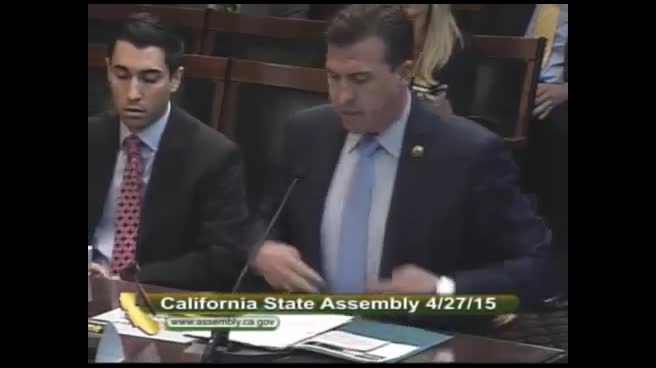 19MIN
Assembly Standing Committee on Natural Resources
Bill Author

Bill Co-Author(s):