AB 648: Common interest developments: procedures: meetings by teleconference.
- Session Year: 2023-2024
- House: Assembly
- Latest Version Date: 2023-09-22
Current Status:
Passed
(2023-09-22: Chaptered by Secretary of State - Chapter 203, Statutes of 2023.)
Introduced
In Committee
First Chamber
In Committee
Second Chamber
Enacted
Existing law, the Davis-Stirling Common Interest Development Act, governs the management and operation of common interest developments. Existing law defines a board meeting as a congregation or a teleconference, as provided. Existing law requires, among other things, a board meeting held by teleconference to identify at least one physical location so that members of the association may attend, except as provided. Existing law also establishes alternative teleconferencing procedures for a board meeting or a meeting of the members if gathering in person is unsafe or impossible because the common interest development is in an area affected by a federal, state, or local emergency.
This bill would authorize a board meeting or a meeting of the members to be conducted entirely by teleconference if specified conditions are satisfied. These conditions would include, among others, a requirement that the notice for the meeting provide clear instructions on how to participate by teleconference and would require each director and member to have the same ability to participate that would exist if the meeting were held in person. These teleconference provisions would not apply to a meeting at which ballots are counted and tabulated, as prescribed. The bill would make conforming changes and include related legislative findings.
Existing law, the Davis-Stirling Common Interest Development Act, governs the management and operation of common interest developments. Existing law defines a board meeting as a congregation or a teleconference, as provided. Existing law requires, among other things, a board meeting held by teleconference to identify at least one physical location so that members of the association may attend, except as provided. Existing law also establishes alternative teleconferencing procedures for a board meeting or a meeting of the members if gathering in person is unsafe or impossible because the common interest development is in an area affected by a federal, state, or local emergency.
This bill would authorize a board meeting or a meeting of the members to be conducted entirely by teleconference if specified conditions are satisfied. These conditions would include, among others, a requirement that the notice for the meeting provide clear instructions on how to participate by teleconference and would require each director and member to have the same ability to participate that would exist if the meeting were held in person. The bill would exempt from these These teleconference provisions would not apply to a meeting at which ballots are counted and tabulated, as prescribed, unless that meeting is conducted by video conference and the camera is placed in a location such that members can witness the inspector of elections counting and tabulating the votes. prescribed. The bill would make conforming changes and include related legislative findings.
Existing law, the Davis-Stirling Common Interest Development Act, governs the management and operation of common interest developments. Existing law defines a board meeting as a congregation or a teleconference, as provided. Existing law requires, among other things, a board meeting held by teleconference to identify at least one physical location so that members of the association may attend, except as provided. Existing law also establishes alternative teleconferencing procedures for a board meeting or a meeting of the members if gathering in person is unsafe or impossible because the common interest development is in an area affected by a federal, state, or local emergency.
This bill would authorize a board meeting or a meeting of the members to be conducted entirely by teleconference if specified conditions are satisfied. These conditions would include, among others, a requirement that the notice for the meeting provide clear instructions on how to participate by teleconference and would require each director and member to have the same ability to participate that would exist if the meeting were held in person. The bill would exempt from these teleconference provisions a meeting at which ballots are counted and tabulated, as prescribed, unless that meeting is conducted by video conference and the camera is placed in a location such that members can witness the inspector of elections counting and tabulating the votes. The bill would make conforming changes and include related legislative findings.
The Legislature finds and declares all of the following:
(a)Board meetings pursuant to the Davis-Stirling Common Interest Development Act that are held virtually, using telephone, audio-video, or other audio-only conferencing enable greater access for all members of the association.
(b)Virtual homeowner association meetings improve and enhance homeowner members ability to participate and comment on business-related matters of the association and their community.
(c)Virtual meetings should continue to be conducted in a manner that offers every member and director access equal to that offered by conventional meetings and be conducted consistent with notice and accessibility requirements.
SEC. 2.Section 4090 of the Civil Code is amended to read:4090.Board meeting means either of the following:
(a)A congregation, at the same time and place, of a sufficient number of directors to establish a quorum of the board, to hear, discuss, or deliberate upon any item of business that is within the authority of the board.
(b)A teleconference, where a sufficient number of directors to establish a quorum of the board, in different locations, are connected by electronic means, through audio or video, or both. A teleconference meeting shall be conducted in a manner that protects the rights of members of the association and otherwise complies with the requirements of this act. Except for a meeting that will be held solely in executive session or conducted under Section 4926 or 5450, the notice of the teleconference meeting shall identify at least one physical location so that members of the association may attend, and at least one director or a person designated by the board shall be present at that location. Participation by directors in a teleconference meeting constitutes presence at that meeting as long as all directors participating are able to hear one another, as well as members of the association speaking on matters before the board.
SEC. 3.Section 4926 is added to the Civil Code, to read:4926.(a)Notwithstanding any other law or the associations governing documents, a board meeting or meeting of the members may be conducted entirely by teleconference, without any physical location being held open for the attendance of any director or member, if all of the following conditions are satisfied:
(1)The notice for each meeting conducted under this section includes, in addition to other required content for meeting notices, all of the following:
(A)Clear technical instructions on how to participate by teleconference.
(B)The telephone number and electronic mail address of a person who can provide technical assistance with the teleconference process, both before and during the meeting.
(C)A reminder that a member may request individual delivery of meeting notices, with instructions on how to do so.
(2)Every director and member has the same ability to participate in the meeting that would exist if the meeting were held in person.
(3)Any vote of the directors shall be conducted by a roll call vote.
(4)Any person who is entitled to participate in the meeting shall be given the option of participating by telephone.
(b)Subdivision (a) does not apply to a meeting at which ballots are counted and tabulated pursuant to Section 5120.
The Legislature finds and declares all of the following:
(a)Board meetings pursuant to the Davis-Stirling Common Interest Development Act that are held virtually, using telephone, audio-video, or other audio-only conferencing enable greater access for all members of the association.
(b)Virtual homeowner association meetings improve and enhance homeowner members ability to participate and comment on business-related matters of the association and their community.
(c)Virtual meetings should continue to be conducted in a manner that offers every member and director access equal to that offered by conventional meetings and be conducted consistent with notice and accessibility requirements.
SEC. 2.Section 4090 of the Civil Code is amended to read:4090.Board meeting means either of the following:
(a)A congregation, at the same time and place, of a sufficient number of directors to establish a quorum of the board, to hear, discuss, or deliberate upon any item of business that is within the authority of the board.
(b)A teleconference, where a sufficient number of directors to establish a quorum of the board, in different locations, are connected by electronic means, through audio or video, or both. A teleconference meeting shall be conducted in a manner that protects the rights of members of the association and otherwise complies with the requirements of this act. Except for a meeting that will be held solely in executive session or conducted under Section 4926 or 5450, the notice of the teleconference meeting shall identify at least one physical location so that members of the association may attend, and at least one director or a person designated by the board shall be present at that location. Participation by directors in a teleconference meeting constitutes presence at that meeting as long as all directors participating are able to hear one another, as well as members of the association speaking on matters before the board.
SEC. 3.Section 4926 is added to the Civil Code, to read:4926.(a)Notwithstanding any other law or the associations governing documents, and except as provided in subdivision (b), a board meeting or meeting of the members may be conducted entirely by teleconference, without any physical location being held open for the attendance of any director or member, if all of the following conditions are satisfied:
(1)The notice for each meeting conducted under this section includes, in addition to other required content for meeting notices, all of the following:
(A)Clear technical instructions on how to participate by teleconference.
(B)The telephone number and electronic mail address of a person who can provide technical assistance with the teleconference process, both before and during the meeting.
(C)A reminder that a member may request individual delivery of meeting notices, with instructions on how to do so.
(2)Every director and member has the same ability to participate in the meeting that would exist if the meeting were held in person.
(3)Any vote of the directors shall be conducted by a roll call vote.
(4)Any person who is entitled to participate in the meeting shall be given the option of participating by telephone.
(b)Subdivision (a) does not apply to a meeting at which ballots are counted and tabulated pursuant to Section 5120, unless both of the following conditions are met: 5120.
(1)The meeting at which ballots are to be counted and tabulated is conducted by video conference.(2)The camera is placed in a location such that members can witness the inspector of elections counting and tabulating the votes.The Legislature finds and declares all of the following:
(a)Board meetings pursuant to the Davis-Stirling Common Interest Development Act that are held virtually, using telephone, audio-video, or other audio-only conferencing enable greater access for all members of the association.
(b)Virtual homeowner association meetings improve and enhance homeowner members ability to participate and comment on business-related matters of the association and their community.
(c)Virtual meetings should continue to be conducted in a manner that offers every member and director access equal to that offered by conventional meetings and be conducted consistent with notice and accessibility requirements.
SEC. 2.Section 4090 of the Civil Code is amended to read:4090.Board meeting means either of the following:
(a)A congregation, at the same time and place, of a sufficient number of directors to establish a quorum of the board, to hear, discuss, or deliberate upon any item of business that is within the authority of the board.
(b)A teleconference, where a sufficient number of directors to establish a quorum of the board, in different locations, are connected by electronic means, through audio or video, or both. A teleconference meeting shall be conducted in a manner that protects the rights of members of the association and otherwise complies with the requirements of this act. Except for a meeting that will be held solely in executive session or conducted under Section 4926 or 5450, the notice of the teleconference meeting shall identify at least one physical location so that members of the association may attend, and at least one director or a person designated by the board shall be present at that location. Participation by directors in a teleconference meeting constitutes presence at that meeting as long as all directors participating are able to hear one another, as well as members of the association speaking on matters before the board.
SEC. 3.Section 4926 is added to the Civil Code, to read:4926.(a)Notwithstanding any other law or the associations governing documents, and except as provided in subdivision (b), a board meeting or meeting of the members may be conducted entirely by teleconference, without any physical location being held open for the attendance of any director or member, if all of the following conditions are satisfied:
(1)The notice for each meeting conducted under this section includes, in addition to other required content for meeting notices, all of the following:
(A)Clear technical instructions on how to participate by teleconference.
(B)The telephone number and electronic mail address of a person who can provide technical assistance with the teleconference process, both before and during the meeting.
(C)A reminder that a member may request individual delivery of meeting notices, with instructions on how to do so.
(2)Every director and member has the same ability to participate in the meeting that would exist if the meeting were held in person.
(3)Any vote of the directors shall be conducted by a roll call vote.
(4)Any person who is entitled to participate in the meeting shall be given the option of participating by telephone.
(b)Subdivision (a) does not apply to a meeting at which ballots are counted and tabulated pursuant to Section 5120, unless both of the following conditions are met:
(1)The meeting at which ballots are to be counted and tabulated is conducted by video conference.
(2)The camera is placed in a location such that members can witness the inspector of elections counting and tabulating the votes.
|
Date
|
Status
|
|---|---|
| Sep 22, 2023 | Chaptered by Secretary of State - Chapter 203, Statutes of 2023. |
| Sep 22, 2023 | Approved by the Governor. |
| Sep 12, 2023 | Enrolled and presented to the Governor at 2 p.m. |
| Sep 5, 2023 | In Assembly. Ordered to Engrossing and Enrolling. |
| Sep 5, 2023 | Read third time. Passed. Ordered to the Assembly. (Ayes 38. Noes 0. Page 2354.). |
| Jun 22, 2023 | Read second time. Ordered to third reading. |
| Jun 21, 2023 | From committee: Do pass. (Ayes 11. Noes 0.) (June 20). |
| Jun 6, 2023 | From committee: Do pass and re-refer to Com. on JUD. (Ayes 11. Noes 0.) (June 6). Re-referred to Com. on JUD. |
| May 17, 2023 | Referred to Coms. on HOUSING and JUD. |
| May 9, 2023 | In Senate. Read first time. To Com. on RLS. for assignment. |
| May 8, 2023 | Read third time. Passed. Ordered to the Senate. (Ayes 72. Noes 0. Page 1484.) |
| Apr 24, 2023 | Read second time. Ordered to third reading. |
| Apr 20, 2023 | Read second time and amended. Ordered returned to second reading. |
| Apr 19, 2023 | From committee: Amend, and do pass as amended. (Ayes 8. Noes 0.) (April 19). |
| Feb 17, 2023 | Referred to Com. on H. & C.D. |
| Feb 10, 2023 | From printer. May be heard in committee March 12. |
| Feb 9, 2023 | Read first time. To print. |
|
Date
|
Description
|
Location
|
Votes
|
|
|---|---|---|---|---|
| Sep 5, 2023 | Assembly 3rd Reading AB648 Valencia et al. By Min | Senate Floor |
Passed |
|
| Jun 20, 2023 | Do pass | Senate Standing Committee on Judiciary |
Passed |
|
| Jun 6, 2023 | Do pass, but first be re-referred to the Committee on [Judiciary] | Senate Standing Committee on Housing |
Passed |
|
| May 8, 2023 | AB 648 Valencia Assembly Third Reading | Assembly Floor |
Passed |
|
| Apr 19, 2023 | Do pass as amended. | Assembly Standing Committee on Housing and Community Development |
Passed |
This list shows positions taken on this bill by organizations on the date displayed, which is linked to the original source.
Positions by individuals are not included.
|
Organization
|
Position
|
Date
|
|---|---|---|
| California Association Of Community Managers | ** Support | |
| California Association Of Realtors | ** Support | |
| Center For Homeowner Association Law | ** Against | |
| Community Association Institute - Channel Islands Chapter | ** Support | |
| Community Associations Institute - California Legislative Action Committee | ** Support | |
| Community Associations Institute – Orange County Regional Chapter | ** Support | |
| Condominium Financial Management, INC. | ** Support |
SENATE RULES COMMITTEE Office of Senate Floor Analyses (916) 651-1520 Fax: (916) 327-4478 | AB 648 |
THIRD READING
Bill No: AB 648
Author: Valencia (D), et al.
Amended: 4/20/23 in Assembly
Vote: 21
SENATE HOUSING COMMITTEE: 11-0, 6/6/23
AYES: Wiener, Ochoa Bogh, Blakespear, Caballero, Cortese, McGuire, Padilla, Seyarto, Skinner, Umberg, Wahab
SENATE JUDICIARY COMMITTEE: 11-0, 6/20/23
AYES: Umberg, Wilk, Allen, Ashby, Caballero, Durazo, Laird, Min, Niello, Stern, Wiener
ASSEMBLY FLOOR: 72-0, 5/8/23 - See last page for vote
SUBJECT: Common interest developments: procedures: meetings by teleconference
SOURCE: California Association of Community Managers
Community Associations Institute - California Legislative Action Committee
DIGEST:
This bill authorizes a homeowners association (HOA) to conduct a board or member meeting entirely by teleconference without any physical location, if certain conditions are met.
ANALYSIS:
Existing law:
- Establishes, within the Davis-Stirling Common Interest Development Act, rules and regulations governing the operation of a residential common interest development (CID) and the respective rights and duties of an HOA and its members.
- Prohibits an HOA board of directors from taking action on an item of business outside of a board meeting.
- Requires a board meeting held by teleconference identify at least one physical location for members to attend.
- Provides exceptions to requirement that a teleconferenced board meeting also hold open a physical location if affected by declared state of emergency by local, state, or federal government.
- Provides that all votes in a board election shall be counted and tabulated by the inspector or inspectors of elections in public at a properly noticed open meeting of the board or members. Any candidate or other member of the association may witness the counting and tabulation of the votes. No person, including a member of the association or an employee of the management company, shall open or otherwise review any ballot prior to the time and place at which the ballots are counted and tabulated.
This bill:
- Authorizes, notwithstanding any other law or HOA governing documents, an HOA to hold a board meeting or meeting of the members entirely by teleconference, without any physical location being held open for the attendance of any director or member, if all of the following conditions are met:
- The notice for each meeting conducted under this bill includes, in addition to other required content for meeting notices, all of the following:
- Clear technical instructions on how to participate by teleconference;
- The telephone number and email address of a person who can provide technical assistance with the teleconference process, both before and during the meeting; and
- A reminder that a member may request individual delivery of meeting notices, with instructions on how to do so.
- Every director and member has the same ability to participate in the meeting that would exist if the meeting were held in person;
- Any vote of the directors must be conducted by a roll call vote; and
- Any person who is entitled to participate in the meeting must be given the option of participating by telephone.
- The notice for each meeting conducted under this bill includes, in addition to other required content for meeting notices, all of the following:
- Prohibits a HOA from holding a meeting at which ballots are counted and tabulated solely by teleconference.
Background
Common Interest Developments. CIDs are a type of housing with separate ownership of housing units that also share common areas and amenities. There are a variety of different types of CIDs including condominium complexes, planned unit developments, and resident-owned mobilehome parks. In recent years, CIDs have represented a growing share of California's housing stock. Data from 2019 indicate that there are an estimated 54,065 CIDs in the state that are made up of 5 million housing units, or about 35% of the state's total housing stock. CIDs are regulated under the Davis-Stirling Act (Civil Code Section 4000 et seq.) as well as the governing documents of the HOA, including the bylaws, declaration, and operating rules. Additionally, HOAs include a board of directors and many HOAs use a managing agent to assist with finances, logistics, and the provision of other services to homeowners.
Procedures for HOA board meetings. For a regular HOA board meeting, notice of the time and location of the meeting is required to be provided at least four days in advance through general notice. Under the Davis-Stirling Act, although meetings may be conducted by telephone or video conference, in order to permit remote meetings, the board must identify a physical location at which HOA members can attend the meeting in-person and where at least one director or their designate will be present, and that location must be included in the general notice of the meeting. Existing law also provides that emergency board meetings may be convened using electronic transmission if all directors consent to such a meeting. If meetings are being conducted to count the votes of an HOA election, then additional procedural requirements apply. Existing law requires ballot counting to be performed at a live public meeting and that counting must be conducted by designated ballot inspectors.
Emergency exceptions. During several phases of the COVID-19 pandemic, HOAs across the state faced public health requirements mandating physical distancing to reduce transmission of the disease. While virtual board meetings became widespread at that time, the law did not enumerate specific processes for HOAs to use for this purpose. SB 391 (Min, Chapter 276, Statutes of 2021) was passed as an urgency statute to allow HOAs to hold meetings by teleconference if a federal, state, or local emergency declaration had been issued for the area. In such cases, HOAs are able to hold board meetings and member meetings without a physical location if certain criteria are met. Specifically, HOAs must provide individual notice of the first meeting that is conducted under the emergency powers for a particular disaster or emergency affecting the association. Additionally, the notice for all emergency meetings is required to include: clear technical instructions on participation via teleconference; the phone number and email address of an individual who can assist with the teleconference process, both before and during the meeting; and a reminder that a member may request individual delivery of meeting notices with instruction on how to make the request.
Emergency teleconference meetings also need to be held in a manner that gives every director and member the same ability to participate as they would in a conventional meeting. Votes of directors must be conducted by a roll call vote and any person who is entitled to participate in the meeting must be given the option of participating via phone. Finally, that bill outlined special procedures for teleconference HOA meetings where ballots are counted. In those situations, the declared emergency must be one that makes it unsafe or impossible for people to gather in person in order to count and tabulate ballots. Additionally, a meeting for counting ballots must be conducted by video conference and the camera must be angled to facilitate members being able to witness the vote count process.
Comments
- Author’s statement. According to the author, “AB 648 will increase access to homeowner association meetings by allowing meetings to take place remotely, if certain conditions are met. Homeowners have busy lives and attending evening HOA meetings is often difficult or not feasible due to scheduling conflicts or existing statutory requirements. As a result, it is not uncommon for these meetings to typically have low participation rates. Yet, significant resources are required to conduct such meetings. Typically, these meetings are staffed and in smaller associations, facilities must be rented out to accommodate such meetings. All these costs are paid for by assessments that the homeowners are required to pay. The COVID pandemic highlighted the ability to successfully perform tasks remotely, including conducting a board meeting or meeting of the members. Legislation enacted during the pandemic allowed an association to conduct meetings entirely by remote means. When associations began doing this, participation vastly increased. Not only was the ability to participate via teleconference now provided, but people also became comfortable with how to participate virtually.”
- Expanding remote meeting authorizations. This bill provides a nearly identical remote meeting process as the provisions established in SB 391. By expanding the remote meeting authorization to times when disasters or emergencies have not affected HOA meeting practices, this bill broadly provides HOA boards the latitude to determine how they want to hold board meetings – via an in-person process, a hybrid process, or an entirely remote teleconference process with no physical location.
This bill maintains the same protections on a resident's ability to participate in a teleconference meeting by requiring specific notice to be provided to HOA members with clear instructions for how to participate remotely, access to a live person able to assist with troubleshooting, and the option to participate via telephone if a member has internet connectivity issues or does not have access to the internet.
This bill includes legislative findings and declarations asserting that virtual board meetings enable greater access for HOA members, enhance their ability to participate and comment on matters of interest, and can be conducted in a manner that offers equal access to that offered by conventional in-person meetings so long as notice and accessibility requirements continue to be met. However, this bill does not permit HOAs to hold remote meetings to count ballots.
Related/Prior Legislation
SB 391 (Min, Chapter 276, Statutes of 2021) established alternative teleconferencing procedures for a board meeting or a meeting of the members if gathering in person is unsafe or impossible because the common interest development is in an area affected by a federal, state, or local emergency.
SB 323 (Wieckowski, Chapter 848, Statutes of 2019) established certain rights for HOA members to observe the counting and tabulation of HOA board election ballots.
SB 61 (Battin, Chapter 450, Statutes of 2005) enacted the basic requirements for conduct of an HOA, including access to association publications for candidates, appointment of an elections inspector, and the methods for conducting balloting.
FISCAL EFFECT: Appropriation: No Fiscal Com.: No Local: No
SUPPORT: (Verified 6/22/23)
California Association of Community Managers (co-source)
Community Associations Institute - California Legislative Action Committee (co-source)
California Association of Realtors
Community Association Institute - Channel Islands Chapter
Community Associations Institute - Orange County Regional Chapter
Condominium Financial Management, Inc.
OPPOSITION: (Verified 6/22/23)
None received
ASSEMBLY FLOOR: 72-0, 5/8/23
AYES: Addis, Aguiar-Curry, Alanis, Alvarez, Bains, Bauer-Kahan, Bennett, Berman, Boerner, Bonta, Bryan, Calderon, Wendy Carrillo, Chen, Connolly, Megan Dahle, Davies, Dixon, Essayli, Flora, Mike Fong, Vince Fong, Friedman, Gabriel, Gallagher, Garcia, Gipson, Grayson, Haney, Holden, Hoover, Irwin, Jackson, Jones-Sawyer, Kalra, Lackey, Low, Lowenthal, Maienschein, Mathis, McKinnor, Muratsuchi, Stephanie Nguyen, Pacheco, Papan, Jim Patterson, Joe Patterson, Pellerin, Petrie-Norris, Quirk-Silva, Ramos, Reyes, Luz Rivas, Robert Rivas, Rodriguez, Blanca Rubio, Sanchez, Santiago, Schiavo, Soria, Ta, Ting, Valencia, Villapudua, Waldron, Wallis, Weber, Wicks, Wilson, Wood, Zbur, Rendon
NO VOTE RECORDED: Arambula, Juan Carrillo, Cervantes, Hart, Lee, McCarty, Ortega, Ward
Prepared by: Aiyana Cortez / HOUSING / (916) 651-4124
6/23/23 12:29:06
**** END ****
Senator Thomas Umberg, Chair
2023-2024 Regular Session
Bill No: AB 648 (Author:Valencia)
Version: April 20, 2023
Hearing Date: June 20, 2023
Fiscal: No
Urgency: No
Consultant: AM
SUBJECT
Common interest developments: procedures: meetings by teleconference
DIGEST
This bill would authorize a homeowners’ association to conduct a board meeting entirely by teleconference if certain minimum standards are met.
EXECUTIVE SUMMARY
Residential common interest developments come in many physical formats, from small apartment buildings to vast subdivisions with single-family residences. What unites them is their combination of separately-owned housing units with shared common spaces and amenities, all governed by a homeowners’ association (HOA) and its elected board of directors. The HOA board’s primary duties are to levy annual assessments on the membership, authorize expenditures, set rules, and enforce them. To perform these duties, the board must conduct regular meetings carried out in accordance with the provisions of state law. As relevant to this bill, those laws currently require that, for any board meeting conducted by telephone or video conference, there must also be at least one physical location at which members can attend and where at least one director is present, except for during an officially declared disaster or emergency. This bill seeks to enact authority for board meetings to be held via teleconference without requiring a physical location at which members can attend and where at least one director is present, if certain conditions are met.
The bill is sponsored by the California Association of Community Managers and the Community Associations Institute-California Legislative Action Committee and supported by the California Association of Realtors. There is no known opposition.
PROPOSED CHANGES TO THE LAW
Existing law:
- Establishes, within the Davis-Stirling Common Interest Development Act, rules and regulations governing the operation of a residential common interest development (CID) and the respective rights and duties of an HOA and its members. (Civ. Code § 4000 et seq.)
2) Prohibits an HOA board of directors from taking action on an item of business outside of a board meeting. (Civ. Code § 4910(a).)
3) Defines a “board meeting” as either of the following:
a) a congregation, at the same time and place, of a sufficient number of directors to establish a quorum of the board, to hear, discuss, or deliberate upon any item of business that is within the authority of the board;
b) a teleconference, where a sufficient number of directors to establish a quorum of the board, in different locations, are connected by electronic means, through audio or video, or both. (Civ. Code § 4090.)
4) Requires all of the following in relation to a board meeting conducted by teleconference:
a) the meeting must be conducted in a manner that protects the rights of members of the association and complies with all other Davis-Stirling Act requirements;
b) participation by board members constitutes presence at the meeting as long as all directors participating can hear one another, as well as members of the association speaking on matters before the board;
c) the notice of the teleconference meeting must identify at least one physical location so that members of the association may attend and at least one director or a person designated by the board is present at that location. (Civ. Code § 4090(b).)
5) Provides that any HOA member may attend a board meeting, except while it is in executive session, and that any HOA member is entitled to attend a teleconference meeting, which shall be audible to the members in a location specified in the meeting notice. (Civ. Code § 4925.)
6) Requires an HOA to provide general notice of the time and place of a board meeting at least four days before a meeting, except as follows:
a) only two days’ notice is required for a non-emergency board meeting that is held solely in executive session;
b) no notice is required for an emergency meeting, as defined. (Civ. Code § 4920.)
7) Provides that if an HOA must provide “individual notice” of a meeting, it shall deliver the notice by mail or overnight delivery unless the recipient has consented to delivery by email, facsimile, or other electronic means. (Civ. Code § 4040(a).)
8) Provides that if an HOA must provide “general notice” of a meeting, it may deliver the notice by any of the following means:
a) any method constituting individual notice;
b) including the notice in a billing statement, newsletter, or other document;
c) posting the notice in a prominent location that is accessible to all members, as specified; or
d) television broadcast, if the association broadcasts television programming. (Civ. Code § 4045(a).)
9) Requires an HOA to provide all general notices by individual notice if a member requests it. (Civ. Code § 4045(b).)
10) Provides that all votes in a board election shall be counted and tabulated by the inspector or inspectors of elections in public at a properly noticed open meeting of the board or members. Any candidate or other member of the association may witness the counting and tabulation of the votes. No person, including a member of the association or an employee of the management company, shall open or otherwise review any ballot prior to the time and place at which the ballots are counted and tabulated. (Civ. Code § 5120(a).)
11) Provides that a board meeting may be conducted entirely by teleconference during an officially declared disaster or emergency if certain conditions are met. (Civ. Code § 5450.)
This bill:
- Authorizes HOA boards to meet by teleconference without any physical location being held open where HOA members may attend, notwithstanding any other law or the association’s governing documents, provided that the notice for each meeting, in addition to any other required content for meeting notices, includes all of the following:
clear technical instructions on how to participate by teleconference;
the telephone number and electronic mail address of a person who can provide technical assistance with the teleconference process, both before and during the meeting; and
a reminder that a member may request individual delivery of meeting notices, with instructions on how to do so.
- Authorizes HOA boards to meet by teleconference without any physical location being held open where HOA members may attend, notwithstanding any other law or the association’s governing documents, provided that all of the following are met:
every director and member has the same ability to participate in the meeting that would exist if the meeting were held in person;
any vote of the directors is conducted by a roll call vote; and
any person who is entitled to participate in the meeting must be given the option of participating by telephone.
- Provides that these provisions do not apply to a meeting in which ballots are counted and tabulated, as specified.
- Makes the following findings and declarations:
board meetings pursuant to the Davis-Stirling Common Interest Development Act that are held virtually, using telephone, audio-video, or other audio-only conferencing enable greater access for all members of the association;
virtual homeowner association meetings improve and enhance homeowner members’ ability to participate and comment on business-related matters of the association and their community; and
virtual meetings should continue to be conducted in a manner that offers every member and director access equal to that offered by conventional meetings and be conducted consistent with notice and accessibility requirements.
COMMENTS
- Stated need for the bill
The author writes:
AB 648 will increase access to homeowner association meetings by allowing meetings to take place remotely, if certain conditions are met.
Homeowners have busy lives and attending evening HOA meetings is often difficult or not feasible due to scheduling conflicts or existing statutory requirements. As a result, it is not uncommon for these meetings to typically have low participation rates. Yet, significant resources are required to conduct such meetings. Typically, these meetings are staffed and in smaller associations, facilities must be rented out to accommodate such meetings. All these costs are paid for by assessments that the homeowners are required to pay.
The COVID pandemic highlighted the ability to successfully perform tasks remotely, including conducting a board meeting or meeting of the members. Legislation enacted during the pandemic allowed an association to conduct meetings entirely by remote means. When associations began doing this, participation vastly increased. Not only was the ability to participate via teleconference now provided, but people also became comfortable with how to participate virtually.
- Background
- Common interest developments
Common interest developments (CIDs) are self-governing groups of dwellings that share common spaces and amenities. They come in a wide variety of physical layouts: condominium complexes, apartment buildings, and neighborhoods of detached, single-family residences, for example. Some consist of thousands of units. Others are made up of just a handful. Dwellings within common housing developments currently account for approximately a quarter of the state’s overall housing stock, meaning that the laws governing such developments have a large impact on the population. In California, CIDs are primarily governed by the Davis-Stirling Act. (Civ. Code §§ 4000-6150.)
The Davis-Stirling Act sets forth a system for each CID to govern itself through a homeowners’ association (HOA). The owners of the separate properties within the CID are the members of the HOA. Association members vote for the board of directors of the HOA. The board manages the HOA, frequently by hiring an individual or entity – the property manager – to do so on its behalf. The board determines the annual assessments – much like taxes – that members must pay in order to cover communal expenses. The board enforces the community rules and can propose and make changes to those rules. If members do not pay their assessments in full or on time, or if members violate the community rules, the board has the power to fine the members, place liens on the offending member’s property, and, if ultimately necessary, the power to foreclose. This array of responsibilities and powers has led multiple courts to observe that HOAs function in many ways almost “as a second municipal government, regulating many aspects of [the homeowners’] daily lives.” (Villa Milano Homeowners Ass’n v. Il Davorge (2000) 84 Cal.App.4th 819, 836 [citations omitted].)
- HOA board meeting requirements
HOA boards must carry out the functions described above, through formal board meetings. (Civ. Code § 4910.) The Common Interest Development Open Meetings Act sets forth certain basic ground rules for how these meetings must be noticed, conducted, and memorialized. (Civ. Code § 4900 et seq.) Ordinarily, the board must provide at least four days’ general notice to the HOA members of the time and place at which the board meeting will take place, as well the agenda for the meeting. (Civ. Code § 4920.) The meeting can be conducted by telephone or video conference, but if it is, the board must identify a physical location at which HOA members can attend the meeting in-person and where at least one director or their designate will be present. (Civ. Code § 4090(b).) That location must be included in the notice of the meeting. (Ibid.)
If an HOA board violates the requirements contained in the Common Interest Development Open Meetings Act, homeowners have a clear set of remedies. They can file a civil action against the HOA seeking declaratory or equitable relief, including an injunction ordering the HOA to comply. (Civ. Code § 4955(a).) The Act also entitles a prevailing homeowner to reasonable attorney’s fees and court costs. In addition, the court may impose civil penalties on the HOA for having violated the meeting requirements. (Civ. Code § 4955(b).)
- This bill authorizes HOA boards to meet by teleconference without any physical location being held open where HOA members may attend
Last year the Legislature passed a bill to allow HOA boards to meet via teleconference without a physical location during an officially declared disaster or emergency. This bill seeks to go beyond those provisions and generally allow board meetings to be conducted via teleconference without a physical location for members of the HOA to attend if certain conditions are met. These conditions include:
- The notice for the meeting, in addition to any other existing notice requirements, must have: clear technical instructions on how to participate by teleconference, the telephone number and email of a person who can provide technical assistance with the teleconference process, both before and during the meeting, and a reminder that a member may request individual delivery of meeting notices, with instructions on how to do so.
- Every director and member has the same ability to participate in the meeting that would exist if the meeting were held in person.
- Any vote of the directors is to be conducted by a roll call vote.
- Any person who is entitled to participate in the meeting must be given the option of participating by telephone.
- This authorization cannot be used for a meeting at which ballots are counted and tabulated.
The author and sponsors of the bill claim that the physical location requirement in current law is burdensome for communities and that often times no one turns up to the physical location, which wastes time and resources. They posit that this bill will provide HOA boards more freedom to determine how to hold board meetings that better suit the needs of their communities.
- Statements in support
The California Association of Community Managers, a sponsor of the bill, writes:
In every instance, associations report significant increases in participation when members were no longer required to participate in person. People have busy lives and homeowner association meetings, often conducted in the evenings, are difficult to attend. They often take a lower priority to work and family obligations. Yet association business impacts one of the most fundamental and personal aspects of a member’s life: their quality of living and home investment.
Making it easier for a member to engage on issues related to the maintenance, safety and quality of their communities is critical. This is from both the perspective as a homeowner but also as a board member, as it expands the ability for members to serve on the board where they may not have been able to before. AB 648 would allow homeowners to engage while at the same time providing guardrails such as requiring each member to have the same ability to participate if a meeting were held in person, ensuring notices, clear instructions and technical assistance are provided, and requiring that any ballot counting be done via video conference where members can witness the counting and tabulating of votes.
SUPPORT
California Association of Community Managers (sponsor)
Community Associations Institute-California Legislative Action Committee (sponsor)
California Association of Realtors
OPPOSITION
None known
RELATED LEGISLATION
Pending Legislation: None known.
Prior Legislation:
SB 391 (Min, Ch. 276, Stats. 2021) established an alternative set of minimum procedural standards for conducting homeowners’ association meetings by video or telephone conference during an officially declared disaster or emergency.
SB 323 (Wieckowski, Ch. 848, Stats. 2019) enacted a series of reforms to the laws governing homeowners’ association board of directors elections in common interest developments. In broad strokes, the reforms increased the regularity, fairness, formality, and transparency associated with such elections. As relevant to this bill, the bill established certain rights for HOA members to observe the counting and tabulation of HOA board election ballots.
SB 61 (Battin, Ch. 450, Stats. 2005) enacted the basic requirements for conduct of an HOA, including access to association publications for candidates, appointment of an elections inspector, and the methods for conducting balloting.
PRIOR VOTES
Assembly Floor (Ayes 72, Noes 0)
Assembly Housing and Community Development Committee (Ayes 8, Noes 0)
**************
SENATE COMMITTEE ON HOUSING
Senator Scott Wiener, Chair
2023 - 2024 Regular
Bill No: AB 648 Hearing Date: 6/6/2023
Author: | Valencia | ||
Version: | 4/20/2023 | ||
Urgency: | No | Fiscal: | No |
Consultant: | Aiyana Cortez | ||
SUBJECT: Common interest developments: procedures: meetings by teleconference
DIGEST: This bill authorizes a homeowners association (HOA) to hold board meetings or member meetings entirely by teleconference without any physical location, if certain conditions are met.
ANALYSIS:
Existing law:
- Governs the management and operation of common interest developments (CIDs) under the Davis-Stirling Common Interest Development Act.
- Requires a board meeting held by teleconference identify at least one physical location for members to attend.
- Provides exceptions to requirement that a teleconferenced board meeting also hold open a physical location if affected by declared state of emergency by local, state, or federal government.
This bill:
- Authorizes, notwithstanding any other law or HOA governing documents, an HOA to hold a board meeting or meeting of the members entirely by teleconference, without any physical location being held open for the attendance of any director or member, if all of the following conditions are met:
- The notice for each meeting conducted under this bill includes, in addition to other required content for meeting notices, all of the following:
- Clear technical instructions on how to participate by teleconference;
- The telephone number and email address of a person who can provide technical assistance with the teleconference process, both before and during the meeting; and
- A reminder that a member may request individual delivery of meeting notices, with instructions on how to do so.
- Every director and member has the same ability to participate in the meeting that would exist if the meeting were held in person;
- Any vote of the directors must be conducted by a roll call vote; and
- Any person who is entitled to participate in the meeting must be given the option of participating by telephone.
- The notice for each meeting conducted under this bill includes, in addition to other required content for meeting notices, all of the following:
- Prohibits a HOA from holding a meeting at which ballots are counted and tabulated solely by teleconference.
COMMENTS:
- Author’s statement. “AB 648 will increase access to homeowner association meetings by allowing meetings to take place remotely, if certain conditions are met. Homeowners have busy lives and attending evening HOA meetings is often difficult or not feasible due to scheduling conflicts or existing statutory requirements. As a result, it is not uncommon for these meetings to typically have low participation rates. Yet, significant resources are required to conduct such meetings. Typically, these meetings are staffed and in smaller associations, facilities must be rented out to accommodate such meetings. All these costs are paid for by assessments that the homeowners are required to pay. The COVID pandemic highlighted the ability to successfully perform tasks remotely, including conducting a board meeting or meeting of the members. Legislation enacted during the pandemic allowed an association to conduct meetings entirely by remote means. When associations began doing this, participation vastly increased. Not only was the ability to participate via teleconference now provided, but people also became comfortable with how to participate virtually.”
- Common Interest Developments. CIDs are a type of housing with separate ownership of housing units that also share common areas and amenities. There are a variety of different types of CIDs including condominium complexes, planned unit developments, and resident-owned mobilehome parks. In recent years, CIDs have represented a growing share of California's housing stock. Data from 2019 indicate that there are an estimated 54,065 CIDs in the state that are made up of 5 million housing units, or about 35% of the state's total housing stock. CIDs are regulated under the Davis-Stirling Act (Civil Code Section 4000 et seq.) as well as the governing documents of the HOA, including the bylaws, declaration, and operating rules. Additionally, HOAs include a board of directors and many HOAs use a managing agent to assist with finances, logistics, and the provision of other services to homeowners.
- Procedures for HOA board meetings. For a regular HOA board meeting, notice of the time and location of the meeting is required to be provided at least four days in advance through general notice. Under the Davis-Stirling Act, although meetings may be conducted by telephone or video conference, in order to permit remote meetings, the board must identify a physical location at which HOA members can attend the meeting in-person and where at least one director or their designate will be present, and that location must be included in the general notice of the meeting. Existing law also provides that emergency board meetings may be convened using electronic transmission if all directors consent to such a meeting. If meetings are being conducted to count the votes of an HOA election, then additional procedural requirements apply. Existing law requires ballot counting to be performed at a live public meeting and that counting must be conducted by designated ballot inspectors.
- Emergency exceptions. During several phases of the COVID-19 pandemic, HOAs across the state faced public health requirements mandating physical distancing to reduce transmission of the disease. While virtual board meetings became widespread at that time, the law did not enumerate specific processes for HOAs to use for this purpose. SB 391 (Min, Chapter 276, Statutes of 2021) was passed as an urgency statute to allow HOAs to hold meetings by teleconference if a federal, state, or local emergency declaration had been issued for the area. In such cases, HOAs are able to hold board meetings and member meetings without a physical location if certain criteria are met. Specifically, HOAs must provide individual notice of the first meeting that is conducted under the emergency powers for a particular disaster or emergency affecting the association. Additionally, the notice for all emergency meetings is required to include: clear technical instructions on participation via teleconference; the phone number and email address of an individual who can assist with the teleconference process, both before and during the meeting; and a reminder that a member may request individual delivery of meeting notices with instruction on how to make the request.
Emergency teleconference meetings also need to be held in a manner that gives every director and member the same ability to participate as they would in a conventional meeting. Votes of directors must be conducted by a roll call vote and any person who is entitled to participate in the meeting must be given the option of participating via phone. Finally, that bill outlined special procedures for teleconference HOA meetings where ballots are counted. In those situations, the declared emergency must be one that makes it unsafe or impossible for people to gather in person in order to count and tabulate ballots. Additionally, a meeting for counting ballots must be conducted by video conference and the camera must be angled to facilitate members being able to witness the vote count process.
- Expanding remote meeting authorizations. This bill provides a nearly identical remote meeting process as the provisions established in SB 391. By expanding the remote meeting authorization to times when disasters or emergencies have not affected HOA meeting practices, this bill would broadly provide HOA boards the latitude to determine how they want to hold board meetings – via an in-person process, a hybrid process, or an entirely remote teleconference process with no physical location.
The bill maintains the same protections on a resident's ability to participate in a teleconference meeting by requiring specific notice to be provided to HOA members with clear instructions for how to participate remotely, access to a live person able to assist with troubleshooting, and the option to participate via telephone if a member has internet connectivity issues or does not have access to the internet.
The bill includes legislative findings and declarations asserting that virtual board meetings enable greater access for HOA members, enhance their ability to participate and comment on matters of interest, and can be conducted in a manner that offers equal access to that offered by conventional in-person meetings so long as notice and accessibility requirements continue to be met. However, the bill does not permit HOAs to hold remote meetings to count ballots.
- Double-referral. This bill was also referred to the Senate Judiciary Committee.
Related Legislation:
SB 391 (Min, Chapter 276, Statutes of 2021) — established alternative teleconferencing procedures for a board meeting or a meeting of the members if gathering in person is unsafe or impossible because the common interest development is in an area affected by a federal, state, or local emergency.
FISCAL EFFECT: Appropriation: No Fiscal Com.: No Local: No
POSITIONS: (Communicated to the committee before noon on Wednesday,
May 31, 2023.)
SUPPORT:
California Association of Community Managers (CACM)
Community Association Institute - Channel Islands Chapter
Community Associations Institute - California Legislative Action Committee
Community Associations Institute - Orange County Regional Chapter
Condominium Financial Management, INC.
OPPOSITION:
None received.
-- END --
ASSEMBLY THIRD READING
ATR Bill Id:AB 648
Author:(Valencia)
As Amended Ver:April 20, 2023
Majority vote
SUMMARY
Authorizes a homeowners association (HOA) to hold board meetings or member meetings entirely by teleconference without any physical location if certain conditions are met.
Major Provisions
- Authorizes, notwithstanding any other law or HOA governing documents, an HOA to hold a board meeting or meeting of the members entirely by teleconference, without any physical location being held open for the attendance of any director or member, if all of the following conditions are met:
- The notice for each meeting conducted under this bill includes, in addition to other required content for meeting notices, all of the following:
- Clear technical instructions on how to participate by teleconference;
- The telephone number and email address of a person who can provide technical assistance with the teleconference process, both before and during the meeting; and
- A reminder that a member may request individual delivery of meeting notices, with instructions on how to do so.
- Every director and member has the same ability to participate in the meeting that would exist if the meeting were held in person;
- Any vote of the directors must be conducted by a roll call vote; and
- Any person who is entitled to participate in the meeting must be given the option of participating by telephone.
- The notice for each meeting conducted under this bill includes, in addition to other required content for meeting notices, all of the following:
- Prohibits a HOA from holding a meeting at which ballots are counted and tabulated solely by teleconference.
COMMENTS
Common Interest Developments (CIDs): CIDs are a type of housing with separate ownership of housing units that also share common areas and amenities. There are a variety of different types of CIDs including condominium complexes, planned unit developments, and resident-owned mobilehome parks. In recent years, CIDs have represented a growing share of California's housing stock. Data from 2019 indicate that there are an estimated 54,065 CIDs in the state that are made up of 5 million housing units, or about 35% of the state's total housing stock. CIDs are regulated under the Davis-Stirling Act (Civil Code Section 4000 et seq.) as well as the governing documents of the HOA, including the bylaws, declaration, and operating rules. Additionally, HOAs include a board of directors and many HOAs use a managing agent to assist with finances, logistics, and the provision of other services to homeowners.
Procedures for HOA board meetings and COVID-19 disruptions: For a regular HOA board meeting, notice of the time and location of the meeting is required to be provided at least four days in advance through general notice. Under the Davis-Stirling Act, although meetings may be conducted by telephone or video conference, in order to permit remote meetings, the board must identify a physical location at which HOA members can attend the meeting in-person and where at least one director or their designate will be present, and that location must be included in the general notice of the meeting. Existing law also provides that emergency board meetings may be convened using electronic transmission if all directors consent to such a meeting.
If meetings are being conducted to count the votes of an HOA election, then additional procedural requirements apply. Existing law requires ballot counting to be performed at a live public meeting and that counting must be conducted by designated ballot inspectors.
During several phases of the COVID-19 pandemic, HOAs across the state faced public health requirements mandating physical distancing to reduce transmission of the disease. While virtual board meetings became widespread at that time, the law did not enumerate specific processes for HOAs to use for this purpose. SB 391 (Min), Chapter 276, Statutes of 2021, was passed as an urgency statute to allow HOAs to hold meetings by teleconference if a federal, state, or local emergency declaration has been issued for the area. In such cases, HOAs are now able to hold board meetings and member meetings without a physical location if certain criteria are met. Specifically, HOAs must provide individual notice of the first meeting that is conducted under the emergency powers for a particular disaster or emergency affecting the association. Additionally, the notice for all emergency meetings is required to include: clear technical instructions on participation via teleconference; the phone number and email address of an individual who can assist with the teleconference process, both before and during the meeting; and a reminder that a member may request individual delivery of meeting notices with instruction on how to make the request.
Emergency teleconference meetings also need to be held in a manner that gives every director and member the same ability to participate as they would in a conventional meeting. Votes of directors must be conducted by a roll call vote and any person who is entitled to participate in the meeting must be given the option of participating via phone. Finally, that bill outlined special procedures for teleconference HOA meetings where ballots are counted. In those situations, the declared emergency must be one that makes it unsafe or impossible for people to gather in person in order to count and tabulate ballots. Additionally, a meeting for counting ballots must be conducted by video conference and the camera must be angled to facilitate members being able to witness the vote count process.
Key Provisions of This Bill: This bill provides a nearly identical remote meeting process as the provisions established in SB 391. By expanding the remote meeting authorization to times when disasters or emergencies have not affected HOA meeting practices, this bill would broadly provide HOA boards the latitude to determine how they want to hold board meetings – via an in-person process, a hybrid process, or an entirely remote teleconference process with no physical location.
The bill maintains the same protections on a resident's ability to participate in a teleconference meeting by requiring specific notice to be provided to HOA members with clear instructions for how to participate remotely, access to a live person able to assist with troubleshooting, and the option to participate via telephone if a member has internet connectivity issues or does not have access to the internet.
The bill includes legislative findings and declarations asserting that virtual board meetings enable greater access for HOA members, enhance their ability to participate and comment on matters of interest, and can be conducted in a manner that offers equal access to that offered by conventional in-person meetings so long as notice and accessibility requirements continue to be met. However, the bill does not permit HOAs to hold remote meetings to count ballots.
According to the Author
"AB 648 will increase access to homeowner association meetings by allowing meetings to take place remotely, if certain conditions are met. Homeowners have busy lives and attending evening HOA meetings is often difficult or not feasible due to scheduling conflicts or existing statutory requirements. As a result, it is not uncommon for these meetings to typically have low participation rates. Yet, significant resources are required to conduct such meetings. Typically, these meetings are staffed and in smaller associations, facilities must be rented out to accommodate such meetings. All these costs are paid for by assessments that the homeowners are required to pay. The COVID pandemic highlighted the ability to successfully perform tasks remotely, including conducting a board meeting or meeting of the members. Legislation enacted during the pandemic allowed an association to conduct meetings entirely by remote means. When associations began doing this, participation vastly increased. Not only was the ability to participate via teleconference now provided, but people also became comfortable with how to participate virtually."
Arguments in Support
According to the California Association of Community Managers, a cosponsor, "Making it easier for a member to engage on issues related to the maintenance, safety and quality of their communities is critical. This is from both the perspective as a homeowner but also as a board member, as it expands the ability for members to serve on the board where they may not have been able to before. AB 648 would allow homeowners to engage while at the same time providing guardrails such as requiring each member to have the same ability to participate if a meeting were held in person, ensuring notices, clear instructions and technical assistance are provided, and requiring that any ballot counting be done via video conference where members can witness the counting and tabulating of votes. Association operations are funded by homeowner assessments. All costs of holding an in-person meeting, which are typically poorly attended, are borne by the homeowners. Costs such as staffing for the meeting, renting out a facility to hold the meeting, and security are costs that could be spared if homeowners don't have to attend in person. In a time of skyrocketing insurance costs and inflation, we should be looking for efficiencies that don't unnecessarily impact association budgets. AB 672 would save homeowners money, while at the same time increasing meeting participation."
Arguments in Opposition
According to the Center for Homeowner Association Law, "[I]n promoting meetings by teleconference, AB648 glosses over the fact that at least half of California still exists within the 'digital divide' – some would say 'digital abyss' – meaning that thousands of associations are in areas where teleconferences and even cell service is unreliable if nonexistent. The legislation proposes that the counting of ballots can be accomplished by 'pointing a camera at it,' but obviously this can't be done in the 'digital divide,' nor can it be 'witnessed' by a homeowner who – lacking internet service or a computer – has called in by phone. Scrapping the physical location for member and board meetings was initially proposed via SB391/Min with the understanding – the promise – that this was a temporary measure to be taken during the pandemic in order to preserve public health. As we all know, the Governor has declared the emergency over. It's time also to scrap a statute which defeats transparency and accountability in association elections."
FISCAL COMMENTS
None.
VOTES
ASM HOUSING AND COMMUNITY DEVELOPMENT: 8-0-0
YES: Wicks, Joe Patterson, Wendy Carrillo, Zbur, Kalra, Quirk-Silva, Sanchez, Ward
UPDATED
VERSION: April 20, 2023
CONSULTANT: Nicole Restmeyer / H. & C.D. / (916) 319-2085 FN: 0000234
Date of Hearing: April 19, 2023
ASSEMBLY COMMITTEE ON HOUSING AND COMMUNITY DEVELOPMENT
Buffy Wicks, Chair
ABPCA Bill Id:AB 648 (
Author:Valencia) – As Introduced Ver:February 9, 2023
SUBJECT: Common interest developments: procedures: meetings by teleconference
SUMMARY: Authorizes a homeowners association (HOA) to hold board meetings or member meetings entirely by teleconference without any physical location if certain conditions are met. Specifically, this bill:
- Authorizes, notwithstanding any other law or HOA governing documents, an HOA to hold a board meeting or meeting of the members entirely by teleconference, without any physical location being held open for the attendance of any director or member, if all of the following conditions are met:
- The notice for each meeting conducted under this bill includes, in addition to other required content for meeting notices, all of the following:
- Clear technical instructions on how to participate by teleconference;
- The telephone number and email address of a person who can provide technical assistance with the teleconference process, both before and during the meeting; and
- A reminder that a member may request individual delivery of meeting notices, with instructions on how to do so.
- Every director and member has the same ability to participate in the meeting that would exist if the meeting were held in person;
- Any vote of the directors must be conducted by a roll call vote; and
- Any person who is entitled to participate in the meeting must be given the option of participating by telephone.
- The notice for each meeting conducted under this bill includes, in addition to other required content for meeting notices, all of the following:
- Authorizes an HOA to hold a meeting at which ballots are counted and tabulated entirely by teleconference without any physical location only if the meeting is conducted by video conference, and the camera is placed in a location such that members can witness the inspector of elections counting and tabulating the votes.
EXISTING LAW:
- Establishes the Davis-Stirling Common Interest Development Act, which provides rules and regulations governing the operation of residential common interest developments (CIDs) and the rights and responsibilities of HOAs and HOA members. (Civil Code (CC) Section 4000 et seq.)
- Specifies that if the HOA is required to deliver a document by “individual delivery” or “individual notice,” the document must be delivered by one of the following methods:
- First-class mail, postage prepaid, registered or certified mail, express mail, or overnight delivery by an express service carrier. The document must be addressed to the recipient at the address last shown on the books of the association; or
- Email, facsimile, or other electronic means, if the recipient has consented, in writing or by email, to that method of delivery. The consent may be revoked, in writing or by email, by the recipient. (CC 4040(a))
- Requires an owner of a separate interest to provide, on an annual basis, written notice to the HOA of all of the following:
- The address or addresses to which notices from the association are to be delivered;
- An alternate or secondary address to which notices from the association are to be delivered;
- The name and address of the owner’s legal representative, if any, including any person with power of attorney or other person who can be contacted in the event of the owner’s extended absence from the separate interest; and
- Whether the separate interest is owner-occupied, is rented out, if the parcel is developed but vacant, or if the parcel is undeveloped land. (CC 4041(a))
- Requires an HOA to provide notice of the time and place of a board meeting at least four days before a meeting and at least two days before a non-emergency board meeting that is held solely in executive session. (CC 4920)
- Permits an HOA’s board to hold an emergency board meeting using electronic transmission if all directors consent in writing to that action, and if the written consent is filed with the minutes of the board meeting. (CC 4910)
- States that any HOA member may attend a board meeting, except for an executive session. Provides that any HOA member is entitled to attend a teleconference meeting, which must be audible to the members in a location specified in the meeting notice. (CC 4925)
- Specifies that all votes must be counted and tabulated by the inspector or inspectors of elections, or the designee of the inspector of elections, in public at a properly noticed open meeting of the board or members. (CC 5120)
- Authorizes board meetings or member meetings to be conducted entirely by teleconference, without any physical location, in the event that gathering in person is unsafe or impossible because of a state of disaster or emergency and the HOA meets all of the following conditions:
- Notice of the first meeting conducted under this authorization is delivered to members by individual delivery;
- The notice for each meeting conducted under this authorization includes clear technical instructions on how to participate by teleconference, the telephone number and email address of a person who can provide technical assistance before and during the meeting, and a reminder that a member may request individual delivery of meeting notices;
- Every director and member has the same ability to participate in the meeting that would exist if the meeting were held in person;
- Any vote of the directors must be conducted by roll call vote; and
- Any person who is entitled to participate in the meeting must be given the option of participating by telephone. (CC 5450)
- Provides, pursuant to 8), a limited authorization for an HOA to hold a ballot counting meeting by video conference if the camera is placed in a location such that members can witness the inspector of elections counting and tabulating the votes. (CC 5450(d))
FISCAL EFFECT: None.
COMMENTS:
Author’s Statement: According to the author, “AB 648 will increase access to homeowner association meetings by allowing meetings to take place remotely, if certain conditions are met. Homeowners have busy lives and attending evening HOA meetings is often difficult or not feasible due to scheduling conflicts or existing statutory requirements. As a result, it is not uncommon for these meetings to typically have low participation rates. Yet, significant resources are required to conduct such meetings. Typically, these meetings are staffed and in smaller associations, facilities must be rented out to accommodate such meetings. All these costs are paid for by assessments that the homeowners are required to pay. The COVID pandemic highlighted the ability to successfully perform tasks remotely, including conducting a board meeting or meeting of the members. Legislation enacted during the pandemic allowed an association to conduct meetings entirely by remote means. When associations began doing this, participation vastly increased. Not only was the ability to participate via teleconference now provided, but people also became comfortable with how to participate virtually.”
Common Interest Developments: CIDs are a type of housing with separate ownership of housing units that also share common areas and amenities. There are a variety of different types of CIDs including condominium complexes, planned unit developments, and resident-owned mobilehome parks. In recent years, CIDs have represented a growing share of California’s housing stock. Data from 2019 indicate that there are an estimated 54,065 CIDs in the state that are made up of 5 million housing units, or about 35 percent of the state’s total housing stock.
CIDs are regulated under the Davis-Stirling Act (Civil Code Section 4000 et seq.) as well as the governing documents of the HOA, including the bylaws, declaration, and operating rules. CIDs can also have Covenants, Conditions, and Restrictions (CC&Rs) which are filed with the county recorder at the time they are established. Owners in a CID are contractually obligated to abide by the CC&Rs and the governing documents of a CID, which specify rules, such as how an owner can modify their home. Additionally, HOAs include a board of directors and many HOAs use a managing agent to assist with finances, logistics, and the provision of other services to homeowners.
Procedures for HOA board meetings and COVID-19 disruptions: For a regular HOA board meeting, notice of the time and location of the meeting is required to be provided at least four days in advance through general notice. Under the Davis-Stirling Act, although meetings may be conducted by telephone or video conference, in order to permit remote meetings, the board must identify a physical location at which HOA members can attend the meeting in-person and where at least one director or their designate will be present, and that location must be included in the general notice of the meeting. Existing law also provides that emergency board meetings may be convened using electronic transmission if all directors consent to such a meeting.
If meetings are being conducted to count the votes of an HOA election, then additional procedural requirements apply. Existing law requires ballot counting to be performed at a live public meeting and that counting must be conducted by designated ballot inspectors. Furthermore, existing law prohibits any election inspector, board member, association staff, or association member from opening or otherwise reviewing any ballot prior to the time and place at which the ballots are counted and tabulated, as designated in the meeting’s general notice. Additionally, ballots must be retained by the association for the three fiscal years after the election, and any challenge to the election results must be brought within one year of the votes being tabulated.
During several phases of the COVID-19 pandemic, HOAs across the state faced public health requirements mandating physical distancing to reduce transmission of the disease. While virtual board meetings became widespread at that time, the law did not enumerate specific processes for HOAs to use for this purpose. As a result, the California Law Revision Commission (CLRC), an independent state entity that assists the Legislature and Governor by examining California law and recommending needed reforms, set out to review the procedures utilized by HOAs during states of emergency.
The recommendations from this review ultimately became SB 391 (Min, Chapter 276, Statutes of 2021), which allows HOAs to hold meetings by teleconference if a federal, state, or local emergency declaration has been issued for the area. In such cases, HOAs are now able to hold board meetings and member meetings without a physical location if certain criteria are met. Specifically, HOAs must provide individual notice of the first meeting that is conducted under the emergency powers for a particular disaster or emergency affecting the association. Additionally, the notice for all emergency meetings is required to include: clear technical instructions on participation via teleconference; the phone number and email address of an individual who can assist with the teleconference process, both before and during the meeting; and a reminder that a member may request individual delivery of meeting notices with instruction on how to make the request.
Emergency teleconference meetings also need to be held in a manner that gives every director and member the same ability to participate as they would in a conventional meeting. Votes of directors must be conducted by a roll call vote and any person who is entitled to participate in the meeting must be given the option of participating via phone. Finally, the bill outlined special procedures for teleconference HOA meetings where ballots are counted. In those situations, the declared emergency must be one that makes it unsafe or impossible for people to gather in person in order to count and tabulate ballots. Additionally, a meeting for counting ballots must be conducted by video conference and the camera must be angled to facilitate members being able to witness the vote count process.
Key Provisions of This Bill: This bill provides a nearly identical remote meeting process as the provisions established in SB 391. By expanding the remote meeting authorization to times when disasters or emergencies have not affected HOA meeting practices, this bill would broadly provide HOA boards the latitude to determine how they want to hold board meetings – via an in-person process, a hybrid process, or an entirely remote teleconference process with no physical location.
The bill maintains the same protections on a resident’s ability to participate in a teleconference meeting by requiring specific notice to be provided to HOA members with clear instructions for how to participate remotely, access to a live person able to assist with troubleshooting, and the option to participate via telephone if a member has internet connectivity issues or does not have access to the internet.
The bill includes legislative findings and declarations asserting that virtual board meetings enable greater access for HOA members, enhance their ability to participate and comment on matters of interest, and can be conducted in a manner that offers equal access to that offered by conventional in-person meetings so long as notice and accessibility requirements continue to be met.
Lastly, the bill also provides an allowance for a board to choose to hold a ballot counting meeting via video conference, if the camera is placed in a location such that members can witness the inspector of elections actually counting and tabulating the votes.
Arguments in Support: According to the California Association of Community Managers, a cosponsor, “Making it easier for a member to engage on issues related to the maintenance, safety and quality of their communities is critical. This is from both the perspective as a homeowner but also as a board member, as it expands the ability for members to serve on the board where they may not have been able to before. AB 648 would allow homeowners to engage while at the same time providing guardrails such as requiring each member to have the same ability to participate if a meeting were held in person, ensuring notices, clear instructions and technical assistance are provided, and requiring that any ballot counting be done via video conference where members can witness the counting and tabulating of votes. Association operations are funded by homeowner assessments. All costs of holding an in-person meeting, which are typically poorly attended, are borne by the homeowners. Costs such as staffing for the meeting, renting out a facility to hold the meeting, and security are costs that could be spared if homeowners don’t have to attend in person. In a time of skyrocketing insurance costs and inflation, we should be looking for efficiencies that don’t unnecessarily impact association budgets. AB 672 would save homeowners money, while at the same time increasing meeting participation.”
Arguments in Opposition: According to the Center for Homeowner Association Law, “[I]n promoting meetings by teleconference, AB648 glosses over the fact that at least half of California still exists within the ‘digital divide’ – some would say ‘digital abyss’ – meaning that thousands of associations are in areas where teleconferences and even cell service is unreliable if nonexistent. The legislation proposes that the counting of ballots can be accomplished by ‘pointing a camera at it,’ but obviously this can’t be done in the ‘digital divide,’ nor can it be ‘witnessed’ by a homeowner who – lacking internet service or a computer – has called in by phone. Scrapping the physical location for member and board meetings was initially proposed via SB391/Min with the understanding – the promise – that this was a temporary measure to be taken during the pandemic in order to preserve public health. As we all know, the Governor has declared the emergency over. It’s time also to scrap a statute which defeats transparency and accountability in association elections.”
Committee Amendments: While a person who is unable to participate in a remote board meeting by video conference due to broadband or technical issues will still have the ability to participate via phone call, ballot counting can only be witnessed visually, which is obviously not possible in the event a HOA member can only call in via phone. Therefore, committee staff recommends deleting the authorization for boards to hold remote ballot counting meetings via video conference. The existing authorization for remote ballot counting meetings during disasters and states of emergency would still be available to boards in instances where physical ballot counting is unsafe.
Related Legislation:
SB 391 (Min), Chapter 276, Statutes of 2021: Provided authority and procedures for HOA boards to conduct meetings and elections via teleconference during a declared state of emergency.
REGISTERED SUPPORT / OPPOSITION:
Support
California Association of Community Managers (Co-Sponsor)
Community Association Institute - Channel Islands Chapter
Community Associations Institute - California Legislative Action Committee
Community Associations Institute – Orange County Regional Chapter
Condominium Financial Management
Opposition
Center for Homeowner Association Law
Analysis Prepared by: Nicole Restmeyer / H. & C.D. / (916) 319-2085
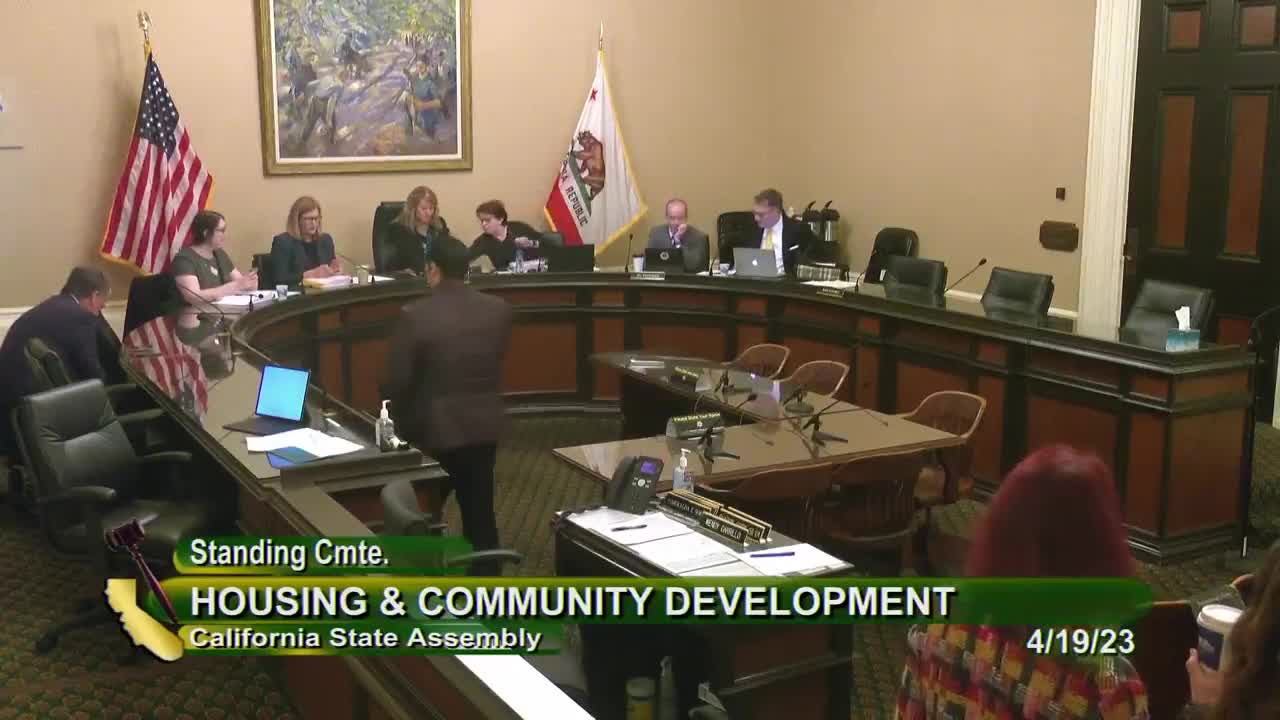
Bill Author

Bill Co-Author(s):
