AB 653: Public housing authorities: reports.
- Session Year: 2023-2024
- House: Assembly
- Latest Version Date: 2024-09-27
Current Status:
Passed
(2024-09-27: Chaptered by Secretary of State - Chapter 672, Statutes of 2024.)
Introduced
In Committee
First Chamber
In Committee
Second Chamber
Enacted
Existing law establishes the Department of Housing and Community Development within the Business, Consumer Services, and Housing Agency. Under existing law, the department is responsible for administering various housing programs throughout the state, including, among others, the California Emergency Solutions and Housing Program, which, among other things, provides rental assistance and housing relocation and stabilization services to ensure housing affordability for people who are experiencing homelessness or who are at risk of homelessness.
Existing law, the Housing Authorities Law, creates a housing authority in each county and each city, which is authorized to transact business and exercise specified powers upon adoption of a resolution by the governing body of the county or city declaring that there is a need for the authority to function. Among other things, existing law authorizes a housing authority to provide leased housing to persons of low income.
This bill would require all public housing authorities to report specified data, including their monthly success rates as of the first of each month, to the department beginning on July 1, 2025, and annually thereafter, as specified. Because the bill would require local housing authorities to perform additional duties, it would impose a state-mandated local program. The bill would require the department to make the data publicly available, beginning on January 1, 2026, and each year thereafter. The bill would require the department, beginning on July 1, 2025, and bi-annually thereafter until June 30, 2027, to convene a group of public housing authorities to discuss factors that impact success rates and recommendations for state and local intervention. The bill would also require the department, in consultation with participants in the Housing Choice Voucher program and other stakeholders, to publish a report, which shall be made publicly available, with recommendations for state and local interventions to improve success rates, on or before July 1, 2026.
The California Constitution requires the state to reimburse local agencies and school districts for certain costs mandated by the state. Statutory provisions establish procedures for making that reimbursement.
This bill would provide that, if the Commission on State Mandates determines that the bill contains costs mandated by the state, reimbursement for those costs shall be made pursuant to the statutory provisions noted above.
Existing law establishes the Department of Housing and Community Development within the Business, Consumer Services, and Housing Agency. Under existing law, the department is responsible for administering various housing programs throughout the state, including, among others, the California Emergency Solutions and Housing Program, which, among other things, provides rental assistance and housing relocation and stabilization services to ensure housing affordability for people who are experiencing homelessness or who are at risk of homelessness.
Existing law, the Housing Authorities Law, creates a housing authority in each county and each city, which is authorized to transact business and exercise specified powers upon adoption of a resolution by the governing body of the county or city declaring that there is a need for the authority to function. Among other things, existing law authorizes a housing authority to provide leased housing to persons of low income.
This bill, beginning January 1, 2026, and every 6 months thereafter, bill would require all public housing authorities to report their monthly success rate to the department, specified data, including their monthly success rates as of the first of each month, to the department beginning on July 1, 2025, and annually thereafter, as specified. Because the bill would require local housing authorities to perform additional duties, it would impose a state-mandated local program. The bill would require the department to make the statewide success rate data publicly available, beginning on March January 1, 2026, and each year thereafter. Beginning on March 1, 2026, and each year thereafter, if the success rate is below the statewide success rate, the bill would require a public housing authority and the department to take specified actions. Among other things, the bill would require the public housing authority to meet with the department to discuss factors contributing to the public housing authoritys lower success rate and adopt at least one recommendation by the department to increase the success rate, as specified. Because the bill would require certain local housing authorities to perform additional duties, it would impose a state-mandated local program. The bill would require the department, beginning on July 1, 2025, and bi-annually thereafter, to convene a group of housing authorities to discuss factors that impact success rates and recommendations for state and local intervention. The bill would also require the department, in consultation with participants in the Housing Choice Voucher program and other stakeholders, to publish a report, which shall be made publicly available, with recommendations for state and local interventions to improve success rates, on or before July 1, 2026.
The bill would require the department to make its recommendations publicly available and report to the Legislature annually an evaluation of the statewide success rate and changes made to increase efficiencies in placements.The California Constitution requires the state to reimburse local agencies and school districts for certain costs mandated by the state. Statutory provisions establish procedures for making that reimbursement.
This bill would provide that, if the Commission on State Mandates determines that the bill contains costs mandated by the state, reimbursement for those costs shall be made pursuant to the statutory provisions noted above.
Existing law establishes the Department of Housing and Community Development within the Business, Consumer Services, and Housing Agency. Under existing law, the department is responsible for administering various housing programs throughout the state, including, among others, the California Emergency Solutions and Housing Program, which, among other things, provides rental assistance and housing relocation and stabilization services to ensure housing affordability for people who are experiencing homelessness or who are at risk of homelessness.
Existing law, the Housing Authorities Law, creates a housing authority in each county and each city, which is authorized to transact business and exercise specified powers upon adoption of a resolution by the governing body of the county or city declaring that there is a need for the authority to function. Among other things, existing law authorizes a housing authority to provide leased housing to persons of low income.
This bill would establish the Federal Housing Voucher Acceleration Program, and would require the department to establish, administer, and fund a grant application process and award grants to public housing authorities in geographically diverse communities, as determined by the department, on or before July 1, 2025. The bill would authorize applicants to use grant funds to provide specified services to the eligible population, as defined, including providing holding fees, signing bonuses, and other landlord incentives. The bill would require the department to allocate grant funds to applicants based upon the number of public housing and Section 8 vouchers maintained by the housing authority and by a housing authoritys success rate, defined as the percentage of new voucher families that successfully lease a qualifying unit.This bill would provide that assistance, services, or supports received pursuant to these provisions are not income or a resource of the participant for purposes of determining eligibility for, or benefits pursuant to, public assistance programs. The bill would require applicants that receive grant funds pursuant to the program to submit a report to the department on or before January 1 of the year following receipt of the funds, and annually thereafter, and would require the department, on or before January 1, 2026, and annually thereafter, to submit a report to specified Senate and Assembly committees that includes a summary of the recipients reports and an evaluation of the outcomes and status of the program. The bill would require the department to provide technical assistance to applicants that receive grant funds, as specified.This bill bill, beginning January 1, 2026, and every 6 months thereafter, would require all public housing authorities, as defined, authorities to report their monthly success rate to the department, as specified. The bill would require the department to make the statewide success rate publicly available, beginning on January March 1, 2026, and each year thereafter. Beginning on January March 1, 2026, and each year thereafter, if the success rate is below the statewide success rate, the bill would require a public housing authority and the department to take specified actions. Among other things, the bill would require the public housing authority to meet with the department to discuss factors contributing to the public housing authoritys lower success rate and adopt at least one recommendation by the department to increase the success rate, as specified. Because the bill would require certain local housing authorities to perform additional duties, it would impose a state-mandated local program.
The bill would require the department to make its recommendations publicly available and report to the Legislature annually an evaluation of the statewide success rate and changes made to increase efficiencies in placements.
The California Constitution requires the state to reimburse local agencies and school districts for certain costs mandated by the state. Statutory provisions establish procedures for making that reimbursement.
This bill would provide that, if the Commission on State Mandates determines that the bill contains costs mandated by the state, reimbursement for those costs shall be made pursuant to the statutory provisions noted above.
Existing law establishes the Department of Housing and Community Development within the Business, Consumer Services, and Housing Agency. Under existing law, the department is responsible for administering various housing programs throughout the state, including, among others, the California Emergency Solutions and Housing Program, which, among other things, provides rental assistance and housing relocation and stabilization services to ensure housing affordability for people who are experiencing homelessness or who are at risk of homelessness.
Existing law, the Housing Authorities Law, creates a housing authority in each county and each city that city, which is authorized to transact business and exercise specified powers upon adoption of a resolution by the governing body of the county or city declaring that there is a need for the authority to function. Among other things, existing law authorizes a housing authority to prepare, carry out, acquire, lease, and operate housing projects and housing developments for persons of low income, as provided. provide leased housing to persons of low income.
This bill would establish the Federal Housing Voucher Acceleration Program, and would require the department to establish, administer, and fund a grant application process and award grants to public housing authorities in geographically diverse communities, as determined by the department, on or before July 1, 2024. 2025. The bill would authorize applicants to use grant funds to provide specified services to the eligible population. population, as defined, including providing holding fees, signing bonuses, and other landlord incentives. The bill would require the department to allocate grant funds to applicants based upon the number of public housing and Section 8 vouchers maintained by the housing authority and by a housing authoritys success rate, defined as the percentage of new voucher families that successfully lease a qualifying unit.
This bill would provide that assistance, services, or supports received pursuant to these provisions are not income or a resource of the participant for purposes of determining eligibility for, or benefits pursuant to, public assistance programs. The bill would require applicants that receive grant funds pursuant to the program to submit a report to the department on or before January 1 of the year following receipt of the funds, and annually thereafter, and would require the department, on or before January 1, 2026, and annually thereafter, to submit a report to specified Senate and Assembly committees that includes the a summary of the recipients reports, as specified, reports and an evaluation of the outcomes and status of the program. The bill would require the department to provide technical assistance to applicants that receive grant funds, as specified.
This bill would require all public housing authorities authorities, as defined, to report their monthly success rate to the department, and, if as specified. The bill would require the department to make the statewide success rate publicly available, beginning on January 1, 2026, and each year thereafter. Beginning on January 1, 2026, and each year thereafter, if the success rate is below 60% for 2 consecutive quarters, the statewide success rate, the bill would require a public housing authority and the department to take specified actions, including opting in to a federal program and submitting a report to the department that analyzes the potential for other policies to increase success rates. actions. Among other things, the bill would require the public housing authority to meet with the department to discuss factors contributing to the public housing authoritys lower success rate and adopt at least one recommendation by the department to increase the success rate, as specified. Because the bill would require certain local housing authorities to perform additional duties, it would impose a state-mandated local program. The bill would authorize the department to require an authority to make other changes to its practices and would require
The bill would require the department to make its recommendations publicly available and report to the Legislature annually an evaluation of the statewide success rate and changes made to increase efficiencies in placements.
The California Constitution requires the state to reimburse local agencies and school districts for certain costs mandated by the state. Statutory provisions establish procedures for making that reimbursement.
This bill would provide that, if the Commission on State Mandates determines that the bill contains costs mandated by the state, reimbursement for those costs shall be made pursuant to the statutory provisions noted above.
Existing law establishes the Department of Housing and Community Development within the Business, Consumer Services, and Housing Agency. Under existing law, the department is responsible for administering various housing programs throughout the state, including, among others, the California Emergency Solutions and Housing Program, which, among other things, provides rental assistance and housing relocation and stabilization services to ensure housing affordability for people who are experiencing homelessness or who are at risk of homelessness.
Existing law, the Housing Authorities Law, creates a housing authority in each county and each city that is authorized to transact business and exercise specified powers upon adoption of a resolution by the governing body of the county or city declaring that there is a need for the authority to function. Among other things, existing law authorizes a housing authority to prepare, carry out, acquire, lease, and operate housing projects and housing developments for persons of low income, as provided.
This bill would establish the Federal Housing Voucher Acceleration Program, and would require the department, upon appropriation by the Legislature, to allocate $200,000,000, as specified, department to establish, administer, and fund a grant application process and award grants to public housing authorities in geographically diverse communities, as determined by the department, on or before July 1, 2024. The bill would authorize applicants to use grant funds to provide specified services to the eligible population. The bill would require the department to allocate grant funds to applicants based upon the number of public housing and Section 8 vouchers maintained by the housing authority and by a housing authoritys success rate, defined as the percentage of new voucher families that successfully lease a qualifying unit.
This bill would provide that assistance, services, or supports received pursuant to these provisions are not income or a resource of the participant for purposes of determining eligibility for, or benefits pursuant to, public assistance programs. The bill would require applicants that receive grant funds pursuant to the program to submit a report to the department on or before January 1 of the year following receipt of the funds, and annually thereafter, and would require the department, on or before January 1, 2026, and annually thereafter, to submit a report to specified Senate and Assembly committees that includes the recipients reports, as specified, and an evaluation of the outcomes and status of the program. The bill would require the department to provide technical assistance to applicants that receive grant funds, as specified.
This bill would require all public housing authorities to report their monthly success rate to the department, and, if the success rate is below 60% for 2 consecutive quarters, to take specified actions, including opting in to a federal program and submitting a report to the department that analyzes the potential for other policies to increase success rates. Because the bill would require certain local housing authorities to perform additional duties, it would impose a state-mandated local program. The bill would authorize the department to require an authority to make other changes to its practices and would require the department to report to the Legislature annually an evaluation of the statewide success rate and changes made to increase efficiencies in placements.
The California Constitution requires the state to reimburse local agencies and school districts for certain costs mandated by the state. Statutory provisions establish procedures for making that reimbursement.
This bill would provide that, if the Commission on State Mandates determines that the bill contains costs mandated by the state, reimbursement for those costs shall be made pursuant to the statutory provisions noted above.
Existing law establishes the Department of Housing and Community Development within the Business, Consumer Services, and Housing Agency. Under existing law, the department is responsible for administering various housing programs throughout the state, including, among others, the California Emergency Solutions and Housing Program, which, among other things, provides rental assistance and housing relocation and stabilization services to ensure housing affordability for people who are experiencing homelessness or who are at risk of homelessness.
Existing law, the Housing Authorities Law, creates a housing authority in each county and each city that is authorized to transact business and exercise specified powers upon adoption of a resolution by the governing body of the county or city declaring that there is a need for the authority to function. Among other things, existing law authorizes a housing authority to prepare, carry out, acquire, lease, and operate housing projects and housing developments for persons of low income, as provided.
This bill would establish the Federal Housing Voucher Acceleration Program, and would require the department, upon appropriation by the Legislature, to allocate $200,000,000, as specified, to establish, administer, and fund a grant application process and award grants to public housing authorities in geographically diverse communities, as determined by the department, on or before July 1, 2024. The bill would authorize applicants to use grant funds to provide specified services to the eligible population. The bill would require the department to allocate grant funds to applicants based upon the number of public housing and Section 8 vouchers maintained by the housing authority and by a housing authoritys success rate, defined as the percentage of new voucher families that successfully lease a qualifying unit.
This bill would provide that assistance, services, or supports received pursuant to these provisions are not income or a resource of the participant for purposes of determining eligibility for, or benefits pursuant to, public assistance programs. The bill would require applicants that receive grant funds pursuant to the program to submit a report to the department on or before January 1 of the year following receipt of the funds, and annually thereafter, and would require the department, on or before January 1, 2026, and annually thereafter, to submit a report to specified Senate and Assembly committees that includes the recipients reports, as specified, and an evaluation of the outcomes and status of the program.
This bill would require all public housing authorities to report their monthly success rate to the department, and, if the success rate is below 60% for 2 consecutive quarters, to take specified actions, including opting in to a federal program and submitting a report to the department that analyzes the potential for other policies to increase success rates. Because the bill would require certain local housing authorities to perform additional duties, it would impose a state-mandated local program. The bill would authorize the department to require an authority to make other changes to its practices and would require the department to report to the Legislature annually an evaluation of the statewide success rate and changes made to increase efficiencies in placements.
The California Constitution requires the state to reimburse local agencies and school districts for certain costs mandated by the state. Statutory provisions establish procedures for making that reimbursement.
This bill would provide that, if the Commission on State Mandates determines that the bill contains costs mandated by the state, reimbursement for those costs shall be made pursuant to the statutory provisions noted above.
Existing law provides that the Department of Housing and Community Development is administered by an executive officer, known as the Director of Housing and Community Development. Under existing law, the director is appointed by the Governor, subject to confirmation by the Senate, and holds office at the pleasure of the Governor.This bill would make a nonsubstantive change to these provisions.Existing law provides that the Department of Housing and Community Development is administered by an executive officer, known as the Director of Housing and Community Development. Under existing law, the director is appointed by the Governor, subject to confirmation by the Senate, and holds office at the pleasure of the Governor.
This bill would make a nonsubstantive change to these provisions.
For purposes of this chapter:
(a)Department means the Department of Housing and Community Development.
(b)Housing authority has the same meaning as in the Housing Authorities Law (Chapter 1 (commencing with Section 34200) of Part 2 of Division 24 of the Health and Safety Code).
(c)Housing navigation services means services that assist program participants with locating, applying for, and moving into permanent housing.
(d)Inspection wait time means the period of time between the tenancy approval by the housing authority and the completion of the housing quality standard, or another similar, inspection.
(e)Payment standard means the maximum monthly assistance payment for a family assisted in the voucher program before deducting the total tenant payment by the family, as defined by Section 982.4 of Title 24 of the Code of Federal Regulations.
(f)Search time means the initial period of time during which the public housing authority allows a family to find housing with a voucher.
(g)Success rate means the percentage of new voucher families that successfully leased a qualifying unit.
50496.(a)(1)(A)Beginning July 1, 2025, and annually thereafter, all public housing authorities shall report each of the following United States Department of Housing and Urban Development reported data to the department:
(i)Its monthly success rate as of the first of each month.
(ii)Its current payment standards.
(iii)The average inspection wait times for initial lease-up.
(iv)Search times.
(B)The success rate reporting requirements described in subparagraph (A) shall become inoperative when the United States Department of Housing and Urban Development makes the success rate data described in subparagraph (A) for all public housing authorities publicly available on the United States Department of Housing and Urban Developments Housing Voucher Data Dashboard.
(2)Beginning on January 1, 2026, and each year thereafter, the department shall make the data reported pursuant to subparagraph (A) of paragraph (1) publicly available.
(b)Beginning on July 1, 2025, and bi-annually thereafter until June 30, 2027, the department shall convene a group of public housing authorities that are diverse with respect to geography and size to discuss the factors that impact success rates and recommendations for state and local intervention.
(c)On or before July 1, 2026, the department, in consultation with participants in the Housing Choice Voucher program and other stakeholders, shall publish a report with recommendations for state and local interventions to improve success rates. This report shall be made publicly available.
(d)Notwithstanding Section 10231.5 of the Government Code, the department shall report to the Legislature annually an evaluation of the statewide success rate and changes made to increase efficiencies in placements. The report shall be submitted in compliance with Section 9795 of the Government Code.
SEC. 2.If the Commission on State Mandates determines that this act contains costs mandated by the state, reimbursement to local agencies and school districts for those costs shall be made pursuant to Part 7 (commencing with Section 17500) of Division 4 of Title 2 of the Government Code.
For purposes of this chapter:
(a)Department means the Department of Housing and Community Development.
(b)Housing authority has the same meaning as in the Housing Authorities Law (Chapter 1 (commencing with Section 34200) of Part 2 of Division 24 of the Health and Safety Code).
(b)(c)Housing navigation services means services that assist program participants with locating, applying for, and moving into permanent housing.
(d)Inspection wait time means the period of time between the tenancy approval by the housing authority and the completion of the housing quality standard, or another similar, inspection.
(c)(e)Payment standard means the maximum monthly assistance payment for a family assisted in the voucher program before deducting the total tenant payment by the family, as defined by Section 982.4 of Title 24 of the Code of Federal Regulations.
(f)Search time means the initial period of time during which the public housing authority allows a family to find housing with a voucher.
(d)(g)Success rate means the percentage of new voucher families that successfully leased a qualifying unit.
50496.(a)(1)(A)Beginning January 1, 2026, and every six months July 1, 2025, and annually thereafter, all public housing authorities shall report their monthly success rates to the department disaggregated by voucher type by race of population served. each of the following United States Department of Housing and Urban Development reported data to the department:
(i)Its monthly success rate as of the first of each month.
(ii)Its current payment standards.
(iii)The average inspection wait times for initial lease-up.
(iv)Search times.
(B)The success rate reporting requirements described in subparagraph (A) shall become inoperative when the United States Department of Housing and Urban Development makes the disaggregated success rate data described in subparagraph (A) for all public housing authorities publicly available on the United States Department of Housing and Urban Developments Housing Voucher Data Dashboard.
(2)Beginning on March 1, January 1, 2026, and each year thereafter, the department shall make the statewide success rate data reported pursuant to subparagraph (A) of paragraph (1) publicly available.
(b)Beginning on March 1, 2026, and each year thereafter, if a public housing authoritys success rate is below the statewide success rate, as made publicly available pursuant to paragraph (2) of subdivision (a), all of the following apply:(1)The public housing authority shall meet with the department to discuss factors contributing to the public housing authoritys lower success rate including both of the following:(A)External factors, such as high rents, local vacancy rates, and discrimination against voucher tenants.(B)Policies within the authoritys discretion, such as maximum voucher search times, inspection wait times, payment standards, and the need for housing search assistance for assisted families.(2)The department shall analyze the factors discussed pursuant to paragraph (1) and submit to the public housing authority recommendations to increase the success rate, such as:(A)Contracting with an agency that provides housing navigation services for voucher applicants and participating families.(B)Amending policies to increase maximum voucher search times to 180 days or more.(C)Taking steps to reduce the amount of time before a voucher unit is inspected at initial lease-up.(3)The public housing authority shall adopt at least one recommendation submitted by the department pursuant to paragraph (2), unless the department finds that the public housing authority is doing everything in its discretion to positively influence the success rate.(4)The department shall make the recommendations described in paragraph (2) publicly available.(b)Beginning on July 1, 2025, and bi-annually thereafter until June 30, 2027, the department shall convene a group of public housing authorities that are diverse with respect to geography and size to discuss the factors that impact success rates and recommendations for state and local intervention.
(c)On or before July 1, 2026, the department, in consultation with participants in the Housing Choice Voucher program and other stakeholders, shall publish a report with recommendations for state and local interventions to improve success rates. This report shall be made publicly available.
(c)(d)Notwithstanding Section 10231.5 of the Government Code, the department shall report to the Legislature annually an evaluation of the statewide success rate and changes made to increase efficiencies in placements. The report shall be submitted in compliance with Section 9795 of the Government Code.
SEC. 2.If the Commission on State Mandates determines that this act contains costs mandated by the state, reimbursement to local agencies and school districts for those costs shall be made pursuant to Part 7 (commencing with Section 17500) of Division 4 of Title 2 of the Government Code.
For purposes of this chapter:
(a)Applicant means a public housing authority created pursuant to Article 1 (commencing with Section 34200) of Chapter 1 of Part 2 of Division 24, or a community-based organization or nonprofit in partnership with a public housing authority.(b)(a)Department means the Department of Housing and Community Development.
(c)Eligible population means an applicant or participant in a federal housing voucher program administered pursuant to Section 8 of the United States Housing Act of 1937 (42 U.S.C. Sec. 1437f).(d)Holding fees means payment to a private-market landlord as an incentive to hold a housing unit available for an eligible participant while the participant or landlord is waiting for approval to rent or lease the housing unit.(e)(b)Housing navigation services means services that assist program participants with locating, applying for, and moving into permanent housing.
(f)Landlord incentives means incentives to landlords to provide permanent housing, including, but not limited to, holding fees, signing bonuses, payment for repairs made in advance of occupancy to ensure compliance with habitability standards, and contractors to assist the landlord in making repairs.(g)Medium housing authorities means the same as low medium and high medium and are public housing authorities that have a combined total of 1,001 to 6,000 public housing units and Section 8 vouchers.(h)(c)Payment standard means the maximum monthly assistance payment for a family assisted in the voucher program before deducting the total tenant payment by the family, as defined by Section 982.4 of Title 24 of the Code of Federal Regulations.
(i)Security deposit means a residential security deposit pursuant to Section 1950.5 of the Civil Code and does not include a fee in lieu of a security deposit.(j)Small housing authorities means the same as very small and small and are public housing authorities that have a combined total of 1,000 or fewer public housing units and Section 8 vouchers.(k)(d)Success rate means the percentage of new voucher families that successfully leased a qualifying unit.
50496.(a)On or before July 1, 2025, the department shall create a grant application process and award grants to applicants in geographically diverse communities, as determined by the department. The department shall allocate grant funds as follows:(1)At least 25 percent of the funds shall be available to applicants that have a success rate below 60 percent.(2)At least 15 percent of the funds shall be made available to small housing authorities.(3)At least 30 percent of the funds shall be made available to medium housing authorities.(b)An applicant may use grant funds for any of the following eligible uses to provide services to the eligible population:(1)Holding fees, signing bonuses, and other landlord incentives.(2)Housing navigation and housing mobility services.(3)Security deposits.(4)Costs of establishing leases with landlords.(5)Landlord recruitment activities.(6)Other activities to improve the success rate, as approved by the department.(7)Administrative activities of the housing authority for purposes of providing services to the eligible populations under this program. However, no more than 10 percent of the grant award may be used for this purpose.50497.Notwithstanding any other law, and to the extent allowable under federal law, assistance, services, or supports received pursuant to this chapter are not income or a resource of the participant for purposes of determining eligibility for, or benefits pursuant to, any public assistance program.50498.(a)An applicant that receives grant funds pursuant to the program shall submit a report to the department on or before January 1 of the year following receipt of the funds, and annually thereafter, until all funds have been expended. The report shall be on a form provided by the department, and shall include all of the following, and any additional information that the department deems appropriate or necessary:(1)Nature of the use of funds.(2)Number of voucher families served with the funds.(3)Success rate before receiving the grant.(4)Success rate after receiving the grant.(5)The ZIP Codes to which family participants that accessed the services provided under the program successfully moved and the number of family participants that moved to units in each of those ZIP Codes.(b)On or before January 1, 2026, and annually thereafter until all the funds have been expended, the department shall submit a report to the Assembly Committee on Housing and Community Development, the Senate Committee on Housing, the Senate Committee on Budget and Fiscal Review, the Assembly Committee on Budget, the Senate and Assembly Committees on Human Services, and the Senate and Assembly Committees on Health that includes a summary of the reports submitted to the department pursuant to subdivision (a) and an evaluation of the outcomes and status of the program.(c)The department shall provide technical assistance to applicants that receive grant funds for the purpose of administering the program pursuant to this chapter. No more than 5 percent of the funds appropriated by the Legislature for the purpose of establishing, administering, and funding the program pursuant to this chapter shall be used by the department to provide technical assistance.50499.50496.(a)(1)(A)Beginning January 1, 2025, 2026, and every six months thereafter, all public housing authorities shall report their monthly success rates to the department disaggregated by voucher type by race of population served.
(B)The reporting requirements described in subparagraph (A) shall become inoperative when the United States Department of Housing and Urban Development makes the disaggregated data described in subparagraph (A) for all public housing authorities publicly available on the United States Department of Housing and Urban Developments Housing Voucher Data Dashboard.
(2)Beginning on January March 1, 2026, and each year thereafter, the department shall make the statewide success rate publicly available.
(b)Beginning on January March 1, 2026, and each year thereafter, if a public housing authoritys success rate is below the statewide success rate, as made publicly available pursuant to paragraph (2) of subdivision (a), all of the following apply:
(1)The public housing authority shall meet with the department to discuss factors contributing to the public housing authoritys lower success rate including both of the following:
(A)External factors, such as high rents, local vacancy rates, and discrimination against voucher tenants.
(B)Policies within the authoritys discretion, such as maximum voucher search times, inspection wait times, payment standards, and the need for housing search assistance for assisted families.
(2)The department shall analyze the factors discussed pursuant to paragraph (1) and submit to the public housing authority recommendations to increase the success rate, such as:
(A)Contracting with an agency that provides housing navigation services for voucher applicants and participating families.
(B)Amending polices policies to increase maximum voucher search times to 180 days or more.
(C)Taking steps to reduce the amount of time before a voucher unit is inspected at initial lease-up.
(3)The public housing authority shall adopt at least one recommendation submitted by the department pursuant to paragraph (2), unless the department finds that the public housing authority is doing everything in its discretion to positively influence the success rate.
(4)The department shall make the recommendations described in paragraph (2) publicly available.
(c)The Notwithstanding Section 10231.5 of the Government Code, the department shall report to the Legislature annually an evaluation of the statewide success rate and changes made to increase efficiencies in placements. The report shall be submitted in compliance with Section 9795 of the Government Code.
SEC. 2.If the Commission on State Mandates determines that this act contains costs mandated by the state, reimbursement to local agencies and school districts for those costs shall be made pursuant to Part 7 (commencing with Section 17500) of Division 4 of Title 2 of the Government Code.
For purposes of this chapter:
(a)Applicant means a public housing authority created pursuant to Article 1 (commencing with Section 34200) of Chapter 1 of Part 2 of Division 24, or a community-based organization or nonprofit in partnership with a public housing authority.
(b)Department means the Department of Housing and Community Development.
(c)Eligible population means an applicant or participant in a federal housing voucher program administered pursuant to Section 8 of the United States Housing Act of 1937 (42 U.S.C. Sec. 1437f).
(d)Exception payment standard has the same meaning as defined in Section 982.503(c) of Title 24 of the Code of Federal Regulations.(e)(d)Holding fees means payment to a private-market landlord as an incentive to hold a housing unit available for an eligible participant while the participant or landlord is waiting for approval to rent or lease the housing unit.
(f)(e)Housing navigation services means services that assist program participants with locating, applying for, and moving into permanent housing.
(g)(f)Landlord incentives means incentives to landlords to provide permanent housing, including, but not limited to, holding fees, signing bonuses, payment for repairs made in advance of occupancy to ensure compliance with habitability standards, and contractors to assist the landlord in making repairs.
(h)(g)Medium housing authorities means the same as low medium and high medium and are public housing authorities that have a combined total of 1,001 to 6,000 public housing units and Section 8 vouchers.
(i)Mobility counseling means services that assist program participants with locating, applying for, and moving into permanent housing, with an emphasis on helping families move to low-poverty neighborhoods.(j)(h)Payment standard means the maximum monthly assistance payment for a family assisted in the voucher program before deducting the total tenant payment by the family, as defined by Section 982.4 of Title 24 of the Code of Federal Regulations.
(k)(i)Security deposit means a residential security deposit pursuant to Section 1950.5 of the Civil Code and does not include a fee in lieu of a security deposit.
(l)(j)Small housing authorities means the same as very small and small and are public housing authorities that have a combined total of 1,000 or fewer public housing units and Section 8 vouchers.
(m)Small area fair market rents has the same meaning as defined in Section 888.113(c) of Title 24 of the Code of Federal Regulations.(n)(k)Success rate means the percentage of new voucher families that successfully leased a qualifying unit.
(o)Turn-back rate means the percentage of families that receive a voucher but then turn the voucher back into the public housing authority at the expiration of the search term because they cannot find a unit.(p)Voucher utilization rate means the number of units leased with voucher assistance as a percentage of the number of units that were under the Annual Contributions Contract (ACC) between the United States Department of Housing and Urban Development and the public housing authority.50496.(a)On or before July 1, 2024, 2025, the department shall create a grant application process and award grants to applicants in geographically diverse communities, as determined by the department. The department shall allocate grant funds as follows:
(1)At least 25 percent of the funds shall be available to applicants that have a success rate below 60 percent.
(2)At least 15 percent of the funds shall be made available to small housing authorities.
(3)At least 30 percent of the funds shall be made available to medium housing authorities.
(b)An applicant may use grant funds for any of the following eligible uses to provide services to the eligible population:
(1)Holding fees, signing bonuses, and other landlord incentives.
(2)Housing navigation and housing mobility services.
(3)Security deposits.
(4)Costs of establishing leases with landlords.
(5)Landlord recruitment activities.
(6)Other activities to improve the success rate, as approved by the department.
(6)(7)Administrative activities of the housing authority for purposes of providing services to the eligible populations under this program. However, no more than 10 percent of the grant award may be used for this purpose.
50497.Notwithstanding any other law, and to the extent allowable under federal law, assistance, services, or supports received pursuant to this chapter are not income or a resource of the participant for purposes of determining eligibility for, or benefits pursuant to, any public assistance program.
50498.(a)An applicant that receives grant funds pursuant to the program shall submit a report to the department on or before January 1 of the year following receipt of the funds, and annually thereafter, until all funds have been expended. The report shall be on a form provided by the department, and shall include all of the following, and any additional information that the department deems appropriate or necessary:
(1)Nature of the use of funds.
(2)Number of voucher families served with the funds.
(3)Success rate before receiving the grant.
(4)Success rate after receiving the grant.
(5)The ZIP Codes to which family participants that accessed the services provided under the program successfully moved and the number of family participants that moved to units in each of those ZIP Codes.
(b)On or before January 1, 2026, and annually thereafter until all the funds have been expended, the department shall submit a report to the Assembly Committee on Housing and Community Development, the Senate Committee on Housing, the Senate Committee on Budget and Fiscal Review, the Assembly Committee on Budget, the Senate and Assembly Committees on Human Services, and the Senate and Assembly Committees on Health that includes a summary of the reports submitted to the department pursuant to subdivision (a) and an evaluation of the outcomes and status of the program.
(c)The department shall provide technical assistance to applicants that receive grant funds for the purpose of administering the program pursuant to this chapter. No more than 5 percent of the funds appropriated by the Legislature for the purpose of establishing, administering, and funding the program pursuant to this chapter shall be used by the department to provide technical assistance.
50499.(a)(1)(A)Beginning January 1, 2024, 2025, and every quarter six months thereafter, all public housing authorities shall report their monthly success rates to the department disaggregated by voucher type by race of population served. If an authoritys success rate is below 60 percent for two consecutive quarters, the authority shall do all of the following: served.
(1)Opt in to the United States Department of Housing and Urban Developments Small Area Fair Market rents for all metro areas in the authoritys jurisdiction within the three months following the report in a manner that:(A)Complies with federal requirements according to the United States Department of Housing and Urban Development Office of Public and Indian Housing Notice PIH 2018-01, including amending its administrative plan.(B)Holds current tenants harmless so there is no reduction in the amount of subsidy. A public housing authority is required to continue to use the existing higher payment standard for the current familys subsidy calculation for as long as the family continues to receive the voucher assistance in that unit.(C)Allows the housing authority to utilize up to 110 percent Small Area Fair Market Rent, or higher if approved by the United States Department of Housing and Urban Development, as an Exception Payment Standard in a ZIP Code after considering the local rental market.(D)Allows the housing authority to request an exemption from the requirements of this paragraph if the housing authority asserts that it meets any of the conditions in Section 888.113(c)(4) of Title 24 of the Code of Federal Regulations. The department shall determine whether any of the conditions apply and if so, may decide not to require an authority to adopt Small Area Fair Market Rents pursuant to this paragraph.(2)Submit a report to the department that analyzes the potential for other policies to increase success rates, including, but not limited to:(A)The time it takes to inspect an apartment before move-in.(B)Voucher search times.(C)Whether mobility or navigation services are available to aid applicants in finding housing.(b)The department may require an authority to make other changes to its practices, including, but not limited to, increasing payment standards, and the authority shall comply within a reasonable period of time.(B)The reporting requirements described in subparagraph (A) shall become inoperative when the United States Department of Housing and Urban Development makes the disaggregated data described in subparagraph (A) for all public housing authorities publicly available on the United States Department of Housing and Urban Developments Housing Voucher Data Dashboard.
(2)Beginning on January 1, 2026, and each year thereafter, the department shall make the statewide success rate publicly available.
(b)Beginning on January 1, 2026, and each year thereafter, if a public housing authoritys success rate is below the statewide success rate, as made publicly available pursuant to paragraph (2) of subdivision (a), all of the following apply:
(1)The public housing authority shall meet with the department to discuss factors contributing to the public housing authoritys lower success rate including both of the following:
(A)External factors, such as high rents, local vacancy rates, and discrimination against voucher tenants.
(B)Policies within the authoritys discretion, such as maximum voucher search times, inspection wait times, payment standards, and the need for housing search assistance for assisted families.
(2)The department shall analyze the factors discussed pursuant to paragraph (1) and submit to the public housing authority recommendations to increase the success rate, such as:
(A)Contracting with an agency that provides housing navigation services for voucher applicants and participating families.
(B)Amending polices to increase maximum voucher search times to 180 days or more.
(C)Taking steps to reduce the amount of time before a voucher unit is inspected at initial lease-up.
(3)The public housing authority shall adopt at least one recommendation submitted by the department pursuant to paragraph (2), unless the department finds that the public housing authority is doing everything in its discretion to positively influence the success rate.
(4)The department shall make the recommendations described in paragraph (2) publicly available.
(c)The department shall report to the Legislature annually an evaluation of the statewide success rate and changes made to increase efficiencies in placements.
SEC. 2.If the Commission on State Mandates determines that this act contains costs mandated by the state, reimbursement to local agencies and school districts for those costs shall be made pursuant to Part 7 (commencing with Section 17500) of Division 4 of Title 2 of the Government Code.
For purposes of this chapter:
(a)Applicant means a public housing authority created pursuant to Article 1 (commencing with Section 34200) of Chapter 1 of Part 2 of Division 24, or a community-based organization or nonprofit in partnership with a public housing authority.
(b)Department means the Department of Housing and Community Development.
(c)Eligible population means an applicant or participant in a federal housing voucher program administered pursuant to Section 8 of the United States Housing Act of 1937 (42 U.S.C. Sec. 1437f).
(d)Exception payment standard has the same meaning as defined in Section 982.503(c) of Title 24 of the Code of Federal Regulations.
(e)Holding fees means payment to a private-market landlord as an incentive to hold a housing unit available for an eligible participant while the participant or landlord is waiting for approval to rent or lease the housing unit.
(f)Housing navigation services means services that assist program participants with locating, applying for, and moving into permanent housing.
(g)Landlord incentives means incentives to landlords to provide permanent housing, including, but not limited to, holding fees, signing bonuses, payment for repairs made in advance of occupancy to ensure compliance with habitability standards, and contractors to assist the landlord in making repairs.
(h)Medium housing authorities means the same as low medium and high medium and are public housing authorities that have a combined total of 1,001 to 6,000 public housing units and Section 8 vouchers.
(i)Mobility counseling means services that assist program participants with locating, applying for, and moving into permanent housing, with an emphasis on helping families move to low-poverty neighborhoods.
(j)Payment standard means the maximum monthly assistance payment for a family assisted in the voucher program before deducting the total tenant payment by the family, as defined by Section 982.4 of Title 24 of the Code of Federal Regulations.
(k)Security deposit means a residential security deposit pursuant to Section 1950.5 of the Civil Code and does not include a fee in lieu of a security deposit.
(l)Small housing authorities means the same as very small and small and are public housing authorities that have a combined total of 1,000 or fewer public housing units and Section 8 vouchers.
(m)Small area fair market rents has the same meaning as defined in Section 888.113(c) of Title 24 of the Code of Federal Regulations.
(n)Success rate means the percentage of new voucher families that successfully leased a qualifying unit.
(o)Turn-back rate means the percentage of families that receive a voucher but then turn the voucher back into the public housing authority at the expiration of the search term because they cannot find a unit.
(p)Voucher utilization rate means the number of units leased with voucher assistance as a percentage of the number of units that were under the Annual Contributions Contract (ACC) between the United States Department of Housing and Urban Development and the public housing authority.
50496.(a)Upon appropriation of funds by the Legislature for the purpose of establishing, administering, and funding the program pursuant to this chapter, the department shall allocate one hundred million dollars ($100,000,000) for that purpose each fiscal year for two years, beginning with the 202324 fiscal year.(b)50496.(a)On or before July 1, 2024, the department shall create a grant application process and award grants to applicants in geographically diverse communities, as determined by the department. The department shall allocate grant funds as follows:
(1)At least 25 percent of the funds shall be available to applicants that have a success rate below 60 percent.
(2)At least 15 percent of the funds shall be made available to small housing authorities.
(3)At least 30 percent of the funds shall be made available to medium housing authorities.
(c)(b)An applicant may use grant funds for any of the following eligible uses to provide services to the eligible population:
(1)Holding fees, signing bonuses, and other landlord incentives.
(2)Housing navigation and housing mobility services.
(3)Security deposits.
(4)Costs of establishing leases with landlords.
(5)Landlord recruitment activities.
(6)Administrative activities of the housing authority for purposes of providing services to the eligible populations under this program. However, no more than 10 percent of the grant award may be used for this purpose.
50497.Notwithstanding any other law, and to the extent allowable under federal law, assistance, services, or supports received pursuant to this chapter are not income or a resource of the participant for purposes of determining eligibility for, or benefits pursuant to, any public assistance program.
50498.(a)An applicant that receives grant funds pursuant to the program shall submit a report to the department on or before January 1 of the year following receipt of the funds, and annually thereafter, until all funds have been expended. The report shall be on a form provided by the department, and shall include all of the following, and any additional information that the department deems appropriate or necessary:
(1)Nature of the use of funds.
(2)Number of voucher families served with the funds.
(3)Success rate before receiving the grant.
(4)Success rate after receiving the grant.
(5)The ZIP Codes to which family participants that accessed the services provided under the program successfully moved and the number of family participants that moved to units in each of those ZIP Codes.
(b)On or before January 1, 2026, and annually thereafter until all the funds have been expended, the department shall submit a report to the Assembly Committee on Housing and Community Development, the Senate Committee on Housing, the Senate Committee on Budget and Fiscal Review, the Assembly Committee on Budget, the Senate and Assembly Committees on Human Services, and the Senate and Assembly Committees on Health that includes a summary of the reports submitted to the department pursuant to subdivision (a) and an evaluation of the outcomes and status of the program.
(c)The department shall provide technical assistance to applicants that receive grant funds for the purpose of administering the program pursuant to this chapter. No more than 5 percent of the funds appropriated by the Legislature for the purpose of establishing, administering, and funding the program pursuant to this chapter shall be used by the department to provide technical assistance.
50499.(a)Beginning January 1, 2024, and every quarter thereafter, all public housing authorities shall report their monthly success rates to the department disaggregated by voucher type by race of population served. If an authoritys success rate is below 60 percent for two consecutive quarters, the authority shall do all of the following:
(1)Opt in to the United States Department of Housing and Urban Developments Small Area Fair Market rents for all metro areas in the authoritys jurisdiction within the three months following the report in a manner that:
(A)Complies with federal requirements according to the United States Department of Housing and Urban Development Office of Public and Indian Housing Notice PIH 2018-01, including amending its administrative plan.
(B)Holds current tenants harmless so there is no reduction in the amount of subsidy. A public housing authority is required to continue to use the existing higher payment standard for the current familys subsidy calculation for as long as the family continues to receive the voucher assistance in that unit.
(C)Allows the housing authority to utilize up to 110 percent Small Area Fair Market Rent, or higher if approved by the United States Department of Housing and Urban Development, as an Exception Payment Standard in a ZIP Code after considering the local rental market.
(D)Allows the housing authority to request an exemption from the requirements of this paragraph if the housing authority asserts that it meets any of the conditions in Section 888.113(c)(4) of Title 24 of the Code of Federal Regulations. The department shall determine whether any of the conditions apply and if so, may decide not to require an authority to adopt Small Area Fair Market Rents pursuant to this paragraph.
(2)Submit a report to the department that analyzes the potential for other policies to increase success rates, including, but not limited to:
(A)The time it takes to inspect an apartment before move-in.
(B)Voucher search times.
(C)Whether mobility or navigation services are available to aid applicants in finding housing.
(b)The department may require an authority to make other changes to its practices, including, but not limited to, increasing payment standards, and the authority shall comply within a reasonable period of time.
(c)The department shall report to the Legislature annually an evaluation of the statewide success rate and changes made to increase efficiencies in placements.
SEC. 2.If the Commission on State Mandates determines that this act contains costs mandated by the state, reimbursement to local agencies and school districts for those costs shall be made pursuant to Part 7 (commencing with Section 17500) of Division 4 of Title 2 of the Government Code.
REVISIONS: HeadingLines 2 and 3.For purposes of this chapter:
(a)Applicant means a public housing authority created pursuant to Article 1 (commencing with Section 34200) of Chapter 1 of Part 2 of Division 24, or a community-based organization or nonprofit in partnership with a public housing authority.
(b)Department means the Department of Housing and Community Development.
(c)Eligible population means an applicant or participant in a federal housing voucher program administered pursuant to Section 8 of the United States Housing Act of 1937 (42 U.S.C. Sec. 1437f).
(d)Exception payment standard has the same meaning as defined in Section 982.503(c) of Title 24 of the Code of Federal Regulations.
(e)Holding fees means payment to a private-market landlord as an incentive to hold a housing unit available for an eligible participant while the participant or landlord is waiting for approval to rent or lease the housing unit.
(f)Housing navigation services means services that assist program participants with locating, applying for, and moving into permanent housing.
(g)Landlord incentives means incentives to landlords to provide permanent housing, including, but not limited to, holding fees, signing bonuses, payment for repairs made in advance of occupancy to ensure compliance with habitability standards, and contractors to assist the landlord in making repairs.
(h)Medium housing authorities means the same as low medium and high medium and are public housing authorities that have a combined total of 1,001 to 6,000 public housing units and Section 8 vouchers.
(i)Mobility counseling means services that assist program participants with locating, applying for, and moving into permanent housing, with an emphasis on helping families move to low-poverty neighborhoods.
(j)Payment standard means the maximum monthly assistance payment for a family assisted in the voucher program before deducting the total tenant payment by the family, as defined by Section 982.4 of Title 24 of the Code of Federal Regulations.
(k)Security deposit means a residential security deposit pursuant to Section 1950.5 of the Civil Code and does not include a fee in lieu of a security deposit.
(l)Small housing authorities means the same as very small and small and are public housing authorities that have a combined total of 1,000 or fewer public housing units and Section 8 vouchers.
(m)Small area fair market rents has the same meaning as defined in Section 888.113(c) of Title 24 of the Code of Federal Regulations.
(n)Success rate means the percentage of new voucher families that successfully leased a qualifying unit.
(o)Turn-back rate means the percentage of families that receive a voucher but then turn the voucher back into the public housing authority at the expiration of the search term because they cannot find a unit.
(p)Voucher utilization rate means the number of units leased with voucher assistance as a percentage of the number of units that were under the Annual Contributions Contract (ACC) between the United States Department of Housing and Urban Development and the public housing authority.
50496.(a)Upon appropriation of funds by the Legislature for the purpose of establishing, administering, and funding the program pursuant to this chapter, the department shall allocate one hundred million dollars ($100,000,000) for that purpose each fiscal year for two years, beginning with the 202324 fiscal year.
(b)On or before July 1, 2024, the department shall create a grant application process and award grants to applicants in geographically diverse communities, as determined by the department. The department shall allocate grant funds as follows:
(1)At least 25 percent of the funds shall be available to applicants that have a success rate below 60 percent.
(2)At least 15 percent of the funds shall be made available to small housing authorities.
(3)At least 30 percent of the funds shall be made available to medium housing authorities.
(c)An applicant may use grant funds for any of the following eligible uses to provide services to the eligible population:
(1)Holding fees, signing bonuses, and other landlord incentives.
(2)Housing navigation and housing mobility services.
(3)Security deposits.
(4)Costs of establishing leases with landlords.
(5)Landlord recruitment activities.
(6)Administrative activities of the housing authority for purposes of providing services to the eligible populations under this program. However, no more than 10 percent of the grant award may be used for this purpose.
50497.Notwithstanding any other law, and to the extent allowable under federal law, assistance, services, or supports received pursuant to this chapter are not income or a resource of the participant for purposes of determining eligibility for, or benefits pursuant to, any public assistance program.
50498.(a)An applicant that receives grant funds pursuant to the program shall submit a report to the department on or before January 1 of the year following receipt of the funds, and annually thereafter, until all funds have been expended. The report shall be on a form provided by the department, and shall include all of the following, and any additional information that the department deems appropriate or necessary:
(1)Nature of the use of funds.
(2)Number of voucher families served with the funds.
(3)Success rate before receiving the grant.
(4)Success rate after receiving the grant.
(5)The ZIP Codes to which family participants that accessed the services provided under the program successfully moved and the number of family participants that moved to units in each of those ZIP Codes.
(b)On or before January 1, 2026, and annually thereafter until all the funds have been expended, the department shall submit a report to the Assembly Committee on Housing and Community Development, the Senate Committee on Housing, the Senate Committee on Budget and Fiscal Review, the Assembly Committee on Budget, the Senate and Assembly Committees on Human Services, and the Senate and Assembly Committees on Health that includes a summary of the reports submitted to the department pursuant to subdivision (a) and an evaluation of the outcomes and status of the program.
(c)The department shall provide technical assistance to applicants that receive grant funds for the purpose of administering the program pursuant to this chapter. No more than 5 percent of the funds appropriated by the Legislature for the purpose of establishing, administering, and funding the program pursuant to this chapter shall be used by the department to provide technical assistance.
50499.(a)Beginning January 1, 2024, and every quarter thereafter, all public housing authorities shall report their monthly success rates to the department disaggregated by voucher type by race of population served. If an authoritys success rate is below 60 percent for two consecutive quarters, the authority shall do all of the following:
(1)Opt in to the United States Department of Housing and Urban Developments Small Area Fair Market rents for all metro areas in the authoritys jurisdiction within the three months following the report in a manner that:
(A)Complies with federal requirements according to the United States Department of Housing and Urban Development Office of Public and Indian Housing Notice PIH 2018-01, including amending its administrative plan.
(B)Holds current tenants harmless so there is no reduction in the amount of subsidy. A public housing authority is required to continue to use the existing higher payment standard for the current familys subsidy calculation for as long as the family continues to receive the voucher assistance in that unit.
(C)Allows the housing authority to utilize up to 110 percent Small Area Fair Market Rent, or higher if approved by the United States Department of Housing and Urban Development, as an Exception Payment Standard in a ZIP Code after considering the local rental market.
(D)Allows the housing authority to request an exemption from the requirements of this paragraph if the housing authority asserts that it meets any of the conditions in Section 888.113(c)(4) of Title 24 of the Code of Federal Regulations. The department shall determine whether any of the conditions apply and if so, may decide not to require an authority to adopt Small Area Fair Market Rents pursuant to this paragraph.
(2)Submit a report to the department that analyzes the potential for other policies to increase success rates, including, but not limited to:
(A)The time it takes to inspect an apartment before move-in.
(B)Voucher search times.
(C)Whether mobility or navigation services are available to aid applicants in finding housing.
(b)The department may require an authority to make other changes to its practices, including, but not limited to, increasing payment standards, and the authority shall comply within a reasonable period of time.
(c)The department shall report to the Legislature annually an evaluation of the statewide success rate and changes made to increase efficiencies in placements.
SEC. 2.If the Commission on State Mandates determines that this act contains costs mandated by the state, reimbursement to local agencies and school districts for those costs shall be made pursuant to Part 7 (commencing with Section 17500) of Division 4 of Title 2 of the Government Code.
For purposes of this chapter:
(a)Applicant means a public housing authority created pursuant to Article 1 (commencing with Section 34200) of Chapter 1 of Part 2 of Division 24, or a community-based organization or nonprofit in partnership with a public housing authority.
(b)Department means the Department of Housing and Community Development.
(c)Eligible population means an applicant or participant in a federal housing voucher program administered pursuant to Section 8 of the United States Housing Act of 1937 (42 U.S.C. Sec. 1437f).
(d)Exception payment standard has the same meaning as defined in Section 982.503(c) of Title 24 of the Code of Federal Regulations.
(e)Holding fees means payment to a private-market landlord as an incentive to hold a housing unit available for an eligible participant while the participant or landlord is waiting for approval to rent or lease the housing unit.
(f)Housing navigation services means services that assist program participants with locating, applying for, and moving into permanent housing.
(g)Landlord incentives means incentives to landlords to provide permanent housing, including, but not limited to, holding fees, signing bonuses, payment for repairs made in advance of occupancy to ensure compliance with habitability standards, and contractors to assist the landlord in making repairs.
(h)Medium housing authorities means the same as low medium and high medium and are public housing authorities that have a combined total of 1,001 to 6,000 public housing units and Section 8 vouchers.
(i)Mobility counseling means services that assist program participants with locating, applying for, and moving into permanent housing, with an emphasis on helping families move to low-poverty neighborhoods.
(j)Payment standard means the maximum monthly assistance payment for a family assisted in the voucher program before deducting the total tenant payment by the family, as defined by Section 982.4 of Title 24 of the Code of Federal Regulations.
(k)Security deposit means a residential security deposit pursuant to Section 1950.5 of the Civil Code and does not include a fee in lieu of a security deposit.
(l)Small housing authorities means the same as very small and small and are public housing authorities that have a combined total of 1,000 or fewer public housing units and Section 8 vouchers.
(m)Small area fair market rents has the same meaning as defined in Section 888.113(c) of Title 24 of the Code of Federal Regulations.
(n)Success rate means the percentage of new voucher families that successfully leased a qualifying unit.
(o)Turn-back rate means the percentage of families that receive a voucher but then turn the voucher back into the public housing authority at the expiration of the search term because they cannot find a unit.
(p)Voucher utilization rate means the number of units leased with voucher assistance as a percentage of the number of units that were under the Annual Contributions Contract (ACC) between the United States Department of Housing and Urban Development and the public housing authority.
50496.(a)Upon appropriation of funds by the Legislature for the purpose of establishing, administering, and funding the program pursuant to this chapter, the department shall allocate one hundred million dollars ($100,000,000) for that purpose each fiscal year for two years, beginning with the 202324 fiscal year.
(b)On or before July 1, 2024, the department shall create a grant application process and award grants to applicants in geographically diverse communities, as determined by the department. The department shall allocate grant funds as follows:
(1)At least 25 percent of the funds shall be available to applicants that have a success rate below 60 percent.
(2)At least 15 percent of the funds shall be made available to small housing authorities.
(3)At least 30 percent of the funds shall be made available to medium housing authorities.
(c)An applicant may use grant funds for any of the following eligible uses to provide services to the eligible population:
(1)Holding fees, signing bonuses, and other landlord incentives.
(2)Housing navigation and housing mobility services.
(3)Security deposits.
(4)Costs of establishing leases with landlords.
(5)Landlord recruitment activities.
(6)Administrative activities of the housing authority for purposes of providing services to the eligible populations under this program. However, no more than 10 percent of the grant award may be used for this purpose.
50497.Notwithstanding any other law, and to the extent allowable under federal law, assistance, services, or supports received pursuant to this chapter are not income or a resource of the participant for purposes of determining eligibility for, or benefits pursuant to, any public assistance program.
50498.(a)An applicant that receives grant funds pursuant to the program shall submit a report to the department on or before January 1 of the year following receipt of the funds, and annually thereafter, until all funds have been expended. The report shall be on a form provided by the department, and shall include all of the following, and any additional information that the department deems appropriate or necessary:
(1)Nature of the use of funds.
(2)Number of voucher families served with the funds.
(3)Success rate before receiving the grant.
(4)Success rate after receiving the grant.
(5)The ZIP Codes to which family participants that accessed the services provided under the program successfully moved and the number of family participants that moved to units in each of those ZIP Codes.
(b)On or before January 1, 2026, and annually thereafter until all the funds have been expended, the department shall submit a report to the Assembly Committee on Housing and Community Development, the Senate Committee on Housing, the Senate Committee on Budget and Fiscal Review, the Assembly Committee on Budget, the Senate and Assembly Committees on Human Services, and the Senate and Assembly Committees on Health that includes a summary of the reports submitted to the department pursuant to subdivision (a) and an evaluation of the outcomes and status of the program.
50499.(a)Beginning January 1, 2024, and every quarter thereafter, all public housing authorities shall report their monthly success rates to the department disaggregated by voucher type by race of population served. If an authoritys success rate is below 60 percent for two consecutive quarters, the authority shall do all of the following:
(1)Opt in to the United States Department of Housing and Urban Developments Small Area Fair Market rents for all metro areas in the authoritys jurisdiction within the three months following the report in a manner that:
(A)Complies with federal requirements according to the United States Department of Housing and Urban Development Office of Public and Indian Housing Notice PIH 2018-01, including amending its administrative plan.
(B)Holds current tenants harmless so there is no reduction in the amount of subsidy. A public housing authority is required to continue to use the existing higher payment standard for the current familys subsidy calculation for as long as the family continues to receive the voucher assistance in that unit.
(C)Allows the housing authority to utilize up to 110 percent Small Area Fair Market Rent, or higher if approved by the United States Department of Housing and Urban Development, as an Exception Payment Standard in a ZIP Code after considering the local rental market.
(D)Allows the housing authority to request an exemption from the requirements of this paragraph if the housing authority asserts that it meets any of the conditions in Section 888.113(c)(4) of Title 24 of the Code of Federal Regulations. The department shall determine whether any of the conditions apply and if so, may decide not to require an authority to adopt Small Area Fair Market Rents pursuant to this paragraph.
(2)Submit a report to the department that analyzes the potential for other policies to increase success rates, including, but not limited to:
(A)The time it takes to inspect an apartment before move-in.
(B)Voucher search times.
(C)Whether mobility or navigation services are available to aid applicants in finding housing.
(b)The department may require an authority to make other changes to its practices, including, but not limited to, increasing payment standards, and the authority shall comply within a reasonable period of time.
(c)The department shall report to the Legislature annually an evaluation of the statewide success rate and changes made to increase efficiencies in placements.
SEC. 2.If the Commission on State Mandates determines that this act contains costs mandated by the state, reimbursement to local agencies and school districts for those costs shall be made pursuant to Part 7 (commencing with Section 17500) of Division 4 of Title 2 of the Government Code.
SECTION 1.Section 50401 of the Health and Safety Code is amended to read:50401.The department shall be administered by an executive officer known as the Director of Housing and Community Development. The director shall be appointed by the Governor, subject to confirmation by the Senate, and hold office at the pleasure of the Governor. The director shall receive the annual salary provided for by Chapter 6 (commencing with Section 11550) of Part 1 of Division 3 of Title 2 of the Government Code.The department shall be administered by an executive officer known as the Director of Housing and Community Development. The director shall be appointed by the Governor, subject to confirmation by the Senate, and shall hold office at the pleasure of the Governor. The director shall receive the annual salary provided for by Chapter 6 (commencing with Section 11550) of Part 1 of Division 3 of Title 2 of the Government Code.
|
Date
|
Status
|
|---|---|
| Sep 27, 2024 | Chaptered by Secretary of State - Chapter 672, Statutes of 2024. |
| Sep 27, 2024 | Approved by the Governor. |
| Sep 10, 2024 | Enrolled and presented to the Governor at 4:30 p.m. |
| Aug 29, 2024 | Senate amendments concurred in. To Engrossing and Enrolling. (Ayes 74. Noes 0.). |
| Aug 29, 2024 | Assembly Rule 77 suspended. |
| Aug 28, 2024 | In Assembly. Concurrence in Senate amendments pending. May be considered on or after August 30 pursuant to Assembly Rule 77. |
| Aug 28, 2024 | Read third time. Passed. Ordered to the Assembly. (Ayes 31. Noes 1.). |
| Aug 26, 2024 | Read second time. Ordered to third reading. |
| Aug 23, 2024 | Read third time and amended. Ordered to second reading. |
| Aug 19, 2024 | Read second time. Ordered to third reading. |
| Aug 15, 2024 | Read second time and amended. Ordered returned to second reading. |
| Aug 15, 2024 | From committee: Amend, and do pass as amended. (Ayes 4. Noes 1.) (August 15). |
| Aug 12, 2024 | In committee: Referred to APPR suspense file. |
| Aug 5, 2024 | From committee chair, with author's amendments: Amend, and re-refer to committee. Read second time, amended, and re-referred to Com. on APPR. |
| Aug 17, 2023 | In committee: Set, first hearing. Hearing canceled at the request of author. |
| Jul 11, 2023 | From committee: Do pass and re-refer to Com. on APPR. (Ayes 10. Noes 0.) (July 10). Re-referred to Com. on APPR. |
| Jun 7, 2023 | Referred to Com. on HOUSING. |
| May 26, 2023 | In Senate. Read first time. To Com. on RLS. for assignment. |
| May 25, 2023 | Read third time. Passed. Ordered to the Senate. (Ayes 76. Noes 0. Page 1781.) |
| May 18, 2023 | Read second time. Ordered to third reading. |
| May 18, 2023 | From committee: Do pass. (Ayes 15. Noes 0.) (May 18). |
| May 18, 2023 | Coauthors revised. |
| May 10, 2023 | In committee: Set, first hearing. Referred to APPR. suspense file. |
| May 2, 2023 | Re-referred to Com. on APPR. |
| May 1, 2023 | Read second time and amended. |
| Apr 27, 2023 | From committee: Amend, and do pass as amended and re-refer to Com. on APPR. (Ayes 8. Noes 0.) (April 26). |
| Apr 18, 2023 | Re-referred to Com. on H. & C.D. |
| Apr 17, 2023 | From committee chair, with author's amendments: Amend, and re-refer to Com. on H. & C.D. Read second time and amended. |
| Mar 27, 2023 | Re-referred to Com. on H. & C.D. |
| Mar 23, 2023 | From committee chair, with author's amendments: Amend, and re-refer to Com. on H. & C.D. Read second time and amended. |
| Mar 23, 2023 | Referred to Com. on H. & C.D. |
| Feb 10, 2023 | From printer. May be heard in committee March 12. |
| Feb 9, 2023 | Read first time. To print. |
|
Date
|
Description
|
Location
|
Votes
|
|
|---|---|---|---|---|
| Aug 29, 2024 | AB 653 Reyes Concurrence in Senate Amendments | Assembly Floor |
Passed |
|
| Aug 28, 2024 | Assembly 3rd Reading AB653 Reyes et al. By Skinner | Senate Floor |
Passed |
|
| Aug 15, 2024 | Do pass as amended | Senate Standing Committee on Appropriations |
Passed |
|
| Aug 12, 2024 | Placed on suspense file | Senate Standing Committee on Appropriations |
Passed |
|
| Jul 10, 2023 | Do pass, but first be re-referred to the Committee on [Appropriations] | Senate Standing Committee on Housing |
Passed |
|
| May 25, 2023 | AB 653 Reyes Assembly Third Reading | Assembly Floor |
Passed |
|
| May 18, 2023 | Do pass. | Assembly Standing Committee on Appropriations |
Passed |
|
| Apr 26, 2023 | Do pass as amended and be re-referred to the Committee on [Appropriations] | Assembly Standing Committee on Housing and Community Development |
Passed |
This list shows positions taken on this bill by organizations on the date displayed, which is linked to the original source.
Positions by individuals are not included.
|
Organization
|
Position
|
Date
|
|---|---|---|
| alliance of californians for community empowerment action | ** Support | |
| California Apartment Association | ** Support | |
| California Association Of Housing Authorities | ** Against | |
| California Housing Partnership Corporation | ** Support | |
| California Rural Legal Assistance Foundation | ** Support | |
| California State Association Of Counties | ** Support | |
| Centro Legal de la Raza | ** Support | |
| City of Pasadena | ** Against | |
| Corporation For Supportive Housing | ** Support | |
| CTY Housing | ** Support | |
| Disability Rights California | ** Support | |
| East Bay Housing Organizations | ** Support | |
| Housing Authority of the County of San Bernardino | ** Against | |
| Housing Authority of the County of Santa Cruz | ** Against | |
| Housing California | ** Support | |
| Individuals | ** Support | |
| Legal Aid of Marin | ** Support | |
| Livable California | ** Support | |
| los angeles homeless services authority | ** Support | |
| National Alliance to End Homelessness | ** Support | |
| National Housing Law Project | ** Support | |
| Non-Profit Housing Association of Northern California | ** Support | |
| Orange County United Way | ** Support | |
| Public Advocates Inc. | ** Support | |
| Residents United Network | ** Support | |
| Restoration Transitional Supportive Housing Program | ** Support | |
| Santa Clara County Housing Authority | ** Against | |
| Sisters of St. Joseph of Orange Healthcare Foundation | ** Support | |
| Sonoma County Housing Authority | ** Against | |
| The People Concern | ** Support | |
| Union Station Homeless Services | ** Support | |
| United Way of Greater Los Angeles | ** Support | |
| United Way of Ventura County | ** Support | |
| United Ways Of California | ** Support | |
| U.S. Vets | ** Support | |
| western center on law & poverty | ** Support |
CONCURRENCE IN SENATE AMENDMENTS
CSA1 Bill Id:AB 653
Author:(Reyes)
As Amended Ver:August 23, 2024
Majority vote
SUMMARY
Requires all public housing authorities (PHAs) to report their monthly housing voucher leasing success rates, current payment standards, average inspection wait times for initial lease-up, and voucher search times to the Department of Housing and Community Development (HCD) and requires HCD to convene a group of PHAs to discuss the factors that impact success rates and recommendations for state and local intervention, with a report to be published by July 1, 2026.
Senate Amendments
- Delay implementation until July 1, 2025.
- Remove the Federal Housing Voucher Acceleration Program and grant program implementation provisions from the bill.
- Reduce the PHA success rate reporting mandate from every quarter to annually, and also require PHAs to report current payment standards, average inspection wait times for initial lease-up, and voucher search times.
- Delete the requirement for a PHA with a success rate below 60% for two consecutive quarters to opt in to the United States Department of Housing and Urban Development (HUD) Small Area Fair Market Rents (SAFMRs).
- Require HCD to make the data in 3) above publicly available beginning January 1, 2026.
- Require HCD, beginning on July 1, 2025 and bi-annually thereafter until June 30, 2027, to convene a group of PHAs that are diverse with respect to geography and size to discuss the factors that impact success rates and recommendations for state and local intervention.
- Require HCD, in consultation with participants in the voucher program and other stakeholders, to publish a report by July 1, 2026 with recommendations for state and local interventions to improve success rates.
COMMENTS
California’s Housing Crisis: California is in the midst of a housing crisis. Over two-thirds of low-income renters are paying more than 30% of their income toward housing, a “rent burden” that means they have to sacrifice other essentials such as food, transportation, and health care. In 2022, over 170,000 Californians experienced homelessness on a given night. The crisis is driven in large part by the lack of affordable rental housing for lower income people. According to the California Housing Partnership Corporation’s (CHPC)’s Housing Need Dashboard, in the current market, nearly 2 million extremely low-income and very low-income renter households are competing for roughly 683,000 available and affordable rental units in the state. Over three-quarters of the state’s extremely low-income households and over half of the state’s very low-income households are severely rent burdened, paying more than 50% of their income toward rent each month. CHPC estimates that the state needs an additional 1.2 million housing units affordable to very low-income Californians to eliminate the shortfall. By contrast, production in the past decade has been under 100,000 units per year – including less than 10,000 units of affordable housing per year.
PHAs and the Voucher System: The Housing Choice Voucher (HCV) program is the largest rental assistance program in the country, first established in 1974 under Section 8 of the United States Housing Act of 1937. More than 5 million people in over 2 million low-income households use vouchers nationwide, including 307,800 California households as of January 2022. A key feature of the HCV program is that the program relies on private landlords to accept voucher recipients as tenants. Because the amount of funding provided for the HCV program is limited, far more low-income people qualify for a voucher than actually receive one – and even fewer of those who receive one can successfully find a landlord in the private market willing to accept the voucher. While the voucher generally covers the portion of the tenant’s rent that exceeds 30% of their income, payment standards for metro areas determine how much rent beyond 30% the HCV is allowed to cover. The payment standards are based on fair market rents (FMRs) that HUD calculates each year for middle-range housing units in an area.
The HCV program is administered by PHAs, which are independent public entities created by state law and almost entirely funded by the federal government. Some PHAs also own and develop affordable housing. In addition to administering “tenant-based” HCVs and specialty vouchers like HUD-VASH, PHAs can also choose to “project-base vouchers” or dedicate up to 20% (in some cases up to 30%) of their vouchers to specific units in an affordable or supportive housing development.
Due to the mismatch between the number of eligible low-income households and the amount of HCVs available in each region, most PHAs require applicants to join a voucher waitlist, which is intended to filter people into the program as vouchers become available. Because the HCV program is so impacted and there is such a lack of naturally occurring affordable housing (NOAH) in the state, many people wait years on a voucher waitlist, and some PHAs have had their waitlists closed for years and only open them for extremely brief periods of time due to overwhelming demand. NOAH is unsubsidized multifamily housing where rents are naturally affordable to low-income individuals, in contrast to subsidized affordable housing that is regulated by agreements with government agencies.
Vouchers should be a lifeline for families who finally receive them after months or years on the waitlist – but California’s new voucher recipients increasingly face significant barriers to using their vouchers because they have trouble competing in the state’s competitive rental housing market, and because the state continues to lose NOAH properties. These and other factors can create discrepancies between a PHA’s “utilization rate,” generally the share of an agency’s authorized vouchers in use on average over a calendar year, and their “voucher success rate,” or the percentage of families that receive a newly issued voucher and are able to find and lease a unit. Utilization rates generally hover in the 80-100% range. The last HUD study of national success rates of PHAs conducted in 2000 found that the national average voucher success rate was 69%, while the average success rate in very tight housing markets was 61%, and the City of Los Angeles PHA had a success rate of 47%. The study further found that tight markets with low vacancies and lower quality housing stock had poorer utilization and success rates, while success rates tended to be higher if payment standards were higher, source of income discrimination was prohibited in the jurisdiction, the housing stock was of higher quality, and the PHA had a landlord engagement strategy.
According to the author and sponsors, Los Angeles County PHA’s waitlist has been closed since 2009, and only 44.7% of voucher recipients are able to find housing with their voucher. In San Bernardino, 33% of families are forced to return their voucher to the PHA. A household’s inability to use a voucher often means that the household will fall into homelessness or continue to live in unsafe, overcrowded, or uninhabitable living conditions. Further, because of the way the program is funded, failure to utilize all of the state’s federally allocated vouchers can result in lower rental subsidy funding for PHAs in future years. This creates a delicate balancing act for PHAs to manage, and many PHAs significantly “over-issue” vouchers to new families because they know they will not all successfully lease up, yet the PHA must get as close to possible to 100% of their budgeted authority in order to prevent funding reductions.
Recent Federal and State Efforts to Improve HCV Program: In recent years, HUD has offered new flexibilities to PHAs to boost the success of the HCV program. Three key program changes intended to increase lease-up rates and reduce segregation of voucher holders in low-opportunity neighborhoods include the introduction of SAFMRs; allowing PHA administrative funding to be used for housing navigation and landlord incentives; and, for the first time, the inclusion of more up-to-date private rent data in calculating FMRs.
Landlord incentives are benefits offered to private landlords to induce them to seek out voucher recipients as possible tenants, or to hold units open for voucher recipients while federally mandated inspections or other approvals are obtained prior to a lease-up. These can include signing bonuses, larger security deposits, or the hiring of landlord engagement staff who are available in case any issues arise. They have shown success at increasing the amount of housing units that are available to voucher recipients seeking housing.
In addition, the inclusion of private rent data in calculating FMRs will allow FMRs to better capture recent sharp increases in asking rents. Those private data sources will also include recent data on newly rented units, which will again help make FMRs more responsive to changes in the housing market.
Furthermore, in 2019 California enacted SB 329 (Mitchell), Chapter 600, which prohibited landlords from source of income discrimination against tenants who rely upon governmental rental assistance, including HCVs, to help them pay the rent. Under that bill, landlords are not required to rent to every HCV or rental-assisted household, but cannot refuse to consider a tenant who applies for a vacant unit merely because they have a voucher. Landlords also cannot charge higher rent to voucher holders or deny them access to common areas or amenities.
This bill requires all PHAs in the state to report their success rates, payment standards, average inspection wait times, and search times to HCD every year beginning July 1, 2025. HCD must publish the data beginning January 1, 2026. In addition, HCD must convene a group of PHAs to discuss factors that impact success rates and recommendations for state and local interventions, and must issue a report by July 1, 2026 containing those recommendations.
According to the Author
“Federal housing choice vouchers can increase housing stability. This is particularly true for families with children, older adults, and people with disabilities. However, Californians who receive housing vouchers often face barriers when trying to use them in the state’s competitive rental market. Many families wait years on a voucher waitlist. Then, when they finally get off the waitlist, many of them cannot find a place to live, due to time and supply limits, and end up having to return their voucher. It’s unclear to the state how long it takes to search and inspect a qualifying unit which is concerning given how critical these vouchers are in addressing housing insecurity. AB 653 convenes a working group with HCD and public housing authorities to come up with recommendations on how to improve the success rates of these vouchers. It requires the reporting of crucial data to HCD so the state has a better sense of how to maximize these federal resources.”
Arguments in Support
According to Housing California, the National Housing Law Project, Corporation for Supportive Housing, Western Center on Law and Poverty, United Ways of California, and the California Rural Legal Assistance Foundation, the bill’s cosponsors, “AB 653 will create new mechanisms for accountability and oversight of the housing voucher program. The data being provided is not publicly available, and HUD does not hold public housing authorities accountable to improvements in success rates. Given the nature of the housing crisis, the unpredictability of the federal government, and the lack of federal resources, it is critical that the State play a greater role. Currently, the State does not provide any accountability or oversight of public housing authorities, despite the fact that housing vouchers serve more low-income Californians than any other affordable housing program and the voucher program represents the largest federal investment in affordable housing investment that California receives. By requiring data reporting and publishing recommendations that improve success rates, AB 653 will enable the State to play a stronger role in ensuring that the voucher program effectively and efficiently contributes to meeting state housing needs.”
Arguments in Opposition
According to the San Diego Housing Commission, “While we appreciate the amendments in the latest draft of AB 653, the proposed bill still requires public housing authorities (PHAs) to report their monthly success rate, search times, and payment standards to the California Department of Housing and Community Development (HCD) without allocating funds to cover additional costs incurred by either HCD or PHAs. HUD currently does not require reporting on on these metrics. SDHC and many other housing authorities must manually analyze data, as defined by the state. Amid the ongoing budget challenges described above, additional state reporting requirements will pose a financial burden on agencies since the bill does not provide necessary funding to recover the administrative costs. Additionally, the bill proposes to create a working group to provide recommendations on how to improve success rates statewide which would be an impending unfunded mandate for local housing authorities.”
FISCAL COMMENTS
According to the Senate Appropriations Committee:
- HCD estimates ongoing annual costs of approximately $816,000 for 4.0 PY of staff to implement provisions regarding voucher success rates, including providing technical assistance, developing a data intake portal and procedures and guidelines, conducting analysis of housing authority data, and reporting to the Legislature. HCD indicates that there would be additional one-time contract costs related to IT infrastructure, the magnitude of which is unknown at this time. (General Fund)
- By requiring local housing authorities to perform additional duties related to voucher success rates, as specified, this bill creates a state-mandated local program. Local costs would not be state reimbursable, however, because public housing authorities are not eligible claimants under the specified statutory and constitutional provisions regarding state reimbursement for new programs and higher levels of service imposed upon local agencies.
VOTES:
ASM HOUSING AND COMMUNITY DEVELOPMENT: 8-0-0
YES: Wicks, Joe Patterson, Wendy Carrillo, Gabriel, Kalra, Quirk-Silva, Sanchez, Ward
ASM APPROPRIATIONS: 15-0-1
YES: Holden, Megan Dahle, Bryan, Calderon, Wendy Carrillo, Dixon, Mike Fong, Hart, Lowenthal, Mathis, Papan, Pellerin, Sanchez, Weber, Ortega
ABS, ABST OR NV: Robert Rivas
ASSEMBLY FLOOR: 76-0-4
YES: Addis, Alanis, Alvarez, Arambula, Bains, Bauer-Kahan, Bennett, Berman, Boerner, Bonta, Bryan, Calderon, Juan Carrillo, Wendy Carrillo, Cervantes, Chen, Connolly, Megan Dahle, Davies, Dixon, Essayli, Flora, Mike Fong, Vince Fong, Friedman, Gabriel, Garcia, Gipson, Grayson, Haney, Hart, Holden, Hoover, Irwin, Jackson, Jones-Sawyer, Kalra, Lackey, Lee, Low, Lowenthal, Maienschein, McCarty, McKinnor, Muratsuchi, Stephanie Nguyen, Ortega, Pacheco, Jim Patterson, Joe Patterson, Pellerin, Petrie-Norris, Quirk-Silva, Ramos, Reyes, Luz Rivas, Robert Rivas, Rodriguez, Blanca Rubio, Sanchez, Santiago, Schiavo, Soria, Ta, Ting, Valencia, Villapudua, Waldron, Wallis, Ward, Weber, Wicks, Wilson, Wood, Zbur, Rendon
ABS, ABST OR NV: Aguiar-Curry, Gallagher, Mathis, Papan
SENATE FLOOR: 32-1-7
YES: Allen, Archuleta, Atkins, Becker, Blakespear, Bradford, Caballero, Cortese, Dodd, Durazo, Eggman, Glazer, Gonzalez, Hurtado, Jones, Laird, Limón, McGuire, Menjivar, Min, Newman, Nguyen, Padilla, Roth, Rubio, Skinner, Smallwood-Cuevas, Stern, Umberg, Wahab, Wiener, Wilk
NO: Ashby
ABS, ABST OR NV: Alvarado-Gil, Dahle, Grove, Niello, Ochoa Bogh, Portantino, Seyarto
UPDATED
VERSION: August 23, 2024
CONSULTANT: Nicole Restmeyer / H. & C.D. / (916) 319-2085 FN: 0004916
SENATE RULES COMMITTEE Office of Senate Floor Analyses (916) 651-1520 Fax: (916) 327-4478 | AB 653 |
THIRD READING
Bill No: AB 653
Author: Reyes (D), et al.
Amended: 8/23/24 in Senate
Vote: 21
SENATE HOUSING COMMITTEE: 10-0, 7/10/23
AYES: Wiener, Blakespear, Caballero, Cortese, McGuire, Padilla, Seyarto, Skinner, Umberg, Wahab
NO VOTE RECORDED: Ochoa Bogh
SENATE APPROPRIATIONS COMMITTEE: 4-1, 8/15/24
AYES: Caballero, Becker, Bradford, Wahab
NOES: Ashby
NO VOTE RECORDED: Jones, Seyarto
ASSEMBLY FLOOR: 76-0, 5/25/23 - See last page for vote
SUBJECT: Public housing authorities: reports
SOURCE: California Rural Legal Assistance Foundation
Corporation for Supportive Housing
Housing California
National Housing Law Project
Western Center on Law & Poverty
DIGEST:
This bill creates the Housing Voucher Program (program).
Senate Floor Amendments of 8/23/24 (1) require a report to be submitted July 1, 2025, and annually thereafter, which includes specified information required by U.S. Department of Housing and Urban Development (US HUD); (2) requires January 1, 2026, and annually thereafter, that information to be available publicly; and (3) instead of requiring locals with lower than statewide success rates to meet with HCD, requires HCD to convene a working group, as specified, and requires the working group to publish specified recommendations regarding success rates.
ANALYSIS:
Existing law:
- Establishes the federal Housing Choice Voucher (HCV) Program and enacts rules and regulations governing the operation of the program.
- Establishes the methodology for determining fair market rents (FMRs) and SAFMRs for areas. HUD establishes small area fair market rents (SAFMRs) for certain metropolitan fair market rent (FMR) areas for use in the administration of tenant-based assistance under the HCV program. A public housing authority (PHA) administering an HCV program in a metropolitan area not subject to the application of SAFMRs may opt to use SAFMRs by seeking approval from HUD's Office of PIH through written request. The selection criteria used to determine which metropolitan areas must use SAFMRs are:
- The number of vouchers under lease in the metropolitan FMR area;
- The percentage of the standard quality rental stock within the metropolitan FMR area that is in zip codes where the SAFMR is more than 110% of the metropolitan FMR area;
- The percentage of voucher families living in concentrated low income areas;
- The percentage of voucher families living in concentrated low income areas relative to the percentage of all renters within these areas over the entire metropolitan area; and
- The vacancy rate for the metropolitan area.
- Creates in each county and city a public body known as the PHA of the county or city and grants certain powers to those PHAs.
This bill:
- Defines the following terms:
- "Payment standard" means the maximum monthly assistance payment for a family assisted in the voucher program before deducting the total tenant payment by the family, as specified;
- "Success rate" means the percentage of new voucher families that have successfully leased a qualifying unit.
- Requires all PHAs, beginning July 1, 2025 and every year thereafter, to report specified data required by the US HUD.
- Requires HCD, beginning January 1, 2026, to make the data included in (2) above publically available.
- Requires July 1, 2025, and biannually thereafter, until June 30, 2027, or HCD to convene a group of PHAs, as specified, to discuss the factors that impact success rates and recommendations for state and local intervention.
- Requires HCD, on or before July 1, 2026 to publish a report with recommendations for state and local interventions to improve success rates, and make that report publically available.
Background
PHAs and the Voucher System. The Housing Choice Voucher (HCV) program is the largest rental assistance program in the country. More than 5 million people in over 2 million low-income households use vouchers nationwide, including 307,800 California households as of January 2022. The HCV program relies on private landlords to accept voucher recipients as tenants, and the federal government covers the portion of rent that exceeds 30% of the tenant's income. Because the amount of federal funding provided for the HCV program is limited, far more low-income people qualify for a voucher than actually receive one – and even fewer of those who receive one can successfully find a landlord in the private market willing to accept the voucher. While the voucher generally covers the portion of the tenant's rent that exceeds 30% of their income, payment standards for metro areas determine how much rent beyond 30% the HCV is allowed to cover. Payment standards are based on fair market rents (FMRs) that HUD calculates each year for middle-range housing units in an area, and generally units cannot exceed 110% of the FMR for the area without an "exception payment" allowance from HUD.
The HCV program is administered by PHAs, which are independent public entities created by state law and almost entirely funded by the federal government. Due to the mismatch between the number of eligible low-income households and the amount of HCVs available in each region, most PHAs require applicants to join a voucher waitlist, intended to filter people into the program as vouchers become available. In practice, because the HCV program is so impacted and there is such a lack of naturally occurring affordable housing (NOAH, or unsubsidized housing where rents are naturally affordable) in the state, many people wait years on a voucher waitlist, and some PHAs have had their waitlists closed for years and only open them for extremely brief periods of time due to overwhelming demand.
The sponsors and author of this bill contend that low payment standards across PHAs in California also contributes to the challenges voucher recipients face in finding and leasing a unit, as lower payment standards restrict the number of eligible units to those with asking rents that do not exceed roughly 110% of the FMR. For example, the FMR for a two-bedroom rental in 2023 in the Los Angeles-Long Beach-Glendale metro area is $2,222, while other private rental data aggregation sites suggest the average rent for a two-bedroom is much higher ($2,870 according to Apartments.com, and $2,781 across all unit sizes according to RentCafe). Even at 110% of two-bedroom FMR, which would be $2,444, private rental market data suggests this is $300 or more off average asking rents for similarly sized units in the area.
These and other factors can create discrepancies between a PHA's "utilization rate," generally the share of an agency's authorized vouchers in use on average over a calendar year, and their "voucher success rate," or the percentage of families that receive a newly issued voucher and are able to find and lease a unit. Utilization rates generally hover in the 80-100% range. The last HUD study of national success rates of PHAs conducted in 2000 found that the national average voucher success rate was 69%, while the average success rate in very tight housing markets was 61%, and in the City of Los Angeles was 47%. Only 27% of PHAs had success rates below 60%, the threshold that would be established in this bill to trigger mandatory adoption of SAFMRs.
Comments
- Increased transparency for PHAs at the state level. This bill requires PHAs to submit data regarding their monthly success rates, as required by US HUD, to HCD, and for HCD to make that data publicly available. HCD must also convene a diverse working group of PHAs to discuss factors that impact success rates and develop recommendations for state and local interventions on or before July 1, 2026.
FISCAL EFFECT: Appropriation: No Fiscal Com.: Yes Local: Yes
According to the Senate Appropriations Committee:
- HCD estimates ongoing annual costs of approximately $816,000 for 4.0 PY of staff to implement provisions regarding voucher success rates, including providing technical assistance, developing a data intake portal and procedures and guidelines, conducting analysis of housing authority data, and reporting to the Legislature. HCD indicates that there would be additional one-time contract costs related to IT infrastructure, the magnitude of which is unknown at this time. (General Fund)
- By requiring local housing authorities to perform additional duties related to voucher success rates, as specified, this bill creates a state-mandated local program. Local costs would not be state reimbursable, however, because public housing authorities are not eligible claimants under the specified statutory and constitutional provisions regarding state reimbursement for new programs and higher levels of service imposed upon local agencies.
SUPPORT: (Verified 8/16/24)
California Rural Legal Assistance Foundation (co-source)
Corporation for Supportive Housing (co-source)
Housing California (co-source)
National Housing Law Project (co-source)
Western Center on Law & Poverty (co-source)
Alliance of Californians for Community Empowerment (ACCE) Action
California Apartment Association
California State Association of Counties
Disability Rights California
East Bay Housing Organizations
Livable California
Non-profit Housing Association of Northern California (NPH)
Public Advocates INC.
Residents United Network (RUN)
Union Station Homeless Services
United Way of Greater Los Angeles
United Ways of California (UWCA)
OPPOSITION: (Verified 8/16/24)
California Association of Housing Authorities
City of Pasadena
Housing Authority of The County of San Bernardino
Housing Authority of The County of Santa Cruz
Santa Clara County Housing Authority
Sonoma County Housing Authority
ARGUMENTS IN SUPPORT: According to the author, “Federal housing choice vouchers can increase housing stability. This is particularly true for families with children, older adults, and people with disabilities. However, Californians who receive housing vouchers often face barriers when trying to use them in the state’s competitive rental market. Many families wait years on a voucher waitlist. Then, when they finally get off the waitlist, many of them cannot find a place to live, due to time and supply limits, and end up having to return their voucher. When someone receives a voucher to make rent affordable, but they cannot find an available unit to accept it, we see federal dollars left on the table and a household who remains housing insecure. We have to do something to make sure we are maximizing the use of federal resources. AB 653 provides a common sense way to ensure the state is using federal funding to pair individuals and families with places to live. AB 653 is a practical solution toward helping families achieve housing stability. AB 653 will prevent Californians from falling into homelessness, increase oversight and accountability, and invest in proven solutions to house Californians by promoting the use of federal housing choice vouchers.”
ARGUMENTS IN OPPOSITION: Writing to a prior version of the bill, California Association of Housing Authorities was opposed to provisions of the bill that require PHAs to report specified data to HCD, regardless of whether the PHA receives funding from the new grant program or not. Additionally, they allege that reporting data already required by HUD to HCD will be costly. The Housing Authority of the county of San Bernardino shares similar concerns, and write that the reporting success rates to the state could “paint an incomplete portrait of the significant and varied challenges facing HCV customers.”
ASSEMBLY FLOOR: 76-0, 5/25/23
AYES: Addis, Alanis, Alvarez, Arambula, Bains, Bauer-Kahan, Bennett, Berman, Boerner, Bonta, Bryan, Calderon, Juan Carrillo, Wendy Carrillo, Cervantes, Chen, Connolly, Megan Dahle, Davies, Dixon, Essayli, Flora, Mike Fong, Vince Fong, Friedman, Gabriel, Garcia, Gipson, Grayson, Haney, Hart, Holden, Hoover, Irwin, Jackson, Jones-Sawyer, Kalra, Lackey, Lee, Low, Lowenthal, Maienschein, McCarty, McKinnor, Muratsuchi, Stephanie Nguyen, Ortega, Pacheco, Jim Patterson, Joe Patterson, Pellerin, Petrie-Norris, Quirk-Silva, Ramos, Reyes, Luz Rivas, Robert Rivas, Rodriguez, Blanca Rubio, Sanchez, Santiago, Schiavo, Soria, Ta, Ting, Valencia, Villapudua, Waldron, Wallis, Ward, Weber, Wicks, Wilson, Wood, Zbur, Rendon
NO VOTE RECORDED: Aguiar-Curry, Gallagher, Mathis, Papan
Prepared by: Alison Hughes / HOUSING / (916) 651-4124
8/25/24 12:49:18
**** END ****
SENATE RULES COMMITTEE Office of Senate Floor Analyses (916) 651-1520 Fax: (916) 327-4478 | AB 653 |
THIRD READING
Bill No: AB 653
Author: Reyes (D), et al.
Amended: 8/15/24 in Senate
Vote: 21
SENATE HOUSING COMMITTEE: 10-0, 7/10/23
AYES: Wiener, Blakespear, Caballero, Cortese, McGuire, Padilla, Seyarto, Skinner, Umberg, Wahab
NO VOTE RECORDED: Ochoa Bogh
SENATE APPROPRIATIONS COMMITTEE: 4-1, 8/15/24
AYES: Caballero, Becker, Bradford, Wahab
NOES: Ashby
NO VOTE RECORDED: Jones, Seyarto
ASSEMBLY FLOOR: 76-0, 5/25/23 - See last page for vote
SUBJECT: Public housing authorities: housing vouchers: reports
SOURCE: California Rural Legal Assistance Foundation
Corporation for Supportive Housing
Housing California
National Housing Law Project
Western Center on Law & Poverty
DIGEST:
This bill creates the Housing Voucher Program (program).
ANALYSIS:
Existing law:
- Establishes the federal Housing Choice Voucher (HCV) Program and enacts rules and regulations governing the operation of the program.
- Establishes the methodology for determining fair market rents (FMRs) and SAFMRs for areas. HUD establishes small area fair market rents (SAFMRs) for certain metropolitan fair market rent (FMR) areas for use in the administration of tenant-based assistance under the HCV program. A public housing authority (PHA) administering an HCV program in a metropolitan area not subject to the application of SAFMRs may opt to use SAFMRs by seeking approval from HUD's Office of PIH through written request. The selection criteria used to determine which metropolitan areas must use SAFMRs are:
- The number of vouchers under lease in the metropolitan FMR area;
- The percentage of the standard quality rental stock within the metropolitan FMR area that is in zip codes where the SAFMR is more than 110% of the metropolitan FMR area;
- The percentage of voucher families living in concentrated low income areas;
- The percentage of voucher families living in concentrated low income areas relative to the percentage of all renters within these areas over the entire metropolitan area; and
- The vacancy rate for the metropolitan area.
- Creates in each county and city a public body known as the PHA of the county or city and grants certain powers to those PHAs.
This bill:
- Defines the following terms:
- "Payment standard" means the maximum monthly assistance payment for a family assisted in the voucher program before deducting the total tenant payment by the family, as specified;
- "Success rate" means the percentage of new voucher families that have successfully leased a qualifying unit.
- Requires all PHAs, beginning January 1, 2026 and every six months thereafter, to report their monthly success rates to HCD disaggregated by voucher type and by race of population served.
- Requires HCD, beginning March 1, 2026, to make the statewide success rate publicly available.
- Requires, beginning March 1, 2026, a PHA with a success rate below the statewide success rate, to do the following:
- Meet with HCD to discuss factors contributing to the PHA’s lower success rate, including both of the following:
- External factors, such as high rents, local vacancy rates, and discrimination against voucher tenants.
- Policies within the PHA’s discretion, such as maximum voucher search times, inspection wait times, payment standards, and the need for housing search assistance for assisted families.
- External factors, such as high rents, local vacancy rates, and discrimination against voucher tenants.
- Requires HCD to analyze factors and submit recommendations, as specified to the PHA.
- Requires the PHA to adopt at least one recommendation, unless HCD finds that the PHA is doing everything in its discretion to positively influence the success rate.
- Meet with HCD to discuss factors contributing to the PHA’s lower success rate, including both of the following:
- Requires HCD to make the recommendations in (4) publicly available.
- Requires HCD to report annually to the Legislature an evaluation of the statewide success rate and changes made to increase efficiencies in placements.
Background
PHAs and the Voucher System. The Housing Choice Voucher (HCV) program is the largest rental assistance program in the country. More than 5 million people in over 2 million low-income households use vouchers nationwide, including 307,800 California households as of January 2022. The HCV program relies on private landlords to accept voucher recipients as tenants, and the federal government covers the portion of rent that exceeds 30% of the tenant's income. Because the amount of federal funding provided for the HCV program is limited, far more low-income people qualify for a voucher than actually receive one – and even fewer of those who receive one can successfully find a landlord in the private market willing to accept the voucher. While the voucher generally covers the portion of the tenant's rent that exceeds 30% of their income, payment standards for metro areas determine how much rent beyond 30% the HCV is allowed to cover. Payment standards are based on fair market rents (FMRs) that HUD calculates each year for middle-range housing units in an area, and generally units cannot exceed 110% of the FMR for the area without an "exception payment" allowance from HUD.
The HCV program is administered by PHAs, which are independent public entities created by state law and almost entirely funded by the federal government. Due to the mismatch between the number of eligible low-income households and the amount of HCVs available in each region, most PHAs require applicants to join a voucher waitlist, intended to filter people into the program as vouchers become available. In practice, because the HCV program is so impacted and there is such a lack of naturally occurring affordable housing (NOAH, or unsubsidized housing where rents are naturally affordable) in the state, many people wait years on a voucher waitlist, and some PHAs have had their waitlists closed for years and only open them for extremely brief periods of time due to overwhelming demand.
The sponsors and author of this bill contend that low payment standards across PHAs in California also contributes to the challenges voucher recipients face in finding and leasing a unit, as lower payment standards restrict the number of eligible units to those with asking rents that do not exceed roughly 110% of the FMR. For example, the FMR for a two-bedroom rental in 2023 in the Los Angeles-Long Beach-Glendale metro area is $2,222, while other private rental data aggregation sites suggest the average rent for a two-bedroom is much higher ($2,870 according to Apartments.com, and $2,781 across all unit sizes according to RentCafe). Even at 110% of two-bedroom FMR, which would be $2,444, private rental market data suggests this is $300 or more off average asking rents for similarly sized units in the area.
These and other factors can create discrepancies between a PHA's "utilization rate," generally the share of an agency's authorized vouchers in use on average over a calendar year, and their "voucher success rate," or the percentage of families that receive a newly issued voucher and are able to find and lease a unit. Utilization rates generally hover in the 80-100% range. The last HUD study of national success rates of PHAs conducted in 2000 found that the national average voucher success rate was 69%, while the average success rate in very tight housing markets was 61%, and in the City of Los Angeles was 47%. Only 27% of PHAs had success rates below 60%, the threshold that would be established in this bill to trigger mandatory adoption of SAFMRs.
Comments
- Increased transparency for PHAs at the state level. This bill requires PHAs to submit data regarding their monthly success rates to HCD, and for HCD to make that data publicly available. If a PHA’s success rate is below the statewide success rate, the PHA must meet with HCD directly to discuss potential causes for this lower rate, including those factors within and outside the control or discretion of the PHA. HCD must provide recommendations to the PHA to increase their success rate, and the PHA must adopt at least one of these recommendations, unless HCD finds the PHA is already doing everything in its discretion to influence the success rate.
- Appropriations Amendments. Author’s amendments made in Senate Appropriations Committee made the following changes:
- Delete provisions establishing the Federal Housing Voucher Acceleration Program (current proposed Government Code Sections 50496, 50497, and 50498, and associated definitions in Section 50495).
- Revise the date by which PHAs must report monthly success rates from January 1, 2025 to January 1, 2026.
- Revise the date by which HCD must make the statewide success rate publicly available to March 1, 2026.
- Revise the date by which a PHA with a success rate that is below the statewide average must make specified information available to March 1, 2026.
- Make technical changes.
FISCAL EFFECT: Appropriation: No Fiscal Com.: Yes Local: Yes
According to the Senate Appropriations Committee:
- HCD estimates ongoing annual costs of approximately $816,000 for 4.0 PY of staff to implement provisions regarding voucher success rates, including providing technical assistance, developing a data intake portal and procedures and guidelines, conducting analysis of housing authority data, and reporting to the Legislature. HCD indicates that there would be additional one-time contract costs related to IT infrastructure, the magnitude of which is unknown at this time. (General Fund)
- By requiring local housing authorities to perform additional duties related to voucher success rates, as specified, this bill creates a state-mandated local program. Local costs would not be state reimbursable, however, because public housing authorities are not eligible claimants under the specified statutory and constitutional provisions regarding state reimbursement for new programs and higher levels of service imposed upon local agencies.
SUPPORT: (Verified 8/16/24)
California Rural Legal Assistance Foundation (co-source)
Corporation for Supportive Housing (co-source)
Housing California (co-source)
National Housing Law Project (co-source)
Western Center on Law & Poverty (co-source)
Alliance of Californians for Community Empowerment (ACCE) Action
California Apartment Association
California State Association of Counties
Disability Rights California
East Bay Housing Organizations
Livable California
Non-profit Housing Association of Northern California (NPH)
Public Advocates INC.
Residents United Network (RUN)
Union Station Homeless Services
United Way of Greater Los Angeles
United Ways of California (UWCA)
OPPOSITION: (Verified 8/16/24)
California Association of Housing Authorities
City of Pasadena
Housing Authority of The County of San Bernardino
Housing Authority of The County of Santa Cruz
Santa Clara County Housing Authority
Sonoma County Housing Authority
ARGUMENTS IN SUPPORT: According to the author, “Federal housing choice vouchers can increase housing stability. This is particularly true for families with children, older adults, and people with disabilities. However, Californians who receive housing vouchers often face barriers when trying to use them in the state’s competitive rental market. Many families wait years on a voucher waitlist. Then, when they finally get off the waitlist, many of them cannot find a place to live, due to time and supply limits, and end up having to return their voucher. When someone receives a voucher to make rent affordable, but they cannot find an available unit to accept it, we see federal dollars left on the table and a household who remains housing insecure. We have to do something to make sure we are maximizing the use of federal resources. AB 653 provides a common sense way to ensure the state is using federal funding to pair individuals and families with places to live. AB 653 is a practical solution toward helping families achieve housing stability. AB 653 will prevent Californians from falling into homelessness, increase oversight and accountability, and invest in proven solutions to house Californians by promoting the use of federal housing choice vouchers.”
ARGUMENTS IN OPPOSITION: Writing to a prior version of the bill, California Association of Housing Authorities was opposed to provisions of the bill that require PHAs to report specified data to HCD, regardless of whether the PHA receives funding from the new grant program or not. Additionally, they allege that reporting data already required by HUD to HCD will be costly. The Housing Authority of the county of San Bernardino shares similar concerns, and write that the reporting success rates to the state could “paint an incomplete portrait of the significant and varied challenges facing HCV customers.”
ASSEMBLY FLOOR: 76-0, 5/25/23
AYES: Addis, Alanis, Alvarez, Arambula, Bains, Bauer-Kahan, Bennett, Berman, Boerner, Bonta, Bryan, Calderon, Juan Carrillo, Wendy Carrillo, Cervantes, Chen, Connolly, Megan Dahle, Davies, Dixon, Essayli, Flora, Mike Fong, Vince Fong, Friedman, Gabriel, Garcia, Gipson, Grayson, Haney, Hart, Holden, Hoover, Irwin, Jackson, Jones-Sawyer, Kalra, Lackey, Lee, Low, Lowenthal, Maienschein, McCarty, McKinnor, Muratsuchi, Stephanie Nguyen, Ortega, Pacheco, Jim Patterson, Joe Patterson, Pellerin, Petrie-Norris, Quirk-Silva, Ramos, Reyes, Luz Rivas, Robert Rivas, Rodriguez, Blanca Rubio, Sanchez, Santiago, Schiavo, Soria, Ta, Ting, Valencia, Villapudua, Waldron, Wallis, Ward, Weber, Wicks, Wilson, Wood, Zbur, Rendon
NO VOTE RECORDED: Aguiar-Curry, Gallagher, Mathis, Papan
Prepared by: Alison Hughes / HOUSING / (916) 651-4124
8/18/24 8:46:05
**** END ****
SENATE COMMITTEE ON APPROPRIATIONS
Senator Anna Caballero, Chair
2023 - 2024 Regular Session
AB 653 (Reyes) - Federal Housing Voucher Acceleration Program
Version: August 5, 2024 | Policy Vote: HOUSING 10 - 0 |
Urgency: No | Mandate: Yes |
Hearing Date: August 15, 2024 | Consultant: Mark McKenzie |
Bill Summary:
AB 653 would create the Federal Housing Voucher Acceleration Program to award grants to public housing authorities (PHAs) to assist participants in federal housing voucher programs secure housing. The bill would also require PHAs to report their success rates in securing housing for voucher holders to the Department of Housing and Community Development (HCD), and require HCD to work with PHAs with low success rates to develop strategies to improve those rates, as specified.
*********** ANALYSIS ADDENDUM – SUSPENSE FILE ***********
The following information is revised to reflect amendments
adopted by the committee on August 15, 2024
Fiscal Impact:
- HCD estimates ongoing annual costs of approximately $816,000 for 4.0 PY of staff to implement provisions regarding voucher success rates, including providing technical assistance, developing a data intake portal and procedures and guidelines, conducting analysis of housing authority data, and reporting to the Legislature. HCD indicates that there would be additional one-time contract costs related to IT infrastructure, the magnitude of which is unknown at this time. (General Fund)
- By requiring local housing authorities to perform additional duties related to voucher success rates, as specified, this bill creates a state-mandated local program. Local costs would not be state reimbursable, however, because public housing authorities are not eligible claimants under the specified statutory and constitutional provisions regarding state reimbursement for new programs and higher levels of service imposed upon local agencies.
Author Amendments:
- Delete provisions establishing the Federal Housing Voucher Acceleration Program (current proposed Government Code Sections 50496, 50497, and 50498, and associated definitions in Section 50495).
- Revise the date by which PHAs must report monthly success rates from January 1, 2025 to January 1, 2026.
- Revise the date by which HCD must make the statewide success rate publicly available to March 1, 2026.
- Revise the date by which a PHA with a success rate that is below the statewide average must make specified information available to March 1, 2026.
- Make technical changes.
-- END --
SENATE COMMITTEE ON APPROPRIATIONS
Senator Anna Caballero, Chair
2023 - 2024 Regular Session
AB 653 (Reyes) - Federal Housing Voucher Acceleration Program
Version: August 5, 2024 | Policy Vote: HOUSING 10 - 0 |
Urgency: No | Mandate: Yes |
Hearing Date: August 12, 2024 | Consultant: Mark McKenzie |
Bill Summary:
AB 653 would create the Federal Housing Voucher Acceleration Program to award grants to public housing authorities (PHAs) to assist participants in federal housing voucher programs secure housing. The bill would also require PHAs to report their success rates in securing housing for voucher holders to the Department of Housing and Community Development (HCD), and require HCD to work with PHAs with low success rates to develop strategies to improve those rates, as specified.
Fiscal Impact:
- HCD estimates ongoing annual costs of at least $1.5 million for 7.0 PY of staff to implement and administer the provisions of the bill, including establishing and administering a new grant program and implementing provisions regarding voucher success rates, as specified. Workload drivers would include developing and adopting grant program guidelines, issuing NOFAs, reviewing applications, executing agreements, providing technical assistance, developing a data intake portal and procedures and guidelines, regular analysis of housing authority data and reporting to the Legislature. HCD indicates that actual administrative costs would depend upon the amount of funding appropriated for the new grant program, and further notes that the bill could also result in one-time costs related to information technology, the magnitude of which is unknown at this time. (General Fund)
- Unknown major cost pressures, likely in the low hundreds of millions of dollars annually, to fund the new grant program. (General Fund)
- By requiring local housing authorities to perform additional duties related to voucher success rates, as specified, this bill creates a state-mandated local program. Local costs would not be state reimbursable, however, because public housing authorities are not eligible claimants under the specified statutory and constitutional provisions regarding state reimbursement for new programs and higher levels of service imposed upon local agencies. See Staff Comments.
Background:
Current federal law, Section 8 of the United States Housing Act of 1937, and federal regulations, establish the Housing Choice Voucher (HCV) Program and enact rules and regulations governing the operation of the program. The HCV program is the largest rental assistance program in the country. As of January 2022, over two million low-income households use vouchers nationwide, including 307,800 in California.
A key feature of the HCV program is its reliance on private landlords to accept voucher recipients as tenants, and the federal government covers the portion of rent that exceeds 30 percent of the tenant’s income. Because of limited HCV funding at the federal level, far more low-income people qualify for a voucher than actually receive one, and even fewer of those who receive one can successfully find a landlord in the private market willing to accept the voucher.
The HCV program is administered by a public housing authority (PHA), an independent public entity created by state law and almost entirely funded by the federal government. Some PHAs also own and develop affordable housing. Due to the mismatch between the number of eligible low-income households and the number of HCVs available in each region, most PHAs require applicants to join a voucher waitlist. Because the HCV program is impacted and there is a lack of naturally occurring affordable housing in the state, many people wait years on a voucher waitlist.
A PHA’s “voucher success rate” is the percentage of families that receive a newly issued voucher and are able to find and lease a unit. Information provided to the Committee indicates that, for example, Los Angeles County PHA’s waitlist has been closed since 2009, and only 45 percent of voucher recipients are able to find housing. In San Bernardino, 33 percent of families are forced to return their voucher to the PHA.
Proposed Law:
This bill would, among other things, do the following:
- Establish the Federal Housing Voucher Acceleration Program, and require HCD to establish, administer, and fund a grant application process and award grants to PHAs in geographically diverse communities, as determined by HCD, on or before July 1 2025.
- Authorize applicants to use grant funds to provide specified services to the eligible population, as defined, including providing holding fees, signing bonuses, and other landlord incentives. Assistance, services, or supports received would not be considered income or a resource of the participant for purposes of determining eligibility for, or benefits received from, public assistance programs
- Require HCD to allocate grant funds to applicants based upon the number of public housing and Section 8 vouchers maintained by the PHA and by a PHA’s success rate, defined as the percentage of new voucher families that successfully lease a qualifying unit. HCD must also provide technical assistance to applicants that receive grant funds, as specified.
- Require applicants that receive grant funds pursuant to the Program to submit a report to HCD on or before January 1 of the year following receipt of the funds, and annually thereafter, and would require HCD on or before January 1, 2026, and annually thereafter, to submit a report to the Legislature that includes a summary of the recipients’ reports and an evaluation of the outcomes and status of the program.
- Require all PHAs to report their monthly success rate to HCD, beginning January 1, 2025 and every six months thereafter, disaggregated by voucher type by race of population served, as specified.
- Require HCD to make the statewide success rate publicly available, beginning on January 1, 2026, and each year thereafter. If a PHA’s success rate is below the statewide success rate, the bill would require the PHA and HCD to take specified actions.
- Require a PHA with a low success rate to meet with HCD to discuss factors contributing to the PHA’s lower rate, and require HCD to analyze those factors and submit recommendations to the PHA to increase the success rate. The PHA must then adopt at least one recommendation to increase the success rate, as specified.
- Require HCD to make its recommendations publicly available and report to the Legislature annually an evaluation of the statewide success rate and changes made to increase efficiencies in placements.
Staff Comments:
As noted above, PHAs will incur local costs to calculate and report voucher success rates to HCD, to meet and discuss low success rates with HCD, and develop and implement strategies to improve success rates, as specified. Staff notes that these costs would not be state-reimbursable as the Commission on State Mandates (COSM) has previously ruled that housing authorities are not claimants eligible to seek reimbursement from the state for a new program or higher level of service pursuant to article XIII B, section 6 of the CA Constitution, because they are not subject to the taxing and spending limitations of article XIII A and B of the Constitution. (See COSM Case No.: 12-TC-03 Housing Successor Agency Statement of Decision, Adopted May 30, 2014)
Staff notes that the bill does not specify a source or amount of funds that would be available for the new grant program, but a previous version of the bill would have required HCD, upon appropriation of the Legislature, to allocate $200 million for the new grant program. As such the bill would create major General Fund cost pressures, likely in the low hundreds of millions of dollars annually.
-- END --
SENATE COMMITTEE ON HOUSING
Senator Scott Wiener, Chair
2023 - 2024 Regular
Bill No: AB 653 Hearing Date: 7/10/2023
Author: | Reyes | ||
Version: | 5/1/2023 | ||
Urgency: | No | Fiscal: | Yes |
Consultant: | Alison Hughes | ||
SUBJECT: Federal Housing Voucher Acceleration Program
DIGEST: This bill creates the Federal Housing Voucher Acceleration Program (program).
ANALYSIS:
Existing law:
- Establishes the federal Housing Choice Voucher (HCV) Program and enacts rules and regulations governing the operation of the program.
- Establishes the methodology for determining fair market rents (FMRs) and SAFMRs for areas. HUD establishes small area fair market rents (SAFMRs) for certain metropolitan fair market rent (FMR) areas for use in the administration of tenant-based assistance under the HCV program. A public housing authority (PHA) administering an HCV program in a metropolitan area not subject to the application of SAFMRs may opt to use SAFMRs by seeking approval from HUD's Office of PIH through written request. The selection criteria used to determine which metropolitan areas must use SAFMRs are:
- The number of vouchers under lease in the metropolitan FMR area;
- The percentage of the standard quality rental stock within the metropolitan FMR area that is in zip codes where the SAFMR is more than 110% of the metropolitan FMR area;
- The percentage of voucher families living in concentrated low income areas;
- The percentage of voucher families living in concentrated low income areas relative to the percentage of all renters within these areas over the entire metropolitan area; and
- The vacancy rate for the metropolitan area.
- Creates in each county and city a public body known as the PHA of the county or city and grants certain powers to those PHAs.
This bill:
1) Defines the following terms:
- "Landlord incentives" to mean incentives to landlords to provide permanent housing, including, but not limited to, holding fees, signing bonuses, payment for repairs made in advance of occupancy to ensure compliance with habitability standards; and contractors to assist the landlord in making repairs;
- "Mobility counseling" to mean services that assist program participants with locating, applying for, and moving into permanent housing, with an emphasis on helping families move to low-poverty neighborhoods;
- "Payment standard" to mean the maximum monthly assistance payment for a family assisted in the voucher program before deducting the total tenant payment by the family, as specified;
- "Small Area Fair Market Rents" (SAFMRs) to have the same meaning as under federal regulations;
- "Success rate" to mean the percentage of new voucher families that have successfully leased a qualifying unit;
- "Turn-back rate" to mean the percentage of families that receive a voucher but then turn the voucher back into the PHA at the expiration of the search term because they cannot find a unit; and
- "Voucher utilization rate" to mean the number of units leased with voucher assistance as a percentage of the number of units that were under the Annual Contributions Contract between the U.S. Department of Housing and Urban Development (HUD) and the PHA.
- Requires the Department of Housing and Community Development (HCD), by July 1, 2024, to create a grant application process and award grants to applicant PHAs in geographically diverse communities.
- Allows applicant PHAs to use grant funds for any of the following eligible uses to provide services to the eligible population:
- Holding fees, signing bonuses, and other landlord incentives;
- Housing navigation and housing mobility services;
- Security deposits;
- Costs of establishing leases with landlords;
- Landlord recruitment activities; and
- Administrative activities of the PHA for purposes of providing services to the eligible populations under the program, with no more than 10% of the grant award being used for this purpose.
- Requires a PHA that receives grant funds under the program to submit reports to HCD that include the nature of the use of funds, number of voucher families served with funds, success rate before and after receiving the grant, and the zip codes to which family participants that accessed program services successfully moved.
- Requires all PHAs, beginning January 1, 2024 and every quarter thereafter, to report their monthly success rates to HCD disaggregated by voucher type and by race of population served. If a PHA's success rate is below 60% for two consecutive quarters, requires the authority to:
- Opt in to the HUD SAFMRs for all metro areas in the authority's jurisdiction within three months following the report, in a manner that meets four specified criteria; and
- Submit a report to HCD that analyzes the potential for other policies to increase success rates, including, but not limited to, the time it takes to inspect an apartment before move-in, voucher search times, and whether mobility or navigation services are available to aid applicants in finding housing.
- Allows HCD to require a PHA to make other changes to its practices, including, but not limited to, increasing payment standards, and requires the PHA to comply within a reasonable period of time.
- Requires HCD to report to the Legislature annually an evaluation of the statewide success rate and changes made to increase efficiencies in placements.
COMMENTS:
- Author’s statement. “Federal housing choice vouchers can increase housing stability. This is particularly true for families with children, older adults, and people with disabilities. However, Californians who receive housing vouchers often face barriers when trying to use them in the state’s competitive rental market. Many families wait years on a voucher waitlist. Then, when they finally get off the waitlist, many of them cannot find a place to live, due to time and supply limits, and end up having to return their voucher. When someone receives a voucher to make rent affordable, but they cannot find an available unit to accept it, we see federal dollars left on the table and a household who remains housing insecure. We have to do something to make sure we are maximizing the use of federal resources.
AB 653 provides a common sense way to ensure the state is using federal funding to pair individuals and families with places to live. AB 653 is a practical solution toward helping families achieve housing stability. AB 653 will prevent Californians from falling into homelessness, increase oversight and accountability, and invest in proven solutions to house Californians by promoting the use of federal housing choice vouchers.”
- PHAs and the Voucher System. The Housing Choice Voucher (HCV) program is the largest rental assistance program in the country. More than 5 million people in over 2 million low-income households use vouchers nationwide, including 307,800 California households as of January 2022. The HCV program relies on private landlords to accept voucher recipients as tenants, and the federal government covers the portion of rent that exceeds 30% of the tenant's income. Because the amount of federal funding provided for the HCV program is limited, far more low-income people qualify for a voucher than actually receive one – and even fewer of those who receive one can successfully find a landlord in the private market willing to accept the voucher. While the voucher generally covers the portion of the tenant's rent that exceeds 30% of their income, payment standards for metro areas determine how much rent beyond 30% the HCV is allowed to cover. Payment standards are based on fair market rents (FMRs) that HUD calculates each year for middle-range housing units in an area, and generally units cannot exceed 110% of the FMR for the area without an "exception payment" allowance from HUD.
The HCV program is administered by PHAs, which are independent public entities created by state law and almost entirely funded by the federal government. Due to the mismatch between the number of eligible low-income households and the amount of HCVs available in each region, most PHAs require applicants to join a voucher waitlist, intended to filter people into the program as vouchers become available. In practice, because the HCV program is so impacted and there is such a lack of naturally occurring affordable housing (NOAH, or unsubsidized housing where rents are naturally affordable) in the state, many people wait years on a voucher waitlist, and some PHAs have had their waitlists closed for years and only open them for extremely brief periods of time due to overwhelming demand.
The sponsors and author of this bill contend that low payment standards across PHAs in California also contributes to the challenges voucher recipients face in finding and leasing a unit, as lower payment standards restrict the number of eligible units to those with asking rents that do not exceed roughly 110% of the FMR. For example, the FMR for a two-bedroom rental in 2023 in the Los Angeles-Long Beach-Glendale metro area is $2,222, while other private rental data aggregation sites suggest the average rent for a two-bedroom is much higher ($2,870 according to Apartments.com, and $2,781 across all unit sizes according to RentCafe). Even at 110% of two-bedroom FMR, which would be $2,444, private rental market data suggests this is $300 or more off average asking rents for similarly sized units in the area.
These and other factors can create discrepancies between a PHA's "utilization rate," generally the share of an agency's authorized vouchers in use on average over a calendar year, and their "voucher success rate," or the percentage of families that receive a newly issued voucher and are able to find and lease a unit. Utilization rates generally hover in the 80-100% range. The last HUD study of national success rates of PHAs conducted in 2000 found that the national average voucher success rate was 69%, while the average success rate in very tight housing markets was 61%, and in the City of Los Angeles was 47%. Only 27% of PHAs had success rates below 60%, the threshold that would be established in this bill to trigger mandatory adoption of SAFMRs.
According to the author and sponsors, Los Angeles County PHA's waitlist has been closed since 2009, and only 44.7% of voucher recipients are able to find housing with their voucher. In San Bernardino, one-third of families are forced to return their voucher to the PHA. A household's inability to use a voucher often means that the family will fall into homelessness or continue to live in unsafe, overcrowded, or uninhabitable living conditions. Further, because of the way the program is funded, failure to utilize all of the state's federally allocated vouchers can result in lower funding for PHAs in future years. This creates a delicate balancing act for PHAs to manage. Many PHAs significantly "over-issue" vouchers because they know they will not all successfully lease up, yet the PHA must get as close to possible to 100% of their budgeted authority in order to prevent funding reductions.
- Recent Federal and State Efforts to Improve HCV Program. In recent years, HUD has offered new flexibilities to PHAs to boost the success of the HCV program. Three key program changes intended to increase lease-up rates and reduce segregation of voucher holders in low-opportunity neighborhoods include the introduction of SAFMRs, allowing PHA administrative funding to be used for housing navigation and landlord incentives, and, for the first time, the inclusion of more up-to-date private rent data in calculating FMRs.
Landlord incentives are benefits offered to private landlords to induce them to seek out voucher recipients as possible tenants, or to hold units open for voucher recipients while federally mandated inspections or other approvals are obtained prior to a lease-up. These can include signing bonuses, larger security deposits, or the hiring of landlord engagement staff who are available in case any issues arise. These incentives have shown success at increasing the amount of housing units that are available to voucher recipients seeking housing, including in the recent Emergency Housing Voucher program. This bill would create a program at HCD to fund grants to applicant PHAs to provide landlord incentives, security deposits, landlord recruitment activities, and housing navigation services, with reporting requirements to judge the impact of these grants on PHA success rates.
- SAFMRs. While traditional FMR is established for units of various sizes in each metro area or rural county, the payment standards generated by these FMRs are often too low to cover rents in extremely hot housing markets and in wealthier, higher-opportunity neighborhoods. According to the Center on Budget and Policy Priorities:
When the payment standard is too low – as is often the case in neighborhoods with low poverty, low crime, and high-performing schools – families will struggle to find units they can rent with their voucher. When the payment standard is too high, families can afford units that are larger or have more amenities than they need, and owners can potentially charge above-market rents (unless housing agencies strictly enforce rules requiring that rents be reasonable in the local market). Such excessive payments reduce the voucher program's cost-effectiveness and encourage families to use vouchers – and owners to accept them – in lower-rent, higher-poverty neighborhoods.
Research shows that SAFMRs have worked well at helping families move to higher-opportunity neighborhoods. In August 2017, HUD released an interim evaluation of SAFMR implementation at two Dallas-area agencies and the five SAFMR demonstration agencies. During the period SAFMRs were used, the share of voucher holders who lived in high-opportunity neighborhoods rose at SAFMR agencies but not at a group of comparison agencies that didn't use SAFMRs. (Researchers identified high-opportunity neighborhoods through an index that considered poverty rate, school quality, access to jobs, and exposure to environmental toxins.) Earlier research also found that SAFMRs in Dallas enabled voucher holders to move to neighborhoods with less crime. These findings have important implications for families' well-being, since research shows moving to lower-poverty neighborhoods can lead to major improvements in adults' health and children's long-run earnings and chances of attending college. […] Moreover, SAFMRs may enable agencies serving jurisdictions with high rents relative to their metropolitan area to raise the share of voucher recipients who successfully lease housing, which could lower their administrative costs by reducing the rate at which they must reissue returned vouchers.
The initial mandatory SAFMR PHAs included two in California: the Sacramento Housing and Redevelopment Agency and the San Diego Housing Authority. Other PHAs may choose to opt in to SAFMRs in two ways:
Agencies may set payment standards up to 110% of the SAFMR in particular zip codes even if this is above 110% of the metro FMR, without the HUD approval normally required for exception payment standards.
Agencies can request approval from HUD to adopt SAFMRs in place of metro FMRs. If HUD approves the request, the PHA is obligated to revise its administrative plan to include this change from FMRs to SAFMRs.
Not all zip codes see increased payment standards under SAFMR – the prior area-wide FMR might have not reflected the actual lower rents in certain neighborhoods or zip codes, meaning that the payment standard for those areas may have been higher than actual asking rents. This is particularly possible for those zip codes with the lowest-rent housing (often low-opportunity, high-crime, racially segregated neighborhoods), which may have a higher concentration of voucher recipients currently leasing units. Under SAFMRs, reduced payment standards in these zip codes may raise rent burdens or force existing voucher families to try to move to units with even lower asking rents. HUD provides options for PHAs to limit the impact of lower payment standards on families that continue to use a voucher in the same unit at the time the switch from FMR to SAFMR is made, including permanently holding families harmless by continuing to use the previous higher payment standard so long as the family stays in the same unit.
This bill requires all PHAs in the state to report their success rates to HCD and, if any PHA has a success rate below 60% for two consecutive quarters, requires that PHA to opt in to SAFMRs for all metro areas in the PHA's jurisdiction within three months. The bill further requires the PHA to hold current tenants harmless so that voucher holders in any areas that see reduced payment standards under the switch continue to receive their higher payment standard for as long as they reside in that unit. If a PHA meets certain conditions outlined in federal regulations, then the PHA may request an exemption from the switch to SAFMRs from HCD.
5) Opposition. The California Association of Housing Authorities is opposed to provisions of the bill that require PHAs to report specified data to HCD, regardless of whether the PHA receives funding from the new grant program or not. Additionally, they allege that reporting data already required by HUD to HCD will be costly. The Housing Authority of the county of San Bernardino shares similar concerns, and write that the reporting success rates to the state could “paint an incomplete portrait of the significant and varied challenges facing HCV customers.”
6) Show me the money. This bill contemplates the creation of a new program at HCD, which was not funded in the 2023-24 budget.
FISCAL EFFECT: Appropriation: Fiscal Com.: Local:
POSITIONS: (Communicated to the committee before noon on Wednesday,
July 5, 2023.)
SUPPORT:
California Rural Legal Assistance Foundation (Co-Sponsor)
Corporation for Supportive Housing (Co-Sponsor)
Housing California (Co-Sponsor)
National Housing Law Project (Co-Sponsor)
Western Center on Law & Poverty (Co-Sponsor)
Alliance of Californians for Community Empowerment (ACCE) Action
California Apartment Association
California Housing Partnership Corporation
California State Association of Counties
Disability Rights California
East Bay Housing Organizations
Livable California
Non-profit Housing Association of Northern California (NPH)
Public Advocates INC.
Residents United Network (RUN)
Union Station Homeless Services
United Ways of California (UWCA)
OPPOSITION:
California Association of Housing Authorities
Housing Authority of the County of San Bernardino
-- END --
ASSEMBLY THIRD READING
ATR Bill Id:AB 653
Author:(Reyes)
As Amended Ver:May 1, 2023
Majority vote
SUMMARY
Creates the Federal Housing Voucher Acceleration Program (program).
Major Provisions
- Defines terms, including the following:
- "Applicant" to mean a public housing authority (PHA) created under existing law, or a community-based organization or nonprofit in partnership with a PHA;
- "Eligible population" to mean an applicant or participant in a federal housing voucher program administered pursuant to Section 8 of the United States Housing Act of 1937;
- "Holding fees" to mean payment to a private-market landlord as an incentive to hold a housing unit available for an eligible participant while the participant or landlord is waiting for approval to rent or lease the housing unit;
- "Housing navigation services" to mean services that assist program participants with locating, applying for, and moving into permanent housing;
- "Landlord incentives" to mean incentives to landlords to provide permanent housing, including, but not limited to, holding fees, signing bonuses, payment for repairs made in advance of occupancy to ensure compliance with habitability standards; and contractors to assist the landlord in making repairs;
- "Mobility counseling" to mean services that assist program participants with locating, applying for, and moving into permanent housing, with an emphasis on helping families move to low-poverty neighborhoods;
- "Payment standard" to mean the maximum monthly assistance payment for a family assisted in the voucher program before deducting the total tenant payment by the family, as specified;
- "Small Area Fair Market Rents" (SAFMRs) to have the same meaning as under federal regulations;
- "Success rate" to mean the percentage of new voucher families that have successfully leased a qualifying unit;
- "Turn-back rate" to mean the percentage of families that receive a voucher but then turn the voucher back into the PHA at the expiration of the search term because they cannot find a unit; and
- "Voucher utilization rate" to mean the number of units leased with voucher assistance as a percentage of the number of units that were under the Annual Contributions Contract between the U.S. Department of Housing and Urban Development (HUD) and the PHA.
- Requires the Department of Housing and Community Development (HCD), by July 1, 2024, to create a grant application process and award grants to applicant PHAs in geographically diverse communities.
- Allows applicant PHAs to use grant funds for any of the following eligible uses to provide services to the eligible population:
- Holding fees, signing bonuses, and other landlord incentives;
- Housing navigation and housing mobility services;
- Security deposits;
- Costs of establishing leases with landlords;
- Landlord recruitment activities; and
- Administrative activities of the PHA for purposes of providing services to the eligible populations under the program, with no more than 10% of the grant award being used for this purpose.
- Requires a PHA that receives grant funds under the program to submit reports to HCD that include the nature of the use of funds, number of voucher families served with funds, success rate before and after receiving the grant, and the zip codes to which family participants that accessed program services successfully moved.
- Requires all PHAs, beginning January 1, 2024 and every quarter thereafter, to report their monthly success rates to HCD disaggregated by voucher type and by race of population served. If a PHA's success rate is below 60% for two consecutive quarters, requires the authority to:
- Opt in to the HUD SAFMRs for all metro areas in the authority's jurisdiction within three months following the report, in a manner that meets four specified criteria; and
- Submit a report to HCD that analyzes the potential for other policies to increase success rates, including, but not limited to, the time it takes to inspect an apartment before move-in, voucher search times, and whether mobility or navigation services are available to aid applicants in finding housing.
- Allows HCD to require a PHA to make other changes to its practices, including, but not limited to, increasing payment standards, and requires the PHA to comply within a reasonable period of time.
- Requires HCD to report to the Legislature annually an evaluation of the statewide success rate and changes made to increase efficiencies in placements.
- Requires reimbursement to local agencies and school districts if the Commission on State Mandates determines that this bill contains costs mandated by the state.
COMMENTS
PHAs and the Voucher System: The Housing Choice Voucher (HCV) program is the largest rental assistance program in the country. More than 5 million people in over 2 million low-income households use vouchers nationwide, including 307,800 California households as of January 2022. The HCV program relies on private landlords to accept voucher recipients as tenants, and the federal government covers the portion of rent that exceeds 30% of the tenant's income. Because the amount of federal funding provided for the HCV program is limited, far more low-income people qualify for a voucher than actually receive one – and even fewer of those who receive one can successfully find a landlord in the private market willing to accept the voucher. While the voucher generally covers the portion of the tenant's rent that exceeds 30% of their income, payment standards for metro areas determine how much rent beyond 30% the HCV is allowed to cover. Payment standards are based on fair market rents (FMRs) that HUD calculates each year for middle-range housing units in an area, and generally units cannot exceed 110% of the FMR for the area without an "exception payment" allowance from HUD.
The HCV program is administered by PHAs, which are independent public entities created by state law and almost entirely funded by the federal government. Due to the mismatch between the number of eligible low-income households and the amount of HCVs available in each region, most PHAs require applicants to join a voucher waitlist, intended to filter people into the program as vouchers become available. However, in practice, because the HCV program is so impacted and there is such a lack of naturally occurring affordable housing (NOAH, or unsubsidized housing where rents are naturally affordable) in the state, many people wait years on a voucher waitlist, and some PHAs have had their waitlists closed for years and only open them for extremely brief periods of time due to overwhelming demand.
The sponsors and author of this bill contend that low payment standards across PHAs in California also contributes to the challenges voucher recipients face in finding and leasing a unit, as lower payment standards restrict the number of eligible units to those with asking rents that do not exceed roughly 110% of the FMR. For example, the FMR for a two-bedroom rental in 2023 in the Los Angeles-Long Beach-Glendale metro area is $2,222, while other private rental data aggregation sites suggest the average rent for a two-bedroom is much higher ($2,870 according to Apartments.com, and $2,781 across all unit sizes according to RentCafe). Even at 110% of two-bedroom FMR, which would be $2,444, private rental market data suggests this is $300 or more off average asking rents for similarly sized units in the area.
These and other factors can create discrepancies between a PHA's "utilization rate," generally the share of an agency's authorized vouchers in use on average over a calendar year, and their "voucher success rate," or the percentage of families that receive a newly issued voucher and are able to find and lease a unit. Utilization rates generally hover in the 80-100% range. The last HUD study of national success rates of PHAs conducted in 2000 found that the national average voucher success rate was 69%, while the average success rate in very tight housing markets was 61%, and in the City of Los Angeles was 47%. Only 27% of PHAs had success rates below 60%, the threshold that would be established in this bill to trigger mandatory adoption of SAFMRs.
According to the author and sponsors, Los Angeles County PHA's waitlist has been closed since 2009, and only 44.7% of voucher recipients are able to find housing with their voucher. In San Bernardino, one-third of families are forced to return their voucher to the PHA. A household's inability to use a voucher often means that the family will fall into homelessness or continue to live in unsafe, overcrowded, or uninhabitable living conditions. Further, because of the way the program is funded, failure to utilize all of the state's federally allocated vouchers can result in lower funding for PHAs in future years. This creates a delicate balancing act for PHAs to manage. Many PHAs significantly "over-issue" vouchers because they know they will not all successfully lease up, yet the PHA must get as close to possible to 100% of their budgeted authority in order to prevent funding reductions.
Recent Federal and State Efforts to Improve HCV Program: In recent years, HUD has offered new flexibilities to PHAs to boost the success of the HCV program. Three key program changes intended to increase lease-up rates and reduce segregation of voucher holders in low-opportunity neighborhoods include the introduction of SAFMRs, allowing PHA administrative funding to be used for housing navigation and landlord incentives, and, for the first time, the inclusion of more up-to-date private rent data in calculating FMRs.
Landlord incentives are benefits offered to private landlords to induce them to seek out voucher recipients as possible tenants, or to hold units open for voucher recipients while federally mandated inspections or other approvals are obtained prior to a lease-up. These can include signing bonuses, larger security deposits, or the hiring of landlord engagement staff who are available in case any issues arise. These incentives have shown success at increasing the amount of housing units that are available to voucher recipients seeking housing, including in the recent Emergency Housing Voucher program. This bill would create a program at HCD to fund grants to applicant PHAs to provide landlord incentives, security deposits, landlord recruitment activities, and housing navigation services, with reporting requirements to judge the impact of these grants on PHA success rates.
In addition, the inclusion of private rent data in calculating FMRs for the first quarter of 2023 will allow FMRs to better capture recent sharp increases in asking rents. Those private data sources will also include recent data on newly rented units, which will again help make FMRs more responsive to changes in the housing market.
SAFMRs: While traditional FMR is established for units of various sizes in each metro area or rural county, the payment standards generated by these FMRs are often too low to cover rents in extremely hot housing markets and in wealthier, higher-opportunity neighborhoods. According to the Center on Budget and Policy Priorities:
When the payment standard is too low – as is often the case in neighborhoods with low poverty, low crime, and high-performing schools – families will struggle to find units they can rent with their voucher. When the payment standard is too high, families can afford units that are larger or have more amenities than they need, and owners can potentially charge above-market rents (unless housing agencies strictly enforce rules requiring that rents be reasonable in the local market). Such excessive payments reduce the voucher program's cost-effectiveness and encourage families to use vouchers – and owners to accept them – in lower-rent, higher-poverty neighborhoods.
Research shows that SAFMRs have worked well at helping families move to higher-opportunity neighborhoods. In August 2017, HUD released an interim evaluation of SAFMR implementation at two Dallas-area agencies and the five SAFMR demonstration agencies. During the period SAFMRs were used, the share of voucher holders who lived in high-opportunity neighborhoods rose at SAFMR agencies but not at a group of comparison agencies that didn't use SAFMRs. (Researchers identified high-opportunity neighborhoods through an index that considered poverty rate, school quality, access to jobs, and exposure to environmental toxins.) Earlier research also found that SAFMRs in Dallas enabled voucher holders to move to neighborhoods with less crime. These findings have important implications for families' well-being, since research shows moving to lower-poverty neighborhoods can lead to major improvements in adults' health and children's long-run earnings and chances of attending college. […] Moreover, SAFMRs may enable agencies serving jurisdictions with high rents relative to their metropolitan area to raise the share of voucher recipients who successfully lease housing, which could lower their administrative costs by reducing the rate at which they must reissue returned vouchers.[1]
The initial mandatory SAFMR PHAs included two in California: the Sacramento Housing and Redevelopment Agency and the San Diego Housing Authority. Other PHAs may choose to opt in to SAFMRs in two ways:
- Agencies may set payment standards up to 110% of the SAFMR in particular zip codes even if this is above 110% of the metro FMR, without the HUD approval normally required for exception payment standards.
- Agencies can request approval from HUD to adopt SAFMRs in place of metro FMRs. If HUD approves the request, the PHA is obligated to revise its administrative plan to include this change from FMRs to SAFMRs.
Not all zip codes see increased payment standards under SAFMR – the prior area-wide FMR might have not reflected the actual lower rents in certain neighborhoods or zip codes, meaning that the payment standard for those areas may have been higher than actual asking rents. This is particularly possible for those zip codes with the lowest-rent housing (often low-opportunity, high-crime, racially segregated neighborhoods), which may have a higher concentration of voucher recipients currently leasing units. Under SAFMRs, reduced payment standards in these zip codes may raise rent burdens or force existing voucher families to try to move to units with even lower asking rents. HUD provides options for PHAs to limit the impact of lower payment standards on families that continue to use a voucher in the same unit at the time the switch from FMR to SAFMR is made, including permanently holding families harmless by continuing to use the previous higher payment standard so long as the family stays in the same unit.
This bill requires all PHAs in the state to report their success rates to HCD and, if any PHA has a success rate below 60% for two consecutive quarters, requires that PHA to opt in to SAFMRs for all metro areas in the PHA's jurisdiction within three months. The bill further requires the PHA to hold current tenants harmless so that voucher holders in any areas that see reduced payment standards under the switch continue to receive their higher payment standard for as long as they reside in that unit. If a PHA meets certain conditions outlined in federal regulations, then the PHA may request an exemption from the switch to SAFMRs from HCD.
According to the Author
"Federal housing choice vouchers can increase housing stability. This is particularly true for families with children, older adults, and people with disabilities. However, Californians who receive housing vouchers often face barriers when trying to use them in the state's competitive rental market. Many families wait years on a voucher waitlist. Then, when they finally get off the waitlist, many of them cannot find a place to live, due to time and supply limits, and end up having to return their voucher. When someone receives a voucher to make rent affordable, but they cannot find an available unit to accept it, we see federal dollars left on the table and a household who remains housing insecure. We have to do something to make sure we are maximizing the use of federal resources.
AB 653 provides a common sense way to ensure the state is using federal funding to pair individuals and families with places to live. AB 653 is a practical solution toward helping families achieve housing stability. AB 653 will prevent Californians from falling into homelessness, increase oversight and accountability, and invest in proven solutions to house Californians by promoting the use of federal housing choice vouchers."
Arguments in Support
According to a coalition of the bill's sponsors, this bill will help increase voucher utilization and success in part by funding financial incentives and other support for landlords and housing applicants to increase lease-up rates. The program will provide flexibility to PHAs to determine the solutions that would work best for their local housing markets. Further, the sponsors write, "Another key component of the bill is that it would require housing authorities that have low lease-up rates to apply evidence-based solutions and to work with the Department of Housing and Community Development to further analyze and improve their voucher policies. For example, requiring the use of Small Area Fair Market Rents (SAFMRs)—which adjust the maximum rents allowed by zip codes rather than using one rent for an entire metro area. This process allows for higher rents that are often prevalent in higher-income neighborhoods, giving voucher users more housing choice and increasing success rates overall. SAFMRs are a proven mechanism to help voucher families move to low poverty neighborhoods with minimal administrative costs to PHAs. Several cities in CA, including San Diego and Sacramento, are already using SAFMRs."
Arguments in Opposition
None on file.
FISCAL COMMENTS
According to the Assembly Committee on Appropriations:
- General Fund (GF) cost pressure of an unknown amount, potentially in the high-tens of millions of dollars annually, to fund the grant program. The bill does not identify a funding source.
- HCD estimates GF costs in the low-millions of dollars annually for additional staff to establish and administer the program and to meet the reporting requirements of the bill. The bill allows a portion of the grant funds to cover some of these costs.
- To the extent a local agency serves as a public housing authority, certain costs incurred are potentially reimbursable by the state, subject to a determination by the Commission on State Mandates.
VOTES
ASM HOUSING AND COMMUNITY DEVELOPMENT: 8-0-0
YES: Wicks, Joe Patterson, Wendy Carrillo, Gabriel, Kalra, Quirk-Silva, Sanchez, Ward
ASM APPROPRIATIONS: 15-0-1
YES: Holden, Megan Dahle, Bryan, Calderon, Wendy Carrillo, Dixon, Mike Fong, Hart, Lowenthal, Mathis, Papan, Pellerin, Sanchez, Weber, Ortega
ABS, ABST OR NV: Robert Rivas
UPDATED
VERSION: May 1, 2023
CONSULTANT: Nicole Restmeyer / H. & C.D. / (916) 319-2085 FN: 0000480
Date of Hearing: May 10, 2023
ASSEMBLY COMMITTEE ON APPROPRIATIONS
Chris Holden, Chair
ABPCA Bill Id:AB 653
Author:(Reyes) – As Amended Ver:May 1, 2023
Policy Committee: | Housing and Community Development | Vote: | 8 - 0 |
|
| ||
|
|
Urgency: No State Mandated Local Program: Yes Reimbursable: Yes
SUMMARY:
This bill creates the Federal Housing Voucher Acceleration Program (program) to award grants to public housing authorities (PHAs) to assist participants in federal housing voucher programs secure housing.
Among its provisions, this bill:
- Establishes the program and requires the Department of Housing and Community Development (HCD), by July 1, 2024, to create a grant application process and award grants to applicants (a PHA or a community-based organization or a nonprofit in partnership with a PHA) in geographically diverse communities as determined by HCD. HCD must allocate at least 25% of the grant funds to applicants with a success rate below 60%, at least 15% to small housing authorities, and at least 30% to medium housing authorities, as defined.
- Allows applicants to use grant funds for holding fees, signing bonuses, and other landlord incentives; housing navigation services; security deposits; costs of establishing leases with landlords; landlord recruitment activities; and up to 10% of the grant award for administrative activities.
- Provides, to the extent allowable under federal law, assistance, services, or supports received under the bill are not income or a resource of the participant for purposes of determining eligibility for, or benefits pursuant to, any public assistance program.
- Requires an applicant that receives grant funds to submit a report to HCD by January 1 of the year following receipt of funds and annually thereafter until all funds have been expended. The report must include information on the nature of the use of the funds, the number of voucher families served, success rates before and after receiving the grant, and the zip codes of families who successfully moved.
- Requires HCD, by January 1, 2026, and annually thereafter until funds have been expended, to submit a report to specified committees of the Legislature that includes a summary of the reports submitted to HCD by program applicants and an outcome evaluation.
- Requires HCD to provide technical assistance to applicants that receive program grant funds, and allows up to 5% of grant funds for this purpose.
- Requires all applicants that receive funds, beginning January 1, 2024 and every quarter thereafter, to report monthly success rates to HCD disaggregated by voucher type and by race of population served.
- If an applicant’s success rate is below 60% for two consecutive quarters, requires the applicant to take specific measures to improve their rate.
- Requires HCD to report to the Legislature annually an evaluation of the statewide success rate and changes made to increase efficiencies in placements.
FISCAL EFFECT:
- General Fund (GF) cost pressure of an unknown amount, potentially in the high-tens of millions of dollars annually, to fund the grant program. The bill does not identify a funding source.
- HCD estimates GF costs in the low-millions of dollars annually for additional staff to establish and administer the program and to meet the reporting requirements of the bill. The bill allows a portion of the grant funds to cover some of these costs.
- To the extent a local agency serves as a public housing authority, certain costs incurred are potentially reimbursable by the state, subject to a determination by the Commission on State Mandates.
COMMENTS:
- Purpose. According to the author:
Federal housing choice vouchers can increase housing stability. This is particularly true for families with children, older adults, and people with disabilities. However, Californians who receive housing vouchers often face barriers when trying to use them in the state’s competitive rental market. Many families wait years on a voucher waitlist. Then, when they finally get off the waitlist, many of them cannot find a place to live, due to time and supply limits, and end up having to return their voucher. When someone receives a voucher to make rent affordable, but they cannot find an available unit to accept it, we see federal dollars left on the table and a household who remains housing insecure.
- Background. Existing federal law, Section 8 of the United States Housing Act of 1937, and federal regulations, establish the Housing Choice Voucher (HCV) Program and enact rules and regulations governing the operation of the program. The HCV program is the largest rental assistance program in the country. More than five million people in over two million low-income households use vouchers nationwide, including 307,800 California households as of January 2022.
A key feature of the HCV program is it relies on private landlords to accept voucher recipients as tenants, and the federal government covers the portion of rent that exceeds 30% of the tenant’s income. Because the amount of funding provided for the HCV program is limited, far more low-income people qualify for a voucher than actually receive one – and even fewer of those who receive one can successfully find a landlord in the private market willing to accept the voucher.
The HCV program is administered by a PHA, an independent public entity created by state law and almost entirely funded by the federal government. Some PHAs also own and develop affordable housing. Due to the mismatch between the number of eligible low-income households and the number of HCVs available in each region, most PHAs require applicants to join a voucher waitlist. Because the HCV program is impacted and there is a lack of naturally occurring affordable housing in the state, many people wait years on a voucher waitlist.
A PHA’s “voucher success rate” is the percentage of families that receive a newly issued voucher and are able to find and lease a unit. According to the author and sponsors, Los Angeles County PHA’s waitlist has been closed since 2009, and only 44.7% of voucher recipients are able to find housing with their voucher. In San Bernardino, 33% of families are forced to return their voucher to the PHA.
This bill aims to increase voucher utilization and success rates in part by funding financial incentives and other support for landlords and housing applicants to increase lease-up rates. The program provides flexibility to PHAs to determine the solutions that work best for their local housing markets. Further, the sponsors write, “[This bill] would require housing authorities that have low lease-up rates to apply evidence-based solutions and to work with HCD to further analyze and improve their voucher policies.”
- Prior Legislation. SB 329 (Mitchell), Chapter 600, Statutes of 2019, prohibits landlords from source-of-income discrimination against tenants who rely upon governmental rental assistance, including HCVs, to help them pay rent.
Analysis Prepared by: Jennifer Swenson / APPR. / (916) 319-2081
Date of Hearing: April 26, 2023
ASSEMBLY COMMITTEE ON HOUSING AND COMMUNITY DEVELOPMENT
Buffy Wicks, Chair
ABPCA Bill Id:AB 653 (
Author:Reyes) – As Amended Ver:April 17, 2023
SUBJECT: Federal Housing Voucher Acceleration Program
SUMMARY: Creates the Federal Housing Voucher Acceleration Program (program). Specifically, this bill:
- Defines, for purposes of the bill, the following terms:
- “Applicant” to mean a public housing authority (PHA) created under existing law, or a community-based organization or nonprofit in partnership with a PHA;
- “Eligible population” to mean an applicant or participant in a federal housing voucher program administered pursuant to Section 8 of the United States Housing Act of 1937;
- “Exception payment standard” to have the same meaning as under federal regulations;
- “Holding fees” to mean payment to a private-market landlord as an incentive to hold a housing unit available for an eligible participant while the participant or landlord is waiting for approval to rent or lease the housing unit;
- “Housing navigation services” to mean services that assist program participants with locating, applying for, and moving into permanent housing;
- “Landlord incentives” to mean incentives to landlords to provide permanent housing, including, but not limited to, holding fees, signing bonuses, payment for repairs made in advance of occupancy to ensure compliance with habitability standards; and contractors to assist the landlord in making repairs;
- “Medium housing authorities” to mean the same as “low medium” and “high medium” and are PHAs that have a combined total of 1,001 to 6,000 public housing units and Section 8 vouchers;
- “Mobility counseling” to mean services that assist program participants with locating, applying for, and moving into permanent housing, with an emphasis on helping families move to low-poverty neighborhoods;
- “Payment standard” to mean the maximum monthly assistance payment for a family assisted in the voucher program before deducting the total tenant payment by the family, as specified;
- “Security deposit” to mean a residential security deposit pursuant to existing civil code statute and does not include a fee in lieu of a security deposit;
- “Small housing authorities” to mean the same as “very small” and “small” and are PHAs that have a combined total of 1,000 or fewer public housing units and Section 8 vouchers;
- “Small Area Fair Market Rents” to have the same meaning as under federal regulations;
- “Success rate” to mean the percentage of new voucher families that have successfully leased a qualifying unit;
- “Turn-back rate” to mean the percentage of families that receive a voucher but then turn the voucher back into the PHA at the expiration of the search term because they cannot find a unit; and
- “Voucher utilization rate” to mean the number of units leased with voucher assistance as a percentage of the number of units that were under the Annual Contributions Contract (ACC) between the U.S. Department of Housing and Urban Development (HUD) and the PHA.
- Provides that upon appropriation of funds by the Legislature for the purpose of establishing, administering, and funding the program, the Department of Housing and Community Development (HCD) must allocate $100 million each year to the program for two years, beginning with the 2023-24 fiscal year.
- Requires HCD, by July 1, 2024, to create a grant application process and award grants to applicants in geographically diverse communities, as determined by HCD. HCD must allocate grant funds as follows:
- At least 25 percent of funds made available to applicants that have a success rate below 60 percent;
- At least 15 percent of funds to small housing authorities; and
- At least 30 percent of funds to medium housing authorities.
- Allows applicant PHAs to use grant funds for any of the following eligible uses to provide services to the eligible population:
- Holding fees, signing bonuses, and other landlord incentives;
- Housing navigation and housing mobility services;
- Security deposits;
- Costs of establishing leases with landlords;
- Landlord recruitment activities; and
- Administrative activities of the PHA for purposes of providing services to the eligible populations under the program, with no more than 10 percent of the grant award being used for this purpose.
- Provides that notwithstanding any other law, and to the extent allowable under federal law, assistance, services, or supports received under the bill are not income or a resource of the participant for purposes of determining eligibility for, or benefits pursuant to, any public assistance program.
- Requires a PHA that receives grant funds under the program to submit a report to HCD by January 1 of the year following receipt of funds and annually thereafter until all funds have been expended. The report must be on a form provided by HCD and must include the following, and any information HCD deems appropriate:
- Nature of the use of funds;
- Number of voucher families served with funds;
- Success rate before receiving the grant;
- Success rate after receiving the grant; and
- The zip codes to which family participants that accessed program services successfully moved and the number of family participants that moved to units in each of those zip codes.
- Requires HCD, by January 1, 2026, and annually thereafter until funds have been expended, to submit a report to the Assembly Committee on Housing and Community Development, the Senate Committee on Housing, the Senate Committee on Budget and Fiscal Review, the Assembly Committee on Budget, the Senate and Assembly Committees on Human Services, and the Senate and Assembly Committees on Health that includes a summary of the reports submitted to HCD by program applicants and an outcome evaluation.
- Requires HCD to provide technical assistance to PHAs that receive program grant funds, and provides that no more than five percent of program funds can be used for technical assistance.
- Requires all PHAs, beginning January 1, 2024 and every quarter thereafter, to report their monthly success rates to HCD disaggregated by voucher type and by race of population served. If a PHA’s success rate is below 60 percent for two consecutive quarters, requires the authority to do all of the following:
- Opt in to the HUD SAFMRs for all metro areas in the authority’s jurisdiction within three months following the report, in a manner that:
- Complies with federal requirements according to the HUD Office of Public and Indian Housing (PIH) Notice PIH 2018-01, including amending its administrative plan;
- Holds current tenants harmless so there is no reduction in the amount of subsidy. A PHA is required to continue to use the existing higher payment standard for the current family’s subsidy calculation for as long as the family continues to receive the voucher assistance in that unit;
- Allows the PHA to utilize up to 110 percent SAFMR, or higher if approved by HUD, as an Exception Payment Standard in a zip code after considering the local rental market; and
- Allows the PHA to request an exemption from the requirements of 9) a) if the PHA asserts that it meets any of the conditions in federal regulations, including that there is a presidentially declared disaster area that results in the loss of a substantial amount of housing stock, a sudden influx of displaced households needing permanent housing, or other events determined by the Secretary of HUD. HCD must determine whether any of the conditions apply and if so, may decide not to require a PHA to adopt SAFMRs.
- Submit a report to HCD that analyzes the potential for other policies to increase success rates, including, but not limited to, the time it takes to inspect an apartment before move-in, voucher search times, and whether mobility or navigation services are available to aid applicants in finding housing.
- Opt in to the HUD SAFMRs for all metro areas in the authority’s jurisdiction within three months following the report, in a manner that:
- Allows HCD to require a PHA to make other changes to its practices, including, but not limited to, increasing payment standards, and requires the PHA to comply within a reasonable period of time.
- Requires HCD to report to the Legislature annually an evaluation of the statewide success rate and changes made to increase efficiencies in placements.
- Requires reimbursement to local agencies and school districts if the Commission on State Mandates determines that this bill contains costs mandated by the state.
EXISTING LAW:
- Federal law, Section 8 of the United States Housing Act of 1937, and federal regulations, Part 982 of Chapter IX of Subtitle B of Title 24 of the Code of Federal Regulations (CFR), establish the Housing Choice Voucher (HCV) Program and enact rules and regulations governing the operation of the program.
- Establishes the methodology for determining fair market rents (FMRs) and SAFMRs for areas. HUD establishes SAFMRs for certain metropolitan FMR areas for use in the administration of tenant-based assistance under the HCV program. A PHA administering an HCV program in a metropolitan area not subject to the application of SAFMRs may opt to use SAFMRs by seeking approval from HUD's Office of PIH through written request. The selection criteria used to determine which metropolitan areas must use SAFMRs are:
- The number of vouchers under lease in the metropolitan FMR area;
- The percentage of the standard quality rental stock within the metropolitan FMR area that is in zip codes where the SAFMR is more than 110 percent of the metropolitan FMR area;
- The percentage of voucher families living in concentrated low income areas;
- The percentage of voucher families living in concentrated low income areas relative to the percentage of all renters within these areas over the entire metropolitan area; and
- The vacancy rate for the metropolitan area. (24 CFR § 888.113(c) )
- Creates in each county and city a public body known as the PHA of the county or city and grants certain powers to those PHAs. (Health and Safety Code Section 34201)
FISCAL EFFECT: Unknown.
COMMENTS:
Author’s Statement: According to the author, “Federal housing choice vouchers can increase housing stability. This is particularly true for families with children, older adults, and people with disabilities. However, Californians who receive housing vouchers often face barriers when trying to use them in the state’s competitive rental market. Many families wait years on a voucher waitlist. Then, when they finally get off the waitlist, many of them cannot find a place to live, due to time and supply limits, and end up having to return their voucher. When someone receives a voucher to make rent affordable, but they cannot find an available unit to accept it, we see federal dollars left on the table and a household who remains housing insecure. We have to do something to make sure we are maximizing the use of federal resources.
AB 653 provides a common sense way to ensure the state is using federal funding to pair individuals and families with places to live. AB 653 is a practical solution toward helping families achieve housing stability. AB 653 will prevent Californians from falling into homelessness, increase oversight and accountability, and invest in proven solutions to house Californians by promoting the use of federal housing choice vouchers.”
California’s Housing Crisis: California is in the midst of a housing crisis. Over two-thirds of low-income renters are paying more than 30 percent of their income toward housing, a “rent burden” that means they have to sacrifice other essentials such as food, transportation, and health care.[1] In 2022, over 170,000 Californians experienced homelessness on a given night.[2] The crisis is driven in large part by the lack of affordable rental housing for lower income people. According to the California Housing Partnership Corporation’s (CHPC)’s Housing Need Dashboard, in the current market, nearly 2 million extremely low-income and very low-income renter households are competing for roughly 683,000 available and affordable rental units in the state. Over three-quarters of the state’s extremely low-income households and over half of the state’s very low-income households are severely rent burdened, paying more than 50 percent of their income toward rent each month. CHPC estimates that the state needs an additional 1.2 million housing units affordable to very low-income Californians to eliminate the shortfall.[3] By contrast, production in the past decade has been under 100,000 units per year – including less than 10,000 units of affordable housing per year.[4]
PHAs and the Voucher System: The HCV program is the largest rental assistance program in the country, first established in 1974 under Section 8 of the United States Housing Act of 1937. More than 5 million people in over 2 million low-income households use vouchers nationwide, including 307,800 California households as of January 2022.[5] A key feature of the HCV program is that the program relies on private landlords to accept voucher recipients as tenants, and the federal government covers the portion of rent that exceeds 30 percent of the tenant’s income. Because the amount of funding provided for the HCV program is limited, far more low-income people qualify for a voucher than actually receive one – and even fewer of those who receive one can successfully find a landlord in the private market willing to accept the voucher. While the voucher generally covers the portion of the tenant’s rent that exceeds 30 percent of their income, there are payment standards for metro areas that determine how much rent beyond 30 percent the HCV is allowed to cover. The payment standards are based on FMRs that HUD calculates each year for middle-range housing units in an area, and generally an eligible unit cannot exceed 10 percent of the FMR for the area without an “exception payment” allowance from HUD.
The HCV program is administered by PHAs, which are independent public entities created by state law and almost entirely funded by the federal government. Some PHAs also own and develop affordable housing. In addition to administering “tenant-based” HCVs and specialty vouchers like HUD-VASH, PHAs can also choose to “project-base vouchers” (PBVs) or dedicate up to 20 percent (in some cases up to 30 percent) of their vouchers to specific units in an affordable or supportive housing development.
Due to the mismatch between the number of eligible low-income households and the amount of HCVs available in each region, most PHAs require applicants to join a voucher waitlist, which is intended to filter people into the program as vouchers become available. However, in practice, because the HCV program is so impacted and there is such a lack of naturally occurring affordable housing (NOAH) in the state, many people wait years on a voucher waitlist, and some PHAs have had their waitlists closed for years and only open them for extremely brief periods of time due to overwhelming demand. NOAH is unsubsidized multifamily housing where rents are naturally affordable to low-income housing, in contrast to subsidized affordable housing that is regulated by agreements with government agencies.
Vouchers should be a lifeline for families who finally receive them after months or years on the waitlist – but California’s new voucher recipients increasingly face significant barriers to using their vouchers because they have trouble competing in the state’s competitive rental housing market, and because the state continues to lose NOAH properties. CHPC estimates 120,000 NOAH homes have already been lost statewide since 2020 and 324,000 additional NOAH homes are at risk in 2024, due in part to increases in private equity firms acquiring and converting them to market rents.[6]
The sponsors and author of this bill contend that low payment standards across PHAs in California also contributes to the challenges voucher recipients face in finding and leasing a unit, as lower payment standards restrict the number of eligible units to those with asking rents that do not exceed roughly 110 percent of the FMR. For example, the FMR for a two-bedroom rental in 2023 in the Los Angeles-Long Beach-Glendale metro area is $2,222, while other private rental data aggregation sites suggest the average rent for a two-bedroom is much higher ($2,870 according to Apartments.com, and $2,781 across all unit sizes according to RentCafe). Even at 110 percent of two-bedroom FMR, which would be $2,444, private rental market data suggests this is $300 or more off average asking rents for similarly sized units in the area.
These and other factors can create discrepancies between a PHA’s “utilization rate,” generally the share of an agency’s authorized vouchers in use on average over a calendar year, and their “voucher success rate,” or the percentage of families that receive a newly issued voucher and are able to find and lease a unit. Utilization rates generally hover in the 80-100 percent range. The last HUD study of national success rates of PHAs conducted in 2000 found that the national average voucher success rate was 69 percent, while the average success rate in very tight housing markets was 61 percent, and the City of Los Angeles PHA had a success rate of 47 percent. Only 27 percent of PHAs had success rates below 60 percent, the threshold that would be established in this bill to trigger adoption of SAFMRs. The study further found that tight markets with low vacancies and lower quality housing stock had poorer utilization and success rates, while success rates tended to be higher if payment standards were set at FMR or above 110 percent of FMR (exception payment), source of income discrimination was prohibited in the jurisdiction, the housing stock was of higher quality, and the PHA had a landlord engagement strategy.[7]
According to the author and sponsors, Los Angeles County PHA’s waitlist has been closed since 2009, and only 44.7 percent of voucher recipients are able to find housing with their voucher. In San Bernardino, 33 percent of families are forced to return their voucher to the PHA. A household’s inability to use a voucher often means that the household will fall into homelessness or continue to live in unsafe, overcrowded, or uninhabitable living conditions. Further, because of the way the program is funded, failure to utilize all of the state’s federally allocated vouchers can result in lower rental subsidy funding for PHAs in future years. This creates a delicate balancing act for PHAs to manage, and many PHAs significantly “over-issue” vouchers to new families because they know they will not all successfully lease up, yet the PHA must get as close to possible to 100 percent of their budgeted authority in order to prevent funding reductions.
Recent Federal and State Efforts to Improve HCV Program: In recent years, HUD has offered new flexibilities to PHAs to boost the success of the HCV program. Three key program changes intended to increase lease-up rates and reduce segregation of voucher holders in low-opportunity neighborhoods include the introduction of SAFMRs, allowing PHA administrative funding to be used for housing navigation and landlord incentives,[8] and, for the first time, the inclusion of more up-to-date private rent data in calculating FMRs.
Landlord incentives are benefits offered to private landlords to induce them to seek out voucher recipients as possible tenants, or to hold units open for voucher recipients while federally mandated inspections or other approvals are obtained prior to a lease-up. These include signing bonuses, larger security deposits, the hiring of landlord engagement staff who are available in case any issues arise, and more. They have shown success at increasing the amount of housing units that are available to voucher recipients seeking housing, including in the context of the recent federal Emergency Housing Voucher program.[9]
If funds are appropriated by the Legislature, this bill would create a $200 million program at HCD to fund grants to applicant PHAs to provide landlord incentives, security deposits, landlord recruitment activities, and housing navigation services, and would establish reporting requirements to judge the impact of these grants on PHA success rates.
In addition, the inclusion of private rent data in calculating FMRs for the first quarter of 2023 will allow FMRs to better capture recent sharp increases in asking rents. Those private data sources will also include recent data on newly rented units, which will again help make FMRs more responsive to changes in the housing market.[10]
Furthermore, in 2019 California enacted SB 329 (Mitchell), Chapter 600, which prohibited landlords from source of income discrimination against tenants who rely upon governmental rental assistance, including HCVs, to help them pay the rent. Under the bill, landlords are not required to rent to every HCV or rental-assisted household, but cannot refuse to consider a tenant who applies for a vacant unit merely because they have a voucher. Landlords also cannot charge higher rent to voucher holders or deny them access to common areas or amenities. The Civil Rights Department recently filed its first lawsuit under the bill against two Sacramento landlords who attempted to extract illegal additional monthly payments from their voucher-holding tenant, and eventually illegally threatened, harassed, and evicted her because she paid with a HCV.[11]
SAFMRs: While traditional FMR is established for units of various sizes in each metro area or rural county, the payment standards generated by these FMRs are often too low to cover rents in extremely hot housing markets and in wealthier, higher-opportunity neighborhoods. According to the Center on Budget and Policy Priorities:
When the payment standard is too low – as is often the case in neighborhoods with low poverty, low crime, and high-performing schools – families will struggle to find units they can rent with their voucher. When the payment standard is too high, families can afford units that are larger or have more amenities than they need, and owners can potentially charge above-market rents (unless housing agencies strictly enforce rules requiring that rents be reasonable in the local market). Such excessive payments reduce the voucher program’s cost-effectiveness and encourage families to use vouchers – and owners to accept them – in lower-rent, higher-poverty neighborhoods.
Research shows that SAFMRs have worked well at helping families move to higher-opportunity neighborhoods. In August 2017, HUD released an interim evaluation of SAFMR implementation at two Dallas-area agencies and the five SAFMR demonstration agencies. During the period SAFMRs were used, the share of voucher holders who lived in high-opportunity neighborhoods rose at SAFMR agencies but not at a group of comparison agencies that didn’t use SAFMRs. (Researchers identified high-opportunity neighborhoods through an index that considered poverty rate, school quality, access to jobs, and exposure to environmental toxins.) Earlier research also found that SAFMRs in Dallas enabled voucher holders to move to neighborhoods with less crime. These findings have important implications for families’ well-being, since research shows moving to lower-poverty neighborhoods can lead to major improvements in adults’ health and children’s long-run earnings and chances of attending college. […] Moreover, SAFMRs may enable agencies serving jurisdictions with high rents relative to their metropolitan area to raise the share of voucher recipients who successfully lease housing, which could lower their administrative costs by reducing the rate at which they must reissue returned vouchers. [12]
The initial mandatory SAFMR PHAs included two in California: the Sacramento Housing and Redevelopment Agency and the San Diego Housing Authority. The Long Beach Housing Authority also voluntarily raised all of its payment standards to 110 percent of the SAFMR in 2015 out of concern that even the SAFMRs had fallen below market rents and payment standards set at 100 percent of the SAFMR made too few units available to voucher holders. Other PHAs may choose to opt in to SAFMRs in two ways:
- Agencies may set payment standards up to 110 percent of the SAFMR in particular zip codes even if this is above 110 percent of the metro FMR, without the HUD approval normally required for exception payment standards.
- Agencies can request approval from HUD to adopt SAFMRs in place of metro FMRs. If HUD approves the request, the PHA is obligated to revise its administrative plan to include this change from FMRs to SAFMRs.
Not all zip codes see increased payment standards under SAFMR – the prior area-wide FMR might have not reflected the actual lower rents in certain neighborhoods or zip codes, meaning that the payment standard for those areas may have been higher than actual asking rents. This is particularly possible for those zip codes with the lowest-rent housing (often low-opportunity, high-crime, racially segregated neighborhoods), which may have a higher concentration of voucher recipients currently leasing units. Under SAFMRs, reduced payment standards in these zip codes may raise rent burdens or force existing voucher families to try to move to units with even lower asking rents. HUD provides options for PHAs to limit the impact of lower payment standards on families that continue to use a voucher in the same unit at the time the switch from FMR to SAFMR is made, including permanently holding families harmless by continuing to use the previous higher payment standard so long as the family stays in the same unit.[13]
This bill requires all PHAs in the state to report their success rates to HCD and, if any PHA has a success rate below 60 percent for two consecutive quarters, requires that PHA to opt in to SAFMRs for all metro areas in the PHA’s jurisdiction within three months. The bill further requires the PHA to hold current tenants harmless so that voucher holders in any areas that see reduced payment standards under the switch continue to receive their higher payment standard for as long as they reside in that unit. If a PHA meets certain conditions outlined in federal regulations, including that there is a presidentially declared disaster area that results in the loss of a substantial amount of housing stock, a sudden influx of displaced households needing permanent housing, or other events determined by the Secretary of HUD, then the PHA may request an exemption from the switch to SAFMRs from HCD.
Arguments in Support: According to a coalition of the bill’s sponsors, this bill will help increase voucher utilization and success in part by funding financial incentives and other support for landlords and housing applicants to increase lease-up rates. The program will provide flexibility to PHAs to determine the solutions that would work best for their local housing markets. Further, the sponsors write, “Another key component of the bill is that it would require housing authorities that have low lease-up rates to apply evidence-based solutions and to work with the Department of Housing and Community Development to further analyze and improve their voucher policies. For example, requiring the use of Small Area Fair Market Rents (SAFMRs)—which adjust the maximum rents allowed by zip codes rather than using one rent for an entire metro area. This process allows for higher rents that are often prevalent in higher-income neighborhoods, giving voucher users more housing choice and increasing success rates overall. SAFMRs are a proven mechanism to help voucher families move to low poverty neighborhoods with minimal administrative costs to PHAs. Several cities in CA, including San Diego and Sacramento, are already using SAFMRs.”
Arguments in Opposition: None on file.
Committee Amendments: Committee staff recommends deleting the appropriation language in the bill.
Related Legislation:
SB 329 (Mitchell), Chapter 600, Statutes of 2019: Prohibits landlords from source of income discrimination against tenants who rely upon governmental rental assistance, including HCVs, to help them pay rent.
REGISTERED SUPPORT / OPPOSITION:
Support
California Rural Legal Assistance Foundation (Sponsor)
Corporation for Supportive Housing (Sponsor)
Housing California (Sponsor)
National Housing Law Project (Sponsor)
United Ways of California (Sponsor)
Western Center on Law & Poverty (Sponsor)
Livable California
California Apartment Association
California Housing Partnership Corporation
California State Association of Counties
Centro Legal De LA Raza
CTY Housing
East Bay Housing Organizations
Legal Aid of Marin
Los Angeles Homeless Services Authority
National Alliance to End Homelessness
Orange County United Way
Restoration Transitional Supportive Housing Program
Sisters of St. Joseph of Orange Healthcare Foundation
The People Concern
U.S. Vets
United Way of Ventura County
United Ways of California
Individuals (8)
Opposition
None on file.
Analysis Prepared by: Nicole Restmeyer / H. & C.D. / (916) 319-2085
https://www.huduser.gov/portal/sites/default/files/pdf/2022-AHAR-Part-1.pdf ↑
https://www.hcd.ca.gov/policy-research/housing-challenges.shtml ↑
https://www.cbpp.org/research/housing/federal-rental-assistance-fact-sheets#CA ↑
https://chpc.net/resources/california-naturally-occurring-affordable-homes-at-risk/ ↑
https://www.hud.gov/sites/dfiles/PIH/documents/PIH2022-18.pdf ↑
https://calmatters.org/housing/2022/08/california-housing-crisis-emergency-vouchers/ ↑
https://www.cbpp.org/research/housing/new-hud-fair-market-rent-policy-can-help-local-agencies-reduce-homelessness-and ↑
https://www.latimes.com/california/story/2023-01-05/for-first-time-california-civil-rights-officials-file-lawsuit-alleging-section-8-discrimination ↑
https://www.cbpp.org/research/housing/a-guide-to-small-area-fair-market-rents-safmrs#safmr_h1 ↑
Ibid. ↑
Discussed in Hearing
 1MIN
Assembly Floor
 2MIN
Senate Floor
 7MIN
Senate Standing Committee on Appropriations
 36MIN
Senate Standing Committee on Housing
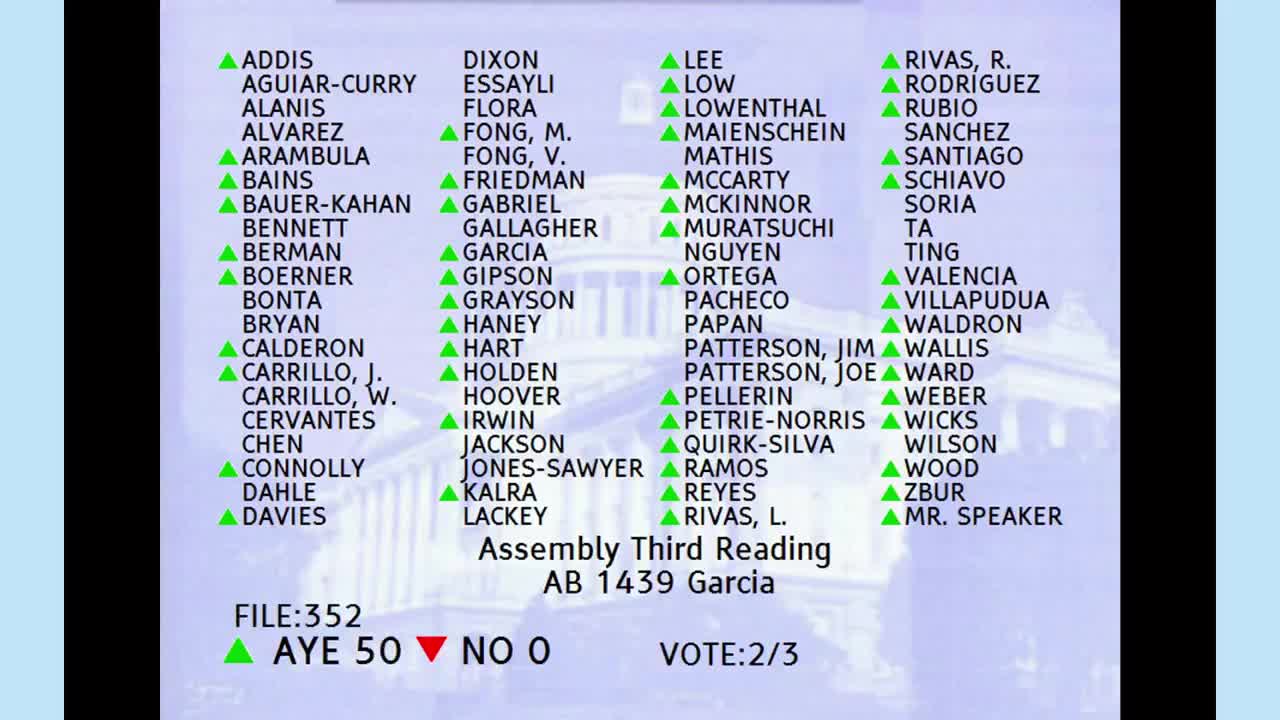 1MIN
Assembly Floor
 8MIN
Assembly Standing Committee on Housing and Community Development
Bill Author

Bill Co-Author(s):