AB 659: Cancer Prevention Act.
- Session Year: 2023-2024
- House: Assembly
- Latest Version Date: 2023-10-13
Current Status:
Passed
(2023-10-13: Chaptered by Secretary of State - Chapter 809, Statutes of 2023.)
Introduced
In Committee
First Chamber
In Committee
Second Chamber
Enacted
Existing law prohibits the governing authority of a school or other institution from unconditionally admitting any person as a pupil of any private or public elementary or secondary school, childcare center, day nursery, nursery school, family daycare home, or development center, unless prior to their admission to that institution they have been fully immunized. Existing law requires the documentation of immunizations for certain diseases, including, among others, measles, mumps, pertussis, and any other disease deemed appropriate by the State Department of Public Health, as specified. Existing law authorizes certain exemptions from these provisions subject to specified conditions.
This bill, the Cancer Prevention Act, would declare that pupils in the state are advised to adhere to current immunization guidelines, as recommended by specified health entities, regarding full human papillomavirus (HPV) immunization before admission or advancement to the 8th grade level of any private or public elementary or secondary school. The bill would, upon a pupils admission or advancement to the 6th grade level, require the governing authority to submit to the pupil and their parent or guardian a notification containing a statement about that public policy and advising that the pupil adhere to current HPV immunization guidelines before admission or advancement to the 8th grade level, as specified. The bill would require that the notification also include a statement containing certain health information. The bill would incorporate that notification into existing provisions relating to notifications by school districts. By creating new notification duties for school districts, the bill would impose a state-mandated local program.
Existing law requires the Trustees of the California State University and, subject to a resolution, the Regents of the University of California to require the first-time enrollees at those institutions who are 18 years of age or younger to provide proof of full immunization against the hepatitis B virus prior to enrollment, with certain exemptions.
This bill would declare the public policy of the state that students who are 26 years of age or younger are advised to adhere to current immunization guidelines, as specified, regarding full HPV immunization before first-time enrollment at an institution of the California State University, the University of California, or the California Community Colleges. The bill would make a conforming change to a consultation-related provision.
Existing law, the Knox-Keene Health Care Service Plan Act of 1975, provides for the licensure and regulation of health care service plans by the Department of Managed Health Care, and makes a willful violation of the act a crime. Existing law provides for the regulation of health insurers by the Department of Insurance. Existing law requires a health care service plan contract or health insurance policy issued, amended, or renewed on or after January 1, 2002, as specified, to provide coverage for an annual cervical cancer screening test, including an HPV screening test that is approved by the United States Food and Drug Administration (FDA).
This bill would expand the coverage requirement for an annual cervical cancer screening test to disability insurance policies that provide coverage for hospital, medical, or surgical benefits and would require a health care service plan contract, or a disability insurance policy that provides coverage for hospital, medical, or surgical benefits, issued, amended, or renewed on or after January 1, 2024, to provide coverage without cost sharing for the HPV vaccine for persons for whom the vaccine is FDA approved. Because a willful violation of the bills requirements relative to health care service plans would be a crime, the bill would impose a state-mandated local program.
The California Constitution requires the state to reimburse local agencies and school districts for certain costs mandated by the state. Statutory provisions establish procedures for making that reimbursement.
This bill would provide that with regard to certain mandates no reimbursement is required by this act for a specified reason.
With regard to any other mandates, this bill would provide that, if the Commission on State Mandates determines that the bill contains costs so mandated by the state, reimbursement for those costs shall be made pursuant to the statutory provisions noted above.
Existing law prohibits the governing authority of a school or other institution from unconditionally admitting any person as a pupil of any private or public elementary or secondary school, childcare center, day nursery, nursery school, family daycare home, or development center, unless prior to their admission to that institution they have been fully immunized. Existing law requires the documentation of immunizations for certain diseases, including, among others, measles, mumps, pertussis, and any other disease deemed appropriate by the State Department of Public Health, as specified. Existing law authorizes certain exemptions from these provisions subject to specified conditions.
This bill, the Cancer Prevention Act, would declare the public policy of the state that pupils are recommended to be fully immunized against human papillomavirus (HPV) that pupils in the state are advised to adhere to current immunization guidelines, as recommended by specified health entities, regarding full human papillomavirus (HPV) immunization before admission or advancement to the 8th grade level of any private or public elementary or secondary school. The bill would, upon a pupils admission or advancement to the 6th grade level, require the governing authority to submit to the pupil and their parent or guardian a notification containing a statement about that public policy and advising that the pupil be fully immunized against HPV adhere to current HPV immunization guidelines before admission or advancement to the 8th grade level. level, as specified. The bill would require that the notification also include a statement containing certain health information. The bill would incorporate that notification into existing provisions relating to notifications by school districts. By creating new notification duties for school districts, the bill would impose a state-mandated local program.
Existing law requires the Trustees of the California State University and, subject to a resolution, the Regents of the University of California to require the first-time enrollees at those institutions who are 18 years of age or younger to provide proof of full immunization against the hepatitis B virus prior to enrollment, with certain exemptions.
This bill would declare the public policy of the state that students who are 26 years of age or younger are recommended to be fully immunized against HPV advised to adhere to current immunization guidelines, as specified, regarding full HPV immunization before first-time enrollment at an institution of the California State University, the University of California, or the California Community Colleges. The bill would make a conforming change to a consultation-related provision.
Existing law, the Knox-Keene Health Care Service Plan Act of 1975, provides for the licensure and regulation of health care service plans by the Department of Managed Health Care, and makes a willful violation of the act a crime. Existing law provides for the regulation of health insurers by the Department of Insurance. Existing law requires a health care service plan contract or health insurance policy issued, amended, or renewed on or after January 1, 2002, as specified, to provide coverage for an annual cervical cancer screening test, including an HPV screening test that is approved by the United States Food and Drug Administration (FDA).
Existing law provides for the Medi-Cal program, administered by the State Department of Health Care Services and under which health care services are provided to low-income individuals pursuant to a schedule of benefits. The Medi-Cal program is, in part, governed and funded by federal Medicaid program provisions. Existing law also establishes the Family Planning, Access, Care, and Treatment (Family PACT) Waiver Program, administered by the Office of Family Planning within the department, under which comprehensive clinical family planning services are provided to a person who has a family income at or below 200% of the federal poverty level, and who is eligible to receive these services.This bill would expand the coverage requirement for an annual cervical cancer screening test to disability insurance policies that provide coverage for hospital, medical, or surgical benefits and would require a health care service plan contract, or a disability insurance policy that provides coverage for hospital, medical, or surgical benefits, issued, amended, or renewed on or after January 1, 2024, to provide coverage without cost sharing for the HPV vaccine for persons for whom the vaccine is FDA approved. Because a willful violation of the bills requirements relative to health care service plans would be a crime, the bill would impose a state-mandated local program. The bill would also expand comprehensive clinical family planning services under the Family PACT Waiver Program to include the HPV vaccine for persons for whom it is FDA approved.
The California Constitution requires the state to reimburse local agencies and school districts for certain costs mandated by the state. Statutory provisions establish procedures for making that reimbursement.
This bill would provide that with regard to certain mandates no reimbursement is required by this act for a specified reason.
With regard to any other mandates, this bill would provide that, if the Commission on State Mandates determines that the bill contains costs so mandated by the state, reimbursement for those costs shall be made pursuant to the statutory provisions noted above.
Existing law prohibits the governing authority of a school or other institution from unconditionally admitting any person as a pupil of any private or public elementary or secondary school, childcare center, day nursery, nursery school, family daycare home, or development center, unless prior to their admission to that institution they have been fully immunized. Existing law requires the documentation of immunizations for certain diseases, including, among others, measles, mumps, pertussis, and any other disease deemed appropriate by the State Department of Public Health, as specified. Existing law authorizes certain exemptions from these provisions subject to specified conditions.
This bill, the Cancer Prevention Act, would declare the public policy of the state that pupils are expected recommended to be fully immunized against human papillomavirus (HPV) before admission or advancement to the 8th grade level of any private or public elementary or secondary school. The bill would, upon a pupils admission or advancement to the 6th grade level, require the governing authority to submit to the pupil and their parent or guardian a notification containing a statement about that public policy and advising that the pupil be fully immunized against HPV before admission or advancement to the 8th grade level. The bill would incorporate that notification into existing provisions relating to notifications by school districts. By creating new notification duties for school districts, the bill would impose a state-mandated local program.
Existing law requires the Trustees of the California State University and, subject to a resolution, the Regents of the University of California to require the first-time enrollees at those institutions who are 18 years of age or younger to provide proof of full immunization against the hepatitis B virus prior to enrollment, with certain exemptions.
This bill would declare the public policy of the state that students who are 26 years of age or younger are expected recommended to be fully immunized against HPV before first-time enrollment at an institution of the California State University, the University of California, or the California Community Colleges. The bill would make a conforming change to a consultation-related provision.
Existing law, the Knox-Keene Health Care Service Plan Act of 1975, provides for the licensure and regulation of health care service plans by the Department of Managed Health Care, and makes a willful violation of the act a crime. Existing law provides for the regulation of health insurers by the Department of Insurance. Existing law requires a health care service plan contract or health insurance policy issued, amended, or renewed on or after January 1, 2002, as specified, to provide coverage for an annual cervical cancer screening test, including an HPV screening test that is approved by the United States Food and Drug Administration (FDA).
Existing law provides for the Medi-Cal program, administered by the State Department of Health Care Services and under which health care services are provided to low-income individuals pursuant to a schedule of benefits. The Medi-Cal program is, in part, governed and funded by federal Medicaid program provisions. Existing law also establishes the Family Planning, Access, Care, and Treatment (Family PACT) Waiver Program, administered by the Office of Family Planning within the department, under which comprehensive clinical family planning services are provided to a person who has a family income at or below 200% of the federal poverty level, and who is eligible to receive these services.
This bill would expand the coverage requirement for an annual cervical cancer screening test to disability insurance policies that provide coverage for hospital, medical, or surgical benefits and would require a health care service plan contract, or a disability insurance policy that provides coverage for hospital, medical, or surgical benefits, issued, amended, or renewed on or after January 1, 2024, to provide coverage without cost sharing for the HPV vaccine for persons for whom the vaccine is FDA approved. Because a willful violation of the bills requirements relative to health care service plans would be a crime, the bill would impose a state-mandated local program. The bill would also expand comprehensive clinical family planning services under the Family PACT Waiver Program to include the HPV vaccine for persons for whom it is FDA approved.
The California Constitution requires the state to reimburse local agencies and school districts for certain costs mandated by the state. Statutory provisions establish procedures for making that reimbursement.
This bill would provide that with regard to certain mandates no reimbursement is required by this act for a specified reason.
With regard to any other mandates, this bill would provide that, if the Commission on State Mandates determines that the bill contains costs so mandated by the state, reimbursement for those costs shall be made pursuant to the statutory provisions noted above.
Existing law prohibits the governing authority of a school or other institution from unconditionally admitting any person as a pupil of any private or public elementary or secondary school, childcare center, day nursery, nursery school, family daycare home, or development center, unless prior to their admission to that institution they have been fully immunized. Existing law requires the documentation of immunizations for certain diseases, including, among others, measles, mumps, pertussis, and any other disease deemed appropriate by the State Department of Public Health, as specified. Existing law authorizes certain exemptions from these provisions subject to specified conditions.
This bill, the Cancer Prevention Act, would declare the public policy of the state that pupils are expected to be fully immunized against human papillomavirus (HPV) before admission or advancement to the 8th grade level of any private or public elementary or secondary school. The bill would, upon a pupils admission or advancement to the 6th grade level, require the governing authority to submit to the pupil and their parent or guardian a notification containing a statement about that public policy and advising that the pupil be fully immunized against HPV before admission or advancement to the 8th grade level. By creating new notification duties for school districts, the bill would impose a state-mandated local program.
Existing law requires the Trustees of the California State University and, subject to a resolution, the Regents of the University of California to require the first-time enrollees at those institutions who are 18 years of age or younger to provide proof of full immunization against the hepatitis B virus prior to enrollment, with certain exemptions.
This bill would declare the public policy of the state that students who are 26 years of age or younger are expected to be fully immunized against HPV before first-time enrollment at an institution of the California State University, the University of California, or the California Community Colleges. The bill would make a conforming change to a consultation-related provision.
Existing law, the Knox-Keene Health Care Service Plan Act of 1975, provides for the licensure and regulation of health care service plans by the Department of Managed Health Care, and makes a willful violation of the act a crime. Existing law provides for the regulation of health insurers by the Department of Insurance. Existing law requires a health care service plan contract or health insurance policy issued, amended, or renewed on or after January 1, 2002, as specified, to provide coverage for an annual cervical cancer screening test, including an HPV screening test that is approved by the United States Food and Drug Administration (FDA).
Existing law provides for the Medi-Cal program, administered by the State Department of Health Care Services and under which health care services are provided to low-income individuals pursuant to a schedule of benefits. The Medi-Cal program is, in part, governed and funded by federal Medicaid program provisions. Existing law also establishes the Family Planning, Access, Care, and Treatment (Family PACT) Waiver Program, administered by the Office of Family Planning within the department, under which comprehensive clinical family planning services are provided to a person who has a family income at or below 200% of the federal poverty level, and who is eligible to receive these services.
This bill would expand the coverage requirement for an annual cervical cancer screening test to disability insurance policies that provide coverage for hospital, medical, or surgical benefits and would require a health care service plan contract, or a disability insurance policy that provides coverage for hospital, medical, or surgical benefits, issued, amended, or renewed on or after January 1, 2024, to provide coverage without cost sharing for the HPV vaccine for persons for whom the vaccine is FDA approved. Because a willful violation of the bills requirements relative to health care service plans would be a crime, the bill would impose a state-mandated local program. The bill would also expand comprehensive clinical family planning services under the Family PACT Waiver Program to include the HPV vaccine for persons for whom it is FDA approved.
The California Constitution requires the state to reimburse local agencies and school districts for certain costs mandated by the state. Statutory provisions establish procedures for making that reimbursement.
This bill would provide that with regard to certain mandates no reimbursement is required by this act for a specified reason.
With regard to any other mandates, this bill would provide that, if the Commission on State Mandates determines that the bill contains costs so mandated by the state, reimbursement for those costs shall be made pursuant to the statutory provisions noted above.
Existing law prohibits the governing authority of a school or other institution from unconditionally admitting any person as a pupil of any private or public elementary or secondary school, childcare center, day nursery, nursery school, family daycare home, or development center, unless prior to their admission to that institution they have been fully immunized. Existing law requires the documentation of immunizations for certain diseases, including, among others, measles, mumps, pertussis, and any other disease deemed appropriate by the State Department of Public Health, as specified. Existing law authorizes certain exemptions from these provisions subject to specified conditions.
This bill, the Cancer Prevention Act, would declare the public policy of the state that pupils are expected to be fully immunized against human papillomavirus (HPV) before admission or advancement to the 8th grade level of any private or public elementary or secondary school. The bill would, upon a pupils admission or advancement to the 6th grade level, require the governing authority to submit to the pupil and their parent or guardian a notification containing a statement about that public policy and advising that the pupil be fully immunized against HPV before admission or advancement to the 8th grade level. By creating new notification duties for school districts, the bill would impose a state-mandated local program.
Existing law requires the Trustees of the California State University and, subject to a resolution, the Regents of the University of California to require the first-time enrollees at those institutions who are 18 years of age or younger to provide proof of full immunization against the hepatitis B virus prior to enrollment. Existing law authorizes an extension with conditional enrollment, and sets forth exemptions from the immunization requirement on the basis of contrary beliefs, or physical condition or medical circumstances, as specified. enrollment, with certain exemptions.
This bill would require the Trustees of the California State University, the Regents of the University of California subject to a resolution, and the Board of Governors of the California Community Colleges to require the first-time enrollees at those institutions who are 26 years of age or younger to provide proof of full immunization against HPV prior to enrollment. The bill would authorize an extension with conditional enrollment, and would set forth a medical exemption from the immunization requirement, as specified. The bill would make a conforming change to a consultation-related provision. By creating new duties for community college districts, the bill would impose a state-mandated local program.This bill would declare the public policy of the state that students who are 26 years of age or younger are expected to be fully immunized against HPV before first-time enrollment at an institution of the California State University, the University of California, or the California Community Colleges. The bill would make a conforming change to a consultation-related provision.
Existing law, the Knox-Keene Health Care Service Plan Act of 1975, provides for the licensure and regulation of health care service plans by the Department of Managed Health Care, and makes a willful violation of the act a crime. Existing law provides for the regulation of health insurers by the Department of Insurance. Existing law requires a health care service plan contract or health insurance policy issued, amended, or renewed on or after January 1, 2002, as specified, to provide coverage for an annual cervical cancer screening test, including an HPV screening test that is approved by the United States Food and Drug Administration (FDA).
Existing law provides for the Medi-Cal program, administered by the State Department of Health Care Services and under which health care services are provided to low-income individuals pursuant to a schedule of benefits. The Medi-Cal program is, in part, governed and funded by federal Medicaid program provisions. Existing law also establishes the Family Planning, Access, Care, and Treatment (Family PACT) Waiver Program, administered by the Office of Family Planning within the department, under which comprehensive clinical family planning services are provided to a person who has a family income at or below 200% of the federal poverty level, and who is eligible to receive these services.
This bill would expand the coverage requirement for an annual cervical cancer screening test to disability insurance policies that provide coverage for hospital, medical, or surgical benefits and would require a health care service plan contract, or a disability insurance policy that provides coverage for hospital, medical, or surgical benefits, issued, amended, or renewed on or after January 1, 2024, to provide coverage without cost sharing for the HPV vaccine for persons for whom the vaccine is FDA approved. Because a willful violation of the bills requirements relative to health care service plans would be a crime, the bill would impose a state-mandated local program. The bill would also expand comprehensive clinical family planning services under the Family PACT Waiver Program to include the HPV vaccine for persons for whom it is FDA approved.
The California Constitution requires the state to reimburse local agencies and school districts for certain costs mandated by the state. Statutory provisions establish procedures for making that reimbursement.
This bill would provide that with regard to certain mandates no reimbursement is required by this act for a specified reason.
With regard to any other mandates, this bill would provide that, if the Commission on State Mandates determines that the bill contains costs so mandated by the state, reimbursement for those costs shall be made pursuant to the statutory provisions noted above.
Existing law prohibits the governing authority of a school or other institution from unconditionally admitting any person as a pupil of any private or public elementary or secondary school, childcare center, day nursery, nursery school, family daycare home, or development center, unless prior to their admission to that institution they have been fully immunized. Existing law requires the documentation of immunizations for certain diseases, including, among others, measles, mumps, pertussis, and any other disease deemed appropriate by the State Department of Public Health, as specified. Existing law authorizes certain exemptions from these provisions subject to specified conditions.
Existing law requires the department to adopt and enforce regulations for these provisions and authorizes the department to specify the immunizing agents that may be utilized and the manner in which immunizations are administered.This bill, the Cancer Prevention Act, would add human papillomavirus (HPV) to the above-described list of diseases for which immunization documentation is required. The bill would specifically prohibit the governing authority from unconditionally admitting or advancing any pupil to the 8th grade level of any private or public elementary or secondary school if the pupil has not been fully immunized against HPV. The bill would clarify the departments authority to adopt HPV-related regulations for grades below the 8th grade level. declare the public policy of the state that pupils are expected to be fully immunized against human papillomavirus (HPV) before admission or advancement to the 8th grade level of any private or public elementary or secondary school. The bill would, upon a pupils admission or advancement to the 6th grade level, require the governing authority to submit to the pupil and their parent or guardian a notification containing a statement about that public policy and advising that the pupil be fully immunized against HPV before admission or advancement to the 8th grade level. By creating new notification duties for school districts, the bill would impose a state-mandated local program.
Existing law requires the Trustees of the California State University and, subject to a resolution, the Regents of the University of California to require the first-time enrollees at those institutions who are 18 years of age or younger to provide proof of full immunization against the hepatitis B virus prior to enrollment. Existing law authorizes an extension with conditional enrollment, and sets forth exemptions from the immunization requirement on the basis of contrary beliefs, or physical condition or medical circumstances, as specified.
This bill would require the Trustees of the California State University, the Regents of the University of California subject to a resolution, and the Board of Governors of the California Community Colleges to require the first-time enrollees at those institutions who are 26 years of age or younger to provide proof of full immunization against HPV prior to enrollment. The bill would authorize an extension with conditional enrollment, and would set forth a medical exemption from the immunization requirement, as specified. The bill would make a conforming change to a consultation-related provision. By creating new duties for community college districts, the bill would impose a state-mandated local program.
Existing law, the Knox-Keene Health Care Service Plan Act of 1975, provides for the licensure and regulation of health care service plans by the Department of Managed Health Care, and makes a willful violation of the act a crime. Existing law provides for the regulation of health insurers by the Department of Insurance. Existing law requires a health care service plan contract or health insurance policy issued, amended, or renewed on or after January 1, 2002, as specified, to provide coverage for an annual cervical cancer screening test, including a human papillomavirus (HPV) an HPV screening test that is approved by the United States Food and Drug Administration (FDA).
Existing law provides for the Medi-Cal program, administered by the State Department of Health Care Services and under which health care services are provided to low-income individuals pursuant to a schedule of benefits. The Medi-Cal program is, in part, governed and funded by federal Medicaid program provisions. Existing law also establishes the Family Planning, Access, Care, and Treatment (Family PACT) Waiver Program, administered by the Office of Family Planning within the department, under which comprehensive clinical family planning services are provided to a person who has a family income at or below 200% of the federal poverty level, and who is eligible to receive these services.
This bill would expand the coverage requirement for an annual cervical cancer screening test to disability insurance policies that provide coverage for hospital, medical, or surgical benefits and would require a health care service plan contract or contract, or a disability insurance policy that provides coverage for hospital, medical, or surgical benefits benefits, issued, amended, or renewed on or after January 1, 2024, to provide coverage without cost sharing for the HPV vaccine for persons for whom the vaccine is FDA approved. Because a willful violation of the bills requirements relative to health care service plans would be a crime, the bill would impose a state-mandated local program. The bill would also expand comprehensive clinical family planning services under the Family PACT Waiver Program to include the HPV vaccine for persons for whom it is FDA approved.
The California Constitution requires the state to reimburse local agencies and school districts for certain costs mandated by the state. Statutory provisions establish procedures for making that reimbursement.
This bill would provide that with regard to certain mandates no reimbursement is required by this act for a specified reason.
With regard to any other mandates, this bill would provide that, if the Commission on State Mandates determines that the bill contains costs so mandated by the state, reimbursement for those costs shall be made pursuant to the statutory provisions noted above.
Existing law prohibits the governing authority of a school or other institution from unconditionally admitting any person as a pupil of any private or public elementary or secondary school, childcare center, day nursery, nursery school, family daycare home, or development center, unless prior to their admission to that institution they have been fully immunized. Existing law requires the documentation of immunizations for certain diseases, including, among others, measles, mumps, pertussis, and any other disease deemed appropriate by the State Department of Public Health, as specified. Existing law authorizes certain exemptions from these provisions subject to specified conditions.
Existing law requires the department to adopt and enforce regulations for these provisions and authorizes the department to specify the immunizing agents that may be utilized and the manner in which immunizations are administered.
This bill, the Cancer Prevention Act, would add human papillomavirus (HPV) to the above-described list of diseases for which immunization documentation is required. The bill would specifically prohibit the governing authority from unconditionally admitting or advancing any pupil to the 8th grade level of any private or public elementary or secondary school if the pupil has not been fully immunized against HPV. The bill would clarify the departments authority to adopt HPV-related regulations for grades below the 8th grade level. By creating new duties for school districts, the bill would impose a state-mandated local program.
The California Constitution requires the state to reimburse local agencies and school districts for certain costs mandated by the state. Statutory provisions establish procedures for making that reimbursement.This bill would provide that, if the Commission on State Mandates determines that the bill contains costs mandated by the state, reimbursement for those costs shall be made pursuant to the statutory provisions noted above.Existing law, the Knox-Keene Health Care Service Plan Act of 1975, provides for the licensure and regulation of health care service plans by the Department of Managed Health Care, and makes a willful violation of the act a crime. Existing law provides for the regulation of health insurers by the Department of Insurance. Existing law requires a health care service plan contract or health insurance policy issued, amended, or renewed on or after January 1, 2002, to provide coverage for an annual cervical cancer screening test, including a human papillomavirus (HPV) screening test that is approved by the United States Food and Drug Administration (FDA).
Existing law provides for the Medi-Cal program, administered by the State Department of Health Care Services and under which health care services are provided to low-income individuals pursuant to a schedule of benefits. The Medi-Cal program is, in part, governed and funded by federal Medicaid program provisions. Existing law also establishes the Family Planning, Access, Care, and Treatment (Family PACT) Waiver Program, administered by the Office of Family Planning within the department, under which comprehensive clinical family planning services are provided to a person who has a family income at or below 200% of the federal poverty level, and who is eligible to receive these services.
This bill would expand the coverage requirement for an annual cervical cancer screening test to disability insurance policies that provide coverage for hospital, medical, or surgical benefits and would require a health care service plan contract or disability insurance policy that provides coverage for hospital, medical, or surgical benefits issued, amended, or renewed on or after January 1, 2024, to provide coverage without cost sharing for the HPV vaccine for persons for whom the vaccine is FDA approved. Because a willful violation of the bills requirements relative to health care service plans would be a crime, the bill would impose a state-mandated local program. The bill would also expand comprehensive clinical family planning services under the Family PACT Waiver Program to include the HPV vaccine for persons for whom it is FDA approved.
The California Constitution requires the state to reimburse local agencies and school districts for certain costs mandated by the state. Statutory provisions establish procedures for making that reimbursement.
This bill would provide that with regard to certain mandates no reimbursement is required by this act for a specified reason.
With regard to any other mandates, this bill would provide that, if the Commission on State Mandates determines that the bill contains costs so mandated by the state, reimbursement for those costs shall be made pursuant to the statutory provisions noted above.
Existing law prohibits the governing authority of a school or other institution from unconditionally admitting any person as a pupil of any private or public elementary or secondary school, childcare center, day nursery, nursery school, family daycare home, or development center, unless prior to their admission to that institution they have been fully immunized. Existing law requires the documentation of immunizations for certain diseases, including, among others, measles, mumps, pertussis, and any other disease deemed appropriate by the State Department of Public Health, as specified. Existing law authorizes certain exemptions from these provisions subject to specified conditions.
Existing law requires the department to adopt and enforce regulations for these provisions and authorizes the department to specify the immunizing agents that may be utilized and the manner in which immunizations are administered.
This bill, the Cancer Prevention Act, would add human papillomavirus (HPV) to the above-described list of diseases for which immunization documentation is required. The bill would specifically prohibit the governing authority from unconditionally admitting or advancing any pupil to the 8th grade level of any private or public elementary or secondary school if the pupil has not been fully immunized against HPV. The bill would clarify the departments authority to adopt HPV-related regulations for grades below the 8th grade level. By creating new duties for school districts, the bill would impose a state-mandated local program.
The California Constitution requires the state to reimburse local agencies and school districts for certain costs mandated by the state. Statutory provisions establish procedures for making that reimbursement.
This bill would provide that, if the Commission on State Mandates determines that the bill contains costs mandated by the state, reimbursement for those costs shall be made pursuant to the statutory provisions noted above.
This act shall be known, and may be cited, as the Cancer Prevention Act.
SEC. 2.Section 48980.4 is added to the Education Code, to read:48980.4.(a)The notification required pursuant to Section 48980 for pupils admitted to, or advancing to, the sixth grade shall include a notification to the pupils parent or guardian containing a statement about the states public policy described in subdivision (a) of Section 120336 of the Health and Safety Code, advising that the pupil adhere to current immunization guidelines, as recommended by the Advisory Committee on Immunization Practices of the federal Centers for Disease Control and Prevention, the American Academy of Pediatrics, and the American Academy of Family Physicians, regarding full human papillomavirus (HPV) immunization before admission or advancement to the eighth grade level.
(b)The notification sent pursuant to subdivision (a) shall conform to the notification requirements outlined in this article.
(c)The notification sent pursuant to subdivision (a) shall also include the statement specified in subdivision (c) of Section 120336 of the Health and Safety Code.
SEC. 3.Section 1367.66 of the Health and Safety Code is amended to read:1367.66.(a)Every individual or group health care service plan contract, except for a specialized health care service plan, issued, amended, or renewed on or after January 1, 2002, shall provide coverage for an annual cervical cancer screening test upon the referral of the patients physician and surgeon, a nurse practitioner, or a certified nurse-midwife, providing care to the patient and operating within the scope of practice otherwise permitted for the licensee.
(1)The coverage for an annual cervical cancer screening test provided pursuant to this section shall include the conventional Pap test, a human papillomavirus screening test that is approved by the United States Food and Drug Administration (FDA), and the option of any cervical cancer screening test approved by the FDA, upon the referral of the patients health care provider.
(2)This subdivision does not establish a new mandated benefit or prevent application of deductible or copayment provisions in an existing plan contract. The Legislature intends in this section to provide that cervical cancer screening services are deemed to be covered if the plan contract includes coverage for cervical cancer treatment or surgery.
(b)A health care service plan contract, except for a specialized health care service plan, issued, amended, or renewed on or after January 1, 2024, shall provide coverage for the human papillomavirus vaccine for enrollees for whom the vaccine is approved by the FDA. A health care service plan contract shall not impose a deductible, coinsurance, copayment, or any other cost-sharing requirement on the coverage provided pursuant to this subdivision.
SEC. 4.Section 120336 is added to the Health and Safety Code, to read:120336.(a)Pupils in the state are advised, as described in subdivision (b), to adhere to current immunization guidelines, as recommended by the Advisory Committee on Immunization Practices (ACIP) of the federal Centers for Disease Control and Prevention (CDC), the American Academy of Pediatrics, and the American Academy of Family Physicians, regarding full human papillomavirus (HPV) immunization before admission or advancement to the eighth grade level of any private or public elementary or secondary school.
(b)Upon a pupils admission or advancement to the sixth grade level, the governing authority of any private or public elementary or secondary school shall submit to the pupil and their parent or guardian a notification containing a statement about the states public policy described in subdivision (a) and advising that the pupil adhere to current HPV immunization guidelines, as described in subdivision (a), before admission or advancement to the eighth grade level, in compliance with the notification requirements of Article 4 (commencing with Section 48980) of Chapter 6 of Part 27 of Division 4 of Title 2 of the Education Code.
(c)The notification sent pursuant to subdivision (b) shall also include a statement, as determined by the department, summarizing the recommended ages for the HPV vaccine and scientific rationale for vaccination at those ages, based on guidance issued by ACIP of the CDC, the American Academy of Pediatrics, and the American Academy of Family Physicians. The notification shall further state the following:
HPV vaccination can prevent over 90 percent of cancers caused by HPV. HPV vaccines are very safe, and scientific research shows that the benefits of HPV vaccination far outweigh the potential risks.
(d)This section does not apply to a pupil in a home-based private school.
SEC. 5.Section 120390 of the Health and Safety Code is amended to read:120390.The department, in consultation with the Trustees of the California State University, the Regents of the University of California, and the Board of Governors of the California Community Colleges, as applicable, shall adopt and enforce all regulations necessary to carry out this chapter.
SEC. 6.Section 120390.6 is added to the Health and Safety Code, to read:120390.6.It is the public policy of the state that students who are 26 years of age or younger are advised to adhere to current immunization guidelines, as recommended by the Advisory Committee on Immunization Practices of the federal Centers for Disease Control and Prevention, the American Academy of Pediatrics, and the American Academy of Family Physicians, regarding full human papillomavirus (HPV) immunization before first-time enrollment at an institution of the California State University, the University of California, or the California Community Colleges.
SEC. 7.Section 10123.18 of the Insurance Code is amended to read:10123.18.(a)A disability insurance policy issued, amended, or renewed on or after January 1, 2024, and that provides coverage for hospital, medical, or surgical benefits shall provide coverage, upon the referral of a patients physician and surgeon, a nurse practitioner, or a certified nurse-midwife, providing care to the patient and operating within the scope of practice otherwise permitted for the licensee, for an annual cervical cancer screening test.
(1)The coverage for an annual cervical cancer screening test provided pursuant to this section shall include the conventional Pap test, a human papillomavirus screening test that is approved by the United States Food and Drug Administration (FDA) and the option of any cervical cancer screening test approved by the FDA, upon the referral of the patients health care provider.
(2)This subdivision does not require an individual or group policy to cover treatment or surgery for cervical cancer or to prevent application of deductible or copayment provisions contained in the policy or certificate, and does not require that coverage under an individual or group policy be extended to any other procedures.
(b)A disability insurance policy issued, amended, or renewed on or after January 1, 2024, that provides coverage for hospital, medical, or surgical benefits shall provide coverage for the human papillomavirus vaccine for insureds for whom the vaccine is approved by the FDA. The policy shall not impose a deductible, coinsurance, copayment, or any other cost-sharing requirement on the coverage provided pursuant to this subdivision.
(c)This section shall not apply to vision-only, dental-only, accident-only, specified disease, hospital indemnity, Medicare supplement, CHAMPUS supplement, long-term care, or disability income insurance. For accident-only, hospital indemnity, or specified disease insurance, coverage for benefits under this section shall apply only to the extent that the benefits are covered under the general terms and conditions that apply to all other benefits under the policy or certificate. This section does not impose a new benefit mandate on accident-only, hospital indemnity, or specified disease insurance.
SEC. 8.No reimbursement is required by this act pursuant to Section 6 of Article XIIIB of the California Constitution for certain costs that may be incurred by a local agency or school district because, in that regard, this act creates a new crime or infraction, eliminates a crime or infraction, or changes the penalty for a crime or infraction, within the meaning of Section 17556 of the Government Code, or changes the definition of a crime within the meaning of Section 6 of Article XIIIB of the California Constitution.
However, if the Commission on State Mandates determines that this act contains other costs mandated by the state, reimbursement to local agencies and school districts for those costs shall be made pursuant to Part 7 (commencing with Section 17500) of Division 4 of Title 2 of the Government Code.
This act shall be known, and may be cited, as the Cancer Prevention Act.
SEC. 2.Section 48980.4 is added to the Education Code, to read:48980.4.(a)The notification required pursuant to Section 48980 for pupils admitted to, or advancing to, the sixth grade shall include a notification to the pupils parent or guardian containing a statement about the states public policy described in subdivision (a) of Section 120336 of the Health and Safety Code, advising that the pupil be fully immunized against human papillomavirus (HPV) adhere to current immunization guidelines, as recommended by the Advisory Committee on Immunization Practices of the federal Centers for Disease Control and Prevention, the American Academy of Pediatrics, and the American Academy of Family Physicians, regarding full human papillomavirus (HPV) immunization before admission or advancement to the eighth grade level.
(b)The notification sent pursuant to subdivision (a) shall conform to the notification requirements outlined in this article.
(c)The notification sent pursuant to subdivision (a) shall also include the statement specified in subdivision (c) of Section 120336 of the Health and Safety Code.
SEC. 3.Section 1367.66 of the Health and Safety Code is amended to read:1367.66.(a)A Every individual or group health care service plan contract, except for a specialized health care service plan, issued, amended, or renewed on or after January 1, 2002, shall provide coverage for an annual cervical cancer screening test upon the referral of the patients physician and surgeon, a nurse practitioner, or a certified nurse-midwife, providing care to the patient and operating within the scope of practice otherwise permitted for the licensee.
(1)The coverage for an annual cervical cancer screening test provided pursuant to this section shall include the conventional Pap test, a human papillomavirus screening test that is approved by the United States Food and Drug Administration (FDA), and the option of any cervical cancer screening test approved by the FDA, upon the referral of the patients health care provider.
(2)This subdivision does not establish a new mandated benefit or prevent application of deductible or copayment provisions in an existing plan contract. The Legislature intends in this section to provide that cervical cancer screening services are deemed to be covered if the plan contract includes coverage for cervical cancer treatment or surgery.
(b)A health care service plan contract, except for a specialized health care service plan, issued, amended, or renewed on or after January 1, 2024, shall provide coverage for the human papillomavirus vaccine for enrollees for whom the vaccine is approved by the FDA. A health care service plan contract shall not impose a deductible, coinsurance, copayment, or any other cost-sharing requirement on the coverage provided pursuant to this subdivision.
SEC. 4.Section 120336 is added to the Health and Safety Code, to read:120336.(a)It is the public policy of the state that pupils are recommended to be fully immunized against human papillomavirus (HPV) Pupils in the state are advised, as described in subdivision (b), to adhere to current immunization guidelines, as recommended by the Advisory Committee on Immunization Practices (ACIP) of the federal Centers for Disease Control and Prevention (CDC), the American Academy of Pediatrics, and the American Academy of Family Physicians, regarding full human papillomavirus (HPV) immunization before admission or advancement to the eighth grade level of any private or public elementary or secondary school.
(b)Upon a pupils admission or advancement to the sixth grade level, the governing authority of any private or public elementary or secondary school shall submit to the pupil and their parent or guardian a notification containing a statement about the states public policy described in subdivision (a) and advising that the pupil be fully immunized against HPV adhere to current HPV immunization guidelines, as described in subdivision (a), before admission or advancement to the eighth grade level, in compliance with the notification requirements of Article 4 (commencing with Section 48980) of Chapter 6 of Part 27 of Division 4 of Title 2 of the Education Code.
(c)The notification sent pursuant to subdivision (b) shall also include a statement, as determined by the department, summarizing the recommended ages for the HPV vaccine and scientific rationale for vaccination at those ages, based on guidance issued by ACIP of the CDC, the American Academy of Pediatrics, and the American Academy of Family Physicians. The notification shall further state the following:
HPV vaccination can prevent over 90 percent of cancers caused by HPV. HPV vaccines are very safe, and scientific research shows that the benefits of HPV vaccination far outweigh the potential risks.
(c)(d)This section does not apply to a pupil in a home-based private school.
SEC. 5.Section 120390 of the Health and Safety Code is amended to read:120390.The department, in consultation with the Trustees of the California State University, the Regents of the University of California, and the Board of Governors of the California Community Colleges, as applicable, shall adopt and enforce all regulations necessary to carry out this chapter.
SEC. 6.Section 120390.6 is added to the Health and Safety Code, to read:120390.6.It is the public policy of the state that students who are 26 years of age or younger are recommended to be fully immunized against human papillomavirus (HPV) advised to adhere to current immunization guidelines, as recommended by the Advisory Committee on Immunization Practices of the federal Centers for Disease Control and Prevention, the American Academy of Pediatrics, and the American Academy of Family Physicians, regarding full human papillomavirus (HPV) immunization before first-time enrollment at an institution of the California State University, the University of California, or the California Community Colleges.
SEC. 7.Section 10123.18 of the Insurance Code is amended to read:10123.18.(a)A disability insurance policy issued, amended, or renewed on or after January 1, 2024, and that provides coverage for hospital, medical, or surgical benefits shall provide coverage, upon the referral of a patients physician and surgeon, a nurse practitioner, or a certified nurse-midwife, providing care to the patient and operating within the scope of practice otherwise permitted for the licensee, for an annual cervical cancer screening test.
(1)The coverage for an annual cervical cancer screening test provided pursuant to this section shall include the conventional Pap test, a human papillomavirus screening test that is approved by the United States Food and Drug Administration (FDA) and the option of any cervical cancer screening test approved by the FDA, upon the referral of the patients health care provider.
(2)This subdivision does not require an individual or group policy to cover treatment or surgery for cervical cancer or to prevent application of deductible or copayment provisions contained in the policy or certificate, and does not require that coverage under an individual or group policy be extended to any other procedures.
(b)A disability insurance policy issued, amended, or renewed on or after January 1, 2024, that provides coverage for hospital, medical, or surgical benefits shall provide coverage for the human papillomavirus vaccine for insureds for whom the vaccine is approved by the FDA. The policy shall not impose a deductible, coinsurance, copayment, or any other cost-sharing requirement on the coverage provided pursuant to this subdivision.
(c)This section shall not apply to vision-only, dental-only, accident-only, specified disease, hospital indemnity, Medicare supplement, CHAMPUS supplement, long-term care, or disability income insurance. For accident-only, hospital indemnity, or specified disease insurance, coverage for benefits under this section shall apply only to the extent that the benefits are covered under the general terms and conditions that apply to all other benefits under the policy or certificate. This section does not impose a new benefit mandate on accident-only, hospital indemnity, or specified disease insurance.
SEC. 8.Section 14132.04 is added to the Welfare and Institutions Code, to read:14132.04.For purposes of subdivision (aa) of Section 14132, comprehensive clinical family planning services includes the human papillomavirus vaccine for persons for whom it is approved by the United States Food and Drug Administration.SEC. 9.SEC. 8.No reimbursement is required by this act pursuant to Section 6 of Article XIIIB of the California Constitution for certain costs that may be incurred by a local agency or school district because, in that regard, this act creates a new crime or infraction, eliminates a crime or infraction, or changes the penalty for a crime or infraction, within the meaning of Section 17556 of the Government Code, or changes the definition of a crime within the meaning of Section 6 of Article XIIIB of the California Constitution.
However, if the Commission on State Mandates determines that this act contains other costs mandated by the state, reimbursement to local agencies and school districts for those costs shall be made pursuant to Part 7 (commencing with Section 17500) of Division 4 of Title 2 of the Government Code.
This act shall be known, and may be cited, as the Cancer Prevention Act.
SEC. 2.Section 48980.4 is added to the Education Code, to read:48980.4.(a)The notification required pursuant to Section 48980 for pupils admitted to or advancing to to, or advancing to, the sixth grade shall include a notification to the pupils parent or guardian containing a statement about the states public policy described in subdivision (a) of Section 120336 of the Health and Safety Code, advising that the pupil be fully immunized against human papillomavirus (HPV) before admission or advancement to the eighth grade level.
(b)The notification sent pursuant to subdivision (a) shall conform to the notification requirements outlined in this article.
SEC. 3.Section 1367.66 of the Health and Safety Code is amended to read:1367.66.(a)A health care service plan contract, except for a specialized health care service plan, issued, amended, or renewed on or after January 1, 2002, shall provide coverage for an annual cervical cancer screening test upon the referral of the patients physician and surgeon, a nurse practitioner, or a certified nurse-midwife, providing care to the patient and operating within the scope of practice otherwise permitted for the licensee.
(1)The coverage for an annual cervical cancer screening test provided pursuant to this section shall include the conventional Pap test, a human papillomavirus screening test that is approved by the United States Food and Drug Administration (FDA), and the option of any cervical cancer screening test approved by the FDA, upon the referral of the patients health care provider.
(2)This subdivision does not establish a new mandated benefit or prevent application of deductible or copayment provisions in an existing plan contract. The Legislature intends in this section to provide that cervical cancer screening services are deemed to be covered if the plan contract includes coverage for cervical cancer treatment or surgery.
(b)A health care service plan contract, except for a specialized health care service plan, issued, amended, or renewed on or after January 1, 2024, shall provide coverage for the human papillomavirus vaccine for enrollees for whom the vaccine is approved by the FDA. A health care service plan contract shall not impose a deductible, coinsurance, copayment, or any other cost-sharing requirement on the coverage provided pursuant to this subdivision.
SEC. 4.Section 120336 is added to the Health and Safety Code, to read:120336.(a)It is the public policy of the state that pupils are expected recommended to be fully immunized against human papillomavirus (HPV) before admission or advancement to the eighth grade level of any private or public elementary or secondary school.
(b)Upon a pupils admission or advancement to the sixth grade level, the governing authority of any private or public elementary or secondary school shall submit to the pupil and their parent or guardian a notification containing a statement about the states public policy described in subdivision (a) and advising that the pupil be fully immunized against HPV before admission or advancement to the eighth grade level level, in compliance with the notification requirements of Article 4 (commencing with Section 48980) of Chapter 6 of Part 27 of Division 4 of Title 2 of the Education Code.
(c)This section does not apply to a pupil in a home-based private school.
SEC. 5.Section 120390 of the Health and Safety Code is amended to read:120390.The department, in consultation with the Trustees of the California State University, the Regents of the University of California, and the Board of Governors of the California Community Colleges, as applicable, shall adopt and enforce all regulations necessary to carry out this chapter.
SEC. 6.Section 120390.6 is added to the Health and Safety Code, to read:120390.6.It is the public policy of the state that students who are 26 years of age or younger are expected recommended to be fully immunized against human papillomavirus (HPV) before first-time enrollment at an institution of the California State University, the University of California, or the California Community Colleges.
SEC. 7.Section 10123.18 of the Insurance Code is amended to read:10123.18.(a)A disability insurance policy issued, amended, or renewed on or after January 1, 2024, and that provides coverage for hospital, medical, or surgical benefits shall provide coverage, upon the referral of a patients physician and surgeon, a nurse practitioner, or a certified nurse-midwife, providing care to the patient and operating within the scope of practice otherwise permitted for the licensee, for an annual cervical cancer screening test.
(1)The coverage for an annual cervical cancer screening test provided pursuant to this section shall include the conventional Pap test, a human papillomavirus screening test that is approved by the United States Food and Drug Administration (FDA) and the option of any cervical cancer screening test approved by the FDA, upon the referral of the patients health care provider.
(2)This subdivision does not require an individual or group policy to cover treatment or surgery for cervical cancer or to prevent application of deductible or copayment provisions contained in the policy or certificate, and does not require that coverage under an individual or group policy be extended to any other procedures.
(b)A disability insurance policy issued, amended, or renewed on or after January 1, 2024, that provides coverage for hospital, medical, or surgical benefits shall provide coverage for the human papillomavirus vaccine for insureds for whom the vaccine is approved by the FDA. The policy shall not impose a deductible, coinsurance, copayment, or any other cost-sharing requirement on the coverage provided pursuant to this subdivision.
(c)This section shall not apply to vision-only, dental-only, accident-only, specified disease, hospital indemnity, Medicare supplement, CHAMPUS supplement, long-term care, or disability income insurance. For accident-only, hospital indemnity, or specified disease insurance, coverage for benefits under this section shall apply only to the extent that the benefits are covered under the general terms and conditions that apply to all other benefits under the policy or certificate. This section does not impose a new benefit mandate on accident-only, hospital indemnity, or specified disease insurance.
SEC. 8.Section 14132.04 is added to the Welfare and Institutions Code, to read:14132.04.For purposes of subdivision (aa) of Section 14132, comprehensive clinical family planning services includes the human papillomavirus vaccine for persons for whom it is approved by the United States Food and Drug Administration.
SEC. 9.No reimbursement is required by this act pursuant to Section 6 of Article XIIIB of the California Constitution for certain costs that may be incurred by a local agency or school district because, in that regard, this act creates a new crime or infraction, eliminates a crime or infraction, or changes the penalty for a crime or infraction, within the meaning of Section 17556 of the Government Code, or changes the definition of a crime within the meaning of Section 6 of Article XIIIB of the California Constitution.
However, if the Commission on State Mandates determines that this act contains other costs mandated by the state, reimbursement to local agencies and school districts for those costs shall be made pursuant to Part 7 (commencing with Section 17500) of Division 4 of Title 2 of the Government Code.
This act shall be known, and may be cited, as the Cancer Prevention Act.
SEC. 2.Section 48980.4 is added to the Education Code, to read:48980.4.(a)The notification required pursuant to Section 48980 for pupils admitted to or advancing to the sixth grade shall include a notification to the pupils parent or guardian containing a statement about the states public policy described in subdivision (a) of Section 120336 of the Health and Safety Code, advising that the pupil be fully immunized against human papillomavirus (HPV) before admission or advancement to the eighth grade level.
(b)The notification sent pursuant to subdivision (a) shall conform to the notification requirements outlined in this article.
SEC. 2.SEC. 3.Section 1367.66 of the Health and Safety Code is amended to read:1367.66.(a)A health care service plan contract, except for a specialized health care service plan, issued, amended, or renewed on or after January 1, 2002, shall provide coverage for an annual cervical cancer screening test upon the referral of the patients physician and surgeon, a nurse practitioner, or a certified nurse-midwife, providing care to the patient and operating within the scope of practice otherwise permitted for the licensee.
(1)The coverage for an annual cervical cancer screening test provided pursuant to this section shall include the conventional Pap test, a human papillomavirus screening test that is approved by the United States Food and Drug Administration (FDA), and the option of any cervical cancer screening test approved by the FDA, upon the referral of the patients health care provider.
(2)This subdivision does not establish a new mandated benefit or prevent application of deductible or copayment provisions in an existing plan contract. The Legislature intends in this section to provide that cervical cancer screening services are deemed to be covered if the plan contract includes coverage for cervical cancer treatment or surgery.
(b)A health care service plan contract, except for a specialized health care service plan, issued, amended, or renewed on or after January 1, 2024, shall provide coverage for the human papillomavirus vaccine for enrollees for whom the vaccine is approved by the FDA. A health care service plan contract shall not impose a deductible, coinsurance, copayment, or any other cost-sharing requirement on the coverage provided pursuant to this subdivision.
SEC. 3.SEC. 4.Section 120336 is added to the Health and Safety Code, to read:120336.(a)It is the public policy of the state that pupils are expected to be fully immunized against human papillomavirus (HPV) before admission or advancement to the 8th eighth grade level of any private or public elementary or secondary school.
(b)Upon a pupils admission or advancement to the 6th sixth grade level, the governing authority of any private or public elementary or secondary school shall submit to the pupil and their parent or guardian a notification containing a statement about the states public policy described in subdivision (a) and advising that the pupil be fully immunized against HPV before admission or advancement to the 8th eighth grade level. level in compliance with the notification requirements of Article 4 (commencing with Section 48980) of Chapter 6 of Part 27 of Division 4 of Title 2 of the Education Code.
(c)This section does not apply to a pupil in a home-based private school.
SEC. 4.SEC. 5.Section 120390 of the Health and Safety Code is amended to read:120390.The department, in consultation with the Trustees of the California State University, the Regents of the University of California, and the Board of Governors of the California Community Colleges, as applicable, shall adopt and enforce all regulations necessary to carry out this chapter.
SEC. 5.SEC. 6.Section 120390.6 is added to the Health and Safety Code, to read:120390.6.It is the public policy of the state that students who are 26 years of age or younger are expected to be fully immunized against human papillomavirus (HPV) before first-time enrollment at an institution of the California State University, the University of California, or the California Community Colleges.
SEC. 6.SEC. 7.Section 10123.18 of the Insurance Code is amended to read:10123.18.(a)A disability insurance policy issued, amended, or renewed on or after January 1, 2024, and that provides coverage for hospital, medical, or surgical benefits shall provide coverage, upon the referral of a patients physician and surgeon, a nurse practitioner, or a certified nurse-midwife, providing care to the patient and operating within the scope of practice otherwise permitted for the licensee, for an annual cervical cancer screening test.
(1)The coverage for an annual cervical cancer screening test provided pursuant to this section shall include the conventional Pap test, a human papillomavirus screening test that is approved by the United States Food and Drug Administration (FDA) and the option of any cervical cancer screening test approved by the FDA, upon the referral of the patients health care provider.
(2)This subdivision does not require an individual or group policy to cover treatment or surgery for cervical cancer or to prevent application of deductible or copayment provisions contained in the policy or certificate, and does not require that coverage under an individual or group policy be extended to any other procedures.
(b)A disability insurance policy issued, amended, or renewed on or after January 1, 2024, that provides coverage for hospital, medical, or surgical benefits shall provide coverage for the human papillomavirus vaccine for insureds for whom the vaccine is approved by the FDA. The policy shall not impose a deductible, coinsurance, copayment, or any other cost-sharing requirement on the coverage provided pursuant to this subdivision.
(c)This section shall not apply to vision-only, dental-only, accident-only, specified disease, hospital indemnity, Medicare supplement, CHAMPUS supplement, long-term care, or disability income insurance. For accident-only, hospital indemnity, or specified disease insurance, coverage for benefits under this section shall apply only to the extent that the benefits are covered under the general terms and conditions that apply to all other benefits under the policy or certificate. This section does not impose a new benefit mandate on accident-only, hospital indemnity, or specified disease insurance.
SEC. 7.SEC. 8.Section 14132.04 is added to the Welfare and Institutions Code, to read:14132.04.For purposes of subdivision (aa) of Section 14132, comprehensive clinical family planning services includes the human papillomavirus vaccine for persons for whom it is approved by the United States Food and Drug Administration.
SEC. 8.SEC. 9.No reimbursement is required by this act pursuant to Section 6 of Article XIIIB of the California Constitution for certain costs that may be incurred by a local agency or school district because, in that regard, this act creates a new crime or infraction, eliminates a crime or infraction, or changes the penalty for a crime or infraction, within the meaning of Section 17556 of the Government Code, or changes the definition of a crime within the meaning of Section 6 of Article XIIIB of the California Constitution.
However, if the Commission on State Mandates determines that this act contains other costs mandated by the state, reimbursement to local agencies and school districts for those costs shall be made pursuant to Part 7 (commencing with Section 17500) of Division 4 of Title 2 of the Government Code.
This act shall be known, and may be cited, as the Cancer Prevention Act.
SEC. 2.Section 1367.66 of the Health and Safety Code is amended to read:1367.66.(a)A health care service plan contract, except for a specialized health care service plan, issued, amended, or renewed on or after January 1, 2002, shall provide coverage for an annual cervical cancer screening test upon the referral of the patients physician and surgeon, a nurse practitioner, or a certified nurse-midwife, providing care to the patient and operating within the scope of practice otherwise permitted for the licensee.
(1)The coverage for an annual cervical cancer screening test provided pursuant to this section shall include the conventional Pap test, a human papillomavirus screening test that is approved by the United States Food and Drug Administration (FDA), and the option of any cervical cancer screening test approved by the FDA, upon the referral of the patients health care provider.
(2)This subdivision does not establish a new mandated benefit or prevent application of deductible or copayment provisions in an existing plan contract. The Legislature intends in this section to provide that cervical cancer screening services are deemed to be covered if the plan contract includes coverage for cervical cancer treatment or surgery.
(b)A health care service plan contract, except for a specialized health care service plan, issued, amended, or renewed on or after January 1, 2024, shall provide coverage for the human papillomavirus vaccine for enrollees for whom the vaccine is approved by the FDA. A health care service plan contract shall not impose a deductible, coinsurance, copayment, or any other cost-sharing requirement on the coverage provided pursuant to this subdivision.
SEC. 3.Section 120336 is added to the Health and Safety Code, to read:120336.(a)It is the public policy of the state that pupils are expected to be fully immunized against human papillomavirus (HPV) before admission or advancement to the 8th grade level of any private or public elementary or secondary school.
(b)Upon a pupils admission or advancement to the 6th grade level, the governing authority shall submit to the pupil and their parent or guardian a notification containing a statement about the states public policy described in subdivision (a) and advising that the pupil be fully immunized against HPV before admission or advancement to the 8th grade level.
SEC. 4.Section 120390 of the Health and Safety Code is amended to read:120390.The department, in consultation with the Trustees of the California State University, the Regents of the University of California, and the Board of Governors of the California Community Colleges, as applicable, shall adopt and enforce all regulations necessary to carry out this chapter.
SEC. 5.Section 120390.6 is added to the Health and Safety Code, to read:120390.6.(a)Except as provided in subdivisions (b) and (c), the Trustees of the California State University, the Regents of the University of California, and the Board of Governors of the California Community Colleges shall require the first-time enrollees at those institutions who are 26 years of age or younger to provide proof of full immunization against the human papillomavirus (HPV) prior to enrollment.(b)A person who has not been fully immunized against HPV, as required by subdivision (a), may be admitted by the governing body of any of the institutions of higher education to which subdivision (a) is applicable on condition that, within a designated time period, the person will provide proof of full immunization against HPV.(c)Immunization of a person shall not be required for admission to an institution of higher education to which subdivision (a) is applicable if any of the following persons files with the governing body of the educational institution a medical exemption:(1)The parent, guardian, or adult who has assumed responsibility for the care and custody of the person seeking admission, if that applicant is a minor who is not emancipated.(2)The person seeking admission, if that applicant is an emancipated minor or is 18 years of age or older.SEC. 5.Section 120390.6 is added to the Health and Safety Code, to read:120390.6.It is the public policy of the state that students who are 26 years of age or younger are expected to be fully immunized against human papillomavirus (HPV) before first-time enrollment at an institution of the California State University, the University of California, or the California Community Colleges.
SEC. 6.Section 10123.18 of the Insurance Code is amended to read:10123.18.(a)A disability insurance policy issued, amended, or renewed on or after January 1, 2024, and that provides coverage for hospital, medical, or surgical benefits shall provide coverage, upon the referral of a patients physician and surgeon, a nurse practitioner, or a certified nurse-midwife, providing care to the patient and operating within the scope of practice otherwise permitted for the licensee, for an annual cervical cancer screening test.
(1)The coverage for an annual cervical cancer screening test provided pursuant to this section shall include the conventional Pap test, a human papillomavirus screening test that is approved by the United States Food and Drug Administration (FDA) and the option of any cervical cancer screening test approved by the FDA, upon the referral of the patients health care provider.
(2)This subdivision does not require an individual or group policy to cover treatment or surgery for cervical cancer or to prevent application of deductible or copayment provisions contained in the policy or certificate, and does not require that coverage under an individual or group policy be extended to any other procedures.
(b)A disability insurance policy issued, amended, or renewed on or after January 1, 2024, that provides coverage for hospital, medical, or surgical benefits shall provide coverage for the human papillomavirus vaccine for insureds for whom the vaccine is approved by the FDA. The policy shall not impose a deductible, coinsurance, copayment, or any other cost-sharing requirement on the coverage provided pursuant to this subdivision.
(c)This section shall not apply to vision-only, dental-only, accident-only, specified disease, hospital indemnity, Medicare supplement, CHAMPUS supplement, long-term care, or disability income insurance. For accident-only, hospital indemnity, or specified disease insurance, coverage for benefits under this section shall apply only to the extent that the benefits are covered under the general terms and conditions that apply to all other benefits under the policy or certificate. This section does not impose a new benefit mandate on accident-only, hospital indemnity, or specified disease insurance.
SEC. 7.Section 14132.04 is added to the Welfare and Institutions Code, to read:14132.04.For purposes of subdivision (aa) of Section 14132, comprehensive clinical family planning services includes the human papillomavirus vaccine for persons for whom it is approved by the United States Food and Drug Administration.
SEC. 8.No reimbursement is required by this act pursuant to Section 6 of Article XIIIB of the California Constitution for certain costs that may be incurred by a local agency or school district because, in that regard, this act creates a new crime or infraction, eliminates a crime or infraction, or changes the penalty for a crime or infraction, within the meaning of Section 17556 of the Government Code, or changes the definition of a crime within the meaning of Section 6 of Article XIIIB of the California Constitution.
However, if the Commission on State Mandates determines that this act contains other costs mandated by the state, reimbursement to local agencies and school districts for those costs shall be made pursuant to Part 7 (commencing with Section 17500) of Division 4 of Title 2 of the Government Code.
This act shall be known, and may be cited, as the Cancer Prevention Act.
SEC. 2.Section 1367.66 of the Health and Safety Code is amended to read:1367.66.(a)A health care service plan contract, except for a specialized health care service plan, issued, amended, or renewed on or after January 1, 2002, shall provide coverage for an annual cervical cancer screening test upon the referral of the patients physician and surgeon, a nurse practitioner, or a certified nurse midwife, nurse-midwife, providing care to the patient and operating within the scope of practice otherwise permitted for the licensee.
(1)The coverage for an annual cervical cancer screening test provided pursuant to this section shall include the conventional Pap test, a human papillomavirus screening test that is approved by the United States Food and Drug Administration (FDA), and the option of any cervical cancer screening test approved by the FDA, upon the referral of the patients health care provider.
(2)This subdivision does not establish a new mandated benefit or to prevent application of deductible or copayment provisions in an existing plan contract. The Legislature intends in this section to provide that cervical cancer screening services are deemed to be covered if the plan contract includes coverage for cervical cancer treatment or surgery.
(b)A health care service plan contract, except for a specialized health care service plan, issued, amended, or renewed on or after January 1, 2024, shall provide coverage for the human papillomavirus vaccine for enrollees for whom the vaccine is approved by the FDA. A health care service plan contract shall not impose a deductible, coinsurance, copayment, or any other cost-sharing requirement on the coverage provided pursuant to this subdivision.
SEC. 3.Section 120325 of the Health and Safety Code is amended to read:120325.In enacting this chapter, but excluding Section 120380, and in enacting Sections 120400, 120405, 120410, and 120415, it is the intent of the Legislature to provide all of the following:(a)A means for the eventual achievement of total immunization of appropriate age groups against the following childhood diseases:(1)Diphtheria.(2)Hepatitis B.(3)Haemophilus influenzae type b.(4)Measles.(5)Mumps.(6)Pertussis (whooping cough).(7)Poliomyelitis.(8)Rubella.(9)Tetanus.(10)Varicella (chickenpox).(11)Human papillomavirus (HPV).(12)Any other disease deemed appropriate by the department, taking into consideration the recommendations of the Advisory Committee on Immunization Practices of the United States Department of Health and Human Services, the American Academy of Pediatrics, and the American Academy of Family Physicians.(b)That the persons required to be immunized be allowed to obtain immunizations from whatever medical source they so desire, subject only to the condition that the immunization be performed in accordance with the regulations of the department and that a record of the immunization is made in accordance with the regulations.(c)Exemptions from immunization for medical reasons.(d)For the keeping of adequate records of immunization so that health departments, schools, and other institutions, parents or guardians, and the persons immunized will be able to ascertain that a child is fully or only partially immunized, and so that appropriate public agencies will be able to ascertain the immunization needs of groups of children in schools or other institutions.(e)Incentives to public health authorities to design innovative and creative programs that will promote and achieve full and timely immunization of children.SEC. 4.Section 120335 of the Health and Safety Code is amended to read:120335.(a)As used in this chapter, governing authority means the governing board of each school district or the authority of each other private or public institution responsible for the operation and control of the institution or the principal or administrator of each school or institution.(b)The governing authority shall not unconditionally admit any person as a pupil of any private or public elementary or secondary school, childcare center, day nursery, nursery school, family daycare home, or development center, unless, prior to their first admission to that institution, they have been fully immunized. The following are the diseases for which immunizations shall be documented:(1)Diphtheria.(2)Haemophilus influenzae type b.(3)Measles.(4)Mumps.(5)Pertussis (whooping cough).(6)Poliomyelitis.(7)Rubella.(8)Tetanus.(9)Hepatitis B.(10)Varicella (chickenpox).(11)Human papillomavirus (HPV), as specified in subdivision (e).(12)Any other disease deemed appropriate by the department, taking into consideration the recommendations of the Advisory Committee on Immunization Practices of the United States Department of Health and Human Services, the American Academy of Pediatrics, and the American Academy of Family Physicians.(c)Notwithstanding subdivision (b), full immunization against hepatitis B shall not be a condition by which the governing authority shall admit or advance any pupil to the 7th grade level of any private or public elementary or secondary school.(d)The governing authority shall not unconditionally admit or advance any pupil to the 7th grade level of any private or public elementary or secondary school unless the pupil has been fully immunized against pertussis, including all pertussis boosters appropriate for the pupils age.(e)(1)The governing authority shall not unconditionally admit or advance any pupil to the 8th grade level of any private or public elementary or secondary school if the pupil has not been fully immunized against HPV.(2)Paragraph (1) shall not be construed as prohibiting the department from adopting, and subdivision (b) shall not be construed as requiring the department to adopt, regulations imposing an immunization schedule against HPV for admission or advancement of pupils to grades below the 8th grade level for purposes of this section.(f)The department may specify the immunizing agents that may be utilized and the manner in which immunizations are administered.(g)This section does not apply to a pupil in a home-based private school or a pupil who is enrolled in an independent study program pursuant to Article 5.5 (commencing with Section 51744) of Chapter 5 of Part 28 of Division 4 of Title 2 of the Education Code and does not receive classroom-based instruction.(h)(1)A pupil who, prior to January 1, 2016, submitted a letter or affidavit on file at a private or public elementary or secondary school, child daycare center, day nursery, nursery school, family daycare home, or development center stating beliefs opposed to immunization shall be allowed enrollment to any private or public elementary or secondary school, child daycare center, day nursery, nursery school, family daycare home, or development center within the state until the pupil enrolls in the next grade span.(2)For purposes of this subdivision, grade span means each of the following:(A)Birth to preschool.(B)Kindergarten and grades 1 to 6, inclusive, including transitional kindergarten.(C)Grades 7 to 12, inclusive.(3)Except as provided in this subdivision, on and after July 1, 2016, the governing authority shall not unconditionally admit to any of those institutions specified in this subdivision for the first time, or admit or advance any pupil to 7th grade level, unless the pupil has been immunized for their age as required by this section.(i)This section does not prohibit a pupil who qualifies for an individualized education program, pursuant to federal law and Section 56026 of the Education Code, from accessing any special education and related services required by their individualized education program.SEC. 5.Section 120338 of the Health and Safety Code is amended to read:120338.Notwithstanding Sections 120325 and 120335, any immunizations deemed appropriate by the department pursuant to paragraph (12) of subdivision (a) of Section 120325 or paragraph (12) of subdivision (b) of Section 120335, may be mandated before a pupils first admission to any private or public elementary or secondary school, childcare center, day nursery, nursery school, family daycare home, or development center, only if exemptions are allowed for both medical reasons and personal beliefs.SEC. 3.Section 120336 is added to the Health and Safety Code, to read:120336.(a)It is the public policy of the state that pupils are expected to be fully immunized against human papillomavirus (HPV) before admission or advancement to the 8th grade level of any private or public elementary or secondary school.
(b)Upon a pupils admission or advancement to the 6th grade level, the governing authority shall submit to the pupil and their parent or guardian a notification containing a statement about the states public policy described in subdivision (a) and advising that the pupil be fully immunized against HPV before admission or advancement to the 8th grade level.
SEC. 4.Section 120390 of the Health and Safety Code is amended to read:120390.The department, in consultation with the Trustees of the California State University, and the Regents of the University of California, and the Board of Governors of the California Community Colleges, as applicable, shall adopt and enforce all regulations necessary to carry out this chapter.
SEC. 5.Section 120390.6 is added to the Health and Safety Code, to read:120390.6.(a)Except as provided in subdivisions (b) and (c), the Trustees of the California State University, the Regents of the University of California, and the Board of Governors of the California Community Colleges shall require the first-time enrollees at those institutions who are 26 years of age or younger to provide proof of full immunization against the human papillomavirus (HPV) prior to enrollment.
(b)A person who has not been fully immunized against HPV, as required by subdivision (a), may be admitted by the governing body of any of the institutions of higher education to which subdivision (a) is applicable on condition that, within a designated time period, the person will provide proof of full immunization against HPV.
(c)Immunization of a person shall not be required for admission to an institution of higher education to which subdivision (a) is applicable if any of the following persons files with the governing body of the educational institution a medical exemption:
(1)The parent, guardian, or adult who has assumed responsibility for the care and custody of the person seeking admission, if that applicant is a minor who is not emancipated.
(2)The person seeking admission, if that applicant is an emancipated minor or is 18 years of age or older.
SEC. 6.Section 10123.18 of the Insurance Code is amended to read:10123.18.(a)A disability insurance policy issued, amended, or renewed on or after January 1, 2024, and that provides coverage for hospital, medical, or surgical benefits shall provide coverage, upon the referral of a patients physician and surgeon, a nurse practitioner, or a certified nurse midwife, nurse-midwife, providing care to the patient and operating within the scope of practice otherwise permitted for the licensee, for an annual cervical cancer screening test.
(1)The coverage for an annual cervical cancer screening test provided pursuant to this section shall include the conventional Pap test, a human papillomavirus screening test that is approved by the United States Food and Drug Administration (FDA) and the option of any cervical cancer screening test approved by the FDA, upon the referral of the patients health care provider.
(2)This subdivision does not require an individual or group policy to cover treatment or surgery for cervical cancer or to prevent application of deductible or copayment provisions contained in the policy or certificate, and does not require that coverage under an individual or group policy be extended to any other procedures.
(b)A disability insurance policy issued, amended, or renewed on or after January 1, 2024, that provides coverage for hospital, medical, or surgical benefits shall provide coverage for the human papillomavirus vaccine for insureds for whom the vaccine is approved by the FDA. The policy shall not impose a deductible, coinsurance, copayment, or any other cost-sharing requirement on the coverage provided pursuant to this subdivision.
(c)This section shall not apply to vision only, dental only, accident only, vision-only, dental-only, accident-only, specified disease, hospital indemnity, Medicare supplement, CHAMPUS supplement, long-term care, or disability income insurance. For accident only, accident-only, hospital indemnity, or specified disease insurance, coverage for benefits under this section shall apply only to the extent that the benefits are covered under the general terms and conditions that apply to all other benefits under the policy or certificate. This section does not impose a new benefit mandate on accident only, accident-only, hospital indemnity, or specified disease insurance.
SEC. 7.Section 14132.04 is added to the Welfare and Institutions Code, to read:14132.04.For purposes of subdivision (aa) of Section 14132, comprehensive clinical family planning services includes the human papillomavirus vaccine for persons for whom it is approved by the United States Food and Drug Administration.
SEC. 8.No reimbursement is required by this act pursuant to Section 6 of Article XIIIB of the California Constitution for certain costs that may be incurred by a local agency or school district because, in that regard, this act creates a new crime or infraction, eliminates a crime or infraction, or changes the penalty for a crime or infraction, within the meaning of Section 17556 of the Government Code, or changes the definition of a crime within the meaning of Section 6 of Article XIIIB of the California Constitution.
However, if the Commission on State Mandates determines that this act contains other costs mandated by the state, reimbursement to local agencies and school districts for those costs shall be made pursuant to Part 7 (commencing with Section 17500) of Division 4 of Title 2 of the Government Code.
This act shall be known, and may be cited, as the Cancer Prevention Act.
SEC. 2.Section 1367.66 of the Health and Safety Code is amended to read:1367.66.Every individual or group (a)A health care service plan contract, except for a specialized health care service plan, that is issued, amended, or renewed on or after January 1, 2002, and that includes coverage for treatment or surgery of cervical cancer shall also be deemed to shall provide coverage for an annual cervical cancer screening test upon the referral of the patients physician and surgeon, a nurse practitioner, or a certified nurse midwife, providing care to the patient and operating within the scope of practice otherwise permitted for the licensee.
The(1)The coverage for an annual cervical cancer screening test provided pursuant to this section shall include the conventional Pap test, a human papillomavirus screening test that is approved by the federal United States Food and Drug Administration, Administration (FDA), and the option of any cervical cancer screening test approved by the federal Food and Drug Administration, FDA, upon the referral of the patients health care provider.
Nothing in this section shall be construed to(2)This subdivision does not establish a new mandated benefit or to prevent application of deductible or copayment provisions in an existing plan contract. The Legislature intends in this section to provide that cervical cancer screening services are deemed to be covered if the plan contract includes coverage for cervical cancer treatment or surgery.
(b)A health care service plan contract, except for a specialized health care service plan, issued, amended, or renewed on or after January 1, 2024, shall provide coverage for the human papillomavirus vaccine for enrollees for whom the vaccine is approved by the FDA. A health care service plan contract shall not impose a deductible, coinsurance, copayment, or any other cost-sharing requirement on the coverage provided pursuant to this subdivision.
SEC. 2.SEC. 3.Section 120325 of the Health and Safety Code is amended to read:120325.In enacting this chapter, but excluding Section 120380, and in enacting Sections 120400, 120405, 120410, and 120415, it is the intent of the Legislature to provide all of the following:
(a)A means for the eventual achievement of total immunization of appropriate age groups against the following childhood diseases:
(1)Diphtheria.
(2)Hepatitis B.
(3)Haemophilus influenzae type b.
(4)Measles.
(5)Mumps.
(6)Pertussis (whooping cough).
(7)Poliomyelitis.
(8)Rubella.
(9)Tetanus.
(10)Varicella (chickenpox).
(11)Human papillomavirus (HPV).
(12)Any other disease deemed appropriate by the department, taking into consideration the recommendations of the Advisory Committee on Immunization Practices of the United States Department of Health and Human Services, the American Academy of Pediatrics, and the American Academy of Family Physicians.
(b)That the persons required to be immunized be allowed to obtain immunizations from whatever medical source they so desire, subject only to the condition that the immunization be performed in accordance with the regulations of the department and that a record of the immunization is made in accordance with the regulations.
(c)Exemptions from immunization for medical reasons.
(d)For the keeping of adequate records of immunization so that health departments, schools, and other institutions, parents or guardians, and the persons immunized will be able to ascertain that a child is fully or only partially immunized, and so that appropriate public agencies will be able to ascertain the immunization needs of groups of children in schools or other institutions.
(e)Incentives to public health authorities to design innovative and creative programs that will promote and achieve full and timely immunization of children.
SEC. 3.SEC. 4.Section 120335 of the Health and Safety Code is amended to read:120335.(a)As used in this chapter, governing authority means the governing board of each school district or the authority of each other private or public institution responsible for the operation and control of the institution or the principal or administrator of each school or institution.
(b)The governing authority shall not unconditionally admit any person as a pupil of any private or public elementary or secondary school, childcare center, day nursery, nursery school, family daycare home, or development center, unless, prior to their first admission to that institution, they have been fully immunized. The following are the diseases for which immunizations shall be documented:
(1)Diphtheria.
(2)Haemophilus influenzae type b.
(3)Measles.
(4)Mumps.
(5)Pertussis (whooping cough).
(6)Poliomyelitis.
(7)Rubella.
(8)Tetanus.
(9)Hepatitis B.
(10)Varicella (chickenpox).
(11)Human papillomavirus (HPV), as specified in subdivision (e).
(12)Any other disease deemed appropriate by the department, taking into consideration the recommendations of the Advisory Committee on Immunization Practices of the United States Department of Health and Human Services, the American Academy of Pediatrics, and the American Academy of Family Physicians.
(c)Notwithstanding subdivision (b), full immunization against hepatitis B shall not be a condition by which the governing authority shall admit or advance any pupil to the 7th grade level of any private or public elementary or secondary school.
(d)The governing authority shall not unconditionally admit or advance any pupil to the 7th grade level of any private or public elementary or secondary school unless the pupil has been fully immunized against pertussis, including all pertussis boosters appropriate for the pupils age.
(e)(1)The governing authority shall not unconditionally admit or advance any pupil to the 8th grade level of any private or public elementary or secondary school if the pupil has not been fully immunized against HPV.
(2)Paragraph (1) shall not be construed as prohibiting the department from adopting, and subdivision (b) shall not be construed as requiring the department to adopt, regulations imposing an immunization schedule against HPV for admission or advancement of pupils to grades below the 8th grade level for purposes of this section.
(f)The department may specify the immunizing agents that may be utilized and the manner in which immunizations are administered.
(g)This section does not apply to a pupil in a home-based private school or a pupil who is enrolled in an independent study program pursuant to Article 5.5 (commencing with Section 51744) of Chapter 5 of Part 28 of Division 4 of Title 2 of the Education Code and does not receive classroom-based instruction.
(h)(1)A pupil who, prior to January 1, 2016, submitted a letter or affidavit on file at a private or public elementary or secondary school, child daycare center, day nursery, nursery school, family daycare home, or development center stating beliefs opposed to immunization shall be allowed enrollment to any private or public elementary or secondary school, child daycare center, day nursery, nursery school, family daycare home, or development center within the state until the pupil enrolls in the next grade span.
(2)For purposes of this subdivision, grade span means each of the following:
(A)Birth to preschool.
(B)Kindergarten and grades 1 to 6, inclusive, including transitional kindergarten.
(C)Grades 7 to 12, inclusive.
(3)Except as provided in this subdivision, on and after July 1, 2016, the governing authority shall not unconditionally admit to any of those institutions specified in this subdivision for the first time, or admit or advance any pupil to 7th grade level, unless the pupil has been immunized for their age as required by this section.
(i)This section does not prohibit a pupil who qualifies for an individualized education program, pursuant to federal law and Section 56026 of the Education Code, from accessing any special education and related services required by their individualized education program.
SEC. 4.SEC. 5.Section 120338 of the Health and Safety Code is amended to read:120338.Notwithstanding Sections 120325 and 120335, any immunizations deemed appropriate by the department pursuant to paragraph (12) of subdivision (a) of Section 120325 or paragraph (12) of subdivision (b) of Section 120335, may be mandated before a pupils first admission to any private or public elementary or secondary school, childcare center, day nursery, nursery school, family daycare home, or development center, only if exemptions are allowed for both medical reasons and personal beliefs.
SEC. 5.If the Commission on State Mandates determines that this act contains costs mandated by the state, reimbursement to local agencies and school districts for those costs shall be made pursuant to Part 7 (commencing with Section 17500) of Division 4 of Title 2 of the Government Code.SEC. 6.Section 10123.18 of the Insurance Code is amended to read:10123.18.(a)Every individual or group policy of health insurance that provides coverage for hospital, medical, or surgical benefits, that is A disability insurance policy issued, amended, or renewed, renewed on or after January 1, 2002, 2024, and that includes provides coverage for treatment or surgery of cervical cancer shall also be deemed to hospital, medical, or surgical benefits shall provide coverage, upon the referral of a patients physician and surgeon, a nurse practitioner, or a certified nurse midwife, providing care to the patient and operating within the scope of practice otherwise permitted for the licensee, for an annual cervical cancer screening test.
The(1)The coverage for an annual cervical cancer screening test provided pursuant to this section shall include the conventional Pap test, a human papillomavirus screening test that is approved by the federal United States Food and Drug Administration, Administration (FDA) and the option of any cervical cancer screening test approved by the federal Food and Drug Administration, FDA, upon the referral of the patients health care provider.
Nothing in this section shall be construed to(2)This subdivision does not require an individual or group policy to cover treatment or surgery for cervical cancer or to prevent application of deductible or copayment provisions contained in the policy or certificate, nor shall this section be construed to and does not require that coverage under an individual or group policy be extended to any other procedures.
(b)A disability insurance policy issued, amended, or renewed on or after January 1, 2024, that provides coverage for hospital, medical, or surgical benefits shall provide coverage for the human papillomavirus vaccine for insureds for whom the vaccine is approved by the FDA. The policy shall not impose a deductible, coinsurance, copayment, or any other cost-sharing requirement on the coverage provided pursuant to this subdivision.
(b)(c)This section shall not apply to vision only, dental only, accident only, specified disease, hospital indemnity, Medicare supplement, CHAMPUS supplement, long-term care, or disability income insurance. For accident only, hospital indemnity, or specified disease insurance, coverage for benefits under this section shall apply only to the extent that the benefits are covered under the general terms and conditions that apply to all other benefits under the policy or certificate. Nothing in this section shall be construed as imposing This section does not impose a new benefit mandate on accident only, hospital indemnity, or specified disease insurance.
SEC. 7.Section 14132.04 is added to the Welfare and Institutions Code, to read:14132.04.For purposes of subdivision (aa) of Section 14132, comprehensive clinical family planning services includes the human papillomavirus vaccine for persons for whom it is approved by the United States Food and Drug Administration.
SEC. 8.No reimbursement is required by this act pursuant to Section 6 of Article XIIIB of the California Constitution for certain costs that may be incurred by a local agency or school district because, in that regard, this act creates a new crime or infraction, eliminates a crime or infraction, or changes the penalty for a crime or infraction, within the meaning of Section 17556 of the Government Code, or changes the definition of a crime within the meaning of Section 6 of Article XIIIB of the California Constitution.
However, if the Commission on State Mandates determines that this act contains other costs mandated by the state, reimbursement to local agencies and school districts for those costs shall be made pursuant to Part 7 (commencing with Section 17500) of Division 4 of Title 2 of the Government Code.
This act shall be known, and may be cited, as the Cancer Prevention Act.
SEC. 2.Section 120325 of the Health and Safety Code is amended to read:120325.In enacting this chapter, but excluding Section 120380, and in enacting Sections 120400, 120405, 120410, and 120415, it is the intent of the Legislature to provide: provide all of the following:
(a)A means for the eventual achievement of total immunization of appropriate age groups against the following childhood diseases:
(1)Diphtheria.
(2)Hepatitis B.
(3)Haemophilus influenzae type b.
(4)Measles.
(5)Mumps.
(6)Pertussis (whooping cough).
(7)Poliomyelitis.
(8)Rubella.
(9)Tetanus.
(10)Varicella (chickenpox).
(11)Human papillomavirus (HPV).
(11)(12)Any other disease deemed appropriate by the department, taking into consideration the recommendations of the Advisory Committee on Immunization Practices of the United States Department of Health and Human Services, the American Academy of Pediatrics, and the American Academy of Family Physicians.
(b)That the persons required to be immunized be allowed to obtain immunizations from whatever medical source they so desire, subject only to the condition that the immunization be performed in accordance with the regulations of the department and that a record of the immunization is made in accordance with the regulations.
(c)Exemptions from immunization for medical reasons.
(d)For the keeping of adequate records of immunization so that health departments, schools, and other institutions, parents or guardians, and the persons immunized will be able to ascertain that a child is fully or only partially immunized, and so that appropriate public agencies will be able to ascertain the immunization needs of groups of children in schools or other institutions.
(e)Incentives to public health authorities to design innovative and creative programs that will promote and achieve full and timely immunization of children.
SEC. 3.Section 120335 of the Health and Safety Code is amended to read:120335.(a)As used in this chapter, governing authority means the governing board of each school district or the authority of each other private or public institution responsible for the operation and control of the institution or the principal or administrator of each school or institution.
(b)The governing authority shall not unconditionally admit any person as a pupil of any private or public elementary or secondary school, child care childcare center, day nursery, nursery school, family day care daycare home, or development center, unless, prior to his or her their first admission to that institution, he or she has they have been fully immunized. The following are the diseases for which immunizations shall be documented:
(1)Diphtheria.
(2)Haemophilus influenzae type b.
(3)Measles.
(4)Mumps.
(5)Pertussis (whooping cough).
(6)Poliomyelitis.
(7)Rubella.
(8)Tetanus.
(9)Hepatitis B.
(10)Varicella (chickenpox).
(11)Human papillomavirus (HPV), as specified in subdivision (e).
(11)(12)Any other disease deemed appropriate by the department, taking into consideration the recommendations of the Advisory Committee on Immunization Practices of the United States Department of Health and Human Services, the American Academy of Pediatrics, and the American Academy of Family Physicians.
(c)Notwithstanding subdivision (b), full immunization against hepatitis B shall not be a condition by which the governing authority shall admit or advance any pupil to the 7th grade level of any private or public elementary or secondary school.
(d)The governing authority shall not unconditionally admit or advance any pupil to the 7th grade level of any private or public elementary or secondary school unless the pupil has been fully immunized against pertussis, including all pertussis boosters appropriate for the pupils age.
(e)(1)The governing authority shall not unconditionally admit or advance any pupil to the 8th grade level of any private or public elementary or secondary school if the pupil has not been fully immunized against HPV.
(2)Paragraph (1) shall not be construed as prohibiting the department from adopting, and subdivision (b) shall not be construed as requiring the department to adopt, regulations imposing an immunization schedule against HPV for admission or advancement of pupils to grades below the 8th grade level for purposes of this section.
(e)(f)The department may specify the immunizing agents that may be utilized and the manner in which immunizations are administered.
(f)(g)This section does not apply to a pupil in a home-based private school or a pupil who is enrolled in an independent study program pursuant to Article 5.5 (commencing with Section 51745) 51744) of Chapter 5 of Part 28 of Division 4 of Title 2 of the Education Code and does not receive classroom-based instruction.
(g)(h)(1)A pupil who, prior to January 1, 2016, submitted a letter or affidavit on file at a private or public elementary or secondary school, child day care daycare center, day nursery, nursery school, family day care daycare home, or development center stating beliefs opposed to immunization shall be allowed enrollment to any private or public elementary or secondary school, child day care daycare center, day nursery, nursery school, family day care daycare home, or development center within the state until the pupil enrolls in the next grade span.
(2)For purposes of this subdivision, grade span means each of the following:
(A)Birth to preschool.
(B)Kindergarten and grades 1 to 6, inclusive, including transitional kindergarten.
(C)Grades 7 to 12, inclusive.
(3)Except as provided in this subdivision, on and after July 1, 2016, the governing authority shall not unconditionally admit to any of those institutions specified in this subdivision for the first time, or admit or advance any pupil to 7th grade level, unless the pupil has been immunized for his or her their age as required by this section.
(h)(i)This section does not prohibit a pupil who qualifies for an individualized education program, pursuant to federal law and Section 56026 of the Education Code, from accessing any special education and related services required by his or her their individualized education program.
SEC. 4.Section 120338 of the Health and Safety Code is amended to read:120338.Notwithstanding Sections 120325 and 120335, any immunizations deemed appropriate by the department pursuant to paragraph (11) (12) of subdivision (a) of Section 120325 or paragraph (11) (12) of subdivision (b) of Section 120335, may be mandated before a pupils first admission to any private or public elementary or secondary school, child care childcare center, day nursery, nursery school, family day care daycare home, or development center, only if exemptions are allowed for both medical reasons and personal beliefs.
SEC. 5.If the Commission on State Mandates determines that this act contains costs mandated by the state, reimbursement to local agencies and school districts for those costs shall be made pursuant to Part 7 (commencing with Section 17500) of Division 4 of Title 2 of the Government Code.
|
Date
|
Status
|
|---|---|
| Oct 13, 2023 | Chaptered by Secretary of State - Chapter 809, Statutes of 2023. |
| Oct 13, 2023 | Approved by the Governor. |
| Sep 20, 2023 | Enrolled and presented to the Governor at 4 p.m. |
| Sep 13, 2023 | Senate amendments concurred in. To Engrossing and Enrolling. (Ayes 60. Noes 13. Page 3387.). |
| Sep 12, 2023 | In Assembly. Concurrence in Senate amendments pending. |
| Sep 12, 2023 | Read third time. Passed. Ordered to the Assembly. (Ayes 32. Noes 6. Page 2644.). |
| Sep 11, 2023 | Read second time. Ordered to third reading. |
| Sep 8, 2023 | Read third time and amended. Ordered to second reading. |
| Sep 5, 2023 | Read second time. Ordered to third reading. |
| Sep 1, 2023 | From committee: Do pass. (Ayes 5. Noes 2.) (September 1). |
| Aug 21, 2023 | In committee: Referred to APPR suspense file. |
| Jul 13, 2023 | From committee: Do pass and re-refer to Com. on APPR. (Ayes 5. Noes 2.) (July 12). Re-referred to Com. on APPR. |
| Jul 3, 2023 | Read second time and amended. Re-referred to Com. on ED. |
| Jun 29, 2023 | From committee: Amend, and do pass as amended and re-refer to Com. on ED. (Ayes 10. Noes 1.) (June 28). |
| Jun 14, 2023 | Referred to Coms. on HEALTH and ED. |
| Jun 1, 2023 | In Senate. Read first time. To Com. on RLS. for assignment. |
| May 31, 2023 | Read third time. Passed. Ordered to the Senate. (Ayes 59. Noes 14. Page 1958.) |
| May 22, 2023 | Read third time and amended. Ordered to third reading. (Page 1683.) |
| May 18, 2023 | Read second time. Ordered to third reading. |
| May 17, 2023 | From committee: Do pass. (Ayes 11. Noes 4.) (May 17). |
| May 10, 2023 | In committee: Hearing postponed by committee. |
| May 3, 2023 | In committee: Hearing postponed by committee. |
| Apr 19, 2023 | From committee: Do pass and re-refer to Com. on APPR. (Ayes 10. Noes 4.) (April 18). Re-referred to Com. on APPR. |
| Apr 17, 2023 | Re-referred to Com. on HEALTH. |
| Apr 12, 2023 | From committee chair, with author's amendments: Amend, and re-refer to Com. on HEALTH. Read second time and amended. |
| Mar 23, 2023 | In committee: Hearing postponed by committee. |
| Mar 22, 2023 | Re-referred to Com. on HEALTH. |
| Mar 21, 2023 | From committee chair, with author's amendments: Amend, and re-refer to Com. on HEALTH. Read second time and amended. |
| Feb 21, 2023 | Re-referred to Com. on HEALTH. |
| Feb 17, 2023 | From committee chair, with author's amendments: Amend, and re-refer to Com. on HEALTH. Read second time and amended. |
| Feb 17, 2023 | Referred to Com. on HEALTH. |
| Feb 10, 2023 | From printer. May be heard in committee March 12. |
| Feb 9, 2023 | Read first time. To print. |
|
Date
|
Description
|
Location
|
Votes
|
|
|---|---|---|---|---|
| Sep 13, 2023 | AB 659 Aguiar-Curry Concurrence in Senate Amendments | Assembly Floor |
Passed |
|
| Sep 12, 2023 | Assembly 3rd Reading AB659 Aguiar-Curry et al. By Wiener | Senate Floor |
Passed |
|
| Sep 1, 2023 | Do pass | Senate Standing Committee on Appropriations |
Passed |
|
| Aug 21, 2023 | Placed on suspense file | Senate Standing Committee on Appropriations |
Passed |
|
| Jul 12, 2023 | Do pass, but first be re-referred to the Committee on [Appropriations] | Senate Standing Committee on Education |
Passed |
|
| Jun 28, 2023 | Do pass as amended, but first amend, and re-refer to the Committee on [Education] | Senate Standing Committee on Health |
Passed |
|
| May 31, 2023 | AB 659 Aguiar-Curry Assembly Third Reading | Assembly Floor |
Passed |
|
| May 17, 2023 | Do pass. | Assembly Standing Committee on Appropriations |
Passed |
|
| Apr 18, 2023 | Do pass and be re-referred to the Committee on [Appropriations] | Assembly Standing Committee on Health |
Passed |
This list shows positions taken on this bill by organizations on the date displayed, which is linked to the original source.
Positions by individuals are not included.
|
Organization
|
Position
|
Date
|
|---|---|---|
| Aids Healthcare Foundation | ** Support | |
| American College Of Obstetricians And Gynecologists District Ix | ** Support | |
| America'S Health Insurance Plans | ** Against | |
| Association Of California Life And Health Insurance Companies | ** Against | |
| Auburn Union School District | ** Against | |
| A Voice for Choice Advocacy | ** Against | |
| California Academy Of Family Physicians | ** Support | |
| California Association Of Health Plans | ** Against | |
| California Democratic Party | ** Support | |
| California Dental Association | ** Support | |
| California Health+ Advocates | ** Support | |
| California Health Coalition | ** Against | |
| California Health Coalition Advocacy | ** Against | |
| California Medical Association | ** Support | |
| California Nurses United | ** Against | |
| California Pan - Ethnic Health Network | ** Support | |
| California Parents Union | ** Against | |
| California STD/HIV Controllers' Association | ** Support | |
| Calvary Chapel Northcity | ** Against | |
| Catholic Families 4 Freedom CA | ** Against | |
| Children's Health Defense California Chapter | ** Against | |
| Color Health, Inc. | ** Support | |
| Control Group Science | ** Against | |
| County Health Executives Association Of California | ** Support | |
| Eagle Forum of California | ** Against | |
| Educate. Advocate. | ** Against | |
| Equal Rights Advocates | ** Support | |
| Essential Access Health | ** Support | |
| Firefighters 4 Freedom | ** Against | |
| Freedom Angels | ** Against | |
| Freedom Keepers United, CA Freedom Keepers | ** Against | |
| Freedom of Religion - United Solution | ** Against | |
| Fullerton Rise Up | ** Against | |
| Health Officers Association Of California | ** Support | |
| Ican Legislate | ** Against | |
| Keck School of Medicine, University of Southern California | ** Support | |
| Liberty Volunteers | ** Against | |
| Long Beach Parents United | ** Against | |
| Modoc Joint Unified School District | ** Against | |
| Moms for Liberty Santa Clara County | ** Against | |
| Montebello Christian School | ** Against | |
| NARAL Pro-Choice California | ** Support | |
| National Vaccine Information Center | ** Against | |
| Natomas USD for Freedom | ** Against | |
| Numerous individuals | ** Against | |
| Pacific Lutheran High School of The Greater Torrance Area | ** Against | |
| Parents for Choice SF | ** Against | |
| Perk Advocacy | ** Against | |
| Physicians For Informed Consent | ** Against | |
| Planned Parenthood Affiliates Of California | ** Support | |
| Prophets Apostolic Church, Office of the Prophet | ** Against | |
| Protection of The Educational Rights of Kids | ** Against | |
| Real Impact | ** Against | |
| San Bernardino County District Advocates for Better Schools | ** Against | |
| Service Employees International Union California | ** Support | |
| Seventh Day Adventist Church | ** Against | |
| Several individuals | ** Against | |
| Small School Districts Association | ** Against | |
| Stand Up Sacramento County | ** Against | |
| Stanislaus County Board of Supervisors | ** Against | |
| Summit Christian School | ** Against | |
| Take A Stand Stanislaus | ** Against | |
| Teens for Vaccines INC. | ** Support | |
| Towards an Internet of Living Beings | ** Against | |
| Trinity Homes | ** Against | |
| V is for Vaccine | ** Against | |
| Western Placer Unified School District | ** Against | |
| Western Placer United School District | ** Against | |
| Whittier Parents for Choice | ** Against | |
| William S. Hart Union High School District | ** Against | |
| Wisner Baum | ** Against | |
| Wisner Baum, LLP | ** Against |
CONCURRENCE IN SENATE AMENDMENTS
CSA1 Bill Id:AB 659
Author:(Aguiar-Curry)
As Amended Ver:September 8, 2023
Majority vote
SUMMARY
Requires a health care service plan (health plan) contract or a disability insurance policy issued, amended, or renewed on or after January 1, 2024, to provide coverage without cost sharing for the human papillomavirus (HPV) vaccine, as approved by the United States (U.S.) Food and Drug Administration (FDA). Specifies that 1) pupils are advised to adhere to current immunization guidelines, as recommended by the Advisory Committee on Immunization Practices (ACIP) of the federal Centers for Disease Control and Prevention (CDC), the American Academy of Pediatrics, and the American Academy of Family Physicians, regarding full HPV immunization before admission or advancement to the eighth grade level of any private or public elementary or secondary school; and, 2) students who are 26 years of age or younger are advised to adhere to current immunization guidelines, as recommended, regarding full HPV immunization before first-time enrollment at an institution of the California State University, the University of California, or the California Community Colleges. Requires, upon a pupil's admission or advancement to the 6th grade level, the governing authority to submit to the pupil and their parent or guardian a notification containing a statement about the state's public policy on HPV and advising that the pupil adhere to current HPV guidelines. Specifies that the notification provisions do not apply to a pupil in a home-based private school.
Senate Amendments
- Clarify that the HPV notification adhere to the current immunization guidelines, recommended by ACIP, the American Academy of Pediatrics, and the American Academy of Family Physicians regarding full HPV immunization.
- Replace provisions specifying that it is the public policy of the state that pupils are expected to be fully immunized against HPV to instead specify that pupils are advised to adhere to current immunization guidelines.
- Delete the provision of the bill expanding comprehensive clinical family planning services under Family PACT Program to include the HPV vaccine for persons for whom it is FDA approved.
COMMENTS
HPV. The CDC indicates that HPV is the most common sexually transmitted infection in the United States. HPV is a group of more than 200 viruses, 14 of which have been identified as high risk, and are associated with several types of cancers, including nearly all cervical cancers, and most anal, vaginal, penile, vulvar, head, and neck cancers. HPV infects the mouth and throat and can cause cancers of the oropharynx or oropharyngeal cancer (back of the throat, including the base of the tongue and tonsils). In 2018, there were about 43 million HPV infections in the U.S., many among people in their late teens and early 20s. Most people who become infected with HPV will not have any symptoms and will clear the infection on their own, but when HPV infections persist, they can lead to abnormal Pap tests, genital warts, or cancer. There are many different strains of HPV, which are classified into two main groups: "high risk" and "low risk". "High-risk" HPV can cause cancer of the cervix, vagina, vulva, penis, anus, and throat. "Low-risk" HPV can cause genital and anal warts.
According to the CDC, based on data from 2015 to 2019, about 47,199 new HPV-associated cancers occur in the United States each year: 26,177 among women, and 21,022 among men. Cervical cancer is the most common HPV-associated cancer among women, and oropharyngeal cancers are the most common among men. HPV-associated cancers are estimated by examining cancer in parts of the body and cancer cell types that are more likely to be caused by HPV. Cancer registries do not collect data on the presence or absence of HPV in cancer tissue at the time of diagnosis. In general, HPV is thought to be responsible for more than 90% of anal and cervical cancers, about 70% of vaginal and vulvar cancers, and more than 60% of penile cancers. Oropharyngeal cancers traditionally have been caused by tobacco and alcohol, but recent studies show that about 70% of cancers of the oropharynx may be linked to HPV. Many cancers of the oropharynx may be caused by a combination of tobacco, alcohol, and HPV.
HPV vaccine. The FDA has approved three HPV vaccines for use in the United States. Gardasil has been approved for use in female and males aged nine to 26 years, Gardasil 9 has been proved for use in females and males aged nine to 45 years, and Cervarix has been approved for use in females aged nine to 25 years. However, only Gardasil 9 is available on the market. Since FDA approval of HPV vaccine in 2006, HPV infections associated with genital warts and most HPV-related cancers have dropped 88% among adolescent females and 81% among adult females and cervical precancerous changes have decreased 40% among adult females.
The Advisory Committee Immunization Practices (ACIP) provides advice and guidance to the Director of the CDC regarding use of vaccines and related agents for control of vaccine-preventable diseases in the civilian population of the United States. Recommendations made by the ACIP are reviewed by the CDC Director and, if adopted, are published as official CDC/Health and Human Services recommendations in the Morbidity and Mortality Weekly Report (MMWR). HPV vaccination for adolescents has been routinely recommended for females since 2006 and for males since 2011. HPV vaccination is routinely recommended at age 11 or 12 years; vaccination can be given starting at age nine years. For persons initiating vaccination before their 15th birthday, the recommended immunization schedule is two doses of HPV vaccine (0, 6-12 month schedule). For persons initiating vaccination on or after their 15th birthday, or for persons with certain immunocompromising conditions, the recommended immunization schedule is three doses of HPV vaccine (0, 1-2, 6 month schedule). Catch-up HPV vaccination is recommended for all persons through age 26 years who are not adequately vaccinated. Catch-up HPV vaccination is not recommended for all adults older than 26 years old. Instead, shared clinical decision-making regarding HPV vaccination is recommended for some adults aged 27 through 45 years who are not adequately vaccinated.
According to CDC's September 2021 MMWR, based on an analysis of data from the 2020 National Immunization Survey-Teen (NIS-Teen), the percentage of adolescents aged 13 through 17 years who were up to date with HPV vaccination increased from 54.2% in 2019 to 58.6% in 2020. The NIS-Teen 2020 data indicates that the vaccination rate for HPV remains lower than coverage with most other routinely recommended vaccines. The MMWR also points out that although HPV vaccination continues to increase in the United States, and coverage for most other routine vaccinations remains high and stable, the COVID-19 pandemic threatens these achievements. An analysis of immunization information systems data from 10 U.S jurisdictions during March-May 2020 compared with the same period in 2018 and 2019 identified a substantial decrease in the number of vaccine doses administered to children and adolescents in 2020.
According to the Author
The HPV vaccine has been proven to prevent cancer and the American Academy of Pediatrics recommends for all of California's youth to get the vaccine between the ages of nine and 12, regardless of gender. However, even though the vaccine has been widely available since 2006, with massive public education and adoption campaigns by private and public agencies, vaccination rates in California are as low as 51%, well below the national goal of 80%. Those rates are significantly lower in communities of color and low-income communities. As a result, today, three of every four adults will have at least one HPV infection before age 30. Every year, over 37,300 people in the U.S. contract HPV-caused cancer and over 7,000 people die from HPV-caused cancer. Many of these cases of cancer and resulting deaths can be prevented by getting vaccinated early in life, well before any exposure to HPV. The author states that the HPV vaccine has been shown to prevent 90% of cervical cancer cases and provide robust protection against anal, vaginal, and mouth/throat cancer.
Arguments in Support
Supporters such as the California Medical Association, NARAL Pro-Choice California, Teens for Vaccines, American College of OB/GYN's District IX, and Planned Parenthood Affiliates of California state vaccinating against HPV is incredibly important, as it is known for high morbidity and mortality in women and men. The HPV vaccine significantly reduces the incidence of anogenital cancer and genital warts in women and in men. HPV vaccines are among the most effective vaccines available worldwide, with unequivocal data demonstrating greater than 99% efficacy when administered to women who have not been exposed to that particular type of HPV. The supporters all stress the benefits and safety of the HPV vaccine and this bill will potential save lives.
Arguments in Opposition
The California Association of Health Plans, the Association of California Life and Health Insurance Companies and America's Health Insurance Plans opposes the health insurance mandate provisions of this bill because these provisions would increase costs, and reduce choice and competition. They point out that State mandates increase costs of coverage – especially for families who buy coverage without subsidies, small business owners who cannot or do not wish to self-insure, and California taxpayers who foot the bill for the state's share of those mandates.
Wisner Baum (WB), a law firm representing consumers who have alleged injuries from Gardasil, state that they dispute the claim that Gardasil prevents cervical cancer and cite examples of cases that resulted in injuries. WB states that they do not believe Gardasil should be mandated nor, indeed, even recommended because they do not believe the benefits have been proven to outweigh the risks.
The Department of Finance is opposed to this bill, as it results in significant ongoing General Fund costs not included in the Administration's spending plan. This bill may also be duplicative, in part, of services currently covered through the Department of Health Care Services (DHCS) Vaccine for Children program and funded with federal financial participation. Federal funds are not available under Family PACT for HPV vaccines provided to individuals age 18 or under
Arguments in Opposition Unless Amended
The Protection of the Educational Rights for Kids has an oppose unless amended position to a previous version of this bill and states that this bill contains misleading verbiage as "expectation" and "mandate" are similar terms that will easily confuse parents, students and non-English speaking families about required vaccines to attend public school. It states that this bill as written is not clear and can cause unintended consequences as the implementation is up for interpretation.
FISCAL COMMENTS
According to the Senate Appropriations Committee (based on a previous version of this bill), the DHCS estimates ongoing General Fund costs, ranging from $2.2 million to $22.1 million, depending on utilization rates, to cover the HPV vaccine benefit costs under the Family PACT program for individuals ages 9 to18.
The Department of Managed Health Care indicates minor and absorbable costs for state administration.
The California Department of Insurance anticipates no fiscal impact to state administration.
The California Department of Education indicates minor and absorbable costs for state administration.
Unknown potential Proposition 98 General Fund costs to school districts to provide the required notification to sixth grade students and their parents or guardians. The extent of the costs would depend on how the local educational agency (LEA) chooses to make the notifications. If the LEA prints the notices at $0.05 per notice and sends them as part of another mailing, the statewide costs could be in the low tens of thousands of dollars. However, while the notification requirement could be deemed to be a reimbursable mandate, it is not likely that a mandate claim would meet the Commission's minimum claiming threshold.
VOTES:
ASM HEALTH: 10-4-1
YES: Wood, Aguiar-Curry, Arambula, Boerner Horvath, Wendy Carrillo, Maienschein, McCarty, Rodriguez, Santiago, Villapudua
NO: Waldron, Flora, Vince Fong, Joe Patterson
ABS, ABST OR NV: Weber
ASM APPROPRIATIONS: 11-4-1
YES: Holden, Bryan, Calderon, Wendy Carrillo, Mike Fong, Hart, Lowenthal, Papan, Pellerin, Robert Rivas, Ortega
NO: Megan Dahle, Dixon, Mathis, Sanchez
ABS, ABST OR NV: Weber
ASSEMBLY FLOOR: 59-14-7
YES: Addis, Aguiar-Curry, Alvarez, Arambula, Bauer-Kahan, Bennett, Berman, Boerner, Bonta, Bryan, Calderon, Juan Carrillo, Wendy Carrillo, Cervantes, Connolly, Mike Fong, Friedman, Gabriel, Garcia, Gipson, Grayson, Haney, Hart, Holden, Irwin, Jackson, Jones‑Sawyer, Kalra, Lee, Low, Lowenthal, Maienschein, McCarty, McKinnor, Muratsuchi, Stephanie Nguyen, Ortega, Papan, Pellerin, Petrie-Norris, Ramos, Reyes, Luz Rivas, Robert Rivas, Rodriguez, Blanca Rubio, Santiago, Schiavo, Soria, Ting, Valencia, Villapudua, Wallis, Ward, Wicks, Wilson, Wood, Zbur, Rendon
NO: Alanis, Chen, Megan Dahle, Essayli, Flora, Vince Fong, Gallagher, Hoover, Mathis, Jim Patterson, Joe Patterson, Sanchez, Ta, Waldron
ABS, ABST OR NV: Bains, Davies, Dixon, Lackey, Pacheco, Quirk-Silva, Weber
UPDATED
VERSION: September 8, 2023
CONSULTANT: Rosielyn Pulmano / HEALTH / (916) 319-2097 FN: 0002300
SENATE RULES COMMITTEE Office of Senate Floor Analyses (916) 651-1520 Fax: (916) 327-4478 | AB 659 |
THIRD READING
Bill No: AB 659
Author: Aguiar-Curry (D), et al.
Amended: 9/8/23 in Senate
Vote: 21
SENATE HEALTH COMMITTEE: 10-1, 6/28/23
AYES: Eggman, Glazer, Gonzalez, Hurtado, Limón, Menjivar, Roth, Rubio, Wahab, Wiener
NOES: Nguyen
NO VOTE RECORDED: Grove
SENATE EDUCATION COMMITTEE: 5-2, 7/12/23
AYES: Newman, Cortese, Glazer, McGuire, Smallwood-Cuevas
NOES: Ochoa Bogh, Wilk
SENATE APPROPRIATIONS COMMITTEE: 5-2, 9/1/23
AYES: Portantino, Ashby, Bradford, Wahab, Wiener
NOES: Jones, Seyarto
ASSEMBLY FLOOR: 59-14, 5/31/23 - See last page for vote
SUBJECT: Cancer Prevention Act
SOURCE: Author
DIGEST:
Advises pupils to adhere to current immunization guidelines regarding HPV. Requires public and private schools, upon a pupil’s admission or advancement to the sixth grade, to provide the pupil and their parent or guardian a notification about this state public policy, and advise that the pupil be fully immunized against HPV before admission or advancement to the eighth grade. This bill requires health plans and insurers to provide coverage for the HPV vaccine.
Senate Floor Amendments of 9/8/23:
- Delete language stating the it is the public policy of the state that eighth grade pupils are recommended to be fully immunized against HPV, and instead advise that pupils adhere to current immunization guidelines regarding HPV, as recommended by the federal Centers for Disease Control and Prevention’s (CDC) Advisory Committee on Immunization Practices (ACIP), the American Academy of Pediatrics, and the American Academy of Family Physicians. Similarly revises language for entry into public colleges and universities.
- Require a notification of the advisement above to also include a statement, as determined by the department, summarizing the recommended ages for the HPV vaccine and scientific rationale for vaccination at those ages, based on guidance issued by ACIP, the American Academy of Pediatrics, and the American Academy of Family Physicians. Require the notification to further state: “HPV vaccination can prevent over 90 percent of cancers caused by HPV. HPV vaccines are very safe, and scientific research shows that the benefits of HPV vaccination far outweigh the potential risks.”
- Delete the requirement that Family PACT provide coverage for HPV vaccination.
ANALYSIS:
Existing law:
- Prohibits the governing authority of a school or other institution from unconditionally admitting any person as a pupil of any private or public elementary or secondary school, child care center, day nursery, nursery school, family day care home, or development center, unless, prior to his or her first admission to that institution, he or she has been fully immunized against diphtheria, haemophilus influenzae type b (Hib), measles, mumps, pertussis, poliomyelitis, rubella, tetanus, hepatitis b (except after 7th grade), and chickenpox, as specified. [HSC §120335]
- Permits the California Department of Public Health (CDPH) to add to this list any other disease deemed appropriate, taking into consideration the recommendations of the Centers for Disease Control and Prevention (CDC) Advisory Committee on Immunization Practices (ACIP) and the American Academy of Pediatrics (AAP) Committee on Infectious Diseases. Permits a CDPH-imposed mandate to take affect only if exemptions are allowed for both medical reasons and personal beliefs (referred to a “personal belief exemption” or “PBE”). [HSC §120335 (a)(11) and §120338]
- Establishes the Department of Managed Health Care (DMHC) to regulate health plans under the Knox-Keene Health Care Service Plan Act of 1975 (Knox-Keene Act) and the California Department of Insurance (CDI) to regulate health and other insurers. [HSC §1340, et seq., and INS §106, et seq.]
- Establishes the Department of Health Care Services (DHCS) to administer the Family PACT program, which provides comprehensive clinical family planning services to low income persons. [WIC §14132, et seq.]
This bill:
- Advises pupils to adhere to current immunization guidelines regarding HPV, as recommended by the federal Centers for Disease Control and Prevention’s (CDC) Advisory Committee on Immunization Practices (ACIP), the American Academy of Pediatrics, and the American Academy of Family Physicians. Requires public and private schools, upon a pupil’s admission or advancement to the sixth grade, to provide the pupil and their parent or guardian a notification about this state public policy, and advise that the pupil be fully immunized against HPV before admission or advancement to the eighth grade. Does not apply this requirement to a pupil in a home-based private school.
- Requires the notification of the advisement above to also include a statement, as determined by CDPH, summarizing the recommended ages for the HPV vaccine and scientific rationale for vaccination at those ages, based on guidance issued by ACIP, the American Academy of Pediatrics, and the American Academy of Family Physicians. Requires the notification to further state: “HPV vaccination can prevent over 90 percent of cancers caused by HPV. HPV vaccines are very safe, and scientific research shows that the benefits of HPV vaccination far outweigh the potential risks.”
- States that it is the public policy of the state that students who are 26 years of age or younger are advised to adhere to current immunization guidelines, as recommended by ACIP, the American Academy of Pediatrics, and the American Academy of Family Physicians, regarding HPV immunization before first-time enrollment at a California State University (CSU), University of California (UC), or California Community College (CCC) campus.
- Requires health plans and insurers to provide coverage for the HPV vaccine, as specified, without a deductible, coinsurance, copayment, or any other cost-sharing requirement.
Comments
- Author’s statement. According to the author, the HPV vaccine has been proven to prevent cancer and the AAP recommends for all of California’s youth to get the vaccine between the ages of nine and 12, regardless of gender. However, even though the vaccine has been widely available since 2006, with massive public education and adoption campaigns by private and public agencies, vaccination rates in California are as low as 51%─well below the national goal of 80%. Every year, over 37,300 people in the U.S. contract HPV-caused cancer and over 7,000 people die from HPV-caused cancer. Many of these cases of cancer and resulting deaths can be prevented by getting vaccinated early in life, well before any exposure to HPV. The HPV vaccine has been shown to prevent 90% of cervical cancer cases and provide robust protection against anal, vaginal, and mouth/throat cancer. This bill will ensure that Californians receive this cancer-preventing vaccine by notifying parents of 6th grade students of the expectation of HPV vaccination of students entering the 8th grade, and also extend the expectation for HPV vaccination of students 26 years of age or younger prior to enrollment in a CSU, UC or CCC. Out of respect for the terrible impacts of the COVID pandemic on K12 and college students and institutions, the bill will not, however, require school districts and Higher Education institutions to confirm vaccination status for entry.
- Background. According to CHBRP, HPV is a group of more than 200 viruses, 14 of which have been identified as high risk and are associated with several types of cancers, including nearly all cervical cancers, and most anal, vaginal, penile, vulvar, head, and neck cancers. Depending on the type of HPV and the immune system of the individual, infection can cause no symptoms at all and completely resolve, lead to the development of genital warts, or persist and potentially develop into precancerous cell changes or cancer in later life. HPV is usually spread through sexual activity with an infected partner. It is the most common sexually transmitted infection in the U.S., with an estimated 13 million new cases each year and will infect approximately 85% of the population at some point in their lifetime. Most individuals have been infected with HPV by age 27, and for this reason the HPV vaccine is recommended primarily for those aged 11 to 12 years, as the vaccine is most effective for individuals who have not yet been exposed to the virus (often occurring soon after initiating sexual activity).
The U.S. Food and Drug Administration (FDA) has approved three HPV vaccines for use in the United States. Gardasil has been approved for use in individuals ages nine to 26 years, Gardasil 9 has been approved for use in individuals ages nine to 45 years, and Cervarix has been approved for use in females aged nine to 25 years. However, only Gardasil 9 is available on the market. Since FDA approval of the HPV vaccine in 2006, HPV infections associated with genital warts and most HPV-related cancers have dropped 88% among adolescent females and 81% among adult females, and cervical precancerous changes have decreased 40% among adult females. The Affordable Care Act (ACA) requires nongrandfathered group and individual health plans and policies to provide coverage without cost sharing for certain preventive services, including those recommended by ACIP. ACIP currently recommends HPV vaccination at age 11 or 12, although vaccination may begin at age nine. Catch-up HPV vaccination is also recommended for all individuals through age 26. For adults aged 27 to 45 years, ACIP recommends shared clinical decision-making for potential HPV vaccination.
- CHBRP analysis. AB 1996 (Thomson, Chapter 795, Statutes of 2002) requested the University of California to assess legislation proposing a mandated benefit or service and prepare a written analysis with relevant data on the medical, economic, and public health impacts of proposed health plan and health insurance benefit mandate legislation. CHBRP was created in response to AB 1996, and reviewed this AB 2516 last year (the insurance coverage mandate is substantially similar in this bill). Key findings include:
- Coverage impacts and enrollees covered. CHBRP estimates that, at baseline, 99.6% of enrollees in DMHC-regulated plans and CDI-regulated policies have coverage of the HPV vaccine without cost sharing. Enrollees without coverage or coverage with cost sharing for the HPV vaccine have DMHC-regulated plans or CDI-regulated policies that are “grandfathered” under the provisions of the ACA, and so are able to retain cost sharing for vaccinations. Postmandate, 100% of enrollees would have coverage for HPV vaccines with no cost sharing.
- Medical effectiveness. CHBRP found there is clear and convincing evidence that the HPV vaccine is effective at preventing high-grade cervical intraepithelial neoplasia, adenocarcinoma in situ, and cervical cancer for females vaccinated at age 26 or younger, and at preventing HPV-related anogenital warts for both females and males vaccinated at age 26 or younger. A preponderance of evidence that the HPV vaccine is effective at preventing HPV-related anogenital disease for males vaccinated at age 26 or younger. Limited evidence that the HPV vaccine is effective at preventing cervical lesions for females vaccinated at age 27 or older. Insufficient evidence that the HPV vaccine is effective at preventing oral or oropharyngeal HPV infections for females and males vaccinated at any age, as well as for preventing genital warts for females males vaccinated at age 27 or older.
- Utilization. At baseline, there are 120.9 HPV vaccine shots per 1,000 female enrollees aged nine to 26 years, and there are 113 HPV vaccines per 1,000 male enrollees aged nine to 26 years. Among those aged 27 to 45 years, there are 6.1 HPV vaccines per 1,000 female enrollees and 4.4 HPV vaccines per 1,000 male enrollees. Postmandate, utilization for individuals aged nine to 26 years would increase slightly, as the utilization rate for the 0.4% of enrollees in DMHC-regulated plans or CDI-regulated policies who previously had cost sharing would increase to match those who did not have cost sharing at baseline. CHBRP estimates that the resulting new average utilization would increase by 1.5 per 1,000 enrollees from 120.9 to 122.3 for females aged nine to 26 years and by 1.3 from 113 to 114.4 for males aged nine to 26 years. CHBRP estimates that the change in benefit coverage and reduction in cost sharing for those aged 27 to 45 years would result in no measurable impact on utilization since the medical guidelines for shared clinical decision-making will keep utilization down to those who are both medically eligible and want to obtain the series of HPV vaccination shots. Postmandate, the average utilization rate for the HPV vaccine for both males and females aged 27 to 45 years will have no measurable change. Among enrollees with coverage at baseline, cost sharing was present for 0.7 vaccine injections per 1,000 females aged 9 to 26 years, 1.1 vaccines per 1,000 males aged nine to 26 years, 0.1 vaccines per 1,000 females aged 27 to 45 years, and 0.2 vaccines per 1,000 males aged 27 to 45 years. Postmandate, no enrollees would have cost sharing for HPV vaccine shots. This equates to approximately 9,400 vaccine shots that had cost sharing for HPV vaccines at baseline.
- Medi-Cal. Medi-Cal provides coverage without cost sharing for the HPV vaccine at baseline. As such, no impact on this population by this bill is projected.
- Impact on expenditures. Total net annual expenditures would increase by $3,834,000 or 0.0026% for enrollees with DMHC-regulated plans and CDI-regulated policies. This is due to a $3,975,000 increase in total health insurance premiums paid by employers and enrollees for newly covered benefits, adjusted by a decrease of $141,000 in enrollee expenses for covered and/or noncovered benefits. Changes in expenditures are due to a shift of cost sharing for enrollees with cost sharing at baseline to no cost sharing postmandate and new utilization of the HPV vaccine. For enrollees with cost sharing at baseline, average annual out-of-pocket expense reductions range between $102 and $262, with, 81% due to deductible, 17% due to coinsurance, and 2% due to copayments.
- Public health. In the first year postmandate, CHBRP projects no measurable impact on public health. Postmandate, approximately 4,078 additional vaccinations would occur among male enrollees and 4,367 additional vaccinations would occur among female enrollees aged nine to 26 years because of increased coverage and reduced cost sharing. Although the HPV vaccine is found to be medically effective, CHBRP concludes there would be no measurable short-term public health impact due to minimal change in overall utilization and lack of manifest of vaccine effects in the short term, no measurable impact on disparities in vaccination status or health outcomes, and no measurable impact on premature death and societal economic losses. At the person level, one potentially detectable vaccine impact in the first year following vaccination would be a potential reduction in genital warts. While elimination of cost sharing eliminates a barrier for a small group of enrollees who currently are subject to cost sharing, other barriers to HPV vaccination may continue to persist postmandate. These may include prior authorization requirements, transportation issues to complete the entire vaccine series, parental disagreement about whether or not a minor enrollee should receive the vaccine, or individual decisions not to receive the vaccine.
- Essential health benefits (EHB). The HPV vaccine is currently covered by California’s EHB benchmark plan and is recommended by ACIP.
Related/Prior Legislation
AB 2516 (Aguiar-Curry, 2022) would have required Family PACT, health plans, and insurers to provide coverage for the HPV vaccine for persons ages nine to 18. AB 2516 was vetoed by the Governor, who stated, in part:
For this age group, the HPV vaccine is available through Medi-Cal and the [Vaccines for Children] VFC programs. As a result, AB 2516’s proposal to provide the HPV vaccine in the Family PACT program to individuals who are already covered through the VFC program would result in millions of dollars in General Fund expenditures not included in the Budget Act of 2022 and would not be available for federal reimbursement…The 2022 Budget Act includes $8 million ($4.6 million General Fund) to add the HPV vaccine under the FamilyPACT program for individuals ages 19 through 45. While I support the author’s efforts to address STI prevention, proposals with an ongoing fiscal impact should be considered through the annual budget process.
FISCAL EFFECT: Appropriation: No Fiscal Com.: Yes Local: Yes
According to the Senate Appropriations Committee:
- DMHC indicates minor and absorbable costs for state administration.
- CDI anticipates no fiscal impact to state administration.
- The California Department of Education indicates minor and absorbable costs for state administration.
- Unknown potential Proposition 98 General Fund costs to school districts to provide the required notification to sixth grade students and their parents or guardians. The extent of the costs would depend on how the local educational agency (LEA) chooses to make the notifications. If the LEA prints the notices at $0.05 per notice and sends them as part of another mailing, the statewide costs could be in the low tens of thousands of dollars. However, while the notification requirement could be deemed to be a reimbursable mandate, it is not likely that a mandate claim would meet the Commission’s minimum claiming threshold.
SUPPORT: (Verified 9/8/23)
AIDS Healthcare Foundation
American College of Obstetricians and Gynecologists District IX
California Academy of Family Physicians
California Democratic Party
California Dental Association
California Health+ Advocates
California Medical Association
California Pan - Ethnic Health Network
California STD/HIV Controllers' Association
Color Health, INC.
County Health Executives Association of California
Equal Rights Advocates
Essential Access Health
Health Officers Association of California
NARAL Pro-choice California
Planned Parenthood Affiliates of California
Service Employees International Union California
Teens for Vaccines INC.
One individual
OPPOSITION: (Verified 9/8/23)
A Voice for Choice Advocacy
America's Health Insurance Plans
Association of California Life and Health Insurance Companies
California Association of Health Plans
California Health Coalition
California Parents Union
Educate. Advocate.
ICAN Legislate
Liberty Volunteers
Moms for Liberty Santa Clara County
Natomas USD for Freedom
Physicians for Informed Consent
Protection of the Education Rights of Kids
San Bernardino County District Advocates for Better Schools
Small School Districts’ Association
Stand Up Sacramento County
Take a Stand Stanislaus
V is for Vaccine
Wisner Baum, LLP.
Several individuals
ARGUMENTS IN SUPPORT: The American College of Obstetricians and Gynecologists District IX writes that this bill assists them in their work by declaring it the policy of the state that pupils, including those advancing to higher education institutions, are fully vaccinated against HPV, and ensuring health plans provide coverage of the vaccine without cost sharing. Numerous supporters write that vaccinating against HPV is incredibly important, as it is known for high morbidity and mortality in women and men. The HPV vaccine significantly reduces the incidence of anogenital cancer and genital warts in women and in men. HPV vaccines are among the most effective vaccines available worldwide, with unequivocal data demonstrating greater than 99% efficacy when administered to women who have not been exposed to that particular type of HPV. The supporters all stress the benefits and safety of the HPV vaccine and this bill will potential save lives.
ARGUMENTS IN OPPOSITION: The California Association of Health Plans, the Association of California Life and Health Insurance Companies, and America’s Health Insurance Plans write in opposition to this bill along with 22 other health insurance mandate bills. These bills include mandates for health plans and insurers to cover specific services, as well as bills that eliminate cost sharing and limit utilization management, which have similar cost impacts as coverage mandates. Moreover, they will increase costs, reduce choice and competition, and further incent some employers and individuals to avoid state regulation by seeking alternative coverage options. State mandates increase costs of coverage – especially for families who buy coverage without subsidies, small business owners who cannot or do not wish to self-insure, and California taxpayers who foot the bill for the state’s share of those mandates. California is rightly focused on achieving both universal coverage and cost containment at a time when the national conversation has shifted toward lower costs through less comprehensive options.
The Protection of the Educational Rights for Kids requests that this bill be amended to solely be insurance based and to remove the notification language of the bill due to its confusing effect on non-English speaking citizens. Stand Up Sacramento County and ICAN Legislate express similar concerns and ask that the text regarding the HPV vaccine notification letter is stricken. A Voice for Choice Advocacy requests that there be language added for clarification to be given that the HPV vaccine would not be a requirement for enrollment in school, and that the notification not be required to be given to pupils (only to their parent/guardian). V is for Vaccine requests that the pupil/parent notification contain added language indicating that the HPV vaccine is not legally required, that pregnant persons are advised not to get the HPV vaccine, there is increased risk for cervical cancer for those already infected with HPV, and that HPV is primarily a sexually transmitted disease.
ASSEMBLY FLOOR: 59-14, 5/31/23
AYES: Addis, Aguiar-Curry, Alvarez, Arambula, Bauer-Kahan, Bennett, Berman, Boerner, Bonta, Bryan, Calderon, Juan Carrillo, Wendy Carrillo, Cervantes, Connolly, Mike Fong, Friedman, Gabriel, Garcia, Gipson, Grayson, Haney, Hart, Holden, Irwin, Jackson, Jones-Sawyer, Kalra, Lee, Low, Lowenthal, Maienschein, McCarty, McKinnor, Muratsuchi, Stephanie Nguyen, Ortega, Papan, Pellerin, Petrie-Norris, Ramos, Reyes, Luz Rivas, Robert Rivas, Rodriguez, Blanca Rubio, Santiago, Schiavo, Soria, Ting, Valencia, Villapudua, Wallis, Ward, Wicks, Wilson, Wood, Zbur, Rendon
NOES: Alanis, Chen, Megan Dahle, Essayli, Flora, Vince Fong, Gallagher, Hoover, Mathis, Jim Patterson, Joe Patterson, Sanchez, Ta, Waldron
NO VOTE RECORDED: Bains, Davies, Dixon, Lackey, Pacheco, Quirk-Silva, Weber
Prepared by: Melanie Moreno / HEALTH / (916) 651-4111
9/11/23 12:22:55
**** END ****
SENATE COMMITTEE ON APPROPRIATIONS
Senator Anthony Portantino, Chair
2023 - 2024 Regular Session
AB 659 (Aguiar-Curry) - Cancer Prevention Act
Version: July 3, 2023 | Policy Vote: HEALTH 10 - 1, ED. 5 - 2 |
Urgency: No | Mandate: Yes |
Hearing Date: August 21, 2023 | Consultant: Agnes Lee |
Bill Summary:
AB 659 would declare that it is the public policy of the state that pupils are recommended to be fully immunized against the human papillomavirus (HPV) before admission or advancement to the eighth grade, and before first-time enrollment in a public college or university, as specified. The bill would require health plans and insurers, and the Family Planning, Access, Care, and Treatment (Family PACT) program to provide coverage for the HPV vaccine, as specified.
Fiscal Impact:
- The Department of Health Care Services (DHCS) estimates ongoing General Fund costs, ranging from $2.2 million to $22.1 million, depending on utilization rates, to cover the HPV vaccine benefit costs under the Family PACT program for individuals ages 9 to18.
- The Department of Managed Health Care (DMHC) indicates minor and absorbable costs for state administration.
- The California Department of Insurance (CDI) anticipates no fiscal impact to state administration.
- The California Department of Education (CDE) indicates minor and absorbable costs for state administration.
- Unknown potential Proposition 98 General Fund costs to school districts to provide the required notification to sixth grade students and their parents or guardians. The extent of the costs would depend on how the local educational agency (LEA) chooses to make the notifications. If the LEA prints the notices at $0.05 per notice and sends them as part of another mailing, the statewide costs could be in the low tens of thousands of dollars. However, while the notification requirement could be deemed to be a reimbursable mandate, it is not likely that a mandate claim would meet the Commission’s minimum claiming threshold.
Background:
The HPV vaccine is currently approved by the U.S. Food and Drug Administration (FDA) for persons aged nine to 45. The Advisory Committee of Immunization Practices (ACIP) of the Centers for Disease Control and Prevention recommends the HPV vaccine for persons aged nine to 26 and recommends shared clinical decision-making for persons aged 27 to 45.
Existing law establishes the DMHC to regulate health plans under the Knox-Keene Act and the CDI to regulate health and other insurance. Under the federal Affordable Care Act, certain health plans and health insurance policies are required to cover preventive services without cost-sharing, including the HPV vaccine as recommended by the ACIP.
The Family PACT program, administered by DHCS, provides comprehensive clinical family planning services to any person who has family income at or below 200 percent of the federal poverty level, as revised annually, and who is eligible to receive these services pursuant to a waiver of federal law, as specified. Effective July 1, 2022, the HPV vaccine was included as a benefit under the Family PACT program for women and men, ages 19 through 45.
Current law prohibits the governing authority of a school or other institution from unconditionally admitting any person as a pupil of any private or public elementary or secondary school, child care center, day nursery, nursery school, family day care home, or development center, unless, prior to his or her first admission to that institution, he or she has been fully immunized against diphtheria, haemophilus influenzae type b (Hib), measles, mumps, pertussis, poliomyelitis, rubella, tetanus, hepatitis b (except after 7th grade), and chickenpox, as specified. Current law permits the California Department of Public Health to add to this list any other disease deemed appropriate, taking into consideration the recommendations of the ACIP and the American Academy of Pediatrics Committee on Infectious Diseases. The HPV vaccine is not included in the list of required immunizations.
Proposed Law:
Specific provisions of the bill would:
- State that it is the public policy of the state that pupils are recommended to be fully immunized against HPV before admission or advancement to the eighth grade level of any private or public school; require public and private schools, upon a pupil’s admission or advancement to the sixth grade, to provide the pupil and their parent or guardian a notification about this state public policy, and advise that the pupil be fully immunized against HPV before admission or advancement to the eighth grade; and not apply this requirement to a pupil in a home-based private school.
- State that it is the public policy of the state that students who are 26 years of age or younger are recommended to be fully immunized against HPV before first-time enrollment at a California State University (CSU), University of California (UC), or California Community College (CCC) campus.
- Require health plans and insurers to provide coverage for the HPV vaccine, as specified, without a deductible, coinsurance, copayment, or any other cost-sharing requirement.
- Require the Family PACT program to include the HPV vaccine as a covered benefit.
Related Legislation:
SB 541 (Menjivar), among other provisions, would require the Family PACT program to provide coverage for the HPV vaccine to persons between 12 and 18 years of age, as specified. This bill is currently in the Assembly Appropriations Committee.
AB 2516 (Aguiar-Curry, 2022) would have required health plans and insurers, and the Family PACT program, to provide coverage for the HPV vaccine, as specified. The bill was vetoed by the Governor. The California Health Benefits Review Program (CHBRP) analysis of AB 2516 estimated an increase in total net annual expenditures of $3,834,000 for enrollees with DMHC-regulated plans and CDI-regulated policies. Because the Medi-Cal program and CalPERS already cover the HPV vaccine without cost-sharing, the CHBRP estimated no fiscal impact to those health plans. The CHBRP was not able to estimate a fiscal impact for the Family PACT program.
-- END --
SENATE COMMITTEE ON EDUCATION
Senator Josh Newman, Chair
2023 - 2024 Regular
Bill No: Hearing Date: July 12, 2023
Author: | |||
Version: |
| ||
Urgency: | Fiscal: | ||
Consultant: | |||
Subject: .
SUMMARY
States that it is the public policy of the state that pupils are recommended to be fully immunized against the human papillomavirus (HPV) before admission or advancement to the eighth grade, and before first-time enrollment in any public college or university. Requires health plans, insurers, and Family Planning, Access, Care, and Treatment (Family PACT) to provide coverage for the HPV vaccine.
BACKGROUND
Existing law:
Health and Safety Code (HSC)
Required Immunizations
- Prohibits the unconditional admission of a student to any private or public elementary or secondary school, child care center, day nursery, nursery school, family day care home, or development center, unless, prior to the child’s first admission to that institution, the child has been fully immunized. The following are the diseases for which immunizations shall be documented:
- Diphtheria.
- Haemophilus influenzae type b.
- Measles.
- Mumps.
- Pertussis (whooping cough).
- Poliomyelitis.
- Rubella.
- Tetanus.
- Hepatitis B.
- Varicella (chickenpox).
- Any other disease deemed appropriate by the California Department of Public Health (CDPH), taking into consideration the recommendations of the Advisory Committee on Immunization Practices of the United States Department of Health and Human Services, the American Academy of Pediatrics, and the American Academy of Family Physicians. (HSC § 120335)
Medical Exemption
- Provides that a child is exempt from immunization requirements if the parent or guardian files with the school or other institution a written statement by a licensed physician to the effect that the physical condition of the child is such, or medical circumstances relating to the child are such that immunization is not considered safe, indicating the specific nature and probably duration of the medical condition or circumstances that contraindicate immunization. (HSC § 120370)
Conditional Admission
- Authorizes a school or other institution to admit a child who has not been fully immunized against one or more of the communicable diseases on condition that the child presents evidence that he or she has been fully immunized against all of these diseases within time periods designated by regulation of the CDPH. (HSC § 120340)
- Requires a school or other institution to exclude from further attendance any child who fails to obtain the required immunizations within no more than 10 schooldays following receipt of the notice that the child does not meet immunization requirements unless the child is exempt for medical reasons or personal beliefs until the child provides written evidence that he or she has received another dose of each required vaccine due at that time. Regulations require any child so excluded to be reported to the attendance supervisor or to the building administrator. (California Code of Regulations (CCR), Title 17, § 6055)
Education Code (EC)
- Requires county offices of education and school districts to exclude any student who has not been immunized as required by the HSC, and requires the school to notify the parent or guardian that they have two weeks to supply evidence either that the student has been fully immunized, or that the student is exempted from the immunization requirement. (EC § 48216)
ANALYSIS
States that it is the public policy of the state that pupils are recommended to be fully immunized against the HPV before admission or advancement to the eighth grade and before first-time enrollment in any public college or university. Requires health plans, insurers, and Family PACT to provide coverage for the HPV vaccine. Specially, this bill:
K-12 Education
- Requires the governing board of a school district for pupils admitted to, or advancing to, the sixth grade shall include a notification to the pupil’s parent or guardian containing a statement about the state’s public policy related to the HPV vaccinations that the pupil be fully immunized against HPV before admission or advancement to the eighth-grade level.
- States that it is the public policy of the state that pupils are recommended to be fully immunized against HPV before admission or advancement to the eighth-grade level of any private or public school.
- Requires public and private schools, upon a pupil’s admission or advancement to the sixth grade, to provide the pupil and their parent or guardian a notification about this state public policy and advise that the pupil be fully immunized against HPV before admission or advancement to the eighth grade.
- Clarifies that this notification does not apply to a pupil in a home-based private school.
Higher Education
- States that it is the public policy of the state that students who are 26 years of age or younger are recommended to be fully immunized against HPV before first-time enrollment at a California State University (CSU), University of California (UC), or California Community College (CCC) campus.
- Requires the CDPH, in addition to being in consultation with the Trustees of the CSU and the Regents of the UC, to also consult the Board of Governors of the CCC, as applicable, to adopt and enforce all regulations, as specified.
Health Insurance Coverage
- Requires health plans and insurers to provide coverage for the HPV vaccine, as specified, without a deductible, coinsurance, copayment, or any other cost-sharing requirement.
- Requires the Family PACT program to provide coverage for the HPV vaccine.
STAFF COMMENTS
- Need for the bill. According to the author, “The HPV vaccine has been proven to prevent cancer and the American Academy of Pediatrics recommends for all of California’s youth to get the vaccine between the ages of 9 and 12, regardless of gender. However, even though the vaccine has been widely available since 2006, with massive public education and adoption campaigns by private and public agencies, vaccination rates in California are as low as 51%─well below the national goal of 80%. Every year, over 37,300 people in the US contract HPV-caused cancer and over 7,000 people die from HPV-caused cancer. Many of these cases of cancer and resulting deaths can be prevented by getting vaccinated early in life, well before any exposure to HPV. The HPV vaccine has been shown to prevent 90% of cervical cancer cases and provide robust protection against anal, vaginal, and mouth/throat cancer. This bill will ensure that Californians receive this cancer-preventing vaccine by notifying parents of 6th grade students of the expectation of HPV vaccination of students entering the 8th grade, and also extend the expectation for HPV vaccination of students 26 years of age or younger prior to enrollment in a California State University, University of California, and California Community College. Out of respect for the terrible impacts of the COVID pandemic on K12 and college students and institutions, the bill will not, however, require school districts and Higher Education institutions to confirm vaccination status for entry.”
- What is Human Papillomavirus? According to the Centers for Disease Control (CDC), HPV is the most common sexually transmitted infection in the United States. HPV is a group of more than 200 viruses, 14 of which have been identified as high-risk and are associated with several types of cancers, including nearly all cervical cancers and most anal, vaginal, penile, vulvar, head, and neck cancers. HPV infects the mouth and throat and can cause cancers of the oropharynx or oropharyngeal cancer (back of the throat, including the base of the tongue and tonsils).
In 2018, there were about 43 million HPV infections in the US, many among people in their late teens and early 20s. Most people who become infected with HPV will not have any symptoms and will clear the infection on their own, but when HPV infections persist, they can lead to abnormal Pap tests, genital warts, or cancer. There are many different strains of HPV, which are classified into two main groups: "high risk" and "low risk". "High-risk" HPV can cause cancer of the cervix, vagina, vulva, penis, anus, and throat. "Low-risk" HPV can cause genital and anal warts. Cervical cancer is the most common HPV-associated cancer among women, and oropharyngeal cancers are the most common among men. Based on data from 2015 to 2019, about 47,199 new HPV-associated cancers occur in the United States each year: 26,177 among women and 21,022 among men.
- California School Immunization Requirements. California schools must report student immunization status on 10 specific diseases to CDPH. Most of the diseases can be spread by contact with other infected children.

Prior to the passage of SB 277 (Pan), Chapter 35, Statutes of 2015, California law permitted medical and personal belief exemptions from vaccination. SB 277 eliminated the personal belief exemption but retained the medical exemptions. According to SB 276 (Pan), Chapter 278, Statutes of 2019, streamlined the medical exemption process, mandated that DPH develop a standardized medical exemption form, and required the form to contain specified information, including a description of the medical reason for the exemption, as well as whether it is a permanent or temporary exemption. Additionally, SB 276 required DPH to review immunization reports annually from all schools and institutions, particularly those with an immunization rate less than 95% or where a physician had submitted more than five medical exemptions in a year. Denials or revocations of medical exemptions can also be appealed.
California Immunization Status Report – Kindergarten: In 2021-2022, 7,824 schools reported immunization status for 503,722 kindergarten students, and 7,598 schools reported 431,819 first-grade students. Compared to 2019-2020, the number of kindergarten schools reported in 2021-2022 decreased by 2%, and the number of reported kindergarteners decreased by 9%. Between 2019-2020 and 2021-2022, the number of private schools reporting kindergarten education decreased by 10% from 1,891 to 1,693 schools, while the number of public schools with kindergarten increased slightly from 6,109 to 6,131. Like previous years, public schools accounted for 78% of all schools reporting kindergarten education and 92% of all reported kindergarten students in 2021-2022. Among nonreporting schools, 87% (161/185) were private. Among the 503,722 reported kindergarten students in 2021-2022, 94.0% had received all required immunizations.
California Immunization Status Report – 7th Grade: The number of 7th graders in California whose immunization status was reported was 519,454 in 2018-2019 and 505,017 in 2019-2020. The number of schools that reported was 4,749 in 2018-2019 and 4,750 in 2019-2020, and the number of schools that did not report decreased from 263 to 207. The number of reported public schools increased from 2,989 in 2018-2019 to 3,014 in 2019-2020. The number of private schools that were reported was 1,760 in 2018-2019 and 1,736 in 2019-2020. Private schools accounted for 7% (35,952 / 505,017) of all 7th graders about whom data was reported in 2019-2020, 37% (1,736 / 4,750) of all schools that reported data on 7th graders, and 80% (165/207) of schools that did not report.
Recent amendments were accepted by the author in the Senate Health Committee to change the word “expected” to “recommended” to address stakeholder concerns. With this clarification, this bill recommends that pupils advancing to eighth grade and students entering college receive the HPV vaccination but are not required in order for pupils to advance to eighth grade and for students entering college.
- College and University Campuses. According to the National Conference of State Legislatures, “College and university campuses are at higher risk for outbreaks of communicable diseases due to students attending classes or living in close quarters, increasingly geographically diverse student populations, and a higher prevalence of certain diseases among younger populations.”
Institutions of higher education can also require proof of immunization against other diseases commonly covered by routine childhood vaccinations, like measles, mumps, rubella, tetanus, diphtheria, and pertussis. Current law stipulates that colleges and universities governed by the Trustees of the CSU and the Regents of the UC must require first-time enrollees at those institutions who are 18 years of age or younger to provide proof of full immunization against the hepatitis B virus prior to enrollment.
- Related Legislation
SB 541 (Menjivar, 2023) would require all public high schools to make condoms available to students by the start of the 2024-25 school year, and to provide information to students on the availability of condoms and other sexual health information. Prohibits public schools from preventing a school-based health center from making condoms available and easily accessible to students at the school-based health center site. This bill is in Assembly Health Committee.
SB 277 (Pan), Chapter 35, Statutes of 2015, eliminates the personal belief exemption from the requirement that children receive vaccines for certain infectious diseases prior to being admitted to any public or private elementary or secondary school or daycare center.
SB 614 (Kehoe), Chapter 123, Statutes 2011, authorizes a student in grades 7- 12 to conditionally attend school for up to 30 calendar days beyond the student’s first day of attendance for the 2011-12 school year if that student has not been fully immunized with all pertussis boosters appropriate for the student’s age if specified conditions are met.
AB 354 (Arambula), Chapter 434, Statutes of 2010) allows CDPH to update vaccination requirements for children entering schools and childcare facilities and adds the American Academy of Family Physicians to the list of entities whose recommendations CDPH must consider when updating the list of required vaccinations. AB 354 requires students entering grades 7-12 to receive a TDaP booster before school admission.
SUPPORT
Aids Healthcare Foundation
American College of Obstetricians and Gynecologists District 1X
California Academy of Family Physicians
California Dental Association
Color Health, Inc.
County Health Executives Association of California
Health Officers Association of California
Naral Pro-Choice California
Service Employees International Union California
OPPOSITION
A Voice for Choice Advocacy
California Association of Health Plans
California Health Coalition Advocacy
California Nurses United
Educate. Advocate.
ICAN Legislate
Moms for Liberty Santa Clara County
Natomas USD for Freedom
PERK Advocacy
Physicians for Informed Consent
San Bernardino County District Advocates for Better Schools
Small School Districts Association
Stand Up Sacramento County
Take A Stand Stanislaus
Wisner Baum
-- END --
SENATE COMMITTEE ON HEALTH
Senator Dr. Susan Talamantes Eggman, Chair
BILL NO: AB 659
AUTHOR: | Aguiar-Curry | ||
VERSION: | May 22, 2023 | ||
HEARING DATE: | June 28, 2023 | ||
CONSULTANT: | Melanie Moreno | ||
SUBJECT: Cancer Prevention Act
SUMMARY:
States that it is the public policy of the state that pupils are expected to be fully immunized against the human papillomavirus (HPV) before admission or advancement to the eighth grade, and before first-time enrollment in any public college or university. Requires health plans, insurers, and Family Planning, Access, Care, and Treatment (Family PACT) to provide coverage for the HPV vaccine.
Existing law:
- Prohibits the governing authority of a school or other institution from unconditionally admitting any person as a pupil of any private or public elementary or secondary school, child care center, day nursery, nursery school, family day care home, or development center, unless, prior to his or her first admission to that institution, he or she has been fully immunized against diphtheria, haemophilus influenzae type b (Hib), measles, mumps, pertussis, poliomyelitis, rubella, tetanus, hepatitis b (except after 7th grade), and chickenpox, as specified. [HSC §120335]
- Permits the California Department of Public Health (CDPH) to add to this list any other disease deemed appropriate, taking into consideration the recommendations of the Centers for Disease Control and Prevention (CDC) Advisory Committee on Immunization Practices (ACIP) and the American Academy of Pediatrics (AAP) Committee on Infectious Diseases. Permits a CDPH-imposed mandate to take affect only if exemptions are allowed for both medical reasons and personal beliefs (referred to a “personal belief exemption” or “PBE”). [HSC §120335 (a)(11) and §120338]
- Establishes the Department of Managed Health Care (DMHC) to regulate health plans under the Knox-Keene Health Care Service Plan Act of 1975 (Knox-Keene Act) and the California Department of Insurance (CDI) to regulate health and other insurers. [HSC §1340, et seq., and INS §106, et seq.]
- Establishes the Department of Health Care Services (DHCS) to administer the Family PACT program, which provides comprehensive clinical family planning services to low income persons. [WIC §14132, et seq.]
This bill:
- States that it is the public policy of the state that pupils are expected to be fully immunized against HPV before admission or advancement to the eighth grade level of any private or public school. Requires public and private schools, upon a pupil’s admission or advancement to the sixth grade, to provide the pupil and their parent or guardian a notification about this state public policy, and advise that the pupil be fully immunized against HPV before admission or advancement to the eighth grade. Does not apply this requirement to a pupil in a home-based private school.
- States that it is the public policy of the state that students who are 26 years of age or younger are expected to be fully immunized against HPV before first-time enrollment at a California State University (CSU), University of California (UC), or California Community College (CCC) campus.
- Requires health plans and insurers to provide coverage for the HPV vaccine, as specified, without a deductible, coinsurance, copayment, or any other cost-sharing requirement.
- Requires the Family PACT program to provide coverage for the HPV vaccine.
FISCAL EFFECT:
According to the Assembly Appropriations Committee:
Minor and absorbable costs to DMHC and CDI.
No costs to CSU, UC, or CCC. CCC notes if the public policy statement leads to a vaccine mandate, the mandate could result in significant costs for lost enrollment funding, record keeping, and increased workload for admission and records.
No significant costs to DHCS, which added HPV vaccination as a benefit in the Family PACT program for all women and men ages 19 to 45 years, effective July 1, 2022.
Possible ongoing Proposition 98 General Fund costs to local education agencies (LEAs), of an unknown amount, to provide the required notification to every sixth grade student and their parent or guardian. Costs would depend on how the LEA chooses to notify students and guardians. The state has about 440,000 sixth grade students in the 2022-23 school year. If the LEA prints the notices at $0.05 per notice, and sends them in another mailing, the cost would be $22,000 statewide. Sending an email would be less expensive than sending a written notice. If the Commission on State Mandates determines the bill's requirements to be a reimbursable state mandate, the state would need to reimburse these costs to LEAs, although it seems unlikely an LEA would request it.
The California Health Benefits Review Program (CHBRP) analyzed AB 2516 (Aguiar-Curry), of the 2021-22 Legislative Session. The health plan/insurance provisions of this bill are substantially similar to AB 2516. Based on the CHBRP analysis of AB 2516, this bill would increase total net annual expenditures by $3.8 million or 0.0026% for enrollees with DMHC regulated plans and CDI-regulated policies, including a decrease of $141,000 in enrollee expenses and a $4 million increase in total premiums. None of the increase in premiums which would be paid by the California Public Employees Retirement System employers or Medi-Cal. This bill would affect coverage for 0.4% of enrollees in health insurance or health plans.
PRIOR VOTES:
Assembly Floor: | 59 - 14 |
Assembly Appropriations Committee: | 11 - 4 |
Assembly Health Committee: | 10 - 4 |
COMMENTS:
- Author’s statement. According to the author, the HPV vaccine has been proven to prevent cancer and the AAP recommends for all of California’s youth to get the vaccine between the ages of nine and 12, regardless of gender. However, even though the vaccine has been widely available since 2006, with massive public education and adoption campaigns by private and public agencies, vaccination rates in California are as low as 51%─well below the national goal of 80%. Every year, over 37,300 people in the U.S. contract HPV-caused cancer and over 7,000 people die from HPV-caused cancer. Many of these cases of cancer and resulting deaths can be prevented by getting vaccinated early in life, well before any exposure to HPV. The HPV vaccine has been shown to prevent 90% of cervical cancer cases and provide robust protection against anal, vaginal, and mouth/throat cancer. This bill will ensure that Californians receive this cancer-preventing vaccine by notifying parents of 6th grade students of the expectation of HPV vaccination of students entering the 8th grade, and also extend the expectation for HPV vaccination of students 26 years of age or younger prior to enrollment in a CSU, UC or CCC. Out of respect for the terrible impacts of the COVID pandemic on K12 and college students and institutions, the bill will not, however, require school districts and Higher Education institutions to confirm vaccination status for entry.
- Background. According to CHBRP, HPV is a group of more than 200 viruses, 14 of which have been identified as high risk and are associated with several types of cancers, including nearly all cervical cancers, and most anal, vaginal, penile, vulvar, head, and neck cancers. Depending on the type of HPV and the immune system of the individual, infection can cause no symptoms at all and completely resolve, lead to the development of genital warts, or persist and potentially develop into precancerous cell changes or cancer in later life. HPV is usually spread through sexual activity with an infected partner. It is the most common sexually transmitted infection in the U.S., with an estimated 13 million new cases each year and will infect approximately 85% of the population at some point in their lifetime. Most individuals have been infected with HPV by age 27, and for this reason the HPV vaccine is recommended primarily for those aged 11 to 12 years, as the vaccine is most effective for individuals who have not yet been exposed to the virus (often occurring soon after initiating sexual activity).
The U.S. Food and Drug Administration (FDA) has approved three HPV vaccines for use in the United States. Gardasil has been approved for use in individuals ages nine to 26 years, Gardasil 9 has been approved for use in individuals ages nine to 45 years, and Cervarix has been approved for use in females aged nine to 25 years. However, only Gardasil 9 is available on the market. Since FDA approval of the HPV vaccine in 2006, HPV infections associated with genital warts and most HPV-related cancers have dropped 88% among adolescent females and 81% among adult females, and cervical precancerous changes have decreased 40% among adult females. The Affordable Care Act (ACA) requires nongrandfathered group and individual health plans and policies to provide coverage without cost sharing for certain preventive services, including those recommended by ACIP. ACIP currently recommends HPV vaccination at age 11 or 12, although vaccination may begin at age nine. Catch-up HPV vaccination is also recommended for all individuals through age 26. For adults aged 27 to 45 years, ACIP recommends shared clinical decision-making for potential HPV vaccination.
- CHBRP analysis. AB 1996 (Thomson, Chapter 795, Statutes of 2002) requests the University of California to assess legislation proposing a mandated benefit or service and prepare a written analysis with relevant data on the medical, economic, and public health impacts of proposed health plan and health insurance benefit mandate legislation. CHBRP was created in response to AB 1996, and reviewed this AB 2516 last year (the insurance coverage mandate is substantially similar in this bill). Key findings include:
- Coverage impacts and enrollees covered. CHBRP estimates that, at baseline, 99.6% of enrollees in DMHC-regulated plans and CDI-regulated policies have coverage of the HPV vaccine without cost sharing. Enrollees without coverage or coverage with cost sharing for the HPV vaccine have DMHC-regulated plans or CDI-regulated policies that are “grandfathered” under the provisions of the ACA, and so are able to retain cost sharing for vaccinations. Postmandate, 100% of enrollees would have coverage for HPV vaccines with no cost sharing.
- Medical effectiveness. CHBRP found there is clear and convincing evidence that the HPV vaccine is effective at preventing high-grade cervical intraepithelial neoplasia, adenocarcinoma in situ, and cervical cancer for females vaccinated at age 26 or younger, and at preventing HPV-related anogenital warts for both females and males vaccinated at age 26 or younger. A preponderance of evidence that the HPV vaccine is effective at preventing HPV-related anogenital disease for males vaccinated at age 26 or younger. Limited evidence that the HPV vaccine is effective at preventing cervical lesions for females vaccinated at age 27 or older. Insufficient evidence that the HPV vaccine is effective at preventing oral or oropharyngeal HPV infections for females and males vaccinated at any age, as well as for preventing genital warts for females males vaccinated at age 27 or older.
- Utilization. At baseline, there are 120.9 HPV vaccine shots per 1,000 female enrollees aged nine to 26 years, and there are 113 HPV vaccines per 1,000 male enrollees aged nine to 26 years. Among those aged 27 to 45 years, there are 6.1 HPV vaccines per 1,000 female enrollees and 4.4 HPV vaccines per 1,000 male enrollees. Postmandate, utilization for individuals aged nine to 26 years would increase slightly, as the utilization rate for the 0.4% of enrollees in DMHC-regulated plans or CDI-regulated policies who previously had cost sharing would increase to match those who did not have cost sharing at baseline. CHBRP estimates that the resulting new average utilization would increase by 1.5 per 1,000 enrollees from 120.9 to 122.3 for females aged nine to 26 years and by 1.3 from 113 to 114.4 for males aged nine to 26 years. CHBRP estimates that the change in benefit coverage and reduction in cost sharing for those aged 27 to 45 years would result in no measurable impact on utilization since the medical guidelines for shared clinical decision-making will keep utilization down to those who are both medically eligible and want to obtain the series of HPV vaccination shots. Postmandate, the average utilization rate for the HPV vaccine for both males and females aged 27 to 45 years will have no measurable change. Among enrollees with coverage at baseline, cost sharing was present for 0.7 vaccine injections per 1,000 females aged 9 to 26 years, 1.1 vaccines per 1,000 males aged nine to 26 years, 0.1 vaccines per 1,000 females aged 27 to 45 years, and 0.2 vaccines per 1,000 males aged 27 to 45 years. Postmandate, no enrollees would have cost sharing for HPV vaccine shots. This equates to approximately 9,400 vaccine shots that had cost sharing for HPV vaccines at baseline.
- Medi-Cal. Medi-Cal provides coverage without cost sharing for the HPV vaccine at baseline. As such, no impact on this population by this bill is projected.
- Impact on expenditures. Total net annual expenditures would increase by $3,834,000 or 0.0026% for enrollees with DMHC-regulated plans and CDI-regulated policies. This is due to a $3,975,000 increase in total health insurance premiums paid by employers and enrollees for newly covered benefits, adjusted by a decrease of $141,000 in enrollee expenses for covered and/or noncovered benefits. Changes in expenditures are due to a shift of cost sharing for enrollees with cost sharing at baseline to no cost sharing postmandate and new utilization of the HPV vaccine. For enrollees with cost sharing at baseline, average annual out-of-pocket expense reductions range between $102 and $262, with, 81% due to deductible, 17% due to coinsurance, and 2% due to copayments.
- Public health. In the first year postmandate, CHBRP projects no measurable impact on public health. Postmandate, approximately 4,078 additional vaccinations would occur among male enrollees and 4,367 additional vaccinations would occur among female enrollees aged nine to 26 years because of increased coverage and reduced cost sharing. Although the HPV vaccine is found to be medically effective, CHBRP concludes there would be no measurable short-term public health impact due to minimal change in overall utilization and lack of manifest of vaccine effects in the short term, no measurable impact on disparities in vaccination status or health outcomes, and no measurable impact on premature death and societal economic losses. At the person level, one potentially detectable vaccine impact in the first year following vaccination would be a potential reduction in genital warts. While elimination of cost sharing eliminates a barrier for a small group of enrollees who currently are subject to cost sharing, other barriers to HPV vaccination may continue to persist postmandate. These may include prior authorization requirements, transportation issues to complete the entire vaccine series, parental disagreement about whether or not a minor enrollee should receive the vaccine, or individual decisions not to receive the vaccine.
- Essential health benefits (EHB). The HPV vaccine is currently covered by California’s EHB benchmark plan and is recommended by ACIP.
- Double referral. This bill has been double referred. Should it pass out of this committee, it will be referred to the Senate Committee on Education.
- Related legislation. SB 541 (Menjivar), among other provisions, requires Family PACT to provide coverage for the HPV vaccine to persons between 12 and 18 years of age or younger. SB 541 is set to be heard in the Assembly Education Committee on June 28, 2023.
- Prior legislation. AB 2516 (Aguiar-Curry of 2022) would have required Family PACT, health plans, and insurers to provide coverage for the HPV vaccine for persons ages nine to 18. AB 2516 was vetoed by the Governor, who stated, in part:
For this age group, the HPV vaccine is available through Medi-Cal and the [Vaccines for Children] VFC programs. As a result, AB 2516’s proposal to provide the HPV vaccine in the Family PACT program to individuals who are already covered through the VFC program would result in millions of dollars in General Fund expenditures not included in the Budget Act of 2022 and would not be available for federal reimbursement…The 2022 Budget Act includes $8 million ($4.6 million General Fund) to add the HPV vaccine under the FamilyPACT program for individuals ages 19 through 45. While I support the author’s efforts to address STI prevention, proposals with an ongoing fiscal impact should be considered through the annual budget process.
- Support. The American College of Obstetricians and Gynecologists District IX writes that this bill assists them in their work by declaring it the policy of the state that pupils, including those advancing to higher education institutions, are fully vaccinated against HPV, and ensuring health plans provide coverage of the vaccine without cost sharing. Numerous supporters write that vaccinating against HPV is incredibly important, as it is known for high morbidity and mortality in women and men. The HPV vaccine significantly reduces the incidence of anogenital cancer and genital warts in women and in men. HPV vaccines are among the most effective vaccines available worldwide, with unequivocal data demonstrating greater than 99% efficacy when administered to women who have not been exposed to that particular type of HPV. The supporters all stress the benefits and safety of the HPV vaccine and this bill will potential save lives.
- Opposition. The California Association of Health Plans, the Association of California Life and Health Insurance Companies, and America’s Health Insurance Plans write in opposition to this bill along with 22 other health insurance mandate bills. These bills include mandates for health plans and insurers to cover specific services, as well as bills that eliminate cost sharing and limit utilization management, which have similar cost impacts as coverage mandates. Moreover, they will increase costs, reduce choice and competition, and further incent some employers and individuals to avoid state regulation by seeking alternative coverage options. State mandates increase costs of coverage – especially for families who buy coverage without subsidies, small business owners who cannot or do not wish to self-insure, and California taxpayers who foot the bill for the state’s share of those mandates. California is rightly focused on achieving both universal coverage and cost containment at a time when the national conversation has shifted toward lower costs through less comprehensive options.
A number of other organizations write in opposition, citing concerns similar to those expressed below.
- Oppose unless amended. The Protection of the Educational Rights for Kids has an oppose unless amended position and states that this bill contains misleading verbiage as "expectation" and "mandate" are similar terms that will easily confuse parents, students and non-English speaking families about required vaccines to attend public school. It states that this bill as written is not clear and can cause unintended consequences as the implementation is up for interpretation. Stand Up Sacramento County and ICAN Legislate express similar concerns with this wording. A Voice for Choice Advocacy expresses a similar concern and asks that the word “expected” in the public policy declaration be changed to “recommended,” that there be language added for clarification to be given that the HPV vaccine would not be a requirement for enrollment in school, and that the notification not be required to be given to pupils (only to their parent/guardian). V is for Vaccine requests that the pupil/parent notification contain added language indicating that the HPV vaccine is not legally required, that pregnant persons are advised not to get the HPV vaccine, there is increased risk for cervical cancer for those already infected with HPV, and that HPV is primarily a sexually transmitted disease.
SUPPORT AND OPPOSITION:
Support: AIDS Healthcare Foundation
American College of Obstetricians and Gynecologists District IX
California Academy of Family Physicians
California Dental Association
California Health+ Advocates
California Medical Association
California Pan - Ethnic Health Network
California STD/HIV Controllers' Association
Color Health, INC.
County Health Executives Association of California
Equal Rights Advocates
Essential Access Health
Health Officers Association of California
NARAL Pro-choice California
Planned Parenthood Affiliates of California
Service Employees International Union California
Teens for Vaccines INC.
One individual
Oppose: America's Health Insurance Plans
Association of California Life & Health Insurance Companies
A Voice for Choice Advocacy (unless amended)
California Association of Health Plans
California Health Coalition (unless amended)
California Parents Union
Educate. Advocate.
ICAN Legislate (unless amended)
Liberty Volunteers
Moms for Liberty Santa Clara County
Natomas USD for Freedom
Physicians for Informed Consent
Protection of the Education Rights of Kids Advocacy (unless amended)
San Bernardino County District Advocates for Better Schools
Small School Districts’ Association
Stand Up Sacramento County (unless amended)
Take a Stand Stanislaus (unless amended)
V is for Vaccine (unless amended)
Wisner Baum, LLP.
28 individuals
-- END --
ASSEMBLY THIRD READING
ATR Bill Id:AB 659
Author:(Aguiar-Curry)
As Amended Ver:May 22, 2023
Majority vote
SUMMARY
Requires a health care service plan (health plan) contract or a disability insurance policy issued, amended, or renewed on or after January 1, 2024, that provides coverage for hospital, medical, or surgical benefits, issued, amended, or renewed on or after January 1, 2024, to provide coverage without cost sharing for the human papillomavirus (HPV) vaccine, as approved by the United States (U.S.) Food and Drug Administration (FDA). Expands comprehensive clinical family planning services under the Family Planning, Access, Care, and Treatment (Family PACT) Program to include the HPV vaccine for persons for whom it is FDA approved. Specifies that it is the public policy of this state that: 1) pupils are expected to be fully immunized against HPV before admission or advancement to the 8th grade level of any private or public elementary or secondary school; and, 2) students who are 26 years of age or younger are expected to be fully immunized against HPV before first-time enrollment at an institution of the California State University, the University of California, or the California Community Colleges. Requires, upon a pupil's admission or advancement to the 6th grade level, the governing authority to submit to the pupil and their parent or guardian a notification containing a statement about the state's public policy on HPV and advising that the pupil be fully immunized against the Department of Public Health (DPH) before admission or advancement to the 8th grade level. Specifies that the notification provisions do not apply to a pupil in a home-based private school.
Major Provisions
COMMENTS
HPV. The Centers for Disease Control and Prevention (CDC) indicates that HPV is the most common sexually transmitted infection in the United States. HPV is a group of more than 200 viruses, 14 of which have been identified as high risk, and are associated with several types of cancers, including nearly all cervical cancers, and most anal, vaginal, penile, vulvar, head, and neck cancers. HPV infects the mouth and throat and can cause cancers of the oropharynx or oropharyngeal cancer (back of the throat, including the base of the tongue and tonsils). In 2018, there were about 43 million HPV infections in the U.S., many among people in their late teens and early 20s. Most people who become infected with HPV will not have any symptoms and will clear the infection on their own, but when HPV infections persist, they can lead to abnormal Pap tests, genital warts, or cancer. There are many different strains of HPV, which are classified into two main groups: "high risk" and "low risk". "High-risk" HPV can cause cancer of the cervix, vagina, vulva, penis, anus, and throat. "Low-risk" HPV can cause genital and anal warts.
According to the CDC, based on data from 2015 to 2019, about 47,199 new HPV-associated cancers occur in the United States each year: 26,177 among women, and 21,022 among men. Cervical cancer is the most common HPV-associated cancer among women, and oropharyngeal cancers are the most common among men. HPV-associated cancers are estimated by examining cancer in parts of the body and cancer cell types that are more likely to be caused by HPV. Cancer registries do not collect data on the presence or absence of HPV in cancer tissue at the time of diagnosis. In general, HPV is thought to be responsible for more than 90% of anal and cervical cancers, about 70% of vaginal and vulvar cancers, and more than 60% of penile cancers. Oropharyngeal cancers traditionally have been caused by tobacco and alcohol, but recent studies show that about 70% of cancers of the oropharynx may be linked to HPV. Many cancers of the oropharynx may be caused by a combination of tobacco, alcohol, and HPV.
HPV vaccine. The FDA has approved three HPV vaccines for use in the United States. Gardasil has been approved for use in female and males aged nine to 26 years, Gardasil 9 has been proved for use in females and males aged nine to 45 years, and Cervarix has been approved for use in females aged nine to 25 years. However, only Gardasil 9 is available on the market. Since FDA approval of HPV vaccine in 2006, HPV infections associated with genital warts and most HPV-related cancers have dropped 88% among adolescent females and 81% among adult females and cervical precancerous changes have decreased 40% among adult females.
The Advisory Committee Immunization Practices (ACIP) provides advice and guidance to the Director of the CDC regarding use of vaccines and related agents for control of vaccine-preventable diseases in the civilian population of the United States. Recommendations made by the ACIP are reviewed by the CDC Director and, if adopted, are published as official CDC/Health and Human Services recommendations in the Morbidity and Mortality Weekly Report (MMWR). HPV vaccination for adolescents has been routinely recommended for females since 2006 and for males since 2011. HPV vaccination is routinely recommended at age 11 or 12 years; vaccination can be given starting at age nine years. For persons initiating vaccination before their 15th birthday, the recommended immunization schedule is two doses of HPV vaccine (0, 6-12 month schedule). For persons initiating vaccination on or after their 15th birthday, or for persons with certain immunocompromising conditions, the recommended immunization schedule is three doses of HPV vaccine (0, 1-2, 6 month schedule). Catch-up HPV vaccination is recommended for all persons through age 26 years who are not adequately vaccinated. Catch-up HPV vaccination is not recommended for all adults older than 26 years old. Instead, shared clinical decision-making regarding HPV vaccination is recommended for some adults aged 27 through 45 years who are not adequately vaccinated.
According to CDC's September 2021 MMWR, based on an analysis of data from the 2020 National Immunization Survey-Teen (NIS-Teen), the percentage of adolescents aged 13 through 17 years who were up to date with HPV vaccination increased from 54.2% in 2019 to 58.6% in 2020. The NIS-Teen 2020 data indicates that the vaccination rate for HPV remains lower than coverage with most other routinely recommended vaccines. The MMWR also points out that although HPV vaccination continues to increase in the United States, and coverage for most other routine vaccinations remains high and stable, the COVID-19 pandemic threatens these achievements. An analysis of immunization information systems data from 10 U.S jurisdictions during March-May 2020 compared with the same period in 2018 and 2019 identified a substantial decrease in the number of vaccine doses administered to children and adolescents in 2020.
According to the Author
The HPV vaccine has been proven to prevent cancer and the American Academy of Pediatrics recommends for all of California's youth to get the vaccine between the ages of nine and 12, regardless of gender. However, even though the vaccine has been widely available since 2006, with massive public education and adoption campaigns by private and public agencies, vaccination rates in California are as low as 51%, well below the national goal of 80%. Those rates are significantly lower in communities of color and low-income communities. As a result, today, three of every four adults will have at least one HPV infection before age 30. Every year, over 37,300 people in the U.S. contract HPV-caused cancer and over 7,000 people die from HPV-caused cancer. Many of these cases of cancer and resulting deaths can be prevented by getting vaccinated early in life, well before any exposure to HPV. The author states that the HPV vaccine has been shown to prevent 90% of cervical cancer cases and provide robust protection against anal, vaginal, and mouth/throat cancer. This bill will increase vaccination rates by requiring that students in 8th grade get the HPV vaccine in order to attend public or private schools. By this time, parents and doctors are more likely to have learned whether the student has any vulnerability to vaccinations and can use the medical exemption allowed under this bill. This bill will also ensure that this essential healthcare service is accessible without cost to all eligible Californians. The author concludes that this bill would help to address health disparities in rural and low-income communities, which currently have lower vaccination rates on average and may experience higher rates of cancer; and would positively impact women and gay/bisexual men because they are disproportionately impacted by HPV and HPV-associated cancers.
Arguments in Support
Supporters such as the California Medical Association, NARAL Pro-Choice California, Teens for Vaccines, American College of OB/GYN's District IX, and Planned Parenthood Affiliates of California state vaccinating against HPV is incredibly important, as it is known for high morbidity and mortality in women and men. The HPV vaccine significantly reduces the incidence of anogenital cancer and genital warts in women and in men. HPV vaccines are among the most effective vaccines available worldwide, with unequivocal data demonstrating greater than 99% efficacy when administered to women who have not been exposed to that particular type of HPV. The supporters all stress the benefits and safety of the HPV vaccine and this bill will potential save lives.
Arguments in Opposition
The California Association of Health Plans, the Association of California Life and Health Insurance Companies and America's Health Insurance Plans opposes the health insurance mandate provisions of this bill because these provisions would increase costs, and reduce choice and competition. They point out that State mandates increase costs of coverage – especially for families who buy coverage without subsidies, small business owners who cannot or do not wish to self-insure, and California taxpayers who foot the bill for the state's share of those mandates.
Wisner Baum (WB), a law firm representing consumers who have alleged injuries from Gardasil, state that they dispute the claim that Gardasil prevents cervical cancer and cite examples of cases that resulted in injuries. WB states that they do not believe Gardasil should be mandated nor, indeed, even recommended because they do not believe the benefits have been proven to outweigh the risks.
Educate. Advocate, A Voice for Choice Advocacy, California Parents Union oppose this bill and offer amendments to: a) add language to clarify that the HPV vaccine is recommended but not required for 8th to 12th graders in order to attend public or private school in California; and, b) remove the HPV vaccine requirement for enrollment in public universities and colleges in California or add a religious and conscientious belief exemption.
It should be noted that there are numerous organizations opposing prior versions of this bill.
Arguments in Opposition Unless Amended
The Protection of the Educational Rights for Kids has an oppose unless amended position and states that this bill contains misleading verbiage as "expectation" and "mandate" are similar terms that will easily confuse parents, students and non-English speaking families about required vaccines to attend public school. It states that this bill as written is not clear and can cause unintended consequences as the implementation is up for interpretation.
FISCAL COMMENTS
According to the Assembly Appropriations Committee:
- Minor and absorbable costs to the Department of Managed Health Care (DMHC) and the Department of Insurance (CDI).
- No costs to the University of California, California State University, and the California Community Colleges (CCC). CCC notes if the public policy statement leads to a vaccine mandate, the mandate could result in significant costs for lost enrollment funding, record keeping, and increased workload for admission and records.
- No significant costs to the Department of Health Care Services, which added HPV vaccination as a benefit in the Family PACT program for all women and men ages 19 to 45 years, effective July 1, 2022.
- Possible ongoing Proposition 98 General Fund costs to local education agencies (LEAs), of an unknown amount, to provide the required notification to every sixth grade student and their parent or guardian. Costs would depend on how the LEA chooses to notify students and guardians. The state has about 440,000 sixth grade students in the 2022-23 school year. If the LEA prints the notices at $0.05 per notice, and sends them in another mailing, the cost would be $22,000 statewide. Sending an email would be less expensive than sending a written notice. If the Commission on State Mandates determines the bill's requirements to be a reimbursable state mandate, the state would need to reimburse these costs to LEAs, although it seems unlikely an LEA would request it.
- The California Health Benefits Review Program (CHBRP) analyzed AB 2516 (Aguiar-Curry), of the 2021-22 Legislative Session. The health plan provisions of this bill are substantially similar to AB 2516. Based on the CHBRP analysis of AB 2516, this bill would increase total net annual expenditures by $3.8 million or 0.0026% for enrollees with DMHC regulated plans and CDI-regulated policies, including a decrease of $141,000 in enrollee expenses and a $4.0 million increase in total premiums. None of the increase in premiums which would be paid by the California Public Employees Retirement System employers or Medi-Cal. This bill would affect coverage for 0.4% of enrollees in health insurance or health plans.
VOTES
ASM HEALTH: 10-4-1
YES: Wood, Aguiar-Curry, Arambula, Boerner Horvath, Wendy Carrillo, Maienschein, McCarty, Rodriguez, Santiago, Villapudua
NO: Waldron, Flora, Vince Fong, Joe Patterson
ABS, ABST OR NV: Weber
ASM APPROPRIATIONS: 11-4-1
YES: Holden, Bryan, Calderon, Wendy Carrillo, Mike Fong, Hart, Lowenthal, Papan, Pellerin, Robert Rivas, Ortega
NO: Megan Dahle, Dixon, Mathis, Sanchez
ABS, ABST OR NV: Weber
UPDATED
VERSION: May 22, 2023
CONSULTANT: Rosielyn Pulmano / HEALTH / (916) 319-2097 FN: 0000916
ASSEMBLY THIRD READING
ATR Bill Id:AB 659
Author:(Aguiar-Curry)
As Amended Ver:April 12, 2023
Majority vote
SUMMARY
Requires a health care service plan (health plan) contract or a disability insurance policy issued, amended, or renewed on or after January 1, 2024, that provides coverage for hospital, medical, or surgical benefits, issued, amended, or renewed on or after January 1, 2024, to provide coverage without cost sharing for the human papillomavirus (HPV) vaccine, as approved by the United States (U.S.) Food and Drug Administration (FDA). Expands comprehensive clinical family planning services under the Family Planning, Access, Care, and Treatment (Family PACT) Program to include the HPV vaccine for persons for whom it is FDA approved. Specifies that it is the public policy of this state that: 1) pupils are expected to be fully immunized against HPV before admission or advancement to the 8th grade level of any private or public elementary or secondary school; and, 2) students who are 26 years of age or younger are expected to be fully immunized against HPV before first-time enrollment at an institution of the California State University, the University of California, or the California Community Colleges. Requires, upon a pupil's admission or advancement to the 6th grade level, the governing authority to submit to the pupil and their parent or guardian a notification containing a statement about the state's public policy on HPV and advising that the pupil be fully immunized against the Department of Public Health (DPH) before admission or advancement to the 8th grade level.
Major Provisions
COMMENTS
HPV. The Centers for Disease Control and Prevention (CDC) indicates that HPV is the most common sexually transmitted infection in the United States. HPV is a group of more than 200 viruses, 14 of which have been identified as high risk, and are associated with several types of cancers, including nearly all cervical cancers, and most anal, vaginal, penile, vulvar, head, and neck cancers. HPV infects the mouth and throat and can cause cancers of the oropharynx or oropharyngeal cancer (back of the throat, including the base of the tongue and tonsils). In 2018, there were about 43 million HPV infections in the U.S., many among people in their late teens and early 20s. Most people who become infected with HPV will not have any symptoms and will clear the infection on their own, but when HPV infections persist, they can lead to abnormal Pap tests, genital warts, or cancer. There are many different strains of HPV, which are classified into two main groups: "high risk" and "low risk". "High-risk" HPV can cause cancer of the cervix, vagina, vulva, penis, anus, and throat. "Low-risk" HPV can cause genital and anal warts.
According to the CDC, based on data from 2015 to 2019, about 47,199 new HPV-associated cancers occur in the United States each year: 26,177 among women, and 21,022 among men. Cervical cancer is the most common HPV-associated cancer among women, and oropharyngeal cancers are the most common among men. HPV-associated cancers are estimated by examining cancer in parts of the body and cancer cell types that are more likely to be caused by HPV. Cancer registries do not collect data on the presence or absence of HPV in cancer tissue at the time of diagnosis. In general, HPV is thought to be responsible for more than 90% of anal and cervical cancers, about 70% of vaginal and vulvar cancers, and more than 60% of penile cancers. Oropharyngeal cancers traditionally have been caused by tobacco and alcohol, but recent studies show that about 70% of cancers of the oropharynx may be linked to HPV. Many cancers of the oropharynx may be caused by a combination of tobacco, alcohol, and HPV.
HPV vaccine. The FDA has approved three HPV vaccines for use in the United States. Gardasil has been approved for use in female and males aged nine to 26 years, Gardasil 9 has been proved for use in females and males aged nine to 45 years, and Cervarix has been approved for use in females aged nine to 25 years. However, only Gardasil 9 is available on the market. Since FDA approval of HPV vaccine in 2006, HPV infections associated with genital warts and most HPV-related cancers have dropped 88% among adolescent females and 81% among adult females and cervical precancerous changes have decreased 40% among adult females.
The Advisory Committee Immunization Practices (ACIP) provides advice and guidance to the Director of the CDC regarding use of vaccines and related agents for control of vaccine-preventable diseases in the civilian population of the United States. Recommendations made by the ACIP are reviewed by the CDC Director and, if adopted, are published as official CDC/Health and Human Services recommendations in the Morbidity and Mortality Weekly Report (MMWR). HPV vaccination for adolescents has been routinely recommended for females since 2006 and for males since 2011. HPV vaccination is routinely recommended at age 11 or 12 years; vaccination can be given starting at age nine years. For persons initiating vaccination before their 15th birthday, the recommended immunization schedule is two doses of HPV vaccine (0, 6-12 month schedule). For persons initiating vaccination on or after their 15th birthday, or for persons with certain immunocompromising conditions, the recommended immunization schedule is three doses of HPV vaccine (0, 1-2, 6 month schedule). Catch-up HPV vaccination is recommended for all persons through age 26 years who are not adequately vaccinated. Catch-up HPV vaccination is not recommended for all adults older than 26 years old. Instead, shared clinical decision-making regarding HPV vaccination is recommended for some adults aged 27 through 45 years who are not adequately vaccinated.
According to CDC's September 2021 MMWR, based on an analysis of data from the 2020 National Immunization Survey-Teen (NIS-Teen), the percentage of adolescents aged 13 through 17 years who were up to date with HPV vaccination increased from 54.2% in 2019 to 58.6% in 2020. The NIS-Teen 2020 data indicates that the vaccination rate for HPV remains lower than coverage with most other routinely recommended vaccines. The MMWR also points out that although HPV vaccination continues to increase in the United States, and coverage for most other routine vaccinations remains high and stable, the COVID-19 pandemic threatens these achievements. An analysis of immunization information systems data from 10 U.S jurisdictions during March-May 2020 compared with the same period in 2018 and 2019 identified a substantial decrease in the number of vaccine doses administered to children and adolescents in 2020.
According to the Author
The HPV vaccine has been proven to prevent cancer and the American Academy of Pediatrics recommends for all of California's youth to get the vaccine between the ages of nine and 12, regardless of gender. However, even though the vaccine has been widely available since 2006, with massive public education and adoption campaigns by private and public agencies, vaccination rates in California are as low as 51%, well below the national goal of 80%. Those rates are significantly lower in communities of color and low-income communities. As a result, today, three of every four adults will have at least one HPV infection before age 30. Every year, over 37,300 people in the U.S. contract HPV-caused cancer and over 7,000 people die from HPV-caused cancer. Many of these cases of cancer and resulting deaths can be prevented by getting vaccinated early in life, well before any exposure to HPV. The author states that the HPV vaccine has been shown to prevent 90% of cervical cancer cases and provide robust protection against anal, vaginal, and mouth/throat cancer. This bill will increase vaccination rates by requiring that students in 8th grade get the HPV vaccine in order to attend public or private schools. By this time, parents and doctors are more likely to have learned whether the student has any vulnerability to vaccinations and can use the medical exemption allowed under this bill. This bill will also ensure that this essential healthcare service is accessible without cost to all eligible Californians. The author concludes that this bill would help to address health disparities in rural and low-income communities, which currently have lower vaccination rates on average and may experience higher rates of cancer; and would positively impact women and gay/bisexual men because they are disproportionately impacted by HPV and HPV-associated cancers.
Arguments in Support
Supporters such as the California Medical Association, NARAL Pro-Choice California, Teens for Vaccines, American College of OB/GYN's District IX, and Planned Parenthood Affiliates of California state vaccinating against HPV is incredibly important, as it is known for high morbidity and mortality in women and men. The HPV vaccine significantly reduces the incidence of anogenital cancer and genital warts in women and in men. HPV vaccines are among the most effective vaccines available worldwide, with unequivocal data demonstrating greater than 99% efficacy when administered to women who have not been exposed to that particular type of HPV. The supporters all stress the benefits and safety of the HPV vaccine and this bill will potential save lives.
Arguments in Opposition
The California Association of Health Plans, the Association of California Life and Health Insurance Companies and America's Health Insurance Plans opposes the health insurance mandate provisions of this bill because these provisions would increase costs, and reduce choice and competition. They point out that State mandates increase costs of coverage – especially for families who buy coverage without subsidies, small business owners who cannot or do not wish to self-insure, and California taxpayers who foot the bill for the state's share of those mandates.
Wisner Baum (WB), a law firm representing consumers who have alleged injuries from Gardasil, state that they dispute the claim that Gardasil prevents cervical cancer and cite examples of cases that resulted in injuries. WB states that they do not believe Gardasil should be mandated nor, indeed, even recommended because they do not believe the benefits have been proven to outweigh the risks.
Educate. Advocate, A Voice for Choice Advocacy, California Parents Union oppose this bill and offer amendments to: a) add language to clarify that the HPV vaccine is recommended but not required for 8th to 12th graders in order to attend public or private school in California; and, b) remove the HPV vaccine requirement for enrollment in public universities and colleges in California or add a religious and conscientious belief exemption.
It should be noted that there are numerous organizations opposing prior versions of this bill.
Arguments in Opposition Unless Amended
The Protection of the Educational Rights for Kids has an oppose unless amended position and states that this bill contains misleading verbiage as "expectation" and "mandate" are similar terms that will easily confuse parents, students and non-English speaking families about required vaccines to attend public school. It states that this bill as written is not clear and can cause unintended consequences as the implementation is up for interpretation.
FISCAL COMMENTS
According to the Assembly Appropriations Committee:
- Minor and absorbable costs to the Department of Managed Health Care (DMHC) and the Department of Insurance (CDI).
- No costs to the University of California, California State University, and the California Community Colleges (CCC). CCC notes if the public policy statement leads to a vaccine mandate, the mandate could result in significant costs for lost enrollment funding, record keeping, and increased workload for admission and records.
- No significant costs to the Department of Health Care Services, which added HPV vaccination as a benefit in the Family PACT program for all women and men ages 19 to 45 years, effective July 1, 2022.
- Possible ongoing Proposition 98 General Fund costs to local education agencies (LEAs), of an unknown amount, to provide the required notification to every sixth grade student and their parent or guardian. Costs would depend on how the LEA chooses to notify students and guardians. The state has about 440,000 sixth grade students in the 2022-23 school year. If the LEA prints the notices at $0.05 per notice, and sends them in another mailing, the cost would be $22,000 statewide. Sending an email would be less expensive than sending a written notice. If the Commission on State Mandates determines the bill's requirements to be a reimbursable state mandate, the state would need to reimburse these costs to LEAs, although it seems unlikely an LEA would request it.
- The California Health Benefits Review Program (CHBRP) analyzed AB 2516 (Aguiar-Curry), of the 2021-22 Legislative Session. The health plan provisions of this bill are substantially similar to AB 2516. Based on the CHBRP analysis of AB 2516, this bill would increase total net annual expenditures by $3.8 million or 0.0026% for enrollees with DMHC regulated plans and CDI-regulated policies, including a decrease of $141,000 in enrollee expenses and a $4.0 million increase in total premiums. None of the increase in premiums which would be paid by the California Public Employees Retirement System employers or Medi-Cal. This bill would affect coverage for 0.4% of enrollees in health insurance or health plans.
VOTES
ASM HEALTH: 10-4-1
YES: Wood, Aguiar-Curry, Arambula, Boerner Horvath, Wendy Carrillo, Maienschein, McCarty, Rodriguez, Santiago, Villapudua
NO: Waldron, Flora, Vince Fong, Joe Patterson
ABS, ABST OR NV: Weber
ASM APPROPRIATIONS: 11-4-1
YES: Holden, Bryan, Calderon, Wendy Carrillo, Mike Fong, Hart, Lowenthal, Papan, Pellerin, Robert Rivas, Ortega
NO: Megan Dahle, Dixon, Mathis, Sanchez
ABS, ABST OR NV: Weber
UPDATED
VERSION: April 12, 2023
CONSULTANT: Rosielyn Pulmano / HEALTH / (916) 319-2097 FN: 0000405
Date of Hearing: May 17, 2023
ASSEMBLY COMMITTEE ON APPROPRIATIONS
Chris Holden, Chair
ABPCA Bill Id:AB 659
Author:(Aguiar-Curry) – As Amended Ver:April 12, 2023
Policy Committee: | Health | Vote: | 10 - 4 |
|
| ||
|
|
Urgency: No State Mandated Local Program: Yes Reimbursable: Yes
SUMMARY:
This bill declares it is the public policy of this state that pupils are expected to be fully immunized against human papillomavirus (HPV) before advancement to the 8th grade level of any private or public school and before first-time enrollment in a public community college, the California State University (CSU), or the University of California (UC). The bill also requires the governing authority of a school to provide a pupil advancing to the 6th grade and their parent or guardian a notification advising that the pupil be fully immunized against HPV before 8th grade.
This bill requires a health plan contract or a disability insurance policy that provides coverage for hospital, medical, or surgical benefits to provide coverage without cost sharing for the HPV vaccine.
This bill also requires the Family Planning, Access, Care, and Treatment (Family PACT) Program to include the HPV vaccine for persons for whom it is approved by the U.S. Food and Drug Administration.
FISCAL EFFECT:
- Minor and absorbable costs to the Department of Managed Health Care (DMHC) and the Department of Insurance (CDI).
- No costs to UC, CSU, and the California Community Colleges (CCC). CCC notes if the public policy statement leads to a vaccine mandate, the mandate could result in significant costs for lost enrollment funding, record keeping, and increased workload for admission and records.
- No significant costs to the Department of Health Care Services (DHCS), which added HPV vaccination as a benefit in the Family PACT program for all women and men ages 19 to 45 years, effective July 1, 2022.
- Possible ongoing Proposition 98 General Fund costs to local education agencies (LEAs), of an unknown amount, to provide the required notification to every sixth grade student and their parent or guardian. Costs would depend on how the LEA chooses to notify students and guardians. The state has about 440,000 sixth grade students in the 2022-23 school year. If the LEA prints the notices at $0.05 per notice, and sends them in another mailing, the cost would be $22,000 statewide. Sending an email would be less expensive than sending a written notice. If the Commission on State Mandates determines the bill’s requirements to be a reimbursable state mandate, the state would need to reimburse these costs to LEAs, although it seems unlikely an LEA would request it.
- The California Health Benefits Review Program (CHBRP) analyzed AB 2516 (Aguiar-Curry), of the 2021-22 Legislative Session. The health plan provisions of this bill are substantially similar to AB 2516. Based on the CHBRP analysis of AB 2516, this bill would increase total net annual expenditures by $3.8 million or 0.0026% for enrollees with DMHC regulated plans and CDI-regulated policies, including a decrease of $141,000 in enrollee expenses and a $4.0 million increase in total premiums. None of the increase in premiums which would be paid by the California Public Employees Retirement System employers or Medi-Cal. This bill would affect coverage for 0.4% of enrollees in health insurance or health plans.
COMMENTS:
- Purpose. According to the author:
The HPV vaccine has been proven to prevent cancer and the American Academy of Pediatrics recommends for all of California’s youth to get the vaccine between the ages of 9 and 12, regardless of gender. However, even though the vaccine has been widely available since 2006, with massive public education and adoption campaigns by private and public agencies, vaccination rates in California are as low as 51%─well below the national goal of 80%...As a result, today, three of every four adults will have at least one HPV infection before age 30. Every year, over 37,300 people in the US contract HPV-caused cancer and over 7,000 people die from HPV-caused cancer. Many of these cases of cancer and resulting deaths can be prevented by getting vaccinated early in life, well before any exposure to HPV. The HPV vaccine has been shown to prevent 90% of cervical cancer cases and provide robust protection against anal, vaginal, and mouth/throat cancer…
- Prior Legislation.
- AB 2516 (Aguiar-Curry), of the 2021-22 Legislative Session, was substantially similar to this bill. The Governor vetoed AB 2516, stating, in part:
This bill would expand the definition of "comprehensive family planning services" under the Family Planning, Access, Care and Treatment (Family PACT) program to include the human papillomavirus (HPV) vaccine as a covered benefit for children and adolescents ages 9 to 18 years of age. For this age group, the HPV vaccine is available through Medi-Cal and the Vaccines for Children (VFC) programs. As a result, AB 2516's proposal to provide the HPV vaccine in the Family PACT program to individuals who are already covered through the VFC program would result in millions of dollars in General Fund expenditures not included in the Budget Act of 2022 and would not be available for federal reimbursement.
The 2022 Budget Act includes $8 million ($4.6 million General Fund) to add the HPV vaccine under the Family PACT program for individuals ages 19 through 45. While I support the author's efforts to address STI prevention, proposals with an ongoing fiscal impact should be considered through the annual budget process.
- AB 1965 (Aguiar-Curry), of the 2019-20 Legislative Session, would have included the HPV vaccine under the Family PACT program to include the HPV vaccine, but was pulled by the author early in the legislative process due to time constraints imposed by the COVID-19 pandemic.
Analysis Prepared by: Allegra Kim / APPR. / (916) 319-2081
Date of Hearing: April 18, 2023
ASSEMBLY COMMITTEE ON HEALTH
Jim Wood, Chair
ABPCA Bill Id:AB 659
Author:(Aguiar-Curry) – As Amended Ver:April 12, 2023
SUBJECT: Cancer Prevention Act.
SUMMARY: Requires a health care service plan (health plan) contract or a disability insurance policy issued, amended, or renewed on or after January 1, 2024, that provides coverage for hospital, medical, or surgical benefits, issued, amended, or renewed on or after January 1, 2024, to provide coverage without cost sharing for the human papillomavirus (HPV) vaccine, as approved by the U.S. Food and Drug Administration (FDA). Expands comprehensive clinical family planning services under the Family Planning, Access, Care, and Treatment (Family PACT) Program to include the HPV vaccine for persons for whom it is FDA approved. Specifies that it is the public policy of this state that: 1) pupils are expected to be fully immunized against HPV before admission or advancement to the 8th grade level of any private or public elementary or secondary school; and, 2) students who are 26 years of age or younger are expected to be fully immunized against HPV before first-time enrollment, as specified. Specifically, this bill:
- Requires a health plan contract or a disability insurance policy issued, amended, or renewed on or after January 1, 2024, that provides coverage for hospital, medical, or surgical benefits, issued, amended, or renewed on or after January 1, 2024, to provide coverage without cost sharing for the HPV vaccine, as approved by the FDA. Prohibits a health plan contract or disability insurance policy from imposing a deductible, coinsurance, copayment, or any other cost-sharing requirement on the coverage.
- Expands comprehensive clinical family planning services under the FAMILY PACT Program to include the HPV vaccine for persons for whom it is FDA approved.
- States the following as the public policy of the state:
- Pupils are expected to be fully immunized against HPV before admission or advancement to the 8th grade level of any private or public elementary or secondary school; and,
- Students who are 26 years of age or younger are expected to be fully immunized against HPV before first-time enrollment at an institution of the California State University, the University of California, or the California Community Colleges.
- Requires, upon a pupil’s admission or advancement to the 6th grade level, the governing authority to submit to the pupil and their parent or guardian a notification containing a statement about the state’s public policy described in 3) a) above and advising that the pupil be fully immunized against HPV before admission or advancement to the 8th grade level.
- Requires the Department of Public Health (DPH), in consultation with the Board of Governors of the California Community Colleges, as applicable, to adopt and enforce all regulations relating to college immunization requirements.
EXISTING LAW:
- Requires DPH to examine the causes of communicable disease in man and domestic animals occurring or likely to occur in this state. [Health & Safety Code (HSC) § 120125]
- States legislative intent to provide a means for the eventual achievement of total immunization of appropriate age groups against the following childhood diseases:
- Diphtheria;
- Hepatitis B (Hep B);
- haemophilus influenzae type b (Hib);
- measles;
- mumps;
- pertussis (whooping cough);
- poliomyelitis;
- rubella;
- tetanus; and,
- varicella (chickenpox). [HSC § 120325]
- Prohibits the governing authority of a school or other institution from unconditionally admitting any person as a pupil of any private or public elementary or secondary school, child care center, day nursery, nursery school, family day care home, or development center, unless, prior to their first admission to that institution, he or she has been fully immunized against:
- Diphtheria;
- haemophilus influenzae type b (Hib);
- measles;
- mumps;
- pertussis (whooping cough);
- poliomyelitis;
- rubella;
- tetanus;
- hepatitis b (except after 7th grade); and,
- varicella (chickenpox). [HSC § 120335]
- Requires DPH, in consultation with the Trustees of the California State University (CSU), and the Regents of the University of California (UC), to adopt and enforce all regulations necessary to carry out provisions of law relating to immunization of college-age students. Requires, on or after January 1, 2000, Trustees of the CSU and the Regents of the UC to require the first-time enrollees at those institutions who are 18 years of age or younger to provide proof of full immunization against hepatitis B virus prior to enrollment. [HSC § 120390-120390.7]
- Establishes the Department of Managed Health Care (DMHC) to regulate health plans under the Knox-Keene Health Care Service Plan Act of 1975; California Department of Insurance (CDI) to regulate health and other insurance; and, the Department of Health Care Services (DHCS) to administer the Medi-Cal program. [HSC §1340, et seq., Insurance Code (INS) § 106, et seq., and Welfare and Institutions Code (WIC) § 14000, et seq.]
- Requires nongrandfathered health plan contracts and insurance policies, at a minimum to provide coverage for and prohibits any cost-sharing requirements for several preventive services including, but not limited to evidence-based items or services that have in effect a rating of “A” or “B in the recommendations of the United States Preventive Services Task Force and immunizations that have in effect a recommendation from the Advisory Committee Immunization Practices (ACIP) of the Centers for Disease Control and Prevention (CDC). Nongrandfathered refers to coverage post the enactment of the Patient Protection and Affordable Care Act (ACA). [HSC § 1367.002 and INS § 10112.2]
- Establishes Family PACT within DHCS, which provides comprehensive clinical family planning services to any person who has family income at or below 200% of the federal poverty level, as revised annually, and who is eligible to receive these services pursuant to a waiver of federal law, as specified. [WIC § 14132aa]
FISCAL EFFECT: Unknown. This bill has not yet been analyzed by a fiscal committee.
COMMENTS:
- PURPOSE OF THIS BILL. According to the author, the HPV vaccine has been proven to prevent cancer and the American Academy of Pediatrics recommends for all of California’s youth to get the vaccine between the ages of nine and 12, regardless of gender. However, even though the vaccine has been widely available since 2006, with massive public education and adoption campaigns by private and public agencies, vaccination rates in California are as low as 51%, well below the national goal of 80%. Those rates are significantly lower in communities of color and low-income communities. As a result, today, three of every four adults will have at least one HPV infection before age 30. Every year, over 37,300 people in the US contract HPV-caused cancer and over 7,000 people die from HPV-caused cancer. Many of these cases of cancer and resulting deaths can be prevented by getting vaccinated early in life, well before any exposure to HPV. The author states that the HPV vaccine has been shown to prevent 90% of cervical cancer cases and provide robust protection against anal, vaginal, and mouth/throat cancer. This bill will increase vaccination rates by requiring that students in 8th grade get the HPV vaccine in order to attend public or private schools. By this time, parents and doctors are more likely to have learned whether the student has any vulnerability to vaccinations and can use the medical exemption allowed under this bill. This bill will also ensure that this essential healthcare service is accessible without cost to all eligible Californians. The author concludes that this bill would help to address health disparities in rural and low-income communities, which currently have lower vaccination rates on average and may experience higher rates of cancer; and would positively impact women and gay/bisexual men because they are disproportionately impacted by HPV and HPV-associated cancers.
- BACKGROUND. According to the CDC, diseases that used to be common in the U.S. and around the world, including polio, measles, diphtheria, whooping cough, rubella (German measles), mumps, tetanus, rotavirus and Hib can now be prevented by vaccination. Due to vaccines, one of the most terrible diseases in history – smallpox – no longer exists outside the laboratory. Over the years vaccines have prevented countless cases of diseases and saved millions of lives. Vaccines work by utilizing the body’s own immune system to protect against dangerous pathogens to build immunity to that disease. Immunity means that the body has an existing defense system specific to a disease that protects a person from getting sick if they come into contact with that disease. According to the World Health Organization, four million deaths worldwide are prevented by childhood vaccination every year; and 51 million deaths can be prevented through immunization between 2021 and 2030. By 2030, it is estimated that: measles vaccination can save nearly 19 million lives; and, Hepatitis B vaccination can save 14 million lives.
For the vast majority of individuals, vaccines have been shown to be safe and effective. This is a key component to why vaccinating as much of the population as possible is crucial for the operability of vaccines in fighting infectious disease. Herd immunity, also referred to as community immunity, is when a largely vaccinated population (95% of a community for the most contagious of diseases) can actually suppress a disease to the point of eradication, which greatly protects the most vulnerable population who cannot receive vaccines because of age or medical condition that renders vaccines unsafe for that individual. For example, newborn babies are immune to many diseases because they have antibodies they got from their mothers. However, this immunity goes away during the first year of life. If an unvaccinated child is exposed to a disease germ, the child’s body may not be strong enough to fight the disease. Before vaccines, many children died from diseases that vaccines now prevent, such as whooping cough, measles, and polio. Those same germs exist today, but because babies are protected by vaccines, we do not see these diseases nearly as often.- HPV. The CDC indicates that HPV is the most common sexually transmitted infection in the United States. HPV is a group of more than 200 viruses, 14 of which have been identified as high risk, and are associated with several types of cancers, including nearly all cervical cancers, and most anal, vaginal, penile, vulvar, head, and neck cancers. HPV infects the mouth and throat and can cause cancers of the oropharynx or oropharyngeal cancer (back of the throat, including the base of the tongue and tonsils). In 2018, there were about 43 million HPV infections in the US, many among people in their late teens and early 20s. Most people who become infected with HPV will not have any symptoms and will clear the infection on their own, but when HPV infections persist, they can lead to abnormal Pap tests, genital warts, or cancer. There are many different strains of HPV, which are classified into two main groups: "high risk" and "low risk". "High-risk" HPV can cause cancer of the cervix, vagina, vulva, penis, anus, and throat. "Low-risk" HPV can cause genital and anal warts.
According to the CDC, based on data from 2015 to 2019, about 47,199 new HPV-associated cancers occur in the United States each year: 26,177 among women, and 21,022 among men. Cervical cancer is the most common HPV-associated cancer among women, and oropharyngeal cancers are the most common among men. HPV-associated cancers are estimated by examining cancer in parts of the body and cancer cell types that are more likely to be caused by HPV. Cancer registries do not collect data on the presence or absence of HPV in cancer tissue at the time of diagnosis. In general, HPV is thought to be responsible for more than 90% of anal and cervical cancers, about 70% of vaginal and vulvar cancers, and more than 60% of penile cancers. Oropharyngeal cancers traditionally have been caused by tobacco and alcohol, but recent studies show that about 70% of cancers of the oropharynx may be linked to HPV. Many cancers of the oropharynx may be caused by a combination of tobacco, alcohol, and HPV. - HPV vaccine. The FDA has approved three HPV vaccines for use in the United States. Gardasil has been approved for use in female and males aged nine to 26 years, Gardasil 9 has been proved for use in females and males aged nine to 45 years, and Cervarix has been approved for use in females aged nine to 25 years. However, only Gardasil 9 is available on the market. Since FDA approval of HPV vaccine in 2006, HPV infections associated with genital warts and most HPV-related cancers have dropped 88% among adolescent females and 81% among adult females and cervical precancerous changes have decreased 40% among adult females.
ACIP provides advice and guidance to the Director of the CDC regarding use of vaccines and related agents for control of vaccine-preventable diseases in the civilian population of the United States. Recommendations made by the ACIP are reviewed by the CDC Director and, if adopted, are published as official CDC/Health and Human Services recommendations in the Morbidity and Mortality Weekly Report (MMWR). HPV vaccination for adolescents has been routinely recommended for females since 2006 and for males since 2011. HPV vaccination is routinely recommended at age 11 or 12 years; vaccination can be given starting at age nine years. For persons initiating vaccination before their 15th birthday, the recommended immunization schedule is two doses of HPV vaccine (0, 6-12 month schedule). For persons initiating vaccination on or after their 15th birthday, or for persons with certain immunocompromising conditions, the recommended immunization schedule is three doses of HPV vaccine (0, 1-2, 6 month schedule). Catch-up HPV vaccination is recommended for all persons through age 26 years who are not adequately vaccinated. Catch-up HPV vaccination is not recommended for all adults older than 26 years old. Instead, shared clinical decision-making regarding HPV vaccination is recommended for some adults aged 27 through 45 years who are not adequately vaccinated.
According to CDC’s September 2021 MMWR, based on an analysis of data from the 2020 National Immunization Survey-Teen (NIS-Teen), the percentage of adolescents aged 13 through 17 years who were up to date with HPV vaccination increased from 54.2% in 2019 to 58.6% in 2020. The NIS-Teen 2020 data indicates that the vaccination rate for HPV remains lower than coverage with most other routinely recommended vaccines. The MMWR also points out that although HPV vaccination continues to increase in the United States, and coverage for most other routine vaccinations remains high and stable, the COVID-19 pandemic threatens these achievements. An analysis of immunization information systems data from 10 U.S jurisdictions during March-May 2020 compared with the same period in 2018 and 2019 identified a substantial decrease in the number of vaccine doses administered to children and adolescents in 2020. - California School Immunization Requirements. Schools in California are required to report student immunization status on 10 specific diseases (described in 4) of Existing Law above) to DPH. Each of these 10 diseases were added to California code through legislative action, and are serious conditions that pose very real health risks to children. Most of the diseases can be spread by contact with other infected children. Tetanus does not spread from student to student, but because it is such a serious potentially fatal disease and it is easily preventable by vaccine it is a required vaccination for school enrollment in children.
Prior to the passage of SB 277 (Pan), Chapter 35, Statutes of 2015, California law allowed for medical and personal belief vaccine exemptions. SB 277 eliminated the personal belief exemption but retained the medical exemptions. In 2019, SB 276 (Pan), Chapter 278, Statutes of 2019, among various provisions, streamlined the medical exemption process, required DPH to develop a standardized form for medical exemption, and required the form to include specified information, including a description of the medical reason for the medical exemption, and, whether the medical exemption is permanent or temporary. SB 276 also required DPH to annually review immunization reports from all schools and institutions, specifically those schools or institutions with an immunization rate of less than 95% or where a physician has submitted five or more medical exemptions annually. An appeal process was also established for medical exemptions that are denied or revoked. - California Immunization Status Report. According to the most recent Kindergarten Immunization Assessment, 2020-2021 and 2021-2022 and the First Grade Immunization Assessment, 2021-2022 (status report), reported immunization rates in 2021-2022 decreased slightly from before the pandemic. In 2021-2022, 7,824 schools reported immunization status for 503,722 kindergarten students, and 7,598 schools reported on 431,819 first grade students. Compared to 2019-2020, the number of kindergarten schools that reported in 2021-2022 decreased by 2% and the number of reported kindergarteners decreased by 9%. Between 2019-2020 and 2021-2022, the number of private schools reporting kindergarten education decreased 10% from 1,891 to 1,693 schools, while the number of public schools with kindergarten increased slightly from 6,109 to 6,131. Similar to previous years, public schools accounted for 78% of all schools reporting kindergarten vaccination and 92% of all reported kindergarten students in 2021-2022. Among nonreporting schools, 87% (161/185) were private schools. The status report also specified the following:
All required immunizations: Among the 503,722 reported kindergarten students in 2021-2022, 94.0% had received all required immunizations, a decrease of 0.3 percentage points from 2019-2020; these findings were similar for the subset of public schools. The interim rate for kindergarten students in 2020-2021 was 92.8%, while the rate for this cohort during first grade in 2021-2022 was 96.0%.
Specific immunization series: Completion rates for specific immunization series among kindergarteners in 2021-2022 ranged from 95.7% for diphtheria, pertussis, and tetanus (DTP) to 97.3% for Hep B. Compared to 2019-2020, in 2021-2022 rates for DTP vaccine decreased from 96.2% to 95.7%, varicella vaccine remained unchanged at 96.0%, polio vaccine decreased from 96.5% to 96.2% and Hep B vaccine decreased from 97.4% to 97.3%. MMR (measles, mumps, and rubella) rates among kindergarteners decreased 0.2 percentage points from 96.5% in 2019-2020 to 96.3% in 2021-2022, including 96.4% in public schools and 95.5% in private schools. As with the trend for all required vaccines, the rates reported for each specific vaccine were lower during the first pandemic reporting year of 2020-2021 and similar in 2021-2022 compared to 2019-2020.
Permanent Medical Exemptions (PMEs): The number of kindergarteners reported with PMEs was 5,268 (1.0%) in 2019-2020 and 1,366 (0.3%) in 2021-2022. Among first grade students in 2021-2022, 1,675 students (0.4%) were reported with PMEs, compared to 2,865 (0.6%) of kindergarten students in 2020-202. Both public and private schools reported fewer PMEs in 2021-2022 than previous years.
- HPV. The CDC indicates that HPV is the most common sexually transmitted infection in the United States. HPV is a group of more than 200 viruses, 14 of which have been identified as high risk, and are associated with several types of cancers, including nearly all cervical cancers, and most anal, vaginal, penile, vulvar, head, and neck cancers. HPV infects the mouth and throat and can cause cancers of the oropharynx or oropharyngeal cancer (back of the throat, including the base of the tongue and tonsils). In 2018, there were about 43 million HPV infections in the US, many among people in their late teens and early 20s. Most people who become infected with HPV will not have any symptoms and will clear the infection on their own, but when HPV infections persist, they can lead to abnormal Pap tests, genital warts, or cancer. There are many different strains of HPV, which are classified into two main groups: "high risk" and "low risk". "High-risk" HPV can cause cancer of the cervix, vagina, vulva, penis, anus, and throat. "Low-risk" HPV can cause genital and anal warts.
Conditional entrants: The proportion of kindergarteners reported as conditional entrants decreased from 1.7% in 2019-2020 to 1.3% in 2021-2022, while 0.6% of first grade students were reported as conditional entrants in 2021-2022. 1,097 kindergarteners in 2019-2020 were reported with temporary medical exemptions (0.2% of all students and 12% of conditional entrants), compared to 430 (0.1% of all students and 6% of conditional entrants) in 2021-2022. Among first grade students in 2021-2022, 225 students were reported with temporary medical exemptions (0.1% of all students and 9% of conditional entrants). For the sum of permanent and temporary medical exemptions during kindergarten, 6,365 (1.1%) were reported in 2019-2020 and 1,796 (0.4%) in 2021-2022.
Overdue: The rates of kindergarteners reported as overdue were 1.5% in 2019-2020, 4.0% in 2020-2021 and 2.3% in 2021-2022, while 1.3% of first-grade students were reported as overdue in 2021-2022. Between 2019-2020 and 2021-2022, the proportion of overdue kindergarteners increased from 1.4% to 2.2% in public schools and from 2.3% to 3.3% in private schools.
- Immunization Requirements of College-Age Students. Existing law requires, on or after January 1, 2000, the Trustees of the CSU and the Regents of the UC to require first-time enrollees at those institutions who are 18 years of age or younger to provide proof of full immunization against the hepatitis B virus prior to enrollment. A student who has not been fully immunized against hepatitis B virus may be admitted on the condition that within a designated time period, the student will provide proof of full immunization. Existing law states that immunization will not be required if immunization is contrary to the beliefs of the student or their parent or guardian.
- California Health Benefit Review Program (CHBRP) analysis. AB 1996 (Thomson), Chapter 795, Statutes of 2002, requests the UC to assess legislation proposing a mandated benefit or service and prepare a written analysis with relevant data on the medical, economic, and public health impacts of proposed health plan and health insurance benefit mandate legislation. CHBRP was created in response to AB 1996. SB 125 (Hernandez), Chapter 9, Statutes of 2015, and added an impact assessment on essential health benefits, and legislation that impacts health insurance benefit designs, cost sharing, premiums, and other health insurance topics. In 2022, Assembly Health Committee requested CHBRP to assess AB 2516 (Aguiar-Curry) which would have required a health care plan contract or a disability insurance policy to provide coverage without cost sharing for HPV vaccine; and would have expanded comprehensive clinical family planning services under the FAMILY PACT Program to include the HPV vaccine for persons for whom it is FDA approved. Since the health plan and FAMILY PACT provisions of this bill are substantially similar to AB 2516, the Committee is utilizing the CHBRP analysis for AB 2516 in assessing this bill. CHBRP states the following about AB 2516:
- Enrollees covered. At baseline, 99.6% of enrollees have coverage that is fully compliant with this bill. The 0.41% of enrollees without coverage are enrolled in grandfathered health plans and policies. Postmandate, 100% of enrollees would have coverage for the HPV vaccine with no cost sharing.
- Impact on expenditures. This bill would increase total net annual expenditures by $3,834,000 or 0.0026% for enrollees with DMHC regulated plans and CDI-regulated policies. This is due to a $3,975,000 increase in total health insurance premiums paid by employers and enrollees for newly covered benefits, adjusted by a decrease of $141,000 in enrollee expenses for covered and/or noncovered benefits. Changes in expenditures are due to: (1) a shift of cost sharing for enrollees with cost sharing at baseline to no cost sharing postmandate; and, (2) new utilization of the HPV vaccine. For enrollees with cost sharing at baseline, average annual out-of-pocket expense reductions range between $102 and $262. Cost sharing amounts are dependent upon an enrollee’s plan or policy design. For the enrollees with cost sharing, on average, 81% is due to deductible, 17% is due to coinsurance, and 2% is due to copayments.
- Medi-Cal provides coverage without cost sharing for the HPV vaccine at baseline. As such, no impact on this population by this bill is projected.
- The California Public Employees' Retirement System provides coverage without cost sharing for the HPV vaccine at baseline. As such, no impact on this population by this bill is projected.
- Covered California plans or policies provide coverage for the HPV vaccine at baseline. As such, no impact on this population by this bill is projected.
- CHBRP is unable to estimate how many FAMILY PACT enrollees are vaccinated with the HPV vaccine at baseline, and how many future enrollees would receive this service due to this bill passing.
- Since the change in average premiums does not exceed 1% for any market segment, CHBRP expects no measurable change in the number of uninsured persons due to this bill.
- Essential Health Benefits (EHBs). The HPV vaccine is currently covered by California’s EHB benchmark plan and is recommended by ACIP and as such, this bill does not exceed the definition of EHBs in California.
- Medical effectiveness. CHBRP found the following: clear and convincing evidence that the HPV vaccine is effective at preventing high-grade cervical intraepithelial neoplasia, adenocarcinoma in situ, and cervical cancer for females vaccinated at age 26 or younger, and at preventing HPV-related anogenital warts for both females and males vaccinated at age 26 or younger; Preponderance of evidence that the HPV vaccine is effective at preventing HPV-related anogenital disease for males vaccinated at age 26 or younger; Limited evidence that the HPV vaccine is effective at preventing cervical lesions for females vaccinated at age 27 or older; and, Insufficient evidence that the HPV vaccine is effective at preventing oral or oropharyngeal HPV infections for females and males vaccinated at any age, as well as for preventing genital warts for females and males vaccinated at age 27 or older.
- Benefit coverage. CHBRP estimates that, at baseline, 99.6% of enrollees in DMHC-regulated plans and CDI-regulated policies have coverage of the HPV vaccine without cost sharing. Enrollees without coverage or coverage with cost sharing for the HPV vaccine have DMHC-regulated plans or CDI-regulated policies that are “grandfathered” under the provisions of the ACA (policies sold on or before the ACA), and so are able to retain cost sharing for vaccinations. Postmandate, 100% of enrollees would have coverage for HPV vaccines with no cost sharing.
- Utilization. At baseline, there are 120.9 HPV vaccine shots per 1,000 female enrollees aged nine to 26 years, and there are 113 HPV vaccines per 1,000 male enrollees aged nine to 26 years. Among those aged 27 to 45 years, there are 6.1 HPV vaccines per 1,000 female enrollees and 4.4 HPV vaccines per 1,000 male enrollees. Postmandate, utilization for females and males aged nine to 26 years would increase slightly, as the utilization rate for the 0.4% of enrollees in DMHC-regulated plans or CDI-regulated policies who previously had cost sharing would increase to match those who did not have cost sharing at baseline. CHBRP estimates that the resulting new average utilization would increase by 1.5 per 1,000 enrollees from 120.9 to 122.3 for females aged nine to 26 years and by 1.3 from 113 to 114.4 for males aged nine to 26 years. CHBRP estimates that the change in benefit coverage and reduction in cost sharing for those aged 27 to 45 years would result in no measurable change in utilization since the medical guidelines for shared clinical decision-making will keep utilization down to those who are both medically eligible and want to obtain the series of HPV vaccination shots. Postmandate, the average utilization rate for the HPV vaccine for both males and females aged 27 to 45 years will have no measurable change. Among enrollees with coverage at baseline, cost sharing was present for 0.7 vaccine injections per 1,000 females aged nine to 26 years, 1.1 vaccines per 1,000 males aged nine to 26 years, 0.1 vaccines per 1,000 females aged 27 to 45 years, and 0.2 vaccines per 1,000 males aged 27 to 45 years. Postmandate, no enrollees would have cost sharing for HPV vaccine shots. This equates to approximately 9,400 vaccine shots that had cost sharing for HPV vaccines at baseline.
- Public health. In the first year postmandate, CHBRP projects this bill will have no measurable impact on public health. Postmandate, approximately 4,078 additional vaccinations would occur among male enrollees and 4,367 additional vaccinations would occur among female enrollees aged nine to 26 years because of increased coverage and reduced cost sharing. Although the HPV vaccine is found to be medically effective, CHBRP concludes that this bill would have no measurable short-term public health impact due to limited evidence indicates that the studies have limited generalizability to the population of interest and/or the studies have a fatal flaw in research design or implementation. Insufficient evidence indicates that there is not enough evidence available to know whether or not a treatment is effective, either because there are too few studies of the treatment or because the available studies are not of high quality. It does not indicate that a treatment is not effective. CHBRP also concludes that this bill would have no measurable impact on disparities in vaccination status or health outcomes (by sex, race/ethnicity, or sexual orientation/gender identity). It also would have no measurable impact on premature death and societal economic losses. At the person level, one potentially detectable vaccine impact in the first year following vaccination would be a potential reduction in genital warts. While elimination of cost sharing eliminates a barrier for a small group of enrollees who currently are subject to cost sharing, other barriers to HPV vaccination may continue to persist postmandate. These may include prior authorization requirements, transportation issues to complete the entire vaccine series, parental disagreement about whether or not a minor enrollee should receive the vaccine, or individual decisions not to receive the vaccine.
- Long-term impacts. Due to minimal changes in utilization of the HPV vaccine, CHBRP concludes that this bill would have no measurable short-term public health impact. The long-term public health impacts are mostly isolated to enrollees aged nine to 26 years in grandfathered plans or policies who later received the vaccine due to the elimination of cost sharing. The larger population may benefit from reduced transmission of the disease in the larger community.
- Enrollees covered. At baseline, 99.6% of enrollees have coverage that is fully compliant with this bill. The 0.41% of enrollees without coverage are enrolled in grandfathered health plans and policies. Postmandate, 100% of enrollees would have coverage for the HPV vaccine with no cost sharing.
- Immunization Requirements of College-Age Students. Existing law requires, on or after January 1, 2000, the Trustees of the CSU and the Regents of the UC to require first-time enrollees at those institutions who are 18 years of age or younger to provide proof of full immunization against the hepatitis B virus prior to enrollment. A student who has not been fully immunized against hepatitis B virus may be admitted on the condition that within a designated time period, the student will provide proof of full immunization. Existing law states that immunization will not be required if immunization is contrary to the beliefs of the student or their parent or guardian.
- SUPPORT. Supporters such as the California Medical Association, NARAL Pro-Choice California, Teens for Vaccines, American College of OB/GYN’s District IX, and Planned Parenthood Affiliates of California state vaccinating against HPV is incredibly important, as it is known for high morbidity and mortality in women and men. The HPV vaccine significantly reduces the incidence of anogenital cancer and genital warts in women and in men. HPV vaccines are among the most effective vaccines available worldwide, with unequivocal data demonstrating greater than 99% efficacy when administered to women who have not been exposed to that particular type of HPV. The supporters all stress the benefits and safety of the HPV vaccine and this bill will potential save lives.
- OPPOSITION. The California Association of Health Plans, the Association of California Life and Health Insurance Companies and America’s Health Insurance Plans opposes the health insurance mandate provisions of this bill because these provisions would increase costs, and reduce choice and competition. They point out that State mandates increase costs of coverage – especially for families who buy coverage without subsidies, small business owners who cannot or do not wish to self-insure, and California taxpayers who foot the bill for the state’s share of those mandates.
Wisner Baum (WB), a law firm representing consumers who have alleged injuries from Gardasil, state that they dispute the claim that Gardasil prevents cervical cancer and cite examples of cases that resulted in injuries. WB states that they do not believe Gardasil should be mandated nor, indeed, even recommended because they do not believe the benefits have been proven to outweigh the risks.
Educate. Advocate, A Voice for Choice Advocacy, California Parents Union oppose this bill and offer amendments to: a) add language to clarify that the HPV vaccine is recommended but not required for 8th – 12th graders in order to attend public or private school in California; and, b) remove the HPV vaccine requirement for enrollment in public universities and colleges in California or add a religious and conscientious belief exemption.
It should be noted that there are numerous organizations opposing prior versions of this bill.
- PREVIOUS LEGISLATION.
- SB 277 eliminates the personal belief exemption from the requirement that children receive vaccines for certain infectious diseases prior to being admitted to any public or private elementary or secondary school or day care center.
- SB 276 among various provisions, requires DPH to develop an electronic, statewide, standardized medical exemption request form for immunization requirements in existing law; requires DPH to make the request form available for use by physicians and to be transmitted directly to a state database; requires the request form to be the only medical exemption documentation that a governing authority may accept; and, requires DPH to create a standardized system to monitor immunization levels in schools and institutions, and to monitor patterns of unusually high exemption form submissions by a particular physician.
REGISTERED SUPPORT / OPPOSITION:
Support
AIDS Healthcare Foundation
American College of Obstetricians and Gynecologists District IX
California Health+Advocates, Subsidiary of The California Primary Care Association
California Medical Association
California STD/HIV Controllers' Association
Equal Rights Advocates
Essential Access Health
Keck School of Medicine, University of Southern California
NARAL Pro-choice California
Planned Parenthood Affiliates of California
Teens for Vaccines INC.
Opposition
A Voice for Choice Advocacy
America’s Health Insurance Plans
Auburn Union School District (prior version)
California Health Coalition Advocacy
California Parents Union
Calvary Chapel Northcity (prior version)
Catholic Families 4 Freedom CA (prior version)
Children's Health Defense California Chapter (prior version)
Control Group Science (prior version)
Eagle Forum of California (prior version)
Educate.Advocate.
Firefighters 4 Freedom (prior version)
Freedom Angels (prior version)
Freedom Keepers United, CA Freedom Keepers (prior version)
Freedom of Religion - United Solution (FOR-US) (prior version)
Fullerton Rise Up (prior version)
Long Beach Parents United (prior version)
Modoc Joint Unified School District
Moms for Liberty Santa Clara County (prior version)
Moms for Liberty Yolo County (prior version)
Montebello Christian School (prior version)
National Vaccine Information Center (prior version)
Natomas USD for Freedom (prior version)
Pacific Lutheran High School of The Greater Torrance Area (prior version)
Parents for Choice SF (prior version)
Physicians for Informed Consent (prior version)
Prophets Apostolic Church, Office of the Prophet (prior version)
Protection of The Educational Rights of Kids (prior version)
Real Impact (prior version)
Seventh Day Adventist Church (prior version)
Stanislaus County Board of Supervisors (prior version)
Summit Christian School (prior version)
Take a Stand Stanislaus
Towards an Internet of Living Beings (prior version)
Trinity Homes (prior version)
V is for Vaccine
Western Placer United School District (prior version)
Whittier Parents for Choice (prior version)
William S. Hart Union High School District (prior version)
Western Placer Unified School District (prior version)
Wisner Baum, LLP (prior version)
Numerous Individuals
Analysis Prepared by: Rosielyn Pulmano / HEALTH / (916) 319-2097
Discussed in Hearing
 3MIN
Assembly Floor
 6MIN
Senate Floor
 11MIN
Senate Standing Committee on Appropriations
 28MIN
Senate Standing Committee on Education
 49MIN
Senate Standing Committee on Health
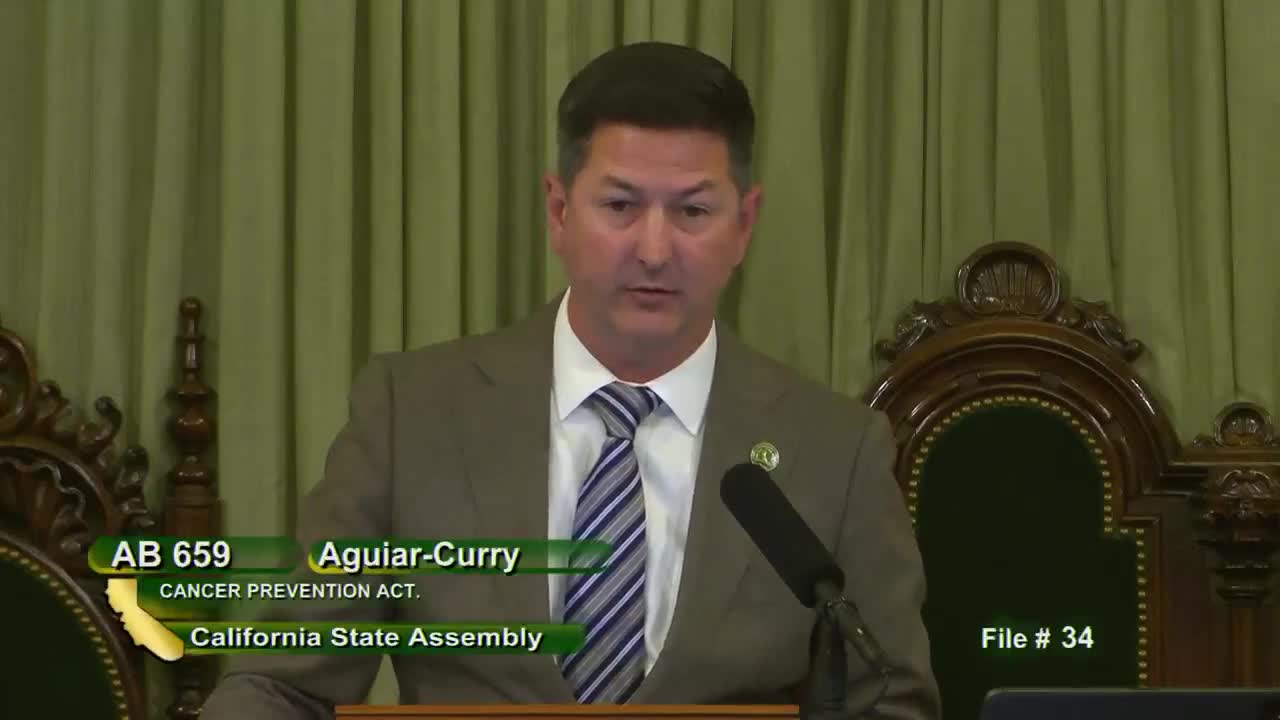 13MIN
Assembly Floor
 53SEC
Assembly Floor
 7MIN
Assembly Standing Committee on Appropriations
Bill Author

Bill Co-Author(s):






