AB 663: Pharmacy: mobile units.
- Session Year: 2023-2024
- House: Assembly
- Latest Version Date: 2023-10-08
Current Status:
Passed
(2023-10-08: Chaptered by Secretary of State - Chapter 539, Statutes of 2023.)
Introduced
In Committee
First Chamber
In Committee
Second Chamber
Enacted
Existing law, the Pharmacy Law, requires the California State Board of Pharmacy within the Department of Consumer Affairs to license and regulate the practice of pharmacy, including pharmacists, pharmacy technicians, and pharmacies. Existing law authorizes a county, city and county, or special hospital authority, as defined, to operate a mobile unit as an extension of a pharmacy license held by the county, city and county, or special hospital authority to provide prescription medication within its jurisdiction to specified individuals, including those individuals without fixed addresses. Existing law authorizes a mobile unit to dispense prescription medication pursuant to a valid prescription if the county, city and county, or special hospital authority meets prescribed requirements for licensure, staffing, and operations, including a prohibition on carrying or dispensing controlled substances.
Existing law, the California Uniform Controlled Substances Act, classifies certain controlled substances into Schedules I to V, inclusive.
This bill would instead authorize a county, city and county, or special hospital authority to operate one or more mobile units as an extension of a pharmacy license held by the county, city and county, or special hospital authority, as described above. The bill would require the pharmacist-in-charge to determine the number of mobile units that are appropriate for a particular pharmacy license. The bill would additionally authorize a mobile unit to provide prescription medication within its jurisdiction to city-and-county-operated housing facilities.
This bill would exempt from the above-described prohibition on carrying or dispensing controlled substances Schedule III, Schedule IV, or Schedule V controlled substances approved by the United States Food and Drug Administration for the treatment of opioid use disorder. The bill would require any controlled substance for the treatment of opioid use disorder carried or dispensed in accordance with that exemption to be carried in reasonable quantities based on prescription volume and stored securely in the mobile pharmacy unit.
Existing law requires a city, city and county, or special hospital authority, at least 30 days before commencing operation of a mobile unit, to notify the board of its intention to operate a mobile unit. Existing law further requires that the board be given notice at least 30 days before discontinuing operation of a mobile unit.
This bill would instead require a county, city and county, or special hospital authority to notify the board of its intention to operate a mobile unit as soon as possible, and no later than 5 business days after commencing operation of a mobile unit. The bill would also require a city, city and county, or special hospital authority to notify the board of its intention to discontinue operation of a mobile unit as soon as possible, and at least one business day before discontinuing operation of a mobile unit.
Existing law, the Pharmacy Law, requires the California State Board of Pharmacy within the Department of Consumer Affairs to license and regulate the practice of pharmacy, including pharmacists, pharmacy technicians, and pharmacies. Existing law authorizes a county, city and county, or special hospital authority, as defined, to operate a mobile unit as an extension of a pharmacy license held by the county, city and county, or special hospital authority to provide prescription medication within its jurisdiction to specified individuals, including those individuals without fixed addresses. Existing law authorizes a mobile unit to dispense prescription medication pursuant to a valid prescription if the county, city and county, or special hospital authority meets prescribed requirements for licensure, staffing, and operations, including a prohibition on carrying or dispensing controlled substances.
Existing law, the California Uniform Controlled Substances Act, classifies certain controlled substances into Schedules I to V, inclusive.
This bill would instead authorize a county, city and county, or special hospital authority to operate one or more mobile units as an extension of a pharmacy license held by the county, city and county, or special hospital authority, as described above. The bill would require the pharmacist-in-charge to determine the number of mobile units that are appropriate for a particular pharmacy license. The bill would additionally authorize a mobile unit to provide prescription medication within its jurisdiction to city-and-county-operated housing facilities.
This bill would exempt from the above-described prohibition on carrying or dispensing controlled substances Schedule III, Schedule IV, or Schedule V controlled substances approved by the United States Food and Drug Administration for the treatment of opioid use disorder. The bill would require any controlled substance for the treatment of opioid use disorder carried or dispensed in accordance with that exemption to be carried in reasonable quantities based on prescription volume and stored securely in the mobile pharmacy unit.
Existing law requires a city, city and county, or special hospital authority, at least 30 days before commencing operation of a mobile unit, to notify the board of its intention to operate a mobile unit. Existing law further requires that the board be given notice at least 30 days before discontinuing operation of a mobile unit.
This bill would instead require a county, city and county, or special hospital authority to notify the board of its intention to operate a mobile unit as soon as possible, and no later than 5 business days after commencing operation of a mobile unit. The bill would also require a city, city and county, or special hospital authority to notify the board of its intention to discontinue operation of a mobile unit as soon as possible, and at least one business day before discontinuing operation of a mobile unit.
Existing law, the Pharmacy Law, requires the California State Board of Pharmacy within the Department of Consumer Affairs to license and regulate the practice of pharmacy, including pharmacists, pharmacy technicians, and pharmacies. Existing law authorizes a county, city and county, or special hospital authority, as defined, to operate a mobile unit as an extension of a pharmacy license held by the county, city and county, or special hospital authority to provide prescription medication within its jurisdiction to specified individuals, including those individuals without fixed addresses. Existing law authorizes a mobile unit to dispense prescription medication pursuant to a valid prescription if the county, city and county, or special hospital authority meets prescribed requirements for licensure, staffing, and operations, including a prohibition on carrying or dispensing controlled substances.
Existing law, the California Uniform Controlled Substances Act, classifies certain controlled substances into Schedules I to V, inclusive.
This bill would instead authorize a county, city and county, or special hospital authority to operate one or more mobile units as an extension of a pharmacy license held by the county, city and county, or special hospital authority, as described above. The bill would require the pharmacist-in-charge to determine the number of mobile units that are appropriate for a particular pharmacy license. The bill would additionally authorize a mobile unit to provide prescription medication within its jurisdiction to city-and-county-operated housing facilities.
This bill would exempt from the above-described prohibition on carrying or dispensing controlled substances Schedule III, Schedule IV, or Schedule V controlled substances approved by the United States Food and Drug Administration for the treatment of opioid use disorder. The bill would require any controlled substance for the treatment of opioid use disorder carried or dispensed in accordance with that exemption to be carried in reasonable quantities based on prescription volume and stored securely in the mobile pharmacy unit.
Existing law requires a city, city and county, or special hospital authority, at least 30 days before commencing operation of a mobile unit, to notify the board of its intention to operate a mobile unit. Existing law further requires that the board be given notice at least 30 days before discontinuing operation of a mobile unit.
This bill would instead require a county, city and county, or special hospital authority to notify the board of its intention to operate a mobile unit as soon as possible, and no later than 5 business days after commencing operation of a mobile unit. The bill would also require a city, city and county, or special hospital authority notify the board of its intention to discontinue operation of a mobile unit as soon as possible, and at least one business day before discontinuing operation of a mobile unit.
Existing law, the Pharmacy Law, requires the California State Board of Pharmacy within the Department of Consumer Affairs to license and regulate the practice of pharmacy, including pharmacists, pharmacy technicians, and pharmacies. Existing law authorizes a county, city and county, or special hospital authority, as defined, to operate a mobile unit as an extension of a pharmacy license held by the county, city and county, or special hospital authority to provide prescription medication within its jurisdiction to specified individuals, including those individuals without fixed addresses. Existing law authorizes a mobile unit to dispense prescription medication pursuant to a valid prescription if the county, city and county, or special hospital authority meets prescribed requirements for licensure, staffing, and operations, including a prohibition on carrying or dispensing controlled substances.
Existing law, the California Uniform Controlled Substances Act, classifies certain controlled substances into Schedules I to V, inclusive.
This bill would instead authorize a county, city and county, or special hospital authority to operate one or more mobile units as an extension of a pharmacy license held by the county, city and county, or special hospital authority, as described above. The bill would require the pharmacist-in-charge to determine the number of mobile units that are appropriate for a particular pharmacy license. The bill would additionally authorize a mobile unit to provide prescription medication within its jurisdiction to city-and-county-operated housing facilities.
This bill would exempt from that the above-described prohibition on carrying or dispensing controlled substances Schedule III, Schedule IV, or Schedule V controlled substances approved by the United States Food and Drug Administration for the treatment of opioid use disorder. The bill would require any controlled substance for the treatment of opioid use disorder carried or dispensed in accordance with that exemption to be carried in reasonable quantities based on prescription volume and stored securely in the mobile pharmacy unit. The bill would also authorize a mobile unit to provide prescription medication within its jurisdiction to city-and-county-operated housing facilities.
Existing law, the Pharmacy Law, requires the California State Board of Pharmacy within the Department of Consumer Affairs to license and regulate the practice of pharmacy, including pharmacists, pharmacy technicians, and pharmacies. Existing law authorizes a county, city and county, or special hospital authority, as defined, to operate a mobile unit as an extension of a pharmacy license held by the county, city and county, or special hospital authority to provide prescription medication within its jurisdiction to specified individuals, including those individuals without fixed addresses. Existing law authorizes a mobile unit to dispense prescription medication pursuant to a valid prescription if the county, city and county, or special hospital authority meets prescribed requirements for licensure, staffing, and operations, including a prohibition on carrying or dispensing controlled substances.
Existing law, the California Uniform Controlled Substances Act, classifies certain controlled substances into Schedules I to V, inclusive.
This bill would exempt from that prohibition on carrying or dispensing controlled substances Schedule III, Schedule IV, or Schedule V controlled substances approved by the federal United States Food and Drug Administration for the treatment of opioid use disorder. The bill would require any controlled substance for the treatment of opioid use disorder carried or dispensed in accordance with that exemption to be carried in reasonable quantities based on prescription volume and stored securely in the mobile pharmacy unit. The bill would also authorize a mobile unit to provide prescription medication within its jurisdiction to city-and-county-operated housing facilities.
Existing law, the Pharmacy Law, requires the California State Board of Pharmacy within the Department of Consumer Affairs to license and regulate the practice of pharmacy, including pharmacists, pharmacy technicians, and pharmacies. Existing law authorizes a county, city and county, or special hospital authority, as defined, to operate a mobile unit as an extension of a pharmacy license held by the county, city and county, or special hospital authority to provide prescription medication within its jurisdiction to specified individuals, including those individuals without fixed addresses. Existing law authorizes a mobile unit to dispense prescription medication pursuant to a valid prescription if the county, city and county, or special hospital authority meets prescribed requirements for licensure, staffing, and operations, including a prohibition on carrying or dispensing controlled substances.
This bill would exempt from that prohibition controlled substances approved by the federal Food and Drug Administration for the treatment of opioid use disorder. The bill would require any controlled substance for the treatment of opioid use disorder carried or dispensed in accordance with that exemption to be carried in reasonable quantities based on prescription volume and stored securely in the mobile pharmacy unit. The bill would also authorize a mobile unit to provide prescription medication within its jurisdiction to city-and-county-operated housing facilities.
Notwithstanding any other provision of this article, a county, city and county, or special hospital authority described in Chapter 5 (commencing with Section 101850) or Chapter 5.5 (commencing with Section 101852) of Part 4 of Division 101 of the Health and Safety Code may operate one or more mobile units to provide prescription medication within its jurisdiction to those individuals without fixed addresses, individuals living in county-owned or city-and-county-owned or operated housing facilities, and those enrolled in Medi-Cal plans operated by the county or a city and county, a health district, or a joint powers authority pursuant to Chapter 7 (commencing with Section 14000) or Chapter 8 (commencing with Section 14200) of Part 3 of Division 9 of the Welfare and Institutions Code. The mobile unit shall be operated as an extension of a pharmacy license held by the county, city and county, or special hospital authority. The pharmacist-in-charge shall determine the number of mobile units that are appropriate for a particular pharmacy license. The mobile unit may dispense prescription medication pursuant to a valid prescription, including a prescription of a physician who practices in the mobile unit, if the county, city and county, or special hospital authority meets all of the following requirements:
(a)A licensed pharmacist is on the premises and the mobile unit is under the control and management of a pharmacist while prescription medications are being dispensed.
(b)All activities of the pharmacist, including the furnishing of medication by the pharmacist, are consistent with Article 3 (commencing with Section 4050).
(c)If a physician is practicing in the mobile unit, all prescribing by the physician meets the requirements of the Medical Practice Act (Chapter 5 (commencing with Section 2000)).
(d)(1)The mobile unit does not carry or dispense controlled substances.
(2)Paragraph (1) does not apply to Schedule III, Schedule IV, or Schedule V controlled substances approved by the United States Food and Drug Administration for the treatment of opioid use disorder. Any controlled substance for the treatment of opioid use disorder carried or dispensed in accordance with this paragraph shall be carried in reasonable quantities based on prescription volume and stored securely in the mobile pharmacy unit.
(e)Dangerous drugs shall not be left in the mobile unit during the hours that the mobile unit is not in operation.
(f)A county, city and county, or special hospital authority shall notify the board of its intention to operate a mobile unit as soon as possible, and no later than five business days after commencing operation of a mobile unit. A county, city and county, or special hospital authority shall also notify the board of its intention to discontinue operation of a mobile unit as soon as possible, and at least one business day before discontinuing operation of a mobile unit.
Notwithstanding any other provision of this article, a county, city and county, or special hospital authority described in Chapter 5 (commencing with Section 101850) or Chapter 5.5 (commencing with Section 101852) of Part 4 of Division 101 of the Health and Safety Code may operate one or more mobile units to provide prescription medication within its jurisdiction to those individuals without fixed addresses, individuals living in county-owned or city-and-county-owned or operated housing facilities, and those enrolled in Medi-Cal plans operated by the county or a city and county, a health district, or a joint powers authority pursuant to Chapter 7 (commencing with Section 14000) or Chapter 8 (commencing with Section 14200) of Part 3 of Division 9 of the Welfare and Institutions Code. The mobile unit shall be operated as an extension of a pharmacy license held by the county, city and county, or special hospital authority. The pharmacist-in-charge shall determine the number of mobile units that are appropriate for a particular pharmacy license. The mobile unit may dispense prescription medication pursuant to a valid prescription, including a prescription of a physician who practices in the mobile unit, if the county, city and county, or special hospital authority meets all of the following requirements:
(a)A licensed pharmacist is on the premises and the mobile unit is under the control and management of a pharmacist while prescription medications are being dispensed.
(b)All activities of the pharmacist, including the furnishing of medication by the pharmacist, are consistent with Article 3 (commencing with Section 4050).
(c)If a physician is practicing in the mobile unit, all prescribing by the physician meets the requirements of the Medical Practice Act (Chapter 5 (commencing with Section 2000)).
(d)(1)The mobile unit does not carry or dispense controlled substances.
(2)Paragraph (1) does not apply to Schedule III, Schedule IV, or Schedule V controlled substances approved by the United States Food and Drug Administration for the treatment of opioid use disorder. Any controlled substance for the treatment of opioid use disorder carried or dispensed in accordance with this paragraph shall be carried in reasonable quantities based on prescription volume and stored securely in the mobile pharmacy unit.
(e)Dangerous drugs shall not be left in the mobile unit during the hours that the mobile unit is not in operation.
(f)A county, city and county, or special hospital authority shall notify the board of its intention to operate a mobile unit as soon as possible, and no later than five business days after commencing operation of a mobile unit. A county, city and county, or special hospital authority shall also notify the board of its intention to discontinue operation of a mobile unit as soon as possible, and at least one business day before discontinuing operation of a mobile unit.
Notwithstanding any other provision of this article, a county, city and county, or special hospital authority described in Chapter 5 (commencing with Section 101850) or Chapter 5.5 (commencing with Section 101852) of Part 4 of Division 101 of the Health and Safety Code may operate one or more mobile units to provide prescription medication within its jurisdiction to those individuals without fixed addresses, individuals living in county-owned or city-and-county-owned or operated housing facilities, and those enrolled in Medi-Cal plans operated by the county or a city and county, a health district, or a joint powers authority pursuant to Chapter 7 (commencing with Section 14000) or Chapter 8 (commencing with Section 14200) of Part 3 of Division 9 of the Welfare and Institutions Code. The mobile unit shall be operated as an extension of a pharmacy license held by the county, city and county, or special hospital authority. The pharmacist-in-charge shall determine the number of mobile units that are appropriate for a particular pharmacy license. The mobile unit may dispense prescription medication pursuant to a valid prescription, including a prescription of a physician who practices in the mobile unit, if the county, city and county, or special hospital authority meets all of the following requirements:
(a)A licensed pharmacist is on the premises and the mobile unit is under the control and management of a pharmacist while prescription medications are being dispensed.
(b)All activities of the pharmacist, including the furnishing of medication by the pharmacist, are consistent with Article 3 (commencing with Section 4050).
(c)If a physician is practicing in the mobile unit, all prescribing by the physician meets the requirements of the Medical Practice Act (Chapter 5 (commencing with Section 2000)).
(d)(1)The mobile unit does not carry or dispense controlled substances.
(2)Paragraph (1) does not apply to Schedule III, Schedule IV, or Schedule V controlled substances approved by the United States Food and Drug Administration for the treatment of opioid use disorder. Any controlled substance for the treatment of opioid use disorder carried or dispensed in accordance with this paragraph shall be carried in reasonable quantities based on prescription volume and stored securely in the mobile pharmacy unit.
(e)Dangerous drugs shall not be left in the mobile unit during the hours that the mobile unit is not in operation.
(f)At least 30 days prior to commencing operation of a mobile unit, a county, city and county, or special hospital authority shall notify the board of its intention to operate a mobile unit. Notice shall also be given to the board at least 30 days prior to discontinuing operation of a mobile unit.(f)A county, city and county, or special hospital authority shall notify the board of its intention to operate a mobile unit as soon as possible, and no later than five business days after commencing operation of a mobile unit. A county, city and county, or special hospital authority shall also notify the board of its intention to discontinue operation of a mobile unit as soon as possible, and at least one business day before discontinuing operation of a mobile unit.
Notwithstanding any other provision of this article, a county, city and county, or special hospital authority described in Chapter 5 (commencing with Section 101850) or Chapter 5.5 (commencing with Section 101852) of Part 4 of Division 101 of the Health and Safety Code may operate a mobile unit one or more mobile units to provide prescription medication within its jurisdiction to those individuals without fixed addresses, individuals living in county-owned or city-and-county-owned or operated housing facilities, and those enrolled in Medi-Cal plans operated by the county or a city and county, a health district, or a joint powers authority pursuant to Chapter 7 (commencing with Section 14000) or Chapter 8 (commencing with Section 14200) of Part 3 of Division 9 of the Welfare and Institutions Code. The mobile unit shall be operated as an extension of a pharmacy license held by the county, city and county, or special hospital authority. The pharmacist-in-charge shall determine the number of mobile units that are appropriate for a particular pharmacy license. The mobile unit may dispense prescription medication pursuant to a valid prescription, including a prescription of a physician who practices in the mobile unit, if the county, city and county, or special hospital authority meets all of the following requirements:
(a)A licensed pharmacist is on the premises and the mobile unit is under the control and management of a pharmacist while prescription medications are being dispensed.
(b)All activities of the pharmacist, including the furnishing of medication by the pharmacist, are consistent with Article 3 (commencing with Section 4050).
(c)If a physician is practicing in the mobile unit, all prescribing by the physician meets the requirements of the Medical Practice Act (Chapter 5 (commencing with Section 2000)).
(d)(1)The mobile unit does not carry or dispense controlled substances.
(2)Paragraph (1) does not apply to Schedule III, Schedule IV, or Schedule V controlled substances approved by the United States Food and Drug Administration for the treatment of opioid use disorder. Any controlled substance for the treatment of opioid use disorder carried or dispensed in accordance with this paragraph shall be carried in reasonable quantities based on prescription volume and stored securely in the mobile pharmacy unit.
(e)Dangerous drugs shall not be left in the mobile unit during the hours that the mobile unit is not in operation.
(f)At least 30 days prior to commencing operation of a mobile unit, a county, city and county, or special hospital authority shall notify the board of its intention to operate a mobile unit. Notice shall also be given to the board at least 30 days prior to discontinuing operation of a mobile unit.
Notwithstanding any other provision of this article, a county, city and county, or special hospital authority described in Chapter 5 (commencing with Section 101850) or Chapter 5.5 (commencing with Section 101852) of Part 4 of Division 101 of the Health and Safety Code may operate a mobile unit to provide prescription medication within its jurisdiction to those individuals without fixed addresses, individuals living in county-owned or city-and-county-owned or operated housing facilities, and those enrolled in Medi-Cal plans operated by the county or a city and county, a health district, or a joint powers authority pursuant to Chapter 7 (commencing with Section 14000) or Chapter 8 (commencing with Section 14200) of Part 3 of Division 9 of the Welfare and Institutions Code. The mobile unit shall be operated as an extension of a pharmacy license held by the county, city and county, or special hospital authority. The mobile unit may dispense prescription medication pursuant to a valid prescription, including a prescription of a physician who practices in the mobile unit, if the county, city and county, or special hospital authority meets all of the following requirements:
(a)A licensed pharmacist is on the premises and the mobile unit is under the control and management of a pharmacist while prescription medications are being dispensed.
(b)All activities of the pharmacist, including the furnishing of medication by the pharmacist, are consistent with Article 3 (commencing with Section 4050).
(c)If a physician is practicing in the mobile unit, all prescribing by the physician meets the requirements of the Medical Practice Act (Chapter 5 (commencing with Section 2000)).
(d)(1)The mobile unit does not carry or dispense controlled substances.
(2)Paragraph (1) does not apply to Schedule III, Schedule IV, or Schedule V controlled substances approved by the federal United States Food and Drug Administration for the treatment of opioid use disorder. Any controlled substance for the treatment of opioid use disorder carried or dispensed in accordance with this paragraph shall be carried in reasonable quantities based on prescription volume and stored securely in the mobile pharmacy unit.
(e)Dangerous drugs shall not be left in the mobile unit during the hours that the mobile unit is not in operation.
(f)At least 30 days prior to commencing operation of a mobile unit, a county, city and county, or special hospital authority shall notify the board of its intention to operate a mobile unit. Notice shall also be given to the board at least 30 days prior to discontinuing operation of a mobile unit.
Notwithstanding any other provision of this article, a county, city and county, or special hospital authority described in Chapter 5 (commencing with Section 101850) or Chapter 5.5 (commencing with Section 101852) of Part 4 of Division 101 of the Health and Safety Code may operate a mobile unit to provide prescription medication within its jurisdiction to those individuals without fixed addresses, individuals living in county-owned or city-and-county-owned or operated housing facilities, and those enrolled in Medi-Cal plans operated by the county or a city and county, a health district, or a joint powers authority pursuant to Chapter 7 (commencing with Section 14000) or Chapter 8 (commencing with Section 14200) of Part 3 of Division 9 of the Welfare and Institutions Code. The mobile unit shall be operated as an extension of a pharmacy license held by the county, city and county, or special hospital authority. The mobile unit may dispense prescription medication pursuant to a valid prescription, including a prescription of a physician who practices in the mobile unit, if the county, city and county, or special hospital authority meets all of the following requirements:
(a)A licensed pharmacist is on the premises and the mobile unit is under the control and management of a pharmacist while prescription medications are being dispensed.
(b)All activities of the pharmacist, including the furnishing of medication by the pharmacist, are consistent with Article 3 (commencing with Section 4050).
(c)If a physician is practicing in the mobile unit, all prescribing by the physician meets the requirements of the Medical Practice Act (Chapter 5 (commencing with Section 2000)).
(d)(1)The mobile unit does not carry or dispense controlled substances.
(2)Paragraph (1) does not apply to controlled substances approved by the federal Food and Drug Administration for the treatment of opioid use disorder. Any controlled substance for the treatment of opioid use disorder carried or dispensed in accordance with this paragraph shall be carried in reasonable quantities based on prescription volume and stored securely in the mobile pharmacy unit.
(e)Dangerous drugs shall not be left in the mobile unit during the hours that the mobile unit is not in operation.
(f)At least 30 days prior to commencing operation of a mobile unit, a county, city and county, or special hospital authority shall notify the board of its intention to operate a mobile unit. Notice shall also be given to the board at least 30 days prior to discontinuing operation of a mobile unit.
|
Date
|
Status
|
|---|---|
| Oct 8, 2023 | Chaptered by Secretary of State - Chapter 539, Statutes of 2023. |
| Oct 8, 2023 | Approved by the Governor. |
| Sep 21, 2023 | Enrolled and presented to the Governor at 3:30 p.m. |
| Sep 14, 2023 | Senate amendments concurred in. To Engrossing and Enrolling. (Ayes 80. Noes 0. Page 3531.). |
| Sep 13, 2023 | From committee: That the Senate amendments be concurred in. (Ayes 19. Noes 0.) (September 13). |
| Sep 6, 2023 | Re-referred to Com. on B. & P. pursuant to Assembly Rule 77.2. |
| Sep 5, 2023 | In Assembly. Concurrence in Senate amendments pending. May be considered on or after September 7 pursuant to Assembly Rule 77. |
| Sep 5, 2023 | Read third time. Passed. Ordered to the Assembly. (Ayes 39. Noes 0. Page 2361.). |
| Aug 22, 2023 | Read second time. Ordered to third reading. |
| Aug 21, 2023 | Read third time and amended. Ordered to second reading. |
| Jun 27, 2023 | Read second time. Ordered to third reading. |
| Jun 26, 2023 | From committee: Be ordered to second reading pursuant to Senate Rule 28.8. |
| Jun 12, 2023 | From committee: Do pass and re-refer to Com. on APPR. (Ayes 12. Noes 0.) (June 12). Re-referred to Com. on APPR. |
| Jun 6, 2023 | From committee chair, with author's amendments: Amend, and re-refer to committee. Read second time, amended, and re-referred to Com. on B., P. & E. D. |
| May 31, 2023 | Referred to Com. on B., P. & E. D. |
| May 18, 2023 | In Senate. Read first time. To Com. on RLS. for assignment. |
| May 18, 2023 | Read third time. Passed. Ordered to the Senate. (Ayes 74. Noes 0. Page 1606.) |
| May 4, 2023 | Ordered to third reading. |
| May 4, 2023 | From Consent Calendar. |
| Apr 27, 2023 | Read second time. Ordered to Consent Calendar. |
| Apr 26, 2023 | From committee: Do pass. To Consent Calendar. (Ayes 16. Noes 0.) (April 26). |
| Apr 17, 2023 | Re-referred to Com. on APPR. |
| Apr 12, 2023 | Read second time and amended. |
| Apr 11, 2023 | From committee: Amend, and do pass as amended and re-refer to Com. on APPR. (Ayes 18. Noes 0.) (April 11). |
| Feb 17, 2023 | Referred to Com. on B. & P. |
| Feb 10, 2023 | From printer. May be heard in committee March 12. |
| Feb 9, 2023 | Read first time. To print. |
|
Date
|
Description
|
Location
|
Votes
|
|
|---|---|---|---|---|
| Sep 14, 2023 | AB 663 Haney Concurrence in Senate Amendments | Assembly Floor |
Passed |
|
| Sep 13, 2023 | With recommendation: That Senate amendments be concurred in. | Assembly Standing Committee on Business and Professions |
Passed |
|
| Sep 5, 2023 | Assembly 3rd Reading AB663 Haney By Becker | Senate Floor |
Passed |
|
| Jun 12, 2023 | Do pass, but first be re-referred to the Committee on [Appropriations] | Senate Standing Committee on Business, Professions and Economic Development |
Passed |
|
| May 18, 2023 | AB 663 Haney Assembly Third Reading | Assembly Floor |
Passed |
|
| Apr 26, 2023 | Do pass. To Consent Calendar. | Assembly Standing Committee on Appropriations |
Passed |
|
| Apr 11, 2023 | Do pass as amended and be re-referred to the Committee on [Appropriations] | Assembly Standing Committee on Business and Professions |
Passed |
This list shows positions taken on this bill by organizations on the date displayed, which is linked to the original source.
Positions by individuals are not included.
|
Organization
|
Position
|
Date
|
|---|---|---|
| Alameda County Board of Supervisors | ** Support | |
| Attorney General Rob Bonta | ** Support | |
| California Academy Of Family Physicians | ** Support | |
| California Association Of Public Hospitals Health Systems | ** Support | |
| California Pharmacists Association | ** Support | |
| California Society Of Addiction Medicine | ** Support | |
| California Society of Health System Pharmacists | ** Support | |
| California State Board of Pharmacy | ** Support | |
| City and County of San Francisco | ** Support | |
| County Behavioral Health Directors Association | ** Support | |
| County Health Executives Association Of California | ** Support | |
| County Of San Diego | ** Support | |
| County of Santa Clara | ** Support | |
| Mayor of City & County of San Francisco London Breed | ** Support | |
| Office of Lieutenant Governor Eleni Kounalakis | ** Support | |
| R Street Institute | ** Support | |
| Steinberg Institute | ** Support |
CONCURRENCE IN SENATE AMENDMENTS
CSA2 Bill Id:AB 663
Author:(Haney)
As Amended Ver:August 21, 2023
Majority vote
SUMMARY
Original Committee of Reference: Business and Professions
Allows for certain controlled substances approved for the treatment of opioid use disorder to be carried and dispensed at county-operated mobile pharmacy units and authorizes the operation of multiple mobile units within one jurisdiction.
Senate Amendments
Current Committee Recommendation: Concur
- Exempts Schedule III, Schedule IV, or Schedule V controlled substances approved by the federal Food and Drug Administration (FDA) for the treatment of opioid use disorder from the prohibition against mobile units carrying or dispensing controlled substances.
- Requires any controlled substance for the treatment of opioid use disorder that is carried or dispensed by a mobile unit to be carried in reasonable quantities based on prescription volume and stored securely in the mobile unit.
- Authorizes a county, city and county, or special hospital authority to operate more than one mobile unit and empowers the pharmacist-in-charge to determine the number of mobile units that are appropriate for a particular pharmacy license.
- Revises the requirements for a local government to notify the BOP of its intention to operate or discontinue operation of a mobile unit to require notification as soon as possible but no later than five business days after commencing operation and as soon as possible but at least one business day before discontinuing operation.
COMMENTS
Buprenorphine. Itself a type of opioid, buprenorphine is a Schedule III controlled substance used in treatment of opioid use disorder. Buprenorphine is what is referred to as a partial opioid agonist; this essentially means that it provides a much lower degree of euphoria than other opioids like oxycodone and heroin, and is considered to be less prone to abuse or dependence. In medication-assisted treatment of addiction, buprenorphine is used similarly to methadone, but with reduced side effects. Buprenorphine is frequently marketed under the brand name Subutex, as well as Suboxone when combined with naloxone, an opioid antagonist.
As an opioid classified as a Schedule III controlled substance, buprenorphine can only be prescribed or administered by a licensed practitioner in possession of a Drug Enforcement Agency (DEA) registration. Prior federal restrictions on buprenorphine under the federal Drug Addiction Treatment Act of 2000 allowed for only specially trained physicians to prescribe buprenorphine through an "X-waiver" process. Further restricting the availability of buprenorphine treatments was federal law limiting the number of patients a physician in receipt of an X-waiver may treat.
The Drug Addiction Treatment Act of 2000 originally capped the number of patients per physician at ten; this cap was raised under the Obama administration to allow up to 100 patients to be treated with buprenorphine per approved physicians who have held the waiver for two years, and up to 275 patients at three years. In January of 2021, the federal Department of Health and Human Services announced that it was eliminating the X-waiver entirely.
As the federal restrictions on prescribing buprenorphine have incrementally loosened, the number of prescriptions has gone up substantially. The following chart is available through the California Department of Public Health's Opioid Overdose Surveillance Dashboard, which utilizes data from the CURES database.
Mobile Pharmacy Units. In 2022, legislation sponsored by the County of San Diego and the County of Santa Clara was enacted to expand the authority for pharmacies to operate within mobile units. Previously, mobile units were only authorized as a way to temporarily provide pharmacy services during a natural disaster when brick-and-mortar pharmacies were damaged or destroyed. The language of the bill allowed for any county, city and county, or special hospital authority to operate a mobile unit for purposes of providing prescription medication to unhoused and low-income individuals.
Current law places certain limitations on how counties and special hospital authorities may operate mobile pharmacy units. One provision of the law specifically prohibits mobile units from carrying or dispensing controlled substances. While this prohibition was intended to prevent mobile units from carrying classes of medication that are considered at high risk or abuse or diversion, several drugs approved for treatment of opioid use disorder are currently classified as controlled substances, making them unavailable through a mobile unit.
This bill seeks to create an exemption to the prohibition in current law that prevents mobile units operated by counties from carrying and dispensing controlled substances. The bill would specifically exempt controlled substances approved by the FDA for the treatment of opioid use disorder that have been placed on either Schedule III, Schedule IV, or Schedule V pursuant to the Controlled Substances Act. This would include buprenorphine (Schedule III) but would exclude methadone (Schedule II). The bill would further provide that any controlled substance must be carried in reasonable quantities based on prescription volume and stored securely in the mobile pharmacy unit.
Current law also provides that a local government can only operate "a mobile unit," implying that only one mobile unit may be operated by that local government. This bill would clarify that a local government may operate one or more mobile units. The bill would authorize the pharmacist-in-charge to determine the number of mobile units that are appropriate for a particular pharmacy license.
Finally, current law requires a local government to notify the BOP of its intention to operate a mobile unit at least 30 days prior to commencing operation, and requires notification at least 30 days prior to discontinuing operation of a mobile unit. This bill would adjust those notification times to allow for less advance notice to be provided prior to commencement or discontinuation. Language in the bill would require a local government to notify the BOP of its intention to operate a mobile unit as soon as possible, and no later than five business days after commencing operation of a mobile unit. The bill would then require a local government to notify the BOP of its intention to discontinue operation of a mobile unit as soon as possible, and at least one business day before discontinuing operation of a mobile unit.
According to the Author
"We are currently in an opioid overdose crisis. The State needs to do everything possible to expand access to life saving treatment, including getting medication for opioid use disorder to communities that need it most. While local governments can operate mobile pharmacies to provide health care to communities that lack access to "brick and mortar" pharmacies, they cannot dispense medication for opioid use disorder. To provide those suffering with opioid use disorder access to effective treatment, AB 663 will allow local governments who operate mobile pharmacies to dispense medications for opioid use disorders."
Arguments in Support
The City and County of San Francisco is sponsoring this bill. San Francisco Mayor London Breed writes: "Treatment with buprenorphine, and other medications for opioid use disorder, is a foundational part of our efforts to reduce overdose deaths and connect our most vulnerable residents to ongoing care. One of the challenges faced by clinical outreach teams attending to people experiencing homelessness is providing prescription medications to people in a convenient and accessible location. Until recently, California law required that most pharmacies must operate in a fixed location, such as a retail pharmacy. While a recently passed law, SB 872 (Dodd, 2022) expanded medication access by allowing jurisdictions to operate mobile pharmacies, the law does not currently allow dispensing of key medications for opioid use disorder." Mayor Breed argues that "with new tools like mobile pharmacies available to provide medications for the treatment of opioid use disorder, the City will be better able to address the needs of individuals suffering from substance use disorders."
Attorney General Rob Bonta also supports this bill, writing: "OUD medication, including buprenorphine, are an important part of successful OUD treatment. Buprenorphine has shown a decrease in overdose deaths by 50% in individuals with OUD compared to treatment without those medications. In populations with barriers to accessing traditional healthcare, such as those experiencing homelessness, buprenorphine availability is key for reducing overdose deaths." Attorney General Bonta argues that the bill "would help expand local efforts to prevent overdose deaths and improve access to healthcare for some of our most vulnerable populations."
Arguments in Opposition
None on file.
FISCAL COMMENTS
According to the Senate Appropriations Committee, pursuant to Senate Rule 28.8, negligible state costs.
VOTES
ASM BUSINESS AND PROFESSIONS: 18-0-0
YES: Berman, Flora, Alanis, Alvarez, Bonta, Chen, Dixon, Gipson, Grayson, Irwin, Jackson, Lee, Lowenthal, McCarty, McKinnor, Stephanie Nguyen, Joe Patterson, Ting
ASM APPROPRIATIONS: 16-0-0
YES: Holden, Megan Dahle, Bryan, Calderon, Wendy Carrillo, Dixon, Mike Fong, Hart, Lowenthal, Mathis, Papan, Pellerin, Robert Rivas, Sanchez, Weber, Wilson
ASSEMBLY FLOOR: 74-0-6
YES: Addis, Aguiar-Curry, Alanis, Alvarez, Arambula, Bains, Bauer-Kahan, Bennett, Berman, Boerner, Bonta, Bryan, Calderon, Juan Carrillo, Wendy Carrillo, Chen, Connolly, Megan Dahle, Davies, Dixon, Essayli, Mike Fong, Gabriel, Gallagher, Garcia, Gipson, Grayson, Haney, Hart, Holden, Hoover, Irwin, Jackson, Jones-Sawyer, Kalra, Lackey, Lee, Low, Lowenthal, Maienschein, Mathis, McCarty, McKinnor, Muratsuchi, Stephanie Nguyen, Ortega, Pacheco, Papan, Jim Patterson, Joe Patterson, Pellerin, Petrie-Norris, Quirk-Silva, Ramos, Reyes, Luz Rivas, Robert Rivas, Rodriguez, Blanca Rubio, Sanchez, Santiago, Schiavo, Soria, Ta, Ting, Valencia, Villapudua, Wallis, Ward, Weber, Wicks, Wood, Zbur, Rendon
ABS, ABST OR NV: Cervantes, Flora, Vince Fong, Friedman, Waldron, Wilson
SENATE FLOOR: 39-0-1
YES: Allen, Alvarado-Gil, Archuleta, Ashby, Atkins, Becker, Blakespear, Bradford, Caballero, Cortese, Dahle, Dodd, Durazo, Eggman, Glazer, Gonzalez, Grove, Hurtado, Jones, Laird, Limón, McGuire, Menjivar, Min, Newman, Nguyen, Niello, Ochoa Bogh, Portantino, Roth, Rubio, Seyarto, Skinner, Smallwood-Cuevas, Stern, Umberg, Wahab, Wiener, Wilk
ABS, ABST OR NV: Padilla
ASM BUSINESS AND PROFESSIONS: 19-0-0
YES: Berman, Flora, Alanis, Alvarez, Bains, Bonta, Chen, Dixon, Gipson, Grayson, Irwin, Jackson, Lee, Lowenthal, McCarty, McKinnor, Stephanie Nguyen, Joe Patterson, Ting
UPDATED
VERSION: August 21, 2023
CONSULTANT: Robert Sumner / B. & P. / (916) 319-3301 FN: 0002448
Date of Hearing:
ASSEMBLY COMMITTEE ON BUSINESS AND PROFESSIONS
Marc Berman, Chair
ABPCA Bill Id:AB 663
Author:(Haney) – As Amended Ver:August 21, 2023
NOTE: This bill is being heard pursuant to Assembly Rule 77.2 for concurrence in Senate amendments only.
SUBJECT: Pharmacy: mobile units.
SUMMARY: Allows for certain controlled substances approved for the treatment of opioid use disorder to be carried and dispensed at county-operated mobile pharmacy units and authorizes the operation of multiple mobile units within one jurisdiction.
EXISTING LAW:
- Establishes the Board of Pharmacy (BOP) to administer and regulate the Pharmacy Law. (Business and Professions Code (BPC) §§ 4000 et seq.)
- Defines “dispense” as the furnishing of drugs or devices upon a prescription from a physician, nurse practitioner, dentist, optometrist, podiatrist, veterinarian, or naturopathic doctor acting within the scope of their practice. (BPC § 4024)
- Defines “pharmacy” as an area, place, or premises licensed by the BOP in which the profession of pharmacy is practiced and where prescriptions are compounded. (BPC § 4037)
- Defines a “remote dispensing site pharmacy” as a licensed pharmacy located in California that is exclusively overseen and operated by a supervising pharmacy and staffed by qualified registered pharmacy technicians, where pharmaceutical care services are remotely monitored or provided by a pharmacist through telepharmacy technology. (BPC § 4044.3)
- Defines “telepharmacy” as a system that is used by a supervising pharmacy for the purpose of monitoring the dispensing of prescription drugs by a remote dispensing site pharmacy and provides for related drug regimen review and patient counseling by an electronic method. (BPC § 4044.7)
- Authorizes the BOP to allow for the employment of a mobile pharmacy or clinic in areas impacted during a declared federal, state, or local emergency to ensure the continuity of patient care if certain conditions are met. (BPC § 4062(c))
- Authorizes the BOP to allow the temporary use of a mobile pharmacy when a pharmacy is destroyed or damaged, the mobile pharmacy is necessary to protect the health and safety of the public, and certain conditions are met. (BPC § 4110(c))
- Allows for a county, city and county, or special hospital authority to operate a mobile unit operated as an extension of its pharmacy license to provide prescription medication within its jurisdiction to individuals without fixed addresses, individuals living in county-owned or city-and-county-owned housing facilities, and those enrolled in Medi-Cal plans operated by the county or a city and county, a health district, or a joint powers authority; allows a mobile unit to dispense prescription medication if all of the following requirements are met:
- A licensed pharmacist is on the premises and the mobile unit is under the control and management of a pharmacist while prescription medications are being dispensed.
- All activities of the pharmacist, including the furnishing of medication by the pharmacist, are consistent with the Pharmacy Law.
- If a physician is practicing in the mobile unit, all prescribing by the physician meets the requirements of the Medical Practice Act.
- The mobile unit does not carry or dispense controlled substances.
- Dangerous drugs shall not be left in the mobile unit during the hours that the mobile unit is not in operation.
- At least 30 days prior to commencing operation of a mobile unit, a county, city and county, or special hospital authority shall notify the board of its intention to operate a mobile unit. Notice shall also be given to the BOP at least 30 days prior to discontinuing operation of a mobile unit.
(BPC § 4110.5)
THIS BILL:
- Exempts Schedule III, Schedule IV, or Schedule V controlled substances approved by the federal Food and Drug Administration (FDA) for the treatment of opioid use disorder from the prohibition against mobile units carrying or dispensing controlled substances.
- Requires any controlled substance for the treatment of opioid use disorder that is carried or dispensed by a mobile unit to be carried in reasonable quantities based on prescription volume and stored securely in the mobile unit.
- Authorizes a county, city and county, or special hospital authority to operate more than one mobile unit and empowers the pharmacist-in-charge to determine the number of mobile units that are appropriate for a particular pharmacy license.
- Revises the requirements for a local government to notify the BOP of its intention to operate or discontinue operation of a mobile unit to require notification as soon as possible but no later than five business days after commencing operation and as soon as possible but at least one business day before discontinuing operation.
FISCAL EFFECT: Pursuant to Senate Rule 28.8, negligible state costs.
COMMENTS:
Purpose. This bill is sponsored by the City and County of San Francisco. According to the author:
“We are currently in an opioid overdose crisis. The State needs to do everything possible to expand access to life saving treatment, including getting medication for opioid use disorder to communities that need it most. While local governments can operate mobile pharmacies to provide health care to communities that lack access to “brick and mortar” pharmacies, they cannot dispense medication for opioid use disorder. To provide those suffering with opioid use disorder access to effective treatment, AB 663 will allow local governments who operate mobile pharmacies to dispense medications for opioid use disorders.”
Background.
Overview of the Opioid Crisis. Opioids are a class of drugs prescribed and administered by health professionals to manage pain. The term “opioid” is commonly used to describe both naturally occurring opiates derived from the opium poppy as well as their manufactured synthetics. Common examples of prescription opioids include oxycodone (OxyContin, Percocet); hydrocodone (Vicodin, Norco, Lorcet); codeine; and morphine. Heroin is also an opioid, but is ineligible for lawful prescription in the United States.
In addition to providing pain relief, opioids can be used as a cough suppressant, an antidiarrheal, a method of sedation, and a treatment for shortness of breath. The majority of pharmaceutical opioids are Schedule II drugs under the federal Controlled Substances Act, considered by the federal Drug Enforcement Administration (DEA) to have a high potential for abuse that may lead to severe psychological or physical dependence. However, combination drugs containing lower doses of opioids combined with other active ingredients are typically less restricted; for example, cough syrups containing low doses of codeine are frequently classified Schedule V medications.
In October of 2017, the White House declared the opioid crisis a national public health emergency, formally recognizing what had long been understood to be a growing epidemic responsible for devastation in communities across the country. According to the Centers for Disease Control and Prevention (CDC), as many as 50,000 Americans died of an opioid overdose in 2016, representing a 28 percent increase over the previous year. The California Department of Public Health estimated that nearly 2,000 Californians died of an opioid overdose in 2016.
The nature of the country’s opioid crisis has evolved over the past several years as illicitly manufactured fentanyl has replaced prescribed pain management medication as the dominant source of opioid-related overdoses. Fentanyl is a synthetic opioid that is up to 100 times stronger than morphine. Fentanyl is often pressed into pills to imitate more common (and less potent) pharmaceutical products, and other drugs can be unknowingly “laced” with fentanyl. Over 70,000 Americans died of a fentanyl overdose in 2021, including 5,961 deaths in California – approximately 83% of all opioid-related deaths in California.
The abuse of prescription drugs was historically viewed as a criminal concern analogous to street narcotics cases regularly investigated by law enforcement. In recent years, however, an expert consensus has evolved around the opinion that the opioid crisis must be addressed through the lens of public health policy. It is widely accepted that health professionals must continue to play a critical role in any meaningful solutions through safe-prescribing and the medication-assisted treatment of opioid use disorder.
Buprenorphine. Itself a type of opioid, buprenorphine is a Schedule III controlled substance used in treatment of opioid use disorder. Buprenorphine is what is referred to as a partial opioid agonist; this essentially means that it provides a much lower degree of euphoria than other opioids like oxycodone and heroin, and is considered to be less prone to abuse or dependence. In medication-assisted treatment of addiction, buprenorphine is used similarly to methadone, but with reduced side effects. Buprenorphine is frequently marketed under the brand name Subutex, as well as Suboxone when combined with naloxone, an opioid antagonist.
As an opioid classified as a Schedule III controlled substance, buprenorphine can only be prescribed or administered by a licensed practitioner in possession of a DEA registration. Prior federal restrictions on buprenorphine under the federal Drug Addiction Treatment Act of 2000 allowed for only specially trained physicians to prescribe buprenorphine through an “X-waiver” process. Further restricting the availability of buprenorphine treatments was federal law limiting the number of patients a physician in receipt of an X-waiver may treat. The Drug Addiction Treatment Act of 2000 originally capped the number of patients per physician at ten; this cap was raised under the Obama administration to allow up to 100 patients to be treated with buprenorphine per approved physicians who have held the waiver for two years, and up to 275 patients at three years. In January of 2021, the federal Department of Health and Human Services announced that it was eliminating the X-waiver entirely.
As the federal restrictions on prescribing buprenorphine have incrementally loosened, the number of prescriptions has gone up substantially. The following chart is available through the California Department of Public Health’s Opioid Overdose Surveillance Dashboard, which utilizes data from the CURES database. The chart shows the rate of buprenorphine prescriptions per 1,000 residents statewide.

Mobile Pharmacy Units. In 2022, legislation sponsored by the County of San Diego and the County of Santa Clara was enacted to expand the authority for pharmacies to operate within mobile units. Previously, mobile units were only authorized as a way to temporarily provide pharmacy services during a natural disaster when brick-and-mortar pharmacies were damaged or destroyed. The language of the bill allowed for any county, city and county, or special hospital authority to operate a mobile unit for purposes of providing prescription medication to unhoused and low-income individuals.
Current law places certain limitations on how counties and special hospital authorities may operate mobile pharmacy units. One provision of the law specifically prohibits mobile units from carrying or dispensing controlled substances. While this prohibition was intended to prevent mobile units from carrying classes of medication that are considered at high risk or abuse or diversion, several drugs approved for treatment of opioid use disorder are currently classified as controlled substances, making them unavailable through a mobile unit.
This bill seeks to create an exemption to the prohibition in current law that prevents mobile units operated by counties from carrying and dispensing controlled substances. The bill would specifically exempt controlled substances approved by the FDA for the treatment of opioid use disorder that have been placed on either Schedule III, Schedule IV, or Schedule V pursuant to the Controlled Substances Act. This would include buprenorphine (Schedule III) but would exclude methadone (Schedule II). The bill would further provide that any controlled substance must be carried in reasonable quantities based on prescription volume and stored securely in the mobile pharmacy unit.
Current law also provides that a local government can only operate “a mobile unit,” implying that only one mobile unit may be operated by that local government. This bill would clarify that a local government may operate one or more mobile units. The bill would authorize the pharmacist-in-charge to determine the number of mobile units that are appropriate for a particular pharmacy license.
Finally, current law requires a local government to notify the BOP of its intention to operate a mobile unit at least 30 days prior to commencing operation, and requires notification at least 30 days prior to discontinuing operation of a mobile unit. This bill would adjust those notification times to allow for less advance notice to be provided prior to commencement or discontinuation. Language in the bill would require a local government to notify the BOP of its intention to operate a mobile unit as soon as possible, and no later than five business days after commencing operation of a mobile unit. The bill would then require a local government to notify the BOP of its intention to discontinue operation of a mobile unit as soon as possible, and at least one business day before discontinuing operation of a mobile unit.
Prior Related Legislation. AB 269 (Berman, Chapter 1, Statutes of 2023) authorizes an entity approved by the Department of Public Health to operate a designated COVID-19 testing and dispensing site to acquire, dispense, and store COVID-19 oral therapeutics.
AB 1731 (Santiago, Chapter 144, Statutes of 2023) exempts a health practitioner who prescribes, orders, administers, or furnishes buprenorphine in the emergency department of a hospital from the duty to consult the state’s prescription drug monitoring program.
SB 872 (Dodd, Chapter 220, Statutes of 2022) authorizes a county, city and county, or special hospital authority to operate a licensed mobile unit under certain conditions.
ARGUMENTS IN SUPPORT:
The City and County of San Francisco is sponsoring this bill. San Francisco Mayor London Breed writes: “Treatment with buprenorphine, and other medications for opioid use disorder, is a foundational part of our efforts to reduce overdose deaths and connect our most vulnerable residents to ongoing care. One of the challenges faced by clinical outreach teams attending to people experiencing homelessness is providing prescription medications to people in a convenient and accessible location. Until recently, California law required that most pharmacies must operate in a fixed location, such as a retail pharmacy. While a recently passed law, SB 872 (Dodd, 2022) expanded medication access by allowing jurisdictions to operate mobile pharmacies, the law does not currently allow dispensing of key medications for opioid use disorder.” Mayor Breed argues that “with new tools like mobile pharmacies available to provide medications for the treatment of opioid use disorder, the City will be better able to address the needs of individuals suffering from substance use disorders.”
Attorney General Rob Bonta also supports this bill, writing: “OUD medication, including buprenorphine, are an important part of successful OUD treatment. Buprenorphine has shown a decrease in overdose deaths by 50% in individuals with OUD compared to treatment without those medications. In populations with barriers to accessing traditional healthcare, such as those experiencing homelessness, buprenorphine availability is key for reducing overdose deaths.” Attorney General Bonta argues that the bill “would help expand local efforts to prevent overdose deaths and improve access to healthcare for some of our most vulnerable populations.”
ARGUMENTS IN OPPOSITION:
None on file.
REGISTERED SUPPORT:
City and County of San Francisco (Sponsor)
Alameda County Board of Supervisors
Attorney General Rob Bonta
California Academy of Family Physicians
California Association of Public Hospitals & Health Systems
California Pharmacists Association
California Society of Addiction Medicine
California Society of Health System Pharmacists
California State Board of Pharmacy
County Behavioral Health Directors Association
County Health Executives Association of California
County of San Diego
County of Santa Clara
Mayor of City & County of San Francisco London Breed
Office of Lieutenant Governor Eleni Kounalakis
R Street Institute
Steinberg Institute
REGISTERED OPPOSITION:
None on file.
Analysis Prepared by: Robert Sumner / B. & P. / (916) 319-3301
CONCURRENCE IN SENATE AMENDMENTS
CSA1 Bill Id:AB 663
Author:(Haney)
As Amended Ver:August 21, 2023
Majority vote
SUMMARY
Allows for certain controlled substances approved for the treatment of opioid use disorder to be carried and dispensed at county-operated mobile pharmacy units.
Senate Amendments
- Authorize a county, city and county, or special hospital authority to operate more than one mobile unit at the discretion of the pharmacist-in-charge.
- Removes the requirement that a county, city and county, or special hospital authority notify the Board of Pharmacy at least 30 days prior to commencing operation of a mobile unit, and instead requires that the notice be provided as soon as possible, but no later than five business days after commencing operation of a mobile unit.
- Requires a county, city and county, or special hospital authority to notify the Board of Pharmacy of its intention to discontinue operation of a mobile unit as soon as possible, and at least one business day before discontinuing operation of a mobile unit.
COMMENTS
Overview of the Opioid Crisis. Opioids are a class of drugs prescribed and administered by health professionals to manage pain. The term "opioid" is commonly used to describe both naturally occurring opiates derived from the opium poppy as well as their manufactured synthetics. Common examples of prescription opioids include oxycodone (OxyContin, Percocet); hydrocodone (Vicodin, Norco, Lorcet); codeine; and morphine. Heroin is also an opioid, but is ineligible for lawful prescription in the United States.
In addition to providing pain relief, opioids can be used as a cough suppressant, an antidiarrheal, a method of sedation, and a treatment for shortness of breath. The majority of pharmaceutical opioids are Schedule II drugs under the federal Controlled Substances Act, considered by the federal Drug Enforcement Administration (DEA) to have a high potential for abuse that may lead to severe psychological or physical dependence. However, combination drugs containing lower doses of opioids combined with other active ingredients are typically less restricted; for example, cough syrups containing low doses of codeine are frequently classified Schedule V medications.
In October of 2017, the White House declared the opioid crisis a national public health emergency, formally recognizing a growing epidemic responsible for devastation in communities across the country. According to the Centers for Disease Control and Prevention (CDC), as many as 50,000 Americans died of an opioid overdose in 2016, representing a 28% increase over the previous year. The California Department of Public Health estimated that nearly 2,000 Californians died of an opioid overdose in 2016.
The nature of the country's opioid crisis has evolved over the past several years as illicitly manufactured fentanyl has replaced prescribed pain management medication as the dominant source of opioid-related overdoses. Fentanyl is a synthetic opioid that is up to 100 times stronger than morphine. Fentanyl is often pressed into pills to imitate more common (and less potent) pharmaceutical products, and other drugs can be unknowingly "laced" with fentanyl. Over 70,000 Americans died of a fentanyl overdose in 2021, including 5,961 deaths in California – approximately 83% of all opioid-related deaths in California.
The abuse of prescription drugs was historically viewed as a criminal concern analogous to street narcotics cases regularly investigated by law enforcement. In recent years, however, an expert consensus has evolved around the opinion that the opioid crisis must be addressed through the lens of public health policy. It is widely accepted that health professionals must continue to play a critical role in any meaningful solutions through safe-prescribing and the medication-assisted treatment of opioid use disorder.
Opioid Use Disorder Treatments. There are currently three drugs approved by the FDA for the treatment of opioid use disorder. One drug, naltrexone (often sold under brand name Vivitrol) is an opioid antagonist that is also used to treat alcohol use disorder. The second FDA-approved opioid use disorder treatment medication is methadone (often sold under brand names Dolophine and Methadose). Methadone is a Schedule II controlled substance and its use is heavily regulated; outpatient treatment programs must receive federal approval to prescribe methadone for opioid use disorder. While the DEA considers methadone to have a "high potential for abuse," it recently implemented new regulations increasing the number of mobile methadone treatment facilities in an effort to expand access to treatment in remote and underserved communities
The third FDA-approved opioid use disorder treatment medication is buprenorphine. Buprenorphine is considered similarly effective to methadone but is generally less federally restricted as a Schedule III controlled substance. Buprenorphine is what is referred to as a partial opioid agonist; this essentially means that it provides a much lower degree of euphoria than other opioids like oxycodone and heroin, and is therefore considered to be less prone to abuse or dependence. In medication-assisted treatment of addiction, buprenorphine is used similarly to methadone, but with reduced side effects. Buprenorphine is frequently marketed under the brand name Subutex, as well as Suboxone when combined with naloxone, an opioid antagonist, to discourage intravenous injection.
Prior federal restrictions on buprenorphine under the federal Drug Addiction Treatment Act of 2000 allowed for only specially trained physicians to prescribe buprenorphine through an "X-waiver" process. Further restricting the availability of buprenorphine treatments was federal law limiting the number of patients a physician in receipt of an X-waiver may treat. The Drug Addiction Treatment Act of 2000 originally capped the number of patients per physician at ten; this cap was raised under the Obama administration to allow up to 100 patients to be treated with buprenorphine per approved physicians who have held the waiver for two years, and up to 275 patients at three years. In January of 2021, the federal Department of Health and Human Services announced that it was eliminating the X-waiver entirely. As the federal restrictions on buprenorphine have gradually been loosened, the number of prescriptions has gone up substantially.
Mobile Pharmacy Units. In 2022, legislation sponsored by the County of San Diego and the County of Santa Clara was enacted to expand the authority for pharmacies to operate within mobile units. Previously, mobile units were only authorized as a way to temporarily provide pharmacy services during a natural disaster when brick-and-mortar pharmacies were damaged or destroyed. The language of the bill allowed for any county, city and county, or special hospital authority to operate a mobile unit for purposes of providing prescription medication to unhoused and low-income individuals.
Current law places certain limitations on how counties and special hospital authorities may operate mobile pharmacy units. One provision of the law specifically prohibits mobile units from carrying or dispensing controlled substances. While this prohibition was intended to prevent mobile units from carrying classes of medication that are considered at high risk or abuse or diversion, several drugs approved for treatment of opioid use disorder are currently classified as controlled substances, making them unavailable through a mobile unit.
This bill seeks to create an exemption to the prohibition in current law that prevents mobile units operated by counties from carrying and dispensing controlled substances. The bill would specifically exempt all Schedule III through V controlled substances approved by the FDA for the treatment of opioid use disorder. This would exclude methadone (Schedule II) but include buprenorphine (Schedule III). Naltrexone is not a federally scheduled controlled substance and may already be carried and dispensed by a mobile unit operated by a county. The bill would further provide that any controlled substance must be carried in reasonable quantities based on prescription volume and stored securely in the mobile pharmacy unit.
According to the Author
"We are currently in an opioid overdose crisis. The State needs to do everything possible to expand access to life saving treatment, including getting medication for opioid use disorder to communities that need it most. While local governments can operate mobile pharmacies to provide health care to communities that lack access to "brick and mortar" pharmacies, they cannot dispense medication for opioid use disorder. To provide those suffering with opioid use disorder access to effective treatment, AB 663 will allow local governments who operate mobile pharmacies to dispense medications for opioid use disorders."
Arguments in Support
The City and County of San Francisco is sponsoring this bill. San Francisco Mayor London Breed writes: "Treatment with buprenorphine, and other medications for opioid use disorder, is a foundational part of our efforts to reduce overdose deaths and connect our most vulnerable residents to ongoing care. One of the challenges faced by clinical outreach teams attending to people experiencing homelessness is providing prescription medications to people in a convenient and accessible location. Until recently, California law required that most pharmacies must operate in a fixed location, such as a retail pharmacy. While a recently passed law, SB 872 (Dodd, 2022) expanded medication access by allowing jurisdictions to operate mobile pharmacies, the law does not currently allow dispensing of key medications for opioid use disorder." Mayor Breed argues that "with new tools like mobile pharmacies available to provide medications for the treatment of opioid use disorder, the City will be better able to address the needs of individuals suffering from substance use disorders."
Arguments in Opposition
None on file.
FISCAL COMMENTS
According to the Senate Appropriations Committee, pursuant to Senate Rule 28.8, negligible state costs.
VOTES:
ASM BUSINESS AND PROFESSIONS: 18-0-0
YES: Berman, Flora, Alanis, Alvarez, Bonta, Chen, Dixon, Gipson, Grayson, Irwin, Jackson, Lee, Lowenthal, McCarty, McKinnor, Stephanie Nguyen, Joe Patterson, Ting
ASM APPROPRIATIONS: 16-0-0
YES: Holden, Megan Dahle, Bryan, Calderon, Wendy Carrillo, Dixon, Mike Fong, Hart, Lowenthal, Mathis, Papan, Pellerin, Robert Rivas, Sanchez, Weber, Wilson
ASSEMBLY FLOOR: 74-0-6
YES: Addis, Aguiar-Curry, Alanis, Alvarez, Arambula, Bains, Bauer-Kahan, Bennett, Berman, Boerner, Bonta, Bryan, Calderon, Juan Carrillo, Wendy Carrillo, Chen, Connolly, Megan Dahle, Davies, Dixon, Essayli, Mike Fong, Gabriel, Gallagher, Garcia, Gipson, Grayson, Haney, Hart, Holden, Hoover, Irwin, Jackson, Jones-Sawyer, Kalra, Lackey, Lee, Low, Lowenthal, Maienschein, Mathis, McCarty, McKinnor, Muratsuchi, Stephanie Nguyen, Ortega, Pacheco, Papan, Jim Patterson, Joe Patterson, Pellerin, Petrie-Norris, Quirk-Silva, Ramos, Reyes, Luz Rivas, Robert Rivas, Rodriguez, Blanca Rubio, Sanchez, Santiago, Schiavo, Soria, Ta, Ting, Valencia, Villapudua, Wallis, Ward, Weber, Wicks, Wood, Zbur, Rendon
ABS, ABST OR NV: Cervantes, Flora, Vince Fong, Friedman, Waldron, Wilson
SENATE FLOOR: 39-0-1
YES: Allen, Alvarado-Gil, Archuleta, Ashby, Atkins, Becker, Blakespear, Bradford, Caballero, Cortese, Dahle, Dodd, Durazo, Eggman, Glazer, Gonzalez, Grove, Hurtado, Jones, Laird, Limón, McGuire, Menjivar, Min, Newman, Nguyen, Niello, Ochoa Bogh, Portantino, Roth, Rubio, Seyarto, Skinner, Smallwood-Cuevas, Stern, Umberg, Wahab, Wiener, Wilk
ABS, ABST OR NV: Padilla
UPDATED
VERSION: August 21, 2023
CONSULTANT: Robert Sumner / B. & P. / (916) 319-3301 FN: 0001746
SENATE RULES COMMITTEE Office of Senate Floor Analyses (916) 651-1520 Fax: (916) 327-4478 | AB 663 |
THIRD READING
Bill No: AB 663
Author: Haney (D)
Amended: 8/21/23 in Senate
Vote: 21
SENATE BUS., PROF. & ECON. DEV. COMMITTEE: 12-0, 6/12/23
AYES: Roth, Nguyen, Alvarado-Gil, Archuleta, Ashby, Becker, Dodd, Glazer, Niello, Smallwood-Cuevas, Wahab, Wilk
NO VOTE RECORDED: Eggman
SENATE APPROPRIATIONS COMMITTEE: Senate Rule 28.8
ASSEMBLY FLOOR: 74-0, 5/18/23 - See last page for vote
SUBJECT: Pharmacy: mobile units
SOURCE: City & County of San Francisco
DIGEST:
This bill authorizes the county, city and county, and special hospital’s authority to operate more than one mobile pharmacy units. This bill states the pharmacist-in-charge will determine how many mobile units are appropriate for a particular pharmacy license. This bill also makes clarifying changes regarding controlled substances to the current authorization of a county or a city and county to operate a licensed mobile unit to provide prescription medication to individuals within the county’s jurisdiction.
Senate Floor Amendments of 8/21/23 require a county, city and county, or special hospital authority to notify the Board of Pharmacy (BOP) of its intention to operate a mobile unit as soon as possible, and no later than 5 business days after commencing operation of a mobile unit. They also require a city, city and county, or special hospital authority notify the BOP of its intention to discontinue operation of a mobile unit as soon as possible, and at least one business day before discontinuing operation of a mobile unit.
ANALYSIS:
Existing law:
- Defines a “remote dispensing site pharmacy” as a licensed pharmacy located in California that is exclusively overseen and operated by a supervising pharmacy and staffed by one or more qualified registered pharmacy technicians, where pharmaceutical care services are remotely monitored or provided by a licensed pharmacist through the use of telepharmacy technology. (BPC § 4044.3)
- Defines “telepharmacy” as a system that is used by a supervising pharmacy for the purpose of monitoring the dispensing of prescription drugs by a remote dispensing site pharmacy and provides for related drug regimen review and patient counseling by an electronic method. (BPC § 4044.7)
- Requires every pharmacy to designate a pharmacist in charge, as specified, who is responsible for the pharmacy’s compliance with all state and federal laws. (BPC § 4113)
- Prohibits a person from conducting a pharmacy in California without a license. Authorizes the Board to issue temporary permits and to allow the temporary use of a mobile pharmacy when a pharmacy is destroyed or damaged, as specified. (BPC § 4110)
- Authorizes a pharmacist or a clinic licensed as specified to furnish a dangerous drug or device in reasonable quantities without a prescription during a federal, state, or, local emergency and requires records of such action to be maintained. (BPC § 4062(a))
- Authorizes the Board to waive provisions of pharmacy law during a declared federal, state, or local emergency and up to 90 days following the termination of the declared emergency if the waiver will aid in the protection of the public health or the provision of patient care. (BPC §§ 4062(b) and 4062(d))
- Authorizes the Board to allow for the employment of a mobile pharmacy or clinic in areas impacted during a declared federal, state, or local emergency to ensure the continuity of patient care if certain conditions are met. (BPC § 4062(c))
- Authorizes the Board to allow for the temporary use of a mobile pharmacy when a pharmacy is destroyed or damaged, the mobile pharmacy is necessary to protect the health and safety of the public, and the following conditions are met: 1) the mobile pharmacy is providing services only on or immediately contiguous to the site of the damaged or destroyed pharmacy; 2) the mobile pharmacy is providing services only on or immediately contiguous to the site of the damaged or destroyed pharmacy; 3) the mobile pharmacy is having a licensed pharmacist on the premises while drugs are being dispensed; 4) the mobile pharmacy is taking reasonable security measures to safeguard the drug supply maintained in the mobile pharmacy; 5) the pharmacy operating the mobile pharmacy provides the board with records of the destruction of, or damage to, the pharmacy and an expected restoration date; 6) within three calendar days of restoration of the pharmacy services, the board is provided with notice of the restoration of the permanent pharmacy; 7) the mobile pharmacy is not operated for more than 48 hours following the restoration of the permanent pharmacy. (BPC § 4110(c))
- Authorizes a county or a city and county to operate a licensed mobile unit to provide prescription medication within its jurisdiction to specified individuals, including those individuals without fixed addresses, as well as others. (BPC § 4110.5)
- States the mobile unit shall be operated as an extension of a pharmacy license held by the county, city and county, or special hospital authority. (BPC § 4110.5)
- Provides criteria for dispensation, specifically: 1) a Board-licensed mobile unit; 2) the mobile unit is staffed by a pharmacist in charge and a pharmacy technician; 3) a licensed pharmacist is on the premises and the mobile unit is under the control and management of a pharmacist while prescription medications are being dispensed; 4) all activities of the pharmacist, including the furnishing of medication by the pharmacist, are consistent with a pharmacist’s scope of practice; 5) any physician practicing in the mobile unit who might be prescribing medication must meet the requirements of the Medical Practice Act; 6) the mobile unit does not carry or dispense controlled substances. (BPC § 4110.5)
- Authorizes the Board to license a mobile unit that meets the requirements of 14) above. (BPC § 4110.5)
This bill:
- Expands the county, city and county, and special hospital’s authority to operate one or more, rather than just one, mobile pharmacy unit to provide prescription medication within its jurisdiction to those individuals without fixed addresses, as specified.
- States the pharmacist-in-charge will determine how many mobile units are appropriate for a particular pharmacy license.
- States that the provision that a mobile unit does not carry or dispense controlled substances does not apply Schedule III, Schedule IV, or Schedule V controlled substances approved by the United States Food and Drug Administration for the treatment of opioid use disorder.
- States that any controlled substance for the treatment of opioid use disorder carried or dispensed will be carried in reasonable quantities based on prescription volume and stored securely in the mobile pharmacy unit.
- Requires a county, city and county, or special hospital authority to notify BOP of its intention to operate a mobile unit as soon as possible, and no later than 5 business days after commencing operation of a mobile unit, and requires a city, city and county, or special hospital authority notify the BOP of its intention to discontinue operation of a mobile unit as soon as possible, and at least one business day before discontinuing operation of a mobile unit.
- Makes minor, technical, and clarifying changes.
Background
Pharmacy Services During a Natural Disaster or State of Emergency. Many boards within the DCA are authorized to suspend compliance or waive the applicability of those acts for services provided by licensees during a state of emergency. The Pharmacy Law authorizes the use of a mobile pharmacy for a limited period of time in the wake of an emergency state, but it is not a long-term solution. The Board can also allow the temporary use of a pharmacy when a pharmacy is destroyed or damaged, the mobile pharmacy is necessary to protect the health and safety of the public, and the following conditions are met: 1) the mobile pharmacy provides services only on or immediately contiguous to the site of the damaged or destroyed pharmacy; 2) the mobile pharmacy is under the control and management of the pharmacist-in-charge of the pharmacy that was destroyed or damaged; 3) a licensed pharmacist is on the premises while drugs are being dispensed; 4) reasonable security measures are taken to safeguard the drug supply maintained in the mobile pharmacy; 5) the pharmacy operating the mobile pharmacy provides the board with records of the destruction of, or damage to, the pharmacy and an expected restoration date; 6) within three calendar days of restoration of the pharmacy services, the board is provided with notice of the restoration of the permanent pharmacy; 7) the mobile pharmacy is not operated for more than 48 hours following the restoration of the permanent pharmacy.
SB 872. SB 872 (Dodd, Chapter 220, Statutes of 2022) authorized a county or a city and county to operate a licensed mobile unit to provide prescription medication to individuals within the county’s jurisdiction and specifies certain criteria that a mobile unit must meet. It also provided criteria for dispensation, specifically: 1) a Board-licensed mobile unit; 2) the mobile unit is staffed by a pharmacist in charge and a pharmacy technician; 3) a licensed pharmacist is on the premises and the mobile unit is under the control and management of a pharmacist while prescription medications are being dispensed; 4) all activities of the pharmacist, including the furnishing of medication by the pharmacist, are consistent with a pharmacist’s scope of practice; 5) any physician practicing in the mobile unit who might be prescribing medication must meet the requirements of the Medical Practice Act; 6) the mobile unit does not carry or dispense controlled substances. Finally, it authorized the Board to license a mobile unit that meets these requirements.
FISCAL EFFECT: Appropriation: No Fiscal Com.: Yes Local: No
SUPPORT: (Verified 8/17/23)
Mayor of City & County of San Francisco London Breed (source)
Attorney General Rob Bonta
Office of Lieutenant Governor Eleni Kounalakis
Alameda County Board of Supervisors
California Academy of Family Physicians
California Association of Public Hospitals & Health Systems
California Pharmacists Association
California Society of Addiction Medicine
California Society of Health System Pharmacists
California State Board of Pharmacy
County Behavioral Health Directors Association
County Health Executives Association of California
County of San Diego
County of Santa Clara
R Street Institute
Steinberg Institute
OPPOSITION: (Verified 8/17/23)
None received
ARGUMENTS IN SUPPORT: Supporters note that this bill would build on existing law permitting mobile pharmacies and would allow local jurisdictions to choose if they want to operate a mobile pharmacy that dispenses medications to treat opioid use disorder, pursuant to a valid prescription. They also say this bill would expand local efforts to prevent overdose deaths and improve access to healthcare for some of our most vulnerable populations.
ASSEMBLY FLOOR: 74-0, 5/18/23
AYES: Addis, Aguiar-Curry, Alanis, Alvarez, Arambula, Bains, Bauer-Kahan, Bennett, Berman, Boerner, Bonta, Bryan, Calderon, Juan Carrillo, Wendy Carrillo, Chen, Connolly, Megan Dahle, Davies, Dixon, Essayli, Mike Fong, Gabriel, Gallagher, Garcia, Gipson, Grayson, Haney, Hart, Holden, Hoover, Irwin, Jackson, Jones-Sawyer, Kalra, Lackey, Lee, Low, Lowenthal, Maienschein, Mathis, McCarty, McKinnor, Muratsuchi, Stephanie Nguyen, Ortega, Pacheco, Papan, Jim Patterson, Joe Patterson, Pellerin, Petrie-Norris, Quirk-Silva, Ramos, Reyes, Luz Rivas, Robert Rivas, Rodriguez, Blanca Rubio, Sanchez, Santiago, Schiavo, Soria, Ta, Ting, Valencia, Villapudua, Wallis, Ward, Weber, Wicks, Wood, Zbur, Rendon
NO VOTE RECORDED: Cervantes, Flora, Vince Fong, Friedman, Waldron, Wilson
Prepared by: Dana Shaker / B., P. & E.D. /
8/23/23 14:52:01
**** END ****
SENATE COMMITTEE ON
BUSINESS, PROFESSIONS AND ECONOMIC DEVELOPMENT
Senator Richard Roth, Chair
2023 - 2024 Regular
Bill No: Hearing Date: June 12, 2023
Author: | |||
Version: |
| ||
Urgency: | Fiscal: | ||
Consultant: | |||
Subject:
SUMMARY:
- Authorizes the county, city and county, and special hospital’s authority to
operate more than one mobile pharmacy units. States the pharmacist-in-charge will determine how many mobile units are appropriate for a particular pharmacy license. Makes clarifying changes regarding controlled substances to the current authorization of a county or a city and county to operate a licensed mobile unit to provide prescription medication to individuals within the county’s jurisdiction.
Existing law:
- Establishes the Board of Pharmacy (Board) within the Department of Consumer Affairs (DCA) to administer and enforce pharmacy law. (Business and Professions Code (BPC) § 4001)
- Authorizes the Board to adopt rules and regulations as necessary for the protection of the public. (BPC § 4005)
- Defines a “pharmacy” as an area, place, or premise licensed by the Board in which the profession of pharmacy is practiced and where prescriptions are compounded. This definition includes, but is not limited to, any area, place, or premises described in a license issued by the Board wherein controlled substances, dangerous drugs, or dangerous devices are stored, possessed, prepared, manufactured, derived, compounded, or repackaged, and from which the controlled substances, dangerous drugs, or dangerous devices are furnished, sold, or dispensed at retail. (BPC § 4037)
- Defines a “remote dispensing site pharmacy” as a licensed pharmacy located in California that is exclusively overseen and operated by a supervising pharmacy and staffed by one or more qualified registered pharmacy technicians, where pharmaceutical care services are remotely monitored or provided by a licensed pharmacist through the use of telepharmacy technology. (BPC § 4044.3)
- Defines “telepharmacy” as a system that is used by a supervising pharmacy for the purpose of monitoring the dispensing of prescription drugs by a remote dispensing site pharmacy and provides for related drug regimen review and patient counseling by an electronic method. (BPC § 4044.7)
- Requires every pharmacy to designate a pharmacist in charge, as specified, who is responsible for the pharmacy’s compliance with all state and federal laws. (BPC § 4113)
- Prohibits a person from conducting a pharmacy in California without a license. Authorizes the Board to issue temporary permits and to allow the temporary use of a mobile pharmacy when a pharmacy is destroyed or damaged, as specified. (BPC § 4110)
- Authorizes a pharmacist or a clinic licensed as specified to furnish a dangerous drug or device in reasonable quantities without a prescription during a federal, state, or, local emergency and requires records of such action to be maintained. (BPC § 4062(a))
- Authorizes the Board to waive provisions of pharmacy law during a declared federal, state, or local emergency and up to 90 days following the termination of the declared emergency if the waiver will aid in the protection of the public health or the provision of patient care. (BPC §§ 4062(b) and 4062(d))
- Authorizes the Board to allow for the employment of a mobile pharmacy or clinic in areas impacted during a declared federal, state, or local emergency to ensure the continuity of patient care if certain conditions are met. (BPC § 4062(c))
- Authorizes the Board to allow for the temporary use of a mobile pharmacy when a pharmacy is destroyed or damaged, the mobile pharmacy is necessary to protect the health and safety of the public, and the following conditions are met: 1) the mobile pharmacy is providing services only on or immediately contiguous to the site of the damaged or destroyed pharmacy; 2) the mobile pharmacy is providing services only on or immediately contiguous to the site of the damaged or destroyed pharmacy; 3) the mobile pharmacy is having a licensed pharmacist on the premises while drugs are being dispensed; 4) the mobile pharmacy is taking reasonable security measures to safeguard the drug supply maintained in the mobile pharmacy; 5) the pharmacy operating the mobile pharmacy provides the board with records of the destruction of, or damage to, the pharmacy and an expected restoration date; 6) within three calendar days of restoration of the pharmacy services, the board is provided with notice of the restoration of the permanent pharmacy; 7) the mobile pharmacy is not operated for more than 48 hours following the restoration of the permanent pharmacy. (BPC § 4110(c))
- Authorizes a county or a city and county to operate a licensed mobile unit to provide prescription medication within its jurisdiction to specified individuals, including those individuals without fixed addresses, as well as others. (BPC § 4110.5)
- States the mobile unit shall be operated as an extension of a pharmacy license held by the county, city and county, or special hospital authority. (BPC § 4110.5)
- Provides criteria for dispensation, specifically: 1) a Board-licensed mobile unit; 2) the mobile unit is staffed by a pharmacist in charge and a pharmacy technician; 3) a licensed pharmacist is on the premises and the mobile unit is under the control and management of a pharmacist while prescription medications are being dispensed; 4) all activities of the pharmacist, including the furnishing of medication by the pharmacist, are consistent with a pharmacist’s scope of practice; 5) any physician practicing in the mobile unit who might be prescribing medication must meet the requirements of the Medical Practice Act; 6) the mobile unit does not carry or dispense controlled substances. (BPC § 4110.5)
- Authorizes the Board to license a mobile unit that meets the requirements of 14) above. (BPC § 4110.5)
This bill:
- Expands the county, city and county, and special hospital’s authority to operate one or more, rather than just one, mobile pharmacy unit to provide prescription medication within its jurisdiction to those individuals without fixed addresses, as specified.
- States the pharmacist-in-charge will determine how many mobile units are appropriate for a particular pharmacy license.
- States that the provision that a mobile unit does not carry or dispense controlled substances does not apply Schedule III, Schedule IV, or Schedule V controlled substances approved by the United States Food and Drug Administration for the treatment of opioid use disorder.
- States that any controlled substance for the treatment of opioid use disorder carried or dispensed will be carried in reasonable quantities based on prescription volume and stored securely in the mobile pharmacy unit.
- Makes minor, technical, and clarifying changes.
FISCAL EFFECT:
This bill is keyed fiscal by Legislative Counsel. According to the Assembly Committee on Appropriations, this bill will result in minor and absorbable costs to the Board.
COMMENTS:
- Purpose. The City and County of San Francisco is the Sponsor of this bill. According to the Author, “AB 663 would allow for mobile pharmacies authorized under BPC 4110.5 to dispense controlled substances approved by the Federal Food and Drug Administration for the treatment of opioid use disorder. Under the proposed bill, mobile pharmacies would be required to securely store these medications and only carry reasonable quantities based on prescription volume. Controlled substances for medications for opioid use disorder are primarily limited to methadone and buprenorphine. This change would not apply to controlled substances for indications outside of opioid use disorder, such as more theft prone medications like morphine, oxycodone, and fentanyl.
Dispensing medications for opioid use disorder, like buprenorphine, at the point of care will expand access to life-saving care for individuals who may otherwise be unable to access due to their own individual circumstances and/or barriers to care. It will also provide an additional point of interaction with the healthcare system, allowing for connection to additional services.” - Background.
Board of Pharmacy. The Board regulates the practice of pharmacists, interns, PTs, and exemptees (those who are involved with the wholesale or manufacturer of drugs and medical devices, but not required to hold a pharmacist license). The Board also regulates all types of firms that distribute prescription drugs and devices in California, including community pharmacies and those located in hospitals, clinics, home and community support services facilities, and out-of-state mail order pharmacies that fill prescriptions and deliver them in California.
Telepharmacy. California passed laws supporting telehealth in 1996, establishing it as a legitimate means of receiving health care services. Telehealth statutes were updated in 2011 with the Telehealth Advancement Act, which updated the state's definition of telehealth, simplified approval processes for telehealth services, and expanded the range of medical services that may be provided via telehealth. The law also establishes legal parity between the direct and remote delivery of pharmacy care.
Pharmacy Services During a Natural Disaster or State of Emergency. Many boards within the DCA are authorized to suspend compliance or waive the applicability of those acts for services provided by licensees during a state of emergency. The Pharmacy Law authorizes the use of a mobile pharmacy for a limited period of time in the wake of an emergency state, but it is not a long-term solution. The Board can also allow the temporary use of a pharmacy when a pharmacy is destroyed or damaged, the mobile pharmacy is necessary to protect the health and safety of the public, and the following conditions are met: 1) the mobile pharmacy provides services only on or immediately contiguous to the site of the damaged or destroyed pharmacy; 2) the mobile pharmacy is under the control and management of the pharmacist-in-charge of the pharmacy that was destroyed or damaged; 3) a licensed pharmacist is on the premises while drugs are being dispensed; 4) reasonable security measures are taken to safeguard the drug supply maintained in the mobile pharmacy; 5) the pharmacy operating the mobile pharmacy provides the board with records of the destruction of, or damage to, the pharmacy and an expected restoration date; 6) within three calendar days of restoration of the pharmacy services, the board is provided with notice of the restoration of the permanent pharmacy; 7) the mobile pharmacy is not operated for more than 48 hours following the restoration of the permanent pharmacy.
SB 872. SB 872 (Dodd, Chapter 220, Statutes of 2022) authorized a county or a city and county to operate a licensed mobile unit to provide prescription medication to individuals within the county’s jurisdiction and specifies certain criteria that a mobile unit must meet. It also provided criteria for dispensation, specifically: 1) a Board-licensed mobile unit; 2) the mobile unit is staffed by a pharmacist in charge and a pharmacy technician; 3) a licensed pharmacist is on the premises and the mobile unit is under the control and management of a pharmacist while prescription medications are being dispensed; 4) all activities of the pharmacist, including the furnishing of medication by the pharmacist, are consistent with a pharmacist’s scope of practice; 5) any physician practicing in the mobile unit who might be prescribing medication must meet the requirements of the Medical Practice Act; 6) the mobile unit does not carry or dispense controlled substances. Finally, it authorized the Board to license a mobile unit that meets these requirements.
- Arguments in Support. The City and County of San Francisco writes in sponsorship and support: “Treatment with buprenorphine, and other medications for opioid use disorder, is a foundational part of our efforts to reduce overdose deaths and connect our most vulnerable residents to ongoing care. One of the challenges faced by clinical outreach teams attending to people experiencing homelessness is providing prescription medications to people in a convenient and accessible location. Until recently, California law required that most pharmacies must operate in a fixed location, such as a retail pharmacy. While a recently passed law, SB 872 (Dodd, 2022) expanded medication access by allowing jurisdictions to operate mobile pharmacies, the law does not currently allow dispensing of key medications for opioid use disorder…AB 663, would build on the existing law permitting mobile pharmacies and would allow local jurisdictions to choose if they want to operate a mobile pharmacy that dispenses medications to treat opioid use disorder, pursuant to a valid prescription. In San Francisco, this would help reduce overdose deaths by expanding access to life-saving care to individuals who otherwise would be unable to access the needed resources. With new tools like mobile pharmacies available to provide medications for the treatment of opioid use disorder, the City will be better able to address the needs of individuals suffering from substance use disorders.”
Attorney General Rob Bonta writes in support: “In California, there were 7,175 deaths related to an opioid overdose in 2021. This opioid crisis is a multifaceted public health and safety issue — and addressing this crisis requires a thoughtful and strategic approach. The California Department of Justice (DOJ) works with local and federal law enforcement partners through the Fentanyl Enforcement Program to detect, deter, disrupt, and dismantle criminal fentanyl operations. DOJ’s ongoing work to address the fentanyl crisis includes the seizure of over four million fentanyl pills and almost 900 pounds of fentanyl powder, and over 200 arrests through the DOJ’s Bureau of Investigation and work with allied task forces throughout California since April 2021. Opioid addiction, abuse, and overdose deaths have torn families apart, damaged relationships, and eroded the social fabric of communities. AB 663 is an important part of a legislative approach needed to address this ongoing crisis.”
The California Academy of Family Physicians writes in support: “AB 663 (Haney) would allow mobile pharmacies to dispense controlled substances used for the treatment of OUD. This change would help expand local efforts to prevent overdose deaths and improve access to healthcare for some of our most vulnerable populations.”
The California Association of Public Hospitals & Health Systems writes in support: “SB 872, a bill passed last year, authorized local jurisdictions and hospital authorities to operate mobile pharmacies for purposes of providing prescription medication to unhoused and low-income individuals. This flexibility has supported public health care systems’ efforts to provide street medicine and medication access in locations such as streets, parks, encampments, and sobering and navigation centers, and better serve people experiencing homelessness. Although the new law expanded access to medications, it did not authorize mobile pharmacies to dispense key medications for substance use disorders, such as buprenorphine. The use of buprenorphine is a foundational part of opioid use disorder treatment and has repeatedly been shown to decrease all-cause mortality by 50 percent in individuals with opioid use disorder compared to treatment without medications.2 Buprenorphine has also shown increased treatment retention and decreased opioid use. Treatment guidelines recommend that medications for the treatment of opioid use disorders be available to all patients. People that lack transportation or that face other barriers to obtaining medications from fixed pharmacy locations should have access to the same treatment options. By allowing mobile pharmacies to dispense medications like buprenorphine, high-risk populations, including people experiencing homelessness, can have access to these needed and often lifesaving medications.”
California Pharmacists Association writes in support: “According to the Public Policy Institute, as of 2022, 115,491 Californians are homeless, these individuals are not receiving the care they need and deserve. One of the most serious health issues for people experiencing homelessness is substance use disorders. In 2021, there were 7,175 deaths related to opioid overdose and 5,961 deaths related to fentanyl overdose in California. By allowing mobile pharmacies to provide medications for Opioid Use Disorder (OUD) treatment, lives will be saved.”
California State Board of Pharmacy advises that it believes the bill strikes an appropriate balance of expanding access to vital treatment of opioid use disorder in a safe manner, ensuring appropriate oversight by pharmacists providing access to patients that may not otherwise have access to such care.”
County Behavioral Health Directors Association writes in support: “AB 663 would allow mobile pharmacies to dispense controlled substances used for the treatment of OUD. Under the proposed bill, mobile pharmacies would be required to securely store these medications and only carry reasonable quantities based on prescription volume. This change would not apply to controlled substances outside of OUD, such as those more prone to theft like morphine, oxycodone, and fentanyl.”
The County Health Executives Association of California (CHEAC) writes in support:
“AB 663 will allow counties to provide opioid use disorder medications to vulnerable populations where they live. Existing law allows a mobile pharmacy licensed by the Board of Pharmacy, staffed by a pharmacist, to go directly into communities, homeless encampments, and similar places such as transitional housing locations.
According to the most recent data from the California Department of Public Health, there were 7,175 deaths associated with opioid overdose in 2021 and in 2017, there were 2,196 deaths associated with opioid overdose – a staggering increase in opioid overdose related deaths in over four years. While California has been aggressive in expanding access to medication assisted treatment (MAT) to address the states opioid use disorder and treatment needs, the need for additional strategies to address opioid use disorders remain.”
The R Street Institute writes in support: “California’s pharmacy vans were introduced to ensure that the state’s most vulnerable and hard-to-reach populations have access to key mediations. CA AB 663 builds on this existing law by allowing these mobile units to carry and dispense [Medications For Opioid Use, or] MOUDs, a move that will close gaps in who receives this evidence-based OUD treatment. Given MOUDs established history, we can expect that expanding treatment will improve recovery initiation and retention for Californians living with an OUD, and will help reduce risk for overdose, infectious disease and more.”
The Steinberg Institute writes in support: “People experiencing homelessness are often unable to receive much needed medical and behavioral health treatment due to barriers accessing health care services. They also have poorer health and lower life expectancies than the general population in part due to barriers in accessing health care.
One of the most serious health issues for people experiencing homelessness is substance use disorders. Substance use disorders, specifically OUD, is a key driver of overdose deaths in California. Between March 2020 and April 2022, 1,460 people in San Francisco have died from an accidental overdose. Of those deaths, 35% were people experiencing homelessness. As a comparison, in that same period, 870 people died from COVID in San Francisco.”
SUPPORT AND OPPOSITION:
Support:
Mayor of City & County of San Francisco London Breed (Sponsor)
Attorney General Rob Bonta
California Academy of Family Physicians
California Association of Public Hospitals & Health Systems
California Pharmacists Association
California State Board of Pharmacy
County Behavioral Health Directors Association
County Health Executives Association of California
R Street Institute
Steinberg Institute
Opposition:
None received
-- END --
ASSEMBLY THIRD READING
ATR Bill Id:AB 663
Author:(Haney)
As Amended Ver:April 12, 2023
Majority vote
SUMMARY
Allows for certain controlled substances approved for the treatment of opioid use disorder to be carried and dispensed at county-operated mobile pharmacy units.
Major Provisions
- Exempts Schedule III, IV, or V controlled substances approved by the federal Food and Drug Administration (FDA) for the treatment of opioid use disorder from the prohibition against mobile units carrying or dispensing controlled substances.
- Requires any controlled substance for the treatment of opioid use disorder that is carried or dispensed by a mobile unit to be carried in reasonable quantities based on prescription volume and stored securely in the mobile unit.
COMMENTS
Overview of the Opioid Crisis. Opioids are a class of drugs prescribed and administered by health professionals to manage pain. The term "opioid" is commonly used to describe both naturally occurring opiates derived from the opium poppy as well as their manufactured synthetics. Common examples of prescription opioids include oxycodone (OxyContin, Percocet); hydrocodone (Vicodin, Norco, Lorcet); codeine; and morphine. Heroin is also an opioid, but is ineligible for lawful prescription in the United States.
In addition to providing pain relief, opioids can be used as a cough suppressant, an antidiarrheal, a method of sedation, and a treatment for shortness of breath. The majority of pharmaceutical opioids are Schedule II drugs under the federal Controlled Substances Act, considered by the federal Drug Enforcement Administration (DEA) to have a high potential for abuse that may lead to severe psychological or physical dependence. However, combination drugs containing lower doses of opioids combined with other active ingredients are typically less restricted; for example, cough syrups containing low doses of codeine are frequently classified Schedule V medications.
In October of 2017, the White House declared the opioid crisis a national public health emergency, formally recognizing a growing epidemic responsible for devastation in communities across the country. According to the Centers for Disease Control and Prevention (CDC), as many as 50,000 Americans died of an opioid overdose in 2016, representing a 28% increase over the previous year. The California Department of Public Health estimated that nearly 2,000 Californians died of an opioid overdose in 2016.
The nature of the country's opioid crisis has evolved over the past several years as illicitly manufactured fentanyl has replaced prescribed pain management medication as the dominant source of opioid-related overdoses. Fentanyl is a synthetic opioid that is up to 100 times stronger than morphine. Fentanyl is often pressed into pills to imitate more common (and less potent) pharmaceutical products, and other drugs can be unknowingly "laced" with fentanyl. Over 70,000 Americans died of a fentanyl overdose in 2021, including 5,961 deaths in California – approximately 83% of all opioid-related deaths in California.
The abuse of prescription drugs was historically viewed as a criminal concern analogous to street narcotics cases regularly investigated by law enforcement. In recent years, however, an expert consensus has evolved around the opinion that the opioid crisis must be addressed through the lens of public health policy. It is widely accepted that health professionals must continue to play a critical role in any meaningful solutions through safe-prescribing and the medication-assisted treatment of opioid use disorder.
Opioid Use Disorder Treatments. There are currently three drugs approved by the FDA for the treatment of opioid use disorder. One drug, naltrexone (often sold under brand name Vivitrol) is an opioid antagonist that is also used to treat alcohol use disorder. The second FDA-approved opioid use disorder treatment medication is methadone (often sold under brand names Dolophine and Methadose). Methadone is a Schedule II controlled substance and its use is heavily regulated; outpatient treatment programs must receive federal approval to prescribe methadone for opioid use disorder. While the DEA considers methadone to have a "high potential for abuse," it recently implemented new regulations increasing the number of mobile methadone treatment facilities in an effort to expand access to treatment in remote and underserved communities
The third FDA-approved opioid use disorder treatment medication is buprenorphine. Buprenorphine is considered similarly effective to methadone but is generally less federally restricted as a Schedule III controlled substance. Buprenorphine is what is referred to as a partial opioid agonist; this essentially means that it provides a much lower degree of euphoria than other opioids like oxycodone and heroin, and is therefore considered to be less prone to abuse or dependence. In medication-assisted treatment of addiction, buprenorphine is used similarly to methadone, but with reduced side effects. Buprenorphine is frequently marketed under the brand name Subutex, as well as Suboxone when combined with naloxone, an opioid antagonist, to discourage intravenous injection.
Prior federal restrictions on buprenorphine under the federal Drug Addiction Treatment Act of 2000 allowed for only specially trained physicians to prescribe buprenorphine through an "X-waiver" process. Further restricting the availability of buprenorphine treatments was federal law limiting the number of patients a physician in receipt of an X-waiver may treat. The Drug Addiction Treatment Act of 2000 originally capped the number of patients per physician at 10; this cap was raised under the Obama administration to allow up to 100 patients to be treated with buprenorphine per approved physicians who have held the waiver for two years, and up to 275 patients at three years. In January of 2021, the federal Department of Health and Human Services announced that it was eliminating the X-waiver entirely. As the federal restrictions on buprenorphine have gradually been loosened, the number of prescriptions has gone up substantially.
Mobile Pharmacy Units. In 2022, legislation sponsored by the County of San Diego and the County of Santa Clara was enacted to expand the authority for pharmacies to operate within mobile units. Previously, mobile units were only authorized as a way to temporarily provide pharmacy services during a natural disaster when brick-and-mortar pharmacies were damaged or destroyed. The language of the bill allowed for any county, city and county, or special hospital authority to operate a mobile unit for purposes of providing prescription medication to unhoused and low-income individuals.
Current law places certain limitations on how counties and special hospital authorities may operate mobile pharmacy units. One provision of the law specifically prohibits mobile units from carrying or dispensing controlled substances. While this prohibition was intended to prevent mobile units from carrying classes of medication that are considered at high risk or abuse or diversion, several drugs approved for treatment of opioid use disorder are currently classified as controlled substances, making them unavailable through a mobile unit.
This bill seeks to create an exemption to the prohibition in current law that prevents mobile units operated by counties from carrying and dispensing controlled substances. The bill would specifically exempt all Schedule III through V controlled substances approved by the FDA for the treatment of opioid use disorder. This would exclude methadone (Schedule II) but include buprenorphine (Schedule III). Naltrexone is not a federally scheduled controlled substance and may already be carried and dispensed by a mobile unit operated by a county. The bill would further provide that any controlled substance must be carried in reasonable quantities based on prescription volume and stored securely in the mobile pharmacy unit.
According to the Author
"We are currently in an opioid overdose crisis. The State needs to do everything possible to expand access to life saving treatment, including getting medication for opioid use disorder to communities that need it most. While local governments can operate mobile pharmacies to provide health care to communities that lack access to "brick and mortar" pharmacies, they cannot dispense medication for opioid use disorder. To provide those suffering with opioid use disorder access to effective treatment, AB 663 will allow local governments who operate mobile pharmacies to dispense medications for opioid use disorders."
Arguments in Support
The City and County of San Francisco is sponsoring this bill. San Francisco Mayor London Breed writes: "Treatment with buprenorphine, and other medications for opioid use disorder, is a foundational part of our efforts to reduce overdose deaths and connect our most vulnerable residents to ongoing care. One of the challenges faced by clinical outreach teams attending to people experiencing homelessness is providing prescription medications to people in a convenient and accessible location. Until recently, California law required that most pharmacies must operate in a fixed location, such as a retail pharmacy. While a recently passed law, SB 872 (Dodd, 2022) expanded medication access by allowing jurisdictions to operate mobile pharmacies, the law does not currently allow dispensing of key medications for opioid use disorder." Mayor Breed argues that "with new tools like mobile pharmacies available to provide medications for the treatment of opioid use disorder, the City will be better able to address the needs of individuals suffering from substance use disorders."
Arguments in Opposition
None on file.
FISCAL COMMENTS
According to the Assembly Appropriations Committee, minor and absorbable costs to the California State Board of Pharmacy.
VOTES
ASM BUSINESS AND PROFESSIONS: 18-0-0
YES: Berman, Flora, Alanis, Alvarez, Bonta, Chen, Dixon, Gipson, Grayson, Irwin, Jackson, Lee, Lowenthal, McCarty, McKinnor, Stephanie Nguyen, Joe Patterson, Ting
ASM APPROPRIATIONS: 16-0-0
YES: Holden, Megan Dahle, Bryan, Calderon, Wendy Carrillo, Dixon, Mike Fong, Hart, Lowenthal, Mathis, Papan, Pellerin, Robert Rivas, Sanchez, Weber, Wilson
UPDATED
VERSION: April 12, 2023
CONSULTANT: Robert Sumner / B. & P. / (916) 319-3301 FN: 0000319
Date of Hearing: April 26, 2023
ASSEMBLY COMMITTEE ON APPROPRIATIONS
Chris Holden, Chair
ABPCA Bill Id:AB 663
Author:(Haney) – As Amended Ver:April 12, 2023
Policy Committee: | Business and Professions | Vote: | 18 - 0 |
|
| ||
|
|
Urgency: No State Mandated Local Program: No Reimbursable: No
SUMMARY:
This bill allows any county, city and county, or special hospital authority to carry and dispense from a mobile pharmacy unit any controlled substance approved for the treatment of opioid use disorder.
FISCAL EFFECT:
Minor and absorbable costs to the Board of Pharmacy.
COMMENTS:
- Purpose. This bill is sponsored by the City and County of San Francisco. According to the author:
We are currently in an opioid overdose crisis. The State needs to do everything possible to expand access to life saving treatment, including getting medication for opioid use disorder to communities that need it most. While local governments can operate mobile pharmacies to provide health care to communities that lack access to “brick and mortar” pharmacies, they cannot dispense medication for opioid use disorder. To provide those suffering with opioid use disorder access to effective treatment, AB 663 will allow local governments who operate mobile pharmacies to dispense medications for opioid use disorders.
- Background.
The Opioid Crisis. Opioids are a class of drugs prescribed to manage pain. The term “opioid” is commonly used to describe both naturally occurring opiates derived from the opium poppy as well as their manufactured synthetics. Common examples of prescription opioids include oxycodone (OxyContin, Percocet); hydrocodone (Vicodin, Norco, Lorcet); codeine; and morphine. Heroin is an opioid, but is ineligible for lawful prescription in the United States.
Opioids have other medicinal uses as well. The majority of pharmaceutical opioids are Schedule II drugs under the federal Controlled Substances Act, considered by the federal Drug Enforcement Administration (DEA) to have a high potential for abuse that may lead to severe psychological or physical dependence.
In October of 2017, the White House declared the opioid crisis a national public health emergency, formally recognizing an epidemic responsible for devastation in communities across the country. According to the Centers for Disease Control and Prevention (CDC), as many as 50,000 Americans died of an opioid overdose in 2016 – a 28% increase over the previous year. The California Department of Public Health estimated that nearly 2,000 Californians died of an opioid overdose in 2016.
Over the past several years, illicitly manufactured fentanyl has replaced prescribed pain management medication as the dominant source of opioid-related overdoses. Fentanyl is a synthetic opioid that is up to 100 times stronger than morphine. Fentanyl is often pressed into pills to imitate more common (and less potent) pharmaceutical products, and other drugs can be unknowingly “laced” with fentanyl. Over 70,000 Americans died of a fentanyl overdose in 2021, including 5,961 deaths in California – approximately 83% of all opioid-related deaths in California.
In recent years, an expert consensus has evolved around the opinion that the opioid crisis must be addressed through the lens of public health policy. It is widely accepted that health professionals must continue to play a critical role in any meaningful solutions through safe-prescribing and medication-assisted treatment.
Mobile Pharmacy Units. SB 872 (Dodd), Chapter 220, Statutes of 2022, authorized a county, city and county, or special hospital authority to operate a licensed mobile pharmacy unit under certain conditions. Previously, mobile units were authorized only as a way to temporarily provide pharmacy services during a natural disaster when brick-and-mortar pharmacies were damaged or destroyed. The language of SB 872 allowed for any county, city and county, or special hospital authority to operate a mobile unit for purposes of providing prescription medication to unhoused and low-income individuals.
- Related Legislation. AB 1731 (Santiago) exempts a health care practitioner who prescribes, orders, administers, or furnishes buprenorphine in a hospital emergency department from the duty to consult the state’s prescription drug monitoring program. AB 1731 is pending in the Senate.
- Prior Legislation. AB 269 (Berman, Chapter 1, Statutes of 2023) authorizes an entity approved by the Department of Public Health to operate a designated COVID-19 testing and dispensing site to acquire, dispense, and store COVID-19 oral therapeutics at or from a designated site.
Analysis Prepared by: Allegra Kim / APPR. / (916) 319-2081
Date of Hearing:
ASSEMBLY COMMITTEE ON BUSINESS AND PROFESSIONS
Marc Berman, Chair
ABPCA Bill Id:AB 663
Author:(Haney) – As Introduced Ver:February 9, 2023
SUBJECT: Pharmacy: mobile units.
SUMMARY: Allows for any controlled substances approved for the treatment of opioid use disorder to be carried and dispensed at county-operated mobile pharmacy units.
EXISTING LAW:
- Establishes the Board of Pharmacy (BOP) to administer and regulate the Pharmacy Law. (Business and Professions Code (BPC) §§ 4000 et seq.)
- Defines “dispense” as the furnishing of drugs or devices upon a prescription from a physician, nurse practitioner, dentist, optometrist, podiatrist, veterinarian, or naturopathic doctor acting within the scope of their practice. (BPC § 4024)
- Defines “pharmacy” as an area, place, or premises licensed by the BOP in which the profession of pharmacy is practiced and where prescriptions are compounded. (BPC § 4037)
- Defines a “remote dispensing site pharmacy” as a licensed pharmacy located in California that is exclusively overseen and operated by a supervising pharmacy and staffed by one or more qualified registered pharmacy technicians, where pharmaceutical care services are remotely monitored or provided by a licensed pharmacist through the use of telepharmacy technology. (BPC § 4044.3)
- Defines “telepharmacy” as a system that is used by a supervising pharmacy for the purpose of monitoring the dispensing of prescription drugs by a remote dispensing site pharmacy and provides for related drug regimen review and patient counseling by an electronic method. (BPC § 4044.7)
- Authorizes the BOP to allow for the employment of a mobile pharmacy or clinic in areas impacted during a declared federal, state, or local emergency to ensure the continuity of patient care if certain conditions are met. (BPC § 4062(c))
- Authorizes the BOP to allow the temporary use of a mobile pharmacy when a pharmacy is destroyed or damaged, the mobile pharmacy is necessary to protect the health and safety of the public, and certain conditions are met. (BPC § 4110(c))
- Allows for a county, city and county, or special hospital authority to operate a mobile unit operated as an extension of its pharmacy license to provide prescription medication within its jurisdiction to individuals without fixed addresses, individuals living in county-owned or city-and-county-owned housing facilities, and those enrolled in Medi-Cal plans operated by the county or a city and county, a health district, or a joint powers authority; allows a mobile unit to dispense prescription medication if all of the following requirements are met:
- A licensed pharmacist is on the premises and the mobile unit is under the control and management of a pharmacist while prescription medications are being dispensed.
- All activities of the pharmacist, including the furnishing of medication by the pharmacist, are consistent with the Pharmacy Law.
- If a physician is practicing in the mobile unit, all prescribing by the physician meets the requirements of the Medical Practice Act.
- The mobile unit does not carry or dispense controlled substances.
- Dangerous drugs shall not be left in the mobile unit during the hours that the mobile unit is not in operation.
- At least 30 days prior to commencing operation of a mobile unit, a county, city and county, or special hospital authority shall notify the board of its intention to operate a mobile unit. Notice shall also be given to the BOP at least 30 days prior to discontinuing operation of a mobile unit.
(BPC § 4110.5)
THIS BILL:
- Exempts controlled substances approved by the federal Food and Drug Administration (FDA) for the treatment of opioid use disorder from the prohibition against mobile units carrying or dispensing controlled substances.
- Requires any controlled substance for the treatment of opioid use disorder that is carried or dispensed by a mobile unit to be carried in reasonable quantities based on prescription volume and stored securely in the mobile unit.
FISCAL EFFECT: Unknown; this bill is keyed fiscal by the Legislative Counsel.
COMMENTS:
Purpose. This bill is sponsored by the City and County of San Francisco. According to the author:
“We are currently in an opioid overdose crisis. The State needs to do everything possible to expand access to life saving treatment, including getting medication for opioid use disorder to communities that need it most. While local governments can operate mobile pharmacies to provide health care to communities that lack access to “brick and mortar” pharmacies, they cannot dispense medication for opioid use disorder. To provide those suffering with opioid use disorder access to effective treatment, AB 663 will allow local governments who operate mobile pharmacies to dispense medications for opioid use disorders.”
Background.
Overview of the Opioid Crisis. Opioids are a class of drugs prescribed and administered by health professionals to manage pain. The term “opioid” is commonly used to describe both naturally occurring opiates derived from the opium poppy as well as their manufactured synthetics. Common examples of prescription opioids include oxycodone (OxyContin, Percocet); hydrocodone (Vicodin, Norco, Lorcet); codeine; and morphine. Heroin is also an opioid, but is ineligible for lawful prescription in the United States.
In addition to providing pain relief, opioids can be used as a cough suppressant, an antidiarrheal, a method of sedation, and a treatment for shortness of breath. The majority of pharmaceutical opioids are Schedule II drugs under the federal Controlled Substances Act, considered by the federal Drug Enforcement Administration (DEA) to have a high potential for abuse that may lead to severe psychological or physical dependence. However, combination drugs containing lower doses of opioids combined with other active ingredients are typically less restricted; for example, cough syrups containing low doses of codeine are frequently classified Schedule V medications.
In October of 2017, the White House declared the opioid crisis a national public health emergency, formally recognizing what had long been understood to be a growing epidemic responsible for devastation in communities across the country. According to the Centers for Disease Control and Prevention (CDC), as many as 50,000 Americans died of an opioid overdose in 2016, representing a 28 percent increase over the previous year. The California Department of Public Health estimated that nearly 2,000 Californians died of an opioid overdose in 2016.
The nature of the country’s opioid crisis has evolved over the past several years as illicitly manufactured fentanyl has replaced prescribed pain management medication as the dominant source of opioid-related overdoses. Fentanyl is a synthetic opioid that is up to 100 times stronger than morphine. Fentanyl is often pressed into pills to imitate more common (and less potent) pharmaceutical products, and other drugs can be unknowingly “laced” with fentanyl. Over 70,000 Americans died of a fentanyl overdose in 2021, including 5,961 deaths in California – approximately 83% of all opioid-related deaths in California.
The abuse of prescription drugs was historically viewed as a criminal concern analogous to street narcotics cases regularly investigated by law enforcement. In recent years, however, an expert consensus has evolved around the opinion that the opioid crisis must be addressed through the lens of public health policy. It is widely accepted that health professionals must continue to play a critical role in any meaningful solutions through safe-prescribing and the medication-assisted treatment of opioid use disorder.
Buprenorphine. Itself a type of opioid, buprenorphine is a Schedule III controlled substance used in treatment of opioid use disorder. Buprenorphine is what is referred to as a partial opioid agonist; this essentially means that it provides a much lower degree of euphoria than other opioids like oxycodone and heroin, and is considered to be less prone to abuse or dependence. In medication-assisted treatment of addiction, buprenorphine is used similarly to methadone, but with reduced side effects. Buprenorphine is frequently marketed under the brand name Subutex, as well as Suboxone when combined with naloxone, an opioid antagonist.
As an opioid classified as a Schedule III controlled substance, buprenorphine can only be prescribed or administered by a licensed practitioner in possession of a DEA registration. Prior federal restrictions on buprenorphine under the federal Drug Addiction Treatment Act of 2000 allowed for only specially trained physicians to prescribe buprenorphine through an “X-waiver” process. Further restricting the availability of buprenorphine treatments was federal law limiting the number of patients a physician in receipt of an X-waiver may treat. The Drug Addiction Treatment Act of 2000 originally capped the number of patients per physician at ten; this cap was raised under the Obama administration to allow up to 100 patients to be treated with buprenorphine per approved physicians who have held the waiver for two years, and up to 275 patients at three years. In January of 2021, the federal Department of Health and Human Services announced that it was eliminating the X-waiver entirely.
As the federal restrictions on prescribing buprenorphine have incrementally loosened, the number of prescriptions has gone up substantially. The following chart is available through the California Department of Public Health’s Opioid Overdose Surveillance Dashboard, which utilizes data from the CURES database. The chart shows the rate of buprenorphine prescriptions per 1,000 residents statewide.
Mobile Pharmacy Units. In 2022, legislation sponsored by the County of San Diego and the County of Santa Clara was enacted to expand the authority for pharmacies to operate within mobile units. Previously, mobile units were only authorized as a way to temporarily provide pharmacy services during a natural disaster when brick-and-mortar pharmacies were damaged or destroyed. The language of the bill allowed for any county, city and county, or special hospital authority to operate a mobile unit for purposes of providing prescription medication to unhoused and low-income individuals.
Current law places certain limitations on how counties and special hospital authorities may operate mobile pharmacy units. One provision of the law specifically prohibits mobile units from carrying or dispensing controlled substances. While this prohibition was intended to prevent mobile units from carrying classes of medication that are considered at high risk or abuse or diversion, several drugs approved for treatment of opioid use disorder are currently classified as controlled substances, making them unavailable through a mobile unit.
This bill seeks to create an exemption to the prohibition in current law that prevents mobile units operated by counties from carrying and dispensing controlled substances. The bill would specifically exempt all controlled substances approved by the FDA for the treatment of opioid use disorder. This would include methadone (Schedule II) and buprenorphine (Schedule III). The bill would further provide that any controlled substance must be carried in reasonable quantities based on prescription volume and stored securely in the mobile pharmacy unit.
Current Related Legislation. AB 1731 (Santiago) would exempts a health practitioner who prescribes, orders, administers, or furnishes buprenorphine in the emergency department of a hospital from the duty to consult the state’s prescription drug monitoring program. This bill is pending in this committee.
Prior Related Legislation. AB 269 (Berman, Chapter 1, Statutes of 2023) authorized an entity approved by the Department of Public Health to operate a designated COVID-19 testing and dispensing site to acquire, dispense, and store COVID-19 oral therapeutics at or from a designated site.
SB 872 (Dodd, Chapter 220, Statutes of 2022) authorizes a county, city and county, or special hospital authority to operate a licensed mobile unit under certain conditions.
ARGUMENTS IN SUPPORT:
The City and County of San Francisco is sponsoring this bill. San Francisco Mayor London Breed writes: “Treatment with buprenorphine, and other medications for opioid use disorder, is a foundational part of our efforts to reduce overdose deaths and connect our most vulnerable residents to ongoing care. One of the challenges faced by clinical outreach teams attending to people experiencing homelessness is providing prescription medications to people in a convenient and accessible location. Until recently, California law required that most pharmacies must operate in a fixed location, such as a retail pharmacy. While a recently passed law, SB 872 (Dodd, 2022) expanded medication access by allowing jurisdictions to operate mobile pharmacies, the law does not currently allow dispensing of key medications for opioid use disorder.” Mayor Breed argues that “with new tools like mobile pharmacies available to provide medications for the treatment of opioid use disorder, the City will be better able to address the needs of individuals suffering from substance use disorders.”
Attorney General Rob Bonta also supports this bill, writing: “OUD medication, including buprenorphine, are an important part of successful OUD treatment. Buprenorphine has shown a decrease in overdose deaths by 50% in individuals with OUD compared to treatment without those medications. In populations with barriers to accessing traditional healthcare, such as those experiencing homelessness, buprenorphine availability is key for reducing overdose deaths.” Attorney General Bonta argues that the bill “would help expand local efforts to prevent overdose deaths and improve access to healthcare for some of our most vulnerable populations.”
ARGUMENTS IN OPPOSITION:
None on file.
POLICY ISSUE(S) FOR CONSIDERATION:
There are currently three drugs approved by the FDA for the treatment of opioid use disorder. One drug, naltrexone (often sold under brand name Vivitrol) is an opioid antagonist that is also used to treat alcohol use disorder. Naltrexone is not a federally scheduled controlled substance; therefore, there is currently no prohibition against a mobile unit operated by a county carrying or dispensing this drug.
The second FDA-approved opioid use disorder treatment medication is methadone (often sold under brand names Dolophine and Methadose). Methadone is a Schedule II controlled substance and its use is heavily regulated; outpatient treatment programs must receive federal approval to prescribe methadone for opioid use disorder. While the DEA considers methadone to have a “high potential for abuse,” it recently implemented new regulations increasing the number of mobile methadone treatment facilities in an effort to expand access to treatment in remote and underserved communities.
Buprenorphine is considered similarly effective to methadone but is generally less restricted as a Schedule III controlled substance. As previously discussed, the federal Health and Human Services Agency recently expanded the ability of health practitioners to prescribe buprenorphine. The drug is now much more commonly used to treat opioid use disorder.
Buprenorphine is still considered by the DEA to have some potential for abuse. A euphoric effect can be derived from use of buprenorphine similar to other opioids; however, unlike methadone and other full opioid agonists, there is a “ceiling effect” where taking more of the medication will not increase its effects. Buprenorphine can also be abused by crushing and injecting the drug when intended for use as a sublingual tablet. In order to curb the potential for abuse and misuse, several FDA-approved medications for the treatment of opioid use disorder feature a combination of both buprenorphine and naloxone, an opioid antagonist used to reverse the effects of opioids. While the presence of naloxone has no effect on buprenorphine when taken as intended, it alleviates the risk of abuse by discouraging intravenous use of the drug. The FDA has approved several medications that contain a combination of buprenorphine and naloxone, such as Bunavail, Cassipa, Suboxone, and Zubsolv.
Recognizing that current law prohibits mobile pharmacy units from carrying or dispensing controlled substances due to their risk of abuse or diversion, the author may wish to consider narrowing the bill to exclude methadone or other FDA-approved Schedule II controlled substances. This would still allow for buprenorphine and buprenorphine/naloxone combination formulations that are proven to be effective at treating opioid use disorder but pose less of a risk than methadone or other potential Schedule II drugs.
AMENDMENTS:
To refine the language of the bill to specifically allow for mobile pharmacy units to carry and dispense buprenorphine and buprenorphine/naloxone combination medications, amend paragraph (2) of subdivision (d) in the bill as follows:
(2) Paragraph (1) does not apply to Schedule III, Schedule IV, or Schedule V controlled substances approved by the federal Food and Drug Administration for the treatment of opioid use disorder. Any controlled substance for the treatment of opioid use disorder carried or dispensed in accordance with this paragraph shall be carried in reasonable quantities based on prescription volume and stored securely in the mobile pharmacy unit.
REGISTERED SUPPORT:
City and County of San Francisco (Sponsor)
Attorney General Rob Bonta
California Pharmacists Association
County Behavioral Health Directors Association
County Health Executives Association of California
Steinberg Institute
REGISTERED OPPOSITION:
None on file.
Analysis Prepared by: Robert Sumner / B. & P. / (916) 319-3301
Discussed in Hearing
 3MIN
Assembly Standing Committee on Business and Professions
 2MIN
Senate Floor
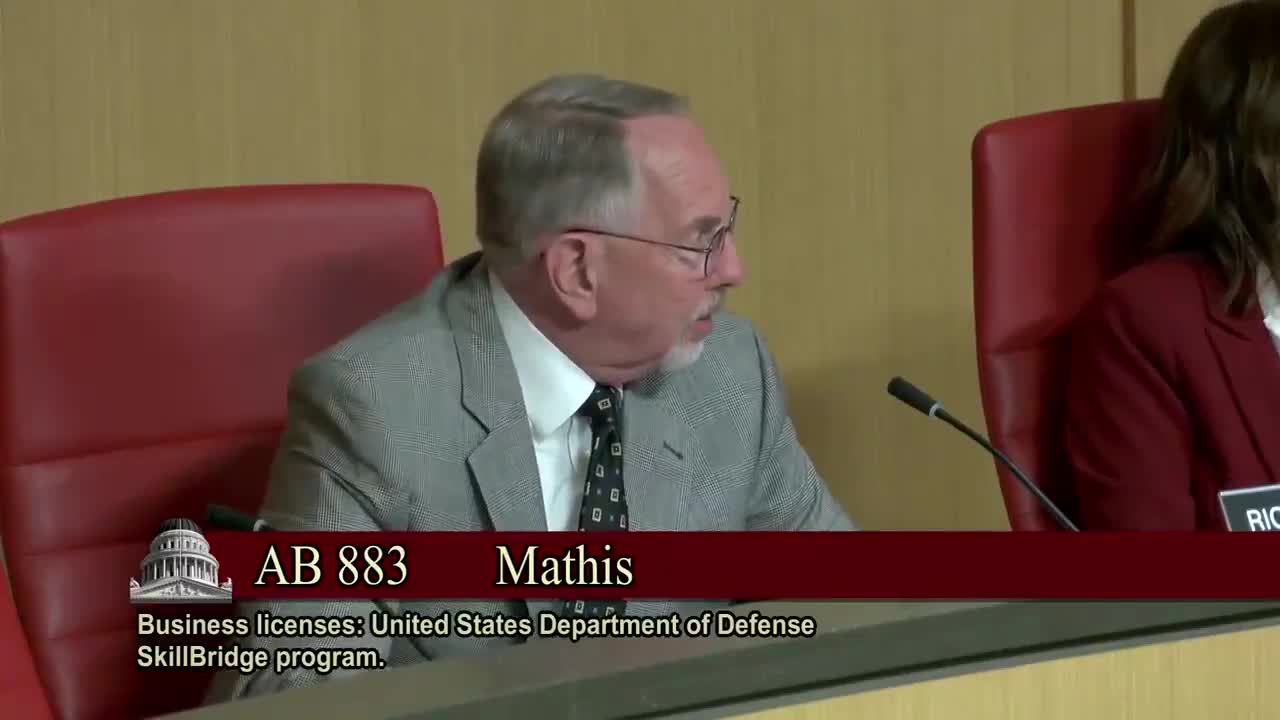 8MIN
Senate Standing Committee on Business, Professions and Economic Development
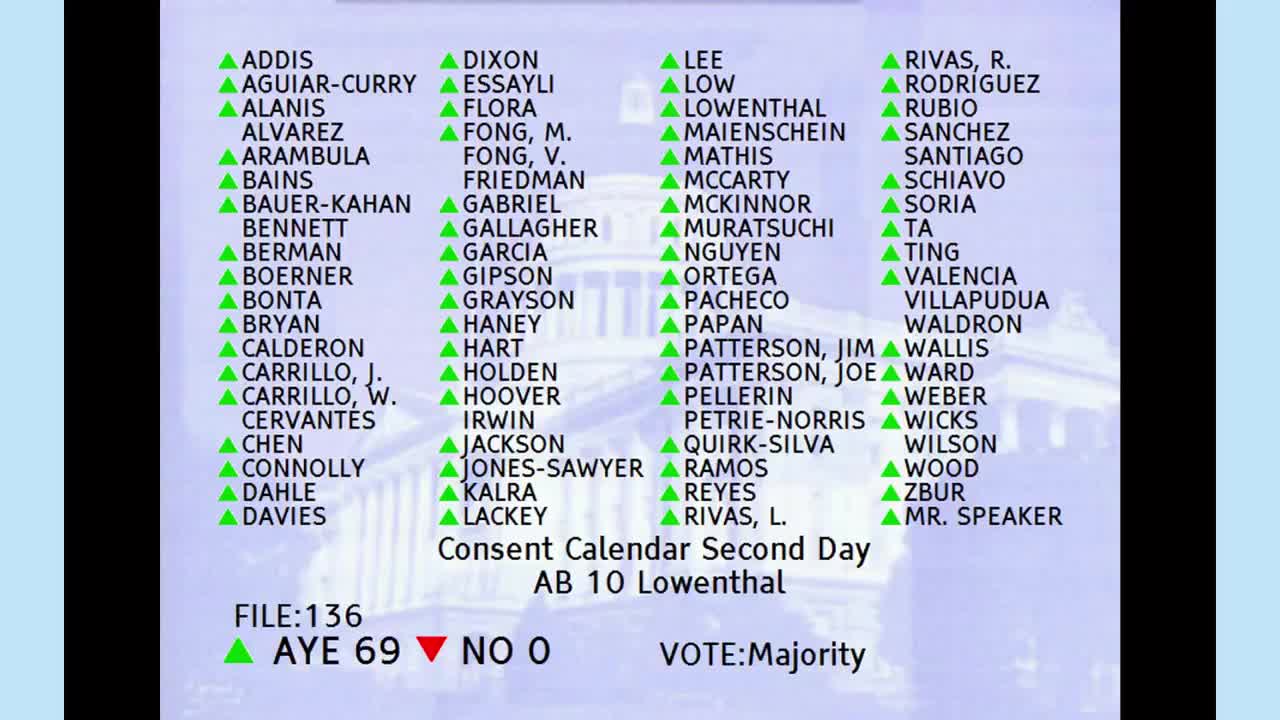 1MIN
Assembly Floor
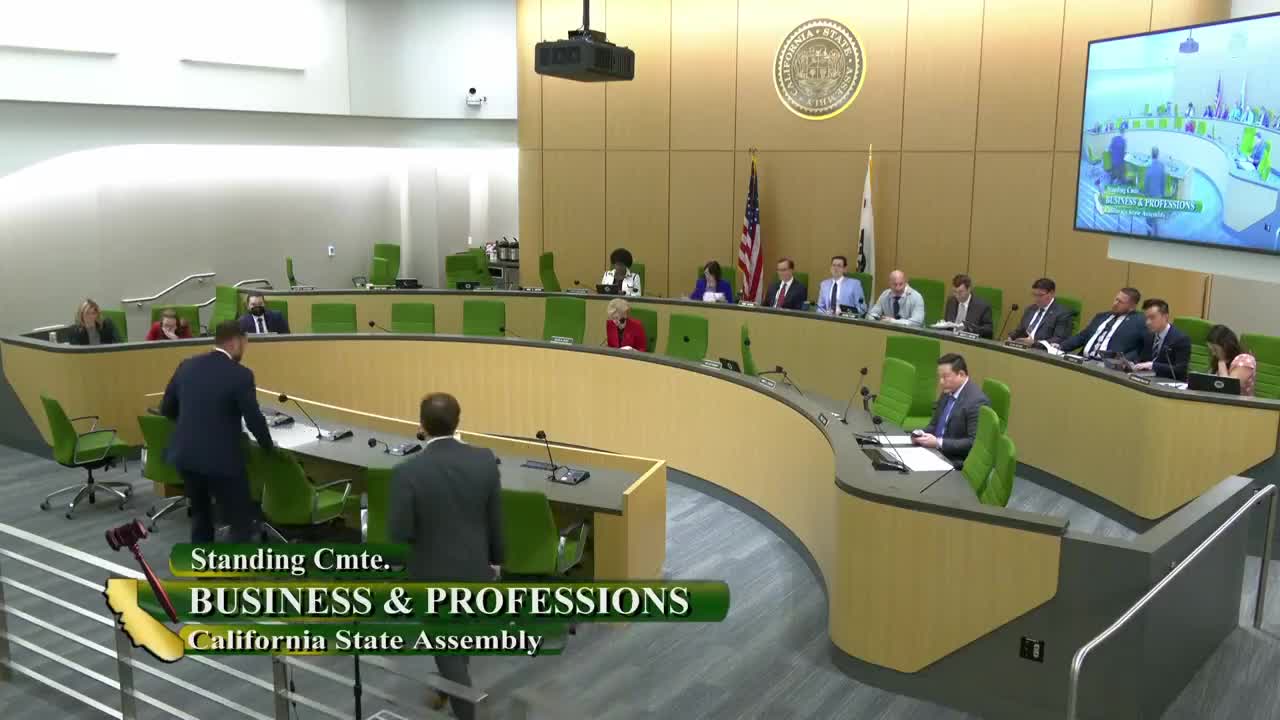 6MIN
Assembly Standing Committee on Business and Professions
Bill Author

Bill Co-Author(s):