AB 665: Minors: consent to mental health services.
- Session Year: 2023-2024
- House: Assembly
- Latest Version Date: 2023-10-07
Current Status:
Passed
(2023-10-07: Chaptered by Secretary of State - Chapter 338, Statutes of 2023.)
Introduced
In Committee
First Chamber
In Committee
Second Chamber
Enacted
Existing law, for some purposes, authorizes a minor who is 12 years of age or older to consent to mental health treatment or counseling on an outpatient basis, or to residential shelter services, if the minor is mature enough to participate intelligently in the outpatient services or residential shelter services, as specified, and either the minor would present a danger of serious physical or mental harm to themselves or to others or if the minor is the alleged victim of incest or child abuse. For other purposes, existing law authorizes a minor who is 12 years of age or older to consent to mental health treatment or counseling services if the minor is mature enough to participate intelligently in the outpatient services or counseling services.
This bill would align the existing laws by removing the additional requirement that, in order to consent to mental health treatment or counseling on an outpatient basis, or to residential shelter services, the minor must present a danger of serious physical or mental harm to themselves or to others, or be the alleged victim of incest or child abuse.
Existing law, for some purposes, requires that the mental health treatment or counseling include involvement of the minors parent or guardian unless the professional person treating or counseling the minor determines that the involvement would be inappropriate. For other purposes, existing law requires the involvement of the parent or guardian unless the professional person who is treating or counseling the minor, after consulting with the minor, determines that the involvement would be inappropriate.
This bill would also align the existing laws by requiring the professional person treating or counseling the minor to consult with the minor before determining whether involvement of the minors parent or guardian would be inappropriate.
Existing law defines professional person for these purposes to include, among other things, a mental health professional, a marriage and family therapist, a licensed educational psychologist, a clinical psychologist, the chief administrator of an agency, and a licensed professional clinical counselor, as defined.
This bill would add a registered psychologist, a registered psychological assistant, a psychological trainee, an associate clinical social worker, a social work intern, a clinical counselor trainee working under the supervision of a licensed professional, and a board-certified psychiatrist to the definition of professional person for these purposes.
This bill would make all of the above changes operative on July 1, 2024.
Existing law, for some purposes, authorizes a minor who is 12 years of age or older to consent to mental health treatment or counseling on an outpatient basis, or to residential shelter services, if the minor is mature enough to participate intelligently in the outpatient services or residential shelter services, as specified, and either the minor would present a danger of serious physical or mental harm to themselves or to others or if the minor is the alleged victim of incest or child abuse. For other purposes, existing law authorizes a minor who is 12 years of age or older to consent to mental health treatment or counseling services if the minor is mature enough to participate intelligently in the outpatient services or counseling services.
This bill would align the existing laws by removing the additional requirement that, in order to consent to mental health treatment or counseling on an outpatient basis, or to residential shelter services, the minor must present a danger of serious physical or mental harm to themselves or to others, or be the alleged victim of incest or child abuse.
Existing law, for some purposes, requires that the mental health treatment or counseling include involvement of the minors parent or guardian unless the professional person treating or counseling the minor determines that the involvement would be inappropriate. For other purposes, existing law requires the involvement of the parent or guardian unless the professional person who is treating or counseling the minor, after consulting with the minor, determines that the involvement would be inappropriate.
This bill would also align the existing laws by requiring the professional person treating or counseling the minor to consult with the minor before determining whether involvement of the minors parent or guardian would be inappropriate.
Existing law defines professional person for these purposes to include, among other things, a mental health professional, a marriage and family therapist, a licensed educational psychologist, a clinical psychologist, the chief administrator of an agency, and a licensed professional clinical counselor, as defined.
This bill would add a registered psychologist, a registered psychological assistant, a psychological trainee, an associate clinical social worker, a social work intern, a clinical counselor trainee working under the supervision of a licensed professional, and a board-certified psychiatrist to the definition of professional person for these purposes.
This bill would make all of the above changes operative on July 1, 2024.
Existing law, for some purposes, authorizes a minor who is 12 years of age or older to consent to mental health treatment or counseling on an outpatient basis, or to residential shelter services, if the minor is mature enough to participate intelligently in the outpatient services or residential shelter services, as specified, and either the minor would present a danger of serious physical or mental harm to themselves or to others or if the minor is the alleged victim of incest or child abuse. For other purposes, existing law authorizes a minor who is 12 years of age or older to consent to mental health treatment or counseling services if the minor is mature enough to participate intelligently in the outpatient services or counseling services.
This bill would align the existing laws by removing the additional requirement that, in order to consent to mental health treatment or counseling on an outpatient basis, or to residential shelter services, the minor must present a danger of serious physical or mental harm to themselves or to others, or be the alleged victim of incest or child abuse.
Existing law, for some purposes, requires that the mental health treatment or counseling include involvement of the minors parent or guardian unless the professional person treating or counseling the minor determines that the involvement would be inappropriate. For other purposes, existing law requires the involvement of the parent or guardian unless the professional person who is treating or counseling the minor, after consulting with the minor, determines that the involvement would be inappropriate.
This bill would also align the existing laws by requiring the professional person treating or counseling the minor to consult with the minor before determining whether involvement of the minors parent or guardian would be inappropriate.
Existing law defines professional person for these purposes to include, among other things, a mental health professional, a marriage and family therapist, a licensed educational psychologist, a clinical psychologist, the chief administrator of an agency, and a licensed professional clinical counselor, as defined.
This bill would add a registered psychologist, a registered psychological assistant, a psychological trainee, an associate clinical social worker, a social work intern, a clinical counselor trainee working under the supervision of a licensed professional, and a board-certified psychiatrist to the definition of professional person for these purposes.
This bill would make all of the above changes operative on July 1, 2024.
Existing law, for some purposes, authorizes a minor who is 12 years of age or older to consent to mental health treatment or counseling on an outpatient basis, or to residential shelter services, if the minor is mature enough to participate intelligently in the outpatient services or residential shelter services, as specified, and either the minor would present a danger of serious physical or mental harm to themselves or to others or if the minor is the alleged victim of incest or child abuse. For other purposes, existing law authorizes a minor who is 12 years of age or older to consent to mental health treatment or counseling services if the minor is mature enough to participate intelligently in the outpatient services or counseling services.
This bill would align the existing laws by removing the additional requirement that, in order to consent to mental health treatment or counseling on an outpatient basis, or to residential shelter services, the minor must present a danger of serious physical or mental harm to themselves or to others, or be the alleged victim of incest or child abuse.
Existing law, for some purposes, requires that the mental health treatment or counseling include involvement of the minors parent or guardian unless the professional person treating or counseling the minor determines that the involvement would be inappropriate. For other purposes, existing law requires the involvement of the parent or guardian unless the professional person who is treating or counseling the minor, after consulting with the minor, determines that the involvement would be inappropriate.
This bill would also align the existing laws by requiring the professional person treating or counseling the minor to consult with the minor before determining whether involvement of the minors parent or guardian would be inappropriate.
The Legislature finds and declares all of the following:
(a)California is failing on childrens mental health and preventive care. According to the most recent Commonwealth Fund Scorecard on State Health System Performance, our state ranks 48th in the nation for providing children with needed mental health care.
(b)Roughly one-half of Californias children are covered by Medi-Cal, the vast majority of whom are Black and children of color.
(c)Less than 19 percent of low-income teenagers on Medi-Cal received screenings for depression and a followup plan in 2020. This is despite the reality that nearly one in three adolescents in California reported symptoms that meet the criteria for serious psychological distress.
(d)Less than 9 percent of Indigenous youth on Medi-Cal received a screening and plan, the lowest of any racial or ethnic group.
(e)Despite an overall decrease in the suicide rate in California, in 2020, youth, particularly Black and Latinx youth, and girls all showed disproportionate increases in suicide. A shocking 78 percent of LGBTQ+ youth who were surveyed shared they had considered suicide, with the vast majority of those who had considered suicide sharing they had done so in the last year, and nearly one-third had made an attempt in the past year.
(f)Seeking care for mental health issues is complicated by pervasive social stigma and centuries of systemic oppression by government programs that create legitimate fears for families to engage in services.
(g)Youth, especially youth of color, express significant trepidation about needing to disclose to parents their mental health concerns and their need to access services. Without access to a trained professional, youth report they turn to mostly free resources of mixed quality that they access without parental intervention or adult assistance, such as social media accounts and online videos.
(h)For LGBTQ+ youth, the rejection from parents, harassment in school, and the overall LGBTQ+ negativity present in society can lead to depression, anxiety, drug and alcohol use, and other negative outcomes. Over one-half of surveyed LGBTQ+ youth reported that not being able to get permission from their parents or guardians was sometimes or always a barrier to accessing mental health services.
(i)Providers, particularly school-based providers, find that obtaining parental consent for a youth who needs support is complicated by the parent or caretakers beliefs and stigma about mental health care.
(j)Most states allow youth under 18 years of age to consent to receiving mental health care on their own.
(k)In California, existing law in both Section 124260 of the Health and Safety Code and Section 6924 of the Family Code establish that a minor who is 12 years of age or older may consent to mental health treatment or counseling on an outpatient basis, or to residential shelter services, if the minor is mature enough to participate intelligently in the outpatient services or residential shelter services; however, such services cannot be billed to Medi-Cal.
(l)Existing law in the Family Code authorizes providers to bill Medi-Cal if the above requirements are met and either the minor would present a danger of serious physical or mental harm to themselves or to others, or the minor is the alleged victim of incest or child abuse.
(m)Two laws with different standards are challenging for providers to implement and challenging for youth and families to understand, creating a chilling effect on their willingness to seek out care.
(n)This fundamentally inequitable policy is ultimately at odds with the states commitment to racial, ethnic, and health equity as demonstrated through ongoing efforts of the Children and Youth Behavioral Health Initiative and CalAIM, which are state efforts to advance the goal of greater early intervention to address the mental health needs of youth.
(o)Requiring young people from low-income families to delay sensitive treatment until they are in serious distress places youth at unnecessary risk of not seeking care, increasing the likelihood of suicide, self-harm, or substance overdose, and contributing to the alarming disparities in mental health outcomes for youth from marginalized communities.
SEC. 2.Section 6924 of the Family Code is amended to read:6924.(a)As used in this section:
(1)Mental health treatment or counseling services means the provision of mental health treatment or counseling on an outpatient basis by any of the following:
(A)A governmental agency.
(B)A person or agency having a contract with a governmental agency to provide the services.
(C)An agency that receives funding from community united funds.
(D)A runaway house or crisis resolution center.
(E)A professional person, as defined in paragraph (2).
(2)Professional person means any of the following:
(A)A person designated as a mental health professional in Sections 622 to 626, inclusive, of Article 8 of Subchapter 3 of Chapter 1 of Title 9 of the California Code of Regulations.
(B)A marriage and family therapist as defined in Chapter 13 (commencing with Section 4980) of Division 2 of the Business and Professions Code.
(C)A licensed educational psychologist as defined in Chapter 13.5 (commencing with Section 4989.10) of Division 2 of the Business and Professions Code.
(D)A credentialed school psychologist as described in Section 49424 of the Education Code.
(E)A clinical psychologist as defined in Section 1316.5 of the Health and Safety Code.
(F)The chief administrator of an agency referred to in paragraph (1) or (3).
(G)A person registered as an associate marriage and family therapist, as defined in Chapter 13 (commencing with Section 4980) of Division 2 of the Business and Professions Code, while working under the supervision of a licensed professional specified in subdivision (g) of Section 4980.03 of the Business and Professions Code.
(H)A licensed professional clinical counselor, as defined in Chapter 16 (commencing with Section 4999.10) of Division 2 of the Business and Professions Code.
(I)A person registered as an associate professional clinical counselor, as defined in Chapter 16 (commencing with Section 4999.10) of Division 2 of the Business and Professions Code, while working under the supervision of a licensed professional specified in subdivision (h) of Section 4999.12 of the Business and Professions Code.
(3)Residential shelter services means any of the following:
(A)The provision of residential and other support services to minors on a temporary or emergency basis in a facility that services only minors by a governmental agency, a person or agency having a contract with a governmental agency to provide these services, an agency that receives funding from community funds, or a licensed community care facility or crisis resolution center.
(B)The provision of other support services on a temporary or emergency basis by any professional person as defined in paragraph (2).
(b)A minor who is 12 years of age or older may consent to mental health treatment or counseling on an outpatient basis, or to residential shelter services, if both of the following requirements are satisfied:
(1)The minor, in the opinion of the attending professional person, is mature enough to participate intelligently in the outpatient services or residential shelter services.
(2)The minor (A) would present a danger of serious physical or mental harm to self or to others without the mental health treatment or counseling or residential shelter services, or (B) is the alleged victim of incest or child abuse.
(c)A professional person offering residential shelter services, whether as an individual or as a representative of an entity specified in paragraph (3) of subdivision (a), shall make their best efforts to notify the parent or guardian of the provision of services.
(d)The mental health treatment or counseling of a minor authorized by this section shall include involvement of the minors parent or guardian unless, in the opinion of the professional person who is treating or counseling the minor, the involvement would be inappropriate. The professional person who is treating or counseling the minor shall state in the client record whether and when the person attempted to contact the minors parent or guardian, and whether the attempt to contact was successful or unsuccessful, or the reason why, in the professional persons opinion, it would be inappropriate to contact the minors parent or guardian.
(e)The minors parents or guardian are not liable for payment for mental health treatment or counseling services provided pursuant to this section unless the parent or guardian participates in the mental health treatment or counseling, and then only for services rendered with the participation of the parent or guardian. The minors parents or guardian are not liable for payment for any residential shelter services provided pursuant to this section unless the parent or guardian consented to the provision of those services.
(f)This section does not authorize a minor to receive convulsive therapy or psychosurgery as defined in subdivisions (f) and (g) of Section 5325 of the Welfare and Institutions Code, or psychotropic drugs without the consent of the minors parent or guardian.
(g)This section shall become inoperative on July 1, 2024, and, as of January 1, 2025, is repealed.
SEC. 3.Section 6924 is added to the Family Code, to read:6924.(a)As used in this section:
(1)Mental health treatment or counseling services means the provision of mental health treatment or counseling on an outpatient basis by any of the following:
(A)A governmental agency.
(B)A person or agency having a contract with a governmental agency to provide the services.
(C)An agency that receives funding from community united funds.
(D)A runaway house or crisis resolution center.
(E)A professional person, as defined in paragraph (2).
(2)Professional person means either of the following:
(A)A professional person as defined in Section 124260 of the Health and Safety Code.
(B)The chief administrator of an agency referred to in paragraph (1) or (3).
(3)Residential shelter services means any of the following:
(A)The provision of residential and other support services to minors on a temporary or emergency basis in a facility that services only minors by a governmental agency, a person or agency having a contract with a governmental agency to provide these services, an agency that receives funding from community funds, or a licensed community care facility or crisis resolution center.
(B)The provision of other support services on a temporary or emergency basis by any professional person as defined in paragraph (2).
(b)A minor who is 12 years of age or older may consent to mental health treatment or counseling on an outpatient basis, or to residential shelter services, if the minor, in the opinion of the attending professional person, is mature enough to participate intelligently in the outpatient services or residential shelter services.
(c)A professional person offering residential shelter services, whether as an individual or as a representative of an entity specified in paragraph (3) of subdivision (a), shall make their best efforts to notify the parent or guardian of the provision of services.
(d)The mental health treatment or counseling of a minor authorized by this section shall include involvement of the minors parent or guardian unless the professional person who is treating or counseling the minor, after consulting with the minor, determines that the involvement would be inappropriate. The professional person who is treating or counseling the minor shall state in the client record whether and when the person attempted to contact the minors parent or guardian, and whether the attempt to contact was successful or unsuccessful, or the reason why, in the professional persons opinion, it would be inappropriate to contact the minors parent or guardian.
(e)The minors parents or guardian are not liable for payment for mental health treatment or counseling services provided pursuant to this section unless the parent or guardian participates in the mental health treatment or counseling, and then only for services rendered with the participation of the parent or guardian. The minors parents or guardian are not liable for payment for any residential shelter services provided pursuant to this section unless the parent or guardian consented to the provision of those services.
(f)This section does not authorize a minor to receive convulsive therapy or psychosurgery as defined in subdivisions (f) and (g) of Section 5325 of the Welfare and Institutions Code, or psychotropic drugs without the consent of the minors parent or guardian.
(g)This section shall become operative on July 1, 2024.
The Legislature finds and declares all of the following:
(a)California is failing on childrens mental health and preventive care. According to the most recent Commonwealth Fund Scorecard on State Health System Performance, our state ranks 48th in the nation for providing children with needed mental health care.
(b)Roughly one-half of Californias children are covered by Medi-Cal, the vast majority of whom are Black and children of color.
(c)Less than 19 percent of low-income teenagers on Medi-Cal received screenings for depression and a followup plan in 2020. This is despite the reality that nearly one in three adolescents in California reported symptoms that meet the criteria for serious psychological distress.
(d)Less than 9 percent of Indigenous youth on Medi-Cal received a screening and plan, the lowest of any racial or ethnic group.
(e)Despite an overall decrease in the suicide rate in California, in 2020, youth, particularly Black and Latinx youth, and girls all showed disproportionate increases in suicide. A shocking 78 percent of LGBTQ+ youth who were surveyed shared they had considered suicide, with the vast majority of those who had considered suicide sharing they had done so in the last year, and nearly one-third had made an attempt in the past year.
(f)Seeking care for mental health issues is complicated by pervasive social stigma and centuries of systemic oppression by government programs that create legitimate fears for families to engage in services.
(g)Youth, especially youth of color, express significant trepidation about needing to disclose to parents their mental health concerns and their need to access services. Without access to a trained professional, youth report they turn to mostly free resources of mixed quality that they access without parental intervention or adult assistance, such as social media accounts and online videos.
(h)For LGBTQ+ youth, the rejection from parents, harassment in school, and the overall LGBTQ+ negativity present in society can lead to depression, anxiety, drug and alcohol use, and other negative outcomes. Over one-half of surveyed LGBTQ+ youth reported that not being able to get permission from their parents or guardians was sometimes or always a barrier to accessing mental health services.
(i)Providers, particularly school-based providers, find that obtaining parental consent for a youth who needs support is complicated by the parent or caretakers beliefs and stigma about mental health care.
(j)Most states allow youth under 18 years of age to consent to receiving mental health care on their own.
(k)In California, existing law in both Section 124260 of the Health and Safety Code and Section 6924 of the Family Code establish that a minor who is 12 years of age or older may consent to mental health treatment or counseling on an outpatient basis, or to residential shelter services, if the minor is mature enough to participate intelligently in the outpatient services or residential shelter services; however, such services cannot be billed to Medi-Cal.
(l)Existing law in the Family Code authorizes providers to bill Medi-Cal if the above requirements are met and either the minor would present a danger of serious physical or mental harm to themselves or to others, or the minor is the alleged victim of incest or child abuse.
(m)Two laws with different standards are challenging for providers to implement and challenging for youth and families to understand, creating a chilling effect on their willingness to seek out care.
(n)This fundamentally inequitable policy is ultimately at odds with the states commitment to racial, ethnic, and health equity as demonstrated through ongoing efforts of the Children and Youth Behavioral Health Initiative and CalAIM, which are state efforts to advance the goal of greater early intervention to address the mental health needs of youth.
(o)Requiring young people from low-income families to delay sensitive treatment until they are in serious distress places youth at unnecessary risk of not seeking care, increasing the likelihood of suicide, self-harm, or substance overdose, and contributing to the alarming disparities in mental health outcomes for youth from marginalized communities.
SEC. 2.Section 6924 of the Family Code is amended to read:6924.(a)As used in this section:
(1)Mental health treatment or counseling services means the provision of mental health treatment or counseling on an outpatient basis by any of the following:
(A)A governmental agency.
(B)A person or agency having a contract with a governmental agency to provide the services.
(C)An agency that receives funding from community united funds.
(D)A runaway house or crisis resolution center.
(E)A professional person, as defined in paragraph (2).
(2)Professional person means any of the following:
(A)A person designated as a mental health professional in Sections 622 to 626, inclusive, of Article 8 of Subchapter 3 of Chapter 1 of Title 9 of the California Code of Regulations.
(B)A marriage and family therapist as defined in Chapter 13 (commencing with Section 4980) of Division 2 of the Business and Professions Code.
(C)A licensed educational psychologist as defined in Chapter 13.5 (commencing with Section 4989.10) of Division 2 of the Business and Professions Code.
(D)A credentialed school psychologist as described in Section 49424 of the Education Code.
(E)A clinical psychologist as defined in Section 1316.5 of the Health and Safety Code.
(F)The chief administrator of an agency referred to in paragraph (1) or (3).
(G)A person registered as an associate marriage and family therapist, as defined in Chapter 13 (commencing with Section 4980) of Division 2 of the Business and Professions Code, while working under the supervision of a licensed professional specified in subdivision (g) of Section 4980.03 of the Business and Professions Code.
(H)A licensed professional clinical counselor, as defined in Chapter 16 (commencing with Section 4999.10) of Division 2 of the Business and Professions Code.
(I)A person registered as an associate professional clinical counselor, as defined in Chapter 16 (commencing with Section 4999.10) of Division 2 of the Business and Professions Code, while working under the supervision of a licensed professional specified in subdivision (h) of Section 4999.12 of the Business and Professions Code.
(3)Residential shelter services means any of the following:
(A)The provision of residential and other support services to minors on a temporary or emergency basis in a facility that services only minors by a governmental agency, a person or agency having a contract with a governmental agency to provide these services, an agency that receives funding from community funds, or a licensed community care facility or crisis resolution center.
(B)The provision of other support services on a temporary or emergency basis by any professional person as defined in paragraph (2).
(b)A minor who is 12 years of age or older may consent to mental health treatment or counseling on an outpatient basis, or to residential shelter services, if both of the following requirements are satisfied:
(1)The minor, in the opinion of the attending professional person, is mature enough to participate intelligently in the outpatient services or residential shelter services.
(2)The minor (A) would present a danger of serious physical or mental harm to self or to others without the mental health treatment or counseling or residential shelter services, or (B) is the alleged victim of incest or child abuse.
(c)A professional person offering residential shelter services, whether as an individual or as a representative of an entity specified in paragraph (3) of subdivision (a), shall make their best efforts to notify the parent or guardian of the provision of services.
(d)The mental health treatment or counseling of a minor authorized by this section shall include involvement of the minors parent or guardian unless, in the opinion of the professional person who is treating or counseling the minor, the involvement would be inappropriate. The professional person who is treating or counseling the minor shall state in the client record whether and when the person attempted to contact the minors parent or guardian, and whether the attempt to contact was successful or unsuccessful, or the reason why, in the professional persons opinion, it would be inappropriate to contact the minors parent or guardian.
(e)The minors parents or guardian are not liable for payment for mental health treatment or counseling services provided pursuant to this section unless the parent or guardian participates in the mental health treatment or counseling, and then only for services rendered with the participation of the parent or guardian. The minors parents or guardian are not liable for payment for any residential shelter services provided pursuant to this section unless the parent or guardian consented to the provision of those services.
(f)This section does not authorize a minor to receive convulsive therapy or psychosurgery as defined in subdivisions (f) and (g) of Section 5325 of the Welfare and Institutions Code, or psychotropic drugs without the consent of the minors parent or guardian.
(g)This section shall become inoperative on July 1, 2024, and, as of January 1, 2025, is repealed.
SEC. 3.Section 6924 is added to the Family Code, to read:6924.(a)As used in this section:
(1)Mental health treatment or counseling services means the provision of mental health treatment or counseling on an outpatient basis by any of the following:
(A)A governmental agency.
(B)A person or agency having a contract with a governmental agency to provide the services.
(C)An agency that receives funding from community united funds.
(D)A runaway house or crisis resolution center.
(E)A professional person, as defined in paragraph (2).
(2)Professional person means either of the following:
(A)A professional person as defined in Section 124260 of the Health and Safety Code.
(B)The chief administrator of an agency referred to in paragraph (1) or (3).
(3)Residential shelter services means any of the following:
(A)The provision of residential and other support services to minors on a temporary or emergency basis in a facility that services only minors by a governmental agency, a person or agency having a contract with a governmental agency to provide these services, an agency that receives funding from community funds, or a licensed community care facility or crisis resolution center.
(B)The provision of other support services on a temporary or emergency basis by any professional person as defined in paragraph (2).
(b)A minor who is 12 years of age or older may consent to mental health treatment or counseling on an outpatient basis, or to residential shelter services, if the minor, in the opinion of the attending professional person, is mature enough to participate intelligently in the outpatient services or residential shelter services.
(c)A professional person offering residential shelter services, whether as an individual or as a representative of an entity specified in paragraph (3) of subdivision (a), shall make their best efforts to notify the parent or guardian of the provision of services.
(d)The mental health treatment or counseling of a minor authorized by this section shall include involvement of the minors parent or guardian unless the professional person who is treating or counseling the minor, after consulting with the minor, determines that the involvement would be inappropriate. The professional person who is treating or counseling the minor shall state in the client record whether and when the person attempted to contact the minors parent or guardian, and whether the attempt to contact was successful or unsuccessful, or the reason why, in the professional persons opinion, it would be inappropriate to contact the minors parent or guardian.
(e)The minors parents or guardian are not liable for payment for mental health treatment or counseling services provided pursuant to this section unless the parent or guardian participates in the mental health treatment or counseling, and then only for services rendered with the participation of the parent or guardian. The minors parents or guardian are not liable for payment for any residential shelter services provided pursuant to this section unless the parent or guardian consented to the provision of those services.
(f)This section does not authorize a minor to receive convulsive therapy or psychosurgery as defined in subdivisions (f) and (g) of Section 5325 of the Welfare and Institutions Code, or psychotropic drugs without the consent of the minors parent or guardian.
(g)This section shall become operative on July 1, 2024.
The Legislature finds and declares all of the following:
(a)California is failing on childrens mental health and preventive care. According to the most recent Commonwealth Fund Scorecard on State Health System Performance, our state ranks 48th in the nation for providing children with needed mental health care.
(b)Roughly one-half of Californias children are covered by Medi-Cal, the vast majority of whom are Black and children of color.
(c)Less than 19 percent of low-income teenagers on Medi-Cal received screenings for depression and a followup plan in 2020. This is despite the reality that nearly one in three adolescents in California reported symptoms that meet the criteria for serious psychological distress.
(d)Less than 9 percent of Indigenous youth on Medi-Cal received a screening and plan, the lowest of any racial or ethnic group.
(e)Despite an overall decrease in the suicide rate in California, in 2020, youth, particularly Black and Latinx youth, and girls all showed disproportionate increases in suicide. A shocking 78 percent of LGBTQ+ youth who were surveyed shared they had considered suicide, with the vast majority of those who had considered suicide sharing they had done so in the last year, and nearly one-third had made an attempt in the past year.
(f)Seeking care for mental health issues is complicated by pervasive social stigma and centuries of systemic oppression by government programs that create legitimate fears for families to engage in services.
(g)Youth, especially youth of color, express significant trepidation about needing to disclose to parents their mental health concerns and their need to access services. Without access to a trained professional, youth report they turn to mostly free resources of mixed quality that they access without parental intervention or adult assistance, such as social media accounts and online videos.
(h)For LGBTQ+ youth, the rejection from parents, harassment in school, and the overall LGBTQ LGBTQ+ negativity present in society can lead to depression, anxiety, drug and alcohol use, and other negative outcomes. Over one-half of surveyed LGBTQ+ youth reported that not being able to get permission from their parents or guardians was sometimes or always a barrier to accessing mental health services.
(i)Providers, particularly school-based providers, find that obtaining parental consent for a youth who needs support is complicated by the parent or caretakers beliefs and stigma about mental health care.
(j)Most states allow youth under 18 years of age to consent to receiving mental health care on their own.
(k)In California, existing law in both Section 124260 of the Health and Safety Code and the Section 6924 of the Family Code establishes establish that a minor who is 12 years of age or older may consent to mental health treatment or counseling on an outpatient basis, or to residential shelter services, if the minor is mature enough to participate intelligently in the outpatient services or residential shelter services; however, such services cannot be billed to Medi-Cal.
(l)Existing law in the Family Code authorizes providers to bill Medi-Cal if the above requirements are met and either the minor would present a danger of serious physical or mental harm to themselves or to others, or the minor is the alleged victim of incest or child abuse.
(m)Two laws with different standards are challenging for providers to implement and challenging for youth and families to understand, creating a chilling effect on their willingness to seek out care.
(n)This fundamentally inequitable policy is ultimately at odds with the states commitment to racial, ethnic, and health equity as demonstrated through ongoing efforts of the Children and Youth Behavioral Health Initiative and CalAIM, which are state efforts to advance the goal of greater early intervention to address the mental health needs of youth.
(o)Requiring young people from low-income families to delay sensitive treatment until they are in serious distress places youth at unnecessary risk of not seeking care, increasing the likelihood of suicide, self-harm, or substance overdose, and contributing to the alarming disparities in mental health outcomes for youth from marginalized communities.
SEC. 2.Section 6924 of the Family Code is amended to read:6924.(a)As used in this section:(1)Mental health treatment or counseling services means the provision of mental health treatment or counseling on an outpatient basis by any of the following:(A)A governmental agency.(B)A person or agency having a contract with a governmental agency to provide the services.(C)An agency that receives funding from community united funds.(D)A runaway house or crisis resolution center.(E)A professional person, as defined in paragraph (2).(2)Professional person means any of the following:(A)A person designated as a mental health professional in Sections 622 to 626, inclusive, of Article 8 of Subchapter 3 of Chapter 1 of Title 9 of the California Code of Regulations.(B)A marriage and family therapist as defined in Chapter 13 (commencing with Section 4980) of Division 2 of the Business and Professions Code.(C)A licensed educational psychologist as defined in Article 5 (commencing with Section 4986) of Chapter 13 of Division 2 of the Business and Professions Code.(D)A credentialed school psychologist as described in Section 49424 of the Education Code.(E)A clinical psychologist as defined in Section 1316.5 of the Health and Safety Code.(F)The chief administrator of an agency referred to in paragraph (1) or (3).(G)A person registered as an associate marriage and family therapist, as defined in Chapter 13 (commencing with Section 4980) of Division 2 of the Business and Professions Code, while working under the supervision of a licensed professional specified in subdivision (g) of Section 4980.03 of the Business and Professions Code.(H)A licensed professional clinical counselor, as defined in Chapter 16 (commencing with Section 4999.10) of Division 2 of the Business and Professions Code.(I)A person registered as an associate professional clinical counselor, as defined in Chapter 16 (commencing with Section 4999.10) of Division 2 of the Business and Professions Code, while working under the supervision of a licensed professional specified in subdivision (h) of Section 4999.12 of the Business and Professions Code.(3)Residential shelter services means any of the following:(A)The provision of residential and other support services to minors on a temporary or emergency basis in a facility that services only minors by a governmental agency, a person or agency having a contract with a governmental agency to provide these services, an agency that receives funding from community funds, or a licensed community care facility or crisis resolution center.(B)The provision of other support services on a temporary or emergency basis by any professional person as defined in paragraph (2).(b)A minor who is 12 years of age or older may consent to mental health treatment or counseling on an outpatient basis, or to residential shelter services, if the minor, in the opinion of the attending professional person, is mature enough to participate intelligently in the outpatient services or residential shelter services.(c)A professional person offering residential shelter services, whether as an individual or as a representative of an entity specified in paragraph (3) of subdivision (a), shall make their best efforts to notify the parent or guardian of the provision of services.(d)The mental health treatment or counseling of a minor authorized by this section shall include involvement of the minors parent or guardian unless, the professional person who is treating or counseling the minor, after consulting with the minor, determines that the involvement would be inappropriate. The professional person who is treating or counseling the minor shall state in the client record whether and when the person attempted to contact the minors parent or guardian, and whether the attempt to contact was successful or unsuccessful, or the reason why, in the professional persons opinion, it would be inappropriate to contact the minors parent or guardian.(e)The minors parents or guardian are not liable for payment for mental health treatment or counseling services provided pursuant to this section unless the parent or guardian participates in the mental health treatment or counseling, and then only for services rendered with the participation of the parent or guardian. The minors parents or guardian are not liable for payment for any residential shelter services provided pursuant to this section unless the parent or guardian consented to the provision of those services.(f)This section does not authorize a minor to receive convulsive therapy or psychosurgery as defined in subdivisions (f) and (g) of Section 5325 of the Welfare and Institutions Code, or psychotropic drugs without the consent of the minors parent or guardian.SEC. 2.Section 6924 of the Family Code is amended to read:6924.(a)As used in this section:
(1)Mental health treatment or counseling services means the provision of mental health treatment or counseling on an outpatient basis by any of the following:
(A)A governmental agency.
(B)A person or agency having a contract with a governmental agency to provide the services.
(C)An agency that receives funding from community united funds.
(D)A runaway house or crisis resolution center.
(E)A professional person, as defined in paragraph (2).
(2)Professional person means any of the following:
(A)A person designated as a mental health professional in Sections 622 to 626, inclusive, of Article 8 of Subchapter 3 of Chapter 1 of Title 9 of the California Code of Regulations.
(B)A marriage and family therapist as defined in Chapter 13 (commencing with Section 4980) of Division 2 of the Business and Professions Code.
(C)A licensed educational psychologist as defined in Article 5 (commencing with Section 4986) of Chapter 13 Chapter 13.5 (commencing with Section 4989.10) of Division 2 of the Business and Professions Code.
(D)A credentialed school psychologist as described in Section 49424 of the Education Code.
(E)A clinical psychologist as defined in Section 1316.5 of the Health and Safety Code.
(F)The chief administrator of an agency referred to in paragraph (1) or (3).
(G)A person registered as an associate marriage and family therapist, as defined in Chapter 13 (commencing with Section 4980) of Division 2 of the Business and Professions Code, while working under the supervision of a licensed professional specified in subdivision (g) of Section 4980.03 of the Business and Professions Code.
(H)A licensed professional clinical counselor, as defined in Chapter 16 (commencing with Section 4999.10) of Division 2 of the Business and Professions Code.
(I)A person registered as an associate professional clinical counselor, as defined in Chapter 16 (commencing with Section 4999.10) of Division 2 of the Business and Professions Code, while working under the supervision of a licensed professional specified in subdivision (h) of Section 4999.12 of the Business and Professions Code.
(3)Residential shelter services means any of the following:
(A)The provision of residential and other support services to minors on a temporary or emergency basis in a facility that services only minors by a governmental agency, a person or agency having a contract with a governmental agency to provide these services, an agency that receives funding from community funds, or a licensed community care facility or crisis resolution center.
(B)The provision of other support services on a temporary or emergency basis by any professional person as defined in paragraph (2).
(b)A minor who is 12 years of age or older may consent to mental health treatment or counseling on an outpatient basis, or to residential shelter services, if both of the following requirements are satisfied:
(1)The minor, in the opinion of the attending professional person, is mature enough to participate intelligently in the outpatient services or residential shelter services.
(2)The minor (A) would present a danger of serious physical or mental harm to self or to others without the mental health treatment or counseling or residential shelter services, or (B) is the alleged victim of incest or child abuse.
(c)A professional person offering residential shelter services, whether as an individual or as a representative of an entity specified in paragraph (3) of subdivision (a), shall make their best efforts to notify the parent or guardian of the provision of services.
(d)The mental health treatment or counseling of a minor authorized by this section shall include involvement of the minors parent or guardian unless, in the opinion of the professional person who is treating or counseling the minor, the involvement would be inappropriate. The professional person who is treating or counseling the minor shall state in the client record whether and when the person attempted to contact the minors parent or guardian, and whether the attempt to contact was successful or unsuccessful, or the reason why, in the professional persons opinion, it would be inappropriate to contact the minors parent or guardian.
(e)The minors parents or guardian are not liable for payment for mental health treatment or counseling services provided pursuant to this section unless the parent or guardian participates in the mental health treatment or counseling, and then only for services rendered with the participation of the parent or guardian. The minors parents or guardian are not liable for payment for any residential shelter services provided pursuant to this section unless the parent or guardian consented to the provision of those services.
(f)This section does not authorize a minor to receive convulsive therapy or psychosurgery as defined in subdivisions (f) and (g) of Section 5325 of the Welfare and Institutions Code, or psychotropic drugs without the consent of the minors parent or guardian.
(g)This section shall become inoperative on July 1, 2024, and, as of January 1, 2025, is repealed.
SEC. 3.Section 6924 is added to the Family Code, to read:6924.(a)As used in this section:
(1)Mental health treatment or counseling services means the provision of mental health treatment or counseling on an outpatient basis by any of the following:
(A)A governmental agency.
(B)A person or agency having a contract with a governmental agency to provide the services.
(C)An agency that receives funding from community united funds.
(D)A runaway house or crisis resolution center.
(E)A professional person, as defined in paragraph (2).
(2)Professional person means either of the following:
(A)A professional person as defined in Section 124260 of the Health and Safety Code.
(B)The chief administrator of an agency referred to in paragraph (1) or (3).
(3)Residential shelter services means any of the following:
(A)The provision of residential and other support services to minors on a temporary or emergency basis in a facility that services only minors by a governmental agency, a person or agency having a contract with a governmental agency to provide these services, an agency that receives funding from community funds, or a licensed community care facility or crisis resolution center.
(B)The provision of other support services on a temporary or emergency basis by any professional person as defined in paragraph (2).
(b)A minor who is 12 years of age or older may consent to mental health treatment or counseling on an outpatient basis, or to residential shelter services, if the minor, in the opinion of the attending professional person, is mature enough to participate intelligently in the outpatient services or residential shelter services.
(c)A professional person offering residential shelter services, whether as an individual or as a representative of an entity specified in paragraph (3) of subdivision (a), shall make their best efforts to notify the parent or guardian of the provision of services.
(d)The mental health treatment or counseling of a minor authorized by this section shall include involvement of the minors parent or guardian unless the professional person who is treating or counseling the minor, after consulting with the minor, determines that the involvement would be inappropriate. The professional person who is treating or counseling the minor shall state in the client record whether and when the person attempted to contact the minors parent or guardian, and whether the attempt to contact was successful or unsuccessful, or the reason why, in the professional persons opinion, it would be inappropriate to contact the minors parent or guardian.
(e)The minors parents or guardian are not liable for payment for mental health treatment or counseling services provided pursuant to this section unless the parent or guardian participates in the mental health treatment or counseling, and then only for services rendered with the participation of the parent or guardian. The minors parents or guardian are not liable for payment for any residential shelter services provided pursuant to this section unless the parent or guardian consented to the provision of those services.
(f)This section does not authorize a minor to receive convulsive therapy or psychosurgery as defined in subdivisions (f) and (g) of Section 5325 of the Welfare and Institutions Code, or psychotropic drugs without the consent of the minors parent or guardian.
(g)This section shall become operative on July 1, 2024.
The Legislature finds and declares all of the following:
(a)California is failing on childrens mental health and preventive care. According to the most recent Commonwealth Fund Scorecard on State Health System Performance, our state ranks 48th in the nation for providing children with needed mental health care.
(b)Roughly one-half of Californias children are covered by Medi-Cal, the vast majority of whom are Black and children of color.
(c)Less than 19 percent of low-income teenagers on Medi-Cal received screenings for depression and a followup plan in 2020. This is despite the reality that nearly one in three adolescents in California reported symptoms that meet the criteria for serious psychological distress.
(d)Less than 9 percent of Indigenous youth on Medi-Cal received a screening and plan, the lowest of any racial or ethnic group.
(e)Despite an overall decrease in the suicide rate in California, in 2020, youth, particularly Black and Latinx youth, and girls all showed disproportionate increases in suicide. A shocking 78 percent of LGBTQ+ youth who were surveyed shared they had considered suicide, with the vast majority of those who had considered suicide sharing they had done so in the last year, and nearly one-third had made an attempt in the past year.
(f)Seeking care for mental health issues is complicated by pervasive social stigma and centuries of systemic oppression by government programs that create legitimate fears for families to engage in services.
(g)Youth, especially youth of color, express significant trepidation about needing to disclose to parents their mental health concerns and their need to access services. Without access to a trained professional, youth report they turn to mostly free resources of mixed quality that they access without parental intervention or adult assistance, such as social media accounts and online videos.
(h)For LGBTQ+ youth, the rejection from parents, harassment in school, and the overall LGBTQ negativity present in society can lead to depression, anxiety, drug and alcohol use, and other negative outcomes. Over one-half of surveyed LGBTQ+ youth reported that not being able to get permission from their parents or guardians was sometimes or always a barrier to accessing mental health services.
(i)Providers, particularly school-based providers, find that obtaining parental consent for a youth who needs support is complicated by the parent or caretakers beliefs and stigma about mental health care.
(j)Most states allow youth under 18 years of age to consent to receiving mental health care on their own.
(k)In California, existing law in both Section 124260 of the Health and Safety Code and the Section 6924 of the Family Code establishes that a minor who is 12 years of age or older may consent to mental health treatment or counseling on an outpatient basis, or to residential shelter services, if the minor is mature enough to participate intelligently in the outpatient services or residential shelter services; however, such services cannot be billed to Medi-Cal.
(l)Existing law in the Family Code authorizes providers to bill Medi-Cal if the above requirements are met and either the minor would present a danger of serious physical or mental harm to themselves or to others, or the minor is the alleged victim of incest or child abuse.
(m)Two laws with different standards are challenging for providers to implement and challenging for youth and families to understand, creating a chilling effect on their willingness to seek out care.
(n)This fundamentally inequitable policy is ultimately at odds with the states commitment to racial, ethnic, and health equity as demonstrated through ongoing efforts of the Children and Youth Behavioral Health Initiative and CalAIM, which are state efforts to advance the goal of greater early intervention to address the mental health needs of youth.
(o)Requiring young people from low-income families to delay sensitive treatment until they are in serious distress places youth at unnecessary risk of not seeking care, increasing the likelihood of suicide, self-harm, or substance overdose, and contributing to the alarming disparities in mental health outcomes for youth from marginalized communities.
SEC. 2.Section 6924 of the Family Code is amended to read:6924.(a)As used in this section:
(1)Mental health treatment or counseling services means the provision of mental health treatment or counseling on an outpatient basis by any of the following:
(A)A governmental agency.
(B)A person or agency having a contract with a governmental agency to provide the services.
(C)An agency that receives funding from community united funds.
(D)A runaway house or crisis resolution center.
(E)A professional person, as defined in paragraph (2).
(2)Professional person means any of the following:
(A)A person designated as a mental health professional in Sections 622 to 626, inclusive, of Article 8 of Subchapter 3 of Chapter 1 of Title 9 of the California Code of Regulations.
(B)A marriage and family therapist as defined in Chapter 13 (commencing with Section 4980) of Division 2 of the Business and Professions Code.
(C)A licensed educational psychologist as defined in Article 5 (commencing with Section 4986) of Chapter 13 of Division 2 of the Business and Professions Code.
(D)A credentialed school psychologist as described in Section 49424 of the Education Code.
(E)A clinical psychologist as defined in Section 1316.5 of the Health and Safety Code.
(F)The chief administrator of an agency referred to in paragraph (1) or (3).
(G)A person registered as an associate marriage and family therapist, as defined in Chapter 13 (commencing with Section 4980) of Division 2 of the Business and Professions Code, while working under the supervision of a licensed professional specified in subdivision (g) of Section 4980.03 of the Business and Professions Code.
(H)A licensed professional clinical counselor, as defined in Chapter 16 (commencing with Section 4999.10) of Division 2 of the Business and Professions Code.
(I)A person registered as an associate professional clinical counselor, as defined in Chapter 16 (commencing with Section 4999.10) of Division 2 of the Business and Professions Code, while working under the supervision of a licensed professional specified in subdivision (h) of Section 4999.12 of the Business and Professions Code.
(3)Residential shelter services means any of the following:
(A)The provision of residential and other support services to minors on a temporary or emergency basis in a facility that services only minors by a governmental agency, a person or agency having a contract with a governmental agency to provide these services, an agency that receives funding from community funds, or a licensed community care facility or crisis resolution center.
(B)The provision of other support services on a temporary or emergency basis by any professional person as defined in paragraph (2).
(b)A minor who is 12 years of age or older may consent to mental health treatment or counseling on an outpatient basis, or to residential shelter services, if both of the following requirements are satisfied:
(1)The the minor, in the opinion of the attending professional person, is mature enough to participate intelligently in the outpatient services or residential shelter services.
(2)The minor (A) would present a danger of serious physical or mental harm to self or to others without the mental health treatment or counseling or residential shelter services, or (B) is the alleged victim of incest or child abuse.(c)A professional person offering residential shelter services, whether as an individual or as a representative of an entity specified in paragraph (3) of subdivision (a), shall make their best efforts to notify the parent or guardian of the provision of services.
(d)The mental health treatment or counseling of a minor authorized by this section shall include involvement of the minors parent or guardian unless, in the opinion of the professional person who is treating or counseling the minor, the professional person who is treating or counseling the minor, after consulting with the minor, determines that the involvement would be inappropriate. The professional person who is treating or counseling the minor shall state in the client record whether and when the person attempted to contact the minors parent or guardian, and whether the attempt to contact was successful or unsuccessful, or the reason why, in the professional persons opinion, it would be inappropriate to contact the minors parent or guardian.
(e)The minors parents or guardian are not liable for payment for mental health treatment or counseling services provided pursuant to this section unless the parent or guardian participates in the mental health treatment or counseling, and then only for services rendered with the participation of the parent or guardian. The minors parents or guardian are not liable for payment for any residential shelter services provided pursuant to this section unless the parent or guardian consented to the provision of those services.
(f)This section does not authorize a minor to receive convulsive therapy or psychosurgery as defined in subdivisions (f) and (g) of Section 5325 of the Welfare and Institutions Code, or psychotropic drugs without the consent of the minors parent or guardian.
REVISIONS: HeadingLine 2.|
Date
|
Status
|
|---|---|
| Oct 7, 2023 | Chaptered by Secretary of State - Chapter 338, Statutes of 2023. |
| Oct 7, 2023 | Approved by the Governor. |
| Sep 13, 2023 | Enrolled and presented to the Governor at 3 p.m. |
| Sep 7, 2023 | Senate amendments concurred in. To Engrossing and Enrolling. (Ayes 60. Noes 16. Page 3040.). |
| Sep 7, 2023 | Assembly Rule 77 suspended. (Page 3011.) |
| Sep 6, 2023 | In Assembly. Concurrence in Senate amendments pending. May be considered on or after September 8 pursuant to Assembly Rule 77. |
| Sep 6, 2023 | Read third time. Passed. Ordered to the Assembly. (Ayes 31. Noes 8. Page 2417.). |
| Jun 22, 2023 | Read second time. Ordered to third reading. |
| Jun 21, 2023 | From committee: Do pass. (Ayes 9. Noes 2.) (June 20). |
| Jun 12, 2023 | From committee chair, with author's amendments: Amend, and re-refer to committee. Read second time, amended, and re-referred to Com. on JUD. |
| Jun 6, 2023 | In committee: Set, first hearing. Hearing canceled at the request of author. |
| May 3, 2023 | Referred to Com. on JUD. |
| Apr 10, 2023 | In Senate. Read first time. To Com. on RLS. for assignment. |
| Apr 10, 2023 | Read third time. Passed. Ordered to the Senate. (Ayes 55. Noes 9. Page 1077.) |
| Mar 29, 2023 | Read second time. Ordered to third reading. |
| Mar 28, 2023 | From committee: Do pass. (Ayes 7. Noes 2.) (March 28). |
| Mar 28, 2023 | Coauthors revised. |
| Feb 23, 2023 | Referred to Com. on JUD. |
| Feb 14, 2023 | From printer. May be heard in committee March 16. |
| Feb 13, 2023 | Read first time. To print. |
|
Date
|
Description
|
Location
|
Votes
|
|
|---|---|---|---|---|
| Sep 7, 2023 | AB 665 Wendy Carrillo Concurrence in Senate Amendments | Assembly Floor |
Passed |
|
| Sep 6, 2023 | Assembly 3rd Reading AB665 Wendy Carrillo et al | Senate Floor |
Passed |
|
| Jun 20, 2023 | Do pass | Senate Standing Committee on Judiciary |
Passed |
|
| Apr 10, 2023 | AB 665 Wendy Carrillo Assembly Third Reading | Assembly Floor |
Passed |
|
| Mar 28, 2023 | Do pass. | Assembly Standing Committee on Judiciary |
Passed |
This list shows positions taken on this bill by organizations on the date displayed, which is linked to the original source.
Positions by individuals are not included.
|
Organization
|
Position
|
Date
|
|---|---|---|
| ACCE Action | ** Support | |
| Aclu California Action | ** Support | |
| A Greater Hope | ** Support | |
| Alameda County Board of Supervisors | ** Support | |
| Alliance for A Better Community | ** Support | |
| Alum Rock Counseling Center | ** Support | |
| American Academy of Pediatrics | ** Support | |
| API Equality-LA | ** Support | |
| Asian Americans Advancing Justice Southern California | ** Support | |
| ASPIRANET | ** Support | |
| Blue Shield Of California | ** Support | |
| Board of Behavioral Sciences | ** Support | |
| Bridge Network | ** Against | |
| CA Freedom Keepers Chapter of Freedom Keepers United | ** Against | |
| California Academy Of Family Physicians | ** Support | |
| California Alliance Of Child And Family Services | ** Support | |
| California Association Of Certified Family Law Specialists | ** Support | |
| California Association of Social Rehabilitation Agencies | ** Support | |
| California Capitol Connection | ** Against | |
| California Catholic Families 4 Freedom CA | ** Against | |
| California Children’s Trust | ** Support | |
| California Coalition For Youth | ** Support | |
| California Family Council | ** Against | |
| California Family Resource Association | ** Support | |
| California High School Democrats | ** Support | |
| California Latinas for Reproductive Justice | ** Support | |
| California Nurses United | ** Against | |
| California Pan-Ethnic Health Network | ** Support | |
| California Parents Union | ** Against | |
| California Policy Center | ** Against | |
| California Psychological Association | ** Support | |
| California Rise Up | ** Against | |
| California School-Based Health Alliance | ** Support | |
| California’s Legislative Voice | ** Against | |
| California State Association of Psychiatrists | ** Support | |
| California Youth Empowerment Network | ** Support | |
| Cal Voices | ** Support | |
| Casa Pacifica Centers for Children and Families | ** Support | |
| Child Abuse Prevention Center | ** Support | |
| Children Now | ** Support | |
| Children’s Hospital of Los Angeles, Division of Adolescent and Young Adult Medicine | ** Support | |
| ChildrenS Specialty Care Coalition | ** Support | |
| Communities for Restorative Youth Justice | ** Support | |
| Community Health Councils | ** Support | |
| Concerned Women for America Legislative Action Committee | ** Against | |
| County Behavioral Health Directors Association | ** Support | |
| County Behavioral Health Directors Association of California | ** Support | |
| County of Santa Clara | ** Support | |
| County Welfare Directors Association of California | ** Support | |
| Freedom Angels | ** Against | |
| GENup | ** Support | |
| Health Net | ** Support | |
| Inland Coalition for Immigrant Justice | ** Support | |
| International Federation for Therapeutic and Counselling Choice | ** Against | |
| John Burton Advocates for Youth | ** Support | |
| Kipp Socal Public Schools | ** Support | |
| Mental Health America of California | ** Support | |
| NAMI – CA | ** Support | |
| National Association of Social Workers California Chapter | ** Support | |
| National Center for Youth Law | ** Support | |
| National Health Law Program | ** Support | |
| Natomas USD for Freedom | ** Against | |
| Oakland Privacy | ** Support | |
| Orange County United Way | ** Support | |
| Our Duty | ** Against | |
| Pacific Clinics | ** Support | |
| Pacific Justice Institute | ** Against | |
| Parents for Liberty Pasadena | ** Against | |
| PERK | ** Against | |
| Public Counsel | ** Support | |
| Racial and Ethnic Mental Health Disparities Coalition | ** Support | |
| Real Impact | ** Against | |
| SEIU California | ** Support | |
| Seneca Family of Agencies | ** Support | |
| Sierra Vista Child and Family Services | ** Support | |
| Silicon Valley Association of Republican Women | ** Against | |
| Stand Up California | ** Against | |
| Stand Up Sacramento County | ** Against | |
| Steinberg Institute | ** Support | |
| Sycamores | ** Support | |
| Take A Stand Stanislaus | ** Against | |
| Thai Community Development Center | ** Support | |
| The Childrens Partnership | ** Support | |
| The Kennedy Forum | ** Support | |
| The Los Angeles Trust for Childrens Health | ** Support | |
| The W. Haywood Burns Institute | ** Support | |
| Vision y Compromiso | ** Support | |
| West Coast Childrens Clinic | ** Support | |
| western center on law & poverty | ** Support | |
| Youth Forward | ** Support |
CONCURRENCE IN SENATE AMENDMENTS
CSA1 Bill Id:AB 665
Author:(Wendy Carrillo)
As Amended Ver:June 12, 2023
Majority vote
SUMMARY
Aligns provisions of state law so that minors who are covered by Medi-Cal will have the same right to consent to mental health services as minors who do not rely upon Medi-Cal.
Major Provisions
- Aligns two existing statutes that permit minors to consent to mental health treatment by removing the additional requirement in one of the statutes. That additional requirement allows a minor to consent to mental health treatment or counseling on an outpatient basis, or to residential shelter services, only if the minor presents a danger of serious physical or mental harm to themselves or to others, or is the alleged victim of incest or child abuse. This bill removes that requirement from the Family Code.
- Aligns the statutes referenced above by requiring the mental health professional treating or counseling the minor to consult with the minor before determining whether involvement of the minor's parent or guardian would be inappropriate.
Senate Amendments
Specify that a registered psychologist, a registered psychological assistant, a psychological trainee, an associate clinical social worker, a social work intern, a clinical counselor trainee working under the supervision of a licensed professional, and a board-certified psychiatrist is included within the definition of professional person for purposes of this bill.
COMMENTS
California's two minor-consent laws. As a general rule, the law presumes that children lack the capacity for legal consent, whether it is to sign an enforceable contract, consent to sexual relations with an adult, get married, or obtain medical care, including mental health treatment or counseling. Most relevant to this bill, provisions of both the Family Code and the Health and Safety Code contain provisions providing that, notwithstanding any other law, mental health treatment and counseling services provided to a minor "shall include involvement of the minor's parent or guardian, unless the professional person who is treating or counseling the minor, after consulting with the minor, determines that the involvement would be inappropriate." (Health and Safety Code Section 124260; Family Code Section 6924 have very similar provisions, except that it does not require consulting with the minor before contacting the parents.) In other words, the default position favors obtaining parental consent, unless there are reasons for not informing the parent.
The same sections of the Health and Safety Code and the Family Code that establish the policy in favor of parental consent for mental health treatment or counseling, also set forth exceptions to the general rule. Unfortunately, the two statutes have different criteria for determining when services may be provided without parental consent. The older statute, Family Code Section 6924, which was enacted in 1979, allows a minor to consent to treatment or services if: 1) an attending professional determines that the minor is mature enough to intelligently consent; and 2) the minor would present a serious danger of physical or mental harm to self or to others without the treatment or services, or the minor is a victim of incest or child abuse. The second prong not only creates an additional barrier to a minor accessing mental health services, it also requires therapists to wait until the minor becomes a danger to self or others before providing treatment. According to information provided to the Committee, a number of mental health professionals have learned from experience that the second prong is unworkable, because a minor will rarely feel comfortable enough to reveal suicidal thoughts, incest, or child abuse in the first meeting with the therapist.
SB 543 (Leno), Chapter 503, Statutes of 2010. Recognizing the limitations of existing law, in 2010, SB 543 created a new statute in the Health and Safety Code that mirrored the Family Code provision, except that it omitted the second prong requiring that the minor pose a danger to self or others before consenting to treatment. (Health and Safety Code Section 124260.) Under the usual rules of statutory construction, the later enacted statute should prevail. However, because provisions in the Welfare and Institutions Code, which establishes Medi-Cal, reference the Family Code Section, Medi-Cal will not reimburse mental health treatment provided to a minor unless the conditions in the Family Code are met. Indeed, for reasons that are not entirely clear, SB 543 also added a section to the Welfare and Institutions Code stating that the bill's provisions "will not apply to the receipt of benefits under the Medi-Cal program." (Welfare and Institutions Code Section 14029.2.)
Whatever the intent of SB 543, it left in place two conflicting statutes, the main of effect of which are to treat minors differently based on source of payment. This creates a higher standard for minors covered by Medi-Cal, who may only consent to the services if they present a serious danger to self or to others, or are the victims of incest or child abuse. Minors covered by private health insurance, on the other hand, do not face this additional barrier to treatment. This creates unfair discrimination against minors from lower-income families who qualify for Medi-Cal, and puts mental health professionals in the precarious position of making decisions based on payment methods rather on the needs and maturity of the minor.
The bill does not alter the state policy favoring parental consent. An opponent of this bill claims that this bill denies parents' their right to determine what is best for the child. However, this bill does not change the policy in favor of obtaining parental consent. This bill leaves in place the presumption in favor of parental involvement unless the therapist determines that parental involvement would be in appropriate. Moreover, existing law already allows young people 12 years of age and older to consent to mental health treatment if they are mature enough to intelligently participate, and if parental involvement would be inappropriate. This bill merely eliminates the unfair and arbitrary distinction that the law makes between minors who are Medi-Cal eligible and those who are not. Finally, as a practical matter, removing the requirement that the minor present a danger to self or others, or a victim of child abuse, does not affect parental rights. If a child were a danger to self or others, they could, without parental consent, be subjected to a much more invasive involuntary hold under Section 5150 of the Welfare and Institutions Code. If the child were a victim of child abuse, the mental health professional, as a mandated reporter, would be required to report it to authorities, and the child could be removed from the home if the parents were the abusers.
In sum, this bill, as the authors and sponsors state, merely aligns the older Family Code provision with the newer Health and Safety Code provision. By doing so, it does not change the balance between favoring parental involvement, on the one hand, and the recognition that notifying a parent is not always in the best interests of the child, and in some cases may even endanger the child's safety, on the other hand. This bill simply eliminates discrimination against minors from the lower-income families who qualify for Medi-Cal.
According to the Author
According to the author, "California and the Nation are facing a youth mental health crisis." The author believes that "AB 665 would allow Medi-Cal to cover mental health services that youth aged 12-18 can currently opt themselves into. Amid mass shootings and COVID-19 recovery, young people are experiencing high levels of anxiety, depression and other mental health challenges." The author contends that this bill will merely align provisions of the Family Code, which govern Medi-Cal payments, with provisions added to the Health and Safety Code in 2010 by a bi-partisan bill that recognized that, under certain circumstances, a mental health professional may determine that a minor is mature enough to intelligently consent to treatment and may have valid and vital reasons for not obtaining the consent of a parent.
Arguments in Support
According to the Children's Partnership (CP) one of the co-sponsors of this bill, "AB 665 addresses a deeply inequitable policy that creates barriers for youth on Medi-Cal to access mental health treatment. Existing law enables young people 12 and older to consent to outpatient mental health services in certain circumstances without a parent or guardian's consent. However, CP notes, the language in the Family Code creates a higher standard for young people utilizing Medi-Cal, only allowing them to consent to services if they present a danger of serious physical or mental harm to self or others, or if they are the alleged victims of incest or child abuse, a criteria their peers do not have to meet. This bill will ensure youth on Medi-Cal no longer have to meet a higher standard by aligning the Health and Safety Code and the Family Code sections that contain the criteria for consent."
CP, like many of the other groups writing in support of this bill, point out that youth seeking mental health services already face "widespread social stigma and centuries of systemic oppression by government programs that create legitimate fears for families deciding whether to engage in services." This is only made worse by an inconsistent "additional barrier for youth on Medi-Cal." Additionally, "providers find that obtaining consent for a youth who needs mental health services is often complicated by the parent or caretakers' beliefs and stigma about mental health care. Over half of surveyed LGBTQ+ youth reported that not being able to get permission from their parent or guardian was sometimes or always a barrier to accessing mental health services. Barring providers from billing Medi-Cal for certain services without parental consent may prove insurmountable when parents or caretakers are unwilling or unable to give consent. Ultimately, this may prevent youth from accessing services altogether."
Many of the supporters also point out that a disproportionate number of children covered by Medi-Cal are children of color. By creating a higher standard for youth on Medi-Cal, therefore, existing law perpetuates systemic racism. This bill, supporters agree, will ensure equitable access to healthcare for all youth. As the Children's Partnership aptly concludes: "No young person should have to wait until they are in severe distress to be able to access critical mental health services."
Arguments in Opposition
The California Capitol Connection opposes this bill because children "should not be allowed to consent to mental health treatment without parental permission. Parents are the most important relationship that most children will have. They should not be kept out of the development of their child. In most cases, a parent knows what is best for their child.”
FISCAL COMMENTS
None
VOTES:
ASM JUDICIARY: 7-2-2
YES: Maienschein, Connolly, Haney, Pacheco, Papan, Reyes, Robert Rivas
NO: Essayli, Sanchez
ABS, ABST OR NV: Dixon, Kalra
ASSEMBLY FLOOR: 55-9-16
YES: Addis, Aguiar-Curry, Alvarez, Arambula, Bains, Bennett, Berman, Boerner Horvath, Bonta, Calderon, Juan Carrillo, Wendy Carrillo, Cervantes, Connolly, Mike Fong, Friedman, Gabriel, Garcia, Gipson, Grayson, Haney, Hart, Holden, Irwin, Jackson, Jones-Sawyer, Kalra, Lee, Low, Lowenthal, Maienschein, McCarty, Muratsuchi, Stephanie Nguyen, Ortega, Pacheco, Papan, Pellerin, Ramos, Reyes, Luz Rivas, Robert Rivas, Rodriguez, Blanca Rubio, Santiago, Schiavo, Soria, Ting, Villapudua, Ward, Weber, Wicks, Wood, Zbur, Rendon
NO: Alanis, Megan Dahle, Dixon, Vince Fong, Gallagher, Lackey, Mathis, Joe Patterson, Ta
ABS, ABST OR NV: Bauer-Kahan, Bryan, Chen, Davies, Essayli, Flora, Hoover, McKinnor, Jim Patterson, Petrie-Norris, Quirk-Silva, Sanchez, Valencia, Waldron, Wallis, Wilson
SENATE FLOOR: 31-8-1
YES: Allen, Archuleta, Ashby, Atkins, Becker, Blakespear, Bradford, Caballero, Cortese, Dodd, Durazo, Eggman, Glazer, Gonzalez, Hurtado, Laird, Limón, McGuire, Menjivar, Min, Newman, Padilla, Portantino, Roth, Rubio, Skinner, Smallwood-Cuevas, Stern, Umberg, Wahab, Wiener
NO: Dahle, Grove, Jones, Nguyen, Niello, Ochoa Bogh, Seyarto, Wilk
ABS, ABST OR NV: Alvarado-Gil
UPDATED
VERSION: June 12, 2023
CONSULTANT: Tom Clark / JUD. / (916) 319-2334 FN: 0001157
SENATE RULES COMMITTEE Office of Senate Floor Analyses (916) 651-1520 Fax: (916) 327-4478 | AB 665 |
THIRD READING
Bill No: AB 665
Author: Wendy Carrillo (D), et al.
Amended: 6/12/23 in Senate
Vote: 21
SENATE JUDICIARY COMMITTEE: 9-2, 6/20/23
AYES: Umberg, Allen, Ashby, Caballero, Durazo, Laird, Min, Stern, Wiener
NOES: Wilk, Niello
ASSEMBLY FLOOR: 55-9, 4/10/23 - See last page for vote
SUBJECT: Minors: consent to mental health services
SOURCE: California Alliance of Child and Family Services
Children’s Partnership
National Health Law Program
National Center for Youth Law
DIGEST:
This bill allows, beginning July 1, 2024, minors aged 12 years and older to consent to outpatient mental health treatment and residential shelter services provided that the treating professional determines that the minor is mature enough to participate intelligently, bringing the provision in line with the current authorization for 12-year-olds with private insurance to consent to mental health treatment.
ANALYSIS:
Existing law:
- Defines “minor” as an individual under 18 years of age. (Fam. Code, § 6500.)
- Defines the following relevant terms:
- “Mental health treatment or counseling services” is the provision of mental health treatment or counseling on an outpatient basis by a governmental agency; a person or agency having a contract with a governmental agency to provide the services; an agency that receives funding from community united funds; a runaway hose or crisis resolution center; or a professional person, as defined below.
- “Professional person” is a person designated as a mental health professional; a marriage and family therapist; a licensed educational psychologist; a credentialed school psychologist; a clinical psychologist; the chief administrator of an agency providing mental health treatment, counseling services, or residential shelter services; a person registered as an associate marriage and family therapist, who is working under the supervision of a licensed professional; a licensed professional clinical counselor; or a person registered as an associate professional clinical counselor, who is working under the supervision of a licensed professional.
- “Residential shelter services” is any of the following:
- The provision of residential and other support services to minors on a temporary or emergency basis in a facility that services only minors by a governmental agency, a person or agency having a contract with a governmental agency to provide these services, an agency that receives funding from community funds, or a licensed community care facility or crisis resolution center.
- The provision of other support services on a temporary or emergency basis by any professional person as defined in 2)(b). (Fam. Code, § 6924(a).
- Permits a minor who is 12 years of age or older to consent to mental health treatment or counseling on an outpatient basis, or to residential shelter services, without the consent of their parent or guardian if both of the following requirements are satisfied:
- The minor, in the opinion of the attending professional person, is mature enough to participate intelligently in the outpatient services or residential shelter services; and
- The minor (1) would present a danger of serious physical or mental harm to self or others without the mental health treatment or counseling or residential shelter services, or (2) is the alleged victim of incest or child abuse. (Fam. Code, §§ 6920, 6924(b).)
- Requires a professional person offering residential shelter services, whether as an individual or as a representative of an entity specified in 1)(c), shall make their best efforts to notify the parent or guardian of the provision of services. (Fam. Code, § 6924(b).)
- Provides that the mental health treatment or counseling of a minor authorized by 3) shall include involvement of the minor’s parent or guardian unless, in the opinion of the professional person who is treating or counseling the minor, the involvement would be inappropriate. The professional person shall state in the client record whether and when they attempted to contact the minor’s parent or guardian, and whether the attempt was successful or unsuccessful or why, in their professional opinion, it would be inappropriate to contact the minor’s parent or guardian. (Fam. Code, § 6924(d).)
- Provides that a minor’s parent or guardian are not liable for services provided pursuant to 3) except:
- For mental health treatment or counseling services, when the parent or guardian participates in the mental health treatment or counseling, and then only for services rendered with the parent or guardian’s participation.
- For residential shelter services, when the parent or guardian consented to the provision of those services. (Fam. Code, § 6924(e).)
- Provides that 3) does not authorize a minor to receive convulsive therapy or psychosurgery, as defined, or psychotropic drugs without the consent of the minor’s parent or guardian. (Fam. Code, § 6924(f).)
- Permits a minor who is 12 years of age or older to consent to mental health treatment or counseling services if, in the opinion of the attending professional person, the minor is mature enough to participate intelligently in the mental health treatment or counseling services. (Health & Saf. Code, § 124260(b).)
- The definition of “professional person” includes mental health professionals not included in 2)(b), including a registered psychologist, a registered psychological assistant, a psychological trainee, an associate clinical social worker, a social work intern, a clinical counselor trainee working under the supervision of a licensed professional, and a board-certified psychiatrist. (Health & Saf. Code, § 124260(a)(2).)
- The treatment shall involve the minor’s parent or guardian unless the professional person, after consulting with the minor, determines that the involvement would be inappropriate. (Health & Saf. Code, § 124260(c).)
- Provides that a minor’s parent or guardian is not liable for payment for mental health treatment or counseling services unless the parent or guardian participates in the treatment, and then only for services rendered with the participation of the parent or guardian. (Health & Saf. Code, § 124260(d).)
- Provides that 8) does not authorize a minor to receive convulsive therapy or psychosurgery, as defined, or psychotropic drugs without the consent of the minor’s parent or guardian. (Health & Saf. Code, § 124260(f).)
- Authorizes Medi-Cal coverage for mental health services consented to by a minor pursuant to 3), but not 8). (Welf. & Inst. Code, §§ 14010, 14029.8.)
This bill:
- Makes findings and declarations regarding California’s shortcomings in its provision of mental health care to minors and the pervasive stigma in some communities regarding the need for mental health treatment, which can prevent minors from obtaining essential mental health care.
- Corrects an outdated cross-reference in the definition of “professional person” within Family Code section 6924 (set forth in 2)-7) above).
- Provides that the current version of Family Code section 6924 will become inoperative on July 1, 2024.
- Adds a new version of Family Code section 6924 that will take effect on July 1, 2024, which is substantially similar to the current version except:
- The new version removes the requirement that a minor aged 12 years or older, in order to consent to mental health treatment, counseling, or residential services without the consent of a parent or guardian, either (1) present a danger of serious physical or mental harm to themselves or others without the services, or (2) be the alleged victim of rape or incest.
- The new version modifies the provision addressing when a mental health professional providing treatment to a minor shall involve the minor’s parents or guardian, to require parental or guardian involvement unless the professional person, after consulting with the minor, determines that involvement would be inappropriate.
- Provides the new version’s definition of “professional person” expressly incorporates the definition of “professional person” set forth in Health and Safety Code section 124260 (see 8)(a), above).
Comment
California has two statutes that permit minors who are 12 years of age and older to consent to outpatient mental health services without a parent’s or guardian’s consent; unfortunately the statutes have different criteria for determining when services may be provided without parental consent. The older statute, Family Code section 6924, allows a minor to consent to outpatient mental health treatment or counseling services, or residential shelter services, if (1) an attending professional determines that the minor is mature enough to intelligently consent; and (2) the minor would present a serious danger of physical or mental harm to self or to others without the treatment or services or is the victim of alleged incest or abuse. The newer statute, Health and Safety Code section 124260, authorizes consent to outpatient mental health treatment when only the former condition is present; it does not require the minor to be a serious threat to self or to others or a victim of incest or abuse in order to consent. Both regimes expressly prohibit a minor from consenting to convulsive therapy, psychosurgery, and psychotropic drugs without parental consent.
Under the usual rules of statutory construction, the later-enacted statute would prevail and all minors aged 12 years and older would be able to access outpatient mental health treatment without being in crisis or the victim of incest or abuse. In this case, however, minors with Medi-Cal were expressly exempted from obtaining mental health care under the newer statute. As a result, the state sets a higher bar for access to care for minors covered by Medi-Cal, who may consent to the services only if they present a danger to self or to others, or are the alleged victims of incest or child abuse. Minors covered by private health insurance, on the other hand, do not face this additional barrier to treatment. This creates unfair discrimination against minors from lower-income families who qualify for Medi-Cal, and puts mental health professionals in the precarious position of making treatment decisions based on payment methods rather than on the needs and maturity of the minor.
This bill aligns the two code sections by striking from the Family Code, as of July 1, 2024, the requirement that minors may consent to mental health services only if they present a danger of serious physical or mental harm to themselves or others or are the alleged victim of incest of child abuse. The bill also removes those requirements for an adolescent to access temporary or emergency shelter services, which can be essential for adolescents who are homeless or cannot safely return to their homes. These changes will allow minors covered by Medi-Cal the same access to mental health services as their non-Medi-Cal peers and provide greater protections for adolescents who have nowhere else to go.
FISCAL EFFECT: Appropriation: No Fiscal Com.: No Local: No
SUPPORT: (Verified 6/22/23)
California Alliance of Child and Family Services (co-source)
The Children’s Partnership (co-source)
National Health Law Program (co-source)
National Center for Youth Law (co-source)
A Greater Hope
ACCE Action
ACLU California Action
Alameda County Board of Supervisors
Alliance for a Better Community
Alum Rock Counseling Center
American Academy of Pediatrics
API Equality-LA
Asian Americans Advancing Justice Southern California
Aspiranet
Blue Shield of California
Board of Behavioral Sciences
Cal Voices
California Academy of Family Physicians
California Association of Certified Family Law Specialists
California Association of Social Rehabilitation Agencies
California Children’s Trust
California Coalition for Youth
California Family Resource Association
California High School Democrats
California Latinas for Reproductive Justice
California Psychological Association
California School-Based Health Alliance
California State Association of Psychiatrists
California Youth Empowerment Network
Casa Pacifica Centers for Children and Families
Children Now
California Pan-Ethnic Health Network
Child Abuse Prevention Center
Children’s Hospital of Los Angeles, Division of Adolescent and Young Adult Medicine
Children’s Specialty Care Coalition
Communities for Restorative Youth Justice
Community Health Councils
County Behavioral Health Directors Association of California
County of Santa Clara
County Welfare Directors Association of California
GENup
Health Net
Inland Coalition for Immigrant Justice
John Burton Advocates for Youth
KIPP SoCal Public Schools
Mental Health America of California
NAMI – CA
National Association of Social Workers – California Chapter
Oakland Privacy
Orange County United Way
Pacific Clinics
Public Counsel
Racial and Ethnic Mental Health Disparities Coalition
SEIU California
Seneca Family of Agencies
Sierra Vista Child and Family Services
Steinberg Institute
Sycamores
Thai Community Development Center
The Children’s Partnership
The Kennedy Forum
The Los Angeles Trust for Children’s Health
The W. Haywood Burns Institute
Vision y Compromiso
West Coast Children’s Clinic
Western Center on Law & Poverty
Youth Forward
OPPOSITION: (Verified 6/22/23)
Bridge Network
CA Freedom Keepers Chapter of Freedom Keepers United
California Capitol Connection
California Catholic Families 4 Freedom CA
California Family Council
California Nurses United
California Parents Union
California Policy Center
California Rise Up
California’s Legislative Voice
Concerned Women for America Legislative Action Committee
Freedom Angels
International Federation for Therapeutic & Counselling Choice
Natomas USD for Freedom
Our Duty
Parents for Liberty Pasadena
PERK
Real Impact
Silicon Valley Association of Republican Women
Stand Up California
Stand Up Sacramento County
Take A Stand Stanislaus
Approximately 150 individuals
ARGUMENTS IN SUPPORT: According to the Alameda County Board of Supervisors:
In Alameda County, 123,712 children are enrolled in Medi-Cal (35.5% of all children). Statewide, less than 19% of low-income teenagers on Medi-Cal received screenings for depression and a follow-up plan in 2020, while nearly 1 in 3 adolescents in California reported symptoms that meet the criteria for serious psychological distress. Less than 9% of Indigenous youth on Medi-Cal received a screening and plan. In 2018, the Children’s Trust found that over 70% of youth with mental health needs did not have access to services, even if they have health insurance. This increases to 80% among youth with non-English speaking parents. Surveys show that making parental involvement or notification mandatory drastically reduces the likelihood that teens will seek timely treatment; reasons include significant family stigma surrounding mental health treatment or household fear of immigration enforcement.
Barriers remain to ensuring youth receive timely mental health care and interventions despite recent and ongoing initiatives expanding prevention and early intervention services for children and youth. This bill would align the mental health care consent standards for all young people in California by not requiring youth on Medi-Cal to meet a higher standard of need than their peers on private insurance.
ARGUMENTS IN OPPOSITION: According to Real Impact:
Under existing law, minors aged 12 and above can receive mental health treatment if other criteria are met. These criteria serve as a reasonable basis to determine whether intervention is necessary to protect the minor. However, AB 665 proposes that a minor’s judgment, along with the treatment of the minor’s counselor, would determine whether parental involvement is necessary or “appropriate.” By granting such discretionary power to professionals, AB 665 undermines the fundamental role of parents in the lives of their children and disregards their inherent right to make informed decisions regarding their child’s welfare.
ASSEMBLY FLOOR: 55-9, 4/10/23
AYES: Addis, Aguiar-Curry, Alvarez, Arambula, Bains, Bennett, Berman, Boerner Horvath, Bonta, Calderon, Juan Carrillo, Wendy Carrillo, Cervantes, Connolly, Mike Fong, Friedman, Gabriel, Garcia, Gipson, Grayson, Haney, Hart, Holden, Irwin, Jackson, Jones-Sawyer, Kalra, Lee, Low, Lowenthal, Maienschein, McCarty, Muratsuchi, Stephanie Nguyen, Ortega, Pacheco, Papan, Pellerin, Ramos, Reyes, Luz Rivas, Robert Rivas, Rodriguez, Blanca Rubio, Santiago, Schiavo, Soria, Ting, Villapudua, Ward, Weber, Wicks, Wood, Zbur, Rendon
NOES: Alanis, Megan Dahle, Dixon, Vince Fong, Gallagher, Lackey, Mathis, Joe Patterson, Ta
NO VOTE RECORDED: Bauer-Kahan, Bryan, Chen, Davies, Essayli, Flora, Hoover, McKinnor, Jim Patterson, Petrie-Norris, Quirk-Silva, Sanchez, Valencia, Waldron, Wallis, Wilson
Prepared by: Allison Whitt Meredith / JUD. / (916) 651-4113
6/23/23 12:29:07
**** END ****
Senator Thomas Umberg, Chair
2023-2024 Regular Session
Bill No: AB 665 (Author:Wendy Carrillo)
Version: June 12, 2023
Hearing Date: June 20, 2023
Fiscal: No
Urgency: No
Consultant: AWM
SUBJECT
Minors: consent to mental health services
DIGEST
This bill allows, beginning July 1, 2024, minors aged 12 years and older to consent to outpatient mental health treatment and residential shelter services provided that the treating professional determines that the minor is mature enough to participate intelligently, bringing the provision in line with the current authorization for 12-year-olds with private insurance to consent to mental health treatment.
EXECUTIVE SUMMARY
California has two statutes that permit minors who are 12 years of age and older to consent to outpatient mental health services without a parent’s or guardian’s consent; unfortunately the statutes have different criteria for determining when services may be provided without parental consent. The older statute, Family Code section 6924, allows a minor to consent to outpatient mental health treatment or counseling services, or residential shelter services, if (1) an attending professional determines that the minor is mature enough to intelligently consent; and (2) the minor would present a serious danger of physical or mental harm to self or to others without the treatment or services or is the victim of alleged incest or abuse. The newer statute, Health and Safety Code section 124260, authorizes consent to outpatient mental health treatment when only the former condition is present; it does not require the minor to be a serious threat to self or to others or a victim of incest or abuse in order to consent. Both regimes expressly prohibit a minor from consenting to convulsive therapy, psychosurgery, and psychotropic drugs without parental consent.
Under the usual rules of statutory construction, the later-enacted statute would prevail and all minors aged 12 years and older would be able to access outpatient mental health treatment without being in crisis or the victim of incest or abuse. In this case, however, minors with Medi-Cal were expressly exempted from obtaining mental health care under the newer statute. As a result, the state sets a higher bar for access to care for minors covered by Medi-Cal, who may consent to the services only if they present a danger to self or to others, or are the alleged victims of incest or child abuse. Minors covered by private health insurance, on the other hand, do not face this additional barrier to treatment. This creates unfair discrimination against minors from lower-income families who qualify for Medi-Cal, and puts mental health professionals in the precarious position of making treatment decisions based on payment methods rather than on the needs and maturity of the minor.
This bill aligns the two code sections by striking from the Family Code, as of July 1, 2024, the requirement that minors may consent to mental health services only if they present a danger of serious physical or mental harm to themselves or others or are the alleged victim of incest of child abuse. The bill also removes those requirements for an adolescent to access temporary or emergency shelter services, which can be essential for adolescents who are homeless or cannot safely return to their homes. These changes will allow minors covered by Medi-Cal the same access to mental health services as their non-Medi-Cal peers and provide greater protections for adolescents who have nowhere else to go.
This bill is sponsored by the California Alliance of Child and Family Services, the Children’s Partnership, the National Health Law Program, and the National Center for Youth Law, and is supported by over 60 organizations, including groups representing mental health professionals and advocates for minor mental health access. This bill is opposed by over 15 organizations advocating for parental rights and over 100 individuals.
PROPOSED CHANGES TO THE LAW
Existing law:
- Defines “minor” as an individual under 18 years of age. (Fam. Code, § 6500.)
- Defines the following relevant terms:
- “Mental health treatment or counseling services” is the provision of mental health treatment or counseling on an outpatient basis by a governmental agency; a person or agency having a contract with a governmental agency to provide the services; an agency that receives funding from community united funds; a runaway hose or crisis resolution center; or a professional person, as defined below.
- “Professional person” is a person designated as a mental health professional; a marriage and family therapist; a licensed educational psychologist; a credentialed school psychologist; a clinical psychologist; the chief administrator of an agency providing mental health treatment, counseling services, or residential shelter services; a person registered as an associate marriage and family therapist, who is working under the supervision of a licensed professional; a licensed professional clinical counselor; or a person registered as an associate professional clinical counselor, who is working under the supervision of a licensed professional.
- “Residential shelter services” is any of the following:
- The provision of residential and other support services to minors on a temporary or emergency basis in a facility that services only minors by a governmental agency, a person or agency having a contract with a governmental agency to provide these services, an agency that receives funding from community funds, or a licensed community care facility or crisis resolution center.
- The provision of other support services on a temporary or emergency basis by any professional person as defined in 2)(b). (Fam. Code, § 6924(a).)
- Permits a minor who is 12 years of age or older to consent to mental health treatment or counseling on an outpatient basis, or to residential shelter services, without the consent of their parent or guardian if both of the following requirements are satisfied:
- The minor, in the opinion of the attending professional person, is mature enough to participate intelligently in the outpatient services or residential shelter services; and
- The minor (1) would present a danger of serious physical or mental harm to self or others without the mental health treatment or counseling or residential shelter services, or (2) is the alleged victim of incest or child abuse. (Fam. Code, §§ 6920, 6924(b).)
- Requires a professional person offering residential shelter services, whether as an individual or as a representative of an entity specified in 1)(c), shall make their best efforts to notify the parent or guardian of the provision of services. (Fam. Code, § 6924(b).)
- Provides that the mental health treatment or counseling of a minor authorized by 3) shall include involvement of the minor’s parent or guardian unless, in the opinion of the professional person who is treating or counseling the minor, the involvement would be inappropriate. The professional person shall state in the client record whether and when they attempted to contact the minor’s parent or guardian, and whether the attempt was successful or unsuccessful or why, in their professional opinion, it would be inappropriate to contact the minor’s parent or guardian. (Fam. Code, § 6924(d).)
- Provides that a minor’s parent or guardian are not liable for services provided pursuant to 3) except:
- For mental health treatment or counseling services, when the parent or guardian participates in the mental health treatment or counseling, and then only for services rendered with the parent or guardian’s participation.
- For residential shelter services, when the parent or guardian consented to the provision of those services. (Fam. Code, § 6924(e).)
- Provides that 3) does not authorize a minor to receive convulsive therapy or psychosurgery, as defined, or psychotropic drugs without the consent of the minor’s parent or guardian. (Fam. Code, § 6924(f).)
- Permits a minor who is 12 years of age or older to consent to mental health treatment or counseling services if, in the opinion of the attending professional person, the minor is mature enough to participate intelligently in the mental health treatment or counseling services. (Health & Saf. Code, § 124260(b).)
- The definition of “professional person” includes mental health professionals not included in 2)(b), including a registered psychologist, a registered psychological assistant, a psychological trainee, an associate clinical social worker, a social work intern, a clinical counselor trainee working under the supervision of a licensed professional, and a board-certified psychiatrist. (Health & Saf. Code, § 124260(a)(2).)
- The treatment shall involve the minor’s parent or guardian unless the professional person, after consulting with the minor, determines that the involvement would be inappropriate. (Health & Saf. Code, § 124260(c).)
- Provides that a minor’s parent or guardian is not liable for payment for mental health treatment or counseling services unless the parent or guardian participates in the treatment, and then only for services rendered with the participation of the parent or guardian. (Health & Saf. Code, § 124260(d).)
- Provides that 8) does not authorize a minor to receive convulsive therapy or psychosurgery, as defined, or psychotropic drugs without the consent of the minor’s parent or guardian. (Health & Saf. Code, § 124260(f).)
- Authorizes Medi-Cal coverage for mental health services consented to by a minor pursuant to 3), but not 8). (Welf. & Inst. Code, §§ 14010, 14029.8.)
This bill:
- Makes findings and declarations regarding California’s shortcomings in its provision of mental health care to minors and the pervasive stigma in some communities regarding the need for mental health treatment, which can prevent minors from obtaining essential mental health care.
- Corrects an outdated cross-reference in the definition of “professional person” within Family Code section 6924 (set forth in 2)-7) above).
- Provides that the current version of Family Code section 6924 will become inoperative on July 1, 2024.
- Adds a new version of Family Code section 6924 that will take effect on July 1, 2024, which is substantially similar to the current version except:
- The new version removes the requirement that a minor aged 12 years or older, in order to consent to mental health treatment, counseling, or residential services without the consent of a parent or guardian, either (1) present a danger of serious physical or mental harm to themselves or others without the services, or (2) be the alleged victim of rape or incest.
- The new version modifies the provision addressing when a mental health professional providing treatment to a minor shall involve the minor’s parents or guardian, to require parental or guardian involvement unless the professional person, after consulting with the minor, determines that involvement would be inappropriate.
- The new version’s definition of “professional person” expressly incorporates the definition of “professional person” set forth in Health and Safety Code section 124260 (see 8)(a), above).
COMMENTS
- Author’s comment
According to the author:
AB 665 would allow Medi-Cal to cover mental health services that Youth aged 12-18 can currently opt themselves into. Amid mass shootings and COVID-19 recovery, young people are experiencing high levels of anxiety, depression and other mental health challenges. In 2021, the Centers for Disease Control found that 60 percent of teenage girls reported persistent feelings of sadness and 25 percent reported thoughts of suicide, a large spike from years past and a trend accelerating at a faster rate than found in boys.
- The kids are not alright
Being a teenager was hard enough without smartphones. It was hard enough without social media. It was hard enough without a once-in-a-lifetime global pandemic. It was hard enough without the existential threat of climate change and the unrelenting fear of being shot and killed at school.
All of which is to say, it should come as no surprise that American youths are in a mental health crisis. The Centers for Disease Control and Prevention (CDC) reports that youth have overall worse mental health than they did ten years ago, including greater percentages of high school students experiencing persistent feelings of sadness or hopelessness, seriously considering attempting suicide, making a suicide plan, and attempting suicide.[1] Nearly one-third of respondents—29 percent—of high school students reported experiencing poor mental health.[2]
The mental health crisis is particularly acute for female and LGBTQ students: 57 percent of female students, and 69 percent of LGBTQ students, reported experiencing persistent feelings of sadness or hopelessness;[3] 41 percent of female students and 52 percent of LGBTQ students reported experiencing poor mental health within the last 30 days;[4] and 30 percent of female students and 45 percent of LGBTQ students reported seriously considering attempting suicide in the prior year.[5] Kathleen Ethier, the director of the CDC’s adolescent and school health division, stated that the CDC has “ ‘never seen this kind of devastating, consistent findings,’ ” and “[t]here’s no question young people are telling us they are in crisis.’ ”[6]
According to the chief science officer of the American Psychological Association, the heartbreaking status of youth mental health “ ‘reflects so many decades of neglect towards mental health, for kids in particular.’ ”[7] Part of the problem is an overall shortage of mental health care workers in the state: California has over 13 million residents who live in areas designated as a mental health care Health Professional Shortage Area (HPSA) by the United States Department of Health & Human Services.[8] Close to one-third of California’s counties have no child and adolescent psychiatrists whatsoever.[9] And even where there are mental health practitioners, many are out of reach for all but the most financially well-off, as clinicians increasingly refuse all types of insurance and accept only cash.[10] Thus, while the U.S. Preventive Services Task Force recommends that adolescents be screened for anxiety beginning at the age of eight[11] and for depression beginning at the age of twelve,[12] this level of preventative mental health care is simply not available for many adolescents.
But the difficulties in obtaining mental health services for adolescents can also come from inside the house, in the form of parents refusing to obtain mental health treatment for their children. Stigma around the issue of mental health is increasingly recognized as a barrier to adolescents getting the mental health treatment they need.[13] “Stigma perceived by parents may not only act as a potential barrier for entering mental healthcare for their child, but may also be an important factor during treatment.”[14] The fear of parental stigma also prevents adolescents from obtaining their own mental health care when parental notification requirements are in place; for example, data from the Trevor Project show that, of the 62 percent of California LGBTQ youth who wanted mental health care but were unable to get it, the most common reason cited for not getting care was not wanting to have to get parental or caregiver permission.[15]
3 California’s two-tiered system for adolescents seeking mental health care
“At common law, minors generally were considered to lack the legal capacity to give valid consent to medical treatment or services, and consequently a parent, guardian, or other legally authorized person generally was required to provide the requisite consent.”[16] This general rule was intended to “protect the health and welfare of minors, safeguarding them from the potential overreaching of third parties or the improvidence of their own immature decisionmaking, and leaving decisions concerning the minor's medical care in the hands of his or her parents, who were presumed to be in the best position to protect the health of their child.”[17]
But parental autonomy is not absolute. “Under the doctrine of Parens patriae, the state has a right, indeed, a duty, to protect children. [Citation] State officials may interfere in family matters to safeguard the child’s health, educational development and emotional well-being.”[18]
Over the last 70 years, California has adopted a number of statutes that allow minors to seek medical care in certain situations without parental consent.[19] Relevant to this bill are two separate provisions authorizing a minor who is 12 years of age or older to consent to and obtain certain types of mental health care services without parental consent: Family Code section 6924 (Section 6924), and Health and Safety Code section 124260 (Section 124260).
Section 6924, which has been in place since the 1970s, authorizes a minor aged 12 years or older to consent to outpatient mental health treatment or counseling services, or residential shelter services, without parental consent, under two conditions.[20] First, the minor must be, in the opinion of the attending professional person, “mature enough to participate intelligently in the outpatient services or residential shelter services.”[21] Second, the minor must either (1) present a danger of serious physical or mental harm to themselves or others without the services, or (2) be the alleged victim of incest or child abuse.[22] The professional person providing mental health services or counseling must include the minor’s parents, unless the involvement would be in appropriate; a professional person offering residential shelter services must make their best efforts to notify the minor’s parents.[23] Mental health treatment and services consented to by a minor pursuant to Section 6924 are covered by Medi-Cal;[24] a parent is not liable for the services provided except to the extent they participate in them.[25]
Section 124260 was enacted in 2010, through SB 543 (Leno, Ch. 503, Stats. 2010). Section 124260 mirrors Section 6924 in that it allows a minor 12 years of age or older to consent to mental health treatment—though not residential shelter services—without parental consent, as long as the attending professional determines that the minor is mature enough to intelligently participate in the treatment. [26] Section 124240 omits, however, Section 6924’s requirement that the minor either present a danger to themselves or others or the alleged victim or incest or child abuse as a condition of obtaining mental health services.[27] Section 124260 also has a modified parental notification requirement, in that it requires the attending professional person to first consult with the minor before deciding whether parental involvement would be inappropriate.[28] The author and sponsors of SB 543 were concerned that Family Code 6924 erected too many barriers for youth who might be in need of mental health treatment and shelter services, both because youth in need of services will likely be reluctant to discuss issues indicating that they are a danger to themselves or others, or a victim of incest or abuse, as soon as counseling or other mental health treatment begins, and also because it was counterproductive and harmful to force youth to wait until they are in a state of mental health crisis before they could seek help.[29]
As passed by the Assembly Judiciary Committee in June 2009, SB 543 added only the new Section 124260 with the same conditions for obtaining services and parental notification requirement as it has today. The bill then sat on the inactive file for over a year. At the end of session in 2010, the bill came off the inactive file and was amended to make a single change: adding a new section to the Welfare and Institutions Code specifically excluding recipients of Medi-Cal from obtaining care under Section 124260’s less restrictive framework.[30] The bill was then enacted and signed.
As a result, California currently has an explicitly two-tiered system of mental health care for minors. As explained by the California Academy of Family Physicians, writing in support:
[Section 6929] creates a higher standard for minors covered by Medi-Cal, who may only consent to the services if they present a serious danger to self or to others, or are the victims of incest or child abuse. Minors covered by private health insurance, on the other hand, do not face this additional barrier to treatment. This creates unfair discrimination against minors from lower-income families who qualify for Medi-Cal and against children of color as a disproportionate number of children covered by Medi-Cal are children of color.
4. This bill equalizes access to mental health care for adolescents and allows adolescents to access services before they are in crisis
This bill makes two significant changes to the existing regime that allows minors aged 12 years and older to consent to mental health care without parental consent, beginning July 1, 2024.
First, the bill harmonizes Section 6924 with Section 124260 so that all adolescents aged 12 and up, not just those with private insurance, can obtain mental health care before they descend into crisis. Specifically, the bill eliminates Section 6924’s requirement that an adolescent 12 years old or older either present a danger of serious harm to themselves or others, or be the alleged victim of incest or child abuse, in order to obtain mental health care. The bill also expressly incorporates Section 124260’s definition of “professional person” into Section 6924, so all minors aged 12 and older can seek mental health care from the same range of professionals. Again, these provisions are already in place for adolescents aged 12 and up with private health care; the bill simply grants adolescents with Medi-Cal the same access.
Second, by removing the requirement that an adolescent pose a serious harm to themselves or others or be the alleged victim of incest or child abuse, the bill also allows minors aged 12 and older to consent to emergency and temporary residential shelter services prior to experiencing crisis, or, importantly, when they are not ready to talk about the conditions of their crisis. The temporary and emergency shelter services covered by this bill are not, as some of the bill’s opponents seem to believe, inpatient psychiatric facilities (e.g., psychiatric residential treatment facilities), nor are they long-term group home settings; this bill does not allow minors to seek inpatient services or emancipate teens to live in an adult-free Neverland. In actuality, the emergency and temporary shelter services covered by this bill are for adolescents who are homeless or, for whatever reason, do not feel safe at home and face the choice between a shelter or the street.[31] Shelter staff determine, within a few days, whether the minors in their care can safely return to their homes or whether child protective services should be involved; these shelters are thus vital for adolescents who simply need a short cooling-off period before returning to their homes or who need a place to go to escape a genuinely abusive or unsafe situation.
As stakeholders explain, many adolescents who feel the need to seek emergency shelter services are not in a mental place where they are able to talk about the circumstances that brought them there, either because of the extent of the trauma or because they do not know if they can trust the staff. By eliminating the serious harm/incest or child abuse condition, the bill ensures that minors with bad home situations will have the option of seeking shelter at a safe place, rather than living on the street or being cajoled into staying with people who do not have their best interests at heart.[32]
The bill otherwise maintains the guardrails present in both Section 6924 and Section 124260. The right of adolescents to consent to mental health treatment is still conditioned on the professional determining that the minor is sufficiently mature to intelligently participate in the counseling or other mental health treatment, and the prohibition on minors receiving convulsive therapy or psychotherapy without parental consent. The bill also only slightly modifies the parental notification portion in Section 6924—again, to bring it in line with Section 124260—by clarifying that a professional must consult with the minor prior to determining whether it would be appropriate to notify their parents.
As noted above, all of the bill’s provisions—except for a nonsubstantive change to correct a cross-reference relating to licensed professional psychologists—are set to take effect on July 1, 2024. The delayed implementation date is intended to give the governmental stakeholders time to adjust to the change in the law.
5. Arguments in support
The bill’s supporters argue that this bill will increase access to much-needed care for adolescents, particularly adolescents who are people of color or who otherwise face obstacles to obtaining mental health treatment. For example, the Alameda County Board of Supervisors writes:
In Alameda County, 123,712 children are enrolled in Medi-Cal (35.5% of all children). Statewide, less than 19% of low-income teenagers on Medi-Cal received screenings for depression and a follow-up plan in 2020, while nearly 1 in 3 adolescents in California reported symptoms that meet the criteria for serious psychological distress. Less than 9% of Indigenous youth on Medi-Cal received a screening and plan. In 2018, the Children’s Trust found that over 70% of youth with mental health needs did not have access to services, even if they have health insurance. This increases to 80% among youth with non-English speaking parents. Surveys show that making parental involvement or notification mandatory drastically reduces the likelihood that teens will seek timely treatment; reasons include significant family stigma surrounding mental health treatment or household fear of immigration enforcement.
Barriers remain to ensuring youth receive timely mental health care and interventions despite recent and ongoing initiatives expanding prevention and early intervention services for children and youth. This bill would align the mental health care consent standards for all young people in California by not requiring youth on Medi-Cal to meet a higher standard of need than their peers on private insurance.
6. Arguments in opposition
The bill’s opponents are generally opposed to the bill’s expansion of minors’ ability to consent to mental health treatment and shelter services without parental consent. For example, Real Impact argues:
Under existing law, minors aged 12 and above can receive mental health treatment if other criteria are met. These criteria serve as a reasonable basis to determine whether intervention is necessary to protect the minor. However, AB 665 proposes that a minor’s judgment, along with the treatment of the minor’s counselor, would determine whether parental involvement is necessary or “appropriate.” By granting such discretionary power to professionals, AB 665 undermines the fundamental role of parents in the lives of their children and disregards their inherent right to make informed decisions regarding their child’s welfare.
SUPPORT
California Alliance of Child and Family Services (co-sponsor)
The Children’s Partnership (co-sponsor)
National Health Law Program (co-sponsor)
National Center for Youth Law (co-sponsor)
A Greater Hope
ACCE Action
ACLU California Action
Alameda County Board of Supervisors
Alliance for a Better Community
Alum Rock Counseling Center
American Academy of Pediatrics
API Equality-LA
Asian Americans Advancing Justice Southern California
Aspiranet
Blue Shield of California
Board of Behavioral Sciences
Cal Voices
California Academy of Family Physicians
California Association of Certified Family Law Specialists
California Association of Social Rehabilitation Agencies
California Children’s Trust
California Coalition for Youth
California Family Resource Association
California High School Democrats
California Latinas for Reproductive Justice
California Psychological Association
California School-Based Health Alliance
California State Association of Psychiatrists
California Youth Empowerment Network
Casa Pacifica Centers for Children and Families
Children Now
California Pan-Ethnic Health Network
Child Abuse Prevention Center
Children’s Hospital of Los Angeles, Division of Adolescent and Young Adult Medicine
Children’s Specialty Care Coalition
Communities for Restorative Youth Justice
Community Health Councils
County Behavioral Health Directors Association of California
County Welfare Directors Association of California
GENup
Health Net
Inland Coalition for Immigrant Justice
John Burton Advocates for Youth
KIPP SoCal Public Schools
Mental Health America of California
NAMI – CA
National Association of Social Workers – California Chapter
Oakland Privacy
Orange County United Way
Pacific Clinics
Public Counsel
Racial and Ethnic Mental Health Disparities Coalition
SEIU California
Seneca Family of Agencies
Sierra Vista Child and Family Services
Steinberg Institute
Sycamores
Thai Community Development Center
The Children’s Partnership
The Kennedy Forum
The Los Angeles Trust for Children’s Health
The W. Haywood Burns Institute
West Coast Children’s Clinic
Western Center on Law & Poverty
Youth Forward
OPPOSITION
Bridge Network
California Capitol Connection
California Catholic Families 4 Freedom CA
California Family Council
California Nurses United
California Parents Union
California Rise Up
California’s Legislative Voice
Freedom Angels
Natomas USD for Freedom
Our Duty
Parents for Liberty Pasadena
PERK
Real Impact
Silicon Valley Association of Republican Women
Stand Up California
Stand Up Sacramento County
Take A Stand Stanislaus
Approximately 100 individuals
RELATED LEGISLATION
Pending Legislation:
SB 457 (Menjivar, 2023) authorizes a minor who is 15 years of age or older and living separate and apart from their parent or guardian and managing their own finances to consent to vision care. SB 457 is pending on the Assembly Floor.
AB 816 (Haney, 2023) authorizes a minor who is 16 years of age or older to consent to replacement narcotic abuse treatment that uses buprenorphine. AB 816 is pending before this Committee and is set to be heard on the same day as this bill.
Prior Legislation:
AB 1808 (Wood, Ch. 292, Stats. 2016) expanded the number of health care professionals who could provide mental health services to a consenting minor pursuant to Section 124260.
SB 543 (Leno, Ch. 503, Stats. 2010) enacted Section 124260.
PRIOR VOTES:
Assembly Floor (Ayes 55, Noes 9)
Assembly Judiciary Committee (Ayes 7, Noes 2)
**************
CDC, Youth Risk Behavior Survey, Data Summary & Trends Report: 2011-2021, p. 58. ↑
Ibid. ↑
Id. at p. 60. ↑
Id. at p. 62. ↑
Id. at p. 64. ↑
Tanner, CDC data shows U.S. teen girls ‘in crisis’ with unprecedented rise in suicidal behavior, PBS.org (Feb. 13, 2023), https://www.pbs.org/newshour/health/cdc-data-shows-u-s-teen-girls-in-crisis-with-unprecedented-rise-in-suicidal-behavior. All links in this analysis are current as of June 16, 2023 ↑
Ibid. ↑
Kaiser Family Foundation, Mental Health Care Health Professional Shortage Areas as of September 30, 2022, https://www.kff.org/other/state-indicator/mental-health-care-health-professional-shortage-areas-hpsas/?currentTimeframe=0&sortModel=%7B%22colId%22:%22Location%22,%22sort%22:%22asc%22%7D. ↑
Wiener, Why California Faces A Shortage of Mental Health Workers, LAist (Sept. 8, 2022), https://laist.com/news/health/unanswered-cries-why-california-faces-a-shortage-of-mental-health-workers. ↑
Ibid. ↑
U.S. Preventive Services Task Force, Final Recommendation Statement, Anxiety in Children and Adolescents: Screening (Oct. 11, 2022), https://www.uspreventiveservicestaskforce.org/uspstf/recommendation/screening-anxiety-children-adolescents. ↑
U.S. Preventive Services Task Force, Final Recommendation Statement, Depression and Suicide Risk in Children and Adolescents: Screening (Oct. 11, 2022), https://www.uspreventiveservicestaskforce.org/uspstf/recommendation/screening-depression-suicide-risk-children-adolescents. ↑
E.g., Drent, et al., Factors Related to Perceived Stigma in Parents of Children ad Adolescents in Outpatient Mental Healthcare, Int. J. Environ. Res. Pub. Health, 19(19) (Oct. 2000); Chavira, et al., Parent-reported stigma and child anxiety: A mixed methods research study, Child Youth Serv. Rev., 76: 237-242 (May 2017). ↑
Drent, et al., supra. ↑
The Trevor Project, 2022 U.S. National Survey on LGBTQ Youth Mental Health by State: California (Dec. 15, 2022), p. 3. ↑
American Academy of Pediatrics v. Lungren (1997) 16 Cal.4th 307, 314-315. Going forward, this analysis uses “parent” to include a guardian. ↑
Id. at p. 315. ↑
In re Phillip B. (1979) 92 Cal.App.3d 769, 801. ↑
American Academy of Pediatrics, supra, 16 Cal.4th at p. 316. ↑
Fam. Code, § 6924(b). ↑
Id., § 6924(b)(1). ↑
Id., § 6924(b)(2). ↑
Id., § 6924(c) & (d). ↑
Welf. & Inst. Code, § 14010. ↑
Fam. Code, § 6924(d). ↑
Health & Saf. Code, § 124260(b). ↑
See ibid. ↑
Id., § 124260(c). ↑
See Sen. Com. on Judiciary, Analysis of Sen. Bill No. 543 (2009-2010) as introduced, p. 2. ↑
See SB 543 (Leno, Ch. 503, Stats. 2010), as amended Aug. 20, 2010; see also Welf. & Inst. Code, § 14029.8. ↑
According to stakeholders, the most common reason a school counselor would attempt to connect a student with a shelter covered by this bill is when the counselor has reason to believe that the student is living on the street or in another unsafe non-home situation. Stakeholders report that opponents’ suggestion that adolescents are “referred” to the covered shelters by medical professionals or school counselors is incorrect and appears to be predicated on the erroneous conflation between these shelters and inpatient psychiatric treatment facilities. ↑
For example, one study found that 19 percent of homeless youth had been victims of some form of human trafficking, including 17 percent who had been trafficked for sex or sex and labor. (Murphy, Labor and Sex Trafficking Among Homeless Youth: A Ten-City Study (2016), p. 4.) Other sources report that 68 percent of youth who have been trafficked or engaged in survival sex or commercial sex did so while homeless. (National Network for Youth, What Is Human Trafficking? (2022), https://nn4youth.org/learn/human-trafficking/.) ↑
ASSEMBLY THIRD READING
ATR Bill Id:AB 665
Author:(Wendy Carrillo)
As Introduced Ver:February 13, 2023
Majority vote
SUMMARY
Aligns provisions of state law so that minors who are covered by Medi-Cal will have the same right to consent to mental health services as minors who do not rely upon Medi-Cal.
Major Provisions
- Aligns two existing statutes that permit minors to consent to mental health treatment by removing the additional requirement in one of the statutes. That additional requirement allows a minor to consent to mental health treatment or counseling on an outpatient basis, or to residential shelter services, only if the minor presents a danger of serious physical or mental harm to themselves or to others, or is the alleged victim of incest or child abuse. This bill removes that requirement from the Family Code.
- Aligns the statutes referenced above by requiring the mental health professional treating or counseling the minor to consult with the minor before determining whether involvement of the minor's parent or guardian would be inappropriate.
COMMENTS
California's two minor-consent laws. As a general rule, the law presumes that children lack the capacity for legal consent, whether it is to sign an enforceable contract, consent to sexual relations with an adult, get married, or obtain medical care, including mental health treatment or counseling. Most relevant to this bill, provisions of both the Family Code and the Health and Safety Code contain provisions providing that, notwithstanding any other law, mental health treatment and counseling services provided to a minor "shall include involvement of the minor's parent or guardian, unless the professional person who is treating or counseling the minor, after consulting with the minor, determines that the involvement would be inappropriate." (Health and Safety Code Section 124260; Family Code Section 6924 have very similar provisions, except that it does not require consulting with the minor before contacting the parents.) In other words, the default position favors obtaining parental consent, unless there are reasons for not informing the parent.
The same sections of the Health and Safety Code and the Family Code that establish the policy in favor of parental consent for mental health treatment or counseling, also set forth exceptions to the general rule. Unfortunately, the two statutes have different criteria for determining when services may be provided without parental consent. The older statute, Family Code Section 6924, which was enacted in 1979, allows a minor to consent to treatment or services if: 1) an attending professional determines that the minor is mature enough to intelligently consent; and 2) the minor would present a serious danger of physical or mental harm to self or to others without the treatment or services, or the minor is a victim of incest or child abuse. The second prong not only creates an additional barrier to a minor accessing mental health services, it also requires therapists to wait until the minor becomes a danger to self or others before providing treatment. According to information provided to the Committee, a number of mental health professionals have learned from experience that the second prong is unworkable, because a minor will rarely feel comfortable enough to reveal suicidal thoughts, incest, or child abuse in the first meeting with the therapist.
SB 543 (Leno), Chapter 503, Statutes of 2010. Recognizing the limitations of existing law, in 2010, SB 543 created a new statute in the Health and Safety Code that mirrored the Family Code provision, except that it omitted the second prong requiring that the minor pose a danger to self or others before consenting to treatment. (Health and Safety Code Section 124260.) Under the usual rules of statutory construction, the later enacted statute should prevail. However, because provisions in the Welfare and Institutions Code, which establishes Medi-Cal, reference the Family Code Section, Medi-Cal will not reimburse mental health treatment provided to a minor unless the conditions in the Family Code are met. Indeed, for reasons that are not entirely clear, SB 543 also added a section to the Welfare and Institutions Code stating that the bill's provisions "will not apply to the receipt of benefits under the Medi-Cal program." (Welfare and Institutions Code Section 14029.2.)
Whatever the intent of SB 543, it left in place two conflicting statutes, the main of effect of which are to treat minors differently based on source of payment. This creates a higher standard for minors covered by Medi-Cal, who may only consent to the services if they present a serious danger to self or to others, or are the victims of incest or child abuse. Minors covered by private health insurance, on the other hand, do not face this additional barrier to treatment. This creates unfair discrimination against minors from lower-income families who qualify for Medi-Cal, and puts mental health professionals in the precarious position of making decisions based on payment methods rather on the needs and maturity of the minor.
The bill does not alter the state policy favoring parental consent. An opponent of this bill claims that this bill denies parents' their right to determine what is best for the child. However, this bill does not change the policy in favor of obtaining parental consent. This bill leaves in place the presumption in favor of parental involvement unless the therapist determines that parental involvement would be in appropriate. Moreover, existing law already allows young people 12 years of age and older to consent to mental health treatment if they are mature enough to intelligently participate, and if parental involvement would be inappropriate. This bill merely eliminates the unfair and arbitrary distinction that the law makes between minors who are Medi-Cal eligible and those who are not. Finally, as a practical matter, removing the requirement that the minor present a danger to self or others, or a victim of child abuse, does not affect parental rights. If a child were a danger to self or others, they could, without parental consent, be subjected to a much more invasive involuntary hold under Section 5150 of the Welfare and Institutions Code. If the child were a victim of child abuse, the mental health professional, as a mandated reporter, would be required to report it to authorities, and the child could be removed from the home if the parents were the abusers.
In sum, this bill, as the authors and sponsors state, merely aligns the older Family Code provision with the newer Health and Safety Code provision. By doing so, it does not change the balance between favoring parental involvement, on the one hand, and the recognition that notifying a parent is not always in the best interests of the child, and in some cases may even endanger the child's safety, on the other hand. This bill simply eliminates discrimination against minors from the lower-income families who qualify for Medi-Cal.
According to the Author
According to the author, "California and the Nation are facing a youth mental health crisis." The author believes that "AB 665 would allow Medi-Cal to cover mental health services that youth aged 12-18 can currently opt themselves into. Amid mass shootings and COVID-19 recovery, young people are experiencing high levels of anxiety, depression and other mental health challenges." The author contends that this bill will merely align provisions of the Family Code, which govern Medi-Cal payments, with provisions added to the Health and Safety Code in 2010 by a bi-partisan bill that recognized that, under certain circumstances, a mental health professional may determine that a minor is mature enough to intelligently consent to treatment and may have valid and vital reasons for not obtaining the consent of a parent.
Arguments in Support
According to the Children's Partnership (CP) one of the co-sponsors of this bill, "AB 665 addresses a deeply inequitable policy that creates barriers for youth on Medi-Cal to access mental health treatment. Existing law enables young people 12 and older to consent to outpatient mental health services in certain circumstances without a parent or guardian's consent. However, CP notes, the language in the Family Code creates a higher standard for young people utilizing Medi-Cal, only allowing them to consent to services if they present a danger of serious physical or mental harm to self or others, or if they are the alleged victims of incest or child abuse, a criteria their peers do not have to meet. This bill will ensure youth on Medi-Cal no longer have to meet a higher standard by aligning the Health and Safety Code and the Family Code sections that contain the criteria for consent."
CP, like many of the other groups writing in support of this bill, point out that youth seeking mental health services already face "widespread social stigma and centuries of systemic oppression by government programs that create legitimate fears for families deciding whether to engage in services." This is only made worse by an inconsistent "additional barrier for youth on Medi-Cal." Additionally, "providers find that obtaining consent for a youth who needs mental health services is often complicated by the parent or caretakers' beliefs and stigma about mental health care. Over half of surveyed LGBTQ+ youth reported that not being able to get permission from their parent or guardian was sometimes or always a barrier to accessing mental health services. Barring providers from billing Medi-Cal for certain services without parental consent may prove insurmountable when parents or caretakers are unwilling or unable to give consent. Ultimately, this may prevent youth from accessing services altogether."
Many of the supporters also point out that a disproportionate number of children covered by Medi-Cal are children of color. By creating a higher standard for youth on Medi-Cal, therefore, existing law perpetuates systemic racism. This bill, supporters agree, will ensure equitable access to healthcare for all youth. As the Children's Partnership aptly concludes: "No young person should have to wait until they are in severe distress to be able to access critical mental health services."
Arguments in Opposition
The California Capitol Connection opposes this bill because children "should not be allowed to consent to mental health treatment without parental permission. Parents are the most important relationship that most children will have. They should not be kept out of the development of their child. In most cases, a parent knows what is best for their child."
FISCAL COMMENTS
None.
VOTES
ASM JUDICIARY: 7-2-2
YES: Maienschein, Connolly, Haney, Pacheco, Papan, Reyes, Robert Rivas
NO: Essayli, Sanchez
ABS, ABST OR NV: Dixon, Kalra
UPDATED
VERSION: February 13, 2023
CONSULTANT: Tom Clark / JUD. / (916) 319-2334 FN: 0000177
Date of Hearing: March 28, 2023
ASSEMBLY COMMITTEE ON JUDICIARY
Brian Maienschein, Chair
ABPCA Bill Id:AB 665
Author:(Wendy Carrillo) – As Introduced Ver:February 13, 2023
SUBJECT: Minors: consent to mental health services
KEY ISSUE: should a provision of the family code be aligned with a provision of the health & Safety Code, so that minors who qualify for medi-cal will have the same right to consent to mental health services as do their more affluent peers?
SYNOPSIS
California has two statutes that permit minors who are twelve years of age and older to consent to outpatient mental health services without a parent’s or guardian’s consent; unfortunately the statutes have different criteria for determining when services may be provided without parental consent. The older statute, Family Code Section 6924, allows a minor to consent to treatment or services if (1) an attending professional determines that the minor is mature enough to intelligently consent; and (2) the minor would present a serious danger of physical or mental harm to self or to others without the treatment or services. The newer statute, Health & Safety Code Section 124260, has only the first requirement; it does not require the minor to be a serious threat to self or to others in order to consent. Under the usual rules of statutory construction, the later enacted statute should prevail. However, because provisions in the Welfare and Institutions Code, which establish Medi-Cal, reference the Family Code Section, Medi-Cal will not reimburse for mental health treatment provided to a minor unless the conditions in the Family Code are met. This creates a higher standard for minors covered by Medi-Cal, who may only consent to the services if they present a danger to self or to others, or are the alleged victims of incest or child abuse. Minors covered by private health insurance, on the other hand, do not face this additional barrier to treatment. This creates unfair discrimination against minors from lower-income families who qualify for Medi-Cal, and puts mental health professionals in the precarious position of making treatment decisions based on payment methods rather than on the needs and maturity of the minor.
This bill will align the two code sections by striking from the Family Code the additional requirement that minors may only consent to mental health services if they present a danger of serious physical or mental harm to themselves or others. Removing this requirement will allow minors covered by Medi-Cal the same access to mental health services as their non-Medi-Cal peers. This bill is supported by several children’s rights advocates and associations representing mental health service providers, among others. It is opposed by California Capitol Connection because, they believe, it interferes with parental rights. However, existing law already allows minors to consent to mental health treatment under certain conditions. This bill does not change those conditions; it simply aligns conflicting statutes to eliminate discrimination on the basis of Medi-Cal eligibility.
SUMMARY: Aligns provisions of state law so that minors who are covered by Medi-Cal will have the same right to consent to mental health services as minors who do not rely upon Medi-Cal. Specifically, this bill:
- Aligns two existing statutes that permit minors to consent to mental health treatment by removing the additional requirement in one of the statutes. That additional requirement allows a minor to consent to mental health treatment or counseling on an outpatient basis, or to residential shelter services, only if the minor presents a danger of serious physical or mental harm to themselves or to others, or is the alleged victim of incest or child abuse. This bill removes that requirement from the Family Code.
- Aligns the statutes referenced above by requiring the mental health professional treating or counseling the minor to consult with the minor before determining whether involvement of the minor’s parent or guardian would be inappropriate.
EXISTING LAW:
- Permits a minor who is 12 years of age or older to consent to mental health treatment or counseling services if, in the opinion of the attending professional person, the minor is mature enough to participate intelligently in the mental health treatment or counseling services. (Health & Safety Code Section 124260.)
- Permits a minor who is 12 years of age or older to consent to medical health treatment or counseling on an outpatient basis, or to residential shelter services, if both of the following requirements are satisfied:
- The minor, in the opinion of the attending professional, is mature enough to participate intelligently in the treatment or services.
- The minor would present a danger of serious physical or mental harm to self or to others without the treatment or services, or the minor is the alleged victim of incest or child abuse. (Family Code Section 6924.)
- Requires that mental health treatment or counseling of a minor include the parent or guardian unless the professional person treating or counseling the minor determines that the involvement would be inappropriate. (Family Code 6924 (d).)
- Requires mental health or counseling of a minor include the involvement of the parent or guardian unless the professional person who is treating or counseling the minor, after consulting with the minor, determines that the involvement would be inappropriate. (Health & Safety Code Section 124260 (c).)
FISCAL EFFECT: As currently in print this bill is keyed non-fiscal.
COMMENTS: According to the author, “California and the Nation are facing a youth mental health crisis.” The author believes that “AB 665 would allow Medi-Cal to cover mental health services that youth aged 12-18 can currently opt themselves into. Amid mass shootings and COVID-19 recovery, young people are experiencing high levels of anxiety, depression and other mental health challenges.” The author contends that this bill will merely align provisions of the Family Code, which govern Medi-Cal payments, with provisions added to the Health & Safety Code in 2010 by a bi-partisan bill that recognized that, under certain circumstances, a mental health professional may determine that a minor is mature enough to intelligently consent to treatment and may have valid and vital reasons for not obtaining the consent of a parent.
California’s two minor-consent laws. As a general rule, the law presumes that children lack the capacity for legal consent, whether it is to sign an enforceable contract, consent to sexual relations with an adult, get married, or obtain medical care, including mental health treatment or counseling. Most relevant to this bill, provisions of both the Family Code and the Health & Safety Code contain provisions providing that, notwithstanding any other law, mental health treatment and counseling services provided to a minor “shall include involvement of the minor’s parent or guardian, unless the professional person who is treating or counseling the minor, after consulting with the minor, determines that the involvement would be inappropriate.” (Health & Safety Code Section 124260; Family Code 6924 has very similar provisions, except that it does not require consulting with the minor before contacting the parents.) In other words, the default position favors obtaining parental consent, unless there are reasons for not informing the parent.
The same sections of the Health & Safety Code and the Family Code that establish the policy in favor of parental consent for mental health treatment or counseling, also set forth exceptions to the general rule. Unfortunately, the two statutes have different criteria for determining when services may be provided without parental consent. The older statute, Family Code Section 6924, which was enacted in 1979, allows a minor to consent to treatment or services if (1) an attending professional determines that the minor is mature enough to intelligently consent; and (2) the minor would present a serious danger of physical or mental harm to self or to others without the treatment or services, or the minor is a victim of incest or child abuse. The second prong not only creates an additional barrier to a minor accessing mental health services, it also requires therapists to wait until the minor becomes a danger to self or others before providing treatment. According to information provided to the Committee, a number of mental health professionals have learned from experience that the second prong is unworkable, because a minor will rarely feel comfortable enough to reveal suicidal thoughts, incest, or child abuse in the first meeting with the therapist.
SB 543 (2010). Recognizing the limitations of existing law, in 2010, SB 543 (Leno) Chap. 503, Stats. 2010, created a new statute in the Health & Safety Code that mirrored the Family Code provision, except that it omitted the second prong requiring that the minor pose a danger to self or others before consenting to treatment. (Health & Safety Code Section 124260.) Under the usual rules of statutory construction, the later enacted statute should prevail. However, because provisions in the Welfare and Institutions Code, which establishes Medi-Cal, reference the Family Code Section, Medi-Cal will not reimburse mental health treatment provided to a minor unless the conditions in the Family Code are met. Indeed, for reasons that are not entirely clear, SB 543 also added a section to the Welfare & Institutions Code stating that the bill’s provisions “will not apply to the receipt of benefits under the Medi-Cal program.” (Welfare & Institutions Code Section 14029.2.)
Whatever the intent of SB 543, it left in place two conflicting statutes, the main of effect of which are to treat minors differently based on source of payment. This creates a higher standard for minors covered by Medi-Cal, who may only consent to the services if they present a serious danger to self or to others, or are the victims of incest or child abuse. Minors covered by private health insurance, on the other hand, do not face this additional barrier to treatment. This creates unfair discrimination against minors from lower-income families who qualify for Medi-Cal, and puts mental health professionals in the precarious position of making decisions based on payment methods rather on the needs and maturity of the minor.
The bill does not alter the state policy favoring parental consent. An opponent of this bill claims that this bill denies parents’ their right to determine what is best for the child. However, this bill does not change the policy in favor of obtaining parental consent. This bill leaves in place the presumption in favor of parental involvement unless the therapist determines that parental involvement would be in appropriate. Moreover, existing law already allows young people 12 years of age and older to consent to mental health treatment if they are mature enough to intelligently participate, and if parental involvement would be inappropriate. This bill merely eliminates the unfair and arbitrary distinction that the law makes between minors who are Medi-Cal eligible and those who are not. Finally, as a practical matter, removing the requirement that the minor present a danger to self or others, or a victim of child abuse, does not affect parental rights. If a child were a danger to self or others, they could, without parental consent, be subjected to a much more invasive involuntary hold under Section 5150 of the Welfare & Institutions Code. If the child were a victim of child abuse, the mental health professional, as a mandated reporter, would be required to report it to authorities, and the child could be removed from the home if the parents were the abusers.
In sum, this bill, as the authors and sponsors state, merely aligns the older Family Code provision with the newer Health & Safety Code provision. By doing so, it does not change the balance between favoring parental involvement, on the one hand, and the recognition that notifying a parent is not always in the best interests of the child, and in some cases may even endanger the child’s safety, on the other hand. The bill simply eliminates discrimination against minors from the lower-income families who qualify for Medi-Cal.
ARGUMENTS IN SUPPORT: According to the Children’s Partnership (CP) one of the co-sponsors of the bill, “AB 665 addresses a deeply inequitable policy that creates barriers for youth on Medi-Cal to access mental health treatment. Existing law enables young people 12 and older to consent to outpatient mental health services in certain circumstances without a parent or guardian’s consent. However, CP notes, the language in the Family Code creates a higher standard for young people utilizing Medi-Cal, only allowing them to consent to services if they present a danger of serious physical or mental harm to self or others, or if they are the alleged victims of incest or child abuse, a criteria their peers do not have to meet. This bill will ensure youth on Medi-Cal no longer have to meet a higher standard by aligning the Health and Safety Code and the Family Code sections that contain the criteria for consent.”
CP, like many of the other groups writing in support of this bill, point out that youth seeking mental health services already face “widespread social stigma and centuries of systemic oppression by government programs that create legitimate fears for families deciding whether to engage in services.” This is only made worse by an inconsistent “additional barrier for youth on Medi-Cal.” Additionally, “providers find that obtaining consent for a youth who needs mental health services is often complicated by the parent or caretakers’ beliefs and stigma about mental health care. Over half of surveyed LGBTQ+ youth reported that not being able to get permission from their parent or guardian was sometimes or always a barrier to accessing mental health services. Barring providers from billing Medi-Cal for certain services without parental consent may prove insurmountable when parents or caretakers are unwilling or unable to give consent. Ultimately, this may prevent youth from accessing services altogether.”
Many of the supporters also point out that a disproportionate number of children covered by Medi-Cal are children of color. By creating a higher standard for youth on Medi-Cal, therefore, existing law perpetuates systemic racism. This bill, supporters agree, will ensure equitable access to healthcare for all youth. As the Children’s Partnership aptly concludes: “No young person should have to wait until they are in severe distress to be able to access critical mental health services.”
ARGUMENTS IN OPPOSITION: The California Capitol Connection opposes AB 665 because children “should not be allowed to consent to mental health treatment without parental permission. Parents are the most important relationship that most children will have. They should not be kept out of the development of their child. In most cases, a parent knows what is best for their child.”
REGISTERED SUPPORT / OPPOSITION:
Support
API Equality-LA
Aspiranet
Cal Voices
California Alliance of Child and Family Services
California Children's Trust
California Coalition for Youth
California High School Democrats
California School-based Health Alliance
Casa Pacifica Centers for Children and Families
Children Now
Children's Partnership
Communities United for Restorative Youth Justice
County Behavioral Health Directors Association
County Welfare Directors Association of California
GENup
Health Net
Health Net and Its Affiliated Companies
National Association of Social Workers, California Chapter
National Center for Youth Law
National Health Law Program
Pacific Clinics
Opposition
California Capitol Connection
California Parents Union
Our Duty
Pacific Justice Institute
Stand Up Sacramento County
Analysis Prepared by: Tom Clark / JUD. / (916) 319-2334
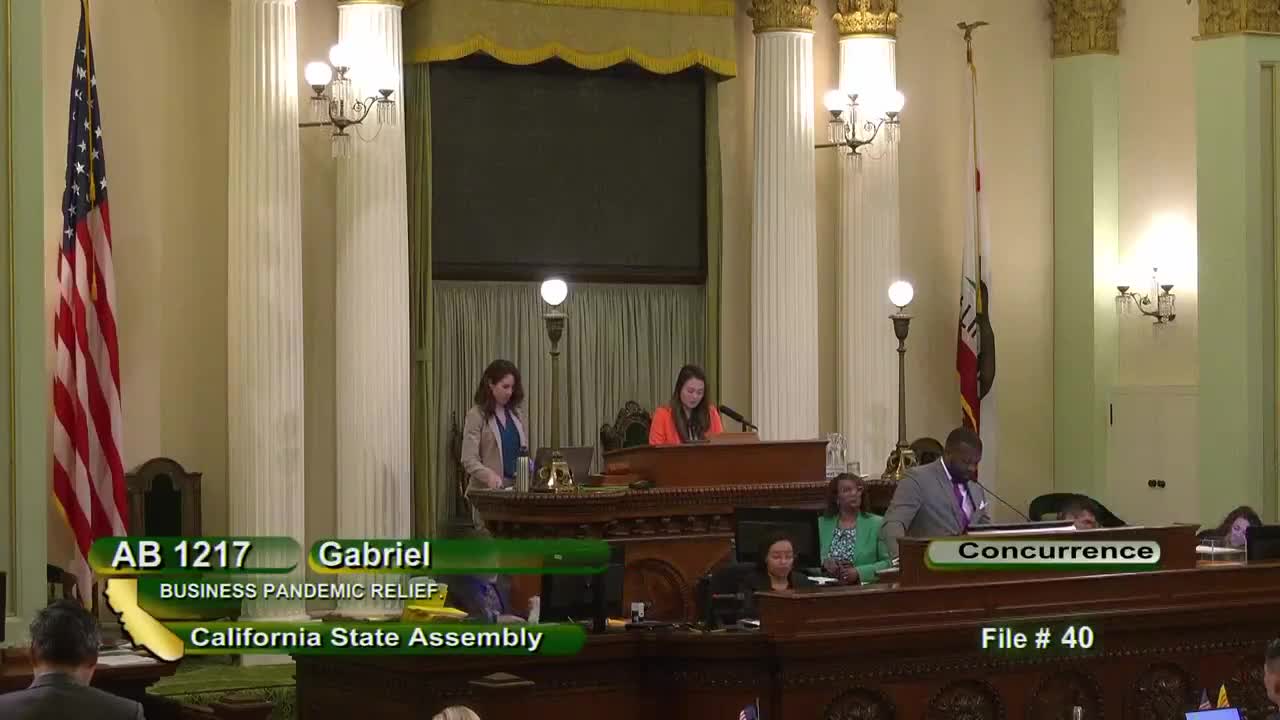
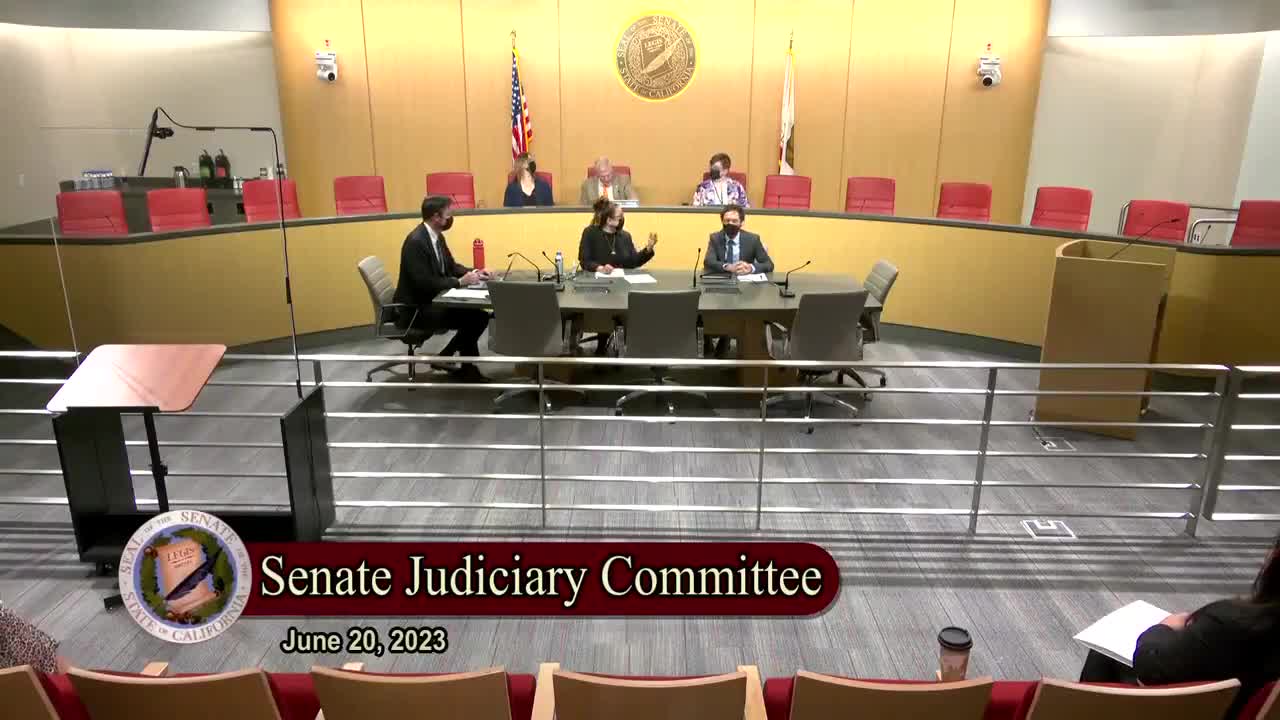
Bill Author
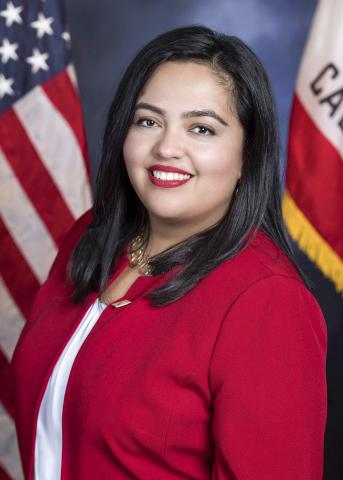
Bill Co-Author(s):
