AB 672: Civil Rights Department: community assistance.
- Session Year: 2023-2024
- House: Assembly
- Latest Version Date: 2024-09-22
Current Status:
Passed
(2024-09-22: Chaptered by Secretary of State - Chapter 343, Statutes of 2024.)
Introduced
In Committee
First Chamber
In Committee
Second Chamber
Enacted
Existing law, the California Fair Employment and Housing Act, establishes the Civil Rights Department within the Business, Consumer Services, and Housing Agency and sets forth its powers and duties relating to enforcement of civil rights laws.
Existing law authorizes the department to provide assistance to communities in resolving disputes, disagreements, or difficulties relating to discriminatory practices, and to make its services available only upon the request of an appropriate state or local public body, or upon the request of any person directly affected by a dispute, disagreement, or difficulty.
This bill would, instead, authorize the department to offer its services in cases of these disputes, disagreements, or difficulties, or upon the request of an appropriate state or local public body, or upon the request of any person directly affected, as specified above.
Existing law requires the department to conduct conciliation assistance in confidence and without publicity, and to hold confidential any information acquired in the regular performance of its duties. Existing law prohibits department employees from performing investigative or prosecuting functions of any department or agency in any litigation arising out of a dispute in which the employee acted on behalf of the department. Existing law also provides that any department employee who makes public in any manner whatever any such information, as specified, is guilty of a misdemeanor.
This bill would specify that the above-described confidentiality requirement and prohibition on department employees from performing investigative or prosecuting functions, and department employee prohibition on revealing confidential information, apply to the services the department makes available to communities and persons therein in resolving disputes, difficulties, or disagreements relating to discriminatory practices.
Existing law requires the Commission on Teacher Credentialing to, among other duties, establish standards for the issuance and renewal of credentials, certificates, and permits. Existing law requires, as a minimum requirement for a preliminary multiple subject, single subject, or education specialist teaching credential, the satisfactory completion of a program of professional preparation that includes a teaching performance assessment that meets specified requirements and has been approved by the commission, as provided.This bill would require the commission to convene a Teacher Credentialing Task Force, as provided, by no later than March 1, 2024. The bill would require the task force to examine, among other things, the available research on factors that enable and constrain recruitment, credentialing, and retention of a diverse teaching workforce and the experiences of student candidates in various credentialing pathways, as provided, and to report to the appropriate committees of the Legislature, on or before March 1, 2027, on any policy recommendations based on those findings, for increasing the number of, and diversity of, qualified teachers in California. The bill would require the commission to contract with a nationally recognized, neutral, nonpartisan, nonprofit education policy organization to facilitate the task forces work, including completing the required report.This bill would make these provisions inoperative on March 1, 2031, and would repeal it as of January 1, 2032.Existing law requires the Commission on Teacher Credentialing to, among other duties, establish standards for the issuance and renewal of credentials, certificates, and permits. Existing law requires, as a minimum requirement for a preliminary multiple subject, single subject, or education specialist teaching credential, the satisfactory completion of a program of professional preparation that includes a teaching performance assessment that meets specified requirements and has been approved by the commission, as provided.
This bill would require the commission to convene a Teacher Credentialing Task Force, as provided, by no later than March 1, 2024. The bill would require the task force to examine, among other things, the available research on factors that enable and constrain recruitment, credentialing, and retention of a diverse teaching workforce and the experiences of student candidates in various credentialing pathways, as provided, and to report to the appropriate committees of the Legislature, on or before March 1, 2027, on any policy recommendations based on those findings, for increasing the number of, and diversity of, qualified teachers in California. The bill would require the commission to contract with a nationally recognized, neutral, nonpartisan, nonprofit education policy organization to facilitate the task forces work, including completing the required report.
This bill would make these provisions inoperative on March 1, 2031, and would repeal it as of January 1, 2032.
Existing law requires the Commission on Teacher Credentialing to, among other duties, establish standards for the issuance and renewal of credentials, certificates, and permits. Existing law requires, as a minimum requirement for a preliminary multiple subject, single subject, or education specialist teaching credential, the satisfactory completion of a program of professional preparation that includes a teaching performance assessment that meets specified requirements and has been approved by the commission, as provided.
This bill would eliminate the requirement that a program of professional preparation include a teaching performance assessment. The bill would, commencing January 1, 2024, eliminate the teaching performance assessment as a requirement for candidates to receive a single subject, multiple subject, or education specialist credential. The bill would authorize candidates to complete an optional teaching performance assessment, as provided.This bill would require the commission to convene a Teacher Credentialing Task Force, as provided, by no later than March 1, 2024. The bill would require the task force to examine the current teacher credentialing process and the impact that high-stakes teacher credentialing assessments, and their associated costs, have on the current teacher shortage and the lack of diversity in the teaching workforce, and to provide any associated policy recommendations, examine, among other things, the available research on factors that enable and constrain recruitment, credentialing, and retention of a diverse teaching workforce and the experiences of student candidates in various credentialing pathways, as provided, and to report to the education policy appropriate committees of the Legislature, on or before December 1, 2024, March 1, 2027, on the barriers these assessments present and any policy recommendations based on those findings, for increasing the number of, and diversity of, qualified teachers in California. The bill would require the commission to contract with a nationally recognized, neutral, nonpartisan, nonprofit education policy organization to facilitate the task forces work, including completing the required report.
This bill would make these provisions inoperative on March 1, 2031, and would repeal it as of January 1, 2032.
Existing law requires the Commission on Teacher Credentialing to, among other duties, establish standards for the issuance and renewal of credentials, certificates, and permits. Existing law requires, as a minimum requirement for a preliminary multiple subject, single subject, or education specialist teaching credential, the satisfactory completion of a program of professional preparation that includes a teaching performance assessment that meets specified requirements and has been approved by the commission, as provided.
This bill would eliminate the requirement that a program of professional preparation include a teaching performance assessment. The bill would, commencing January 1, 2024, eliminate the teaching performance assessment as a requirement for candidates to receive a single subject, multiple subject, or education specialist credential. The bill would authorize candidates to complete an optional teaching performance assessment, as provided.
This bill would require the commission to convene a Teacher Credentialing Task Force, as provided, by no later than March 1, 2024. The bill would require the task force to examine the current teacher credentialing process and the impact that high-stakes teacher credentialing assessments, and their associated costs, have on the current teacher shortage and the lack of diversity in the teaching workforce, and to provide any associated policy recommendations, and to report to the education policy committees of the Legislature, on or before December 1, 2024, on the barriers these assessments present and any policy recommendations based on those findings, for increasing the number of, and diversity of, qualified teachers in California. The bill would require the commission to contract with a nationally recognized, neutral, nonpartisan, nonprofit education policy organization to facilitate the task forces work, including completing the required report.
(a)The department may also provide assistance to communities and persons therein in resolving disputes, disagreements, or difficulties relating to discriminatory practices based on race, religious creed, color, national origin, ancestry, physical disability, mental disability, veteran or military status, medical condition, genetic information, marital status, sex, gender, gender identity, gender expression, familial status, age, reproductive health decisionmaking, or sexual orientation that impair the rights of persons in those communities under the Constitution or laws of the United States or of this state. The services of the department may be made available in cases of these disputes, disagreements, or difficulties only when, in its judgment, peaceful relations among the persons of the community involved are threatened thereby.
(b)The department may offer its services in cases of these disputes, disagreements, or difficulties, or upon the request of an appropriate state or local public body, or upon the request of any person directly affected by the dispute, disagreement, or difficulty.
(c)The assistance of the department pursuant to this section shall be limited to endeavors at investigation, conference, conciliation, and persuasion.
(d)Subdivisions (b) and (c) of Section 12932 apply to the provision of services established in this section.
(a)The department may also provide assistance to communities and persons therein in resolving disputes, disagreements, or difficulties relating to discriminatory practices based on race, religious creed, color, national origin, ancestry, physical disability, mental disability, veteran or military status, medical condition, genetic information, marital status, sex, gender, gender identity, gender expression, familial status, age, reproductive health decisionmaking, or sexual orientation that impair the rights of persons in those communities under the Constitution or laws of the United States or of this state. The services of the department may be made available in cases of these disputes, disagreements, or difficulties only when, in its judgment, peaceful relations among the persons of the community involved are threatened thereby. The departments services are to be made available only upon the request of an appropriate state or local public body, or upon the request of any person directly affected by the dispute, disagreement, or difficulty.
(b)The department may offer its services in cases of these disputes, disagreements, or difficulties, or upon the request of an appropriate state or local public body, or upon the request of any person directly affected by the dispute, disagreement, or difficulty.
The
(c)The assistance of the department pursuant to this section shall be limited to endeavors at investigation, conference, conciliation, and persuasion.
(d)Subdivisions (b) and (c) of Section 12932 apply to the provision of services established in this section.
SECTION 1.Section 44299 is added to the Education Code, immediately following Section 44298, to read:44299.(a)(1)The commission shall convene a Teacher Credentialing Task Force by no later than March 1, 2024.(2)The task force shall be composed of 19 members, as follows:(A)Three teacher educator faculty representing both undergraduate and graduate education programs as follows:(i)One member from the California State University.(ii)One member from the University of California.(iii)One member from the Association of Independent California Colleges and Universities.(B)Three representatives from organizations representing university faculty, credentialed teachers, or school administrators.(C)One representative from a teacher education research organization.(D)Five practicing teachers from public elementary and secondary schools in California, the majority of which shall be within their first five years of teaching.(E)Three teacher preparation candidates.(F)Three practicing school administrators from public and elementary and secondary schools in California, as follows:(i)One administrator at an elementary school.(ii)One administrator at a middle school or junior high school.(iii)One administrator at a high school.(G)One human resources representative from a public elementary or secondary school in California.(b)The task force shall do all of the following:(1)(A)Review and examine available research on factors that enable and constrain recruitment, credentialing, and retention of a diverse teaching workforce.(B)Gather and review input or data, or both, from the department, the commission, local educational agencies, institutions of higher education, and other relevant stakeholders regarding the states teacher shortage.(C)Prioritize speaking with current student candidates, new teachers in the workforce, and representatives from local educational agencies that are responsible for recruiting and hiring new teachers.(2)(A)Examine the experiences of student candidates in various credentialing pathways from preparation, credentialing, and induction, through the first five years of teaching, including, but not necessarily limited to, the requirements to complete all of the following:(i)The California Subject Examinations for Teachers (CSET).(ii)The California Basic Education Skills Test (CBEST).(iii)The Reading Instruction Competence Assessment (RICA).(iv)The California Teaching Performance Assessments (CalTPAs).(v)The provisions and principles of the United States Constitution requirement.(vi)Instruction in health education.(vii)Instruction in foundational and advanced computer technology.(B)In examining the requirements in various credentialing pathways pursuant to subparagraph (A), focus on the extent to which the requirements support the recruitment, development, and retention of a diverse teaching workforce while maintaining teacher quality and effectiveness.(C)The research design pursuant to this paragraph shall examine candidates and preliminary credentialed teachers in each of these phases of development simultaneously.(3)Research outcomes during the first five years of individuals being credentialed by determining if those individuals have stayed in the profession, left the profession, or have expressed a desire to leave the profession.(4)Identify any barriers to entry for prospective teachers, and in particular, prospective teachers from diverse backgrounds during the current teacher recruitment process, the current teacher preparation process, and the current teacher enrollment process.(c)The commission shall contract with a nationally recognized, neutral, nonpartisan, nonprofit education policy organization to facilitate the task forces work, including completing the report required pursuant to subdivision (d).(d)(1)The commission shall submit a report to the appropriate committees of the Legislature, in compliance with Section 9795 of the Government Code, on or before March 1, 2027, covering any policy recommendations based on those findings pursuant to subdivision (b), for increasing the number of, and diversity of, qualified teachers in California.(2)Pursuant to Section 10231.5 of the Government Code, this section shall become inoperative on March 1, 2031, and, as of January 1, 2032, is repealed.(a)(1)The commission shall convene a Teacher Credentialing Task Force by no later than March 1, 2024.
(2)The task force shall be composed of 19 members, as follows:
(A)Three teacher educator faculty from the segments of the higher education system, representing both undergraduate and graduate education programs as follows:
(i)One member representing undergraduate education programs at from the California State University.
(ii)One member representing graduate education programs at the California State University.(iii)(ii)One member representing from the University of California.
(iii)One member from the Association of Independent California Colleges and Universities.
(B)Three representatives from organizations representing university faculty, credentialed teachers, or school administrators.
(C)One representative from a teacher education research organization.
(D)Five practicing teachers from public elementary and secondary schools in California, the majority of which shall be within their first five years of teaching.
(E)Three teacher preparation candidates.
(F)Three practicing school administrators from public and elementary and secondary schools in California, as follows:
(i)One administrator at an elementary school.
(ii)One administrator at a middle school or junior high school.
(iii)One administrator at a high school.
(G)One human resources representative from a public elementary or secondary school in California.
(b)The task force shall do all of the following:
(1)(A)Review and examine available research on factors that enable and constrain recruitment, credentialing, and retention of a diverse teaching workforce.
(B)Gather and review input or data, or both, from the department, the commission, local educational agencies, institutions of higher education, and other relevant stakeholders regarding the states teacher shortage.
(C)Prioritize speaking with current student candidates, new teachers in the workforce, and representatives from local educational agencies that are responsible for recruiting and hiring new teachers.
(2)(A)Examine the experiences of student candidates in various credentialing pathways from preparation, credentialing, and induction, through the first five years of teaching, including, but not necessarily limited to, the requirements to complete all of the following:
(i)The California Subject Examinations for Teachers (CSET).
(ii)The California Basic Education Skills Test (CBEST).
(iii)The Reading Instruction Competence Assessment (RICA).
(iv)The California Teaching Performance Assessments (CalTPAs).
(v)The provisions and principles of the United States Constitution requirement.
(vi)Instruction in health education.
(vii)Instruction in foundational and advanced computer technology.
(B)In examining the requirements in various credentialing pathways pursuant to subparagraph (A), focus on the extent to which the requirements support the recruitment, development, and retention of a diverse teaching workforce while maintaining teacher quality and effectiveness.
(C)The research design pursuant to this paragraph shall examine candidates and preliminary credentialed teachers in each of these phases of development simultaneously.
(3)Research outcomes during the first five years of individuals being credentialed by determining if those individuals have stayed in the profession, left the profession, or have expressed a desire to leave the profession.
(4)Identify any barriers to entry for prospective teachers, and in particular, prospective teachers from diverse backgrounds during the current teacher recruitment process, the current teacher preparation process, and the current teacher enrollment process.
(c)The commission shall contract with a nationally recognized, neutral, nonpartisan, nonprofit education policy organization to facilitate the task forces work, including completing the report required pursuant to subdivision (d).
(d)(1)The commission shall submit a report to the appropriate committees of the Legislature, in compliance with Section 9795 of the Government Code, on or before March 1, 2027, covering any policy recommendations based on those findings pursuant to subdivision (b), for increasing the number of, and diversity of, qualified teachers in California.
(2)Pursuant to Section 10231.5 of the Government Code, this section shall become inoperative on March 1, 2031, and, as of January 1, 2032, is repealed.
(a)(1)The commission shall convene a Teacher Credentialing Task Force by no later than March 1, 2024.
(2)The task force shall be composed of 19 members, as follows:
(A)Three teacher educator faculty from the segments of the higher education system, as follows:
(i)One member representing undergraduate education programs at the California State University.
(ii)One member representing graduate education programs at the California State University.
(iii)One member representing the University of California.
(B)Three representatives from organizations representing university faculty, credentialed teachers, or school administrators.
(C)One representative from a teacher education research organization.
(D)Five practicing teachers from public elementary and secondary schools in California, the majority of which shall be within their first five years of teaching.
(E)Three teacher preparation candidates.
(F)Three practicing school administrators from public and elementary and secondary schools in California, as follows:
(i)One administrator at an elementary school.
(ii)One administrator at a middle school or junior high school.
(iii)One administrator at a high school.
(G)One human resources representative from a public elementary or secondary school in California.
(b)The task force shall do all of the following:
(1)(A)Review and examine available research on factors that enable and constrain recruitment, credentialing, and retention of a diverse teaching workforce.
(B)Gather and review input or data, or both, from the department, the commission, local educational agencies, institutions of higher education, and other relevant stakeholders regarding the states teacher shortage.
(C)Prioritize speaking with current student candidates, new teachers in the workforce, and representatives from local educational agencies that are responsible for recruiting and hiring new teachers.
(2)(A)Examine the experiences of student candidates in various credentialing pathways from preparation, credentialing, and induction, through the first five years of teaching, including, but not necessarily limited to, the requirements to complete all of the following:
(i)The California Subject Examinations for Teachers (CSET).
(ii)The California Basic Education Skills Test (CBEST).
(iii)The Reading Instruction Competence Assessment (RICA).
(iv)The California Teaching Performance Assessments (CalTPAs).
(v)The provisions and principles of the United States Constitution requirement.
(vi)Instruction in health education.
(vii)Instruction in foundational and advanced computer technology.
(B)In examining the requirements in various credentialing pathways pursuant to subparagraph (A), focus on the extent to which the requirements support the recruitment, development, and retention of a diverse teaching workforce while maintaining teacher quality and effectiveness.
(C)The research design pursuant to this paragraph shall examine candidates and preliminary credentialed teachers in each of these phases of development simultaneously.
(3)Research outcomes during the first five years of individuals being credentialed by determining if those individuals have stayed in the profession, left the profession, or have expressed a desire to leave the profession.
(4)Identify any barriers to entry for prospective teachers, and in particular, prospective teachers from diverse backgrounds during the current teacher recruitment process, the current teacher preparation process, and the current teacher enrollment process.
(c)The commission shall contract with a nationally recognized, neutral, nonpartisan, nonprofit education policy organization to facilitate the task forces work, including completing the report required pursuant to subdivision (d).
(d)(1)The commission shall submit a report to the appropriate committees of the Legislature, in compliance with Section 9795 of the Government Code, on or before March 1, 2027, covering any policy recommendations based on those findings pursuant to subdivision (b), for increasing the number of, and diversity of, qualified teachers in California.
(2)Pursuant to Section 10231.5 of the Government Code, this section shall become inoperative on March 1, 2031, and, as of January 1, 2032, is repealed.
SECTION 1.Section 44259 of the Education Code is amended to read:44259.(a)Except as provided in clauses (i) and (iii) of subparagraph (A) of paragraph (3) of subdivision (b), a program of professional preparation for multiple or single subject teaching credentials shall not include more than two years of full-time study of professional preparation.(b)The minimum requirements for the preliminary multiple subject, single subject, or education specialist teaching credential are all of the following:(1)A baccalaureate degree or higher degree from a regionally accredited institution of higher education. Except as provided in subdivision (c) of Section 44227, for single subject teaching credentials, the baccalaureate degree shall not be in professional education. The commission shall encourage regionally accredited institutions of higher education to offer undergraduate minors in education and special education to students who intend to become single subject credentialed teachers.(2)Demonstration of basic skills proficiency pursuant to Section 44252.5.(3)(A)Satisfactory completion of a program of professional preparation that has been accredited by the Committee on Accreditation on the basis of standards of program quality and effectiveness that have been adopted by the commission. The commission shall, through the accreditation process, ensure that a candidate recommended for a credential or certificate has demonstrated satisfactory ability to assist pupils to meet or exceed academic content and performance standards for pupils adopted by the state board. Programs that meet this requirement for professional preparation shall include any of the following:(i)Integrated programs of subject matter preparation and professional preparation pursuant to subdivision (a) of Section 44259.1.(ii)Postbaccalaureate programs of professional preparation, pursuant to subdivision (d) of Section 44259.1.(iii)Internship programs of professional preparation, pursuant to Section 44321, Article 7.5 (commencing with Section 44325), Article 11 (commencing with Section 44380), and Article 3 (commencing with Section 44450) of Chapter 3.(iv)Degree programs offered pursuant to Article 5 (commencing with Section 78060) of Chapter 1 of Part 48 of Division 7 of Title 3.(B)A program of professional preparation pursuant to subparagraph (A) shall provide experience that addresses all of the following:(i)Health education, including study of nutrition, cardiopulmonary resuscitation, and the physiological and sociological effects of the abuse of alcohol, narcotics, and drugs and the use of tobacco. Training in cardiopulmonary resuscitation shall also meet the standards established by the American Heart Association or the American Red Cross.(ii)Field experience in methods of delivering appropriate educational services to pupils with exceptional needs in regular education programs.(iii)Advanced computer-based technology, including the uses of technology in educational settings.(4)Study of effective means of teaching literacy, including, but not limited to, the study of reading as described in subparagraphs (A) and (B), and evidence-based means of teaching foundational reading skills in print concepts, phonological awareness, phonics and word recognition, and fluency to all pupils, including tiered supports for pupils with reading difficulties, English learners, and pupils with exceptional needs. The study of effective means of teaching literacy shall be in accordance with the commissions standards of program quality and effectiveness and current teaching performance expectations, shall be aligned to the current English Language Arts/English Language Development (ELA/ELD) Framework adopted by the state board, and shall incorporate the program guidelines for dyslexia developed pursuant to Section 56335. The study of reading shall meet the following requirements:(A)Commencing January 1, 1997, satisfactory completion of comprehensive reading instruction that is research based and includes all of the following:(i)The study of organized, systematic, explicit skills including phonemic awareness, direct, systematic, explicit phonics, and decoding skills.(ii)A strong literature, language, and comprehension component with a balance of oral and written language.(iii)Ongoing diagnostic techniques that inform teaching and assessment.(iv)Early intervention techniques.(v)Guided practice in a clinical setting.(B)For purposes of this section, direct, systematic, explicit phonics means phonemic awareness, spelling patterns, the direct instruction of sound/symbol codes and practice in connected text, and the relationship of direct, systematic, explicit phonics to the components set forth in clauses (i) to (v), inclusive, of subparagraph (A).(C)A program for the multiple subject teaching credential and the education specialist teaching credential also shall include the study of integrated methods of teaching language arts.(5)(A)Verification of subject matter competence, demonstrated through one of the following methods:(i)Completion of a subject matter program approved by the commission on the basis of standards of program quality and effectiveness pursuant to Article 6 (commencing with Section 44310).(ii) Passage of a subject matter examination pursuant to Article 5 (commencing with Section 44280).(iii)Successful completion of coursework at one or more regionally accredited institutions of higher education that addresses each of the domains of the subject matter requirements adopted by the commission in the content area of the credential pursuant to Section 44282, as verified by a commission-approved program of professional preparation. Coursework completed at a community or junior college that is regionally accredited by an accrediting agency listed in subparagraph (A) of paragraph (1) of subdivision (g) of Section 44203 or by the Accrediting Commission for Community and Junior Colleges of the Western Association of Schools and Colleges may count for purposes of this clause.(iv)Successful completion of a baccalaureate or higher degree from a regionally accredited institution of higher education with the following, as applicable:(I)For single subject credentials, a major in one of the subject areas in which the commission credentials candidates.(II)For multiple subject credentials, a liberal studies major or other degree that includes coursework in the content areas pursuant to subdivision (b) of Section 44282.(III)For education specialist credentials, either a major in one of the subject areas in which the commission credentials candidates or a liberal studies or other major that includes coursework in the content areas pursuant to subdivision (b) of Section 44282.(v)Demonstration that the candidate, through a combination of the methods described in clauses (i), (ii), and (iii) in whole or in part, has met or exceeded each of the domains of the subject matter requirements adopted by the commission in the content area of the credential pursuant to Section 44282 for multiple and single subject credentials, or pursuant to Section 44265 for education specialist credentials.(B)The commission shall ensure that subject matter standards and examinations are aligned with the academic content and performance standards for pupils adopted by the state board.(6)Demonstration of a knowledge of the principles and provisions of the Constitution of the United States pursuant to Section 44335.(7)Demonstration, in accordance with the commissions standards of program quality and effectiveness, of basic competency in the use of computers in the classroom as determined by one of the following:(A)Successful completion of a commission-approved program or course.(B)Successful passage of an assessment that is developed, approved, and administered by the commission.(c)The minimum requirements for the clear multiple or single subject teaching credential shall include all of the following requirements:(1)Possession of a valid preliminary teaching credential, as prescribed in subdivision (b), possession of a valid equivalent credential or certificate, or completion of equivalent requirements as determined by the commission.(2)Except as provided in paragraph (3), completion of a program of beginning teacher induction, including either of the following:(A)A program of beginning teacher induction that is provided by one or more local educational agencies and has been approved by the commission on the basis of initial review and periodic evaluations of the program in relation to appropriate standards of credential program quality and effectiveness that have been adopted by the commission pursuant to this subdivision. The program standards shall encourage innovation and experimentation in the continuous preparation and induction of beginning teachers.(B)A program of beginning teacher induction that is sponsored by a regionally accredited institution of higher education in cooperation with one or more local school districts, that addresses the individual professional needs of beginning teachers and meets the commissions standards of induction. The commission shall ensure that preparation and induction programs that qualify candidates for professional credentials extend and refine each beginning teachers professional skills in relation to the California Standards for the Teaching Profession and the academic content and performance standards for pupils adopted by the state board.(3)(A)If a candidate satisfies the requirements of subdivision (b) through completion of an accredited internship program of professional preparation, and if that internship program fulfills induction standards and is approved as set forth in this subdivision, the commission shall determine that the candidate has fulfilled the requirements of paragraph (2).(B)If an approved induction program is verified as unavailable to a beginning teacher, the commission shall accept completion of an approved clear credential program after completion of a baccalaureate degree at a regionally accredited institution of higher education as fulfilling the requirements of paragraph (2). The commission shall adopt regulations to implement this subparagraph.(d)The commission shall develop and implement standards of program quality and effectiveness that provide for the areas of application listed in clauses (i) to (iii), inclusive, of subparagraph (B) of paragraph (3) of subdivision (b), starting in professional preparation and continuing through induction.(e)A credential that was issued before January 1, 1993, shall remain in force as long as it is valid under the laws and regulations that were in effect on the date it was issued. The commission shall not, by regulation, invalidate an otherwise valid credential, unless it issues to the holder of the credential, in substitution, a new credential authorized by another provision in this chapter that is no more restrictive than the credential for which it was substituted with respect to the kind of service authorized and the grades, classes, or types of schools in which it authorizes service.(f)A credential program that is approved by the commission shall not deny an individual access to that program solely on the grounds that the individual obtained a teaching credential through completion of an internship program when that internship program has been accredited by the commission.(g)Notwithstanding this section, persons who were performing teaching services as of January 1, 1999, pursuant to the language of this section that was in effect before that date, may continue to perform those services without complying with any requirements that may be added by the amendments adding this subdivision.(h)Paragraph (4) of subdivision (b) does not apply to any person who, as of January 1, 1997, holds a multiple or single subject teaching credential, or to any person enrolled in a program of professional preparation for a multiple or single subject teaching credential as of January 1, 1997, who subsequently completes that program. It is the intent of the Legislature that the requirements of paragraph (4) of subdivision (b) apply only to persons who enter a program of professional preparation on or after January 1, 1997.SEC. 2.Section 44299 is added to the Education Code, immediately following Section 44298, to read:44299.(a)(1)The commission shall convene a Teacher Credentialing Task Force by no later than March 1, 2024.(2)The task force shall be composed of all of the following:(A)Teacher educator faculty from each segment of the higher education system.(B)Students currently enrolled in teacher credentialing programs.(C)Organizations representing university faculty, credentialed teachers, and school administrators.(3)The task force shall examine the current teacher credentialing process and the impact that high-stakes teacher credentialing assessments, including, but not necessarily limited to, the California Subject Examinations for Teachers (CSET), the California Basic Education Skills Test (CBEST), the Reading Instruction Competence Assessment (RICA), and the California Teaching Performance Assessments (CalTPAs), and their associated costs, have on the current teacher shortage and the lack of diversity in the teaching workforce, and shall provide any associated policy recommendations.(4)The commission shall contract with a nationally recognized, neutral, nonpartisan, nonprofit education policy organization to facilitate the task forces work, including completing the report required pursuant to subdivision (b).(b)(1)The commission shall report to the education policy committees of the Legislature, in compliance with Section 9795 of the Government Code, on or before December 1, 2024, on the barriers these assessments present and any policy recommendations based on those findings pursuant to paragraph (3) of subdivision (a), for increasing the number of, and diversity of, qualified teachers in California.(2)Pursuant to Section 10231.5 of the Government Code, this section is repealed on January 1, 2029.SEC. 3.Section 44320.2 of the Education Code is amended to read:44320.2.(a)The Legislature finds and declares both of the following:(1)The competence and performance of teachers are among the most important factors in influencing the quality and effectiveness of education in elementary and secondary schools.(2)High-stakes assessments not only fail to raise teacher quality, but more problematically, serve as barriers to expanding the number and diversity of teacher candidates at a time when California is facing a dire teacher shortage and struggles to diversify its teaching profession.(b)Commencing January 1, 2024, high-stakes teacher performance assessments shall no longer be a requirement for candidates to receive a single subject, multiple subject, or educational specialist credential. A teaching performance assessment that is included as one of the multiple options for candidates shall be aligned with the California Standards for the Teaching Profession and shall be congruent with state content and performance standards for pupils adopted by the state board. In developing an optional teaching performance assessment, institutions or agencies may do the following:(1)Voluntarily develop an assessment for approval by the commission. Approval of any locally developed performance assessment shall be based on assessment quality standards adopted by the commission, which shall encourage the use of alternative assessment methods including portfolios of teaching artifacts and practices.(2)Participate in an assessment training program for assessors and implement the commission developed assessment.(c)The commission shall implement the performance assessment option in a manner that does not increase the number of assessments required for teacher credential candidates prepared in this state. A candidate that chooses to complete a teaching performance assessment shall be assessed during the normal term or duration of the preparation program of the candidate.(d)Subject to the availability of funds in the annual Budget Act, the commission shall perform all of the following duties with respect to the performance assessment:(1)Assemble and convene an expert panel to advise the commission about performance standards and developmental scales for teaching credential candidates and the design, content, administration, and scoring of the assessment. At least one-third of the panel members shall be classroom teachers in California public schools.(2)Design, develop, and implement assessment standards and an institutional assessor training program for the sponsors of professional preparation programs to use if they choose to use the commission developed assessment.(3)Establish a review panel to examine each assessment developed by an institution or agency in relation to the standards set by the commission and advise the commission regarding approval of each assessment system.(4)Initially and periodically analyze the validity of assessment content and the reliability of assessment scores that are established pursuant to this section.(5)Establish and implement appropriate standards for satisfactory performance in assessments that are established pursuant to this section.(6)Analyze possible sources of bias in the performance assessment and act promptly to eliminate any bias that is discovered.(7)Collect and analyze background information provided by candidates who participate in the performance assessment, and report and interpret the individual and aggregated results of the assessment.(8)Examine and revise, as necessary, the institutional accreditation system pursuant to Article 10 (commencing with Section 44370), for the purpose of providing a strong assurance to teaching candidates that ongoing opportunities are available in each credential preparation program that is offered pursuant to Section 44320, Article 6 (commencing with Section 44310), Article 7.5 (commencing with Section 44325), or Article 3 (commencing with Section 44450) of Chapter 3 for candidates to acquire the knowledge, skills, and abilities measured by the assessment system.(9)Ensure that the aggregated results of the assessment for groups of candidates who have completed a credential program are used as one source of information about the quality and effectiveness of that program.(e)The commission shall ensure that each performance assessment pursuant to subdivision (b) is state approved and aligned with the California Standards for the Teaching Profession and is consistently applied to candidates in similar preparation programs who choose to complete a teaching performance assessment. To the maximum feasible extent, each performance assessment shall be ongoing and blended into the preparation program, and shall produce the following benefits for credential candidates, sponsors of preparation programs, and local educational agencies that employ program graduates:(1)The performance assessment shall be designed to provide formative assessment information during the preparation program for use by the candidate, instructors, and supervisors for the purpose of improving the teaching knowledge, skill, and ability of the candidate.(2)The performance assessment results shall be reported so that they may serve as one basis for a recommendation by the program sponsor that the commission award a teaching credential to a candidate who has successfully met the performance assessment standards.(3)The formative assessment information pursuant to paragraph (1) and the performance assessment results pursuant to paragraph (2) shall be reported so that they may serve as one basis for the individual induction plan of the new teacher pursuant to Section 44279.2.(f)It is the intent of the Legislature that assessments in accordance with paragraphs (1) and (2) of subdivision (b), including the administrative costs of the commission, be fully funded.(a)Except as provided in clauses (i) and (iii) of subparagraph (A) of paragraph (3) of subdivision (b), a program of professional preparation for multiple or single subject teaching credentials shall not include more than two years of full-time study of professional preparation.
(b)The minimum requirements for the preliminary multiple subject, single subject, or education specialist teaching credential are all of the following:
(1)A baccalaureate degree or higher degree from a regionally accredited institution of higher education. Except as provided in subdivision (c) of Section 44227, for single subject teaching credentials, the baccalaureate degree shall not be in professional education. The commission shall encourage regionally accredited institutions of higher education to offer undergraduate minors in education and special education to students who intend to become single subject credentialed teachers.
(2)Demonstration of basic skills proficiency pursuant to Section 44252.5.
(3)(A)Satisfactory completion of a program of professional preparation that has been accredited by the Committee on Accreditation on the basis of standards of program quality and effectiveness that have been adopted by the commission. In accordance with the commissions assessment and performance standards, a program shall include a teaching performance assessment as set forth in Section 44320.2 that is aligned with the California Standards for the Teaching Profession. The commission shall The commission shall, through the accreditation process, ensure that a candidate recommended for a credential or certificate has demonstrated satisfactory ability to assist pupils to meet or exceed academic content and performance standards for pupils adopted by the state board. Programs that meet this requirement for professional preparation shall include any of the following:
(i)Integrated programs of subject matter preparation and professional preparation pursuant to subdivision (a) of Section 44259.1.
(ii)Postbaccalaureate programs of professional preparation, pursuant to subdivision (d) of Section 44259.1.
(iii)Internship programs of professional preparation, pursuant to Section 44321, Article 7.5 (commencing with Section 44325), Article 11 (commencing with Section 44380), and Article 3 (commencing with Section 44450) of Chapter 3.
(iv)Degree programs offered pursuant to Article 5 (commencing with Section 78060) of Chapter 1 of Part 48 of Division 7 of Title 3.
(B)A program of professional preparation pursuant to subparagraph (A) shall provide experience that addresses all of the following:
(i)Health education, including study of nutrition, cardiopulmonary resuscitation, and the physiological and sociological effects of the abuse of alcohol, narcotics, and drugs and the use of tobacco. Training in cardiopulmonary resuscitation shall also meet the standards established by the American Heart Association or the American Red Cross.
(ii)Field experience in methods of delivering appropriate educational services to pupils with exceptional needs in regular education programs.
(iii)Advanced computer-based technology, including the uses of technology in educational settings.
(4)Study of effective means of teaching literacy, including, but not limited to, the study of reading as described in subparagraphs (A) and (B), and evidence-based means of teaching foundational reading skills in print concepts, phonological awareness, phonics and word recognition, and fluency to all pupils, including tiered supports for pupils with reading difficulties, English learners, and pupils with exceptional needs. The study of effective means of teaching literacy shall be in accordance with the commissions standards of program quality and effectiveness and current teaching performance expectations, shall be aligned to the current English Language Arts/English Language Development (ELA/ELD) Framework adopted by the state board, and shall incorporate the program guidelines for dyslexia developed pursuant to Section 56335. The study of reading shall meet the following requirements:
(A)Commencing January 1, 1997, satisfactory completion of comprehensive reading instruction that is research based and includes all of the following:
(i)The study of organized, systematic, explicit skills including phonemic awareness, direct, systematic, explicit phonics, and decoding skills.
(ii)A strong literature, language, and comprehension component with a balance of oral and written language.
(iii)Ongoing diagnostic techniques that inform teaching and assessment.
(iv)Early intervention techniques.
(v)Guided practice in a clinical setting.
(B)For purposes of this section, direct, systematic, explicit phonics means phonemic awareness, spelling patterns, the direct instruction of sound/symbol codes and practice in connected text, and the relationship of direct, systematic, explicit phonics to the components set forth in clauses (i) to (v), inclusive, of subparagraph (A).
(C)A program for the multiple subject teaching credential and the education specialist teaching credential also shall include the study of integrated methods of teaching language arts.
(5)(A)Verification of subject matter competence, demonstrated through one of the following methods:
(i)Completion of a subject matter program approved by the commission on the basis of standards of program quality and effectiveness pursuant to Article 6 (commencing with Section 44310).
(ii) Passage of a subject matter examination pursuant to Article 5 (commencing with Section 44280).
(iii)Successful completion of coursework at one or more regionally accredited institutions of higher education that addresses each of the domains of the subject matter requirements adopted by the commission in the content area of the credential pursuant to Section 44282, as verified by a commission-approved program of professional preparation. Coursework completed at a community or junior college that is regionally accredited by an accrediting agency listed in subparagraph (A) of paragraph (1) of subdivision (g) of Section 44203 or by the Accrediting Commission for Community and Junior Colleges of the Western Association of Schools and Colleges may count for purposes of this clause.
(iv)Successful completion of a baccalaureate or higher degree from a regionally accredited institution of higher education with the following, as applicable:
(I)For single subject credentials, a major in one of the subject areas in which the commission credentials candidates.
(II)For multiple subject credentials, a liberal studies major or other degree that includes coursework in the content areas pursuant to subdivision (b) of Section 44282.
(III)For education specialist credentials, either a major in one of the subject areas in which the commission credentials candidates or a liberal studies or other major that includes coursework in the content areas pursuant to subdivision (b) of Section 44282.
(v)Demonstration that the candidate, through a combination of the methods described in clauses (i), (ii), and (iii) in whole or in part, has met or exceeded each of the domains of the subject matter requirements adopted by the commission in the content area of the credential pursuant to Section 44282 for multiple and single subject credentials, or pursuant to Section 44265 for education specialist credentials.
(B)The commission shall ensure that subject matter standards and examinations are aligned with the academic content and performance standards for pupils adopted by the state board.
(6)Demonstration of a knowledge of the principles and provisions of the Constitution of the United States pursuant to Section 44335.
(7)Demonstration, in accordance with the commissions standards of program quality and effectiveness, of basic competency in the use of computers in the classroom as determined by one of the following:
(A)Successful completion of a commission-approved program or course.
(B)Successful passage of an assessment that is developed, approved, and administered by the commission.
(c)The minimum requirements for the clear multiple or single subject teaching credential shall include all of the following requirements:
(1)Possession of a valid preliminary teaching credential, as prescribed in subdivision (b), possession of a valid equivalent credential or certificate, or completion of equivalent requirements as determined by the commission.
(2)Except as provided in paragraph (3), completion of a program of beginning teacher induction, including either of the following:
(A)A program of beginning teacher induction that is provided by one or more local educational agencies and has been approved by the commission on the basis of initial review and periodic evaluations of the program in relation to appropriate standards of credential program quality and effectiveness that have been adopted by the commission pursuant to this subdivision. The program standards shall encourage innovation and experimentation in the continuous preparation and induction of beginning teachers.
(B)A program of beginning teacher induction that is sponsored by a regionally accredited institution of higher education in cooperation with one or more local school districts, that addresses the individual professional needs of beginning teachers and meets the commissions standards of induction. The commission shall ensure that preparation and induction programs that qualify candidates for professional credentials extend and refine each beginning teachers professional skills in relation to the California Standards for the Teaching Profession and the academic content and performance standards for pupils adopted by the state board.
(3)(A)If a candidate satisfies the requirements of subdivision (b) through completion of an accredited internship program of professional preparation, and if that internship program fulfills induction standards and is approved as set forth in this subdivision, the commission shall determine that the candidate has fulfilled the requirements of paragraph (2).
(B)If an approved induction program is verified as unavailable to a beginning teacher, the commission shall accept completion of an approved clear credential program after completion of a baccalaureate degree at a regionally accredited institution of higher education as fulfilling the requirements of paragraph (2). The commission shall adopt regulations to implement this subparagraph.
(d)The commission shall develop and implement standards of program quality and effectiveness that provide for the areas of application listed in clauses (i) to (iii), inclusive, of subparagraph (B) of paragraph (3) of subdivision (b), starting in professional preparation and continuing through induction.
(e)A credential that was issued before January 1, 1993, shall remain in force as long as it is valid under the laws and regulations that were in effect on the date it was issued. The commission shall not, by regulation, invalidate an otherwise valid credential, unless it issues to the holder of the credential, in substitution, a new credential authorized by another provision in this chapter that is no more restrictive than the credential for which it was substituted with respect to the kind of service authorized and the grades, classes, or types of schools in which it authorizes service.
(f)A credential program that is approved by the commission shall not deny an individual access to that program solely on the grounds that the individual obtained a teaching credential through completion of an internship program when that internship program has been accredited by the commission.
(g)Notwithstanding this section, persons who were performing teaching services as of January 1, 1999, pursuant to the language of this section that was in effect before that date, may continue to perform those services without complying with any requirements that may be added by the amendments adding this subdivision.
(h)Paragraph (4) of subdivision (b) does not apply to any person who, as of January 1, 1997, holds a multiple or single subject teaching credential, or to any person enrolled in a program of professional preparation for a multiple or single subject teaching credential as of January 1, 1997, who subsequently completes that program. It is the intent of the Legislature that the requirements of paragraph (4) of subdivision (b) apply only to persons who enter a program of professional preparation on or after January 1, 1997.
SEC. 2.Section 44299 is added to the Education Code, immediately following Section 44298, to read:44299.(a)(1)The commission shall convene a Teacher Credentialing Task Force by no later than March 1, 2024.
(2)The task force shall be composed of all of the following:
(A)Teacher educator faculty from each segment of the higher education system.
(B)Students currently enrolled in teacher credentialing programs.
(C)Organizations representing university faculty, credentialed teachers, and school administrators.
(3)The task force shall examine the current teacher credentialing process and the impact that high-stakes teacher credentialing assessments, including, but not necessarily limited to, the California Subject Examinations for Teachers (CSET), the California Basic Education Skills Test (CBEST), the Reading Instruction Competence Assessment (RICA), and the California Teaching Performance Assessments (CalTPAs), and their associated costs, have on the current teacher shortage and the lack of diversity in the teaching workforce, and shall provide any associated policy recommendations.
(4)The commission shall contract with a nationally recognized, neutral, nonpartisan, nonprofit education policy organization to facilitate the task forces work, including completing the report required pursuant to subdivision (b).
(b)(1)The commission shall report to the education policy committees of the Legislature, in compliance with Section 9795 of the Government Code, on or before December 1, 2024, on the barriers these assessments present and any policy recommendations based on those findings pursuant to paragraph (3) of subdivision (a), for increasing the number of, and diversity of, qualified teachers in California.
(2)Pursuant to Section 10231.5 of the Government Code, this section is repealed on January 1, 2029.
SEC. 3.Section 44320.2 of the Education Code is amended to read:44320.2.(a)The Legislature finds and declares that the both of the following:
(1)The competence and performance of teachers are among the most important factors in influencing the quality and effectiveness of education in elementary and secondary schools.
(2)High-stakes assessments not only fail to raise teacher quality, but more problematically, serve as barriers to expanding the number and diversity of teacher candidates at a time when California is facing a dire teacher shortage and struggles to diversify its teaching profession.
(b)Commencing July 1, 2008, for a program of professional preparation to satisfy the requirements of paragraph (3) of subdivision (b) of Section 44259, the program shall include a January 1, 2024, high-stakes teacher performance assessments shall no longer be a requirement for candidates to receive a single subject, multiple subject, or educational specialist credential. A teaching performance assessment that is included as one of the multiple options for candidates shall be aligned with the California Standards for the Teaching Profession and that is shall be congruent with state content and performance standards for pupils adopted by the state board. In implementing this requirement, developing an optional teaching performance assessment, institutions or agencies may do the following:
(1)Voluntarily develop an assessment for approval by the commission. Approval of any locally developed performance assessment shall be based on assessment quality standards adopted by the commission, which shall encourage the use of alternative assessment methods including portfolios of teaching artifacts and practices.
(2)Participate in an assessment training program for assessors and implement the commission developed assessment.
(c)The commission shall implement the performance assessment option in a manner that does not increase the number of assessments required for teacher credential candidates prepared in this state. A candidate that chooses to complete a teaching performance assessment shall be assessed during the normal term or duration of the preparation program of the candidate.
(d)Subject to the availability of funds in the annual Budget Act, the commission shall perform all of the following duties with respect to the performance assessment:
(1)Assemble and convene an expert panel to advise the commission about performance standards and developmental scales for teaching credential candidates and the design, content, administration, and scoring of the assessment. At least one-third of the panel members shall be classroom teachers in California public schools.
(2)Design, develop, and implement assessment standards and an institutional assessor training program for the sponsors of professional preparation programs to use if they choose to use the commission developed assessment.
(3)Establish a review panel to examine each assessment developed by an institution or agency in relation to the standards set by the commission and advise the commission regarding approval of each assessment system.
(4)Initially and periodically analyze the validity of assessment content and the reliability of assessment scores that are established pursuant to this section.
(5)Establish and implement appropriate standards for satisfactory performance in assessments that are established pursuant to this section.
(6)Analyze possible sources of bias in the performance assessment and act promptly to eliminate any bias that is discovered.
(7)Collect and analyze background information provided by candidates who participate in the performance assessment, and report and interpret the individual and aggregated results of the assessment.
(8)Examine and revise, as necessary, the institutional accreditation system pursuant to Article 10 (commencing with Section 44370), for the purpose of providing a strong assurance to teaching candidates that ongoing opportunities are available in each credential preparation program that is offered pursuant to Section 44320, Article 6 (commencing with Section 44310), Article 7.5 (commencing with Section 44325), or Article 3 (commencing with Section 44450) of Chapter 3 for candidates to acquire the knowledge, skills, and abilities measured by the assessment system.
(9)Ensure that the aggregated results of the assessment for groups of candidates who have completed a credential program are used as one source of information about the quality and effectiveness of that program.
(e)The commission shall ensure that each performance assessment pursuant to subdivision (b) is state approved and aligned with the California Standards for the Teaching Profession and is consistently applied to candidates in similar preparation programs. programs who choose to complete a teaching performance assessment. To the maximum feasible extent, each performance assessment shall be ongoing and blended into the preparation program, and shall produce the following benefits for credential candidates, sponsors of preparation programs, and local educational agencies that employ program graduates:
(1)The performance assessment shall be designed to provide formative assessment information during the preparation program for use by the candidate, instructors, and supervisors for the purpose of improving the teaching knowledge, skill, and ability of the candidate.
(2)The performance assessment results shall be reported so that they may serve as one basis for a recommendation by the program sponsor that the commission award a teaching credential to a candidate who has successfully met the performance assessment standards.
(3)The formative assessment information pursuant to paragraph (1) and the performance assessment results pursuant to paragraph (2) shall be reported so that they may serve as one basis for the individual induction plan of the new teacher pursuant to Section 44279.2.
(f)It is the intent of the Legislature that assessments in accordance with paragraphs (1) and (2) of subdivision (b), including the administrative costs of the commission, be fully funded.
|
Date
|
Status
|
|---|---|
| Sep 22, 2024 | Chaptered by Secretary of State - Chapter 343, Statutes of 2024. |
| Sep 22, 2024 | Approved by the Governor. |
| Aug 28, 2024 | Enrolled and presented to the Governor at 4 p.m. |
| Aug 22, 2024 | Senate amendments concurred in. To Engrossing and Enrolling. (Ayes 61. Noes 0. Page 6421.). |
| Aug 19, 2024 | From committee: That the Senate amendments be concurred in. (Ayes 9. Noes 0.) (August 19). |
| Aug 15, 2024 | Re-referred to Com. on JUD. pursuant to Assembly Rule 77.2. |
| Aug 12, 2024 | In Assembly. Concurrence in Senate amendments pending. May be considered on or after August 14 pursuant to Assembly Rule 77. |
| Aug 12, 2024 | Read third time. Passed. Ordered to the Assembly. (Ayes 38. Noes 0. Page 5042.). |
| Aug 6, 2024 | Read second time. Ordered to Consent Calendar. |
| Aug 5, 2024 | From committee: Be ordered to second reading file pursuant to Senate Rule 28.8 and ordered to Consent Calendar. |
| Jun 26, 2024 | From committee: Do pass and re-refer to Com. on APPR with recommendation: To Consent Calendar. (Ayes 11. Noes 0.) (June 25). Re-referred to Com. on APPR. |
| Jun 5, 2024 | Re-referred to Com. on JUD. |
| May 24, 2024 | Re-referred to Com. on RLS. |
| May 24, 2024 | Withdrawn from committee. |
| May 23, 2024 | From committee chair, with author's amendments: Amend, and re-refer to committee. Read second time, amended, and re-referred to Com. on ED. |
| Jul 5, 2023 | In committee: Set, second hearing. Hearing canceled at the request of author. |
| Jun 21, 2023 | In committee: Set, first hearing. Hearing canceled at the request of author. |
| Jun 14, 2023 | Referred to Com. on ED. |
| Jun 1, 2023 | In Senate. Read first time. To Com. on RLS. for assignment. |
| May 31, 2023 | Read third time. Passed. Ordered to the Senate. (Ayes 80. Noes 0. Page 2067.) |
| May 18, 2023 | Read second time. Ordered to third reading. |
| May 18, 2023 | From committee: Do pass. (Ayes 15. Noes 0.) (May 18). |
| May 3, 2023 | In committee: Set, first hearing. Referred to APPR. suspense file. |
| Apr 19, 2023 | Re-referred to Com. on APPR. |
| Apr 18, 2023 | Read second time and amended. |
| Apr 17, 2023 | From committee: Amend, and do pass as amended and re-refer to Com. on APPR. (Ayes 7. Noes 0.) (April 12). |
| Apr 3, 2023 | Re-referred to Com. on ED. |
| Mar 30, 2023 | From committee chair, with author's amendments: Amend, and re-refer to Com. on ED. Read second time and amended. |
| Mar 13, 2023 | In committee: Set, first hearing. Hearing canceled at the request of author. |
| Feb 23, 2023 | Referred to Com. on ED. |
| Feb 14, 2023 | From printer. May be heard in committee March 16. |
| Feb 13, 2023 | Read first time. To print. |
|
Date
|
Description
|
Location
|
Votes
|
|
|---|---|---|---|---|
| Aug 22, 2024 | AB 672 Jackson Concurrence in Senate Amendments | Assembly Floor |
Passed |
|
| Aug 19, 2024 | With recommendation: That Senate amendments be concurred in. | Assembly Standing Committee on Judiciary |
Passed |
|
| Aug 12, 2024 | Consent Calendar 2nd AB672 Jackson | Senate Floor |
Passed |
|
| Jun 25, 2024 | Do pass, but first be re-referred to the Committee on [Appropriations] with the recommendation: To Consent Calendar | Senate Standing Committee on Judiciary |
Passed |
|
| May 31, 2023 | AB 672 Jackson Assembly Third Reading | Assembly Floor |
Passed |
|
| May 18, 2023 | Do pass. | Assembly Standing Committee on Appropriations |
Passed |
|
| Apr 12, 2023 | Do pass as amended and be re-referred to the Committee on [Appropriations] | Assembly Standing Committee on Education |
Passed |
This list shows positions taken on this bill by organizations on the date displayed, which is linked to the original source.
Positions by individuals are not included.
|
Organization
|
Position
|
Date
|
|---|---|---|
| California Faculty Association | ** Support | |
| California Teachers Association | ** Against | |
| Los Angeles County Office Of Education | ** Support | |
| Los Angeles County Superintendent Of Schools | ** Support | |
| Office of the Riverside County Superintendent of Schools | ** Support |
CONCURRENCE IN SENATE AMENDMENTS
CSA2 Bill Id:AB 672
Author:(Jackson)
As Amended Ver:May 23, 2024
Majority vote
SUMMARY
Original Committee of Reference: ED
Provides that the Civil Rights Department (CRD) may offer its community conflict conciliation services in cases of disputes, disagreements, or difficulties relating to discriminatory practices that impair the rights of persons in those communities.
Senate Amendments
Current Committee Recommendation: concur
- Specifies that CRD may offer its community dispute resolution services in cases of disputes, disagreements, or difficulties, or upon the request of an appropriate state or local body, or any person directly affected by the dispute, disagreement, or difficulty.
- Specifies that the confidentiality and conflict provisions, already in existing law, apply to CRD's provision of its community dispute resolution services.
COMMENTS
The California Fair Employment and Housing Act (FEHA) establishes the Civil Rights Department (CRD) and charges it with the task of enforcing the state's civil rights and anti-discrimination laws. FEHA also authorizes the CRD to assist communities in resolving disputes, disagreements, or difficulties relating to discriminatory practices. However, under existing law CRD can only make its services available only upon request of an appropriate state or local public body, or any other affected person. This bill authorizes CRD to offer these services upon its own initiative, without or without a request.
In addition, existing law requires CRD to conduct conciliation assistance in confidence and without publicity, and to hold confidential any information acquired in the regular performance of its duties. Accordingly, existing law makes any CRD employee who breaches this confidentiality guilty of a misdemeanor. This bill clarifies that the confidentially requirements apply to the services that CRD offers on its own initiative under this bill.
For the most part, CRD investigates and offers conciliation services that arise out of individual's complaint of discrimination perpetrated by a particular person or entity against that individual. However, in 2022 the Budget Act provided CRD with funds to establish a Community Conflict Resolution Unit. According to CRD's 2022 funding request, this Unit administers a community conciliation program modeled in part on the U.S. Department of Justice's Community Relations Service. Among other responsibilities, CRD staff identify opportunities for intervention and travel around the state to provide conciliation services to communities facing hate incidents or other conflicts over discriminatory practices. The Unit's purpose is to facilitate dialogue, mediation, and training that will help communities develop solutions to the conflict and to better prevent and resolve future conflict.
According to the Author
According to the author, "Currently, the Community Conflict Resolution Unit is only able to offer its services by request only and not by its own motion, which results in missed opportunities to prevent and address conflicts in a timely manner. AB 672 would allow the unit to offer conflict resolution services of its own accord, which would prevent conflicts from escalating and help build more harmonious relationships within communities. Given current political and cultural divisiveness, it's more important now than ever to create a more inclusive environment where conflicts are addressed constructively and collaboratively."
Arguments in Support
No support on file.
Arguments in Opposition
No opposition on file.
FISCAL COMMENTS
According to the Senate Appropriations Committee, pursuant to Senate Rule 28.8, negligible state costs.
VOTES
ASM EDUCATION: Vote Not Relevant
YES:
ASM APPROPRIATIONS: Vote Not Relevant
YES:
ABS, ABST OR NV:
ASSEMBLY FLOOR: Vote Note Relevant
YES:
SENATE FLOOR: 38-0-2
YES: Alvarado-Gil, Archuleta, Ashby, Atkins, Becker, Blakespear, Bradford, Caballero, Cortese, Dahle, Dodd, Durazo, Eggman, Glazer, Gonzalez, Grove, Hurtado, Jones, Laird, Limón, McGuire, Menjivar, Min, Newman, Nguyen, Niello, Ochoa Bogh, Padilla, Portantino, Roth, Rubio, Seyarto, Skinner, Smallwood-Cuevas, Stern, Wahab, Wiener, Wilk
ABS, ABST OR NV: Allen, Umberg
ASM JUDICIARY: 9-0-3
YES: Kalra, Bauer-Kahan, Connolly, Haney, Maienschein, McKinnor, Pacheco, Joe Patterson, Sanchez
ABS, ABST OR NV: Dixon, Bryan, Reyes
UPDATED
VERSION: May 23, 2024
CONSULTANT: Tom Clark / JUD. / (916) 319-2334 FN: 0004183
Date of Hearing: August 19, 2024
ASSEMBLY COMMITTEE ON JUDICIARY
Ash Kalra, Chair
ABPCA Bill Id:AB 672
Author:(Jackson) – As Amended Ver:May 23, 2024
FOR CONCURRENCE
SUBJECT: Civil Rights Department: community assistance
KEY ISSUE: should the civil rights Department be permitted to offer its community conciliation services without waiting for a request for those services?
SYNOPSIS
The California Fair Employment and Housing Act (FEHA) establishes the Civil Rights Department (CRD) and tasks it with enforcing the state’s civil rights and anti-discrimination laws. For the most part, CRD investigates and offers conciliation services that arise out of an individual’s complaint of discrimination perpetrated by a particular person or entity against that individual. However, since 2022 FEHA also authorizes CRD to establish a Community Conflict Resolution Unit, a conciliation program modeled in part on the U.S. Department of Justice’s Community Relations Service. Among other responsibilities, CRD staff in this unit identify opportunities for intervention and travel around the state to provide conciliation services to communities facing hate incidents or other conflicts over discriminatory practices. The Unit’s purpose is to facilitate dialogue, mediation, and training that will help communities develop solutions to the conflict and to better prevent and resolve future conflict. Existing law, however, only permits CRD to provide conciliation services upon request; this bill would allow CRD to offer conciliation services on its own initiative, without waiting for a request. Parties would still need to consent to the services, however.
In addition, existing law requires CRD to conduct conciliation assistance in confidence and without publicity, and to hold confidential any information acquired in the regular performance of its duties. Accordingly, existing law makes any CRD employee who breaches this confidentiality guilty of a misdemeanor. This bill clarifies that the confidentiality requirements apply to CRS’s community conciliation services, as well.
The bill that passed out of the Assembly addressed the issue of teacher credentialing, but the Senate amended the bill to address the CRD conciliation program. This bill passed out of the Senate Judiciary Committee on an 11-0 vote and off the Senate Floor on a 38-0 vote. There is not registered support for or opposition to the bill on file.
SUMMARY: Permits the Civil Rights Department (CRD) to offer on its own initiative community conflict conciliation services in cases of disputes, disagreements, or difficulties relating to discriminatory practices that impair the rights of persons in those communities. Specifically, this bill:
- Specifies that CRD may offer its community dispute resolution services in cases of disputes, disagreements, or difficulties, or upon the request of an appropriate state or local body, or any person directly affected by the dispute, disagreement, or difficulty.
- Specifies that the confidentiality and conflict provisions, already in existing law, apply to CRD’s provision of its community dispute resolution services.
EXISTING LAW:
- Establishes the Civil Rights Department (CRD) to receive, investigate, conciliate, mediate, and prosecute complaints alleging violations of the state’s anti-discrimination laws. (Government Code Section 12930 et seq. All subsequent references are to this code unless otherwise noted.)
- Prohibits an employer from discriminating against any person in the terms, conditions, or privileges of employment because of the person’s race, religious creed, color, national origin, ancestry, physical disability, mental disability, reproductive health decision-making, medical condition, genetic information, marital status, sex, gender, gender identity, gender expression, age, sexual orientation, or veteran or military status of the individual. (Section 12940 (a).)
- Prohibits a provider of any housing accommodation, and other persons providing services related to housing accommodation, to discriminate against or harass any person because of the race, color, religion, sex, gender, gender identity, gender expression, sexual orientation, marital status, national origin, ancestry, familial status, source of income, disability, veteran or military status, or genetic information of that person. (Section 12955 et seq.)
- Provides that CRD may provide assistance to communities and persons in the community in resolving disputes, disagreements, or difficulties relating to discriminatory practices that impair the rights of persons in that community under the Constitution or laws of the United States or California. Permits CRD to provide these services only when, in CRD’s judgement, the dispute threatens peaceful relations among the persons. Specifies that CRD’s will provide services only upon request of an appropriate state or local public body, or any person directly affected by the dispute, and that its services shall be limited to investigation, conference, conciliation, and persuasion. (Section 12931.)
- Requires CRD to conduct conciliation assistance in confidence and without publicity, and to hold confidential any information acquired upon the understanding that it would be held in confidence. Specifies that any employee who makes public information in violation of these provisions is guilty of a misdemeanor and shall be subject to discipline, as specified, if they are a member of the state civil service. (Section 12932.)
FISCAL EFFECT: As currently in print this bill is keyed fiscal.
COMMENTS: According to the author, “Currently, the Community Conflict Resolution Unit is only able to offer its services by request only and not by its own motion, which results in missed opportunities to prevent and address conflicts in a timely manner. AB 672 would allow the unit to offer conflict resolution services of its own accord, which would prevent conflicts from escalating and promote more harmonious relationships within communities. Given current political and cultural divisiveness, it’s more important now than ever to create a more inclusive environment where conflicts are addressed constructively and collaboratively.”
The California Fair Employment and Housing Act (FEHA) establishes the Civil Rights Department (CRD) and tasks it with enforcing the state’s civil rights and anti-discrimination laws. For the most part, CRD investigates and offers conciliation services that arise out of an individual’s complaint of discrimination perpetrated by a particular person or entity against that individual. It does not typically address broader community disputes. However, since 2022 FEHA also authorized CRD to establish a Community Conflict Resolution Unit, a community conciliation program modeled in part on the U.S. Department of Justice’s Community Relations Service. Among other responsibilities, CRD staff identify opportunities for intervention and travel around the state to provide conciliation services to communities facing hate incidents or other conflicts over discriminatory practices. The Unit’s purpose is to facilitate dialogue, mediation, and training that will help communities develop solutions to the conflict and to better prevent and resolve future conflict. While existing law permits CRD to provide conciliation services upon request, this bill would allow CRD to offer conciliation services on its own initiative, without waiting for a request. Parties would still need to consent to the services, however. According to CRD, the language in existing law, which allows CRD to offer services “upon request,” raised questions about CRD’s ability to engage in outreach to inform communities about these services.
This bill would clarify that CRD may engage in such outreach and offer services to those who may not be aware of the program. In addition, existing law requires CRD to conduct conciliation assistance in confidence and without publicity, and to hold confidential any information acquired in the regular performance of its duties. Accordingly, existing law makes any CRD employee who breaches this confidentiality guilty of a misdemeanor. This bill clarifies that the confidentiality requirements apply to CRD’s community conciliation services, as well as, whether CRD offers those upon request or upon its own initiative.
REGISTERED SUPPORT / OPPOSITION:
Support
None on file
Opposition
None on file
Analysis Prepared by: Tom Clark / JUD. / (916) 319-2334
CONCURRENCE IN SENATE AMENDMENTS
CSA1 Bill Id:AB 672
Author:(Jackson)
As Amended Ver:May 23, 2024
Majority vote
SUMMARY
Provides that the Civil Rights Department (CRD) may offer its community conflict conciliation services in cases of disputes, disagreements, or difficulties relating to discriminatory practices that impair the rights of persons in those communities.
Senate Amendments
Delete the Assembly version of this bill, and instead:
- Specifies that CRD may offer its community dispute resolution services in cases of disputes, disagreements, or difficulties, or upon the request of an appropriate state or local body, or any person directly affected by the dispute, disagreement, or difficulty.
- Specifies that the confidentiality and conflict provisions, already in existing law, apply to CRD's provision of its community dispute resolution services.
COMMENTS
The California Fair Employment and Housing Act (FEHA) establishes the Civil Rights Department (CRD) and charges it with the task of enforcing the state's civil rights and anti-discrimination laws. FEHA also authorizes the CRD to assist communities in resolving disputes, disagreements, or difficulties relating to discriminatory practices. However, under existing law CRD can only make its services available only upon request of an appropriate state or local public body, or any other affected person. This bill authorizes CRD to offer these services upon its own initiative, without or without a request.
In addition, existing law requires CRD to conduct conciliation assistance in confidence and without publicity, and to hold confidential any information acquired in the regular performance of its duties. Accordingly, existing law makes any CRD employee who breaches this confidentiality guilty of a misdemeanor. This bill clarifies that the confidentially requirements apply to the services that CRD offers on its own initiative under this bill.
For the most part, CRD investigates and offers conciliation services that arise out of individual's complaint of discrimination perpetrated by a particular person or entity against that individual. However, in 2022 the Budget Act provided CRD with funds to establish a Community Conflict Resolution Unit. According to CRD's 2022 funding request, this Unit administers a community conciliation program modeled in part on the U.S. Department of Justice's Community Relations Service. Among other responsibilities, CRD staff identify opportunities for intervention and travel around the state to provide conciliation services to communities facing hate incidents or other conflicts over discriminatory practices. The Unit's purpose is to facilitate dialogue, mediation, and training that will help communities develop solutions to the conflict and to better prevent and resolve future conflict.
According to the Author
According to the author, "Currently, the Community Conflict Resolution Unit is only able to offer its services by request only and not by its own motion, which results in missed opportunities to prevent and address conflicts in a timely manner. AB 672 would allow the unit to offer conflict resolution services of its own accord, which would prevent conflicts from escalating and help build more harmonious relationships within communities. Given current political and cultural divisiveness, it's more important now than ever to create a more inclusive environment where conflicts are addressed constructively and collaboratively."
Arguments in Support
No support on file.
Arguments in Opposition
No opposition on file.
FISCAL COMMENTS
According to the Senate Appropriations Committee, pursuant to Senate Rule 28.8, negligible state costs.
VOTES:
ASM EDUCATION: Vote Not Relevant
YES:
ASM APPROPRIATIONS: Vote Not Relevant
YES:
ABS, ABST OR NV:
ASSEMBLY FLOOR: Vote Not Relevant
YES:
SENATE FLOOR: 38-0-2
YES: Alvarado-Gil, Archuleta, Ashby, Atkins, Becker, Blakespear, Bradford, Caballero, Cortese, Dahle, Dodd, Durazo, Eggman, Glazer, Gonzalez, Grove, Hurtado, Jones, Laird, Limón, McGuire, Menjivar, Min, Newman, Nguyen, Niello, Ochoa Bogh, Padilla, Portantino, Roth, Rubio, Seyarto, Skinner, Smallwood-Cuevas, Stern, Wahab, Wiener, Wilk
ABS, ABST OR NV: Allen, Umberg
UPDATED
VERSION: May 23, 2024
CONSULTANT: Tom Clark / JUD. / (916) 319-2334 FN: 0003840
SENATE RULES COMMITTEE Office of Senate Floor Analyses (916) 651-1520 Fax: (916) 327-4478 | AB 672 |
CONSENT
Bill No: AB 672
Author: Jackson (D)
Amended: 5/23/24 in Senate
Vote: 21
SENATE JUDICIARY COMMITTEE: 11-0, 6/25/24
AYES: Umberg, Wilk, Allen, Ashby, Caballero, Durazo, Laird, Niello, Roth, Stern, Wahab
SENATE APPROPRIATIONS COMMITTEE: Senate Rule 28.8
ASSEMBLY FLOOR: 80-0, 5/31/23 - See last page for vote
SUBJECT: Civil Rights Department: community assistance
SOURCE: Author
DIGEST:
This bill provides that the Civil Rights Department may offer its community conflict conciliation services in cases of disputes, disagreements, or difficulties relating to discriminatory practices that impair the rights of persons in those communities.
ANALYSIS:
Existing law:
- Establishes the Civil Rights Department (CRD) to receive, investigate, conciliate, mediate, and prosecute complaints alleging violations of the state’s anti-discrimination laws. (Gov. Code § 12930 et seq.)
- Makes it an unlawful employment practice, unless based upon a bona fide occupational qualification or security regulations, for an employer to refuse to hire or employ the person or to refuse to select the person for a training program leading to employment, or to bar or to discharge the person from employment or from a training program leading to employment, or to discriminate against the person in compensation or in terms, conditions, or privileges of employment, of the race, religious creed, color, national origin, ancestry, physical disability, mental disability, reproductive health decision-making, medical condition, genetic information, marital status, sex, gender, gender identity, gender expression, age, sexual orientation, or veteran or military status of the individual. (Gov. Code § 12940(a).)
- Makes it unlawful for a provider of any housing accommodation, and other persons providing services related to housing accommodation, to discriminate against or harass any person because of the race, color, religion, sex, gender, gender identity, gender expression, sexual orientation, marital status, national origin, ancestry, familial status, source of income, disability, veteran or military status, or genetic information of that person. (Gov. Code § 12955 et seq.)
- Provides that CRD may provide assistance to communities and persons in the community in resolving disputes, disagreements, or difficulties relating to discriminatory practices that impair the rights of persons in that community under the Constitution or laws of the United States or California. Specifies that these services may be made available only when, in CRD’s judgement, peaceful relations among the persons involved are threatened by the dispute. Specifies that CRD’s services under this provision are to be made available only upon request of an appropriate state or local public body, or any person directly affected by the dispute. (Gov. Code § 12931.)
- Specifies that CRD’s services pursuant to 3), above, shall be limited to endeavors at investigation, conference, conciliation, and persuasion. (Id.)
- Specifies that the Legislature recognizes that the avoidance of discriminatory practices in the employment of disabled persons is most effectively achieved through ongoing efforts in vocational rehabilitation and job placement. Specifies that CRD may utilize the efforts and experience of the Department of Rehabilitation, and may conciliate on employment policies with employers who, in CRD’s judgement, have employment practices and policies that discriminate against disabled persons.
- Specifies that the activities of CRD in providing conciliation assistance must be conducted in confidence and without publicity, and that CRD must hold confidential any information acquired upon the understanding that it would be held in confidence.
- Specifies that no employee of CRD may perform investigative or prosecutorial functions of any department or agency in any litigation arising out of a dispute when the employee acted on behalf of CRD. Specifies that any employee who makes public information in violation of these provisions is guilty of a misdemeanor and shall be subject to discipline, as specified, if they are a member of the state civil service. (Gov. Code § 12932.)
This bill:
- Specifies that CRD may offer its community dispute resolution services in cases of disputes, disagreements, or difficulties, or upon the request of an appropriate state or local body, or any person directly affected by the dispute, disagreement, or difficulty.
- Specifies that the confidentiality and conflict provisions described in 5), above, apply to CRD’s provision of community dispute resolution services.
Comments
Author’s statement. According to the author, “Currently, the Community Conflict Resolution Unit is only able to offer its services by request only and not by its own motion, which results in missed opportunities to prevent and address conflicts in a timely manner. AB 672 would allow the unit to offer conflict resolution services of its own accord, which would prevent conflicts from escalating and help build more harmonious relationships within communities. Given current political and cultural divisiveness, it’s more important now than ever to create a more inclusive environment where conflicts are addressed constructively and collaboratively.”
FISCAL EFFECT: Appropriation: No Fiscal Com.: Yes Local: No
SUPPORT: (Verified 8/6/24)
None received
OPPOSITION: (Verified 8/6/24)
None received
ASSEMBLY FLOOR: 80-0, 5/31/23
AYES: Addis, Aguiar-Curry, Alanis, Alvarez, Arambula, Bains, Bauer-Kahan, Bennett, Berman, Boerner, Bonta, Bryan, Calderon, Juan Carrillo, Wendy Carrillo, Cervantes, Chen, Connolly, Megan Dahle, Davies, Dixon, Essayli, Flora, Mike Fong, Vince Fong, Friedman, Gabriel, Gallagher, Garcia, Gipson, Grayson, Haney, Hart, Holden, Hoover, Irwin, Jackson, Jones-Sawyer, Kalra, Lackey, Lee, Low, Lowenthal, Maienschein, Mathis, McCarty, McKinnor, Muratsuchi, Stephanie Nguyen, Ortega, Pacheco, Papan, Jim Patterson, Joe Patterson, Pellerin, Petrie-Norris, Quirk-Silva, Ramos, Reyes, Luz Rivas, Robert Rivas, Rodriguez, Blanca Rubio, Sanchez, Santiago, Schiavo, Soria, Ta, Ting, Valencia, Villapudua, Waldron, Wallis, Ward, Weber, Wicks, Wilson, Wood, Zbur, Rendon
Prepared by: Ian Dougherty / JUD. / (916) 651-4113
8/7/24 14:34:33
**** END ****
Senator Thomas Umberg, Chair
2023-2024 Regular Session
Bill No: AB 672 (Author:Jackson)
Version: May 23, 2024
Hearing Date: June 25, 2024
Fiscal: Yes
Urgency: No
Consultant: ID
SUBJECT
Civil Rights Department: community assistance
DIGEST
This bill provides that the Civil Rights Department may offer its community conflict conciliation services in cases of disputes, disagreements, or difficulties relating to discriminatory practices that impair the rights of persons in those communities.
EXECUTIVE SUMMARY
The Civil Rights Department (CRD) investigates, prosecutes, and resolves violations of California’s anti-discrimination laws. It also is empowered to provide community conflict resolution services to assist communities and persons to resolve disputes, disagreements, or difficulties relating to discriminatory practices based on race, religious creed, color, national origin, ancestry, physical disability, mental disability, veteran or military status, medical condition, genetic information, marital status, sex, gender, gender identity, gender expression, familial status, age, reproductive health decision-making, or sexual orientation, when the discriminatory practices impair the rights of persons in the community. The CRD’s services may be made available in cases of such disputes only when peaceful relations among the members of the community involved are threatened, and when requested by an appropriate state or local body or any person directly affected by the dispute. The CRD is also empowered to provide conciliation services to an employer who the CRD determines has employment practices that discriminate on the basis of disability, and the law specifies that CRD must conduct such conciliation in confidence. A CRD employee that acted on behalf of CRD may not engage in the performance of investigative or prosecuting functions for any department in any litigation arising out of the dispute. This bill provides that CRD may affirmatively offer its conciliation services, in addition to providing them upon the request of a particular party. This bill applies the confidentiality and conflict provisions for conciliation services to employers to any conciliation efforts by CRD. AB 672 is author-sponsored, and the Committee has received no timely support or opposition.
PROPOSED CHANGES TO THE LAW
Existing law:
- Establishes the Civil Rights Department (CRD) to receive, investigate, conciliate, mediate, and prosecute complaints alleging violations of the state’s anti-discrimination laws. (Gov. Code § 12930 et seq.)
- Makes it an unlawful employment practice, unless based upon a bona fide occupational qualification or security regulations, for an employer to refuse to hire or employ the person or to refuse to select the person for a training program leading to employment, or to bar or to discharge the person from employment or from a training program leading to employment, or to discriminate against the person in compensation or in terms, conditions, or privileges of employment, of the race, religious creed, color, national origin, ancestry, physical disability, mental disability, reproductive health decision-making, medical condition, genetic information, marital status, sex, gender, gender identity, gender expression, age, sexual orientation, or veteran or military status of the individual. (Gov. Code § 12940(a).)
- Makes it unlawful for a provider of any housing accommodation, and other persons providing services related to housing accommodation, to discriminate against or harass any person because of the race, color, religion, sex, gender, gender identity, gender expression, sexual orientation, marital status, national origin, ancestry, familial status, source of income, disability, veteran or military status, or genetic information of that person. (Gov. Code § 12955 et seq.)
- Provides that CRD may provide assistance to communities and persons in the community in resolving disputes, disagreements, or difficulties relating to discriminatory practices that impair the rights of persons in that community under the Constitution or laws of the United States or California. Specifies that these services may be made available only when, in CRD’s judgement, peaceful relations among the persons involved are threatened by the dispute. Specifies that CRD’s services under this provision are to be made available only upon request of an appropriate state or local public body, or any person directly affected by the dispute. (Gov. Code § 12931.)
- Specifies that CRD’s services pursuant to (3), above, shall be limited to endeavors at investigation, conference, conciliation, and persuasion. (Id.)
- Specifies that the Legislature recognizes that the avoidance of discriminatory practices in the employment of disabled persons is most effectively achieved through ongoing efforts in vocational rehabilitation and job placement. Specifies that CRD may utilize the efforts and experience of the Department of Rehabilitation, and may conciliate on employment policies with employers who, in CRD’s judgement, have employment practices and policies that discriminate against disabled persons.
- Specifies that the activities of CRD in providing conciliation assistance must be conducted in confidence and without publicity, and that CRD must hold confidential any information acquired upon the understanding that it would be held in confidence.
- Specifies that no employee of CRD may perform investigative or prosecutorial functions of any department or agency in any litigation arising out of a dispute when the employee acted on behalf of CRD. Specifies that any employee who makes public information in violation of these provisions is guilty of a misdemeanor and shall be subject to discipline, as specified, if they are a member of the state civil service. (Gov. Code § 12932.)
This bill:
- Specifies that CRD may offer its community dispute resolution services in cases of disputes, disagreements, or difficulties, or upon the request of an appropriate state or local body, or any person directly affected by the dispute, disagreement, or difficulty.
- Specifies that the confidentiality and conflict provisions described in 5), above, apply to CRD’s provision of community dispute resolution services.
COMMENTS
- Author’s statement
According to the author:
Currently, the Community Conflict Resolution Unit is only able to offer its services by request only and not by its own motion, which results in missed opportunities to prevent and address conflicts in a timely manner. AB 672 would allow the unit to offer conflict resolution services of its own accord, which would prevent conflicts from escalating and help build more harmonious relationships within communities. Given current political and cultural divisiveness, it’s more important now than ever to create a more inclusive environment where conflicts are addressed constructively and collaboratively.
- The Civil Rights Department and its conflict resolution services
The CRD was formed, originally as the Department of Fair Employment and Housing, in 1980 through the Fair Employment and Housing Act (FEHA) to investigate, prosecute, and resolve violations of California’s anti-discrimination laws. (Ch. 992, Stats. 1980.) The statutes regulating its operation and defining the prohibited discrimination in employment or housing accommodations is contained in 12900 through 12999 of the Government Code. (Gov. Code § 12900 et seq.) FEHA prohibits discrimination on the basis of race, religious creed, color, national origin, ancestry, physical disability, mental disability, reproductive health decision-making, medical condition, genetic information, marital status, gender, gender identity, gender expression, age, sexual orientation, or veteran or military status, unless the discrimination is based upon a bona fide occupational qualification or security regulations of the state or federal government. (Gov. Code § 12940.) FEHA also prohibits discrimination on the aforementioned bases in the provision of housing accommodations. (Gov. Code § 12955 et seq.)
FEHA also provided CRD with the authority to conduct community conflict resolution services. This provision of FEHA provided that CRD may provide assistance to communities and persons in resolving disputes, disagreements, or difficulties relating to discriminatory practices that impair the rights of persons in the community. (Gov. Code § 12931.) Through these provisions, CRD may provide endeavors for investigation, conference, conciliation, and persuasion. (Gov. Code § 12931(c). These services may only be made available when, in CRD’s judgement, peaceful relations among persons in the community are threatened by the dispute. In addition, CRD cannot initiate these conciliation services independently; instead, they are to be made available only upon request by a state or local public body or by any person directly affected by the dispute.
Another provision of FEHA provides CRD with additional authority to assist disabled persons with finding job opportunities and to conciliate with employers with employment practices that discriminate against disabled persons. (Gov. Code § 12932.) For these services, the statute specifies that CRD must conduct conciliation assistance with employers in confidence and without publicity, and that CRD must hold confidential any information acquired. (Gov. Code § 12931(b).) CRD employees are also prohibited from engaging in investigative or prosecutorial functions for any department in any litigation arising out of a dispute in which the employee acted on behalf of the CRD. (Gov. Code § 12932(c).) An employee who makes any information public in violation of the confidentiality requirement for conciliation is guilty of a misdemeanor and subject to discipline if a civil servant. (Id.)
- CRD’s Community Conflict Resolution Unit
In 2022, the 2022 Budget Act provided the CRD with funds to establish a Community Conflict Resolution Unit (CCRU) within its Dispute Resolution Department. In CRD’s funding request for 2022, CRD stated that funding for community confliction resolution and conciliation efforts would:
“allow [CRD] to fund 3 positions and operational funding to develop and run a community conciliation program, modeled in part on the U.S. Department of Justice’s Community Relations Service. These staffers would, among other responsibilities, identify opportunities for intervention and travel around the state to provide conciliation services to communities facing hate incidents or other conflicts over discriminatory practices. Specifically, [CRD would provide] facilitated dialogue, mediation, training, and consultation to assist these communities to come together, develop solutions to the conflict, and enhance their capacity to independently prevent and resolve future conflict.”[1]
As the statement above evidences, the CCRU is similar to and fashioned on a federal program: the Community Relations Service (CRS). The CRS was created as part of the Civil Rights Act of 1964.[2] The CRS is empowered to provide assistance to communities and persons in resolving disputes relating to discriminatory practices based on race, color, or national origin which impair the rights of persons in the community. (42 U.S.C. § 2000g-1.) Like the CCRU, the CRS is meant to facilitate dialogue, mediation, training, and consultation to assist communities in resolving conflicts. The CRS also may only provide services when peaceful relations among members of the impacted community are threatened by the dispute. (Id.) However, unlike the CCRU, the CRS may offer its services affirmatively, upon its own motion.
In 2024, the CRD reported that the CCRU had exceeded its initial goals. It reported that it has explored 23 community conciliation opportunities, conducted eight community conciliation sessions, provided 4 trainings for local leaders, facilitated 21 meetings, completed 10 technical consultations, and conducted 52 community engagement sessions.[3] Examples of CCRU’s work included: assisting to the design and facilitating of dialogue for community leaders of a city to improve community relations, particularly among Latinx and African American residents; consulting with the head of a university related to responding to campus tensions related to the war in Gaza; working with rural communities to address concerns related to disability access; and assisting the Commission on the State of Hate with community forums and listening sessions.
The CRD initiated a rulemaking process for the CCRU in December 2023.[4] These proposed regulations were aimed at implementing and interpreting the Government Code section 12931 through 12933 that provide the CRD with the authority to provide conflict resolution services for the purpose of providing “suitable procedural rules and regulations [for CRD to] carry out the Department’s community conflict resolution functions as well as other functions and duties of the Community Conflict Resolution Unit.”[5] The regulations state that the community conflict conciliation assistance provided by CRD is intended to assist communities experiencing conflict to develop community-led solutions to the conflict and enhance communities’ capacity to independently prevent and resolve future conflict.[6] The regulations specify that CRD’s community conflict resolution conciliation assistance is separate and distinct from its enforcement activities, and that staff who provide conflict resolution conciliation do not engage in any of CRD’s enforcement activities, including mediation under the CRD.
The regulations provide a variety of definitions for the program, that CRD must provide conflict resolution services in confidence, and how a request for conflict resolution services may be made to the CRD. They define “conciliation assistance” as activities undertaken by the community conflict resolution unit to assist communities or state or local bodies to resolve community conflict, including by facilitating dialogues, mediation, education and outreach, training, and designing effective opportunities for community input, technical assistance, and consultation. (2 Cal. Code of Regs. § 10301.) The regulations provide that a request can be made verbally or in writing, including by email or a request form on the CRD’s website. (2 Cal. Code of Regs. § 10303.) A request for conflict resolution services does not require the filing with CRD of a complaint alleging a violation of anti-discrimination laws, and a request can be made before, simultaneously with, or after the filing of a discrimination complaint. (2 Cal. Code of Regs. § 10303.)
- AB 672 proposes to revise CRD’s community conflict resolution services to allow CRD to affirmatively offer its services
AB 672 proposes a minor change to CRD’s community conflict resolution services. It proposes to allow CRD to offer its services in cases of disputes, disagreements, or difficulties, rather than simply permitting it to provide services upon request. This would allow CRD to affirmatively offer its community conflict resolution services. In addition, AB 672 applies the requirements in Government Code Section 12932 to the CCRU’s services; namely, the requirement that CRD activities in providing conciliation assistance must be conducted in confidence and without publicity, and that no CRD employee who acted on behalf of CRD in a dispute may perform any investigative or prosecuting functions in any litigation arising from the dispute. These provisions are in line with the CRD’s newly-adopted regulations for the CCRU. This change also means that any CRD employee who makes public any information in violation of the confidentiality requirements for conflict resolution is guilty of a misdemeanor and potentially subject to disciplinary action.
SUPPORT
None received
OPPOSITION
None received
RELATED LEGISLATION
Pending Legislation: None known.
Prior Legislation:
SB 523 (Leyva, Ch. 630, Stats. 2022) established the Contraceptive Equity Act of 2022 that, among other things, included as prohibited discriminatory acts those based on reproductive health decisionmaking, and included reproductive health decisionmaking as a discriminatory basis of a community dispute for which CRD may provide community resolution services.
SB 222 (Hill, Ch.601 , Stats. 2019) included as prohibited discrimination discriminatory acts based on veteran or military status, and included veteran or military status as a discriminatory basis of a community dispute for which CRD may provide community resolution services.
SB 559 (Padilla, Ch. 261, Stats. 2011) included genetic information as a discriminatory basis of a community dispute for which CRD may provide community resolution services, among other changes to various provisions of law.
AB 1001 (Villaraigosa, Ch. 592, Stats. 1999) included age and sexual orientation as a prohibited basis of discrimination, and included age or sexual orientation as a discriminatory basis of a community dispute for which CRD may provide community resolution services.
PRIOR VOTES:
This bill was amended on May 23, 2024 to completely change the bill’s provisions, and therefore all prior votes are irrelevant.
**************
See Subcommittee No. 4, Agenda, Senate Committee on Budget and Fiscal Review; Subcommittee No. 4 (Mar. 14, 2024), Item 1700 – Civil Rights Department, available at https://sbud.senate.ca.gov/hearingagendas/subcommittee-4-state-administration-and-general-government. ↑
Community Relations Service, About CRS, U.S. Dept. of Justice (accessed Jun. 9, 2024), available at https://www.justice.gov/crs/about. ↑
Id. ↑
Civil Rights Department, “Notice of Proposed Rulemaking: Proposed Regulations Regarding Procedures of Community Conflict Resolution,” (Dec. 1, 2023), available at https://calcivilrights.ca.gov/procedural-rulemaking/. ↑
Id. ↑
2 Cal. Code of Regs. § 10300. ↑
SENATE COMMITTEE ON EDUCATION
Senator Josh Newman, Chair
2023 - 2024 Regular
Bill No: AB 672 Hearing Date: July 5, 2023
Author: | |||
Version: | April 18, 2023 | ||
Urgency: | No | Fiscal: | Yes |
Consultant: | Ian Johnson | ||
Subject: Teacher credentialing: Teacher Credentialing Task Force.
SUMMARY
This bill requires the Commission on Teacher Credentialing (CTC) to convene a Teacher Credentialing Task Force (task force) to examine the experiences of student candidates in various credentialing pathways to make recommendations for increasing the number and diversity of qualified teachers in California.
BACKGROUND
Existing law:
- Establishes the minimum requirements for the preliminary multiple subject, single subject, or education specialist teaching credential as all of the following:
- A baccalaureate degree or higher degree from a regionally accredited institute of higher education (IHE). Except as specified, for single subject teaching credentials, the baccalaureate degree may not be in professional education. The CTC is required to encourage regionally accredited IHEs to offer undergraduate minors in education and special education to students who intend to become single subject credentialed teachers;
- Demonstration of basic skills proficiency; and
- Satisfactory completion of a program of professional preparation that has been accredited by the Committee on Accreditation on the basis of standards of program quality and effectiveness that have been adopted by the CTC. In accordance with the CTC’s assessment and performance standards, a program must include a teaching performance assessment (TPA) that is aligned with the California Standards for the Teaching Profession. (Education Code (EC) 44259)
- Requires the CTC to establish standards for the issuance and renewal of credentials, certificates, and permits. Requires the CTC to adopt standards for the accreditation of postsecondary teacher preparation programs. Prescribes “clinical practice” as one of the CTC-adopted standards and requires that teaching credential candidates perform 600 hours of clinical practice throughout the candidate’s teacher preparation program. (EC 44300 and the CTC’s Teaching Performance Expectations)
- Requires the CTC to award the following types of credentials to applicants whose preparation and competence satisfy its standards:
- Basic teaching credentials for teaching in kindergarten, or any of grades 1 to 12, inclusive, in public schools in the state;
- Credentials for teaching adult education classes and vocational education classes;
- Credentials for teaching specialties, including, but not necessarily limited to, bilingual education, early childhood education, and special education. The CTC may grant credentials to any candidate who concurrently meets the CTC’s standards of preparation and competence for the preliminary basic teaching credential and the preliminary specialty credential; and
- Credentials for school services, for positions including, but not necessarily limited to, administrators, school counselors, speech-language therapists, audiologists, school psychologists, library media teachers, supervisors of attendance, and school nurses. (EC 44225)
- Authorizes the CTC to issue single subject teaching credentials in agriculture, art, biological sciences, business, chemistry, dance, English, geosciences, health science, home economics, industrial and technology education (ITE), mathematics, music, physics, physical education, science (various subjects), social science, theater, and world languages (English language development and languages other than English). (EC 44257)
- Authorizes the CTC to issue a multiple or single subject teaching credential with a specified concentration in a particular subject based upon the depth of an applicant’s preparation in an important subject of the school curriculum in order to ensure excellence in teaching in specific subjects. (EC 44257.2)
- Authorizes the CTC to issue credentials for teaching specialties, including bilingual education, early childhood education, and special education (education specialist). Requires education specialist teaching credentials to be based upon a baccalaureate degree from an accredited institution, completion of a program of professional preparation, and standards that the CTC may establish. (EC 44274.2)
- Requires, commencing July 1, 2008, a program of professional preparation to include a TPA that is aligned with the California Standards for the Teaching Profession and that is congruent with state content and performance standards for pupils adopted by the State Board of Education (SBE). In implementing this requirement, institutions or agencies may do the following:
- Voluntarily develop an assessment for approval by the CTC. Approval of any locally developed performance assessment must be based on assessment quality standards adopted by the CTC, which shall encourage the use of alternative assessment methods including portfolios of teaching artifacts and practices; and
- Participate in an assessment training program for assessors and implement the CTC developed assessment. (EC 44320.2)
- Requires the CTC to implement the performance assessment in a manner that does not increase the number of assessments required for teacher credential candidates prepared in this state. A candidate shall be assessed during the normal term or duration of the preparation program of the candidate. (EC 44320.2)
- Requires, subject to the availability of funds in the annual Budget Act, the CTC to perform all of the following duties with respect to the performance assessment:
- Assemble and convene an expert panel to advise the CTC about performance standards and developmental scales for teaching credential candidates and the design, content, administration, and scoring of the assessment. At least one-third of the panel members must be classroom teachers in California public schools;
- Design, develop, and implement assessment standards and an institutional assessor training program for the sponsors of professional preparation programs to use if they choose to use the CTC developed assessment;
- Establish a review panel to examine each assessment developed by an institution or agency in relation to the standards set by the CTC and advise the CTC regarding approval of each assessment system;
- Initially and periodically analyze the validity of assessment content and the reliability of assessment scores;
- Establish and implement appropriate standards for satisfactory performance in assessments;
- Analyze possible sources of bias in the performance assessment and act promptly to eliminate any bias that is discovered;
- Collect and analyze background information provided by candidates who participate in the performance assessment, and report and interpret the individual and aggregated results of the assessment;
- Examine and revise, as necessary, the institutional accreditation system for the purpose of providing a strong assurance to teaching candidates that ongoing opportunities are available in each credential preparation program that is offered for candidates to acquire the knowledge, skills, and abilities measured by the assessment system; and
- Ensure that the aggregated results of the assessment for groups of candidates who have completed a credential program are used as one source of information about the quality and effectiveness of that program. (EC 44320.2)
- Requires the CTC to ensure that each performance assessment is state approved and aligned with the California Standards for the Teaching Profession and is consistently applied to candidates in similar preparation programs. To the maximum feasible extent, each performance assessment must be ongoing and blended into the preparation program, and must produce the following benefits for credential candidates, sponsors of preparation programs, and local educational agencies that employ program graduates:
- The performance assessment must be designed to provide formative assessment information during the preparation program for use by the candidate, instructors, and supervisors for the purpose of improving the teaching knowledge, skill, and ability of the candidate;
- The performance assessment results must be reported so that they may serve as one basis for a recommendation by the program sponsor that the CTC award a teaching credential to a candidate who has successfully met the performance assessment standards; and
- The formative assessment information and the performance assessment results must be reported so that they may serve as one basis for the individual induction plan of the new teacher. (EC 44320.2)
- Requires the CTC to perform the following duties with respect to the Reading Instruction Competence Assessment (RICA):
- Develop, adopt, and administer the assessment;
- Initially and periodically analyze the validity and reliability of the content of the assessment;
- Establish and implement appropriate passing scores on the assessment;
- Analyze possible sources of bias on the assessment;
- Collect and analyze background information provided by first-time credential applicants who are not credentialed in any state who participate in the assessment;
- Report and interpret individual and aggregated assessment results;
- Convene a task force to advise the CTC on the design, content, and administration of the assessment, with not less than one-third of the members of the task force classroom teachers with recent experience in teaching reading in the early elementary grades; and
- Prior to requiring successful passage of the assessment for the preliminary multiple subject teaching credential, certify that teacher education programs offer instruction in the knowledge, skills, and abilities required by the assessment.
- Requires the CTC to adopt examinations and assessments to verify the subject matter knowledge and competence of candidates for single subject teaching credentials. (EC 44282)
- Requires the CTC to ensure, by July 1, 2025, that an approved TPA for a preliminary multiple subject credential and a preliminary education specialist credential assesses all candidates for competence in instruction in literacy, revises the definition of literacy instruction for purposes of teacher preparation. (EC 44320.3)
ANALYSIS
This bill:
- Requires the CTC to convene a task force to examine the experiences of student candidates in various credentialing pathways to make recommendations for increasing the number and diversity of qualified teachers in California.
- Requires the task force to do all of the following:
- Review and examine available research on factors that enable and constrain recruitment, credentialing, and retention of a diverse teaching workforce;
- Gather and review input or data, or both, from the California Department of Education (CDE), the CTC, local educational agencies (LEAs), IHEs, and other relevant stakeholders regarding the state's teacher shortage.
- Prioritize speaking with current student candidates, new teachers in the workforce, and representatives from LEAs that are responsible for recruiting and hiring new teachers;
- Examine the experiences of student candidates in various credentialing pathways from preparation, credentialing, and induction, through the first five years of teaching, including, but not necessarily limited to, the requirements to complete the California Subject Examinations for Teachers (CSET); the California Basic Education Skills Test (CBEST); the RICA; the California Teaching Performance Assessments (CalTPAs); the provisions and principles of the United States Constitution requirement; instruction in health education; and instruction in foundational and advanced computer technology. Requires the research design to examine candidates and preliminary credentialed teachers in each of these phases of development simultaneously;
- Focus on the extent to which the requirements in various credentialing pathways support the recruitment, development, and retention of a diverse teaching workforce while maintaining teacher quality and effectiveness;
- Examine research outcomes during the first five years of individuals being credentialed by determining if those individuals have stayed in the profession, left the profession, or have expressed a desire to leave the profession; and
- Identify any barriers to entry for prospective teachers, and in particular prospective teachers, from diverse backgrounds during the current teacher recruitment process, the current teacher preparation process, and the current teacher enrollment process.
- Requires the CTC to submit a report to the appropriate committees of the Legislature, on or before March 1, 2027, covering any policy recommendations for increasing the number of, and diversity of, qualified teachers in California.
STAFF COMMENTS
- Need for the bill. According to the author, “The state of our educator workforce is abysmal. Our schools are desperately understaffed and severely lacking is diverse educators. We must thoroughly examine what we are doing wrong as a state when it comes to bolstering the number of qualified teachers. Research has found that the current way we credential our teachers can serve as barrier to entry for people of color and the economically disadvantaged in California. AB 672, will gather the Golden State’s best to determine exactly what changes are needed to ensure equity, diversity and inclusion in our teacher credentialing process.”
- Changes have been made to remove barriers for teachers. California has taken large steps towards removing barriers to entering the teacher workforce in recent years. The state previously required teacher candidates to pass a series of standardized tests prior to earning a credential in the areas of basic skills, reading instruction competency, and subject matter knowledge. Due to changes in law over the last 3 years, the basic skills and subject matter competencies can now be demonstrated through coursework. The reading instruction competency is being incorporated into the TPA, instead of a stand-alone exam. With regard to the TPA, the CTC has a standing Bias Review Committee that reviews all exams and performance assessment items and materials before and during implementation. The CTC is developing a one-hour implicit bias training for all calibrated assessors of the CTC-sponsored performance assessments — the CalTPA for teachers and the California Administrator Performance Assessment (CalAPA) for administrators. Because of these changes, by July 1, 2025, the TPA will be the only remaining assessment required for teachers to complete prior to teacher licensure.
- Learning Policy Institute (LPI) report. The LPI’s 2016 report, “Addressing California’s Emerging Teacher Shortage: An Analysis of Sources and Solutions” included the following summary: “After many years of teacher layoffs in California, school districts around the state are hiring again. With the influx of new K-12 funding, districts are looking to lower student-teacher ratios and reinstate classes and programs that were reduced or eliminated during the Great Recession. However, mounting evidence indicates that teacher supply has not kept pace with the increased demand.” The report included the following findings:
- Enrollment in educator preparation programs has dropped by more than 70 percent over the last decade.
- In 2014-15, provisional and short-term permits nearly tripled from the number issued two years earlier, growing from about 850 to more than 2,400.
- The number of teachers hired on substandard permits and credentials nearly doubled in the last two years, to more than 7,700 comprising a third of all the new credentials issued in 2014-15.
- Estimated teacher hires for the 2015-16 school year increased by 25 percent from the previous year while enrollment in the University of California (UC) and the California State University (CSU) teacher education programs increased by only about 3.8 percent.
The LPI report offered several policy recommendations for consideration, including the creation of more innovative pipelines into teaching.
- Legislative Analyst Office (LAO) assessment. As part of the Proposition 98 Education Analysis for the 2016-17 Governor’s Budget released in February 2016, the LAO included a section on teacher workforce trends in which it examined evidence for teacher shortages in specific areas, identified and assessed past policy responses to these shortages, and raised issues for the Legislature to consider going forward in terms of new policy responses. In the report, the LAO indicated that the statewide teacher market will help alleviate existing shortages over time and that the shortages may decrease without direct state action. However, the LAO noted there are perennial staffing difficulties in specific areas, such as special education, math, and science, for which they encouraged the Legislature to address with narrowly tailored policies rather than with broad statewide policies.
- Already weak teaching pipeline further damaged by COVID-19 education disruptions. A March 2021 report by the LPI raised concerns about the effects of the COVID-19 pandemic on the teacher shortage in California:
- Teacher shortages remain a critical problem. Most districts have found teachers to be in short supply, especially for math, science, special education, and bilingual education. Shortages are especially concerning as a return to in-person instruction will require even more teachers to accommodate physical distancing requirements. Most districts are filling hiring needs with teachers on substandard credentials and permits, reflecting a statewide trend of increasing reliance on underprepared teachers.
- Teacher pipeline problems are exacerbated by teacher testing policies and inadequate financial aid for completing preparation. Many districts attributed shortages to having a limited pool of fully credentialed applicants, with more than half reporting that testing requirements and lack of financial support for teacher education pose barriers to entry into teaching.
- Teacher workload and burnout are major concerns. The transition to online and hybrid learning models has had a steep learning curve and poses ongoing challenges that have been a primary contributor to some teachers’ decisions to retire earlier than previously planned. With district leaders estimating that teacher workloads have at least doubled, many were concerned that the stressors of managing the challenges of the pandemic on top of the challenges of an increased workload could lead to teacher burnout and increased turnover rates.
- Growing retirements and resignations further reduce supply. In some districts, retirements and resignations are contributing to shortages, while in others, these retirements and resignations offset the need for anticipated layoffs due to expected budget cuts this school year. District leaders anticipate higher retirement rates next year, which could exacerbate teacher shortages.
- Arguments in support. According to the Riverside County Superintendent of Schools, "California schools continue to face an alarming shortage of teachers at all levels across the TK-12 education system. Given the well-documented learning loss suffered by many students during the pandemic, it is imperative that California explore every alternative to ensure that each student has access to a fully qualified teacher.
Over the last several years, California has taken large steps and invested significant funding toward expanding programs, increasing access, and removing barriers to individuals entering the workforce. Data from both a February 2023 CTC report and a Learning Policy Institute March 2023 report indicate that teacher residency grantees and completers make up a far more diverse group than the existing statewide teacher pool. Progress is being made, but more work needs to be accomplished to fortify the statewide pool to be fully qualified and representative of California's student population."
- Arguments in opposition. The California Teachers Association writes, “CTA believes there are critical missing elements in this proposed study bill that would make the work more accountable to the Legislature and more meaningful in its recommendations:
- The workgroup convening should be open and transparent to the public.
- The relationship between the Commission on Teacher Credentialing and the contractor charged with facilitating the study and developing the report should be specified.
- Because this proposal will create a workgroup whose report will be advisory to both the legislature and the Commission, the Commission should not have the sole discretion to appoint the members of the work group.
- Classroom teachers should comprise the majority of the membership on this nineteen-member panel.
- The timeline for convening the panel and developing the report of findings and recommendations should be considerably shorter.
CTA joined in the process for developing the bill after significant agreements were in place to keep the bill moving forward. The Association believed that substantive discussions to further develop and amend AB 672 would continue. The five enumerated concerns are directly linked to the core values of the California Teachers Association to improve the conditions of teaching and learning, yet none will be amended into AB 672.”
“Unfortunately, today, the Association is withdrawing its co-sponsorship of AB 672. Teacher candidates should have the benefit of a preparation program to develop the skill to plan and teach lessons, exhibit culturally responsive instruction, and demonstrate approaches to differentiate student needs. The Association believes that the workgroup as proposed in AB 672 will not have the impact to shift the landscape of policy on teacher assessment and preparation.”
SUPPORT
California Faculty Association (co-sponsor)
Los Angeles County Office of Education
Los Angeles County Superintendent of Schools
Office of The Riverside County Superintendent of Schools
OPPOSITION
California Teachers Association
-- END --
ASSEMBLY THIRD READING
ATR Bill Id:AB 672
Author:(Jackson)
As Amended Ver:April 18, 2023
Majority vote
SUMMARY
Requires the Commission on Teacher Credentialing (CTC) to convene a Teacher Credentialing Task Force (task force) by no later than March 1, 2024, to examine the experiences of student candidates in various credentialing pathways from preparation, credentialing, and induction, through the first five years of teaching, and to make recommendations for increasing the number of, and diversity of, qualified teachers in California.
Major Provisions
- Requires the task force to do all of the following:
- Review and examine available research on factors that enable and constrain recruitment, credentialing, and retention of a diverse teaching workforce;
- Gather and review input or data, or both, from the California Department of Education (CDE), the CTC, local educational agencies (LEAs), institutions of higher education (IHEs), and other relevant stakeholders regarding the state's teacher shortage.
- Prioritize speaking with current student candidates, new teachers in the workforce, and representatives from local educational agencies that are responsible for recruiting and hiring new teachers;
- Examine the experiences of student candidates in various credentialing pathways from preparation, credentialing, and induction, through the first five years of teaching, including, but not necessarily limited to, the requirements to complete the California Subject Examinations for Teachers (CSET); the California Basic Education Skills Test (CBEST); the Reading Instruction Competence Assessment (RICA); the California Teaching Performance Assessments (CalTPAs); the provisions and principles of the United States Constitution requirement; instruction in health education; and instruction in foundational and advanced computer technology. Requires the research design to examine candidates and preliminary credentialed teachers in each of these phases of development simultaneously;
- Focus on the extent to which the requirements in various credentialing pathways support the recruitment, development, and retention of a diverse teaching workforce while maintaining teacher quality and effectiveness;
- Examine research outcomes during the first five years of individuals being credentialed by determining if those individuals have stayed in the profession, left the profession, or have expressed a desire to leave the profession; and
- Identify any barriers to entry for prospective teachers, and in particular prospective teachers, from diverse backgrounds during the current teacher recruitment process, the current teacher preparation process, and the current teacher enrollment process.
- Requires the CTC to submit a report to the appropriate committees of the Legislature, on or before March 1, 2027, covering any policy recommendations for increasing the number of, and diversity of, qualified teachers in California.
COMMENTS
What does this bill do? This bill establishes a task force to examine the various pathways to earning a teaching credential, examine data, and make recommendations for changes to teacher credentialing, preparation and induction programs to remove barriers for prospective teachers who wish to enter the teaching profession, particularly teachers from diverse backgrounds, while maintaining teacher quality and effectiveness.
Recent changes to remove barriers for teachers. California has taken large steps towards removing barriers to entering the teacher workforce in recent years. The state previously required teacher candidates to pass a series of standardized tests prior to earning a credential in the areas of basic skills, reading instruction competency, and subject matter knowledge. Due to changes in law over the last 3 years, the basic skills and subject matter competencies can now be demonstrated through coursework. The reading instruction competency is being incorporated into the TPA, instead of a stand-alone exam. With regard to the TPA, the CTC has a standing Bias Review Committee that reviews all exams and performance assessment items and materials before and during implementation. The CTC is developing a one-hour implicit bias training for all calibrated assessors of the CTC-sponsored performance assessments — the CalTPA for teachers and CalAPA for administrators. Because of these changes, by July 1, 2025, the TPA will be the only remaining assessment required for teachers to complete prior to teacher licensure.
Diversifying the teacher workforce in California. Since 2016-17, the state has spent $1.4 billion, in one-time funds, to address teacher shortages. The 2021-22 and 2022-23 Budget Acts included significant one-time funding for four of these programs: the Teacher Residency Program, the Classified School Employees Credentialing Program (CSETC), the Golden State Teacher Grant Program, and the Integrated Teacher Preparation Program.

Statewide data on the diversity of teacher preparation programs. According to the Learning Policy Institute's (LPI) March 2023 report Educating Teachers in California, which analyzed teacher credentialing program completer surveys, the number of Latino/a candidates has more than doubled between 2016–17 and 2020–21, as shown in the table below. As of 2020– 21, 53% of survey respondents were teachers of color, compared to 39% in 2016–17. Nationally, just 27% of recent completers identified as people of color.
According to the Author
"The state of our educator workforce is abysmal. Our schools are desperately understaffed and severely lacking is diverse educators. We must thoroughly examine what we are doing wrong as a state when it comes to bolstering the number of qualified teachers. Research has found that the current way we credential our teachers can serve as barrier to entry for people of color and the economically disadvantaged in California. AB 672, will gather the Golden State's best to determine exactly what changes are needed to ensure equity, diversity and inclusion in our teacher credentialing process."
Arguments in Support
According to the Riverside County Superintendent of Schools, "California schools continue to face an alarming shortage of teachers at all levels across the TK-12 education system. Given the well-documented learning loss suffered by many students during the pandemic, it is imperative that California explore every alternative to ensure that each student has access to a fully qualified teacher.
Over the last several years, California has taken large steps and invested significant funding toward expanding programs, increasing access, and removing barriers to individuals entering the workforce. Data from both a February 2023 CTC report and a Learning Policy Institute March 2023 report indicate that teacher residency grantees and completers make up a far more diverse group than the existing statewide teacher pool. Progress is being made, but more work needs to be accomplished to fortify the statewide pool to be fully qualified and representative of California's student population."
Arguments in Opposition
According to the Californians for Equal Rights Foundation, "On behalf of Californians for Equal Rights Foundation, I am writing to express our firm opposition to AB-672. If passed, AB 672 would further compromise the quality of teachers' education in California and lower standards for the profession. This bill is nothing but a blatant attack on merit. AB 672 proposes that the Commission on Teacher Credentialing examine the current teacher credentialing process and the impact that high-stakes teacher credentialing assessments, and their associated costs, have on the current teacher shortage and the lack of diversity in the teaching workforce. In the name of diversity, the bill would eliminate the teaching performance assessment as a requirement for candidates to receive a single subject, multiple subjects, or education specialist credential. Considering the precipitous declines in academic performance among K-12 students across the state, watering down the standards for teacher credentialing is tantamount to burying one's head in sand. We need competent teachers and we need proper channels to evaluate their credentials."
FISCAL COMMENTS
According to the Assembly Appropriations Committee,
- One-time General Fund or special fund costs of about $174,000 annually for three years for one staff person at CTC to oversee the taskforce.
- One-time General Fund or special fund costs of about $150,000 to CTC to recruit, lodge, and provide materials to the members of the taskforce over the course of three years.
- One-time General Fund or special fund costs of between $500,000 and $1 million for CTC to contract with a nationally recognized, non-profit, non-partisan education policy organization.
VOTES
ASM EDUCATION: 7-0-0
YES: Muratsuchi, Megan Dahle, Juan Carrillo, Hoover, Lee, McCarty, Quirk-Silva
ASM APPROPRIATIONS: 15-0-1
YES: Holden, Megan Dahle, Bryan, Calderon, Wendy Carrillo, Dixon, Mike Fong, Hart, Lowenthal, Mathis, Papan, Pellerin, Sanchez, Weber, Ortega
ABS, ABST OR NV: Robert Rivas
UPDATED
VERSION: April 18, 2023
CONSULTANT: Chelsea Kelley / ED. / (916) 319-2087 FN: 0000808
Date of Hearing: May 3, 2023
ASSEMBLY COMMITTEE ON APPROPRIATIONS
Chris Holden, Chair
ABPCA Bill Id:AB 672
Author:(Jackson) – As Amended Ver:April 18, 2023
Policy Committee: | Education | Vote: | 7 - 0 |
|
| ||
|
|
Urgency: No State Mandated Local Program: No Reimbursable: No
SUMMARY:
This bill requires the Commission on Teacher Credentialing (CTC) to convene a Teacher Credentialing Task Force by March 1, 2024, to examine various facets of teacher credentialing in California. For example, the task force is to examine available research on factors that enable and constrain recruitment, credentialing, and retention of a diverse teaching workforce; and examine the state’s teacher shortage.
The task force is to consist of 19 members from various organizations and backgrounds, including higher education and K-12 backgrounds. CTC to is to contract with a nationally recognized, neutral, nonpartisan, nonprofit education policy organization to facilitate the task force’s work and complete a report with recommendations to the Legislature for increasing the number of, and diversity of, qualified teachers in California.
FISCAL EFFECT:
- One-time General Fund or special fund costs of about $174,000 annually for three years for one staff person at CTC to oversee the taskforce.
- One-time General Fund or special fund costs of about $150,000 to CTC for recruit, lodge, and provide materials to the members of the taskforce over the course of three years.
- One-time General Fund or special fund costs of between $500,000 and $1 million for CTC to contract with a nationally recognized, non-profit, non-partisan education policy organization.
COMMENTS:
1) Purpose. According to the author:
The state of our educator workforce is abysmal. Our schools are desperately understaffed and severely lacking is diverse educators. We must thoroughly examine what we are doing wrong as a state when it comes to bolstering the number of qualified teachers. Research has found that the current way we credential our teachers can serve as barrier to entry for people of color and the economically disadvantaged in California. AB 672, will gather the Golden State’s best to determine exactly what changes are needed to ensure equity, diversity and inclusion in our teacher credentialing process.
- Related Legislation. AB 238 (Muratsuchi) of this legislative session creates, subject to a one-time Proposition 98 General Fund appropriation, the California Student Teacher Support Grant Program. The bill is pending in this committee.
AB 383 (Zbur) of this legislative session modifies the California Classified School Employee Teacher Credentialing Program (CSETCP) to require an LEA receiving grant funds from CSETCP to provide a classified employee participating in CSETCP with a leave of absence of up to 600 hours to complete a teacher training program, wage replacement for that leave of absence, and benefits during that absence. The bill is pending on this committee’s suspense file.
Analysis Prepared by: Natasha Collins / APPR. / (916) 319-2081
Date of Hearing: April 12, 2023
ASSEMBLY COMMITTEE ON EDUCATION
Al Muratsuchi, Chair
ABPCA Bill Id:AB 672 (
Author:Jackson) – As Amended Ver:March 30, 2023
SUBJECT: Teacher credentialing: teaching performance assessments: Teacher Credentialing Task Force
SUMMARY: Requires the Commission on Teacher Credentialing (CTC) to convene a Teacher Credentialing Task Force (task force) by no later than March 1, 2024, to examine the experiences of student candidates in various credentialing pathways from preparation, credentialing, and induction, through the first five years of teaching, and to make recommendations for increasing the number of, and diversity of, qualified teachers in California. Specifically, this bill:
- Requires the task force to do all of the following:
- Review and examine available research on factors that enable and constrain recruitment, credentialing, and retention of a diverse teaching workforce;
- Gather and review input or data, or both, from the California Department of Education (CDE), the CTC, local educational agencies (LEAs), institutions of higher education (IHEs), and other relevant stakeholders regarding the state’s teacher shortage.
- Prioritize speaking with current student candidates, new teachers in the workforce, and representatives from local educational agencies that are responsible for recruiting and hiring new teachers;
- Examine the experiences of student candidates in various credentialing pathways from preparation, credentialing, and induction, through the first five years of teaching, including, but not necessarily limited to, the requirements to complete the California Subject Examinations for Teachers (CSET); the California Basic Education Skills Test (CBEST); the Reading Instruction Competence Assessment (RICA); the California Teaching Performance Assessments (CalTPAs); the provisions and principles of the United States Constitution requirement; instruction in health education; and instruction in foundational and advanced computer technology. Requires the research design to examine candidates and preliminary credentialed teachers in each of these phases of development simultaneously;
- Focus on the extent to which the requirements in various credentialing pathways support the recruitment, development, and retention of a diverse teaching workforce while maintaining teacher quality and effectiveness;
- Examine research outcomes during the first five years of individuals being credentialed by determining if those individuals have stayed in the profession, left the profession, or have expressed a desire to leave the profession; and
- Identify any barriers to entry for prospective teachers, and in particular prospective teachers, from diverse backgrounds during the current teacher recruitment process, the current teacher preparation process, and the current teacher enrollment process.
- Requires the task force to be composed of 19 members, as follows:
- Three teacher educator faculty from the segments of the higher education system, as follows:
- One member representing undergraduate education programs at the California State University (CSU);
- One member representing graduate education programs at the CSU;
- One member representing the University of California (UC);
- Three representatives from organizations representing university faculty, credentialed teachers, or school administrators;
- One representative from a teacher education research organization;
- Five practicing teachers from public elementary and secondary schools in California, the majority of whom shall be within their first five years of teaching;
- Three teacher preparation candidates; and
- Three practicing school administrators from public and elementary and secondary schools in California, as follows:
- One administrator at an elementary school;
- One administrator at a middle school or junior high school;
- One administrator at a high school; and
- One human resources representative from a public elementary or secondary school in California.
- Three teacher educator faculty from the segments of the higher education system, as follows:
- Requires the CTC to contract with a nationally recognized, neutral, nonpartisan, nonprofit education policy organization to facilitate the task force’s work, including completing the required report.
- Requires the CTC to submit a report to the appropriate committees of the Legislature, on or before March 1, 2027, covering any policy recommendations for increasing the number of, and diversity of, qualified teachers in California.
EXISTING LAW:
- Establishes the minimum requirements for the preliminary multiple subject, single subject, or education specialist teaching credential as all of the following:
- A baccalaureate degree or higher degree from a regionally accredited IHE. Except as specified, for single subject teaching credentials, the baccalaureate degree may not be in professional education. The CTC is required to encourage regionally accredited IHEs to offer undergraduate minors in education and special education to students who intend to become single subject credentialed teachers;
- Demonstration of basic skills proficiency; and
- Satisfactory completion of a program of professional preparation that has been accredited by the Committee on Accreditation on the basis of standards of program quality and effectiveness that have been adopted by the CTC. In accordance with the CTC’s assessment and performance standards, a program must include a teaching performance assessment (TPA) that is aligned with the California Standards for the Teaching Profession. (Education Code (EC) 44259)
- Requires the CTC to establish standards for the issuance and renewal of credentials, certificates, and permits. Requires the CTC to adopt standards for the accreditation of postsecondary teacher preparation programs. Prescribes “clinical practice” as one of the CTC-adopted standards and requires that teaching credential candidates perform 600 hours of clinical practice throughout the candidate’s teacher preparation program. (EC 44300 and the CTC’s Teaching Performance Expectations)
- Requires the CTC to award the following types of credentials to applicants whose preparation and competence satisfy its standards:
- Basic teaching credentials for teaching in kindergarten, or any of grades 1 to 12, inclusive, in public schools in the state;
- Credentials for teaching adult education classes and vocational education classes;
- Credentials for teaching specialties, including, but not necessarily limited to, bilingual education, early childhood education, and special education. The CTC may grant credentials to any candidate who concurrently meets the CTC’s standards of preparation and competence for the preliminary basic teaching credential and the preliminary specialty credential; and
- Credentials for school services, for positions including, but not necessarily limited to, administrators, school counselors, speech-language therapists, audiologists, school psychologists, library media teachers, supervisors of attendance, and school nurses. (EC 44225)
- Authorizes the CTC to issue single subject teaching credentials in agriculture, art, biological sciences, business, chemistry, dance, English, geosciences, health science, home economics, industrial and technology education (ITE), mathematics, music, physics, physical education, science (various subjects), social science, theater, and world languages (English language development and languages other than English). (EC 44257)
- Authorizes the CTC to issue a multiple or single subject teaching credential with a specified concentration in a particular subject based upon the depth of an applicant’s preparation in an important subject of the school curriculum in order to ensure excellence in teaching in specific subjects. (EC 44257.2)
- Authorizes the CTC to issue credentials for teaching specialties, including bilingual education, early childhood education, and special education (education specialist). Requires education specialist teaching credentials to be based upon a baccalaureate degree from an accredited institution, completion of a program of professional preparation, and standards that the CTC may establish. (EC 44274.2)
- Requires, commencing July 1, 2008, a program of professional preparation to include a TPA that is aligned with the California Standards for the Teaching Profession and that is congruent with state content and performance standards for pupils adopted by the State Board of Education (SBE). In implementing this requirement, institutions or agencies may do the following:
- Voluntarily develop an assessment for approval by the CTC. Approval of any locally developed performance assessment must be based on assessment quality standards adopted by the CTC, which shall encourage the use of alternative assessment methods including portfolios of teaching artifacts and practices; and
- Participate in an assessment training program for assessors and implement the CTC developed assessment. (EC 44320.2)
- Requires the CTC to implement the performance assessment in a manner that does not increase the number of assessments required for teacher credential candidates prepared in this state. A candidate shall be assessed during the normal term or duration of the preparation program of the candidate. (EC 44320.2)
- Requires, subject to the availability of funds in the annual Budget Act, the CTC to perform all of the following duties with respect to the performance assessment:
- Assemble and convene an expert panel to advise the CTC about performance standards and developmental scales for teaching credential candidates and the design, content, administration, and scoring of the assessment. At least one-third of the panel members must be classroom teachers in California public schools;
- Design, develop, and implement assessment standards and an institutional assessor training program for the sponsors of professional preparation programs to use if they choose to use the CTC developed assessment;
- Establish a review panel to examine each assessment developed by an institution or agency in relation to the standards set by the CTC and advise the CTC regarding approval of each assessment system;
- Initially and periodically analyze the validity of assessment content and the reliability of assessment scores;
- Establish and implement appropriate standards for satisfactory performance in assessments;
- Analyze possible sources of bias in the performance assessment and act promptly to eliminate any bias that is discovered;
- Collect and analyze background information provided by candidates who participate in the performance assessment, and report and interpret the individual and aggregated results of the assessment;
- Examine and revise, as necessary, the institutional accreditation system for the purpose of providing a strong assurance to teaching candidates that ongoing opportunities are available in each credential preparation program that is offered for candidates to acquire the knowledge, skills, and abilities measured by the assessment system; and
- Ensure that the aggregated results of the assessment for groups of candidates who have completed a credential program are used as one source of information about the quality and effectiveness of that program. (EC 44320.2)
- Requires the CTC to ensure that each performance assessment is state approved and aligned with the California Standards for the Teaching Profession and is consistently applied to candidates in similar preparation programs. To the maximum feasible extent, each performance assessment must be ongoing and blended into the preparation program, and must produce the following benefits for credential candidates, sponsors of preparation programs, and local educational agencies that employ program graduates:
- The performance assessment must be designed to provide formative assessment information during the preparation program for use by the candidate, instructors, and supervisors for the purpose of improving the teaching knowledge, skill, and ability of the candidate;
- The performance assessment results must be reported so that they may serve as one basis for a recommendation by the program sponsor that the CTC award a teaching credential to a candidate who has successfully met the performance assessment standards; and
- The formative assessment information and the performance assessment results must be reported so that they may serve as one basis for the individual induction plan of the new teacher. (EC 44320.2)
- Requires the CTC to perform the following duties with respect to the RICA:
- Develop, adopt, and administer the assessment;
- Initially and periodically analyze the validity and reliability of the content of the assessment;
- Establish and implement appropriate passing scores on the assessment;
- Analyze possible sources of bias on the assessment;
- Collect and analyze background information provided by first-time credential applicants who are not credentialed in any state who participate in the assessment;
- Report and interpret individual and aggregated assessment results;
- Convene a task force to advise the CTC on the design, content, and administration of the assessment, with not less than one-third of the members of the task force classroom teachers with recent experience in teaching reading in the early elementary grades; and
- Prior to requiring successful passage of the assessment for the preliminary multiple subject teaching credential, certify that teacher education programs offer instruction in the knowledge, skills, and abilities required by the assessment.
- Requires the CTC to adopt examinations and assessments to verify the subject matter knowledge and competence of candidates for single subject teaching credentials. (EC 44282)
- Requires the CTC to ensure, by July 1, 2025, that an approved TPA for a preliminary multiple subject credential and a preliminary education specialist credential assesses all candidates for competence in instruction in literacy, revises the definition of literacy instruction for purposes of teacher preparation. (EC 44320.3)
FISCAL EFFECT: Unknown
COMMENTS:
Need for the bill. According to the author, “The state of our educator workforce is abysmal. Our schools are desperately understaffed and severely lacking is diverse educators. We must thoroughly examine what we are doing wrong as a state when it comes to bolstering the number of qualified teachers. Research has found that the current way we credential our teachers can serve as barrier to entry for people of color and the economically disadvantaged in California. AB 672, will gather the Golden State’s best to determine exactly what changes are needed to ensure equity, diversity and inclusion in our teacher credentialing process.”
What does this bill do? This bill establishes a task force to examine the various pathways to earning a teaching credential, examine data, and make recommendations for changes to teacher credentialing, preparation and induction programs to remove barriers for prospective teachers who wish to enter the teaching profession, particularly teachers from diverse backgrounds, while maintaining teacher quality and effectiveness.
Recent changes to remove barriers for teachers. California has taken large steps towards removing barriers to entering the teacher workforce in recent years. The state previously required teacher candidates to pass a series of standardized tests prior to earning a credential in the areas of basic skills, reading instruction competency, and subject matter knowledge. Due to changes in law over the last 3 years, the basic skills and subject matter competencies can now be demonstrated through coursework. The reading instruction competency is being incorporated into the TPA, instead of a stand-alone exam. With regard to the TPA, the CTC has a standing Bias Review Committee that reviews all exams and performance assessment items and materials before and during implementation. The CTC is developing a one-hour implicit bias training for all calibrated assessors of the CTC-sponsored performance assessments — the CalTPA for teachers and CalAPA for administrators. Because of these changes, by July 1, 2025, the TPA will be the only remaining assessment required for teachers to complete prior to teacher licensure.
What is the California Subject Examinations for Teachers (CSET)? California Subject Examinations for Teachers, referred to as CSET, are exams administered by the CTC to assess the subject matter competence of teacher candidates. Teacher candidates seeking a single or multiple subject teaching credential must demonstrate subject matter competency through completing a CTC-approved subject matter program, or by passing the CSET, or a combination.
Elementary school teachers earn a multiple subject credential by passing a trio of subtests – in science and math; reading, language, literature, history, and social science; and physical education, human development, and visual and performing arts.
Middle and high school teachers earn single subject credentials by passing the CSET subject exam in the content area of the credential. The single subject CSET examinations consist of two to four subtests, depending on the candidate’s subject area. Most of the CSET examinations consist of both multiple-choice and constructed-response items. Examinees can choose to take one or more subtests of a given content area within a single testing session; however, candidates must earn a passing score on each of the examination’s subtests to pass the entire CSET.
The fee for registering to take the CSET ranges, but for most of the exams, the registration fee is $99 per subtest. The schedule of testing dates varies depending on the CSET subject area. The exams taken by the highest volume of candidates (multiple subject and single subject math, English, science, and social science) are offered year-round by appointment, Monday-Saturday, on a first come, first served basis. For other single subject tests, the exam is offered by appointment during scheduled testing windows. Depending on the subject area, up to four 4-week testing windows are offered each year. For most foreign language exams, only one subtest may be scheduled at a time, and the required subtests may be offered with different frequency and during different testing windows. The exams are computer based and are offered at approximately 180 testing sites in California.
The requirement to pass the CSET is waived for candidates who demonstrate subject matter competence by passing CTC-approved subject matter programs. The CTC accredits institutions and approves programs that meet its adopted standards of quality and effectiveness. These programs span across all credential areas and are offered at nearly 50 accredited institutions across California. Due to recent changes in the law, candidates can fulfill this requirement by completing a CTC-approved subject matter program, or by passing the CSET, or a combination.
What does the research say about CSET? To determine whether academic coursework is an effective alternative to the CSET for assessing subject matter competency, it is important to understand how subject matter expertise correlates to student achievement in the classroom, and how CSET scores and completion of academic coursework correlate to student achievement, and to each other.
According to research, subject matter expertise and subject-specific preparation may have positive impact on student achievement (Monk, King 1994; Goldhaber, Brewer 2000), particularly in mathematics, where researchers found that student performance increased with the amount of higher education math coursework the teacher had completed. However, given the small effects reported in these and other studies, the relationship between content knowledge and teaching effectiveness is neither consistent nor clear. The research suggests that grade level and the specific content in question are important variables in understanding this relationship, with the most significant effects observed in science and math.
Another study looked at the correlation between performance on teacher licensure test scores and student achievement data in Los Angeles Unified School District (LAUSD) found “no indication that any of the teacher licensure scores affect student achievement. The measured basic skills, subject-matter knowledge, and reading pedagogy scores of elementary teachers are unrelated to student achievement.” The study also found that student achievement was unaffected by whether classroom teachers have advanced degrees (Buddin, Zamarro 2008). However, the authors acknowledge there is a possibility that this lack of effect may be because the threshold for passing the subject matter exam is sufficiently high that variability in teacher expertise above the threshold is negligible.
Taken together, the existing data suggests that while subject matter expertise positively impacts student achievement, teacher credentialing subject matter exam scores do not correlate with student performance. The positive impact of teacher subject matter expertise on student performance, while small, was most pronounced for math and science classes—two of the subject areas with the lowest CSET passing rates.
What is the reading instruction competency assessment (RICA)? Established in 1996, the RICA was one part of a broader set of policies known collectively as the California Reading Initiative (CRI). The RICA requirement was put in place by the CTC in 1998 for multiple subject credential candidates, and in 2000 for educational specialist credential candidates. As of July 1, 2025, the RICA will be phased out and instead incorporated into the TPA.
The CTC offers two test formats. The RICA Written Examination is a four hour, 70 question test taken on a computer, which includes multiple choice, constructed response, and case study essay items. The RICA Video Performance Assessment requires candidates to submit 3 videos showing instruction in whole class, small group, and individual instruction as well as an instructional context form. The vast majority of candidates take the written version of the assessment. The cost of the assessment is $171. Unlike the state’s basic skills assessment (CBEST), which allows candidates to retake portions which they fail to pass, candidates who fail one section of the RICA must take the entire assessment over.
What does research say about reading instruction? Research has established that teacher preparation and certification are by far the strongest correlates of student achievement in reading and mathematics, even when controlling for student poverty and language status (Darling-Hammond, 2000). Ensuring that teachers are able to teach foundational reading skills is critical to student success in reading in the early grades and as a foundation for all other literacy in subsequent grades. Research indicates that early reading skills have a profound effect on later school outcomes. One frequently cited study of older data suggests that a student who cannot read on grade level by 3rd grade is four times less likely to graduate by age 19 than a child who does read proficiently by that time, with effects compounded significantly by poverty (Hernández, 2011).
What is the teaching performance assessment (TPA)? According to the Legislative Analyst’s Office (LAO), during the 1990s, the Legislature became concerned with the coherence of the teacher credentialing system, as the state had added credential requirements incrementally over the years without comprehensive evaluation. At the request of the Legislature, the CTC convened a workgroup to review the state’s teacher credential requirements. The workgroup concluded that existing assessments varied considerably across preparation programs and often failed to provide a good measure of teachers’ preparation. At the same time, research and policy organizations such as the National Research Council and the National Board for Professional Teaching Standards were supporting the development of more authentic assessments of teacher candidates. In response, the Legislature required the CTC to develop a new assessment for all general education teachers, now known as the TPA.
As of 2008, California requires all teacher candidates for a preliminary multiple and single subject teaching credentials to pass TPA as part of the requirements for earning a preliminary teaching credential.
The CTC adopted TPAs are designed to measure a candidate's knowledge, skills and ability in relation to California's Teaching Performance Expectations (TPEs), including demonstrating their ability to appropriately instruct all students in the state’s content standards. There are now three teaching performance assessment models available: the CalTPA developed by the CTC, the edTPA developed by the Stanford Center for Assessment, Learning, and Equity (SCALE), and the Fresno Assessment of Student Teaching (FAST) developed by CSU, Fresno.
Each of the three approved TPA models requires a candidate to complete performance tasks relating to subject-specific pedagogy, designing and implementing instruction and student assessment, video-recorded teaching, and reflecting on practice. Performance tasks must be completed within a site placement where the candidate is working with supervising teachers, master teachers, and students. Multiple-subject candidates must demonstrate their capacity to teach literacy and mathematics. Candidate performances are scored by trained assessors against multiple rubrics that describe levels of performance relative to each performance task. Each model must also meet and maintain specified standards of assessment reliability, validity, and fairness to candidates. Model sponsors of approved assessments annually report on candidate performance and this data is used to inform program accreditation.
According to the LAO, the evidence linking TPA performance and student outcomes is limited but positive. According to an analysis of the existing literature by the LAO, two small studies evaluated an earlier version of the TPA in California and found that—controlling for other factors—students assigned to teachers who had performed better on the TPA performed somewhat better on math and reading assessments. A third study from 2017 tracked a larger sample of teachers taking a version of the TPA in Washington and found similar results, with TPA scores having a relatively strong association with student performance in mathematics and a moderate association with performance in reading.
A report by the Center for American Progress, “Evaluating Teacher Effectiveness: How Teacher Performance Assessments Can Measure and Improve Teaching,” (Darling-Hammond, 2010) notes that, compared to traditional assessments of teachers, “Performance assessments that measure what teachers actually do in the classroom, and which have been found to be related to later teacher effectiveness, are a much more potent tool for evaluating teachers’ competence and readiness, as well as for supporting needed changes in teacher education…Such assessments have been found to be stronger predictors of teachers’ contributions to student learning gains than traditional teacher tests.”
Recent TPA pass rate data also suggests a correlation between preparation and TPA pass rates. Below is a table showing TPA pass rates by ethnicity for each teacher preparation program type. The table shows that candidates prepared through a residency program, where candidates are paired with a master teacher for the entire year in the classroom, have higher pass rates than all other teacher preparation program types.

(Source: CTC)
What is the California Basic Educational Skills Test (CBEST)? The CBEST is designed to test basic reading, mathematics, and writing skills found to be important for the job of an educator; the test is not designed to measure the ability to teach those skills. There are exemptions from passage of the CBEST exam for certain types of teachers and for applicants who have passing scores on other exams, such as Advanced Placement exams and college admissions exams. All teacher candidates must demonstrate basic skills by passing the CBEST or through one of the existing exemptions, including earning a “B” or better in specified coursework.
What the research says about the CBEST. Research indicates that “the pathway to becoming a teacher in California loses a significant share of candidates at each testing juncture: Overall, at least 40% of those who initially intend to teach are unable to move forward at some testing juncture, and in some fields, including mathematics and science, this includes well over half of those who initially intended to teach. Of these assessments, only the Teacher Performance Assessment (TPA) has been shown to be related to teachers’ effectiveness in the classroom. Given that candidates also reported that the tests are a financial hurdle and a logistical challenge, there is no doubt that they have a noticeable impact on the pipeline for becoming a teacher in the state.” (Darling-Hammond, Sutcher, Carver-Thomas, 2018)
Research further finds that “there are five major problems with the CBEST and other required teacher tests: (1) establishing appropriate passing standards; (2) using pass-fail scores as the only criterion for career entry; (3) redundant testing; (4) fairness of standardized skill testing for the handicapped; and (5) impact on the future ethnic composition of professional school staff.” (Watkins, 1985)
Likewise researchers find, “teacher licensure test scores are unrelated to teacher success in the classroom. Similarly, student achievement is unaffected by whether classroom teachers have advanced degrees.” (Buddin & Zamarro, 2008)
 Diversifying the teacher workforce in California. Since 2016-17, the state has spent $1.4 billion, in one-time funds, to address teacher shortages. The 2021-22 and 2022-23 Budget Acts included significant one-time funding for four of these programs: the Teacher Residency Program, the Classified School Employees Credentialing Program (CSETC), the Golden State Teacher Grant Program, and the Integrated Teacher Preparation Program. Below is demographic data from a collection of these state funded programs.
Teacher Residency Grant Program. A February 2023 report by the CTC, Update on Teacher Residency Grants, noted that “LEA grantees reported the ethnic and racial diversity of completers and WestEd compared this information to two sets of data: (1) the race/ethnicity of PK-12 teachers in the grantee LEA and statewide, and (2) the race/ethnicity of the PK-12 students in the grantee LEA and statewide.” The data demonstrates that teacher residency grantees are a far more diverse group of teachers than the existing statewide teacher pool. For example, 45% of teacher resident grantees are Hispanic/Latinx compared to the statewide average of 21% of teachers who identify as Hispanic/Latinx.
Classified School Employee Teacher Credentialing Program (CSETC). The CTC completed their evaluation and report to the Legislature on the CSETC program in December 2022. The report identifies several successes including the diversity of the teacher candidates in the program and the large number of teacher candidates earning an education specialist credential. The report also identifies several challenges for the program participants, including the difficulty of maintaining a full time job, sometimes multiple jobs, and completing the teacher preparation program.
Combined R1 and R2: Gender/Sexual Orientation/Ethnicity/Race | Total | Percent (%) |
Female | 3853 | 38.19% |
Male | 870 | 8.62% |
Non-binary/other | 25 | 0.25% |
Gender not reported | 2200 | 21.81% |
Heterosexual/straight | 2164 | 21.45% |
Gay/Lesbian | 62 | 0.61% |
Bisexual | 21 | 0.21% |
Other | 5 | 0.05% |
Decline to state | 4695 | 46.54% |
American Indian or Alaska Native | 132 | 1.31% |
Asian | 643 | 6.37% |
Black or African American | 575 | 5.70% |
Hispanic/Latino of any race | 4286 | 42.49% |
Native Hawaiian or Pacific Islander | 38 | 0.38% |
White | 3058 | 30.31% |
Two or more races | 394 | 3.91% |
Race/Ethnicity not reported | 962 | 9.54% |
Since the program’s inception in 2016-17, the largest racial/ethnic group of classified employees recruited are Hispanic or Latinx (42%), followed by White participants (30%). Of the total 10,088 participants enrolled in the program to date, 5.7% percent identified as Black or African American, and 6.37% identified as Asian.
One participating school district reported, “The Classified Program is helping our district address the acute shortage of teachers in special education. Last year, a participant earned a Multiple Subject credential and was offered a full-time teaching position. This program also addresses our district’s goals of increased hiring and retaining teachers representing historically underrepresented communities. The participant who earned the credential is African American. We are proud that 50% of our program participants identify as African American and 33% are Hispanic/Latino.”
 Statewide data on the diversity of teacher preparation programs. According to the Learning Policy Institute’s (LPI) March 2023 report Educating Teachers in California, which analyzed teacher credentialing program completer surveys, the number of Latino/a candidates has more than doubled between 2016–17 and 2020–21, as shown in the table below. As of 2020– 21, 53% of survey respondents were teachers of color, compared to 39% in 2016–17. Nationally, just 27% of recent completers identified as people of color.
Clinical Pathway by Credential Type and Race/Ethnicity 
The LPI report further noted, “not all completers reported equal access to the preparation experiences associated with higher ratings of program effectiveness and more positive perceptions of preparedness. Notably, access to preservice clinical experiences (i.e., student teaching or residency programs) varied considerably by race/ethnicity and credential type. As shown in Figure 3, only 46% of Black and 50% of Native American completers reported participating in student teaching or residencies, compared to at least two thirds of all other racial/ethnic groups. Fewer than one third of education specialists (i.e., special education teachers) participated in student teaching or residencies, as compared to about 7 in 10 multiple subject completers (i.e., elementary teachers) and single subject completers (i.e., secondary teachers). Education specialists were also more likely to report limited student teaching hours or low levels of clinical support from their TPPs.”
Educator Diversity Advisory Group. According to a July 2022 report by The Education Trust, Educator Diversity State Profile: California, “California, under the direction of the State Superintendent of Public Instruction, Tony Thurmond, established the California Department of Education (CDE) Educator Diversity Advisory Group in 2021. Led by Dr. Travis Bristol from UC Berkeley, the group provided recommendations to SSPI Thurmond on how the CDE can recruit, support, and retain teachers of color across the state. Members of the advisory group held four virtual convenings with education stakeholders, county leaders, district leaders, site leaders, and teachers of color to document how practitioners were supporting and retaining an ethno-racially diverse educator workforce, barriers faced to deepening the educator diversity workforce, and policy levers aimed at bolstering teacher diversity efforts. A series of webinars was held highlighting the recommendations from the report, which will be published in a report in 2022. In addition, CDE staff collaborated with staff from the Region 15 Comprehensive Center and San Diego County Office of Education to form a statewide Community of Practice around diversifying the teacher workforce, which discusses best practices and the educator diversity work that is happening across the state.”
What are other states doing to address teacher diversity?
- Teacher scholarships for diverse candidates. While the State of California has established the Golden State Teacher Scholarship program, the State of Florida has gone one step further to create the Minority Teacher Education Scholars Program which is a collaborative performance-based scholarship program for African-American, Hispanic/Latino, Asian-American, Pacific Islander, and American Indian/Alaskan Native students. The participants in the program are students that attend Florida’s public and private colleges and universities that have state-approved teacher education programs and commit to work in Florida schools for the equivalent number of years of financial aid they received through this program.
- Teacher preparation program standards. Alabama requires teacher preparation programs to show evidence of plans and efforts to recruit and support a more racially diverse candidate pool in their programs in their state program standards, which is enforced through their accreditation process.
- School recruitment plans and hiring goals. The State of Arkansas requires all school districts and charter schools to create a three-year Teacher and Administrator Recruitment and Retention Plan delineating strategies to diversify the workforce. As of 2021, Arkansas further requires all school districts and charter schools with more than five percent (5%) African-American or other minority students to prepare and submit annually a Minority Teacher and Administrator Recruitment Plan to the Equity Assistance Center. These plans require both short term and long term recruitment goals.
Recommended Committee amendments. Staff recommends the bill be amended to state that a member of the Association of Independent CA Colleges and Universities be included on the task force as one of the three IHE representatives along the UC and CSU, representing both undergraduate and graduate education programs.
Related legislation. AB 2047 (C. Garcia) of the 2021-22 Session would have eliminated the requirement that a program of professional preparation include a teacher performance assessment. Required the Commission on Teacher Credentialing to convene a taskforce by March 1, 2023, to examine the current teacher credentialing process and the impact that high-stakes teacher credentialing assessments, including, but not necessarily limited to, the CSET, the CBEST, the RICA, and the CalTPAs, and their associated costs, have on the current teacher shortage and the lack of diversity in the teaching workforce, and to provide any associated policy recommendations. This bill was held in the Assembly Education Committee.
AB 520 (Gibson) of the 2021-22 Session would have established the California Diversifying the Teacher Workforce Grant Program, administered by the CDE to provide one-time competitive grants to LEAs to develop and implement new, or expand existing, programs that address a local need to develop a teacher workforce that serves all pupil populations, including Black pupils. This bill was held in the Senate Appropriations Committee.
SB 488 (Rubio) Chapter 678, Statutes of 2021, requires the CTC to ensure, by July 1, 2025, that an approved TPA for a preliminary multiple subject credential and a preliminary education specialist credential assesses all candidates for competence in instruction in literacy, revises the definition of literacy instruction for purposes of teacher preparation and requires the CTC to ensure that its standards for program quality and effectiveness align to this definition, and provides an alternate means of meeting the current RICA for some credential candidates affected by COVID-19 test center closures.
AB 167 (Committee on Budget) Chapter 252, Statutes of 2021, authorizes a teacher credential applicant to demonstrate the basic skills proficiency by earning a grade of “B” or better in qualifying coursework, or through a combination of qualifying coursework and existing exams, in lieu of a basic skills proficiency exam.
AB 130 (Committee on Budget), Chapter 44, Statutes of 2021, authorizes a candidate for a preliminary multiple or single subject teaching credential to demonstrate subject matter competence by completing higher education coursework, or through a combination of higher education coursework, a subject matter program, and/or a subject matter examination.
AB 1982 (Cunningham) of the 2019-2020 Session would have authorized a teacher credential applicant to demonstrate the basic skills proficiency by earning a grade of “B” or better in qualifying coursework, or through a combination of qualifying coursework and existing exams, in lieu of a basic skills proficiency exam. This bill was held in the Senate Education Committee.
AB 2485 (Kalra) of the 2019-20 Session would have authorized, until December 31, 2023, a candidate for a preliminary multiple or single subject teaching credential to demonstrate subject matter competence by completing higher education coursework, or through a combination of higher education coursework, a subject matter program, and/or a subject matter examination. This bill was held in the Senate Education Committee.
REGISTERED SUPPORT / OPPOSITION:
Support
California Faculty Association
Los Angeles County Office of Education
Opposition
None on file
Analysis Prepared by: Chelsea Kelley / ED. / (916) 319-2087
Discussed in Hearing
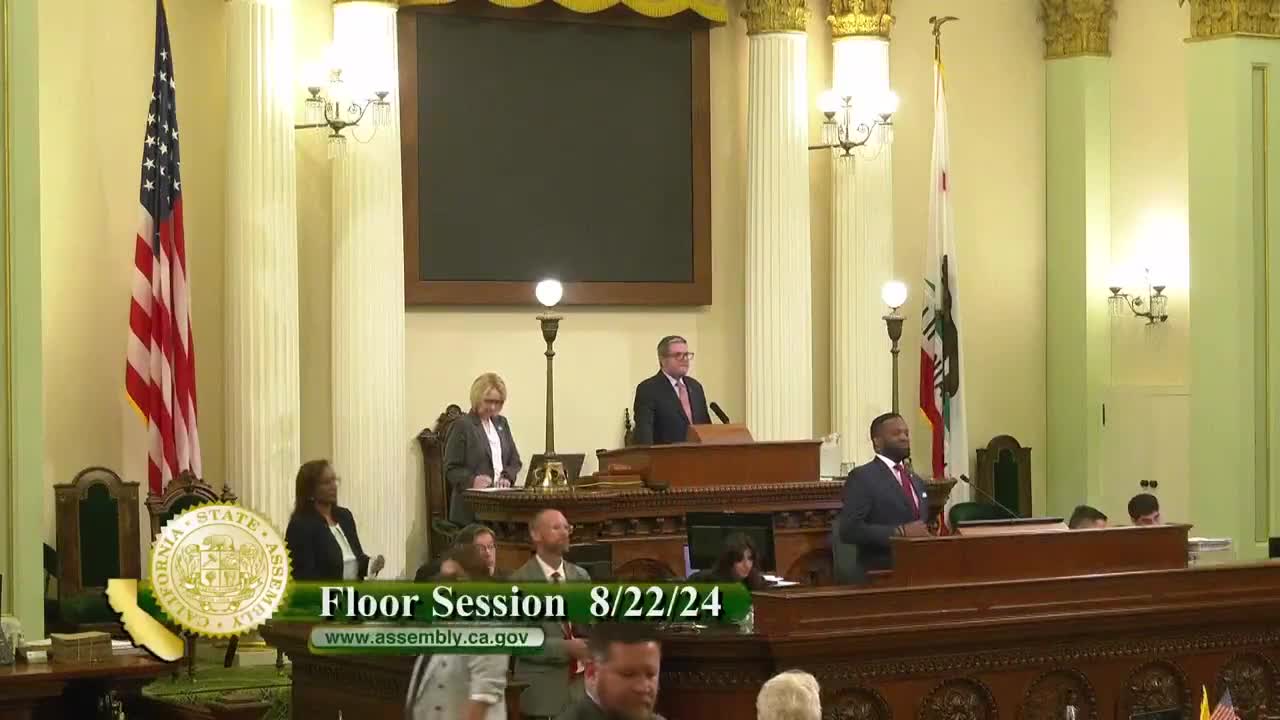 55SEC
Assembly Floor
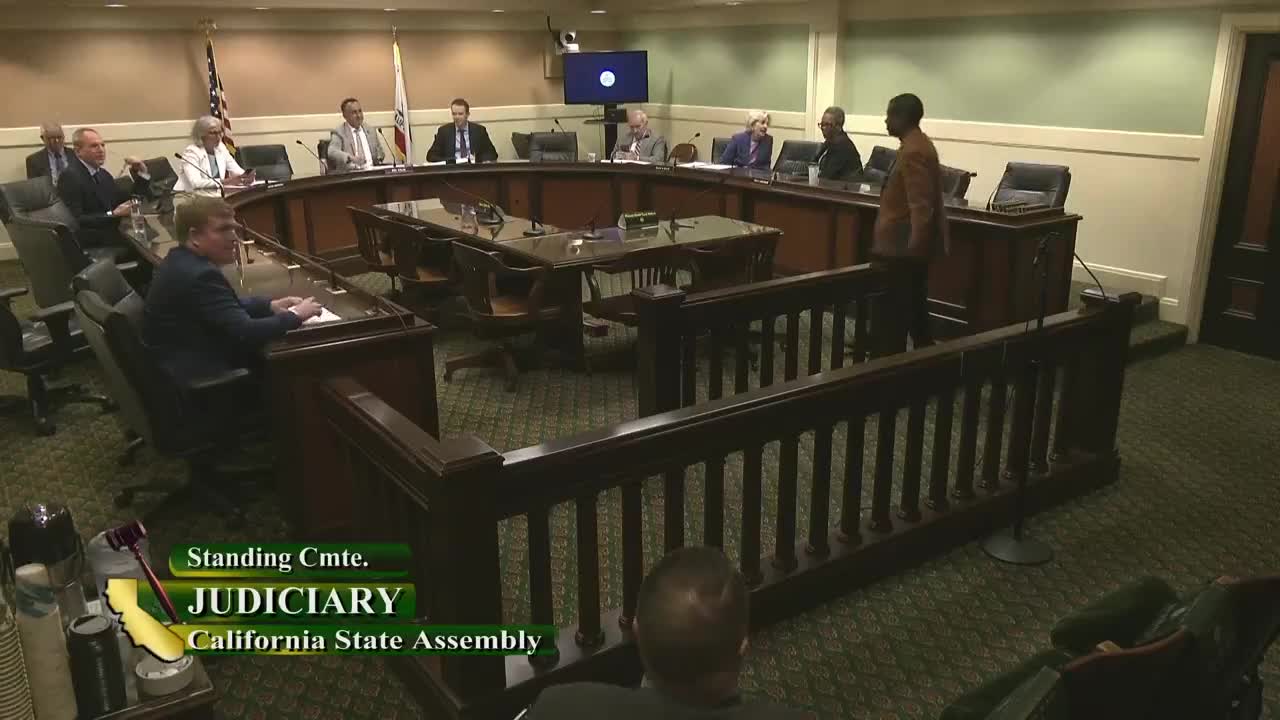 4MIN
Assembly Standing Committee on Judiciary
 17MIN
Assembly Standing Committee on Education
Bill Author

Bill Co-Author(s):