AB 718: Veterans: mental health.
- Session Year: 2023-2024
- House: Assembly
- Latest Version Date: 2024-09-04
Current Status:
Failed
(2024-09-25: Vetoed by Governor.)
Introduced
In Committee
First Chamber
In Committee
Second Chamber
Enacted
Existing law establishes the Department of Veterans Affairs. The department, among other services, provides veterans and their dependents and survivors with assistance in processing service-related disability claims, assistance in obtaining affordable housing, and information about health ailments associated with military service.
This bill would require the department to establish a program to fund, upon appropriation by the Legislature, an academic study of mental health among women veterans in California, as specified. The bill would require the department to submit a report summarizing the findings and recommendations of the study to the Legislature no later than July 31, 2025.
This bill would make these provisions inoperative on July 31, 2025, and would repeal them as of January 1, 2026.
(a)Upon appropriation by the Legislature, the department shall establish a program to fund an academic study of mental health among women veterans in California, to include demographics and an analysis of the stressors, risk factors, treatment modalities, barriers to access, suicide rate, and other information deemed relevant.
(b)The department shall prepare and submit to the Legislature, no later than July 31, 2025, a report summarizing the findings and recommendations of the study pursuant to subdivision (a). The report shall be submitted in compliance with Section 9795 of the Government Code.
(c)This section shall become inoperative on July 31, 2025, and, as of January 1, 2026, is repealed.
(a)The Upon appropriation by the Legislature, the department shall establish a program to fund, upon appropriation by the Legislature, fund an academic study of mental health among women veterans in California, to include demographics and an analysis of the stressors, risk factors, treatment modalities, barriers to access, suicide rate, and other information deemed relevant.
(b)The department shall prepare and submit to the Legislature, no later than July 31, 2025, a report summarizing the findings and recommendations of the study pursuant to subdivision (a). The report shall be submitted in compliance with Section 9795 of the Government Code.
(c)This section shall become inoperative on July 31, 2025, and, as of January 1, 2026, is repealed.
(a)The department shall establish a program to fund, upon appropriation by the Legislature, an academic study of mental health among women veterans in California, to include demographics and an analysis of the stressors, risk factors, treatment modalities, barriers to access, suicide rate, and other information deemed relevant.
(b)The department shall prepare and submit to the Legislature, no later than July 31, 2025, a report summarizing the findings and recommendations of the study pursuant to subdivision (a). The report shall be submitted in compliance with Section 9795 of the Government Code.
(c)This section shall become inoperative on July 31, 2025, and, as of January 1, 2026, is repealed.
REVISIONS: HeadingLine 2.|
Date
|
Status
|
|---|---|
| Sep 25, 2024 | Vetoed by Governor. |
| Sep 11, 2024 | Enrolled and presented to the Governor at 4 p.m. |
| Aug 30, 2024 | Senate amendments concurred in. To Engrossing and Enrolling. (Ayes 77. Noes 0.). |
| Aug 30, 2024 | In Assembly. Concurrence in Senate amendments pending. |
| Aug 29, 2024 | Read third time. Passed. Ordered to the Assembly. (Ayes 40. Noes 0.). |
| Aug 20, 2024 | Read second time. Ordered to third reading. |
| Aug 19, 2024 | From inactive file. |
| Aug 19, 2024 | Ordered to second reading. |
| Sep 11, 2023 | Ordered to inactive file at the request of Senator Rubio. |
| Sep 5, 2023 | Read second time. Ordered to third reading. |
| Sep 1, 2023 | Read second time and amended. Ordered returned to second reading. |
| Sep 1, 2023 | From committee: Amend, and do pass as amended. (Ayes 7. Noes 0.) (September 1). |
| Aug 14, 2023 | In committee: Referred to APPR suspense file. |
| Jul 11, 2023 | From committee: Do pass and re-refer to Com. on APPR with recommendation: To Consent Calendar. (Ayes 4. Noes 0.) (July 10). Re-referred to Com. on APPR. |
| Jun 7, 2023 | Referred to Com. on M. & V.A. |
| May 31, 2023 | In Senate. Read first time. To Com. on RLS. for assignment. |
| May 30, 2023 | Read third time. Passed. Ordered to the Senate. (Ayes 80. Noes 0. Page 1865.) |
| May 18, 2023 | Read second time. Ordered to third reading. |
| May 18, 2023 | From committee: Do pass. (Ayes 15. Noes 0.) (May 18). |
| Apr 19, 2023 | In committee: Set, first hearing. Referred to APPR. suspense file. |
| Mar 29, 2023 | From committee: Do pass and re-refer to Com. on APPR. (Ayes 11. Noes 0.) (March 28). Re-referred to Com. on APPR. |
| Mar 29, 2023 | Coauthors revised. |
| Feb 23, 2023 | Referred to Com. on M. & V.A. |
| Feb 14, 2023 | From printer. May be heard in committee March 16. |
| Feb 13, 2023 | Read first time. To print. |
|
Date
|
Description
|
Location
|
Votes
|
|
|---|---|---|---|---|
| Aug 30, 2024 | AB 718 Ta Concurrence in Senate Amendments | Assembly Floor |
Passed |
|
| Aug 29, 2024 | Assembly 3rd Reading AB718 Ta et al. By Seyarto | Senate Floor |
Passed |
|
| Sep 1, 2023 | Do pass as amended | Senate Standing Committee on Appropriations |
Passed |
|
| Aug 14, 2023 | Placed on suspense file | Senate Standing Committee on Appropriations |
Passed |
|
| Jul 10, 2023 | Do pass, but first be re-referred to the Committee on [Appropriations] with the recommendation: To Consent Calendar | Senate Standing Committee on Military and Veterans Affairs |
Passed |
|
| May 30, 2023 | AB 718 Ta Assembly Third Reading | Assembly Floor |
Passed |
|
| May 18, 2023 | Do pass. | Assembly Standing Committee on Appropriations |
Passed |
|
| Mar 28, 2023 | Do pass and be re-referred to the Committee on [Appropriations] | Assembly Standing Committee on Military and Veterans Affairs |
Passed |
This list shows positions taken on this bill by organizations on the date displayed, which is linked to the original source.
Positions by individuals are not included.
|
Organization
|
Position
|
Date
|
|---|---|---|
| California Women's Law Center | ** Support | |
| Dbsa California | ** Support | |
| Depression and Bipolar Support Alliance California. | ** Support | |
| Los Angeles County | ** Support | |
| San Diego Military Advisory Council | ** Support |
GOVERNOR'S VETO
GV Bill Id:AB 718
Author:(Ta)
As Enrolled Ver:September 4, 2024
2/3 vote
SUMMARY
This bill requires the California Department of Veterans Affairs (CalVet) to establish, upon appropriation by the Legislature, a program to fund an academic study of mental health among women veterans in California, and to submit a report to the Legislature no later than July 31, 2025. Senate amendments clarify that CalVet is required to establish the program under this bill only upon appropriation by the Legislature.
Governor's Veto Message
"While I am supportive of the author's goal of advancing research on mental health among women veterans in the state, approving this measure would presume funding in next year's budget cycle, and the timeline established by this bill would not provide CalVet adequate time to provide a substantive report. I encourage the author to work to secure the necessary funding for this study within the annual budget process."
COMMENTS
According to the U.S. Department of Veterans Affairs, as of 2019, there were approximately 142,000 women veterans living in California. According to the U.S. Department of Veterans Affairs, women are the fastest-growing population of service members and veterans and, according to the Veterans Health Administration, they account for 30% of new patients.
Women who served in the U.S. Armed Forces have unique needs. They are more likely to be primary caregivers for spouses, children, and parents. They are more likely to have gender specific health needs. They are younger and more diverse than their male counterparts.
Women veterans experience additional barriers to receiving and utilizing benefits and services. In California, many women do not self-identify as veterans and thus do not utilize benefits or participate in veterans events, comprising only 5% of the customer population served by County Veteran Services Offices in 2013, according to CalVet, despite making up 11% of the overall population of California veterans. Additionally, women veterans have higher rates of physical/mental health problems, such as Military Sexual Trauma (MST), alcohol abuse, and drug abuse, than male veterans, and are more likely to die by suicide.
According to the Author
"AB 718 would provide a much-needed picture of the mental health challenges facing California's women veterans. This important and uncontroversial legislation would direct the California Department of Veterans Affairs to conduct an academic study of mental health among women veterans in California. This study would include an analysis of mental health stressors, risk factors, suicide rates, treatment modalities, barriers to care, and other relevant information. Given California's rapidly growing population of women veterans, this legislation would ensure that, instead of only identifying concerning statistics, the state is researching and remedying the root causes driving mental health challenges facing women veterans."
Arguments in Support
The California Women's Law Center states: "AB 718 will ensure that the State of California will research and seek to determine the factors related to mental health care needs. The findings and recommendations of this study are necessary to remedy the root causes driving these mental health challenges."
Arguments in Opposition
None on file.
FISCAL COMMENTS
According to the Senate Committee on Appropriations, CalVet estimates the need for a one-time General Fund appropriation of $200,000 to fund the study. Additionally, CalVet reports costs of $230,000 in the first year and $219,000 in the second year for two limited-term staff (General Fund).
VOTES
ASM MILITARY AND VETERANS AFFAIRS: 11-0-0
YES: Soria, Davies, Addis, Alvarez, Boerner Horvath, Juan Carrillo, Mathis, Muratsuchi, Petrie-Norris, Ta, Valencia
ASM APPROPRIATIONS: 15-0-1
YES: Holden, Megan Dahle, Bryan, Calderon, Wendy Carrillo, Dixon, Mike Fong, Hart, Lowenthal, Mathis, Papan, Pellerin, Sanchez, Weber, Ortega
ABS, ABST OR NV: Robert Rivas
ASSEMBLY FLOOR: 80-0-0
YES: Addis, Aguiar-Curry, Alanis, Alvarez, Arambula, Bains, Bauer-Kahan, Bennett, Berman, Boerner, Bonta, Bryan, Calderon, Juan Carrillo, Wendy Carrillo, Cervantes, Chen, Connolly, Megan Dahle, Davies, Dixon, Essayli, Flora, Mike Fong, Vince Fong, Friedman, Gabriel, Gallagher, Garcia, Gipson, Grayson, Haney, Hart, Holden, Hoover, Irwin, Jackson, Jones-Sawyer, Kalra, Lackey, Lee, Low, Lowenthal, Maienschein, Mathis, McCarty, McKinnor, Muratsuchi, Stephanie Nguyen, Ortega, Pacheco, Papan, Jim Patterson, Joe Patterson, Pellerin, Petrie-Norris, Quirk-Silva, Ramos, Reyes, Luz Rivas, Robert Rivas, Rodriguez, Blanca Rubio, Sanchez, Santiago, Schiavo, Soria, Ta, Ting, Valencia, Villapudua, Waldron, Wallis, Ward, Weber, Wicks, Wilson, Wood, Zbur, Rendon
SENATE FLOOR: 40-0-0
YES: Allen, Alvarado-Gil, Archuleta, Ashby, Atkins, Becker, Blakespear, Bradford, Caballero, Cortese, Dahle, Dodd, Durazo, Eggman, Glazer, Gonzalez, Grove, Hurtado, Jones, Laird, Limón, McGuire, Menjivar, Min, Newman, Nguyen, Niello, Ochoa Bogh, Padilla, Portantino, Roth, Rubio, Seyarto, Skinner, Smallwood-Cuevas, Stern, Umberg, Wahab, Wiener, Wilk
ASSEMBLY FLOOR: 77-0-2
YES: Addis, Aguiar-Curry, Alanis, Alvarez, Arambula, Bains, Bauer-Kahan, Bennett, Berman, Boerner, Bonta, Bryan, Calderon, Juan Carrillo, Wendy Carrillo, Chen, Connolly, Megan Dahle, Davies, Dixon, Essayli, Flora, Mike Fong, Friedman, Gabriel, Gallagher, Garcia, Gipson, Grayson, Haney, Hart, Holden, Hoover, Irwin, Jackson, Jones-Sawyer, Kalra, Lackey, Lee, Low, Lowenthal, Maienschein, Mathis, McCarty, McKinnor, Muratsuchi, Stephanie Nguyen, Pacheco, Papan, Jim Patterson, Joe Patterson, Pellerin, Petrie-Norris, Quirk-Silva, Ramos, Rendon, Reyes, Luz Rivas, Rodriguez, Blanca Rubio, Sanchez, Santiago, Schiavo, Soria, Ta, Ting, Valencia, Villapudua, Waldron, Wallis, Ward, Weber, Wicks, Wilson, Wood, Zbur, Robert Rivas
ABS, ABST OR NV: Cervantes, Ortega
UPDATED
VERSION: September 4, 2024
CONSULTANT: Christian Burkin / M. & V.A. / (916) 319-3550 FN: 0005123
CONCURRENCE IN SENATE AMENDMENTS
CSA1 Bill Id:AB 718
Author:(Ta)
As Amended Ver:September 1, 2023
Majority vote
SUMMARY
This bill requires the California Department of Veterans Affairs (CalVet) to establish, upon appropriation by the Legislature, a program to fund an academic study of mental health among women veterans in California, and to submit a report to the Legislature no later than July 31, 2025.
Senate Amendments
Clarify that CalVet is required to establish the program under this bill only upon appropriation by the Legislature.
COMMENTS
According to the U.S. Department of Veterans Affairs, as of 2019, there were approximately 142,000 women veterans living in California. The number of women veterans is growing rapidly. Between 2005 and 2017, the population of women veterans increased by 6.5%. According to the U.S. Department of Veterans Affairs, women are the fastest-growing population of service members and veterans and, according to the Veterans Health Administration, they account for 30 percent of new patients.
Studies estimate that women veterans may comprise up to 15% of the veteran population in California by 2034. The growth in the number of women veterans is being driven by a corresponding increase in their representation in the armed forces. When the draft ended in 1973, women represented just two percent of the enlisted forces and eight percent of the officer corps. Today, those numbers are 16 percent and 19 percent, respectively, a significant increase over the past half century. According to the Department of Defense, in 2021, women made up 17.3% of the active-duty force, totaling 231,741 members; and 21.4% of the National Guard and reserves at 171,000 members. The year before, women made up 17.2% of the active-duty force and 21.1% of the Guard and reserve. Since 2017, the percentages of women in the active-duty and selected reserve have risen 1.1% and 1.8% respectively. Women who served in the U.S. Armed Forces have unique needs. They are more likely to be primary caregivers for spouses, children, and parents. They are more likely to have gender specific health needs. They are younger and more diverse than their male counterparts.
Women veterans experience additional barriers to receiving and utilizing benefits and services. In California, many women do not self-identify as veterans and thus do not utilize benefits or participate in veterans events, comprising only 5% of the customer population served by County Veteran Services Offices in 2013, according to CalVet, despite making up 11 percent of the overall population of California veterans. Additionally, women veterans have higher rates of physical/mental health problems, such as Military Sexual Trauma (MST), alcohol abuse, and drug abuse, than male veterans, and are more likely to die by suicide.
According to the Author
"AB 718 would provide a much-needed picture of the mental health challenges facing California's women veterans. This important and uncontroversial legislation would direct the California Department of Veterans Affairs to conduct an academic study of mental health among women veterans in California. This study would include an analysis of mental health stressors, risk factors, suicide rates, treatment modalities, barriers to care, and other relevant information. Given California's rapidly growing population of women veterans, this legislation would ensure that, instead of only identifying concerning statistics, the state is researching and remedying the root causes driving mental health challenges facing women veterans."
Arguments in Support
The California Women's Law Center states: "AB 718 will ensure that the State of California will research and seek to determine the factors related to mental health care needs. The findings and recommendations of this study are necessary to remedy the root causes driving these mental health challenges."
Arguments in Opposition
None on file.
FISCAL COMMENTS
According to the Senate Committee on Appropriations, CalVet estimates the need for a one-time General Fund appropriation of $200,000 to fund the study. Additionally, CalVet reports costs of $230,000 in the first year and $219,000 in the second year for two limited-term staff (General Fund).
VOTES:
ASM MILITARY AND VETERANS AFFAIRS: 11-0-0
YES: Soria, Davies, Addis, Alvarez, Boerner Horvath, Juan Carrillo, Mathis, Muratsuchi, Petrie-Norris, Ta, Valencia
ASM APPROPRIATIONS: 15-0-1
YES: Holden, Megan Dahle, Bryan, Calderon, Wendy Carrillo, Dixon, Mike Fong, Hart, Lowenthal, Mathis, Papan, Pellerin, Sanchez, Weber, Ortega
ABS, ABST OR NV: Robert Rivas
ASSEMBLY FLOOR: 80-0-0
YES: Addis, Aguiar-Curry, Alanis, Alvarez, Arambula, Bains, Bauer-Kahan, Bennett, Berman, Boerner, Bonta, Bryan, Calderon, Juan Carrillo, Wendy Carrillo, Cervantes, Chen, Connolly, Megan Dahle, Davies, Dixon, Essayli, Flora, Mike Fong, Vince Fong, Friedman, Gabriel, Gallagher, Garcia, Gipson, Grayson, Haney, Hart, Holden, Hoover, Irwin, Jackson, Jones-Sawyer, Kalra, Lackey, Lee, Low, Lowenthal, Maienschein, Mathis, McCarty, McKinnor, Muratsuchi, Stephanie Nguyen, Ortega, Pacheco, Papan, Jim Patterson, Joe Patterson, Pellerin, Petrie-Norris, Quirk-Silva, Ramos, Reyes, Luz Rivas, Robert Rivas, Rodriguez, Blanca Rubio, Sanchez, Santiago, Schiavo, Soria, Ta, Ting, Valencia, Villapudua, Waldron, Wallis, Ward, Weber, Wicks, Wilson, Wood, Zbur, Rendon
SENATE FLOOR: 40-0-0
YES: Allen, Alvarado-Gil, Archuleta, Ashby, Atkins, Becker, Blakespear, Bradford, Caballero, Cortese, Dahle, Dodd, Durazo, Eggman, Glazer, Gonzalez, Grove, Hurtado, Jones, Laird, Limón, McGuire, Menjivar, Min, Newman, Nguyen, Niello, Ochoa Bogh, Padilla, Portantino, Roth, Rubio, Seyarto, Skinner, Smallwood-Cuevas, Stern, Umberg, Wahab, Wiener, Wilk
UPDATED
VERSION: September 1, 2023
CONSULTANT: Christian Burkin / M. & V.A. / (916) 319-3550 FN: 0001637
SENATE RULES COMMITTEE Office of Senate Floor Analyses (916) 651-1520 Fax: (916) 327-4478 | AB 718 |
THIRD READING
Bill No: AB 718
Author: Ta (R), et al.
Amended: 9/1/23 in Senate
Vote: 21
SENATE MILITARY & VETERANS COMMITTEE: 4-0, 7/10/23
AYES: Archuleta, Grove, Alvarado-Gil, Menjivar
NO VOTE RECORDED: Umberg
SENATE APPROPRIATIONS COMMITTEE: 7-0, 9/1/23
AYES: Portantino, Jones, Ashby, Bradford, Seyarto, Wahab, Wiener
ASSEMBLY FLOOR: 80-0, 5/30/23 - See last page for vote
SUBJECT: Veterans: mental health
SOURCE: Author
DIGEST:
This bill requires the California Department of Veterans Affairs (CalVet) to, upon appropriation by the Legislature, establish a program to fund an academic study of mental health among women veterans in California, and to submit a report summarizing the findings and recommendations of the study to the Legislature no later than July 31, 2025.
ANALYSIS: Existing law establishes CalVet to, among other services, provide veterans and their dependents and survivors with assistance in processing service-related disability claims, assistance in obtaining affordable housing, and information about health ailments associated with military service.
This bill requires CalVet to establish a program to fund, upon appropriation by the Legislature, an academic study of mental health among women veterans in California, and to submit a report to the Legislature no later than July 31, 2025. Specifically, this bill:
- Requires CalVet to:
- Establish a program to fund, upon appropriation by the Legislature, an academic study of mental health among women veterans in California, to include demographics and an analysis of the stressors, risk factors, treatment modalities, barriers to access, suicide rate, and other information deemed relevant.
- Prepare and submit a report summarizing the findings and recommendations of the study to the Legislature no later than July 31, 2025.
- Becomes inoperative on July 31, 2025, and is repealed January 1, 2026.
Background
Suicide is a major public health issue and among the top ten causes of death in the United States. Unfortunately, for more than a decade, the suicide rate has been rising in the general U.S. population and especially among veterans, men and women who risked their lives for the country. In 2018, 6,435 veterans and 40,075 nonveteran adults died by suicide. When adjusted by rate in population, the rate of suicide among veterans was 32.0 per 100,000, compared with 17.2 per 100,000 for nonveterans.
The same study found that the suicide rate for veteran women was 14.8 per 100,000 (291 deaths), almost twice the rate for nonveteran women (7.6 per 100,000).
According to the U.S. Department of Veterans Affairs, as of 2019, there were approximately 142,000 women veterans living in California. The number of women veterans is growing rapidly. Between 2005 and 2017, the population of women veterans increased by 6.5%. According to the U.S. Department of Veterans Affairs, women are the fastest-growing population of service members and veterans and, according to the Veterans Health Administration, they account for 30 percent of new patients.
Women who served in the U.S. Armed Forces have unique needs. They are more likely to be primary caregivers for spouses, children, and parents. They are more likely to have gender specific health needs. They are younger and more diverse than their male counterparts.
Women veterans experience additional barriers to receiving and utilizing benefits and services. In California, many women do not self-identify as veterans and thus do not utilize benefits or participate in veterans events, comprising only 5% of the customer population served by County Veteran Services Offices in 2013, according to CalVet, despite making up 11 percent of the overall population of California veterans. Additionally, women veterans have higher rates of physical/mental health problems, such as Military Sexual Trauma (MST), alcohol abuse, and drug abuse, than male veterans, and are more likely to die by suicide.
Comments
When research or data is collected about veterans, it is a common practice to generalize the experiences of all veterans, regardless of age, race, or even gender. The mental health struggles that women veterans face are significantly different from their male counterparts. By creating women veteran-specific data about mental health issues, how those stressors manifest, and what support is necessary, we can begin to shed light on how to reduce women veteran suicide.
According to the author, “AB 718 would provide a much-needed picture of the mental health challenges facing California’s women veterans. This important and uncontroversial legislation would direct the California Department of Veterans Affairs to conduct an academic study of mental health among women veterans in California. This study would include an analysis of mental health stressors, risk factors, suicide rates, treatment modalities, barriers to care, and other relevant information. Given California’s rapidly growing population of women veterans, this legislation would ensure that, instead of only identifying concerning statistics, the state is researching and remedying the root causes driving mental health challenges facing women veterans.”
FISCAL EFFECT: Appropriation: No Fiscal Com.: Yes Local: No
According to the Senate Appropriations Committee, CalVet estimates the need for a one-time General Fund appropriation of $200,000 to fund the study. Additionally, CalVet reports costs of $230,000 in the first year and $219,000 in the second year for two limited-term staff (General Fund).
SUPPORT: (Verified 9/1/23)
California Women's Law Center
DBSA California
Los Angeles County
San Diego Military Advisory Council
OPPOSITION: (Verified 9/1/23)
None received
ARGUMENTS IN SUPPORT: According to the California Women’s Law Center, AB 718 will ensure that the State of California will research and seek to determine the factors related to mental health care needs. The findings and recommendations of this study are necessary to remedy the root causes driving these mental health challenges. AB 718 aims to identify the contributing causes to women veteran’s mental health challenges and the best solutions for ensuring knowledge and access to available services, support networks, and prevention tools required to reduce PTSD, depression, and suicide.
ASSEMBLY FLOOR: 80-0, 5/30/23
AYES: Addis, Aguiar-Curry, Alanis, Alvarez, Arambula, Bains, Bauer-Kahan, Bennett, Berman, Boerner, Bonta, Bryan, Calderon, Juan Carrillo, Wendy Carrillo, Cervantes, Chen, Connolly, Megan Dahle, Davies, Dixon, Essayli, Flora, Mike Fong, Vince Fong, Friedman, Gabriel, Gallagher, Garcia, Gipson, Grayson, Haney, Hart, Holden, Hoover, Irwin, Jackson, Jones-Sawyer, Kalra, Lackey, Lee, Low, Lowenthal, Maienschein, Mathis, McCarty, McKinnor, Muratsuchi, Stephanie Nguyen, Ortega, Pacheco, Papan, Jim Patterson, Joe Patterson, Pellerin, Petrie-Norris, Quirk-Silva, Ramos, Reyes, Luz Rivas, Robert Rivas, Rodriguez, Blanca Rubio, Sanchez, Santiago, Schiavo, Soria, Ta, Ting, Valencia, Villapudua, Waldron, Wallis, Ward, Weber, Wicks, Wilson, Wood, Zbur, Rendon
Prepared by: Jenny Callison / M.&V.A. / (916) 651-1503
9/4/23 9:25:09
**** END ****
SENATE COMMITTEE ON
Senator Anthony Portantino, Chair
2023 - 2024 Regular Session
AB 718 (Ta) - Veterans: mental health
Version: | Policy Vote: |
Urgency: | Mandate: |
Hearing Date: | Consultant: |
Bill Summary:
AB 718 requires the California Department of Veterans Affairs (CalVet) to establish a program to fund, upon appropriation, an academic study of mental health among women veterans in California and submit a report on the study’s findings to the Legislature by July 31, 2025.
*********** ANALYSIS ADDENDUM – SUSPENSE FILE ***********
The following information is revised to reflect amendments
adopted by the committee on September 1, 2023
Fiscal Impact:
CalVet estimates the need for a one-time General Fund appropriation of $200,000 to fund the study. Additionally, CalVet reports costs of $230,000 in the first year and $219,000 in the second year for two limited-term staff (General Fund).
Author Amendments:
- Add a coauthor.
- Make nonsubstantive changes.
-- END --
SENATE COMMITTEE ON APPROPRIATIONS
Senator Anthony Portantino, Chair
2023 - 2024 Regular Session
AB 718 (Ta) - Veterans: mental health
Version: February 13, 2023 | Policy Vote: M.&V.A. 4 - 0 |
Urgency: No | Mandate: No |
Hearing Date: August 14, 2023 | Consultant: Janelle Miyashiro |
Bill Summary:
AB 718 requires the California Department of Veterans Affairs (CalVet) to establish a program to fund, upon appropriation, an academic study of mental health among women veterans in California and submit a report on the study’s findings to the Legislature by July 31, 2025.
Fiscal Impact:
CalVet estimates the need for a one-time General Fund appropriation of $200,000 to fund the study. Additionally, CalVet reports costs of $230,000 in the first year and $219,000 in the second year for two limited-term staff (General Fund).
Background:
According to the U.S. Department of Veterans Affairs, as of 2019, there were approximately 142,000 women veterans living in California. The number of women veterans is growing rapidly. Between 2005 and 2017, the population of women veterans increased by 6.5%. According to the U.S. Department of Veterans Affairs, women are the fastest-growing population of service members and veterans and, according to the Veterans Health Administration, they account for 30 percent of new patients.
Women who served in the U.S. Armed Forces have unique needs. They are more likely to be primary caregivers for spouses, children, and parents. They are more likely to have gender specific health needs. They are younger and more diverse than their male counterparts.
Women veterans experience additional barriers to receiving and utilizing benefits and services. In California, many women do not self-identify as veterans and thus do not utilize benefits or participate in veterans events, comprising only 5% of the customer population served by County Veteran Services Offices in 2013, according to CalVet, despite making up 11 percent of the overall population of California veterans. Additionally, women veterans have higher rates of physical/mental health problems, such as Military Sexual Trauma, alcohol abuse, and drug abuse, than male veterans, and are more likely to die by suicide.
Proposed Law:
- Requires CalVet to establish a program to fund, upon appropriation, an academic study of mental health among women veterans in California. Requires the study to include demographics and an analysis of the stressors, risk factors, treatment modalities, barriers to access, suicide rate, and other information deemed relevant.
- Requires CalVet to prepare and submit a summary report of the findings and recommendations of the study to the Legislature by July 31, 2025.
- Repeals the study and reporting requirements January 1, 2026.
Related Legislation:
AB 1692 (Voepel, 2022) was substantially similar to this bill and would have required CalVet to establish a program to fund, upon appropriation by the Legislature, an academic study of mental health among women veterans in California and prepare and submit a report on the study to the Legislature by July 31, 2024. AB 1692 was vetoed.
-- END --
SENATE COMMITTEE ON MILITARY AND VETERANS AFFAIRS
Senator Bob Archuleta, Chair
2023 - 2024 Regular
Bill No: AB 718 Hearing Date: 7/10/23
Author: | Ta | ||
Version: | 2/13/23 Introduced | ||
Urgency: | No | Fiscal: | Yes |
Consultant: | Jenny Callison | ||
Subject: Veterans: mental health
DESCRIPTION
Summary:
Requires the California Department of Veterans Affairs (CalVet) to establish a program to fund, upon appropriation by the Legislature, an academic study of mental health among women veterans in California, and to submit a report to the Legislature no later than July 31, 2025. Specifically, this bill:
- Requires CalVet to:
- Establish a program to fund, upon appropriation by the Legislature, an academic study of mental health among women veterans in California, to include demographics and an analysis of the stressors, risk factors, treatment modalities, barriers to access, suicide rate, and other information deemed relevant.
- Prepare and submit a report summarizing the findings and recommendations of the study to the Legislature no later than July 31, 2025.
- Becomes inoperative on July 31, 2025 and is repealed January 1, 2026.
Existing law:
Establishes CalVet to, among other services, provide veterans and their dependents and survivors with assistance in processing service-related disability claims, assistance in obtaining affordable housing, and information about health ailments associated with military service.
BACKGROUND
Suicide is a major public health issue and among the top ten causes of death in the United States. Unfortunately, for more than a decade, the suicide rate has been rising in the general U.S. population and especially among veterans, men and women who risked their lives for the country. In 2018, 6,435 veterans and 40,075 nonveteran adults died by suicide. When adjusted by rate in population, the rate of suicide among veterans was 32.0 per 100,000, compared with 17.2 per 100,000 for nonveterans.
The same study found that the suicide rate for veteran women was 14.8 per 100,000 (291 deaths), almost twice the rate for nonveteran women (7.6 per 100,000).
According to the U.S. Department of Veterans Affairs, as of 2019, there were approximately 142,000 women veterans living in California. The number of women veterans is growing rapidly. Between 2005 and 2017, the population of women veterans increased by 6.5%. According to the U.S. Department of Veterans Affairs, women are the fastest-growing population of service members and veterans and, according to the Veterans Health Administration, they account for 30 percent of new patients.
Women who served in the U.S. Armed Forces have unique needs. They are more likely to be primary caregivers for spouses, children, and parents. They are more likely to have gender specific health needs. They are younger and more diverse than their male counterparts.
Women veterans experience additional barriers to receiving and utilizing benefits and services. In California, many women do not self-identify as veterans and thus do not utilize benefits or participate in veterans events, comprising only 5% of the customer population served by County Veteran Services Offices in 2013, according to CalVet, despite making up 11 percent of the overall population of California veterans. Additionally, women veterans have higher rates of physical/mental health problems, such as Military Sexual Trauma (MST), alcohol abuse, and drug abuse, than male veterans, and are more likely to die by suicide.
COMMENT
When research or data is collected about veterans, it is a common practice to generalize the experiences of all veterans, regardless of age, race, or even gender. The mental health struggles that women veterans face are significantly different from their male counterparts. By creating women veteran-specific data about mental health issues, how those stressors manifest, and what support is necessary, we can begin to shed light on how to reduce women veteran suicide.
According to the author:
“AB 718 would provide a much-needed picture of the mental health challenges facing California’s women veterans. This important and uncontroversial legislation would direct the California Department of Veterans Affairs to conduct an academic study of mental health among women veterans in California. This study would include an analysis of mental health stressors, risk factors, suicide rates, treatment modalities, barriers to care, and other relevant information. Given California’s rapidly growing population of women veterans, this legislation would ensure that, instead of only identifying concerning statistics, the state is researching and remedying the root causes driving mental health challenges facing women veterans.”
Previous Legislation:
AB 1935 (Voepel, R), Held in Senate Rules
- Directed the Department of Veterans Affairs to conduct an academic study of mental health among women veterans in California
AB 1692 (Voepel, R), 2021-2022, Vetoed by Governor
- Directed the Department of Veterans Affairs to conduct an academic study of mental health among women veterans in California
POSITIONS
Sponsor: Author.
Support: California Women's Law Center
Depression and Bipolar Support Alliance - California
Oppose: None on File
-- END --
ASSEMBLY THIRD READING
ATR Bill Id:AB 718
Author:(Ta)
As Introduced Ver:February 13, 2023
Majority vote
SUMMARY
Requires the Department of Veterans Affairs (CalVet) to establish a program to fund, upon appropriation by the Legislature, an academic study of mental health among women veterans in California and submit a report to the Legislature by July 31, 2025.
Major Provisions
- Requires CalVet to establish a program to fund, upon appropriation by the Legislature, an academic study of mental health among women veterans in California, to include demographics and an analysis of the stressors, risk factors, treatment modalities, barriers to access, suicide rate and other information deemed relevant.
- Requires CalVet to prepare and submit a report summarizing the findings and recommendations of the study to the Legislature by July 31, 2025.
COMMENTS
California is home to approximately 184,000 women who served in the United States Armed Forces and 4,400 women who are current National Guard members. Between 2005 and 2017, the women veteran population in California increased by 6.5%. Studies estimate that women veterans may comprise up to 15% of the veteran population in California by 2034. According to the U.S. Department of Veterans Affairs, women are the fastest-growing population of service members and veterans and, according to the Veterans Health Administration, they account for 30% of new patients. Additionally, women veterans have higher rates of physical and mental health problems, such as Military Sexual Trauma (MST), alcohol abuse, and drug abuse, than do male veterans, and are more likely to die by suicide.
According to the Author
"Given California’s rapidly growing population of women veterans, this legislation would ensure that, instead of only identifying concerning statistics, the state is researching and remedying the root causes driving mental health challenges facing women veterans."
Arguments in Support
According to the California Women’s Law Center: "As the population of women veterans grows, California has an obligation to understand their unique challenges. Prior studies have found that the suicide rate for women veterans was nearly twice that of women who did not serve. Furthermore, the rate of women veterans who experience Post-Traumatic Stress Disorder (PTSD) is almost double the rate of male veterans. In 2011, a California Women Veterans survey found that California’s women veterans underutilize state benefits and participate in veteran events or organizations at a lower rate.
AB 718 will ensure that the State of California will research and seek to determine the factors related to mental health care needs. The findings and recommendations of this study are necessary to remedy the root causes driving these mental health challenges."
Arguments in Opposition
None on file.
FISCAL COMMENTS
According to the Assembly Appropriations Committee:
- One-time costs to CalVet of approximately $210,000 (General Fund (GF)) to fund the academic study. CalVet has indicated on prior, similar bills it lacks in-house expertise for such a study and would likely contract with an outside entity.
- One-time costs to CalVet of approximately $240,000 (GF) in the first year and $220,000 (GF) in the second year, for two limited-term staff to create, award, and oversee the contract and to submit a report to the Legislature by July 31,2025.
VOTES
ASM MILITARY AND VETERANS AFFAIRS: 11-0-0
YES: Soria, Davies, Addis, Alvarez, Boerner Horvath, Juan Carrillo, Mathis, Muratsuchi, Petrie-Norris, Ta, Valencia
ASM APPROPRIATIONS: 15-0-1
YES: Holden, Megan Dahle, Bryan, Calderon, Wendy Carrillo, Dixon, Mike Fong, Hart, Lowenthal, Mathis, Papan, Pellerin, Sanchez, Weber, Ortega
ABS, ABST OR NV: Robert Rivas
UPDATED
VERSION: February 13, 2023
CONSULTANT: Christian Burkin / M. & V.A. / (916) 319-3550 FN: 0000492
Date of Hearing: April 19, 2023
ASSEMBLY COMMITTEE ON APPROPRIATIONS
Chris Holden, Chair
ABPCA Bill Id:AB 718
Author:(Ta) – As Introduced Ver:February 13, 2023
Policy Committee: | Military and Veterans Affairs | Vote: | 11 - 0 |
|
| ||
|
|
Urgency: No State Mandated Local Program: No Reimbursable: No
SUMMARY:
This bill requires the Department of Veterans Affairs (CalVet) to establish a program to fund, upon appropriation by the Legislature, an academic study of mental health among women veterans in California and submit a report to the Legislature by July 31, 2025.
Specifically, this bill:
- Requires CalVet to establish a program to fund, upon appropriation by the Legislature, an academic study of mental health among women veterans in California, to include demographics and an analysis of the stressors, risk factors, treatment modalities, barriers to access, suicide rate and other information deemed relevant.
- Requires CalVet to prepare and submit a report summarizing the findings and recommendations of the study to the Legislature by July 31, 2025.
- Renders the above requirements inoperative on July 31, 2025, and repealed on January 1, 2026.
FISCAL EFFECT:
- One-time costs to CalVet of approximately $210,000 (General Fund (GF)) to fund the academic study. CalVet has indicated on prior, similar bills it lacks in-house expertise for such a study and would likely contract with an outside entity.
- One-time costs to CalVet of approximately $240,000 (GF) in the first year and $220,000 (GF) in the second year, for two limited-term staff to create, award, and oversee the contract and to submit a report to the Legislature by July 31,2025.
See budget-related comments below.
COMMENTS:
- Purpose. This bill seeks to fund an academic study of mental health among women veterans in California, in part to discover why the suicide rate is disproportionately higher for women veterans relative to non-veterans, and to recommend solutions. According to the author:
Given California’s rapidly growing population of women veterans, this legislation would ensure that, instead of only identifying concerning statistics, the state is researching and remedying the root causes driving mental health challenges facing women veterans.
- Background. California is home to approximately 184,000 women who served in the United States Armed Forces and 4,400 women who are current National Guard members. Between 2005 and 2017, the women veteran population in California increased by 6.5%. Studies estimate that women veterans may comprise up to 15% of the veteran population in California by 2034. According to the U.S. Department of Veterans Affairs, women are the fastest-growing population of service members and veterans and, according to the Veterans Health Administration, they account for 30% of new patients. Additionally, women veterans have higher rates of physical and mental health problems, such as Military Sexual Trauma (MST), alcohol abuse, and drug abuse, than do male veterans, and are more likely to die by suicide.
- California Veterans Health Initiative (CVHI) Budget Allocation. The 2022-23 state budget includes $50 million to establish the California Veterans Health Initiative (CVHI) to provide a comprehensive, coordinated approach to addressing veteran suicide, including $40 million specifically to expand and support the network of veteran-specific mental health services throughout the state. The CVHI also includes $5 million to establish a multidisciplinary team of professionals and stakeholders focusing on the identification and collection of veteran-specific suicide data and coordinating a statewide assessment of veteran’s mental health and providing recommendations on future prevention, intervention, and post-intervention strategies.
It is unclear how this bill interacts with the CVHI. While this bill focusses specifically on women veterans, there is likely substantial overlap with and duplication of ongoing efforts.
- Prior Legislation. AB 1692 (Voepel), of the 2021-22 Legislative Session, was nearly identical to this bill. AB 1692 was vetoed by the Governor who cited costs not accounted for in the budget as well as a $40 million budgetary investment in veteran-specific mental health services throughout the state.
AB 3371 (Committee on Veterans Affairs), Chapter 77, Statutes of 2020, requires additional data and cross-tabulations be added to an existing annual report on veteran suicide in California compiled by the California Department of Public Health.
AB 1935 (Voepel), of the 2019-20 Legislative Session, was nearly identical to this bill. AB 1935 was referred to, but never heard in, the Senate Committee on Veterans Affairs.
Analysis Prepared by: Jennifer Swenson / APPR. / (916) 319-2081
Date of Hearing: March 28, 2023
ASSEMBLY COMMITTEE ON MILITARY AND VETERANS AFFAIRS
Esmeralda Soria, Chair
ABPCA Bill Id:AB 718 (
Author:Ta) – As Introduced Ver:February 13, 2023
SUBJECT: Veterans: mental health
SUMMARY: Requires the California Department of Veterans Affairs (CalVet) to establish a program to fund, upon appropriation by the Legislature, an academic study of mental health among women veterans in California, and to submit a report to the Legislature no later than July 31, 2025. Specifically, this bill:
- Requires CalVet to:
- Establish a program to fund, upon appropriation by the Legislature, an academic study of mental health among women veterans in California, to include demographics and an analysis of the stressors, risk factors, treatment modalities, barriers to access, suicide rate, and other information deemed relevant.
- Prepare and submit a report summarizing the findings and recommendations of the study to the Legislature no later than July 31, 2025.
- Is rendered inoperative on July 31, 2025 and repealed January 1, 2026.
EXISTING LAW:
- Permits CalVet to assist every veteran of the United States and the dependent or survivor of every veteran of the United States in presenting and pursuing the claim as the veteran, dependent, or survivor may have against the United States arising out of military service and in establishing the veteran’s, dependent’s, or survivor’s right to any privilege, preference, care, or compensation provided for by the laws of the United States or of this state. (Military and Veterans Affairs Code § 699.5)
- Permits CalVet to cooperate and, with the approval of the Department of Finance, contract with any veterans service organization, and pursuant to the contract to compensate the organization for services within the scope of this section rendered by it to any veteran or dependent or survivor of a veteran. (Military and Veterans Affairs Code § 699.5)
- Requires that such a contract shall not be made unless the department determines that, owing to the confidential relationships involved and the necessity of operating through agencies that the veterans, dependents, or survivors involved will feel to be sympathetic toward their problems, the services cannot satisfactorily be rendered otherwise than through the agency of the veterans organization and that the best interests of the veterans, dependents, or survivors involved will be served if the contract is made. (Military and Veterans Affairs Code § 699.5)
- Requires the Mental Health Services Oversight and Accountability Commission to establish priorities for the use of prevention and early intervention funds. These priorities include, among others, culturally competent and linguistically appropriate prevention and intervention to underserved cultural populations. (Welfare and Institutions Code § 5840.7)
- Defines underserved cultural populations as those who are unlikely to seek help from any traditional mental health service because of stigma, lack of knowledge, or other barriers, including members of ethnically and racially diverse communities, members of the gay, lesbian, bisexual, and transgender communities, and veterans, across their lifespans. (Welfare and Institutions Code § 5840.6)
FISCAL EFFECT: This bill is keyed fiscal.
COMMENTS:
According to the author:
“AB 718 would provide a much-needed picture of the mental health challenges facing California’s women veterans. This important and uncontroversial legislation would direct the California Department of Veterans Affairs to conduct an academic study of mental health among women veterans in California. This study would include an analysis of mental health stressors, risk factors, suicide rates, treatment modalities, barriers to care, and other relevant information. Given California’s rapidly growing population of women veterans, this legislation would ensure that, instead of only identifying concerning statistics, the state is researching and remedying the root causes driving mental health challenges facing women veterans.”
According to the U.S. Department of Veterans Affairs, as of 2019, there were approximately 142,000 women veterans living in California. The number of women veterans is growing rapidly. Between 2005 and 2017, the population of women veterans increased by 6.5%. According to the U.S. Department of Veterans Affairs, women are the fastest-growing population of service members and veterans and, according to the Veterans Health Administration, they account for 30 percent of new patients.
Studies estimate that women veterans may comprise up to 15% of the veteran population in California by 2034. The growth in the number of women veterans is being driven by a corresponding increase in their representation in the armed forces. When the draft ended in 1973, women represented just two percent of the enlisted forces and eight percent of the officer corps. Today, those numbers are 16 percent and 19 percent, respectively, a significant increase over the past half century. According to the Department of Defense, in 2021, women made up 17.3% of the active-duty force, totaling 231,741 members; and 21.4% of the National Guard and reserves at 171,000 members. The year before, women made up 17.2% of the active-duty force and 21.1% of the Guard and reserve. Since 2017, the percentages of women in the active-duty and selected reserve have risen 1.1% and 1.8% respectively. Women who served in the U.S. Armed Forces have unique needs. They are more likely to be primary caregivers for spouses, children, and parents. They are more likely to have gender specific health needs. They are younger and more diverse than their male counterparts.
Women veterans experience additional barriers to receiving and utilizing benefits and services. In California, many women do not self-identify as veterans and thus do not utilize benefits or participate in veterans events, comprising only 5% of the customer population served by County Veteran Services Offices in 2013, according to CalVet, despite making up 11 percent of the overall population of California veterans. Additionally, women veterans have higher rates of physical/mental health problems, such as Military Sexual Trauma (MST), alcohol abuse, and drug abuse, than male veterans, and are more likely to die by suicide.
Prior legislation
AB 1692 (Voepel, 2022) was identical to this bill and was passed by the Legislature but vetoed. In his veto message, the governor cited the passage in the budget of the $50 million California Veterans Health Initiative, which included $40 million to expand and support the network of veteran-specific mental health services throughout the state. The CVHI also included $5 million to establish a multidisciplinary team of professionals and stakeholders focusing on the identification and collection of veteran specific suicide data. That team was also tasked with coordinating a statewide assessment of veteran’s mental health and providing recommendations on future prevention, intervention, and post-intervention strategies. The author has signaled his intention to work with the governor’s office to ensure compatibility with the CVHI before passage from the legislature.
AB 1935 (Voepel, 2020) would have required CalVet to establish a program to fund, upon appropriation by the Legislature, an academic study of mental health among women veterans in California, and to submit a report to the Legislature no later than July 31, 2022. Held in Senate Appropriations under suspense.
REGISTERED SUPPORT / OPPOSITION:
Support
California Women's Law Center
Depression and Bipolar Support Alliance California.
Opposition
None on file.
Analysis Prepared by: Christian Burkin / M. & V.A. / (916) 319-3550
Discussed in Hearing
 1MIN
Assembly Floor
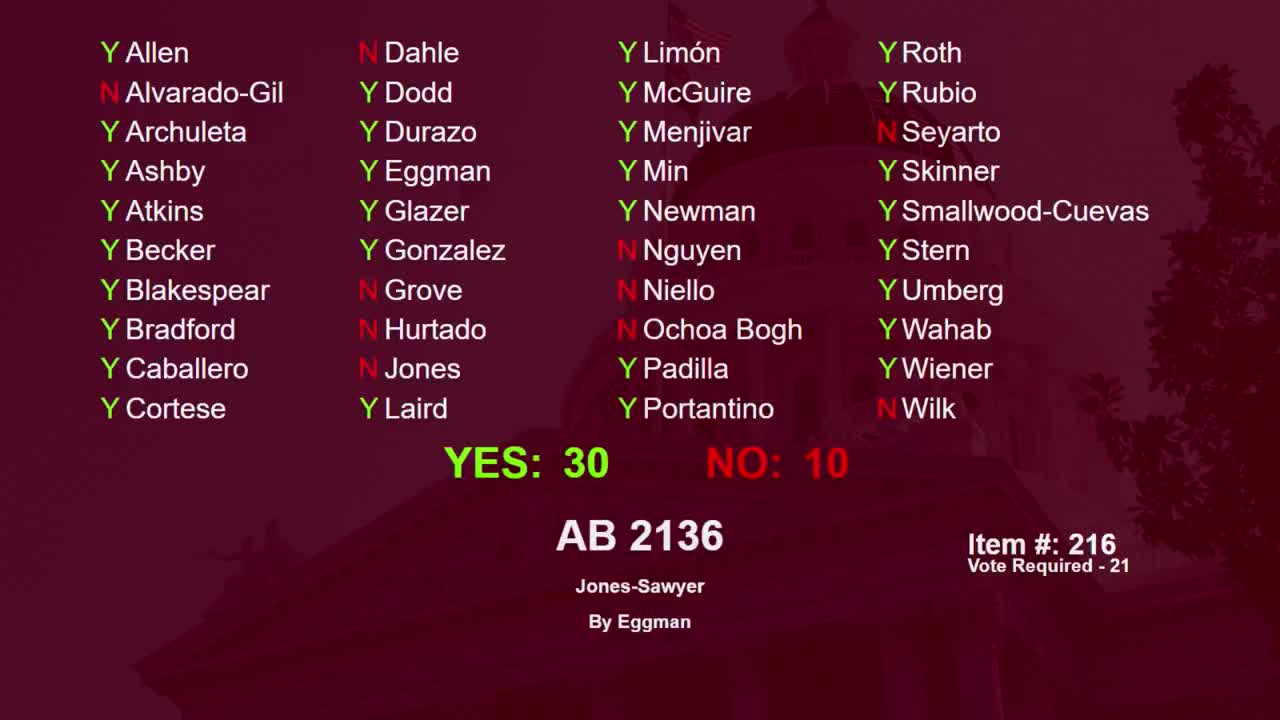 51SEC
Senate Floor
 6MIN
Assembly Standing Committee on Military and Veterans Affairs
Bill Author