AB 742: Law enforcement: police canines.
- Session Year: 2023-2024
- House: Assembly
- Latest Version Date: 2023-05-18
Current Status:
Failed
(2024-02-01: Died on inactive file.)
Introduced
In Committee
First Chamber
In Committee
Second Chamber
Enacted
Existing law authorizes a peace officer to use reasonable force to effect the arrest, to prevent escape, or to overcome resistance of an individual. Existing law requires law enforcement agencies to maintain a policy on the use of force.
Existing law prohibits the use of kinetic energy projectiles or chemical agents by any law enforcement agency to disperse any assembly, protest, or demonstration, except in compliance with specified standards.
This bill would prohibit the use of an unleashed police canine by law enforcement to apprehend a person, person unless the person is being pursued for a felony that threatened or resulted in the death of or serious bodily injury to another person and the person poses an imminent danger of death or serious bodily injury to the officer or to another person and any use of a police canine for crowd control. The bill would prohibit a police canine from being used to bite unless there is an imminent threat of death or serious bodily injury to the officer or another person by the person against whom the canine is used. The bill would attribute the death of or serious bodily injury to a person caused by a police canine to the canines handler as constituting deadly force. The bill would prohibit law enforcement agencies from authorizing any use or training of a police canine that is inconsistent with this bill.
Existing law authorizes a peace officer to use reasonable force to effect the arrest, to prevent escape, or to overcome resistance of an individual. Existing law requires law enforcement agencies to maintain a policy on the use of force.
Existing law prohibits the use of kinetic energy projectiles or chemical agents by any law enforcement agency to disperse any assembly, protest, or demonstration, except in compliance with specified standards.
This bill would prohibit the use of an unleashed police canine by law enforcement to apprehend a person, and any use of a police canine for crowd control. The bill would prohibit law enforcement agencies from authorizing any use or training of a police canine that is inconsistent with this bill.
(a)The use of police canines has been a mainstay in this countrys dehumanizing, cruel, and violent abuse of Black Americans and people of color for centuries. First used by slave catchers, police canines are a violent carry-over carryover from Americas dark past. In recent decades, they have been used in brutal attempts to quell the Civil Rights Movement, the LA Race Riots, and in response to Black Lives Matter protests. The use of police canines make makes people fear and further distrust the police, resulting in less safety and security for all, especially for communities of color.
(b)The use of police canines has severe and potentially deadly consequences for bite victims. In a Police Assessment Resource Center study of police canine bites, researchers found that bites resulted in hospital visits 67.5 percent of the time. In contrast, other uses of force, including batons and tasers, resulted in hospital visits 22 percent of the time or less. These same researchers found that police canine bites led to permanent physical disfigurement and injuries to bones, blood vessels, nerves, breasts, testicles, faces, noses, and eyes, sometimes causing blindness.
(c)Per the California Department of Justice Use of Force data from 2021, injuries caused by police canines accounted for nearly 12 percent of cases that resulted in severe injury or death. Of these cases, Black people are more than two times more likely than any other group to be subjected to this use of force.
SEC. 2.Section 13653 is added to the Penal Code, to read:13653.(a)It is the intent of the Legislature to prevent the use of police canines for the purpose of arrest, apprehension, or any form of crowd control. any form of crowd control, or to arrest or apprehend a person except to avoid the use of deadly force or to defend against a lethal threat by the person.
(b)A peace officer shall not use an unleashed police canine to arrest or apprehend a person. person unless the person is being pursued for a felony that threatened or resulted in the death of or serious bodily injury to another person and the person poses an imminent danger of death or serious bodily injury to the officer or to another person.
(c)A police canine shall not be used for crowd control at any assembly, protest, or demonstration.
(d)A police canine shall not be used in any circumstance to bite. to bite in any circumstance unless there is an imminent threat of death or serious bodily injury to the officer or another person by the person against whom the canine is used.
(e)The death of or serious bodily injury to a person caused by a police canine constitutes deadly force, as defined in Section 835a, attributable to the canines handler.
(e)(f)A law enforcement agency shall not authorize any use or training of a police canine that is inconsistent with this section.
(f)(g)This section shall not be interpreted as to prevent the use of police canines by law enforcement for purposes of search and rescue, explosives detection, and narcotics detection that do not involve biting.
(a)The use of police canines has been a mainstay in this countrys dehumanizing, cruel, and violent abuse of Black Americans and people of color for centuries. First used by slave catchers, police canines are a violent carry-over from Americas dark past. In recent decades, they have been used in brutal attempts to quell the Civil Rights Movement, the LA Race Riots, and in response to Black Lives Matter protests. The use of police canines make people fear and further distrust the police, resulting in less safety and security for all, especially for communities of color.
(b)The use of police canines has severe and potentially deadly consequences for bite victims. In a Police Assessment Resource Center study of police canine bites, researchers found that bites resulted in hospital visits 67.5 percent of the time. In contrast, other uses of force, including batons and tasers, resulted in hospital visits 22 percent of the time or less. These same researchers found that police canine bites led to permanent physical disfigurement and injuries to bones, blood vessels, nerves, breasts, testicles, faces, noses, and eyes, sometimes causing blindness.
(c)Per the California Department of Justice Use of Force data from 2021, injuries caused by police canines accounted for nearly 12 percent of cases that resulted in severe injury or death. Of these cases, Black people are more than two times more likely than any other group to be subjected to this use of force.
SEC. 2.Section 13653 is added to the Penal Code, to read:13653.(a)It is the intent of the Legislature to prevent the use of police canines for the purpose of arrest, apprehension, or any form of crowd control.
(b)A peace officer shall not use an unleashed police canine to arrest or apprehend a person.
(c)A police canine shall not be used for crowd control at any assembly, protest, or demonstration.
(d)A police canine shall not be used in any circumstance to bite.
(e)A law enforcement agency shall not authorize any use or training of a police canine that is inconsistent with this section.
(f)This section shall not be interpreted as to prevent the use of police canines by law enforcement for purposes of search and rescue, explosives detection, and narcotics detection that do not involve biting.
REVISIONS: HeadingLine 2.The Legislature finds and declares the following:
(a)The use of police canines has been a mainstay in the constant dehumanizing, cruel abuse of Black Americans and people of color in this country. Be it in response to the Black Lives Matter protests over the murder of George Floyd, during the Los Angeles Race Riots and the Civil Rights Movement, or by slave catchers, police canines are a carryover from a dark past that is not often discussed.
(b)The use of police canines has serious consequences. Research on this topic found that canine bites resulted in hospital visits 67.5 percent of the time, while other uses of force, including batons and tasers, resulted in hospital visits 22 percent of the time or less. Research has also found cases of permanent physical disfigurement and injuries to bones, blood vessels, nerves, breasts, testicles, faces, noses, and eyes, sometimes causing blindness, as a result of canine bites. Based on these findings, the researchers stated that canine bites should be considered a level of force immediately below deadly force. They equated a police canine bite to an officer swinging a baton with three-centimeter spikes attached.
(c)The use of police canines mirrors other biases in use of force by police. Per the Department of Justice Use of Force data from 2016 to 2019, inclusive, Black people are 3.5 times more likely than any other group to be subjected to use of force due to police canine use, with Hispanic people being the second most likely compared to cases involving White people at six per one million people.
SEC. 2.Section 13653 is added to the Penal Code, to read:13653.(a)It is the intent of the Legislature to prevent the use of police canines for the purpose of arrest, apprehension, or any form of crowd control.
(b)A peace officer shall not use an unleashed police canine to arrest or apprehend a person.
(c)A police canine shall not be used for crowd control at any assembly, protest, or demonstration.
(d)A police canine shall not be used in any circumstance to bite.
(e)A law enforcement agency shall not authorize any use or training of a police canine that is inconsistent with this section.
(f)This section shall not be interpreted as to prevent the use of police canines by law enforcement for purposes of search and rescue, explosives detection, and narcotics detection that do not involve biting.
|
Date
|
Status
|
|---|---|
| Feb 1, 2024 | Died on inactive file. |
| May 31, 2023 | Ordered to inactive file at the request of Assembly Member Jackson. |
| May 22, 2023 | Read second time. Ordered to third reading. |
| May 18, 2023 | From committee: Amend, and do pass as amended. (Ayes 11. Noes 4.) (May 18). |
| May 18, 2023 | Read second time and amended. Ordered returned to second reading. |
| Apr 26, 2023 | In committee: Set, first hearing. Referred to APPR. suspense file. |
| Mar 22, 2023 | Coauthors revised. |
| Mar 22, 2023 | From committee: Do pass and re-refer to Com. on APPR. (Ayes 6. Noes 2.) (March 21). Re-referred to Com. on APPR. |
| Mar 16, 2023 | Re-referred to Com. on PUB. S. |
| Mar 15, 2023 | From committee chair, with author's amendments: Amend, and re-refer to Com. on PUB. S. Read second time and amended. |
| Feb 23, 2023 | Referred to Com. on PUB. S. |
| Feb 14, 2023 | From printer. May be heard in committee March 16. |
| Feb 13, 2023 | Read first time. To print. |
|
Date
|
Description
|
Location
|
Votes
|
|
|---|---|---|---|---|
| May 18, 2023 | Do pass as amended. | Assembly Standing Committee on Appropriations |
Passed |
|
| Mar 21, 2023 | Do pass and be re-referred to the Committee on [Appropriations] | Assembly Standing Committee on Public Safety |
Passed |
This list shows positions taken on this bill by organizations on the date displayed, which is linked to the original source.
Positions by individuals are not included.
|
Organization
|
Position
|
Date
|
|---|---|---|
| Aclu California Action | ** Support | |
| Alliance San Diego | ** Support | |
| Arcadia Police Officers' Association | ** Against | |
| Asian Americans for Community Involvement | ** Support | |
| Asian Law Alliance | ** Support | |
| Association For Los Angeles Deputy Sheriffs | ** Against | |
| Association Of Orange County Deputy Sheriffs | ** Against | |
| Burbank Police Officers' Association | ** Against | |
| Cair California | ** Support | |
| California Alliance for Youth and Community Justice | ** Support | |
| California Association Of Highway Patrolmen | ** Against | |
| California Coalition of School Safety Professionals | ** Against | |
| California Fish and Game Wardens Supervisors and Managers Association | ** Against | |
| California Force Instructors' Association | ** Against | |
| California for Safety and Justice | ** Support | |
| California Fraternal Order of Police | ** Against | |
| California-Hawaii State Conference Of The Naacp | ** Support | |
| Californians United for a Responsible Budget | ** Support | |
| California Peace Officers Association | ** Against | |
| California Police Chiefs Association | ** Against | |
| California Public Defenders Association | ** Support | |
| California State Sheriffs' Association | ** Against | |
| California Statewide Law Enforcement Association | ** Against | |
| California Wildlife Officers Foundation | ** Against | |
| Care First California | ** Support | |
| Care First Kern | ** Support | |
| CLAREMONT POLICE OFFICERS ASSOCIATION | ** Against | |
| Coalition for Justice and Accountability | ** Support | |
| Communities United for Restorative Youth Justice | ** Support | |
| Corona Police Officers Association | ** Against | |
| County of San Joaquin | ** Against | |
| Culver City Police Officers' Association | ** Against | |
| Deputy Sheriffs Association of Monterey County | ** Against | |
| Drug Policy Alliance | ** Support | |
| Ella Baker Center For Human Rights | ** Support | |
| Fair Chance Project | ** Support | |
| Fullerton Police Officers' Association | ** Against | |
| Indivisible Ca Statestrong | ** Support | |
| Initiate Justice | ** Support | |
| Laguna Beach City Of | ** Against | |
| Lawyers' Committee for Civil Rights of the San Francisco Bay Area | ** Support | |
| Long Beach Police Officers Association | ** Against | |
| Los Angeles County Sheriff'S Department | ** Against | |
| los angeles school police officers association | ** Against | |
| milpa | ** Support | |
| Murrieta Police Officers' Association | ** Against | |
| NAACP Bakersfield Branch | ** Support | |
| National Police Accountability Project | ** Support | |
| Newport Beach Police Association | ** Against | |
| Pacific Juvenile Defender Center | ** Support | |
| Palos Verdes Police Officers Association | ** Against | |
| Peace Officers Research Association Of California | ** Against | |
| People's Budget Orange County | ** Support | |
| PLACER COUNTY DEPUTY SHERIFFS ASSOCIATION | ** Against | |
| Pomona Police Officers' Association | ** Against | |
| Redondo Beach Police Officers' Association | ** Against | |
| RIVERSIDE POLICE OFFICERS ASSOCIATION | ** Against | |
| Riverside Sheriffs' Association | ** Against | |
| Sacramento County Deputy Sheriffs' Association | ** Against | |
| san bernardino county sheriff's employees' benefit association | ** Against | |
| San Francisco Public Defender | ** Support | |
| San Jose Nikkei Resisters | ** Support | |
| San Jose Peace and Justice Center | ** Support | |
| Santa Ana Police Officers Association | ** Against | |
| Santa Cruz Barrios Unidos INC. | ** Support | |
| Shasta County Of | ** Against | |
| Silicon Valley De-Bug | ** Support | |
| Smart Justice California | ** Support | |
| Social Compassion In Legislation | ** Support | |
| TechEquity Collaborative | ** Support | |
| The Resistance Northridge-indivisible | ** Support | |
| Underground Grit | ** Support | |
| United States Police Canine Association | ** Against | |
| Upland Police Officers Association | ** Against | |
| Vietnamese American Roundtable | ** Support | |
| Vietnamese Voluntary Foundation | ** Support | |
| Welsh Terrier Club of Southern California | ** Against | |
| Young Women's Freedom Center | ** Support |
ASSEMBLY THIRD READING
ATR Bill Id:AB 742
Author:(Jackson)
As Amended Ver:May 18, 2023
Majority vote
SUMMARY
Prohibits the use of canines by peace officers for arrest and apprehension unless necessary to defend against an imminent threat of death or serious bodily injury, but permits their use of canines for search and rescue, explosives detection, and narcotics detection.
Major Provisions
- States it is the intent of the Legislature to prevent the use of police canines for any form of crowd control, or to arrest or apprehend a person except to avoid the use of deadly force or to defend against a lethal threat by the person.
- Prohibits a peace officer from using an unleashed police canine to arrest or apprehend a person unless the person is being pursued for a felony that threatened or resulted in the death of or serious bodily injury to another person and the person poses an imminent danger of death or serious bodily injury to the officer or to another person.
- Prohibits a police canine from being used for crowd control at any assembly, protest, or demonstration.
- Prohibits a police canine from being used to bite in any circumstance unless there is an imminent threat of death or serious bodily injury to the officer or another person by the person against whom the canine is used.
- Provides that the death of or serious bodily injury to a person caused by a police canine constitutes deadly force, as defined, attributable to the canine's handler.
- Prohibits a law enforcement agency from authorizing any use or training of a police canine that is inconsistent with any of the above.
- Provides that police canines may be used by law enforcement for purposes of search and rescue, explosives detection, and narcotics detection that do not involve biting.
- Includes legislative findings and declarations.
COMMENTS
According to the Author
"Since their inception, police canines have been used to inflict brutal violence and lifelong trauma on Black Americans and communities of color. It's time to end this cruel and inhumane practice and, instead, work towards building trust between the police and the communities they serve."
Arguments in Support
According to the American Civil Liberties Union (ACLU) California Action, the bill's sponsor, "The use of police canines has been a mainstay in this country's violent oppression of Black Americans and people of color for centuries – from their origins with slave patrols, through brutal disruptions of nonviolent protests during the Civil Rights Movement, to their present-day use of savagely attacking and killing community members and terrifying people engaging in peaceful demonstrations. In the 1980s, Los Angeles Police Department officers referred to Black suspects as 'dog biscuits,' and as recently as 2015 the US Department of Justice noted that canine units at the Ferguson Police Department exclusively bit Black people, noting that they 'appear to use canines not to counter a physical threat but to inflict punishment.' A report by special counsel to the LA County Sheriff's Department found that over a six-month period, 100 percent of the people bitten by department's canines were Black or Latino.
"According to the California Department of Justice, between 2020 and 2021 police canine units severely injured or killed more than 180 people, two-thirds of whom were unarmed, and two-thirds of whom were people of color.
"Police canines are bred and trained to ensure that their bite is far more severe than a normal dog bite; their bites have been likened to being attacked by a shark or run over by a car. These attacks often lead to permanent physical disfigurement, with injuries to bones, blood vessels, nerves, breasts, testicles, faces, noses, and eyes, sometimes causing blindness. Moreover, police canines often attack people who are surrendering or otherwise do not pose a threat – including police officers, young children, the bodies of the deceased, and people asleep in their own homes.
"These attacks fail to serve a legitimate public safety interest. Many law enforcement agencies in California do not use police dogs for arrest, apprehension, or crowd control. Those agencies do not have higher rates of police shootings, nor do they have higher rates of police officer injuries or deaths in the line of duty. Officers in those agencies are able to carry out their duties without using these brutal and unnecessary weapons. On the contrary, there is an abundance of evidence demonstrating the danger that police dogs currently pose to the safety and wellbeing of members of the public.
"Attack dogs escalate situations, making situations that could be resolved through safer methods and de-escalation more dangerous. A person who is panicked, terrified, and in pain because a dog is mauling them will not be able to listen to or comply with an officer's commands; instead, they will instinctually take action to protect themselves by pushing the dog away or using defensive force. Police interpret these natural, instinctual actions – or even people writhing in pain – as threats and reason to use even deadlier force.
"The special counsel overseeing the LA Sheriff's Department concluded that less harmful alternatives to police dogs can be used to apprehend hiding suspects – including negotiation and tear gas. Senior Sheriff's Department officials agreed that generally a suspect barricaded or hiding in a confined area like a shed or closet can be extracted without a dog bite. When police use canines to attack in these situations, they are choosing not to use tactics that could resolve a situation without injuries, and instead deploying a weapon that is guaranteed to result in serious injury or even death.
"Beyond the violence they directly inflict on their victims. police canines make people fear and distrust law enforcement, resulting in less safety and security for all, especially for communities of color. AB 742 would put an end to the serious public safety threat they pose."
Arguments in Opposition
According to the Los Angeles County Sheriff's Department, "I am in agreement with the section of the bill that seeks to prohibit the use of canines for crowd control at any assembly, protest, or demonstration. In fact, my current policy resembles this prohibition. However, I cannot support a bill that severely restricts an officer's ability to employ a proven, effective, and less lethal force option that can de-escalate other potentially life-threatening situations.
"In expressing the need for this bill, you refer to a Bloomberg news article that in turn refers to a Police Assessment Resource Center (PARC) report published 10 years ago that studied the use of canines in my department. At the time, PARC was a non-profit organization focused on the oversight of police activities.
"Although the PARC report suggested the need to re-evaluate our use of canines, the report in no way suggested a sweeping ban on the use of police canines. In fact, to the contrary, the report highlighted the benefits of the use of police canines. The report stated, 'Canines are a use of force tool that can play an important role in crisis situations, primarily where a dangerous suspect is hiding from deputies. Used properly, this tool can greatly enhance the efficiency of resolving the crisis, prevent deputy-involved shootings, and improve officer safety.'
"The PARC report went on to issue a caution and note, 'The ease of releasing a dog to go bite someone, however, is partly what led the overuse of canines in years past. The severity of a dog bite as a consequence, when compared to a youth joy riding in a car, or someone just running away from officers after committing a low-level crime, has never added up. For this reason, and as the direct result of our negotiations with the LASD, in 1994 the Department drafted its Field Operations Directive to limit the use of canines, and to bring clarity about when they can be used. According to the Directive, canines are only deployed in instances that include, "Searches for felony suspects, or armed misdemeanor suspects, who are wanted for SERIOUS crimes and the circumstances of the situation, present a clear danger to deputy personnel who would otherwise conduct a search without a canine."'
"The preservation and reverence of human life is one of the core values of any officer. The use of a law enforcement canine and its handler in situations that warrant deployment offers one of the best chances to honor that value. Like any less lethal option, a law enforcement canine is unlikely to directly bring about the death of a suspect. Additionally, the use of a canine enhances officer safety, since any ambush planned by the suspect would not have a human law enforcement officer as its first target.
"My canine deployment policies reflect an understanding of the severe consequences the use of a law enforcement canine may cause. Our canine unit deployments are limited to searches for armed suspects, those who are wanted for serious or violent felonies, and/or where the circumstances of the situation would present a clear physical danger to the law enforcement personnel who would otherwise conduct a search without a canine.
"Our canine units are only deployed after extensive verbal warnings and announcements are given to the suspect, bystanders, and surrounding residents that a canine unit will be deployed. The Los Angeles County Sheriff's Department plays pre-recorded announcements in both English and Spanish by way of loudspeaker public address systems located in our patrol vehicles and helicopters. We supplement those announcements by requiring the canine handler to repeat the announcements and warnings at the entrance to each property or building prior to the search whenever it is practical to do so. All of that is done in the hopes that an incident can be resolved without incident.
"Often, the mere presence (both audible and visible) of the canine is enough to dissuade criminal acts or compel a suspect in hiding to surrender without incident. In those instances, the canine's intrinsic value as a de-escalation tool, and a means to obtain a peaceful resolution to a potentially life-threatening situation are most apparent.
"AB 742 would eliminate the use of a less lethal force option that has proven to save lives. It would lessen the chance that a dangerous offender might be taken in safely and would deny yet another measure of personal protection from the men and women who have sworn to uphold the laws of this state."
FISCAL COMMENTS
According to the Assembly Appropriations Committee:
- Minor, likely absorbable costs (General Fund) to the Commission on Peace Officer Standards and Training Commission (POST) to ensure canine training conforms to the requirements of this bill, and provide updates to law enforcement agencies about this change in law.
- One-time local costs (General Fund/local funds) of an unknown amount to law enforcement agencies that use police canines. Those agencies will need to conform their policies and trainings to the requirements of this bill. Local costs to comply with this bill would be subject to reimbursement by the state to the extent that the Commission on State Mandates determines this bill imposes a state-mandated local program.
VOTES
ASM PUBLIC SAFETY: 6-2-0
YES: Jones-Sawyer, Bonta, Bryan, Ortega, Santiago, Zbur
NO: Alanis, Lackey
ASM APPROPRIATIONS: 11-4-1
YES: Holden, Bryan, Calderon, Wendy Carrillo, Mike Fong, Hart, Lowenthal, Papan, Pellerin, Weber, Ortega
NO: Megan Dahle, Dixon, Mathis, Sanchez
ABS, ABST OR NV: Robert Rivas
UPDATED
VERSION: May 18, 2023
CONSULTANT: Andrew Ironside / PUB. S. / (916) 319-3744 FN: 0000829
Date of Hearing: April 26, 2023
ASSEMBLY COMMITTEE ON APPROPRIATIONS
Chris Holden, Chair
ABPCA Bill Id:AB 742
Author:(Jackson) – As Amended Ver:March 15, 2023
Policy Committee: | Public Safety | Vote: | 6 - 2 |
|
| ||
|
|
Urgency: No State Mandated Local Program: No Reimbursable: No
SUMMARY:
This bill prohibits the use of police canines by peace officers in specified circumstances.
Specifically, this bill:
- Prohibits a peace officer from using an unleashed police canine to arrest or apprehend a person.
- Prohibits use of a police canine for crowd control at assemblies, protests, and demonstrations.
- Prohibits use of a police canine to bite.
- Prohibits law enforcement agencies from authorizing any use or training of a police canine that is inconsistent with the above prohibitions.
FISCAL EFFECT:
- One-time costs around $1,200,000 (General Fund) to the California Highway Patrol (CHP) to decommission dual-purpose canines and purchase, train, and certify new canines for detection purposes. CHP currently has 46 dual-purpose canines that are trained in both detection and apprehension. To ensure that these canines do not engage in apprehension activities prohibited by this bill, CHP anticipates retiring and rehousing its existing dual-purpose canines, and replacing them with canines that are trained only for detection.
- Minor, likely absorbable costs (General Fund) to the Commission on Peace Officer Standards and Training Commission (POST) to ensure canine training conforms to the requirements of this bill, and provide updates to law enforcement agencies about this change in law.
- One-time local costs (General Fund/local funds) of an unknown amount to law enforcement agencies that use police canines to conform their policies and trainings to this bill. Local costs to comply with this bill would be subject to reimbursement by the state to the extent that the Commission on State Mandates determines this bill imposes a state-mandated local program.
COMMENTS:
- Author’s Statement. According to the author:
Since their inception, police canines have been used to inflict brutal violence and lifelong trauma on Black Americans and communities of color. It’s time to end this cruel and inhumane practice and, instead, work towards building trust between the police and the communities they serve.
- Use and Oversight of Police Canines. Police canines used for apprehension are considered a less-than-lethal use of force option for peace officers to deploy when trying to arrest or apprehend a suspect. However, police canines’ bites are very powerful, and have resulted in serious injuries to those they bite. In general, police use of force is disproportionately deployed against people of color, particularly Black people. As pointed out in the analysis of this bill by the Assembly Committee of Public Safety, the lack of statewide data on use of police canines makes it difficult to analyze and evaluate outcomes from canine use in the aggregate. Unlike other types of use of force by peace officers, there are no uniform, statewide standards that govern use of police canines for apprehension. POST has developed guidelines for minimum training and performance standards for police canine patrol and detection, but the guidelines are voluntary and were specifically designed to accommodate the varying operational policies of law enforcement agencies. Individual law enforcement agencies may develop their own policies to govern use of police canines and related training. As a result, police canine policies may vary among agencies, and are not subject to statewide standards or oversight.
This bill prohibits use of unleashed police canines for arrest or apprehension, prohibits use of police canines for crowd control in specified circumstances, and prohibits use of police canines to bite in any circumstance. Additionally, the bill prohibits law enforcement agencies from authorizing any use or training of a police canine that is inconsistent with these prohibitions. The bill specifies that it does not prohibit use of police canines for non-biting purposes, including search and rescue, explosives detection, and drug detection, so law enforcement agencies may continue using canines for those purposes. Although the costs resulting from this bill are somewhat uncertain, state costs are likely to be lower than for prior legislation limiting police use of force because there are no mandatory statewide trainings that must be updated or administered as a result of this bill, and not all local law enforcement agencies use police canines.
- Statement in Support. According to Californians for Safety and Justice:
According to the California Department of Justice, in 2021 police canine units severely injured or killed nearly 80 people – more than batons, Tasers, or any other weapons besides firearms. Police canines are bred and trained to ensure that their bite is far more severe than a normal dog bite; their bites have been likened to being attacked by a shark or run over by a car. These attacks often lead to permanent physical disfigurement, with injuries to bones, blood vessels, nerves, breasts, testicles, faces, noses, and eyes, sometimes causing blindness. Moreover, police canines often bite people who are surrendering or otherwise do not pose a threat – including police officers, young children, and people asleep in their homes. These attacks fail to serve a legitimate public safety interest; on the contrary, they make situations that could be resolved through safer methods and de-escalation more dangerous. [footnotes omitted]
- Statement in Opposition. According to the Association for Los Angeles Deputy Sheriffs:
Police K-9 units are a critical and invaluable non-lethal force option and an effective de-escalation tool. If K- 9 units are eliminated as a force option for police, California law enforcement agencies will lose a specialized and extremely effective de-escalation tool in the use of force continuum. K-9 units are typically deployed in situations which limit risk and danger to their human counterparts. Importantly, K-9’s are also the only remaining force option which can be “recalled” or “called off” after being deployed but prior to an apprehension…Despite the claims of the proponents, strong accountability already exists amongst California law enforcement agencies preventing the use of K9s in low-level arrests or non-violent arrests. Additionally, the use of K9s in law enforcement undoubtedly de-escalates most use-of-force incidents, keeping police officers and community members safe, and help to avoid the use of deadly force by providing a less-lethal option.
- Prior Legislation. AB 1196 (Gipson) Chapter 324, Statutes of 2020, prohibited law enforcement agencies from authorizing use of carotid restraints and choke holds.
AB 490 (Gipson) Chapter 407, Statutes of 2021, prohibited law enforcement agencies from authorizing techniques or transport methods that involve a substantial risk of positional asphyxia.
AB 392 (Weber) Chapter 170, Statutes of 2019, revised standards for use of deadly force by peace officers.
Analysis Prepared by: Annika Carlson / APPR. / (916) 319-2081
Date of Hearing: March 21, 2023
Counsel: Andrew Ironside
ASSEMBLY COMMITTEE ON
Reginald Byron Jones-Sawyer, Sr., Chair
ABPCA Bill Id:
Author:() – As Ver:
SUMMARY:
Prohibits the use of canines by peace officers for arrest and apprehension, or in any circumstances to bite a person, but permits their use of canines for search and rescue, explosives detection, and narcotics detection. Specifically, this bill:
- States it is the intent of the Legislature to prevent the use of police canines for the purpose of arrest, apprehension, or any form of crowd control.
- Prohibits a peace officer from using an unleashed police canine to arrest or apprehend a person.
- Prohibits a police canine from being used for crowd control at any assembly, protest, or demonstration.
- Prohibits a police canine from being used in any circumstance to bite.
- Prohibits a law enforcement agency from authorizing any use or training of a police canine that is inconsistent with any of the above.
- Provides that police canines may be used by law enforcement for purposes of search and rescue, explosives detection, and narcotics detection that do not involve biting.
- Includes legislative findings and declarations.
EXISTING LAW:
- Authorizes a peace officer who has reasonable cause to believe that person to be arrested has committed a public offense to use objectively reasonable force to effect the arrest, to prevent escape, or to overcome resistance. (Pen. Code, § 835a, subd. (b).)
- Authorizes a peace officer to use deadly force when the officer believes, based on the totality of the circumstances, that such force is necessary for either of the following reasons:
- To defend against an imminent threat of death or serious bodily injury to the officer or to another person; or,
- To apprehend a fleeing person for any felony that threatened or resulted in death or serious bodily injury, if the officer reasonably believes that the person will cause death or serious bodily injury to another unless immediately apprehended. Where feasible, a peace officer shall, prior to the use of force, make reasonable efforts to identify themselves as a peace officer and to warn that deadly force may be used, unless the officer has objectively reasonable grounds to believe the person is aware of those facts. (Pen. Code, § 835a, subd. (c)(1)(A) & (B).)
- To defend against an imminent threat of death or serious bodily injury to the officer or to another person; or,
- Prohibits a peace officer from using deadly force against a person based on the danger that person poses to themselves, if an objectively reasonable officer would believe the person does not pose an imminent threat of death or serious bodily injury to the peace officer or to another person. (Pen. Code, § 835a, subd. (c)(2).)
- Defines “deadly force” as any use of force that creates a substantial risk of causing death or serious bodily injury, including, but not limited to, the discharge of a firearm. (Pen. Code, § 835a, subd. (e)(1).)
- Provides that an arrest is made by an actual restraint of the person, or by submission to the custody of an officer, and that the person arrested may be subjected to such restraint as is reasonable for their arrest and detention. (Pen. Code, § 835.)
- Permits a peace officer who authorized to make an arrest and who has stated their intention to do so, to use all necessary means to effect the arrest if the person to be arrested either flees or forcibly resists. (Pen. Code, § 843.)
FISCAL EFFECT:
Unknown
COMMENTS:
- Author's Statement: According to the author, “Since their inception, police canines have been used to inflict brutal violence and lifelong trauma on Black Americans and communities of color. It's time to end this cruel and inhumane practice and, instead, work towards building trust between the police and the communities they serve.”
- Police Canine Use and Deployment Policies: Law enforcement agencies view the use of police canines as indispensable to protecting the public and law enforcement personnel. According the Los Angeles County Sheriff’s Department,
The prompt and proper utilization of a trained canine team has proven to be a valuable use of a unique resource in law enforcement. When properly used, a canine team greatly increases the degree of safety to citizens within a contained search area, enhances individual officer safety, significantly increases the likelihood of suspect apprehension, and dramatically reduces the amount of time necessary to conduct a search.
(Field Operations Direction (FOD): 86-037 Canine Deployment, Search and Force Policy, at p. 2; see also VanSickle et al., When Police Violence Is a Dog Bite, The Marshall Project (Oct. 2, 2020) <https://www.themarshallproject.org/2020/10/02/when-police-violence-is-a-dog-bite> [last viewed Mar. 16, 2023] [a joint investigation with USA Today, AL.com, and the Invisible Institute] and Kaste, Videos Reveal A Close, Gory View of Police Dog Bites, NPR (Nov. 20, 2017) <https://www.npr.org/2017/11/20/563973584/videos-reveal-a-close-gory-view-of-police-dog-bites> [last visited Mar. 16, 2023].) Despite their importance to law enforcement, the state has offered very little direction to local law enforcement on the use and deployment of police canines.
The Commission on Peace Officer Standards and Training (POST) has minimum training and performance standards for police canines. According to POST, “Patrol K-9 teams should meet minimum standards with regards to obedience, search, apprehension, and handler protection.” (POST Law Enforcement K-9 Guidelines, p. xiii <https://post.ca.gov/Portals/0/post_docs/publications/K-9.pdf> [last viewed Mar. 16, 2023].) POST apprehension guidelines require, “[u]nder the direction of the handler and while off leash, the K-9 will pursue and apprehend a person acting as a ‘suspect’ (agitator/decoy).” It adds, “The K-9 team will demonstrate a pursuit and call off prior to apprehension. On command from the handler, the K-9 will pursue and apprehend the agitator/decoy. From a reasonable distance and on verbal command only, the K-9 will cease the apprehension.” (Id. at p. 2.) POST detection guidelines advise “[t]he evaluator [to] be fully apprised of the pertinent agency policies and regulations prior to commencement of the exercise. The ‘correct’ response or reach of the handler, the dog, or the two acting together, may differ from agency to agency, based on prevailing agency policy.” (Id. at 5.) The detection exercise duplicates the apprehension procedure, “except in [the detection] scenario the agitator/decoy will not stop and the handler will send the dog to pursue, contact, and apprehend the agitator decoy.” (Ibid.) The exercise requires the police canine to “contact and control the agitator/decoy until called off by the handler.” (Ibid.) “During the apprehension and on verbal command only from the handler, the dog will disengage the contact.” (Ibid.)
These limited training and guidelines leave local law enforcement agencies to come up with their own use and deployment practices and procedures. Some agencies have limited the use of police canines. The Oakland Police Department, for example, provides that a police canine may be used “[t]o search for and assist in the apprehension of criminal suspects when there is reasonable suspicion to believe they committed a forcible violent crime, burglary, or a weapon-related offense”; or “[t]o pursue and apprehend criminal suspects who are attempting to actively evade arrest” for a forcible violent crime, burglary, or a weapon-related offense.” (Office of Chief of Police, Oakland Police Department, Revised DGO K-9, Department Canine Program (Aug. 1, 2006) p. 1 <http://www2.oaklandnet.com/oakca1/groups/police/documents/webcontent/oak059998.pdf> [last visited Mar. 16, 2023] [emphasis in original].)
Similarly, the Los Angeles County Sheriff’s Department provides for police canine deployment for “[s]earches for felony suspects, or armed misdemeanor suspects, who are wanted for SERIOUS crimes and the circumstances of the situation presents a clear danger to deputy personnel who would otherwise conduct a search without a canine.” (FOD: 86-037, supra, at p. 2 [emphasis in original].) The department’s guidelines further provide, “Searches for suspects wanted for Grand Theft Auto shall be limited to those who are reasonably believed to be adults, and are reasonably believed to be the driver of a confirmed stolen vehicle.” (Ibid.) Despite these limitations, the Special Counsel to the department recommended “winnowing the list of crimes for which canines should be used.” (33rd Semiannual Report of Special Counsel, Los Angeles County Sheriff’s Department (Sept. 2013) p. 14 <https://scvtv.com/pdf/lasd100713.pdf> [last visited Mar. 16, 2023].)
Would more robust statewide training and guidelines reduce the number and severity of injuries from police canine bites?
- Past Use of Police Dogs: In July 2022, the California Task Force to Study and Develop Reparations Proposals for African Americans issued an interim report documenting the history of, among other things, the enslavement, racial terror, political disenfranchisement, and mistreatment of African Americans in the justice system. The report briefly discussed the role of police dogs in that history:
Slave patrols also used dogs to attack enslaved people by biting them but also to instill fear, and used bloodhounds to track down enslaved people. Freedom seekers learned to run without shoes and put black pepper in their socks to make the slave patrols’ bloodhounds sneeze and throw them off their scent.
Much like slave patrols, police have continued to use dogs against African Americans in the 20th century through the present. Police used dogs against demonstrators during the civil rights movement. The United States Department of Justice noted in its 2015 report that the Ferguson Police Department “exclusively set their dogs against black individuals, often in cases where doing so was not justified by the danger presented.” In Baton Rouge, Louisiana, police dogs bit at least 146 people from 2017 to 2019 and almost all of whom were Black…
In the 1980s, the Los Angeles Police Department, which is the largest police department in California and one of the largest in the country, referred to Black suspects as “dog biscuits.” Victims of police dogs sued and alleged that the department disproportionately used dogs in minority neighborhoods, which resulted in police dogs inflicting 90 percent of their reported bites on African Americans or Latinos. In 2013, the Special Counsel to the Los Angeles County Sheriff’s Department, which is the largest sheriff’s department in California and the country, found that African Americans and Latinos comprised 89 percent of the total individuals who were bitten by the department’s dogs from 2004 to 2012. During the same time, the Special Counsel found that the number of African Americans that police dogs bit increased 33 percent.
(California Task Force to Study and Develop Reparations Proposals for African Americans, Interim Report (June 2022) p. 376, 380 < https://oag.ca.gov/system/files/media/ab3121-reparations-interim-report-2022.pdf> [last visited Mar. 16, 2023].)
There remain “stark racial disparities in police interactions and use of force, particularly for Black people.” (Premkumar et al., Police Use of Force and Misconduct in California, PPIC (Oct. 2021) <https://www.ppic.org/publication/police-use-of-force-and-misconduct-in-california/> [last visited Mar. 16, 2023].)
- Department of Justice Data on Use of Force Incidents Involving Police Canines: According to data collected by the DOJ’s Criminal Justice Statistics Center, law enforcement used a police canine in a use of force incident that resulted in serious bodily injury or death 76 times in 2020, accounting for 10.2% of the total such use of force incidents by law enforcement.[1] (DOJ, Use of Force Incident Reporting (2021) p. 30 <https://data-openjustice.doj.ca.gov/sites/default/files/2022-08/USE OF FORCE 2020.pdf> [last visited Mar. 15, 2023].) Of those 76 incidents, 49 were against persons of color—9 Black individuals, 33 Hispanic individuals, 3 Asian/Pacific Islander individuals, and 2 multi-race individuals. (Id. at 34 [2 individuals are identified as “other”].) In 29 of the 76 incidents, the officer did not perceive that the civilian was armed. (Id. at 37.) The civilian was later confirmed armed in 24 of the 76 of incidents. (Id. at 39.) In two incidents, the civilian did not resist. (Id. at 40.)
Moreover, according to the raw data on use of force incidents in 2020, 14 use of force incidents involving canine contact also involved the discharge of a firearm by the officer, six of which resulted in fatalities and three of which resulted in critical or serious injuries. Of those 14 incidents involving the use of both a canine and a firearm, eight were against people of color. (2020 URSUS Use of Force Data.)
In 2021, law enforcement used a canine in a use of force incident that resulted in serious bodily injury or death 77 times, or 11.7% of the total use of force incidents by law enforcement against a civilian. (DOJ, Use of Force Incident Reporting (2021) p. 31 <https://data-openjustice.doj.ca.gov/sites/default/files/2022-08/USE OF FORCE 2021.pdf> [last visited Mar. 15, 2023].) Of those 77 incidents, 50 were against persons of color—13 Black individuals, 36 Hispanic individuals, and 1 American Indian individual. (Id. at 35.) In 37 of the 77 incidents, the officer did not perceive that the civilian was armed. (Id. at 38.) The civilian was later confirmed armed in 27 of the 77 incidents. (Id. at 39.) In five of those incidents the civilian did not resist. (Id. at 40.) - Police Canine Bites: Given the history and contemporary uses of police canines by law enforcement, the question is whether this particular law enforcement tool is unique.
Police canines are considered less than lethal. Law enforcement hopes that the presence of a canine will de-escalate a situation by intimidating the sought individual with the threat of a canine attack. The fear is supposed to make the person submit. If they do not surrender, and occasionally even when they do, law enforcement releases the canine who subdues the individual by biting them.
According to canine handlers, a police canine’s bite should not cause serious injury. (VanSickle et al., supra.) However, as one report observed, “police videos shows some officers using biting dogs against people who show minimal threat to officers, and a degree of violence that would be unacceptable if inflicted directly by the officers.” (Kaste, supra.).) A police canine’s bite causes more damage than a domestic dog bite. According to one study, “Police dog bite victims were usually bitten multiple times…were bitten more often in the head, neck, chest, and flank. They were hospitalized more often, underwent more operations and had more invasive diagnostic tests.” (https://www.sciencedirect.com/science/article/pii/S1572346106000596.)
Indeed, police canine bites are “strong enough to punch through sheet metal” and have been compared to shark attacks. (VanSickle et al., supra.) One article argued that “the police canine needs to be reconceptualized as the physical equivalent of a police baton with spikes three centimeters in length, the approximate length of German Shepherd teeth (i.e., a spiked impact weapon capable of sustained puncturing, compression-pressure, pulling and tearing).” (McCauley et al., The Police Canine Bite: Force, Injury, and Liability, The Center for Research in Criminology (Nov. 2008) <k9-crc-report-11-08-final-for-pds_1_.pdf (iup.edu)> [last visited Mar. 16, 2023].) By comparison, for the purpose of DOJ use of force investigations, a deadly weapon includes a billy or blackjack. (Gov. Code, § 12525.3, subd. (a)(1).)
Moreover, individuals suspected of a crime are not the only ones injured by police canines. Occasionally, a police canine bites an individual who is not a suspect of a crime. (VanSickle et al., supra.) Sometimes, a law enforcement officer is the victim. According to NPR, “In 2016, California's workers compensation system recorded 190 law enforcement officers reporting on-the-job injuries involving police dogs.” (Kaste, supra.) - Lack of Comprehensive Data: Efforts to examine the effect and scope of police canine use by law enforcement agencies are stymied by a familiar problem: insufficient data. There currently is no statewide data on the use of police canines. No entity is charged with collecting information that would help contextualize existing practices.
For example, supporters and opponents of the use of police canines by law enforcement dispute the effectiveness of call-off procedures. Police dog-handlers “point out that a dog can be called back after it's been unleashed — unlike the deployment of a Taser or the firing of a gun.” (Kaste, supra.) Indeed, the Los Angeles County Sheriff’s Department reasonably requires a handler to “call off the dog at the first moment the canine can be safely released.” (FOD: 86-037, supra, at p. 2.)
But opponents point to instances where police canines do not obey call-off commands by their handlers. One report states, “Although training experts said dogs should release a person after a verbal command, we found dozens of cases where handlers had to yank dogs off, hit them on the head, choke them or use shock collars.” (VanSickle et al., supra.) According to another, “Privately, handlers often talk about having trouble getting a dog to ‘out,’ or open its jaws. It's a concern that comes up on discussion boards, and in this K9 training video.” (Kaste, supra.)
Law enforcement does not appear to collect data on the frequency with which police canines obey call-off commands. Some agencies require officers to document how long a bite lasted, but that does not appear to be a consistent practice throughout the state. (See FOD: 86-037, supra, at p. 2 [providing that “[w]ithout exception, a reference to the duration of the canine’s contact with a suspect shall be included in the handler’s supplemental report”].)
Would robust data collection and comparative analyses of different agencies’ protocols assist in the development of policies and procedure that would limit the use of police canines to a handful of cases when their use is most justifiable? - Bans on Use of Force by Law Enforcement: The legislature has acted to limit the authority of law enforcement to use specific types of force. Following the death of George Floyd in Minneapolis, MN, California banned the use of carotid restraint control holds by law enforcement. (Gov. Code, § 7286.5; AB 96 (Gipson), Chapter 324, Statutes of 2020.) According to the DOJ’s Use of Force Incident Reporting data, these holds resulted in serious bodily injury or death at similar rates as police canines, and the racial disparities among those who suffered the injuries mirrored those of police canines. For example, of the 60 carotid restraint hold incidents in the year before the ban, 37 were used on people of color (DOJ, Use of Force Incident Reporting (2019) p. 34 <https://data-openjustice.doj.ca.gov/sites/default/files/2022-08/USE OF FORCE 2019.pdf> [last visited Mar. 15, 2023].)
- Arguments in Support:
- According to the American Civil Liberties Union (ACLU) California Action, the bill’s sponsor, “The use of police canines has been a mainstay in this country's violent oppression of Black Americans and people of color for centuries – from their origins with slave patrols, through brutal disruptions of nonviolent protests during the Civil Rights Movement, to their present-day use of savagely attacking and killing community members and terrifying people engaging in peaceful demonstrations. In the 1980s, Los Angeles Police Department officers referred to Black suspects as ‘dog biscuits,’ and as recently as 2015 the US Department of Justice noted that canine units at the Ferguson Police Department exclusively bit Black people, noting that they ‘appear to use canines not to counter a physical threat but to inflict punishment.’ A report by special counsel to the LA County Sheriff’s Department found that over a six-month period, 100 percent of the people bitten by department’s canines were Black or Latino.
“According to the California Department of Justice, between 2020 and 2021 police canine units severely injured or killed more than 180 people, two-thirds of whom were unarmed, and two-thirds of whom were people of color.
“Police canines are bred and trained to ensure that their bite is far more severe than a normal dog bite; their bites have been likened to being attacked by a shark or run over by a car. These attacks often lead to permanent physical disfigurement, with injuries to bones, blood vessels, nerves, breasts, testicles, faces, noses, and eyes, sometimes causing blindness. Moreover, police canines often attack people who are surrendering or otherwise do not pose a threat – including police officers, young children, the bodies of the deceased, and people asleep in their own homes.
“These attacks fail to serve a legitimate public safety interest. Many law enforcement agencies in California do not use police dogs for arrest, apprehension, or crowd control. Those agencies do not have higher rates of police shootings, nor do they have higher rates of police officer injuries or deaths in the line of duty. Officers in those agencies are able to carry out their duties without using these brutal and unnecessary weapons. On the contrary, there is an abundance of evidence demonstrating the danger that police dogs currently pose to the safety and wellbeing of members of the public.
“Attack dogs escalate situations, making situations that could be resolved through safer methods and de-escalation more dangerous. A person who is panicked, terrified, and in pain because a dog is mauling them will not be able to listen to or comply with an officer’s commands; instead, they will instinctually take action to protect themselves by pushing the dog away or using defensive force. Police interpret these natural, instinctual actions – or even people writhing in pain – as threats and reason to use even deadlier force.
“The special counsel overseeing the LA Sheriff’s Department concluded that less harmful alternatives to police dogs can be used to apprehend hiding suspects – including negotiation and tear gas. Senior Sheriff’s Department officials agreed that generally a suspect barricaded or hiding in a confined area like a shed or closet can be extracted without a dog bite. When police use canines to attack in these situations, they are choosing not to use tactics that could resolve a situation without injuries, and instead deploying a weapon that is guaranteed to result in serious injury or even death.
“Beyond the violence they directly inflict on their victims. police canines make people fear and distrust law enforcement, resulting in less safety and security for all, especially for communities of color. AB 742 would put an end to the serious public safety threat they pose.” - According to the California Public Defenders Association: “Police canines have been used against Black Americans at rates far higher than any other population nationally and in California. A study of the use of police dogs by the Los Angeles Police Department showed that canines in the Los Angeles area were leveled solely against people of color for the first six months of 2013, and that the bite ratios against Blacks and Latinos remain disproportionately high. The Journal of Forensic and Legal Medicine last reported that Black people are disproportionately injured by police dogs in the U.S. According to the Marshall Project, police canines have mauled and even killed people who died from their injuries including an 89 year old Filipino man in his own backyard in Hayward, California.
“An article in the New Yorker magazine from March of 2015 offered one possible explanation of why this occurs. “(T)here is one social ill that all detection dogs, even the poorly trained ones, reveal with searing accuracy: the hidden racial prejudices of the police officers who deploy them.” Whatever the reason or explanation, it is simply unacceptable we permit law enforcement to use canines to attack citizens of this state.
“AB 742 is a beginning. While it will not prohibit law enforcement from using canines in investigations, it requires that canines be on leashes and not be used to control crowds.”
- According to the American Civil Liberties Union (ACLU) California Action, the bill’s sponsor, “The use of police canines has been a mainstay in this country's violent oppression of Black Americans and people of color for centuries – from their origins with slave patrols, through brutal disruptions of nonviolent protests during the Civil Rights Movement, to their present-day use of savagely attacking and killing community members and terrifying people engaging in peaceful demonstrations. In the 1980s, Los Angeles Police Department officers referred to Black suspects as ‘dog biscuits,’ and as recently as 2015 the US Department of Justice noted that canine units at the Ferguson Police Department exclusively bit Black people, noting that they ‘appear to use canines not to counter a physical threat but to inflict punishment.’ A report by special counsel to the LA County Sheriff’s Department found that over a six-month period, 100 percent of the people bitten by department’s canines were Black or Latino.
- Arguments in Opposition:
- According to the Los Angeles County Sheriff’s Department, “I am in agreement with the section of the bill that seeks to prohibit the use of canines for crowd control at any assembly, protest, or demonstration. In fact, my current policy resembles this prohibition. However, I cannot support a bill that severely restricts an officer’s ability to employ a proven, effective, and less lethal force option that can de-escalate other potentially life-threatening situations.
“In expressing the need for this bill, you refer to a Bloomberg news article that in turn refers to a Police Assessment Resource Center (PARC) report published 10 years ago that studied the use of canines in my department. At the time, PARC was a non-profit organization focused on the oversight of police activities.
“Although the PARC report suggested the need to re-evaluate our use of canines, the report in no way suggested a sweeping ban on the use of police canines. In fact, to the contrary, the report highlighted the benefits of the use of police canines. The report stated, ‘Canines are a use of force tool that can play an important role in crisis situations, primarily where a dangerous suspect is hiding from deputies. Used properly, this tool can greatly enhance the efficiency of resolving the crisis, prevent deputy-involved shootings, and improve officer safety.’
“The PARC report went on to issue a caution and note, ‘The ease of releasing a dog to go bite someone, however, is partly what led the overuse of canines in years past. The severity of a dog bite as a consequence, when compared to a youth joy riding in a car, or someone just running away from officers after committing a low-level crime, has never added up. For this reason, and as the direct result of our negotiations with the LASD, in 1994 the Department drafted its Field Operations Directive to limit the use of canines, and to bring clarity about when they can be used. According to the Directive, canines are only deployed in instances that include, “Searches for felony suspects, or armed misdemeanor suspects, who are wanted for SERIOUS crimes and the circumstances of the situation, present a clear danger to deputy personnel who would otherwise conduct a search without a canine.”’
“The preservation and reverence of human life is one of the core values of any officer. The use of a law enforcement canine and its handler in situations that warrant deployment offers one of the best chances to honor that value. Like any less lethal option, a law enforcement canine is unlikely to directly bring about the death of a suspect. Additionally, the use of a canine enhances officer safety, since any ambush planned by the suspect would not have a human law enforcement officer as its first target.
“My canine deployment policies reflect an understanding of the severe consequences the use of a law enforcement canine may cause. Our canine unit deployments are limited to searches for armed suspects, those who are wanted for serious or violent felonies, and/or where the circumstances of the situation would present a clear physical danger to the law enforcement personnel who would otherwise conduct a search without a canine.
“Our canine units are only deployed after extensive verbal warnings and announcements are given to the suspect, bystanders, and surrounding residents that a canine unit will be deployed. The Los Angeles County Sheriff’s Department plays pre-recorded announcements in both English and Spanish by way of loudspeaker public address systems located in our patrol vehicles and helicopters. We supplement those announcements by requiring the canine handler to repeat the announcements and warnings at the entrance to each property or building prior to the search whenever it is practical to do so. All of that is done in the hopes that an incident can be resolved without incident.
“Often, the mere presence (both audible and visible) of the canine is enough to dissuade criminal acts or compel a suspect in hiding to surrender without incident. In those instances, the canine’s intrinsic value as a de-escalation tool, and a means to obtain a peaceful resolution to a potentially life-threatening situation are most apparent.
“AB 742 would eliminate the use of a less lethal force option that has proven to save lives. It would lessen the chance that a dangerous offender might be taken in safely and would deny yet another measure of personal protection from the men and women who have sworn to uphold the laws of this state.” - According to the Redondo Beach Police Officers’ Association: “Canine training and use in California are fairly standardized across the State. The California Commission on Peace Officer Standards and Training (POST) has certification standards that all canines must pass once per year and a recommended training standard of 16 hours per month.
“This bill states in part, " ... be it in response to the Black Lives Matter protests over the murder of George Floyd, during the Los Angeles Race Riots and the Civil Rights Movement, or by slave catchers, police canines are a carryover from a dark past that is not often discussed." There is no argument that the use of dogs in the south during the civil rights movement was abhorrent. However, California in 2023 is not Selma, Alabama, in 1964. As a matter of training, police departments are not currently training police canine teams in tactics related to using police canines for crowd control purposes. There is no curriculum taught in basic police canine school, nor are there any classes or training associated with using police canines for crowd control purposes. There are many reasons for this.
“First and foremost, police canines are not an efficient or appropriate tool for riot control or crowd control purposes. Los Angeles Police Department policy prohibits canines from crowd control, and they were not used during the protests and riots described in the bill. Most Police Departments did not use canines until the 1980s, well after the civil rights marches.
“There is strong legislation today related to combatting bias in policing in California. Removing a de-escalation tool from officers' options, thus decreasing the options available to bring a potentially violent incident to a safe conclusion, does not remove alleged racially biased policing. Continued training combats bias in policing. Removing a tool like a police canine will only lead to more dangerous interactions between the police and violent offenders.
“Another section of the bill states "Per the California Department of Justice Use of Force data from 2021, injuries caused by police canines accounted for nearly 12 percent of cases that resulted in severe injury or death." Most injuries due to police canine bites do not conform to the definition of serious bodily injury. Many types of force used by police agencies across California can cause injuries. Each use of force should be considered individually and on its own merits. Police canine usage is no different. Injuries and hospitalizations caused by police canine bites vary by degree. However, these injuries and hospitalizations referenced by the bill are without context. Serious injuries due to canine bites are not typical, and when factored into the amount of police canine deployments is extremely low. In California, it is typical for a canine to locate criminal suspects, who are taken into custody 80 to 90 percent of the time without a bite.
“Death from police canine bites is almost non-existent. Compared to other uses of force (i.e., Taser, batons, firearms), death from a police canine bite has resulted only once in California. Comparatively, death from other forms of force employed by officers in California is much higher. However, the use of force during interactions between police and suspects in California is infrequent when compared to the number of police interactions overall.
“In 2006 the Los Angeles Sheriffs Department noticed an increase in officer involved shootings following single deputy foot pursuits. Policy was changed and Deputies were required to stop chasing suspects on foot, contain the area and call for a canine to search. After this change, there was a substantial decrease in shootings. Lives were saved.
“In 1990 the Grand Jury in San Diego recommended increasing the number of Police canines to reduce Officer Involved shootings. The Police Department followed the recommendation and shootings decreased. In the 2000's The City of San Diego formed a committee of 71 community members and 66 members of the San Diego Police Department. The purpose of the committee was to address Use of Force and other policing issues. The committee unanimously agreed to expand the canine unit once again, so dogs would be available in every jurisdiction 24 hours a day. Another drop in shootings was seen.
“There has been an increase in California in training related to bias in policing, and Officers are required to complete mandated training. In many cases, police canines are utilized after a criminal incident has occurred, the suspects are believed to be armed, the crime committed was violent, the person is likely to be violent if encountered, and the offender is hiding from the police. Before using a police canine, the person is given a reasonable amount of time and every opportunity to peacefully surrender to the police. They are made aware through numerous announcements that the police are looking for them and that a police canine will be used if they choose not to surrender. The police canine being brought to a scene where a violent crime has been committed is, again, first and foremost, used as a tool for de-escalation. The suspect's race and gender are not factors in the decision to deploy or use a police canine. The factors used are the type of crime, the potential for violence, and whether the offender is armed, among other non-race related factors.”
- According to the Los Angeles County Sheriff’s Department, “I am in agreement with the section of the bill that seeks to prohibit the use of canines for crowd control at any assembly, protest, or demonstration. In fact, my current policy resembles this prohibition. However, I cannot support a bill that severely restricts an officer’s ability to employ a proven, effective, and less lethal force option that can de-escalate other potentially life-threatening situations.
- Related Legislation:
- AB 79 (Weber), would prohibit a peace officer from using deadly force against or intending to injure, intimidate, or disorient a person by utilizing any unmanned, remotely piloted, powered ground of flying equipment except under specified circumstances. AB 79 is pending hearing in this committee.
- AB 1034 (Wilson), would prohibit a law enforcement agency from installing, activing, or using any biometric surveillance system in connection with an officer camera or data collected by an officer camera. AB 104 is pending hearing in this committee.
- AB 79 (Weber), would prohibit a peace officer from using deadly force against or intending to injure, intimidate, or disorient a person by utilizing any unmanned, remotely piloted, powered ground of flying equipment except under specified circumstances. AB 79 is pending hearing in this committee.
- Prior Legislation: AB 1196 (Gibson), Chapter 324, Statutes of 2020, prohibited a law enforcement agency for authorizing the use of a carotid restraint or a choke hold, as defined, and further prohibits techniques or transport methods that involve a substantial risk of positional asphyxia, as defined.
REGISTERED SUPPORT / OPPOSITION:
Support
ACLU California Action (Sponsor)
Alliance San Diego
Asian Americans for Community Involvement
Asian Law Alliance
Cair California
California Alliance for Youth and Community Justice
California for Safety and Justice
California Public Defenders Association (CPDA)
California-hawaii State Conference of The NAACP
Californians United for A Responsible Budget
Care First California
Care First Kern
Coalition for Justice and Accountability
Communities United for Restorative Youth Justice (CURYJ)
Drug Policy Alliance
Ella Baker Center for Human Rights
Fair Chance Project
Indivisible CA Statestrong
Initiate Justice
Lawyers' Committee for Civil Rights of The San Francisco Bay Area
Milpa (motivating Individual Leadership for Public Advancement)
NAACP Bakersfield Branch
National Police Accountability Project
Pacific Juvenile Defender Center
People's Budget Orange County
San Francisco Public Defender
San Jose Nikkei Resisters
San Jose Peace and Justice Center
Santa Cruz Barrios Unidos INC.
Silicon Valley De-bug
Smart Justice California
Social Compassion in Legislation
Techequity Collaborative
The Resistance Northridge-indivisible
Underground Grit
Vietnamese American Roundtable
Vietnamese Voluntary Foundation
Young Women's Freedom Center
4 Private Individuals
Opposition
Arcadia Police Officers' Association
Association for Los Angeles Deputy Sheriffs
Association of Orange County Deputy Sheriffs
Burbank Police Officers' Association
California Association of Highway Patrolmen
California Coalition of School Safety Professionals
California Fish and Game Warden Supervisors and Managers Association
California Force Instructors' Association
California Fraternal Order of Police
California Peace Officers Association
California Police Chiefs Association
California State Sheriffs' Association
California Statewide Law Enforcement Association
California Wildlife Officers Foundation
Claremont Police Officers Association
Corona Police Officers Association
County of San Joaquin
Culver City Police Officers' Association
Deputy Sheriffs' Association of Monterey County
Fullerton Police Officers' Association
Laguna Beach; City of
Long Beach Police Officers Association
Los Angeles County Sheriff's Department
Los Angeles School Police Officers Association
Murrieta Police Officers' Association
Newport Beach Police Association
Palos Verdes Police Officers Association
Peace Officers Research Association of California (PORAC)
Placer County Deputy Sheriffs' Association
Pomona Police Officers' Association
Redondo Beach Police Officers' Association
Riverside Police Officers Association
Riverside Sheriffs' Association
Sacramento County Deputy Sheriffs' Association
San Bernardino County Sheriff's Employees' Benefit Association
Santa Ana Police Officers Association
Shasta; County of
United States Police Canine Association
Upland Police Officers Association
Welsh Terrier Club of Southern California
13 Private Individuals
Analysis Prepared by:
The DOJ’s Use of Force Incident Reporting contains only incidents where use of force resulted in serious bodily injury or death. DOJ, Use of Force Incident Reporting (2021) p. 1 <https://data-openjustice.doj.ca.gov/sites/default/files/2022-08/USE OF FORCE 2020.pdf> [last visited Mar. 15, 2023].) ↑
Discussed in Hearing
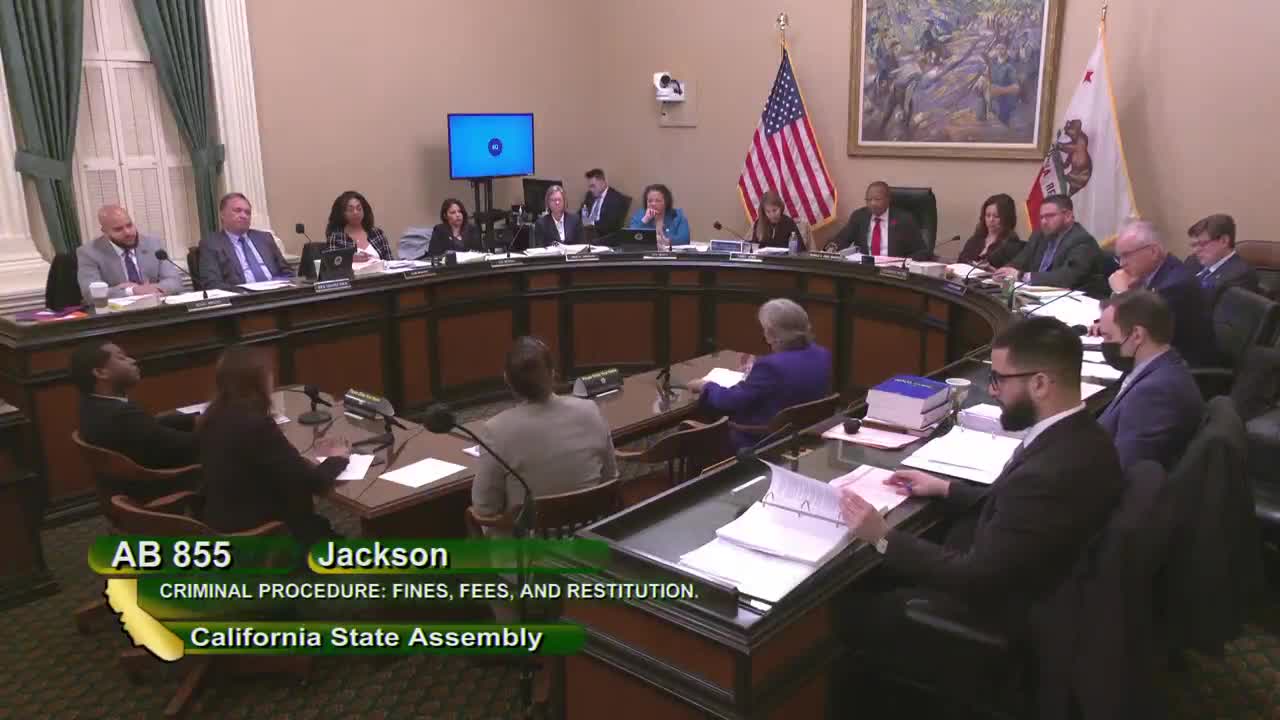 56MIN
Assembly Standing Committee on Public Safety
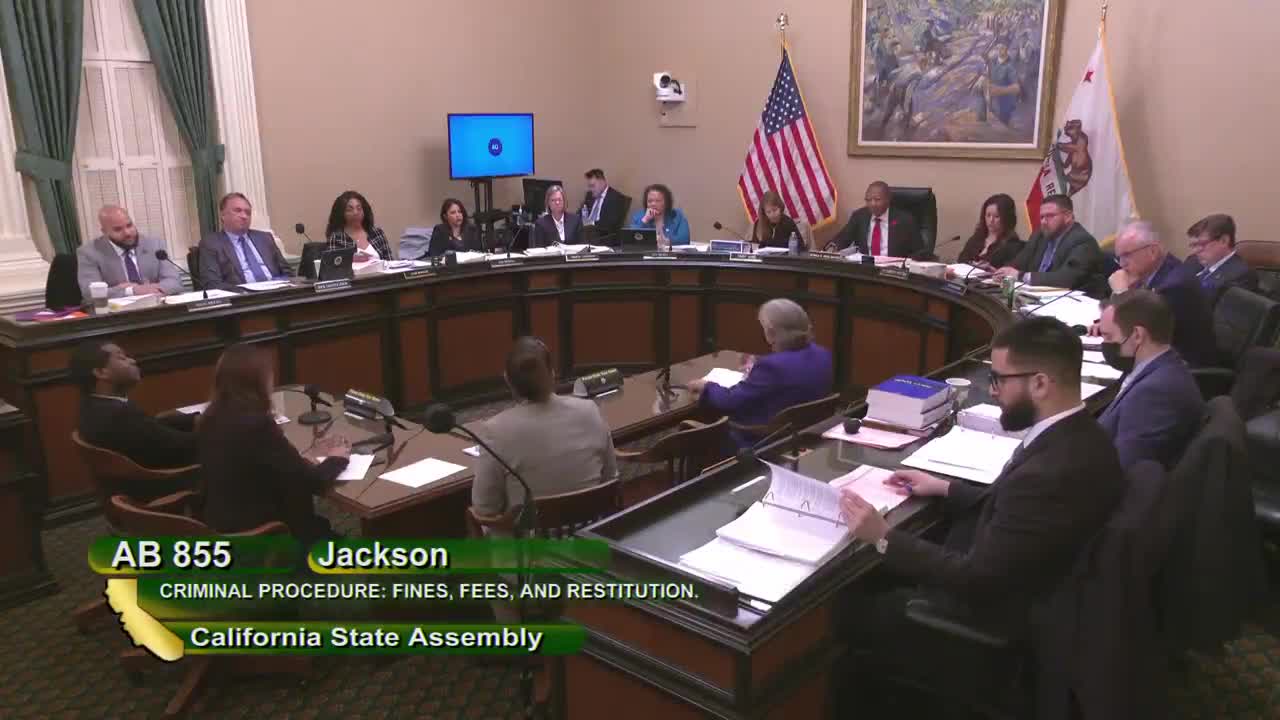 56MIN
Assembly Standing Committee on Public Safety
Bill Author




