AB 748: California Abandoned and Derelict Commercial Vessel Program.
- Session Year: 2023-2024
- House: Assembly
- Latest Version Date: 2023-09-13
Current Status:
Failed
(2024-02-12: Consideration of Governor's veto stricken from file.)
Introduced
In Committee
First Chamber
In Committee
Second Chamber
Enacted
Existing law establishes within the Natural Resources Agency, the State Lands Commission consisting of the Controller, the Lieutenant Governor, and the Director of Finance. Existing law vests in the commission exclusive jurisdiction over all ungranted tidelands and submerged lands owned by the state, and of the beds of navigable rivers, streams, lakes, bays, estuaries, inlets, and straits, including tidelands and submerged lands. Existing law authorizes the commission to take immediate action to remove from areas under its jurisdiction a vessel that is left unattended and is moored, docked, beached, or made fast to land in a position as to obstruct the normal movement of traffic or in a condition as to create a hazard to navigation, other vessels using a waterway, or the property of another. Existing law requires the commission, by July 1, 2019, and in consultation with other relevant state and local agencies directly involved in the removal of abandoned vessels, to develop a plan for the removal of abandoned commercial vessels.
This bill would establish the California Abandoned and Derelict Commercial Vessel Program within the Natural Resources Agency, to be administered by the commission, upon appropriation by the Legislature, to bring federal, state, and local agencies together to identify, prioritize, and fund the removal and proper disposal of abandoned and derelict commercial vessels and other debris from commercially navigable waters, as defined. The bill would require the commission, upon appropriation by the Legislature, on or before July 1, 2025, to create, and regularly update and maintain thereafter, an inventory of abandoned and derelict commercial vessels on or in commercially navigable waters, as provided, and, on or before July 1, 2026, to develop a plan to prevent or reduce abandoned and derelict commercial vessels on or in commercially navigable waters, as provided.
This bill would establish the California Abandoned and Derelict Commercial Vessel Program Task Force as an advisory body within the Natural Resources Agency, consisting of specified members. The bill would require the task force to, among other things, provide policy guidance for the program and advise on the prevention, removal, destruction, and disposal of abandoned and derelict commercial vessels, as provided. The bill would require the task force, in consultation with impacted local governments, to develop a system for prioritizing the removal of the abandoned and derelict commercial vessels identified by the commission, as provided.
This bill would require the commission, on or before December 1, 2024, to enter into a memorandum of agreement with specified state agencies, and other relevant federal, state, or local agencies, as provided, for the purposes of abandoned and derelict commercial vessel and other debris cleanup and removal from commercially navigable waters. The bill would require, upon execution of the memorandum of agreement and the availability of funds, the commission to immediately authorize and execute the removal of abandoned and derelict commercial vessels and other debris, as specified.
This bill would establish the California Abandoned and Derelict Commercial Vessel Program Trust Fund in the State Treasury and would require that, upon appropriation by the Legislature, moneys in the fund be used by the commission to fund the removal of abandoned and derelict commercial vessels and other debris pursuant to the program, as provided.
This bill would prohibit, except as specified, a commercial vessel, as defined, that is at risk of becoming derelict from occupying, or anchoring, mooring, or otherwise being secured in or on, the waters of the state. The bill would provide that a commercial vessel is at risk of becoming derelict if certain conditions exist, including that the commercial vessel is taking on or has taken on water without an effective means to dewater. The bill would authorize a peace officer, as defined, to find that a commercial vessel is at risk of becoming derelict if these conditions exist. The bill would subject a person who violates this prohibition to a civil penalty of not less than $1,000 and not more than $5,000 per day of violation, and would prescribe other requirements related to a civil action, including the assessment of a civil penalty and the recovery of other specified costs, brought for a violation of this prohibition. The bill would also authorize a peace officer to seize or order the removal of a commercial vessel that is at risk of becoming derelict, as provided. The bill would require 75% of civil penalties and other costs collected be deposited into the California Abandoned and Derelict Commercial Vessel Program Trust Fund and, upon appropriation by the Legislature, 25% distributed to the Attorney General, district attorney, or city attorney prosecuting the action, as specified.
Existing law establishes the Division of Boating and Waterways in the Department of Parks and Recreation, and prescribes the powers, functions, and jurisdiction of the division.This bill would make nonsubstantive changes in the provision establishing the division.Existing law establishes the Division of Boating and Waterways in the Department of Parks and Recreation, and prescribes the powers, functions, and jurisdiction of the division.
This bill would make nonsubstantive changes in the provision establishing the division.
The Legislature finds and declares all of the following:
(a)Californias coastline, ports, and other waterways are polluted with abandoned and derelict commercial vessels and marine debris, which contain high levels of hazardous materials from both their construction and use, including solvents, asbestos-containing materials, polychlorinated biphenyls or PCBs, lead paint, batteries, and petroleum products, such as fuel, oil, oily waste, hydraulic fluid, and grease.
(b)Abandoned and derelict commercial vessels create navigation, environmental, and public health and safety hazards.
(c)Abandoned and derelict commercial vessels usually consist of, but are not limited to, ferries, tugs, barges, cranes, dredges, work boats and work platforms that were designed and utilized for commercial work, military craft, and other vessels, but at end of life are often sold at auction to any willing buyer. These vessels evolve into a dilapidated condition and eventually end up in an unusable state, leading the vessel to be sunk, partially sunk, or a sinking hazard.
(d)The Sacramento-San Joaquin Delta is Californias most crucial water and ecologic resource. It is the largest freshwater tidal estuary of its kind on the West Coast, providing important bird and marine habitat, among other ecological and recreational benefits.
(e)The Sacramento-San Joaquin Delta is also home to the State Water Project and the Central Valley Water Project, which provide a portion of the drinking water for 29,000,000 Californians and irrigation water for much of the states $50 billion agricultural industry.
(f)While this is a statewide problem, the unique makeup of the Sacramento-San Joaquin Delta, consisting of more than 700 miles of sloughs and waterways surrounding many leveed tracts and islands, makes it a magnet for abandoned and derelict commercial vessels.
(g)Other coastal states have similarly identified abandoned and derelict commercial vessels as a problem and have created statewide programs and provided necessary authorities to identify and remove these vessels.
SEC. 2.Section 528 is added to the Harbors and Navigation Code, to read:528.(a)For purposes of this section, the following terms have the following meanings:
(1)Commercial vessel has the meaning set forth in Section 6112 of the Public Resources Code.
(2)Peace officer means a peace officer, as described in Section 830.1 or 830.2 of the Penal Code.
(3)Waters of the state means any surface water, including saline waters, marine waters, and freshwaters, within the boundaries of the state, but does not include groundwater.
(b)Except as provided in subdivision (f), a commercial vessel that is at risk of becoming derelict shall not occupy, or anchor, moor, or otherwise be secured in or on, the waters of the state. A commercial vessel is at risk of becoming derelict when any of the following conditions exist:
(1)The commercial vessel is taking on or has taken on water without an effective means to dewater.
(2)Spaces on the commercial vessel that are designed to be enclosed are incapable of being sealed off or remain open to the elements for extended periods of time.
(3)The commercial vessel has broken loose or is in danger of breaking loose from its anchor, mooring, spuds, or ground tackle, including blocks, chains, pulleys, cables, and anchor rodes.
(4)The commercial vessel is left aground or is otherwise abandoned for a period of over 30 days in a state that would prevent the vessel from getting underway.
(5)The commercial vessel is unable to maintain buoyancy.
(6)The commercial vessel is powered by a propulsion system, is unable to maneuver under that system, and is unable to be repaired and underway within 30 days of initial failure.
(7)The commercial vessel is deteriorated and could become awash and create a pollution or navigational hazard.
(8)The commercial vessel poses a significant threat to public health or safety or to sensitive habitat, wildlife, or water quality, or constitutes a public nuisance.
(9)The commercial vessel is in a position to obstruct the normal movement of traffic or in a condition to create a hazard to navigation or other vessels using a waterway.
(10)The commercial vessel is marine debris, as defined in Section 550.
(c)A peace officer may find that a commercial vessel is at risk of becoming derelict if the peace officer determines that any of the conditions described in subdivision (b) exist.
(d)(1)A peace officer may seize or order the removal of a commercial vessel that is at risk of becoming derelict after providing notice pursuant to Section 526.
(2)In seizing or ordering the removal of a commercial vessel pursuant to this subdivision, a peace officer shall comply with Section 551.
(3)All provisions in this article relating to the storage, custody, possession, sale, claims, and disbursement of wrecked property after seizure or removal shall also apply to a commercial vessel that is at risk of becoming derelict that is seized or removed by a peace officer pursuant to this subdivision.
(e)(1)A person who anchors, moors, or otherwise secures a commercial vessel that is at risk of becoming derelict in or on the waters of the state, or allows a commercial vessel that is at risk of becoming derelict to occupy the waters of the state, may be liable for a civil penalty of not less than one thousand dollars ($1,000) and not more than five thousand dollars ($5,000) per violation. Each day that a violation continues shall be a separate violation of this section.
(2)Each civil penalty imposed for a separate violation pursuant to this section shall be separate and in addition to any other civil penalty imposed pursuant to this section or to any other civil or criminal penalty imposed pursuant to any other law.
(3)(A)A civil action brought under this section may be brought by the Attorney General upon complaint by the California Abandoned and Derelict Commercial Vessel Program Task Force established pursuant to Section 6112 of the Public Resources Code, or by a district attorney or city attorney in the name of the people of the State of California, and any actions relating to the same violation may be joined or consolidated.
(B)Nothing in this section limits or restricts the Attorney Generals authority to bring a suit to enforce state law in an independent capacity.
(4)In determining the amount of a civil penalty imposed pursuant to this section, a court shall take into consideration all relevant circumstances, including, but not limited to, the nature, circumstance, extent, and gravity of the violation. In making this determination, a court shall consider the extent of harm caused by the violation, whether the effects of the violation may be reversed or mitigated, and, with respect to a defendant, the ability to pay, the effect of a civil penalty on the ability to continue in business, all voluntary cleanup efforts undertaken, the prior history of violations, the gravity of the behavior, the economic benefit, if any, resulting from the violation, and all other matters the court determines justice may require.
(5)(A)In a civil action brought pursuant to this section in which a temporary restraining order, preliminary injunction, or permanent injunction is sought, it is not necessary to allege or prove at any stage of the proceeding that irreparable damage will occur if the temporary restraining order, preliminary injunction, or permanent injunction is not issued, or that the remedy at law is inadequate.
(B)After a party seeking the injunction has met its burden of proof, a court shall determine whether to issue a temporary restraining order, preliminary injunction, or permanent injunction without requiring a defendant to prove that the defendant will suffer grave or irreparable harm. A court shall make the determination whether to issue a temporary restraining order, preliminary injunction, or permanent injunction by taking into consideration, among other things, the nature, circumstance, extent, and gravity of the violation, the extent of environmental harm caused by the violation, and measures taken by the defendant to remedy the violation.
(C)A court, to the maximum extent possible, shall tailor a temporary restraining order, preliminary injunction, or permanent injunction narrowly to address the violation in a manner that will otherwise allow a defendant to continue business operations in a lawful manner.
(6)All civil penalties collected pursuant to this section shall be apportioned in the following manner:
(A)Seventy-five percent shall be deposited into the California Abandoned and Derelict Commercial Vessel Program Trust Fund established pursuant to Section 6113 of the Public Resources Code.
(B)Upon appropriation by the Legislature, 25 percent shall be distributed to the Attorney General, district attorney, or city attorney prosecuting the action.
(7)(A)The costs of removing or destroying a commercial vessel that is at risk of becoming derelict shall be borne by the owner or operator of the vessel or the occupant or person in possession of the vessel at the time of the violation. These costs shall be ordered by a court upon a finding of civil liability pursuant to this section.
(B)The costs of removal or destruction collected pursuant to subparagraph (A) shall be deposited into the California Abandoned and Derelict Commercial Vessel Program Trust Fund established pursuant to Section 6113 of the Public Resources Code.
(f)This section does not apply to a commercial vessel that is moored to a private dock with the consent of an owner of a licensed commercial vessel repair facility or yard for the purpose of being repaired.
SEC. 3.Section 6112 is added to the Public Resources Code, to read:6112.(a)For purposes of this section, the following terms have the following definitions:
(1)Commercial vessel means a vessel designed or utilized for commercial work and includes, but is not limited to, a ferry, tug, barge, crane, dredge, work boat or work platform, fishing vessel used for commercial fishing, such as a fishing trawler, and military craft. Commercial vessel includes marine debris, as defined in Section 550 of the Harbors and Navigation Code.
(2)Commercially navigable waters means any surface water used or historically or presently capable of being used for navigation by commercial vessels within the boundaries of the state. Any surface water that contains an abandoned or derelict commercial vessel is considered commercially navigable if the surface water is a tributary or is otherwise adjacent to commercially navigable waters.
(3)Other debris means any persistent solid material that is manufactured or processed and directly or indirectly, intentionally or unintentionally, disposed of or abandoned in or on commercially navigable waters and that can be removed concurrently with the removal pursuant to this section of an abandoned and derelict commercial vessel.
(4)Task force means the California Abandoned and Derelict Commercial Vessel Program Task Force established pursuant to subdivision (c).
(b)The California Abandoned and Derelict Commercial Vessel Program is hereby established within the Natural Resources Agency. The program, upon appropriation by the Legislature, shall be administered by the commission to bring federal, state, and local agencies together to identify, prioritize, and fund the removal and proper disposal of abandoned and derelict commercial vessels and other debris from commercially navigable waters and, at a minimum, do both of the following:
(1)On or before July 1, 2025, create, and regularly update and maintain thereafter, an inventory of all abandoned and derelict commercial vessels on or in commercially navigable waters. The inventory may be conducted by means of an aerial survey, from currently available data from federal, state, and local agencies, or from other data available to the commission.
(2)(A)On or before July 1, 2026, develop, in coordination with the task force, an Abandoned and Derelict Commercial Vessel Plan to provide a strategic framework to facilitate and track actions in support of strategies that prevent or reduce abandoned and derelict commercial vessels on or in commercially navigable waters, including the Sacramento-San Joaquin Delta. The commission shall update the plan periodically as needed to include, among other things, the commissions progress on implementing the plan. The commission shall provide a copy of the plan, and each plan update, to the relevant policy and fiscal committees of the Legislature.
(B)The Abandoned and Derelict Commercial Vessel Plan shall be exempt from the Administrative Procedure Act (Chapter 3.5 (commencing with Section 11340) of Part 1 of Division 3 of Title 2 of the Government Code).
(c)(1)The California Abandoned and Derelict Commercial Vessel Program Task Force is hereby established as an advisory body within the Natural Resources Agency to do all of the following:
(A)Provide policy guidance for the California Abandoned and Derelict Commercial Vessel Program established pursuant to this section.
(B)Advise on the prevention, removal, destruction, and disposal of abandoned and derelict commercial vessels and other debris, including the recovery of state-incurred costs for the prevention, removal, destruction, and disposal of these vessels and debris, and methods to sustainably fund the California Abandoned and Derelict Commercial Vessel Program.
(C)On or before July 1, 2026, with the support of the commission, research and evaluate the efficacy of abandoned and derelict commercial vessel prevention measures, including, but not limited to, dual registration and insurance requirements and guidelines for government public auctions and make recommendations to the Legislature to implement viable measures.
(2)The task force shall consist of the following members:
(A)The executive officer of the commission, or their designee.
(B)The Director of Fish and Wildlife, or their designee.
(C)The Director of Toxic Substances Control, or their designee.
(D)The Director for the California Department of Parks and Recreation, or their designee.
(E)The Executive Officer of the State Water Resources Control Board, or their designee.
(F)Two local members, one appointed by the Delta Protection Commission, who shall be a representative from a county that encompasses a portion of the Sacramento-San Joaquin Delta, and one appointed by the executive officer of the commission.
(3)The task force shall also consist of the following members if the specified federal agencies agree:
(A)A representative appointed by the United States Coast Guard.
(B)A representative appointed by the United States Environmental Protection Agency.
(C)A representative appointed by the United States Army Corp of Engineers.
(D)A representative appointed by the National Oceanic and Atmospheric Administration.
(4)The executive officer of the commission may, in consultation with the task force, appoint additional members to the task force, including individuals that represent relevant federal, state, or local agencies or departments, or that have relevant industry expertise.
(5)The task force shall cease to exist on December 31, 2031, unless otherwise extended by the Legislature.
(e)(1)The task force shall, in consultation with impacted local governments, develop a system for prioritizing the removal of the abandoned and derelict commercial vessels identified by the commission pursuant to paragraph (1) of subdivision (b).
(2)In developing the prioritization system required pursuant to paragraph (1), the task force shall consider the severity of the potential threats posed by an abandoned and derelict commercial vessel to human health and safety and the environment, and evaluate the severity of the threats based on factors that shall include, but are not limited to, all of the following:
(A)The condition of the commercial vessel, including the costs to remove and dispose of the commercial vessel and, if available, the costs to remove and dispose of other debris in the vicinity of the commercial vessel.
(B)The condition of the commercial vessels anchoring or mooring system.
(C)The size of the commercial vessel.
(D)The proximity of the commercial vessel to navigation channels.
(E)The anticipated weather conditions in the area of the commercial vessel.
(F)The general potential for harmful encounters between people or property and the commercial vessel.
(G)The toxicity or hazard potential of any hazardous waste and pollution on the commercial vessel.
(H)The location of the commercial vessel, including, in particular, its proximity to sensitive areas of populations.
(I)The potential of the commercial vessel as an attractive nuisance.
(J)The commercial vessels owners involvement in the commercial vessel, including, but not limited to, the owners ability to care for the vessel.
(3)In developing the prioritization system required pursuant to this subdivision, the task force may consider the commissions Risk-Based Priority Matrix included in the commissions Abandoned Commercial Vessel Removal Plan developed pursuant to Section 6302.2.
(f)(1)On or before December 1, 2024, the commission shall enter into a memorandum of agreement with the Department of Fish and Wildlife, the Department of Toxic Substances Control, and, as determined by the executive officer of the commission in consultation with the task force, other relevant federal, state, or local agencies for the purposes of abandoned and derelict commercial vessel and other debris cleanup and removal from commercially navigable waters.
(2)The memorandum of agreement may address, but is not limited to, the expertise and abilities of the respective parties to prevent the impacts associated with abandoned or derelict vessels, respond to related hazardous materials releases and pollution cleanup, and remove and dispose of abandoned and derelict commercial vessels.
(3)Upon execution of the memorandum of agreement, and pursuant to available funds in the California Abandoned and Derelict Commercial Vessel Program Trust Fund established pursuant to Section 6113, or a determination by the parties to the agreement of the availability of existing funds eligible for use for purposes of this section, the commission shall immediately authorize and execute the removal of abandoned and derelict commercial vessels and other debris as follows:
(A)Before the commission completes the inventory of all abandoned and derelict commercial vessels on or in commercially navigable waters pursuant to paragraph (1) of subdivision (b) and the task force develops a system for prioritizing the removal of these vessels pursuant to subdivision (e), the commission shall authorize and execute the removal of abandoned and derelict commercial vessels and other debris using the Risk-Based Priority Matrix included in commissions Abandoned Commercial Vessel Removal Plan developed pursuant to Section 6302.2.
(B)After the commission completes the inventory of all abandoned and derelict commercial vessels on or in commercially navigable waters pursuant to paragraph (1) of subdivision (b) and the council develops a system for prioritizing the removal of these vessels pursuant to subdivision (e), the task force shall authorize and execute the removal of abandoned and derelict commercial vessels and other debris using the inventory and prioritization system and consistent with the Abandoned and Derelict Commercial Vessel Plan developed by the commission pursuant to paragraph (2) of subdivision (b).
(g)Nothing in this section limits or restricts the commissions authority to identify, remove, or otherwise address vessels pursuant to state law.
(h)Nothing in this section limits or restricts a state agencys or local agencys authority to identify, remove, or otherwise address abandoned or derelict commercial vessels pursuant to state or local law.
(i)The California Abandoned and Derelict Commercial Vessel Program shall not be funded by the Abandoned Watercraft Abatement Fund established pursuant to Section 525 of the Harbors and Navigation Code.
(j)Nothing in this section shall be construed to require any single federal, state, or local agency or department to conduct all aspects of cleanup, removal, destruction, and disposal of abandoned and derelict commercial vessels or other debris, unless agreed to by an agency or department through the memorandum of agreement pursuant to paragraph (1) of subdivision (f).
SEC. 4.Section 6113 is added to the Public Resources Code, to read:6113.(a)The California Abandoned and Derelict Commercial Vessel Program Trust Fund is hereby established in the State Treasury.
(b)The following moneys shall be deposited into the California Abandoned and Derelict Commercial Vessel Program Trust Fund:
(1)Any moneys appropriated by the Legislature for purposes of the California Abandoned and Derelict Commercial Vessel Program established pursuant to Section 6112.
(2)Civil penalties or costs collected pursuant to Section 528 of the Harbors and Navigation Code.
(3)Moneys received as a result of a grant award to implement or further the goals of the California Abandoned and Derelict Commercial Vessel Program.
(c)Upon appropriation by the Legislature, moneys in the California Abandoned and Derelict Commercial Vessel Program Trust Fund shall be used by the commission to fund the removal of abandoned and derelict commercial vessels and other debris pursuant to the California Abandoned and Derelict Commercial Vessel Program established pursuant to Section 6112.
SECTION 1.Section 50 of the Harbors and Navigation Code is amended to read:50.(a)The Department of Harbors and Watercraft and its successor, the Department of Navigation and Ocean Development, and the Department of Boating and Waterways are continued in existence in the Department of Parks and Recreation as the Division of Boating and Waterways. The Division of Boating and Waterways is the successor to, and is vested with, the powers, functions, and jurisdiction of all of the following state departments and agencies as hereinafter specified:(1)All of the powers, functions, and jurisdiction previously vested in the Division of Small Craft Harbors of the Department of Parks and Recreation.(2)All of the powers, functions, and jurisdiction of the State Lands Commission with respect to the acquisition, construction, development, improvement, maintenance, and operation of small craft harbors.(3)All of the powers, functions, and jurisdiction of the Department of Parks and Recreation with respect to boating facility planning, design, and construction, except as specifically provided with respect to boating trails in the California Recreational Trails Act (Article 6 (commencing with Section 5070) of Chapter 1 of Division 5 of the Public Resources Code) and in Article 2.6 (commencing with Section 68) of this chapter.(4)All of the powers, functions, and jurisdiction of the Office of Architecture and Construction in the Department of General Services with respect to boating facility planning and design.(5)All of the powers, functions, and jurisdiction of the Department of Water Resources with respect to beach erosion control.(6)All of the policymaking and regulatory powers, functions, and jurisdiction of the Harbors and Watercraft Commission as to matters within the jurisdiction of the Division of Boating and Waterways.(b)Regulations adopted by the former Department of Boating and Waterways shall remain in effect until revised or repealed by the Division of Boating and Waterways. REVISIONS: HeadingLine 2.(a)The Department of Harbors and Watercraft and its successor, the Department of Navigation and Ocean Development, and the Department of Boating and Waterways are continued in existence in the Department of Parks and Recreation as the Division of Boating and Waterways. The Division of Boating and Waterways is the successor to, and is vested with, the powers, functions, and jurisdiction of all of the following state departments and agencies as hereinafter specified:
(1)All of the powers, functions, and jurisdiction previously vested in the Division of Small Craft Harbors of the Department of Parks and Recreation.
(2)All of the powers, functions, and jurisdiction of the State Lands Commission with respect to the acquisition, construction, development, improvement, maintenance, and operation of small craft harbors.
(3)All of the powers, functions, and jurisdiction of the Department of Parks and Recreation with respect to boating facility planning, design, and construction, except as specifically provided with respect to boating trails in the California Recreational Trails Act (Article 6 (commencing with Section 5070 5070) of Chapter 1 of Division 5 of the Public Resources Code) and in Article 2.6 (commencing with Section 68) of this chapter.
(4)All of the powers, functions, and jurisdiction of the Office of Architecture and Construction in the Department of General Services with respect to boating facility planning and design.
(5)All of the powers, functions, and jurisdiction of the Department of Water Resources with respect to beach erosion control.
(6)All of the policymaking and regulatory powers, functions, and jurisdiction of the Harbors and Watercraft Commission as to matters within the jurisdiction of the department. Division of Boating and Waterways.
(b)Regulations adopted by the former Department of Boating and Waterways shall remain in effect until revised or repealed by the Division of Boating and Waterways.
|
Date
|
Status
|
|---|---|
| Feb 12, 2024 | Consideration of Governor's veto stricken from file. |
| Jan 3, 2024 | Consideration of Governor's veto pending. |
| Oct 8, 2023 | Vetoed by Governor. |
| Sep 18, 2023 | Enrolled and presented to the Governor at 3:30 p.m. |
| Sep 11, 2023 | In Assembly. Ordered to Engrossing and Enrolling. |
| Sep 11, 2023 | Read third time. Passed. Ordered to the Assembly. (Ayes 39. Noes 0. Page 2565.). |
| Sep 5, 2023 | Read second time. Ordered to third reading. |
| Sep 1, 2023 | From committee: Do pass. (Ayes 7. Noes 0.) (September 1). |
| Aug 14, 2023 | In committee: Referred to APPR suspense file. |
| Jul 6, 2023 | From committee: Do pass and re-refer to Com. on APPR. (Ayes 11. Noes 0.) (July 6). Re-referred to Com. on APPR. |
| Jun 22, 2023 | From committee: Do pass and re-refer to Com. on JUD. (Ayes 9. Noes 0.) (June 22). Re-referred to Com. on JUD. |
| Jun 7, 2023 | Referred to Coms. on N.R. & W. and JUD. |
| May 31, 2023 | In Senate. Read first time. To Com. on RLS. for assignment. |
| May 30, 2023 | Read third time. Passed. Ordered to the Senate. (Ayes 80. Noes 0. Page 1867.) |
| May 18, 2023 | Read second time. Ordered to third reading. |
| May 18, 2023 | From committee: Do pass. (Ayes 15. Noes 0.) (May 18). |
| May 10, 2023 | In committee: Set, first hearing. Referred to APPR. suspense file. |
| Apr 25, 2023 | From committee: Do pass and re-refer to Com. on APPR. with recommendation: To Consent Calendar. (Ayes 11. Noes 0.) (April 25). Re-referred to Com. on APPR. |
| Apr 25, 2023 | Coauthors revised. |
| Apr 11, 2023 | From committee: Do pass and re-refer to Com. on JUD. with recommendation: To Consent Calendar. (Ayes 11. Noes 0.) (April 10). Re-referred to Com. on JUD. |
| Mar 27, 2023 | Re-referred to Com. on NAT. RES. |
| Mar 23, 2023 | From committee chair, with author's amendments: Amend, and re-refer to Com. on NAT. RES. Read second time and amended. |
| Mar 23, 2023 | Referred to Coms. on NAT. RES. and JUD. |
| Feb 14, 2023 | From printer. May be heard in committee March 16. |
| Feb 13, 2023 | Read first time. To print. |
|
Date
|
Description
|
Location
|
Votes
|
|
|---|---|---|---|---|
| Sep 11, 2023 | Assembly 3rd Reading AB748 Villapudua et al. By Dodd | Senate Floor |
Passed |
|
| Sep 1, 2023 | Do pass | Senate Standing Committee on Appropriations |
Passed |
|
| Aug 14, 2023 | Placed on suspense file | Senate Standing Committee on Appropriations |
Passed |
|
| Jul 6, 2023 | Do pass, but first be re-referred to the Committee on [Appropriations] | Senate Standing Committee on Judiciary |
Passed |
|
| Jun 22, 2023 | Do pass, but first be re-referred to the Committee on [Judiciary] | Senate Standing Committee on Natural Resources and Water |
Passed |
|
| May 30, 2023 | AB 748 Villapudua Assembly Third Reading | Assembly Floor |
Passed |
|
| May 18, 2023 | Do pass. | Assembly Standing Committee on Appropriations |
Passed |
|
| Apr 25, 2023 | Do pass and be re-referred to the Committee on [Appropriations] with recommendation: To Consent Calendar | Assembly Standing Committee on Judiciary |
Passed |
|
| Apr 10, 2023 | Do pass and be re-referred to the Committee on [Judiciary] with recommendation: To Consent Calendar | Assembly Standing Committee on Natural Resources |
Passed |
This list shows positions taken on this bill by organizations on the date displayed, which is linked to the original source.
Positions by individuals are not included.
|
Organization
|
Position
|
Date
|
|---|---|---|
| California Central Valley Flood Control Association | ** Support | |
| California State Sheriffs' Association | ** Support | |
| county of sacramento | ** Support | |
| San Francisco Bay Conservation and Development Commission | ** Support | |
| San Francisco Baykeeper | ** Support | |
| Solano County Water Agency | ** Support |
GOVERNOR'S VETO
GV Bill Id:AB 748
Author:(Villapudua)
As Enrolled Ver:September 13, 2023
2/3 vote
SUMMARY
Establishes the California Abandoned and Derelict Commercial Vessel Program (Program) to identify, prioritize, and fund, as specified, the removal of abandoned and derelict commercial vessels from commercially navigable waters. This bill establishes the California Abandoned and Derelict Commercial Vessel Program Task Force (Task Force) to oversee and provide policy direction for the Program. This bill generally prohibits a commercial vessel that is at-risk of becoming derelict from occupying, anchoring, mooring, or otherwise being secured in or on commercially navigable waters.
Major Provisions
- Authorizes a peace officer to seize or order the removal of a commercial vessel that is at risk of becoming derelict in compliance with current law and only after providing notice.
- Subjects a person who anchors, moors, or otherwise secures a commercial vessel that is at risk of becoming derelict in or on the commercially navigable waters, or allows a commercial vessel that is at risk of becoming derelict to occupy the commercially navigable waters, to liability for a civil penalty of not less $1,000 and not more $5,000 per violation.
- Establishes the Program within the Natural Resources Agency (NRA). Requires the Program to be administered by the State Lands Commission (SLC) to bring federal, state, and local agencies together to identify, prioritize, and, upon appropriation by the Legislature, fund the removal of abandoned and derelict commercial vessels and other debris from the commercially navigable waters.
- Establishes the Task Force as an advisory body within NRA to provide policy guidance for the Program and advise on the prevention, removal, destruction, and disposal of abandoned and derelict commercial vessels and other debris. Requires the Task Force to develop a system for prioritizing the removal of the abandoned and derelict commercial vessels identified by SLC. Sunsets the Task Force on December 31, 2031.
- Requires SLC, on or before December 1, 2024, to enter into a memorandum of agreement (MOA) with DFW, DTSC, and, as determined by the executive officer of SLC in consultation with the Task Force, any other relevant federal, state, or local agency, to clean up and remove abandoned and derelict commercial vessels and other debris from the commercially navigable waters.
- Establishes the Trust Fund in the State Treasury and specifies any moneys appropriated by the Legislature for purposes of the Program and any civil penalties or costs collected pursuant to the Program be deposited into the Trust Fund.
Governor's Veto Message
This bill would establish the California Abandoned and Derelict Commercial Vessel Program and a multi-agency task force to identify, prioritize, and fund the removal of abandoned and derelict commercial vessels across the state.
While I support the author's attempt to create a statewide approach to address abandoned and derelict commercial vessels in California that pose significant public health, safety, and environmental risks, this program was not accounted for in the 2023 Budget Act. Implementation across the relevant agencies is expected to cost about $7.5 million in year 1 with ongoing General Fund impacts.
In partnership with the Legislature, we enacted a budget that closed a shortfall of more than $30 billion through balanced solutions that avoided deep program cuts and protected education, health care, climate, public safety, and social service programs that are relied on by millions of Californians. This year, however, the Legislature sent me bills outside of this budget process that, if all enacted, would add nearly $19 billion of unaccounted costs in the budget, of which $11 billion would be ongoing.
With our state facing continuing economic risk and revenue uncertainty, it is important to remain disciplined when considering bills with significant fiscal implications, such as this measure.
COMMENTS
California has the fourth largest boating population in the nation, with more than 772,000 registered recreational vessels. Because many vessels are registered for years, sometimes decades, before they are abandoned, it's hard to predict, based on trend, the percentage of registered vessels that will be left to rot.
Abandoned and derelict vessels usually consist of, but are not limited to, ferries, tugs, barges, cranes, dredges, work boats and work platforms that were designed and utilized for commercial work, and military craft, but at end of life are often sold at auction to any willing buyer. These vessels evolve into a dilapidated condition and eventually end up in an unusable state, leading the vessel to either be sunk, partially sunk, or a sinking hazard.
Removing abandoned and derelict vessels is often complicated and expensive. Costs range from tens of thousands to several million dollars per vessel depending in part on its size, location, and condition. Some vessels are located in hard-to-reach areas, requiring large, specialized equipment for recovery and transportation. The wreckage may last for many years, breaking apart and creating widespread debris that threatens marine and coastal resources. Assessing, removing, and disposing of these vessels also requires significant financial and technical resources.
SLC was granted statewide authority to remove abandoned and derelict vessels through the Abandoned Vessel Program, which established an administrative removal and disposal process for abandoned and trespassing vessels on waterways under SLC's jurisdiction. SLC has authority to immediately remove a vessel from areas under its jurisdiction without prior notice if the vessel seriously hinders navigation, is a threat to vessel operators, a hazard to the natural environment, or creates a public nuisance.
A 2019 SLC report to the Legislature, Abandoned Commercial Vessel Removal Plan, recommends expanding to a statewide program to help prevent additional commercial vessels from becoming abandoned. AB 748 would establish this proposed Program to compel coordination amongst federal, state, and local agencies, which have varying roles and authorities, to identify, prioritize, and fund the removal of abandoned and derelict commercial vessels and other debris from the commercially navigable waters.
The bill would also require SLC to create and update an inventory of all abandoned and derelict commercial vessels. The inventory would inform the Abandoned and Derelict Commercial Vessel Plan (Plan), which SLC would create under the Program to provide a strategic framework to facilitate and track actions in support of strategies that prevent or reduce abandoned and derelict commercial vessels on or in the commercially navigable waters, including the Sacramento-San Joaquin Delta.
According to the Author
AB 748 is needed to coordinate the safe and efficient removal of commercial abandoned and derelict vessels in order to keep our waterways clear and clean. Through the statewide coordinating council that this bill creates it will help streamline the removal by working with local, state, and federal agencies.
Arguments in Support
The California State Sheriffs' Association write, "Despite the growing problem of abandoned and derelict vessels on our state's waterways, there is no specific and adequate statewide program to fund the removal and destruction of these vessels. State and local agencies are forced to rely on cooperation by vessel owners, lengthy legal processes, and limited federal actions to address this problem. Without a program and ongoing funding, abandoned and derelict vessels will continue to cause environmental harm and damage to California's water quality, habitat, and ecosystems."
Arguments in Opposition
None on file
FISCAL COMMENTS
According to the Assembly Appropriations Committee, this bill would result in approximately $7.5 million for SLC the first year and $6.5 million in ongoing costs for eight positions, abandoned vessel removal, and administration (General Fund and, subject to funding availability, the Trust Fund); annual costs of approximately $225,000 for the State Water Resources Control Board for eight years to support the efforts of the Task Force (General Fund or Waste Discharge Permit Fund); revenue of an unknown, likely minor, amount from civil penalties collected pursuant to this bill; and, annual costs of an unknown amount, ranging from minor and absorbable to the low hundreds of thousands of dollars, for other state agencies to support the efforts of the Task Force.
VOTES
ASM NATURAL RESOURCES: 11-0-0
YES: Luz Rivas, Flora, Addis, Friedman, Hoover, Mathis, Muratsuchi, Pellerin, Ward, Wood, Zbur
ASM JUDICIARY: 11-0-0
YES: Maienschein, Essayli, Connolly, Dixon, Haney, Kalra, Pacheco, Papan, Reyes, Robert Rivas, Sanchez
ASM APPROPRIATIONS: 15-0-1
YES: Holden, Megan Dahle, Bryan, Calderon, Wendy Carrillo, Dixon, Mike Fong, Hart, Lowenthal, Mathis, Papan, Pellerin, Sanchez, Weber, Ortega
ABS, ABST OR NV: Robert Rivas
ASSEMBLY FLOOR: 80-0-0
YES: Addis, Aguiar-Curry, Alanis, Alvarez, Arambula, Bains, Bauer-Kahan, Bennett, Berman, Boerner, Bonta, Bryan, Calderon, Juan Carrillo, Wendy Carrillo, Cervantes, Chen, Connolly, Megan Dahle, Davies, Dixon, Essayli, Flora, Mike Fong, Vince Fong, Friedman, Gabriel, Gallagher, Garcia, Gipson, Grayson, Haney, Hart, Holden, Hoover, Irwin, Jackson, Jones- Sawyer, Kalra, Lackey, Lee, Low, Lowenthal, Maienschein, Mathis, McCarty, McKinnor, Muratsuchi, Stephanie Nguyen, Ortega, Pacheco, Papan, Jim Patterson, Joe Patterson, Pellerin, Petrie-Norris, Quirk-Silva, Ramos, Reyes, Luz Rivas, Robert Rivas, Rodriguez, Blanca Rubio, Sanchez, Santiago, Schiavo, Soria, Ta, Ting, Valencia, Villapudua, Waldron, Wallis, Ward, Weber, Wicks, Wilson, Wood, Zbur, Rendon
SENATE FLOOR: 39-0-1
YES: Allen, Alvarado-Gil, Archuleta, Ashby, Atkins, Becker, Blakespear, Bradford, Cortese, Dahle, Dodd, Durazo, Eggman, Glazer, Gonzalez, Grove, Hurtado, Jones, Laird, Limón, McGuire, Menjivar, Min, Newman, Nguyen, Niello, Ochoa Bogh, Padilla, Portantino, Roth, Rubio, Seyarto, Skinner, Smallwood-Cuevas, Stern, Umberg, Wahab, Wiener, Wilk
ABS, ABST OR NV: Caballero
UPDATED
VERSION: September 13, 2023
CONSULTANT: Paige Brokaw / NAT. RES. / (916) 319-2092 FN: 0002491
SENATE RULES COMMITTEE Office of Senate Floor Analyses (916) 651-1520 Fax: (916) 327-4478 | AB 748 |
THIRD READING
Bill No: AB 748
Author: Villapudua (D), et al.
Amended: 3/23/23 in Assembly
Vote: 21
SENATE NATURAL RES. & WATER COMMITTEE: 9-0, 6/22/23
AYES: Min, Allen, Grove, Hurtado, Laird, Limón, McGuire, Padilla, Stern
NO VOTE RECORDED: Seyarto, Dahle
SENATE JUDICIARY COMMITTEE: 11-0, 7/6/23
AYES: Umberg, Wilk, Allen, Ashby, Caballero, Durazo, Laird, Min, Niello, Stern, Wiener
SENATE APPROPRIATIONS COMMITTEE: 7-0, 9/1/23
AYES: Portantino, Jones, Ashby, Bradford, Seyarto, Wahab, Wiener
ASSEMBLY FLOOR: 80-0, 5/30/23 - See last page for vote
SUBJECT: California Abandoned and Derelict Commercial Vessel Program
SOURCE: County of Sacramento
DIGEST:
This bill establishes the California Abandoned and Derelict Commercial Vessel Program to identify, prioritize, and fund, as specified, the removal of abandoned and derelict commercial vessels from commercially navigable waters. Further, this bill establishes the California Abandoned and Derelict Commercial Vessel Program Task Force to oversee and provides policy direction for the new program. Finally, this bill generally prohibits a commercial vessel that is at-risk of becoming derelict from occupying, anchoring, mooring, or otherwise being secured in or on commercially navigable waters.
ANALYSIS:
Existing law:
- Authorizes a peace officer to remove a vessel from a public waterway in specified circumstances, including if the vessel interferes with, or otherwise poses a danger to, navigation, public health, safety, or welfare. Harbors and Navigation Code (HNC) §523.
- Prohibits, generally, abandoning a vessel upon a public waterway or public or private property without consent of the owner or person in lawful possession or control of the property. Violation of this provision is an infraction punishable by a fine of not less than $1,000 nor more than $3,000. HNC §525.
- Defines “marine debris” as a vessel or part of a vessel, including a derelict, wreck, hulk, or part of any ship or other watercraft or dilapidated vessel, that is unseaworthy and not reasonably fit or capable of being made fit to be used as a means of transportation by water. HNC §550.
- Authorizes the removal, destruction, or disposition of marine debris that is floating, sunk, partially sunk, or beached in or on a public waterway, public beach, or on state tidelands or submerged lands by any state or local agency with jurisdiction or authority, as specified. HNC §551.
- Establishes the State Lands Commission (SLC) in the California Natural Resources Agency (CNRA), consisting of the Controller, the Lieutenant Governor, and the Director of Finance. Public Resources Code (PRC) §6101.
- Grants SLC exclusive jurisdiction over all ungranted tidelands and submerged lands owned by the state, and to the beds of navigable rivers, streams, lakes, bays, estuaries, inlets, and straits, including tidelands and submerged lands or any interest therein, as specified. PRC §6301.
- Directs SLC, in consultation with relevant agencies, to develop a plan to remove abandoned commercial vessels that prioritizes removal based on risk to the Sacramento-San Joaquin Delta environment, and public health and safety. Directs SLC to implement the plan upon receipt of funds for this purpose. PRC §6302.2.
- Authorizes SLC to remove a vessel from areas under its jurisdiction under specified circumstances, including if the vessel is left unattended and is moored, docked, beached, or made fast to land in a manner that obstructs traffic or creates a hazard to navigation, other vessels, or property. PRC §6302.1.
- Authorizes SLC to remove and dispose of abandoned or derelict vessels on navigable waterways in the state that are not under its jurisdiction if requested to do so by another public entity with authority over the area. PRC §6302.1.
- Establishes the Abandoned Watercraft Abatement Fund that the Division of Boating and Waterways (DBW), in the Department of Parks and Recreation (State Parks), may use for grants to local agencies to abate, remove, store, and dispose of abandoned vessels. Prohibits use of these grants for commercial vessels. HNC §525.
This bill:
- Provides authorities to peace officers to seize or order the removal of a commercial vessel that is at risk of becoming derelict and establishes new civil penalties.
- Requires the costs of removing or destroying a commercial vessel that is at risk of becoming derelict to be borne by the owner or operator of the vessel or the occupant or person in possession of the vessel at the time of the violation.
- Establishes the California Abandoned and Derelict Commercial Vessel Program (Program) within CNRA. Requires the Program to be administered by SLC to bring federal, state, and local agencies together to identify, prioritize, and, upon appropriation by the Legislature to fund the removal of abandoned and derelict commercial vessels (ADCVs) and other debris from commercially navigable waters and develop an Abandoned and Derelict Commercial Vessel Plan (Plan) to provide a strategic framework to facilitate and track actions in support of strategies that prevent or reduce ADCVs on or in commercially navigable waters.
- Establishes the California Abandoned and Derelict Commercial Vessel Program Coordinating Task Force (Task Force), until December 31, 2031, to provide policy guidance for the Program; advise on the prevention, removal, destruction, and disposal of ADCVs and other debris; and, research and evaluate the efficacy of ADCV prevention measures.
- Establishes the makeup of the Task Force with specified voting and nonvoting members.
- Requires SLC, on or before December 1, 2024, to enter into a memorandum of agreement (MOA) with the Department of Fish and Wildlife (DFW), the Department of Toxic Substances Control (DTSC), and, as determined by the executive officer of SLC in consultation with the Task Force, any other relevant federal, state, or local agency, to clean up and remove ADCVs and other debris from commercially navigable waters.
- Requires, upon execution of the MOA, and pursuant to available funds, SLC to immediately authorize and execute the removal of ADCVs and other debris as follows:
- Before SLC completes the inventory of all ADCVs on or in commercially navigable waters and the Task Force develops a system for prioritizing the removal of these vessels, SLC shall authorize and execute the removal of ADCVs and other debris using the Risk-Based Priority Matrix included in SLC’s Plan.
- After SLC completes the inventory of all ADCVs on or in commercially navigable waters and the Task Force develops a system for prioritizing the removal of these vessels, SLC shall authorize and execute the removal of ADCVs and other debris using the inventory and prioritization system.
- Provides that the Program shall not be funded by the Abandoned Watercraft Abatement Fund.
- Establishes the Trust Fund in the State Treasury and specifies any moneys appropriated by the Legislature for purposes of the Program and any civil penalties or costs collected pursuant to the Program be deposited into the Trust Fund.
- Requires, upon appropriation by the Legislature, moneys in the Trust Fund to be used by SLC to fund the removal of ADCVs and other debris pursuant to the Program.
Comments
This bill seeks to address a substantial, statewide problem. ADCVs are a significant problem in California, strewn throughout the Delta and other California waterways. The 2017 CDFW aerial survey identified 55 commercial vessels in the Delta and estimated a removal cost of about $33 million. While the Delta has a high concentration of these vessels, it is not the only waterway plagued by the problem. Other waterways include the San Francisco Bay, Oakland Estuary, Richardson Bay, Long Beach, San Diego, and Bodega Bay.
ADCVs are or can become hazards to navigation, the environment, and public health and safety. Through deliberate action or negligence, these vessels break up, sink, or block navigation channels. ADCVs that settle on the bottom can disrupt the aquatic environment, scouring or crushing sensitive habitats like eelgrass beds and kelp meadows.
ADCVs often contain harmful substances and materials used to construct the vessel or in cargo on board, including solvents, asbestos-containing materials, polychlorinated biphenyls, lead and copper based paint, batteries, hydraulic fluid, grease, oils, lubricants, and other toxic substances. These pollutants can leach into the waterway, creating potential water quality, environmental, and public health hazards. The chemicals can injure or kill marine mammals, waterfowl and other aquatic life, and contaminate aquatic lands, nearby shorelines and water bodies. Many harmful toxic substances on derelict vessels do not dissolve in water and remain in the environment for lengthy periods of time. These pollutants are fat soluble and accumulate in animal fat, becoming concentrated in top predators like orcas and otters.
Seems familiar? This bill is essentially identical to SB 1065 (Eggman, 2022), except the deadlines in this bill are one year later. The bill passed the Legislature, but the Governor vetoed the bill, providing the following statement:
While I support the author's attempt to create a statewide approach to address abandoned and derelict commercial vessels in California that pose significant public health, safety, and environmental risks, this program was not accounted for in the budget. Implementation across the relevant agencies is expected to cost about $25 million in year 1 with ongoing general fund impacts.
With our state facing lower-than-expected revenues over the first few months of this fiscal year, it is important to remain disciplined when it comes to spending, particularly spending that is ongoing. We must prioritize existing obligations and priorities, including education, health care, public safety and safety-net programs.
The Legislature sent measures with potential costs of well over $20 billion in one-time spending commitments and more than $10 billion in ongoing commitments not accounted for in the state budget. Bills with significant fiscal impact, such as this measure, should be considered and accounted for as part of the annual budget process.
Staff notes that AB 748 includes language stating that SLC would not administer the Program until it was funded via an appropriation from the Legislature. It is worth noting that SB 1065 included this same provision.
FISCAL EFFECT: Appropriation: No Fiscal Com.: Yes Local: No
According to the Senate Appropriations Committee:
- SLC estimates ongoing costs of $7.5 million in the first year and $6.5 million annually thereafter (General Fund or special fund) for 8 positions to support vessel removal and administration costs.
- DFW estimates ongoing costs of $404,000 in the first year and $271,000 annually thereafter (General Fund) to implement the provisions of this bill.
- The State Water Resources Control Board (SWRCB) estimates ongoing costs of about $225,000 annually (General Fund or Waste Discharge Permit Fund) to participate in the Task Force until its sunset in 2031.
- DTSC estimates ongoing costs of about $186,000 annually (General Fund or special fund) to participate in the Task Force until its sunset in 2031.
- Unknown but likely ranging from minor costs to the low hundreds of thousands of dollars annually for other state agencies to support the efforts of the Task Force until its sunset.
- Unknown but likely minor revenue increases from civil penalties collected pursuant to this bill.
SUPPORT: (Verified 9/1/23)
County of Sacramento (source)
California Central Valley Flood Control Association
California State Sheriffs' Association
San Francisco Bay Conservation and Development Commission
San Francisco Baykeeper
Solano County Water Agency
OPPOSITION: (Verified 9/1/23)
None received
ARGUMENTS IN SUPPORT: According to the author, “AB 748 would provide a safe and clean ecosystem for our waterways by supporting the removal of abandoned commercial vessels that often leak toxins and dangerous chemicals. The coordination of this cleanup would help create partnerships at local, state, and federal agencies to help efficiently streamline these removals.”
ASSEMBLY FLOOR: 80-0, 5/30/23
AYES: Addis, Aguiar-Curry, Alanis, Alvarez, Arambula, Bains, Bauer-Kahan, Bennett, Berman, Boerner, Bonta, Bryan, Calderon, Juan Carrillo, Wendy Carrillo, Cervantes, Chen, Connolly, Megan Dahle, Davies, Dixon, Essayli, Flora, Mike Fong, Vince Fong, Friedman, Gabriel, Gallagher, Garcia, Gipson, Grayson, Haney, Hart, Holden, Hoover, Irwin, Jackson, Jones-Sawyer, Kalra, Lackey, Lee, Low, Lowenthal, Maienschein, Mathis, McCarty, McKinnor, Muratsuchi, Stephanie Nguyen, Ortega, Pacheco, Papan, Jim Patterson, Joe Patterson, Pellerin, Petrie-Norris, Quirk-Silva, Ramos, Reyes, Luz Rivas, Robert Rivas, Rodriguez, Blanca Rubio, Sanchez, Santiago, Schiavo, Soria, Ta, Ting, Valencia, Villapudua, Waldron, Wallis, Ward, Weber, Wicks, Wilson, Wood, Zbur, Rendon
Prepared by: Catherine Baxter / N.R. & W. / (916) 651-4116
9/2/23 16:58:14
**** END ****
SENATE COMMITTEE ON
Senator Anthony Portantino, Chair
2023 - 2024 Regular Session
AB 748 (Villapudua) - California Abandoned and Derelict Commercial Vessel Program
Version: | Policy Vote: |
Urgency: | Mandate: |
Hearing Date: | Consultant: |
Bill Summary:
This bill would establish the California Abandoned and Derelict Commercial Vessel Program (Program) to identify, prioritize, and fund, as specified, the removal of abandoned and derelict commercial vessels (ADCVs) from commercially navigable waters. Further, the bill would establish the California Abandoned and Derelict Commercial Vessel Program Task Force (Task Force) to oversee and provide policy direction for the Program. Finally, the bill would generally prohibit a commercial vessel that is at-risk of becoming derelict from occupying, anchoring, mooring, or otherwise being secured in or on commercially navigable waters.
Fiscal Impact:
- The State Lands Commission estimates ongoing costs of $7.5 million in the first year and $6.5 million annually thereafter (General Fund or special fund) for 8 positions to support vessel removal and administration costs.
- The Department of Fish and Wildlife (DFW) estimates ongoing costs of $404,000 in the first year and $271,000 annually thereafter (General Fund) to implement the provisions of this bill.
- The State Water Resources Control Board (SWRCB) estimates ongoing costs of about $225,000 annually (General Fund or Waste Discharge Permit Fund) to participate in the Task Force until its sunset in 2031.
- The Department of Toxic Substances Control (DTSC) estimates ongoing costs of about $186,000 annually (General Fund or special fund) to participate in the Task Force until its sunset in 2031.
- Unknown but likely ranging from minor costs to the low hundreds of thousands of dollars annually for other state agencies to support the efforts of the Task Force until its sunset.
- Unknown but likely minor revenue increases from civil penalties collected pursuant to this bill.
Background:
Abandoned vessels are or can become navigation hazards, environmental hazards, and public health and safety hazards. Abandoned commercial vessels are also costly to process, remove and dispose. Costs range from tens of thousands to several million dollars per vessel depending in part on its size, location, and condition. Millions of dollars have been spent in the greater San Francisco Bay and Sacramento-San Joaquin Delta regions since 2014 for hazardous substance removal alone.
SAVE program. The Division of Boating and Waterways (DBW), within the Department of Parks and Recreation (State Parks) offers grant funding to local agencies through the Surrendered and Abandoned Vessel Exchange (SAVE) program to remove, reduce, and prevent abandoned recreational vessels from entering waterways. In addition, the program accepts surrendered recreational vessels for free and provides information to dispose of unwanted vessel at landfills. The SAVE program has provided millions of dollars in grants and successfully removed thousands of vessels. The program does not cover commercial vessels.
Abandoned Vessel Program at State Lands Commission (SLC). SLC’s Abandoned Vessel Program began in 2012 following the enactment of SB 595 (Wolk, Chapter 595, Statutes of 2011). Chapter 595 establishes an administrative removal and disposal process for abandoned and trespassing vessels on waterways under the Commission’s jurisdiction. The law allows the Commission to immediately remove a vessel from areas under its jurisdiction without prior notice if the vessel seriously hinders navigation, is a threat to vessel operators, a hazard to the natural environment, or creates a public nuisance.
Local efforts. While the authority created by Chapter 595 is exclusive to the Commission, local jurisdictions frequently remove abandoned and derelict vessels. In 2015, AB 1323 was enacted to assist these efforts. AB 1323 authorizes a public agency to remove and dispose of marine debris after 10 days if the debris is floating, sunk, partially sunk, or beached in or on a public waterway, public beach, or on state tidelands or submerged.
2017 Delta Survey. The California Department of Fish and Wildlife (DFW) sponsored a study that produced a rough estimate of abandoned and derelict vessels in the Sacramento-San Joaquin Delta (Delta) region. As of 2017, this area contained roughly 240 abandoned and derelict vessels, of which approximately 55 were commercial vessels. The study estimated around $33 million in removal costs, with most of the cost associated with removing commercial vessels.
The Abandoned Commercial Vessel Removal Plan: Sacramento-San Joaquin River Delta Region. This plan, prepared by SLC, outlined the elements required to establish a permanently funded abandoned and derelict commercial vessel removal plan for the Delta, including vessel identification, prioritization, budgeting, and staffing needs.
The plan identifies need of $2.2 million for program startup and potentially significantly higher costs thereafter. SLC’s plan for vessel removal in the delta calls for additional resources for both plan start-up and to address added ongoing workload. The preparation and review of studies and environmental review under the California Environmental Quality Act (CEQA) for the Plan’s proposed activities are identified as a significant one-time expenditure that would require an augmentation to the Commission’s budget. Significant new startup functions identifiedl include performing a one-time ground truthing survey, prioritizing abandoned vessels for removal, developing and launching an abandoned commercial vessel database and user interface, and engaging the administrative process that allows the Commission to legally remove and dispose of abandoned commercial vessels. Additional ongoing staff functions identified include conducting periodic site surveys to maintain the vessel database physical inventory, coordinating with other partner agencies and stakeholders, performing database maintenance, researching vessel ownership identification, posting and mailing removal notices, fund and budget management, contractor engagement and oversight and conducting any follow-up actions such as cost recovery once removal and disposal are accomplished.
Blue-Ribbon Program. According to the 2020 Abandoned and Derelict Vessel Blue-Ribbon Program for Western U.S. States prepared by the Pacific States / British Columbia Oil Spill Task Force, abandoned and derelict vessels are a growing global problem that harm aquatic health and the health of humans and wildlife; threaten commerce and navigation safety; and deplete resources that communities depend upon. In general, government policies to comprehensively address these vessels do not exist. In the U.S., there is no comprehensive federal program and federal agencies have limited roles and authority. State programs vary widely and California’s cannot be considered comprehensive or fully funded. A comprehensive program to address these vessels at the state level must contain five elements related to authority, prevention, public outreach and education, removal and deconstruction, and funding.
Programs in other states. In 2002, Washington established a statewide program that provides state and local agencies with authority and funding to remove and dispose of ADCVs. Washington maintains an ongoing inventory of vessels and prioritizes funding based upon a number of factors. Also, Florida gave authority to law enforcement in 2016 to declare a vessel at-risk of becoming abandoned or derelict. This has allowed the state to get ahead of the problem by addressing vessels before they became more difficult and costly to remove.
Proposed Law:
This bill would establish the California Abandoned and Derelict Commercial Vessel Program (Program) to identify, prioritize, and fund the removal of ADCVs from commercially navigable waters, establish the California Abandoned and Derelict Commercial Vessel Program Task Force, and prohibit a commercial vessel that is at-risk of becoming derelict from occupying, anchoring, mooring, or otherwise being secured in or on commercially navigable waters. Specifically, this bill would:
- Provide that a commercial vessel that is at risk of becoming derelict shall not occupy, or anchor, moor, or otherwise be secured in or on, the commercially navigable waters. A commercial vessel is “at risk of becoming derelict” when specified conditions exist.
- Authorize a peace officer to find that a commercial vessel is “at risk of becoming derelict” if the officer determines that specified conditions exist. Authorize a peace officer to seize or order the removal of a commercial vessel that is at risk of becoming derelict in compliance with current law and only after providing notice.
- Require all provisions in the bill relating to the storage, custody, possession, sale, claims, and disbursement of wrecked property after seizure or removal to also apply to a commercial vessel that is at risk of becoming derelict that is seized or removed by a peace officer.
- Subject a person who anchors, moors, or otherwise secures a commercial vessel that is at risk of becoming derelict in or on commercially navigable waters, or allows a commercial vessel that is at risk of becoming derelict to occupy commercially navigable waters, to liability for a civil penalty of not less $1,000 and not more $5,000 per violation.
- Require each civil penalty imposed for a separate violation to be separate and in addition to any other civil penalty imposed pursuant to this bill or to any other civil or criminal penalty imposed pursuant to any other law.
- Authorize a civil action brought under this bill to be brought by the Attorney General upon complaint by the Task Force, or by a district attorney or city attorney in the name of the people of the State of California, and any actions relating to the same violation may be joined or consolidated.
- Require a court, when determining the amount of a civil penalty, to take into consideration all relevant circumstances, as specified.
- State that, in a civil action in which a temporary restraining order, preliminary injunction, or permanent injunction is sought, it is not necessary to allege or prove at any stage of the proceeding that irreparable damage will occur if the temporary restraining order, preliminary injunction, or permanent injunction is not issued, or that the remedy at law is inadequate.
- Require a court, after a party seeking the injunction has met its burden of proof, to determine whether to issue a temporary restraining order, preliminary injunction, or permanent injunction without requiring a defendant to prove that the defendant will suffer grave or irreparable harm, as specified.
- Require a court, to the maximum extent possible, to tailor a temporary restraining order, preliminary injunction, or permanent injunction narrowly to address the violation in a manner that will otherwise allow a defendant to continue business operations in a lawful manner.
- Require all civil penalties collected to be apportioned in the following manner:
- Seventy-five percent shall be deposited into the Abandoned and Derelict Commercial Vessel Program Trust Fund (Trust Fund).
- Twenty-five percent, upon appropriation by the Legislature, shall be distributed to the Attorney General, district attorney, or city attorney prosecuting the action.
- Require the costs of removing or destroying a commercial vessel that is at risk of becoming derelict to be borne by the owner or operator of the vessel or the occupant or person in possession of the vessel at the time of the violation, as specified.
- Provide that the civil penalties do not apply to a commercial vessel that is moored to a private dock with the consent of an owner of a licensed commercial vessel repair facility or yard for the purpose of being repaired.
- Establish the Program within CNRA. Upon appropriation by the Legislature, SLC would administer the Program to bring federal, state, and local agencies together to identify, prioritize, and, upon appropriation by the Legislature, fund the removal of ADCVs and other debris from the commercially navigable waters and, at a minimum, do both of the following:
- On or before July 1, 2025, create, and regularly update and maintain, an inventory of all ADCVs on or in the commercially navigable waters, as specified.
- On or before July 1, 2026, develop, in coordination with the Task Force, an Abandoned and Derelict Commercial Vessel Plan (Plan) to provide a strategic framework to facilitate and track actions in support of strategies that prevent or reduce ADCVs on or in commercially navigable waters, including the Sacramento-San Joaquin Delta. Require SLC to periodically update the Plan as needed to include, among other things, SLC’s progress on implementing the Plan. Require SLC to provide a copy of the Plan, and each update, to the Legislature, as specified.
- Establish the Task Force as an advisory body within CNRA to do all of the following:
- Provide policy guidance for the Program;
- Advise on the prevention, removal, destruction, and disposal of ADCVs and other debris, as specified; and,
- On or before July 1, 2026, with the support of SLC, research and evaluate the efficacy of ADCV vessel prevention measures, as specified, and make recommendations to the Legislature to implement viable measures.
- Specify the Task Force’s membership, including members from SLC, CDFW, State Parks, the Department of Toxic Substances Control (DTSC), the State Water Resources Control Board, and two members appointed by the Delta Protection Commission, as specified.
- Require the Task Force include members of federal agencies, if those specified federal agencies agree to membership.
- Sunset the Task Force on December 31, 2031.
- Require the Task Force to develop a system for prioritizing the removal of ADCVs identified by SLC.
- Require the Task Force to consider the severity of the potential threats posed by an ADCV to human health and safety and the environment, and evaluate the severity of the threats based on specified factors.
- Require SLC, on or before December 1, 2024, to enter into a memorandum of agreement (MOA) with specified federal, state, and local agencies to clean up and remove ADCVs and other debris from commercially navigable waters.
- Require SLC, upon execution of the MOA, and pursuant to available funds in the Trust Fund, or a determination by the parties to the agreement of the availability of existing funds eligible for use for purposes of this section, to immediately authorize and execute the removal of ADCVs and other debris, as specified.
- State that nothing in the bill limits or restricts SLC’s authority to identify, remove, or otherwise address vessels pursuant to state law.
- Provide that the Program shall not be funded by the Abandoned Watercraft Abatement Fund.
- Establish the Trust Fund in the State Treasury, as specified.
- Require, upon appropriation by the Legislature, moneys in the Trust Fund to be used by SLC to fund the removal of ADCVs and other debris pursuant to the Program.
Related Legislation:
SB 1065 (Eggman, 2022) was identical to this bill, except the deadlines are one year earlier. This bill was vetoed by the Governor.
AB 2441 (Frazier, Chapter 540, Statutes of 2018) required SLC to develop a plan to remove abandoned commercial vessels in the Delta, and, upon receipt of funding, implement the plan.
AB 2092 (Frazier, 2016) would have expanded the allowable uses of the Abandoned Watercraft Abatement Fund to include the abatement, removal, storage, or removal of commercial vessels. This bill was held on the Assembly Appropriations Committee suspense file.
AB 1323 (Frazier, Chapter 645, Statutes of 2015) authorizes a public agency to remove and dispose of marine debris after 10 days if specified conditions are met.
SB 595 (Wolk, Chapter 595, Statutes of 2011) authorizes SLC to take immediate action, without notice, to remove unattended vessels that obstruct traffic or create a hazard to other vessels or property.
Staff Comments:
DBW SAVE program. DBW awarded $2.7 million in grants in 2020-21 to local agencies to remove, reduce, and prevent abandoned recreational vessels from entering waterways. No penalty revenue was collected and deposited into the Abandoned Watercraft Abatement Fund in recent years. Support for grants has come from the Harbors and Watercraft Revolving Fund ($2.75 million annually) and the State Parks and Recreation Fund ($1 million annually). Activities related to commercial vessels are not eligible for this grant funding.
2020-21 budget provided additional funding to SLC for vessel removal. The Legislature appropriated $12 million to SLC in the Budget Act of 2021 to remove abandoned and derelict commercial vessels from the Delta. On October 21, 2021, SLC took its first action with this funding to authorize staff to take title to two abandoned commercial vessels in Sevenmile Slough, Sacramento County.
-- END --
Senator Thomas Umberg, Chair
2023-2024 Regular Session
Bill No: AB 748 (Author:Villapudua)
Version: March 23, 2023
Hearing Date: July 6, 2023
Fiscal: Yes
Urgency: No
AMConsultant:
SUBJECT
California Abandoned and Derelict Commercial Vessel Program
DIGEST
This bill establishes the California Abandoned and Derelict Commercial Vessel Program Task Force (Task Force) to bring government agencies together to identify, prioritize, and fund the removal of abandoned and derelict commercial vessels from the waters of the state, as provided. The bill prohibits a commercial vessel that is at-risk of becoming derelict from being secured in or on waters of the state as specified, provides for a civil penalty for each violation, and authorizes a peace officer to find that a commercial vessel is at risk of becoming derelict and to remove such a vessel. Authorizes a civil action to be brought by the Attorney General (AG) upon complaint by the Task Force; or by a district attorney (DA), or city attorney in the name of the people of the State of California, as provided.
EXECUTIVE SUMMARY
This bill addresses a significant statewide problem of commercial abandoned and derelict vessels (ADCVs) in California waterways. ADCVs are hazardous to the environemnt, navigation, and public health, and are very costly to remove. This bill establishes the Task Force to provide proactive and responsive solutions to the problem, as provided. The bill prohibits any commercial vessel that is at risk of becoming derelict from being in or on waters of the state, makes a violation of this prohibition subject to civil penalties, and authorizes the AG, a DA, or city attorney to bring a civil action to enforce these provisions. The bill also authorizes a peace officer to find that a commercial vessel is at risk of becoming derelict and to remove such a vessel. This bill is a reintroduction of SB 1065 (Eggman, 2022), which was vetoed by the Governor.
The bill is sponsored by the County of Sacramento and supported by the California State Sheriffs’ Association and the San Francisco Bay Conservation and Development Commission. There is no known opposition. The bill passed out of the Senate Natural Resources and Water Committee on a vote of 9 to 0.
PROPOSED CHANGES TO THE LAW
Existing law:
- Authorizes a peace officer to remove a vessel from a public waterway in specified circumstances, including if the vessel:
- is left unattended and is moored, docked, beached, or made fast to land in a position that obstructs the normal movement of traffic or in a condition that creates a hazard to other vessels using the waterway, public safety, or property;
- interferes with, or otherwise poses a danger to, navigation, public health, safety, or welfare; or
- poses a threat to adjacent wetlands, levies, sensitive habitat, any protected wildlife species, or water quality. (Harb. & Nav. Code § 523.)
- Provides how wrecked or abandoned vessels are to be handled and disposed of once removed or when they come into the possession of a peace officer or other government official. (Harb. & Nav. Code § 510 et. seq.)
- Provides it is unlawful to deposit in, permit to pass into, or place where it can pass into the waters of this state specified pollutants, including any factory, refuse, lime, or slag. (Fish & G. Code § 5650.)
- A person who violates this provision is subject to a civil penalty of not more than $25,000 for each violation. (Id. at subd. (a).)
- Requires a court to take into consideration all relevant circumstances, including, but not limited to, the nature, circumstance, extent, and gravity of the violation when assessing a penalty. (Id. at subd. (c).)
- Authorizes an action brought under this section to be brought by the Attorney General upon complaint by the department, or by the district attorney or city attorney in the name of the people of the State of California. (Id. at subd. (d).)
- Provides it is not necessary to allege or prove at any stage of the proceeding that irreparable damage will occur if the temporary restraining order, preliminary injunction, or permanent injunction is not issued, or that the remedy at law is inadequate. (Id. at subd. (e).)
- After the party seeking the injunction has met its burden of proof, the court is required to determine whether to issue a temporary restraining order, preliminary injunction, or permanent injunction without requiring the defendant to prove that it will suffer grave or irreparable harm. (Id. at subd. (f).)
- The court, to the maximum extent possible, is required to tailor a temporary restraining order, preliminary injunction, or permanent injunction narrowly to address the violation in a manner that will otherwise allow the defendant to continue business operations in a lawful manner. (Id. at subd. (g).)
This bill:
- Establishes the California Abandoned and Derelict Commercial Vessel Program (Program) within the California Natural Resources Agency to, upon appropriation by the Legislature, bring federal, state, and local agencies together to identify, prioritize, and fund the removal of ADCVs from the waters of the state, as provided. Establishes the Task Force to oversee and provide policy direction for the Program, as specified.
- Provides a commercial vessel is at-risk of becoming derelict, if the vessel meets any of the following:
- is taking on or has taken on water without an effective means to dewater;
- has spaces that are designed to be enclosed but are incapable of being sealed off or remain open to the elements for extended periods of time;
- has broken loose or is in danger of breaking loose from its anchor, mooring, spuds, or ground tackle, as specified;
- is left aground or is otherwise abandoned for a period of over 30 days in a state that would prevent the vessel from getting underway;
- is unable to maintain buoyancy;
- is powered by a propulsion system, is unable to maneuver under that system, and is unable to be repaired and underway within 30 days of initial failure;
- is deteriorated and could become awash and create a pollution or navigation hazard;
- poses a significant threat to public health or safety or to sensitive habitat, wildlife, or water quality, or constitutes a public nuisance;
- is in a position to obstruct normal movement of traffic or in a condition to create a hazard to navigation or other vessels using a waterway; or
- is marine debris, as defined.
- Prohibits a commercial vessel that is at-risk of becoming derelict from occupying, anchoring, mooring, or otherwise being secured in or on waters of the state, and authorizes a peace officer to find that a commercial vessel is at risk of becoming derelict if the peace officer determines it meets one of the specified conditions.
- Provides that a person who anchors, moors, or otherwise secures a commercial vessel that is at risk of becoming derelict in or on the waters of the state or allows a vessel that is at risk of becoming derelict to occupy the waters of the state may be liable for a civil penalty of not less than $1,000 and not more than $5,000 per day. Each day that a violation continues is a violation of this section.
- Each civil penalty imposed for a separate violation pursuant to these provisions is separate and in addition to any other civil penalty imposed pursuant to these provisions or to any other civil or criminal penalty imposed pursuant to any other law.
- In determining the amount of a civil penalty to impose, a court is required to take into consideration all relevant circumstances, including, but not limited to, the nature, circumstance, extent, and gravity of the violation.
- Authorizes a civil action to be brought by the AG upon complaint by the Task Force; or by a DA or city attorney in the name of the people of the State of California.
- Provides it is not necessary to allege or prove at any stage of the proceeding that irreparable damage will occur if the temporary restraining order (TRO), preliminary injunction, or permanent injunction is not issued, or that the remedy at law is inadequate.
- Requires a court, to the maximum extent possible, to tailor a TRO, preliminary injunction, or permanent injunction narrowly to address the violation in a manner that will otherwise allow a defendant to continue business operations in a lawful manner.
- Specifies how the civil penalties will be apportioned.
- Authorizes a peace officer to seize or order the removal of a commercial vessel that is at risk of becoming derelict, and requires the peace officer to comply with existing provisions of law related to marine debris, as specified under Section 551 of the Harbors and Navigation Code.
COMMENTS
- Stated need for the bill
The author writes:
AB 748 is needed to coordinate the safe and efficient removal of commercial abandoned and derelict vessels in order to keep our waterways clear and clean. Through the statewide coordinating council that this bill creates it will help streamline the removal by working with local, state, and federal agencies.
Commercial abandoned and derelict vessels (CADVs) are a significant problem in California, strewn throughout the Delta and other California waterways. A 2017 Department of Fish and Wildlife aerial survey identified 55 commercial vessels in the Delta and estimated a removal cost of about $33 million. While the Delta has a high concentration of these vessels, it is not the only waterway plagued by the problem. Other waterways include the San Francisco Bay, Oakland Estuary, Richardson Bay, Long Beach, San Diego, and Bodega Bay.
CADVs are or can become hazards to navigation, the environment, and public health and safety. Through deliberate action or negligence, these vessels break up, sink, or block navigation channels. CADVs that settle on the bottom can disrupt the aquatic environment, scouring or crushing sensitive habitats like eelgrass beds and kelp meadows.
Removing abandoned and derelict vessels is often complicated and expensive. Costs range from tens of thousands to several million dollars per vessel depending in part on its size, location, and condition. Some vessels are located in hard-to-reach areas, requiring large, specialized equipment for recovery and transportation. The wreckage may last for many years, breaking apart and creating widespread debris that threatens marine and coastal resources. Assessing, removing, and disposing of these vessels also requires significant financial and technical resources.
- Bill seeks to address the issue of ADCVs
- Establishes the California Abandoned and Derelict Commercial Vessel Program
According to the author and sponsor, there is no centralized process to remove CADVs from California waterways, which makes removal a very complex and drawn-out process as it can require the involvement of federal, state, and local governments. The bill seeks to remedy this problem by establishing the California Abandoned and Derelict Commercial Vessel Program within the Natural Resources Agency, which will be administered by the Commission. The program is intended to bring federal, state, and local agencies together to identify, prioritize, and, upon appropriation or funding, removal of abandoned and derelict commercial vessels.
The Senate Committee on Natural Resources and Water analyzed the bill for its ability to address the issue of ADCVs and their impact on this state’s environment and waterways and stated:
The bill includes proactive (prevent new ADCVs) and reactive (address existing ADCVs) components to address the problem from all sides. Regarding the former, it grants authority to peace officers to declare vessels that meet specified conditions at-risk of becoming derelict to enable jurisdictions to take action before the vessel becomes more complicated and expensive to address. The bill also directs the coordinating council to research and evaluate the efficacy of prevention measures and make recommendations to the Legislature to implement viable measures.[1]
That Committee also noted the bill’s provisions are modeled after programs in Washington and Florida. Specifically, Florida gave law enforcement the authority in 2016 to declare a vessel at-risk of becoming abandoned or derelict, which has allowed the state to get ahead of the problem before these vessels become more costly and difficult to remove.[2]
- Authorizes peace officers to remove commercial vessels at-risk of becoming derelict, prohibits those vessels from being in or on the waterways of this state subject to civil penalties for any violation, and authorizes a civil action to be brought to enforce these provisions
Additionally the bill provides that a person who anchors, moors, or otherwise secures a commercial vessel that is at risk of becoming derelict in or on the waters of the state or allows a vessel that is at risk of becoming derelict to occupy the waters of the state may be liable for a civil penalty of not less than $1,000 and not more than $5,000 per day. Under the bill, a commercial vessel is at-risk of becoming derelict if it meets various conditions, such as being left aground or is otherwise abandoned for a period of over 30 days in a state that would prevent the vessel from getting underway or poses a significant threat to public health or safety or to sensitive habitat, wildlife, or water quality, or constitutes a public nuisance. The bill authorizes a peace officer to find that a commercial vessel is at risk of becoming derelict if the peace officer determines it meets one of the specified conditions, and authorizes a peace officer to seize or order the removal of a commercial vessel that is at risk of becoming derelict.
The bill models many of its provisions on Section 5605.1 of the Fish and Game Code, which authorizes a civil action to address pollutants passing into the water of this state. Some of these provisions include that it is not necessary to allege or prove at any stage of a proceeding seeking an injunction or TRO that irreparable damage will occur if the TRO, preliminary injunction, or permanent injunction is not issued, or that the remedy at law is inadequate. Additionally, the bill requires a court, to the maximum extent possible, to tailor a TRO, preliminary injunction, or permanent injunction narrowly to address the violation in a manner that will otherwise allow a defendant to continue business operations in a lawful manner.
- This bill is a reintroduction of SB 1065 (Eggman, 2022), which was vetoed by the Governor
This bill is a reintroduction of SB 1065 as it passed the Legislature. SB 1065 was ultimately vetoed by the Governor because the program was “not accounted for in the budget” and “should be considered and accounted for as part of the annual budget process.” The Governor did, however, acknowledge that he supported the attempt of the author to create “a statewide approach to address [ADCVs] in California that pose significant public health, safety, and environmental risks.”
When SB 1065 passed this Committee several amendments were taken to address various issues including:
- providing that a removal or seizure of a commercial vessel must comply with existing provisions of law in regards to wrecked vessels that are removed or seized;
- clarifying the authority of the AG to bring a cause of action upon complaint of the Commission and specified that nothing in the bill limits the authority of the AG to bring a suit to enforce state law in an independent capacity;
- streamlining provisions in the bill related to a court issuing a TRO; and
- making other technical, and nonsubstantive changes.
All of these amendments are included in the bill that is before the Committee.
- Statements in support
The California State Sheriffs’ Association writes in support stating:
Assembly Bill 748, [] would create the California Abandoned and Derelict Commercial Vessel Program to bring federal, state, and local agencies together to identify, prioritize, and fund the removal of abandoned and derelict commercial vessels from the waters of the state.
Despite the growing problem of abandoned and derelict vessels on our state’s waterways, there is no specific and adequate statewide program to fund the removal and destruction of these vessels. State and local agencies are forced to rely on cooperation by vessel owners, lengthy legal processes, and limited federal actions to address this problem.
Without a program and ongoing funding, abandoned and derelict vessels will continue to cause environmental harm and damage to California’s water quality, habitat, and ecosystems.
SUPPORT
County of Sacramento (sponsor)
California State Sheriffs’ Association
San Francisco Bay Conservation and Development Commission
OPPOSITION
None known
RELATED LEGISLATION
Pending Legislation: None known.
Prior Legislation:
SB 1065 (Eggman, 2022) see Comment 2, above.
AB 2441 (Frazier, Ch. 540, Stats. 2018) required the State Lands Commission to develop a plan to remove abandoned commercial vessels in the Delta, and, upon receipt of funding, implement the plan.
AB 2092 (Frazier, 2016) would have expanded the allowable uses of the Abandoned Watercraft Abatement Fund to include the abatement, removal, storage, or removal of commercial vessels. The bill died in the Assembly Appropriations Committee.
AB 1323 (Frazier, Ch. 645, Stats. 2015) authorized a public agency to remove and dispose of marine debris after 10 days if specified conditions are met.
SB 595 (Wolk, Ch. 595, Stats. 2011) authorized the State Lands Commission to take immediate action, without notice, to remove unattended vessels that obstruct traffic or create a hazard to other vessels or property.
PRIOR VOTES
Senate Natural Resources and Water Committee (Ayes 9, Noes 0)
Assembly Floor (Ayes 80, Noes 0)
Assembly Appropriations Committee (Ayes 15, Noes 0)
Assembly Judiciary Committee (Ayes 11, Noes 0)
Assembly Natural Resources Committee (Ayes 11, Noes 0)
**************
SENATE COMMITTEE ON NATURAL RESOURCES AND WATER
Senator Dave Min, Chair
2023 - 2024 Regular
Bill No: AB Hearing Date: June 22, 2023
Author: | Villapudua | ||
Version: | March 23, 2023 Amended | ||
Urgency: | No | Fiscal: | Yes |
Consultant: | Catherine Baxter | ||
Subject: California Abandoned and Derelict Commercial Vessel Program
BACKGROUND AND EXISTING LAW
Existing law:
- Authorizes a peace officer to remove a vessel from a public waterway in specified circumstances, including if the vessel:
- Is left unattended and is moored, docked, beached, or made fast to land in a position that obstructs the normal movement of traffic or in a condition that creates a hazard to other vessels using the waterway, public safety, or property.
- Interferes with, or otherwise poses a danger to, navigation, public health, safety, or welfare.
- Poses a threat to adjacent wetlands, levies, sensitive habitat, any protected wildlife species, or water quality. Harbors and Navigation Code (HNC) §523.
- Generally prohibits abandoning a vessel upon a public waterway or public or private property without consent of the owner or person in lawful possession or control of the property. Violation of this provision is an infraction punishable by a fine of not less than $1,000 nor more than $3,000. HNC §525.
- Defines “marine debris” as a vessel or part of a vessel, including a derelict, wreck, hulk, or part of any ship or other watercraft or dilapidated vessel, that is unseaworthy and not reasonably fit or capable of being made fit to be used as a means of transportation by water. HNC §550.
- Authorizes the removal, destruction, or disposition of marine debris that is floating, sunk, partially sunk, or beached in or on a public waterway, public beach, or on state tidelands or submerged lands by any state or local agency with jurisdiction or authority, as specified. HNC §551.
- Establishes the State Lands Commission (SLC) in the California Natural Resources Agency (CNRA), consisting of the Controller, the Lieutenant Governor, and the Director of Finance. Public Resources Code (PRC) §6101.
- Grants SLC exclusive jurisdiction over all ungranted tidelands and submerged lands owned by the state, and to the beds of navigable rivers, streams, lakes, bays, estuaries, inlets, and straits, including tidelands and submerged lands or any interest therein, as specified. PRC §6301.
- Directs SLC, in consultation with relevant agencies, to develop a plan to remove abandoned commercial vessels that prioritizes removal based on risk to the Sacramento-San Joaquin Delta environment, and public health and safety. Directs SLC to implement the plan upon receipt of funds for this purpose. PRC §6302.2.
- Authorizes SLC to remove a vessel from areas under its jurisdiction that:
- Is left unattended and is moored, docked, beached, or made fast to land in a manner that obstructs traffic or creates a hazard to navigation, other vessels, or property.
- Poses a significant threat to public health, safety, welfare, sensitive habitat, wildlife, or water quality, or that constitutes a public nuisance. PRC §6302.1.
- Authorizes SLC to remove and dispose of abandoned or derelict vessels on navigable waterways in the state that are not under its jurisdiction if requested to do so by another public entity with authority over the area. PRC §6302.1.
- Establishes the Abandoned Watercraft Abatement Fund that the Division of Boating and Waterways (DBW), in the Department of Parks and Recreation (State Parks), may use for grants to local agencies to abate, remove, store, and dispose of abandoned vessels. Prohibits use of these grants for commercial vessels. HNC §525.
Background
SAVE Program. DBW offers grant funding to local agencies through the Surrendered and Abandoned Vessel Exchange (SAVE) program to remove, reduce, and prevent abandoned recreational vessels from entering waterways. Also, the program accepts surrendered recreational vessels for free and provides information to dispose of unwanted vessel at landfills. The SAVE program has provided millions of dollars in grants and successfully removed thousands of vessels. The program does not cover commercial vessels.
2017 Delta Survey. The California Department of Fish and Wildlife (CDFW) sponsored a study that produced a rough estimate of abandoned and derelict vessels in the Sacramento-San Joaquin Delta (Delta) region. As of 2017, this area contained roughly 240 abandoned and derelict vessels, of which approximately 55 were commercial vessels. The study estimated around $33 million in removal costs, with most of the cost associated with removing commercial vessels.
2019 SLC plan and recent budget action. The Abandoned Commercial Vessel Removal Plan: Sacramento-San Joaquin River Delta Region, prepared by SLC, outlined the elements required to establish a permanently funded abandoned and derelict commercial vessel removal plan for the Delta, including vessel identification, prioritization, budgeting, and staffing needs.
The Legislature appropriated $12 million to SLC in the Budget Act of 2021 to remove abandoned and derelict commercial vessels from the Delta. On October 21, 2021, SLC took its first action with this funding to authorize staff to take title to two abandoned commercial vessels in Sevenmile Slough, Sacramento County.
Blue-Ribbon Program. According to the 2020 Abandoned and Derelict Vessel Blue-Ribbon Program for Western U.S. States, prepared by the Pacific States / British Columbia Oil Spill Task Force, abandoned and derelict vessels are a growing global problem that harm aquatic health and the health of humans and wildlife; threaten commerce and navigation safety; and deplete resources that communities depend upon. In general, government policies to comprehensively address these vessels do not exist. In the U.S., there is no comprehensive federal program and federal agencies have limited roles and authority. State programs vary widely and California’s program is not considered comprehensive or fully funded. A comprehensive program to address these vessels at the state level must contain five elements related to authority, prevention, public outreach and education, removal and deconstruction, and funding.
PROPOSED LAW
This bill would establish the California Abandoned and Derelict Commercial Vessel Program (Program) to identify, prioritize, and fund, as specified, the removal of abandoned and derelict commercial vessels (ADCVs) from commercially navigable waters. Further, the bill would establish the California Abandoned and Derelict Commercial Vessel Program Task Force (Task Force) to oversee and provide policy direction for the Program. Finally, the bill would generally prohibit a commercial vessel that is at-risk of becoming derelict from occupying, anchoring, mooring, or otherwise being secured in or on commercially navigable waters.
Specifically, this bill would:
- Provide that a commercial vessel that is at risk of becoming derelict shall not occupy, or anchor, moor, or otherwise be secured in or on, the commercially navigable waters. A commercial vessel is “at risk of becoming derelict” when specified conditions exist.
- Authorize a peace officer to find that a commercial vessel is “at risk of becoming derelict” if the officer determines that specified conditions exist. Authorize a peace officer to seize or order the removal of a commercial vessel that is at risk of becoming derelict in compliance with current law and only after providing notice.
- Require all provisions in the bill relating to the storage, custody, possession, sale, claims, and disbursement of wrecked property after seizure or removal to also apply to a commercial vessel that is at risk of becoming derelict that is seized or removed by a peace officer.
- Subject a person who anchors, moors, or otherwise secures a commercial vessel that is at risk of becoming derelict in or on commercially navigable waters, or allows a commercial vessel that is at risk of becoming derelict to occupy commercially navigable waters, to liability for a civil penalty of not less $1,000 and not more $5,000 per violation.
- Require each civil penalty imposed for a separate violation to be separate and in addition to any other civil penalty imposed pursuant to this bill or to any other civil or criminal penalty imposed pursuant to any other law.
- Authorize a civil action brought under this bill to be brought by the Attorney General upon complaint by the Task Force, or by a district attorney or city attorney in the name of the people of the State of California, and any actions relating to the same violation may be joined or consolidated.
- Require a court, when determining the amount of a civil penalty, to take into consideration all relevant circumstances, as specified.
- State that, in a civil action in which a temporary restraining order, preliminary injunction, or permanent injunction is sought, it is not necessary to allege or prove at any stage of the proceeding that irreparable damage will occur if the temporary restraining order, preliminary injunction, or permanent injunction is not issued, or that the remedy at law is inadequate.
- Require a court, after a party seeking the injunction has met its burden of proof, to determine whether to issue a temporary restraining order, preliminary injunction, or permanent injunction without requiring a defendant to prove that the defendant will suffer grave or irreparable harm, as specified.
- Require a court, to the maximum extent possible, to tailor a temporary restraining order, preliminary injunction, or permanent injunction narrowly to address the violation in a manner that will otherwise allow a defendant to continue business operations in a lawful manner.
- Require all civil penalties collected to be apportioned in the following manner:
- Seventy-five percent shall be deposited into the Abandoned and Derelict Commercial Vessel Program Trust Fund (Trust Fund).
- Twenty-five percent, upon appropriation by the Legislature, shall be distributed to the Attorney General, district attorney, or city attorney prosecuting the action.
- Require the costs of removing or destroying a commercial vessel that is at risk of becoming derelict to be borne by the owner or operator of the vessel or the occupant or person in possession of the vessel at the time of the violation, as specified.
- Provide that the civil penalties do not apply to a commercial vessel that is moored to a private dock with the consent of an owner of a licensed commercial vessel repair facility or yard for the purpose of being repaired.
- Establish the Program within CNRA. Upon appropriation by the Legislature, SLC would administer the Program to bring federal, state, and local agencies together to identify, prioritize, and, upon appropriation by the Legislature, fund the removal of ADCVs and other debris from the commercially navigable waters and, at a minimum, do both of the following:
- On or before July 1, 2025, create, and regularly update and maintain, an inventory of all ADCVs on or in the commercially navigable waters, as specified.
- On or before July 1, 2026, develop, in coordination with the Task Force, an Abandoned and Derelict Commercial Vessel Plan (Plan) to provide a strategic framework to facilitate and track actions in support of strategies that prevent or reduce ADCVs on or in commercially navigable waters, including the Sacramento-San Joaquin Delta. Require SLC to periodically update the Plan as needed to include, among other things, SLC’s progress on implementing the Plan. Require SLC to provide a copy of the Plan, and each update, to the Legislature, as specified.
- Establish the Task Force as an advisory body within CNRA to do all of the following:
- Provide policy guidance for the Program;
- Advise on the prevention, removal, destruction, and disposal of ADCVs and other debris, as specified; and,
- On or before July 1, 2026, with the support of SLC, research and evaluate the efficacy of ADCV vessel prevention measures, as specified, and make recommendations to the Legislature to implement viable measures.
- Specify the Task Force’s membership, including members from SLC, CDFW, State Parks, the Department of Toxic Substances Control (DTSC), the State Water Resources Control Board, and two members appointed by the Delta Protection Commission, as specified.
- Require the Task Force include members of federal agencies, if those specified federal agencies agree to membership.
- Sunset the Task Force on December 31, 2031.
- Require the Task Force to develop a system for prioritizing the removal of ADCVs identified by SLC.
- Require the Task Force to consider the severity of the potential threats posed by an ADCV to human health and safety and the environment, and evaluate the severity of the threats based on specified factors.
- Require SLC, on or before December 1, 2024, to enter into a memorandum of agreement (MOA) with specified federal, state, and local agencies to clean up and remove ADCVs and other debris from commercially navigable waters.
- Require SLC, upon execution of the MOA, and pursuant to available funds in the Trust Fund, or a determination by the parties to the agreement of the availability of existing funds eligible for use for purposes of this section, to immediately authorize and execute the removal of ADCVs and other debris, as specified.
- State that nothing in the bill limits or restricts SLC’s authority to identify, remove, or otherwise address vessels pursuant to state law.
- Provide that the Program shall not be funded by the Abandoned Watercraft Abatement Fund.
- Establish the Trust Fund in the State Treasury, as specified.
- Require, upon appropriation by the Legislature, moneys in the Trust Fund to be used by SLC to fund the removal of ADCVs and other debris pursuant to the Program.
ARGUMENTS IN SUPPORT
According to the author, “AB 748 would provide a safe and clean ecosystem for our waterways by supporting the removal of abandoned commercial vessels that often leak toxins and dangerous chemicals. The coordination of this cleanup would help create partnerships at local, state, and federal agencies to help efficiently streamline these removals.”
According to the California State Sheriffs’ Association, “Despite the growing problem of abandoned and derelict vessels on our state’s waterways, there is no specific and adequate statewide program to fund the removal and destruction of these vessels. State and local agencies are forced to rely on cooperation by vessel owners, lengthy legal processes, and limited federal actions to address this problem. Without a program and ongoing funding, abandoned and derelict vessels will continue to cause environmental harm and damage to California’s water quality, habitat, and ecosystems.”
ARGUMENTS IN OPPOSITION
None received.
COMMENTS
Referral. This bill is referred to this Committee first and the Senate Judiciary Committee second. Elements of the bill under that committee’s jurisdiction will be discussed there, and are included here for context and completeness only.
Seems familiar? This bill is essentially identical to SB 1065 (Eggman, 2022), except the deadlines in this bill are one year later. This Committee passed SB 1065 9-0 on April 5, 2022. It passed the Legislature, but the Governor vetoed the bill, providing the following statement:
“While I support the author's attempt to create a statewide approach to address abandoned and derelict commercial vessels in California that pose significant public health, safety, and environmental risks, this program was not accounted for in the budget. Implementation across the relevant agencies is expected to cost about $25 million in year 1 with ongoing general fund impacts.
With our state facing lower-than-expected revenues over the first few months of this fiscal year, it is important to remain disciplined when it comes to spending, particularly spending that is ongoing. We must prioritize existing obligations and priorities, including education, health care, public safety and safety-net programs.
The Legislature sent measures with potential costs of well over $20 billion in one-time spending commitments and more than $10 billion in ongoing commitments not accounted for in the state budget. Bills with significant fiscal impact, such as this measure, should be considered and accounted for as part of the annual budget process.”
Staff notes that AB 748 includes language stating that SLC would not administer the Program until it was funded via an appropriation from the Legislature. It is worth noting that SB 1065 included this same provision.
This bill seeks to address a substantial, statewide problem. ADCVs are a significant problem in California, strewn throughout the Delta and other California waterways. The 2017 CDFW aerial survey identified 55 commercial vessels in the Delta and estimated a removal cost of about $33 million. While the Delta has a high concentration of these vessels, it is not the only waterway plagued by the problem. Other waterways include the San Francisco Bay, Oakland Estuary, Richardson Bay, Long Beach, San Diego, and Bodega Bay.
ADCVs are or can become hazards to navigation, the environment, and public health and safety. Through deliberate action or negligence, these vessels break up, sink, or block navigation channels. ADCVs that settle on the bottom can disrupt the aquatic environment, scouring or crushing sensitive habitats like eelgrass beds and kelp meadows.
ADCVs often contain harmful substances and materials used to construct the vessel or in cargo on board, including solvents, asbestos-containing materials, polychlorinated biphenyls, lead and copper based paint, batteries, hydraulic fluid, grease, oils, lubricants, and other toxic substances. These pollutants can leach into the waterway, creating potential water quality, environmental, and public health hazards. The chemicals can injure or kill marine mammals, waterfowl and other aquatic life, and contaminate aquatic lands, nearby shorelines and water bodies. Many harmful toxic substances on derelict vessels do not dissolve in water and remain in the environment for lengthy periods of time. These pollutants are fat soluble and accumulate in animal fat, becoming concentrated in top predators like orcas and otters.
Addressing this problem is challenging for a variety of reasons. There have been repeated legislative efforts (detailed below) to facilitate the removal of abandoned and/or derelict recreational and commercial vessels. According to stakeholders, the state’s program for recreation vessels has been fairly successful. But there is no comprehensive program for ADCVs. Addressing the problem is challenging as it is complex, expensive, and widespread. Specifically:
- Limited federal authority. The U.S. Coast Guard and U.S. Army Corps of Engineers have limited authority to address ADCVs. They can address vessels that pose a pollution threat by removing the source of pollution, but they generally do not remove or dispose of the vessel thereafter. The Army Corps can remove floating or sunken debris in federally maintained navigation channels if the debris is a hazard to navigation.
- Limited state and local authorities. State and local agencies must rely on cooperation by vessel owners and lengthy legal approaches for ADCVs.
- ADCVs are costly to process, remove, and dispose of. Budget constraints coupled with the significant costs associated with removing these typically large vessels are significant obstacles to removal. Costs range from tens of thousands to several million dollars per vessel, depending on its size, location, and condition, including whether the vessel is floating or sunk and the presence and extent of hazardous materials. Millions of dollars have been spent in the greater San Francisco Bay and Delta regions since 2014 for hazardous substance removal alone.
- This issue crosses multiple jurisdictions. Effective management of ADCVs is difficult to coordinate. At any given location many agencies may be involved, each with different jurisdiction, authority, and mandates, and varying levels of funding, but there is no program to coordinate action. In one instance, federal, state, and local agencies coordinated for more than a year to remove and destroy two vessels illegally abandoned near the City of Richmond.
- New abandonments occur every year. This is not a static problem. News reports indicate that vessel abandonments increase during economic downturns, but that it is an ongoing problem. Unlike an automobile that has some inherent scrap value and is easy to recycle once it reaches the end of its useful life, a vessel, especially a larger vessel, tends to be more costly to dispose of than it is worth, and so is more likely to be abandoned.
As of December 2018, California had almost 670,000 registered vessels statewide, but also over 430,000 expired vessel registrations. The latter likely represents vessels that are at or nearing the end of their useful life, with many that are likely now abandoned or could be abandoned in the future.
- The total area is enormous. SLC alone manages about 4 million acres of tide and submerged lands and the beds of natural navigable rivers, streams, lakes, bays, estuaries, inlets, and straits. These lands stretch from the Klamath River and Goose Lake in the north to the Tijuana Estuary in the south, from the Colorado River in the east to three miles offshore of the Pacific Coast in the west, and includes Lake Tahoe and California’s two longest rivers, the Sacramento and San Joaquin. Monitoring these waterways can be a challenge. Also, this does not include all of the waterways outside of SLC’s jurisdiction, including manmade reservoirs and channels.
This bill would create a comprehensive program to address ADCVs with a coordinating council to oversee the program and coordinate action. The bill includes proactive (prevent new ADCVs) and reactive (address existing ADCVs) components to address the problem from all sides. Regarding the former, it grants authority to peace officers to declare vessels that meet specified conditions at-risk of becoming derelict to enable jurisdictions to take action before the vessel becomes more complicated and expensive to address. The bill also directs the coordinating council to research and evaluate the efficacy of prevention measures and make recommendations to the Legislature to implement viable measures.
Regarding the latter, the bill includes direction to prepare a statewide inventory of ADCVs, create a system to prioritize the removal of these vessels, and coordinate activities and funding across jurisdictions through the coordinating council. Further, the bill would establish new civil penalties to help fund removals. This is likely not sufficient to fully cover the costs to address ADCVs, but it represents a start. The bill also includes direction to prepare a plan to address ADCVs, including a framework to track program outcomes to see what does and does not work, to enable the commercial vessel program to improve over time.
This bill is modeled after successful programs in other states. In 2002, Washington established a statewide program that provides state and local agencies with authority and funding to remove and dispose of ADCVs. Washington maintains an ongoing inventory of vessels and prioritizes funding based upon a number of factors. Also, Florida gave authority to law enforcement in 2016 to declare a vessel at-risk of becoming abandoned or derelict. This has allowed the state to get ahead of the problem by addressing vessels before they became more difficult and costly to remove.
Previous legislation.
SB 1065 (Eggman, 2022) is identical to this bill, except the deadlines are one year earlier. This bill was vetoed by the Governor.
AB 2441 (Frazier, Chapter 540, Statutes of 2018) required SLC to develop a plan to remove abandoned commercial vessels in the Delta, and, upon receipt of funding, implement the plan.
AB 2092 (Frazier, 2016) would have expanded the allowable uses of the Abandoned Watercraft Abatement Fund to include the abatement, removal, storage, or removal of commercial vessels. This bill was held on the Assembly Appropriations Committee suspense file.
AB 1323 (Frazier, Chapter 645, Statutes of 2015) authorizes a public agency to remove and dispose of marine debris after 10 days if specified conditions are met.
SB 595 (Wolk, Chapter 595, Statutes of 2011) authorizes SLC to take immediate action, without notice, to remove unattended vessels that obstruct traffic or create a hazard to other vessels or property.
SUPPORT
County of Sacramento (sponsor)
California State Sheriffs' Association
San Francisco Baykeeper
OPPOSITION
None received
-- END --
ASSEMBLY THIRD READING
ATR Bill Id:AB 748
Author:(Villapudua)
As Amended Ver:March 23, 2023
Majority vote
SUMMARY
Establishes the California Abandoned and Derelict Commercial Vessel Program (Program) to identify, prioritize, and fund, as specified, the removal of abandoned and derelict commercial vessels from commercially navigable waters. This bill establishes the California Abandoned and Derelict Commercial Vessel Program Task Force (Task Force) to oversee and provide policy direction for the Program. This bill generally prohibits a commercial vessel that is at-risk of becoming derelict from occupying, anchoring, mooring, or otherwise being secured in or on commercially navigable waters.
Major Provisions
- Authorizes a peace officer to seize or order the removal of a commercial vessel that is at risk of becoming derelict in compliance with current law and only after providing notice.
- Subjects a person who anchors, moors, or otherwise secures a commercial vessel that is at risk of becoming derelict in or on the commercially navigable waters, or allows a commercial vessel that is at risk of becoming derelict to occupy the commercially navigable waters, to liability for a civil penalty of not less $1,000 and not more $5,000 per violation.
- Establishes the Program within the Natural Resources Agency (NRA). Requires the Program to be administered by the State Lands Commission (SLC) to bring federal, state, and local agencies together to identify, prioritize, and, upon appropriation by the Legislature, fund the removal of abandoned and derelict commercial vessels and other debris from the commercially navigable waters.
- Establishes the Task Force as an advisory body within NRA to provide policy guidance for the Program and advise on the prevention, removal, destruction, and disposal of abandoned and derelict commercial vessels and other debris. Requires the Task Force to develop a system for prioritizing the removal of the abandoned and derelict commercial vessels identified by SLC. Sunsets the Task Force on December 31, 2031.
- Requires SLC, on or before December 1, 2024, to enter into a memorandum of agreement (MOA) with DFW, DTSC, and, as determined by the executive officer of SLC in consultation with the Task Force, any other relevant federal, state, or local agency, to clean up and remove abandoned and derelict commercial vessels and other debris from the commercially navigable waters.
- Establishes the Trust Fund in the State Treasury and specifies any moneys appropriated by the Legislature for purposes of the Program and any civil penalties or costs collected pursuant to the Program be deposited into the Trust Fund.
COMMENTS
California has the fourth largest boating population in the nation, with more than 772,000 registered recreational vessels. Because many vessels are registered for years, sometimes decades, before they are abandoned, it's hard to predict, based on trend, the percentage of registered vessels that will be left to rot.
Abandoned and derelict vessels usually consist of, but are not limited to, ferries, tugs, barges, cranes, dredges, work boats and work platforms that were designed and utilized for commercial work, and military craft, but at end of life are often sold at auction to any willing buyer. These vessels evolve into a dilapidated condition and eventually end up in an unusable state, leading the vessel to either be sunk, partially sunk, or a sinking hazard.
Removing abandoned and derelict vessels is often complicated and expensive. Costs range from tens of thousands to several million dollars per vessel depending in part on its size, location, and condition. Some vessels are located in hard-to-reach areas, requiring large, specialized equipment for recovery and transportation. The wreckage may last for many years, breaking apart and creating widespread debris that threatens marine and coastal resources. Assessing, removing, and disposing of these vessels also requires significant financial and technical resources.
SLC was granted statewide authority to remove abandoned and derelict vessels through the Abandoned Vessel Program, which established an administrative removal and disposal process for abandoned and trespassing vessels on waterways under SLC's jurisdiction. SLC has authority to immediately remove a vessel from areas under its jurisdiction without prior notice if the vessel seriously hinders navigation, is a threat to vessel operators, a hazard to the natural environment, or creates a public nuisance.
A 2019 SLC report to the Legislature, Abandoned Commercial Vessel Removal Plan, recommends expanding to a statewide program to help prevent additional commercial vessels from becoming abandoned. AB 748 would establish this proposed Program to compel coordination amongst federal, state, and local agencies, which have varying roles and authorities, to identify, prioritize, and fund the removal of abandoned and derelict commercial vessels and other debris from the commercially navigable waters.
The bill would also require SLC to create and update an inventory of all abandoned and derelict commercial vessels. The inventory would inform the Abandoned and Derelict Commercial Vessel Plan (Plan), which SLC would create under the Program to provide a strategic framework to facilitate and track actions in support of strategies that prevent or reduce abandoned and derelict commercial vessels on or in the commercially navigable waters, including the Sacramento-San Joaquin Delta.
According to the Author
AB 748 is needed to coordinate the safe and efficient removal of commercial abandoned and derelict vessels in order to keep our waterways clear and clean. Through the statewide coordinating council that this bill creates it will help streamline the removal by working with local, state, and federal agencies.
Arguments in Support
The California State Sheriffs' Association write, “Despite the growing problem of abandoned and derelict vessels on our state's waterways, there is no specific and adequate statewide program to fund the removal and destruction of these vessels. State and local agencies are forced to rely on cooperation by vessel owners, lengthy legal processes, and limited federal actions to address this problem. Without a program and ongoing funding, abandoned and derelict vessels will continue to cause environmental harm and damage to California's water quality, habitat, and ecosystems.”
Arguments in Opposition
None on file
FISCAL COMMENTS
According to the Assembly Appropriations Committee, this bill would result in approximately $7.5 million for SLC the first year and $6.5 million in ongoing costs for eight positions, abandoned vessel removal, and administration (General Fund and, subject to funding availability, the Trust Fund); annual costs of approximately $225,000 for the State Water Resources Control Board for eight years to support the efforts of the Task Force (General Fund or Waste Discharge Permit Fund); revenue of an unknown, likely minor, amount from civil penalties collected pursuant to this bill; and, annual costs of an unknown amount, ranging from minor and absorbable to the low hundreds of thousands of dollars, for other state agencies to support the efforts of the Task Force.
VOTES
ASM NATURAL RESOURCES: 11-0-0
YES: Luz Rivas, Flora, Addis, Friedman, Hoover, Mathis, Muratsuchi, Pellerin, Ward, Wood, Zbur
ASM JUDICIARY: 11-0-0
YES: Maienschein, Essayli, Connolly, Dixon, Haney, Kalra, Pacheco, Papan, Reyes, Robert Rivas, Sanchez
ASM APPROPRIATIONS: 15-0-1
YES: Holden, Megan Dahle, Bryan, Calderon, Wendy Carrillo, Dixon, Mike Fong, Hart, Lowenthal, Mathis, Papan, Pellerin, Sanchez, Weber, Ortega
ABS, ABST OR NV: Robert Rivas
UPDATED
VERSION: March 23, 2023
CONSULTANT: Paige Brokaw / NAT. RES. / (916) 319-2092 FN: 0000747
Date of Hearing: May 10, 2023
ASSEMBLY COMMITTEE ON APPROPRIATIONS
Chris Holden, Chair
ABPCA Bill Id:AB 748
Author:(Villapudua) – As Amended Ver:March 23, 2023
Policy Committee: | Natural Resources | Vote: | 11 - 0 |
Judiciary | 11 - 0 | ||
|
|
Urgency: No State Mandated Local Program: No Reimbursable: No
SUMMARY:
This bill creates a statewide program to better coordinate and fund efforts to remove abandoned and derelict commercial vessels (ADCVs) from California waterways.
Specifically, this bill:
- Prohibits and subjects to specified civil penalties a commercial vessel that is at risk of becoming derelict, as defined, from occupying, or anchoring, mooring, or otherwise being secured in or on state waters, and authorizes a peace officer to seize or order the removal of a commercial vessel that is at risk of becoming derelict after providing notice.
- Authorizes an action seeking civil penalties to be brought by the Attorney General upon complaint by the Task Force or by a district attorney or city attorney, and allocates the civil penalties collected as follows: (a) 75% is to be deposited into the Abandoned and Derelict Commercial Vessel Program Trust Fund (Fund) and (b), upon appropriation by the Legislature, 25% is to be distributed to the Attorney General, district attorney, or city attorney who prosecuted the action.
- Provides that the costs of removing or destroying a commercial vessel that is at risk of becoming derelict are to be borne by the owner or operator of the vessel or the occupant or person in possession of the vessel at the time of the violation, provided civil liability is determined to fall upon that owner, and that these costs are to be deposited into the Fund.
- Establishes the California Abandoned and Derelict Commercial Vessel Program (Program) within the California Natural Resources Agency (CNRA) to be administered by the State Lands Commission (SLC), upon appropriation by the Legislature.
- Requires the Program to bring federal, state, and local agencies together to identify, prioritize, and fund the removal of ADCVs and other debris from commercially navigable waters and do both of the following: (a) on or before July 1, 2025, create, and regularly update, an inventory of all ADCVs on or in the waters of the state and (b), on or before July 1, 2026, develop, in coordination with the Task Force, an Abandoned and Derelict Commercial Vessel Plan (Plan), as specified.
- Establishes the Task Force as an advisory body within CNRA and specifies the membership and duties for the Task force.
- Requires, on or before December 1, 2024, SLC to enter into a memorandum of agreement (MOA) with the Department of Fish and Wildlife (CDFW), the Department of Toxic Substances Control, and other agencies, for ADCV cleanup.
- Upon execution of the MOA, and subject to availability of funds in the Trust Fund or a determination by the parties to the MOA of the availability of other funds eligible for use for purposes of this bill, requires SLC to immediately authorize and execute the removal of ADCVs and other debris as specified.
- Specifies that the Program shall not be funded by the Abandoned Watercraft Abatement Fund, and provides that, upon appropriation by the Legislature, moneys in the Trust Fund shall be used by SLC to fund the removal of ADCVs and other debris.
FISCAL EFFECT:
1) SLC estimates costs of approximately $7.5 million the first year and $6.5 million in ongoing costs for eight positions, ADCV removal, and administration (General Fund and, subject to funding availability, the Trust Fund).
2) The State Water Resources Control Board estimates annual costs of approximately $225,000 for eight years to support the efforts of the Task Force (General Fund or Waste Discharge Permit Fund).
3) Revenue of an unknown, likely minor, amount from civil penalties collected pursuant to this bill.
4) Annual costs of an unknown amount, ranging from minor and absorbable to the low hundreds of thousands of dollars, for other state agencies to support the efforts of the Task Force.
COMMENTS:
1) Purpose. According to the author:
AB 748 is needed to coordinate the safe and efficient removal of commercial abandoned and derelict vessels in order to keep our waterways clear and clean. Through the statewide coordinating council that this bill creates it will help streamline the removal by working with local, state, and federal agencies.
2) Background.
Abandoned and Derelict Commercial Vessels. ADCVs usually consist of ferries, tugs, barges, cranes, dredges, work boats, and work platforms designed and utilized for commercial work and military craft, but at end of life are often sold at auction to any willing buyer. These vessels can evolve into a dilapidated condition and eventually end up in an unusable state, leading the vessel to sink, partially sink, or become a sinking hazard. ADCVs can cause problems for the ocean, lakes, and waterways by blocking navigational channels, damaging ecosystems, and diminishing the recreational value of the surrounding area. Some vessels may contain fuel and hazardous materials, which could leak into the surrounding water.
Vessel Removal. Removing ADCVs is often complicated and expensive. Costs range from tens of thousands of dollars to several million dollars per vessel depending, in part, on its size, location, and condition. Under California law, recreational vessels are required to be registered, but commercial vessels are not, challenging the effort to identify the number of vessels in California’s waterways. Without a clear owner, the costs of removing these vessels and remediating any contamination they cause fall to the state. Based on a 2017 CDFW survey of derelict vessels in the Sacramento-San Joaquin Bay Delta, the removal of 55 abandoned vessels was estimated to cost the state over $30 million. Several prior legislative efforts have sought to address this problem with various degrees of success, as described in the Assembly Natural Resources Committee analysis of this bill.
Funding. The Division of Boating and Waterways (DBW), within the Department of Parks and Recreation, offers grants to local agencies through the Surrendered and Abandoned Vessel Exchange (SAVE) program to remove, reduce, and prevent abandoned recreational vessels from entering waterways. DBW awarded $2.7 million in grants in fiscal year (FY) 2020-21 to local agencies for this purpose. No penalty revenue has been collected and deposited into the Abandoned Watercraft Abatement Fund in recent years. Support for grants has come from the Harbors and Watercraft Revolving Fund ($2.75 million annually) and the State Parks and Recreation Fund ($1 million annually). Activities related to commercial vessels are not eligible for this grant funding. However, the Legislature appropriated $12 million to SLC in the FY 2021-22 budget to remove ADCVs from the Delta. SLC reports it has spent a little over $300,000 of this appropriation to remove two vessels. SLC recently issued five contracts for on-call vessel removal, totaling $10 million.
3) Prior Legislation. SB 1065 (Eggman), of the 2021-2022 Legislative Session, was substantially similar to this bill. SB 1065 was vetoed by the Governor due to cost concerns.
Analysis Prepared by: Nikita Koraddi / APPR. / (916) 319-2081
Date of Hearing: April 25, 2023
ASSEMBLY COMMITTEE ON JUDICIARY
Brian Maienschein, Chair
ABPCA Bill Id:AB 748
Author:(Villapudua) – As Amended Ver:March 23, 2023
PROPOSED CONSENT
SUBJECT: California Abandoned and Derelict Commercial Vessel Program
KEY ISSUES:
- SHOULD LAW ENFORCEMENT BE PERMITTED TO REMOVE DERELICT VESSELS FROM CALIFORNIA WATERWAYS, AS SPECIFIED?
- SHOULD THE OWNER OF A DERELICT VESSEL DETERMINED TO HAVE BEEN ABANDONED BE SUBJECT TO CIVIL PENALTIES?
- SHOULD THE STATE LANDS COMMISSION AND VARIOUS AGENCIES WITHIN THE NATURAL RESOURCES AGENCY AND THE CALIFORNIA ENVIRONMENTAL PROTECTION AGENCY COOPERATE TO BETTER COORDINATE EFFORTS TO REMOVE DERELICT VESSELS FROM CALIFORNIA WATERWAYS?
SYNOPSIS
Despite several prior legislative attempts to remedy the problem, derelict and abandoned vessels continue to plague California’s waterways, most notably in the Sacramento-San Joaquin Delta. Abandoned boats, particularly if they become loose from their moorings, pose significant risks to other watercraft. These vessels, especially when they begin to deteriorate, also present environmental dangers as they can leech toxic chemicals and fuel into sensitive marine habitats. Part of the reason that these abandoned vessels continue to stymie regulators and the Legislature is that there is little inter-agency coordination of efforts to remove abandoned watercraft from California’s rivers. To that end, this bill creates the California Abandoned and Derelict Commercial Vessel Program Coordinating Task Force to bring government agencies together to identify, prioritize, and fund the removal of abandoned and derelict commercial vessels from the waters of the state. This bill also prohibits a vessel owner from docking, mooring, or otherwise securing a vessel that is or may become derelict in state waters with the exception of private docks for the purpose of vessel maintenance. The bill adopts civil penalties for owners who violate the docking prohibition and subjects those vessels to removal by state and local officials.
This measure is sponsored by the County of Sacramento and is supported by a coalition of local governments, law enforcement, and water agencies. The supporters highlight the need for improved coordination to tackle the abandoned vessel problem in this state. The bill was previously heard and unanimously approved by the Committee on Natural Resources.
SUMMARY: Establishes the California Abandoned and Derelict Commercial Vessel Program Coordinating Task Force to better coordinate efforts to remove derelict vessels from California waterways and provides for new penalties for the owners of such vessels. Specifically, this bill:
- Prohibits a commercial vessel that is at risk of becoming derelict from occupying, or anchoring, mooring, or otherwise being secured in or on, the waters of the state.
- Provides that a vessel is at risk of becoming derelict if any of the following conditions exist:
- The commercial vessel is taking on or has taken on water without an effective means to dewater;
- Spaces on the commercial vessel that are designed to be enclosed are incapable of being sealed off or remain open to the elements for extended periods of time;
- The commercial vessel has broken loose or is in danger of breaking loose from its anchor, mooring, spuds, or ground tackle, including blocks, chains, pulleys, cables, and anchor rodes;
- The commercial vessel is left aground or is otherwise abandoned for a period of over 30 days in a state that would prevent the vessel from getting underway;
- The commercial vessel is unable to maintain buoyancy;
- The commercial vessel is powered by a propulsion system and is unable to maneuver under that system;
- The commercial vessel is deteriorated and could become awash and create a pollution or navigational hazard;
- The commercial vessel poses a significant threat to public health or safety or to sensitive habitat, wildlife, or water quality, or constitutes a public nuisance;
- The commercial vessel is in a position to obstruct the normal movement of traffic or in a condition to create a hazard to navigation or other vessels using a waterway; or
- The commercial vessel can be classified as marine debris, as specified.
- Authorizes a peace officer to seize or order the removal of a commercial vessel that is at risk of becoming derelict after providing notice in accordance with existing law.
- Provides that a person who anchors, moors, or otherwise secures a commercial vessel that is at risk of becoming derelict in or on the waters of the state, or allows a commercial vessel that is at risk of becoming derelict to occupy the waters of the state, may be liable for a civil penalty of not less than $1,000 and not more than $5,000 per violation and that every day the vessel is improperly anchored, moored, or otherwise secured improperly is an individual violation.
- Authorizes an action seeking the civil penalties provided for in 4) to be brought by the Attorney General upon complaint by the California Abandoned and Derelict Commercial Vessel Program Coordinating Task Force or by a district attorney or city attorney in the name of the people of the State of California, and any actions relating to the same violation may be joined or consolidated.
- Requires that in determining the amount of penalties to be assessed pursuant to 4) the court to consider all relevant circumstances, including, but not limited to, the nature, circumstance, extent, and gravity of the violation.
- Requires the court, in determining the amount of penalties to be assessed pursuant to 4), to consider the extent of harm caused by the violation, whether the effects of the violation may be reversed or mitigated, and, with respect to a defendant, the ability to pay, the effect of a civil penalty on the ability to continue in business, all voluntary cleanup efforts undertaken, the prior history of violations, the gravity of the behavior, the economic benefit, if any, resulting from the violation, and all other matters the court determines justice may require.
- Provides that, in any action in which a temporary restraining order, preliminary injunction, or permanent injunction is also sought in addition to the penalties provided in 4), it is not necessary to allege or prove at any stage of the proceeding that irreparable damage will occur if the temporary restraining order, preliminary injunction, or permanent injunction is not issued, or that the remedy at law is inadequate.
- Provides that, in determining whether to issue a restraining order or injunction pursuant to 8), the court should seek to tailor a temporary restraining order, preliminary injunction, or permanent injunction narrowly to address the violation in a manner that will otherwise allow a defendant to continue business operations in a lawful manner, and that the court must consider among other things, the nature, circumstance, extent, and gravity of the violation, the extent of environmental harm caused by the violation, and measures taken by the defendant to remedy the violation.
- Allocates the civil penalties collected pursuant to 4) as follows:
- Seventy-five percent shall be deposited into the Abandoned and Derelict Commercial Vessel Program Trust Fund;
- Upon appropriation by the Legislature, twenty-five percent is to be distributed to the Attorney General, district attorney, or city attorney who prosecuted the action.
- Provides that the costs of removing or destroying a commercial vessel that is at risk of becoming derelict are to be borne by the owner or operator of the vessel or the occupant or person in possession of the vessel at the time of the violation, provided civil liability is determined to fall upon that owner.
- Provides that the prohibition in 1) does not apply to a commercial vessel that is moored to a private dock with the consent of an owner of a licensed commercial vessel repair facility or yard for the purpose of being repaired.
- Establishes the California Abandoned and Derelict Commercial Vessel Program within the Natural Resources Agency to be administered by the State Lands Commission, upon appropriation by the Legislature.
- Requires the California Abandoned and Derelict Commercial Vessel Program to bring federal, state, and local agencies together to identify, in order to prioritize and fund, subject to available resources, removal of abandoned and derelict commercial vessels and other debris from the waters of the state and, at a minimum, do both of the following:
- On or before July 1, 2025, create, and regularly update and maintain thereafter, an inventory of all abandoned and derelict commercial vessels on or in the waters of the state; and
- On or before July 1, 2026, develop, in coordination with the Task Force, an Abandoned and Derelict Commercial Vessel Plan to provide a strategic framework to facilitate and track actions in support of strategies that prevent or reduce abandoned and derelict commercial vessels on or in the waters of the state, including the Sacramento-San Joaquin Delta.
- Establishes the California Abandoned and Derelict Commercial Vessel Program Coordinating Task Force as an advisory body within the Natural Resources Agency, and requires the Task Force to do all of the following:
- Provide policy guidance for the California Abandoned and Derelict Commercial Vessel Program;
- Advise on the prevention, removal, destruction, and disposal of abandoned and derelict commercial vessels and other debris, including the recovery of state-incurred costs for the prevention, removal, destruction, and disposal of these vessels and debris, and methods to sustainably fund the California Abandoned and Derelict Commercial Vessel Program; and
- With the support of the State Lands Commission, research and evaluate the efficacy of abandoned and derelict commercial vessel prevention measures, including, but not limited to, dual registration and insurance requirements and guidelines for government public auctions and make recommendations to the Legislature to implement viable measures.
- Establishes the membership of the California Abandoned and Derelict Commercial Vessel Program Coordinating Task Force to include members from specified state agencies, and from specified federal agency partners.
- Provides that the Executive Officer of the State Lands Commission may, in consultation with the Task Force, appoint additional members to the Task Force, including individuals that represent relevant federal, state, or local agencies or departments, or that have relevant industry expertise.
- Requires the California Abandoned and Derelict Commercial Vessel Program Coordinating Task Force to establish a system for prioritizing the removal of the abandoned and derelict commercial vessels identified by the State Lands Commission and in consultation with local governments.
- Requires the State Lands Commission to enter into a memorandum of agreement with the Department of Fish and Wildlife, the Department of Toxic Substances Control, and, as determined by the executive officer of the State Lands Commission in consultation with the California Abandoned and Derelict Commercial Vessel Program Coordinating Task Force, any other relevant federal, state, or local agency, for the purposes of abandoned and derelict commercial vessel and other debris cleanup and removal from commercially navigable waters.
- Provides that nothing in the bill restricts or limits the existing authorities of the State Lands Commission to remove derelict or abandoned vessels.
- Establishes the Abandoned and Derelict Commercial Vessel Program Trust Fund.
- Provides that abandoned and derelict vessels in water environments are to be considered solid waste disposal or codisposal sites.
- Defines the following:
- “Commercial vessel” includes, but is not limited to, a ferry, tug, barge, crane, dredge, work boat or work platform that was designed or utilized for commercial work, and fishing vessel used for commercial fishing, such as a fishing trawler, and military craft;
- “Commercially navigable waters” means any surface water used or historically or presently capable of being used for navigation by commercial vessels within the boundaries of the state. Any surface water that contains an abandoned or derelict commercial vessel is considered commercially navigable if the surface water is a tributary or is otherwise adjacent to commercially navigable waters;
- “Other debris” means any persistent solid material that is manufactured or processed and directly or indirectly, intentionally or unintentionally, disposed of or abandoned in or on commercially navigable waters and that can be removed concurrently with the removal pursuant to this section of an abandoned and derelict commercial vessel.; and
- “Peace officer” means state and local police and sheriff’s officers including but not limited to Fish and Game Wardens and State Park Rangers.
- Makes various findings and declarations.
EXISTING LAW:
- Declares that upon admission to the United States, and as incident of its sovereignty, California received title to the tidelands, submerged lands, and beds of navigable lakes and rivers within its borders, to be held subject to the public trust for statewide public purposes, including commerce, navigation, fisheries, and other recognized uses, and for preservation in their natural state. (Public Resources Code Section 6009 (a).)
- Provides that the state’s power and right to control, regulate, and utilize its tidelands and submerged lands when acting within the terms of the public trust is absolute. (Public Resources Code Section 6009 (b).)
- Provides, pursuant to federal law, that the jurisdiction of the states over waters of any stream included in a national wild, scenic, or recreational river area is unaffected by the federal Wild and Scenic Rivers Act to the extent that such jurisdiction may be exercised without impairing the purposes of that Act. (16 U.S.C. Section 1284 (d).)
- Vests the State Lands Commission with the exclusive jurisdiction over all ungranted tidelands and submerged lands owned by the state, and of the beds of navigable rivers, streams, lakes, bays, estuaries, inlets, and straits, including tidelands and submerged lands or any interest therein, whether within or beyond the boundaries of the state as established by law, which have been or may be acquired by the state. (Public Resources Code Section 6301 (a).)
- Provides that tidelands and submerged lands granted by the Legislature to local entities remain subject to the public trust, and remain subject to the oversight authority of the state by and through the State Lands Commission. (Public Resources Code Section 6009 (c).)
- Permits the State Lands Commission to eject trespassers from any tide and submerged land, beds of navigable channels, streams, rivers, creeks, lakes, bays, and inlets under its jurisdiction through a court action, and recover its costs of ejectment through that legal action. (Public Resources Code Section 6302.)
- Establishes a procedure for the State Lands Commission to remove vessels from areas under its jurisdiction that are left unattended and is moored, docked, beached, or made fast to land in a position as to obstruct the normal movement of traffic or in a condition as to create a hazard to navigation, other vessels using a waterway, or the property of another. (Public Resources Code Section 6302.1 (a).)
- Authorizes a peace officer to remove a vessel from a public waterway in specified circumstances, including if the vessel:
- Is left unattended and is moored, docked, beached, or made fast to land in a position that obstructs the normal movement of traffic or in a condition that creates a hazard to other vessels using the waterway, public safety, or property;
- Interferes with, or otherwise poses a danger to, navigation, public health, safety, or welfare; or
- Poses a threat to adjacent wetlands, levies, sensitive habitat, any protected wildlife species, or water quality. (Harbors & Navigation Code Section 523.)
- Provides that any wrecked property that is an unseaworthy derelict or hulk, or abandoned property may be sold or otherwise disposed of by the public agency that removed or caused the removal of the property, so long as specified notices are placed on or around the property, and the owner has an opportunity to appeal the removal of the property, as specified. (Harbors and Navigation Code Section 526.)
- Provides that it is unlawful to deposit in, permit to pass into, or place where it can pass into the waters of this state specified pollutants, including any factory, refuse, lime, or slag. (Fish and Game Code Section 5650.)
- Imposes a civil penalty of up to $25,000 on a person found to have violated 10) and authorizes the action to be brought by the Attorney General upon complaint by the Department of Fish and Wildlife, or by the district attorney or city attorney in the name of the people of the State of California. (Fish and Game Code Section 5650 (a).)
- Provides that, in addition to the liability imposed by 10), if at any point during those civil proceedings it becomes clear that irreparable damage will occur, the plaintiff may seek a temporary restraining order, preliminary injunction, or permanent injunction. (Fish and Game Code Section 5650 (e).)
FISCAL EFFECT: As currently in print this bill is keyed fiscal.
COMMENTS: Abandoned boats and other watercraft pose significant safety and environmental hazards to California’s lakes and rivers. Although the State Lands Commission has long had varying degrees of authority to remove hazardous abandoned vessels, that agency is not an on-the-ground regulatory body and thus does not have a sizable field staff to track abandoned vessels. Beyond the State Lands Commission, there is little statewide funding or coordination for vessel removal efforts. This bill would establish the California Abandoned and Derelict Commercial Vessel Program Coordinating Task Force to better manage the removal of abandoned and derelict vessels in California. Furthermore, this bill would provide new tools for peace officers to remove derelict vessels from California waters and enhanced civil penalties to be imposed on the owners of these vessels. In support of the bill, the author writes:
AB 748 is needed to coordinate the safe and efficient removal of commercial abandoned and derelict vessels in order to keep our waterways clear and clean. Through the statewide coordinating task force that this bill creates it will help streamline the removal by working with local, state, and federal agencies.
Commercial abandoned and derelict vessels (CADVs) are a significant problem in California, strewn throughout the Delta and other California waterways. A 2017 Department of Fish and Wildlife aerial survey identified 55 commercial vessels in the Delta and estimated a removal cost of about $33 million. While the Delta has a high concentration of these vessels, it is not the only waterway plagued by the problem. Other waterways include the San Francisco Bay, Oakland Estuary, Richardson Bay, Long Beach, San Diego, and Bodega Bay.
CADVs are or can become hazards to navigation, the environment, and public health and safety. Through deliberate action or negligence, these vessels break up, sink, or block navigation channels. CADVs that settle on the bottom can disrupt the aquatic environment, scouring or crushing sensitive habitats like eelgrass beds and kelp meadows.
Removing abandoned and derelict vessels is often complicated and expensive. Costs range from tens of thousands to several million dollars per vessel depending in part on its size, location, and condition. Some vessels are located in hard-to-reach areas, requiring large, specialized equipment for recovery and transportation. The wreckage may last for many years, breaking apart and creating widespread debris that threatens marine and coastal resources. Assessing, removing, and disposing of these vessels also requires significant financial and technical resources.
The State Lands Commission is tasked with protecting California’s lands under the Public Trust Doctrine. Upon being admitted into the United States in 1850, California’s government inherited all the natural, navigable waterways, and tide and submerged lands within the boundaries of the state. Pursuant to the Public Trust Doctrine, the English Common Law notion that the government is the trustee for public rights in waterways, the state is charged with protecting, and preventing the sale of, the public’s lands including tidelands and submerged lands. (Illinois Central Railroad Co. v. Illinois (1892) 146 U.S. 387.) These submerged lands are typically classified as the lands that reach from the ordinary low water mark out to the state-federal fixed boundary three geographic miles offshore. (https://www.slc.ca.gov/land-types/.) Since 1938, the responsibility for overseeing and managing these lands rests with the State Lands Commission. As it pertains to this bill, the State Lands Commission is responsible for ensuring that the waterways overlying submerged lands remain safe and accessible for navigation and boat traffic. Accordingly, the Commission must maintain the navigability of nearly four million acres within the state, including more than 120 rivers, streams, and sloughs, nearly 40 non-tidal navigable lakes (such as Lake Tahoe and Clear Lake), 30 tidal navigable bays and lagoons, and the tide and submerged lands adjacent to the entire coast and offshore islands of the state from the mean high tide line to three nautical miles offshore.
Abandoned and derelict vessels end up becoming the state’s responsibility. Beginning with the recession of 2008, California’s waterways have seen an increasing numbers of vessels left abandoned or derelict. This problem creeps up any time the economy struggles, including during the pandemic, as boats are some of the most expensive luxury items to maintain and store, and unlike other luxury goods cannot be disposed of easily or cheaply. In fact, as noted by the Senate Committee on Natural Resources and Water, because boats cannot be sold for scrap like automobiles, there are very few ways to dispose of a boat once it is no longer operational. That Committee also noted, “As of 2018, California had almost 670,000 registered vessels statewide, but also over 430,000 expired vessel registrations. The latter likely represents vessels that are at or nearing the end of their useful life, with many that are likely now abandoned or could be abandoned in the future.” (Sen. Com. on Nat. Res. & Wat. Analysis of SB 1065 (2021-2022 Reg. Sess.) as amended Mar. 13, 2022 at pg. 6.) Indeed, as this Committee noted in an analysis of a prior bill on this subject, some vessel owners are selling their boats for as little as a dollar to avoid the cost of removing their boats from California waterways and properly disposing of the vessel. (Asm. Com. on Judiciary, Analysis of SB 595 (2011-12 Reg. Sess.) as amended May 3, 2011 at pg. 3.)
These abandoned vessels cause numerous problems. Abandoned boats, especially those that capsize and sink or breakaway from their moorings, can interfere with boating traffic and damage operational vessels attempting to navigate a waterway. Equally troublesome, abandoned boats that begin to deteriorate can leach toxic chemicals or fuel into waterways and harm the ecosystem. Without a clear owner, the costs of removing these vessels and remediating any contamination falls to the state. To ensure that a boat does not further deteriorate and expose salvage crews or the local environment to toxic chemicals, salvage efforts take significant time and require great care and effort. This high level of care, in turn, requires a significant expenditure of state dollars to ensure that a vessel is removed safely. In fact, based on a 2017 Department of Fish and Wildlife survey of derelict vessels in the Sacramento-San Joaquin Bay Delta, the removal of 55 abandoned vessels was estimated to cost the state over $30 million dollars.
Prior efforts have been insufficient to solve the abandoned and derelict vessel problem. As noted the problems posed by abandoned vessels has plagued California for over a decade. Several prior legislative efforts have sought to address the problem with various degrees of success. In 2011, this Committee heard and approved SB 595 (Wolk), Chap. 595, Stats. 2011, which streamlined the legal process whereby the State Lands Commission could declare a derelict vessel abandoned prior to having it removed. Despite the streamlined legal tools provided to the Commission, the problem persisted. In 2015, seeking to expand the agencies available to assist in the removal of marine debris, the Legislature passed AB 1323 (Frazier), Chap. 645, Stats. 2015, and in 2018, the Legislature tasked the State Lands Commission with developing a plan to remove abandoned commercial vessels in the Delta, and, upon receipt of funding, implement the plan. (AB 2441 (Frazier), Chap. 540, Stats. 2018.)
Furthermore, existing law permits peace officers to remove vessels, derelict or not, from waterways if they pose a threat to navigation or public safety. However, these efforts are independent of the efforts of the State Lands Commission to deal with derelict and abandoned vessels. As the author and proponents of this measure note, some of the issues related to derelict vessels stems from this lack of coordination between the various entities permitted to enforce the laws and regulations related to removing hazardous vessels from California’s waterways.
This bill. Seeking to better coordinate and expedite the removal of derelict commercial vessels, or vessels that may become derelict, this bill adopts a two-part approach to improve upon California’s current system for handling derelict and abandoned watercraft.
First, the bill provides that a person who anchors, moors, or otherwise secures a commercial vessel that is at risk of becoming derelict in or on the waters of the state or allows a vessel that is at risk of becoming derelict to occupy the waters of the state may be liable for a civil penalty of not less than $1,000 and not more than $5,000 per day. Under the bill, a commercial vessel is at-risk of becoming derelict if it meets various conditions, such as being left aground or is otherwise abandoned for a period of over 30 days in a condition that would prevent the vessel from moving at a future date or poses a significant threat to public health or safety or to sensitive habitat, wildlife, or water quality, or constitutes a public nuisance. The bill also authorizes a peace officer to find that a commercial vessel is at risk of becoming derelict if the peace officer determines it meets one of the specified conditions, and authorizes a peace officer to seize or order the removal of a commercial vessel that is at risk of becoming derelict after providing proper notice and the ability for the vessel owner to contest such a seizure.
Second, the bill establishes the California Abandoned and Derelict Commercial Vessel Program as well as the California Abandoned and Derelict Commercial Vessel Program Coordinating Task Force to establish a system for prioritizing the removal of abandoned and derelict commercial vessels identified by the State Lands Commission. The bill tasks the State Lands Commission with working with the Department of Fish and Wildlife and the Department of Toxic Substances Control to devise strategies for removing marine debris in an environmentally sound manner. Finally, this measure creates the Abandoned and Derelict Commercial Vessel Program Trust Fund, upon which the above-described civil penalties are primarily paid into, to help defray the significant costs to the state associated with the removal derelict vessels and remediation of the surrounding environment.
By citing existing procedures this bill ensures that due process will not be violated. As noted this bill has two primary aspects, both the creation of a system for seeking removal of abandoned vessels and penalties for delinquent vessel owners as well as a program for coordinating statewide efforts to remove these vessels. The creation of programs and advisory groups within the Natural Resources Agency was discussed at length in the analysis of this measure in the Assembly Committee on Natural Resources, thus the remainder of this analysis will focus on the penalty and due process provisions of this bill.
Even if a vessel has been abandoned, it still legally remains the property of its registered owner. Thus any attempt to remove such a vessel by the government without due process, and compensation, would be a taking. Given that these vessels are worth next to nothing, and as noted above sometimes purchased for as little as one dollar, the compensation aspect of removing the vessel is of little real concern. Thus the only real roadblock for the state to remove these vessels is ensuring that a vessel owner is provided adequate notice and due process. This bill, properly, follows much of the process in existing law for law enforcement and other government entities as it relates to handling property that has likely been abandoned. The bill requires a notice to be placed on the abandoned vessel 72 hours prior to its removal and a notice to be transmitted to the registered owner within 48 hours of the vessel’s removal. In the event an owner cannot be found, a general notice must be posted in a newspaper of general circulation in the area. The owner would then be provided 15 days to reclaim the property and the owner would be able to challenge the initial removal, and seek financial redress, in court pursuant to existing law. Accordingly, the bill provides ample process for the owners of derelict vessels.
The civil penalties provided by this bill are modeled after existing penalties related to water pollution. In addition to having one’s property seized by the government, this bill also subjects the owners of derelict commercial vessels to potential civil penalties. The bill models many of its penalty provisions on Section 5605.1 of the Fish and Game Code, which authorizes a civil action to address pollutants passing into the water of this state. Some of these provisions include that it is not necessary to allege or prove at any stage of a proceeding seeking an injunction or restraining order that irreparable damage will occur if the restraining order, preliminary injunction, or permanent injunction is not issued, or that the remedy at law is inadequate. Additionally, the bill requires a court, to the maximum extent possible, to tailor a restraining order, preliminary injunction, or permanent injunction narrowly to address the violation in a manner that will otherwise allow a defendant to continue business operations in a lawful manner. Accordingly, given the overlapping nature of the harms caused by the conduct prohibited by the Fish and Game Code and this bill, this penalty structure appears reasonable and appropriate.
The Governor vetoed similar legislation in 2022. Last year this Committee heard and unanimously approved SB 1065 (Eggman, 2022) which was nearly identical to this measure. That bill was unfortunately vetoed by Governor Newsom who noted that the $25 million fiscal impact of the bill was too great to permit the bill to take effect given the risk of a budget deficit in the next fiscal year. Beyond changing the implementation deadline and creating a “task force” in place of a “council” this bill is largely similar and may present similar fiscal concerns. However, those concerns are outside the purview of this Committee, and the Committee sees no clear way in which this important tool for removing potentially hazardous vessels from California’s waterways can be accomplished.
ARGUMENTS IN SUPPORT: This measure is sponsored by Sacramento County, the county that encompasses most of the Sacramento-San Joaquin Delta. In support of this measure to provide new tools for removing derelict vessels, the county states:
Pervasive Problem with Few Resources: The Delta encompasses the Counties of Sacramento, Yolo, Solano, Contra Costa and San Joaquin. The Sacramento portion is littered with roughly 35 abandoned and derelict commercial vessels. A 2017 Department of Fish and Wildlife aerial survey of the entire Delta identified 55 commercial vessels and estimated a removal cost of about $34 million. While the Delta has a high concentration of these vessels, it is not the only waterway plagued by this problem. To name a few, the San Francisco Bay, Oakland Estuary, Richardson Bay, Long Beach, San Diego and Bodega Bay also have commercial abandoned and derelict vessels that remain unaddressed.
The State Lands Commission received a one-time State General Fund allocation of $12 million in FY 2021-22 to remove CADVs in the Delta. This commitment of funds is a great step toward removing these hazards but the size and enormity of the problem requires ongoing funding, operational support and policy guidance to make real progress toward cleaning up California’s waterways.
Unlike Recreational Vessels, No Commercial Vessel Program Exists and Authorities for CADV Removal and Disposal are Disjointed: Unlike recreational vessels, such as ski, fishing and house boats, a statewide program does not exists to fund the removal and destruction of commercial abandoned and derelict vessels. State and local agencies have to rely on cooperation by vessel owners, lengthy legal approaches such as trespass and nuisance abatement actions, and limited federal actions to address CADVs.
The U.S. Coast Guard (USCG) and the U.S. Army Corps of Engineers (USACE) have federal authority to address CADVs, but the authority is constrained. The USCG addresses vessels that pose a substantial pollution threat (by removing the pollutants) but, generally, does not remove and dispose of a vessel once the immediate threat is addressed. The USACE has the authority to remove floating or sunken debris, but only if that debris is a hazard to navigation in a federally maintained navigation channel.
Various state agencies have authorities to take ownership of a vessel, remove pollution, hazmat, and solid waste, and to recycle and dispose of the material. However, the biggest impediment to addressing CADVs, beyond ongoing funding, is that there is no single federal, state or local agency with the authority or expertise to effectively address the issue. The complexity of this problem requires all relevant stakeholders working together collaboratively. SB 1065 addresses the critical impediment to cleaning up our waterways by requiring the State Lands Commission to enter into a memorandum of agreement with relevant agencies and departments to identify authorities and abilities and to assign responsibility for specific vessel cleanup and removal activities, such as pollution and hazmat cleanup and solid waste disposal.
REGISTERED SUPPORT / OPPOSITION:
Support
County of Sacramento (sponsor)
California State Sheriff’s Association
Opposition
None on file
Analysis Prepared by: Nicholas Liedtke / JUD. / (916) 319-2334
Date of Hearing: April 10, 2023
ASSEMBLY COMMITTEE ON NATURAL RESOURCES
Luz Rivas, Chair
ABPCA Bill Id:AB 748 (
Author:Villapudua) – As Amended Ver:March 23, 2023
SUBJECT: California Abandoned and Derelict Commercial Vessel Program.
SUMMARY: Establishes the California Abandoned and Derelict Commercial Vessel Program (Program) to identify, prioritize, and fund, as specified, the removal of abandoned and derelict commercial vessels from commercially navigable waters. This bill establishes the California Abandoned and Derelict Commercial Vessel Program Task Force (Task Force) to oversee and provide policy direction for the Program. This bill generally prohibits a commercial vessel that is at-risk of becoming derelict from occupying, anchoring, mooring, or otherwise being secured in or on commercially navigable waters.
EXISTING LAW:
- Vests with the State Lands Commission (SLC) control over specified public lands in the state, including tidelands and submerged lands. (Public Resources Code (PRC) 6101, et seq)
- Authorizes SLC to take immediate action, without notice, to remove from areas under its jurisdiction a vessel that is left unattended and is moored, docked, beached, or made fast to land in a position as to obstruct the normal movement of traffic or in a condition as to create a hazard to navigation, other vessels using a waterway, or the property of another. (PRC 6302.1 (a)(1))
- Authorizes SLC to take immediate action to remove a vessel that poses a significant threat to public health, safety, or welfare; or, to sensitive habitat, wildlife, or water quality, or that constitutes a public nuisance or that is placed on areas under its jurisdiction without its permission. (PRC 6302.1 (a)(2))
- Authorizes SLC to remove and dispose of an abandoned or derelict vessel on a navigable waterway in the state that is not under the jurisdiction of SLC, as specified, if requested to do so by another public entity that has regulatory authority over the area where the vessel is located. (PRC 6302.1 (d))
- Authorizes SLC to recover all costs incurred in removal actions undertaken pursuant to these provisions, including administrative costs and the costs of compliance with the California Environmental Quality Act. (PRC 6302.1 (e))
- Defines a “vessel” as a vessel, boat, raft, other watercraft, buoy, anchor, mooring, other ground tackle used to secure a vessel, boat, raft or similar watercraft, hulk derelict, wreck, or parts of a ship, vessel, or other water craft. (PRC 6302.1 (f)(4))
- Establishes the Abandoned Watercraft Abatement Fund to be used by the Division of Boating and Waterways, in the California Department of Parks and Recreation (State Parks), for grants to be awarded to local agencies for the abatement, removal, storage, and disposal of abandoned vessels. Prohibits these grants from being used for abatement, removal, storage, or disposal of commercial vessels. (Harbors and Navigation Code (HNC) 525 (d)(1)(A))
- Authorizes any state, county, city, or other public agency having jurisdiction and authority to remove and destroy, or otherwise dispose of marine debris or solid waste that is floating, sunk, partially sunk, or beached in or on a public waterway, public beach, or on state tidelands or submerged lands. (HNC 551 (a)(1))
THIS BILL:
- Provides that a commercial vessel that is at risk of becoming derelict shall not occupy, or anchor, moor, or otherwise be secured in or on, the commercially navigable waters. A commercial vessel is “at risk of becoming derelict” when specified conditions exist.
- Authorizes a peace officer to find that a commercial vessel is “at risk of becoming derelict” if the peace officer determines that any of the conditions described above exist. Authorizes a peace officer to seize or order the removal of a commercial vessel that is at risk of becoming derelict in compliance with current law and only after providing notice.
- Requires all provisions in the bill relating to the storage, custody, possession, sale, claims, and disbursement of wrecked property after seizure or removal to also apply to a commercial vessel that is at risk of becoming derelict that is seized or removed by a peace officer.
- Subjects a person who anchors, moors, or otherwise secures a commercial vessel that is at risk of becoming derelict in or on the commercially navigable waters, or allows a commercial vessel that is at risk of becoming derelict to occupy the commercially navigable waters, to liability for a civil penalty of not less $1,000 and not more $5,000 per violation.
- Requires each civil penalty imposed for a separate violation to be separate and in addition to any other civil penalty imposed pursuant to this bill or to any other civil or criminal penalty imposed pursuant to any other law.
- Authorizes a civil action brought under this bill to be brought by the Attorney General upon complaint by the Task Force, or by a district attorney or city attorney in the name of the people of the State of California, and any actions relating to the same violation may be joined or consolidated.
- Requires a court, when determining the amount of a civil penalty, to take into consideration all relevant circumstances, including, but not limited to, the nature, circumstance, extent, and gravity of the violation. In making this determination, a court shall consider the extent of harm caused by the violation, whether the effects of the violation may be reversed or mitigated, and, with respect to a defendant, the ability to pay, the effect of a civil penalty on the ability to continue in business, all voluntary cleanup efforts undertaken, the prior history of violations, the gravity of the behavior, the economic benefit, if any, resulting from the violation, and all other matters the court determines justice may require.
- States that, in a civil action in which a temporary restraining order, preliminary injunction, or permanent injunction is sought, it is not necessary to allege or prove at any stage of the proceeding that irreparable damage will occur if the temporary restraining order, preliminary injunction, or permanent injunction is not issued, or that the remedy at law is inadequate.
- Requires a court, after a party seeking the injunction has met its burden of proof, to determine whether to issue a temporary restraining order, preliminary injunction, or permanent injunction without requiring a defendant to prove that the defendant will suffer grave or irreparable harm. A court shall make the determination whether to issue a temporary restraining order, preliminary injunction, or permanent injunction by taking into consideration, among other things, the nature, circumstance, extent, and gravity of the violation, the extent of environmental harm caused by the violation, and measures taken by the defendant to remedy the violation.
- Requires a court, to the maximum extent possible, to tailor a temporary restraining order, preliminary injunction, or permanent injunction narrowly to address the violation in a manner that will otherwise allow a defendant to continue business operations in a lawful manner.
- Requires all civil penalties collected to be apportioned in the following manner:
- 75% shall be deposited into the Abandoned and Derelict Commercial Vessel Program Trust Fund (Trust Fund).
- 25%, upon appropriation by the Legislature, shall be distributed to the Attorney General, district attorney, or city attorney prosecuting the action.
- Requires the costs of removing or destroying a commercial vessel that is at risk of becoming derelict to be borne by the owner or operator of the vessel or the occupant or person in possession of the vessel at the time of the violation. These costs shall be ordered by a court upon a finding of civil liability. Requires the costs of removal or destruction to be deposited into the Trust Fund.
- Provides that the civil penalties do not apply to a commercial vessel that is moored to a private dock with the consent of an owner of a licensed commercial vessel repair facility or yard for the purpose of being repaired.
- Establishes the Program within the Natural Resources Agency (NRA). Requires the Program to be administered by SLC to bring federal, state, and local agencies together to identify, prioritize, and, upon appropriation by the Legislature, fund the removal of abandoned and derelict commercial vessels and other debris from the commercially navigable waters and, at a minimum, do both of the following:
- On or before July 1, 2025, create, and regularly update and maintain thereafter, an inventory of all abandoned and derelict commercial vessels on or in the commercially navigable waters. The inventory may be conducted by means of an aerial survey, from currently available data from federal, state, and local agencies, or from other data available to the commission.
- On or before July 1, 2026, develop, in coordination with the Task Force, an Abandoned and Derelict Commercial Vessel Plan (Plan) to provide a strategic framework to facilitate and track actions in support of strategies that prevent or reduce abandoned and derelict commercial vessels on or in the commercially navigable waters, including the Sacramento-San Joaquin Delta. SLC shall update the Plan periodically as needed to include, among other things, SLC’s progress on implementing the Plan. SLC shall provide a copy of the plan, and each Plan update, to the relevant policy and fiscal committees of the Legislature.
- Establishes the Task Force as an advisory body within NRA to do all of the following:
- Provide policy guidance for the Program;
- Advise on the prevention, removal, destruction, and disposal of abandoned and derelict commercial vessels and other debris, including the recovery of state-incurred costs for the prevention, removal, destruction, and disposal of these vessels and debris, and methods to sustainably fund the Program; and,
- On or before July 1, 2026, with the support of SLC, research and evaluate the efficacy of abandoned and derelict commercial vessel prevention measures, including, but not limited to, dual registration and insurance requirements and guidelines for government public auctions and make recommendations to the Legislature to implement viable measures.
- Requires the Task Force to consist of the following members:
- The executive officer of SLC, or their designee;
- The Director of Fish and Wildlife (DFW), or their designee;
- The Director of Toxic Substances Control (DTSC), or their designee;
- The Director for State Parks, or their designee;
- The Executive Officer of the State Water Resources Control Board, or their designee; and,
- Two members appointed by the Delta Protection Commission, who shall be a representative from a county that encompasses a portion of the Sacramento-San Joaquin Delta, and one appointed by the executive officer of the commission
- Requires the Task Force to consist of the following members if the specified federal agencies agree:
- A representative appointed by the United States Coast Guard;
- A representative appointed by the United States Environmental Protection Agency;
- A representative appointed by the United States Army Corp of Engineers; and,
- A representative appointed by the National Oceanic and Atmospheric Administration.
- Sunsets the Task Force on December 31, 2031.
- Requires the Task Force to develop a system for prioritizing the removal of the abandoned and derelict commercial vessels identified by SLC.
- Requires the Task Force to consider the severity of the potential threats posed by an abandoned and derelict commercial vessel to human health and safety and the environment, and evaluate the severity of the threats based on specified factors.
- Requires SLC, on or before December 1, 2024, to enter into a memorandum of agreement (MOA) with DFW, DTSC, and, as determined by the executive officer of SLC in consultation with the Task Force , any other relevant federal, state, or local agency, to clean up and remove abandoned and derelict commercial vessels and other debris from the commercially navigable waters. Authorizes the MOA to address, but be not limited to, the expertise and abilities of the respective parties to prevent the impacts associated with abandoned or derelict vessels, respond to related hazardous materials releases and pollution cleanup, and remove and dispose of abandoned and derelict commercial vessels.
- Requires, upon execution of the MOA, and pursuant to available funds in the Trust Fund, or a determination by the parties to the agreement of the availability of existing funds eligible for use for purposes of this section, SLC to immediately authorize and execute the removal of abandoned and derelict commercial vessels and other debris as follows:
- Before SLC completes the inventory of all abandoned and derelict commercial vessels on or in the commercially navigable waters and the Task Force develops a system for prioritizing the removal of these vessels, SLC shall authorize and execute the removal of abandoned and derelict commercial vessels and other debris using the Risk-Based Priority Matrix included in SLC’s Plan.
- After SLC completes the inventory of all abandoned and derelict commercial vessels on or in the commercially navigable waters and the Task Force develops a system for prioritizing the removal of these vessels, SLC shall authorize and execute the removal of abandoned and derelict commercial vessels and other debris using the inventory and prioritization system.
- States that nothing in the bill limits or restricts the SLC’s authority to identify, remove, or otherwise address vessels pursuant to state law.
- Provides that the Program shall not be funded by the Abandoned Watercraft Abatement Fund.
- Establishes the Trust Fund in the State Treasury and specifies any moneys appropriated by the Legislature for purposes of the Program and any civil penalties or costs collected pursuant to the Program be deposited into the Trust Fund.
- Requires, upon appropriation by the Legislature, moneys in the Trust Fund to be used by SLC to fund the removal of abandoned and derelict commercial vessels and other debris pursuant to the Program.
FISCAL EFFECT: Unknown
COMMENTS:
- Author’s statement.
AB 748 is needed to coordinate the safe and efficient removal of commercial abandoned and derelict vessels in order to keep our waterways clear and clean. Through the statewide coordinating council that this bill creates it will help streamline the removal by working with local, state, and federal agencies.
- Derelict vessels. Abandoned and derelict vessels are vessels that are no longer taken care of and pose a threat to people and the environment. Though the legal definition of abandoned and derelict vessels varies, “derelict” often refers to vessels that are neglected with an identifiable owner, while “abandoned” vessels are those where the owner is unknown or has surrendered rights of ownership.
Abandoned and derelict commercial vessels usually consist of, but are not limited to, ferries, tugs, barges, cranes, dredges, work boats and work platforms that were designed and utilized for commercial work, and military craft, but at end of life are often sold at auction to any willing buyer. These vessels evolve into a dilapidated condition and eventually end up in an unusable state, leading the vessel to either be sunk, partially sunk, or a sinking hazard.
Vessels become abandoned and derelict for many reasons. Owners may neglect or abandon their boats when they can no longer afford to maintain them. Some boats may break loose from anchors or moorings and drift away, and some may be stolen. Severe weather events, like hurricanes or flooding, can also result in large numbers of vessels becoming abandoned and derelict. In these conditions boats can sink at moorings, become submerged in tidal areas, or strand on shorelines, reefs, or in marshes.
Abandoned and derelict vessels can cause problems for our ocean, lakes, and waterways by blocking navigational channels, damaging ecosystems, and diminishing the recreational value of the surrounding area. Some vessels may contain fuel and hazardous materials, including solvents, asbestos-containing materials, polychlorinated biphenyls or PCBs, lead paint, batteries, and petroleum products, such as fuel, oil, oily waste, hydraulic fluid, and grease, which could leak into the surrounding water.
Removing abandoned and derelict vessels is often complicated and expensive. Costs range from tens of thousands to several million dollars per vessel depending in part on its size, location, and condition. Some vessels are located in hard-to-reach areas, requiring large, specialized equipment for recovery and transportation. The wreckage may last for many years, breaking apart and creating widespread debris that threatens marine and coastal resources. Assessing, removing, and disposing of these vessels also requires significant financial and technical resources.

- Abandoned Vessel programs. The California Legislature has created a number of programs that authorize the removal and disposal of abandoned and derelict vessels and marine debris.
Local public agencies that have jurisdiction over their area of responsibility (AOR) have authority to remove, store and dispose of wrecked property within their AOR. SLC was granted statewide authority to remove abandoned and derelict vessels through the Abandoned Vessel Program (SB 595, Wolk, Chapter 595, Statutes of 2011), which established an administrative removal and disposal process for abandoned and trespassing vessels on waterways under SLC’s jurisdiction. SLC has authority to immediately remove a vessel from areas under its jurisdiction without prior notice if the vessel seriously hinders navigation, is a threat to vessel operators, a hazard to the natural environment, or creates a public nuisance.
In 2015, the Legislature enacted AB 1323 (Frazier, Chapter 645, Statues of 2015) to assist local governments with derelict vessel removal by authorizing a public agency to remove and dispose of marine debris after 10 days if the debris is floating, sunk, partially sunk, or beached in or on a public waterway, public beach, or on state tidelands or submerged.
The abandoned recreational vessel removal program administered by State Parks’ Division of Boating and Waterways facilitates recreational vessel removal through the Surrendered and Abandoned Vessel Exchange program (SAVE), which includes the Abandoned Watercraft Abatement Fund and the Vessel Turn-In Program. The SAVE program is used for removing and disposing of abandoned recreational vessels but SAVE funds may not be used to abate commercial vessels.
The Delta Protection Commission and the Office of Spill Prevention and Response (OSPR) in the Department of Fish and Wildlife sponsored a 2017 study that found the Sacramento San Joaquin Delta region contained roughly 240 abandoned and derelict vessels of which approximately 50 were commercial vessels, such as barges or larger ships. The study estimated that the removal cost was on the order of $33 million, and most of the cost was associated with the removal of commercial vessels (at $500,000 each). According to OSPR, roughly two additional commercial vessels are abandoned in the Sacramento-San Joaquin Delta annually.
A 2019 SLC report to the Legislature, Abandoned Commercial Vessel Removal Plan, recommends expanding to a statewide program to help prevent additional commercial vessels from becoming abandoned.
AB 748 would establish this proposed Program to compel coordination amongst federal, state, and local agencies, which have varying roles and authorities, to identify, prioritize, and fund the removal of abandoned and derelict commercial vessels and other debris from the commercially navigable waters.
- Inventorying abandoned and derelict vessels. California has the fourth largest boating population in the nation, with more than 772,000 registered recreational vessels. Because many vessels are registered for years, sometimes decades, before they are abandoned, it’s hard to predict, based on trend, the percentage of registered vessels that will be left to rot.
According to SLC’s 2019 report to the Legislature, efforts to document abandoned vessels in the Delta area had been conducted by DFW’s Office of Spill Prevention and Response (OSPR) using aerial surveys and the U.S. Coast Guard Auxiliary, and visual data from SLC staff from site visits. OSPR’s website has an Abandoned Derelict Vessel Reporting tool to track abandoned derelict vessels in California, but it has never been formally used and data is not, in fact, collected or reviewed by OSPR.
Under California law, recreational vessels are required to be registered, but commercial vessels are not, challenging the effort to identify the number of vessels in California’s waterways and the total potential for abandoned and derelict vessel management.
This bill would create the Program to require SLC to create and update an inventory of all abandoned and derelict commercial vessels. The inventory would include currently available data from federal, state, and local agencies – such as OSPR’s tool -- or may be conducted by means of an aerial survey. While it’s not explicit, the inventory could include data from local agencies, peace officers, boaters and waterway users, and others “on the ground” who can report an abandoned vessel to SLC.
The inventory would inform the Abandoned and Derelict Commercial Vessel Plan (Plan), which SLC would create under the Program to provide a strategic framework to facilitate and track actions in support of strategies that prevent or reduce abandoned and derelict commercial vessels on or in the commercially navigable waters, including the Sacramento-San Joaquin Delta.
In 2018, the Pacific States/British Columbia Oil Spill Task Force (Task Force) formed an abandoned and derelict vessels Workgroup comprised of experts and program leads from each of the five Task Force jurisdictions: Alaska, California, Hawaii, Oregon, and Washington. The January 2020 Task Force report, Abandoned and Derelict Vessel Blue-Ribbon Program for Western U.S. States, recommended states to establish a comprehensive database to track and (potentially) prioritize abandoned and derelict vessels:
Identifying vessels of concern and developing and maintaining a comprehensive database of these identified vessels is one of the most important aspects of prevention. States should develop robust tracking systems for vessels of concern that include location, condition assessment, and (to help with disposal decisions) prioritization. Ranking/ prioritizing the vessels for state-funded removal is important in order to stretch limited resources.
The Task Force further recommends prioritization based on risk, impact, and ease of removal. Consistent with that, the bill would establish the Task Force to come up with a system for prioritizing the removal of the abandoned and derelict commercial vessels identified on SLC’s inventory. Prioritization would be based on the severity of the potential threats to human health and the environment, the toxicity of the vessel, weather conditions, proximity to sensitive habitats, and others.
- No time like the present. Abandoned commercial vessels are a huge pollution problem now, and the bill will not require SLC to wait until the final plans are complete to jump into action.
AB 748 would require SLC to enter into an MOA with the DFW, DTSC, and any other relevant federal, state, or local agency, to clean up and remove abandoned and derelict commercial vessels and other debris. The MOA will compel the agencies with cross-jurisdictional oversight to bring the Plan to fruition and cleanup the hazardous waste and pollution stemming from abandoned and derelict commercial vessels, and remove, destroy, and dispose of the abandoned and derelict commercial vessels. Until that Plan is adopted in July 2025 and until the Task Force has completed its prioritization of identified vessels, the MOA will require SLC to authorize and execute the removal of abandoned and derelict commercial vessels and other debris using the existing data and resources, specifically including SLC’s 2019 Risk-Based Priority Matrix.
- State funding. Current funding for abandoned recreation vessels cannot be used to support this proposed Program for commercial vehicles. The bill specifically states the “California Abandoned and Derelict Commercial Vessel Program shall not be funded by the Abandoned Watercraft Abatement Fund established pursuant to Section 525 of the Harbors and Navigation Code.”
The Governor’s proposed budget does not include any funding for SLC or State Park’s abandoned and derelict vessel efforts. The 2021-22 budget did include $12 million for SLC to remove abandoned and derelict vessels from the Sacramento-San Joaquin Delta region.
In recognition of the exorbitant costs of vessel removal and the need for funding, AB 748 declares that effective response to identify, remove, and dispose of abandoned and derelict commercial vessels requires that the state have sufficient funds available in the Trust Fund, and that maintenance of the Trust Fund is of utmost importance to the state.
- Double referral. Should this committee approve the bill, it will be referred to the Assembly Judiciary Committee.
- Related legislation. SB 1065 (Eggman, 2022) was identical to AB 748. It was vetoed by the Governor due to cost concerns.
REGISTERED SUPPORT / OPPOSITION:
Support
County of Sacramento
Opposition
None on file
Analysis Prepared by: Paige Brokaw / NAT. RES. /
Discussed in Hearing
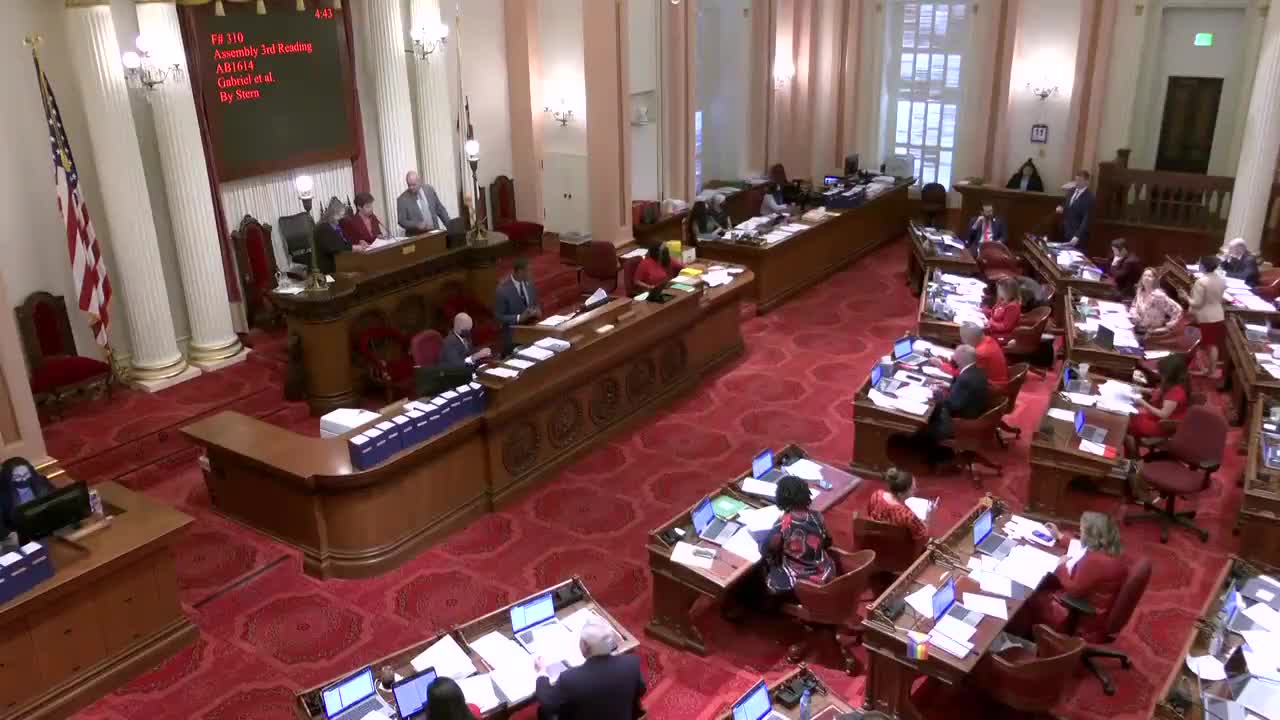 1MIN
Senate Floor
 1MIN
Senate Standing Committee on Appropriations
 6MIN
Senate Standing Committee on Judiciary
 4MIN
Senate Standing Committee on Natural Resources and Water
 58SEC
Assembly Floor
1MIN
Assembly Floor
Bill Author


