AB 761: Local finance: enhanced infrastructure financing districts.
- Session Year: 2023-2024
- House: Assembly
- Latest Version Date: 2024-09-22
Current Status:
Passed
(2024-09-22: Chaptered by Secretary of State - Chapter 344, Statutes of 2024.)
Introduced
In Committee
First Chamber
In Committee
Second Chamber
Enacted
Existing law establishes enhanced infrastructure financing districts to finance public capital facilities or other specified projects of communitywide significance. Existing law provides for the membership of the governing body of the district, referred to as the public financing authority. Existing law authorizes the legislative body of a city or a county to designate a proposed enhanced infrastructure financing district by adopting a resolution of intention to establish the proposed district which, among other things, is required to state that an enhanced infrastructure financing district is proposed and describe the boundaries of the proposed district. Existing law requires the public financing authority to direct the preparation of and adopt an infrastructure financing plan consistent with the general plan and any relevant specific plan, and consisting of, among other things, a financing section. Existing law requires that the financing section include a plan for financing the public facilities, a limit on the total number of dollars of taxes that may be allocated to the district pursuant to the plan, and a date, either not more than 45 years from the date on which the issuance of the bonds is approved for the plan or the issuance of a loan is approved on which the district will cease to exist, by which time all tax allocation to the district will end, or, where the district is divided into project areas, a date on which the infrastructure financing plan will cease to be in effect and all tax allocations to the district will end and a date on which the districts authority to repay indebtedness with incremental tax revenues will end, as specified.
This bill, for plans proposed on or after January 1, 2025, would specify that for the purpose of development and construction of passenger rail projects in the County of Los Angeles where at least 75% of the revenue from the district is used for debt service on a federal Transportation Infrastructure Finance and Innovation Act (TIFIA) loan, the date on which the district will cease to exist shall not be more than 75 years from the date of the approval of a TIFIA loan, as specified.
This bill would make legislative findings and declarations as to the necessity of a special statute for specified districts enacted primarily for the purpose of development and construction of zero-emission mass transit projects.
Existing law establishes enhanced infrastructure financing districts to finance public capital facilities or other specified projects of communitywide significance. Existing law provides for the membership of the governing body of the district, referred to as the public financing authority. Existing law authorizes the legislative body of a city or a county to designate a proposed enhanced infrastructure financing district by adopting a resolution of intention to establish the proposed district which, among other things, is required to state that an enhanced infrastructure financing district is proposed and describe the boundaries of the proposed district. Existing law requires the public financing authority to direct the preparation of and adopt an infrastructure financing plan consistent with the general plan and any relevant specific plan, and consisting of, among other things, a financing section. Existing law requires that the financing section include a plan for financing the public facilities, a limit on the total number of dollars of taxes that may be allocated to the district pursuant to the plan, and a date, either not more than 45 years from the date on which the issuance of the bonds is approved for the plan on which the district will cease to exist, by which time all tax allocation to the district will end, or, where the district is divided into project areas, a date on which the infrastructure financing plan will cease to be in effect and all tax allocations to the district will end and a date on which the districts authority to repay indebtedness with incremental tax revenues will end, as specified.
This bill, for plans proposed on or after January 1, 2024, 2025, would specify that for the purpose of development and construction of passenger rail projects in the County of Los Angeles where at least 75% of the revenue from the district is used for debt service on a federal Transportation Infrastructure Finance and Innovation Act (TIFIA) loan, the date on which the district will cease to exist shall not be more than 75 years from the date of the issuance of bonds or approval of a TIFIA loan, as specified.
This bill would make legislative findings and declarations as to the necessity of a special statute for specified districts enacted primarily for the purpose of development and construction of zero-emission mass transit projects.
Existing law establishes enhanced infrastructure financing districts to finance public capital facilities or other specified projects of communitywide significance. Existing law provides for the membership of the governing body of the district, referred to as the public financing authority. Existing law authorizes the legislative body of a city or a county to designate a proposed enhanced infrastructure financing district by adopting a resolution of intention to establish the proposed district which, among other things, is required to state that an enhanced infrastructure financing district is proposed and describe the boundaries of the proposed district. Existing law requires the public financing authority to direct the preparation of and adopt an infrastructure financing plan consistent with the general plan and any relevant specific plan, and consisting of, among other things, a financing section. Existing law requires that the financing section include a plan for financing the public facilities, a limit on the total number of dollars of taxes that may be allocated to the district pursuant to the plan, and a date, either not more than 45 years from the date on which the issuance of the bonds is approved for the plan on which the district will cease to exist, by which time all tax allocation to the district will end, or, where the district is divided into project areas, a date on which the infrastructure financing plan will cease to be in effect and all tax allocations to the district will end and a date on which the districts authority to repay indebtedness with incremental tax revenues will end, as specified.
This bill, for plans proposed on or after January 1, 2024, would specify that for the purpose of development and construction of passenger rail projects in the County of Los Angeles where at least 75% of the revenue from the district is used for debt service on a federal Transportation Infrastructure Finance and Innovation Act loan, the date on which the district will cease to exist shall not be more than 75 years from the date of the issuance of bonds or approval of a loan, as specified.
This bill would make legislative findings and declarations as to the necessity of a special statute for specified districts enacted primarily for the purpose of development and construction of zero-emission mass transit projects.
Existing law establishes the Transportation Agency, which consists of various departments and state entities, including the California Transportation Commission and the Department of Transportation. Under existing law, the agency is under the supervision of an executive officer known as the Secretary of Transportation, who is required to develop and report to the Governor on legislative, budgetary, and administrative programs to accomplish comprehensive, long-range, and coordinated planning and policy formulation in the matters of public interest related to the agency.Existing law provides for the funding of public transit, including under the Transportation Development Act. This bill would require the secretary, on or before July 1, 2024, to establish and convene the Transit Transformation Task Force to include representatives from the department, the Controllers office, various local agencies, academic institutions, nongovernmental organizations, and other stakeholders. The bill would require the task force to develop a structured, coordinated process for early engagement of all parties to develop policies to grow transit ridership and improve the transit experience for all users of those services. The bill would require the secretary, in consultation with the task force, to prepare and submit a report of findings based on the task forces efforts to the appropriate policy and fiscal committees of the Legislature on or before January 1, 2025. The bill would require the report to include a detailed analysis of specified issues and recommendations on specified topics. The provisions of the bill would be repealed on January 1, 2028.Existing law establishes the Transportation Agency, which consists of various departments and state entities, including the California Transportation Commission and the Department of Transportation. Under existing law, the agency is under the supervision of an executive officer known as the Secretary of Transportation, who is required to develop and report to the Governor on legislative, budgetary, and administrative programs to accomplish comprehensive, long-range, and coordinated planning and policy formulation in the matters of public interest related to the agency.
Existing law provides for the funding of public transit, including under the Transportation Development Act.
This bill would require the secretary, on or before July 1, 2024, to establish and convene the Transit Transformation Task Force to include representatives from the department, the Controllers office, various local agencies, academic institutions, nongovernmental organizations, and other stakeholders. The bill would require the task force to develop a structured, coordinated process for early engagement of all parties to develop policies to grow transit ridership and improve the transit experience for all users of those services. The bill would require the secretary, in consultation with the task force, to prepare and submit a report of findings based on the task forces efforts to the appropriate policy and fiscal committees of the Legislature on or before January 1, 2025. The bill would require the report to include a detailed analysis of specified issues and recommendations on specified topics. The provisions of the bill would be repealed on January 1, 2028.
After receipt of a copy of the resolution of intention to establish a district, the official designated pursuant to Section 53398.62 shall prepare a proposed infrastructure financing plan. A plan shall be proposed for the district that shall include any project areas, if proposed, within the district. The infrastructure financing plan shall be consistent with the general plan, and specific plan, if applicable, of the city or county within which the district is located and shall include all of the following:
(a)A map and legal description of the proposed district, which may include all or a portion of the district designated by the legislative body in its resolution of intention.
(b)A description of the public facilities and other forms of development or financial assistance that is proposed in the area of the district, including those to be provided by the private sector, those to be provided by governmental entities without assistance under this chapter, those public improvements and facilities to be financed with assistance from the proposed district, and those to be provided jointly. The description shall include the proposed location, timing, and costs of the development and financial assistance.
(c)If funding from affected taxing entities is incorporated into the financing plan, a finding that the development and financial assistance are of communitywide significance and provide significant benefits to an area larger than the area of the district.
(d)A financing section, which shall contain all of the following information:
(1)A specification of the maximum portion of the incremental tax revenue of the city or county and of each affected taxing entity proposed to be committed to the district for each year during which the district will receive incremental tax revenue. The portion need not be the same for all affected taxing entities. The portion may change over time.
(2)A projection of the amount of tax revenues expected to be received by the district in each year during which the district will receive tax revenues, including an estimate of the amount of tax revenues attributable to each affected taxing entity for each year.
(3)A plan for financing the public facilities to be assisted by the district, including a detailed description of any intention to incur debt.
(4)A limit on the total number of dollars of taxes that may be allocated to the district pursuant to the plan.
(5)Either of the following:
(A)A date on which the district will cease to exist, by which time all tax allocation to the district will end.
(i)For plans proposed on or after January 1, 2025, for districts enacted primarily for the purpose of development and construction of passenger rail projects in the County of Los Angeles, where at least 75 percent of the revenue from the district is used for debt service on a federal Transportation Infrastructure Finance and Innovation Act (TIFIA) loan, the date shall not be more than 75 years from the date on which the issuance of a TIFIA loan is approved by the United States Department of Transportation. Starting 45 years after the issuance of the TIFIA loan, incremental tax revenue received shall only be used for the purposes of the TIFIA loan repayment, including debt service.
(ii)For all other districts, the date shall not be more than 45 years from the date on which the issuance of bonds is approved pursuant to Section 53398.77, or the issuance of a loan is approved by the governing board of a local agency pursuant to Section 53398.87.
(B)If the district is divided into project areas, a date on which the infrastructure financing plan will cease to be in effect and all tax allocations to the district will end and a date on which the districts authority to repay indebtedness with incremental tax revenues received under this chapter will end, not to exceed 45 years from the date the district or the applicable project area has actually received one hundred thousand dollars ($100,000) in annual incremental tax revenues under this chapter. After the time limits established under this subparagraph, a district or project area shall not receive incremental tax revenues under this chapter. If the district is divided into project areas, a separate and unique time limit shall be applicable to each project area that does not exceed 45 years from the date the district has actually received one hundred thousand dollars ($100,000) in incremental tax revenues under this chapter from that project area.
(6)An analysis of the costs to the city or county of providing facilities and services to the area of the district while the area is being developed and after the area is developed. The plan shall also include an analysis of the tax, fee, charge, and other revenues expected to be received by the city or county as a result of expected development in the area of the district.
(7)An analysis of the projected fiscal impact of the district and the associated development upon each affected taxing entity.
(8)A plan for financing any potential costs that may be incurred by reimbursing a developer of a project that is both located entirely within the boundaries of that district and qualifies for the Transit Priority Project Program, pursuant to Section 65470, including any permit and affordable housing expenses related to the project.
(e)If any dwelling units within the territory of the district are proposed to be removed or destroyed in the course of public works construction within the area of the district or private development within the area of the district that is subject to a written agreement with the district or that is financed in whole or in part by the district, a plan providing for replacement of those units and relocation of those persons or families consistent with the requirements of Section 53398.56.
(f)The goals the district proposes to achieve for each project financed pursuant to Section 53398.52.
SEC. 2.The Legislature finds and declares that a special statute is necessary and that a general statute cannot be made applicable within the meaning of Section 16 of Article IV of the California Constitution because of the unique timelines of districts enacted primarily for the purpose of development and construction of zero-emission mass transit projects.
After receipt of a copy of the resolution of intention to establish a district, the official designated pursuant to Section 53398.62 shall prepare a proposed infrastructure financing plan. A plan shall be proposed for the district that shall include any project areas, if proposed, within the district. The infrastructure financing plan shall be consistent with the general plan, and specific plan, if applicable, of the city or county within which the district is located and shall include all of the following:
(a)A map and legal description of the proposed district, which may include all or a portion of the district designated by the legislative body in its resolution of intention.
(b)A description of the public facilities and other forms of development or financial assistance that is proposed in the area of the district, including those to be provided by the private sector, those to be provided by governmental entities without assistance under this chapter, those public improvements and facilities to be financed with assistance from the proposed district, and those to be provided jointly. The description shall include the proposed location, timing, and costs of the development and financial assistance.
(c)If funding from affected taxing entities is incorporated into the financing plan, a finding that the development and financial assistance are of communitywide significance and provide significant benefits to an area larger than the area of the district.
(d)A financing section, which shall contain all of the following information:
(1)A specification of the maximum portion of the incremental tax revenue of the city or county and of each affected taxing entity proposed to be committed to the district for each year during which the district will receive incremental tax revenue. The portion need not be the same for all affected taxing entities. The portion may change over time.
(2)A projection of the amount of tax revenues expected to be received by the district in each year during which the district will receive tax revenues, including an estimate of the amount of tax revenues attributable to each affected taxing entity for each year.
(3)A plan for financing the public facilities to be assisted by the district, including a detailed description of any intention to incur debt.
(4)A limit on the total number of dollars of taxes that may be allocated to the district pursuant to the plan.
(5)Either of the following:
(A)A date on which the district will cease to exist, by which time all tax allocation to the district will end.
(i)For plans proposed on or after January 1, 2024, 2025, for districts enacted primarily for the purpose of development and construction of passenger rail projects in the County of Los Angeles, where at least 75 percent of the revenue from the district is used for debt service on a federal Transportation Infrastructure Finance and Innovation Act (TIFIA) loan, the date shall not be more than 75 years from the date on which the issuance of bonds is approved pursuant to Section 53398.77, or the issuance of a TIFIA loan is approved by the governing board of a local agency pursuant to Section 53398.87. the United States Department of Transportation. Starting 45 years after the issuance of the TIFIA loan, incremental tax revenue received shall only be used for the purposes of the TIFIA loan repayment, including debt service.
(ii)For all other districts, the date shall not be more than 45 years from the date on which the issuance of bonds is approved pursuant to Section 53398.77, or the issuance of a loan is approved by the governing board of a local agency pursuant to Section 53398.87.
(B)If the district is divided into project areas, a date on which the infrastructure financing plan will cease to be in effect and all tax allocations to the district will end and a date on which the districts authority to repay indebtedness with incremental tax revenues received under this chapter will end, not to exceed 45 years from the date the district or the applicable project area has actually received one hundred thousand dollars ($100,000) in annual incremental tax revenues under this chapter. After the time limits established under this subparagraph, a district or project area shall not receive incremental tax revenues under this chapter. If the district is divided into project areas, a separate and unique time limit shall be applicable to each project area that does not exceed 45 years from the date the district has actually received one hundred thousand dollars ($100,000) in incremental tax revenues under this chapter from that project area.
(6)An analysis of the costs to the city or county of providing facilities and services to the area of the district while the area is being developed and after the area is developed. The plan shall also include an analysis of the tax, fee, charge, and other revenues expected to be received by the city or county as a result of expected development in the area of the district.
(7)An analysis of the projected fiscal impact of the district and the associated development upon each affected taxing entity.
(8)A plan for financing any potential costs that may be incurred by reimbursing a developer of a project that is both located entirely within the boundaries of that district and qualifies for the Transit Priority Project Program, pursuant to Section 65470, including any permit and affordable housing expenses related to the project.
(e)If any dwelling units within the territory of the district are proposed to be removed or destroyed in the course of public works construction within the area of the district or private development within the area of the district that is subject to a written agreement with the district or that is financed in whole or in part by the district, a plan providing for replacement of those units and relocation of those persons or families consistent with the requirements of Section 53398.56.
(f)The goals the district proposes to achieve for each project financed pursuant to Section 53398.52.
SEC. 2.The Legislature finds and declares that a special statute is necessary and that a general statute cannot be made applicable within the meaning of Section 16 of Article IV of the California Constitution because of the unique timelines of districts enacted primarily for the purpose of development and construction of zero-emission mass transit projects.
After receipt of a copy of the resolution of intention to establish a district, the official designated pursuant to Section 53398.62 shall prepare a proposed infrastructure financing plan. A plan shall be proposed for the district which that shall include any project areas, if proposed, within the district. The infrastructure financing plan shall be consistent with the general plan, and specific plan, if applicable, of the city or county within which the district is located and shall include all of the following:
(a)A map and legal description of the proposed district, which may include all or a portion of the district designated by the legislative body in its resolution of intention.
(b)A description of the public facilities and other forms of development or financial assistance that is proposed in the area of the district, including those to be provided by the private sector, those to be provided by governmental entities without assistance under this chapter, those public improvements and facilities to be financed with assistance from the proposed district, and those to be provided jointly. The description shall include the proposed location, timing, and costs of the development and financial assistance.
(c)If funding from affected taxing entities is incorporated into the financing plan, a finding that the development and financial assistance are of communitywide significance and provide significant benefits to an area larger than the area of the district.
(d)A financing section, which shall contain all of the following information:
(1)A specification of the maximum portion of the incremental tax revenue of the city or county and of each affected taxing entity proposed to be committed to the district for each year during which the district will receive incremental tax revenue. The portion need not be the same for all affected taxing entities. The portion may change over time.
(2)A projection of the amount of tax revenues expected to be received by the district in each year during which the district will receive tax revenues, including an estimate of the amount of tax revenues attributable to each affected taxing entity for each year.
(3)A plan for financing the public facilities to be assisted by the district, including a detailed description of any intention to incur debt.
(4)A limit on the total number of dollars of taxes that may be allocated to the district pursuant to the plan.
(5)Either of the following:
(A)A date on which the district will cease to exist, by which time all tax allocation to the district will end. The
(i)For plans proposed on or after January 1, 2024, for districts enacted primarily for the purpose of development and construction of passenger rail projects in the County of Los Angeles, where at least 75 percent of the revenue from the district is used for debt service on a federal Transportation Infrastructure Finance and Innovation Act (TIFIA) loan, the date shall not be more than 75 years from the date on which the issuance of bonds is approved pursuant to Section 53398.77, or the issuance of a loan is approved by the governing board of a local agency pursuant to Section 53398.87. Starting 45 years after the issuance of the TIFIA loan, incremental tax revenue received shall only be used for the purposes of the TIFIA loan repayment, including debt service.
(ii)For all other districts, the date shall not be more than 45 years from the date on which the issuance of bonds is approved pursuant to Section 53398.77, or the issuance of a loan is approved by the governing board of a local agency pursuant to Section 53398.87.
(B)If the district is divided into project areas, a date on which the infrastructure financing plan will cease to be in effect and all tax allocations to the district will end and a date on which the districts authority to repay indebtedness with incremental tax revenues received under this chapter will end, not to exceed 45 years from the date the district or the applicable project area has actually received one hundred thousand dollars ($100,000) in annual incremental tax revenues under this chapter. After the time limits established under this subparagraph, a district or project area shall not receive incremental tax revenues under this chapter. If the district is divided into project areas, a separate and unique time limit shall be applicable to each project area that does not exceed 45 years from the date the district has actually received one hundred thousand dollars ($100,000) in incremental tax revenues under this chapter from that project area.
(6)An analysis of the costs to the city or county of providing facilities and services to the area of the district while the area is being developed and after the area is developed. The plan shall also include an analysis of the tax, fee, charge, and other revenues expected to be received by the city or county as a result of expected development in the area of the district.
(7)An analysis of the projected fiscal impact of the district and the associated development upon each affected taxing entity.
(8)A plan for financing any potential costs that may be incurred by reimbursing a developer of a project that is both located entirely within the boundaries of that district and qualifies for the Transit Priority Project Program, pursuant to Section 65470, including any permit and affordable housing expenses related to the project.
(e)If any dwelling units within the territory of the district are proposed to be removed or destroyed in the course of public works construction within the area of the district or private development within the area of the district that is subject to a written agreement with the district or that is financed in whole or in part by the district, a plan providing for replacement of those units and relocation of those persons or families consistent with the requirements of Section 53398.56.
(f)The goals the district proposes to achieve for each project financed pursuant to Section 53398.52.
SEC. 2.The Legislature finds and declares that a special statute is necessary and that a general statute cannot be made applicable within the meaning of Section 16 of Article IV of the California Constitution because of the unique timelines of districts enacted primarily for the purpose of development and construction of zero-emission mass transit projects.
SECTION 1.The Legislature finds and declares all of the following:(a)Nearly 50 percent of the states greenhouse gas emissions come from the transportation sector.(b)According to the State Air Resources Boards 2022 scoping plan adopted pursuant to Section 38561 of the Health and Safety Code, the transition to zero-emission vehicles is not enough to meet the states climate goals, with the state needing to also reduce vehicle miles traveled. Increasing the use of public transportation is critical to success.(c)Transit use has been on the decline in California, both prior to, and concurrent with, the COVID-19 pandemic due to various factors.(d)The Legislature temporarily suspended performance metrics under the Transportation Development Act (Chapter 4 (commencing with Section 99200) of Part 11 of Division 10 of the Public Utilities Code) and Congress provided short-term emergency funding relief to transit agencies to address the COVID-19 pandemics impact on fare revenue and local funding support. However, the state has not developed new metrics to monitor the performance of public transit or new strategies to help transit agencies stabilize and ultimately grow public transit ridership.(e)California transit agencies need additional funding to maintain a state of good repair, expand service, and grow transit ridership. State oversight is needed to ensure transit operators are providing a high-quality, reliable service.SEC. 2.Section 13979.3 is added to the Government Code, to read:13979.3.(a)On or before July 1, 2024, the secretary shall establish and convene the Transit Transformation Task Force.(b)The task force shall include, but is not limited to, representatives from transit operators, both urban and rural, the Department of Transportation, the Controllers office, local governments, metropolitan planning organizations, regional transportation planning organizations, transportation advocacy organizations with expertise in public transit, labor organizations, academic institutions, and other stakeholders, as appropriate, at the discretion of the secretary.(c)The task force shall develop a structured, coordinated process for early engagement of all parties to develop policies to grow transit ridership and improve the transit experience for all users of those services.(d)The secretary shall, in consultation with the task force, prepare and submit a report of findings based on the task forces efforts to the appropriate policy and fiscal committees of the Legislature on or before January 1, 2025.(e)The report shall include, but is not limited to, a detailed analysis of the following issues:(1)The services provided by transit agencies and the demographics of transit ridership, with detail on services provided, including persons with disabilities, or specific populations like low-income individuals and students.(2)Existing funding sources for transit with a breakdown of funding available for capital and operations, including any constitutional and statutory limitations on these existing funding sources.(3)The use of state transit funding for other modes, such as streets and roads.(4)The cost to operate, maintain, and provide for the necessary future growth of transit systems for the next 10 years.(5)The costs and operational impacts associated with federal, state, and local mandates including, but not limited to, the Americans with Disabilities Act of 1990 (42 U.S.C. Sec. 12132) and the State Air Resources Boards Innovative Clean Transit regulations (Article 4.3 (commencing with Section 2023) of Chapter 1 of Division 3 of Title 13 of the California Code of Regulations).(6)Workforce recruitment, retention, and development challenges, impacting transit service.(7)Existing policies on state and local metrics to measure transit performance.(8)State and local policies that impact service efficiency and transit ridership including, but not limited to, transit prioritization on roads, land use, housing, and pricing policies.(9)State departments and agencies that have responsibility for transit system oversight, grant administration, and reporting.(f)The report shall also include, but is not limited to, recommendations on the following:(1)How to improve mobility and increase ridership on transit, including, but not limited to:(A)Service and fare coordination or integration between transit agencies.(B)Coordinated scheduling, mapping, and wayfinding between transit agencies.(C)Ensuring a safe and clean ride for passengers and operators.(D)Increasing the frequency and reliability, through strategies that include, but are not limited to, the sharing of real-time transit information such as arrival and departure times and predictions, service alert data, and transit prioritization on roads.(2)Changes to land use, housing, and pricing policies that could improve public transit use.(3)Strategies to address workforce recruitment, retention, and development challenges.(4)Replacing fare box recovery ratios and efficiency criteria required under the Transportation Development Act (Chapter 4 (commencing with Section 99200) of Part 11 of Division 10 of the Public Utilities Code) with performance metrics that better measure transit operations, including usage, cost efficiency of operations, and service quality.(5)The appropriate state department or agency to be responsible for transit system oversight and reporting.(6)New options for state revenue sources to fund transit operations and capital projects to meet necessary future growth of transit systems for the next 10 years and to address mandates.(7)The potential of transit-oriented development and value capture of property around transit stations as a source of sustainable revenue for transit operations.(g)The task force may consult with the California Transportation Commission to use its work on the needs assessment prepared pursuant to Section 14518 of the Government Code regarding the identification of future transit capital and operational needs.(h)This section shall remain in effect only until January 1, 2028, and as of that date is repealed.The Legislature finds and declares all of the following:
(a)Nearly 50 percent of the states greenhouse gas emissions come from the transportation sector.
(b)According to the State Air Resources Boards 2022 scoping plan adopted pursuant to Section 38561 of the Health and Safety Code, the transition to zero-emission vehicles is not enough to meet the states climate goals, with the state needing to also reduce vehicle miles traveled. Increasing the use of public transportation is critical to success.
(c)Transit use has been on the decline in California, both prior to, and concurrent with, the COVID-19 pandemic due to various factors.
(d)The Legislature temporarily suspended performance metrics under the Transportation Development Act (Chapter 4 (commencing with Section 99200) of Part 11 of Division 10 of the Public Utilities Code) and Congress provided short-term emergency funding relief to transit agencies to address the COVID-19 pandemics impact on fare revenue and local funding support. However, the state has not developed new metrics to monitor the performance of public transit or new strategies to help transit agencies stabilize and ultimately grow public transit ridership.
(e)California transit agencies need additional funding to maintain a state of good repair, expand service, and grow transit ridership. State oversight is needed to ensure transit operators are providing a high-quality, reliable service.
SEC. 2.Section 13979.3 is added to the Government Code, to read:13979.3.(a)On or before July 1, 2024, the secretary shall establish and convene the Transit Transformation Task Force.
(b)The task force shall include, but is not limited to, representatives from transit operators, both urban and rural, the Department of Transportation, the Controllers office, local governments, metropolitan planning organizations, regional transportation planning organizations, transportation advocacy organizations with expertise in public transit, labor organizations, academic institutions, and other stakeholders, as appropriate, at the discretion of the secretary.
(c)The task force shall develop a structured, coordinated process for early engagement of all parties to develop policies to grow transit ridership and improve the transit experience for all users of those services.
(d)The secretary shall, in consultation with the task force, prepare and submit a report of findings based on the task forces efforts to the appropriate policy and fiscal committees of the Legislature on or before January 1, 2025.
(e)The report shall include, but is not limited to, a detailed analysis of the following issues:
(1)The services provided by transit agencies and the demographics of transit ridership, with detail on services provided, including persons with disabilities, or specific populations like low-income individuals and students.
(2)Existing funding sources for transit with a breakdown of funding available for capital and operations, including any constitutional and statutory limitations on these existing funding sources.
(3)The use of state transit funding for other modes, such as streets and roads.
(4)The cost to operate, maintain, and provide for the necessary future growth of transit systems for the next 10 years.
(5)The costs and operational impacts associated with federal, state, and local mandates including, but not limited to, the Americans with Disabilities Act of 1990 (42 U.S.C. Sec. 12132) and the State Air Resources Boards Innovative Clean Transit regulations (Article 4.3 (commencing with Section 2023) of Chapter 1 of Division 3 of Title 13 of the California Code of Regulations).
(6)Workforce recruitment, retention, and development challenges, impacting transit service.
(7)Existing policies on state and local metrics to measure transit performance.
(8)State and local policies that impact service efficiency and transit ridership including, but not limited to, transit prioritization on roads, land use, housing, and pricing policies.
(9)State departments and agencies that have responsibility for transit system oversight, grant administration, and reporting.
(f)The report shall also include, but is not limited to, recommendations on the following:
(1)How to improve mobility and increase ridership on transit, including, but not limited to:
(A)Service and fare coordination or integration between transit agencies.
(B)Coordinated scheduling, mapping, and wayfinding between transit agencies.
(C)Ensuring a safe and clean ride for passengers and operators.
(D)Increasing the frequency and reliability, through strategies that include, but are not limited to, the sharing of real-time transit information such as arrival and departure times and predictions, service alert data, and transit prioritization on roads.
(2)Changes to land use, housing, and pricing policies that could improve public transit use.
(3)Strategies to address workforce recruitment, retention, and development challenges.
(4)Replacing fare box recovery ratios and efficiency criteria required under the Transportation Development Act (Chapter 4 (commencing with Section 99200) of Part 11 of Division 10 of the Public Utilities Code) with performance metrics that better measure transit operations, including usage, cost efficiency of operations, and service quality.
(5)The appropriate state department or agency to be responsible for transit system oversight and reporting.
(6)New options for state revenue sources to fund transit operations and capital projects to meet necessary future growth of transit systems for the next 10 years and to address mandates.
(7)The potential of transit-oriented development and value capture of property around transit stations as a source of sustainable revenue for transit operations.
(g)The task force may consult with the California Transportation Commission to use its work on the needs assessment prepared pursuant to Section 14518 of the Government Code regarding the identification of future transit capital and operational needs.
(h)This section shall remain in effect only until January 1, 2028, and as of that date is repealed.
|
Date
|
Status
|
|---|---|
| Sep 22, 2024 | Chaptered by Secretary of State - Chapter 344, Statutes of 2024. |
| Sep 22, 2024 | Approved by the Governor. |
| Sep 10, 2024 | Enrolled and presented to the Governor at 4:30 p.m. |
| Aug 29, 2024 | Senate amendments concurred in. To Engrossing and Enrolling. (Ayes 76. Noes 0.). |
| Aug 28, 2024 | From committee: That the Senate amendments be concurred in. (Ayes 9. Noes 0.) (August 28). |
| Aug 27, 2024 | Joint Rule 62(a) suspended. |
| Aug 22, 2024 | Re-referred to Com. on L. GOV. pursuant to Assembly Rule 77.2. |
| Aug 20, 2024 | In Assembly. Concurrence in Senate amendments pending. May be considered on or after August 22 pursuant to Assembly Rule 77. |
| Aug 20, 2024 | Read third time. Passed. Ordered to the Assembly. (Ayes 39. Noes 0. Page 5223.). |
| May 30, 2024 | Read second time. Ordered to third reading. |
| May 29, 2024 | From committee: Do pass. (Ayes 7. Noes 0.) (May 29). |
| May 20, 2024 | From committee chair, with author's amendments: Amend, and re-refer to committee. Read second time, amended, and re-referred to Com. on L. GOV. |
| May 1, 2024 | Re-referred to Com. on L. GOV. |
| Sep 14, 2023 | Re-referred to Com. on RLS. |
| Sep 14, 2023 | Withdrawn from committee. |
| Sep 13, 2023 | From committee chair, with author's amendments: Amend, and re-refer to committee. Read second time, amended, and re-referred to Com. on TRANS. |
| Sep 13, 2023 | Senate Rules Suspended |
| Jun 7, 2023 | Referred to Com. on TRANS. |
| May 31, 2023 | In Senate. Read first time. To Com. on RLS. for assignment. |
| May 30, 2023 | Read third time. Passed. Ordered to the Senate. (Ayes 79. Noes 0. Page 1869.) |
| May 18, 2023 | Read second time. Ordered to third reading. |
| May 18, 2023 | From committee: Do pass. (Ayes 15. Noes 0.) (May 18). |
| May 3, 2023 | In committee: Set, first hearing. Referred to APPR. suspense file. |
| Apr 26, 2023 | In committee: Hearing postponed by committee. |
| Mar 21, 2023 | From committee: Do pass and re-refer to Com. on APPR. with recommendation: To Consent Calendar. (Ayes 15. Noes 0.) (March 20). Re-referred to Com. on APPR. |
| Feb 23, 2023 | Referred to Com. on TRANS. |
| Feb 14, 2023 | From printer. May be heard in committee March 16. |
| Feb 13, 2023 | Read first time. To print. |
|
Date
|
Description
|
Location
|
Votes
|
|
|---|---|---|---|---|
| Aug 29, 2024 | AB 761 Friedman Concurrence in Senate Amendments | Assembly Floor |
Passed |
|
| Aug 28, 2024 | With recommendation: That Senate amendments be concurred in. | Assembly Standing Committee on Local Government |
Passed |
|
| Aug 20, 2024 | Assembly 3rd Reading AB761 Friedman et al. By Allen | Senate Floor |
Passed |
|
| May 29, 2024 | Do pass | Senate Standing Committee on Local Government |
Passed |
|
| May 30, 2023 | AB 761 Friedman Assembly Third Reading | Assembly Floor |
Passed |
|
| May 18, 2023 | Do pass. | Assembly Standing Committee on Appropriations |
Passed |
|
| Mar 20, 2023 | Do pass and be re-referred to the Committee on [Appropriations] with recommendation: To Consent Calendar | Assembly Standing Committee on Transportation |
Passed |
This list shows positions taken on this bill by organizations on the date displayed, which is linked to the original source.
Positions by individuals are not included.
|
Organization
|
Position
|
Date
|
|---|---|---|
| Bay Area Council | ** Support | |
| Beverly Hills Chamber Of Commerce | ** Support | |
| BikeLA | ** Support | |
| California Conference of Carpenters | ** Support | |
| California Contract Cities Association | ** Support | |
| City of West Hollywood | ** Support | |
| Greater Los Angeles Realtors | ** Support | |
| hollywood chamber of commerce | ** Support | |
| LAX Coastal Chamber of Commerce | ** Support | |
| Los Angeles County | ** Support | |
| Los Angeles County Division, League of California Cities | ** Support | |
| Los Angeles County Metropolitan Transportation Authority | ** Support | |
| Los Angeles County Supervisor, Lindsey Horvath | ** Support | |
| Move LA | ** Support | |
| Public Advocates | ** Support | |
| Seamless Bay Area | ** Support | |
| Silicon Valley Leadership Group | ** Support | |
| Southern California Association Of Governments | ** Support | |
| SPUR | ** Support | |
| Streets for All | ** Support | |
| VALLEY INDUSTRY AND COMMERCE ASSOCIATION | ** Support | |
| Western States Regional Council or Capenters | ** Support | |
| West Hollywood Bicycle Coalition | ** Support | |
| Westside Cities Council of Governments | ** Support |
CONCURRENCE IN SENATE AMENDMENTS
CSA2 Bill Id:AB 761
Author:(Friedman)
As Amended Ver:May 20, 2024
Majority vote
SUMMARY
Original Committee of Reference: Assembly Transportation Committee
Allows an enhanced infrastructure financing district (EIFD) enacted primarily to develop and construct passenger rail projects in Los Angeles County to last 75 years instead of 45 years if it receives specified federal transportation loans.
Senate Amendments
Current Committee Recommendation: Concur
- Delete the contents of the bill.
- Specify that for infrastructure financing plans proposed on or after January 1, 2025, for EIFDs enacted primarily for the purpose of development and construction of passenger rail projects in Los Angeles County, where at least 75% of the revenue from the EIFD is used for debt service on a federal Transportation Infrastructure Finance and Innovation Act (TIFIA) loan, the date on which the district shall cease to exist shall not be more than 75 years from the date on which the issuance of a TIFIA loan is approved by the United States Department of Transportation (USDOT).
- Provide that 45 years after the issuance of the TIFIA loan, incremental tax revenue shall only be used for the purposes of the TIFIA loan repayment, including debt service.
COMMENTS
- Redevelopment. Article XVI, Section 16 of the California Constitution authorizes the Legislature to provide for the formation of RDAs to eliminate blight in an area by means of a self-financing schedule that pays for the redevelopment project with tax increment derived from any increase in the assessed value of property within the redevelopment project area (or tax increment). Generally, property tax increment financing involves a local government forming a tax increment financing district to issue bonds and use the bond proceeds to pay project costs within the boundaries of a specified project area. To repay the bonds, the district captures increased property tax revenues that are generated when projects financed by the bonds increase assessed property values within the project area.
To calculate the increased property tax revenues captured by the district, the amount of property tax revenues received by any local government participating in the district is "frozen" at the amount it received from property within a project area prior to the project area's formation. In future years, as the project area's assessed valuation grows above the frozen base, the resulting additional property tax revenues — the so-called property tax "increment" revenues — flow to the tax increment financing district instead of other local governments. After the bonds have been fully repaid using the incremental property tax revenues, the district is dissolved, ending the diversion of tax increment revenues from participating local governments.
Prior to Proposition 13, very few RDAs existed; however, after its passage, RDAs became a source of funding for a variety of local infrastructure activities. Eventually, RDAs were required to set aside 20% of funding generated in a project area to increase the supply of low and moderate income housing in the project areas. At the time RDAs were dissolved, the Controller estimated that statewide, RDAs were obligated to spend $1 billion on affordable housing. At the time of dissolution, over 400 RDAs statewide were diverting 12% of property taxes, over $5.6 billion yearly.
In 2011, facing a severe budget shortfall, the Governor proposed eliminating RDAs in order to deliver more property taxes to other local agencies. Ultimately, the Legislature approved and the Governor signed two measures, AB 26 X1 (Blumenfield), Chapter 5 and AB 27 X1 (Blumenfield), Chapter 6 that together dissolved RDAs as they existed at the time and created a voluntary redevelopment program on a smaller scale. In response, the California Redevelopment Association (CRA) and the League of California Cities, along with other parties, filed suit challenging the two measures. The Supreme Court denied the petition for peremptory writ of mandate with respect to AB 26 X1. However, the Court did grant CRA's petition with respect to AB 27 X1. As a result, all RDAs were required to dissolve as of February 1, 2012.
- Attempts to Replace RDAs. After the Supreme Court's 2011 Matosantos decision dissolved all RDAs, legislators enacted several measures creating new tax increment financing tools to pay for local economic development. The Legislature authorized the creation of Enhanced Infrastructure Financing Districts (EIFDs) [SB 628 (Beall), Chapter 785, Statutes of 2014] quickly followed by Community Revitalization and Investment Authorities (CRIAs) [AB 2 (Alejo), Chapter 319, Statutes of 2015]. Similar to EIFDs, CRIAs use tax increment financing to fund infrastructure projects. CRIAs may currently only be formed in economically depressed areas.
The Legislature has also authorized the formation of affordable housing authorities (AHAs), which may use tax increment financing exclusively for rehabilitating and constructing affordable housing and also do not require voter approval to issue bonds [AB 1598 (Mullin), Chapter 764, Statutes of 2017]. SB 961 (Allen), Chapter 559, Statutes of 2018, removed the vote requirement for a subset of EIFDs to issue bonds and required these EIFDs to instead solicit public input, and AB 116 (Ting), Chapter 656, Statutes of 2019, removed the voter requirement for any EIFD to issues bonds in favor of a formal protest process. SB 852 (Dodd), Chapter 266, Statutes of 2022, created climate resilience districts (CRDs), which can also utilize tax-increment financing. CRDs were also given the authority to issue general obligation bonds and impose special taxes. While these entities share fundamental similarities with RDAs in terms of using various forms of tax-increment financing, they differ in two significant aspects, 1) not having access to the school’s share of property tax increment, and 2) not automatically including the tax increment of other taxing entities.
- Governor's Office of Planning and Research (OPR) Report. SB 961 (Allen), Chapter 559, Statutes of 2018, required OPR to, on or before January 1, 2021, complete a study and make recommendations on (1) the effectiveness of tax increment financing tools, (2) the relative advantages and disadvantages of different types of tax increment financing tools, and (3) the impacts of extending the Second Neighborhood Infill Finance and Transit Improvement Act (NIFTI-2s) to areas around bus stops, including segregated bus lanes. The first report identified several key limitations current tax increment financing districts share:
- They have limited revenue potential to make district formation worthwhile.
- Unlike redevelopment, where taxing entity participation was mandatory, current tax increment financing districts rely on volunteer participation.
- They have limited powers compared to RDAs.
- Some technical challenges interfere with their development.
- EIFDs. EIFDs can finance public capital facilities or other specified projects of communitywide significance that provide significant benefits to the district or the surrounding community with an estimated useful life of 15 years or more. EIFDs may finance projects that include:
- Highways, interchanges, ramps and bridges, arterial streets, parking facilities, and transit facilities.
- Sewage treatment and water reclamation plants and interceptor pipes.
- Facilities for the collection and treatment of water for urban uses.
- Flood control levees and dams, retention basins, and drainage channels.
- Child care facilities.
- Libraries.
- Parks, recreational facilities, and open space.
- The acquisition, construction, or rehabilitation of housing for persons of very low, low, and moderate income for rent or purchase.
- Projects that enable communities to adapt to the impacts of climate change, projects that implement a sustainable communities strategy, and more.
In addition to construction costs, EIFDs can finance: (1) planning and design work; (2) costs to cover the replacement of affordable housing, and offer relocation assistance to displaced residents; (3) defending the district against protests over their formation; and (4) the ongoing or capitalized costs to maintain the projects the district finances. The EIFD must not use bond proceeds to finance maintenance of any kind, and must not finance costs for ongoing operations or providing services.
An EIFD is governed by a public financing authority (PFA). To create an EIFD, the legislative body of a city or county must adopt a resolution of intention to establish the financing district. The resolution must state a time and place for a hearing on the proposal, the proposed district’s boundaries, the types of facilities and development to be financed, the need for the district, the goals the district proposes to achieve, and that incremental property tax revenues may be used to finance the EIFD’s activities. The PFA then directs an official to prepare an infrastructure financing plan (IFP) that includes:
- A map and legal description of the proposed district, including a requirement that the plan be consistent with the local agency’s general plan.
- A description, including location, timing, and costs, of the public facilities and other forms of development or financial assistance proposed in the district, including those to be provided by the private sector, by governmental entities, or jointly.
- If funding from affected taxing entities is incorporated into the financing plan, a finding that the development and financial assistance are of communitywide significance and provide significant benefits to an area larger than the area of the district.
The plan must also include a financing section that includes:
- The maximum annual tax revenues contributed to the EIFD.
- A plan for financing the public facilities to be assisted by the district, including a detailed description of any intention to incur debt.
- A limit on the total amount of taxes that may be allocated to the district pursuant to the plan.
- A date on which the district will cease to exist, by which time all tax allocation to the district will end, which shall not be more than 45 years from the date the EIFD issues bonds or the city, county, or special district loans funds to the EIFD.
Once approved by the initiating city or county, an EIFD can use a portion of the property tax increment, if the local governments approve it. They may also use revenue such as money from assessments, fees, loans, and grants. An EIFD may issue bonds backed by these revenues to pay for projects.
According to the Author
According to the Author, "AB 761 makes it easier for local communities to invest in key transportation infrastructure projects. The bill allows an Enhanced Infrastructure Financing District (EIFD) established to fund transit projects to utilize a longer maximum term for financing by extending the term from 45 years to 75 years to align with the newly extended maximum term of a Transportation Infrastructure Finance and Innovation (TIFIA) loan established by the federal Infrastructure Investment and Jobs Act of 2021."
Arguments in Support
According to the City of West Hollywood, "The City of West Hollywood has been pursuing an Enhanced Infrastructure Financing District (EIFD) as a central element of planning for the Metro K Line Northern Extension light rail project (formerly the Crenshaw/LAX Line). For several years, the City of West Hollywood has been advancing this key project in collaboration with Metro, the City of Los Angeles, and the County of Los Angeles. After years of analysis, Metro is now nearing completion of their Environmental Impact Report (EIR) making certainty on the terms of the innovative funding strategy that would be enabled by the timely passage of AB 761 the critical path towards implementing this transformative project.
"To leverage long-term property tax increment revenue through an EIFD, which is slow to ramp up for upfront investment, we are exploring a federal 'Transportation Infrastructure Finance and Innovation Act' (TIFIA) loan. Fortunately, the new federal 'Infrastructure Investment and Jobs Act' (IIJA) made the terms of TIFIA loans more generous by allowing longer maximum terms (up to 75 years). To take advantage of this new provision, AB 761 would align the maximum term of EIFDs to the same 75 years rather than the current limit of 45 years. Doing so would reduce annual payments for local agencies, increase the financing capacity of EIFDs, and make EIFDs more viable as a funding tool for jurisdictions pursuing critical transit capital investments.
"If approved, AB 761 would benefit not only the K Line Northern Extension, but also other LA Metro rail projects by providing local governments with a new fiscal tool to support planned rail infrastructure projects in their communities. LA Metro is in the middle of one of the largest transit expansions in the nation. Though most projects are fueled by Los Angeles County’s Measure R or M sales taxes and State or Federal grants, rising project costs are increasingly limiting the pace of that expansion, meaning more support from local cities and counties will be needed to keep projects and climate goals on schedule.
"This commonsense proposal will have a big impact on the ability of local governments to make meaningful contributions toward the critical infrastructure investments that are needed to address major mobility, climate, and congestion challenges. Finally, AB 761 implements a recommendation of the California Forward 'Building a More Inclusive and Sustainable California: Maximizing the Federal Infrastructure Funding Opportunity' report released by Governor Newsom to align state EIFD regulations with provisions of the federal TIFIA loan program."
Arguments in Opposition
None on file.
FISCAL COMMENTS
None.
VOTES
ASM TRANSPORTATION: 15-0-0
YES: Friedman, Vince Fong, Berman, Juan Carrillo, Davies, Gipson, Hart, Jackson, Kalra, Lowenthal, Stephanie Nguyen, Sanchez, Wallis, Ward, Wicks
ASM APPROPRIATIONS: 15-0-1
YES: Holden, Megan Dahle, Bryan, Calderon, Wendy Carrillo, Dixon, Mike Fong, Hart, Lowenthal, Mathis, Papan, Pellerin, Sanchez, Weber, Ortega
ABS, ABST OR NV: Robert Rivas
ASSEMBLY FLOOR: 79-0-1
YES: Addis, Aguiar-Curry, Alanis, Alvarez, Arambula, Bains, Bauer-Kahan, Bennett, Berman, Boerner, Bonta, Bryan, Calderon, Juan Carrillo, Wendy Carrillo, Cervantes, Chen, Connolly, Megan Dahle, Davies, Dixon, Flora, Mike Fong, Vince Fong, Friedman, Gabriel, Gallagher, Garcia, Gipson, Grayson, Haney, Hart, Holden, Hoover, Irwin, Jackson, Jones-Sawyer, Kalra, Lackey, Lee, Low, Lowenthal, Maienschein, Mathis, McCarty, McKinnor, Muratsuchi, Stephanie Nguyen, Ortega, Pacheco, Papan, Jim Patterson, Joe Patterson, Pellerin, Petrie-Norris, Quirk-Silva, Ramos, Reyes, Luz Rivas, Robert Rivas, Rodriguez, Blanca Rubio, Sanchez, Santiago, Schiavo, Soria, Ta, Ting, Valencia, Villapudua, Waldron, Wallis, Ward, Weber, Wicks, Wilson, Wood, Zbur, Rendon
ABS, ABST OR NV: Essayli
SENATE FLOOR: 40-0-0
YES: Allen, Alvarado-Gil, Archuleta, Ashby, Atkins, Becker, Blakespear, Bradford, Caballero, Cortese, Dahle, Dodd, Durazo, Eggman, Glazer, Gonzalez, Grove, Hurtado, Jones, Laird, Limón, McGuire, Menjivar, Min, Newman, Nguyen, Niello, Ochoa Bogh, Padilla, Portantino, Roth, Rubio, Seyarto, Skinner, Smallwood-Cuevas, Stern, Umberg, Wahab, Wiener, Wilk
ASM LOCAL GOVERNMENT: 9-0-0
YES: Juan Carrillo, Waldron, Essayli, Haney, Kalra, Pacheco, Ramos, Ward, Wilson
UPDATED
VERSION: May 20, 2024
CONSULTANT: Jimmy MacDonald / L. GOV. / (916) 319-3958 FN: 0004953
Date of Hearing: August 28, 2024
ASSEMBLY COMMITTEE ON LOCAL GOVERNMENT
Juan Carrillo, Chair
ABPCA Bill Id:AB 761 (
Author:Friedman) – As Amended Ver:May 20, 2024
SUBJECT: Local finance: enhanced infrastructure financing districts.
SUMMARY: Allows an enhanced infrastructure financing district (EIFD) enacted primarily to develop and construct passenger rail projects in Los Angeles County to last 75 years instead of 45 years if it receives specified federal transportation loans. Specifically, this bill:
- Specifies that for infrastructure financing plans proposed on or after January 1, 2025, for EIFDs enacted primarily for the purpose of development and construction of passenger rail projects in Los Angeles County, where at least 75% of the revenue from the EIFD is used for debt service on a federal Transportation Infrastructure Finance and Innovation Act (TIFIA) loan, the date on which the district shall cease to exist shall not be more than 75 years from the date on which the issuance of a TIFIA loan is approved by the United States Department of Transportation (USDOT).
- Provides that 45 years after the issuance of the TIFIA loan, incremental tax revenue shall only be used for the purposes of the TIFIA loan repayment, including debt service.
- Makes conforming changes.
- Find and declares that a special statute is necessary and that a general statute cannot be made applicable because of the unique timelines of districts enacted primarily for the purpose of development and construction of zero-emission mass transit projects
FISCAL EFFECT: None.
COMMENTS:
- Redevelopment. Article XVI, Section 16 of the California Constitution authorizes the Legislature to provide for the formation of RDAs to eliminate blight in an area by means of a self-financing schedule that pays for the redevelopment project with tax increment derived from any increase in the assessed value of property within the redevelopment project area (or tax increment). Generally, property tax increment financing involves a local government forming a tax increment financing district to issue bonds and use the bond proceeds to pay project costs within the boundaries of a specified project area. To repay the bonds, the district captures increased property tax revenues that are generated when projects financed by the bonds increase assessed property values within the project area.
To calculate the increased property tax revenues captured by the district, the amount of property tax revenues received by any local government participating in the district is “frozen” at the amount it received from property within a project area prior to the project area’s formation. In future years, as the project area's assessed valuation grows above the frozen base, the resulting additional property tax revenues — the so-called property tax “increment” revenues — flow to the tax increment financing district instead of other local governments. After the bonds have been fully repaid using the incremental property tax revenues, the district is dissolved, ending the diversion of tax increment revenues from participating local governments.
Prior to Proposition 13, very few RDAs existed; however, after its passage, RDAs became a source of funding for a variety of local infrastructure activities. Eventually, RDAs were required to set aside 20% of funding generated in a project area to increase the supply of low and moderate income housing in the project areas. At the time RDAs were dissolved, the Controller estimated that statewide, RDAs were obligated to spend $1 billion on affordable housing. At the time of dissolution, over 400 RDAs statewide were diverting 12% of property taxes, over $5.6 billion yearly.
In 2011, facing a severe budget shortfall, the Governor proposed eliminating RDAs in order to deliver more property taxes to other local agencies. Ultimately, the Legislature approved and the Governor signed two measures, ABX1 26 (Blumenfield), Chapter 5 and ABX1 27 (Blumenfield), Chapter 6 that together dissolved RDAs as they existed at the time and created a voluntary redevelopment program on a smaller scale. In response, the California Redevelopment Association (CRA) and the League of California Cities, along with other parties, filed suit challenging the two measures. The Supreme Court denied the petition for peremptory writ of mandate with respect to ABX1 26. However, the Court did grant CRA's petition with respect to ABX1 27. As a result, all RDAs were required to dissolve as of February 1, 2012.
- Attempts to Replace RDAs. After the Supreme Court’s 2011 Matosantos decision dissolved all RDAs, legislators enacted several measures creating new tax increment financing tools to pay for local economic development. The Legislature authorized the creation of Enhanced Infrastructure Financing Districts (EIFDs) [SB 628 (Beall), Chapter 785, Statutes of 2014] quickly followed by Community Revitalization and Investment Authorities (CRIAs) [AB 2 (Alejo), Chapter 319, Statutes of 2015]. Similar to EIFDs, CRIAs use tax increment financing to fund infrastructure projects. CRIAs may currently only be formed in economically depressed areas.
The Legislature has also authorized the formation of affordable housing authorities (AHAs), which may use tax increment financing exclusively for rehabilitating and constructing affordable housing and also do not require voter approval to issue bonds [AB 1598 (Mullin), Chapter 764, Statutes of 2017]. SB 961 (Allen), Chapter 559, Statutes of 2018, removed the vote requirement for a subset of EIFDs to issue bonds and required these EIFDs to instead solicit public input, and AB 116 (Ting), Chapter 656, Statutes of 2019, removed the voter requirement for any EIFD to issues bonds in favor of a formal protest process. SB 852 (Dodd), Chapter 266, Statutes of 2022, created climate resilience districts (CRDs), which can also utilize tax-increment financing. CRDs were also given the authority to issue general obligation bonds and impose special taxes. While these entities share fundamental similarities with RDAs in terms of using various forms of tax-increment financing, they differ in two significant aspects, 1) not having access to the school’s share of property tax increment, and 2) not automatically including the tax increment of other taxing entities.
- Governor’s Office of Planning and Research (OPR) Report. SB 961 (Allen), Chapter 559, Statutes of 2018, required OPR to, on or before January 1, 2021, complete a study and make recommendations on (1) the effectiveness of tax increment financing tools, (2) the relative advantages and disadvantages of different types of tax increment financing tools, and (3) the impacts of extending the Second Neighborhood Infill Finance and Transit Improvement Act (NIFTI-2s) to areas around bus stops, including segregated bus lanes. The first report identified several key limitations current tax increment financing districts share:
- They have limited revenue potential to make district formation worthwhile.
- Unlike redevelopment, where taxing entity participation was mandatory, current tax increment financing districts rely on volunteer participation.
- They have limited powers compared to RDAs.
- Some technical challenges interfere with their development.
- EIFDs. EIFDs can finance public capital facilities or other specified projects of communitywide significance that provide significant benefits to the district or the surrounding community with an estimated useful life of 15 years or more. EIFDs may finance projects that include:
- Highways, interchanges, ramps and bridges, arterial streets, parking facilities, and transit facilities.
- Sewage treatment and water reclamation plants and interceptor pipes.
- Facilities for the collection and treatment of water for urban uses.
- Flood control levees and dams, retention basins, and drainage channels.
- Child care facilities.
- Libraries.
- Parks, recreational facilities, and open space.
- The acquisition, construction, or rehabilitation of housing for persons of very low, low, and moderate income for rent or purchase.
- Projects that enable communities to adapt to the impacts of climate change, projects that implement a sustainable communities strategy, and more.
In addition to construction costs, EIFDs can finance: (1) planning and design work; (2) costs to cover the replacement of affordable housing, and offer relocation assistance to displaced residents; (3) defending the district against protests over their formation; and (4) the ongoing or capitalized costs to maintain the projects the district finances. The EIFD must not use bond proceeds to finance maintenance of any kind, and must not finance costs for ongoing operations or providing services.
An EIFD is governed by a public financing authority (PFA). To create an EIFD, the legislative body of a city or county must adopt a resolution of intention to establish the financing district. The resolution must state a time and place for a hearing on the proposal, the proposed district’s boundaries, the types of facilities and development to be financed, the need for the district, the goals the district proposes to achieve, and that incremental property tax revenues may be used to finance the EIFD’s activities. The PFA then directs an official to prepare an infrastructure financing plan (IFP) that includes:
- A map and legal description of the proposed district, including a requirement that the plan be consistent with the local agency’s general plan.
- A description, including location, timing, and costs, of the public facilities and other forms of development or financial assistance proposed in the district, including those to be provided by the private sector, by governmental entities, or jointly.
- If funding from affected taxing entities is incorporated into the financing plan, a finding that the development and financial assistance are of communitywide significance and provide significant benefits to an area larger than the area of the district.
The plan must also include a financing section that includes:
- The maximum annual tax revenues contributed to the EIFD.
- A plan for financing the public facilities to be assisted by the district, including a detailed description of any intention to incur debt.
- A limit on the total amount of taxes that may be allocated to the district pursuant to the plan.
- A date on which the district will cease to exist, by which time all tax allocation to the district will end, which shall not be more than 45 years from the date the EIFD issues bonds or the city, county, or special district loans funds to the EIFD.
Once approved by the initiating city or county, an EIFD can use a portion of the property tax increment, if the local governments approve it. They may also use revenue such as money from assessments, fees, loans, and grants. An EIFD may issue bonds backed by these revenues to pay for projects.
- Los Angeles Metro K Line Northern Expansion. The Los Angeles County Metropolitan Transportation Authority (LA Metro) is planning to extend its K Line north, which would connect four major rail lines and six of the highest ridership bus lines in Los Angeles County. Under LA Metro’s expenditure plan, the project will begin construction in 2041, and open at some point between 2047 and 2049.
LA Metro, Los Angeles County, and other agencies are considering funding the expansion, in part with a TIFIA loan from USDOT. The TIFIA loan program allows the federal government to provide long-term, low-interest loans to public entities for large transportation infrastructure projects. To secure a TIFIA loan, the public entity applying for the loan must have a dedicated repayment source. Generally, TIFIA loan repayment terms could not exceed 35 years after the date the project is substantially completed. In 2021, President Biden signed the Infrastructure Investment and Jobs Act (IIJA) to support public infrastructure projects. Among its many provisions, IIJA extended TIFIA loan terms for projects with an estimated useful life over 40 years to the lesser of (1) 75 years after the date the project is substantially completed, or (2) 75% of the estimated useful life of the project.
According to the City of West Hollywood, to accelerate funding for the project, and repay the TIFIA loan, local partners, like Los Angeles County and the City of West Hollywood have evaluated a range of local revenue options. To accelerate project construction, they would have to contribute at least 25% of total project costs, which the County estimates is around $3.7 billion. If they were able to contribute these funds, they expect the project could be expedited by 10-15 years. Bonds are not anticipated to be needed.
Since EIFDs cannot exist beyond 45 years from the date they issue bonds or receive a loan from the city or county that created them, a local agency could not currently use an EIFD to repay a TIFIA loan over the entire 75-year repayment term.
- Bill Summary and Author’s Statement. Assembly Bill 761 allows EIFDs enacted primarily to develop and construct passenger rail projects in Los Angeles County, where the EIFD uses at least 75 percent of its revenue for TIFIA debt service, to last 75 years from the date the DOT approves the TIFIA loan. Starting 45 years after the loan approval, the EIFD can use incremental tax revenue only for TIFIA loan repayment, including debt service. The City of West Hollywood and Los Angeles County Supervisor Lindsey Horvath are the sponsors of this bill.
According to the Author, “AB 761 makes it easier for local communities to invest in key transportation infrastructure projects. The bill allows an Enhanced Infrastructure Financing District (EIFD) established to fund transit projects to utilize a longer maximum term for financing by extending the term from 45 years to 75 years to align with the newly extended maximum term of a Transportation Infrastructure Finance and Innovation (TIFIA) loan established by the federal Infrastructure Investment and Jobs Act of 2021.”
- Policy Consideration. As noted in the Senate Local Government Committee Analysis, “AB 761 gives EIFDs formed to pay off TIFIA loans an additional 30 years to operate compared to other EIFDs. While the measure is clear that the 75-year clock starts when the TIFIA loan is entered into, it is far less clear on the details of the financial arrangement. The local agencies that form the EIFD will have to consider the following key implementation details:
- AB 761 does not specify whether the EIFD, LA Metro, or other local agency partner has to be the one that enters into the TIFIA loan, or whether it can repay another agency that enters into a TIFIA loan.
- The measure does not specify when the EIFD should form. Should LA Metro enter into the TIFIA before the EIFD can form? Or, should the EIFD form before the TIFIA loan is entered into so it starts to generate property tax increment before loan repayment begins?
- Does the EIFD have to generate a certain amount of property tax revenue before the TIFIA loan can be entered into?
- AB 761 does not specify whether the EIFD, LA Metro, or other local agency partner has to be the one that enters into the TIFIA loan, or whether it can repay another agency that enters into a TIFIA loan.
“These details are important because (1) they could affect how successful LA Metro is in securing a TIFIA loan, and (2) the EIFD could start diverting property tax revenue away from the taxing entities that created it without assurance that the EIFD will be able to fulfill its primary purpose to repay a TIFIA loan. The County has not discussed this approach directly with DOT, but it does not expect it to treat this repayment strategy differently from other loan repayment sources. Supporters of bill believe using this EIFD strategy could expedite a multi-billion dollar project by over a decade. Does the Legislature have enough assurance that AB 761 sets up these districts to successfully fulfill their primary purpose to repay TIFIA loan debt?”
- Related Legislation. AB 1819 (Waldron) provides that specified EIFDs are allowed to finance certain fire related projects and equipment. This bill is currently pending on the Senate Floor.
SB 1140 (Caballero) would make numerous changes to EIFD law and specifies that an eligible project for climate resilience districts (CRDs) includes a project that intends to improve air quality. This bill is currently pending on the Governor’s Desk.
- Arguments in Support. According to the City of West Hollywood, “The City of West Hollywood has been pursuing an Enhanced Infrastructure Financing District (EIFD) as a central element of planning for the Metro K Line Northern Extension light rail project (formerly the Crenshaw/LAX Line). For several years, the City of West Hollywood has been advancing this key project in collaboration with Metro, the City of Los Angeles, and Los Angeles County. After years of analysis, Metro is now nearing completion of their Environmental Impact Report (EIR) making certainty on the terms of the innovative funding strategy that would be enabled by the timely passage of AB 761 the critical path towards implementing this transformative project.
“To leverage long-term property tax increment revenue through an EIFD, which is slow to ramp up for upfront investment, we are exploring a federal ‘Transportation Infrastructure Finance and Innovation Act’ (TIFIA) loan. Fortunately, the new federal ‘Infrastructure Investment and Jobs Act’ (IIJA) made the terms of TIFIA loans more generous by allowing longer maximum terms (up to 75 years). To take advantage of this new provision, AB 761 would align the maximum term of EIFDs to the same 75 years rather than the current limit of 45 years. Doing so would reduce annual payments for local agencies, increase the financing capacity of EIFDs, and make EIFDs more viable as a funding tool for jurisdictions pursuing critical transit capital investments.
“If approved, AB 761 would benefit not only the K Line Northern Extension, but also other LA Metro rail projects by providing local governments with a new fiscal tool to support planned rail infrastructure projects in their communities. LA Metro is in the middle of one of the largest transit expansions in the nation. Though most projects are fueled by Los Angeles County’s Measure R or M sales taxes and State or Federal grants, rising project costs are increasingly limiting the pace of that expansion, meaning more support from local cities and counties will be needed to keep projects and climate goals on schedule.
“This commonsense proposal will have a big impact on the ability of local governments to make meaningful contributions toward the critical infrastructure investments that are needed to address major mobility, climate, and congestion challenges. Finally, AB 761 implements a recommendation of the California Forward ‘Building a More Inclusive and Sustainable California: Maximizing the Federal Infrastructure Funding Opportunity’ report released by Governor Newsom to align state EIFD regulations with provisions of the federal TIFIA loan program.”
- Arguments in Opposition. None on file.
REGISTERED SUPPORT / OPPOSITION:
Support
City of West Hollywood [SPONSOR]
Los Angeles County Supervisor, Lindsey Horvath [SPONSOR]
Beverly Hills Chamber of Commerce
BikeLA
California Conference of Carpenters
California Contract Cities Association
Greater Los Angeles Realtors
Hollywood Chamber of Commerce
LAX Coastal Chamber of Commerce
Los Angeles County
Los Angeles County Division, League of California Cities
Los Angeles County Metropolitan Transportation Authority
Move LA
Southern California Association of Governments
Streets for All
Valley Industry and Commerce Association
West Hollywood Bicycle Coalition
Western States Regional Council of Carpenters
Westside Cities Council of Governments
Opposition
None on file
Analysis Prepared by: Jimmy MacDonald / L. GOV. / (916) 319-3958
CONCURRENCE IN SENATE AMENDMENTS
CSA1 Bill Id:AB 761
Author:(Friedman)
As Amended Ver:May 20, 2024
Majority vote
SUMMARY
Allows an enhanced infrastructure financing district (EIFD) enacted primarily to develop and construct passenger rail projects in Los Angeles County to last 75 years instead of 45 years if it receives specified federal transportation loans.
Senate Amendments
- Delete the contents of the bill.
- Specify that for infrastructure financing plans proposed on or after January 1, 2025, for EIFDs enacted primarily for the purpose of development and construction of passenger rail projects in Los Angeles County, where at least 75% of the revenue from the EIFD is used for debt service on a federal Transportation Infrastructure Finance and Innovation Act (TIFIA) loan, the date on which the district shall cease to exist shall not be more than 75 years from the date on which the issuance of a TIFIA loan is approved by the United States Department of Transportation (USDOT).
- Provide that 45 years after the issuance of the TIFIA loan, incremental tax revenue shall only be used for the purposes of the TIFIA loan repayment, including debt service.
COMMENTS
- Redevelopment. Article XVI, Section 16 of the California Constitution authorizes the Legislature to provide for the formation of RDAs to eliminate blight in an area by means of a self-financing schedule that pays for the redevelopment project with tax increment derived from any increase in the assessed value of property within the redevelopment project area (or tax increment). Generally, property tax increment financing involves a local government forming a tax increment financing district to issue bonds and use the bond proceeds to pay project costs within the boundaries of a specified project area. To repay the bonds, the district captures increased property tax revenues that are generated when projects financed by the bonds increase assessed property values within the project area.
To calculate the increased property tax revenues captured by the district, the amount of property tax revenues received by any local government participating in the district is "frozen" at the amount it received from property within a project area prior to the project area's formation. In future years, as the project area's assessed valuation grows above the frozen base, the resulting additional property tax revenues — the so-called property tax "increment" revenues — flow to the tax increment financing district instead of other local governments. After the bonds have been fully repaid using the incremental property tax revenues, the district is dissolved, ending the diversion of tax increment revenues from participating local governments.
Prior to Proposition 13, very few RDAs existed; however, after its passage, RDAs became a source of funding for a variety of local infrastructure activities. Eventually, RDAs were required to set aside 20% of funding generated in a project area to increase the supply of low and moderate income housing in the project areas. At the time RDAs were dissolved, the Controller estimated that statewide, RDAs were obligated to spend $1 billion on affordable housing. At the time of dissolution, over 400 RDAs statewide were diverting 12% of property taxes, over $5.6 billion yearly.
In 2011, facing a severe budget shortfall, the Governor proposed eliminating RDAs in order to deliver more property taxes to other local agencies. Ultimately, the Legislature approved and the Governor signed two measures, ABX1 26 (Blumenfield), Chapter 5 and ABX1 27 (Blumenfield), Chapter 6 that together dissolved RDAs as they existed at the time and created a voluntary redevelopment program on a smaller scale. In response, the California Redevelopment Association (CRA) and the League of California Cities, along with other parties, filed suit challenging the two measures. The Supreme Court denied the petition for peremptory writ of mandate with respect to ABX1 26. However, the Court did grant CRA's petition with respect to ABX1 27. As a result, all RDAs were required to dissolve as of February 1, 2012.
- Attempts to Replace RDAs. After the Supreme Court's 2011 Matosantos decision dissolved all RDAs, legislators enacted several measures creating new tax increment financing tools to pay for local economic development. The Legislature authorized the creation of Enhanced Infrastructure Financing Districts (EIFDs) [SB 628 (Beall), Chapter 785, Statutes of 2014] quickly followed by Community Revitalization and Investment Authorities (CRIAs) [AB 2 (Alejo), Chapter 319, Statutes of 2015]. Similar to EIFDs, CRIAs use tax increment financing to fund infrastructure projects. CRIAs may currently only be formed in economically depressed areas.
The Legislature has also authorized the formation of affordable housing authorities (AHAs), which may use tax increment financing exclusively for rehabilitating and constructing affordable housing and also do not require voter approval to issue bonds [AB 1598 (Mullin), Chapter 764, Statutes of 2017]. SB 961 (Allen), Chapter 559, Statutes of 2018, removed the vote requirement for a subset of EIFDs to issue bonds and required these EIFDs to instead solicit public input, and AB 116 (Ting), Chapter 656, Statutes of 2019, removed the voter requirement for any EIFD to issues bonds in favor of a formal protest process. SB 852 (Dodd), Chapter 266, Statutes of 2022, created climate resilience districts (CRDs), which can also utilize tax-increment financing. CRDs were also given the authority to issue general obligation bonds and impose special taxes. While these entities share fundamental similarities with RDAs in terms of using various forms of tax-increment financing, they differ in two significant aspects, 1) not having access to the school’s share of property tax increment, and 2) not automatically including the tax increment of other taxing entities.
- Governor's Office of Planning and Research (OPR) Report. SB 961 (Allen), Chapter 559, Statutes of 2018, required OPR to, on or before January 1, 2021, complete a study and make recommendations on (1) the effectiveness of tax increment financing tools, (2) the relative advantages and disadvantages of different types of tax increment financing tools, and (3) the impacts of extending the Second Neighborhood Infill Finance and Transit Improvement Act (NIFTI-2s) to areas around bus stops, including segregated bus lanes. The first report identified several key limitations current tax increment financing districts share:
- They have limited revenue potential to make district formation worthwhile.
- Unlike redevelopment, where taxing entity participation was mandatory, current tax increment financing districts rely on volunteer participation.
- They have limited powers compared to RDAs.
- Some technical challenges interfere with their development.
- EIFDs. EIFDs can finance public capital facilities or other specified projects of communitywide significance that provide significant benefits to the district or the surrounding community with an estimated useful life of 15 years or more. EIFDs may finance projects that include:
- Highways, interchanges, ramps and bridges, arterial streets, parking facilities, and transit facilities.
- Sewage treatment and water reclamation plants and interceptor pipes.
- Facilities for the collection and treatment of water for urban uses.
- Flood control levees and dams, retention basins, and drainage channels.
- Child care facilities.
- Libraries.
- Parks, recreational facilities, and open space.
- The acquisition, construction, or rehabilitation of housing for persons of very low, low, and moderate income for rent or purchase.
- Projects that enable communities to adapt to the impacts of climate change, projects that implement a sustainable communities strategy, and more.
In addition to construction costs, EIFDs can finance: (1) planning and design work; (2) costs to cover the replacement of affordable housing, and offer relocation assistance to displaced residents; (3) defending the district against protests over their formation; and (4) the ongoing or capitalized costs to maintain the projects the district finances. The EIFD must not use bond proceeds to finance maintenance of any kind, and must not finance costs for ongoing operations or providing services.
An EIFD is governed by a public financing authority (PFA). To create an EIFD, the legislative body of a city or county must adopt a resolution of intention to establish the financing district. The resolution must state a time and place for a hearing on the proposal, the proposed district’s boundaries, the types of facilities and development to be financed, the need for the district, the goals the district proposes to achieve, and that incremental property tax revenues may be used to finance the EIFD’s activities. The PFA then directs an official to prepare an infrastructure financing plan (IFP) that includes:
- A map and legal description of the proposed district, including a requirement that the plan be consistent with the local agency’s general plan.
- A description, including location, timing, and costs, of the public facilities and other forms of development or financial assistance proposed in the district, including those to be provided by the private sector, by governmental entities, or jointly.
- If funding from affected taxing entities is incorporated into the financing plan, a finding that the development and financial assistance are of communitywide significance and provide significant benefits to an area larger than the area of the district.
The plan must also include a financing section that includes:
- The maximum annual tax revenues contributed to the EIFD.
- A plan for financing the public facilities to be assisted by the district, including a detailed description of any intention to incur debt.
- A limit on the total amount of taxes that may be allocated to the district pursuant to the plan.
- A date on which the district will cease to exist, by which time all tax allocation to the district will end, which shall not be more than 45 years from the date the EIFD issues bonds or the city, county, or special district loans funds to the EIFD.
Once approved by the initiating city or county, an EIFD can use a portion of the property tax increment, if the local governments approve it. They may also use revenue such as money from assessments, fees, loans, and grants. An EIFD may issue bonds backed by these revenues to pay for projects.
According to the Author
According to the Author, "AB 761 makes it easier for local communities to invest in key transportation infrastructure projects. The bill allows an Enhanced Infrastructure Financing District (EIFD) established to fund transit projects to utilize a longer maximum term for financing by extending the term from 45 years to 75 years to align with the newly extended maximum term of a Transportation Infrastructure Finance and Innovation (TIFIA) loan established by the federal Infrastructure Investment and Jobs Act of 2021."
Arguments in Support
According to the City of West Hollywood, "The City of West Hollywood has been pursuing an Enhanced Infrastructure Financing District (EIFD) as a central element of planning for the Metro K Line Northern Extension light rail project (formerly the Crenshaw/LAX Line). For several years, the City of West Hollywood has been advancing this key project in collaboration with Metro, the City of Los Angeles, and the County of Los Angeles. After years of analysis, Metro is now nearing completion of their Environmental Impact Report (EIR) making certainty on the terms of the innovative funding strategy that would be enabled by the timely passage of AB 761 the critical path towards implementing this transformative project.
"To leverage long-term property tax increment revenue through an EIFD, which is slow to ramp up for upfront investment, we are exploring a federal 'Transportation Infrastructure Finance and Innovation Act' (TIFIA) loan. Fortunately, the new federal 'Infrastructure Investment and Jobs Act' (IIJA) made the terms of TIFIA loans more generous by allowing longer maximum terms (up to 75 years). To take advantage of this new provision, AB 761 would align the maximum term of EIFDs to the same 75 years rather than the current limit of 45 years. Doing so would reduce annual payments for local agencies, increase the financing capacity of EIFDs, and make EIFDs more viable as a funding tool for jurisdictions pursuing critical transit capital investments.
"If approved, AB 761 would benefit not only the K Line Northern Extension, but also other LA Metro rail projects by providing local governments with a new fiscal tool to support planned rail infrastructure projects in their communities. LA Metro is in the middle of one of the largest transit expansions in the nation. Though most projects are fueled by Los Angeles County’s Measure R or M sales taxes and State or Federal grants, rising project costs are increasingly limiting the pace of that expansion, meaning more support from local cities and counties will be needed to keep projects and climate goals on schedule.
"This commonsense proposal will have a big impact on the ability of local governments to make meaningful contributions toward the critical infrastructure investments that are needed to address major mobility, climate, and congestion challenges. Finally, AB 761 implements a recommendation of the California Forward 'Building a More Inclusive and Sustainable California: Maximizing the Federal Infrastructure Funding Opportunity' report released by Governor Newsom to align state EIFD regulations with provisions of the federal TIFIA loan program."
Arguments in Opposition
None on file.
FISCAL COMMENTS
None.
VOTES:
ASM TRANSPORTATION: 15-0-0
YES: Friedman, Vince Fong, Berman, Juan Carrillo, Davies, Gipson, Hart, Jackson, Kalra, Lowenthal, Stephanie Nguyen, Sanchez, Wallis, Ward, Wicks
ASM APPROPRIATIONS: 15-0-1
YES: Holden, Megan Dahle, Bryan, Calderon, Wendy Carrillo, Dixon, Mike Fong, Hart, Lowenthal, Mathis, Papan, Pellerin, Sanchez, Weber, Ortega
ABS, ABST OR NV: Robert Rivas
ASSEMBLY FLOOR: 79-0-1
YES: Addis, Aguiar-Curry, Alanis, Alvarez, Arambula, Bains, Bauer-Kahan, Bennett, Berman, Boerner, Bonta, Bryan, Calderon, Juan Carrillo, Wendy Carrillo, Cervantes, Chen, Connolly, Megan Dahle, Davies, Dixon, Flora, Mike Fong, Vince Fong, Friedman, Gabriel, Gallagher, Garcia, Gipson, Grayson, Haney, Hart, Holden, Hoover, Irwin, Jackson, Jones-Sawyer, Kalra, Lackey, Lee, Low, Lowenthal, Maienschein, Mathis, McCarty, McKinnor, Muratsuchi, Stephanie Nguyen, Ortega, Pacheco, Papan, Jim Patterson, Joe Patterson, Pellerin, Petrie-Norris, Quirk-Silva, Ramos, Reyes, Luz Rivas, Robert Rivas, Rodriguez, Blanca Rubio, Sanchez, Santiago, Schiavo, Soria, Ta, Ting, Valencia, Villapudua, Waldron, Wallis, Ward, Weber, Wicks, Wilson, Wood, Zbur, Rendon
ABS, ABST OR NV: Essayli
SENATE FLOOR: 40-0-0
YES: Allen, Alvarado-Gil, Archuleta, Ashby, Atkins, Becker, Blakespear, Bradford, Caballero, Cortese, Dahle, Dodd, Durazo, Eggman, Glazer, Gonzalez, Grove, Hurtado, Jones, Laird, Limón, McGuire, Menjivar, Min, Newman, Nguyen, Niello, Ochoa Bogh, Padilla, Portantino, Roth, Rubio, Seyarto, Skinner, Smallwood-Cuevas, Stern, Umberg, Wahab, Wiener, Wilk
UPDATED
VERSION: May 20, 2024
CONSULTANT: Jimmy MacDonald / L. GOV. / (916) 319-3958 FN: 0004321
SENATE RULES COMMITTEE Office of Senate Floor Analyses (916) 651-1520 Fax: (916) 327-4478 | AB 761 |
THIRD READING
Bill No: AB 761
Author: Friedman (D), et al.
Amended: 5/20/24 in Senate
Vote: 21
SENATE LOCAL GOVERNMENT COMMITTEE: 7-0, 5/29/24
AYES: Durazo, Seyarto, Dahle, Glazer, Skinner, Wahab, Wiener
ASSEMBLY FLOOR: 79-0, 5/30/23 - See last page for vote
SUBJECT: Local finance: enhanced infrastructure financing districts
SOURCE: Lindsey Horvath, Los Angeles County Supervisor
City of West Hollywood
DIGEST:
This bill allows an enhanced infrastructure financing district enacted primarily to develop and construct passenger rail projects in Los Angeles County to last 75 years instead of 45 years if they receive specified federal transportation loans.
ANALYSIS:
Existing law:
- Creates enhanced infrastructure financing districts (EIFDs) and allows them to finance public capital facilities or other specified projects of communitywide significance that provide significant benefits to the district or the surrounding community with an estimated useful life of 15 years or more, including projects that enable communities to adapt to the impacts of climate change.
- Allows, in addition to construction costs, EIFDs to finance planning and design work, displacement of affordable housing residents, defending the district against protests over their formation, and the ongoing or capitalized costs to maintain the projects the district finances.
- Provides that an EIFD is governed by a public financing authority (PFA) with three members of each participating taxing entity’s legislative body and a minimum of two public members. Member agencies can also appoint an alternate member from their legislative body. If at least three taxing entities participate in the district, upon agreement of all taxing entities participating, the district’s governing board can be reduced to one member and one alternate member of each legislative body and a minimum of two public members.
- Requires the PFA to hold four meetings to consider an EIFD’s formation:
- One meeting to present the infrastructure financing plan (IFP) to the public and answer questions;
- One public hearing to hear all written and oral comments, but take no action;
- One public hearing to consider any additional written and oral comments and take action to modify or reject the IFP; and
- If the IFP is not rejected at the second hearing, the PFA must hold a third public hearing where it must hold a protest proceeding.
- Allows EIFDs to operate for 45 years from the date the EIFD issues bonds or the city or county that forms it loans it funds.
This bill allows EIFDs enacted primarily to develop and construct passenger rail projects in Los Angeles County, where the EIFD uses at least 75 percent of its revenue for federal Transportation Infrastructure Finance and Innovation (TIFIA) debt service, to last 75 years from the date the federal Department of Transportation (DOT) approves the TIFIA loan. Starting 45 years after the loan approval, the EIFD can only use incremental tax revenue for TIFIA loan repayment, including debt service.
Background
Redevelopment agencies. From the early 1950s until their dissolution in 2011, California redevelopment agencies (RDAs) used property tax increment financing (TIF) to pay for economic development projects in blighted areas pursuant to Community Redevelopment Law. Generally, TIF involves a local government forming a TIF district to issue bonds and use the bond proceeds to pay project costs within the boundaries of a specified project area. To repay the bonds, the district captures increased property tax revenues generated when projects the bonds finance increase assessed property values within the project area. To calculate the increased property tax revenues captured by the district, the amount of property tax revenues received by any local agency participating in the district is “frozen” at the amount it received from property within a project area prior to the project area’s formation. In future years, as the project area’s assessed valuation grows above the frozen base, the resulting additional property tax revenues—the so-called property tax “increment” revenues—flow to the TIF district instead of other local agencies. After the district has repaid the bonds using the incremental property tax revenues, the district dissolves, ending the diversion of tax increment revenues from participating local agencies.
RDAs’ dissolution deprived many local governments of the primary tool they used to eliminate physical and economic blight, finance new construction, improve public infrastructure, rehabilitate existing buildings, and increase the supply of affordable housing.
Enhanced Infrastructure Financing Districts. After RDA’s dissolution in 2011, local officials sought other ways to use TIF to raise the capital they need to fund public works projects. In response, the Legislature enacted SB 628 (Beall, Chapter 785, Statutes of 2014) to allow local officials to create Enhanced Infrastructure Financing Districts (EIFDs), which augment the tax increment financing powers available to local agencies under existing infrastructure financing district statutes. While the Legislature has created other similar financing tools, they have seldom, or never, been used.
Comments
- Purpose of the bill. According to the author, “Under current law, Enhanced Infrastructure Financing Districts (EIFD) may only collect tax increment for up to 45 years from the date of the first bond issuance. However, because of the relatively slow appreciation in property values, in many cases it may take 10 to 15 years before revenues are sufficient to borrow against and/or begin paying down debt. AB 761 extends the period of available EIFD tax increment from 45 years to 75 years, to align the term with that of a federal Transportation Infrastructure Finance and Innovation (TIFIA) loan, which is administered by the U.S. Department of Transportation. This would allow an EIFD, a joint powers authority, a transit agency or individual member jurisdictions to take advantage of the flexible terms of a federal TIFIA loan, which may fund up to 49 percent of project costs, and use future tax increment to repay the loan. The Los Angeles County Metropolitan Transportation Authority (LA Metro) and Los Angeles-area municipalities are exploring the utilization of EIFDs for a number of local passenger rail projects LA Metro is in the middle of one of the largest regional transit expansion programs in the nation. Though most projects are fueled by a combination of the local countywide sales taxes (Measure R and Measure M) and state or federal grants, rising project costs are limiting the pace of that expansion, meaning more support from local cities and counties will be needed to keep projects and climate goals on schedule.”
- Sure, but will it work? This bill gives EIFDs formed to pay off TIFIA loans an additional 30 years to operate compared to other EIFDs. While the measure is clear that the 75-year clock starts when the TIFIA loan is entered into, it is far less clear on the details of the financial arrangement. The County has not discussed this approach directly with DOT, but it does not expect it to treat this repayment strategy differently from other loan repayment sources. Supporters of bill believe using this EIFD strategy could expedite a multi-billion dollar project by over a decade. Does the Legislature have enough assurance that this bill sets up these districts to successfully fulfill their primary purpose to repay TIFIA loan debt?
- Gut and amend. As introduced and approved by the Assembly, this bill contained provisions creating a Transit Transformation Task Force. On 9/13/23, the author amended this bill to delete those provisions and inserted the current language relating to local finance.
Related/Prior Legislation
The Legislature is considering additional bills covering TIF districts:
- SB 1140 (Caballero, 2024) makes a series of changes to the enhanced infrastructure financing district formation process, and expands the type of projects that these districts and other similar districts can finance to include projects that improve air quality. The measure is currently pending in the Assembly.
- AB 930 (Friedman, 2024) allows local agencies to create Reinvestment in Infrastructure for a Sustainable and Equitable California (RISE) districts and provides these new districts various financing powers. The measure is currently pending in the Senate Local Government Committee.
- AB 1819 (Waldron, 2024) specifies that certain enhanced infrastructure financing districts (EIFDs) are allowed to finance certain fire related projects and equipment. The measure is currently pending in the Senate Local Government Committee.
- AB 2488 (Ting, 2024) allows the City and County of San Francisco to establish downtown revitalization and economic recovery financing districts to finance office-to-residential conversion projects with incremental tax revenues those projects create. The measure is currently pending in the Senate Local Government Committee.
FISCAL EFFECT: Appropriation: No Fiscal Com.: No Local: No
SUPPORT: (Verified 5/29/24)
Lindsey Horvath, Los Angeles County Supervisor (co-source)
City of West Hollywood (co-source)
Beverly Hills Chamber of Commerce
California Conference of Carpenters
California Contract Cities Association
County of Los Angeles
Greater Los Angeles Realtors
Hollywood Chamber of Commerce
LAX Coastal Chamber of Commerce
Los Angeles County Bicycle Coalition
Los Angeles County Division, League of California Cities
Los Angeles County Metropolitan Transportation Authority
Move LA
Southern California Association of Governments
Streets for All
Valley Industry and Commerce Association
West Hollywood Bicycle Coalition
Western States Regional Council of Carpenters
Westside Cities Council of Governments
OPPOSITION: (Verified 5/29/24)
None received
Prior Assembly votes not relevant.
Prepared by: Jonathan Peterson / L. GOV. / (916) 651-4119
5/30/24 11:44:19
**** END ****
SENATE COMMITTEE ON LOCAL GOVERNMENT
Senator María Elena Durazo, Chair
2023 - 2024 Regular
Bill No: | AB 761 | Hearing Date: | 5/29/24 |
Author: | Friedman | Fiscal: | No |
Version: | 5/20/24 | Consultant: | Peterson |
Local finance: enhanced infrastructure financing districts
Allows an enhanced infrastructure financing district enacted primarily to develop and construct passenger rail projects in Los Angeles County to last 75 years instead of 45 years if they receive specified federal transportation loans.
Background
Redevelopment agencies. From the early 1950s until their dissolution in 2011, California redevelopment agencies (RDAs) used property tax increment financing (TIF) to pay for economic development projects in blighted areas pursuant to Community Redevelopment Law. Generally, TIF involves a local government forming a TIF district to issue bonds and use the bond proceeds to pay project costs within the boundaries of a specified project area. To repay the bonds, the district captures increased property tax revenues generated when projects the bonds finance increase assessed property values within the project area. To calculate the increased property tax revenues captured by the district, the amount of property tax revenues received by any local agency participating in the district is “frozen” at the amount it received from property within a project area prior to the project area’s formation. In future years, as the project area’s assessed valuation grows above the frozen base, the resulting additional property tax revenues—the so-called property tax “increment” revenues—flow to the TIF district instead of other local agencies. After the district has repaid the bonds using the incremental property tax revenues, the district dissolves, ending the diversion of tax increment revenues from participating local agencies.
Citing a significant state General Fund deficit, Governor Brown’s 2011-12 budget proposed eliminating RDAs and diverting billions of dollars of property tax revenues back to schools, cities, and counties to fund core services. Among the statutory changes the Legislature adopted to implement the 2011-12 budget, AB X1 26 (Blumenfield, 2011) dissolved all RDAs. The California Supreme Court's 2011 ruling in California Redevelopment Association v. Matosantos upheld the dissolution of RDAs.
RDAs’ dissolution deprived many local governments of the primary tool they used to eliminate physical and economic blight, finance new construction, improve public infrastructure, rehabilitate existing buildings, and increase the supply of affordable housing.
Enhanced Infrastructure Financing Districts. After RDA’s dissolution in 2011, local officials sought other ways to use TIF to raise the capital they need to fund public works projects. In response, the Legislature enacted SB 628 (Beall, 2014) to allow local officials to create Enhanced Infrastructure Financing Districts (EIFDs), which augment the tax increment financing powers available to local agencies under existing infrastructure financing district statutes. While the Legislature has created other similar financing tools, they have seldom, or never, been used.
EIFDs can finance public capital facilities or other specified projects of communitywide significance that provide significant benefits to the district or the surrounding community with an estimated useful life of 15 years or more. This includes highways, interchanges, ramps and bridges, arterial streets, parking facilities, and transit facilities.
In addition to construction costs, EIFDs can finance: (1) planning and design work; (2) costs to cover the replacement of affordable housing, and offer relocation assistance to displaced residents; (3) defending the district against protests over their formation; and (4) the ongoing or capitalized costs to maintain the projects the district finances. The EIFD must not use bond proceeds to finance maintenance of any kind, and must not finance costs for ongoing operations or providing services.
An EIFD is governed by a public financing authority (PFA) with three members of each participating taxing entity’s legislative body and a minimum of two public members. Member agencies can also appoint an alternate member from their legislative body. If at least three taxing entities participate in the district, they can agree to reduce the district’s governing board to one member and one alternate member of each legislative body and a minimum of two public members.
To create an EIFD, the legislative body of a city or county must adopt a resolution of intention to establish the financing district. The resolution must state a time and place for a hearing on the proposal, the proposed district’s boundaries, the types of facilities and development to be financed, the need for the district, the goals the district proposes to achieve, and that incremental property tax revenues may be used to finance the EIFD’s activities. The city or county must create the PFA at the same time it adopts the resolution of intention. The PFA then provides public notice and directs an official to prepare an infrastructure financing plan (IFP) that includes:
- A map and legal description of the proposed district, including a requirement that the plan be consistent with the local agency’s general plan;
- A description—including location, timing, and costs—of the public facilities and other forms of development or financial assistance proposed in the district, including those to be provided by the private sector, by governmental entities, or jointly; and
- If funding from affected taxing entities is incorporated into the financing plan, a finding that the development and financial assistance are of communitywide significance and provide significant benefits to an area larger than the area of the district.
The plan must also include a financing section that includes:
- The maximum annual tax revenues contributed to the EIFD;
- A plan for financing the public facilities to be assisted by the district, including a detailed description of any intention to incur debt;
- A limit on the total amount of taxes that may be allocated to the district pursuant to the plan, and;
- A date on which the district will cease to exist, by which time all tax allocation to the district will end no more than 45 years from the date the EIFD issues bonds or the city or county loans it funds.
Once approved by the initiating city or county, an EIFD can, similar to RDAs, use a portion of the property tax increment, if the local governments approve it. They may also use revenue the infrastructure project generates, such as money from user fees, public-private partnerships, loans, and grants. Like an RDA, an EIFD may issue bonds backed by these revenues to pay for projects.
Until the Legislature enacted AB 116 (Ting, 2019), EIFDs required 55% voter approval to issue bonds. AB 116 replaced voter approval with a protest process requiring the PFA to make the draft IFP available to the public and to each landowner within the area at least 30 days before noticing the first public meeting.
The PFA must review the IFP annually, make any amendments, and prepare an annual independent financial audit. The PFA can approve amendments with a majority vote of its board at a public hearing, which must take place after mailing a 30-day notice letter describing the changes to all property owners, residents, and affected taxing entities. Amendments that add territory, increase the amount of local taxes allocated to the plan, or approve a public facility not proposed in the initial plan must go through the same notice and hearing process applicable to an initial IFP.
Los Angeles Metro K Line Northern Expansion. The Los Angeles County Metropolitan Transportation Authority (LA Metro) is planning to extend its K Line north, which would connect four major rail lines and six of the highest ridership bus lines in Los Angeles County. Under LA Metro’s expenditure plan, the project will begin construction in 2041, and open at some point between 2047 and 2049. However, LA Metro notes local partners are exploring how to make funding for the project available sooner to accelerate construction. The total cost of the project will depend on the design that LA Metro selects, but is expected to fall in the billions of dollars.
LA Metro and the County of Los Angeles are considering funding the expansion, in part with a Transportation Infrastructure Finance and Innovation Act (TIFIA) loan from the federal Department of Transportation (DOT). The TIFIA loan program allows the federal government to provide long-term, low-interest loans to public entities for large transportation infrastructure projects. To secure a TIFIA loan, the public entity applying for the loan must have a dedicated repayment source. Generally, TIFIA loan repayment terms cannot exceed 35 years after the date the project is substantially completed. In 2021, President Biden signed the Infrastructure Investment and Jobs Act (IIJA) to support public infrastructure projects. Among its many provisions, IIJA extended TIFIA loan terms for projects with an estimated useful life over 40 years to the lesser of (1) 75 years after the date the project is substantially completed, or (2) 75 percent of the estimated useful life of the project.
To accelerate funding for the project, and repay the TIFIA loan, local partners, like the County of Los Angeles and the City of West Hollywood have evaluated a range of local revenue options. To accelerate project construction, they would have to contribute at least 25 percent of total project costs, which the County estimates is around $3.7 billion. If they were able to contribute these funds, they expect the project could be expedited by 10-15 years.
This study estimated an EIFD formed just by the City of West Hollywood that captured half of property tax increment could contribute over $500 million by 2065. If both the City and County joined the EIFD, that number would increase to over $5 billion. Since EIFDs cannot exist beyond 45 years from the date they issue bonds or receive a loan from the city or county that created them, a local agency could not use an EIFD to repay a TIFIA loan over the entire 75-year repayment term.
The author wants to align EIFD law with recent changes to TIFIA loans so LA Metro can finance the Metro K Line Northern Expansion with a TIFIA loan.
Proposed Law
Assembly Bill 761 allows EIFDs enacted primarily to develop and construct passenger rail projects in Los Angeles County, where the EIFD uses at least 75 percent of its revenue for TIFIA debt service, to last 75 years from the date the DOT approves the TIFIA loan. Starting 45 years after the loan approval, the EIFD can only use incremental tax revenue for TIFIA loan repayment, including debt service.
Comments
1. Purpose of the bill. According to the author, “Under current law, Enhanced Infrastructure Financing Districts (EIFD) may only collect tax increment for up to 45 years from the date of the first bond issuance. However, because of the relatively slow appreciation in property values, in many cases it may take 10 to 15 years before revenues are sufficient to borrow against and/or begin paying down debt.
“AB 761 extends the period of available EIFD tax increment from 45 years to 75 years, to align the term with that of a federal Transportation Infrastructure Finance and Innovation (TIFIA) loan, which is administered by the U.S. Department of Transportation. This would allow an EIFD, a joint powers authority, a transit agency or individual member jurisdictions to take advantage of the flexible terms of a federal TIFIA loan, which may fund up to 49 percent of project costs, and use future tax increment to repay the loan.
“The Los Angeles County Metropolitan Transportation Authority (LA Metro) and Los Angeles-area municipalities are exploring the utilization of EIFDs for a number of local passenger rail projects LA Metro is in the middle of one of the largest regional transit expansion programs in the nation. Though most projects are fueled by a combination of the local countywide sales taxes (Measure R and Measure M) and state or federal grants, rising project costs are limiting the pace of that expansion, meaning more support from local cities and counties will be needed to keep projects and climate goals on schedule.
“AB 761 is narrowly tailored to apply to districts formed after January 1, 2025, for the purpose of financing and constructing passenger rail projects through a federal TIFIA loan. It also ensures that 45 years after the issuance of the TIFIA loan, all tax increment will be used for repayment of that loan.
“AB 761 gives local jurisdictions a tool to fund much-needed transit projects that will support local and state transportation greenhouse gas reduction goals.”
2. Sure, but will it work? AB 761 gives EIFDs formed to pay off TIFIA loans an additional 30 years to operate compared to other EIFDs. While the measure is clear that the 75-year clock starts when the TIFIA loan is entered into, it is far less clear on the details of the financial arrangement. The local agencies that form the EIFD will have to consider the following key implementation details:
- AB 761 does not specify whether the EIFD has to be the one that enters into the TIFIA loan, or whether it can repay another agency that enters into a TIFIA loan. According to Los Angeles County, LA Metro would enter into the TIFIA loan. Then, the EIFD would remit its revenue to LA Metro so it can repay the loan.
- The measure does not specify when the EIFD should form. Should LA Metro enter into the TIFIA before the EIFD can form? Or, should the EIFD form before the TIFIA loan is entered into so it starts to generate property tax increment before loan repayment begins?
- Does the EIFD have to generate a certain amount of property tax revenue before the TIFIA loan can be entered into?
These details are important because (1) they could affect how successful LA Metro is in securing a TIFIA loan, and (2) the EIFD could start diverting property tax revenue away from the taxing entities that created it without assurance that the EIFD will be able to fulfill its primary purpose to repay a TIFIA loan. The County has not discussed this approach directly with DOT, but it does not expect it to treat this repayment strategy differently from other loan repayment sources. Supporters of bill believe using this EIFD strategy could expedite a multi-billion dollar project by over a decade. Does the Legislature have enough assurance that AB 761 sets up these districts to successfully fulfill their primary purpose to repay TIFIA loan debt?
3. No guarantees. AB 761 only allows the extension from 45 to 75 years for EIFDs formed primarily to pay TIFIA debt service. However, there is no guarantee that the DOT will award the loan. What happens to the EIFD if it does not get a loan award? The measure specifies that after 45 years, a district formed under AB 761 cannot finance anything except TIFIA debt service. However, it would appear that an EIFD continue to divert property tax increment regardless of whether, or when, LA Metro enters into a TIFIA loan. Should an EIFD formed primarily to repay a TIFIA loan continue to exist if the loan has not been entered into after a certain number of years? While AB 761 does not specifically answer this question, EIFD law requires the PFA to notify the public of IFP amendments, requires annual reports, and requires public meetings in both cases. That process does not require the public to approve all of these changes, but Los Angeles County does not believe an EIFD formed primarily to repay a TIFIA loan could change the IFP to fund the same project with a different revenue source, or fund other projects that do not include the rail project that was the primary reason member agencies formed the EIFD. Does AB 761 provide sufficient direction to the EIFD if it has trouble securing the TIFIA loan, and provide the public enough notification if circumstances change?
4. What about the rest of us? AB 761 only extends the length EIFDs can exist for this purpose to EIFDs formed in Los Angeles County. However, other localities may have similar transportation needs that may also benefit from aligning EIFD duration with TIFIA loan terms. On the one hand, limiting this authority to one county ensures any implementation issues are addressed before rolling it out statewide. On the other hand, other counties would have to seek legislation if they wanted to benefit from this authority in the future. Should Los Angeles County receive a benefit that is not granted to other counties?
5. Related legislation. The Legislature is considering additional bills covering TIF districts:
- SB 1140 (Caballero), which this Committee passed on a vote of 6-0 at its March 20th meeting, makes a series of changes to the enhanced infrastructure financing district formation process, and expands the type of projects that these districts and other similar districts can finance to include projects that improve air quality. The measure is currently pending in the Assembly.
- AB 930 (Friedman) allows local agencies to create Reinvestment in Infrastructure for a Sustainable and Equitable California (RISE) districts and provides these new districts various financing powers. The measure is currently pending in the Senate Local Government Committee.
- AB 1819 (Waldron) specifies that certain enhanced infrastructure financing districts (EIFDs) are allowed to finance certain fire related projects and equipment. The measure is currently awaiting referral from the Senate Rules Committee.
- AB 2488 (Ting) allows the City and County of San Francisco to establish downtown revitalization and economic recovery financing districts to finance office-to-residential conversion projects with incremental tax revenues those projects create. The measure is currently pending in the Senate Local Government Committee.
6. Gut and amend. As introduced and approved by the Assembly, AB 761 contained provisions creating a Transit Transformation Task Force. On 9/13/23, the author amended AB 761 to delete those provisions and inserted the current language relating to local finance.
Assembly Actions
Not relevant to the current version of the bill.
Support and Opposition
(5/24/24)
Support: Lindsey Horvath, Los Angeles County Supervisor (Co-Sponsor)
City of West Hollywood (Co-Sponsor)
Beverly Hills Chamber of Commerce
California Conference of Carpenters
California Contract Cities Association
County of Los Angeles
Greater Los Angeles Realtors
Hollywood Chamber of Commerce
LAX Coastal Chamber of Commerce
Los Angeles County Bicycle Coalition
Los Angeles County Division, League of California Cities
Los Angeles County Metropolitan Transportation Authority
Move LA
Southern California Association of Governments (SCAG)
Streets for All
West Hollywood Bicycle Coalition
Western States Regional Council of Carpenters
Westside Cities Council of Governments
Opposition: None submitted.
-- END --
ASSEMBLY THIRD READING
ATR Bill Id:AB 761
Author:(Friedman)
As Introduced Ver:February 13, 2023
Majority vote
SUMMARY
Creates the Transit Transformation Task Force (Task Force) to make recommendations to the Legislature on ways to improve public transit.
Major Provisions
- Requires the Secretary of California Transportation Agency (CalSTA) to convene the Task Force on or before July 1, 2024.
- Requires the Task Force to include representatives from transit operators, both urban and rural, the Department of Transportation (Caltrans), the Controller's office, local governments, metropolitan planning organizations, regional transportation planning organizations, transportation advocacy organizations with expertise in public transit, labor organizations, academic institutions, and other stakeholders, as appropriate, at the discretion of the secretary.
- Requires the CalSTA Secretary to prepare and submit a report of findings based on the task force's efforts to the appropriate policy and fiscal committees of the Legislature on or before January 1, 2025.
- Requires the report to include, but is not limited to, recommendations on all of the following:
- How to improve mobility and increase ridership on transit, including, but not limited to:
- i) Service and fare coordination or integration between transit agencies.
- ii) Coordinated scheduling, mapping, and wayfinding between transit agencies.
- Ensuring a safe and clean ride for passengers and operators.
- Increasing the frequency and reliability, through strategies that include, but are not limited to, the sharing of real-time transit information such as arrival and departure times and predictions, service alert data, and transit prioritization on roads.
- Changes to land use, housing, and pricing policies that could improve public transit use.
- Strategies to address workforce recruitment, retention, and development challenges.
- Replacing fare box recovery ratios and efficiency criteria required under the Transportation Development Act with performance metrics that better measure transit operations, including usage, cost efficiency of operations, and service quality.
- The appropriate state department or agency to be responsible for transit system oversight and reporting.
- New options for state revenue sources to fund transit operations and capital projects to meet necessary future growth of transit systems for the next 10 years and to address mandates.
- g) The potential of transit-oriented development and value capture of property around transit stations as a source of sustainable revenue for transit operations.
- How to improve mobility and increase ridership on transit, including, but not limited to:
- Provides that this section remain in effect until January 1, 2028 and as of that date is repealed.
COMMENTS
Public transit includes buses, rail, paratransit, vanpool, and ferries. Transit services are provided by over 200 operators in California, including cities, counties, independent special districts, transportation planning agencies, private nonprofit organizations, universities, and tribes. Prior to COVID-19, nationwide, based on data from the American Public Transit Association, transit ridership for both light rail and buses had declined to levels seen in 2012 for light rail, and ridership for buses has dropped to the levels of the early 1990s. California (except for the Bay Area which has seen flat ridership levels) had experienced similar declines.
With the onset of the COVID-19 pandemic, during the first half of 2020, transit ridership plunged from 50% to as much as 94%. In efforts to stave off financial losses from declining transit ridership, the federal government provided relief for transit operators across the country. In March of 2020, Congress passed and the President signed the Coronavirus Aid, Relief and Economic Security (CARES) Act, which provided $25 billion in relief to transit agencies. The Coronavirus Response and Relief Supplemental Appropriations Act of 2021 added an additional $14 billion in transit relief. The American Rescue Plan in March of 2021 provided an additional $30.5 billion.
Transit ridership has improved since 2020, but is still far below January 2020 levels. In January of 2021, transit ridership nationally was at 48% of what it was prior to the pandemic. By the start of 2023; national ridership has returned to 73% of where it was pre-pandemic. The Pacific region of the United States has seen a smaller return to transit ridership than national trends, with ridership hovering at 67% of where it was pre-pandemic.
In California, ridership return has varied by agency. Fare dependent systems like BART and Caltrain have seen the slowest transit ridership returns and face the largest financial problems as a result. Prior to COVID-19, farebox revenues made up 70% of BARTs operating budget, accounting for nearly $600 million of their operating budget. For the 2023-24 fiscal year, BART anticipates the collection of $255.2 million in operating revenue, down from $578.8 million in 2019. BART anticipates that federal relief money will run out by fiscal year 2026-27, with projected annual deficits of $140 million. Caltrain is likely to see its federal relief dollars run out in in fiscal year 2024-25, facing a projected $25 million budget deficit in 2024 and a $49 million budget deficit in 2025.
Many transit agencies are expecting financial hardship As a result of lost fare revenues from decreased ridership, inflation, and requirements to transition to zero emission buses. In 2022, UC ITS surveyed 44 transit agencies across California regarding the impacts on of COVID-19. Of that, 72% of the agencies anticipated some financial shortfalls once federal pandemic relief funding expires, with 44% foreseeing minor shortfalls and 28% forecasting major shortfalls.
Increased Transit Use is Necessary to Meet the State's Climate Goals. Declining public transit use is problematic if the State is going to meet its climate change goals. In California, the transportation sector is the largest contributor of greenhouse gas (GHG) emissions and is responsible for about 40 percent of the state's emissions with light duty passenger vehicles being the single largest contributor. The Legislature has set a number of goals to reduce greenhouse (GHG) emissions and address climate change. The Global Warming Solutions Act of 2006 [AB 32 (Nuñéz), Chapter 488, Statutes of 2006] and subsequent companion legislation SB 32 (Pavley), Chapter 249, Statutes of 2016, requires California to reduce statewide GHG emissions to 40% below the 1990 level by 2030.
Reducing the number of miles that people drive everyday can have a significant impact on reducing GHG emissions. Providing alternative modes of transportation such as public transportation using buses and light rail or other shared ride approaches could significantly reduce the number of vehicle miles traveled (VMT) in California. California has targeted a 15% reduction in VMT by 2050 as part of its larger strategy to reduce GHG emissions 80% from 1990 levels by 2050.
According to the United States Federal Highway Administration December 2021 Traffic Volume Trends data, after a sharp drop in 2020, total VMT and per capita VMT surged back to pre-pandemic levels in 2021. Specifically, total VMT rose 11.2% – to 3.229 trillion miles – and per capita VMT rose 10.4% – to 9,728.5 miles per person – from 2020 to 2021.
According to Transit Blues, "Private vehicles are transit's major competitor. From 2000 to 2018, private vehicle access in California increased substantially. The state added almost 3 million vehicles from 2000 to 2010 and another 2.6 million vehicles from 2010 to 2018. Over this same time period, the percent of California households without motor vehicles declined by 16%, a downward trend that took place to varying degrees in all five major urban regions in the state (Ruggles et al., 2020). This growth in private vehicle ownership in California has likely had the largest effect on falling transit use of any of the potential causes analyzed for this report."
Transit Use Provides Other Benefits. Increased transit use has other benefits such as reducing congestion, because it can convey many more people in much less space than individual automobiles, which helps to reduce traffic congestion, which in turn reduces air pollution from idling vehicles, and helps riders avoid the stress that comes from daily driving in highly congested areas. California is home to the greatest congestion in the country. In 2017, it was reported that commuters in Los Angeles averaged 119 hours a years in traffic delays and in San Francisco-Oakland commuters averaged 103 hours per year in traffic. Public transit is also safer, frees up time to do things other than drive, and saves transit riders money on fuel, maintenance and parking. Transit also encourages healthier behaviors because most transit riders usually have to walk a short distance to reach transit stops.
According to the Author
"California will never be able to meet its climate change goals if we do not see a decline in vehicle miles traveled. Transit is an important part of helping the state meet its goals. However, for far too long transit ridership has been on the decline in the State of California. The State needs a Transit Transformation Task Force to help create a forum to bring forward ideas that will help get public transit ridership and service back on track. Today, the State provides very little direction on creating performance metrics to improve public transit service, and provides only 14% of the funding for transit in the State, with local government's providing nearly half of all transit funding. This has created a fragmented system with over 200 transit agencies across the state and no incentive for them to work together to improve service across county lines. It's time California get serious about public transit, set policy goals on how to improve its service, and look at ways to better align our spending to reach our climate goals."
Arguments in Support
According to The Bay Area Council, "As California's public transit systems are struggling to recover from the severe ridership and revenue impacts of the pandemic, this existential crisis forces us to reevaluate how we fund, design, and deliver transit services going forward. AB 761 would create a Task Force to analyze how the state has historically funded public transportation and offer recommendations on changes to build a more sustainable system going forward. The Task Force would also explore opportunities to regrow ridership by creating a safe, reliable, and more convenient rider experience, and provide crucial oversight to improve the accountability of transit systems.
While public transportation is in crisis now, we have an opportunity to create a better service that meets the future needs of residents across the state. AB 761 is the first step towards building that system for the future."
Arguments in Opposition
None on file
FISCAL COMMENTS
According to Assembly Appropriations Committee, the California State Transportation Agency (CalSTA) estimates it will need $1.5 million to $2 million to convene the task force and complete the report (special funds). This work will entail a contract with a third party to complete the report and salary and associated expenses for one limited-term position to manage the contract.
VOTES
ASM TRANSPORTATION: 15-0-0
YES: Friedman, Vince Fong, Berman, Juan Carrillo, Davies, Gipson, Hart, Jackson, Kalra, Lowenthal, Stephanie Nguyen, Sanchez, Wallis, Ward, Wicks
ASM APPROPRIATIONS: 15-0-1
YES: Holden, Megan Dahle, Bryan, Calderon, Wendy Carrillo, Dixon, Mike Fong, Hart, Lowenthal, Mathis, Papan, Pellerin, Sanchez, Weber, Ortega
ABS, ABST OR NV: Robert Rivas
UPDATED
VERSION: February 13, 2023
CONSULTANT: David Sforza / TRANS. / (916) 319-2093 FN: 0000631
Date of Hearing: May 3, 2023
ASSEMBLY COMMITTEE ON APPROPRIATIONS
Chris Holden, Chair
ABPCA Bill Id:AB 761
Author:(Friedman) – As Introduced Ver:February 13, 2023
Policy Committee: | Transportation | Vote: | 15 - 0 |
|
| ||
|
|
Urgency: No State Mandated Local Program: No Reimbursable: No
SUMMARY:
This bill directs the Secretary of Transportation to convene the Transit Transformation Task Force to develop policies to grow public transit ridership and improve the transit experience for all users.
Specifically, this bill:
- Directs the secretary to convene the taskforce, comprised of, at least, (a) representatives from urban and rural transit operators, (b) the Department of Transportation (Caltrans), (c) the State Controller’s office, (d) local governments, (e) transportation planning organizations, (f) transportation advocacy organizations, (g) labor, (h) academic institutions, and (i) other stakeholders, at the secretary’s discretion.
- Directs the secretary, in consultation with the task force, to submit to the Legislature, by January 1, 2025, a report of findings that includes analysis of issues and recommendations, as specified by the bill, to grow public transit use, fund public transit, improve mobility and transit ridership experience and other related issues.
FISCAL EFFECT:
The California State Transportation Agency (CalSTA) estimates it will need $1.5 million to $2 million to convene the task force and complete the report (special funds). This work will entail a contract with a third party to complete the report and salary and associated expenses for one limited-term position to manage the contract.
COMMENTS:
The current state of transit is, generally speaking, not good. Ridership has been declining for years. And, ridership has plummeted further during the COVID-19 pandemic. This decrease in ridership has challenged transit operators’ ability to meet minimum farebox recovery ratios. In response, legislation in 2021 suspended, until 2026, the minimum farebox recovery ratios. And, many transit operators stopped collecting farebox fees. In addition, the federal government, through several pieces of legislation aimed at fostering recovery from the economic effects of the COVID-19 pandemic, allocated $69.5 billion to California transit agencies.
Federal transit relief is temporary, as is the state’s suspension of farebox requirements. But, the decline in California transit ridership is endemic, as is an increase in vehicle miles travelled in the state. Yet, plans to achieve the state’s greenhouse gas reduction goals rely on robust public transit ridership.
The author intends the task force this bill creates to be “a forum to bring forward ideas that will help get public transit ridership and service back on track.” This bill is similar to early iterations of the author’s bill, AB 1938, of the 2021-22 Legislative Session, though this bill includes details AB 1938 did not. The author amended AB 1938 to an unrelated topic after the bill passed this committee.
Analysis Prepared by: Jay Dickenson / APPR. / (916) 319-2081
Date of Hearing: March 20, 2023
ASSEMBLY COMMITTEE ON TRANSPORTATION
Laura Friedman, Chair
ABPCA Bill Id:AB 761 (
Author:Friedman) – As Introduced Ver:February 13, 2023
SUBJECT: Transit Transformation Task Force
SUMMARY: Creates the Transit Transformation Task Force (Task Force) to make recommendations to the Legislature on ways to improve public transit. Specifically, this bill:
- Requires the Secretary of California Transportation Agency (CalSTA) to convene the Task Force on or before July 1, 2024.
- Requires the Task Force to include representatives from transit operators, both urban and rural, the Department of Transportation (Caltrans), the Controller’s office, local governments, metropolitan planning organizations, regional transportation planning organizations, transportation advocacy organizations with expertise in public transit, labor organizations, academic institutions, and other stakeholders, as appropriate, at the discretion of the secretary.
- Requires the CalSTA Secretary to prepare and submit a report of findings based on the task force’s efforts to the appropriate policy and fiscal committees of the Legislature on or before January 1, 2025.
- Requires the report to include, but not be limited to, a detailed analysis of the following:
a) The services provided by transit agencies and the demographics of transit ridership, with detail on services provided, including persons with disabilities, or specific populations like low-income individuals and students.
b) Existing funding sources for transit with a breakdown of funding available for capital and operations, including any constitutional and statutory limitations on these existing funding sources.
c) The use of state transit funding for other modes, such as streets and roads.
d) The cost to operate, maintain, and provide for the necessary future growth of transit systems for the next 10 years.
d) The costs and operational impacts associated with federal, state, and local mandates including but not limited to, the Americans with Disabilities Act of and the State Air Resources Board’s Innovative Clean Transit regulations.
- Workforce recruitment, retention, and development challenges, impacting transit service.
- Existing policies on state and local metrics to measure transit performance.
- State and local policies that impact service efficiency and transit ridership including, but not limited to, transit prioritization on roads, land use, housing, and pricing policies.
- State departments and agencies that have responsibility for transit system oversight, grant administration, and reporting.
- Requires the report to include, but is not limited to, recommendations on all of the following:
a) How to improve mobility and increase ridership on transit, including, but not limited to:
i) Service and fare coordination or integration between transit agencies.
ii) Coordinated scheduling, mapping, and wayfinding between transit agencies.
iii) Ensuring a safe and clean ride for passengers and operators.
iv) Increasing the frequency and reliability, through strategies that include, but are not limited to, the sharing of real-time transit information such as arrival and departure times and predictions, service alert data, and transit prioritization on roads.
b) Changes to land use, housing, and pricing policies that could improve public transit use.
c) Strategies to address workforce recruitment, retention, and development challenges.
d) Replacing fare box recovery ratios and efficiency criteria required under the Transportation Development Act with performance metrics that better measure transit operations, including usage, cost efficiency of operations, and service quality.
e) The appropriate state department or agency to be responsible for transit system oversight and reporting.
f) New options for state revenue sources to fund transit operations and capital projects to meet necessary future growth of transit systems for the next 10 years and to address mandates.
g) The potential of transit-oriented development and value capture of property around transit stations as a source of sustainable revenue for transit operations.
- Provides that this section remain in effect until January 1, 2028 and as of that date is repealed.
EXISTING LAW:
- The Transportation Development Act (TDA) of 1971, provides funding for transit and non-transit related purposes that comply with regional transportation plans. It serves to improve existing public transportation services and encourage regional transportation coordination.
- TDA provides funding for public transit from two funding sources:
- Local Transportation Fund (LTF), which is derived from a 1/4 cent of the general sales tax collected statewide; and,
- State Transit Assistance fund (STA), which is derived from the statewide sales tax on diesel fuel. (Government Code section 29530)
- Authorizes Regional Transportation Planning Agencies (RTPAs) to administer transit funding made available under the TDA. Imposes certain financial requirements on transit operators making claims for transit funds, including requirements that fares collected by the operator cover a specified percentage of operating costs, and that an operator’s total operating cost per revenue vehicle hour not exceed operating revenues and the percentage change in the Consumer Price Index (CPI). Establishes different farebox recovery requirements depending upon population. (Public Utilities Code (PUC) 99233 and 99268)
- Defines “operating costs” for purposes of calculating a transit agency’s farebox recovery ratio. (PUC 99247)
- Requires a transit operator in an urbanized area to maintain a 20% farebox recovery ratio in order to be eligible for LTF TDA funds. (PUC 99268.2)
- Requires a transit operator in a non-urbanized area to maintain a 10% farebox recovery ratio in order to be eligible for LTF TDA funds. (PUC 99268.2)
- State regulations create a three-year penalty cycle for transit operators who do not meet their farebox recovery ratios in which a penalty, or loss of some LTF funds, does not occur until the end of the third fiscal year after non-compliance. Allows operators to retain full receipt of LTF funds if they achieve the required farebox recovery ratio within the penalty cycle. (PUC 99268.9)
FISCAL EFFECT: Unknown
COMMENTS: Public transit includes buses, rail, paratransit, vanpool, and ferries. Transit services are provided by over 200 operators in California, including cities, counties, independent special districts, transportation planning agencies, private nonprofit organizations, universities, and tribes. Prior to COVID-19, nationwide, based on data from the American Public Transit Association, transit ridership for both light rail and buses had declined to levels seen in 2012 for light rail, and ridership for buses has dropped to the levels of the early 1990s. California (except for the Bay Area which has seen flat ridership levels) had experienced similar declines.
With the onset of the COVID-19 pandemic, during the first half of 2020, transit ridership plunged from 50% to as much as 94%. In efforts to stave off financial losses from declining transit ridership, the federal government provided relief for transit operators across the country. In March of 2020, Congress passed and the President signed the Coronavirus Aid, Relief and Economic Security (CARES) Act, which provided $25 billion in relief to transit agencies. The Coronavirus Response and Relief Supplemental Appropriations Act of 2021 added an additional $14 billion in transit relief. The American Rescue Plan in March of 2021 provided an additional $30.5 billion.
Transit ridership has improved since 2020, but is still far below January 2020 levels. In January of 2021, transit ridership nationally was at 48% of what it was prior to the pandemic. By the start of 2023; national ridership has returned to 73% of where it was pre-pandemic. The Pacific region of the United States has seen a smaller return to transit ridership than national trends, with ridership hovering at 67% of where it was pre-pandemic.
In California, ridership return has varied by agency. Fare dependent systems like BART and Caltrain have seen the slowest transit ridership returns and face the largest financial problems as a result. Prior to COVID-19, farebox revenues made up 70% of BARTs operating budget, accounting for nearly $600 million of their operating budget. For the 2023-24 fiscal year, BART anticipates the collection of $255.2 million in operating revenue, down from $578.8 million in 2019. BART anticipates that federal relief money will run out by fiscal year 2026-27, with projected annual deficits of $140 million. Caltrain is likely to see its federal relief dollars run out in in fiscal year 2024-25, facing a projected $25 million budget deficit in 2024 and a $49 million budget deficit in 2025.
Many transit agencies are expecting financial hardship As a result of lost fare revenues from decreased ridership, inflation, and requirements to transition to zero emission buses. In 2022, UC ITS surveyed 44 transit agencies across California regarding the impacts on of COVID-19. Of that, 72% of the agencies anticipated some financial shortfalls once federal pandemic relief funding expires, with 44% foreseeing minor shortfalls and 28% forecasting major shortfalls.
Increased Transit Use is Necessary to Meet the State’s Climate Goals. Declining public transit use is problematic if the State is going to meet its climate change goals. In California, the transportation sector is the largest contributor of greenhouse gas (GHG) emissions and is responsible for about 40 percent of the state’s emissions with light duty passenger vehicles being the single largest contributor. The Legislature has set a number of goals to reduce greenhouse (GHG) emissions and address climate change. The Global Warming Solutions Act of 2006 [AB 32 (Nunez), Chapter 488, Statutes of 2006] and subsequent companion legislation SB 32 (Pavley), Chapter 249, Statutes of 2016, requires California to reduce statewide GHG emissions to 40% below the 1990 level by 2030.
Reducing the number of miles that people drive everyday can have a significant impact on reducing GHG emissions. Providing alternative modes of transportation such as public transportation using buses and light rail or other shared ride approaches could significantly reduce the number of vehicle miles traveled (VMT) in California. California has targeted a 15% reduction in VMT by 2050 as part of its larger strategy to reduce GHG emissions 80% from 1990 levels by 2050.
According to the U.S. Federal Highway Administration December 2021 Traffic Volume Trends data, after a sharp drop in 2020, total VMT and per capita VMT surged back to pre-pandemic levels in 2021. Specifically, total VMT rose 11.2% – to 3.229 trillion miles – and per capita VMT rose 10.4% – to 9,728.5 miles per person – from 2020 to 2021.
According to Transit Blues, “Private vehicles are transit’s major competitor. From 2000 to 2018, private vehicle access in California increased substantially. The state added almost 3 million vehicles from 2000 to 2010 and another 2.6 million vehicles from 2010 to 2018. Over this same time period, the percent of California households without motor vehicles declined by 16%, a downward trend that took place to varying degrees in all five major urban regions in the state (Ruggles et al., 2020). This growth in private vehicle ownership in California has likely had the largest effect on falling transit use of any of the potential causes analyzed for this report.”
Transit Use Provides Other Benefits. Increased transit use has other benefits such as reducing congestion, because it can convey many more people in much less space than individual automobiles, which helps to reduce traffic congestion, which in turn reduces air pollution from idling vehicles, and helps riders avoid the stress that comes from daily driving in highly congested areas. California is home to the greatest congestion in the country. In 2017, it was reported that commuters in Los Angeles averaged 119 hours a years in traffic delays and in San Francisco-Oakland commuters averaged 103 hours per year in traffic. Public transit is also safer, frees up time to do things other than drive, and saves transit riders money on fuel, maintenance and parking. Transit also encourages healthier behaviors because most transit riders usually have to walk a short distance to reach transit stops.
According to the author, “California will never be able to meet its climate change goals if we do not see a decline in vehicle miles traveled. Transit is an important part of helping the state meet its goals. However, for far too long transit ridership has been on the decline in the State of California. The State needs a Transit Transformation Task Force to help create a forum to bring forward ideas that will help get public transit ridership and service back on track. Today, the State provides very little direction on creating performance metrics to improve public transit service, and provides only 14% of the funding for transit in the State, with local government’s providing nearly half of all transit funding. This has created a fragmented system with over 200 transit agencies across the state and no incentive for them to work together to improve service across county lines. It’s time California get serious about public transit, set policy goals on how to improve its service, and look at ways to better align our spending to reach our climate goals.”
Out of concern of the decline in transit ridership, coupled with the potential increase in population growth, in 2019 MTC commissioned UC ITS to conduct a study on the declining transit use in the Bay Area and to provide recommendations on how to improve it. The report, What’s Behind Recent Transit Ridership Trends in the Bar Area? provides recommendations to improve transit ridership in the Bay Area.
In May of 2020, MTC created the Blue Ribbon Transit Recovery Task Force to “guide the future of the Bay Area’s public transportation network as the region adjusts to the new conditions created by the COVID-19 pandemic.” The Task Force local elected officials, advocates for people with disabilities, representatives from the state Senate and Assembly, the California State Transportation Agency; transit operators; business and labor groups; and transit and social justice advocates. In July of 2021, the Task Force approved 27 specific near-term actions to reshape the region’s transit systems into a more connected, more efficient, and more user-focused mobility network across the entire Bay Area.
According to Seamless Bay Area, who is supporting this bill, “The task force called for in AB761 would address long-standing issues including underfunded operations and counter-productive performance measures. Historically, the State of California’s support for transit has focused on capital funding, while relatively underfunding operations.
According to SPUR’s analysis of the National Transit Database, California’s largest operators receive less state support than many national peers. In 2019, California’s largest operators received 5-22% of operating funding from the state, whereas large systems in other regions received 28-50% from the state.
In addition, longstanding performance measures have hindered the ability of transit to serve the state’s goals. Since 1978, the State of California has set farebox recovery requirements in order to qualify for sources of state funding. Use of the farebox recovery metric can counterproductively incent agencies to increase fares and cut service. Exceptions and workarounds to this rule place additional hurdles to providing the transit service needed to support equity, climate and housing goals.
Other factors suppressing transit ridership include systems that are fragmented, difficult to use, and insufficiently reliable. The AB-761 Transit Transformation Task Force would explore opportunities to regrow ridership through strategies such as integrated fares, coordinated service planning to adapt to changing travel needs, consistent wayfinding, improvements to transit priority on roads, and workforce training and retention. The Task Force would review the state’s systems for oversight and reporting to improve accountability.
The fragmented governance and funding of public transportation across California has
contributed to significant barriers to riders who depend on transit, and to potential riders who would consider using transit, but who instead have no choice but use private vehicles to get around.”
How is Transit Funded? In federal fiscal year 2018, transit operators in California received $12 billion in funding from various sources. Nearly half of the funding comes from local sources, roughly 20% from the federal government, another 20% from fares and fees, and the state provides the remainder. The state share of transit funding comes from a 1/4 cent sales tax, now known as the Local Transportation Fund (LTF) and State Transit Assistance (STA) funding which is derived from the sales tax on diesel fuel and is distributed to local agencies based on population and transit operator revenues.
To be eligible to receive its full share of LTF, existing law requires a transit operator to meet a specified ratio of fare revenues to operating cost, called the farebox recovery ratio. Generally, existing law defines the minimum ratio necessary to receive all LTF funding as either 20% for urban operators, or 10% for operators in a non-urbanized area. If a transit operator fails to meet its specified farebox recovery ratio, existing law requires the RTPA to withhold a percentage of the LTF equal to the percentage by which the operator missed its expected ratio.
California suspended its farebox recovery ratio requirements until 2026 as a result of the steep drop in transit ridership due to the COVID 19 Pandemic.
Committee comments: While the Blue Ribbon Transit Recovery Task Force under MTC is working to better coordinate public transit in the Bay Area, the rest of the state lacks direction on how to improve public transit despite it being a key component of the state’s plans to reach its climate goals. This bill brings together similar stakeholders as the MTC Task Force to take a statewide approach on improving transit services, coordination, procurement, and funding. The Task Force created by this bill will provide recommendations to the Legislature giving the state time to consider changes to how transit is funded and operated as it considers what to do about farebox recovery ratio requirements in 2026.
Previous legislation:
AB 1938 (Friedman) Chapter 406, statutes of 2022 was substantially similar to this bill but was later amended to address implementation issues related to AB 43 (Friedman) Chapter 690, Statutes of 2021.
REGISTERED SUPPORT / OPPOSITION:
Support
Bay Area Council
Move LA
Public Advocates
Seamless Bay Area
Silicon Valley Leadership Group
Spur
Streets for All
Opposition
Non on file
Analysis Prepared by: David Sforza / TRANS. / (916) 319-2093
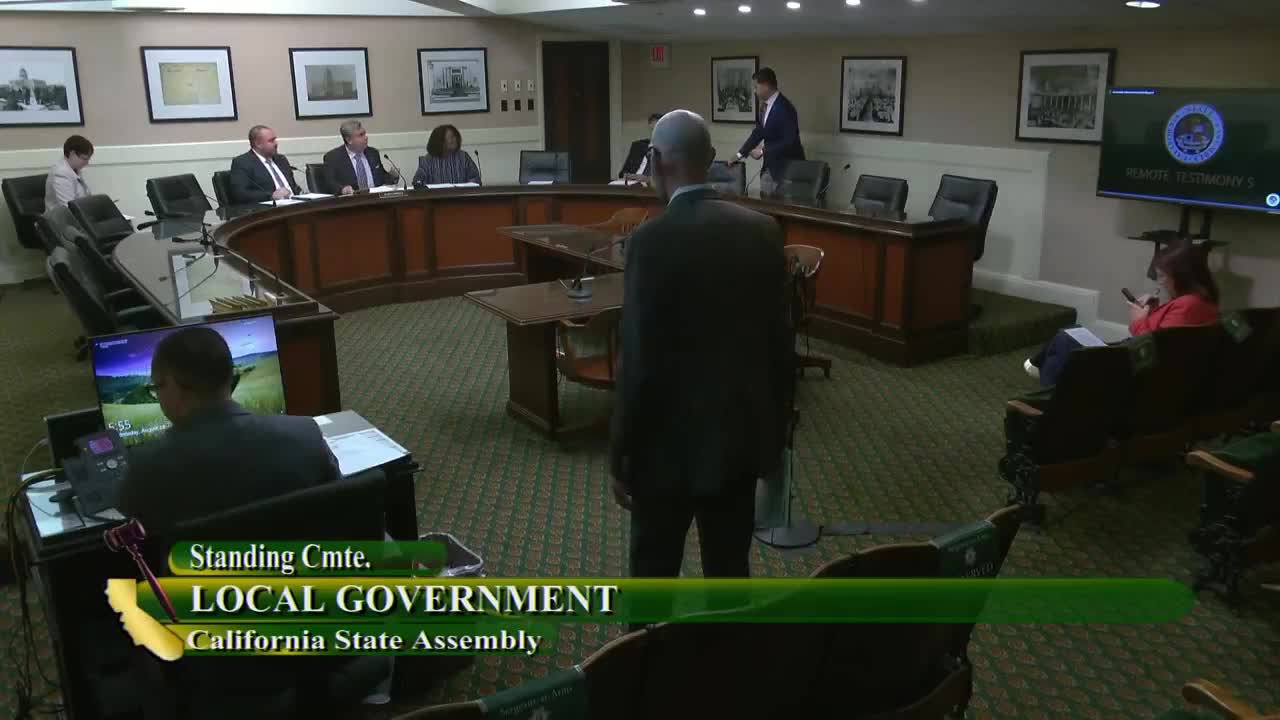
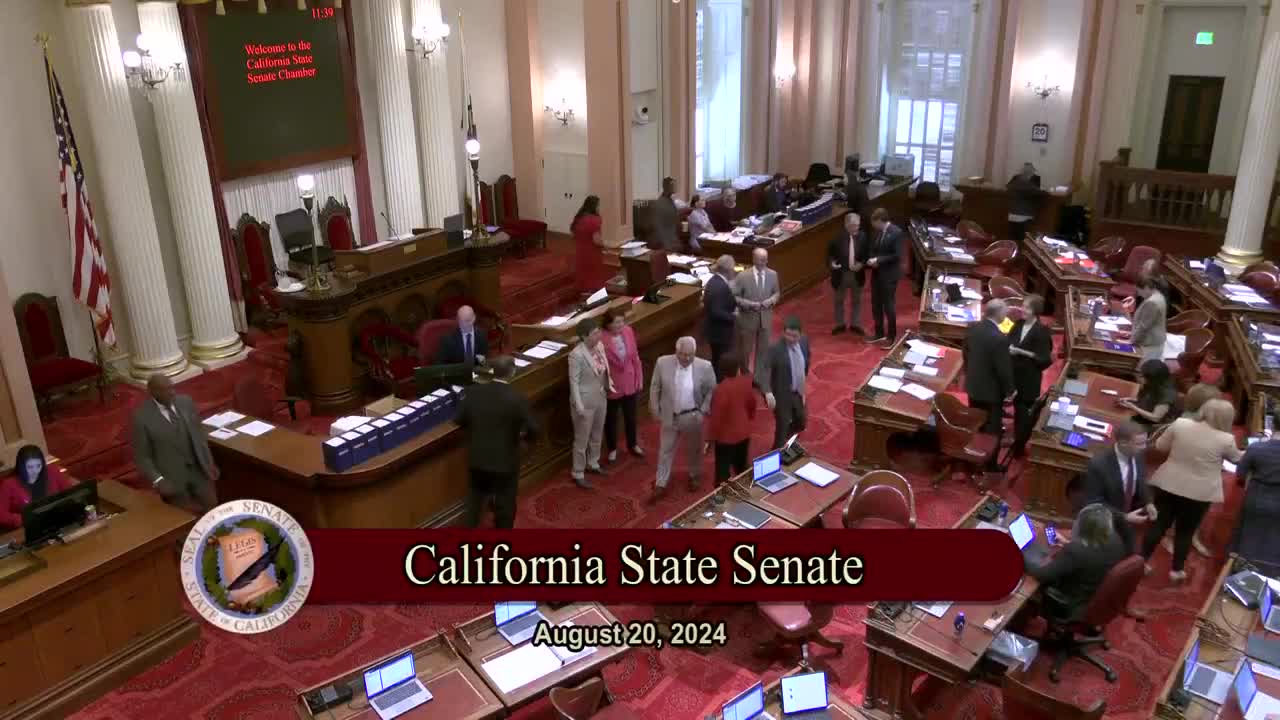
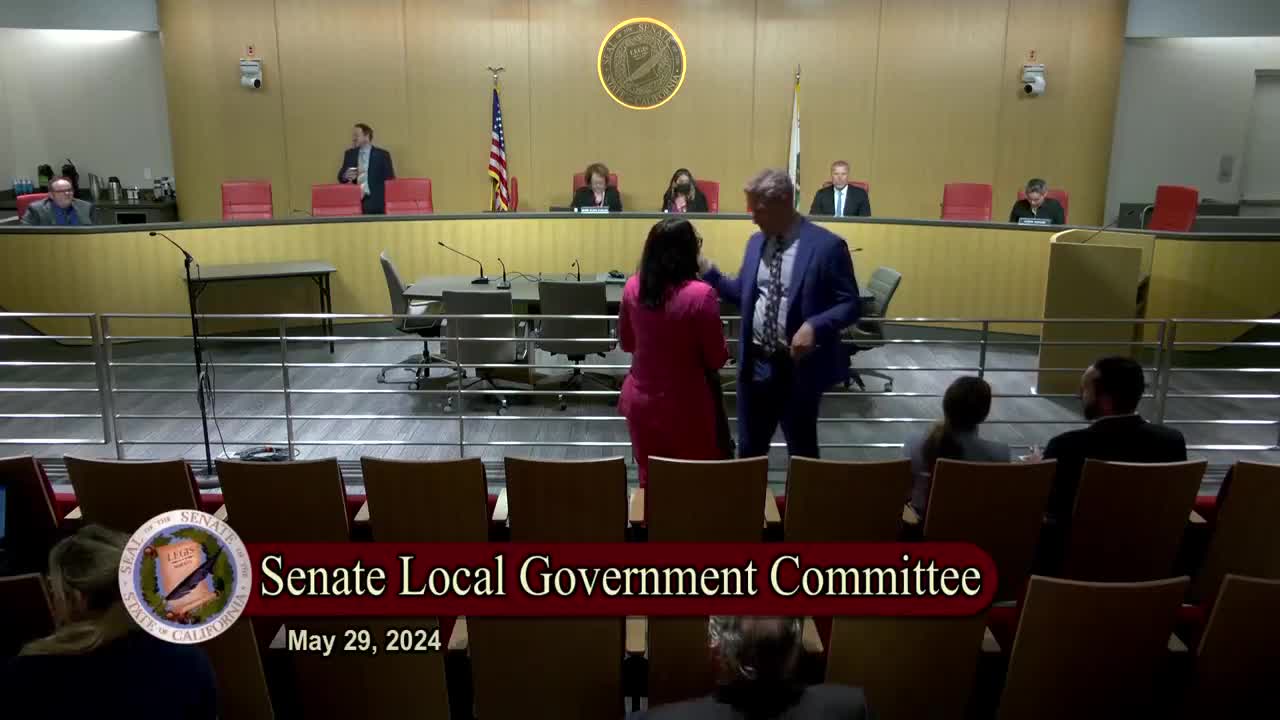
Bill Author