AB 775: Personal services contracts: state employees: physician registry for state hospitals.
- Session Year: 2023-2024
- House: Assembly
- Latest Version Date: 2023-02-13
Current Status:
Failed
(2023-09-01: In committee: Held under submission.)
Introduced
In Committee
First Chamber
In Committee
Second Chamber
Enacted
Existing law, the State Civil Service Act, regulates employment with the state and vests in the Department of Human Resources all powers, duties, and authority necessary to operate the state civil service system. Existing law permits the use of personal services contracts for purposes of cost savings when specified conditions are met, including when the potential economic advantage of contracting is not outweighed by the publics interest in having a particular function performed directly by the state government.
Existing law establishes the State Department of State Hospitals within the California Health and Human Services Agency, and provides the department with jurisdiction over specified facilities for the care and treatment of persons with mental health disorders, including the Patton State Hospital.
This bill would require the State Department of State Hospitals to establish, by January 1, 2025, a physician registry for the Patton State Hospital to be composed of members of State Bargaining Unit 16, under a 3-year pilot program. The bill would require the department to conduct and post on its internet website a semiannual survey of managers and employees to determine the efficacy of the registry. By January 10, 2026, and each year thereafter for the duration of the pilot program, the bill would require the department to submit a report to the Legislature that includes a study of the effectiveness of the registry to determine if the registry compensation rates were successful in addressing the operational needs for flexible services at a lower cost than contract registries. The bill would make the implementation of its provisions contingent upon an appropriation by the Legislature in the annual Budget Act or other statute, and would repeal its provisions on January 1, 2029.
(a)(1)Notwithstanding subdivision (a) or (b) of Section 19130, by January 1, 2025, the State Department of State Hospitals shall establish a physician registry for the Patton State Hospital under a three-year pilot program. The physician registry shall be maintained by the department and composed of members of State Bargaining Unit 16 - Physicians, Dentists, and Podiatrists (BU 16), who may elect to join the registry.
(2)A physician who joins the registry and works additional hours as a result of being on the registry shall be compensated for the additional hours, as determined by the department in a manner necessary to attract employee participation in the registry.
(b)(1)The department shall conduct a semiannual survey of managers and employees to determine the efficacy of the registry. A major factor in the surveys will be whether the registry provides cost savings to the state. The survey shall be jointly developed between the department and BU 16. The department shall post the survey results on its internet website.
(2)By January 10, 2026, and each year thereafter for the duration of the pilot program, the department shall submit a report to the Legislature that includes a study of the effectiveness of the registry to determine if the registry compensation rates were successful in addressing the operational needs for flexible services at a lower cost than contract registries.
(3)The final report submitted by the department at the end of the pilot shall include recommendations on whether the registry should be expanded to all state hospitals under its jurisdiction.
(4)A report to be submitted pursuant to paragraph (2) shall be submitted in compliance with Section 9795 of the Government Code.
(c)This section shall be implemented only if an appropriation for this express purpose is made by the Legislature in the annual Budget Act or other statute. The department shall make a budget request for the funds necessary to establish and maintain the registry for the duration of the pilot program.
(d)This section shall remain in effect only until January 1, 2029, and as of that date is repealed.
REVISIONS: HeadingLine 2.|
Date
|
Status
|
|---|---|
| Sep 1, 2023 | In committee: Held under submission. |
| Jul 3, 2023 | In committee: Referred to APPR suspense file. |
| Jun 22, 2023 | From committee: Do pass and re-refer to Com. on APPR. (Ayes 4. Noes 1.) (June 22). Re-referred to Com. on APPR. |
| Jun 7, 2023 | Referred to Com. on L., P.E. & R. |
| May 31, 2023 | In Senate. Read first time. To Com. on RLS. for assignment. |
| May 30, 2023 | Read third time. Passed. Ordered to the Senate. (Ayes 67. Noes 7. Page 1869.) |
| May 18, 2023 | Read second time. Ordered to third reading. |
| May 18, 2023 | From committee: Do pass. (Ayes 11. Noes 3.) (May 18). |
| Apr 19, 2023 | In committee: Set, first hearing. Referred to APPR. suspense file. |
| Mar 22, 2023 | From committee: Do pass and re-refer to Com. on APPR. (Ayes 6. Noes 0.) (March 22). Re-referred to Com. on APPR. |
| Mar 22, 2023 | Coauthors revised. |
| Feb 23, 2023 | Referred to Com. on P.E. & R. |
| Feb 14, 2023 | From printer. May be heard in committee March 16. |
| Feb 13, 2023 | Read first time. To print. |
|
Date
|
Description
|
Location
|
Votes
|
|
|---|---|---|---|---|
| Jul 3, 2023 | Placed on suspense file | Senate Standing Committee on Appropriations |
Passed |
|
| Jun 22, 2023 | Do pass, but first be re-referred to the Committee on [Appropriations] | Senate Standing Committee on Labor, Public Employment and Retirement |
Passed |
|
| May 30, 2023 | AB 775 Arambula Assembly Third Reading | Assembly Floor |
Passed |
|
| May 18, 2023 | Do pass. | Assembly Standing Committee on Appropriations |
Passed |
|
| Mar 22, 2023 | Do pass and be re-referred to the Committee on [Appropriations] | Assembly Standing Committee on Public Employment and Retirement |
Passed |
This list shows positions taken on this bill by organizations on the date displayed, which is linked to the original source.
Positions by individuals are not included.
|
Organization
|
Position
|
Date
|
|---|---|---|
| American Federation of State, County and Municipal Employees | ** Support | |
| Union Of American Physicians And Dentists | ** Support |
SENATE COMMITTEE ON APPROPRIATIONS
Senator Anthony Portantino, Chair
2023 - 2024 Regular Session
AB 775 (Arambula) - Personal services contracts: state employees: physician registry for state hospitals
Version: February 13, 2023 | Policy Vote: L., P.E. & R. 4 - 1 |
Urgency: No | Mandate: No |
Hearing Date: July 3, 2023 | Consultant: Robert Ingenito |
Bill Summary:
AB 775 would, upon an appropriation, amend existing law authorizing state agencies to use personal services contracts under specified circumstances to require the Department of State Hospitals (DSH) to establish a physician registry for Patton State Hospital under a three-year pilot program.
Fiscal Impact:
- DSH indicates that it would incur annual General Fund costs of $214,000 over the life of the three-year pilot program to implement the provisions of the bill. The department would require two positions to establish and oversee the registry. In addition, DSH would need to develop a survey and develop data tracking procedures to ensure costs and savings are captured, consistent with the bill’s reporting requirements.
- To the extent hiring health professionals off the registry creates savings when compared to hiring health contractors through a private company, this bill could result in reduced personnel costs to DSH over the life of the pilot program. The magnitude is unknown.
Background: The vacancy rate among Patton’s physicians and surgeons reportedly was 10 percent as of September, 2022. Current law allows state departments to contract with professionals, and establishes standards and conditions for their use. These standards and conditions, among other provisions, require contracts (1) not to displace employees, and (2) result in cost savings to state departments. However, current law does not limit the amount of time a department may utilize a contractor, which has resulted in some contractor’s terms being extended several times, potentially in lieu of employees. Private companies operate medical registries, which departments use to find health contractors to fill temporary vacancies.
Proposed Law:
This bill would, until January 1, 2029, do the following:
- Require DSH to establish and maintain a physician registry for the Patton State Hospital under a three-year pilot program by January 1, 2025, composed of State Bargaining Unit 16 - Physicians, Dentists, and Podiatrists (BU 16) members, who may elect to join the registry.
- Require DSH to compensate a physician who joins the registry and works additional hours as a result of being on the registry for the additional hours, as specified.
- Require DSH to conduct a semiannual survey of managers and employees to determine the efficacy of the registry; to consider, as major factor in the surveys, whether the registry provides cost savings to the state; and to jointly develop the survey with BU 16. DSH would be required to post the survey results on its internet website.
- Require DSH to submit a report, as specified, to the Legislature by January 10, 2026, and each year thereafter for the duration of the pilot program, that includes a study of the effectiveness of the registry to determine if the registry compensation rates were successful in addressing the operational needs for flexible services at a lower cost than contract registries.
- Require DSH’s final report at the end of the pilot to include recommendations on whether DHS should expand the registry to all state hospitals under its jurisdiction.
- Provide that DSH shall implement the bill’s provisions only if the Legislature makes an appropriation for this express purpose in the annual Budget Act or other statute and require DSH to make a budget request for the funds necessary to establish and maintain the registry for the duration of the pilot program.
Related Legislation:
SB 422 (Pan, 2022) would have required DSH to establish, by January 1, 2024, a physician registry as a three-year pilot program for the Patton State Hospital to be maintained by DSH and composed of members of State Bargaining Unit 16, who may elect to join the registry. The Governor vetoed the bill.
Staff Comments:
Under this bill, over the course of the pilot, Patton State Hospital could continue to contract with private companies for health contractors to fill temporary vacancies, as allowed in current law. According to the author, the registry model as proposed by this bill has shown promise in Los Angeles County by allowing county-employed medical professionals to provide services rather than contractors. The County of Los Angeles reports costs saving of $1 million per year over 10 years.
As noted above, DSH would require additional staffing and resources to establish policies, processes, and procedures, as well as the operation of a new pilot registry mandated for Patton State Hospital beginning in January 2025. DSH would also need to develop data tracking protocols to ensure costs and savings are captured in order to comply with the reporting requirements of the bill.
To the extent that the pilot program at Patton is extended beyond to all five DSH hospitals, DSH would need additional General Fund resources, likely in the hundreds of thousands of dollars annually.
-- END --
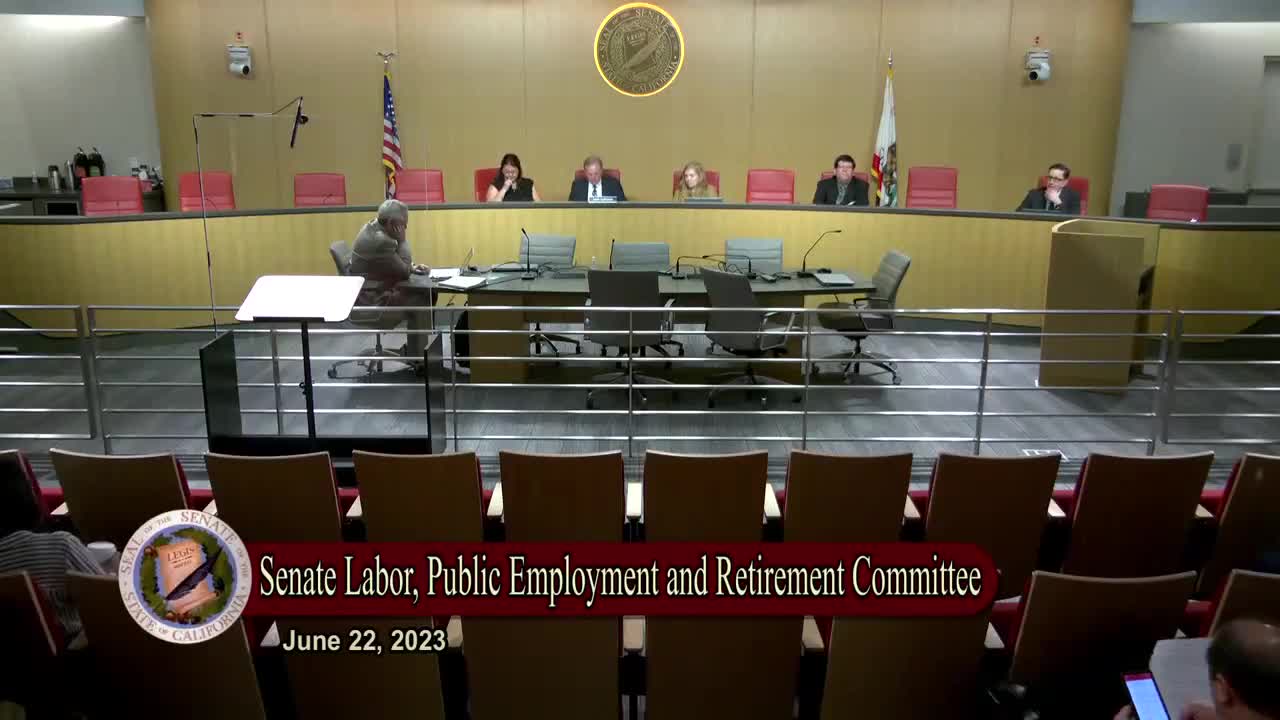
SENATE COMMITTEE ON LABOR, PUBLIC EMPLOYMENT AND RETIREMENT
Senator Dave Cortese, Chair
2023 - 2024 Regular
Bill No: AB 775 Hearing Date: June 22, 2023
Author: | Arambula | ||
Version: | February 13, 2023 | ||
Urgency: | No | Fiscal: | Yes |
Consultant: | Glenn Miles | ||
SUBJECT: Personal services contracts: state employees: physician registry for state hospitals.
KEY ISSUE
Should the state amend existing law authorizing state agencies to use personal services contracts under specified circumstances to require the Department of State Hospitals (DSH) to establish a physician registry for the Patton State Hospital under a three-year pilot program?
ANALYSIS
Existing law:
- Establishes the State Civil Service Act to provide a comprehensive personnel system for the state in which appointments are based upon merit and fitness ascertained through practical and competitive examination (Government Code § 18500).
- Requires that all persons who provide services to the state under conditions that the State Personnel Board (SPB) determines constitute an employment relationship shall hold a civil service appointment unless otherwise exempt by the constitution (GC § 19130).
- Creates the California Department of Human Resources (CalHR) with powers, duties, and authorities necessary to operate the state civil system pursuant to Article VII of the California Constitution, the California Government Code, the merit principle, and applicable rules duly adopted by SPB (GC § 18502).
- Creates, under the Dills Act, a system of collective bargaining between the state and its employees’ exclusive representatives to negotiate for terms and conditions of employment (GC § 3512 et seq.).
- Establishes standards for the state’s use of personal service contracts to achieve savings if the contract meets certain conditions, including that the contract does not displace civil service employees. Also, the contracted services must not be available within civil service, cannot be performed satisfactorily by civil service employees, or are of such a highly specialized or technical nature that the necessary expert knowledge, experience, and ability are not available through the civil service system (GC § 19130).
This bill:
- Requires the State Department of State Hospitals (DSH) to establish and maintain a physician registry for the Patton State Hospital under a three-year pilot program by January 1, 2025, composed of State Bargaining Unit 16 - Physicians, Dentists, and Podiatrists (BU 16) members, who may elect to join the registry.
- Requires DSH to compensate a physician who joins the registry and works additional hours as a result of being on the registry for the additional hours, as determined by DSH in a manner necessary to attract employee participation in the registry.
- Requires DSH to conduct a semiannual survey of managers and employees to determine the efficacy of the registry; to consider, as major factor in the surveys, whether the registry provides cost savings to the state; and to jointly develop the survey with BU 16. The department shall post the survey results on its internet website.
- Requires DSH to submit a report, as specified, to the Legislature by January 10, 2026, and each year thereafter for the duration of the pilot program, that includes a study of the effectiveness of the registry to determine if the registry compensation rates were successful in addressing the operational needs for flexible services at a lower cost than contract registries.
- Requires DSH’s final report at the end of the pilot to include recommendations on whether DHS should expand the registry to all state hospitals under its jurisdiction.
- Declares that DSH shall implement the bill’s provisions only if the Legislature makes an appropriation for this express purpose in the annual Budget Act or other statute and requires DSH to make a budget request for the funds necessary to establish and maintain the registry for the duration of the pilot program.
- Establishes a sunset date of January 1, 2029.
COMMENTS
1. Need for this bill?
According to the author,
“At California state hospitals, about 90% of patients are forensic psychiatric patients who were involved in the criminal justice system. Currently, there is no oversight of contracted medical professionals, which can lead to delays in treatment. AB 775 will establish a 3-year physician registry pilot program at Patton State Hospital. This bill will enhance outcomes for patients at Patton State Hospital by securing employment protections for medical professionals at the facility. Strengthening medical workforce protections without outsourcing clinical services will aid patients’ medical needs, improve trust between patients and their physicians, and prioritizes a quality continuum of care. This bill will ensure cost-savings for the state and ensure that state medical professionals are not overlooked.”
2. Proponent Arguments
According to the Union of American Physicians and Dentists,
“California annually expends about $100 million on contract physicians who work temporarily treating patients in state facilities. AB 775 will save millions of dollars for the state by utilizing available state professionals, rather than expensive contractors, all the while improving health outcomes for patients under care in CDCR and DSH by improving continuity of care.”
3. Opponent Arguments:
None received.
4. Prior Legislation:
SB 422 (Pan, 2022) would have required DSH to establish, by January 1, 2024, a physician registry as a three-year pilot program for the Patton State Hospital to be maintained by DSH and composed of members of State Bargaining Unit 16 (BU 16), who may elect to join the registry. The Governor vetoed the bill.
SUPPORT
American Federation of State, County and Municipal Employees (co-sponsor)
Union of American Physicians and Dentists (co-sponsor)
OPPOSITION
None received
-- END --
ASSEMBLY THIRD READING
ATR Bill Id:AB 775
Author:(Arambula)
As Introduced Ver:February 13, 2023
Majority vote
SUMMARY
Requires the Department of State Hospitals (DSH) to establish a physician registry for the Patton State Hospital under a three-year pilot program by January 1, 2025, among other provisions.
Major Provisions
- Require the physician registry to be maintained by the DSH and composed of members of state Bargaining Unit 16 (BU 16, Physicians, Dentists, and Podiatrists), who may elect to join the registry.
- Establish that a physician who joins the registry and works additional hours as a result of being on the registry must be compensated for the additional hours, as determined by the DSH in a manner necessary to attract employee participation in the registry.
- Require the DSH to conduct a semiannual survey, jointly developed by the DSH and BU 16, of managers and employees to determine the efficacy of the registry, and in which a major factor in the survey will be whether the registry provides cost savings to the state. In addition, the DSH is required to post the survey results on its internet website.
- Require, by January 10, 2026, and each year thereafter for the duration of the three-year pilot program, the DSH to submit a report to the Legislature that includes a study of the registry's efficacy to determine if compensation rates were successful in addressing the operational needs for flexible services at a lower cost than contract registries, and at the conclusion of the three-year pilot program, the DSH's report must include recommendations on whether the registry should be expanded to all state hospitals within its jurisdiction.
- Condition the implementation of these provisions on an appropriation is made by the Legislature in the Annual Budget Act or other statute, and require the DSH to make a budget request for the funds necessary to establish and maintain the registry for the duration of the program.
- Sunset this pilot program as of January 1, 2029.
COMMENTS
- Staff Vacancies and Compensation for Psychiatrists at the DSH: The Legislative Analyst Office's (LAO) Fiscal Analysis of BU 16's Memorandum of Understanding (MOU)
The most recent MOU between BU 16 and the state was effective July 1, 2020, through July 1, 2022. This agreement has since been extended to July 1, 2023.
The LAO's fiscal analysis of the original term of this agreement noted that, relating to psychiatrists at the DSH, the "DSH has had significant challenges recruiting and retaining psychiatrists. For example, as of April 1, 2020, more than one-half of authorized staff psychiatrist positions at DSH are vacant. One strategy used by DSH to work around these staffing challenges has been to rely on temporary psychiatrists through psychiatrist registries."
The LAO also noted in its review at that time relating to a compensation study for BU 16 that, "[t]he [compensation] study evaluated two occupations represented by BU 16 – general practitioners and psychiatrists. These occupations account for 80 percent of the classifications represented by Unit 16. In the case of both of these occupations, the study concluded that BU 16 members were compensated above market – general practitioners by 39 percent and psychiatrists by seven percent."
- County of Los Angeles Experience with Physician Registries
In a joint letter dated May 17, 2021, to the Union of American Physicians and Dentists (that represents State BU 16), the Directors of the Los Angeles County Departments of Health Services and Mental Health state that, "[o]ur 10-year partnership with the physician registry has minimized both Department's use of outside contract physicians and reduced employment vacancies for physicians, and especially so for psychiatrists, which has resulted in increased continuity of care and improved patient outcomes. Through this partnership, the county has saved about $1 million per year approaching a 10-year savings of about $10 million by utilizing civil service physicians and reducing the use of expensive contractors and contract-agency fees. We look forward to our continuing partnership… and gladly recommend to other public sector organizations, such as the state of California, that they consider implementing similar professional registries. Our experience demonstrates that using the registry results in significant cost savings and better patient outcomes."
- Equity Solutions and Maximizing Benefits for Underserved and Marginalized Communities
Pursuant to House Resolution (HR) 39 (Gipson, 2021), to continue the Assembly's commitment to investing in equity solutions and maximizing benefits for underserved and marginalized communities, legislative analyses of the Assembly must discuss the equity impact that a bill will, or may, have on such communities, if any.
This bill does not present a particular focus towards addressing equity in relation to maximizing benefits for underserved or marginalized communities as articulated in HR 39. However, under a broader context, the author offers that, "[p]sychiatric patients in state hospitals need highly attentive care and ongoing treatment. According to the DSH, more than 90 percent are forensic psychiatric patients [who] were involved in the criminal justice system. These criminally and mentally ill patients need clear evaluations, treatment and time to develop trust with their medical professionals. The Bureau of Justice Statistics further reports that more than half of folks incarcerated in the U.S. have a mental health illness and receive longer life sentences. Hospitals are exasperatingly using contract physicians to treat underserved patients. Physicians and patients need adequate support and this bill will ensure that the continuum of care for the most vulnerable psychiatric patients are upheld."
- Please see the policy committee analysis for a full discussion of this bill
According to the Author
"At California state hospitals, about 90 percent of patients are forensic psychiatric patients who were involved in the criminal justice system. Currently there is no oversight of contracted medical professionals, which can lead to delays in treatment. [This bill] will establish a 3-year physician registry pilot program at Patton State Hospital, [and] will enhance outcomes for patients at the Patton State Hospital by securing employment protections for medical professionals at the facility. Strengthening medical workforce protections without outsourcing clinical services will aid patients' medical needs, improve trust between patients and their physicians, and prioritizes quality continuum of care. This bill will ensure cost-savings for the state and ensure that state medical professionals are not overlooked."
Arguments in Support
The American Federation of State, County and Municipal Employees (AFSCME), AFL-CIO, states in part that, "[t]hat this bill provides a timely response to the rise in long-term vacancies within state hospitals and prisons, particularly among positions relating to professionally licensed care. To fill these gaps temporarily, private physicians are paid two to three times the salary of state employees in the same position. In addition to increased costs to taxpayers, these private contracting positions have less accountability and fewer employee protections, and the unstable workforce decreases continuity of care for the facility populations. AFSCME believes that this bill would play a vital role in providing proper, legally mandated treatment of patients in our state facilities," and, "…ensure that state employee receive fair compensation while simultaneously taking a step to address the high vacancy rates in state service and reducing overall costs of providing care."
The Union of American Physicians and Dentists (UAPD/AFSCME, Local 206) states in part that, "California annually expends about $100 million on contract physicians who work temporarily treating patients in state facilities. [This bill] will save millions of dollars for the state by utilizing available state professionals, rather than expensive contractors, all the while improving health outcomes for patients under care in CDCR and DSH by improving continuity of care. This bill finally addresses the abuse of the contractor system that has long existed to put profits before patient care in DSH."
Arguments in Opposition
None.
FISCAL COMMENTS
According to the Assembly Appropriations Committee, this bill would result in the following:
- Ongoing General Fund costs over the life of the three-year pilot program of $214,000 annually for two Staff Services Analyst positions at the DSH to establish and oversee the registry. In addition, the staff will need to develop a survey and develop data tracking protocols to ensure costs and savings are captured in order to comply with the reporting requirements of the bill.
- Potential cost savings to the DSH, over the life of the pilot, to the extent hiring health professionals off the registry creates cost savings when compared to hiring health contractors through a private company.
VOTES
ASM PUBLIC EMPLOYMENT AND RETIREMENT: 6-0-1
YES: McKinnor, Lackey, Addis, Haney, Stephanie Nguyen, Schiavo
ABS, ABST OR NV: Alanis
ASM APPROPRIATIONS: 11-3-2
YES: Holden, Bryan, Calderon, Wendy Carrillo, Mike Fong, Hart, Lowenthal, Papan, Pellerin, Weber, Ortega
NO: Megan Dahle, Dixon, Mathis
ABS, ABST OR NV: Robert Rivas, Sanchez
UPDATED
VERSION: February 13, 2023
CONSULTANT: Michael Bolden / P. E. & R. / (916) 319-3957 FN: 0000505
Date of Hearing: April 19, 2023
ASSEMBLY COMMITTEE ON APPROPRIATIONS
Chris Holden, Chair
ABPCA Bill Id:AB 775
Author:(Arambula) – As Introduced Ver:February 13, 2023
Policy Committee: | Public Employment and Retirement | Vote: | 6 - 0 |
|
| ||
|
|
Urgency: No State Mandated Local Program: No Reimbursable: No
SUMMARY:
This bill requires the Department of State Hospitals (DSH), by January 1, 2025, to establish a health professional registry for members of state Bargaining Unit 16 (BU 16) for the Patton State Hospital under a three-year pilot program. The bill specifies that it shall be implemented only if the Legislature appropriates money for this purpose. The bill further requires DSH to make a budget request to carry out the requirements of this bill.
Specifically, this bill:
- Requires a health professional who joins the registry and works additional hours to be compensated for the additional hours in a manner necessary to attract employee participation in the registry, as determined by DSH.
- Requires DSH is to develop a survey with BU 16 and survey managers and employees semiannually to determine the efficacy of the registry.
- Requires DSH to submit a report to the Legislature semiannually for the duration of the pilot program that includes a study of whether the registry is effective in addressing the needs of Patton State Hospital at a lower cost than contract registries. The final survey is to include recommendations on whether the registry should be expanded to all state hospitals under its jurisdiction.
FISCAL EFFECT:
- Ongoing General Fund costs over the life of the three-year pilot program of $214,000 annually for two Staff Services Analyst positions at DSH to establish and oversee the registry. In addition, the staff will need to develop a survey and develop data tracking protocols to ensure costs and savings are captured in order to comply with the reporting requirements of the bill.
- Potential cost savings to DSH, over the life of the pilot, to the extent hiring health professionals off the registry creates cost savings when compared to hiring health contractors through a private company.
COMMENTS:
- Purpose. According to AFSCME, a co-sponsor of this bill, “Under the provisions of AB 775, DSH can utilize full-time, permanent employees at a lower cost than contractors. AB 775 improves continuity and efficacy of healthcare services at Patton State Hospital, while saving money for their institution and taxpayers alike.”
- Background. According to the bill’s sponsors, as of September 2022, the vacancy rate among Patton’s physicians and surgeons was 10%. Current law allows state departments to contract with professionals, and establishes standards and conditions for the use of such contracts. These standards and conditions require contracts not to displace employees and to result in cost savings to state departments, among other provisions. However, current law does not limit the amount of time a department may utilize a contractor, which has resulted in some contractor’s terms being extended several times, potentially displacing employees.
Private companies operate medical registries, which departments use to find health contractors to fill temporary vacancies. This bill proposes to pilot a registry for members of BU 16 who are available for temporary work at Patton State Hospital. According to the author, the registry model as proposed by this bill has shown promise in the County of Los Angeles by allowing county-employed medical professionals to provide services rather than contractors. The County of Los Angeles reports costs saving of $1 million per year over 10 years.
Under this bill, over the course of the pilot, Patton State Hospital could continue to contract with private companies for health contractors to fill temporary vacancies, as allowed in current law.
- Prior Legislation. SB 422 (Pan), of the 2021-2022 Legislative Session, in its enrolled form, was very similar to this bill, but it would have required DSH to extend and maintain the use of the physician registry for all state hospitals under its jurisdiction if the pilot demonstrated doing so saved the state money. AB 422 was vetoed by the Governor, who stated:
This bill is unclear on implementation and does not demonstrate how it would significantly reduce DSH’s reliance on contractors. While I am supportive of ideas to reduce state reliance on contractors, the creation of the registry and the determination of associated compensation are matters that are more appropriately handled through the budget and labor negotiations processes.
Analysis Prepared by: Natasha Collins / APPR. / (916) 319-2081
Date of Hearing: March 22, 2023
ASSEMBLY COMMITTEE ON PUBLIC EMPLOYMENT AND RETIREMENT
Tina S. McKinnor, Chair
ABPCA Bill Id:AB 775 (
Author:Arambula) – As Introduced Ver:February 13, 2023
SUBJECT: Personal services contracts: state employees: physician registry for state hospitals
SUMMARY: Requires the Department of State Hospitals (DSH) to establish a physician registry for the Patton State Hospital under a three-year pilot program by January 1, 2025, among other provisions. Specifically, this bill:
- Requires the physician registry, as provided, to be maintained by the DSH and composed of members of state Bargaining Unit 16 (BU 16, Physicians, Dentists, and Podiatrists), who may elect to join the registry.
- Establishes that a physician who joins the registry and works additional hours as a result of being on the registry must be compensated for the additional hours, as determined by the DSH in a manner necessary to attract employee participation in the registry.
- Requires the DSH to conduct a semiannual survey, jointly developed by the DSH and BU 16, of managers and employees to determine the efficacy of the registry, and in which a major factor in the survey will be whether the registry provides cost savings to the state. In addition, the DSH is required to post the survey results on its internet website.
- Requires, by January 10, 2026, and each year thereafter for the duration of the three-year pilot program, the DSH to submit a report to the Legislature that includes a study of the registry’s efficacy to determine if compensation rates were successful in addressing the operational needs for flexible services at a lower cost than contract registries, and at the conclusion of the three-year pilot program, the DSH’s report must include recommendations on whether the registry should be expanded to all state hospitals within its jurisdiction.
- Conditions the implementation of these provisions if an appropriation is made by the Legislature in the Annual Budget Act or other statute, and requires the DSH to make a budget request for the funds necessary to establish and maintain the registry for the duration of the program.
- Sunsets this pilot program as of January 1, 2029.
EXISTING LAW:
- Authorizes state agencies to use personal services contracts, and establishes standards and certain conditions for the use of such contracts. These standards and conditions include, but are not limited to, costs, savings achieved from contracting, displacement of employees, and size and duration of the contract, among other numerous enumerated standards and conditions.[1]
- Establishes the State Personnel Board (SPB) which must enforce civil service statutes, and by majority vote of all its members, prescribe probationary periods and classifications, adopt other rules authorized by statute, and review disciplinary actions. In addition, the Executive Officer of the SPB is required to administer civil service statutes under the rules of the SPB.[2]
- Expressly empowers the Governor to proclaim a state of emergency in an area affected or likely to be affected when: i) the Governor finds that circumstances exist, as specified, and either ii) the Governor is requested to do so (1) in the case of a city by the mayor or chief executive, (2) in the case of a county by the chairman of the board of supervisors or the county administrative officers, or iii) the Governor finds that local authority is inadequate to cope with the emergency.[3]
- Provides that a proclamation by the Governor regarding a state of emergency must be in writing and take effect immediately upon its issuance, and among other things, that the Governor must cause widespread publicity and notice to be given to such proclamations.[4]
- Establishes that during a state of emergency, the Governor must, to the extent deemed necessary, have complete authority over all state agencies of the state government and right to exercise within the are designated all police power vested in the state by the Constitution and laws of the state, as provided.[5]
- Authorizes the Governor to, during a state of emergency, direct all state agencies of the state government to utilize and employ state personnel, equipment, and facilities for the performance of any all activities designed to prevent or alleviate actual and threatened damage due to the emergency, and to direct such agencies to provide supplemental services and equipment to political subdivisions to restore services which must be restored to provide for the health and safety of the citizens of the affected area. In addition, any agency directed by the Governor may expend any of the moneys which have been appropriated to it in performing such activities, irrespective of the particular purpose for which the money was appropriated.[6]
- Establishes, pursuant to Section 1 of Article VII of the California Constitution, that the civil service includes every officer and employee of the state, except as otherwise provided.
- Requires, pursuant to the Civil Service Act, that state employment to be based on the merit principle; appointments are based upon merit and fitness ascertained through practical and competitive examination; tenure of civil service employment is subject to good behavior, and among other provisions, applicants and employees are treated in an equitable manner without regard to political affiliation, race, color, sex, religious creed, national origin, ancestry, marital status, age, sexual orientation, disability, political or religious opinions or non-job related factors.[7]
- Prohibits the execution of personal services contracts until the state agency has notified all organizations that represent state employees who perform the type of contracted work. This law also requires the Department of General Services to establish a process to certify that notification.[8]
- Establishes standards for the use of personal service contracts that are permissible to achieve cost savings, including the conditions that must be satisfied prior to contracting.[9]
- Requires any state agency that proposes to execute a personal services contract to achieve cost savings, to inform the SPB of its intention, and the SPB to inform all employee organizations that represent employee who perform the type of work to be contracted, and any other person or organization that filed a request to the SPB for notice, among other provisions.[10]
- Requires the SPB to review the adequacy of any proposed or executed personal services contract to achieve cost savings, except as provided, at the request of an employee organization that represents state employees, among other provisions.[11]
- Establishes the Ralph C. Dills Act, commonly referred to as the “Dills Act,” – a framework of collective bargaining between the state and its employees to negotiate wages, hours, and other terms and conditions of employment.[12]
- Establishes the California Department of Human Resources (CalHR) with powers, duties, and authorities necessary to operate the state civil system pursuant to Article VII of the California Constitution, the California Government Code, the merit principle, and applicable rules duly adopted by SPB.[13]
FISCAL EFFECT: Unknown. This bill is flagged as fiscal by Legislative Counsel.
COMMENTS: According to information provided by the author, Current labor laws limit the amount of hours and compensation a physician can perform before contracting out for professional labor services. The DSH Psychiatry compensation benefits provides psychiatrist annual earnings anywhere from $247,644-$305,376. The California Department of Corrections & Rehabilitation (CDCR) reported that 40 percent of the state psychiatry jobs are vacant in state prisons and mental health institutions.[14] The California Correctional Healthcare Services reports that there is a 28 percent vacancy when accounting for contracted psychiatry physicians. The CDCR has worked to fill the vacancies with contract psychiatrists, which are much more costly to hire, [and] it is estimated that this costs California about $36 million for just a 7-month period to contract a physician.[15] This detrimentally harms patient outcomes and their treatment plans as doctors continue to shift month to month, without actually establishing meaningful treatments that psychiatric patients need. Research has shown that a trusting bond formed between doctor and patient promotes better outcomes of recovery, reduce relapse, and enhance treatment adherence.[16] A patient centered approach will improve mental health and long-term treatment for patients rather than placing profits over patient outcomes.”
In addition, “[t]he Los Angeles County Department of Health Services and Department of Mental Health established a physician registry that reduced the department’s use of outsourcing physicians and helped to increase employment. This LA County pilot has thus far saved $1 million per year by utilizing non-contract physicians. California can use this framework to invest and better apply state resources.”
In conclusion, the author states that, “[a]t California state hospitals, about 90 percent of patients are forensic psychiatric patients who were involved in the criminal justice system. Currently there is no oversight of contracted medical professionals, which can lead to delays in treatment. [This bill] will establish a 3-year physician registry pilot program at Patton State Hospital, [and] will enhance outcomes for patients at the Patton State Hospital by securing employment protections for medical professionals at the facility. Strengthening medical workforce protections without outsourcing clinical services will aid patients’ medical needs, improve trust between patients and their physicians, and prioritizes quality continuum of care. This bill will ensure cost-savings for the state and ensure that state medical professionals are not overlooked.”
- Staff Vacancies and Compensation for Psychiatrists at the DSH: The Legislative Analyst Office’s (LAO) Fiscal Analysis of BU 16’s Memorandum of Understanding (MOU)
The most recent MOU between BU 16 and the state was effective July 1, 2020, through July 1, 2022.[17] This agreement has since been extended to July 1, 2023.
The LAO’s fiscal analysis of the original term of this agreement noted that, relating to psychiatrists at the DSH, the “DSH has had significant challenges recruiting and retaining psychiatrists. For example, as of April 1, 2020, more than one-half of authorized staff psychiatrist positions at DSH are vacant. One strategy used by DSH to work around these staffing challenges has been to rely on temporary psychiatrists through psychiatrist registries.” (Emphasis added.)
The LAO also noted in its review at that time relating to a compensation study for BU 16,[18] that, “[t]he [compensation] study evaluated two occupations represented by BU 16 – general practitioners and psychiatrists. These occupations account for 80 percent of the classifications represented by Unit 16. In the case of both of these occupations, the study concluded that BU 16 members were compensated above market – general practitioners by 39 percent and psychiatrists by seven percent.”[19]
- County of Los Angeles Experience with Physician Registries
In a joint letter dated May 17, 2021, to the Union of American Physicians and Dentists (that represents State BU 16), the Directors of the Los Angeles County Departments of Health Services and Mental Health state that, “[o]ur 10-year partnership with the physician registry has minimized both Department’s use of outside contract physicians and reduced employment vacancies for physicians, and especially so for psychiatrists, which has resulted in increased continuity of care and improved patient outcomes. Through this partnership, the county has saved about $1 million per year approaching a 10-year savings of about $10 million by utilizing civil service physicians and reducing the use of expensive contractors and contract-agency fees. We look forward to our continuing partnership… and gladly recommend to other public sector organizations, such as the state of California, that they consider implementing similar professional registries. Our experience demonstrates that using the registry results in significant cost savings and better patient outcomes.”
- This Bill
Towards advancing the need for this bill, information provided by the author also states that, “…this is a 3-year pilot program to determine the cost effectiveness of hiring physicians and keeping in-state physicians rather than contracting out for clinical services. The three-year pilot program will establish a physician registry for the Patton State Hospital. The registry is a tool to show a need for better recruitment and retention in state hospitals. Additionally, a semiannual survey will be conducted to determine the efficacy of the registry and will conduct a report that includes the effectiveness of the registry compensation rates to understand if it helps to lower costs rather than contracting out.
“The administration typically recommends three years for a pilot. We are seeing that state doctors are leaving Patton [State Hospital] and are facing a labor shortage concern with the privatization of contractors. There is no cap on how long a contractor can serve in the State Hospitals,” and that, “…this bill is needed because there is no oversight over contracted physicians and… there is a dire need to restore patient and physician relationships to achieve the best treatment possible.”
Given the: a) state’s current budgetary position; b) LAO’s fiscal analysis, previously discussed, which briefly discusses vacancy rates at the DSH and the department’s continued reliance on temporary psychiatrists; c) ongoing concerns regarding patient care in DSH facilities; d) the positive and successful experience expressed by the County of Los Angeles regarding its specific use of a physician registry; and, e) the limited scope and approach of this bill towards demonstrating cost savings to the state and increased patient outcomes, the Legislature should consider the reasonableness of this proposal when compared to several prior legislative efforts relating to the subject of this bill.
- Equity Solutions and Maximizing Benefits for Underserved and Marginalized Communities
Pursuant to House Resolution (HR) 39 (Gipson, 2021), to continue the Assembly’s commitment to investing in equity solutions and maximizing benefits for underserved and marginalized communities, legislative analyses of the Assembly must discuss the equity impact that a bill will, or may, have on such communities, if any.
This bill does not present a particular focus towards addressing equity in relation to maximizing benefits for underserved or marginalized communities as articulated in HR 39. However, under a broader context, the author offers that, “[p]sychiatric patients in state hospitals need highly attentive care and ongoing treatment. According to the [DSH], more than 90 percent are forensic psychiatric patients [who] were involved in the criminal justice system. These criminally and mentally ill patients need clear evaluations, treatment and time to develop trust with their medical professionals. The Bureau of Justice Statistics further reports that more than half of folks incarcerated in the U.S. have a mental health illness and receive longer life sentences.[20] Hospitals are exasperatingly using contract physicians to treat underserved patients. Physicians and patients need adequate support and this bill will ensure that the continuum of care for the most vulnerable psychiatric patients are upheld.”
- Comments by Supporters
The American Federation of State, County and Municipal Employees (AFSCME), AFL-CIO, states in part that, “[t]hat this bill provides a timely response to the rise in long-term vacancies within state hospitals and prisons, particularly among positions relating to professionally licensed care. To fill these gaps temporarily, private physicians are paid two to three times the salary of state employees in the same position. In addition to increased costs to taxpayers, these private contracting positions have less accountability and fewer employee protections, and the unstable workforce decreases continuity of care for the facility populations. AFSCME believes that this bill would play a vital role in providing proper, legally mandated treatment of patients in our state facilities,” and, “…ensure that state employee receive fair compensation while simultaneously taking a step to address the high vacancy rates in state service and reducing overall costs of providing care.”
The Union of American Physicians and Dentists (UAPD/AFSCME, Local 206) states in part that, “California annually expends about $100 million on contract physicians who work temporarily treating patients in state facilities. [This bill] will save millions of dollars for the state by utilizing available state professionals, rather than expensive contractors, all the while improving health outcomes for patients under care in CDCR and DSH by improving continuity of care. This bill finally addresses the abuse of the contractor system that has long existed to put profits before patient care in DSH.”
- Prior or Related Legislation
Senate Bill 422 (Pan, 2022) proposed to amend existing law relating to the use of personal services contracts by the state by establishing a health professional registry consisting of existing state employees for supplemental, temporary work that would otherwise be performed by health contractors from private company medical registries, among other provisions. This bill was vetoed by the Governor who stated that:
“This bill is unclear on implementation and does not demonstrate how it would significantly reduce DSH’s reliance on contractors. While I am supportive of ideas to reduce state reliance on contractors, the creation of the registry and the determination of associated compensation are matters that are more appropriately handled through the budget and labor negotiations processes.”
Assembly Bill 657 (Cooper, 2021) would have established certain prohibitions and reporting requirements relating to a state agency contracting with a professional, as defined, among other provisions. This bill was substantially amended to address an unrelated subject.
Chapter 504, Statues of 2014 (Assembly Bill 2387, Pan) exempted the Commission on Peace Officer Standards and Training (POST) from certain notification requirements when entering into personal services contracts, as specified; and exempts both POST and the Office of Emergency Services from the requirement of obtaining three competitive bids when those contracts are solely for the services of instructors for public safety training.
Chapter 744, Statutes of 2013 (Assembly Bill 906, Pan) amended the Civil Service Act to prohibit the execution of those proposed personal services contracts until the state agency proposing to execute the contract permissible under specified conditions, without regard to cost savings, has notified all organizations that represent state employees who perform the type of work to be contracted. In addition, the Department of General Services is required to establish a process to certify that notification.
REGISTERED SUPPORT / OPPOSITION:
Support
Union of American Physicians and Dentists (Sponsor)
American Federation of State, County and Municipal Employees, AFL-CIO (Co-Sponsor)
Opposition
None on file.
Analysis Prepared by: Michael Bolden / P. E. & R. / (916) 319-3957
Section 19130 of the Gov. Code. ↑
Sections 2 and 3, art. VII, Cal. Const. ↑
Section 8625 of the Gov. Code. ↑
Section 8626, ibid. ↑
Section 8627 of the Gov. Code. ↑
Section 8628, ibid. ↑
Section 18500 of the Gov. Code. ↑
Chapter 744, Statutes of 2013 (Assembly Bill 906, Pan). ↑
Section 19130 of the Gov. Code. ↑
Section 19131, ibid. ↑
Chapter 504, Statutes of 2014 (Assembly Bill 2387, Pan). Also see Section 19132 of the Gov. Code. ↑
Sections 3512 et seq. of the Gov. Code. ↑
Section 18502 of the Gov. Code. ↑
“$300,000 a Year Not Enough to Convince Psychiatrists to Work in California Prisons.” Prison Legal News, October 1, 2020. ↑
Ibid. ↑
“The Enigma of Doctor-Patient Relationship.” National Library of Medicine, April 2019. ↑
“BU 16 MOU: July 1, 2020 through July 1, 2023.” Visit: www.calhr.ca.gov/labor-relations/Docuuments/mou-20200701-20220701-bu16.pdf ↑
“2018 California State Employee Total Compensation Report,” January 2020, beginning at p. 44, California Department of Human Resources ↑
“Unit 16 (Physicians, Dentists, and Podiatrists),” LAO Comments. Visit: www.lao.ca.gov/Publications/Report/4446#unit-16-physicians-dentists-and-podiatrists. ↑
“Addressing Mental Health in the Justice System.” National Conference of State Legislatures,
Updated August 1, 2015. ↑
Discussed in Hearing
 9MIN
Senate Standing Committee on Labor, Public Employment and Retirement
 1MIN
Assembly Floor
 5MIN
Assembly Standing Committee on Public Employment and Retirement
Bill Author

Bill Co-Author(s):
