AB 782: Pharmacies: compounding.
- Session Year: 2023-2024
- House: Assembly
- Latest Version Date: 2023-09-18
Current Status:
Failed
(2024-01-29: Consideration of Governor's veto stricken from file.)
Introduced
In Committee
First Chamber
In Committee
Second Chamber
Enacted
Existing law, the Pharmacy Law, requires the California State Board of Pharmacy to license and regulate the practice of pharmacy by pharmacists and pharmacy corporations in this state. Existing law prohibits a pharmacy from compounding sterile drug products unless the pharmacy has obtained a sterile compounding pharmacy license from the board. Existing law requires the compounding of drug preparations by a pharmacy for furnishing, distribution, or use to be consistent with standards established in the pharmacy compounding chapters of the current version of the United States Pharmacopeia-National Formulary, including relevant testing and quality assurance. Existing law authorizes the board to adopt regulations to impose additional standards for compounding drug preparations.
This bill would, notwithstanding those provisions, specify that compounding does not include reconstitution of a drug pursuant to a manufacturers directions, the sole act of tablet splitting or crushing, capsule opening, or the addition of a flavoring agent to enhance palatability. The bill would require a pharmacy to retain documentation that a flavoring agent was added to a prescription and to make that documentation available to the board or its agent upon request.
Existing law, the Pharmacy Law, requires the California State Board of Pharmacy to license and regulate the practice of pharmacy by pharmacists and pharmacy corporations in this state. Existing law prohibits a pharmacy from compounding sterile drug products unless the pharmacy has obtained a sterile compounding pharmacy license from the board. Existing law requires the compounding of drug preparations by a pharmacy for furnishing, distribution, or use to be consistent with standards established in the pharmacy compounding chapters of the current version of the United States Pharmacopeia-National Formulary, including relevant testing and quality assurance. Existing law authorizes the board to adopt regulations to impose additional standards for compounding drug preparations.
This bill would, notwithstanding those provisions, specify that compounding does not include reconstitution of a drug pursuant to a manufacturers directions, the sole act of tablet splitting or crushing, capsule opening, or the addition of a flavoring agent to enhance palatability. The bill wold require a pharmacy to retain documentation that a flavoring agent was added to a prescription and to make that documentation available to the board or its agent upon request.
Existing law, the Pharmacy Law, requires the California State Board of Pharmacy to license and regulate the practice of pharmacy by pharmacists and pharmacy corporations in this state. Existing law prohibits a pharmacy from compounding sterile drug products unless the pharmacy has obtained a sterile compounding pharmacy license from the board. Existing law requires the compounding of drug preparations by a pharmacy for furnishing, distribution, or use to be consistent with standards established in the pharmacy compounding chapters of the current version of the United States Pharmacopeia-National Formulary, including relevant testing and quality assurance. Existing law authorizes the board to adopt regulations to impose additional standards for compounding drug preparations.
This bill would, notwithstanding those provisions, specify that compounding does not include reconstitution of a drug pursuant to a manufacturers directions, the sole act of tablet splitting or crushing, capsule opening, or the addition of a flavoring agent to enhance palatability.
Existing law, the Gambling Control Act, provides for the licensure of certain individuals and establishments involved in various gambling activities, and for the regulation of those activities, by the California Gambling Control Commission. Existing law provides for the enforcement of those activities by the Department of Justice. Existing law requires a limited liability company to comply with specified requirements in order to obtain a gambling license, including a requirement that the limited liability company provide specified information to the department, including, among other things, a copy of its annual federal income tax return within 30 calendar days after the return is filed with the Internal Revenue Service.This bill would instead require that return to be provided to the department within 60 calendar days after the return is filed with the Internal Revenue Service.Existing law, the Gambling Control Act, provides for the licensure of certain individuals and establishments involved in various gambling activities, and for the regulation of those activities, by the California Gambling Control Commission. Existing law provides for the enforcement of those activities by the Department of Justice. Existing law requires a limited liability company to comply with specified requirements in order to obtain a gambling license, including a requirement that the limited liability company provide specified information to the department, including, among other things, a copy of its annual federal income tax return within 30 calendar days after the return is filed with the Internal Revenue Service.
This bill would instead require that return to be provided to the department within 60 calendar days after the return is filed with the Internal Revenue Service.
(a) The compounding of drug preparations by a pharmacy for distribution, furnishing, or use in this state shall be consistent with standards established in the pharmacy compounding chapters of the current version of the United States Pharmacopeia-National Formulary, including relevant testing and quality assurance. The board may adopt regulations to impose additional standards for compounding drug preparations.
(b)Notwithstanding subdivision (a), compounding does not include reconstitution of a drug pursuant to a manufacturers directions, the sole act of tablet splitting or crushing, capsule opening, or the addition of a flavoring agent to enhance palatability. A pharmacy shall retain documentation that a flavoring agent was added to a prescription and that documentation shall be made available to the California State Board of Pharmacy, or an agent of the board, upon request.
(a) The compounding of drug preparations by a pharmacy for furnishing, distribution, distribution, furnishing, or use in this state shall be consistent with standards established in the pharmacy compounding chapters of the current version of the United States Pharmacopeia-National Formulary, including relevant testing and quality assurance. The board may adopt regulations to impose additional standards for compounding drug preparations.
(b)Notwithstanding subdivision (a), compounding does not include reconstitution of a drug pursuant to a manufacturers directions, the sole act of tablet splitting or crushing, capsule opening, or the addition of a flavoring agent to enhance palatability.
(a) The compounding of drug preparations by a pharmacy for furnishing, distribution, or use in this state shall be consistent with standards established in the pharmacy compounding chapters of the current version of the United States Pharmacopeia-National Formulary, including relevant testing and quality assurance. The board may adopt regulations to impose additional standards for compounding drug preparations.
(b)Notwithstanding subdivision (a), compounding does not include reconstitution of a drug pursuant to a manufacturers directions, the sole act of tablet splitting or crushing, capsule opening, or the addition of a flavoring agent to enhance palatability.
SECTION 1.Section 19890.5 of the Business and Professions Code is amended to read:19890.5.In addition to the requirements of Section 19852, in order to be eligible to receive a gambling license to own a gambling enterprise, a limited liability company shall comply with all of the following requirements:(a)Be registered to do business in California.(b)Maintain an office in the gambling establishment.(c)Comply with all of the requirements of the laws of this state pertaining to a limited liability company.(d)Maintain an ongoing ledger in an office of the limited liability company in California that shall meet both of the following conditions:(1)At all times reflect the ownership, membership, and management interests.(2)Be available for inspection by the department at all reasonable times without notice.(e)Supply the following supplemental forms and information in accordance with Section 19865 with the initial application, and thereafter upon request to the department, which shall include, but not be limited to, all of the following:(1)The organization, financial structure, and nature of the business to be operated, including the names, personal and criminal history, and fingerprints of all members and managers, and the name, address, and interest of each owner, member, and manager.(2)The rights, privileges, and relative priorities of members as to the return of contributions to capital, and the right to receive income, accept losses, and incur liabilities.(3)The terms on which membership interests are to be offered.(4)The terms and conditions on all outstanding loans, mortgages, trust deeds, pledges, or any other indebtedness or security interest.(5)The extent of the holding in the limited liability company of all underwriters, and their remuneration as compensation for services, in the form of salary, wages, fees, or otherwise.(6)The remuneration to persons other than managers or members in excess of one hundred thousand dollars ($100,000) per year.(7)Bonus and profit-sharing arrangements.(8)Management, consulting, and service contracts related to the operation of controlled gambling.(9)Options existing or to be created.(10)Financial statements for at least three fiscal years preceding the year of application, or, if the limited liability company has not been in existence for a period of three years, financial statements from the date of its formation. All financial statements shall be prepared in accordance with generally accepted accounting principles and audited by a licensee of the California Board of Accountancy in accordance with generally accepted auditing standards.(11)Any further financial data that the department reasonably deems necessary or appropriate for the protection of the state.(12)An annual profit-and-loss statement, an annual balance sheet, and a copy of its annual federal income tax return, within 60 calendar days after the return is filed with the Internal Revenue Service.In addition to the requirements of Section 19852, in order to be eligible to receive a gambling license to own a gambling enterprise, a limited liability company shall comply with all of the following requirements:
(a)Be registered to do business in California.
(b)Maintain an office in the gambling establishment.
(c)Comply with all of the requirements of the laws of this state pertaining to a limited liability company.
(d)Maintain an ongoing ledger in an office of the limited liability company in California that shall meet both of the following conditions:
(1)At all times reflect the ownership, membership, and management interests.
(2)Be available for inspection by the department at all reasonable times without notice.
(e)Supply the following supplemental forms and information in accordance with Section 19865 with the initial application, and thereafter upon request to the department, which shall include, but not be limited to, all of the following:
(1)The organization, financial structure, and nature of the business to be operated, including the names, personal and criminal history, and fingerprints of all members and managers, and the name, address, and interest of each owner, member, and manager.
(2)The rights, privileges, and relative priorities of members as to the return of contributions to capital, and the right to receive income, accept losses, and incur liabilities.
(3)The terms on which membership interests are to be offered.
(4)The terms and conditions on all outstanding loans, mortgages, trust deeds, pledges, or any other indebtedness or security interest.
(5)The extent of the holding in the limited liability company of all underwriters, and their remuneration as compensation for services, in the form of salary, wages, fees, or otherwise.
(6)The remuneration to persons other than managers or members in excess of one hundred thousand dollars ($100,000) per annum. year.
(7)Bonus and profit-sharing arrangements.
(8)Management, consulting, and service contracts related to the operation of controlled gambling.
(9)Options existing or to be created.
(10)Financial statements for at least three fiscal years preceding the year of application, or, if the limited liability company has not been in existence for a period of three years, financial statements from the date of its formation. All financial statements shall be prepared in accordance with generally accepted accounting principles and audited by a licensee of the California Board of Accountancy in accordance with generally accepted auditing standards.
(11)Any further financial data that the department reasonably deems necessary or appropriate for the protection of the state.
(12)An annual profit-and-loss statement, an annual balance sheet, and a copy of its annual federal income tax return, within 30 60 calendar days after the return is filed with the Internal Revenue Service.
|
Date
|
Status
|
|---|---|
| Jan 29, 2024 | Consideration of Governor's veto stricken from file. |
| Jan 3, 2024 | Consideration of Governor's veto pending. |
| Oct 8, 2023 | Vetoed by Governor. |
| Sep 21, 2023 | Enrolled and presented to the Governor at 3:30 p.m. |
| Sep 14, 2023 | Senate amendments concurred in. To Engrossing and Enrolling. (Ayes 79. Noes 0. Page 3532.). |
| Sep 13, 2023 | From committee: That the Senate amendments be concurred in. (Ayes 19. Noes 0.) (September 13). |
| Sep 7, 2023 | Re-referred to Com. on B. & P. pursuant to Assembly Rule 77.2. |
| Sep 7, 2023 | Assembly Rule 77 suspended. (Page 3011.) |
| Sep 6, 2023 | In Assembly. Concurrence in Senate amendments pending. May be considered on or after September 8 pursuant to Assembly Rule 77. |
| Sep 6, 2023 | Read third time. Passed. Ordered to the Assembly. (Ayes 40. Noes 0. Page 2397.). |
| Aug 29, 2023 | Read second time. Ordered to third reading. |
| Aug 28, 2023 | From committee: Be ordered to second reading pursuant to Senate Rule 28.8. |
| Aug 21, 2023 | From committee chair, with author's amendments: Amend, and re-refer to committee. Read second time, amended, and re-referred to Com. on APPR. |
| Aug 2, 2023 | In committee: Hearing postponed by committee. |
| Jul 10, 2023 | From committee: Do pass and re-refer to Com. on APPR. (Ayes 13. Noes 0.) (July 10). Re-referred to Com. on APPR. |
| Jun 27, 2023 | From committee chair, with author's amendments: Amend, and re-refer to committee. Read second time, amended, and re-referred to Com. on B., P. & E. D. |
| Jun 22, 2023 | Re-referred to Com. on B., P. & E. D. |
| Jun 22, 2023 | Re-referred to Com. on RLS pursuant to Senate Rule 29.10c. |
| Jun 20, 2023 | Read second time. Ordered to third reading. |
| Jun 19, 2023 | Read second time and amended. Ordered returned to second reading. |
| Jun 19, 2023 | Ordered to second reading. |
| Jun 19, 2023 | From inactive file. |
| Jun 15, 2023 | Ordered to inactive file at the request of Senator Ochoa Bogh. |
| Jun 15, 2023 | From Consent Calendar. |
| Jun 14, 2023 | Read second time. Ordered to Consent Calendar. |
| Jun 13, 2023 | From committee: Do pass. To Consent Calendar. (Ayes 14. Noes 0.) (June 13). |
| May 3, 2023 | Referred to Com. on G.O. |
| Mar 30, 2023 | In Senate. Read first time. To Com. on RLS. for assignment. |
| Mar 30, 2023 | Read third time. Passed. Ordered to the Senate. (Ayes 65. Noes 0. Page 1008.) |
| Mar 23, 2023 | Read second time. Ordered to Consent Calendar. |
| Mar 22, 2023 | From committee: Do pass. To Consent Calendar. (Ayes 20. Noes 0.) (March 22). |
| Feb 23, 2023 | Referred to Com. on G.O. |
| Feb 14, 2023 | From printer. May be heard in committee March 16. |
| Feb 13, 2023 | Read first time. To print. |
|
Date
|
Description
|
Location
|
Votes
|
|
|---|---|---|---|---|
| Sep 14, 2023 | AB 782 McKinnor Concurrence in Senate Amendments | Assembly Floor |
Passed |
|
| Sep 13, 2023 | With recommendation: That Senate amendments be concurred in. | Assembly Standing Committee on Business and Professions |
Passed |
|
| Sep 6, 2023 | Assembly 3rd Reading AB782 McKinnor et al. By Eggman | Senate Floor |
Passed |
|
| Jul 10, 2023 | Do pass, but first be re-referred to the Committee on [Appropriations] | Senate Standing Committee on Business, Professions and Economic Development |
Passed |
|
| Jun 13, 2023 | Do pass and be ordered to the Consent Calendar | Senate Standing Committee on Governmental Organization |
Passed |
|
| Mar 30, 2023 | AB 782 Lackey Consent Calendar Second Day Regular Session | Assembly Floor |
Passed |
|
| Mar 22, 2023 | Do pass. To Consent Calendar. | Assembly Standing Committee on Governmental Organization |
Passed |
This list shows positions taken on this bill by organizations on the date displayed, which is linked to the original source.
Positions by individuals are not included.
|
Organization
|
Position
|
Date
|
|---|---|---|
| Association Of Regional Center Agencies | ** Support | |
| California Coalition for Childrens Safety and Health | ** Support | |
| California Retailers Association | ** Support | |
| California Society of Health System Pharmacists | ** Support | |
| California State Board of Pharmacy | ** Against | |
| ChildrenS Specialty Care Coalition | ** Support | |
| Flavorx | ** Support | |
| Jordan’s Guardian Angels | ** Support | |
| National Association Of Chain Drug Stores | ** Support |
GOVERNOR'S VETO
GV Bill Id:AB 782
Author:(McKinnor)
As Enrolled Ver:September 18, 2023
2/3 vote
SUMMARY
Exempts the addition of flavoring agents to a drug from the state's requirement that such actions comply with pharmacy compounding standards under the United States Pharmacopeia-National Formulary (USP).
Senate Amendments
- Strike the entire contents of the bill and replace with new language relating to pharmacy compounding.
- Exempt reconstitution of a drug pursuant to a manufacturer's directions, the sole act of tablet splitting or crushing, capsule opening, or the addition of a flavoring agent to enhance palatability from the definition of "compounding."
- Require a pharmacy to retain documentation that a flavoring agent was added to a prescription and to make that documentation available to the BOP, or an agent of the board, upon request.
Governor’s Veto Message
This bill would exclude reconstitution of a drug pursuant to a manufacturer's directions, tablet splitting or crushing, capsule opening, or the addition of a flavoring agent from the Pharmacy Law's definition of compounding.
While I appreciate the author's intention to maintain the current availability of flavored medication, this bill would create standards for California that do not meet the United States Pharmacopeia-National Formulary's guidelines regarding compounding that have been put in place to minimize patients' risk of harm.
This bill also contradicts AB 973, which I signed in 2019, which required both sterile and non-sterile compounding in California to be consistent with the United States Pharmacopeia guidelines, which ensured clear compounding standards and provided greater consumer safety.
This bill would make exceptions to federal guidelines, which would pose a risk to consumers.
COMMENTS
According to the federal Food and Drug Administration (FDA), drug compounding is generally described as the process of combining, mixing, or altering ingredients to create a medication tailored to the needs of an individual patient. Combining two or more drugs is a form of compounding, as is the reconstitution of a drug into another ingestible form. Compounded drugs are not approved by the FDA for safety or effectiveness.
Pharmacy professionals who engage in the practice of drug compounding are required to obtain a license from the BOP. However, prior to 2020, there were no state laws that specifically outline requirements for the compounding of prescription drugs. Partially in response to a multistate outbreak of fungal meningitis for which the unsafe compounding of a preservative-free steroid injection resulted in numerous deaths, the BOP sponsored legislation in 2019 to provide that compounding in California must be performed consistent with consistent with standards established in the pharmacy compounding chapters of the current version of the USP.
The United States Pharmacopeia-National Formulary is a combination of two compendia published by two longstanding nonprofits: the USP, published by the United States Pharmacopeial Convention; and the National Formulary, published by the American Pharmaceutical Association. As the FDA’s officially designated compendium, the USP sets numerous standards for drug ingredients and manufacturing processes, including testing and quality assurance. Generally speaking, drug products and ingredients sold in the United States must conform to the USP to be considered unadulterated and of minimum quality.
Several years after the enactment of the 2019 legislation, concerns emerged that USP standards for compounding would apply to the addition of flavoring to medication. USP General Chapter 795 sets minimum standards for preparing compounded nonsterile preparations. These standards include minimum personnel qualifications, personal hygiene and garbing requirements, and cleaning and sanitizing protocols.
For purposes of its General Chapter 795, the USP defines nonsterile compounding as “combining, admixing, diluting, pooling, reconstituting other than as provided in the manufacturer’s labeling, or otherwise altering a drug product or bulk drug substance to create a nonsterile preparation.” The USP has published a position statement affirming that it has considered the flavoring of conventionally manufactured medications to be within the scope of General Chapter 795 since 2004. In formal commentary published in November 2022, the USP responded to a comment indicating that the addition of flavoring agents should not be required to meet nonsterile compounding requirements with the following statement:
"Flavorings are organic chemicals with reactive functional groups including acids, alcohols, aldehydes, amides, amines, esters, ketones, and lactams. Flavorings are not always labeled with their full ingredients and may contain solvents. Minor components in a flavoring system can impact the stability of a CNSP. Impacts on stability can lead to degradation, production of harmful impurities, and/or reduced bioavailability. Flavorings can impact levels of impurities while having no impact on assay values."
The FDA has not officially issued guidance relating to the question of whether adding flavoring constitutes compounding. However, correspondence between the FDA and the BOP confirmed that “the addition of a flavoring by a pharmacy to a drug generally would be considered compounding” but that "if the labeling for an FDA-approved drug includes directions to do so, adding flavoring to the drug in accordance with these directions would not be considered compounding." This would indicate that the addition of flavoring does not need to comply with General Chapter 795 if directions for flavoring were included on an FDA-approved drug label.
While the USP and the FDA have considered the most cases of adding flavoring to constitute compounding since years before the enactment of the 2019 legislation, the BOP's regulations previously exempted addition of flavors. Specifically, the BOP’s regulations have stated:
"'Compounding' does not include reconstitution of a drug pursuant to a manufacturer's direction(s), nor does it include the sole act of tablet splitting or crushing, capsule opening, or the addition of flavoring agent(s) to enhance palatability."[1]
Because the BOP's regulations would seemingly be out of compliance with the USP, the BOP has taken steps to reconcile its regulations and remove the above exemptions. This has caused concerns amongst stakeholders that many pharmacies who do not wish to comply with the USP General Chapter 795 standards will cease to engage in the addition of flavoring. As a result, this bill has been introduced to statutorily restore the exemption for flavoring for purposes of California, notwithstanding the provisions of the USP. The bill would codify the language currently contained in regulations and effectively authorize specified noncompliance with the USP in state compounding requirements.
The author and supporters believe that this bill will ensure that children and other vulnerable patients are able to take needed medication that would not otherwise be palatable. This is due to a perception that many pharmacies would be reluctant to engage in flavoring if they were required to comply with stricter compounding requirements. The author contends that this exemption will not pose any increased risk to patients but would merely preserve a status quo that existed prior to 2019.
According to the Author
"Flavoring for children's medications has been available in pharmacies across California for decades. At least 3,000 pharmacies in California currently provide this service. It's one of the most effective tools available to reduce the stress around medicine-time and increase medication adherence. It is estimated that over 6 million medications have been flavored in California and 200 million across the country over the past 25 years, without incident. The California Board of Pharmacy has consistently permitted medication flavoring from at least 2010. However, because of an unintended consequence of AB 973 (Irwin, 2019) the Board of Pharmacy is now poised to reverse their position on the issue and adopt regulations that would require community pharmacies to adopt over 80 new rules and regulations just to continue adding flavor to kid's medicine. The practical effect of this change is that retail pharmacies will cease to offer flavoring, and the practice will be limited to compounding pharmacies that are already complying with these requirements. The problem is that compounding pharmacies are few and far between—even more so in rural or low-income areas. AB 782 resolves this issue by maintaining the status quo in California and ensuring that the over 5,000 community and independent pharmacies throughout the state can continue to add flavoring to children's medications. It does so by placing in statute the California Board of Pharmacy's (Board) current regulation and long-held position exempting flavoring from the definition of ‘compounding.'"
Arguments in Support
FlavorX, a company that sells medication flavoring products, supports this bill, writing: "Without legislative action to exempt flavoring of children's medications, parents will be left to again deal with the difficulties of getting their toddlers and children to take prescribed medications. Even if parents are willing to travel long distances to find a compounding pharmacy, they will likely have to pay an increased cost of flavoring to cover the costs of pharmacies that decide to make this conversion."
Arguments in Opposition
The California State Board of Pharmacy (BOP) opposes this bill unless amended, writing: "The Board supports the long-standing pharmacy practice of compounding, including the use of flavoring agents, consistent with legal requirements. The Board believes the approach taken in Assembly Bill 782 places consumers at risk and runs afoul of national standards and state and federal law. The Board believes a more appropriate approach to ensure access to flavorings remains is to focus on how to operationalize the USP <795> requirements to assist pharmacists and pharmacies that choose to provide this service to patients."
FISCAL COMMENTS
Pursuant to Senate Rule 28.8, negligible state costs.
VOTES
ASM GOVERNMENTAL ORGANIZATION: 20-0-2
YES: Santiago, Lackey, Aguiar-Curry, Berman, Bryan, Megan Dahle, Davies, Garcia, Gipson, Jones‑Sawyer, Low, McCarty, McKinnor, Jim Patterson, Quirk-Silva, Ramos, Robert Rivas, Blanca Rubio, Ta, Villapudua
ABS, ABST OR NV: Cervantes, Mathis
ASSEMBLY FLOOR: 60-0-20
YES: Addis, Aguiar-Curry, Alanis, Arambula, Bains, Bennett, Berman, Boerner Horvath, Juan Carrillo, Wendy Carrillo, Cervantes, Connolly, Megan Dahle, Davies, Essayli, Flora, Mike Fong, Vince Fong, Friedman, Gallagher, Gipson, Haney, Hart, Holden, Hoover, Jackson, Jones-Sawyer, Lackey, Lee, Low, Lowenthal, Maienschein, McKinnor, Muratsuchi, Stephanie Nguyen, Pacheco, Jim Patterson, Joe‑Patterson, Petrie-Norris, Ramos, Reyes, Luz Rivas, Robert Rivas, Rodriguez, Blanca Rubio, Sanchez, Santiago, Schiavo, Ta, Ting, Valencia, Villapudua, Waldron, Wallis, Weber, Wicks, Wilson, Wood, Zbur, Rendon
ABS, ABST OR NV: Alvarez, Bauer-Kahan, Bonta, Bryan, Calderon, Chen, Dixon, Gabriel, Garcia, Grayson, Irwin, Kalra, Mathis, McCarty, Ortega, Papan, Pellerin, Quirk-Silva, Soria, Ward
SENATE FLOOR: 40-0-0
YES: Allen, Alvarado-Gil, Archuleta, Ashby, Atkins, Becker, Blakespear, Bradford, Caballero, Cortese, Dahle, Dodd, Durazo, Eggman, Glazer, Gonzalez, Grove, Hurtado, Jones, Laird, Limón, McGuire, Menjivar, Min, Newman, Nguyen, Niello, Ochoa Bogh, Padilla, Portantino, Roth, Rubio, Seyarto, Skinner, Smallwood-Cuevas, Stern, Umberg, Wahab, Wiener, Wilk
ASM BUSINESS AND PROFESSIONS: 19-0-0
YES: Berman, Flora, Alanis, Alvarez, Bains, Bonta, Chen, Dixon, Gipson, Grayson, Irwin, Jackson, Lee, Lowenthal, McCarty, McKinnor, Stephanie Nguyen, Joe Patterson, Ting
ASSEMBLY FLOOR: 79-0-1
YES: Addis, Aguiar-Curry, Alanis, Alvarez, Arambula, Bains, Bauer-Kahan, Bennett, Berman, Boerner, Bonta, Bryan, Calderon, Juan Carrillo, Wendy Carrillo, Cervantes, Chen, Connolly, Megan Dahle, Davies, Dixon, Essayli, Flora, Mike Fong, Vince Fong, Friedman, Gallagher, Garcia, Gipson, Grayson, Haney, Hart, Holden, Hoover, Irwin, Jackson, Jones-Sawyer, Kalra, Lackey, Lee, Low, Lowenthal, Maienschein, Mathis, McCarty, McKinnor, Muratsuchi, Stephanie Nguyen, Ortega, Pacheco, Papan, Jim Patterson, Joe Patterson, Pellerin, Petrie-Norris, Quirk-Silva, Ramos, Rendon, Reyes, Luz Rivas, Rodriguez, Blanca Rubio, Sanchez, Santiago, Schiavo, Soria, Ta, Ting, Valencia, Villapudua, Waldron, Wallis, Ward, Weber, Wicks, Wilson, Wood, Zbur, Robert Rivas
ABS, ABST OR NV: Gabriel
UPDATED
VERSION: September 18, 2023
CONSULTANT: Robert Sumner / B. & P. / (916) 319-3301 FN: 0002509
California Code of Regulations, Title 16, Section 1735 ↑
CONCURRENCE IN SENATE AMENDMENTS
CSA2 Bill Id:AB 782
Author:(McKinnor)
As Amended Ver:August 21, 2023
Majority vote
SUMMARY
Original Committee of Reference: Governmental Organization
Exempts the addition of flavoring agents to a drug from the state's requirement that such actions comply with pharmacy compounding standards under the United States Pharmacopeia-National Formulary (USP).
Senate Amendments
Current Committee Recommendation: Concur
- Strike the entire contents of the bill and replace with new language relating to pharmacy compounding.
- Exempt reconstitution of a drug pursuant to a manufacturer's directions, the sole act of tablet splitting or crushing, capsule opening, or the addition of a flavoring agent to enhance palatability from the definition of "compounding."
- Require a pharmacy to retain documentation that a flavoring agent was added to a prescription and to make that documentation available to the BOP, or an agent of the board, upon request.
COMMENTS
According to the federal Food and Drug Administration (FDA), drug compounding is generally described as the process of combining, mixing, or altering ingredients to create a medication tailored to the needs of an individual patient. Combining two or more drugs is a form of compounding, as is the reconstitution of a drug into another ingestible form. Compounded drugs are not approved by the FDA for safety or effectiveness.
Pharmacy professionals who engage in the practice of drug compounding are required to obtain a license from the BOP. However, prior to 2020, there were no state laws that specifically outline requirements for the compounding of prescription drugs. Partially in response to a multistate outbreak of fungal meningitis for which the unsafe compounding of a preservative-free steroid injection resulted in numerous deaths, the BOP sponsored legislation in 2019 to provide that compounding in California must be performed consistent with consistent with standards established in the pharmacy compounding chapters of the current version of the USP.
The United States Pharmacopeia-National Formulary is a combination of two compendia published by two longstanding nonprofits: the USP, published by the United States Pharmacopeial Convention; and the National Formulary, published by the American Pharmaceutical Association. As the FDA's officially designated compendium, the USP sets numerous standards for drug ingredients and manufacturing processes, including testing and quality assurance. Generally speaking, drug products and ingredients sold in the United States must conform to the USP to be considered unadulterated and of minimum quality.
Several years after the enactment of the 2019 legislation, concerns emerged that USP standards for compounding would apply to the addition of flavoring to medication. USP General Chapter 795 sets minimum standards for preparing compounded nonsterile preparations. These standards include minimum personnel qualifications, personal hygiene and garbing requirements, and cleaning and sanitizing protocols.
For purposes of its General Chapter 795, the USP defines nonsterile compounding as "combining, admixing, diluting, pooling, reconstituting other than as provided in the manufacturer's labeling, or otherwise altering a drug product or bulk drug substance to create a nonsterile preparation." The USP has published a position statement affirming that it has considered the flavoring of conventionally manufactured medications to be within the scope of General Chapter 795 since 2004. In formal commentary published in November 2022, the USP responded to a comment indicating that the addition of flavoring agents should not be required to meet nonsterile compounding requirements with the following statement:
"Flavorings are organic chemicals with reactive functional groups including acids, alcohols, aldehydes, amides, amines, esters, ketones, and lactams. Flavorings are not always labeled with their full ingredients and may contain solvents. Minor components in a flavoring system can impact the stability of a CNSP. Impacts on stability can lead to degradation, production of harmful impurities, and/or reduced bioavailability. Flavorings can impact levels of impurities while having no impact on assay values."
The FDA has not officially issued guidance relating to the question of whether adding flavoring constitutes compounding. However, correspondence between the FDA and the BOP confirmed that "the addition of a flavoring by a pharmacy to a drug generally would be considered compounding" but that "if the labeling for an FDA-approved drug includes directions to do so, adding flavoring to the drug in accordance with these directions would not be considered compounding." This would indicate that the addition of flavoring does not need to comply with General Chapter 795 if directions for flavoring were included on an FDA-approved drug label.
While the USP and the FDA have considered the most cases of adding flavoring to constitute compounding since years before the enactment of the 2019 legislation, the BOP's regulations previously exempted addition of flavors. Specifically, the BOP's regulations have stated:
"'Compounding' does not include reconstitution of a drug pursuant to a manufacturer's direction(s), nor does it include the sole act of tablet splitting or crushing, capsule opening, or the addition of flavoring agent(s) to enhance palatability."[1]
Because the BOP's regulations would seemingly be out of compliance with the USP, the BOP has taken steps to reconcile its regulations and remove the above exemptions. This has caused concerns amongst stakeholders that many pharmacies who do not wish to comply with the USP General Chapter 795 standards will cease to engage in the addition of flavoring. As a result, this bill has been introduced to statutorily restore the exemption for flavoring for purposes of California, notwithstanding the provisions of the USP. The bill would codify the language currently contained in regulations and effectively authorize specified noncompliance with the USP in state compounding requirements.
The author and supporters believe that this bill will ensure that children and other vulnerable patients are able to take needed medication that would not otherwise be palatable. This is due to a perception that many pharmacies would be reluctant to engage in flavoring if they were required to comply with stricter compounding requirements. The author contends that this exemption will not pose any increased risk to patients but would merely preserve a status quo that existed prior to 2019.
According to the Author
"Flavoring for children's medications has been available in pharmacies across California for decades. At least 3,000 pharmacies in California currently provide this service. It's one of the most effective tools available to reduce the stress around medicine-time and increase medication adherence. It is estimated that over 6 million medications have been flavored in California and 200 million across the country over the past 25 years, without incident. The California Board of Pharmacy has consistently permitted medication flavoring from at least 2010. However, because of an unintended consequence of AB 973 (Irwin, 2019) the Board of Pharmacy is now poised to reverse their position on the issue and adopt regulations that would require community pharmacies to adopt over 80 new rules and regulations just to continue adding flavor to kid's medicine. The practical effect of this change is that retail pharmacies will cease to offer flavoring, and the practice will be limited to compounding pharmacies that are already complying with these requirements. The problem is that compounding pharmacies are few and far between—even more so in rural or low-income areas. AB 782 resolves this issue by maintaining the status quo in California and ensuring that the over 5,000 community and independent pharmacies throughout the state can continue to add flavoring to children's medications. It does so by placing in statute the California Board of Pharmacy's (Board) current regulation and long-held position exempting flavoring from the definition of 'compounding.'"
Arguments in Support
FlavorX, a company that sells medication flavoring products, supports this bill, writing: "Without legislative action to exempt flavoring of children's medications, parents will be left to again deal with the difficulties of getting their toddlers and children to take prescribed medications. Even if parents are willing to travel long distances to find a compounding pharmacy, they will likely have to pay an increased cost of flavoring to cover the costs of pharmacies that decide to make this conversion."
Arguments in Opposition
The California State Board of Pharmacy (BOP) opposes this bill unless amended, writing: "The Board supports the long-standing pharmacy practice of compounding, including the use of flavoring agents, consistent with legal requirements. The Board believes the approach taken in Assembly Bill 782 places consumers at risk and runs afoul of national standards and state and federal law. The Board believes a more appropriate approach to ensure access to flavorings remains is to focus on how to operationalize the USP <795> requirements to assist pharmacists and pharmacies that choose to provide this service to patients."
FISCAL COMMENTS
Pursuant to Senate Rule 28.8, negligible state costs.
VOTES
ASM GOVERNMENTAL ORGANIZATION: 20-0-2
YES: Santiago, Lackey, Aguiar-Curry, Berman, Bryan, Megan Dahle, Davies, Garcia, Gipson, Jones-Sawyer, Low, McCarty, McKinnor, Jim Patterson, Quirk-Silva, Ramos, Robert Rivas, Blanca Rubio, Ta, Villapudua
ABS, ABST OR NV: Cervantes, Mathis
ASSEMBLY FLOOR: 60-0-20
YES: Addis, Aguiar-Curry, Alanis, Arambula, Bains, Bennett, Berman, Boerner Horvath, Juan Carrillo, Wendy Carrillo, Cervantes, Connolly, Megan Dahle, Davies, Essayli, Flora, Mike Fong, Vince Fong, Friedman, Gallagher, Gipson, Haney, Hart, Holden, Hoover, Jackson, Jones-Sawyer, Lackey, Lee, Low, Lowenthal, Maienschein, McKinnor, Muratsuchi, Stephanie Nguyen, Pacheco, Jim Patterson, Joe Patterson, Petrie-Norris, Ramos, Reyes, Luz Rivas, Robert Rivas, Rodriguez, Blanca Rubio, Sanchez, Santiago, Schiavo, Ta, Ting, Valencia, Villapudua, Waldron, Wallis, Weber, Wicks, Wilson, Wood, Zbur, Rendon
ABS, ABST OR NV: Alvarez, Bauer-Kahan, Bonta, Bryan, Calderon, Chen, Dixon, Gabriel, Garcia, Grayson, Irwin, Kalra, Mathis, McCarty, Ortega, Papan, Pellerin, Quirk-Silva, Soria, Ward
SENATE FLOOR: 40-0-0
YES: Allen, Alvarado-Gil, Archuleta, Ashby, Atkins, Becker, Blakespear, Bradford, Caballero, Cortese, Dahle, Dodd, Durazo, Eggman, Glazer, Gonzalez, Grove, Hurtado, Jones, Laird, Limón, McGuire, Menjivar, Min, Newman, Nguyen, Niello, Ochoa Bogh, Padilla, Portantino, Roth, Rubio, Seyarto, Skinner, Smallwood-Cuevas, Stern, Umberg, Wahab, Wiener, Wilk
ASM BUSINESS AND PROFESSIONS: 19-0-0
YES: Berman, Flora, Alanis, Alvarez, Bains, Bonta, Chen, Dixon, Gipson, Grayson, Irwin, Jackson, Lee, Lowenthal, McCarty, McKinnor, Stephanie Nguyen, Joe Patterson, Ting
UPDATED
VERSION: August 21, 2023
CONSULTANT: Robert Sumner / B. & P. / (916) 319-3301 FN: 0002449
Cal. Code Regs. Tit. 16, § 1735 ↑
Date of Hearing:
ASSEMBLY COMMITTEE ON BUSINESS AND PROFESSIONS
Marc Berman, Chair
ABPCA Bill Id:AB 782
Author:(McKinnor) – As Amended Ver:August 21, 2023
NOTE: This bill is being heard pursuant to Assembly Rule 77.2 for concurrence in Senate amendments only.
SUBJECT: Pharmacies: compounding.
SUMMARY: Exempts the addition of flavoring agents to a drug from the state’s requirement that such actions comply with pharmacy compounding standards under the United States Pharmacopeia-National Formulary (USP).
EXISTING LAW:
- Establishes the Pharmacy Law. (Business and Professions Code (BPC) §§ 4000 et seq.)
- Establishes the California State Board of Pharmacy (BOP) to administer and enforce the Pharmacy Law, comprised of seven pharmacists and six public members. (BPC § 4002)
- Provides that protection of the public shall be the highest priority for the BOP in exercising its licensing, regulatory, and disciplinary functions. (BPC § 4001.1)
- Authorizes the BOP to adopt rules and regulations as may be necessary for the protection of the public. (BPC § 4005)
- Defines “pharmacy” as an area, place, or premises licensed by the BOP in which the profession of pharmacy is practiced and where prescriptions are compounded. (BPC § 4037)
- Defines “pharmacist” as a natural person to whom a license has been issued by the BOP which is required for any person to manufacture, compound, furnish, sell, or dispense a dangerous drug or dangerous device, or to dispense or compound a prescription. (BPC § 4036; BPC § 4051)
- Requires persons seeking to conduct a pharmacy in California to obtain a license from the BOP and requires applications for renewal of a pharmacy license to include notification to the BOP regarding compounding practices, including compounded human drug preparations distributed outside of the state. (BPC § 4110)
- Requires each pharmacy to designate a pharmacist-in-charge, subject to approval by the BOP, who is responsible for a pharmacy’s compliance with all state and federal laws and regulations pertaining to the practice of pharmacy. (BPC § 4113)
- Requires pharmacies that contract to compound a drug for parenteral therapy to report that contractual arrangement to the BOP within 30 days of commencing the compounding. (BPC § 4123)
- Requires every pharmacy to establish a quality assurance program that shall, at a minimum, document medication errors attributable, in whole or in part, to the pharmacy or its personnel. (BPC § 4125)
- Provides that the compounding of drug preparations by a pharmacy for furnishing, distribution, or use in California shall be consistent with standards established in the pharmacy compounding chapters of the current version of the United States Pharmacopeia-National Formulary (USP), including relevant testing and quality assurance; authorizes the BOP to adopt regulations to impose additional standards for compounding drug preparations. (BPC § 4126.8)
- Requires a pharmacy that issues a recall notice regarding a nonsterile compounded drug product to contact the recipient pharmacy, prescriber, or patient of the recalled drug and the board within 12 hours of the recall notice under specified circumstances. (BPC § 4126.9)
- Authorizes a pharmacy to distribute compounded human drug preparations interstate if specified conditions are met. (BPC § 4126.10)
- Requires clinics to retain a consulting pharmacist to approve policies and procedures and to certify in writing quarterly that the clinic is, or is not, operating in compliance with the requirements of the Pharmacy Law. (BPC § 4192)
- Provides that the BOP shall take action against any licensee who is guilty of unprofessional conduct, with various specific examples provided. (BPC § 4301)
- Subjects a licensed pharmacist to formal discipline for unprofessional conduct that includes acts or omissions that involve the following:
- Inappropriate exercise of their education, training, or experience as a pharmacist.
- The failure to exercise or implement their best professional judgment or corresponding responsibility with regard to the dispensing or furnishing of controlled substances, dangerous drugs, or dangerous devices, or the provision of services.
- The failure to consult appropriate patient, prescription, and other records pertaining to the performance of any pharmacy function.
- The failure to fully maintain and retain appropriate patient-specific information pertaining to the performance of any pharmacy function.
(BPC § 4306.5)
THIS BILL:
- Exempts reconstitution of a drug pursuant to a manufacturer’s directions, the sole act of tablet splitting or crushing, capsule opening, or the addition of a flavoring agent to enhance palatability from the definition of “compounding.”
- Requires a pharmacy to retain documentation that a flavoring agent was added to a prescription and to make that documentation available to the BOP, or an agent of the board, upon request.
FISCAL EFFECT: Pursuant to Senate Rule 28.8, negligible state costs.
COMMENTS:
Purpose. This bill is sponsored by the author. According to the author:
“Flavoring for children’s medications has been available in pharmacies across California for decades. At least 3,000 pharmacies in California currently provide this service. It’s one of the most effective tools available to reduce the stress around medicine-time and increase medication adherence. It is estimated that over 6 million medications have been flavored in California and 200 million across the country over the past 25 years, without incident. The California Board of Pharmacy has consistently permitted medication flavoring from at least 2010. However, because of an unintended consequence of AB 973 (Irwin, 2019) the Board of Pharmacy is now poised to reverse their position on the issue and adopt regulations that would require community pharmacies to adopt over 80 new rules and regulations just to continue adding flavor to kid’s medicine. The practical effect of this change is that retail pharmacies will cease to offer flavoring, and the practice will be limited to compounding pharmacies that are already complying with these requirements. The problem is that compounding pharmacies are few and far between—even more so in rural or low-income areas. AB 782 resolves this issue by maintaining the status quo in California and ensuring that the over 5,000 community and independent pharmacies throughout the state can continue to add flavoring to children’s medications. It does so by placing in statute the California Board of Pharmacy’s (Board) current regulation and long-held position exempting flavoring from the definition of ‘compounding.’”
Background.
According to the federal Food and Drug Administration (FDA), drug compounding is generally described as the process of combining, mixing, or altering ingredients to create a medication tailored to the needs of an individual patient. Combining two or more drugs is a form of compounding, as is the reconstitution of a drug into another ingestible form. Compounded drugs are not approved by the FDA for safety or effectiveness.
Pharmacy professionals who engage in the practice of drug compounding are required to obtain a license from the BOP. However, prior to 2020, there were no state laws that specifically outline requirements for the compounding of prescription drugs. Partially in response to a multistate outbreak of fungal meningitis for which the unsafe compounding of a preservative-free steroid injection resulted in numerous deaths, the BOP sponsored legislation in 2019 to provide that compounding in California must be performed consistent with consistent with standards established in the pharmacy compounding chapters of the current version of the USP.
The United States Pharmacopeia-National Formulary is a combination of two compendia published by two longstanding nonprofits: the USP, published by the United States Pharmacopeial Convention; and the National Formulary, published by the American Pharmaceutical Association. As the FDA’s officially designated compendium, the USP sets numerous standards for drug ingredients and manufacturing processes, including testing and quality assurance. Generally speaking, drug products and ingredients sold in the United States must conform to the USP to be considered unadulterated and of minimum quality.
Several years after the enactment of the 2019 legislation, concerns emerged that USP standards for compounding would apply to the addition of flavoring to medication. USP General Chapter 795 sets minimum standards for preparing compounded nonsterile preparations. These standards include minimum personnel qualifications, personal hygiene and garbing requirements, and cleaning and sanitizing protocols.
For purposes of its General Chapter 795, the USP defines nonsterile compounding as “combining, admixing, diluting, pooling, reconstituting other than as provided in the manufacturer’s labeling, or otherwise altering a drug product or bulk drug substance to create a nonsterile preparation.” The USP has published a position statement affirming that it has considered the flavoring of conventionally manufactured medications to be within the scope of General Chapter 795 since 2004. In formal commentary published in November 2022, the USP responded to a comment indicating that the addition of flavoring agents should not be required to meet nonsterile compounding requirements with the following statement:
“Flavorings are organic chemicals with reactive functional groups including acids, alcohols, aldehydes, amides, amines, esters, ketones, and lactams. Flavorings are not always labeled with their full ingredients and may contain solvents. Minor components in a flavoring system can impact the stability of a CNSP. Impacts on stability can lead to degradation, production of harmful impurities, and/or reduced bioavailability. Flavorings can impact levels of impurities while having no impact on assay values.”
The FDA has not officially issued guidance relating to the question of whether adding flavoring constitutes compounding. However, correspondence between the FDA and the BOP confirmed that “the addition of a flavoring by a pharmacy to a drug generally would be considered compounding” but that “if the labeling for an FDA-approved drug includes directions to do so, adding flavoring to the drug in accordance with these directions would not be considered compounding.” This would indicate that the addition of flavoring does not need to comply with General Chapter 795 if directions for flavoring were included on an FDA-approved drug label.
While the USP and the FDA have considered the most cases of adding flavoring to constitute compounding since years before the enactment of the 2019 legislation, the BOP’s regulations previously exempted addition of flavors. Specifically, the BOP’s regulations have stated:
“‘Compounding’ does not include reconstitution of a drug pursuant to a manufacturer's direction(s), nor does it include the sole act of tablet splitting or crushing, capsule opening, or the addition of flavoring agent(s) to enhance palatability.”[1]
Because the BOP’s regulations would seemingly be out of compliance with the USP, the BOP has taken steps to reconcile its regulations and remove the above exemptions. This has caused concerns amongst stakeholders that many pharmacies who do not wish to comply with the USP General Chapter 795 standards will cease to engage in the addition of flavoring. As a result, this bill has been introduced to statutorily restore the exemption for flavoring for purposes of California, notwithstanding the provisions of the USP. The bill would codify the language currently contained in regulations and effectively authorize specified noncompliance with the USP in state compounding requirements.
The author and supporters believe that this bill will ensure that children and other vulnerable patients are able to take needed medication that would not otherwise be palatable. This is due to a perception that many pharmacies would be reluctant to engage in flavoring if they were required to comply with stricter compounding requirements. The author contends that this exemption will not pose any increased risk to patients but would merely preserve a status quo that existed prior to 2019.
Prior Related Legislation.
AB 973 (Irwin, Chapter 184, Statutes of 2020) established the requirement that the compounding of drug preparations by a pharmacy be consistent with standards established in the pharmacy compounding chapters of the current version of the USP.
ARGUMENTS IN SUPPORT:
FlavorX, a company that sells medication flavoring products, supports this bill, writing: “Without legislative action to exempt flavoring of children’s medications, parents will be left to again deal with the difficulties of getting their toddlers and children to take prescribed medications. Even if parents are willing to travel long distances to find a compounding pharmacy, they will likely have to pay an increased cost of flavoring to cover the costs of pharmacies that decide to make this conversion.”
ARGUMENTS IN OPPOSITION:
The California State Board of Pharmacy (BOP) opposes this bill unless amended, writing: “The Board supports the long-standing pharmacy practice of compounding, including the use of flavoring agents, consistent with legal requirements. The Board believes the approach taken in Assembly Bill 782 places consumers at risk and runs afoul of national standards and state and federal law. The Board believes a more appropriate approach to ensure access to flavorings remains is to focus on how to operationalize the USP <795> requirements to assist pharmacists and pharmacies that choose to provide this service to patients.”
POLICY ISSUE(S) FOR CONSIDERATION:
Inconsistency with Federal Standards. The intent of the 2019 legislation was to set baseline standards in California for nonsterile compounding that align with what federal agencies require under the USP. However, this bill would create a deliberate misalignment between state and federal standards by exempting flavoring from the state’s definition of compounding despite its inclusion in the USP’s definition. Because the BOP regularly enforces both state as well as federal laws as part of its public protection mission, this misalignment would arguably cause confusion amongst pharmacy professionals and frustrate the BOP’s efforts to enforce clearly delineated requirements.
However, these potential concerns, as articulated by the BOP, should be balanced against the author’s concern for retaining current access to flavored medications. It should also be considered that there is an arguable lack of evidence that prior law resulted in any identifiable consumer harm. Nevertheless, the author should deliberatively consider the BOP’s concerns and discussions about how to safely and effectively preserve access to medication flavoring should persist beyond this session year regardless of whether this measure is chaptered into law.
REGISTERED SUPPORT:
Association of Regional Center Agencies
California Coalition for Children’s Safety and Health
California Retailers Association
California Society of Health System Pharmacists
Children’s Specialty Care Coalition
FlavorX
Jordan’s Guardian Angels
National Association of Chain Drug Stores
REGISTERED OPPOSITION:
California State Board of Pharmacy
Analysis Prepared by: Robert Sumner / B. & P. / (916) 319-3301
Cal. Code Regs. Tit. 16, § 1735 ↑
CONCURRENCE IN SENATE AMENDMENTS
CSA1 Bill Id:AB 782
Author:(McKinnor)
As Amended Ver:August 21, 2023
Majority vote
SUMMARY
Exempts the addition of flavoring agents to a drug from the state's requirement that such actions comply with pharmacy compounding standards under the United States Pharmacopeia-National Formulary (USP).
Senate Amendments
Strike the entire contents of the prior bill and replace them with the current measure.
COMMENTS
According to the federal Food and Drug Administration (FDA), drug compounding is generally described as the process of combining, mixing, or altering ingredients to create a medication tailored to the needs of an individual patient. Combining two or more drugs is a form of compounding, as is the reconstitution of a drug into another ingestible form. Compounded drugs are not approved by the FDA for safety or effectiveness.
Pharmacy professionals who engage in the practice of drug compounding are required to obtain a license from the California State Board of Pharmacy (Board); however, prior to 2020, there were no state laws that specifically outline requirements for the compounding of prescription drugs. Partially in response to a multistate outbreak of fungal meningitis for which the unsafe compounding of a preservative-free steroid injection resulted in numerous deaths, legislation was enacted in 2019 to provide that compounding in California must be performed consistent with consistent with standards established in the pharmacy compounding chapters of the current version of the USP. This legislation was sponsored by the Board.
Several years after the enactment of the 2019 legislation, concerns emerged that USP standards would compounding would apply to the adding of flavoring to medication. The addition of flavors to medications was previously exempted in the Board's regulations prior to the statutory requirement that the USP govern compounding within the state. As a result, this bill has been introduced to restore the exemption for flavoring for purposes of California, notwithstanding the provisions of the USP.
The author and supporters believe that this bill will ensure that children and other vulnerable patients are able to take needed medication that would not otherwise be palatable. This is due to a perception that many pharmacies would be reluctant to engage in flavoring if they were required to comply with stricter compounding requirements. The author contends that this exemption will not pose any increased risk to patients but would merely preserve a status quo that existed prior to 2019.
According to the Author
"In November 2022, the USP reiterated its definition of compounding and issued a guidance document which states, despite it not being clearly defined in the language of USP 795, that flavoring falls within the purview of USP 795. The Board of Pharmacy is in the process of updating and adopting the most recent version of USP 795 from 2022, per the requirement of AB 973 (Irwin). In doing so, the California Board of Pharmacy (Board) is poised to reverse its longstanding position by adopting new regulations that would in-effect repeal Section 1735 and the exemption for flavoring of medication. This is an unintended consequence, which this bill seeks to remedy. If Section 1735 is repealed it would require thousands of retail pharmacies in California to essentially qualify as a "compounding pharmacy" in order to continue flavorings children's medications. Most of the state's 3,000 local pharmacies would stop flavoring medications if forced to comply with the onerous requirements necessary to be a compounding pharmacy. AB 782 will resolve this issue by placing in statute the Board's current flavoring exemption. It is important to note that the USP definition of "compounding" has not changed since 2004. Despite that, pharmacists in California have been flavoring children's medications because, prior to the Irwin bill, the Board of Pharmacy was not obligated to follow USP standards. Because the Legislature enacted this mandate, it possesses the authority to modify the mandate so that the state's existing exception for flavoring is specifically amended into law."
Arguments in Support
FlavorX, a company that sells medication flavoring products, supports this bill, writing: "Without legislative action to exempt flavoring of children's medications, parents will be left to again deal with the difficulties of getting their toddlers and children to take prescribed medications. Even if parents are willing to travel long distances to find a compounding pharmacy, they will likely have to pay an increased cost of flavoring to cover the costs of pharmacies that decide to make this conversion."
Arguments in Opposition
None on file.
FISCAL COMMENTS
Pursuant to Senate Rule 28.8, negligible state costs.
VOTES:
ASM GOVERNMENTAL ORGANIZATION: 20-0-2
YES: Santiago, Lackey, Aguiar-Curry, Berman, Bryan, Megan Dahle, Davies, Garcia, Gipson, Jones-Sawyer, Low, McCarty, McKinnor, Jim Patterson, Quirk-Silva, Ramos, Robert Rivas, Blanca Rubio, Ta, Villapudua
ABS, ABST OR NV: Cervantes, Mathis
ASSEMBLY FLOOR: 60-0-20
YES: Addis, Aguiar-Curry, Alanis, Arambula, Bains, Bennett, Berman, Boerner Horvath, Juan Carrillo, Wendy Carrillo, Cervantes, Connolly, Megan Dahle, Davies, Essayli, Flora, Mike Fong, Vince Fong, Friedman, Gallagher, Gipson, Haney, Hart, Holden, Hoover, Jackson, Jones‑Sawyer, Lackey, Lee, Low, Lowenthal, Maienschein, McKinnor, Muratsuchi, Stephanie Nguyen, Pacheco, Jim Patterson, Joe Patterson, Petrie-Norris, Ramos, Reyes, Luz Rivas, Robert Rivas, Rodriguez, Blanca Rubio, Sanchez, Santiago, Schiavo, Ta, Ting, Valencia, Villapudua, Waldron, Wallis, Weber, Wicks, Wilson, Wood, Zbur, Rendon
ABS, ABST OR NV: Alvarez, Bauer-Kahan, Bonta, Bryan, Calderon, Chen, Dixon, Gabriel, Garcia, Grayson, Irwin, Kalra, Mathis, McCarty, Ortega, Papan, Pellerin, Quirk-Silva, Soria, Ward
SENATE FLOOR: 40-0-0
YES: Allen, Alvarado-Gil, Archuleta, Ashby, Atkins, Becker, Blakespear, Bradford, Caballero, Cortese, Dahle, Dodd, Durazo, Eggman, Glazer, Gonzalez, Grove, Hurtado, Jones, Laird, Limón, McGuire, Menjivar, Min, Newman, Nguyen, Niello, Ochoa Bogh, Padilla, Portantino, Roth, Rubio, Seyarto, Skinner, Smallwood-Cuevas, Stern, Umberg, Wahab, Wiener, Wilk
UPDATED
VERSION: August 21, 2023
CONSULTANT: Robert Sumner / B. & P. / (916) 319-3301 FN: 0001930
SENATE RULES COMMITTEE Office of Senate Floor Analyses (916) 651-1520 Fax: (916) 327-4478 | AB 782 |
THIRD READING
Bill No: AB 782
Author: McKinnor (D), et al.
Amended: 8/21/23 in Senate
Vote: 21
PRIOR VOTES NOT RELEVANT
SENATE BUS., PROF. & ECON. DEV. COMMITTEE: 13-0, 7/10/23 (Pursuant to Senate Rule 29.10)
AYES: Roth, Nguyen, Alvarado-Gil, Archuleta, Ashby, Becker, Dodd, Eggman, Glazer, Niello, Smallwood-Cuevas, Wahab, Wilk
SENATE APPROPRIATIONS COMMITTEE: Senate Rule 28.8
SUBJECT: Pharmacies: compounding
SOURCE: Author
DIGEST:
This bill states that reconstitution of a drug pursuant to a manufacturer’s directions, the sole act of tablet splitting or crushing, capsule opening, or the addition of a flavoring agent to enhance palatability are not compounding.
ANALYSIS:
Existing law:
- Establishes the Pharmacy Law. (Business and Professions Code (BPC) §§ 4000 et seq.)
- Establishes the California State Board of Pharmacy (BOP) to administer and enforce the Pharmacy Law. (Business and Professions Code (BPC) § 4001)
- Defines a “drug” as an article recognized in the official United States Pharmacopeia (USP). Defines articles intended for use in the diagnosis, cure, mitigation, treatment, or prevention of disease in humans or other animals. Defines articles (other than food) intended to affect the structure or any function of the body of humans or other animals. (BPC § 4025)
- Defines “compounding” as any of the following activities occurring in a licensed pharmacy, by or under the supervision of a licensed pharmacist, pursuant to a prescription:
- Altering the dosage form or delivery system of a drug.
- Altering the strength of a drug.
- Combining components or active ingredients.
- Preparing a compounded drug preparation from chemicals or bulk drug substances. (Title 16, California Code of Regulations § 1735 (a))
- Requires a resident and a nonresident pharmacy that compounds sterile drugs to have a sterile compounding pharmacy license. (BPC §§ 4127, 4127.2)
- Prohibits the manufacture, compounding, furnishing, selling, or dispensing of a dangerous drug, or dispensing or compounding a prescription of a prescriber unless the person is a pharmacist. (BPC § 4051)
- Authorizes a pharmacist to furnish a reasonable quantity of a compounded drug product to a prescriber for office use by the prescriber. (BPC § 4052 (a)(1))
- Establishes sterile compounding quality assurance and process validation standards, which includes references to the USP. (16 CCR § 1751.7)
- States the compounding of drug preparations by a pharmacy for distribution, furnishing, or use in this state shall be consistent with standards established in the pharmacy compounding chapters of the current version of the United States Pharmacopeia-National Formulary, including relevant testing and quality assurance. States the BOP may adopt regulations to impose additional standards for compounding drug preparations. (BPC § 4126.8(a))
This bill:
- States that, “compounding” does not include reconstitution of a drug pursuant to a manufacturer’s directions, the sole act of tablet splitting or crushing, capsule opening, or the addition of a flavoring agent to enhance palatability.
- States a pharmacy will retain documentation that a flavoring agent was added to a prescription and that documentation will be available to the BOP or a BOP agent upon request.
- Makes a technical and clarifying change.
Background
The California Board of Pharmacy. BOP regulates over 47,000 pharmacists, 550 advanced practice pharmacists, 6,500 intern pharmacists, and 70,000 pharmacy technicians across a total of 32 licensing programs as of the most recent sunset review report in 2021. Entrusted with administering and enforcing the state’s Pharmacy Law, statute provides that “protection of the public shall be the highest priority for the BOP in exercising its licensing, regulatory, and disciplinary functions. Whenever the protection of the public is inconsistent with other interests sought to be promoted, the protection of the public shall be paramount.
The USP. USP is a reference document created by a nonprofit organization of uniform preparations for the most commonly used drugs and tests to ensure their quality, potency and purity. According to the USP’s website, USP develops scientific standards that help ensure the quality and safety of medicines, dietary supplements and foods. USP standards apply to drug products sold in the US and 140 countries.
USP–NF is a combination of two compendia, the USP and NF. The United States Federal Food, Drug, and Cosmetics Act designates the USP–NF as the official compendia for drugs marketed in the United States. A drug product in the US market must conform to the standards in USP–NF to avoid possible charges of adulteration and misbranding.
The Landscape Today: Compounding Pharmacy and AB 973. A compounding pharmacy is a specific type of pharmacy that creates custom medications for people with specific medical needs. As such, it has different requirements for which pharmacies meet the threshold to be allowed to be a compounding pharmacy. Adding flavoring to medication is a way to encourage patients, particularly children, to consume the medication. Medications that commonly include flavoring include antibiotics like amoxicillin, augmentin, cleocin, tamiflu, and Zithromax. FLAVORx is one company that manufactures flavoring agents. Currently, the process of adding flavoring to medication takes place at over 3,000 pharmacies in California and 40,000 pharmacies nationwide, according to a recent CalMatters article.
In 2010, the BOP took a position on flavoring through 16 CCR Section 1735(b), which states:
“Compounding” does not include reconstitution of a drug pursuant to a manufacture’s direction(s) for oral, rectal topical, or injectable administration, nor does it include tablet splitting or the addition of flavoring agent(s) to enhance palatability.
In 2017, this regulation was updated to the following:
“Compounding” does not include reconstitution of a drug pursuant to a manufacturer’s direction(s), nor does it include the sole act of tablet splitting or crushing, capsule opening, or the addition of flavoring agent(s) to enhance palatability.
AB 973 (Irwin, Chapter 184, Statutes of 2019) required the compounding of drug preparations by a pharmacy to be consistent with standards established in the current version of the USP NF, including relevant testing and quality assurance. Prior to this bill, the BOP referenced USP in some statutes and regulations, but this bill formally established USP as the minimum standard for compounding. At the time, BOP reported it has a compounding committee that will be assessing any changes necessary to existing regulations to comply with this change.
About one year ago, USP updated its definition of compounding and the requirements to perform compounding. In doing so, the question as to whether flavoring was included under the definition of altering a drug or bulk drug substance as nonsterile compounding arose. In an FAQ document released by USP posing this question, USP responded: “[f]lavoring a manufactured product is compounding and must be conducted under compounding standards in accordance with the exemptions for compounding in the Federal Food, Drug, and Cosmetic Act, otherwise the drug product would be deemed adulterated under the Act. Compounding standards apply to the assembly of premeasured kits.” This change is consistent with USP’s long-standing positon on this issue.
Since the USP considers flavoring compounding, the BOP is adopting regulations to reflect that, given AB 973 required the compounding of drug preparations by a pharmacy to be consistent with standards established in the current version of the USP-NF. This bill attempts to prevent this by modifying existing law, stating that “compounding” does not include reconstitution of a drug pursuant to a manufacturer’s directions, the sole act of tablet splitting or crushing, capsule opening, or the addition of a flavoring agent to enhance palatability.
FISCAL EFFECT: Appropriation: No Fiscal Com.: Yes Local: No
SUPPORT: (Verified 8/28/23)
Association of Regional Center Agencies
California Coalition for Children's Safety and Health
California Retailers Association
Children’s Specialty Care Coalition
FLAVORx
Jordan’s Guardian Angels
National Association of Chain Drug Stores
OPPOSITION: (Verified 8/28/23)
None received
ARGUMENTS IN SUPPORT: Generally, supporters say that this bill is necessary to ensure that children specifically are able to have access to flavored medications. Furthermore, they say this bill will ensure parents will not have to travel long distances to find a compounding pharmacy or have trouble getting their children to take important medications.
Prepared by: Dana Shaker / B., P. & E.D. /
8/31/23 11:06:38
**** END ****
SENATE COMMITTEE ON
BUSINESS, PROFESSIONS AND ECONOMIC DEVELOPMENT
Senator Richard Roth, Chair
2023 - 2024 Regular
Bill No: Hearing Date: July 10, 2023
Author: | |||
Version: |
| ||
Urgency: | Fiscal: | ||
Consultant: | |||
Subject:
SUMMARY:
States that reconstitution of a drug pursuant to a manufacturer’s directions, the sole act of tablet splitting or crushing, capsule opening, or the addition of a flavoring agent to enhance palatability are not compounding.
Existing law:
- Establishes the Pharmacy Law. (Business and Professions Code (BPC) §§ 4000 et seq.)
- Establishes the California State Board of Pharmacy (BOP) to administer and enforce the Pharmacy Law. (Business and Professions Code (BPC) § 4001)
- Defines a “drug” as an article recognized in the official United States Pharmacopeia (USP). Defines articles intended for use in the diagnosis, cure, mitigation, treatment, or prevention of disease in humans or other animals. Defines articles (other than food) intended to affect the structure or any function of the body of humans or other animals. (BPC § 4025)
- Defines “compounding” as any of the following activities occurring in a licensed pharmacy, by or under the supervision of a licensed pharmacist, pursuant to a prescription:
- Altering the dosage form or delivery system of a drug.
- Altering the strength of a drug.
- Combining components or active ingredients.
- Preparing a compounded drug preparation from chemicals or bulk drug substances. (Title 16, California Code of Regulations § 1735 (a))
- Requires a resident and a nonresident pharmacy that compounds sterile drugs to have a sterile compounding pharmacy license. (BPC §§ 4127, 4127.2)
- Prohibits the manufacture, compounding, furnishing, selling, or dispensing of a dangerous drug, or dispensing or compounding a prescription of a prescriber unless the person is a pharmacist. (BPC § 4051)
- Authorizes a pharmacist to furnish a reasonable quantity of a compounded drug product to a prescriber for office use by the prescriber. (BPC § 4052 (a)(1))
- Establishes sterile compounding quality assurance and process validation standards, which includes references to the USP. (16 CCR § 1751.7)
- States the compounding of drug preparations by a pharmacy for distribution, furnishing, or use in this state shall be consistent with standards established in the pharmacy compounding chapters of the current version of the United States Pharmacopeia-National Formulary, including relevant testing and quality assurance. States the BOP may adopt regulations to impose additional standards for compounding drug preparations (BPC § 4126.8(a))
This bill:
- States that, “compounding” does not include reconstitution of a drug pursuant to a manufacturer’s directions, the sole act of tablet splitting or crushing, capsule opening, or the addition of a flavoring agent to enhance palatability.
- Makes a technical and clarifying change.
FISCAL EFFECT:
Unknown. This bill is keyed fiscal by Legislative Counsel.
COMMENTS:
- Purpose. The Author is the Sponsor of this bill. According to the Author, “In November 2022, the USP reiterated its definition of compounding and issued a guidance document which states, despite it not being clearly defined in the language of USP 795, that flavoring falls within the purview of USP 795. The Board of Pharmacy is in the process of updating and adopting the most recent version of USP 795 from 2022, per the requirement of AB 973 (Irwin). In doing so, the California Board of Pharmacy (Board) is poised to reverse its longstanding position by adopting new regulations that would in-effect repeal Section 1735 and the exemption for flavoring of medication. This is an unintended consequence, which this bill seeks to remedy.
If Section 1735 is repealed it would require thousands of retail pharmacies in California to essentially qualify as a “compounding pharmacy” in order to continue flavorings children’s medications. Most of the state’s 3,000 local pharmacies would stop flavoring medications if forced to comply with the onerous requirements necessary to be a compounding pharmacy.
AB 782 will resolve this issue by placing in statute the Board’s current flavoring exemption.
It is important to note that the USP definition of “compounding” has not changed since 2004. Despite that, pharmacists in California have been flavoring children’s medications because, prior to the Irwin bill, the Board of Pharmacy was not obligated to follow USP standards. Because the Legislature enacted this mandate, it possesses the authority to modify the mandate so that the state’s existing exception for flavoring is specifically amended into law.”
- Background.
The California Board of Pharmacy. BOP regulates over 47,000 pharmacists, 550 advanced practice pharmacists, 6,500 intern pharmacists, and 70,000 pharmacy technicians across a total of 32 licensing programs as of the most recent sunset review report in 2021. Entrusted with administering and enforcing the state’s Pharmacy Law, statute provides that “protection of the public shall be the highest priority for the BOP in exercising its licensing, regulatory, and disciplinary functions. Whenever the protection of the public is inconsistent with other interests sought to be promoted, the protection of the public shall be paramount.
The USP. USP is a reference document created by a nonprofit organization of uniform preparations for the most commonly used drugs and tests to ensure their quality, potency and purity. According to the USP’s website, USP develops scientific standards that help ensure the quality and safety of medicines, dietary supplements and foods. USP standards apply to drug products sold in the US and 140 countries.
USP–NF is a combination of two compendia, the USP and NF. The United States Federal Food, Drug, and Cosmetics Act designates the USP–NF as the official compendia for drugs marketed in the United States. A drug product in the US market must conform to the standards in USP–NF to avoid possible charges of adulteration and misbranding.
The Landscape Today: Compounding Pharmacy and AB 973. A compounding pharmacy is a specific type of pharmacy that creates custom medications for people with specific medical needs. As such, it has different requirements for which pharmacies meet the threshold to be allowed to be a compounding pharmacy. Adding flavoring to medication is a way to encourage patients, particularly children, to consume the medication. Medications that commonly include flavoring include antibiotics like amoxicillin, augmentin, cleocin, tamiflu, and Zithromax. FLAVORx is one company that manufactures flavoring agents. Currently, the process of adding flavoring to medication takes place at over 3,000 pharmacies in California and 40,000 pharmacies nationwide, according to a recent CalMatters article.
In 2010, the BOP took a position on flavoring through 16 CCR § 1735(b), which states:
“‘Compounding’ does not include reconstitution of a drug pursuant to a manufacture’s direction(s) for oral, rectal topical, or injectable administration, nor does it include tablet splitting or the addition of flavoring agent(s) to enhance palatability.”
In 2017, this regulation was updated to the following:
“‘Compounding’ does not include reconstitution of a drug pursuant to a manufacturer’s direction(s), nor does it include the sole act of tablet splitting or crushing, capsule opening, or the addition of flavoring agent(s) to enhance palatability.”
AB 973 (Irwin, Chapter 184, Statutes of 2019) required the compounding of drug preparations by a pharmacy to be consistent with standards established in the current version of the USP NF, including relevant testing and quality assurance. Prior to this bill, the BOP referenced USP in some statutes and regulations, but this bill formally established USP as the minimum standard for compounding. At the time, BOP reported it has a compounding committee that will be assessing any changes necessary to existing regulations to comply with this change.
About one year ago, USP updated its definition of compounding and the requirements to perform compounding. In doing so, the question as to whether flavoring was included under the definition of altering a drug or bulk drug substance as nonsterile compounding arose. In an FAQ document released by USP posing this question, USP responded: “[f]lavoring a manufactured product is compounding and must be conducted under compounding standards in accordance with the exemptions for compounding in the Federal Food, Drug, and Cosmetic Act, otherwise the drug product would be deemed adulterated under the Act. Compounding standards apply to the assembly of premeasured kits.” This change is consistent with USP’s long-standing positon on this issue.
Since the USP considers flavoring compounding, the BOP is adopting regulations to reflect that, given AB 973 requires the compounding of drug preparations by a pharmacy to be consistent with standards established in the current version of the USP-NF. This bill would attempt to prevent this by modifying existing law, stating that “compounding” does not include reconstitution of a drug pursuant to a manufacturer’s directions, the sole act of tablet splitting or crushing, capsule opening, or the addition of a flavoring agent to enhance palatability.
- Related Legislation. AB 973 (Irwin, Chapter 184, Statutes of 2019) required the compounding of drug preparations by a pharmacy to be consistent with standards established in the current version of the United States Pharmacopoeia (USP)-National Formulary (NF), including relevant testing and quality assurance.
- Arguments in Support. The California Coalition for Children's Safety and Health writes in support: “It is estimated that at least six million children have had their medications flavored in California without a single incident of harm coming to a child. Moreover, we estimate that some 180 million medications have been using flavoring systems across the country, again with zero reported incidents of harm. 49 states (including California) currently exempt flavorings from all compounding requirements or merely require documentation of flavor being added to medications, thus allowing pharmacies to provide this basic pharmacy service free of unnecessary regulatory red-tape.
Unfortunately, the California Board of Pharmacy (Board) is poised to reverse its longstanding position by adopting new regulations that would in-effect repeal Section 1735 above. This is an unintended consequence of the passage of AB 973 (Irwin, Chapter 184) in 2019, which directs the Board to require the compounding of drug preparations to be consistent with standards established by the United States Pharmacopeia-National Formulary (USP)….
Qualifying as a compounding pharmacy is a time-consuming and expensive proposition. It is almost certain that all but a few pharmacies will simply stop flavoring children’s medications, rather than incur the time, training, and expense of becoming a compounding pharmacy.
Without urgent legislative action to exempt flavoring of children’s medications, California parents will be left to again deal with the difficulties of getting their toddlers and children to take unpalatable prescribed medications. Even if parents are willing to travel long distances to find a compounding pharmacy, they will likely have to pay an increased cost of flavoring to cover the costs of pharmacies that decide to make this conversion.”
The California Retailers Association writes in support: “California’s community pharmacies provide a simple and safe service to flavor medications for their patients who may otherwise not be able to take the medication they need, especially in the case of parents with small children. Without this bill, this new regulation under consideration by the California State Board of Pharmacy will take away this essential service that pharmacists all over the state- including in rural, hard to reach and underserved areas- can offer to sick children and worried parents alike.”
Flavorx writes in support: “If Section 1735 is repealed it would require thousands of retail pharmacies in California to essentially qualify as a “compounding pharmacy” in order to continue flavorings children’s medications.
• This would result in a de facto ban of flavored medications. Most of the state’s 3,000 local pharmacies would stop flavoring medications if forced to comply with onerous, unnecessary and bureaucratic red tape.
• Without AB 798, millions of California parents and children will be denied easy access to an important method for protecting pediatric health. Under current regulations “compounding pharmacies” are the exception, not the rule. For example, there are only three compounding pharmacies in the greater Sacramento area. Compounding pharmacies are even rarer in rural and underserved areas of the state.”
Jordan’s Guardian Angels writes in support: “Without urgent legislative action to exempt flavoring of children’s medications, California parents will be left to again deal with the difficulties of getting their toddlers and children to take unpalatable prescribed medication. This becomes a particular hardship for special needs children. Even if parents are willing to travel long distances to find a compounding pharmacy, they will likely have to pay an increased cost of flavoring to cover the costs of pharmacies that decide to make this conversion.”
- Policy Considerations.
Potential conflicts. The language in this bill would take the BOP out of compliance with the USP standard and potentially also with federal law and guidance. Currently, Section 503(A) of the Federal Food, Drug, and Cosmetic Act provides an exemption from its typical requirements if the “drug product is compounded in compliance with the USP chapters on pharmacy compounding.” Given that USP has taken the position, as stated above, that flavoring a manufactured product is compounding, and California has adopted AB 973 into law where the Board follows USP guidelines, the question of how this bill interplays with federal requirements is an important one to consider.
Does this bill open the door to more exceptions to compounding licenses? This bill could create a slippery slope effect in the compounding space in California, where there are a growing list of exceptions to AB 973’s existing law. If this were to happen, the spirit of AB 973 – which speaks to California’s choice to follow consistent standards provided at a national level for the health and safety of Californians – may be undermined. The Author should continue to work with BOP to consider the long-term impacts and implications this bill could have in the compounding space and mitigate any unintended consequences.
SUPPORT AND OPPOSITION:
Support:
California Coalition for Children's Safety and Health
California Retailers Association
FLAVORx
Jordan’s Guardian Angels
Opposition:
None received
-- END --
SENATE RULES COMMITTEE Office of Senate Floor Analyses (916) 651-1520 Fax: (916) 327-4478 | AB 782 |
CONSENT
Bill No: AB 782
Author: Lackey (R)
Introduced: 2/13/23
Vote: 21
SENATE GOVERNMENTAL ORG. COMMITTEE: 14-0, 6/13/23
AYES: Dodd, Wilk, Alvarado-Gil, Archuleta, Ashby, Bradford, Glazer, Nguyen, Ochoa Bogh, Padilla, Portantino, Roth, Rubio, Seyarto
NO VOTE RECORDED: Jones
ASSEMBLY FLOOR: 60-0, 3/30/23 (Consent) - See last page for vote
SUBJECT: Gambling Control Act: limited liability companies: licensure
SOURCE: Author
DIGEST: This bill increases the time period from 30 to 60 calendar days that a limited liability company (LLC) must provide the Department of Justice (DOJ), a copy of its annual federal income tax return, after the return is filed with the Internal Revenue Service (IRS).
ANALYSIS:
Existing law:
- Provides, under the Gambling Control Act (Act), for the licensure of certain individuals and establishments involved in various gambling activities, and for the regulation of those activities, by the California Gambling Control Commission (Commission), and for the enforcement of those activities by the Bureau of Gambling Control (Bureau) under the DOJ.
- Authorizes under the California Revised Uniform Limited Liability Act, the formation of LLCs in California.
- Requires an LLC to comply with specified requirements in order to obtain a gambling license, including a requirement that the LLC provide specified information to DOJ, including, among other things, a copy of its annual federal income tax return within 30 calendar days after the return is filed with the IRS.
- Provides that if at any time the Commission denies a license, or revokes a license, an individual owner of any security issued by a corporation that applies for or holds an owner license, the commission shall immediately notify the individual and the corporation of that fact.
This bill increases the time period from 30 to 60 calendar days that a limited liability company must provide the DOJ, a copy of its annual federal income tax return, after the return is filed with the IRS.
Background
Author Statement. According to the author’s office, “Limited Liability Companies and their licensees need additional time to thoroughly complete the requisite paperwork. In this time of great uncertainty and changing deadlines, we need to provide individuals with more flexibility to be in compliance with a complicated process.”
Gambling Regulation/Enforcement in California. The Act created a comprehensive scheme for statewide regulation of legal gambling under a bifurcated system of administration involving the Bureau within DOJ and the five-member Commission by the Governor. The Commission is authorized to establish minimum regulatory standards for the gambling industry and to ensure that the state gambling licenses are not issued to, or held by, unsuitable or unqualified individuals.
The Bureau monitors the conduct of gaming operations to ensure compliance with state gambling laws and conducts extensive background investigations of applicants seeking a state gambling license. The Bureau also conducts background checks for all key employees and state gambling licensees and vendor applications.
The Bureau inspects premises where gambling is conducted, examines gambling equipment, audits papers, books, and records of the gambling establishment, investigates suspected violations of gambling laws, and is ultimately responsible for enforcing compliance with all state laws pertaining to gambling.
The Act requires an LLC to comply with various requirements in order to receive a gambling license. Some of these requirements include maintaining an office in the gambling establishment and be available for inspection by the DOJ at all reasonable times without notice. In addition, the LLC must supply a copy of its annual federal tax income return, within 30 calendar days after the return is filed with the IRS. This bill simply increases that time period to 60 days.
Related/Prior Legislation
SB 771 (Governmental Organization, 2023) changes, from 30 to 28 days, for when the Commission must commence a hearing when a person’s work permit is summarily suspended. (Pending in the Assembly Governmental Organization Committee)
AB 1134 (Bigelow, 2021) would have increased the time period from 30 to 60 calendar days that a limited liability company must provide the DOJ, a copy of its annual federal income tax return, after the return is filed with the IRS. (Never Hearing in the Assembly Governmental Organization Committee)
FISCAL EFFECT: Appropriation: No Fiscal Com.: No Local: No
SUPPORT: (Verified 6/13/23)
None received
OPPOSITION: (Verified 6/13/23)
None received
ASSEMBLY FLOOR: 60-0, 3/30/23
AYES: Addis, Aguiar-Curry, Alanis, Arambula, Bains, Bennett, Berman, Boerner Horvath, Juan Carrillo, Wendy Carrillo, Cervantes, Connolly, Megan Dahle, Davies, Essayli, Flora, Mike Fong, Vince Fong, Friedman, Gallagher, Gipson, Haney, Hart, Holden, Hoover, Jackson, Jones-Sawyer, Lackey, Lee, Low, Lowenthal, Maienschein, McKinnor, Muratsuchi, Stephanie Nguyen, Pacheco, Jim Patterson, Joe Patterson, Petrie-Norris, Ramos, Reyes, Luz Rivas, Robert Rivas, Rodriguez, Blanca Rubio, Sanchez, Santiago, Schiavo, Ta, Ting, Valencia, Villapudua, Waldron, Wallis, Weber, Wicks, Wilson, Wood, Zbur, Rendon
NO VOTE RECORDED: Alvarez, Bauer-Kahan, Bonta, Bryan, Calderon, Chen, Dixon, Gabriel, Garcia, Grayson, Irwin, Kalra, Mathis, McCarty, Ortega, Papan, Pellerin, Quirk-Silva, Soria, Ward
Prepared by: Felipe Lopez / G.O. / (916) 651-1530
6/14/23 13:17:05
**** END ****
SENATE COMMITTEE ON GOVERNMENTAL ORGANIZATION
Senator Bill Dodd
Chair
2023 - 2024 Regular
Bill No: AB Hearing Date: 6/13/2023
Author: | Lackey | ||
Version: | Introduced | ||
Urgency: | Fiscal: | ||
Consultant: | |||
SUBJECT:
DIGEST: This bill increases the time period from 30 to 60 calendar days that a limited liability company (LLC) must provide the Department of Justice (DOJ), a copy of its annual federal income tax return, after the return is filed with the Internal Revenue Service (IRS).
ANALYSIS:
Existing law:
- Provides, under the Gambling Control Act (Act), for the licensure of certain individuals and establishments involved in various gambling activities, and for the regulation of those activities, by the California Gambling Control Commission (Commission), and for the enforcement of those activities by the Bureau of Gambling Control (Bureau) under the DOJ.
- Authorizes under the California Revised Uniform Limited Liability Act, the formation of LLCs in California.
- Requires an LLC to comply with specified requirements in order to obtain a gambling license, including a requirement that the LLC provide specified information to DOJ, including, among other things, a copy of its annual federal income tax return within 30 calendar days after the return is filed with the IRS.
- Provides that if at any time the Commission denies a license, or revokes a license, an individual owner of any security issued by a corporation that applies for or holds an owner license, the commission shall immediately notify the individual and the corporation of that fact.
This bill increases the time period from 30 to 60 calendar days that a limited liability company must provide the DOJ, a copy of its annual federal income tax return, after the return is filed with the IRS.
Background
Author Statement. According to the author’s office, “Limited Liability Companies and their licensees need additional time to thoroughly complete the requisite paperwork. In this time of great uncertainty and changing deadlines, we need to provide individuals with more flexibility to be in compliance with a complicated process.”
Gambling Regulation/Enforcement in California. The Act created a comprehensive scheme for statewide regulation of legal gambling under a bifurcated system of administration involving the Bureau within DOJ and the five-member Commission by the Governor. The Commission is authorized to establish minimum regulatory standards for the gambling industry and to ensure that the state gambling licenses are not issued to, or held by, unsuitable or unqualified individuals.
The Bureau monitors the conduct of gaming operations to ensure compliance with state gambling laws and conducts extensive background investigations of applicants seeking a state gambling license. The Bureau also conducts background checks for all key employees and state gambling licensees and vendor applications.
The Bureau inspects premises where gambling is conducted, examines gambling equipment, audits papers, books, and records of the gambling establishment, investigates suspected violations of gambling laws, and is ultimately responsible for enforcing compliance with all state laws pertaining to gambling.
The Act requires an LLC to comply with various requirements in order to receive a gambling license. Some of these requirements include maintaining an office in the gambling establishment and be available for inspection by the DOJ at all reasonable times without notice. In addition, the LLC must supply a copy of its annual federal tax income return, within 30 calendar days after the return is filed with the IRS. This bill simply increases that time period to 60 days.
Prior/Related Legislation
SB 771 (Governmental Organization, 2023) changes, from 30 to 28 days, for when the Commission must commence a hearing when a person’s work permit is summarily suspended. (Pending in the Assembly Governmental Organization Committee)
AB 1134 (Bigelow, 2021) would have increased the time period from 30 to 60 calendar days that a limited liability company must provide the DOJ, a copy of its annual federal income tax return, after the return is filed with the IRS. (Never Hearing in the Assembly Governmental Organization Committee)
FISCAL EFFECT: Appropriation: No Fiscal Com.: No Local: No
SUPPORT:
None received
OPPOSITION:
None received
Date of Hearing: March 22, 2023
ASSEMBLY COMMITTEE ON GOVERNMENTAL ORGANIZATION
Miguel Santiago, Chair
ABPCA Bill Id:AB 782 (
Author:Lackey) – As Introduced Ver:February 13, 2023
SUBJECT: Gambling Control Act: limited liability companies: licensure
SUMMARY: This bill would add 30 calendar days (from 30 to 60) to the time period that a limited liability company (LLC) must provide to the Department of Justice (DOJ), a copy of its annual federal income tax return, after the return is filed with the Internal Revenue Service (IRS). Specifically, this bill:
1) Increases the time period from 30 to 60 calendar days that a LLC shall provide to the DOJ, a copy of its annual federal income tax return, after the return is filed with the IRS.
2) Makes technical and clarifying changes to the Gambling Control Act (Act).
EXISTING LAW:
1) The Act, provides for the licensure of certain individuals and establishments involved in various gambling activities, and for the regulation of those activities, by the California Gambling Control Commission (CGCC or commission). Existing law provides for the enforcement of those activities by the DOJ.
2) Authorizes, under the California Revised Uniform Limited Liability Company Act the formation of LLCs in California. It also recognizes out-of-state LLCs that do business in California. (California Corporations Code § 17701.01 through 17713.13)
3) Requires a LLC to comply with specified requirements in order to obtain a gambling license, including a requirement that the LLC provide specified information to the department, including, among other things, a copy of its annual federal income tax return within 30 calendar days after the return is filed with the IRS. (California Business and Professions Code § 19890.5)
4) Provides that if at any time the CGCC denies a license to, or revokes the license of, an individual owner of any security issued by a corporation that applies for or holds an owner license, the commission shall immediately notify the individual and the corporation of that fact. The owner of the security shall sell the security for an amount not greater than fair market value, within 60 calendar days of the denial or revocation. Upon a showing of due diligence, the commission may extend the time for selling the security. (California Business and Professions Code § 19882)
FISCAL EFFECT: The bill has been keyed fiscal by Legislative Counsel.
COMMENTS:
Purpose of the bill. According to the author’s office, "This bill is simply intended to modernize the statute by increasing the time period to 60 calendar days for LLC licensees to provide a copy of their annual federal income tax return. This will allow adequate time for compliance. Licensees are required to provide numerous documents, and increasing the timeline for this one item will ensure that LLCs are able to complete this process with all items requested in a thorough manner."
Background.
Prior to 1998, California's gambling industry was essentially unregulated. In 1984, the Legislature enacted the Gaming Registration Act, which required the Attorney General's office to provide uniform, minimum regulation of California's cardrooms. However, the scope of the Attorney General's authority was extremely limited, and funding was inadequate. Recognizing the need for broader oversight of California's gambling industry, the Legislature enacted the Gambling Control Act (Chapter 867, Statutes of 1997). The Act created a comprehensive scheme for statewide regulation of legal gambling.
The provisions of the Act are administered through a bifurcated system. The Bureau of Gambling Control (Bureau) was established to, among other things, investigate the qualifications of persons who apply for state gambling licenses and to monitor the conduct of these persons to ensure compliance with the Act. The Act also established a five-member, governor-appointed CGCC to set minimum regulatory requirements for the gambling sector and make sure that no unsuitable or unqualified people are granted or hold state gambling licenses.
General LLC information. Limited liability companies (LLCs) combine traditional corporate and partnership characteristics. The California Revised Uniform Limited Liability Company Act authorizes the formation of LLCs in California. It also recognizes out-of-state LLCs that do business in California.
For California income and franchise tax purposes, generally LLCs are classified into three categories:
• Single member LLCs classified as disregarded entities generally do not report their own income separately from their owners. However, they are treated as separate entities for purposes of the annual tax, LLC fee, tax return requirements, and credit limitations. If certain items of income/loss or payments attributable to a disregarded LLC’s activities exceed certain levels, the disregarded LLC must separately report its income on its tax return.
• LLCs classified as partnerships (more than one member) generally determine and report their California income, deductions, and credits separately under the personal income tax law. These items pass through to their owners for purposes of taxation.
• LLCs that elect to be classified as an association (taxable as a corporation) for federal purposes generally determine their California income under corporation tax law.
Under Revenue and Taxation Code (R&TC) Section 23038 and the related regulations, an LLC must have the same classification for both California and federal tax purposes.
Related legislation. AB 1271 (Gipson) of 2023. Among various things, the bill would expand this prohibition to a membership interest of a limited liability company or ownership interest of a partnership or sole proprietor that holds a gambling license. (Assembly Committee on Governmental Organization)
Prior legislation. AB 1834 (Gipson) of 2022. Would have repealed provisions in current law relating to key employees working at different gambling establishments and instead prohibits a person or entity that is issued a state gambling license from being required to apply for an additional license to hold that same position with another gambling establishment. Additionally, the bill required the CGCC to issue approved licenses for key employees for an initial period of two years from the date of issuance and for a period of three years upon each renewal. (Held under submission by the Senate Appropriations Committee)
AB 293 (Mendoza), Chapter 233, Statutes of 2009. Made numerous technical, substantive and conforming changes to the Act. Most significantly, AB 293 allows LLCs and its officers, managers, members, or owners to be eligible for a state gambling license; imposes on all partnerships and LLCs the same licensing requirements that are applicable to limited partnerships and provides that a partnership, instead of being formed under the laws of the state to be eligible for a gambling license must be registered in the state and provide specific supplemental information.
AB 2431 (Governmental Organization Committee), Chapter 738, Statutes of 2002. Renumbered various sections and article headings within the Act, eliminates outdated references, resolves conflicting provisions, and makes other technical and clarifying changes.
SB 8 (Lockyer), Chapter 867, Statutes of 1997. Repealed the Gaming Regulation Act, and instead enacted the Gambling Control Act, which provided for DOJ to investigate and enforce controlled gambling in the state. It also establishes CGCC to regulate gambling in this state to issue, suspend, or revoke gambling licenses.
REGISTERED SUPPORT / OPPOSITION:
Support
None on file
Opposition
None on file
Analysis Prepared by: Eric Johnson / G.O. / (916) 319-2531
Discussed in Hearing
 1MIN
Assembly Floor
 3MIN
Assembly Standing Committee on Business and Professions
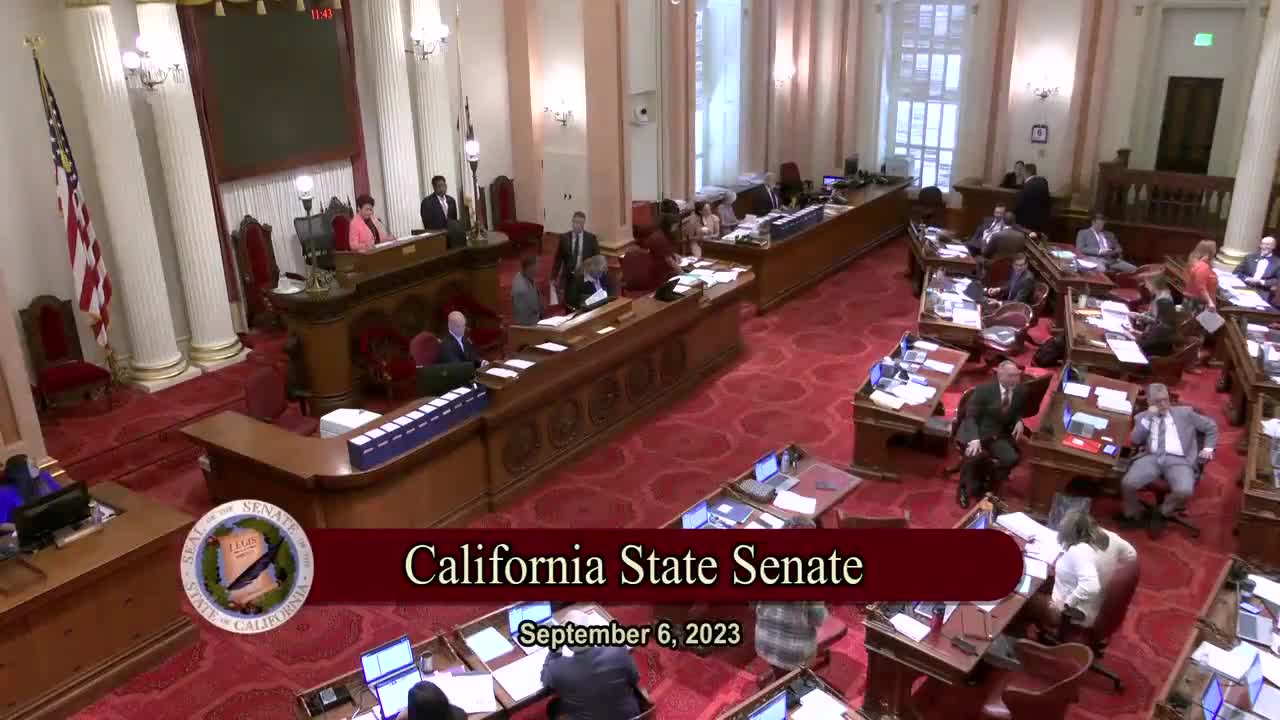 1MIN
Senate Floor
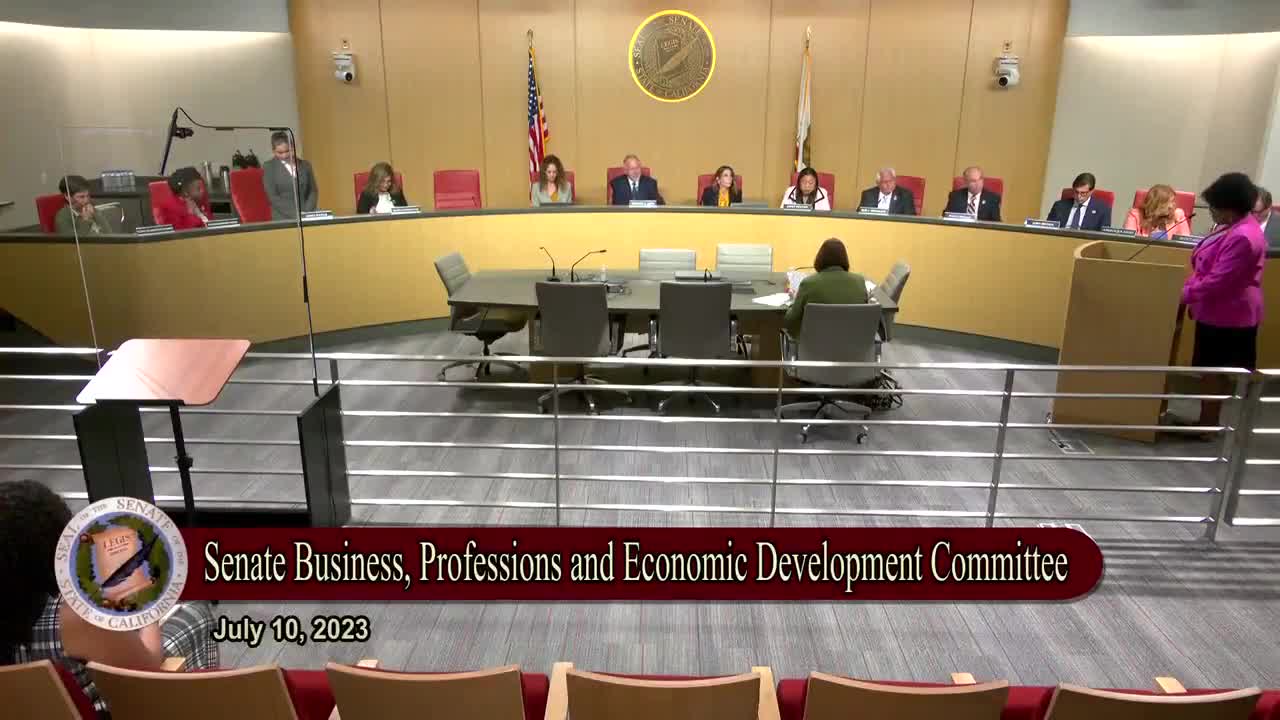 6MIN