AB 812: Housing development approvals: reserving affordable units in or near a cultural district for artists.
- Session Year: 2023-2024
- House: Assembly
- Latest Version Date: 2023-10-11
Current Status:
Passed
(2023-10-11: Chaptered by Secretary of State - Chapter 747, Statutes of 2023.)
Introduced
In Committee
First Chamber
In Committee
Second Chamber
Enacted
Existing law requires the Arts Council to establish criteria and guidelines for certification of state-designated cultural districts and collaborate with other public agencies and private entities to maximize the benefits of state-designated cultural districts. The Planning and Zoning Law imposes various requirements on cities and counties with regard to their review and approval of certain housing developments.
This bill would authorize a city or county that requires, as a condition of approval, that a certain percentage of units of a residential development be affordable housing, as specified, to reserve for artists up to 10% of those required affordable housing units, except as provided, if certain conditions are met, including that the units reserved are located within or within one-half mile from a state-designated cultural district or within a locally designated cultural district, as specified.
The bill would include findings that changes proposed by this bill address a matter of statewide concern rather than a municipal affair and, therefore, apply to all cities, including charter cities.
Existing law requires the Arts Council to establish criteria and guidelines for certification of state-designated cultural districts and collaborate with other public agencies and private entities to maximize the benefits of state-designated cultural districts. The Planning and Zoning Law imposes various requirements on cities and counties with regard to their review and approval of certain housing developments.
This bill would authorize a city or county that requires, as a condition of approval, that a certain percentage of units of a residential development be affordable housing, as specified, to reserve for artists up to 10 percent 10% of those required affordable housing units units, except as provided, if certain conditions are met, including that the units reserved are located within or within one-half mile from a state-designated cultural district or within a locally designated cultural district, as specified.
The bill would include findings that changes proposed by this bill address a matter of statewide concern rather than a municipal affair and, therefore, apply to all cities, including charter cities.
Existing law requires the Arts Council to establish criteria and guidelines for certification of state-designated cultural districts and collaborate with other public agencies and private entities to maximize the benefits of state-designated cultural districts. The Planning and Zoning Law imposes various requirements on cities and counties with regard to their review and approval of certain housing developments.
This bill would authorize a city or county that requires, as a condition of approval, that a certain percentage of units of a residential development be affordable housing, as specified, to reserve for artists up to 10 percent of those required affordable housing units if certain conditions are met, including that the units reserved are located within or within one one-half mile from a designated state-designated cultural district. district or within a locally designated cultural district, as specified.
The bill would include findings that changes proposed by this bill address a matter of statewide concern rather than a municipal affair and, therefore, apply to all cities, including charter cities.
Existing law requires the Arts Council to establish criteria and guidelines for certification of state-designated cultural districts and collaborate with other public agencies and private entities to maximize the benefits of state-designated cultural districts. The Planning and Zoning Law imposes various requirements on cities and counties with regard to their review and approval of certain housing developments.
This bill would authorize a city or county that requires, as a condition of approval, that a certain percentage of units of a residential development be affordable housing, as specified, to reserve for artists up to 10 percent of those required affordable housing units if certain conditions are met, including that the units reserved are located within or within one mile from a designated cultural district.
The bill would include findings that changes proposed by this bill address a matter of statewide concern rather than a municipal affair and, therefore, apply to all cities, including charter cities.
Existing law requires the Arts Council to establish criteria and guidelines for certification of state-designated cultural districts and collaborate with other public agencies and private entities to maximize the benefits of state-designated cultural districts. Existing law requires the Department of Housing and Community Development, in consultation with each council of governments, to determine each regions existing and projected housing need, as provided. Existing law requires each council of governments, or the department for cities and counties without a council of governments, to adopt a final regional housing need plan that allocates a share of the regional housing need to each city, county, or city and county and that furthers specified objectives. The Planning and Zoning Law imposes various requirements on cities and counties with regard to their review and approval of certain housing developments.
This bill would authorize a city, county, or city and county city or county that requires, as a condition of approval, that a certain percentage of units of a residential development be affordable housing, as specified, to reserve for artists up to 10 percent of those required affordable housing units for a citys, countys, or city and countys share of regional housing need for very low, low-, or moderate-income households if certain conditions are met, including that the units reserved are located within a designated cultural district.
The bill would include findings that changes proposed by this bill address a matter of statewide concern rather than a municipal affair and, therefore, apply to all cities, including charter cities.
Existing law requires the Arts Council to establish criteria and guidelines for certification of state-designated cultural districts and collaborate with other public agencies and private entities to maximize the benefits of state-designated cultural districts. Existing law states the intent of the Legislature, in enacting specified provisions relating to local planning, to assure that cities recognize their responsibilities in contributing to the attainment of the state housing goal and to ensure that each local government cooperates with other local governments in order to address regional housing needs. Existing law requires the Department of Housing and Community Development, in consultation with each council of governments, to determine each regions existing and projected housing need, as provided. Existing law requires each council of governments, or the department for cities and counties without a council of governments, to adopt a final regional housing need plan that allocates a share of the regional housing need to each city, county, or city and county and that furthers specified objectives.
This bill would declare the intent of the Legislature to enact legislation that would allow cities to authorize a local-, county-, or state-recognized cultural or arts district to create affordable housing opportunities for artists and cultural workers. authorize a city, county, or city and county to reserve for artists up to 10 percent of units for a citys, countys, or city and countys share of regional housing need for very low, low-, or moderate-income households if certain conditions are met, including that the units reserved are located within a designated cultural district.
The bill would include findings that changes proposed by this bill address a matter of statewide concern rather than a municipal affair and, therefore, apply to all cities, including charter cities.
Existing law requires the Arts Council to establish criteria and guidelines for certification of state-designated cultural districts and collaborate with other public agencies and private entities to maximize the benefits of state-designated cultural districts. Existing law states the intent of the Legislature, in enacting specified provisions relating to local planning, to assure that cities recognize their responsibilities in contributing to the attainment of the state housing goal and to ensure that each local government cooperates with other local governments in order to address regional housing needs.
This bill would declare the intent of the Legislature to enact legislation that would allow cities to authorize a local-, county-, or state-recognized cultural or arts district to create affordable housing opportunities for artists and cultural workers.
(a)If a local agency requires, as a condition of approval of the development of residential units, that a certain percentage of the units of the development be affordable housing, the local agency may reserve for artists up to 10 percent of those required affordable housing units if all of the following conditions are satisfied:
(1)The units reserved are located within or within one-half mile from a state-designated cultural district certified pursuant to Chapter 9.2 (commencing with Section 8758) of Division 1 of Title 2 or within any similar locally designated cultural district.
(2)The local agency adopts an ordinance for this purpose that does all of the following:
(A)It is consistent with the Local Tenant Preferences to Prevent Displacement Act (Chapter 12.76 (commencing with Section 7061) of Division 7 of Title 1).
(B)It prohibits an existing tenant from being evicted in favor of an artist.
(C)It contains a fair and comprehensive vetting process that includes, but is not limited to, initial and annual income verification consistent with applicable affordable housing laws and artist status verification.
(b)If an insufficient number of artists apply for and occupy the units, the unoccupied units may be offered to general members of the public.
(c)For purposes of this section, the following definitions apply:
(1)Affordable housing means units dedicated to moderate-income, lower income, very low income, or extremely low income households, as defined in Sections 50079.5, 50093, 50105, and 50106 of the Health and Safety Code, at an affordable housing cost, as defined by Section 50052.5 of the Health and Safety Code.
(2)Artist means the creator of any work of visual, graphic, or performing art of any media, including, but not limited to, a painting, print, drawing, sculpture, craft, photograph, film, or performance.
(3)Local agency means a city, county, or city and county.
SEC. 2.The Legislature finds and declares that Section 1 of this act adding Section 65914.8 to the Government Code addresses a matter of statewide concern rather than a municipal affair as that term is used in Section 5 of Article XI of the California Constitution. Therefore, Section 1 of this act applies to all cities, including charter cities.
(a)If a local agency requires, as a condition of approval of the development of residential units, that a certain percentage of the units of the development be affordable housing, the local agency may reserve for artists up to 10 percent of those required affordable housing units if all of the following conditions are satisfied:
(1)The units reserved are located within or within one-half mile from a state-designated cultural district certified pursuant to Chapter 9.2 (commencing with Section 8758) of Division 1 of Title 2 or within any similar locally designated cultural district.
(2)The local agency adopts an ordinance for this purpose that does all of the following:
(A)It is consistent with the Local Tenant Preferences to Prevent Displacement Act (Chapter 12.76 (commencing with Section 7061) of Division 7 of Title 1).
(B)It prohibits an existing tenant from being evicted in favor of an artist.
(C)It contains a fair and comprehensive vetting process that includes, but is not limited to, initial and annual income verification consistent with applicable affordable housing laws and artist status verification.
(b)If an insufficient number of artists apply for and occupy the units, the unoccupied units may be offered to general members of the public.
(b)(c)For purposes of this section, the following definitions apply:
(1)Affordable housing means units dedicated to moderate-income, lower income, very low income, or extremely low income households, as defined in Sections 50079.5, 50093, 50105, and 50106 of the Health and Safety Code, at an affordable housing cost, as defined by Section 50052.5 of the Health and Safety Code.
(2)Artist means the creator of any work of visual, graphic, or performing art of any media, including, but not limited to, a painting, print, drawing, sculpture, craft, photograph, film, or performance.
(3)Local agency means a city, county, or city and county.
SEC. 2.The Legislature finds and declares that Section 1 of this act adding Section 65914.8 to the Government Code addresses a matter of statewide concern rather than a municipal affair as that term is used in Section 5 of Article XI of the California Constitution. Therefore, Section 1 of this act applies to all cities, including charter cities.
(a)If a local agency requires, as a condition of approval of the development of residential units, that a certain percentage of the units of the development be affordable housing, the local agency may reserve for artists up to 10 percent of those required affordable housing units if all of the following conditions are satisfied:
(1)The units reserved are located within or within one one-half mile from a state-designated cultural district certified pursuant to Chapter 9.2 (commencing with Section 8758) of Division 1 of Title 2 or within any similar locally designated cultural district.
(2)The city, county, or city and county local agency adopts an ordinance for this purpose that does all of the following:
(A)It is consistent with the Local Tenant Preferences to Prevent Displacement Act (Chapter 12.76 (commencing with Section 7061) of Division 7 of Title 1).
(B)It prohibits an existing tenant from being evicted in favor of an artist.
(C)It contains a fair and comprehensive vetting process that includes, but is not limited to, initial and annual income verification consistent with applicable affordable housing laws and artist status verification.
(b)For purposes of this section, the following definitions apply:
(1)Affordable housing means units dedicated to moderate-income, lower income, very low income, or extremely low income households, as defined in Sections 50079.5, 50093, 50105, and 50106 of the Health and Safety Code, at an affordable housing cost, as defined by Section 50052.5 of the Health and Safety Code.
(2)Artist means the creator of any work of visual, graphic, or performing art of any media, including, but not limited to, a painting, print, drawing, sculpture, craft, photograph, film, or performance.
(3)Local agency means a city, county, or city and county.
SEC. 2.The Legislature finds and declares that Section 1 of this act adding Section 65914.8 to the Government Code addresses a matter of statewide concern rather than a municipal affair as that term is used in Section 5 of Article XI of the California Constitution. Therefore, Section 1 of this act applies to all cities, including charter cities.
(a)If a local agency requires, as a condition of approval of the development of residential units, that a certain percentage of the units of the development be affordable housing, the local agency may reserve for artists up to 10 percent of those required affordable housing units if all of the following conditions are satisfied:
(1)The units reserved are located within or within one mile from a state-designated cultural district certified pursuant to Chapter 9.2 (commencing with Section 8758) of Division 1 of Title 2 or any similar locally designated cultural district.
(2)The city, county, or city and county adopts an ordinance for this purpose that does all of the following:
(A)It is consistent with the Local Tenant Preferences to Prevent Displacement Act (Chapter 12.76 (commencing with Section 7061) of Division 7 of Title 1).
(B)It prohibits an existing tenant from being evicted in favor of an artist.
(C)It contains a fair and comprehensive vetting process that includes, but is not limited to, initial and annual income verification consistent with applicable affordable housing laws and artist status verification.
(b)For purposes of this section, the following definitions apply:
(1)Affordable housing means units dedicated to moderate-income, lower income, very low income, or extremely low income households, as defined in Sections 50079.5, 50093, 50105, and 50106 of the Health and Safety Code, at an affordable housing cost, as defined by Section 50052.5 of the Health and Safety Code.
(2)Artist means the creator of any work of visual, graphic, or performing art of any media, including, but not limited to, a painting, print, drawing, sculpture, craft, photograph, film, or performance.
(3)Local agency means a city, county, or city and county.
SEC. 2.The Legislature finds and declares that Section 1 of this act adding Section 65914.8 to the Government Code addresses a matter of statewide concern rather than a municipal affair as that term is used in Section 5 of Article XI of the California Constitution. Therefore, Section 1 of this act applies to all cities, including charter cities.
(a)If a local agency requires, as a condition of approval of the development of residential units, that a certain percentage of the units of the development be affordable housing, the local agency may reserve for artists up to 10 percent of units of its share of regional housing need for very low, low-, or moderate-income households allocated pursuant to Section 65584 those required affordable housing units if all of the following conditions are satisfied:
(1)The units reserved are located within a state-designated cultural district certified pursuant to Chapter 9.2 (commencing with Section 8758) of Division 1 of Title 2 or any similar locally designated cultural district.
(2)The city, county, or city and county adopts an ordinance for this purpose that does all of the following:
(A)It is consistent with the Local Tenant Preferences to Prevent Displacement Act (Chapter 12.76 (commencing with Section 7061) of Division 7 of Title 1).
(B)It prohibits an existing tenant from being evicted in favor of an artist.
(C)It contains a fair and comprehensive vetting process that includes, but is not limited to, initial and annual income verification consistent with applicable affordable housing laws and artist status verification.
(b)For purposes of this section, artist has the same meaning as defined in Section 988 of the Civil Code. the following definitions apply:
(1)Affordable housing means units dedicated to moderate-income, lower income, very low income, or extremely low income households, as defined in Sections 50079.5, 50093, 50105, and 50106 of the Health and Safety Code, at an affordable housing cost, as defined by Section 50052.5 of the Health and Safety Code.
(2)Artist means the creator of any work of visual, graphic, or performing art of any media, including, but not limited to, a painting, print, drawing, sculpture, craft, photograph, film, or performance.
(3)Local agency means a city, county, or city and county.
SEC. 2.The Legislature finds and declares that Section 1 of this act adding Section 65584.7 65914.8 to the Government Code addresses a matter of statewide concern rather than a municipal affair as that term is used in Section 5 of Article XI of the California Constitution. Therefore, Section 1 of this act applies to all cities, including charter cities.
CORRECTIONS: HeadingLine 1. DigestPage 1. REVISIONS: HeadingLine 2.(a)A city, county, or city and county may reserve for artists up to 10 percent of units of its share of regional housing need for very low, low-, or moderate-income households allocated pursuant to Section 65584 if all of the following conditions are satisfied:
(1)The units reserved are located within a state-designated cultural district certified pursuant to Chapter 9.2 (commencing with Section 8758) of Division 1 of Title 2 or any similar locally designated cultural district.
(2)The city, county, or city and county adopts an ordinance for this purpose that does all of the following:
(A)It is consistent with the Local Tenant Preferences to Prevent Displacement Act (Chapter 12.76 (commencing with Section 7061) of Division 7 of Title 1).
(B)It prohibits an existing tenant from being evicted in favor of an artist.
(C)It contains a fair and comprehensive vetting process that includes, but is not limited to, initial and annual income verification consistent with applicable affordable housing laws and artist status verification.
(b)For purposes of this section, artist has the same meaning as defined in Section 988 of the Civil Code.
SEC. 2.The Legislature finds and declares that Section 1 of this act adding Section 65584.7 to the Government Code addresses a matter of statewide concern rather than a municipal affair as that term is used in Section 5 of Article XI of the California Constitution. Therefore, Section 1 of this act applies to all cities, including charter cities.
SECTION 1.It is the intent of the Legislature to enact legislation that would allow cities to authorize a local-, county-, or state-recognized cultural or arts district to create affordable housing opportunities for artists and cultural workers.It is the intent of the Legislature to enact legislation that would allow cities to authorize a local-, county-, or state-recognized cultural or arts district to create affordable housing opportunities for artists and cultural workers.
|
Date
|
Status
|
|---|---|
| Oct 11, 2023 | Chaptered by Secretary of State - Chapter 747, Statutes of 2023. |
| Oct 11, 2023 | Approved by the Governor. |
| Sep 21, 2023 | Enrolled and presented to the Governor at 3:30 p.m. |
| Sep 14, 2023 | Senate amendments concurred in. To Engrossing and Enrolling. (Ayes 64. Noes 10. Page 3542.). |
| Sep 13, 2023 | In Assembly. Concurrence in Senate amendments pending. |
| Sep 13, 2023 | Read third time. Passed. Ordered to the Assembly. (Ayes 33. Noes 5. Page 2729.). |
| Sep 11, 2023 | Read second time. Ordered to third reading. |
| Sep 8, 2023 | Read third time and amended. Ordered to second reading. |
| Jun 8, 2023 | Read second time and amended. Ordered to third reading. |
| Jun 7, 2023 | From committee: Amend, and do pass as amended. (Ayes 11. Noes 0.) (June 6). |
| May 30, 2023 | From committee chair, with author's amendments: Amend, and re-refer to committee. Read second time, amended, and re-referred to Com. on HOUSING. |
| May 24, 2023 | Referred to Com. on HOUSING. |
| May 16, 2023 | In Senate. Read first time. To Com. on RLS. for assignment. |
| May 15, 2023 | Read third time. Passed. Ordered to the Senate. (Ayes 64. Noes 2. Page 1545.) |
| Apr 26, 2023 | Read second time. Ordered to third reading. |
| Apr 25, 2023 | From committee: Do pass. (Ayes 5. Noes 1.) (April 25). |
| Apr 25, 2023 | Coauthors revised. |
| Apr 20, 2023 | Measure version as amended on April 10 corrected. |
| Apr 19, 2023 | From committee: Do pass and re-refer to Com. on A., E., S., & T. (Ayes 6. Noes 2.) (April 19). Re-referred to Com. on A., E., S., & T. |
| Apr 11, 2023 | Re-referred to Com. on H. & C.D. |
| Apr 10, 2023 | From committee chair, with author's amendments: Amend, and re-refer to Com. on H. & C.D. Read second time and amended. |
| Mar 20, 2023 | Re-referred to Com. on H. & C.D. |
| Mar 16, 2023 | From committee chair, with author's amendments: Amend, and re-refer to Com. on H. & C.D. Read second time and amended. |
| Mar 16, 2023 | Referred to Coms. on H. & C.D. and A., E., S., & T. |
| Feb 14, 2023 | From printer. May be heard in committee March 16. |
| Feb 13, 2023 | Read first time. To print. |
|
Date
|
Description
|
Location
|
Votes
|
|
|---|---|---|---|---|
| Sep 14, 2023 | AB 812 Boerner Concurrence in Senate Amendments | Assembly Floor |
Passed |
|
| Sep 13, 2023 | Assembly 3rd Reading AB812 Boerner et al. By Rubio | Senate Floor |
Passed |
|
| Jun 6, 2023 | Do pass as amended | Senate Standing Committee on Housing |
Passed |
|
| May 15, 2023 | AB 812 Boerner Assembly Third Reading | Assembly Floor |
Passed |
|
| Apr 25, 2023 | Do pass. | Assembly Standing Committee on Arts, Entertainment, Sports, and Tourism |
Passed |
|
| Apr 19, 2023 | Do pass and be re-referred to the Committee on [Arts, Entertainment, Sports, and Tourism] | Assembly Standing Committee on Housing and Community Development |
Passed |
This list shows positions taken on this bill by organizations on the date displayed, which is linked to the original source.
Positions by individuals are not included.
|
Organization
|
Position
|
Date
|
|---|---|---|
| Actors' Equity | ** Support | |
| Arts for LA | ** Support | |
| Art Works Downtown | ** Support | |
| Brava! for Women in The Arts | ** Support | |
| California Arts Advocates | ** Support | |
| California Cultural Districts Coalition | ** Support | |
| Encinitas Friends of The Arts | ** Support | |
| japanese american cultural & community center | ** Support | |
| Main Street Oceanside, INC. | ** Support | |
| Nevada County Arts Council | ** Support | |
| San Diego Regional Arts and Culture Coalition | ** Support | |
| Surfing Madonna Oceans Project | ** Support |
CONCURRENCE IN SENATE AMENDMENTS
CSA1 Bill Id:AB 812
Author:(Boerner)
As Amended Ver:September 8, 2023
Majority vote
SUMMARY
Authorizes local governments to set aside 10% of any locally-required affordable housing units for artists within one-half mile of a state designated cultural district or within a locally designated cultural district.
Senate Amendments
- Extended the geographic applicability of the bill from within a state-designated cultural district to within one-half mile from just a district.
- Specify that, if an insufficient number of artists apply for and occupy the units, the unoccupied units may be offered to general members of the public.
COMMENTS
Affordable Housing for Artists: The state's housing crisis affects people of all occupations, including artists. There are approximately 93,000 professional artists in California.[1] Their mean hourly income of $41.26 exceeds the statewide mean wage of $34.27.[2] However, there is substantial variance in the incomes of artists, and a significant number of artists would qualify for affordable housing, which is typically available to households making less than 80% of the area median income.
Many local governments have policies to support the arts and artists. However, besides being broadly supportive of housing production at all income levels, local governments have limited tools for supporting affordable housing for artists.
This bill would allow cities and counties to reserve 10% of their locally-required affordable housing units for artists in mixed-income housing projects built within their locally-designated cultural districts, or within or within one-half mile of a state-designated cultural district.
Local governments may already reserve units for artists in mixed-income housing projects. However, no such program exists in the state. This may be because local governments believe reserving units for artists would run afoul of the state's Fair Employment and Housing Law (FEHA). FEHA makes it illegal for the owner of any housing accommodation to discriminate against or harass any person because of the race, color, religion, sex, gender, gender identity, gender expression, sexual orientation, marital status, national origin, ancestry, familial status, source of income, disability, veteran or military status, or genetic information of that person. The provision against discrimination based on source of income might be interpreted to mean that a unit reserved for an artist would be discriminatory against non-artists. By affirming in state law that it is legal for local governments to reserve units for artists, this bill would clarify that such an action would not interfere with FEHA.
According to the Author
"Artists are the lifeblood of our cultural communities and help preserve the cultural footprint of the region. AB 812 would authorize a city and/or county to set aside up to 10 percent of deed-restricted housing units within a state or locally-designated cultural district for eligible artists and cultural workers. This prevents artists from having to move away from the neighborhoods they contribute so much to, simply because they can no longer afford to live there."
Arguments in Support
According to the California Arts Advocates, "Surveys across California indicate the huge demand for affordable housing for artists. Keeping neighborhoods affordable to the culture bearers in our local communities and avoiding the displacement of artists protects our cultural heritage, and it creates robust economic zones. Without them, the special culture of the place leaves with them, dispersed and diluted. A cultural district is no longer a cultural district if those people who made it cannot afford to live and work there themselves."
Arguments in Opposition
None on file.
FISCAL COMMENTS
None
VOTES:
ASM HOUSING AND COMMUNITY DEVELOPMENT: 6-2-0
YES: Wicks, Wendy Carrillo, Zbur, Kalra, Quirk-Silva, Ward
NO: Joe Patterson, Sanchez
ASM ARTS, ENTERTAINMENT, SPORTS, AND TOURISM: 5-1-1
YES: Quirk-Silva, Mike Fong, Friedman, Hart, Valencia
NO: Lackey
ABS, ABST OR NV: Wallis
ASSEMBLY FLOOR: 64-6-10
YES: Addis, Aguiar-Curry, Alvarez, Arambula, Bains, Bauer-Kahan, Bennett, Berman, Boerner, Bonta, Bryan, Calderon, Juan Carrillo, Wendy Carrillo, Cervantes, Chen, Connolly, Flora, Mike Fong, Gabriel, Garcia, Grayson, Haney, Hart, Holden, Irwin, Jackson, Jones- Sawyer, Kalra, Lee, Low, Lowenthal, Maienschein, McCarty, McKinnor, Muratsuchi, Stephanie Nguyen, Ortega, Pacheco, Papan, Jim Patterson, Pellerin, Petrie-Norris, Quirk-Silva, Ramos, Reyes, Luz Rivas, Robert Rivas, Rodriguez, Blanca Rubio, Santiago, Schiavo, Soria, Ting, Valencia, Villapudua, Wallis, Ward, Weber, Wicks, Wilson, Wood, Zbur, Rendon
NO: Davies, Dixon, Gallagher, Hoover, Joe Patterson, Sanchez
ABS, ABST OR NV: Alanis, Megan Dahle, Essayli, Vince Fong, Friedman, Gipson, Lackey, Mathis, Ta, Waldron
SENATE FLOOR: 33-5-2
YES: Allen, Alvarado-Gil, Archuleta, Ashby, Atkins, Becker, Blakespear, Bradford, Cortese, Dodd, Durazo, Eggman, Glazer, Gonzalez, Hurtado, Laird, Limón, McGuire, Menjivar, Min, Newman, Ochoa Bogh, Padilla, Portantino, Roth, Rubio, Seyarto, Skinner, Smallwood-Cuevas, Stern, Umberg, Wahab, Wiener
NO: Dahle, Grove, Jones, Nguyen, Niello
ABS, ABST OR NV: Caballero, Wilk
UPDATED
VERSION: September 8, 2023
CONSULTANT: Steve Wertheim / H. & C.D. / (916) 319-2085 FN: 0002442
Based on data from the Economic Development Department for the following professions: actors, art directors, craft artists, dancers, fine artists, music directors and composers, musicians and singers, photographers, writers and authors, and "artists and related workers: all other." Data from the 1st quarter of 2022. https://labormarketinfo.edd.ca.gov/data/oes-employment-and-wages.html ↑
Ibid. ↑
SENATE RULES COMMITTEE Office of Senate Floor Analyses (916) 651-1520 Fax: (916) 327-4478 | AB 812 |
THIRD READING
Bill No: AB 812
Author: Boerner (D), et al.
Amended: 9/8/23 in Senate
Vote: 21
SENATE HOUSING COMMITTEE: 11-0, 6/6/23
AYES: Wiener, Ochoa Bogh, Blakespear, Caballero, Cortese, McGuire, Padilla, Seyarto, Skinner, Umberg, Wahab
ASSEMBLY FLOOR: 64-6, 5/15/23 - See last page for vote
SUBJECT: Housing development approvals: reserving affordable units in or near a cultural district for artists
SOURCE: California Arts Advocates
DIGEST:
This bill authorizes local governments to set aside 10% of any locally-required affordable housing units for artists within one-half mile of a state designated cultural districts or within a locally designated cultural districts.
Senate Floor Amendments of 9/8/23 provide that if there are insufficient number of artists who apply for units, that the unoccupied units may be offered to the general public.
ANALYSIS:
Existing law:
- Permits the legislative body of any county or city to adopt ordinances that require, as a condition of the development of residential rental units, that the development include a certain percentage of residential rental units affordable to, and occupied by, households with incomes that do not exceed the limits for moderate-income, lower income, very low-income, or extremely low-income households.
- Allows the California Arts Council to certify state-designated cultural districts that are areas with a concentration of cultural facilities, creative enterprises, or arts venues, as specified.
- Provides that it is unlawful for the owner of any housing accommodation to discriminate against or harass any person because of the race, color, religion, sex, gender, gender identity, gender expression, sexual orientation, marital status, national origin, ancestry, familial status, source of income, disability, veteran or military status, or genetic information of that person.
- Allows affordable housing units created with low-income housing tax credits to be dedicated to tenants who are involved in artistic or literary activities.
This bill:
- Defines “artist” as the creator of any work of visual, graphic, or performing art of any media, including but not limited to paint, drawing, sculpture, craft, photograph, film, or performance.
- Provides that if a local government has an inclusionary housing ordinance, the local government may reserve up to 10% of those required affordable housing units for occupancy by artist if all of the following conditions are satisfied:
- The units reserved are located within, or within one-half mile from, a state-designated cultural district, as specified, or within any similar locally designated cultural district.
- The local government adopts an ordinance for this purpose that does all the following:
- It is consistent with the Local Tenant Preferences to Prevent Displacement Act, as specified.
- It prohibits an existing tenant from being evicted in favor of an artist.
- It contains a fair and comprehensive vetting process that includes, but is not limited to, initial and annual income verification consistent with applicable affordable housing laws and artists status verification.
- Provide that if there are insufficient number of artists who apply for units, that the unoccupied units may be offered to the general public.
Background
California’s Housing Crisis. California has the largest concentration of severely unaffordable housing markets in the nation and the statewide average home value reached a new record in June 2022 at $793,300. To keep up with demand, the state Department of Housing and Community Development (HCD) estimates that California must plan for the development of more than 2.5 million homes over the next eight years, and no less than one million of those homes must meet the needs of lower-income households (more than 640,000 very low-income and 385,000 low-income units are needed). For decades, not enough housing was constructed to meet need, resulting in a severe undersupply of housing.
As a result of the severe housing shortage, millions of Californians, who are disproportionately lower-income and people of color, must make hard decisions about paying for housing at the expense of food, health care, child care, and transportation—one in three households in the state don’t earn enough money to meet their basic needs. A lack of affordable housing is the biggest contributor to homelessness. As housing costs continue to rise, rent becomes less affordable for lower-income households, who are forced to live beyond their means (paying more than 30% of income on housing costs) or are pushed out of their homes, leading to rapid increases in homelessness. Variation in rates of homelessness cannot be explained by variation in rates of individual factors such as poverty or mental illness, however, cities with higher rents and lower rental vacancy rates (i.e., tighter housing markets) are directly linked to higher per capita rates of homelessness.
Comments
- Author’s statement. “Artists are the lifeblood of our cultural communities and help preserve the cultural footprint of the region. AB 812 would authorize a city and/or county to set aside up to 10 percent of deed-restricted housing units within a state or locally-designated cultural district for eligible artists and cultural workers. This prevents artists from having to move away from the neighborhoods they contribute so much to, simply because they can no longer afford to live there.”
- Local tenant preference policies. Generally, anyone who qualifies for an affordable housing program based on income guidelines has an equal chance of receiving assistance. In order to reduce the displacement of local residents, however, local governments across the country have adopted preference policies that increase the likelihood that certain applicants that meet specified criteria obtain that housing. “Tenant preference” or “community preference” policies refer to policies that prioritize affordable housing applicants with some connection to an affordable housing unit’s location, and these policies have the potential to stabilize gentrifying areas and help residents vulnerable to displacement to remain in their neighborhoods. For example, these policies might give preference to a resident of the city where the housing is located, someone employed in the city, someone who has been displaced from the city under certain circumstances, or residents living in close proximity to the unit for which they are applying. This committee is aware of such policies adopted in California by the Cities of San Francisco, Santa Monica, and Oakland.
- Artist housing needs and artist housing incentives. There are approximately 93,000 professional artists in California,[1] and their mean hourly income of $41.26 exceeds the statewide mean wage of $34.27.[2] There is substantial variance in the incomes of artists, however, and a significant number of artists qualify for affordable housing, which is typically available to households making less than 80% of the area median income.
One potential tool for creating artist-specific housing is through publicly-financed, 100% affordable housing projects dedicated to artists. Pursuant to the federal law governing federal low income housing tax credits, artist-only housing is an allowable use for tax credit projects and not a violation of fair housing standards.[3] There are several notable 100% artist projects in the state, including the 116-unit WAL project on R Street in Sacramento. Because public funding for affordable housing is limited, local governments have limited ability to create 100% affordable housing dedicated to artists.
Local governments have other tools to increase the supply of affordable housing generally for lower-income populations. Inclusionary housing ordinances require developers to include a percentage of affordable housing in a development, pay an in lieu fee, or dedicate land for affordable housing developments. Developers also can use density bonus law to request increased density and waivers of concession and incentives in return for including affordable housing in a development. Lastly, local governments can enact local tenant preference policies to prevent displacement of and provide affordable housing opportunities to local residents.
This bill allows cities and counties to reserve 10% of their locally-required affordable housing units for artists in mixed-income housing projects built in cultural districts. At present there are 14 state designated cultural districts but an unknown number of locally designated cultural districts. For example, the city and county of San Francisco contains two state designated cultural districts and an additional eight locally designated cultural districts. Local governments may already reserve units for artists in mixed-income housing projects, but no such program exists in the state. This may be because local governments believe reserving units for artists would run afoul of the state’s Fair Employment and Housing Law (FEHA). By affirming in state law that it is legal for local governments to reserve units for artists, this bill clarifies that such an action would not interfere with FEHA.
4) Zero-sum game. While California has invested heavily in recent years in programs that build affordable housing and enacted policies to incentivize housing production more broadly, as noted above, the housing crisis in California has had a detrimental impact upon many Californians, most especially for those at the lowest-end of the income spectrum. Policymakers must ensure that all vulnerable populations receive equitable access to safe affordable housing, including the homeless, persons with disabilities, unaccompanied youth, veterans, and domestic violence survivors, just to name a few. Unfortunately, however, there simply are not enough resources available to finance the construction of housing necessary to meet the needs of all vulnerable populations. Additionally, incentives for one population over others often invites other similar set-asides. This bill provides an incentive to target housing for artists, over and above other lower-income and vulnerable populations.
FISCAL EFFECT: Appropriation: No Fiscal Com.: No Local: No
SUPPORT: (Verified 9/8/23)
California Arts Advocates (source)
Actors' Equity
Art Works Downtown
Arts for LA
Brava! For Women in The Arts
California Cultural Districts Coalition
Encinitas Friends of the Arts
Japanese American Cultural & Community Center
Main Street Oceanside, Inc.
Nevada County Arts Council
San Diego Regional Arts and Culture Coalition
Surfing Madonna Oceans Project
5 individuals
OPPOSITION: (Verified 9/8/23)
None received
ASSEMBLY FLOOR: 64-6, 5/15/23
AYES: Addis, Aguiar-Curry, Alvarez, Arambula, Bains, Bauer-Kahan, Bennett, Berman, Boerner, Bonta, Bryan, Calderon, Juan Carrillo, Wendy Carrillo, Cervantes, Chen, Connolly, Flora, Mike Fong, Gabriel, Garcia, Grayson, Haney, Hart, Holden, Irwin, Jackson, Jones-Sawyer, Kalra, Lee, Low, Lowenthal, Maienschein, McCarty, McKinnor, Muratsuchi, Stephanie Nguyen, Ortega, Pacheco, Papan, Jim Patterson, Pellerin, Petrie-Norris, Quirk-Silva, Ramos, Reyes, Luz Rivas, Robert Rivas, Rodriguez, Blanca Rubio, Santiago, Schiavo, Soria, Ting, Valencia, Villapudua, Wallis, Ward, Weber, Wicks, Wilson, Wood, Zbur, Rendon
NOES: Davies, Dixon, Gallagher, Hoover, Joe Patterson, Sanchez
NO VOTE RECORDED: Alanis, Megan Dahle, Essayli, Vince Fong, Friedman, Gipson, Lackey, Mathis, Ta, Waldron
Prepared by: Alison Hughes / HOUSING / (916) 651-4124
9/11/23 17:59:35
**** END ****
Based on data from the Economic Development Department for the following professions: actors, art directors, craft artists, dancers, fine artists, music directors and composers, musicians and singers, photographers, writers and authors, and “artists and related workers: all other.” Data from the 1st quarter of 2022. https://labormarketinfo.edd.ca.gov/data/oes-employment-and-wages.html ↑
Ibid. ↑
US Internal Revenue Code Section 42(g)(9) ↑
SENATE RULES COMMITTEE Office of Senate Floor Analyses (916) 651-1520 Fax: (916) 327-4478 | AB 812 |
THIRD READING
Bill No: AB 812
Author: Boerner (D), et al.
Amended: 6/8/23 in Senate
Vote: 21
SENATE HOUSING COMMITTEE: 11-0, 6/6/23
AYES: Wiener, Ochoa Bogh, Blakespear, Caballero, Cortese, McGuire, Padilla, Seyarto, Skinner, Umberg, Wahab
ASSEMBLY FLOOR: 64-6, 5/15/23 - See last page for vote
SUBJECT: Housing development approvals: reserving affordable units in or near a cultural district for artists
SOURCE: California Arts Advocates
DIGEST:
This bill authorizes local governments to set aside 10% of any locally-required affordable housing units for artists within one-half mile of a state designated cultural districts or within a locally designated cultural districts.
ANALYSIS:
Existing law:
- Permits the legislative body of any county or city to adopt ordinances that require, as a condition of the development of residential rental units, that the development include a certain percentage of residential rental units affordable to, and occupied by, households with incomes that do not exceed the limits for moderate-income, lower income, very low-income, or extremely low-income households.
- Allows the California Arts Council to certify state-designated cultural districts that are areas with a concentration of cultural facilities, creative enterprises, or arts venues, as specified.
- Provides that it is unlawful for the owner of any housing accommodation to discriminate against or harass any person because of the race, color, religion, sex, gender, gender identity, gender expression, sexual orientation, marital status, national origin, ancestry, familial status, source of income, disability, veteran or military status, or genetic information of that person.
- Allows affordable housing units created with low-income housing tax credits to be dedicated to tenants who are involved in artistic or literary activities.
This bill:
- Defines “artist” as the creator of any work of visual, graphic, or performing art of any media, including but not limited to pain, drawing, sculpture, craft, photograph, film, or performance.
- Provides that if a local government has an inclusionary housing ordinance, the local government may reserve up to 10% of those required affordable housing units for occupancy by artist if all of the following conditions are satisfied:
- The units reserved are located within, or within one-half mile from, a state-designated cultural district, as specified, or within any similar locally designated cultural district.
- The local government adopts an ordinance for this purpose that does all the following:
- It is consistent with the Local Tenant Preferences to Prevent Displacement Act, as specified.
- It prohibits an existing tenant from being evicted in favor of an artist.
- It contains a fair and comprehensive vetting process that includes, but is not limited to, initial and annual income verification consistent with applicable affordable housing laws and artists status verification.
Background
California’s Housing Crisis. California has the largest concentration of severely unaffordable housing markets in the nation and the statewide average home value reached a new record in June 2022 at $793,300. To keep up with demand, the state Department of Housing and Community Development (HCD) estimates that California must plan for the development of more than 2.5 million homes over the next eight years, and no less than one million of those homes must meet the needs of lower-income households (more than 640,000 very low-income and 385,000 low-income units are needed). For decades, not enough housing was constructed to meet need, resulting in a severe undersupply of housing.
As a result of the severe housing shortage, millions of Californians, who are disproportionately lower-income and people of color, must make hard decisions about paying for housing at the expense of food, health care, child care, and transportation—one in three households in the state don’t earn enough money to meet their basic needs. A lack of affordable housing is the biggest contributor to homelessness. As housing costs continue to rise, rent becomes less affordable for lower-income households, who are forced to live beyond their means (paying more than 30% of income on housing costs) or are pushed out of their homes, leading to rapid increases in homelessness. Variation in rates of homelessness cannot be explained by variation in rates of individual factors such as poverty or mental illness, however, cities with higher rents and lower rental vacancy rates (i.e., tighter housing markets) are directly linked to higher per capita rates of homelessness.
Comments
- Author’s statement. “Artists are the lifeblood of our cultural communities and help preserve the cultural footprint of the region. AB 812 would authorize a city and/or county to set aside up to 10 percent of deed-restricted housing units within a state or locally-designated cultural district for eligible artists and cultural workers. This prevents artists from having to move away from the neighborhoods they contribute so much to, simply because they can no longer afford to live there.”
- Local tenant preference policies. Generally, anyone who qualifies for an affordable housing program based on income guidelines has an equal chance of receiving assistance. In order to reduce the displacement of local residents, however, local governments across the country have adopted preference policies that increase the likelihood that certain applicants that meet specified criteria obtain that housing. “Tenant preference” or “community preference” policies refer to policies that prioritize affordable housing applicants with some connection to an affordable housing unit’s location, and these policies have the potential to stabilize gentrifying areas and help residents vulnerable to displacement to remain in their neighborhoods. For example, these policies might give preference to a resident of the city where the housing is located, someone employed in the city, someone who has been displaced from the city under certain circumstances, or residents living in close proximity to the unit for which they are applying. This committee is aware of such policies adopted in California by the cities of San Francisco, Santa Monica, and Oakland.
- Artist housing needs and artist housing incentives. There are approximately 93,000 professional artists in California,[1] and their mean hourly income of $41.26 exceeds the statewide mean wage of $34.27.[2] There is substantial variance in the incomes of artists, however, and a significant number of artists qualify for affordable housing, which is typically available to households making less than 80% of the area median income.
One potential tool for creating artist-specific housing is through publicly-financed, 100% affordable housing projects dedicated to artists. Pursuant to the federal law governing federal low income housing tax credits, artist-only housing is an allowable use for tax credit projects and not a violation of fair housing standards.[3] There are several notable 100% artist projects in the state, including the 116-unit WAL project on R Street in Sacramento. Because public funding for affordable housing is limited, local governments have limited ability to create 100% affordable housing dedicated to artists.
Local governments have other tools to increase the supply of affordable housing generally for lower-income populations. Inclusionary housing ordinances require developers to include a percentage of affordable housing in a development, pay an in lieu fee, or dedicate land for affordable housing developments. Developers also can use density bonus law to request increased density and waivers of concession and incentives in return for including affordable housing in a development. Lastly, local governments can enact local tenant preference policies to prevent displacement of and provide affordable housing opportunities to local residents.
This bill allows cities and counties to reserve 10% of their locally-required affordable housing units for artists in mixed-income housing projects built in cultural districts. At present there are 14 state designated cultural districts but an unknown number of locally designated cultural districts. For example, the city and county of San Francisco contains two state designated cultural districts and an additional eight locally designated cultural districts. Local governments may already reserve units for artists in mixed-income housing projects, but no such program exists in the state. This may be because local governments believe reserving units for artists would run afoul of the state’s Fair Employment and Housing Law (FEHA). By affirming in state law that it is legal for local governments to reserve units for artists, this bill clarifies that such an action would not interfere with FEHA.
5) Zero-sum game. While California has invested heavily in recent years in programs that build affordable housing and enacted policies to incentivize housing production more broadly, as noted above, the housing crisis in California has had a detrimental impact upon many Californians, most especially for those at the lowest-end of the income spectrum. Policymakers must ensure that all vulnerable populations receive equitable access to safe affordable housing, including the homeless, persons with disabilities, unaccompanied youth, veterans, and domestic violence survivors, just to name a few. Unfortunately, however, there simply are not enough resources available to finance the construction of housing necessary to meet the needs of all vulnerable populations. This bill provides an incentive to target housing for artists, over and above other lower-income and vulnerable populations. Additionally, incentives for one population over others often invites other similar set-asides.
FISCAL EFFECT: Appropriation: No Fiscal Com.: No Local: No
SUPPORT: (Verified 6/8/23)
California Arts Advocates (source)
Actors' Equity
Art Works Downtown
Arts for LA
Brava! for Women in The Arts
California Cultural Districts Coalition
Encinitas Friends of the Arts
Japanese American Cultural & Community Center
Main Street Oceanside, Inc.
Nevada County Arts Council
San Diego Regional Arts and Culture Coalition
Surfing Madonna Oceans Project
5 individuals
OPPOSITION: (Verified 6/8/23)
None received
ASSEMBLY FLOOR: 64-6, 5/15/23
AYES: Addis, Aguiar-Curry, Alvarez, Arambula, Bains, Bauer-Kahan, Bennett, Berman, Boerner, Bonta, Bryan, Calderon, Juan Carrillo, Wendy Carrillo, Cervantes, Chen, Connolly, Flora, Mike Fong, Gabriel, Garcia, Grayson, Haney, Hart, Holden, Irwin, Jackson, Jones-Sawyer, Kalra, Lee, Low, Lowenthal, Maienschein, McCarty, McKinnor, Muratsuchi, Stephanie Nguyen, Ortega, Pacheco, Papan, Jim Patterson, Pellerin, Petrie-Norris, Quirk-Silva, Ramos, Reyes, Luz Rivas, Robert Rivas, Rodriguez, Blanca Rubio, Santiago, Schiavo, Soria, Ting, Valencia, Villapudua, Wallis, Ward, Weber, Wicks, Wilson, Wood, Zbur, Rendon
NOES: Davies, Dixon, Gallagher, Hoover, Joe Patterson, Sanchez
NO VOTE RECORDED: Alanis, Megan Dahle, Essayli, Vince Fong, Friedman, Gipson, Lackey, Mathis, Ta, Waldron
Prepared by: Alison Hughes / HOUSING / (916) 651-4124
6/9/23 13:01:12
**** END ****
Based on data from the Economic Development Department for the following professions: actors, art directors, craft artists, dancers, fine artists, music directors and composers, musicians and singers, photographers, writers and authors, and “artists and related workers: all other.” Data from the 1st quarter of 2022. https://labormarketinfo.edd.ca.gov/data/oes-employment-and-wages.html ↑
Ibid. ↑
US Internal Revenue Code Section 42(g)(9) ↑
SENATE COMMITTEE ON HOUSING
Senator Scott Wiener, Chair
2023 - 2024 Regular
Bill No: AB 812 Hearing Date: 6/6/2023
Author: | Boerner | ||
Version: | 5/30/2023 | ||
Urgency: | No | Fiscal: | No |
Consultant: | Alison Hughes | ||
SUBJECT: Housing development approvals: reserving affordable units in a cultural district for artists
DIGEST: This bill authorizes local governments to set aside 10% of any locally-required affordable housing units for artists within one mile of a state or locally designated cultural districts.
ANALYSIS:
Existing law:
- Permits the legislative body of any county or city to adopt ordinances that require, as a condition of the development of residential rental units, that the development include a certain percentage of residential rental units affordable to, and occupied by, households with incomes that do not exceed the limits for moderate-income, lower income, very low-income, or extremely low-income households.
- Allows the California Arts Council to certify state-designated cultural districts that are areas with a concentration of cultural facilities, creative enterprises, or arts venues, as specified.
- Provides that it is unlawful for the owner of any housing accommodation to discriminate against or harass any person because of the race, color, religion, sex, gender, gender identity, gender expression, sexual orientation, marital status, national origin, ancestry, familial status, source of income, disability, veteran or military status, or genetic information of that person.
- Allows affordable housing units created with low-income housing tax credits to be dedicated to tenants who are involved in artistic or literary activities.
This bill:
- Defines “artist” as the creator of any work of visual, graphic, or performing art of any media, including but not limited to pain, drawing, sculpture, craft, photograph, film, or performance.
- Provides that if a local government has an inclusionary housing ordinance, the local government may reserve up to 10% of those required affordable housing units for occupancy by artist if all of the following conditions are satisfied:
- The units reserved are located within, or within one mile from, a state-designated cultural district, as specified, or any similar locally designated cultural district.
- The local government adopts an ordinance for this purpose that does all the following:
- It is consistent with the Local Tenant Preferences to Prevent Displacement Act, as specified.
- It prohibits an existing tenant from being evicted in favor of an artist.
- It contains a fair and comprehensive vetting process that includes, but is not limited to, initial and annual income verification consistent with applicable affordable housing laws and artists status verification.
COMMENTS:
- Author’s statement. “Artists are the lifeblood of our cultural communities and help preserve the cultural footprint of the region. AB 812 would authorize a city and/or county to set aside up to 10 percent of deed-restricted housing units within a state or locally-designated cultural district for eligible artists and cultural workers. This prevents artists from having to move away from the neighborhoods they contribute so much to, simply because they can no longer afford to live there.”
- California’s Housing Crisis. California has the largest concentration of severely unaffordable housing markets in the nation and the statewide average home value reached a new record in June 2022 at $793,300. To keep up with demand, the state Department of Housing and Community Development (HCD) estimates that California must plan for the development of more than 2.5 million homes over the next eight years, and no less than one million of those homes must meet the needs of lower-income households (more than 640,000 very low-income and 385,000 low-income units are needed). For decades, not enough housing was constructed to meet need, resulting in a severe undersupply of housing.
As a result of the severe housing shortage, millions of Californians, who are disproportionately lower-income and people of color, must make hard decisions about paying for housing at the expense of food, health care, child care, and transportation—one in three households in the state don’t earn enough money to meet their basic needs. A lack of affordable housing is the biggest contributor to homelessness. As housing costs continue to rise, rent becomes less affordable for lower-income households, who are forced to live beyond their means (paying more than 30% of income on housing costs) or are pushed out of their homes, leading to rapid increases in homelessness. Variation in rates of homelessness cannot be explained by variation in rates of individual factors such as poverty or mental illness, however, cities with higher rents and lower rental vacancy rates (i.e., tighter housing markets) are directly linked to higher per capita rates of homelessness.
- Local tenant preference policies. Generally, anyone who qualifies for an affordable housing program based on income guidelines has an equal chance of receiving assistance. In order to reduce the displacement of local residents, however, local governments across the country have adopted preference policies that increase the likelihood that certain applicants that meet specified criteria obtain that housing. “Tenant preference” or “community preference” policies refer to policies that prioritize affordable housing applicants with some connection to an affordable housing unit’s location, and these policies have the potential to stabilize gentrifying areas and help residents vulnerable to displacement to remain in their neighborhoods. For example, these policies might give preference to a resident of the city where the housing is located, someone employed in the city, someone who has been displaced from the city under certain circumstances, or residents living in close proximity to the unit for which they are applying. This committee is aware of such policies adopted in California by the cities of San Francisco, Santa Monica, and Oakland.
- Artist housing needs and artist housing incentives. There are approximately 93,000 professional artists in California,[1] and their mean hourly income of $41.26 exceeds the statewide mean wage of $34.27.[2] There is substantial variance in the incomes of artists, however, and a significant number of artists qualify for affordable housing, which is typically available to households making less than 80% of the area median income.
One potential tool for creating artist-specific housing is through publicly-financed, 100% affordable housing projects dedicated to artists. Pursuant to the federal law governing federal low income housing tax credits, artist-only housing is an allowable use for tax credit projects and not a violation of fair housing standards.[3] There are several notable 100% artist projects in the state, including the 116-unit WAL project on R Street in Sacramento. Because public funding for affordable housing is limited, local governments have limited ability to create 100% affordable housing dedicated to artists.
Local governments have other tools to increase the supply of affordable housing generally for lower-income populations. Inclusionary housing ordinances require developers to include a percentage of affordable housing in a development, pay an in lieu fee, or dedicate land for affordable housing developments. Developers also can use density bonus law to request increased density and waivers of concession and incentives in return for including affordable housing in a development. Lastly, local governments can enact local tenant preference policies to prevent displacement of and provide affordable housing opportunities to local residents.
This bill would allow cities and counties to reserve 10% of their locally-required affordable housing units for artists in mixed-income housing projects built in cultural districts. At present there are 14 state designated cultural districts but an unknown number of locally designated cultural districts. For example, the city and county of San Francisco contains two state designated cultural districts and an additional eight locally designated cultural districts. Local governments may already reserve units for artists in mixed-income housing projects, but no such program exists in the state. This may be because local governments believe reserving units for artists would run afoul of the state’s Fair Employment and Housing Law (FEHA). By affirming in state law that it is legal for local governments to reserve units for artists, this bill would clarify that such an action would not interfere with FEHA.
- Zero-sum game. While California has invested heavily in recent years in programs that build affordable housing and enacted policies to incentivize housing production more broadly, as noted above, the housing crisis in California has had a detrimental impact upon many Californians, most especially for those at the lowest-end of the income spectrum. Policymakers must ensure that all vulnerable populations receive equitable access to safe affordable housing, including the homeless, persons with disabilities, unaccompanied youth, veterans, and domestic violence survivors, just to name a few. Unfortunately, however, there simply are not enough resources available to finance the construction of housing necessary to meet the needs of all vulnerable populations. This bill would provide an incentive to target housing for artists, over and above other lower-income and vulnerable populations. Additionally, incentives for one population over others often invites other similar set-asides. The committee may wish to consider the implications of benefitting artists over other lower-income, housing insecure populations, particularly when locals already have the authority to provide local tenant preferences to prevent displacement. The committee may wish to consider narrowing the scope of the bill to one of the following: (1) within ½ mile of a state cultural district and exclusively within the boundaries of a local cultural district, or (2) within one mile of a state cultural district only (and remove the applicability of the bill to locally designated districts).
RELATED LEGISLATION
SB 649 (Cortese, Chapter 649, Statutes of 2022) -- created a state policy supporting local tenant preferences for lower income households, that are subject to displacement risk, and authorized local governments and developers in receipt of specified affordable housing funds to restrict occupancy to those at risk of displacement.
AB 189 (Bloom, Chapter 396, Statutes of 2015) -- required the California Arts Council (CAC) to establish criteria and guidelines for, and to certify, "state-designated cultural districts", as defined.
FISCAL EFFECT: Appropriation: No Fiscal Com.: No Local: No
POSITIONS: (Communicated to the committee before noon on Wednesday,
May 31, 2023.)
SUPPORT:
Actors' Equity
Art Works Downtown
Arts for LA
Brava! for Women in The Arts
California Arts Advocates
California Cultural Districts Coalition
Encinitas Friends of The Arts
Japanese American Cultural & Community Center
Main Street Oceanside, INC.
Nevada County Arts Council
San Diego Regional Arts and Culture Coalition
Surfing Madonna Oceans Project
5 Individuals
OPPOSITION:
None received.
-- END --
Based on data from the Economic Development Department for the following professions: actors, art directors, craft artists, dancers, fine artists, music directors and composers, musicians and singers, photographers, writers and authors, and “artists and related workers: all other.” Data from the 1st quarter of 2022. https://labormarketinfo.edd.ca.gov/data/oes-employment-and-wages.html ↑
Ibid. ↑
US Internal Revenue Code Section 42(g)(9) ↑
ASSEMBLY THIRD READING
ATR Bill Id:AB 812
Author:(Boerner)
As Amended Ver:April 10, 2023
Majority vote
SUMMARY
Allows a city or county to set aside 10% of any locally-required affordable housing units in cultural districts for artists.
Major Provisions
- Defines "artist" to mean the creator of any work of visual, graphic, or performing art of any media, including, but not limited to, painting, printing, drawing, sculpture, craft, photography, film, or performance.
- Defines "affordable housing" to mean units dedicated to moderate-income, lower income, very low-income, or extremely low-income households, as specified.
- Allows a city or county to reserve for artists 10% of any affordable housing units that the city or county requires as a condition of approval of residential development in a cultural district, if all of the following conditions are satisfied:
- The reserved units are located within a state-designated or locally-designated cultural district;
- The city or county adopts an ordinance for reserving affordable units for artists that does all of the following:
- Is consistent with the Local Tenant Preferences to Prevent Displacement Act;
- Prohibits an existing tenant from being evicted in favor of an artist; and
- Contains a fair and comprehensive vetting process that includes status verification of the artist.
- Provides that the Legislature finds and declares that this act addresses a matter of statewide concern rather than a municipal affair. Therefore, this act applies to all cities, including charter cities.
COMMENTS
Affordable Housing for Artists: The state's housing crisis affects people of all occupations, including artists. There are approximately 93,000 professional artists in California.[1] Their mean hourly income of $41.26 exceeds the statewide mean wage of $34.27.[2] However, there is substantial variance in the incomes of artists, and a significant number of artists would qualify for affordable housing, which is typically available to households making less than 80% of the area median income.
Many local governments have policies to support the arts and artists. However, besides being broadly supportive of housing production at all income levels, local governments have limited tools for supporting affordable housing for artists.
One potential tool for creating artist-specific housing is through publicly-financed, 100%- affordable housing projects dedicated to artists. Pursuant to the federal Internal Revenue Code, artist-only housing is an allowable use for projects that receive federal tax credits, and not a violation of fair housing standards.[3] Most affordable housing projects in California receive state or federal tax credits. There are several notable 100% artist projects in the state, including the 116-unit WAL project on R Street in Sacramento. However, because public funding for affordable housing is limited, local governments have limited ability to create 100% affordable housing dedicated to artists.
Local government have other tools to increase the supply of affordable housing. Inclusionary housing ordinances require developers to include a percentage of affordable housing in a development or pay an in lieu fee. Developers also can use density bonus law to request increased density and waivers of concession and incentives in return for including affordable housing in a development.
This bill would allow cities and counties to reserve 10% of their locally-required affordable housing units for artists in mixed-income housing projects built in cultural districts. Local governments may already reserve units for artists in mixed-income housing projects. However, no such program exists in the state. This may be because local governments believe reserving units for artists would run afoul of the state's Fair Employment and Housing Law (FEHA). FEHA makes it illegal for the owner of any housing accommodation to discriminate against or harass any person because of the race, color, religion, sex, gender, gender identity, gender expression, sexual orientation, marital status, national origin, ancestry, familial status, source of income, disability, veteran or military status, or genetic information of that person. The provision against discrimination based on source of income might be interpreted to mean that a unit reserved for an artist would be discriminatory against non-artists. By affirming in state law that it is legal for local governments to reserve units for artists, this bill would clarify that such an action would not interfere with FEHA .
According to the Author
"Artists are the lifeblood of our cultural communities and help preserve the cultural footprint of the region. AB 812 would authorize a city and/or county to set aside up to 10 percent of deed-restricted housing units within a state or locally-designated cultural district for eligible artists and cultural workers. This prevents artists from having to move away from the neighborhoods they contribute so much to, simply because they can no longer afford to live there."
Arguments in Support
According to the California Arts Advocates, "Surveys across California indicate the huge demand for affordable housing for artists. Keeping neighborhoods affordable to the culture bearers in our local communities and avoiding the displacement of artists protects our cultural heritage, and it creates robust economic zones. Without them, the special culture of the place leaves with them, dispersed and diluted. A cultural district is no longer a cultural district if those people who made it cannot afford to live and work there themselves."
Arguments in Opposition
None on file.
FISCAL COMMENTS
None.
VOTES
ASM HOUSING AND COMMUNITY DEVELOPMENT: 6-2-0
YES: Wicks, Wendy Carrillo, Zbur, Kalra, Quirk-Silva, Ward
NO: Joe Patterson, Sanchez
ASM ARTS, ENTERTAINMENT, SPORTS, AND TOURISM: 5-1-1
YES: Quirk-Silva, Mike Fong, Friedman, Hart, Valencia
NO: Lackey
ABS, ABST OR NV: Wallis
UPDATED
VERSION: April 10, 2023
CONSULTANT: Steve Wertheim / H. & C.D. / (916) 319-2085 FN: 0000240
Based on data from the Economic Development Department for the following professions: actors, art directors, craft artists, dancers, fine artists, music directors and composers, musicians and singers, photographers, writers and authors, and "artists and related workers: all other." Data from the 1st quarter of 2022. https://labormarketinfo.edd.ca.gov/data/oes-employment-and-wages.html ↑
Ibid. ↑
US Internal Revenue Code Section 42(g)(9) ↑
Date of Hearing: April 25, 2023
ASSEMBLY COMMITTEE ON ARTS, ENTERTAINMENT, SPORTS, AND TOURISM
Sharon Quirk-Silva, Chair
ABPCA Bill Id:AB 812 (
Author:Boerner) – As Amended Ver:April 10, 2023
SUBJECT: Housing development approvals: reserving affordable units in a cultural district for artists
SUMMARY: Allows a city or county to set aside 10 percent of any locally-required affordable housing units in cultural districts for artists.
Specifically, this bill:
- Defines “artist” to mean the creator of any work of visual, graphic, or performing art of any media, including, but not limited to, painting, printing, drawing, sculpture, craft, photography, film, or performance.
- Defines “affordable housing” to mean units dedicated to moderate-income, lower income, very low-income, or extremely low-income households, as specified.
- Allows a city or county to reserve for artists 10 percent of any affordable housing units that the city or county requires as a condition of approval of residential development in a cultural district, if all of the following conditions are satisfied:
- The reserved units are located within a state-designated or locally-designated cultural district;
- The city or county adopts an ordinance for reserving affordable units for artists that does all of the following:
- Is consistent with the Local Tenant Preferences to Prevent Displacement Act;
- Prohibits an existing tenant from being evicted in favor of an artist; and
- Contains a fair and comprehensive vetting process that includes status verification of the artist.
- Provides that the Legislature finds and declares that this act addresses a matter of statewide concern rather than a municipal affair. Therefore, this act applies to all cities, including charter cities.
EXISTING LAW:
- Permits the legislative body of any county or city to adopt ordinances that require, as a condition of the development of residential rental units, that the development include a certain percentage of residential rental units affordable to, and occupied by, households with incomes that do not exceed the limits for moderate-income, lower income, very low-income, or extremely low-income households. (Government Code (GOV) Section 65850)
- Creates the California Arts Council (CAC), consisting of 11-members who serve four-year, staggered terms. Nine members are appointed by the Governor, subject to Senate confirmation, and the Speaker of the Assembly and the Senate Committee on Rules appoint one member each. (GOV 8751)
- Defines a “state-designated cultural district” as a certified geographical area with a concentration of cultural facilities, creative enterprises, or arts venues that do any of the following (GOV 8758):
- Attracts artists, creative entrepreneurs, and cultural enterprises.
- Encourages economic development and supports entrepreneurship in the creative community.
- Encourages the preservation and reuse of historic buildings and other artistic and culturally significant structures.
- Fosters local cultural development.
- Provides a focal point for celebrating and strengthening the unique cultural identity of the community.
- Promotes opportunity without generating displacement or expanding inequality.
- Directs CAC to establish criteria and guidelines for state-designated cultural districts. In executing its powers and duties under this chapter, the council shall do all of the following (GOV 8578):
- Establish a competitive application system by which a community may apply for certification as a state-designated cultural district.
- Provide technical assistance for state-designated cultural districts from, among others, artists who have experience with cultural districts and provide promotional support for state-designated cultural districts.
- Collaborate with other public agencies and private entities to maximize the benefits of state-designated cultural districts.
- Allows a geographical area within the state to be certified as a state-designated cultural district by applying to the CAC for certification. Certification as a state-designated cultural district shall be for a period of five years, after which the district may renew certification every three years. (GOV 8758)
- Provides that it is unlawful for the owner of any housing accommodation to discriminate against or harass any person because of the race, color, religion, sex, gender, gender identity, gender expression, sexual orientation, marital status, national origin, ancestry, familial status, source of income, disability, veteran or military status, or genetic information of that person. (GOV 12955)
- Allows affordable housing units created with low-income housing tax credits to be dedicated to tenants who are involved in artistic or literary activities. (US Internal Revenue Code Section 42(g)(9))
FISCAL EFFECT: None. This measure is keyed nonfiscal by the Legislative Counsel.
COMMENTS:
- Author’s statement. According to the author, “Artists are the lifeblood of our cultural communities and help preserve the cultural footprint of the region. AB 812 would authorize a city and/or county to set aside up to 10 percent of deed-restricted housing units within a state or locally-designated cultural district for eligible artists and cultural workers. This prevents artists from having to move away from the neighborhoods they contribute so much to, simply because they can no longer afford to live there.”
- Background. In July 2017, CAC announced the 14 districts that became California’s inaugural state-designated cultural districts, highlighting thriving cultural diversity and unique artistic identities within local communities across California.
California’s 14 inaugural state-designated cultural districts:
Balboa Park Cultural District, San Diego Region |
Barrio Logan Cultural District, San Diego Region |
The BLVD Cultural District, Lancaster – Deserts Region |
The Calle 24 Latino Cultural District, San Francisco Bay Area Region |
Downtown San Rafael Arts District, San Francisco Bay Area Region |
Eureka Cultural Arts District, North Coast Region |
Grass Valley-Nevada City Cultural District, Gold Country Region |
Little Tokyo, Los Angeles Region |
Oceanside Cultural District, San Diego Region |
Redding Cultural District, Shasta Cascade Region |
Rotten City-Emeryville Cultural Arts District, San Francisco Bay Area Region |
San Pedro Waterfront Arts, Cultural & Entertainment District, Los Angeles Region |
SOMA Pilipinas – Filipino Cultural Heritage District, San Francisco Bay Area Region |
Truckee Cultural District, High Sierra Region |
- Housing. The housing crisis affects people of all occupations, including artists. There are approximately 93,000 professional artists in California. Their mean hourly income of $41.26 exceeds the statewide mean wage of $34.27. However, there is substantial variance in the incomes of artists, and a significant number of artists would qualify for affordable housing, which is typically available to households making less than 80 percent of the area median income.
Many local governments have policies to support the arts and artists. However, besides being broadly supportive of housing production at all income levels, local governments have limited tools for supporting affordable housing for artists.
This bill would allow cities and counties to reserve 10 percent of their locally-required affordable housing units for artists in mixed-income housing projects built in cultural districts. Local governments may already reserve units for artists in mixed-income housing projects. However, no such program exists in the state. This may be because local governments believe reserving units for artists would run afoul of the state’s Fair Employment and Housing Law (FEHA). FEHA makes it illegal for the owner of any housing accommodation to discriminate against or harass any person because of the race, color, religion, sex, gender, gender identity, gender expression, sexual orientation, marital status, national origin, ancestry, familial status, source of income, disability, veteran or military status, or genetic information of that person. The provision against discrimination based on source of income might be interpreted to mean that a unit reserved for an artist would be discriminatory against non-artists. By affirming in state law that it is legal for local governments to reserve units for artists, this bill would clarify that such an action would not interfere with FEHA.
- Arguments in support. According to the California Arts Advocates, “There is a clear need to increase access to affordable housing for artists, cultural workers, and arts organizations within cultural communities. Nationwide, artists are rent-burdened in 80% of cultural districts, pushing out the very core of a cultural district itself.
“Surveys across California indicate the huge demand for affordable housing for artists. Keeping neighborhoods affordable to the culture bearers in our local communities and avoiding the displacement of artists protects our cultural heritage, and it creates robust economic zones. Without them, the special culture of the place leaves with them, dispersed and diluted. A cultural district is no longer a cultural district if those people who made it cannot afford to live and work there themselves.”
- Double-referral. This measure was referred to the Assembly Committee on Housing and Community Development and to the Assembly Committee on Arts, Entertainment, Sports, and Tourism. This measure passed the Assembly Committee on Housing and Community Development on a 6 to 2 vote.
- Prior and related legislation:
- AB 1382 (Quirk-Silva), of 2023, would direct CAC to create an interdepartmental advisory group to support state-designated cultural districts, and to designate a permanent ongoing staff person to develop, support, and strategically plan the program. (Status: The bill is currently in the Assembly Committee on Appropriations.)
- SB 649 (Cortese), Chapter 649, Statutes of 2022: Establishes a state policy supporting local tenant preferences in affordable housing developments to prevent displacement.
- AB 1505 (Bloom), Chapter 376, Statutes of 2017: Authorizes the legislative body of a city or county to establish inclusionary housing requirements as a condition of the development of residential rental units.
- AB 189 (Bloom), Chapter 396, Statutes of 2015: Requires the California Arts Council to establish criteria and guidelines for state-designated cultural districts, as defined, and establishes a competitive application system by which a community may apply for certification as a state-designated cultural district.
REGISTERED SUPPORT / OPPOSITION:
Support
California Arts Advocates
Opposition
There is no opposition on file.
Analysis Prepared by: Brian Anderson / A.,E.,S., & T. / (916) 319-3450
Date of Hearing: April 19, 2023
ASSEMBLY COMMITTEE ON HOUSING AND COMMUNITY DEVELOPMENT
Buffy Wicks, Chair
ABPCA Bill Id:AB 812 (
Author:Boerner Horvath) – As Amended Ver:April 10, 2023
SUBJECT: Housing development approvals: reserving affordable units in a cultural district for artists
SUMMARY: Allows a city or county to set aside 10 percent of any locally-required affordable housing units in cultural districts for artists. Specifically, this bill:
- Defines “artist” to mean the creator of any work of visual, graphic, or performing art of any media, including, but not limited to, painting, printing, drawing, sculpture, craft, photography, film, or performance.
- Defines “affordable housing” to mean units dedicated to moderate-income, lower income, very low-income, or extremely low-income households, as specified.
- Allows a city or county to reserve for artists 10 percent of any affordable housing units that the city or county requires as a condition of approval of residential development in a cultural district, if all of the following conditions are satisfied:
- The reserved units are located within a state-designated or locally-designated cultural district;
- The city or county adopts an ordinance for reserving affordable units for artists that does all of the following:
- Is consistent with the Local Tenant Preferences to Prevent Displacement Act;
- Prohibits an existing tenant from being evicted in favor of an artist; and
- Contains a fair and comprehensive vetting process that includes status verification of the artist.
- Provides that the Legislature finds and declares that this act addresses a matter of statewide concern rather than a municipal affair. Therefore, this act applies to all cities, including charter cities.
EXISTING LAW:
- Permits the legislative body of any county or city to adopt ordinances that require, as a condition of the development of residential rental units, that the development include a certain percentage of residential rental units affordable to, and occupied by, households with incomes that do not exceed the limits for moderate-income, lower income, very low-income, or extremely low-income households. (Government Code (GC) Section 65850)
- Allows the California Arts Council to certify state-designated cultural districts that are areas with a concentration of cultural facilities, creative enterprises, or arts venues, as specified. (GC Sections 8758-8758.1)
- Provides that it is unlawful for the owner of any housing accommodation to discriminate against or harass any person because of the race, color, religion, sex, gender, gender identity, gender expression, sexual orientation, marital status, national origin, ancestry, familial status, source of income, disability, veteran or military status, or genetic information of that person. (GC Section 12955)
- Allows affordable housing units created with low-income housing tax credits to be dedicated to tenants who are involved in artistic or literary activities. (US Internal Revenue Code Section 42(g)(9))
FISCAL EFFECT: None.
COMMENTS:
Author’s Statement: According to the author, “Artists are the lifeblood of our cultural communities and help preserve the cultural footprint of the region. AB 812 would authorize a city and/or county to set aside up to 10 percent of deed-restricted housing units within a state or locally-designated cultural district for eligible artists and cultural workers. This prevents artists from having to move away from the neighborhoods they contribute so much to, simply because they can no longer afford to live there.”
California’s Housing Crisis: California is in the midst of a housing crisis. Only 17 percent of households can afford to purchase the median priced single-family home – less than half of the national average, and also less than half of the rate at the start of the pandemic.[1] Over two-thirds of low-income renters are paying more than 30 percent of their income toward housing, a “rent burden” that means they have to sacrifice other essentials such as food, transportation, and health care.[2] In 2022, over 170,000 Californians experienced homelessness on a given night.[3] Californians rank housing affordability and homelessness as the two most important issues for the state to address.[4]
A major cause of our housing crisis is the mismatch between the supply of housing and the need for housing. The Statewide Housing Plan adopted by the Department of Housing and Community Development (HCD) in 2022 found that California needs approximately 2.5 million units of housing, including one million units affordable to lower income households, in order to address this mismatch over the next eight years.[5] That would require production of over 300,000 units a year, including over 120,000 units a year of housing affordable to lower income households. By contrast, production in the past decade has been under 100,000 units per year – including less than 10,000 units of affordable housing per year.[6]
The housing crisis affects people of all occupations, including artists. There are approximately 93,000 professional artists in California.[7] Their mean hourly income of $41.26 exceeds the statewide mean wage of $34.27.[8] However, there is substantial variance in the incomes of artists, and a significant number of artists would qualify for affordable housing, which is typically available to households making less than 80 percent of the area median income.
Affordable Housing for Artists: Many local governments have policies to support the arts and artists. However, besides being broadly supportive of housing production at all income levels, local governments have limited tools for supporting affordable housing for artists.
One potential tool for creating artist-specific housing is through publicly-financed, 100-percent affordable housing projects dedicated to artists. Pursuant to the federal Internal Revenue Code, artist-only housing is an allowable use for projects that receive federal tax credits, and not a violation of fair housing standards.[9] Most affordable housing projects in California receive state or federal tax credits. There are several notable 100 percent artist projects in the state, including the 116-unit WAL project on R Street in Sacramento. However, because public funding for affordable housing is limited, local governments have limited ability to create 100 percent affordable housing dedicated to artists.
Local government have other tools to increase the supply of affordable housing. Inclusionary housing ordinances require developers to include a percentage of affordable housing in a development or pay an in lieu fee. Developers also can use density bonus law to request increased density and waivers of concession and incentives in return for including affordable housing in a development.
This bill would allow cities and counties to reserve 10 percent of their locally-required affordable housing units for artists in mixed-income housing projects built in cultural districts. Local governments may already reserve units for artists in mixed-income housing projects. However, no such program exists in the state. This may be because local governments believe reserving units for artists would run afoul of the state’s Fair Employment and Housing Law (FEHA). FEHA makes it illegal for the owner of any housing accommodation to discriminate against or harass any person because of the race, color, religion, sex, gender, gender identity, gender expression, sexual orientation, marital status, national origin, ancestry, familial status, source of income, disability, veteran or military status, or genetic information of that person. The provision against discrimination based on source of income might be interpreted to mean that a unit reserved for an artist would be discriminatory against non-artists. By affirming in state law that it is legal for local governments to reserve units for artists, this bill would clarify that such an action would not interfere with FEHA.
Arguments in Support: None on file.
Arguments in Opposition: None on file.
Related Legislation:
SB 649 (Cortese), Chapter 649, Statutes of 2022: Establishes a state policy supporting local tenant preferences in affordable housing developments to prevent displacement.
AB 1505 (Bloom), Chapter 376, Statutes of 2017: Authorizes the legislative body of a city or county to establish inclusionary housing requirements as a condition of the development of residential rental units.
AB 189 (Bloom), Chapter 396, Statutes of 2015: Requires the California Arts Council to establish criteria and guidelines for state-designated cultural districts, as defined, and establishes a competitive application system by which a community may apply for certification as a state-designated cultural district.
Double Referred: This bill was also referred to the Assembly Committee on Arts, Entertainment, Sports, and Tourism, where it will be heard should it pass out of this committee.
REGISTERED SUPPORT / OPPOSITION:
Support
None on file.
Opposition
None on file.
Analysis Prepared by: Steve Wertheim / H. & C.D. / (916) 319-2085
California Association of Realtors Housing Affordability Index. Data for the 4th quarter of 2022. https://www.car.org/marketdata/data/haitraditional ↑
Per the California Housing Partnership’s Housing Needs Dashboard, updated May 2022: https://chpc.net/housingneeds/ ↑
US Department of Housing and Urban Development, “The 2022 Annual Homelessness Assessment Report (AHAR) to Congress”: https://www.huduser.gov/portal/sites/default/files/pdf/2022-AHAR-Part-1.pdf ↑
UC Berkeley’s Institute of Governmental Studies, April 2022: https://escholarship.org/uc/item/7sn293xs ↑
HCD, March 2022, “California Statewide Housing Plan: A Home for Every Californian”: https://storymaps.arcgis.com/stories/94729ab1648d43b1811c1698a748c136 ↑
https://www.hcd.ca.gov/policy-research/housing-challenges.shtml ↑
Based on data from the Economic Development Department for the following professions: actors, art directors, craft artists, dancers, fine artists, music directors and composers, musicians and singers, photographers, writers and authors, and “artists and related workers: all other.” Data from the 1st quarter of 2022. https://labormarketinfo.edd.ca.gov/data/oes-employment-and-wages.html ↑
Ibid. ↑
US Internal Revenue Code Section 42(g)(9) ↑
Discussed in Hearing
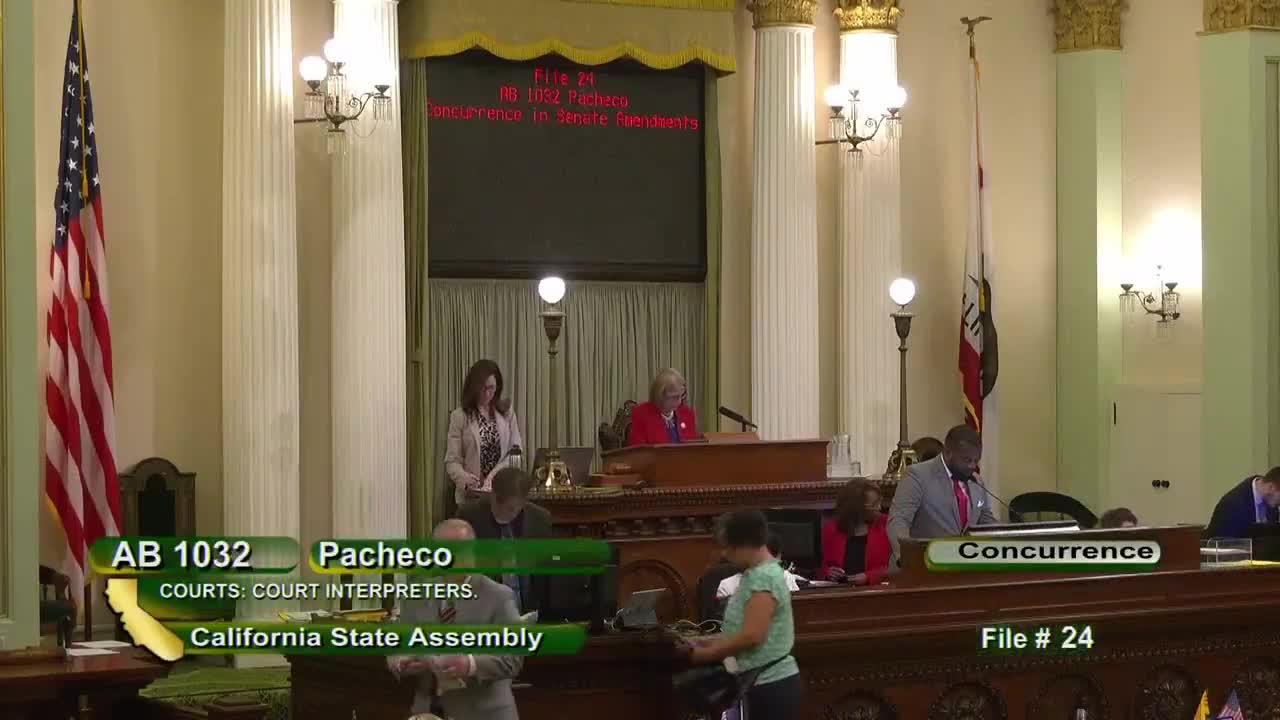 57SEC
Assembly Floor
 2MIN
Senate Floor
 12MIN
Senate Standing Committee on Housing
 1MIN
Assembly Floor
 9MIN
Assembly Standing Committee on Arts, Entertainment, Sports, and Tourism
 16MIN
Assembly Standing Committee on Housing and Community Development
Bill Author