AB 692: Low-carbon transportation fuels.
- Session Year: 2015-2016
- House: Assembly
- Latest Version Date: 2015-10-08
The California Global Warming Solutions Act of 2006 establishes the State Air Resources Board as the state agency responsible for monitoring and regulating sources emitting greenhouse gases. The act requires the state board to adopt a statewide greenhouse gas emissions limit to be achieved by 2020 equivalent to the statewide greenhouse gas emissions levels of 1990. The state board additionally is required to adopt rules and regulations in an open public process to achieve the maximum technologically feasible and cost-effective greenhouse gas emissions reductions. Pursuant to the act, the state board has adopted the Low-Carbon Fuel Standard regulations.
This bill, commencing January 1, 2017, would require, except as provided, at least 3% of the aggregate amount of bulk transportation fuel purchased by the state government to be procured from very low carbon transportation fuel sources. The bill would require, except as provided, the percentage to be increased by 1% each year thereafter until January 1, 2024. The bill would require the Department of General Services to coordinate with state agencies that are buyers of transportation fuel and submit an annual progress report to the Legislature. The bill would define very low carbon transportation fuel for these purposes.
The California Global Warming Solutions Act of 2006 establishes the State Air Resources Board as the state agency responsible for monitoring and regulating sources emitting greenhouse gases. The act requires the state board to adopt a statewide greenhouse gas emissions limit to be achieved by 2020 equivalent to the statewide greenhouse gas emissions levels of 1990. The state board additionally is required to adopt rules and regulations in an open public process to achieve the maximum technologically feasible and cost-effective greenhouse gas emissions reductions. Pursuant to the act, the state board has adopted the Low-Carbon Fuel Standard regulations.
This bill, commencing January 1, 2017, would require, except as provided, at least 3% of the aggregate amount of bulk transportation fuel purchased by the state agencies government to be procured from very low carbon transportation fuel sources. The bill would require, except as provided, the percentage to be increased by 1% each year thereafter until January 1, 2024. The bill would require the Department of General Services to coordinate with state agencies that are buyers of transportation fuel and submit an annual progress report to the Legislature. The bill would define very low carbon transportation fuel for these purposes.
The California Global Warming Solutions Act of 2006 establishes the State Air Resources Board as the state agency responsible for monitoring and regulating sources emitting greenhouse gases. The act requires the state board to adopt a statewide greenhouse gas emissions limit to be achieved by 2020 equivalent to the statewide greenhouse gas emissions levels of 1990. The state board additionally is required to adopt rules and regulations in an open public process to achieve the maximum technologically feasible and cost-effective greenhouse gas emissions reductions. Pursuant to the act, the state board has adopted the Low-Carbon Fuel Standard regulations.
This bill, commencing January 1, 2017, would require require, except as provided, at least 3% of the aggregate amount of bulk transportation fuel purchased by state agencies that are buyers of transportation fuel to be procured from very low carbon transportation fuel sources. The bill would require require, except as provided, the percentage to be increased by 1% each year thereafter until January 1, 2024. The bill would require the Department of General Services to coordinate with state agencies that are buyers of transportation fuel and submit an annual progress report to the Legislature. The bill would authorize the Legislature to appropriate money from the Greenhouse Gas Reduction Fund to state agencies that are buyers of transportation fuel to offset any increased costs resulting from the purchase of very low carbon transportation fuel. The bill would define very low carbon transportation fuel for these purposes.
The California Global Warming Solutions Act of 2006 establishes the State Air Resources Board as the state agency responsible for monitoring and regulating sources emitting greenhouse gases. The act requires the state board to adopt a statewide greenhouse gas emissions limit to be achieved by 2020 equivalent to the statewide greenhouse gas emissions levels of 1990. The state board additionally is required to adopt rules and regulations in an open public process to achieve the maximum technologically feasible and cost-effective greenhouse gas emissions reductions. Pursuant to the act, the state board has adopted the Low-Carbon Fuel Standard regulations.
This bill, commencing January 1, 2017, would require the Department of Transportation, the Department of General Services, and any other state agency that is a buyer of transportation fuels to each procure at least 3% of the total aggregate amount of transportation fuel purchased by state agencies that are buyers of transportation fuel to be procured from very low carbon transportation fuel sources. The bill would require the percentage to be increased by 1% each year thereafter until January 1, 2024. The bill would require each affected agency to annually the Department of General Services to coordinate with state agencies that are buyers of transportation fuel and submit a an annual progress and implementation report to the Legislature between January 1, 2018, and January 1, 2025, and would also require each affected agency to conduct a full evaluation and review of the low-carbon fuel program during 2025, as specified, with a report to be submitted to the Legislature in that regard by January 1, 2026. Legislature. The bill would authorize the Legislature to appropriate money from the Greenhouse Gas Reduction Fund to state agencies that are buyers of transportation fuel to offset any increased costs resulting from the purchase of very low carbon transportation fuel. The bill would define very low carbon transportation fuel for these purposes.
The California Global Warming Solutions Act of 2006 establishes the State Air Resources Board as the state agency responsible for monitoring and regulating sources emitting greenhouse gases. The act requires the state board to adopt a statewide greenhouse gas emissions limit to be achieved by 2020 equivalent to the statewide greenhouse gas emissions levels of 1990. The state board additionally is required to adopt rules and regulations in an open public process to achieve the maximum technologically feasible and cost-effective greenhouse gas emissions reductions. Pursuant to the act, the state board has adopted the Low-Carbon Fuel Standard regulations.
This bill, commencing January 1, 2017, would require the Department of Transportation, the Department of General Services, and any other state agency that is a buyer of transportation fuels to each procure 3% of the total amount of fuel purchased from very low carbon transportation fuel sources. The bill would require the percentage to be increased by 1% each year thereafter until January 1, 2024. The bill would require each affected agency to annually submit a progress and implementation report to the Legislature between January 1, 2018, and January 1, 2025, and would also require each affected agency to conduct a full evaluation and review of the low-carbon fuel program during 2025, as specified, with a report to be submitted to the Legislature in that regard by January 1, 2026. The bill would define low-carbon very low carbon transportation fuel for these purposes.
The California Global Warming Solutions Act of 2006 establishes the State Air Resources Board as the state agency responsible for monitoring and regulating sources emitting greenhouse gases. The act requires the state board to adopt a statewide greenhouse gas emissions limit to be achieved by 2020 equivalent to the statewide greenhouse gas emissions levels of 1990. The state board additionally is required to adopt rules and regulations in an open public process to achieve the maximum technologically feasible and cost-effective greenhouse gas emissions reductions. Pursuant to the act, the state board has adopted the Low-Carbon Fuel Standard regulations.
This bill, commencing January 1, 2017, would require the Department of Transportation, the Department of General Services, and any other state agency that is a buyer of transportation fuels to each procure an unspecified percentage 3% of the total amount of fuel purchased from very low carbon transportation fuel sources. The bill would require the percentage to be increased by 1% each year thereafter. thereafter until January 1, 2024. The bill would require each affected agency to annually submit a progress and implementation report to the Legislature between January 1, 2018, and January 1, 2025, and would also require each affected agency to conduct a full evaluation and review of the low-carbon fuel program during 2025, as specified, with a report to be submitted to the Legislature in that regard by January 1, 2026. The bill would define low carbon low-carbon transportation fuel for these purposes.
The California Global Warming Solutions Act of 2006 establishes the State Air Resources Board as the state agency responsible for monitoring and regulating sources emitting greenhouse gases. The act requires the state board to adopt a statewide greenhouse gas emissions limit to be achieved by 2020 equivalent to the statewide greenhouse gas emissions levels of 1990. The state board additionally is required to adopt rules and regulations in an open public process to achieve the maximum technologically feasible and cost-effective greenhouse gas emissions reductions. Pursuant to the act, the state board has adopted the Low-Carbon Fuel Standard regulations.
This bill, commencing January 1, 2017, would require the Department of Transportation, the Department of General Services, and any other state agency that is a buyer of transportation fuels to each procure an unspecified percentage of the total amount of fuel purchased from very low carbon transportation fuel sources. The bill would require the percentage to be increased each year thereafter. The bill would define low carbon transportation fuel for these purposes.
The Legislature finds and declares both of the following:
(a)Low-carbon transportation fuels are an important element of the states greenhouse gas reduction policy, and increasing the supply of those fuels will help the state achieve its greenhouse gas reduction goals.
(b)Existing incentives for the development of low-carbon transportation fuels, including the Low-Carbon Fuel Standard regulation (Subarticle 7 (commencing with Section 95480) of Article 4 of Subchapter 10 of Chapter 1 of Division 3 of Title 17 of the California Code of Regulations), the California Global Warming Solutions Act of 2006 (Division 25.5 (commencing with Section 38500) of the Health and Safety Code), and Assembly Bill 118 (Chapter 750 of the Statutes of 2007), can be enhanced if the states purchasing power is used to buy very low carbon transportation fuel for its own fleets, providing a reliable source of demand for these fuels.
SEC. 2.Section 43870 is added to the Health and Safety Code, to read:43870.(a)Except as provided in subdivision (e), commencing January 1, 2017, at least 3 percent of the aggregate amount of bulk transportation fuel purchased by the state government shall be procured from very low carbon transportation fuel sources, and, commencing January 1, 2018, the amount of very low carbon transportation fuel purchased shall be increased every year, by 1 percent, until January 1, 2024.
(b)As used in this section, very low carbon transportation fuel means a liquid or gaseous transportation fuel having no greater than 40 percent of the carbon intensity of the closest comparable petroleum fuel for that year, as measured by the methodology in the low-carbon fuel standard regulation (Subarticle 7 (commencing with Section 95480) of Article 4 of Subchapter 10 of Chapter 1 of Division 3 of Title 17 of the California Code of Regulations). The carbon intensity for the transportation fuel shall include the indirect land use change emission if an agricultural commodity that is a food product is used as a feedstock for the production of the transportation fuel.
(c)This section does not replace or modify any existing fuel standards or requirements imposed under the low-carbon fuel standard regulation.
(d)The Department of General Services shall coordinate with state agencies that are buyers of transportation fuel and submit to the Legislature, consistent with Section 25722.8 of the Public Resources Code, an annual progress report on actions taken pursuant to this section.
(e)If the Department of General Services, in consultation with the chairperson of the state board, makes a determination that very low carbon transportation fuel does not perform adequately for its intended use or is not available at a reasonable price and in a reasonable period of time, the state shall procure very low carbon transportation fuel only to the extent feasible.
The Legislature finds and declares both of the following:
(a)Low-carbon transportation fuels are an important element of the states greenhouse gas reduction policy, and increasing the supply of those fuels will help the state achieve its greenhouse gas reduction goals.
(b)Existing incentives for the development of low-carbon transportation fuels, including the Low-Carbon Fuel Standard regulation (Subarticle 7 (commencing with Section 95480) of Article 4 of Subchapter 10 of Chapter 1 of Division 3 of Title 17 of the California Code of Regulations), the California Global Warming Solutions Act of 2006 (Division 25.5 (commencing with Section 38500) of the Health and Safety Code), and Assembly Bill 118 (Chapter 750 of the Statutes of 2007), can be enhanced if the states purchasing power is used to buy very low carbon transportation fuel for its own fleets, providing a reliable source of demand for these fuels.
SEC. 2.Section 43870 is added to the Health and Safety Code, to read:43870.(a)Except as provided in subdivision (e), commencing January 1, 2017, at least 3 percent of the aggregate amount of bulk transportation fuel purchased by the state agencies government shall be procured from very low carbon transportation fuel sources, and, commencing January 1, 2018, the amount of very low carbon transportation fuel purchased shall be increased every year, by 1 percent, until January 1, 2024.
(b)As used in this section, very low carbon transportation fuel means a liquid or gaseous transportation fuel having no greater than 40 percent of the carbon intensity of the closest comparable petroleum fuel for that year, as measured by the methodology in the low-carbon fuel standard regulation (Subarticle 7 (commencing with Section 95480) of Article 4 of Subchapter 10 of Chapter 1 of Division 3 of Title 17 of the California Code of Regulations). The carbon intensity for the transportation fuel shall include the indirect land use change emission if an agricultural commodity that is a food product is used as a feedstock for the production of the transportation fuel.
(c)This section does not replace or modify any existing fuel standards or requirements imposed under the low-carbon fuel standard regulation.
(d)The Department of General Services shall coordinate with state agencies that are buyers of transportation fuel and submit to the Legislature, consistent with Section 25722.8 of the Public Resources Code, an annual progress report on actions taken pursuant to this section.
(e)If the Department of General Services, in consultation with the chairperson of the state board, makes a determination that very low carbon transportation fuel does not perform adequately for its intended use or is not available at a reasonable price and in a reasonable period of time, the state shall procure very low carbon transportation fuel only to the extent feasible.
DigestPage 2. TextPage 2.The Legislature finds and declares both of the following:
(a)Low-carbon transportation fuels are an important element of the states greenhouse gas reduction policy, and increasing the supply of those fuels will help the state achieve its greenhouse gas reduction goals.
(b)Existing incentives for the development of low-carbon transportation fuels, including the Low-Carbon Fuel Standard regulation (Subarticle 7 (commencing with Section 95480) of Article 4 of Subchapter 10 of Chapter 1 of Division 3 of Title 17 of the California Code of Regulations), the California Global Warming Solutions Act of 2006 (Division 25.5 (commencing with Section 38500) of the Health and Safety Code), and Assembly Bill 118 (Chapter 750 of the Statutes of 2007), have not resulted in sufficient development of low-carbon transportation fuels. can be enhanced if the states purchasing power is used to buy very low carbon transportation fuel for its own fleets, providing a reliable source of demand for these fuels.
SEC. 2.Section 38568 43870 is added to the Health and Safety Code, to read:38568.43870.(a)Commencing Except as provided in subdivision (e), commencing January 1, 2017, at least 3 percent of the aggregate amount of bulk transportation fuel purchased by state agencies that are buyers of transportation fuel shall be procured from very low carbon transportation fuel sources. Commencing sources, and, commencing January 1, 2018, the amount of very low carbon transportation fuel purchased shall be increased every year, by 1 percent, until January 1, 2024.
(b)As used in this section, very low carbon transportation fuel means a liquid or gaseous transportation fuel having no greater than 40 percent of the carbon intensity of the closest comparable petroleum fuel for that year, as measured by the methodology in the low-carbon fuel standard regulation (Subarticle 7 (commencing with Section 95480) of Article 4 of Subchapter 10 of Chapter 1 of Division 3 of Title 17 of the California Code of Regulations). The carbon intensity for the transportation fuel shall include the indirect land use change emission if an agricultural commodity that is a food product is used as a feedstock for the production of the transportation fuel.
(c)This section does not replace or modify any existing fuel standards or requirements imposed under the low-carbon fuel standard regulation.
(d)The Legislature may appropriate money from the Greenhouse Gas Reduction Fund to state agencies that are buyers of transportation fuel to offset any increased costs resulting from the purchase of very low carbon transportation fuel.
(e)
(d)The Department of General Services shall coordinate with state agencies that are buyers of transportation fuel and submit to the Legislature, consistent with Section 9795 25722.8 of the Government Public Resources Code, an annual progress report on actions taken pursuant to this section.
(e)If the Department of General Services, in consultation with the chairperson of the state board, makes a determination that very low carbon transportation fuel does not perform adequately for its intended use or is not available at a reasonable price and in a reasonable period of time, the state shall procure very low carbon transportation fuel only to the extent feasible.
The Legislature finds and declares both of the following:
(a)Low-carbon transportation fuels are an important element of the states greenhouse gas reduction policy policy, and increasing the supply of those fuels will help the state achieve its greenhouse gas reduction goals.
(b)Existing incentives for the development of low-carbon transportation fuels, including the Low-Carbon Fuel Standard regulation (Subarticle 7 (commencing with Section 95480) of Article 4 of Subchapter 10 of Chapter 1 of Division 3 of Title 17 of the California Code of Regulations), the California Global Warming Solutions Act of 2006 (Division 25.5 (commencing with Section 38500) of the Health and Safety Code), and Assembly Bill 118 (Chapter 750 of the Statutes of 2007), have not resulted in sufficient development of low-carbon transportation fuels.
SEC. 2.Section 38568 is added to the Health and Safety Code, to read:38568.(a)Commencing January 1, 2017, the Department of Transportation, the Department of General Services, and any other state agency that is a buyer of transportation fuels, shall each procure at least 3 percent of the total aggregate amount of transportation fuel purchased by state agencies that are buyers of transportation fuel shall be procured from very low carbon transportation fuel sources. Commencing January 1, 2018, the amount of very low carbon transportation fuel purchased shall be increased every year, by 1 percent, until January 1, 2024.
(b)Each affected state agency shall submit, consistent with Section 9795 of the Government Code, an annual progress and implementation report to the Legislature commencing on January 1, 2018, with the final report to be submitted on January 1, 2025. Each affected agency shall conduct a full evaluation and review of the low-carbon transportation fuel program during 2025 to consider the effectiveness of the program, including a market analysis, and shall submit a report to the Legislature in that regard on or before January 1, 2026.
(c)
(b)As used in this section, very low carbon transportation fuel means a liquid or gaseous transportation fuel having no greater than 40 percent of the carbon intensity of the closest comparable petroleum fuel for that year, as measured by the methodology in the low-carbon fuel standard regulation (Subarticle 7 (commencing with Section 95480) of Article 4 of Subchapter 10 of Chapter 1 of Division 3 of Title 17 of the California Code of Regulations). The carbon intensity for the transportation fuel shall include the indirect land use change emission if an agricultural commodity that is a food product is used as a feedstock for the production of the transportation fuel.
(d)
(c)This section does not replace or modify any existing fuel standards or requirements imposed under the low-carbon fuel standard regulation.
(d)The Legislature may appropriate money from the Greenhouse Gas Reduction Fund to state agencies that are buyers of transportation fuel to offset any increased costs resulting from the purchase of very low carbon transportation fuel.
(e)The Department of General Services shall coordinate with state agencies that are buyers of transportation fuel and submit to the Legislature, consistent with Section 9795 of the Government Code, an annual progress report on actions taken pursuant to this section.
The Legislature finds and declares both of the following:
(a)Low-carbon transportation fuels are an important element of the states greenhouse gas reduction policy and increasing the supply of those fuels will help the state achieve its greenhouse gas reduction goals.
(b)Existing incentives for the development of low-carbon transportation fuels, including the Low-Carbon Fuel Standard regulation (Subarticle 7 (commencing with Section 95480) of Article 4 of Subchapter 10 of Chapter 1 of Division 3 of Title 17 of the California Code of Regulations), the California Global Warming Solutions Act of 2006 (Division 25.5 (commencing with Section 38500) of the Health and Safety Code), and Assembly Bill 118 (Chapter 750 of the Statutes of 2007), have not resulted in sufficient development of low-carbon transportation fuels.
SEC. 2.Section 38568 is added to the Health and Safety Code, to read:38568.(a)Commencing January 1, 2017, the Department of Transportation, the Department of General Services, and any other state agency that is a buyer of transportation fuels, shall each procure 3 percent of the total amount of fuel purchased from very low carbon transportation fuel sources. Commencing January 1, 2018, the amount of very low carbon transportation fuel purchased shall be increased every year, by 1 percent, until January 1, 2024.
(b)Each affected state agency shall submit, consistent with Section 9795 of the Government Code, an annual progress and implementation report to the Legislature commencing on January 1, 2018, with the final report to be submitted on January 1, 2025. Each affected agency shall conduct a full evaluation and review of the low-carbon transportation fuel program during 2025 to consider the effectiveness of the program, including a market analysis, and shall submit a report to the Legislature in that regard on or before January 1, 2026.
(c)As used in this section, very low carbon transportation fuel means a liquid or gaseous transportation fuel having no greater than 50 40 percent the carbon intensity of the closest comparable petroleum fuel for that year, as measured by the methodology in the low-carbon fuel standard regulation (Subarticle 7 (commencing with Section 95480) of Article 4 of Subchapter 10 of Chapter 1 of Division 3 of Title 17 of the California Code of Regulations). The carbon intensity for the transportation fuel shall include the indirect land use change emission if an agricultural commodity that is a food product is used as a feedstock for the production of the transportation fuel.
(d)This section does not replace or modify any existing fuel standards or requirements imposed under the low-carbon fuel standard regulation.
The Legislature finds and declares both of the following:
(a)Low-carbon transportation fuels are an important element of the states greenhouse gas reduction policy and increasing the supply of those fuels will help the state achieve its greenhouse gas reduction goals.
(b)Existing incentives for the development of low-carbon transportation fuels, including the Low-Carbon Fuel Standard regulation (Subarticle 7 (commencing with Section 95480) of Article 4 of Subchapter 10 of Chapter 1 of Division 3 of Title 17 of the California Code of Regulations), the California Global Warming Solutions Act of 2006 (Division 25.5 (commencing with Section 38500) of the Health and Safety Code), and Assembly Bill 118 (Chapter 750 of the Statutes of 2007), have not resulted in sufficient development of low-carbon transportation fuels.
SEC. 2.Section 38568 is added to the Public Resources Health and Safety Code, to read:38568.(a)Commencing January 1, 2017, the Department of Transportation, the Department of General Services, and any other state agency that is a buyer of transportation fuels, shall each procure ____ 3 percent of the total amount of fuel purchased from very low carbon transportation fuel sources. Commencing January 1, 2018, the amount of very low carbon fuel purchased shall be increased every year, by ____ 1 percent, until January 1, 2024.
(b)Each affected state agency shall submit, consistent with Section 9795 of the Government Code, an annual progress and implementation report to the Legislature commencing on January 1, 2018, with the final report to be submitted on January 1, 2025. Each affected agency shall conduct a full evaluation and review of the low-carbon transportation fuel program during 2025 to consider the effectiveness of the program, including a market analysis, and shall submit a report to the Legislature in that regard on or before January 1, 2026.
(b)
(c)As used in this section, very low carbon transportation fuel means a liquid or gaseous transportation fuel having no greater than 50 percent the carbon intensity of the closest comparable petroleum fuel for that year, as measured by the methodology in the low-carbon fuel standard regulation (Subarticle 7 (commencing with Section 95480) of Article 4 of Subchapter 10 of Chapter 1 of Division 3 of Title 17 of the California Code of Regulations). The carbon intensity for the transportation fuel shall include the indirect land use change emission if an agricultural commodity that is a food product is used as a feedstock for the production of the transportation fuel.
(c)
(d)This section does not replace or modify any existing fuel standards or requirements imposed under the low-carbon fuel standard regulation.
The Legislature finds and declares both of the following:
(a)Low-carbon transportation fuels are an important element of the states greenhouse gas reduction policy and increasing the supply of those fuels will help the state achieve its greenhouse gas reduction goals.
(b)Existing incentives for the development of low-carbon transportation fuels, including the Low-Carbon Fuel Standard regulation (Subarticle 7 (commencing with Section 95480) of Article 4 of Subchapter 10 of Chapter 1 of Division 3 of Title 17 of the California Code of Regulations), the California Global Warming Solutions Act of 2006 (Division 25.5 (commencing with Section 38500) of the Health and Safety Code), and Assembly Bill 118 (Chapter 750 of the Statutes of 2007), have not resulted in sufficient development of low-carbon transportation fuels.
SEC. 2.Section 38568 is added to the Public Resources Code, to read:38568.(a)Commencing January 1, 2017, the Department of Transportation, the Department of General Services, and any other state agency that is a buyer of transportation fuels, shall each procure ____ percent of the total amount of fuel purchased from very low carbon transportation fuel sources. Commencing January 1, 2018, the amount of very low carbon fuel purchased shall be increased every year, by ____ percent.
(b)As used in this section, very low carbon transportation fuel means a liquid or gaseous transportation fuel having no greater than 50 percent the carbon intensity of the closest comparable petroleum fuel for that year, as measured by the methodology in the low-carbon fuel standard regulation (Subarticle 7 (commencing with Section 95480) of Article 4 of Subchapter 10 of Chapter 1 of Division 3 of Title 17 of the California Code of Regulations). The carbon intensity for the transportation fuel shall include the indirect land use change emission if an agricultural commodity that is a food product is used as a feedstock for the production of the transportation fuel.
(c)This section does not replace or modify any existing fuel standards or requirements imposed under the low-carbon fuel standard regulation.
|
Date
|
Status
|
|---|---|
| Oct 8, 2015 | Chaptered by Secretary of State - Chapter 588, Statutes of 2015. |
| Oct 8, 2015 | Approved by the Governor. |
| Sep 18, 2015 | Enrolled and presented to the Governor at 4 p.m. |
| Sep 10, 2015 | Senate amendments concurred in. To Engrossing and Enrolling. (Ayes 52. Noes 27. Page 3060.). |
| Sep 10, 2015 | Senate amendments concurred in. To Engrossing and Enrolling. (Ayes 52. Noes 27.). |
| Sep 10, 2015 | Senate amendments concurred in. To Engrossing and Enrolling. |
| Sep 9, 2015 | Read third time. Passed. Ordered to the Assembly. (Ayes 25. Noes 14. Page 2642.). |
| Sep 9, 2015 | In Assembly. Concurrence in Senate amendments pending. |
| Sep 9, 2015 | Read third time. Passed. Ordered to the Assembly. |
| Sep 8, 2015 | Measure version as amended on September 4 corrected. |
| Sep 8, 2015 | Read second time. Ordered to third reading. |
| Sep 4, 2015 | Read third time and amended. Ordered to second reading. |
| Sep 1, 2015 | Read second time and amended. Ordered to third reading. |
| Aug 31, 2015 | From committee: Amend, and do pass as amended. (Ayes 5. Noes 2.) (August 27). |
| Aug 17, 2015 | In committee: Referred to APPR. suspense file. |
| Jul 16, 2015 | From committee: Do pass and re-refer to Com. on APPR. (Ayes 5. Noes 2.) (July 15). Re-referred to Com. on APPR. |
| Jul 1, 2015 | From committee: Do pass and re-refer to Com. on E.Q. (Ayes 8. Noes 2.) (June 30). Re-referred to Com. on E.Q. |
| Jun 18, 2015 | Referred to Coms. on T. & H. and E.Q. |
| Jun 4, 2015 | In Senate. Read first time. To Com. on RLS. for assignment. |
| Jun 4, 2015 | Read third time. Passed. Ordered to the Senate. (Ayes 52. Noes 27. Page 1915.) |
| Jun 4, 2015 | Read third time. Passed. Ordered to the Senate. |
| Jun 3, 2015 | Read second time. Ordered to third reading. |
| Jun 2, 2015 | Read second time and amended. Ordered returned to second reading. |
| Jun 1, 2015 | From committee: Amend, and do pass as amended. (Ayes 12. Noes 5.) (May 28). |
| May 28, 2015 | Joint Rule 62(a), file notice suspended. (Page 1613.) |
| May 28, 2015 | Joint Rule 62(a), file notice suspended. |
| May 27, 2015 | In committee: Set, first hearing. Referred to APPR. suspense file. |
| Apr 29, 2015 | From committee: Do pass and re-refer to Com. on APPR. (Ayes 6. Noes 3.) (April 29). Re-referred to Com. on APPR. |
| Apr 21, 2015 | Re-referred to Com. on A. & A.R. |
| Apr 20, 2015 | Read second time and amended. |
| Apr 16, 2015 | From committee: Amend, and do pass as amended and re-refer to Com. on A. & A.R. (Ayes 6. Noes 3.) (April 13). |
| Apr 7, 2015 | Re-referred to Com. on NAT. RES. |
| Apr 6, 2015 | From committee chair, with author's amendments: Amend, and re-refer to Com. on NAT. RES. Read second time and amended. |
| Mar 9, 2015 | Referred to Coms. on NAT. RES. and A. & A.R. |
| Feb 26, 2015 | From printer. May be heard in committee March 28. |
| Feb 25, 2015 | Read first time. To print. |
|
Date
|
Description
|
Location
|
Votes
|
|
|---|---|---|---|---|
| Sep 10, 2015 | AB 692 QUIRK Concurrence in Senate Amendments | Assembly Floor |
Passed |
|
| Sep 9, 2015 | Assembly 3rd Reading AB692 Quirk By Wieckowski | Senate Floor |
Passed |
|
| Aug 27, 2015 | Do pass as amended | Senate Standing Committee on Appropriations |
Passed |
|
| Aug 17, 2015 | Placed on suspense file | Senate Standing Committee on Appropriations |
Passed |
|
| Jul 15, 2015 | Do pass, but first be re-referred to the Committee on [Appropriations] | Senate Standing Committee on Environmental Quality |
Passed |
|
| Jun 30, 2015 | Do pass, but first be re-referred to the Committee on [Environmental Quality] | Senate Standing Committee on Transportation and Housing |
Passed |
|
| Jun 4, 2015 | AB 692 QUIRK Assembly Third Reading | Assembly Floor |
Passed |
|
| May 28, 2015 | Do pass as amended. | Assembly Standing Committee on Appropriations |
Passed |
|
| Apr 29, 2015 | Do pass and be re-referred to the Committee on [Appropriations] | Assembly Standing Committee on Accountability and Administrative Review |
Passed |
|
| Apr 13, 2015 | Do pass as amended and be re-referred to the Committee on [Accountability and Administrative Review] | Assembly Standing Committee on Natural Resources |
Passed |
This list shows positions taken on this bill by organizations on the date displayed, which is linked to the original source.
Positions by individuals are not included.
AB 692
Page 3
CONCURRENCE IN SENATE AMENDMENTS
AB 692
(Quirk)
As Amended September 4, 2015
Majority vote
ASSEMBLY: |
52-27 |
(June 4, 2015) |
SENATE: |
25-14 |
(September 9, 2015) |
Original Committee Reference: NAT. RES.
SUMMARY: Requires each state agency that is a buyer of transportation fuels to buy at least 3% of "very low carbon transportation fuels," as defined, beginning January 1, 2017, increasing by 1% per year thereafter until 2024.
The Senate amendments:
State a legislative finding that incentives for the development of low carbon transportation fuels can be enhanced if the state's purchasing power is used to buy very low carbon transportation fuel for its own fleets.
Delete a provision that authorized the Legislature to appropriate funds from the Greenhouse Gas Reduction Fund to state agencies that buy transportation fuel to offset increased costs associated with the purchase of very low carbon transportation fuel.
Specify that the Department of General Services (DGS) shall submit an annual progress report to the Legislature consistent with the existing report relating to alternative fuels.
Require the state to procure very low carbon transportation fuel only to the extent feasible, if DGS, in consultation with the chair of the Air Resources Board (ARB), makes a determination that very low carbon transportation fuel does not perform adequately for its intended use or is not available for a reasonable price and in a reasonable period of time.
EXISTING LAW:
Pursuant to the California Global Warming Solutions Act (AB 32 (Núñez), Chapter 488, Statutes of 2006), requires the ARB to adopt a statewide greenhouse gas (GHG) emissions limit equivalent to 1990 levels by 2020 and to adopt rules and regulations to achieve maximum technologically feasible and cost-effective GHG emission reductions.
Pursuant to Executive Order S-01-07, sets a statewide goal to reduce the carbon intensity (CI) of California's transportation fuels by at least 10% by 2020. Pursuant to AB 32, ARB adopted a Low Carbon Fuel Standard (LCFS) regulation in 2009 to implement this goal. The LCFS attributes CI values to a variety of fuels based on direct and indirect GHG emissions, including land use changes caused by production of biofuels. The LCFS permits producers of certain low-CI fuels to opt in to LCFS regulation for the purpose of generating credits, which can be banked and used for compliance, sold to regulated parties, and purchased and retired by regulated parties. In addition, LCFS credits can be exported to other GHG emission reduction programs.
Establishes the Greenhouse Gas Reduction Fund (GGRF) and requires all moneys, except for fines and penalties, collected by ARB from the auction or sale of allowances pursuant to a market-based compliance mechanism (i.e., the cap-and-trade program adopted by ARB under AB 32) to be deposited in the Fund and available for appropriation by the Legislature.
FISCAL EFFECT: According to the Senate Appropriations Committee:
Unknown costs, but potentially minor, to the General Fund and various special funds to the DGS to manage fuel purchases to meet the purchase requirements.
Potential costs up to $175,000, but likely minor, to the Cost of Implementation Account (special) to ARB to assist state agencies with compliance with the purchase requirements.
COMMENTS: In 2007, Governor Schwarzenegger issued Executive Order S-1-07, calling for a reduction of at least 10% in the CI of California's transportation fuels by 2020. The order instructed the California Environmental Protection Agency to coordinate activities between the University of California, the California Energy Commission and other state agencies to develop and propose a draft compliance schedule to meet the 2020 target.
The Order further directed ARB to consider initiating regulatory proceedings to establish and implement the LCFS. In response, ARB adopted the LCFS regulation in 2009, to be implemented beginning in 2010. 2010 was a reporting year and the first CI reduction requirement of 0.25% began in 2011. The target increased to 0.5% in 2012 and 1% in 2013. To date, fuel suppliers have over-complied, predominantly by blending ethanol with gasoline, which is preferred in the near term because ethanol blending is required by the federal Renewable Fuel Standard and does not require significant changes in fueling and vehicle infrastructure. However, natural gas, biodiesel and electricity have also been used in significant amounts to comply with the LCFS.
In 2009 and 2010, three lawsuits were filed against the LCFS by ethanol interests – two in federal court and one in state court. The federal lawsuits were brought by trade associations of ethanol producers and refiners who claim that the LCFS is preempted under the Energy Independence and Security Act of 2007 and violates the Commerce Clause of the U.S. Constitution (e.g., by assigning corn ethanol from the Midwest a CI value above that of corn ethanol made in California). The combined federal lawsuit (Rocky Mountain Farmers Union v. Corey) was heard by the Ninth Circuit Court of Appeals, which considered ARB’s appeal of several adverse rulings and a preliminary injunction that were issued by the lower federal court in Fresno in December 2011. In April 2012, the Ninth Circuit granted ARB’s request for a stay of the preliminary injunction, which allowed ARB to resume enforcement of the LCFS during the pendency of the lawsuit. In September 2013, the Ninth Circuit ruled that the LCFS provisions were not facially discriminatory, leaving the LCFS in place while the plaintiffs petition for review by the U.S. Supreme Court.
The state lawsuit (Poet, LLC v. California Air Resources Board), brought by a major ethanol producer, alleges that ARB did not fully comply with the Administrative Procedure Act (APA) and the California Environmental Quality Act (CEQA) when adopting the LCFS regulation. In November 2011, the Fresno Superior Court ruled in favor of ARB on all 14 causes of action raised by the plaintiffs. Plaintiffs then appealed the case to the Court of Appeal in Fresno, which found both APA and CEQA defects with ARB's process of adopting the LCFS. As a result, ARB has proposed adopting an alternative regulation for diesel and readopting the LCFS regulation to comply with the court's instructions.
Meanwhile, the LCFS is frozen at its 2013 (1% CI reduction) level. In addition to revising the regulation to comply with the Court of Appeal ruling, ARB has proposed several other modifications related to adjusting compliance schedules, determining CI, cost containment in the credit market, and other assorted issues. ARB proposes to readopt the LCFS regulation in July, with a target of 2% in 2016, 3.5% in 2017, 5% in 2018, 7.5% in 2019, and 10% in 2020 and thereafter.
According to proposed CI tables published by ARB, the following fuels may fall under the 40% definition in this bill:
Natural gas (biomethane) from landfills, dairy/feedlot sources, and anaerobic digestion of food/green waste and wastewater.
Biodiesel and renewable diesel from used cooking oil, tallow and plant sources.
Hydrogen, depending on the fuel source and production process.
Analysis Prepared by: Lawrence Lingbloom / NAT. RES. / (916) 319-2092 FN: 0002364
AB 692
Page 5
|
Office of Senate Floor Analyses (916) 651-1520 Fax: (916) 327-4478 |
THIRD READING
Bill No: AB 692
Amended: 9/4/15 in Senate
SENATE TRANS. & HOUSING COMMITTEE: 8-2, 6/30/15
AYES: Beall, Allen, Galgiani, Leyva, McGuire, Mendoza, Roth, Wieckowski
NOES: Cannella, Bates
NO VOTE RECORDED: Gaines
SENATE ENVIRONMENTAL QUALITY COMMITTEE: 5-2, 7/15/15
AYES: Wieckowski, Hill, Jackson, Leno, Pavley
NOES: Gaines, Bates
SENATE APPROPRIATIONS COMMITTEE: 5-2, 8/27/15
AYES: Lara, Beall, Hill, Leyva, Mendoza
NOES: Bates, Nielsen
ASSEMBLY FLOOR: 52-27, 6/4/15 - See last page for vote
SUBJECT: Low-carbon transportation fuels
DIGEST: This bill requires 3% of the aggregate amount of bulk transportation fuel purchased by state agencies to be procured from very low-carbon fuel sources.
Senate Floor Amendments of 9/4/15 are technical.
ANALYSIS: The Air Resource Board (ARB) adopted the Low Carbon Fuel Standard (LCFS) regulation in April 2009, effective the following year. The LCFS:
Aims to reduce greenhouse gas (GHG) emissions from the transportation sector by about 16 million metric tons by 2020. It is also designed to reduce California’s dependence on petroleum, create a lasting market for clean transportation technology, and stimulate the production and use of alternative low-carbon fuels.
Requires producers of petroleum-based fuels to reduce the carbon intensity (CI) of transportation fuels used in California by an average of 10% by 2020. It consists of two elements: a cap on total GHG emissions from the entire fuel sector, and a carbon credit-trading mechanism that incentivizes the production and use of low-carbon fuels. Petroleum importers, refiners, and wholesalers may either develop their own low-carbon fuel products or buy LCFS credits from other companies that sell low-carbon alternative fuels such as biofuels, electricity, natural gas, or hydrogen. The CI has been frozen at 1% since 2013 as a result of litigation, but ARB plans to re-adopt the LCFS this year. After re-adoption, the CI will begin to decrease toward the 10% reduction required by 2020.
Provides that the baseline LCFS fuels are reformulated gasoline mixed with corn-derived ethanol and low-sulfur diesel. Lower carbon fuels may include ethanol, biodiesel, renewable diesel, or blends of these fuels with gasoline or diesel as appropriate. Compressed natural gas may also be a low-carbon fuel, as well as hydrogen and electricity.
This bill:
Requires, beginning January 1, 2017, that at least 3% of the aggregate amount of bulk transportation fuel purchased by state agencies must be procured from very low-carbon fuel sources.
Requires the amount of very low-carbon fuel purchased to increase by 1% each year until January 1, 2024 (i.e., up to 10% by 2024).
Defines “very low-carbon transportation fuel” as a liquid or gaseous fuel having not more than 40% of the CI of the closest comparable petroleum fuel for that year as measured by LCFS methodology.
Requires the Department of General Services (DGS) to coordinate with state agencies that are buyers of transportation fuel and submit to the Legislature an annual progress report on implementation of the mandate in this bill.
Allows DGS, in consultation with ARB, to comply with the requirement only to the extent feasible if it determines that the very low-carbon fuel does not perform adequately or is not available at a reasonable price in a reasonable period of time.
Comments
Purpose. The author states that while the state has met the 1% GHG reduction commitment of LCFS, it has done so primarily by using corn and sugarcane ethanol and soybean biodiesel; only a very small fraction of the California fuel market is currently satisfied by fuels made from waste products. The main obstacle preventing other fuels from entering the LCFS market is access to capital. Building a commercial-scale low-carbon fuel production facility requires hundreds of millions of dollars. The market for low-carbon fuels is uncertain due to fluctuations in the petroleum markets, changes in the regulatory landscape, and the inherent uncertainty involved when deploying new technology. This bill guarantees a market for very low-carbon fuels by requiring the state fuel portfolio to include a minimum share of very low-carbon fuels. This requirement will give assurance to prospective producers of very low-carbon fuels that there will be a market for them, even if they are not cost-competitive in the short term.
Background on state fuel purchases. The largest state agency purchasers of fuel are the Departments of Transportation, Forestry and Fire Protection (CalFIRE), Corrections and Rehabilitation, Water Resources, and Fish and Wildlife. The state government purchases a significant amount of fuels for its fleet; in FY 2007-08, for example, the state purchased approximately 34 million gallons of gasoline, 11 million gallons of diesel fuel, 327,174 gasoline gallon equivalents of compressed natural gas and propane, and 66,183 gallons of E-85. In 2014, for the third year in a row, California was named the 18th “greenest” fleet out of 100 public-sector fleets in North America. Pursuant to legislative and gubernatorial directives, DGS has established multiple sustainable fleet policies emphasizing the purchase of more fuel-efficient vehicles and the reduction of petroleum use.
Amendments. This bill was amended in the Senate Appropriations Committee to restrict requirements to bulk purchases of fuel, to simplify compliance, and to ease the compliance requirement if DGS finds that the very low-carbon fuel does not perform adequately or is not available at a reasonable price on a reasonably timely basis. It was also amended to remove the provision allowing Greenhouse Gas Reduction Fund revenues to be used to offset any increased costs resulting from the purchase of very low-carbon transportation fuel.
Related/Prior Legislation
AB 1176 (Perea) establishes the Advanced Low-Carbon Diesel Fuels Access Program to fund low-carbon diesel fueling infrastructure projects in communities that are disproportionately impacted by environmental hazards and where the greatest air quality impacts can be identified. AB 1176 was held on the Senate Appropriations Committee suspense file.
AB 1992 (Quirk) would have authorized ARB to establish a very low-carbon fuel market program, in which transportation fuel providers could be required to include in their sales a specified percentage of very low-carbon fuels, defined as having no greater than 50% of the CI of the closest comparable petroleum fuel. AB 1992 failed passage in the Senate Transportation and Housing Committee in 2014.
FISCAL EFFECT: Appropriation: No Fiscal Com.: Yes Local: No
According to the Senate Appropriations Committee:
Unknown costs, but potentially minor, to the General Fund and various special funds to the DGS to manage fuel purchases to meet the purchase requirements.
Potential costs up to $175,000, but likely minor, to the Cost of Implementation Account (special) to ARB to assist state agencies with compliance with the purchase requirements.
Biodico Sustainable Refineries
California Biodiesel Alliance
Coalition for Renewable Natural Gas
DuPont
CalTax
ASSEMBLY FLOOR: 52-27, 6/4/15
AYES: Alejo, Bloom, Bonilla, Bonta, Brown, Burke, Calderon, Campos, Chau, Chiu, Chu, Cooley, Cooper, Dababneh, Daly, Dodd, Eggman, Frazier, Cristina Garcia, Eduardo Garcia, Gatto, Gipson, Gomez, Gonzalez, Gordon, Gray, Roger Hernández, Holden, Irwin, Jones-Sawyer, Levine, Lopez, Low, McCarty, Medina, Mullin, Nazarian, O'Donnell, Perea, Quirk, Rendon, Ridley-Thomas, Rodriguez, Salas, Santiago, Mark Stone, Thurmond, Ting, Weber, Williams, Wood, Atkins
NOES: Achadjian, Travis Allen, Baker, Bigelow, Brough, Chang, Chávez, Beth Gaines, Gallagher, Grove, Hadley, Harper, Jones, Kim, Lackey, Linder, Maienschein, Mathis, Mayes, Melendez, Obernolte, Olsen, Patterson, Steinorth, Wagner, Waldron, Wilk
NO VOTE RECORDED: Dahle
Prepared by: Erin Riches / T. & H. / (916) 651-4121
9/8/15 17:30:05
**** END ****
AB 692
Page 5
|
Office of Senate Floor Analyses (916) 651-1520 Fax: (916) 327-4478 |
THIRD READING
Bill No: AB 692
Amended: 9/1/15 in Senate
SENATE TRANS. & HOUSING COMMITTEE: 8-2, 6/30/15
AYES: Beall, Allen, Galgiani, Leyva, McGuire, Mendoza, Roth, Wieckowski
NOES: Cannella, Bates
NO VOTE RECORDED: Gaines
SENATE ENVIRONMENTAL QUALITY COMMITTEE: 5-2, 7/15/15
AYES: Wieckowski, Hill, Jackson, Leno, Pavley
NOES: Gaines, Bates
SENATE APPROPRIATIONS COMMITTEE: 5-2, 8/27/15
AYES: Lara, Beall, Hill, Leyva, Mendoza
NOES: Bates, Nielsen
ASSEMBLY FLOOR: 52-27, 6/4/15 - See last page for vote
SUBJECT: Low-carbon transportation fuels
DIGEST: This bill requires 3% of the aggregate amount of bulk transportation fuel purchased by state agencies to be procured from very low-carbon fuel sources.
ANALYSIS: The Air Resource Board (ARB) adopted the Low Carbon Fuel Standard (LCFS) regulation in April 2009, effective the following year, and the LCFS:
Aims to reduce greenhouse gas (GHG) emissions from the transportation sector by about 16 million metric tons by 2020. It is also designed to reduce California’s dependence on petroleum, create a lasting market for clean transportation technology, and stimulate the production and use of alternative low-carbon fuels.
Requires producers of petroleum-based fuels to reduce the carbon intensity (CI) of transportation fuels used in California by an average of 10% by 2020. It consists of two elements: a cap on total GHG emissions from the entire fuel sector, and a carbon credit-trading mechanism that incentivizes the production and use of low-carbon fuels. Petroleum importers, refiners, and wholesalers may either develop their own low-carbon fuel products or buy LCFS credits from other companies that sell low-carbon alternative fuels such as biofuels, electricity, natural gas, or hydrogen. The CI has been frozen at 1% since 2013 as a result of litigation, but ARB plans to re-adopt the LCFS this year. After re-adoption, the CI will begin to decrease toward the 10% reduction required by 2020.
Provides that the baseline LCFS fuels are reformulated gasoline mixed with corn-derived ethanol and low-sulfur diesel. Lower carbon fuels may include ethanol, biodiesel, renewable diesel, or blends of these fuels with gasoline or diesel as appropriate. Compressed natural gas may also be a low-carbon fuel, as well as hydrogen and electricity.
This bill:
Requires, beginning January 1, 2017, that at least 3% of the aggregate amount of bulk transportation fuel purchased by state agencies must be procured from very low-carbon fuel sources.
Requires the amount of very low-carbon fuel purchased to increase by 1% each year until January 1, 2024 (i.e., up to 10% by 2024).
Defines “very low-carbon transportation fuel” as a liquid or gaseous fuel having not more than 40% of the CI of the closest comparable petroleum fuel for that year as measured by LCFS methodology.
Requires the Department of General Services (DGS) to coordinate with state agencies that are buyers of transportation fuel and submit to the Legislature an annual progress report on implementation of the mandate in this bill.
Allows DGS, in consultation with ARB, to comply with the requirement only to the extent feasible if it determines that the very low-carbon fuel does not perform adequately or is not available at a reasonable price in a reasonable period of time.
Comments
Purpose. The author states that while the state has met the 1% GHG reduction commitment of LCFS, it has done so primarily by using corn and sugarcane ethanol and soybean biodiesel; only a very small fraction of the California fuel market is currently satisfied by fuels made from waste products. The main obstacle preventing other fuels from entering the LCFS market is access to capital. Building a commercial-scale low-carbon fuel production facility requires hundreds of millions of dollars. The market for low-carbon fuels is uncertain due to fluctuations in the petroleum markets, changes in the regulatory landscape, and the inherent uncertainty involved when deploying new technology. This bill guarantees a market for very low-carbon fuels by requiring the state fuel portfolio to include a minimum share of very low-carbon fuels. This requirement will give assurance to prospective producers of very low-carbon fuels that there will be a market for them, even if they are not cost-competitive in the short term.
Background on state fuel purchases. The largest state agency purchasers of fuel are the Departments of Transportation, Forestry and Fire Protection (CalFIRE), Corrections and Rehabilitation, Water Resources, and Fish and Wildlife. The state government purchases a significant amount of fuels for its fleet; in FY 2007-08, for example, the state purchased approximately 34 million gallons of gasoline, 11 million gallons of diesel fuel, 327,174 gasoline gallon equivalents of compressed natural gas and propane, and 66,183 gallons of E-85. In 2014, for the third year in a row, California was named the 18th “greenest” fleet out of 100 public-sector fleets in North America. Pursuant to legislative and gubernatorial directives, DGS has established multiple sustainable fleet policies emphasizing the purchase of more fuel-efficient vehicles and the reduction of petroleum use.
Amendments. This bill was amended in the Senate Appropriations Committee to restrict requirements to bulk purchases of fuel, to simplify compliance, and to ease the compliance requirement if DGS finds that the very low-carbon fuel does not perform adequately or is not available at a reasonable price on a reasonably timely basis. It was also amended to remove the provision allowing Greenhouse Gas Reduction Fund revenues to be used to offset any increased costs resulting from the purchase of very low-carbon transportation fuel.
Related/Prior Legislation
AB 1176 (Perea) establishes the Advanced Low-Carbon Diesel Fuels Access Program to fund low-carbon diesel fueling infrastructure projects in communities that are disproportionately impacted by environmental hazards and where the greatest air quality impacts can be identified. AB 1176 was held on the Senate Appropriations Committee suspense file.
AB 1992 (Quirk) would have authorized ARB to establish a very low-carbon fuel market program, in which transportation fuel providers could be required to include in their sales a specified percentage of very low-carbon fuels, defined as having no greater than 50% of the CI of the closest comparable petroleum fuel. AB 1992 failed passage in the Senate Transportation and Housing Committee in 2014.
FISCAL EFFECT: Appropriation: No Fiscal Com.: Yes Local: No
According to the Senate Appropriations Committee:
Unknown costs, but potentially minor, to the General Fund and various special funds to the DGS to manage fuel purchases to meet the purchase requirements.
Potential costs up to $175,000, but likely minor, to the Cost of Implementation Account (special) to ARB to assist state agencies with compliance with the purchase requirements.
Biodico Sustainable Refineries
California Biodiesel Alliance
Coalition for Renewable Natural Gas
DuPont
OPPOSITION: (Verified 8/27/15)
CalTax
ASSEMBLY FLOOR: 52-27, 6/4/15
AYES: Alejo, Bloom, Bonilla, Bonta, Brown, Burke, Calderon, Campos, Chau, Chiu, Chu, Cooley, Cooper, Dababneh, Daly, Dodd, Eggman, Frazier, Cristina Garcia, Eduardo Garcia, Gatto, Gipson, Gomez, Gonzalez, Gordon, Gray, Roger Hernández, Holden, Irwin, Jones-Sawyer, Levine, Lopez, Low, McCarty, Medina, Mullin, Nazarian, O'Donnell, Perea, Quirk, Rendon, Ridley-Thomas, Rodriguez, Salas, Santiago, Mark Stone, Thurmond, Ting, Weber, Williams, Wood, Atkins
NOES: Achadjian, Travis Allen, Baker, Bigelow, Brough, Chang, Chávez, Beth Gaines, Gallagher, Grove, Hadley, Harper, Jones, Kim, Lackey, Linder, Maienschein, Mathis, Mayes, Melendez, Obernolte, Olsen, Patterson, Steinorth, Wagner, Waldron, Wilk
NO VOTE RECORDED: Dahle
Prepared by: Erin Riches / T. & H. / (916) 651-4121
9/1/15 21:41:54
**** END ****
AB 692 (Quirk) Page 0 of 1
SENATE COMMITTEE ON APPROPRIATIONS
Senator Ricardo Lara, Chair
2015 - 2016 Regular Session
AB 692 (Quirk) - Low-carbon transportation fuels.
|
|
Version: June 2, 2015 |
Policy Vote: T. & H. 8 - 2, E.Q. 5 - 2 |
Urgency: No |
Mandate: No |
Hearing Date: August 27, 2015 |
Consultant: Marie Liu |
*********** ANALYSIS ADDENDUM – SUSPENSE FILE ***********
The following information is revised to reflect amendments
adopted by the committee on August 27, 2015
Bill Summary:
AB 692 would require state agencies to procure at least three percent of their total bulk transportation fuels purchases from very low carbon transportation fuel sources by January 1, 2017, with the amount to increase by one percent annually until January 1, 2024.
Fiscal Impact:
Unknown costs, but potentially minor, to the General Fund and various special funds to the Department of General Services (DGS) to manage fuel purchases to meet the purchase requirements.
Potential costs up to $175,000, but likely minor, to the Cost of Implementation Account (special) to the Air Resources Board (ARB) to assist state agencies with compliance with the purchase requirements.
Author Amendments:
Restrict requirements to bulk purchases of fuel and allow DGS, in consultation with the ARB, to only comply with the requirement to the extent feasible if it finds that the very low carbon fuel does not perform adequately or is not available at a reasonable price in a reasonable period of time.
Committee Amendments:
Delete the ability for the Greenhouse Gas Reduction Fund to be used to offset any increased costs resulting from the purchase of very low carbon transportation fuel.
-- END --
AB 692 (Quirk) Page 4 of 4
SENATE COMMITTEE ON APPROPRIATIONS
Senator Ricardo Lara, Chair
2015 - 2016 Regular Session
AB 692 (Quirk) - Low-carbon transportation fuels.
|
|
Version: June 2, 2015 |
Policy Vote: T. & H. 8 - 2, E.Q. 5 - 2 |
Urgency: No |
Mandate: No |
Hearing Date: August 17, 2015 |
Consultant: Marie Liu |
This bill meets the criteria for referral to the Suspense File.
Bill Summary:
AB 692 would require state agencies to procure at least three percent of their total aggregate transportation fuels from very low carbon transportation fuel sources by January 1, 2017, with the amount to increase by one percent annually until January 1, 2024.
Fiscal Impact:
Unknown costs to the General Fund and various special funds, including the Greenhouse Gas Reduction Fund (GGRF), for increased fuel prices.
Unknown costs, but potentially minor, to the General Fund and various special funds to the Department of General Services (DGS) to manage fuel purchases to meet the purchase requirements.
Potential costs up to $175,000, but likely minor, to the Cost of Implementation Account (special) to the Air Resources Board (ARB) to assist state agencies with compliance with the purchase requirements.
Background:
In January 2007, Governor Schwarzenegger issued Executive Order S-01-07 in which he ordered the establishment of a statewide goal of reducing the carbon intensity (CI) of California’s transportation fuels by at least 10% by 2020 and ordered ARB to establish a low-carbon fuel standard (LCFS) for the state.
The ARB adopted the LCFS regulation in April 2009 that was designed to reduce the CI of transportation fuels by 10% by 2020. In May 2009, the ARB adopted its AB 32 Scoping Plan to map out how to achieve the reduction in GHG emissions by 2020, as required by AB 32. The Scoping Plan included the LCFS as an early action measure and projected the program to result in 15 million metric tons (MMT) of emissions reductions, or about 20% of the GHG emissions reductions needed to reach the 2020 GHG emissions target of 427 MMT.
The LCFS achieves a 10% reduction in average CI by establishing an initial intensity level for specified providers of transportation fuels (“regulated parties”) and incrementally lowering the allowable CI in each subsequent year. For example, modest targeted reductions of 0.5 and 1.0% are required for 2012 and 2013, respectively. The reductions become more substantial with each year, such that by 2020, the 10% average reduction is achieved. This reduction makes room for low-CI fuels to enter the market. A regulated party needs to meet each year’s specified target, taking into account all of its transportation fuels. If the reduction in intensity exceeds the target, the provider earns a credit, which can be sold or carried forward. The LCFS allows fuels like electricity, hydrogen, and natural gas, which already meet the CI standards through 2020, to generate LCFS credits that may be sold. Regulated fuel providers, therefore, can meet their annual CI levels through several compliance strategies: making low-GHG fuels, such as biofuels made from waste products; carrying forward credits from previous years from their own production process; buying credits from other fuel producers; or reducing the amount of fuel they sell. A fuel provider meets the requirements of the LCFS if the amount of credits at the end of the year is equal to, or greater than, the deficits. A provider determines its credits and deficits based on the amount of fuel sold, the CI of the fuel, and the efficiency by which a vehicle converts the fuel into useable energy. Under the LCFS, a regulated party’s compliance with the annual CI requirements is based on end-of-year credit/deficit balancing.
The CI requirement has been frozen at 1% since 2013 as a result of litigation, but the ARB plans to re-adopt the LCFS in September this year.
AB 236 (Lieu) Chapter 593, Statutes of 2007 established the goal of reducing or displacing the consumption of petroleum products by the state fleet compared to the 2003 consumption levels by 10 percent by 2012 and 20 percent by 2020. According to DGS’s 2015 progress report for this requirement, the state fleet has surpassed the 2012 target of 10% and is on pace to meet or exceed the 2020 20% target.
Proposed Law:
This bill would require that at least three percent of the state agencies aggregated fuel purchases to be from very low carbon (VLC) transportation fuel sources beginning on January 1, 2017. This minimum requirement would increase by one percent every year until it reaches 10% in January 1, 2024. DGS would be required to coordinate with state agencies that buy transportation fuel and to report to the Legislature on actions taken pursuant to this requirement.
The bill would define VLC transportation fuel as a liquid or gaseous transportation fuel having no greater than 40 percent of the carbon intensity of the closest comparable petroleum fuel for that area as measured by ARB’s low-carbon fuel standard regulation.
The bill would explicitly allow the Legislature to appropriate money from the Greenhouse Gas Reduction Fund (GGRF) to offset any increased costs resulting from the purchase of VLC transportation fuel.
Staff Comments:
DGS administrative costs: State agencies buy transportation fuel through retail and bulk purchases. Bulk fuel purchases are made through contracts negotiated by DGS. As DGS already coordinates the bulk purchases of fuel, ensuring that sufficient bulk purchases are made from VLC transportation fuels is unlikely to add workload to DGS.
Retail purchases, on the other hand, would require additional workload for both DGS and individual agencies to manage. However, as approximately 50% of the state’s transportation fuel is purchased in bulk according to DGS, the requirements of this bill are likely to be met with bulk purchases only, avoiding complications and costs associated with managing retail sales.
Fuel costs: This bill may also have costs to the extent that there is a price difference between VLC fuels and comparable petroleum fuel. As the price of both VLC fuels and petroleum fuels are constantly changing, this fuel cost is unknown. Staff notes that the state bought over 32 million gallons of petroleum fuels in 2012 so a small difference in price, say ten cents per gallon, could change state fuel costs by hundreds of thousands of dollars. A difference of fifty cents per gallon would bring the difference into the millions of dollars.
Staff notes that the price of VLC transportation fuel may also depend on the supply availability and the number of suppliers. The simplest and least expensive way for state agencies to comply with this bill’s requirement is to increase the use of renewable diesel because it can be used interchangeably with petroleum diesel. ARB has preliminary estimates that here are two suppliers of renewable diesel that can supply necessary fuel volumes for the state. There are additional suppliers of biodiesel, though not all biodiesel fit the bill’s definition of a VLC transportation fuel. While ARB expects other suppliers to be created as demand increases, staff notes that a small number of suppliers may limit the ability of the state to negotiate on the price of VLC fuels especially as the as the suppliers will know that the state is under a mandated purchase requirements. Staff notes that there are no “off ramp” provisions of the bill that would allow for a modification or a release of the purchase requirement should there be substantial price differentials in fuel costs or supply issues.
The bill would allow GGRF to be used to offset any increased costs upon appropriation by the Legislature. If such an appropriation is not made, the costs would come from the General Fund and various special funds. Staff notes that there are multiple bills being considered by both houses of the Legislature that propose projects that would be eligible to receive GGRF funds. It is unclear how these bills will interact with each other. Staff notes that a discussion on the spending of GGRF is anticipated in August as part of a budget discussion.
New Vehicle, retrofit, and infrastructure costs: The cost of switching to VLC fuels could be larger if such a switch would necessitate retrofits to vehicles or new vehicle purchases. The state is likely to be able to meet the bill’s requirements simply by purchasing more renewable diesel, which, as mentioned above, can be used interchangeably with petroleum diesel. However, should the state need to use other VLC fuels, such as natural gas, the state could incur costs to purchase new vehicles, retrofit existing vehicles, or to build infrastructure allow the use of other VLC transportation fuels.
Potential costs to the ARB: ARB believes that it may have costs associated with the implementation of this bill in order to assist other state agencies in developing compliance strategies as compliance with the bill will require CI calculations. ARB estimates $175,000 in costs annually for one Air Resources Engineer from the Cost of Implementation Account (special). While ARB may be consulted for assistance, staff notes that ARB already assigns a CI to all fuels sold in the state as part of the LCFS program so limited assistance may be needed. Also, this bill’s purchase requirement is on the aggregate amount of transportation fuel bought by the state. As such, compliance could be achieved with purchases made by just a few agencies, minimizing the number of agencies that may request ARB assistance.
This bill requires DGS to submit a report on the progress in meeting this bill’s requirements. Staff recommends that this report be combined with the AB 236 report.
-- END --
AB 692 (Quirk) Page 10 of 10
SENATE COMMITTEE ON ENVIRONMENTAL QUALITY
Senator Wieckowski, Chair
2015 - 2016 Regular
Bill No: AB 692
Author: |
Quirk |
||
Version: |
6/2/2015 |
Hearing Date: |
7/15/2015 |
Urgency: |
No |
Fiscal: |
Yes |
Consultant: |
Rebecca Newhouse |
||
SUBJECT: State agencies: low-carbon transportation fuels.
ANALYSIS:
Existing law, under the California Global Warming Solutions Act of 2006 (Health and Safety Code §38500 et seq.):
Requires the California Air Resources Board (ARB) to determine the 1990 statewide greenhouse gas (GHG) emissions level and approve a statewide GHG emissions limit that is equivalent to that level, to be achieved by 2020, and to adopt GHG emission reduction measures by regulation, and sets certain requirements in adopting the regulations.
Authorizes ARB to include the use of market-based compliance mechanisms in the regulations.
Requires that before the inclusion of any market-based compliance mechanism, that ARB do all the following:
Consider the potential for direct, indirect, and cumulative emission impacts from these mechanisms, including localized impacts in communities that are already adversely impacted by air pollution.
Design any market-based compliance mechanism to prevent any increase in the emissions of toxic air contaminants or criteria air pollutants.
Maximize additional environmental and economic benefits for California, as appropriate.
This bill:
Requires, beginning January 1, 2017, that 3% of the aggregate amount of transportation fuel purchased by state agencies must be procured from very low-carbon fuel sources.
Requires the amount of very low-carbon fuel purchased to increase by 1% each year until January 1, 2024.
Defines “very low-carbon transportation fuel” as a liquid or gaseous fuel having not more than 40% of the carbon intensity (CI) of the closest comparable petroleum fuel for that year, as specified.
Authorizes the Legislature to appropriate GGRF moneys to state agencies that are buyers of transportation fuel to offset any increased costs resulting from the purchase of very low-carbon fuel.
Requires the Department of General Services to coordinate with state agencies that are buyers of transportation fuel and submit to the Legislature an annual progress report on implementation of the mandate in this bill.
Background
Cap and trade auction revenue. ARB has conducted 11 cap-and-trade auctions. The first 10 have generated almost $1.6 billion in proceeds to the state.
Several bills in 2012, and one in 2014, provided legislative direction for the expenditure of auction proceeds including:
SB 535 (de León, Chapter 830, Statutes of 2012) requires that 25% of auction revenue be used to benefit disadvantaged communities and requires that 10% of auction revenue be invested in disadvantaged communities.
AB 1532 (J. Pérez, Chapter 807, Statutes of 2012) directs the Department of Finance to develop and periodically update a three-year investment plan that identifies feasible and cost-effective GHG emission reduction investments to be funded through the GGRF. AB 1532 specifies that GGRF moneys may be allocated to reduce GHG emissions through investments including, but not limited to, development of state-of-the-art systems to move goods and freight, advanced technology vehicles and vehicle infrastructure, advanced biofuels, and low-carbon and efficient public transportation.
SB 1018 (Budget and Fiscal Review Committee, Chapter 39, Statutes of 2012) created the GGRF, into which all auction revenue is to be deposited. The legislation requires that before departments can spend moneys from the GGRF, they must prepare a record specifying, among other things, how the expenditures will be used, and how the expenditures will further the purposes of AB 32.
SB 862 (Budget and Fiscal Review Committee, Chapter 36, Statutes of 2014) requires the ARB to develop guidelines on maximizing benefits for agencies administering GGRF funds and guidance for administering agencies on GHG emission reduction reporting and quantification methods.
Legal consideration of cap-and-trade auction revenues. The 2012-13 budget analysis of cap-and-trade auction revenue by the Legislative Analyst’s Office noted that, based on an opinion from the Office of Legislative Counsel, the auction revenues should be considered mitigation fee revenues, and their use requires that a clear nexus exist between an activity for which a mitigation fee is used and the adverse effects related to the activity on which that fee is levied. Therefore, in order for their use to be valid as mitigation fees, revenues from the cap-and-trade auction must be used to mitigate GHG emissions or the harms caused by GHG emissions.
In 2012, the California Chamber of Commerce filed a lawsuit against the ARB claiming that cap-and-trade auction revenues constitute illegal tax revenue. In November 2013, the superior court ruling declined to hold the auction a tax, concluding that it’s more akin to a regulatory fee. The plaintiffs filed an appeal with the 3rd District Court of Appeal in Sacramento in February of last year.
AB 32 auction revenue investment plan. The first three-year investment plan for cap-and-trade auction proceeds, submitted by Department of Finance, in consultation with ARB and other state agencies in May of 2013, identified sustainable communities and clean transportation, energy efficiency and clean energy, and natural resources and waste diversion as the three sectors that provide the best opportunities, in that order, for achieving the legislative goals and supporting the purposes of AB 32.
Budget allocations. The 2014-15 Budget allocates $832 million in GGRF revenues to a variety of transportation, energy, and resources programs aimed at reducing GHG emissions. Various agencies are in the process of implementing this funding. SB 862 (Budget and Fiscal Review Committee), the 2014 budget trailer bill, established a long-term cap-and-trade expenditure plan by continuously appropriating portions of the funds for designated programs or purposes. The legislation appropriates 25% for the state’s high-speed rail project, 20% for affordable housing and sustainable communities grants, 10% to the Transit and Intercity Rail Capital Program, and 5% for low-carbon transit operations. The remaining 40% is available for annual appropriation by the Legislature.
Of that 40%, $15 million was appropriated to California Department of Food and Agriculture to fund agricultural energy and operational efficiency programs, with $12 million directed for financial assistance for the installation of dairy digesters, and $3 million to support deployment and use of renewable natural gas, its analogues, and other low-carbon renewable biofuels derived from agricultural waste, for use in the transportation sector.
CalRecycle was also awarded $25 million of GGRF funds in 2014-15.
They have established multiple programs for some of these funds to reduce GHG emissions through providing financial assistance to expand existing capacity or establish new facilities to process California-generated organic waste through composting or anaerobic digestion to produce low-carbon fuel.
The Governor’s 2015-16 Budget proposes increased appropriations of $25 and $60 million, respectively, for the aforementioned CDFA and CalRecycle GGRF programs.
Low Carbon Fuel Standard. In January 2007, Governor Schwarzenegger issued Executive Order S-01-07 in which he ordered the establishment of a statewide goal of reducing the carbon intensity (CI) of California’s transportation fuels by at least 10% by 2020 and ordered ARB to establish a low-carbon fuel standard (LCFS) for the state.
The ARB adopted the LCFS regulation in April 2009, and it took full effect a year later. In May 2009, the ARB adopted its AB 32 Scoping Plan to map out how to achieve the reduction in GHG emissions by 2020, as required by AB 32. The Scoping Plan included the LCFS as an early action measure and projected the program to result in 15 million metric tons (MMT) of emissions reductions, or about 20% of the GHG emissions reductions needed to reach the 2020 GHG emissions target of 427 MMT.
The ARB staff designed the LCFS to reduce GHG emissions by reducing the CI of transportation fuels used in California by an average of 10% by the year 2020.
The LCFS achieves a 10% reduction in average CI by establishing an initial
intensity level for specified providers of transportation fuels (“regulated parties”) and incrementally lowering the allowable CI in each subsequent year.
For example, modest targeted reductions of 0.5 and 1.0% are required for 2012 and 2013, respectively. The reductions become more substantial with each year, such that by 2020, the 10% average reduction is achieved. This reduction makes room for low-CI fuels to enter the market. A regulated party needs to meet each year’s specified target, taking into account all of its transportation fuels. If the reduction in intensity exceeds the target, the provider earns a credit, which can be sold or carried forward. The LCFS allows fuels like electricity, hydrogen, and natural gas, which already meet the CI standards through 2020, to generate LCFS credits that may be sold. Regulated fuel providers, therefore, can meet their annual CI levels through several compliance strategies: making low-GHG fuels, such as biofuels made from waste products; carrying forward credits from previous years from their own production process; buying credits from other fuel producers; or reducing the amount of fuel they sell. A fuel provider meets the requirements of the LCFS if the amount of credits at the end of the year is equal to, or greater than, the deficits. A provider determines its credits and deficits based on the amount of fuel sold, the CI of the fuel, and the efficiency by which a vehicle converts the fuel into useable energy. Under the LCFS, a regulated party’s compliance with the annual CI requirements is based on end-of-year credit/deficit balancing.
The CI requirement has been frozen at 1% since 2013 as a result of litigation, but the ARB plans to re-adopt the LCFS this year. After re-adoption, the CI will begin to decrease toward the 10% reduction required by 2020.
Carbon intensity. Carbon intensity (CI) is a measure of the direct and indirect
GHG emissions associated with each of the steps in the full life-cycle of a transportation fuel (also referred to as the “well-to-wheels” for fossil fuels, or “seed or field-to-wheels” for biofuels). The overall GHG contribution from each particular step in the production and delivery process is a function of the energy that step requires. Thus, if a fuel that requires little energy to create, and produces low carbon emissions when consumed, has to be transported significant distances for use, it may still have a high life-cycle CI because of the high energy requirements of transport.
For each fuel pathway, the LCFS requires the analysis of both direct effects and indirect effects when determining the CI of the fuel:
Direct effects: Direct effects take into account farming practices (e.g., frequency and type of fertilizer used), crop yields, harvesting practices, transportation of the feedstock, the type of fuel production process used, its efficiency and fuel use, the value of co-products generated, and the transport and distribution of the fuel. Biofuels that are energy-intensive to produce and distribute will have higher CI values and be of less value when complying with the LCFS standards.
Indirect effects: An indirect effect that generates significant quantities of GHGs is land use change. A land use change effect is initially triggered by a significant increase in the demand for a crop-based biofuel. For example, when farmland devoted to food and feed production is diverted to the production of that biofuel crop, supplies of the displaced food and feed crops are reduced. Supply reductions cause prices to rise, which in turn stimulates increased production. If that production takes place on land formerly in non-agricultural uses, a land-use-change impact results. The specific impact consists of the carbon released into the atmosphere from the lost cover vegetation and disturbed soils in the periods following the land use conversion.
These direct and indirect effects currently factored into the LCFS program result in ethanol produced from food having a significantly higher CI value than biofuels produced from waste products or other types of fuels that are not crop or fossil fuel based.
Comments
Purpose of Bill. According to the author, “Several promising technologies, including hydrogen, cellulosic ethanol, renewable natural gas, renewable diesel, biodiesel or advanced bio-based hydrocarbons have shown the potential to substantially reduce the state’s GHG emissions and its dependence on petroleum. AB 692 will assist in meeting the State’s needs to reduce GHG emissions by reducing the use of traditional petroleum fuels by agencies and departments. This bill will provide a market for advanced low carbon fuels is uncertain and facilitating private capital is needed to support the advancement of these technologies.”
State fuel purchases. The largest state agency purchasers of fuel are from the State Transportation Agency, Forestry and Fire Protection (CalFIRE), Department of Corrections and Rehabilitation, Department of Water Resources, and the Department of Fish and Wildlife. The state government purchases a significant amount of fuels for its fleet; in fiscal year 2007-08, for example, the state purchased approximately 34 million gallons of gasoline, 11 million gallons of diesel fuel, 327,174 gasoline gallon equivalents of compressed natural gas and propane, and 66,183 gallons of 85% ethanol blends.
What fuels are we talking about? Biofuels, or alternative fuels, can be produced using various feedstock and technologies. The most common biofuels include ethanol produced from sugar or the starch portion of plants (e.g. corn, sugarcane, and sugar beets). Ethanol can also be produced from lignocellulosic materials, such as green and agricultural waste products, and when produced in this way, is termed cellulosic ethanol. The commercialization of cellulosic ethanol has been constrained due to technical barriers including high costs of pretreatment, necessary biochemical catalysts and conversion processes. The US EPA recently lowered the amount of cellulosic ethanol required in 2013 to meet the federal Renewable Fuels Standard mandate for cellulosic ethanol from 6 million gallons to just over 800,000 gallons.
Another type of biofuel, biodiesel, is produced from used cooking oil, corn oil by-product, or tallow. The primary challenge of scaling up biodiesel production is the availability of cropland for oil production to produce enough biodiesel that would significantly replace fossil fuel consumption. Other low-carbon biofuels include renewable gas, or biomethane, from the breakdown of organic matter in anaerobic conditions, which can be substituted in place of fossil fuel natural gas.
Very low carbon fuels, as defined in AB 692, capture liquid or gaseous transportation fuels having no greater than 40% the carbon intensity of the closest comparable petroleum fuel for that year, as measured by LCFS Regulation. According to the ARB, approved fuel and production pathways that would qualify as very low carbon fuels under the bill include renewable diesel produced from used cooking oil, corn oil by-product, tallow, or fish oil, and biomethane from landfills, dairy digesters, and food and green waste digesters.
Fuels at or below 50% the carbon intensity of comparable petroleum fuels made up approximately 1% of the total volume of fuels produced in 2013.
Below a threshold, different fuels count the same. As noted above, there are many different types of feedstock and various technologies to produce alternative fuels, which all contribute to the ultimate carbon intensity of the fuel. For example, certain renewable diesels from tallow have a CI of around 39% compared to conventional diesel, whereas certain local, waste-based fuels, such as biomethane derived from anaerobic digestion of food waste, can have a CI close to zero (or even a negative value, indicating a net reduction of carbon from burning the fuel). Under this bill, any “very low carbon fuel,” defined as having a CI value less than or equal to 40% of the closest comparable petroleum fuel, would count the same toward state agencies’ procurement obligation.
Instead of treating all “very-low carbon fuels” identically, the bill could set CI-based targets for state agency fuel procurements, in order to provide incentives for purchasing the lowest CI fuel available (and not just fuels that have a CI at or less than 40% of the gasoline or diesel baseline CI). However, implementation of that approach may be more complicated, in terms of accounting and tracking, then the approach laid out in AB 692 where a defined set of fuels qualify under the bill, and state agencies are simply required to procure a known quantity of those fuels.
Closest comparable petroleum fuel. AB 692 defines “very low carbon transportation fuel” to mean a liquid or gaseous transportation fuel having no greater than 40% the carbon intensity of the closest comparable petroleum fuel for that year. This definition is ambiguous regarding what baseline low carbon fuels would be compared to in order to qualify under this definition. Does “closest comparable petroleum fuel” refer to the emissions, the composition, the use, or other characteristics of the fuel? Natural gas, although a fossil fuel, is not considered a petroleum-based fuel. Would renewable natural gas be compared to fossil fuel natural gas, or a petroleum product? Would fuel blends, with a significant fraction primarily of a petroleum-based fuel, be considered a “closest comparable petroleum fuel” for the purposes of this definition?
Should this bill move forward, the author should work to clarify this definition.
Use of GGRF. In recognition of the higher costs of very low carbon fuel, this bill authorizes the Legislature to appropriate GGRF moneys to state agencies that buy transportation fuel in order to offset these costs.
GGRF investments must facilitate the achievement of GHG emissions reductions. However, after that requirement is fulfilled, there are number of other policy goals that should be considered, including benefits to environmental quality, resource protection, public health and the economy, as well as benefits to disadvantaged communities. And although the fund is growing, it is still a limited source of revenue. In order to create an optimized investment strategy from GGRF moneys, proposals should not be considered in isolation, but be assessed in aggregate to determine what suite of measures best meets the requirements of the fund, uses resources most efficiently, and maximizes policy objectives.
As budget discussions on a cap-and-trade investment strategy have been pushed to later this year, an opportunity exists to have a comprehensive discussion on the universe of GGRF proposals currently in the Legislature, during budget negotiations this summer. If the Legislature feels that the program established through AB 692 is an appropriate expenditure of GGRF moneys, then this measure should also be considered through the budget process for cap-and-trade expenditures, along with all other measures proposing to expend, or authorize for expenditure, GGRF moneys.
Related/Prior Legislation
AB 1176 (Perea) of 2015 would establish the Advanced Low-Carbon Diesel Fuels
Access Program to fund low-carbon diesel fueling infrastructure projects in disadvantaged communities. AB 1176 will be heard by the Senate Environmental Quality Committee on July 15, 2015.
AB 1992 (Quirk) of 2014 would have authorized ARB to establish a very low-carbon fuel market program, in which transportation fuel providers could be required to include in their sales a specified percentage of very low-carbon fuels. AB 1992 failed passage in the Senate Transportation and Housing Committee.
DOUBLE REFERRAL:
This
measure was heard in Senate Transportation and Housing Committee on
June 30, 2015, and passed out of committee with a vote of 8-2.
SOURCE:
Author
SUPPORT:
Biodico Sustainable Biorefineries
California Biodiesel Alliance
Clean Energy
Coalition for Renewable Natural Gas
DuPont
Sacramento Municipal Utility District
OPPOSITION:
CalTax
-- END --
AB 692 (Quirk) Page 4 of 4
SENATE COMMITTEE ON TRANSPORTATION AND HOUSING
Senator Jim Beall, Chair
2015 - 2016 Regular
Bill No: AB 692 Hearing Date: 6/30/2015
Author: |
Quirk |
||
Version: |
6/2/2015 |
||
Urgency: |
No |
Fiscal: |
Yes |
Consultant: |
Erin Riches |
||
SUBJECT: State agencies: low-carbon transportation fuels
DIGEST: This bill requires 3% of the aggregate amount of transportation fuel purchased by state agencies to be procured from very low-carbon fuel sources.
ANALYSIS:
The Low Carbon Fuel Standard (LCFS) was established through a Governor’s Executive Order in January 2007. The Air Resource Board (ARB) adopted the LCFS regulation in April 2009, effective the following year. The LCFS aims to reduce greenhouse gas (GHG) emissions from the transportation sector by about 16 million metric tons by 2020. It is also designed to reduce California’s dependence on petroleum, create a lasting market for clean transportation technology, and stimulate the production and use of alternative low-carbon fuels.
The LCFS requires producers of petroleum-based fuels to reduce the carbon intensity (CI) of transportation fuels used in California by an average of 10% by 2020. It consists of two elements: a cap on total GHG emissions from the entire fuel sector, and a carbon credit-trading mechanism that incentivizes the production and use of low-carbon fuels. Petroleum importers, refiners, and wholesalers may either develop their own low-carbon fuel products or buy LCFS credits from other companies that sell low-carbon alternative fuels such as biofuels, electricity, natural gas, or hydrogen. The CI has been frozen at 1% since 2013 as a result of litigation, but ARB plans to re-adopt the LCFS this year. After re-adoption, the CI will begin to decrease toward the 10% reduction required by 2020.
The baseline LCFS fuels are reformulated gasoline mixed with corn-derived ethanol and low sulfur diesel. Lower carbon fuels may include ethanol, biodiesel, renewable diesel, or blends of these fuels with gasoline or diesel as appropriate. Compressed natural gas may also be a low-carbon fuel, as well as hydrogen and electricity.
This bill:
Requires, beginning January 1, 2017, that 3% of the aggregate amount of transportation fuel purchased by state agencies must be procured from very low-carbon fuel sources.
Requires the amount of very low-carbon fuel purchased to increase by 1% each year until January 1, 2024 (i.e., up to 10% by 2024).
Defines “very low-carbon transportation fuel” as a liquid or gaseous fuel having not more than 40% of the CI of the closest comparable petroleum fuel for that year as measured by LCFS methodology.
Authorizes the Legislature to appropriate Greenhouse Gas Reduction Fund (GGRF) monies to state agencies that are buyers of transportation fuel to offset any increased costs resulting from the purchase of very low-carbon fuel.
Requires the Department of General Services to coordinate with state agencies that are buyers of transportation fuel and submit to the Legislature an annual progress report on implementation of the mandate in this bill.
COMMENTS:
Purpose. The author states that while the state has met the 1% GHG reduction commitment of LCFS, it has done so primarily by using corn and sugarcane ethanol and soybean biodiesel; only a very small fraction of the California fuel market is currently satisfied by fuels made from waste products. The main obstacle preventing other fuels from entering the LCFS market is access to capital. Building a commercial-scale low-carbon fuel production facility requires hundreds of millions of dollars. The market for low-carbon fuels is uncertain due to fluctuations in the petroleum markets, changes in the regulatory landscape, and the inherent uncertainty involved when deploying new technology. This bill guarantees a market for very low-carbon fuels by requiring the state fuel portfolio to include a minimum share of very low-carbon fuels. This requirement will give assurance to prospective producers of very low-carbon fuels that there will be a market for them, even if they are not cost-competitive in the short term.
Background on state fuel purchases. The largest state agency purchasers of fuel are the departments of Transportation, Forestry and Fire Protection (CalFIRE), Corrections and Rehabilitation, Water Resources, and Fish and Wildlife. The state government purchases a significant amount of fuels for its fleet; in FY 2007-08, for example, the state purchased approximately 34 million gallons of gasoline, 11 million gallons of diesel fuel, 327,174 gasoline gallon equivalents of compressed natural gas and propane, and 66,183 gallons of E-85. In 2014, for the third year in a row, California was named the 18th “greenest” fleet out of 100 public-sector fleets in North America. Pursuant to legislative and gubernatorial directives, the Department of General Services has established multiple sustainable fleet policies emphasizing the purchase of more fuel-efficient vehicles and the reduction of petroleum use.
Narrowly defined. The state purchases fuel under two types of contracts: bulk fuel purchases and retail fuel purchases (e.g., using a credit card at a retail gas station). This bill does not differentiate between the two types, simply requiring 3% of the aggregate amount of transportation fuel purchased by state agencies to be procured from very low-carbon fuel sources. The very narrow definition of low-carbon fuel in this bill, however, would preclude purchase of some types of fuel, including hydrogen gas and sugar cane ethanol, which tend to be somewhat more readily available through retail purchase. The definition also precludes electric vehicles. This bill originally defined eligible fuels as having a maximum of 50% of the CI of the closest comparable petroleum fuel for that year as measured by LCFS methodology, but was amended to 40% in the Assembly Natural Resources Committee in order to preserve the author’s intent to promote the development of very low-carbon fuels.
LCFS a work in progress. The ARB is currently in the process of re-adopting the LCFS in the wake of litigation. The committee may wish to consider whether it is appropriate to establish a separate LCFS mandate for the state fleet even as ARB is re-establishing the LCFS.
Where will the money come from? In recognition of the higher costs of very low-carbon fuel, this bill authorizes the Legislature to appropriate GGRF monies to state agencies that buy transportation fuel in order to offset these costs. The Legislature could alternatively choose to direct other monies, such as General Fund, away from other programs for this purpose. Either would likely require a budget appropriation, meaning that departments might have to redirect funds internally until the budget is passed in order to cover the increased fuel costs.
Double-referred. This bill has also been referred to the Environmental Quality Committee.
Related Legislation:
AB 1176 (Perea) — would establish the Advanced Low-Carbon Diesel Fuels Access Program to fund low-carbon diesel fueling infrastructure projects in communities that are disproportionately impacted by environmental hazards and where the greatest air quality impacts can be identified. AB 1176 is an urgency bill also being heard by this committee today.
AB 1992 (Quirk) — would have authorized ARB to establish a very low-carbon fuel market program, in which transportation fuel providers could be required to include in their sales a specified percentage of very low-carbon fuels, defined as having no greater than 50% of the carbon intensity of the closest comparable petroleum fuel. AB 1992 failed passage in this committee in 2014.
Assembly Votes:
Floor: 52-27
Appr: 12-5
A&AR: 6-3
NatRes: 6-3
FISCAL EFFECT: Appropriation: No Fiscal Com.: Yes Local: No
POSITIONS: (Communicated to the committee before noon on Wednesday,
June 24, 2015.)
SUPPORT:
Biodico Sustainable Refineries
California Biodiesel Alliance
Coalition for Renewable Natural Gas
DuPont
OPPOSITION:
CalTax
-- END --
AB 692
Page 3
ASSEMBLY THIRD READING
AB 692
(Quirk)
As Amended June 2, 2015
Majority vote
Committee |
Votes |
Ayes |
Noes |
Natural Resources |
6-3 |
Williams, Cristina Garcia, McCarty, Rendon, Mark Stone, Wood |
Dahle, Hadley, Harper |
Accountability |
6-3 |
Salas, Burke, Frazier, Irwin, Medina, Rodriguez |
Lackey, Brough, Beth Gaines |
Appropriations |
12-5 |
Gomez, Bonta, Calderon, Daly, Eggman, Eduardo Garcia, Gordon, Holden, Quirk, Rendon, Weber, Wood |
Bigelow, Chang, Gallagher, Jones, Wagner |
SUMMARY: Requires at least 3% of the aggregate amount of fuel purchased by state agencies to be procured from very low carbon transportation fuel sources beginning January 1, 2017. Requires that amount to increase by 1% every year until January 1, 2024, at which time the amount would be 10%. Specifically, this bill:
Declares that increasing the supply of low carbon fuels will help the state achieve its GHG reduction goals, but that existing incentives have not resulted in sufficient development.
Requires, beginning January 1, 2017, state agencies that are buyers of transportation fuels, to procure at least 3% of the aggregate amount of fuel purchased from very low carbon transportation fuel sources. Requires that amount to increase by 1% every year until January 1, 2024, at which time the amount would be 10%.
Defines "very low carbon transportation fuel" as a liquid or gaseous fuel having no greater than 40% of the carbon intensity (CI) of the closest comparable petroleum fuel, as measured by the LCFS methodology.
Provides that the bill does not replace or modify any existing standards or requirements imposed by the LCFS regulation.
Authorizes the Legislature to appropriate money from the GGRF to state agencies to offset any increased costs resulting from the purchase of very low carbon transportation fuel.
Requires the Department of General Services to coordinate with state agencies and submit an annual progress report to the Legislature.
EXISTING LAW:
Pursuant to the California Global Warming Solutions Act (AB 32 (Núñez), Chapter 488, Statutes of 2006), requires the Air Resources Board (ARB) to adopt a statewide greenhouse gas (GHG) emissions limit equivalent to 1990 levels by 2020 and to adopt rules and regulations to achieve maximum technologically feasible and cost-effective GHG emission reductions.
Pursuant to Executive Order S-01-07, sets a statewide goal to reduce the CI of California's transportation fuels by at least 10% by 2020. Pursuant to AB 32, ARB adopted a Low Carbon Fuel Standard (LCFS) regulation in 2009 to implement this goal. The LCFS attributes CI values to a variety of fuels based on direct and indirect GHG emissions, including land use changes caused by production of biofuels. The LCFS permits producers of certain low-CI fuels to opt in to LCFS regulation for the purpose of generating credits, which can be banked and used for compliance, sold to regulated parties, and purchased and retired by regulated parties. In addition, LCFS credits can be exported to other GHG emission reduction programs.
Establishes the Greenhouse Gas Reduction Fund (GGRF) and requires all moneys, except for fines and penalties, collected by ARB from the auction or sale of allowances pursuant to a market-based compliance mechanism (i.e., the cap-and-trade program adopted by ARB under AB 32) to be deposited in the Fund and available for appropriation by the Legislature.
FISCAL EFFECT: According to the Assembly Appropriations Committee, increased unknown annual costs in the low millions (3% requirement in 2017) potentially increased to the tens of millions (10% in 2024) for the added costs of procuring low carbon transportation fuels as defined by the bill.
COMMENTS: In 2007, Governor Schwarzenegger issued Executive Order S-1-07, calling for a reduction of at least 10% in the CI of California's transportation fuels by 2020. The order instructed the California Environmental Protection Agency to coordinate activities between the University of California, the California Energy Commission, and other state agencies to develop and propose a draft compliance schedule to meet the 2020 target.
The Order further directed ARB to consider initiating regulatory proceedings to establish and implement the LCFS. In response, ARB adopted the LCFS regulation in 2009, to be implemented beginning in 2010. 2010 was a reporting year and the first CI reduction requirement of 0.25% began in 2011. The target increased to 0.5% in 2012 and 1% in 2013. To date, fuel suppliers have over-complied, predominantly by blending ethanol with gasoline, which is preferred in the near term because ethanol blending is required by the federal Renewable Fuel Standard and does not require significant changes in fueling and vehicle infrastructure. However, natural gas, biodiesel and electricity have also been used in significant amounts to comply with the LCFS.
In 2009 and 2010, three lawsuits were filed against the LCFS by ethanol interests – two in federal court and one in state court. The federal lawsuits were brought by trade associations of ethanol producers and refiners who claim that the LCFS is preempted under the Energy Independence and Security Act of 2007 and violates the Commerce Clause of the United States Constitution (e.g., by assigning corn ethanol from the Midwest a CI value above that of corn ethanol made in California). The combined federal lawsuit (Rocky Mountain Farmers Union v. Corey) was heard by the Ninth Circuit Court of Appeals, which considered ARB's appeal of several adverse rulings and a preliminary injunction that were issued by the lower federal court in Fresno in December 2011. In April 2012, the Ninth Circuit granted ARB's request for a stay of the preliminary injunction, which allowed ARB to resume enforcement of the LCFS during the pendency of the lawsuit. In September 2013, the Ninth Circuit Court ruled that the LCFS provisions were not facially discriminatory, leaving the LCFS in place while the plaintiffs petition for review by the United States Supreme Court.
The state lawsuit (Poet, LLC v. California Air Resources Board), brought by a major ethanol producer, alleges that ARB did not fully comply with the Administrative Procedure Act (APA) and the California Environmental Quality Act (CEQA) when adopting the LCFS regulation. In November 2011, the Fresno Superior Court ruled in favor of ARB on all 14 causes of action raised by the plaintiffs. Plaintiffs then appealed the case to the Court of Appeal in Fresno, which found both APA and CEQA defects with ARB's process of adopting the LCFS. As a result, ARB has proposed adopting an alternative regulation for diesel and readopting the LCFS regulation to comply with the court's instructions.
Meanwhile, the LCFS is frozen at its 2013 (1% CI reduction) level. In addition to revising the regulation to comply with the Court of Appeal ruling, ARB has proposed several other modifications related to adjusting compliance schedules, determining CI, cost containment in the credit market, and other assorted issues. ARB proposes to readopt the LCFS regulation in July, with a target of 2% in 2016, 3.5% in 2017, 5% in 2018, 7.5% in 2019, and 10% in 2020 and thereafter.
According to proposed CI tables published by ARB, the following fuels may fall under the 40% definition in this bill:
Natural gas (biomethane) from landfills, dairy/feedlot sources, and anaerobic digestion of food/green waste and wastewater.
Biodiesel and renewable diesel from used cooking oil, tallow and plant sources.
Hydrogen, depending on the fuel source and production process.
Analysis Prepared by: Lawrence Lingbloom / NAT. RES. / (916) 319-2092 FN: 0000852
AB 692
Page 2
Date of Hearing: May 27, 2015
ASSEMBLY COMMITTEE ON APPROPRIATIONS
Jimmy Gomez, Chair
AB 692
(Quirk) – As Amended April 20, 2015
Policy Committee: |
Natural Resources |
Vote: |
6 - 3 |
|
Accountability and Administrative Review |
|
6 - 3 |
|
|
|
|
Urgency: No State Mandated Local Program: No Reimbursable: No
SUMMARY:
This bill requires each state agency purchasing transportation fuels to buy 3% very low carbon transportation fuels (VLCF) beginning January 1, 2017. The requirement increases 1% each year until 2024. Specifically, this bill:
Declares that increasing the supply of low carbon fuels will help the state achieve its greenhouse gas (GHG) reduction goals, but that existing incentives have not resulted in sufficient development.
Requires, beginning January 1, 2017, the Department of Transportation (CalTrans), the Department of General Services (DGS), and any other state agency that is a buyer of transportation fuels, to procure 3% of the total amount of fuel purchased from VLCF sources. Requires that amount to increase by 1% every year until January 1, 2024, at which time the amount would be 10%.
Requires each state agency to submit a report to the Legislature each year from 2018 to 2026.
Defines VLCF as a liquid or gaseous fuel having no greater than 40% the carbon intensity of the closest comparable petroleum fuel, as measured by the low carbon fuel standards (LCFS) methodology.
Provides that this bill does not replace or modify any existing standards or requirements imposed by the LCFS regulation.
FISCAL EFFECT:
Increased unknown annual costs in the low millions (3% requirement in 2017) potentially increased to the tens of millions (10% in 2024) for the added costs of procuring low carbon transportation fuels as defined by the bill.
COMMENTS:
Rationale. According to the author, existing state policies and incentive programs for the development and commercialization of low-carbon fuels have not resulted in sufficient development and supplies of such fuels. This bill requires the state to procure specified amounts of very low carbon fuels which will result in increased supplies and reduced GHG emissions.
Background. In 2007, Governor Schwarzenegger issued Executive Order S-1-07, calling for a reduction of at least 10% in the carbon intensity (CI) of California's transportation fuels by 2020. The order instructed the California Environmental Protection Agency to coordinate activities between the University of California, the California Energy Commission and other state agencies to develop and propose a draft compliance schedule to meet the 2020 target.
The Order further directed ARB to consider initiating regulatory proceedings to establish and implement the LCFS. In response, ARB adopted the LCFS regulation in 2009, to be implemented beginning in 2010. 2010 was a reporting year and the first CI reduction requirement of 0.25% began in 2011. The target increased to 0.5% in 2012 and 1% in 2013.
To date, fuel suppliers have over-complied, predominantly by blending ethanol with gasoline, which is preferred in the near term because ethanol blending is required by the federal Renewable Fuel Standard and does not require significant changes in fueling and vehicle infrastructure. However, natural gas, biodiesel and electricity have also been used in significant amounts to comply with the LCFS.
ARB proposes to readopt the LCFS regulation in July, with a target of 2% in 2016, 3.5% in 2017, 5% in 2018, 7.5% in 2019, and 10% in 2020 and thereafter.
Amendments. The author is proposing amendments that would modify this bill by requiring an aggregate state procurement goal rather than 3% for every state agency that purchases transportation fuel. The author may wish to also consider consolidating reporting requirements and allowing the use of AB 32 cap and trade revenues (Greenhouse Gas Reduction Fund) to offset any increased costs to state agencies.
Analysis Prepared by: Jennifer Galehouse / APPR. / (916) 319-2081
AB 692
Page 3
Date of Hearing: April 29, 2015
ASSEMBLY COMMITTEE ON ACCOUNTABILITY AND ADMINISTRATIVE REVIEW
Rudy Salas, Chair
AB 692
(Quirk) – As Amended April 20, 2015
SUBJECT: Low-carbon transportation fuels
SUMMARY: Requires each state agency that is a buyer of transportation fuels to buy 3% of very low carbon transportation fuels (VLCF), as defined, beginning January 1, 2017, increasing by 1% per year thereafter until 2024. Specifically, this bill:
Declares that increasing the supply of low carbon fuels will help the state achieve its green house gas (GHG) reduction goals, but that existing incentives have not resulted in sufficient development.
Requires, beginning January 1, 2017, the Department of Transportation (CalTrans), the Department of General Services (DGS), and any other state agency that is a buyer of transportation fuels, to procure 3% of the total amount of fuel purchased from VLCF sources. Requires that amount to increase by 1% every year until January 1, 2024, at which time the amount would be 10%.
Requires each state agency to submit a report to the Legislature each year from 2018 to 2026.
Defines VLCF as a liquid or gaseous fuel having no greater than 40% the carbon intensity of the closest comparable petroleum fuel, as measured by the low carbon fuel standards (LCFS) methodology.
Provides that this bill does not replace or modify any existing standards or requirements imposed by the LCFS regulation.
EXISTING LAW:
Requires, under the California Global Warming Solutions Act (AB 32), the Air Resources Board (ARB) to adopt a statewide GHG emissions limit equivalent to 1990 levels by 2020 and to adopt rules and regulations to achieve maximum technologically feasible and cost-effective GHG emission reductions.
Establishes, via Executive Order S-01-07, a statewide goal to reduce the carbon intensity of California's transportation fuels by at least 10% by 2020.
FISCAL EFFECT: Unknown
COMMENTS:
This bill was double referred to the Assembly Committee on Natural
Resources, which considered the merits of this bill by focusing on
the states air quality goals, GHG emission reductions and the role of
the LCFS program. This analysis will focus on the jurisdictional
issues of the Assembly Accountability and Administrative Review
Committee, including fuel procurement, agency capacity and the
program reporting specified in this bill.
In order to achieve the goals set out in this bill, capacity must be established in three different areas. First, there must be a market that is able to provide types, quality and quantities of VLCFs to state agencies. Second, state agencies must have the capacity to store and distribute these alternate fuels to the appropriate vehicles within their fleets. Finally, state agencies must have enough vehicles within their fleets to consume the requisite percentage of total fuel usage.
Recent author's amendments reduce the size of the fuel market that agencies could participate by reducing the required carbon intensity for VLCFs from 50% to 40%. This change effectively reduces the use of conventional crop-based fuels, such as sugarcane ethanol, and focuses more on local, waste-based fuels, such as biomethane. Although this does promote the development of VLCFs, it also reduces the size of the fuel market that agencies must utilize. However, the entry of the State of California into VLCF markets will significantly increase demand. Increased demand will eventually lead to increased capacity to meet this demand. It is unclear whether increased market capacity will develop at a pace required to meet the state's demand.
State agencies must be able to procure, store and distribute VLCFs in a cost effective manner to the appropriate vehicles in the field. Some VLCFs are able to be mixed in to existing fuels, while others are not and need to be handled separately. Inquiries to state agencies have begun the process of developing data on fuel storage and distribution capacities, but to date, no data has been received to inform this issue. To the extent that agencies must create new processes to handle, store and distribute these fuels, new cost will be incurred.
Ultimately, to achieve the goals set out in this bill, the state must have enough vehicles in the fleet to consume the appropriate percentage of VLCFs. Over time, state agencies can replace aging traditional vehicles with vehicles that can consume VLCFs, thus steadily increasing VLCF use and decreasing carbon emissions. Again, inquiries to state agencies have begun the process of developing data on the percentage of vehicles that can use VLCFs, but to date, no data has been received to inform this issue.
This bill contains reporting language that requires each state agency to report to the Legislature the progress of the low carbon transportation fuel program. The author may wish to consider designating a single state agency (i.e. ARB, DGS) to collect data from individual state agencies and report to the Legislature both individual state agency data, as well as, aggregate data that provides a statewide perspective.
REGISTERED SUPPORT / OPPOSITION:
Support
Biodico Sustainable Biorefineries
California Biodiesel Alliance
Coalition for Renewable Natural Gas
Dupont
Opposition
None on file
Analysis Prepared by: William Herms / A. & A.R. / (916) 319-3600
AB 692
Page 4
Date of Hearing: April 13, 2015
ASSEMBLY COMMITTEE ON NATURAL RESOURCES
Das Williams, Chair
AB 692
(Quirk) – As Amended April 6, 2015
SUBJECT: Low-carbon transportation fuels
SUMMARY: Requires each state agency that is a buyer of transportation fuels to buy 3% of "very low carbon transportation fuels," as defined, beginning January 1, 2017, increasing by 1% per year thereafter until 2024.
EXISTING LAW:
Pursuant to the California Global Warming Solutions Act (AB 32), requires the Air Resources Board (ARB) to adopt a statewide greenhouse gas (GHG) emissions limit equivalent to 1990 levels by 2020 and to adopt rules and regulations to achieve maximum technologically feasible and cost-effective GHG emission reductions.
Pursuant to Executive Order S-01-07, sets a statewide goal to reduce the carbon intensity (CI) of California's transportation fuels by at least 10% by 2020. Pursuant to AB 32, ARB adopted a Low Carbon Fuel Standard (LCFS) regulation in 2009 to implement this goal. The LCFS attributes CI values to a variety of fuels based on direct and indirect GHG emissions, including land use changes caused by production of biofuels. The LCFS permits producers of certain low-CI fuels to opt in to LCFS regulation for the purpose of generating credits, which can be banked and used for compliance, sold to regulated parties, and purchased and retired by regulated parties. In addition, LCFS credits can be exported to other GHG emission reduction programs.
THIS BILL:
Declares that increasing the supply of low carbon fuels will help the state achieve its GHG reduction goals, but that existing incentives have not resulted in sufficient development.
Requires, beginning January 1, 2017, the Department of Transportation (CalTrans), the Department of General Services (DGS), and any other state agency that is a buyer of transportation fuels, to procure 3% of the total amount of fuel purchased from very low carbon transportation fuel sources. Requires that amount to increase by 1% every year until January 1, 2024, at which time the amount would be 10%.
Requires each state agency to submit a report to the Legislature each year from 2018 to 2026.
Defines "very low carbon transportation fuel" as a liquid or gaseous fuel having no greater than 50% the CI of the closest comparable petroleum fuel, as measured by the LCFS methodology.
Provides that the bill does not replace or modify any existing standards or requirements imposed by the LCFS regulation.
FISCAL EFFECT: Unknown
COMMENTS:
Background on LCFS. In 2007, Governor Schwarzenegger issued Executive Order S-1-07, calling for a reduction of at least 10% in the CI of California's transportation fuels by 2020. The order instructed the California Environmental Protection Agency to coordinate activities between the University of California, the California Energy Commission and other state agencies to develop and propose a draft compliance schedule to meet the 2020 target.
The Order further directed ARB to consider initiating regulatory proceedings to establish and implement the LCFS. In response, ARB adopted the LCFS regulation in 2009, to be implemented beginning in 2010. 2010 was a reporting year and the first CI reduction requirement of 0.25% began in 2011. The target increased to 0.5% in 2012 and 1% in 2013. To date, fuel suppliers have over-complied, predominantly by blending ethanol with gasoline, which is preferred in the near term because ethanol blending is required by the federal Renewable Fuel Standard and does not require significant changes in fueling and vehicle infrastructure. However, natural gas, biodiesel and electricity have also been used in significant amounts to comply with the LCFS.
In 2009 and 2010, three lawsuits were filed against the LCFS by ethanol interests – two in federal court and one in state court. The federal lawsuits were brought by trade associations of ethanol producers and refiners who claim that the LCFS is preempted under the Energy Independence and Security Act of 2007 and violates the Commerce Clause of the U.S. Constitution (e.g., by assigning corn ethanol from the Midwest a CI value above that of corn ethanol made in California). The combined federal lawsuit (Rocky Mountain Farmers Union v. Corey) was heard by the Ninth Circuit Court of Appeals, which considered ARB’s appeal of several adverse rulings and a preliminary injunction that were issued by the lower federal court in Fresno in December 2011. In April 2012, the Ninth Circuit granted ARB’s request for a stay of the preliminary injunction, which allowed ARB to resume enforcement of the LCFS during the pendency of the lawsuit. In September 2013, the Ninth Circuit ruled that the LCFS provisions were not facially discriminatory, leaving the LCFS in place while the plaintiffs petition for review by the U.S. Supreme Court.
The state lawsuit (Poet, LLC v. California Air Resources Board), brought by a major ethanol producer, alleges that ARB did not fully comply with the Administrative Procedure Act (APA) and the California Environmental Quality Act (CEQA) when adopting the LCFS regulation. In November 2011, the Fresno Superior Court ruled in favor of ARB on all 14 causes of action raised by the plaintiffs. Plaintiffs then appealed the case to the Court of Appeal in Fresno, which found both APA and CEQA defects with ARB's process of adopting the LCFS. As a result, ARB has proposed adopting an alternative regulation for diesel and readopting the LCFS regulation to comply with the court's instructions.
Meanwhile, the LCFS is frozen at its 2013 (1% CI reduction) level. In addition to revising the regulation to comply with the Court of Appeal ruling, ARB has proposed several other modifications related to adjusting compliance schedules, determining CI, cost containment in the credit market, and other assorted issues. ARB proposes to readopt the LCFS regulation in July, with a target of 2% in 2016, 3.5% in 2017, 5% in 2018, 7.5% in 2019, and 10% in 2020 and thereafter.
What types of fuels will be eligible? According to proposed CI tables published by ARB, the following fuels would fall under the 50% definition in this bill:
Natural gas (biomethane) from landfills, dairy/feedlot sources, and anaerobic digestion of food/green waste and wastewater.
Biodiesel and renewable diesel from used cooking oil, tallow and plant sources.
Ethanol from sugarcane.
Hydrogen, depending on the fuel source and production process.
Fuels meeting the 50% definition made up about 1% of the total volume of fuels produced in 2014.
Bill would treat very different fuels the same. Under this bill, any fuel meeting the 50% mark would count the same toward a state agency's procurement obligation. Eligible fuels range from imported, crop-based fuels, such as sugarcane ethanol (with a CI around 43% of gasoline), to local, waste-based fuels, such as biomethane derived from anaerobic digestion of food waste (with a CI less than zero). If the objective of the bill is to promote the development of very low carbon fuels, the author and the committee may wish to consider excluding conventional, crop-based fuels by changing the standard from 50% to 40%.
Alternatively, the bill could adopt CI-based targets, requiring state agencies to exceed LCFS targets by a specified percentage, which would create a stronger incentive to procure fuels that achieve the lowest CI.
Additional questions for the author and committee to consider:
Should every state agency that buys any transportation fuels be individually subject to this bill, or should there be a minimum amount of fuel that triggers a compliance obligation?
Does each state agency need to comply each year, or are agencies allowed to average, trade and/or bank compliance?
Do state agencies get to count the percentage of very low carbon fuels blended in conventional gasoline or diesel, or must they separately procure very low carbon fuels?
Do state agencies have to maintain the 10% procurement requirement after 2024?
How much should the state spend, from what source of funds, and should this expenditure be ranked against other uses of state funds to reduce GHG emissions?
Should each state agency be required to prepare a separate report each year, or should reporting be consolidated?
Double referral. This bill has been double referred to the Accountability and Administrative Review Committee.
REGISTERED SUPPORT / OPPOSITION:
Support
California Biodiesel Alliance
DuPont
Opposition
None on file
Analysis Prepared by: Lawrence Lingbloom / NAT. RES. / (916) 319-2092
Discussed in Hearing
 1MIN
Assembly Floor
 2MIN
Senate Floor
 15SEC
Senate Standing Committee on Appropriations
 8MIN
Senate Standing Committee on Environmental Quality
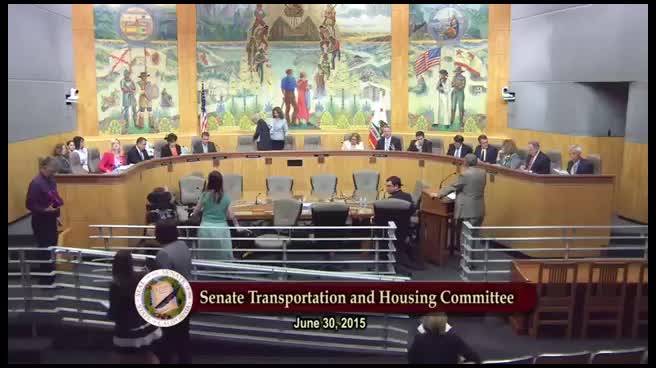 9MIN
Senate Standing Committee on Transportation and Housing
 3MIN
Assembly Floor
 8MIN
Assembly Standing Committee on Natural Resources
Bill Author

Bill Co-Author(s):