AB 830: Lake and streambed alteration agreements: exemptions.
- Session Year: 2023-2024
- House: Assembly
- Latest Version Date: 2023-06-27
Current Status:
Failed
(2023-09-01: In committee: Held under submission.)
Introduced
In Committee
First Chamber
In Committee
Second Chamber
Enacted
Existing law prohibits a person, a state or local governmental agency, or a public utility from substantially diverting or obstructing the natural flow of, or substantially changing or using any material from the bed, channel, or bank of, any river, stream, or lake, or depositing or disposing of debris, waste, or other material containing crumbled, flaked, or ground pavement where it may pass into any river, stream, or lake, unless prescribed requirements are met, including written notification to the Department of Fish and Wildlife regarding the activity. Existing law requires the department to determine whether the activity may substantially adversely affect an existing fish and wildlife resource and, if so, to provide a draft lake or streambed alteration agreement to the person, agency, or utility. Existing law prescribes various requirements for lake and streambed alteration agreements. Existing law also establishes various exemptions from these provisions, including exemptions for specified emergency work.
This bill would additionally exempt from these provisions the temporary operation of existing infrastructure or temporary pumps being used to divert flood stage and monitor stage flows, as identified by the California Nevada River Forecast Center or the State Water Resources Control Board, or near-flood stage flows, as defined, to beneficial groundwater recharge as long as certain conditions are met.
The bill would also make conforming changes.
Existing law prohibits a person, a state or local governmental agency, or a public utility from substantially diverting or obstructing the natural flow of, or substantially changing or using any material from the bed, channel, or bank of, any river, stream, or lake, or depositing or disposing of debris, waste, or other material containing crumbled, flaked, or ground pavement where it may pass into any river, stream, or lake, unless prescribed requirements are met, including written notification to the Department of Fish and Wildlife regarding the activity. Existing law requires the department to determine whether the activity may substantially adversely affect an existing fish and wildlife resource and, if so, to provide a draft lake or streambed alteration agreement to the person, agency, or utility. Existing law prescribes various requirements for lake and streambed alteration agreements. Existing law also establishes various exemptions from these provisions, including exemptions for specified emergency work.
This bill would additionally exempt from these provisions the temporary operation of existing infrastructure or temporary pumps being used to divert flood stage and monitor stage flows, as identified by the California Nevada River Forecast Center or the State Water Resources Control Board, to beneficial groundwater recharge as long as certain conditions are met.
The bill would also make conforming changes.
Existing law prohibits a person, a state or local governmental agency, or a public utility from substantially diverting or obstructing the natural flow of, or substantially changing or using any material from the bed, channel, or bank of, any river, stream, or lake, or depositing or disposing of debris, waste, or other material containing crumbled, flaked, or ground pavement where it may pass into any river, stream, or lake, unless prescribed requirements are met, including written notification to the Department of Fish and Wildlife regarding the activity. Existing law requires the department to determine whether the activity may substantially adversely affect an existing fish and wildlife resource and, if so, to provide a draft lake or streambed alteration agreement to the person, agency, or utility. Existing law prescribes various requirements for lake and streambed alteration agreements. Existing law also establishes various exemptions from these provisions, including exemptions for specified emergency work.
This bill would additionally exempt from these provisions the temporary operation of existing infrastructure or temporary pumps being used to divert flood stage and monitor stage flows, as identified by the California Nevada River Forecast Center or the State Water Resources Control Board, to beneficial groundwater recharge necessary to protect downstream life and property. as long as certain conditions are met.
The bill would also make conforming changes.
Existing law prohibits a person, a state or local governmental agency, or a public utility from substantially diverting or obstructing the natural flow of, or substantially changing or using any material from the bed, channel, or bank of, any river, stream, or lake, or depositing or disposing of debris, waste, or other material containing crumbled, flaked, or ground pavement where it may pass into any river, stream, or lake, unless prescribed requirements are met, including written notification to the Department of Fish and Wildlife regarding the activity. Existing law requires the department to determine whether the activity may substantially adversely affect an existing fish and wildlife resource and, if so, to provide a draft lake or streambed alteration agreement to the person, agency, or utility. Existing law prescribes various requirements for lake and streambed alteration agreements. Existing law also establishes various exemptions from these provisions, including exemptions for specified emergency work.
This bill would additionally exempt from these provisions the temporary operation of existing infrastructure or temporary pumps being used to divert flood stage and monitor stage flows, as identified by the California Nevada River Forecast Center, Center or the State Water Resources Control Board, to beneficial groundwater recharge necessary to protect downstream life and property.
The bill would also make conforming changes.
Existing law prohibits a person, a state or local governmental agency, or a public utility from substantially diverting or obstructing the natural flow of, or substantially changing or using any material from the bed, channel, or bank of, any river, stream, or lake, or depositing or disposing of debris, waste, or other material containing crumbled, flaked, or ground pavement where it may pass into any river, stream, or lake, unless prescribed requirements are met, including written notification to the Department of Fish and Wildlife regarding the activity. Existing law requires the department to determine whether the activity may substantially adversely affect an existing fish and wildlife resource and, if so, to provide a draft lake or streambed alteration agreement to the person, agency, or utility. Existing law prescribes various requirements for lake and streambed alteration agreements. Existing law also establishes various exemptions from these provisions, including exemptions for specified emergency work.
This bill would additionally exempt from these provisions the temporary operation of existing infrastructure or temporary pumps being used to divert flood stage and monitor stage flows, as identified by the California Nevada River Forecast Center, to beneficial groundwater recharge necessary to protect downstream life and property.
The bill would also make conforming changes.
Existing law, the California Safe Drinking Water Act, requires the State Water Resources Control Board to administer provisions relating to the regulation of drinking water to protect public health. Existing law declares it to be the established policy of the state that every human being has the right to safe, clean, affordable, and accessible water adequate for human consumption, cooking, and sanitary purposes. This bill would make a nonsubstantive change to the latter provision.Existing law, the California Safe Drinking Water Act, requires the State Water Resources Control Board to administer provisions relating to the regulation of drinking water to protect public health. Existing law declares it to be the established policy of the state that every human being has the right to safe, clean, affordable, and accessible water adequate for human consumption, cooking, and sanitary purposes.
This bill would make a nonsubstantive change to the latter provision.
(a)Except as provided in subdivision (b), this chapter does not apply to any of the following:
(1)Immediate emergency work necessary to protect life or property.
(2)Immediate emergency repairs to public service facilities necessary to maintain service as a result of a disaster in an area in which a state of emergency has been proclaimed by the Governor pursuant to Chapter 7 (commencing with Section 8550) of Division 1 of Title 2 of the Government Code.
(3)Emergency projects undertaken, carried out, or approved by a state or local governmental agency to maintain, repair, or restore an existing highway, as defined in Section 360 of the Vehicle Code, within the existing right-of-way of the highway, that has been damaged as a result of fire, flood, storm, earthquake, land subsidence, gradual earth movement, or landslide, within one year of the damage. Work needed in the vicinity above and below a highway may be conducted outside of the existing right-of-way if it is needed to stop ongoing or recurring mudslides, landslides, or erosion that pose an immediate threat to the highway, or to restore those roadways damaged by mudslides, landslides, or erosion to their predamage condition and functionality. This paragraph does not exempt from this chapter any project undertaken, carried out, or approved by a state or local governmental agency to expand or widen a highway damaged by fire, flood, storm, earthquake, land subsidence, gradual earth movement, or landslide. The exception provided in this paragraph does not apply to a highway designated as an official state scenic highway pursuant to Section 262 of the Streets and Highways Code.
(4)The temporary operation of existing infrastructure or temporary pumps being used to divert flood stage and monitor stage flows, as identified by the California Nevada River Forecast Center or the State Water Resources Control Board, or near-flood stage flows, which are defined to mean that flood stage flows are forecast within 10 days, to beneficial groundwater recharge as long as all of the following conditions are met:
(A)The diversions cease when the flows are no longer flood stage stage, near-flood stage, or monitor stage within the State Water Resources Control Board permitted flows.
(B)Diverted water is not diverted or applied to any of the following:
(i)Dairy land application areas.
(ii)Any agricultural field where pesticide or fertilizer application has occurred in the last 30 days.
(iii)Any area that could cause damage to critical levees, infrastructure, wastewater and water systems, drinking water wells or drinking water supplies, or exacerbate the threat of flood and other health and safety concerns.
(iv)Any area that has not been in active irrigated agricultural cultivation within the past three years, including grazing lands, annual grasslands, and natural habitats. This limitation does not apply to facilities already constructed for the purpose of groundwater recharge or managed wetlands.
(C)The diversion utilizes all of the following:
(i)Existing diversion infrastructure or temporary pumps.
(ii)Existing groundwater recharge locations, where available.
(iii)No new permanent infrastructure or permanent construction.
(iv)Simple screens installed on pump intakes to minimize the impact of diversion to salmon and other aquatic life.
(D)Applicable fees are paid, pursuant to Section 1609.
(E)The temporary diversion is permitted by the State Water Resources Control Board under a temporary water rights permit.
(b)The entity performing the emergency work or other necessary work described in subdivision (a) shall notify the department of the work, in writing, within 14 days of beginning the work. Any work described in the notification that does not meet the criteria for the emergency work or other necessary work described in subdivision (a) is a violation of this chapter if the entity did not first notify the department in accordance with Section 1602 or 1611.
(a)Except as provided in subdivision (b), this chapter does not apply to any of the following:
(1)Immediate emergency work necessary to protect life or property.
(2)Immediate emergency repairs to public service facilities necessary to maintain service as a result of a disaster in an area in which a state of emergency has been proclaimed by the Governor pursuant to Chapter 7 (commencing with Section 8550) of Division 1 of Title 2 of the Government Code.
(3)Emergency projects undertaken, carried out, or approved by a state or local governmental agency to maintain, repair, or restore an existing highway, as defined in Section 360 of the Vehicle Code, within the existing right-of-way of the highway, that has been damaged as a result of fire, flood, storm, earthquake, land subsidence, gradual earth movement, or landslide, within one year of the damage. Work needed in the vicinity above and below a highway may be conducted outside of the existing right-of-way if it is needed to stop ongoing or recurring mudslides, landslides, or erosion that pose an immediate threat to the highway, or to restore those roadways damaged by mudslides, landslides, or erosion to their predamage condition and functionality. This paragraph does not exempt from this chapter any project undertaken, carried out, or approved by a state or local governmental agency to expand or widen a highway damaged by fire, flood, storm, earthquake, land subsidence, gradual earth movement, or landslide. The exception provided in this paragraph does not apply to a highway designated as an official state scenic highway pursuant to Section 262 of the Streets and Highways Code.
(4)The temporary operation of existing infrastructure or temporary pumps being used to divert flood stage and monitor stage flows, as identified by the California Nevada River Forecast Center or the State Water Resources Control Board, to beneficial groundwater recharge as long as all of the following conditions are met:
(A)The diversions cease when the flows are no longer flood stage or monitor stage flows.
(B)Diverted water is not diverted or applied to any of the following:
(i)Dairy land application areas.
(ii)Any agricultural field where pesticide or fertilizer application has occurred in the last 30 days.
(iii)Any area that could cause damage to critical levees, infrastructure, wastewater and water systems, drinking water wells or drinking water supplies, or exacerbate the threat of flood and other health and safety concerns.
(iv)Any area that has not been in active irrigated agricultural cultivation within the past three years, including grazing lands, annual grasslands, and natural habitats. This limitation does not apply to facilities already constructed for the purpose of groundwater recharge or managed wetlands.
(C)The diversion utilizes all of the following:
(i)Existing diversion infrastrucutre infrastructure or temporary pumps.
(ii)Existing groundwater recharge locations, where available.
(iii)No new permanent infrastructure or permanent construction.
(iv)Simple screens installed on pump intakes to minimize the impact of diversion to salmon and other aquatic life.
(D)Applicable fees are paid, pursuant to Section 1609.
(b)The entity performing the emergency work or other necessary work described in subdivision (a) shall notify the department of the work, in writing, within 14 days of beginning the work. Any work described in the notification that does not meet the criteria for the emergency work or other necessary work described in subdivision (a) is a violation of this chapter if the entity did not first notify the department in accordance with Section 1602 or 1611.
(a)Except as provided in subdivision (b), this chapter does not apply to any of the following:
(1)Immediate emergency work necessary to protect life or property.
(2)Immediate emergency repairs to public service facilities necessary to maintain service as a result of a disaster in an area in which a state of emergency has been proclaimed by the Governor pursuant to Chapter 7 (commencing with Section 8550) of Division 1 of Title 2 of the Government Code.
(3)Emergency projects undertaken, carried out, or approved by a state or local governmental agency to maintain, repair, or restore an existing highway, as defined in Section 360 of the Vehicle Code, within the existing right-of-way of the highway, that has been damaged as a result of fire, flood, storm, earthquake, land subsidence, gradual earth movement, or landslide, within one year of the damage. Work needed in the vicinity above and below a highway may be conducted outside of the existing right-of-way if it is needed to stop ongoing or recurring mudslides, landslides, or erosion that pose an immediate threat to the highway, or to restore those roadways damaged by mudslides, landslides, or erosion to their predamage condition and functionality. This paragraph does not exempt from this chapter any project undertaken, carried out, or approved by a state or local governmental agency to expand or widen a highway damaged by fire, flood, storm, earthquake, land subsidence, gradual earth movement, or landslide. The exception provided in this paragraph does not apply to a highway designated as an official state scenic highway pursuant to Section 262 of the Streets and Highways Code.
(4)The temporary operation of existing infrastructure or temporary pumps being used to divert flood stage and monitor stage flows, as identified by the California Nevada River Forecast Center or the State Water Resources Control Board, to beneficial groundwater recharge necessary to protect downstream life and property. as long as all of the following conditions are met:
(A)The diversions cease when the flows are no longer flood stage or monitor stage flows.
(B)Diverted water is not diverted or applied to any of the following:
(i)Dairy land application areas.
(ii)Any agricultural field where pesticide or fertilizer application has occurred in the last 30 days.
(iii)Any area that could cause damage to critical levees, infrastructure, wastewater and water systems, drinking water wells or drinking water supplies, or exacerbate the threat of flood and other health and safety concerns.
(iv)Any area that has not been in active irrigated agricultural cultivation within the past three years, including grazing lands, annual grasslands, and natural habitats. This limitation does not apply to facilities already constructed for the purpose of groundwater recharge or managed wetlands.
(C)The diversion utilizes all of the following:
(i)Existing diversion infrastrucutre or temporary pumps.
(ii)Existing groundwater recharge locations, where available.
(iii)No new permanent infrastructure or permanent construction.
(iv)Simple screens installed on pump intakes to minimize the impact of diversion to salmon and other aquatic life.
(b)The entity performing the emergency work or other necessary work described in subdivision (a) shall notify the department of the work, in writing, within 14 days of beginning the work. Any work described in the notification that does not meet the criteria for the emergency work or other necessary work described in subdivision (a) is a violation of this chapter if the entity did not first notify the department in accordance with Section 1602 or 1611.
(a)Except as provided in subdivision (b), this chapter does not apply to any of the following:
(1)Immediate emergency work necessary to protect life or property.
(2)Immediate emergency repairs to public service facilities necessary to maintain service as a result of a disaster in an area in which a state of emergency has been proclaimed by the Governor pursuant to Chapter 7 (commencing with Section 8550) of Division 1 of Title 2 of the Government Code.
(3)Emergency projects undertaken, carried out, or approved by a state or local governmental agency to maintain, repair, or restore an existing highway, as defined in Section 360 of the Vehicle Code, within the existing right-of-way of the highway, that has been damaged as a result of fire, flood, storm, earthquake, land subsidence, gradual earth movement, or landslide, within one year of the damage. Work needed in the vicinity above and below a highway may be conducted outside of the existing right-of-way if it is needed to stop ongoing or recurring mudslides, landslides, or erosion that pose an immediate threat to the highway, or to restore those roadways damaged by mudslides, landslides, or erosion to their predamage condition and functionality. This paragraph does not exempt from this chapter any project undertaken, carried out, or approved by a state or local governmental agency to expand or widen a highway damaged by fire, flood, storm, earthquake, land subsidence, gradual earth movement, or landslide. The exception provided in this paragraph does not apply to a highway designated as an official state scenic highway pursuant to Section 262 of the Streets and Highways Code.
(4)The temporary operation of existing infrastructure or temporary pumps being used to divert flood stage and monitor stage flows, as identified by the California Nevada River Forecast Center, Center or the State Water Resources Control Board, to beneficial groundwater recharge necessary to protect downstream life and property.
(b)The entity performing the emergency work or other necessary work described in subdivision (a) shall notify the department of the work, in writing, within 14 days of beginning the work. Any work described in the notification that does not meet the criteria for the emergency work or other necessary work described in subdivision (a) is a violation of this chapter if the entity did not first notify the department in accordance with Section 1602 or 1611.
(a)Except as provided in subdivision (b), this chapter does not apply to any of the following:
(1)Immediate emergency work necessary to protect life or property.
(2)Immediate emergency repairs to public service facilities necessary to maintain service as a result of a disaster in an area in which a state of emergency has been proclaimed by the Governor pursuant to Chapter 7 (commencing with Section 8550) of Division 1 of Title 2 of the Government Code.
(3)Emergency projects undertaken, carried out, or approved by a state or local governmental agency to maintain, repair, or restore an existing highway, as defined in Section 360 of the Vehicle Code, within the existing right-of-way of the highway, that has been damaged as a result of fire, flood, storm, earthquake, land subsidence, gradual earth movement, or landslide, within one year of the damage. Work needed in the vicinity above and below a highway may be conducted outside of the existing right-of-way if it is needed to stop ongoing or recurring mudslides, landslides, or erosion that pose an immediate threat to the highway, or to restore those roadways damaged by mudslides, landslides, or erosion to their predamage condition and functionality. This paragraph does not exempt from this chapter any project undertaken, carried out, or approved by a state or local governmental agency to expand or widen a highway damaged by fire, flood, storm, earthquake, land subsidence, gradual earth movement, or landslide. The exception provided in this paragraph does not apply to a highway designated as an official state scenic highway pursuant to Section 262 of the Streets and Highways Code.
(4)The temporary operation of existing infrastructure or temporary pumps being used to divert flood stage and monitor stage flows, as identified by the California Nevada River Forecast Center, to beneficial groundwater recharge necessary to protect downstream life and property.
(b)The entity performing the emergency work or other necessary work described in subdivision (a) shall notify the department of the work, in writing, within 14 days of beginning the work. Any work described in the emergency notification that does not meet the criteria for the emergency work or other necessary work described in subdivision (a) is a violation of this chapter if the entity did not first notify the department in accordance with Section 1602 or 1611.
SECTION 1.Section 106.3 of the Water Code is amended to read:106.3.(a)It is hereby declared to be the established policy of the state that every human being has the right to safe, clean, affordable, and accessible water adequate for human consumption, cooking, and sanitary purposes.(b)All relevant state agencies, including the department, the state board, and the State Department of Public Health, shall consider this state policy when revising, adopting, or establishing policies, regulations, and grant criteria when those policies, regulations, and criteria are pertinent to the water uses described in this section.(c)This section does not expand any obligation of the state to provide water or to require the expenditure of additional resources to develop water infrastructure beyond the obligations that may exist pursuant to subdivision (b).(d)This section shall not apply to water supplies for new development.(e)The implementation of this section shall not infringe on the rights or responsibilities of any public water system.(a)It is hereby declared to be the established policy of the state that every human being has the right to safe, clean, affordable, and accessible water adequate for human consumption, cooking, and sanitary purposes.
(b)All relevant state agencies, including the department, the state board, and the State Department of Public Health, shall consider this state policy when revising, adopting, or establishing policies, regulations, and grant criteria when those policies, regulations, and criteria are pertinent to the uses of water water uses described in this section.
(c)This section does not expand any obligation of the state to provide water or to require the expenditure of additional resources to develop water infrastructure beyond the obligations that may exist pursuant to subdivision (b).
(d)This section shall not apply to water supplies for new development.
(e)The implementation of this section shall not infringe on the rights or responsibilities of any public water system.
|
Date
|
Status
|
|---|---|
| Sep 1, 2023 | In committee: Held under submission. |
| Aug 21, 2023 | In committee: Referred to APPR suspense file. |
| Aug 9, 2023 | In committee: Hearing postponed by committee. |
| Jul 11, 2023 | From committee: Do pass and re-refer to Com. on APPR. (Ayes 10. Noes 0.) (July 10). Re-referred to Com. on APPR. |
| Jun 27, 2023 | From committee chair, with author's amendments: Amend, and re-refer to committee. Read second time, amended, and re-referred to Com. on N.R. & W. |
| Jun 14, 2023 | Referred to Com. on N.R. & W. |
| Jun 1, 2023 | In Senate. Read first time. To Com. on RLS. for assignment. |
| May 31, 2023 | Read third time. Passed. Ordered to the Senate. (Ayes 80. Noes 0. Page 1993.) |
| May 22, 2023 | Read second time. Ordered to third reading. |
| May 18, 2023 | From committee: Amend, and do pass as amended. (Ayes 11. Noes 0.) (May 18). |
| May 18, 2023 | Read second time and amended. Ordered returned to second reading. |
| May 10, 2023 | In committee: Set, first hearing. Referred to APPR. suspense file. |
| Apr 24, 2023 | Re-referred to Com. on APPR. |
| Apr 20, 2023 | Read second time and amended. |
| Apr 19, 2023 | From committee: Amend, and do pass as amended and re-refer to Com. on APPR. (Ayes 14. Noes 0.) (April 18). |
| Mar 29, 2023 | Re-referred to Com. on W., P., & W. |
| Mar 28, 2023 | From committee chair, with author's amendments: Amend, and re-refer to Com. on W., P., & W. Read second time and amended. |
| Mar 20, 2023 | Re-referred to Com. on W., P., & W. |
| Mar 16, 2023 | From committee chair, with author's amendments: Amend, and re-refer to Com. on W., P., & W. Read second time and amended. |
| Mar 16, 2023 | Referred to Com. on W., P., & W. |
| Feb 14, 2023 | From printer. May be heard in committee March 16. |
| Feb 13, 2023 | Read first time. To print. |
|
Date
|
Description
|
Location
|
Votes
|
|
|---|---|---|---|---|
| Aug 21, 2023 | Placed on suspense file | Senate Standing Committee on Appropriations |
Passed |
|
| Jul 10, 2023 | Do pass, but first be re-referred to the Committee on [Appropriations] | Senate Standing Committee on Natural Resources and Water |
Passed |
|
| May 31, 2023 | AB 830 Soria Assembly Third Reading | Assembly Floor |
Passed |
|
| May 18, 2023 | Do pass as amended. | Assembly Standing Committee on Appropriations |
Passed |
|
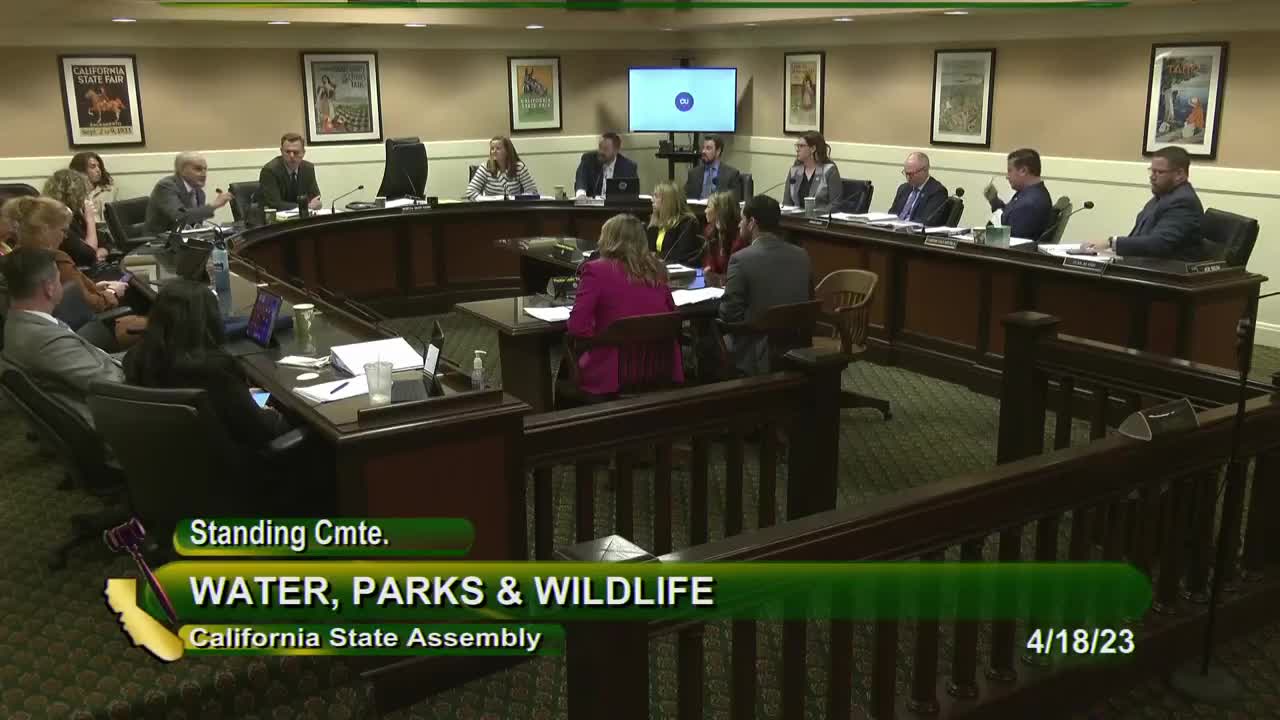
| Apr 18, 2023 | Do pass as amended and be re-referred to the Committee on [Appropriations] | Assembly Standing Committee on Water, Parks, and Wildlife |
Passed |
This list shows positions taken on this bill by organizations on the date displayed, which is linked to the original source.
Positions by individuals are not included.
|
Organization
|
Position
|
Date
|
|---|---|---|
| Association Of California Water Agencies | ** Support | |
| A Voice for Choice Advocacy | ** Support | |
| CalChamber | ** Support | |
| California Association Of Realtors | ** Support | |
| California Municipal Utilities Association | ** Support | |
| County of Merced | ** Support | |
| Defenders Of Wildlife | ** Against | |
| Joseph Gallo Farms | ** Support | |
| Legrand-Athlone Water District | ** Support | |
| Madera County | ** Support | |
| Merced Irrigation District Water & Power | ** Support | |
| Modesto Irrigation District | ** Support | |
| Sandy Mush Mutual Water Company | ** Support | |
| Turlock Irrigation District | ** Support | |
| Valley Ag Water Coalition | ** Support |
SENATE COMMITTEE ON APPROPRIATIONS
Senator Anthony Portantino, Chair
2023 - 2024 Regular Session
AB 830 (Soria) - Lake and streambed alteration agreements: exemptions
Version: June 27, 2023 | Policy Vote: N.R. & W. 10 - 0 |
Urgency: No | Mandate: No |
Hearing Date: August 21, 2023 | Consultant: Ashley Ames |
Bill Summary:
This bill would exempt from lake and streambed alteration agreements (LSAAs) temporary operation of existing infrastructure or temporary pumps to divert flood stage flows, or near-flood stage flows, to groundwater recharge if certain conditions are met.
Fiscal Impact:
- The State Water Resources Control Board (SWRCB) estimates one-time costs potentially in the tens of millions of dollars (Water Rights Fund or General Fund) to develop flood stage flow levels for rivers and waterbodies throughout the state.
Background:
The Lake or Streambed Alteration Program (Fish and Game Code (FGC) §§ 1602 et seq.) requires any person, state or local governmental agency, or public utility to notify the California Department of Fish and Wildlife (CDFW) before beginning any activity that may do any of the following:
- Divert or obstruct the natural flow of any river, stream, or lake;
- Change the bed, channel, or bank of any river, stream, or lake;
- Use material from any river, stream, or lake; or
- Deposit or dispose of material into any river, stream, or lake.
If CDFW determines that the activity, as described in the notification, would substantially alter a river, stream, or lake, and that it may substantially adversely affect existing fish or wildlife resources, an LSAA is required. An LSAA is a type of permit that includes mitigation measures necessary to protect fish and wildlife resources.
Certain emergency work, as specified, is not subject to LSAAs; however, the entity performing the emergency work is required to notify CDFW within 14 days of beginning the work.
Proposed Law:
This bill would exempt from lake and streambed alteration agreements (LSAAs) temporary operation of existing infrastructure or temporary pumps to divert flood stage flows, or near-flood stage flows, to groundwater recharge if the following conditions are met:
- The diversions cease when the flows are no longer flood stage, near-flood stage, or within the State Water Resources Control Board permitted flows.
- Diverted water is not diverted or applied to any of the following:
- Dairy land application areas.
- Any agricultural field where pesticide or fertilizer application has occurred in the last 30 days.
- Any area that could cause damage to critical levees, infrastructure, wastewater and water systems, drinking water wells or drinking water supplies, or exacerbate the threat of flood and other health and safety concerns.
- Any area that has not been in active irrigated agricultural cultivation within the past three years, including grazing lands, annual grasslands, and natural habitats.
- The diversion utilizes all of the following:
- Existing diversion infrastructure or temporary pumps.
- Existing groundwater recharge locations, where available.
- No new permanent infrastructure or permanent construction.
- Simple screens installed on pump intakes to minimize the impact of diversion to salmon and other aquatic life.
- Applicable LSAA fees are paid.
- The temporary diversion is permitted by the State Water Resources Control Board under a temporary water rights permit.
Related Legislation:
SB 122 (Committee on Budget and Fiscal Review) provides that the diversion of floodflows for groundwater recharge does not require an appropriative water right or an LSAA if specified conditions are met, including that flows downstream of the point of diversion are at imminent risk of flooding and inundation of land, roads, or structures, and the diversion does not use new permanent infrastructure or permanent construction, among other things.
Staff Comments:
SB 122 (Committee on Budget and Fiscal Review) was this year’s public resources trailer bill, and was the result of carefully negotiated language between the Senate, Assembly, and the Administration. Among other things, SB 122 provides that the diversion of floodflows for groundwater recharge does not require an appropriative water right or an LSAA if specified conditions are met, including that flows downstream of the point of diversion are at imminent risk of flooding and inundation of land, roads, or structures, and the diversion does not use new permanent infrastructure or permanent construction.
According to the Senate Natural Resources and Water Committee analysis, “This bill is a weaker version of SB 122. While both bills would exempt from LSAAs diversion of floodflows to groundwater recharge, the requirements of AB 830 are not as protective as those found in SB 122. SB 122 was the result of a three-party negotiation and comprise between the Senate, Assembly, and the Administration, balancing the competing interests against one another.”
-- END --
SENATE COMMITTEE ON NATURAL RESOURCES AND WATER
Senator Dave Min, Chair
2023 - 2024 Regular
Bill No: AB Hearing Date: July 10, 2023
Author: | Soria | ||
Version: | June 27, 2023 Amended | ||
Urgency: | No | Fiscal: | Yes |
Consultant: | Genevieve Wong | ||
Subject: Lake and streambed alteration agreements: exemptions
BACKGROUND AND EXISTING LAW
Lake or Streambed Alteration Agreements (LSAAs). The Lake or Streambed Alteration Program (Fish and Game Code (FGC) §§ 1602 et seq.) requires any person, state or local governmental agency, or public utility to notify the California Department of Fish and Wildlife (CDFW) before beginning any activity that may do any of the following:
- Divert or obstruct the natural flow of any river, stream, or lake;
- Change the bed, channel, or bank of any river, stream, or lake;
- Use material from any river, stream, or lake; or
- Deposit or dispose of material into any river, stream, or lake.
If CDFW determines that the activity, as described in the notification, would substantially alter a river, stream, or lake, and that it may substantially adversely affect existing fish or wildlife resources, an LSAA is required. An LSAA is a type of permit that includes mitigation measures necessary to protect fish and wildlife resources.
Certain emergency work, as specified, is not subject to LSAAs; however, the entity performing the emergency work is required to notify CDFW within 14 days of beginning the work.
Public resources trailer bill. SB 122 (Committee on Budget and Fiscal Review) was this year’s public resources trailer bill. SB 122 is the result of carefully negotiated language between the Senate, Assembly, and the Administration. Among other things, SB 122 provides that the diversion of floodflows for groundwater recharge does not require an appropriative water right or an LSAA if specified conditions are met, including that flows downstream of the point of diversion are at imminent risk of flooding and inundation of land, roads, or structures, and the diversion does not use new permanent infrastructure or permanent construction. SB 122 is pending a signature from the Governor.
Existing law:
- Prohibits any entity from substantially diverting or obstructing the natural flow of, or substantially changing or using any material from a streambed, unless CDFW determines the activity will not adversely affect fish and wildlife resources or the entity enters into an agreement with CDFW to take reasonable measures to protect fish and wildlife resources [i.e. an LSAA] (FGC § 1602).
- Exempts from these LSAA requirements emergency work necessary to protect life or property.
- Immediate emergency repairs to public service facilities necessary to maintain service as a result of a disaster in an area in which a state of emergency has been proclaimed by the Governor.
- Emergency projects undertaken, carried out, or approved by a state or local government agency to maintain, repair, or restore an existing highway within the existing right-of-way of the highway, that has been damaged as a result of fire, flood, storm, earthquake, land subsidence, gradual earth movement, or landslide.
Defines “emergency” to mean a sudden, unexpected occurrence, involving a clear and imminent danger, demanding immediate action to prevent or mitigate loss of, or damage to, life, health, property, or essential public services. “Emergency” includes such occurrences as fire, flood, earthquake, or other soil or geologic movements, as well as such occurrences as riot, accident, or sabotage (FGC § 1601, which references the definition in Public Resources Code § 21060.3).
PROPOSED LAW
This bill exempts from LSAAs temporary operation of existing infrastructure or temporary pumps to divert flood stage flows, or near-flood stage flows, to groundwater recharge if the following conditions are met:
- The diversions cease when the flows are no longer flood stage, near-flood stage, or within the State Water Resources Control Board permitted flows.
- Diverted water is not diverted or applied to any of the following:
- Dairy land application areas.
- Any agricultural field where pesticide or fertilizer application has occurred in the last 30 days.
- Any area that could cause damage to critical levees, infrastructure, wastewater and water systems, drinking water wells or drinking water supplies, or exacerbate the threat of flood and other health and safety concerns.
- Any area that has not been in active irrigated agricultural cultivation within the past three years, including grazing lands, annual grasslands, and natural habitats.
- The diversion utilizes all of the following:
- Existing diversion infrastructure or temporary pumps.
- Existing groundwater recharge locations, where available.
- No new permanent infrastructure or permanent construction.
- Simple screens installed on pump intakes to minimize the impact of diversion to salmon and other aquatic life.
- Applicable LSAA fees are paid.
- The temporary diversion is permitted by the State Water Resources Control Board under a temporary water rights permit.
ARGUMENTS IN SUPPORT
According to the author, “With the heavy rains California has experienced this year, it is now more important than ever that we do everything in our power to capture water during wet years to be better positioned to endure the dry years. We have seen extensive flooding across our state this year. Our state must act now to address the challenges we know we face from climate change: wetter wet years and drier dry years. It is crucial that we provide every tool possible to water managers in our state, ensuring they can capture wet-year water and put it to beneficial use in dry years. AB 830 is a common-sense approach that will support water managers – especially groundwater sustainability agencies – by allowing them to divert identified near-flood and flood-stage water into groundwater recharge by spreading that water onto farm fields and other open land. This has tremendous potential to help local government entities meet their goals under the Sustainable Groundwater Management Act.”
ARGUMENTS IN OPPOSITION
According to Defenders of Wildlife, “While AB 830 has been amended to include additional protections for water quality and fish habitat, it fails to include the protections negotiated in SB 122, the Resources Trailer Bill, for temporary diversion of flood flows. SB 122 includes important additional protections, including defining what are floodflows; providing notification and reporting; exclusions to protect water quality, water supply, levees, habitat areas, and other health and safety concerns; and stronger requirements for protection threatened and endangered species and other aquatic life, including more detailed requirements for fish screens. SB 122 also includes a sunset clause in which this exemption expires on January 1, 2029.”
COMMENTS
Merced Irrigation District’s Flood-MAR efforts. According to the author, this bill is needed to help implement Flood-Managed Aquifer Recharge (Flood-MAR) projects. According to DWR’s website, flood-managed aquifer recharge (Flood-MAR) is an integrated and voluntary resources management strategy that uses flood water resulting from, or in anticipation of, rainfall or snowmelt for managed aquifer recharge on agricultural lands and working landscapes, including but not limited to refuges, floodplains, and flood bypasses. Flood-MAR can be implemented at multiple scales, from individual landowners diverting floodwater with existing infrastructure, to using extensive detention/recharge areas, and modernizing flood manage infrastructure/operations.
According to information provided by the author, Merced Irrigation District attempted to execute a Flood-MAR project that would have diverted flood waters from Mariposa Creek to eastern Merced County. The project, among other things, required a temporary permit for groundwater recharge from SWRCB and an LSAA from CDFW. Merced Irrigation District found the LSAA conditions were burdensome, impractical, and unfeasible. As such, this bill seeks address this problem by exempting from LSAAs the temporary operation of existing infrastructure or temporary pumps being used to divert flood stage flows, or near-flood stage flows, as long as certain conditions are met.
This bill is a weaker version of SB 122. While both bills would exempt from LSAAs diversion of floodflows to groundwater recharge, the requirements of AB 830 are not as protective as those found in SB 122. SB 122 was the result of a three-party negotiation and comprise between the Senate, Assembly, and the Administration, balancing the competing interests against one another.
SB 122 | AB 830 | |
Application | Diversion of floodflows, as defined in the bill | Diversion of flood stage flows, as identified by the California Nevada River Forecast Center or SWRCB, or near-flood stage flows, as defined by the bill |
SWRCB permit | Not required (appropriative water right) | Required (temporary water rights permit) |
LSAA | Not required | Not required, but still has to pay fees |
Flood risk | Imminent risk of flooding and inundation of land, roads, or structures | Flood-stage flows or near-flood stage flows |
When diversions cease | No longer risk of flooding and inundation of land, roads, or structures | No longer flood stage, near-flood stage, or within SWRCB permitted flows. |
Restriction from where water can be diverted/applied |
|
|
Infrastructure utilized |
Existing groundwater recharge locations
|
Existing groundwater recharge locations
|
Sunset |
|
|
Having this bill and SB 122 in effect at the same time will lead to confusion. AB 830 and SB 122 are both related to the temporary diversion of floodflows/flood waters to groundwater recharge to avoid downstream damage to property or infrastructure. However, different requirements are imposed and different terminology is used. If both AB 830 and SB 122 are enacted, this will likely lead to confusion on which requirements apply and under what circumstances.
SUPPORT
A Voice for Choice Advocacy
Association of California Water Agencies (ACWA)
CalChamber
California Association of Realtors
California Municipal Utilities Association
County of Merced
Valley Ag Water Coalition
OPPOSITION
Defenders of Wildlife
-- END --
ASSEMBLY THIRD READING
ATR Bill Id:AB 830
Author:(Soria)
As Amended Ver:May 18, 2023
Majority vote
SUMMARY
Exempts the temporary operation of existing infrastructure or temporary pumps to divert flood flows for beneficial groundwater recharge from the requirements of the lake and streambed alteration agreement (LSAA) process as long as specified criteria are met.
Major Provisions
- Exempts the temporary operation of existing infrastructure or temporary pumps to divert flood stage and monitor stage flows, as identified by the California Nevada River Forecast Center or the State Water Resources Control Board (State Water Board), for beneficial groundwater recharge from the requirements of the LSAA process as long as all of the following conditions are met:
- Applicable fees are paid.
- The diversions cease when the flows are no longer flood stage or monitor stage flows.
- Diverted water is not diverted or applied to any of the following:
- Dairy land application areas;
- Any agricultural field where pesticide or fertilizer application has occurred in the last 30 days;
- Any area that could cause damage to critical levees, infrastructure, wastewater and water systems, drinking water wells or drinking water supplies, or exacerbate the threat of flood and other health and safety concerns; or
- Any area that has not been in active irrigated agricultural cultivation within the past three years, including grazing lands, annual grasslands, and natural habitats. This limitation does not apply to facilities already constructed for the purpose of groundwater recharge or managed wetlands.
- The diversion utilizes all of the following:
- Existing diversion infrastructure or temporary pumps;
- Existing groundwater recharge locations, where available;
- No new permanent infrastructure or permanent construction; and
- Simple screens installed on pump intakes to minimize the impact of diversion to salmon and other aquatic life.
- Requires notification to the Department of Fish and Wildlife (DFW) in writing within 14 days of beginning the work.
COMMENTS
LSAAs determine the extent to which a planned activity within a stream or river may adversely affect fish or wildlife or habitat and what off-setting mitigation may be required. In the absence of an LSAA, an entity may not substantially divert or obstruct the natural flow of a stream or deposit or dispose of material. Existing law requires the entity to notify DFW, which triggers the negotiation of the standards that may apply to the request. At that point, the entity and DFW enter into an LSAA that contains any necessary provisions to mitigate the planned activity’s potentially adverse consequences.
Recent executive orders relating to drought and groundwater recharge have exempted some projects from LSAAs or CEQA review of LSAAs. The Governor’s recent Executive Order N-4-23 exempts groundwater recharge projects that redirect flood flows occurring between March 10, 2023, and June 1, 2023, from the need to have an LSAA. Projects must adhere to specified criteria that are similar to the criteria required under this bill, including the need for simple screens to be installed on temporary pump intakes and limitations on where the water can be diverted to in order to prevent water quality issues.
There are currently LSAA exemptions for several emergency purposes and for activities authorized by a license for cannabis cultivation. The structure of this bill is similar to the cannabis exemption, in that entities are still required to provide notification to DFW and pay the fees associated with an LSAA.
According to the Author
"We have seen extensive flooding across our state this year. Our state must act now to address the challenges we know we face from climate change: wetter wet years and drier dry years. It is crucial that we provide every tool possible tool to water managers in our state, ensuring they can capture wet-year water and put it to beneficial use in dry years. [This bill] is a common-sense approach that will support water managers – especially groundwater sustainability agencies – by allowing them to divert identified near-flood and flood-stage water into groundwater recharge by spreading that water onto farm fields and other open land. This has tremendous potential to help local government entities meet their goals under the Sustainable Groundwater Management Act."
Arguments in Support
Several agricultural organizations and irrigation districts write in support. The Merced Irrigation District states that this bill "would support groundwater recharge done by private landowners who voluntarily agree to take water from nearby streams that have either reached flood stage or flood-monitor stage."
Arguments in Opposition
No opposition on file.
FISCAL COMMENTS
According to the Assembly Appropriations Committee:
- Costs of an unknown amount, likely in excess of $150,000, for DFW to implement this bill, including reviewing notifications submitted by entities utilizing the exemption to ensure projects meets the conditions outlined in the bill (special fund). An entity undertaking a project under the proposed exemption is required to pay DFW applicable fees before DFW can process the notification. These fees should help defray, at least in part, DFW’s administrative and enforcement costs. It is difficult to estimate how many new emergency notifications DFW will receive under this bill. Under current law, the fee amount paid by an applicant is dependent on the cost of the project. For example, for 2023, if the term of the LSAA is five years or less, and if the project costs between $200,000 and $350,000, an applicant is required to pay a $5,235.75 fee. If DFW receives 30 notifications for projects in this cost range in a year, it would incur approximately $157,000 in costs.
- The State Water Resources Control Board estimates annual, ongoing costs of approximately $225,000 for increased permitting coordination with DFW (General Fund or Water Rights Fund).
VOTES
ASM WATER, PARKS, AND WILDLIFE: 14-0-1
YES: Bauer-Kahan, Mathis, Alanis, Bennett, Megan Dahle, Davies, Friedman, Hart, Kalra, Pellerin, Blanca Rubio, Schiavo, Villapudua, Weber
ABS, ABST OR NV: Ward
ASM APPROPRIATIONS: 11-0-5
YES: Holden, Bryan, Calderon, Wendy Carrillo, Mike Fong, Hart, Lowenthal, Papan, Pellerin, Weber, Ortega
ABS, ABST OR NV: Megan Dahle, Dixon, Mathis, Robert Rivas, Sanchez
UPDATED
VERSION: May 18, 2023
CONSULTANT: Keith Cialino / W., P., & W. / (916) 319-2096 FN: 0000765
Date of Hearing: May 10, 2023
ASSEMBLY COMMITTEE ON APPROPRIATIONS
Chris Holden, Chair
ABPCA Bill Id:AB 830
Author:(Soria) – As Amended Ver:April 20, 2023
Policy Committee: | Water, Parks and Wildlife | Vote: | 14 - 0 |
|
| ||
|
|
Urgency: No State Mandated Local Program: No Reimbursable: No
SUMMARY:
This bill exempts certain beneficial groundwater recharge projects from the requirements of the lake and streambed alteration agreement (LSAA) process.
Specifically, this bill:
- Exempts the temporary operation of existing infrastructure or temporary pumps being used to divert flood stage and monitor stage flows, as identified by the California Nevada River Forecast Center or the State Water Resources Control Board (State Water Board), to beneficial groundwater recharge, from the requirements of the LSAA process, as long as all the following conditions are met:
- The diversions cease when the flows are no longer flood stage or monitor stage flows.
- Diverted water is not diverted or applied to (i) dairy land application areas, (ii) any agricultural field where pesticide or fertilizer application has occurred in the last 30 days, (iii) any area that could cause damage to critical levees, infrastructure, wastewater and water systems, drinking water wells or drinking water supplies or exacerbate the threat of flood and other health and safety concerns, or (iv) any area that has not been in active irrigated agricultural cultivation within the past three years, as specified.
- The diversion utilizes existing diversion infrastructure or temporary pumps; existing groundwater recharge locations, where available; no new permanent infrastructure or permanent construction; and simple screens installed on pump intakes to minimize the impact of diversion to salmon and other aquatic life.
- Requires the entity performing the work described in 1) to notify the Department of Fish and Wildlife (DFW), in writing, within 14 days of beginning the work and provides that any work described in the notification that does not meet the criteria for the work described in 1) is a violation of the LSAA statute if the entity did not first notify CDFW, as specified.
FISCAL EFFECT:
1) Costs of an unknown amount, likely in excess of $150,000, for DFW to implement this bill. Under current law, DFW charges an entity submitting a notification to the department under the LSAA program a fee before the department can process the notification. These fees are established in an amount necessary to pay the total costs incurred by the department in administering and enforcing the LSAA program. This bill does not require an entity undertaking a project under the proposed exemption to pay the LSAA Fee. Under this bill, DFW staff will need to review notifications submitted by entities utilizing the exemption to ensure the project meets the conditions outlined in the bill. It is difficult to estimate how many new emergency notifications DFW will receive under this bill. Under current law, the fee amount paid by an applicant is dependent on the cost of the project. For example, for 2023, if the term of the LSAA is five years or less, and if the project costs between $200,000 and $350,000, an applicant is required to pay a $5,235.75 fee. If DFW receives 30 notifications for projects in this cost range in a year, the department would incur approximately $157,000 in costs.
2) The State Water Resources Control Board estimates annual, ongoing costs of approximately $225,000 for increased permitting coordination with DFW (General Fund or Water Rights Fund).
COMMENTS:
1) Purpose. According to the author:
It is crucial that we provide every possible tool to water managers in our state, ensuring they can capture wet-year water and put it to beneficial use in dry years. [This bill] is a common-sense approach that will support water managers – especially groundwater sustainability agencies – by allowing them to divert identified near-flood and flood-stage water into groundwater recharge by spreading that water onto farm fields and other open land.
2) Background. An LSAA is a type of permit that contains any necessary provisions to mitigate the planned activity’s potentially adverse consequences. The LSAA program requires any person, state or local governmental agency, or public utility to notify DFW and receive approval prior to beginning any activity that may divert or obstruct the natural flow of, change the bed, channel, or bank of, use material from, or deposit or dispose of material into any river, stream, or lake. An applicant is required to pay a fee to DFW before the department will process their notification. Once an applicant pays the fee, DFW determines if the project may substantially and adversely affect fish or wildlife resources. DFW requires an LSAA when it determines the activity will substantially alter a river, stream, or lake, or may substantially adversely existing fish or wildlife resources. Before issuing an LSAA, DFW typically must comply with the California Environmental Quality Act (CEQA).
Under historical practice, DFW could require an LSAA for an activity that adversely affects a river, stream, or lake, including those that are episodic and dry for periods of time. An LSAA may also apply to work undertaken within the floodplain of a body of water. Recent executive orders relating to drought and groundwater recharge have exempted some projects from LSAAs or CEQA review of LSAAs. The Governor’s recent Executive Order N-4-23 exempts the diversion of flood stage water for the purpose of boosting groundwater regarding, occurring between March 10, 2023, and June 1, 2023, from the need to have an LSAA. Projects must adhere to specified criteria, very similar to those required in this bill.
The Water, Parks, and Wildlife (WPW) Committee analysis of this bill notes the author and sponsors of this bill cite the recent notification by the sponsors to DFW, and subsequent issuance of an LSAA, for a Flood-MAR (Managed Aquifer Recharge) project in eastern Merced County as the impetus for this bill. Flood-MAR is a voluntary activity in which individual landowners divert flood and stormwater onto their fields from nearby streams as a means of recharging groundwater. The background materials provided to the WPW Committee for this bill state that, “the required Lake and Streambed Alteration permit from [DFW] was burdensome, impractical, and unfeasible to most potential diverters under the permit.” However, DFW determined that an LSAA was needed for those activities because the proposed Flood-MAR project in Merced County could substantially and adversely affect existing fish or wildlife resources. The LSAA that was issued includes measures necessary to protect those resources, including requirements for screens on pump intakes, maximum instantaneous diversion rates, work timing requirements, and reporting requirements, among other provisions.
The WPW Committee analysis notes it is unclear if the LSAA process itself is preventing projects from moving forward. Rather, the mitigation requirements imposed on entities by DFW are often viewed as too onerous for the entities to pursue their intended project. For projects like Flood-MAR, which likely involve advance planning and a commitment from willing landowners, an LSAA may be appropriate and necessary.
Analysis Prepared by: Nikita Koraddi / APPR. / (916) 319-2081
Date of Hearing: April 18, 2023
ASSEMBLY COMMITTEE ON WATER, PARKS, AND WILDLIFE
Rebecca Bauer-Kahan, Chair
ABPCA Bill Id:AB 830 (
Author:Soria) – As Amended Ver:March 28, 2023
SUBJECT: Lake and streambed alteration agreements: exemptions
SUMMARY: Exempts the temporary operation of existing infrastructure or temporary pumps being used to divert flood stage and monitor stage flows to beneficial groundwater recharge necessary to protect downstream life and property from the requirements of the lake and streambed alteration agreement (LSAA) process. Specifically, this bill:
- Exempts the temporary operation of existing infrastructure or temporary pumps being used to divert flood stage and monitor stage flows, as identified by the California Nevada River Forecast Center or the State Water Resources Control Board (State Water Board), to beneficial groundwater recharge necessary to protect downstream life and property from the requirements of the LSAA process.
- Applies the requirement to notify the Department of Fish and Wildlife (DFW) of the work, in writing, within 14 days of beginning the work to the new exemption.
EXISTING LAW:
- Prohibits a person, a state or local governmental agency, or a public utility from substantially diverting or obstructing the natural flow of, or substantially changing or using any material from the bed, channel, or bank of, any river, stream, or lake, or depositing or disposing of debris, waste, or other material containing crumbled, flaked, or ground pavement where it may pass into any river, stream, or lake, unless prescribed requirements are met, including written notification to DFW regarding the activity [Fish and Game Code (FGC) § 1600 et seq.]
- Requires DFW to determine whether the activity may substantially adversely affect an existing fish and wildlife resource and, if so, to provide a draft LSAA to the entity within 60 days. Specifies that the entity has 30 days to contest or accept the draft LSAA. If contested, DFW must meet with the entity within 14 days of receiving the response to resolve the issues presented (FGC § 1603).
- Exempts, for activities for which notice was given and an LSAA with DFW was attained prior to January 1, 1977, routine maintenance and operation of water supply, drainage, flood control, or waste treatment and disposal facilities, after the initial notification and LSAA, unless the work or conditions affecting fish and wildlife resources have substantially changed and those resources are adversely affected by the activity under the LSAA (FGC § 1602).
- Exempts immediate emergency work necessary to protect life or property, immediate emergency repairs to public service facilities necessary to maintain a service as a result of a disaster in an area subject to gubernatorial emergency declaration, or emergency projects undertaken to maintain, repair, or restore an existing highway damaged as the result of natural disaster, from the need to obtain an LSAA (FGC § 1610).
- Defines “emergency” to mean a sudden, unexpected occurrence, involving a clear and imminent danger, demanding immediate action to prevent or mitigate loss of, or damage to, life, health, property, or essential public services. “Emergency” includes such occurrences as fire, flood, earthquake, or other soil or geologic movements, as well as such occurrences as riot, accident, or sabotage (FGC § 1601, which references the definition in Public Resources Code § 21060.3).
- Requires the entity performing the emergency work to notify the DFW of the work, in writing, within 14 days of beginning the work, and specifies that any work described in the emergency notification that does not meet the criteria for the emergency work is a violation of the provisions of the LSAA statute if the entity did not first notify DFW in accordance with FGC § 1602 or § 1611 (FGC § 1610).
FISCAL EFFECT: Unknown. This bill is keyed fiscal.
COMMENTS:
- Purpose of this bill. This bill exempts the temporary operation of existing infrastructure or temporary pumps being used to divert flood stage and monitor stage flows to beneficial groundwater recharge from obtaining an LSAA. The author states, “it is crucial that we provide every possible tool to water managers in our state, ensuring they can capture wet-year water and put it to beneficial use in dry years. [This bill] is a common-sense approach that will support water managers – especially groundwater sustainability agencies – by allowing them to divert identified near-flood and flood-stage water into groundwater recharge by spreading that water onto farm fields and other open land.”
- Background. The LSAA program requires any person, state or local governmental agency, or public utility to notify DFW and receive approval prior to beginning any activity that may do one or more of the following:
- Divert or obstruct the natural flow of any river, stream, or lake;
- Change the bed, channel, or bank of any river, stream, or lake;
- Use material from any river, stream, or lake; or
- Deposit or dispose of material into any river, stream, or lake.
The “lake and streambed alteration” statute begins at FGC § 1600. It contains the provisions relating to LSAAs that, when issued, determine the extent to which a planned activity within a stream or river may adversely affect fish or wildlife or habitat and what off-setting mitigation may be required. In the absence of an LSAA, an entity may not substantially divert or obstruct the natural flow of a stream or deposit or dispose of material. Existing law requires the entity to notify DFW, which triggers the negotiation of the standards that may apply to the request. At that point, the entity and DFW enter into an LSAA that contains any necessary provisions to mitigate the planned activity’s potentially adverse consequences. Before issuing an LSAA, DFW typically must comply with the California Environmental Quality Act (CEQA).
The LSAA law was enacted first in 1970, reenacted in 1976, and amended in 2003, but the purpose of the law has never changed. The law declares “the protection and conservation of the fish and wildlife resources of this state are of utmost public interest. Fish and wildlife are the property of the people and provide a major contribution to the economy of the state, as well as providing a significant part of the people’s food supply; therefore their conservation is a proper responsibility of the state.”
Under historical practice, an LSAA could be required for an activity adversely affecting a river, stream, or lake, including those that are episodic and dry for periods of time. An LSAA may also apply to work undertaken within the floodplain of a body of water.
Recent executive orders relating to drought and groundwater recharge have exempted some projects from LSAAs or CEQA review of LSAAs. The Governor’s recent Executive Order N-4-23 exempts groundwater recharge projects that redirect flood flows occurring between March 10, 2023, and June 1, 2023, from the need to have an LSAA. Projects must adhere to specified criteria, including the need for simple screens to be installed on temporary pump intakes and limitations on where the water can be diverted to in order to prevent water quality issues.
Flood mitigation and emergency use. The term “emergency” in this section of the Fish and Game Code is defined as a sudden, unexpected occurrence involving a clear and imminent danger, demanding immediate action to prevent or mitigate loss of, or damage to, life, health, property, or essential public services, and can include fire, flood, earthquake, soil movements, or other manmade occurrences of large-scale damage. As such, an LSAA exemption typically applies in response to an emergency, but not in anticipation of such an emergency. Under the new exemption proposed by this bill, only flood stage and monitor stage flows, as identified by the California Nevada River Forecast Center or the State Water Board, may be diverted.
State Water Board permit needed. Diversion of flood flows for groundwater recharge requires a temporary permit from the State Water Board. Temporary permits are not water rights. Temporary permits are a conditional approval to divert and use available water that has not been claimed by a water right holder. Permits are junior to all water rights and include terms and conditions that prohibit diversions in times of water shortage when the demands of other right holders may not be met. There are two options for temporary permits for groundwater recharge (180 day permits and 5 year permits). Temporary permits can usually be processed more quickly than standard permits and may be renewed, but are subject to change or revocation at any time.
Temporary permits generally are required to comply with CEQA. Independent from CEQA, the State Water Board must consider the effect of the project on public trust resources and where feasible, avoid or minimize harm to those resources. If all or a portion of a project is found to be exempt from CEQA, an analysis will still be needed to evaluate the project's effects on public trust resources and the beneficial uses of water. Public trust resources may include, but are not limited to, wildlife, fish, aquatic dependent species, streambeds, riparian areas, tidelands, and recreation. Governor Edmund G. Brown Jr.'s Executive Order B-39-17, dated April 6, 2017, directs the State Water Board to prioritize temporary water right permits to accelerate approvals for projects that enhance the ability of a local or state agency to capture high runoff events for local storage or recharge, consistent with water rights priorities and protections for fish and wildlife. The Order also suspends CEQA for State Water Board actions on these types of temporary permits.
To simplify the process used to determine whether water is available for appropriation, the State Water Board Division of Water Rights (Division) in its Water Availability Analysis for Streamlined Recharge Permitting has identified two possible methods for a demonstration of water availability during high flow conditions by new diversions:
- “90th Percentile/20 Percent Method” (90/20 method): The 90/20 method assumes that flows above the 90th percentile daily flow, between December 1 and March 31, are protective of aquatic ecosystem functionality if the total amount of water diverted is capped at 20 percent of the daily flow. The 90th percentile metric is readily available through the U.S. Geological Survey (USGS) Daily Streamflow webpage.
- Threat of Flood Conditions: This method relies on the presence or imminent threat of flood conditions to demonstrate water availability, such as when flows exceed thresholds that trigger flood control actions necessary to avoid threats to human health and safety. These thresholds and actions are established in written flood management protocols adopted by a flood control agency that determines that flood control actions are necessary during the time of diversion. Flood conditions must be present in the waterbody that is the source of the diversion.
- Policy considerations. The author and sponsors cite the recent notification by the sponsors to DFW, and subsequent issuance of an LSAA, for a Flood-MAR (Managed Aquifer Recharge) project in eastern Merced County as the need for this bill. The project would divert flood flows from Mariposa, Deadman, and Dutchman Creeks and North Slough. Flood-MAR is a voluntary activity in which individual landowners divert flood and stormwater onto their fields from nearby streams as a means of recharging groundwater. The background materials provided to the committee for this bill state that, “the required Lake and Streambed Alteration permit from [DFW] was burdensome, impractical, and unfeasible to most potential diverters under the permit.”
However, DFW determined that an LSAA was needed for those activities because the proposed Flood-MAR project in Merced County could substantially adversely affect existing fish or wildlife resources. The LSAA that was issued includes measures necessary to protect those resources, including requirements for screens on pump intakes, maximum instantaneous diversion rates, work timing requirements, and reporting requirements, among other provisions.
Similar to previous legislation relating to LSAAs, it is unclear that the LSAA process itself is preventing projects from moving forward. Rather, the mitigation requirements imposed on the entities by DFW are viewed as too onerous for them to pursue their intended project. For projects like Flood-MAR, which likely involve advance planning and a commitment from willing landowners, an LSAA may be appropriate and necessary. Under FGC § 1605, an LSAA can have a term of up to five years, and be renewed for an additional five years.
The exemption from LSAA proposed by this bill states that diverting flood stage and monitor stage flows for groundwater recharge is necessary to protect downstream life and property. However, immediate emergency work, including water pumping, necessary to protect life or property is already exempted from the LSAA process under FGC § 1610(a)(1). Diverters may conduct such work without the need to notify DFW and obtain an LSAA, or to comply with the terms of existing LSAAs. - Suggested committee amendments. The committee may wish to amend subparagraph (4) of this bill with criteria to ensure that minimum environmental protections similar to Executive Order N-4-23 apply to the LSAA exemption as follows:
(4) The temporary operation of existing infrastructure or temporary pumps being used to divert flood stage and monitor stage flows, as identified by the California Nevada River Forecast Center or the State Water Resources Control Board, to beneficial groundwater rechargenecessary to protect downstream life and propertyas long as all of the following conditions are met:
(A) The diversions cease when the flows are no longer flood stage or monitor stage flows.
(B) Any water diverted is not diverted to and will not be applied to:
(i) dairy land application areas;
(ii) any agricultural field where pesticide or fertilizer application has occurred in the prior 30 days;
(iii) any area that could cause damage to critical levees, infrastructure, wastewater and drinking water systems, drinking water wells or drinking water supplies, or exacerbate the threat of flood and other health and safety concerns; or
(iv) any area that has not been in active irrigated agricultural cultivation within the past three years, including grazing lands, annual grasslands, and natural habitats. This limitation does not apply to facilities already constructed for the purpose of groundwater recharge or managed wetlands.
(C) The diversion uses:
(i) either existing diversion infrastructure or temporary pumps;
(ii) existing groundwater recharge locations, where available;
(iii) no new permanent infrastructure or permanent construction; and
(iv) simple screens installed on pump intakes to minimize the impacts of diversion to salmon and other aquatic life.
- Arguments in support. Several agricultural organizations and irrigation districts write in support. The Merced Irrigation District states that this bill “would support groundwater recharge done by private landowners who voluntarily agree to take water from nearby streams that have either reached flood stage or flood-monitor stage.”
- Related legislation. AB 1581 (Kalra) of the current legislative session exempts certain entities authorized to import, export, take, or possess any endangered species, threatened species, or candidate species for scientific, educational, or management purposes from the requirement to obtain an LSAA, but still requires a similar notification process. AB 1581 is set for a hearing in the Assembly Water, Parks, and Wildlife Committee.
AB 1024 (Aguiar-Curry) of the current legislative session exempts entities that hold a registration for small domestic, small irrigation, or livestock stockpond water use from the requirement to enter into an LSAA. AB 1024 is set for a hearing in the Assembly Water, Parks, and Wildlife Committee.
AB 1458 (Frazier) of 2021 would have exempted fire-prevention and mitigation measures approved by a state or local agency from the LSAA process. AB 1458 was never heard in the Assembly Water, Parks, and Wildlife Committee.
AB 1420 (Aguiar-Curry) of 2017 was substantially similar to AB 1024 of the current legislative session. AB 1420 died in the Senate Appropriations Committee.
SB 506 (Nielsen) of 2017 would have limited diversions and obstructions regulated by an LSAA and would exempt maintenance and repair facilities for in-stream agricultural diversions. SB 506 was vetoed by the Governor.
SB 1026 (Nielsen) of 2016 would have limited diversions and obstructions regulated by the LSAA process and would have exempted maintenance and repair of facilities for in-stream agricultural diversions. SB 1026 failed passage in the Senate Natural Resources and Water Committee.
SB 418 (Sher), Chapter 736, Statutes of 2003, revised and reauthorized the LSAA process.
REGISTERED SUPPORT / OPPOSITION:
Support
A Voice for Choice Advocacy
Joseph Gallo Farms
Legrand-Athlone Water District
Madera County
Merced Irrigation District Water & Power
Modesto Irrigation District
Sandy Mush Mutual Water Company
Turlock Irrigation District
Valley Ag Water Coalition
Opposition
None on file
Analysis Prepared by: Keith Cialino / W., P., & W. / (916) 319-2096
Discussed in Hearing
 58SEC
Senate Standing Committee on Appropriations
 10MIN
Senate Standing Committee on Natural Resources and Water
 2MIN
Assembly Floor
 10MIN
Assembly Standing Committee on Water, Parks, and Wildlife
Bill Author