AB 870: Public social services: benefits for students.
- Session Year: 2023-2024
- House: Assembly
- Latest Version Date: 2023-02-14
Current Status:
Failed
(2024-02-01: From committee: Filed with the Chief Clerk pursuant to Joint Rule 56.)
Introduced
In Committee
First Chamber
In Committee
Second Chamber
Enacted
Under existing law, the State Department of Social Services administers various social services programs, such as the California Work Opportunity and Responsibility to Kids (CalWORKs) program and the federal Supplemental Nutrition Assistance Program (SNAP), known in California as CalFresh, to provide benefits to eligible individuals. Existing law requires counties to administer these programs. Existing law requires a county human services agency to designate at least one employee as a staff liaison, as provided. Existing law requires the staff liaison to serve as a point of contact for academic counselors and other relevant professional staff at a campus of an institution of public higher education located within the county and provide information on programs and services offered by the agency that may be available to students attending a campus of an institution of public higher education within the county.
This bill would require the department to convene a workgroup that meets quarterly, comprised of relevant stakeholders as needed to share best practices, updates, challenges, or other topics related to programs and services offered by the department that may be available to students attending a campus of an institution of public higher education. The bill would require the department, with input from relevant stakeholders, to, among other things, discuss and examine different approaches or activities that could increase enrollment in programs of eligible students. The bill would require the department, in collaboration with stakeholders, to submit a report, on or before June 30, 2024, and every 3 years thereafter, to the Legislature with findings and recommendations relating to increasing enrollment in programs and services offered by the department that may be available to students, as specified.
(a)A county human services agency shall designate at least one employee as a staff liaison, as provided in this section. The staff liaison shall serve as a point of contact for academic counselors and other relevant professional staff at a campus of an institution of public higher education located within the county and provide information on programs and services offered by the agency that may be available to students attending a campus of an institution of public higher education within the county. This requirement is not intended to supersede or otherwise alter existing relationships between counties and campuses of an institution of public higher education, including, but not limited to, coordination related to CalWORKs welfare-to-work participants who are attending a campus of an institution of public higher education.
(b)A county human services agency subject to this section, with input from the public institutions of higher education located within the county, shall develop protocols for engagement between the agency and a campus of an institution of public higher education located within the county. The agency and the public institutions of higher education located within the county are encouraged to consult stakeholders while developing the protocol, including, but not limited to, all of the following:
(1)A representative from each campus of an institution of public higher education within the county. The representative shall be a staff member tasked with addressing students basic needs on the campus.
(2)A counselor or other relevant professional staff from each campus of an institution of public higher education within the county.
(3)Relevant organizations representing the interests of students, faculty, and staff from each campus of an institution of public higher education within the county.
(c)The State Department of Social Services shall convene a workgroup that meets quarterly comprised of relevant stakeholders as needed to share best practices, updates, challenges, or other topics related to programs and services offered by the department that may be available to students attending the campus of an institution of public higher education. The department, with input from relevant stakeholders, shall do all of the following:
(1)Collaboratively examine data from institutions of higher education, including student demographics, health and well-being, academic performance, and program participation and outcomes data provided by the California Statewide Automated Welfare System (CalSAWS) and the department.
(2)Discuss and examine different approaches or activities that could increase enrollment in programs of eligible students.
(3)Identify and seek any waivers from the federal government or changes to federal or state law that would be required to implement the solutions identified.
(4)(A)On or before June 30, 2024, and every three years thereafter, in collaboration with stakeholders identified pursuant to this subdivision, submit a report to the Legislature with findings and recommendations relating to increasing enrollment in programs and services offered by the department that may be available to students attending a campus of an institution of public higher education.
(B)A report to be submitted pursuant to this paragraph shall be submitted in compliance with Section 9795 of the Government Code.
(c)(d)Counties are encouraged to provide information to the campuses of an institution of public higher education located within their borders regarding the location and hours of county human services agency public offices, as well as information regarding online and telephone access to program applications. Each campus of an institution of public higher education is encouraged to disseminate information regarding applying for human services programs and benefits to the campus administrator associated with student services or their designee.
(d)(e)Any disclosure or sharing of personal information under this section shall be made in compliance with applicable state and federal confidentiality laws.
(e)(f)For purposes of this section, public higher education has the same meaning as in Section 66010 of the Education Code.
(f)(g)Notwithstanding the rulemaking provisions of the Administrative Procedure Act (Chapter 3.5 (commencing with Section 11340) of Part 1 of Division 3 of Title 2 of the Government Code), the State Department of Social Services may implement this section by all-county letters or similar instructions.
REVISIONS: HeadingLine 2.|
Date
|
Status
|
|---|---|
| Feb 1, 2024 | From committee: Filed with the Chief Clerk pursuant to Joint Rule 56. |
| Jan 31, 2024 | Died pursuant to Art. IV, Sec. 10(c) of the Constitution. |
| May 18, 2023 | In committee: Held under submission. |
| May 18, 2023 | Joint Rule 62(a), file notice suspended. (Page 1580.) |
| May 17, 2023 | In committee: Set, first hearing. Referred to APPR. suspense file. |
| May 3, 2023 | In committee: Hearing postponed by committee. |
| Apr 19, 2023 | From committee: Do pass and re-refer to Com. on APPR. (Ayes 7. Noes 0.) (April 18). Re-referred to Com. on APPR. |
| Apr 19, 2023 | Coauthors revised. |
| Feb 23, 2023 | Referred to Com. on HUM. S. |
| Feb 15, 2023 | From printer. May be heard in committee March 17. |
| Feb 14, 2023 | Read first time. To print. |
|
Date
|
Description
|
Location
|
Votes
|
|
|---|---|---|---|---|
| Apr 18, 2023 | Do pass and be re-referred to the Committee on [Appropriations] | Assembly Standing Committee on Human Services |
Passed |
This list shows positions taken on this bill by organizations on the date displayed, which is linked to the original source.
Positions by individuals are not included.
|
Organization
|
Position
|
Date
|
|---|---|---|
| California Association Of Food Banks | ** Support | |
| California Food and Farming Network | ** Support | |
| California Student Aid Commission | ** Support | |
| Central California Food Bank | ** Support | |
| Ceres Community Project | ** Support | |
| Coalition of California Welfare Rights Organizations | ** Support | |
| Community Action Partnership of Orange County | ** Support | |
| Feeding San Diego | ** Support | |
| Food for People, the Food Bank for Humboldt County | ** Support | |
| Food Share | ** Support | |
| Glide | ** Support | |
| Grace Institute - End Child Poverty in Ca | ** Support | |
| Law Foundation of Silicon Valley | ** Support | |
| Polo's Pantry | ** Support | |
| San Diego Food Bank | ** Support | |
| San Diego Hunger Coalition | ** Support | |
| Second Harvest Food Bank of Orange County | ** Support | |
| Second Harvest of Silicon Valley | ** Support | |
| Yolo Food Bank | ** Support |
Date of Hearing: May 17, 2023
ASSEMBLY COMMITTEE ON APPROPRIATIONS
Chris Holden, Chair
ABPCA Bill Id:AB 870
Author:(Arambula) – As Introduced Ver:February 14, 2023
Policy Committee: | Human Services | Vote: | 7 - 0 |
|
| ||
|
|
Urgency: No State Mandated Local Program: No Reimbursable: No
SUMMARY:
This bill requires the California Department of Social Services (CDSS) to convene a stakeholder workgroup to provide recommendations to increase college student enrollment in programs and services offered by CDSS and provide a report to the Legislature by June 30, 2024, and every three years thereafter.
Specifically, this bill:
- Requires CDSS to convene a workgroup that meets quarterly comprised of relevant stakeholders as needed to share best practices, updates, challenges, or other topics related to programs and services offered by CDSS that may be available to students attending a public higher education institution.
- Requires CDSS, with input from relevant stakeholders, to collaboratively examine data, discuss and examine approaches or activities to increase enrollment of eligible students, and identify and seek waivers from the federal government or changes to federal or state law required to implement the solutions identified.
- Requires CDSS, by June 30, 2024, and every three years thereafter, in collaboration with stakeholders, to submit a report to the Legislature with findings and recommendations to increase enrollment in programs and services offered by CDSS that may be available to students attending a campus of an institution of public higher education.
FISCAL EFFECT:
- Estimated ongoing General Fund (GF) costs to CDSS of an unknown amount, but likely in the low hundreds of thousands of dollars annually, for staff to convene and administer the quarterly workgroup and produce a report with recommendations by June 30, 2024, and every three years thereafter.
- Potential increased GF costs of an unknown amount, but potentially substantial, to fund and administer additional benefits in various programs offered by CDSS to the extent program enrollment increases due to the efforts of the workgroup.
COMMENTS:
- Purpose. The author seeks to build upon existing efforts to connect eligible college students to public benefits. According to the author:
Counties offer a number of human service programs to assist those in need, such as CalFresh, California’s version of the federal SNAP program. However, one national survey found that for students facing basic needs insecurities during the pandemic, over one fifth either didn’t know about programs like SNAP or didn’t know how to apply. [This bill] will further rectify this critical knowledge and connectivity gap by requiring county liaisons to establish best practices and lessons learned. All students should have consistent and equal access to resources regardless of where they live. [This bill] will increase access to resources for our most vulnerable students to critical support services.
- Background. In January 2018, the California State University (CSU) Office of the Chancellor released a study that found 10.9% of CSU students reported being unhoused, 41.6% of students reported food insecurity, 20% experienced low food security, and 21.6% experienced very low food security. Additionally, the California Student Aid Commission (CSAC) published the Student Expenses and Resources Survey (SEARS) consisting of over 15,000 students across California, and found that over one-third experienced either housing or food insecurity. More recently, a survey of California Community Colleges (CCC) students found that over half stated they experienced food insecurity or housing insecurity.
In recent years, the Legislature has made numerous efforts to address the basic needs of college students. However, data shows there are still gaps between the number of recipients of aid and those who qualify for public services.
This bill convenes a workgroup to discuss existing public social services in California and the application and eligibility barriers for students and to make recommendations to reduce these barriers and improve enrollment in state safety net programs.
- Prior Legislation. AB 84 (Committee on Budget), Chapter 4, Statutes of 2021, appropriated $28.8 million for county administrators and outreach costs associated with CalFresh benefits to higher education students; $2.93 million for CalFresh outreach to students at the UC and CSU; and $23.1 million to CCCs to increase student retention, increase CalFresh outreach and to provide students with emergency financial assistance grants.
AB 132 (Committee on Budget), Chapter 144, Statutes of 2021, allocated $30 million in ongoing funding to community colleges to establish basic needs centers, with $3.1 million focused on increasing student applications for CalFresh.
AB 543 (Davies), Chapter 561, Statues of 2021, required CCC and CSU campuses and requested the UC to provide all incoming students with educational information regarding the CalFresh program, including the eligibility requirements, during campus orientation.
AB 1326 (Arambula), Chapter 570, Statutes of 2021, required each county to designate at least one employee as a staff liaison to serve as a contact for academic counselors and other professional staff at a college campus within the county to provide information on available public social services.
Analysis Prepared by: Jennifer Swenson / APPR. / (916) 319-2081
Date of Hearing: April 18, 2023
ASSEMBLY COMMITTEE ON HUMAN SERVICES
Corey A. Jackson, Chair
ABPCA Bill Id:AB 870 (
Author:Arambula) – As Introduced Ver:February 14, 2023
SUBJECT: Public social services: benefits for students
SUMMARY: Requires the California Department of Social Services (CDSS) to convene a workgroup to share best practices, updates, challenges, or other topics related to programs and services offered by CDSS that may be available to students attending a public higher education institution. Specifically, this bill:
- Requires CDSS to convene a workgroup that meets quarterly comprising relevant stakeholders as needed to share best practices, updates, challenges, or other topics related to programs and services offered by CDSS that may be available to students attending a public higher education institution.
- Requires CDSS, with input from relevant stakeholders, to do all of the following:
- Collaboratively examine data from institutions of higher education, including student demographics, health and well-being, academic performance, and program participation and outcomes data provided by the California Statewide Automated Welfare System (CalSAWS) and the department;
- Discuss and examine different approaches or activities that could increase enrollment in programs of eligible students; and,
- Identify and seek any waivers from the federal government or changes to federal or state law that would be required to implement the solutions identified.
- Requires, on or before June 30, 2024, and every three years thereafter, in collaboration with stakeholders, to submit a report to the Legislature with findings and recommendations relating to increasing enrollment in programs and services offered by the department that may be available to students attending a campus of an institution of public higher education.
EXISTING LAW:
- Establishes the federal “Supplemental Nutrition Assistance Program” (SNAP) pursuant to the Food Stamps Act of 1964 to provide benefits to families and individuals meeting specified criteria. (7 United States Code Section [U.S.C.] 2011)
- Establishes the “CalFresh” program for the administration of federal SNAP benefits to eligible individuals. Provides program requirements and eligibility, as specified. (Welfare and Institutions Code Section [WIC] 18900 et seq.)
- Provides eligibility requirements and exemptions for students under the CalFresh program. (7 Code of Federal Regulations [CFR] 273.5 et seq.)
- Requires each public or private postsecondary educational institution located in a county that participates in the Restaurant Meals Program to meet certain requirements, as specified. (Education Code Section [EDC] 66025.93)
- Establishes under federal law the “Temporary Assistance for Needy Families” (TANF) program to provide aid and welfare-to-work (WTW) services to eligible families. (42 U.S.C. 601 et seq.)
- Establishes the “California Work Opportunity and Responsibility to Kids” (CalWORKs) program within California to provide TANF funds for WTW services to eligible families. (WIC 11200 et seq.)
- Requires that, as specified and to the extent funding is provided in the annual Budget Act, a community college receive funds in addition to those allotted for curriculum development and redesign to provide special services for CalWORKs recipients. (EDC 79204 et seq.)
- Requires all individuals over 16 years of age, unless they are otherwise exempt, to participate in WTW activities as a condition of eligibility for CalWORKs. (WIC 11320.3)
- Requires, as a condition for receiving funds for special services, community college districts and colleges to submit a report, as specified, to the Chancellor of the California Community Colleges (CCCs) that includes data on the use of the moneys and other factors, including, but not limited to, the number of work-study hours provided, the number of students receiving case management, and the hourly salaries and types of jobs in which CalWORKs recipients were placed. (EDC 79207)
- Establishes the “Electronic Benefits Transfer (EBT) Act” and defines the EBT system as the program designed to provide benefits to those eligible to receive public assistance benefits such as CalWORKs and CalFresh. (WIC 10065 et seq.)
- Establishes the “Community College Student Financial Aid Outreach Program” to provide financial aid training to counselors, which includes addressing the financial needs of a number of in-need populations of students, as specified. (EDC 69514.5)
- States legislative intent that the CalWORKs Recipients Education Program within the CCCs assist CalWORKs recipients prepare for employment and provides program requirements, as specified. (EDC 79200 et seq.)
- Requires a county human services agency to designate at least one employee as a staff liaison to serve as a contact for academic counselors and other professional staff at public higher education institutions within the county to provide information on available public social services. (WIC 10006)
FISCAL EFFECT: Unknown, this bill has not been analyzed by a fiscal committee.
COMMENTS:
Background: College Students’ Basic Needs: Based on numerous published studies, California has identified that a significant number of college students are not getting basic living needs met and must rely on their institutions to supplement basic needs such as food and housing security, financial security, health and wellness, child care, transportation, and internet and computer access. Students who are homeless or food insecure self-report stress, depression, and emotional problems; these students also report higher levels of personal concerns with anxiety, fear, irritability, and report having more physical health issues, physical illness, and injury than their housing- secure peers.
In January 2018, the California State University (CSU) Office of the Chancellor released a study to identify and examine students’ barriers to meeting their basic needs while pursuing their postsecondary educational goals. The study found that 10.9% of CSU students reported being unhoused, 41.6% of students reported food insecurity, 20% experienced low food security, and 21.6% experienced very low food security. Additionally, a 2019 California Student Aid Commission (CSAC) published the Student Expenses and Resources Survey (SEARS) consisting of over 15,000 students across California, and found that over one third experienced either housing insecurity or food insecurity. More recently, a survey of CCC students found that over half stated they experienced food insecurity or housing insecurity.
The University of California (UC) Office of the President also published a study and found 44% of undergraduate students and 26% of graduate students experienced food insecurity. Students who reported low and very low food security had higher food pantry utilization than food-secure peers. However, only 10.1% of students who reported very low food security and 7.5% of students who reported low food security received CalFresh benefits.
In June 2020, CDSS published “SB 77 CalFresh Student Data Report”, on college student participation in CalFresh and methods for improving student participation. According to the report, in the 2018-19 academic year, 127,360 students received CalFresh benefits. However, between 289,211 and 561,873 students were likely to be eligible but not receiving food benefits in the same academic year. The report estimated that the student participation rate in CalFresh is between 18 and 30%.
Since the above data have been released there have been a number of efforts to address food insecurity, housing, and poverty for college students (see below for more information on related and prior bills).
This bill calls for a workgroup to discuss all of the existing public social services in California and the barriers to application and eligibility. The two major safety net programs are CalFresh, and CalWORKs. This would address how best to connect such services to students.
CalFresh Eligibility. In California, SNAP funds are administered through the CalFresh program. SNAP is the federal program that provides states funds to offer nutritional benefits to low-income individuals and families. The United States Department of Agriculture (USDA) sets SNAP eligibility standards and includes income tests, work requirements, and required documentation to apply for the benefit. The benefit is meant to assist with access to food and is distributed through various sources, depending on the state. Formerly known as food stamps, the program provides specific eligibility requirements and funding to states, with implementation at the local level conducted through the county. CalFresh is under the purview of CDSS and is facilitated through the county human services agencies. Federal, state, and local governments share in the financial obligation of the program’s administration. Individuals can complete the CalFresh application online, over the phone, in-person at their county CalFresh office, or through the mail. Eligible individuals in the state receive benefits through electronic cards, known as EBT cards, to purchase food items and seeds and plants that can be grown as food at home.
The USDA also sets the gross and net income requirements. As these requirements are set at the federal level, California has little flexibility in setting eligibility criteria for applicants and recipients. If a family passes the gross income test, the net income test is computed, and the amount is determined by deducting certain income from a household’s gross income. Currently, the maximum allowable gross income is 200% of the Federal Poverty Level, although households with elderly members or members with disabilities are not subject to gross income criteria. Effective October 1, 2022, through September 30, 2023, the maximum annual gross income for a household size of three is $46,080. Because CalFresh funded federally, California has some, but limited flexibility, in changing eligibility for CalFresh. When computing income for purposes of determining CalFresh eligibility, certain income is exempt, such as in-kind benefits, meals, clothing, employer-provided housing, vendor payments, or money paid to a third party for a household expense by a person or organization outside of the household, among others. However, eligibility for students is viewed differently.
CalFresh Student Eligibility. A federal law, known commonly as the student eligibility rule, was enacted in 1977 to restrict part-time and full-time students enrolled in higher education from accessing SNAP. CalFresh applies the following definition of “student”: an individual must be between the ages of 18 and 49; physically and mentally fit for employment; and enrolled at least “half time,” as defined by the institution, at an institution of higher education. Higher education institutions include: a business, trade, technical, or vocation school at the post-high school level, or a junior, community, two-year, or four-year college, university, or graduate school.
Since implementing the student eligibility rule, the federal government has enacted flexibilities to ensure that more students who struggle with food insecurity have access to the public benefit. There are currently several determining factors that can exempt a student from the eligibility rule, including, but not limited to, if the student meets one of the following criteria:
- Be age 17 or younger;
- Be age 50 or older;
- Be physically or mentally unfit for employment;
- Be receiving TANF, (also known as CalWORKs in California);
- Be enrolled in an intuition as a result of participation in the federal Job Opportunities and Basic Skills program or its successor program;
- Be employed for a minimum of 20 hours per week and be paid for that employment; or, if self-employed, be employed for a minimum of 20 hours per week with an income that is at least equal to the federal minimum wage multiplied by 20 hours;
- Be participating in an on-the-job training program;
- Be responsible for the care of a dependent household member under the age of six;
- Be responsible for the care of a dependent household member who has reached the age of six but is under the age of 12 when CDSS has determined that adequate child care is not available to enable the student to attend class and comply with work requirements;
- Be a single parent enrolled in an institution of higher education on a full-time basis, as determined by the institution, and be responsible for the care of a dependent child under age 12;
- Be assigned to, or placed in, an institution of higher education through or in compliance with certain federal programs, including an employment and training program for low-income households that is operated by a state or local government where one or more of the components of such a program is at least equivalent to an acceptable employment and training program component.
- Are eligible to participate in state or federally financed work-study during the school year, as determined by the institution of higher education; or,
- Have an expected family contribution (meaning the amount of money the student can expect to receive from family) of zero dollars in the current academic year.
Using allowed federal flexibility, the state has removed the asset tests, finger-imaging requirement, and increased coordination with other social services to remove barriers to enrollment.
CSUs and community colleges in the state provide CalFresh educational material to students during their orientation. CSU campuses provide a dedicated program to help assist students with the CalFresh application process.
CalWORKs is the state’s primary cash assistance program. More specifically, CalWORKs implements the federal TANF program and provides eligible low-income families with cash grants and supportive services aimed at helping them to secure education, training, and employment. Among others, the supportive services include mental health counseling, substance use disorder treatment, or domestic violence services; job skills training; attendance in a secondary school or in a course leading to certificate of general educational development.
Unless deemed exempt or otherwise not required to participate per CalWORKs rules, parents are required to develop and participate in a WTW plan. CalWORKs-approved WTW activities can include public or private sector subsidized or unsubsidized employment; on-the-job training; community service; secondary school, adult basic education and vocational education and training when the education is needed for the recipient to become employed; specific mental health, substance use disorders, or domestic violence services if they are necessary to obtain or retain employment; and a number of other activities necessary to assist a recipient in obtaining unsubsidized employment. According to the Public Policy Institute of California October 2020 report on Supporting Student Parents in Community College CalWORKs Program, students participating in CalWORKs are more likely to have a better course success rate, experience full-time enrollment, and matriculate to a degree than when not enrolled in college CalWORKs programs.
In 2021-22, the maximum monthly grant for a family of three on CalWORKs (one parent and two children), if the family has no other income and lives in a high cost-of-living county, is $925. The same family living in a lower cost-of-living county would be eligible for up to $878 per month. However, the average monthly cash grant for the family is estimated to be $717. Many families earn some income, or live in a lower cost-of-living county, and do not qualify for the maximum grant amount. About 398,400 families are projected to receive CalWORKs benefits in Fiscal Year 2022-23.
California Community Colleges CalWORKs Program. The CCCs CalWORKs program, established in 1997, has approximately 30,000 CalWORKs participants enrolled in community colleges throughout the state. Community college CalWORKs programs work with local county human services offices to provide case management and various services to participants. Through the program, students can receive support including academic, career, and personal counseling involving intensive case management, coordination of child care services, career exploration, and coordination with off-campus community-based organizations for emergency assistance and on-campus student services; and on- and off-campus subsidized work-study placements. English language learners and those seeking to complete high school equivalency programs may also be eligible for services through the CCC CalWORKs program.
Author’s Statement: According to the Author, “Even before the pandemic, a staggering number of students were facing housing and/or food insecurities. In 2019, surveys showed one third of all California college students had experienced housing insecurity and similarly one third had low food security. This fraction is even higher for students of color and those who entered college later in life. To address this issue, I authored AB 1326 in 2021 to create a link between public higher education institutions and county human services agencies to more rapidly connect students with county support services.
“Counties offer a number of human service programs to assist those in need, such as CalFresh, California’s version of the federal SNAP program. However, one national survey found that for students facing basic needs insecurities during the pandemic, over one fifth either didn’t know about programs like SNAP or didn’t know how to apply.
“[This bill] will further rectify this critical knowledge and connectivity gap by requiring county liaisons to establish best practices and lessons learned. All students should have consistent and equal access to resources regardless of where they live. [This bill] will increase access to resources for our most vulnerable students to critical support services.”
Need for this bill: This bill seeks to build upon existing efforts that are working on connecting more college students to public benefits. Despite these efforts, there are still gaps in the number of recipients versus those who qualify for public services. By creating a workgroup to identify any waivers from the federal government or changes to state law that would be needed, this bill would help to ensure that more students who are eligible for these safety net programs could be enrolled.
Equity Implications: College is out of reach of many individuals with low-income so those individuals with low income, food insecurity, or homelessness are starting college on an unequal playing field. As noted above, basic needs help determine outcomes. Helping students to meet their basic needs by increasing their participation in social service programs is a cornerstone of the Governor’s Council for Post-Secondary Education’s Recovery with Equity: A Roadmap for Higher Education. Meeting students’ basic needs is foundational to keeping higher learning accessible to all students, regardless of their economic background.
CSAC’s SEARS report identified racial disparities among those who identified as homeless, with 38% of college students identifying as both Hispanic or Latino and homeless and 23% identifying as Black or African American and homeless.
CSU students who identify as Black and first in their families to attend college, experience food insecurity at a higher rate than their peers, as the survey found more than 65% identified as food insecure and 18% identified as homeless. This bill serves to identify barriers to rectify the inequities that data and reports have proven over time.
RELATED AND PRIOR LEGISLATION:
AB 1326 (Arambula), Chapter 570, Statutes of 2021, required a county human services agency to designate at least one employee as a staff liaison to serve as a contact for academic counselors and other professional staff at a campus of an institution of public higher education within the county to provide information on available public social services; additionally, required the agency to develop protocols for engagement between the staff liaison and a campus of an institution of public higher education.
AB 132 (Committee on Budget), Chapter 144, Statutes of 2021, allocated $30 million in ongoing funding to community colleges to establish basic needs centers, with $3.1 million focused on increasing student applications for CalFresh.
AB 84 (Committee on Budget), Chapter 4, Statutes of 2021, appropriated $28.8 million for county administrators and outreach costs associated with CalFresh benefits to students enrolled in higher education institutions; $2.93 million for CalFresh outreach to students at the UC and the CSU; and 123.1 million to the CCCs to increase student retention, increase CalFresh outreach to CCC students and to provide CCC students with emergency financial assistance grants.
AB 543 (Davies), Chapter 561, Statues of 2021, required campuses of the CCC and the CSU Board of Trustees, and requested the UC Board of Regents to provide all incoming students with educational information regarding the CalFresh program, including the eligibility requirements, during campus orientation.
AB 396 (Gabriel), Chapter 461, Statues of 2021, required CDSS to issue a guidance letter regarding eligibility requirements for campus-based programs at the CCCs, the CSUs and the UCs to become state-approved employment and training programs and required campus-based programs at the CCC and CSU, and requested campus-based programs at the UC to apply to become state-approved employment and training programs by September 1, 2022.
AB 1278 (Gabriel), Chapter 517, Statutes of 2019, required each CCC and CSU campus and requested each UC campus to provide on an internet website-based account for an enrolled student notification of and a link to internet sites of CalFresh and local mental health and housing resources as specified.
SB 174 (Dodd), Chapter 173, Statutes of 2019, required CDSS by January 1, 2021 to create a standardized form to be used by higher education institutions for the purposes of verifying a student’s participation in either a federal or state work-study program for the purpose of determining CalFresh eligibility.
AB 214 (Weber), Chapter 134, Statutes of 2017, required CSAC to notify Cal Grant recipients who qualify for participation in the CalFresh program. Provided clarity to existing policies in order to simplify CalFresh administration for college students and required CDSS to maintain a list of programs that provide a student potential eligibility for a CalFresh exemption if specific requirements are met.
REGISTERED SUPPORT / OPPOSITION:
Support
California Association of Food Banks (Sponsor)
California Food and Farming Network
California Student Aid Commission
Central California Food Bank
Ceres Community Project
Coalition of California Welfare Rights Organizations
Community Action Partnership of Orange County
Feeding San Diego
Food for People, the Food Bank for Humboldt County
Food Share
GLIDE
GRACE Institute - End Child Poverty in CA
Law Foundation of Silicon Valley
Polo's Pantry
San Diego Food Bank
San Diego Hunger Coalition
Second Harvest Food Bank of Orange County
Second Harvest of Silicon Valley
Yolo Food Bank
Opposition
None on file
Analysis Prepared by: Alexandria Smith / HUM. S. / (916) 319-2089
Discussed in Hearing
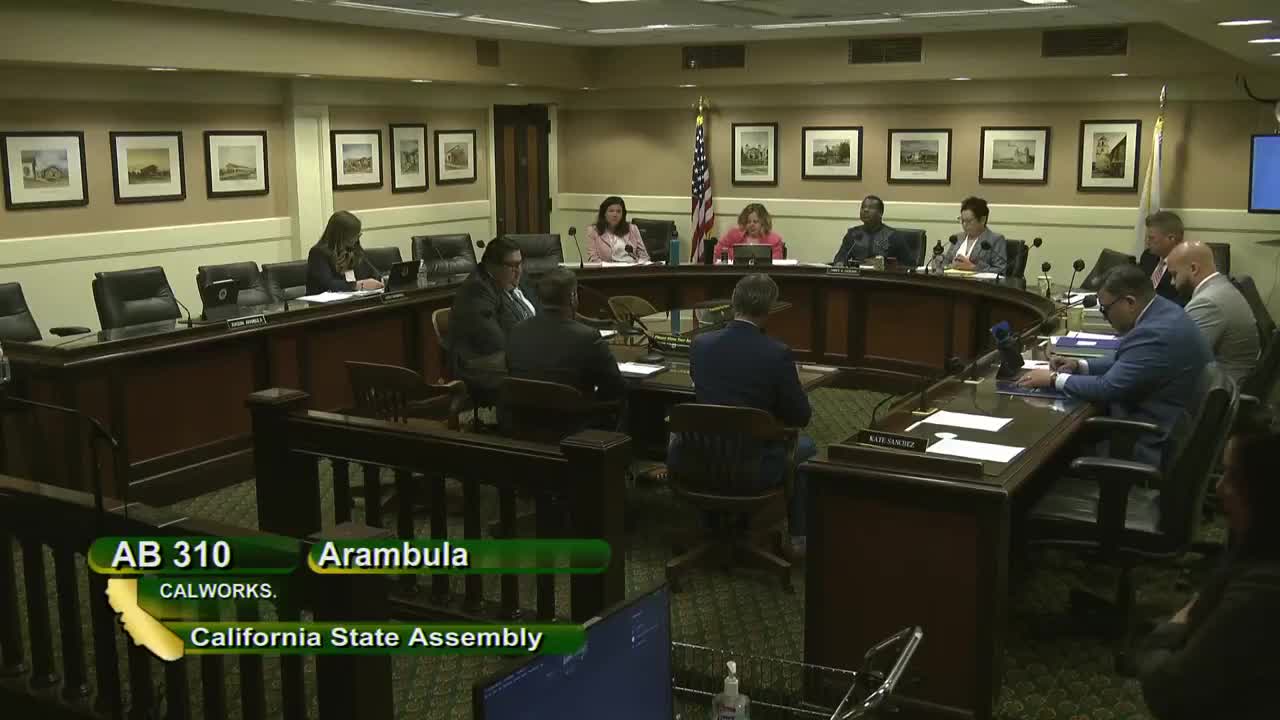 8MIN
Assembly Standing Committee on Human Services
Bill Author


