AB 876: Pajaro River Flood Risk Management Project: environmental laws: exemptions.
- Session Year: 2023-2024
- House: Assembly
- Latest Version Date: 2023-10-13
Current Status:
Passed
(2023-10-13: Chaptered by Secretary of State - Chapter 816, Statutes of 2023.)
Introduced
In Committee
First Chamber
In Committee
Second Chamber
Enacted
Existing law provides for funding for the project for flood control on the Pajaro River in the Counties of Monterey and Santa Cruz, authorized by the federal Flood Control Act of 1966. Existing law also requires a flood management project that receives financial assistance, as provided, to meet specified requirements, and requires the Department of Water Resources or a specified state entity to submit a report to the Legislature that indicates whether the project meets those requirements.
This bill would exempt the Pajaro River flood control project from various state and local environmental laws and regulations, only if specified criteria are met and only until a specified date, and as of that date would repeal these provisions. The bill would provide, among other exemptions, that a specified report, as described, shall be conclusively presumed to satisfy the requirements of the California Environmental Quality Act for the Pajaro River Project, including to support the issuance of any permit, funding, or other approval by a state or local agency for the Pajaro River Project when implementing the California Environmental Quality Act. The bill would also require the Pajaro Regional Flood Management Agency to consult with the Department of Fish and Wildlife and the Central Coast Regional Water Quality Control Board regarding the avoidance, minimization, or mitigation of specified environmental impacts, on or before March 1, 2024, as provided.
This bill would make legislative findings and declarations as to the necessity of a special statute for the Counties of Monterey and Santa Cruz.
This bill would declare that it is to take effect immediately as an urgency statute.
Existing law provides for funding for the project for flood control on the Pajaro River in the Counties of Monterey and Santa Cruz, authorized by the federal Flood Control Act of 1966. Existing law also requires a flood management project that receives financial assistance, as provided, to meet specified requirements, and requires the Department of Water Resources or a specified state entity to submit a report to the Legislature that indicates whether the project meets those requirements.
This bill would exempt the Pajaro River flood control project from various state and local environmental laws and regulations, only if specified criteria are met and only until a specified date. date, and as of that date would repeal these provisions. The bill would also provide provide, among other exemptions, that a specified report, as described, regarding the flood management project would constitute conclusive evidence that the project meets all applicable laws and regulations of the state or any local or regional regulatory agency relating to avoidance, minimization, or mitigation of environmental impacts. shall be conclusively presumed to satisfy the requirements of the California Environmental Quality Act for the Pajaro River Project, including to support the issuance of any permit, funding, or other approval by a state or local agency for the Pajaro River Project when implementing the California Environmental Quality Act. The bill would also require the Pajaro Regional Flood Management Agency to consult with the Department of Fish and Wildlife and the Central Coast Regional Water Quality Control Board regarding the avoidance, minimization, or mitigation of specified environmental impacts, on or before March 1, 2024, as provided.
This bill would make legislative findings and declarations as to the necessity of a special statute for the Counties of Monterey and Santa Cruz.
This bill would declare that it is to take effect immediately as an urgency statute.
Existing law provides for funding for the project for flood control on the Pajaro River in the Counties of Monterey and Santa Cruz, authorized by the federal Flood Control Act of 1966. Existing law also requires a flood management project that receives financial assistance, as provided, to meet specified requirements, and requires the Department of Water Resources or a specified state entity to submit a report to the Legislature that indicates whether the project meets those requirements.
This bill would exempt the Pajaro River flood control project from various state and local environmental laws and regulations, only until a specified date. The bill would also provide that a specified report, as described, regarding the flood management project would constitute conclusive evidence that the project meets all applicable laws and regulations of the state or any local or regional regulatory agency relating to avoidance, minimization, or mitigation of environmental impacts.
This bill would make legislative findings and declarations as to the necessity of a special statute for the Counties of Monterey and Santa Cruz.
This bill would declare that it is to take effect immediately as an urgency statute.
Existing law requires certain documents from the juvenile case file for a child who died as a result of abuse or neglect, as specified, to be released by the county custodian of records upon request and subject to redaction of certain identifying personal information upon completion of the child abuse or neglect investigation into the childs death.This bill, for cases in which a childs or nonminor dependents death occurred while the child or nonminor dependent was subject to the courts jurisdiction, would authorize the court to retain jurisdiction for the exclusive purpose of receiving documents and information related to the circumstances of the death, including, but not limited to, medical records, police reports, and autopsy reports. The bill would require that jurisdiction be retained, if a party so requests, for the purpose of receiving the materials described in the bill, until the records have been received. The bill would require a court to terminate jurisdiction upon receipt of those materials, even if the cause of death is indeterminate. The bill would require the Judicial Council to adopt a rule of court to implement these provisions.Existing law requires certain documents from the juvenile case file for a child who died as a result of abuse or neglect, as specified, to be released by the county custodian of records upon request and subject to redaction of certain identifying personal information upon completion of the child abuse or neglect investigation into the childs death.
This bill, for cases in which a childs or nonminor dependents death occurred while the child or nonminor dependent was subject to the courts jurisdiction, would provide that the court may authorize the court to retain jurisdiction of the case for the for the exclusive purpose of receiving documents and information related to the circumstances of the death, including, but not limited to, medical records, police reports, and autopsy reports. The bill would require the case to remain open, that jurisdiction be retained, if a party so requests, for the purpose of receiving the materials described in the bill, unless the court finds that there is sufficient information to determine the cause of death without retaining jurisdiction. bill, until the records have been received. The bill would require a court to terminate jurisdiction upon receipt of those materials, even if the cause of death is indeterminate. The bill would require the Judicial Council to adopt a rule of court to implement these provisions.
Existing law requires certain documents from the juvenile case file for a child who died as a result of abuse or neglect, as specified, to be released by the county custodian of records upon request and subject to redaction of certain identifying personal information upon completion of the child abuse or neglect investigation into the childs death.
This bill, for cases in which a childs or nonminor dependents death occurred while the child or nonminor dependent was subject to the courts jurisdiction, would provide that the court may retain jurisdiction of the case for the purpose of receiving documents and information related to the circumstances of the death, including, but not limited to, medical records, police reports, and autopsy reports. The bill would require the case to remain open, if a party so requests, for the purpose of receiving the materials described in the bill, unless the court finds that there is sufficient information to determine the cause of death without retaining jurisdiction.
The Legislature finds and declares all of the following:
(a)Recent catastrophic flooding in the community of Pajaro in the County of Monterey, located in the Pajaro River watershed, as well as other major floods in that watershed over the past several decades, have highlighted the need to develop modern flood control infrastructure to protect that region and the disadvantaged communities located there as expeditiously as possible. Historical inequities in state and federal flood control funding and policies have left the communities in the Pajaro River watershed, many of which are disadvantaged and economically distressed, with low protection from flood risks. Levels of flood protection in the Pajaro River watershed are among the lowest of any federal flood control system in California, with levees along certain stretches of the Pajaro River providing only a five-year level of flood protection. Poor levee strength in some areas has further reduced their expected performance. Unusually strong winter storms in early 2023 caused a levee breach that devastated the community of Pajaro. Several major floods have severely impacted the local community since construction of the current levee system. The previous major flood, in the 1990s, caused multiple deaths and over $100,000,000 in damages.
(b)In the City of Watsonville and community of Pajaro, per capita income is less than one-half the state and national averages. Local residents are highly vulnerable to the impacts of flooding. Many are renters or unhoused people with minimal to no financial security. Flood damage to local agricultural fields also causes job loss for the large farmworker population in the region, further compounding the impacts of flooding and forcing many people to leave their homes in search of economic opportunity.
(c)In addition to its public benefits relating to flood protection, the Pajaro River Project will restore and provide habitat for California native fish and wildlife. The Pajaro River Project has received an Engineering With Nature designation under the United States Army Corps of Engineers program of the same name based on the habitat benefits created, enhanced, and restored by the design and configuration of improvements, and the Department of Water Resources has partnered with the project nonfederal sponsor, the Pajaro Regional Flood Management Agency, to incorporate habitat and groundwater recharge enhancements through Ecological Floodplain Inundation Potential (EcoFIP) analysis and implementation. Due to the environmental and habitat benefits to be created, enhanced, and restored, the project is consistent with various elements of Executive Order No. N-82-20, including the goal of conserving 30 percent of Californias lands and coastal waters by 2030.
(d)The Pajaro River Project aligns with the vision behind numerous state efforts to increase the pace and scale of environmental restoration and land management efforts by streamlining the states process to approve and facilitate conservation and restoration projects in a manner that safeguards the states economic sustainability and food security, protects and restores biodiversity, and builds climate resilience. These include, but are not limited to, the states Cutting the Green Tape initiative, which aims to expedite environmentally beneficial projects to combat our ongoing climate and biodiversity crises and provide environmental quality and access to the outdoors in historically disadvantaged communities.
(e)Executive Order No. N-10-23 suspended the application of Chapter 6 (commencing with Section 1600) of Division 2 of the Fish and Game Code, and regulations adopted pursuant to that chapter; certain statutes, rules, and requirements applicable to activities under the jurisdiction of the State Water Resources Control Board and the regional water quality control boards; and Division 13 (commencing with Section 21000) of the Public Resources Code, and regulations adopted pursuant to that division to levee repairs, debris and sediment removal, and vegetation management activities in the Pajaro River and its tributaries completed before November 1, 2023, but legislation is needed to provide regulatory consistency.
SEC. 2.(a)For purposes of this section, Pajaro River Project or project means the project for flood control on the Pajaro River and its tributaries in the Counties of Monterey and Santa Cruz, as authorized by Public Law 89-789 and Public Law 101-640, inclusive of components described in the recommended plan in Chapter 6 of the document entitled Pajaro River Flood Risk Management Project, Santa Cruz and Monterey Counties, California: Final General Reevaluation Report and Integrated Environmental Assessment (revised December 2019), prepared by the United States Army Corps of Engineers. For purposes of this section, the project does not include ongoing or postconstruction operations and maintenance.
(b)To protect human health, safety, and the environment and to reduce the risks of local catastrophic flooding, the Pajaro River Project and the issuance of any permit, funding, or other approval by a state or local agency for the Pajaro River Project is exempt from all of the following:
(1)Chapter 6 (commencing with Section 1600) of Division 2 of the Fish and Game Code and the regulations adopted pursuant to that chapter.
(2)Waste discharge requirements and any related mitigation requirements pursuant to Division 7 (commencing with Section 13000 of the Water Code), including Sections 13260 and 13263 of the Water Code, and regulations adopted pursuant to those sections, with the exception of waste discharge requirements and any related mitigation requirements pursuant to Section 13160 of the Water Code and Sections 13370 to 13389, inclusive, of the Water Code and regulations adopted pursuant to those sections.
(c)The document entitled Pajaro River Flood Risk Management Project, Santa Cruz and Monterey Counties, California: Final General Reevaluation Report and Integrated Environmental Assessment (revised December 2019) shall be conclusively presumed to satisfy the requirements of Division 13 (commencing with Section 21000) of the Public Resources Code for the Pajaro River Project, including to support the issuance of any permit, funding, or other approval by a state or local agency for the Pajaro River Project when implementing Division 13 (commencing with Section 21000) of the Public Resources Code.
(d)This section is operative only if all of the following criteria apply to all components of the project to which they are applicable:
(1)The project will increase the level of flood protection for disadvantaged communities, as defined in Section 79505.5 of the Water Code, as described in the project nonfederal cost-share report published April 28, 2020, submitted to the Department of Water Resources for the project, including achieving 100-year flood protection in the City of Watsonville and the community of Pajaro in the County of Monterey.
(2)The project has received an Engineering With Nature designation under the United States Army Corps of Engineers program of the same name based on the habitat benefits created, enhanced, and restored by the design and configuration of improvements, through which an intentional alignment of natural and engineering processes efficiently and sustainably deliver economic, environmental, and social benefits. This includes the setback of some or all Pajaro River Project levees from their original locations to enhance habitat for fish and wildlife.
(3)The state has partnered with the Pajaro Regional Flood Management Agency or any federal project sponsor, including the United States Army Corps of Engineers, to incorporate habitat and groundwater recharge enhancements through Ecological Floodplain Inundation Potential (EcoFIP) analysis and implementation.
(4)The project incorporates best management practices to control erosion and runoff from construction activities.
(5)The project incorporates visual surface water monitoring to detect and correct accidental discharge of construction-related pollutants.
(6)The project does not involve disposal or placement of flood-delivered sediments into waters of the state or at locations or in a manner where sediments may be washed into waters of the state by rainfall or runoff.
(7)The project is undertaken to avoid causing a violation of applicable water quality standards, including impairment of designated beneficial uses, for receiving waters as adopted in any applicable State Water Resources Control Board or Central Coast Regional Water Quality Control Board water quality control plan.
(e)On or before March 1, 2024, the Pajaro Regional Flood Management Agency shall consult with the Department of Fish and Wildlife on feasible avoidance, minimization, or mitigation of Pajaro River Project impacts to fish and wildlife.
(f)On or before March 1, 2024, the Pajaro Regional Flood Management Agency shall provide a description of all project components to the Central Coast Regional Water Quality Control Board and consult with the Central Coast Regional Water Quality Control Board on feasible avoidance, minimization, and mitigation of Pajaro River Project impacts to beneficial uses of waters of the state and water quality.
(g)If the project meets the criteria of subdivision (d) and conducts consultations as required by subdivisions (e) and (f), then paragraph (4) of subdivision (a) of Section 12582.7 of the Water Code and subdivision (b) of Section 5650 of the Fish and Game Code shall be deemed met and shall constitute conclusive evidence that the project meets all applicable laws and regulations of the state or any local or regional regulatory agency relating to avoidance, minimization, or mitigation of environmental impacts, with the exception of Section 13160 of the Water Code and Sections 13370 to 13389, inclusive, of the Water Code and regulations adopted pursuant to those sections. The nonfederal and local sponsor or sponsors of the project shall provide technical reports and underlying data and information as reasonably required for purposes of paragraph (1) of subdivision (b) of Section 12582.7 of the Water Code.
(h)The project shall comply with all other applicable federal, state, and local laws.
(i)This section shall remain in effect only until December 31, 2035, or the date the Department of Water Resources or the United States Army Corps of Engineers files a public declaration that the Pajaro River Project construction has been completed, and notifies the Secretary of the State of its determination, whichever occurs first, and as of that date is repealed.
SEC. 3.The Legislature finds and declares that a special statute is necessary and that a general statute cannot be made applicable within the meaning of Section 16 of Article IV of the California Constitution because of the unique flood risk challenges the communities along the Pajaro River face. For that reason, in order to remedy historical inequities in state flood control efforts and protect the communities along the Pajaro River from the risk of flooding, including the impacts of frequent flooding and flood evacuation orders within the Pajaro Valley Unified School District as acknowledged in Executive Order No. N-6-23, a special statute is needed that furthers the goals of Executive Order No. N-10-23 to protect communities within the Pajaro River watershed from flooding.
SEC. 4.This act is an urgency statute necessary for the immediate preservation of the public peace, health, or safety within the meaning of Article IV of the California Constitution and shall go into immediate effect. The facts constituting the necessity are:
In order to provide adequate flood protection to disadvantaged communities in the Pajaro Valley as expeditiously as possible, it is necessary for this act to take effect immediately.
The Legislature finds and declares all of the following:
(a)Recent catastrophic flooding in the community of Pajaro in the County of Monterey, located in the Pajaro River watershed, as well as other major floods in that watershed over the past several decades, have highlighted the need to develop modern flood control infrastructure to protect that region and the disadvantaged communities located there as expeditiously as possible. Historical inequities in state and federal flood control funding and policies have left the communities in the Pajaro River watershed, many of which are disadvantaged and economically distressed, with inadequate low protection from flood risks. Levels of flood protection in the Pajaro River watershed are among the lowest of any federal flood control system in California, with levees along certain stretches of the Pajaro River providing only a five-year level of flood protection. Poor levee strength in some areas has further reduced their expected performance. Unusually strong winter storms in early 2023 caused a levee breach that devastated the community of Pajaro. Several major floods have severely impacted the local community since construction of the current levee system. The previous major flood, in the 1990s, caused multiple deaths and over $100,000,000 in damages.
(b)In the City of Watsonville and community of Pajaro, per capita income is less than one-half the state and national averages. Local residents are highly vulnerable to the impacts of flooding. Many are renters or unhoused people with minimal to no financial security. Flood damage to local agricultural fields also causes job loss for the large farmworker population in the region, further compounding the impacts of flooding and forcing many people to leave their homes in search of economic opportunity.
(b)(c)In addition to its public benefits relating to flood protection, the Pajaro River Project will restore or and provide habitat for California native fish and wildlife. The Pajaro River Project has been designated an Engineering With Nature project under the United States Army Corps of Engineers program of the same name The Pajaro River Project has received an Engineering With Nature designation under the United States Army Corps of Engineers program of the same name based on the habitat benefits created, enhanced, and restored by the design and configuration of improvements, and the statehas Department of Water Resources has partnered with the project nonfederal sponsor sponsor, the Pajaro Regional Flood Management Agency, to incorporate habitat and groundwater recharge enhancements through Ecological Floodplain Inundation Potential (EcoFIP) analysis and implementation. Due to the environmental and habitat benefits to be created, enhanced, and restored, the project is consistent with various elements of Executive Order No. N-82-20, including the goal of conserving 30 percent of Californias lands and coastal waters by 2030.
(c)(d)The Pajaro River Project aligns with the vision behind numerous state efforts to increase the pace and scale of environmental restoration and land management efforts by streamlining the states process to approve and facilitate conservation and restoration projects in a manner that safeguards the states economic sustainability and food security, protects and restores biodiversity, and builds climate resilience. These include, but are not limited to, Section 21080.56 of the Public Resources Code and Section 15333 of Title 14 of the California Code of Regulations, as well as the states Cutting the Green Tape initiatives and the expedited process for dam removal along the Klamath River laid out in Section 21166.2 of the Public Resources Code, all of which aim the states Cutting the Green Tape initiative, which aims to expedite environmentally beneficial projects to combat our ongoing climate and biodiversity crises and provide environmental quality and access to the outdoors in historically disadvantaged communities.
(d)(e)Executive Order No. N-10-23 suspended the application of Chapter 6 (commencing with Section 1600) of Division 2 of the Fish and Game Code, and regulations adopted pursuant to that chapter; certain statutes, rules, and requirements applicable to activities under the jurisdiction of the State Water Resources Control Board and the regional water quality control boards; and Division 13 (commencing with Section 21000) of the Public Resources Code, and regulations adopted pursuant to that division to levee repairs, debris and sediment removal, and vegetation management activities in the Pajaro River and its tributaries completed before November 1, 2023, but legislation is needed to provide regulatory consistency over the lifespan of the project. consistency.
SEC. 2.(a)For purposes of this section, Pajaro River Project or project means the project for flood control on the Pajaro River and its tributaries in the Counties of Monterey and Santa Cruz, as authorized by Public Law 89-789 and Public Law 101-640. 101-640, inclusive of components described in the recommended plan in Chapter 6 of the document entitled Pajaro River Flood Risk Management Project, Santa Cruz and Monterey Counties, California: Final General Reevaluation Report and Integrated Environmental Assessment (revised December 2019), prepared by the United States Army Corps of Engineers. For purposes of this section, the project does not include ongoing or postconstruction operations and maintenance.
(b)To protect human health, safety, and the environment and to reduce the risks of local catastrophic flooding, notwithstanding any other law, the Pajaro River Project and the issuance of any permit, funding, or other project approval by a state or local agency relating thereto for the Pajaro River Project is exempt from all of the following:
(1)Chapter 6 (commencing with Section 1600) of Division 2 of the Fish and Game Code and the regulations adopted pursuant to that chapter.
(2)Waste discharge requirements and any related mitigation requirements pursuant to Division 7 (commencing with Section 13000 of the Water Code), including Sections 13260 and 13263 of the Water Code, and regulations adopted pursuant to those sections, except pursuant to applicable general permit requirements. with the exception of waste discharge requirements and any related mitigation requirements pursuant to Section 13160 of the Water Code and Sections 13370 to 13389, inclusive, of the Water Code and regulations adopted pursuant to those sections.
(c)The environmental assessment related to the Pajaro River Project prepared by the United States Army Corps of Engineers pursuant to the federal National Environmental Policy Act of 1969 (42 U.S.C. Sec. 4321 et seq.) document entitled Pajaro River Flood Risk Management Project, Santa Cruz and Monterey Counties, California: Final General Reevaluation Report and Integrated Environmental Assessment (revised December 2019) shall be conclusively presumed to satisfy the requirements of Division 13 (commencing with Section 21000) of the Public Resources Code for the Pajaro River Project and Project, including to support the issuance of any permit, funding, or other project approval by a state or local agency relating thereto if all of the following apply: for the Pajaro River Project when implementing Division 13 (commencing with Section 21000) of the Public Resources Code.
(d)This section is operative only if all of the following criteria apply to all components of the project to which they are applicable:
(1)The project will increase the level of flood protection for disadvantaged communities, as defined in Section 79505.5 of the Water Code, as described in a the project nonfederal cost-share report published April 28, 2020, submitted to the Department of Water Resources for the project. project, including achieving 100-year flood protection in the City of Watsonville and the community of Pajaro in the County of Monterey.
(2)The project has been designated received an Engineering With Nature project designation under the United States Army Corps of Engineers program of the same name based on the habitat benefits created, enhanced, and restored by the design and configuration of improvements. improvements, through which an intentional alignment of natural and engineering processes efficiently and sustainably deliver economic, environmental, and social benefits. This includes the setback of some or all Pajaro River Project levees from their original locations to enhance habitat for fish and wildlife.
(3)The state has partnered with the project nonfederal sponsor or federal sponsor Pajaro Regional Flood Management Agency or any federal project sponsor, including the United States Army Corps of Engineers, to incorporate habitat and groundwater recharge enhancements through Ecological Floodplain Inundation Potential (EcoFIP) analysis and implementation.
(4)The project incorporates best management practices to control erosion and runoff from construction activities.
(5)The project incorporates visual surface water monitoring to detect and correct accidental discharge of construction-related pollutants.
(6)The project does not involve disposal or placement of flood-delivered sediments into waters of the state or at locations or in a manner where sediments may be washed into waters of the state by rainfall or runoff.
(7)The project is undertaken to avoid causing a violation of applicable water quality standards, including impairment of designated beneficial uses, for receiving waters as adopted in any applicable State Water Resources Control Board or Central Coast Regional Water Quality Control Board water quality control plan.
(e)On or before March 1, 2024, the Pajaro Regional Flood Management Agency shall consult with the Department of Fish and Wildlife on feasible avoidance, minimization, or mitigation of Pajaro River Project impacts to fish and wildlife.
(f)On or before March 1, 2024, the Pajaro Regional Flood Management Agency shall provide a description of all project components to the Central Coast Regional Water Quality Control Board and consult with the Central Coast Regional Water Quality Control Board on feasible avoidance, minimization, and mitigation of Pajaro River Project impacts to beneficial uses of waters of the state and water quality.
(d)The report prepared pursuant to paragraph (1) of subdivision (b) of Section 12582.7 of the Water Code determining that the project meets the requirements of subdivision (a) of that section
(g)If the project meets the criteria of subdivision (d) and conducts consultations as required by subdivisions (e) and (f), then paragraph (4) of subdivision (a) of Section 12582.7 of the Water Code and subdivision (b) of Section 5650 of the Fish and Game Code shall be deemed met and shall constitute conclusive evidence that the project meets all applicable laws and regulations of the state or any local or regional regulatory agency relating to avoidance, minimization, or mitigation of environmental impacts, as may be documented by technical reports required pursuant to that section. with the exception of Section 13160 of the Water Code and Sections 13370 to 13389, inclusive, of the Water Code and regulations adopted pursuant to those sections. The nonfederal and local sponsor or sponsors of the project shall provide technical reports and underlying data and information as reasonably required for purposes of paragraph (1) of subdivision (b) of Section 12582.7 of the Water Code.
(e)(h)The project shall comply with all other applicable federal, state, and local laws.
(i)This section shall remain in effect only until December 31, 2035, or the date the Department of Water Resources, Resources or the United States Army Corps of Engineers, or a Pajaro River Project local sponsor issues Engineers files a public declaration that the Pajaro River Project construction has been completed, and notifies the Secretary of the State of its determination, whichever occurs first, and as of that date is repealed.
SEC. 3.The Legislature finds and declares that a special statute is necessary and that a general statute cannot be made applicable within the meaning of Section 16 of Article IV of the California Constitution because of the unique flood risk challenges the communities along the Pajaro River face. For that reason, in order to remedy historical inequities in state flood control efforts and protect the communities along the Pajaro River from the risk of flooding, including the impacts of frequent flooding and flood evacuation orders within the Pajaro Valley Unified School District as acknowledged in Executive Order No. N-6-23, a special statute is needed that furthers the goals of Executive Order No. N-10-23 to protect communities within the Pajaro River watershed from flooding.
SEC. 4.This act is an urgency statute necessary for the immediate preservation of the public peace, health, or safety within the meaning of Article IV of the California Constitution and shall go into immediate effect. The facts constituting the necessity are:
In order to provide adequate flood protection to disadvantaged communities in the Pajaro Valley as expeditiously as possible, it is necessary for this act to take effect immediately.
The Legislature finds and declares all of the following:
(a)Recent catastrophic flooding in the community of Pajaro in the County of Monterey, located in the Pajaro River watershed, as well as other major floods in that watershed over the past several decades, have highlighted the need to develop modern flood control infrastructure to protect that region and the disadvantaged communities located there as expeditiously as possible. Historical inequities in state and federal flood control funding and policies have left the communities in the Pajaro River watershed, many of which are disadvantaged and economically distressed, with inadequate protection from flood risks.
(b)In addition to its public benefits relating to flood protection, the Pajaro River Project will restore or provide habitat for California native fish and wildlife. The Pajaro River Project has been designated an Engineering With Nature project under the United States Army Corps of Engineers program of the same name based on the habitat benefits created, enhanced, and restored by the design and configuration of improvements, and the state has partnered with the project nonfederal sponsor to incorporate habitat and groundwater recharge enhancements through Ecological Floodplain Inundation Potential (EcoFIP) analysis and implementation. Due to the environmental and habitat benefits to be created, enhanced, and restored, the project is consistent with various elements of Executive Order No. N-82-20, including the goal of conserving 30 percent of Californias lands and coastal waters by 2030.
(c)The Pajaro River Project aligns with the vision behind numerous state efforts to increase the pace and scale of environmental restoration and land management efforts by streamlining the states process to approve and facilitate conservation and restoration projects in a manner that safeguards the states economic sustainability and food security, protects and restores biodiversity, and builds climate resilience. These include, but are not limited to, Section 21080.56 of the Public Resources Code and Section 15333 of Title 14 of the California Code of Regulations, as well as the states Cutting the Green Tape initiatives and the expedited process for dam removal along the Klamath River laid out in Section 21166.2 of the Public Resources Code, all of which aim to expedite environmentally beneficial projects to combat our ongoing climate and biodiversity crises and provide environmental quality and access to the outdoors in historically disadvantaged communities.
(d)Executive Order No. N-10-23 suspended the application of Chapter 6 (commencing with Section 1600) of Division 2 of the Fish and Game Code, and regulations adopted pursuant to that chapter; certain statutes, rules, and requirements applicable to activities under the jurisdiction of the State Water Resources Control Board and the regional water quality control boards; and Division 13 (commencing with Section 21000) of the Public Resources Code, and regulations adopted pursuant to that division to levee repairs, debris and sediment removal, and vegetation management activities in the Pajaro River and its tributaries completed before November 1, 2023, but legislation is needed to provide regulatory consistency over the lifespan of the project.
SEC. 2.(a)For purposes of this section, Pajaro River Project means the project for flood control on the Pajaro River and its tributaries in the Counties of Monterey and Santa Cruz, as authorized by Public Law 89-789 and Public Law 101-640.
(b)To protect health, safety, and the environment and to reduce the risks of local catastrophic flooding, notwithstanding any other law, the Pajaro River Project and the issuance of any permit, funding, or other project approval by a state or local agency relating thereto is exempt from all of the following:
(1)Chapter 6 (commencing with Section 1600) of Division 2 of the Fish and Game Code and the regulations adopted pursuant to that chapter.
(2)Waste discharge requirements and any related mitigation requirements pursuant to Division 7 (commencing with Section 13000 of the Water Code), including Sections 13260 and 13263 of the Water Code, and regulations adopted pursuant to those sections, except pursuant to applicable general permit requirements.
(c)The environmental assessment related to the Pajaro River Project prepared by the United States Army Corps of Engineers pursuant to the federal National Environmental Policy Act of 1969 (42 U.S.C. Sec. 4321 et seq.) shall be conclusively presumed to satisfy the requirements of Division 13 (commencing with Section 21000) of the Public Resources Code for the Pajaro River Project and the issuance of any permit, funding, or other project approval by a state or local agency relating thereto if all of the following apply:
(1)The project will increase the level of flood protection for disadvantaged communities, as defined in Section 79505.5 of the Water Code, as described in a nonfederal cost-share report submitted to the Department of Water Resources for the project.
(2)The project has been designated an Engineering With Nature project under the United States Army Corps of Engineers program of the same name based on the habitat benefits created, enhanced, and restored by the design and configuration of improvements.
(3)The state has partnered with the project nonfederal sponsor or federal sponsor to incorporate habitat and groundwater recharge enhancements through Ecological Floodplain Inundation Potential (EcoFIP) analysis and implementation.
(d)The report prepared pursuant to paragraph (1) of subdivision (b) of Section 12582.7 of the Water Code determining that the project meets the requirements of subdivision (a) of that section shall constitute conclusive evidence that the project meets all applicable laws and regulations of the state or any local or regional regulatory agency relating to avoidance, minimization, or mitigation of environmental impacts, as may be documented by technical reports required pursuant to that section. The nonfederal and local sponsor or sponsors of the project shall provide technical reports and underlying data and information as reasonably required for purposes of paragraph (1) of subdivision (b) of Section 12582.7 of the Water Code.
(e)This section shall remain in effect only until the date the Department of Water Resources, the United States Army Corps of Engineers, or a Pajaro River Project local sponsor issues a public declaration that the Pajaro River Project has been completed, and as of that date is repealed.
SEC. 3.The Legislature finds and declares that a special statute is necessary and that a general statute cannot be made applicable within the meaning of Section 16 of Article IV of the California Constitution because of the unique flood risk challenges the communities along the Pajaro River face. For that reason, in order to remedy historical inequities in state flood control efforts and protect the communities along the Pajaro River from the risk of flooding, including the impacts of frequent flooding and flood evacuation orders within the Pajaro Valley Unified School District as acknowledged in Executive Order No. N-6-23, a special statute is needed that furthers the goals of Executive Order No. N-10-23 to protect communities within the Pajaro River watershed from flooding.
SEC. 4.This act is an urgency statute necessary for the immediate preservation of the public peace, health, or safety within the meaning of Article IV of the California Constitution and shall go into immediate effect. The facts constituting the necessity are:
In order to provide adequate flood protection to disadvantaged communities in the Pajaro Valley as expeditiously as possible, it is necessary for this act to take effect immediately.
SECTION 1.Section 10850.4 of the Welfare and Institutions Code is amended to read:10850.4.(a)Within five business days of learning that a child fatality has occurred in the county and that there is a reasonable suspicion that the fatality was caused by abuse or neglect, the custodian of records for the county child welfare agency, upon request, shall release the following information:(1)The age and gender of the child.(2)The date of death.(3)Whether the child resided in foster care or in the home of the childs parent or guardian at the time of death.(4)Whether an investigation is being conducted by a law enforcement agency or the county child welfare agency.(b)All cases in which abuse or neglect, as defined by paragraph (1) of subdivision (k), leads to a childs death shall be subject to the disclosures required in subdivision (c). Abuse or neglect is determined to have led to a childs death if one or more of the following conditions are met:(1)A county child protective services agency determines that the abuse or neglect was substantiated.(2)A law enforcement investigation concludes that abuse or neglect occurred.(3)A coroner or medical examiner concludes that the child who died had suffered abuse or neglect.(c)Upon completion of the child abuse or neglect investigation into the childs death, as described in subdivision (b), the following documents from the juvenile case file shall be released by the custodian of records upon request, subject to the redactions set forth in subdivision (e):(1)All of the information in subdivision (a).(2)For cases in which the childs death occurred while living with a parent or guardian, all previous referrals of abuse or neglect of the deceased child while living with that parent or guardian shall be disclosed along with the following documents:(A)The emergency response referral information form and the emergency response notice of referral disposition form completed by the county child welfare agency relating to the abuse or neglect that caused the death of the child.(B)Any cross reports completed by the county child welfare agency to law enforcement relating to the deceased child.(C)All risk and safety assessments completed by the county child welfare services agency relating to the deceased child.(D)All health care records of the deceased child, excluding mental health records, related to the childs death and previous injuries reflective of a pattern of abuse or neglect.(E)Copies of police reports about the person against whom the child abuse or neglect was substantiated.(F)A description of child protective or other services provided and actions taken by the child welfare agency, and juvenile court if applicable, relating to the deceased child, addressing any services and actions that are not otherwise disclosed within other documents required for release pursuant to this section, including the date and a written description of any such service or action taken.(3)For cases in which the childs death occurred while the child was in foster care, the following documents in addition to those specified in paragraphs (1) and (2) generated while the child was living in the foster care placement that was the placement at the time of the childs death:(A)Records pertaining to the foster placements initial licensing and renewals and type of license or licenses held, if in the case file.(B)All reported licensing violations, including notices of action, if in the case file.(C)Records of the training completed by the foster parents, if in the case file.(d)(1)The documents and information listed in paragraph (1) of, and subparagraphs (A) to (E), inclusive, of paragraph (2) of, subdivision (c) shall be released to the public by the custodian of records within 10 business days of the request or the disposition of the investigation, whichever is later.(2)The description listed in subparagraph (F) of paragraph (2) of subdivision (c) shall be released to the public by the custodian of records within 10 business days after the release of the documents pursuant to paragraph (1).(e)(1)Prior to releasing any document pursuant to subdivision (c), the custodian of records shall redact the following information:(A)The names, addresses, telephone numbers, ethnicity, religion, or any other identifying information of any person or institution, other than the county or the State Department of Social Services, that is mentioned in the documents listed in paragraphs (2) and (3) of subdivision (c).(B)Any information that would, after consultation with the district attorney, jeopardize a criminal investigation or proceeding.(C)Any information that is privileged, confidential, or not subject to disclosure pursuant to any other state or federal law.(2)(A)The State Department of Social Services shall promulgate a regulation listing the laws described in subparagraph (C) of paragraph (1) and setting forth standards governing redactions.(B)Notwithstanding the rulemaking provisions of the Administrative Procedure Act (Chapter 3.5 (commencing with Section 11340) of Part 1 of Division 3 of Title 2 of the Government Code), until emergency regulations are filed with the Secretary of State, the State Department of Social Services may implement the changes made to Section 827 and this section at the 200708 Regular Session of the Legislature through all-county letters or similar instructions from the director. The department shall adopt emergency regulations, as necessary to implement those changes, no later than January 1, 2009.(C)The adoption of regulations pursuant to this paragraph shall be deemed to be an emergency necessary for the immediate preservation of the public peace, health, safety, or general welfare. The emergency regulations authorized by this section shall be exempt from review by the Office of Administrative Law. The emergency regulations authorized by this section shall be submitted for filing with the Secretary of State and shall remain in effect for no more than 180 days, by which time the final regulations shall be adopted.(f)Upon receiving a request for the documents listed in subdivision (c), the custodian of records shall notify and provide a copy of the request and the responsive documents upon counsel for any child who is directly or indirectly connected to the juvenile case file. If counsel for a child, including the deceased child or any sibling of the deceased child, objects to the release of any part of the documents listed in paragraphs (2) and (3) of subdivision (c), they may petition the juvenile court for relief to prevent the release of any document or part of a document requested pursuant to paragraph (2) of subdivision (a) of Section 827.(g)Juvenile case file records that are not subject to disclosure pursuant to this section shall only be disclosed upon an order by the juvenile court pursuant to Section 827.(h)Once documents pursuant to this section have been released by the custodian of records, the State Department of Social Services or the county welfare department or agency may comment on the case within the scope of the release. If the county welfare department or agency comments publicly about the case within the scope of the release pursuant to this subdivision, the social worker on the case may also comment publicly about the case within the scope of the release.(i)Information released by a custodian of records consistent with the requirements of this section does not require prior notice to any other individual.(j)Each county welfare department or agency shall notify the State Department of Social Services of every child fatality that occurred within its jurisdiction that was the result of child abuse or neglect. Based on these notices and any other relevant information in the State Department of Social Services possession, the department shall annually issue a report identifying the child fatalities and any systemic issues or patterns revealed by the notices and other relevant information.(k)For purposes of this section, the following definitions apply:(1)Child abuse or neglect and abuse or neglect have the same meaning as defined in Section 11165.6 of the Penal Code.(2)Custodian of records, for the purposes of this section and paragraph (2) of subdivision (a) of Section 827, means the county welfare department or agency.(3)Juvenile case files or case files includes any juvenile court files, as defined in Rule 5.552 of the California Rules of Court, and any county child welfare department or agency or State Department of Social Services records regardless of whether they are maintained electronically or in paper form.(4)Substantiated has the same meaning as that term is used with respect to a substantiated report as defined in Section 11165.12 of the Penal Code.(l)A person disclosing juvenile case file information as required by this section shall not be subject to liability in any civil or criminal proceeding for complying with the requirements of this section.(m)This section shall apply only to deaths that occur on or after January 1, 2008.(n)This section does not require a custodian of records to retain documents beyond any date otherwise required by law.(o)This section does not require a custodian of records to obtain documents not in the case file.(p)This section does not authorize the disclosure of information that reveals the identity of a person or persons who provided information related to suspected abuse, neglect, or maltreatment of the child.(q)(1)For cases in which the death of a child or nonminor dependent occurred while the child or nonminor dependent was subject to the jurisdiction of the court, the court may retain jurisdiction on its own motion or at the request of any party to the dependency case for the exclusive purpose of receiving documents and information related to the circumstances of the death, including, but not limited to, medical records, police reports, and autopsy reports. When jurisdiction is retained pursuant to this paragraph, the custodian of records shall treat the juvenile court as a requester pursuant to subdivision (c).(2)Notwithstanding any other law, if a party requests that jurisdiction be retained for the purpose of receiving the records, jurisdiction shall remain open until the records have been received. (3)For purposes of this subdivision, party includes a deceased childs parent, legal guardian or Indian custodian and their counsel of record, if any, the counsel who had been representing the deceased child at the time of the childs death, any intervening sibling and their counsel, and a childs tribe regardless of whether the tribe has intervened pursuant to Section 224.4 and any counsel for the tribe.(4)The court shall terminate all jurisdiction upon receiving records for the purposes described in paragraph (1), even if the cause of death is indeterminate.(5)This subdivision does not require a child welfare agency to gather information from other investigating agencies for the purpose of providing them to the juvenile court if the child welfare agency is not already investigating the cause of death.(6)The Judicial Council shall adopt a rule of court to implement this subdivision.(a)Within five business days of learning that a child fatality has occurred in the county and that there is a reasonable suspicion that the fatality was caused by abuse or neglect, the custodian of records for the county child welfare agency, upon request, shall release the following information:
(1)The age and gender of the child.
(2)The date of death.
(3)Whether the child resided in foster care or in the home of the childs parent or guardian at the time of death.
(4)Whether an investigation is being conducted by a law enforcement agency or the county child welfare agency.
(b)All cases in which abuse or neglect, as defined by paragraph (1) of subdivision (k), leads to a childs death shall be subject to the disclosures required in subdivision (c). Abuse or neglect is determined to have led to a childs death if one or more of the following conditions are met:
(1)A county child protective services agency determines that the abuse or neglect was substantiated.
(2)A law enforcement investigation concludes that abuse or neglect occurred.
(3)A coroner or medical examiner concludes that the child who died had suffered abuse or neglect.
(c)Upon completion of the child abuse or neglect investigation into the childs death, as described in subdivision (b), the following documents from the juvenile case file shall be released by the custodian of records upon request, subject to the redactions set forth in subdivision (e):
(1)All of the information in subdivision (a).
(2)For cases in which the childs death occurred while living with a parent or guardian, all previous referrals of abuse or neglect of the deceased child while living with that parent or guardian shall be disclosed along with the following documents:
(A)The emergency response referral information form and the emergency response notice of referral disposition form completed by the county child welfare agency relating to the abuse or neglect that caused the death of the child.
(B)Any cross reports completed by the county child welfare agency to law enforcement relating to the deceased child.
(C)All risk and safety assessments completed by the county child welfare services agency relating to the deceased child.
(D)All health care records of the deceased child, excluding mental health records, related to the childs death and previous injuries reflective of a pattern of abuse or neglect.
(E)Copies of police reports about the person against whom the child abuse or neglect was substantiated.
(F)A description of child protective or other services provided and actions taken by the child welfare agency, and juvenile court if applicable, relating to the deceased child, addressing any services and actions that are not otherwise disclosed within other documents required for release pursuant to this section, including the date and a written description of any such service or action taken.
(3)For cases in which the childs death occurred while the child was in foster care, the following documents in addition to those specified in paragraphs (1) and (2) generated while the child was living in the foster care placement that was the placement at the time of the childs death:
(A)Records pertaining to the foster placements initial licensing and renewals and type of license or licenses held, if in the case file.
(B)All reported licensing violations, including notices of action, if in the case file.
(C)Records of the training completed by the foster parents, if in the case file.
(d)(1)The documents and information listed in paragraph (1) of, and subparagraphs (A) to (E), inclusive, of paragraph (2) of, subdivision (c) shall be released to the public by the custodian of records within 10 business days of the request or the disposition of the investigation, whichever is later.
(2)The description listed in subparagraph (F) of paragraph (2) of subdivision (c) shall be released to the public by the custodian of records within 10 business days after the release of the documents pursuant to paragraph (1).
(e)(1)Prior to releasing any document pursuant to subdivision (c), the custodian of records shall redact the following information:
(A)The names, addresses, telephone numbers, ethnicity, religion, or any other identifying information of any person or institution, other than the county or the State Department of Social Services, that is mentioned in the documents listed in paragraphs (2) and (3) of subdivision (c).
(B)Any information that would, after consultation with the district attorney, jeopardize a criminal investigation or proceeding.
(C)Any information that is privileged, confidential, or not subject to disclosure pursuant to any other state or federal law.
(2)(A)The State Department of Social Services shall promulgate a regulation listing the laws described in subparagraph (C) of paragraph (1) and setting forth standards governing redactions.
(B)Notwithstanding the rulemaking provisions of the Administrative Procedure Act (Chapter 3.5 (commencing with Section 11340) of Part 1 of Division 3 of Title 2 of the Government Code), until emergency regulations are filed with the Secretary of State, the State Department of Social Services may implement the changes made to Section 827 and this section at the 200708 Regular Session of the Legislature through all-county letters or similar instructions from the director. The department shall adopt emergency regulations, as necessary to implement those changes, no later than January 1, 2009.
(C)The adoption of regulations pursuant to this paragraph shall be deemed to be an emergency necessary for the immediate preservation of the public peace, health, safety, or general welfare. The emergency regulations authorized by this section shall be exempt from review by the Office of Administrative Law. The emergency regulations authorized by this section shall be submitted for filing with the Secretary of State and shall remain in effect for no more than 180 days, by which time the final regulations shall be adopted.
(f)Upon receiving a request for the documents listed in subdivision (c), the custodian of records shall notify and provide a copy of the request and the responsive documents upon counsel for any child who is directly or indirectly connected to the juvenile case file. If counsel for a child, including the deceased child or any sibling of the deceased child, objects to the release of any part of the documents listed in paragraphs (2) and (3) of subdivision (c), they may petition the juvenile court for relief to prevent the release of any document or part of a document requested pursuant to paragraph (2) of subdivision (a) of Section 827.
(g)Juvenile case file records that are not subject to disclosure pursuant to this section shall only be disclosed upon an order by the juvenile court pursuant to Section 827.
(h)Once documents pursuant to this section have been released by the custodian of records, the State Department of Social Services or the county welfare department or agency may comment on the case within the scope of the release. If the county welfare department or agency comments publicly about the case within the scope of the release pursuant to this subdivision, the social worker on the case may also comment publicly about the case within the scope of the release.
(i)Information released by a custodian of records consistent with the requirements of this section does not require prior notice to any other individual.
(j)Each county welfare department or agency shall notify the State Department of Social Services of every child fatality that occurred within its jurisdiction that was the result of child abuse or neglect. Based on these notices and any other relevant information in the State Department of Social Services possession, the department shall annually issue a report identifying the child fatalities and any systemic issues or patterns revealed by the notices and other relevant information. The State Department of Social Services, after consultation with interested stakeholders, shall provide instructions by an all-county letter regarding the procedure for notification.
(k)For purposes of this section, the following definitions apply:
(1)Child abuse or neglect and abuse or neglect have the same meaning as defined in Section 11165.6 of the Penal Code.
(2)Custodian of records, for the purposes of this section and paragraph (2) of subdivision (a) of Section 827, means the county welfare department or agency.
(3)Juvenile case files or case files includes any juvenile court files, as defined in Rule 5.552 of the California Rules of Court, and any county child welfare department or agency or State Department of Social Services records regardless of whether they are maintained electronically or in paper form.
(4)Substantiated has the same meaning as that term is used with respect to a substantiated report as defined in Section 11165.12 of the Penal Code.
(l)A person disclosing juvenile case file information as required by this section shall not be subject to liability in any civil or criminal proceeding for complying with the requirements of this section.
(m)This section shall apply only to deaths that occur on or after January 1, 2008.
(n)This section does not require a custodian of records to retain documents beyond any date otherwise required by law.
(o)This section does not require a custodian of records to obtain documents not in the case file.
(p)This section does not authorize the disclosure of information that reveals the identity of a person or persons who provided information related to suspected abuse, neglect, or maltreatment of the child.
(q)(1)For cases in which the death of a child or nonminor dependent occurred while the child or nonminor dependent was subject to the jurisdiction of the court, the court may retain jurisdiction of the case for the on its own motion or at the request of any party to the dependency case for the exclusive purpose of receiving documents and information related to the circumstances of the death, including, but not limited to, medical records, police reports, and autopsy reports. When jurisdiction is retained pursuant to this paragraph, the custodian of records shall treat the juvenile court as a requester pursuant to subdivision (c).
(2)Notwithstanding any other law, if a party requests that the case remain open jurisdiction be retained for the purpose of receiving the records, the case jurisdiction shall remain open unless the court finds that there is sufficient information to determine the cause of death without retaining jurisdiction. For until the records have been received.
(3)For purposes of this paragraph, in the case of an Indian child, subdivision, party includes a deceased childs parent, legal guardian or Indian custodian and their counsel of record, if any, the counsel who had been representing the deceased child at the time of the childs death, any intervening sibling and their counsel, and a childs tribe regardless of whether the tribe has intervened pursuant to Section 224.4. 224.4 and any counsel for the tribe.
(4)The court shall terminate all jurisdiction upon receiving records for the purposes described in paragraph (1), even if the cause of death is indeterminate.
(5)This subdivision does not require a child welfare agency to gather information from other investigating agencies for the purpose of providing them to the juvenile court if the child welfare agency is not already investigating the cause of death.
(6)The Judicial Council shall adopt a rule of court to implement this subdivision.
(r)Notwithstanding the rulemaking provisions of the Administrative Procedure Act (Chapter 3.5 (commencing with Section 11340) of Part 1 of Division 3 of Title 2 of the Government Code), until regulations are filed with the Secretary of State, the State Department of Social Services may implement this section through all-county letters or similar instructions following consultation with stakeholders. This consultation shall commence no later than October 1, 2016, and shall include, but not be limited to, child welfare advocates, labor organizations, representatives of counties, and legislative staff. Rulemaking to implement this section pursuant to the Administrative Procedure Act shall commence no later than January 1, 2018.(a)Within five business days of learning that a child fatality has occurred in the county and that there is a reasonable suspicion that the fatality was caused by abuse or neglect, the custodian of records for the county child welfare agency, upon request, shall release the following information:
(1)The age and gender of the child.
(2)The date of death.
(3)Whether the child resided in foster care or in the home of the childs parent or guardian at the time of death.
(4)Whether an investigation is being conducted by a law enforcement agency or the county child welfare agency.
(b)All cases in which abuse or neglect, as defined by paragraph (1) of subdivision (k), leads to a childs death shall be subject to the disclosures required in subdivision (c). Abuse or neglect is determined to have led to a childs death if one or more of the following conditions are met:
(1)A county child protective services agency determines that the abuse or neglect was substantiated.
(2)A law enforcement investigation concludes that abuse or neglect occurred.
(3)A coroner or medical examiner concludes that the child who died had suffered abuse or neglect.
(c)Upon completion of the child abuse or neglect investigation into the childs death, as described in subdivision (b), the following documents from the juvenile case file shall be released by the custodian of records upon request, subject to the redactions set forth in subdivision (e):
(1)All of the information in subdivision (a).
(2)For cases in which the childs death occurred while living with a parent or guardian, all previous referrals of abuse or neglect of the deceased child while living with that parent or guardian shall be disclosed along with the following documents:
(A)The emergency response referral information form and the emergency response notice of referral disposition form completed by the county child welfare agency relating to the abuse or neglect that caused the death of the child.
(B)Any cross reports completed by the county child welfare agency to law enforcement relating to the deceased child.
(C)All risk and safety assessments completed by the county child welfare services agency relating to the deceased child.
(D)All health care records of the deceased child, excluding mental health records, related to the childs death and previous injuries reflective of a pattern of abuse or neglect.
(E)Copies of police reports about the person against whom the child abuse or neglect was substantiated.
(F)A description of child protective or other services provided and actions taken by the child welfare agency, and juvenile court if applicable, relating to the deceased child, addressing any services and actions that are not otherwise disclosed within other documents required for release pursuant to this section, including the date and a written description of any such service or action taken.
(3)For cases in which the childs death occurred while the child was in foster care, the following documents in addition to those specified in paragraphs (1) and (2) generated while the child was living in the foster care placement that was the placement at the time of the childs death:
(A)Records pertaining to the foster placements initial licensing and renewals and type of license or licenses held, if in the case file.
(B)All reported licensing violations, including notices of action, if in the case file.
(C)Records of the training completed by the foster parents, if in the case file.
(d)(1)The documents and information listed in paragraph (1) of, and subparagraphs (A) to (E), inclusive, of paragraph (2) of, subdivision (c) shall be released to the public by the custodian of records within 10 business days of the request or the disposition of the investigation, whichever is later.
(2)The description listed in subparagraph (F) of paragraph (2) of subdivision (c) shall be released to the public by the custodian of records within 10 business days after the release of the documents pursuant to paragraph (1).
(e)(1)Prior to releasing any document pursuant to subdivision (c), the custodian of records shall redact the following information:
(A)The names, addresses, telephone numbers, ethnicity, religion, or any other identifying information of any person or institution, other than the county or the State Department of Social Services, that is mentioned in the documents listed in paragraphs (2) and (3) of subdivision (c).
(B)Any information that would, after consultation with the district attorney, jeopardize a criminal investigation or proceeding.
(C)Any information that is privileged, confidential, or not subject to disclosure pursuant to any other state or federal law.
(2)(A)The State Department of Social Services shall promulgate a regulation listing the laws described in subparagraph (C) of paragraph (1) and setting forth standards governing redactions.
(B)Notwithstanding the rulemaking provisions of the Administrative Procedure Act (Chapter 3.5 (commencing with Section 11340) of Part 1 of Division 3 of Title 2 of the Government Code), until emergency regulations are filed with the Secretary of State, the State Department of Social Services may implement the changes made to Section 827 and this section at the 200708 Regular Session of the Legislature through all-county letters or similar instructions from the director. The department shall adopt emergency regulations, as necessary to implement those changes, no later than January 1, 2009.
(C)The adoption of regulations pursuant to this paragraph shall be deemed to be an emergency necessary for the immediate preservation of the public peace, health, safety, or general welfare. The emergency regulations authorized by this section shall be exempt from review by the Office of Administrative Law. The emergency regulations authorized by this section shall be submitted for filing with the Secretary of State and shall remain in effect for no more than 180 days, by which time the final regulations shall be adopted.
(f)Upon receiving a request for the documents listed in subdivision (c), the custodian of records shall notify and provide a copy of the request upon counsel for any child who is directly or indirectly connected to the juvenile case file. If counsel for a child, including the deceased child or any sibling of the deceased child, objects to the release of any part of the documents listed in paragraphs (2) and (3) of subdivision (c), they may petition the juvenile court for relief to prevent the release of any document or part of a document requested pursuant to paragraph (2) of subdivision (a) of Section 827.
(g)Juvenile case file records that are not subject to disclosure pursuant to this section shall only be disclosed upon an order by the juvenile court pursuant to Section 827.
(h)Once documents pursuant to this section have been released by the custodian of records, the State Department of Social Services or the county welfare department or agency may comment on the case within the scope of the release. If the county welfare department or agency comments publicly about the case within the scope of the release pursuant to this subdivision, the social worker on the case may also comment publicly about the case within the scope of the release.
(i)Information released by a custodian of records consistent with the requirements of this section does not require prior notice to any other individual.
(j)Each county welfare department or agency shall notify the State Department of Social Services of every child fatality that occurred within its jurisdiction that was the result of child abuse or neglect. Based on these notices and any other relevant information in the State Department of Social Services possession, the department shall annually issue a report identifying the child fatalities and any systemic issues or patterns revealed by the notices and other relevant information. The State Department of Social Services, after consultation with interested stakeholders, shall provide instructions by an all-county letter regarding the procedure for notification.
(k)For purposes of this section, the following definitions apply:
(1)Child abuse or neglect and abuse or neglect have the same meaning as defined in Section 11165.6 of the Penal Code.
(2)Custodian of records, for the purposes of this section and paragraph (2) of subdivision (a) of Section 827, means the county welfare department or agency.
(3)Juvenile case files or case files includes any juvenile court files, as defined in Rule 5.552 of the California Rules of Court, and any county child welfare department or agency or State Department of Social Services records regardless of whether they are maintained electronically or in paper form.
(4)Substantiated has the same meaning as that term is used with respect to a substantiated report as defined in Section 11165.12 of the Penal Code.
(l)A person disclosing juvenile case file information as required by this section shall not be subject to liability in any civil or criminal proceeding for complying with the requirements of this section.
(m)This section shall apply only to deaths that occur on or after January 1, 2008.
(n)This section does not require a custodian of records to retain documents beyond any date otherwise required by law.
(o)This section does not require a custodian of records to obtain documents not in the case file.
(p)This section does not authorize the disclosure of information that reveals the identity of a person or persons who provided information related to suspected abuse, neglect, or maltreatment of the child.
(q)(1)For cases in which the death of a child or nonminor dependent occurred while the child or nonminor dependent was subject to the jurisdiction of the court, the court may retain jurisdiction of the case for the purpose of receiving documents and information related to the circumstances of the death, including, but not limited to, medical records, police reports, and autopsy reports.
(2)Notwithstanding any other law, if a party requests that the case remain open for the purpose of receiving the records, the case shall remain open unless the court finds that there is sufficient information to determine the cause of death without retaining jurisdiction. For purposes of this paragraph, in the case of an Indian child, party includes a childs tribe regardless of whether the tribe has intervened pursuant to Section 224.4.
(r)Notwithstanding the rulemaking provisions of the Administrative Procedure Act (Chapter 3.5 (commencing with Section 11340) of Part 1 of Division 3 of Title 2 of the Government Code), until regulations are filed with the Secretary of State, the State Department of Social Services may implement this section through all-county letters or similar instructions following consultation with stakeholders. This consultation shall commence no later than October 1, 2016, and shall include, but not be limited to, child welfare advocates, labor organizations, representatives of counties, and legislative staff. Rulemaking to implement this section pursuant to the Administrative Procedure Act shall commence no later than January 1, 2018.
(a)Within five business days of learning that a child fatality has occurred in the county and that there is a reasonable suspicion that the fatality was caused by abuse or neglect, the custodian of records for the county child welfare agency, upon request, shall release the following information:
(1)The age and gender of the child.
(2)The date of death.
(3)Whether the child resided in foster care or in the home of his or her the childs parent or guardian at the time of death.
(4)Whether an investigation is being conducted by a law enforcement agency or the county child welfare agency.
(b)All cases in which abuse or neglect, as defined by paragraph (1) of subdivision (k), leads to a childs death shall be subject to the disclosures required in subdivision (c). Abuse or neglect is determined to have led to a childs death if one or more of the following conditions are met:
(1)A county child protective services agency determines that the abuse or neglect was substantiated.
(2)A law enforcement investigation concludes that abuse or neglect occurred.
(3)A coroner or medical examiner concludes that the child who died had suffered abuse or neglect.
(c)Upon completion of the child abuse or neglect investigation into the childs death, as described in subdivision (b), the following documents from the juvenile case file shall be released by the custodian of records upon request, subject to the redactions set forth in subdivision (e):
(1)All of the information in subdivision (a).
(2)For cases in which the childs death occurred while living with a parent or guardian, all previous referrals of abuse or neglect of the deceased child while living with that parent or guardian shall be disclosed along with the following documents:
(A)The emergency response referral information form and the emergency response notice of referral disposition form completed by the county child welfare agency relating to the abuse or neglect that caused the death of the child.
(B)Any cross reports completed by the county child welfare agency to law enforcement relating to the deceased child.
(C)All risk and safety assessments completed by the county child welfare services agency relating to the deceased child.
(D)All health care records of the deceased child, excluding mental health records, related to the childs death and previous injuries reflective of a pattern of abuse or neglect.
(E)Copies of police reports about the person against whom the child abuse or neglect was substantiated.
(F)A description of child protective or other services provided and actions taken by the child welfare agency, and juvenile court if applicable, relating to the deceased child, addressing any services and actions that are not otherwise disclosed within other documents required for release pursuant to this section, including the date and a written description of any such service or action taken.
(3)For cases in which the childs death occurred while the child was in foster care, the following documents in addition to those specified in paragraphs (1) and (2) generated while the child was living in the foster care placement that was the placement at the time of the childs death:
(A)Records pertaining to the foster placements initial licensing and renewals and type of license or licenses held, if in the case file.
(B)All reported licensing violations, including notices of action, if in the case file.
(C)Records of the training completed by the foster parents, if in the case file.
(d)(1)The documents and information listed in paragraph (1) of, and subparagraphs (A) to (E), inclusive, of paragraph (2) of, subdivision (c) shall be released to the public by the custodian of records within 10 business days of the request or the disposition of the investigation, whichever is later.
(2)The description listed in subparagraph (F) of paragraph (2) of subdivision (c) shall be released to the public by the custodian of records within 10 business days after the release of the documents pursuant to paragraph (1).
(e)(1)Prior to releasing any document pursuant to subdivision (c), the custodian of records shall redact the following information:
(A)The names, addresses, telephone numbers, ethnicity, religion, or any other identifying information of any person or institution, other than the county or the State Department of Social Services, that is mentioned in the documents listed in paragraphs (2) and (3) of subdivision (c).
(B)Any information that would, after consultation with the district attorney, jeopardize a criminal investigation or proceeding.
(C)Any information that is privileged, confidential, or not subject to disclosure pursuant to any other state or federal law.
(2)(A)The State Department of Social Services shall promulgate a regulation listing the laws described in subparagraph (C) of paragraph (1) and setting forth standards governing redactions.
(B)Notwithstanding the rulemaking provisions of the Administrative Procedure Act (Chapter 3.5 (commencing with Section 11340) of Part 1 of Division 3 of Title 2 of the Government Code), until emergency regulations are filed with the Secretary of State, the State Department of Social Services may implement the changes made to Section 827 and this section at the 200708 Regular Session of the Legislature through all-county letters or similar instructions from the director. The department shall adopt emergency regulations, as necessary to implement those changes, no later than January 1, 2009.
(C)The adoption of regulations pursuant to this paragraph shall be deemed to be an emergency necessary for the immediate preservation of the public peace, health, safety, or general welfare. The emergency regulations authorized by this section shall be exempt from review by the Office of Administrative Law. The emergency regulations authorized by this section shall be submitted for filing with the Secretary of State and shall remain in effect for no more than 180 days, by which time the final regulations shall be adopted.
(f)Upon receiving a request for the documents listed in subdivision (c), the custodian of records shall notify and provide a copy of the request upon counsel for any child who is directly or indirectly connected to the juvenile case file. If counsel for a child, including the deceased child or any sibling of the deceased child, objects to the release of any part of the documents listed in paragraphs (2) and (3) of subdivision (c), they may petition the juvenile court for relief to prevent the release of any document or part of a document requested pursuant to paragraph (2) of subdivision (a) of Section 827.
(g)Juvenile case file records that are not subject to disclosure pursuant to this section shall only be disclosed upon an order by the juvenile court pursuant to Section 827.
(h)Once documents pursuant to this section have been released by the custodian of records, the State Department of Social Services or the county welfare department or agency may comment on the case within the scope of the release. If the county welfare department or agency comments publicly about the case within the scope of the release pursuant to this subdivision, the social worker on the case may also comment publicly about the case within the scope of the release.
(i)Information released by a custodian of records consistent with the requirements of this section does not require prior notice to any other individual.
(j)Each county welfare department or agency shall notify the State Department of Social Services of every child fatality that occurred within its jurisdiction that was the result of child abuse or neglect. Based on these notices and any other relevant information in the State Department of Social Services possession, the department shall annually issue a report identifying the child fatalities and any systemic issues or patterns revealed by the notices and other relevant information. The State Department of Social Services, after consultation with interested stakeholders, shall provide instructions by an all-county letter regarding the procedure for notification.
(k)For purposes of this section, the following definitions apply:
(1)Child abuse or neglect and abuse or neglect have the same meaning as defined in Section 11165.6 of the Penal Code.
(2)Custodian of records, for the purposes of this section and paragraph (2) of subdivision (a) of Section 827, means the county welfare department or agency.
(3)Juvenile case files or case files includes any juvenile court files, as defined in Rule 5.552 of the California Rules of Court, and any county child welfare department or agency or State Department of Social Services records regardless of whether they are maintained electronically or in paper form.
(4)Substantiated has the same meaning as that term is used with respect to a substantiated report as defined in Section 11165.12 of the Penal Code.
(l)A person disclosing juvenile case file information as required by this section shall not be subject to liability in any civil or criminal proceeding for complying with the requirements of this section.
(m)This section shall apply only to deaths that occur on or after January 1, 2008.
(n)Nothing in this section shall This section does not require a custodian of records to retain documents beyond any date otherwise required by law.
(o)Nothing in this section shall be construed as requiring This section does not require a custodian of records to obtain documents not in the case file.
(p)Nothing in this section authorizes This section does not authorize the disclosure of information that reveals the identity of a person or persons who provided information related to suspected abuse, neglect, or maltreatment of the child.
(q)(1)For cases in which the death of a child or nonminor dependent occurred while the child or nonminor dependent was subject to the jurisdiction of the court, the court may retain jurisdiction of the case for the purpose of receiving documents and information related to the circumstances of the death, including, but not limited to, medical records, police reports, and autopsy reports.
(2)Notwithstanding any other law, if a party requests that the case remain open for the purpose of receiving the records, the case shall remain open unless the court finds that there is sufficient information to determine the cause of death without retaining jurisdiction.
(q)(r)Notwithstanding the rulemaking provisions of the Administrative Procedure Act (Chapter 3.5 (commencing with Section 11340) of Part 1 of Division 3 of Title 2 of the Government Code), until regulations are filed with the Secretary of State, the State Department of Social Services may implement this section through all-county letters or similar instructions following consultation with stakeholders. This consultation shall commence no later than October 1, 2016, and shall include, but not be limited to, child welfare advocates, labor organizations, representatives of counties, and legislative staff. Rulemaking to implement this section pursuant to the Administrative Procedure Act shall commence no later than January 1, 2018.
|
Date
|
Status
|
|---|---|
| Oct 13, 2023 | Chaptered by Secretary of State - Chapter 816, Statutes of 2023. |
| Oct 13, 2023 | Approved by the Governor. |
| Sep 21, 2023 | Enrolled and presented to the Governor at 3:30 p.m. |
| Sep 14, 2023 | Urgency clause adopted. Senate amendments concurred in. To Engrossing and Enrolling. (Ayes 80. Noes 0. Page 3596.). |
| Sep 14, 2023 | From committee: That the Senate amendments be concurred in. (Ayes 11. Noes 0.) (September 14). |
| Sep 13, 2023 | Re-referred to Com. on NAT. RES. pursuant to Assembly Rule 77.2. |
| Sep 13, 2023 | Joint Rule 62(a), file notice suspended. (Page 3370.) |
| Sep 12, 2023 | In Assembly. Concurrence in Senate amendments pending. |
| Sep 12, 2023 | Read second time. Ordered to third reading. |
| Sep 12, 2023 | From committee: Do pass. (Ayes 7. Noes 0.) (September 12). |
| Sep 7, 2023 | From committee chair, with author's amendments: Amend, and re-refer to committee. Read second time, amended, and re-referred to Com. on APPR. |
| Sep 6, 2023 | From committee: Do pass and re-refer to Com. on APPR. (Ayes 11. Noes 0.) (September 6). Re-referred to Com. on APPR. |
| Sep 1, 2023 | Re-referred to Com. on N.R. & W. |
| Sep 1, 2023 | Joint Rule 61(a)(12) suspended. (Ayes 29. Noes 8. Page 2234.) |
| Sep 1, 2023 | Re-referred to Com. on RLS pursuant to Senate Rule 29.10(c). |
| Aug 29, 2023 | Read second time. Ordered to third reading. |
| Aug 28, 2023 | Read third time and amended. Ordered to second reading. |
| Aug 28, 2023 | Ordered to third reading. |
| Aug 28, 2023 | From Consent Calendar. |
| Aug 28, 2023 | Read second time. Ordered to Consent Calendar. |
| Aug 24, 2023 | From committee: Be ordered to second reading file pursuant to Senate Rule 28.8 and ordered to Consent Calendar. |
| Aug 15, 2023 | In committee: Set, second hearing. Hearing canceled at the request of author. |
| Aug 15, 2023 | From committee chair, with author's amendments: Amend, and re-refer to committee. Read second time, amended, and re-referred to Com. on APPR. |
| Aug 2, 2023 | In committee: Set, first hearing. Hearing canceled at the request of author. |
| Jul 5, 2023 | From committee: Do pass and re-refer to Com. on APPR with recommendation: To Consent Calendar. (Ayes 5. Noes 0.) (July 3). Re-referred to Com. on APPR. |
| Jun 29, 2023 | Read second time and amended. Re-referred to Com. on HUMAN S. |
| Jun 28, 2023 | From committee: Amend, and do pass as amended and re-refer to Com. on HUMAN S. with recommendation: To Consent Calendar. (Ayes 11. Noes 0.) (June 27). |
| May 31, 2023 | Referred to Coms. on JUD. and HUMAN S. |
| May 18, 2023 | In Senate. Read first time. To Com. on RLS. for assignment. |
| May 18, 2023 | Read third time. Passed. Ordered to the Senate. (Ayes 74. Noes 0. Page 1595.) |
| May 11, 2023 | Read second time. Ordered to Consent Calendar. |
| May 10, 2023 | From committee: Do pass. To Consent Calendar. (Ayes 14. Noes 0.) (May 10). |
| May 3, 2023 | In committee: Hearing postponed by committee. |
| Apr 26, 2023 | In committee: Hearing postponed by committee. |
| Apr 11, 2023 | From committee: Do pass and re-refer to Com. on APPR. with recommendation: To Consent Calendar. (Ayes 11. Noes 0.) (April 11). Re-referred to Com. on APPR. |
| Mar 9, 2023 | Referred to Com. on JUD. |
| Feb 15, 2023 | From printer. May be heard in committee March 17. |
| Feb 14, 2023 | Read first time. To print. |
|
Date
|
Description
|
Location
|
Votes
|
|
|---|---|---|---|---|
| Sep 14, 2023 | AB 876 Robert Rivas Concurrence - Urgency Added | Assembly Floor |
Passed |
|
| Sep 14, 2023 | With recommendation: That Senate amendments be concurred in. | Assembly Standing Committee on Natural Resources |
Passed |
|
| Sep 12, 2023 | Assembly 3rd Reading AB876 Robert Rivas et al. By Laird Urgency Clause | Senate Floor |
Passed |
|
| Sep 12, 2023 | Do pass | Senate Standing Committee on Appropriations |
Passed |
|
| Sep 6, 2023 | Do pass, but first be re-referred to the Committee on [Appropriations] | Senate Standing Committee on Natural Resources and Water |
Passed |
|
| Jul 3, 2023 | Do pass, but first be re-referred to the Committee on [Appropriations] with the recommendation: To Consent Calendar | Senate Standing Committee on Human Services |
Passed |
|
| Jun 27, 2023 | Do pass as amended, but first amend, and re-refer to the Committee on [Human Services] with the recommendation: To Consent Calendar | Senate Standing Committee on Judiciary |
Passed |
|
| May 18, 2023 | AB 876 Robert Rivas Consent Calendar Second Day Regular Session | Assembly Floor |
Passed |
|
| May 10, 2023 | Do pass. To Consent Calendar. | Assembly Standing Committee on Appropriations |
Passed |
|
| Apr 11, 2023 | Do pass and be re-referred to the Committee on [Appropriations] with recommendation: To Consent Calendar | Assembly Standing Committee on Judiciary |
Passed |
This list shows positions taken on this bill by organizations on the date displayed, which is linked to the original source.
Positions by individuals are not included.
|
Organization
|
Position
|
Date
|
|---|---|---|
| Aouon Orange County | ** Support | |
| California Alliance of Caregivers | ** Support | |
| California Lawyers Association, Family Law Section | ** Support | |
| California Resource Family Resource Association | ** Support | |
| Child Abuse Prevention Center | ** Support | |
| Children'S Law Center Of California | ** Support | |
| Community Alliance With Family Farmers | ** Support | |
| County of Monterey | ** Support | |
| Dependency Legal Services | ** Support | |
| Family Reunification, Equity, and Empowerment Project | ** Support | |
| Family Reunification Equity & Empowerment | ** Support | |
| Fossil Free California | ** Support | |
| John Burton Advocates for Youth | ** Support | |
| Monterey County Water Resources Agency | ** Support | |
| Pajaro Regional Flood Management Agency | ** Support | |
| Sierra Club Ventana Chapter | ** Support | |
| The Nature Conservancy | ** Support | |
| Watsonville Wetlands Watch | ** Support | |
| Western Growers Association | ** Support |
CONCURRENCE IN SENATE AMENDMENTS
CSA2 Bill Id:AB 876
Author:(Robert Rivas)
As Amended Ver:September 7, 2023
2/3 vote. Urgency
SUMMARY
Original Committee of Reference: Judiciary
Exempts state and local approvals of the Pajaro River Project from specified waste discharge permit and lake and streambed alteration agreement (LSAA) requirements. Declares that the environmental assessment previously prepared for the project by the U.S. Army Corps of Engineers (Army Corps) satisfies the requirements of the California Environmental Quality Act (CEQA).
Senate Amendments
Current Committee Recommendation: Concur
- Strike out the prior version of this bill relating to child death records.
- Define the "Pajaro River Project" as the project for flood control on the Pajaro River and its tributaries in the Counties of Monterey and Santa Cruz, as specified.
- Provide, for purposes of this bill, the project does not include ongoing or post-construction operations and maintenance.
- Provide the Pajaro River Project and the issuance of any permit, funding, or other approval by a state or local agency for the Pajaro River Project is exempt from all of the following:
- The statute and regulations governing LSAAs issued by the Department of Fish and Wildlife (DFW).
- Waste discharge requirements and any related mitigation requirements pursuant to the Porter-Cologne Water Quality Control Act, with the exception of specified federal Clean Water Act requirements delegated to the state.
- Require the environmental assessment previously prepared for the project by the Army Corps pursuant to the National Environmental Policy Act (NEPA) to be conclusively presumed to satisfy the requirements of CEQA.
- Require the following criteria apply to all components of the project to which they are applicable:
- The project will increase the level of flood protection for disadvantaged communities, as specified, including achieving 100-year flood protection in the City of Watsonville and the community of Pajaro.
- The project has received an Engineering With Nature designation based on the habitat benefits created, enhanced, and restored by the design and configuration of improvements, through which an intentional alignment of natural and engineering processes efficiently and sustainably deliver economic, environmental, and social benefits, including the setback of some or all Pajaro River Project levees from their original locations to enhance habitat for fish and wildlife.
- The state has partnered with the Pajaro Regional Flood Management Agency (PRFMA) or any federal project sponsor, including the Army Corps, to incorporate habitat and groundwater recharge enhancements through Ecological Floodplain Inundation Potential (EcoFIP) analysis and implementation.
- The project incorporates best management practices to control erosion and runoff from construction activities.
- The project incorporates visual surface water monitoring to detect and correct accidental discharge of construction-related pollutants.
- The project does not involve disposal or placement of flood-delivered sediments into waters of the state or at locations or in a manner where sediments may be washed into waters of the state by rainfall or runoff.
- The project is undertaken to avoid causing a violation of applicable water quality standards, including impairment of designated beneficial uses, for receiving waters as adopted in any applicable state or regional water quality control plan.
- Require the PRFMA, on or before March 1, 2024, to:
- Consult with DFW on feasible avoidance, minimization, or mitigation of project impacts to fish and wildlife.
- Consult with the Central Coast Regional Water Quality Control Board on feasible avoidance, minimization, and mitigation of project impacts to beneficial uses of waters of the state and water quality.
- Require the project to comply with all other applicable federal, state, and local laws.
- Provide these provisions remain in effect only until December 31, 2035, or the date the Department of Water Resources or the Army Corps files a public declaration that the Pajaro River Project construction has been completed, and notifies the Secretary of the State of its determination, whichever occurs first, and as of that date is repealed.
- Make findings and declarations related to the project.
- Add an urgency clause.
COMMENTS
SB 496 (Laird), Chapter 310, Statutes of 2021, authorized the state to pay up to 100% of specified nonfederal costs for the reconstruction of the Pajaro River Project.
SB 489 (Laird), Chapter 677, Statutes of 2022, authorized the state to advance funds for planning, engineering, designing, and constructing the project.
This bill is intended to expedite permitting and construction of the project by replacing the formal processes of LSAA, waste discharge permits, and CEQA with requirements to meet specified environmental conditions, consult with DFW and the Regional Board, and rely on the prior federal environmental assessment.
Executive Order N-10-23, issued by Governor Newsom following the most recent floods, provides comparable streamlining, but only for short-term work completed before November 1, 2023.
According to the Author
Communities along the Pajaro River receive some of the most inadequate flood protection in California, including just a five-year level of flood protection along certain stretches of the river. This situation reflects a long history of disinvestment and environmental injustice in the region, where incomes are less than half the state and national averages. Recent catastrophic flooding in the community of Pajaro in Monterey County destroyed hundreds of homes and businesses and left local farmworkers unemployed as agricultural fields were devastated. This tragic event highlighted the need to improve local flood control infrastructure as quickly as possible.
The Pajaro River Project is a $400 million effort to improve flood protection in the region, including providing 100-year flood protection to the City of Watsonville and the community of Pajaro. By widening the river’s floodplain, the Project will also provide significant environmental benefits as habitat is restored for native species and new outdoor recreation opportunities are created. AB 876 will speed up completion of the Pajaro River Project by granting it several key regulatory and permitting exemptions as well as an expedited CEQA process, which is based on a similar process used to speed up dam removal projects along the Klamath River. These provisions are contingent on the project meeting the gold standard of environmental stewardship and delivering significant environmental benefits. Ultimately, AB 876 will help the Pajaro River Project finish construction and protect human health, safety, and the environment along the Pajaro River four to five years earlier than under the status quo.
Arguments in Support
According to the PRFMA, the completion of the Pajaro River Project is of the highest priority for the communities devastated by the flood events. As the sponsor of this legislation, PRFMA believes such authority is needed to ensure that our project is completed as quickly as possible to protect the citizens of this disadvantaged region of the state…the project would provide protection from a 100-year storm for communities in which the per-capita income is less than half the state and national average…the project would also provide flood protection for major state highways through the area, including Highways 129, 152, and 1. These transportation routes are critical for emergency evacuation as well as the everyday commercial activities of an important agricultural area that sustains the majority share of a national $3.1 billion strawberry market.
Arguments in Opposition
None received.
FISCAL COMMENTS
According to the Senate Appropriations Committee:
- The SWRCB estimates ongoing costs of $225,000 annually until the sunset of the bill’s provisions (General Fund or Waste Discharge Permit Fund) for additional staff resources to account for more intense and expedited review of the Pajaro River Project over shorter periods of time.
- To the extent that this bill results in expediting the project timeline from what otherwise would occur and therefore avoids inflationary cost increases, potential state cost savings (various funds) due to the avoidance of higher costs on the non-federal share of project costs, for which the state is responsible.
VOTES
ASM JUDICIARY: 11-0-0
YES: Maienschein, Essayli, Connolly, Dixon, Haney, Kalra, Pacheco, Papan, Reyes, Robert Rivas, Sanchez
ASM APPROPRIATIONS: 14-0-2
YES: Holden, Megan Dahle, Calderon, Wendy Carrillo, Dixon, Mike Fong, Addis, Lowenthal, Papan, Pellerin, Robert Rivas, Sanchez, Weber, Wilson
ABS, ABST OR NV: Bryan, Mathis
ASSEMBLY FLOOR: 74-0-6
YES: Addis, Aguiar-Curry, Alanis, Alvarez, Arambula, Bains, Bauer-Kahan, Bennett, Berman, Boerner, Bonta, Bryan, Calderon, Juan Carrillo, Wendy Carrillo, Chen, Connolly, Megan Dahle, Davies, Dixon, Essayli, Flora, Mike Fong, Gabriel, Gallagher, Garcia, Gipson, Grayson, Haney, Hart, Holden, Hoover, Irwin, Jackson, Jones-Sawyer, Kalra, Lackey, Lee, Low, Lowenthal, Maienschein, Mathis, McCarty, McKinnor, Muratsuchi, Stephanie Nguyen, Ortega, Pacheco, Papan, Jim Patterson, Joe Patterson, Pellerin, Petrie-Norris, Quirk-Silva, Ramos, Reyes, Luz Rivas, Robert Rivas, Rodriguez, Blanca Rubio, Sanchez, Santiago, Schiavo, Soria, Ta, Ting, Valencia, Wallis, Ward, Weber, Wicks, Wood, Zbur, Rendon
ABS, ABST OR NV: Cervantes, Vince Fong, Friedman, Villapudua, Waldron, Wilson
SENATE FLOOR: 39-0-1
YES: Allen, Alvarado-Gil, Archuleta, Ashby, Atkins, Becker, Blakespear, Bradford, Cortese, Dahle, Dodd, Durazo, Eggman, Glazer, Gonzalez, Grove, Hurtado, Jones, Laird, Limón, McGuire, Menjivar, Min, Newman, Nguyen, Niello, Ochoa Bogh, Padilla, Portantino, Roth, Rubio, Seyarto, Skinner, Smallwood-Cuevas, Stern, Umberg, Wahab, Wiener, Wilk
ABS, ABST OR NV: Caballero
ASM NATURAL RESOURCES: 11-0-0
YES: Luz Rivas, Flora, Addis, Friedman, Hoover, Mathis, Muratsuchi, Pellerin, Ward, Wood, Zbur
UPDATED
VERSION: September 7, 2023
CONSULTANT: Lawrence Lingbloom / NAT. RES. / (916) 319-2092 FN: 0002456
Date of Hearing: September 14, 2023
ASSEMBLY COMMITTEE ON NATURAL RESOURCES
Luz Rivas, Chair
ABPCA Bill Id:AB 876 (
Author:Robert Rivas) – As Amended Ver:September 7, 2023
SUBJECT: Pajaro River Flood Risk Management Project: environmental laws: exemptions
SUMMARY: Exempts state and local approvals of the Pajaro River Project from specified waste discharge permit and lake and streambed alteration agreement (LSAA) requirements. Declares that the environmental assessment previously prepared for the project by the U.S. Army Corps of Engineers (Army Corps) satisfies the requirements of the California Environmental Quality Act (CEQA).
EXISTING LAW:
- Regulates, pursuant to the federal Clean Water Act, the discharge of pollutants into the waters of the United States and regulates water quality standards for surface waters.
- Requires, pursuant to the National Environmental Policy Act (NEPA), federal agencies to assess the environmental effects of their proposed actions before making decisions.
- Requires, pursuant to the LSAA program any person, state or local governmental agency, or public utility that substantially alters a river, stream, or lake and whose activity may substantially adversely affect fish and wildlife resources to obtain an LSAA, including necessary mitigation measures, from the Department of Fish and Wildlife (DFW). (Fish and Game Code 1602 et seq.)
- Requires, pursuant to the Porter-Cologne Water Quality Control Act (Porter-Cologne), the State Water Resources Control Board (SWRCB) and the regional water quality control boards to administer the federal Clean Water Act in the state. Under Porter-Cologne, a person discharging waste, or proposing to discharge waste, within any region that could affect the quality of the waters of the state, is required to file a report of the discharge with the appropriate regional water quality control board. (Water Code 13000 et seq.)
- Requires, pursuant to CEQA, lead agencies with principal responsibility for carrying out or approving a proposed discretionary project to prepare various environmental review documents, unless the project is exempt from CEQA. (Public Resources Code 21000 et seq.)
THIS BILL:
- Defines the “Pajaro River Project” as the project for flood control on the Pajaro River and its tributaries in the Counties of Monterey and Santa Cruz, as specified.
- Provides, for purposes of this bill, the project does not include ongoing or post-construction operations and maintenance.
- Provides the Pajaro River Project and the issuance of any permit, funding, or other approval by a state or local agency for the Pajaro River Project is exempt from all of the following:
- The statute and regulations governing LSAAs issued by DFW.
- Waste discharge requirements and any related mitigation requirements pursuant to Porter-Cologne, with the exception of specified federal Clean Water Act requirements delegated to the state.
- Requires the environmental assessment previously prepared for the project by the Army Corps pursuant to NEPA to be conclusively presumed to satisfy the requirements of CEQA.
- Requires the following criteria apply to all components of the project to which they are applicable:
- The project will increase the level of flood protection for disadvantaged communities, as specified, including achieving 100-year flood protection in the City of Watsonville and the community of Pajaro.
- The project has received an Engineering With Nature designation based on the habitat benefits created, enhanced, and restored by the design and configuration of improvements, through which an intentional alignment of natural and engineering processes efficiently and sustainably deliver economic, environmental, and social benefits, including the setback of some or all Pajaro River Project levees from their original locations to enhance habitat for fish and wildlife.
- The state has partnered with the Pajaro Regional Flood Management Agency (PRFMA) or any federal project sponsor, including the Army Corps, to incorporate habitat and groundwater recharge enhancements through Ecological Floodplain Inundation Potential (EcoFIP) analysis and implementation.
- The project incorporates best management practices to control erosion and runoff from construction activities.
- The project incorporates visual surface water monitoring to detect and correct accidental discharge of construction-related pollutants.
- The project does not involve disposal or placement of flood-delivered sediments into waters of the state or at locations or in a manner where sediments may be washed into waters of the state by rainfall or runoff.
- The project is undertaken to avoid causing a violation of applicable water quality standards, including impairment of designated beneficial uses, for receiving waters as adopted in any applicable state or regional water quality control plan.
- Requires the PRFMA, on or before March 1, 2024, to:
- Consult with DFW on feasible avoidance, minimization, or mitigation of project impacts to fish and wildlife.
- Consult with the Central Coast Regional Water Quality Control Board on feasible avoidance, minimization, and mitigation of project impacts to beneficial uses of waters of the state and water quality.
- Requires the project to comply with all other applicable federal, state, and local laws.
- Provides these provisions remain in effect only until December 31, 2035, or the date the Department of Water Resources or the Army Corps files a public declaration that the Pajaro River Project construction has been completed, and notifies the Secretary of the State of its determination, whichever occurs first, and as of that date is repealed.
- Makes findings and declarations related to the project.
- Includes an urgency clause.
FISCAL EFFECT: According to the Senate Appropriations Committee:
- The SWRCB estimates ongoing costs of $225,000 annually until the sunset of the bill’s provisions (General Fund or Waste Discharge Permit Fund) for additional staff resources to account for more intense and expedited review of the Pajaro River Project over shorter periods of time.
- To the extent that this bill results in expediting the project timeline from what otherwise would occur and therefore avoids inflationary cost increases, potential state cost savings (various funds) due to the avoidance of higher costs on the non-federal share of project costs, for which the state is responsible.
COMMENTS:
According to the author:
Communities along the Pajaro River receive some of the most inadequate flood protection in California, including just a five-year level of flood protection along certain stretches of the river. This situation reflects a long history of disinvestment and environmental injustice in the region, where incomes are less than half the state and national averages. Recent catastrophic flooding in the community of Pajaro in Monterey County destroyed hundreds of homes and businesses and left local farmworkers unemployed as agricultural fields were devastated. This tragic event highlighted the need to improve local flood control infrastructure as quickly as possible.
The Pajaro River Project is a $400 million effort to improve flood protection in the region, including providing 100-year flood protection to the City of Watsonville and the community of Pajaro. By widening the river’s floodplain, the Project will also provide significant environmental benefits as habitat is restored for native species and new outdoor recreation opportunities are created. AB 876 will speed up completion of the Pajaro River Project by granting it several key regulatory and permitting exemptions as well as an expedited CEQA process, which is based on a similar process used to speed up dam removal projects along the Klamath River. These provisions are contingent on the project meeting the gold standard of environmental stewardship and delivering significant environmental benefits. Ultimately, AB 876 will help the Pajaro River Project finish construction and protect human health, safety, and the environment along the Pajaro River four to five years earlier than under the status quo.
According to the PRFMA, the completion of the Pajaro River Project is of the highest priority for the communities devastated by the flood events. As the sponsor of this legislation, PRFMA believes such authority is needed to ensure that our project is completed as quickly as possible to protect the citizens of this disadvantaged region of the state…the project would provide protection from a 100-year storm for communities in which the per-capita income is less than half the state and national average…the project would also provide flood protection for major state highways through the area, including Highways 129, 152, and 1. These transportation routes are critical for emergency evacuation as well as the everyday commercial activities of an important agricultural area that sustains the majority share of a national $3.1 billion strawberry market.
SB 496 (Laird), Chapter 310, Statutes of 2021, authorized the state to pay up to 100% of specified nonfederal costs for the reconstruction of the Pajaro River Project.
SB 489 (Laird), Chapter 677, Statutes of 2022, authorized the state to advance funds for planning, engineering, designing, and constructing the project.
This bill is intended to expedite permitting and construction of the project by replacing the formal processes of LSAA, waste discharge permits, and CEQA with requirements to meet specified environmental conditions, consult with DFW and the Regional Board, and rely on the prior federal environmental assessment.
Executive Order N-10-23, issued by Governor Newsom following the most recent floods, provides comparable streamlining, but only for short-term work completed before November 1, 2023.
REGISTERED SUPPORT / OPPOSITION:
Support
Pajaro Regional Flood Management Agency (sponsor)
Community Alliance With Family Farmers
County of Monterey
Fossil Free California
Monterey County Water Resources Agency
Sierra Club Ventana Chapter
The Nature Conservancy
Watsonville Wetlands Watch
Western Growers Association
Opposition
None on file
Analysis Prepared by: Lawrence Lingbloom / NAT. RES. /
SENATE COMMITTEE ON
Senator Anthony Portantino, Chair
2023 - 2024 Regular Session
AB 876 (Robert Rivas) - Pajaro River Flood Risk Management Project: environmental laws: exemptions
Version: | Policy Vote: |
Urgency: | Mandate: |
Hearing Date: | Consultant: |
Bill Summary:
This bill would, if specified criteria are met, exempt the Pajaro River Project from several state and local environmental laws and regulations as well as allow it to use an expedited process under the California Environmental Quality Act (CEQA).
Fiscal Impact:
- The State Water Resources Control Board (SWRCB) estimates ongoing costs of $225,000 annually until the sunset of the bill’s provisions (General Fund or Waste Discharge Permit Fund) for additional staff resources to account for more intense and expedited review of the Pajaro River Project over shorter periods of time.
- To the extent that this bill results in expediting the project timeline from what otherwise would occur and therefore avoids inflationary cost increases, potential state cost savings (various funds) due to the avoidance of higher costs on the non-federal share of project costs, for which the state is responsible.
Background:
The existing Pajaro River flood risk management project (existing project) was completed by the U.S. Army Corps of Engineers (Army Corps) in 1949. The existing project offers a low level of protection to the region, and the area has experienced four major floods since the levee system was first constructed. Congress has long recognized the inadequacy of flood protection in the area, first authorizing reconstruction of the levee system in the Flood Control Act of 1966 (Public Law 89-789, 80 Stat. 1421) and re-authorizing the proposed project in the Water Resources Development Act of 1990 (Public Law 101-640). The Santa Cruz County Flood Control and Water Conservation District and the Monterey County Water Resources Agency jointly maintain the existing project.
The proposed project will provide 100-year flood protection to approximately 10,000 acres in Santa Cruz and Monterey counties, including the City of Watsonville, the unincorporated Town of Pajaro, state transportation facilities (Highways 129 and 152 bridges), and the highly productive agricultural land in the region.
According to the Army Corps’ December 2019 assessment, the proposed project entails building new setback levees, rebuilding existing levees, building new floodwalls, and building bank protection along various reaches of the Pajaro River, Corralitos Creek, and Salsipuedes Creek. The Army Corps estimates the proposed project will cost $394 million with a nonfederal share of $147 million which, due to the passage of SB 496 last year, can be 100% funded by the state. DWR notes the funding authorization approved in SB 496 means this bill, SB 489, will have no additional fiscal impact or cost pressure on the state. The bill simply provides clear direction to DWR that it is authorized to advance funds from the Flood Control Subventions Program to the proposed project, given that the local communities in the region do not have the financial capacity to front the reimbursable costs.
Typically, a project such as the Pajaro River Project would be subject to various environmental laws such as a Lake and Streambed Alteration Agreement (LSAA), the Porter-Cologne Water Quality Control Act, the California Environmental Quality Act (CEQA), and the National Environmental Protection Act (NEPA).
The LSAA program (Fish and Game Code (FGC) §§ 1602 et seq.) requires any person, state or local governmental agency, or public utility that substantially alters a river, stream, or lake and whose activity may substantially adversely affect fish and wildlife resources to obtain an LSAA, including necessary mitigation measures, from the California Department of Fish and Wildlife.
The Porter-Cologne Water Quality Control Act charges the State Water Resources Control Board and the regional water quality control boards with the responsibility of administering the federal Clean Water Act in the state. The federal Clean Water Act regulates the discharge of pollutants in the waters of the United States and regulates water quality standards for surface waters. Under Porter-Cologne, a person discharging waste, or proposing to discharge waste, within any region that could affect the quality of the waters of the state, is required to file a report of the discharge with the appropriate regional water quality control board.
CEQA requires lead agencies with principal responsibility for carrying out or approving a proposed discretionary project to prepare various environmental review documents, unless the project is exempt from CEQA.
NEPA requires federal agencies to assess the environmental effects of their proposed actions before making decisions.
Proposed Law:
This bill would, if specified criteria are met, exempt the Pajaro River Project from several state and local environmental laws and regulations as well as allow it to use an expedited CEQA process. Specifically, this bill would:
- Exempt the Pajaro River Project, as defined, and the issuance of any permit, funding, or other project approval by the state or local agency relating to the project from LSAA requirements, waste discharge requirements, and any related mitigation measures, as specified below in 3 &4.
- Require that the document entitled Pajaro River Flood Risk Management Project, Santa Cruz and Monterey Counties, California: Final General Reevaluation Report and Integrated Environmental Assessment (revised December 2019) be conclusively presumed to satisfy the requirements of CEQA, including to support the issuance of any permit, funding or other approval for the Pajaro River Project, as specified below in 3 &4.
- Require for 1 & 2 above that all of the following criteria apply to all components of the project to which they are applicable:
- The project increases the level of flood protection for disadvantaged communities, as specified, including achieving 100-year flood protection in the City of Watsonville and the community of Pajaro in the County of Monterey.
- The project received an Engineering with Nature designation under the USACE program.
- The state has partnered with the Pajaro Regional Flood Management Agency or any federal project sponsor, including the USACE, to incorporate habitat and groundwater recharge enhancements through Ecological Floodplain Inundation Potential analysis and implementation.
- The project incorporates best management practices to control erosion and runoff from construction activities.
- The project incorporates visual surface water monitoring to detect and correct accidental discharge of construction-related pollutants.
- The project does not involve disposal or placement of flood-delivered sediments into waters of the state or at locations or in a manner where sediments may be washed into waters of the state by rainfall or runoff.
- The project is undertaken to avoid causing a violation of applicable water quality standards, including impairment of designated beneficial uses, for receiving waters as adopted in any applicable State Water Resources Control Board or Central Coast Regional Water Quality Control Board water quality control plan.
- Require for 1 & 2 above, on or before March 1, 2024, the Pajaro Regional Flood Management Agency to consult with DFW on feasible avoidance, minimization, or mitigation of Pajaro River Project impacts to fish and wildlife, and to provide a description of all project components to the Central Coast Regional Water Quality Control Board and consult with the Central Coast Regional Water Quality Control Board on feasible avoidance, minimization, and mitigation of Pajaro River Project impacts to beneficial uses of waters of the state and water quality.
- Sunset these provisions on December 31, 2035 or when DWR or the USACE file a public declaration that the project construction has been completed and notifies the Secretary of the State of its determination, whichever occurs first.
- Make various findings and declarations relating to the need for the Pajaro River Project, including the additional environmental benefits that the project would provide and the risk of major flooding that the surrounding communities face otherwise.
- Declare the urgency of the act to take effect immediately.
Related Legislation:
SB 489 (Laird, Chapter 677, Statutes of 2022) authorizes the state to advance funds for planning, engineering, designing, and constructing the flood control project for the Pajaro River in the Counties of Monterey and Santa Cruz.
-- END --
SENATE RULES COMMITTEE Office of Senate Floor Analyses (916) 651-1520 Fax: (916) 327-4478 | AB 876 |
THIRD READING
Bill No: AB 876
Author: Robert Rivas (D), et al.
Amended: 9/7/23 in Senate
Vote: 27 - Urgency
PRIOR VOTES NOT RELEVANT
SENATE NATURAL RES. & WATER COMMITTEE: 11-0, 9/6/23
AYES: Min, Seyarto, Allen, Dahle, Eggman, Grove, Hurtado, Laird, Limón, Padilla, Stern
SENATE APPROPRIATIONS COMMITTEE: 7-0, 9/12/23
AYES: Portantino, Jones, Ashby, Bradford, Seyarto, Wahab, Wiener
SUBJECT: Pajaro River Flood Risk Management Project: environmental laws: exemptions
SOURCE: Pajaro Regional Flood Management Agency
DIGEST:
This bill exempts the Pajaro River Project from lake and streambed alteration agreement (LSAA) requirements and certain waste discharge regulations, and deems a certain document prepared pursuant to the National Environmental Protection Act (NEPA) to meet the requirements of the California Environmental Quality Act (CEQA).
ANALYSIS:
Existing federal law:
- Regulates, pursuant to the federal Clean Water Act, the discharge of pollutants in the waters of the United States and regulates water quality standards for surface waters.
- Requires, pursuant to NEPA, federal agencies to assess the environmental effects of their proposed actions before making decisions.
Existing state law:
- Requires, pursuant to the LSAA program (Fish and Game Code (FGC) §§ 1602 et seq.) any person, state or local governmental agency, or public utility that substantially alters a river, stream, or lake and whose activity may substantially adversely affect fish and wildlife resources to obtain an LSAA, including necessary mitigation measures, from the California Department of Fish and Wildlife (CDFW).
- Charges, pursuant to the Porter-Cologne Water Quality Control Act (Porter-Cologne), the State Water Resources Control Board (SWRCB) and the regional water quality control boards with the responsibility of administering the federal Clean Water Act in the state. Under Porter-Cologne, a person discharging waste, or proposing to discharge waste, within any region that could affect the quality of the waters of the state, is required to file a report of the discharge with the appropriate regional water quality control board.
- Requires, pursuant to CEQA, lead agencies with principal responsibility for carrying out or approving a proposed discretionary project to prepare various environmental review documents, unless the project is exempt from CEQA.
This bill:
- Exempts the Pajaro River Project (project), as defined, and the issuance of any permit, funding, or other approval by the state or local agency for the project from LSAA requirements, waste discharge requirements, with the exception of those relating to the federal Clean Water Act, and any related mitigation measures.
- Requires that a specific environmental assessment that was prepared pursuant to NEPA be conclusively presumed to satisfy the requirements of CEQA, as specified.
- Provides that these provisions are only operative if all of the following apply:
- The project increases the level of flood protection for disadvantaged communities, as specified, including achieving 100-year flood protection in the City of Watsonville and the community of Pajaro in the County of Monterey.
- The project has received an Engineering with Nature designation, as specified.
- The state has partnered with the Pajaro Regional Flood Management Agency or any federal project sponsor to incorporate habitat and groundwater recharge enhancements through Ecological Floodplain Inundation Potential analysis and implementation.
- The project incorporates best management practices to control erosion and runoff from construction activities.
- The project incorporates visual surface water monitoring to detect and correct accidental discharge of construction-related pollutants.
- The project is undertaken to avoid causing a violation of applicable water quality standards, including impairment of designated beneficial uses, for receiving waters as adopted in a water quality control plan.
- On or before March 1, 2024, the Pajaro Regional Flood Management Agency consults with CDFW on feasible avoidance, minimization, or mitigation of project impacts to fish and wildlife.
- On or before March 1, 2024, the Pajaro Regional Flood Management Agency provides a description of all project components to the Central Coast Regional Water Quality Control Board and consults with the Central Coast Regional Water Quality Control Board on feasible avoidance, minimization, and mitigation of project impacts to beneficial uses of waters of the state and water quality.
- Provides, if the project meets the requirements of (3), above, certain environmental requirements are deemed to be met and constitutes evidence that the project meets all applicable laws and regulations of the state or any local or regional agency relating to avoidance, minimization, or mitigation of environmental impacts, except as specified.
- Requires the project to meet all other applicable federal, state, and local laws.
- Sunsets these provisions on December 31, 2035, or when the California Department of Water Resources (DWR) or the United States Army Corps of Engineers files a public declaration that the project construction has been completed and notifies the Secretary of the State of its determination, whichever occurs first.
- Makes various findings and declarations relating to the need for the Pajaro River Project, including the additional environmental benefits that the project would provide and the risk of major flooding that the surrounding communities face otherwise.
- Declares the urgency of the act to take effect immediately.
Background
According to the author’s fact sheet,
“The Pajaro River flows through some of the most disadvantaged communities in California, including the City of Watsonville and the unincorporated community of Pajaro. Per capita income in these areas is less than half the state and national averages, and many local census tracts fall in CalEnviroScreen’s top quintile of environmentally burdened communities.
The levees that protect these areas from flooding have not been significantly improved since they were built in 1949. They provide only an eight-year level of flood protection, among the lowest of any federal flood control system in the state. As a result, the region has suffered nearly half a dozen major floods since the levees were built, including a flood in 1995 that caused loss of life and over $100 million in damage. Most recently, a levee breach during heavy rains this past spring caused catastrophic flooding in Pajaro, destroying homes and businesses. Damage to local agricultural fields left many resident farmworkers unemployed, right as they were trying to rebuild their lives. Months later, the community is still struggling to recover.
The Pajaro River Project aims to prevent similar tragedies in the future by upgrading levees along the river to provide 100-year flood protection. This roughly $400 million effort will be managed by the US Army Corps of Engineers in partnership with the California Department of Water Resources and the Pajaro Regional Flood Management Agency. When completed, in addition to providing critical public safety benefits, the Project will also significantly improve environmental quality along the Pajaro River. The existing levee system is very close to the river’s edge, changing the water’s flow and eliminating floodplain habitat. There is also significant environmental damage when flooding occurs, as sewage, sediment, and toxic materials are swept up into the river. The Project will widen the levees, restoring significant amounts of floodplain habitat for native species and providing outdoor recreation opportunities for local communities.”
Comments
- Need for bill. According to the author, “Communities along the Pajaro River receive some of the most inadequate flood protection in the entire state, including just a five-year level of flood protection along certain stretches of the river. This situation reflects a long history of disinvestment and environmental injustice in the region, where incomes are less than half the state and national averages. Recent catastrophic flooding in the community of Pajaro in Monterey County destroyed hundreds of homes and businesses and left local farmworkers unemployed as agricultural fields were devastated. This tragic event highlighted the need to improve local flood control infrastructure as quickly as possible.
The Pajaro River Project is a $400 million effort to improve flood protection in the region, including providing 100-year flood protection to the City of Watsonville and the community of Pajaro. By widening the river’s floodplain, the Project will also provide significant environmental benefits as habitat is restored for native species and new outdoor recreation opportunities are created. AB 876 will speed up completion of the Pajaro River Project by granting it several key regulatory and permitting exemptions as well as an expedited CEQA process, which is based on a similar process used to speed up dam removal projects along the Klamath River. These provisions are contingent on the project meeting the gold standard of environmental stewardship and delivering significant environmental benefits. Ultimately, AB 876 will help the Pajaro River Project finish construction and protect human health, safety, and the environment along the Pajaro River four to five years earlier than under the status quo.”
- Senate Environmental Quality Comments on CEQA. Due to time constraints, this bill was only referred to one policy committee. The following comment from the Senate Environmental Quality Committee is on matters within that committee’s jurisdiction.
“In California, NEPA and CEQA are both applied to relevant projects to ensure that those projects satisfy both Federal and Californian environmental review standards. While both NEPA and CEQA provide environmental review, the processes and analytical documents for NEPA and CEQA differ in some key ways.
NEPA and CEQA differ in how they evaluate significance of environmental impacts resulting from a project. Under NEPA, impacts are evaluated to determine if the project as a whole has the potential to “significantly affect the quality of the human environment.” If the project is found to significantly impact the environment, that impact is assessed in an environmental impact statement (EIS), which evaluates the magnitude and context of the overall impact.
In contrast, CEQA requires that a lead agency in charge of the CEQA analysis identify each significant effect on the environment resulting from the project. Each and every significant effect on the environment must be disclosed in the EIR and mitigated, if feasible. As a result, some impacts would not be considered significant under NEPA, but would be considered significant impact under CEQA.
In addition, the CEQA Guidelines list a number of mandatory findings of significance that require the preparation of an EIR. NEPA has no parallel to these findings of mandatory significance.
While it may be practicable in some cases for projects deployed to protect human health, disadvantaged communities, and the environment to replace CEQA documents with NEPA documents, these two document types have significant differences and should not be considered to be readily interchangeable.”
- Slippery slope. While the project will help provide communities along the Pajaro River with much needed flood protection, the bill may also encourage future projects to cite this bill as precedent for similar exemptions. Such projects, including this project, should be narrowly tailored and have a combination of unique, urgent circumstances balanced with additional environmental benefits and environmental safeguards to mitigate the absence of normal environmental review.
Related/Prior Legislation
SB 489 (Laird, Chapter 677, Statutes of 2022) authorizes the state to advance funds for planning, engineering, designing, and constructing the flood control project for the Pajaro River in the Counties of Monterey and Santa Cruz.
FISCAL EFFECT: Appropriation: No Fiscal Com.: Yes Local: No
According to the Senate Appropriations Committee,
- “The State Water Resources Control Board (SWRCB) estimates ongoing costs of $225,000 annually until the sunset of the bill’s provisions (General Fund or Waste Discharge Permit Fund) for additional staff resources to account for more intense and expedited review of the Pajaro River Project over shorter periods of time.
- To the extent that this bill results in expediting the project timeline from what otherwise would occur and therefore avoids inflationary cost increases, potential state cost savings (various funds) due to the avoidance of higher costs on the non-federal share of project costs, for which the state is responsible.”
SUPPORT: (Verified 9/12/23)
Pajaro Regional Flood Management Agency (source)
Community Alliance With Family Farmers
County of Monterey
Fossil Free California
Monterey County Water Resources Agency
Sierra Club Ventana Chapter
The Nature Conservancy
Watsonville Wetlands Watch
Western Growers Association
OPPOSITION: (Verified 9/12/23)
None received
ARGUMENTS IN SUPPORT: According to the Watsonville Wetlands Watch “the completion of the Pajaro River Flood Risk Management Project is of the highest priority for the communities devastated by the flood events … . The [project] would provide protection from a 100-year storm for communities in which the per-capita income is less than half the state and national average [and] … once built, would provide flood protection for approximately 26,400 people living in households with a median annual household income of less than 80% of the California Median Household Income … .” Watsonville Wetlands Watch also writes that the “[p]roject is an Engineering With Nature Project … which will provide more space for habitat, groundwater recharge, and natural geomorphic processes. … This is truly a win-win project: it provides flood protection for disadvantaged communities, while offering tremendous environmental benefit compared to simply leaving the river system in its current configuration.”
ASSEMBLY FLOOR: 74-0, 5/18/23
AYES: Addis, Aguiar-Curry, Alanis, Alvarez, Arambula, Bains, Bauer-Kahan, Bennett, Berman, Boerner, Bonta, Bryan, Calderon, Juan Carrillo, Wendy Carrillo, Chen, Connolly, Megan Dahle, Davies, Dixon, Essayli, Flora, Mike Fong, Gabriel, Gallagher, Garcia, Gipson, Grayson, Haney, Hart, Holden, Hoover, Irwin, Jackson, Jones-Sawyer, Kalra, Lackey, Lee, Low, Lowenthal, Maienschein, Mathis, McCarty, McKinnor, Muratsuchi, Stephanie Nguyen, Ortega, Pacheco, Papan, Jim Patterson, Joe Patterson, Pellerin, Petrie-Norris, Quirk-Silva, Ramos, Reyes, Luz Rivas, Robert Rivas, Rodriguez, Blanca Rubio, Sanchez, Santiago, Schiavo, Soria, Ta, Ting, Valencia, Wallis, Ward, Weber, Wicks, Wood, Zbur, Rendon
NO VOTE RECORDED: Cervantes, Vince Fong, Friedman, Villapudua, Waldron, Wilson
Prepared by: Genevieve Wong / N.R. & W. / (916) 651-4116
9/12/23 19:10:04
**** END ****
SENATE COMMITTEE ON NATURAL RESOURCES AND WATER
Senator Dave Min, Chair
2023 - 2024 Regular
Bill No: AB 876 Hearing Date: September 6, 2023
Author: | |||
Version: | Amended | ||
Urgency: | Fiscal: | ||
Consultant: | |||
Subject: Pajaro River Flood Risk Management Project: environmental laws: exemptions
BACKGROUND AND EXISTING LAW
According to the author’s fact sheet,
“The Pajaro River flows through some of the most disadvantaged communities in California, including the City of Watsonville and the unincorporated community of Pajaro. Per capita income in these areas is less than half the state and national averages, and many local census tracts fall in CalEnviroScreen’s top quintile of environmentally burdened communities.
The levees that protect these areas from flooding have not been significantly improved since they were built in 1949. They provide only an eight-year level of flood protection, among the lowest of any federal flood control system in the state. As a result, the region has suffered nearly half a dozen major floods since the levees were built, including a flood in 1995 that caused loss of life and over $100 million in damage. Most recently, a levee breach during heavy rains this past spring caused catastrophic flooding in Pajaro, destroying homes and businesses. Damage to local agricultural fields left many resident farmworkers unemployed, right as they were trying to rebuild their lives. Months later, the community is still struggling to recover.
The Pajaro River Project aims to prevent similar tragedies in the future by upgrading levees along the river to provide 100-year flood protection. This roughly $400 million effort will be managed by the US Army Corps of Engineers in partnership with the California Department of Water Resources and the Pajaro Regional Flood Management Agency. When completed, in addition to providing critical public safety benefits, the Project will also significantly improve environmental quality along the Pajaro River. The existing levee system is very close to the river’s edge, changing the water’s flow and eliminating floodplain habitat. There is also significant environmental damage when flooding occurs, as sewage, sediment, and toxic materials are swept up into the river. The Project will widen the levees, restoring significant amounts of floodplain habitat for native species and providing outdoor recreation opportunities for local communities.”
Typically, a project such as the Pajaro River Project would be subject to various environmental laws such as a Lake and Streambed Alteration Agreement (LSAA), the Porter-Cologne Water Quality Control Act, the California Environmental Quality Act (CEQA), and the National Environmental Protection Act (NEPA).
The LSAA program (Fish and Game Code (FGC) §§ 1602 et seq.) requires any person, state or local governmental agency, or public utility that substantially alters a river, stream, or lake and whose activity may substantially adversely affect fish and wildlife resources to obtain an LSAA, including necessary mitigation measures, from the California Department of Fish and Wildlife.
The Porter-Cologne Water Quality Control Act charges the State Water Resources Control Board and the regional water quality control boards with the responsibility of administering the federal Clean Water Act in the state. The federal Clean Water Act regulates the discharge of pollutants in the waters of the United States and regulates water quality standards for surface waters. Under Porter-Cologne, a person discharging waste, or proposing to discharge waste, within any region that could affect the quality of the waters of the state, is required to file a report of the discharge with the appropriate regional water quality control board.
CEQA requires lead agencies with principal responsibility for carrying out or approving a proposed discretionary project to prepare various environmental review documents, unless the project is exempt from CEQA.
NEPA requires federal agencies to assess the environmental effects of their proposed actions before making decisions.
PROPOSED LAW
This bill:
- Exempts the Pajaro River Project (project), as defined, and the issuance of any permit, funding, or other project approval by the state or local agency relating to the project from LSAA requirements, waste discharge requirements, and any related mitigation measures.
- Requires that the environmental assessment related to the Pajaro River Project prepared by the US Army Corps of Engineers (USACE) pursuant to NEPA be conclusively presumed to satisfy the requirements of CEQA and the issuance of any permit, funding or other project approval if all of the following apply:
- The project increases the level of flood protection for disadvantaged communities, as specified.
- The project has been designated by the USACE as an Engineering with Nature project.
- The state has partnered with the project’s nonfederal sponsor or federal sponsor to incorporate habitat and groundwater recharge enhancements through Ecological Floodplain Inundation Potential analysis and implementation.
- Provides that a certain report indicating that a flood management project meets specified requirements for purposes of financial assistance from the state, including that the project avoids, minimizes, or mitigates impact to environmental and recreational values, constitutes conclusive evidence that the project meets all applicable laws and regulations relating to avoidance, minimization, or mitigation of environmental impacts.
- Sunsets these provisions when the California Department of Water Resources (DWR), the USACE, or the Pajaro Regional Flood Management Agency (the project’s local sponsor) issues a public declaration that the project has been completed.
- Makes various findings and declarations relating to the need for the Pajaro River Project, including the additional environmental benefits that the project would provide and the risk of major flooding that the surrounding communities face otherwise.
Declares the urgency of the act to take effect immediately.
ARGUMENTS IN SUPPORT
According to the author, “Communities along the Pajaro River receive some of the most inadequate flood protection in the entire state, including just a five-year level of flood protection along certain stretches of the river. This situation reflects a long history of disinvestment and environmental injustice in the region, where incomes are less than half the state and national averages. Recent catastrophic flooding in the community of Pajaro in Monterey County destroyed hundreds of homes and businesses and left local farmworkers unemployed as agricultural fields were devastated. This tragic event highlighted the need to improve local flood control infrastructure as quickly as possible.
The Pajaro River Project is a $400 million effort to improve flood protection in the region, including providing 100-year flood protection to the City of Watsonville and the community of Pajaro. By widening the river’s floodplain, the Project will also provide significant environmental benefits as habitat is restored for native species and new outdoor recreation opportunities are created. AB 876 will speed up completion of the Pajaro River Project by granting it several key regulatory and permitting exemptions as well as an expedited CEQA process, which is based on a similar process used to speed up dam removal projects along the Klamath River. These provisions are contingent on the project meeting the gold standard of environmental stewardship and delivering significant environmental benefits. Ultimately, AB 876 will help the Pajaro River Project finish construction and protect human health, safety, and the environment along the Pajaro River four to five years earlier than under the status quo.”
The Watsonville Wetlands Watch writes that “the completion of the Pajaro River Flood Risk Management Project is of the highest priority for the communities devastated by the flood events … . The [project] would provide protection from a 100-year storm for communities in which the per-capita income is less than half the state and national average [and] … once built, would provide flood protection for approximately 26,400 people living in households with a median annual household income of less than 80% of the California Median Household Income … .” Watsonville Wetlands Watch also writes that the “[p]roject is an Engineering With Nature Project … which will provide more space for habitat, groundwater recharge, and natural geomorphic processes. … This is truly a win-win project: it provides flood protection for disadvantaged communities, while offering tremendous environmental benefit compared to simply leaving the river system in its current configuration.”
ARGUMENTS IN OPPOSITION
None received
COMMENTS
- Senate Environmental Quality Comments on CEQA. Due to time constraints, this bill was only referred to one policy committee. The following comment from the Senate Environmental Quality Committee is on matters within that committee’s jurisdiction.
“In California, NEPA and CEQA are both applied to relevant projects to ensure that those projects satisfy both Federal and Californian environmental review standards. While both NEPA and CEQA provide environmental review, the processes and analytical documents for NEPA and CEQA differ in some key ways.
NEPA and CEQA differ in how they evaluate significance of environmental impacts resulting from a project. Under NEPA, impacts are evaluated to determine if the project as a whole has the potential to “significantly affect the quality of the human environment.” If the project is found to significantly impact the environment, that impact is assessed in an environmental impact statement (EIS), which evaluates the magnitude and context of the overall impact.
In contrast, CEQA requires that a lead agency in charge of the CEQA analysis identify each significant effect on the environment resulting from the project. Each and every significant effect on the environment must be disclosed in the EIR and mitigated, if feasible. As a result, some impacts would not be considered significant under NEPA, but would be considered significant impact under CEQA.
In addition, the CEQA Guidelines list a number of mandatory findings of significance that require the preparation of an EIR. NEPA has no parallel to these findings of mandatory significance.
While it may be practicable in some cases for projects deployed to protect human health, disadvantaged communities, and the environment to replace CEQA documents with NEPA documents, these two document types have significant differences and should not be considered to be readily interchangeable.”
- Slippery slope. While the project will help provide communities along the Pajaro River with much needed flood protection, the bill may also encourage future projects to cite this bill as precedent for similar exemptions. Such projects, including this project, should be narrowly tailored and have a combination of unique, urgent circumstances balanced with additional environmental benefits and environmental safeguards to mitigate the absence of normal environmental review.
The committee and author may wish to consider amending the bill to (1) require that the conditions of the bill must be met for the LSAA exemption and waste discharge exemption to apply, (2) prohibit the bill from applying to ongoing construction and maintenance, (3) impose additional requirements that would help mitigate potential environmental impacts, and (4) include additional details about the project and the communities it would serve demonstrating the unique circumstances of the project. (see amendments)
Due to time constraints, these amendments will be processed in the Senate Appropriations Committee.
Related Legislation
SB 489 (Laird, Chapter 677, Statutes of 2022) authorizes the state to advance funds for planning, engineering, designing, and constructing the flood control project for the Pajaro River in the Counties of Monterey and Santa Cruz.
SUGGESTED AMENDMENTS
SECTION 1.
The Legislature finds and declares all of the following:
(a) Recent catastrophic flooding in the community of Pajaro in the County of Monterey, located in the Pajaro River watershed, as well as other major floods in that watershed over the past several decades, have highlighted the need to develop modern flood control infrastructure to protect that region and the disadvantaged communities located there as expeditiously as possible. Historical inequities in state and federal flood control funding and policies have left the communities in the Pajaro River watershed, many of which are disadvantaged and economically distressed, with inadequate protection from flood risks. Levels of flood protection in the Pajaro River watershed are among the lowest of any federal flood control system in California, with levees along certain stretches of the Pajaro River providing only a five-year level of flood protection. Poor levee strength in some areas has further reduced their expected performance. Unusually strong winter storms in early 2023 caused a levee breach that devastated the community of Pajaro. This tragic event was sadly predictable, as several major floods have severely impacted the local community since construction of the current levee system. The previous major flood, in the 1990s, caused multiple deaths and over $100 million in damages.
(b) In the City of Watsonville and community of Pajaro, per capita income is less than half the state and national averages. Local residents are highly vulnerable to the impacts of flooding. Many are renters or unhoused people with minimal to no financial security. Flood damage to local agricultural fields also causes job loss for large farmworker population in the region, further compounding the impacts of flooding and forcing many people to leave their homes in search of economic opportunity.
(bc) In addition to its public benefits relating to flood protection, the Pajaro River Project will restore or and provide habitat for California native fish and wildlife. The Pajaro River Project has been designated an Engineering With Nature project under the United States Army Corps of Engineers’ program of the same name based on the habitat benefits created, enhanced, and restored by the design and configuration of improvements, and the state Department of Water Resources has partnered with the project nonfederal sponsor, the Pajaro Regional Flood Management Agency, to incorporate habitat and groundwater recharge enhancements through Ecological Floodplain Inundation Potential (EcoFIP) analysis and implementation. Due to the environmental and habitat benefits to be created, enhanced, and restored, the project is consistent with various elements of Executive Order No. N-82-20, including the goal of conserving 30 percent of California’s lands and coastal waters by 2030.
(cd) The Pajaro River Project aligns with the vision behind numerous state efforts to increase the pace and scale of environmental restoration and land management efforts by streamlining the state’s process to approve and facilitate conservation and restoration projects in a manner that safeguards the state’s economic sustainability and food security, protects and restores biodiversity, and builds climate resilience. These include, but are not limited to, Section 21080.56 of the Public Resources Code and Section 15333 of Title 14 of the California Code of Regulations, as well as the state’s “Cutting the Green Tape” initiatives, which aims and the expedited process for dam removal along the Klamath River laid out in Section 21166.2 of the Public Resources Code, all of which aim to expedite environmentally beneficial projects to combat our ongoing climate and biodiversity crises and provide environmental quality and access to the outdoors in historically disadvantaged communities.
(de) Executive Order No. N-10-23 suspended the application of Chapter 6 (commencing with Section 1600) of Division 2 of the Fish and Game Code, and regulations adopted pursuant to that chapter; certain statutes, rules, and requirements applicable to activities under the jurisdiction of the State Water Resources Control Board and the regional water quality control boards; and Division 13 (commencing with Section 21000) of the Public Resources Code, and regulations adopted pursuant to that division to levee repairs, debris and sediment removal, and vegetation management activities in the Pajaro River and its tributaries completed before November 1, 2023, but legislation is needed to provide regulatory consistency over the lifespan of the project.
SEC. 2.
(a) For purposes of this section, “Pajaro River Project” or “project” means the project for flood control on the Pajaro River and its tributaries in the Counties of Monterey and Santa Cruz, as authorized by Public Law 89-789 and Public Law 101-640. For purposes of this section, the project does not include ongoing operations and maintenance.
(b) To protect human health, safety, and the environment and to reduce the risks of local catastrophic flooding, notwithstanding any other law, the Pajaro River Project and the issuance of any permit, funding, or other project approval by a state or local agency relating thereto for the Pajaro River Project is exempt from all of the following:
(1) Chapter 6 (commencing with Section 1600) of Division 2 of the Fish and Game Code and the regulations adopted pursuant to that chapter.
(2) Waste discharge requirements and any related mitigation requirements pursuant to Division 7 (commencing with Section 13000 of the Water Code), including Sections 13260 and 13263 of the Water Code, and regulations adopted pursuant to those sections, except pursuant to applicable general permit requirements.
(c) The environmental assessment related to the Pajaro River Project prepared by the United States Army Corps of Engineers pursuant to the federal National Environmental Policy Act of 1969 (42 U.S.C. Sec. 4321 et seq.), the Final General Reevaluation Report and Integrated Environmental Assessment (revised December 2019), shall be conclusively presumed to satisfy the requirements of Division 13 (commencing with Section 21000) of the Public Resources Code for the Pajaro River Project and the issuance of any permit, funding, or other project approval by a state or local agency relating thereto for the Pajaro River Project. if all of the following apply:
(d) This section is operative only if all of the following apply:
(1) The project will increase the level of flood protection for disadvantaged communities, as defined in Section 79505.5 of the Water Code, as described in a the project nonfederal cost-share report published April 28, 2020, submitted to the Department of Water Resources for the project., including achieving 100-year flood protection in the City of Watsonville and the community of Pajaro in Monterey County.
(2) The project has been designated an Engineering With Nature project under the United States Army Corps of Engineers’ program of the same name based on the habitat benefits created, enhanced, and restored by the design and configuration of improvements, through which an intentional alignment of natural and engineering processes efficiently and sustainably delivers economic, environmental, and social benefits. This includes the setback of some or all Pajaro River Project levees from their original locations to enhance habitat for fish and wildlife.
(3) The state has partnered with the project nonfederal sponsor Pajaro Regional Flood Management Agency or any federal project sponsor, including the United States Army Corps of Engineers, to incorporate habitat and groundwater recharge enhancements through Ecological Floodplain Inundation Potential (EcoFIP) analysis and implementation.
(4) The project incorporates best management practices to control erosion and runoff from construction activities.
(5) The project incorporates visual surface water monitoring to detect accidental discharge of construction-related pollutants.
(6) The project does not involve disposal or placement of flood-delivered sediments into waters of the state or at locations or in a manner where sediments may be washed into waters of the state by rainfall or runoff.
(e) On or before March 1, 2024, the Pajaro Regional Flood Management Agency shall consult with the California Department of Fish and Wildlife on avoidance, minimization, or mitigation of Pajaro River Project impacts to fish and wildlife, to the extent feasible.
(f) On or before March 1, 2024, the Pajaro Regional Flood Management Agency shall consult with the Central Coast Regional Water Quality Control Board on avoidance, minimization, or mitigation of Pajaro River Project impacts to beneficial uses of waters of the state and water quality, to the extent feasible.
(di) If the project meets the criteria of subdivision (d), then paragraph 4 of subdivision (a) of Section 12582.7 of the Water Code shall be deemed met and The report prepared pursuant to paragraph (1) of subdivision (b) of that Section 12582.7 of the Water Code determining that the project meets the requirements of subdivision (a) of that section shall constitute conclusive evidence that the project meets all applicable laws and regulations of the state or any local or regional regulatory agency relating to avoidance, minimization, or mitigation of environmental impacts, as may be documented by technical reports required pursuant to that section. The nonfederal and local sponsor or sponsors of the project shall provide technical reports and underlying data and information as reasonably required for purposes of paragraph (1) of subdivision (b) of Section 12582.7 of the Water Code.
(ej) This section shall remain in effect only until the date the Department of Water Resources, the United States Army Corps of Engineers, or a Pajaro River Project local sponsor issues a public declaration that the Pajaro River Project has been completed, and as of that date is repealed.
SEC. 3.
The Legislature finds and declares that a special statute is necessary and that a general statute cannot be made applicable within the meaning of Section 16 of Article IV of the California Constitution because of the unique flood risk challenges the communities along the Pajaro River face. For that reason, in order to remedy historical inequities in state flood control efforts and protect the communities along the Pajaro River from the risk of flooding, including the impacts of frequent flooding and flood evacuation orders within the Pajaro Valley Unified School District as acknowledged in Executive Order No. N-6-23, a special statute is needed that furthers the goals of Executive Order No. N-10-23 to protect communities within the Pajaro River watershed from flooding.
SEC. 4.
This act is an urgency statute necessary for the immediate preservation of the public peace, health, or safety within the meaning of Article IV of the California Constitution and shall go into immediate effect. The facts constituting the necessity are:
In order to provide adequate flood protection to disadvantaged communities in the Pajaro Valley as expeditiously as possible, it is necessary for this act to take effect immediately.
SUPPORT
Pajaro Regional Flood Management Agency (sponsor)
County of Monterey
Fossil Free California
Sierra Club, Ventura Chapter
Watsonville Wetlands Watch
OPPOSITION
None Received
-- END --
SENATE COMMITTEE ON HUMAN SERVICES
Senator Alvarado-Gil, Chair
2023 - 2024 Regular
Bill No: | AB 876 | ||
Author: | Robert Rivas | ||
Version: | June 29, 2023 | Hearing Date: | July 3, 2023 |
Urgency: | No | Fiscal: | Yes |
Consultant: | Heather Hopkins | ||
Subject: Child fatalities and near fatalities: records
SUMMARY
This bill permits a juvenile court to retain jurisdiction of a case when a minor or dependent adult in foster care dies in order to receive documents and information related to the death and requires the court to keep the case open unless it finds there is sufficient information to determine the cause of death without retaining jurisdiction.
ABSTRACT
Existing Law:
- Establishes a state and local system of child welfare services, including foster care, for children who have been adjudged by the court to be at risk of abuse and neglect or to have been abused or neglected, as specified. (WIC 202)
- Establishes the jurisdiction of the dependency court over children who have suffered or at substantial risk of suffering serious physical harm inflicted nonaccidentally upon the child by the child’s parent or guardian or as a the result of the failure or inability of his or her parent or guardian to provide adequate supervision. (WIC 300, et seq.)
- Establishes the responsibility of the county social worker to investigate circumstances of the case, provide the child with a safe out-of-home placement, if appropriate and as specified, and provide the court information at a series of hearings to determine whether the child can be safely returned home. (WIC 309; WIC 319, et seq.)
- Provides that the court may have within its jurisdiction any nonminor dependent (NMD) between the age of majority and 21 years, as defined. (WIC 303(a), (d))
- Requires that juvenile case files of dependent children or wards of the court be kept confidential, except that specified persons or entities are authorized to inspect those records and, on a petition and noticed hearing, disclosure of any or all of the files may be ordered by the court to any interested party. (WIC 827 (a)(1)).
- Permits a county to establish an interagency child death team to assist local agencies in identifying and reviewing suspicious child deaths and facilitating communication among persons who perform autopsies and the various persons and agencies involved in child abuse or neglect cases; and provides that records exempt from disclosure to third parties pursuant to state or federal law remain exempt, pursuant to specified guidelines, from disclosure when they are in the possession of a child death review team. (Pen. 11174.32.)
- Provides that juvenile case files pertaining to a deceased child who was within the jurisdiction of the juvenile court must be released pursuant to an order of the court after the filing of a petition, an opportunity for interested parties to object, and a hearing on the petition and provides a presumption in favor of the release of documents when a child is deceased. (WIC 827 (a)(2).)
- Permits a judge to limit or prohibit access to the juvenile case file, or any portion thereof, of a deceased child only upon a showing by a preponderance of evidence that release of the juvenile case file or any portion thereof is detrimental to the safety, protection, or physical or emotional well-being of another child who is directly or indirectly connected to the juvenile case that is the subject of the petition. (WIC 827 (a)(2))
- Sets timelines and processes for the court to respond to a petition to release a deceased child’s record, and for identified parties, including attorneys for the child, the child’s parents and other identified parties, to respond. (WIC 827 (a)(2))
- Requires a county welfare agency, within five days of the death of a child where there is a reasonable suspicion that the child died as a result of abuse or neglect, to disclose, upon request, the age, gender, date of death of the deceased child, whether an investigation is being conducted by law enforcement or the child welfare agency, and whether the child was in foster care or in the home of his or her parent or guardian at the time of death. (WIC 10850.4 (a).)
- Requires that if (1) the county child protective services determines that abuse or neglect was substantiated, (2) a law enforcement investigation concludes that abuse or neglect occurred, or (3) the coroner or medical examiner concludes that the deceased child had suffered abuse or neglect, specified documents must, upon request, be released upon completion of the child abuse or neglect investigation. (WIC 10850.4 (b), (c).)
- Permits a county board of supervisors to receive and review any records in the custody of the juvenile court or any other involved county agencies relating to a child who has died and who had previously come to the attention of, or was under the supervision of, the county child welfare agency. Specifies that the board may only receive and review the information in closed session and must maintain records obtained in a manner that ensures the maximum protection of privacy and confidentiality rights. (WIC 16502.5.)
- Requires, under federal law, that states receiving funds under the Child Abuse Prevention and Treatment Act have laws requiring the public disclosure of findings or information about any case of child abuse or neglect that resulted in a child fatality or near fatality. (42 U.S.C. Section 5106a (b)(2)(A)(x).)
This Bill:
- Establishes that for cases in which the death of a child or nonminor dependent occurred while the child or nonminor dependent was subject to the jurisdiction of the court, the court may retain jurisdiction of the case for the purpose of receiving documents and information related to the circumstances of the death, including, but not limited to, medical records, police reports, and autopsy reports.
- Requires that if a party requests that the case remain open for the purpose of receiving the records, the case shall remain open unless the court finds that there is sufficient information to determine the cause of death without retaining jurisdiction.
- Clarifies that in the case of an Indian child, child’s tribe shall be considered a party with standing to request the case remain open, regardless of whether they have officially intervened in the case.
FISCAL IMPACT
An analysis by the Assembly Committee on Appropriations identified potential costs (Trial Court Trust Fund, General Fund) to the courts of an unknown amount. Costs resulting from this bill will depend on the number of child death cases and the discretion of individual judges. Some courts already keep a juvenile case open after the juvenile’s death and may not incur new costs from the bill. This bill allows a court to retain jurisdiction over cases only for the purpose of receiving documents, so court costs will likely be minimal because these cases would not require extensive in-court proceedings.
BACKGROUND AND DISCUSSION
Purpose of the Bill
According to the author, “When a youth dies while in foster care, current law is unclear as to whether the youth’s case in Juvenile Court may remain open, resulting in instances where the youth’s attorney might not have access to complete information regarding the circumstances of the death. This information could include medical records, police records, and autopsy reports. Without these records, all the facts regarding the circumstances of a death might not become known, possibly endangering other foster youth in the same home if follow-up action is not taken.
AB 876 makes an important clarification to current law that allows Juvenile Courts to retain jurisdiction if a youth in foster care passes away. Additionally, this legislation requires the court to keep these cases open at the request of the child’s attorney or another party for the purposes of collecting relevant documents and information. In doing so, this legislation will improve transparency and access to information critical to protecting all foster youth and better position children’s attorneys to best advocate for and protect all foster youth.”
Child Welfare Services (CWS)
More than 50,000 children are under the jurisdiction of California’s child welfare system due to allegations of abuse, neglect or exploitation, according to data produced by UC Berkeley’s Child Welfare Indicators website. The child welfare system is designed to protect children by providing intensive services to families in order to keep them together, under the supervision of a juvenile dependency judge. However, if maintaining the family is determined not to be in the best interest of the child, the county’s child welfare agency arranges for and monitors temporary or permanent placement of the child in the safest and least-restrictive environment possible. Often children are placed with relatives, non-related extended family members (NREFM), or foster parents.
Abused and neglected children who have been removed from their homes, as well as those seeking reunification, fall under the jurisdiction of the county’s juvenile dependency court. The dependency court holds legal jurisdiction over the child, while the child is served by the CWS system social worker. It is the state’s goal to reunify a foster child or youth with their biological family whenever possible. In instances where reunification is not possible, it is the state’s goal to provide a permanent placement alternative, such as adoption or guardianship, with the second highest placement priority of the CWS system being to unite children with other relatives or nonrelative extended family members.
In 2022, the state’s child welfare agencies received 440,212 reports of abuse or neglect. Of these, 51,806 reports contained allegations that were substantiated and 19,953 children were removed from their homes and placed into foster care. As of January 1, 2023, there were 52,265 children in the CWS system in California.
Although juvenile case files are generally deemed confidential, current law allows designated persons or entities to inspect those files upon petition to the court and after an opportunity for interested parties to be heard. Designated persons or entities include the minor, the minor’s parent or guardian, the attorney for any party, and various law enforcement and child welfare agencies.
Children’s Deaths
When any child in California dies of suspected abuse or neglect, the county within five days is required to release the child’s age and gender, date of death and whether the child resided in foster care or in the home of their parent or guardian at the time of death. The county also must reveal whether an investigation is being conducted by a law enforcement agency or the county child welfare agency. If that child was under the supervision of the county child welfare agency, state law requires that additional information must be disclosed upon completion of the investigation into the child’s death.
For a child who is living with their parents or guardians, the county must disclose all previous referrals of abuse or neglect of the deceased child while living with that parent or guardian along with the following documents:
- The emergency response referral information form and the emergency response notice of referral disposition form completed by the county child welfare agency relating to the abuse or neglect that caused the death of the child.
- Any cross reports completed by the county child welfare agency to law enforcement relating to the deceased child.
- All risk and safety assessments completed by the county child welfare services agency relating to the deceased child.
- All health care records of the deceased child, excluding mental health records, related to the child’s death and previous injuries reflective of a pattern of abuse or neglect.
- Copies of police reports about the person against whom the child abuse or neglect was substantiated.
- A description of child protective or other services provided and actions taken by the child welfare agency, and juvenile court if applicable, relating to the deceased child, addressing any services and actions that are not otherwise disclosed within other documents including the date and a written description of any such service or action taken.
For cases in which the child’s death occurred while the child was in foster care, the county must disclose documents related to the foster care placement that was the placement at the time of the child’s death, including:
- Records pertaining to the foster placement’s initial licensing and renewals and type of license or licenses held, if in the case file.
- All reported licensing violations, including notices of action, if in the case file.
- Records of the training completed by the foster parents, if in the case file.
According to data reported by the California Department of Social Services (CDSS), between 2008 and 2022 more than 2,000 California children (about 140 per year) died while in foster care or otherwise under the jurisdiction of the juvenile court.[1] Approximately 15 percent of the deaths over that time were identified by the state as being third-party homicides, meaning the child was murdered by another person. In many cases, the cause and circumstances of death remain unknown for some time after the child’s death.
Access to case files
California statute governing transparency in child welfare deaths traces to several clusters of highly publicized deaths of children who were under the supervision of the county child welfare system. California has longstanding protections for children under the jurisdiction of the dependency court designed to protect their privacy. Court hearings are closed and case files may not be inspected without first obtaining a court order. Only specified persons related to the child’s case are entitled to view the case file, including the child’s attorney, parent’s attorney, prosecutors handling criminal or juvenile cases, judges, law enforcement officials handling the criminal or juvenile proceedings involving the minor, children's multidisciplinary teams, and persons or agencies providing treatment or supervision of the child.
In an attempt to balance the public’s right to know against the confidentiality rules designed to protect the privacy of a foster child – including any surviving siblings of the deceased child who remain in care – state statute requires the release of specified information immediately after a death and upon conclusion of an investigation. Identifying information about related siblings or others in the foster home where a child died generally are redacted to protect their privacy, in accordance with state law.
The law additionally allows any interested party to petition the court to access the juvenile case file of a deceased child. Notably for purposes of this bill, the law requires specified parties to a child’s case be given the opportunity to object to the release of information in a case. The sponsors of this bill argue that when a case is closed soon after a child’s death, they are unable to access the case. Without someone to authorize the attorney to act on behalf of the deceased, the attorney lacks the authority to take the actions necessary to investigate their client’s death.
Related/Prior Legislation:
AB 1625 (Assembly Budget Committee, Chapter 320, Statutes of 2016) added disclosure requirements for when a child or nonminor dependent under the jurisdiction of the juvenile court experienced a near fatality, as defined, similar to the existing requirements for fatalities.
SB 39 (Migden, Chapter 468, Statutes of 2007) revised the judicial and administrative release of records of fatalities and near fatalities of children living in foster care.
SB 199 (Polanco Chapter 984, Statutes of 1999) established a streamlined process for any person to obtain access to a juvenile case file where a child has died.
COMMENTS
This bill seeks to clarify that a juvenile court may retain jurisdiction after the death of a dependent child for the limiting purpose of receiving relevant documents, including medical records, police reports, and autopsy reports, and it requires the juvenile court to retain jurisdiction when a party requests that the case remain open for that limited purpose unless the court finds there is sufficient information to determine the cause of death without retaining jurisdiction. The bill does not alter any existing law provisions regarding access to, or confidentiality of, juvenile court records.
PRIOR VOTES
Senate Judiciary Committee: | 11 - 0 |
Assembly Floor: | 74 - 0 |
Assembly Appropriations Committee: | 14 - 0 |
Assembly Judiciary Committee: | 11 - 0 |
POSITIONS
Support:
Children's Law Center of California (Sponsor)
Aouon Orange County
California Alliance of Caregivers
John Burton Advocates for Youth
Oppose:
None received
-- END --
https://www.cdss.ca.gov/inforesources/child-fatality-and-near-fatality/data-and-reports ↑
Senator Thomas Umberg, Chair
2023-2024 Regular Session
Bill No: AB 876 (Author:Robert Rivas)
Version: February 14, 2023
Hearing Date: June 27, 2023
Fiscal: Yes
Urgency: No
Consultant: AWM
SUBJECT
Child fatalities and near fatalities: records
DIGEST
This bill permits, in cases in which a child or nonminor dependent who is subject to the jurisdiction of the juvenile court, the court to retain jurisdiction over the case for purposes of receiving documents and information related to the case; and requires the court, in such a circumstance, to keep the case open for that purpose if a party requests it, unless the court finds there is sufficient information to determine the cause of death without retaining jurisdiction.
EXECUTIVE SUMMARY
Under current law, each county must establish an interagency child death team to identify and review suspicious child deaths and facilitate communication between various agencies involved in child abuse and neglect cases. More specifically, existing law requires a local child welfare agency to disclose information about any agency or law enforcement investigation into the death of a child who is a dependent or ward of the juvenile court; the agency must publish specified documents upon the completion of the investigation, and additional documents must be made available upon request, provided that certain information is redacted and certain interested individuals have the opportunity to object to the disclosure.
In 2007, in the wake of reported deaths of children in foster care, California enacted legislation favoring greater transparency of such records, on the premise that such information would permit the state to better protect children. Unfortunately, stakeholders report that there is an ambiguity in the law regarding applications for the release of information and whether the juvenile court who had jurisdiction over the child’s case continues to have jurisdiction over the case for purposes of ruling on any requests for information connected to the investigation. This bill clarifies that a juvenile court may retain jurisdiction after the death of a dependent child for the limiting purpose of receiving relevant documents, including medical records, police reports, and autopsy reports, and requires the juvenile court to retain jurisdiction when a party requests that the case remain open for that limited purpose unless the court finds there is sufficient information to determine the cause of death without retaining jurisdiction. The bill does not alter any existing law provisions regarding access to, or confidentiality of, juvenile court records. The author has agreed to a minor clarifying amendment to ensure that, when the deceased child is an Indian child, the child’s tribe has the right to request that a case stay open.
This bill is sponsored by the Children’s Law Center of California and Dependency Legal Services, and is supported by the Child Abuse Prevention Center, the Family Law Section of the California Lawyers Association, the California Resource Family Resource Association, the Family Reunification, Equity, and Empowerment Project, and John Burton Advocates for Youth There is no known opposition. If this Committee passes the bill, it will next be heard by the Senate Human Services Committee.
PROPOSED CHANGES TO THE LAW
Existing law:
- Permits a county to establish an interagency child death team to assist local agencies in identifying and reviewing suspicious child deaths and facilitating communication among persons who perform autopsies and the various persons and agencies involved in child abuse or neglect cases; records exempt from disclosure to third parties pursuant to state or federal law remain exempt, pursuant to specified guidelines, from disclosure when they are in the possession of a child death review team. (Pen. Code, § 11174.32.)
- Requires that juvenile case files of dependent children or wards of the court be kept confidential, subject to specified exceptions, including when the court orders disclosure after a petition and noticed hearing and the court determines that the disclosure is not detrimental to the safety, protection, or physical or emotional wellbeing of a child connected to the case that is the subject of the petition. (Welf. & Inst. Code, § 827(a)(1).)
- Provides that juvenile case files pertaining to a deceased child who was within the jurisdiction of the juvenile court must be released pursuant to an order of the court after the filing of a petition, an opportunity for interested parties to object, and a hearing on the petition. (Welf. & Inst. Code, § 827(a)(2).)
- Requires the custodian of records for a county child welfare agency, within five days of learning that a child fatality occurred in the county and that there is a reasonable suspicion that the fatality was caused by abuse or neglect, to release the following information contained in a juvenile case file upon request:
- The age and gender of the child.
- The date of death.
- Whether the child resided in foster care or in the home of their parent or guardian at the time of death.
- Whether an investigation is being conducted by a law enforcement agency or the county child welfare agency. (Welf. & Inst. Code, § 10850.4(a).)
- Requires, upon completion of the child abuse or neglect investigation into the child’s death in 4), the following documents from the juvenile case file to be released by the custodian of records upon request, subject to the redactions in 7):
- All the information in 4).
- For cases in which the child’s death occurred while living with a parent or guardian, all previous referrals of abuse or neglect of the deceased child while living with that parent or guardian; specified documents and reports completed by the county child welfare agency; health records except for mental health records that are reflective of a pattern of abuse or neglect; police reports about the person against whom the child abuse report was substantiated; and a description of actions taken by child protective services and the child welfare agency related to the deceased child, as specified.
- For cases in which the child’s death occurred in foster care, all of the information in 5)(b) plus specified records relating to the foster placement and foster parents. (Welf. & Inst. Code, § 10850.4(c).)
- Provides that, for purposes of a disclosure under 5), abuse or neglect is determined to have led to a child’s death if one or more of the following conditions are met:
- A county child protective services agency determines that the abuse or neglect was substantiated.
- A law enforcement investigation concludes that abuse or neglect occurred.
- A coroner or medical examiner concludes that the child who died had suffered abuse or neglect. (Welf. & Inst. Code, § 10850.4(b).)
- Requires the custodian of records releasing information upon request pursuant to 5) to redact specified personal information about third parties, information that could jeopardize a criminal investigation or proceeding, and information that is privileged, confidential, or not otherwise subject to disclosure; and to notify the counsel of any child who is directly or indirectly connected to the case file so that the counsel can petition to prevent certain information from being discussed pursuant to 2). (Welf. & Inst. Code, § 10850.4(e), (f).)
- Authorizes, notwithstanding any other provision of law, a county board of supervisors to receive and review any records in the custody of the juvenile court or any other involved county agencies relating to a child who has died and who has previously come to the attention of, or was under the supervision of, the county welfare agency.
- The information may be received and reviewed only in a closed session of the board and must be maintained in a manner that ensures the maximum protection of privacy and confidentiality rights.
- The board or its members and staff may not disclose or release any information obtained unless otherwise permitted by law. (Welf. & Inst. Code, § 16502.5.)
- Requires, as a condition of eligibility for the receipt of certain federal funds, a state to have a statewide operating plan relating to child abuse and neglect that includes provisions which allow for public closure of the findings or information about a case of child abuse or neglect which has resulted in a child fatality or near fatality. (42 U.S.C. § 5106a(b)(2)(B)(x).)
This bill:
- Authorizes, in cases in which the death of a child or nonminor dependent occurred while the child or nonminor dependent was subject to the jurisdiction of the juvenile court, the court to retain jurisdiction of the case for purposes of receiving documents and information relating to the circumstances of the death, including, but not limited to, medical records, police reports, and autopsy reports.
- Requires a case under 1) to remain open at the request of a party for the purpose of receiving the records, notwithstanding any other law, unless the court finds there is sufficient information to determine the cause of death without retaining jurisdiction.
- Makes nonsubstantive technical and conforming changes.
COMMENTS
- Author’s comment
According to the author:
Despite its best efforts, the state can unwittingly place a foster youth in a home that is unsafe or abusive. When a youth dies while in foster care, current law is unclear as to whether the youth’s case in Juvenile Court may remain open, resulting in instances where the youth’s attorney might not have access to complete information regarding the circumstances of the death. This information could include medical records, police records, and autopsy reports. Without these records, all the facts regarding the circumstances of a death might not become known, possibly endangering other foster youth in the same home if follow-up action is not taken.
AB 876 makes an important clarification to current law that allows Juvenile Courts to retain jurisdiction if a youth in foster care passes away. Additionally, this legislation requires the court to keep these cases open at the request of the child’s attorney or another party for the purposes of collecting relevant documents and information. In doing so, this legislation will improve transparency and access to information critical to protecting all foster youth and better position children’s attorneys to best advocate for and protect all foster youth.
2. This bill clarifies that a juvenile court may retain jurisdiction over a case when a child or nonminor dependent dies for purposes of retaining documents related to the death
According to data reported by the California Department of Social Services (CDSS), over 2,000 California children died while in foster care or otherwise under the jurisdiction of the juvenile court between 2008 and 2022.[1] Existing law authorizes a county to establish an interagency review team to assist local agencies in identifying and reviewing suspicious child deaths;[2] law enforcement and other agencies may also independently investigate the death.
In 2007, after numerous instances of children dying due to abuse or neglect while at home or in foster care or other placements made by a county welfare agency, California enacted legislation to provide greater transparency of records relating to the death of a dependent child. SB 39 (Midgen, Ch. 468, Stats. 2007) revised the judicial and administrative release of records of fatalities and near fatalities of children living in foster care. It did so by (1) requiring a county welfare agency, within five days of a child’s death, to release specified information regarding a deceased child where the death is reasonably suspected to be the result of abuse or neglect; and (2) establishing a process for the release of certain types of documents in the juvenile case file without court review, and for the release of other types of documents in the case file after a petition is filed with the court and interested parties are given an opportunity to object to the release of documents. The bill attempted to balance the public’s right to know basic information about the health and safety of children living under the jurisdiction of the court with long-standing confidentiality rules designed to protect a child’s confidentiality and privacy interests.
According to the author and stakeholders, some juvenile courts are unsure whether they have the authority to retain jurisdiction over a matter for purposes of overseeing requests for information from qualified parties. For example, the Children’s Law Center of California, one of the bill’s sponsors, writes:
Existing law is ambiguous regarding the Juvenile Court’s authority to maintain dependency jurisdiction after a child or [nonminor dependent] passes away. As a result, there are situations where a deceased child’s case is closed before the court, the child’s attorney, and other parties have received information regarding the circumstances of the child’s death. In these situations, attorneys and families are left struggling with questions about the circumstances surrounding the child’s death, and without knowing whether further action or referrals need to be taken. In many cases, answers to these questions never come.
This bill is intended to clarify the role of the juvenile court in managing requests for records under the SB 39 disclosure regime.
3. Amendment
The author has agreed to the following amendment, subject to any nonsubstantive changes the Office of Legislative Counsel may make, to ensure that, if the deceased child is an Indian child, the child’s tribe has the right to request that the court retain jurisdiction over the case pursuant to this bill:
At page 6, in line 28, after “jurisdiction.” insert “For purposes of this paragraph, in the case of an Indian child, a party shall include a child’s tribe regardless of whether they have intervened pursuant to Section 224.4.”
4. Arguments in support
According to the California Alliance of Caregivers:
Existing law is ambiguous regarding the Juvenile Court’s authority to maintain dependency jurisdiction after a child or NMD passes away. As a result, there are situations where a deceased child’s case is closed before the court, the child’s attorney, and other parties have received information regarding the circumstances of the child’s death. In these situations, attorneys and families are left struggling with questions about the circumstances surrounding the child’s death, and without knowing whether further action or referrals need to be taken. In many cases, answers to these questions never come.
AB 876 makes an important clarification to the law to allow Juvenile Courts to retain jurisdiction when a foster youth under the jurisdiction of the court passes away. Additionally, this bill requires the court to keep these cases open at the request of the child’s attorney or another party for the purposes of collecting relevant documents and information. AB 876 will provide an avenue for lawyers and parties to find out what happened to the child and whether further action is warranted.
SUPPORT
Children’s Law Center of California (co-sponsor)
Dependency Legal Services (co-sponsor)
California Alliance of Caregivers
Child Abuse Prevention Center
California Lawyers Association, Family Law Section
California Resource Family Resource Association
Family Reunification, Equity, and Empowerment Project
John Burton Advocates for Youth
OPPOSITION
None known
RELATED LEGISLATION
Pending legislation: None known.
Prior legislation: AB 1625 (Assembly Budget Committee, Ch. 320, Stats. 2016) added disclosure requirements for when a child or nonminor dependent under the jurisdiction of the juvenile court experienced a near fatality, as defined, similar to the existing requirements for fatalities.
PRIOR VOTES:
Assembly Floor (Ayes 74, Noes 0)
Assembly Appropriations Committee (Ayes 14, Noes 0)
Assembly Judiciary Committee (Ayes 11, Noes 0)
**************
California Department of Social Services, Data and Reports, Fatalities & Near Fatalities Reported to CDSS, 2008-2022, https://www.cdss.ca.gov/inforesources/child-fatality-and-near-fatality/data-and-reports (link current as of June 23, 2023). ↑
Pen. Code, § 11174.32. ↑
Date of Hearing: May 10, 2023
ASSEMBLY COMMITTEE ON APPROPRIATIONS
Chris Holden, Chair
ABPCA Bill Id:AB 876
Author:(Robert Rivas) – As Introduced Ver:February 14, 2023
Policy Committee: | Judiciary | Vote: | 11 - 0 |
|
| ||
|
|
Urgency: No State Mandated Local Program: No Reimbursable: No
SUMMARY:
When a minor dies while under a court’s jurisdiction, this bill allows the court to retain jurisdiction of the case so the court can receive documents and information related to the death.
FISCAL EFFECT:
Potential costs (Trial Court Trust Fund, General Fund) to the courts of an unknown amount. Costs resulting from this bill will depend on the number of child death cases and the discretion of individual judges. Some courts already keep a juvenile case open after the juvenile’s death and may not incur new costs from the bill. This bill allows a court to retain jurisdiction over cases only for the purpose of receiving documents, so court costs will likely be minimal because these cases would not require extensive in-court proceedings.
COMMENTS:
- Author’s Statement. According to the author:
Despite its best efforts, the state can unwittingly place a foster youth in a home that is unsafe or abusive. When a youth dies while in foster care, current law is unclear as to whether the youth’s case in Juvenile Court may remain open, resulting in instances where the youth’s attorney might not have access to complete information regarding the circumstances of the death. This information could include medical records, police records, and autopsy reports. Without these records, all the facts regarding the circumstances of a death might not become known, possibly endangering other foster youth in the same home if follow-up action is not taken. AB 876 makes an important clarification to current law that allows Juvenile Courts to retain jurisdiction if a youth in foster care passes away….In doing so, this legislation will improve transparency and access to information critical to protecting all foster youth and better position children’s attorneys to best advocate for and protect all foster youth.
- Background. According to the Children’s Law Center of California, there are more than 60,000 children in the foster care system. Tragically, children sometimes die while living in foster care placements or otherwise under the jurisdiction of the court. Data reported to the California Department of Social Services indicates that 101 children died in foster care in 2022. Current law requires each county to establish an interagency team to identify and review suspicious child deaths and facilitate agency communication on child abuse and neglect cases. Additionally, a county child welfare agency must release certain information upon a child’s death and must release certain documents once the investigation concludes.
However, there is some ambiguity in existing law about whether a juvenile court has the authority to maintain jurisdiction over a child’s case after the child dies. Advocates report that courts across the state have varying practices. If a court believes it does not have jurisdiction and closes the case, the child’s attorney, court-appointed special advocate, or even their biological parent may not be able to access records and information about the child’s death. This bill clarifies that a court may retain jurisdiction over a deceased child’s case for the purpose of receiving these documents. If a party requests that the case remain open for the purpose of receiving records, this bill would require the court to keep the case open unless there is enough information to determine the child’s cause of death without retaining jurisdiction.
Analysis Prepared by: Annika Carlson / APPR. / (916) 319-2081
Date of Hearing: April 11, 2023
ASSEMBLY COMMITTEE ON JUDICIARY
Brian Maienschein, Chair
ABPCA Bill Id:AB 876
Author:(Robert Rivas) – As Introduced Ver:February 14, 2023
proposed consent
SUBJECT: Child fatalities and near fatalities: records
KEY ISSUE: when a minor or dependent dies while subject to the jurisdiction of a juvenile court, should the court retain jurisdiction of the case for the purpose of receiving documents and information related to the death?
SYNOPSIS
According to data reported by the California Department of Social Services (CDSS), between 2008 and 2021, nearly 2,000 California children (about 140 per year) died while living in foster care or otherwise under the jurisdiction of the juvenile court. Existing law requires each county to establish an interagency child death team to identify and review suspicious child deaths and facilitate communication between various agencies involved in child abuse and neglect cases. More specifically, existing law requires a local child welfare agency to disclose information about any agency or law enforcement investigation into a dependent child’s death, and further requires the agency to release specified documents upon the completion of the investigation. Although juvenile case files are generally deemed confidential, current law allows designated persons or entities to inspect those files upon petition to the court and after an opportunity for interested parties to be heard. In 2007, in the wake of reported deaths of children in foster care, California enacted legislation favoring greater transparency of such records, on the premise that such information would permit the state to better protect children. This bill follows logically from that policy by allowing the juvenile court to retain jurisdiction after the death of a dependent child for the limiting purpose of receiving relevant documents, including medical records, police reports, and autopsy reports. The bill would not alter any existing law provisions regarding access to, or confidentiality of, juvenile court records. The bill is supported by a number of child and family advocacy organizations and has no known opposition.
SUMMARY: Permits a juvenile court to retain jurisdiction of a case when a minor or dependent adult dies while under the jurisdiction of the court in order to receive documents and information related to the death. Specifically, this bill:
- Provides that when the death of a child or non-minor dependent occurs while the child or non-minor dependent is subject to the jurisdiction of the court, the court may retain jurisdiction of the case for the purpose of receiving documents and information related to the circumstances of the death, including, but not limited to, medical records, police reports, and autopsy reports.
- Provides that if a party requests that the case remain open for the purpose of receiving the records, the case shall remain open unless the court finds that there is sufficient information to determine the cause of death without retaining jurisdiction.
EXISTING LAW:
- Provides that each county may establish an interagency child death team to assist local agencies in identifying and reviewing suspicious child deaths and facilitating communication among persons who perform autopsies and the various persons and agencies involved in child abuse or neglect cases. Provides that records exempt from disclosure to third parties pursuant to state or federal law remain exempt, with specified guidelines, from disclosure when they are in the possession of a child death review team. (Penal Code Section 11174.32.)
- Requires that juvenile case files of dependent children or wards of the court be kept confidential, except that specified persons or entities are authorized to inspect those records and, on a petition and noticed hearing, disclosure of any or all of the files may be ordered by the court to any interested party. (Welfare & Institutions Code Section 827 (a)(1). All further references are to the Welfare & Institutions Code, unless otherwise indicated.)
- Provides that juvenile case files pertaining to a deceased child who was within the jurisdiction of the juvenile court must be released pursuant to an order of the court after the filing of a petition, an opportunity for interested parties to object, and a hearing on the petition. (Section 827 (a)(2).)
- Requires a county welfare agency, within five days of the death of a child where there is a reasonable suspicion that the child died as a result of abuse or neglect, to disclose, upon request, the age, gender, date of death of the deceased child, whether an investigation is being conducted by law enforcement or the child welfare agency, and whether the child was in foster care or in the home of his or her parent or guardian at the time of death. (Section 10850.4 (a).)
- Requires that, as to deaths occurring after January 1, 2008, if (1) the county child protective services determines that abuse or neglect was substantiated, (2) a law enforcement investigation concludes that abuse or neglect occurred, or (3) the coroner or medical examiner concludes that the deceased child had suffered abuse or neglect, specified documents must, upon request, be released upon completion of the child abuse or neglect investigation. (Section 10850.4 (b), (c).)
- Notwithstanding any other provision of law, a county board of supervisors may receive and review any records in the custody of the juvenile court or any other involved county agencies relating to a child who has died and who had previously come to the attention of, or was under the supervision of, the county child welfare agency. Specifies that the board may only receive and review the information in closed session and must maintain records obtained in a manner that ensures the maximum protection of privacy and confidentiality rights. (Section 16502.5.)
- Requires, under federal law, that states receiving funds under the Child Abuse Prevention and Treatment Act have laws requiring the public disclosure of findings or information about any case of child abuse or neglect that resulted in a child fatality or near fatality. (42 U.S.C. Section 5106a (b)(2)(A)(x).)
FISCAL EFFECT: As currently in print this bill is keyed fiscal.
COMMENTS: According to the author, when a youth dies in foster care, “current law is unclear as to whether the youth’s case in Juvenile Court may remain open, resulting in instances where the youth’s attorney might not have access to complete information regarding the circumstances of the death.” Relevant information may include, among other things, medical records, police records, and autopsy reports. Without these records, the author contends, “all the facts regarding the circumstances of a death might not become known, possibly endangering other foster youth in the same home if follow-up action is not taken.” By clarifying that the juvenile court may retain jurisdiction to receive critical documents, the author believes, AB 876 “will improve transparency and access to information critical to protecting all foster youth and better position children’s attorneys to best advocate for and protect all foster youth.”
Data on Child Fatalities in Foster Care. According to data reported by the California Department of Social Services (CDSS), between 2008 and 2021 nearly 2,000 California children (about 140 per year) died while in foster care or otherwise under the jurisdiction of the juvenile court. (See https://www.cdss.ca.gov/inforesources/child-fatality-and-near-fatality/data-and-reports.) Existing law requires each county to establish an interagency child death team to identify and review suspicious child deaths and facilitate communication between various agencies involved in child abuse and neglect cases. More specifically, existing law requires a local child welfare agency to disclose information about the existence of any investigation into a dependent child’s death and to release specified documents upon the completion of the investigation. Although juvenile case files are generally deemed confidential, current law allows designated persons or entities to inspect those files upon petition to the court and after an opportunity for interested parties to be heard. Designated persons or entities include the minor, the minor’s parent or guardian, the attorney for any party, and various law enforcement and child welfare agencies.
In 2007, in the wake of reported deaths of children in foster case, California enacted legislation favoring greater transparency of records relating to the death of a dependent child. SB 39 (Chap. 468, Stats. 2007) revised the judicial and administrative release of records of fatalities and near fatalities of children living in foster care. It did so by (1) requiring a county welfare agency, within five days of a child’s death, to release specified information regarding a deceased child where the death is reasonably suspected to be the result of abuse or neglect; and (2) establishing a process for the release of certain types of documents in the juvenile case file without court review, and for the release of other types of documents in the case file after a petition is filed with the court and interested parties are given an opportunity to object to the release of documents. The bill attempted to balance the public’s right to know basic information about the health and safety of children living under the jurisdiction of the court with long-standing confidentiality rules designed to protect a child’s confidentiality and privacy interests.
This bill complements and follows logically from the policy objectives of SB 39 by allowing the juvenile court to retain jurisdiction after the death of a dependent child for the limited purpose of receiving relevant documents, including medical records, police reports, and autopsy reports. While existing law, as amended by SB 39 in 2007, requires the release of certain documents by the child welfare agencies and the courts, the bill now before the Committee allows the court to retain jurisdiction of a case after the death of the child so that documents pertaining to the cause of death may become part of the juvenile case file. Access to the documents received would remain subject to the same rules governing access to juvenile court case files.
ARGUMENTS IN SUPPORT: The California Alliance of Caregivers provides a number of reasons why it supports the bill, including the fact that it resolves an ambiguity in existing law in a manner that will provide greater transparency and information that is necessary to resolve any questions about whether further action is necessary to determine the cause of the child’s death:
AB 876 makes an important clarification to the law to allow Juvenile Courts to retain jurisdiction when a foster youth under the jurisdiction of the court passes away. Additionally, this bill requires the court to keep these cases open at the request of the child’s attorney or another party for the purposes of collecting relevant documents and Page 2 information. AB 876 will provide an avenue for lawyers and parties to find out what happened to the child and whether further action is warranted.
REGISTERED SUPPORT / OPPOSITION:
Support
California Alliance of Caregivers
California Family Resource Association
California Lawyers Association - Family Law Section
Child Abuse Prevention Center
Family Reunification Equity & Empowerment (F.R.E.E.)
Opposition
None on file
Analysis Prepared by: Tom Clark / JUD. / (916) 319-2334
Discussed in Hearing
 39MIN
Assembly Standing Committee on Natural Resources
 2MIN
Assembly Floor
 6MIN
Senate Standing Committee on Appropriations
 4MIN
Senate Floor
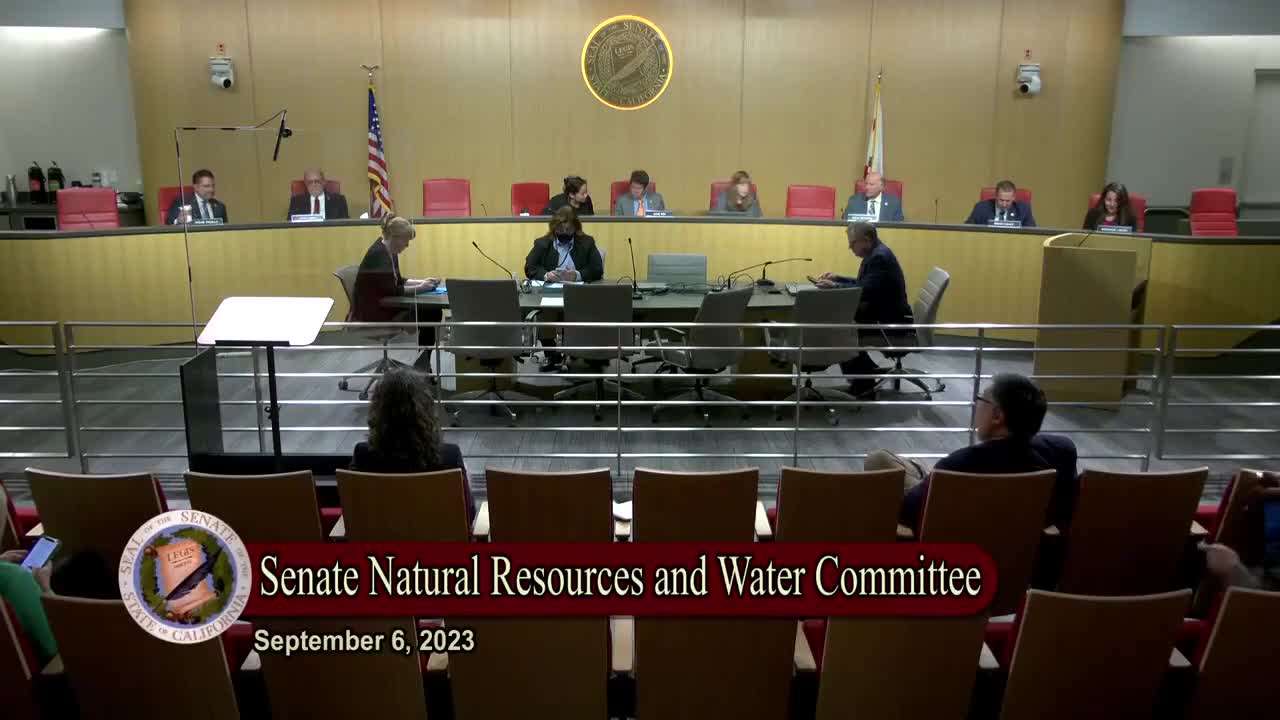 18MIN
Senate Standing Committee on Natural Resources and Water
Bill Author