AB 883: Business licenses: United States Department of Defense SkillBridge program.
- Session Year: 2023-2024
- House: Assembly
- Latest Version Date: 2023-10-07
Current Status:
Passed
(2023-10-07: Chaptered by Secretary of State - Chapter 348, Statutes of 2023.)
Introduced
In Committee
First Chamber
In Committee
Second Chamber
Enacted
Existing law establishes the Department of Consumer Affairs under the direction of the Director of Consumer Affairs and sets forth its powers and duties relating to the administration of the various boards under its jurisdiction that license and regulate various professions and vocations.
Existing law requires a board to expedite, and authorizes a board to assist, in the initial licensure process for an applicant who supplies satisfactory evidence to the board that the applicant has served as an active duty member of the Armed Forces of the United States and was honorably discharged. Existing law authorizes a board to adopt regulations necessary to administer those provisions.
This bill would additionally require, on and after July 1, 2024, a board to expedite, and authorize a board to assist, in the initial licensure process for an applicant who supplies satisfactory evidence to the board that the applicant is an active duty member of a regular component of the Armed Forces of the United States enrolled in the United States Department of Defense SkillBridge program, as specified, and would provide that regulations to administer those provisions be adopted in accordance with the rulemaking provisions of the Administrative Procedure Act.
Existing law establishes the Department of Consumer Affairs under the direction of the Director of Consumer Affairs and sets forth its powers and duties relating to the administration of the various boards under its jurisdiction that license and regulate various professions and vocations.
Existing law requires a board to expedite, and authorizes a board to assist, in the initial licensure process for an applicant who supplies satisfactory evidence to the board that the applicant has served as an active duty member of the Armed Forces of the United States and was honorably discharged. Existing law authorizes a board to adopt regulations necessary to administer those provisions.
This bill would additionally require require, on and after July 1, 2024, a board to expedite, and authorize a board to assist, in the initial licensure process for an applicant who supplies satisfactory evidence to the board that the applicant is an active duty member of a regular component of the Armed Forces of the United States enrolled in the United States Department of Defense SkillBridge program, as specified, and would provide that regulations to administer those provisions be adopted in accordance with the rulemaking provisions of the Administrative Procedure Act.
Existing law establishes the Department of Consumer Affairs under the direction of the Director of Consumer Affairs and sets forth its powers and duties relating to the administration of the various boards under its jurisdiction that license and regulate various professions and vocations.
Existing law requires a board to expedite, and authorizes a board to assist, in the initial licensure process for an applicant who supplies satisfactory evidence to the board that the applicant has served as an active duty member of the Armed Forces of the United States and was honorably discharged. Existing law authorizes a board to adopt regulations necessary to administer those provisions.
This bill would additionally require a board to expedite, and authorize a board to assist, in the initial licensure process for an applicant who supplies satisfactory evidence to the board that the applicant is an active duty member of a regular component of the Armed Forces of the United States enrolled in the United States Department of Defense SkillBridge program, as specified. specified, and would provide that regulations to administer those provisions be adopted in accordance with the rulemaking provisions of the Administrative Procedure Act.
Existing law establishes the Department of Consumer Affairs under the direction of the Director of Consumer Affairs and sets forth its powers and duties relating to the administration of the various boards under its jurisdiction that license and regulate various professions and vocations.
Existing law requires a board to expedite, and authorizes a board to assist, in the initial licensure process for an applicant who supplies satisfactory evidence to the board that the applicant has served as an active duty member of the Armed Forces of the United States and was honorably discharged. Existing law authorizes a board to adopt regulations necessary to administer those provisions.
This bill would additionally require a board to expedite, and authorize a board to assist, in the initial licensure process for an applicant who supplies satisfactory evidence to the board that the applicant is enrolled in the United States Department of Defense SkillBridge program, as specified.
(a)Notwithstanding any other law, on and after July 1, 2016, a board within the department shall expedite, and may assist, the initial licensure process for an applicant who supplies satisfactory evidence to the board that the applicant has served as an active duty member of the Armed Forces of the United States and was honorably discharged.
(b)Notwithstanding any other law, on and after July 1, 2024, a board within the department shall expedite, and may assist, the initial licensure process for an applicant who supplies satisfactory evidence to the board that the applicant is an active duty member of a regular component of the Armed Forces of the United States enrolled in the United States Department of Defense SkillBridge program as authorized under Section 1143(e) of Title 10 of the United States Code.
(c)A board may adopt regulations necessary to administer this section in accordance with the provisions of Chapter 3.5 (commencing with Section 11340) of Part 1 of Division 3 of Title 2 of the Government Code.
(a)Notwithstanding any other law, on and after July 1, 2016, a board within the department shall expedite, and may assist, the initial licensure process for an applicant who supplies satisfactory evidence to the board that the applicant is an active duty member of a regular component of the Armed Forces of the United States enrolled in the United States Department of Defense SkillBridge program as authorized under Section 1143(e) of Title 10 of the United States Code or has served as an active duty member of the Armed Forces of the United States and was honorably discharged.
(b)Notwithstanding any other law, on and after July 1, 2024, a board within the department shall expedite, and may assist, the initial licensure process for an applicant who supplies satisfactory evidence to the board that the applicant is an active duty member of a regular component of the Armed Forces of the United States enrolled in the United States Department of Defense SkillBridge program as authorized under Section 1143(e) of Title 10 of the United States Code.
(b)(c)A board may adopt regulations necessary to administer this section in accordance with the provisions of Chapter 3.5 (commencing with Section 11340) of Part 1 of Division 3 of Title 2 of the Government Code.
(a)Notwithstanding any other law, on and after July 1, 2016, a board within the department shall expedite, and may assist, the initial licensure process for an applicant who supplies satisfactory evidence to the board that the applicant is an active duty member of a regular component of the Armed Forces of the United States enrolled in the United States Department of Defense SkillBridge program as authorized under Section 1143(e) of Title 10 of the United States Code or has served as an active duty member of the Armed Forces of the United States and was honorably discharged.
(b)A board may adopt regulations necessary to administer this section. section in accordance with the provisions of Chapter 3.5 (commencing with Section 11340) of Part 1 of Division 3 of Title 2 of the Government Code.
(a)Notwithstanding any other law, on and after July 1, 2016, a board within the department shall expedite, and may assist, the initial licensure process for an applicant who supplies satisfactory evidence to the board that the applicant is enrolled in the United States Department of Defense SkillBridge program as authorized under Section 1143(e) of Title 10 of the United States Code or has served as an active duty member of the Armed Forces of the United States and was honorably discharged.
(b)A board may adopt regulations necessary to administer this section.
|
Date
|
Status
|
|---|---|
| Oct 7, 2023 | Chaptered by Secretary of State - Chapter 348, Statutes of 2023. |
| Oct 7, 2023 | Approved by the Governor. |
| Sep 19, 2023 | Enrolled and presented to the Governor at 4 p.m. |
| Sep 12, 2023 | In Assembly. Ordered to Engrossing and Enrolling. |
| Sep 12, 2023 | Read third time. Passed. Ordered to the Assembly. (Ayes 39. Noes 0. Page 2687.). |
| Sep 8, 2023 | Ordered to special consent calendar. |
| Sep 5, 2023 | Read second time. Ordered to third reading. |
| Sep 1, 2023 | From committee: Do pass. (Ayes 7. Noes 0.) (September 1). |
| Aug 14, 2023 | In committee: Referred to APPR suspense file. |
| Jul 11, 2023 | From committee: Do pass and re-refer to Com. on APPR with recommendation: To Consent Calendar. (Ayes 5. Noes 0.) (July 10). Re-referred to Com. on APPR. |
| Jun 12, 2023 | From committee: Do pass and re-refer to Com. on M. & V.A. (Ayes 12. Noes 0.) (June 12). Re-referred to Com. on M. & V.A. |
| Jun 7, 2023 | Referred to Coms. on B., P. & E. D. and M. & V.A. |
| May 31, 2023 | In Senate. Read first time. To Com. on RLS. for assignment. |
| May 30, 2023 | Read third time. Passed. Ordered to the Senate. (Ayes 80. Noes 0. Page 1921.) |
| May 22, 2023 | Read second time. Ordered to third reading. |
| May 18, 2023 | Read second time and amended. Ordered returned to second reading. |
| May 18, 2023 | From committee: Amend, and do pass as amended. (Ayes 15. Noes 0.) (May 18). |
| Apr 19, 2023 | In committee: Set, first hearing. Referred to APPR. suspense file. |
| Mar 28, 2023 | From committee: Do pass and re-refer to Com. on APPR. with recommendation: To Consent Calendar. (Ayes 18. Noes 0.) (March 28). Re-referred to Com. on APPR. |
| Mar 27, 2023 | Re-referred to Com. on B. & P. |
| Mar 23, 2023 | From committee chair, with author's amendments: Amend, and re-refer to Com. on B. & P. Read second time and amended. |
| Feb 23, 2023 | Referred to Com. on B. & P. |
| Feb 15, 2023 | From printer. May be heard in committee March 17. |
| Feb 14, 2023 | Read first time. To print. |
|
Date
|
Description
|
Location
|
Votes
|
|
|---|---|---|---|---|
| Sep 12, 2023 | Special Consent AB883 Mathis et al. | Senate Floor |
Passed |
|
| Sep 1, 2023 | Do pass | Senate Standing Committee on Appropriations |
Passed |
|
| Aug 14, 2023 | Placed on suspense file | Senate Standing Committee on Appropriations |
Passed |
|
| Jul 10, 2023 | Do pass, but first be re-referred to the Committee on [Appropriations] with the recommendation: To Consent Calendar | Senate Standing Committee on Military and Veterans Affairs |
Passed |
|
| Jun 12, 2023 | Do pass, but first be re-referred to the Committee on [Military and Veterans Affairs] | Senate Standing Committee on Business, Professions and Economic Development |
Passed |
|
| May 30, 2023 | AB 883 Mathis Assembly Third Reading | Assembly Floor |
Passed |
|
| May 18, 2023 | Do pass as amended. | Assembly Standing Committee on Appropriations |
Passed |
|
| Mar 28, 2023 | Do pass and be re-referred to the Committee on [Appropriations] with recommendation: To Consent Calendar | Assembly Standing Committee on Business and Professions |
Passed |
This list shows positions taken on this bill by organizations on the date displayed, which is linked to the original source.
Positions by individuals are not included.
|
Organization
|
Position
|
Date
|
|---|---|---|
| Board of Psychology | ** Support | |
| California Association Of Realtors | ** Support | |
| California Board of Psychology | ** Support | |
| California Business Properties Association | ** Support |
SENATE RULES COMMITTEE Office of Senate Floor Analyses (916) 651-1520 Fax: (916) 327-4478 | AB 883 |
THIRD READING
Bill No: AB 883
Author: Mathis (R), et al.
Amended: 5/18/23 in Assembly
Vote: 21
SENATE BUS., PROF. & ECON. DEV. COMMITTEE: 12-0, 6/12/23
AYES: Roth, Nguyen, Alvarado-Gil, Archuleta, Ashby, Becker, Dodd, Glazer, Niello, Smallwood-Cuevas, Wahab, Wilk
NO VOTE RECORDED: Eggman
SENATE MILITARY & VETERANS COMMITTEE: 5-0, 7/10/23
AYES: Archuleta, Grove, Alvarado-Gil, Menjivar, Umberg
SENATE APPROPRIATIONS COMMITTEE: 7-0, 9/1/23
AYES: Portantino, Jones, Ashby, Bradford, Seyarto, Wahab, Wiener
ASSEMBLY FLOOR: 80-0, 5/30/23 - See last page for vote
SUBJECT: Business licenses: United States Department of Defense SkillBridge program
SOURCE: Author
DIGEST:
This bill requires a licensing program within the Department of Consumer Affairs, after July 1, 2024, to expedite, and authorizes the program to assist with, the initial licensure process for an applicant who supplies satisfactory evidence they are an active duty member of a regular component of the Armed Forces of the United States enrolled in the United States Department of Defense SkillBridge program.
ANALYSIS:
Existing law:
- Provides for the regulation and licensure of various professions and vocations by boards, bureaus, and other entities within the DCA. (Business and Professions Code (BPC) §§ 100-144.5)
- Defines “board,” as the board in which the administration of the provision is vested, and unless otherwise expressly provided, includes “bureau,” “commission,” “committee,” “department,” “division,” “examining committee,” “program,” and “agency.” (BPC § 22)
- States that any licensee or registrant of any board, commission, or bureau within the DCA whose license expired while the licensee or registrant was on active duty as a member of the California National Guard or the United States Armed Forces, may, upon application, reinstate their license or registration without examination or penalty. (BPC § 114)
- Requires every board within the DCA to waive the renewal fees, continuing education requirements, and other renewal requirements as determined by the board, for any licensee or registrant called to active duty as a member of the United States Armed Forces or the California National Guard. (BPC § 114.3)
- Requires a DCA board to inquire in every license application if the individual applying for licensure is serving in, or has previously served in, the military and, if the board’s governing law authorizes veterans to apply military experience and training towards licensure requirements, to post information on the board’s website about the ability of veteran applicants to apply military experience and training towards licensure requirements. (BPC § 114.5)
- Requires a DCA board to expedite the initial licensure process for an applicant who supplies satisfactory evidence to the board that the applicant has served as an active duty member of the Armed Forces of the United States and was honorably discharged. (BPC § 115.4)
- Requires a DCA board to expedite the licensure process for an applicant who is married to, or in a domestic partnership or other legal union with, an active duty member of the Armed Forces of the United States who is assigned to a duty station in this state under official active duty military orders and who holds a current license in another state, district, or territory of the United States in the profession or vocation for which they are seeking a license from the board. (BPC § 115.5)
- Requires a board, other than a board that has a process by which an out-of-state licensed applicant in good standing who is married to, or in a domestic partnership or other legal union with, an active duty member of the Armed Forces of the United States is able to receive expedited, temporary authorization to practice while meeting state-specific requirements for a period of at least one year or is able to receive an expedited license by endorsement with no additional requirements, to issue a temporary license to practice a profession or vocation to an applicant who meets certain requirements, including:
- They provide evidence that they are married to, or in a domestic partnership or other legal union with, an active duty member of the Armed Forces of the United States who is assigned to a duty station in this state under official active duty military orders.
- They hold a current, active, and unrestricted license from another state that authorizes them to practice the profession or vocation within the same scope for which the applicant seeks a temporary license from the board.
- They submit an application that includes written verification from their original licensing jurisdiction stating that they are in good standing in that jurisdiction.
- They have not committed an act in any jurisdiction that would have constituted grounds for denial, suspension, or revocation of the license under this code at the time the act was committed.
- They have not been disciplined by a licensing entity in another jurisdiction and are not be the subject of an unresolved complaint, review procedure, or disciplinary proceeding conducted by a licensing entity in another jurisdiction.
- Requires a board to issue the temporary license within 30 days of receiving documentation that the applicant has met the requirements and specifies authority for the license to be terminated if they do not meet the requirements or if they engaged in unprofessional conduct or any other act that is a cause for discipline by the board. Specifies that the temporary licenses is not renewable and expires 12 months after being issued or when a standard license is issued or denied.
This bill requires a board, after July 1, 2024, to expedite, and authorizes a board to assist with, the initial licensure process for an applicant who supplies satisfactory evidence they are an active duty member of a regular component of the Armed Forces of the United States enrolled in the United States Department of Defense SkillBridge program.
Background
Recent studies and reports have focused on the impacts of licensing requirements for employment and on individuals seeking to become employed. As a result of requirements for licensure for so many professions in California, when the spouse or partner of an active duty member of the military travels with the member to California under military orders, they may be required to apply for a new license, even if they are licensed in a different state. The process of applying for a new license can be lengthy, expensive, and burdensome. Military spouses may under this process multiple times, despite having little choice in when or how often they move. Aimed at easing burdens, existing law provides for several accommodations of both military family and veteran license applicants. DCA boards are required to ask about the military status of each of their applicants so that military experience may potentially be applied toward licensure training requirements. DCA boards are also required to expedite licensure for military veterans as well as the spouses and partners of active duty military to reduce license processing wait times.
Temporary Licenses. If licensed in another state, and depending on the license, military spouses and other applicants may be able to issue to utilize provisions that recognize out-of-state licenses, also known as reciprocity or licensure by endorsement. However, depending on the specific license requirements and the potential differences in requirements between states, concerns about applicants still experiencing long wait times as their qualifications are reviewed have been the source of numerous efforts and bills. In general, temporary licenses allow an applicant to practice for a limited period, allowing them to practice while the remainder of the qualifications is obtained or verified. Since license requirements are intended to protect the public, applicants usually must be able to immediately demonstrate meeting some of the qualifications required for licensure and pass a background check. Some programs authorize temporary practice for a specified period of time to individuals who do not intend to become permanently licensed in California but in response to concerns about the inability for individuals to become employed while waiting for licensing processing, boards are now required to issue temporary licenses for up to 12-months to military spouses.
SkillBridge. This bill extends the expedited licensure benefit to applicants who are active duty members of a regular component of the U.S. Armed Forces enrolled in the U.S. Department of Defense (DOD) SkillBridge program. Regular components currently include Army, Navy, Air Force, Marine Corps, and Space Force. SkillBridge is an employment assistance program that provides work experience opportunities to service members transitioning to the civilian sector. Enrollees must be within 180 days of discharge, have had at least 180 continuous days of active service, and obtain written authorization from their unit commander. If approved, members can be granted up to 180 days of permissive duty to participate full-time in the program. The SkillBridge opportunities are offered through partner organizations that have been authorized by the DOD through an official memorandum of understanding to work with each of the applicable military branches and respective installation commanders to develop SkillBridge training programs for their personnel. To be approved by the DOD, partnering organizations must submit a detailed training plan that specifies, among other things, specific learning objectives, instructor qualifications, and descriptions of assessments.
The DOD also specifies that “SkillBridge opportunities must provide eligible Service members with a job training and career development experience to acquire employment skills, knowledge, or abilities to assist them with job opportunities in the civilian sector. The opportunities must offer a high probability of post-service employment with the provider or any other employer and offer enrollment at no cost or minimal cost to eligible Service members.”
The four SkillBridge opportunity types are defined as:
- Apprenticeship/Pre-Apprenticeship programs: A combination of on-the-job-training and related classroom instruction under the supervision of a trade official. The programs are jointly sponsored by employer and union groups, individual employers, or employer associations. They must meet one of the following:
- Be registered with the U.S. Department of Labor or registered in the state in which it operates.
- Be an “Education and Job Training Program” approved by the U.S. Department of Veterans Affairs.
- Be a certificate program accredited by the American National Standards Institute.
- Be accredited by an accrediting agency recognized by the U.S. Department of Education.
Apprenticeships programs must also meet all of the following:
- Be offered by an industry-related organization that is a sponsor of or oversees the sponsorship of a registered apprenticeship program related to the training being offered.
- Documented in a memorandum of understanding that establishes the parameters for cooperative support between the local installation and the local program sponsor.
- Have the potential to provide post-service employment.
- Employment Skills Training or On the Job Training: Employee training and tasks learned at a place of work while performing the actual job. OJT occurs in the particular working situation that an employee can expect to work in daily. An OJT or employment skills training program must have at least one of the following:
- Be an “Education and Job Training Program” approved by the U.S. Department of VA.
- Be accredited by an accrediting agency recognized by the U.S. DOE.
- Be a certificate program accredited by the ANSI.
- Be approved by the National Association of State Approving Agencies.
- Be a training program accredited by the Council on Occupational Education.
- Internships: A system of on-the-job-training offered by a provider to eligible Service members to develop jobs skills and employment skills training that assists them to gain employment in the civilian sector. Offers a type of work experience for entry-level job seekers.
- Job shadowing: Normally is performed in one day by observing the day-to-day operations of the employer.
FISCAL EFFECT: Appropriation: No Fiscal Com.: Yes Local: No
According to the Senate Appropriations Committee, this bill will result in minor and absorbable costs to DCA licensing programs, as the department already expedites active-duty military member applications for licensure; minor and absorbable costs to update forms and applications, and one-time absorbable workload to update regulations and; one-time cost of approximately $217,000 to DCA’s Office of Information Services for IT related workload, including updating online applications creating new modifiers, business rules, and workflow queues, and online web posting of updated paper applications to their respective program websites. OIS notes it will complete a portion of this work internally, but will require additional contract vendor resources, which is not absorbable.
SUPPORT: (Verified 9/1/23)
Board of Psychology
California Association of Realtors
California Business Properties Association
OPPOSITION: (Verified 9/1/23)
None received
ARGUMENTS IN SUPPORT: Supporters note that the bill aligns with existing state policy for veterans by ensuring the Department of Real Estate will expedite license applications to assist in transition to civilian life and note that “For those service members who are transitioning into fields requiring licensure, like real estate, expediting their license applications will directly and positively impact their transition and hasten their ability to earn an income and support their families. Unemployment is disproportionately high within the veteran community, but this bill will help eliminate unnecessary delays and roadblocks. They can hit the ground running. At a time when labor shortages and demographic changes challenge California’s workforce and economic outlook, the state cannot afford to lose workers to other states, especially our skilled and accomplished service men and women.”
ASSEMBLY FLOOR: 80-0, 5/30/23
AYES: Addis, Aguiar-Curry, Alanis, Alvarez, Arambula, Bains, Bauer-Kahan, Bennett, Berman, Boerner, Bonta, Bryan, Calderon, Juan Carrillo, Wendy Carrillo, Cervantes, Chen, Connolly, Megan Dahle, Davies, Dixon, Essayli, Flora, Mike Fong, Vince Fong, Friedman, Gabriel, Gallagher, Garcia, Gipson, Grayson, Haney, Hart, Holden, Hoover, Irwin, Jackson, Jones-Sawyer, Kalra, Lackey, Lee, Low, Lowenthal, Maienschein, Mathis, McCarty, McKinnor, Muratsuchi, Stephanie Nguyen, Ortega, Pacheco, Papan, Jim Patterson, Joe Patterson, Pellerin, Petrie-Norris, Quirk-Silva, Ramos, Reyes, Luz Rivas, Robert Rivas, Rodriguez, Blanca Rubio, Sanchez, Santiago, Schiavo, Soria, Ta, Ting, Valencia, Villapudua, Waldron, Wallis, Ward, Weber, Wicks, Wilson, Wood, Zbur, Rendon
Prepared by: Sarah Mason / B., P. & E.D. /
9/2/23 9:51:45
**** END ****
SENATE COMMITTEE ON
Senator Anthony Portantino, Chair
2023 - 2024 Regular Session
AB 883 (Mathis) - Business licenses: United States Department of Defense SkillBridge program
Version: | Policy Vote: |
Urgency: | Mandate: |
Hearing Date: | Consultant: |
Bill Summary:
AB 883, beginning July 1, 2024, requires a licensing program within the Department of Consumer Affairs (DCA) to expedite the initial licensure process for an applicant who supplies satisfactory evidence they are an active duty member of a regular component of the Armed Forces of the United States enrolled in the United States Department of Defense (DOD) SkillBridge program.
Fiscal Impact:
- Minor and absorbable costs to DCA licensing programs, as the department already expedites active-duty military member applications for licensure.
- Minor and absorbable costs to update forms and applications, and one-time absorbable workload to update regulations.
- One-time cost of approximately $217,000 to DCA’s Office of Information Services (OIS) for IT related workload, including updating online applications (BreEZe, Connect, and SimpliGov), creating new modifiers, business rules, and workflow queues, and online web posting of updated paper applications to their respective program websites. OIS notes it will complete a portion of this work internally, but will require additional contract vendor resources, which is not absorbable.
Background:
The SkillBridge program is an employment assistance program that provides work experience opportunities to service members transitioning to the civilian sector. Enrollees must be within 180 days of discharge, have had at least 180 continuous days of active service, and obtain written authorization from their unit commander. If approved, members can be granted up to 180 days of permissive duty to participate full-time in the program. The SkillBridge opportunities are offered through partner organizations that have been authorized by the DOD through an official memorandum of understanding to work with each of the applicable military branches and respective installation commanders to develop SkillBridge training programs for their personnel. To be approved by the DOD, partnering organizations must submit a detailed training plan that specifies, among other things, specific learning objectives, instructor qualifications, and descriptions of assessments.
The DOD also specifies that “SkillBridge opportunities must provide eligible Service members with a job training and career development experience to acquire employment skills, knowledge, or abilities to assist them with job opportunities in the civilian sector. The opportunities must offer a high probability of post-service employment with the provider or any other employer and offer enrollment at no cost or minimal cost to eligible Service members.”
The four SkillBridge opportunity types are: Apprenticeship/Pre-Apprenticeship programs, Employment Skills Training or On the Job Training, Internships, and Job Shadowing.
Proposed Law:
- Beginning July 1, 2024, requires a board within the DCA to expedite, and may assist, the initial licensure process for an applicant who supplies satisfactory evidence to the board that the applicant is an active duty member of a regular component of the Armed Forces of the United States enrolled in the United State Department of Defense SkillBridge program.
Staff Comments:
The boards and bureaus within the DCA are special fund agencies whose activities are funded by regulatory and license fees and generally receive no support from the General Fund. New legislative mandates, even those modest in scope, may in totality create new cost pressures and impact the entity’s operating costs, future budget requests, or license fees.
-- END --
SENATE COMMITTEE ON MILITARY AND VETERANS AFFAIRS
Senator Bob Archuleta, Chair
2023 - 2024 Regular
Bill No: AB 883 Hearing Date: 7/10/23
Author: | Mathis | ||
Version: | 5/18/23 Amended | ||
Urgency: | No | Fiscal: | Yes |
Consultant: | Jenny Callison | ||
Subject: Business licenses: United States Department of Defense SkillBridge program
DESCRIPTION
Summary:
Requires a licensing program within the Department of Consumer Affairs (DCA), after July 1, 2024, to expedite, and authorizes the program to assist with, the initial licensure process for an applicant who supplies satisfactory evidence they are an active duty member of a regular component of the Armed Forces of the United States enrolled in the United States Department of Defense SkillBridge program.
Existing law:
- Provides for the regulation and licensure of various professions and vocations by boards, bureaus, and other entities within the DCA.
- States that any licensee or registrant of any board, commission, or bureau within the DCA whose license expired while the licensee or registrant was on active duty as a member of the California National Guard or the United States Armed Forces, may, upon application, reinstate their license or registration without examination or penalty.
- Requires every board within the DCA to waive the renewal fees, continuing education requirements, and other renewal requirements as determined by the board, for any licensee or registrant called to active duty as a member of the United States Armed Forces or the California National Guard.
- Requires a DCA board to inquire in every license application if the individual applying for licensure is serving in, or has previously served in, the military and, if the board’s governing law authorizes veterans to apply military experience and training towards licensure requirements, to post information on the board’s website about the ability of veteran applicants to apply military experience and training towards licensure requirements.
- Requires a DCA board to expedite the initial licensure process for an applicant who supplies satisfactory evidence to the board that the applicant has served as an active duty member of the Armed Forces of the United States and was honorably discharged.
- Requires a DCA board to expedite the licensure process for an applicant who is married to, or in a domestic partnership or other legal union with, an active duty member of the Armed Forces of the United States who is assigned to a duty station in this state under official active duty military orders and who holds a current license in another state, district, or territory of the United States in the profession or vocation for which they are seeking a license from the board.
- Requires a board, other than a board that has a process by which an out-of-state licensed applicant in good standing who is married to, or in a domestic partnership or other legal union with, an active duty member of the Armed Forces of the United States is able to receive expedited, temporary authorization to practice while meeting state-specific requirements for a period of at least one year or is able to receive an expedited license by endorsement with no additional requirements, to issue a temporary license to practice a profession or vocation to an applicant who meets certain requirements, including:
- They provide evidence that they are married to, or in a domestic partnership or other legal union with, an active duty member of the Armed Forces of the United States who is assigned to a duty station in this state under official active duty military orders.
- They hold a current, active, and unrestricted license from another state that authorizes them to practice the profession or vocation within the same scope for which the applicant seeks a temporary license from the board.
- They submit an application that includes written verification from their original licensing jurisdiction stating that they are in good standing in that jurisdiction.
- They have not committed an act in any jurisdiction that would have constituted grounds for denial, suspension, or revocation of the license under this code at the time the act was committed.
- They have not been disciplined by a licensing entity in another jurisdiction and are not be the subject of an unresolved complaint, review procedure, or disciplinary proceeding conducted by a licensing entity in another jurisdiction.
BACKGROUND
SkillBridge is an employment assistance program that provides work experience opportunities to service members transitioning to the civilian sector. Enrollees must be within 180 days of discharge, have had at least 180 continuous days of active service, and obtain written authorization from their unit commander. If approved, members can be granted up to 180 days of permissive duty to participate full-time in the program. The SkillBridge opportunities are offered through partner organizations that have been authorized by the DOD through an official memorandum of understanding to work with each of the applicable military branches and respective installation commanders to develop SkillBridge training programs for their personnel. To be approved by the DOD, partnering organizations must submit a detailed training plan that specifies, among other things, specific learning objectives, instructor qualifications, and descriptions of assessments.
The DOD also specifies that “SkillBridge opportunities must provide eligible Service members with a job training and career development experience to acquire employment skills, knowledge, or abilities to assist them with job opportunities in the civilian sector. The opportunities must offer a high probability of post-service employment with the provider or any other employer and offer enrollment at no cost or minimal cost to eligible Service members.”
The four SkillBridge opportunity types are: Apprenticeship/Pre-Apprenticeship programs, Employment Skills Training or On the Job Training, Internships, and Job Shadowing.
COMMENT
According to the Author, “The transition from active military duty to a civilian life is a stressful and isolating time for many service members, and as members of the legislature it is our responsibility to do all that we can to make this process as easy as possible. AB 883 will require state agencies to expedite applications of those who are enrolled in the Department of Defense’s SkillBridge program, thus aligning existing state policy to expedite veteran applications and ensuring that every veteran is provided with the support, information and tools necessary to succeed.”
In October 2016, the Little Hoover Commission released a report entitled Jobs for Californians: Strategies to Ease Occupational Licensing Barriers. The report noted that one out of every five Californians must receive permission from the government to work, and for millions of Californians that means contending with the hurdles of becoming licensed. The report noted that many of the goals to professionalize occupations, standardize services, guarantee quality and limit competition among practitioners, while well intended, have had a larger impact of preventing Californians from working, particularly harder-to-employ groups such as former offenders and those trained or educated outside of California, including veterans, military spouses and foreign-trained workers. The study found that occupational licensing hurts those at the bottom of the economic ladder twice: first by imposing significant costs on them should they try to enter a licensed occupation and second by pricing the services provided by licensed professionals out of reach.
The report found that California compares poorly to the rest of the nation in the amount of licensing it requires for occupations traditionally entered into by people of modest means. According to the report, researchers from the Institute for Justice selected 102 lower-income occupations, defined by the Bureau of Labor Statistics as making less than the national average income, ranging from manicurist to pest control applicator. Of the 102 occupations selected, California required licensure for 62, or 61 percent of them. According to the report, California ranked third most restrictive among 50 states and the District of Columbia, following only Louisiana and Arizona. California ranked seventh of 51 when measuring the burden imposed on entrants into these lower- and moderate-income occupations: on average, California applicants must pay $300 in licensing fees, spend 549 days in education and/or training and pass one exam.
As a result of requirements for licensure for so many professions in California, when the spouse or partner of an active duty member of the military travels with the member to California under military orders, they may be required to apply for a new license, even if they are licensed in a different state. The process of applying for a new license can be lengthy, expensive, and burdensome. Military spouses may move under this process multiple times, despite having little choice in when or how often they move.
If licensed in another state, and depending on the license, military spouses and other applicants may be able to issue to utilize provisions that recognize out-of-state licenses, also known as reciprocity or licensure by endorsement. However, depending on the specific license requirements and the potential differences in requirements between states, concerns about applicants still experiencing long wait times as their qualifications are reviewed have been the source of numerous efforts and bills.
POSITIONS
Sponsor: Author.
Support: California Association of Realtors
California Board of Psychology
California Business Properties Association
Oppose: None on File.
-- END --
SENATE COMMITTEE ON
BUSINESS, PROFESSIONS AND ECONOMIC DEVELOPMENT
Senator Richard Roth, Chair
2023 - 2024 Regular
Bill No: AB 883 Hearing Date: June 12, 2023
Author: | Mathis | ||
Version: |
| ||
Urgency: | Fiscal: | ||
Consultant: | |||
Subject: Business licenses: United States Department of Defense SkillBridge program.
SUMMARY: Requires a licensing program within the Department of Consumer Affairs, after July 1, 2024, to expedite, and authorizes the program to assist with, the initial licensure process for an applicant who supplies satisfactory evidence they are an active duty member of a regular component of the Armed Forces of the United States enrolled in the United States Department of Defense SkillBridge program.
NOTE:
Double-referral to the Senate Committee on Military and Veterans Affairs, Second.
Existing law:
- Provides for the regulation and licensure of various professions and vocations by boards, bureaus, and other entities within the DCA. (Business and Professions Code (BPC) §§ 100-144.5)
- Defines “board,” as the board in which the administration of the provision is vested, and unless otherwise expressly provided, includes “bureau,” “commission,” “committee,” “department,” “division,” “examining committee,” “program,” and “agency.” (BPC § 22)
- States that any licensee or registrant of any board, commission, or bureau within the DCA whose license expired while the licensee or registrant was on active duty as a member of the California National Guard or the United States Armed Forces, may, upon application, reinstate their license or registration without examination or penalty. (BPC § 114)
- Requires every board within the DCA to waive the renewal fees, continuing education requirements, and other renewal requirements as determined by the board, for any licensee or registrant called to active duty as a member of the United States Armed Forces or the California National Guard. (BPC § 114.3)
- Requires a DCA board to inquire in every license application if the individual applying for licensure is serving in, or has previously served in, the military and, if the board’s governing law authorizes veterans to apply military experience and training towards licensure requirements, to post information on the board’s website about the ability of veteran applicants to apply military experience and training towards licensure requirements. (BPC § 114.5)
- Requires a DCA board to expedite the initial licensure process for an applicant who supplies satisfactory evidence to the board that the applicant has served as an active duty member of the Armed Forces of the United States and was honorably discharged. (BPC § 115.4)
- Requires a DCA board to expedite the licensure process for an applicant who is married to, or in a domestic partnership or other legal union with, an active duty member of the Armed Forces of the United States who is assigned to a duty station in this state under official active duty military orders and who holds a current license in another state, district, or territory of the United States in the profession or vocation for which they are seeking a license from the board. (BPC § 115.5)
- Requires a board, other than a board that has a process by which an out-of-state licensed applicant in good standing who is married to, or in a domestic partnership or other legal union with, an active duty member of the Armed Forces of the United States is able to receive expedited, temporary authorization to practice while meeting state-specific requirements for a period of at least one year or is able to receive an expedited license by endorsement with no additional requirements, to issue a temporary license to practice a profession or vocation to an applicant who meets certain requirements, including:
- They provide evidence that they are married to, or in a domestic partnership or other legal union with, an active duty member of the Armed Forces of the United States who is assigned to a duty station in this state under official active duty military orders.
- They hold a current, active, and unrestricted license from another state that authorizes them to practice the profession or vocation within the same scope for which the applicant seeks a temporary license from the board.
- They submit an application that includes written verification from their original licensing jurisdiction stating that they are in good standing in that jurisdiction.
- They have not committed an act in any jurisdiction that would have constituted grounds for denial, suspension, or revocation of the license under this code at the time the act was committed.
- They have not been disciplined by a licensing entity in another jurisdiction and are not be the subject of an unresolved complaint, review procedure, or disciplinary proceeding conducted by a licensing entity in another jurisdiction.
- Requires a board to issue the temporary license within 30 days of receiving documentation that the applicant has met the requirements and specifies authority for the license to be terminated if they do not meet the requirements or if they engaged in unprofessional conduct or any other act that is a cause for discipline by the board. Specifies that the temporary licenses is not renewable and expires 12 months after being issued or when a standard license is issued or denied.
This bill requires a board, after July 1, 2024, to expedite, and authorizes a board to assist with, the initial licensure process for an applicant who supplies satisfactory evidence they are an active duty member of a regular component of the Armed Forces of the United States enrolled in the United States Department of Defense SkillBridge program.
FISCAL EFFECT:
This bill is keyed fiscal by Legislative Counsel. According to the Assembly Committee on Appropriations, the bill will result in minor and absorbable costs to boards and bureaus within DCA to update forms, applications, and regulations and estimated General Fund costs of $217,000 to the Office of Information Services to perform update programs that accept online applications.
COMMENTS:
- Purpose. The Author is the Sponsor of this bill. According to the Author, “The transition from active military duty to a civilian life is a stressful and isolating time for many service members, and as members of the legislature it is our responsibility to do all that we can to make this process as easy as possible. AB 883 will require state agencies to expedite applications of those who are enrolled in the Department of Defense’s SkillBridge program, thus aligning existing state policy to expedite veteran applications and ensuring that every veteran is provided with the support, information and tools necessary to succeed.”
- Background.
Occupational Licensing. Recent studies and reports have focused on the impacts of licensing requirements for employment and on individuals seeking to become employed. According to a July 2015 report on occupational licensing released by the White House, strict licensing creates barriers to mobility for licensed workers, citing several groups of people particularly vulnerable to occupational licensing laws, including former offenders, military spouses, veterans and immigrants.
In October 2016, the Little Hoover Commission released a report entitled Jobs for Californians: Strategies to Ease Occupational Licensing Barriers. The report noted that one out of every five Californians must receive permission from the government to work, and for millions of Californians that means contending with the hurdles of becoming licensed. The report noted that many of the goals to professionalize occupations, standardize services, guarantee quality and limit competition among practitioners, while well intended, have had a larger impact of preventing Californians from working, particularly harder-to-employ groups such as former offenders and those trained or educated outside of California, including veterans, military spouses and foreign-trained workers. The study found that occupational licensing hurts those at the bottom of the economic ladder twice: first by imposing significant costs on them should they try to enter a licensed occupation and second by pricing the services provided by licensed professionals out of reach.
The report found that California compares poorly to the rest of the nation in the amount of licensing it requires for occupations traditionally entered into by people of modest means. According to the report, researchers from the Institute for Justice selected 102 lower-income occupations, defined by the Bureau of Labor Statistics as making less than the national average income, ranging from manicurist to pest control applicator. Of the 102 occupations selected, California required licensure for 62, or 61 percent of them. According to the report, California ranked third most restrictive among 50 states and the District of Columbia, following only Louisiana and Arizona. California ranked seventh of 51 when measuring the burden imposed on entrants into these lower- and moderate-income occupations: on average, California applicants must pay $300 in licensing fees, spend 549 days in education and/or training and pass one exam.
As a result of requirements for licensure for so many professions in California, when the spouse or partner of an active duty member of the military travels with the member to California under military orders, they may be required to apply for a new license, even if they are licensed in a different state. The process of applying for a new license can be lengthy, expensive, and burdensome. Military spouses may under this process multiple times, despite having little choice in when or how often they move.
Aimed at easing burdens, existing law provides for several accommodations of both military family and veteran license applicants. DCA boards are required to ask about the military status of each of their applicants so that military experience may potentially be applied toward licensure training requirements. DCA boards are also required to expedite licensure for military veterans as well as the spouses and partners of active duty military to reduce license processing wait times.
Temporary Licenses. If licensed in another state, and depending on the license, military spouses and other applicants may be able to issue to utilize provisions that recognize out-of-state licenses, also known as reciprocity or licensure by endorsement. However, depending on the specific license requirements and the potential differences in requirements between states, concerns about applicants still experiencing long wait times as their qualifications are reviewed have been the source of numerous efforts and bills.
In general, temporary licenses allow an applicant to practice for a limited period, allowing them to practice while the remainder of the qualifications is obtained or verified. Since license requirements are intended to protect the public, applicants usually must be able to immediately demonstrate meeting some of the qualifications required for licensure and pass a background check. Some programs authorize temporary practice for a specified period of time to individuals who do not intend to become permanently licensed in California but in response to concerns about the inability for individuals to become employed while waiting for licensing processing, boards are now required to issue temporary licenses for up to 12-months to military spouses.
SkillBridge. This bill would extend the expedited licensure benefit to applicants who are active duty members of a regular component of the U.S. Armed Forces enrolled in the U.S. Department of Defense (DOD) SkillBridge program. Regular components currently include Army, Navy, Air Force, Marine Corps, and Space Force.
SkillBridge is an employment assistance program that provides work experience opportunities to service members transitioning to the civilian sector. Enrollees must be within 180 days of discharge, have had at least 180 continuous days of active service, and obtain written authorization from their unit commander. If approved, members can be granted up to 180 days of permissive duty to participate full-time in the program. The SkillBridge opportunities are offered through partner organizations that have been authorized by the DOD through an official memorandum of understanding to work with each of the applicable military branches and respective installation commanders to develop SkillBridge training programs for their personnel. To be approved by the DOD, partnering organizations must submit a detailed training plan that specifies, among other things, specific learning objectives, instructor qualifications, and descriptions of assessments.
The DOD also specifies that “SkillBridge opportunities must provide eligible Service members with a job training and career development experience to acquire employment skills, knowledge, or abilities to assist them with job opportunities in the civilian sector. The opportunities must offer a high probability of post-service employment with the provider or any other employer and offer enrollment at no cost or minimal cost to eligible Service members.”
The four SkillBridge opportunity types are defined as:
Apprenticeship/Pre-Apprenticeship programs: A combination of on-the-job-training and related classroom instruction under the supervision of a trade official. The programs are jointly sponsored by employer and union groups, individual employers, or employer associations. They must meet one of the following:
- Be registered with the U.S. Department of Labor or registered in the state in which it operates.
- Be an “Education and Job Training Program” approved by the U.S. Department of Veterans Affairs.
- Be a certificate program accredited by the American National Standards Institute.
- Be accredited by an accrediting agency recognized by the U.S. Department of Education.
Apprenticeships programs must also meet all of the following:
- Be offered by an industry-related organization that is a sponsor of or oversees the sponsorship of a registered apprenticeship program related to the training being offered.
- Documented in a memorandum of understanding that establishes the parameters for cooperative support between the local installation and the local program sponsor.
- Have the potential to provide post-service employment.
Employment Skills Training or On the Job Training: Employee training and tasks learned at a place of work while performing the actual job. OJT occurs in the particular working situation that an employee can expect to work in daily. An OJT or employment skills training program must have at least one of the following:
- Be an “Education and Job Training Program” approved by the U.S. Department of VA.
- Be accredited by an accrediting agency recognized by the U.S. DOE.
- Be a certificate program accredited by the ANSI.
- Be approved by the National Association of State Approving Agencies.
- Be a training program accredited by the Council on Occupational Education.
Internships: A system of on-the-job-training offered by a provider to eligible Service members to develop jobs skills and employment skills training that assists them to gain employment in the civilian sector. Offers a type of work experience for entry-level job seekers.
Job shadowing: Normally is performed in one day by observing the day-to-day operations of the employer.
- Arguments in Support. Supporters note that the bill aligns with existing state policy for veterans by ensuring the Department of Real Estate will expedite license applications to assist in transition to civilian life and note that “For those service members who are transitioning into fields requiring licensure, like real estate, expediting their license applications will directly and positively impact their transition and hasten their ability to earn an income and support their families. Unemployment is disproportionately high within the veteran community, but this bill will help eliminate unnecessary delays and roadblocks. They can hit the ground running. At a time when labor shortages and demographic changes challenge California’s workforce and economic outlook, the state cannot afford to lose workers to other states, especially our skilled and accomplished service men and women.”
SUPPORT AND OPPOSITION:
Support:
California Association of Realtors
California Business Properties Association
Opposition:
None received
-- END --
ASSEMBLY THIRD READING
ATR Bill Id:AB 883
Author:(Mathis)
As Amended Ver:May 18, 2023
Majority vote
SUMMARY
Expands the requirement that licensing boards under the Department of Consumer Affairs (DCA) must expedite the licensing application from military veterans to include applications from active duty members of a regular component of the United States Armed Forces who are enrolled in the United States Department of Defense SkillBridge program.
Major Provisions
Delay the requirement until July 1, 2024.
COMMENTS
Background. In general, professional licensing programs serve to protect the public from trades or professions that may carry a higher risk of harm. Those programs require an active license to practice, which demonstrates a minimum level of training, competency, and fitness to practice. As a result, those who wish to practice in a licensed profession must undergo an application process. However, the process of applying for a new license can be lengthy, expensive, or even confusing.
That process may be worse for veterans. According to the U.S. Department of Veteran Affairs, preparing for and applying for jobs are common challenges that hinder re-adjustment to civilian life. A veteran who had a career in the military may have never looked or applied for a civilian job, or they may be returning to a civilian job but need time adjusting or catching up on qualifications for the position.
To assist with these burdens, existing law provides for several accommodations for veteran license applicants. Many licensing programs are within the DCA, and DCA boards are required to ask about the military status of each of their applicants so that military experience may potentially be applied toward licensure training requirements. DCA boards are also required to expedite licensure for military veterans as well as the spouses and partners of active duty military to reduce license processing wait times.
SkillBridge. This bill would extend the expedited licensure benefit to applicants who are active duty members of a regular component of the U.S. Armed Forces enrolled in the U.S. Department of Defense (DOD) SkillBridge program. Regular components currently include Army, Navy, Air Force, Marine Corps, and Space Force.
SkillBridge is an employment assistance program that provides work experience opportunities to service members transitioning to the civilian sector. Enrollees must be within 180 days of discharge, have had at least 180 continuous days of active service, and obtain written authorization from their unit commander. If approved, members can be granted up to 180 days of permissive duty to participate full-time in the program.
The SkillBridge opportunities are offered through partner organizations that have been authorized by the DOD through an official memorandum of understanding to work with each of the applicable military branches and respective installation commanders to develop SkillBridge training programs for their personnel. To be approved by the DOD, partnering organizations must submit a detailed training plan that specifies, among other things, specific learning objectives, instructor qualifications, and descriptions of assessments.
The DOD also specifies that "SkillBridge opportunities must provide eligible Service members with a job training and career development experience to acquire employment skills, knowledge, or abilities to assist them with job opportunities in the civilian sector. The opportunities must offer a high probability of post-service employment with the provider or any other employer and offer enrollment at no cost or minimal cost to eligible Service members."
Applicability to Licensure. To qualify for a license, applicants must be able to demonstrate the satisfaction of any applicable education, experience, and examination requirements at the time of application. Applicants must also pass a background check. Incomplete applications are typically put on hold until the applicant can remedy any deficiencies.
Because the SkillBridge program is job experience-focused, it is unclear whether it would help enrollees meet the qualifications for licenses that require a specific type of education or passage of an examination, such as a nursing license, unless those requirements are completed ahead of time. As a result, those enrollees may not benefit from an expedited application.
To the extent an enrollee does qualify for a license, or is close to qualifying through experience gained in the program, this bill would allow them to have their license reviewed sooner.
Reserve Components. Currently, SkillBridge is also available to the National Guard and the Reserves. However, National Guard and Reserve members generally live in-state and hold civilian jobs, so there may be no employment transition that an expedited license process would assist with. Therefore, the author accepted amendments to limit the new benefit under the bill to active duty members of the regular components of the armed forces.
According to the Author
"The transition from active military duty to a civilian life is a stressful and isolating time for many service members, and as members of the legislature it is our responsibility to do all that we can to make this process as easy as possible. [This bill] will require state agencies to expedite applications of those who are enrolled in the Department of Defense's SkillBridge program, thus aligning existing state policy to expedite veteran applications and ensuring that every veteran is provided with the support, information and tools necessary to succeed."
Arguments in Support
The California Association of Realtors writes in support:
SkillBridge has countless industry partners in a variety of fields, including real estate, with established military recruitment and transition programs because of the expertise, dedication, and service our veterans bring. Real estate is a field where there is no substitute for on the ground training and this bill also accomplishes the goal of real-life experience for these future licensees.
For those service members who are transitioning into fields requiring licensure, like real estate, expediting their license applications will directly and positively impact their transition and hasten their ability to earn an income and support their families. Unemployment is disproportionately high within the veteran community, but this bill will help eliminate unnecessary delays and roadblocks. They can hit the ground running. At a time when labor shortages and demographic changes challenge California’s workforce and economic outlook, the state cannot afford to lose workers to other states, especially our skilled and accomplished service men and women.
Arguments in Opposition
None on file.
FISCAL COMMENTS
According to the Assembly Appropriations Committee:
- Minor and absorbable costs (various special funds) to boards and bureaus within DCA to update forms, applications, and regulations.
- Estimated General Fund costs of $217,000 to the Office of Information Services (OIS) to perform application language updates for all programs that accept online applications (BreEZe, Connect, and SimpliGov), the creation of new modifiers, business rules, and workflow queues for all BreEZe license types for tracking purposes, and online web posting of the updated paper applications to their respective program websites. OIS indicates it will complete the web posting work internally ($40,000), but new contract vendor resources will be needed to implement the remaining provisions of the bill ($177,000).
VOTES
ASM BUSINESS AND PROFESSIONS: 18-0-1
YES: Berman, Flora, Alanis, Alvarez, Bains, Bonta, Chen, Dixon, Gipson, Grayson, Irwin, Jackson, Lee, Lowenthal, McKinnor, Stephanie Nguyen, Joe Patterson, Ting
ABS, ABST OR NV: McCarty
ASM APPROPRIATIONS: 15-0-1
YES: Holden, Megan Dahle, Bryan, Calderon, Wendy Carrillo, Dixon, Mike Fong, Hart, Lowenthal, Mathis, Papan, Pellerin, Sanchez, Weber, Ortega
ABS, ABST OR NV: Robert Rivas
UPDATED
VERSION: March 23, 2023
CONSULTANT: Vincent Chee / B. & P. / (916) 319-3301 FN: 0000976
Date of Hearing: April 19, 2023
ASSEMBLY COMMITTEE ON APPROPRIATIONS
Chris Holden, Chair
ABPCA Bill Id:AB 883
Author:(Mathis) – As Amended Ver:March 23, 2023
Policy Committee: | Business and Professions | Vote: | 18 - 0 |
|
| ||
|
|
Urgency: No State Mandated Local Program: No Reimbursable: No
SUMMARY:
This bill requires a licensing board under the Department of Consumer Affairs (DCA) to expedite the initial licensure process for an applicant who is an active duty member of a regular component of the Armed Forces of the United States enrolled in the United States Department of Defense (DOD) SkillBridge program.
FISCAL EFFECT:
- Minor and absorbable costs (various special funds) to boards and bureaus within DCA to update forms, applications, and regulations.
- Estimated General Fund costs of $217,000 to the Office of Information Services (OIS) to perform application language updates for all programs that accept online applications (BreEZe, Connect, and SimpliGov), the creation of new modifiers, business rules, and workflow queues for all BreEZe license types for tracking purposes, and online web posting of the updated paper applications to their respective program websites. OIS indicates it will complete the web posting work internally ($40,000), but new contract vendor resources will be needed to implement the remaining provisions of the bill ($177,000). OIS also requests a delayed implementation date of July 1, 2024, to allow time for vendor procurement and completion of work.
COMMENTS:
- Purpose. This bill seeks to improve professional licensure opportunities for veterans of the Armed Forces of the United States by broadening the expedited licensure process available to veterans to include active-duty members enrolled in the SkillBridge program. According to the author:
The transition from active military duty to a civilian life is a stressful and isolating time for many service members. [This bill] will require state agencies to expedite applications of those who are enrolled in the Department of Defense’s SkillBridge program, thus aligning existing state policy to expedite veteran applications and ensuring that every veteran is provided with the support, information and tools necessary to succeed.
- Background. DCA consists of 37 boards and bureaus that regulate over 3.9 million licensees across 250 professions and occupations. Each regulatory board is responsible for the licensing and enforcement processes of the professions under its respective jurisdiction. As part of the licensing process, boards determine the competency of each applicant by reviewing educational transcripts, administering examinations and facilitating federal background checks.
The state has enacted several measures to assist with the licensure and renewal process for active-duty military personnel, military spouses and veterans. Existing law requires boards to expedite the licensing process for any application received from a veteran. Existing law also allows an individual licensed in California who leaves for active duty to reinstate their license upon discharge without examination or penalty, and waives all renewal fees, education requirements and other renewal requirements. In addition, existing law requires boards to expedite the licensure process for military spouses of active-duty members of the military stationed in California.
This bill expands expedited licensure processing to include active duty members of a regular component (Army, Navy, Air Force, Marine Corps and Space Force) of the United States Armed Forces enrolled in the SkillBridge program.
- SkillBridge Program. SkillBridge is an employment assistance program that provides work experience opportunities to service members transitioning to the civilian sector. Enrollees must be within 180 days of discharge, have had at least 180 continuous days of active service, and obtain written authorization from their unit commander. If approved, members can be granted up to 180 days of permissive duty to participate full-time in the program.
Prior Legislation. SB 1226 (Correa), Chapter 657, Statutes of 2014, requires DCA boards to expedite applications from honorably discharged veterans.
AB 225 (Gray), of the 2021-22 Legislative Session, would have expanded the DCA temporary license program for spouses and registered domestic partners of active-duty military members to include active-duty members of the U.S. Armed Forces with active orders for separation within 90 days under other-than-dishonorable conditions. AB 225 passed the Assembly but was never heard in the Senate.
Analysis Prepared by: Jennifer Swenson / APPR. / (916) 319-2081
Date of Hearing: March 28, 2023
ASSEMBLY COMMITTEE ON BUSINESS AND PROFESSIONS
Marc Berman, Chair
ABPCA Bill Id:AB 883
Author:Mathis – As Amended Ver:March 23, 2023
SUBJECT: Business licenses: United States Department of Defense SkillBridge program.
SUMMARY: Expands the requirement that licensing boards under the Department of Consumer Affairs (DCA) must expedite the licensing application from military veterans to include applications from active duty members of a regular component of the United States Armed Forces who are enrolled in the United States Department of Defense SkillBridge program.
EXISTING LAW:
- Establishes the DCA within the Business, Consumer Services, and Housing Agency. (Business and Professions Code (BPC) § 100)
- Provides for the regulation and licensure of various professions and vocations by boards, bureaus, and other entities within the DCA. (BPC §§ 100-144.5)
- Defines “board,” as used in the BPC, as the board in which the administration of the provision is vested, and unless otherwise expressly provided, includes “bureau,” “commission,” “committee,” “department,” “division,” “examining committee,” “program,” and “agency.” (BPC § 22)
- Requires a DCA board to expedite the initial licensure process for an applicant who supplies satisfactory evidence to the board that the applicant has served as an active duty member of the Armed Forces of the United States and was honorably discharged. (BPC § 115.4)
- Authorizes the U.S. Secretary of Defense or Secretary of Homeland Security to carry out one or more programs to provide eligible members of the armed forces under the jurisdiction of the Secretary with job training and employment skills training, including apprenticeship programs, to help prepare such members for employment in the civilian sector. (Title 10 United States Code (U.C.S.) § 1143(e)(1))
- Specifies that a member of the armed forces is an eligible member for a program established by one of the Secretaries if the member meets both of the following:
- Has completed at least 180 days on active duty in the armed forces. (10 U.S.C. § 1143(e)(2)(A))
- Is expected to be discharged or released from active duty in the armed forces within 180 days of the date of commencement of participation in such a program. (10 U.S.C. § 1143(e)(2)(B))
FISCAL EFFECT: Unknown. This bill is keyed fiscal by the Legislative Counsel.
COMMENTS:
Purpose. This bill is sponsored by the author. According to the author, “The transition from active military duty to a civilian life is a stressful and isolating time for many service members, and as members of the legislature it is our responsibility to do all that we can to make this process as easy as possible. [This bill] will require state agencies to expedite applications of those who are enrolled in the Department of Defense’s SkillBridge program, thus aligning existing state policy to expedite veteran applications and ensuring that every veteran is provided with the support, information and tools necessary to succeed.”
Background. In general, professional licensing programs serve to protect the public from trades or professions that may carry a higher risk of harm. Those programs require an active license to practice, which demonstrates a minimum level of training, competency, and fitness to practice. As a result, those who wish to practice in a licensed profession must undergo an application process. However, the process of applying for a new license can be lengthy, expensive, or even confusing.
That process may be worse for veterans. According to the U.S. Department of Veteran Affairs, preparing for and applying for jobs are common challenges that hinder re-adjustment to civilian life. A veteran who had a career in the military may have never looked or applied for a civilian job, or they may be returning to a civilian job but need time adjusting or catching up on qualifications for the position.
To assist with these burdens, existing law provides for several accommodations for veteran license applicants. Many licensing programs are within the DCA, and DCA boards are required to ask about the military status of each of their applicants so that military experience may potentially be applied toward licensure training requirements. DCA boards are also required to expedite licensure for military veterans as well as the spouses and partners of active duty military to reduce license processing wait times.
SkillBridge. This bill would extend the expedited licensure benefit to applicants who are active duty members of a regular component of the U.S. Armed Forces enrolled in the U.S. Department of Defense (DOD) SkillBridge program. Regular components currently include Army, Navy, Air Force, Marine Corps, and Space Force.
SkillBridge is an employment assistance program that provides work experience opportunities to service members transitioning to the civilian sector. Enrollees must be within 180 days of discharge, have had at least 180 continuous days of active service, and obtain written authorization from their unit commander. If approved, members can be granted up to 180 days of permissive duty to participate full-time in the program.
The SkillBridge opportunities are offered through partner organizations that have been authorized by the DOD through an official memorandum of understanding to work with each of the applicable military branches and respective installation commanders to develop SkillBridge training programs for their personnel. To be approved by the DOD, partnering organizations must submit a detailed training plan that specifies, among other things, specific learning objectives, instructor qualifications, and descriptions of assessments.
The DOD also specifies that “SkillBridge opportunities must provide eligible Service members with a job training and career development experience to acquire employment skills, knowledge, or abilities to assist them with job opportunities in the civilian sector. The opportunities must offer a high probability of post-service employment with the provider or any other employer and offer enrollment at no cost or minimal cost to eligible Service members.”
The four SkillBridge opportunity types are defined as:
- Apprenticeship/Pre-Apprenticeship programs: A combination of on-the-job-training and related classroom instruction under the supervision of a trade official. The programs are jointly sponsored by employer and union groups, individual employers, or employer associations. They must meet one of the following:
- Be registered with the U.S. Department of Labor (DOL) or registered in the state in which it operates.
- Be an “Education and Job Training Program” approved by the U.S. Department of Veterans Affairs (VA).
- Be a certificate program accredited by the American National Standards Institute (ANSI).
- Be accredited by an accrediting agency recognized by the U.S. Department of Education (DOE).
Apprenticeships programs must also meet all of the following:
- Be offered by an industry-related organization that is a sponsor of or oversees the sponsorship of a registered apprenticeship program related to the training being offered.
- Documented in a memorandum of understanding that establishes the parameters for cooperative support between the local installation and the local program sponsor.
- Have the potential to provide post-service employment.
- Employment Skills Training (EST) or On the Job Training (OJT): Employee training and tasks learned at a place of work while performing the actual job. OJT occurs in the particular working situation that an employee can expect to work in daily. An OJT or employment skills training program must have at least one of the following:
- Be an “Education and Job Training Program” approved by the U.S. Department of VA.
- Be accredited by an accrediting agency recognized by the U.S. DOE.
- Be a certificate program accredited by the ANSI.
- Be approved by the National Association of State Approving Agencies.
- Be a training program accredited by the Council on Occupational Education.
- Internships: A system of on-the-job-training offered by a provider to eligible Service members to develop jobs skills and employment skills training that assists them to gain employment in the civilian sector. Offers a type of work experience for entry-level job seekers.
- Job shadowing: Normally is performed in one day by observing the day-to-day operations of the employer.
Applicability to Licensure. To qualify for a license, applicants must be able to demonstrate the satisfaction of any applicable education, experience, and examination requirements at the time of application. Applicants must also pass a background check. Incomplete applications are typically put on hold until the applicant can remedy any deficiencies.
Because the SkillBridge program is job experience-focused, it is unclear whether it would help enrollees meet the qualifications for licenses that require a specific type of education or passage of an examination, such as a nursing license, unless those requirements are completed ahead of time. As a result, those enrollees may not benefit from an expedited application.
To the extent an enrollee does qualify for a license, or is close to qualifying through experience gained in the program, this bill would allow them to have their license reviewed sooner.
Reserve Components. Currently, SkillBridge is also available to the National Guard and the Reserves. However, National Guard and Reserve members generally live in-state and hold civilian jobs, so there may be no employment transition that an expedited license process would assist with. Therefore, the author accepted amendments to limit the new benefit under the bill to active duty members of the regular components of the armed forces.
Prior Related Legislation. AB 225 (Gray, et al.) of 2021, which died pending a hearing in the Senate Business, Professions and Economic Development Committee, would have expanded the DCA temporary license program for spouses and registered domestic partners of active-duty military members to include active duty members of the U.S. Armed Forces with active orders for separation within 90 days under other than dishonorable conditions.
AB 186 (Maienschein), Chapter 640, Statutes of 2014, established the DCA temporary license program for spouses and registered domestic partners of active-duty military members.
SB 1226 (Correa), Chapter 657, Statutes of 2014, established the requirement that DCA boards expedite applications from honorable discharged veterans.
ARGUMENTS IN SUPPORT:
The California Association of Realtors writes in support:
SkillBridge has countless industry partners in a variety of fields, including real estate, with established military recruitment and transition programs because of the expertise, dedication, and service our veterans bring. Real estate is a field where there is no substitute for on the ground training and this bill also accomplishes the goal of real-life experience for these future licensees.
For those servicemembers who are transitioning into fields requiring licensure, like real estate, expediting their license applications will directly and positively impact their transition and hasten their ability to earn an income and support their families. Unemployment is disproportionately high within the veteran community, but this bill will help eliminate unnecessary delays and roadblocks. They can hit the ground running. At a time when labor shortages and demographic changes challenge California’s workforce and economic outlook, the state cannot afford to lose workers to other states, especially our skilled and accomplished service men and women.
ARGUMENTS IN OPPOSITION:
None on file
REGISTERED SUPPORT:
California Association of Realtors
REGISTERED OPPOSITION:
None on file
Analysis Prepared by: Vincent Chee / B. & P. / (916) 319-3301
Discussed in Hearing
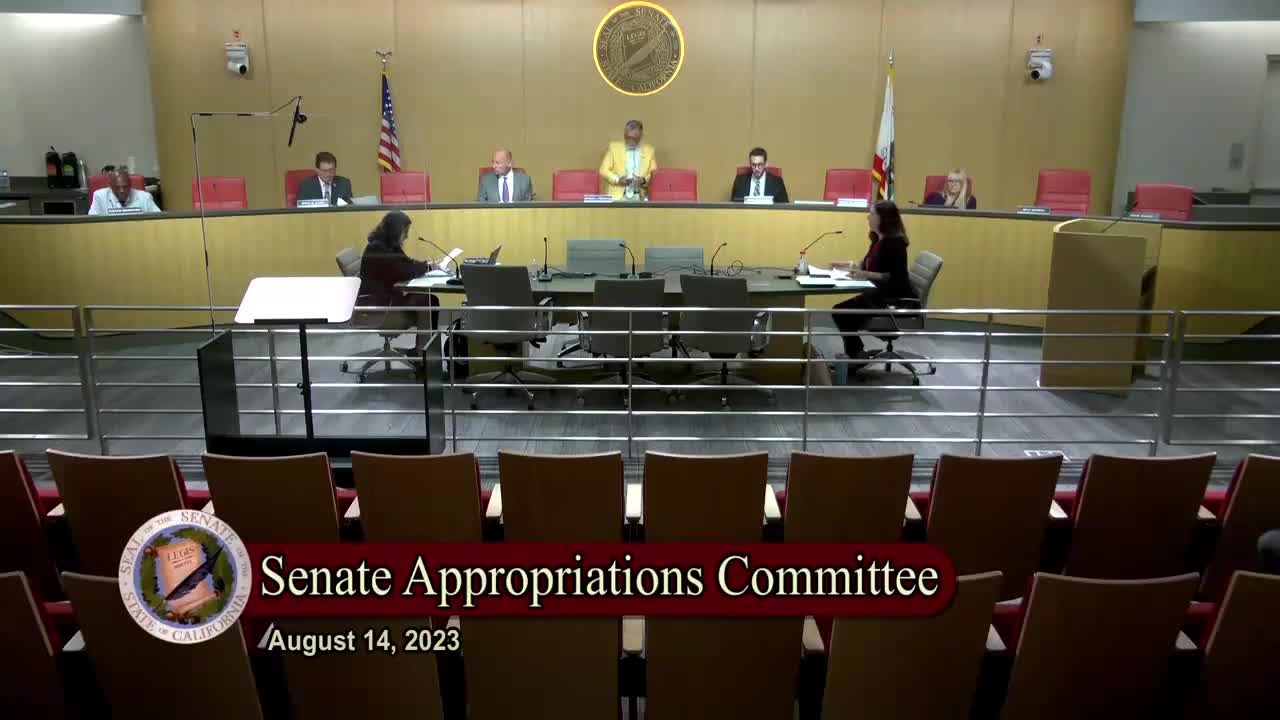 33SEC
Senate Standing Committee on Appropriations
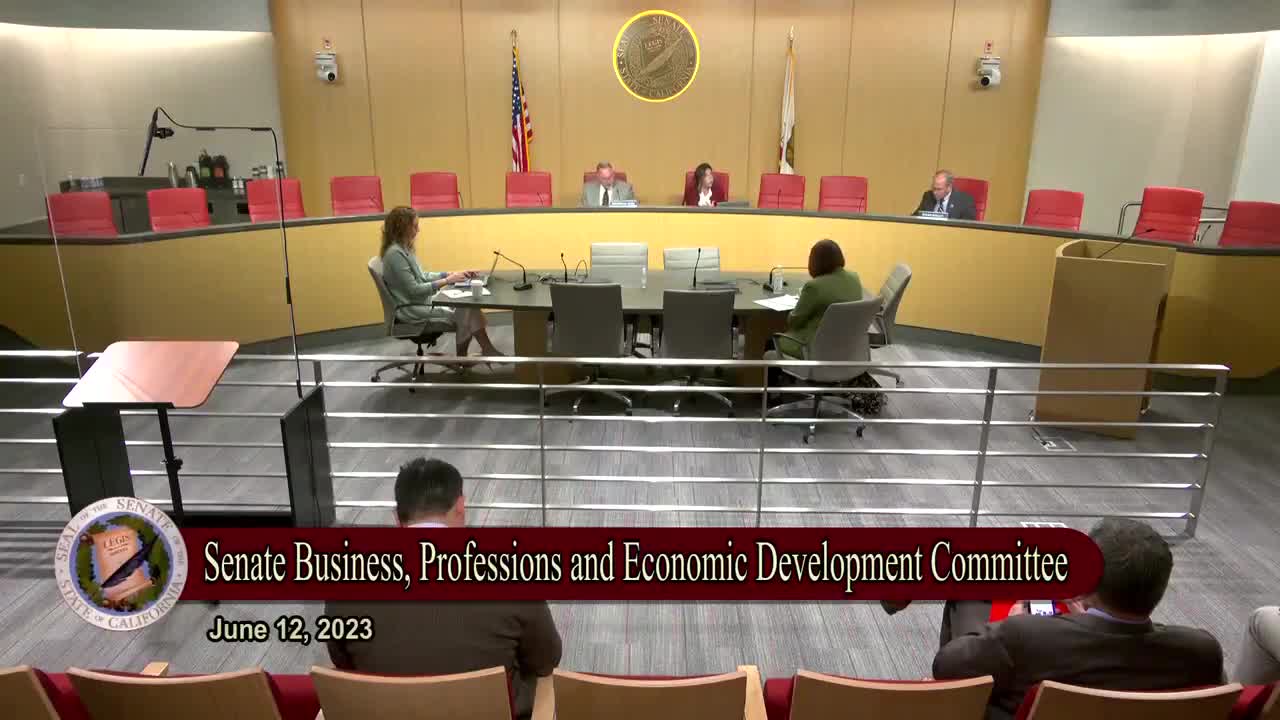 8MIN
Senate Standing Committee on Business, Professions and Economic Development
 1MIN
Assembly Floor
Bill Author