AB 9: Greenhouse gases: market-based compliance mechanism.
- Session Year: 2023-2024
- House: Assembly
- Latest Version Date: 2023-04-17
Current Status:
Failed
(2024-02-01: Died on inactive file.)
Introduced
In Committee
First Chamber
In Committee
Second Chamber
Enacted
The California Global Warming Solutions Act of 2006 designates the State Air Resources Board as the state agency charged with monitoring and regulating sources of emissions of greenhouse gases. Under the act, the state board is required to approve a statewide greenhouse gas emissions limit equivalent to the statewide greenhouse gas emissions level in 1990 to be achieved by 2020 and to ensure that statewide greenhouse gas emissions are reduced to at least 40% below the 1990 level by no later than December 31, 2030. Under the act, a violation of a rule, regulation, order, emission limitation, emission reduction measure, or other measure adopted by the state board under the act is a crime.
This bill instead would require the state board to ensure that statewide greenhouse gas emissions are reduced to at least 55% below the 1990 level by no later than December 31, 2030. By expanding the scope of a crime, this bill would impose a state-mandated local program.The California Constitution requires the state to reimburse local agencies and school districts for certain costs mandated by the state. Statutory provisions establish procedures for making that reimbursement.This bill would provide that no reimbursement is required by this act for a specified reason.The act authorizes the state board to include the use of market-based compliance mechanisms in regulating greenhouse gas emissions. The act requires the state board to prepare and approve a scoping plan for achieving the maximum technologically feasible and cost-effective reductions in greenhouse gas emissions and to update the scoping plan at least once every 5 years.
This bill would require the state board to initiate a regulatory process to evaluate potential updates to the market-based compliance mechanism, and would require regulatory changes to take effect no later than January 1, 2025. The bill would require the evaluation to focus on specified items, including whether the supply of emission allowances and carbon offsets are consistent with a linear trajectory toward the statewide greenhouse gas emissions reduction goal established in the state boards most recent scoping plan, rules for banking allowances to use for future compliance, and recommendations made by the Independent Emissions Market Advisory Committee and the state boards environmental justice advisory committee.
The bill would require the state board, beginning January 1, 2028, and subsequently on a triennial basis, as specified, and in consultation with the Independent Emissions Market Advisory Committee and the environmental justice advisory committee, to conduct an evaluation of the market-based compliance mechanism, as provided.
The bill would require the chairperson of the state board to appear before the Joint Legislative Committee on Climate Change Policies to present the results of an evaluation and specified proposed revisions to the regulations implementing the market-based compliance mechanism. The bill would authorize, following the chairpersons appearance before the Joint Legislative Committee on Climate Change Policies, the state board to revise the regulations implementing the market-based compliance mechanism so that the mechanism can more effectively meet the goals of the act and objectives specified in the most recent scoping plan.
The California Global Warming Solutions Act of 2006 designates the State Air Resources Board as the state agency charged with monitoring and regulating sources of emissions of greenhouse gases. Under the act, the state board is required to approve a statewide greenhouse gas emissions limit equivalent to the statewide greenhouse gas emissions level in 1990 to be achieved by 2020 and to ensure that statewide greenhouse gas emissions are reduced to at least 40% below the 1990 level by no later than December 31, 2030. Under the act, a violation of a rule, regulation, order, emission limitation, emission reduction measure, or other measure adopted by the state board under the act is a crime.
This bill instead would require the state board to ensure that statewide greenhouse gas emissions are reduced to at least 55% below the 1990 level by no later than December 31, 2030. By expanding the scope of a crime, this bill would impose a state-mandated local program.
The California Constitution requires the state to reimburse local agencies and school districts for certain costs mandated by the state. Statutory provisions establish procedures for making that reimbursement.
This bill would provide that no reimbursement is required by this act for a specified reason.
(a)The state board shall initiate a regulatory process, consistent with Section 38562, to evaluate potential updates to the market-based compliance mechanism, and regulatory changes shall take effect no later than January 1, 2025. The evaluation shall focus on all of the following:
(1)Whether the supply of emission allowances and carbon offsets are consistent with a linear trajectory toward the statewide greenhouse gas emissions reduction goal as established in the most recent scoping plan adopted pursuant to Section 38561.
(2)Methods to automatically adjust emission allowance supply to reflect allowance auction clearance price.
(3)The use of carbon offsets.
(4)Emissions levels of locally harmful nongreenhouse gas air pollution from facilities subject to the program and methods to address this air pollution.
(5)Rules for banking allowances to use for future compliance.
(6)The cost-effectiveness and incentive for innovation relative to other greenhouse gas emission abatement strategies.
(7)Recommendations made by the Independent Emissions Market Advisory Committee established pursuant to Section 38591.2, the environmental justice advisory committee appointed pursuant to Section 38591, and other recommendations as considered relevant by the state board.
(b)The state board shall, beginning January 1, 2028, and subsequently on a triennial basis aligned with compliance periods, and in consultation with the Independent Emissions Market Advisory Committee and the environmental justice advisory committee, conduct an evaluation of the market-based compliance mechanism. The evaluation shall focus on the items listed in paragraphs (1) to (7), inclusive, of subdivision (a). Following an evaluation, the state board may initiate a regulatory process to update the market-based compliance mechanism, consistent with Section 38562.
(c)Following an evaluation conducted pursuant to subdivision (a) or (b), both of the following shall occur:
(1)In appearing before the Joint Legislative Committee on Climate Change Policies pursuant to subdivision (c) of Section 9147.10 of the Government Code, the chairperson of the state board shall present the results of an evaluation conducted pursuant to subdivision (a) or (b) and any revisions to the regulations implementing the market-based compliance mechanism the state board proposes to make pursuant to subdivision (d).
(2)The state board shall provide the evaluation and any proposed regulatory revisions described in paragraph (1) to the appropriate policy and fiscal committees of the Legislature.
(d)Following the appearance of the chairperson of the state board before the Joint Legislative Committee on Climate Change Policies pursuant to subdivision (c), the state board may, consistent with Section 38562, revise the regulations implementing the market-based compliance mechanism so that a mechanism can more effectively meet the goals of this division and the objectives specified in the most recent scoping plan.
SECTION 1.Section 38566 of the Health and Safety Code is amended to read:38566.In adopting rules and regulations to achieve the maximum technologically feasible and cost-effective greenhouse gas emissions reductions authorized by this division, the state board shall ensure that statewide greenhouse gas emissions are reduced to at least 55 percent below the statewide greenhouse gas emissions limit no later than December 31, 2030.SEC. 2.No reimbursement is required by this act pursuant to Section 6 of Article XIIIB of the California Constitution because the only costs that may be incurred by a local agency or school district will be incurred because this act creates a new crime or infraction, eliminates a crime or infraction, or changes the penalty for a crime or infraction, within the meaning of Section 17556 of the Government Code, or changes the definition of a crime within the meaning of Section 6 of Article XIIIB of the California Constitution.In adopting rules and regulations to achieve the maximum technologically feasible and cost-effective greenhouse gas emissions reductions authorized by this division, the state board shall ensure that statewide greenhouse gas emissions are reduced to at least 40 55 percent below the statewide greenhouse gas emissions limit no later than December 31, 2030.
SEC. 2.No reimbursement is required by this act pursuant to Section 6 of Article XIIIB of the California Constitution because the only costs that may be incurred by a local agency or school district will be incurred because this act creates a new crime or infraction, eliminates a crime or infraction, or changes the penalty for a crime or infraction, within the meaning of Section 17556 of the Government Code, or changes the definition of a crime within the meaning of Section 6 of Article XIIIB of the California Constitution.
|
Date
|
Status
|
|---|---|
| Feb 1, 2024 | Died on inactive file. |
| Jun 1, 2023 | Ordered to inactive file at the request of Assembly Member Muratsuchi. |
| May 18, 2023 | Read second time. Ordered to third reading. |
| May 18, 2023 | From committee: Do pass. (Ayes 11. Noes 4.) (May 18). |
| May 10, 2023 | In committee: Set, first hearing. Referred to APPR. suspense file. |
| Apr 25, 2023 | From committee: Do pass and re-refer to Com. on APPR. (Ayes 8. Noes 3.) (April 24). Re-referred to Com. on APPR. |
| Apr 18, 2023 | Re-referred to Com. on NAT. RES. |
| Apr 17, 2023 | From committee chair, with author's amendments: Amend, and re-refer to Com. on NAT. RES. Read second time and amended. |
| Jan 26, 2023 | Referred to Com. on NAT. RES. |
| Dec 6, 2022 | From printer. May be heard in committee January 5. |
| Dec 5, 2022 | Read first time. To print. |
|
Date
|
Description
|
Location
|
Votes
|
|
|---|---|---|---|---|
| May 18, 2023 | Do pass. | Assembly Standing Committee on Appropriations |
Passed |
|
| Apr 24, 2023 | Do pass and be re-referred to the Committee on [Appropriations] | Assembly Standing Committee on Natural Resources |
Passed |
This list shows positions taken on this bill by organizations on the date displayed, which is linked to the original source.
Positions by individuals are not included.
|
Organization
|
Position
|
Date
|
|---|---|---|
| Environmental Defense Fund | ** Support |
ASSEMBLY THIRD READING
ATR Bill Id:AB 9
Author:(Muratsuchi)
As Amended Ver:April 17, 2023
Majority vote
SUMMARY
Requires the Air Resources Board (ARB) to initiate a regulatory process to evaluate potential updates to the market-based compliance mechanism (i.e., cap-and-trade regulation), as specified.
Major Provisions
- Requires ARB to initiate a regulatory process to evaluate potential updates to the cap-and-trade regulation, and requires regulatory changes to take effect no later than January 1, 2025, and specifies the focus of the evaluation.
- Requires ARB, beginning January 1, 2028, and subsequently on a triennial basis aligned with compliance periods, and in consultation with the Independent Emissions Market Advisory Committee (IEMAC) and the environmental justice advisory committee (EJAC), to conduct an evaluation of the cap-and-trade regulation.
- Requires ARB, following an evaluation to present the results and any proposed revisions to the regulations at the ARB chairperson's annual appearance before the Joint Committee on Climate Change Policies (JLCCCP), and provide evaluation results and proposed revisions to the appropriate policy and fiscal committees of the Legislature.
- Authorizes ARB, following the appearance of the chairperson before the JLCCCP, to revise the regulations implementing the cap-and-trade regulation.
COMMENTS
Beginning on January 1, 2013, the cap-and-trade regulation set a firm, declining cap on total greenhouse gas (GHG) emissions from sources that make up approximately 80% of all statewide.
Two main forms of compliance instruments are used: allowances and offsets. Allowances are generated by the state in an amount equal to the cap and may be "banked" (i.e., allowing current allowances to be used for future compliance). An offset is a credit intended to represent a real, verified, permanent, and enforceable emission reduction project from a source outside a capped sector (e.g., a certified carbon-storing forestry project). Allowances and offsets both have some controversy surrounding their design and implementation in California's cap-and-trade program. The oversupply and banking of allowances has been an ongoing debate for years. The banking of past years' allowances to fulfill future compliance obligations can become problematic. According to the IEMAC, there are roughly 321 million allowances currently banked.
AB 398 (Eduardo Garcia), Chapter 135, Statutes of 2017, extended ARB's cap-and-trade authority to 2030, required ARB to establish a price ceiling on GHG emission allowances in consideration of specified factors, added several new conditions governing the management and allocation of allowances, and reduced limits on compliance offsets. It also required Legislative Analyst's Office (LAO) reporting and provisions to address issues similar to the issues addressed by this bill. While the provisions of AB 398, IEMAC, LAO, and academic critiques may not be adequate to address the issue of over-allocation of allowances, the integrity of offsets, and the risk that cap-and-trade may not deliver GHG emissions reductions as promised that is largely due to resistance within ARB.
According to LAO, the Scoping Plan fails to specify the mix of regulations and investments that will be necessary to achieve the stated emissions reductions. Regarding cap-and-trade, the LAO found that the program is not currently positioned to make up for any significant shortfall in emissions reductions from other programs. In California's complex climate policy landscape, cap-and-trade has historically played a role as a "backstop" to ensure emission reduction targets would be met, even as other more targeted policies reduce emissions to varying degrees. However, the LAO raises concerns that given a number of factors, the program is not sufficiently stringent to drive real emissions reductions. This raises important questions about the role cap-and-trade is expected to play in reaching the state's climate goals.
According to the Author
Given the central role that cap-and-trade plays in helping California meet its GHG emission reduction goal of 85% below 1990 levels by 2045, it is imperative to ensure ARB is regularly measuring the performance of the cap- and-trade program against the objective and recalibrating accordingly. In a recent Joint Hearing of the JLCCCP, Assembly Natural Resources, and Senate Environmental Quality, ARB announced they have begun the informal regulatory review process to review the cap-and-trade program. AB 9 ensures legislative oversight of this process and accountability that a timeline is met to ensure the program is tailored to meet its objectives.
Arguments in Support
Environmental Defense Fund writes, AB 9 would require CARB to undertake a triennial program review of the cap-and-trade program. California must be certain that the program is as ambitious as possible and adapts to reflect updates in emissions data and ever-advancing scientific research. Carbon markets on the East Coast, in Europe, and in Washington State all have a version of a regular program review; regular evaluation of state programs is a matter of good public policy. A pre-determined schedule and process to ensure cap-and-trade is delivering on its stated goals is important to both ensuring that California stays on track with its level of emission reductions to meet science-based climate targets and to ensure that the cap is designed such that it can provide certainty of meeting those targets.
Arguments in Opposition
California Forestry Association writes that AB 9 is a clear attempt to fundamentally alter the cap-and-trade program with provisions that go directly counter to the cost containment safeguards the Legislature built in to the reauthorization of the program under AB 398. The bill requires a regulatory process and evaluation on "supply of emission allowances", "automatically adjust emission allowance supply", and "the use of carbon offsets." These issues all impact the overall cost of carbon that is ultimately felt by consumers. ARB's and LAO's own formulas state that for every $10 per ton the cost of carbon equals .09 cents per gallon of gas. The cost of carbon in California is about $28 per ton which equates to about 0.25 cents per gallon of gas.
FISCAL COMMENTS
According to the Assembly Appropriations Committee, this bill will result in estimated ongoing annual costs for ARB of approximately $2.6 million for five positons and contract funds (Cost of Implementation Account) to conduct the required comprehensive program evaluation to assess potential revisions to the cap-and-trade regulation as well as future regulatory updates, which will include statewide economic and emissions modeling to assess various possible scenarios and compliance responses.
VOTES
ASM NATURAL RESOURCES: 8-3-0
YES: Luz Rivas, Addis, Friedman, Muratsuchi, Pellerin, Ward, Wood, Zbur
NO: Flora, Hoover, Mathis
ASM APPROPRIATIONS: 11-4-1
YES: Holden, Bryan, Calderon, Wendy Carrillo, Mike Fong, Hart, Lowenthal, Papan, Pellerin, Weber, Ortega
NO: Megan Dahle, Dixon, Mathis, Sanchez
ABS, ABST OR NV: Robert Rivas
UPDATED
VERSION: April 17, 2023
CONSULTANT: Lawrence Lingbloom / NAT. RES. / (916) 319-2092 FN: 0000918
Date of Hearing: May 10, 2023
ASSEMBLY COMMITTEE ON APPROPRIATIONS
Chris Holden, Chair
ABPCA Bill Id:AB 9
Author:(Muratsuchi) – As Amended Ver:April 17, 2023
Policy Committee: | Natural Resources | Vote: | 8 - 3 |
|
| ||
|
|
Urgency: No State Mandated Local Program: No Reimbursable: No
SUMMARY:
This bill requires the Air Resources Board (ARB) to initiate a regulatory process to evaluate potential updates to the cap-and-trade program and evaluate the program on a triennial basis.
Specifically, this bill:
- Requires ARB to initiate a regulatory process to evaluate, as specified, potential updates to the cap-and-trade regulation and requires regulatory changes to take effect no later than January 1, 2025.
- Requires ARB, beginning January 1, 2028, and subsequently on a triennial basis aligned with compliance periods, and in consultation with the Independent Emissions Market Advisory Committee (IEMAC) and the Environmental Justice Advisory Committee (EJAC), to conduct an evaluation of the cap-and-trade regulation. Authorizes ARB, following the evaluation, to initiate a regulatory process to update the cap-and-trade regulation.
- Requires ARB, following the evaluation conducted pursuant to 1) and 2), to present the results and any proposed revisions to the regulation at the ARB chairperson’s annual appearance before the Joint Legislative Committee on Climate Change Policies (JLCCCP), and provide the evaluation and proposed revisions to the Legislature.
- Authorizes ARB, following the appearance of the chairperson before the JLCCCP, to revise the regulation implementing the cap-and-trade program so that it can more effectively meet the goals of the Global Warming Solutions Act of 2006 and the most recent scoping plan.
FISCAL EFFECT:
ARB estimates ongoing annual costs of approximately $2.6 million for five positons and contract funds (Cost of Implementation Account) to conduct the required comprehensive program evaluation to assess potential revisions to the cap-and-trade regulation as well as future regulatory updates, which will include statewide economic and emissions modeling to assess various possible scenarios and compliance responses. ARB notes it will require ongoing contract work given the requirement in this bill for a comprehensive reassessment every three years.
COMMENTS:
1) Purpose. According to the author:
Numerous stakeholders and studies have raised questions about cap-and-trade’s ability to deliver its planned emission reductions, primarily citing a supply-demand imbalance with its compliance instruments or allowances. Given the central role that cap-and-trade plays in helping California meet its GHG emission reduction goal of 85% below 1990 levels by 2045, it is imperative to ensure ARB is regularly measuring the performance of the cap- and-trade program against the objective and recalibrating accordingly. In a recent Joint Hearing of the JLCCCP, Assembly Natural Resources, and Senate Environmental Quality, ARB announced they have begun the informal regulatory review process to review the cap-and-trade program. AB 9 ensures legislative oversight of this process and accountability that a timeline is met to ensure the program is tailored to meet its objectives.
2) Background.
Cap-and-Trade. Beginning on January 1, 2013, the cap-and-trade regulation set a firm, declining cap on total greenhouse gas (GHG) emissions from sources that make up approximately 80% of all statewide GHG emissions. Sources included under the cap are termed “covered entities.” The cap is enforced by requiring each covered entity to surrender one “compliance instrument” for every emissions unit (metric ton of carbon dioxide equivalent or MTCO2e) that it emits at the end of a compliance period. Two main forms of compliance instruments are used: allowances and offsets, both of which have some controversy surrounding their design and implementation in the cap-and-trade program.
Allowance Banking. According to the 2021 annual report of the IEMAC, a substantial number of allowances are being held (or “banked”) in private accounts, raising questions about the program’s ability to contain emissions from sources covered by the emissions cap to meet the economy-wide GHG limit in the years ahead. The IEMAC notes several possible factors for this trend, concluding that these findings offer an opportunity for ARB to take stock of the program and consider adjustments to allowance supplies going forward.
Carbon Offsets. Offsets are alternative compliance instruments that are generated by undertaking certified GHG emission reduction projects from sources that are not subject to the cap-and-trade program (uncapped sources), such as forestry projects that reduce GHGs. The IEMAC notes that offsets provide incentives for emission mitigation measures outside of the sectors covered by the cap-and-trade program and play a role in managing costs for compliance entities. At the same time, the quality and permanence of forest offsets remain important issues that continue to be debated and examined in the academic literature.
Scoping Plan. The Legislative Analyst’s Office (LAO), in a recent report evaluating ARB’s 2022 Scoping Plan Update, argues that cap‑and‑trade is not positioned to ensure the state meets it statutory 2030 GHG goal, much less ARB’s more ambitious target. The LAO contends the program is not stringent enough to drive the additional emission reductions needed because there will be more than enough allowances available for covered entities to continue to emit at levels exceeding the 2030 target and that this could also lead to relatively low allowance prices, as well as reduced and volatile cap‑and‑trade auction revenue.
ARB, in its 2022 Scoping Plan Update, notes that as emission reductions from non-cap-and-trade program measures increase (such as a more stringent low carbon fuel standard and the recently adopted Advanced Clean Cars II regulation), California will be less reliant on the cap-and-trade program to “fill the gap” to meet an accelerated 2030 reduction target. On the other hand, factors such as delays in the successful implementation of non-cap-and-trade programs will continue to affect the role that cap-and-trade will need to play over this decade to meet the state’s GHG targets. ARB notes it plans to initiate a public process to evaluate and potentially propose changes to the design of the program, including the annual caps. ARB concludes:
Any changes to the Program must continue to support a well-designed system that continues to send a steadily increasing price signal, minimizes for leakage, reduces emissions in the covered sectors toward the state’s targets, is cost-effective and technologically feasible, and avoids energy rate spikes. Importantly, the Program should support air quality benefits, especially in overly burdened communities, and not exacerbate existing air quality disparities.
3) Prior Legislation. AB 2793 (Muratsuchi), of the 2021-2022 Legislative Session, would have required ARB to evaluate the cap-and-trade program every three years to determine the program's effectiveness in meeting GHG emission reduction goals. AB 2793 failed passage on the Assembly Floor.
SB 1391 (Kamlager), of the 2021-2022 Legislative Session, would have required ARB to review the cap-and-trade program every three years. SB 1391 failed passage on the Assembly Floor.
Analysis Prepared by: Nikita Koraddi / APPR. / (916) 319-2081
Date of Hearing: April 24, 2023
ASSEMBLY COMMITTEE ON NATURAL RESOURCES
Luz Rivas, Chair
ABPCA Bill Id:AB 9 (
Author:Muratsuchi) – As Amended Ver:April 17, 2023
SUBJECT: Greenhouse gases: market-based compliance mechanism
SUMMARY: Requires the Air Resources Board (ARB) to initiate a regulatory process to evaluate potential updates to the market-based compliance mechanism (i.e., cap-and-trade regulation), as specified.
EXISTING LAW:
- Requires ARB to adopt a statewide greenhouse gas (GHG) emissions limit equivalent to 1990 levels by 2020, to ensure that statewide GHG emissions are reduced to at least 40% below the 2020 statewide limit no later than December 31, 2030, and to adopt rules and regulations to achieve maximum technologically feasible and cost-effective GHG emission reductions. (Health and Safety Code (HSC) 38500, et seq.)
- Declares the policy of the state to achieve net zero GHG emissions as soon as possible, but no later than 2045, and to achieve and maintain net negative GHG emissions thereafter. (HSC 38562.2)
- Requires ARB to prepare and approve a scoping plan every five years for achieving the maximum technologically feasible and cost-effective reductions in GHG emissions from sources or categories of sources of GHGs. (HSC 38561)
- Requires any direct regulation or market-based compliance mechanism to achieve GHG reductions that are real, permanent, quantifiable, verifiable, and enforceable by ARB. (HSC 38562)
- Authorizes ARB, in furtherance of achieving the 2020 statewide limit, to adopt a regulation that establishes a system of market-based declining annual aggregate emission limits for sources or categories of sources that emit GHG emissions, applicable from January 1, 2012, to December 31, 2020, to comply with GHG reduction regulations, once specified conditions are met. Under this authority, ARB adopted a cap-and-trade regulation which applies to large industrial facilities and electricity generators emitting more than 25,000 metric tons of carbon dioxide equivalent per year, as well as distributors of fuels, including gasoline, diesel, and natural gas. In 2017, AB 398 (E. Garcia), Chapter 135, Statutes of 2017, extended ARB’s cap-and-trade authority to 2030, required ARB to establish a price ceiling on GHG emission allowances in consideration of specified factors, added several new conditions governing the management and allocation of allowances, and reduced limits on compliance offsets. (HSC 38562)
Specifically, AB 398 requires ARB to:
- Evaluate and address concerns related to over-allocation of the number of available allowances;
- Establish allowance banking rules that discourage speculation, avoid financial windfalls, and consider the impact on complying entities and volatility in the market;
- Limit the use of offsets to 4% of a covered entity’s compliance obligation from 2021 to 2025 and 6% from 2026 to 2030, of which no more than one-half may be sourced from projects that do not provide direct environmental benefits in state;
- Report to the Legislature, in consultation with the Independent Emissions Market Advisory Committee (IEMAC), if two consecutive auctions exceed specified allowance price limits; and,
- Report to the relevant fiscal and policy committees of the Legislature, including the Joint Committee on Climate Change Policies (JLCCCP), with updates on scoping plan adoption and implementation, as well as implementation of the cap-and-trade regulation.
- Establishes the IEMAC within the California Environmental Protection Agency, and requires the IEMAC to hold a public meeting at least annually and report to both ARB and the JLCCCP on the environmental and economic performance of the cap and trade regulation and other relevant climate policies. (HSC 38591.2)
Requires the IEMAC to be composed of at least five experts on emissions trading market design appointed according to the following:
- Three members appointed by the Governor;
- One member appointed by the Senate Committee on Rules;
- One member appointed by the Speaker of the Assembly; and,
- Requires IEMAC to include a representative from the Legislative Analyst's Office (LAO), and requires members to meet all of the following requirements:
- Have academic, nonprofit, and other relevant backgrounds; and,
- Lack financial conflicts of interest with entities subject to the cap and trade regulation.
- Requires the LAO to annually report to the Legislature on the economic impacts and benefits of the 2030 GHG emissions targets. (HSC 38592.6)
THIS BILL:
- Requires ARB to initiate a regulatory process to evaluate potential updates to the cap-and-trade regulation, and requires regulatory changes to take effect no later than January 1, 2025.
- Requires ARB’s evaluation to focus on all of the following:
- Whether the supply of emission allowances and carbon offsets are consistent with a linear trajectory toward the statewide GHG emissions reduction goal as established in the most recent scoping plan;
- Methods to automatically adjust emission allowance supply to reflect allowance auction clearance price;
- The use of carbon offsets;
- Emissions levels of locally harmful non-GHG gas air pollution from facilities subject to the program and methods to address this air pollution;
- Rules for banking allowances to use for future compliance;
- The cost-effectiveness and incentive for innovation relative to other GHG emission abatement strategies; and,
- Recommendations made by the IEMAC, the environmental justice advisory committee (EJAC), and other recommendations as considered relevant by ARB.
- Requires ARB, beginning January 1, 2028, and subsequently on a triennial basis aligned with compliance periods, and in consultation with the IEMAC and the EJAC, to conduct an evaluation of the cap-and-trade regulation.
- Requires ARB, following an evaluation to present the results and any proposed revisions to the regulations at the ARB chairperson’s annual appearance before the JLCCCP, and provide evaluation results and proposed revisions to the appropriate policy and fiscal committees of the Legislature.
- Authorizes ARB, following the appearance of the chairperson before the JLCCCP, to revise the regulations implementing the cap-and-trade regulation.
FISCAL EFFECT: Unknown
COMMENTS:
- Background. Beginning on January 1, 2013, the cap-and-trade regulation set a firm, declining cap on total GHG emissions from sources that make up approximately 80% of all statewide GHG emissions. Sources included under the cap are termed “covered entities.” The cap is enforced by requiring each covered entity to surrender one “compliance instrument” for every emissions unit (i.e., metric ton of carbon dioxide equivalent or MTCO2e) that it emits at the end of a compliance period.
Two main forms of compliance instruments are used: allowances and offsets. Allowances are generated by the state in an amount equal to the cap and may be “banked” (i.e., allowing current allowances to be used for future compliance). An offset is a credit intended to represent a real, verified, permanent, and enforceable emission reduction project from a source outside a capped sector (e.g., a certified carbon-storing forestry project). Allowances and offsets both have some controversy surrounding their design and implementation in California’s cap-and-trade program.
The oversupply and banking of allowances has been an ongoing debate for years. The banking of past years’ allowances to fulfill future compliance obligations can become problematic. According to the IEMAC, there are roughly 321 million allowances currently banked.
Offsets are widely used by individuals, corporations, and governments to mitigate their GHG emissions on the assumption that offsets reflect equivalent climate benefits achieved elsewhere. These climate-equivalence claims depend on offsets providing real and additional climate benefits beyond what would have happened, counterfactually, without the offsets project. In California, offsets constitute a significant source (6.3%) of the supply of compliance instruments in the market, with forest offsets producing about 80% of offset supply to date.
As noted above, AB 398 includes several provisions, including LAO reporting and the IEMAC, to address issues similar to the issues addressed by this bill. While the provisions of AB 398, IEMAC, LAO, and academic critiques may not be adequate to address the issue of over-allocation of allowances, the integrity of offsets, and the risk that cap-and-trade may not deliver GHG emissions reductions as promised, that is largely due to resistance within ARB.
The 2022 Scoping Plan Update dedicated only six pages to discussion of cap-and-trade, largely deferring discussions of cap-and trade’s programmatic design and role in achieving the state’s climate goals until the end of 2023 at the earliest, rather than addressing them as part of the broader Scoping Plan Update.
The issues raised by the LAO in its report Assessing California’s Climate Policies: The 2022 Scoping Plan Update include (1) that the Scoping Plan Update lacks a clear strategy for meeting the 2030 GHG goal, (2) that the state’s cap-and-trade program is not currently positioned to close the emission gap in 2030, and (3) recommending the Legislature require ARB to clarify the 2030 plan and consider cap-and-trade’s role. According to LAO, the Scoping Plan fails to specify the mix of regulations and investments that will be necessary to achieve the stated emissions reductions. Regarding cap-and-trade, the LAO found that the program is not currently positioned to make up for any significant shortfall in emissions reductions from other programs. In California’s complex climate policy landscape, cap-and-trade has historically played a role as a “backstop” to ensure emission reduction targets would be met, even as other more targeted policies reduce emissions to varying degrees. However, the LAO raises concerns that given a number of factors (the number of banked allowances in circulation, the increasing ambition of the 48% 2030 target, and greater-than-predicted emissions reductions across covered sectors, to name a few), the program is not sufficiently stringent to drive real emissions reductions. This raises important questions about the role cap-and-trade is expected to play in reaching the state’s climate goals. Unfortunately, the 2022 Scoping Plan Update did not specify that role, instead opting to provide a “status update” to the Legislature by the end of 2023.
- Author’s statement:
AB 9 seeks to improve the cap-and-trade program by requiring ARB to conduct a review of the program to ensure that it is tailored to meet its objectives to take effect no later than January 1, 2025. AB 9 would also require ARB to evaluate the use of offsets, adopt public banking metrics, and track the number of unused compliance instruments.
Numerous stakeholders and studies have raised questions about cap-and-trade’s ability to deliver its planned emission reductions, primarily citing a supply-demand imbalance with its compliance instruments or allowances. Given the central role that cap-and-trade plays in helping California meet its GHG emission reduction goal of 85% below 1990 levels by 2045, it is imperative to ensure ARB is regularly measuring the performance of the cap- and-trade program against the objective and recalibrating accordingly.
In a recent Joint Hearing of the JLCCCP, Assembly Natural Resources, and Senate Environmental Quality, ARB announced they have begun the informal regulatory review process to review the cap-and-trade program. AB 9 ensures legislative oversight of this process and accountability that a timeline is met to ensure the program is tailored to meet its objectives.
- Prior legislation:
AB 2793 (Muratsuchi, 2022) required ARB to evaluate the cap-and-trade program every three years, as specified, to determine the program's effectiveness in meeting GHG emission reduction goals. AB 2793 passed this committee, but later failed passage on the Assembly Floor.
SB 1391 (Kamlager, 2022) required ARB to review the cap-and-trade program every three years, as specified. SB 1391 passed this committee, but later failed passage on the Assembly Floor.
REGISTERED SUPPORT / OPPOSITION:
Support
Environmental Defense Fund
Opposition
None on file
Analysis Prepared by: Lawrence Lingbloom / NAT. RES. /
Discussed in Hearing
 7MIN
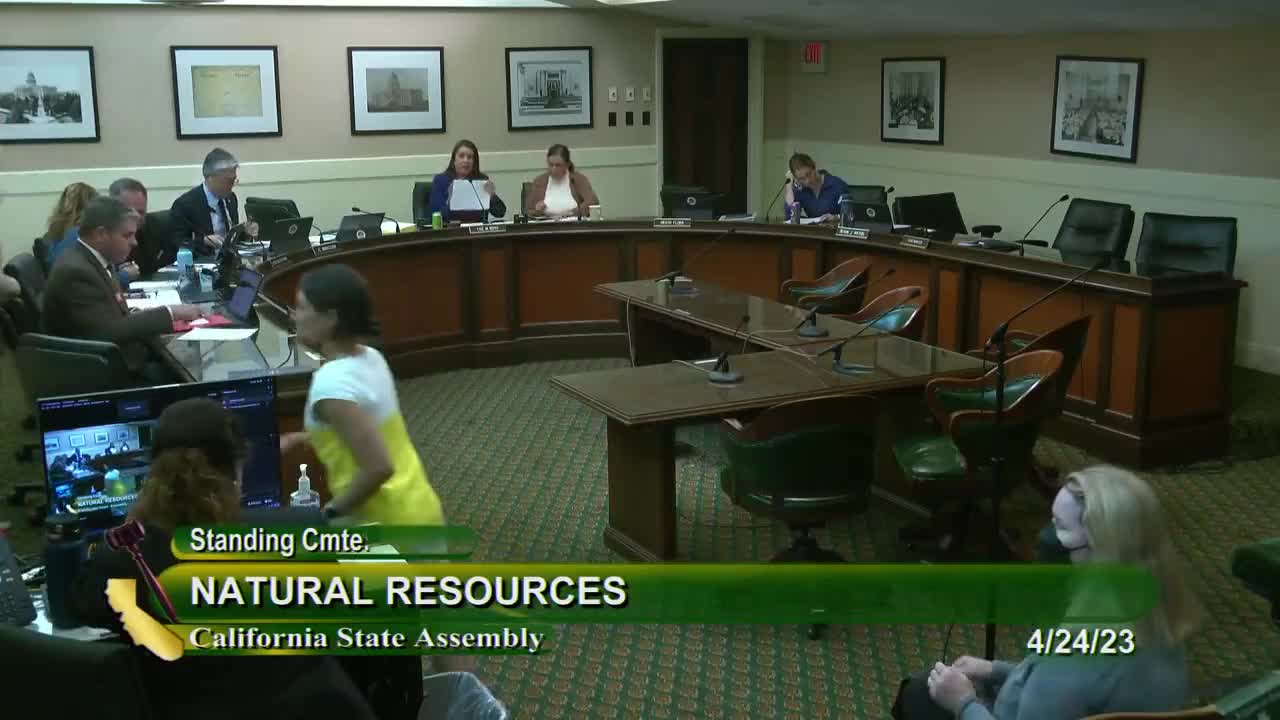
Assembly Standing Committee on Natural Resources
 9MIN
Senate Standing Committee on Human Services
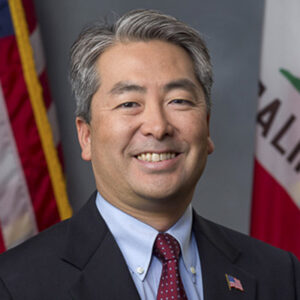
Bill Author
Bill Co-Author(s):