AB 904: Health care coverage: doulas.
- Session Year: 2023-2024
- House: Assembly
- Latest Version Date: 2023-10-07
Current Status:
Passed
(2023-10-07: Chaptered by Secretary of State - Chapter 349, Statutes of 2023.)
Introduced
In Committee
First Chamber
In Committee
Second Chamber
Enacted
Existing law, the Knox-Keene Health Care Service Plan Act of 1975, provides for the licensure and regulation of health care service plans by the Department of Managed Health Care and makes a willful violation of the acts requirements a crime. Existing law provides for the regulation of health insurers by the Department of Insurance. Existing law requires a health care service plan or health insurer to develop a maternal mental health program designed to promote quality and cost-effective outcomes. Existing law encourages a plan or insurer to include coverage for doulas.
This bill would require a health care service plan or health insurer, on or before January 1, 2025, to develop a maternal and infant health equity program that addresses racial health disparities in maternal and infant health outcomes through the use of doulas. Under the bill, a Medi-Cal managed care plan would satisfy that requirement by providing coverage of doula services so long as doula services are a Medi-Cal covered benefit. The bill would require the Department of Managed Health Care, in consultation with the Department of Insurance, to collect data and submit a report describing the doula coverage and the above-described programs to the Legislature by January 1, 2027. Because a willful violation of the provisions relative to health care service plans would be a crime, the bill would impose a state-mandated local program.
The California Constitution requires the state to reimburse local agencies and school districts for certain costs mandated by the state. Statutory provisions establish procedures for making that reimbursement.
This bill would provide that no reimbursement is required by this act for a specified reason.
Existing law, the Knox-Keene Health Care Service Plan Act of 1975, provides for the licensure and regulation of health care service plans by the Department of Managed Health Care and makes a willful violation of the acts requirements a crime. Existing law provides for the regulation of health insurers by the Department of Insurance. Existing law requires a health care service plan or health insurer to develop a maternal mental health program designed to promote quality and cost-effective outcomes. Existing law encourages a plan or insurer to include coverage for doulas.
This bill would require a health care service plan or health insurer, on or before January 1, 2025, to develop a maternal and infant health equity program that addresses racial health disparities in maternal and infant health outcomes through the use of doulas. Under the bill, a Medi-Cal managed care plan would satisfy that requirement by providing coverage of doula services so long as doula services are a Medi-Cal covered benefit. The bill would require the Department of Managed Health Care, in consultation with the Department of Insurance, to collect data and submit a report describing the doula coverage and the above-described programs to the Legislature by January 1, 2027. Because a willful violation of the provisions relative to health care service plans would be a crime, the bill would impose a state-mandated local program.
The California Constitution requires the state to reimburse local agencies and school districts for certain costs mandated by the state. Statutory provisions establish procedures for making that reimbursement.
This bill would provide that no reimbursement is required by this act for a specified reason.
Existing law, the Knox-Keene Health Care Service Plan Act of 1975, provides for the licensure and regulation of health care service plans by the Department of Managed Health Care and makes a willful violation of the acts requirements a crime. Existing law provides for the regulation of health insurers by the Department of Insurance. Existing law requires a health care service plan or health insurer to develop a maternal mental health program designed to promote quality and cost-effective outcomes. Existing law encourages a plan or insurer to include coverage for doulas.
This bill would require a health care service plan or health insurer, on or before January 1, 2025, to develop a maternal and infant health equity program that addresses racial health disparities in maternal and infant health outcomes through the use of doulas. Under the bill, a Medi-Cal managed care plan would satisfy that requirement by providing coverage of doula services so long as doula services are a Medi-Cal covered benefit. The bill would require the Department of Managed Health Care, in consultation with the Department of insurance, to collect data and submit a report describing the doula coverage and the above-described programs to the Legislature by January 1, 2027. Because a willful violation of the provisions relative to health care service plans would be a crime, the bill would impose a state-mandated local program.
The California Constitution requires the state to reimburse local agencies and school districts for certain costs mandated by the state. Statutory provisions establish procedures for making that reimbursement.
This bill would provide that no reimbursement is required by this act for a specified reason.
Existing law, the Knox-Keene Health Care Service Plan Act of 1975, provides for the licensure and regulation of health care service plans by the Department of Managed Health Care and makes a willful violation of the acts requirements a crime. Existing law provides for the regulation of health insurers by the Department of Insurance. Existing law requires a health care service plan or health insurer to develop a maternal mental health program designed to promote quality and cost-effective outcomes. Existing law encourages a plan or insurer to include coverage for doulas.
This bill would require a health care service plan or health insurer, on or before January 1, 2025, to develop a maternal and infant health equity program that addresses racial health disparities in maternal and infant health outcomes through the use of doulas. The bill would authorize the departments to jointly convene a workgroup to examine the implementation of these programs. The bill would specify workgroup membership and duties. The bill would require the Department of Managed Health Care, in consultation with the Department of insurance, to collect data and submit a report on describing the doula coverage and the above-described programs to the Legislature by January 1, 2027. Because a willful violation of the provisions relative to health care service plans would be a crime, the bill would impose a state-mandated local program.
The California Constitution requires the state to reimburse local agencies and school districts for certain costs mandated by the state. Statutory provisions establish procedures for making that reimbursement.
This bill would provide that no reimbursement is required by this act for a specified reason.
Existing law, the Knox-Keene Health Care Service Plan Act of 1975, provides for the licensure and regulation of health care service plans by the Department of Managed Health Care and makes a willful violation of the acts requirements a crime. Existing law provides for the regulation of health insurers by the Department of Insurance. Existing law requires a health care service plan or health insurer to develop a maternal mental health program designed to promote quality and cost-effective outcomes. Existing law encourages a plan or insurer to include coverage for doulas.
This bill would require a health care service plan or health insurer, on or before January 1, 2025, to develop a maternal and infant health equity program that addresses racial health disparities in maternal and infant health outcomes through the use of doulas. The bill would authorize the departments to jointly convene workgroups a workgroup to examine the implementation of these programs. The bill would specify workgroup membership and duties. The bill would require the Department of Managed Health Care, in consultation with the Department of insurance, to collect data and submit a report on doula coverage and the above-described programs to the Legislature by January 1, 2027. Because a willful violation of the provisions relative to health care service plans would be a crime, the bill would impose a state-mandated local program.
The California Constitution requires the state to reimburse local agencies and school districts for certain costs mandated by the state. Statutory provisions establish procedures for making that reimbursement.
This bill would provide that no reimbursement is required by this act for a specified reason.
Existing law, the Knox-Keene Health Care Service Plan Act of 1975, provides for the licensure and regulation of health care service plans by the Department of Managed Health Care and makes a willful violation of the acts requirements a crime. Existing law provides for the regulation of health insurers by the Department of Insurance. Existing law requires a health care service plan or health insurer to develop a maternal mental health program designed to promote quality and cost-effective outcomes. Existing law encourages a plan or insurer to include coverage for doulas.
This bill would require a health care service plan or health insurer, on or before January 1, 2025, to develop a maternal and infant health equity program that addresses racial health disparities in maternal and infant health outcomes through the use of doulas. The bill would authorize the departments to convene workgroups to examine the implementation of these programs. Because a willful violation of the provisions relative to health care service plans would be a crime, the bill would impose a state-mandated local program.
The California Constitution requires the state to reimburse local agencies and school districts for certain costs mandated by the state. Statutory provisions establish procedures for making that reimbursement.
This bill would provide that no reimbursement is required by this act for a specified reason.
The Legislature finds and declares all of the following:
(a)The United States has the highest rates of maternal mortality among higher-income countries. There are an estimated 1,200 deaths per year in the United States that are pregnancy-related, with about three in five deaths deemed preventable.
(b)The United States has an infant mortality rate that is higher than most higher-income countries. Currently, the United States is ranked 33 out of 36 countries belonging to the Organization for Economic Cooperation and Development, with an average of 5.7 deaths per 1,000 live births.
(c)Californias Native American infant mortality rate is 11.7 deaths per 1,000 live births, followed by Black infants at 8.7 deaths per 1,000 live births. Both figures are far above the states average of 4.2 deaths per 1,000 live births.
(d)Prematurity is a leading cause of infant mortality and has been linked to lifelong conditions, such as behavioral development issues, learning difficulties, and chronic disease.
(e)Racism and racial bias in health care contribute to both the national maternal mortality and morbidity crisis and infant mortality and morbidity, in particular for pregnant and postpartum people and infants who are Black or Native American.
(f)A study looking at over 32,000,000 births in the United States found that cisgender women of color, especially Black cisgender women, were more likely to experience additional negative birth outcomes from exposure to the effects of climate change, including increased temperature and air pollution from fires, which lead to increases in stillbirth and low birth weight, respectively.
(g)California has made great progress in the last decade to improve maternity care, and now boasts the lowest maternal mortality rate in the country. However, the improvements in maternal mortality have not come with a corresponding improvement in the racial disparities in maternal health. Black and Native American pregnant and postpartum people in California continue to die at higher rates than non-Hispanic White pregnant and postpartum people.
(h)California is failing pregnant and postpartum people, especially those in some of the states most vulnerable and marginalized communities. Pregnant and postpartum people in California report discrimination and bias in care based on their race, gender, and language. This leads to fear and distrust of the institutionalized maternal health care system, particularly by people of color.
(i)One of the essential goals of the State Department of Public Health is to reduce health and mental health disparities among vulnerable and underserved communities to achieve health equity throughout California. This goal should extend to health equity for birthing people and infants.
(j)California can do a better job to support pregnant, birthing, and postpartum people in our state, especially Black pregnant, birthing, and postpartum people, who are experiencing the brunt of racism, disparities, and inequities in health care access, services, and delivery.
(k)The State Department of Health Care Services rolled out doula benefits on January 1, 2023, by adding it to the list of preventive services covered under the Medi-Cal program.
(l)Existing law requires a health care service plan or health insurer to develop a maternal mental health program designed to promote quality and cost-effective outcomes, and encourages a plan or insurer to include coverage for doulas.
(m)To date, doula services are not covered by private health care service plans and insurers. Californias commercial plans and insurers, including Blue Shield of California, HealthNet, and Anthem, have sponsored several doula pilot programs throughout the state. Participants of those pilots have reported positive health outcomes.
(n)While California is one of 10 states with Medicaid doula benefits, this bill would position the state to be one of the first to also expand doula access in the private coverage context. With 40 percent of births being funded by Medi-Cal every year, this act has the potential to reach even more births with the support of doulas.
SEC. 2.Section 1367.626 is added to the Health and Safety Code, to read:1367.626.(a)(1)On or before January 1, 2025, a health care service plan shall develop a maternal and infant health equity program that addresses racial health disparities in maternal and infant health outcomes through the use of doulas. This may be achieved by integrating the program into existing maternal mental health programs, including those encouraging the coverage of doula care, or by expanding existing doula programs.
(2)(A)A Medi-Cal managed care plan shall be considered compliant with the requirements of this section by providing coverage of doula services so long as doula services are a Medi-Cal covered benefit.
(B)For the purpose of this section, Medi-Cal managed care plan has the same meaning as provided in subdivision (j) of Section 14184.101 of the Welfare and Institutions Code.
(b)The department, in consultation with the Department of Insurance, shall collect data and submit a report describing the doula coverage and programs established pursuant to subdivision (a) to the Legislature by January 1, 2027. The report may do both of the following:
(1)Include the departments Healthcare Effectiveness Data and Information Set (HEDIS) measures or the Center for Data Insights and Innovations quality of care report card.
(2)Assess quality of care, increased access, ongoing barriers to access, and more.
SEC. 3.Section 10123.868 is added to the Insurance Code, to read:10123.868.On or before January 1, 2025, a health insurer shall develop a maternal and infant health equity program that addresses racial health disparities in maternal and infant health outcomes through the use of doulas. This may be achieved by integrating the program into existing maternal mental health programs, including those encouraging the coverage of doula care, or by expanding existing doula programs.
SEC. 4.No reimbursement is required by this act pursuant to Section 6 of Article XIIIB of the California Constitution because the only costs that may be incurred by a local agency or school district will be incurred because this act creates a new crime or infraction, eliminates a crime or infraction, or changes the penalty for a crime or infraction, within the meaning of Section 17556 of the Government Code, or changes the definition of a crime within the meaning of Section 6 of Article XIIIB of the California Constitution.
The Legislature finds and declares all of the following:
(a)The United States has the highest rates of maternal mortality among higher-income countries. There are an estimated 1,200 deaths per year in the United States that are pregnancy-related, with about three in five deaths deemed preventable.
(b)The United States has an infant mortality rate that is higher than most higher-income countries. Currently, the United States is ranked 33 out of 36 countries belonging to the Organization for Economic Cooperation and Development, with an average of 5.7 deaths per 1,000 live births.
(c)Californias Native American infant mortality rate is 11.7 deaths per 1,000 live births, followed by Black infants at 8.7 deaths per 1,000 live births. Both figures are far above the states average of 4.2 deaths per 1,000 live births.
(d)Prematurity is a leading cause of infant mortality and has been linked to lifelong conditions, such as behavioral development issues, learning difficulties, and chronic disease.
(e)Racism and racial bias in health care contribute to both the national maternal mortality and morbidity crisis and infant mortality and morbidity, in particular for pregnant and postpartum people and infants who are Black or Native American.
(f)A study looking at over 32,000,000 births in the United States found that cisgender women of color, especially Black cisgender women, were more likely to experience additional negative birth outcomes from exposure to the effects of climate change, including increased temperature and air pollution from fires, which lead to increases in stillbirth and low birth weight, respectively.
(g)California has made great progress in the last decade to improve maternity care, and now boasts the lowest maternal mortality rate in the country. However, the improvements in maternal mortality have not come with a corresponding improvement in the racial disparities in maternal health. Black and Native American pregnant and postpartum people in California continue to die at higher rates than non-Hispanic White pregnant and postpartum people.
(h)California is failing pregnant and postpartum people, especially those in some of the states most vulnerable and marginalized communities. Pregnant and postpartum people in California report discrimination and bias in care based on their race, gender, and language. This leads to fear and distrust of the institutionalized maternal health care system, particularly by people of color.
(i)One of the essential goals of the State Department of Public Health is to reduce health and mental health disparities among vulnerable and underserved communities to achieve health equity throughout California. This goal should extend to health equity for birthing people and infants.
(j)California can do a better job to support pregnant, birthing, and postpartum people in our state, especially Black pregnant, birthing, and postpartum people, who are experiencing the brunt of racism, disparities, and inequities in health care access, services, and delivery.
(k)The State Department of Health Care Services rolled out doula benefits on January 1, 2023, by adding it to the list of preventive services covered under the Medi-Cal program.
(l)Existing law requires a health care service plan or health insurer to develop a maternal mental health program designed to promote quality and cost-effective outcomes, and encourages a plan or insurer to include coverage for doulas.
(m)To date, doula services are not covered by private health care service plans and insurers. Californias commercial plans and insurers, including Blue Shield of California, HealthNet, and Anthem, have sponsored several doula pilot programs throughout the state. Participants of those pilots have reported positive health outcomes.
(n)While California is one of 10 states with Medicaid doula benefits, this bill would position the state to be one of the first to also expand doula access in the private coverage context. With 40 percent of births being funded by Medi-Cal every year, this act has the potential to reach even more births with the support of doulas.
SEC. 2.Section 1367.626 is added to the Health and Safety Code, to read:1367.626.(a)(1)On or before January 1, 2025, a health care service plan shall develop a maternal and infant health equity program that addresses racial health disparities in maternal and infant health outcomes through the use of doulas. This may be achieved by integrating the program into existing maternal mental health programs, including those encouraging the coverage of doula care, or by expanding existing doula programs.
(2)(A)A Medi-Cal managed care plan shall be considered compliant with the requirements of this section by providing coverage of doula services so long as doula services are a Medi-Cal covered benefit.
(B)For the purpose of this section, Medi-Cal managed care plan has the same meaning as provided in subdivision (j) of Section 14184.101 of the Welfare and Institutions Code.
(b)The department, in consultation with the Department of Insurance, shall collect data and submit a report describing the doula coverage and programs established pursuant to subdivision (a) to the Legislature by January 1, 2027. The report may do both of the following:
(1)Include the departments Healthcare Effectiveness Data and Information Set (HEDIS) measures or the Center for Data Insights and Innovations quality of care report card.
(2)Assess quality of care, increased access, ongoing barriers to access, and more.
SEC. 3.Section 10123.868 is added to the Insurance Code, to read:10123.868.On or before January 1, 2025, a health insurer shall develop a maternal and infant health equity program that addresses racial health disparities in maternal and infant health outcomes through the use of doulas. This may be achieved by integrating the program into existing maternal mental health programs, including those encouraging the coverage of doula care, or by expanding existing doula programs.
SEC. 4.No reimbursement is required by this act pursuant to Section 6 of Article XIIIB of the California Constitution because the only costs that may be incurred by a local agency or school district will be incurred because this act creates a new crime or infraction, eliminates a crime or infraction, or changes the penalty for a crime or infraction, within the meaning of Section 17556 of the Government Code, or changes the definition of a crime within the meaning of Section 6 of Article XIIIB of the California Constitution.
The Legislature finds and declares all of the following:
(a)The United States has the highest rates of maternal mortality among higher-income countries. There are an estimated 1,200 deaths per year in the United States that are pregnancy-related, with about three in five deaths deemed preventable.
(b)The United States has an infant mortality rate that is higher than most higher-income countries. Currently, the United States is ranked 33 out of 36 countries belonging to the Organization for Economic Cooperation and Development, with an average of 5.7 deaths per 1,000 live births.
(c)Californias Native American infant mortality rate is 11.7 deaths per 1,000 live births, followed by Black infants at 8.7 deaths per 1,000 live births. Both figures are far above the states average of 4.2 deaths per 1,000 live births.
(d)Prematurity is a leading cause of infant mortality and has been linked to lifelong conditions, such as behavioral development issues, learning difficulties, and chronic disease.
(e)Racism and racial bias in health care contribute to both the national maternal mortality and morbidity crisis and infant mortality and morbidity, in particular for pregnant and postpartum people and infants who are Black or Native American.
(f)A study looking at over 32,000,000 births in the United States found that cisgender women of color, especially Black cisgender women, were more likely to experience additional negative birth outcomes from exposure to the effects of climate change, including increased temperature and air pollution from fires, which lead to increases in stillbirth and low birth weight, respectively.
(g)California has made great progress in the last decade to improve maternity care, and now boasts the lowest maternal mortality rate in the country. However, the improvements in maternal mortality have not come with a corresponding improvement in the racial disparities in maternal health. Black and Native American pregnant and postpartum people in California continue to die at higher rates than non-Hispanic white White pregnant and postpartum people.
(h)California is failing pregnant and postpartum people, especially those in some of the states most vulnerable and marginalized communities. Pregnant and postpartum people in California report discrimination and bias in care based on their race, gender, and language. This leads to fear and distrust of the institutionalized maternal health care system, particularly by people of color.
(i)One of the essential goals of the State Department of Public Health is to reduce health and mental health disparities among vulnerable and underserved communities to achieve health equity throughout California. This goal should extend to health equity for birthing people and infants.
(j)California can do a better job to support pregnant, birthing, and postpartum people in our state, especially Black pregnant, birthing, and postpartum people, who are experiencing the brunt of racism, disparities, and inequities in health care access, services, and delivery.
(k)The State Department of Health Care Services rolled out doula benefits on January 1, 2023, by adding it to the list of preventive services covered under the Medi-Cal program.
(l)Existing law requires a health care service plan or health insurer to develop a maternal mental health program designed to promote quality and cost-effective outcomes, and encourages a plan or insurer to include coverage for doulas.
(m)To date, doula services are not covered by private health care service plans and insurers. Californias commercial plans and insurers, including Blue Shield of California, HealthNet, Inland Empire Health Plan, and Anthem, have sponsored several doula pilot programs throughout the state. Participants of those pilots have reported positive health outcomes.
(n)While California is one of 10 states with Medicaid doula benefits, this bill would position the state to be one of the first to also expand doula access in the private coverage context. With 40 percent of births being funded by Medi-Cal every year, this act has the potential to reach even more births with the support of doulas.
SEC. 2.Section 1367.626 is added to the Health and Safety Code, to read:1367.626.(a)(1)On or before January 1, 2025, a health care service plan shall develop a maternal and infant health equity program that addresses racial health disparities in maternal and infant health outcomes through the use of doulas. This may be achieved by integrating the program into existing maternal mental health programs, including those encouraging the coverage of doula care, or by expanding existing doula pilot programs, or relying on a Medi-Cal doula benefit for local health plans. programs.
(2)(A)A Medi-Cal managed care plan shall be considered compliant with the requirements of this section by providing coverage of doula services so long as doula services are a Medi-Cal covered benefit.
(B)For the purpose of this section, Medi-Cal managed care plan has the same meaning as provided in subdivision (j) of Section 14184.101 of the Welfare and Institutions Code.
(b)The department, in consultation with the Department of Insurance, shall collect data and submit a report describing the doula coverage and programs established pursuant to subdivision (a) to the Legislature by January 1, 2027. The report may do both of the following:
(1)Include the departments Healthcare Effectiveness Data and Information Set (HEDIS) measures or the Center for Data Insights and Innovations quality of care report card.
(2)Assess quality of care, increased access, ongoing barriers to access, and more.
SEC. 3.Section 10123.868 is added to the Insurance Code, to read:10123.868.On or before January 1, 2025, a health insurer shall develop a maternal and infant health equity program that addresses racial health disparities in maternal and infant health outcomes through the use of doulas. This may be achieved by integrating the program into existing maternal mental health programs, including those encouraging the coverage of doula care, or by expanding existing doula pilot programs, or relying on a Medi-Cal doula benefit for local health plans. programs.
SEC. 4.No reimbursement is required by this act pursuant to Section 6 of Article XIIIB of the California Constitution because the only costs that may be incurred by a local agency or school district will be incurred because this act creates a new crime or infraction, eliminates a crime or infraction, or changes the penalty for a crime or infraction, within the meaning of Section 17556 of the Government Code, or changes the definition of a crime within the meaning of Section 6 of Article XIIIB of the California Constitution.
The Legislature finds and declares all of the following:
(a)The United States has the highest rates of maternal mortality among higher-income countries. There are an estimated 1,200 deaths per year in the United States that are pregnancy-related, with about three in five deaths deemed preventable.
(b)The United States has an infant mortality rate that is higher than most higher-income countries. Currently, the United States is ranked 33 out of 36 countries belonging to the Organization for Economic Cooperation and Development, with an average of 5.7 deaths per 1,000 live births.
(c)Californias Native American infant mortality rate is 11.7 deaths per 1,000 live births, followed by Black infants at 8.7 deaths per 1,000 live births. Both figures are far above the states average of 4.2 deaths per 1,000 live births.
(d)Prematurity is a leading cause of infant mortality and has been linked to lifelong conditions, such as behavioral development issues, learning difficulties, and chronic disease.
(e)Racism and racial bias in health care contribute to both the national maternal mortality and morbidity crisis and infant mortality and morbidity, in particular for pregnant and postpartum people and infants who are Black or Native American.
(f)A study looking at over 32,000,000 births in the United States found that cisgender women of color, especially Black cisgender women, were more likely to experience additional negative birth outcomes from exposure to the effects of climate change, including increased temperature and air pollution from fires, which lead to increases in stillbirth and low birth weight, respectively.
(g)California has made great progress in the last decade to improve maternity care, and now boasts the lowest maternal mortality rate in the country. However, the improvements in maternal mortality have not come with a corresponding improvement in the racial disparities in maternal health. Black and Native American pregnant and postpartum people in California continue to die at higher rates than non-Hispanic white pregnant and postpartum people.
(h)California is failing pregnant and postpartum people, especially those in some of the states most vulnerable and marginalized communities. Pregnant and postpartum people in California report discrimination and bias in care based on their race, gender, and language. This leads to fear and distrust of the institutionalized maternal health care system, particularly by people of color.
(i)One of the essential goals of the State Department of Public Health is to reduce health and mental health disparities among vulnerable and underserved communities to achieve health equity throughout California. This goal should extend to health equity for birthing people and infants.
(j)California can do a better job to support pregnant, birthing, and postpartum people in our state, especially Black pregnant, birthing, and postpartum people, who are experiencing the brunt of racism, disparities, and inequities in health care access, services, and delivery.
(k)The State Department of Health Care Services rolled out doula benefits on January 1, 2023, by adding it to the list of preventive services covered under the Medi-Cal program.
(l)Existing law requires a health care service plan or health insurer to develop a maternal mental health program designed to promote quality and cost-effective outcomes, and encourages a plan or insurer to include coverage for doulas.
(m)To date, doula services are not covered by private health care service plans and insurers. Californias commercial plans and insurers, including Blue Shield of California, HealthNet, Inland Empire Health Plan, and Anthem, have sponsored several doula pilot programs throughout the state. Participants of those pilots have reported positive health outcomes.
(n)While California is one of 10 states with Medicaid doula benefits, this bill would position the state to be one of the first to also expand doula access in the private coverage context. With 40 percent of births being funded by Medi-Cal every year, this act has the potential to reach even more births with the support of doulas.
SEC. 2.Section 1367.626 is added to the Health and Safety Code, to read:1367.626.(a)On or before January 1, 2025, a health care service plan shall develop a maternal and infant health equity program that addresses racial health disparities in maternal and infant health outcomes through the use of doulas. This may be achieved by integrating the program into existing maternal mental health programs, including those encouraging the coverage of doula care, expanding existing doula pilot programs, or relying on a Medi-Cal doula benefit for local health plans.
(b)The department and the Department of Insurance may jointly convene a workgroup, composed of doulas, including community-based doulas, birth workers, activists, health care providers, consumer and community advocates, community members, health plans, county representatives, and other stakeholders with experience with doula services to meet on a monthly basis, as determined by the departments, to examine the implementation of the programs required pursuant to subdivision (a).(1)The workgroup membership shall be 80 percent practicing doulas. Of those doulas, at least 75 percent shall be doulas who are providing services to Medi-Cal enrollees through the doula Medi-Cal benefit.(2)The workgroup shall refer to the existing Medi-Cal doula benefit, including the state plan amendment and provider manual, during the course of the workgroup. The workgroup shall also consider all of the following:(A)Reimbursement rates and payment models, which shall not be lower than Medi-Cal rates and shall be aligned with current regional rates of pay for preventive care for perinatal practitioners in private practice or comparable to pay reflected in doula pilot programs held in California.(B)Barriers to the development of a Medi-Cal doula benefit.(C)Workforce development and sustainability.(D)Including culturally concordant doula services to be used at the discretion of enrollees and insureds.(E)Collaborating with community-based doula groups, birth workers, activists, advocates, and community members throughout program development.(F)Standardizing benefits across health care service plans and health insurers.(c)(b)The department, in consultation with the Department of Insurance, shall collect data and submit a report on describing the doula coverage and programs required established pursuant to subdivision (a) to the Legislature by January 1, 2027. The report may do both of the following:
(1)Include the departments Healthcare Effectiveness Data and Information Set (HEDIS) measures or the Center for Data Insights and Innovations quality of care report card.
(2)Assess quality of care, increased access, ongoing barriers to access, and more.
(d)For purposes of this section:(1)Community-based doula means a birth worker who provides doula care throughout the perinatal period, who is a trusted member of the community they serve, and who specializes in the provision of culturally congruent care, addressing discrimination, and meeting language gaps. A doula is not a medical professional and does not diagnose medical conditions, give medical advice, or perform any type of clinical procedures or conduct any type of physical or behavioral assessment or exam. Doulas are not licensed, and they do not require supervision.(2)Community-based doula group means a group or collective of community-based doulas working together that prioritizes access to doula care for underserved populations. The doula care that is provided by community-based doula groups often goes beyond doula services provided during prenatal and postpartum care, to encompass a broader and more holistic vision of support for the pregnant and birthing person and their family or supporting loved ones. Many community-based doula groups draw their membership directly from the communities that they serve. This often allows community-based doula groups to offer culturally congruent care, and not simply culturally appropriate care.(3)Full-spectrum doula care means prenatal and postpartum doula care, presence during labor and delivery, and doula support for miscarriage, stillbirth, and abortion. Doula care includes physical, emotional, and other nonmedical care.(4)Perinatal period means the period including pregnancy, labor, delivery, and postpartum.(5)Postpartum means the one-year period following the end of a pregnancy.SEC. 3.Section 10123.868 is added to the Insurance Code, to read:10123.868.(a)On or before January 1, 2025, a health insurer shall develop a maternal and infant health equity program that addresses racial health disparities in maternal and infant health outcomes through the use of doulas. This may be achieved by integrating the program into existing maternal mental health programs, including those encouraging the coverage of doula care, expanding existing doula pilot programs, or relying on a Medi-Cal doula benefit for local health plans.
(b)Pursuant to subdivision (b) of Section 1367.626 of the Health and Safety Code, the department and the Department of Managed Health Care may jointly convene a workgroup to examine the implementation of the programs required pursuant to subdivision (a).SEC. 4.No reimbursement is required by this act pursuant to Section 6 of Article XIIIB of the California Constitution because the only costs that may be incurred by a local agency or school district will be incurred because this act creates a new crime or infraction, eliminates a crime or infraction, or changes the penalty for a crime or infraction, within the meaning of Section 17556 of the Government Code, or changes the definition of a crime within the meaning of Section 6 of Article XIIIB of the California Constitution.
The Legislature finds and declares all of the following:
(a)The United States has the highest rates of maternal mortality among higher-income countries. There are an estimated 1,200 deaths per year in the United States that are pregnancy-related, with about three in five deaths deemed preventable.
(b)The United States has an infant mortality rate that is higher than most higher-income countries. Currently, the United States is ranked 33 out of 36 countries belonging to the Organization for Economic Cooperation and Development, with an average of 5.7 deaths per 1,000 live births.
(c)Californias Native American infant mortality rate is 11.7 deaths per 1,000 live births, followed by Black infants at 8.7 deaths per 1,000 live births. Both figures are far above the states average of 4.2 deaths per 1,000 live births.
(d)Prematurity is a leading cause of infant mortality and has been linked to lifelong conditions, such as behavioral development issues, learning difficulties, and chronic disease.
(e)Racism and racial bias in health care contribute to both the national maternal mortality and morbidity crisis and infant mortality and morbidity, in particular for pregnant and postpartum people and infants who are Black or Native American.
(f)A study looking at over 32,000,000 births in the United States found that cisgender women of color, especially Black cisgender women, were more likely to experience additional negative birth outcomes from exposure to the effects of climate change, including increased temperature and air pollution from fires, which lead to increases in stillbirth and low birth weight, respectively.
(g)California has made great progress in the last decade to improve maternity care, and now boasts the lowest maternal mortality rate in the country. However, the improvements in maternal mortality have not come with a corresponding improvement in the racial disparities in maternal health. Black and Native American pregnant and postpartum people in California continue to die at higher rates than non-Hispanic white pregnant and postpartum people.
(h)California is failing pregnant and postpartum people, especially those in some of the states most vulnerable and marginalized communities. Pregnant and postpartum people in California report discrimination and bias in care based on their race, gender, and language. This leads to fear and distrust of the institutionalized maternal health care system, particularly by people of color.
(i)One of the essential goals of the State Department of Public Health is to reduce health and mental health disparities among vulnerable and underserved communities to achieve health equity throughout California. This goal should extend to health equity for birthing people and infants.
(j)California can do a better job to support pregnant, birthing, and postpartum people in our state, especially Black pregnant, birthing, and postpartum people, who are experiencing the brunt of racism, disparities, and inequities in health care access, services, and delivery.
(k)The State Department of Health Care Services rolled out doula benefits on January 1, 2023, by adding it to the list of preventive services covered under the Medi-Cal program.
(l)Existing law requires a health care service plan or health insurer to develop a maternal mental health program designed to promote quality and cost-effective outcomes, and encourages a plan or insurer to include coverage for doulas.
(m)To date, doula services are not covered by private health care service plans and insurers. Californias commercial plans and insurers, including Blue Shield of California, HealthNet, Inland Empire Health Plan, and Anthem, have sponsored several doula pilot programs throughout the state. Participants of those pilots have reported positive health outcomes.
(n)While California is one of 10 states with Medicaid doula benefits, this bill would position the state to be one of the first to also expand doula access in the private coverage context. With 40 percent of births being funded by Medi-Cal every year, this act has the potential to reach even more births with the support of doulas.
SECTION 1.SEC. 2.Section 1367.626 is added to the Health and Safety Code, to read:1367.626.(a)On or before January 1, 2025, a health care service plan shall develop a maternal and infant health equity program that addresses racial health disparities in maternal and infant health outcomes through the use of doulas. This may be achieved by integrating the program into existing maternal mental health programs, including those encouraging the coverage of doula care, expanding existing doula pilot programs, or relying on a Medi-Cal doula benefit for local health plans.
(b)The department and the Department of Insurance may jointly convene a workgroup, composed of doulas, including community-based doulas, birth workers, activists, health care providers, consumer and community advocates, community members, health plans, county representatives, and other stakeholders with experience with doula services to meet on a monthly basis, as determined by the department, departments, to examine the implementation of the programs required pursuant to subdivision (a).
(1)The workgroup membership shall be 80 percent practicing doulas. Of those doulas, at least 75 percent shall be doulas who are providing services to Medi-Cal enrollees through the doula Medi-Cal benefit.
(2)The workgroup shall refer to the existing Medi-Cal doula benefit, including the state plan amendment and provider manual, during the course of the workgroup. The workgroup shall also consider all of the following:
(A)Reimbursement rates and payment models, which shall not be lower than Medi-Cal rates and shall be aligned with current regional rates of pay for preventive care for perinatal practitioners in private practice or comparable to pay reflected in doula pilot programs held in California.
(B)Barriers to the development of a Medi-Cal doula benefit.
(C)Workforce development and sustainability.
(D)Including culturally concordant doula services to be used at the discretion of enrollees and insureds.
(E)Collaborating with community-based doula groups, birth workers, activists, advocates, and community members throughout program development.
(F)Standardizing benefits across health care service plans and health insurers.
(c)The department, in consultation with the Department of Insurance, shall collect data and submit a report on doula coverage and programs required pursuant to subdivision (a) to the Legislature by January 1, 2027. The report may do both of the following:
(1)Include the departments Healthcare Effectiveness Data and Information Set (HEDIS) measures or the Center for Data Insights and Innovations quality of care report card.
(2)Assess quality of care, increased access, ongoing barriers to access, and more.
(d)For purposes of this section:
(1)Community-based doula means a birth worker who provides doula care throughout the perinatal period, who is a trusted member of the community they serve, and who specializes in the provision of culturally congruent care, addressing discrimination, and meeting language gaps. A doula is not a medical professional and does not diagnose medical conditions, give medical advice, or perform any type of clinical procedures or conduct any type of physical or behavioral assessment or exam. Doulas are not licensed, and they do not require supervision.
(2)Community-based doula group means a group or collective of community-based doulas working together that prioritizes access to doula care for underserved populations. The doula care that is provided by community-based doula groups often goes beyond doula services provided during prenatal and postpartum care, to encompass a broader and more holistic vision of support for the pregnant and birthing person and their family or supporting loved ones. Many community-based doula groups draw their membership directly from the communities that they serve. This often allows community-based doula groups to offer culturally congruent care, and not simply culturally appropriate care.
(3)Full-spectrum doula care means prenatal and postpartum doula care, presence during labor and delivery, and doula support for miscarriage, stillbirth, and abortion. Doula care includes physical, emotional, and other nonmedical care.
(4)Perinatal period means the period including pregnancy, labor, delivery, and postpartum.
(5)Postpartum means the one-year period following the end of a pregnancy.
SEC. 2.SEC. 3.Section 10123.868 is added to the Insurance Code, to read:10123.868.(a)On or before January 1, 2025, a health insurer shall develop a maternal and infant health equity program that addresses racial health disparities in maternal and infant health outcomes through the use of doulas.
(b)The department may convene a workgroup, composed of doulas, health care providers, consumer and community advocates, health plans, county representatives, and other stakeholders with experience with doula services as determined by the department,(b)Pursuant to subdivision (b) of Section 1367.626 of the Health and Safety Code, the department and the Department of Managed Health Care may jointly convene a workgroup to examine the implementation of the programs required pursuant to subdivision (a).
SEC. 3.SEC. 4.No reimbursement is required by this act pursuant to Section 6 of Article XIIIB of the California Constitution because the only costs that may be incurred by a local agency or school district will be incurred because this act creates a new crime or infraction, eliminates a crime or infraction, or changes the penalty for a crime or infraction, within the meaning of Section 17556 of the Government Code, or changes the definition of a crime within the meaning of Section 6 of Article XIIIB of the California Constitution.
REVISIONS: HeadingLine 1.(a)On or before January 1, 2025, a health care service plan shall develop a maternal and infant health equity program that addresses racial health disparities in maternal and infant health outcomes through the use of doulas.
(b)The department may convene a workgroup, composed of doulas, health care providers, consumer and community advocates, health plans, county representatives, and other stakeholders with experience with doula services as determined by the department, to examine the implementation of the programs required pursuant to subdivision (a).
SEC. 2.Section 10123.868 is added to the Insurance Code, to read:10123.868.(a)On or before January 1, 2025, a health insurer shall develop a maternal and infant health equity program that addresses racial health disparities in maternal and infant health outcomes through the use of doulas.
(b)The department may convene a workgroup, composed of doulas, health care providers, consumer and community advocates, health plans, county representatives, and other stakeholders with experience with doula services as determined by the department, to examine the implementation of the programs required pursuant to subdivision (a).
SEC. 3.No reimbursement is required by this act pursuant to Section 6 of Article XIIIB of the California Constitution because the only costs that may be incurred by a local agency or school district will be incurred because this act creates a new crime or infraction, eliminates a crime or infraction, or changes the penalty for a crime or infraction, within the meaning of Section 17556 of the Government Code, or changes the definition of a crime within the meaning of Section 6 of Article XIIIB of the California Constitution.
|
Date
|
Status
|
|---|---|
| Oct 7, 2023 | Chaptered by Secretary of State - Chapter 349, Statutes of 2023. |
| Oct 7, 2023 | Approved by the Governor. |
| Sep 21, 2023 | Enrolled and presented to the Governor at 3:30 p.m. |
| Sep 13, 2023 | Senate amendments concurred in. To Engrossing and Enrolling. (Ayes 69. Noes 0. Page 3336.). |
| Sep 12, 2023 | In Assembly. Concurrence in Senate amendments pending. |
| Sep 12, 2023 | Read third time. Passed. Ordered to the Assembly. (Ayes 34. Noes 2. Page 2634.). |
| Sep 11, 2023 | Read second time. Ordered to third reading. |
| Sep 7, 2023 | Read third time and amended. Ordered to second reading. |
| Sep 5, 2023 | Read second time. Ordered to third reading. |
| Sep 1, 2023 | From committee: Do pass. (Ayes 5. Noes 2.) (September 1). |
| Jul 3, 2023 | In committee: Referred to APPR suspense file. |
| Jun 26, 2023 | Read second time and amended. Re-referred to Com. on APPR. |
| Jun 22, 2023 | From committee: Amend, and do pass as amended and re-refer to Com. on APPR. (Ayes 11. Noes 0.) (June 21). |
| Jun 7, 2023 | Referred to Com. on HEALTH. |
| May 31, 2023 | In Senate. Read first time. To Com. on RLS. for assignment. |
| May 30, 2023 | Read third time. Passed. Ordered to the Senate. (Ayes 67. Noes 2. Page 1881.) |
| May 18, 2023 | Read second time. Ordered to third reading. |
| May 18, 2023 | From committee: Do pass. (Ayes 11. Noes 1.) (May 18). |
| May 3, 2023 | In committee: Set, first hearing. Referred to APPR. suspense file. |
| Apr 26, 2023 | In committee: Hearing postponed by committee. |
| Apr 12, 2023 | From committee: Do pass and re-refer to Com. on APPR. (Ayes 12. Noes 0.) (April 11). Re-referred to Com. on APPR. |
| Apr 12, 2023 | Coauthors revised. |
| Mar 30, 2023 | Re-referred to Com. on HEALTH. |
| Mar 29, 2023 | From committee chair, with author's amendments: Amend, and re-refer to Com. on HEALTH. Read second time and amended. |
| Feb 23, 2023 | Referred to Com. on HEALTH. |
| Feb 15, 2023 | From printer. May be heard in committee March 17. |
| Feb 14, 2023 | Read first time. To print. |
|
Date
|
Description
|
Location
|
Votes
|
|
|---|---|---|---|---|
| Sep 13, 2023 | AB 904 Calderon Concurrence in Senate Amendments | Assembly Floor |
Passed |
|
| Sep 12, 2023 | Assembly 3rd Reading AB904 Calderon et al. By Rubio | Senate Floor |
Passed |
|
| Sep 1, 2023 | Do pass | Senate Standing Committee on Appropriations |
Passed |
|
| Jul 3, 2023 | Placed on suspense file | Senate Standing Committee on Appropriations |
Passed |
|
| Jun 21, 2023 | Do pass as amended, but first amend, and re-refer to the Committee on [Appropriations] | Senate Standing Committee on Health |
Passed |
|
| May 30, 2023 | AB 904 Calderon Assembly Third Reading | Assembly Floor |
Passed |
|
| May 18, 2023 | Do pass. | Assembly Standing Committee on Appropriations |
Passed |
|
| Apr 11, 2023 | Do pass and be re-referred to the Committee on [Appropriations] | Assembly Standing Committee on Health |
Passed |
This list shows positions taken on this bill by organizations on the date displayed, which is linked to the original source.
Positions by individuals are not included.
|
Organization
|
Position
|
Date
|
|---|---|---|
| Department Of Finance | ** Against | |
| Hadassah | ** Support | |
| Health Net | ** Support | |
| Jewish Center for Justice | ** Support | |
| jewish community relations council of sacramento | ** Support | |
| Jewish Community Relations Council of Silicon Valley | ** Support | |
| Jewish Democratic Club of Silicon Valley | ** Support | |
| Jewish Democratic Club of Solano County | ** Support | |
| Jewish Family & Children's Service of Long Beach and Orange County | ** Support | |
| Jewish Family & Community Services East Bay | ** Support | |
| Jewish Family Service of Los Angeles | ** Support | |
| Jewish Family Services of Silicon Valley | ** Support | |
| Jewish Family Services San Diego | ** Support | |
| Jewish Federation of Greater Los Angeles | ** Support | |
| Jewish Federation of Greater Santa Barbara | ** Support | |
| Jewish Federation of The Greater San Gabriel and Pomona Valleys | ** Support | |
| Jewish Federation Of The Sacramento Region | ** Support | |
| Jewish Long Beach | ** Support | |
| Jewish Public Affairs Committee Of California | ** Support | |
| Jobs. Vision. Success. SoCal | ** Support | |
| NARAL Pro-Choice California | ** Support | |
| National Association of Social Workers California Chapter | ** Support | |
| Planned Parenthood Affiliates Of California | ** Support | |
| Progressive Zionists of California | ** Support | |
| western center on law & poverty | ** Support |
CONCURRENCE IN SENATE AMENDMENTS
CSA1 Bill Id:AB 904
Author:(Calderon and Cervantes)
As Amended Ver:September 7, 2023
Majority vote
SUMMARY
Requires a health care service plan (health plan) or health insurer, on or before January 1, 2025, to develop a maternal and infant health equity program that addresses racial health disparities in maternal and infant health outcomes through the use of doulas. Authorizes the Department of Managed Health Care (DMHC) and California Department of Insurance (CDI) to collect data and submit a report describing the doula coverage to the Legislature by January 1, 2027.
Senate Amendments
Delete the requirement that the DMHC and CDI convene a working group, as specified. Require a Medi-Cal managed care plan to be considered compliant with the requirements of this bill by providing doula services coverage so long as doula services are a Medi-Cal covered benefit.
COMMENTS
- Doulas. This bill expands upon the existing maternal mental health program by encouraging health plans and insurers to develop a maternal and infant health equity program that addresses racial health disparities in maternal and infant health outcomes through the use of doulas. Full-spectrum doulas are trained to provide nonclinical emotional, physical, and educational support to help women manage pain, fear, fatigue, and uncertainty throughout their pregnancy and postpartum; doulas do not provide medical care. In addition to supporting pregnant women, doulas also may support their partners and families. There is wide variation in the type of practice or specialization among doulas. They may practice prenatal only, birth-only, postpartum-only, miscarriage/abortion-only care, or a combination of these types of practices. Doulas who practice full-spectrum care provide educational and emotional support throughout the perinatal period (pregnancy through one year postpartum). Full spectrum and birth doulas are also trained to provide stillbirth and miscarriage support services. Doulas may practice part time or full time; independently, with a group, or through a hospital-based program; and may volunteer or require reimbursement for services.
- Doula coverage under Medi-Cal. Starting January 1, 2023, doula services were added to the list of preventive services covered under the Medi-Cal program. Doula services are aimed at preventing perinatal complications and improving health outcomes for birthing parents and infants. Implementation of the doula benefit is also intended to lessen racial disparities in maternal health outcomes. In the Medi-Cal Provider Manual, the Department of Health Care Services (DHCS) defines doulas as birth workers who provide health education, advocacy, and physical, emotional and nonmedical support for pregnant and postpartum persons before, during and after childbirth, including support during miscarriage, stillbirth and abortion. Doulas may provide services for up to 12 months from the end of pregnancy.
California does not require a license or certification to provide doula services. Doulas can qualify to provide Medi-Cal services through one of two pathways: a) the training pathway, which includes a minimum of 16 hours of training in specified core competencies and experience supporting a minimum of three births; or, b) the experience pathway, which includes at least five years of active doula experience in either a paid or volunteer capacity within the previous seven years and three written client testimonial letters or professional letters of recommendation, as specified. Medi-Cal allows doulas and doula groups to enroll as Medi-Cal providers and operate without supervision. However, pursuant to federal regulation, doula services must be recommended by a physician or other licensed practitioner. A recommendation from a licensed practitioner authorizes all of the following doula services: one initial visit; up to eight additional visits that may be provided in any combination of prenatal and postpartum visits; support during labor and delivery (including labor and delivery resulting in a stillbirth), abortion or miscarriage; and up to two extended three-hour postpartum visits after the end of a pregnancy.
According to DHCS, positive maternal health outcomes are expected as a result of doula services and research suggests that the doula benefit also results in offsetting savings through avoidance of higher costs for preterm births and cesarean deliveries. The November 2022 Medi-Cal Local Assistance Estimate estimates the full-year cost of doula services at $4.0 million ($1.6 million general fund in fiscal year 2023-24). Pursuant to SB 65 (Skinner), Chapter 449, Statutes of 2021, DHCS also convened a new stakeholder workgroup to examine implementation of the doula benefit. The first workgroup meeting examining implementation of the benefit was held on March 30, 2023. SB 65 also requires DHCS to publish a report by July 1, 2024, on utilization of doula services and barriers that impede access to doula services.
- Doula care pilot programs. In February 2022, Blue Shield of California announced the Maternal Child Health Equity initiative to help address disproportionate mortality rates among mothers and children, especially in underserved communities. Efforts of the initiative include working with community-based organizations, including Black Wellness and Prosperity Center, Diversity Uplift, and Her Health First to provide training curriculum for doulas and connecting mothers to family-centered services, emergency funds and maternal supplies. Doulas who are culturally congruent and trauma-informed to help ensure mothers are being heard, supported, and informed during the perinatal experience is included to help close racially biased maternal care gaps. Below are examples of other doula care pilot programs in California:
- SisterWeb, San Francisco Community Doula Network. SisterWeb provides prenatal, birth, and postpartum care to low-income women of color in San Francisco in need of doula support. This program began providing services in 2019 and is a partnership between the San Francisco Department of Public Health and SisterWeb;
- HealthNet Community Doula Pilot Program (terminated). In 2019, the Association for Wholistic Maternal and Newborn Health partnered with HealthNet, in a pilot program to help improve birth outcomes for African American/Black women and infants in Los Angeles County. This pilot program's goal was to provide 150 African American/Black women enrolled in HealthNet Medi-Cal with 10 mostly African American/Black doulas in order to lower cesarean rates for their African American clients. The program provided services to 30 women during a six month period; and,
- Perinatal Equity Initiative grants. Planning Grants were awarded to 13 county health departments currently operating Black Infant Health programs for the purpose of improving black infant birth outcomes and reducing infant mortality. Counties are allowed to use this funding to establish doula care programs.
According to the Author
This bill would require private health plans to establish a maternal and infant health equity program aimed at reducing racial inequities in birthing outcomes. This bill would also convene a doula stakeholder workgroup to examine the implementation of these programs. While California has experienced overall decreases in negative birth outcomes, Black, Indigenous, and people of color are still more likely to die of pregnancy or birth-related complications. Research shows that when doulas provide tailored, culturally congruent care, fewer preterm births and cesarean sections occur and breastfeeding rates increase. While Medi-Cal began covering doula benefits on January 1, 2023, doula services are still not covered by private health plans. The author concludes this bill aims to address this gap by engaging doulas in the program development process to successfully extend access to doula services and reduce racial disparities in maternal and infant health outcomes.
Arguments in Support
NARAL Pro-Choice California writes that the [United States] is facing a maternal health crisis, with poorer birth outcomes than any other high-income nation. Despite decreases in negative birth outcomes, there are still stark racial disparities in California. Black, Indigenous and other people of color are more likely to die of pregnancy or birth-related complications, regardless of income. Research shows that doula services result in fewer preterm births and cesarean sections, reduced use of pain medication, increased breastfeeding rates, and improved connection to resources for postpartum depression. In addition to improving birthing outcomes, doula services are exceedingly cost-effective.
Arguments in Opposition
The Department of Finance is opposed to this bill, as it creates new costs and pressures to the Managed Care Fund, and potentially General Fund, that are not included in the pending 2023-24 budget plan. These costs could potentially increase health care premiums for consumers.
FISCAL COMMENTS
According to the Senate Appropriations Committee,
- DMHC estimates costs of approximately $11,000 in 2023-24, $4,685,000 in 2024-25, $1,040,000 in 2025-26, $1,001,000 in 2026-27, and $332,000 in 2027-28 and annually thereafter (Managed Care Fund) for state administration.
- Unknown costs (Insurance Fund) for CDI for state administration.
VOTES:
ASM HEALTH: 12-0-3
YES: Wood, Waldron, Aguiar-Curry, Arambula, Boerner Horvath, Wendy Carrillo, Maienschein, McCarty, Rodriguez, Santiago, Villapudua, Weber
ABS, ABST OR NV: Flora, Vince Fong, Joe Patterson
ASM APPROPRIATIONS: 11-1-4
YES: Holden, Bryan, Calderon, Wendy Carrillo, Mike Fong, Hart, Lowenthal, Papan, Pellerin, Weber, Ortega
NO: Megan Dahle
ABS, ABST OR NV: Dixon, Mathis, Robert Rivas, Sanchez
ASSEMBLY FLOOR: 67-2-11
YES: Addis, Aguiar-Curry, Alvarez, Arambula, Bains, Bauer-Kahan, Bennett, Berman, Boerner, Bonta, Bryan, Calderon, Juan Carrillo, Wendy Carrillo, Cervantes, Connolly, Davies, Mike Fong, Friedman, Gabriel, Garcia, Gipson, Grayson, Haney, Hart, Holden, Hoover, Irwin, Jackson, Jones-Sawyer, Kalra, Lee, Low, Lowenthal, Maienschein, Mathis, McCarty, McKinnor, Muratsuchi, Stephanie Nguyen, Ortega, Pacheco, Papan, Pellerin, Petrie-Norris, Quirk-Silva, Ramos, Reyes, Luz Rivas, Robert Rivas, Rodriguez, Blanca Rubio, Santiago, Schiavo, Soria, Ting, Valencia, Villapudua, Waldron, Wallis, Ward, Weber, Wicks, Wilson, Wood, Zbur, Rendon
NO: Chen, Megan Dahle
ABS, ABST OR NV: Alanis, Dixon, Essayli, Flora, Vince Fong, Gallagher, Lackey, Jim Patterson, Joe Patterson, Sanchez, Ta
UPDATED
VERSION: September 7, 2023
CONSULTANT: Kristene Mapile / HEALTH / (916) 319-2097 FN: 0002194
SENATE RULES COMMITTEE Office of Senate Floor Analyses (916) 651-1520 Fax: (916) 327-4478 | AB 904 |
THIRD READING
Bill No: AB 904
Author: Calderon (D) and Cervantes (D), et al.
Amended: 9/7/23 in Senate
Vote: 21
SENATE HEALTH COMMITTEE: 11-0, 6/21/23
AYES: Eggman, Nguyen, Glazer, Gonzalez, Hurtado, Limón, Menjivar, Roth, Rubio, Wahab, Wiener
NO VOTE RECORDED: Grove
SENATE APPROPRIATIONS COMMITTEE: 5-2, 9/1/23
AYES: Portantino, Ashby, Bradford, Wahab, Wiener
NOES: Jones, Seyarto
ASSEMBLY FLOOR: 67-2, 5/30/23 - See last page for vote
SUBJECT: Health care coverage: doulas
SOURCE: Author
DIGEST:
This bill requires health plans and insurers to develop a maternal and infant health equity program to address racial disparities through the use of doulas.
Senate Floor Amendments of 9/7/23 clarify that Medi-Cal managed care plans are compliant with this bill if doula services are a Medi-Cal Covered benefit, and, define Medi-Cal managed care plan.
ANALYSIS:
Existing law:
- Establishes the Department of Managed Health Care (DMHC) to regulate health plans under the Knox-Keene Health Care Service Plan Act of 1975 (Knox-Keene Act); California Department of Insurance (CDI) to regulate health and other insurance; and, the Department of Health Care Services (DHCS) to administer the Medi-Cal program. [HSC §1340, et seq., INS §106, et seq., and WIC §14000, et seq.]
- Requires, by July 1, 2023, health plans and insurers to develop a maternal mental health (MMH) program designed to promote quality and cost-effective outcomes, developed with sound clinical principals and processes, and to include quality measures to encourage screening, diagnosis, treatment, and referral. Requires guidelines and criteria to be provided to relevant medical providers including contracting obstetric providers. Encourages plans to improve screening, treatment, and referral to maternal mental health services, include coverage for doulas, incentivize training opportunities for contracting obstetric providers, and educate enrollees about the program. [HSC §1367.625 and INS §10123.867]
- Defines “MMH” as a mental health condition that occurs during pregnancy or during the postpartum period and includes, but is not limited to, postpartum depression. [HSC §1367.625 and INS §10123.867]
- Excludes specialized health plans or insures, except specialized behavioral health-only plans or insurers offering professional mental health services, and includes Medi-Cal managed care plans. [HSC §1367.625 and INS §10123.867]
- Requires a Medi-Cal managed care plan to continue to comply with any quality measures required or adopted by DHCS. [HSC §1367.625 and INS §10123.867]
- Requires a licensed health care practitioner who provides prenatal, postpartum, or interpregnancy care for a patient to ensure that the mother is offered screening or is appropriately screened for MMH conditions, except when providing emergency services. [HSC §123640]
This bill:
- Requires, on or before January 1, 2025, a health plan or health insurer to develop a maternal and infant health equity program that addresses racial health disparities in maternal and infant health outcomes through the use of doulas. Indicates this may be achieved by integrating the program into existing MMH programs, including those encouraging the coverage of doula care, or by expanding existing doula programs.
- Requires DMHC, in consultation with CDI, to collect data and submit a report on doula coverage and programs required in 1) above to the Legislature by January 1, 2027. Permits the report to do both of the following:
- Include DMHC’s Healthcare Effectiveness Data and Information Set (HEDIS) measures or the Center for Data Insights and Innovation’s quality of care report card; and,
- Assess quality of care, increased access, ongoing barriers to access, and more.
- Requires a Medi-Cal managed care plan to be considered compliant with this bill by providing coverage of doula services so long as doula services are a Medi-Cal covered benefit.
- Defines a Medi-Cal managed care plan as any individual, organization, or entity that enters into a comprehensive risk contract with DHCS to provide covered full-scope health care services to enrolled Medi-Cal beneficiaries, as specified.
Comments
According to the author, this bill requires private health plans to establish a maternal and infant health equity program aimed at reducing racial inequities in birthing outcomes. This bill also authorizes the convening of a doula stakeholder workgroup to examine the implementation of these programs. While California has experienced overall decreases in negative birth outcomes, Black, Indigenous and people of color are still more likely to die of pregnancy or birth-related complications. Research shows that when doulas provide tailored, culturally congruent care, fewer preterm births and cesarean sections occur and breastfeeding rates increase. While Medi-Cal began covering doula benefits on January 1, 2023, doula services are still not covered by private health plans. This bill aims to address this gap by engaging doulas in the program development process to successfully extend access to doula services and reduce racial disparities in maternal and infant health outcomes.
Medi-Cal. Department of Finance notes the pending 2023-24 Budget plan includes $610 million ($245.7 million General Fund) for doula benefits through Medi-Cal. DHCS has added doula services to the list of preventive services covered under the Medi-Cal program. Doula services include personal support to women and families throughout a woman's pregnancy, childbirth, and postpartum experience. This includes emotional and physical support, provided during pregnancy, labor, birth, and the postpartum period. Pursuant to federal regulations, doula services must be recommended by a physician or other licensed practitioner. DHCS added doula services as a covered benefit on January 1, 2023. Doula services are available in fee-for-service Medi-Cal and through Medi-Cal managed care plans. SB 65 (Skinner, Chapter 449, Statutes of 2021) requires DHCS to establish a doula workgroup to examine implementation of doula services in Medi-Cal, ensure that doula services are available to eligible Medi-Cal beneficiaries, minimize barriers and delays to payments and reimbursement, and make recommendations for outreach efforts for Medi-Cal beneficiaries and target populations. A report will also be published on the number of individuals with Medi-Cal utilizing doula services, broken down by race, ethnicity, primary language, health plan, and county. The report will identify any barriers that impede access to doula services during perinatal period and make recommendations to reduce barriers. The DHCS workgroup has already begun meeting.
Doula Coverage. According to National Health Law Program (NHLP), doula services are typically paid for out-of-pocket, with costs often reaching upwards of $1,500 per birth. People who would benefit most often cannot afford doula services. NHLP indicates as of 2015, only 6% of birthing people received doula care, and many report not having access to doula care. Some employers (CVS and Microsoft) have determined doula care is cost-effective and are offering coverage to their employees. Rhode Island enacted a mandate on private insurance to cover doula services in 2021 that applies to policies issued after July 1, 2022. NHLP states that the Rhode Island law allows plans to define their coverage. One plan will reimburse for doula care up to $1,500 for labor and delivery and six total prenatal and postnatal visits.
Related/Prior Legislation
AB 1207 (Portantino, Chapter 618, Statutes of 2022) required health plan and insurer MMH programs to include quality measures to encourage screening, diagnosis, treatment and referral, requires program guidelines and criteria to be provided to providers; and required education of enrollees and insureds about the plan’s or insurer’s program.
SB 65 (Skinner, Chapter 449, Statutes of 2021) required state and local investigating, tracking reviewing and reporting of maternal and infant deaths throughout the state; enacted the Midwifery Workforce Training Act to increase the number of students educated and trained as certified nurse midwives and midwives prepared for service in specified neighborhoods and communities; created a workgroup related to Medi-Cal coverage for doulas; and, enhanced CalWORKS benefits.
FISCAL EFFECT: Appropriation: No Fiscal Com.: Yes Local: Yes
According to the Senate Appropriations Committee:
- DMHC estimates costs of approximately $11,000 in 2023-24, $4,685,000 in 2024-25, $1,040,000 in 2025-26, $1,001,000 in 2026-27, and $332,000 in 2027-28 and annually thereafter (Managed Care Fund) for state administration.
- Unknown costs (Insurance Fund) for CDI for state administration.
SUPPORT: (Verified 9/7/23)
Hadassah
Health Net
Jewish Center for Justice
Jewish Community Relations Council of Sacramento
Jewish Community Relations Council of Silicon Valley
Jewish Democratic Club of Silicon Valley
Jewish Democratic Club of Solano County
Jewish Family & Children's Service of Long Beach and Orange County
Jewish Family & Community Services East Bay
Jewish Family Service of Los Angeles
Jewish Family Service San Diego
Jewish Family Services of Silicon Valley
Jewish Federation of Greater Los Angeles
Jewish Federation of Greater Santa Barbara
Jewish Federation of the Greater San Gabriel and Pomona Valleys
Jewish Federation of the Sacramento Region
Jewish Long Beach
Jewish Public Affairs Committee of California
Jobs. Vision. Success. SoCal
NARAL Pro-Choice California
National Association of Social Workers – California Chapter
Planned Parenthood Affiliates of California
Progressive Zionists of California
Western Center on Law & Poverty
OPPOSITION: (Verified 9/7/23)
Department of Finance
One individual
ARGUMENTS IN SUPPORT: NARAL Pro-Choice California writes despite decreases in negative birth outcomes, there are still stark racial disparities in California. In addition to improving birthing outcomes, doula services are exceedingly cost-effective. Despite this evidence, doula services are not covered by private health plans. California’s commercial health plans have sponsored several doula pilot programs throughout the state, including Blue Shield of California, HealthNet, Inland Empire Health Plan, and Anthem. Participants of such pilots have reported positive health outcomes. While California is one of ten states with Medicaid doula benefits, this bill would position the state to be one of the first to also expand doula access in the private insurance context. With 40% of births being funded by Medi-Cal every year, this bill has the potential to reach even more births with the support of doulas. Health Net writes in support that it has leaned into opportunities to improve birth outcomes, facilitating the integration of services across programs, and enhancing data and reporting. One such opportunity has the support of the Association of Wholistic Maternal and Newborn Health pilot project targeting 150 African-American Medi-Cal births in Los Angeles County. An 8-member doula cohort was selected and trained, and member outreach materials were developed to support community outreach. Health Net writes effort such as this bill will help increase access to services, enhance quality and drive innovation paired with Health Net strategies for member engagement. Delivering on quality requires partnership and a focus on bridging health inequities to build healthy communities, and we are excited to roll up our sleeves and support communities across California in this important work.
ARGUMENTS IN OPPOSITION: The Department of Finance is opposed to this bill indicating it creates new costs and pressures to the Managed Care Fund, and potentially General Fund, that are not included in the pending 2023-24 budget plan. These costs could potentially increase health care premiums for consumers. One individual is opposed to recent amendments that eliminated authority for DMHC and CDI to convene a workgroup that includes doulas.
ASSEMBLY FLOOR: 67-2, 5/30/23
AYES: Addis, Aguiar-Curry, Alvarez, Arambula, Bains, Bauer-Kahan, Bennett, Berman, Boerner, Bonta, Bryan, Calderon, Juan Carrillo, Wendy Carrillo, Cervantes, Connolly, Davies, Mike Fong, Friedman, Gabriel, Garcia, Gipson, Grayson, Haney, Hart, Holden, Hoover, Irwin, Jackson, Jones-Sawyer, Kalra, Lee, Low, Lowenthal, Maienschein, Mathis, McCarty, McKinnor, Muratsuchi, Stephanie Nguyen, Ortega, Pacheco, Papan, Pellerin, Petrie-Norris, Quirk-Silva, Ramos, Reyes, Luz Rivas, Robert Rivas, Rodriguez, Blanca Rubio, Santiago, Schiavo, Soria, Ting, Valencia, Villapudua, Waldron, Wallis, Ward, Weber, Wicks, Wilson, Wood, Zbur, Rendon
NOES: Chen, Megan Dahle
NO VOTE RECORDED: Alanis, Dixon, Essayli, Flora, Vince Fong, Gallagher, Lackey, Jim Patterson, Joe Patterson, Sanchez, Ta
Prepared by: Teri Boughton / HEALTH / (916) 651-4111
9/8/23 16:27:30
**** END ****
SENATE RULES COMMITTEE Office of Senate Floor Analyses (916) 651-1520 Fax: (916) 327-4478 | AB 904 |
THIRD READING
Bill No: AB 904
Author: Calderon (D) and Cervantes (D), et al.
Amended: 6/26/23 in Senate
Vote: 21
SENATE HEALTH COMMITTEE: 11-0, 6/21/23
AYES: Eggman, Nguyen, Glazer, Gonzalez, Hurtado, Limón, Menjivar, Roth, Rubio, Wahab, Wiener
NO VOTE RECORDED: Grove
SENATE APPROPRIATIONS COMMITTEE: 5-2, 9/1/23
AYES: Portantino, Ashby, Bradford, Wahab, Wiener
NOES: Jones, Seyarto
ASSEMBLY FLOOR: 67-2, 5/30/23 - See last page for vote
SUBJECT: Health care coverage: doulas
SOURCE: Author
DIGEST:
This bill requires health plans and insurers to develop a maternal and infant health equity program to address racial disparities through the use of doulas.
ANALYSIS:
Existing law:
- Establishes the Department of Managed Health Care (DMHC) to regulate health plans under the Knox-Keene Health Care Service Plan Act of 1975 (Knox-Keene Act); California Department of Insurance (CDI) to regulate health and other insurance; and, the Department of Health Care Services (DHCS) to administer the Medi-Cal program. [HSC §1340, et seq., INS §106, et seq., and WIC §14000, et seq.]
- Requires by July 1, 2023, health plans and insurers to develop a maternal mental health (MMH) program designed to promote quality and cost-effective outcomes, developed with sound clinical principals and processes, and to include quality measures to encourage screening, diagnosis, treatment, and referral. Requires guidelines and criteria to be provided to relevant medical providers including contracting obstetric providers. Encourages plans to improve screening, treatment, and referral to maternal mental health services, include coverage for doulas, incentivize training opportunities for contracting obstetric providers, and educate enrollees about the program. [HSC §1367.625 and INS §10123.867]
- Defines “MMH” as a mental health condition that occurs during pregnancy or during the postpartum period and includes, but is not limited to, postpartum depression. [HSC §1367.625 and INS §10123.867]
- Excludes specialized health plans or insures, except specialized behavioral health-only plans or insurers offering professional mental health services, and includes Medi-Cal managed care plans. [HSC §1367.625 and INS §10123.867]
- Requires a Medi-Cal managed care plan to continue to comply with any quality measures required or adopted by DHCS. [HSC §1367.625 and INS §10123.867]
- Requires a licensed health care practitioner who provides prenatal, postpartum, or interpregnancy care for a patient to ensure that the mother is offered screening or is appropriately screened for MMH conditions, except when providing emergency services. [HSC §123640]
This bill:
- Requires, on or before January 1, 2025, a health plan or health insurer to develop a maternal and infant health equity program that addresses racial health disparities in maternal and infant health outcomes through the use of doulas. Indicates this may be achieved by integrating the program into existing MMH programs, including those encouraging the coverage of doula care, expanding existing doula pilot programs, or relying on a Medi-Cal doula benefit for local health plans.
- Requires DMHC, in consultation with CDI, to collect data and submit a report on doula coverage and programs required in 1) above to the Legislature by January 1, 2027. Permits the report to do both of the following:
- Include DMHC’s Healthcare Effectiveness Data and Information Set (HEDIS) measures or the Center for Data Insights and Innovation’s quality of care report card; and,
- Assess quality of care, increased access, ongoing barriers to access, and more.
Comments
According to the author, this bill requires private health plans to establish a maternal and infant health equity program aimed at reducing racial inequities in birthing outcomes. This bill would also authorize the convening of a doula stakeholder workgroup to examine the implementation of these programs. While California has experienced overall decreases in negative birth outcomes, Black, Indigenous and people of color are still more likely to die of pregnancy or birth-related complications. Research shows that when doulas provide tailored, culturally congruent care, fewer preterm births and cesarean sections occur and breastfeeding rates increase. While Medi-Cal began covering doula benefits on January 1, 2023, doula services are still not covered by private health plans. This bill aims to address this gap by engaging doulas in the program development process to successfully extend access to doula services and reduce racial disparities in maternal and infant health outcomes.
Medi-Cal. Department of Finance notes the pending 2023-24 budget plan includes $610,000,000 ($245,700,000 General Fund) for doula benefits through Medi-Cal. DHCS has added doula services to the list of preventive services covered under the Medi-Cal program. Doula services include personal support to women and families throughout a woman's pregnancy, childbirth, and postpartum experience. This includes emotional and physical support, provided during pregnancy, labor, birth, and the postpartum period. Pursuant to federal regulations, doula services must be recommended by a physician or other licensed practitioner. DHCS added doula services as a covered benefit on January 1, 2023. Doula services are available in fee-for-service Medi-Cal and through Medi-Cal managed care plans. SB 65 (Skinner, Chapter 449, Statutes of 2021) requires DHCS to establish a doula workgroup to examine implementation of doula services in Medi-Cal, ensure that doula services are available to eligible Medi-Cal beneficiaries, minimize barriers and delays to payments and reimbursement, and make recommendations for outreach efforts for Medi-Cal beneficiaries and target populations. A report will also be published on the number of individuals with Medi-Cal utilizing doula services, broken down by race, ethnicity, primary language, health plan, and county. The report will identify any barriers that impede access to doula services during perinatal period and make recommendations to reduce barriers. The DHCS workgroup has already begun meeting.
Doula Coverage. According to National Health Law Program (NHLP), doula services are typically paid for out-of-pocket, with costs often reaching upwards of $1,500 per birth. People who would benefit most often cannot afford doula services. NHLP indicates as of 2015, only 6% of birthing people received doula care, and many report not having access to doula care. Some employers (CVS and Microsoft) have determined doula care is cost-effective and are offering coverage to their employees. Rhode Island enacted a mandate on private insurance to cover doula services in 2021 that applies to policies issued after July 1, 2022. NHLP states that the Rhode Island law allows plans to define their coverage. One plan will reimburse for doula care up to $1,500 for labor and delivery and six total prenatal and postnatal visits.
Related/Prior Legislation
AB 1207 (Portantino, Chapter 618, Statutes of 2022) required health plan and insurer MMH programs to include quality measures to encourage screening, diagnosis, treatment and referral, requires program guidelines and criteria to be provided to providers; and required education of enrollees and insureds about the plan’s or insurer’s program.
SB 65 (Skinner, Chapter 449, Statutes of 2021) required state and local investigating, tracking reviewing and reporting of maternal and infant deaths throughout the state; enacted the Midwifery Workforce Training Act to increase the number of students educated and trained as certified nurse midwives and midwives prepared for service in specified neighborhoods and communities; created a workgroup related to Medi-Cal coverage for doulas; and, enhanced CalWORKS benefits.
FISCAL EFFECT: Appropriation: No Fiscal Com.: Yes Local: Yes
According to the Senate Appropriations Committee:
- DMHC estimates costs of approximately $11,000 in 2023-24, $4,685,000 in 2024-25, $1,040,000 in 2025-26, $1,001,000 in 2026-27, and $332,000 in 2027-28 and annually thereafter (Managed Care Fund) for state administration.
- Unknown costs (Insurance Fund) for CDI for state administration.
SUPPORT: (Verified 9/1/23)
Hadassah
Health Net
Jewish Center for Justice
Jewish Community Relations Council of Sacramento
Jewish Community Relations Council of Silicon Valley
Jewish Democratic Club of Silicon Valley
Jewish Democratic Club of Solano County
Jewish Family & Children's Service of Long Beach and Orange County
Jewish Family & Community Services East Bay
Jewish Family Service of Los Angeles
Jewish Family Service San Diego
Jewish Family Services of Silicon Valley
Jewish Federation of Greater Los Angeles
Jewish Federation of Greater Santa Barbara
Jewish Federation of the Greater San Gabriel and Pomona Valleys
Jewish Federation of the Sacramento Region
Jewish Long Beach
Jewish Public Affairs Committee of California
Jobs. Vision. Success. SoCal
NARAL Pro-Choice California
National Association of Social Workers – California Chapter
Planned Parenthood Affiliates of California
Progressive Zionists of California
Western Center on Law & Poverty
OPPOSITION: (Verified 9/1/23)
Department of Finance
One individual
ARGUMENTS IN SUPPORT: NARAL Pro-Choice California writes despite decreases in negative birth outcomes, there are still stark racial disparities in California. In addition to improving birthing outcomes, doula services are exceedingly cost-effective. Despite this evidence, doula services are not covered by private health plans. California’s commercial health plans have sponsored several doula pilot programs throughout the state, including Blue Shield of California, HealthNet, Inland Empire Health Plan, and Anthem. Participants of such pilots have reported positive health outcomes. While California is one of ten states with Medicaid doula benefits, this bill would position the state to be one of the first to also expand doula access in the private insurance context. With 40% of births being funded by Medi-Cal every year, this bill has the potential to reach even more births with the support of doulas. Health Net writes in support that it has leaned into opportunities to improve birth outcomes, facilitating the integration of services across programs, and enhancing data and reporting. One such opportunity has the support of the Association of Wholistic Maternal and Newborn Health pilot project targeting 150 African-American Medi-Cal births in Los Angeles County. An 8-member doula cohort was selected and trained, and member outreach materials were developed to support community outreach. Health Net writes effort such as this bill will help increase access to services, enhance quality and drive innovation paired with Health Net strategies for member engagement. Delivering on quality requires partnership and a focus on bridging health inequities to build healthy communities, and we are excited to roll up our sleeves and support communities across California in this important work.
ARGUMENTS IN OPPOSITION: The Department of Finance is opposed to this bill indicating it creates new costs and pressures to the Managed Care Fund, and potentially General Fund, that are not included in the pending 2023-24 budget plan. These costs could potentially increase health care premiums for consumers. One individual is opposed to recent amendments that eliminated authority for DMHC and CDI to convene a workgroup that includes doulas.
ASSEMBLY FLOOR: 67-2, 5/30/23
AYES: Addis, Aguiar-Curry, Alvarez, Arambula, Bains, Bauer-Kahan, Bennett, Berman, Boerner, Bonta, Bryan, Calderon, Juan Carrillo, Wendy Carrillo, Cervantes, Connolly, Davies, Mike Fong, Friedman, Gabriel, Garcia, Gipson, Grayson, Haney, Hart, Holden, Hoover, Irwin, Jackson, Jones-Sawyer, Kalra, Lee, Low, Lowenthal, Maienschein, Mathis, McCarty, McKinnor, Muratsuchi, Stephanie Nguyen, Ortega, Pacheco, Papan, Pellerin, Petrie-Norris, Quirk-Silva, Ramos, Reyes, Luz Rivas, Robert Rivas, Rodriguez, Blanca Rubio, Santiago, Schiavo, Soria, Ting, Valencia, Villapudua, Waldron, Wallis, Ward, Weber, Wicks, Wilson, Wood, Zbur, Rendon
NOES: Chen, Megan Dahle
NO VOTE RECORDED: Alanis, Dixon, Essayli, Flora, Vince Fong, Gallagher, Lackey, Jim Patterson, Joe Patterson, Sanchez, Ta
Prepared by: Teri Boughton / HEALTH / (916) 651-4111
9/2/23 9:51:44
SENATE COMMITTEE ON
Senator Anthony Portantino, Chair
2023 - 2024 Regular Session
AB 904 (Calderon) - Health care coverage: doulas
Version: | Policy Vote: |
Urgency: | Mandate: |
Hearing Date: | Consultant: |
Bill Summary:
AB 904 would require health plans and insurers to develop a maternal and infant health equity program to address racial disparities through the use of doulas.
Fiscal Impact:
- The Department of Managed Health Care (DMHC) estimates costs of approximately $11,000 in 2023-24, $4,685,000 in 2024-25, $1,040,000 in 2025-26, $1,001,000 in 2026-27, and $332,000 in 2027-28 and annually thereafter (Managed Care Fund) for state administration.
- Unknown costs (Insurance Fund) for the California Department of Insurance (CDI) for state administration.
Background:
Current law requires by July 1, 2023, health plans and insurers to develop a maternal mental health program designed to promote quality and cost-effective outcomes, developed with sound clinical principals and processes, and to include quality measures to encourage screening, diagnosis, treatment, and referral. The law requires guidelines and criteria to be provided to relevant medical providers, including contracting obstetric providers. The law also encourages plans and insurers to improve screening, treatment, and referral to maternal mental health services; include coverage for doulas; incentivize training opportunities for contracting obstetric providers; and educate enrollees about the program.
The Medi-Cal program includes doula services on the list of covered preventive services. Doula services include personal support to women and families throughout a woman's pregnancy, childbirth, and postpartum experience. This includes emotional and physical support, provided during pregnancy, labor, birth, and the postpartum period. Pursuant to federal regulations, doula services must be recommended by a physician or other licensed practitioner.
Proposed Law:
Specific provisions of the bill would:
- Require, on or before January 1, 2025, a health plan or health insurer to develop a maternal and infant health equity program that addresses racial health disparities in maternal and infant health outcomes through the use of doulas.
- Requires DMHC, in consultation with CDI, to collect data and submit a report on doula coverage and programs, as specified, to the Legislature by January 1, 2027.
-- END --
SENATE COMMITTEE ON HEALTH
Senator Dr. Susan Talamantes Eggman, Chair
BILL NO: AB 904
AUTHOR: | Calderon, Cervantes | ||
VERSION: | April 12, 2023 | ||
HEARING DATE: | June 21, 2023 | ||
CONSULTANT: | Teri Boughton | ||
SUBJECT: Health care coverage: doulas
SUMMARY:
Requires health plans and insurers to develop a maternal and infant health equity program to address racial disparities through the use of doulas. Authorizes the Department of Managed Health Care and the Department of Insurance to jointly convene a workgroup to examine the implementation of the maternal and infant health equity program.
Existing law:
- Establishes the Department of Managed Health Care (DMHC) to regulate health plans under the Knox-Keene Health Care Service Plan Act of 1975 (Knox-Keene Act); California Department of Insurance (CDI) to regulate health and other insurance; and, the Department of Health Care Services (DHCS) to administer the Medi-Cal program. [HSC §1340, et seq., INS §106, et seq., and WIC §14000, et seq.]
- Requires by July 1, 2023, health plans and insurers to develop a maternal mental health (MMH) program designed to promote quality and cost-effective outcomes, developed with sound clinical principals and processes, and to include quality measures to encourage screening, diagnosis, treatment, and referral. Requires guidelines and criteria to be provided to relevant medical providers including contracting obstetric providers. Encourages plans to improve screening, treatment, and referral to maternal mental health services, include coverage for doulas, incentivize training opportunities for contracting obstetric providers, and educate enrollees about the program. [HSC §1367.625 and INS §10123.867]
- Defines “MMH” as a mental health condition that occurs during pregnancy or during the postpartum period and includes, but is not limited to, postpartum depression. [HSC §1367.625 and INS §10123.867]
- Excludes specialized health plans or insures, except specialized behavioral health-only plans or insurers offering professional mental health services, and includes Medi-Cal managed care plans. [HSC §1367.625 and INS §10123.867]
- Requires a Medi-Cal managed care plan to continue to comply with any quality measures required or adopted by DHCS. [HSC §1367.625 and INS §10123.867]
- Requires a licensed health care practitioner who provides prenatal, postpartum, or interpregnancy care for a patient to ensure that the mother is offered screening or is appropriately screened for MMH conditions, except when providing emergency services. [HSC §123640]
This bill:
- Requires, on or before January 1, 2025, a health plan or health insurer to develop a maternal and infant health equity program that addresses racial health disparities in maternal and infant health outcomes through the use of doulas. Indicates this may be achieved by integrating the program into existing MMH programs, including those encouraging the coverage of doula care, expanding existing doula pilot programs, or relying on a Medi-Cal doula benefit for local health plans.
- Authorizes CDI and DMHC to jointly convene a workgroup, composed of doulas, including community-based doulas, birth workers, activists, health care providers, consumer and community advocates, community members, health plans, county representatives, and other stakeholders with experience with doula services to meet on a monthly basis, as determined by the departments, to examine the implementation of the programs required in 1) above.
- Requires the workgroup membership to be 80% practicing doulas. Requires of those doulas, at least 75% to be doulas who are providing services to Medi-Cal enrollees through the doula Medi-Cal benefit. Requires the workgroup to refer to the existing Medi-Cal doula benefit, including the state plan amendment and provider manual, during the course of the workgroup. Requires the workgroup to consider the following:
- Reimbursement rates and payment models, that are not lower than Medi-Cal rates and are aligned with current regional rates of pay for preventive care for perinatal practitioners in private practice or comparable to pay reflected in doula pilot programs held in California.
- Barriers to the development of a Medi-Cal doula benefit;
- Workforce development and sustainability;
- Including culturally concordant doula services to be used at the discretion of enrollees and insureds;
- Collaborating with community-based doula groups, birth workers, activists, advocates, and community members throughout program development; and,
- Standardizing benefits across health care service plans and health insurers.
- Requires DMHC, in consultation with CDI, to collect data and submit a report on doula coverage and programs required in 1) above to the Legislature by January 1, 2027. Permits the report to do both of the following:
- Include DMHC’s Healthcare Effectiveness Data and Information Set (HEDIS) measures or the Center for Data Insights and Innovation’s quality of care report card; and,
- Assess quality of care, increased access, ongoing barriers to access, and more.
- Includes the following definitions:
- “Community-based doula” means a birth worker who provides doula care throughout the perinatal period, who is a trusted member of the community they serve, and who specializes in the provision of culturally congruent care, addressing discrimination, and meeting language gaps. A doula is not a medical professional and does not diagnose medical conditions, give medical advice, or perform any type of clinical procedures or conduct any type of physical or behavioral assessment or exam. Doulas are not licensed, and they do not require supervision.
- “Community-based doula group” means a group or collective of community-based doulas working together that prioritizes access to doula care for underserved populations. The doula care that is provided by community-based doula groups often goes beyond doula services provided during prenatal and postpartum care, to encompass a broader and more holistic vision of support for the pregnant and birthing person and their family or supporting loved ones. Many community-based doula groups draw their membership directly from the communities that they serve. This often allows community-based doula groups to offer culturally congruent care, and not simply culturally appropriate care; and,
- “Full-spectrum doula care” means prenatal and postpartum doula care, presence during labor and delivery, and doula support for miscarriage, stillbirth, and abortion. Doula care includes physical, emotional, and other nonmedical care.
FISCAL EFFECT:
According to the Assembly Appropriations Committee:
CDI estimates costs of:
- $10,000 in fiscal year (FY) 2023-24.
- $31,000 in FY 2024-25.
- $18,000 in FY 2025-26.
- $9,000 in FY 2026-27 to work with DMHC to convene workgroups, collect data, and submit a report (Insurance Fund).
DMHC estimates costs of:
- $11,000 in FY 2023-24.
- $4.8 million in FY 2024-25.
- $1.2 million in FY 2025-26.
- $1.0 million in FY 2026-27.
- $329,000 in FY 2027-28 and annually thereafter (Managed Care Fund (MCF)).
DMHC indicates these costs include costs for the director's office to convene the workgroups, collect data, and submit a report. The largest of DMHC's costs is $4 million to pay a consultant to assist in developing and implementing a system for data collection, data validation and reporting health plan data and $500,000 for enforcement workload. DMHC also includes in the above estimate $2 million in workload costs to revise existing survey methodology and tools, develop a maternal and infant health equity program, and provide guidance to health plans.
DMHC notes generally, and depending on final enrollment data, a $1 million dollar increase to the MCF could result in a two-cent increase per enrollee on assessments to full-service health plans and a one-cent increase per enrollee to specialized health plans. To the extent this bill and others result in an additional assessment on health plans, premiums paid by consumers could increase.
PRIOR VOTES:
Assembly Floor: | 67 - 2 |
Assembly Appropriations Committee: | 11 - 1 |
Assembly Health Committee: | 12 - 0 |
COMMENTS:
- Author’s statement. According to the author, this bill would require private health plans to establish a maternal and infant health equity program aimed at reducing racial inequities in birthing outcomes. This bill would also authorize the convening of a doula stakeholder workgroup to examine the implementation of these programs. While California has experienced overall decreases in negative birth outcomes, Black, Indigenous and people of color are still more likely to die of pregnancy or birth-related complications. Research shows that when doulas provide tailored, culturally congruent care, fewer preterm births and cesarean sections occur and breastfeeding rates increase. While Medi-Cal began covering doula benefits on January 1, 2023, doula services are still not covered by private health plans. This bill aims to address this gap by engaging doulas in the program development process to successfully extend access to doula services and reduce racial disparities in maternal and infant health outcomes.
- Medi-Cal. DHCS has added doula services to the list of preventive services covered under the Medi-Cal program. Doula services include personal support to women and families throughout a woman's pregnancy, childbirth, and postpartum experience. This includes emotional and physical support, provided during pregnancy, labor, birth, and the postpartum period. Pursuant to federal regulations, doula services must be recommended by a physician or other licensed practitioner. DHCS added doula services as a covered benefit on January 1, 2023. Doula services are available in fee-for-service Medi-Cal and through Medi-Cal managed care plans. SB 65 (Skinner, Chapter 449, Statutes of 2021) requires DHCS to establish a doula workgroup to examine implementation of doula services in Medi-Cal, ensure that doula services are available to eligible Medi-Cal beneficiaries, minimize barriers and delays to payments and reimbursement, and make recommendations for outreach efforts for Medi-Cal beneficiaries and target populations. A report will also be published on the number of individuals with Medi-Cal utilizing doula services, broken down by race, ethnicity, primary language, health plan, and county. The report will identify any barriers that impede access to doula services during perinatal period and make recommendations to reduce barriers. The DHCS workgroup has already begun meeting.
- Doula Coverage. According to National Health Law Program (NHLP), doula services are typically paid for out-of-pocket, with costs often reaching upwards of $1,500 per birth. People who would benefit most often cannot afford doula services. NHLP indicates as of 2015, only 6% of birthing people received doula care, and many report not having access to doula care. Some employers (CVS and Microsoft) have determined doula care is cost-effective and are offering coverage to their employees. Rhode Island enacted a mandate on private insurance to cover doula services in 2021 that applies to policies issued after July 1, 2022. NHLP states that the Rhode Island law allows plans to define their coverage. One plan will reimburse for doula care up to $1,500 for labor and delivery and six total prenatal and postnatal visits.
- Prior legislation. AB 1207 (Portantino, Chapter 618, Statutes of 2022) requires health plan and insurer MMH programs to include quality measures to encourage screening, diagnosis, treatment and referral, requires program guidelines and criteria to be provided to providers; and requires education of enrollees and insureds about the plan’s or insurer’s program.
SB 65 (Skinner, Chapter 449, Statutes of 2021) requires state and local investigating, tracking reviewing and reporting of maternal and infant deaths throughout the state; enacts the Midwifery Workforce Training Act to increase the number of students educated and trained as certified nurse midwives and midwives prepared for service in specified neighborhoods and communities; creates a workgroup related to Medi-Cal coverage for doulas; and, enhances CalWORKS benefits. - Support. NARAL Pro-Choice California writes despite decreases in negative birth outcomes, there are still stark racial disparities in California. In addition to improving birthing outcomes, doula services are exceedingly cost-effective. Despite this evidence, doula services are not covered by private health plans. California’s commercial health plans have sponsored several doula pilot programs throughout the state, including Blue Shield of California, HealthNet, Inland Empire Health Plan, and Anthem. Participants of such pilots have reported positive health outcomes. While California is one of ten states with Medicaid doula benefits, this bill would position the state to be one of the first to also expand doula access in the private insurance context. With 40% of births being funded by Medi-Cal every year, this bill has the potential to reach even more births with the support of doulas. Health Net writes in support that it has leaned into opportunities to improve birth outcomes, facilitating the integration of services across programs, and enhancing data and reporting. One such opportunity has the support of the Association of Wholistic Maternal and Newborn Health pilot project targeting 150 African-American Medi-Cal births in Los Angeles County. An 8-member doula cohort was selected and trained, and member outreach materials were developed to support community outreach. Health Net writes effort such as this bill will help increase access to services, enhance quality and drive innovation paired with Health Net strategies for member engagement. Delivering on quality requires partnership and a focus on bridging health inequities to build healthy communities, and we are excited to roll up our sleeves and support communities across California in this important work.
- Policy comment. The workgroup that is authorized in this bill is duplicative of a workgroup that DHCS has convened pursuant to SB 65. Additionally, this work group led by DMHC and CDI is tasked with evaluating the Medi-Cal benefit, which is not with either DMHC’s or CDI’s domain. The committee may wish to amend this bill to delete the work group, or, amend existing law established under SB 65 if revisions to that DHCS workgroup are necessary, including adding DMHC and CDI representatives to the DHCS workgroup.
SUPPORT AND OPPOSITION:
Support: Hadassah
Health Net
Jewish Center for Justice
Jewish Community Relations Council of Sacramento
Jewish Community Relations Council of Silicon Valley
Jewish Democratic Club of Silicon Valley
Jewish Democratic Club of Solano County
Jewish Family & Children's Service of Long Beach and Orange County
Jewish Family & Community Services East Bay
Jewish Family Service of Los Angeles
Jewish Family Service San Diego
Jewish Family Services of Silicon Valley
Jewish Federation of Greater Los Angeles, the
Jewish Federation of Greater Santa Barbara
Jewish Federation of The Greater San Gabriel and Pomona Valleys
Jewish Federation of The Sacramento Region
Jewish Long Beach
Jewish Public Affairs Committee of California
Jobs. Vision. Success. SoCal
NARAL Pro-choice California
National Association of Social Workers (NASW) – California Chapter
Planned Parenthood Affiliates of California
Progressive Zionists of California
Western Center on Law & Poverty
Oppose: None received
-- END --
ASSEMBLY THIRD READING
ATR Bill Id:AB 904
Author:(Calderon and Cervantes)
As Amended Ver:March 29, 2023
Majority vote
SUMMARY
Requires a health care service plan (health plan) or health insurer, on or before January 1, 2025, to develop a maternal and infant health equity program that addresses racial health disparities in maternal and infant health outcomes through the use of doulas. Authorizes the Department of Managed Health Care (DMHC) and California Department of Insurance (CDI) to convene workgroups to examine the implementation of these programs.
Major Provisions
COMMENTS
- Doulas. This bill expands upon the existing maternal mental health program by encouraging health plans and insurers to develop a maternal and infant health equity program that addresses racial health disparities in maternal and infant health outcomes through the use of doulas. Full-spectrum doulas are trained to provide nonclinical emotional, physical, and educational support to help women manage pain, fear, fatigue, and uncertainty throughout their pregnancy and postpartum; doulas do not provide medical care. In addition to supporting pregnant women, doulas also may support their partners and families. There is wide variation in the type of practice or specialization among doulas. They may practice prenatal only, birth-only, postpartum-only, miscarriage/abortion-only care, or a combination of these types of practices. Doulas who practice full-spectrum care provide educational and emotional support throughout the perinatal period (pregnancy through one year postpartum). Full spectrum and birth doulas are also trained to provide stillbirth and miscarriage support services. Doulas may practice part time or full time; independently, with a group, or through a hospital-based program; and may volunteer or require reimbursement for services.
- Doula coverage under Medi-Cal. Starting January 1, 2023, doula services were added to the list of preventive services covered under the Medi-Cal program. Doula services are aimed at preventing perinatal complications and improving health outcomes for birthing parents and infants. Implementation of the doula benefit is also intended to lessen racial disparities in maternal health outcomes. In the Medi-Cal Provider Manual, the Department of Health Care Services (DHCS) defines doulas as birth workers who provide health education, advocacy, and physical, emotional and nonmedical support for pregnant and postpartum persons before, during and after childbirth, including support during miscarriage, stillbirth and abortion. Doulas may provide services for up to 12 months from the end of pregnancy.
California does not require a license or certification to provide doula services. Doulas can qualify to provide Medi-Cal services through one of two pathways: a) the training pathway, which includes a minimum of 16 hours of training in specified core competencies and experience supporting a minimum of three births; or, b) the experience pathway, which includes at least five years of active doula experience in either a paid or volunteer capacity within the previous seven years and three written client testimonial letters or professional letters of recommendation, as specified. Medi-Cal allows doulas and doula groups to enroll as Medi-Cal providers and operate without supervision. However, pursuant to federal regulation, doula services must be recommended by a physician or other licensed practitioner. A recommendation from a licensed practitioner authorizes all of the following doula services: one initial visit; up to eight additional visits that may be provided in any combination of prenatal and postpartum visits; support during labor and delivery (including labor and delivery resulting in a stillbirth), abortion or miscarriage; and up to two extended three-hour postpartum visits after the end of a pregnancy.
According to DHCS, positive maternal health outcomes are expected as a result of doula services and research suggests that the doula benefit also results in offsetting savings through avoidance of higher costs for preterm births and cesarean deliveries. The November 2022 Medi-Cal Local Assistance Estimate estimates the full-year cost of doula services at $4.0 million ($1.6 million general fund in fiscal year 2023-24). Pursuant to SB 65 (Skinner), Chapter 449, Statutes of 2021, DHCS also convened a new stakeholder workgroup to examine implementation of the doula benefit. The first workgroup meeting examining implementation of the benefit was held on March 30, 2023. SB 65 also requires DHCS to publish a report by July 1, 2024, on utilization of doula services and barriers that impede access to doula services.
- Doula care pilot programs. In February 2022, Blue Shield of California announced the Maternal Child Health Equity initiative to help address disproportionate mortality rates among mothers and children, especially in underserved communities. Efforts of the initiative include working with community-based organizations, including Black Wellness and Prosperity Center, Diversity Uplift, and Her Health First to provide training curriculum for doulas and connecting mothers to family-centered services, emergency funds and maternal supplies. Doulas who are culturally congruent and trauma-informed to help ensure mothers are being heard, supported, and informed during the perinatal experience is included to help close racially biased maternal care gaps. Below are examples of other doula care pilot programs in California:
- SisterWeb, San Francisco Community Doula Network. SisterWeb provides prenatal, birth, and postpartum care to low-income women of color in San Francisco in need of doula support. This program began providing services in 2019 and is a partnership between the San Francisco Department of Public Health and SisterWeb;
- HealthNet Community Doula Pilot Program (terminated). In 2019, the Association for Wholistic Maternal and Newborn Health partnered with HealthNet, in a pilot program to help improve birth outcomes for African American/Black women and infants in Los Angeles County. This pilot program's goal was to provide 150 African American/Black women enrolled in HealthNet Medi-Cal with 10 mostly African American/Black doulas in order to lower cesarean rates for their African American clients. The program provided services to 30 women during a six month period; and,
- Perinatal Equity Initiative grants. Planning Grants were awarded to 13 county health departments currently operating Black Infant Health programs for the purpose of improving black infant birth outcomes and reducing infant mortality. Counties are allowed to use this funding to establish doula care programs.
According to the Author
This bill would require private health plans to establish a maternal and infant health equity program aimed at reducing racial inequities in birthing outcomes. This bill would also convene a doula stakeholder workgroup to examine the implementation of these programs. While California has experienced overall decreases in negative birth outcomes, Black, Indigenous, and people of color are still more likely to die of pregnancy or birth-related complications. Research shows that when doulas provide tailored, culturally congruent care, fewer preterm births and cesarean sections occur and breastfeeding rates increase. While Medi-Cal began covering doula benefits on January 1, 2023, doula services are still not covered by private health plans. The author concludes this bill aims to address this gap by engaging doulas in the program development process to successfully extend access to doula services and reduce racial disparities in maternal and infant health outcomes.
Arguments in Support
NARAL Pro-Choice California writes that the U.S. is facing a maternal health crisis, with poorer birth outcomes than any other high-income nation. Despite decreases in negative birth outcomes, there are still stark racial disparities in California. Black, Indigenous and other people of color are more likely to die of pregnancy or birth-related complications, regardless of income. Research shows that doula services result in fewer preterm births and cesarean sections, reduced use of pain medication, increased breastfeeding rates, and improved connection to resources for postpartum depression. In addition to improving birthing outcomes, doula services are exceedingly cost-effective.
Arguments in Opposition
There is no known opposition to this bill.
FISCAL COMMENTS
According to the Assembly Appropriations Committee:
CDI estimates costs of:
- $10,000 in fiscal year (FY) 2023-24.
- $31,000 in FY 2024-25.
- $18,000 in FY 2025-26.
- $9,000 in FY 2026-27 to work with DMHC to convene workgroups, collect data, and submit a report (Insurance Fund).
DMHC estimates the total cost of this bill as follows:
- $11,000 in FY 2023-24.
- $4.8 million in FY 2024-25.
- $1.2 million in FY 2025-26.
- $1.0 million in FY 2026-27.
- $329,000 in FY 2027-28 and annually thereafter (Managed Care Fund (MCF)).
DMHC indicates these costs include costs for the director's office to convene the workgroups, collect data, and submit a report. The largest of DMHC's costs is $4 million to pay a consultant to assist in developing and implementing a system for data collection, data validation and reporting health plan data and $500,000 for enforcement workload. DMHC also includes in the above estimate $2 million in workload costs to revise existing survey methodology and tools, develop a maternal and infant health equity program, and provide guidance to health plans.
DMHC notes generally, and depending on final enrollment data, a $1 million dollar increase to the MCF could result in a two-cent increase per enrollee on assessments to full-service health plans and a one-cent increase per enrollee to specialized health plans. To the extent this bill and others result in an additional assessment on health plans, premiums paid by consumers could increase.
VOTES
ASM HEALTH: 12-0-3
YES: Wood, Waldron, Aguiar-Curry, Arambula, Boerner Horvath, Wendy Carrillo, Maienschein, McCarty, Rodriguez, Santiago, Villapudua, Weber
ABS, ABST OR NV: Flora, Vince Fong, Joe Patterson
ASM APPROPRIATIONS: 11-1-4
YES: Holden, Bryan, Calderon, Wendy Carrillo, Mike Fong, Hart, Lowenthal, Papan, Pellerin, Weber, Ortega
NO: Megan Dahle
ABS, ABST OR NV: Dixon, Mathis, Robert Rivas, Sanchez
UPDATED
VERSION: March 29, 2023
CONSULTANT: Kristene Mapile / HEALTH / (916) 319-2097 FN: 0000629
Date of Hearing: May 3, 2023
ASSEMBLY COMMITTEE ON APPROPRIATIONS
Chris Holden, Chair
ABPCA Bill Id:AB 904
Author:(Calderon) – As Amended Ver:March 29, 2023
Policy Committee: | Health | Vote: | 12 - 0 |
|
| ||
|
|
Urgency: No State Mandated Local Program: Yes Reimbursable: No
SUMMARY:
This bill requires a health care service plan (health plan) or health insurer, on or before January 1, 2025, to develop a maternal and infant health equity program that addresses racial health disparities in maternal and infant health outcomes through the use of doulas. This bill also authorizes the Department of Managed Health Care (DMHC) and California Department of Insurance (CDI) to convene workgroups to examine the implementation of these programs. The bill requires representation of practicing doulas and doulas serving Medi-Cal enrollees in the workgroups, and it specifies the issues the workgroups will consider. This bill requires DMHC, in consultation with CDI, by January 1, 2027, to collect data and submit a report on the doula programs required by this bill to the Legislature.
FISCAL EFFECT:
CDI estimates costs of:
- $10,000 in fiscal year (FY) 2023-24.
- $31,000 in FY 2024-25.
- $18,000 in FY 2025-26.
- $9,000 in FY 2026-27 to work with DMHC to convene workgroups, collect data, and submit a report (Insurance Fund).
DMHC estimates the total cost of this bill as follows:
- $11,000 in FY 2023-24.
- $4.8 million in FY 2024-25.
- $1.2 million in FY 2025-26.
- $1.0 million in FY 2026-27.
- $329,000 in FY 2027-28 and annually thereafter (Managed Care Fund).
DMHC indicates these costs include costs for the director’s office to convene the workgroups, collect data, and submit a report. The largest of DMHC’s costs is $4 million to pay a consultant to assist in developing and implementing a system for data collection, data validation and reporting health plan data and $500,000 for enforcement workload. DMHC also includes in the above estimate $2 million in workload costs to revise existing survey methodology and tools, develop a maternal and infant health equity program, and provide guidance to health plans.
DMHC notes generally, and depending on final enrollment data, a $1 million dollar increase to the MCF could result in a 2-cent increase per enrollee on assessments to full-service health plans and a 1-cent increase per enrollee to specialized health plans. To the extent this bill and others result in an additional assessment on health plans, premiums paid by consumers could increase.
COMMENTS:
- Purpose. According to the author:
While California has experienced overall decreases in negative birth outcomes, Black, Indigenous and people of color are still more likely to die of pregnancy or birth-related complications. Research shows that when doulas provide tailored, culturally congruent care, fewer preterm births and cesarean sections occur and breastfeeding rates increase. While Medi-Cal began covering doula benefits on January 1, 2023, doula services are still not covered by private health plans. This bill aims to address this gap by engaging doulas in the program development process to successfully extend access to doula services and reduce racial disparities in maternal and infant health outcomes.
- Doulas. Doulas are trained to provide nonclinical emotional, physical, and educational support to help women manage pain, fear, fatigue, and uncertainty. Doulas may practice prenatal-only, birth-only, postpartum-only, miscarriage/abortion-only care, or a combination of these types of practices. In addition to supporting pregnant women, doulas may also support their partners and families. Doulas may volunteer or require reimbursement for services. Doulas do not provide medical care, and California does not require a license or certification to provide doula services.
- Doula Care Pilot Programs. In February 2022, Blue Shield of California announced the Maternal Child Health Equity initiative to help address disproportionate mortality rates among mothers and children, especially in underserved communities. Through the initiative, community-based organizations, including Black Wellness and Prosperity Center, Diversity Uplift, and Her Health First provide training for doulas and connect mothers to family-centered services, emergency funds and maternal supplies. Numerous other pilot programs have been launched throughout the state in recent years. Most of these pilot programs appear to be ongoing, with few results reported.
- Prior Legislation.
- SB 1207 (Portantino), Chapter 618, Statutes of 2022, revises the requirements of the maternal mental health (MMH) program to include quality measures to encourage screening, diagnosis, treatment, and referral. SB 1207 also encourages health plans and health insurers to improve screening, treatment, and referral to maternal mental health services, include coverage for doulas, incentivize training opportunities for contracting obstetric providers, and educate enrollees and insureds about the program.
- SB 65 (Skinner), Chapter 449, Statutes of 2021, requires DHCS to convene a workgroup to examine the development and implementation of the Medi-Cal doula benefit and publish a report no later than July 1, 2024.
- AB 2193 (Maienschein), Chapter 755, Statutes of 2018, requires health plans and health insurers to develop, consistent with sound clinical principles and processes, a MMH program, as specified, and requires a licensed health care practitioner who provides prenatal or postpartum care for a patient to screen or offer to screen a mother for MMH conditions.
Analysis Prepared by: Allegra Kim / APPR. / (916) 319-2081
Date of Hearing: April 11, 2023
ASSEMBLY COMMITTEE ON HEALTH
Jim Wood, Chair
ABPCA Bill Id:AB 904
Author:(Calderon) – As Amended Ver:March 29, 2023
SUBJECT: Health care coverage: doulas.
SUMMARY: Requires a health care service plan (health plan) or health insurer, on or before January 1, 2025, to develop a maternal and infant health equity program that addresses racial health disparities in maternal and infant health outcomes through the use of doulas. Authorizes the Department of Managed Health Care (DMHC) and California Department of Insurance (CDI) to convene workgroups to examine the implementation of these programs. Specifically, this bill:
- Requires a health plan or health insurer, on or before January 1, 2025, to develop a maternal and infant health equity program that addresses racial health disparities in maternal and infant health outcomes through the use of doulas, as specified. Authorizes DMHC and CDI to jointly convene a workgroup, composed of doulas, including community-based doulas, birth workers, activists, health care providers, consumer and community advocates, community members, health plans, county representatives, and other stakeholders with experience with doula services to meet on a monthly basis.
- Requires the workgroup membership to be 80% practicing doulas and at least 75% to be doulas who are providing services to Medi-Cal enrollees. Requires the workgroup to refer to the existing Medi-Cal doula benefit, as specified.
- Requires the workgroup to consider all of the following:
- Reimbursement rates and payment models, to not be lower than Medi-Cal rates and to be aligned with current regional rates of pay for preventive care for perinatal practitioners in private practice or comparable to pay reflected in doula pilot programs held in California;
- Barriers to the development of a Medi-Cal doula benefit;
- Workforce development and sustainability;
- Include culturally concordant doula services to be used at the discretion of enrollees and insureds;
- Collaborate with community-based doula groups, birth workers, activists, advocates, and community members throughout program development; and,
- Standardize benefits across health plans and health insurers.
- Requires DMHC, in consultation with CDI, to collect data and submit a report on doula coverage and programs to the Legislature by January 1, 2027 and allows the report to include DMHC’s Healthcare Effectiveness Data and Information Set measures or the Center for Data Insights and Innovation’s quality of care report card; and, assess quality of care, increased access, ongoing barriers to access, and more.
- Defines the following:
- Community-based doula to mean a birth worker who provides doula care throughout the perinatal period, who is a trusted member of the community they serve, and who specializes in the provision of culturally congruent care, addressing discrimination, and meeting language gaps. Specifies that a doula is not a medical professional and does not diagnose medical conditions, give medical advice, or perform any type of clinical procedures or conduct any type of physical or behavioral assessment or exam, and are not licensed, nor requires supervision;
- Community-based doula group to mean a group or collective of community-based doulas working together that prioritizes access to doula care for underserved populations. Specifies that the doula care provided by community-based doula groups often goes beyond doula services provided during prenatal and postpartum care, to encompass a broader and more holistic vision of support for the pregnant and birthing person and their family or supporting loved ones; that many community-based doula groups draw their membership directly from the communities that they serve; and that this often allows community-based doula groups to offer culturally congruent care, and not simply culturally appropriate care;
- Full-spectrum doula care to mean prenatal and postpartum doula care, presence during labor and delivery, and doula support for miscarriage, stillbirth, and abortion. Includes physical, emotional, and other nonmedical care; and,
- Perinatal period to mean the period including pregnancy, labor, delivery, and postpartum, and postpartum to mean the one-year period following the end of a pregnancy.
- Makes various findings and declarations, including that pregnant and postpartum people in California report discrimination and bias in care based on their race, gender, and language and leads to fear and distrust of the institutionalized maternal health care system.
EXISTING LAW:
- Establishes DMHC to regulate health plans under the Knox-Keene Health Care Service Plan Act of 1975 (Knox-Keene Act); CDI to regulate health and other insurance; and, the Department of Health Care Services (DHCS) to administer the Medi-Cal program. [Health and Safety Code (HSC) §1340, et seq., Insurance Code (INS) §106, et seq., and Welfare and Institutions Code §14000, et seq.]
- Requires health plans and insurers to develop a maternal mental health (MMH) program designed to promote quality and cost-effective outcomes, developed with sound clinical principals and processes, and to provide, upon request, guidelines and criteria to medical providers including contracting obstetric providers. Encourages health plans and health insurers to improve screening, treatment, and referral to maternal mental health services, include coverage for doulas, incentivize training opportunities for contracting obstetric providers, and educate enrollees and insureds about the program. [HSC §1367.625 and INS §10123.867]
FISCAL EFFECT: Unknown. This bill has not yet been analyzed by a fiscal committee.
COMMENTS:
- PURPOSE OF THIS BILL. According to the author, this bill would require private health plans to establish a maternal and infant health equity program aimed at reducing racial inequities in birthing outcomes. This bill would also convene a doula stakeholder workgroup to examine the implementation of these programs. While California has experienced overall decreases in negative birth outcomes, Black, Indigenous, and people of color are still more likely to die of pregnancy or birth-related complications. Research shows that when doulas provide tailored, culturally congruent care, fewer preterm births and cesarean sections occur and breastfeeding rates increase. While Medi-Cal began covering doula benefits on January 1, 2023, doula services are still not covered by private health plans. The author concludes this bill aims to address this gap by engaging doulas in the program development process to successfully extend access to doula services and reduce racial disparities in maternal and infant health outcomes.
- BACKGROUND.
- Doulas. This bill expands upon the existing MMH program by encouraging health plans and insurers to develop a maternal and infant health equity program that addresses racial health disparities in maternal and infant health outcomes through the use of doulas. Full-spectrum doulas are trained to provide nonclinical emotional, physical, and educational support to help women manage pain, fear, fatigue, and uncertainty throughout their pregnancy and postpartum; doulas do not provide medical care. In addition to supporting pregnant women, doulas also may support their partners and families. There is wide variation in the type of practice or specialization among doulas. They may practice prenatal only, birth-only, postpartum-only, miscarriage/abortion-only care, or a combination of these types of practices. Doulas who practice full-spectrum care provide educational and emotional support throughout the perinatal period (pregnancy through one year postpartum). Full spectrum and birth doulas are also trained to provide stillbirth and miscarriage support services. Doulas may practice part time or full time; independently, with a group, or through a hospital-based program; and may volunteer or require reimbursement for services.
- Doula coverage under Medi-Cal. Starting January 1, 2023, doula services were added to the list of preventive services covered under the Medi-Cal program. Doula services are aimed at preventing perinatal complications and improving health outcomes for birthing parents and infants. Implementation of the doula benefit is also intended to lessen racial disparities in maternal health outcomes. In the Medi-Cal Provider Manual, DHCS defines doulas as birth workers who provide health education, advocacy, and physical, emotional and nonmedical support for pregnant and postpartum persons before, during and after childbirth, including support during miscarriage, stillbirth and abortion. Doulas may provide services for up to 12 months from the end of pregnancy.
California does not require a license or certification to provide doula services. Doulas can qualify to provide Medi-Cal services through one of two pathways: i) the training pathway, which includes a minimum of 16 hours of training in specified core competencies and experience supporting a minimum of three births; or, ii) the experience pathway, which includes at least five years of active doula experience in either a paid or volunteer capacity within the previous seven years and three written client testimonial letters or professional letters of recommendation, as specified. Medi-Cal allows doulas and doula groups to enroll as Medi-Cal providers and operate without supervision. However, pursuant to federal regulation, doula services must be recommended by a physician or other licensed practitioner. A recommendation from a licensed practicioner authorizes all of the following doula services: one initial visit; up to eight additional visits that may be provided in any combination of prenatal and postpartum visits; support during labor and delivery (including labor and delivery resulting in a stillbirth), abortion or miscarriage; and up to two extended three-hour postpartum visits after the end of a pregnancy.
According to DHCS, positive maternal health outcomes are expected as a result of doula services and research suggests that the doula benefit also results in offsetting savings through avoidance of higher costs for preterm births and cesarean deliveries. The November 2022 Medi-Cal Local Assistance Estimate estimates the full-year cost of doula services at $4.0 million ($1.6 million general fund in fiscal year 2023-24).
Pursuant to SB 65 (Skinner), Chapter 449, Statutes of 2021, DHCS also convened a new stakeholder workgroup to examine implementation of the doula benefit. The first workgroup meeting examining implementation of the benefit was held on March 30, 2023. SB 65 also requires DHCS to publish a report by July 1, 2024, on utilization of doula services and barriers that impede access to doula services.
- Doula care pilot programs. In February 2022, Blue Shield of California announced the Maternal Child Health Equity initiative to help address disproportionate mortality rates among mothers and children, especially in underserved communities. Efforts of the initiative include working with community-based organizations, including Black Wellness and Prosperity Center, Diversity Uplift, and Her Health First to provide training curriculum for doulas and connecting mothers to family-centered services, emergency funds and maternal supplies. Doulas who are culturally congruent and trauma-informed to help ensure mothers are being heard, supported, and informed during the perinatal experience is included to help close racially biased maternal care gaps. Below are examples of other doula care pilot programs in California:
- SisterWeb, San Francisco Community Doula Network. SisterWeb provides prenatal, birth, and postpartum care to low-income women of color in San Francisco in need of doula support. This program began providing services in 2019 and is a partnership between the San Francisco Department of Public Health and SisterWeb;
- HealthNet Community Doula Pilot Program (terminated). In 2019, the Association for Wholistic Maternal and Newborn Health partnered with HealthNet, in a pilot program to help improve birth outcomes for African American/Black women and infants in Los Angeles County. This pilot program’s goal was to provide 150 African American/Black women enrolled in HealthNet Medi-Cal with 10 mostly African American/Black doulas in order to lower cesarean rates for their African American clients. The program provided services to 30 women during a six month period; and,
- Perinatal Equity Initiative grants. Planning Grants were awarded to 13 county health departments currently operating Black Infant Health programs for the purpose of improving black infant birth outcomes and reducing infant mortality. Counties are allowed to use this funding to establish doula care programs.
- Doula care pilot programs. In February 2022, Blue Shield of California announced the Maternal Child Health Equity initiative to help address disproportionate mortality rates among mothers and children, especially in underserved communities. Efforts of the initiative include working with community-based organizations, including Black Wellness and Prosperity Center, Diversity Uplift, and Her Health First to provide training curriculum for doulas and connecting mothers to family-centered services, emergency funds and maternal supplies. Doulas who are culturally congruent and trauma-informed to help ensure mothers are being heard, supported, and informed during the perinatal experience is included to help close racially biased maternal care gaps. Below are examples of other doula care pilot programs in California:
- SUPPORT. NARAL Pro-Choice California writes that the U.S. is facing a maternal health crisis, with poorer birth outcomes than any other high-income nation. Despite decreases in negative birth outcomes, there are still stark racial disparities in California. Black, Indigenous and other people of color are more likely to die of pregnancy or birth-related complications, regardless of income. Research shows that doula services result in fewer preterm births and cesarean sections, reduced use of pain medication, increased breastfeeding rates, and improved connection to resources for postpartum depression. In addition to improving birthing outcomes, doula services are exceedingly cost-effective.
- RELATED LEGISLATION. AB 583 (Wicks) establishes the Birthing Justice for California Families Pilot Project, which would include a 3-year grant program administered by the Department of Public Health to provide grants to specified entities, including community-based doula groups, to provide full-spectrum doula care to pregnant and birthing people who are low income and do not qualify for Medi-Cal or who are from communities that experience high rates of negative birth outcomes. AB 583 is pending in Assembly Health Committee.
- PREVIOUS LEGISLATION.
- SB 1207 (Portantino), Chapter 618, Statutes of 2022, revises the requirements of the MMH program to include quality measures to encourage screening, diagnosis, treatment, and referral. Encourages health plans and health insurers to improve screening, treatment, and referral to maternal mental health services, include coverage for doulas, incentivize training opportunities for contracting obstetric providers, and educate enrollees and insureds about the program.
- SB 65 (Skinner), Chapter 449, Statutes of 2021 requires DHCS to convene a workgroup to examine the development and implementation of the Medi-Cal doula benefit and publish a report no later than July 1, 2024.
- AB 935 (Maienschein) of 2021 would have required health plans and health insurers, including Medi-Cal managed care plans, by July 1, 2022, to provide access to a telehealth consultation program that meets specified criteria and provides providers who treat children and pregnant and certain postpartum persons with access to a mental health consultation program, as specified. AB 935 was held in Assembly Appropriations Committee.
- AB 2193 (Maienschein), Chapter 755, Statutes of 2018, requires health plans and health insurers, by July 1, 2019, to develop, consistent with sound clinical principles and processes, a MMH program, as specified. Requires, by July 1, 2019, a licensed health care practitioner who provides prenatal or postpartum care for a patient, to offer to screen or appropriately screen a mother for MMH conditions.
REGISTERED SUPPORT / OPPOSITION:
Support
Naral Pro-choice California
National Association of Social Workers, California Chapter
Western Center on Law & Poverty, INC.
Opposition
None on file.
Analysis Prepared by: Kristene Mapile / HEALTH / (916) 319-2097
Discussed in Hearing
 2MIN
Senate Floor
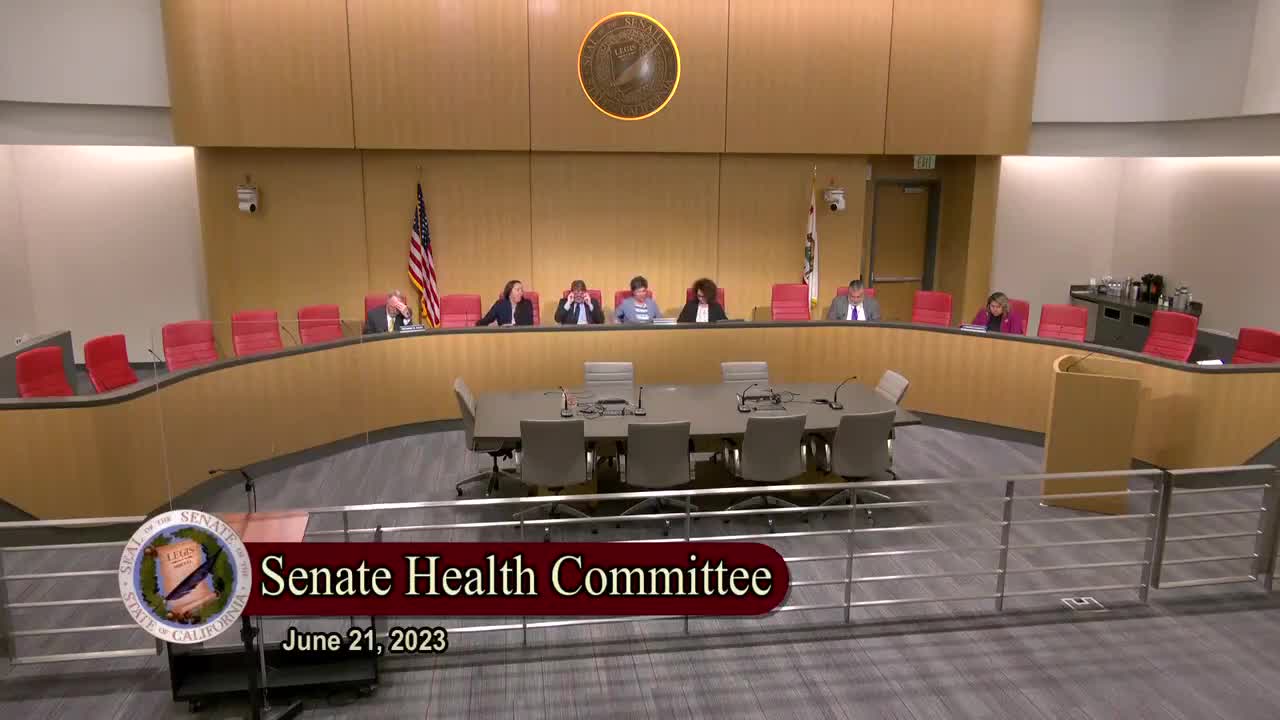 6MIN
Senate Standing Committee on Health
 55SEC
Assembly Floor
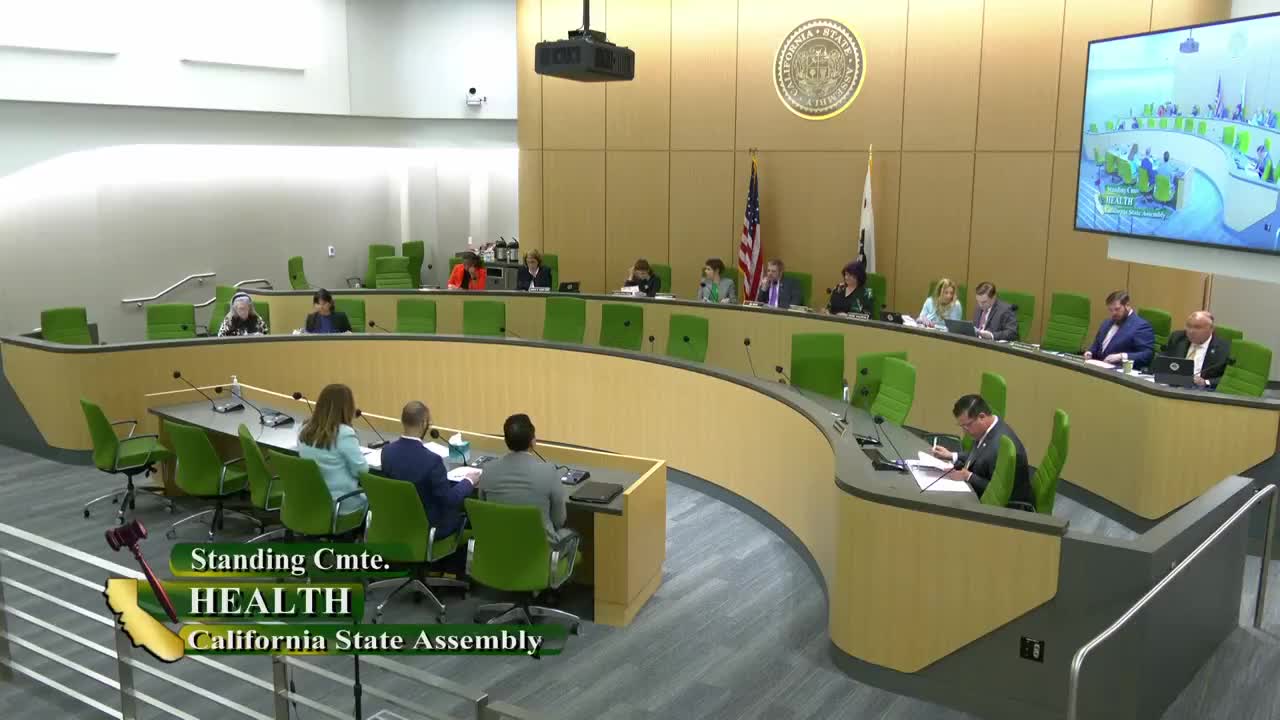 8MIN