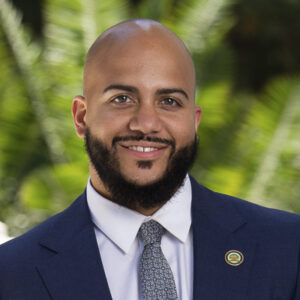
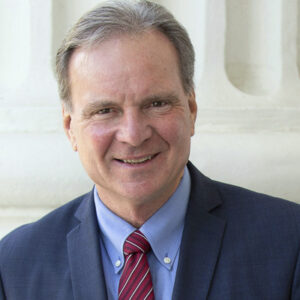
AB 963: The End the Foster Care-to-Homelessness Pipeline Act.
- Session Year: 2023-2024
- House: Assembly
- Latest Version Date: 2023-04-27
Current Status:
Failed
(2024-02-01: From committee: Filed with the Chief Clerk pursuant to Joint Rule 56.)
Introduced
In Committee
First Chamber
In Committee
Second Chamber
Enacted
Existing law, Bergeson-Peace Infrastructure and Economic Development Bank Act, establishes the California Infrastructure and Economic Development Bank (I-Bank) in the Governors Office of Business and Economic Development, that is governed by a board of directors. The act, among other things, authorizes the I-Bank to make loans, issue bonds, and provide financial assistance for various types of projects that qualify as economic development or public development facilities.
This bill, the End the Foster Care-to-Homelessness Pipeline Act, would establish the End the Foster Care-to-Homelessness Pipeline Program within the I-Bank to guarantee qualified loans made by financial institutions to qualified nonprofit and for-profit businesses for the construction, acquisition, and renovation of housing for current and former foster youth between 18 and 25 years of age and who qualify for specified programs. The bill would require authorize the bank, in determining whether to guarantee a qualified loan, to give preference to counties with high housing inelasticity and high rates of foster youth, as specified. The bill would require authorize the bank to reimburse up to 100% 80% of the guaranteed portion of principal and interest that result from a qualified loan that is in default, not to exceed $250,000,000, and would require the Controller to transfer moneys from the General Fund to the California Infrastructure and Economic Development Bank Fund, at the direction of the bank, for that purpose. By requiring the Controller to transfer moneys into a continuously appropriated fund, the bill would make an appropriation.
Existing law, Bergeson-Peace Infrastructure and Economic Development Bank Act, establishes the California Infrastructure and Economic Development Bank (I-Bank) in the Governors Office of Business and Economic Development, that is governed by a board of directors. The act, among other things, authorizes the I-Bank to make loans, issue bonds, and provide financial assistance for various types of projects that qualify as economic development or public development facilities.
This bill, the End the Foster Care-to-Homelessness Pipeline Act, would establish the End the Foster Care-to-Homelessness Pipeline Program within the I-Bank to guarantee qualified loans made by financial institutions to qualified nonprofit and for-profit businesses for the construction, acquisition, and renovation of housing for current and former foster youth between 18 and 25 years of age and who qualify for specified programs. The bill would require the bank, in determining whether to guarantee a qualified loan, to give preference to municipalities counties with high housing inelasticity and high rates of foster youth. youth, as specified. The bill would require the bank to reimburse up to 100 percent 100% of the guaranteed portion of principal and interest that result from a qualified loan that is in default, not to exceed $250,000,000, and would require the Controller to transfer moneys from the General Fund to the California Infrastructure and Economic Development Bank Fund, at the direction of the bank, for that purpose. By requiring the Controller to transfer moneys into a continuously appropriated fund, the bill would make an appropriation.
Existing law, Bergeson-Peace Infrastructure and Economic Development Bank Act, establishes the California Infrastructure and Economic Development Bank (I-Bank) in the Governors Office of Business and Economic Development, that is governed by a board of directors. The act, among other things, authorizes the I-Bank to make loans, issue bonds, and provide financial assistance for various types of projects that qualify as economic development or public development facilities.
This bill, the End the Foster Care-to-Homelessness Pipeline Act, would establish the End the Foster Care-to-Homelessness Pipeline Program within the I-Bank to guarantee qualified loans made by financial institutions to qualified nonprofit and for-profit businesses for the construction, acquisition, and renovation of housing for current and former foster youth between 18 and 25 years of age and who qualify for specified programs. The bill would require the bank, in determining whether to guarantee a qualified loan, to give preference to municipalities with high housing inelasticity and high rates of foster youth. The bill would require the bank to reimburse up to 100 percent of the guaranteed portion of principal and interest that result from a qualified loan that is in default, not to exceed $250,000,000, and would require the Controller to transfer moneys from the General Fund to the California Infrastructure and Economic Development Bank Fund, at the direction of the bank, for that purpose. By requiring the Controller to transfer moneys into a continuously appropriated fund, the bill would make an appropriation.
This act shall be known, and may be cited, as the End the Foster Care-to-Homelessness Pipeline Act.
SEC. 2.(a)The Legislature finds and declares all of the following:
(1)Despite efforts to ensure youth exit Californias child welfare system to family and other permanent connections, nearly 4,600 youth find themselves alone each year, often facing extreme housing precarity, according to the University of California, Berkeleys California Child Welfare Indicators Project.
(2)One-quarter of former foster youth experienced homelessness in California between the ages of 21 and 23, inclusive, with an additional 28 percent reporting that they had couch surfed, according to seminal research. Of unsheltered adults identified in the 2022 Greater Los Angeles Homeless Count alone, 35 percent had experienced the foster care or juvenile justice systems, a total of 15,612 individuals.
(3)Between the ages of 18 and 25, inclusive, young people in and exiting the foster care system have a myriad of benefits and housing subsidies. In 2008, Congress passed the Fostering Connections to Success and Increasing Adoptions Act (H.R. 693). The law offered states matching federal Title IV-E entitlement dollars to extend foster care through the age of 21.
(4)In 2010, California passed the California Fostering Connections to Success Act (Chapter 229 of the Statues of 2010) to extend foster care in the state, and has since drawn down many millions of dollars to support foster youth success.
(5)Alongside an array of transitional housing programs administered by the State Department of Social Services, youth who have experienced foster care have a network of housing opportunities, albeit frayed and insufficient to forestall the dire housing precarity they face.
(6)The need is to create more housing on a dramatic scale for this, a population to whom the state and every Californian has a deep responsibility.
(7)A key problem with most of the rental subsidies current and former foster youth receive is that they are portable, akin to tenant-based Housing Choice Vouchers administered by the federal Department of Housing and Urban Development.
(8)The federal Transportation Infrastructure Finance and Innovation Act of 1998 (P.L. 105-178) provided loan guarantees, low-interest financing, and lines of credit for major infrastructure projects. This strategy drew billions in private investment to build roads, bridges, and tunnels.
(9)Similarly, the Community Investment Guarantee Pool (CIGP), launched in 2019, has pulled together major names in philanthropy and impact investing, including, among others, the Chan Zuckerberg Initiative, Arnold Ventures, the Annie E. Casey and Kresge foundations, to offer loan guarantees for a range of socially conscious private enterprises. In 2021, the CIGP used $15,000,000 in guarantees to leverage $131,000,000 in capital to develop affordable housing.(10)The solution for foster youth is the stable, predictable, and affordable housing they need to find their footing and success. The state needs to create an unfunded loan guarantee pool, administered by the California Infrastructure and Economic Development Bank (IBank), to spur private debt financing to develop housing for current and former foster youth. In conjunction with existing rental subsidies this strategy portends a dramatic ramp-up in housing for this particularly vulnerable population.(b)It is the intent of the Legislature to help end the foster care-to-homelessness pipeline by providing loan guarantees for the development and acquisition of housing for the more than 4,600 youth who exit Californias child welfare system every year.
SEC. 3.Chapter 7 (commencing with Section 63090) is added to Division 1 of Title 6.7 of the Government Code, to read:7.The End the Foster Care-to-Homelessness Pipeline Program 63090.(a)This chapter shall be known, and may be cited, as the End the Foster Care-to-Homelessness Pipeline Program.
(b)Notwithstanding any other provisions of this division, this chapter shall not apply to any other activities, powers, and duties of the bank under any of the other chapters of this division.
63091.Unless the context otherwise requires, the definitions in this section shall govern the construction of this chapter. The definitions provided in this section shall only apply to this chapter and not to any other chapter of this division.
(a)Bank means the California Infrastructure and Economic Development Bank.
(b)Bank board means the board of directors of the California Infrastructure and Economic Development Bank.
(c)Eligible costs means the costs paid or incurred on or after January 1, 2024, for the construction, acquisition, and renovation of a qualified project.
(d)Financial institution means regulated banking organizations, including national banks and trust companies authorized to conduct business in California and state-chartered commercial banks, trust companies, credit unions, and savings and loan associations.
(e)Qualified business means a business that meets both of the following:
(1)Is a corporation, partnership, cooperative, or other entity, including both nonprofit and for-profit entities, and is authorized to conduct business in the state.
(2)Has its primary business location within the boundaries of this state.
(f)Qualified loan means a loan or a portion of a loan made by a financial company or financial institution to a qualified business for eligible costs to construct, acquire, and renovate a qualified project.
(g)Qualified project means housing for current or former foster youth who are 18 to 25 years of age, inclusive, and qualify for one of the following programs:
(1)Independent Living Program (ILP).
(2)Transitional Housing Placement Program for Non-Minor Dependent (THPP NMD).
(3)Transitional Housing Program-Plus (THP-Plus).
(4)Family Unification Program, Youth Aging Out of Foster Care (FUP-Youth).
(5)Federal Foster Youth to Independence Initiative (FYI).
63092.(a)The bank board shall may establish one or more programs administered by the bank directly to guarantee qualified loans made by financial institutions to qualified businesses for the construction, acquisition, and renovation of qualified projects in accordance with this chapter.
(b)In determining whether to guarantee a qualified loan, the bank shall may give preference to counties with high housing inelasticity and high rates of foster youth, as defined by the rate per 1,000 children 0 to 21 years of age, inclusive, who are in out-of-home foster care.
(c)Any A financial institution that issues a loan that is guaranteed by the bank pursuant to this chapter shall may be fully reimbursed for up to 100 80 percent of the guaranteed portion of principal and interest that result from a loan or loans that are in default, not to exceed two hundred fifty million dollars ($250,000,000).
(d)The Controller shall transfer moneys from the General Fund to the California Infrastructure and Economic Development Bank Fund, at the direction of the bank, in an amount not to exceed the amount necessary to reimburse guaranteed qualified loans in accordance with subdivision (c).
(e)The board may adopt regulations to implement this chapter in accordance with the Administrative Procedure Act (Chapter 3.5 (commencing with Section 11340) of Part 1 of Division 3 of Title 2 of the Government Code).
This act shall be known, and may be cited, as the End the Foster Care-to-Homelessness Pipeline Act.
SEC. 2.(a)The Legislature finds and declares all of the following:
(1)Despite efforts to ensure youth exit Californias child welfare system to family and other permanent connections, nearly 4,600 youth find themselves alone each year, often facing extreme housing precarity, according to the University of California, Berkeleys California Child Welfare Indicators Project.
(2)One-quarter of former foster youth experienced homelessness in California between the ages of 21 and 23, inclusive, with an additional 28 percent reporting that they had couch surfed, according to seminal research. Of unsheltered adults identified in the 2022 Greater Los Angeles Homeless Count alone, 35 percent had experienced the foster care or juvenile justice systems, a total of 15,612 individuals.
(3)Between the ages of 18 and 25, inclusive, young people in and exiting the foster care system have a myriad of benefits and housing subsidies. In 2008, Congress passed the Fostering Connections to Success and Increasing Adoptions Act (H.R. 693). The law offered states matching federal Title IV-E entitlement dollars to extend foster care through the age of 21.
(4)In 2010, California passed the California Fostering Connections to Success Act (Chapter 229 of the Statues of 2010) to extend foster care in the state, and has since drawn down many millions of dollars to support foster youth success.
(5)Alongside an array of transitional housing programs administered by the State Department of Social Services, youth who have experienced foster care have a network of housing opportunities, albeit frayed and insufficient to forestall the dire housing precarity they face.
(6)The need is to create more housing on a dramatic scale for this, a population to whom the state and every Californian has a deep responsibility.
(7)A key problem with most of the rental subsidies current and former foster youth receive is that they are portable, akin to tenant-based Housing Choice Vouchers administered by the federal Department of Housing and Urban Development.
(8)The federal Transportation Infrastructure Finance and Innovation Act of 1998 (P.L. 105-178) provided loan guarantees, low-interest financing, and lines of credit for major infrastructure projects. This strategy drew billions in private investment to build roads, bridges bridges, and tunnels.
(9)Similarly, the Community Investment Guarantee Pool (CIGP), launched in 2019, has pulled together major names in philanthropy and impact investing, including, among others, the Chan Zuckerberg Initiative, Arnold Ventures, the Annie E. Casey and Kresge foundations, to offer loan guarantees for a range of socially conscious private enterprises. In 2021, the CIGP used $15,000,000 in guarantees to leverage $131,000,000 in capital to develop affordable housing.
(10)The solution for foster youth is the stable, predictable, and affordable housing they need to find their footing and success. The state needs to create an unfunded loan guarantee pool, administered by the California Infrastructure and Economic Development Bank (IBank), to spur private debt financing to develop housing for current and former foster youth. In conjunction with existing rental subsidies this strategy portends a dramatic ramp-up in housing for this particularly vulnerable population.
(b)It is the intent of the Legislature to help end the foster care-to-homelessness pipeline by providing loan guarantees for the development and acquisition of housing for the more than 4,600 youth who exit Californias child welfare system every year.
SEC. 3.Chapter 7 (commencing with Section 63090) is added to Division 1 of Title 6.7 of the Government Code, to read:7.The End the Foster Care-to-Homelessness Pipeline Program 63090.(a)This chapter shall be known, and may be cited, as the End the Foster Care-to-Homelessness Pipeline Program.
(b)Notwithstanding any other provisions of this division, this chapter shall not apply to any other activities, powers, and duties of the bank under any of the other chapters of this division.
63091.Unless the context otherwise requires, the definitions in this section shall govern the construction of this chapter. The definitions provided in this section shall only apply to this chapter and not to any other chapter of this division.
(a)Bank means the California Infrastructure and Economic Development Bank.
(b)Bank board means the board of directors of the California Infrastructure and Economic Development Bank.
(c)Eligible costs means the costs paid or incurred on or after January 1, 2024, for the construction, acquisition, and renovation of a qualified project.
(d)Financial institution means regulated banking organizations, including national banks and trust companies authorized to conduct business in California and state-chartered commercial banks, trust companies, credit unions, and savings and loan associations.
(e)Qualified business means a business that meets both of the following:
(1)Is a corporation, partnership, cooperative, or other entity, including both nonprofit and for-profit entities, and is authorized to conduct business in the state.
(2)Has its primary business location within the boundaries of this state.
(f)Qualified loan means a loan or a portion of a loan made by a financial company or financial institution to a qualified business for eligible costs to construct, acquire, and renovate a qualified project.
(g)Qualified project means housing for current or former foster youth who are 18 to 25 years of age, inclusive, and qualify for one of the following programs:
(1)Independent Living Program (ILP).
(2)Transitional Housing Placement Program for Non-Minor Dependent (THPP NMD).
(3)Transitional Housing Program-Plus (THP-Plus).
(4)Family Unification Program, Youth Aging Out of Foster Care (FUP-Youth).
(5)Federal Foster Youth to Independence Initiative (FYI).
63092.(a)The bank board shall establish one or more programs administered by the bank directly to guarantee qualified loans made by financial institutions to qualified businesses for the construction, acquisition, and renovation of qualified projects in accordance with this chapter.
(b)In determining whether to guarantee a qualified loan, the bank shall give preference to municipalities counties with high housing inelasticity and high rates of foster youth. youth, as defined by the rate per 1,000 children 0 to 21 years of age, inclusive, who are in out-of-home foster care.
(c)Any financial institution that issues a loan that is guaranteed by the bank pursuant to this chapter shall be fully reimbursed for up to 100 percent of the guaranteed portion of principal and interest that result from a loan or loans that are in default, not to exceed two hundred fifty million dollars ($250,000,000).
(d)The Controller shall transfer moneys from the General Fund to the California Infrastructure and Economic Development Bank Fund, at the direction of the bank, in an amount not to exceed the amount necessary to reimburse guaranteed qualified loans in accordance with subdivision (c).
(e)The board may adopt regulations to implement this chapter in accordance with the Administrative Procedure Act (Chapter 3.5 (commencing with Section 11340) of Part 1 of Division 3 of Title 2 of the Government Code).
This act shall be known, and may be cited, as the End the Foster Care-to-Homelessness Pipeline Act.
SEC. 2.(a)The Legislature finds and declares all of the following:
(1)Despite efforts to ensure youth exit Californias child welfare system to family and other permanent connections, nearly 4,600 youth find themselves alone each year, often facing extreme housing precarity, according to the University of California, Berkeleys California Child Welfare Indicators Project.
(2)One-quarter of former foster youth experienced homelessness in California between the ages of 21 and 23, inclusive, with an additional 28 percent reporting that they had couch surfed, according to seminal research. Of unsheltered adults identified in the 2022 Greater Los Angeles Homeless Count alone, 35 percent had experienced the foster care or juvenile justice systems, a total of 15,612 individuals.
(3)Between the ages of 18 and 25, inclusive, young people in and exiting the foster care system have a myriad of benefits and housing subsidies. In 2008, Congress passed the Fostering Connections to Success and Increasing Adoptions Act (H.R. 693). The law offered states matching federal Title IV-E entitlement dollars to extend foster care through the age of 21.
(4)In 2010, California passed the California Fostering Connections to Success Act (Chapter 229 of the Statues of 2010) to extend foster care in the state, and has since drawn down many millions of dollars to support foster youth success.
(5)Alongside an array of transitional housing programs administered by the State Department of Social Services, youth who have experienced foster care have a network of housing opportunities, albeit frayed and insufficient to forestall the dire housing precarity they face.
(6)The need is to create more housing on a dramatic scale for this, a population to whom the state and every Californian has a deep responsibility.
(7)A key problem with most of the rental subsidies current and former foster youth receive is that they are portable, akin to tenant-based Housing Choice Vouchers administered by the federal Department of Housing and Urban Development.
(8)The federal Transportation Infrastructure Finance and Innovation Act of 1998 (P.L. 105-178) provided loan guarantees, low-interest financing, and lines of credit for major infrastructure projects. This strategy drew billions in private investment to build roads, bridges and tunnels.
(9)Similarly, the Community Investment Guarantee Pool (CIGP), launched in 2019, has pulled together major names in philanthropy and impact investing, including, among others, the Chan Zuckerberg Initiative, Arnold Ventures, the Annie E. Casey and Kresge foundations, to offer loan guarantees for a range of socially conscious private enterprises. In 2021, the CIGP used $15,000,000 in guarantees to leverage $131,000,000 in capital to develop affordable housing.
(10)The solution for foster youth is the stable, predictable, and affordable housing they need to find their footing and success. The state needs to create an unfunded loan guarantee pool, administered by the California Infrastructure and Economic Development Bank (IBank), to spur private debt financing to develop housing for current and former foster youth. In conjunction with existing rental subsidies this strategy portends a dramatic ramp-up in housing for this particularly vulnerable population.
(b)It is the intent of the Legislature to help end the foster care-to-homelessness pipeline by providing loan guarantees for the development and acquisition of housing for the more than 4,600 youth who exit Californias child welfare system every year.
SEC. 3.Chapter 7 (commencing with Section 63090) is added to Division 1 of Title 6.7 of the Government Code, to read:7.The End the Foster Care-to-Homelessness Pipeline Program 63090.(a)This chapter shall be known, and may be cited, as the End the Foster Care-to-Homelessness Pipeline Program.
(b)Notwithstanding any other provisions of this division, this chapter shall not apply to any other activities, powers, and duties of the bank under any of the other chapters of this division.
63091.Unless the context otherwise requires, the definitions in this section shall govern the construction of this chapter. The definitions provided in this section shall only apply to this chapter and not to any other chapter of this division.
(a)Bank means the California Infrastructure and Economic Development Bank.
(b)Bank board means the board of directors of the California Infrastructure and Economic Development Bank.
(c)Eligible costs means the costs paid or incurred on or after January 1, 2024, for the construction, acquisition, and renovation of a qualified project.
(d)Financial institution means regulated banking organizations, including national banks and trust companies authorized to conduct business in California and state-chartered commercial banks, trust companies, credit unions, and savings and loan associations.
(e)Qualified business means a business that meets both of the following:
(1)Is a corporation, partnership, cooperative, or other entity, including both nonprofit and for-profit entities, and is authorized to conduct business in the state.
(2)Has its primary business location within the boundaries of this state.
(f)Qualified loan means a loan or a portion of a loan made by a financial company or financial institution to a qualified business for eligible costs to construct, acquire, and renovate a qualified project.
(g)Qualified project means housing for current or former foster youth who are 18 to 25 years of age, inclusive, and qualify for one of the following programs:
(1)Independent Living Program (ILP).
(2)Transitional Housing Placement Program for Non-Minor Dependent (THPP NMD).
(3)Transitional Housing Program-Plus (THP-Plus).
(4)Family Unification Program, Youth Aging Out of Foster Care (FUP-Youth).
(5)Federal Foster Youth to Independence Initiative (FYI).
63092.(a)The bank board shall establish one or more programs administered by the bank directly to guarantee qualified loans made by financial institutions to qualified businesses for the construction, acquisition, and renovation of qualified projects in accordance with this chapter.
(b)In determining whether to guarantee a qualified loan, the bank shall give preference to municipalities with high housing inelasticity and high rates of foster youth.
(c)Any financial institution that issues a loan that is guaranteed by the bank pursuant to this chapter shall be fully reimbursed for up to 100 percent of the guaranteed portion of principal and interest that result from a loan or loans that are in default, not to exceed two hundred fifty million dollars ($250,000,000).
(d)The Controller shall transfer moneys from the General Fund to the California Infrastructure and Economic Development Bank Fund, at the direction of the bank, in an amount not to exceed the amount necessary to reimburse guaranteed qualified loans in accordance with subdivision (c).
(e)The board may adopt regulations to implement this chapter in accordance with the Administrative Procedure Act (Chapter 3.5 (commencing with Section 11340) of Part 1 of Division 3 of Title 2 of the Government Code).
|
Date
|
Status
|
|---|---|
| Feb 1, 2024 | From committee: Filed with the Chief Clerk pursuant to Joint Rule 56. |
| Jan 31, 2024 | Died pursuant to Art. IV, Sec. 10(c) of the Constitution. |
| May 18, 2023 | In committee: Held under submission. |
| May 18, 2023 | Joint Rule 62(a), file notice suspended. (Page 1580.) |
| May 17, 2023 | In committee: Set, first hearing. Referred to APPR. suspense file. |
| May 1, 2023 | Re-referred to Com. on APPR. |
| Apr 27, 2023 | Read second time and amended. |
| Apr 26, 2023 | From committee: Amend, and do pass as amended and re-refer to Com. on APPR. (Ayes 7. Noes 0.) (April 25). |
| Apr 3, 2023 | Re-referred to Com. on J., E.D., & E. |
| Mar 30, 2023 | Read second time and amended. |
| Mar 29, 2023 | From committee: Amend, and do pass as amended and re-refer to Com. on J., E.D., & E. (Ayes 7. Noes 0.) (March 28). |
| Mar 2, 2023 | Referred to Coms. on HUM. S. and J., E.D., & E. |
| Feb 15, 2023 | From printer. May be heard in committee March 17. |
| Feb 14, 2023 | Read first time. To print. |
|
Date
|
Description
|
Location
|
Votes
|
|
|---|---|---|---|---|
| Apr 25, 2023 | Do pass as amended and be re-referred to the Committee on [Appropriations] | Assembly Standing Committee on Jobs, Economic Development, and the Economy |
Passed |
|
| Mar 28, 2023 | Do pass as amended and be re-referred to the Committee on [Jobs, Economic Development, and the Economy] | Assembly Standing Committee on Human Services |
Passed |
This list shows positions taken on this bill by organizations on the date displayed, which is linked to the original source.
Positions by individuals are not included.
|
Organization
|
Position
|
Date
|
|---|---|---|
| Alliance of Child and Family Services | ** Support | |
| Amity Foundation | ** Support | |
| ASPIRANET | ** Support | |
| California Youth Connection | ** Support | |
| Children Now | ** Support | |
| Children'S Law Center Of California | ** Support | |
| Coalition for Responsible Community Development | ** Support | |
| County of Los Angeles Board of Supervisors | ** Support | |
| County of Santa Clara | ** Support | |
| First Place for Youth | ** Support | |
| Foster Care Counts | ** Support | |
| Hollywood Homeless Youth Partnership | ** Support | |
| League Of California Cities | ** Support | |
| Los Angeles Coalition to End Youth Homelessness | ** Support | |
| Los Angeles County | ** Support | |
| Social Change Partners | ** Support | |
| Steinberg Institute | ** Support | |
| Sycamores | ** Support | |
| The Rightway Foundation | ** Support | |
| The United Way of Greater Los Angeles | ** Support |
Date of Hearing: May 17, 2023
ASSEMBLY COMMITTEE ON APPROPRIATIONS
Chris Holden, Chair
ABPCA Bill Id:AB 963
Author:(Schiavo) – As Amended Ver:April 27, 2023
Policy Committee: | Human Services | Vote: | 7 - 0 |
Jobs, Economic Development, and the Economy | 7 - 0 | ||
|
|
Urgency: No State Mandated Local Program: No Reimbursable: No
SUMMARY:
This bill authorizes the California Infrastructure and Economic Development Bank (IBank) to establish one or more programs to guarantee qualified loans for the construction, acquisition, and renovation of housing for current or former foster youth who are 18 to 25 years of age.
Specifically, this bill:
- Establishes the “End the Foster Care-to-Homelessness Pipeline Program.”
- Authorizes the IBank board of directors to establish one or more programs administered by the IBank to guarantee qualified loans made by financial institutions to qualified businesses for the construction, acquisition, and renovation of housing for foster youth who qualify for specified housing programs, including the Independent Living Program (ILP), among others.
- Allows the IBank, in determining whether to guarantee a qualified loan, to give preference to counties with high housing inelasticity and high rates of foster youth.
- Authorizes any financial institution that issues a loan that is guaranteed by the IBank pursuant to these provisions, to be fully reimbursed for up to 80% of the guaranteed portion of principal and interest that result from a loan or loans in default, not to exceed $250 million.
- Requires the California State Controller to transfer moneys from the General Fund to the IBank Fund, at the direction of the IBank, in an amount not to exceed the amount necessary to reimburse guaranteed qualified loans in accordance with 3) above.
- Authorizes the IBank board to adopt regulations to implement these provisions.
- States legislative intent to help end the foster care-to-homelessness pipeline by providing loan guarantees for the development and acquisition of housing for the more than 4,600 youth who exit California’s child welfare system every year.
FISCAL EFFECT:
- Estimated ongoing General Fund (GF) cost pressures up to $250 million to fund the loan guarantee program. Per IBank rules, the agency must maintain a reserve account of 10% ($25 million) of the total amount of guaranteed loans to be used exclusively for loan defaults. Assuming a 1% loan default rate, annual state costs would be $2.5 million assuming $250 million in guaranteed loans. It would likely take several years for the program to reach full capacity. This bill does not identify a funding source for the program.
- Estimated GF costs to the IBank of an unknown amount, but potentially in the high-hundreds of thousands to low millions of dollars annually, to establish and administer the program. The IBank indicates the program proposed in this bill is unlike IBank’s current programs, making costs difficult to estimate.
For context, the IBank loan guarantee program has six staff dedicated to the program, without executive time or other support program time (legal, executive, administrative or fiscal). At $150,000 per position and assuming 10% overhead, total program costs are $1million annually. In addition, the program is supported by the Financial Development Corporations (FDCs) that receive direct state support of about $1.7 million annually and the guarantee fee income, which has been approximately $4 million over the last five years. Over this period of time annual guarantee volume was roughly $150 million.
COMMENTS:
- Purpose. According to the author:
[This bill] will expand the number of affordable housing units available to former foster youth struggling with housing security. Unfortunately, foster youth experience homeless and housing insecurity at greater rates than the general population. By leveraging the backing of the state for low-risk loans to build more affordable housing serving foster youth, California will be able to accelerate housing construction while supporting thousands of foster youth with the goal of forestalling homelessness. One easy step in addressing our homeless crisis is doing everything we can to make sure foster youth have an affordable place to live as they transition from the foster care system and into adulthood.
- Background. The 2022 point-in-time (PIT) count conducted by the U.S. Department of Housing and Urban Development (HUD) reported, on a single night in 2022, there were 9,590 unaccompanied youth under the age of 25 experiencing homelessness in California. This is the largest number of unaccompanied youth in any state and accounts for more than a third of all unaccompanied youth nationally. California also accounted for 52% (6,752 people) of all unsheltered unaccompanied youth. A 2013 study published in the Journal of Public Health found between 31% and 46% of former foster youth had been homeless at least once by age 26.
The state has several housing programs available to foster youth transitioning from care to independence, including the Housing Navigation and Maintenance Program, Transitional Housing Placement (THP), Transitional Housing Placement Program for Non-Minor Dependents (THP-NMD), Transitional Housing Program-Plus (THP-Plus), and Supervised Independent Living Placements (SILPs). However, a 2020-21 Statewide Analysis of Supportive Housing for Former Foster Youth issued by John Burton Advocates for Youth highlighted 1,249 youth in need of supportive housing who are unable to access it due to a lack of capacity. Additionally, the report found, as of June 30, 2021, 473 youth were on a waiting list for a THP-Plus program and 290 were on a waiting list for a specialized Housing Choice Voucher for former foster youth.
IBank. The IBank was created in 1994 to finance public infrastructure and private development that contributes to a strong economy and improves the quality of life in California communities. Located within the Governor’s Office of Business and Economic Development (GO-Biz), the Ibank has broad authority to issue tax-exempt and taxable revenue bonds, provide financing to public agencies, provide credit enhancements, and leverage state and federal funds.
Among the IBank’s programs is the Small Business Finance Center (SBFC), created for the purpose of offering a range of financial capital to small businesses, including direct loans, loan guarantees, and bond insurance. The loan guarantee program is designed to assist small businesses that experience capital access barriers.
This bill authorizes the IBank to create a guaranteed loan program for the construction of housing for current or former foster youth. While the SBFC loan guarantee program is not specifically designed for affordable housing development, it may be an option for small businesses involved in the development of affordable housing projects. However, the eligibility requirements and application process may vary depending on the lender and specific loan product based on HCD and SBFC requirements.
Analysis Prepared by: Jennifer Swenson / APPR. / (916) 319-2081
Date of Hearing: April 25, 2023
ASSEMBLY COMMITTEE ON JOBS, ECONOMIC DEVELOPMENT, AND THE ECONOMY
Carlos Villapudua, Chair
ABPCA Bill Id:AB 963 (
Author:Schiavo) – As Amended Ver:March 30, 2023
SUBJECT: The End the Foster Care-to-Homelessness Pipeline Act
SUMMARY: AB 963 intends to create confidence in the private lending market in order to expand the number of affordable units available to former foster youth struggling with housing security by requiring the California Infrastructure and Economic Development Bank (IBank) to establish one or more programs to guarantee qualified loans for the construction, acquisition, and renovation for housing for current or former foster youth who are 18 to 25 years of age and qualify for specified housing programs, with preference given to counties with high housing inelasticity and high rates of foster youth.
Specifically, this bill:
- Is known and may be cited as “End the Foster Care-to-Homelessness Pipeline Act”.
- Defines, for purposes of these provisions, the following terms:
- “Bank” means the California Infrastructure and Economic Development Bank;
- “Bank board” means the board of directors of IBank;
- “Eligible costs” means the costs paid or incurred on or after January 1, 2024, for the construction, acquisition, and renovation of a qualified project;
- “Financial institution” means regulated banking organizations, including national banks and trust companies authorized to conduct business in California and state-chartered commercial banks, trust companies, credit unions, and savings and loan associations;
- “Qualified business” means a business that meets both of the following:
- Is a corporation, partnership, cooperative, or other entity, including both nonprofit and for-profit entities, and is authorized to conduct business in the state; and,
- Has its primary business location within the boundaries of this state.
- “Qualified loan” means a loan or a portion of a loan made by a financial company or financial institution to a qualified business for eligible costs to construct, acquire, and renovate a qualified project.
- “Qualified project” means housing for current or former foster youth who are 18 to 25 years of age, inclusive, and qualify for one of the following programs:
- Independent Living Program (ILP);
- Transitional Housing Placement Program for Non-Minor Dependent (THPP NMD);
- Transitional Housing Program-Plus (THP-Plus);
- Family Unification Program, Youth Aging Out of Foster Care (FUP-Youth); and,
- Federal Foster Youth to Independence Initiative (FYI).
- Requires the IBank Board of Directors to establish one or more programs administered by the bank directly to guarantee qualified loans made by financial institutions to qualified businesses for the construction, acquisition, and renovation of qualified projects in accordance with these provisions.
- Requires, in determining whether to guarantee a qualified loan, the bank to give preference to counties with high housing inelasticity and high rates of foster youth.
- Requires any financial institution that issues a loan that is guaranteed by the IBank pursuant to these provisions, to be fully reimbursed for up to 100% of the guaranteed portion of principal and interest that result from a loan or loans that are in default, not to exceed $250 million.
- Requires the California State Controller to transfer moneys from the General Fund to the California Infrastructure and Economic Development Bank Fund, at the direction of the IBank, in an amount not to exceed the amount necessary to reimburse guaranteed qualified loans in accordance with 5) above.
- Authorizes the IBank board to adopt regulations to implement these provisions.
- States that notwithstanding any other provisions of this division, this chapter shall not apply to any other activities, powers, and duties of the IBank under any of the other chapters of this division.
- States Legislative intent to help end the foster care-to-homelessness pipeline by providing loan guarantees for the development and acquisition of housing for the more than 4,600 youth who exit California’s child welfare system every year.
EXISTING LAW:
- Establishes the Governor’s Office of Business and Economic Development (GO-Biz) within the Governor’s Office for the purpose of serving as the lead state entity for economic strategy and marketing of California on issues relating to business development, private sector investments, and economic growth.
- Establishes the Small Business Finance Center within the IBank for the purpose of offering a range of financial capital to small businesses, including direct loans, loan guarantees, and bond insurance. Program delivery is provided through state-designated small business financial development corporations (FDCs).
- The Housing Navigation & Maintenance Program. Formerly the Housing Navigators Program, this program was established in Budget Act of 2019, AB 74 (Ting), Chapter 23, Statutes of 2019, and allocated $5 million to help young adults between 18 and 21 years old secure and maintain housing, with priority given to NMDs in the foster care system. The program is administered by the California Department of Housing and Community Development (HCD) to county child welfare agencies to provide housing navigators to help young adults secure and maintain housing. Funds allocated to counties may be used to provide housing navigation services directly or through a contract with other housing assistance programs in the county, and counties are encouraged to coordinate with the local Continuum of Care to facilitate communication and collaboration. Funds may be used to: assist young adults secure and maintain housing; provide housing case management, including essential services in emergency supports to foster youth; prevent young adults from becoming homeless; and, improve coordination of services and linkages to key resources across the community. Effective July 1, 2022, as a result of the enactment of SB 187 (Committee on Budget and Fiscal Review), Chapter 50, Statutes of 2022, the program expanded the upper age limit to include youth up to until turning 25 years old, in order to align the program with federal Housing Choice Voucher Programs for former foster youth. The budget includes $8.7 million in ongoing funding for this expansion, and was designed to equip counties with funding to provide the required supportive services.
- Transitional Housing Placement (THP). In 2019, SB 80 (Committee on Budget and Fiscal Review), Chapter 27, Statutes of 2019, allocated $8 million in grants to counties for child welfare services agencies to help young adults ages 18 to 25 years find and maintain housing. The THP program required that priority be given to youth who were formerly in the foster care or probation systems. SB 80 required the HCD to consult with the California Department of Social Services, Department of Finance (DOF), and the County Welfare Directors Association of California to develop an allocation schedule for purposes of distributing funds, and subjected the program to suspend implementation on December 31, 2021, unless DOF made certain findings related to General Fund revenues and expenditures. Use of funds can include: identifying and assisting housing services; helping youth secure and maintain housing; improving coordination of services and linkages to community resources within the child welfare system and the homeless continuum of care; and, outreach and targeting to serve those with the most severe needs.
- Transitional Housing Placement Program for Non-Minor Dependents. When AB 12 enacted extended foster care, the legislation also created the “Transitional Housing Placement Program + Foster Care” placement, now known as THP-NMD. This placement provides 18 to 21-year-old NMDs with transitional housing and supportive housing based on the youth’s TILP. Youth participating in a THP-NMD placement receive case management, supervision, and supportive services from their THP-NMD provider. The goal of these services is to help the NMD transition to independent living by helping them meet education goals, obtain gainful employment, learn financial management and other daily living skills.
- Transitional Housing Program-Plus. The THP-Plus program provides housing for former foster youth between the ages of 18 and 24 who exited foster care on or after their 18th birthday. A qualifying youth can then receiving THP-Plus housing and services for 24 cumulative months, or until they turn 24 if that occurs before their 24 month clock has run. To participate, an eligible youth must be actively pursuing the goals of their TILP, which is reviewed and updated annually. Additionally, the youth must report any changes to their TILP to their ILP coordinator, including but not limited to, changes in their address, living circumstances, or education training. Residential units including apartments, single family dwellings, condominiums, college dormitories, and host family models may all qualify as an acceptable residential unit for the purposes of a THP-Plus placement. These placements are certified by the county social services agency who must ensure certain health and safety standards are met and must certify that the program is needed by the county and the provider is capable of effectively operating the program and meeting the needs of the identified population. In fiscal year 2020-21, California had the capacity to serve 1,309 youth in THP-Plus at a moment in time.
- Supervised Independent Living Placements (SILPs). NMDs in extended foster care also have the option of living in a SILP which allows the youth to live independently while still receiving the supports and services extended foster care provides. In an SILP, a youth lives in an apartment, house, condominium, room and board arrangement, or college dorm, either alone or with an approved roommate, while still under the supervision of their social worker or probation officer. A SILP may also include a transitional living setting approved by the county to support youth who are entering or reentering foster care or transitioning between placements, but prohibits this setting from including a youth homelessness prevention center or an adult homeless shelter. Youth must be approved to live in an SILP, and this occurs through them undergoing a SILP Readiness Assessment that reviews the youth’s preparedness to live independently. If this assessment finds the youth is ready for a SILP, then the housing arrangement the youth has found must undergo and pass a health and safety inspection which is conducted by the county. If the residence passes this inspection, a placement agreement is completed by the NMD and their social worker or probation officer whereby they agree that the placement has met certain safety standards and is an appropriate placement for the youth.
FISCAL EFFECT: This bill is expected to have significant anticipated cost
COMMENTS:
This bill has components outside of the committee’s jurisdiction including elements related to foster youth, transitional foster youth housing and financing available through other state agencies with expertise in the housing and development market such as the California Department of Housing and Community Development (HCD). There may be other funding opportunities available through HCD and other state agencies to support the development of housing for transitional foster youth.
This bill is modeled after the Small Business Loan Guarantee program. Originally known as the Small Business Loan Guarantee Program (SBLGP), the SBFC received seed money in 1968 in an effort to reduce unemployment by supporting entrepreneurship and small businesses. The Finance Center promotes statewide economic development by increasing opportunities for entrepreneurs, the self-employed, microbusiness and small business owners to have better access to capital and other technical resources. While the SBFC Loan Guarantee Program is not specifically designed for affordable housing development, it may be an option for small businesses involved in the development of affordable housing projects. However, the eligibility requirements and application process may vary depending on the lender and specific loan product based on HCD and SBFC requirements.
According to the Author’s office: The Community Investment Guarantee Pool (CIGP), launched in 2019, has pulled together major names in philanthropy and impact investing, including, among others, the Chan Zuckerberg Initiative, Arnold Ventures, the Annie E. Casey and Kresge foundations, to offer loan guarantees for a range of socially conscious private enterprises. In 2021, the CIGP used $15,000,000 in guarantees to leverage $131,000,000 in capital to develop affordable housing. The solution for foster youth is the stable, predictable, and affordable housing they need to find their footing and success. The state needs to create an unfunded loan guarantee pool, administered by the California Infrastructure and Economic Development Bank (IBank), to spur private debt financing to develop housing for current and former foster youth. In conjunction with existing rental subsidies this strategy portends a dramatic ramp-up in housing for this particularly vulnerable population.
This bill requires the IBank to establish a 100% loan guarantee program for certain qualified foster youth projects. As written, there is no risk to the loan product and the interest component on the loan could be pure profit to the lender. Additionally, if the borrower defaults and the State is unable to make up the guarantee (when drawn upon) then the funds would be lost to the State. This is not the intent of the program.
Proposed Committee amendments:
- Program to be permissive
- Align “up to 100% loan guarantee” to “up to 80%” subject to certain conditions and limitations as currently in practice with the Small Business Loan Guarantee program.
- Strike out the following:
(9) Similarly, the Community Investment Guarantee Pool (CIGP), launched in 2019, has pulled together major names in philanthropy and impact investing, including, among others, the Chan Zuckerberg Initiative, Arnold Ventures, the Annie E. Casey and Kresge foundations, to offer loan guarantees for a range of socially conscious private enterprises. In 2021, the CIGP used $15,000,000 in guarantees to leverage $131,000,000 in capital to develop affordable housing.
(10) The solution for foster youth is the stable, predictable, and affordable housing they need to find their footing and success. The state needs to create an unfunded loan guarantee pool, administered by the California Infrastructure and Economic Development Bank (IBank), to spur private debt financing to develop housing for current and former foster youth. In conjunction with existing rental subsidies this strategy portends a dramatic ramp-up in housing for this particularly vulnerable population.
REGISTERED SUPPORT / OPPOSITION:
Support
Alliance of Child and Family Services
Amity Foundation
Aspiranet
California Youth Connection (CYC)
Children's Law Center of California
County of Los Angeles Board of Supervisors
County of Santa Clara
First Place for Youth
Foster Care Counts
Hollywood Homeless Youth Partnership
League of California Cities
Los Angeles Coalition to End Youth Homelessness
Los Angeles County
Social Change Partners
The Rightway Foundation
The United Way of Greater Los Angeles
Opposition
None on file
Analysis Prepared by: Carla Castilla / J., E.D., & E. / (916) 319-2090
Date of Hearing: March 28, 2023
ASSEMBLY COMMITTEE ON HUMAN SERVICES
Corey A. Jackson, Chair
ABPCA Bill Id:AB 963 (
Author:Schiavo) – As Introduced Ver:February 14, 2023
SUBJECT: The End the Foster Care-to-Homelessness Pipeline Act
SUMMARY: Requires the California Infrastructure and Economic Development Bank (IBank) to establish one or more programs to guarantee qualified loans for the construction, acquisition, and renovation for housing for current or former foster youth who are 18 to 25 years of age and qualify for specified housing programs, with preference given to municipalities with high housing inelasticity and high rates of foster youth. Specifically, this bill:
- States that this bill shall be known, and may be cited, as the “End the Foster Care-to-Homelessness Pipeline Act”.
- Defines, for purposes of these provisions, the following terms:
- “Bank” means the California Infrastructure and Economic Development Bank;
- “Bank board” means the board of directors of IBank;
- “Eligible costs” means the costs paid or incurred on or after January 1, 2024, for the construction, acquisition, and renovation of a qualified project;
- “Financial institution” means regulated banking organizations, including national banks and trust companies authorized to conduct business in California and state-chartered commercial banks, trust companies, credit unions, and savings and loan associations;
- “Qualified business” means a business that meets both of the following:
- Is a corporation, partnership, cooperative, or other entity, including both nonprofit and for-profit entities, and is authorized to conduct business in the state; and,
- Has its primary business location within the boundaries of this state.
- “Qualified loan” means a loan or a portion of a loan made by a financial company or financial institution to a qualified business for eligible costs to construct, acquire, and renovate a qualified project.
- “Qualified project” means housing for current or former foster youth who are 18 to 25 years of age, inclusive, and qualify for one of the following programs:
- Independent Living Program (ILP);
- Transitional Housing Placement Program for Non-Minor Dependent (THPP NMD);
- Transitional Housing Program-Plus (THP-Plus);
- Family Unification Program, Youth Aging Out of Foster Care (FUP-Youth); and,
- Federal Foster Youth to Independence Initiative (FYI).
- Requires the IBank Board of Directors to establish one or more programs administered by the bank directly to guarantee qualified loans made by financial institutions to qualified businesses for the construction, acquisition, and renovation of qualified projects in accordance with these provisions.
- Requires, in determining whether to guarantee a qualified loan, the bank to give preference to municipalities with high housing inelasticity and high rates of foster youth.
- Requires any financial institution that issues a loan that is guaranteed by the IBank pursuant to these provisions, to be fully reimbursed for up to 100% of the guaranteed portion of principal and interest that result from a loan or loans that are in default, not to exceed $250 million.
- Requires the California State Controller to transfer moneys from the General Fund to the California Infrastructure and Economic Development Bank Fund, at the direction of the IBank, in an amount not to exceed the amount necessary to reimburse guaranteed qualified loans in accordance with 5) above.
- Authorizes the IBank board to adopt regulations to implement these provisions.
- States that notwithstanding any other provisions of this division, this chapter shall not apply to any other activities, powers, and duties of the IBank under any of the other chapters of this division.
- Makes findings and declarations related to the prevalence of homelessness among former foster youth, stating that of unsheltered adults identified in the 2022 Greater Los Angeles Homeless Count alone, 35% had experienced the foster care or juvenile justice systems, a total of 15,612 individuals.
- States Legislative intent to help end the foster care-to-homelessness pipeline by providing loan guarantees for the development and acquisition of housing for the more than 4,600 youth who exit California’s child welfare system every year.
EXISTING LAW:
- Establishes a state and local system of child welfare services, including foster care, for children who have been adjudged by the court to be at risk or have been abused or neglected, as specified. (Welfare and Institutions Code Section [WIC] 202)
- States that the purpose of foster care law is to provide maximum safety and protection for children who are currently being physically, sexually, or emotionally abused, neglected, or exploited, and to ensure the safety, protection, and physical and emotional well-being of children who are at risk of harm. (WIC 300.2)
- Provides for extended foster care funding for youth until age 21, and adopts other changes to conform to the federal Fostering Connections to Success Act. (WIC 241.1, 303, 366.3, 388, 391, 450, 11400, 11402, 11403)
- Permits a nonminor former foster youth under the age of 21 to petition the court for re-entry into foster care if the guardian or adoptive parent is no longer providing support, as specified. (WIC 388.1)
- Defines “nonminor dependent” as a current or former foster youth who is between 18 and 21 years old, in foster care under the responsibility of the county welfare department, county probation department, or Indian tribe, and participating in a transitional independent living plan (TILP), as specified. (WIC 11400(v))
- Requires, when appropriate, for a nonminor dependent (NMD), the transitional independent living case plan, as described, to include in the transitional independent living plan, a written description of the programs and services that will help the youth dependent, consistent with their best interests, to prepare for transition from foster care. Requires, if applicable, the case plan to describe the individualized supervision provided in the supervised independent living placement. Requires the case plan to be developed with the NMD and individuals identified as important to the youth and to include steps the agency is taking to ensure that the youth dependent achieves permanence, including maintaining or obtaining permanent connections to caring and committed adults. (WIC 16501.1 (g)(16)(A)(i)(ii))
FISCAL EFFECT: Unknown, this bill has not been analyzed by a fiscal committee.
COMMENTS:
Note: While this bill has other components related to housing in general and IBank specifically, this analysis is focused on the elements related to foster youth and the unique obstacles transition age foster youth face when securing housing.
Background: Child Welfare Services. California’s Child Welfare Services (CWS) system exists to protect children from abuse and neglect, and in doing so, to provide for their health, safety, and overall well-being. When suspicions of abuse or neglect arise, often as a result of a report by a mandated reporter like a doctor or teacher, Child Protective Services is tasked with investigating the report. If the allegation of abuse or neglect is substantiated, it is then determined whether it is in the best interest of the child to remain in their parent’s custody or be placed within the CWS system. If a child is suspected to be at risk of neglect, abuse, or abandonment, the juvenile court holds legal jurisdiction, and the CWS system appoints a social worker to ensure that the needs of the youth are met. As of October 2022, there were 53,371 youth between the ages of 0 and 21 placed in California’s CWS system.
Extended Foster Care. California was one of the first states to opt in to the federal opportunity to create an extended foster care program which represented a historic expansion of services to foster youth and was intended to improve outcomes for youth, who often faced enormous challenges as they emancipated from the foster care system at age 18 often facing poverty, homelessness, and incarceration.
In 2010, Governor Schwarzenegger signed AB 12 (Beall), Chapter 559, Statutes of 2010, which extended foster care benefits for certain eligible youth until the age of 21. Prior to the adoption of AB 12, known as the “Fostering Connections to Success Act”, youth “aged out” of the CWS system at 18 years old and were required to navigate the challenges of young adulthood, including obtaining education, stable housing, and employment, without the support of the CWS system. In recognition of these difficulties, AB 12 provided eligible youth between the ages of 18 and 21, known as NMDs, with the services and supports they need to experience independent living in supervised living environments. Extended foster care also enables youth to obtain educational and employment training to better prepare them to transition to adulthood and self-sufficiency.
At the six-month hearing prior to a youth attaining 18 years of age, the youth’s social worker or probation officer must have a plan to ensure that the youth will meet at least one of the following criteria for participation in extended foster care:
- Be enrolled in a high school or equivalent program;
- Be enrolled in a college, community college, or vocational program;
- Be employed at least 80 hours a month;
- Participate in a program or activity designed to remove barriers to employment; or,
- Be unable to do one of the above requirements due to a medical condition.
NMDs must also sign an agreement to remain in foster care within six months of turning 18, reside in an eligible placement, and agree to work with their social worker to meet the goals of their transitional living plan.
Foster youth and homelessness. The 2022 national Point in Time count conducted by the United States Department of Housing and Urban Development reported that California had the largest number of unaccompanied youth at a staggering 9,590 people, which accounts for more than a third of all unaccompanied youth nationally. California also accounted for 52% (6,752 people) of all unsheltered unaccompanied youth. For youth, homelessness can mean living in cars, shelters, or couch surfing with friends; due to an increased susceptibility to exploitation and violence, youth experiencing homelessness may develop substance use issues or engage in survival sex in exchange for shelter or food.
Youth who age out of the foster care system are at high risk of becoming homeless; a 2013 study published in the Journal of Public Health found that between 31% and 46% of former foster youth had been homeless at least once by age 26. According to the study, the odds of becoming homeless by age 19 were higher for youth who had been physically abused before entering foster care, had run away more than once while in foster care, had engaged in delinquent behaviors, were placed in a group care setting at baseline, and did not feel very close to a biological parent or grandparent.
A study conducted by the University of Chicago’s Chapin Hall and released in 2020, addressed whether extending foster care past the age of 18 influenced outcomes during the transition to adulthood, what factors influence the types of support youth receive in extended foster care; and how living arrangements and other services that result from extending foster care influence the relationship between extending care and youth outcomes. The study reported that more than 1 in 4 reported experiencing at least one night of homelessness in the past two years, while nearly 30% said they had couch surfed, staying with friends because they lacked housing. From the research conducted when the youth were 21 years old, they concluded: “In particular, our findings raise questions about the wisdom of abruptly curtailing services for these young people when they reach their 21st birthday. Our findings suggest that when COVID-19 is behind us, it will still be the case that many young adults in care could potentially benefit from ongoing support past their 21st birthday.”
Housing options for foster youth: There are many housing models and programs available to foster youth as they make the transition from care to independence. Below is a list of programs designed for foster youth and are a part of the services and supports that are available while in foster care and upon their discharge from foster care:
The Housing Navigation & Maintenance Program. Formerly the Housing Navigators Program, this program was established in Budget Act of 2019, AB 74 (Ting), Chapter 23, Statutes of 2019, and allocated $5 million to help young adults between 18 and 21 years old secure and maintain housing, with priority given to NMDs in the foster care system. The program is administered by the California Department of Housing and Community Development (HCD) to county child welfare agencies to provide housing navigators to help young adults secure and maintain housing. Funds allocated to counties may be used to provide housing navigation services directly or through a contract with other housing assistance programs in the county, and counties are encouraged to coordinate with the local Continuum of Care to facilitate communication and collaboration. Funds may be used to: assist young adults secure and maintain housing; provide housing case management, including essential services in emergency supports to foster youth; prevent young adults from becoming homeless; and, improve coordination of services and linkages to key resources across the community. Effective July 1, 2022, as a result of the enactment of SB 187 (Committee on Budget and Fiscal Review), Chapter 50, Statutes of 2022, the program expanded the upper age limit to include youth up to until turning 25 years old, in order to align the program with federal Housing Choice Voucher Programs for former foster youth. The budget includes $8.7 million in ongoing funding for this expansion, and was designed to equip counties with funding to provide the required supportive services.
Transitional Housing Placement (THP). In 2019, SB 80 (Committee on Budget and Fiscal Review), Chapter 27, Statutes of 2019, allocated $8 million in grants to counties for child welfare services agencies to help young adults ages 18 to 25 years find and maintain housing. The THP program required that priority be given to youth who were formerly in the foster care or probation systems. SB 80 required the HCD to consult with the California Department of Social Services, Department of Finance (DOF), and the County Welfare Directors Association of California to develop an allocation schedule for purposes of distributing funds, and subjected the program to suspend implementation on December 31, 2021, unless DOF made certain findings related to General Fund revenues and expenditures. Use of funds can include: identifying and assisting housing services; helping youth secure and maintain housing; improving coordination of services and linkages to community resources within the child welfare system and the homeless continuum of care; and, outreach and targeting to serve those with the most severe needs.
Transitional Housing Placement Program for Non-Minor Dependents. When AB 12 enacted extended foster care, the legislation also created the “Transitional Housing Placement Program + Foster Care” placement, now known as THP-NMD. This placement provides 18 to 21-year-old NMDs with transitional housing and supportive housing based on the youth’s TILP. Youth participating in a THP-NMD placement receive case management, supervision, and supportive services from their THP-NMD provider. The goal of these services is to help the NMD transition to independent living by helping them meet education goals, obtain gainful employment, learn financial management and other daily living skills.
Transitional Housing Program-Plus. The THP-Plus program provides housing for former foster youth between the ages of 18 and 24 who exited foster care on or after their 18th birthday. A qualifying youth can then receiving THP-Plus housing and services for 24 cumulative months, or until they turn 24 if that occurs before their 24 month clock has run. To participate, an eligible youth must be actively pursuing the goals of their TILP, which is reviewed and updated annually. Additionally, the youth must report any changes to their TILP to their ILP coordinator, including but not limited to, changes in their address, living circumstances, or education training. Residential units including apartments, single family dwellings, condominiums, college dormitories, and host family models may all qualify as an acceptable residential unit for the purposes of a THP-Plus placement. These placements are certified by the county social services agency who must ensure certain health and safety standards are met and must certify that the program is needed by the county and the provider is capable of effectively operating the program and meeting the needs of the identified population. In fiscal year 2020-21, California had the capacity to serve 1,309 youth in THP-Plus at a moment in time.
Supervised Independent Living Placements (SILPs). NMDs in extended foster care also have the option of living in a SILP which allows the youth to live independently while still receiving the supports and services extended foster care provides. In an SILP, a youth lives in an apartment, house, condominium, room and board arrangement, or college dorm, either alone or with an approved roommate, while still under the supervision of their social worker or probation officer. A SILP may also include a transitional living setting approved by the county to support youth who are entering or reentering foster care or transitioning between placements, but prohibits this setting from including a youth homelessness prevention center or an adult homeless shelter. Youth must be approved to live in an SILP, and this occurs through them undergoing a SILP Readiness Assessment that reviews the youth’s preparedness to live independently. If this assessment finds the youth is ready for a SILP, then the housing arrangement the youth has found must undergo and pass a health and safety inspection which is conducted by the county. If the residence passes this inspection, a placement agreement is completed by the NMD and their social worker or probation officer whereby they agree that the placement has met certain safety standards and is an appropriate placement for the youth.
Author’s statement: According to the author, “[This bill] will expand the number of affordable housing units available to former foster youth struggling with housing security. Stable housing impacts virtually all aspects of life and is a critical social determinant of health. Unfortunately, foster youth experience homeless and housing insecurity at greater rates than the general population. By leveraging the backing of the state for low-risk loans to build more affordable housing serving foster youth, California will be able to accelerate housing construction while supporting thousands of foster youth with the goal of forestalling homelessness. One easy step in addressing our homeless crisis is an investment in prevention. That is, doing everything we can to make sure foster youth have an affordable place to live as they transition from the foster care system and into adulthood.”
Need for this bill: The provisions of this bill seek to address the significant amount of homelessness among transitional age foster youth by creating a program to build housing that would specifically prioritize this population. While the lack of sufficient affordable housing impacts all segments of California, the state has a particular responsibility to ensure that foster youth have access to a basic need like housing. A 2020-21 Statewide Analysis of Supportive Housing for Former Foster Youth issued by John Burton Advocates for Youth (JBAY) asked and answered multiple questions related to the resources that are available to assist these youth out of care and into stable housing. The report highlighted that there is an unmet need of 1,249 youth in need of supportive housing who are unable to access it due to a lack of capacity. Additionally, the report stated that as of June 30, 2021, 473 youth were on a waiting list for a THP-Plus program and 290 were on a waiting list for a specialized Housing Choice Voucher for former foster youth. It is clear from the data that foster youth are in need of housing solutions. This bill addresses the need for foster youth to have housing options by establishing a program in state government to construct, acquire, and renovate housing specifically for current or former foster youth.
Equity implications: When it comes to employment, educational attainment, financial independence, criminal justice involvement, and overall physical and mental health, foster youth fare poorly when compared to their non-foster youth peers. In addition to the trauma these youth experience by being removed from their home due to either abuse or neglect or a combination of both, only 53% of foster youth in California graduate high school compared to 83% for non-foster youth. Compounding these factors, research indicates that as many as 38% of foster youth experience homelessness, a figure much higher than the general population. The Legislative Analyst’s Office (LAO) released an analysis in March of 2022 that stated foster youth are disproportionately low-income, Black, and Native American and that the proportions of Black and Native American youth in foster care are around four times larger than the proportions of Black and Native American youth in California overall.
Recent research also suggests that LGBTQ+ youth are overrepresented in unstable housing and foster care and face poorer treatment while in the system and lower rates of achieving permanency, as well as bleaker outcomes after they age out, including lower educational attainment and higher odds of homelessness and financial instability.
When taking all of these factors into consideration, it becomes even more crucial that policies that address barriers to foster youth accessing basic needs such as housing are implemented to assist this vulnerable population as they transition from care into independence.
Policy Considerations: As already mentioned, this bill has several components that fall outside of the jurisdiction of the Assembly Human Services Committee. The author and sponsor are engaged in discussions on how to add specificity to provisions related to the types of housing projects that would best serve current and former foster youth that would allow them to remain in their housing after exiting the system at 21, while also exploring the requirements that would be placed on service providers when administering a program to guarantee loans to businesses for the construction, acquisition, and renovation of housing projects to serve transition age foster youth. The author has agreed to continue working on implementation should this bill move forward, and to include the Committee on discussions related to the identification and eligibility of foster youth.
Currently, this bill does not specify how a “high rate of foster youth” would be defined, and refers to identifying high concentrations in municipalities as a way to prioritize determining whether to guarantee a qualified loan.
Because foster care is administered by the counties, the author should amend the bill to clarify that counties are the holders of data on foster youth and in the absence of relying on a specific number to define counties with high rates of foster youth, the Committee suggests using a proportional approach to identifying high rates of foster youth.
Proposed Committee Amendments:
The Committee is proposing the following amendments:
On page 5, line 13, strike “municipalities” and insert “counties”
On page 5, line 14, after “foster youth” insert “as defined by the rate per 1,000 children ages 0-21 who are in out-of-home foster care.”
Double referral: This bill will be referred to the Assembly Committee on Jobs, Economy, and Economic Development should it pass out of this committee.
REGISTERED SUPPORT / OPPOSITION:
Support
Children Now (Co-Sponsor)
Coalition for Responsible Community Development (Co-Sponsor)
The RightWay Foundation (Co-Sponsor)
Alliance of Child and Family Services
Aspiranet
California Youth Connection (CYC)
Children's Law Center of California
County of Los Angeles Board of Supervisors
First Place for Youth
Foster Care Counts
Hollywood Homeless Youth Partnership
Social Change Partners
Steinberg Institute
Sycamores
The United Way of Greater Los Angeles
Opposition
None on file
Analysis Prepared by: Jessica Langtry / HUM. S. / (916) 319-2089
Discussed in Hearing
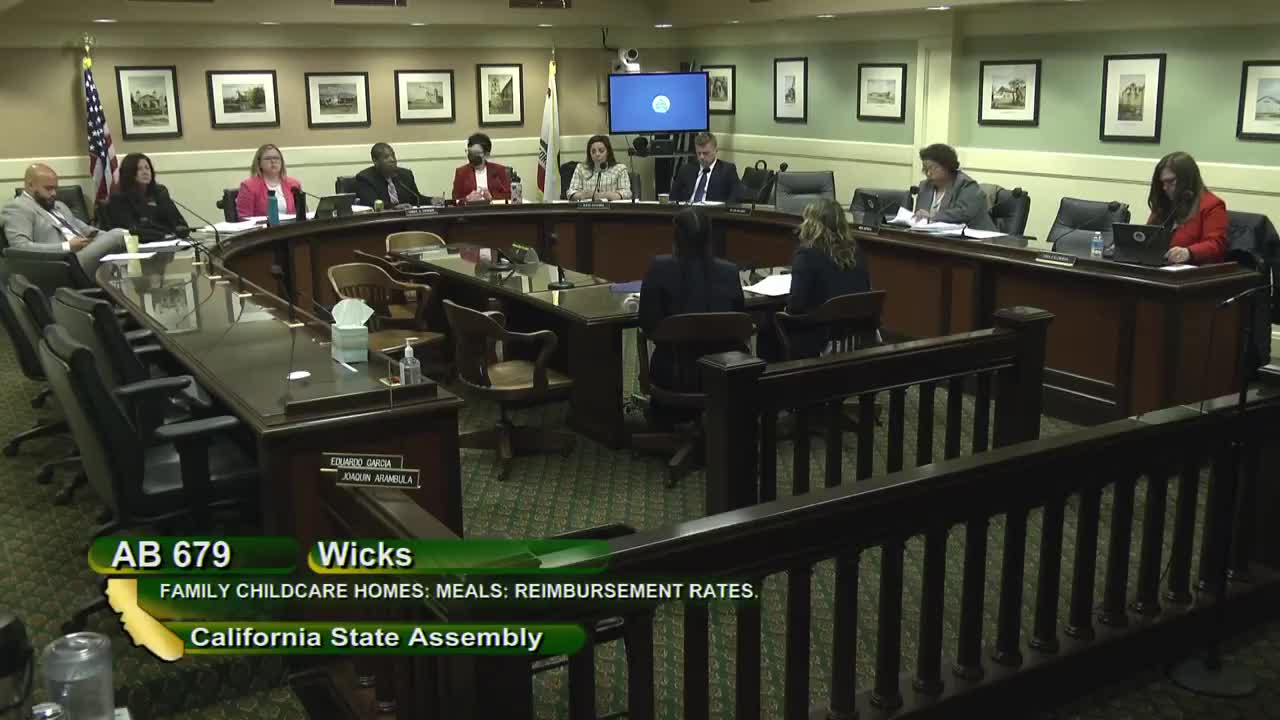 10MIN
Assembly Standing Committee on Human Services
Bill Author