AB 709: Charter schools.
- Session Year: 2015-2016
- House: Assembly
- Latest Version Date: 2016-08-26
(1)The Ralph M. Brown Act requires that all meetings of a legislative body, as defined, of a local agency be open and public and all persons be permitted to attend unless a closed session is authorized. The Bagley-Keene Open Meeting Act requires, with specified exceptions, that all meetings of a state body be open and public and all persons be permitted to attend.
This bill would expressly state that a charter school is subject to the Ralph M. Brown Act, unless it is operated by an entity governed by the Bagley-Keene Open Meeting Act, in which case the charter school would be subject to the Bagley-Keene Open Meeting Act.
(2)The California Public Records Act requires state and local agencies to make their records available for public inspection and to make copies available upon request and payment of a fee unless the records are exempt from disclosure.
This bill would expressly state that a charter school is subject to the California Public Records Act, except as provided for certain charter schools located on federally recognized California Indian reservations or rancherias. For those charter schools, this bill would require each charter schools chartering authority to execute California Public Records Act requests made to the charter school, as provided. To the extent these provisions would impose new duties on local educational agencies, this bill would impose a state-mandated local program.
(3)Existing law prohibits certain public officials, including, but not limited to, state, county, or district officers or employees, from being financially interested in any contract made by them in their official capacity, or by any body or board of which they are members, except as provided.
This bill would expressly state that a charter school is subject to these provisions, except that the bill would provide that an employee of a charter school is not disqualified from serving as such a member of the governing body of the charter school because of that employment status. The bill also would require such a member of the governing body of a charter school to abstain from voting on, or influencing or attempting to influence another member of that body concerning, any matter affecting his or her own employment.
(4)The Political Reform Act of 1974 requires every state agency and local governmental agency to adopt a conflict-of-interest code, formulated at the most decentralized level possible, that requires designated employees of the agency to file statements of economic interest disclosing any investments, business positions, interests in real property, or sources of income that may foreseeably be affected materially by any governmental decision made or participated in by the designated employee by virtue of his or her position.
This bill would expressly state that a charter school is subject to the Political Reform Act of 1974.
(5)The California Constitution requires the state to reimburse local agencies and school districts for certain costs mandated by the state. Statutory provisions establish procedures for making that reimbursement.
This bill would provide that, if the Commission on State Mandates determines that the bill contains costs mandated by the state, reimbursement for those costs shall be made pursuant to these statutory provisions.
(6)Existing constitutional provisions require that a statute that limits the right of access to the meetings of public bodies or the writings of public officials and agencies be adopted with findings demonstrating the interest protected by the limitation and the need for protecting that interest.
This bill would make legislative findings to that effect.
(1)The Ralph M. Brown Act requires that all meetings of a legislative body, as defined, of a local agency be open and public and all persons be permitted to attend unless a closed session is authorized. The Bagley-Keene Open Meeting Act requires, with specified exceptions, that all meetings of a state body be open and public and all persons be permitted to attend.
This bill would expressly state that a charter school is subject to the Ralph M. Brown Act, unless it is operated by an entity governed by the Bagley-Keene Open Meeting Act, in which case the charter school would be subject to the Bagley-Keene Open Meeting Act.
(2)The California Public Records Act requires state and local agencies to make their records available for public inspection and to make copies available upon request and payment of a fee unless the records are exempt from disclosure.
This bill would expressly state that a charter school is subject to the California Public Records Act. Act, except as provided for certain charter schools located on federally recognized California Indian reservations or rancherias. For those charter schools, this bill would require each charter schools chartering authority to execute Public Records Act requests made to the charter school, as provided. To the extent these provisions would impose new duties on local educational agencies, this bill would impose a state-mandated local program.
(3)Existing law prohibits certain public officials, including, but not limited to, state, county, or district officers or employees, from being financially interested in any contract made by them in their official capacity, or by any body or board of which they are members, except as provided.
This bill would expressly state that a charter school is subject to these provisions, except that the bill would provide that an employee of a charter school is not disqualified from serving as such a member of the governing body of the charter school because of that employment status. The bill also would require such a member of the governing body of a charter school to abstain from voting on, or influencing or attempting to influence another member of that body concerning, any matter affecting his or her own employment.
(4)The Political Reform Act of 1974 requires every state agency and local governmental agency to adopt a conflict-of-interest code, formulated at the most decentralized level possible, that requires designated employees of the agency to file statements of economic interest disclosing any investments, business positions, interests in real property, or sources of income that may foreseeably be affected materially by any governmental decision made or participated in by the designated employee by virtue of his or her position.
This bill would expressly state that a charter school is subject to the Political Reform Act of 1974.
(5)The California Constitution requires the state to reimburse local agencies and school districts for certain costs mandated by the state. Statutory provisions establish procedures for making that reimbursement.
This bill would provide that, if the Commission on State Mandates determines that the bill contains costs mandated by the state, reimbursement for those costs shall be made pursuant to these statutory provisions.
(6)Existing constitutional provisions require that a statute that limits the right of access to the meetings of public bodies or the writings of public officials and agencies be adopted with findings demonstrating the interest protected by the limitation and the need for protecting that interest.
This bill would make legislative findings to that effect.
(1)The Ralph M. Brown Act requires that all meetings of a legislative body, as defined, of a local agency be open and public and all persons be permitted to attend unless a closed session is authorized. The Bagley-Keene Open Meeting Act requires, with specified exceptions, that all meetings of a state body be open and public and all persons be permitted to attend.
This bill would expressly state that a charter school is subject to the Ralph M. Brown Act, unless it is operated by an entity governed by the Bagley-Keene Open Meeting Act, in which case the charter school would be subject to the Bagley-Keene Open Meeting Act.
(2)The California Public Records Act requires state and local agencies to make their records available for public inspection and to make copies available upon request and payment of a fee unless the records are exempt from disclosure.
This bill would expressly state that a charter school is subject to the California Public Records Act.
(3)Existing law prohibits certain public officials, including, but not limited to, state, county, or district officers or employees, from being financially interested in any contract made by them in their official capacity, or by any body or board of which they are members, except as provided.
This bill would expressly state that a charter school is subject to these provisions, except that the bill would provide that an employee of a charter school is not disqualified from serving as such a member of the governing body of the charter school because of that employment status. The bill also would require such a member of the governing body of a charter school to abstain from voting on, or influencing or attempting to influence another member of that body regarding, concerning, any matter affecting his or her own employment.
(4)The Political Reform Act of 1974 requires every state agency and local governmental agency to adopt a conflict-of-interest code, formulated at the most decentralized level possible, that requires designated employees of the agency to file statements of economic interest disclosing any investments, business positions, interests in real property, or sources of income that may foreseeably be affected materially by any governmental decision made or participated in by the designated employee by virtue of his or her position.
This bill would expressly state that a charter school is subject to the Political Reform Act of 1974.
(1)The Ralph M. Brown Act requires that all meetings of a legislative body, as defined, of a local agency be open and public and all persons be permitted to attend unless a closed session is authorized. The Bagley-Keene Open Meeting Act requires, with specified exceptions, that all meetings of a state body be open and public and all persons be permitted to attend.
This bill would expressly state that a charter school is subject to the Ralph M. Brown Act, unless it is operated by an entity governed by the Bagley-Keene Open Meeting Act, in which case the charter school would be subject to the Bagley-Keene Open Meeting Act.
(2)The California Public Records Act requires state and local agencies to make their records available for public inspection and to make copies available upon request and payment of a fee unless the records are exempt from disclosure.
This bill would expressly state that a charter school is subject to the California Public Records Act.
(3)Existing law prohibits certain public officials, including, but not limited to, state, county, or district officers or employees, from being financially interested in any contract made by them in their official capacity, or by any body or board of which they are members, except as provided.
This bill would expressly state that a charter school is subject to these provisions, except that the bill would provide that an employee of a charter school is not disqualified from serving as such a member of the governing body of the charter school because of that employment status. The bill also would require such a member of the governing body of a charter school to abstain from voting on, or influencing or attempting to influence another member of that body regarding, any matter affecting his or her own employment.
(4)The Political Reform Act of 1974 requires every state agency and local governmental agency to adopt a conflict-of-interest code, formulated at the most decentralized level possible, that requires designated employees of the agency to file statements of economic interest disclosing any investments, business positions, interests in real property, or sources of income that may foreseeably be affected materially by any governmental decision made or participated in by the designated employee by virtue of his or her position.
This bill would expressly state that a charter school is subject to the Political Reform Act of 1974.
It is the intent of the Legislature in enacting this act to do both of the following:
(a)Ensure that charter school governance is transparent.
(b)Ensure that monitoring and oversight of charter schools are conducted to protect the public interest.
SEC. 2.Section 47604.1 is added to the Education Code, to read:47604.1.(a)A charter school is subject to all of the following:
(1)The Ralph M. Brown Act (Chapter 9 (commencing with Section 54950) of Part 1 of Division 2 of Title 5 of the Government Code), except that a charter school operated by an entity governed by the Bagley-Keene Open Meeting Act (Article 9 (commencing with Section 11120) of Chapter 1 of Part 1 of Division 3 of Title 2 of the Government Code) is subject to the Bagley-Keene Open Meeting Act regardless of the authorizing entity.
(2)(A)The California Public Records Act (Chapter 3.5 (commencing with Section 6250) of Division 7 of Title 1 of the Government Code).
(B)Notwithstanding any other law, a public records request made to a charter school that meets the criteria specified in clauses (i) and (ii) shall be executed by the chartering authority. In order for the chartering authority to meet the public records request, the charter school shall provide all relevant documentation to the chartering authority for the purpose of meeting the public records request.
(i)The charter school is located on a federally recognized California Indian reservation or rancheria.
(ii)The charter school is operated by a nonprofit public benefit corporation that was formed on or before May 31, 2002, and is currently operated by a federally recognized California Indian tribe.
(3)Article 4 (commencing with Section 1090) of Chapter 1 of Division 4 of Title 1 of the Government Code.
(4)The Political Reform Act of 1974 (Title 9 (commencing with Section 81000) of the Government Code). For purposes of Section 87300 of the Government Code, a charter school shall be considered an agency.
(b)Notwithstanding Article 4 (commencing with Section 1090) of Chapter 1 of Division 4 of Title 1 of the Government Code, an employee of a charter school is not disqualified because of that employment status from also serving as a member of the governing body of the charter school. Such a member of the governing body of a charter school shall abstain from voting on, or influencing or attempting to influence another member of the governing body concerning, all matters uniquely affecting his or her own employment.
SEC. 3.If the Commission on State Mandates determines that this act contains costs mandated by the state, reimbursement to local agencies and school districts for those costs shall be made pursuant to Part 7 (commencing with Section 17500) of Division 4 of Title 2 of the Government Code.
SEC. 4.The Legislature finds and declares that Section 2 of this act, which adds Section 47604.1 to the Education Code, imposes a limitation on the publics right of access to the meetings of public bodies or the writings of public officials and agencies within the meaning of Section 3 of Article I of the California Constitution. Pursuant to that constitutional provision, the Legislature makes the following findings to demonstrate the interest protected by this limitation and the need for protecting that interest:
In order to protect tribal sovereignty, it is necessary for the chartering authority of some charter schools located on federally recognized California Indian reservations or rancherias to execute public records requests made to those charter schools.
It is the intent of the Legislature in enacting this act to do both of the following:
(a)Ensure that charter school governance is transparent.
(b)Ensure that monitoring and oversight of charter schools is are conducted to protect the public interest.
SEC. 2.Section 47604.1 is added to the Education Code, to read:47604.1.(a)A charter school is subject to all of the following:
(1)The Ralph M. Brown Act (Chapter 9 (commencing with Section 54950) of Part 1 of Division 2 of Title 5 of the Government Code), except that a charter school operated by an entity governed by the Bagley-Keene Open Meeting Act (Article 9 (commencing with Section 11120) of Chapter 1 of Part 1 of Division 3 of Title 2 of the Government Code) is subject to the Bagley-Keene Open Meeting Act regardless of the authorizing entity.
(2)(A)The California Public Records Act (Chapter 3.5 (commencing with Section 6250) of Division 7 of Title 1 of the Government Code).
(B)Notwithstanding any other law, a public records request made to a charter school that meets the criteria specified in clauses (i) and (ii) shall be executed by the chartering authority. In order for the chartering authority to meet the public records request, the charter school shall provide all relevant documentation to the chartering authority for the purpose of meeting the public records request.
(i)The charter school is located on a federally recognized California Indian reservation or rancheria.
(ii)The charter school is operated by a nonprofit public benefit corporation that was formed on or before May 31, 2002, and is currently operated by a federally recognized California Indian tribe.
(3)Article 4 (commencing with Section 1090) of Chapter 1 of Division 4 of Title 1 of the Government Code.
(4)The Political Reform Act of 1974 (Title 9 (commencing with Section 81000) of the Government Code). For purposes of Section 87300 of the Government Code, a charter school shall be considered an agency.
(b)Notwithstanding Article 4 (commencing with Section 1090) of Chapter 1 of Division 4 of Title 1 of the Government Code, an employee of a charter school is not disqualified because of that employment status from also serving as a member of the governing body of the charter school. Such a member of the governing body of a charter school shall abstain from voting on, or influencing or attempting to influence another member of the governing body concerning, all matters uniquely affecting his or her own employment.
SEC. 3.If the Commission on State Mandates determines that this act contains costs mandated by the state, reimbursement to local agencies and school districts for those costs shall be made pursuant to Part 7 (commencing with Section 17500) of Division 4 of Title 2 of the Government Code.
SEC. 4.The Legislature finds and declares that Section 2 of this act, which adds Section 47604.1 to the Education Code, imposes a limitation on the publics right of access to the meetings of public bodies or the writings of public officials and agencies within the meaning of Section 3 of Article I of the California Constitution. Pursuant to that constitutional provision, the Legislature makes the following findings to demonstrate the interest protected by this limitation and the need for protecting that interest:
In order to protect tribal sovereignty, it is necessary for the chartering authority of some charter schools located on federally recognized California Indian reservations or rancherias to execute public records requests made to those charter schools.
It is the intent of the Legislature in enacting this act to do both of the following:
(a)Ensure that charter school governance is transparent.
(b)Ensure that monitoring and oversight of charter schools is conducted to protect the public interest.
SEC. 2.Section 47604.1 is added to the Education Code, to read:47604.1.(a)A charter school is subject to all of the following:
(1)The Ralph M. Brown Act (Chapter 9 (commencing with Section 54950) of Part 1 of Division 2 of Title 5 of the Government Code), except that a charter school operated by an entity governed by the Bagley-Keene Open Meeting Act (Article 9 (commencing with Section 11120) of Chapter 1 of Part 1 of Division 3 of Title 2 of the Government Code) is subject to the Bagley-Keene Open Meeting Act regardless of the authorizing entity.
(2)The California Public Records Act (Chapter 3.5 (commencing with Section 6250) of Division 7 of Title 1 of the Government Code).
(3)Article 4 (commencing with Section 1090) of Chapter 1 of Division 4 of Title 1 of the Government Code.
(4)The Political Reform Act of 1974 (Title 9 (commencing with Section 81000) of the Government Code). For purposes of Section 87300 of the Government Code, a charter school shall be considered an agency.
(b)Notwithstanding Article 4 (commencing with Section 1090) of Chapter 1 of Division 4 of Title 1 of the Government Code, an employee of a charter school is not disqualified because of that employment status from also serving as a member of the governing body of the charter school. Such a member of the governing body of a charter school shall abstain from voting on, or influencing or attempting to influence another member of the governing body regarding, concerning, all matters uniquely affecting his or her own employment.
It is the intent of the Legislature in enacting this act to do both of the following:
(a)Ensure that charter school governance is transparent.
(b)Ensure that monitoring and oversight of charter schools is conducted to protect the public interest.
SEC. 2.Section 47604.1 is added to the Education Code, to read:47604.1.(a)A charter school is subject to all of the following:
(1)The Ralph M. Brown Act (Chapter 9 (commencing with Section 54950) of Part 1 of Division 2 of Title 5 of the Government Code), except that a charter school operated by an entity governed by the Bagley-Keene Open Meeting Act (Article 9 (commencing with Section 11120) of Chapter 1 of Part 1 of Division 3 of Title 2 of the Government Code) is subject to the Bagley-Keene Open Meeting Act regardless of the authorizing entity.
(2)The California Public Records Act (Chapter 3.5 (commencing with Section 6250) of Division 7 of Title 1 of the Government Code).
(3)Article 4 (commencing with Section 1090) of Chapter 1 of Division 4 of Title 1 of the Government Code.
(4)The Political Reform Act of 1974 (Title 9 (commencing with Section 81000) of the Government Code). For purposes of Section 87300 of the Government Code, a charter school shall be considered an agency.
(b)Notwithstanding Article 4 (commencing with Section 1090) of Chapter 1 of Division 4 of Title 1 of the Government Code, an employee of a charter school is not disqualified because of that employment status from also serving as a member of the governing body of the charter school. Such a member of the governing body of a charter school shall abstain from voting on, or influencing or attempting to influence another member of the governing body regarding, all matters uniquely affecting his or her own employment.
|
Date
|
Status
|
|---|---|
| Aug 31, 2016 | Enrolled and presented to the Governor at 4 p.m. |
| Aug 24, 2016 | Senate amendments concurred in. To Engrossing and Enrolling. (Ayes 46. Noes 31. Page 6244.). |
| Aug 24, 2016 | Senate amendments concurred in. To Engrossing and Enrolling. |
| Aug 19, 2016 | Read third time. Passed. Ordered to the Assembly. (Ayes 21. Noes 13. Page 5166.). |
| Aug 19, 2016 | In Assembly. Concurrence in Senate amendments pending. May be considered on or after August 21 pursuant to Assembly Rule 77. |
| Aug 19, 2016 | Read third time. Passed. Ordered to the Assembly. (Ayes 21. Noes 13.). |
| Aug 15, 2016 | Read second time. Ordered to third reading. |
| Aug 11, 2016 | Ordered to second reading. |
| Aug 11, 2016 | From inactive file. |
| Sep 11, 2015 | Ordered to inactive file at the request of Senator Mitchell. |
| Sep 1, 2015 | Read second time and amended. Ordered to third reading. |
| Aug 31, 2015 | From committee: Amend, and do pass as amended. (Ayes 5. Noes 2.) (August 27). |
| Aug 17, 2015 | In committee: Referred to APPR. suspense file. |
| Jul 8, 2015 | From committee: Do pass and re-refer to Com. on APPR. (Ayes 5. Noes 1.) (July 7). Re-referred to Com. on APPR. |
| Jul 1, 2015 | From committee: Do pass and re-refer to Com. on JUD. (Ayes 5. Noes 2.) (July 1). Re-referred to Com. on JUD. |
| Jun 18, 2015 | Referred to Coms. on ED., JUD. and APPR. |
| Jun 3, 2015 | In Senate. Read first time. To Com. on RLS. for assignment. |
| Jun 3, 2015 | Read third time. Passed. Ordered to the Senate. (Ayes 47. Noes 27. Page 1850.) |
| Jun 3, 2015 | Read third time. Passed. Ordered to the Senate. |
| Jun 1, 2015 | Read third time and amended. Ordered to third reading. (Page 1685.) |
| Jun 1, 2015 | Read third time and amended. Ordered to third reading. |
| May 18, 2015 | Read second time. Ordered to third reading. |
| May 14, 2015 | From committee: Do pass. (Ayes 5. Noes 2.) (May 13). |
| Mar 16, 2015 | Referred to Com. on ED. |
| Feb 26, 2015 | From printer. May be heard in committee March 28. |
| Feb 25, 2015 | Read first time. To print. |
|
Date
|
Description
|
Location
|
Votes
|
|
|---|---|---|---|---|
| Aug 24, 2016 | AB 709 GIPSON Concurrence in Senate Amendments | Assembly Floor |
Passed |
|
| Aug 19, 2016 | Assembly 3rd Reading AB709 Gipson By Leno | Senate Floor |
Passed |
|
| Aug 27, 2015 | Do pass as amended | Senate Standing Committee on Appropriations |
Passed |
|
| Aug 17, 2015 | Placed on suspense file | Senate Standing Committee on Appropriations |
Passed |
|
| Jul 7, 2015 | Do pass, but first be re-referred to the Committee on [Appropriations] | Senate Standing Committee on Judiciary |
Passed |
|
| Jul 1, 2015 | Do pass, but first be re-referred to the Committee on [Judiciary] | Senate Standing Committee on Education |
Passed |
|
| Jun 3, 2015 | AB 709 GIPSON Assembly Third Reading | Assembly Floor |
Passed |
|
| May 13, 2015 | Do pass. | Assembly Standing Committee on Education |
Passed |
This list shows positions taken on this bill by organizations on the date displayed, which is linked to the original source.
Positions by individuals are not included.
GOVERNOR'S VETO
GV Bill Id:AB 709
Author:(Gipson)
As Enrolled Ver:August 31, 2016
2/3 vote
ASSEMBLY: | 47-27 | (June 3, 2015) | SENATE: | 21-13 | (August 19, 2016) |
ASSEMBLY: | 46-31 | (August, 24, 2016) |
Original Committee Reference: ED.
SUMMARY: Requires charter schools to comply with the same conflict of interest requirements as school districts. Specifically, this bill:
- Declares charter schools are subject to all of the following:
- The Ralph M. Brown Act (Brown Act), except that a charter school operated by an entity governed by the Bagley-Keene Open Meeting Act (BKOMA) is subject to that Act;
- The California Public Records Act (CPRA);
- Article 4 (commencing with Section 1090) of Chapter 1 of Division 4 of Title 1 of the Government Code; and,
- The Political Reform Act of 1974 (PRA). Specifies that a charter school shall be considered an agency as it relates to this Act.
- Specifies this measure does not prohibit an employee of a charter school from serving as a member of the governing body of that charter school; and, specifies such a member of the governing body of a charter school shall abstain from voting on all matters affecting his or her own employment.
The Senate amendments specify that notwithstanding any other law, a public records request made to a charter school that meets the criteria specified in (a) and (b) shall be executed by the chartering authority. In order for the chartering authority to meet the public records request, the charter school shall provide all relevant documentation to the chartering authority for the purpose of meeting the public records request.
- The charter school is located on a federally recognized California Indian reservation or rancheria.
- The charter school is operated by a nonprofit public benefit corporation that was formed on or before May 31, 2002, and is currently operated by a federally recognized California Indian tribe.
EXISTING LAW pertaining to charter schools:
- Provides no specific requirement for charter school governing board conflict of interest policies.
- Deems charter schools as school districts for the purposes of receiving state education funds.
FISCAL EFFECT: This bill is keyed non-fiscal.
COMMENTS: This bill requires charter school governing body members to comply with substantially similar conflict of interest policies by which school district governing board members currently abide. Recent news reports of charter school governing body members engaging in inappropriate financial mismanagement have highlighted the need for charter school conflict of interest laws to be clarified. Currently, these investigations can take many months to resolve partly due to the fact that charter school governing body members and designated employees do not consistently file an annual statement of economic interest, which makes public any potential conflicts of interest that individual may have in their official capacity. While charter schools are given more autonomy than public schools, their governing bodies have authority over public funds to be used for the educational benefit of their students. Charter school governing bodies should be held to the same conflict of interest standards as school district governing boards.
This bill requires charter school governing bodies to file statements of economic interest according to the Political Reform Act; specifies that charter school governing body members may not be financially interested in any decision made by the governing body; requires charter schools to comply with the California Public Records Act; and, requires charter school governing bodies to abide by the Brown Act or the Bagley-Keene Open Meetings Act. The bill also expressly authorizes charter school employees to serve on a charter school governing body.
According to the author, AB 709 seeks to clarify current law and explicitly require California's charter schools to be more transparent and accountable to the public. Specifically, this bill will require that charter school meetings are open to the public and allow for public records requests. In addition, this bill seeks to provide that charter schools comply with conflict of interest provisions of the Political Reform Act and prohibits officers or employees from engaging in contracts where they have a financial interest.
The Brown Act. The Brown Act governs meetings conducted by local legislative bodies, such as boards of supervisors, city councils and school boards. The Brown Act represents the Legislature's determination of how the balance should be struck between public access to meetings of multi-member public bodies and the need for confidential candor, debate, and information gathering. The Brown Act requires meetings of the board to be publicly noticed 72 hours before their meetings, among other requirements.
California Public Records Act (CPRA). The CPRA was enacted in 1968 and according to the Attorney General, in enacting the CRPA, the Legislature stated that access to information concerning the conduct of the public's business is a fundamental and necessary right for every person in the state. Cases interpreting the CRPA also have emphasized that its primary purpose is to give the public an opportunity to monitor the functioning of their government. The greater and more unfettered the public official's power, the greater the public's interest in monitoring the governmental action. The fundamental precept of CPRA is that governmental records shall be disclosed to the public, upon request, unless there is a specific reason not to do so. Most of the reasons for withholding disclosure of a record are set forth in specific exemptions contained in the CPRA. Several CPRA exemptions are based on a recognition of the individual's right to privacy. If a record contains exempt information, the agency generally must segregate or redact the exempt information and disclose the remainder of the record.
Government Code 1090. Government Code 1090 states that members of the Legislature, state, county, district, judicial district, and city officers or employees shall not be financially interested in any contract made by them in their official capacity, or by any body or board of which they are members. In a 1983 opinion the Attorney General stated, "Section 1090 of the Government Code codifies the common law prohibition and the general policy of this state against public officials having a personal interest in contracts they make in their official capacities. Mindful of the ancient adage, that 'no man can serve two masters,' the section was enacted to ensure that public officials 'making' official contracts not be distracted by personal financial gain from exercising absolute loyalty and undivided allegiance to the best interest of the entity which they serve."
Corporations Code. Statute governing corporations (including charter schools operated by non-profit or for-profit corporations) requires not more than 49% of persons serving on the board of any corporation to be "interested persons." "Interested persons" is defined as either of the following: 1) any person currently compensated by the corporation for services rendered to it within the previous 12 months (excluding any reasonable compensation paid to a director); or, 2) any relative, as specified, of any such person. Advocates of charter schools contend they should abide by conflict of interest provisions related to corporations not local education agencies due to the fact that some charter schools are operated by non-profit corporations. The committee should consider whether it is appropriate to have public taxpayer funded charter schools abide by the corporations code rather than the government code with regard to conflict of interest policies.
Political Reform Act. The Fair Political Practices Commission (FPPC) was created by the Political Reform Act of 1974, a ballot initiative passed by California voters as Proposition 9. The FPPC provides written and oral advice to public agencies and officials; conducts seminars and training sessions; develops forms, manuals and instructions; and receives and files statements of economic interests from many state and local officials. The FPPC investigates alleged violations of the Political Reform Act, imposes penalties when appropriate, and assists state and local agencies in developing and enforcing conflict-of-interest codes. The FPPC regulates campaign financing and spending; financial conflicts of interest; lobbyist registration and reporting; post-governmental employment; mass mailings at public expense; and, gifts and honoraria given to public officials and candidates. School board members are required to comply with the PRA, and in so, must file a statement of economic interest, annually.
I am returning Assembly Bill 709 without my signature.
This bill requires charter schools to be subject to the Brown Act, Public Records Act, Political Reform Act and Government Code section 1090.
In 2014, I vetoed AB 913, a virtually identical bill. My reasons then were:
Starting a charter school requires the strong commitment of dedicated individuals willing to serve on a governing board. While I support transparency, this bill goes further than simply addressing issues of potential conflicts of interest and goes too far in prescribing how these boards must operate.
That's still my view.
Analysis Prepared by: Chelsea Kelley / ED. / (916) 319-2087 FN: 0005108
CONCURRENCE IN SENATE AMENDMENTS
CSA1 Bill Id:AB 709
Author:(Gipson)
As Amended Ver:September 1, 2015
Majority vote
ASSEMBLY: | 47-27 | (June 3, 2015) | SENATE: | 21-13 | (August 19, 2016) |
Original Committee Reference: ED.
SUMMARY: Requires charter schools to comply with the same conflict of interest requirements as school districts. Specifically, this bill:
- Declares charter schools are subject to all of the following:
- The Ralph M. Brown Act (Brown Act), except that a charter school operated by an entity governed by the Bagley-Keene Open Meeting Act (BKOMA) is subject to the Brown Act;
- The California Public Records Act (CPRA);
- Article 4 (commencing with Section 1090) of Chapter 1 of Division 4 of Title 1 of the Government Code; and,
- The Political Reform Act of 1974 (PRA). Specifies that a charter school shall be considered an agency as it relates to this Act.
- Specifies this measure does not prohibit an employee of a charter school from serving as a member of the governing body of that charter school; and, specifies such a member of the governing body of a charter school shall abstain from voting on all matters affecting his or her own employment.
The Senate amendments specify that notwithstanding any other law, a public records request made to a charter school that meets the criteria specified in (a) and (b) shall be executed by the chartering authority. In order for the chartering authority to meet the public records request, the charter school shall provide all relevant documentation to the chartering authority for the purpose of meeting the public records request.
- The charter school is located on a federally recognized California Indian reservation or rancheria.
- The charter school is operated by a nonprofit public benefit corporation that was formed on or before May 31, 2002, and is currently operated by a federally recognized California Indian tribe.
EXISTING LAW pertaining to charter schools:
- Provides no specific requirement for charter school governing board conflict of interest policies.
- Deems charter schools as school districts for the purposes of receiving state education funds.
FISCAL EFFECT: According to the Senate Appropriations Committee:
- Mandate: Unknown, potentially significant reimbursable state mandate costs for school districts and county offices of education due to increased oversight responsibilities. If determined to be a mandate, this would create pressure to increase the K-12 Mandate Block Grant. (Proposition 98 of 1988)
- Costs to charter schools: Unknown, potentially significant local costs to the extent charter schools do not already comply with the four areas of law. Charter schools have been determined to be ineligible to submit claims for mandate reimbursements.
COMMENTS: This bill requires charter school governing body members to comply with substantially similar conflict of interest policies by which school district governing board members currently abide. Recent news reports of charter school governing body members engaging in inappropriate financial mismanagement have highlighted the need for charter school conflict of interest laws to be clarified. Currently, these investigations can take many months to resolve partly due to the fact that charter school governing body members and designated employees do not consistently file an annual statement of economic interest, which makes public any potential conflicts of interest that individual may have in their official capacity. While charter schools are given more autonomy than public schools, their governing bodies have authority over public funds to be used for the educational benefit of their students. Charter school governing bodies should be held to the same conflict of interest standards as school district governing boards.
This bill requires charter school governing bodies to file statements of economic interest according to the Political Reform Act; specifies that charter school governing body members may not be financially interested in any decision made by the governing body; requires charter schools to comply with the California Public Records Act; and, requires charter school governing bodies to abide by the Brown Act or the Bagley-Keene Open Meetings Act. This bill also expressly authorizes charter school employees to serve on a charter school governing body.
According to the author, this bill seeks to clarify current law and explicitly require California's charter schools to be more transparent and accountable to the public. Specifically, this bill will require that charter school meetings are open to the public and allow for public records requests. In addition, this bill seeks to provide that charter schools comply with conflict of interest provisions of the Political Reform Act and prohibits officers or employees from engaging in contracts where they have a financial interest.
The Brown Act. The Brown Act governs meetings conducted by local legislative bodies, such as boards of supervisors, city councils and school boards. The Brown Act represents the Legislature's determination of how the balance should be struck between public access to meetings of multi-member public bodies and the need for confidential candor, debate, and information gathering. The Brown Act requires meetings of the board to be publicly noticed 72 hours before their meetings, among other requirements.
CPRA. The CPRA was enacted in 1968 and according to the Attorney General, in enacting the CRPA, the Legislature stated that access to information concerning the conduct of the public's business is a fundamental and necessary right for every person in the state. Cases interpreting the CRPA also have emphasized that its primary purpose is to give the public an opportunity to monitor the functioning of their government. The greater and more unfettered the public official's power, the greater the public’s interest in monitoring the governmental action. The fundamental precept of CPRA is that governmental records shall be disclosed to the public, upon request, unless there is a specific reason not to do so. Most of the reasons for withholding disclosure of a record are set forth in specific exemptions contained in the CPRA. Several CPRA exemptions are based on a recognition of the individual’s right to privacy. If a record contains exempt information, the agency generally must segregate or redact the exempt information and disclose the remainder of the record.
Government Code Section 1090. Government Code Section 1090 states that members of the Legislature, state, county, district, judicial district, and city officers or employees shall not be financially interested in any contract made by them in their official capacity, or by any body or board of which they are members. In a 1983 opinion the Attorney General stated, "Section 1090 of the Government Code codifies the common law prohibition and the general policy of this state against public officials having a personal interest in contracts they make in their official capacities. Mindful of the ancient adage, that 'no man can serve two masters,' the section was enacted to ensure that public officials 'making' official contracts not be distracted by personal financial gain from exercising absolute loyalty and undivided allegiance to the best interest of the entity which they serve."
Corporations Code. Statute governing corporations (including charter schools operated by non-profit or for-profit corporations) requires not more than 49% of persons serving on the board of any corporation to be "interested persons." "Interested persons" is defined as either of the following: 1) any person currently compensated by the corporation for services rendered to it within the previous 12 months (excluding any reasonable compensation paid to a director); or, 2) any relative, as specified, of any such person. Advocates of charter schools contend they should abide by conflict of interest provisions related to corporations not local education agencies due to the fact that some charter schools are operated by non-profit corporations. The committee should consider whether it is appropriate to have public taxpayer funded charter schools abide by the corporations code rather than the government code with regard to conflict of interest policies.
Political Reform Act. The Fair Political Practices Commission (FPPC) was created by the Political Reform Act of 1974, a ballot initiative passed by California voters as Proposition 9. The FPPC provides written and oral advice to public agencies and officials; conducts seminars and training sessions; develops forms, manuals and instructions; and receives and files statements of economic interests from many state and local officials. The FPPC investigates alleged violations of the Political Reform Act, imposes penalties when appropriate, and assists state and local agencies in developing and enforcing conflict-of-interest codes. The FPPC regulates campaign financing and spending; financial conflicts of interest; lobbyist registration and reporting; post-governmental employment; mass mailings at public expense; and, gifts and honoraria given to public officials and candidates. School board members are required to comply with the PRA, and in so, must file a statement of economic interest, annually.
Analysis Prepared by: Chelsea Kelley / ED. / (916) 319-2087 FN: 0002018
Office of Senate Floor Analyses (916) 651-1520 Fax: (916) 327-4478 | AB |
THIRD READING
Bill No: AB 709
:
SENATE EDUCATION COMMITTEE: 5-2, 7/1/15
AYES: Liu, Leyva, Mendoza, Monning, Pan
NOES: Runner, Vidak
NO VOTE RECORDED: Block, Hancock
SENATE JUDICIARY COMMITTEE: 5-1, 7/7/15
AYES: Jackson, Hertzberg, Leno, Monning, Wieckowski
NOES: Moorlach
NO VOTE RECORDED: Anderson
SENATE APPROPRIATIONS COMMITTEE: 5-2, 8/27/15
AYES: Lara, Beall, Hill, Leyva, Mendoza
NOES: Bates, Nielsen
ASSEMBLY FLOOR: 47-27, 6/3/15 - See last page for vote
SOURCE: California School Employees Association
California Teachers Association
DIGEST: This bill subjects charter schools to a variety of the same open meeting, conflict-of-interest and disclosure laws as traditional school districts, including the Ralph M. Brown Act (Brown Act), the California Public Records Act (CPRA), the Political Reform Act of 1974, and the state’s primary conflict-of-interest provisions—Government Code Section 1090.
Existing law:
- Provides, under the Charter Schools Act of 1992, for the establishment of charter schools in California for the purpose, among other things, of improving student learning and expanding learning experiences for pupils who are identified as academically low achieving.
- Declares that charter schools are part of the public school system as defined in Article IX of the California Constitution and are “under the exclusive control of the officers of the public schools.”
- Requires a charter school to comply with statutes governing charter schools and all of the provisions set forth in its charter, but is otherwise exempt from most laws governing school districts except where specifically noted. (Education Code § 47601 et seq.)
- Requires state and local agencies to conduct business in meetings that are open to the public:
- The Brown Act requires meetings of a local agency’s board of directors to be open to the public. (Government Code § 54950 et seq.)
- The Bagley-Keene Open Meeting Act requires meetings of state bodies to be open to the public. (GC § 11120)
- CPRA declares that the public has a right to access information that concerns the people’s business and provides that public records shall be available for inspection, except as provided by an express provision of law. (GC § 6250 and § 6253)
- Prohibits members of the Legislature, state, county, district, judicial district, and city officers or employees from being financially interested in any contract made by them in their official capacity, or by anybody or board of which they are members. (GC § 1090 et seq.)
- Establishes the Political Reform Act of 1974, passed by voters through Proposition 9 in June 1974, which requires public officials to carry out their duties in an unbiased manner, free from influence by outside interests, and to follow regulations during elections, as defined. The Political Reform Act also requires government agencies to adopt a conflict-of-interest code that requires designated employees of the agency to file an annual statement of economic interest disclosing any investments, business positions, interests in real property, or sources of income that may be affected materially by a decision made, or participated in, by the designated employee by virtue of his or her position. (GC § 81000 et seq.)
This bill:
- Provides that a charter school is subject to all of the following:
- The Brown Act, except that a charter school operated by an entity governed by the Bagley-Keene Open Meeting Act is subject to that Act regardless of the authorizing entity.
- CPRA.
- Provisions of the Government Code that prohibit government officers or employees from being financially interested in contracts or purchases made by them in their official capacity.
- The Political Reform Act of 1974. For purposes of Government Code Section 1000, a charter school shall be considered an agency.
- Provides that an employee of a charter school is not disqualified because of that employment status from also serving as a member of the governing body of the charter school and that such a member shall abstain from voting on, or influencing or attempting to influence another member of the governing body concerning, all matters uniquely affecting his or her own employment.
- Provides that a public records request made to a charter school that is located on a federally recognized California Indian reservation or Rancheria and the nonprofit public benefit corporation that operates the charter school was formed on or before May 31, 2002, and is currently operated by a federally recognized California Indian Tribe, shall be executed by the chartering authority. In order for the chartering authority to meet the public records request, the charter school shall provide all relevant documentation to the chartering authority for the purpose of meeting the public records request.
- Specifies the intent of the Legislature to do both of the following:
- Ensure that charter school governance is transparent.
- Ensure that monitoring and oversight of charter schools is conducted to protect the public interest.
Comments
Need for the bill. According to the author’s office, though charter schools are publicly funded, they were established with the intent to operate separately from the current school structure as a way of allowing for more creativity in developing solutions to historic challenges in typical educational settings. However, there are several provisions of law that specifically relate to good governance and transparency where charter schools should be required to comply. This bill is intended to require charter schools to be more transparent and accountable to the public.
Public accountability laws. County boards of education and school district governing boards are required to conduct public meetings and make information available to the public, upon request. Members of these boards are also subject to conflict-of-interest statutes contained in Government Code Section 1090 and the Political Reform Act of 1974.
- Open meeting laws – entitles the public to have access to meetings of multi-member public bodies. The Brown Act and the Bagley-Keene Act recognize the need to balance the public’s right to open government with the need for boards, on occasion to have closed session discussions in certain matters such as personnel or litigation. By making charter schools subject to open meeting laws, charter school boards would need to provide advance notice of meetings and conduct their meetings in public.
- Public records – the purpose of CPRA is to give the public an opportunity to monitor the functioning of their local and state government. The fundamental precept of CPRA is that governmental records are to be disclosed to the public when requested, unless there is a specific reason not to do so. The CPRA allows for certain exemptions, such as matters relating to individual privacy. Under CPRA, agencies must segregate or redact exempt information and disclose the remainder of the record. Under the provisions of this bill, charter schools would need to respond to requests for information that is not private in nature.
- The Political Reform Act of 1974 established the Fair Political Practices Commission (FPPC) to administer its requirements and receive annual conflict-of-interest statements. According to the FPPC, the CPRA is designed to assure that public officials perform their duties impartially without bias because of personal financial interests or the interests of financial supporters; and that public officials disclose income and assets that could be affected by official actions and to assure that public officials disqualify themselves from participating in decisions when they have conflicts-of-interest. This bill will result in charter school board members and designated employees having to disclose their financial interests in annual statements filed with the FPPC.
- Government Code Section 1090 is the state’s central conflict-of-interest act. It applies to public officials from members of the Legislature to local officials and employees, including those of school districts. In a 1983 opinion, the Attorney General stated, “Section 1090 of the Government Code codifies the common law prohibition and the general policy of this state against public officials having a personal interest in contracts they make in their official capacity.” In addition to prohibiting public officials from having personal financial interest in a contract made in an official capacity, Government Code Section 1090 specifies that such contracts are void and cannot be enforced.
FISCAL EFFECT: Appropriation: Fiscal Com.: Local:
According to the Senate Appropriations Committee:
- Mandate: Unknown, potentially significant reimbursable state mandate costs for school districts and county offices of education due to increased oversight responsibilities. If determined to be a mandate, this will create pressure to increase the K-12 Mandate Block Grant. (Proposition 98)
- Costs to charter schools: Unknown, potentially significant local costs to the extent charter schools do not already comply with the four areas of law. Charter schools have been determined to be ineligible to submit claims for mandate reimbursements.
California School Employees Association (co-source)
California Teachers Association (co-source)
Association of California School Administrators
California Association of School Business Officials
California Federation of Teachers
California Labor Federation
California School Boards Association
California State PTA
LIUNA Local 777
Public Advocates
San Francisco Unified School District
School Employers Association of California
OPPOSITION: (Verified 8/28/15)
California Charter Schools Association
Charter Schools Development Center
EdVoice
KIPP LA Schools
Letters from individuals
ARGUMENTS IN SUPPORT: Supporters of this bill argue that since charter schools are considered to be public schools and receive public funds, they have a fiduciary duty to taxpayers with regards to the use of those funds and should be subject to the same conflict-of-interest and disclosure requirements as traditional school districts.
ARGUMENTS IN OPPOSITION: Opponents of this bill have expressed concern with subjecting charter schools to the provisions of Government Code Section 1090 because it could make it more difficult for philanthropic board members to provide financial assistance or low-interest loans or make facilities available to charter schools, which may happen during the start-up phase of a charter school.
ASSEMBLY FLOOR: 47-27, 6/3/15
AYES: Alejo, Bloom, Bonilla, Bonta, Campos, Chau, Chiu, Chu, Dababneh, Daly, Dodd, Eggman, Frazier, Cristina Garcia, Eduardo Garcia, Gatto, Gipson, Gomez, Gonzalez, Gordon, Gray, Roger Hernández, Holden, Irwin, Jones-Sawyer, Lopez, Low, McCarty, Medina, Mullin, Nazarian, O'Donnell, Perea, Quirk, Rendon, Ridley-Thomas, Rodriguez, Salas, Santiago, Mark Stone, Thurmond, Ting, Weber, Wilk, Williams, Wood, Atkins
NOES: Achadjian, Travis Allen, Baker, Bigelow, Brough, Chang, Chávez, Dahle, Beth Gaines, Gallagher, Grove, Hadley, Harper, Jones, Kim, Lackey, Levine, Linder, Maienschein, Mathis, Mayes, Melendez, Obernolte, Olsen, Patterson, Steinorth, Waldron
NO VOTE RECORDED: Brown, Burke, Calderon, Cooley, Cooper, Wagner
8/11/16 14:56:40
**** END ****
AB 709 (Gipson) Page 3 of 3
SENATE COMMITTEE ON APPROPRIATIONS
Senator Ricardo Lara, Chair
2015 - 2016 Regular Session
AB 709 (Gipson) - Charter schools.
|
|
Version: June 1, 2015 |
Policy Vote: ED. 5 - 2, JUD. 5 - 1 |
Urgency: No |
Mandate: No |
Hearing Date: August 17, 2015 |
Consultant: Jillian Kissee |
This bill meets the criteria for referral to the Suspense File.
Bill Summary:
This bill requires charter schools to be subject to open meeting requirements, the California Public Records Act, the state’s primary conflict-of-interest provisions, and the Political Reform Act of 1974.
Fiscal Impact:
Mandate: Unknown, potentially significant reimbursable state mandate costs for school districts and county offices of education due to increased oversight responsibilities. If determined to be a mandate, this would create pressure to increase the K-12 Mandate Block Grant. See staff comments. (Proposition 98)
Costs to charter schools: Unknown, potentially significant local costs to the extent charter schools do not already comply with the four areas of law. Charter schools have been determined to be ineligible to submit claims for mandate reimbursements.
Background:
According to the California Department of Education’s website, a charter school is a public school usually created by a group of teachers, parents and community leaders or a community-based organization, and it is usually sponsored by an existing local public school board or county board of education. The school’s specific goals and operating procedures are detailed in a charter, or agreement, between the sponsoring board and charter organizers. Unless specifically noted in law, a charter school is generally exempt from most laws governing school districts.
Existing law requires state and local agencies to conduct business in meetings that are open to the public: 1) The Brown Act requires meetings of a local agency’s board of directors to be open to the public. (Government Code § 54950 et seq.) 2) The Bagley-Keene Open Meeting Act requires meetings of state bodies to be open to the public. (GC § 11120)
The California Public Records Act declares that the public has a right to access information that concerns the people’s business and provides that public records shall be available for inspection, except as provided by an express provision of law. (GC § 6250 and § 6253)
Existing law prohibits members of the Legislature, state, county, district, judicial district, and city officers or employees from being financially interested in any contract made by them in their official capacity, or by anybody or board of which they are members. (Government Code § 1090 et seq.) The Political Reform Act of 1974 requires public officials to carry out their duties in an unbiased manner, free from influence by outside interests, and to follow regulations during elections, as defined.
The Political Reform Act also requires government agencies to adopt a conflict-of-interest code that requires designated employees of the agency to file an annual statement of economic interest disclosing any investments, business positions, interests in real property, or sources of income that may be affected materially by a decision made, or participated in, by the designated employee by virtue of his or her position. (GC § 81000 et seq.)
Proposed Law:
This bill requires charter schools to be subject to all of the following:
The Ralph M. Brown Act, except for charter schools operated by an entity governed by the Bagley-Keene Open Meeting Act which are subject to this act instead.
The California Public Records Act.
The state’s primary conflict-of-interest provisions.
The Political Reform Act of 1974.
This bill provides that an employee of a charter school is not disqualified because he or she also serves as a member of the governing body of the charter school. It requires that such member must abstain from voting on, or influencing or attempting to influence another member of the governing body concerning matters affecting his or her employment.
Related Legislation:
SB 1317 (Huff, 2014) proposed to require that charter schools be subject to a variety of the same open meeting, conflict-of-interest and disclosure laws as school districts, including the Ralph M. Brown Act (Brown Act), the California Public Records Act, and the Political Reform Act of 1974. SB 1317 failed passage in the Senate Appropriations Committee.
AB 913 (Chau, 2014) was substantially similar to this bill and proposed to subject charter schools to a variety of the same open meetings, conflict-of-interest, and disclosure laws. AB 913 was vetoed by the Governor.
AB 360 (Brownley,
2011), similar to this bill, required charter schools to comply with
the same conflict-of-interest requirements as school district
governing board members. AB 360 died on the Assembly inactive file on
concurrence.
AB 572 (Brownley, 2010), also similar to
this bill, would have required charter schools to comply with the
Brown Act, the California Public Records Act, and the Political
Reform Act. AB 572 was vetoed by Governor Schwarzenegger.
Staff Comments:
Unlike local
government entities, charter schools are ineligible for state mandate
reimbursements through the traditional claiming process (they do
receive funding through the K-12 mandate block grant). Thus,
workload and costs related to compliance with this bill’s
requirements are not considered direct state costs (though charter
schools primarily receive state funding for their operations). Staff
notes that through approval of Proposition 30, the Open Meetings
mandate was eliminated. Also, a recent ruling by the Commission on
State Mandates eliminated the California Public Records mandate due
to passage of Proposition 42. Therefore, school districts will no
longer receive reimbursement for these activities.
This
bill will likely increase workload for charter authorizers to train
staff in the relevant laws; increases the scope of oversight
authorizers must provide, and could increase costs related to
responding to disputes, revocations, and renewals of petitions in
conflict with these laws.
These additional oversight activities will add unknown, but potentially significant, costs if they are found to be a reimbursable state mandate and create cost pressures to increase funding provided through the mandates block grant to reflect the new mandate. The existing Charter Schools I–III mandates reimburse authorizers for reviewing proposed charters, holding associated public hearings, and monitoring charter schools after approval. The Charter Schools IV mandate includes additional oversight activities, including authorizing county offices of education that review proposed countywide charter schools to claim reimbursement for the activities associated with this review.
Likewise, this bill expands the scope of oversight required by charter authorizers and may be found to be a reimbursable state mandate. Costs attributed to these activities would depend on a number of factors, such as how many schools are within the authorizer’s jurisdiction and how much staff time is invested in these assessments. Assuming an additional 5 hours annually of monitoring for a school administrator to ensure compliance with the four areas of law required by this bill for each charter school, costs could run in the hundreds of thousands statewide.
-- END --
AB 709 (Gipson) Page 0 of 1
SENATE COMMITTEE ON APPROPRIATIONS
Senator Ricardo Lara, Chair
2015 - 2016 Regular Session
AB 709 (Gipson) - Charter schools.
|
|
Version: June 1, 2015 |
Policy Vote: ED. 5 - 2, JUD. 5 - 1 |
Urgency: No |
Mandate: No |
Hearing Date: August 27, 2015 |
Consultant: Jillian Kissee |
*********** ANALYSIS ADDENDUM – SUSPENSE FILE ***********
The following information is revised to reflect amendments
adopted by the committee on August 27, 2015
Bill Summary:
This bill requires charter schools to be subject to open meeting requirements, the California Public Records Act, the state’s primary conflict-of-interest provisions, and the Political Reform Act of 1974.
Fiscal Impact:
Mandate: Unknown, potentially significant reimbursable state mandate costs for school districts and county offices of education due to increased oversight responsibilities. If determined to be a mandate, this would create pressure to increase the K-12 Mandate Block Grant. See staff comments. (Proposition 98)
Costs to charter schools: Unknown, potentially significant local costs to the extent charter schools do not already comply with the four areas of law. Charter schools have been determined to be ineligible to submit claims for mandate reimbursements.
Committee Amendments:
Amend to require the chartering authority to execute public records requests made to a charter school if it satisfies certain criteria.
-- END --
AB 709 (Gipson)
Page 12 of 12
Senator Hannah-Beth Jackson, Chair
2015-2016 Regular Session
AB 709 (Gipson)
Version: June 1, 2015
Hearing Date: July 7, 2015
Fiscal: No
Urgency: No
TMW
SUBJECT
Charter schools
DESCRIPTION
This bill would require charter schools to comply with the open meeting and public disclosure requirements under the Ralph M. Brown Act (Brown Act), Bagley-Keene Open Meeting Act (Bagley-Keene Act), the California Public Records Act (CPRA), and the conflict of interest disclosure requirements under the Political Reform Act (PRA).
BACKGROUND
In 1992, the Legislature enacted the California Charter Schools Act in order to provide communities with the opportunity to establish schools that could operate freely from the structural programs of public school districts. (SB 1448 (Hart, Ch. 781, Stats. 1992).) Charter schools are intended to provide a unique learning environment, giving students a different approach to scholastic achievement. In the 2007-2008 State of California Education report, 675 charter schools were in operation, serving almost 250,000 students. (Education Data Partnership, May 22, 2009.) In the 18 years of charter school existence in California, many reports of widespread financial mismanagement of charter schools’ public funds have led to the belief that public disclosure and conflict of interest laws need to be established for charter schools.
As reported by the Los Angeles Times, in 2005, the Superintendent of Public Instruction and various California County Offices of Education commissioned an outside audit of Options for Youth, Inc. (OFY) and Opportunities for Learning, Inc. (OFL) Charter Schools. The audit revealed OFL and OFY had contracts with many companies which were owned by overlapping family members, had several of the same corporate officers, directors, and staff of OFL and OFY, and all sold and purchased goods and services from each other. Although financial interests in transactions between the companies were disclosed, some of the related party arrangements were questionable. The audit concluded that both OFY and OFL schools had inadequate conflict of interest policies and therefore could not be protected against improper transactions. (Cleeland, Audit Faults Chain of Charter Schools (Aug. 10, 2006) Los Angeles Times <http://articles. latimes.com/2006/aug/10/local/me-audit10> [as of June 22, 2015].)
In 2007, the Los Angeles Times reported that the Los Angeles County Office of Education hired an outside auditor to examine the Gorman Learning Center Charter School. The audit showed that for the three years audited, the Gorman Learning Center Charter School provided false information on State Schools Funds applications and received $7.7 million more than the school should have received. The audit further revealed that the school spent thousands of dollars on questionable items, such as a $14,000 board retreat that included helicopter and yacht rentals, and horseback riding and diving lessons for board members and their families. As reported, the school’s chief executive officer inappropriately hired family members and the director of human resources received $18,000 in school funds to pay for her rent. (Rubin, School misused funds, audit finds (Mar. 17, 2007) Los Angeles Times <http://articles.latimes.com/2007/ mar/17/local/me-school17> [as of June 22, 2015].)
Another Los Angeles Times article reported that Charles Cox, head and founder of California Charter Academy, was indicted and charged with the misuse of over $5 million in school funds, using the money as compensation in the form of wages to himself, friends, and family members, and to make extravagant purchases unrelated to the charter school. Cox was also charged with inappropriately entering into school service contracts with a company he owned. (Reston and Landsberg, Charter schools’ founder indicted (Sept. 5, 2007) Los Angeles Times <http://articles.latimes.com/ 2007/sep/05/local/me-charter5> [as of June 22, 2015].)
Over the years, the Legislature has made clear that public agency actions should be open to the scrutiny of the public. In 1961, the Legislature enacted the Brown Act, which provided public access to local public agency information. In 1967, the Legislature enacted the Bagley-Keene Act, which provided public access to state public agency information. In 1975, the Brown Act was amended to provide for disclosure of public agency acts taken during closed meetings. In 1986, the Brown Act, among other things, was amended to provide for the posting of public agency agendas. In 2004, Proposition 59 added to the California Constitution the people’s right of access to public body information. (Cal. Const., art. I, Sec. 3(b)(1).)
This bill seeks to address the reports of fiscal mismanagement by subjecting a governing board of a charter school to the same open meetings, public records disclosure, and conflict of interest laws that govern public schools and school districts. This bill is substantially similar to AB 913 (Chau, 2014), which was vetoed by Governor Brown, SB 1317 (Huff, 2014), which was held under submission in the Senate Appropriations Committee, and AB 360 (Brownley, 2011), which died on the Assembly Inactive File after returning to the Assembly on Concurrence. This bill is also substantially similar to AB 2115 (Mullin, 2008) and AB 572 (Brownley, 2010), which were both vetoed by Governor Schwarzenegger. (See Comment 5.)
This bill was heard by the Senate Education Committee on July 1, 2015, and approved by a vote of 5-2.
CHANGES TO EXISTING LAW
Existing law provides that the people have the right of access to information concerning the people’s business and requires meetings of public bodies and the writings of public officials and agencies to be open to public scrutiny. (Cal. Const., art. I, Sec. 3(b)(1).)
Existing law, the Brown Act, provides statutory requirements of local school districts to keep the public informed. (Gov. Code Sec. 54950 et seq.) Existing law requires a school district board to post notices and agendas of school district board meetings. (Gov. Code Secs. 54953, 54954.2, 54954.6, and 54956.) Existing law requires a school district board to publicly report any action taken in closed sessions. (Gov. Code Secs. 54957.1 and 54957.7.) Existing law requires a school district board to disclose in an open meeting the items to be discussed in closed sessions. (Gov. Code Sec. 54957.7.)
Existing law, the Bagley-Keene Act, provides statutory requirements of state school districts to keep the public informed. (Gov. Code Sec. 11120 et seq.) Existing law requires state school district boards to post notices and agendas of state public body meetings. (Gov. Code Secs. 11123, 11125, 11125.4, 11125.5, 11125.9, and 11126.) Existing law requires state school district boards to publicly report any action taken in closed sessions. (Gov. Code Secs. 11125.2, 11126, and 11126.3.)
Existing law provides that all meetings of the governing board of the school district and the county board of education at which the granting, revocation, appeal, or renewal of a charter petition is discussed shall comply with the Brown Act. (Gov. Code Sec. 47608.)
Existing law provides that a charter school is deemed to be a “school district” for purposes of appropriations, disbursements, and apportionment from state school and lottery funding. (Ed. Code Secs. 47612, 47638, 47650.)
Existing law provides that a charter school is provided with local operational funding that is equal to the total funding that would be available to a similar school district serving a similar pupil population. (Ed. Code Sec. 47630.)
Existing law requires a local school district board to hold open meetings, unless otherwise exempt, as specified. (Ed. Code Sec. 35147.)
Existing law, the California Public Records Act (CPRA), governs the disclosure of information collected and maintained by public agencies, including school districts. (Gov. Code Sec. 6250 et seq.) Generally, all public records are accessible to the public upon request, unless the record requested is exempt from public disclosure. (Gov. Code Sec. 6254.) There are 30 general categories of documents or information that are exempt from disclosure, essentially due to the character of the information, and unless it is shown that the public’s interest in disclosure outweighs the public’s interest in non-disclosure of the information, the exempt information may be withheld by the public agency with custody of the information. (Id.)
Existing law authorizes the person whose request for a public record under the CPRA is denied to file an action in superior court for an order requiring disclosure. (Gov. Code Sec. 6258.) The test for a determination of whether a record may be withheld from public access is whether the public’s interest in disclosure is outweighed by the public’s interest in withholding disclosure of the record. (Gov. Code Sec. 6255.)
Existing law provides that a private person or organization can provide funding to assist in the establishment or operation of a charter school. (Ed. Code Sec. 47603.)
Existing law provides that a charter school can elect to operate or be operated by a nonprofit public benefit corporation. (Ed. Code Sec. 47604.)
Existing law provides that a state community college district or state university can establish an auxiliary organization to solicit funds for the benefit of the community college district, and the board members of such auxiliary organizations are subject to conflict of interest disclosure requirements. (Ed. Code Secs. 72670 et seq. and 89907 et seq.)
Existing law prohibits officers, board members, and employees of a school district from having a financial interest in any contract made by the officer, board member, or employee, in an official capacity on behalf of the school district. (Gov. Code Sec. 1091.)
Existing law provides that an officer will not be deemed to be interested in a contract entered into by a board or school district in which the officer, board member, or employee is a member if that individual has only a remote interest in the contract and that interest is disclosed to the board or district of which the individual is a member, as specified. Existing law provides numerous financial transactions that qualify as a “remote interest.” (Gov. Code Sec. 1091.)
Existing law, the Political Reform Act of 1974 (PRA), requires public officials to file annual statements of financial interest. (Gov. Code Sec. 81000.)
Existing law prohibits an employee of a school district from serving as a board member of the school district. (Ed. Code Sec. 35107(b).)
This bill would require a charter school and its board to comply with the open meeting requirements of the Brown Act or Bagley-Keene Act, as appropriate according to whether the charter school is operated by a local or state entity, and the existing requirement for local school district boards to hold open meetings.
This bill would require a charter school to comply with the public disclosure requirements under the CPRA.
This bill would require a charter school to comply with the restrictions on financial interests, and the financial interest disclosure requirements under the PRA.
This bill will allow an individual to be employed as a teacher in a charter school and also serve as a member on the school’s governing body provided the individual abstains from voting on all matters uniquely affecting his or her own employment.
This bill would provide legislative intent to ensure that charter school governance is transparent and ensure that monitoring and oversight of charter schools is conducted to protect public interest.
COMMENT
1. Stated need for the bill
The author writes:
Current law governing charter schools was established through the Charter Schools Act of 1992 and is referenced in California Education Code, Section[s] 47600 – 47664. In Wilson v. State Board of Education (1999) a California state appellate court determined that charter schools were exempt from complying with most state laws that apply uniquely to school districts. Nonetheless the provisions of the Brown Act, California Public Records Act, Political Reform Act, and Government Code 1090, were all established with the intent to be broadly construed in their application to public and private entities, which include, but are not limited to, school districts.
The deficiency in existing law lies within the lack of explicit guidance on whether charter schools are subject to the provisions of this bill. Common legal and executive interpretation suggests that they are; however, the fact that charter schools are stated to be exempt from most of the California Education Code has left this open to interpretation. AB 709 seeks to expressly require California charter schools to comply with the Brown Act, California Public Records Act, Political Reform Act and Government Code [Section] 1090.
The California Teachers Association (CTA), co-sponsor, writes: “Charter governing boards, though they may be formally organized as nonprofit corporations, must operate as public bodies representing the communities served by the school. California’s charter school law was signed in 1992, when the schools were expected to be only a small component of state systems of public education. There was little concern over unethical charter operators because a cap (which has since been removed) was established at 100 schools. The exponential growth of the charter industry over the last twenty years has not coincided with increased oversight, and there is a need to strengthen accountability measures at charter schools.”
The California School Employees Association AFL-CIO, co-sponsor, writes:
A paramount characteristic of any agency that uses public funds is that the operations of that agency be open to public oversight. This includes the ability for the public to attend business meetings of the agency [and] review the records of that agency. . . .
Every traditional school board across the state is held accountable to the public by having open meetings where parents, community members, and the press are allowed to attend. The records of school board meetings are also made available for review. . . . AB 709 brings California charter schools into the reasonable and rational fold of requiring open meetings, open records, and financial security for taxpayers’ money.
Subjecting charter school’s use of public funds to public disclosure
This bill would require a charter school to hold open meetings and provide public access in the same fashion as public school districts. Existing law provides that the people have the right of access to information concerning the people’s business and requires meetings of public bodies and the writings of public officials and agencies to be open to public scrutiny. (Cal. Const., art. I, Sec. 3(b)(1).) The Legislature has declared a charter school to be a school district, and thus a public agency, for purposes of state and local funding. (Ed. Code Secs. 47612, 47630, 47638, 47650.) When public agencies receive state and local funds, it becomes necessary to provide public access and scrutiny over the use of these funds to ensure that the public’s business is being properly conducted.
Open Meetings Requirement
Existing law, the Brown Act, provides statutory requirements for local school districts to keep the public informed by holding properly noticed public meetings and requiring disclosure of certain information before and after closed meetings. (Gov. Code Sec. 54950 et seq.) Existing law, the Bagley-Keene Act, provides similar statutory requirements for state school districts. (Gov. Code Sec. 11120 et seq.)
CTA argues that “all charter school governing boards should be free of conflicts of interest, and the Ralph M. Brown Act (open meetings law) and the Public Records Act should apply to the operation of charter schools. There is a role for charter schools in California’s education system; that role should be performed to at least the same high standards of integrity, transparency and openness required of traditional public schools. AB 709 is an important step to ensure that will happen.” This bill would require a charter school and its board to comply with the open meeting requirements under the Brown Act or Bagley-Keene Act, as appropriate according to whether the charter school is operated by a local or state entity, and open meeting and public notice requirements under the Education Code. The author argues that a charter school should be required to conduct properly noticed, open public meetings to provide students, parents, and communities with transparency and information regarding the use of public funds.
Public disclosure of information pursuant to the California Public Records Act (CPRA)
Existing law, the CPRA, governs the disclosure of information collected and maintained by public agencies, including school districts. (Gov. Code Sec. 6250 et seq.) Generally, all public records are accessible to the public upon request, unless the record requested is exempt from public disclosure. (Gov. Code Sec. 6254.)
Charter schools, financed by the State School Fund, are deemed school districts for purposes of funding, but are free from many of the constrictions placed on school districts in order to increase the learning opportunities for all students, according to the Legislative intent language contained in the Charter Schools Act of 1992. (Ed. Code Secs. 47601, 47650.) Although charter schools are able to operate independently from school district construction, charter schools are still considered to be members of the public school system and under the control of the officers of the public school system. (Ed. Code Sec. 47615.)
Proponents assert that since charter schools are funded by taxpayer money, it is the public’s business to ensure that its taxes are being spent in a proper manner. Therefore, actions taken by a charter school and its financial administration should be available for public scrutiny. Subjecting charter schools to the CPRA would allow access to their records, hence the scrutiny required to prevent misconduct and misappropriation of public funds.
Disclosure of conflicts of interest pursuant to the Political Reform Act of 1974 (PRA)
Existing law, the PRA, requires public officials to file annual statements of financial interest. (Gov. Code Sec. 81000.) The Legislature declared this necessary because “[p]ublic officials, whether elected or appointed, should perform their duties in an impartial manner, free from bias caused by their own financial interests or the financial interests of persons who have supported them.” (Gov. Code Sec. 81001.)
The California Association of School Business Officials, in support, contends that “AB 709 will protect funding for public education by applying requirements that have proven to be effective in minimizing conflict of interest in traditional public schools to charter schools. Charter school boards have the same responsibility as local elected school board members to uphold the public trust and to ensure that the public’s money is used appropriately. By allowing transparency of charter school operations, AB 709 would strengthen the educational and fiscal viability of charter schools through greater accountability and oversight.” In order to ensure that charter school board members are not receiving inappropriate gifts for the purpose of compromising the board member’s decisions relating to the charter school, this bill would require a charter school and its board members to comply with financial interest disclosure requirements under the PRA.
Conflicts of interest
Existing law prohibits officers, board members, and employees of a school district from having a financial interest in any contract made by the officer, board member, or employee, in an official capacity on behalf of the school district. (Gov. Code Sec. 1091.) However, an officer is not deemed to be interested in a contract entered into by a board or school district in which the officer, board member, or employee is a member if that individual has only a remote interest in the contract and that interest is disclosed to the board or district of which the individual is a member, as specified. (Id.)
In 2011, the Los Angeles Unified School District reported that its Inspector General identified a number of conflict of interest situations in Los Angeles charter schools:
a charter school director transferred public funds in excess of $230,000 to a private corporation in which the director had a financial interest;
a husband and wife team served together as board members for a charter and then conducted a lease transaction for the charter with another organization of which they were officers; and
charter board directors wearing additional hats as officers and employees of the same charter school.
Under conflict of interest laws in the Corporations Code, the board of directors of a nonprofit organization may have up to 49 percent interested directors. (Corp. Code Sec. 5227.) The board may enter into transactions where its members are financially interested, as long as each member’s financial interest is disclosed to the board and the member does not participate in the decision making. (Corp. Code Sec. 5233.) In comparison, under Government Code Section 1091, which governs public school districts, no director may have a material financial interest in a decision made by the Board.
Proponents argue that the cases of the California Charter Academy and Options for Youth and Opportunities Learning (see Background) demonstrate why it is not appropriate to allow even an incorporated nonprofit charter school to follow the more lenient conflict of interest laws under the Corporations Code. They argue that these cases and others demonstrate that giving charter school board members more flexibility in the management of finances has led to the misappropriation of funds and unethical personal gain, resulting in the closing of some charter schools.
Accordingly, in order to expose potential conflicts of interest for the personal gain of a board member, this bill would prohibit a charter school board member from being a party to a contract with a charter school in which the board member has a financial interest. Although this bill would not disqualify an employee of a charter school from also serving as a board member, the bill would require the employee to abstain from voting on, or influencing, or attempting to influence another member of the board concerning all matters uniquely affecting the employee’s own employment.
Oppositions’ concerns
The California Charter School Association Advocates (CCSAA), opposed, argues that this bill is silent on the need for this law to occupy the field of transparency and conflict of interest policies for charter schools. CCSAA urges the stakeholders to agree on a set of policies for charter schools rather than enact a statute and let individual school districts continue to impose additional restrictions and obligations on charter schools. CCSAA also argues that this bill fails to accommodate public access to board meetings of charter management organizations (CMOs) that serve multiple counties. CCSAA would rather ensure access for all parents and community members in all counties by requiring teleconferencing of board meetings in all counties in which the CMO has schools. CCSAA also notes that this bill is silent on what entity would be the charter school’s conflict of interest code reviewing body, which is important because one challenge for CMOs is determining which of multiple authorizing districts would have the responsibility to review the CMOs conflict of interest code. CCSAA also argues that the CPRA response requirement this bill would create will be a burden on small schools, which should be allowed to respond to CPRA requests within 20 days and charge for actual costs.
EdVoice, in opposition, contends that this bill fails to consider necessary and legitimate operations of charter schools as it relates to employees and fails to consider the necessary and legitimate operation needs and membership of charter school governing boards.
Governor’s vetoes of AB 2115, AB 572, and AB 913
This bill contains provisions substantially similar to the enrolled versions of AB 2115 (Mullin, 2008), AB 572 (Brownley, 2010), and AB 913 (Chau, 2014). In vetoing AB 2115, Governor Schwarzenegger stated:
Not only would this bill create state mandated costs for charter schools to comply with its provisions, the measure runs counter to the intent of charter schools, which were created to be free from many of the laws governing school districts.
In vetoing AB 572, Governor Schwarzenegger stated:
Charter school educators have proven that poverty is not destiny for students that attend public schools in California. Repeatedly, charter schools with high proportions of disadvantaged students are among the highest performing public schools in California. Any attempt to regulate charter schools with incoherent and inconsistent cross-references to other statutes is simply misguided. Parents do not need renewed faith in charter schools as suggested in this bill. On the contrary, tens of thousands of parents in California have children on waiting lists to attend a public charter school. Legislation expressing findings and intent to provide “greater autonomy to charter schools” may be well intended at first glance. A careful reading of the bill reveals that the proposed changes apply new and contradictory requirements, which would put hundreds of schools immediately out of compliance, making it obvious that it is simply another veiled attempt to discourage competition and stifle efforts to aid the expansion of charter schools.
In vetoing AB 913, Governor Brown stated:
Starting a charter school requires the strong commitment of dedicated individuals willing to serve on a governing board. While I support transparency, this bill goes further than simply addressing issues of potential conflicts of interest and goes too far in prescribing how these boards must operate.
Support: California Association of School Business Officials; California School Boards Association; California State PTA; San Francisco Unified School District
Opposition: California Center for Parent Empowerment; California Charter Schools Association Advocates; EdVoice
HISTORY
Source: California School Employees Association; California Teachers Association
Related Pending Legislation: AB 1057 (Medina, 2015) contains provisions substantially similar to this bill. AB 1057 is currently in the Assembly Education Committee.
Prior Legislation:
AB 913 (Chau, 2014) See Background; Comment 5.
SB 1317 (Huff, 2014) See Background.
AB 360 (Brownley, 2011) See Background.
AB 572 (Brownley, 2010) See Background; Comment 5.
AB 2115 (Mullin, 2008) See Background; Comment 5.
AB 1197 (Wiggins, 2004) would have required individuals who govern charter schools to file statements of economic interest under the Political Reform Act. The bill failed passage on the Senate Floor.
SB 1448 (Hart, Ch. 781, Stats. 1992) See Background.
Prior Vote:
Senate Education Committee (Ayes 5, Noes 2)
Assembly Floor (Ayes 47, Noes 27)
Assembly Education Committee (Ayes 5, Noes 2)
**************
AB 709 (Gipson) Page 5 of 5
SENATE COMMITTEE ON EDUCATION
Senator Carol Liu, Chair
2015 - 2016 Regular
Bill No: AB 709
Author: |
Gipson |
||
Version: |
June 1, 2015 Hearing Date: July 1, 2015 |
||
Urgency: |
No |
Fiscal: |
No |
Consultant: |
Lenin Del Castillo |
||
Subject: Charter schools
NOTE: This bill has been referred to the Committees on
Education, Judiciary and Appropriations. A "do pass"
motion should include referral to the Committee on Judiciary.
SUMMARY
This bill requires that charter schools be subject to a variety of the same open meeting, conflict-of-interest and disclosure laws as traditional school districts, including the Ralph M. Brown Act (Brown Act), the California Public Records Act, the Political Reform Act of 1974, and the state’s primary conflict-of-interest provisions—Government Code § 1090.
BACKGROUND
Existing law, the Charter Schools Act of 1992, provides for the establishment of charter schools in California for the purpose, among other things, of improving student learning and expanding learning experiences for pupils who are identified as academically low achieving. Existing law declares that charter schools are part of the public school system as defined in Article IX of the California Constitution and are “under the exclusive control of the officers of the public schools.” A charter school is required to comply with statutes governing charter schools and all of the provisions set forth in its charter, but is otherwise exempt from most laws governing school districts except where specifically noted. (Education Code § 47601 et seq.)
Existing
law requires state and local agencies to conduct business in meetings
that are open to the public:
The Brown Act requires meetings of a local agency’s board of directors to be open to the public. (Government Code § 54950 et seq.)
The Bagley-Keene Open Meeting Act requires meetings of state bodies to be open to the public. (GC § 11120)
The California Public Records Act declares that the public has a right to access information that concerns the people’s business and provides that public records shall be available for inspection, except as provided by an express provision of law.
(GC
§ 6250 and § 6253)
Existing law prohibits members of the Legislature, state, county, district, judicial district, and city officers or employees from being financially interested in any contract made by them in their official capacity, or by anybody or board of which they are members.
(Government Code § 1090 et seq.)
The Political Reform Act of 1974, established by the voters through Proposition 9 in June 1974, requires public officials to carry out their duties in an unbiased manner, free from influence by outside interests, and to follow regulations during elections, as defined. The Political Reform Act also requires government agencies to adopt a conflict-of-interest code that requires designated employees of the agency to file an annual statement of economic interest disclosing any investments, business positions, interests in real property, or sources of income that may be affected materially by a decision made, or participated in, by the designated employee by virtue of his or her position. (GC § 81000 et seq.)
ANALYSIS
This bill:
Provides that a charter school is subject to all of the following:
The Ralph M. Brown Act, except that a charter school operated by
an entity governed by the Bagley-Keene Open Meeting Act is subject to that Act regardless of the authorizing entity.
The California Public Records Act.
Provisions of the Government Code that prohibit government officers or employees from being financially interested in contracts or purchases made by them in their official capacity.
The Political Reform Act of 1974. For purposes of Government Code § 81000, a charter school shall be considered an agency.
Provides that an employee of a charter school is not disqualified because of that employment status from also serving as a member of the governing body of the charter school and that such a member shall abstain from voting on, or influencing or attempting to influence another member of the governing body concerning, all matters uniquely affecting his or her own employment.
Specifies the intent of the Legislature to do both of the following:
Ensure that charter school governance is transparent.
Ensure that monitoring and oversight of charter schools is conducted to protect the public interest.
STAFF
COMMENTS
Need for the bill. According to the author’s office, though charter schools are publicly funded, they were established with the intent to operate separately from the current school structure as a way of allowing for more creativity in developing solutions to historic challenges in typical educational settings. However, there are several provisions of law that specifically relate to good governance and transparency where charter schools should be required to comply. The bill is intended to require charter schools to be more transparent and accountable to the public.
Public accountability laws. County boards of education and school district governing boards are required to conduct public meetings and make information available to the public, upon request. Members of these boards are also subject to conflict-of-interest statutes contained in Government Code § 1090 and the Political Reform Act of 1974.
Open meeting laws – entitles the public to have access to meetings of multi-member public bodies. The Brown Act and the Bagley-Keene Act recognize the need to balance the public’s right to open government with the need for boards, on occasion to have closed session discussions in certain matters such as personnel or litigation. By making charter schools subject to open meeting laws, charter school boards would need to provide advance notice of meetings and conduct their meetings in public.
Public records – the purpose of the California Public Records Act (CPRA) is to give the public an opportunity to monitor the functioning of their local and state government. The fundamental precept of CPRA is that governmental records are to be disclosed to the public when requested, unless there is a specific reason not to do so. The CPRA allows for certain exemptions, such as matters relating to individual privacy. Under CPRA, agencies must segregate or redact exempt information and disclose the remainder of the record. Under the provisions of this bill, charter schools would need to respond to requests for information that is not private in nature.
The Political Reform Act of 1974 established the Fair Political Practices Commission (FPPC) to administer its requirements and receive annual conflict-of-interest statements. According to the FPPC, the CPRA is designed to assure that public officials perform their duties impartially without bias because of personal financial interests or the interests of financial supporters; and that public officials disclose income and assets that could be affected by official actions and to assure that public officials disqualify themselves from participating in decisions when they have conflicts-of-interest. This bill would result in charter school board members and designated employees having to disclose their financial interests in annual statements filed with the FPPC.
Government Code § 1090 is the state’s central conflict-of-interest Act. It applies to public officials from members of the Legislature to local officials and employees, including those of school districts. In a 1983 opinion, the Attorney General stated, “Section 1090 of the Government Code codifies the common law prohibition and the general policy of this state against public officials having a personal interest in contracts they make in their official capacity.” In addition to prohibiting public officials from having personal financial interest in a contract made in an official capacity, this Act specifies that such contracts are void and cannot be enforced. Opponents of the bill have expressed concern with subjecting charter schools to the provisions of Government Code § 1090 because it could make it more difficult for philanthropic board members to provide financial assistance or low-interest loans or make facilities available to charter schools, which may happen during the start-up phase of a charter school. However, supporters of the bill argue that since charter schools are considered to be public schools and receive public funds, they have a fiduciary duty to taxpayers with regards to the use of those funds and should be subject to the same conflict-of-interest and disclosure requirements as traditional school districts.
No substantive changes from previous similar legislation. As referenced below under Comment No. 5, the Governor vetoed a nearly identical measure in 2014—AB 913 (Chau). This measure does not include any substantive changes that seek to address the Governor’s veto message which the Committee may wish to consider as part of its review.
Fiscal impact. Staff notes that Legislative Counsel has identified this bill as non-fiscal. However, the Senate Rules Committee has referred the bill to the Senate Appropriations Committee, at their request, as well as to the Judiciary Committee.
Related and prior legislation.
SB 1317 (Huff, 2014) proposed to require that charter schools be subject to a variety of the same open meeting, conflict-of-interest and disclosure laws as school districts, including the Ralph M. Brown Act (Brown Act), the California Public Records Act, and the Political Reform Act of 1974. This bill failed passage in the Senate Appropriations Committee.
AB 913 (Chau, 2014) was substantially similar to this bill and proposed to subject charter schools to a variety of the same open meetings, conflict-of-interest, and disclosure laws. AB 913 was vetoed by the Governor with the following message:
“Starting a charter school requires the strong commitment of dedicated individuals willing to serve on a governing board. While I support transparency, this bill goes further than simply addressing issues of potential conflicts-of-interest and goes too far in prescribing how these boards must operate.”
AB 360 (Brownley, 2011), similar to this bill, required charter schools to comply with the same conflict-of-interest requirements as school district governing board members. AB 360 died on the Assembly inactive file on concurrence.
AB 572 (Brownley, 2010), also similar to this bill, would have
required charter schools to comply with the Brown Act, the California
Public Records Act, and the Political Reform Act. AB 572 was vetoed
by Governor Schwarzenegger with the following message:
“Charter school educators have proven that poverty is not destiny for students that attend public schools in California. Repeatedly, charter schools with high proportions of disadvantaged students are among the highest performing public schools in California. Any attempt to regulate charter schools with incoherent and inconsistent cross-references to other statutes is simply misguided. Parents do not need renewed faith in charter schools as suggested in this bill. On the contrary, tens of thousands of parents in California have children on waiting lists to attend a public charter school. Legislation expressing findings and intent to provide “greater autonomy to charter schools” may be well intended at first glance. A careful reading of the bill reveals that the proposed changes apply new and contradictory requirements, which would put hundreds of schools immediately out of compliance, making it obvious that it is simply another veiled attempt to discourage competition and stifle efforts to aid the expansion of charter schools.”
SUPPORT
Association of California School Administrators
California Association of School Business Officials
California Federation of Teachers
California Labor Federation
California School Boards Association
California School Employees Association (co-sponsor)
California State PTA
California Teachers Association (co-sponsor)
Charter Schools Development Center
LIUNA Local 777
Public Advocates
San Francisco Unified School District
School Employers Association of California
OPPOSITION
California Charter Schools Association
Charter Schools Development Center
EdVoice
KIPP LA Schools
Letters from individuals
-- END --
AB 709
Page 3
ASSEMBLY THIRD READING
AB 709
(Gipson)
As Amended June 1, 2015
Majority vote
Committee |
Votes |
Ayes |
Noes |
Education |
5-2 |
O'Donnell, McCarty, Santiago, Thurmond, Weber |
Chávez, Kim |
SUMMARY: Requires charter schools to comply with the same conflict of interest requirements as school districts. Specifically, this bill:
Declares charter schools are subject to all of the following:
The Ralph M. Brown Act (Brown Act), except that a charter school operated by an entity governed by the Bagley-Keene Open Meeting Act (BKOMA) is subject to BKOMA;
The California Public Records Act (CPRA);
Government Code Title 1, Division 4, Chapter 1, Article 4 (commencing with Section 1090); and,
The Political Reform Act of 1974 (PRA). Specifies that a charter school shall be considered an agency as it relates to the PRA.
Specifies this bill does not prohibit an employee of a charter school from serving as a member of the governing body of that charter school; and, specifies such a member of the governing body of a charter school shall abstain from voting on all matters affecting his or her own employment.
EXISTING LAW pertaining to charter schools:
Provides no specific requirement for charter school governing board conflict of interest policies.
Deems charter schools as school districts for the purposes of receiving state education funds.
FISCAL EFFECT: Unknown. This bill is keyed non-fiscal by the Legislative Counsel.
COMMENTS: This bill requires charter school governing body members to comply with substantially similar conflict of interest policies by which school district governing board members currently abide. Recent news reports of charter school governing body members engaging in inappropriate financial mismanagement have highlighted the need for charter school conflict of interest laws to be clarified. Currently, these investigations can take many months to resolve partly due to the fact that charter school governing body members and designated employees do not consistently file an annual statement of economic interest, which makes public any potential conflicts of interest that individual may have in their official capacity. While charter schools are given more autonomy than public schools, their governing bodies have authority over public funds to be used for the educational benefit of their students. Charter school governing bodies should be held to the same conflict of interest standards as school district governing boards.
This bill requires charter school governing bodies to file statements of economic interest according to the PRA; specifies that charter school governing body members may not be financially interested in any decision made by the governing body; requires charter schools to comply with the California Public Records Act; and, requires charter school governing bodies to abide by the Brown Act or the BKOMA. This bill also expressly authorizes charter school employees to serve on a charter school governing body.
According to the author, this bill seeks to clarify current law and explicitly require California's charter schools to be more transparent and accountable to the public. Specifically, this bill will require that charter school meetings are open to the public and allow for public records requests. In addition, this bill seeks to provide that charter schools comply with conflict of interest provisions of the PRA and prohibits officers or employees from engaging in contracts where they have a financial interest.
The Brown Act. The Brown Act governs meetings conducted by local legislative bodies, such as boards of supervisors, city councils and school boards. The Brown Act represents the Legislature's determination of how the balance should be struck between public access to meetings of multi-member public bodies and the need for confidential candor, debate, and information gathering. The Brown Act requires meetings of the board to be publicly noticed 72 hours before their meetings, among other requirements.
California Public Records Act (CPRA). The CPRA was enacted in 1968 and according to the Attorney General, in enacting the CRPA, the Legislature stated that access to information concerning the conduct of the public’s business is a fundamental and necessary right for every person in the state. Cases interpreting the CRPA also have emphasized that its primary purpose is to give the public an opportunity to monitor the functioning of their government. The greater and more unfettered the public official’s power, the greater the public’s interest in monitoring the governmental action. The fundamental precept of CPRA is that governmental records shall be disclosed to the public, upon request, unless there is a specific reason not to do so. Most of the reasons for withholding disclosure of a record are set forth in specific exemptions contained in the CPRA. Several CPRA exemptions are based on a recognition of the individual's right to privacy. If a record contains exempt information, the agency generally must segregate or redact the exempt information and disclose the remainder of the record.
Government Code Section 1090. Government Code Section 1090 states that members of the Legislature, state, county, district, judicial district, and city officers or employees shall not be financially interested in any contract made by them in their official capacity, or by any body or board of which they are members. In a 1983 opinion the Attorney General stated, "Section 1090 of the Government Code codifies the common law prohibition and the general policy of this state against public officials having a personal interest in contracts they make in their official capacities. Mindful of the ancient adage, that 'no man can serve two masters,' the section was enacted to ensure that public officials 'making' official contracts not be distracted by personal financial gain from exercising absolute loyalty and undivided allegiance to the best interest of the entity which they serve."
Corporations Code. Statute governing corporations (including charter schools operated by non-profit or for-profit corporations) requires not more than 49% of persons serving on the board of any corporation to be "interested persons." "Interested persons" is defined as either of the following: a) any person currently compensated by the corporation for services rendered to it within the previous 12 months (excluding any reasonable compensation paid to a director); or, b) any relative, as specified, of any such person. Advocates of charter schools contend they should abide by conflict of interest provisions related to corporations not local education agencies due to the fact that some charter schools are operated by non-profit corporations. The committee should consider whether it is appropriate to have public taxpayer funded charter schools abide by the corporations code rather than the government code with regard to conflict of interest policies.
Political Reform Act. The Fair Political Practices Commission (FPPC) was created by the PRA, a ballot initiative passed by California voters as Proposition 9 of 1974. The FPPC provides written and oral advice to public agencies and officials; conducts seminars and training sessions; develops forms, manuals and instructions; and receives and files statements of economic interests from many state and local officials. The FPPC investigates alleged violations of the PRA, imposes penalties when appropriate, and assists state and local agencies in developing and enforcing conflict-of-interest codes. The FPPC regulates campaign financing and spending; financial conflicts of interest; lobbyist registration and reporting; post-governmental employment; mass mailings at public expense; and, gifts and honoraria given to public officials and candidates. School board members are required to comply with the PRA, and in so, must file a statement of economic interest, annually.
Analysis Prepared by: Chelsea Kelley / ED. / (916) 319-2087 FN: 0000860
AB 709
Page 3
ASSEMBLY THIRD READING
AB 709
(Gipson)
As Introduced February 25, 2015
Majority vote
Committee |
Votes |
Ayes |
Noes |
Education |
5-2 |
O'Donnell, McCarty, Santiago, Thurmond, Weber |
Chávez, Kim |
SUMMARY: Requires charter schools to comply with the same conflict of interest requirements as school districts. Specifically, this bill:
Declares charter schools are subject to all of the following:
The Ralph M. Brown Act (Brown Act), except that a charter school operated by an entity governed by the Bagley-Keene Open Meeting Act (BKOMA) is subject to BKOMA;
The California Public Records Act (CPRA);
Government Code Title 1, Division 4, Chapter 1, Article 4 (commencing with Section 1090); and,
The Political Reform Act of 1974 (PRA). Specifies that a charter school shall be considered an agency as it relates to the PRA.
Specifies this bill does not prohibit an employee of a charter school from serving as a member of the governing body of that charter school; and, specifies such a member of the governing body of a charter school shall abstain from voting on all matters affecting his or her own employment.
EXISTING LAW pertaining to charter schools:
Provides no specific requirement for charter school governing board conflict of interest policies.
Deems charter schools as school districts for the purposes of receiving state education funds.
FISCAL EFFECT: Unknown. This bill is keyed non-fiscal by the Legislative Counsel.
COMMENTS: This bill requires charter school governing body members to comply with substantially similar conflict of interest policies by which school district governing board members currently abide. Recent news reports of charter school governing body members engaging in inappropriate financial mismanagement have highlighted the need for charter school conflict of interest laws to be clarified. Currently, these investigations can take many months to resolve partly due to the fact that charter school governing body members and designated employees do not consistently file an annual statement of economic interest, which makes public any potential conflicts of interest that individual may have in their official capacity. While charter schools are given more autonomy than public schools, their governing bodies have authority over public funds to be used for the educational benefit of their students. Charter school governing bodies should be held to the same conflict of interest standards as school district governing boards.
This bill requires charter school governing bodies to file statements of economic interest according to the PRA; specifies that charter school governing body members may not be financially interested in any decision made by the governing body; requires charter schools to comply with the California Public Records Act; and, requires charter school governing bodies to abide by the Brown Act or the BKOMA. This bill also expressly authorizes charter school employees to serve on a charter school governing body.
According to the author, this bill seeks to clarify current law and explicitly require California's charter schools to be more transparent and accountable to the public. Specifically, this bill will require that charter school meetings are open to the public and allow for public records requests. In addition, this bill seeks to provide that charter schools comply with conflict of interest provisions of the PRA and prohibits officers or employees from engaging in contracts where they have a financial interest.
The Brown Act. The Brown Act governs meetings conducted by local legislative bodies, such as boards of supervisors, city councils and school boards. The Brown Act represents the Legislature's determination of how the balance should be struck between public access to meetings of multi-member public bodies and the need for confidential candor, debate, and information gathering. The Brown Act requires meetings of the board to be publicly noticed 72 hours before their meetings, among other requirements.
California Public Records Act (CPRA). The CPRA was enacted in 1968 and according to the Attorney General, in enacting the CRPA, the Legislature stated that access to information concerning the conduct of the public’s business is a fundamental and necessary right for every person in the state. Cases interpreting the CRPA also have emphasized that its primary purpose is to give the public an opportunity to monitor the functioning of their government. The greater and more unfettered the public official’s power, the greater the public’s interest in monitoring the governmental action. The fundamental precept of CPRA is that governmental records shall be disclosed to the public, upon request, unless there is a specific reason not to do so. Most of the reasons for withholding disclosure of a record are set forth in specific exemptions contained in the CPRA. Several CPRA exemptions are based on a recognition of the individual’s right to privacy. If a record contains exempt information, the agency generally must segregate or redact the exempt information and disclose the remainder of the record.
Government Code 1090. Government Code 1090 states that members of the Legislature, state, county, district, judicial district, and city officers or employees shall not be financially interested in any contract made by them in their official capacity, or by any body or board of which they are members. In a 1983 opinion the Attorney General stated, "Section 1090 of the Government Code codifies the common law prohibition and the general policy of this state against public officials having a personal interest in contracts they make in their official capacities. Mindful of the ancient adage, that 'no man can serve two masters,' the section was enacted to ensure that public officials 'making' official contracts not be distracted by personal financial gain from exercising absolute loyalty and undivided allegiance to the best interest of the entity which they serve."
Corporations Code. Statute governing corporations (including charter schools operated by non-profit or for-profit corporations) requires not more than 49% of persons serving on the board of any corporation to be "interested persons." "Interested persons" is defined as either of the following: a) any person currently compensated by the corporation for services rendered to it within the previous 12 months (excluding any reasonable compensation paid to a director); or, b) any relative, as specified, of any such person. Advocates of charter schools contend they should abide by conflict of interest provisions related to corporations not local education agencies due to the fact that some charter schools are operated by non-profit corporations. The committee should consider whether it is appropriate to have public taxpayer funded charter schools abide by the corporations code rather than the government code with regard to conflict of interest policies.
Political Reform Act. The Fair Political Practices Commission (FPPC) was created by the PRA, a ballot initiative passed by California voters as Proposition 9 of 1974. The FPPC provides written and oral advice to public agencies and officials; conducts seminars and training sessions; develops forms, manuals and instructions; and receives and files statements of economic interests from many state and local officials. The FPPC investigates alleged violations of the PRA, imposes penalties when appropriate, and assists state and local agencies in developing and enforcing conflict-of-interest codes. The FPPC regulates campaign financing and spending; financial conflicts of interest; lobbyist registration and reporting; post-governmental employment; mass mailings at public expense; and, gifts and honoraria given to public officials and candidates. School board members are required to comply with the PRA, and in so, must file a statement of economic interest, annually.
Analysis Prepared by: Chelsea Kelley / ED. / (916) 319-2087 FN: 0000460
AB 709
Page 5
Date of Hearing: May 13, 2015
ASSEMBLY COMMITTEE ON EDUCATION
Patrick O'Donnell, Chair
AB 709
(Gipson) – As Introduced February 25, 2015
SUBJECT: Charter schools
SUMMARY: Requires charter schools to comply with the same conflict of interest requirements as school districts. Specifically, this bill:
Declares charter schools are subject to all of the following:
The Ralph M. Brown Act (Brown Act), except that a charter school operated by an entity governed by the Bagley-Keene Open Meeting Act (BKOMA) is subject to that Act;
The California Public Records Act (CPRA);
Article 4 (commencing with Section 1090) of Chapter 1 of Division 4 of Title 1 of the Government Code; and,
The Political Reform Act of 1974 (PRA). Specifies that a charter school shall be considered an agency as it relates to this Act.
Specifies this measure does not prohibit an employee of a charter school from serving as a member of the governing body of that charter school; and, specifies such a member of the governing body of a charter school shall abstain from voting on all matters affecting his or her own employment.
EXISTING LAW pertaining to charter schools:
Provides no specific requirement for charter school governing board conflict of interest policies.
Deems charter schools as school districts for the purposes of receiving state education funds.
EXISTING LAW pertaining to school districts:
Specifies that Members of the Legislature, state, county, district, and city officers or employees shall not be financially interested in any contract made by them in their official capacity, or by any body or board of which they are members. (Government Code 1090)
Specifies that an employee of a school district (or local agency) may not be sworn into office as an elected or appointed member of that school district's (or local agency's) governing board unless and until he/she resigns as an employee. (Education Code 35107)
Requires members of school district governing boards and designated employees of the school district to file statements of financial interest according to the Political Reform Act. (Government Code 87100 et. seq.)
Requires a county, city, whether general law or chartered, city and county, town, school district, municipal corporation, district, political subdivision, or any board, commission or agency thereof, or other local public agency to comply with the Brown Act. (Government Code 54950 et. seq.)
Requires a county; city; city and county; school district; municipal corporation; district; political subdivision; or any board, commission or agency thereof; other local public agency; or a board, commission, committee, or other multimember body that governs a private corporation, limited liability company, or other entity that either is created by the elected legislative body in order to exercise authority that may lawfully be delegated by the elected governing body to a private corporation, limited liability company, or other entity; or, receives funds from a local agency and the membership of whose governing body includes a member of the legislative body of the local agency appointed to that governing body as a full voting member by the legislative body of the local agency to comply with the California Public Records Act. (Government Code 6250 et. seq.)
FISCAL EFFECT: This bill is keyed non-fiscal.
COMMENTS: This bill requires charter school governing body members to comply with substantially similar conflict of interest policies by which school district governing board members currently abide. Recent news reports of charter school governing body members engaging in inappropriate financial mismanagement have highlighted the need for charter school conflict of interest laws to be clarified. Currently, these investigations can take many months to resolve partly due to the fact that charter school governing body members and designated employees do not consistently file an annual statement of economic interest, which makes public any potential conflicts of interest that individual may have in their official capacity. While charter schools are given more autonomy than public schools, their governing bodies have authority over public funds to be used for the educational benefit of their students. Charter school governing bodies should be held to the same conflict of interest standards as school district governing boards.
This bill requires charter school governing bodies to file statements of economic interest according to the Political Reform Act; specifies that charter school governing body members may not be financially interested in any decision made by the governing body; requires charter schools to comply with the California Public Records Act; and, requires charter school governing bodies to abide by the Brown Act or the Bagley-Keene Open Meetings Act. The bill also expressly authorizes charter school employees to serve on a charter school governing body.
According to the author, AB 709 seeks to clarify current law and explicitly require California's charter schools to be more transparent and accountable to the public. Specifically, this bill will require that charter school meetings are open to the public and allow for public records requests. In addition, this bill seeks to provide that charter schools comply with conflict of interest provisions of the Political Reform Act and prohibits officers or employees from engaging in contracts where they have a financial interest.
The Brown Act. The Brown Act governs meetings conducted by local legislative bodies, such as boards of supervisors, city councils and school boards. The Brown Act represents the Legislature's determination of how the balance should be struck between public access to meetings of multi-member public bodies and the need for confidential candor, debate, and information gathering. The Brown Act requires meetings of the board to be publicly noticed 72 hours before their meetings, among other requirements.
California Public Records Act (CPRA). The CPRA was enacted in 1968 and according to the Attorney General, in enacting the CRPA, the Legislature stated that access to information concerning the conduct of the public’s business is a fundamental and necessary right for every person in the state. Cases interpreting the CRPA also have emphasized that its primary purpose is to give the public an opportunity to monitor the functioning of their government. The greater and more unfettered the public official’s power, the greater the public’s interest in monitoring the governmental action. The fundamental precept of CPRA is that governmental records shall be disclosed to the public, upon request, unless there is a specific reason not to do so. Most of the reasons for withholding disclosure of a record are set forth in specific exemptions contained in the CPRA. Several CPRA exemptions are based on a recognition of the individual’s right to privacy. If a record contains exempt information, the agency generally must segregate or redact the exempt information and disclose the remainder of the record.
Government Code 1090. Government Code 1090 states that members of the Legislature, state, county, district, judicial district, and city officers or employees shall not be financially interested in any contract made by them in their official capacity, or by any body or board of which they are members. In a 1983 opinion the Attorney General stated, "Section 1090 of the Government Code codifies the common law prohibition and the general policy of this state against public officials having a personal interest in contracts they make in their official capacities. Mindful of the ancient adage, that 'no man can serve two masters,' the section was enacted to ensure that public officials 'making' official contracts not be distracted by personal financial gain from exercising absolute loyalty and undivided allegiance to the best interest of the entity which they serve."
Corporations Code. Statute governing corporations (including charter schools operated by non-profit or for-profit corporations) requires not more than 49% of persons serving on the board of any corporation to be "interested persons." "Interested persons" is defined as either of the following: a) any person currently compensated by the corporation for services rendered to it within the previous 12 months (excluding any reasonable compensation paid to a director); or, b) any relative, as specified, of any such person. Advocates of charter schools contend they should abide by conflict of interest provisions related to corporations not local education agencies due to the fact that some charter schools are operated by non-profit corporations. The committee should consider whether it is appropriate to have public taxpayer funded charter schools abide by the corporations code rather than the government code with regard to conflict of interest policies.
Political Reform Act. The Fair Political Practices Commission (FPPC) was created by the Political Reform Act of 1974, a ballot initiative passed by California voters as Proposition 9. The FPPC provides written and oral advice to public agencies and officials; conducts seminars and training sessions; develops forms, manuals and instructions; and receives and files statements of economic interests from many state and local officials. The FPPC investigates alleged violations of the Political Reform Act, imposes penalties when appropriate, and assists state and local agencies in developing and enforcing conflict-of-interest codes. The FPPC regulates campaign financing and spending; financial conflicts of interest; lobbyist registration and reporting; post-governmental employment; mass mailings at public expense; and, gifts and honoraria given to public officials and candidates. School board members are required to comply with the PRA, and in so, must file a statement of economic interest, annually.
Similar Measures in Recent Years: Measures similar to this have been introduced a few times in recent years. Recent measures contained more exemptions and specific requirements for charter schools. For example, previous measures allowed board members to provide emergency loans, lease property to the school and sign as a guarantor to a lease agreement, in specified instances. Previous measures also specified where charter school governing body meetings could physically take place in relation to the school and authorized a charter school governing board to hold closed sessions to consider pupil discipline. Further, previous measures specified that a late statement of economic interest filed by a governing body member could not be the sole basis for revocation of a charter. The committee should consider whether this bill should contain this same level of specificity.
Previous Legislation: AB 913 (Chau) from 2014, would have required charter schools to comply with the same conflict of interest requirements as school districts, commencing July 1, 2014. The bill was vetoed by the Governor with the following message:
"Starting a charter school requires the strong commitment of dedicated individuals willing to serve on a governing board. While I support transparency, this bill goes further than simply addressing issues of potential conflicts of interest and goes too far in prescribing how these boards must operate."
AB 360 (Brownley) from 2011, which died on the Assembly inactive file on concurrence, would have required charter schools to comply with the same conflict of interest requirements as school districts.
AB 572 (Brownley) from 2010 required, commencing July 1, 2011, charter schools to comply with the same conflict of interest requirements as school districts by specifying that charter schools are subject to the Brown Act, the CPRA; Article 4 (commencing with Section 1090) of Chapter 1 of Division 4 of Title 1 of the Government Code; and, the PRA. The bill was vetoed by the Governor with the following message:
“Charter school educators have proven that poverty is not destiny for students that attend public schools in California. Repeatedly, charter schools with high proportions of disadvantaged students are among the highest performing public schools in California. Any attempt to regulate charter schools with incoherent and inconsistent cross-references to other statutes is simply misguided. Parents do not need renewed faith in charter schools as suggested in this bill. On the contrary, tens of thousands of parents in California have children on waiting lists to attend a public charter school. Legislation expressing findings and intent to provide "greater autonomy to charter schools" may be well intended at first glance. A careful reading of the bill reveals that the proposed changes apply new and contradictory requirements, which would put hundreds of schools immediately out of compliance, making it obvious that it is simply another veiled attempt to discourage competition and stifle efforts to aid the expansion of charter schools.”
AB 2115 (Mullin) from 2008 required charter schools to adopt and comply with a conflict of interest policy that requires its governing board members to abide by the same conflict of interest requirements as local education agency (LEA) governing board members. The bill was vetoed by the Governor with the following message:
"Not only would this bill create state mandated costs for charter schools to comply with its provisions, the measure runs counter to the intent of charter schools, which were created to be free from many of the laws governing schools districts."
AB 1197 (Wiggins) of 2004, specified that individuals who govern charter schools shall file statements of economic interest under the PRA. The bill failed passage on the Senate Floor.
REGISTERED SUPPORT / OPPOSITION:
Support
California Association of School Business Officials
California School Boards Association
California School Employees Association
California State PTA
California Teachers Association
San Francisco Unified School District
Opposition
California Center for Parent Empowerment
California Charter Schools Association Advocates
EdVoice
Analysis Prepared by: Chelsea Kelley / ED. / (916) 319-2087
Discussed in Hearing
 3MIN
Senate Standing Committee on Governance and Finance
 1MIN
Assembly Floor
 4MIN
Senate Floor
 4MIN
Senate Standing Committee on Appropriations
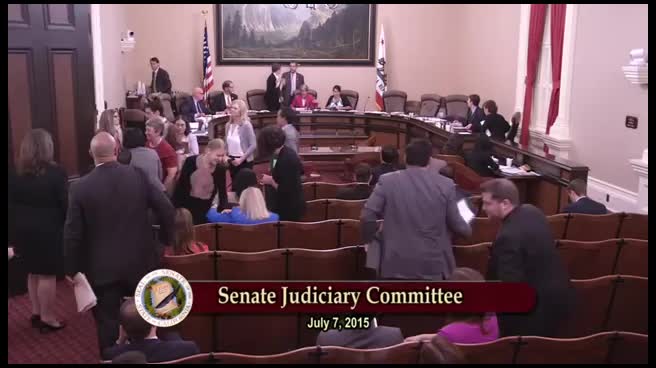 18MIN
Senate Standing Committee on Judiciary
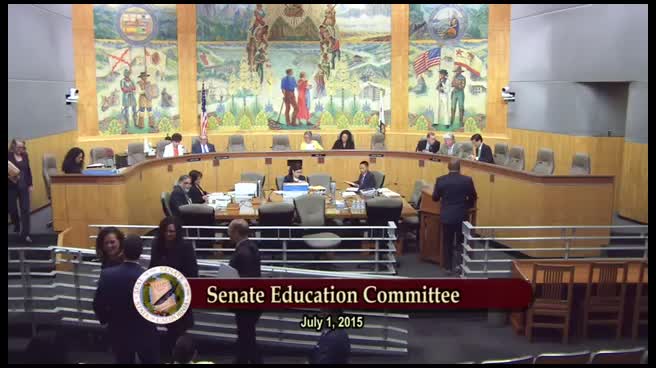 34MIN
Senate Standing Committee on Education
 7MIN
Assembly Floor
 52SEC
Assembly Floor
Bill Author

Bill Co-Author(s):
