ACA 1: Local government financing: affordable housing and public infrastructure: voter approval.
- Session Year: 2023-2024
- House: Assembly
- Latest Version Date: 2023-09-20
Current Status:
Passed
(2023-09-20: Chaptered by Secretary of State - Res. Chapter 173, Statutes of 2023.)
Introduced
In Committee
First Chamber
In Committee
Second Chamber
Enacted
(1)The California Constitution prohibits the ad valorem tax rate on real property from exceeding 1% of the full cash value of the property, subject to certain exceptions.
This measure would create an additional exception to the 1% limit that would authorize a city, county, city and county, or special district to levy an ad valorem tax to service bonded indebtedness incurred to fund the construction, reconstruction, rehabilitation, or replacement of public infrastructure, affordable housing, including downpayment assistance, or permanent supportive housing, or the acquisition or lease of real property for those purposes, if the proposition proposing that tax is approved by 55% of the voters of the city, county, city and county, or special district, as applicable, and the proposition includes specified accountability requirements. The measure would prohibit a city, county, city and county, or special district from placing a proposition on the ballot pursuant to these provisions if the voters have previously approved a proposition pursuant to these provisions or the below special tax provisions until all funds from the previous proposition are committed to programs and projects listed in the specific local program or ordinance, as described. The measure, subject to certain vote thresholds, would authorize the Legislature to enact laws establishing additional accountability measures and laws for the downpayment assistance programs authorized by the measure, as specified. The measure would specify that these provisions apply to any city, county, city and county, or special district measure imposing an ad valorem tax to pay the interest and redemption charges on bonded indebtedness for these purposes that is submitted at the same election as this measure.
(2)The California Constitution conditions the imposition of a special tax by a local government upon the approval of 2/3 of the voters of the local government voting on that tax.
This measure would authorize a local government to impose, extend, or increase a sales and use tax or transactions and use tax imposed in accordance with specified law or a parcel tax for the purposes of funding the construction, reconstruction, rehabilitation, or replacement of public infrastructure, affordable housing, including downpayment assistance, or permanent supportive housing, or the acquisition or lease of real property for those purposes, if the proposition proposing that tax is approved by a majority vote of the membership of the governing board of the local government and by 55% of its voters voting on the proposition and the proposition includes specified accountability requirements. The measure would prohibit a local government from placing a proposition on the ballot pursuant to these provisions if the voters have previously approved a proposition pursuant to these provisions or the above ad valorem tax provisions until all funds from the previous proposition are committed to programs and projects listed in the specific local program or ordinance, as described. The measure, subject to certain vote thresholds, would authorize the Legislature to enact laws establishing additional accountability measures and laws for the downpayment assistance programs authorized by the measure, as specified. This measure would also make conforming changes to related provisions. The measure would specify that these provisions apply to any local measure imposing, extending, or increasing a sales and use tax, transactions and use tax, or parcel tax for these purposes that is submitted at the same election as this measure.
(3)The California Constitution prohibits specified local government agencies from incurring any indebtedness exceeding in any year the income and revenue provided in that year, without the assent of 2/3 of the voters and subject to other conditions. In the case of a school district, community college district, or county office of education, the California Constitution permits a proposition for the incurrence of indebtedness in the form of general obligation bonds for the construction, reconstruction, rehabilitation, or replacement of school facilities, including the furnishing and equipping of school facilities, or the acquisition or lease of real property for school facilities, to be adopted upon the approval of 55% of the voters of the district or county, as appropriate, voting on the proposition at an election.
This measure would expressly prohibit a special district, other than a board of education or school district, from incurring any indebtedness or liability exceeding any applicable statutory limit, as prescribed by the statutes governing the special district. The measure would also similarly require the approval of 55% of the voters of the city, county, city and county, or special district, as applicable, to incur bonded indebtedness, exceeding in any year the income and revenue provided in that year, that is in the form of general obligation bonds issued to fund the construction, reconstruction, rehabilitation, or replacement of public infrastructure, affordable housing, or permanent supportive housing projects, if the proposition proposing that bond includes specified accountability requirements. The measure would specify that this 55% threshold applies to any proposition for the incurrence of indebtedness by a city, county, city and county, or special district for these purposes that is submitted at the same election as this measure.
(4)This measure would deem another measure on the same statewide election ballot relating to state or local requirements for the imposition, adoption, creation, or establishment of taxes, charges, and other revenue measures in conflict with it and would make the other measure null and void if this measure receives more affirmative votes.
(1)The California Constitution prohibits the ad valorem tax rate on real property from exceeding 1% of the full cash value of the property, subject to certain exceptions.
This measure would create an additional exception to the 1% limit that would authorize a city, county, city and county, or special district to levy an ad valorem tax to service bonded indebtedness incurred to fund the construction, reconstruction, rehabilitation, or replacement of public infrastructure, affordable housing, including downpayment assistance, or permanent supportive housing, or the acquisition or lease of real property for those purposes, if the proposition proposing that tax is approved by 55% of the voters of the city, county, city and county, or special district, as applicable, and the proposition includes specified accountability requirements. The measure would prohibit a city, county, city and county, or special district from placing a proposition on the ballot pursuant to these provisions if the voters have previously approved a proposition pursuant to these provisions or the below special tax provisions until all funds from the previous proposition are committed to programs and projects listed in the specific local program or ordinance, as described. The measure, subject to certain vote thresholds, would authorize the Legislature to enact laws establishing additional accountability measures and laws for the downpayment assistance programs authorized by the measure, as specified. The measure would specify that these provisions apply to any city, county, city and county, or special district measure imposing an ad valorem tax to pay the interest and redemption charges on bonded indebtedness for these purposes that is submitted at the same election as this measure.
(2)The California Constitution conditions the imposition of a special tax by a local government upon the approval of 2/3 of the voters of the local government voting on that tax.
This measure would authorize a local government to impose, extend, or increase a sales and use tax or transactions and use tax imposed in accordance with specified law or a parcel tax, as defined, for the purposes of funding the construction, reconstruction, rehabilitation, or replacement of public infrastructure, affordable housing, including downpayment assistance, or permanent supportive housing, or the acquisition or lease of real property for those purposes, if the proposition proposing that tax is approved by a majority vote of the membership of the governing board of the local government and by 55% of its voters voting on the proposition and the proposition includes specified accountability requirements. The measure would prohibit a local government from placing a proposition on the ballot pursuant to these provisions if the voters have previously approved a proposition pursuant to these provisions or the above ad valorem tax provisions until all funds from the previous proposition are committed to programs and projects listed in the specific local program or ordinance, as described. The measure, subject to certain vote thresholds, would authorize the Legislature to enact laws establishing additional accountability measures and laws for the downpayment assistance programs authorized by the measure, as specified. This measure would also make conforming changes to related provisions. The measure would specify that these provisions apply to any local measure imposing, extending, or increasing a sales and use tax, transactions and use tax, or parcel tax for these purposes that is submitted at the same election as this measure.
(3)The California Constitution prohibits specified local government agencies from incurring any indebtedness exceeding in any year the income and revenue provided in that year, without the assent of 2/3 of the voters and subject to other conditions. In the case of a school district, community college district, or county office of education, the California Constitution permits a proposition for the incurrence of indebtedness in the form of general obligation bonds for the construction, reconstruction, rehabilitation, or replacement of school facilities, including the furnishing and equipping of school facilities, or the acquisition or lease of real property for school facilities, to be adopted upon the approval of 55% of the voters of the district or county, as appropriate, voting on the proposition at an election.
This measure would expressly prohibit a special district, other than a board of education or school district, from incurring any indebtedness or liability exceeding any applicable statutory limit, as prescribed by the statutes governing the special district. The measure would also similarly require the approval of 55% of the voters of the city, county, city and county, or special district, as applicable, to incur bonded indebtedness, exceeding in any year the income and revenue provided in that year, that is in the form of general obligation bonds issued to fund the construction, reconstruction, rehabilitation, or replacement of public infrastructure, affordable housing, or permanent supportive housing projects, if the proposition proposing that bond includes specified accountability requirements. The measure would specify that this 55% threshold applies to any proposition for the incurrence of indebtedness by a city, county, city and county, or special district for these purposes that is submitted at the same election as this measure.
(1)The California Constitution prohibits the ad valorem tax rate on real property from exceeding 1% of the full cash value of the property, subject to certain exceptions.
This measure would create an additional exception to the 1% limit that would authorize a city, county, city and county, or special district to levy an ad valorem tax to service bonded indebtedness incurred to fund the construction, reconstruction, rehabilitation, or replacement of public infrastructure, affordable housing, or permanent supportive housing, or the acquisition or lease of real property for those purposes, if the proposition proposing that tax is approved by 55% of the voters of the city, county, or city and county, or special district, as applicable, and the proposition includes specified accountability requirements. The measure would specify that these provisions apply to any city, county, city and county, or special district measure imposing an ad valorem tax to pay the interest and redemption charges on bonded indebtedness for these purposes that is submitted at the same election as this measure.
(2)The California Constitution conditions the imposition of a special tax by a local government upon the approval of 2/3 of the voters of the local government voting on that tax.
This measure would authorize a local government to impose, extend, or increase a sales and use tax or transactions and use tax imposed in accordance with specified law or a parcel tax, as defined, for the purposes of funding the construction, reconstruction, rehabilitation, or replacement of public infrastructure, affordable housing, or permanent supportive housing housing, or the acquisition or lease of real property for those purposes, if the proposition proposing that tax is approved by a majority vote of the membership of the governing board of the local government and by 55% of its voters voting on the proposition and the proposition includes specified accountability requirements. This measure would also make conforming changes to related provisions. The measure would specify that these provisions apply to any local measure imposing, extending, or increasing a sales and use tax, transactions and use tax, or parcel tax for these purposes that is submitted at the same election as this measure.
(3)The California Constitution prohibits specified local government agencies from incurring any indebtedness exceeding in any year the income and revenue provided in that year, without the assent of 2/3 of the voters and subject to other conditions. In the case of a school district, community college district, or county office of education, the California Constitution permits a proposition for the incurrence of indebtedness in the form of general obligation bonds for the construction, reconstruction, rehabilitation, or replacement of school facilities, including the furnishing and equipping of school facilities, or the acquisition or lease of real property for school facilities, to be adopted upon the approval of 55% of the voters of the district or county, as appropriate, voting on the proposition at an election.
This measure would expressly prohibit a special district, other than a board of education or school district, from incurring any indebtedness or liability exceeding any applicable statutory limit, as prescribed by the statutes governing the special district. The measure would also similarly require the approval of 55% of the voters of the city, county, city and county, or special district, as applicable, to incur bonded indebtedness, exceeding in any year the income and revenue provided in that year, that is in the form of general obligation bonds issued to fund the construction, reconstruction, rehabilitation, or replacement of public infrastructure, affordable housing, or permanent supportive housing projects, if the proposition proposing that bond includes specified accountability requirements. The measure would specify that this 55% threshold applies to any proposition for the incurrence of indebtedness by a city, county, city and county, or special district for these purposes that is submitted at the same election as this measure.
(1)The California Constitution prohibits the ad valorem tax rate on real property from exceeding 1% of the full cash value of the property, subject to certain exceptions.
This measure would create an additional exception to the 1% limit that would authorize a city, county, city and county, or special district to levy an ad valorem tax to service bonded indebtedness incurred to fund the construction, reconstruction, rehabilitation, or replacement of public infrastructure, affordable housing, or permanent supportive housing, or the acquisition or lease of real property for those purposes, if the proposition proposing that tax is approved by 55% of the voters of the city, county, or city and county, as applicable, and the proposition includes specified accountability requirements. The measure would specify that these provisions apply to any city, county, city and county, or special district measure imposing an ad valorem tax to pay the interest and redemption charges on bonded indebtedness for these purposes that is submitted at the same election as this measure.
(2)The California Constitution conditions the imposition of a special tax by a local government upon the approval of 2/3 of the voters of the local government voting on that tax, and prohibits these entities from imposing an ad valorem tax on real property or a transactions or sales tax on the sale of real property. tax.
This measure would authorize a local government to impose, extend, or increase a sales and use tax or transactions and use tax imposed in accordance with specified law or a parcel tax, as defined, for the purposes of funding the construction, rehabilitation, or replacement of public infrastructure, affordable housing, or permanent supportive housing if the proposition proposing that tax is approved by 55% of its voters voting on the proposition and the proposition includes specified accountability requirements. This measure would also make conforming changes to related provisions. The measure would specify that these provisions apply to any local measure imposing, extending, or increasing a sales and use tax, transactions and use tax, or parcel tax for these purposes that is submitted at the same election as this measure.
(3)The California Constitution prohibits specified local government agencies from incurring any indebtedness exceeding in any year the income and revenue provided in that year, without the assent of 2/3 of the voters and subject to other conditions. In the case of a school district, community college district, or county office of education, the California Constitution permits a proposition for the incurrence of indebtedness in the form of general obligation bonds for the construction, reconstruction, rehabilitation, or replacement of school facilities, including the furnishing and equipping of school facilities, or the acquisition or lease of real property for school facilities, to be adopted upon the approval of 55% of the voters of the district or county, as appropriate, voting on the proposition at an election.
This measure would expressly prohibit a special district, other than a board of education or school district, from incurring any indebtedness or liability exceeding any applicable statutory limit, as prescribed by the statutes governing the special district. The measure would also similarly require the approval of 55% of the voters of the city, county, city and county, or special district, as applicable, to incur bonded indebtedness, exceeding in any year the income and revenue provided in that year, that is in the form of general obligation bonds issued to fund the construction, reconstruction, rehabilitation, or replacement of public infrastructure, affordable housing, or permanent supportive housing projects, if the proposition proposing that bond includes specified accountability requirements. The measure would specify that this 55% threshold applies to any proposition for the incurrence of indebtedness by a city, county, city and county, or special district for these purposes that is submitted at the same election as this measure.
(1)The California Constitution prohibits the ad valorem tax rate on real property from exceeding 1% of the full cash value of the property, subject to certain exceptions.
This measure would create an additional exception to the 1% limit that would authorize a city, county, city and county, or special district to levy an ad valorem tax to service bonded indebtedness incurred to fund the construction, reconstruction, rehabilitation, or replacement of public infrastructure, affordable housing, or permanent supportive housing, or the acquisition or lease of real property for those purposes, if the proposition proposing that tax is approved by 55% of the voters of the city, county, or city and county, as applicable, and the proposition includes specified accountability requirements. The measure would specify that these provisions apply to any city, county, city and county, or special district measure imposing an ad valorem tax to pay the interest and redemption charges on bonded indebtedness for these purposes that is submitted at the same election as this measure.
(2)The California Constitution conditions the imposition of a special tax by a local government upon the approval of 2/3 of the voters of the local government voting on that tax, and prohibits these entities from imposing an ad valorem tax on real property or a transactions or sales tax on the sale of real property.
This measure would authorize a local government to impose, extend, or increase a sales and use tax or transactions and use tax imposed in accordance with specified law or a parcel tax, as defined, for the purposes of funding the construction, rehabilitation, or replacement of public infrastructure, affordable housing, or permanent supportive housing if the proposition proposing that tax is approved by 55% of its voters voting on the proposition and the proposition includes specified accountability requirements. This measure would also make conforming changes to related provisions. The measure would specify that these provisions apply to any local measure imposing, extending, or increasing a sales and use tax, transactions and use tax, or parcel tax for these purposes that is submitted at the same election as this measure.
(3)The California Constitution prohibits specified local government agencies from incurring any indebtedness exceeding in any year the income and revenue provided in that year, without the assent of 2/3 of the voters and subject to other conditions. In the case of a school district, community college district, or county office of education, the California Constitution permits a proposition for the incurrence of indebtedness in the form of general obligation bonds for the construction, reconstruction, rehabilitation, or replacement of school facilities, including the furnishing and equipping of school facilities, or the acquisition or lease of real property for school facilities, to be adopted upon the approval of 55% of the voters of the district or county, as appropriate, voting on the proposition at an election.
This measure would expressly prohibit a special district, other than a board of education or school district, from incurring any indebtedness or liability exceeding any applicable statutory limit, as prescribed by the statutes governing the special district. The measure would also similarly require the approval of 55% of the voters of the city, county, city and county, or special district, as applicable, to incur bonded indebtedness, exceeding in any year the income and revenue provided in that year, that is in the form of general obligation bonds issued to fund the construction, reconstruction, rehabilitation, or replacement of public infrastructure, affordable housing, or permanent supportive housing projects, if the proposition proposing that bond includes specified accountability requirements. The measure would specify that this 55% threshold applies to any proposition for the incurrence of indebtedness by a city, county, city and county, or special district for these purposes that is submitted at the same election as this measure.
Resolved by the Assembly, the Senate concurring, That the Legislature of the State of California at its 202324 Regular Session commencing on the fifth day of December 2022, two-thirds of the membership of each house concurring, hereby proposes to the people of the State of California, that the Constitution of the State be amended as follows:
(a)The maximum amount of any ad valorem tax on real property shall not exceed 1 percent of the full cash value of that property. The 1 percent tax shall be collected by the counties and apportioned according to law to the districts within the counties.
(b)The limitation provided for in subdivision (a) shall not apply to ad valorem taxes or special assessments to pay the interest and redemption charges on any of the following:
(1)Indebtedness approved by the voters before July 1, 1978.
(2)Bonded indebtedness to fund the acquisition or improvement of real property approved on or after July 1, 1978, by two-thirds of the votes cast by the voters voting on the proposition.
(3)Bonded indebtedness incurred by a school district, community college district, or county office of education for the construction, reconstruction, rehabilitation, or replacement of school facilities, including the furnishing and equipping of school facilities, or the acquisition or lease of real property for school facilities, approved by 55 percent of the voters of the district or county, as appropriate, voting on the proposition on or after November 8, 2000. This paragraph shall apply only if the proposition approved by the voters and resulting in the bonded indebtedness includes all of the following accountability requirements:
(A)A requirement that the proceeds from the sale of the bonds be used only for the purposes specified in this paragraph, and not for any other purpose, including teacher and administrator salaries and other school operating expenses.
(B)A list of the specific school facilities projects to be funded and certification that the school district board, community college board, or county office of education has evaluated safety, class size reduction, and information technology needs in developing that list.
(C)A requirement that the school district board, community college board, or county office of education conduct an annual, independent performance audit to ensure that the funds have been expended only on the specific projects listed.
(D)A requirement that the school district board, community college board, or county office of education conduct an annual, independent financial audit of the proceeds from the sale of the bonds until all of those proceeds have been expended for the school facilities projects.
(4)(A)Bonded indebtedness incurred by a city, county, city and county, or special district for the construction, reconstruction, rehabilitation, or replacement of public infrastructure, affordable housing, or permanent supportive housing for persons at risk of chronic homelessness, including persons with mental illness, or the acquisition or lease of real property for public infrastructure, affordable housing, or permanent supportive housing for persons at risk of chronic homelessness, including persons with mental illness, approved by 55 percent of the voters of the city, county, city and county, or special district, as appropriate, voting on the proposition on or after the effective date of the measure adding this paragraph. This paragraph shall apply only if the proposition approved by the voters and resulting in the bonded indebtedness includes all of the following accountability requirements:
(i)A requirement that the proceeds from the sale of the bonds be used only for the purposes specified in this paragraph, and not for any other purpose, including city, county, city and county, or special district employee salaries and other operating expenses. The administrative cost of the city, county, city and county, or special district executing the projects and programs of the proposition shall not exceed 5 percent of the proceeds from the sale of the bonds.
(ii)A requirement that the proceeds from the sale of the bonds only be spent on projects and programs that serve the jurisdiction of the city, county, city and county, or special district.
(iii)The specific local program or ordinance through which projects will be funded and a certification that the city, county, city and county, or special district has evaluated alternative funding sources.
(iv)A requirement that the city, county, city and county, or special district conduct an annual, independent performance audit to ensure that the funds have been expended pursuant to the local program or ordinance specified in clause (iii).
(v)A requirement that the city, county, city and county, or special district conduct an annual, independent financial audit of the proceeds from the sale of the bonds until all of those proceeds have been expended for the public infrastructure or affordable housing projects, as applicable.
(vi)A requirement that the city, county, city and county, or special district post the audits required by clauses (iv) and (v) in a manner that is easily accessible to the public.
(vii)A requirement that the audits required by clauses (iv) and (v) will be submitted to the California State Auditor for review.
(viii)(I)A requirement that the city, county, city and county, or special district appoint a citizens oversight committee to ensure that bond proceeds are expended only for the purposes described in the measure approved by the voters.
(II)Members appointed to an oversight committee established pursuant to subclause (I) shall receive educational training about bonds and fiscal oversight.
(ix)A requirement that an entity owned or controlled by a local official that votes on whether to put a proposition on the ballot pursuant to this section will be prohibited from bidding on any work funded by the proposition.
(B)Notwithstanding any other law, if the voters of the local government have previously approved a proposition pursuant to this paragraph or Section 2.5 of Article XIII C, the local government shall not place a proposition on the ballot pursuant to this section until all funds from the previous proposition are committed to programs and projects listed in the propositions specific local program or ordinance described in clause (iii) of subparagraph (A) or subparagraph (C) of paragraph (2) of subdivision (a) of Section 2.5 of Article XIII C, as applicable.
(C)The Legislature may, by two-thirds vote, enact laws establishing accountability measures in addition to those listed in subparagraph (A), provided such laws are consistent with the purposes and intent of this paragraph.
(D)The Legislature may, by majority vote, enact laws for the downpayment assistance programs established pursuant to this paragraph, provided that those laws further the purposes of this paragraph.
(E)For purposes of this paragraph:
(i)(I)Affordable housing shall include housing developments, or portions of housing developments, that provide workforce housing affordable to households earning up to 150 percent of countywide median income, and housing developments, or portions of housing developments, that provide housing affordable to extremely low, very low, low-, or moderate-income households, as those terms are defined in state law. Affordable housing may include capitalized operating reserves, as the term is defined in state law.
(II)Affordable housing shall also include downpayment assistance programs.
(ii)At risk of chronic homelessness includes, but is not limited to, persons who are at high risk of long-term or intermittent homelessness, including persons with mental illness exiting institutionalized settings, including, but not limited to, jail and mental health facilities, who were homeless prior to admission, transition age youth experiencing homelessness or with significant barriers to housing stability, and others, as defined in program guidelines.
(iii)Permanent supportive housing means housing with no limit on length of stay, that is occupied by the target population, and that is linked to onsite or offsite services that assist residents in retaining the housing, improving their health status, and maximizing their ability to live and, when possible, work in the community. Permanent supportive housing includes associated facilities, if those facilities are used to provide services to housing residents.
(iv)Public infrastructure shall include, but is not limited to, projects that provide any of the following:
(I)Water or protection of water quality.
(II)Sanitary sewer.
(III)Treatment of wastewater or reduction of pollution from stormwater runoff.
(IV)Protection of property from impacts of sea level rise.
(V)Parks and recreation facilities.
(VI)Open space.
(VII)Improvements to transit and streets and highways.
(VIII)Flood control.
(IX)Broadband internet access service expansion in underserved areas.
(X)Local hospital construction.
(XI)Public safety buildings or facilities, equipment related to fire suppression, emergency response equipment, or interoperable communications equipment for direct and exclusive use by fire, emergency response, police, or sheriff personnel.
(XII)Public library facilities.
(v)Special district has the same meaning as provided in subdivision (c) of Section 1 of Article XIIIC and specifically includes a transit district, a regional transportation commission, and an association of governments, except that special district does not include a school district, redevelopment agency, or successor agency to a dissolved redevelopment agency.
(F)This paragraph shall apply to any city, county, city and county, or special district measure imposing an ad valorem tax to pay the interest and redemption charges on bonded indebtedness for those purposes described in this paragraph that is submitted at the same election as the measure adding this paragraph.
(c)(1)Notwithstanding any other provisions of law or of this Constitution, a school district, community college district, or county office of education may levy a 55-percent vote ad valorem tax pursuant to paragraph (3) of subdivision (b).
(2)Notwithstanding any other provisions of law or this Constitution, a city, county, city and county, or special district may levy a 55-percent vote ad valorem tax pursuant to paragraph (4) of subdivision (b).
Except as provided by Section 2.5 of Article XIIIC, a city, county, or special district, by a two-thirds vote of its voters voting on the proposition, may impose a special tax within that city, county, or special district, except an ad valorem tax on real property or a transactions tax or sales tax on the sale of real property within that city, county, or special district.
Notwithstanding any other provision of this Constitution:
(a)Any tax imposed by a local government is either a general tax or a special tax. A special district or agency, including a school district, has no authority to levy a general tax.
(b)A local government may not impose, extend, or increase any general tax unless and until that tax is submitted to the electorate and approved by a majority vote. A general tax is not deemed to have been increased if it is imposed at a rate not higher than the maximum rate so approved. The election required by this subdivision shall be consolidated with a regularly scheduled general election for members of the governing body of the local government, except in cases of emergency declared by a unanimous vote of the governing body.
(c)Any general tax imposed, extended, or increased, without voter approval, by any local government on or after January 1, 1995, and before the effective date of this article, may continue to be imposed only if that general tax is approved by a majority vote of the voters voting in an election on the issue of the imposition, which election shall be held no later than November 6, 1996, and in compliance with subdivision (b).
(d)Except as provided by Section 2.5, a local government may not impose, extend, or increase any special tax unless and until that tax is submitted to the electorate and approved by a two-thirds vote. A special tax is not deemed to have been increased if it is imposed at a rate not higher than the maximum rate so approved.
(a)The imposition, extension, or increase of a sales and use tax imposed in accordance with the Bradley-Burns Uniform Local Sales and Use Tax Law (Part 1.5 (commencing with Section 7200) of Division 2 of the Revenue and Taxation Code) or a successor law, a transactions and use tax imposed in accordance with the Transactions and Use Tax Law (Part 1.6 (commencing with Section 7251) of Division 2 of the Revenue and Taxation Code) or a successor law, or a parcel tax imposed by a local government for the purpose of funding the construction, reconstruction, rehabilitation, or replacement of public infrastructure, affordable housing, or permanent supportive housing for persons at risk of chronic homelessness, including persons with mental illness, or the acquisition or lease of real property for public infrastructure, affordable housing, or permanent supportive housing for persons at risk of chronic homelessness, including persons with mental illness, is subject to approval by 55 percent of the voters in the local government voting on the proposition, if both of the following conditions are met:
(1)The proposition is approved by a majority vote of the membership of the governing board of the local government.
(2)The proposition contains all of the following accountability requirements:
(A)A requirement that the proceeds of the tax only be used for the purposes specified in the proposition, and not for any other purpose, including general employee salaries and other operating expenses of the local government. The administrative cost of the local government executing the projects and programs funded by the proposition shall not exceed 5 percent of the proceeds of the tax.
(B)A requirement that the proceeds of the tax only be spent on projects and programs that serve the jurisdiction of the local government.
(C)The specific local program or ordinance through which projects will be funded and a certification that the local government has evaluated alternative funding sources.
(D)A requirement that the local government conduct an annual, independent performance audit to ensure that the proceeds of the special tax have been expended pursuant to the local program or ordinance specified in subparagraph (C).
(E)A requirement that the local government conduct an annual, independent financial audit of the proceeds from the tax during the lifetime of that tax.
(F)A requirement that the audits required by subparagraphs (D) and (E) will be submitted to the California State Auditor for review.
(G)A requirement that the local government post the audits required by subparagraphs (D) and (E) in a manner that is easily accessible to the public.
(H)(i)A requirement that the local government appoint a citizens oversight committee to ensure the proceeds of the special tax are expended only for the purposes described in the measure approved by the voters.
(ii)(I)A requirement that members appointed to an oversight committee established pursuant to clause (i) receive educational training about local taxation and fiscal oversight.
(II)A requirement that an entity owned or controlled by a local official that votes on whether to put a proposition on the ballot pursuant to this section will be prohibited from bidding on any work funded by the proposition.
(3)The Legislature may, by two-thirds vote, enact laws establishing accountability measures in addition to those listed in paragraph (2), provided such laws are consistent with the purposes and intent of this section.
(b)Notwithstanding any other law, if the voters of the local government have previously approved a proposition pursuant to this section or paragraph (4) of subdivision (b) of Section 1 of Article XIII A, the local government shall not place a proposition on the ballot pursuant to this section until all funds from the previous proposition are committed to programs and projects listed in the specific local program or ordinance described in subparagraph (C) of paragraph (2) of subdivision (a) of this section or clause (iii) of subparagraph (A) of paragraph (4) of subdivision (b) of Section 1 of Article XIII A.
(c)The Legislature may, by majority vote, enact laws for the downpayment assistance programs established pursuant to this section, provided that those laws further the purposes of this section.
(d)For purposes of this section, the following terms have the following meanings:
(1)(A)Affordable housing shall include housing developments, or portions of housing developments, that provide workforce housing affordable to households earning up to 150 percent of countywide median income, and housing developments, or portions of housing developments, that provide housing affordable to extremely low, very low, low-, or moderate-income households, as those terms are defined in state law. Affordable housing may include capitalized operating reserves, as the term is defined in state law.
(B)Affordable housing shall also include downpayment assistance programs.
(2)At risk of chronic homelessness includes, but is not limited to, persons who are at high risk of long-term or intermittent homelessness, including persons with mental illness exiting institutionalized settings, including, but not limited to, jail and mental health facilities, who were homeless prior to admission, transition age youth experiencing homelessness or with significant barriers to housing stability, and others, as defined in program guidelines.
(3)Permanent supportive housing means housing with no limit on length of stay, that is occupied by the target population, and that is linked to onsite or offsite services that assist residents in retaining the housing, improving their health status, and maximizing their ability to live and, when possible, work in the community. Permanent supportive housing includes associated facilities, if those facilities are used to provide services to housing residents.
(4)Local government has the same meaning as provided in subdivision (b) of Section 1 of this article and specifically includes a transit district, a regional transportation commission, and an association of governments.
(5)Public infrastructure shall include, but is not limited to, the projects that provide any of the following:
(A)Water or protection of water quality.
(B)Sanitary sewer.
(C)Treatment of wastewater or reduction of pollution from stormwater runoff.
(D)Protection of property from impacts of sea level rise.
(E)Parks and recreation facilities.
(F)Open space.
(G)Improvements to transit and streets and highways.
(H)Flood control.
(I)Broadband internet access service expansion in underserved areas.
(J)Local hospital construction.
(K)Public safety buildings or facilities, equipment related to fire suppression, emergency response equipment, or interoperable communications equipment for direct and exclusive use by fire, emergency response, police, or sheriff personnel.
(L)Public library facilities.
(e)This section shall apply to any local measure imposing, extending, or increasing a sales and use tax imposed pursuant to the Bradley-Burns Uniform Local Sales and Use Tax Law, a transactions and use tax imposed in accordance with the Transactions and Use Tax Law, or a parcel tax imposed by a local government for those purposes described in subdivision (a) that is submitted at the same election as the measure adding this section.
(a)An agency shall not assess a tax, assessment, fee, or charge upon any parcel of property or upon any person as an incident of property ownership except:
(1)The ad valorem property tax imposed pursuant to Article XIII and Article XIIIA.
(2)Any special tax receiving a two-thirds vote pursuant to Section 4 of Article XIIIA or receiving a 55-percent approval pursuant to Section 2.5 of Article XIIIC.
(3)Assessments as provided by this article.
(4)Fees or charges for property-related services as provided by this article.
(b)For purposes of this article, fees for the provision of electrical or gas service are not deemed charges or fees imposed as an incident of property ownership.
(a)A county, city, town, township, board of education, or school district, shall not incur any indebtedness or liability in any manner or for any purpose exceeding in any year the income and revenue provided for that year, without the assent of two-thirds of the voters of the public entity voting at an election to be held for that purpose, except that with respect to any such public entity that is authorized to incur indebtedness for public school purposes, any proposition for the incurrence of indebtedness in the form of general obligation bonds for the purpose of repairing, reconstructing, or replacing public school buildings determined, in the manner prescribed by law, to be structurally unsafe for school use, shall be adopted upon the approval of a majority of the voters of the public entity voting on the proposition at the election; nor unless before or at the time of incurring such indebtedness provision shall be made for the collection of an annual tax sufficient to pay the interest on such indebtedness as it falls due, and to provide for a sinking fund for the payment of the principal thereof, on or before maturity, which shall not exceed 40 years from the time of contracting the indebtedness. A special district, other than a board of education or school district, shall not incur any indebtedness or liability exceeding any applicable statutory limit, as prescribed by the statutes governing the special district as they currently read or may thereafter be amended by the Legislature.
(b)(1)Notwithstanding subdivision (a), any proposition for the incurrence of indebtedness in the form of general obligation bonds for the purposes described in paragraph (3) or (4) of subdivision (b) of Section 1 of Article XIIIA shall be adopted upon the approval of 55 percent of the voters of the school district, community college district, county office of education, city, county, city and county, or other special district, as appropriate, voting on the proposition at an election. This subdivision shall apply to a proposition for the incurrence of indebtedness in the form of general obligation bonds for the purposes specified in this subdivision only if the proposition meets all of the accountability requirements of paragraph (3) or (4) of subdivision (b), as appropriate, of Section 1 of Article XIIIA.
(2)The amendments made to this subdivision by the measure adding this paragraph shall apply to any proposition for the incurrence of indebtedness in the form of general obligation bonds pursuant to this subdivision for the purposes described in paragraph (4) of subdivision (b) of Section 1 of Article XIIIA that is submitted at the same election as the measure adding this paragraph.
(c)When two or more propositions for incurring any indebtedness or liability are submitted at the same election, the votes cast for and against each proposition shall be counted separately, and if two-thirds or a majority or 55 percent of the voters, as the case may be, voting on any one of those propositions, vote in favor thereof, the proposition shall be deemed adopted.
In the event that this measure and another measure or measures relating to state or local requirements for the imposition, adoption, creation, or establishment of taxes, charges, and other revenue measures shall appear on the same statewide election ballot, the other measure or measures shall be deemed to be in conflict with this measure. In the event that this measure receives a greater number of affirmative votes, the provisions of this measure shall prevail in their entirety, and the provisions of the other measure or measures shall be null and void.
Resolved by the Assembly, the Senate concurring, That the Legislature of the State of California at its 202324 Regular Session commencing on the fifth day of December 2022, two-thirds of the membership of each house concurring, hereby proposes to the people of the State of California, that the Constitution of the State be amended as follows:
(a)The maximum amount of any ad valorem tax on real property shall not exceed 1 percent of the full cash value of that property. The 1 percent tax shall be collected by the counties and apportioned according to law to the districts within the counties.
(b)The limitation provided for in subdivision (a) shall not apply to ad valorem taxes or special assessments to pay the interest and redemption charges on any of the following:
(1)Indebtedness approved by the voters before July 1, 1978.
(2)Bonded indebtedness to fund the acquisition or improvement of real property approved on or after July 1, 1978, by two-thirds of the votes cast by the voters voting on the proposition.
(3)Bonded indebtedness incurred by a school district, community college district, or county office of education for the construction, reconstruction, rehabilitation, or replacement of school facilities, including the furnishing and equipping of school facilities, or the acquisition or lease of real property for school facilities, approved by 55 percent of the voters of the district or county, as appropriate, voting on the proposition on or after November 8, 2000. This paragraph shall apply only if the proposition approved by the voters and resulting in the bonded indebtedness includes all of the following accountability requirements:
(A)A requirement that the proceeds from the sale of the bonds be used only for the purposes specified in this paragraph, and not for any other purpose, including teacher and administrator salaries and other school operating expenses.
(B)A list of the specific school facilities projects to be funded and certification that the school district board, community college board, or county office of education has evaluated safety, class size reduction, and information technology needs in developing that list.
(C)A requirement that the school district board, community college board, or county office of education conduct an annual, independent performance audit to ensure that the funds have been expended only on the specific projects listed.
(D)A requirement that the school district board, community college board, or county office of education conduct an annual, independent financial audit of the proceeds from the sale of the bonds until all of those proceeds have been expended for the school facilities projects.
(4)(A)Bonded indebtedness incurred by a city, county, city and county, or special district for the construction, reconstruction, rehabilitation, or replacement of public infrastructure, affordable housing, or permanent supportive housing for persons at risk of chronic homelessness, including persons with mental illness, or the acquisition or lease of real property for public infrastructure, affordable housing, or permanent supportive housing for persons at risk of chronic homelessness, including persons with mental illness, approved by 55 percent of the voters of the city, county, city and county, or special district, as appropriate, voting on the proposition on or after the effective date of the measure adding this paragraph. This paragraph shall apply only if the proposition approved by the voters and resulting in the bonded indebtedness includes all of the following accountability requirements:
(i)A requirement that the proceeds from the sale of the bonds be used only for the purposes specified in this paragraph, and not for any other purpose, including city, county, city and county, or special district employee salaries and other operating expenses. The administrative cost of the city, county, city and county, or special district executing the projects and programs of the proposition shall not exceed 5 percent of the proceeds from the sale of the bonds.
(ii)A requirement that the proceeds from the sale of the bonds only be spent on projects and programs that serve the jurisdiction of the local government. city, county, city and county, or special district.
(iii)The specific local program or ordinance through which projects will be funded and a certification that the city, county, city and county, or special district has evaluated alternative funding sources.
(iv)A requirement that the city, county, city and county, or special district conduct an annual, independent performance audit to ensure that the funds have been expended pursuant to the local program or ordinance specified in clause (iii).
(v)A requirement that the city, county, city and county, or special district conduct an annual, independent financial audit of the proceeds from the sale of the bonds until all of those proceeds have been expended for the public infrastructure or affordable housing projects, as applicable.
(vi)A requirement that the city, county, city and county, or special district post the audits required by clauses (iv) and (v) in a manner that is easily accessible to the public.
(vii)A requirement that the audits required by clauses (iv) and (v) will be submitted to the California State Auditor for review.
(viii)(I)A requirement that the city, county, city and county, or special district appoint a citizens oversight committee to ensure that bond proceeds are expended only for the purposes described in the measure approved by the voters.
(II)Members appointed to an oversight committee established pursuant to subclause (I) shall receive educational training about bonds and fiscal oversight.
(ix)A requirement that an entity owned or controlled by a local official that votes on whether to put a proposition on the ballot pursuant to this section will be prohibited from bidding on any work funded by the proposition.
(B)Notwithstanding any other law, if the voters of the local government have previously approved a proposition pursuant to this paragraph or Section 2.5 of Article XIII C, the local government shall not place a proposition on the ballot pursuant to this section until all funds from the previous proposition are committed to programs and projects listed in the propositions specific local program or ordinance described in clause (iii) of subparagraph (A) or subparagraph (C) of paragraph (2) of subdivision (a) of Section 2.5 of Article XIII C, as applicable.
(C)The Legislature may, by two-thirds vote, enact laws establishing accountability measures in addition to those listed in subparagraph (A), provided such laws are consistent with the purposes and intent of this paragraph.
(D)The Legislature may, by majority vote, enact laws for the downpayment assistance programs established pursuant to this paragraph, provided that those laws further the purposes of this paragraph.
(E)For purposes of this paragraph:
(i)(I)Affordable housing shall include housing developments, or portions of housing developments, that provide workforce housing affordable to households earning up to 150 percent of countywide median income, and housing developments, or portions of housing developments, that provide housing affordable to extremely low, very low, low-, or moderate-income households, as those terms are defined in state law. Affordable housing may include capitalized operating reserves, as the term is defined in state law.
(II)Affordable housing shall also include downpayment assistance programs.
(ii)At risk of chronic homelessness includes, but is not limited to, persons who are at high risk of long-term or intermittent homelessness, including persons with mental illness exiting institutionalized settings, including, but not limited to, jail and mental health facilities, who were homeless prior to admission, transition age youth experiencing homelessness or with significant barriers to housing stability, and others, as defined in program guidelines.
(iii)Permanent supportive housing means housing with no limit on length of stay, that is occupied by the target population, and that is linked to onsite or offsite services that assist residents in retaining the housing, improving their health status, and maximizing their ability to live and, when possible, work in the community. Permanent supportive housing includes associated facilities, if those facilities are used to provide services to housing residents.
(iv)Public infrastructure shall include, but is not limited to, projects that provide any of the following:
(I)Water or protection of water quality.
(II)Sanitary sewer.
(III)Treatment of wastewater or reduction of pollution from stormwater runoff.
(IV)Protection of property from impacts of sea level rise.
(V)Parks and recreation facilities.
(VI)Open space.
(VII)Improvements to transit and streets and highways.
(VIII)Flood control.
(IX)Broadband internet access service expansion in underserved areas.
(X)Local hospital construction.
(XI)Public safety buildings or facilities, equipment related to fire suppression, emergency response equipment, or interoperable communications equipment for direct and exclusive use by fire, emergency response, police, or sheriff personnel.
(XII)Public library facilities.
(v)Special district has the same meaning as provided in subdivision (c) of Section 1 of Article XIIIC and specifically includes a transit district, a regional transportation commission, and an association of governments, except that special district does not include a school district, redevelopment agency, or successor agency to a dissolved redevelopment agency.
(F)This paragraph shall apply to any city, county, city and county, or special district measure imposing an ad valorem tax to pay the interest and redemption charges on bonded indebtedness for those purposes described in this paragraph that is submitted at the same election as the measure adding this paragraph.
(c)(1)Notwithstanding any other provisions of law or of this Constitution, a school district, community college district, or county office of education may levy a 55-percent vote ad valorem tax pursuant to paragraph (3) of subdivision (b).
(2)Notwithstanding any other provisions of law or this Constitution, a city, county, city and county, or special district may levy a 55-percent vote ad valorem tax pursuant to paragraph (4) of subdivision (b).
Except as provided by Section 2.5 of Article XIIIC, a city, county, or special district, by a two-thirds vote of its voters voting on the proposition, may impose a special tax within that city, county, or special district, except an ad valorem tax on real property or a transactions tax or sales tax on the sale of real property within that city, county, or special district.
Notwithstanding any other provision of this Constitution:
(a)Any tax imposed by a local government is either a general tax or a special tax. A special district or agency, including a school district, has no authority to levy a general tax.
(b)A local government may not impose, extend, or increase any general tax unless and until that tax is submitted to the electorate and approved by a majority vote. A general tax is not deemed to have been increased if it is imposed at a rate not higher than the maximum rate so approved. The election required by this subdivision shall be consolidated with a regularly scheduled general election for members of the governing body of the local government, except in cases of emergency declared by a unanimous vote of the governing body.
(c)Any general tax imposed, extended, or increased, without voter approval, by any local government on or after January 1, 1995, and before the effective date of this article, may continue to be imposed only if that general tax is approved by a majority vote of the voters voting in an election on the issue of the imposition, which election shall be held no later than November 6, 1996, and in compliance with subdivision (b).
(d)Except as provided by Section 2.5, a local government may not impose, extend, or increase any special tax unless and until that tax is submitted to the electorate and approved by a two-thirds vote. A special tax is not deemed to have been increased if it is imposed at a rate not higher than the maximum rate so approved.
(a)The imposition, extension, or increase of a sales and use tax imposed in accordance with the Bradley-Burns Uniform Local Sales and Use Tax Law (Part 1.5 (commencing with Section 7200) of Division 2 of the Revenue and Taxation Code) or a successor law, a transactions and use tax imposed in accordance with the Transactions and Use Tax Law (Part 1.6 (commencing with Section 7251) of Division 2 of the Revenue and Taxation Code) or a successor law, or a parcel tax imposed by a local government for the purpose of funding the construction, reconstruction, rehabilitation, or replacement of public infrastructure, affordable housing, or permanent supportive housing for persons at risk of chronic homelessness, including persons with mental illness, or the acquisition or lease of real property for public infrastructure, affordable housing, or permanent supportive housing for persons at risk of chronic homelessness, including persons with mental illness, is subject to approval by 55 percent of the voters in the local government voting on the proposition, if both of the following conditions are met:
(1)The proposition is approved by a majority vote of the membership of the governing board of the local government.
(2)The proposition contains all of the following accountability requirements:
(A)A requirement that the proceeds of the tax only be used for the purposes specified in the proposition, and not for any other purpose, including general employee salaries and other operating expenses of the local government. The administrative cost of the local government executing the projects and programs funded by the proposition shall not exceed 5 percent of the proceeds of the tax.
(B)A requirement that the proceeds of the tax only be spent on projects and programs that serve the jurisdiction of the local government.
(C)The specific local program or ordinance through which projects will be funded and a certification that the city, county, city and county, or special district local government has evaluated alternative funding sources.
(D)A requirement that the local government conduct an annual, independent performance audit to ensure that the proceeds of the special tax have been expended pursuant to the local program or ordinance specified in subparagraph (C).
(E)A requirement that the local government conduct an annual, independent financial audit of the proceeds from the tax during the lifetime of that tax.
(F)A requirement that the audits required by subparagraphs (D) and (E) will be submitted to the California State Auditor for review.
(G)A requirement that the local government post the audits required by subparagraphs (D) and (E) in a manner that is easily accessible to the public.
(H)(i)A requirement that the local government appoint a citizens oversight committee to ensure the proceeds of the special tax are expended only for the purposes described in the measure approved by the voters.
(ii)(I)A requirement that members appointed to an oversight committee established pursuant to clause (i) receive educational training about local taxation and fiscal oversight.
(II)A requirement that an entity owned or controlled by a local official that votes on whether to put a proposition on the ballot pursuant to this section will be prohibited from bidding on any work funded by the proposition.
(3)The Legislature may, by two-thirds vote, enact laws establishing accountability measures in addition to those listed in paragraph (2), provided such laws are consistent with the purposes and intent of this section.
(b)Notwithstanding any other law, if the voters of the local government have previously approved a proposition pursuant to this section or paragraph (4) of subdivision (b) of Section 1 of Article XIII A, the local government shall not place a proposition on the ballot pursuant to this section until all funds from the previous proposition are committed to programs and projects listed in the specific local program or ordinance described in subparagraph (C) of paragraph (2) of subdivision (a) of this section or clause (iii) of subparagraph (A) of paragraph (4) of subdivision (b) of Section 1 of Article XIII A.
(c)The Legislature may, by majority vote, enact laws for the downpayment assistance programs established pursuant to this section, provided that those laws further the purposes of this section.
(d)For purposes of this section, the following terms have the following meanings:
(1)(A)Affordable housing shall include housing developments, or portions of housing developments, that provide workforce housing affordable to households earning up to 150 percent of countywide median income, and housing developments, or portions of housing developments, that provide housing affordable to extremely low, very low, low-, or moderate-income households, as those terms are defined in state law. Affordable housing may include capitalized operating reserves, as the term is defined in state law.
(B)Affordable housing shall also include downpayment assistance programs.
(2)At risk of chronic homelessness includes, but is not limited to, persons who are at high risk of long-term or intermittent homelessness, including persons with mental illness exiting institutionalized settings, including, but not limited to, jail and mental health facilities, who were homeless prior to admission, transition age youth experiencing homelessness or with significant barriers to housing stability, and others, as defined in program guidelines.
(3)Permanent supportive housing means housing with no limit on length of stay, that is occupied by the target population, and that is linked to onsite or offsite services that assist residents in retaining the housing, improving their health status, and maximizing their ability to live and, when possible, work in the community. Permanent supportive housing includes associated facilities, if those facilities are used to provide services to housing residents.
(4)Local government has the same meaning as provided in subdivision (b) of Section 1 of this article and specifically includes a transit district, a regional transportation commission, and an association of governments.
(5)Public infrastructure shall include, but is not limited to, the projects that provide any of the following:
(A)Water or protection of water quality.
(B)Sanitary sewer.
(C)Treatment of wastewater or reduction of pollution from stormwater runoff.
(D)Protection of property from impacts of sea level rise.
(E)Parks and recreation facilities.
(F)Open space.
(G)Improvements to transit and streets and highways.
(H)Flood control.
(I)Broadband internet access service expansion in underserved areas.
(J)Local hospital construction.
(K)Public safety buildings or facilities, equipment related to fire suppression, emergency response equipment, or interoperable communications equipment for direct and exclusive use by fire, emergency response, police, or sheriff personnel.
(L)Public library facilities.
(e)This section shall apply to any local measure imposing, extending, or increasing a sales and use tax imposed pursuant to the Bradley-Burns Uniform Local Sales and Use Tax Law, a transactions and use tax imposed in accordance with the Transactions and Use Tax Law, or a parcel tax imposed by a local government for those purposes described in subdivision (a) that is submitted at the same election as the measure adding this section.
(a)An agency shall not assess a tax, assessment, fee, or charge upon any parcel of property or upon any person as an incident of property ownership except:
(1)The ad valorem property tax imposed pursuant to Article XIII and Article XIIIA.
(2)Any special tax receiving a two-thirds vote pursuant to Section 4 of Article XIIIA or receiving a 55-percent approval pursuant to Section 2.5 of Article XIIIC.
(3)Assessments as provided by this article.
(4)Fees or charges for property-related services as provided by this article.
(b)For purposes of this article, fees for the provision of electrical or gas service are not deemed charges or fees imposed as an incident of property ownership.
(a)A county, city, town, township, board of education, or school district, shall not incur any indebtedness or liability in any manner or for any purpose exceeding in any year the income and revenue provided for that year, without the assent of two-thirds of the voters of the public entity voting at an election to be held for that purpose, except that with respect to any such public entity that is authorized to incur indebtedness for public school purposes, any proposition for the incurrence of indebtedness in the form of general obligation bonds for the purpose of repairing, reconstructing, or replacing public school buildings determined, in the manner prescribed by law, to be structurally unsafe for school use, shall be adopted upon the approval of a majority of the voters of the public entity voting on the proposition at the election; nor unless before or at the time of incurring such indebtedness provision shall be made for the collection of an annual tax sufficient to pay the interest on such indebtedness as it falls due, and to provide for a sinking fund for the payment of the principal thereof, on or before maturity, which shall not exceed 40 years from the time of contracting the indebtedness. A special district, other than a board of education or school district, shall not incur any indebtedness or liability exceeding any applicable statutory limit, as prescribed by the statutes governing the special district as they currently read or may thereafter be amended by the Legislature.
(b)(1)Notwithstanding subdivision (a), any proposition for the incurrence of indebtedness in the form of general obligation bonds for the purposes described in paragraph (3) or (4) of subdivision (b) of Section 1 of Article XIIIA shall be adopted upon the approval of 55 percent of the voters of the school district, community college district, county office of education, city, county, city and county, or other special district, as appropriate, voting on the proposition at an election. This subdivision shall apply to a proposition for the incurrence of indebtedness in the form of general obligation bonds for the purposes specified in this subdivision only if the proposition meets all of the accountability requirements of paragraph (3) or (4) of subdivision (b), as appropriate, of Section 1 of Article XIIIA.
(2)The amendments made to this subdivision by the measure adding this paragraph shall apply to any proposition for the incurrence of indebtedness in the form of general obligation bonds pursuant to this subdivision for the purposes described in paragraph (4) of subdivision (b) of Section 1 of Article XIIIA that is submitted at the same election as the measure adding this paragraph.
(c)When two or more propositions for incurring any indebtedness or liability are submitted at the same election, the votes cast for and against each proposition shall be counted separately, and if two-thirds or a majority or 55 percent of the voters, as the case may be, voting on any one of those propositions, vote in favor thereof, the proposition shall be deemed adopted.
In the event that this measure and another measure or measures relating to state or local requirements for the imposition, adoption, creation, or establishment of taxes, charges, and other revenue measures shall appear on the same statewide election ballot, the other measure or measures shall be deemed to be in conflict with this measure. In the event that this measure receives a greater number of affirmative votes, the provisions of this measure shall prevail in their entirety, and the provisions of the other measure or measures shall be null and void.
Resolved by the Assembly, the Senate concurring, That the Legislature of the State of California at its 202324 Regular Session commencing on the fifth day of December 2022, two-thirds of the membership of each house concurring, hereby proposes to the people of the State of California, that the Constitution of the State be amended as follows:
(a)The maximum amount of any ad valorem tax on real property shall not exceed 1 percent of the full cash value of that property. The 1 percent tax shall be collected by the counties and apportioned according to law to the districts within the counties.
(b)The limitation provided for in subdivision (a) shall not apply to ad valorem taxes or special assessments to pay the interest and redemption charges on any of the following:
(1)Indebtedness approved by the voters before July 1, 1978.
(2)Bonded indebtedness to fund the acquisition or improvement of real property approved on or after July 1, 1978, by two-thirds of the votes cast by the voters voting on the proposition.
(3)Bonded indebtedness incurred by a school district, community college district, or county office of education for the construction, reconstruction, rehabilitation, or replacement of school facilities, including the furnishing and equipping of school facilities, or the acquisition or lease of real property for school facilities, approved by 55 percent of the voters of the district or county, as appropriate, voting on the proposition on or after November 8, 2000. This paragraph shall apply only if the proposition approved by the voters and resulting in the bonded indebtedness includes all of the following accountability requirements:
(A)A requirement that the proceeds from the sale of the bonds be used only for the purposes specified in this paragraph, and not for any other purpose, including teacher and administrator salaries and other school operating expenses.
(B)A list of the specific school facilities projects to be funded and certification that the school district board, community college board, or county office of education has evaluated safety, class size reduction, and information technology needs in developing that list.
(C)A requirement that the school district board, community college board, or county office of education conduct an annual, independent performance audit to ensure that the funds have been expended only on the specific projects listed.
(D)A requirement that the school district board, community college board, or county office of education conduct an annual, independent financial audit of the proceeds from the sale of the bonds until all of those proceeds have been expended for the school facilities projects.
(4)(A)Bonded indebtedness incurred by a city, county, city and county, or special district for the construction, reconstruction, rehabilitation, or replacement of public infrastructure, affordable housing, or permanent supportive housing for persons at risk of chronic homelessness, including persons with mental illness, or the acquisition or lease of real property for public infrastructure, affordable housing, or permanent supportive housing for persons at risk of chronic homelessness, including persons with mental illness, approved by 55 percent of the voters of the city, county, city and county, or special district, as appropriate, voting on the proposition on or after the effective date of the measure adding this paragraph. This paragraph shall apply only if the proposition approved by the voters and resulting in the bonded indebtedness includes all of the following accountability requirements:
(i)A requirement that the proceeds from the sale of the bonds be used only for the purposes specified in this paragraph, and not for any other purpose, including city, county, city and county, or special district employee salaries and other operating expenses. The administrative cost of the city, county, city and county, or special district executing the projects and programs of the proposition shall not exceed 5 percent of the proceeds from the sale of the bonds.
(ii)A requirement that the proceeds from the sale of the bonds only be spent on projects and programs that serve the jurisdiction of the local government.
(ii)(iii)The specific local program or ordinance through which projects will be funded and a certification that the city, county, city and county, or special district has evaluated alternative funding sources.
(iii)(iv)A requirement that the city, county, city and county, or special district conduct an annual, independent performance audit to ensure that the funds have been expended pursuant to the local program or ordinance specified in clause (ii). (iii).
(iv)(v)A requirement that the city, county, city and county, or special district conduct an annual, independent financial audit of the proceeds from the sale of the bonds until all of those proceeds have been expended for the public infrastructure or affordable housing projects, as applicable.
(v)(vi)A requirement that the city, county, city and county, or special district post the audits required by clauses (iii) and (iv) (iv) and (v) in a manner that is easily accessible to the public.
(vii)A requirement that the audits required by clauses (iv) and (v) will be submitted to the California State Auditor for review.
(vi)(viii)(I)A requirement that the city, county, city and county, or special district appoint a citizens oversight committee to ensure that bond proceeds are expended only for the purposes described in the measure approved by the voters.
(II)Members appointed to an oversight committee established pursuant to subclause (I) shall receive educational training about bonds and fiscal oversight.
(ix)A requirement that an entity owned or controlled by a local official that votes on whether to put a proposition on the ballot pursuant to this section will be prohibited from bidding on any work funded by the proposition.
(B)Notwithstanding any other law, if the voters of the local government have previously approved a proposition pursuant to this paragraph or Section 2.5 of Article XIII C, the local government shall not place a proposition on the ballot pursuant to this section until all funds from the previous proposition are committed to programs and projects listed in the propositions specific local program or ordinance described in clause (iii) of subparagraph (A) or subparagraph (C) of paragraph (2) of subdivision (a) of Section 2.5 of Article XIII C, as applicable.
(C)The Legislature may, by two-thirds vote, enact laws establishing accountability measures in addition to those listed in subparagraph (A), provided such laws are consistent with the purposes and intent of this paragraph.
(D)The Legislature may, by majority vote, enact laws for the downpayment assistance programs established pursuant to this paragraph, provided that those laws further the purposes of this paragraph.
(B)(E)For purposes of this paragraph:
(i)(I)Affordable housing shall include housing developments, or portions of housing developments, that provide workforce housing affordable to households earning up to 150 percent of countywide median income, and housing developments, or portions of housing developments, that provide housing affordable to lower, low-, or very low income extremely low, very low, low-, or moderate-income households, as those terms are defined in state law. Affordable housing may include capitalized operating reserves, as the term is defined in state law.
(II)Affordable housing shall also include downpayment assistance programs.
(ii)At risk of chronic homelessness includes, but is not limited to, persons who are at high risk of long-term or intermittent homelessness, including persons with mental illness exiting institutionalized settings, including, but not limited to, jail and mental health facilities, who were homeless prior to admission, transition age youth experiencing homelessness or with significant barriers to housing stability, and others, as defined in program guidelines.
(iii)Permanent supportive housing means housing with no limit on length of stay, that is occupied by the target population, and that is linked to onsite or offsite services that assist residents in retaining the housing, improving their health status, and maximizing their ability to live and, when possible, work in the community. Permanent supportive housing includes associated facilities, if those facilities are used to provide services to housing residents.
(iv)Public infrastructure shall include, but is not limited to, projects that provide any of the following:
(I)Water or protection of water quality.
(II)Sanitary sewer.
(III)Treatment of wastewater or reduction of pollution from stormwater runoff.
(IV)Protection of property from impacts of sea level rise.
(V)Parks and recreation facilities.
(VI)Open space.
(VII)Improvements to transit and streets and highways.
(VIII)Flood control.
(IX)Broadband internet access service expansion in underserved areas.
(X)Local hospital construction.
(XI)Public safety buildings or facilities, equipment related to fire suppression, emergency response equipment, or interoperable communications equipment for direct and exclusive use by fire, emergency response, police, or sheriff personnel.
(XII)Public library facilities.
(v)Special district has the same meaning as provided in subdivision (c) of Section 1 of Article XIIIC and specifically includes a transit district, a regional transportation commission, and an association of governments, except that special district does not include a school district, redevelopment agency, or successor agency to a dissolved redevelopment agency.
(C)(F)This paragraph shall apply to any city, county, city and county, or special district measure imposing an ad valorem tax to pay the interest and redemption charges on bonded indebtedness for those purposes described in this paragraph that is submitted at the same election as the measure adding this paragraph.
(c)(1)Notwithstanding any other provisions of law or of this Constitution, a school district, community college district, or county office of education may levy a 55-percent vote ad valorem tax pursuant to paragraph (3) of subdivision (b).
(2)Notwithstanding any other provisions of law or this Constitution, a city, county, city and county, or special district may levy a 55-percent vote ad valorem tax pursuant to paragraph (4) of subdivision (b).
Except as provided by Section 2.5 of Article XIIIC, a city, county, or special district, by a two-thirds vote of its voters voting on the proposition, may impose a special tax within that city, county, or special district, except an ad valorem tax on real property or a transactions tax or sales tax on the sale of real property within that city, county, or special district.
Notwithstanding any other provision of this Constitution:
(a)Any tax imposed by a local government is either a general tax or a special tax. A special district or agency, including a school district, has no authority to levy a general tax.
(b)A local government may not impose, extend, or increase any general tax unless and until that tax is submitted to the electorate and approved by a majority vote. A general tax is not deemed to have been increased if it is imposed at a rate not higher than the maximum rate so approved. The election required by this subdivision shall be consolidated with a regularly scheduled general election for members of the governing body of the local government, except in cases of emergency declared by a unanimous vote of the governing body.
(c)Any general tax imposed, extended, or increased, without voter approval, by any local government on or after January 1, 1995, and before the effective date of this article, may continue to be imposed only if that general tax is approved by a majority vote of the voters voting in an election on the issue of the imposition, which election shall be held no later than November 6, 1996, and in compliance with subdivision (b).
(d)Except as provided by Section 2.5, a local government may not impose, extend, or increase any special tax unless and until that tax is submitted to the electorate and approved by a two-thirds vote. A special tax is not deemed to have been increased if it is imposed at a rate not higher than the maximum rate so approved.
(a)The imposition, extension, or increase of a sales and use tax imposed in accordance with the Bradley-Burns Uniform Local Sales and Use Tax Law (Part 1.5 (commencing with Section 7200) of Division 2 of the Revenue and Taxation Code) or a successor law, a transactions and use tax imposed in accordance with the Transactions and Use Tax Law (Part 1.6 (commencing with Section 7251) of Division 2 of the Revenue and Taxation Code) or a successor law, or a parcel tax imposed by a local government for the purpose of funding the construction, reconstruction, rehabilitation, or replacement of public infrastructure, affordable housing, or permanent supportive housing for persons at risk of chronic homelessness, including persons with mental illness, or the acquisition or lease of real property for public infrastructure, affordable housing, or permanent supportive housing for persons at risk of chronic homelessness, including persons with mental illness, is subject to approval by 55 percent of the voters in the local government voting on the proposition, if both of the following conditions are met:
(1)The proposition is approved by a majority vote of the membership of the governing board of the local government.
(2)The proposition contains all of the following accountability requirements:
(A)A requirement that the proceeds of the tax only be used for the purposes specified in the proposition, and not for any other purpose, including general employee salaries and other operating expenses of the local government. The administrative cost of the local government executing the projects and programs funded by the proposition shall not exceed 5 percent of the proceeds of the tax.
(B)A requirement that the proceeds of the tax only be spent on projects and programs that serve the jurisdiction of the local government.
(B)(C)The specific local program or ordinance through which projects will be funded and a certification that the city, county, city and county, or special district has evaluated alternative funding sources.
(C)(D)A requirement that the local government conduct an annual, independent performance audit to ensure that the proceeds of the special tax have been expended pursuant to the local program or ordinance specified in subparagraph (B). (C).
(D)(E)A requirement that the local government conduct an annual, independent financial audit of the proceeds from the tax during the lifetime of that tax.
(F)A requirement that the audits required by subparagraphs (D) and (E) will be submitted to the California State Auditor for review.
(E)(G)A requirement that the local government post the audits required by subparagraphs (C) and (D) (D) and (E) in a manner that is easily accessible to the public.
(F)(H)(i)A requirement that the local government appoint a citizens oversight committee to ensure the proceeds of the special tax are expended only for the purposes described in the measure approved by the voters.
(ii)(I)A requirement that members appointed to an oversight committee established pursuant to clause (i) receive educational training about local taxation and fiscal oversight.
(II)A requirement that an entity owned or controlled by a local official that votes on whether to put a proposition on the ballot pursuant to this section will be prohibited from bidding on any work funded by the proposition.
(3)The Legislature may, by two-thirds vote, enact laws establishing accountability measures in addition to those listed in paragraph (2), provided such laws are consistent with the purposes and intent of this section.
(b)Notwithstanding any other law, if the voters of the local government have previously approved a proposition pursuant to this section or paragraph (4) of subdivision (b) of Section 1 of Article XIII A, the local government shall not place a proposition on the ballot pursuant to this section until all funds from the previous proposition are committed to programs and projects listed in the specific local program or ordinance described in subparagraph (C) of paragraph (2) of subdivision (a) of this section or clause (iii) of subparagraph (A) of paragraph (4) of subdivision (b) of Section 1 of Article XIII A.
(c)The Legislature may, by majority vote, enact laws for the downpayment assistance programs established pursuant to this section, provided that those laws further the purposes of this section.
(b)(d)For purposes of this section, the following terms have the following meanings:
(1)(A)Affordable housing shall include housing developments, or portions of housing developments, that provide workforce housing affordable to households earning up to 150 percent of countywide median income, and housing developments, or portions of housing developments, that provide housing affordable to lower, low-, or very low income extremely low, very low, low-, or moderate-income households, as those terms are defined in state law. Affordable housing may include capitalized operating reserves, as the term is defined in state law.
(B)Affordable housing shall also include downpayment assistance programs.
(2)At risk of chronic homelessness includes, but is not limited to, persons who are at high risk of long-term or intermittent homelessness, including persons with mental illness exiting institutionalized settings, including, but not limited to, jail and mental health facilities, who were homeless prior to admission, transition age youth experiencing homelessness or with significant barriers to housing stability, and others, as defined in program guidelines.
(3)Permanent supportive housing means housing with no limit on length of stay, that is occupied by the target population, and that is linked to onsite or offsite services that assist residents in retaining the housing, improving their health status, and maximizing their ability to live and, when possible, work in the community. Permanent supportive housing includes associated facilities, if those facilities are used to provide services to housing residents.
(4)Local government has the same meaning as provided in subdivision (b) of Section 1 of this article and specifically includes a transit district, a regional transportation commission, and an association of governments.
(5)Public infrastructure shall include, but is not limited to, the projects that provide any of the following:
(A)Water or protection of water quality.
(B)Sanitary sewer.
(C)Treatment of wastewater or reduction of pollution from stormwater runoff.
(D)Protection of property from impacts of sea level rise.
(E)Parks and recreation facilities.
(F)Open space.
(G)Improvements to transit and streets and highways.
(H)Flood control.
(I)Broadband internet access service expansion in underserved areas.
(J)Local hospital construction.
(K)Public safety buildings or facilities, equipment related to fire suppression, emergency response equipment, or interoperable communications equipment for direct and exclusive use by fire, emergency response, police, or sheriff personnel.
(L)Public library facilities.
(c)(e)This section shall apply to any local measure imposing, extending, or increasing a sales and use tax imposed pursuant to the Bradley-Burns Uniform Local Sales and Use Tax Law, a transactions and use tax imposed in accordance with the Transactions and Use Tax Law, or a parcel tax imposed by a local government for those purposes described in subdivision (a) that is submitted at the same election as the measure adding this section.
(a)An agency shall not assess a tax, assessment, fee, or charge upon any parcel of property or upon any person as an incident of property ownership except:
(1)The ad valorem property tax imposed pursuant to Article XIII and Article XIIIA.
(2)Any special tax receiving a two-thirds vote pursuant to Section 4 of Article XIIIA or receiving a 55-percent approval pursuant to Section 2.5 of Article XIIIC.
(3)Assessments as provided by this article.
(4)Fees or charges for property-related services as provided by this article.
(b)For purposes of this article, fees for the provision of electrical or gas service are not deemed charges or fees imposed as an incident of property ownership.
(a)A county, city, town, township, board of education, or school district, shall not incur any indebtedness or liability in any manner or for any purpose exceeding in any year the income and revenue provided for that year, without the assent of two-thirds of the voters of the public entity voting at an election to be held for that purpose, except that with respect to any such public entity that is authorized to incur indebtedness for public school purposes, any proposition for the incurrence of indebtedness in the form of general obligation bonds for the purpose of repairing, reconstructing, or replacing public school buildings determined, in the manner prescribed by law, to be structurally unsafe for school use, shall be adopted upon the approval of a majority of the voters of the public entity voting on the proposition at the election; nor unless before or at the time of incurring such indebtedness provision shall be made for the collection of an annual tax sufficient to pay the interest on such indebtedness as it falls due, and to provide for a sinking fund for the payment of the principal thereof, on or before maturity, which shall not exceed 40 years from the time of contracting the indebtedness. A special district, other than a board of education or school district, shall not incur any indebtedness or liability exceeding any applicable statutory limit, as prescribed by the statutes governing the special district as they currently read or may thereafter be amended by the Legislature.
(b)(1)Notwithstanding subdivision (a), any proposition for the incurrence of indebtedness in the form of general obligation bonds for the purposes described in paragraph (3) or (4) of subdivision (b) of Section 1 of Article XIIIA shall be adopted upon the approval of 55 percent of the voters of the school district, community college district, county office of education, city, county, city and county, or other special district, as appropriate, voting on the proposition at an election. This subdivision shall apply to a proposition for the incurrence of indebtedness in the form of general obligation bonds for the purposes specified in this subdivision only if the proposition meets all of the accountability requirements of paragraph (3) or (4) of subdivision (b), as appropriate, of Section 1 of Article XIIIA.
(2)The amendments made to this subdivision by the measure adding this paragraph shall apply to any proposition for the incurrence of indebtedness in the form of general obligation bonds pursuant to this subdivision for the purposes described in paragraph (4) of subdivision (b) of Section 1 of Article XIIIA that is submitted at the same election as the measure adding this paragraph.
(c)When two or more propositions for incurring any indebtedness or liability are submitted at the same election, the votes cast for and against each proposition shall be counted separately, and if two-thirds or a majority or 55 percent of the voters, as the case may be, voting on any one of those propositions, vote in favor thereof, the proposition shall be deemed adopted.
In the event that this measure and another measure or measures relating to state or local requirements for the imposition, adoption, creation, or establishment of taxes, charges, and other revenue measures shall appear on the same statewide election ballot, the other measure or measures shall be deemed to be in conflict with this measure. In the event that this measure receives a greater number of affirmative votes, the provisions of this measure shall prevail in their entirety, and the provisions of the other measure or measures shall be null and void.
Resolved by the Assembly, the Senate concurring, That the Legislature of the State of California at its 202324 Regular Session commencing on the fifth day of December 2022, two-thirds of the membership of each house concurring, hereby proposes to the people of the State of California, that the Constitution of the State be amended as follows:
(a)The maximum amount of any ad valorem tax on real property shall not exceed 1 percent of the full cash value of that property. The 1 percent tax shall be collected by the counties and apportioned according to law to the districts within the counties.
(b)The limitation provided for in subdivision (a) shall not apply to ad valorem taxes or special assessments to pay the interest and redemption charges on any of the following:
(1)Indebtedness approved by the voters before July 1, 1978.
(2)Bonded indebtedness to fund the acquisition or improvement of real property approved on or after July 1, 1978, by two-thirds of the votes cast by the voters voting on the proposition.
(3)Bonded indebtedness incurred by a school district, community college district, or county office of education for the construction, reconstruction, rehabilitation, or replacement of school facilities, including the furnishing and equipping of school facilities, or the acquisition or lease of real property for school facilities, approved by 55 percent of the voters of the district or county, as appropriate, voting on the proposition on or after November 8, 2000. This paragraph shall apply only if the proposition approved by the voters and resulting in the bonded indebtedness includes all of the following accountability requirements:
(A)A requirement that the proceeds from the sale of the bonds be used only for the purposes specified in this paragraph, and not for any other purpose, including teacher and administrator salaries and other school operating expenses.
(B)A list of the specific school facilities projects to be funded and certification that the school district board, community college board, or county office of education has evaluated safety, class size reduction, and information technology needs in developing that list.
(C)A requirement that the school district board, community college board, or county office of education conduct an annual, independent performance audit to ensure that the funds have been expended only on the specific projects listed.
(D)A requirement that the school district board, community college board, or county office of education conduct an annual, independent financial audit of the proceeds from the sale of the bonds until all of those proceeds have been expended for the school facilities projects.
(4)(A)Bonded indebtedness incurred by a city, county, city and county, or special district for the construction, reconstruction, rehabilitation, or replacement of public infrastructure, affordable housing, or permanent supportive housing for persons at risk of chronic homelessness, including persons with mental illness, or the acquisition or lease of real property for public infrastructure, affordable housing, or permanent supportive housing for persons at risk of chronic homelessness, including persons with mental illness, approved by 55 percent of the voters of the city, county, city and county, or special district, as appropriate, voting on the proposition on or after the effective date of the measure adding this paragraph. This paragraph shall apply only if the proposition approved by the voters and resulting in the bonded indebtedness includes all of the following accountability requirements:
(i)A requirement that the proceeds from the sale of the bonds be used only for the purposes specified in this paragraph, and not for any other purpose, including city, county, city and county, or special district employee salaries and other operating expenses.
(ii)The specific local program or ordinance through which projects will be funded and a certification that the city, county, city and county, or special district has evaluated alternative funding sources.
(iii)A requirement that the city, county, city and county, or special district conduct an annual, independent performance audit to ensure that the funds have been expended pursuant to the local program or ordinance specified in clause (ii).
(iv)A requirement that the city, county, city and county, or special district conduct an annual, independent financial audit of the proceeds from the sale of the bonds until all of those proceeds have been expended for the public infrastructure or affordable housing projects, as applicable.
(v)A requirement that the city, county, city and county, or special district post the audits required by clauses (iii) and (iv) in a manner that is easily accessible to the public.
(vi)A requirement that the city, county, city and county, or special district appoint a citizens oversight committee to ensure that bond proceeds are expended only for the purposes described in the measure approved by the voters.
(B)For purposes of this paragraph:
(i)Affordable housing shall include housing developments, or portions of housing developments, that provide workforce housing affordable to households earning up to 150 percent of countywide median income, and housing developments, or portions of housing developments, that provide housing affordable to lower, low-, or very low income households, as those terms are defined in state law.
(ii)At risk of chronic homelessness includes, but is not limited to, persons who are at high risk of long-term or intermittent homelessness, including persons with mental illness exiting institutionalized settings, including, but not limited to, jail and mental health facilities, who were homeless prior to admission, transition age youth experiencing homelessness or with significant barriers to housing stability, and others, as defined in program guidelines.
(iii)Permanent supportive housing means housing with no limit on length of stay, that is occupied by the target population, and that is linked to onsite or offsite services that assist residents in retaining the housing, improving their health status, and maximizing their ability to live and, when possible, work in the community. Permanent supportive housing includes associated facilities, if those facilities are used to provide services to housing residents.
(iv)Public infrastructure shall include, but is not limited to, projects that provide any of the following:
(I)Water or protect protection of water quality.
(II)Sanitary sewer.
(III)Treatment of wastewater or reduction of pollution from stormwater runoff.
(IV)Protection of property from impacts of sea level rise.
(V)Parks and recreation facilities.
(VI)Open space.
(VII)Improvements to transit and streets and highways.
(VIII)Flood control.
(IX)Broadband internet access service expansion in underserved areas.
(X)Local hospital construction.
(XI)Public safety buildings or facilities, equipment related to fire suppression, emergency response equipment, or interoperable communications equipment for direct and exclusive use by fire, emergency response, policy, police, or sheriff personnel.
(XII)Public library facilities.
(v)Special district has the same meaning as provided in subdivision (c) of Section 1 of Article XIIIC and specifically includes a transit district, a regional transportation commission, and an association of governments, except that special district does not include a school district, redevelopment agency, or successor agency to a dissolved redevelopment agency.
(C)This paragraph shall apply to any city, county, city and county, or special district measure imposing an ad valorem tax to pay the interest and redemption charges on bonded indebtedness for those purposes described in this paragraph that is submitted at the same election as the measure adding this paragraph.
(c)(1)Notwithstanding any other provisions of law or of this Constitution, a school district, community college district, or county office of education may levy a 55-percent vote ad valorem tax pursuant to paragraph (3) of subdivision (b).
(2)Notwithstanding any other provisions of law or this Constitution, a city, county, city and county, or special district may levy a 55-percent vote ad valorem tax pursuant to paragraph (4) of subdivision (b).
Except as provided by Section 2.5 of Article XIIIC, a city, county, or special district, by a two-thirds vote of its voters voting on the proposition, may impose a special tax within that city, county, or special district, except an ad valorem tax on real property or a transactions tax or sales tax on the sale of real property within that city, county, or special district.
Notwithstanding any other provision of this Constitution:
(a)Any tax imposed by a local government is either a general tax or a special tax. A special district or agency, including a school district, has no authority to levy a general tax.
(b)A local government may not impose, extend, or increase any general tax unless and until that tax is submitted to the electorate and approved by a majority vote. A general tax is not deemed to have been increased if it is imposed at a rate not higher than the maximum rate so approved. The election required by this subdivision shall be consolidated with a regularly scheduled general election for members of the governing body of the local government, except in cases of emergency declared by a unanimous vote of the governing body.
(c)Any general tax imposed, extended, or increased, without voter approval, by any local government on or after January 1, 1995, and before the effective date of this article, may continue to be imposed only if that general tax is approved by a majority vote of the voters voting in an election on the issue of the imposition, which election shall be held no later than November 6, 1996, and in compliance with subdivision (b).
(d)Except as provided by Section 2.5, a local government may not impose, extend, or increase any special tax unless and until that tax is submitted to the electorate and approved by a two-thirds vote. A special tax is not deemed to have been increased if it is imposed at a rate not higher than the maximum rate so approved.
(a)The imposition, extension, or increase of a sales and use tax imposed in accordance with the Bradley-Burns Uniform Local Sales and Use Tax Law (Part 1.5 (commencing with Section 7200) of Division 2 of the Revenue and Taxation Code) or a successor law, a transactions and use tax imposed in accordance with the Transactions and Use Tax Law (Part 1.6 (commencing with Section 7251) of Division 2 of the Revenue and Taxation Code) or a successor law, or a parcel tax imposed by a local government for the purpose of funding the construction, reconstruction, rehabilitation, or replacement of public infrastructure, affordable housing, or permanent supportive housing for persons at risk of chronic homelessness, including persons with mental illness, or the acquisition or lease of real property for public infrastructure, affordable housing, or permanent supportive housing for persons at risk of chronic homelessness, including persons with mental illness, is subject to approval by 55 percent of the voters in the local government voting on the proposition, if both of the following conditions are met:
(1)The proposition is approved by a majority vote of the membership of the governing board of the local government.
(2)The proposition contains all of the following accountability requirements:
(A)A requirement that the proceeds of the tax only be used for the purposes specified in the proposition, and not for any other purpose, including general employee salaries and other operating expenses of the local government.
(B)The specific local program or ordinance through which projects will be funded and a certification that the city, county, city and county, or special district has evaluated alternative funding sources.
(C)A requirement that the local government conduct an annual, independent performance audit to ensure that the proceeds of the special tax have been expended pursuant to the local program or ordinance specified in subparagraph (B).
(D)A requirement that the local government conduct an annual, independent financial audit of the proceeds from the tax during the lifetime of that tax.
(E)A requirement that the local government post the audits required by subparagraphs (C) and (D) in a manner that is easily accessible to the public.
(F)A requirement that the local government appoint a citizens oversight committee to ensure the proceeds of the special tax are expended only for the purposes described in the measure approved by the voters.
(b)For purposes of this section, the following terms have the following meanings:
(1)Affordable housing shall include housing developments, or portions of housing developments, that provide workforce housing affordable to households earning up to 150 percent of countywide median income, and housing developments, or portions of housing developments, that provide housing affordable to lower, low-, or very low income households, as those terms are defined in state law.
(2)At risk of chronic homelessness includes, but is not limited to, persons who are at high risk of long-term or intermittent homelessness, including persons with mental illness exiting institutionalized settings, including, but not limited to, jail and mental health facilities, who were homeless prior to admission, transition age youth experiencing homelessness or with significant barriers to housing stability, and others, as defined in program guidelines.
(3)Permanent supportive housing means housing with no limit on length of stay, that is occupied by the target population, and that is linked to onsite or offsite services that assist residents in retaining the housing, improving their health status, and maximizing their ability to live and, when possible, work in the community. Permanent supportive housing includes associated facilities, if those facilities are used to provide services to housing residents.
(4)Local government has the same meaning as provided in subdivision (b) of Section 1 of this article and specifically includes a transit district, a regional transportation commission, and an association of governments.
(5)Public infrastructure shall include, but is not limited to, the projects that provide any of the following:
(A)Water or protect protection of water quality.
(B)Sanitary sewer.
(C)Treatment of wastewater or reduction of pollution from stormwater runoff.
(D)Protection of property from impacts of sea level rise.
(E)Parks and recreation facilities.
(F)Open space.
(G)Improvements to transit and streets and highways.
(H)Flood control.
(I)Broadband internet access service expansion in underserved areas.
(J)Local hospital construction.
(K)Public safety buildings or facilities, equipment related to fire suppression, emergency response equipment, or interoperable communications equipment for direct and exclusive use by fire, emergency response, policy, police, or sheriff personnel.
(L)Public library facilities.
(c)This section shall apply to any local measure imposing, extending, or increasing a sales and use tax imposed pursuant to the Bradley-Burns Uniform Local Sales and Use Tax Law, a transactions and use tax imposed in accordance with the Transactions and Use Tax Law, or a parcel tax imposed by a local government for those purposes described in subdivision (a) that is submitted at the same election as the measure adding this section.
(a)An agency shall not assess a tax, assessment, fee, or charge upon any parcel of property or upon any person as an incident of property ownership except:
(1)The ad valorem property tax imposed pursuant to Article XIII and Article XIIIA.
(2)Any special tax receiving a two-thirds vote pursuant to Section 4 of Article XIIIA or receiving a 55-percent approval pursuant to Section 2.5 of Article XIIIC.
(3)Assessments as provided by this article.
(4)Fees or charges for property-related services as provided by this article.
(b)For purposes of this article, fees for the provision of electrical or gas service are not deemed charges or fees imposed as an incident of property ownership.
(a)A county, city, town, township, board of education, or school district, shall not incur any indebtedness or liability in any manner or for any purpose exceeding in any year the income and revenue provided for that year, without the assent of two-thirds of the voters of the public entity voting at an election to be held for that purpose, except that with respect to any such public entity that is authorized to incur indebtedness for public school purposes, any proposition for the incurrence of indebtedness in the form of general obligation bonds for the purpose of repairing, reconstructing, or replacing public school buildings determined, in the manner prescribed by law, to be structurally unsafe for school use, shall be adopted upon the approval of a majority of the voters of the public entity voting on the proposition at the election; nor unless before or at the time of incurring such indebtedness provision shall be made for the collection of an annual tax sufficient to pay the interest on such indebtedness as it falls due, and to provide for a sinking fund for the payment of the principal thereof, on or before maturity, which shall not exceed forty 40 years from the time of contracting the indebtedness. A special district, other than a board of education or school district, shall not incur any indebtedness or liability exceeding any applicable statutory limit, as prescribed by the statutes governing the special district as they currently read or may thereafter be amended by the Legislature.
(b)(1)Notwithstanding subdivision (a), any proposition for the incurrence of indebtedness in the form of general obligation bonds for the purposes described in paragraph (3) or (4) of subdivision (b) of Section 1 of Article XIIIA shall be adopted upon the approval of 55 percent of the voters of the school district, community college district, county office of education, city, county, city and county, or other special district, as appropriate, voting on the proposition at an election. This subdivision shall apply to a proposition for the incurrence of indebtedness in the form of general obligation bonds for the purposes specified in this subdivision only if the proposition meets all of the accountability requirements of paragraph (3) or (4) of subdivision (b), as appropriate, of Section 1 of Article XIIIA.
(2)The amendments made to this subdivision by the measure adding this paragraph shall apply to any proposition for the incurrence of indebtedness in the form of general obligation bonds pursuant to this subdivision for the purposes described in paragraph (4) of subdivision (b) of Section 1 of Article XIIIA that is submitted at the same election as the measure adding this paragraph.
(c)When two or more propositions for incurring any indebtedness or liability are submitted at the same election, the votes cast for and against each proposition shall be counted separately, and if two-thirds or a majority or 55 percent of the voters, as the case may be, voting on any one of those propositions, vote in favor thereof, the proposition shall be deemed adopted.
Resolved by the Assembly, the Senate concurring, That the Legislature of the State of California at its 202324 Regular Session commencing on the fifth day of December 2022, two-thirds of the membership of each house concurring, hereby proposes to the people of the State of California, that the Constitution of the State be amended as follows:
(a)The maximum amount of any ad valorem tax on real property shall not exceed 1 percent of the full cash value of that property. The 1 percent tax shall be collected by the counties and apportioned according to law to the districts within the counties.
(b)The limitation provided for in subdivision (a) shall not apply to ad valorem taxes or special assessments to pay the interest and redemption charges on any of the following:
(1)Indebtedness approved by the voters before July 1, 1978.
(2)Bonded indebtedness to fund the acquisition or improvement of real property approved on or after July 1, 1978, by two-thirds of the votes cast by the voters voting on the proposition.
(3)Bonded indebtedness incurred by a school district, community college district, or county office of education for the construction, reconstruction, rehabilitation, or replacement of school facilities, including the furnishing and equipping of school facilities, or the acquisition or lease of real property for school facilities, approved by 55 percent of the voters of the district or county, as appropriate, voting on the proposition on or after November 8, 2000. This paragraph shall apply only if the proposition approved by the voters and resulting in the bonded indebtedness includes all of the following accountability requirements:
(A)A requirement that the proceeds from the sale of the bonds be used only for the purposes specified in this paragraph, and not for any other purpose, including teacher and administrator salaries and other school operating expenses.
(B)A list of the specific school facilities projects to be funded and certification that the school district board, community college board, or county office of education has evaluated safety, class size reduction, and information technology needs in developing that list.
(C)A requirement that the school district board, community college board, or county office of education conduct an annual, independent performance audit to ensure that the funds have been expended only on the specific projects listed.
(D)A requirement that the school district board, community college board, or county office of education conduct an annual, independent financial audit of the proceeds from the sale of the bonds until all of those proceeds have been expended for the school facilities projects.
(4)(A)Bonded indebtedness incurred by a city, county, city and county, or special district for the construction, reconstruction, rehabilitation, or replacement of public infrastructure, affordable housing, or permanent supportive housing for persons at risk of chronic homelessness, including persons with mental illness, or the acquisition or lease of real property for public infrastructure, affordable housing, or permanent supportive housing for persons at risk of chronic homelessness, including persons with mental illness, approved by 55 percent of the voters of the city, county, city and county, or special district, as appropriate, voting on the proposition on or after the effective date of the measure adding this paragraph. This paragraph shall apply only if the proposition approved by the voters and resulting in the bonded indebtedness includes all of the following accountability requirements:
(i)A requirement that the proceeds from the sale of the bonds be used only for the purposes specified in this paragraph, and not for any other purpose, including city, county, city and county, or special district employee salaries and other operating expenses.
(ii)A list of the specific projects to be funded, and a certification that the city, county, city and county, or special district has evaluated alternative funding sources.(ii)The specific local program or ordinance through which projects will be funded and a certification that the city, county, city and county, or special district has evaluated alternative funding sources.
(iii)A requirement that the city, county, city and county, or special district conduct an annual, independent performance audit to ensure that the funds have been expended only on the specific projects listed. pursuant to the local program or ordinance specified in clause (ii).
(iv)A requirement that the city, county, city and county, or special district conduct an annual, independent financial audit of the proceeds from the sale of the bonds until all of those proceeds have been expended for the public infrastructure or affordable housing projects, as applicable.
(v)A requirement that the city, county, city and county, or special district post the audits required by clauses (iii) and (iv) in a manner that is easily accessible to the public.
(vi)A requirement that the city, county, city and county, or special district appoint a citizens oversight committee to ensure that bond proceeds are expended only for the purposes described in the measure approved by the voters.
(B)For purposes of this paragraph:
(i)Affordable housing shall include housing developments, or portions of housing developments, that provide workforce housing affordable to households earning up to 150 percent of countywide median income, and housing developments, or portions of housing developments, that provide housing affordable to lower, low-, or very low income households, as those terms are defined in state law.
(ii)At risk of chronic homelessness includes, but is not limited to, persons who are at high risk of long-term or intermittent homelessness, including persons with mental illness exiting institutionalized settings, including, but not limited to, jail and mental health facilities, who were homeless prior to admission, transition age youth experiencing homelessness or with significant barriers to housing stability, and others, as defined in program guidelines.
(iii)Permanent supportive housing means housing with no limit on length of stay, that is occupied by the target population, and that is linked to onsite or offsite services that assist residents in retaining the housing, improving their health status, and maximizing their ability to live and, when possible, work in the community. Permanent supportive housing includes associated facilities, if those facilities are used to provide services to housing residents.
(iv)Public infrastructure shall include, but is not limited to, projects that provide any of the following:
(I)Water or protect water quality.
(II)Sanitary sewer.
(III)Treatment of wastewater or reduction of pollution from stormwater runoff.
(IV)Protection of property from impacts of sea level rise.
(V)Parks and recreation facilities.
(VI)Open space.
(VII)Improvements to transit and streets and highways.
(VIII)Flood control.
(IX)Broadband internet access service expansion in underserved areas.
(X)Local hospital construction.
(XI)Public safety buildings or facilities, equipment related to fire suppression, emergency response equipment, or interoperable communications equipment for direct and exclusive use by fire, emergency response, policy, or sheriff personnel.
(XII)Public library facilities.
(v)Special district has the same meaning as provided in subdivision (c) of Section 1 of Article XIIIC and specifically includes a transit district, a regional transportation commission, and an association of governments, except that special district does not include a school district, redevelopment agency, or successor agency to a dissolved redevelopment agency.
(C)This paragraph shall apply to any city, county, city and county, or special district measure imposing an ad valorem tax to pay the interest and redemption charges on bonded indebtedness for those purposes described in this paragraph that is submitted at the same election as the measure adding this paragraph.
(c)(1)Notwithstanding any other provisions of law or of this Constitution, a school district, community college district, or county office of education may levy a 55-percent vote ad valorem tax pursuant to paragraph (3) of subdivision (b).
(2)Notwithstanding any other provisions of law or this Constitution, a city, county, city and county, or special district may levy a 55-percent vote ad valorem tax pursuant to paragraph (4) of subdivision (b).
Except as provided by Section 2.5 of Article XIIIC, a city, county, or special district, by a two-thirds vote of its voters voting on the proposition, may impose a special tax within that city, county, or special district, except an ad valorem tax on real property or a transactions tax or sales tax on the sale of real property within that city, county, or special district.
Notwithstanding any other provision of this Constitution:
(a)Any tax imposed by a local government is either a general tax or a special tax. A special district or agency, including a school district, has no authority to levy a general tax.
(b)A local government may not impose, extend, or increase any general tax unless and until that tax is submitted to the electorate and approved by a majority vote. A general tax is not deemed to have been increased if it is imposed at a rate not higher than the maximum rate so approved. The election required by this subdivision shall be consolidated with a regularly scheduled general election for members of the governing body of the local government, except in cases of emergency declared by a unanimous vote of the governing body.
(c)Any general tax imposed, extended, or increased, without voter approval, by any local government on or after January 1, 1995, and before the effective date of this article, may continue to be imposed only if that general tax is approved by a majority vote of the voters voting in an election on the issue of the imposition, which election shall be held no later than November 6, 1996, and in compliance with subdivision (b).
(d)Except as provided by Section 2.5, a local government may not impose, extend, or increase any special tax unless and until that tax is submitted to the electorate and approved by a two-thirds vote. A special tax is not deemed to have been increased if it is imposed at a rate not higher than the maximum rate so approved.
(a)The imposition, extension, or increase of a sales and use tax imposed in accordance with the Bradley-Burns Uniform Local Sales and Use Tax Law (Part 1.5 (commencing with Section 7200) of Division 2 of the Revenue and Taxation Code) or a successor law, a transactions and use tax imposed in accordance with the Transactions and Use Tax Law (Part 1.6 (commencing with Section 7251) of Division 2 of the Revenue and Taxation Code) or a successor law, or a parcel tax imposed by a local government for the purpose of funding the construction, reconstruction, rehabilitation, or replacement of public infrastructure, affordable housing, or permanent supportive housing for persons at risk of chronic homelessness, including persons with mental illness, or the acquisition or lease of real property for public infrastructure, affordable housing, or permanent supportive housing for persons at risk of chronic homelessness, including persons with mental illness, is subject to approval by 55 percent of the voters in the local government voting on the proposition, if both of the following conditions are met:
(1)The proposition is approved by a majority vote of the membership of the governing board of the local government.
(2)The proposition contains all of the following accountability requirements:
(A)A requirement that the proceeds of the tax only be used for the purposes specified in the proposition, and not for any other purpose, including general employee salaries and other operating expenses of the local government.
(B)A list of the specific projects that are to be funded by the tax, and a certification that the local government has evaluated alternative funding sources.(B)The specific local program or ordinance through which projects will be funded and a certification that the city, county, city and county, or special district has evaluated alternative funding sources.
(C)A requirement that the local government conduct an annual, independent performance audit to ensure that the proceeds of the special tax have been expended only on the specific projects listed in the proposition. pursuant to the local program or ordinance specified in subparagraph (B).
(D)A requirement that the local government conduct an annual, independent financial audit of the proceeds from the tax during the lifetime of that tax.
(E)A requirement that the local government post the audits required by subparagraphs (C) and (D) in a manner that is easily accessible to the public.
(F)A requirement that the local government appoint a citizens oversight committee to ensure the proceeds of the special tax are expended only for the purposes described in the measure approved by the voters.
(b)For purposes of this section, the following terms have the following meanings:
(1)Affordable housing shall include housing developments, or portions of housing developments, that provide workforce housing affordable to households earning up to 150 percent of countywide median income, and housing developments, or portions of housing developments, that provide housing affordable to lower, low-, or very low income households, as those terms are defined in state law.
(2)At risk of chronic homelessness includes, but is not limited to, persons who are at high risk of long-term or intermittent homelessness, including persons with mental illness exiting institutionalized settings, including, but not limited to, jail and mental health facilities, who were homeless prior to admission, transition age youth experiencing homelessness or with significant barriers to housing stability, and others, as defined in program guidelines.
(3)Permanent supportive housing means housing with no limit on length of stay, that is occupied by the target population, and that is linked to onsite or offsite services that assist residents in retaining the housing, improving their health status, and maximizing their ability to live and, when possible, work in the community. Permanent supportive housing includes associated facilities, if those facilities are used to provide services to housing residents.
(4)Local government has the same meaning as provided in subdivision (b) of Section 1 of this article and specifically includes a transit district, a regional transportation commission, and an association of governments.
(4)(5)Public infrastructure shall include, but is not limited to, the projects that provide any of the following:
(A)Water or protect water quality.
(B)Sanitary sewer.
(C)Treatment of wastewater or reduction of pollution from stormwater runoff.
(D)Protection of property from impacts of sea level rise.
(E)Parks and recreation facilities.
(F)Open space.
(G)Improvements to transit and streets and highways.
(H)Flood control.
(I)Broadband internet access service expansion in underserved areas.
(J)Local hospital construction.
(K)Public safety buildings or facilities, equipment related to fire suppression, emergency response equipment, or interoperable communications equipment for direct and exclusive use by fire, emergency response, policy, or sheriff personnel.
(L)Public library facilities.
(c)This section shall apply to any local measure imposing, extending, or increasing a sales and use tax imposed pursuant to the Bradley-Burns Uniform Local Sales and Use Tax Law, a transactions and use tax imposed in accordance with the Transactions and Use Tax Law, or a parcel tax imposed by a local government for those purposes described in subdivision (a) that is submitted at the same election as the measure adding this section.
(a)An agency shall not assess a tax, assessment, fee, or charge upon any parcel of property or upon any person as an incident of property ownership except:
(1)The ad valorem property tax imposed pursuant to Article XIII and Article XIIIA.
(2)Any special tax receiving a two-thirds vote pursuant to Section 4 of Article XIIIA or receiving a 55-percent approval pursuant to Section 2.5 of Article XIIIC.
(3)Assessments as provided by this article.
(4)Fees or charges for property-related services as provided by this article.
(b)For purposes of this article, fees for the provision of electrical or gas service are not deemed charges or fees imposed as an incident of property ownership.
(a)A county, city, town, township, board of education, or school district, shall not incur any indebtedness or liability in any manner or for any purpose exceeding in any year the income and revenue provided for that year, without the assent of two-thirds of the voters of the public entity voting at an election to be held for that purpose, except that with respect to any such public entity that is authorized to incur indebtedness for public school purposes, any proposition for the incurrence of indebtedness in the form of general obligation bonds for the purpose of repairing, reconstructing, or replacing public school buildings determined, in the manner prescribed by law, to be structurally unsafe for school use, shall be adopted upon the approval of a majority of the voters of the public entity voting on the proposition at the election; nor unless before or at the time of incurring such indebtedness provision shall be made for the collection of an annual tax sufficient to pay the interest on such indebtedness as it falls due, and to provide for a sinking fund for the payment of the principal thereof, on or before maturity, which shall not exceed forty years from the time of contracting the indebtedness. A special district, other than a board of education or school district, shall not incur any indebtedness or liability exceeding any applicable statutory limit, as prescribed by the statutes governing the special district as they currently read or may thereafter be amended by the Legislature.
(b)(1)Notwithstanding subdivision (a), any proposition for the incurrence of indebtedness in the form of general obligation bonds for the purposes described in paragraph (3) or (4) of subdivision (b) of Section 1 of Article XIIIA shall be adopted upon the approval of 55 percent of the voters of the school district, community college district, county office of education, city, county, city and county, or other special district, as appropriate, voting on the proposition at an election. This subdivision shall apply to a proposition for the incurrence of indebtedness in the form of general obligation bonds for the purposes specified in this subdivision only if the proposition meets all of the accountability requirements of paragraph (3) or (4) of subdivision (b), as appropriate, of Section 1 of Article XIIIA.
(2)The amendments made to this subdivision by the measure adding this paragraph shall apply to any proposition for the incurrence of indebtedness in the form of general obligation bonds pursuant to this subdivision for the purposes described in paragraph (4) of subdivision (b) of Section 1 of Article XIIIA that is submitted at the same election as the measure adding this paragraph.
(c)When two or more propositions for incurring any indebtedness or liability are submitted at the same election, the votes cast for and against each proposition shall be counted separately, and if two-thirds or a majority or 55 percent of the voters, as the case may be, voting on any one of those propositions, vote in favor thereof, the proposition shall be deemed adopted.
Resolved by the Assembly, the Senate concurring, That the Legislature of the State of California at its 202324 Regular Session commencing on the fifth day of December 2022, two-thirds of the membership of each house concurring, hereby proposes to the people of the State of California, that the Constitution of the State be amended as follows:
(a)The maximum amount of any ad valorem tax on real property shall not exceed One 1 percent (1%) of the full cash value of such that property. The one percent (1%) tax to 1 percent tax shall be collected by the counties and apportioned according to law to the districts within the counties.
(b)The limitation provided for in subdivision (a) shall not apply to ad valorem taxes or special assessments to pay the interest and redemption charges on any of the following:
(1)Indebtedness approved by the voters prior to before July 1, 1978.
(2)Bonded indebtedness for to fund the acquisition or improvement of real property approved on or after July 1, 1978, by two-thirds of the votes cast by the voters voting on the proposition.
(3)Bonded indebtedness incurred by a school district, community college district, or county office of education for the construction, reconstruction, rehabilitation, or replacement of school facilities, including the furnishing and equipping of school facilities, or the acquisition or lease of real property for school facilities, approved by 55 percent of the voters of the district or county, as appropriate, voting on the proposition on or after the effective date of the measure adding this paragraph. November 8, 2000. This paragraph shall apply only if the proposition approved by the voters and resulting in the bonded indebtedness includes all of the following accountability requirements:
(A)A requirement that the proceeds from the sale of the bonds be used only for the purposes specified in Article XIIIA, Section 1(b)(3), this paragraph, and not for any other purpose, including teacher and administrator salaries and other school operating expenses.
(B)A list of the specific school facilities projects to be funded and certification that the school district board, community college board, or county office of education has evaluated safety, class size reduction, and information technology needs in developing that list.
(C)A requirement that the school district board, community college board, or county office of education conduct an annual, independent performance audit to ensure that the funds have been expended only on the specific projects listed.
(D)A requirement that the school district board, community college board, or county office of education conduct an annual, independent financial audit of the proceeds from the sale of the bonds until all of those proceeds have been expended for the school facilities projects.
(4)(A)Bonded indebtedness incurred by a city, county, city and county, or special district for the construction, reconstruction, rehabilitation, or replacement of public infrastructure, affordable housing, or permanent supportive housing for persons at risk of chronic homelessness, including persons with mental illness, or the acquisition or lease of real property for public infrastructure, affordable housing, or permanent supportive housing for persons at risk of chronic homelessness, including persons with mental illness, approved by 55 percent of the voters of the city, county, city and county, or special district, as appropriate, voting on the proposition on or after the effective date of the measure adding this paragraph. This paragraph shall apply only if the proposition approved by the voters and resulting in the bonded indebtedness includes all of the following accountability requirements:
(i)A requirement that the proceeds from the sale of the bonds be used only for the purposes specified in this paragraph, and not for any other purpose, including city, county, city and county, or special district employee salaries and other operating expenses.
(ii)A list of the specific projects to be funded, and a certification that the city, county, city and county, or special district has evaluated alternative funding sources.
(iii)A requirement that the city, county, city and county, or special district conduct an annual, independent performance audit to ensure that the funds have been expended only on the specific projects listed.
(iv)A requirement that the city, county, city and county, or special district conduct an annual, independent financial audit of the proceeds from the sale of the bonds until all of those proceeds have been expended for the public infrastructure or affordable housing projects, as applicable.
(v)A requirement that the city, county, city and county, or special district post the audits required by clauses (iii) and (iv) in a manner that is easily accessible to the public.
(vi)A requirement that the city, county, city and county, or special district appoint a citizens oversight committee to ensure that bond proceeds are expended only for the purposes described in the measure approved by the voters.
(B)For purposes of this paragraph:
(i)Affordable housing shall include housing developments, or portions of housing developments, that provide workforce housing affordable to households earning up to 150 percent of countywide median income, and housing developments, or portions of housing developments, that provide housing affordable to lower, low-, or very low income households, as those terms are defined in state law.
(ii)At risk of chronic homelessness includes, but is not limited to, persons who are at high risk of long-term or intermittent homelessness, including persons with mental illness exiting institutionalized settings, including, but not limited to, jail and mental health facilities, who were homeless prior to admission, transition age youth experiencing homelessness or with significant barriers to housing stability, and others, as defined in program guidelines.
(iii)Permanent supportive housing means housing with no limit on length of stay, that is occupied by the target population, and that is linked to onsite or offsite services that assist residents in retaining the housing, improving their health status, and maximizing their ability to live and, when possible, work in the community. Permanent supportive housing includes associated facilities, if those facilities are used to provide services to housing residents.
(iv)Public infrastructure shall include, but is not limited to, projects that provide any of the following:
(I)Water or protect water quality.
(II)Sanitary sewer.
(III)Treatment of wastewater or reduction of pollution from stormwater runoff.
(IV)Protection of property from impacts of sea level rise.
(V)Parks and recreation facilities.
(VI)Open space.
(VII)Improvements to transit and streets and highways.
(VIII)Flood control.
(IX)Broadband internet access service expansion in underserved areas.
(X)Local hospital construction.
(XI)Public safety buildings or facilities, equipment related to fire suppression, emergency response equipment, or interoperable communications equipment for direct and exclusive use by fire, emergency response, policy, or sheriff personnel.
(XII)Public library facilities.
(v)Special district has the same meaning as provided in subdivision (c) of Section 1 of Article XIII C and specifically includes a transit district, except that special district does not include a school district, redevelopment agency, or successor agency to a dissolved redevelopment agency.
(C)This paragraph shall apply to any city, county, city and county, or special district measure imposing an ad valorem tax to pay the interest and redemption charges on bonded indebtedness for those purposes described in this paragraph that is submitted at the same election as the measure adding this paragraph.
(c)(1)Notwithstanding any other provisions of law or of this Constitution, a school districts, district, community college districts, and district, or county offices office of education may levy a 55 percent 55-percent vote ad valorem tax pursuant to paragraph (3) of subdivision (b).
(2)Notwithstanding any other provisions of law or this Constitution, a city, county, city and county, or special district may levy a 55-percent vote ad valorem tax pursuant to paragraph (4) of subdivision (b).
Cities, Counties and special districts,Except as provided by Section 2.5 of Article XIIIC, a city, county, or special district, by a two-thirds vote of the qualified electors of such district, its voters voting on the proposition, may impose special taxes on such district, a special tax within that city, county, or special district, except an ad valorem taxes tax on real property or a transaction transactions tax or sales tax on the sale of real property within such City, County that city, county, or special district.
Local Government Tax Limitation. Notwithstanding any other provision of this Constitution:
(a)All taxes Any tax imposed by any a local government shall be deemed to be is either a general taxes tax or a special taxes. Special purpose districts tax. A special district or agencies, agency, including a school districts, shall have no power district, has no authority to levy a general taxes. tax.
(b)No A local government may not impose, extend, or increase any general tax unless and until that tax is submitted to the electorate and approved by a majority vote. A general tax shall is not be deemed to have been increased if it is imposed at a rate not higher than the maximum rate so approved. The election required by this subdivision shall be consolidated with a regularly scheduled general election for members of the governing body of the local government, except in cases of emergency declared by a unanimous vote of the governing body.
(c)Any general tax imposed, extended, or increased, without voter approval, by any local government on or after January 1, 1995, and prior to before the effective date of this article, shall may continue to be imposed only if that general tax is approved by a majority vote of the voters voting in an election on the issue of the imposition, which election shall be held within two years of the effective date of this article no later than November 6, 1996, and in compliance with subdivision (b).
(d)No Except as provided by Section 2.5, a local government may not impose, extend, or increase any special tax unless and until that tax is submitted to the electorate and approved by a two-thirds vote. A special tax shall is not be deemed to have been increased if it is imposed at a rate not higher than the maximum rate so approved.
(a)The imposition, extension, or increase of a sales and use tax imposed in accordance with the Bradley-Burns Uniform Local Sales and Use Tax Law (Part 1.5 (commencing with Section 7200) of Division 2 of the Revenue and Taxation Code) or a successor law, a transactions and use tax imposed in accordance with the Transactions and Use Tax Law (Part 1.6 (commencing with Section 7251) of Division 2 of the Revenue and Taxation Code) or a successor law, or a parcel tax imposed by a local government for the purpose of funding the construction, reconstruction, rehabilitation, or replacement of public infrastructure, affordable housing, or permanent supportive housing for persons at risk of chronic homelessness, including persons with mental illness, or the acquisition or lease of real property for public infrastructure, affordable housing, or permanent supportive housing for persons at risk of chronic homelessness, including persons with mental illness, is subject to approval by 55 percent of the voters in the local government voting on the proposition, if both of the following conditions are met:
(1)The proposition is approved by a majority vote of the membership of the governing board of the local government.
(2)The proposition contains all of the following accountability requirements:
(A)A requirement that the proceeds of the tax only be used for the purposes specified in the proposition, and not for any other purpose, including general employee salaries and other operating expenses of the local government.
(B)A list of the specific projects that are to be funded by the tax, and a certification that the local government has evaluated alternative funding sources.
(C)A requirement that the local government conduct an annual, independent performance audit to ensure that the proceeds of the special tax have been expended only on the specific projects listed in the proposition.
(D)A requirement that the local government conduct an annual, independent financial audit of the proceeds from the tax during the lifetime of that tax.
(E)A requirement that the local government post the audits required by subparagraphs (C) and (D) in a manner that is easily accessible to the public.
(F)A requirement that the local government appoint a citizens oversight committee to ensure the proceeds of the special tax are expended only for the purposes described in the measure approved by the voters.
(b)For purposes of this section, the following terms have the following meanings:
(1)Affordable housing shall include housing developments, or portions of housing developments, that provide workforce housing affordable to households earning up to 150 percent of countywide median income, and housing developments, or portions of housing developments, that provide housing affordable to lower, low-, or very low income households, as those terms are defined in state law.
(2)At risk of chronic homelessness includes, but is not limited to, persons who are at high risk of long-term or intermittent homelessness, including persons with mental illness exiting institutionalized settings, including, but not limited to, jail and mental health facilities, who were homeless prior to admission, transition age youth experiencing homelessness or with significant barriers to housing stability, and others, as defined in program guidelines.
(3)Permanent supportive housing means housing with no limit on length of stay, that is occupied by the target population, and that is linked to onsite or offsite services that assist residents in retaining the housing, improving their health status, and maximizing their ability to live and, when possible, work in the community. Permanent supportive housing includes associated facilities, if those facilities are used to provide services to housing residents.
(4)Public infrastructure shall include, but is not limited to, the projects that provide any of the following:
(A)Water or protect water quality.
(B)Sanitary sewer.
(C)Treatment of wastewater or reduction of pollution from stormwater runoff.
(D)Protection of property from impacts of sea level rise.
(E)Parks and recreation facilities.
(F)Open space.
(G)Improvements to transit and streets and highways.
(H)Flood control.
(I)Broadband internet access service expansion in underserved areas.
(J)Local hospital construction.
(K)Public safety buildings or facilities, equipment related to fire suppression, emergency response equipment, or interoperable communications equipment for direct and exclusive use by fire, emergency response, policy, or sheriff personnel.
(L)Public library facilities.
(c)This section shall apply to any local measure imposing, extending, or increasing a sales and use tax imposed pursuant to the Bradley-Burns Uniform Local Sales and Use Tax Law, a transactions and use tax imposed in accordance with the Transactions and Use Tax Law, or a parcel tax imposed by a local government for those purposes described in subdivision (a) that is submitted at the same election as the measure adding this section.
Property Taxes, Assessments, Fees and Charges Limited. (a)No (a)An agency shall not assess a tax, assessment, fee, or charge shall be assessed by any agency upon any parcel of property or upon any person as an incident of property ownership except:
(1)The ad valorem property tax imposed pursuant to Article XIII and Article XIIIA.
(2)Any special tax receiving a two-thirds vote pursuant to Section 4 of Article XIIIA. XIIIA or receiving a 55-percent approval pursuant to Section 2.5 of Article XIIIC.
(3)Assessments as provided by this article.
(4)Fees or charges for property related property-related services as provided by this article.
(b)For purposes of this article, fees for the provision of electrical or gas service shall are not be deemed charges or fees imposed as an incident of property ownership.
(a)No A county, city, town, township, board of education, or school district, shall not incur any indebtedness or liability in any manner or for any purpose exceeding in any year the income and revenue provided for such that year, without the assent of two-thirds of the voters of the public entity voting at an election to be held for that purpose, except that with respect to any such public entity which that is authorized to incur indebtedness for public school purposes, any proposition for the incurrence of indebtedness in the form of general obligation bonds for the purpose of repairing, reconstructing reconstructing, or replacing public school buildings determined, in the manner prescribed by law, to be structurally unsafe for school use, shall be adopted upon the approval of a majority of the voters of the public entity voting on the proposition at such the election; nor unless before or at the time of incurring such indebtedness provision shall be made for the collection of an annual tax sufficient to pay the interest on such indebtedness as it falls due, and to provide for a sinking fund for the payment of the principal thereof, on or before maturity, which shall not exceed forty years from the time of contracting the indebtedness. A special district, other than a board of education or school district, shall not incur any indebtedness or liability exceeding any applicable statutory limit, as prescribed by the statutes governing the special district as they currently read or may thereafter be amended by the Legislature.
(b)(1)Notwithstanding subdivision (a), on or after the effective date of the measure adding this subdivision, in the case of any school district, community college district, or county office of education, any proposition for the incurrence of indebtedness in the form of general obligation bonds for the construction, reconstruction, rehabilitation, or replacement of school facilities, including the furnishing and equipping of school facilities, or the acquisition or lease of real property for school facilities, purposes described in paragraph (3) or (4) of subdivision (b) of Section 1 of Article XIII A shall be adopted upon the approval of 55 percent of the voters of the district or county, school district, community college district, county office of education, city, county, city and county, or other special district, as appropriate, voting on the proposition at an election. This subdivision shall apply only to a proposition for the incurrence of indebtedness in the form of general obligation bonds for the purposes specified in this subdivision only if the proposition meets all of the accountability requirements of paragraph (3) or (4) of subdivision (b) (b), as appropriate, of Section 1 of Article XIIIA.
(2)The amendments made to this subdivision by the measure adding this paragraph shall apply to any proposition for the incurrence of indebtedness in the form of general obligation bonds pursuant to this subdivision for the purposes described in paragraph (4) of subdivision (b) of Section 1 of Article XIII A that is submitted at the same election as the measure adding this paragraph.
(c)When two or more propositions for incurring any indebtedness or liability are submitted at the same election, the votes cast for and against each proposition shall be counted separately, and when if two-thirds or a majority or 55 percent of the voters, as the case may be, voting on any one of those propositions, vote in favor thereof, the proposition shall be deemed adopted.
|
Date
|
Status
|
|---|---|
| Sep 20, 2023 | Chaptered by Secretary of State - Res. Chapter 173, Statutes of 2023. |
| Sep 20, 2023 | Enrolled and filed with the Secretary of State at 11 a.m. |
| Sep 14, 2023 | In Assembly. Ordered to Engrossing and Enrolling. |
| Sep 14, 2023 | Ordered to the Assembly. |
| Sep 14, 2023 | Read third time. Adopted. (Ayes 29. Noes 10. Page 2776.) |
| Sep 13, 2023 | Read second time. Ordered to third reading. |
| Sep 12, 2023 | From committee: Be adopted. (Ayes 5. Noes 2.) (September 12). |
| Sep 11, 2023 | From committee: Be adopted, and re-refer to Com. on APPR. Re-referred. (Ayes 5. Noes 2.) (September 11). Re-referred to Com. on APPR. |
| Sep 7, 2023 | Joint Rules 61 and 62(a) suspended. (Ayes 32. Noes 8. Page 2460.) |
| Sep 7, 2023 | Referred to Com. on E. & C.A. |
| Sep 6, 2023 | In Senate. Read first time. To Com. on RLS. for assignment. |
| Sep 6, 2023 | Ordered to the Senate. |
| Sep 6, 2023 | Read third time. Adopted. (Ayes 55. Noes 12. Page 2974.) |
| Sep 6, 2023 | Assembly Rule 69(d) suspended. (Ayes 55. Noes 18. Page 2972.) |
| Sep 5, 2023 | Read third time and amended. Ordered to third reading. (Page 2932.) |
| Sep 5, 2023 | Assembly Rule 69 suspended. (Ayes 59. Noes 16. Page 2912.) |
| Sep 5, 2023 | Read second time. Ordered to third reading. |
| Sep 1, 2023 | From committee: Amend, and be adopted as amended. (Ayes 10. Noes 4.) (September 1). |
| Sep 1, 2023 | Read second time and amended. Ordered returned to second reading. |
| Aug 23, 2023 | In committee: Set, first hearing. Referred to APPR. suspense file. |
| Aug 14, 2023 | Re-referred to Com. on APPR. |
| Jul 13, 2023 | Read second time and amended. |
| Jul 12, 2023 | From committee: Amend, and be adopted as amended, and re-refer to Com. on APPR. (Ayes 6. Noes 1.) (July 12). |
| May 31, 2023 | Re-referred to Com. on L. GOV. |
| May 30, 2023 | From committee chair, with author's amendments: Amend, and re-refer to Com. on L. GOV. Read second time and amended. |
| May 26, 2023 | Referred to Coms. on L. GOV. and APPR. |
| Dec 6, 2022 | From printer. May be heard in committee January 5. |
| Dec 5, 2022 | Read first time. To print. |
|
Date
|
Description
|
Location
|
Votes
|
|
|---|---|---|---|---|
| Sep 14, 2023 | Assembly 3rd Reading ACA1 Aguiar-Curry et al. By Wiener | Senate Floor |
Passed |
|
| Sep 12, 2023 | Be adopted | Senate Standing Committee on Appropriations |
Passed |
|
| Sep 11, 2023 | Be adopted, but first be re-referred to the Committee on [Appropriations] | Senate Standing Committee on Elections and Constitutional Amendments |
Passed |
|
| Sep 6, 2023 | ACA 1 Aguiar-Curry Assembly Third Reading | Assembly Floor |
Passed |
|
| Sep 1, 2023 | Be adopted as amended. | Assembly Standing Committee on Appropriations |
Passed |
|
| Jul 12, 2023 | Be adopted as amended, and re-refer to the Committee on [Appropriations] | Assembly Standing Committee on Local Government |
Passed |
This list shows positions taken on this bill by organizations on the date displayed, which is linked to the original source.
Positions by individuals are not included.
|
Organization
|
Position
|
Date
|
|---|---|---|
| AARP California | ** Support | |
| Abode Communities | ** Support | |
| Abundant Housing LA | ** Support | |
| Affirmed Housing | ** Support | |
| Affordable Housing Management Association Pacific Southwest | ** Against | |
| Aids Healthcare Foundation | ** Support | |
| Alameda County Taxpayers' Association | ** Against | |
| All Home | ** Support | |
| Alta Housing | ** Support | |
| American Council of Engineering Companies, California | ** Support | |
| American Federation Of State, County And Municipal Employees, Afl-Cio | ** Support | |
| American Planning Association | ** Support | |
| American Society of Civil Engineers | ** Support | |
| Apartment Association of Greater Los Angeles | ** Against | |
| Apartment Association Of Orange County | ** Against | |
| Apartment Owners Association of America, California | ** Against | |
| Associated General Contractors, California Chapters | ** Support | |
| Association Of Bay Area Governments | ** Support | |
| Association of Bay Area Governments – Metropolitan Transportation Commission | ** Support | |
| Brilliant Corners | ** Support | |
| Building Owners and Managers Association | ** Against | |
| California Alliance for Jobs | ** Support | |
| California Asphalt Pavement Association | ** Support | |
| California Association Of Local Housing Finance Agencies | ** Support | |
| California Association Of Realtors | ** Against | |
| California Association of Recreation and Park Districts | ** Support | |
| California Association Of Resource Conservation Districts | ** Support | |
| California Attractions And Parks Association | ** Against | |
| California Business Properties Association | ** Against | |
| California CattlemenS Association | ** Against | |
| California Chamber Of Commerce | ** Against | |
| California Conference of Carpenters | ** Support | |
| California Construction and Industrial Materials Assoc. | ** Support | |
| California Democratic Party | ** Support | |
| California Fire Chiefs Association | ** Support | |
| California Housing Consortium | ** Support | |
| California Housing Partnership | ** Support | |
| California Iatse Council | ** Support | |
| California Independent Petroleum Association | ** Against | |
| California Labor Federation | ** Support | |
| California Land Title Association | ** Against | |
| California Library Association | ** Support | |
| California Manufacturers And Technology Association | ** Against | |
| California Professional Firefighters | ** Support | |
| California Railroads | ** Against | |
| California Rental Housing Association | ** Against | |
| California Retailers Association | ** Against | |
| California School Employees Association | ** Support | |
| California Self Storage Association | ** Against | |
| California Special Districts Association | ** Support | |
| California State Association Of Counties | ** Support | |
| California State Association Of Electrical Workers | ** Support | |
| California State Building And Construction Trades Council | ** Support | |
| California State Council Of Laborers | ** Support | |
| California Stormwater Quality Association | ** Support | |
| California Taxpayer Association | ** Against | |
| California Taxpayer Protection Committee | ** Against | |
| California Transit Association | ** Support | |
| California YIMBY | ** Support | |
| Canal Alliance | ** Support | |
| Catalyst For Local Control | ** Against | |
| Central Coast Taxpayers Association | ** Against | |
| Central Valley Taxpayers Association | ** Against | |
| Circulate San Diego | ** Support | |
| City and County of San Francisco | ** Support | |
| City of Alameda | ** Support | |
| City of Belmont | ** Support | |
| City of Emeryville | ** Support | |
| City of Fremont | ** Support | |
| City of Glendale | ** Support | |
| City Of Half Moon Bay | ** Support | |
| City Of Hayward | ** Support | |
| City Of Kingsburg | ** Support | |
| City of Long Beach | ** Support | |
| City Of Oakland | ** Support | |
| City Of Palo Alto | ** Support | |
| City of Petaluma | ** Support | |
| City of Redwood City | ** Support | |
| City Of San Diego | ** Support | |
| City of San Luis Obispo | ** Support | |
| City of Santa Monica | ** Support | |
| City of Santa Rosa | ** Support | |
| City of Soledad | ** Support | |
| City of Tulare | ** Support | |
| City of Walnut Creek | ** Support | |
| City of West Hollywood | ** Support | |
| city of west sacramento | ** Support | |
| City of Winters | ** Support | |
| CivicWell | ** Support | |
| Coalition of Labor Agriculture and Business Santa Barbara County | ** Against | |
| Coalition of Sensible Taxpayers | ** Against | |
| College Democrats of Sacramento State University | ** Support | |
| Contra Costa Taxpayers Association | ** Against | |
| Council of Community Housing Organizations | ** Support | |
| County of Marin | ** Support | |
| County Of Mono | ** Support | |
| County of Santa Clara | ** Support | |
| County of Yolo | ** Support | |
| Desert Recreation District | ** Support | |
| Destination: Home | ** Support | |
| Devine & Gong, Inc. | ** Support | |
| District Hospital Leadership Forum | ** Support | |
| EAH Housing | ** Support | |
| East Bay for Everyone | ** Support | |
| East Bay Municipal Utility District | ** Support | |
| East Bay Rental Housing Association | ** Against | |
| East Bay YIMBY | ** Support | |
| Eden Housing | ** Support | |
| Enterprise | ** Support | |
| Enterprise Community Partners | ** Support | |
| Escrow Institute Of California | ** Against | |
| evolve california | ** Support | |
| Family Business Association of California | ** Against | |
| Fire Districts Association Of California | ** Support | |
| Generation Housing | ** Support | |
| Glendora Chamber of Commerce | ** Against | |
| Greater San Fernando Valley Chamber of Commerce | ** Against | |
| Grow the Richmond | ** Support | |
| Habitat For Humanity California | ** Support | |
| Housing Crisis Action | ** Support | |
| Housing Leadership Council of San Mateo County | ** Support | |
| Housing Trust Silicon Valley | ** Support | |
| Howard Jarvis Taxpayers Association | ** Against | |
| How to ADU | ** Support | |
| International Union of Operating Engineers, Cal-Nevada Conference | ** Support | |
| Kern County Taxpayers Association | ** Against | |
| Laguna Nigel Chamber of Commerce | ** Against | |
| League Of California Cities | ** Support | |
| League Of Women Voters Of California | ** Support | |
| Local Initiatives Support Corporation Bay Area | ** Support | |
| Mercy Housing California | ** Support | |
| Metropolitan Transportation Commission | ** Support | |
| MidPen Housing Corporation | ** Support | |
| Midpeninsula Regional Open Space District | ** Support | |
| mission housing development corporation | ** Support | |
| Monterey Bay Economic Partnership | ** Support | |
| Mountain View YIMBY | ** Support | |
| Move LA | ** Support | |
| Mutual Housing California | ** Support | |
| Naiop Commercial Real Estate Development Association | ** Against | |
| Napa-Solano for Everyone | ** Support | |
| National Federation of Independent Businesses | ** Against | |
| Non-Profit Housing Association of Northern California | ** Support | |
| Nor Cal Carpenters Union | ** Support | |
| North Bay Leadership Council | ** Support | |
| Northern Neighbors | ** Support | |
| Old Valley Homes and Loans | ** Support | |
| Orange County Business Council | ** Against | |
| Orange County Taxpayers Association | ** Against | |
| Path | ** Support | |
| Peninsula Corridor Joint Powers Board | ** Support | |
| Peninsula for Everyone | ** Support | |
| People For Housing Orange County | ** Support | |
| Placer County Taxpayers Association | ** Against | |
| Professional Engineers In California Government | ** Support | |
| Progress Noe Valley | ** Support | |
| Public Policy Advocates | ** Support | |
| Rebuild Socal Partnership | ** Support | |
| Regional Asthma Management and Prevention | ** Support | |
| Resources for Community Development | ** Support | |
| Rural County Representatives of California | ** Support | |
| San Diego County Taxpayers Association | ** Against | |
| San Diego Tax Fighters | ** Against | |
| San Francisco Bay Area Planning and Urban Research Association | ** Support | |
| San Francisco Foundation | ** Support | |
| San Francisco Housing Accelerator Fund | ** Support | |
| san francisco housing development corporation | ** Support | |
| San Francisco Yimby | ** Support | |
| San Gabriel Valley Economic Partnership | ** Against | |
| San Joaquin Valley Housing Collaborative | ** Support | |
| San Luis Obispo Yimby | ** Support | |
| San Mateo County Transit District | ** Support | |
| San Ramon Valley Fire Protection District | ** Support | |
| Santa Clara Valley Water District | ** Support | |
| Santa Cruz Yimby | ** Support | |
| Santa Rosa Yimby | ** Support | |
| Save The Bay | ** Support | |
| Seifel Consulting Inc. | ** Support | |
| Sierra Business Council | ** Support | |
| Silicon Valley Leadership Group | ** Against | |
| Silicon Valley Taxpayers Association | ** Against | |
| Small Property Owners of San Francisco | ** Against | |
| Solano County Taxpayers Association | ** Against | |
| Solano Transportation Authority | ** Support | |
| Sonoma County Area Agency on Aging | ** Support | |
| South Bay Yimby | ** Support | |
| Southern California Contractors Association | ** Support | |
| Southern California Rental Housing Association | ** Against | |
| Southside Forward | ** Support | |
| State Building and Construction Trades Council of California | ** Support | |
| St. Marys Center | ** Support | |
| Streets for People | ** Support | |
| Sutter County Taxpayers Association | ** Against | |
| SV@HomeActionFund | ** Support | |
| Tenderloin Neighborhood Development Corp. | ** Support | |
| Transportation California | ** Support | |
| Tri-Valley Cities of Dublin, Livermore, Pleasanton, San Ramon and the Town of Danville | ** Support | |
| United Contractors | ** Support | |
| United Hospital Association | ** Against | |
| united way bay area | ** Support | |
| Urban Counties of California | ** Support | |
| Urban Environmentalists | ** Support | |
| VALLEY INDUSTRY AND COMMERCE ASSOCIATION | ** Against | |
| Valley Water | ** Support | |
| Ventura County Taxpayers Association | ** Against | |
| Ventura County YIMBY | ** Support | |
| Washington Hospital Healthcare System | ** Support | |
| western center on law and poverty | ** Support | |
| Western Manufactured Housing Communities Association | ** Against | |
| Western Regional Association for Pavement Preservation | ** Support | |
| Yimby Action | ** Support |
SENATE RULES COMMITTEE Office of Senate Floor Analyses (916) 651-1520 Fax: (916) 327-4478 | ACA 1 |
THIRD READING
Bill No: ACA 1
Author: Aguiar-Curry (D), Berman (D), Haney (D), Lee (D) and Wicks (D), et al.
Amended: 9/5/23 in Assembly
Vote: 27
SENATE ELECTIONS & C.A. COMMITTEE: 5-2, 9/11/23
AYES: Glazer, Allen, McGuire, Menjivar, Umberg
NOES: Nguyen, Newman
SENATE APPROPRIATIONS COMMITTEE: 5-2, 9/12/23
AYES: Portantino, Ashby, Bradford, Wahab, Wiener
NOES: Jones, Seyarto
ASSEMBLY FLOOR: 55-12, 9/6/23 - See last page for vote
SUBJECT: Local government financing: affordable housing and public infrastructure: voter approval
SOURCE: California Professional Firefighters
California State Building and Construction Trades Council
DIGEST:
This constitutional amendment, subject to voter approval, allows a city, county, or special district, with 55% voter approval, to incur bonded indebtedness or impose specified special taxes to fund projects for affordable housing, permanent supportive housing, or public infrastructure, as specified.
ANALYSIS:
Existing law:
- Defines a “general tax” as any tax imposed for general governmental purposes.
- Defines a “special tax” as any tax imposed for specific purposes, including a tax imposed for specific purposes, which is placed into a general fund.
- Specifies that all taxes imposed by any local government shall be deemed to be either general taxes or special taxes. Special purpose districts or agencies, including school districts, shall have no power to levy general taxes.
- Prohibits a local government from imposing, extending, or increasing a general tax unless and until that tax is submitted to the electorate and approved by a majority vote.
- Prohibits a local government from imposing, extending, or increasing a special tax unless and until that tax is submitted to the electorate and approved by a two-thirds vote.
- Authorizes a city, county, or special district, by a two-thirds vote of the qualified electors of such district, to impose special taxes on such district, except ad valorem taxes on real property or a transaction or sales tax on the sale of real property within such city, county, or special district.
- Caps the maximum amount of any ad valorem tax on real property at 1% of the property’s full cash value. Provides that this limitation does not apply to ad valorem taxes or special assessments to pay the interest and redemption charges on bonded indebtedness for the acquisition or improvement of real property approved on or after July 1, 1978, by two-thirds of the votes cast by the voters voting on the proposition, or bonded indebtedness incurred by a school district, community college district, or county office of education for the construction, reconstruction, rehabilitation, or replacement of school facilities, approved by 55% of the voters of the district or county. Provides that any such proposition relating to school facilities must include specified accountability requirements, including an annual, independent performance audit.
- Provides that every constitutional amendment, bond measure, or other legislative measure submitted to the people by the Legislature shall appear on the ballot of the first statewide election occurring at least 131 days after the adoption of the proposal by the Legislature.
- Provides that a proposed amendment or revision to the California Constitution, if approved by a majority of votes cast thereon, takes effect on the fifth day after the Secretary of State files the statement of the vote for the election at which the measure is voted on, but the measure may provide that it becomes operative after its effective date.
This constitutional amendment:
- Allows a city, county, city and county, or special district to incur indebtedness in the form of general obligation bonds to fund the construction, reconstruction, rehabilitation, or replacement of public infrastructure, affordable housing, or permanent supportive housing for persons at risk of chronic homelessness, including persons with mental illness, or the acquisition or lease of real property for public infrastructure, affordable housing, or permanent supportive housing for persons at risk of chronic homelessness, including persons with mental illness, to be approved by 55% of the voters voting on the proposition on or after the effective date of the measure adding this provision. This provision shall apply only if the proposition approved by the voters and resulting in the bonded indebtedness all of the specified accountability requirements, including:
- A requirement that the proceeds from the sale of the bonds be used only for the purposes specified in 1) above, and not for any other purpose, including city, county, city and county, or special district employee salaries and other operating expenses. Provides that the administrative costs shall not exceed 5% of the proceeds from the sale of the bonds.
- The specific local program or ordinance through which projects will be funded and a certification that the city, county, city and county, or special district has evaluated alternative funding sources.
- A requirement that the city, county, city and county, or special district conduct an annual, independent performance audit to ensure that the funds have been expended pursuant to the local program or ordinance specified in b) above.
- A requirement that the city, county, city and county, or special district conduct an annual, independent financial audit of the proceeds from the sale of bonds until all of those proceeds have been expended for the public infrastructure or affordable housing projects, as applicable.
- A requirement the above audits be submitted to the California State Auditor for review.
- A requirement that the city, county, city and county, or special district post the audits in a manner that is easily accessible to the public.
- A requirement that the city, county, city and county, or special district appoint a citizens’ oversight committee to ensure that bond proceeds are expended only for the purposes described in the measure approved by the voters. Members appointed to an oversight committee shall receive financial educational training.
- A requirement that proceeds from the sale of the bonds only be spent on projects and programs that serve the jurisdiction of the city, county, city and county, or special district.
- A requirement that an entity owned or controlled by a local official that votes on whether to put a proposition on the ballot will be prohibited from bidding on any work funded by the proposition.
- Specifies that a city, county, city and county, or special district may levy a 55% vote ad valorem tax pursuant to 1), above.
- Specifies that the imposition, extension, or increase of a sales and use tax, a transactions and use tax, or a parcel tax imposed by a local government for the purposes of funding the construction, reconstruction, rehabilitation, or replacement of public infrastructure, affordable housing, or permanent supportive housing for persons at risk of chronic homelessness, including persons with mental illness, or the acquisition or lease of real property for infrastructure, affordable housing, or permanent supportive housing for persons at risk of chronic homelessness, including persons with mental illness, is subject to approval by 55% of the voters in the local government voting on the proposition, if both of the following conditions are met:
- The proposition is approved by a majority of the membership of the governing board of the local government.
- The proposition contains similar accountability requirements as 1) above.
- Limits the number of propositions authorized by the measure a local government can place on the ballot until all funds from a proposition have been committed, as specified.
- Authorizes the Legislature, by two-thirds vote, to enact laws establishing accountability measures in addition to those listed in this measure provided such laws are consistent with this constitutional amendment.
- Specifies that the Legislature may, by majority vote, enact laws for the downpayment assistance programs, as specified.
- Specifies that a special district, other than a board of education or school district, shall not incur any indebtedness or liability exceeding any applicable statutory limit, as prescribed by the statutes governing the special district as they currently read or may thereafter be amended by the Legislature.
- Allows the voter approval thresholds specified above in 1) and 3), above, to apply to a local measure imposing, extending, or increasing a sales and use tax, a transactions and use tax, a parcel tax, or general obligation bonded indebtedness for the purposes specified above, submitted to voters at the same election as ACA 1.
- Provides that in the event that this constitutional amendment and another measure or measures relating to state or local requirements for the imposition, adoption, creation, or establishment of taxes, charges, and other revenue measures shall appear on the same statewide election ballot, the other measure or measures shall be deemed to be in conflict with this measure. In the event that this constitutional amendment receives a greater number of affirmative votes, the provisions of this measure shall prevail in their entirety, and the provisions of the other measure or measures shall be null and void.
Background
Special Taxes. The California Constitution states that taxes local governments levy are either general taxes, subject to majority voter approval, or special taxes, subject to two-thirds vote (Article XIII C), which local agencies use for specified purposes. Proposition 13 (1978) required a two-thirds vote of each house of the Legislature for state tax increases, and two-thirds vote for local special taxes. Proposition 62 (1986) prohibited local agencies from imposing general taxes without majority approval of local voters. Proposition 218 (1996) extended those vote thresholds to charter cities and limited local agencies’ powers to levy new assessments, fees, and taxes.
Bonds. Article XVI, Section 18 of the California Constitution generally prohibits cities, counties, and school districts from incurring any debt or liabilities exceeding any year’s revenues without two-thirds voter approval. One of the most common reasons local agencies incur debt is to raise sufficient capital for a project or cost that the local agency does not have sufficient cash on hand to immediately finance, such as a public infrastructure project, and promise to pay off the principal and interest on that debt over time. General obligation bonds, in the local government context, refer to bonds payable from ad valorem property tax revenue. These typically require two-thirds voter approval. However, Proposition 39 (2000) amended the Constitution to decrease the two-thirds approval requirement to 55% percent for school districts, community college districts, or county offices of education, to issue general obligation bonds for the construction or rehabilitation of school facilities.
Comments
According to the author, under current law, local officials propose a local bond or special tax, and then it is up to the voters in that community to decide whether they support the idea or not. Local governments and local voters know best what their communities need. In some neighborhoods, this means a new library or fire station; in others this means an increase in the affordable housing stock, or connecting their constituents to municipal broadband service. These investment initiatives often fail to reach the legal requirement of a two-thirds vote, a threshold under which opponents’ votes count twice as much as those community members who support infrastructure investments.
ACA 1 will empower local governments to address local priorities without needing to wait for state and federal funding initiatives. Voters would still need to overwhelmingly support a bond or special tax in order for it to be approved with 55 percent of the vote.
ACA 1 will level the playing field and create parity between school districts and cities, counties, and special districts, so that all local governments have a viable financing tool to address community needs. It also contains historic transparency and accountability measures, including a specific expenditure plan for the projects and programs proposed, annual financial and performance audits which are reviewed by the Bureau of State Audits, monitoring by a citizens’ commission with members who’ve received financial training to assure resources are being spent as proposed, and a cap on the administrative expenses at 5%.
FISCAL EFFECT: Appropriation: No Fiscal Com.: Yes Local: No
According to the Senate Appropriations Committee, this constitutional amendment would result in one-time General Fund costs to the Secretary of State in the range of $738,000 to $984,000, likely in 2023-24, for printing and mailing costs to place the measure on the ballot in a statewide election. Actual costs may be higher or lower, depending on the length of required elements and the overall size of the ballot.
SUPPORT: (Verified 9/12/23)
California Professional Firefighters (co-source)
California State Building and Construction Trades Council (co-source)
AARP California
Abode Communities
Abundant Housing LA
Affirmed Housing
AIDS Healthcare Foundation
All Home
Alta Housing
American Council of Engineering Companies, California
American Federation of State, County and Municipal Employees, AFL-CIO
American Planning Association
American Society of Civil Engineers
Associated General Contractors, California Chapter
Association of Bay Area Governments – Metropolitan Transportation Commission
Brilliant Corners
California Alliance for Jobs
California Asphalt Pavement Association
California Association of Local Housing Finance Agencies
California Association of Recreation and Park Districts
California Association of Resource Conservation Districts
California Conference of Carpenters
California Construction and Industrial Materials Assoc.
California Democratic Party
California Fire Chiefs Association
California Housing Consortium
California Housing Partnership
California IATSE Council
California Labor Federation
California Library Association
California School Employees Association
California Special Districts Association
California State Association of Counties
California State Association of Electrical Workers
California State Council of Laborers
California Stormwater Quality Association
California Transit Association
California YIMBY
Canal Alliance
Circulate San Diego
City and County of San Francisco
City of Alameda
City of Belmont
City of Emeryville
City of Fremont
City of Glendale
City of Half Moon Bay
City of Hayward
City of Kingsburg
City of Long Beach
City of Oakland
City of Palo Alto
City of Petaluma
City of Redwood City
City of San Diego
City of San Luis Obispo
City of Santa Monica
City of Santa Rosa
City of Soledad
City of Tulare
City of Walnut Creek
City of West Hollywood
City of West Sacramento
City of Winters
CivicWell
College Democrats of Sacramento State University
Council of Community Housing Organizations
County of Marin
County of Mono
County of Santa Clara
County of Yolo
Desert Recreation District
Destination: Home
Devine & Gong, Inc.
District Hospital Leadership Forum
EAH Housing
East Bay for Everyone
East Bay Housing Associations
East Bay Municipal Utility District
East Bay YIMBY
Eden Housing
Enterprise
Evolve California
Fire Districts Association of California
Generation Housing
Grow the Richmond
Habitat for Humanity California
Housing Crisis Action
Housing Leadership Council of San Mateo County
Housing Trust Silicon Valley
How To ADU
International Union of Operating Engineers, Cal-Nevada Conference
League of California Cities
League of Women Voters of California
Local Initiatives Support Corporation Bay Area
Mercy Housing California
Metropolitan Transportation Commission
MidPen Housing Corporation
Midpeninsula Regional Open Space District
Mission Housing Development Corporation
Monterey Bay Economic Partnership
Mountain View YIMBY
Move LA
Mutual Housing California
Napa-Solano for Everyone
Non-Profit Housing Association of Northern California
Nor Cal Carpenters Union
North Bay Leadership Council
Northern Neighbors
Old Valley Homes and Loans
PATH
Peninsula Corridor Joint Powers Board
Peninsula for Everyone
People for Housing Orange County
Professional Engineers in California Government
Progress Noe Valley
Public Policy Advocates
Rebuild SoCal Partnership
Regional Asthma Management and Prevention
Resources for Community Development
Rural County Representatives of California
San Francisco Bay Area Planning and Urban Research Association
San Francisco Foundation
San Francisco Housing Accelerator Fund
San Francisco Housing Development Corporation
San Francisco YIMBY
San Joaquin Valley Housing Collaborative
San Luis Obispo YIMBY
San Mateo County Transit District
San Ramon Valley Fire Protection District
Santa Clara Valley Water District
Santa Cruz YIMBY
Santa Rosa YIMBY
Save the Bay
Seifel Consulting, Inc.
Sierra Business Council
SLO Co YIMBY
Solano Transportation Authority
Sonoma County Area Agency on Aging
South Bay YIMBY
South Side Forward
Southern California Contractors Association
St. Mary’s Center
State Building and Construction Trades Council of California
Streets for People
SV@HomeActionFund
Tenderloin Neighborhood Development Corp.
Transportation California
Tri-Valley Cities of Dublin, Livermore, Pleasanton, San Ramon, and the Town of Danville
United Contractors
United Way Bay Area
Urban Counties of California
Urban Environmentalists
Valley Water
Ventura County YIMBY
Washington Hospital Healthcare System
Western Center on Law and Poverty
Western Regional Association for Pavement Preservation
YIMBY Action
OPPOSITION: (Verified 9/12/23)
Affordable Housing Management Association – Pacific Southwest
Alameda County Taxpayers Association
Apartment Association of Greater Los Angeles
Apartment Association of Orange County
Apartment Owners Association of America, California
Building Owners and Managers Association
California Association of Realtors
California Attractions and Parks Association
California Business Properties Association
California Cattlemen’s Association
California Chamber of Commerce
California Independent Petroleum Association
California Land Title Association
California Manufacturers and Technology Association
California Railroads
California Rental Housing Association
California Retailers Association
California Self Storage Association
California Taxpayer Association
California Taxpayer Protection Committee
Catalysts for Local Control
Central Coast Taxpayers Association
Central Valley Taxpayers Association
Coalition of Labor, Agriculture, and Business, Santa Barbara County
Coalition of Sensible Taxpayers
Contra Costa Taxpayers Association
East Bay Rental Housing Association
Escrow Institute of California
Family Business Association of California
Glendora Chamber of Commerce
Greater San Fernando Valley Chamber of Commerce
Howard Jarvis Taxpayers Association
Kern County Taxpayers Association
Laguna Niguel Chamber of Commerce
NAIOP: Commercial Real Estate Development Association
National Federation of Independent Businesses
Orange County Business Council
Orange County Taxpayers Association
Placer County Taxpayers Association
San Diego Tax Fighters
San Gabriel Valley Economic Partnership
Silicon Valley Leadership Group
Silicon Valley Taxpayers Association
Solano County Taxpayers Association
Southern California Rental Housing Association
Sutter County Taxpayers Association
United Hospital Association
Valley Industry and Commerce Association
Ventura County Taxpayers Association
Western Manufactured Housing Communities Association
ASSEMBLY FLOOR: 55-12, 9/6/23
AYES: Addis, Aguiar-Curry, Alvarez, Arambula, Bauer-Kahan, Bennett, Berman, Boerner, Bonta, Bryan, Calderon, Juan Carrillo, Wendy Carrillo, Cervantes, Connolly, Mike Fong, Friedman, Gabriel, Garcia, Gipson, Haney, Hart, Holden, Irwin, Jackson, Jones-Sawyer, Kalra, Lee, Low, Lowenthal, Maienschein, McCarty, McKinnor, Muratsuchi, Stephanie Nguyen, Ortega, Pacheco, Papan, Pellerin, Quirk-Silva, Rendon, Reyes, Luz Rivas, Rodriguez, Blanca Rubio, Santiago, Ting, Villapudua, Ward, Weber, Wicks, Wilson, Wood, Zbur, Robert Rivas
NOES: Alanis, Megan Dahle, Dixon, Essayli, Vince Fong, Gallagher, Hoover, Mathis, Jim Patterson, Joe Patterson, Sanchez, Ta
NO VOTE RECORDED: Bains, Chen, Davies, Flora, Grayson, Lackey, Petrie-Norris, Ramos, Schiavo, Soria, Valencia, Waldron, Wallis
Prepared by: Scott Matsumoto / E. & C.A. / (916) 651-4106
9/13/23 11:29:20
**** END ****
SENATE COMMITTEE ON APPROPRIATIONS
Senator Anthony Portantino, Chair
2023 - 2024 Regular Session
ACA 1 (Aguiar-Curry) - Local government financing: affordable housing and public infrastructure: voter approval
Version: September 5, 2023 | Policy Vote: E. & C.A. 5 - 2 |
Urgency: | Mandate: No |
Hearing Date: September 12, 2023 | Consultant: Robert Ingenito |
Bill Summary:
ACA 1, if approved by the voters, would allow a city, county, or special district, with 55 percent voter approval, to incur bonded indebtedness or impose specified special taxes to fund projects.
Fiscal Impact:
This measure would result in one-time General Fund costs to the Secretary of State (SOS) in the range of $738,000 to $984,000, likely in 2023-24, for printing and mailing costs to place the measure on the ballot in a statewide election. Actual costs may be higher or lower, depending on the length of required elements and the overall size of the ballot.
Background:
Under the California Constitution, a two-thirds vote is required at the local level for both general obligation (GO) bonds and special taxes, regardless of how the city, county, or special district proposes to use the funds. In contrast, local school districts must only achieve 55 percent voter approval for school bonds to fund the construction, reconstruction, rehabilitation or lease of real property.
Proposed Law:
This measure, if approved by the voters, would among other things do the following:
- Allow a city, county, city and county, or special district to incur indebtedness in the form of GO bonds to fund the construction, reconstruction, rehabilitation, or replacement of public infrastructure, affordable housing, or permanent supportive housing for persons at risk of chronic homelessness, including persons with mental illness, or the acquisition or lease of real property for public infrastructure, affordable housing, or permanent supportive housing for persons at risk of chronic homelessness, including persons with mental illness, to be approved by 55 percent of the voters voting on the proposition, as specified.
- Specify that a city, county, city and county, or special district may levy a 55 percent vote ad valorem tax, as specified.
- Specify that the imposition, extension, or increase of a sales and use tax, a transactions and use tax, or a parcel tax imposed by a local government for the purposes of funding the construction, reconstruction, rehabilitation, or replacement of public infrastructure, affordable housing, or permanent supportive housing for persons at risk of chronic homelessness, including persons with mental illness, or the acquisition or lease of real property for infrastructure, affordable housing, or permanent supportive housing for persons at risk of chronic homelessness, including persons with mental illness, is subject to approval by 55 percent of the voters in the local government voting on the proposition, if both of the following conditions are met: (1) the proposition is approved by a majority of the membership of the governing board of the local government, and (2) the proposition contains similar accountability requirements as specified above.
- Limit the number of propositions authorized by the measure a local government can place on the ballot until all funds from a proposition have been committed, as specified.
- Authorize the Legislature, by two-thirds vote, to enact laws establishing accountability measures in addition to those listed in this measure, as specified.
Related Legislation:
ACA 1 (Aguiar-Curry, 2019) was similar to this bill. The measure failed passage on the Assembly Floor.
- SB 789 (Allen) would, among other things, require SOS to submit ACA 1 to voters at the November 5, 2024 statewide general election.
- ACA 1 (Aguiar-Curry, 2021), ACA 1 (Aguiar-Curry, 2019), and ACA 4 (Aguiar-Curry, 2017) were all generally similar to this measure and would have lowered the voter-approval threshold to 55 percent for a specified jurisdiction to incur bonded indebtedness or impose specified special taxes to fund projects for housing or public infrastructure. None of these measures were approved by the Legislature.
Staff Comments:
SOS indicates that printing and mailing costs associated with placing a measure on the statewide ballot are approximately $123,000 per page, depending on the length of the ballot. The fiscal estimates noted above reflect the addition of 6-8 pages in the Voter Information Guide. Actual costs would depend upon the length of the title and summary, analysis by the LAO, proponent and opponent arguments, and text of the proposal.
-- END --
SENATE COMMITTEE ON
ELECTIONS AND CONSTITUTIONAL AMENDMENTS
Senator Steven Glazer, Chair
2023 - 2024 Regular
Bill No: 1 Hearing Date: 9/11/23
Author: | Aguiar-Curry | ||
Version: |
| ||
Urgency: | Fiscal: | ||
Consultant: | |||
Subject:
DIGEST
This measure, subject to voter approval, would allow a city, county, or special district, with 55% voter approval, to incur bonded indebtedness or impose specified special taxes to fund projects for affordable housing, permanent supportive housing, or public infrastructure, as specified.
ANALYSIS
Existing law:
- Defines a “general tax” as any tax imposed for general governmental purposes.
- Defines a “special tax” as any tax imposed for specific purposes, including a tax imposed for specific purposes, which is placed into a general fund.
- Specifies that all taxes imposed by any local government shall be deemed to be either general taxes or special taxes. Special purpose districts or agencies, including school districts, shall have no power to levy general taxes.
- Prohibits a local government from imposing, extending, or increasing a general tax unless and until that tax is submitted to the electorate and approved by a majority vote.
- Prohibits a local government from imposing, extending, or increasing a special tax unless and until that tax is submitted to the electorate and approved by a two-thirds vote.
- Authorizes a city, county, or special district, by a two-thirds vote of the qualified electors of such district, to impose special taxes on such district, except ad valorem taxes on real property or a transaction or sales tax on the sale of real property within such city, county, or special district.
- Caps the maximum amount of any ad valorem tax on real property at 1% of the property’s full cash value. Provides that this limitation does not apply to ad valorem taxes or special assessments to pay the interest and redemption charges on bonded indebtedness for the acquisition or improvement of real property approved on or after July 1, 1978, by two-thirds of the votes cast by the voters voting on the proposition, or bonded indebtedness incurred by a school district, community college district, or county office of education for the construction, reconstruction, rehabilitation, or replacement of school facilities, approved by 55% of the voters of the district or county. Provides that any such proposition relating to school facilities must include specified accountability requirements, including an annual, independent performance audit.
- Provides that every constitutional amendment, bond measure, or other legislative measure submitted to the people by the Legislature shall appear on the ballot of the first statewide election occurring at least 131 days after the adoption of the proposal by the Legislature.
- Provides that a proposed amendment or revision to the California Constitution, if approved by a majority of votes cast thereon, takes effect on the fifth day after the Secretary of State files the statement of the vote for the election at which the measure is voted on, but the measure may provide that it becomes operative after its effective date.
This measure:
- Allows a city, county, city and county, or special district to incur indebtedness in the form of general obligation bonds to fund the construction, reconstruction, rehabilitation, or replacement of public infrastructure, affordable housing, or permanent supportive housing for persons at risk of chronic homelessness, including persons with mental illness, or the acquisition or lease of real property for public infrastructure, affordable housing, or permanent supportive housing for persons at risk of chronic homelessness, including persons with mental illness, to be approved by 55% of the voters voting on the proposition on or after the effective date of the measure adding this provision. This provision shall apply only if the proposition approved by the voters and resulting in the bonded indebtedness all of the specified accountability requirements, including:
- A requirement that the proceeds from the sale of the bonds be used only for the purposes specified in 1) above, and not for any other purpose, including city, county, city and county, or special district employee salaries and other operating expenses. Provides that the administrative costs shall not exceed 5% of the proceeds from the sale of the bonds.
- The specific local program or ordinance through which projects will be funded and a certification that the city, county, city and county, or special district has evaluated alternative funding sources.
- A requirement that the city, county, city and county, or special district conduct an annual, independent performance audit to ensure that the funds have been expended pursuant to the local program or ordinance specified in b) above.
- A requirement that the city, county, city and county, or special district conduct an annual, independent financial audit of the proceeds from the sale of bonds until all of those proceeds have been expended for the public infrastructure or affordable housing projects, as applicable.
- A requirement the above audits be submitted to the California State Auditor for review.
- A requirement that the city, county, city and county, or special district post the audits in a manner that is easily accessible to the public.
- A requirement that the city, county, city and county, or special district appoint a citizens’ oversight committee to ensure that bond proceeds are expended only for the purposes described in the measure approved by the voters. Members appointed to an oversight committee shall receive financial educational training.
- A requirement that proceeds from the sale of the bonds only be spent on projects and programs that serve the jurisdiction of the city, county, city and county, or special district.
- A requirement that an entity owned or controlled by a local official that votes on whether to put a proposition on the ballot will be prohibited from bidding on any work funded by the proposition.
- Specifies that a city, county, city and county, or special district may levy a 55% vote ad valorem tax pursuant to 1), above.
- Specifies that the imposition, extension, or increase of a sales and use tax, a transactions and use tax, or a parcel tax imposed by a local government for the purposes of funding the construction, reconstruction, rehabilitation, or replacement of public infrastructure, affordable housing, or permanent supportive housing for persons at risk of chronic homelessness, including persons with mental illness, or the acquisition or lease of real property for infrastructure, affordable housing, or permanent supportive housing for persons at risk of chronic homelessness, including persons with mental illness, is subject to approval by 55% of the voters in the local government voting on the proposition, if both of the following conditions are met:
- The proposition is approved by a majority of the membership of the governing board of the local government.
- The proposition contains similar accountability requirements as 1) above.
- Limits the number of propositions authorized by the measure a local government can place on the ballot until all funds from a proposition have been committed, as specified.
- Authorizes the Legislature, by two-thirds vote, to enact laws establishing accountability measures in addition to those listed in this measure provided such laws are consistent with this measure.
- Specifies that the Legislature may, by majority vote, enact laws for the downpayment assistance programs, as specified.
- Specifies that a special district, other than a board of education or school district, shall not incur any indebtedness or liability exceeding any applicable statutory limit, as prescribed by the statutes governing the special district as they currently read or may thereafter be amended by the Legislature.
- Allows the voter approval thresholds specified above in 1) and 3), above, to apply to a local measure imposing, extending, or increasing a sales and use tax, a transactions and use tax, a parcel tax, or general obligation bonded indebtedness for the purposes specified above, submitted to voters at the same election as ACA 1.
- Provides that in the event that this measure and another measure or measures relating to state or local requirements for the imposition, adoption, creation, or establishment of taxes, charges, and other revenue measures shall appear on the same statewide election ballot, the other measure or measures shall be deemed to be in conflict with this measure. In the event that this measure receives a greater number of affirmative votes, the provisions of this measure shall prevail in their entirety, and the provisions of the other measure or measures shall be null and void.
BACKGROUND
Special Taxes. The California Constitution states that taxes local governments levy are either general taxes, subject to majority voter approval, or special taxes, subject to two-thirds vote (Article XIII C), which local agencies use for specified purposes. Proposition 13 (1978) required a two-thirds vote of each house of the Legislature for state tax increases, and two-thirds vote for local special taxes. Proposition 62 (1986) prohibited local agencies from imposing general taxes without majority approval of local voters. Proposition 218 (1996) extended those vote thresholds to charter cities and limited local agencies’ powers to levy new assessments, fees, and taxes.
Bonds. Article XVI, Section 18 of the California Constitution generally prohibits cities, counties, and school districts from incurring any debt or liabilities exceeding any year’s revenues without two-thirds voter approval. One of the most common reasons local agencies incur debt is to raise sufficient capital for a project or cost that the local agency does not have sufficient cash on hand to immediately finance, such as a public infrastructure project, and promise to pay off the principal and interest on that debt over time. General obligation bonds, in the local government context, refer to bonds payable from ad valorem property tax revenue. These typically require two-thirds voter approval. However, Proposition 39 (2000) amended the Constitution to decrease the two-thirds approval requirement to 55% percent for school districts, community college districts, or county offices of education, to issue general obligation bonds for the construction or rehabilitation of school facilities.
Affordable Housing and Other Infrastructure Needs. Funding for the development of local infrastructure comes from many sources, including federal, state, and local governments. However, California’s infrastructure development needs are vast. For example, according to the 2022 Statewide Housing Plan, to meet California’s unmet housing needs, the state needs an additional 2.5 million housing units, including 1.2 million for lower-income households. The state needs an additional 180,000 new units of housing a year to keep up with demand, including about 80,000 units of housing affordable to lower-income households. Additionally, the state’s homelessness crisis is driven, in part, by the lack of affordable rental housing for lower income people. According to the most recent point in time count, 171,521 people were experiencing homelessness in California, representing 30% of the nation’s homeless population.
Moreover, according to the Assembly Water, Parks, and Wildlife Committee analysis for SB 867 (Allen), “Led by state agencies and completed in 2018, [California’s Fourth Climate Change] Assessment includes over 44 peer-reviewed technical reports that examine specific aspects of climate change in California. Among the Assessment’s findings is that California is one of the most ‘climate-challenged’ regions of North America and must actively plan and implement strategies to prepare for and adapt to extreme events and shifts from previously ‘normal’ averages. The report stated that climate change impacts are here, including the following impacts: 1) temperatures are warming, heat waves are more frequent, and precipitation has become increasingly variable; 2) glaciers in the Sierra Nevada have lost an average of 70% of their area since the start of the 20th century; and 3) the sea level along the central and southern California coast has risen more than 5.9 inches over the 20th century. The Assessment projects that climate change impacts could result in direct economic costs exceeding $100 billion annually by 2050. Human mortality due to high temperatures is the single largest projected cost at approximately $50 billion annually. A ‘megaflood’ in the Central Valley would not be an annual cost, but climate change will increase the likelihood of such an event and it could cost up to $750 billion in damages. Similarly, sea level rise could lead to as much as $18 billion in damages. The increased likelihood and severity of a 100-year storm hitting the coast combined with sea level rise could result in costs of $30 billion.”
In addition to affordable housing, homelessness, and climate change resilience, supporters have identified the need for funding for a number of other types of infrastructure projects, including transportation, broadband, public safety, and parks, among others.
Election Timing. Existing law provides that every constitutional amendment, bond measure, or other legislative measure submitted to the people by the Legislature shall appear on the ballot of the first statewide election occurring at least 131 days after the adoption of the proposal by the Legislature. The next scheduled statewide election is March 5, 2024. In order to move a legislative measure from one election to another, legislation is needed.
As a result, SB 789 (Allen) of 2023 would move ACA 1 to the November 5, 2024 statewide general election. SB 789 also moves SCA 2 (Allen), Resolution Chapter 182, Statutes of 2022 and ACA 5 (Low), Resolution Chapter 125, Statutes of 2023, to the November 5, 2024 statewide general election.
COMMENTS
- According to the author. Under current law, local officials propose a local bond or special tax, and then it is up to the voters in that community to decide whether they support the idea or not. Local governments and local voters know best what their communities need. In some neighborhoods, this means a new library or fire station; in others this means an increase in the affordable housing stock, or connecting their constituents to municipal broadband service. These investment initiatives often fail to reach the legal requirement of a two-thirds vote, a threshold under which opponents’ votes count twice as much as those community members who support infrastructure investments.
ACA 1 will empower local governments to address local priorities without needing to wait for state and federal funding initiatives. Voters would still need to overwhelmingly support a bond or special tax in order for it to be approved with 55 percent of the vote.
ACA 1 will level the playing field and create parity between school districts and cities, counties, and special districts, so that all local governments have a viable financing tool to address community needs. It also contains historic transparency and accountability measures, including a specific expenditure plan for the projects and programs proposed, annual financial and performance audits which are reviewed by the Bureau of State Audits, monitoring by a citizens’ commission with members who’ve received financial training to assure resources are being spent as proposed, and a cap on the administrative expenses at 5%.
- Argument in Support. In a letter supporting ACA 1, the Urban Counties of California stated, in part, the following:
ACA 1 will level the playing field and create parity with school districts so that cities, counties, and special districts have a viable financing tool to help address important community needs for affordable housing and public infrastructure. Local voters would still need to overwhelmingly support a bond or special tax (with 55%) and ACA 1 provides specific requirements for financial accountability.
Local agencies face numerous challenges in funding important public infrastructure and housing projects for their communities. It is no secret that the state’s housing production has not kept pace with growth and need. The status of infrastructure in our state is similarly challenged, with storm water management, transit development, park facilities, streets and roads, and broadband deployment projects waiting to be deployed. To be sure, investments made by the federal and state governments in these projects are helpful and important; however, many of these projects will require local resources to complete necessary funding requirements. Further, local officials must have a greater role in proposing and funding local needs that often do not rise to the top of regional, state, or federal funding lists.
Questions of taxation and public indebtedness are of the greatest importance to the voters of this state. That is why the California Constitution requires that these questions be taken directly to the voters instead of decided solely by their elected representatives. A 55 percent threshold is enough to indicate whether the bulk of a community is willing to incur that indebtedness or pay a tax for such important services.
- Argument in Opposition. A coalition letter led by the California Taxpayers Association opposing ACA 1 was submitted to the committee. The letter provided a number of reasons for the coalition's opposition that included, in part, the following:
- Increases Housing Costs and the Cost of Living. Higher sales taxes increase the cost of home construction and everyday necessities used by homeowners and renters, while property taxes increase the burden of homeownership – all of which make housing less affordable for working families, including renters.
- Increases Costs for Key Sectors of the Economy. Businesses engaged in manufacturing, research-and-development, teleproduction and post-production, and agriculture face a significant sales and use tax burden in California. […] Tax increases promoted by ACA 1 would defeat the purpose of the state-level exemption provided by the state and make it more cost-prohibitive to conduct these business activities in California.
- Authorizes Changes to the Bradley-Burns Sales Tax. ACA 1 would allow local jurisdictions to approve Bradley-Burns sales tax increases with a 55 percent vote of the electorate, eliminating the uniformity and certainty provided by the Bradley-Burns sales tax. [...] Allowing localities to modify their Bradley-Burns sales tax rates, without a cap on rate increases, paves the way for excessive combined sales tax rates in parts of the state – increasing costs for residents and businesses.
- Promotes a Flawed and Regressive Tax Structure. No oversight has been provided to establish a comprehensive structure, and these taxes are both regressive and distortionary, often disregarding a taxpayer’s ability to pay. Parcel taxes, which can reach thousands of dollars annually in some parts of California, are extremely costly for seniors on fixed incomes and households struggling to make ends meet.
- Erodes Taxpayer Safeguards. Reducing the vote threshold would diminish the people’s voice on tax increases and would erode property tax safeguards.
- Harms California Workers. Tax increases such as those promoted in ACA 1 would be a step in the wrong direction, and would encourage more companies to move workers and investments to other states.
RELATED/PRIOR LEGISLATION
SB 789 (Allen) of 2023 would, among other measures, require the Secretary of State to submit ACA 1 to voters at the November 5, 2024 statewide general election.
ACA 1 (Aguiar-Curry) of 2021, ACA 1 (Aguiar-Curry) of 2019, and ACA 4 (Aguiar-Curry) of 2017 were all generally similar and would have lowered the voter-approval threshold to 55% for a specified jurisdiction to incur bonded indebtedness or impose specified special taxes to fund projects for housing or public infrastructure.
PRIOR ACTION
Assembly Floor: | 55 - 12 |
Assembly Appropriations Committee: | 10 - 4 |
Assembly Committee: | 6 - 1 |
POSITIONS
Sponsor: California Professional Firefighters
California State Building and Construction Trades Council
Support: AARP California
Abode Communities
Abundant Housing LA
Affirmed Housing
AIDS Healthcare Foundation
All Home
Alta Housing
American Council of Engineering Companies, California
American Federation of State, County and Municipal Employees, AFL-CIO
American Planning Association
American Society of Civil Engineers
Associated General Contractors, California Chapter
Association of Bay Area Governments – Metropolitan Transportation Commission
Brilliant Corners
California Alliance for Jobs
California Asphalt Pavement Association
California Association of Local Housing Finance Agencies
California Association of Recreation and Park Districts
California Conference of Carpenters
California Construction and Industrial Materials Assoc.
California Democratic Party
California Fire Chiefs Association
California Housing Consortium
California Housing Partnership
California IATSE Council
California Labor Federation
California Library Association
California School Employees Association
California Special Districts Association
California State Association of Counties
California State Association of Electrical Workers
California State Council of Laborers
California Stormwater Quality Association
California Transit Association
California YIMBY
Canal Alliance
Circulate San Diego
City and County of San Francisco
City of Alameda
City of Belmont
City of Emeryville
City of Fremont
City of Glendale
City of Half Moon Bay
City of Hayward
City of Kingsburg
City of Long Beach
City of Oakland
City of Palo Alto
City of Petaluma
City of Redwood City
City of San Diego
City of Santa Rosa
City of Santa Monica
City of San Luis Obispo
City of Soledad
City of Tulare
City of Walnut Creek
City of West Hollywood
City of West Sacramento
City of Winters
Civicwell
Council of Community Housing Organizations
County of Marin
County of Santa Clara
County of Yolo
Desert Recreation District
Destination: Home
Devine & Gong, INC.
District Hospital Leadership Forum
EAH Housing
East Bay for Everyone
East Bay Housing Associations
East Bay Municipal Utility District
East Bay YIMBY
Eden Housing
Enterprise
Evolve California
Fire Districts Association of California
Generation Housing
Grow the Richmond
Habitat for Humanity California
How to ADU
Housing Leadership Council of San Mateo County
Housing Trust Silicon Valley
International Union of Operating Engineers, Cal-Nevada Conference
League of California Cities
League of Women Voters of California
Local Initiatives Support Corporation Bay Area
Mercy Housing California
Metropolitan Transportation Commission
MidPen Housing Corporation
Midpeninsula Regional Open Space District
Mission Housing Development Corporation
Monterey Bay Economic Partnership
Mountain View YIMBY
Move LA
Mutual Housing California
Napa-Solano for Everyone
Non-profit Housing Association of Northern California
Nor Cal Carpenters Union
North Bay Leadership Council
Northern Neighbors
Old Valley Homes and Loans
PATH
Peninsula Corridor Joint Powers Board
Peninsula for Everyone
People for Housing Orange County
Professional Engineers in California Government
Progress Noe Valley
Public Policy Advocates
Rebuild SoCal Partnership
Regional Asthma Management and Prevention
Resources for Community Development
Rural County Representatives of California
San Francisco Bay Area Planning and Urban Research Association
San Francisco Foundation
San Francisco Housing Accelerator Fund
San Francisco Housing Development Corporation
San Francisco YIMBY
San Joaquin Valley Housing Collaborative
San Luis Obispo YIMBY
San Mateo County Transit District
San Ramon Valley Fire Protection District
Santa Clara Valley Water District
Santa Cruz YIMBY
Santa Rosa YIMBY
Save The Bay
Sierra Business Council
Seifel Consulting, Inc.
SLOCo YIMBY
Solano Transportation Authority
Sonoma County Area Agency on Aging
South Bay YIMBY
South Side Forward
Southern California Contractors Association
St. Mary’s Center
Streets for People
State Building and Construction Trades Council of California
SV@HomeActionFund
Tenderloin Neighborhood Development Corp.
Transportation California
Tri-Valley Cities of Dublin, Livermore, Pleasanton, San Ramon, and the Town of Danville
Urban Counties of California
Urban Environmentalists
United Contractors
United Way Bay Area
Valley Water
Ventura County YIMBY
Washington Hospital Healthcare System
Western Center on Law and Poverty
Western Regional Association for Pavement Preservation
YIMBY Action
Oppose: Affordable Housing Management Association – Pacific Southwest
Alameda County Taxpayers Association
Apartment Association of Greater Los Angeles
Apartment Association of Orange County
Apartment Owners Association of America, California
Building Owners and Managers Association
California Association of Realtors
California Attractions and Parks Association
California Business Properties Association
California Cattlemen’s Association
California Chamber of Commerce
California Independent Petroleum Association
California Land Title Association
California Manufacturers and Technology Association
California Railroads
California Rental Housing Association
California Retailers Association
California Self Storage Association
California Taxpayer Association
California Taxpayer Protection Committee
Catalysts for Local Control
Coalition of Sensible Taxpayers
Central Coast Taxpayers Association
Central Valley Taxpayers Association
Coalition of Labor, Agriculture, and Business, Santa Barbara County
Contra Costa Taxpayers Association
East Bay Rental Housing Association
Escrow Institute of California
Family Business Association of California
Glendora Chamber of Commerce
Greater San Fernando Valley Chamber of Commerce
Howard Jarvis Taxpayers Association
Kern County Taxpayers Association
Laguna Niguel Chamber of Commerce
NAIOP, the Commercial Real Estate Development Association
National Federation of Independent Businesses
Orange County Business Council
Orange County Taxpayers Association
Placer County Taxpayers Association
San Diego Tax Fighters
San Gabriel Valley Economic Partnership
Silicon Valley Leadership Group
Silicon Valley Taxpayers Association
Solano County Taxpayers Association
Southern California Rental Housing Association
Sutter County Taxpayers Association
United Hospital Association
Ventura County Taxpayers Association
Western Manufactured Housing Communities Association
-- END --
ASSEMBLY THIRD READING
ATR Bill Id:ACA 1
Author:(Aguiar-Curry, et al.)
As Amended Ver:September 5, 2023
2/3 vote
SUMMARY
Proposes amendments to the California Constitution to allow a city, county, or special district, with 55% voter approval, to incur bonded indebtedness or impose specified special taxes to fund projects for affordable housing, permanent supportive housing, or public infrastructure.
Major Provisions
- Allows a city, county, city and county, or special district, to incur indebtedness in the form of general obligation (GO) bonds to fund the construction, reconstruction, rehabilitation, or replacement of public infrastructure, affordable housing, or permanent supportive housing for persons at risk of chronic homelessness, including persons with mental illness, or the acquisition or lease of real property for public infrastructure, affordable housing, or permanent supportive housing for persons at risk of chronic homelessness, including persons with mental illness, to be approved by 55% of the voters voting on the proposition on or after the effective date of the measure adding this provision. This provision shall apply only if the proposition approved by the voters and resulting in the bonded indebtedness includes all of the specified accountability requirements, including:
- A requirement that the proceeds from the sale of the bonds be used only for the purposes specified in 1) above, and not for any other purpose, including city, county, city and county, or special district employee salaries and other operating expenses. The administrative costs shall not exceed 5% of the proceeds from the sale of the bonds.
- The specific local program or ordinance through which projects will be funded and a certification that the city, county, city and county, or special district has evaluated alternative funding sources.
- A requirement that the city, county, city and county, or special district conduct an annual, independent performance audit to ensure that the funds have been expended pursuant to the local program or ordinance specified in b) above.
- A requirement that the city, county, city and county, or special district conduct an annual, independent financial audit of the proceeds from the sale of bonds until all of those proceeds have been expended for the public infrastructure or affordable housing projects, as applicable.
- A requirement the above audits be submitted to the California State Auditor for review.
- A requirement that the city, county, city and county, or special district post the audits in a manner that is easily accessible to the public.
- A requirement that the city, county, city and county, or special district appoint a citizens' oversight committee to ensure that bond proceeds are expended only for the purposes described in the measure approved by the voters. Members appointed to an oversight committee shall receive financial educational training.
- A requirement that proceeds from the sale of the bonds only be spent on projects and programs that serve the jurisdiction of the city, county, city and county, or special district.
- A requirement that an entity owned or controlled by a local official that votes on whether to put a proposition on the ballot will be prohibited from bidding on any work funded by the proposition.
- Specifies that a city, county, city and county, or special district may levy a 55% vote ad valorem tax pursuant to 1), above.
- Specifies that the imposition, extension, or increase of a sales and use tax, a transactions and use tax, or a parcel tax imposed by a local government for the purposes of funding the construction, reconstruction, rehabilitation, or replacement of public infrastructure, affordable housing, or permanent supportive housing for persons at risk of chronic homelessness, including persons with mental illness, or the acquisition or lease of real property for infrastructure, affordable housing, or permanent supportive housing for persons at risk of chronic homelessness, including persons with mental illness, is subject to approval by 55% of the voters in the local government voting on the proposition, if both of the following conditions are met:
- The proposition is approved by a majority of the membership of the governing board of the local government.
- The proposition contains similar accountability requirements as 1) above.
- Limits the number of propositions authorized by the measure a local government can place on the ballot until all funds from a proposition have been committed, as specified.
- Authorizes the Legislature to, by 2/3rds vote, to enact laws establishing accountability measures in addition to those listed in this measure provided such laws are consistent with this measure.
- Specifies that the Legislature may, by majority vote, enact laws for the downpayment assistance programs, as specified.
- Specifies that a special district, other than a board of education or school district, shall not incur any indebtedness or liability exceeding any applicable statutory limit, as prescribed by the statutes governing the special district as they currently read or may thereafter be amended by the Legislature.
- Allows the voter approval thresholds specified above in 1) and 3), above, to apply to a local measure imposing, extending, or increasing a sales and use tax, a transactions and use tax, or a parcel tax, or GO bonded indebtedness for the purposes specified above, submitted to voters at the same election as ACA 1.
- Provides that in the event that this measure and another measure or measures relating to state or local requirements for the imposition, adoption, creation, or establishment of taxes, charges, and other revenue measures shall appear on the same statewide election ballot, the other measure or measures shall be deemed to be in conflict with this measure. In the event that this measure receives a greater number of affirmative votes, the provisions of this measure shall prevail in their entirety, and the provisions of the other measure or measures shall be null and void.
COMMENTS
Special Taxes. The California Constitution states that taxes local governments levy are either general taxes, subject to majority voter approval, or special taxes, subject to 2/3 vote (Article XIII C), which local agencies use for specified purposes. Proposition 13 (1978) required a 2/3 vote of each house of the Legislature for state tax increases, and 2/3 vote for local special taxes. Proposition 62 (1986) prohibited local agencies from imposing general taxes without majority approval of local voters. Proposition 218 (1996) extended those vote thresholds to charter cities and limited local agencies' powers to levy new assessments, fees, and taxes.
Bonds. California Constitution Article XVI, Section 18, generally prohibits cities, counties, and school districts from incurring any debt or liabilities exceeding any year's revenues without 2/3 voter approval. One of the most common reasons local agencies incur debt is to raise sufficient capital for a project or cost that the local agency does not have sufficient cash on hand to immediately finance, such as a public infrastructure project, and promise to pay off the principal and interest on that debt over time. General obligation bonds, in the local government context, refer to bonds payable from ad valorem property tax revenue. These typically require 2/3 voter approval. However, Proposition 39 (2000) amended the Constitution to decrease the 2/3 approval requirement to 55% percent for school districts, community college districts, or county offices of education, to issue general obligation bonds for the construction or rehabilitation of school facilities.
According to the Author
According to the author, "Under current law, local officials propose a local bond or special tax, and then it is up to the voters in that community to decide whether they support the idea or not. Local governments and local voters know best what their communities need. In some neighborhoods this means a new library or fire station; in others this means an increase in the affordable housing stock, or connecting their constituents to broadband service. These investment initiatives often fail to reach the legal requirement of a 2/3 vote, a threshold under which opponents' votes count twice as much as those community members who support infrastructure investments.
"ACA 1 will empower local governments to address local priorities without needing to wait for state and federal funding initiatives. A majority vote tax measure is much more likely to pass, while voters would still need to overwhelmingly support a bond or special tax in order for it to be approved with 55 percent of the vote.
"ACA 1 will level the playing field and create parity between school districts and cities, counties, and special districts, so that all local governments have a viable financing tool to address community needs. It also contains various transparency and accountability measures, including an expenditure plan of projects and programs proposed, audits, and monitoring by a citizens' commission to assure resources are being spent as proposed."
Arguments in Support
According to the California Professional Firefighters, "ACA 1 gives voters the opportunity to decide whether a 55% threshold for approving local public safety expenditures is an appropriate standard. This measure does not raise or approve a single tax; rather it puts to the voters the question as to whether a 55% majority is a suitable threshold for approving special taxes or incurring bonded indebtedness to fund the construction, reconstruction, rehabilitation, or replacement of public infrastructure or affordable housing projects.
"Over the last several years, various public safety-specific tax and bond measures have appeared on local ballots up and down our state and received more than 55% majority vote in support but failed to attain the existing two-thirds voter approval. For example, a parcel tax to fund fire and EMS services for Higgins Fire District in Nevada County a few years ago received 61.2% of the vote and failed. The failure of this measure forced the district to lay off six full-time positions, keep only two of the three fire stations open at a time and, as a result, response times doubled to over 12 minutes.
"ACA 1, if approved by the Legislature, would put this question before the voters to decide whether 55% is a proper voter approval threshold for generating additional dedicated revenue or incurring bonded indebtedness at the local level for critical public services and equipment."
Arguments in Opposition
According to the California Taxpayers Association, and a coalition of organizations in opposition, "This measure proposes to make it easier for local governments to increase various taxes, including sales taxes and property taxes. Higher sales taxes increase the cost of home construction and everyday necessities used by homeowners and renters, while property taxes increase the burden of homeownership – all of which make housing less affordable for working families, including renters. A March 2022 Public Policy Institute of California poll found that 62 percent of Californians believe state and local taxes are too high. By paving the way for higher housing costs and consumer costs, this measure would harm those it seeks to help."...Public opinion polling has consistently shown that voters support a two-thirds vote requirement for local taxes. A March 2018 survey by the Public Policy Institute of California showed that across all demographics, voters support a two-thirds vote – and few voters believe the supermajority vote requirement has had a negative impact on government. When asked if they 'favor or oppose allowing local special taxes to pass with a 55 percent majority vote instead of a two-thirds vote,' not a single demographic was in favor of changing the vote threshold. According to the survey, adults in the Central Valley, Inland Empire, Los Angeles, Orange County, San Diego, and San Francisco Bay Area regions oppose changing the vote threshold. The idea of changing the vote threshold was found to be widely unpopular among Democrats, Republicans and decline-to-state voters alike.
"...More than four decades ago, prompted by years of rising taxes, Californians resoundingly approved Proposition 13 to provide a check on local governments' taxing authority, and to ensure a greater representative voice for those who would be taxed. Proposition 13 also limits taxes on property to 1 percent of the property's assessed value. Reducing the vote threshold would diminish the people's voice on tax increases and would erode property tax safeguards. A May 2022 Public Policy Institute of California poll found that 64 percent of registered voters believe Proposition 13 has benefitted taxpayers, and this support reaches across nearly every major demographic."
FISCAL COMMENTS
According to the Assembly Appropriations Committee:
- Ongoing, but intermittent, General Fund costs to the California State Auditor (CSA) to review local audits. These costs are unknown and will depend on the number of successful local ballot measures.
- Local administrative costs of an unknown amount to cities, counties, and special districts to execute the projects and programs funded by a successful ballot measure. This measure allows up to 5% of the proceeds from the tax or bond sale approved by the voters to be used for administrative purposes.
- Local costs to cities, counties and special districts of an unknown, but potentially significant, amount to conduct annual independent performance audits and submit them to the CSA for review, to provide educational training to oversight committee members regarding bonds, taxes and fiscal oversight, and to perform other oversight functions as required by the measure. These costs will be incurred only by local agencies with successful ballot measures and are not reimbursable by the state.
- One-time General Fund costs to the Secretary of State (SOS) in the range of $738,000 to $984,000 for printing and mailing costs to place the measure on the ballot in a statewide election. Actual costs may be higher or lower, depending on the length of required elements and the overall size of the ballot.
SOS estimates printing and mailing costs associated with placing a measure on the statewide ballot to be approximately $123,000 per page, based on the average for the last three elections, and notes the overall costs depend on the length of the ballot. The fiscal estimates noted above reflect the addition of six to eight pages in the Voter Information Guide. Actual costs would depend upon the length of the title and summary, analysis by the Legislative Analyst's Office, proponent and opponent arguments, and text of the proposal.
VOTES
ASM LOCAL GOVERNMENT: 6-1-1
YES: Juan Carrillo, Boerner, Haney, Pacheco, Ramos, Wilson
NO: Dixon
ABS, ABST OR NV: Waldron
ASM APPROPRIATIONS: 11-4-1
YES: Holden, Bryan, Calderon, Wendy Carrillo, Mike Fong, Hart, Lowenthal, Papan, Pellerin, Weber, Wilson
NO: Megan Dahle, Dixon, Mathis, Sanchez
ABS, ABST OR NV: Soria
UPDATED
VERSION: September 5, 2023
CONSULTANT: Jimmy MacDonald / L. GOV. / (916) 319-3958 FN: 0001724
Date of Hearing: August 23, 2023
ASSEMBLY COMMITTEE ON APPROPRIATIONS
Chris Holden, Chair
ABPCA Bill Id:ACA 1
Author:(Aguiar-Curry) – As Amended Ver:July 13, 2023
Policy Committee: | Local Government | Vote: | 6 - 1 |
|
| ||
|
|
Urgency: State Mandated Local Program: No Reimbursable: No
SUMMARY:
This measure lowers the vote threshold for the approval of local general obligation (GO) bonds and certain special taxes from two-thirds to 55%.
Specifically, this bill:
- Lowers the necessary vote threshold from a two-thirds majority to a 55% majority to approve local (city, county, and special district) general obligation (GO) bonds and certain special taxes for affordable housing, public infrastructure and permanent supportive housing projects, and defines those terms.
- Provides specific requirements for voter protection, public notice and financial accountability by requiring a local proposition involving GO Bonds or a special tax include all of the following:
- A requirement that the proceeds from the bonds or taxes be used only for the purposes specified in the ACA, and not for employee salaries or other operating expenses.
- The specific local program or ordinance through which projects will be funded and a certification that the city, county, or special district has evaluated alternative funding sources.
- A requirement that the city, county, or special district conduct both an annual performance audit and an independent financial audit that is then posted and easily accessible to the public.
- A requirement that the city, county, or special district appoint a citizens’ oversight committee to ensure that the proceeds of the bonds or special tax are expended only for the purposes described in the measure approved by the voters.
FISCAL EFFECT:
One-time General Fund costs to the Secretary of State (SOS) in the range of $738,000 to $984,000 for printing and mailing costs to place the measure on the ballot in a statewide election. Actual costs may be higher or lower, depending on the length of required elements and the overall size of the ballot.
SOS estimates printing and mailing costs associated with placing a measure on the statewide ballot to be approximately $123,000 per page, based on the average for the last three elections, and notes the overall costs depend on the length of the ballot. The fiscal estimates noted above reflect the addition of 6 to 8 pages in the Voter Information Guide. Actual costs would depend upon the length of the title and summary, analysis by the Legislative Analyst’s Office, proponent and opponent arguments, and text of the proposal.
COMMENTS:
- Purpose. The author intends this measure to help local communities increase their supply of affordable housing and address other infrastructure challenges. According to the author:
[This measure] will empower local governments to address local priorities without needing to wait for state and federal funding initiatives. ACA 1 will level the playing field and create parity between school districts and cities, counties, and special districts, so that all local governments have a viable financing tool to address community needs. It also contains transparency and accountability measures, including an expenditure plan of projects and programs proposed, audits, and monitoring by a citizens’ commission to assure resources are spent as proposed.
- Background. The California constitution requires a two-thirds vote at the local level for both GO bonds and special taxes, regardless of how the city, county, or special district proposes to use the funds. In contrast, local school districts must only achieve 55% voter approval for school bonds to fund the construction, reconstruction, rehabilitation or lease of real property vote (Proposition 39, 2000).
From 2001 to 2013, statewide, over 2,200 local revenue measures were placed before voters regarding school district, city, county or specials district taxes or bonds. Roughly half of the two-thirds vote measures passed, while four out to five schools bonds with a 55% threshold succeeded. From 2016 to 2018, six local GO bond measures funding public infrastructure and affordable housing that went before the voters achieved over 61% of the vote, but fell short of the necessary two-thirds required for passage. An additional seven special tax measures for similar projects achieved over 60% of the vote, but also fell short of passage. Aligning the voter threshold for local GO bonds with the existing 55% vote threshold for school bonds likely provides a more viable financing option for qualified projects.
- Two-thirds Legislative Approval and Statewide Ballot Approval Requirements. This measure requires the approval of two-thirds of the membership of each house in the Legislature and approval by a majority of voters at a statewide ballot election to ratify the changes to the constitution.
- Arguments in Support. According to the California Professional Firefighters, sponsors of the bill:
ACA 1 gives voters the opportunity to decide whether a 55% threshold for approving local public safety expenditures is an appropriate standard. This measure does not raise or approve a single tax; rather it puts to the voters the question as to whether a 55% majority is a suitable threshold for approving special taxes or incurring bonded indebtedness to fund the construction, reconstruction, rehabilitation, or replacement of public infrastructure or affordable housing projects.
- Arguments in Opposition. According to the California Taxpayers Association, and a coalition of organizations in opposition: This measure proposes to make it easier for local governments to increase various taxes, including sales taxes and property taxes. Higher sales taxes increase the cost of home construction and everyday necessities used by homeowners and renters, while property taxes increase the burden of homeownership – all of which make housing less affordable for working families, including renters. A March 2022 Public Policy Institute of California poll found that 62% of Californians believe state and local taxes are too high. By paving the way for higher housing costs and consumer costs, this measure would harm those it seeks to help.
- Prior Legislation. ACA 1 (Aguiar-Curry), of the 2019-20 Legislative Session, was substantially similar to this bill. ACA 1 failed on the Assembly Floor.
Analysis Prepared by: Jennifer Swenson / APPR. / (916) 319-2081
Date of Hearing: July 12, 2023
ASSEMBLY COMMITTEE ON LOCAL GOVERNMENT
Juan Carrillo, Chair
ABPCA Bill Id:ACA 1 (
Author:Aguiar-Curry) – As Amended Ver:May 30, 2023
SUBJECT: Local government financing: affordable housing and public infrastructure: voter approval.
SUMMARY: Proposes amendments to the California Constitution to allow a city, county, or special district, with 55% voter approval, to incur bonded indebtedness or impose specified special taxes to fund projects for affordable housing, permanent supportive housing, or public infrastructure. Specifically, this bill:
- Allows a city, county, city and county, or special district, to incur indebtedness in the form of general obligation (GO) bonds to fund the construction, reconstruction, rehabilitation, or replacement of public infrastructure, affordable housing, or permanent supportive housing for persons at risk of chronic homelessness, including persons with mental illness, or the acquisition or lease of real property for public infrastructure, affordable housing, or permanent supportive housing for persons at risk of chronic homelessness, including persons with mental illness, to be approved by 55% of the voters voting on the proposition on or after the effective date of the measure adding this provision. This provision shall apply only if the proposition approved by the voters and resulting in the bonded indebtedness includes all of the following accountability requirements:
- A requirement that the proceeds from the sale of the bonds be used only for the purposes specified in 1) above, and not for any other purpose, including city, county, city and county, or special district employee salaries and other operating expenses.
- The specific local program or ordinance through which projects will be funded and a certification that the city, county, city and county, or special district has evaluated alternative funding sources.
- A requirement that the city, county, city and county, or special district conduct an annual, independent performance audit to ensure that the funds have been expended pursuant to the local program or ordinance specified in b) above.
- A requirement that the city, county, city and county, or special district conduct an annual, independent financial audit of the proceeds from the sale of bonds until all of those proceeds have been expended for the public infrastructure or affordable housing projects, as applicable.
- A requirement that the city, county, city and county, or special district post the audits in a manner that is easily accessible to the public.
- A requirement that the city, county, city and county, or special district appoint a citizens’ oversight committee to ensure that bond proceeds are expended only for the purposes described in the measure approved by the voters.
- Specifies that a city, county, city and county, or special district may levy a 55% vote ad valorem tax pursuant to 1) above.
- Specifies that the imposition, extension, or increase of a sales and use tax, a transactions and use tax, or a parcel tax imposed by a local government for the purposes of funding the construction, reconstruction, rehabilitation, or replacement of public infrastructure, affordable housing, or permanent supportive housing for persons at risk of chronic homelessness, including persons with mental illness, or the acquisition or lease of real property for infrastructure, affordable housing, or permanent supportive housing for persons at risk of chronic homelessness, including persons with mental illness, is subject to approval by 55% of the voters in the local government voting on the proposition, if both of the following conditions are met:
- The proposition is approved by a majority of the membership of the governing board of the local government.
- The proposition contains all of the following accountability requirements:
- A requirement that proceeds of the tax only be used for the purposes specified in the proposition, and not for any other purpose, including general employee salaries and other operating expenses of the local government.
- The specific local program or ordinance through which projects will be funded and a certification that the city, county, city and county, or special district has evaluated alternative funding sources.
- A requirement that the local government conduct an annual, independent performance audit to ensure that the proceeds of the special tax have been expended pursuant to the local program or ordinance specified in ii) above.
- A requirement that the local government conduct an annual, independent financial audit of the proceeds from the tax during the lifetime of that tax.
- A requirement that the local government post the audits in a manner that is easily accessible to the public.
- A requirement that the local government appoint a citizens’ oversight committee to ensure the proceeds of the special tax are expended only for the purposes described in the measure approved by the voters.
- Defines the following terms:
- “Affordable housing” to include housing developments, or portions of housing developments, that provide workforce housing affordable to household earning up to 150% of countywide median income, and housing developments, or portions of housing developments, that provide housing to lower, low-, or very low income households, as those terms are defined by state law.
- “At risk of chronic homelessness” to include, but is not limited to, persons who are at risk of long-term or intermittent homelessness, including persons with mental illness exiting institutionalized settings, including, but not limited to, jail and mental health facilities, who were homeless prior to admission, transition age youth experiencing homelessness or with significant barriers to housing stability, and others, as defined in program guidelines.
- “Permanent supportive housing” to mean housing with no limit on length of stay, that is occupied by the target population, and that is linked to onsite or offsite services that assist residents in retaining the housing, improving their health status, and maximizing their ability to live and, when possible, work in the community. “Permanent supportive housing” includes associated facilities, if those facilities are used to provide services to housing residents.
- “Special district” to mean, for the purposes of 1) above, an agency of the State, formed pursuant to general law or a special act, for the local performance of governmental or proprietary functions with limited geographic boundaries and specifically includes a transit district, a regional transportation commission, and an association of governments, except that “special district” does not include a school district, redevelopment agency, or successor agency to a dissolved redevelopment agency.
- “Local government” to mean, for the purposes of 3) above, any county, city, city and county, including a charter city or county, any special district, as defined in Article XIIIC of the California Constitution, or any other local or regional governmental entity, including a transit district, a regional transportation commission, and an association of governments.
- “Public infrastructure” to include, but is not limited to, projects that provide any of the following:
- Water or protect water quality.
- Sanitary sewer.
- Treatment of wastewater or reduction of pollution from stormwater runoff.
- Protection of property from impacts of sea level rise.
- Parks and recreation facilities.
- Open space.
- Improvements to transit and streets and highways.
- Flood control.
- Broadband internet access service expansion in underserved areas.
- Local hospital construction.
- Public safety buildings or facilities, equipment related to fire suppression, emergency response equipment, or interoperable communications equipment for direct and exclusive use by fire, emergency response, policy, or sheriff personnel.
- Public library facilities.
- Specifies that a special district, other than a board of education or school district, shall not incur any indebtedness or liability exceeding any applicable statutory limit, as prescribed by the statutes governing the special district as they currently read or may thereafter be amended by the Legislature.
- Allows the voter approval thresholds specified above in 1) and 3), above, to apply to a local measure imposing, extending, or increasing a sales and use tax, a transactions and use tax, or a parcel tax, or GO bonded indebtedness for the purposes specified above, submitted to voters at the same election as ACA 1.
- Makes numerous other technical, clarifying, and conforming changes.
EXISTING LAW:
- Defines a "general tax" as any tax imposed for general governmental purposes. (Cal. Const., art. XIII C, § 1)
- Defines a "special tax" as any tax imposed for specific purposes, including a tax imposed for specific purposes, which is placed into a general fund. (Cal. Const., art. XIII C, § 1)
- Specifies that all taxes imposed by any local government shall be deemed to be either general taxes or special taxes. Special purpose districts or agencies, including school districts, shall have no power to levy general taxes. (Cal. Const., art. XIII C, § 2)
- Prohibits a local government from imposing, extending, or increasing a general tax unless and until that tax is submitted to the electorate and approved by a majority vote. (Cal. Const., art. XIII C, § 2)
- Prohibits a local government from imposing, extending, or increasing a special tax unless and until that tax is submitted to the electorate and approved by a two-thirds vote. (Cal. Const., art. XIII C, § 2)
- Authorizes a city, county, or special district, by a two-thirds vote of the qualified electors of such district, to impose special taxes on such district, except ad valorem taxes on real property or a transaction or sales tax on the sale of real property within such city, County, or special district. (Cal. Const., art. XIII A, § 4)
- Caps the maximum amount of any ad valorem tax on real property at 1% of the property's full cash value. This limitation does not apply to ad valorem taxes or special assessments to pay the interest and redemption charges on bonded indebtedness for the acquisition or improvement of real property approved on or after July 1, 1978, by two-thirds of the votes cast by the voters voting on the proposition, or bonded indebtedness incurred by a school district, community college district, or county office of education for the construction, reconstruction, rehabilitation, or replacement of school facilities, approved by 55% of the voters of the district or county. Any such proposition must include specified accountability requirements, including an annual, independent performance audit. (Cal. Const., art. XIII A, § 1)
FISCAL EFFECT: This bill has been keyed non-fiscal. However, it was referred to both the Local Government and Appropriations Committees on May 26, 2023.
COMMENTS:
- Bill Summary. ACA 1 lowers the voter threshold from a two-thirds supermajority to 55% majority to approve local (city, county, and special district) GO bonds and certain special taxes for affordable housing, public infrastructure, and permanent supportive housing projects, and defines those terms. ACA 1 also requires the proposition submitted to the voters to contain certain accountability provisions including a requirement that the proceeds from the bonds or taxes only be used for the purposes specified in the ACA, and not for employee salaries or other operating expenses. The proposition must include the specific local program or ordinance through which projects will be funded and a certification that the city, county, or special district has evaluated alternative funding sources, and a requirement that the city, county, or special district conduct both an annual performance audit and an independent financial audit. The proposition must also include a requirement that a city, county, city and county, or special district post the audits in a manner that is easily accessible to the public. A citizens’ oversight committee must also be appointed to ensure that the proceeds of the bonds or special taxes are expended only for the purposes described in the measure approved by the voters. This measure is sponsored by the California Professional Firefighters.
- Author’s Statement. According to the author, “Under current law, local officials propose a local bond or special tax, and then it is up to the voters in that community to decide whether they support the idea or not. Local governments and local voters know best what their communities need. In some neighborhoods this means a new library or fire station; in others this means an increase in the affordable housing stock, or connecting their constituents to broadband service. These investment initiatives often fail to reach the legal requirement of a 2/3 vote, a threshold under which opponents’ votes count twice as much as those community members who support infrastructure investments.
“ACA 1 will empower local governments to address local priorities without needing to wait for state and federal funding initiatives. A majority vote tax measure is much more likely to pass, while voters would still need to overwhelmingly support a bond or special tax in order for it to be approved with 55 percent of the vote.
“ACA 1 will level the playing field and create parity between school districts and cities, counties, and special districts, so that all local governments have a viable financing tool to address community needs. It also contains various transparency and accountability measures, including an expenditure plan of projects and programs proposed, audits, and monitoring by a citizens’ commission to assure resources are being spent as proposed.”
- Special Taxes. The California Constitution states that taxes local governments levy are either general taxes, subject to majority voter approval, or special taxes, subject to 2/3 vote (Article XIII C), which local agencies use for specified purposes. Proposition 13 (1978) required a 2/3 vote of each house of the Legislature for state tax increases, and 2/3 vote for local special taxes. Proposition 62 (1986) prohibited local agencies from imposing general taxes without majority approval of local voters. Proposition 218 (1996) extended those vote thresholds to charter cities and limited local agencies’ powers to levy new assessments, fees, and taxes.
- Bonds. Article XVI, Section 18 of the California Constitution generally prohibits cities, counties, and school districts from incurring any debt or liabilities exceeding any year’s revenues without 2/3 voter approval. One of the most common reasons local agencies incur debt is to raise sufficient capital for a project or cost that the local agency does not have sufficient cash on hand to immediately finance, such as a public infrastructure project, and promise to pay off the principal and interest on that debt over time. General obligation bonds, in the local government context, refer to bonds payable from ad valorem property tax revenue. These typically require 2/3 voter approval. However, Proposition 39 (2000) amended the Constitution to decrease the 2/3 approval requirement to 55% percent for school districts, community college districts, or county offices of education, to issue general obligation bonds for the construction or rehabilitation of school facilities.
- Affordable Housing and Other Infrastructure Needs. Funding for the development of local infrastructure comes from many sources, including federal, state and local. However, California’s infrastructure development needs are vast. For example, according to the 2022 Statewide Housing Plan, to meet California’s unmet housing needs, the state needs an additional 2.5 million housing units, including 1.2 million for lower-income households. The state needs an additional 180,000 new units of housing a year to keep up with demand, including about 80,000 units of housing affordable to lower-income households. Furthermore, the state’s homelessness crisis is driven, in part, by the lack of affordable rental housing for lower income people. According to the most recent point in time count, 171,521 people were experiencing homelessness in California, representing 30% of the nation’s homeless population.
Moreover, according to the Assembly Water, Parks, and Wildlife Committee analysis for SB 867 (Allen), “Led by state agencies and completed in 2018, [California’s Fourth Climate Change] Assessment includes over 44 peer-reviewed technical reports that examine specific aspects of climate change in California. Among the Assessment’s findings is that California is one of the most ‘climate-challenged’ regions of North America and must actively plan and implement strategies to prepare for and adapt to extreme events and shifts from previously ‘normal’ averages. The report stated that climate change impacts are here, including the following impacts: 1) temperatures are warming, heat waves are more frequent, and precipitation has become increasingly variable; 2) glaciers in the Sierra Nevada have lost an average of 70% of their area since the start of the 20th century; and 3) the sea level along the central and southern California coast has risen more than 5.9 inches over the 20th century. The Assessment projects that climate change impacts could result in direct economic costs exceeding $100 billion annually by 2050. Human mortality due to high temperatures is the single largest projected cost at approximately $50 billion annually. A ‘megaflood’ in the Central Valley would not be an annual cost, but climate change will increase the likelihood of such an event and it could cost up to $750 billion in damages. Similarly, sea level rise could lead to as much as $18 billion in damages. The increased likelihood and severity of a 100-year storm hitting the coast combined with sea level rise could result in costs of $30 billion.”
In addition to affordable housing, homelessness, and climate change resilience, supporters have identified the need for funding for a number of other types of infrastructure projects, including transportation, broadband, public safety, and parks, among others.
- Two-Thirds Legislative Approval and Statewide Ballot Approval Requirements. This measure requires the approval of two-thirds of the membership of each house in the Legislature and approval by a majority of voters at a statewide ballot election to ratify the changes to the constitution.
- Technical Amendments. The author has agreed to the following technical amendments:
- On Page 6, Line 11, replace “protect” with “protection of.”
- On Page 6, Line 26, replace “policy” with “police.”
- On Page 10, Line 6, replace “protect” with “protection of.”
- On Page 10, Line 21, replace “policy” with “police.”
- On Page 11, Line 25, replace “forty” with “40.”
- On Page 6, Line 11, replace “protect” with “protection of.”
- Arguments in Support. According to the California Professional Firefighters, “ACA 1 gives voters the opportunity to decide whether a 55% threshold for approving local public safety expenditures is an appropriate standard. This measure does not raise or approve a single tax; rather it puts to the voters the question as to whether a 55% majority is a suitable threshold for approving special taxes or incurring bonded indebtedness to fund the construction, reconstruction, rehabilitation, or replacement of public infrastructure or affordable housing projects.
“Over the last several years, various public safety-specific tax and bond measures have appeared on local ballots up and down our state and received more than 55% majority vote in support but failed to attain the existing two-thirds voter approval. For example, a parcel tax to fund fire and EMS services for Higgins Fire District in Nevada County a few years ago received 61.2% of the vote and failed. The failure of this measure forced the district to lay off six full-time positions, keep only two of the three fire stations open at a time and, as a result, response times doubled to over 12 minutes.
“ACA 1, if approved by the Legislature, would put this question before the voters to decide whether 55% is a proper voter approval threshold for generating additional dedicated revenue or incurring bonded indebtedness at the local level for critical public services and equipment.”
- Arguments in Opposition. According to the California Taxpayers Association, and a coalition of organizations in opposition, “This measure proposes to make it easier for local governments to increase various taxes, including sales taxes and property taxes. Higher sales taxes increase the cost of home construction and everyday necessities used by homeowners and renters, while property taxes increase the burden of homeownership – all of which make housing less affordable for working families, including renters. A March 2022 Public Policy Institute of California poll found that 62 percent of Californians believe state and local taxes are too high. By paving the way for higher housing costs and consumer costs, this measure would harm those it seeks to help.
“...Public opinion polling has consistently shown that voters support a two-thirds vote requirement for local taxes. A March 2018 survey by the Public Policy Institute of California showed that across all demographics, voters support a two-thirds vote – and few voters believe the supermajority vote requirement has had a negative impact on government. When asked if they ‘favor or oppose allowing local special taxes to pass with a 55 percent majority vote instead of a two-thirds vote,’ not a single demographic was in favor of changing the vote threshold. According to the survey, adults in the Central Valley, Inland Empire, Los Angeles, Orange County, San Diego, and San Francisco Bay Area regions oppose changing the vote threshold. The idea of changing the vote threshold was found to be widely unpopular among Democrats, Republicans and decline-to-state voters alike.
“...More than four decades ago, prompted by years of rising taxes, Californians resoundingly approved Proposition 13 to provide a check on local governments’ taxing authority, and to ensure a greater representative voice for those who would be taxed. Proposition 13 also limits taxes on property to 1 percent of the property’s assessed value. Reducing the vote threshold would diminish the people’s voice on tax increases and would erode property tax safeguards. A May 2022 Public Policy Institute of California poll found that 64 percent of registered voters believe Proposition 13 has benefitted taxpayers, and this support reaches across nearly every major demographic.”
REGISTERED SUPPORT / OPPOSITION:
Support
California Professional Firefighters [SPONSOR]
AARP
Abode Communities
Abundant Housing LA
Affirmed Housing
Alta Housing
American Federation of State, County and Municipal Employees (AFSCME), AFL-CIO
American Planning Association, California Chapter
Association of Bay Area Governments
California Association of Local Housing Finance Agencies
California Fire Chiefs Association
California Housing Consortium
California Housing Partnership Corporation
California Library Association
California School Employees Association
California Special Districts Association
California YIMBY
City and County of San Francisco
City of Alameda
City of Emeryville
City of Half Moon Bay
City of Long Beach
City of Palo Alto
County of Marin
County of Santa Clara
Devine & Gong, Inc.
EAH Housing
East Bay for Everyone
East Bay Municipal Utility District
East Bay YIMBY
Eden Housing
Enterprise Community Partners
Fire Districts Association of California
Generation Housing
Grow The Richmond
Habitat for Humanity California
How to ADU
International Union of Operating Engineers, Cal-Nevada Conference
Local Initiatives Support Corporation (LISC) Bay Area
Mercy Housing California
Metropolitan Transportation Commission
Midpen Housing Corporation
Midpeninsula Regional Open Space District
Mountain View YIMBY
Napa-Solano for Everyone
Non-Profit Housing Association of Northern California
Northern Neighbors
Peninsula Corridor Joint Powers Board
Peninsula for Everyone
People for Housing - Orange County
Professional Engineers in California Government
Progress Noe Valley
Regional Asthma Management and Prevention
Resources for Community Development
Rural County Representatives of California
San Francisco YIMBY
San Luis Obispo YIMBY
San Mateo County Transit District
Santa Clara Valley Water District
Santa Cruz YIMBY
Santa Rosa YIMBY
Seifel Consulting, Inc.
Solano Transportation Authority
South Bay YIMBY
South Side Forward
Streets for People
SV@Home Action Fund
Tenderloin Neighborhood Development Corporation
Tri-Valley Cities of Dublin, Livermore, Pleasanton, San Ramon, and the Town of Danville
Urban Environmentalists
Ventura County YIMBY
YIMBY Action
Opposition
Affordable Housing Management Association – Pacific Southwest
Alameda County Taxpayers’ Association
Apartment Association of Orange County
Building Owners and Managers Association
California Association of Realtors (unless amended)
California Attractions and Parks Association
California Business Properties Association
California Cattlemen’s Association
California Independent Petroleum Association
California Manufacturers and Technology Association
California Railroads
California Rental Housing Association
California Retailers Association
California Self Storage Association
California Taxpayers Association
Coalition of Sensible Taxpayers
Contra Costa Taxpayers Association
East Bay Rental Housing Association
Family Business Association of California
Greater San Fernando Valley Chamber of Commerce
Howard Jarvis Taxpayers Association
Kern County Taxpayers Association
NAIOP, the Commercial Real Estate Development Association
National Federation of Independent Business
Orange County Business Council
Orange County Taxpayers Association
San Diego County Taxpayers Association
San Gabriel Valley Economic Partnership
Silicon Valley Leadership Group
Small Property Owners of San Francisco
Solano County Taxpayers Association
Ventura County Taxpayers Association
40 Individuals
Analysis Prepared by: Jimmy MacDonald / L. GOV. / (916) 319-3958

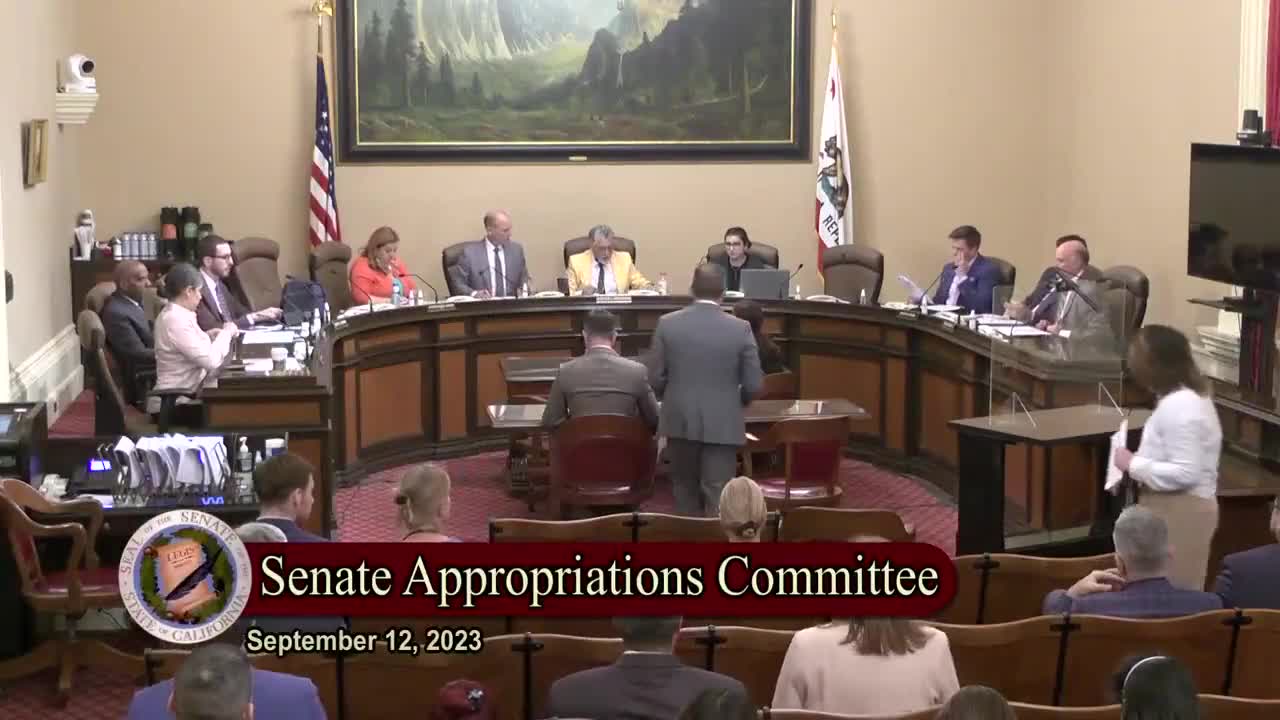





Bill Co-Author(s):