ACA 10: Local government financing: affordable housing and public infrastructure: voter approval.
- Session Year: 2023-2024
- House: Assembly
- Latest Version Date: 2024-06-27
Current Status:
Passed
(2024-06-27: Chaptered by Secretary of State - Res. Chapter 134, Statutes of 2024.)
Introduced
In Committee
First Chamber
In Committee
Second Chamber
Enacted
Assembly Constitutional Amendment No. 1 of the 202324 Regular Session (ACA 1) would, if adopted by the people, amend Section 4 of Article XIIIA, Section 2 of Article XIIIC, and Section 3 of Article XIIID of, and would add Section 2.5 of Article XIIIC to, the California Constitution, relative to local finance. Under these provisions, ACA 1 would condition the imposition, extension, or increase of a sales and use tax or transactions and use tax imposed in accordance with specified law or a parcel tax by a local government for the purposes of funding the construction, reconstruction, rehabilitation, or replacement of public infrastructure, affordable housing, including downpayment assistance, or permanent supportive housing, or the acquisition or lease of real property for those purposes, on the proposition proposing that tax being approved by a majority vote of the membership of the governing board of the local government and by 55% of its voters voting on the proposition and the proposition includes specified accountability requirements. ACA 1 would also make conforming changes.
This measure would remove the above-described provisions of ACA 1 relating to special taxes and make conforming changes in other provisions of ACA 1. The measure would direct the Secretary of State to make those amendments in ACA 1.
ACA 1 would create an additional exception to the 1% ad valorem property tax rate limit for an ad valorem tax or special assessment to pay the interest and redemption charges on bonded indebtedness incurred by a city, county, or special district, as defined, to fund the construction, reconstruction, rehabilitation, or replacement of public infrastructure, affordable housing, including downpayment assistance, or permanent supportive housing, or the acquisition or lease of real property for those purposes, if the proposition proposing that tax is approved by 55% of the voters of the city, county, city and county, or special district, as applicable, voting on the proposition on or after the effective date of ACA 1 and on the proposition including specified accountability requirements. ACA 1 would provide that this exception applies to an ad valorem tax for these purposes that is submitted at the same election as ACA 1.
This measure would specify that the proposition proposing bonded indebtedness for which an ad valorem tax may be imposed under ACA 1, and any measure imposing an ad valorem tax for these purposes, may be voted on at the same election as ACA 1 or at a later election held after the effective date of ACA 1. The measure would also modify the definition of affordable housing for these purposes to include housing developments, or portions of housing developments, that are affordable to individuals, families, seniors, people with disabilities, veterans, or first-time homebuyers, who are lower income households or middle-income households earning up to 150% of countywide median income, capitalized operating reserves, downpayment assistance programs, first-time homebuyer programs, permanent supportive housing, as defined, and associated facilities, if used to serve residents of affordable housing. The measure would also modify the definition of public infrastructure for these purposes to include, among other things, facilities or infrastructure for the delivery of public services, including education, police, fire protection, parks, recreation, open space, emergency medical, public health, libraries, flood protection, streets or highways, public transit, railroad, airports, and seaports. The measure would make conforming changes and direct the Secretary of State to make those amendments in ACA 1.
ACA 1 would authorize the Legislature, subject to a2/3 vote, to enact laws establishing additional accountability measures consistent with the purposes and intent of the bonded indebtedness provisions of ACA 1.
This measure would additionally authorize the Legislature, subject to a2/3 vote, to enact laws imposing additional conditions or restrictions on the acquisition or lease of real property for purposes described in the bonded indebtedness provisions of ACA 1. The measure would also require that any repeal of those conditions or restrictions be subject to a 2/3 vote.
ACA 1 would require the approval of 55% of the voters of the city, county, city and county, or special district, as applicable, to incur bonded indebtedness, exceeding in any year the income and revenue provided in that year, that is in the form of general obligation bonds issued to fund the construction, reconstruction, rehabilitation, or replacement of public infrastructure, affordable housing, or permanent supportive housing projects, if the proposition proposing that bond includes specified accountability requirements. ACA 1 would specify that this 55% threshold applies to any proposition for the incurrence of indebtedness by a city, county, city and county, or special district for these purposes that is submitted at the same election as ACA 1.
This measure would specify that this 55% threshold applies to any proposition for the incurrence of indebtedness by a city, county, city and county, or special district for these purposes that is submitted at the same election as ACA 1 or at a later election held after the effective date of ACA 1. The measure would direct the Secretary of State to make those amendments in ACA 1.
Assembly Constitutional Amendment No. 1 of the 202324 Regular Session (ACA 1) would, if adopted by the people, amend Section 4 of Article XIIIA, Section 2 of Article XIIIC, and Section 3 of Article XIIID of, and would add Section 2.5 of Article XIIIC to, the California Constitution, relative to local finance. Under these provisions, ACA 1 would condition the imposition, extension, or increase of a sales and use tax or transactions and use tax imposed in accordance with specified law or a parcel tax by a local government for the purposes of funding the construction, reconstruction, rehabilitation, or replacement of public infrastructure, affordable housing, including downpayment assistance, or permanent supportive housing, or the acquisition or lease of real property for those purposes, on the proposition proposing that tax being approved by a majority vote of the membership of the governing board of the local government and by 55% of its voters voting on the proposition and the proposition includes specified accountability requirements. ACA 1 would also make conforming changes.
This measure would remove the above-described provisions of ACA 1 relating to special taxes and make conforming changes in other provisions of ACA 1. The measure would direct the Secretary of State to make those amendments in ACA 1.
ACA 1 would create an additional exception to the 1% ad valorem property tax rate limit for an ad valorem tax or special assessment to pay the interest and redemption charges on bonded indebtedness incurred by a city, county, or special district, as defined, to fund the construction, reconstruction, rehabilitation, or replacement of public infrastructure, affordable housing, including downpayment assistance, or permanent supportive housing, or the acquisition or lease of real property for those purposes, if the proposition proposing that tax is approved by 55% of the voters of the city, county, city and county, or special district, as applicable, voting on the proposition on or after the effective date of ACA 1 and on the proposition including specified accountability requirements. ACA 1 would provide that this exception applies to an ad valorem tax for these purposes that is submitted at the same election as ACA 1.
This measure would specify that the proposition proposing bonded indebtedness for which an ad valorem tax may be imposed under ACA 1, and any measure imposing an ad valorem tax for these purposes, may be voted on at the same election as ACA 1 or at a later election held after the effective date of ACA 1. The measure would also modify the definition of affordable housing for these purposes to include housing developments, or portions of housing developments, that are affordable to individuals, families, seniors, people with disabilities, veterans, or first-time homebuyers, who are lower income households or middle-income households earning up to 150% of countywide median income, capitalized operating reserves, downpayment assistance programs, first-time homebuyer programs, permanent supportive housing, as defined, and associated facilities, if used to serve residents of affordable housing. The measure would also modify the definition of public infrastructure for these purposes to include, among other things, facilities or infrastructure for the delivery of public services, including education, police, fire protection, parks, recreation, open space, emergency medical, public health, libraries, flood protection, streets or highways, public transit, railroad, airports, and seaports. The measure would make conforming changes and direct the Secretary of State to make those amendments in ACA 1.
ACA 1 would authorize the Legislature, subject to a 2/32/3 vote, to enact laws establishing additional accountability measures consistent with the purposes and intent of the bonded indebtedness provisions of ACA 1.
This measure would additionally authorize the Legislature, subject to a 2/32/3 vote, to enact laws imposing additional conditions or restrictions on the acquisition or lease of real property for purposes described in the bonded indebtedness provisions of ACA 1. The measure would also require that any repeal of those conditions or restrictions be subject to a 2/3 vote.
ACA 1 would require the approval of 55% of the voters of the city, county, city and county, or special district, as applicable, to incur bonded indebtedness, exceeding in any year the income and revenue provided in that year, that is in the form of general obligation bonds issued to fund the construction, reconstruction, rehabilitation, or replacement of public infrastructure, affordable housing, or permanent supportive housing projects, if the proposition proposing that bond includes specified accountability requirements. ACA 1 would specify that this 55% threshold applies to any proposition for the incurrence of indebtedness by a city, county, city and county, or special district for these purposes that is submitted at the same election as ACA 1.
This measure would specify that this 55% threshold applies to any proposition for the incurrence of indebtedness by a city, county, city and county, or special district for these purposes that is submitted at the same election as ACA 1 or at a later election held after the effective date of ACA 1. The measure would direct the Secretary of State to make those amendments in ACA 1.
Assembly Constitutional Amendment No. 1 of the 202324 Regular Session (ACA 1) would, if adopted by the people, amend Section 4 of Article XIIIA, Section 2 of Article XIIIC, and Section 3 of Article XIIID of, and would add Section 2.5 of Article XIIIC to, the California Constitution, relative to local finance. Under these provisions, ACA 1 would condition the imposition, extension, or increase of a sales and use tax or transactions and use tax imposed in accordance with specified law or a parcel tax by a local government for the purposes of funding the construction, reconstruction, rehabilitation, or replacement of public infrastructure, affordable housing, including downpayment assistance, or permanent supportive housing, or the acquisition or lease of real property for those purposes, on the proposition proposing that tax being approved by a majority vote of the membership of the governing board of the local government and by 55% of its voters voting on the proposition and the proposition includes specified accountability requirements. ACA 1 would also make conforming changes.
This measure would remove the above-described provisions of ACA 1 relating to special taxes and make conforming changes in other provisions of ACA 1. The measure would direct the Secretary of State to make those amendments in ACA 1.
ACA 1 would create an additional exception to the 1% ad valorem property tax rate limit for an ad valorem tax or special assessment to pay the interest and redemption charges on bonded indebtedness incurred by a city, county, or special district, as defined, to fund the construction, reconstruction, rehabilitation, or replacement of public infrastructure, affordable housing, including downpayment assistance, or permanent supportive housing, or the acquisition or lease of real property for those purposes, if the proposition proposing that tax is approved by 55% of the voters of the city, county, city and county, or special district, as applicable, voting on the proposition on or after the effective date of ACA 1 and on the proposition including specified accountability requirements. ACA 1 would provide that this exception applies to an ad valorem tax for these purposes that is submitted at the same election as ACA 1.
This measure would specify that the proposition proposing bonded indebtedness for which an ad valorem tax may be imposed under ACA 1, and any measure imposing an ad valorem tax for these purposes, may be voted on at the same election as ACA 1 or at a later election held after the effective date of ACA 1. The measure would also modify the definition of affordable housing for these purposes to include housing developments, or portions of housing developments, that are affordable to individuals, families, seniors, people with disabilities, veterans, or first-time homebuyers, who are lower income households or middle-income households earning up to 150% of countywide median income, capitalized operating reserves, downpayment assistance programs, first-time homebuyer programs, permanent supportive housing, as defined, and associated facilities, if used to serve residents of affordable housing. The measure would also modify the definition of public infrastructure for these purposes to include, among other things, facilities or infrastructure for the delivery of public services, including education, police, fire protection, parks, recreation, open space, emergency medical, public health, libraries, flood protection, streets or highways, public transit, railroad, airports, and seaports. The measure would make conforming changes and direct the Secretary of State to make those amendments in ACA 1.
ACA 1 would authorize the Legislature, subject to a 2/3 vote, to enact laws establishing additional accountability measures consistent with the purposes and intent of the bonded indebtedness provisions of ACA 1.
This measure would additionally authorize the Legislature, subject to a 2/3 vote, to enact laws imposing additional conditions or restrictions on the acquisition or lease of real property for purposes described in the bonded indebtedness provisions of ACA 1.
ACA 1 would require the approval of 55% of the voters of the city, county, city and county, or special district, as applicable, to incur bonded indebtedness, exceeding in any year the income and revenue provided in that year, that is in the form of general obligation bonds issued to fund the construction, reconstruction, rehabilitation, or replacement of public infrastructure, affordable housing, or permanent supportive housing projects, if the proposition proposing that bond includes specified accountability requirements. ACA 1 would specify that this 55% threshold applies to any proposition for the incurrence of indebtedness by a city, county, city and county, or special district for these purposes that is submitted at the same election as ACA 1.
This measure would specify that this 55% threshold applies to any proposition for the incurrence of indebtedness by a city, county, city and county, or special district for these purposes that is submitted at the same election as ACA 1 or at a later election held after the effective date of ACA 1. The measure would direct the Secretary of State to make those amendments in ACA 1.
The California Constitution enumerates various personal rights, including the right to enjoy and defend life and liberty, acquiring, possessing, and protecting property, and pursuing and obtaining safety, happiness, and privacy.This measure would declare that the state recognizes the fundamental human right to adequate housing for everyone in California. The measure would make it the shared obligation of state and local jurisdictions to respect, protect, and fulfill this right, by all appropriate means, as specified.The California Constitution enumerates various personal rights, including the right to enjoy and defend life and liberty, acquiring, possessing, and protecting property, and pursuing and obtaining safety, happiness, and privacy.
This measure would declare that the state recognizes the fundamental human right to adequate housing for everyone in California. The measure would make it the shared obligation of state and local jurisdictions to respect, protect, and fulfill this right, by all appropriate means, as specified.
Resolved by the Assembly, the Senate concurring, That the Legislature of the State of California at its 202324 Regular Session commencing on the fifth day of December 2022, two-thirds of the membership of each house concurring, hereby directs the Secretary of State to make amendments in Assembly Constitutional Amendment No. 1 of the 202324 Regular Session (Resolution Chapter 173 of the Statutes of 2023) by removing Section 4 of Article XIIIA of, Section 2 of Article XIIIC of, and Section 3 of Article XIIID of, the Constitution, as proposed to be amended by that measure, and by removing Section 2.5 of Article XIIIC of the Constitution, as proposed to be added by that measure; and be it further
Resolved, That the Legislature hereby directs the Secretary of State to make amendments in Assembly Constitutional Amendment No. 1 of the 202324 Regular Session (Resolution Chapter 173 of the Statutes of 2023) by removing Section 1 of Article XIIIA, and Section 18 of Article XVI, of the Constitution, as proposed to be amended by that measure, and replacing those sections with the following Section 1 and Section 18, respectively:
(a)The maximum amount of any ad valorem tax on real property shall not exceed 1 percent of the full cash value of that property. The 1 percent tax shall be collected by the counties and apportioned according to law to the districts within the counties.
(b)The limitation provided for in subdivision (a) shall not apply to ad valorem taxes or special assessments to pay the interest and redemption charges on any of the following:
(1)Indebtedness approved by the voters before July 1, 1978.
(2)Bonded indebtedness to fund the acquisition or improvement of real property approved on or after July 1, 1978, by two-thirds of the votes cast by the voters voting on the proposition.
(3)Bonded indebtedness incurred by a school district, community college district, or county office of education for the construction, reconstruction, rehabilitation, or replacement of school facilities, including the furnishing and equipping of school facilities, or the acquisition or lease of real property for school facilities, approved by 55 percent of the voters of the district or county, as appropriate, voting on the proposition on or after November 8, 2000. This paragraph shall apply only if the proposition approved by the voters and resulting in the bonded indebtedness includes all of the following accountability requirements:
(A)A requirement that the proceeds from the sale of the bonds be used only for the purposes specified in this paragraph and not for any other purpose, including teacher and administrator salaries and other school operating expenses.
(B)A list of the specific school facilities projects to be funded and certification that the school district board, community college board, or county office of education has evaluated safety, class size reduction, and information technology needs in developing that list.
(C)A requirement that the school district board, community college board, or county office of education conduct an annual, independent performance audit to ensure that the funds have been expended only on the specific projects listed.
(D)A requirement that the school district board, community college board, or county office of education conduct an annual, independent financial audit of the proceeds from the sale of the bonds until all of those proceeds have been expended for the school facilities projects.
(4)(A)Bonded indebtedness incurred by a city, county, city and county, or special district for the construction, reconstruction, rehabilitation, or replacement of public infrastructure or affordable housing, or the acquisition or lease of real property for public infrastructure or affordable housing, approved by 55 percent of the voters of the city, county, city and county, or special district, as appropriate, voting on the proposition submitted at the same election as the measure adding this paragraph or at a later election held after the effective date of the measure adding this paragraph. This paragraph shall apply only if the proposition approved by the voters and resulting in the bonded indebtedness includes all of the following accountability requirements:
(i)A requirement that the proceeds from the sale of the bonds be used only for the purposes specified in this paragraph, and not for any other purpose, including city, county, city and county, or special district employee salaries and other operating expenses. The administrative cost of the city, county, city and county, or special district executing the projects and programs of the proposition shall not exceed 5 percent of the proceeds from the sale of the bonds.
(ii)A requirement that the proceeds from the sale of the bonds only be spent on projects and programs that serve the jurisdiction of the city, county, city and county, or special district.
(iii)The specific local program or ordinance through which projects will be funded and a certification that the city, county, city and county, or special district has evaluated alternative funding sources.
(iv)A requirement that the city, county, city and county, or special district conduct an annual, independent performance audit to ensure that the funds have been expended pursuant to the local program or ordinance specified in clause (iii).
(v)A requirement that the city, county, city and county, or special district conduct an annual, independent financial audit of the proceeds from the sale of the bonds until all of those proceeds have been expended for the public infrastructure or affordable housing projects, as applicable.
(vi)A requirement that the city, county, city and county, or special district post the audits required by clauses (iv) and (v) in a manner that is easily accessible to the public.
(vii)A requirement that the audits required by clauses (iv) and (v) will be submitted to the California State Auditor for review.
(viii)(I)A requirement that the city, county, city and county, or special district appoint a citizens oversight committee to ensure that bond proceeds are expended only for the purposes described in the measure approved by the voters.
(II)Members appointed to an oversight committee established pursuant to subclause (I) shall receive educational training about bonds and fiscal oversight.
(ix)A requirement that an entity owned or controlled by a local official that votes on whether to put a proposition on the ballot pursuant to this paragraph will be prohibited from bidding on any work funded by the proposition.
(B)Notwithstanding any other law, if the voters of the city, county, city and county, or special district have previously approved a proposition pursuant to this paragraph, the city, county, city and county, or special district shall not place a proposition on the ballot pursuant to this paragraph until all funds from the previous proposition are committed to programs and projects listed in the propositions specific local program or ordinance described in clause (iii) of subparagraph (A).
(C)(i)The Legislature may, by two-thirds vote, enact laws establishing accountability measures in addition to those listed in subparagraph (A), provided such laws are consistent with the purposes and intent of this paragraph.
(ii)The Legislature may, by two-thirds vote, enact laws imposing additional conditions or restrictions on the acquisition or lease of real property for the purposes described in this paragraph. Any repeal of conditions or restrictions on the acquisition or lease of real property for the purposes described in this paragraph shall require a two-thirds vote.
(D)The Legislature may, by majority vote, enact laws for the downpayment assistance programs established pursuant to this paragraph, provided that those laws further the purposes of this paragraph.
(E)For purposes of this paragraph:
(i)(I)Affordable housing shall include housing developments, or portions of housing developments, that are affordable to individuals, families, seniors, people with disabilities, veterans, or first-time homebuyers, who are lower income households or middle-income households earning up to 150 percent of countywide median income, as those terms are defined in state law. Affordable housing shall include capitalized operating reserves, as the term is defined in state law.
(II)Affordable housing shall also include any of the following:
(ia)Downpayment assistance programs.
(ib)First-time homebuyer programs.
(ic)Permanent supportive housing, including, but not limited to, housing for persons at risk of chronic homelessness, including, but not limited to, persons with mental illness.
(id)Associated facilities, if used to serve residents of affordable housing.
(ii)At risk of chronic homelessness includes, but is not limited to, persons who are at high risk of long-term or intermittent homelessness, including persons with mental illness exiting institutionalized settings, including, but not limited to, jail and mental health facilities, who were homeless prior to admission, transition age youth experiencing homelessness or with significant barriers to housing stability, and others, as defined in program guidelines.
(iii)Permanent supportive housing means housing with no limit on length of stay, that is occupied by the target population, and that is linked to onsite or offsite services that assist residents in retaining the housing, improving their health status, and maximizing their ability to live and, when possible, work in the community.
(iv)Public infrastructure shall include any of the following:
(I)Facilities or infrastructure for the delivery of public services, including education, police, fire protection, parks, recreation, open space, emergency medical, public health, libraries, flood protection, streets or highways, public transit, railroad, airports, and seaports.
(II)Utility, common carrier or other similar projects, including energy-related, communication-related, water-related, and wastewater-related facilities or infrastructure.
(III)Projects identified by the State or local government for recovery from natural disasters.
(IV)Equipment related to fire suppression, emergency response equipment, or interoperable communications equipment for direct and exclusive use by fire, emergency response, police, or sheriff personnel.
(V)Projects that provide protection of property from sea level rise.
(VI)Projects that provide public broadband internet access service expansion in underserved areas.
(VII)Private uses incidental to, or necessary for, the public infrastructure.
(VIII)Grants to homeowners for the purposes of structure hardening of homes and structures, as defined in state law.
(v)Special district has the same meaning as provided in subdivision (c) of Section 1 of Article XIIIC and specifically includes a transit district, a regional transportation commission, and an association of governments, except that special district does not include a school district, redevelopment agency, or successor agency to a dissolved redevelopment agency.
(F)This paragraph shall apply to any city, county, city and county, or special district measure imposing an ad valorem tax to pay the interest and redemption charges on bonded indebtedness for those purposes described in this paragraph that is submitted at the same election as the measure adding this paragraph or at a later election held after the effective date of the measure adding this paragraph.
(c)(1)Notwithstanding any other provisions of law or of this Constitution, a school district, community college district, or county office of education may levy a 55-percent vote ad valorem tax pursuant to paragraph (3) of subdivision (b).
(2)Notwithstanding any other provisions of law or this Constitution, a city, county, city and county, or special district may levy a 55-percent vote ad valorem tax pursuant to paragraph (4) of subdivision (b).
(a)A county, city, town, township, board of education, or school district, shall not incur any indebtedness or liability in any manner or for any purpose exceeding in any year the income and revenue provided for that year, without the assent of two-thirds of the voters of the public entity voting at an election to be held for that purpose, except that with respect to any such public entity that is authorized to incur indebtedness for public school purposes, any proposition for the incurrence of indebtedness in the form of general obligation bonds for the purpose of repairing, reconstructing, or replacing public school buildings determined, in the manner prescribed by law, to be structurally unsafe for school use, shall be adopted upon the approval of a majority of the voters of the public entity voting on the proposition at the election; nor unless before or at the time of incurring such indebtedness provision shall be made for the collection of an annual tax sufficient to pay the interest on such indebtedness as it falls due, and to provide for a sinking fund for the payment of the principal thereof, on or before maturity, which shall not exceed 40 years from the time of contracting the indebtedness. A special district, other than a board of education or school district, shall not incur any indebtedness or liability exceeding any applicable statutory limit, as prescribed by the statutes governing the special district as they currently read or may thereafter be amended by the Legislature.
(b)(1)Notwithstanding subdivision (a), any proposition for the incurrence of indebtedness in the form of general obligation bonds for the purposes described in paragraph (3) or (4) of subdivision (b) of Section 1 of Article XIIIA shall be adopted upon the approval of 55 percent of the voters of the school district, community college district, county office of education, city, county, city and county, or other special district, as appropriate, voting on the proposition at an election. This subdivision shall apply to a proposition for the incurrence of indebtedness in the form of general obligation bonds for the purposes specified in this subdivision only if the proposition meets all of the accountability requirements of paragraph (3) or (4) of subdivision (b), as appropriate, of Section 1 of Article XIIIA.
(2)The amendments made to this subdivision by the measure adding this paragraph shall apply to any proposition for the incurrence of indebtedness in the form of general obligation bonds pursuant to this subdivision for the purposes described in paragraph (4) of subdivision (b) of Section 1 of Article XIIIA that is submitted at the same election as the measure adding this paragraph or at a later election held after the effective date of the measure adding this paragraph.
(c)When two or more propositions for incurring any indebtedness or liability are submitted at the same election, the votes cast for and against each proposition shall be counted separately, and if two-thirds or a majority or 55 percent of the voters, as the case may be, voting on any one of those propositions, vote in favor thereof, the proposition shall be deemed adopted.
Resolved by the Assembly, the Senate concurring, That the Legislature of the State of California at its 202324 Regular Session commencing on the fifth day of December 2022, two-thirds of the membership of each house concurring, hereby directs the Secretary of State to make amendments in Assembly Constitutional Amendment No. 1 of the 202324 Regular Session (Resolution Chapter 173 of the Statutes of 2023) by removing Section 4 of Article XIIIA of, Section 2 of Article XIIIC of, and Section 3 of Article XIIID of, the Constitution, as proposed to be amended by that measure, and by removing Section 2.5 of Article XIIIC of the Constitution, as proposed to be added by that measure; and be it further
Resolved, That the Legislature hereby directs the Secretary of State to make amendments in Assembly Constitutional Amendment No. 1 of the 202324 Regular Session (Resolution Chapter 173 of the Statutes of 2023) by removing Section 1 of Article XIIIA, and Section 18 of Article XVI, of the Constitution, as proposed to be amended by that measure, and replacing those sections with the following Section 1 and Section 18, respectively:
(a)The maximum amount of any ad valorem tax on real property shall not exceed 1 percent of the full cash value of that property. The 1 percent tax shall be collected by the counties and apportioned according to law to the districts within the counties.
(b)The limitation provided for in subdivision (a) shall not apply to ad valorem taxes or special assessments to pay the interest and redemption charges on any of the following:
(1)Indebtedness approved by the voters before July 1, 1978.
(2)Bonded indebtedness to fund the acquisition or improvement of real property approved on or after July 1, 1978, by two-thirds of the votes cast by the voters voting on the proposition.
(3)Bonded indebtedness incurred by a school district, community college district, or county office of education for the construction, reconstruction, rehabilitation, or replacement of school facilities, including the furnishing and equipping of school facilities, or the acquisition or lease of real property for school facilities, approved by 55 percent of the voters of the district or county, as appropriate, voting on the proposition on or after November 8, 2000. This paragraph shall apply only if the proposition approved by the voters and resulting in the bonded indebtedness includes all of the following accountability requirements:
(A)A requirement that the proceeds from the sale of the bonds be used only for the purposes specified in this paragraph and not for any other purpose, including teacher and administrator salaries and other school operating expenses.
(B)A list of the specific school facilities projects to be funded and certification that the school district board, community college board, or county office of education has evaluated safety, class size reduction, and information technology needs in developing that list.
(C)A requirement that the school district board, community college board, or county office of education conduct an annual, independent performance audit to ensure that the funds have been expended only on the specific projects listed.
(D)A requirement that the school district board, community college board, or county office of education conduct an annual, independent financial audit of the proceeds from the sale of the bonds until all of those proceeds have been expended for the school facilities projects.
(4)(A)Bonded indebtedness incurred by a city, county, city and county, or special district for the construction, reconstruction, rehabilitation, or replacement of public infrastructure or affordable housing, or the acquisition or lease of real property for public infrastructure or affordable housing, approved by 55 percent of the voters of the city, county, city and county, or special district, as appropriate, voting on the proposition submitted at the same election as the measure adding this paragraph or at a later election held after the effective date of the measure adding this paragraph. This paragraph shall apply only if the proposition approved by the voters and resulting in the bonded indebtedness includes all of the following accountability requirements:
(i)A requirement that the proceeds from the sale of the bonds be used only for the purposes specified in this paragraph, and not for any other purpose, including city, county, city and county, or special district employee salaries and other operating expenses. The administrative cost of the city, county, city and county, or special district executing the projects and programs of the proposition shall not exceed 5 percent of the proceeds from the sale of the bonds.
(ii)A requirement that the proceeds from the sale of the bonds only be spent on projects and programs that serve the jurisdiction of the city, county, city and county, or special district.
(iii)The specific local program or ordinance through which projects will be funded and a certification that the city, county, city and county, or special district has evaluated alternative funding sources.
(iv)A requirement that the city, county, city and county, or special district conduct an annual, independent performance audit to ensure that the funds have been expended pursuant to the local program or ordinance specified in clause (iii).
(v)A requirement that the city, county, city and county, or special district conduct an annual, independent financial audit of the proceeds from the sale of the bonds until all of those proceeds have been expended for the public infrastructure or affordable housing projects, as applicable.
(vi)A requirement that the city, county, city and county, or special district post the audits required by clauses (iv) and (v) in a manner that is easily accessible to the public.
(vii)A requirement that the audits required by clauses (iv) and (v) will be submitted to the California State Auditor for review.
(viii)(I)A requirement that the city, county, city and county, or special district appoint a citizens oversight committee to ensure that bond proceeds are expended only for the purposes described in the measure approved by the voters.
(II)Members appointed to an oversight committee established pursuant to subclause (I) shall receive educational training about bonds and fiscal oversight.
(ix)A requirement that an entity owned or controlled by a local official that votes on whether to put a proposition on the ballot pursuant to this paragraph will be prohibited from bidding on any work funded by the proposition.
(B)Notwithstanding any other law, if the voters of the city, county, city and county, or special district have previously approved a proposition pursuant to this paragraph, the city, county, city and county, or special district shall not place a proposition on the ballot pursuant to this paragraph until all funds from the previous proposition are committed to programs and projects listed in the propositions specific local program or ordinance described in clause (iii) of subparagraph (A).
(C)(i)The Legislature may, by two-thirds vote, enact laws establishing accountability measures in addition to those listed in subparagraph (A), provided such laws are consistent with the purposes and intent of this paragraph.
(ii)The Legislature may, by two-thirds vote, enact laws imposing additional conditions or restrictions on the acquisition or lease of real property for the purposes described in this paragraph. Any repeal of conditions or restrictions on the acquisition or lease of real property for the purposes described in this paragraph shall require a two-thirds vote.
(D)The Legislature may, by majority vote, enact laws for the downpayment assistance programs established pursuant to this paragraph, provided that those laws further the purposes of this paragraph.
(E)For purposes of this paragraph:
(i)(I)Affordable housing shall include housing developments, or portions of housing developments, that are affordable to individuals, families, seniors, people with disabilities, veterans, or first-time homebuyers, who are lower income households or middle-income households earning up to 150 percent of countywide median income, as those terms are defined in state law. Affordable housing shall include capitalized operating reserves, as the term is defined in state law.
(II)Affordable housing shall also include any of the following:
(ia)Downpayment assistance programs.
(ib)First-time homebuyer programs.
(ic)Permanent supportive housing, including, but not limited to, housing for persons at risk of chronic homelessness, including, but not limited to, persons with mental illness.
(id)Associated facilities, if used to serve residents of affordable housing.
(ii)At risk of chronic homelessness includes, but is not limited to, persons who are at high risk of long-term or intermittent homelessness, including persons with mental illness exiting institutionalized settings, including, but not limited to, jail and mental health facilities, who were homeless prior to admission, transition age youth experiencing homelessness or with significant barriers to housing stability, and others, as defined in program guidelines.
(iii)Permanent supportive housing means housing with no limit on length of stay, that is occupied by the target population, and that is linked to onsite or offsite services that assist residents in retaining the housing, improving their health status, and maximizing their ability to live and, when possible, work in the community.
(iv)Public infrastructure shall include all any of the following:
(I)Facilities or infrastructure for the delivery of public services, including education, police, fire protection, parks, recreation, open space, emergency medical, public health, libraries, flood protection, streets or highways, public transit, railroad, airports, and seaports.
(II)Utility, common carrier or other similar projects, including energy-related, communication-related, water-related, and wastewater-related facilities or infrastructure.
(III)Projects identified by the State or local government for recovery from natural disasters.
(IV)Equipment related to fire suppression, emergency response equipment, or interoperable communications equipment for direct and exclusive use by fire, emergency response, police, or sheriff personnel.
(V)Projects that provide protection of property from sea level rise.
(VI)Projects that provide public broadband internet access service expansion in underserved areas.
(VII)Private uses incidental to, or necessary for, the public infrastructure.
(VIII)Grants to homeowners for the purposes of structure hardening of homes and structures, as defined in state law.
(v)Special district has the same meaning as provided in subdivision (c) of Section 1 of Article XIIIC and specifically includes a transit district, a regional transportation commission, and an association of governments, except that special district does not include a school district, redevelopment agency, or successor agency to a dissolved redevelopment agency.
(F)This paragraph shall apply to any city, county, city and county, or special district measure imposing an ad valorem tax to pay the interest and redemption charges on bonded indebtedness for those purposes described in this paragraph that is submitted at the same election as the measure adding this paragraph or at a later election held after the effective date of the measure adding this paragraph.
(c)(1)Notwithstanding any other provisions of law or of this Constitution, a school district, community college district, or county office of education may levy a 55-percent vote ad valorem tax pursuant to paragraph (3) of subdivision (b).
(2)Notwithstanding any other provisions of law or this Constitution, a city, county, city and county, or special district may levy a 55-percent vote ad valorem tax pursuant to paragraph (4) of subdivision (b).
(a)A county, city, town, township, board of education, or school district, shall not incur any indebtedness or liability in any manner or for any purpose exceeding in any year the income and revenue provided for that year, without the assent of two-thirds of the voters of the public entity voting at an election to be held for that purpose, except that with respect to any such public entity that is authorized to incur indebtedness for public school purposes, any proposition for the incurrence of indebtedness in the form of general obligation bonds for the purpose of repairing, reconstructing, or replacing public school buildings determined, in the manner prescribed by law, to be structurally unsafe for school use, shall be adopted upon the approval of a majority of the voters of the public entity voting on the proposition at the election; nor unless before or at the time of incurring such indebtedness provision shall be made for the collection of an annual tax sufficient to pay the interest on such indebtedness as it falls due, and to provide for a sinking fund for the payment of the principal thereof, on or before maturity, which shall not exceed 40 years from the time of contracting the indebtedness. A special district, other than a board of education or school district, shall not incur any indebtedness or liability exceeding any applicable statutory limit, as prescribed by the statutes governing the special district as they currently read or may thereafter be amended by the Legislature.
(b)(1)Notwithstanding subdivision (a), any proposition for the incurrence of indebtedness in the form of general obligation bonds for the purposes described in paragraph (3) or (4) of subdivision (b) of Section 1 of Article XIIIA shall be adopted upon the approval of 55 percent of the voters of the school district, community college district, county office of education, city, county, city and county, or other special district, as appropriate, voting on the proposition at an election. This subdivision shall apply to a proposition for the incurrence of indebtedness in the form of general obligation bonds for the purposes specified in this subdivision only if the proposition meets all of the accountability requirements of paragraph (3) or (4) of subdivision (b), as appropriate, of Section 1 of Article XIIIA.
(2)The amendments made to this subdivision by the measure adding this paragraph shall apply to any proposition for the incurrence of indebtedness in the form of general obligation bonds pursuant to this subdivision for the purposes described in paragraph (4) of subdivision (b) of Section 1 of Article XIIIA that is submitted at the same election as the measure adding this paragraph or at a later election held after the effective date of the measure adding this paragraph.
(c)When two or more propositions for incurring any indebtedness or liability are submitted at the same election, the votes cast for and against each proposition shall be counted separately, and if two-thirds or a majority or 55 percent of the voters, as the case may be, voting on any one of those propositions, vote in favor thereof, the proposition shall be deemed adopted.
Resolved by the Assembly, the Senate concurring, That the Legislature of the State of California at its 202324 Regular Session commencing on the fifth day of December 2022, two-thirds of the membership of each house concurring, hereby directs the Secretary of State to make amendments in Assembly Constitutional Amendment No. 1 of the 202324 Regular Session (Resolution Chapter 173 of the Statutes of 2023) by removing Section 4 of Article XIIIA of, Section 2 of Article XIIIC of, and Section 3 of Article XIIID of, the Constitution, as proposed to be amended by that measure, and by removing Section 2.5 of Article XIIIC of the Constitution, as proposed to be added by that measure; and be it further
Resolved, That the Legislature hereby directs the Secretary of State to make amendments in Assembly Constitutional Amendment No. 1 of the 202324 Regular Session (Resolution Chapter 173 of the Statutes of 2023) by removing Section 1 of Article XIIIA, and Section 18 of Article XVI, of the Constitution, as proposed to be amended by that measure, and replacing those sections with the following Section 1 and Section 18, respectively:
(a)The maximum amount of any ad valorem tax on real property shall not exceed One 1 percent (1%) of the full cash value of such that property. The one 1 percent (1%) tax to shall be collected by the counties and apportioned according to law to the districts within the counties.
(b)The limitation provided for in subdivision (a) shall not apply to ad valorem taxes or special assessments to pay the interest and redemption charges on any of the following:
(1)Indebtedness approved by the voters prior to before July 1, 1978.
(2)Bonded indebtedness for to fund the acquisition or improvement of real property approved on or after July 1, 1978, by two-thirds of the votes cast by the voters voting on the proposition.
(3)Bonded indebtedness incurred by a school district, community college district, or county office of education for the construction, reconstruction, rehabilitation, or replacement of school facilities, including the furnishing and equipping of school facilities, or the acquisition or lease of real property for school facilities, approved by 55 percent of the voters of the district or county, as appropriate, voting on the proposition on or after the effective date of the measure adding this paragraph. November 8, 2000. This paragraph shall apply only if the proposition approved by the voters and resulting in the bonded indebtedness includes all of the following accountability requirements:
(A)A requirement that the proceeds from the sale of the bonds be used only for the purposes specified in Article XIIIA, Section 1(b)(3), this paragraph and not for any other purpose, including teacher and administrator salaries and other school operating expenses.
(B)A list of the specific school facilities projects to be funded and certification that the school district board, community college board, or county office of education has evaluated safety, class size reduction, and information technology needs in developing that list.
(C)A requirement that the school district board, community college board, or county office of education conduct an annual, independent performance audit to ensure that the funds have been expended only on the specific projects listed.
(D)A requirement that the school district board, community college board, or county office of education conduct an annual, independent financial audit of the proceeds from the sale of the bonds until all of those proceeds have been expended for the school facilities projects.
(4)(A)Bonded indebtedness incurred by a city, county, city and county, or special district for the construction, reconstruction, rehabilitation, or replacement of public infrastructure or affordable housing, or the acquisition or lease of real property for public infrastructure or affordable housing, approved by 55 percent of the voters of the city, county, city and county, or special district, as appropriate, voting on the proposition submitted at the same election as the measure adding this paragraph or at a later election held after the effective date of the measure adding this paragraph. This paragraph shall apply only if the proposition approved by the voters and resulting in the bonded indebtedness includes all of the following accountability requirements:
(i)A requirement that the proceeds from the sale of the bonds be used only for the purposes specified in this paragraph, and not for any other purpose, including city, county, city and county, or special district employee salaries and other operating expenses. The administrative cost of the city, county, city and county, or special district executing the projects and programs of the proposition shall not exceed 5 percent of the proceeds from the sale of the bonds.
(ii)A requirement that the proceeds from the sale of the bonds only be spent on projects and programs that serve the jurisdiction of the city, county, city and county, or special district.
(iii)The specific local program or ordinance through which projects will be funded and a certification that the city, county, city and county, or special district has evaluated alternative funding sources.
(iv)A requirement that the city, county, city and county, or special district conduct an annual, independent performance audit to ensure that the funds have been expended pursuant to the local program or ordinance specified in clause (iii).
(v)A requirement that the city, county, city and county, or special district conduct an annual, independent financial audit of the proceeds from the sale of the bonds until all of those proceeds have been expended for the public infrastructure or affordable housing projects, as applicable.
(vi)A requirement that the city, county, city and county, or special district post the audits required by clauses (iv) and (v) in a manner that is easily accessible to the public.
(vii)A requirement that the audits required by clauses (iv) and (v) will be submitted to the California State Auditor for review.
(viii)(I)A requirement that the city, county, city and county, or special district appoint a citizens oversight committee to ensure that bond proceeds are expended only for the purposes described in the measure approved by the voters.
(II)Members appointed to an oversight committee established pursuant to subclause (I) shall receive educational training about bonds and fiscal oversight.
(ix)A requirement that an entity owned or controlled by a local official that votes on whether to put a proposition on the ballot pursuant to this paragraph will be prohibited from bidding on any work funded by the proposition.
(B)Notwithstanding any other law, if the voters of the city, county, city and county, or special district have previously approved a proposition pursuant to this paragraph, the city, county, city and county, or special district shall not place a proposition on the ballot pursuant to this paragraph until all funds from the previous proposition are committed to programs and projects listed in the propositions specific local program or ordinance described in clause (iii) of subparagraph (A).
(C)(i)The Legislature may, by two-thirds vote, enact laws establishing accountability measures in addition to those listed in subparagraph (A), provided such laws are consistent with the purposes and intent of this paragraph.
(ii)The Legislature may, by two-thirds vote, enact laws imposing additional conditions or restrictions on the acquisition or lease of real property for the purposes described in this paragraph.
(D)The Legislature may, by majority vote, enact laws for the downpayment assistance programs established pursuant to this paragraph, provided that those laws further the purposes of this paragraph.
(E)For purposes of this paragraph:
(i)(I)Affordable housing shall include housing developments, or portions of housing developments, that are affordable to individuals, families, seniors, people with disabilities, veterans, or first-time homebuyers, who are lower income households or middle-income households earning up to 150 percent of countywide median income, as those terms are defined in state law. Affordable housing shall include capitalized operating reserves, as the term is defined in state law.
(II)Affordable housing shall also include any of the following:
(ia)Downpayment assistance programs.
(ib)First-time homebuyer programs.
(ic)Permanent supportive housing, including, but not limited to, housing for persons at risk of chronic homelessness, including, but not limited to, persons with mental illness.
(id)Associated facilities, if used to serve residents of affordable housing.
(ii)At risk of chronic homelessness includes, but is not limited to, persons who are at high risk of long-term or intermittent homelessness, including persons with mental illness exiting institutionalized settings, including, but not limited to, jail and mental health facilities, who were homeless prior to admission, transition age youth experiencing homelessness or with significant barriers to housing stability, and others, as defined in program guidelines.
(iii)Permanent supportive housing means housing with no limit on length of stay, that is occupied by the target population, and that is linked to onsite or offsite services that assist residents in retaining the housing, improving their health status, and maximizing their ability to live and, when possible, work in the community.
(iv)Public infrastructure shall include all of the following:
(I)Facilities or infrastructure for the delivery of public services, including education, police, fire protection, parks, recreation, open space, emergency medical, public health, libraries, flood protection, streets or highways, public transit, railroad, airports, and seaports.
(II)Utility, common carrier or other similar projects, including energy-related, communication-related, water-related, and wastewater-related facilities or infrastructure.
(III)Projects identified by the State or local government for recovery from natural disasters.
(IV)Equipment related to fire suppression, emergency response equipment, or interoperable communications equipment for direct and exclusive use by fire, emergency response, police, or sheriff personnel.
(V)Projects that provide protection of property from sea level rise.
(VI)Projects that provide public broadband internet access service expansion in underserved areas.
(VII)Private uses incidental to, or necessary for, the public infrastructure.
(v)Special district has the same meaning as provided in subdivision (c) of Section 1 of Article XIIIC and specifically includes a transit district, a regional transportation commission, and an association of governments, except that special district does not include a school district, redevelopment agency, or successor agency to a dissolved redevelopment agency.
(F)This paragraph shall apply to any city, county, city and county, or special district measure imposing an ad valorem tax to pay the interest and redemption charges on bonded indebtedness for those purposes described in this paragraph that is submitted at the same election as the measure adding this paragraph or at a later election held after the effective date of the measure adding this paragraph.
(c)(1)Notwithstanding any other provisions of law or of this Constitution, a school districts, district, community college districts, and district, or county offices office of education may levy a 55 percent 55-percent vote ad valorem tax pursuant to paragraph (3) of subdivision (b).
(2)Notwithstanding any other provisions of law or this Constitution, a city, county, city and county, or special district may levy a 55-percent vote ad valorem tax pursuant to paragraph (4) of subdivision (b).
(a)No A county, city, town, township, board of education, or school district, shall not incur any indebtedness or liability in any manner or for any purpose exceeding in any year the income and revenue provided for such that year, without the assent of two-thirds of the voters of the public entity voting at an election to be held for that purpose, except that with respect to any such public entity which that is authorized to incur indebtedness for public school purposes, any proposition for the incurrence of indebtedness in the form of general obligation bonds for the purpose of repairing, reconstructing reconstructing, or replacing public school buildings determined, in the manner prescribed by law, to be structurally unsafe for school use, shall be adopted upon the approval of a majority of the voters of the public entity voting on the proposition at such the election; nor unless before or at the time of incurring such indebtedness provision shall be made for the collection of an annual tax sufficient to pay the interest on such indebtedness as it falls due, and to provide for a sinking fund for the payment of the principal thereof, on or before maturity, which shall not exceed forty 40 years from the time of contracting the indebtedness. A special district, other than a board of education or school district, shall not incur any indebtedness or liability exceeding any applicable statutory limit, as prescribed by the statutes governing the special district as they currently read or may thereafter be amended by the Legislature.
(b)(1)Notwithstanding subdivision (a), on or after the effective date of the measure adding this subdivision, in the case of any school district, community college district, or county office of education, any proposition for the incurrence of indebtedness in the form of general obligation bonds for the construction, reconstruction, rehabilitation, or replacement of school facilities, including the furnishing and equipping of school facilities, or the acquisition or lease of real property for school facilities, purposes described in paragraph (3) or (4) of subdivision (b) of Section 1 of Article XIIIA shall be adopted upon the approval of 55 percent of the voters of the district or county, school district, community college district, county office of education, city, county, city and county, or other special district, as appropriate, voting on the proposition at an election. This subdivision shall apply only to a proposition for the incurrence of indebtedness in the form of general obligation bonds for the purposes specified in this subdivision only if the proposition meets all of the accountability requirements of paragraph (3) or (4) of subdivision (b) (b), as appropriate, of Section 1 of Article XIIIA.
(2)The amendments made to this subdivision by the measure adding this paragraph shall apply to any proposition for the incurrence of indebtedness in the form of general obligation bonds pursuant to this subdivision for the purposes described in paragraph (4) of subdivision (b) of Section 1 of Article XIIIA that is submitted at the same election as the measure adding this paragraph or at a later election held after the effective date of the measure adding this paragraph.
(c)When two or more propositions for incurring any indebtedness or liability are submitted at the same election, the votes cast for and against each proposition shall be counted separately, and when if two-thirds or a majority or 55 percent of the voters, as the case may be, voting on any one of those propositions, vote in favor thereof, the proposition shall be deemed adopted.
Resolved by the Assembly, the Senate concurring, That the Legislature of the State of California at its 202324 Regular Session commencing on the fifth day of December 2022, two-thirds of the membership of each house concurring, hereby proposes to the people of the State of California, that the Constitution of the State be amended as follows:The state hereby recognizes the fundamental human right to adequate housing for everyone in California. It is the shared obligation of state and local jurisdictions to respect, protect, and fulfill this right, on a non-discriminatory and equitable basis, with a view to progressively achieve the full realization of the right, by all appropriate means, including the adoption and amendment of legislative measures, to the maximum of available resources.Resolved by the Assembly, the Senate concurring, That the Legislature of the State of California at its 202324 Regular Session commencing on the fifth day of December 2022, two-thirds of the membership of each house concurring, hereby proposes to the people of the State of California, that the Constitution of the State be amended as follows:
The state hereby recognizes the fundamental human right to adequate housing for everyone in California. It is the shared obligation of state and local jurisdictions to respect, protect, and fulfill this right, on a non-discriminatory and equitable basis, with a view to progressively achieve the full realization of the right, by all appropriate means, including the adoption and amendment of legislative measures, to the maximum of available resources.
|
Date
|
Status
|
|---|---|
| Jun 27, 2024 | Chaptered by Secretary of State - Res. Chapter 134, Statutes of 2024. |
| Jun 27, 2024 | Enrolled and filed with the Secretary of State at 1 p.m. |
| Jun 27, 2024 | In Assembly. Ordered to Engrossing and Enrolling. |
| Jun 27, 2024 | Ordered to the Assembly. |
| Jun 27, 2024 | Read third time. Adopted. (Ayes 31. Noes 8.) |
| Jun 26, 2024 | Read second time. Ordered to third reading. |
| Jun 26, 2024 | From committee: Be adopted. (Ayes 5. Noes 2.) (June 26). |
| Jun 26, 2024 | From committee: Be adopted, and re-refer to Com. on APPR. Re-referred. (Ayes 5. Noes 2.) (June 26). Re-referred to Com. on APPR. |
| Jun 24, 2024 | Referred to Com. on L. GOV. |
| Jun 24, 2024 | Joint Rule 62(a) suspended. (Ayes 30. Noes 6. Page 4666.) |
| Jun 24, 2024 | In Senate. Read first time. To Com. on RLS. for assignment. |
| Jun 24, 2024 | Ordered to the Senate. |
| Jun 24, 2024 | Read third time. Adopted. (Ayes 54. Noes 8. Page 5982.) |
| Jun 20, 2024 | Read third time and amended. Ordered to third reading. (Page 5947.) |
| Jun 20, 2024 | Assembly Rule 69 suspended. (Ayes 45. Noes 15. Page 5941.) |
| Jun 13, 2024 | Ordered to third reading. |
| Jun 13, 2024 | Withdrawn from committee. |
| Jun 13, 2024 | Assembly Rule 96 suspended. (Ayes 59. Noes 15. Page 5857.) |
| Jun 13, 2024 | From committee chair, with author's amendments: Amend, and re-refer to Com. on RLS. Read second time and amended. |
| Jun 6, 2024 | Re-referred to Com. on RLS. pursuant to Assembly Rule 97. |
| May 20, 2024 | Read second time. Ordered to third reading. |
| May 16, 2024 | From committee: Be adopted. (Ayes 11. Noes 4.) (May 16). |
| May 16, 2024 | Joint Rule 62(a), file notice suspended. (Page 5215.) |
| May 15, 2024 | In committee: Set, first hearing. Referred to APPR. suspense file. |
| Jun 7, 2023 | From committee: Be adopted, and re-refer to Com. on APPR. Re-referred. (Ayes 6. Noes 2.) (June 7). Re-referred to Com. on APPR. |
| Jun 7, 2023 | Coauthors revised. |
| Apr 20, 2023 | Referred to Com. on H. & C.D. |
| Mar 7, 2023 | From printer. May be heard in committee April 6. |
| Mar 6, 2023 | Read first time. To print. |
|
Date
|
Description
|
Location
|
Votes
|
|
|---|---|---|---|---|
| Jun 27, 2024 | Assembly 3rd Reading ACA10 Aguiar-Curry et al. By Glazer | Senate Floor |
Passed |
|
| Jun 26, 2024 | Be adopted | Senate Standing Committee on Appropriations |
Passed |
|
| Jun 26, 2024 | Be adopted, but first be re-referred to the Committee on [Appropriations] | Senate Standing Committee on Local Government |
Passed |
|
| Jun 24, 2024 | ACA 10 Aguiar-Curry Assembly Third Reading | Assembly Floor |
Passed |
|
| May 16, 2024 | Be adopted. | Assembly Standing Committee on Appropriations |
Passed |
|
| Jun 7, 2023 | Be adopted and re-referred to the Committee on [Appropriations] | Assembly Standing Committee on Housing and Community Development |
Passed |
This list shows positions taken on this bill by organizations on the date displayed, which is linked to the original source.
Positions by individuals are not included.
|
Organization
|
Position
|
Date
|
|---|---|---|
| Abundant Housing LA | ** Support | |
| ACCE Action | ** Support | |
| Aclu California Action | ** Support | |
| Acton & Agua Dulce Democratic Club | ** Support | |
| Affordable Housing Management Association-Pacific Southwest | ** Against | |
| Affordable Housing Network of Santa Clara County | ** Support | |
| Aids Healthcare Foundation | ** Support | |
| Alameda County Democratic Party | ** Support | |
| Alameda County Taxpayers' Association | ** Against | |
| Apartment Association of Greater Los Angeles | ** Against | |
| Apartment Association Of Orange County | ** Against | |
| Apartment Owners Association of California | ** Against | |
| BASTA | ** Support | |
| Beach Cities Health District | ** Support | |
| Bend the Arc: Jewish Action, Southern California | ** Support | |
| Berkeley Fellowship of Unitarian Universalists, Social Justice Committee | ** Support | |
| Berkeley Tenants Union | ** Support | |
| Bet Tzedek | ** Support | |
| Building Owners and Managers Association | ** Against | |
| California Attractions And Parks Association | ** Against | |
| California Business Properties Association | ** Against | |
| California Business Roundtable | ** Against | |
| California Calls | ** Support | |
| California Cattlemen'S Association | ** Against | |
| California Chamber Of Commerce | ** Against | |
| California Democratic Party Renters Council | ** Support | |
| California Housing Partnership Corporation | ** Support | |
| California Independent Petroleum Association | ** Against | |
| California Latinas for Reproductive Justice | ** Support | |
| California Manufacturers & Technology Association | ** Against | |
| California Pan - Ethnic Health Network | ** Support | |
| California Professional Firefighters | ** Support | |
| California Railroads | ** Against | |
| California Reinvestment Coalition | ** Support | |
| California Rental Housing Association | ** Against | |
| California Retailers Association | ** Against | |
| California School Employees Association | ** Support | |
| California Self Storage Association | ** Against | |
| California Stormwater Quality Association | ** Against | |
| California Taxpayer Protection Committee | ** Against | |
| California Taxpayers Association | ** Against | |
| Care - CLT | ** Support | |
| Catalyst For Local Control | ** Against | |
| Center for Community Action & Environmental Justice | ** Support | |
| Central Coast Alliance United for a Sustainable Economy | ** Support | |
| Central Coast Taxpayers Association | ** Against | |
| Central Valley Taxpayers Association | ** Against | |
| Centro Legal de la Raza | ** Support | |
| ChangeLab Solutions | ** Support | |
| City Of Salinas | ** Against | |
| Climate Resolve | ** Support | |
| Coalition of Sensible Taxpayers | ** Against | |
| Coalition on Homelessness | ** Support | |
| Community Health Councils | ** Support | |
| Community Lead Advocacy Program Clap | ** Support | |
| Congregations Organized for Prophetic Engagement | ** Support | |
| Contra Costa County Flood Control and Water Conservation District | ** Against | |
| Contra Costa Taxpayers Association | ** Against | |
| Council of Community Housing Organizations | ** Support | |
| Courage California | ** Support | |
| Disability Rights California | ** Support | |
| Dreher Law Firm | ** Support | |
| East Bay Alliance for a Sustainable Economy | ** Support | |
| East Bay Community Law Center | ** Support | |
| East Bay Permanent Real Estate Cooperative | ** Support | |
| East Bay Rental Housing Association | ** Against | |
| Eden Housing | ** Support | |
| End Poverty in California | ** Support | |
| Escrow Institute Of California | ** Against | |
| Esperanza Community Housing Corporation | ** Support | |
| evolve california | ** Support | |
| Faith in the Valley | ** Support | |
| Family Assistance Program | ** Support | |
| Family Business Association of California | ** Against | |
| First Wednesdays San Leandro | ** Support | |
| Friends Committee On Legislation Of California | ** Support | |
| Glendora Chamber of Commerce | ** Against | |
| Glide | ** Support | |
| Golden State Opportunity | ** Support | |
| Greater San Fernando Valley Chamber of Commerce | ** Against | |
| Ground Game LA | ** Support | |
| Healing and Justice Center | ** Support | |
| Housing Is a Human Right - Orange County | ** Support | |
| Housing Now! | ** Support | |
| Housing Rights Initiative | ** Support | |
| Howard Jarvis Taxpayers Association | ** Against | |
| Human Rights Watch | ** Support | |
| Inland Equity Community Land Trust | ** Support | |
| Inner City Law Center | ** Support | |
| John and Marilyn Wells Family Foundation, Stories From the Frontline | ** Support | |
| Kern County Taxpayers Association | ** Against | |
| Koreatown Immigrant Workers | ** Support | |
| Laguna Nigel Chamber of Commerce | ** Against | |
| Latino Health Access | ** Support | |
| LA Voice | ** Support | |
| Leadership Council for Justice and Accountability | ** Support | |
| Legal Aid of Sonoma County | ** Support | |
| Long Beach Residents Empowered | ** Support | |
| Making Housing and Community Happen | ** Support | |
| Mi Familia Vota | ** Support | |
| NAIOP, the Commercial Real Estate Development Association | ** Against | |
| National Association Of Social Workers, California Chapter | ** Support | |
| National Federation Of Independent Business | ** Against | |
| National Homelessness Law Center | ** Support | |
| National Housing Law Project | ** Support | |
| Oakland Tenants Union | ** Support | |
| Orange County Business Council | ** Against | |
| Orange County Equality Coalition | ** Support | |
| Orange County Mobile Home Residents Coalition | ** Support | |
| Orange County Taxpayers Association | ** Against | |
| Parable of Sower Intentional Community Cooperative | ** Support | |
| Peace Builders of Orange County | ** Support | |
| People Organized for Westside Renewal | ** Support | |
| Physicians for Social Responsibility - Los Angeles | ** Support | |
| Placer County Taxpayers Association | ** Against | |
| Planting Justice | ** Support | |
| Pomona United for Stable Housing | ** Support | |
| Powerca Action | ** Support | |
| Power California | ** Support | |
| Prevention Institute | ** Support | |
| Public Advocates | ** Support | |
| Public Counsel | ** Support | |
| Public Health Advocates | ** Support | |
| Public Health Justice Collective | ** Support | |
| Public Interest Law Project | ** Support | |
| Regional Asthma Management & Prevention | ** Support | |
| Resilience OC | ** Support | |
| Riverside All of Us or None | ** Support | |
| Russian River Watershed Association | ** Against | |
| San Diego Tax Fighters | ** Against | |
| San Gabriel Valley Economic Partnership | ** Against | |
| Silicon Valley Taxpayers Association | ** Against | |
| Solano County Taxpayers Association | ** Against | |
| Sonoma Valley Housing Group | ** Support | |
| Starting Over | ** Support | |
| Strategic Actions for a Just Economy | ** Support | |
| Stronger Women United | ** Support | |
| Sutter County Taxpayers Association | ** Against | |
| TechEquity Collaborative | ** Support | |
| Thai Community Development Center | ** Support | |
| The Children's Partnership | ** Support | |
| The Coalition of Labor, Agriculture & Business - Santa Barbara | ** Against | |
| The Los Angeles Metropolitan Churches | ** Support | |
| The People's Resource Center | ** Support | |
| The Santa Monica Democratic Club | ** Support | |
| T.R.U.S.T. South LA | ** Support | |
| Union Station Homeless Services | ** Support | |
| U.s Vets Homeless Feeding N Housing Services | ** Support | |
| Venice Justice Committee | ** Support | |
| Ventura County Taxpayers Association | ** Against | |
| western center on law and poverty | ** Support | |
| Western Manufactured Housing Communities Association | ** Against | |
| Western Regional Advocacy Project | ** Support | |
| Young Invincibles | ** Support |
SENATE COMMITTEE ON APPROPRIATIONS
Senator Anna Caballero, Chair
2023 - 2024 Regular Session
ACA 10 (Aguiar-Curry) - Local government financing: affordable housing and public infrastructure: voter approval
Version: June 20, 2024 | Policy Vote: |
Urgency: | Mandate: No |
Hearing Date: June 26, 2024 | Consultant: Mark McKenzie |
Bill Summary:
ACA 10 would direct the Secretary of State (SOS) to make specified changes to ACA 1 (Aguiar-Curry), Resolution Chap. 173/2023, which is scheduled to appear on the ballot at the November 5, 2024 statewide general election, and proposes to lower the vote threshold for cities, counties, and special districts to incur bonded indebtedness or impose specified special taxes to fund certain public infrastructure, affordable housing, and permanent supportive housing projects from two-thirds to 55 percent.
Fiscal Impact:
- Costs for the SOS to make specified amendments to a measure that will be presented to the voters in the November 5, 2024 statewide general election would likely be absorbable. Staff notes that this Committee’s analysis of ACA 1 estimated that the SOS would incur one-time General Fund costs in the range of $738,000 to $984,000 for printing and mailing costs to place the measure on the ballot in a statewide election. Actual costs may be higher or lower, depending on the length of required elements and the overall size of the ballot. The changes proposed by ACA 10 would not impose additional printing and mailing costs on the SOS, and may result in slightly lower costs to the extent that the removal of provisions related to special taxes reduces the overall number of pages in the Voter Information Guide.
Background:
Under the California Constitution, a two-thirds vote is required at the local level for both general obligation (GO) bonds and special taxes, regardless of how the city, county, or special district proposes to use the funds. In contrast, local school districts must only achieve 55 percent voter approval for school bonds to fund the construction, reconstruction, rehabilitation or lease of real property.
Last year, the Legislature approved ACA 1 (Aguiar-Curry), Resolution Chap. 173/2023, for placement on the ballot at the November 5, 2024 statewide general election. ACA 1, if approved by the voters, would lower the vote threshold for cities, counties, and certain special districts to incur general obligation bonded indebtedness and to impose special taxes to fund the construction, rehabilitation, replacement, or acquisition of public infrastructure and affordable housing from two-thirds to 55 percent.
The measure defines public infrastructure to include projects that provide the following:
- Water or protection of water quality.
- Sanitary sewer.
- Treatment of wastewater or reduction of pollution from stormwater runoff.
- Protection of property from impacts of sea level rise.
- Parks and recreation facilities.
- Open space.
- Improvements to transit and streets and highways.
- Flood control.
- Broadband internet access service expansion in underserved areas.
- Local hospital construction.
- Public safety buildings or facilities, equipment related to fire suppression, emergency response equipment, or interoperable communications equipment for direct and exclusive use by fire, emergency response, police, or sheriff personnel.
- Public library facilities.
The measure defines affordable housing to include:
- Housing developments, or portions of housing developments, that provide housing affordable to households earning up to 150 percent of countywide median income, including capitalized operating reserves.
- Downpayment assistance programs.
To benefit from the lower vote threshold, bonds and special taxes must meet additional requirements, including that the local agency:
- Cannot use bond or tax proceeds for specified public infrastructure and affordable housing purposes, including local agency salaries and other operating expenses. Administrative costs cannot exceed 5 percent of bond or tax proceeds.
- Can only use bond or tax proceeds on projects and programs that serve the jurisdiction that approved the bond issuance.
- Must identify the specific local program or ordinance that will fund projects and programs, and certify the local agency has evaluated alternative funding sources.
- Must conduct annual, independent financial and performance audits of bond or tax proceeds and their use. The local agency must post these audits in a publicly accessible manner, and submit them to the State Auditor for review.
- Must appoint a citizens’ oversight committee to ensure the local agency only spends bond or tax proceeds as described in the measure voters approved. Appointed members must receive educational training about bonds or taxes, and fiscal oversight.
- Must prohibit entities owned or controlled by a local official that votes on whether to put a measure on the ballot from bidding on any work the proposition funds.
- Cannot, if voters have already approved an ACA 1 tax or bond measure, place a proposition on the ballot for additional bonds until all funds from the previous measure are committed to programs and projects.
ACA 1 allows the Legislature to enact laws establishing additional accountability measures with a 2/3 vote. It also allows the Legislature to enact laws for downpayment assistance programs by majority vote.
Proposed Law:
ACA 10 would direct the SOS to make the following amendments to ACA 1 of the 2023-24 Regular Session (Resolution Chap. 173/2023):
- Remove proposed constitutional changes that would have authorized local agencies to pass special taxes for public infrastructure and affordable housing with a 55 percent vote of the public.
- Authorize the Legislature to enact laws imposing additional conditions or restrictions on the acquisition or lease of real property with a two-thirds vote.
- Require a two-thirds vote for any repeal of conditions or restrictions on the acquisition or lease of real property.
- Expand the definition of affordable housing to also include first-time homebuyer programs and associated facilities used to serve residents of affordable housing.
- Revise and replace the definition of public infrastructure to mean:
- Facilities or infrastructure for the delivery of public services, including education, police, fire protection, parks, recreation, open space, emergency medical, public health, libraries, flood protection, streets or highways, public transit, railroad, airports, and seaports.
- Utility, common carrier or other similar projects, including energy-related, communication-related, water-related, and wastewater-related facilities or infrastructure.
- Projects identified by the State or local government for recovery from natural disasters.
- Equipment related to fire suppression, emergency response equipment, or interoperable communications equipment for direct and exclusive use by fire, emergency response, police, or sheriff personnel.
- Projects that provide protection of property from sea level rise.
- Projects that provide public broadband internet access service expansion in underserved areas.
- Private uses incidental to, or necessary for, the public infrastructure.
- Grants to homeowners for the purposes of structure hardening of homes and structures, as defined in state law.
Related Legislation:
ACA 1 (Aguiar-Curry), Resolution Chap. 173/2023, if approved by the voters at the November 5, 2024 statewide general election, would lower the vote threshold for cities, counties, and special districts to incur bonded indebtedness or impose specified special taxes to fund certain public infrastructure, affordable housing, and permanent supportive housing projects from two-thirds to 55 percent.
AB 2813 (Aguiar-Curry), an urgency measure that is currently pending in this Committee, would enact statutory changes to guide the implementation of ACA 1, including clarification of the definition of affordable housing, prohibiting the use of ACA 1 bonds to acquire or lease real property improved with 1-4 dwelling units, and specifying requirements for establishing a citizens’ oversight committee.
Staff Comments:
SOS indicates that printing and mailing costs associated with placing a measure on the statewide ballot are approximately $123,000 per page, depending on the length of the ballot. The fiscal estimates noted above for ACA 1 reflect the addition of 6-8 pages in the Voter Information Guide. Actual costs would depend upon the length of the title and summary, analysis by the LAO, proponent and opponent arguments, and text of the proposal. The changes to ACA 1 that are proposed by ACA 10 would not impose additional SOS ballot printing and mailing costs. The SOS may incur lower costs for ACA 10 relative to ACA 1 to the extent that removal of proposed constitutional changes to authorize local agencies to pass special taxes with 55 percent voter approval reduces the overall number of pages in the Voter Information Guide.
-- END --
SENATE RULES COMMITTEE Office of Senate Floor Analyses (916) 651-1520 Fax: (916) 327-4478 | ACA 10 |
THIRD READING
Bill No: ACA 10
Author: Aguiar-Curry (D) and Wicks (D), et al.
Amended: 6/20/24 in Assembly
Vote: 27
SENATE LOCAL GOVERNMENT COMMITTEE: 5-2, 6/26/24
AYES: Durazo, Glazer, Skinner, Wahab, Wiener
NOES: Seyarto, Dahle
SENATE APPROPRIATIONS COMMITTEE: 5-2, 6/26/24
AYES: Caballero, Ashby, Becker, Bradford, Wahab
NOES: Jones, Seyarto
ASSEMBLY FLOOR: 54-8, 6/24/24 - See last page for vote
SUBJECT: Local government financing: affordable housing and public infrastructure: voter approval
SOURCE: Author
DIGEST:
This constitutional amendment directs the Secretary of State to make amendments to Assembly Constitutional Amendment 1 (Aguiar-Curry, Chapter 173, Statutes of 2023).
ANALYSIS:
Existing law:
- Defines a “general tax” as any tax imposed for general governmental purposes.
- Defines a “special tax” as any tax imposed for specific purposes, including a tax imposed for specific purposes, which is placed into a general fund.
- Specifies that all taxes imposed by any local government shall be deemed to be either general taxes or special taxes. Special purpose districts or agencies, including school districts, shall have no power to levy general taxes.
- Prohibits a local government from imposing, extending, or increasing a general tax unless and until that tax is submitted to the electorate and approved by a majority vote.
- Prohibits a local government from imposing, extending, or increasing a special tax unless and until that tax is submitted to the electorate and approved by a two-thirds vote.
- Authorizes a city, county, or special district, by a two-thirds vote of the qualified electors of such district, to impose special taxes on such district, except ad valorem taxes on real property or a transaction or sales tax on the sale of real property within such city, county, or special district.
- Caps the maximum amount of any ad valorem tax on real property at 1% of the property’s full cash value. Provides that this limitation does not apply to ad valorem taxes or special assessments to pay the interest and redemption charges on bonded indebtedness for the acquisition or improvement of real property approved on or after July 1, 1978, by two-thirds of the votes cast by the voters voting on the proposition, or bonded indebtedness incurred by a school district, community college district, or county office of education for the construction, reconstruction, rehabilitation, or replacement of school facilities, approved by 55% of the voters of the district or county. Provides that any such proposition relating to school facilities must include specified accountability requirements, including an annual, independent performance audit.
- Provides that every constitutional amendment, bond measure, or other legislative measure submitted to the people by the Legislature shall appear on the ballot of the first statewide election occurring at least 131 days after the adoption of the proposal by the Legislature.
- Provides that a proposed amendment or revision to the California Constitution, if approved by a majority of votes cast thereon, takes effect on the fifth day after the Secretary of State files the statement of the vote for the election at which the measure is voted on, but the measure may provide that it becomes operative after its effective date.
This constitutional amendment directs the Secretary of State to make the following changes to Assembly Constitutional Amendment 1:
- Removes the ability for local agencies to pass special taxes for public infrastructure and affordable housing with a 55 percent vote of the public;
- Allows the Legislature to enact laws imposing additional conditions or restrictions on the acquisition of lease of real property with a 2/3 vote;
- Provides any repeal of conditions or restrictions on the acquisition or lease of real property requires a 2/3 vote;
- Expands the definition of affordable housing to also include first-time homebuyer programs and associated facilities used to serve residents of affordable housing;
- Changes the definition of public infrastructure to mean:
- Facilities or infrastructure for the delivery of public services, including education, police, fire protection, parks, recreation, open space, emergency medical, public health, libraries, flood protection, streets or highways, public transit, railroad, airports, and seaports;
- Utility, common carrier or other similar projects, including energy-related, communication-related, water-related, and wastewater-related facilities or infrastructure;
- Projects identified by the State or local government for recovery from natural disasters;
- Equipment related to fire suppression, emergency response equipment, or interoperable communications equipment for direct and exclusive use by fire, emergency response, police, or sheriff personnel;
- Projects that provide protection of property from sea level rise;
- Projects that provide public broadband internet access service expansion in underserved areas;
- Private uses incidental to, or necessary for, the public infrastructure; and
- Grants to homeowners for the purposes of structure hardening of homes and structures, as defined in state law.
- Facilities or infrastructure for the delivery of public services, including education, police, fire protection, parks, recreation, open space, emergency medical, public health, libraries, flood protection, streets or highways, public transit, railroad, airports, and seaports;
Background
ACA 1 (Aguiar-Curry, Chapter 173, Statutes of 2023). Last year, the Legislature passed ACA 1 for placement on the November 2024 ballot. ACA 1 lowers the vote threshold for cities, counties, and certain special districts to incur general obligation bonds and to impose special taxes to fund the construction, rehabilitation, replacement, or acquisition of public infrastructure and affordable housing from 2/3 to 55 percent.
The constitutional amendment defines public infrastructure to include projects that provide:
- Water or protection of water quality;
- Sanitary sewer;
- Treatment of wastewater or reduction of pollution from stormwater runoff;
- Protection of property from impacts of sea level rise;
- Parks and recreation facilities;
- Open space;
- Improvements to transit and streets and highways;
- Flood control;
- Broadband internet access service expansion in underserved areas;
- Local hospital construction;
- Public safety buildings or facilities, equipment related to fire suppression, emergency response equipment, or interoperable communications equipment for direct and exclusive use by fire, emergency response, police, or sheriff personnel; and
- Public library facilities.
The constitutional amendment defines affordable housing to include:
- Housing developments, or portions of housing developments, that provide housing affordable to households earning up to 150 percent of countywide median income, including capitalized operating reserves; and
- Downpayment assistance programs.
To benefit from the lower threshold, bonds and special taxes must meet additional requirements, including that the local agency:
- Cannot use bond or tax proceeds for specified public infrastructure and affordable housing purposes, including local agency salaries and other operating expenses. Administrative costs cannot exceed 5 percent of bond or tax proceeds;
- Can only use bond or tax proceeds on projects and programs that serve the jurisdiction that approved the bond issuance;
- Must identify the specific local program or ordinance that will fund projects and programs, and certify the local agency has evaluated alternative funding sources;
- Must conduct annual, independent financial and performance audits of bond or tax proceeds and their use. The local agency must post these audits in a publicly accessible manner, and submit them to the State Auditor for review;
- Must appoint a citizens’ oversight committee to ensure the local agency only spends bond or tax proceeds as described in the measure voters approved. Appointed members must receive educational training about bonds or taxes, and fiscal oversight;
- Must prohibit entities owned or controlled by a local official that votes on whether to put a measure on the ballot from bidding on any work the proposition funds; and
- Cannot, if voters have already approved an ACA 1 tax or bond measure, place a proposition on the ballot for additional bonds until all funds from the previous measure are committed to programs and projects.
ACA 1 allows the Legislature to enact laws establishing additional accountability measures with a 2/3 vote. It also allows the Legislature to enact laws for downpayment assistance programs by majority vote.
Comments
- Purpose of the bill. According to the author, “ACA 10 will remove the Special Taxes from ACA 1 on the ballot this November.”
- Under the wire. When ACA 1 passed last year, it gave local agencies the authority to pass either special taxes or general obligation bonds at a 55 percent threshold to fund affordable housing and public infrastructure. ACA 10 seeks to make various changes to ACA 1 before the June 27th, 2024, deadline for the Secretary of State to formally qualify measures for the November 5, 2024, General Election ballot. Most notably, it removes special taxes from the measure, meaning it leaves the existing 2/3 vote requirement for special taxes intact. Local agencies would only be able to pass bonds at the lower 55 percent vote threshold. Other significant changes include allowing the Legislature to enact additional conditions or restrictions on the acquisition and lease of real property with a 2/3 vote, and expanding the definitions of affordable housing and public infrastructure.
- Bonds, just bonds. The version of ACA 1 that has already qualified for the November ballot gives local agencies a choice to finance affordable housing and public infrastructure with general obligation bonds secured by ad valorem property taxes or special taxes. Both options would increase taxes that residents must pay, but local agencies can only raise ad valorem property taxes to repay general obligation bonds to acquire or improve real property. ACA 10 removes the option of passing a special tax, meaning the only option local agencies will have to dedicate revenue specifically to affordable housing and public infrastructure projects with less than a 2/3 vote would be general obligation bonds. Generally, local agencies issue bonds because they lack the upfront capital necessary to complete a project. In exchange for the proceeds from selling the bonds, local agencies agree to repay the investors with interest. This sort of debt financing can help local agencies finance large-scale infrastructure without having to wait to accumulate all the cash necessary to finance the project upfront. Financing smaller-scale projects that may be a less effective use of bonds compared to paying for the project in cash without additional interest payments. Up to this point, Proposition 13 limited local agencies’ ability to issue general obligation bonds to the acquisition and improvement of real property with a 2/3 vote. Proposition 39 (2000) later added school facilities with a 55 percent vote. ACA 1, as modified by ACA 10, would allow bonds to finance certain non-construction expenses like downpayment assistance programs, first time homebuyers programs, grants for home hardening, and certain public safety equipment. Relying on bonds to finance these programs and equipment may end up costing taxpayers more compared to financing them with special taxes that do not require interest payments. Lowering the vote threshold just for bonds, and not special taxes, may encourage local governments to finance certain programs and equipment in a more costly manner just to avoid the higher vote threshold of a special tax. Additionally, relying only on bonds means local agencies will have a greater incentive to build new facilities, but still need a 2/3 vote to raise special tax revenue to hire people to staff those new facilities.
FISCAL EFFECT: Appropriation: No Fiscal Com.: Yes Local: No
SUPPORT: (Verified 6/25/24)
AIDS Healthcare Foundation
Beach Cities Health District
California Professional Firefighters
California School Employees Association
Eden Housing
OPPOSITION: (Verified 6/25/24)
Affordable Housing Management Association-Pacific Southwest
Alameda County Taxpayers' Association
Apartment Association of Greater Los Angeles
Apartment Association of Orange County
Apartment Owners Association of California,
Building Owners and Managers Association
California Attractions and Parks Association
California Business Properties Association
California Business Roundtable
California Cattlemen's Association
California Chamber of Commerce
California Independent Petroleum Association
California Manufacturers & Technology Association
California Railroads
California Rental Housing Association
California Retailers Associaiton
California Self Storage Association
California Stormwater Quality Association
California Taxpayer Protection Committee
California Taxpayers Association
Catalysts for Local Control
Central Coast Taxpayers Association
Central Valley Taxpayers Association
City of Salinas
Coalition of Sensible Taxpayers
Contra Costa County Flood Control and Water Conservation District
Contra Costa Taxpayers Association
East Bay Rental Housing Association
Escrow Institute of California
Family Business Association of California
Glendora Chamber of Commerce
Greater San Fernando Valley Chamber of Commerce
Howard Jarvis Taxpayers Association
Kern County Taxpayers Association
Laguna Niguel Chamber of Commerce
Naiop, the Commercial Real Estate Development Association
National Federation of Independent Business
Orange County Business Council
Orange County Taxpayers Association
Placer County Taxpayers Association
Russian River Watershed Association
San Diego Tax Fighters
San Gabriel Valley Economic Partnership
Silicon Valley Taxpayers Association
Solano County Taxpayers Association
Sutter County Taxpayers Association
The Coalition of Labor, Agriculture & Business - Santa Barbara
Ventura County Taxpayers Association
Western Manufactured Housing Communities Association
ASSEMBLY FLOOR: 54-8, 6/24/24
AYES: Addis, Aguiar-Curry, Alvarez, Arambula, Bauer-Kahan, Bennett, Berman, Boerner, Bonta, Bryan, Calderon, Juan Carrillo, Wendy Carrillo, Cervantes, Connolly, Mike Fong, Friedman, Gabriel, Garcia, Grayson, Haney, Hart, Holden, Irwin, Jackson, Kalra, Lee, Low, Lowenthal, McCarty, McKinnor, Muratsuchi, Stephanie Nguyen, Ortega, Pacheco, Papan, Pellerin, Petrie-Norris, Quirk-Silva, Rendon, Reyes, Luz Rivas, Rodriguez, Blanca Rubio, Santiago, Ting, Villapudua, Ward, Weber, Wicks, Wilson, Wood, Zbur, Robert Rivas
NOES: Megan Dahle, Dixon, Essayli, Gallagher, Lackey, Joe Patterson, Sanchez, Ta
NO VOTE RECORDED: Alanis, Bains, Chen, Davies, Flora, Gipson, Hoover, Jones-Sawyer, Maienschein, Mathis, Jim Patterson, Ramos, Schiavo, Soria, Valencia, Waldron, Wallis
Prepared by: Jonathan Peterson / L. GOV. / (916) 651-4119
6/26/24 20:21:06
**** END ****
SENATE COMMITTEE ON LOCAL GOVERNMENT
Senator María Elena Durazo, Chair
2023 - 2024 Regular
Bill No: | ACA 10 | Hearing Date: | 6/26/24 |
Author: | Aguiar-Curry | Fiscal: | Yes |
Version: | 6/20/24 | Consultant: | Peterson |
Local government financing: affordable housing and public infrastructure: voter approval
Directs the Secretary of State to make amendments to Assembly Constitutional Amendment 1 (Aguiar-Curry, 2023).
Background
Local government finance after Proposition 13. A series of propositions have drastically cut into local revenue sources, requiring local governments to look elsewhere to fund services that the public demands. First, Proposition 13 (1978) capped property tax rates at 1 percent of assessed value (which only changes upon new construction or when ownership changes) and required 2/3 voter approval for special taxes; as a result local governments turned to general taxes to avoid the higher voter threshold. When Proposition 62 (1986) required majority voter approval of general taxes, local agencies imposed assessments that were more closely tied to the benefit that an individual property owner receives. Subsequently, Proposition 218 (1996) required voter approval of parcel taxes, assessments, and property-related fees.
In response to the reduction in property tax revenues from Proposition 13 and the difficulty of raising taxes, local agencies have turned to other sources of funds for general operations, including sales taxes and transient occupancy taxes, also known as hotel taxes. Commercial enterprises generate sales tax and hotel tax revenue, and simultaneously pay property taxes and demand relatively few services (such as public safety or parks). Residential developments, by contrast, do not directly generate sales or hotel tax revenue, and the new residents demand a wider variety of more intensive services. As a result, cities and counties face a disincentive to approve housing because of the higher net fiscal cost of residential development, particularly if they have the option to instead permit commercial development that may produce net fiscal benefits, also known as the fiscalization of land use.
Local bonds. When public agencies issue bonds, they borrow money from investors, who provide cash in exchange for the agencies’ commitment to repay the principal amount of the bond plus interest. Bonds are usually either revenue bonds, which repay investors out of revenue generated from the project the agency buys with bond proceeds, or general obligation bonds, which the public agency pays out of general revenues and the agency guarantees with its full faith and credit. Since bonds produce interest costs, they are generally used for financing projects with useful lives that correspond to the bond’s term, such as an affordable housing project. Public agencies generally do not use bonds to fund services, such as procuring legal services. The California Constitution has historically required a 2/3 vote for issuing bonds since 1879, and limits local agencies’ ability to issue general obligation bonds secured by ad valorem property taxes to acquiring and improving real property. Voters subsequently allowed school districts, community college districts, and county offices of education to issue bonded indebtedness for school facilities with 55 percent approval when complying with specified requirements (Proposition 39, 2000).
Special taxes. The California Constitution states that taxes levied by local governments are either general taxes, subject to majority approval of its voters, or special taxes, subject to 2/3 vote (Article XIII C), which the state or local agencies use for specified purposes. Proposition 13 (1978) required a 2/3 vote of each house of the Legislature for state tax increases, and 2/3 vote of local voters for local special taxes. Proposition 62 (1986) prohibited local agencies from imposing general taxes without majority approval of local voters, and a 2/3 vote for special taxes. Proposition 218 (1996) extended those vote thresholds to charter cities and limited local agencies’ powers to levy new assessments, fees, and taxes. The Constitution further bars school districts from imposing general taxes.
One of the most common forms of a special tax is a parcel tax. Parcel taxes are not ad valorem or assessed based on the value of a property; instead they are generally a flat rate assessed per parcel regardless of its size, or on a per square foot rate. Agencies can use revenues in almost any way that serves local needs, such as ongoing expenses, programs, or buildings. Counties collect parcel taxes with property taxes, and then remit funds to the agency imposing the tax. Property tax law generally guides parcel tax collection.
ACA 1 (Aguiar-Curry, 2023). Last year, the Legislature passed ACA 1 for placement on the November 2024 ballot. ACA 1 lowers the vote threshold for cities, counties, and certain special districts to incur general obligation bonds and to impose special taxes to fund the construction, rehabilitation, replacement, or acquisition of public infrastructure and affordable housing from 2/3 to 55 percent.
The measure defines public infrastructure to include projects that provide:
- Water or protection of water quality;
- Sanitary sewer;
- Treatment of wastewater or reduction of pollution from stormwater runoff;
- Protection of property from impacts of sea level rise;
- Parks and recreation facilities;
- Open space;
- Improvements to transit and streets and highways;
- Flood control;
- Broadband internet access service expansion in underserved areas;
- Local hospital construction;
- Public safety buildings or facilities, equipment related to fire suppression, emergency response equipment, or interoperable communications equipment for direct and exclusive use by fire, emergency response, police, or sheriff personnel; and
- Public library facilities.
The measure defines affordable housing to include:
- Housing developments, or portions of housing developments, that provide housing affordable to households earning up to 150 percent of countywide median income, including capitalized operating reserves; and
- Downpayment assistance programs.
To benefit from the lower threshold, bonds and special taxes must meet additional requirements, including that the local agency:
- Cannot use bond or tax proceeds for specified public infrastructure and affordable housing purposes, including local agency salaries and other operating expenses. Administrative costs cannot exceed 5 percent of bond or tax proceeds;
- Can only use bond or tax proceeds on projects and programs that serve the jurisdiction that approved the bond issuance;
- Must identify the specific local program or ordinance that will fund projects and programs, and certify the local agency has evaluated alternative funding sources;
- Must conduct annual, independent financial and performance audits of bond or tax proceeds and their use. The local agency must post these audits in a publicly accessible manner, and submit them to the State Auditor for review;
- Must appoint a citizens’ oversight committee to ensure the local agency only spends bond or tax proceeds as described in the measure voters approved. Appointed members must receive educational training about bonds or taxes, and fiscal oversight;
- Must prohibit entities owned or controlled by a local official that votes on whether to put a measure on the ballot from bidding on any work the proposition funds; and
- Cannot, if voters have already approved an ACA 1 tax or bond measure, place a proposition on the ballot for additional bonds until all funds from the previous measure are committed to programs and projects.
ACA 1 allows the Legislature to enact laws establishing additional accountability measures with a 2/3 vote. It also allows the Legislature to enact laws for downpayment assistance programs by majority vote.
The author wants to remove the authority for local agencies to levy special taxes with a 55 percent vote from ACA 1.
Proposed Law
Assembly Constitutional Amendment 10 directs the Secretary of State to make the following amendments to ACA 1:
- Removes the ability for local agencies to pass special taxes for public infrastructure and affordable housing with a 55 percent vote of the public;
- Allows the Legislature to enact laws imposing additional conditions or restrictions on the acquisition of lease of real property with a 2/3 vote;
- Provides any repeal of conditions or restrictions on the acquisition or lease of real property requires a 2/3 vote;
- Expands the definition of affordable housing to also include first-time homebuyer programs and associated facilities used to serve residents of affordable housing;
- Changes the definition of public infrastructure to mean:
- Facilities or infrastructure for the delivery of public services, including education, police, fire protection, parks, recreation, open space, emergency medical, public health, libraries, flood protection, streets or highways, public transit, railroad, airports, and seaports;
- Utility, common carrier or other similar projects, including energy-related, communication-related, water-related, and wastewater-related facilities or infrastructure;
- Projects identified by the State or local government for recovery from natural disasters;
- Equipment related to fire suppression, emergency response equipment, or interoperable communications equipment for direct and exclusive use by fire, emergency response, police, or sheriff personnel;
- Projects that provide protection of property from sea level rise;
- Projects that provide public broadband internet access service expansion in underserved areas;
- Private uses incidental to, or necessary for, the public infrastructure; and
- Grants to homeowners for the purposes of structure hardening of homes and structures, as defined in state law.
Comments
1. Purpose of the bill. According to the author, “ACA 10 will remove the Special Taxes from ACA 1 on the ballot this November.”
2. Under the wire. When ACA 1 passed last year, it gave local agencies the authority to pass either special taxes or general obligation bonds at a 55 percent threshold to fund affordable housing and public infrastructure. ACA 10 seeks to make various changes to ACA 1 before the June 27th, 2024, deadline for the Secretary of State to formally qualify measures for the November 5, 2024, General Election ballot. Most notably, it removes special taxes from the measure, meaning it leaves the existing 2/3 vote requirement for special taxes intact. Local agencies would only be able to pass bonds at the lower 55 percent vote threshold. Other significant changes include allowing the Legislature to enact additional conditions or restrictions on the acquisition and lese of real property with a 2/3 vote, and expanding the definitions of affordable housing and public infrastructure.
3. Bonds, just bonds. The version of ACA 1 that has already qualified for the November ballot gives local agencies a choice to finance affordable housing and public infrastructure with general obligation bonds secured by ad valorem property taxes or special taxes. Both options would increase taxes that residents must pay, but local agencies can only raise ad valorem property taxes to repay general obligation bonds to acquire or improve real property. ACA 10 removes the option of passing a special tax, meaning the only option local agencies will have to dedicate revenue specifically to affordable housing and public infrastructure projects with less than a 2/3 vote would be general obligation bonds. Generally, local agencies issue bonds because they lack the upfront capital necessary to complete a project. In exchange for the proceeds from selling the bonds, local agencies agree to repay the investors with interest. This sort of debt financing can help local agencies finance large-scale infrastructure without having to wait to accumulate all the cash necessary to finance the project upfront. Financing smaller-scale projects that may be a less effective use of bonds compared to paying for the project in cash without additional interest payments. Up to this point, Proposition 13 limited local agencies’ ability to issue general obligation bonds to the acquisition and improvement of real property with a 2/3 vote. Proposition 39 (2000) later added school facilities with a 55 percent vote. ACA 1, as modified by ACA 10, would allow bonds to finance certain non-construction expenses like downpayment assistance programs, first time homebuyers programs, grants for home hardening, and certain public safety equipment. Relying on bonds to finance these programs and equipment may end up costing taxpayers more compared to financing them with special taxes that do not require interest payments. Lowering the vote threshold just for bonds, and not special taxes, may encourage local governments to finance certain programs and equipment in a more costly manner just to avoid the higher vote threshold of a special tax. Additionally, relying only on bonds means local agencies will have a greater incentive to build new facilities, but still need a 2/3 vote to raise special tax revenue to hire people to staff those new facilities.
4. Related legislation. AB 2813 (Aguiar-Curry) is the statutory companion to ACA 1. The measure is also scheduled for the Committee’s June 26th hearing.
5. Gut-and-amend. As introduced in the Assembly, ACA 10 contained provisions relating to a constitutional right to housing. Amendments taken in the Assembly deleted the initial contents of ACA 10 and inserted the current language amending ACA 1 (Aguiar-Curry, 2023).
Assembly Actions
Assembly Floor: 54-8
Support and Opposition
(6/24/24)
Support:
Beach Cities Health District
California Professional Firefighters
California School Employees Association
Eden Housing
Opposition:
California Stormwater Quality Association (CASQA)
City of Salinas
-- END --
ASSEMBLY THIRD READING
ATR Bill Id:ACA 10
Author:(Aguiar-Curry)
As Amended Ver:June 20, 2024
2/3 vote
SUMMARY
Directs the Secretary of State to make specified amendments to Assembly Constitutional Amendment (ACA) 1 (Aguiar-Curry), Chapter 173, Statutes of 2023.
Major Provisions
- Directs the Secretary of State to make amendments to ACA 1 by removing the provisions related to special taxes.
- Directs the Secretary of State to make amendments to the bond provisions of ACA 1, including:
- Allow the Legislature, subject to a 2/3 vote, to enact laws imposing additional conditions or restrictions on the acquisition or lease of real property for purposes described in the bond provisions of ACA 1, and specify any repeal of conditions or restrictions on the acquisition or lease of real property described in the bond provisions of ACA 1 shall require a 2/3 vote.
- Modify the definitions of affordable housing and public infrastructure, as specified.
- Clarify that the 55% vote threshold applies to any proposition for the incurrence of indebtedness by a city, county, city and county, or special district that is submitted at the same election as ACA 1 or at a later election held after the effective date of ACA 1.
- Make other technical, clarifying, and conforming changes.
COMMENTS
Bonds. Article XVI, Section 18 of the California Constitution generally prohibits cities, counties, and school districts from incurring any debt or liabilities exceeding any year's revenues without 2/3 voter approval. One of the most common reasons local agencies incur debt is to raise sufficient capital for a project or cost that the local agency does not have sufficient cash on hand to immediately finance, such as a public infrastructure project, and promise to pay off the principal and interest on that debt over time. General obligation (GO) bonds, in the local government context, refer to bonds payable from ad valorem property tax revenue. These typically require 2/3 voter approval. However, Proposition 39 (2000) amended the Constitution to decrease the 2/3 approval requirement to 55% for school districts, community college districts, or county offices of education, to issue GO bonds for the construction or rehabilitation of school facilities.
Limitations on Special Taxes. The California Constitution states that taxes local governments levy are either general taxes, subject to majority voter approval, or special taxes, subject to 2/3 vote (Article XIII C), which local agencies use for specified purposes. Proposition 13 (1978) required a 2/3 vote of each house of the Legislature for state tax increases, and 2/3 vote for local special taxes. Proposition 62 (1986) prohibited local agencies from imposing general taxes without majority approval of local voters. Proposition 218 (1996) extended those vote thresholds to charter cities and limited local agencies' powers to levy new assessments, fees, and taxes. If approved by the voters, ACA 1 would currently provide the authority for local governments to issue GO bonds and impose special taxes with a 55% voter threshold. However, this measure, ACA 10, removes from ACA 1 the authority for local governments to impose special taxes with a 55% voter threshold.
ACA 1. ACA 1 (Aguiar-Curry) was adopted by the legislature last year. If approved by the voters at the November 2024 election, ACA 1 would lower the vote threshold from a 2/3 supermajority to 55% to approve local (city, county, and special district) GO bonds and certain special taxes for affordable housing, public infrastructure, and permanent supportive housing projects, and defines those terms. ACA 1 also requires the proposition submitted to the voters to contain certain accountability provisions including a requirement that the proceeds from the bonds or taxes only be used for the purposes specified in the ACA, and not for employee salaries or other operating expenses.
The local ballot proposition must include the specific local program or ordinance through which projects will be funded and a certification that the city, county, or special district has evaluated alternative funding sources. It must also include a requirement that the city, county, or special district conduct both an annual performance audit and an independent financial audit. The local proposition must also include a requirement that a city, county, or special district post the audits in a manner that is easily accessible to the public. Lastly, a citizens' oversight committee must also be appointed to ensure that the proceeds of the bonds or special taxes are expended only for the purposes described in the measure approved by the voters, among other requirements.
According to the Author
'ACA 10 will remove the Special Taxes from ACA 1 on the ballot this November.'
Arguments in Support
According to the California Professional Firefighters, co-sponsors of this measure, 'ACA 10 would amend ACA 1, already qualified for the November ballot, to remove special taxes from the measure. As a result, ACA 1, as amended by ACA 10, would ask the voters to consider whether the vote threshold for bonded indebtedness for affordable housing and public infrastructure should be reduced from two-thirds to 55%...
'ACA 1 will put to the voters of California the question as to whether it is appropriate to reduce the voter threshold for local infrastructure, housing, and public safety facilities and equipment to 55% from the current two-thirds threshold. ACA 10 would remove special taxes from ACA 1 so the voters only consider reducing the vote threshold for bonded indebtedness. Over the last several years, various public safety-specific tax and bond measures have appeared on local ballots up and down our state and received more than 55% majority vote in support but failed to attain the existing two-thirds voter approval. If passed by the voters, ACA 1, as amended by ACA 10, has the potential to radically improve the funding for critical projects throughout the state, and improve the lives, health, and safety of all Californians.'
Arguments in Opposition
According to the California Stormwater Quality Association in an oppose unless amended position, 'Many communities can achieve local voter approval at the 55% threshold, yet struggle to meet the substantially higher barrier of a two-thirds approval. ACA 1 rightfully aligns the voter approval threshold for new public infrastructure to 55%, consistent with the existing threshold established in the California Constitution for school districts. Status quo, as proposed by ACA 10, ensures that this critical infrastructure will continue to lag behind, falling short of providing these fundamental services and meeting local community needs...
'CASQA respectfully requests that ACA 10 be amended to 1) include stormwater in the definition of public infrastructure and 2) restore the provisions of ACA 1 pertaining to special taxes. This is aligned with the Legislative intent of ACA 1, approved by a supermajority vote in the Legislature.'
FISCAL COMMENTS
Unknown.
VOTES
ASM HOUSING AND COMMUNITY DEVELOPMENT: 6-2-0
YES: Wicks, Wendy Carrillo, Gabriel, Kalra, Quirk-Silva, Ward
NO: Joe Patterson, Sanchez
ASM APPROPRIATIONS: 11-4-0
YES: Wicks, Arambula, Bryan, Calderon, Wendy Carrillo, Mike Fong, Grayson, Haney, Hart, Pellerin, Villapudua
NO: Sanchez, Dixon, Jim Patterson, Ta
UPDATED
VERSION: June 20, 2024
CONSULTANT: Jimmy MacDonald / L. GOV. / (916) 319-3958 FN: 0003570
ASSEMBLY THIRD READING
ATR Bill Id:ACA 10
Author:(Aguiar-Curry)
As Amended Ver:June 13, 2024
2/3 vote
SUMMARY
Directs the Secretary of State to make specified amendments to Assembly Constitutional Amendment (ACA) 1 (Aguiar-Curry), Chapter 173, Statutes of 2023.
Major Provisions
- Directs the Secretary of State to make amendments to ACA 1 by removing the provisions related to special taxes.
- Directs the Secretary of State to make amendments to the bond provisions of ACA 1, including:
- Allow the Legislature, subject to a 2/3 vote, to enact laws imposing additional conditions or restrictions on the acquisition or lease of real property for purposes described in the bond provisions of ACA 1.
- Modify the definitions of affordable housing and public infrastructure, as specified.
- Clarify that the 55% vote threshold applies to any proposition for the incurrence of indebtedness by a city, county, city and county, or special district that is submitted at the same election as ACA 1 or at a later election held after the effective date of ACA 1.
- Make other technical, clarifying, and conforming changes.
COMMENTS
Bonds. Article XVI, Section 18 of the California Constitution generally prohibits cities, counties, and school districts from incurring any debt or liabilities exceeding any year's revenues without 2/3 voter approval. One of the most common reasons local agencies incur debt is to raise sufficient capital for a project or cost that the local agency does not have sufficient cash on hand to immediately finance, such as a public infrastructure project, and promise to pay off the principal and interest on that debt over time. General obligation (GO) bonds, in the local government context, refer to bonds payable from ad valorem property tax revenue. These typically require 2/3 voter approval. However, Proposition 39 (2000) amended the Constitution to decrease the 2/3 approval requirement to 55% for school districts, community college districts, or county offices of education, to issue GO bonds for the construction or rehabilitation of school facilities.
Limitations on Special Taxes. The California Constitution states that taxes local governments levy are either general taxes, subject to majority voter approval, or special taxes, subject to 2/3 vote (Article XIII C), which local agencies use for specified purposes. Proposition 13 (1978) required a 2/3 vote of each house of the Legislature for state tax increases, and 2/3 vote for local special taxes. Proposition 62 (1986) prohibited local agencies from imposing general taxes without majority approval of local voters. Proposition 218 (1996) extended those vote thresholds to charter cities and limited local agencies' powers to levy new assessments, fees, and taxes. If approved by the voters, ACA 1 would currently provide the authority for local governments to issue GO bonds and impose special taxes with a 55% voter threshold. However, this measure, ACA 10, removes from ACA 1 the authority for local governments to impose special taxes with a 55% voter threshold.
ACA 1. ACA 1 (Aguiar-Curry) was adopted by the legislature last year. If approved by the voters at the November 2024 election, ACA 1 would lower the vote threshold from a 2/3 supermajority to 55% to approve local (city, county, and special district) GO bonds and certain special taxes for affordable housing, public infrastructure, and permanent supportive housing projects, and defines those terms. ACA 1 also requires the proposition submitted to the voters to contain certain accountability provisions including a requirement that the proceeds from the bonds or taxes only be used for the purposes specified in the ACA, and not for employee salaries or other operating expenses.
The local ballot proposition must include the specific local program or ordinance through which projects will be funded and a certification that the city, county, or special district has evaluated alternative funding sources. It must also include a requirement that the city, county, or special district conduct both an annual performance audit and an independent financial audit. The local proposition must also include a requirement that a city, county, or special district post the audits in a manner that is easily accessible to the public. Lastly, a citizens' oversight committee must also be appointed to ensure that the proceeds of the bonds or special taxes are expended only for the purposes described in the measure approved by the voters, among other requirements.
According to the Author
'ACA 10 will remove the Special Taxes from ACA 1 on the ballot this November.'
Arguments in Support
According to the California Professional Firefighters, co-sponsors of this measure, 'ACA 10 would amend ACA 1, already qualified for the November ballot, to remove special taxes from the measure. As a result, ACA 1, as amended by ACA 10, would ask the voters to consider whether the vote threshold for bonded indebtedness for affordable housing and public infrastructure should be reduced from two-thirds to 55%...
'ACA 1 will put to the voters of California the question as to whether it is appropriate to reduce the voter threshold for local infrastructure, housing, and public safety facilities and equipment to 55% from the current two-thirds threshold. ACA 10 would remove special taxes from ACA 1 so the voters only consider reducing the vote threshold for bonded indebtedness. Over the last several years, various public safety-specific tax and bond measures have appeared on local ballots up and down our state and received more than 55% majority vote in support but failed to attain the existing two-thirds voter approval. If passed by the voters, ACA 1, as amended by ACA 10, has the potential to radically improve the funding for critical projects throughout the state, and improve the lives, health, and safety of all Californians.'
Arguments in Opposition
According to the California Stormwater Quality Association in an oppose unless amended position, 'Many communities can achieve local voter approval at the 55% threshold, yet struggle to meet the substantially higher barrier of a two-thirds approval. ACA 1 rightfully aligns the voter approval threshold for new public infrastructure to 55%, consistent with the existing threshold established in the California Constitution for school districts. Status quo, as proposed by ACA 10, ensures that this critical infrastructure will continue to lag behind, falling short of providing these fundamental services and meeting local community needs...
'CASQA respectfully requests that ACA 10 be amended to 1) include stormwater in the definition of public infrastructure and 2) restore the provisions of ACA 1 pertaining to special taxes. This is aligned with the Legislative intent of ACA 1, approved by a supermajority vote in the Legislature.'
FISCAL COMMENTS
Unknown.
VOTES
ASM HOUSING AND COMMUNITY DEVELOPMENT: 6-2-0
YES: Wicks, Wendy Carrillo, Gabriel, Kalra, Quirk-Silva, Ward
NO: Joe Patterson, Sanchez
ASM APPROPRIATIONS: 11-4-0
YES: Wicks, Arambula, Bryan, Calderon, Wendy Carrillo, Mike Fong, Grayson, Haney, Hart, Pellerin, Villapudua
NO: Sanchez, Dixon, Jim Patterson, Ta
UPDATED
VERSION: June 13, 2024
CONSULTANT: Jimmy MacDonald / L. GOV. / (916) 319-3958 FN: 0003546
ASSEMBLY THIRD READING
ATR Bill Id:ACA 10
Author:(Aguiar-Curry)
As Amended Ver:June 13, 2024
2/3 vote
SUMMARY
Directs the Secretary of State to make specified amendments to Assembly Constitutional Amendment (ACA) 1 (Aguiar-Curry), Chapter 173, Statutes of 2023.
Major Provisions
- Directs the Secretary of State to make amendments to ACA 1 by removing the provisions related to special taxes.
- Directs the Secretary of State to make amendments to the bond provisions of ACA 1, including:
- Allow the Legislature, subject to a 2/3 vote, to enact laws imposing additional conditions or restrictions on the acquisition or lease of real property for purposes described in the bond provisions of ACA 1.
- Modify the definitions of affordable housing and public infrastructure, as specified.
- Clarify that the 55% vote threshold applies to any proposition for the incurrence of indebtedness by a city, county, city and county, or special district that is submitted at the same election as ACA 1 or at a later election held after the effective date of ACA 1.
- Make other technical, clarifying, and conforming changes.
COMMENTS
Bonds. Article XVI, Section 18 of the California Constitution generally prohibits cities, counties, and school districts from incurring any debt or liabilities exceeding any year's revenues without 2/3 voter approval. One of the most common reasons local agencies incur debt is to raise sufficient capital for a project or cost that the local agency does not have sufficient cash on hand to immediately finance, such as a public infrastructure project, and promise to pay off the principal and interest on that debt over time. General obligation (GO) bonds, in the local government context, refer to bonds payable from ad valorem property tax revenue. These typically require 2/3 voter approval. However, Proposition 39 (2000) amended the Constitution to decrease the 2/3 approval requirement to 55% for school districts, community college districts, or county offices of education, to issue GO bonds for the construction or rehabilitation of school facilities.
Limitations on Special Taxes. The California Constitution states that taxes local governments levy are either general taxes, subject to majority voter approval, or special taxes, subject to 2/3 vote (Article XIII C), which local agencies use for specified purposes. Proposition 13 (1978) required a 2/3 vote of each house of the Legislature for state tax increases, and 2/3 vote for local special taxes. Proposition 62 (1986) prohibited local agencies from imposing general taxes without majority approval of local voters. Proposition 218 (1996) extended those vote thresholds to charter cities and limited local agencies' powers to levy new assessments, fees, and taxes. If approved by the voters, ACA 1 would currently provide the authority for local governments to issue GO bonds and impose special taxes with a 55% voter threshold. However, this measure, ACA 10, removes from ACA 1 the authority for local governments to impose special taxes with a 55% voter threshold.
ACA 1. ACA 1 (Aguiar-Curry) was adopted by the legislature last year. If approved by the voters at the November 2024 election, ACA 1 would lower the vote threshold from a 2/3 supermajority to 55% to approve local (city, county, and special district) GO bonds and certain special taxes for affordable housing, public infrastructure, and permanent supportive housing projects, and defines those terms. ACA 1 also requires the proposition submitted to the voters to contain certain accountability provisions including a requirement that the proceeds from the bonds or taxes only be used for the purposes specified in the ACA, and not for employee salaries or other operating expenses.
The local ballot proposition must include the specific local program or ordinance through which projects will be funded and a certification that the city, county, or special district has evaluated alternative funding sources. It must also include a requirement that the city, county, or special district conduct both an annual performance audit and an independent financial audit. The local proposition must also include a requirement that a city, county, or special district post the audits in a manner that is easily accessible to the public. Lastly, a citizens' oversight committee must also be appointed to ensure that the proceeds of the bonds or special taxes are expended only for the purposes described in the measure approved by the voters, among other requirements.
According to the Author
"ACA 10 will remove the Special Taxes from ACA 1 on the ballot this November."
Arguments in Support
According to Eden Housing, "We were proud to support your legislation last year, ACA 1, which would help providers like Eden build more desperately needed affordable housing by setting vote thresholds for local housing bond measures at the same level voters have approved for local school bonds. Your new legislation, ACA 10, removes the original legislation's proposed changes to local tax powers and focuses just on local bonding authority — the primary financing tool affordable housing providers rely on to build housing. This is smart policy, and if voters approve these changes in November, this amendment to the constitution will provide a substantial boost to affordable housing production across California."
Arguments in Opposition
None on file.
FISCAL COMMENTS
Unknown.
VOTES
ASM HOUSING AND COMMUNITY DEVELOPMENT: 6-2-0
YES: Wicks, Wendy Carrillo, Gabriel, Kalra, Quirk-Silva, Ward
NO: Joe Patterson, Sanchez
ASM APPROPRIATIONS: 11-4-0
YES: Wicks, Arambula, Bryan, Calderon, Wendy Carrillo, Mike Fong, Grayson, Haney, Hart, Pellerin, Villapudua
NO: Sanchez, Dixon, Jim Patterson, Ta
UPDATED
VERSION: June 13, 2024
CONSULTANT: Jimmy MacDonald / L. GOV. / (916) 319-3958 FN: 0003531
ASSEMBLY THIRD READING
ATR Bill Id:ACA 10
Author:(Haney)
As Introduced Ver:March 6, 2023
2/3 vote
SUMMARY
Adds a right to housing to the state Constitution.
Major Provisions
Establishes that the state recognizes the fundamental human right to adequate housing for everyone in California. This right is a shared obligation of state and local jurisdictions to respect, protect, and fulfill this right, on a non-discriminatory and equitable basis, with a view to progressively achieve the full realization of the right, by all appropriate means, including the adoption and amendment of legislative measures, to the maximum of available resources.
COMMENTS
United Nations (U.N.) Right to Adequate Housing: This bill amends the state Constitution to establish a human right to adequate housing for everyone in California. If passed and signed by the Legislature, this amendment would need to be ratified by a majority of voters for it to take effect.
ACA 10 establishes a right to "adequate" housing modeled after international law. Adequate housing was recognized as part of the right to an adequate standard of living in the 1948 Universal Declaration of Human Rights and in the 1966 International Covenant on Economic, Social and Cultural Rights. The U.N. Committee on Economic, Social and Cultural Rights has underlined that the right to adequate housing should not be interpreted narrowly. Rather, it should be seen as the right to live somewhere in security, peace and dignity. Several key aspects of a right to adequate housing include a right to protection from forced evictions, equal and nondiscriminatory access to housing, and that housing must be adequate. Adequate housing is defined as housing with security of tenure; availability of services, materials, facilities, and infrastructure; affordability, habitability, accessibility; a location that is not inadequate, and cultural adequacy.
A right to housing does not require the state or local governments to provide housing to every person, nor does it allow people to automatically demand housing from the government. According to the U.N., the right to adequate housing covers measures that are needed to prevent homelessness, prohibit forced evictions, address discrimination, focus on the most vulnerable and marginalized groups, ensure security of tenure to all, and guarantee that everyone's housing is adequate.
This ACA further defines the right as a shared right of the state and local jurisdictions to respect, protect, and fulfill on a non-discriminatory and equitable basis, with a view to progressively achieve the full realization of the right, by all appropriate means, including the adoption and amendment of legislative measures, to the maximum of available resources.
Respect, Protect, and Fulfill: The language of ACA 10 also includes a requirement that local and state government, "respect, protect, and fulfill the right to housing in a nondiscriminatory way." This construction is also modelled after U.N. Right to Housing:
"The obligation to respect requires States to refrain from interfering directly or indirectly with the enjoyment of the right to adequate housing. For example, States should refrain from carrying out forced evictions and demolishing homes; denying security of tenure to particular groups; imposing discriminatory practices that limit women's access to and control over housing, land and property infringing on the right to privacy and protection of the home; denying housing, land and property restitution to particular groups; or polluting water resources.
The obligation to protect requires States to prevent third parties from interfering with the right to adequate housing. States should adopt legislation or other measures to ensure that private actors—e.g., landlords, property developers, landowners and corporations—comply with human rights standards related to the right to adequate housing. States should, for instance, regulate the housing and rental markets in a way that promotes and protects the right to adequate housing; guarantee that banks and financial institutions extend housing finance without discrimination; ensure that the private provision of water, sanitation and other basic services attached to the home does not jeopardize their availability, accessibility, acceptability and quality; ensure that third parties do not arbitrarily and illegally withdraw such services; prevent discriminatory inheritance practices affecting women's access to and control over housing, land and property; ensure that landlords do not discriminate against particular groups; ensure that private actors do not carry out forced evictions.
The obligation to fulfil requires States to adopt appropriate legislative, administrative, budgetary, judicial, promotional and other measures to fully realize the right to adequate housing. States must, for instance, adopt a national housing policy or a national housing plan that: defines the objectives for the development of the housing sector, with a focus on disadvantaged and marginalized groups; identifies the resources available to meet these goals; specifies the most cost-effective way of using them; outlines the responsibilities and time frame for the implementation of the necessary measures; monitors results and ensures adequate remedies for violations. Under the obligation to fulfil, States must also, progressively and to the extent allowed by their available resources, prevent and address homelessness; provide the physical infrastructure required for housing to be considered adequate (this would include taking steps towards ensuring universal and non-discriminatory access to electricity, safe drinking water, adequate sanitation, refuse collection and other essential services); or ensure adequate housing to individuals or groups unable, for reasons beyond their control, to enjoy the right to adequate housing, notably through housing subsidies and other measures."
Implications of a Right to Housing: Should a right to housing be added to the Constitution, local and state governments would have an obligation to proactively ensure that people have access to adequate housing. This could include land use policies that remove barriers to housing production by zoning for more housing, expediting approve of affordable housing, and adopting polices that further fair housing. This could also include enacting tenant protections, regulating the housing market, building and preserving public housing, providing housing subsidies, and implementing progressive tax policies. If a right to housing is added to the state Constitution, a state or local government could be sued to enforce the right to housing and the court could direct the state or local government to take actions to fulfill the right to adequate housing.
Funding: ACA 10 establishes the right to housing as a shared obligation of state and local governments and requires the realization of the right by all appropriate means to the maximum of available resources. The language requires the local and state governments to work "progressively" toward fulfill the right. This is based on a recognition that the state and local government does not have all of the necessary financial resource available to resolve homelessness or the lack of affordable housing. The state has invested significantly in the local homelessness response system and in affordable housing production over the last five years. In previous years, very little direct General Fund subsidy was allocated to affordable housing production. Tax credits and bonds funded affordable housing production. Affordable housing is not an entitlement and does not receive any ongoing, sustained funding from the state's general fund. Some larger cities and counties have passed local bonds and funding measures to build more affordable housing and respond to homelessness. The state's budget is limited by several factors. Revenues are heavily dependent on volatile sources like personal income taxes which in down economic times are reduced. The state is also constitutionally required to fund schools at a minimum level, slightly more than half of the General Fund revenues. Local government revenues are also highly constrained by Proposition 13. Should housing become a right, there would be limitations on the amount that local and state governments could spend to fulfill the right because of the existing obligations and the constraint on available funds. To be effective, the state would need a sustainable and ongoing funding source to increase the supply of affordable housing, prevent homelessness, and fund services for supportive housing – all necessary components to ensure that a right to housing is a reality.
Not a Right to Shelter: ACA 10 is a right to adequate housing and not a right to shelter. A right to shelter is a legal mandate that requires local governments to provide emergency shelter to anyone experiencing homelessness. This approach to homelessness has had decidedly mixed results. According to the latest Point in Time count for the City of New York, which has operated under a legal right to shelter framework since a state Supreme Court decision and consent decree in Callahan v. Carey (No. 79-42582 (Sup. Ct. N.Y. County, Cot. 18, 1979)) obligated the city to provide the right to shelter, the city's unsheltered population is 4,294 out of 91,897 homeless people. Although many people are housed in New York, they are still experiencing homelessness because they are living in temporary shelters or transitional housing. Some people have been living in shelters for years with no solution for permanent housing. This approach is also expensive and requires that resources that should be used for permanent housing instead go toward maintaining emergency shelters and not toward building supportive housing, housing with services for people who are chronically homeless, or for affordable housing. New York City spends $1.7 billion a year to maintain its shelter system, which is $30,000 per individual per year. In addition to the City of New York, the City of Portland and Multnomah County as well as the state of Massachusetts have adopted a right to shelter.
This ACA would declare a right to housing. Unlike a right to shelter, a right to housing would mean housing is provided across the continuum of need and not exclusively within the shelter system. According to the Department of Housing and Community Development and the California Housing Partnership, the state needs an additional 1.2 million units affordable to lower-income households to meet demand, and more than 80% of existing housing units are unaffordable or unavailable to extremely low-income families.
Housing First: California is a housing first state. This requirement would also ensure that a right to housing is not interpreted as a right to shelter. Decades of research demonstrate that evidence-based approaches like supportive housing – affordable housing coupled with wrap-around services – resolves homelessness for most individuals. The state's Housing First policy prioritizes providing permanent housing to people experiencing homelessness, thus ending their homelessness and serving as a platform from which they can pursue personal goals and improve their quality of life. Over more than a decade, dozens of studies conducted across the world demonstrate that the costs of delivering supportive housing using a Housing First model are offset in large part by reductions in the use of crisis services, including shelters, jails, ambulances, and hospitals. Many state and local programs effectively utilize these evidence-based approaches to address homelessness; however, the number of people falling into homelessness continues to overwhelm the response system and surpasses the affordable housing stock in many communities. These factors lead to persistently high rates of homelessness despite recent state and local investments. Other strategies, such as rental assistance and help with identifying and securing housing (housing navigation) can also help with those individuals who need prevention tools to avoid homelessness.
Despite the overwhelming data and evidence that Housing First works to end homelessness, there is a growing national movement to roll back Housing First policies. This short-sighted and misleading push fails to recognize that Housing First is not the root cause of continued increases in homelessness; rather, it is the lack of affordable housing for lower income households. The federal government recently reasserted its commitment to Housing First in "All In: the Federal Strategic Plan to End Homelessness" and emphasized the need to focus on data-driven solutions like permanent housing linked to wrap-around services that end homelessness.
According to the Author
"Access to adequate housing is one of the first steps to guarantee a person's physical, emotional, and economic well-being. Despite a patchwork of resources given to cities and counties across the state to provide affordable and accessible housing, California is still struggling to address its worsening housing crisis. That is why adding a right to housing to the California Constitution is crucial at this time. ACA 10 recognizes that every Californian has the fundamental human right to adequate housing on an equitable and nondiscriminatory basis. Putting this commitment to housing in our constitution brings it up in comparison to other rights that we've said are nonnegotiable for us. This constitutional amendment simply says housing is the highest priority and value in our state."
Arguments in Support
According to the ACLU, "It is clear that Californians support a right to housing. A 2020 poll showed that 66% of all Californians support a state constitutional amendment guaranteeing the human right to housing. California voters have approved more than 500 constitutional amendments, including adding new fundamental civil rights, and legislators have enacted new rights-based laws in a variety of areas. For example, under California's right to education, the government must provide equal access to public education and the right requires state and local governments to fund public schools. Another comparable right is California's right to water statute, which requires consideration of the human right to water by government agencies when making decisions related to water access. These rights provide important precedents for a right to housing. Rights are different from policies because they receive more protection from courts and are harder to take away. Recognizing a right to housing is essential to meaningfully address the housing crisis. Such a right is a guarantee that Californians’ housing security is protected from the whims and uncertainties of politics, the charitable sector, or the private market."
Arguments in Opposition
According to the City of Rancho Palos Verde, "Given the complexity and potential impacts of ACA 10, we respectfully request that further discussions and considerations be undertaken before the amendment proceeds. We also urge that local perspectives be taken into consideration to ensure that any amendments to the state constitution align with the diverse needs of California's communities respecting local authority as the mechanism for guiding policy implantation and ultimately land development."
FISCAL COMMENTS
According to the Assembly Committee on Appropriations:
- One-time General Fund (GF) costs to the Secretary of State (SOS) in the range of $740,000 to $987,000 for printing and mailing costs to place this constitutional amendment on the ballot in a statewide election. Adding a page to the ballot costs approximately $123,359 per page and SOS anticipates this measure would require between six and eight pages.
2) Cost pressures (Trial Court Trust Fund, General Fund) of an unknown but likely significant amount to the courts to adjudicate lawsuits filed to enforce the rights established by this constitutional amendment. Actual costs will depend on the number of lawsuits filed and the amount of court time needed to adjudicate each case. It generally costs approximately $1,000 to operate a courtroom for one hour. If 10 suits are filed and each takes five days of court time to resolve, the resulting cost would be $400,000 for courtroom operation. Although courts are not funded on the basis of workload, increased pressure on the Trial Court Trust Fund may create a need for increased funding for courts from the General Fund. The Governor’s proposed fiscal year 2024-25 budget proposes $83.1 million ongoing from the General Fund to backfill declining revenue to the Trial Court Trust Fund.
3) Costs of an unknown but potentially significant amount to the Department of Justice (DOJ). These costs would be borne by the Legal Services Revolving Fund but will be reimbursable through direct billings to client agencies. DOJ anticipates increased referrals from client agencies relating to enforcement and potential legal challenges arising from this constitutional amendment. Actual costs are unknown and would depend on several factors, including the number of lawsuits filed in response to this constitutional amendment and the number of referrals DOJ receives from client agencies.
According to the Legislative Analyst's Office, the General Fund faces a structural deficit in the tens of billions of dollars over the next several fiscal years.
VOTES
ASM HOUSING AND COMMUNITY DEVELOPMENT: 6-2-0
YES: Wicks, Wendy Carrillo, Gabriel, Kalra, Quirk-Silva, Ward
NO: Joe Patterson, Sanchez
ASM APPROPRIATIONS: 11-4-0
YES: Wicks, Arambula, Bryan, Calderon, Wendy Carrillo, Mike Fong, Grayson, Haney, Hart, Pellerin, Villapudua
NO: Sanchez, Dixon, Jim Patterson, Ta
UPDATED
VERSION: March 6, 2023
CONSULTANT: Lisa Engel / H. & C.D. / (916) 319-2085 FN: 0003112
Date of Hearing: May 15, 2024
ASSEMBLY COMMITTEE ON APPROPRIATIONS
Buffy Wicks, Chair
ABPCA Bill Id:ACA 10
Author:(Haney) – As Introduced Ver:March 6, 2023
Policy Committee: | Housing and Community Development | Vote: | 6 - 2 |
|
| ||
|
|
Urgency: State Mandated Local Program: No Reimbursable: No
SUMMARY:
This measure amends the California Constitution to declare the state recognizes the fundamental human right to adequate housing for everyone in California.
The measure specifies this right is the shared obligation of state and local jurisdictions to respect, protect, and fulfill, on a non-discriminatory and equitable basis, by all appropriate means, including the adoption and amendment of legislative measures, to the maximum of available resources.
If passed by the Legislature, this measure must be ratified by a majority of the voters in a statewide election to take effect.
FISCAL EFFECT:
- One-time General Fund (GF) costs to the Secretary of State (SOS) in the range of $740,000 to $987,000 for printing and mailing costs to place this constitutional amendment on the ballot in a statewide election. Adding a page to the ballot costs approximately $123,359 per page and SOS anticipates this measure would require between six and eight pages.
2) Cost pressures (Trial Court Trust Fund, General Fund) of an unknown but likely significant amount to the courts to adjudicate lawsuits filed to enforce the rights established by this constitutional amendment. Actual costs will depend on the number of lawsuits filed and the amount of court time needed to adjudicate each case. It generally costs approximately $1,000 to operate a courtroom for one hour. If 10 suits are filed and each takes five days of court time to resolve, the resulting cost would be $400,000 for courtroom operation. Although courts are not funded on the basis of workload, increased pressure on the Trial Court Trust Fund may create a need for increased funding for courts from the General Fund. The Governor’s proposed fiscal year 2024-25 budget proposes $83.1 million ongoing from the General Fund to backfill declining revenue to the Trial Court Trust Fund.
3) Costs of an unknown but potentially significant amount to the Department of Justice (DOJ). These costs would be borne by the Legal Services Revolving Fund but will be reimbursable through direct billings to client agencies. DOJ anticipates increased referrals from client agencies relating to enforcement and potential legal challenges arising from this constitutional amendment. Actual costs are unknown and would depend on several factors, including the number of lawsuits filed in response to this constitutional amendment and the number of referrals DOJ receives from client agencies.
According to the Legislative Analyst’s Office, the General Fund faces a structural deficit in the tens of billions of dollars over the next several fiscal years.
COMMENTS:
- Purpose. According to the author:
Access to adequate housing is one of the first steps to guarantee a person’s physical, emotional, and economic well-being. Despite a patchwork of resources given to cities and counties across the state to provide affordable and accessible housing, California is still struggling to address its worsening housing crisis. That is why adding a right to housing to the California Constitution is crucial at this time. [This measure] recognizes that every Californian has the fundamental human right to adequate housing on an equitable and nondiscriminatory basis. Putting this commitment to housing in our constitution brings it up in comparison to other rights that we’ve said are nonnegotiable for us. This constitutional amendment says housing is the highest priority and value in our state.
- Background. This ACA declares a right to housing. Unlike a right to shelter, a right to housing means housing is provided across the continuum of need and not exclusively within the shelter system. According to the Department of Housing and Community Development and the California Housing Partnership, the state needs an additional 1.2 million units of affordable for lower-income households to meet demand, and more than 80% of existing housing units are unaffordable or unavailable to extremely low-income families.
Adding a right to housing to the state Constitution would require the state and local governments to proactively ensure people have access to adequate housing. This could include adopting land use policies that zone for more housing, expediting affordable housing approvals, and adopting polices that further fair housing. Actions could also include enacting tenant protections, regulating the housing market, building and preserving public housing, providing housing subsidies, and implementing progressive tax policies. The state or a local government could also be sued to enforce the right to housing and the court could direct the state or a local government to take actions to fulfill the right to adequate housing.
- Arguments in Support: According to the ACLU:
California voters have approved more than 500 constitutional amendments, including adding new fundamental civil rights, and legislators have enacted new rights-based laws in a variety of areas. For example, under California's right to education, the government must provide equal access to public education and the right requires state and local governments to fund public schools. Another comparable right is California's right to water statute, which requires consideration of the human right to water by government agencies when making decisions related to water access. These rights provide important precedents for a right to housing. Rights are different from policies because they receive more protection from courts and are harder to take away. Recognizing a right to housing is essential to meaningfully address the housing crisis. Such a right is a guarantee that Californians’ housing security is protected from the whims and uncertainties of politics, the charitable sector, or the private market.
- Prior Legislation. SCA 9 (Gonzalez), of the 2021-22 Legislative Session, would have established a fundamental right to housing. SCA 9 was referred to the Senate Housing Committee but not heard by the committee.
ACA 10 (Bonta), of the 2019-20 Legislative Session, would have established a fundamental right to housing enforceable through a private right of action. ACA 10 was referred to Assembly Housing and Community Development Committee but not heard by the committee.
AB 2405 (Burke), of the 2019-20 Legislative Session, would have established a policy that every Californian has a right to safe, decent, and affordable housing in the state. This bill was vetoed by the Governor. The veto message stated, in part, “Regrettably, however, I cannot support this bill considering the cost implications of such a policy, estimated at over $10 billion annually.”
Analysis Prepared by: Jennifer Swenson / APPR. / (916) 319-2081
Date of Hearing: June 7, 2023
ASSEMBLY COMMITTEE ON HOUSING AND COMMUNITY DEVELOPMENT
Buffy Wicks, Chair
ABPCA Bill Id:ACA 10 (
Author:Haney) – As Introduced Ver:March 6, 2023
SUBJECT: Fundamental human right to housing
SUMMARY: Adds a right to housing to the state Constitution. Specifically, this bill: Establishes that the state recognizes the fundamental human right to adequate housing for everyone in California. This right is a shared obligation of state and local jurisdictions to respect, protect, and fulfill this right, on a non-discriminatory and equitable basis, with a view to progressively achieve the full realization of the right, by all appropriate means, including the adoption and amendment of legislative measures, to the maximum of available resources.
EXISTING LAW:
- Establishes that it is the policy of the state that every human being has a right to safe, clean, affordable, and accessible water adequate for human consumption, cooking, and sanitary purposes. (Water Code 106.3)
- Provides that he Legislature finds and declares that the subject of housing is of vital statewide importance to the health, safety, and welfare of the residents of this state, for the following reasons:
- Decent housing is an essential motivating force in helping people achieve self-fulfillment in a free and democratic society;
- Unsanitary, unsafe, overcrowded, or congested dwelling accommodations or lack of decent housing constitute conditions which cause an increase in, and spread of, disease and crime;
- A healthy housing market is one in which residents of this state have a choice of housing opportunities and one in which the housing consumer may effectively choose within the free marketplace; and
- A healthy housing market is necessary both to achieve a healthy state economy and to avoid an unacceptable level of unemployment. (Health and Safety Code (HSC) Section 50001)
- Established the Homeless Housing, Assistance, and Prevention program to provide $650 million in one-time funding to continuum of care (CoCs), cities, and counties to support regional coordination and expand or develop local capacity to address their immediate homelessness challenges, informed by a best-practices framework focused on moving homeless individuals and families into permanent housing and supporting the efforts of those individuals and families to maintain their permanent housing. (HSC 50216 et al.)
FISCAL EFFECT: Unknown.
COMMENTS:
Author’s Statement: According to the author, “Access to adequate housing is one of the first steps to guarantee a person’s physical, emotional, and economic well-being. Despite a patchwork of resources given to cities and counties across the state to provide affordable and accessible housing, California is still struggling to address its worsening housing crisis. That is why adding a right to housing to the California Constitution is crucial at this time. ACA 10 recognizes that every Californian has the fundamental human right to adequate housing on an equitable and nondiscriminatory basis. Putting this commitment to housing in our constitution brings it up in comparison to other rights that we’ve said are nonnegotiable for us. This constitutional amendment simply says housing is the highest priority and value in our state.”
United Nations (U.N.) Right to Adequate Housing: This bill amends the state Constitution to establish a human right to adequate housing for everyone in California. If passed and signed by the Legislature, this amendment would need to be ratified by a majority of voters for it to take effect.
ACA 10 establishes a right to “adequate” housing modeled after international law. Adequate housing was recognized as part of the right to an adequate standard of living in the 1948 Universal Declaration of Human Rights and in the 1966 International Covenant on Economic, Social and Cultural Rights. The U.N. Committee on Economic, Social and Cultural Rights has underlined that the right to adequate housing should not be interpreted narrowly. Rather, it should be seen as the right to live somewhere in security, peace and dignity. Several key aspects of a right to adequate housing include a right to protection from forced evictions, equal and nondiscriminatory access to housing, and that housing must be adequate. Adequate housing is defined as housing with security of tenure; availability of services, materials, facilities, and infrastructure; affordability, habitability, accessibility; a location that is not inadequate, and cultural adequacy.
A right to housing does not require the state or local governments to provide housing to every person, nor does it allow people to automatically demand housing from the government. According to the U.N., the right to adequate housing covers measures that are needed to prevent homelessness, prohibit forced evictions, address discrimination, focus on the most vulnerable and marginalized groups, ensure security of tenure to all, and guarantee that everyone’s housing is adequate.
This ACA further defines the right as a shared right of the state and local jurisdictions to respect, protect, and fulfill on a non-discriminatory and equitable basis, with a view to progressively achieve the full realization of the right, by all appropriate means, including the adoption and amendment of legislative measures, to the maximum of available resources.
Respect, Protect, and Fulfill: The language of ACA 10 also includes a requirement that local and state government, “respect, protect, and fulfill the right to housing in a nondiscriminatory way.” This construction is also modelled after U.N. Right to Housing:
“The obligation to respect requires States to refrain from interfering directly or indirectly with the enjoyment of the right to adequate housing. For example, States should refrain from carrying out forced evictions and demolishing homes; denying security of tenure to particular groups; imposing discriminatory practices that limit women’s access to and control over housing, land and property infringing on the right to privacy and protection of the home; denying housing, land and property restitution to particular groups; or polluting water resources.
The obligation to protect requires States to prevent third parties from interfering with the right to adequate housing. States should adopt legislation or other measures to ensure that private actors—e.g., landlords, property developers, landowners and corporations—comply with human rights standards related to the right to adequate housing. States should, for instance, regulate the housing and rental markets in a way that promotes and protects the right to adequate housing; guarantee that banks and financial institutions extend housing finance without discrimination; ensure that the private provision of water, sanitation and other basic services attached to the home does not jeopardize their availability, accessibility, acceptability and quality; ensure that third parties do not arbitrarily and illegally withdraw such services; prevent discriminatory inheritance practices affecting women’s access to and control over housing, land and property; ensure that landlords do not discriminate against particular groups; ensure that private actors do not carry out forced evictions.
The obligation to fulfil requires States to adopt appropriate legislative, administrative, budgetary, judicial, promotional and other measures to fully realize the right to adequate housing. States must, for instance, adopt a national housing policy or a national housing plan that: defines the objectives for the development of the housing sector, with a focus on disadvantaged and marginalized groups; identifies the resources available to meet these goals; specifies the most cost-effective way of using them; outlines the responsibilities and time frame for the implementation of the necessary measures; monitors results and ensures adequate remedies for violations. Under the obligation to fulfil, States must also, progressively and to the extent allowed by their available resources, prevent and address homelessness; provide the physical infrastructure required for housing to be considered adequate (this would include taking steps towards ensuring universal and non-discriminatory access to electricity, safe drinking water, adequate sanitation, refuse collection and other essential services); or ensure adequate housing to individuals or groups unable, for reasons beyond their control, to enjoy the right to adequate housing, notably through housing subsidies and other measures.”
Implications of a Right to Housing: Should a right to housing be added to the Constitution, local and state governments would have an obligation to proactively ensure that people have access to adequate housing. This could include land use policies that remove barriers to housing production by zoning for more housing, expediting approve of affordable housing, and adopting polices that further fair housing. This could also include enacting tenant protections, regulating the housing market, building and preserving public housing, providing housing subsidies, and implementing progressive tax policies. If a right to housing is added to the state Constitution, a state or local government could be sued to enforce the right to housing and the court could direct the state or local government to take actions to fulfill the right to adequate housing.
Funding: ACA 10 establishes the right to housing as a shared obligation of state and local governments and requires the realization of the right by all appropriate means to the maximum of available resources. The language requires the local and state governments to work “progressively” toward fulfill the right. This is based on a recognition that the state and local government does not have all of the necessary financial resource available to resolve homelessness or the lack of affordable housing. The state has invested significantly in the local homelessness response system and in affordable housing production over the last five years. In previous years, very little direct General Fund subsidy was allocated to affordable housing production. Tax credits and bonds funded affordable housing production. Affordable housing is not an entitlement and does not receive any ongoing, sustained funding from the state’s general fund. Some larger cities and counties have passed local bonds and funding measures to build more affordable housing and respond to homelessness. The state’s budget is limited by several factors. Revenues are heavily dependent on volatile sources like personal income taxes which in down economic times are reduced. The state is also constitutionally required to fund schools at a minimum level, slightly more than half of the General Fund revenues. Local government revenues are also highly constrained by Proposition 13. Should housing become a right, there would be limitations on the amount that local and state governments could spend to fulfill the right because of the existing obligations and the constraint on available funds. To be effective, the state would need a sustainable and ongoing funding source to increase the supply of affordable housing, prevent homelessness, and fund services for supportive housing – all necessary components to ensure that a right to housing is a reality.
Not a Right to Shelter: ACA 10 is a right to adequate housing and not a right to shelter. A right to shelter is a legal mandate that requires local governments to provide emergency shelter to anyone experiencing homelessness. This approach to homelessness has had decidedly mixed results. According to the latest Point in Time count for the City of New York, which has operated under a legal right to shelter framework since a state Supreme Court decision and consent decree in Callahan v. Carey (No. 79-42582 (Sup. Ct. N.Y. County, Cot. 18, 1979)) obligated the city to provide the right to shelter, the city’s unsheltered population is 4,294 out of 91,897 homeless people. Although many people are housed in New York, they are still experiencing homelessness because they are living in temporary shelters or transitional housing. Some people have been living in shelters for years with no solution for permanent housing. This approach is also expensive and requires that resources that should be used for permanent housing instead go toward maintaining emergency shelters and not toward building supportive housing, housing with services for people who are chronically homeless, or for affordable housing. New York City spends $1.7 billion a year to maintain its shelter system, which is $30,000 per individual per year. In addition to the City of New York, the City of Portland and Multnomah County as well as the state of Massachusetts have adopted a right to shelter.
This ACA would declare a right to housing. Unlike a right to shelter, a right to housing would mean housing is provided across the continuum of need and not exclusively within the shelter system. According to the Department of Housing and Community Development and the California Housing Partnership, the state needs an additional 1.2 million units affordable to lower-income households to meet demand, and more than 80 percent of existing housing units are unaffordable or unavailable to extremely low-income families.
Housing First: California is a housing first state. This requirement would also ensure that a right to housing is not interpreted as a right to shelter. Decades of research demonstrate that evidence-based approaches like supportive housing – affordable housing coupled with wrap-around services – resolves homelessness for most individuals. The state’s Housing First policy prioritizes providing permanent housing to people experiencing homelessness, thus ending their homelessness and serving as a platform from which they can pursue personal goals and improve their quality of life. Over more than a decade, dozens of studies conducted across the world demonstrate that the costs of delivering supportive housing using a Housing First model are offset in large part by reductions in the use of crisis services, including shelters, jails, ambulances, and hospitals. Many state and local programs effectively utilize these evidence-based approaches to address homelessness; however, the number of people falling into homelessness continues to overwhelm the response system and surpasses the affordable housing stock in many communities. These factors lead to persistently high rates of homelessness despite recent state and local investments. Other strategies, such as rental assistance and help with identifying and securing housing (housing navigation) can also help with those individuals who need prevention tools to avoid homelessness.
Despite the overwhelming data and evidence that Housing First works to end homelessness, there is a growing national movement to roll back Housing First policies. This short-sighted and misleading push fails to recognize that Housing First is not the root cause of continued increases in homelessness; rather, it is the lack of affordable housing for lower income households. The federal government recently reasserted its commitment to Housing First in “All In: the Federal Strategic Plan to End Homelessness” and emphasized the need to focus on data-driven solutions like permanent housing linked to wrap-around services that end homelessness.
Arguments in Support: According to the ACLU, “It is clear that Californians support a right to housing. A 2020 poll showed that 66% of all Californians support a state constitutional amendment guaranteeing the human right to housing. California voters have approved more than 500 constitutional amendments, including adding new fundamental civil rights, and legislators have enacted new rights-based laws in a variety of areas. For example, under California's right to education, the government must provide equal access to public education and the right requires state and local governments to fund public schools. Another comparable right is California's right to water statute, which requires consideration of the human right to water by government agencies when making decisions related to water access. These rights provide important precedents for a right to housing. Rights are different from policies because they receive more protection from courts and are harder to take away. Recognizing a right to housing is essential to meaningfully address the housing crisis. Such a right is a guarantee that Californians’ housing security is protected from the whims and uncertainties of politics, the charitable sector, or the private market.”
Arguments in Opposition: None on file.
Related Legislation:
SCA 9 (Gonzalez) of 2022 would have established a fundamental right to housing. This bill was referred to the Senate Housing Committee but not heard by the committee.
ACA 10 (Bonta) of 2020 would have established a fundamental right to housing enforceable through a private right of action. This bill was referred to Assembly Housing and Community Development Committee but not heard by the committee.
AB 2405 (Burke) of 2020 would have established a policy that every Californian has a right to safe, decent, and affordable housing in the state. This bill was vetoed by the Governor. Veto message:
I am returning Assembly Bill 2405 without my signature.
This bill would declare a state policy that every individual in California has the right to safe, decent, and affordable housing. The bill would also require state departments and agencies to consider this policy when revising or adopting policies, regulations, and grant criteria.
This is a laudable goal that I share, and undoubtedly, California must continue to do more to address homelessness. Regrettably, however, I cannot support this bill considering the cost implications of such a policy, estimated at over $10 billion annually.
Moreover, I have always maintained that our efforts must come with greater accountability and better results. Although well-intentioned, this bill is duplicative of existing efforts and may ultimately force us to expend resources without commensurately creating new housing or services for people experiencing homelessness.
I am committed to working with the Legislature and local government partners on a detailed strategy to improve behavioral health outcomes and increase housing opportunities for people experiencing homelessness. To make progress, we need more than policy goals. We need tangible funding strategies and legal requirements - this means challenging accepted norms and rejecting the status quo and identifying necessary revenues.
REGISTERED SUPPORT / OPPOSITION:
Support
Abundant Housing LA (Co-Sponsor)
ACCE Action (Co-Sponsor)
ACLU California Action (Co-Sponsor)
End Poverty in California (EPIC) (Co-Sponsor)
Golden State Opportunity (Co-Sponsor)
Housing Now! (Co-Sponsor)
National Homelessness Law Center (Co-Sponsor)
PowerCA Action (Co-Sponsor)
The Children's Partnership (Co-Sponsor)
Western Center on Law and Poverty (Co-Sponsor)
Acton & Agua Dulce Democratic Club
Affordable Housing Network of Santa Clara County
Aids Healthcare Foundation
Alameda County Democratic Party
BASTA
Bend the Arc: Jewish Action, Southern California
Berkeley Fellowship of Unitarian Universalists, Social Justice Committee
Berkeley Tenants Union
Bet Tzedek
California Calls
California Democratic Party Renters Council
California Housing Partnership Corporation
California Latinas for Reproductive Justice
California Pan - Ethnic Health Network
California Reinvestment Coalition
Care - CLT
Center for Community Action & Environmental Justice
Central Coast Alliance United for a Sustainable Economy
Centro Legal De LA Raza
ChangeLab Solutions
Climate Resolve
Coalition on Homelessness
Community Health Councils
Community Lead Advocacy Program Clap
Congregations Organized for Prophetic Engagement (COPE)
Council of Community Housing Organizations
Courage California
Disability Rights California
Dreher Law Firm
East Bay Alliance for a Sustainable Economy (EBASE)
East Bay Community Law Center
East Bay Permanent Real Estate Cooperative
Esperanza Community Housing Corporation
Evolve California
Faith in the Valley
Family Assistance Program
First Wednesdays San Leandro
Friends Committee on Legislation of California
Glide
Ground Game LA
Healing and Justice Center
Housing Is a Human Right - Orange County
Housing Rights Initiative
Human Rights Watch
Inland Equity Community Land Trusts
Inner City Law Center
John and Marilyn Wells Family Foundation, Stories from the Frontline
Koreatown Immigrant Workers
LA Voice
Latino Health Access
Leadership Council for Justice and Accountability
Legal Aid of Sonoma County
Long Beach Residents Empowered
Making Housing and Community Happen
Mi Familia Vota
National Association of Social Workers, California Chapter
National Housing Law Project
Oakland Tenants Union
Orange County Equality Coalition
Orange County Mobile Home Residents Coalition
Parable of Sower Intentional Community Cooperative
Peace Builders of Orange County
People Organized for Westside Renewal
Physicians for Social Responsibility - Los Angeles
Planting Justice
Pomona United for Stable Housing
Power California
Prevention Institute
Public Interest Law Project
Public Advocates
Public Counsel
Public Health Advocates
Public Health Justice Collective
Regional Asthma Management & Prevention
Resilience OC
Riverside All of Us or None
Sonoma Valley Housing Group
Starting Over
Strategic Actions for a Just Economy
Stronger Women United
T.r.u.s.t. South LA
TechEquity Collaborative
Thai Community Development Center
The Los Angeles Metropolitan Churches
The People's Resource Center
The Santa Monica Democratic Club
U.s Vets Homeless Feeding N Housing Services
Union Station Homeless Services
Venice Justice Committee
Western Regional Advocacy Project
Young Invincibles
Opposition
None on file.
Analysis Prepared by: Lisa Engel / H. & C.D. / (916) 319-2085
Discussed in Hearing
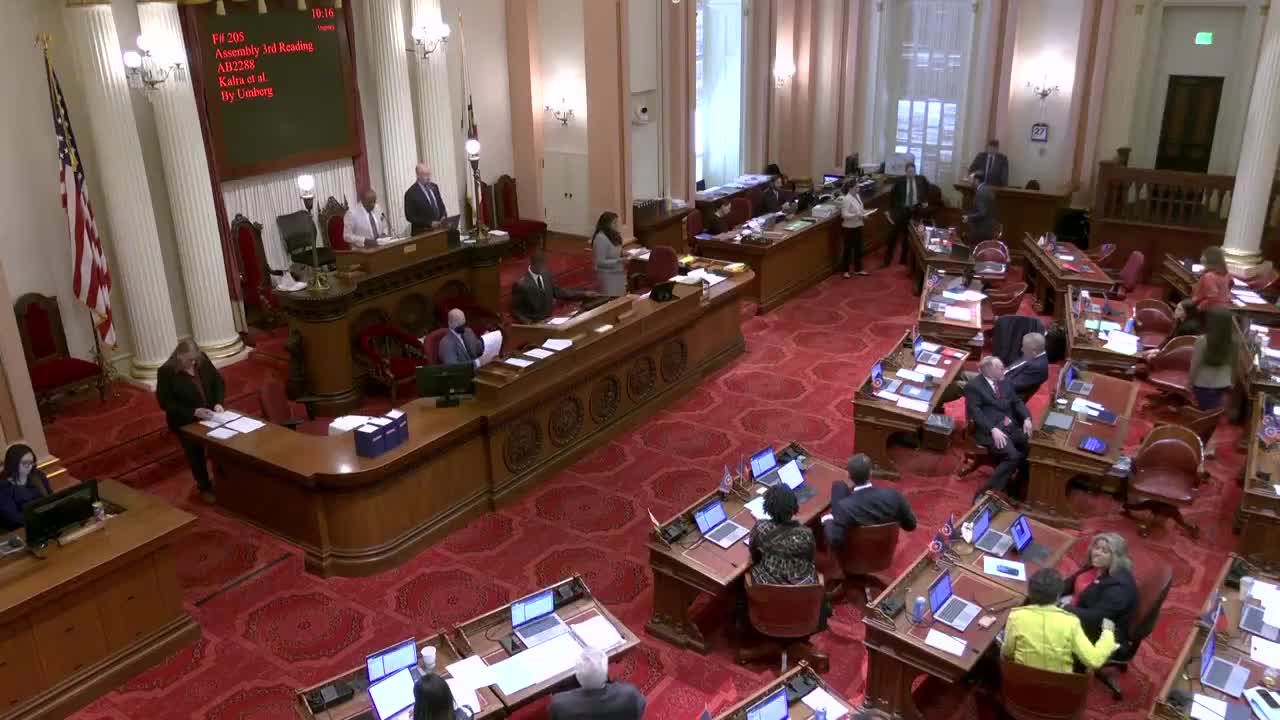 3MIN
Senate Floor
 1MIN
Senate Standing Committee on Appropriations
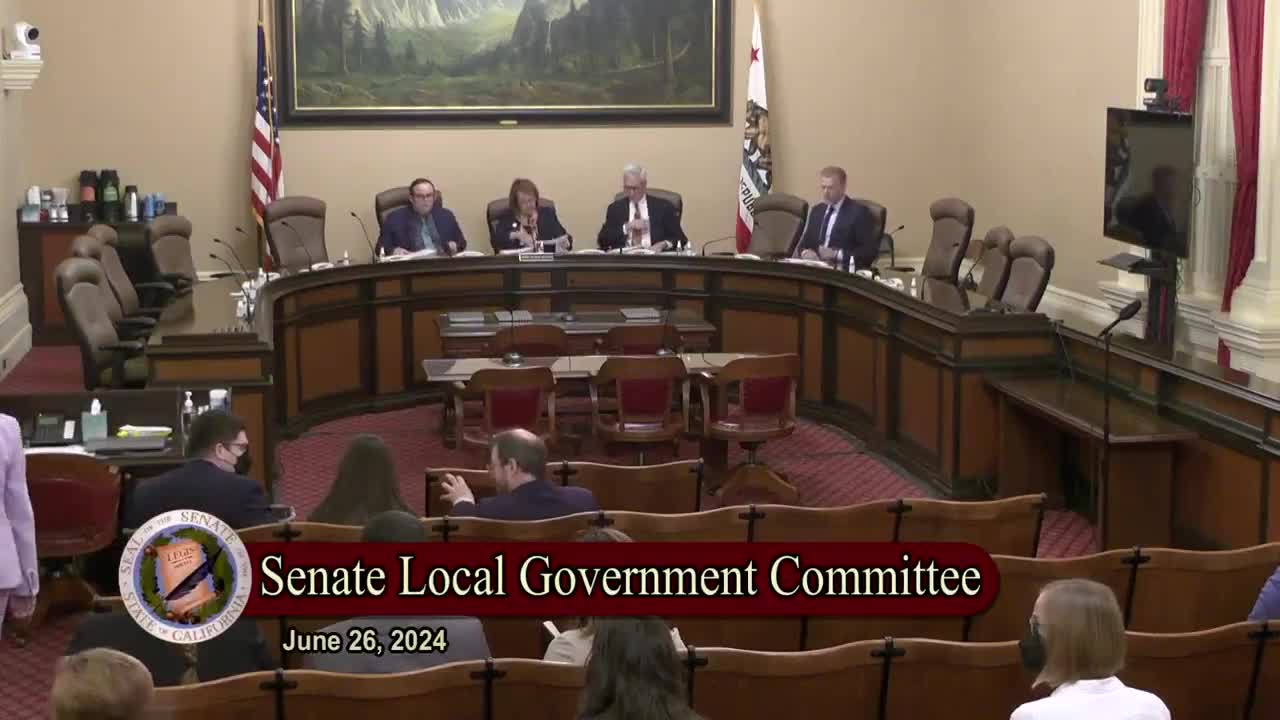 14MIN
Senate Standing Committee on Local Government
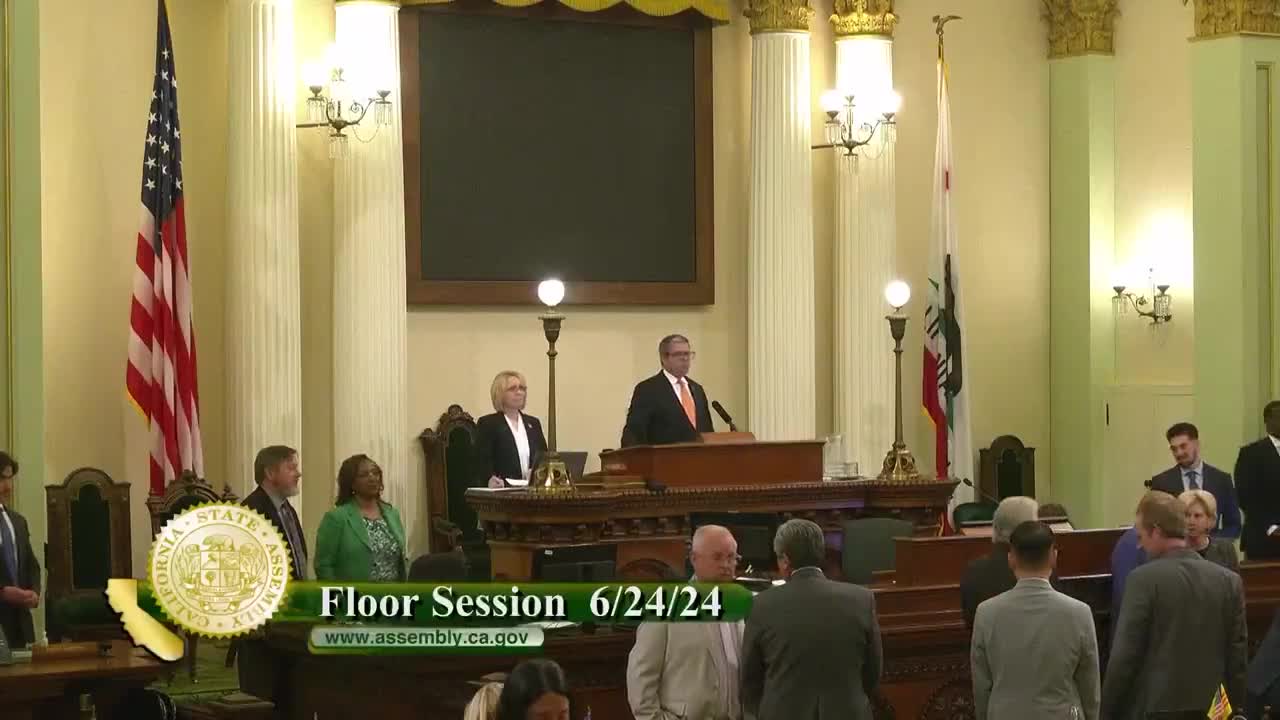 20MIN
Assembly Floor
 1H