ACA 16: Environmental rights.
- Session Year: 2023-2024
- House: Assembly
- Latest Version Date: 2024-06-06
Current Status:
Failed
(2024-06-06: Read third time and amended. Ordered to third reading. (Page 5775.))
Introduced
In Committee
First Chamber
In Committee
Second Chamber
Enacted
The California Constitution declares various inalienable rights of the people, including the right to enjoy and defend life and liberty, acquire, possess, and protect property, and pursue and obtain safety, happiness, and privacy.
This measure would amend the California Constitution to declare that the people have a right to clean air and water and a healthy environment. environment considering the general well-being and other needs of the people. The measure would specify that the principles inherent in these rights shall serve as a guide to all branches of government in the performance of their official duties and that these rights shall inure to all people in equal measure and shall not be construed or applied in a manner inconsistent with duly enacted laws of the state or other rights set forth in the California Constitution.
The California Constitution declares various inalienable rights of the people, including the right to enjoy and defend life and liberty, acquire, possess, and protect property, and pursue and obtain safety, happiness, and privacy.
This measure would amend the California Constitution to declare that the people have a right to clean air and water and a healthy environment.
Resolved by the Assembly, the Senate concurring, That the Legislature of the State of California at its 202324 Regular Session commencing on the fifth day of December 2022, two-thirds of the membership of each house concurring, hereby proposes to the people of the State of California, that the Constitution of the State be amended as follows:
(a)The people shall have a right to clean air and water and a healthy environment. environment considering the general well-being and other needs of the people.
(b)The principles inherent in the rights recognized in subdivision (a) shall serve as a guide to all branches of government in the performance of their official duties.
(c)The rights recognized in subdivision (a) shall inure to all people in equal measure and shall not be construed or applied in a manner that is inconsistent with duly enacted laws of the state or other rights set forth in this Constitution.
Resolved by the Assembly, the Senate concurring, That the Legislature of the State of California at its 202324 Regular Session commencing on the fifth day of December 2022, two-thirds of the membership of each house concurring, hereby proposes to the people of the State of California, that the Constitution of the State be amended as follows:
The people shall have a right to clean air and water and a healthy environment.
|
Date
|
Status
|
|---|---|
| Jun 6, 2024 | Read third time and amended. Ordered to third reading. (Page 5775.) |
| May 20, 2024 | Read second time. Ordered to third reading. |
| May 16, 2024 | From committee: Be adopted. (Ayes 11. Noes 4.) (May 16). |
| May 1, 2024 | In committee: Set, first hearing. Referred to APPR. suspense file. |
| Apr 9, 2024 | From committee: Be adopted, and re-refer to Com. on APPR. Re-referred. (Ayes 8. Noes 3.) (April 8). Re-referred to Com. on APPR. |
| Apr 9, 2024 | Coauthors revised. |
| Mar 11, 2024 | Referred to Com. on NAT. RES. |
| Jan 26, 2024 | From printer. May be heard in committee February 25. |
| Jan 25, 2024 | Read first time. To print. |
|
Date
|
Description
|
Location
|
Votes
|
|
|---|---|---|---|---|
| May 16, 2024 | Be adopted. | Assembly Standing Committee on Appropriations |
Passed |
|
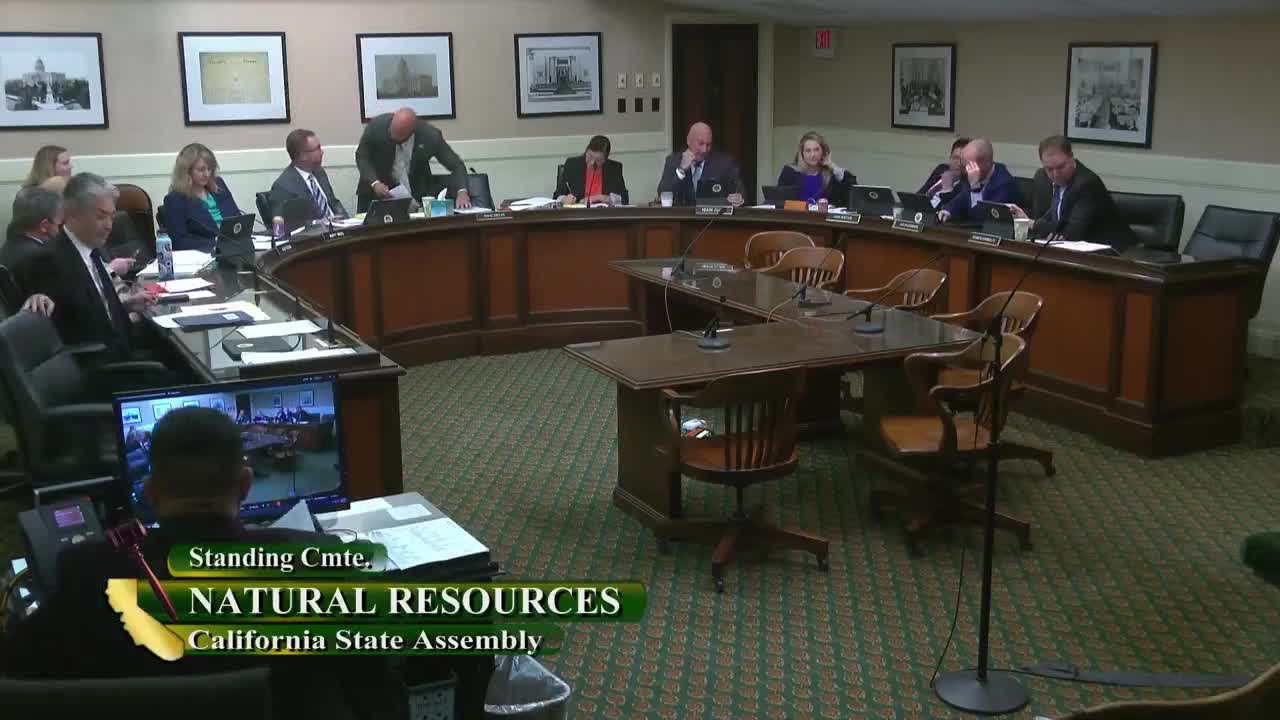
| Apr 8, 2024 | Be adopted and re-referred to the Committee on [Appropriations] | Assembly Standing Committee on Natural Resources |
Passed |
This list shows positions taken on this bill by organizations on the date displayed, which is linked to the original source.
Positions by individuals are not included.
|
Organization
|
Position
|
Date
|
|---|---|---|
| 1000 Grandmothers, Bay Area | ** Support | |
| 350 Bay Area Action | ** Support | |
| 350 Conejo | ** Support | |
| 350 Sacramento | ** Support | |
| 350 South Bay LA | ** Support | |
| 350 Ventura County Climate Hub | ** Support | |
| Active San Gabriel Valley | ** Support | |
| Asian Pacific Environmental Network | ** Support | |
| Azul | ** Support | |
| Bay Area Youth Lobbying Initiative | ** Support | |
| CA Coalition for Clean Air | ** Support | |
| CalChamber | ** Against | |
| California Association Of Local Conservation Corps | ** Support | |
| California Coastal Protection Network | ** Support | |
| California Coastkeeper Alliance | ** Support | |
| California Environmental Justice Alliance | ** Support | |
| California Environmental Voters | ** Support | |
| California Green Business Network | ** Support | |
| Californians for Pesticide Reform | ** Support | |
| California Nurses for Environmental Health & Justice | ** Support | |
| California Trout | ** Support | |
| Center on Race, Poverty, and the Environment | ** Support | |
| Central Valley Air Quality Coalition | ** Support | |
| Citizens Climate Lobby Sacramento / Roseville Chapter | ** Support | |
| Clean Earth 4 Kids | ** Support | |
| Clean Water Action | ** Support | |
| Climate Action California | ** Support | |
| ClimatePlan | ** Support | |
| Climate Reality Project, California Coalition | ** Support | |
| Climate Reality Project, Los Angeles Chapter | ** Support | |
| Climate Reality Project, San Fernando Valley | ** Support | |
| Climate Resolve | ** Support | |
| Councilwoman Katy Yaroslavsky, City of Los Angeles | ** Support | |
| Culver City Democratic Club | ** Support | |
| Defenders Of Wildlife | ** Support | |
| Desert Water Agency | ** Against | |
| Dietrick Institute for Applied Insect Ecology | ** Support | |
| East Area Progressive Democrats | ** Support | |
| El Dorado Irrigation District | ** Against | |
| Environmental Defense Center | ** Support | |
| Environmental Defense Fund | ** Support | |
| Environmental Working Group | ** Support | |
| Facts Families Advocating for Chemical and Toxics Safety | ** Support | |
| Families for a Future | ** Support | |
| Fossil Free California | ** Support | |
| Friends Committee On Legislation Of California | ** Support | |
| Friends of the River | ** Support | |
| Glendale Environmental Coalition | ** Support | |
| Green Amendments for the Generations | ** Support | |
| Human Impact Partners | ** Support | |
| Jaide Conservation Collective, LLC | ** Support | |
| LA Ballona Creek Renaissance | ** Support | |
| LA Waterkeeper | ** Support | |
| Leadership Counsel for Justice and Accountability | ** Support | |
| Los Angeles Unified School Board District 2, Office of Boardmember Dr. Rocio Rivas | ** Support | |
| Lutheran Office Of Public Policy - California | ** Support | |
| Mono Lake Committee | ** Support | |
| Move LA | ** Support | |
| Natural Resources Defense Council | ** Support | |
| NextGen California | ** Support | |
| Pacifica Climate Committee | ** Support | |
| Palmdale Water District | ** Against | |
| peninsula interfaith climate action | ** Support | |
| Pesticide Action Network North America | ** Support | |
| Physicians for Social Responsibility - Los Angeles | ** Support | |
| Planning And Conservation League | ** Support | |
| Project Green Home | ** Support | |
| Public Health Institute | ** Support | |
| Santa Cruz Climate Action Network | ** Support | |
| Sierra Nevada Alliance | ** Support | |
| Solar Rights Alliance | ** Support | |
| Sonoma County Democratic Party | ** Support | |
| South Los Angeles Transit Empowerment Zone | ** Support | |
| Stand Together Against Neighborhood Drilling | ** Support | |
| Streets for All | ** Support | |
| Sunrise Movement LA | ** Support | |
| Sunrise Movement Long Beach | ** Support | |
| Sunrise Movement Sacramento | ** Support | |
| Sunrise San Diego | ** Support | |
| The Climate Center | ** Support | |
| The Nature Conservancy | ** Support | |
| Third ACT SoCal | ** Support | |
| Transformation Wealth Management | ** Support | |
| Union Of Concerned Scientists | ** Support | |
| Urban Environmentalists | ** Support | |
| US Green Building Council Los Angeles | ** Support | |
| Valley Improvement Projects | ** Support | |
| Vista Hermosa Heights Community Group | ** Support | |
| Vote Solar | ** Support | |
| West LA Democratic Club | ** Support |
ASSEMBLY THIRD READING
ATR Bill Id:ACA 16
Author:(Bryan, et al.)
As Amended Ver:June 6, 2024
2/3 vote
SUMMARY
Amends the California Constitution to declare that the people shall have a right to clean air and water and a healthy environment considering the general well-being and other needs of the people. Specifies that the principles inherent in these rights shall serve as a guide to all branches of government in the performance of their official duties. States that these rights inure to all people in equal measure and shall not be construed or applied in a manner that is inconsistent with duly enacted laws of the state or other rights set forth in the Constitution.
Major Provisions
COMMENTS
California's first constitution was adopted at the Constitutional Convention of 1849, and was published in English and Spanish. It was revised in 1879 and published in English in the California Statutes of 1880. It has been amended numerous times by the Legislature and ballot propositions. The first major revision occurred after the Legislature created the Constitutional Revision Commission (Commission) in the early 1960s. The Commission's recommendations were placed on the ballot in 1974, when voters approved Proposition 7, Rights of Citizens Amendment, with more than 70% of the vote. The revision included granting noncitizens the same property rights as citizens; established the right to religion, equal protection, and life, liberty, and property in the California Constitution; expanded protections for those accused of crimes; and, expanded eminent domain protections, among other changes. Many of the California Constitution's protections are broader than the United States Constitution, such as the right to free speech and protection from cruel or unusual punishment for crimes. The California Constitution is one of the longest in the world, in part due to California's unique initiative system that allows citizens to pursue amendments to the constitution by initiative rather than through a legislative process.
Some states have begun to incorporate environmental rights amendments to their state constitutions. Known as "green amendments," these proposals attempt to protect the right to clean air and water the way more traditional rights like religious freedom and free speech are protected. Pennsylvania and Montana have adopted green amendments, and at least eight others have introduced green amendments this year.
California has a history of leading the nation on environmental policies. California has among the strongest water quality standards, air quality laws, efforts to ameliorate climate change, and actions to reduce plastic pollution in the country. However, the state has not amended the Constitution to guarantee its citizens the right to a healthy environment.
According to the Author
California leads – here in the U.S. and across the globe. Still, the 40 million people who call our state home may be surprised to realize that we are one of the remaining states that does not have clear environmental rights articulated in our constitution. Without clear and enshrined constitutional rights, all of the hard-won progress we have made remains vulnerable to potential rollbacks. It also leaves California increasingly subject to worrisome changes in federal policy. If our state is to continue making equitable environmental progress, it is imperative that we join the growing list of states who have moved to enshrine environmental rights in their constitutions.
Arguments in Support
A coalition of supporters states:
ACA 16 recognizes the importance of a healthy environment, clean air and water for all California's. The constitutional amendment unequivocally uplifts the health and environmental rights to those living in environmental justice communities who are disproportionately people of color and low-income Californians. Additionally, this constitutional right ensures transformative environmental legislation passed does not suffer from institutional rollbacks.
Arguments in Opposition
The California Chamber of Commerce states:
[ACA 16] lays the legal foundation to challenge virtually any state or local government infrastructure, energy, procurement proposal or housing project on the basis that any one of them threatens their new, and as yet undefined, general right…New affordable housing development projects could be delayed or stopped if air emissions associated with grading activities release air emissions or any wastewater discharge. The same is true for key transportation projects, such as High-Speed Rail, and for necessary clean energy development projects like solar farms, where any amount of project impact could be grounds to enjoin…Implementation of this measure will be challenging at best. There is no widely accepted definition of "healthy environment". The poorly defined definition will make enforcement of ACA 16 subjective and be left open to interpretation.
FISCAL COMMENTS
According to the Assembly Appropriations Committee:
- One-time costs to the Secretary of State (SOS) in the range of $740,000 to $987,000 for printing and mailing costs to place this constitutional amendment on the ballot in a statewide election (General Fund.) It costs approximately $123,359 per page and SOS anticipates this measure would require between six and eight pages.
2) Cost pressures (Trial Court Trust Fund, General Fund) of an unknown but likely significant amount to the courts to adjudicate lawsuits filed to enforce the rights established by this constitutional amendment. Actual costs will depend on the number of lawsuits filed and the amount of court time needed to adjudicate each case. It generally costs approximately $1,000 to operate a courtroom for one hour. If 10 suits are filed and each takes five days of court time to resolve, the resulting cost would be $400,000 for courtroom operation. Although courts are not funded on the basis of workload, increased pressure on the Trial Court Trust Fund may create a need for increased funding for courts from the General Fund. The Governor's proposed fiscal year 2024-25 budget proposes $83.1 million ongoing from the General Fund to backfill declining revenue to the Trial Court Trust Fund.
3) Costs of an unknown but potentially significant amount to the Department of Justice (DOJ). These costs would be borne by the Legal Services Revolving Fund but will be reimbursable through direct billings to client agencies. DOJ's Land Use and Conservation Section, Environment Section, and Natural Resources Law Section anticipate increased referrals from client agencies relating to enforcement and potential legal challenges arising from this constitutional amendment. Actual costs are unknown and would depend on several factors, including the number of lawsuits filed in response to this constitutional amendment and the number of referrals DOJ receives from client agencies.
According to the Legislative Analyst's Office, the General Fund faces a structural deficit in the tens of billions of dollars over the next several fiscal years.
VOTES
ASM NATURAL RESOURCES: 8-3-0
YES: Bryan, Connolly, Friedman, Kalra, Muratsuchi, Pellerin, Wicks, Wood
NO: Flora, Hoover, Joe Patterson
ASM APPROPRIATIONS: 11-4-0
YES: Wicks, Arambula, Bryan, Calderon, Wendy Carrillo, Mike Fong, Grayson, Haney, Hart, Pellerin, Villapudua
NO: Sanchez, Dixon, Jim Patterson, Ta
UPDATED
VERSION: June 6, 2024
CONSULTANT: Elizabeth MacMillan / NAT. RES. / (916) 319-2092 FN: 0003494
ASSEMBLY THIRD READING
ATR Bill Id:ACA 16
Author:(Bryan, et al.)
As Introduced Ver:January 25, 2024
2/3 vote
SUMMARY
Amends the California Constitution to declare that the people shall have a right to clean air and water and a healthy environment.
Major Provisions
COMMENTS
California's first constitution was adopted at the Constitutional Convention of 1849, and was published in English and Spanish. It was revised in 1879 and published in English in the California Statutes of 1880. It has been amended numerous times by the Legislature and ballot propositions. The first major revision occurred after the Legislature created the Constitutional Revision Commission (Commission) in the early 1960s. The Commission's recommendations were placed on the ballot in 1974, when voters approved Proposition 7, Rights of Citizens Amendment, with more than 70% of the vote. The revision included granting noncitizens the same property rights as citizens; established the right to religion, equal protection, and life, liberty, and property in the California Constitution; expanded protections for those accused of crimes; and, expanded eminent domain protections, among other changes. Many of the California Constitution's protections are broader than the United States Constitution, such as the right to free speech and protection from cruel or unusual punishment for crimes. The California Constitution is one of the longest in the world, in part due to California's unique initiative system that allows citizens to pursue amendments to the constitution by initiative rather than through a legislative process.
Some states have begun to incorporate environmental rights amendments to their state constitutions. Known as "green amendments," these proposals attempt to protect the right to clean air and water the way more traditional rights like religious freedom and free speech are protected. Pennsylvania and Montana have adopted green amendments, and at least eight others have introduced green amendments this year.
California has a history of leading the nation on environmental policies. California has among the strongest water quality standards, air quality laws, efforts to ameliorate climate change, and actions to reduce plastic pollution in the country. However, the state has not amended the Constitution to guarantee its citizens the right to a healthy environment.
According to the Author
California leads – here in the U.S. and across the globe. Still, the 40 million people who call our state home may be surprised to realize that we are one of the remaining states that does not have clear environmental rights articulated in our constitution. Without clear and enshrined constitutional rights, all of the hard-won progress we have made remains vulnerable to potential rollbacks. It also leaves California increasingly subject to worrisome changes in federal policy. If our state is to continue making equitable environmental progress, it is imperative that we join the growing list of states who have moved to enshrine environmental rights in their constitutions.
Arguments in Support
A coalition of supporters state:
ACA 16 recognizes the importance of a healthy environment, clean air and water for all California's. The constitutional amendment unequivocally uplifts the health and environmental rights to those living in environmental justice communities who are disproportionately people of color and low-income Californians. Additionally, this constitutional right ensures transformative environmental legislation passed does not suffer from institutional rollbacks.
Arguments in Opposition
The California Chamber of Commerce states:
[ACA 16] lays the legal foundation to challenge virtually any state or local government infrastructure, energy, procurement proposal or housing project on the basis that any one of them threatens their new, and as yet undefined, general right…New affordable housing development projects could be delayed or stopped if air emissions associated with grading activities release air emissions or any wastewater discharge. The same is true for key transportation projects, such as High-Speed Rail, and for necessary clean energy development projects like solar farms, where any amount of project impact could be grounds to enjoin…Implementation of this measure will be challenging at best. There is no widely accepted definition of "healthy environment". The poorly defined definition will make enforcement of ACA 16 subjective and be left open to interpretation.
FISCAL COMMENTS
According to the Assembly Appropriations Committee:
- One-time costs to the Secretary of State (SOS) in the range of $740,000 to $987,000 for printing and mailing costs to place this constitutional amendment on the ballot in a statewide election (General Fund.) It costs approximately $123,359 per page and SOS anticipates this measure would require between six and eight pages.
2) Cost pressures (Trial Court Trust Fund, General Fund) of an unknown but likely significant amount to the courts to adjudicate lawsuits filed to enforce the rights established by this constitutional amendment. Actual costs will depend on the number of lawsuits filed and the amount of court time needed to adjudicate each case. It generally costs approximately $1,000 to operate a courtroom for one hour. If 10 suits are filed and each takes five days of court time to resolve, the resulting cost would be $400,000 for courtroom operation. Although courts are not funded on the basis of workload, increased pressure on the Trial Court Trust Fund may create a need for increased funding for courts from the General Fund. The Governor's proposed fiscal year 2024-25 budget proposes $83.1 million ongoing from the General Fund to backfill declining revenue to the Trial Court Trust Fund.
3) Costs of an unknown but potentially significant amount to the Department of Justice (DOJ). These costs would be borne by the Legal Services Revolving Fund but will be reimbursable through direct billings to client agencies. DOJ's Land Use and Conservation Section, Environment Section, and Natural Resources Law Section anticipate increased referrals from client agencies relating to enforcement and potential legal challenges arising from this constitutional amendment. Actual costs are unknown and would depend on several factors, including the number of lawsuits filed in response to this constitutional amendment and the number of referrals DOJ receives from client agencies.
According to the Legislative Analyst's Office, the General Fund faces a structural deficit in the tens of billions of dollars over the next several fiscal years.
VOTES
ASM NATURAL RESOURCES: 8-3-0
YES: Bryan, Connolly, Friedman, Kalra, Muratsuchi, Pellerin, Wicks, Wood
NO: Flora, Hoover, Joe Patterson
ASM APPROPRIATIONS: 11-4-0
YES: Wicks, Arambula, Bryan, Calderon, Wendy Carrillo, Mike Fong, Grayson, Haney, Hart, Pellerin, Villapudua
NO: Sanchez, Dixon, Jim Patterson, Ta
UPDATED
VERSION: January 25, 2024
CONSULTANT: Elizabeth MacMillan / NAT. RES. / (916) 319-2092 FN: 0002980
Date of Hearing: May 1, 2024
ASSEMBLY COMMITTEE ON APPROPRIATIONS
Buffy Wicks, Chair
ABPCA Bill Id:ACA 16
Author:(Bryan) – As Introduced Ver:January 25, 2024
Policy Committee: | Natural Resources | Vote: | 8 - 3 |
|
| ||
|
|
Urgency: State Mandated Local Program: No Reimbursable: No
SUMMARY:
This bill amends the California Constitution to declare that the people shall have a right to clean air and water and a healthy environment.
FISCAL EFFECT:
1) One-time costs to the Secretary of State (SOS) in the range of $740,000 to $987,000 for printing and mailing costs to place this constitutional amendment on the ballot in a statewide election (General Fund.) It costs approximately $123,359 per page and SOS anticipates this measure would require between six and eight pages.
2) Cost pressures (Trial Court Trust Fund, General Fund) of an unknown but likely significant amount to the courts to adjudicate lawsuits filed to enforce the rights established by this constitutional amendment. Actual costs will depend on the number of lawsuits filed and the amount of court time needed to adjudicate each case. It generally costs approximately $1,000 to operate a courtroom for one hour. If 10 suits are filed and each takes five days of court time to resolve, the resulting cost would be $400,000 for courtroom operation. Although courts are not funded on the basis of workload, increased pressure on the Trial Court Trust Fund may create a need for increased funding for courts from the General Fund. The Governor’s proposed fiscal year 2024-25 budget proposes $83.1 million ongoing from the General Fund to backfill declining revenue to the Trial Court Trust Fund.
3) Costs of an unknown but potentially significant amount to the Department of Justice (DOJ). These costs would be borne by the Legal Services Revolving Fund but will be reimbursable through direct billings to client agencies. DOJ’s Land Use and Conservation Section, Environment Section, and Natural Resources Law Section anticipate increased referrals from client agencies relating to enforcement and potential legal challenges arising from this constitutional amendment. Actual costs are unknown and would depend on several factors, including the number of lawsuits filed in response to this constitutional amendment and the number of referrals DOJ receives from client agencies.
According to the Legislative Analyst’s Office, the General Fund faces a structural deficit in the tens of billions of dollars over the next several fiscal years.
COMMENTS:
1) Purpose. According to the author:
California leads – here in the U.S. and across the globe. Still, the 40 million people who call our state home may be surprised to realize that we are one of the remaining states that does not have clear environmental rights articulated in our constitution. Without clear and enshrined constitutional rights, all of the hard-won progress we have made remains vulnerable to potential rollbacks. It also leaves California increasingly subject to worrisome changes in federal policy. If our state is to continue making equitable environmental progress, it is imperative that we join the growing list of states who have moved to enshrine environmental rights in their constitutions.
2) Background. Some states have begun to incorporate environmental rights amendments into their state constitutions. Known as “green amendments,” these proposals attempt to protect the right to clean air, clean water, and a healthy environment the way more traditional rights like religious freedom and free speech are protected. Pennsylvania, Montana, and New York have each adopted green amendments in their bills of rights. Several other states have introduced green amendments this year.
In a landmark decision in 2023, a Montana judge ruled that a state law prohibiting state agencies from considering potential climate impacts and greenhouse gas emissions when granting permits for new oil and gas projects violates its citizens’ constitutional right to a “clean and healthful environment.” According to the Pace University School of Law, plaintiffs have filed several green amendment lawsuits in New York, include one that claims that odors, fugitive emissions, and climate change impacts from the operation of the High Acres Landfill violates the environmental rights of nearby property owners and residents.
3) Support and Opposition. Writing in support, a large coalition of organizations contends:
ACA 16 recognizes the importance of a healthy environment, clean air and water for all California's. The constitutional amendment unequivocally uplifts the health and environmental rights to those living in environmental justice communities who are disproportionately people of color and low-income Californians. Additionally, this constitutional right ensures transformative environmental legislation passed does not suffer from institutional rollbacks.
The California Chamber of Commerce writes in opposition to this bill:
[ACA 16] lays the legal foundation to challenge virtually any state or local government infrastructure, energy, procurement proposal or housing project on the basis that any one of them threatens their new, and as yet undefined, general right…New affordable housing development projects could be delayed or stopped if air emissions associated with grading activities release air emissions or any wastewater discharge. The same is true for key transportation projects, such as High-Speed Rail, and for necessary clean energy development projects like solar farms, where any amount of project impact could be grounds to enjoin…Implementation of this measure will be challenging at best. There is no widely accepted definition of “healthy environment”. The poorly defined definition will make enforcement of ACA 16 subjective and be left open to interpretation.
Analysis Prepared by: Nikita Koraddi / APPR. / (916) 319-2081
Date of Hearing: April 8, 2024
ASSEMBLY COMMITTEE ON NATURAL RESOURCES
Isaac G. Bryan, Chair
ABPCA Bill Id:ACA 16 (
Author:Bryan) – As Introduced Ver:January 25, 2024
SUBJECT: Environmental rights
SUMMARY: Amends the California Constitution to declare that the people shall have a right to clean air and water and a healthy environment.
EXISTING LAW establishes Article 1 of the California Constitution, Declaration of Rights, which declares:
- All people are by nature free and independent and have unalienable rights, including enjoying and defending life and liberty, acquiring, possessing, and protecting property, and pursuing and obtaining safety, happiness, and privacy.
- The state shall not deny or interfere with an individual’s reproductive freedom in their most intimate decisions, as specified.
- Every person may freely speak, write, and publish his or her sentiments on all subjects, being responsible for the abuse of this right, and that a law may not restrain or abridge liberty of speech or press, as specified.
- The people have the right to instruct their representatives, petition government for redress of grievances, and assemble freely to consult for the common good. People have the right of access to information concerning the conduct of the people’s business, and, therefore, the meetings of public bodies and the writings of public officials and agencies shall be open to public scrutiny.
- Free exercise and enjoyment of religion without discrimination or preference are guaranteed. Specifies that this liberty of conscience does not excuse acts that are licentious or inconsistent with the peace or safety of the State. The Legislature shall make no law respecting an establishment of religion. A person is not incompetent to be a witness or juror because of his or her opinions on religious beliefs.
- The military is subordinate to civil power. A standing army may not be maintained in peacetime. Soldiers may not be quartered in any house in wartime except as prescribed by law, and in peacetime without the owner’s consent.
- Slavery is prohibited. Involuntary servitude is prohibited except to punish crime.
- A person may not be deprived of life, liberty, or property without due process of law or denied equal protection of the laws; provided, that nothing contained in the Constitution imposes upon the State or any public entity, board, or official any obligations or responsibilities that exceed those imposed by the Equal Protection Clause of the 14th Amendment of the United States Constitution with respect to the use of pupil school assignment or pupil transportation, as specified. A citizen or class of citizens may not be granted privileges or immunities not granted on the same terms to all citizens.
- Only marriage between a man and woman is valid or recognized in California. (Ruled unconstitutional per Petty v. Schwarzenegger (N.D.Cal. 2010) 704 F.Supp.2d 921.)
- A person may not be disqualified from entering or pursuing a business, profession, vocation, or employment because of sex, race, creed color, or ethnic origin.
- A bill of attainder, ex post factor law, or law impairing the obligation of contracts may not be passed.
- Witnesses may not be unreasonably detained.
- Habeas corpus may not be suspended unless required by public safety in cases of rebellion or invasion.
- A person shall be released on bail by sufficient sureties, except for specified crimes.
- The right of the people to be secure in their persons, houses, papers, and effects against unreasonable seizures and searches may not be violated; and a warrant may not issue except on probable cause, as specified.
- The defendant in a criminal case has the right to a speedy public trial, to compel witnesses on the defendant’s behalf, to have the assistance of counsel, to be personally present with counsel, and to be confronted with the witnesses against the defendant.
- Trial by jury is an inviolate right and shall be secured to all, but may be waived under specified circumstances.
- Establishes numerous related declarations about criminal and civil proceedings.
- Treason against the State consists only in levying war against it, adhering to its enemies, or giving them aid and comfort. A person may not be convicted of treason except on the evidence of two witnesses to the same overt act or by confession in open court.
- Noncitizens have the same property rights as citizens.
- Property owned before marriage or acquired during marriage by gift, will, or inheritance is separate property.
- The right to vote or hold office may not be conditioned by a property qualification.
- Rights guaranteed by this Constitution are not dependent on those guaranteed by the United States Constitution.
- The people shall have the right to fish upon and from the public lands of the State and the waters thereof, except as provided.
- The provisions of the Constitution are mandatory and prohibitory, unless by express words they are declared to be otherwise.
- The State shall not discriminate against, or grant preferential treatment to, any individual or group on the basis of race, sex, color, ethnicity, or national origin in the operation of public employment, public education, or public contracting.
FISCAL EFFECT: Unknown
COMMENTS:
- The California Constitution. California’s first constitution was adopted at the Constitutional Convention of 1849, and was published in English and Spanish. It was revised in 1879 and published in English in the California Statutes of 1880. It has been amended numerous times by the Legislature and ballot propositions. The first major revision occurred after the Legislature created the Constitutional Revision Commission (Commission) in the early 1960s. The Commission’s recommendations were placed on the ballot in 1974, when voters approved Proposition 7, Rights of Citizens Amendment, with more than 70% of the vote. The revision included granting noncitizens the same property rights as citizens; established the right to religion, equal protection, and life, liberty, and property in the California Constitution; expanded protections for those accused of crimes; and, expanded eminent domain protections, among other changes. Many of the California Constitution’s protections are broader than the United States Constitution, such as the right to free speech and protection from cruel or unusual punishment for crimes. The California Constitution is one of the longest in the world, in part due to California’s unique initiative system that allows citizens to pursue amendments to the constitution by initiative rather than through a legislative process.
- Green amendments. Some states have begun to incorporate environmental rights amendments to their state constitutions. Known as “green amendments,” these proposals attempt to protect the right to clean air and water the way more traditional rights like religious freedom and free speech are protected. Pennsylvania and Montana are the only states that have adopted green amendments.
Section 27 of Article 1 of the Pennsylvania Constitution, added in 1971, declares that the people have a right to clean air, pure water, and to the preservation of the natural, scenic, historic, and esthetic values of the environment. The amendment further states that the state’s public natural resources are the common property of all its people, including generations yet to come. Courts established limitations to the interpretation of the amendment in 1973 by imposing a three part test to determine whether or not a state agency violated Section 27. Known as the “Payne test,” it requires the courts to consider a state agency’s compliance with other statutes, whether the agency made a reasonable effort to reduce environmental harm, and if the environmental harm outweighs the benefits of the action.
Section 1 of Article IX of Part IX of the Montana Constitution, added in 1972, declares that the state and each person shall maintain and improve a clean and healthful environment in Montana for present and future generations. The provision requires the Legislature to provide for the administration and enforcement of this duty and to provide adequate remedies for the protection of the environmental life support system from degradation and provide adequate remedies to prevent unreasonable depletion and degradation of natural resources.
Several other states have introduced green amendments this year:
- House Joint Resolution 4210 in Washington amends the constitution to provide that the people of the state have the right to a clean and healthy environment, and that the state shall serve as a trustee of its natural resources and climate, and that the state shall equitably protect these rights for all people.
- House Bill 302 in Kentucky proposes to create a new section in the Kentucky Constitution to establish the right of the people to have a healthy environment, including the right to clean air, pure water, and ecologically healthy habitats; declare that natural resources are the common property of all people, including generations to come; and, establish that as trustee of the environment, the state shall conserve and maintain them for the benefit of all people.
- Proposal 5 in Vermont would amend the constitution to declare the right of the people to clean air and water and the preservation of the natural, scenic, and cultural values of the environment; declares that the state’s natural resources are the common property of the people; and, requires the state to conserve and maintain the natural resources of Vermont for the benefit of all people.
- Senate Concurrent Resolution 1031 in Arizona amends the constitution to declare that each person, including those in future generations, has the right to a clean and healthy environment, including pure water, clean air, healthy ecosystems, a stable climate, and the preservation of the natural, cultural, scenic, and healthful qualities of the environment; the state’s public natural resources are the common property of all the people; and, requires the state to serve as trustee of these natural resources and to conserve and protect natural resources for the benefit of all people.
- House Joint Resolution 23 in West Virginia amends the constitution to declare that all people have a right to a clean and healthy environment, including clean air, pure water, a stable climate, and the preservation of the natural, scenic, recreational, and healthful qualities of the environment; the state shall protect these rights equitably for all people; that the public natural resources are the common property of all people, including generations to come, and; that the state as trustee of these resources, shall conserve, protect, and maintain them for the benefit of all people.
- Senate Concurrent Resolution 43 and Assembly Concurrent Resolution 119 in New Jersey amends the constitution to declare that every person has the right to a clean and healthy environment; the state’s public natural resources are the common property of all people, including present and future generations; and that the state shall serve as the trustee of these resources and conserve and maintain them for the benefit of all people.
- House Bill 1528 in Hawaii amends the constitution to declare that each person has the right to a clean and healthy environment, including clean air, clean and pure waters, fertile soils, healthy ecosystems, living reefs, and a stable climate; the control of pollution; and, the conservation, protection, and enhancement of the natural, native, cultural, scenic, and healthful qualities of the environment.
- Senate Bill 2933 in Hawaii amends the constitution to declare that the inherent and inalienable rights of the people, including present and future generations, to clean water and air, a healthful environment and climate, healthy native ecosystems and beaches, shall be protected and shall not be infringed.
- Senate Joint Resolution 193 in Connecticut amends the constitution to declare that each person shall have the right to clean and healthy air, water, soil, ecosystems, and environment and a safe and stable climate for the benefit of public health, safety, and the general welfare; that the state shall not infringe upon these rights and shall protect these rights equally for all people regardless of race, ethnicity, tribal affiliation, gender, socioeconomic status, or geography; and, requires the state to serve as trustee of the natural resources of the state.
- California’s environmental policies. California has a history of leading the nation on environmental policies. California has among the strongest water quality standards, air quality laws, efforts to ameliorate climate change, and actions to reduce plastic pollution in the country. However, the state has not amended the Constitution to guarantee its citizens the right to a healthy environment.
- Author’s statement:
California leads – here in the U.S. and across the globe. Still, the 40 million people who call our state home may be surprised to realize that we are one of the remaining states that does not have clear environmental rights articulated in our constitution. Without clear and enshrined constitutional rights, all of the hard-won progress we have made remains vulnerable to potential rollbacks. It also leaves California increasingly subject to worrisome changes in federal policy. If our state is to continue making equitable environmental progress, it is imperative that we join the growing list of states who have moved to enshrine environmental rights in their constitutions.
ACA 16 will provide a permanent guidepost for our sustainability and long term environmental and climate goals. It will also ensure that 1 in 8 Americans have the fundamental right to clean air, water, and a healthy environment.
- This measure. ACA 16 amends Section 1 of the California Constitution to declare the right of the people of California to have clean air and water and a healthy environment.
REGISTERED SUPPORT / OPPOSITION:
Support
1000 Grandmothers, Bay Area
350 Bay Area Action
350 Conejo
350 Sacramento
350 South Bay LA
350 Ventura County Climate Hub
Active San Gabriel Valley
Asian Pacific Environmental Network
Azul
Bay Area Youth Lobbying Initiative
CA Coalition for Clean Air
California Association of Local Conservation Corps
California Coastal Protection Network
California Coastkeeper Alliance
California Environmental Justice Alliance
California Environmental Voters
California Green Business Network
California Nurses for Environmental Health & Justice
California Trout
Californians for Pesticide Reform
Center on Race, Poverty, and the Environment
Central Valley Air Quality Coalition
Citizens Climate Lobby Sacramento / Roseville Chapter
Clean Earth 4 Kids
Clean Water Action
Climate Action California
Climate Reality Project, California Coalition
Climate Reality Project, Los Angeles Chapter
Climate Reality Project, San Fernando Valley
Climate Resolve
ClimatePlan
Councilwoman Katy Yaroslavsky, City of Los Angeles
Culver City Democratic Club
Defenders of Wildlife
Dietrick Institute for Applied Insect Ecology
East Area Progressive Democrats
Environmental Defense Center
Environmental Defense Fund
Environmental Working Group
Facts Families Advocating for Chemical and Toxics Safety
Families for a Future
Fossil Free California
Friends Committee on Legislation of California
Friends of the River
Glendale Environmental Coalition
Green Amendments for the Generations
Human Impact Partners
Jaide Conservation Collective, LLC
LA Ballona Creek Renaissance
LA Waterkeeper
Leadership Counsel for Justice and Accountability
Los Angeles Unified School Board District 2, Office of Boardmember Dr. Rocio Rivas
Lutheran Office of Public Policy - California
Mono Lake Committee
Move LA
Natural Resources Defense Council
NextGen California
Pacifica Climate Committee
Peninsula Interfaith Climate Action
Pesticide Action Network North America
Physicians for Social Responsibility - Los Angeles
Planning and Conservation League
Project Green Home
Public Health Institute
Santa Cruz Climate Action Network
Sierra Nevada Alliance
Solar Rights Alliance
Sonoma County Democratic Party
South Los Angeles Transit Empowerment Zone
Stand Together Against Neighborhood Drilling
Streets for All
Sunrise Movement LA
Sunrise Movement Long Beach
Sunrise Movement Sacramento
Sunrise San Diego
The Climate Center
The Nature Conservancy
Third ACT SoCal
Transformation Wealth Management
US Green Building Council - Los Angeles
Union of Concerned Scientists
Urban Environmentalists
Valley Improvement Projects
Vista Hermosa Heights Community Group
Vote Solar
West LA Democratic Club
Opposition
CalChamber
Desert Water Agency
El Dorado Irrigation District
Palmdale Water District
Analysis Prepared by: Elizabeth MacMillan / NAT. RES. /
Discussed in Hearing
View Older Hearings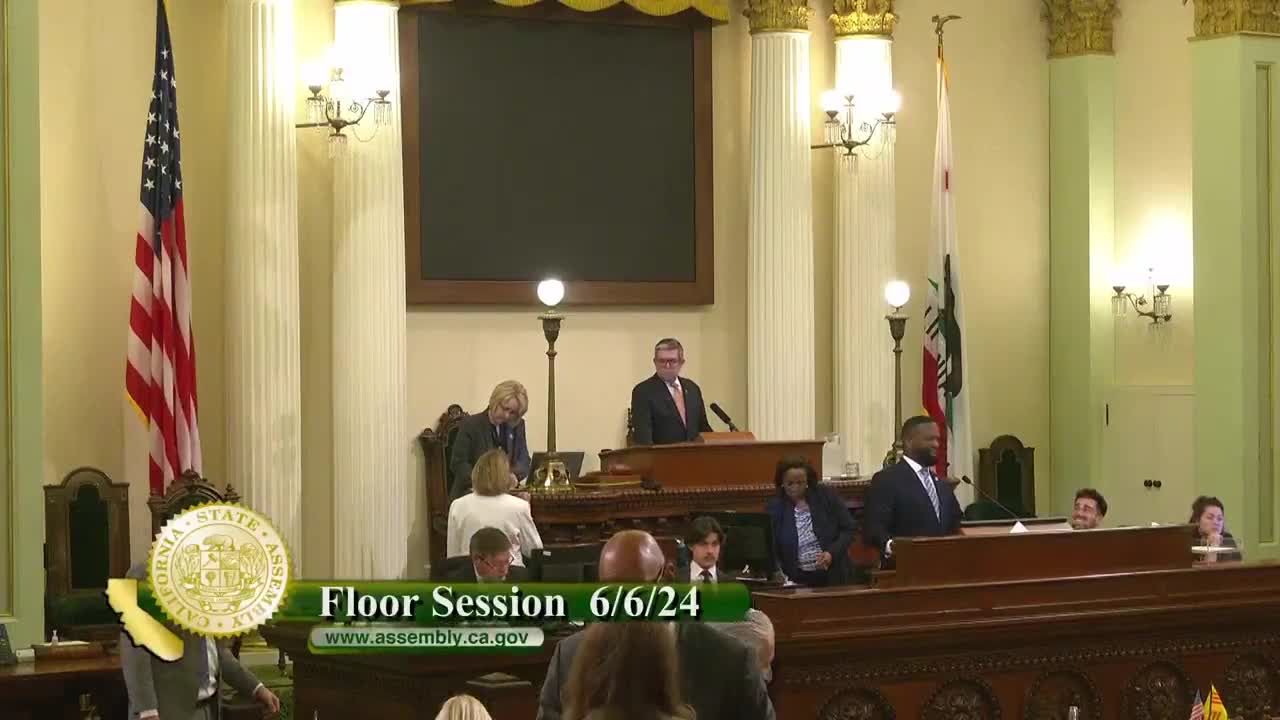



Bill Co-Author(s):