AB 715: Residential development: school facilities fees.
- Session Year: 2015-2016
- House: Assembly
- Latest Version Date: 2015-07-16
Existing law, the Planning and Zoning Law, limits the amount of fees, charges, dedications, or other requirements levied or imposed by state and local agencies on the planning, use, or development of real property for the construction or reconstruction of school facilities based upon assessable space, as defined. In the case of residential construction, existing law defines assessable space to mean all of the square footage within the perimeter of a residential structure, not including any carport, walkway, garage, overhang, patio, enclosed patio, detached accessory structure, or similar area.
This bill would revise the definition of assessable space to specify that a covered or uncovered walkway is excluded.
Existing law, the Planning and Zoning Law, limits the amount of fees, charges, dedications, or other requirements levied or imposed by state and local agencies on the planning, use, or development of real property for the construction or reconstruction of school facilities based upon assessable space, as defined. In the case of residential construction, existing law defines assessable space to mean all of the square footage within the perimeter of a residential structure, not including any carport, walkway, garage, overhang, patio, enclosed patio, detached accessory structure, or similar area.
This bill would revise the definition of assessable space to specify that a covered or uncovered walkway is excluded and that a detached accessory structure includes a detached bike storage locker. excluded.
Existing law, the Planning and Zoning Law, limits the amount of fees, charges, dedications, or other requirements levied or imposed by state and local agencies on the planning, use, or development of real property for the construction or reconstruction of school facilities based upon assessable space, as defined. In the case of residential construction, existing law defines assessable space to mean all of the square footage within the perimeter of a residential structure, not including any carport, walkway, garage, overhang, patio, enclosed patio, detached accessory structure, or similar area.
This bill would revise the definition of assessable space to specify that a covered walkway, or uncovered walkway, and enclosed walkway are is excluded and that similarly excluded areas include, but are not limited to, a detached accessory structure includes a detached bike storage locker or detached personal property storage space that is not a part of the existing livable residential structure. locker.
Existing law, the Planning and Zoning Law, limits the amount of fees, charges, dedications, or other requirements levied or imposed by state and local agencies on the planning, use, or development of real property for the construction or reconstruction of school facilities based upon assessable space, as defined. In the case of residential construction, existing law defines assessable space to mean all of the square footage within the perimeter of a residential structure, not including any carport, walkway, garage, overhang, patio, enclosed patio, detached accessory structure, or similar area.
This bill would revise the definition of assessable space to specify that a covered walkway, uncovered walkway, and enclosed walkway are excluded and that similarly excluded areas include, but are not limited to, a bike storage locker or detached personal property storage space that is not a part of the existing livable residential structure.
(a)Except for a fee, charge, dedication, or other requirement authorized under Section 17620 of the Education Code, or pursuant to Chapter 4.7 (commencing with Section 65970), a fee, charge, dedication, or other requirement for the construction or reconstruction of school facilities shall not be levied or imposed in connection with, or made a condition of, any legislative or adjudicative act, or both, by any state or local agency involving, but not limited to, the planning, use, or development of real property, or any change in governmental organization or reorganization, as defined in Section 56021 or 56073.
(b)Except as provided in Sections 65995.5 and 65995.7, the amount of any fees, charges, dedications, or other requirements authorized under Section 17620 of the Education Code, or pursuant to Chapter 4.7 (commencing with Section 65970), or both, shall not exceed the following:
(1)In the case of residential construction, including the location, installation, or occupancy of manufactured homes and mobilehomes, one dollar and ninety-three cents ($1.93) per square foot of assessable space. Assessable space, for this purpose, means all of the square footage within the perimeter of a residential structure, not including any carport, covered or uncovered walkway, garage, overhang, patio, enclosed patio, detached accessory structure, or similar area. The amount of the square footage within the perimeter of a residential structure shall be calculated by the building department of the city or county issuing the building permit, in accordance with the standard practice of that city or county in calculating structural perimeters. Manufactured home and mobilehome have the meanings set forth in subdivision (f) of Section 17625 of the Education Code. The application of any fee, charge, dedication, or other form of requirement to the location, installation, or occupancy of manufactured homes and mobilehomes is subject to Section 17625 of the Education Code.
(2)In the case of any commercial or industrial construction, thirty-one cents ($0.31) per square foot of chargeable covered and enclosed space. Chargeable covered and enclosed space, for this purpose, means the covered and enclosed space determined to be within the perimeter of a commercial or industrial structure, not including any storage areas incidental to the principal use of the construction, garage, parking structure, unenclosed walkway, or utility or disposal area. The determination of the chargeable covered and enclosed space within the perimeter of a commercial or industrial structure shall be made by the building department of the city or county issuing the building permit, in accordance with the building standards of that city or county. For the determination of chargeable fees to be paid to the appropriate school district in connection with any commercial or industrial construction under the jurisdiction of the Office of Statewide Health Planning and Development, the architect of record shall determine the chargeable covered and enclosed space within the perimeter of a commercial or industrial structure.
(3)The amount of the limits set forth in paragraphs (1) and (2) shall be increased in 2000, and every two years thereafter, according to the adjustment for inflation set forth in the statewide cost index for class B construction, as determined by the State Allocation Board at its January meeting, which increase shall be effective as of the date of that meeting.
(c)(1)Notwithstanding any other law, during the term of a contract entered into between a subdivider or builder and a school district, city, county, or city and county, whether general law or chartered, on or before January 1, 1987, that requires the payment of a fee, charge, or dedication for the construction of school facilities as a condition to the approval of residential construction, neither Section 17620 of the Education Code nor this chapter applies to that residential construction.
(2)Notwithstanding any other provision of state or local law, construction that is subject to a contract entered into between a person and a school district, city, county, or city and county, whether general law or chartered, after January 1, 1987, and before the operative date of the act that adds paragraph (3) that requires the payment of a fee, charge, or dedication for the construction of school facilities as a condition to the approval of construction, may not be affected by the act that adds paragraph (3).
(3)Notwithstanding any other provision of state or local law, until January 1, 2000, any construction not subject to a contract as described in paragraph (2) that is carried out on real property for which residential development was made subject to a condition relating to school facilities imposed by a state or local agency in connection with a legislative act approving or authorizing the residential development of that property after January 1, 1987, and before the operative date of the act adding this paragraph, shall be required to comply with that condition.
Notwithstanding any other provision of state or local law, on and after January 1, 2000, any construction not subject to a contract as described in paragraph (2) that is carried out on real property for which residential development was made subject to a condition relating to school facilities imposed by a state or local agency in connection with a legislative act approving or authorizing the residential development of that property after January 1, 1987, and before the operative date of the act adding this paragraph, may not be subject to a fee, charge, dedication, or other requirement exceeding the amount specified in paragraphs (1) and (2) of subdivision (b), or, if a district has increased the limit specified in paragraph (1) of subdivision (b) pursuant to either Section 65995.5 or 65995.7, that increased amount.
(4)Any construction that is not subject to a contract as described in paragraph (2), or to paragraph (3), and that satisfies both of the requirements of this paragraph, may not be subject to any increased fee, charge, dedication, or other requirement authorized by the act that adds this paragraph beyond the amount specified in paragraphs (1) and (2) of subdivision (b).
(A)A tentative map, development permit, or conditional use permit was approved before the operative date of the act that amends this subdivision.
(B)A building permit is issued before January 1, 2000.
(d)For purposes of this chapter, construction means new construction and reconstruction of existing building for residential, commercial, or industrial. Residential, commercial, or industrial construction does not include any facility used exclusively for religious purposes that is thereby exempt from property taxation under the laws of this state, any facility used exclusively as a private full-time day school as described in Section 48222 of the Education Code, or any facility that is owned and occupied by one or more agencies of federal, state, or local government. In addition, commercial or industrial construction includes, but is not limited to, any hotel, inn, motel, tourist home, or other lodging for which the maximum term of occupancy for guests does not exceed 30 days, but does not include any residential hotel, as defined in paragraph (1) of subdivision (b) of Section 50519 of the Health and Safety Code.
(e)The Legislature finds and declares that the financing of school facilities and the mitigation of the impacts of land use approvals, whether legislative or adjudicative, or both, on the need for school facilities are matters of statewide concern. For this reason, the Legislature hereby occupies the subject matter of requirements related to school facilities levied or imposed in connection with, or made a condition of, any land use approval, whether legislative or adjudicative act, or both, and the mitigation of the impacts of land use approvals, whether legislative or adjudicative, or both, on the need for school facilities, to the exclusion of all other measures, financial or nonfinancial, on the subjects. For purposes of this subdivision, school facilities means any school-related consideration relating to a school districts ability to accommodate enrollment.
(f)Nothing in this section shall be interpreted to limit or prohibit the use of Chapter 2.5 (commencing with Section 53311) of Division 2 of Title 5 to finance the construction or reconstruction of school facilities. However, the use of Chapter 2.5 (commencing with Section 53311) of Division 2 of Title 5 may not be required as a condition of approval of any legislative or adjudicative act, or both, if the purpose of the community facilities district is to finance school facilities.
(g)(1)The refusal of a person to agree to undertake or cause to be undertaken an act relating to Chapter 2.5 (commencing with Section 53311) of Division 2 of Title 5, including formation of, or annexation to, a community facilities district, voting to levy a special tax, or authorizing another to vote to levy a special tax, may not be a factor when considering the approval of a legislative or adjudicative act, or both, involving, but not limited to, the planning, use, or development of real property, or any change in governmental organization or reorganization, as defined in Section 56021 or 56073, if the purpose of the community facilities district is to finance school facilities.
(2)If a person voluntarily elects to establish, or annex into, a community facilities district and levy a special tax approved by landowner vote to finance school facilities, the present value of the special tax specified in the resolution of formation shall be calculated as an amount per square foot of assessable space and that amount shall be a credit against any applicable fee, charge, dedication, or other requirement for the construction or reconstruction of school facilities. For purposes of this paragraph, the calculation of present value shall use the interest rate paid on the United States Treasurys 30-year bond on the date of the formation of, or annexation to, the community facilities district, as the capitalization rate.
(3)For purposes of subdivisions (f), (h), and (i), and this subdivision, school facilities means any school-related consideration relating to a school districts ability to accommodate enrollment.
(h)The payment or satisfaction of a fee, charge, or other requirement levied or imposed pursuant to Section 17620 of the Education Code in the amount specified in Section 65995 and, if applicable, any amounts specified in Section 65995.5 or 65995.7 are hereby deemed to be full and complete mitigation of the impacts of any legislative or adjudicative act, or both, involving, but not limited to, the planning, use, or development of real property, or any change in governmental organization or reorganization as defined in Section 56021 or 56073, on the provision of adequate school facilities.
(i)A state or local agency may not deny or refuse to approve a legislative or adjudicative act, or both, involving, but not limited to, the planning, use, or development of real property, or any change in governmental organization or reorganization as defined in Section 56021 or 56073 on the basis of a persons refusal to provide school facilities mitigation that exceeds the amounts authorized pursuant to this section or pursuant to Section 65995.5 or 65995.7, as applicable.
(a)Except for a fee, charge, dedication, or other requirement authorized under Section 17620 of the Education Code, or pursuant to Chapter 4.7 (commencing with Section 65970), a fee, charge, dedication, or other requirement for the construction or reconstruction of school facilities shall not be levied or imposed in connection with, or made a condition of, any legislative or adjudicative act, or both, by any state or local agency involving, but not limited to, the planning, use, or development of real property, or any change in governmental organization or reorganization, as defined in Section 56021 or 56073.
(b)Except as provided in Sections 65995.5 and 65995.7, the amount of any fees, charges, dedications, or other requirements authorized under Section 17620 of the Education Code, or pursuant to Chapter 4.7 (commencing with Section 65970), or both, shall not exceed the following:
(1)In the case of residential construction, including the location, installation, or occupancy of manufactured homes and mobilehomes, one dollar and ninety-three cents ($1.93) per square foot of assessable space. Assessable space, for this purpose, means all of the square footage within the perimeter of a residential structure, not including any carport, covered or uncovered walkway, garage, overhang, patio, enclosed patio, detached accessory structure, including a detached bike storage locker, or similar area. The amount of the square footage within the perimeter of a residential structure shall be calculated by the building department of the city or county issuing the building permit, in accordance with the standard practice of that city or county in calculating structural perimeters. Manufactured home and mobilehome have the meanings set forth in subdivision (f) of Section 17625 of the Education Code. The application of any fee, charge, dedication, or other form of requirement to the location, installation, or occupancy of manufactured homes and mobilehomes is subject to Section 17625 of the Education Code.
(2)In the case of any commercial or industrial construction, thirty-one cents ($0.31) per square foot of chargeable covered and enclosed space. Chargeable covered and enclosed space, for this purpose, means the covered and enclosed space determined to be within the perimeter of a commercial or industrial structure, not including any storage areas incidental to the principal use of the construction, garage, parking structure, unenclosed walkway, or utility or disposal area. The determination of the chargeable covered and enclosed space within the perimeter of a commercial or industrial structure shall be made by the building department of the city or county issuing the building permit, in accordance with the building standards of that city or county. For the determination of chargeable fees to be paid to the appropriate school district in connection with any commercial or industrial construction under the jurisdiction of the Office of Statewide Health Planning and Development, the architect of record shall determine the chargeable covered and enclosed space within the perimeter of a commercial or industrial structure.
(3)The amount of the limits set forth in paragraphs (1) and (2) shall be increased in 2000, and every two years thereafter, according to the adjustment for inflation set forth in the statewide cost index for class B construction, as determined by the State Allocation Board at its January meeting, which increase shall be effective as of the date of that meeting.
(c)(1)Notwithstanding any other law, during the term of a contract entered into between a subdivider or builder and a school district, city, county, or city and county, whether general law or chartered, on or before January 1, 1987, that requires the payment of a fee, charge, or dedication for the construction of school facilities as a condition to the approval of residential construction, neither Section 17620 of the Education Code nor this chapter applies to that residential construction.
(2)Notwithstanding any other provision of state or local law, construction that is subject to a contract entered into between a person and a school district, city, county, or city and county, whether general law or chartered, after January 1, 1987, and before the operative date of the act that adds paragraph (3) that requires the payment of a fee, charge, or dedication for the construction of school facilities as a condition to the approval of construction, may not be affected by the act that adds paragraph (3).
(3)Notwithstanding any other provision of state or local law, until January 1, 2000, any construction not subject to a contract as described in paragraph (2) that is carried out on real property for which residential development was made subject to a condition relating to school facilities imposed by a state or local agency in connection with a legislative act approving or authorizing the residential development of that property after January 1, 1987, and before the operative date of the act adding this paragraph, shall be required to comply with that condition.
Notwithstanding any other provision of state or local law, on and after January 1, 2000, any construction not subject to a contract as described in paragraph (2) that is carried out on real property for which residential development was made subject to a condition relating to school facilities imposed by a state or local agency in connection with a legislative act approving or authorizing the residential development of that property after January 1, 1987, and before the operative date of the act adding this paragraph, may not be subject to a fee, charge, dedication, or other requirement exceeding the amount specified in paragraphs (1) and (2) of subdivision (b), or, if a district has increased the limit specified in paragraph (1) of subdivision (b) pursuant to either Section 65995.5 or 65995.7, that increased amount.
(4)Any construction that is not subject to a contract as described in paragraph (2), or to paragraph (3), and that satisfies both of the requirements of this paragraph, may not be subject to any increased fee, charge, dedication, or other requirement authorized by the act that adds this paragraph beyond the amount specified in paragraphs (1) and (2) of subdivision (b).
(A)A tentative map, development permit, or conditional use permit was approved before the operative date of the act that amends this subdivision.
(B)A building permit is issued before January 1, 2000.
(d)For purposes of this chapter, construction means new construction and reconstruction of existing building for residential, commercial, or industrial. Residential, commercial, or industrial construction does not include any facility used exclusively for religious purposes that is thereby exempt from property taxation under the laws of this state, any facility used exclusively as a private full-time day school as described in Section 48222 of the Education Code, or any facility that is owned and occupied by one or more agencies of federal, state, or local government. In addition, commercial or industrial construction includes, but is not limited to, any hotel, inn, motel, tourist home, or other lodging for which the maximum term of occupancy for guests does not exceed 30 days, but does not include any residential hotel, as defined in paragraph (1) of subdivision (b) of Section 50519 of the Health and Safety Code.
(e)The Legislature finds and declares that the financing of school facilities and the mitigation of the impacts of land use approvals, whether legislative or adjudicative, or both, on the need for school facilities are matters of statewide concern. For this reason, the Legislature hereby occupies the subject matter of requirements related to school facilities levied or imposed in connection with, or made a condition of, any land use approval, whether legislative or adjudicative act, or both, and the mitigation of the impacts of land use approvals, whether legislative or adjudicative, or both, on the need for school facilities, to the exclusion of all other measures, financial or nonfinancial, on the subjects. For purposes of this subdivision, school facilities means any school-related consideration relating to a school districts ability to accommodate enrollment.
(f)Nothing in this section shall be interpreted to limit or prohibit the use of Chapter 2.5 (commencing with Section 53311) of Division 2 of Title 5 to finance the construction or reconstruction of school facilities. However, the use of Chapter 2.5 (commencing with Section 53311) of Division 2 of Title 5 may not be required as a condition of approval of any legislative or adjudicative act, or both, if the purpose of the community facilities district is to finance school facilities.
(g)(1)The refusal of a person to agree to undertake or cause to be undertaken an act relating to Chapter 2.5 (commencing with Section 53311) of Division 2 of Title 5, including formation of, or annexation to, a community facilities district, voting to levy a special tax, or authorizing another to vote to levy a special tax, may not be a factor when considering the approval of a legislative or adjudicative act, or both, involving, but not limited to, the planning, use, or development of real property, or any change in governmental organization or reorganization, as defined in Section 56021 or 56073, if the purpose of the community facilities district is to finance school facilities.
(2)If a person voluntarily elects to establish, or annex into, a community facilities district and levy a special tax approved by landowner vote to finance school facilities, the present value of the special tax specified in the resolution of formation shall be calculated as an amount per square foot of assessable space and that amount shall be a credit against any applicable fee, charge, dedication, or other requirement for the construction or reconstruction of school facilities. For purposes of this paragraph, the calculation of present value shall use the interest rate paid on the United States Treasurys 30-year bond on the date of the formation of, or annexation to, the community facilities district, as the capitalization rate.
(3)For purposes of subdivisions (f), (h), and (i), and this subdivision, school facilities means any school-related consideration relating to a school districts ability to accommodate enrollment.
(h)The payment or satisfaction of a fee, charge, or other requirement levied or imposed pursuant to Section 17620 of the Education Code in the amount specified in Section 65995 and, if applicable, any amounts specified in Section 65995.5 or 65995.7 are hereby deemed to be full and complete mitigation of the impacts of any legislative or adjudicative act, or both, involving, but not limited to, the planning, use, or development of real property, or any change in governmental organization or reorganization as defined in Section 56021 or 56073, on the provision of adequate school facilities.
(i)A state or local agency may not deny or refuse to approve a legislative or adjudicative act, or both, involving, but not limited to, the planning, use, or development of real property, or any change in governmental organization or reorganization as defined in Section 56021 or 56073 on the basis of a persons refusal to provide school facilities mitigation that exceeds the amounts authorized pursuant to this section or pursuant to Section 65995.5 or 65995.7, as applicable.
(a)Except for a fee, charge, dedication, or other requirement authorized under Section 17620 of the Education Code, or pursuant to Chapter 4.7 (commencing with Section 65970), a fee, charge, dedication, or other requirement for the construction or reconstruction of school facilities shall not be levied or imposed in connection with, or made a condition of, any legislative or adjudicative act, or both, by any state or local agency involving, but not limited to, the planning, use, or development of real property, or any change in governmental organization or reorganization, as defined in Section 56021 or 56073.
(b)Except as provided in Sections 65995.5 and 65995.7, the amount of any fees, charges, dedications, or other requirements authorized under Section 17620 of the Education Code, or pursuant to Chapter 4.7 (commencing with Section 65970), or both, shall not exceed the following:
(1)In the case of residential construction, including the location, installation, or occupancy of manufactured homes and mobilehomes, one dollar and ninety-three cents ($1.93) per square foot of assessable space. Assessable space, for this purpose, means all of the square footage within the perimeter of a residential structure, not including any carport, covered walkway, or uncovered walkway, enclosed walkway, garage, overhang, patio, enclosed patio, detached accessory structure, including a detached bike storage locker, or similar area, including, but not limited to, a bike storage locker or detached personal property storage space that is not a part of the existing livable residential structure. area. The amount of the square footage within the perimeter of a residential structure shall be calculated by the building department of the city or county issuing the building permit, in accordance with the standard practice of that city or county in calculating structural perimeters. Manufactured home and mobilehome have the meanings set forth in subdivision (f) of Section 17625 of the Education Code. The application of any fee, charge, dedication, or other form of requirement to the location, installation, or occupancy of manufactured homes and mobilehomes is subject to Section 17625 of the Education Code.
(2)In the case of any commercial or industrial construction, thirty-one cents ($0.31) per square foot of chargeable covered and enclosed space. Chargeable covered and enclosed space, for this purpose, means the covered and enclosed space determined to be within the perimeter of a commercial or industrial structure, not including any storage areas incidental to the principal use of the construction, garage, parking structure, unenclosed walkway, or utility or disposal area. The determination of the chargeable covered and enclosed space within the perimeter of a commercial or industrial structure shall be made by the building department of the city or county issuing the building permit, in accordance with the building standards of that city or county. For the determination of chargeable fees to be paid to the appropriate school district in connection with any commercial or industrial construction under the jurisdiction of the Office of Statewide Health Planning and Development, the architect of record shall determine the chargeable covered and enclosed space within the perimeter of a commercial or industrial structure.
(3)The amount of the limits set forth in paragraphs (1) and (2) shall be increased in 2000, and every two years thereafter, according to the adjustment for inflation set forth in the statewide cost index for class B construction, as determined by the State Allocation Board at its January meeting, which increase shall be effective as of the date of that meeting.
(c)(1)Notwithstanding any other law, during the term of a contract entered into between a subdivider or builder and a school district, city, county, or city and county, whether general law or chartered, on or before January 1, 1987, that requires the payment of a fee, charge, or dedication for the construction of school facilities as a condition to the approval of residential construction, neither Section 17620 of the Education Code nor this chapter applies to that residential construction.
(2)Notwithstanding any other provision of state or local law, construction that is subject to a contract entered into between a person and a school district, city, county, or city and county, whether general law or chartered, after January 1, 1987, and before the operative date of the act that adds paragraph (3) that requires the payment of a fee, charge, or dedication for the construction of school facilities as a condition to the approval of construction, may not be affected by the act that adds paragraph (3).
(3)Notwithstanding any other provision of state or local law, until January 1, 2000, any construction not subject to a contract as described in paragraph (2) that is carried out on real property for which residential development was made subject to a condition relating to school facilities imposed by a state or local agency in connection with a legislative act approving or authorizing the residential development of that property after January 1, 1987, and before the operative date of the act adding this paragraph, shall be required to comply with that condition.
Notwithstanding any other provision of state or local law, on and after January 1, 2000, any construction not subject to a contract as described in paragraph (2) that is carried out on real property for which residential development was made subject to a condition relating to school facilities imposed by a state or local agency in connection with a legislative act approving or authorizing the residential development of that property after January 1, 1987, and before the operative date of the act adding this paragraph, may not be subject to a fee, charge, dedication, or other requirement exceeding the amount specified in paragraphs (1) and (2) of subdivision (b), or, if a district has increased the limit specified in paragraph (1) of subdivision (b) pursuant to either Section 65995.5 or 65995.7, that increased amount.
(4)Any construction that is not subject to a contract as described in paragraph (2), or to paragraph (3), and that satisfies both of the requirements of this paragraph, may not be subject to any increased fee, charge, dedication, or other requirement authorized by the act that adds this paragraph beyond the amount specified in paragraphs (1) and (2) of subdivision (b).
(A)A tentative map, development permit, or conditional use permit was approved before the operative date of the act that amends this subdivision.
(B)A building permit is issued before January 1, 2000.
(d)For purposes of this chapter, construction means new construction and reconstruction of existing building for residential, commercial, or industrial. Residential, commercial, or industrial construction does not include any facility used exclusively for religious purposes that is thereby exempt from property taxation under the laws of this state, any facility used exclusively as a private full-time day school as described in Section 48222 of the Education Code, or any facility that is owned and occupied by one or more agencies of federal, state, or local government. In addition, commercial or industrial construction includes, but is not limited to, any hotel, inn, motel, tourist home, or other lodging for which the maximum term of occupancy for guests does not exceed 30 days, but does not include any residential hotel, as defined in paragraph (1) of subdivision (b) of Section 50519 of the Health and Safety Code.
(e)The Legislature finds and declares that the financing of school facilities and the mitigation of the impacts of land use approvals, whether legislative or adjudicative, or both, on the need for school facilities are matters of statewide concern. For this reason, the Legislature hereby occupies the subject matter of requirements related to school facilities levied or imposed in connection with, or made a condition of, any land use approval, whether legislative or adjudicative act, or both, and the mitigation of the impacts of land use approvals, whether legislative or adjudicative, or both, on the need for school facilities, to the exclusion of all other measures, financial or nonfinancial, on the subjects. For purposes of this subdivision, school facilities means any school-related consideration relating to a school districts ability to accommodate enrollment.
(f)Nothing in this section shall be interpreted to limit or prohibit the use of Chapter 2.5 (commencing with Section 53311) of Division 2 of Title 5 to finance the construction or reconstruction of school facilities. However, the use of Chapter 2.5 (commencing with Section 53311) of Division 2 of Title 5 may not be required as a condition of approval of any legislative or adjudicative act, or both, if the purpose of the community facilities district is to finance school facilities.
(g)(1)The refusal of a person to agree to undertake or cause to be undertaken an act relating to Chapter 2.5 (commencing with Section 53311) of Division 2 of Title 5, including formation of, or annexation to, a community facilities district, voting to levy a special tax, or authorizing another to vote to levy a special tax, may not be a factor when considering the approval of a legislative or adjudicative act, or both, involving, but not limited to, the planning, use, or development of real property, or any change in governmental organization or reorganization, as defined in Section 56021 or 56073, if the purpose of the community facilities district is to finance school facilities.
(2)If a person voluntarily elects to establish, or annex into, a community facilities district and levy a special tax approved by landowner vote to finance school facilities, the present value of the special tax specified in the resolution of formation shall be calculated as an amount per square foot of assessable space and that amount shall be a credit against any applicable fee, charge, dedication, or other requirement for the construction or reconstruction of school facilities. For purposes of this paragraph, the calculation of present value shall use the interest rate paid on the United States Treasurys 30-year bond on the date of the formation of, or annexation to, the community facilities district, as the capitalization rate.
(3)For purposes of subdivisions (f), (h), and (i), and this subdivision, school facilities means any school-related consideration relating to a school districts ability to accommodate enrollment.
(h)The payment or satisfaction of a fee, charge, or other requirement levied or imposed pursuant to Section 17620 of the Education Code in the amount specified in Section 65995 and, if applicable, any amounts specified in Section 65995.5 or 65995.7 are hereby deemed to be full and complete mitigation of the impacts of any legislative or adjudicative act, or both, involving, but not limited to, the planning, use, or development of real property, or any change in governmental organization or reorganization as defined in Section 56021 or 56073, on the provision of adequate school facilities.
(i)A state or local agency may not deny or refuse to approve a legislative or adjudicative act, or both, involving, but not limited to, the planning, use, or development of real property, or any change in governmental organization or reorganization as defined in Section 56021 or 56073 on the basis of a persons refusal to provide school facilities mitigation that exceeds the amounts authorized pursuant to this section or pursuant to Section 65995.5 or 65995.7, as applicable.
(a)Except for a fee, charge, dedication, or other requirement authorized under Section 17620 of the Education Code, or pursuant to Chapter 4.7 (commencing with Section 65970), a fee, charge, dedication, or other requirement for the construction or reconstruction of school facilities may shall not be levied or imposed in connection with, or made a condition of, any legislative or adjudicative act, or both, by any state or local agency involving, but not limited to, the planning, use, or development of real property, or any change in governmental organization or reorganization, as defined in Section 56021 or 56073.
(b)Except as provided in Sections 65995.5 and 65995.7, the amount of any fees, charges, dedications, or other requirements authorized under Section 17620 of the Education Code, or pursuant to Chapter 4.7 (commencing with Section 65970), or both, may shall not exceed the following:
(1)In the case of residential construction, including the location, installation, or occupancy of manufactured homes and mobilehomes, one dollar and ninety-three cents ($1.93) per square foot of assessable space. Assessable space, for this purpose, means all of the square footage within the perimeter of a residential structure, not including any carport, covered walkway, uncovered walkway, enclosed walkway, garage, overhang, patio, enclosed patio, detached accessory structure, or similar area. area, including, but not limited to, a bike storage locker or detached personal property storage space that is not a part of the existing livable residential structure. The amount of the square footage within the perimeter of a residential structure shall be calculated by the building department of the city or county issuing the building permit, in accordance with the standard practice of that city or county in calculating structural perimeters. Manufactured home and mobilehome have the meanings set forth in subdivision (f) of Section 17625 of the Education Code. The application of any fee, charge, dedication, or other form of requirement to the location, installation, or occupancy of manufactured homes and mobilehomes is subject to Section 17625 of the Education Code.
(2)In the case of any commercial or industrial construction, thirty-one cents ($0.31) per square foot of chargeable covered and enclosed space. Chargeable covered and enclosed space, for this purpose, means the covered and enclosed space determined to be within the perimeter of a commercial or industrial structure, not including any storage areas incidental to the principal use of the construction, garage, parking structure, unenclosed walkway, or utility or disposal area. The determination of the chargeable covered and enclosed space within the perimeter of a commercial or industrial structure shall be made by the building department of the city or county issuing the building permit, in accordance with the building standards of that city or county. For the determination of chargeable fees to be paid to the appropriate school district in connection with any commercial or industrial construction under the jurisdiction of the Office of Statewide Health Planning and Development, the architect of record shall determine the chargeable covered and enclosed space within the perimeter of a commercial or industrial structure.
(3)The amount of the limits set forth in paragraphs (1) and (2) shall be increased in 2000, and every two years thereafter, according to the adjustment for inflation set forth in the statewide cost index for class B construction, as determined by the State Allocation Board at its January meeting, which increase shall be effective as of the date of that meeting.
(c)(1)Notwithstanding any other provision of law, during the term of a contract entered into between a subdivider or builder and a school district, city, county, or city and county, whether general law or chartered, on or before January 1, 1987, that requires the payment of a fee, charge, or dedication for the construction of school facilities as a condition to the approval of residential construction, neither Section 17620 of the Education Code nor this chapter applies to that residential construction.
(2)Notwithstanding any other provision of state or local law, construction that is subject to a contract entered into between a person and a school district, city, county, or city and county, whether general law or chartered, after January 1, 1987, and before the operative date of the act that adds paragraph (3) that requires the payment of a fee, charge, or dedication for the construction of school facilities as a condition to the approval of construction, may not be affected by the act that adds paragraph (3).
(3)Notwithstanding any other provision of state or local law, until January 1, 2000, any construction not subject to a contract as described in paragraph (2) that is carried out on real property for which residential development was made subject to a condition relating to school facilities imposed by a state or local agency in connection with a legislative act approving or authorizing the residential development of that property after January 1, 1987, and before the operative date of the act adding this paragraph, shall be required to comply with that condition.
Notwithstanding any other provision of state or local law, on and after January 1, 2000, any construction not subject to a contract as described in paragraph (2) that is carried out on real property for which residential development was made subject to a condition relating to school facilities imposed by a state or local agency in connection with a legislative act approving or authorizing the residential development of that property after January 1, 1987, and before the operative date of the act adding this paragraph, may not be subject to a fee, charge, dedication, or other requirement exceeding the amount specified in paragraphs (1) and (2) of subdivision (b), or, if a district has increased the limit specified in paragraph (1) of subdivision (b) pursuant to either Section 65995.5 or 65995.7, that increased amount.
(4)Any construction that is not subject to a contract as described in paragraph (2), or to paragraph (3), and that satisfies both of the requirements of this paragraph, may not be subject to any increased fee, charge, dedication, or other requirement authorized by the act that adds this paragraph beyond the amount specified in paragraphs (1) and (2) of subdivision (b).
(A)A tentative map, development permit, or conditional use permit was approved before the operative date of the act that amends this subdivision.
(B)A building permit is issued before January 1, 2000.
(d)For purposes of this chapter, construction means new construction and reconstruction of existing building for residential, commercial, or industrial. Residential, commercial, or industrial construction does not include any facility used exclusively for religious purposes that is thereby exempt from property taxation under the laws of this state, any facility used exclusively as a private full-time day school as described in Section 48222 of the Education Code, or any facility that is owned and occupied by one or more agencies of federal, state, or local government. In addition, commercial or industrial construction includes, but is not limited to, any hotel, inn, motel, tourist home, or other lodging for which the maximum term of occupancy for guests does not exceed 30 days, but does not include any residential hotel, as defined in paragraph (1) of subdivision (b) of Section 50519 of the Health and Safety Code.
(e)The Legislature finds and declares that the financing of school facilities and the mitigation of the impacts of land use approvals, whether legislative or adjudicative, or both, on the need for school facilities are matters of statewide concern. For this reason, the Legislature hereby occupies the subject matter of requirements related to school facilities levied or imposed in connection with, or made a condition of, any land use approval, whether legislative or adjudicative act, or both, and the mitigation of the impacts of land use approvals, whether legislative or adjudicative, or both, on the need for school facilities, to the exclusion of all other measures, financial or nonfinancial, on the subjects. For purposes of this subdivision, school facilities means any school-related consideration relating to a school districts ability to accommodate enrollment.
(f)Nothing in this section shall be interpreted to limit or prohibit the use of Chapter 2.5 (commencing with Section 53311) of Division 2 of Title 5 to finance the construction or reconstruction of school facilities. However, the use of Chapter 2.5 (commencing with Section 53311) of Division 2 of Title 5 may not be required as a condition of approval of any legislative or adjudicative act, or both, if the purpose of the community facilities district is to finance school facilities.
(g)(1)The refusal of a person to agree to undertake or cause to be undertaken an act relating to Chapter 2.5 (commencing with Section 53311) of Division 2 of Title 5, including formation of, or annexation to, a community facilities district, voting to levy a special tax, or authorizing another to vote to levy a special tax, may not be a factor when considering the approval of a legislative or adjudicative act, or both, involving, but not limited to, the planning, use, or development of real property, or any change in governmental organization or reorganization, as defined in Section 56021 or 56073, if the purpose of the community facilities district is to finance school facilities.
(2)If a person voluntarily elects to establish, or annex into, a community facilities district and levy a special tax approved by landowner vote to finance school facilities, the present value of the special tax specified in the resolution of formation shall be calculated as an amount per square foot of assessable space and that amount shall be a credit against any applicable fee, charge, dedication, or other requirement for the construction or reconstruction of school facilities. For purposes of this paragraph, the calculation of present value shall use the interest rate paid on the United States Treasurys 30-year bond on the date of the formation of, or annexation to, the community facilities district, as the capitalization rate.
(3)For purposes of subdivisions (f), (h), and (i), and this subdivision, school facilities means any school-related consideration relating to a school districts ability to accommodate enrollment.
(h)The payment or satisfaction of a fee, charge, or other requirement levied or imposed pursuant to Section 17620 of the Education Code in the amount specified in Section 65995 and, if applicable, any amounts specified in Section 65995.5 or 65995.7 are hereby deemed to be full and complete mitigation of the impacts of any legislative or adjudicative act, or both, involving, but not limited to, the planning, use, or development of real property, or any change in governmental organization or reorganization as defined in Section 56021 or 56073, on the provision of adequate school facilities.
(i)A state or local agency may not deny or refuse to approve a legislative or adjudicative act, or both, involving, but not limited to, the planning, use, or development of real property, or any change in governmental organization or reorganization as defined in Section 56021 or 56073 on the basis of a persons refusal to provide school facilities mitigation that exceeds the amounts authorized pursuant to this section or pursuant to Section 65995.5 or 65995.7, as applicable.
|
Date
|
Status
|
|---|---|
| Jul 16, 2015 | Chaptered by Secretary of State - Chapter 120, Statutes of 2015. |
| Jul 16, 2015 | Approved by the Governor. |
| Jul 9, 2015 | Enrolled and presented to the Governor at 2 p.m. |
| Jun 29, 2015 | Senate amendments concurred in. To Engrossing and Enrolling. (Ayes 74. Noes 2. Page 2170.). |
| Jun 29, 2015 | Senate amendments concurred in. To Engrossing and Enrolling. |
| Jun 25, 2015 | In Assembly. Concurrence in Senate amendments pending. May be considered on or after June 27 pursuant to Assembly Rule 77. |
| Jun 25, 2015 | Read third time. Passed. Ordered to the Assembly. (Ayes 38. Noes 0. Page 1615.). |
| Jun 25, 2015 | Read third time. Passed. Ordered to the Assembly. |
| Jun 23, 2015 | Read second time and amended. Ordered to third reading. |
| Jun 22, 2015 | From committee: Amend, and do pass as amended. (Ayes 8. Noes 0.) (June 17). |
| Jun 4, 2015 | Referred to Com. on ED. |
| May 22, 2015 | In Senate. Read first time. To Com. on RLS. for assignment. |
| May 22, 2015 | Read third time. Passed. Ordered to the Senate. (Ayes 72. Noes 3. Page 1556.) |
| May 22, 2015 | Read third time. Passed. Ordered to the Senate. |
| May 21, 2015 | Read second time. Ordered to third reading. |
| May 20, 2015 | Read second time and amended. Ordered returned to second reading. |
| May 19, 2015 | From committee: Amend, and do pass as amended. (Ayes 7. Noes 0.) (May 13). |
| Mar 12, 2015 | Referred to Com. on ED. |
| Feb 26, 2015 | From printer. May be heard in committee March 28. |
| Feb 25, 2015 | Read first time. To print. |
|
Date
|
Description
|
Location
|
Votes
|
|
|---|---|---|---|---|
| Jun 29, 2015 | AB 715 DALY Concurrence in Senate Amendments | Assembly Floor |
Passed |
|
| Jun 25, 2015 | Assembly 3rd Reading AB715 Daly By Liu | Senate Floor |
Passed |
|
| Jun 17, 2015 | Do pass as amended | Senate Standing Committee on Education |
Passed |
|
| May 22, 2015 | AB 715 DALY Assembly Third Reading | Assembly Floor |
Passed |
|
| May 13, 2015 | Do pass as amended. | Assembly Standing Committee on Education |
Passed |
This list shows positions taken on this bill by organizations on the date displayed, which is linked to the original source.
Positions by individuals are not included.
AB 715
Page 2
CONCURRENCE IN SENATE AMENDMENTS
AB 715
(Daly)
As Amended June 23, 2015
Majority vote
ASSEMBLY: |
72-3 |
(May 22, 2015) |
SENATE: |
38-0 |
(June 25, 2015) |
Original Committee Reference: ED.
SUMMARY: Specifies that for the purpose of calculating developer fees levied by school districts for the construction or reconstruction of school facilities, a walkway that is not considered "assessable space" can be covered or uncovered.
The Senate amendments delete the provision specifying that a detached accessory structure includes a detached bike storage locker.
FISCAL EFFECT: None. This bill is keyed non-fiscal by the Legislative Counsel.
COMMENTS: Background. Prior to the enactment of SB 50 (Greene), Chapter 407, Statutes of 1998, which established the School Facility Program (SFP), developers were assessed a mitigation fee of $1.50 per square foot of livable space for each newly constructed house. This fee provided a share of the funds needed for the construction of schools to accommodate new pupils expected to be served as a result of the new development. In addition to this fee, local governments also had the authority, confirmed by the courts through litigation popularly known as the Mira, Hart and Murrieta line of cases, to require developers to pay for additional school-related expenses as identified in local environmental impact reports.
SB 50 established the current School Facility Program and changed the method for determining the share of school construction costs that developers would pay, which provided consistency in the amount of fees developers pay to build schools to accommodate new developments. SB 50 suspended the threat of lawsuits and the ability of local governments to deny new developments on the basis of inadequate schools.
SB 50 established three levels of fees. Level I is the mitigation fee based on the square footage of a residential or commercial structure. SB 50 increased the pre-SB 50 fee from $1.50 to $1.93 per square foot with an inflation adjustment every two years according to the class B construction index as determined by the State Allocation Board, the body that allocates state bond funds and oversees the administration of the SFP, at its January meeting. The fee is currently at $3.36 per square foot for residential construction and $0.54 per square foot for commercial/industrial construction, and is assessed if the district conducts a Justification Study that establishes the connection between the development coming into the district and the assessment of fees to pay for the cost of the facilities needed to house future students. Levels II and III are based on availability of state bond funds. The developer fee amounts are based on the state grant levels for Level II and twice the state grant levels for Level III.
Assessable space. SB 50 defined "assessable space" for residential construction as all of the square footage within the perimeter of a residential structure. SB 50 excluded any carport, walkway, garage, overhang, patio, enclosed patio, detached accessory structure, or similar area. Current law specifies what is "assessable," not what is "livable" versus "nonliveable." Current law does not specify what is assessable as the perimeter within an "apartment unit" but the perimeter of a "residential structure."
What does this bill do? This bill, sponsored by the California Apartment Association, makes changes to the areas that are excluded in the calculation of the fees by specifying that a walkway can be covered or uncovered.
"Assessable space" is determined by a city or county building department and the fee must be determined and paid to a school district before a building permit is issued. According to the author's office, the intent of the bill is not to expand excluded areas, but to provide some level of clarification and consistency. Because the law is not specific, building departments throughout the state have different interpretations of what is assessable.
Walkways. Current law specifies that what is assessable includes the area "within" the perimeter of a residential building. It is up to city or county building departments to determine which areas "within" the perimeters are counted, commonly in accordance with California building standards practices. While walkways outside an exterior wall or a door are not counted, a hallway or walkway inside a residential structure is counted. According to the author, this bill is intended to clarify that walkways may be covered or uncovered and is not intended to affect hallways inside the perimeter of a residential building.
Financing school facilities. SB 50 not only standardized the amount and levels of developer fees, this bill also established a funding program that relies on a partnership between the state, through state bond funds; local communities, through local bond funds; and developers, through developer fees. The last statewide bond was passed in November 2006. Funds for the construction of new schools and the modernization of existing facilities were exhausted in 2012. The Governor, in his 2015-16 Budget, proposes to decrease the level of state funding substantially and increase local contributions by adjusting the tax rates for local bonds and modifying developer fees by consolidating the three levels into one fee at a level between Level II and Level III, subject to local negotiation. School districts express a concern that with the lack of state bond funds, now is not the time to adjust the fees.
Analysis Prepared by: Sophia Kwong Kim / ED. / (916) 319-2087 FN: 0001086
AB 715
Page 4
|
Office of Senate Floor Analyses (916) 651-1520 Fax: (916) 327-4478 |
THIRD READING
Bill No: AB 715
Amended: 6/23/15 in Senate
SENATE EDUCATION COMMITTEE: 8-0, 6/17/15
AYES: Liu, Runner, Block, Hancock, Leyva, Monning, Pan, Vidak
NO VOTE RECORDED: Mendoza
ASSEMBLY FLOOR: 72-3, 5/22/15 - See last page for vote
SUBJECT: Residential development: school facilities fees
DIGEST: This bill clarifies, for the purpose of calculating developer fees for determining school facilities fees on residential construction, that “assessable space” excludes both covered and uncovered walkways.
Existing law:
Authorizes the governing board of any school district to levy a fee, charge, dedication, or other requirement against any construction within the boundaries of the district for the purpose of funding the construction or reconstruction of school facilities, as specified. (Education Code § 17620)
Provides for the payment of fees, charges, dedications or other requirements against a development project. (Government Code § 65995 – 65998)
Authorizes a district to levy per square footage fees of $1.93 per square foot of assessable space for residential construction and $0.31 for commercial or industrial construction for chargeable covered and enclosed space, and provides for an inflation adjustment of this amount every two years, as determined by the State Allocation Board (SAB) at its January meeting. In the case of residential construction, “assessable space” is defined as all of the square footage within the perimeter of a residential structure, not including any carport, walkway, garage, overhang, patio, enclosed patio, detached accessory structure, or similar area. Existing law requires the building department of the city or county issuing the building permit, in accordance with the standard practice of that city or county, to calculate the amount of the square footage within the perimeter of a residential structure. (Government Code § 65995)
This bill clarifies that walkways are excluded from the definition of “assessable space” whether they are covered or uncovered, for purposes of calculating developer fees for determining school facilities fees on residential construction.
Comments
Need for the bill. According to the author, advances in apartment design and construction have created confusion for local jurisdictions regarding what is considered “assessable space.” Many new apartment complexes feature covered walkways for the comfort of tenants and to meet American with Disabilities Act (ADA) requirements. According to the author, this bill is intended to clarify existing law with regards to assessable space and ensure that it is consistently applied state-wide.
Developer fees. SB 50 (Green, Chapter 407, Statutes of 1998) in addition to authorizing a $9.2 billion education bond and revising the School Facility Construction program, revised developer fee procedures for school facility purposes. SB 50 authorized three different levels of developer fees to be assessed under specified conditions:
Level 1 – A district is authorized to levy per square footage fees of $1.93 per square foot for residential construction and $0.31 for commercial or industrial construction to be adjusted for inflation every two years. This fee level is currently at $3.36 per square foot for residential construction and $0.54 per square foot for commercial/industrial construction, and is assessed if the district conducts a Justification Study that establishes the connection between the development coming into the district and the assessment of fees to pay for the cost of the facilities needed to house future students.
Level 2 – A district may levy Level 2 fees, which may not exceed 50% of construction and site acquisition and development costs. If it has conducted a needs analysis, as specified, has SAB approval of eligibility for state funding and meets two of four conditions related to the passage of a local bond, debt capacity, and demonstrated facilities needs.
Level 3 – A district is authorized to seek 100 percent of school facilities costs if the state has exhausted state school bond funds and the SAB is no longer approving apportionments for new construction projects.
This bill clarifies the definition of “assessable space” for purposes of calculating Level 1 developer fees.
Related Governor’s proposal. Amid concerns about the complexity and structure of the current program and the state's increasing debt service obligations, the Governor has proposed significant changes to the way school facilities are funded. In order to allow districts to better meet their facilities needs at the local level, the Governor's 2015-16 budget proposed to:
Expand revenue generation tools at the local level by expanding local funding capacity and increasing caps on local bond indebtedness;
Restructure developer fees to set one level for all projects at a level between existing Level 2 and Level 3 fees subject to local negotiation; and
Expand allowable uses of Routine Restricted Maintenance Funding to authorize the pooling of these funds over multiple years for modernization and new construction projects.
The Governor has also noted that he is prepared to engage with the Legislature and education stakeholders to shape a future state program that is focused on districts with the greatest need, including communities with low property values and few borrowing options, as well as overcrowded schools.
FISCAL EFFECT: Appropriation: No Fiscal Com.: No Local: No
California Apartment Association
OPPOSITION: (Verified 6/24/15)
None received
ASSEMBLY FLOOR: 72-3, 5/22/15
AYES: Achadjian, Travis Allen, Baker, Bigelow, Bloom, Bonilla, Bonta, Brough, Brown, Burke, Calderon, Campos, Chang, Chau, Chávez, Chiu, Chu, Cooley, Cooper, Dababneh, Dahle, Daly, Dodd, Eggman, Frazier, Beth Gaines, Gallagher, Cristina Garcia, Eduardo Garcia, Gatto, Gipson, Gomez, Gonzalez, Gordon, Gray, Grove, Hadley, Harper, Roger Hernández, Holden, Jones, Jones-Sawyer, Kim, Lackey, Linder, Lopez, Low, Maienschein, Mathis, Mayes, McCarty, Medina, Melendez, Mullin, Nazarian, Obernolte, Patterson, Perea, Quirk, Rendon, Ridley-Thomas, Rodriguez, Salas, Santiago, Steinorth, Thurmond, Ting, Wagner, Wilk, Williams, Wood, Atkins
NOES: Irwin, Levine, Mark Stone
NO VOTE RECORDED: Alejo, O'Donnell, Olsen, Waldron, Weber
Prepared by: Kathleen Chavira / ED. / (916) 651-4105
6/24/15 17:30:20
**** END ****
AB 715 (Daly) Page 4 of 4
SENATE COMMITTEE ON EDUCATION
Senator Carol Liu, Chair
2015 - 2016 Regular
Bill No: AB 715
Author: |
Daly |
||
Version: |
May 20, 2015 Hearing Date: June 17, 2015 |
||
Urgency: |
No |
Fiscal: |
No |
Consultant: |
Kathleen Chavira |
||
Subject: Residential development: school facilities fees
SUMMARY
This bill modifies the calculation of developer fees for determining school facilities fees on residential construction by redefining “assessable space” to exclude covered or uncovered walkways and detached bike storage lockers.
BACKGROUND
Existing law authorizes the governing board of any school district to levy a fee, charge, dedication, or other requirement against any construction within the boundaries of the district for the purpose of funding the construction or reconstruction of school facilities, as specified. (Education Code § 17620)
Existing law provides for the payment of fees, charges, dedications or other requirements against a development project. (Government Code § 65995 – 65998)
Existing law authorizes a district to levy per square footage fees of $1.93 per square foot of assessable space for residential construction and $0.31 for commercial or industrial construction for chargeable covered and enclosed space, and provides for an inflation adjustment of this amount every two years, as determined by the State Allocation Board at its January meeting. In the case of residential construction, “assessable space” is defined as all of the square footage within the perimeter of a residential structure, not including any carport, walkway, garage, overhang, patio, enclosed patio, detached accessory structure, or similar area. Existing law requires the building department of the city or county issuing the building permit, in accordance with the standard practice of that city or county, to calculate the amount of the square footage within the perimeter of a residential structure. (Government Code § 65995)
ANALYSIS
This bill modifies the calculation of developer fees for determining school facilities fees on residential construction. It:
Maintains the definition of “assessable space” to mean all the square footage within the perimeter of a residential space.
Specifically excludes a covered or uncovered walkway from this definition.
Specifically excludes a detached bike storage locker from this definition.
STAFF COMMENTS
Need for the bill. According to the author, advances in apartment design and construction have created confusion for local jurisdictions regarding what is considered “assessable space.” Many new apartment complexes feature covered walkways for the comfort of tenants and to meet American with Disabilities Act (ADA) requirements. In addition, particularly in urban areas, apartment communities are adding detached bike storage. According to the author, this bill is intended to clarify existing law with regards to assessable space and ensure that it is consistently applied state-wide.
Related disputes. Both the Orange County Department of Education (OCDE) and the Santa Ana Unified School District report that, prior to the introduction of this bill, there has been disagreement, and two recent appeals of decisions by the cities of Tustin and Santa Ana, in relation to development projects within the Tustin Unified School District. These disputes arose over whether space internal to the perimeter of a development should be assessable. In this case, the developer challenged the payment of fees on internal hallways that the developer deemed to be 'non-livable space.' An appeal to the City's Planning Commission was found in favor of the school district. The OCDE reports that challenges by developers regarding the internal hallway fees totaled $930,343,000 in developer fees. Both the District and the OCDE assert that the provisions of this bill would have resulted in a reduction of fee revenue for local school construction of almost $1 million for the Tustin Unified School District.
Developer fees. SB 50 (Green, Chapter 407, Statutes of 1998) in addition to authorizing a $9.2 billion education bond and revising the School Facility Construction program, revised developer fee procedures for school facility purposes. SB 50 authorized three different levels of developer fees to be assessed under specified conditions:
Level 1 – A district is authorized to levy per square footage fees of $1.93 per square foot for residential construction and $0.31 for commercial or industrial construction to be adjusted for inflation every two years. This fee level is currently at $3.36 per square foot for residential construction and $0.54 per square foot for commercial/industrial construction, and is assessed if the district conducts a Justification Study that establishes the connection between the development coming into the district and the assessment of fees to pay for the cost of the facilities needed to house future students.
Level 2 – A district may levy Level 2 fees, which may not exceed 50% of construction and site acquisition and development costs. If it has conducted a needs analysis, as specified, has SAB approval of eligibility for state funding and meets two of four conditions related to the passage of a local bond, debt capacity, and demonstrated facilities needs.
Level 3 – A district is authorized to seek 100 percent of school facilities costs if the state has exhausted state school bond funds and the State Allocation Board is no longer approving apportionments for new construction projects.
This bill proposes changes to the definition of “assessable space” for purposes of calculating Level 1 developer fees.
Current status of the School Facilities Program (SFP). Bond authority for new construction and modernizations programs has essentially been depleted, respectively, since July 2012 and May 2012.
Since 2009, the State Allocation Board (SAB) has been making "unfunded approvals" which represented approved projects waiting to convert to funding apportionments when bonds are sold and cash becomes available. In addition, since November 1, 2012, the SAB has maintained an "Applications Received Beyond Bond Authority" list. This list is presented to the SAB for acknowledgement, but not approval. Because the applications are not fully processed for final grant determination, the project funding amounts on the list are only estimates. As of January 2015, the list indicated 116 new construction applications totaling $571 million and 200 modernizations applications of about $330 million.
Related Governor’s proposal. Amid concerns about the complexity and structure of the current program and the state's increasing debt service obligations, the Governor has proposed significant changes to the way school facilities are funded. In order to allow districts to better meet their facilities needs at the local level, the Governor's 2015-16 budget proposed to:
Expand revenue generation tools at the local level by expanding local funding capacity and increasing caps on local bond indebtedness;
Restructure developer fees to set one level for all projects at a level between existing Level II and Level III fees subject to local negotiation; and
Expand allowable uses of Routine Restricted Maintenance Funding to authorize the pooling of these funds over multiple years for modernization and new construction projects.
The Governor has also noted that he is prepared to engage with the Legislature and education stakeholders to shape a future state program that is focused on districts with the greatest need, including communities with low property values and few borrowing options, as well as overcrowded schools.
Is this the right time for change? Under current law funding for new construction and modernization of school facilities comes from both state and local sources. Current law establishes the School Facility Program under which the state provides general obligation bond funding for various school construction projects. Local funding comes from a variety of sources including local General Obligation bonds, Mello-Roos bonds and developer fees.
Notwithstanding the potential need for clarity, in light of the lack of state general obligation bond funding, and the uncertain future of such funding, should this Committee endorse any changes to the definitions of “assessable space” for purposes of calculating developer fees?
Clarity or more confusion? Current law specifies that all square footage within the perimeter of a residential structure is assessable space and specifically excludes any carport, walkway, garage, overhang, patio, enclosed patio, detached accessory structure or similar area from this definition. City and County building departments determine which areas within the perimeter are counted for this purpose, in accordance with the standard practice of that city or county in calculating structural perimeters.
Current law already provides for the exclusion of a detached accessory structure or similar area. Arguably, current law would already accommodate bike storage lockers outside of the residential structure. But would this bill create an incentive for developers to avoid fees by shifting interior closet space to exterior “bike storage” that would still be within the perimeter of the residential structure? Should bike storage lockers be excluded, if similar to closets within a unit, they increase the square footage available to a resident?
Staff recommends the bill be amended to delete “including a detached bike storage locker.”
SUPPORT
California Apartment Association
OPPOSITION
Association of California School Administrators
California Association of School Business Officials
California School Boards Association
Coalition for Adequate School Housing
Orange County Department of Education
Santa Ana Unified School District
-- END --
AB 715
Page 3
ASSEMBLY THIRD READING
AB 715
(Daly)
As Amended May 20, 2015
Majority vote
Committee |
Votes |
Ayes |
Noes |
Education |
7-0 |
O'Donnell, Chávez, Kim, McCarty, Santiago, Thurmond, Weber |
|
SUMMARY: Specifies that for the purpose of calculating developer fees levied by school districts for the construction or reconstruction of school facilities, a walkway that is not considered "assessable space" can be covered or uncovered, and a detached accessory structure includes a detached bike storage locker.
FISCAL EFFECT: None. This bill is keyed non-fiscal by the Legislative Counsel.
COMMENTS: Background. Prior to the enactment of SB 50 (L. Greene), Chapter 407, Statutes of 1998, which established the School Facility Program (SFP), developers were assessed a mitigation fee of $1.50 per square foot of livable space for each newly constructed house. This fee provided a share of the funds needed for the construction of schools to accommodate new pupils expected to be served as a result of the new development. In addition to this fee, local governments also had the authority, confirmed by the courts through litigation popularly known as the Mira, Hart and Murrieta line of cases, to require developers to pay for additional school-related expenses as identified in local environmental impact reports.
SB 50 established the current SFP and changed the method for determining the share of school construction costs that developers would pay, which provided consistency in the amount of fees developers pay to build schools to accommodate new developments. SB 50 suspended the threat of lawsuits and the ability of local governments to deny new developments on the basis of inadequate schools.
SB 50 established three levels of fees. Level I is the mitigation fee based on the square footage of a residential or commercial structure. SB 50 increased the pre-SB 50 fee from $1.50 to $1.93 per square foot with an inflation adjustment every two years according to the class B construction index as determined by the State Allocation Board, the body that allocates state bond funds and oversees the administration of the SFP, at its January meeting. The fee is currently at $3.36 per square foot for residential construction and $0.54 per square foot for commercial/industrial construction, and is assessed if the district conducts a Justification Study that establishes the connection between the development coming into the district and the assessment of fees to pay for the cost of the facilities needed to house future students. Levels II and III are based on availability of state bond funds. The developer fee amounts are based on the state grant levels for Level II and twice the state grant levels for Level III.
Assessable space. SB 50 defined "assessable space" for residential construction as all of the square footage within the perimeter of a residential structure. SB 50 excluded any carport, walkway, garage, overhang, patio, enclosed patio, detached accessory structure, or similar area. Staff notes that current law specifies what is "assessable," not what is "livable" versus "nonliveable." Staff also notes that current law does not specify what is assessable as the perimeter within an "apartment unit" but the perimeter of a "residential structure."
What does this bill do? This bill, sponsored by the California Apartment Association, makes changes to the areas that are excluded in the calculation of the fees by specifying that a walkway can be covered or uncovered and that a detached accessory structure includes a detached bike storage locker.
"Assessable space" is determined by a city or county building department and the fee must be determined and paid to a school district before a building permit is issued. According to the author's office, the intent of this bill is not to expand excluded areas, but to provide some level of clarification and consistency. Because the law is not specific, building departments throughout the state have different interpretations of what is assessable.
Walkways. Current law specifies that what is assessable includes the area "within" the perimeter of a residential building. It is up to city or county building departments to determine which areas "within" the perimeters are counted, commonly in accordance with California building standards practices. While walkways outside an exterior wall or a door are not counted, a hallway or walkway inside a residential structure is counted. According to the author, this bill is intended to clarify that walkways may be covered or uncovered and is not intended to affect hallways inside the perimeter of a residential building.
Detached bike storage lockers. Under current law, a detached accessory structure is not counted as assessable space. This bill clarifies that a detached accessory structure includes a detached bike storage locker. Therefore, a detached bike storage locker would be treated in the same way a detached accessory structure is treated and would be assessed or not assessed consistently.
Arguments in support. The California Apartment Association states, "Advances in apartment design and construction have created confusion for local jurisdictions regarding what is considered 'assessable space' under state statute. As environmental consciousness and bike ridership have increased, many new apartment structures have added detached bike storage lockers and other types of storage, which are separate from the apartment unit. Similarly, many developers have put covers on walkways to accommodate tenants and those with disabilities. AB 715 would make it clear that covered walkways and detached bike lockers and storage are exempt from assessment, just as 'walkways' and 'detached accessory structures' are today in current law."
Arguments in opposition. The Orange County Department of Education (OCDE) continues to have concerns with this bill and shares information regarding a recent dispute. The OCDE states, "Prior to this bill being introduced, there was disagreement about how livable space should be defined in a development in a part of the City of Santa Ana that is in the Tustin Unified School District [USD]. The developer in this case challenged the payment of fees on internal hallways that the developer deemed to be 'non-livable space.' An appeal to the City's Planning Commission found for the school district. What is at stake is no small amount of developer fee revenue. In all, developers in this portion of the district have challenged the internal hallway fees which total $930,343,000. Should AB 715 have been in law when these fees had been levied, the fee revenue, which serves as a part of the local school construction match in Tustin USD, would have been reduced by almost $1 million."
Financing school facilities. SB 50 not only standardized the amount and levels of developer fees, the bill also established a funding program that relies on a partnership between the state, through state bond funds; local communities, through local bond funds; and developers, through developer fees. The last statewide bond was passed in November 2006. Funds for the construction of new schools and the modernization of existing facilities were exhausted in 2012. The Governor, in his 2015 to 2016 budget, proposes to decrease the level of state funding substantially and increase local contributions by adjusting the tax rates for local bonds and modifying developer fees by consolidating the three levels into one fee at a level between Level II and Level III, subject to local negotiation. School districts argue that with the lack of state bond funds, now is not the time to adjust the fees.
Analysis Prepared by: Sophia Kwong Kim / ED. / (916) 319-2087 FN: 0000494
AB 715
Page 4
Date of Hearing: May 13, 2015
ASSEMBLY COMMITTEE ON EDUCATION
Patrick O'Donnell, Chair
AB 715
(Daly) – As Introduced February 25, 2015
SUBJECT: Residential development: school facilities fees
SUMMARY: Revises, for the purpose of calculating fees levied by school districts for the construction or reconstruction of school facilities, the definition of "assessable space" to specify that a covered walkway, uncovered walkway, and enclosed walkway are excluded from the calculation, and that similarly excluded areas include, but are not limited to, a bike storage locker or detached personal property storage space that is not a part of the existing livable residential structure.
EXISTING LAW:
Under the Education Code:
Authorizes the governing board of any school district to levy a fee, charge, dedication, or other requirement against any construction within the boundaries of the district, for the purpose of funding the construction or reconstruction of school facilities. (Education Code (Section 17620(a)(1))
Specifies that "construction" and "assessable space" have the same meaning as defined in Section 65995 of the Government Code. (Section 17620(a)(2))
Prohibits a city or county, whether general law or chartered, or the office of Statewide Health Planning and Development, from issuing a building permit for any construction absent certification by the appropriate school district that any fee, charge, dedication, or other requirement levied by the governing board of that school district has been complied with, or of the district's determination that the fee, charge, dedication, or other requirement does not apply to the construction. Requires the school district to issue the certification immediately upon compliance with the fee, charge, dedication, or other requirement. (Section 17620(b))
Under the Government Code:
Specifies various levels of fees that may be assessed to fund school facilities and the types of construction projects subject to the fees. Authorizes $1.93 per square foot of assessable space in the case of residential construction, including the location, installation, or occupancy of manufactured homes and mobile homes, and $.31 per square foot of chargeable covered and enclosed space for any commercial or industrial construction. (Section 65995(b)(1)(2))
Specifies that the fee limits for residential and commercial or industrial construction shall be increased in 2000 and every two years thereafter, according to the adjustment for inflation set forth in the statewide cost index for class B construction, as determined by the State Allocation Board (SAB) at its January meeting, which increase shall be effective as of the date of that meeting. (Section 65995(b)(3))
Defines "assessable space" as all of the square footage within the perimeter of a residential structure, not including any carport, walkway, garage, overhang, patio, enclosed patio, detached accessory structure, or similar area. Specifies that the amount of the square footage within the perimeter of a residential structure shall be calculated by the building department of the city or county issuing the building permit, in accordance with the standard practice of that city or county in calculating structural perimeters. (Section 65995(b)(1))
Requires the amount of the square footage within the perimeter of a residential structure to be calculated by the building department of the city or county issuing the building permit, in accordance with the standard practice of that city or county in calculating structural perimeters. (Section 65995(b)(1))
Specifies that the payment or satisfaction of a fee, charge, or other requirement levied or imposed in the amount specified in Government Code Sections 65995, 65995.5 or 65995.7 are deemed to be full and complete mitigation of the impacts of any legislative or adjudicated act, or both, involving, but not limited to, the planning, use, or development of real property, or any change in governmental organization or reorganization, on the provision of adequate school facilities. (Section 65995(h)).
FISCAL EFFECT: None. This bill is keyed non-fiscal by the Legislative Counsel.
COMMENTS: Background. Prior to the enactment of SB 50 (L. Greene), Chapter 407, Statutes of 1998, which established the School Facility Program (SFP), developers were assessed a mitigation fee of $1.50 per square foot of livable space for each newly constructed house. This fee provided a share of the funds needed for the construction of schools to accommodate new pupils expected to be served as result of the new development. In addition to this fee, local governments also had the authority, confirmed by the courts through litigation popularly known as the Mira, Hart and Murrieta line of cases, to require developers to pay for additional school-related expenses as identified in local environmental impact reports.
SB 50 established the current School Facility Program and changed the method for determining the share of school construction costs that developers would pay, which provided consistency in the amount of fees developers pay to build schools to accommodate new developments. SB 50 suspended the threat of lawsuits and the ability of local governments to deny new developments on the basis of inadequate schools.
SB 50 established three levels of fees. Level I is the mitigation fee based on square footage. SB 50 increased the pre-SB 50 fee from $1.50 to $1.93 per square foot with an inflation adjustment every two years according to the class B construction index as determined by the SAB, the body that allocates state bond funds and oversees the administration of the SFP, at its January meeting. The fee is currently at $3.36 per square foot for residential construction and $.54 per square foot for commercial/industrial construction, and is assessed if the district conducts a Justification Study that establishes the connection between the development coming into the district and the assessment of fees to pay for the cost of the facilities needed to house future students. Levels II and III are based on availability of state bond funds. The developer fee amounts are based on the state grant levels for Level II and twice the state grant levels for Level III.
Assessable space. SB 50 defined "assessable space" for residential construction as all of the square footage within the perimeter of the residential structure. SB 50 excludes any carport, walkway, garage, overhang, patio, enclosed patio, detached accessory structure, or similar area.
What does this bill do? This bill, sponsored by the California Apartment Association, expands the assessable space exclusions to include any covered walkway, uncovered walkway, and enclosed walkway. The bill also specifies that exclusion of a "similar area" includes, but is not limited to, a bike storage locker or detached personal property storage space that is not a part of the existing livable residential structure.
"Assessable space" is determined by a city or county building department and the fee must be determined and paid before a building permit is issued. According to the author's office, the intent of the bill is not to expand excluded areas, but to provide some level of clarification and consistency. Because the law is not specific, building and planning departments throughout the state have different interpretations of what is assessable.
Walkways. Current law specifies that what is countable includes the area "within" the perimeter of a residential building. It is up to city or county building departments to determine which areas "within" the perimeters are counted, commonly in accordance with California building standards practices. While walkways outside an exterior wall or a door are not counted, a hallway or walkway inside a residential structure is counted. Adding "covered" or "uncovered" before walkway is clarifying in nature and does not change what is currently assessable or not assessable, but the bill's inclusion of "enclosed walkway" may be construed as excluding inside hallways or walkways that are currently assessable.
Opposition, including the Orange County Department of Education (OCDE), has raised this concern. The OCDE states, "Prior to this bill being introduced, there was disagreement about how livable space should be defined in a development in a part of the City of Santa Ana that is in the Tustin Unified School District [USD]. The developer in this case challenged the payment of fees on internal hallways that the developer deemed to be 'non-livable space.' An appeal to the City’s Planning Commission found for the school district. What is at stake is no small amount of developer fee revenue. In all, developers in this portion of the district have challenged the internal hallway fees which total $930,343,000. Should AB 715 have been in law when these fees had been levied, the fee revenue, which serves as a part of the local school construction match in Tustin USD, would have been reduced by almost $1 million."
According to the author, this bill is intended to clarify that walkways may be covered or uncovered and is not intended to affect hallways inside the perimeter of a residential building. Staff recommends striking "enclosed walkway" to eliminate any confusion.
Bike storage lockers. The bill's expansion of excluded "similar area" to include, but not be limited to, exclusion of "detached bike storage lockers" is consistent with current law if the lockers are in separate units outside of the residential structure. In the Tustin USD conflict, the lockers are separate from the apartment units, but are located in a corridor within the perimeter of a residential building. If these lockers increase the square footage available to a resident, similar to closets inside an apartment unit, the Committee may wish to consider whether they should be assessed. The Committee may also wish to consider whether a detached bike storage locker is similar to a detached accessory structure currently excluded as assessable space. Staff recommends clarifying that a detached accessory structure includes a detached bike storage locker. Adding "including, but not limited to," is ambiguous and may perpetuate the inconsistencies in assessing "assessable space" of concern to the author. Staff recommends striking the remaining parts of the bill.
Financing school facilities. SB 50 not only standardized the amount and levels of developer fees, the bill also established a funding program that relies on a partnership between the state through state bond funds, local communities through local bond funds, and developers through developer fees. The last statewide bond was passed in November 2006. Funds for the construction of new schools and the modernization of existing facilities were exhausted in 2012. The Governor, in his 2015-16 budget, proposes to decrease the level of state funding substantially and increase local contributions by adjusting the tax rates for local bonds and modifying developer fees by consolidating the three levels into one fee at a level between Level II and Level III, subject to local negotiation.
Arguments in support. The California Apartment Association states, "Advances in apartment design and construction have created confusion for local jurisdictions regarding what is considered 'assessable space' under state statute. As environmental consciousness and bike ridership have increased, many new apartment structures have added detached bike storage lockers and other types of storage, which are separate from the apartment unit. Similarly, many developers have put covers on walkways to accommodate tenants and those with disabilities. AB 715 would make it clear that covered walkways and detached bike lockers and storage are exempt from assessment, just as 'walkways' and 'detached accessory structures' are today in current law."
Arguments in opposition. The Association of California School Administrators (ACSA) states, "Since 1986, when the state allowed school district levied developer fees, the definition of assessable space has included internal hallways; although, districts typically do not levy fees on external or covered walkways. By excluding internal hallways from the definition of assessable space, AB 715 would significantly reduce the chargeable square footage that fees could be levied upon. ACSA believes that the legislature should not approve significant changes to the financing of school facilities without consideration to the overall program. The future of state participation in the funding of school facilities is at risk. We do not believe this is the time to limit legitimate developer fee square footage from financing needed school facilities."
REGISTERED SUPPORT / OPPOSITION:
Support
California Apartment Association
Opposition
Association of California School Administrators
California Association of School Business Officials
California School Boards Association
Coalition for Adequate School Housing
Orange County Department of Education
Analysis Prepared by: Sophia Kwong Kim / ED. / (916) 319-2087
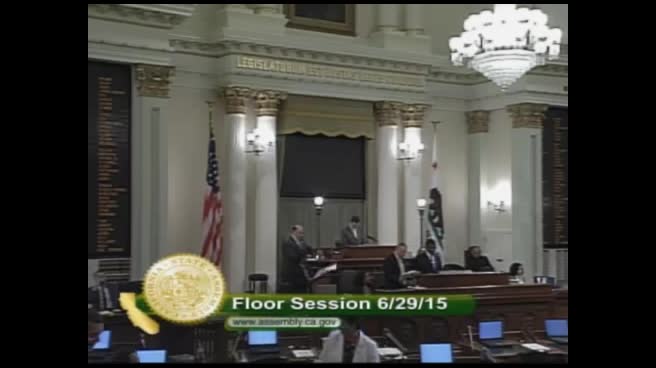
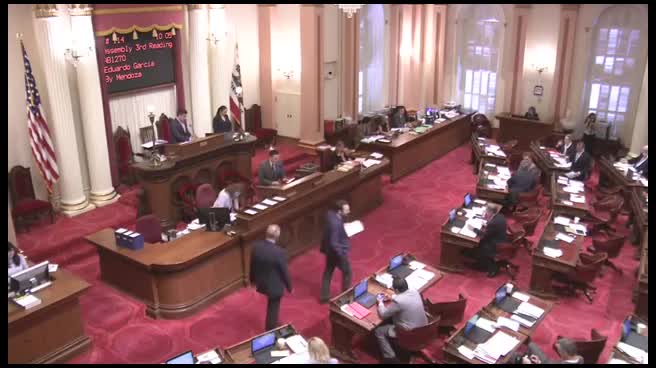
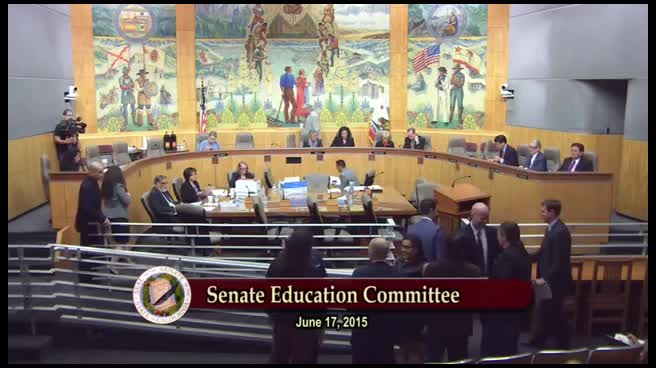
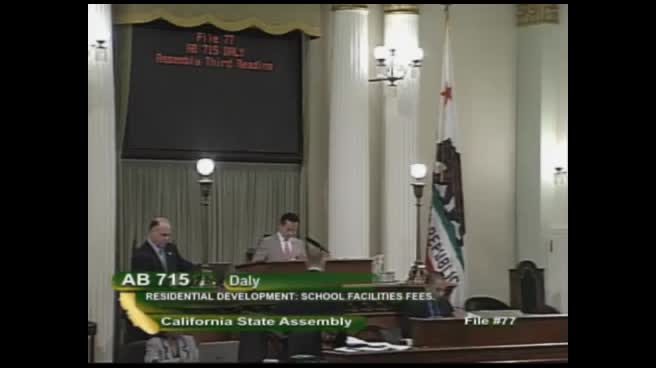
Bill Author

Bill Co-Author(s):