ACR 161: Compost Awareness Week.
- Session Year: 2023-2024
- House: Assembly
- Latest Version Date: 2024-06-05
Current Status:
Passed
(2024-06-05: Chaptered by Secretary of State - Res. Chapter 90, Statutes of 2024.)
Introduced
In Committee
First Chamber
In Committee
Second Chamber
Enacted
This measure would designate the week of May 5, 2024, through May 11, 2024, as Compost Awareness Week.
This measure would designate the week of May 5, 2024, through May 11, 2024, as Compost Awareness Week.
This measure would designate the week of May 5, 2024, through May 11, 2024, as Compost Awareness Week.
WHEREAS, Composting is an effective form of waste reduction, reuse, and recycling, and since organic materials make up approximately 30 percent of the material going to landfills, composting is becoming one of the primary methods communities use to reach waste diversion goals and create sustainable communities; and
WHEREAS, Chapter 719 of the Statutes of 2014 phased out diversion credits for organic alternative daily cover in landfills, Chapter 727 of the Statutes of 2014 statutorily mandated commercial recycling of organics, and Chapter 593 of the Statutes of 2015 required organic waste recycling planning by local jurisdictions; and
WHEREAS, Section 42649.87 of the Public Resources Code requires the California Environmental Protection Agency, in coordination with the Department of Resources Recycling and Recovery, the State Water Resources Control Board, the State Air Resources Board, the Department of Food and Agriculture, and the Department of Forestry and Fire Protection, to develop and implement policies to aid in diverting organic waste from landfills by promoting the use of agricultural, forestry, and urban organic waste as a feedstock for compost and by promoting the appropriate use of that compost throughout the state to improve the states soil organic matter; and
WHEREAS, Chapter 395 of the Statutes of 2016 required the State Air Resources Board to incorporate new targets for landfill diversion and reduction of methane emissions from livestock and dairy operations in its comprehensive short-lived climate pollutant strategy, and specifically recognized the important role composting has in achieving those targets; and
WHEREAS, Organic residual materials, including yard trimmings, vegetable cuttings, biosolids, food scraps, manures, rice hulls, almond hulls, and hay shavings, are being composted and converted into beneficial compost products; and
WHEREAS, Returning organic resources, remanufactured into compost and applied to the soil, reduces water consumption by over 30 percent on all soil types, conserves water during extreme drought or flooding conditions, decreases dependence on chemical fertilizers and pesticides, and decreases erosion and nonpoint source pollution; and
WHEREAS, Composting is recognized by the State Air Resources Board as an important tool to sequester massive amounts of carbon in Californias soils to help immediately reverse global warming by drawing down excess carbon dioxide from the atmosphere and storing it deep in Californias soils; and
WHEREAS, Communities, through their local governments, highway departments, soil conservation services, and public works professionals, can have positive impacts on clean water, soil, climate change, and landfill diversion by using compost for public works projects; and
WHEREAS, International Compost Awareness Week is a multimedia publicity and educational initiative to showcase compost production and demonstrate compost use initiated and supported by compost industry organizations around the world; and
WHEREAS, Composting creates green jobs and infrastructure for cities and states that implement composting programs; and
WHEREAS, The United States Composting Council, Canada, and the United Kingdom have declared the first week of May to be the annual International Compost Awareness Week; and
WHEREAS, All California citizens produce organic residual feedstocks that are remanufactured into compost, from their backyards to their regional industrial scale compost production facilities, collectively producing over 10 million tons of compost and mulch each year; and
WHEREAS, California intends to almost double its compost production capacity in the next five years; and
WHEREAS, The theme for 2024, Compost...Natures Climate Champion, is a great current message for California citizens, municipal leaders, and farmers to continue to learn the benefits to communities, property owners, and agricultural growers; now, therefore, be it
Resolved by the Assembly of the State of California, the Senate thereof concurring, That the week of May 5, 2024, through May 11, 2024, is hereby designated as Compost Awareness Week; and be it further
Resolved, That the Chief Clerk of the Assembly transmit copies of this resolution to the author for appropriate distribution.
|
Date
|
Status
|
|---|---|
| Jun 5, 2024 | Chaptered by Secretary of State - Res. Chapter 90, Statutes of 2024. |
| Jun 5, 2024 | Enrolled and filed with the Secretary of State at 11:30 a.m. |
| May 30, 2024 | In Assembly. Ordered to Engrossing and Enrolling. |
| May 30, 2024 | Adopted and to Assembly. (Ayes 37. Noes 0. Page 4267.) |
| May 28, 2024 | Ordered to special consent calendar. |
| May 22, 2024 | From committee: Ordered to third reading. |
| May 13, 2024 | In Senate. To Com. on RLS. |
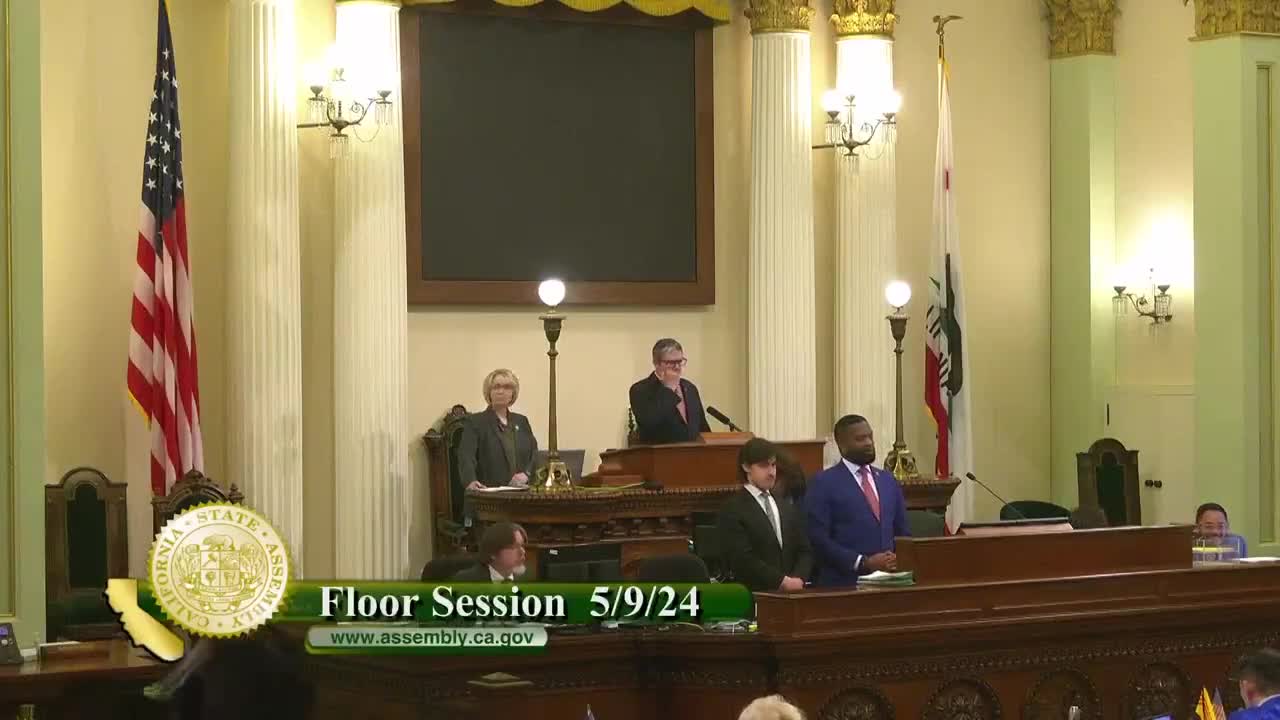
| May 9, 2024 | Adopted and to Senate. (Page 5150.) |
| May 9, 2024 | Coauthors revised. |
| Apr 29, 2024 | From committee: Be adopted. Ordered to Third Reading. (Ayes 9. Noes 0.) (April 29). |
| Mar 18, 2024 | Referred to Com. on RLS. |
| Mar 13, 2024 | From printer. |
| Mar 12, 2024 | Introduced. To print. |
|
Date
|
Description
|
Location
|
Votes
|
|
|---|---|---|---|---|
| May 30, 2024 | Special Consent ACR161 Connolly et al. | Senate Floor |
Passed |
|
| Apr 29, 2024 | Be adopted. To third reading. | Assembly Standing Committee on Rules |
Passed |
This list shows positions taken on this bill by organizations on the date displayed, which is linked to the original source.
Positions by individuals are not included.
|
Organization
|
Position
|
Date
|
|---|---|---|
| CA Compost Coalition | ** Support |
SENATE RULES COMMITTEE Office of Senate Floor Analyses (916) 651-1520 Fax: (916) 327-4478 | ACR 161 |
THIRD READING
Bill No: ACR 161
Author: Connolly (D), et al.
Introduced: 3/12/24
Vote: 21
ASSEMBLY FLOOR: Read and adopted, 5/9/24
SUBJECT: Compost Awareness Week
SOURCE: CA Compost Coalition
DIGEST:
This measure designates the week of May 5, 2024, through May 11, 2024, as Compost Awareness Week.
ANALYSIS: This resolution makes the following legislative findings:
- Composting is an effective form of waste reduction, reuse, and recycling, and since organic materials make up approximately 30 percent of the material going to landfills, composting is becoming one of the primary methods communities use to reach waste diversion goals and create sustainable communities.
- Chapter 719 of the Statutes of 2014 phased out diversion credits for organic alternative daily cover in landfills, Chapter 727 of the Statutes of 2014 statutorily mandated commercial recycling of organics, and Chapter 593 of the Statutes of 2015 required organic waste recycling planning by local jurisdictions.
- Section 42649.87 of the Public Resources Code requires the California Environmental Protection Agency, in coordination with the Department of Resources Recycling and Recovery, the State Water Resources Control Board, the State Air Resources Board, the Department of Food and Agriculture, and the Department of Forestry and Fire Protection, to “develop and implement policies to aid in diverting organic waste from landfills by promoting the use of agricultural, forestry, and urban organic waste as a feedstock for compost and by promoting the appropriate use of that compost throughout the state to improve the state’s soil organic matter”.
- Chapter 395 of the Statutes of 2016 required the State Air Resources Board to incorporate new targets for landfill diversion and reduction of methane emissions from livestock and dairy operations in its comprehensive short-lived climate pollutant strategy, and specifically recognized the important role composting has in achieving those targets. Composting is recognized by the State Air Resources Board as an important tool to sequester massive amounts of carbon in California’s soils to help immediately reverse global warming by drawing down excess carbon dioxide from the atmosphere and storing it deep in California’s soils.
- The theme for 2024, “Compost…Nature’s Climate Champion,” is a great current message for California citizens, municipal leaders, and farmers to continue to learn the benefits to communities, property owners, and agricultural growers.
This measure designates the week of May 5, 2024, through May 11, 2024, as Compost Awareness Week.
Comments
According to the author, “Compost Awareness Week provides us with a valuable opportunity to raise awareness about the benefits of composting and to encourage individuals, businesses, and communities to embrace this simple yet impactful practice. I am excited to celebrate composting this week as a critical tool to support the state’s agriculture and address the changing climate.”
Related/Prior Legislation
The following are the most recent measures relating to Compost Awareness Week:
- ACR 36 (Connolly, Resolution Chapter 78, Statutes of 2023)
- SCR 104 (Limón, Resolution Chapter 63, Statutes of 2022)
- ACR 191 (Rodriguez, 2020) – died in the Assembly.
- SCR 43 (Stern, Resolution Chapter 109, Statutes of 2019).
FISCAL EFFECT: Appropriation: No Fiscal Com.: No Local: No
SUPPORT: (Verified 5/21/24)
CA Compost Coalition (source)
OPPOSITION: (Verified 5/21/24)
None received
Prepared by: Russell Manning / SFA / (916) 651-1520
5/22/24 12:11:21
**** END ****
ASSEMBLY THIRD READING
ATR Bill Id:ACR 161
Author:(Connolly)
As Introduced Ver:March 12, 2024
Majority vote
SUMMARY
Designates the week of May 5, 2024, through May 11, 2024, as Compost Awareness Week.
Major Provisions
- Composting is an effective form of waste reduction, reuse, and recycling, and since organic materials make up over 30%of the material going to landfills, composting is becoming one of the primary methods communities use to reach waste diversion goals and create sustainable communities.
- Section 42649.87 of the Public Resources Code requires the California Environmental Protection Agency, in coordination with the Department of Resources Recycling and Recovery, the State Water Resources Control Board, the State Air Resources Board, the Department of Food and Agriculture, and the Department of Forestry and Fire Protection, to "develop and implement policies to aid in diverting organic waste from landfills by promoting the use of agricultural, forestry, and urban organic waste as a feedstock for compost and by promoting the appropriate use of that compost throughout the state to improve the state's soil organic matter."
- Organic residual materials, including yard trimmings, vegetable cuttings, biosolids, food scraps, manures, rice hulls, almond hulls, and hay shavings, are being composted and converted into beneficial compost products.
- Returning organic resources, remanufactured into compost and applied to the soil, reduces water consumption by over 30%on all soil types, conserves water during extreme drought or flooding conditions, decreases dependence on chemical fertilizers and pesticides, and decreases erosion and nonpoint source pollution.
- Communities, through their local governments, highway departments, soil conservation services, and public works professionals, can have positive impacts on clean water, soil, climate change, and landfill diversion by using compost for public works projects.
- Composting creates green jobs and infrastructure for cities and states that implement composting programs. California intends to almost double its compost production capacity in the next five years.
- All California citizens produce organic residual feedstocks that are remanufactured into compost, from their backyards to their regional industrial scale compost production facilities, collectively producing over 10 million tons of compost and mulch each year.
- The theme for 2024, "Compost…Nature's Climate Champion," is a great current message for California citizens, municipal leaders, and farmers to continue to learn the benefits to communities, property owners, and agricultural growers.
COMMENTS
According to the Author
I'm proud to champion this resolution on International Compost Awareness Week, the largest and most comprehensive education initiative of the compost industry. It's celebrated nationwide and in other countries each year during the first full week of May. The goal is to work together to raise public awareness on why we should be composting our organics, recycling, and using compost. This year's theme is "Compost...Nature's Climate Champion".
Arguments in Support
None on file.
Arguments in Opposition
None on file.
FISCAL COMMENTS
No fiscal impact. This resolution is keyed non-fiscal by Legislative Counsel.
VOTES
ASM RULES: 9-0-2
YES: Pacheco, Flora, Holden, Jones-Sawyer, Low, Maienschein, Dixon, Ting, Waldron
ABS, ABST OR NV: Cervantes, Friedman
UPDATED
VERSION: March 12, 2024
CONSULTANT: Michael Erke / RLS. / (916) 319-2800 FN: 0002813
Date of Hearing: April 29, 2024
ASSEMBLY COMMITTEE ON RULES
Blanca Pacheco, Chair
ABPCA Bill Id:ACR 161 (
Author:Connolly) – As Introduced Ver:March 12, 2024
SUBJECT: Compost Awareness Week.
SUMMARY: Designates the week of May 5, 2024, through May 11, 2024, as Compost Awareness Week. Specifically, this resolution makes the following legislative findings:
- Composting is an effective form of waste reduction, reuse, and recycling, and since organic materials make up over 30 percent of the material going to landfills, composting is becoming one of the primary methods communities use to reach waste diversion goals and create sustainable communities.
- Section 42649.87 of the Public Resources Code requires the California Environmental Protection Agency, in coordination with the Department of Resources Recycling and Recovery, the State Water Resources Control Board, the State Air Resources Board, the Department of Food and Agriculture, and the Department of Forestry and Fire Protection, to “develop and implement policies to aid in diverting organic waste from landfills by promoting the use of agricultural, forestry, and urban organic waste as a feedstock for compost and by promoting the appropriate use of that compost throughout the state to improve the state’s soil organic matter.”
- Organic residual materials, including yard trimmings, vegetable cuttings, biosolids, food scraps, manures, rice hulls, almond hulls, and hay shavings, are being composted and converted into beneficial compost products.
- Returning organic resources, remanufactured into compost and applied to the soil, reduces water consumption by over 30 percent on all soil types, conserves water during extreme drought or flooding conditions, decreases dependence on chemical fertilizers and pesticides, and decreases erosion and nonpoint source pollution.
- Communities, through their local governments, highway departments, soil conservation services, and public works professionals, can have positive impacts on clean water, soil, climate change, and landfill diversion by using compost for public works projects.
- Composting creates green jobs and infrastructure for cities and states that implement composting programs. California intends to almost double its compost production capacity in the next five years.
- All California citizens produce organic residual feedstocks that are remanufactured into compost, from their backyards to their regional industrial scale compost production facilities, collectively producing over 10 million tons of compost and mulch each year.
- The theme for 2024, “Compost…Nature’s Climate Champion,” is a great current message for California citizens, municipal leaders, and farmers to continue to learn the benefits to communities, property owners, and agricultural growers.
FISCAL EFFECT: This resolution is keyed non-fiscal by Legislative Counsel.
REGISTERED SUPPORT / OPPOSITION:
Support
None on file
Opposition
None on file
Analysis Prepared by: Michael Erke / RLS. / (916) 319-2800
Bill Author

Bill Co-Author(s):