AB 72: Health care coverage: out-of-network coverage.
- Session Year: 2015-2016
- House: Assembly
- Latest Version Date: 2016-09-23
Existing law, the Knox-Keene Health Care Service Plan Act of 1975, provides for the licensure and regulation of health care service plans by the Department of Managed Health Care. A willful violation of the act is a crime. Existing law requires a health care service plan to reimburse providers for emergency services and care provided to its enrollees, until the care results in stabilization of the enrollee. Existing law prohibits a health care service plan from requiring a provider to obtain authorization prior to the provision of emergency services and care necessary to stabilize the enrollees emergency medical care, as specified.
Existing law also provides for the regulation of health insurers by the Insurance Commissioner. Existing law requires a health insurance policy issued, amended, or renewed on or after January 1, 2014, that provides or covers benefits with respect to services in an emergency department of a hospital to cover emergency services without the need for prior authorization, regardless of whether the provider is a participating provider, and subject to the same cost sharing required if the services were provided by a participating provider, as specified.
This bill would require a health care service plan contract or health insurance policy issued, amended, or renewed on or after July 1, 2017, to provide that if an enrollee or insured receives covered services from a contracting health facility, as defined, at which, or as a result of which, the enrollee or insured receives covered services provided by a noncontracting individual health professional, as defined, the enrollee or insured would be required to pay the noncontracting individual health professional only the same cost sharing required if the services were provided by a contracting individual health professional, which would be referred to as the in-network cost-sharing amount. The bill would prohibit an enrollee or insured from owing the noncontracting individual health professional at the contracting health facility more than the in-network cost-sharing amount if the noncontracting individual health professional receives reimbursement for services provided to the enrollee or insured at a contracting health facility from the health care service plan or health insurer. However, the bill would make an exception from this prohibition if the enrollee or insured provides written consent that satisfies specified criteria. The bill would require a noncontracting individual health professional who collects more than the in-network cost-sharing amount from the enrollee or insured to refund any overpayment to the enrollee or insured, as specified, and would provide that interest on any amount not refunded to the enrollee or insured shall accrue at 15% per annum, as specified.
Existing law requires a contract between a health care service plan and a provider, or a contract between an insurer and a provider, to contain provisions requiring a fast, fair, and cost-effective dispute resolution mechanism under which providers may submit disputes to the plan or insurer. Existing law requires that dispute resolution mechanism also be made accessible to a noncontracting provider for the purpose of resolving billing and claims disputes.
This bill would require the department and the commissioner to each establish, by September 1, 2017, an independent dispute resolution process that would allow a noncontracting individual health professional who rendered services at a contracting health facility, or a plan or insurer, to appeal a claim payment dispute, as specified. The bill would authorize the department and the commissioner to contract with one or more independent dispute resolution organizations to conduct the independent dispute resolution process, as specified. Contracts entered into pursuant to these provisions would be exempt from specified statutory provisions and related state agency review and approval requirements. The bill would provide that the decision of the organization would be binding on the parties. The bill would require a plan or insurer to base reimbursement for covered services on the amount the individual health professional would have been reimbursed by Medicare for the same or similar services in the general geographic area in which the services were rendered pursuant to a specified methodology and would specify, among other responsibilities, the duties of health care service plans, their delegated entities, and health insurers in identifying and calculating the applicable reimbursement rates, as well as various related duties of the department and the commissioner. The bill would require the department and the commissioner to report on the data and information provided in the independent dispute resolution process to the Governor and other specified recipients by January 1, 2019. The bill would require a noncontracting individual health professional, health care service plan or delegated entity, or health insurer that disputes that claim reimbursement to utilize the independent dispute resolution process. The bill would provide that these provisions do not apply to emergency services and care, as defined.
Existing constitutional provisions require that a statute that limits the right of access to the meetings of public bodies or the writings of public officials and agencies be adopted with findings demonstrating the interest protected by the limitation and the need for protecting that interest.
This bill would make legislative findings to that effect.
Because a willful violation of the bills provisions relative to a health care service plan would be a crime, the bill would impose a state-mandated local program.
The California Constitution requires the state to reimburse local agencies and school districts for certain costs mandated by the state. Statutory provisions establish procedures for making that reimbursement.
This bill would provide that no reimbursement is required by this act for a specified reason.
Existing law, the Knox-Keene Health Care Service Plan Act of 1975, provides for the licensure and regulation of health care service plans by the Department of Managed Health Care. A willful violation of the act is a crime. Existing law requires a health care service plan to reimburse providers for emergency services and care provided to its enrollees, until the care results in stabilization of the enrollee. Existing law prohibits a health care service plan from requiring a provider to obtain authorization prior to the provision of emergency services and care necessary to stabilize the enrollees emergency medical care, as specified.
Existing law also provides for the regulation of health insurers by the Insurance Commissioner. Existing law requires a health insurance policy issued, amended, or renewed on or after January 1, 2014, that provides or covers benefits with respect to services in an emergency department of a hospital to cover emergency services without the need for prior authorization, regardless of whether the provider is a participating provider, and subject to the same cost sharing required if the services were provided by a participating provider, as specified.
This bill would require a health care service plan contract or health insurance policy issued, amended, or renewed on or after July 1, 2017, to provide that if an enrollee or insured receives covered services from a contracting health facility, as defined, at which, or as a result of which, the enrollee or insured receives covered services provided by a noncontracting individual health professional, as defined, the enrollee or insured would be required to pay the noncontracting individual health professional only the same cost sharing required if the services were provided by a contracting individual health professional, which would be referred to as the in-network cost-sharing amount. The bill would prohibit an enrollee or insured from owing the noncontracting individual health professional at the contracting health facility more than the in-network cost-sharing amount if the noncontracting individual health professional receives reimbursement for services provided to the enrollee or insured at a contracting health facility from the health care service plan or health insurer. However, the bill would make an exception from this prohibition if the enrollee or insured provides written consent that satisfies specified criteria. The bill would require a noncontracting individual health professional who collects more than the in-network cost-sharing amount from the enrollee or insured to refund any overpayment to the enrollee or insured, as specified, and would provide that interest on any amount not refunded to the enrollee or insured shall accrue at 15% per annum, as specified.
Existing law requires a contract between a health care service plan and a provider, or a contract between an insurer and a provider, to contain provisions requiring a fast, fair, and cost-effective dispute resolution mechanism under which providers may submit disputes to the plan or insurer. Existing law requires that dispute resolution mechanism also be made accessible to a noncontracting provider for the purpose of resolving billing and claims disputes.
This bill would require the department and the commissioner to each establish establish, by September 1, 2017, an independent dispute resolution process that would allow a noncontracting individual health professional who rendered services at a contracting health facility, or a plan or insurer, to appeal a claim payment dispute, as specified. The bill would authorize the department and the commissioner to contract with one or more independent dispute resolution organizations to conduct the independent dispute resolution process, as specified. Contracts entered into pursuant to these provisions would be exempt from specified statutory provisions and related state agency review and approval requirements. The bill would provide that the decision of the organization would be binding on the parties. The bill would require a plan or insurer to base reimbursement for covered services on the amount the individual health professional would have been reimbursed by Medicare for the same or similar services in the general geographic area in which the services were rendered pursuant to a specified methodology. methodology and would specify, among other responsibilities, the duties of health care service plans, their delegated entities, and health insurers in identifying and calculating the applicable reimbursement rates, as well as various related duties of the department and the commissioner. The bill would require the department and the commissioner to report the above information on the data and information provided in the independent dispute resolution process to the Governor and other specified recipients by January 1, 2020. 2019. The bill would require a noncontracting individual health professional who professional, health care service plan or delegated entity, or health insurer that disputes that claim reimbursement to utilize the independent dispute resolution process. The bill would provide that these provisions do not apply to emergency services and care, as defined.
Existing constitutional provisions require that a statute that limits the right of access to the meetings of public bodies or the writings of public officials and agencies be adopted with findings demonstrating the interest protected by the limitation and the need for protecting that interest.
This bill would make legislative findings to that effect.
Because a willful violation of the bills provisions relative to a health care service plan would be a crime, the bill would impose a state-mandated local program.
The California Constitution requires the state to reimburse local agencies and school districts for certain costs mandated by the state. Statutory provisions establish procedures for making that reimbursement.
This bill would provide that no reimbursement is required by this act for a specified reason.
Existing law, the Knox-Keene Health Care Service Plan Act of 1975, provides for the licensure and regulation of health care service plans by the Department of Managed Health Care. A willful violation of the act is a crime. Existing law requires a health care service plan to reimburse providers for emergency services and care provided to its enrollees, until the care results in stabilization of the enrollee. Existing law prohibits a health care service plan from requiring a provider to obtain authorization prior to the provision of emergency services and care necessary to stabilize the enrollees emergency medical care, as specified.
Existing law also provides for the regulation of health insurers by the Insurance Commissioner. Existing law requires a health insurance policy issued, amended, or renewed on or after January 1, 2014, that provides or covers benefits with respect to services in an emergency department of a hospital to cover emergency services without the need for prior authorization, regardless of whether the provider is a participating provider, and subject to the same cost sharing required if the services were provided by a participating provider, as specified.
This bill would require a health care service plan contract or health insurance policy issued, amended, or renewed on or after July 1, 2017, to provide that if an enrollee or insured receives covered services from a contracting health facility, as defined, at which, or as a result of which, the enrollee or insured receives covered services provided by a noncontracting individual health professional, as defined, the enrollee or insured would be required to pay the noncontracting individual health professional only the same cost sharing required if the services were provided by a contracting individual health professional, which would be referred to as the in-network cost-sharing amount. The bill would prohibit an enrollee or insured from owing the noncontracting individual health professional at the contracting health facility more than the in-network cost-sharing amount if the noncontracting individual health professional receives reimbursement for services provided to the enrollee or insured at a contracting health facility from the health care service plan or health insurer. However, the bill would make an exception from this prohibition if the enrollee or insured provides written consent that satisfies specified criteria. The bill would require a noncontracting individual health professional who collects more than the in-network cost-sharing amount from the enrollee or insured to refund any overpayment to the enrollee or insured, as specified, and would provide that interest on any amount not refunded to the enrollee or insured shall accrue at 15% per annum, as specified.
Existing law requires a contract between a health care service plan and a provider, or a contract between an insurer and a provider, to contain provisions requiring a fast, fair, and cost-effective dispute resolution mechanism under which providers may submit disputes to the plan or insurer. Existing law requires that dispute resolution mechanism also be made accessible to a noncontracting provider for the purpose of resolving billing and claims disputes.
This bill would require the department and the commissioner to each establish an independent dispute resolution process that would allow a noncontracting individual health professional who rendered services at a contracting health facility, or a plan or insurer, to appeal a claim payment dispute, as specified. The bill would authorize the department and the commissioner to contract with one or more independent dispute resolution organizations to conduct the independent dispute resolution process, as specified. The bill would provide that the decision of the organization would be binding on the parties. The bill would require a plan or insurer to base reimbursement for covered services on the amount the individual health professional would have been reimbursed by Medicare for the same or similar services in the general geographic area in which the services were rendered. The plan or insurer would be required to provide specified information relating to the determination of the average contracted rate by July 1, 2017, and to adjust the rate each year thereafter, as prescribed. rendered pursuant to a specified methodology. The bill would require the department and the commissioner to report the above information to the Governor and other specified recipients by January 1, 2020. The bill would require a noncontracting individual health professional who disputes that claim reimbursement to utilize the independent dispute resolution process. The bill would provide that these provisions do not apply to emergency services and care, as defined.
Existing constitutional provisions require that a statute that limits the right of access to the meetings of public bodies or the writings of public officials and agencies be adopted with findings demonstrating the interest protected by the limitation and the need for protecting that interest.
This bill would make legislative findings to that effect.
Because a willful violation of the bills provisions relative to a health care service plan would be a crime, the bill would impose a state-mandated local program.
The California Constitution requires the state to reimburse local agencies and school districts for certain costs mandated by the state. Statutory provisions establish procedures for making that reimbursement.
This bill would provide that no reimbursement is required by this act for a specified reason.
Existing law, the Knox-Keene Health Care Service Plan Act of 1975, provides for the licensure and regulation of health care service plans by the Department of Managed Health Care. A willful violation of the act is a crime. Existing law requires a health care service plan to reimburse providers for emergency services and care provided to its enrollees, until the care results in stabilization of the enrollee. Existing law prohibits a health care service plan from requiring a provider to obtain authorization prior to the provision of emergency services and care necessary to stabilize the enrollees emergency medical care, as specified.
Existing law also provides for the regulation of health insurers by the Insurance Commissioner. Existing law requires a health insurance policy issued, amended, or renewed on or after January 1, 2014, that provides or covers benefits with respect to services in an emergency department of a hospital to cover emergency services without the need for prior authorization, regardless of whether the provider is a participating provider, and subject to the same cost sharing required if the services were provided by a participating provider, as specified.
This bill would require a health care service plan contract or health insurance policy issued, amended, or renewed on or after July 1, 2017, to provide that if an enrollee or insured receives covered services from a contracting health facility, as defined, at which, or as a result of which, the enrollee or insured receives covered services provided by a noncontracting individual health professional, as defined, the enrollee or insured would be required to pay the noncontracting individual health professional only the same cost sharing required if the services were provided by a contracting individual health professional, which would be referred to as the in-network cost-sharing amount. The bill would require the in-network cost-sharing amount to be collected by the health care service plan or health insurer, as specified. The bill would prohibit an enrollee or insured from owing the noncontracting individual health professional at the contracting health facility more than the in-network cost-sharing amount if the noncontracting individual health professional receives reimbursement for services provided to the enrollee or insured at a contracting health facility from the health care service plan or health insurer. However, the bill would make an exception from this prohibition if the enrollee or insured provides written consent that satisfies specified criteria. The bill would require a noncontracting individual health professional who collects any more than the in-network cost-sharing amount from the enrollee or insured to refund the amount any overpayment to the enrollee or insured, as specified, and would provide that interest on any amount not refunded to the enrollee or insured shall accrue at 15% per annum, as specified.
Existing law requires a contract between a health care service plan and a provider, or a contract between an insurer and a provider, to contain provisions requiring a fast, fair, and cost-effective dispute resolution mechanism under which providers may submit disputes to the plan or insurer. Existing law requires that dispute resolution mechanism also be made accessible to a noncontracting provider for the purpose of resolving billing and claims disputes.
This bill would require the department and the commissioner to each establish an independent dispute resolution process that would allow a noncontracting individual health professional who rendered services at a contracting health facility, or a plan or insurer, to appeal a claim payment dispute, as specified. The bill would authorize the department and the commissioner to contract with one or more independent dispute resolution organizations to conduct the independent dispute resolution process, as specified. The bill would provide that the decision of the organization would be binding on the parties. The bill would require a plan or insurer to base reimbursement for covered services on the amount the individual health professional would have been reimbursed by Medicare for the same or similar services in the general geographic area in which the services were rendered. The plan or insurer would be required to provide specified information relating to the determination of the average contracted rate by July 1, 2017, and to adjust the rate each year thereafter, as prescribed. The bill would require the department and the commissioner to report the above information to the Governor and other specified recipients by January 1, 2020. The bill would require a noncontracting individual health professional who disputes that claim reimbursement to utilize the independent dispute resolution process. The bill would provide that these provisions do not apply to emergency services and care, as defined.
Existing constitutional provisions require that a statute that limits the right of access to the meetings of public bodies or the writings of public officials and agencies be adopted with findings demonstrating the interest protected by the limitation and the need for protecting that interest.
This bill would make legislative findings to that effect.
Because a willful violation of the bills provisions relative to a health care service plan would be a crime, the bill would impose a state-mandated local program.
The California Constitution requires the state to reimburse local agencies and school districts for certain costs mandated by the state. Statutory provisions establish procedures for making that reimbursement.
This bill would provide that no reimbursement is required by this act for a specified reason.
Existing law, the Knox-Keene Health Care Service Plan Act of 1975, provides for the licensure and regulation of health care service plans by the Department of Managed Health Care. A willful violation of the act is a crime. Existing law requires a health care service plan to reimburse providers for emergency services and care provided to its enrollees, until the care results in stabilization of the enrollee. Existing law prohibits a health care service plan from requiring a provider to obtain authorization prior to the provision of emergency services and care necessary to stabilize the enrollees emergency medical care, as specified.
Existing law also provides for the regulation of health insurers by the Insurance Commissioner. Existing law requires a health insurance policy issued, amended, or renewed on or after January 1, 2014, that provides or covers benefits with respect to services in an emergency department of a hospital to cover emergency services without the need for prior authorization, regardless of whether the provider is a participating provider, and subject to the same cost sharing required if the services were provided by a participating provider, as specified.
This bill would require a health care service plan contract or health insurance policy issued, amended, or renewed on or after July 1, 2017, to provide that if an enrollee or insured receives covered services from a contracting health facility, as defined, at which, or as a result of which, the enrollee or insured receives covered services provided by a noncontracting individual health professional, as defined, the enrollee or insured would be required to pay the noncontracting individual health professional only the same cost sharing required if the services were provided by a contracting individual health professional, which would be referred to as the in-network cost-sharing amount. The bill would require the in-network cost-sharing amount to be collected by the health care service plan or health insurer, as specified. The bill would prohibit an enrollee or insured from owing the noncontracting individual health professional at the contracting health facility more than the in-network cost-sharing amount if the noncontracting individual health professional receives reimbursement for services provided to the enrollee or insured at a contracting health facility from the health care service plan or health insurer. However, the bill would make an exception from this prohibition if the enrollee or insured provides written consent that satisfies specified criteria. The bill would require a noncontracting individual health professional who collects any amount from the enrollee or insured to refund the amount to the enrollee or insured, as specified, and would provide that interest on any amount not refunded to the enrollee or insured shall accrue at 15% per annum, as specified.
Existing law requires a contract between a health care service plan and a provider, or a contract between an insurer and a provider, to contain provisions requiring a fast, fair, and cost-effective dispute resolution mechanism under which providers may submit disputes to the plan or insurer. Existing law requires that dispute resolution mechanism also be made accessible to a noncontracting provider for the purpose of resolving billing and claims disputes.
This bill would require the department and the commissioner to each establish an independent dispute resolution process that would allow a noncontracting individual health professional who rendered services at a contracting health facility, or a plan or insurer, to appeal a claim payment dispute, as specified. The bill would authorize the department and the commissioner to contract with one or more independent dispute resolution organizations to conduct the independent dispute resolution process, as specified. The bill would provide that the decision of the organization would be binding on the parties. The bill would require a plan or insurer to base reimbursement for covered services on the amount the individual health professional would have been reimbursed by Medicare for the same or similar services in the general geographic area in which the services were rendered. The plan or insurer would be required to provide specified information relating to the determination of the average contracted rate by July 1, 2017, and to adjust the rate each year thereafter, as prescribed. The bill would require the department and the commissioner to report the above information to the Governor and other specified recipients by January 1, 2020. The bill would require a noncontracting individual health professional who disputes that claim reimbursement to utilize the independent dispute resolution process. The bill would provide that these provisions do not apply to emergency services and care, as defined.
Because a willful violation of the bills provisions relative to a health care service plan would be a crime, the bill would impose a state-mandated local program.
The California Constitution requires the state to reimburse local agencies and school districts for certain costs mandated by the state. Statutory provisions establish procedures for making that reimbursement.
This bill would provide that no reimbursement is required by this act for a specified reason.
Existing law provides for the formation of local health care districts and specifies district powers. The California Constitution prohibits the Legislature from imposing taxes for local purposes, but allows the Legislature to authorize local governments to impose them.
This bill, until January 1, 2026, would authorize the Eden Township Healthcare District to impose special taxes, as provided.
This bill would make legislative findings and declarations as to the necessity of a special statute for the Eden Township Healthcare District.
This bill would declare that it is to take effect immediately as an urgency statute.
Existing law provides for the formation of local health care districts and specifies district powers. The California Constitution prohibits the Legislature from imposing taxes for local purposes, but allows the Legislature to authorize local governments to impose them.
This bill bill, until January 1, 2026, would authorize the Eden Township Healthcare District to impose special taxes, as provided.
This bill would make legislative findings and declarations as to the necessity of a special statute for the Eden Township Healthcare District.
This bill would declare that it is to take effect immediately as an urgency statute.
Existing law provides for the formation of local health care districts and specifies district powers. The California Constitution prohibits the Legislature from imposing taxes for local purposes, but allows the Legislature to authorize local governments to impose them.
This bill would authorize the Eden Township Healthcare District to impose special taxes, as provided.
This bill would make legislative findings and declarations as to the necessity of a special statute for the Eden Township Healthcare District.
Existing law provides for the Medi-Cal program, which is administered by the State Department of Health Care Services and under which qualified low-income persons receive health care benefits. The Medi-Cal program is, in part, governed and funded by federal Medicaid provisions. Existing law provides for a demonstration project under the Medi-Cal program until October 31, 2015, to implement specified objectives, including better care coordination for seniors and persons with disabilities and maximization of opportunities to reduce the number of uninsured individuals.
This bill would require the State Department of Health Care Services to submit an application to the federal Centers for Medicare and Medicaid Services for a waiver to implement a demonstration project that, among other things, continues the states momentum and successes in innovation achieved under the demonstration project described above. The bill would require the department to consult with interested stakeholders and the Legislature in developing the waiver application. The bill would provide that the department only implement the waiver or demonstration project upon submittal of an implementation plan to the appropriate policy and fiscal committees of the Legislature at least 60 days prior to any appropriation.
This bill would declare that it is to take effect immediately as an urgency statute.
(a)(1) By September 1, 2017, the department shall establish an independent dispute resolution process for the purpose of processing and resolving a claim dispute between a health care service plan and a noncontracting individual health professional for services subject to subdivision (a) of Section 1371.9.
(2)Prior to initiating the independent dispute resolution process, the parties shall complete the plans internal process.
(3)If either the noncontracting individual health professional or the plan appeals a claim to the departments independent dispute resolution process, the other party shall participate in the appeal process as described in this section.
(b)(1)The department shall establish uniform written procedures for the submission, receipt, processing, and resolution of claim payment disputes pursuant to this section and any other guidelines for implementing this section.
(2)The department shall establish reasonable and necessary fees for the purpose of administering this section, to be paid by both parties.
(3)In establishing the independent dispute resolution process, the department shall permit the bundling of claims submitted to the same plan or the same delegated entity for the same or similar services by the same noncontracting individual health professional.
(4)The department shall permit a physician group, independent practice association, or other entity authorized to act on behalf of a noncontracting individual health professional to initiate and participate in the independent dispute resolution process.
(5)In deciding the dispute, the independent organization shall base its decision regarding the appropriate reimbursement on all relevant information.
(c)(1)The department may contract with one or more independent organizations to conduct the proceedings. The independent organization handling a dispute shall be independent of either party to the dispute.
(2)The department shall establish conflict-of-interest standards, consistent with the purposes of this section, that an organization shall meet in order to qualify to administer the independent dispute resolution program. The conflict-of-interest standards shall be consistent with the standards pursuant to subdivisions (c) and (d) of Section 1374.32.
(3)The department may contract with the same independent organization or organizations as the Department of Insurance.
(4)The department shall provide, upon the request of an interested person, a copy of all nonproprietary information, as determined by the director, filed with the department by an independent organization seeking to contract with the department to administer the independent dispute resolution process pursuant to this section. The department may charge a nominal fee to cover the costs of providing a copy of the information pursuant to this paragraph.
(5)The independent organization retained to conduct proceedings shall be deemed to be consultants for purposes of Section 43.98 of the Civil Code.
(6)Contracts entered into pursuant to the authority in this subdivision shall be exempt from Part 2 (commencing with Section 10100) of Division 2 of the Public Contract Code, Section 19130 of the Government Code, and Chapter 6 (commencing with Section 14825) of Part 5.5 of Division 3 of the Government Code and shall be exempt from the review or approval of any division of the Department of General Services.
(d)The decision obtained through the departments independent dispute resolution process shall be binding on both parties. The plan shall implement the decision obtained through the independent dispute resolution process. If dissatisfied, either party may pursue any right, remedy, or penalty established under any other applicable law.
(e)This section shall not apply to a Medi-Cal managed health care service plan or any entity that enters into a contract with the State Department of Health Care Services pursuant to Chapter 7 (commencing with Section 14000), Chapter 8 (commencing with Section 14200), and Chapter 8.75 (commencing with Section 14591) of Part 3 of Division 9 of the Welfare and Institutions Code.
(f)If a health care service plan delegates payment functions to a contracted entity, including, but not limited to, a medical group or independent practice association, then the delegated entity shall comply with this section.
(g)This section shall not apply to emergency services and care, as defined in Section 1317.1.
(h)The definitions in subdivision (f) of Section 1371.9 shall apply for purposes of this section.
(i)This section shall not be construed to alter a health care service plans obligations pursuant to Sections 1371 and 1371.4.
(j)Notwithstanding Chapter 3.5 (commencing with Section 11340) of Part 1 of Division 3 of Title 2 of the Government Code, the department may implement, interpret, or make specific this section by means of all-plan letters or similar instructions, without taking regulatory action, until the time regulations are adopted.
(k)By January 1, 2019, the department shall provide a report to the Governor, the President pro Tempore of the Senate, the Speaker of the Assembly, and the Senate and Assembly Committees on Health of the data and information provided in the independent dispute resolution process in a manner and format specified by the Legislature.
SEC. 2.Section 1371.31 is added to the Health and Safety Code, to read:1371.31.(a)(1)For services rendered subject to Section 1371.9, effective July 1, 2017, unless otherwise agreed to by the noncontracting individual health professional and the plan, the plan shall reimburse the greater of the average contracted rate or 125 percent of the amount Medicare reimburses on a fee-for-service basis for the same or similar services in the general geographic region in which the services were rendered. For the purposes of this section, average contracted rate means the average of the contracted commercial rates paid by the health plan or delegated entity for the same or similar services in the geographic region. This subdivision does not apply to subdivision (c) of Section 1371.9 or subdivision (b) of this section.
(2)(A)By July 1, 2017, each health care service plan and its delegated entities shall provide to the department all of the following:
(i)Data listing its average contracted rates for the plan for services most frequently subject to Section 1371.9 in each geographic region in which the services are rendered for the calendar year 2015.
(ii)Its methodology for determining the average contracted rate for the plan for services subject to Section 1371.9. The methodology to determine an average contracted rate shall ensure that the plan includes the highest and lowest contracted rates for the calendar year 2015.
(iii)The policies and procedures used to determine the average contracted rates under this subdivision.
(B)For each calendar year after the plans initial submission of the average contracted rate as specified in subparagraph (A) and until the standardized methodology under paragraph (3) is specified, a health care service plan and the plans delegated entities shall adjust the rate initially established pursuant to this subdivision by the Consumer Price Index for Medical Care Services, as published by the United States Bureau of Labor Statistics.
(3)(A)By January 1, 2019, the department shall specify a methodology that plans and delegated entities shall use to determine the average contracted rates for services most frequently subject to Section 1371.9. This methodology shall take into account, at a minimum, information from the independent dispute resolution process, the specialty of the individual health professional, and the geographic region in which the services are rendered. The methodology to determine an average contracted rate shall ensure that the plan includes the highest and lowest contracted rates.
(B)Health care service plans and delegated entities shall provide to the department the policies and procedures used to determine the average contracted rates in compliance with subparagraph (A).
(C)If, based on the health care service plans model, a health care service plan does not pay a statistically significant number or dollar amount of claims for services covered under Section 1371.9, the health care service plan shall demonstrate to the department that it has access to a statistically credible database reflecting rates paid to noncontracting individual health professionals for services provided in a geographic region and shall use that database to determine an average contracted rate required pursuant to paragraph (1).
(D)The department shall review the information filed pursuant to this subdivision as part of its examination of fiscal and administrative affairs pursuant to Section 1382.
(E)The average contracted rate data submitted pursuant to this section shall be confidential and not subject to disclosure under the California Public Records Act (Chapter 3.5 (commencing with Section 6250) of Division 7 of Title 1 of the Government Code).
(F)In developing the standardized methodology under this subdivision, the department shall consult with interested parties throughout the process of developing the standards, including the Department of Insurance, representatives of health plans, insurers, health care providers, hospitals, consumer advocates, and other stakeholders it deems appropriate. The department shall hold the first stakeholder meeting no later than July 1, 2017.
(4)A health care service plan shall include in its reports submitted to the department pursuant to Section 1367.035 and regulations adopted pursuant to that section, in a manner specified by the department, the number of payments made to noncontracting individual health professionals for services at a contracting health facility and subject to Section 1371.9, as well as other data sufficient to determine the proportion of noncontracting individual health professionals to contracting individual health professionals at contracting health facilities, as defined in subdivision (f) of Section 1371.9. The department shall include a summary of this information in its January 1, 2019, report required pursuant to subdivision (k) of Section 1371.30 and its findings regarding the impact of the act that added this section on health care service plan contracting and network adequacy.
(5)A health care service plan that provides services subject to Section 1371.9 shall meet the network adequacy requirements set forth in this chapter, including, but not limited to, subdivisions (d) and (e) of Section 1367 of this code and in Exhibits (H) and (I) of subdivision (d) of Section 1300.51 of, and Sections 1300.67.2 and 1300.67.2.1 of, Title 28 of the California Code of Regulations, including, but not limited to, inpatient hospital services and specialist physician services, and if necessary, the department may adopt additional regulations related to those services. This section shall not be construed to limit the directors authority under this chapter.
(6)For purposes of this section for Medicare fee-for-service reimbursement, geographic regions shall be the geographic regions specified for physician reimbursement for Medicare fee-for-service by the United States Department of Health and Human Services.
(7)A health care service plan shall authorize and permit assignment of the enrollees right, if any, to any reimbursement for health care services covered under the plan contract to a noncontracting individual health professional who furnishes the health care services rendered subject to Section 1371.9. Lack of assignment pursuant to this paragraph shall not be construed to limit the applicability of this section, Section 1371.30, or Section 1371.9.
(8)A noncontracting individual health professional, health care service plan, or health care service plans delegated entity who disputes the claim reimbursement under this section shall utilize the independent dispute resolution process described in Section 1371.30.
(b)If nonemergency services are provided by a noncontracting individual health professional consistent with subdivision (c) of Section 1371.9 to an enrollee who has voluntarily chosen to use his or her out-of-network benefit for services covered by a plan that includes coverage for out-of-network benefits, unless otherwise agreed to by the plan and the noncontracting individual health professional, the amount paid by the health care service plan shall be the amount set forth in the enrollees evidence of coverage. This payment is not subject to the independent dispute resolution process described in Section 1371.30.
(c)If a health care service plan delegates the responsibility for payment of claims to a contracted entity, including, but not limited to, a medical group or independent practice association, then the entity to which that responsibility is delegated shall comply with the requirements of this section.
(d)(1)A payment made by the health care service plan to the noncontracting health care professional for nonemergency services as required by Section 1371.9 and this section, in addition to the applicable cost sharing owed by the enrollee, shall constitute payment in full for nonemergency services rendered unless either party uses the independent dispute resolution process or other lawful means pursuant to Section 1371.30.
(2)Notwithstanding any other law, the amounts paid by a plan for services under this section shall not constitute the prevailing or customary charges, the usual fees to the general public, or other charges for other payers for an individual health professional.
(3)This subdivision shall not preclude the use of the independent dispute resolution process pursuant to Section 1371.30.
(e)This section shall not apply to a Medi-Cal managed health care service plan or any other entity that enters into a contract with the State Department of Health Care Services pursuant to Chapter 7 (commencing with Section 14000), Chapter 8 (commencing with Section 14200), and Chapter 8.75 (commencing with Section 14591) of Part 3 of Division 9 of the Welfare and Institutions Code.
(f)This section shall not apply to emergency services and care, as defined in Section 1317.1.
(g)The definitions in subdivision (f) of Section 1371.9 shall apply for purposes of this section.
(h)This section shall not be construed to alter a health care service plans obligations pursuant to Sections 1371 and 1371.4.
SEC. 3.Section 1371.9 is added to the Health and Safety Code, to read:1371.9.(a)(1)Except as provided in subdivision (c), a health care service plan contract issued, amended, or renewed on or after July 1, 2017, shall provide that if an enrollee receives covered services from a contracting health facility at which, or as a result of which, the enrollee receives services provided by a noncontracting individual health professional, the enrollee shall pay no more than the same cost sharing that the enrollee would pay for the same covered services received from a contracting individual health professional. This amount shall be referred to as the in-network cost-sharing amount.
(2)An enrollee shall not owe the noncontracting individual health professional more than the in-network cost-sharing amount for services subject to this section. At the time of payment by the plan to the noncontracting individual health professional, the plan shall inform the enrollee and the noncontracting individual health professional of the in-network cost-sharing amount owed by the enrollee.
(3)A noncontracting individual health professional shall not bill or collect any amount from the enrollee for services subject to this section except for the in-network cost-sharing amount. Any communication from the noncontracting individual health professional to the enrollee prior to the receipt of information about the in-network cost-sharing amount pursuant to paragraph (2) shall include a notice in 12-point bold type stating that the communication is not a bill and informing the enrollee that the enrollee shall not pay until he or she is informed by his or her health care service plan of any applicable cost sharing.
(4)(A)If the noncontracting individual health professional has received more than the in-network cost-sharing amount from the enrollee for services subject to this section, the noncontracting individual health professional shall refund any overpayment to the enrollee within 30 calendar days after receiving payment from the enrollee.
(B)If the noncontracting individual health professional does not refund any overpayment to the enrollee within 30 calendar days after being informed of the enrollees in-network cost-sharing amount, interest shall accrue at the rate of 15 percent per annum beginning with the date payment was received from the enrollee.
(C)A noncontracting individual health professional shall automatically include in his or her refund to the enrollee all interest that has accrued pursuant to this section without requiring the enrollee to submit a request for the interest amount.
(b)Except for services subject to subdivision (c), the following shall apply:
(1)Any cost sharing paid by the enrollee for the services subject to this section shall count toward the limit on annual out-of-pocket expenses established under Section 1367.006.
(2)Cost sharing arising from services subject to this section shall be counted toward any deductible in the same manner as cost sharing would be attributed to a contracting individual health professional.
(3)The cost sharing paid by the enrollee pursuant to this section shall satisfy the enrollees obligation to pay cost sharing for the health service and shall constitute applicable cost sharing owed by the enrollee.
(c)For services subject to this section, if an enrollee has a health care service plan that includes coverage for out-of-network benefits, a noncontracting individual health professional may bill or collect from the enrollee the out-of-network cost sharing, if applicable, only when the enrollee consents in writing and that written consent demonstrates satisfaction of all the following criteria:
(1)At least 24 hours in advance of care, the enrollee shall consent in writing to receive services from the identified noncontracting individual health professional.
(2)The consent shall be obtained by the noncontracting individual health professional in a document that is separate from the document used to obtain the consent for any other part of the care or procedure. The consent shall not be obtained by the facility or any representative of the facility. The consent shall not be obtained at the time of admission or at any time when the enrollee is being prepared for surgery or any other procedure.
(3)At the time consent is provided, the noncontracting individual health professional shall give the enrollee a written estimate of the enrollees total out-of-pocket cost of care. The written estimate shall be based on the professionals billed charges for the service to be provided. The noncontracting individual health professional shall not attempt to collect more than the estimated amount without receiving separate written consent from the enrollee or the enrollees authorized representative, unless circumstances arise during delivery of services that were unforeseeable at the time the estimate was given that would require the provider to change the estimate.
(4)The consent shall advise the enrollee that he or she may elect to seek care from a contracted provider or may contact the enrollees health care service plan in order to arrange to receive the health service from a contracted provider for lower out-of-pocket costs.
(5)The consent and estimate shall be provided to the enrollee in the language spoken by the enrollee, if the language is a Medi-Cal threshold language, as defined in subdivision (d) of Section 128552.
(6)The consent shall also advise the enrollee that any costs incurred as a result of the enrollees use of the out-of-network benefit shall be in addition to in-network cost-sharing amounts and may not count toward the annual out-of-pocket maximum on in-network benefits or a deductible, if any, for in-network benefits.
(d)A noncontracting individual health professional who fails to comply with the requirements of subdivision (c) has not obtained written consent for purposes of this section. Under those circumstances, subdivisions (a) and (b) shall apply and subdivision (c) shall not apply.
(e)(1)A noncontracting individual health professional may advance to collections only the in-network cost-sharing amount, as determined by the plan pursuant to subdivision (a) or the out-of-network cost-sharing amount owed pursuant to subdivision (c), that the enrollee has failed to pay.
(2)The noncontracting individual health professional, or any entity acting on his or her behalf, including any assignee of the debt, shall not report adverse information to a consumer credit reporting agency or commence civil action against the enrollee for a minimum of 150 days after the initial billing regarding amounts owed by the enrollee under subdivision (a) or (c).
(3)With respect to an enrollee, the noncontracting individual health professional, or any entity acting on his or her behalf, including any assignee of the debt, shall not use wage garnishments or liens on primary residences as a means of collecting unpaid bills under this section.
(f)For purposes of this section and Sections 1371.30 and 1371.31, the following definitions shall apply:
(1)Contracting health facility means a health facility that is contracted with the enrollees health care service plan to provide services under the enrollees plan contract. A contracting health care facility includes, but is not limited to, the following providers:
(A)A licensed hospital.
(B)An ambulatory surgery or other outpatient setting, as described in subdivision (a), (d), (e), (g), or (h) of Section 1248.1.
(C)A laboratory.
(D)A radiology or imaging center.
(2)Cost sharing includes any copayment, coinsurance, or deductible, or any other form of cost sharing paid by the enrollee other than premium or share of premium.
(3)Individual health professional means a physician and surgeon or other professional who is licensed by this state to deliver or furnish health care services. For this purpose, an individual health professional shall not include a dentist, licensed pursuant to the Dental Practice Act (Chapter 4 (commencing with Section 1600) of Division 2 of the Business and Professions Code).
(4)In-network cost-sharing amount means an amount no more than the same cost sharing the enrollee would pay for the same covered service received from a contracting health professional. The in-network cost-sharing amount with respect to an enrollee with coinsurance shall be based on the amount paid by the plan pursuant to paragraph (1) of subdivision (a) of Section 1371.31.
(5)Noncontracting individual health professional means a physician and surgeon or other professional who is licensed by the state to deliver or furnish health care services and who is not contracted with the enrollees health care service product. For this purpose, a noncontracting individual health professional shall not include a dentist, licensed pursuant to the Dental Practice Act (Chapter 4 (commencing with Section 1600) of Division 2 of the Business and Professions Code). Application of this definition is not precluded by a noncontracting individual health professionals affiliation with a group.
(g)This section shall not be construed to require a health care service plan to cover services not required by law or by the terms and conditions of the health care service plan contract.
(h)This section shall not be construed to exempt a plan or provider from the requirements under Section 1371.4 or 1373.96, nor abrogate the holding in Prospect Medical Group, Inc. v. Northridge Emergency Medical Group (2009) 45 Cal.4th 497.
(i)If a health care service plan delegates payment functions to a contracted entity, including, but not limited to, a medical group or independent practice association, the delegated entity shall comply with this section.
(j)This section shall not apply to a Medi-Cal managed health care service plan or any other entity that enters into a contract with the State Department of Health Care Services pursuant to Chapter 7 (commencing with Section 14000), Chapter 8 (commencing with Section 14200), and Chapter 8.75 (commencing with Section 14591) of Part 3 of Division 9 of the Welfare and Institutions Code.
(k)This section shall not apply to emergency services and care, as defined in Section 1317.1.
SEC. 4.Section 10112.8 is added to the Insurance Code, to read:10112.8.(a)(1)Except as provided in subdivision (c), a health insurance policy issued, amended, or renewed on or after July 1, 2017, that provides benefits through contracts with providers at alternative rates of payment pursuant to Section 10133, shall provide that if an insured receives covered services from a contracting health facility at which, or as a result of which, the insured receives services provided by a noncontracting individual health professional, the insured shall pay no more than the same cost sharing that the insured would pay for the same covered services received from a contracting individual health professional. This amount shall be referred to as the in-network cost-sharing amount.
(2)Except as provided in subdivision (c), an insured shall not owe the noncontracting individual health professional more than the in-network cost-sharing amount for services subject to this section. At the time of payment by the insurer to the noncontracting individual health professional, the insurer shall inform the insured and the noncontracting individual health professional of the in-network cost-sharing amount owed by the insured.
(3)A noncontracting individual health professional shall not bill or collect any amount from the insured for services subject to this section except the in-network cost-sharing amount. Any communication from the noncontracting individual health professional to the insured prior to the receipt of information about the in-network cost-sharing amount pursuant to paragraph (2) shall include a notice in 12-point bold type stating that the communication is not a bill and informing the insured that the insured shall not pay until he or she is informed by his or her insurer of any applicable cost sharing.
(4)(A)If the noncontracting individual health professional has received more than the in-network cost-sharing amount from the insured for services subject to this section, the noncontracting individual health professional shall refund any overpayment to the insured within 30 calendar days after receiving payment from the insured.
(B)If the noncontracting individual health professional does not refund any overpayment to the insured within 30 calendar days after being informed of the insureds in-network cost-sharing amount, interest shall accrue at the rate of 15 percent per annum beginning with the date payment was received from the insured.
(C)A noncontracting individual health professional shall automatically include in his or her refund to the insured all interest that has accrued pursuant to this section without requiring the insured to submit a request for the interest amount.
(b)Except for services subject to subdivision (c), the following shall apply:
(1)Any cost sharing paid by the insured for the services subject to this section shall count toward the limit on annual out-of-pocket expenses established under Section 10112.28.
(2)Cost sharing arising from services subject to this section shall be counted toward any deductible in the same manner as cost sharing would be attributed to a contracting individual health professional.
(3)The cost sharing paid by the insured pursuant to this section shall satisfy the insureds obligation to pay cost sharing for the health service and shall constitute applicable cost sharing owed by the insured.
(c)For services subject to this section, if an insured has an insurance contract that includes coverage for out-of-network benefits, a noncontracting individual health professional may bill or collect from the insured the out-of-network cost sharing, if applicable, only when the insured consents in writing and that written consent demonstrates satisfaction of all the following criteria:
(1)At least 24 hours in advance of care, the insured shall consent in writing to receive services from the identified noncontracting individual health professional.
(2)The consent shall be obtained by the noncontracting individual health professional in a document that is separate from the document used to obtain the consent for any other part of the care or procedure. The consent shall not be obtained by the facility or any representative of the facility. The consent shall not be obtained at the time of admission or at any time when the enrollee is being prepared for surgery or any other procedure.
(3)At the time consent is provided the noncontracting individual health professional shall give the insured a written estimate of the insureds total out-of-pocket cost of care. The written estimate shall be based on the professionals billed charges for the service to be provided. The noncontracting individual health professional shall not attempt to collect more than the estimated amount without receiving separate written consent from the insured or the insureds authorized representative, unless circumstances arise during delivery of services that were unforeseeable at the time the estimate was given that would require the provider to change the estimate.
(4)The consent shall advise the insured that he or she may elect to seek care from a contracted provider or may contact the insureds insurer in order to arrange to receive the health service from a contracted provider for lower out-of-pocket costs.
(5)The consent and estimate shall be provided to the insured in the language spoken by the insured, if the language is a Medi-Cal threshold language, as defined in subdivision (d) of Section 128552 of the Health and Safety Code.
(6)The consent shall also advise the insured that any costs incurred as a result of the insureds use of the out-of-network benefit shall be in addition to in-network cost-sharing amounts and may not count toward the annual out-of-pocket maximum on in-network benefits or a deductible, if any, for in-network benefits.
(d)A noncontracting individual health professional who fails to comply with provisions of this subdivision has not obtained written consent for purposes of this section. Under those circumstances, subdivisions (a) and (b) shall apply and subdivision (c) shall not apply.
(e)(1)A noncontracting individual health professional may advance to collections only the in-network cost-sharing amount, as determined by the insurer pursuant to subdivision (a) or the out-of-network cost-sharing amount owed pursuant to subdivision (c), that the insured has failed to pay.
(2)The noncontracting individual health professional, or any entity acting on his or her behalf, including any assignee of the debt, shall not report adverse information to a consumer credit reporting agency or commence civil action against the insured for a minimum of 150 days after the initial billing regarding amounts owed by the insured under subdivision (a) or (c).
(3)With respect to an insured, a noncontracting individual health professional, or any entity acting on his or her behalf, including any assignee of the debt, shall not use wage garnishments or liens on primary residences as a means of collecting unpaid bills under this section.
(f)For purposes of this section and Sections 10112.81 and 10112.82, the following definitions shall apply:
(1)Contracting health facility means a health facility that is contracted with the insureds health insurer to provide services under the insureds policy. A contracting health care facility includes, but is not limited to, the following providers:
(A)A licensed hospital.
(B)An ambulatory surgery or other outpatient setting, as described in subdivision (a), (d), (e), (g), or (h) of Section 1248.1 of the Health and Safety Code.
(C)A laboratory.
(D)A radiology or imaging center.
(2)Cost sharing includes any copayment, coinsurance, or deductible, or any other form of cost sharing paid by the insured other than premium or share of premium.
(3)Individual health professional means a physician and surgeon or other professional who is licensed by the state to deliver or furnish health care services. For this purpose, an individual health professional shall not include a dentist, licensed pursuant to the Dental Practice Act (Chapter 4 (commencing with Section 1600) of Division 2 of the Business and Professions Code).
(4)In-network cost-sharing amount means an amount no more than the same cost sharing the insured would pay for the same covered service received from a contracting health professional. The in-network cost-sharing amount with respect to an insured with coinsurance shall be based on the amount paid by the insurer pursuant to paragraph (1) of subdivision (a) of Section 10112.82.
(5)Noncontracting individual health professional means a physician and surgeon or other professional who is licensed by the state to deliver or furnish health care services and who is not contracted with the insureds health insurance product. For this purpose, a noncontracting individual health professional shall not include a dentist, licensed pursuant to the Dental Practice Act (Chapter 4 (commencing with Section 1600) of Division 2 of the Business and Professions Code). Application of this definition is not precluded by a noncontracting individual health professionals affiliation with a group.
(g)This section shall not be construed to require an insurer to cover services not required by law or by the terms and conditions of the health insurance policy.
(h)If a health insurer delegates payment functions to a contracted entity, including, but not limited to, a medical group or independent practice association, the delegated entity shall comply with this section.
(i)This section shall not apply to emergency services and care, as defined in Section 1317.1 of the Health and Safety Code.
SEC. 5.Section 10112.81 is added to the Insurance Code, to read:10112.81.(a)(1)By September 1, 2017, the commissioner shall establish an independent dispute resolution process for the purpose of processing and resolving a claim dispute between a health insurer and a noncontracting individual health professional for services subject to subdivision (a) of Section 10112.8.
(2)Prior to initiating the independent dispute resolution process, the parties shall complete the insurers internal process.
(3)If either the noncontracting individual health professional or the insurer appeals a claim to the departments independent dispute resolution process, the other party shall participate in the appeal process as described in this section.
(b)(1)The commissioner shall establish uniform written procedures for the submission, receipt, processing, and resolution of claim payment disputes pursuant to this section and any other guidelines for implementing this section.
(2)The commissioner shall establish reasonable and necessary fees for the purpose of administering this section, to be paid by both parties.
(3)In establishing the independent dispute resolution process, the commissioner shall permit the bundling of claims submitted to the same insurer or the same delegated entity for the same or similar services by the same noncontracting individual health professional.
(4)The commissioner shall permit a physician group, independent practice association, or other entity authorized to act on behalf of a noncontracting individual health professional to initiate and participate in the independent dispute resolution process.
(5)In deciding the dispute, the independent organization shall base its decision regarding the appropriate reimbursement on all relevant information.
(c)(1)The commissioner may contract with one or more independent organizations to conduct the proceedings. The independent organization handling a dispute shall be independent of either party to the dispute.
(2)The commissioner shall establish conflict-of-interest standards, consistent with the purposes of this section, that an organization shall meet in order to qualify to administer the independent dispute resolution program. The conflict-of-interest standards shall be consistent with the standards pursuant to subdivisions (c) and (d) of Section 10169.2.
(3)The commissioner may contract with the same independent organization or organizations as the State Department of Managed Health Care.
(4)The commissioner shall provide, upon the request of an interested person, a copy of all nonproprietary information, as determined by the commissioner, filed with the department by an independent organization seeking to contract with the department to administer the independent dispute resolution process pursuant to this section. The department may charge a nominal fee to cover the costs of providing a copy of the information pursuant to this paragraph.
(5)Contracts entered into pursuant to the authority in this subdivision shall be exempt from Part 2 (commencing with Section 10100) of Division 2 of the Public Contract Code, Section 19130 of the Government Code, and Chapter 6 (commencing with Section 14825) of Part 5.5 of Division 3 of the Government Code and shall be exempt from the review or approval of any division of the Department of General Services.
(d)The decision obtained through the commissioners independent dispute resolution process shall be binding on both parties. The insurer shall implement the decision obtained through the independent dispute resolution process. If dissatisfied, either party may pursue any right, remedy, or penalty established under any other applicable law.
(e)If a health insurer delegates payment functions to a contracted entity, including, but not limited to, a medical group or independent practice association, then the delegated entity shall comply with this section.
(f)This section shall not apply to emergency services and care, as defined in Section 1317.1 of the Health and Safety Code.
(g)The definitions in subdivision (f) of Section 10112.8 shall apply for purposes of this section.
(h)This section shall not be construed to alter a health insurers obligations pursuant to Section 10123.13.
(i)Notwithstanding Chapter 3.5 (commencing with Section 11340) of Part 1 of Division 3 of Title 2 of the Government Code, the commissioner may implement, interpret, or make specific this section by issuing guidance, without taking regulatory action, until the time regulations are adopted.
(j)By January 1, 2019, the commissioner shall provide a report to the Governor, the President pro Tempore of the Senate, the Speaker of the Assembly, and the Senate and Assembly Committees on Health of the data and information provided in the independent dispute resolution process in a manner and format specified by the Legislature.
SEC. 6.Section 10112.82 is added to the Insurance Code, to read:10112.82.(a)(1)For services rendered subject to Section 10112.8, effective July 1, 2017, unless otherwise agreed to by the noncontracting individual health professional and the insurer, the insurer shall reimburse the greater of the average contracted rate or 125 percent of the amount Medicare reimburses on a fee-for-service basis for the same or similar services in the general geographic region in which the services were rendered. For the purposes of this section, average contracted rate means the average of the contracted commercial rates paid by the health insurer for the same or similar services in the geographic region. This subdivision does not apply to subdivision (c) of Section 10112.8 or subdivision (b) of this section.
(2)(A)By July 1, 2017, each health insurer shall provide to the commissioner all of the following:
(i)Data listing its average contracted rates for the insurer for services most frequently subject to Section 10112.8 in each geographic region in which the services are rendered for the calendar year 2015.
(ii)Its methodology for determining the average contracted rate for the insurer for services subject to Section 10112.8. The methodology to determine an average contracted rate shall ensure that the insurer includes the highest and lowest contracted rates for the calendar year 2015.
(iii)The policies and procedures used to determine the average contracted rates under this subdivision.
(B)For each calendar year after the health insurers initial submission of the average contracted rate as specified in subparagraph (A) and until the standardized methodology under paragraph (3) is specified, a health insurer shall adjust the rate initially established pursuant to this subdivision by the Consumer Price Index for Medical Care Services, as published by the United States Bureau of Labor Statistics.
(3)(A)By January 1, 2019, the commissioner shall specify a methodology that insurers shall use to determine the average contracted rates for services most frequently subject to Section 10112.8. This methodology shall take into account, at a minimum, information from the independent dispute resolution process, the specialty of the individual health professional, and the geographic region in which the services are rendered. The methodology to determine an average contracted rate shall ensure that the insurer includes the highest and lowest contracted rates.
(B)Insurers shall provide to the commissioner the policies and procedures used to determine the average contracted rates in compliance with subparagraph (A).
(C)The average contracted rate data submitted pursuant to this section shall be confidential and not subject to disclosure under the California Public Records Act (Chapter 3.5 (commencing with Section 6250) of Division 7 of Title 1 of the Government Code).
(D)In developing the standardized methodology under this subdivision, the commissioner shall consult with interested parties throughout the process of developing the standards, including the Department of Managed Health Care, representatives of health plans, insurers, health care providers, hospitals, consumer advocates, and other stakeholders it deems appropriate. The commissioner shall hold the first stakeholder meeting no later than July 1, 2017.
(4)A health insurer shall include in its reports submitted to the commissioner pursuant to Section 10133.5 and regulations adopted pursuant to that section, in a manner specified by the department, the number of payments made to noncontracting individual health professionals for services at a contracting health facility and subject to Section 10112.8, as well as other data sufficient to determine the proportion of noncontracting individual health professionals to contracting individual health professionals at contracting health facilities, as defined in subdivision (f) of Section 10112.8. The commissioner shall include a summary of this information in its January 1, 2019, report required pursuant to subdivision (j) of Section 10112.81 and its findings regarding the impact of the act that added this section on health insurer contracting and network adequacy.
(5)A health insurer that provides services subject to Section 10112.8 shall meet the network adequacy requirements set forth in this chapter, including, but not limited to, Section 10133.5 of this code and Sections 2240.1 and 2240.7 of Title 10 of the California Code of Regulations, including, but not limited to, inpatient hospital services and specialist physician services, and if necessary, the commissioner may adopt additional regulations related to those services. This section shall not be construed to limit the commissioners authority under this chapter.
(6)For the purposes of this section, for average contracted rates for individual and small group coverage, geographic region shall be the geographic regions listed in subparagraph (A) of paragraph (2) of subdivision (a) of Section 10753.14. For purposes of this section for Medicare fee-for-service reimbursement, geographic regions shall be the geographic regions specified for physician reimbursement for Medicare fee-for-service by the United States Department of Health and Human Services.
(7)A health insurer shall authorize and permit assignment of the insureds right, if any, to any reimbursement for health care services covered under the health insurance policy to a noncontracting individual health professional who furnishes the health care services rendered subject to Section 10112.8. Lack of assignment pursuant to this paragraph shall not be construed to limit the applicability of this section, Section 10112.8, or Section 10112.81.
(8)A noncontracting individual health professional or health insurer who disputes the claim reimbursement under this section shall utilize the independent dispute resolution process described in Section 10112.81.
(b)If nonemergency services are provided by a noncontracting individual health professional consistent with subdivision (c) of Section 10112.8 to an insured who has voluntarily chosen to use his or her out-of-network benefit for services covered by an insurer that includes coverage for out-of-network benefits, unless otherwise agreed to by the insurer and the noncontracting individual health professional, the amount paid by the insurer shall be the amount set forth in the insureds policy. This payment is not subject to the independent dispute resolution process described in Section 10112.81.
(c)If a health insurer delegates the responsibility for payment of claims to a contracted entity, including, but not limited to, a medical group or independent practice association, then the entity to which that responsibility is delegated shall comply with the requirements of this section.
(d)(1)A payment made by the health insurer to the noncontracting health care professional for nonemergency services as required by Section 10112.8 and this section, in addition to the applicable cost sharing owed by the insured, shall constitute payment in full for nonemergency services rendered unless either party uses the dispute resolution process or other lawful means pursuant to Section 10112.81.
(2)Notwithstanding any other law, the amounts paid by an insurer for services under this section shall not constitute the prevailing or customary charges, the usual fees to the general public, or other charges for other payers for an individual health professional.
(3)This subdivision shall not preclude the use of the independent dispute resolution process pursuant to Section 10112.81.
(e) This section shall not apply to emergency services and care, as defined in Section 1317.1 of the Health and Safety Code.
(f) The definitions in subdivision (f) of Section 10112.8 shall apply for purposes of this section.
(g)This section shall not be construed to alter a health insurers obligations pursuant to Section 10123.13.
SEC. 7.The Legislature finds and declares that Sections 2 and 6 of this act, which add Section 1371.31 to the Health and Safety Code and Section 10112.82 to the Insurance Code, respectively, impose a limitation on the publics right of access to the meetings of public bodies or the writings of public officials and agencies within the meaning of Section 3 of Article I of the California Constitution. Pursuant to that constitutional provision, the Legislature makes the following findings to demonstrate the interest protected by this limitation and the need for protecting that interest:
In order to protect confidential rate information used by health care service plans and health insurers and to protect the integrity of the competitive market, it is necessary that this act limit the publics right of access to that information.
SEC. 8.No reimbursement is required by this act pursuant to Section 6 of Article XIIIB of the California Constitution because the only costs that may be incurred by a local agency or school district will be incurred because this act creates a new crime or infraction, eliminates a crime or infraction, or changes the penalty for a crime or infraction, within the meaning of Section 17556 of the Government Code, or changes the definition of a crime within the meaning of Section 6 of Article XIIIB of the California Constitution.
(a)(1) By September 1, 2017, the department shall establish an independent dispute resolution process for the purpose of processing and resolving a claim dispute between a health care service plan and a noncontracting individual health professional for services subject to subdivision (a) of Section 1371.9.
(2)Prior to initiating the independent dispute resolution process, the parties shall complete the plans internal process.
(3)If either the noncontracting individual health professional or the plan appeals a claim to the departments independent dispute resolution process, the other party shall participate in the appeal process as described in this section.
(b)(1)The department shall establish uniform written procedures for the submission, receipt, processing, and resolution of claim payment disputes pursuant to this section and any other guidelines for implementing this section.
(2)The department shall establish reasonable and necessary fees for the purpose of administering this section, to be paid by both parties.
(3)In establishing the independent dispute resolution process, the department shall permit the bundling of claims submitted to the same plan or the same delegated entity for the same or similar services by the same noncontracting individual health professional.
(4)The department shall permit a physician group, independent practice association, or other entity authorized to act on behalf of a noncontracting individual health professional to initiate and participate in the independent dispute resolution process.
(5)In deciding the dispute, the independent organization shall base its decision regarding the appropriate reimbursement on all relevant information.
(c)(1)The department may contract with one or more independent organizations to conduct the proceedings. The independent organization handling a dispute shall be independent of either party to the dispute.
(2)The department shall establish conflict-of-interest standards, consistent with the purposes of this section, that an organization shall meet in order to qualify to administer the independent dispute resolution program. The conflict-of-interest standards shall be consistent with the standards pursuant to subdivisions (c) and (d) of Section 1374.32.
(3)The department may contract with the same independent organization or organizations as the Department of Insurance.
(4)The department shall provide, upon the request of an interested person, a copy of all nonproprietary information, as determined by the director, filed with the department by an independent organization seeking to contract with the department to administer the independent dispute resolution process pursuant to this section. The department may charge a nominal fee to cover the costs of providing a copy of the information pursuant to this paragraph.
(5)The independent organization retained to conduct proceedings shall be deemed to be consultants for purposes of Section 43.98 of the Civil Code.
(6)Contracts entered into pursuant to the authority in this subdivision shall be exempt from Part 2 (commencing with Section 10100) of Division 2 of the Public Contract Code, Section 19130 of the Government Code, and Chapter 6 (commencing with Section 14825) of Part 5.5 of Division 3 of the Government Code and shall be exempt from the review or approval of any division of the Department of General Services.
(d)The decision obtained through the departments independent dispute resolution process shall be binding on both parties. The plan shall implement the decision obtained through the independent dispute resolution process. If dissatisfied, either party may pursue any right, remedy, or penalty established under any other applicable law.
(e)This section shall not apply to a Medi-Cal managed health care service plan or any entity that enters into a contract with the State Department of Health Care Services pursuant to Chapter 7 (commencing with Section 14000), Chapter 8 (commencing with Section 14200), and Chapter 8.75 (commencing with Section 14591) of Part 3 of Division 9 of the Welfare and Institutions Code.
(f)If a health care service plan delegates payment functions to a contracted entity, including, but not limited to, a medical group or independent practice association, then the delegated entity shall comply with this section.
(g)This section shall not apply to emergency services and care, as defined in Section 1317.1.
(h)The definitions in subdivision (f) of Section 1371.9 shall apply for purposes of this section.
(i)This section shall not be construed to alter a health care service plans obligations pursuant to Sections 1371 and 1371.4.
(j)Notwithstanding Chapter 3.5 (commencing with Section 11340) of Part 1 of Division 3 of Title 2 of the Government Code, the department may implement, interpret, or make specific this section by means of all-plan letters or similar instructions, without taking regulatory action, until the time regulations are adopted.
(k)By January 1, 2019, the department shall provide a report to the Governor, the President pro Tempore of the Senate, the Speaker of the Assembly, and the Senate and Assembly Committees on Health of the data and information provided in the independent dispute resolution process in a manner and format specified by the Legislature.
SEC. 2.Section 1371.31 is added to the Health and Safety Code, to read:1371.31.(a)(1)For services rendered subject to Section 1371.9, effective July 1, 2017, unless otherwise agreed to by the noncontracting individual health professional and the plan, the plan shall reimburse the greater of the average contracted rate or 125 percent of the amount Medicare reimburses on a fee-for-service basis for the same or similar services in the general geographic region in which the services were rendered. For the purposes of this section, average contracted rate means the average of the contracted commercial rates paid by the health plan or delegated entity for the same or similar services in the geographic region. This subdivision does not apply to subdivision (c) of Section 1371.9 or subdivision (b) of this section.
(2)(A)By July 1, 2017, each health care service plan and its delegated entities shall provide to the department all of the following:
(i)Data listing its average contracted rates for the plan for services most frequently subject to Section 1371.9 in each geographic region in which the services are rendered for the calendar year 2015.
(ii)Its methodology for determining the average contracted rate for the plan for services subject to Section 1371.9. The methodology to determine an average contracted rate shall ensure that the plan includes the highest and lowest contracted rates for the calendar year 2015.
(iii)The policies and procedures used to determine the average contracted rates under this subdivision.
(B)For each calendar year after the plans initial submission of the average contracted rate as specified in subparagraph (A) and until the standardized methodology under paragraph (3) is specified, a health care service plan and the plans delegated entities shall adjust the rate initially established pursuant to this subdivision by the Consumer Price Index for Medical Care Services, as published by the United States Bureau of Labor Statistics.
(3)(A)By January 1, 2019, the department shall specify a methodology that plans and delegated entities shall use to determine the average contracted rates for services most frequently subject to Section 1371.9. This methodology shall take into account, at a minimum, information from the independent dispute resolution process, the specialty of the individual health professional, and the geographic region in which the services are rendered. The methodology to determine an average contracted rate shall ensure that the plan includes the highest and lowest contracted rates.
(B)Health care service plans and delegated entities shall provide to the department the policies and procedures used to determine the average contracted rates in compliance with subparagraph (A).
(C)If, based on the health care service plans model, a health care service plan does not pay a statistically significant number or dollar amount of claims for services covered under Section 1371.9, the health care service plan shall demonstrate to the department that it has access to a statistically credible database reflecting rates paid to noncontracting individual health professionals for services provided in a geographic region and shall use that database to determine an average contracted rate required pursuant to paragraph (1).
(D)The department shall review the information filed pursuant to this subdivision as part of its examination of fiscal and administrative affairs pursuant to Section 1382.
(E)The average contracted rate data submitted pursuant to this section shall be confidential and not subject to disclosure under the California Public Records Act (Chapter 3.5 (commencing with Section 6250) of Division 7 of Title 1 of the Government Code).
(F)In developing the standardized methodology under this subdivision, the department shall consult with interested parties throughout the process of developing the standards, including the Department of Insurance, representatives of health plans, insurers, health care providers, hospitals, consumer advocates, and other stakeholders it deems appropriate. The department shall hold the first stakeholder meeting no later than July 1, 2017.
(4)A health care service plan shall include in its reports submitted to the department pursuant to Section 1367.035 and regulations adopted pursuant to that section, in a manner specified by the department, the number of payments made to noncontracting individual health professionals for services at a contracting health facility and subject to Section 1371.9, as well as other data sufficient to determine the proportion of noncontracting individual health professionals to contracting individual health professionals at contracting health facilities, as defined in subdivision (f) of Section 1371.9. The department shall include a summary of this information in its January 1, 2019, report required pursuant to subdivision (k) of Section 1371.30 and its findings regarding the impact of the act that added this section on health care service plan contracting and network adequacy.
(5)A health care service plan that provides services subject to Section 1371.9 shall meet the network adequacy requirements set forth in this chapter, including, but not limited to, subdivisions (d) and (e) of Section 1367 of this code and in Exhibits (H) and (I) of subdivision (d) of Section 1300.51 of, and Section 1300.67.2 Sections 1300.67.2 and 1300.67.2.1 of, Title 28 of the California Code of Regulations, including, but not limited to, inpatient hospital services and specialist physician services, and if necessary, the department may adopt additional regulations related to those services. This section shall not be construed to limit the directors authority under this chapter.
(6)For purposes of this section for Medicare fee-for-service reimbursement, geographic regions shall be the geographic regions specified for physician reimbursement for Medicare fee-for-service by the United States Department of Health and Human Services.
(7)A health care service plan shall authorize and permit assignment of the enrollees right, if any, to any reimbursement for health care services covered under the plan contract to a noncontracting individual health professional who furnishes the health care services rendered subject to Section 1371.9. Lack of assignment pursuant to this paragraph shall not be construed to limit the applicability of this section, Section 1371.30, or Section 1371.9.
(8)A noncontracting individual health professional, health care service plan, or health care service plans delegated entity who disputes the claim reimbursement under this section shall utilize the independent dispute resolution process described in Section 1371.30.
(b)If nonemergency services are provided by a noncontracting individual health professional consistent with subdivision (c) of Section 1371.9 to an enrollee who has voluntarily chosen to use his or her out-of-network benefit for services covered by a plan that includes coverage for out-of-network benefits, unless otherwise agreed to by the plan and the noncontracting individual health professional, the amount paid by the health care service plan shall be the amount set forth in the enrollees evidence of coverage. This payment is not subject to the independent dispute resolution process described in Section 1371.30.
(c)If a health care service plan delegates the responsibility for payment of claims to a contracted entity, including, but not limited to, a medical group or independent practice association, then the entity to which that responsibility is delegated shall comply with the requirements of this section.
(d)(1)A payment made by the health care service plan to the noncontracting health care professional for nonemergency services as required by Section 1371.9 and this section, in addition to the applicable cost sharing owed by the enrollee, shall constitute payment in full for nonemergency services rendered unless either party uses the independent dispute resolution process or other lawful means pursuant to Section 1371.30.
(2)Notwithstanding any other law, the amounts paid by a plan for services under this section shall not constitute the prevailing or customary charges, the usual fees to the general public, or other charges for other payers for an individual health professional.
(3)This subdivision shall not preclude the use of the independent dispute resolution process pursuant to Section 1371.30.
(e)This section shall not apply to a Medi-Cal managed health care service plan or any other entity that enters into a contract with the State Department of Health Care Services pursuant to Chapter 7 (commencing with Section 14000), Chapter 8 (commencing with Section 14200), and Chapter 8.75 (commencing with Section 14591) of Part 3 of Division 9 of the Welfare and Institutions Code.
(f)This section shall not apply to emergency services and care, as defined in Section 1317.1.
(g)The definitions in subdivision (f) of Section 1371.9 shall apply for purposes of this section.
(h)This section shall not be construed to alter a health care service plans obligations pursuant to Sections 1371 and 1371.4.
SEC. 3.Section 1371.9 is added to the Health and Safety Code, to read:1371.9.(a)(1)Except as provided in subdivision (c), a health care service plan contract issued, amended, or renewed on or after July 1, 2017, shall provide that if an enrollee receives covered services from a contracting health facility at which, or as a result of which, the enrollee receives services provided by a noncontracting individual health professional, the enrollee shall pay no more than the same cost sharing that the enrollee would pay for the same covered services received from a contracting individual health professional. This amount shall be referred to as the in-network cost-sharing amount.
(2)An enrollee shall not owe the noncontracting individual health professional more than the in-network cost-sharing amount for services subject to this section. At the time of payment by the plan to the noncontracting individual health professional, the plan shall inform the enrollee and the noncontracting individual health professional of the in-network cost-sharing amount owed by the enrollee.
(3)A noncontracting individual health professional shall not bill or collect any amount from the enrollee for services subject to this section except for the in-network cost-sharing amount. Any communication from the noncontracting individual health professional to the enrollee prior to the receipt of information about the in-network cost-sharing amount pursuant to paragraph (2) shall include a notice in 12-point bold type stating that the communication is not a bill and informing the enrollee that the enrollee shall not pay until he or she is informed by his or her health care service plan of any applicable cost sharing.
(4)(A)If the noncontracting individual health professional has received more than the in-network cost-sharing amount from the enrollee for services subject to this section, the noncontracting individual health professional shall refund any overpayment to the enrollee within 30 calendar days after receiving payment from the enrollee.
(B)If the noncontracting individual health professional does not refund any overpayment to the enrollee within 30 calendar days after being informed of the enrollees in-network cost-sharing amount, interest shall accrue at the rate of 15 percent per annum beginning with the date payment was received from the enrollee.
(C)A noncontracting individual health professional shall automatically include in his or her refund to the enrollee all interest that has accrued pursuant to this section without requiring the enrollee to submit a request for the interest amount.
(b)Except for services subject to subdivision (c), the following shall apply:
(1)Any cost sharing paid by the enrollee for the services subject to this section shall count toward the limit on annual out-of-pocket expenses established under Section 1367.006.
(2)Cost sharing arising from services subject to this section shall be counted toward any deductible in the same manner as cost sharing would be attributed to a contracting individual health professional.
(3)The cost sharing paid by the enrollee pursuant to this section shall satisfy the enrollees obligation to pay cost sharing for the health service and shall constitute applicable cost sharing owed by the enrollee.
(c)For services subject to this section, if an enrollee has a health care service plan that includes coverage for out-of-network benefits, a noncontracting individual health professional may bill or collect from the enrollee the out-of-network cost sharing, if applicable, only when the enrollee consents in writing and that written consent demonstrates satisfaction of all the following criteria:
(1)At least 24 hours in advance of care, the enrollee shall consent in writing to receive services from the identified noncontracting individual health professional.
(2)The consent shall be obtained by the noncontracting individual health professional in a document that is separate from the document used to obtain the consent for any other part of the care or procedure. The consent shall not be obtained by the facility or any representative of the facility. The consent shall not be obtained at the time of admission or at any time when the enrollee is being prepared for surgery or any other procedure.
(3)At the time consent is provided, the noncontracting individual health professional shall give the enrollee a written estimate of the enrollees total out-of-pocket cost of care. The written estimate shall be based on the professionals billed charges for the service to be provided. The noncontracting individual health professional shall not attempt to collect more than the estimated amount without receiving separate written consent from the enrollee or the enrollees authorized representative, unless circumstances arise during delivery of services that were unforeseeable at the time the estimate was given that would require the provider to change the estimate.
(4)The consent shall advise the enrollee that he or she may elect to seek care from a contracted provider or may contact the enrollees health care service plan in order to arrange to receive the health service from a contracted provider for lower out-of-pocket costs.
(5)The consent and estimate shall be provided to the enrollee in the language spoken by the enrollee, if the language is a Medi-Cal threshold language, as defined in subdivision (d) of Section 128552.
(6)The consent shall also advise the enrollee that any costs incurred as a result of the enrollees use of the out-of-network benefit shall be in addition to in-network cost-sharing amounts and may not count toward the annual out-of-pocket maximum on in-network benefits or a deductible, if any, for in-network benefits.
(d)A noncontracting individual health professional who fails to comply with the requirements of subdivision (c) has not obtained written consent for purposes of this section. Under those circumstances, subdivisions (a) and (b) shall apply and subdivision (c) shall not apply.
(e)(1)A noncontracting individual health professional may advance to collections only the in-network cost-sharing amount, as determined by the plan pursuant to subdivision (a) or the out-of-network cost-sharing amount owed pursuant to subdivision (c), that the enrollee has failed to pay.
(2)The noncontracting individual health professional, or any entity acting on his or her behalf, including any assignee of the debt, shall not report adverse information to a consumer credit reporting agency or commence civil action against the enrollee for a minimum of 150 days after the initial billing regarding amounts owed by the enrollee under subdivision (a) or (c).
(3)With respect to an enrollee, the noncontracting individual health professional, or any entity acting on his or her behalf, including any assignee of the debt, shall not use wage garnishments or liens on primary residences as a means of collecting unpaid bills under this section.
(f)For purposes of this section and Sections 1371.30 and 1371.31, the following definitions shall apply:
(1)Contracting health facility means a health facility that is contracted with the enrollees health care service plan to provide services under the enrollees plan contract. A contracting health care facility includes, but is not limited to, the following providers:
(A)A licensed hospital.
(B)An ambulatory surgery or other outpatient setting, as described in subdivision (a), (d), (e), (g), or (h) of Section 1248.1.
(C)A laboratory.
(D)A radiology or imaging center.
(2)Cost sharing includes any copayment, coinsurance, or deductible, or any other form of cost sharing paid by the enrollee other than premium or share of premium.
(3)Individual health professional means a physician and surgeon or other professional who is licensed by this state to deliver or furnish health care services. For this purpose, an individual health professional shall not include a dentist, licensed pursuant to the Dental Practice Act (Chapter 4 (commencing with Section 1600) of Division 2 of the Business and Professions Code).
(4)In-network cost-sharing amount means an amount no more than the same cost sharing the enrollee would pay for the same covered service received from a contracting health professional. The in-network cost-sharing amount with respect to an enrollee with coinsurance shall be based on the amount paid by the plan pursuant to paragraph (1) of subdivision (a) of Section 1371.31.
(5)Noncontracting individual health professional means a physician and surgeon or other professional who is licensed by the state to deliver or furnish health care services and who is not contracted with the enrollees health care service product. For this purpose, a noncontracting individual health professional shall not include a dentist, licensed pursuant to the Dental Practice Act (Chapter 4 (commencing with Section 1600) of Division 2 of the Business and Professions Code). Application of this definition is not precluded by a noncontracting individual health professionals affiliation with a group.
(g)This section shall not be construed to require a health care service plan to cover services not required by law or by the terms and conditions of the health care service plan contract.
(h)This section shall not be construed to exempt a plan or provider from the requirements under Section 1371.4 or 1373.96, nor abrogate the holding in Prospect Medical Group, Inc. v. Northridge Emergency Medical Group (2009) 45 Cal.4th 497.
(i)If a health care service plan delegates payment functions to a contracted entity, including, but not limited to, a medical group or independent practice association, the delegated entity shall comply with this section.
(j)This section shall not apply to a Medi-Cal managed health care service plan or any other entity that enters into a contract with the State Department of Health Care Services pursuant to Chapter 7 (commencing with Section 14000), Chapter 8 (commencing with Section 14200), and Chapter 8.75 (commencing with Section 14591) of Part 3 of Division 9 of the Welfare and Institutions Code.
(k)This section shall not apply to emergency services and care, as defined in Section 1317.1.
SEC. 4.Section 10112.8 is added to the Insurance Code, to read:10112.8.(a)(1)Except as provided in subdivision (c), a health insurance policy issued, amended, or renewed on or after July 1, 2017, that provides benefits through contracts with providers at alternative rates of payment pursuant to Section 10133, shall provide that if an insured receives covered services from a contracting health facility at which, or as a result of which, the insured receives services provided by a noncontracting individual health professional, the insured shall pay no more than the same cost sharing that the insured would pay for the same covered services received from a contracting individual health professional. This amount shall be referred to as the in-network cost-sharing amount.
(2)Except as provided in subdivision (c), an insured shall not owe the noncontracting individual health professional more than the in-network cost-sharing amount for services subject to this section. At the time of payment by the insurer to the noncontracting individual health professional, the insurer shall inform the insured and the noncontracting individual health professional of the in-network cost-sharing amount owed by the insured.
(3)A noncontracting individual health professional shall not bill or collect any amount from the insured for services subject to this section except the in-network cost-sharing amount. Any communication from the noncontracting individual health professional to the insured prior to the receipt of information about the in-network cost-sharing amount pursuant to paragraph (2) shall include a notice in 12-point bold type stating that the communication is not a bill and informing the insured that the insured shall not pay until he or she is informed by his or her insurer of any applicable cost sharing.
(4)(A)If the noncontracting individual health professional has received more than the in-network cost-sharing amount from the insured for services subject to this section, the noncontracting individual health professional shall refund any overpayment to the insured within 30 calendar days after receiving payment from the insured.
(B)If the noncontracting individual health professional does not refund any overpayment to the insured within 30 calendar days after being informed of the insureds in-network cost-sharing amount, interest shall accrue at the rate of 15 percent per annum beginning with the date payment was received from the insured.
(C)A noncontracting individual health professional shall automatically include in his or her refund to the insured all interest that has accrued pursuant to this section without requiring the insured to submit a request for the interest amount.
(b)Except for services subject to subdivision (c), the following shall apply:
(1)Any cost sharing paid by the insured for the services subject to this section shall count toward the limit on annual out-of-pocket expenses established under Section 10112.28.
(2)Cost sharing arising from services subject to this section shall be counted toward any deductible in the same manner as cost sharing would be attributed to a contracting individual health professional.
(3)The cost sharing paid by the insured pursuant to this section shall satisfy the insureds obligation to pay cost sharing for the health service and shall constitute applicable cost sharing owed by the insured.
(c)For services subject to this section, if an insured has an insurance contract that includes coverage for out-of-network benefits, a noncontracting individual health professional may bill or collect from the insured the out-of-network cost sharing, if applicable, only when the insured consents in writing and that written consent demonstrates satisfaction of all the following criteria:
(1)At least 24 hours in advance of care, the insured shall consent in writing to receive services from the identified noncontracting individual health professional.
(2)The consent shall be obtained by the noncontracting individual health professional in a document that is separate from the document used to obtain the consent for any other part of the care or procedure. The consent shall not be obtained by the facility or any representative of the facility. The consent shall not be obtained at the time of admission or at any time when the enrollee is being prepared for surgery or any other procedure.
(3)At the time consent is provided the noncontracting individual health professional shall give the insured a written estimate of the insureds total out-of-pocket cost of care. The written estimate shall be based on the professionals billed charges for the service to be provided. The noncontracting individual health professional shall not attempt to collect more than the estimated amount without receiving separate written consent from the insured or the insureds authorized representative, unless circumstances arise during delivery of services that were unforeseeable at the time the estimate was given that would require the provider to change the estimate.
(4)The consent shall advise the insured that he or she may elect to seek care from a contracted provider or may contact the insureds insurer in order to arrange to receive the health service from a contracted provider for lower out-of-pocket costs.
(5)The consent and estimate shall be provided to the insured in the language spoken by the insured, if the language is a Medi-Cal threshold language, as defined in subdivision (d) of Section 128552 of the Health and Safety Code.
(6)The consent shall also advise the insured that any costs incurred as a result of the insureds use of the out-of-network benefit shall be in addition to in-network cost-sharing amounts and may not count toward the annual out-of-pocket maximum on in-network benefits or a deductible, if any, for in-network benefits.
(d)A noncontracting individual health professional who fails to comply with provisions of this subdivision has not obtained written consent for purposes of this section. Under those circumstances, subdivisions (a) and (b) shall apply and subdivision (c) shall not apply.
(e)(1)A noncontracting individual health professional may advance to collections only the in-network cost-sharing amount, as determined by the insurer pursuant to subdivision (a) or the out-of-network cost-sharing amount owed pursuant to subdivision (c), that the insured has failed to pay.
(2)The noncontracting individual health professional, or any entity acting on his or her behalf, including any assignee of the debt, shall not report adverse information to a consumer credit reporting agency or commence civil action against the insured for a minimum of 150 days after the initial billing regarding amounts owed by the insured under subdivision (a) or (c).
(3)With respect to an insured, a noncontracting individual health professional, or any entity acting on his or her behalf, including any assignee of the debt, shall not use wage garnishments or liens on primary residences as a means of collecting unpaid bills under this section.
(f)For purposes of this section and Sections 10112.81 and 10112.82, the following definitions shall apply:
(1)Contracting health facility means a health facility that is contracted with the insureds health insurer to provide services under the insureds policy. A contracting health care facility includes, but is not limited to, the following providers:
(A)A licensed hospital.
(B)An ambulatory surgery or other outpatient setting, as described in subdivision (a), (d), (e), (g), or (h) of Section 1248.1 of the Health and Safety Code.
(C)A laboratory.
(D)A radiology or imaging center.
(2)Cost sharing includes any copayment, coinsurance, or deductible, or any other form of cost sharing paid by the insured other than premium or share of premium.
(3)Individual health professional means a physician and surgeon or other professional who is licensed by the state to deliver or furnish health care services. For this purpose, an individual health professional shall not include a dentist, licensed pursuant to the Dental Practice Act (Chapter 4 (commencing with Section 1600) of Division 2 of the Business and Professions Code).
(4)In-network cost-sharing amount means an amount no more than the same cost sharing the insured would pay for the same covered service received from a contracting health professional. The in-network cost-sharing amount with respect to an insured with coinsurance shall be based on the amount paid by the insurer pursuant to paragraph (1) of subdivision (a) of Section 10112.82.
(5)Noncontracting individual health professional means a physician and surgeon or other professional who is licensed by the state to deliver or furnish health care services and who is not contracted with the insureds health insurance product. For this purpose, a noncontracting individual health professional shall not include a dentist, licensed pursuant to the Dental Practice Act (Chapter 4 (commencing with Section 1600) of Division 2 of the Business and Professions Code). Application of this definition is not precluded by a noncontracting individual health professionals affiliation with a group.
(g)This section shall not be construed to require an insurer to cover services not required by law or by the terms and conditions of the health insurance policy.
(h)If a health insurer delegates payment functions to a contracted entity, including, but not limited to, a medical group or independent practice association, the delegated entity shall comply with this section.
(i)This section shall not apply to emergency services and care, as defined in Section 1317.1 of the Health and Safety Code.
SEC. 5.Section 10112.81 is added to the Insurance Code, to read:10112.81.(a)(1)By September 1, 2017, the commissioner shall establish an independent dispute resolution process for the purpose of processing and resolving a claim dispute between a health insurer and a noncontracting individual health professional for services subject to subdivision (a) of Section 10112.8.
(2)Prior to initiating the independent dispute resolution process, the parties shall complete the insurers internal process.
(3)If either the noncontracting individual health professional or the insurer appeals a claim to the departments independent dispute resolution process, the other party shall participate in the appeal process as described in this section.
(b)(1)The commissioner shall establish uniform written procedures for the submission, receipt, processing, and resolution of claim payment disputes pursuant to this section and any other guidelines for implementing this section.
(2)The commissioner shall establish reasonable and necessary fees for the purpose of administering this section, to be paid by both parties.
(3)In establishing the independent dispute resolution process, the commissioner shall permit the bundling of claims submitted to the same insurer or the same delegated entity for the same or similar services by the same noncontracting individual health professional.
(4)The commissioner shall permit a physician group, independent practice association, or other entity authorized to act on behalf of a noncontracting individual health professional to initiate and participate in the independent dispute resolution process.
(5)In deciding the dispute, the independent organization shall base its decision regarding the appropriate reimbursement on all relevant information.
(c)(1)The commissioner may contract with one or more independent organizations to conduct the proceedings. The independent organization handling a dispute shall be independent of either party to the dispute.
(2)The commissioner shall establish conflict-of-interest standards, consistent with the purposes of this section, that an organization shall meet in order to qualify to administer the independent dispute resolution program. The conflict-of-interest standards shall be consistent with the standards pursuant to subdivisions (c) and (d) of Section 10169.2.
(3)The commissioner may contract with the same independent organization or organizations as the State Department of Managed Health Care.
(4)The commissioner shall provide, upon the request of an interested person, a copy of all nonproprietary information, as determined by the commissioner, filed with the department by an independent organization seeking to contract with the department to administer the independent dispute resolution process pursuant to this section. The department may charge a nominal fee to cover the costs of providing a copy of the information pursuant to this paragraph.
(5)Contracts entered into pursuant to the authority in this subdivision shall be exempt from Part 2 (commencing with Section 10100) of Division 2 of the Public Contract Code, Section 19130 of the Government Code, and Chapter 6 (commencing with Section 14825) of Part 5.5 of Division 3 of the Government Code and shall be exempt from the review or approval of any division of the Department of General Services.
(d)The decision obtained through the commissioners independent dispute resolution process shall be binding on both parties. The insurer shall implement the decision obtained through the independent dispute resolution process. If dissatisfied, either party may pursue any right, remedy, or penalty established under any other applicable law.
(e)If a health insurer delegates payment functions to a contracted entity, including, but not limited to, a medical group or independent practice association, then the delegated entity shall comply with this section.
(f)This section shall not apply to emergency services and care, as defined in Section 1317.1 of the Health and Safety Code.
(g)The definitions in subdivision (f) of Section 10112.8 shall apply for purposes of this section.
(h)This section shall not be construed to alter a health insurers obligations pursuant to Section 10123.13.
(i)Notwithstanding Chapter 3.5 (commencing with Section 11340) of Part 1 of Division 3 of Title 2 of the Government Code, the commissioner may implement, interpret, or make specific this section by issuing guidance, without taking regulatory action, until the time regulations are adopted.
(j)By January 1, 2019, the commissioner shall provide a report to the Governor, the President pro Tempore of the Senate, the Speaker of the Assembly, and the Senate and Assembly Committees on Health of the data and information provided in the independent dispute resolution process in a manner and format specified by the Legislature.
SEC. 6.Section 10112.82 is added to the Insurance Code, to read:10112.82.(a)(1)For services rendered subject to Section 10112.8, effective July 1, 2017, unless otherwise agreed to by the noncontracting individual health professional and the insurer, the insurer shall reimburse the greater of the average contracted rate or 125 percent of the amount Medicare reimburses on a fee-for-service basis for the same or similar services in the general geographic region in which the services were rendered. For the purposes of this section, average contracted rate means the average of the contracted commercial rates paid by the health insurer for the same or similar services in the geographic region. This subdivision does not apply to subdivision (c) of Section 10112.8 or subdivision (b) of this section.
(2)(A)By July 1, 2017, each health insurer shall provide to the commissioner all of the following:
(i)Data listing its average contracted rates for the insurer for services most frequently subject to Section 10112.8 in each geographic region in which the services are rendered for the calendar year 2015.
(ii)Its methodology for determining the average contracted rate for the insurer for services subject to Section 10112.8. The methodology to determine an average contracted rate shall ensure that the insurer includes the highest and lowest contracted rates for the calendar year 2015.
(iii)The policies and procedures used to determine the average contracted rates under this subdivision.
(B)For each calendar year after the health insurers initial submission of the average contracted rate as specified in subparagraph (A) and until the standardized methodology under paragraph (3) is specified, a health insurer shall adjust the rate initially established pursuant to this subdivision by the Consumer Price Index for Medical Care Services, as published by the United States Bureau of Labor Statistics.
(3)(A)By January 1, 2019, the commissioner shall specify a methodology that insurers shall use to determine the average contracted rates for services most frequently subject to Section 10112.8. This methodology shall take into account, at a minimum, information from the independent dispute resolution process, the specialty of the individual health professional, and the geographic region in which the services are rendered. The methodology to determine an average contracted rate shall ensure that the insurer includes the highest and lowest contracted rates.
(B)Insurers shall provide to the commissioner the policies and procedures used to determine the average contracted rates in compliance with subparagraph (A).
(C)The average contracted rate data submitted pursuant to this section shall be confidential and not subject to disclosure under the California Public Records Act (Chapter 3.5 (commencing with Section 6250) of Division 7 of Title 1 of the Government Code).
(D)In developing the standardized methodology under this subdivision, the commissioner shall consult with interested parties throughout the process of developing the standards, including the Department of Managed Health Care, representatives of health plans, insurers, health care providers, hospitals, consumer advocates, and other stakeholders it deems appropriate. The commissioner shall hold the first stakeholder meeting no later than July 1, 2017.
(4)A health insurer shall include in its reports submitted to the commissioner pursuant to Section 10133.5 and regulations adopted pursuant to that section, in a manner specified by the department, the number of payments made to noncontracting individual health professionals for services at a contracting health facility and subject to Section 10112.8, as well as other data sufficient to determine the proportion of noncontracting individual health professionals to contracting individual health professionals at contracting health facilities, as defined in subdivision (f) of Section 10112.8. The commissioner shall include a summary of this information in its January 1, 2019, report required pursuant to subdivision (j) of Section 10112.81 and its findings regarding the impact of the act that added this section on health insurer contracting and network adequacy.
(5)A health insurer that provides services subject to Section 10112.8 shall meet the network adequacy requirements set forth in this chapter, including, but not limited to, Section 10133.5 of the Insurance Code this code and Section 2240.1 Sections 2240.1 and 2240.7 of Title 10 of the California Code of Regulations, including, but not limited to, inpatient hospital services and specialist physician services, and if necessary, the commissioner may adopt additional regulations related to those services. This section shall not be construed to limit the commissioners authority under this chapter.
(6)For the purposes of this section, for average contracted rates for individual and small group coverage, geographic region shall be the geographic regions listed in subparagraph (A) of paragraph (2) of subdivision (a) of Section 10753.14. For purposes of this section for Medicare fee-for-service reimbursement, geographic regions shall be the geographic regions specified for physician reimbursement for Medicare fee-for-service by the United States Department of Health and Human Services.
(7)A health insurer shall authorize and permit assignment of the insureds right, if any, to any reimbursement for health care services covered under the health insurance policy to a noncontracting individual health professional who furnishes the health care services rendered subject to Section 10112.8. Lack of assignment pursuant to this paragraph shall not be construed to limit the applicability of this section, Section 10112.8, or Section 10112.81.
(8)A noncontracting individual health professional or health insurer who disputes the claim reimbursement under this section shall utilize the independent dispute resolution process described in Section 10112.81.
(b)If nonemergency services are provided by a noncontracting individual health professional consistent with subdivision (c) of Section 10112.8 to an insured who has voluntarily chosen to use his or her out-of-network benefit for services covered by an insurer that includes coverage for out-of-network benefits, unless otherwise agreed to by the insurer and the noncontracting individual health professional, the amount paid by the insurer shall be the amount set forth in the insureds policy. This payment is not subject to the independent dispute resolution process described in Section 10112.81.
(c)If a health insurer delegates the responsibility for payment of claims to a contracted entity, including, but not limited to, a medical group or independent practice association, then the entity to which that responsibility is delegated shall comply with the requirements of this section.
(d)(1)A payment made by the health insurer to the noncontracting health care professional for nonemergency services as required by Section 10112.8 and this section, in addition to the applicable cost sharing owed by the insured, shall constitute payment in full for nonemergency services rendered unless either party uses the dispute resolution process or other lawful means pursuant to Section 10112.81.
(2)Notwithstanding any other law, the amounts paid by an insurer for services under this section shall not constitute the prevailing or customary charges, the usual fees to the general public, or other charges for other payers for an individual health professional.
(3)This subdivision shall not preclude the use of the independent dispute resolution process pursuant to Section 10112.81.
(e) This section shall not apply to emergency services and care, as defined in Section 1317.1 of the Health and Safety Code.
(f) The definitions in subdivision (f) of Section 10112.8 shall apply for purposes of this section.
(g)This section shall not be construed to alter a health insurers obligations pursuant to Section 10123.13.
SEC. 7.The Legislature finds and declares that Sections 2 and 6 of this act, which add Section 1371.31 to the Health and Safety Code and Section 10112.82 to the Insurance Code, respectively, impose a limitation on the publics right of access to the meetings of public bodies or the writings of public officials and agencies within the meaning of Section 3 of Article I of the California Constitution. Pursuant to that constitutional provision, the Legislature makes the following findings to demonstrate the interest protected by this limitation and the need for protecting that interest:
In order to protect confidential rate information used by health care service plans and health insurers and to protect the integrity of the competitive market, it is necessary that this act limit the publics right of access to that information.
SEC. 8.No reimbursement is required by this act pursuant to Section 6 of Article XIIIB of the California Constitution because the only costs that may be incurred by a local agency or school district will be incurred because this act creates a new crime or infraction, eliminates a crime or infraction, or changes the penalty for a crime or infraction, within the meaning of Section 17556 of the Government Code, or changes the definition of a crime within the meaning of Section 6 of Article XIIIB of the California Constitution.
(a)(1)The By September 1, 2017, the department shall establish an independent dispute resolution process for the purpose of processing and resolving a claim dispute between a health care service plan and a noncontracting individual health professional for services subject to subdivision (a) of Section 1371.9.
(2)Prior to initiating the independent dispute resolution process, the parties shall complete the plans internal process.
(3)If either the noncontracting individual health professional or the plan appeals a claim to the departments independent dispute resolution process, the other party shall participate in the appeal process as described in this section.
(b)(1)The department shall establish uniform written procedures for the submission, receipt, processing, and resolution of claim payment disputes pursuant to this section and any other guidelines for implementing this section.
(2)The department shall establish reasonable and necessary fees for the purpose of administering this section, to be paid by both parties.
(3)In establishing the independent dispute resolution process, the department shall permit the bundling of claims submitted to the same plan or the same delegated entity for the same or similar services by the same noncontracting individual health professional.
(4)The department shall permit a physician group, independent practice association, or other entity authorized to act on behalf of a noncontracting individual health professional to initiate and participate in the independent dispute resolution process.
(5)In deciding the dispute, the independent organization shall base its decision regarding the appropriate reimbursement on all relevant information, including, but not limited to, the reimbursement amount suggested by either party. information.
(c)(1)The department may contract with one or more independent organizations to conduct the proceedings. The independent organization handling a dispute shall be independent of either party to the dispute.
(2)The department shall establish conflict-of-interest standards, consistent with the purposes of this section, that an organization shall meet in order to qualify to administer the independent dispute resolution program. The conflict-of-interest standards shall be consistent with the standards pursuant to subdivisions (c) and (d) of Section 1374.32.
(3)The department may contract with the same independent organization or organizations as the Department of Insurance.
(4)The department shall provide, upon the request of an interested person, a copy of all nonproprietary information, as determined by the director, filed with the department by an independent organization seeking to contract with the department to administer the independent dispute resolution process pursuant to this section. The department may charge a nominal fee to cover the costs of providing a copy of the information pursuant to this paragraph.
(5)The independent organization retained to conduct proceedings shall be deemed to be consultants for purposes of Section 43.98 of the Civil Code.
(6)Contracts entered into pursuant to the authority in this subdivision shall be exempt from Part 2 (commencing with Section 10100) of Division 2 of the Public Contract Code, Section 19130 of the Government Code, and Chapter 6 (commencing with Section 14825) of Part 5.5 of Division 3 of the Government Code and shall be exempt from the review or approval of any division of the Department of General Services.
(d)The decision obtained through the departments independent dispute resolution process shall be binding on both parties. The plan shall implement the decision obtained through the independent dispute resolution process. If dissatisfied, either party may pursue any right, remedy, or penalty established under any other applicable law.
(e)This section shall not apply to a Medi-Cal managed health care service plan or any entity that enters into a contract with the State Department of Health Care Services pursuant to Chapter 7 (commencing with Section 14000), Chapter 8 (commencing with Section 14200), and Chapter 8.75 (commencing with Section 14591) of Part 3 of Division 9 of the Welfare and Institutions Code.
(f)If a health care service plan delegates payment functions to a contracted entity, including, but not limited to, a medical group or independent practice association, then the delegated entity shall comply with this section.
(g)This section shall not apply to emergency services and care, as defined in Section 1317.1, or services required to be covered by a health care service plan pursuant to Section 1371.4. 1317.1.
(h)The definitions in subdivision (f) of Section 1371.9 shall apply for purposes of this section.
(i)This section shall not be construed to alter a health care service plans obligations pursuant to Sections 1371 and 1371.4.
(j)Notwithstanding Chapter 3.5 (commencing with Section 11340) of Part 1 of Division 3 of Title 2 of the Government Code, the department may implement, interpret, or make specific this section by means of all-plan letters or similar instructions, without taking regulatory action, until the time regulations are adopted.
(k)By January 1, 2019, the department shall provide a report to the Governor, the President pro Tempore of the Senate, the Speaker of the Assembly, and the Senate and Assembly Committees on Health of the data and information provided in the independent dispute resolution process in a manner and format specified by the Legislature.
SEC. 2.Section 1371.31 is added to the Health and Safety Code, to read:1371.31.(a)(1)For services rendered subject to Section 1371.9, effective July 1, 2017, unless otherwise agreed to by the noncontracting individual health professional and the plan, the plan shall reimburse the greater of the average contracted rate or 125 percent of the amount Medicare reimburses on a fee-for-service basis for the same or similar services in the general geographic region in which the services were rendered. For the purposes of this section, average contracted rate means the average of the contracted commercial rates paid by the health plan or delegated entity for the same or similar services in the geographic region. This subdivision does not apply to subdivision (c) of Section 1371.9 or subdivision (b) of this section.
(2)(A)By July 1, 2017, each health care service plan and its delegated entities shall provide to the department all of the following:
(i)Data listing its average contracted rates for the plan for services most frequently subject to Section 1371.9 in each geographic region in which the services are rendered for the calendar year 2015.
(ii)Its methodology for determining the average contracted rate for the plan for services subject to Section 1371.9. The methodology to determine an average contracted rate shall ensure that the plan includes the highest and lowest contracted rates for the calendar year 2015.
(iii)The policies and procedures used to determine the average contracted rates under this subdivision.
(B)For each calendar year after the plans initial submission of the average contracted rate as specified in subparagraph (A) and until the standardized methodology under paragraph (3) is specified, a health care service plan and the plans delegated entities shall adjust the rate initially established pursuant to this subdivision by the Consumer Price Index for Medical Care Services, as published by the United States Bureau of Labor Statistics.
(2)(A)The
(3)(A)By January 1, 2019, the department shall specify a methodology that plans and delegated entities shall use to determine the average contracted rates for services most frequently subject to Section 1371.9. This methodology shall take into account, at a minimum, information from the independent dispute resolution process, the specialty of the individual health professional professional, and the geographic region in which the services are rendered. The methodology to determine an average contracted rate shall ensure that the plan includes the highest and lowest contracted rates.
(B)Health care service plans and delegated entities shall annually provide to the department the policies and procedures used to determine the average contracted rates in compliance with subparagraph (A).
(C)If, based on the health care service plans model, a health care service plan does not pay a statistically significant number or dollar amount of claims for services covered under Section 1371.9, the health care service plan shall demonstrate to the department that it has access to a statistically credible database reflecting rates paid to noncontracting individual health professionals for services provided in a geographic region. region and shall use that database to determine an average contracted rate required pursuant to paragraph (1).
(D)For each year after 2015, the health care service plan and the plans delegated entities shall adjust the rate initially established pursuant to this subdivision by the Consumer Price Index for Medical Care Services, as published by the United States Bureau of Labor Statistics.
(E)
(D)The department shall review the information filed pursuant to this subdivision as part of its examination of fiscal and administrative affairs pursuant to Section 1382.
(F)
(E)The average contracted rate data submitted pursuant to this paragraph section shall be confidential and not subject to disclosure under the California Public Records Act (Chapter 3.5 (commencing with Section 6250) of Division 7 of Title 1 of the Government Code).
(G)By January 1, 2020, the department shall provide a report to the Governor, the President pro Tempore of the Senate, the Speaker of the Assembly, and the Senate and Assembly Committees on Health of the data and information provided in subparagraphs (A) and (B) in a manner and format specified by the Legislature.
(F)In developing the standardized methodology under this subdivision, the department shall consult with interested parties throughout the process of developing the standards, including the Department of Insurance, representatives of health plans, insurers, health care providers, hospitals, consumer advocates, and other stakeholders it deems appropriate. The department shall hold the first stakeholder meeting no later than July 1, 2017.
(3)
(4)A health care service plan shall include in its reports submitted to the department pursuant to Section 1367.035 and regulations adopted pursuant to that section, in a manner specified by the department, the number of out-of-network payments made for services subject to Section 1371.9, as well as other data sufficient to determine the prevalence of out-of-network individual health professionals at specific facilities for the types of facilities listed in subdivision (f) of Section 1371.9. payments made to noncontracting individual health professionals for services at a contracting health facility and subject to Section 1371.9, as well as other data sufficient to determine the proportion of noncontracting individual health professionals to contracting individual health professionals at contracting health facilities, as defined in subdivision (f) of Section 1371.9. The department shall include a summary of this information in its January 1, 2019, report required pursuant to subdivision (k) of Section 1371.30 and its findings regarding the impact of the act that added this section on health care service plan contracting and network adequacy.
(5)A health care service plan that provides services subject to Section 1371.9 shall meet the network adequacy requirements set forth in subdivisions (d) and (e) of Section 1367 of this code and in Exhibits (H) and (I) of subdivision (d) of Section 1300.51 of, and Section 1300.67.2 of, Title 28 of the California Code of Regulations, including, but not limited to, inpatient hospital services and specialist physician services, and if necessary, the department may adopt additional regulations related to those services.
(4)
(6)For purposes of this section for Medicare fee-for-service reimbursement, geographic regions shall be the geographic regions specified for physician reimbursement for Medicare fee-for-service by the United States Department of Health and Human Services.
(5)
(7)A health care service plan shall authorize and permit assignment of the enrollees right, if any, to any reimbursement for health care services covered under the plan contract to a noncontracting individual health professional who furnishes the health care services rendered subject to Section 1371.9. Lack of assignment pursuant to this paragraph shall not be construed to limit the applicability of this section, Section 1371.30, or Section 1371.9.
(6)
(8)A noncontracting individual health professional professional, health care service plan, or health care service plans delegated entity who disputes the claim reimbursement under this section shall utilize the independent dispute resolution process described in Section 1371.30.
(b)If nonemergency services are provided by a noncontracting individual health professional consistent with subdivision (c) of Section 1371.9 to an enrollee who has voluntarily chosen to use his or her out-of-network benefit for services covered by a plan that includes coverage for out-of-network benefits, unless otherwise agreed to by the plan and the noncontracting individual health professional, the amount paid by the health care service plan shall be the amount set forth in the enrollees evidence of coverage. This payment is not subject to the independent dispute resolution process described in Section 1371.30.
(c)If a health care service plan delegates the responsibility for payment of claims to a contracted entity, including, but not limited to, a medical group or independent practice association, then the entity to which that responsibility is delegated shall comply with the requirements of this section.
(d)(1)A payment made by the health care service plan to the noncontracting health care professional for nonemergency services as required by Section 1371.9 and this section, in addition to the applicable cost sharing owed by the enrollee, shall constitute payment in full for nonemergency services rendered unless either party uses the independent dispute resolution process or other lawful means pursuant to Section 1371.30.
(2)Notwithstanding any other law, the amounts paid by a plan for services under this section shall not constitute the prevailing or customary charges, the usual fees to the general public, or other charges for other payers for an individual health professional.
(3)This subdivision shall not preclude the use of the independent dispute resolution process pursuant to Section 1371.30.
(e)This section shall not apply to a Medi-Cal managed health care service plan or any other entity that enters into a contract with the State Department of Health Care Services pursuant to Chapter 7 (commencing with Section 14000), Chapter 8 (commencing with Section 14200), and Chapter 8.75 (commencing with Section 14591) of Part 3 of Division 9 of the Welfare and Institutions Code.(f)This section shall not apply to emergency services and care, as defined in Section 1317.1, or to those services required to be covered by a health care service plan pursuant to Section 1371.4. 1317.1.(g)The definitions in subdivision (f) of Section 1371.9 shall apply for purposes of this section.
(h)This section shall not be construed to alter a health care service plans obligations pursuant to Sections 1371 and 1371.4.
SEC. 3.Section 1371.9 is added to the Health and Safety Code, to read:1371.9.(a)(1)Except as provided in subdivision (c), a health care service plan contract issued, amended, or renewed on or after July 1, 2017, shall provide that if an enrollee receives covered services from a contracting health facility at which, or as a result of which, the enrollee receives services provided by a noncontracting individual health professional, the enrollee shall pay no more than the same cost sharing that the enrollee would pay for the same covered services received from a contracting individual health professional. This amount shall be referred to as the in-network cost-sharing amount.
(2)An enrollee shall not owe the noncontracting individual health professional more than the in-network cost-sharing amount for services subject to this section. At the time of payment by the plan to the noncontracting individual health professional, the plan shall inform the enrollee and the noncontracting individual health professional of the in-network cost-sharing amount owed by the enrollee.
(3)A noncontracting individual health professional shall not bill or collect any amount from the enrollee for services subject to this section except for the in-network cost-sharing amount. Any communication from the noncontracting individual health professional to the enrollee prior to the receipt of information about the in-network cost-sharing amount pursuant to paragraph (2) shall include a notice in 12-point bold type stating that the communication is not a bill and informing the enrollee that the enrollee shall not pay until he or she is informed by his or her health care service plan of any applicable cost sharing.
(4)In submitting a claim to the plan, the noncontracting individual health professional shall affirm to the plan that he or she has not attempted to collect any payment from the enrollee.
(5)
(4)(A)If the noncontracting individual health professional has received more than the in-network cost-sharing amount from the enrollee for services subject to this section, the noncontracting individual health professional shall refund any overpayment to the enrollee within 30 calendar days after receiving notice from the plan of the in-network cost-sharing amount owed by the enrollee pursuant to paragraph (2). payment from the enrollee.
(B)If the noncontracting individual health professional does not refund any overpayment to the enrollee within 30 business calendar days after being informed of the enrollees in-network cost-sharing amount, interest shall accrue at the rate of 15 percent per annum beginning with the first day after the 30-business-day period has elapsed. date payment was received from the enrollee.
(C)A noncontracting individual health professional shall automatically include in his or her refund to the enrollee all interest that has accrued pursuant to this section without requiring the enrollee to submit a request for the interest amount.
(b)Except for services subject to subdivision (c), the following shall apply:
(1)Any cost sharing paid by the enrollee for the services subject to this section shall count toward the limit on annual out-of-pocket expenses established under Section 1367.006.
(2)Cost sharing arising from services subject to this section shall be counted toward any deductible in the same manner as cost sharing would be attributed to a contracting individual health professional.
(3)The cost sharing paid by the enrollee pursuant to this section shall satisfy the enrollees obligation to pay cost sharing for the health service and shall constitute applicable cost sharing owed by the enrollee.
(c)For services subject to this section, if an enrollee has a health care service plan that includes coverage for out-of-network benefits, a noncontracting individual health professional may bill or collect from the enrollee the out-of-network cost sharing, if applicable, only when the enrollee consents in writing and that written consent demonstrates satisfaction of all the following criteria:
(1)At least 24 hours in advance of care, the enrollee shall consent in writing to receive services from the identified noncontracting individual health professional.
(2)The consent shall be obtained by the noncontracting individual health professional in a document that is separate from the document used to obtain the consent for any other part of the care or procedure. The consent shall not be obtained by the facility or any representative of the facility. The consent shall not be obtained at the time of admission or at any time when the enrollee is being prepared for surgery or any other procedure.
(3)At the time consent is provided, the noncontracting individual health professional shall give the enrollee a written estimate of the enrollees total out-of-pocket cost of care. The written estimate shall be based on the professionals billed charges for the service to be provided. The noncontracting individual health professional shall not attempt to collect more than the estimated amount without receiving separate written consent from the enrollee or the enrollees authorized representative, unless circumstances arise during delivery of services that were unforeseeable at the time the estimate was given that would require the provider to change the estimate.
(4)The consent shall advise the enrollee that he or she may elect to seek care from a contracted provider or may contact the enrollees health care service plan in order to arrange to receive the health service from a contracted provider for lower out-of-pocket costs.
(5)The consent and estimate shall be provided to the enrollee in the language spoken by the enrollee, if the language is a Medi-Cal threshold language, as defined in subdivision (d) of Section 128552.
(6)The consent shall also advise the enrollee that any costs incurred as a result of the enrollees use of the out-of-network benefit shall be in addition to in-network cost-sharing amounts and may not count toward the annual out-of-pocket maximum on in-network benefits or a deductible, if any, for in-network benefits.
(d)A noncontracting individual health professional who fails to comply with the requirements of subdivision (c) has not obtained written consent for purposes of this section. Under those circumstances, subdivisions (a) and (b) shall apply and subdivision (c) shall not apply.
(e)(1)A noncontracting individual health professional may advance to collections only the in-network cost-sharing amount, as determined by the plan pursuant to subdivision (a) or the out-of-network cost-sharing amount owed pursuant to subdivision (c), that the enrollee has failed to pay.
(2)The noncontracting individual health professional, or any entity acting on his or her behalf, including any assignee of the debt, shall not report adverse information to a consumer credit reporting agency or commence civil action against the enrollee for a minimum of 150 days after the initial billing regarding amounts owed by the enrollee under subdivision (a) or (c).
(3)With respect to an enrollee, the noncontracting individual health professional, or any entity acting on his or her behalf, including any assignee of the debt, shall not use wage garnishments or liens on primary residences as a means of collecting unpaid bills under this section.
(f)For purposes of this section and Sections 1371.30 and 1371.31, the following definitions shall apply:
(1)Contracting health facility means a health facility that is contracted with the enrollees health care service plan to provide services under the enrollees plan contract. A contracting health care facility includes, but is not limited to, the following providers:
(A)A licensed hospital.
(B)An ambulatory surgery or other outpatient setting, as described in subdivision (a), (d), (e), (g), or (h) of Section 1248.1.
(C)A laboratory.
(D)A radiology or imaging center.
(2)Cost sharing includes any copayment, coinsurance, or deductible, or any other form of cost sharing paid by the enrollee other than premium or share of premium.
(3)Individual health professional means a physician and surgeon or other professional who is licensed by this state to deliver or furnish health care services. For this purpose, an individual health professional shall not include a dentist, licensed pursuant to the Dental Practice Act (Chapter 4 (commencing with Section 1600) of Division 2 of the Business and Professions Code).
(4)In-network cost-sharing amount means an amount no more than the same cost sharing the enrollee would pay for the same covered service received from a contracting health professional. The in-network cost-sharing amount with respect to an enrollee with coinsurance shall be based on the amount paid by the plan pursuant to paragraph (1) of subdivision (a) of Section 1371.31.
(5)Noncontracting individual health professional means a physician and surgeon or other professional who is licensed by the state to deliver or furnish health care services and who is not contracted with the enrollees health care service product. For this purpose, a noncontracting individual health professional shall not include a dentist, licensed pursuant to the Dental Practice Act (Chapter 4 (commencing with Section 1600) of Division 2 of the Business and Professions Code). Application of this definition is not precluded by a noncontracting individual health professionals affiliation with a group.
(g)This section shall not be construed to require a health care service plan to cover services not required by law or by the terms and conditions of the health care service plan contract.
(h)This section shall not be construed to exempt a plan or provider from the requirements under Section 1371.4 or 1373.96, nor abrogate the holding in Prospect Medical Group, Inc. v. Northridge Emergency Medical Group (2009) 45 Cal.4th 497.
(i)If a health care service plan delegates payment functions to a contracted entity, including, but not limited to, a medical group or independent practice association, the delegated entity shall comply with this section.
(j)This section shall not apply to a Medi-Cal managed health care service plan or any other entity that enters into a contract with the State Department of Health Care Services pursuant to Chapter 7 (commencing with Section 14000), Chapter 8 (commencing with Section 14200), and Chapter 8.75 (commencing with Section 14591) of Part 3 of Division 9 of the Welfare and Institutions Code.
(k)This section shall not apply to emergency services and care, as defined in Section 1317.1, or to those services required to be covered by a health care service plan pursuant to Section 1371.4. 1317.1.
SEC. 4.Section 10112.8 is added to the Insurance Code, to read:10112.8.(a)(1)Except as provided in subdivision (c), a health insurance policy issued, amended, or renewed on or after July 1, 2017, that provides benefits through contracts with providers at alternative rates of payment pursuant to Section 10133, shall provide that if an insured receives covered services from a contracting health facility at which, or as a result of which, the insured receives services provided by a noncontracting individual health professional, the insured shall pay no more than the same cost sharing that the insured would pay for the same covered services received from a contracting individual health professional. This amount shall be referred to as the in-network cost-sharing amount.
(2)Except as provided in subdivision (c), an insured shall not owe the noncontracting individual health professional more than the in-network cost-sharing amount for services subject to this section. At the time of payment by the insurer to the noncontracting individual health professional, the insurer shall inform the insured and the noncontracting individual health professional of the in-network cost-sharing amount owed by the insured.
(3)A noncontracting individual health professional shall not bill or collect any amount from the insured for services subject to this section except the in-network cost-sharing amount. Any communication from the noncontracting individual health professional to the insured prior to the receipt of information about the in-network cost-sharing amount pursuant to paragraph (2) shall include a notice in 12-point bold type stating that the communication is not a bill and informing the insured that the insured shall not pay until he or she is informed by his or her insurer of any applicable cost sharing.
(4)In submitting a claim to the insurer, the noncontracting individual health professional shall affirm to the insurer that he or she has not attempted to collect any payment from the insured.
(5)
(4)(A)If the noncontracting individual health professional has received more than the in-network cost-sharing amount from the insured for services subject to this section, the noncontracting individual health professional shall refund any overpayment to the insured within 30 calendar days after receiving notice from the insurer of the in-network cost-sharing amount owed by the insured pursuant to paragraph (2). payment from the insured.
(B)If the noncontracting individual health professional does not refund any overpayment to the insured within 30 business calendar days after being informed of the insureds in-network cost-sharing amount, interest shall accrue at the rate of 15 percent per annum beginning with the first day after the 30-business-day period has elapsed. date payment was received from the insured.
(C)A noncontracting individual health professional shall automatically include in his or her refund to the insured all interest that has accrued pursuant to this section without requiring the insured to submit a request for the interest amount.
(b)Except for services subject to subdivision (c), the following shall apply:
(1)Any cost sharing paid by the insured for the services subject to this section shall count toward the limit on annual out-of-pocket expenses established under Section 10112.28.
(2)Cost sharing arising from services subject to this section shall be counted toward any deductible in the same manner as cost sharing would be attributed to a contracting individual health professional.
(3)The cost sharing paid by the insured pursuant to this section shall satisfy the insureds obligation to pay cost sharing for the health service and shall constitute applicable cost sharing owed by the insured.
(c)For services subject to this section, if an insured has an insurance contract that includes coverage for out-of-network benefits, a noncontracting individual health professional may bill or collect from the insured the out-of-network cost sharing, if applicable, only when the insured consents in writing and that written consent demonstrates satisfaction of all the following criteria:
(1)At least 24 hours in advance of care, the insured shall consent in writing to receive services from the identified noncontracting individual health professional.
(2)The consent shall be obtained by the noncontracting individual health professional in a document that is separate from the document used to obtain the consent for any other part of the care or procedure. The consent shall not be obtained by the facility or any representative of the facility. The consent shall not be obtained at the time of admission or at any time when the enrollee is being prepared for surgery or any other procedure.
(3)At the time consent is provided the noncontracting individual health professional shall give the insured a written estimate of the insureds total out-of-pocket cost of care. The written estimate shall be based on the professionals billed charges for the service to be provided. The noncontracting individual health professional shall not attempt to collect more than the estimated amount without receiving separate written consent from the insured or the insureds authorized representative, unless circumstances arise during delivery of services that were unforeseeable at the time the estimate was given that would require the provider to change the estimate.
(4)The consent shall advise the insured that he or she may elect to seek care from a contracted provider or may contact the insureds health care service plan insurer in order to arrange to receive the health service from a contracted provider for lower out-of-pocket costs.
(5)The consent and estimate shall be provided to the insured in the language spoken by the insured, if the language is a Medi-Cal threshold language, as defined in subdivision (d) of Section 128552 of the Health and Safety Code.
(6)The consent shall also advise the insured that any costs incurred as a result of the insureds use of the out-of-network benefit shall be in addition to in-network cost-sharing amounts and may not count toward the annual out-of-pocket maximum on in-network benefits or a deductible, if any, for in-network benefits.
(d)A noncontracting individual health professional who fails to comply with provisions of this subdivision has not obtained written consent for purposes of this section. Under those circumstances, subdivisions (a) and (b) shall apply and subdivision (c) shall not apply.
(e)(1)A noncontracting individual health professional may advance to collections only the in-network cost-sharing amount, as determined by the insurer pursuant to subdivision (a) or the out-of-network cost-sharing amount owed pursuant to subdivision (c), that the insured has failed to pay.
(2)The noncontracting individual health professional, or any entity acting on his or her behalf, including any assignee of the debt, shall not report adverse information to a consumer credit reporting agency or commence civil action against the insured for a minimum of 150 days after the initial billing regarding amounts owed by the insured under subdivision (a) or (c).
(3)With respect to an insured, a noncontracting individual health professional, or any entity acting on his or her behalf, including any assignee of the debt, shall not use wage garnishments or liens on primary residences as a means of collecting unpaid bills under this section.
(f)For purposes of this section and Sections 10112.81 and 10112.82, the following definitions shall apply:
(1)Contracting health facility means a health facility that is contracted with the insureds health insurer to provide services under the insureds policy. A contracting health care facility includes, but is not limited to, the following providers:
(A)A licensed hospital.
(B)An ambulatory surgery or other outpatient setting, as described in subdivision (a), (d), (e), (g), or (h) of Section 1248.1 of the Health and Safety Code.
(C)A laboratory.
(D)A radiology or imaging center.
(2)Cost sharing includes any copayment, coinsurance, or deductible, or any other form of cost sharing paid by the insured other than premium or share of premium.
(3)Individual health professional means a physician and surgeon or other professional who is licensed by the state to deliver or furnish health care services. For this purpose, an individual health professional shall not include a dentist, licensed pursuant to the Dental Practice Act (Chapter 4 (commencing with Section 1600) of Division 2 of the Business and Professions Code).
(4)In-network cost-sharing amount means an amount no more than the same cost sharing the insured would pay for the same covered service received from a contracting health professional. The in-network cost-sharing amount with respect to an insured with coinsurance shall be based on the amount paid by the insurer pursuant to paragraph (1) of subdivision (a) of Section 10112.82.
(5)Noncontracting individual health professional means a physician and surgeon or other professional who is licensed by the state to deliver or furnish health care services and who is not contracted with the insureds health insurance product. For this purpose, a noncontracting individual health professional shall not include a dentist, licensed pursuant to the Dental Practice Act (Chapter 4 (commencing with Section 1600) of Division 2 of the Business and Professions Code). Application of this definition is not precluded by a noncontracting individual health professionals affiliation with a group.
(g)This section shall not be construed to require an insurer to cover services not required by law or by the terms and conditions of the health insurance policy.
(h)If a health insurer delegates payment functions to a contracted entity, including, but not limited to, a medical group or independent practice association, the delegated entity shall comply with this section.
(i)This section shall not apply to emergency services and care, as defined in Section 1317.1 of the Health and Safety Code.
SEC. 5.Section 10112.81 is added to the Insurance Code, to read:10112.81.(a)(1)The By September 1, 2017, the commissioner shall establish an independent dispute resolution process for the purpose of processing and resolving a claim dispute between a health insurer and a noncontracting individual health professional for services subject to subdivision (a) of Section 10112.8.
(2)Prior to initiating the independent dispute resolution process, the parties shall complete the insurers internal process.
(3)If either the noncontracting individual health professional or the insurer appeals a claim to the departments independent dispute resolution process, the other party shall participate in the appeal process as described in this section.
(b)(1)The commissioner shall establish uniform written procedures for the submission, receipt, processing, and resolution of claim payment disputes pursuant to this section and any other guidelines for implementing this section.
(2)The commissioner shall establish reasonable and necessary fees for the purpose of administering this section, to be paid by both parties.
(3)In establishing the independent dispute resolution process, the commissioner shall permit the bundling of claims submitted to the same insurer or the same delegated entity for the same or similar services by the same noncontracting individual health professional.
(4)The commissioner shall permit a physician group, independent practice association, or other entity authorized to act on behalf of a noncontracting individual health professional to initiate and participate in the independent dispute resolution process.
(5)In deciding the dispute, the independent organization shall base its decision regarding the appropriate reimbursement on all relevant information, including, but not limited to, the reimbursement amount suggested by either party. information.
(c)(1)The commissioner may contract with one or more independent organizations to conduct the proceedings. The independent organization handling a dispute shall be independent of either party to the dispute.
(2)The commissioner shall establish conflict-of-interest standards, consistent with the purposes of this section, that an organization shall meet in order to qualify to administer the independent dispute resolution program. The conflict-of-interest standards shall be consistent with the standards pursuant to subdivisions (c) and (d) of Section 10169.2.
(3)The commissioner may contract with the same independent organization or organizations as the State Department of Managed Health Care.
(4)The commissioner shall provide, upon the request of an interested person, a copy of all nonproprietary information, as determined by the commissioner, filed with the department by an independent organization seeking to contract with the department to administer the independent dispute resolution process pursuant to this section. The department may charge a nominal fee to cover the costs of providing a copy of the information pursuant to this paragraph.
(5)The independent organization retained to conduct proceedings shall be deemed to be consultants for purposes of Section 43.98 of the Civil Code.
(5)Contracts entered into pursuant to the authority in this subdivision shall be exempt from Part 2 (commencing with Section 10100) of Division 2 of the Public Contract Code, Section 19130 of the Government Code, and Chapter 6 (commencing with Section 14825) of Part 5.5 of Division 3 of the Government Code and shall be exempt from the review or approval of any division of the Department of General Services.
(d)The decision obtained through the commissioners independent dispute resolution process shall be binding on both parties. The insurer shall implement the decision obtained through the independent dispute resolution process. If dissatisfied, either party may pursue any right, remedy, or penalty established under any other applicable law.
(e)If a health insurer delegates payment functions to a contracted entity, including, but not limited to, a medical group or independent practice association, then the delegated entity shall comply with this section.
(f)This section shall not apply to emergency services and care, as defined in Section 1317.1 of the Health and Safety Code.(g)The definitions in subdivision (f) of Section 10112.8 shall apply for purposes of this section.
(h)This section shall not be construed to alter a health insurers obligations pursuant to Section 10123.13.
(i)Notwithstanding Chapter 3.5 (commencing with Section 11340) of Part 1 of Division 3 of Title 2 of the Government Code, the commissioner may implement, interpret, or make specific this section by issuing guidance, without taking regulatory action, until the time regulations are adopted.
(j)By January 1, 2019, the commissioner shall provide a report to the Governor, the President pro Tempore of the Senate, the Speaker of the Assembly, and the Senate and Assembly Committees on Health of the data and information provided in the independent dispute resolution process in a manner and format specified by the Legislature.
SEC. 6.Section 10112.82 is added to the Insurance Code, to read:10112.82.(a)(1)For services rendered subject to Section 10112.8, effective July 1, 2017, unless otherwise agreed to by the noncontracting individual health professional and the insurer, the insurer shall reimburse the greater of the average contracted rate or 125 percent of the amount Medicare reimburses on a fee-for-service basis for the same or similar services in the general geographic region in which the services were rendered. For the purposes of this section, average contracted rate means the average of the contracted commercial rates paid by the health insurer for the same or similar services in the geographic region. This subdivision does not apply to subdivision (c) of Section 10112.8 or subdivision (b) of this section.
(2)(A)By July 1, 2017, each health insurer shall provide to the commissioner all of the following:
(i)Data listing its average contracted rates for the insurer for services most frequently subject to Section 10112.8 in each geographic region in which the services are rendered for the calendar year 2015.
(ii)Its methodology for determining the average contracted rate for the insurer for services subject to Section 10112.8. The methodology to determine an average contracted rate shall ensure that the insurer includes the highest and lowest contracted rates for the calendar year 2015.
(iii)The policies and procedures used to determine the average contracted rates under this subdivision.
(B)For each calendar year after the health insurers initial submission of the average contracted rate as specified in subparagraph (A) and until the standardized methodology under paragraph (3) is specified, a health insurer shall adjust the rate initially established pursuant to this subdivision by the Consumer Price Index for Medical Care Services, as published by the United States Bureau of Labor Statistics.
(2)(A)The
(3)(A)By January 1, 2019, the commissioner shall specify a methodology that insurers shall use to determine the average contracted rates for services most frequently subject to Section 10112.8. This methodology shall take into account, at a minimum, information from the independent dispute resolution process, the specialty of the individual health professional professional, and the geographic region in which the services are rendered. The methodology to determine an average contracted rate shall ensure that the insurer includes the highest and lowest contracted rates.
(B)Insurers shall annually provide to the commissioner the policies and procedures used to determine the average contracted rates in compliance with subparagraph (A).
(C)For each year after 2015, the health insurer and its delegated entities shall adjust the rate initially established pursuant to this subdivision by the Consumer Price Index for Medical Care Services, as published by the United States Bureau of Labor Statistics.
(D)
(C)The average contracted rate data submitted pursuant to this paragraph section shall be confidential and not subject to disclosure under the California Public Records Act (Chapter 3.5 (commencing with Section 6250) of Division 7 of Title 1 of the Government Code).
(E)By January 1, 2020, the department shall provide a report to the Governor, the President pro Tempore of the Senate, the Speaker of the Assembly, and the Senate and Assembly Committees on Health of the data and information provided in subparagraphs (A) and (B) in a manner and format specified by the Legislature.
(D)In developing the standardized methodology under this subdivision, the commissioner shall consult with interested parties throughout the process of developing the standards, including the Department of Managed Health Care, representatives of health plans, insurers, health care providers, hospitals, consumer advocates, and other stakeholders it deems appropriate. The commissioner shall hold the first stakeholder meeting no later than July 1, 2017.
(4)A health insurer shall include in its reports submitted to the commissioner pursuant to Section 10133.5 and regulations adopted pursuant to that section, in a manner specified by the department, the number of payments made to noncontracting individual health professionals for services at a contracting health facility and subject to Section 10112.8, as well as other data sufficient to determine the proportion of noncontracting individual health professionals to contracting individual health professionals at contracting health facilities, as defined in subdivision (f) of Section 10112.8. The commissioner shall include a summary of this information in its January 1, 2019, report required pursuant to subdivision (j) of Section 10112.81 and its findings regarding the impact of the act that added this section on health insurer contracting and network adequacy.
(5)A health insurer that provides services subject to Section 10112.8 shall meet the network adequacy requirements set forth in Section 10133.5 of the Insurance Code and Section 2240.1 of Title 10 of the California Code of Regulations, including, but not limited to, inpatient hospital services and specialist physician services, and if necessary, the commissioner may adopt additional regulations related to those services.
(3)
(6)For the purposes of this section, for average contracted rates for individual and small group coverage, geographic region shall be the geographic regions listed in subparagraph (A) of paragraph (2) of subdivision (a) of Section 1357.512 of the Health and Safety Code. 10753.14. For purposes of this section for Medicare fee-for-service reimbursement, geographic regions shall be the geographic regions specified for physician reimbursement for Medicare fee-for-service by the United States Department of Health and Human Services.
(4)
(7)A health insurer shall authorize and permit assignment of the insureds right, if any, to any reimbursement for health care services covered under the health insurance policy to a noncontracting individual health professional who furnishes the health care services rendered subject to Section 10112.8. Lack of assignment pursuant to this paragraph shall not be construed to limit the applicability of this section, Section 10112.8, or Section 10112.81.
(5)
(8)A noncontracting individual health professional or health insurer who disputes the claim reimbursement under this section shall utilize the independent dispute resolution process described in Section 10112.81.
(b)If nonemergency services are provided by a noncontracting individual health professional consistent with subdivision (c) of Section 10112.8 to an insured who has voluntarily chosen to use his or her out-of-network benefit for services covered by an insurer that includes coverage for out-of-network benefits, unless otherwise agreed to by the insurer and the noncontracting individual health professional, the amount paid by the insurer shall be the amount set forth in the insureds evidence of coverage. policy. This payment is not subject to the independent dispute resolution process described in Section 10112.81.
(c)If a health insurer delegates the responsibility for payment of claims to a contracted entity, including, but not limited to, a medical group or independent practice association, then the entity to which that responsibility is delegated shall comply with the requirements of this section.
(d)(1)A payment made by the health insurer to the noncontracting health care professional for nonemergency services as required by Section 10112.8 and this section, in addition to the applicable cost sharing owed by the insured, shall constitute payment in full for nonemergency services rendered unless either party uses the dispute resolution process or other lawful means pursuant to Section 10112.81.
(2)Notwithstanding any other law, the amounts paid by an insurer for services under this section shall not constitute the prevailing or customary charges, the usual fees to the general public, or other charges for other payers for an individual health professional.
(3)This subdivision shall not preclude the use of the independent dispute resolution process pursuant to Section 10112.81.
(e) This section shall not apply to emergency services and care, as defined in Section 1317.1 of the Health and Safety Code.(f) The definitions in subdivision (f) of Section 10112.8 shall apply for purposes of this section.(g)This section shall not be construed to alter a health insurers obligations pursuant to Section 10123.13.
SEC. 7.The Legislature finds and declares that Sections 2 and 6 of this act, which add Section 1371.31 to the Health and Safety Code and Section 10112.82 to the Insurance Code, respectively, impose a limitation on the publics right of access to the meetings of public bodies or the writings of public officials and agencies within the meaning of Section 3 of Article I of the California Constitution. Pursuant to that constitutional provision, the Legislature makes the following findings to demonstrate the interest protected by this limitation and the need for protecting that interest:
In order to protect confidential rate information used by health care service plans and health insurers and to protect the integrity of the competitive market, it is necessary that this act limit the publics right of access to that information.
SEC. 8.No reimbursement is required by this act pursuant to Section 6 of Article XIIIB of the California Constitution because the only costs that may be incurred by a local agency or school district will be incurred because this act creates a new crime or infraction, eliminates a crime or infraction, or changes the penalty for a crime or infraction, within the meaning of Section 17556 of the Government Code, or changes the definition of a crime within the meaning of Section 6 of Article XIIIB of the California Constitution.
(a)(1)The department shall establish an independent dispute resolution process for the purpose of processing and resolving a claim dispute between a health care service plan and a noncontracting individual health professional for services subject to subdivision (a) of Section 1371.9.
(2)Prior to initiating the independent dispute resolution process, the parties shall complete the plans internal process.
(3)If either the noncontracting individual health professional or the plan appeals a claim to the departments independent dispute resolution process, the other party shall participate in the appeal process as described in this section.
(b)(1)The department shall establish uniform written procedures for the submission, receipt, processing, and resolution of claim payment disputes pursuant to this section and any other guidelines for implementing this section.
(2)The department shall establish reasonable and necessary fees for the purpose of administering this section, to be paid by both parties.
(3)In establishing the independent dispute resolution process, the department shall permit the bundling of claims submitted to the same plan or the same delegated entity for the same or similar services by the same noncontracting individual health professional.
(4)The department shall permit a physician group, independent practice association, or other entity authorized to act on behalf of a noncontracting individual health professional to initiate and participate in the independent dispute resolution process.
(5)In deciding the dispute, the independent organization shall base its decision regarding the appropriate reimbursement on all relevant information, including, but not limited to, the reimbursement amount suggested by either party.
(c)(1)The department may contract with one or more independent organizations to conduct the proceedings. The independent organization handling a dispute shall be independent of either party to the dispute.
(2)The department shall establish conflict-of-interest standards, consistent with the purposes of this section, that an organization shall meet in order to qualify to administer the independent dispute resolution program. The conflict-of-interest standards shall be consistent with the standards pursuant to subdivisions (c) and (d) of Section 1374.32.
(3)The department may contract with the same independent organization or organizations as the Department of Insurance.
(4)The department shall provide, upon the request of an interested person, a copy of all nonproprietary information, as determined by the director, filed with the department by an independent organization seeking to contract with the department to administer the independent dispute resolution process pursuant to this section. The department may charge a nominal fee to cover the costs of providing a copy of the information pursuant to this paragraph.
(5)The independent organization retained to conduct proceedings shall be deemed to be consultants for purposes of Section 43.98 of the Civil Code.
(d)The determination decision obtained through the departments independent dispute resolution process shall be binding on both parties. The plan shall implement the determination decision obtained through the independent dispute resolution process. If dissatisfied, either party may pursue any right, remedy, or penalty established under any other applicable law.
(e)This section shall not apply to a Medi-Cal managed health care service plan or any entity that enters into a contract with the State Department of Health Care Services pursuant to Chapter 7 (commencing with Section 14000), Chapter 8 (commencing with Section 14200), and Chapter 8.75 (commencing with Section 14591) of Part 3 of Division 9 of the Welfare and Institutions Code.
(f)If a health care service plan delegates payment functions to a contracted entity, including, but not limited to, a medical group or independent practice association, then the delegated entity shall comply with this section.
(g)This section shall not apply to emergency services and care, as defined in Section 1317.1, or services required to be covered by a health care service plan pursuant to Section 1371.4.
(h)The definitions in subdivision (f) of Section 1371.9 shall apply for purposes of this section.
SEC. 2.Section 1371.31 is added to the Health and Safety Code, to read:1371.31.(a)(1)For services rendered subject to Section 1371.9, unless otherwise agreed to by the noncontracting individual health professional and the plan, the plan shall reimburse the greater of the average contracted rate or 125 percent of the amount Medicare reimburses on a fee-for-service basis for the same or similar services in the general geographic region in which the services were rendered. For the purposes of this section, average contracted rate means the average of the contracted commercial rates paid by the health plan or delegated entity for the same or similar services in the geographic region. This subdivision does not apply to subdivision (c) of Section 1371.9 or subdivision (b) of this section.
(2)(A)In a manner and format specified by the department, by July 1, 2017, each health care service plan shall provide to the department both of the following:
(i)Data listing its average contracted rates for services most frequently subject to Section 1371.9 in each geographic region in which the services are rendered for the year 2015.
(ii)Its methodology for determining the average contracted rate for services subject to Section 1371.9. The methodology to determine an average contracted rate shall assure that the plan includes the highest and lowest contracted rates for the year 2015.
(B)In a manner and format specified by the department, by July 1, 2017, each health care service plans delegated entities shall provide to the department both of the following:
(i)Data listing its average contracted rates for services most frequently subject to Section 1371.9 in each geographic region in which the services are rendered for the year 2015.
(ii)Its methodology for determining the average contracted rate for services subject to Section 1371.9. The methodology to determine the average contracted rate shall ensure that the plan includes the highest and lowest contracted rates for the year 2015.
(2)(A)The department shall specify a methodology that plans and delegated entities shall use to determine the average contracted rates for services most frequently subject to Section 1371.9. This methodology shall take into account, at a minimum, the specialty of the individual health professional and the geographic region in which the services are rendered. The methodology to determine an average contracted rate shall ensure that the plan includes the highest and lowest contracted rates.
(B)Health care service plans and delegated entities shall annually provide to the department the policies and procedures used to determine the average contracted rates in compliance with subparagraph (A).
(C)If, based on the health care service plans model, a health care service plan does not pay a statistically significant number or dollar amount of claims for services covered under Section 1371.9, the health care service plan shall demonstrate to the department that it has access to a statistically credible database reflecting rates paid to noncontracting individual health professionals for services provided in a geographic region.
(C)
(D)For each year after 2015, the health care service plan and the plans delegated entities shall adjust the rate initially established pursuant to this subdivision by the Consumer Price Index for Medical Care Services, as published by the United States Bureau of Labor Statistics.
(D)The department shall audit the accuracy of the information required under subparagraphs (A) and (B).
(E)The department shall review the information filed pursuant to this subdivision as part of its examination of fiscal and administrative affairs pursuant to Section 1382.
(E)
(F)The average contracted rate data submitted pursuant to clause (i) of subparagraph (A) and clause (i) of subparagraph (B) this paragraph shall be confidential and not subject to disclosure under the California Public Records Act (Chapter 3.5 (commencing with Section 6250) of Division 7 of Title 1 of the Government Code).
(F)
(G)By January 1, 2020, the department shall provide a report to the Governor, the President pro Tempore of the Senate, the Speaker of the Assembly, and the Senate and Assembly Committees on Health of the data and information provided in subparagraphs (A) and (B) in a manner and format specified by the Legislature.
(3)A health care service plan shall include in its reports submitted to the department pursuant to Section 1367.035 and regulations adopted pursuant to that section, in a manner specified by the department, the number of out-of-network payments made for services subject to Section 1371.9, as well as other data sufficient to determine the prevalence of out-of-network individual health professionals at specific facilities for the types of facilities listed in subdivision (f) of Section 1371.9.
(3)
(4)For purposes of this section for Medicare fee for service fee-for-service reimbursement, geographic regions shall be the geographic regions specified for physician reimbursement for Medicare fee for service fee-for-service by the United States Department of Health and Human Services.
(4)
(5)A health care service plan shall authorize and permit assignment of the enrollees right, if any, to any reimbursement for health care services covered under the plan contract to a noncontracting individual health professional who furnishes the health care services rendered subject to Section 1371.9. The plan shall provide a form approved by the department for this purpose. Lack of assignment pursuant to this paragraph shall not be construed to limit the applicability of this section, Section 1371.30, or Section 1371.9.
(5)
(6)A noncontracting individual health professional who disputes the claim reimbursement under this section shall utilize the independent dispute resolution process described in Section 1371.30.
(b)If nonemergency services are provided by a noncontracting individual health professional consistent with subdivision (c) of Section 1371.9, 1371.9 to an enrollee who has voluntarily chosen to use his or her out-of-network benefit for services covered by a preferred provider organization or a point-of-service plan, plan that includes coverage for out-of-network benefits, unless otherwise agreed to by the plan and the noncontracting individual health professional, the amount paid by the health care service plan shall be the amount set forth in the enrollees evidence of coverage. This payment is not subject to the independent dispute resolution process described in Section 1371.30.
(c)If a health care service plan delegates the responsibility for payment of claims to a contracted entity, including, but not limited to, a medical group or independent practice association, then the entity to which that responsibility is delegated shall comply with the requirements of this section.
(d)(1)A payment made by the health care service plan to the noncontracting health care professional for nonemergency services as required by Section 1371.9 and this section, in addition to the applicable cost sharing owed by the enrollee, shall constitute payment in full for nonemergency services rendered unless either party uses the independent dispute resolution process or other lawful means pursuant to Section 1371.30.
(2)Notwithstanding any other law, the amounts paid by a plan for services under this section shall not constitute the prevailing or customary charges, the usual fees to the general public, or other charges for other payers for an individual health professional.
(3)This subdivision shall not preclude the use of the independent dispute resolution process pursuant to Section 1371.30.
(e)This section shall not apply to a Medi-Cal managed health care service plan or any other entity that enters into a contract with the State Department of Health Care Services pursuant to Chapter 7 (commencing with Section 14000), Chapter 8 (commencing with Section 14200), and Chapter 8.75 (commencing with Section 14591) of Part 3 of Division 9 of the Welfare and Institutions Code.
(f)This section shall not apply to emergency services and care, as defined in Section 1317.1, or to those services required to be covered by a health care service plan pursuant to Section 1371.4.
(g)The definitions in subdivision (f) of Section 1371.9 shall apply for purposes of this section.
SEC. 3.Section 1371.9 is added to the Health and Safety Code, to read:1371.9.(a)(1)Except as provided in subdivision (c), a health care service plan contract issued, amended, or renewed on or after July 1, 2017, shall provide that if an enrollee receives covered services from a contracting health facility at which, or as a result of which, the enrollee receives services provided by a noncontracting individual health professional, the enrollee shall pay no more than the same cost sharing that the enrollee would pay for the same covered services received from a contracting individual health professional. This amount shall be referred to as the in-network cost-sharing amount.
(2)An enrollee shall not owe the noncontracting individual health professional more than the in-network cost-sharing amount for services subject to this section. At the time of payment by the plan to the noncontracting individual health professional, the plan shall inform the enrollee and the noncontracting individual health professional of the in-network cost-sharing amount owed by the enrollee.
(3)A noncontracting individual health professional shall not bill or collect any amount from the enrollee for services subject to this section except for the in-network cost-sharing amount. Any communication from the noncontracting individual health professional to the enrollee prior to the receipt of information about the in-network cost-sharing amount pursuant to paragraph (2) shall include a notice in 12-point bold type stating that the communication is not a bill and informing the enrollee that the enrollee shall not pay until he or she is informed by his or her health care service plan of any applicable cost sharing.
(4)In submitting a claim to the plan, the noncontracting individual health professional shall affirm to the plan that he or she has not attempted to collect any payment from the enrollee.
(5)(A)If the noncontracting individual health professional has received more than the in-network cost-sharing amount from the enrollee for services subject to this section, the noncontracting individual health professional shall refund any overpayment to the enrollee within 30 calendar days after receiving notice from the plan of the in-network cost-sharing amount owed by the enrollee pursuant to paragraph (2).
(B)If the noncontracting individual health professional does not refund any overpayment to the enrollee within 30 business days after being informed of the enrollees in-network cost-sharing amount, interest shall accrue at the rate of 15 percent per annum beginning with the date payment was received from the enrollee. first day after the 30-business-day period has elapsed.
(C)A noncontracting individual health professional shall automatically include in his or her refund to the enrollee all interest that has accrued pursuant to this section without requiring the enrollee to submit a request for the interest amount.
(b)Except for services subject to subdivision (c), the following shall apply:
(1)Any cost sharing paid by the enrollee for the services provided by a noncontracting individual health professional at the contracting health facility subject to this section shall count toward the limit on annual out-of-pocket expenses established under Section 1367.006.
(2)Cost sharing arising from services received by a noncontracting individual health professional at a contracting health facility subject to this section shall be counted toward any deductible in the same manner as cost sharing would be attributed to a contracting individual health professional.
(3)The cost sharing paid by the enrollee pursuant to this section shall satisfy the enrollees obligation to pay cost sharing for the health service and shall constitute applicable cost sharing owed by the enrollee for the purpose of subdivision (e) of Section 1371.31. enrollee.
(c)For services subject to this section, if an enrollee has a health care service plan that includes coverage for out-of-network benefits, a noncontracting individual health professional may bill or collect from the enrollee the out-of-network cost sharing, if applicable, only when the enrollee consents in writing and that written consent satisfies demonstrates satisfaction of all the following criteria:
(1)At least 24 hours in advance of care, the enrollee shall consent in writing to receive services from the identified noncontracting individual health professional.
(2)The consent shall be obtained by the noncontracting individual health professional in a document that is separate from the document used to obtain the consent for any other part of the care or procedure. The consent shall not be obtained by the facility or any representative of the facility. The consent shall not be obtained at the time of admission or at any time when the enrollee is being prepared for surgery or any other procedure.
(3)At the time consent is provided, the noncontracting individual health professional shall give the enrollee a written estimate of the enrollees total out-of-pocket cost of care. The written estimate shall be based on the professionals billed charges for the service to be provided. The noncontracting individual health professional shall not attempt to collect more than the estimated amount without receiving separate written consent from the enrollee or the enrollees authorized representative, unless circumstances arise during delivery of services that were unforeseen unforeseeable at the time the estimate was given that would require the provider to change the estimate.
(4)The consent shall advise the enrollee that he or she may elect to seek care from a contracted provider or may contact the enrollees health care service plan in order to arrange to receive the health service from a contracted provider for lower-out-of-pocket lower out-of-pocket costs.
(5)The consent and estimate shall be provided to the enrollee in the language spoken by the enrollee, if the language is a Medi-Cal threshold language, as defined in subdivision (d) of Section 128552.
(6)The consent shall also advise the enrollee that any costs incurred as a result of the enrollees use of the out-of-network benefit shall be in addition to in-network cost-sharing amounts and may not count toward the annual out-of-pocket maximum on in-network benefits or a deductible, if any, for in-network benefits.
(d)A noncontracting individual health professional who fails to comply with the requirements of subdivision (c) has not obtained written consent for purposes of this section. Under those circumstances, subdivisions (a) and (b) shall apply and subdivision (c) shall not apply.
(e)(1)A noncontracting individual health professional may advance to collections only the in-network cost-sharing amount, as determined by the plan pursuant to subdivision (a) or the out-of-network cost-sharing amount owed pursuant to subdivision (c), that the enrollee has failed to pay.
(2)The noncontracting individual health professional, or any entity acting on his or her behalf, including any assignee of the debt, shall not report adverse information to a consumer credit reporting agency or commence civil action against the enrollee for a minimum of 150 days after the initial billing regarding amounts owed by the enrollee under subdivision (a) or (c).
(3)With respect to an enrollee, the noncontracting individual health professional, or any entity acting on his or her behalf, including any assignee of the debt, shall not use wage garnishments or liens on primary residences as a means of collecting unpaid bills under this section.
(f)For purposes of this section and Sections 1371.30 and 1371.31, the following definitions shall apply:
(1)Contracting health facility means a health facility that is contracted with the enrollees health care service plan to provide services under the enrollees plan contract. A contracting health care facility includes, but is not limited to, the following providers:
(A)A licensed hospital.
(B)An ambulatory surgery or other outpatient setting, as described in subdivision (a), (d), (e), (g), or (h) of Section 1248.1.
(C)A laboratory.
(D)A radiology or imaging center.
(2)Cost sharing includes any copayment, coinsurance, or deductible, or any other form of cost sharing paid by the enrollee other than premium or share of premium.
(3)Individual health professional means a physician and surgeon or other professional who is licensed by this state to deliver or furnish health care services. For this purpose, an individual health professional shall not include a dentist, licensed pursuant to the Dental Practice Act (Chapter 4 (commencing with Section 1600) of Division 2 of the Business and Professions Code).
(4)In-network cost-sharing amount means an amount no more than the same cost sharing the enrollee would pay for the same covered service received from a contracting health professional. The in-network cost-sharing amount with respect to an enrollee with coinsurance shall be based on the amount paid by the plan pursuant to paragraph (1) of subdivision (a) of Section 1371.31.
(5)Noncontracting individual health professional means a physician and surgeon or other professional who is licensed by the state to deliver or furnish health care services and who is not contracted with the enrollees health care service product. For this purpose, a noncontracting individual health professional shall not include a dentist, licensed pursuant to the Dental Practice Act (Chapter 4 (commencing with Section 1600) of Division 2 of the Business and Professions Code). Application of this definition is not precluded by a noncontracting individual health professionals affiliation with a group.
(g)This section shall not be construed to require a health care service plan to cover services not required by law or by the terms and conditions of the health care service plan contract.
(h)This section shall not be construed to exempt a plan or provider from the requirements under Section 1371.4 or 1373.96, nor abrogate the holding in Prospect Medical Group, Inc. v. Northridge Emergency Medical Group (2009) 45 Cal.4th 497.
(i)If a health care service plan delegates payment functions to a contracted entity, including, but not limited to, a medical group or independent practice association, the delegated entity shall comply with this section.
(j)This section shall not apply to a Medi-Cal managed health care service plan or any other entity that enters into a contract with the State Department of Health Care Services pursuant to Chapter 7 (commencing with Section 14000), Chapter 8 (commencing with Section 14200), and Chapter 8.75 (commencing with Section 14591) of Part 3 of Division 9 of the Welfare and Institutions Code.
(k)This section shall not apply to emergency services and care, as defined in Section 1317.1, or to those services required to be covered by a health care service plan pursuant to Section 1371.4.
SEC. 4.Section 10112.8 is added to the Insurance Code, to read:10112.8.(a)(1)Except as provided in subdivision (c), a health insurance policy issued, amended, or renewed on or after July 1, 2017, that provides benefits through contracts with providers at alternative rates of payment pursuant to Section 10133, shall provide that if an insured receives covered services from a contracting health facility at which, or as a result of which, the insured receives services provided by a noncontracting individual health professional, the insured shall pay no more than the same cost sharing that the insured would pay for the same covered services received from a contracting individual health professional. This amount shall be referred to as the in-network cost-sharing amount.
(2)Except as provided in subdivision (c), an insured shall not owe the noncontracting individual health professional more than the in-network cost-sharing amount for services subject to this section. At the time of payment by the insurer to the noncontracting individual health professional, the insurer shall inform the insured and the noncontracting individual health professional of the in-network cost-sharing amount owed by the insured.
(3)A noncontracting individual health professional shall not bill or collect any amount from the insured for services subject to this section except the in-network cost-sharing amount. Any communication from the noncontracting individual health professional to the insured prior to the receipt of information about the in-network cost-sharing amount pursuant to paragraph (2) shall include a notice in 12-point bold type stating that the communication is not a bill and informing the insured that the insured shall not pay until he or she is informed by his or her insurer of any applicable cost sharing.
(4)In submitting a claim to the insurer, the noncontracting individual health professional shall affirm to the insurer that he or she has not attempted to collect any payment from the insured.
(5)(A)If the noncontracting individual health professional has received more than the in-network cost-sharing amount from the insured for services subject to this section, the noncontracting individual health professional shall refund any overpayment to the insured within 30 calendar days after receiving notice from the insurer of the in-network cost-sharing amount owed by the insured pursuant to paragraph (2).
(B)If the noncontracting individual health professional does not refund any overpayment to the insured within 30 business days after being informed of the insureds in-network cost-sharing amount, interest shall accrue at the rate of 15 percent per annum beginning with the date payment was received from the insured. first day after the 30-business-day period has elapsed.
(C)A noncontracting individual health professional shall automatically include in his or her refund to the insured all interest that has accrued pursuant to this section without requiring the insured to submit a request for the interest amount.
(b)Except for services subject to subdivision (c), the following shall apply:
(1)Any cost sharing paid by the insured for the services provided by a noncontracting individual health professional at the contracting health facility subject to this section shall count toward the limit on annual out-of-pocket expenses established under Section 10112.28.
(2)Cost sharing arising from services received by a noncontracting individual health professional at a contracting health facility subject to this section shall be counted toward any deductible in the same manner as cost sharing would be attributed to a contracting individual health professional.
(3)The cost sharing paid by the insured pursuant to this section shall satisfy the insureds obligation to pay cost sharing for the health service and shall constitute applicable cost sharing owed by the insured for the purpose of subdivision (e) of Section 10112.82. insured.
(c)For services subject to this section, if an insured has an insurance contract that includes coverage for out-of-network benefits, a noncontracting individual health professional may bill or collect from the insured the out-of-network cost sharing, if applicable, only when the insured consents in writing and that written consent satisfies demonstrates satisfaction of all the following criteria:
(1)At least 24 hours in advance of care, the insured shall consent in writing to receive services from the identified noncontracting individual health professional.
(2)The consent shall be obtained by the noncontracting individual health professional in a document that is separate from the document used to obtain the consent for any other part of the care or procedure. The consent shall not be obtained by the facility or any representative of the facility. The consent shall not be obtained at the time of admission or at any time when the enrollee is being prepared for surgery or any other procedure.
(3)At the time consent is provided the noncontracting individual health professional shall give the insured a written estimate of the insureds total out-of-pocket cost of care. The written estimate shall be based on the professionals billed charges for the service to be provided. The noncontracting individual health professional shall not attempt to collect more than the estimated amount without receiving separate written consent from the insured or the insureds authorized representative, unless circumstances arise during delivery of services that were unforeseen unforeseeable at the time the estimate was given that would require the provider to change the estimate.
(4)The consent shall advise the insured that he or she may elect to seek care from a contracted provider or may contact the insureds health care service plan in order to arrange to receive the health service from a contracted provider for lower-out-of-pocket lower out-of-pocket costs.
(5)The consent and estimate shall be provided to the insured in the language spoken by the insured, if the language is a Medi-Cal threshold language, as defined in subdivision (d) of Section 128552 of the Health and Safety Code.
(6)The consent shall also advise the insured that any costs incurred as a result of the insureds use of the out-of-network benefit shall be in addition to in-network cost-sharing amounts and may not count toward the annual out-of-pocket maximum on in-network benefits or a deductible, if any, for in-network benefits.
(d)A noncontracting individual health professional who fails to comply with provisions of this subdivision has not obtained written consent for purposes of this section. Under those circumstances, subdivisions (a) and (b) shall apply and subdivision (c) shall not apply.
(e)(1)A noncontracting individual health professional may advance to collections only the in-network cost-sharing amount, as determined by the insurer pursuant to subdivision (a) or the out-of-network cost-sharing amount owed pursuant to subdivision (c), that the insured has failed to pay.
(2)The noncontracting individual health professional, or any entity acting on his or her behalf, including any assignee of the debt, shall not report adverse information to a consumer credit reporting agency or commence civil action against the insured for a minimum of 150 days after the initial billing regarding amounts owed by the insured under subdivision (a) or (c).
(3)With respect to an insured, a noncontracting individual health professional, or any entity acting on his or her behalf, including any assignee of the debt, shall not use wage garnishments or liens on primary residences as a means of collecting unpaid bills under this section.
(f)For purposes of this section and Sections 10112.81 and 10112.82, the following definitions shall apply:
(1)Contracting health facility means a health facility that is contracted with the insureds health insurer to provide services under the insureds policy. A contracting health care facility includes, but is not limited to, the following providers:
(A)A licensed hospital.
(B)An ambulatory surgery or other outpatient setting, as described in subdivision (a), (d), (e), (g), or (h) of Section 1248.1 of the Health and Safety Code.
(C)A laboratory.
(D)A radiology or imaging center.
(2)Cost sharing includes any copayment, coinsurance, or deductible, or any other form of cost sharing paid by the insured other than premium or share of premium.
(3)Individual health professional means a physician and surgeon or other professional who is licensed by the state to deliver or furnish health care services. For this purpose, an individual health professional shall not include a dentist, licensed pursuant to the Dental Practice Act (Chapter 4 (commencing with Section 1600) of Division 2 of the Business and Professions Code).
(4)In-network cost-sharing amount means an amount no more than the same cost sharing the insured would pay for the same covered service received from a contracting health professional. The in-network cost-sharing amount with respect to an insured with coinsurance shall be based on the amount paid by the insurer pursuant to paragraph (1) of subdivision (a) of Section 10112.82.
(5)Noncontracting individual health professional means a physician and surgeon or other professional who is licensed by the state to deliver or furnish health care services and who is not contracted with the insureds health insurance product. For this purpose, a noncontracting individual health professional shall not include a dentist, licensed pursuant to the Dental Practice Act (Chapter 4 (commencing with Section 1600) of Division 2 of the Business and Professions Code). Application of this definition is not precluded by a noncontracting individual health professionals affiliation with a group.
(g)This section shall not be construed to require an insurer to cover services not required by law or by the terms and conditions of the health insurance policy.
(h)If a health insurer delegates payment functions to a contracted entity, including, but not limited to, a medical group or independent practice association, the delegated entity shall comply with this section.
(i)This section shall not apply to emergency services and care, as defined in Section 1317.1 of the Health and Safety Code.
SEC. 5.Section 10112.81 is added to the Insurance Code, to read:10112.81.(a)(1)The commissioner shall establish an independent dispute resolution process for the purpose of processing and resolving a claim dispute between a health insurer and a noncontracting individual health professional for services subject to subdivision (a) of Section 10112.8.
(2)Prior to initiating the independent dispute resolution process, the parties shall complete the insurers internal process.
(3)If either the noncontracting individual health professional or the insurer appeals a claim to the departments independent dispute resolution process, the other party shall participate in the appeal process as described in this section.
(b)(1)The commissioner shall establish uniform written procedures for the submission, receipt, processing, and resolution of claim payment disputes pursuant to this section and any other guidelines for implementing this section.
(2)The commissioner shall establish reasonable and necessary fees for the purpose of administering this section, to be paid by both parties.
(3)In establishing the independent dispute resolution process, the commissioner shall permit the bundling of claims submitted to the same insurer or the same delegated entity for the same or similar services by the same noncontracting individual health professional.
(4)The commissioner shall permit a physician group, independent practice association, or other entity authorized to act on behalf of a noncontracting individual health professional to initiate and participate in the independent dispute resolution process.
(5)In deciding the dispute, the independent organization shall base its decision regarding the appropriate reimbursement on all relevant information, including, but not limited to, the reimbursement amount suggested by either party.
(c)(1)The commissioner may contract with one or more independent organizations to conduct the proceedings. The independent organization handling a dispute shall be independent of either party to the dispute.
(2)The commissioner shall establish conflict-of-interest standards, consistent with the purposes of this section, that an organization shall meet in order to qualify to administer the independent dispute resolution program. The conflict-of-interest standards shall be consistent with the standards pursuant to subdivisions (c) and (d) of Section 10169.2.
(3)The commissioner may contract with the same independent organization or organizations as the State Department of Managed Health Care.
(4)The commissioner shall provide, upon the request of an interested person, a copy of all nonproprietary information, as determined by the commissioner, filed with the department by an independent organization seeking to contract with the department to administer the independent dispute resolution process pursuant to this section. The department may charge a nominal fee to cover the costs of providing a copy of the information pursuant to this paragraph.
(5)The independent organization retained to conduct proceedings shall be deemed to be consultants for purposes of Section 43.98 of the Civil Code.
(d)The determination decision obtained through the commissioners independent dispute resolution process shall be binding on both parties. The insurer shall implement the determination decision obtained through the independent dispute resolution process. If dissatisfied, either party may pursue any right, remedy, or penalty established under any other applicable law.
(e)If a health insurer delegates payment functions to a contracted entity, including, but not limited to, a medical group or independent practice association, then the delegated entity shall comply with this section.
(f)This section shall not apply to emergency services and care, as defined in Section 1317.1 of the Health and Safety Code.
(g)The definitions in subdivision (f) of Section 10112.8 shall apply for purposes of this section.
SEC. 6.Section 10112.82 is added to the Insurance Code, to read:10112.82.(a)(1)For services rendered subject to Section 10112.8, unless otherwise agreed to by the noncontracting individual health professional and the insurer, the insurer shall reimburse the greater of the average contracted rate or 125 percent of the amount Medicare reimburses on a fee-for-service basis for the same or similar services in the general geographic region in which the services were rendered. For the purposes of this section, average contracted rate means the average of the contracted commercial rates paid by the health insurer for the same or similar services in the geographic region. This subdivision does not apply to subdivision (c) of Section 10112.8 or subdivision (b) of this section.
(2)(A)In a manner and format specified by the commissioner, by July 1, 2017, each health insurer shall provide to the department both of the following:
(i)Data listing its average contracted rates for services most frequently subject to Section 10112.8 in each geographic region in which the services are rendered for the year 2015.
(ii)Its methodology for determining the average contracted rate for services subject to Section 10112.8. The methodology to determine an average contracted rate shall assure that the insurer includes the highest and lowest contracted rates for the year 2015.
(B)In a manner and format specified by the commissioner, by July 1, 2017, each health insurers delegated entities shall provide to the department both of the following:
(i)Data listing its average contracted rates for services most frequently subject to Section 10112.8 in each geographic region in which the services are rendered for the year 2015.
(ii)Its methodology for determining the average contracted rate for services subject to Section 10112.8. The methodology to determine the average contracted rate shall ensure that the insurer includes the highest and lowest contracted rates for the year 2015.
(2)(A)The commissioner shall specify a methodology that insurers shall use to determine the average contracted rates for services most frequently subject to Section 10112.8. This methodology shall take into account, at a minimum, the specialty of the individual health professional and the geographic region in which the services are rendered. The methodology to determine an average contracted rate shall ensure that the insurer includes the highest and lowest contracted rates.
(B)Insurers shall annually provide to the commissioner the policies and procedures used to determine the average contracted rates in compliance with subparagraph (A).
(C)For each year after 2015, the health insurer and its delegated entities shall adjust the rate initially established pursuant to this subdivision by the Consumer Price Index for Medical Care Services, as published by the United States Bureau of Labor Statistics.
(D)The commissioner shall audit the accuracy of the information required under subparagraphs (A) and (B).
(E)
(D)The average contracted rate data submitted pursuant to clause (i) of subparagraph (A) and clause (i) of subparagraph (B) this paragraph shall be confidential and not subject to disclosure under the California Public Records Act (Chapter 3.5 (commencing with Section 6250) of Division 7 of Title 1 of the Government Code).
(F)
(E)By January 1, 2020, the department shall provide a report to the Governor, the President pro Tempore of the Senate, the Speaker of the Assembly, and the Senate and Assembly Committees on Health of the data and information provided in subparagraphs (A) and (B) in a manner and format specified by the Legislature.
(3)For the purposes of this section, for average contracted rates for individual and small group coverage, geographic region shall be the geographic regions listed in subparagraph (A) of paragraph (2) of subdivision (a) of Section 1357.512 of the Health and Safety Code. For purposes of this section for Medicare fee-for-service reimbursement, geographic regions shall be the geographic regions specified for physician reimbursement for Medicare fee for service fee-for-service by the United States Department of Health and Human Services.
(4)A health insurer shall authorize and permit assignment of the insureds right, if any, to any reimbursement for health care services covered under the health insurance policy to a noncontracting individual health professional who furnishes the health care services rendered subject to Section 10112.8. The insurer shall provide a form approved by the commissioner for this purpose. Lack of assignment pursuant to this paragraph shall not be construed to limit the applicability of this section, Section 10112.8, or Section 10112.81.
(5)A noncontracting individual health professional who disputes the claim reimbursement under this section shall utilize the independent dispute resolution process described in Section 10112.81.
(b)If nonemergency services are provided by a noncontracting individual health professional consistent with subdivision (c) of Section 10112.8 to an insured who has voluntarily chosen to use his or her out-of-network benefit for services covered by a preferred provider organization or a point-of-service plan, an insurer that includes coverage for out-of-network benefits, unless otherwise agreed to by the insurer and the noncontracting individual health professional, the amount paid by the insurer shall be the amount set forth in the insureds evidence of coverage. This payment is not subject to the independent dispute resolution process described in Section 10112.81.
(c)If a health insurer delegates the responsibility for payment of claims to a contracted entity, including, but not limited to, a medical group or independent practice association, then the entity to which that responsibility is delegated shall comply with the requirements of this section.
(d)(1)A payment made by the health insurer to the noncontracting health care professional for nonemergency services as required by Section 10112.8 and this section, in addition to the applicable cost sharing owed by the insured, shall constitute payment in full for nonemergency services rendered unless either party uses the dispute resolution process or other lawful means pursuant to Section 10112.81.
(2)Notwithstanding any other law, the amounts paid by an insurer for services under this section shall not constitute the prevailing or customary charges, the usual fees to the general public, or other charges for other payers for an individual health professional.
(3)This subdivision shall not preclude the use of the independent dispute resolution process pursuant to Section 10112.81.
(e)This section shall not apply to emergency services and care, as defined in Section 1317.1 of the Health and Safety Code.
(f)The definitions in subdivision (f) of Section 10112.8 shall apply for purposes of this section.
SEC. 7.The Legislature finds and declares that Sections 2 and 6 of this act, which add Section 1371.31 to the Health and Safety Code and Section 10112.82 to the Insurance Code, respectively, impose a limitation on the publics right of access to the meetings of public bodies or the writings of public officials and agencies within the meaning of Section 3 of Article I of the California Constitution. Pursuant to that constitutional provision, the Legislature makes the following findings to demonstrate the interest protected by this limitation and the need for protecting that interest:
In order to protect confidential rate information used by health care service plans and health insurers and to protect the integrity of the competitive market, it is necessary that this act limit the publics right of access to that information.
SEC. 8.No reimbursement is required by this act pursuant to Section 6 of Article XIIIB of the California Constitution because the only costs that may be incurred by a local agency or school district will be incurred because this act creates a new crime or infraction, eliminates a crime or infraction, or changes the penalty for a crime or infraction, within the meaning of Section 17556 of the Government Code, or changes the definition of a crime within the meaning of Section 6 of Article XIIIB of the California Constitution.
(a)(1)The department shall establish an independent dispute resolution process for the purpose of processing and resolving a claim dispute between a health care service plan and a noncontracting individual health professional for services subject to subdivision (a) of Section 1371.9.
(2)Prior to initiating the independent dispute resolution process, the parties shall exhaust complete the plans internal process.
(3)If either the noncontracting individual health professional or the plan appeals a claim to the departments independent dispute resolution process, the other party shall participate in the appeal process as described in this section.
(b)(1)The department shall establish uniform written procedures for the submission, receipt, processing, and resolution of claim payment disputes pursuant to this section and any other guidelines for implementing this section.
(2)The department shall establish reasonable and necessary fees for the purpose of administering this section, to be paid by both parties.
(3)In establishing the independent dispute resolution process, the department may shall permit the bundling of claims submitted to the same plan or the same delegated entity for the same or similar services by the same noncontracting individual health professional.
(4)The department shall permit a physician group, independent practice association, or other entity authorized to act on behalf of a noncontracting individual health professional to initiate and participate in the independent dispute resolution process.
(c)(1)The department may contract with one or more independent organizations to conduct the proceedings. The independent organization handling a dispute shall be independent of either party to the dispute.
(2)The department shall establish conflict-of-interest standards, consistent with the purposes of this section, that an organization shall meet in order to qualify to administer the independent dispute resolution program. The conflict-of-interest standards shall be consistent with the standards pursuant to subdivisions (c) and (d) of Section 1374.32.
(3)The department may contract with the same independent organization or organizations as the Department of Insurance.
(4)The department shall provide, upon the request of an interested person, a copy of all nonproprietary information, as determined by the director, filed with the department by an independent organization seeking to contract with the department to administer the independent dispute resolution process pursuant to this section. The department may charge a nominal fee to cover the costs of providing a copy of the information pursuant to this paragraph.
(d)(1)The determination obtained through the departments independent dispute resolution process shall be binding on both parties. The plan shall implement the determination obtained through the independent dispute resolution process. If dissatisfied, either party may pursue any right, remedy, or penalty established under any other applicable law.
(2)Notwithstanding paragraph (1), this section does not preclude a dissatisfied party from pursuing any right, remedy, or penalty established under any other applicable law.
(e)This section shall not apply to a Medi-Cal managed health care service plan or any entity that enters into a contract with the State Department of Health Care Services pursuant to Chapter 7 (commencing with Section 14000), Chapter 8 (commencing with Section 14200), and Chapter 8.75 (commencing with Section 14591) of Part 3 of Division 9 of the Welfare and Institutions Code.
(f)If a health care service plan delegates payment functions to a contracted entity, including, but not limited to, a medical group or independent practice association, then the delegated entity shall comply with this section.
(g)This section shall not apply to emergency services and care, as defined in Section 1317.1. 1317.1, or services required to be covered by a health care service plan pursuant to Section 1371.4.
(h)The definitions in subdivision (f) of Section 1371.9 shall apply for purposes of this section.
SEC. 2.Section 1371.31 is added to the Health and Safety Code, to read:1371.31.(a)(1)For services rendered subject to Section 1371.9, unless otherwise agreed to by the noncontracting individual health professional and the plan, the plan shall reimburse the greater of the average contracted rate or 125 percent of the amount Medicare reimburses on a fee-for-service basis for the same or similar services in the general geographic region in which the services were rendered. For the purposes of this section, average contracted rate means the average of the contracted commercial rates paid by the health plan or delegated entity for the same or similar services in the geographic region. This subdivision does not apply to subdivision (c) of Section 1371.9 or subdivision (b) of this section.
(2)(A)In a manner and format specified by the department, by July 1, 2017, each health care service plan shall provide to the department both of the following:
(i)Data listing its average contracted rates for services most frequently subject to Section 1371.9 in each geographic region in which the services are rendered, including the average contracted rates paid by the plans delegated entities. rendered for the year 2015.
(ii)Its methodology for determining the average contracted rate for services subject to Section 1371.9. The methodology to determine an average contracted rate shall assure that the plan includes the highest and lowest contracted rates. rates for the year 2015.
(B)Each In a manner and format specified by the department, by July 1, 2017, each health care service plans delegated entities shall provide to the department data listing its average contracted rates for services most frequently subject to Section 1371.9 in each geographic region in which the services are rendered. both of the following:
(i)Data listing its average contracted rates for services most frequently subject to Section 1371.9 in each geographic region in which the services are rendered for the year 2015.
(ii)Its methodology for determining the average contracted rate for services subject to Section 1371.9. The methodology to determine the average contracted rate shall ensure that the plan includes the highest and lowest contracted rates for the year 2015.
(C)For each year thereafter, after 2015, the health care service plan and the plans delegated entities shall adjust the rate initially established pursuant to this subdivision by the Consumer Price Index for Medical Care Services, as published by the United States Bureau of Labor Statistics.
(D)The department shall audit the accuracy of the information required under subparagraphs (A) and (B).
(E)The data submitted pursuant to clause (i) of subparagraph (A) and clause (i) of subparagraph (B) shall be confidential and not subject to disclosure under the California Public Records Act (Chapter 3.5 (commencing with Section 6250) of Division 7 of Title 1 of the Government Code).
(E)
(F)By January 1, 2020, the department shall provide a report to the Governor, the President pro Tempore of the Senate, the Speaker of the Assembly, and the Senate and Assembly Committees on Health of the data provided in subparagraphs (A) and (B) in a manner and format specified by the Legislature.
(3)For purposes of this section for Medicare fee for service reimbursement, geographic regions shall be the geographic regions specified for physician reimbursement for Medicare fee for service by the United States Department of Health and Human Services.
(4)A health care service plan shall authorize and permit assignment of the enrollees right, if any, to any reimbursement for health care services covered under the plan contract to a noncontracting individual health professional who furnishes the health care services rendered subject to Section 1371.9. The plan shall provide a form approved by the department for this purpose.
(5)A noncontracting individual health professional who disputes the claim reimbursement under this section shall utilize the independent dispute resolution process described in Section 1371.30.
(b)If nonemergency services are provided by a noncontracting individual health professional consistent with subdivision (c) of Section 1371.9, to an enrollee who has voluntarily chosen to use his or her out-of-network benefit for services covered by a preferred provider organization or a point-of-service plan, unless otherwise agreed to by the plan and the noncontracting individual health professional, the amount paid by the health care service plan shall be the amount set forth in the enrollees evidence of coverage. This payment is not subject to the independent dispute resolution process described in Section 1371.30.
(c)If a health care service plan delegates the responsibility for payment of claims to a contracted entity, including, but not limited to, a medical group or independent practice association, then the entity to which that responsibility is delegated shall comply with the requirements of this section.
(d)(1)A payment made by the health care service plan to the noncontracting health care professional for nonemergency services as required by Section 1371.9 and this section, in addition to the applicable cost sharing owed by the enrollee, shall constitute payment in full for nonemergency services rendered. rendered unless either party uses the independent dispute resolution process or other lawful means pursuant to Section 1371.30.
(2)Notwithstanding any other law, the amounts paid by a plan for services under this section shall not constitute the prevailing or customary charges, the usual fees to the general public, or other charges for other payers for an individual health professional.
(3)This subdivision shall not preclude the use of the independent dispute resolution process pursuant to Section 1371.30.
(e)This section shall not apply to a Medi-Cal managed health care service plan or any other entity that enters into a contract with the State Department of Health Care Services pursuant to Chapter 7 (commencing with Section 14000), Chapter 8 (commencing with Section 14200), and Chapter 8.75 (commencing with Section 14591) of Part 3 of Division 9 of the Welfare and Institutions Code.
(f)This section shall not apply to emergency services and care, as defined in Section 1317.1. 1317.1, or to those services required to be covered by a health care service plan pursuant to Section 1371.4.
(g)The definitions in subdivision (f) of Section 1371.9 shall apply for purposes of this section.
SEC. 3.Section 1371.9 is added to the Health and Safety Code, to read:1371.9.(a)(1)Except as provided in subdivision (c), a health care service plan contract issued, amended, or renewed on or after July 1, 2017, shall provide that if an enrollee receives covered services from a contracting health facility at which, or as a result of which, the enrollee receives services provided by a noncontracting individual health professional, the enrollee shall pay no more than the same cost sharing that the enrollee would pay for the same covered services received from a contracting individual health professional. This amount shall be referred to as the in-network cost-sharing amount.
(2)An enrollee shall not owe the noncontracting individual health professional more than the in-network cost-sharing amount for services subject to this section. The health care service plan shall collect the in-network cost-sharing amount from the enrollee. At the time of payment by the plan to the noncontracting individual health professional, the plan shall inform the noncontracting individual health professional of the in-network cost-sharing amount owed by the enrollee.
(3)A noncontracting individual health professional shall not bill or collect any amount from the enrollee for services subject to this section. section except for the in-network cost-sharing amount. Any communication from the noncontracting individual health professional to the enrollee prior to the receipt of information about the in-network cost-sharing amount pursuant to paragraph (2) shall include a notice in 12-point bold type stating that the communication is not a bill. bill and informing the enrollee that the enrollee shall not pay until he or she is informed of any applicable cost sharing.
(4)In submitting a claim to the plan, the noncontracting individual health professional shall affirm in writing to the plan that he or she has not attempted to collect any payment from the enrollee.
(5)(A)If the noncontracting individual health professional has received any more than the in-network cost-sharing amount from the enrollee for services subject to this section, the noncontracting individual health professional shall refund the amount any overpayment to the enrollee after receiving payment from the plan. within 30 calendar days after receiving notice from the plan of the in-network cost-sharing amount owed by the enrollee pursuant to paragraph (2).
(B)If the noncontracting individual health professional does not refund the amount collected from the enrollee after receiving payment from the plan, any overpayment to the enrollee within 30 business days after being informed of the enrollees in-network cost-sharing amount, interest shall accrue at the rate of 15 percent per annum beginning with the date payment was received from the enrollee.
(C)A noncontracting individual health professional shall automatically include in his or her refund to the enrollee all interest that has accrued pursuant to this section without requiring the enrollee to submit a request for the interest amount.
(b)Except for services subject to subdivision (c), the following shall apply:
(1)Any cost sharing paid by the enrollee for the services provided by a noncontracting individual health professional at the contracting health facility shall count toward the limit on annual out-of-pocket expenses established under Section 1367.006.
(2)Cost sharing arising from services received by a noncontracting individual health professional at a contracting health facility shall be counted toward any deductible in the same manner as cost sharing would be attributed to a contracting individual health professional.
(3)The cost sharing paid by the enrollee pursuant to this section shall satisfy the enrollees obligation to pay cost sharing for the health service and shall constitute applicable cost sharing owed by the enrollee for the purpose of subdivision (e) of Section 1371.31.
(c)For services subject to this section, if an enrollee has a health care service plan that includes coverage for out-of-network benefits, a noncontracting individual health professional may bill or collect from the enrollee the out-of-network cost sharing, if applicable, only when the enrollee consents in writing and that written consent satisfies all the following criteria:
(1)At least 24 hours in advance of care, the enrollee shall consent in writing to receive services from the identified noncontracting individual health professional.
(2)The consent shall be obtained by the noncontracting individual health professional separately from in a document that is separate from the document used to obtain the consent for any other part of the care or procedure. The consent shall not be obtained by the facility or any representative of the facility. The consent shall not be obtained at the time of admission or at any time when the enrollee is being prepared for surgery or any other procedure.
(3)At the time consent is provided, the noncontracting individual health professional shall give the enrollee a written estimate of the enrollees total out-of-pocket cost of care. The written estimate shall be based on the professionals billed charges for the service to be provided. The noncontracting individual health professional shall not attempt to collect more than the estimated amount without receiving separate written consent from the enrollee or the enrollees authorized representative. representative, unless circumstances arise during delivery of services that were unforeseen at the time the estimate was given that would require the provider to change the estimate.
(4)The consent shall advise the enrollee that he or she may elect to seek care from a contracted provider or may contact the enrollees health care service plan in order to arrange to receive the health service from a contracted provider for lower-out-of-pocket costs.
(5)The consent and estimate shall be provided to the enrollee in the language spoken by the enrollee. enrollee, if the language is a Medi-Cal threshold language, as defined in subdivision (d) of Section 128552.
(6)The consent shall also advise the enrollee that any costs incurred as a result of the enrollees use of the out-of-network benefit shall be in addition to in-network cost-sharing amounts and may not count toward the annual out-of-pocket maximum on in-network benefits or a deductible, if any, for in-network benefits.
(d)A noncontracting individual health professional who fails to comply with the requirements of subdivision (c) has not obtained written consent for purposes of this section. Under those circumstances, subdivisions (a) and (b) shall apply and subdivision (c) shall not apply.
(e)(1)A noncontracting individual health professional may advance to collections only the in-network cost-sharing amount, as determined by the plan pursuant to subdivision (a) or the out-of-network cost-sharing amount owed pursuant to subdivision (c), that the enrollee has failed to pay.
(2)The noncontracting individual health professional, or any entity acting on his or her behalf, including any assignee of the debt, shall not report adverse information to a consumer credit reporting agency or commence civil action against the enrollee for 150 days after the initial billing regarding amounts owed by the enrollee under subdivision (a) or (c).
(3)With respect to an enrollee, the noncontracting individual health professional, or any entity acting on his or her behalf, including any assignee of the debt, shall not use wage garnishments or liens on primary residences as a means of collecting unpaid bills under this section.
(f)For purposes of this section and Sections 1371.30 and 1371.31, the following definitions shall apply:
(1)Contracting health facility means a health facility that is contracted with the enrollees health care service plan to provide services under the enrollees plan contract. A contracting health care facility includes, but is not limited to, the following providers:
(A)A licensed hospital.
(B)An ambulatory surgery or other outpatient setting, as described in subdivision (a), (d), (e), (g), or (h) of Section 1248.1.
(C)A laboratory.
(D)A radiology or imaging center.
(E)Any other similar provider as the department may define, by regulation, as a health facility for purposes of this section.
(2)Cost sharing includes any copayment, coinsurance, or deductible, or any other form of cost sharing paid by the enrollee other than premium or share of premium.
(3)Individual health professional means a physician and surgeon or other professional who is licensed by this state to deliver or furnish health care services. For this purpose, an individual health professional shall not include a dentist, licensed pursuant to the Dental Practice Act (Chapter 4 (commencing with Section 1600) of Division 2 of the Business and Professions Code).
(4)In-network cost-sharing amount means an amount no more than the same cost sharing the enrollee would pay for the same covered service received from a contracting health professional. The in-network cost-sharing amount with respect to an enrollee with coinsurance shall be based on the amount paid by the plan pursuant to paragraph (1) of subdivision (a) of Section 1371.31.
(5)Noncontracting individual health professional means a physician and surgeon or other professional who is licensed by the state to deliver or furnish health care services and who is not contracted with the enrollees health care service plan. product. For this purpose, a noncontracting individual health professional shall not include a dentist, licensed pursuant to the Dental Practice Act (Chapter 4 (commencing with Section 1600) of Division 2 of the Business and Professions Code).
(g)This section shall not be construed to require a health care service plan to cover services not required by law or by the terms and conditions of the health care service plan contract.
(h)This section shall not be construed to exempt a plan or provider from the requirements under Section 1371.4 or 1373.96, nor abrogate the holding in Prospect Medical Group, Inc. v. Northridge Emergency Medical Group (2009) 45 Cal.4th 497, that an emergency room physician is prohibited from billing an enrollee of a health care service plan directly for sums that the health care service plan has failed to pay for the enrollees emergency room treatment. 497.
(i)If a health care service plan delegates payment functions to a contracted entity, including, but not limited to, a medical group or independent practice association, the delegated entity shall comply with this section.
(j)This section shall not apply to a Medi-Cal managed health care service plan or any other entity that enters into a contract with the State Department of Health Care Services pursuant to Chapter 7 (commencing with Section 14000), Chapter 8 (commencing with Section 14200), and Chapter 8.75 (commencing with Section 14591) of Part 3 of Division 9 of the Welfare and Institutions Code.
(k)This section shall not apply to emergency services and care, as defined in Section 1317.1. 1317.1, or to those services required to be covered by a health care service plan pursuant to Section 1371.4.
SEC. 4.Section 10112.8 is added to the Insurance Code, to read:10112.8.(a)(1)Except as provided in subdivision (c), a health insurance policy issued, amended, or renewed on or after July 1, 2017, that provides benefits through contracts with providers at alternative rates of payment pursuant to Section 10133, shall provide that if an insured receives covered services from a contracting health facility at which, or as a result of which, the insured receives services provided by a noncontracting individual health professional, the insured shall pay no more than the same cost sharing that the insured would pay for the same covered services received from a contracting individual health professional. This amount shall be referred to as the in-network cost-sharing amount.
(2)Except as provided in subdivision (c), an insured shall not owe the noncontracting individual health professional more than the in-network cost-sharing amount for services subject to this section. The insurer shall collect the in-network cost-sharing amount from the insured. At the time of payment by the insurer to the noncontracting individual health professional, the insurer shall inform the noncontracting individual health professional of the in-network cost-sharing amount owed by the insured.
(3)A noncontracting individual health professional shall not bill or collect any amount from the insured for services subject to this section. section except the in-network cost-sharing amount. Any communication from the noncontracting individual health professional to the insured prior to the receipt of information about the in-network cost-sharing amount pursuant to paragraph (2) shall include a notice in 12-point bold type stating that the communication is not a bill. bill and informing the insured that the insured shall not pay until he or she is informed of any applicable cost sharing.
(4)In submitting a claim to the insurer, the noncontracting individual health professional shall affirm in writing to the insurer that he or she has not attempted to collect any payment from the insured.
(5)(A)If the noncontracting individual health professional has received any more than the in-network cost-sharing amount from the insured for services subject to this section, the noncontracting individual health professional shall refund the amount any overpayment to the insured after receiving payment from the insurer. within 30 calendar days after receiving notice from the insurer of the in-network cost-sharing amount owed by the insured pursuant to paragraph (2).
(B)If the noncontracting individual health professional does not refund the amount collected from the insured after receiving payment from the insurer, any overpayment to the insured within 30 business days after being informed of the insureds in-network cost-sharing amount, interest shall accrue at the rate of 15 percent per annum beginning with the date payment was received from the insured.
(C)A noncontracting individual health professional shall automatically include in his or her refund to the insured all interest that has accrued pursuant to this section without requiring the insured to submit a request for the interest amount.
(b)Except for services subject to subdivision (c), the following shall apply:
(1)Any cost sharing paid by the insured for the services provided by a noncontracting individual health professional at the contracting health facility shall count toward the limit on annual out-of-pocket expenses established under Section 10112.28.
(2)Cost sharing arising from services received by a noncontracting individual health professional at a contracting health facility shall be counted toward any deductible in the same manner as cost sharing would be attributed to a contracting individual health professional.
(3)The cost sharing paid by the insured pursuant to this section shall satisfy the insureds obligation to pay cost sharing for the health service and shall constitute applicable cost sharing owed by the insured for the purpose of subdivision (e) of Section 10112.82.
(c)For services subject to this section, if an insured has an insurance contract that includes coverage for out-of-network benefits, a noncontracting individual health professional may bill or collect from the insured the out-of-network cost sharing, if applicable, only when the insured consents in writing and that written consent satisfies all the following criteria:
(1)At least 24 hours in advance of care, the insured shall consent in writing to receive services from the identified noncontracting individual health professional.
(2)The consent shall be obtained by the noncontracting individual health professional separately from in a document that is separate from the document used to obtain the consent for any other part of the care or procedure. The consent shall not be obtained by the facility or any representative of the facility. The consent shall not be obtained at the time of admission or at any time when the enrollee is being prepared for surgery or any other procedure.
(3)At the time consent is provided the noncontracting individual health professional shall give the insured a written estimate of the insureds total out-of-pocket cost of care. The written estimate shall be based on the professionals billed charges for the service to be provided. The noncontracting individual health professional shall not attempt to collect more than the estimated amount without receiving separate written consent from the insured or the insureds authorized representative. representative, unless circumstances arise during delivery of services that were unforeseen at the time the estimate was given that would require the provider to change the estimate.
(4)The consent shall advise the insured that he or she may elect to seek care from a contracted provider or may contact the insureds health care service plan in order to arrange to receive the health service from a contracted provider for lower-out-of-pocket costs.
(5)The consent and estimate shall be provided to the insured in the language spoken by the insured. insured, if the language is a Medi-Cal threshold language, as defined in subdivision (d) of Section 128552 of the Health and Safety Code.
(6)The consent shall also advise the insured that any costs incurred as a result of the insureds use of the out-of-network benefit shall be in addition to in-network cost-sharing amounts and may not count toward the annual out-of-pocket maximum on in-network benefits or a deductible, if any, for in-network benefits.
(d)A noncontracting individual health professional who fails to comply with provisions of this subdivision has not obtained written consent for purposes of this section. Under those circumstances, subdivisions (a) and (b) shall apply and subdivision (c) shall not apply.
(e)(1)A noncontracting individual health professional may advance to collections only the in-network cost-sharing amount, as determined by the insurer pursuant to subdivision (a) or the out-of-network cost-sharing amount owed pursuant to subdivision (c), that the insured has failed to pay.
(2)The noncontracting individual health professional, or any entity acting on his or her behalf, including any assignee of the debt, shall not report adverse information to a consumer credit reporting agency or commence civil action against the insured for 150 days after the initial billing regarding amounts owed by the insured under subdivision (a) or (c).
(3)With respect to an insured, a noncontracting individual health professional, or any entity acting on his or her behalf, including any assignee of the debt, shall not use wage garnishments or liens on primary residences as a means of collecting unpaid bills under this section.
(f)For purposes of this section and Sections 10112.81 and 10112.82, the following definitions shall apply:
(1)Contracting health facility means a health facility that is contracted with the insureds health care service plan insurer to provide services under the insureds policy. A contracting health care facility includes, but is not limited to, the following providers:
(A)A licensed hospital.
(B)An ambulatory surgery or other outpatient setting, as described in subdivision (a), (d), (e), (g), or (h) of Section 1248.1 of the Health and Safety Code.
(C)A laboratory.
(D)A radiology or imaging center.
(E)Any other provider as the department may define, by regulation, as a health facility for purposes of this section.
(2)Cost sharing includes any copayment, coinsurance, or deductible, or any other form of cost sharing paid by the insured other than premium or share of premium.
(3)Individual health professional means a physician and surgeon or other professional who is licensed by the state to deliver or furnish health care services. For this purpose, an individual health professional shall not include a dentist, licensed pursuant to the Dental Practice Act (Chapter 4 (commencing with Section 1600) of Division 2 of the Business and Professions Code).
(4)In-network cost-sharing amount means an amount no more than the same cost sharing the insured would pay for the same covered service received from a contracting health professional. The in-network cost-sharing amount with respect to an insured with coinsurance shall be based on the amount paid by the insurer pursuant to paragraph (1) of subdivision (a) of Section 10112.82.
(5)Noncontracting individual health professional means a physician and surgeon or other professional who is licensed by the state to deliver or furnish health care services and who is not contracted with the insureds health insurer. insurance product. For this purpose, a noncontracting individual health professional shall not include a dentist, licensed pursuant to the Dental Practice Act (Chapter 4 (commencing with Section 1600) of Division 2 of the Business and Professions Code).
(g)This section shall not be construed to require an insurer to cover services not required by law or by the terms and conditions of the health insurance policy.
(h)If a health insurer delegates payment functions to a contracted entity, including, but not limited to, a medical group or independent practice association, the delegated entity shall comply with this section.
(i)This section shall not apply to emergency services and care, as defined in Section 1317.1 of the Health and Safety Code.
SEC. 5.Section 10112.81 is added to the Insurance Code, to read:10112.81.(a)(1)The commissioner shall establish an independent dispute resolution process for the purpose of processing and resolving a claim dispute between a health insurer and a noncontracting individual health professional for services subject to subdivision (a) of Section 10112.8.
(2)Prior to initiating the independent dispute resolution process, the parties shall exhaust complete the insurers internal process.
(3)If either the noncontracting individual health professional or the insurer appeals a claim to the departments independent dispute resolution process, the other party shall participate in the appeal process as described in this section.
(b)(1)The commissioner shall establish uniform written procedures for the submission, receipt, processing, and resolution of claim payment disputes pursuant to this section and any other guidelines for implementing this section.
(2)The commissioner shall establish reasonable and necessary fees for the purpose of administering this section, to be paid by both parties.
(3)In establishing the independent dispute resolution process, the commissioner may shall permit the bundling of claims submitted to the same insurer or the same delegated entity for the same or similar services by the same noncontracting individual health professional.
(4)The commissioner shall permit a physician group, independent practice association, or other entity authorized to act on behalf of a noncontracting individual health professional to initiate and participate in the independent dispute resolution process.
(c)(1)The commissioner may contract with one or more independent organizations to conduct the proceedings. The independent organization handling a dispute shall be independent of either party to the dispute.
(2)The commissioner shall establish conflict-of-interest standards, consistent with the purposes of this section, that an organization shall meet in order to qualify to administer the independent dispute resolution program. The conflict-of-interest standards shall be consistent with the standards pursuant to subdivisions (c) and (d) of Section 10169.2.
(3)The commissioner may contract with the same independent organization or organizations as the State Department of Managed Health Care.
(4)The commissioner shall provide, upon the request of an interested person, a copy of all nonproprietary information, as determined by the commissioner, filed with the department by an independent organization seeking to contract with the department to administer the independent dispute resolution process pursuant to this section. The department may charge a nominal fee to cover the costs of providing a copy of the information pursuant to this paragraph.
(d)(1)The determination obtained through the commissioners independent dispute resolution process shall be binding on both parties. The insurer shall implement the determination obtained through the independent dispute resolution process. If dissatisfied, either party may pursue any right, remedy, or penalty established under any other applicable law.
(2)Notwithstanding paragraph (1), this section does not preclude a dissatisfied party from pursuing any right, remedy, or penalty established under any other applicable law.
(e)If a health insurer delegates payment functions to a contracted entity, including, but not limited to, a medical group or independent practice association, then the delegated entity shall comply with this section.
(f)This section shall not apply to emergency services and care, as defined in Section 1317.1 of the Health and Safety Code.
(g)The definitions in subdivision (f) of Section 10112.8 shall apply for purposes of this section.
SEC. 6.Section 10112.82 is added to the Insurance Code, to read:10112.82.(a)(1)For services rendered subject to Section 10112.8, unless otherwise agreed to by the noncontracting individual health professional and the insurer, the insurer shall reimburse the greater of the average contracted rate or 125 percent of the amount Medicare reimburses on a fee-for-service basis for the same or similar services in the general geographic region in which the services were rendered. For the purposes of this section, average contracted rate means the average of the contracted commercial rates paid by the health insurer or delegated entity for the same or similar services in the geographic region. This subdivision does not apply to subdivision (c) of Section 10112.8 or subdivision (b) of this section.
(2)(A)In a manner and format specified by the commissioner, by July 1, 2017, each health insurer shall provide to the department both of the following:
(i)Data listing its average contracted rates for services most frequently subject to Section 10112.8 in each geographic region in which the services are rendered, including the average contracted rates paid by the insurers delegated entities. rendered for the year 2015.
(ii)Its methodology for determining the average contracted rate for services subject to Section 10112.8. The methodology to determine an average contracted rate shall assure that the insurer includes the highest and lowest contracted rates. rates for the year 2015.
(B)Each In a manner and format specified by the commissioner, by July 1, 2017, each health insurers delegated entities shall provide to the department data listing its average contracted rates for services most frequently subject to Section 10112.8 in each geographic region in which the services are rendered. both of the following:
(i)Data listing its average contracted rates for services most frequently subject to Section 10112.8 in each geographic region in which the services are rendered for the year 2015.
(ii)Its methodology for determining the average contracted rate for services subject to Section 10112.8. The methodology to determine the average contracted rate shall ensure that the insurer includes the highest and lowest contracted rates for the year 2015.
(C)For each year thereafter, after 2015, the health insurer and its delegated entities shall adjust the rate initially established pursuant to this subdivision by the Consumer Price Index for Medical Care Services, as published by the United States Bureau of Labor Statistics.
(D)The commissioner shall audit the accuracy of this information. the information required under subparagraphs (A) and (B).
(E)The data submitted pursuant to clause (i) of subparagraph (A) and clause (i) of subparagraph (B) shall be confidential and not subject to disclosure under the California Public Records Act (Chapter 3.5 (commencing with Section 6250) of Division 7 of Title 1 of the Government Code).
(E)
(F)By January 1, 2020, the department shall provide a report to the Governor, the President pro Tempore of the Senate, the Speaker of the Assembly, and the Senate and Assembly Committees on Health of the data provided in subparagraphs (A) and (B) in a manner and format specified by the Legislature.
(3)For the purposes of this section, for average contracted rates for individual and small group coverage, geographic region shall be the geographic regions listed in subparagraph (A) of paragraph (2) of subdivision (a) of Section 1357.512 of the Health and Safety Code. For purposes of this section for Medicare fee-for-service reimbursement, geographic regions shall be the geographic regions specified for physician reimbursement for Medicare fee for service by the United States Department of Health and Human Services.
(4)A health insurer shall authorize and permit assignment of the insureds right, if any, to any reimbursement for health care services covered under the health insurance policy to a noncontracting individual health professional who furnishes the health care services rendered subject to Section 10112.8. The insurer shall provide a form approved by the commissioner for this purpose.
(5)A noncontracting individual health professional who disputes the claim reimbursement under this section shall utilize the independent dispute resolution process described in Section 10112.81.
(b)If nonemergency services are provided by a noncontracting individual health professional consistent with subdivision (c) of Section 10112.8 to an insured who has voluntarily chosen to use his or her out-of-network benefit for services covered by a preferred provider organization or a point-of-service plan, unless otherwise agreed to by the insurer and the noncontracting individual health professional, the amount paid by the insurer shall be the amount set forth in the insureds evidence of coverage. This payment is not subject to the independent dispute resolution process described in Section 10112.81.
(c)If a health insurer delegates the responsibility for payment of claims to a contracted entity, including, but not limited to, a medical group or independent practice association, then the entity to which that responsibility is delegated shall comply with the requirements of this section.
(d)(1)A payment made by the health insurer to the noncontracting health care professional for nonemergency services as required by Section 10112.8 and this section, in addition to the applicable cost sharing owed by the insured, shall constitute payment in full for nonemergency services rendered. rendered unless either party uses the dispute resolution process or other lawful means pursuant to Section 10112.81.
(2)Notwithstanding any other law, the amounts paid by an insurer for services under this section shall not constitute the prevailing or customary charges, the usual fees to the general public, or other charges for other payers for an individual health professional.
(3)This subdivision shall not preclude the use of the independent dispute resolution process pursuant to Section 10112.81.
(e)This section shall not apply to emergency services and care, as defined in Section 1317.1 of the Health and Safety Code.
(f)The definitions in subdivision (f) of Section 10112.8 shall apply for purposes of this section.
SEC. 7.The Legislature finds and declares that Sections 2 and 6 of this act, which add Section 1371.31 to the Health and Safety Code and Section 10112.82 to the Insurance Code, respectively, impose a limitation on the publics right of access to the meetings of public bodies or the writings of public officials and agencies within the meaning of Section 3 of Article I of the California Constitution. Pursuant to that constitutional provision, the Legislature makes the following findings to demonstrate the interest protected by this limitation and the need for protecting that interest:
In order to protect confidential rate information used by health care service plans and health insurers and to protect the integrity of the competitive market, it is necessary that this act limit the publics right of access to that information.
SEC. 7.SEC. 8.No reimbursement is required by this act pursuant to Section 6 of Article XIIIB of the California Constitution because the only costs that may be incurred by a local agency or school district will be incurred because this act creates a new crime or infraction, eliminates a crime or infraction, or changes the penalty for a crime or infraction, within the meaning of Section 17556 of the Government Code, or changes the definition of a crime within the meaning of Section 6 of Article XIIIB of the California Constitution.
(a)(1)The department shall establish an independent dispute resolution process for the purpose of processing and resolving a claim dispute between a health care service plan and a noncontracting individual health professional for services subject to subdivision (a) of Section 1371.9.
(2)Prior to initiating the independent dispute resolution process, the parties shall exhaust the plans internal process.
(3)If either the noncontracting individual health professional or the plan appeals a claim to the departments independent dispute resolution process, the other party shall participate in the appeal process as described in this section.
(b)(1)The department shall establish uniform written procedures for the submission, receipt, processing, and resolution of claim payment disputes pursuant to this section and any other guidelines for implementing this section.
(2)The department shall establish reasonable and necessary fees for the purpose of administering this section, to be paid by both parties.
(3)In establishing the independent dispute resolution process, the department may permit the bundling of claims submitted to the same plan or the same delegated entity for the same or similar services by the same noncontracting individual health professional.
(4)The department shall permit a physician group, independent practice association, or other entity authorized to act on behalf of a noncontracting individual health professional to participate in the independent dispute resolution process.
(c)(1)The department may contract with one or more independent organizations to conduct the proceedings. The independent organization handling a dispute shall be independent of either party to the dispute.
(2)The department shall establish conflict-of-interest standards, consistent with the purposes of this section, that an organization shall meet in order to qualify to administer the independent dispute resolution program. The conflict-of-interest standards shall be consistent with the standards pursuant to subdivisions (c) and (d) of Section 1374.32.
(3)The department may contract with the same independent organization or organizations as the Department of Insurance.
(4)The department shall provide, upon the request of an interested person, a copy of all nonproprietary information, as determined by the director, filed with the department by an independent organization seeking to contract with the department to administer the independent dispute resolution process pursuant to this section. The department may charge a nominal fee to cover the costs of providing a copy of the information pursuant to this paragraph.
(d)(1)The determination obtained through the departments independent dispute resolution process shall be binding on both parties.
(2)Notwithstanding paragraph (1), this section does not preclude a dissatisfied party from pursuing any right, remedy, or penalty established under any other applicable law.
(e)This section shall not apply to a Medi-Cal managed health care service plan or any entity that enters into a contract with the State Department of Health Care Services pursuant to Chapter 7 (commencing with Section 14000), Chapter 8 (commencing with Section 14200), and Chapter 8.75 (commencing with Section 14591) of Part 3 of Division 9 of the Welfare and Institutions Code.
(f)If a health care service plan delegates payment functions to a contracted entity, including, but not limited to, a medical group or independent practice association, then the delegated entity shall comply with this section.
(g)This section shall not apply to emergency services and care, as defined in Section 1317.1.
(h)The definitions in subdivision (f) of Section 1371.9 shall apply for purposes of this section.
SEC. 2.Section 1371.31 is added to the Health and Safety Code, to read:1371.31.(a)(1)For services rendered subject to Section 1371.9, unless otherwise agreed to by the noncontracting individual health professional and the plan, the plan shall reimburse the greater of the average contracted rate or 125 percent of the amount Medicare reimburses on a fee-for-service basis for the same or similar services in the general geographic region in which the services were rendered. For the purposes of this section, average contracted rate means the average of the contracted rates paid by the health plan or delegated entity for the same or similar services in the geographic region. This subdivision does not apply to subdivision (c) of Section 1371.9 or subdivision (b) of this section.
(2)(A)In a manner and format specified by the department, by July 1, 2017, each health care service plan shall provide to the department both of the following:
(i)Data listing its average contracted rates for services most frequently subject to Section 1371.9 in each geographic region in which the services are rendered, including the average contracted rates paid by the plans delegated entities.
(ii)Its methodology for determining the average contracted rate for services subject to Section 1371.9. The methodology to determine an average contracted rate shall assure that the plan includes the highest and lowest contracted rates.
(B)Each health care service plans delegated entities shall provide to the department data listing its average contracted rates for services most frequently subject to Section 1371.9 in each geographic region in which the services are rendered.
(C)For each year thereafter, the health care service plan and the plan's delegated entities shall adjust the rate initially established pursuant to this subdivision by the Consumer Price Index for Medical Care Services, as published by the United States Bureau of Labor Statistics.
(D)The department shall audit the accuracy of the information required under subparagraphs (A) and (B).
(E)By January 1, 2020, the department shall provide a report to the Governor, the President pro Tempore of the Senate, the Speaker of the Assembly, and the Senate and Assembly Committees on Health of the data provided in subparagraphs (A) and (B) in a manner and format specified by the Legislature.
(3)For purposes of this section for Medicare fee for service reimbursement, geographic regions shall be the geographic regions specified for physician reimbursement for Medicare fee for service by the United States Department of Health and Human Services.
(4)A health care service plan shall authorize and permit assignment of the enrollees right, if any, to any reimbursement for health care services covered under the plan contract to a noncontracting individual health professional who furnishes the health care services rendered subject to Section 1371.9. The plan shall provide a form approved by the department for this purpose.
(5)A noncontracting individual health professional who disputes the claim reimbursement under this section shall utilize the independent dispute resolution process described in Section 1371.30.
(b)If nonemergency services are provided by a noncontracting individual health professional consistent with subdivision (c) of Section 1371.9, to an enrollee who has voluntarily chosen to use his or her out-of-network benefit for services covered by a preferred provider organization or a point-of-service plan, unless otherwise agreed to by the plan and the noncontracting individual health professional, the amount paid shall be the amount set forth in the enrollees evidence of coverage. This payment is not subject to the independent dispute resolution process described in Section 1371.30.
(c)If a health care service plan delegates the responsibility for payment of claims to a contracted entity, including, but not limited to, a medical group or independent practice association, then the entity to which that responsibility is delegated shall comply with the requirements of this section.
(d)(1)A payment made by the health care service plan to the noncontracting health care professional for nonemergency services as required by Section 1371.9 and this section, in addition to the applicable cost sharing owed by the enrollee, shall constitute payment in full for nonemergency services rendered.
(2)Notwithstanding any other law, the amounts paid by a plan for services under this section shall not constitute the prevailing or customary charges, the usual fees to the general public, or other charges for other payers for an individual health professional.
(3)This subdivision shall not preclude the use of the independent dispute resolution process pursuant to Section 1371.30.
(e)This section shall not apply to a Medi-Cal managed health care service plan or any other entity that enters into a contract with the State Department of Health Care Services pursuant to Chapter 7 (commencing with Section 14000), Chapter 8 (commencing with Section 14200), and Chapter 8.75 (commencing with Section 14591) of Part 3 of Division 9 of the Welfare and Institutions Code.
(f)This section shall not apply to emergency services and care, as defined in Section 1317.1.
(g)The definitions in subdivision (f) of Section 1371.9 shall apply for purposes of this section.
SEC. 3.Section 1371.9 is added to the Health and Safety Code, to read:1371.9.(a)(1)Except as provided in subdivision (c), a health care service plan contract issued, amended, or renewed on or after July 1, 2017, shall provide that if an enrollee receives covered services from a contracting health facility at which, or as a result of which, the enrollee receives services provided by a noncontracting individual health professional, the enrollee shall pay no more than the same cost sharing that the enrollee would pay for the same covered services received from a contracting individual health professional. This amount shall be referred to as the in-network cost-sharing amount.
(2)An enrollee shall not owe more than the in-network cost-sharing amount for services subject to this section. The health care service plan shall collect the in-network cost-sharing amount from the enrollee.
(3)A noncontracting individual health professional shall not bill or collect any amount from the enrollee for services subject to this section. Any communication from the noncontracting individual health professional to the enrollee shall include a notice in 12-point bold type stating that the communication is not a bill.
(4)In submitting a claim to the plan, the noncontracting individual health professional shall affirm in writing to the plan that he or she has not attempted to collect any payment from the enrollee.
(5)(A)If the noncontracting individual health professional has received any amount from the enrollee for services subject to this section, the noncontracting individual health professional shall refund the amount to the enrollee after receiving payment from the plan.
(B)If the noncontracting individual health professional does not refund the amount collected from the enrollee after receiving payment from the plan, interest shall accrue at the rate of 15 percent per annum beginning with the date payment was received from the enrollee.
(C)A noncontracting individual health professional shall automatically include in his or her refund to the enrollee all interest that has accrued pursuant to this section without requiring the enrollee to submit a request for the interest amount.
(b)Except for services subject to subdivision (c), the following shall apply:
(1)Any cost sharing paid by the enrollee for the services provided by a noncontracting individual health professional at the contracting health facility shall count toward the limit on annual out-of-pocket expenses established under Section 1367.006.
(2)Cost sharing arising from services received by a noncontracting individual health professional at a contracting health facility shall be counted toward any deductible in the same manner as cost sharing would be attributed to a contracting individual health professional.
(3)The cost sharing paid by the enrollee pursuant to this section shall satisfy the enrollees obligation to pay cost sharing for the health service and shall constitute applicable cost sharing owed by the enrollee for the purpose of subdivision (e) of Section 1371.31.
(c)For services subject to this section, if an enrollee has a health care service plan that includes coverage for out-of-network benefits, a noncontracting individual health professional may bill or collect from the enrollee the out-of-network cost sharing, if applicable, only when the enrollee consents in writing and that written consent satisfies all the following criteria:
(1)At least 24 hours in advance of care, the enrollee shall consent in writing to receive services from the identified noncontracting individual health professional.
(2)The consent shall be obtained by the noncontracting individual health professional separately from the consent for any other part of the care or procedure. The consent shall not be obtained by the facility or any representative of the facility. The consent shall not be obtained at the time of admission or at any time when the enrollee is being prepared for surgery or any other procedure.
(3)At the time consent is provided, the noncontracting individual health professional shall give the enrollee a written estimate of the enrollees total out-of-pocket cost of care. The written estimate shall be based on the professionals billed charges for the service to be provided. The noncontracting individual health professional shall not attempt to collect more than the estimated amount without receiving separate written consent from the enrollee or the enrollees authorized representative.
(4)The consent shall advise the enrollee that he or she may elect to seek care from a contracted provider or may contact the enrollees health care service plan in order to arrange to receive the health service from a contracted provider for lower-out-of-pocket costs.
(5)The consent and estimate shall be provided to the enrollee in the language spoken by the enrollee.
(6)The consent shall also advise the enrollee that any costs incurred as a result of the enrollees use of the out-of-network benefit shall be in addition to in-network cost-sharing amounts and may not count toward the annual out-of-pocket maximum on in-network benefits or a deductible, if any, for in-network benefits.
(d)A noncontracting individual health professional who fails to comply with the requirements of subdivision (c) has not obtained written consent for purposes of this section. Under those circumstances, subdivisions (a) and (b) shall apply and subdivision (c) shall not apply.
(e)(1)A noncontracting individual health professional may advance to collections only the in-network cost-sharing amount, as determined by the plan pursuant to subdivision (a) or the out-of-network cost-sharing amount owed pursuant to subdivision (c), that the enrollee has failed to pay.
(2)The noncontracting individual health professional, or any entity acting on his or her behalf, including any assignee of the debt, shall not report adverse information to a consumer credit reporting agency or commence civil action against the enrollee for 150 days after the initial billing regarding amounts owed by the enrollee under subdivision (a) or (c).
(3)With respect to an enrollee, the noncontracting individual health professional, or any entity acting on his or her behalf, including any assignee of the debt, shall not use wage garnishments or liens on primary residences as a means of collecting unpaid bills under this section.
(f)For purposes of this section and Sections 1371.30 and 1371.31, the following definitions shall apply:
(1)Contracting health facility means a health facility that is contracted with the enrollees health care service plan to provide services under the enrollees plan contract. A contracting health care facility includes, but is not limited to, the following providers:
(A)A licensed hospital.
(B)An ambulatory surgery or other outpatient setting, as described in subdivision (a), (d), (e), (g), or (h) of Section 1248.1.
(C)A laboratory.
(D)A radiology or imaging center.
(E)Any other similar provider as the department may define, by regulation, as a health facility for purposes of this section.
(2)Cost sharing includes any copayment, coinsurance, or deductible, or any other form of cost sharing paid by the enrollee other than premium or share of premium.
(3)Individual health professional means a physician and surgeon or other professional who is licensed by this state to deliver or furnish health care services. For this purpose, an individual health professional shall not include a dentist, licensed pursuant to the Dental Practice Act (Chapter 4 (commencing with Section 1600) of Division 2 of the Business and Professions Code).
(4)In-network cost-sharing amount means an amount no more than the same cost sharing the enrollee would pay for the same covered service received from a contracting health professional. The in-network cost-sharing amount with respect to an enrollee with coinsurance shall be based on the amount paid by the plan pursuant to paragraph (1) of subdivision (a) of Section 1371.31.
(5)Noncontracting individual health professional means a physician and surgeon or other professional who is licensed by the state to deliver or furnish health care services and who is not contracted with the enrollees health care service plan. For this purpose, a noncontracting individual health professional shall not include a dentist, licensed pursuant to the Dental Practice Act (Chapter 4 (commencing with Section 1600) of Division 2 of the Business and Professions Code).
(g)This section shall not be construed to require a health care service plan to cover services not required by law or by the terms and conditions of the health care service plan contract.
(h)This section shall not be construed to exempt a plan or provider from the requirements under Section 1371.4 or 1373.96, nor abrogate the holding in Prospect Medical Group, Inc. v. Northridge Emergency Medical Group (2009) 45 Cal.4th 497, that an emergency room physician is prohibited from billing an enrollee of a health care service plan directly for sums that the health care service plan has failed to pay for the enrollees emergency room treatment.
(i)If a health care service plan delegates payment functions to a contracted entity, including, but not limited to, a medical group or independent practice association, the delegated entity shall comply with this section.
(j)This section shall not apply to a Medi-Cal managed health care service plan or any other entity that enters into a contract with the State Department of Health Care Services pursuant to Chapter 7 (commencing with Section 14000), Chapter 8 (commencing with Section 14200), and Chapter 8.75 (commencing with Section 14591) of Part 3 of Division 9 of the Welfare and Institutions Code.
(k)This section shall not apply to emergency services and care, as defined in Section 1317.1.
SEC. 4.Section 10112.8 is added to the Insurance Code, to read:10112.8.(a)(1)Except as provided in subdivision (c), a health insurance policy issued, amended, or renewed on or after July 1, 2017, shall provide that if an insured receives covered services from a contracting health facility at which, or as a result of which, the insured receives services provided by a noncontracting individual health professional, the insured shall pay no more than the same cost sharing that the insured would pay for the same covered services received from a contracting individual health professional. This amount shall be referred to as the in-network cost-sharing amount.
(2)Except as provided in subdivision (c), an insured shall not owe more than the in-network cost-sharing amount for services subject to this section. The insurer shall collect the in-network cost-sharing amount from the insured.
(3)A noncontracting individual health professional shall not bill or collect any amount from the insured for services subject to this section. Any communication from the noncontracting individual health professional to the insured shall include a notice in 12-point bold type stating that the communication is not a bill.
(4)In submitting a claim to the insurer, the noncontracting individual health professional shall affirm in writing to the insurer that he or she has not attempted to collect any payment from the insured.
(5)(A)If the noncontracting individual health professional has received any amount from the insured for services subject to this section, the noncontracting individual health professional shall refund the amount to the insured after receiving payment from the insurer.
(B)If the noncontracting individual health professional does not refund the amount collected from the insured after receiving payment from the insurer, interest shall accrue at the rate of 15 percent per annum beginning with the date payment was received from the insured.
(C)A noncontracting individual health professional shall automatically include in his or her refund to the insured all interest that has accrued pursuant to this section without requiring the insured to submit a request for the interest amount.
(b)Except for services subject to subdivision (c), the following shall apply:
(1)Any cost sharing paid by the insured for the services provided by a noncontracting individual health professional at the contracting health facility shall count toward the limit on annual out-of-pocket expenses established under Section 10112.28.
(2)Cost sharing arising from services received by a noncontracting individual health professional at a contracting health facility shall be counted toward any deductible in the same manner as cost sharing would be attributed to a contracting individual health professional.
(3)The cost sharing paid by the insured pursuant to this section shall satisfy the insureds obligation to pay cost sharing for the health service and shall constitute applicable cost sharing owed by the insured for the purpose of subdivision (e) of Section 10112.82.
(c)For services subject to this section, if an insured has an insurance contract that includes coverage for out-of-network benefits, a noncontracting individual health professional may bill or collect from the insured the out-of-network cost sharing, if applicable, only when the insured consents in writing and that written consent satisfies all the following criteria:
(1)At least 24 hours in advance of care, the insured shall consent in writing to receive services from the identified noncontracting individual health professional.
(2)The consent shall be obtained by the noncontracting individual health professional separately from the consent for any other part of the care or procedure. The consent shall not be obtained by the facility or any representative of the facility. The consent shall not be obtained at the time of admission or at any time when the enrollee is being prepared for surgery or any other procedure.
(3)At the time consent is provided the noncontracting individual health professional shall give the insured a written estimate of the insureds total out-of-pocket cost of care. The written estimate shall be based on the professionals billed charges for the service to be provided. The noncontracting individual health professional shall not attempt to collect more than the estimated amount without receiving separate written consent from the insured or the insureds authorized representative.
(4)The consent shall advise the insured that he or she may elect to seek care from a contracted provider or may contact the insureds health care service plan in order to arrange to receive the health service from a contracted provider for lower-out-of-pocket costs.
(5)The consent and estimate shall be provided to the insured in the language spoken by the insured.
(6)The consent shall also advise the insured that any costs incurred as a result of the insureds use of the out-of-network benefit shall be in addition to in-network cost-sharing amounts and may not count toward the annual out-of-pocket maximum on in-network benefits or a deductible, if any, for in-network benefits.
(d)A noncontracting individual health professional who fails to comply with provisions of this subdivision has not obtained written consent for purposes of this section. Under those circumstances, subdivisions (a) and (b) shall apply and subdivision (c) shall not apply.
(e)(1)A noncontracting individual health professional may advance to collections only the in-network cost-sharing amount, as determined by the insurer pursuant to subdivision (a) or the out-of-network cost-sharing amount owed pursuant to subdivision (c), that the insured has failed to pay.
(2)The noncontracting individual health professional, or any entity acting on his or her behalf, including any assignee of the debt, shall not report adverse information to a consumer credit reporting agency or commence civil action against the insured for 150 days after the initial billing regarding amounts owed by the insured under subdivision (a) or (c).
(3)With respect to an insured, a noncontracting individual health professional, or any entity acting on his or her behalf, including any assignee of the debt, shall not use wage garnishments or liens on primary residences as a means of collecting unpaid bills under this section.
(f)For purposes of this section and Sections 10112.81 and 10112.82, the following definitions shall apply:
(1)Contracting health facility means a health facility that is contracted with the insureds health care service plan to provide services under the insureds policy. A contracting health care facility includes, but is not limited to, the following providers:
(A)A licensed hospital.
(B)An ambulatory surgery or other outpatient setting, as described in subdivision (a), (d), (e), (g), or (h) of Section 1248.1 of the Health and Safety Code.
(C)A laboratory.
(D)A radiology or imaging center.
(E)Any other provider as the department may define, by regulation, as a health facility for purposes of this section.
(2)Cost sharing includes any copayment, coinsurance, or deductible, or any other form of cost sharing paid by the insured other than premium or share of premium.
(3)Individual health professional means a physician and surgeon or other professional who is licensed by the state to deliver or furnish health care services. For this purpose, an individual health professional shall not include a dentist, licensed pursuant to the Dental Practice Act (Chapter 4 (commencing with Section 1600) of Division 2 of the Business and Professions Code).
(4)In-network cost-sharing amount means an amount no more than the same cost sharing the insured would pay for the same covered service received from a contracting health professional. The in-network cost-sharing amount with respect to an insured with coinsurance shall be based on the amount paid by the insurer pursuant to paragraph (1) of subdivision (a) of Section 10112.82.
(5)Noncontracting individual health professional means a physician and surgeon or other professional who is licensed by the state to deliver or furnish health care services and who is not contracted with the insureds health insurer. For this purpose, a noncontracting individual health professional shall not include a dentist, licensed pursuant to the Dental Practice Act (Chapter 4 (commencing with Section 1600) of Division 2 of the Business and Professions Code).
(g)This section shall not be construed to require an insurer to cover services not required by law or by the terms and conditions of the health insurance policy.
(h)If a health insurer delegates payment functions to a contracted entity, including, but not limited to, a medical group or independent practice association, the delegated entity shall comply with this section.
(i)This section shall not apply to emergency services and care, as defined in Section 1317.1 of the Health and Safety Code.
SEC. 5.Section 10112.81 is added to the Insurance Code, to read:10112.81.(a)(1)The commissioner shall establish an independent dispute resolution process for the purpose of processing and resolving a claim dispute between a health insurer and a noncontracting individual health professional for services subject to subdivision (a) of Section 10112.8.
(2)Prior to initiating the independent dispute resolution process, the parties shall exhaust the insurers internal process.
(3)If either the noncontracting individual health professional or the insurer appeals a claim to the departments independent dispute resolution process, the other party shall participate in the appeal process as described in this section.
(b)(1)The commissioner shall establish uniform written procedures for the submission, receipt, processing, and resolution of claim payment disputes pursuant to this section and any other guidelines for implementing this section.
(2)The commissioner shall establish reasonable and necessary fees for the purpose of administering this section, to be paid by both parties.
(3)In establishing the independent dispute resolution process, the commissioner may permit the bundling of claims submitted to the same insurer or the same delegated entity for the same or similar services by the same noncontracting individual health professional.
(4)The commissioner shall permit a physician group, independent practice association, or other entity authorized to act on behalf of a noncontracting individual health professional to participate in the independent dispute resolution process.
(c)(1)The commissioner may contract with one or more independent organizations to conduct the proceedings. The independent organization handling a dispute shall be independent of either party to the dispute.
(2)The commissioner shall establish conflict-of-interest standards, consistent with the purposes of this section, that an organization shall meet in order to qualify to administer the independent dispute resolution program. The conflict-of-interest standards shall be consistent with the standards pursuant to subdivisions (c) and (d) of Section 10169.2.
(3)The commissioner may contract with the same independent organization or organizations as the State Department of Managed Health Care.
(4)The commissioner shall provide, upon the request of an interested person, a copy of all nonproprietary information, as determined by the commissioner, filed with the department by an independent organization seeking to contract with the department to administer the independent dispute resolution process pursuant to this section. The department may charge a nominal fee to cover the costs of providing a copy of the information pursuant to this paragraph.
(d)(1)The determination obtained through the commissioners independent dispute resolution process shall be binding on both parties.
(2)Notwithstanding paragraph (1), this section does not preclude a dissatisfied party from pursuing any right, remedy, or penalty established under any other applicable law.
(e)If a health insurer delegates payment functions to a contracted entity, including, but not limited to, a medical group or independent practice association, then the delegated entity shall comply with this section.
(f)This section shall not apply to emergency services and care, as defined in Section 1317.1 of the Health and Safety Code.
(g)The definitions in subdivision (f) of Section 10112.8 shall apply for purposes of this section.
SEC. 6.Section 10112.82 is added to the Insurance Code, to read:10112.82.(a)(1)For services rendered subject to Section 10112.8, unless otherwise agreed to by the noncontracting individual health professional and the insurer, the insurer shall reimburse the greater of the average contracted rate or 125 percent of the amount Medicare reimburses on a fee-for-service basis for the same or similar services in the general geographic region in which the services were rendered. For the purposes of this section, average contracted rate means the average of the contracted rates paid by the health insurer or delegated entity for the same or similar services in the geographic region. This subdivision does not apply to subdivision (c) of Section 10112.8 or subdivision (b) of this section.
(2)(A)In a manner and format specified by the commissioner, by July 1, 2017, each health insurer shall provide to the department both of the following:
(i)Data listing its average contracted rates for services most frequently subject to Section 10112.8 in each geographic region in which the services are rendered, including the average contracted rates paid by the insurers delegated entities.
(ii)Its methodology for determining the average contracted rate for services subject to Section 10112.8. The methodology to determine an average contracted rate shall assure that the insurer includes the highest and lowest contracted rates.
(B)Each health insurers delegated entities shall provide to the department data listing its average contracted rates for services most frequently subject to Section 10112.8 in each geographic region in which the services are rendered.
(C)For each year thereafter, the health insurer and its delegated entities shall adjust the rate initially established pursuant to this subdivision by the Consumer Price Index for Medical Care Services, as published by the United States Bureau of Labor Statistics.
(D)The commissioner shall audit the accuracy of this information.
(E)By January 1, 2020, the department shall provide a report to the Governor, the President pro Tempore of the Senate, the Speaker of the Assembly, and the Senate and Assembly Committees on Health of the data provided in subparagraphs (A) and (B) in a manner and format specified by the Legislature.
(3)For the purposes of this section, for average contracted rates for individual and small group coverage, geographic region shall be the geographic regions listed in subparagraph (A) of paragraph (2) of subdivision (a) of Section 1357.512 of the Health and Safety Code. For purposes of this section for Medicare fee-for-service reimbursement, geographic regions shall be the geographic regions specified for physician reimbursement for Medicare fee for service by the United States Department of Health and Human Services.
(4)A health insurer shall authorize and permit assignment of the insureds right, if any, to any reimbursement for health care services covered under the health insurance policy to a noncontracting individual health professional who furnishes the health care services rendered subject to Section 10112.8. The insurer shall provide a form approved by the commissioner for this purpose.
(5)A noncontracting individual health professional who disputes the claim reimbursement under this section shall utilize the independent dispute resolution process described in Section 10112.81.
(b)If nonemergency services are provided by a noncontracting individual health professional consistent with subdivision (c) of Section 10112.8 to an insured who has voluntarily chosen to use his or her out-of-network benefit for services covered by a preferred provider organization or a point-of-service plan, unless otherwise agreed to by the insurer and the noncontracting individual health professional, the amount paid shall be the amount set forth in the insureds evidence of coverage. This payment is not subject to the independent dispute resolution process described in Section 10112.81.
(c)If a health insurer delegates the responsibility for payment of claims to a contracted entity, including, but not limited to, a medical group or independent practice association, then the entity to which that responsibility is delegated shall comply with the requirements of this section.
(d)(1)A payment made by the health insurer to the noncontracting health care professional for nonemergency services as required by Section 10112.8 and this section, in addition to the applicable cost sharing owed by the insured, shall constitute payment in full for nonemergency services rendered.
(2)Notwithstanding any other law, the amounts paid by an insurer for services under this section shall not constitute the prevailing or customary charges, the usual fees to the general public, or other charges for other payers for an individual health professional.
(3)This subdivision shall not preclude the use of the independent dispute resolution process pursuant to Section 10112.81.
(e)This section shall not apply to emergency services and care, as defined in Section 1317.1 of the Health and Safety Code.
(f)The definitions in subdivision (f) of Section 10112.8 shall apply for purposes of this section.
SEC. 7.No reimbursement is required by this act pursuant to Section 6 of Article XIIIB of the California Constitution because the only costs that may be incurred by a local agency or school district will be incurred because this act creates a new crime or infraction, eliminates a crime or infraction, or changes the penalty for a crime or infraction, within the meaning of Section 17556 of the Government Code, or changes the definition of a crime within the meaning of Section 6 of Article XIIIB of the California Constitution.
SECTION 1.Article 4 (commencing with Section 32250) is added to Chapter 3 of Division 23 of the Health and Safety Code, to read:4.Special Taxes32250.(a)Subject to Section 4 of Article XIII A and Article XIII C of the California Constitution, the Eden Township Healthcare District may impose special taxes within the district pursuant to the procedures established in Article 3.5 (commencing with Section 50075) of Chapter 1 of Part 1 of Division 1 of Title 5 of the Government Code and any other applicable procedures provided by law. The board of directors shall determine the basis and nature of a special tax and its manner of collection.
(b)For purposes of this section, special taxes means special taxes that apply uniformly to all taxpayers or all real property within the district.
(c)It is the intent of the legislature that funds from a tax enacted pursuant to this section be used to support the purposes of the district, including support of nonprofit and public hospitals and other health care providers in the communities served by the district.
32251.This article shall remain in effect only until January 1, 2026, and as of that date is repealed, unless a later enacted statute, that is enacted before January 1, 2026, deletes or extends that date.
SEC. 2.The Legislature finds and declares that a special law is necessary and that a general law cannot be made applicable within the meaning of Section 16 of Article IV of the California Constitution because of the unique circumstances of the Eden Township Healthcare District.
SEC. 3.This act is an urgency statute necessary for the immediate preservation of the public peace, health, or safety within the meaning of Article IV of the Constitution and shall go into immediate effect. The facts constituting the necessity are:
In order to ensure that the residents of the Eden Township Healthcare District have continued access to critical health care services, it is necessary that this measure take effect immediately.
(a)Subject to Section 4 of Article XIII A and Article XIII C of the California Constitution, the Eden Township Healthcare District may impose special taxes within the district pursuant to the procedures established in Article 3.5 (commencing with Section 50075) of Chapter 1 of Part 1 of Division 1 of Title 5 of the Government Code and any other applicable procedures provided by law. The board of directors shall determine the basis and nature of a special tax and its manner of collection.
(b)For purposes of this section, special taxes means special taxes that apply uniformly to all taxpayers or all real property within the district.
(c)It is the intent of the legislature that funds from a tax enacted pursuant to this section be used to support the purposes of the district, including support of nonprofit and public hospitals and other health care providers in the communities served by the district.
32251.This article shall remain in effect only until January 1, 2026, and as of that date is repealed, unless a later enacted statute, that is enacted before January 1, 2026, deletes or extends that date.
SEC. 2.The Legislature finds and declares that a special law is necessary and that a general law cannot be made applicable within the meaning of Section 16 of Article IV of the California Constitution because of the unique circumstances of the Eden Township Healthcare District.
SEC. 3.This act is an urgency statute necessary for the immediate preservation of the public peace, health, or safety within the meaning of Article IV of the Constitution and shall go into immediate effect. The facts constituting the necessity are:
In order to ensure that the residents of the Eden Township Healthcare District have continued access to critical health care services, it is necessary that this measure take effect immediately.
(a)Subject to Section 4 of Article XIII A and Article XIII C of the California Constitution, the Eden Township Healthcare District may impose special taxes within the district pursuant to the procedures established in Article 3.5 (commencing with Section 50075) of Chapter 1 of Part 1 of Division 1 of Title 5 of the Government Code and any other applicable procedures provided by law.
(b)For purposes of this section, special taxes means special taxes that apply uniformly to all taxpayers or all real property within the district.
SEC. 2.The Legislature finds and declares that a special law is necessary and that a general law cannot be made applicable within the meaning of Section 16 of Article IV of the California Constitution because of the unique circumstances of the Eden Township Healthcare District.
SECTION 1.Article 5.5 (commencing with Section 14184) is added to Chapter 7 of Part 3 of Division 9 of the Welfare and Institutions Code, to read:5.5.Renewal of Health Care Coordination, Improvement, and Long-Term Cost Containment Waiver or Demonstration Project14184.(a)The department shall submit an application to the federal Centers for Medicare and Medicaid Services for a waiver to implement a demonstration project that does all of the following:
(1)Furthers the delivery of high-quality and cost-efficient care for Medi-Cal beneficiaries.
(2)Ensures the long-term viability of the delivery system following the expansion of Medi-Cal eligibility under the federal Patient Protection and Affordable Care Act.
(3)Continues Californias momentum and successes in innovation achieved under the 2010 Bridge to Reform Waiver.
(b)In developing the waiver application, the department shall consult with interested stakeholders and the Legislature.
(c)The department shall only implement the waiver or demonstration project upon submittal of an implementation plan to the appropriate policy and fiscal committees of the Legislature at least 60 days prior to any appropriation.
SEC. 2.This act is an urgency statute necessary for the immediate preservation of the public peace, health, or safety within the meaning of Article IV of the Constitution and shall go into immediate effect. The facts constituting the necessity are:
In order to make changes to state-funded health care programs at the earliest possible time, it is necessary that this act take effect immediately.
(a)The department shall submit an application to the federal Centers for Medicare and Medicaid Services for a waiver to implement a demonstration project that does all of the following:
(1)Furthers the delivery of high-quality and cost-efficient care for Medi-Cal beneficiaries.
(2)Ensures the long-term viability of the delivery system following the expansion of Medi-Cal eligibility under the federal Patient Protection and Affordable Care Act.
(3)Continues Californias momentum and successes in innovation achieved under the 2010 Bridge to Reform Waiver.
(b)In developing the waiver application, the department shall consult with interested stakeholders and the Legislature.
(c)The department shall only implement the waiver or demonstration project upon submittal of an implementation plan to the appropriate policy and fiscal committees of the Legislature at least 60 days prior to any appropriation.
SEC. 2.This act is an urgency statute necessary for the immediate preservation of the public peace, health, or safety within the meaning of Article IV of the Constitution and shall go into immediate effect. The facts constituting the necessity are:
In order to make changes to state-funded health care programs at the earliest possible time, it is necessary that this act take effect immediately.
|
Date
|
Status
|
|---|---|
| Sep 9, 2016 | Enrolled and presented to the Governor at 2:30 p.m. |
| Aug 31, 2016 | Senate amendments concurred in. To Engrossing and Enrolling. |
| Aug 30, 2016 | Joint Rule 62(a), file notice suspended. (Page 6474.) |
| Aug 30, 2016 | From committee: That the Senate amendments be concurred in. (Ayes 15. Noes 0.) (August 30). |
| Aug 30, 2016 | Joint Rule 62(a), file notice suspended. |
| Aug 30, 2016 | Re-referred to Com. on HEALTH. pursuant to Assembly Rule 77.2. |
| Aug 30, 2016 | In Assembly. Concurrence in Senate amendments pending. |
| Aug 29, 2016 | Read third time. Passed. Ordered to the Assembly. (Ayes 35. Noes 1. Page 5488.). |
| Aug 29, 2016 | Read third time. Passed. Ordered to the Assembly. |
| Aug 26, 2016 | (Ayes 38. Noes 0. Page 5451.) |
| Aug 26, 2016 | Ordered to third reading. |
| Aug 26, 2016 | (Ayes 38. Noes 0.) |
| Aug 26, 2016 | Withdrawn from committee. |
| Aug 25, 2016 | Senate Rule 29.3(b) suspended. (Page 5433.) |
| Aug 25, 2016 | From committee chair, with author's amendments: Amend, and re-refer to committee. Read second time, amended, and re-referred to Com. on RLS. |
| Aug 25, 2016 | Re-referred to Com. on RLS. |
| Aug 25, 2016 | Senate Rule 29.3(b) suspended. |
| Aug 22, 2016 | Read second time. Ordered to third reading. |
| Aug 19, 2016 | Read third time and amended. Ordered to second reading. |
| Aug 15, 2016 | Read second time. Ordered to third reading. |
| Aug 11, 2016 | From committee: Do pass. (Ayes 5. Noes 0.) (August 11). |
| Aug 8, 2016 | Referred to APPR. suspense file. |
| Aug 4, 2016 | From committee chair, with author's amendments: Amend, and re-refer to committee. Read second time, amended, and re-referred to Com. on APPR. |
| Aug 1, 2016 | Read second time and amended. Re-referred to Com. on APPR. |
| Jun 30, 2016 | From committee: Amend, and do pass as amended and re-refer to Com. on APPR. (Ayes 7. Noes 1.) (June 29). |
| Jun 21, 2016 | Re-referred to Com. on HEALTH. |
| Jun 20, 2016 | Re-referred to Com. on RLS. pursuant to Senate Rule 29.10(c). |
| Jun 16, 2016 | Read second time. Ordered to third reading. |
| Jun 15, 2016 | Read second time and amended. Ordered returned to second reading. |
| Jun 15, 2016 | Ordered to second reading. |
| Jun 15, 2016 | From inactive file. |
| Sep 11, 2015 | Ordered to inactive file at the request of Senator Hancock. |
| Sep 10, 2015 | Read second time. Ordered to third reading. |
| Sep 10, 2015 | From committee: Do pass. (Ayes 4. Noes 3.) (September 10). |
| Sep 9, 2015 | Joint Rule 62(a) suspended. (Ayes 27. Noes 6. Page 2646.) |
| Sep 9, 2015 | Joint Rule 61(a) suspended. (Ayes 27. Noes 6. Page 2645.) |
| Sep 9, 2015 | Re-referred to Com. on GOV. & F. |
| Sep 9, 2015 | From committee chair, with author's amendments: Amend, and re-refer to committee. Read second time, amended, and re-referred to Com. on GOV. & F. |
| Sep 9, 2015 | Joint Rule 62(a) suspended. (Ayes 27. Noes 6.) |
| Sep 9, 2015 | Joint Rule 61 suspended. (Ayes 27. Noes 6.) |
| Sep 8, 2015 | Re-referred to Com. on RLS. pursuant to Senate Rule 29.10(c). |
| Sep 8, 2015 | Re-referred to Com. on RLS. pursuant to Senate Rule 29.10 (c). |
| Sep 8, 2015 | Read second time. Ordered to third reading. |
| Sep 4, 2015 | Read third time and amended. Ordered to second reading. |
| Sep 3, 2015 | Read second time. Ordered to third reading. |
| Sep 2, 2015 | Ordered to second reading. |
| Sep 2, 2015 | From inactive file. |
| Aug 24, 2015 | Ordered to inactive file at the request of Senator Hernandez. |
| Aug 19, 2015 | Read second time. Ordered to third reading. |
| Aug 18, 2015 | From committee: Do pass. (Ayes 6. Noes 0.) (August 17). |
| Jul 16, 2015 | From committee: Do pass and re-refer to Com. on APPR. with recommendation: To Consent Calendar. (Ayes 9. Noes 0.) (July 15). Re-referred to Com. on APPR. |
| Jun 4, 2015 | In committee: Hearing postponed by committee. |
| May 7, 2015 | Referred to Com. on HEALTH. |
| Apr 23, 2015 | Read third time. Urgency clause adopted. Passed. Ordered to the Senate. (Ayes 78. Noes 0. Page 1107.). |
| Apr 23, 2015 | In Senate. Read first time. To Com. on RLS. for assignment. |
| Apr 16, 2015 | Read second time. Ordered to consent calendar. |
| Apr 15, 2015 | From committee: Do pass. To Consent Calendar. (Ayes 16. Noes 0.) (April 15). |
| Apr 15, 2015 | From committee: Do pass. Ordered to Consent Calendar. (Ayes 16. Noes 0.) (April 15). |
| Apr 8, 2015 | From committee: Do pass and re-refer to Com. on APPR. (Ayes 18. Noes 0.) (April 7). Re-referred to Com. on APPR. |
| Jan 22, 2015 | Referred to Com. on HEALTH. |
| Jan 5, 2015 | Read first time. |
| Dec 19, 2014 | From printer. May be heard in committee January 18. |
| Dec 18, 2014 | Introduced. To print. |
|
Date
|
Description
|
Location
|
Votes
|
|
|---|---|---|---|---|
| Aug 31, 2016 | AB 72 BONTA Concurrence in Senate Amendments | Assembly Floor |
Passed |
|
| Aug 30, 2016 | With recommendation: That Senate amendments be concurred in. | Assembly Standing Committee on Health |
Passed |
|
| Aug 29, 2016 | Assembly 3rd Reading AB72 Bonta By Hernandez | Senate Floor |
Passed |
|
| Aug 11, 2016 | Do pass | Senate Standing Committee on Appropriations |
Passed |
|
| Aug 8, 2016 | Placed on suspense file | Senate Standing Committee on Appropriations |
Passed |
|
| Jun 29, 2016 | Do pass as amended, but first amend, and re-refer to the Committee on [Appropriations] | Senate Standing Committee on Health |
Passed |
|
| Sep 10, 2015 | Do pass | Senate Standing Committee on Governance and Finance |
Passed |
|
| Aug 17, 2015 | Do pass | Senate Standing Committee on Appropriations |
Passed |
|
| Jul 15, 2015 | Do pass, but first be re-referred to the Committee on [Appropriations] with the recommendation: To Consent Calendar | Senate Standing Committee on Health |
Passed |
|
| Apr 23, 2015 | AB 72 BONTA Consent Calendar Second Day | Assembly Floor |
Passed |
|
| Apr 15, 2015 | Do pass. To Consent Calendar. | Assembly Standing Committee on Appropriations |
Passed |
|
| Apr 7, 2015 | Do pass and be re-referred to the Committee on [Appropriations] | Assembly Standing Committee on Health |
Passed |
This list shows positions taken on this bill by organizations on the date displayed, which is linked to the original source.
Positions by individuals are not included.
Date of Hearing: August 30, 2016
ASSEMBLY COMMITTEE ON HEALTH
Jim Wood, Chair
ABPCA Bill Id:AB 72 (
Author:Bonta) – As Amended Ver:August 25, 2016
SUBJECT: Health care coverage: out-of-network coverage
SUMMARY: Establishes a payment rate, which is the greater of the average of a health care service plan (health plan) or health insurer’s contracted rate, as specified, or 125% of the amount Medicare reimburses for the same or similar services; and an independent dispute resolution process (IDRP) for claims and claim disputes related to covered services provided at a contracted health facility by a noncontracting individual health care professional for health plan contracts and health policies issued, amended, or renewed on or after July 1, 2017. Limits enrollee and insured cost sharing for these covered services to no more than the cost sharing required had the services been provided by a contracting health professional.
The Senate amendments delete the Assembly-approved version of this bill, and instead:
IDRP
- Requires the Department of Managed Health Care (DMHC) and California Department of Insurance (CDI) to establish an IDRP, by September 1, 2017, for the purpose of processing and resolving a claim dispute between a health plan or health insurer and a noncontracting individual health professional for covered services from a contracted health facility by a noncontracting individual health professional, as specified.
- Requires the noncontracting individual health professional to complete the health plan or health insurer’s internal process prior to initiating IDRP.
- Requires DMHC and CDI to establish uniform written procedures and other guidelines, and reasonable and necessary fees to be paid by both parties. Permits the bundling of claims submitted to the same health plan or health insurer or the same delegated entity for the same or similar services by the same noncontracting individual health professional. Permits a physician group, independent practice association (IPA), or other entity authorized to act on behalf of a professional to initiate and participate in the IDRP. Requires DMHC and CDI to contract with one or more independent organization to conduct the proceedings. Requires DMHC and CDI to establish conflict-of-interest standards consistent with this bill and existing law. Permits DMHC and CDI to contract with the same independent organization.
- Requires DMHC and CDI to provide, upon request of an interested person, a copy of all nonproprietary information, as specified, and permits DMHC or CDI to charge a nominal fee to cover the costs of providing a copy.
- Exempts IDRP contracts from the Public Contract Code, as specified.
- Requires the IDRP decision to be binding on both parties and requires the health plan or health insurer to implement the IDRP determination. Permits a dissatisfied party to pursue any right, remedy, or penalty established under any other applicable law.
- Exempts Medi-Cal managed care health plans or any entity that contracts with the Department of Health Care Services (DHCS) from this bill.
- Requires delegated entities, including medical groups and IPAs, as specified, to comply with this bill.
- Exempts emergency services and care, as defined, from this bill.
- Specifies that this bill does not alter the health plan or health insurer’s obligation of timely authorization of post-stabilization services and time for reimbursement of claims consistent with existing law.
- Permits DMHC and CDI to implement and interpret the IDRP process without taking regulatory action, until regulations are adopted.
- Requires DMHC and CDI to report, in a manner and format specified by the Legislature, data and information provided in the IDRP to the Governor and Legislature by January 1, 2019.
Reimbursement Rate
- Requires, effective July 1, 2017, the health plan and health insurer to reimburse the greater of the average contracted rate or 125% of the amount Medicare reimburses on a fee-for-service (FFS) basis for the same or similar services in the general geographic region in which the services specified in this bill are provided, unless otherwise agreed to by the health plan or health insurer and noncontracting individual health professional. Defines average contracted rate as the average of the contracted commercial rates paid by the health plan or health insurer or delegated entity for the same or similar services in the geographic region.
- Requires each health plan or health insurer and its delegated entities to provide to DMHC or CDI by July 1, 2017, all of the following:
- Data listing its average contracted rate for services most frequently provided in contracted facilities by noncontracting individual health professionals, as specified, in each geographic region in which the services are rendered for the calendar year 2015;
- Its methodology for determining the average contracted rate for services provided in contracted facilities by noncontracting individual health professionals. Requires the average contracted rate methodology to include the highest and lowest contracted rates for the calendar year 2015; and,
- The policies and procedures used to determine the average contracted rates.
- Requires the health plan or health insurer and the delegated entities, to adjust the rate initially submitted in this bill by the Consumer Price Index (CPI) for Medical Care Services, as published by the United States Bureau of Labor Statistics, for each calendar year after the health plan and health insurer’s initial submission and until DMHC and CDI specify an average contracted methodology.
- Requires DMHC and CDI to specify an average contracted rate methodology by January 1, 2019. Requires the methodology to take into account, at a minimum, information from IDRP, the individual health professional’s specialty, and the geographic region in which the services are rendered. Requires the methodology to include the highest and lowest contracted rates. Requires health plans and health insurers to provide its policies and procedures to DMHC or CDI.
- Permits a health plan that does not pay a statistically significant number or dollar amount of claims for services covered under this bill, to demonstrate to DMHC that it has access and will use a statistically credible database reflecting rates paid to noncontracting individual health professionals for services provided in a geographic region.
- Requires DMHC or CDI to audit the accuracy of the filed information and to keep the average contracted rate data confidential and not subject to disclosure under the Public Records Act.
- Requires DMHC or CDI to consult with interested parties in the development of the standardized methodology described in 16) above and to hold its first stakeholder meeting no later than July 1, 2017.
- Requires health plans or health insurers, in its network data reporting submissions, to include the number of payments made to noncontracting individual health professionals for services described in this bill, as well as other data sufficient to determine the proportion of noncontracting individual health professionals to contracting individual health professionals at contracting health facilities, as defined. Requires DMHC and CDI to include a summary of this information and its findings regarding the impact of this bill on health plan contracting and network adequacy in its January 1, 2019 report, as described in 12) above.
- Requires health plans and health insurers to meet existing network adequacy requirements, including but not limited to, inpatient hospital and specialist physician services, and requires DMHC or CDI to adopt additional regulations related to those services, if necessary. Specifies that this bill does not limit the director or commissioner’s authority.
- Defines, for purposes of Medicare FFS reimbursement, geographic regions as those specified for physician reimbursement for Medicare FFS by the United States Department of Health and Human Services.
- Requires a health plan or health insurer to authorize and permit assignment of the enrollee or insured’s right, if any, to any reimbursement for health care services covered under the health plan or health policy to a noncontracting individual health professional who furnishes the health care services at a contracted facility.
- Requires a noncontracting individual health professional, health plan, or health insurer, or a delegated entity who disputes the claims reimbursement to utilize IDRP.
- Provides that the amount paid by the health plan or health insurer for nonemergency services provided by a noncontracting individual health professional to enrollees or insureds who voluntarily choose to use his or her out-of-network benefit for services covered by a health plan or health policy that includes out-of-network benefits, be the amount set forth in the enrollee or insured’s evidence of coverage or policy, unless otherwise agreed to by the health plan or health insurer and the noncontracting individual health professional, and prohibits the payment from the IDRP as described in this bill.
- Requires the payment made by the health plan or health insurer to the noncontracting health care professional for nonemergency services as described in this bill, in addition to the applicable cost sharing owed by the enrollee or insured, to be payment in full for nonemergency services rendered unless either party uses the IDRP or other lawful means pursuant to this bill.
- Prohibits the amount paid by the health plan or health insurer for services pursuant to this bill from constituting the prevailing or customary charges, the usual fees to the general public, or other charges for other payers for an individual health professional.
Patient Obligations and Protections
- Refers to the in-network cost sharing amount, for health plan contracts or health policies issued, amended, or renewed on or after July 1, 2017, as the amount no more than the same cost sharing that the enrollee or insured would pay for the same covered services received from a contracting individual health professional. Limits enrollee or insured payment to no more than the in-network cost sharing amount for services pursuant to this bill. Requires the health plan or health insurer to inform the noncontracting individual health professional of the in-network cost sharing owed by the enrollee or insured at the time of payment by the health plan or health insurer. Prohibits the noncontracting individual health professional from billing or collecting any amount from the enrollee or insured for services subject to this bill, except the in-network cost sharing amount. Requires any communication from the noncontracting individual health professional to the enrollee or insured prior to the receipt of information about the in-network cost sharing include a notice in 12-point bold type stating that the communication is not a bill and informing the enrollee or insured that the enrollee or insured will not pay until the enrollee or insured is informed of any applicable cost sharing.
- Requires the noncontracting individual health professional to refund any overpayment to the enrollee or insured within 30 calendar days of receiving payment from the enrollee, otherwise interest will accrue at the rate of 15% per annum beginning with the date payment was received from the enrollee.
- Requires cost sharing paid by the enrollee or insured to count toward the limit on annual out-of-pocket expenses and any deductible, as specified.
- Permits a noncontracting individual health professional to bill or collect from the enrollee or insured with out-of-network coverage, the out-of-network cost sharing, if applicable, only when the enrollee or insured consents in writing and that written consent satisfies all the following criteria:
- At least 24 hours in advance of care, the enrollee or insured consents in writing to receive services from the identified noncontracting individual health professional;
- The consent is obtained by the noncontracting individual health professional in a document that is separate from the document used to obtain the consent for any other part of the care or procedure, and not obtained by the facility or its representative, at the same time as admission or at any time when the enrollee or insured is being prepared for surgery or any other procedure;
- At the time of consent, a written estimate of the enrollee or insured’s total out-of-pocket cost of care is provided and based on the noncontracting individual health professional’s billed charges, and prohibits the noncontracting individual health professional from attempting to collect more than the estimate amount without receiving separate written consent from the enrollee or insured or authorized representative unless circumstances arise during the delivery of services that was unforeseen at the time the estimate was given that would require the provider to change the estimate;
- The consent must advise the enrollee or insured that he or she may elect to seek care from a contracted provider or may contact the health plan or health insurer in order to arrange to receive the health service from a contracted provider for lower out-of-pocket costs;
- The consent and estimate will be provided to the enrollee or insured in the language spoken by the enrollee or insured if the language is a Medi-Cal threshold language as defined in existing law; and,
- The consent will also advise the enrollee or insured that any costs incurred as a result of the out-of-network benefit will be in addition to in-network cost sharing amount and may not count toward the annual out-of-pocket maximum on in-network benefits or a deductible, if any, for in-network benefits.
- Provides that a professional who fails to comply with 31) above has not obtained written consent and therefore other provisions of this bill applies.
- Permits the noncontracting individual health professional to advance to collections only the in-network cost sharing amount or the out-of-network cost sharing amount described in 31) above, that the enrollee or insured failed to pay. Prohibits the noncontracting individual health professional, or any entity acting on his or her behalf, including any assignee of debt, from reporting adverse information to a consumer credit reporting agency or commencing civil action against the enrollee or insured for 150 days after the initial billing regarding amounts owed by the enrollee or using wage garnishments or liens on primary residences as a means of collecting unpaid bills.
Other Provisions and Definitions
- Defines a contracting health facility as a health facility that is contracted with the enrollee or insured’s health plan or health insurer to provide services under the health plan or health policy. Includes, but is not limited to, the following providers:
- A licensed hospital;
- An ambulatory surgery or other outpatient setting, as described;
- A laboratory; or,
- A radiology or imaging center.
- Defines cost sharing as any copayment, coinsurance, or deductible, or any other form of cost sharing paid by the enrollee or insured other than premium or share of premium.
- Defines an individual health professional as a physician and surgeon or other professional who is California licensed to deliver or furnish health care services and does not include a dentist, licensed pursuant to the Dental Practice Act. Defines noncontracting individual health professional as an individual health professional not contracted with the enrollee or insured’s health plan or health insurer.
- Defines in-network cost sharing amount as an amount no more than the same cost sharing the enrollee or insured would pay for the same covered service received from a contracting health professional. Specifies the in-network cost sharing amount for enrollee’s or insured’s with coinsurance to be the amount paid by the health plan or health insurer pursuant to 13) above.
- Provides that this bill shall not be construed to exempt a health plan or health insurer or provider from the requirements under existing law, nor abrogate the holding in Prospect Medical Group, Inc. v. Northridge Emergency Medical Group (2009) 45 Cal.4th 497.
EXISTING LAW:
- Provides for the regulation of health plans by DMHC under the Knox-Keene Health Care Service Plan Act of 1975 (Knox-Keene Act) and for health insurers by CDI under the Insurance Code.
- Requires contracts between providers and health plans to be in writing and prohibits, except for applicable copayments and deductibles, a contracted provider from invoicing or balance billing a health plan’s enrollee for the difference between the provider’s billed charges and the reimbursement paid by the health plan or the health plan’s capitated provider for any covered benefit.
- Prohibits a provider, in the event that a contract has not been reduced to writing, or does not contain the prohibition above, from collecting or attempting to collect from the subscriber or enrollee sums owed by the health plan. Prohibits a contracting provider, agent, trustee or assignee from taking action at law against a subscriber or enrollee to collect sums owed by the health plan.
- Establishes, pursuant to regulations, requirements that health plans must implement in their claims settlement practice, including the meaning of "reimbursement of a claim," such that providers with a contract receive the contract rate. Claims for contracted providers without a written contract and non-contracted providers require payment of the reasonable and customary value for the health care services rendered based upon “statistically credible information” that is updated at least annually and takes into consideration the following:
- The provider's training, qualifications, and length of time in practice;
- The nature of the services provided;
- The fees usually charged by the provider;
- Prevailing provider rates charged in the general geographic area in which the services were rendered;
- Other aspects of the economics of the medical provider's practice that are relevant; and,
- Any unusual circumstances in the case.
- Allows a noncontracted provider to dispute the appropriateness of a health plan's computation of the reasonable and customary value and requires the health plan to respond to the dispute through the health plan’s mandated provider dispute resolution process.
- Requires health plans to pay for medically necessary services provided in a licensed acute care hospital, if the services were related to authorized services and provided after the health plan's normal business hours, unless the health plan has a system whereby it can respond to authorization requests within 30 minutes.
- Prohibits a health plan from engaging in an unfair payment pattern, defined as, engaging in a demonstrable and unjust pattern, of reviewing or processing complete and accurate claims that results in payment delays; engaging in a demonstrable and unjust pattern of reducing the amount of payment or denying complete and accurate claims; failing on a repeated basis to pay the uncontested portions of a claim within specified timeframes; and, failing on a repeated basis to automatically include the interest due on claims, as specified.
- Prohibits a hospital which contracts with an insurer, nonprofit hospital service plan, or health plan from determining or conditioning medical staff membership or clinical privileges upon the basis of a physician and surgeon’s or podiatrist’s participation or non-participation in a contract with that insurer, hospital service plan, or health plan.
- Defines emergency services and care as medical screening, examination, and evaluation by a physician and surgeon, or, to the extent permitted by applicable law, by other appropriate licensed persons under the supervision of a physician and surgeon, to determine if an emergency medical condition or active labor exists and, if it does, the care, treatment, and surgery, if within the scope of that person’s license, necessary to relieve or eliminate the emergency medical condition, within the capability of the facility; and to determine if a psychiatric emergency medical condition exists, and the care and treatment necessary to relieve or eliminate the psychiatric emergency medical condition, within the capability of the facility.
- Requires a health plan, or its contracting medical providers, to provide 24-hour access for enrollees and providers, including, but not limited to, non-contracting hospitals, to obtain timely authorization for medically necessary care, for circumstances where the enrollee has received emergency services, and is stabilized, but the treating provider believes that the enrollee may not be discharged safely. Establishes additional requirements associated with treatment or transfer post stabilization.
- Requires a health plan to annually report network adequacy data, as specified, to DMHC as a part of its annual timely access compliance report, and requires DMHC to review the network adequacy data for compliance with existing requirements.
- Requires DMHC to annually review health plan compliance with timely access standards and to post its final findings from the review, and any waivers or alternative standards approved by DMHC, on its Website.
- Authorizes DMHC to develop, and requires health plans to use, standardized methodologies for timely access reporting.
FISCAL EFFECT: According to the Senate Appropriations Committee:
- One-time costs of about $500,000 for the development of regulations and review of plan filings by DMHC (Managed Care Fund).
- Annual costs of $1.5 million to $3 million per year for IDRP that DMHC would convene to settle a dispute between a provider and a health plan (Managed Care Fund).
- One-time costs of about $600,000 for the development of regulations and review of plan filings by the CDI (Insurance Fund).
- Ongoing costs of $1 million per year for the IDRP that CDI would convene to settle a dispute between a provider and a health insurer (Insurance Fund).
COMMENTS:
- PURPOSE OF THIS BILL. According to the authors, this bill protects patients from surprise medical bills when they follow the rules of their health plan by going to an in-network hospital, lab, imaging center, or other health care facility. Patients would only be responsible for their in-network cost sharing and would be prohibited from getting outrageous out-of-network bills from doctors they did not choose. Surprise medical bills wreak havoc on people’s finances and their ability to pay for basic necessities.
This bill also provides certainty for doctors and insurers and keeps our health care costs under control. Insurers must reimburse doctors a fair rate for their services, and doctors are assured a minimum payment in statute. The Patient Protection and Affordable Care Act requires all consumers to have health coverage, and it is the state’s responsibility to ensure patients are safeguarded from hidden costs unfairly imposed upon them when they have followed their insurers’ rules.
- BACKGROUND. A March 2016 Kaiser Family Foundation Issue Brief (Brief) defined “surprise medical bill” as a term commonly used to describe charges arising when an insured individual inadvertently receives care from an out-of-network provider. This situation could arise in an emergency when the patient has no ability to select the emergency room, treating physicians, or ambulance providers. Surprise medical bills might also arise when a patient receives planned care from an in-network provider (often, a hospital or ambulatory care facility), but other treating providers brought in to participate in the patient’s care are not in the same network. These can include anesthesiologists, radiologists, pathologists, surgical assistants, and others. In some cases, entire departments within an in-network facility may be operated by subcontractors who don’t participate in the same network. In these non-emergency situations, too, the in-network provider or facility generally arranges for the other treating providers, not the patient. The Brief reported that a Kaiser Family Foundation survey found that among insured, non-elderly adults struggling with medical bill problems, charges from out-of-network providers were a contributing factor about one-third of the time. Further, nearly seven in 10 of individuals with unaffordable out-of-network medical bills did not know the health care provider was not in their health plan’s network at the time they received care.
In 2011, the New York Department of Financial Services studied more than 2,000 complaints involving surprise medical bills, and found the average out-of-network emergency bill was $7,006. Insurers paid an average of $3,228 leaving consumers, on average, “to pay $3,778 for an emergency in which they had no choice.” The same New York study found that 90% of surprise medical bills were not for emergency services, but for other in-hospital care. The specialty areas of physicians most often submitting such bills were anesthesiology, lab services, surgery, and radiology. Out-of-network assistant surgeons, who often were called in without the patient’s knowledge, on average billed $13,914, while insurers paid $1,794 on average. Surprise bills by out-of-network radiologists averaged $5,406, of which insurers paid $2,497 on average.
According to the National Academy for State Health Policy, 49 states have enacted some consumer protections against balance billing for managed care enrollees. Of these, 27 states apply protections against out-of-network providers in PPO plans and 13 apply them for HMO plans. Usually protections relate to care delivered in emergency settings. Other state legislation is aimed at enabling independent legal resolution between providers and providers without involving the consumer, as in Illinois, and laws that empower consumers to dispute billing issues, like in Texas. New York’s law, enacted in April 2015, includes some of the most comprehensive protections to date. The New York law protects consumers from owing more than their in-network copayment, coinsurance, or deductible when receiving emergency care even from out-of-network providers. It also enables consumers to sign an “assignment of benefits form” that allows providers to pursue payment directly from insurers in the case of a dispute.
Several states are considering actions to address surprise billing. Proposals range from improving the processes by which patients are notified about the receipt of out-of-network services to setting cost limits on charges assessed for out-of-network care. Florida recently passed legislation that will exempt patients from having to pay balance bills from out-of-network providers in certain situations. The Florida legislation will apply to patients who go to a healthcare facility in their health plan network and inadvertently receive services from a noncontracted provider. Patients would only be responsible for paying their usual in-network cost-sharing. Plans and noncontracted providers would have to work out payment for those services through a state-arranged, voluntary dispute resolution process, with a penalty assessed to the party that refused to accept an offer that was close to the final arbitration order. The negotiation would be based on the usual and customary rate for the particular geographic area. Disputes could be taken to court. Florida’s law would only apply to PPO-type plans, since it already bars balance-billing patients in HMOs.
- DMHC LETTER. In a letter dated August 25, 2016, the DMHC provided its understanding with respect to the CPI and network adequacy provisions in this bill and how these provisions would impact the Director’s authority under the Knox-Keene Act. DMHC states the following:
Proposed Health & Safety Code section 1371.31(a)(2)(B) provides the following:
For each calendar year after the plan's initial submission of the average contracted rate as specified in subparagraph (A) and until the standardized methodology under paragraph (3) is specified, a health care service plan and the plan's delegated entities shall adjust the rate initially established pursuant to this subdivision by the Consumer Price Index for Medical Care Services, as published by the United States Bureau of Labor Statistics.
DMHC interprets this proposed language to require health plans and their delegated entities, for the calendar year after the initial submission, to adjust their 2015 average contracted rates for the services subject to this bill, by the CPI for Medical Care Services, as published by the United States Bureau of Labor Statistics for the 2017 calendar year.
Proposed Health & Safety Code section 1371.31(a)(5) provides the following:
A health care service plan that provides services subject to Section 1371.9 shall meet the network adequacy requirements set forth in this chapter, including, but not limited to, in subdivisions (d) and (e) of Section 1367 of this code and in Exhibits (H) and (I) of subdivision (d) of Section 1300.51 of, and Section
1300.67.2 and 1300.67.2.1 of, Title 28 of the California Code of Regulations, including, but not limited to, inpatient hospital services and specialist physician services, and if necessary, the department may adopt additional regulations related to those services. This section shall not be construed to limit the director's authority under this chapter.
DMHC interprets this proposed language to reaffirm the DMHC's existing authority to require health plans to have an adequate provider network, including adequate geographic access and timely acess, and clarify that this bill neither relieves health plans of their existing obligations under the Knox-Keene Act to maintain an adequate provider network nor in any way constrains DMHC's existing authority with respect to any other provision of the Knox-Keene Act and its implementing regulations.
- RELATED LEGISLATION.
- AB 533 (Bonta) of 2015 would have required DMHC and CDI to establish a binding IDRP for claims for non-emergency covered services provided at contracted health facilities by a noncontracting health care professional. AB 533 would have limited enrollee and insured cost sharing for these covered services to no more than the cost sharing required had the services been provided by a contracting health professional; and, required the plan or insurer to base reimbursement for covered services on the amount the individual health professional would have been reimbursed by Medicare for the same or similar services in the geographic area in which the services were rendered. AB 533 failed passage on the Assembly Floor.
- SB 1252 (Stone) of 2016 would have required the general acute care hospital, surgical clinic, and the attending physician, as applicable, to notify the patient, in writing, of the net costs to the patient for the medical procedure being done, as provided, when a medical procedure is scheduled to be performed on a patient; and, would have required disclosure, in writing, if any of the physicians providing medical services to the patient are not contracted with the patient’s health plan or health insurer and the costs for which the patient would be responsible as a result. SB 1252 was set for hearing in the Senate Health Committee, but not heard per the request of the author.
- SUPPORT. Health Access California writes that patients know they have to follow their health plan or health insurer’s rules and go to in-network providers and facilities to keep their out-of-pocket costs low. Unfortunately, many patients end up getting a surprise medical bill for hundreds or thousands of dollars from an anesthesiologist, radiologist, pathologist or other specialist who turns out to be out-of-network. The California Labor Federation indicates patients may not even be able to rely on their hospitals to tell them if they will be treated by an out-of-network doctor, since doctors are not direct employees of most hospitals, they are independent contractors and not all necessarily in the same network as the hospital. Surprise bills threaten to undo that work by subjecting patients to astronomically high bills they were not expecting. Consumers Union writes health insurance coverage should provide protection against overwhelming medical bills and debt. Consumers should not pay the price for the complicated relationships between doctors, facilities and health plans. Anthem Blue Cross (Anthem) writes that while there are provisions of this bill that are still of concern, Anthem supports this bill as it protects consumers from balance billing by noncontracting providers. Anthem states that balance billing is the largest grievance Anthem receives from its enrollees.
- NEUTRAL. The California Medical Association’s position on this bill is neutral and states that it still has serious concerns about how this legislation will affect access to specialty care and incentivize health plans to carry narrow provider networks.
- CONCERNS. The America’s Health Insurance Plans, Association of California Life and Health Insurance Companies, and California Association of Health Plans, write that while they laud the authors’ efforts to protect consumers from balance billing, they believe some provisions of this bill may increase costs for families and employers through higher premiums and cost-sharing. Specifically, they state that adjusting the annual contracted rate formula using the CPI no longer reflects average contracted rates and distorts real market prices. Additionally, they state that current provisions, including the IDRP language, may increase litigation between providers and health plans and health insurers, and drive up costs in the system.
- OPPOSITION. The California Chapter of the American College of Cardiology (CA-ACC) states that while they agree with this bill’s intent to protect patients from surprise balance billing, the average contracted rate methodology is largely undefined and empowers the health plans and health insurers to ratchet down existing contract rates with physicians. CA-ACC is concerned that health plans and health insurers will offer low ball contract rates and that physician networks will continue to narrow making it more difficult for patients to find in-network physicians to obtain quality care. The American College of Surgeons writes that mandating payment incentivizes health insurers to drive down contracting rates, making it less likely that physicians will contract with them to be participating providers in the network.
This bill was substantially amended in the Senate and the Assembly-approved version of this bill was deleted. This bill, as amended in the Senate, is inconsistent with Assembly actions and the provisions of this bill, as amended by the Senate, have not been heard in an Assembly policy committee.
REGISTERED SUPPORT / OPPOSITION:
Support
California Labor Federation (co-sponsor)
Health Access California (co-sponsor)
American Cancer Society - Cancer Action Network
Americans for Democratic Action, Southern California
Anthem Blue Cross
Blue Shield of California
California Alliance for Retired Americans
California Association of Health Underwriters
California Black Health Network
California Coverage & Health Initiatives
California Pan-Ethnic Health Network
California Professional Firefighters
CALPIRG
Children's Partnership
Congress of California Seniors
Consumers Union
National Health Law Program
National MS Society CA Action Network
SEIU California
Western Center on Law & Poverty
Opposition
American College of Cardiology - California Chapter
American College of Surgeons
American College of Physicians - California Chapters
American Congress of Obstetricians and Gynecologists, District IX
American Society of Plastic Surgeons
California Academy of Eye Physicians and Surgeons
California Association of Neurological Surgeons
California Chapter of the American College of Cardiology
California Neurology Society
California Orthopaedic Association
California Otolaryngology Society
California Society of Facial Plastic Surgery
California Society of Physical Medicine & Rehabilitation
California Society of Plastic Surgeons
California Thoracic Society
California Urological Association
Medical Oncology Association of Southern California
The Plastic Surgery Foundation
Analysis Prepared by: Kristene Mapile / HEALTH / (916) 319-2097
CONCURRENCE IN SENATE AMENDMENTS
CSA2 Bill Id:AB 72
Author:(Bonta, et al.)
As Amended Ver:August 25, 2016
Majority vote
ASSEMBLY: | 78-0 | (April 23, 2015) | SENATE: | 35-1 | (August 29, 2016) |
COMMITTEE VOTE: | 15-0 | (August 30, 2016) | RECOMMENDATION: | concur |
(Health)
Original Committee Reference: HEALTH
SUMMARY: Establishes a payment rate, which is the greater of the average of a health care service plan (health plan) or health insurer's contracted rate, as specified, or 125% of the amount Medicare reimburses for the same or similar services; and an independent dispute resolution process (IDRP) for claims and claim disputes related to covered services provided at a contracted health facility by a noncontracting individual health care professional for health plan contracts and health policies issued, amended, or renewed on or after July 1, 2017. Limits enrollee and insured cost sharing for these covered services to no more than the cost sharing required had the services been provided by a contracting health professional.
FISCAL EFFECT: According to the Senate Appropriations Committee:
- One-time costs of about $500,000 for the development of regulations and review of plan filings by the Department of Managed Health Care (DMHC) (Managed Care Fund).
- Annual costs of $1.5 million to $3 million per year for IDRP that DMHC would convene to settle a dispute between a provider and a health plan (Managed Care Fund).
- One-time costs of about $600,000 for the development of regulations and review of plan filings by the California Department of Insurance (CDI) (Insurance Fund).
- Ongoing costs of $1 million per year for the IDRP that CDI would convene to settle a dispute between a provider and a health insurer (Insurance Fund).
COMMENTS: According to the authors, this bill protects patients from surprise medical bills when they follow the rules of their health plan by going to an in-network hospital, lab, imaging center, or other health care facility. Patients would only be responsible for their in-network cost sharing and would be prohibited from getting outrageous out-of-network bills from doctors they did not choose. Surprise medical bills wreak havoc on people's finances and their ability to pay for basic necessities.
A March 2016 Kaiser Family Foundation Issue Brief (Brief) defined "surprise medical bill" as a term commonly used to describe charges arising when an insured individual inadvertently receives care from an out-of-network provider. This situation could arise in an emergency when the patient has no ability to select the emergency room, treating physicians, or ambulance providers. Surprise medical bills might also arise when a patient receives planned care from an in-network provider (often, a hospital or ambulatory care facility), but other treating providers brought in to participate in the patient's care are not in the same network. These can include anesthesiologists, radiologists, pathologists, surgical assistants, and others. In some cases, entire departments within an in-network facility may be operated by subcontractors who don't participate in the same network. In these non-emergency situations, too, the in-network provider or facility generally arranges for the other treating providers, not the patient. The Brief reported that a Kaiser Family Foundation survey found that among insured, non-elderly adults struggling with medical bill problems, charges from out-of-network providers were a contributing factor about one-third of the time. Further, nearly seven in 10 of individuals with unaffordable out-of-network medical bills did not know the health care provider was not in their health plan's network at the time they received care.
In a letter dated August 25, 2016, the DMHC provided its understanding with respect to the Consumer Price Index (CPI) and network adequacy provisions in this bill and how these provisions would impact the Director's authority under the Knox-Keene Act. DMHC states the following:
Proposed Health & Safety Code section 1371.31(a)(2)(B) provides the following:
For each calendar year after the plan's initial submission of the average contracted rate as specified in subparagraph (A) and until the standardized methodology under paragraph (3) is specified, a health care service plan and the plan's delegated entities shall adjust the rate initially established pursuant to this subdivision by the Consumer Price Index for Medical Care Services, as published by the United States Bureau of Labor Statistics.
DMHC interprets this proposed language to require health plans and their delegated entities, for the calendar year after the initial submission, to adjust their 2015 average contracted rates for the services subject to this bill, by the CPI for Medical Care Services, as published by the United States Bureau of Labor Statistics for the 2017 calendar year.
Proposed Health & Safety Code section 1371.31(a)(5) provides the following:
A health care service plan that provides services subject to Section 1371.9 shall meet the network adequacy requirements set forth in this chapter, including, but not limited to, in subdivisions (d) and (e) of Section 1367 of this code and in Exhibits (H) and (I) of subdivision (d) of Section 1300.51 of, and Section 1300.67.2 and 1300.67.2.1 of, Title 28 of the California Code of Regulations, including, but not limited to, inpatient hospital services and specialist physician services, and if necessary, the department may adopt additional regulations related to those services. This section shall not be construed to limit the director's authority under this chapter.
DMHC interprets this proposed language to reaffirm the DMHC's existing authority to require health plans to have an adequate provider network, including adequate geographic access and timely access, and clarify that this bill neither relieves health plans of their existing obligations under the Knox-Keene Act to maintain an adequate provider network nor in any way constrains DMHC's existing authority with respect to any other provision of the Knox-Keene Act and its implementing regulations.
Health Access California writes that patients know they have to follow their health plan or health insurer's rules and go to in-network providers and facilities to keep their out-of-pocket costs low. Unfortunately, many patients end up getting a surprise medical bill for hundreds or thousands of dollars from an anesthesiologist, radiologist, pathologist or other specialist who turns out to be out-of-network. The California Labor Federation indicates patients may not even be able to rely on their hospitals to tell them if they will be treated by an out-of-network doctor, since doctors are not direct employees of most hospitals, they are independent contractors and not all necessarily in the same network as the hospital. Surprise bills threaten to undo that work by subjecting patients to astronomically high bills they were not expecting. Anthem Blue Cross (Anthem) writes that while there are provisions of this bill that are still of concern, Anthem supports this bill as it protects consumers from balance billing by noncontracting providers.
The California Chapter of the American College of Cardiology states that while they agree with this bill's intent to protect patients from surprise balance billing, the average contracted rate methodology is largely undefined and empowers the health plans and health insurers to ratchet down existing contract rates with physicians. The American College of Surgeons writes that mandating payment incentivizes health insurers to drive down contracting rates, making it less likely that physicians will contract with them to be participating providers in the network.
This bill was substantially amended in the Senate and the Assembly-approved version of this bill was deleted. This bill, as amended in the Senate, is inconsistent with Assembly actions and the provisions of this bill, as amended by the Senate, have not been heard in an Assembly policy committee.
Analysis Prepared by: Kristene Mapile / HEALTH / (916) 319-2097 FN: 0005001
Office of Senate Floor Analyses (916) 651-1520 Fax: (916) 327-4478 | AB |
THIRD READING
Bill No: AB 72
:
PRIOR VOTES NOT RELEVANT
SENATE HEALTH COMMITTEE: 7-1, 6/29/16 (Pursuant to Senate Rule 29.10)
AYES: Hernandez, Hall, Mitchell, Monning, Nielsen, Pan, Roth
NOES: Nguyen
NO VOTE RECORDED: Wolk
SENATE APPROPRIATIONS COMMITTEE: 5-0, 8/11/16
AYES: Lara, Beall, Hill, McGuire, Mendoza
NO VOTE RECORDED: Bates, Nielsen
SOURCE: California Labor Federation
Health Access California
DIGEST: This bill establishes a payment rate, which is the greater of the average of a health plan or health insurer’s contracted rate, as specified, or 125% of the amount Medicare reimburses for the same or similar services, and a binding independent dispute resolution process (IDRP) for claims and claim disputes related to covered services provided at a contracted health facility by a non-contracting health care professional. Limits enrollee and insured cost sharing for these covered services to no more than the cost sharing required had the services been provided by a contracting health professional. Requires plans and insurers to permit enrollees or insureds to assign payment of these benefits to the health care professional.
Senate Floor Amendments of 8/19/16 (1) require the IDRP to be established by September 1, 2017; (2) delete the consideration of the reimbursement amount suggested by either party in the IDRP; (3) give regulators an exemption from the public contracting code related to contracts entered into with independent organizations for purposes of the IDRP; (4) delete a provision that would have exempted post-stabilization from the bill; (5) allow regulators to implement IDRP through all plan letters without taking regulatory action; (6) require a report to Governor and Legislature by January 1, 2019, on IDRP process; (7) require plans and insurers to provide specified data to regulators by July 1, 2017, related to average contracted rates for 2015; (8) require plans and insurers to use a statistically credible database to determine their average contracted rates; (9) require plans and insurers to increase reimbursement by the Medical Care Services Consumer Price Index for each year after the plan’s initial submission of the average contracted rate and until standardized methodology is developed; (10) establish an effective date of the payment rate provisions of July 1, 2017; (11) require regulators to specify methodology by January 1, 2019, and require it to take into account information from the IDRP; (12) require regulators to consult with interested parties in developing methodology, and hold first stakeholder meeting no later than July 1, 2017; (13) require plans and insurers to meet specified network adequacy requirements of existing law; (14) eliminate a requirement that a noncontracting individual health professional affirm that he or she has not attempted to collect from the enrollee prior to submitting a claim for payment from the plan; and (15) reduce the amount of time interest can be charged when a noncontracting individual health professional overcharges an enrollee.
ANALYSIS: Existing law provides for the regulation of health plans by the Department of Managed Health Care (DMHC) under the Knox-Keene Act, which includes increased oversight with respect to network adequacy pursuant to SB 964 (Hernandez), Chapter 573, Statutes of 2014, and for health insurers by the California Department of Insurance (CDI) under the Insurance Code.
This bill:
- Requires DMHC and CDI to establish IDRP by September 1, 2017, for the purpose of resoling a claim dispute between a health plan or insurer and a non-contracting individual health professional, as specified, who has provided non-emergency services or treatment for an enrollee or insured at a contracted health facility, as specified. Requires both parties to participate in the IDRP and the decision to be binding on both parties.
- Requires the independent organization to base its decision regarding the appropriate reimbursement on all relevant information.
- Requires, effective July 1, 2017, the plan or insurer to reimburse the greater of the average contracted rate or 125% of the amount Medicare reimburses on a fee-for-service basis for the same or similar services in the general geographic region in which the services were rendered to a non-contracting individual health professional for services, as specified, unless otherwise agreed to by the parties.
- Defines “average contracted rate” as the average of the contracted commercial rates paid by the health plan, its delegated entity, or an insurer for the same or similar services in the geographic regions.
- Requires, by July 1, 2017, each plan, its delegated entities, or insurer to provide data listing its average contracted rates for the plan for services most frequently subject to this bill in each geographic region in which the service are rendered for the 2015 calendar year; its methodology for determining the average contracted rates which shall include the highest and lowest contracted rates for the 2015 calendar year; and the policies and procedures used to determine the average contracted rate rates.
- Requires for each calendar year after the plan’s initial submission of the average contracted rate and until the standardized methodology is specified, the plan, delegated entity, or insurer shall adjust rate by the Consumer Price Index (CPI) for Medical Care Services, as published by the United States Bureau of Labor Statistics.
- Requires CDI and DMHC to specify a methodology that plans and delegated entities shall use to determine the average contracted rates for the services subject to this bill, taking into account the specialty of the individual health professional and the geographic region in which the services are rendered. Requires the methodology to include the highest and lowest contracted rates. Requires the regulators to consult interested parties and hold the first stakeholder meeting by July 1, 2017.
- Requires health plans and insurers to report the number of payments made for services subject to this bill, as well as other data sufficient to determine the proportion of out-of-network individual health professionals to contracting individual health professionals at specific facilities, as specified. Requires a summary of the information to be included in the January 1, 2019 report from the departments.
- Requires a health plan or insurer to meet specified network adequacy requirements pursuant to existing law and regulation, including but not limited to, in patient hospitals services and specialist physician services and if necessary, adopt additional regulations related to those services. States that this provision shall not be construed to limit the director’s or insurance commissioner’s authority under the law.
- Limits enrollee or insured cost sharing to no more than the same cost sharing that the enrollee or insured would pay for the same covered services received from a contracting individual health professional (in-network cost sharing amount), if the enrollee or insured receives covered services from a contracting health facility at which, or as a result of which, the enrollee or insured receives services provided by a non-contracting individual health professional. Applies this provision to health plan contracts and insurance policies issued, amended, or renewed on or after July 1, 2017.
Comments
- Author’s statement. According to the author, AB 72 protects patients from surprise medical bills when they follow the rules of their health plan by going to an in-network hospital, lab, imaging center or other health care facility. Patients would only be responsible for their in-network cost sharing and would be prohibited from getting outrageous out-of-network bills from doctors they did not choose. Surprise medical bills wreak havoc on people’s finances and their ability to pay for basic necessities. This bill also provides certainty for doctors and insurers and keeps our health care costs under control. Insurers must reimburse doctors a fair rate for their services, and doctors are assured a minimum payment in statute. The Affordable Care Act requires all consumers to have health coverage, and it is the state’s responsibility to ensure patients are safeguarded from hidden costs unfairly imposed upon them when they have followed their insurers’ rules.
- Out-of-network services and surprise bills. A recent survey commissioned by the Consumer Reports National Research Center found that nearly one-third of privately insured Americans received a surprise medical bill where their health plan paid less than expected in the past two years. Among the 2,200 adult U.S. respondents, nearly one out of four got a bill from a doctor that was unexpected. Survey findings also suggest that consumers overall seem largely confused when it comes to their rights to fight surprise bills. Based on the California respondents to this survey, one in four privately insured Californians faced surprise medical bills. One-quarter of Californians who had hospital visits or surgery in the past two years were charged an out-of-network rate when they thought the provider was in-network. Sixty-three percent assume doctors at an in-network hospital are also in-network.
- Comparison to AB 533 (Bonta, 2015). A major difference between AB 533 and AB 72 is the payment standard. AB 533 would have set the payment standard at the Medicare payment rate. AB 72 sets it at the greater of 125% of Medicare or average contracted rates of each health plan/insurer based on a single benchmark year with an adjustment based on the consumer price index for medical care services. In addition to this higher payment standard, AB 72 allows non-contracted individual health professionals to receive assignment of benefits, which requires the health plan or insurer to make payment directly to the provider rather than issuing payment to the patient who in turn pays the provider. AB 72 allows either party to pursue legal remedies if dissatisfied with the IDRP. AB 72 allows for a 24 hour consent period prior to a patient voluntarily choosing a non-contracted individual health professional, rather than the “at least three business days” required in AB 533. AB 72 limits the reporting of adverse information to consumer credit reporting agencies and prohibits wage garnishment or liens on primary residences. AB 72 requires a health plan or insurer to meet specified network adequacy requirements, including, but not limited to, in patient hospitals services and specialist physician services and if necessary, adopt additional regulations related to those services.
- Average Contracted Rate Methodology. For the first payment year starting on July 1, 2017, the bill requires the plans and insurers to determine the average contracted rates and report data to the regulators regarding its methodology for determining average contracted rates associated with services rendered for the 2015 calendar year. The bill requires the methodology to include the highest and lowest contracted rates in order to prevent the rates from being weighted in favor of large, dominant provider groups who can command higher prices. The bill also requires the plans and insurers to report data listing average contracted rates for services most frequently subject to the bill and the policies and procedures used to determine the average contracted rates. The bill requires for each calendar year after the plan’s initial submission of average contracted rates and until a standardized methodology is specified, the plan to adjust the rate by the CPI for Medical Care Services. The bill requires the regulators to specify a methodology for plans to use to determine contracted rates by January 1, 2019.
- Concerns. Health plans and insurers have raised concerns that an automatic cost inflator no longer reflects average contracted rates and distorts real market prices. The plans and insurers are concerned that the bill will increase litigation between providers and health plans and insurers and drive up cost to the system.
- Neutral. The California Medical Association (CMA) has changed its position from opposed to neutral, acknowledging that it is necessary to protect patients from billing disputes, but CMA believes this problem is driven by increasingly narrow provider networks. CMA is pleased to see language in the bill that will allow DMHC and CDI to issue regulations regarding network adequacy if they see a problem developing within the healthcare market. CMA’s fear is that health plans will drop contracts with covered services for their enrollees. DMHC and CDI must have power to act if they see abuse occurring that negatively affects California’s patients.
- DMHC Letter. The DMHC issued a letter on August 25, 2016, to indicate DMHC’s understanding of how specific provisions in this bill would impact DMHC’s authority. Specifically, DMHC interprets proposed Health and Safety Code Section 1371.31(a)(2)(B) to require health plans and their delegated entities, for the calendar year after the initial submission, to adjust their 2015 average contracted rates for the services subject to this bill, by the CPI for Medical Care Services for the 2017 calendar year. With regard to proposed Health and Safety Code Section 1371.31(a)(5), DMHC interprets the provision to reaffirm the DMHC’s existing authority to require health plans to have an adequate provider network, including adequate geographic access and timely access, and that this bill neither relieves health plans of their existing obligations under the Knox-Keene Act to maintain adequate provider network nor in any way constrains DMHC’s existing authority with respect to any other provision of the Knox-Keene Act and its implementing regulations.
FISCAL EFFECT: Appropriation: Fiscal Com.: Local:
According to the Senate Appropriations Committee:
- One-time costs of about $500,000 for the development of regulations and review of plan filings by DMHC (Managed Care Fund).
- Annual costs of $1.5 million to $3 million per year for IDRP that DMHC would convene to settle a dispute between a provider and a health plan (Managed Care Fund).
- One-time costs of about $600,000 for the development of regulations and review of plan filings by CDI (Insurance Fund).
- Ongoing costs of $1 million per year for the IDRP that CDI would convene to settle a dispute between a provider and a health insurer (Insurance Fund).
California Labor Federation (co-source)
Health Access California (co-source)
American Cancer Society Cancer Action Network
Americans for Democratic Action, Southern California
Association of California State Supervisors
California Alliance for Retired Americans
California Association of Health Underwriters
California Black Health Network
California Coverage and Health Initiatives
California Pan-Ethnic Health Network
California Professional Firefighters
California State Retirees
CALPIRG
Children Now
Congress of California Seniors
Consumers Union
Hunger Action Los Angeles
Inland Empire Immigrant Youth Coalition
Los Angeles County Professional Peace Officers Association
NAMI California
National Health Law Program
National Multiple Sclerosis Society California Action Network
SEIU California
The Children’s Partnership
United Way of California
USW Local 675
Western Center on Law and Poverty
OPPOSITION: (Verified 8/29/16)
American College of Physicians – California Chapters
American College of Surgeons
American Congress of Obstetricians and Gynecologist District IX-California
American Society of Plastic Surgeons
Association of American Physicians and Surgeons
California Academy of Eye Physicians and Surgeons
California Association of Neurological Surgeons
California Chapter of the American College of Cardiology
California Neurology Society
California Orthopaedic Association
California Otolaryngology Society
California Psychiatric Association
California Society of Anesthesiologists
California Society of Facial Plastic Surgery
California Society of Physical Medicine & Rehabilitation
California Society of Plastic Surgeons
California Thoracic Society
California Urological Association
Medical Oncology Association of Southern California
ARGUMENTS IN SUPPORT: Health Access California writes that patients know they have to follow their health plan or insurer’s rules and go to in-network providers and facilities to keep their out-of-pocket costs low. Unfortunately, many patients end up getting a surprise medical bill for hundreds or thousands of dollars from an anesthesiologist, radiologist, pathologist or other specialist who turns out to be out-of-network, one the patient never met. The California Labor Federation indicates patients may not even be able to rely on their hospitals to tell them if they will be treated by an out-of-network doctor, since doctors are not direct employees of most hospitals, they are independent contractors and not all necessarily in the same network as the hospital. Surprise bills threaten to undo that work by subjecting patients to astronomically high bills they were not expecting. Consumers Union writes health insurance coverage should provide protection against overwhelming medical bills and debt. Consumers should not pay the price for the complicated relationships between doctors, facilities and health plans.
ARGUMENTS IN OPPOSITION: The California Chapter of the American College of Cardiology believes this bill is an improvement over AB 533 (Bonta, 2015) but has a number of concerns that the bill may adversely affect the ability of patients to receive quality care in a time fashion. The determination of average contract rates is problematic. The geographic regions are way too broad and may not reflect the local cost of care or local reimbursement levels. Contracted rates with the largest physician groups would be averaged with contract rates from solo physicians and both lead to lower reimbursements rates for non-contracted physicians. This will lead to a high volume of IDRP claims, and the IDRP process remains largely undefined. No payment standard is set (recommend Gould), no fees are established and both parties are required to pay. If the fees are too high it will be a barrier to physician participation. The losing party should pay the fees. The consent and estimate process is problematic and they support CMA’s amendments to fix language spoken and updating the estimate if complications occur.
8/29/16 12:40:09
**** END ****
Office of Senate Floor Analyses (916) 651-1520 Fax: (916) 327-4478 | AB |
THIRD READING
Bill No: AB 72
:
PRIOR VOTES NOT RELEVANT
SENATE HEALTH COMMITTEE: 7-1, 6/29/16 (Pursuant to Senate Rule 29.10)
AYES: Hernandez, Hall, Mitchell, Monning, Nielsen, Pan, Roth
NOES: Nguyen
NO VOTE RECORDED: Wolk
SENATE APPROPRIATIONS COMMITTEE: 5-0, 8/11/16
AYES: Lara, Beall, Hill, McGuire, Mendoza
NO VOTE RECORDED: Bates, Nielsen
SOURCE: California Labor Federation
Health Access California
DIGEST: This bill establishes a payment rate, which is the greater of the average of a health plan or health insurer’s contracted rate, as specified, or 125% of the amount Medicare reimburses for the same or similar services, and a binding independent dispute resolution process (IDRP) for claims and claim disputes related to covered services provided at a contracted health facility by a non-contracting health care professional. Limits enrollee and insured cost sharing for these covered services to no more than the cost sharing required had the services been provided by a contracting health professional. Requires plans and insurers to permit enrollees or insureds to assign payment of these benefits to the health care professional.
Senate Floor Amendments of 8/19/16 (1) require the IDRP to be established by September 1, 2017; (2) delete the consideration of the reimbursement amount suggested by either party in the IDRP; (3) give regulators an exemption from the public contracting code related to contracts entered into with independent organizations for purposes of the IDRP; (4) delete a provision that would have exempted post-stabilization from the bill; (5) allow regulators to implement IDRP through all plan letters without taking regulatory action; (6) require a report to Governor and Legislature by January 1, 2019, on IDRP process; (7) require plans and insurers to provide specified data to regulators by July 1, 2017, related to average contracted rates for 2015; (8) require plans and insurers to use a statistically credible database to determine their average contracted rates; (9) require plans and insurers to increase reimbursement by the Medical Care Services Consumer Price Index for each year after the plan’s initial submission of the average contracted rate and until standardized methodology is developed; (10) establish an effective date of the payment rate provisions of July 1, 2017; (11) require regulators to specify methodology by January 1, 2019, and require it to take into account information from the IDRP; (12) require regulators to consult with interested parties in developing methodology, and hold first stakeholder meeting no later than July 1, 2017; (13) require plans and insurers to meet specified network adequacy requirements of existing law; (14) eliminate a requirement that a noncontracting individual health professional affirm that he or she has not attempted to collect from the enrollee prior to submitting a claim for payment from the plan; and (15) reduce the amount of time interest can be charged when a noncontracting individual health professional overcharges an enrollee.
Existing law:
- Provides for the regulation of health plans by the Department of Managed Health Care (DMHC) under the Knox-Keene Act and for health insurers by California Department of Insurance (CDI) under the Insurance Code.
- Establishes, pursuant to regulations, requirements that health plans must implement in their claims settlement practice, including the meaning of "reimbursement of a claim," such that providers with a contract receive the contract rate. Claims for contracted providers without a written contract and non-contracted providers require payment of the reasonable and customary value for the health care services rendered based upon “statistically credible information” that is updated at least annually and takes into consideration six specified criteria.
- Allows a non-contracted provider to dispute the appropriateness of a health plan's computation of the reasonable and customary value and requires the health plan to respond to the dispute through the plan’s mandated provider dispute resolution process.
- Requires health plans to furnish services in a manner providing continuity of care and ready referral of patients to other providers at times as may be appropriate consistent with good professional practice. Requires all services to be readily available at reasonable times to each enrollee consistent with good professional practice. Requires to the extent feasible, the plan to make all services readily accessible to all enrollees consistent with timely access requirements in existing law. The plan shall make all services accessible and appropriate consistent with network adequacy requirements of existing law.
This bill:
- Requires DMHC and CDI to establish IDRP by September 1, 2017, for the purpose of resoling a claim dispute between a health plan or insurer and a non-contracting individual health professional, as specified, who has provided non-emergency services or treatment for an enrollee or insured at a contracted health facility, as specified. Requires both parties to participate in the IDRP and the decision to be binding on both parties.
- Requires the independent organization to base its decision regarding the appropriate reimbursement on all relevant information.
- Requires, effective July 1, 2017, the plan or insurer to reimburse the greater of the average contracted rate or 125% of the amount Medicare reimburses on a fee-for-service basis for the same or similar services in the general geographic region in which the services were rendered to a non-contracting individual health professional for services, as specified, unless otherwise agreed to by the parties.
- Defines “average contracted rate” as the average of the contracted commercial rates paid by the health plan, its delegated entity, or an insurer for the same or similar services in the geographic regions.
- Requires, by July 1, 2017, each plan, its delegated entities, or insurer to provide data listing its average contracted rates for the plan for services most frequently subject to this bill in each geographic region in which the service are rendered for the 2015 calendar year; its methodology for determining the average contracted rates which shall include the highest and lowest contracted rates for the 2015 calendar year; and the policies and procedures used to determine the average contracted rate rates.
- Requires for each calendar year after the plan’s initial submission of the average contracted rate and until the standardized methodology is specified, the plan, delegated entity, or insurer shall adjust rate by the Consumer Price Index (CPI) for Medical Care Services, as published by the United States Bureau of Labor Statistics.
- Requires CDI and DMHC to specify a methodology that plans and delegated entities shall use to determine the average contracted rates for the services subject to this bill, taking into account the specialty of the individual health professional and the geographic region in which the services are rendered. Requires the methodology to include the highest and lowest contracted rates. Requires the regulators to consult interested parties and hold the first stakeholder meeting by July 1, 2017.
- Requires health plans and insurers to report the number of payments made for services subject to this bill, as well as other data sufficient to determine the proportion of out-of-network individual health professionals to contracting individual health professionals at specific facilities, as specified. Requires a summary of the information to be included in the January 1, 2019 report from the departments.
- Requires a health plan or insurer to meet specified network adequacy requirements pursuant to existing law and regulation, including but not limited to, in patient hospitals services and specialist physician services and if necessary, adopt additional regulations related to those services.
- Limits enrollee or insured cost sharing to no more than the same cost sharing that the enrollee or insured would pay for the same covered services received from a contracting individual health professional (in-network cost sharing amount), if the enrollee or insured receives covered services from a contracting health facility at which, or as a result of which, the enrollee or insured receives services provided by a non-contracting individual health professional. Applies this provision to health plan contracts and insurance policies issued, amended, or renewed on or after July 1, 2017.
Comments
- Author’s statement. According to the author, AB 72 protects patients from surprise medical bills when they follow the rules of their health plan by going to an in-network hospital, lab, imaging center or other health care facility. Patients would only be responsible for their in-network cost sharing and would be prohibited from getting outrageous out-of-network bills from doctors they did not choose. Surprise medical bills wreak havoc on people’s finances and their ability to pay for basic necessities. This bill also provides certainty for doctors and insurers and keeps our health care costs under control. Insurers must reimburse doctors a fair rate for their services, and doctors are assured a minimum payment in statute. The Affordable Care Act requires all consumers to have health coverage, and it is the state’s responsibility to ensure patients are safeguarded from hidden costs unfairly imposed upon them when they have followed their insurers’ rules.
- Out-of-network services and surprise bills. A recent survey commissioned by the Consumer Reports National Research Center found that nearly one-third of privately insured Americans received a surprise medical bill where their health plan paid less than expected in the past two years. Among the 2,200 adult U.S. respondents, nearly one out of four got a bill from a doctor that was unexpected. Survey findings also suggest that consumers overall seem largely confused when it comes to their rights to fight surprise bills. Based on the California respondents to this survey, one in four privately insured Californians faced surprise medical bills. One-quarter of Californians who had hospital visits or surgery in the past two years were charged an out-of-network rate when they thought the provider was in-network. Sixty-three percent assume doctors at an in-network hospital are also in-network.
- Comparison to AB 533 (Bonta, 2015). A major difference between AB 533 and AB 72 is the payment standard. AB 533 would have set the payment standard at the Medicare payment rate. AB 72 sets it at the greater of 125% of Medicare or average contracted rates of each health plan/insurer based on a single benchmark year with an adjustment based on the consumer price index for medical care services. In addition to this higher payment standard, AB 72 allows non-contracted individual health professionals to receive assignment of benefits, which requires the health plan or insurer to make payment directly to the provider rather than issuing payment to the patient who in turn pays the provider. AB 72 allows either party to pursue legal remedies if dissatisfied with the IDRP. AB 72 allows for a 24 hour consent period prior to a patient voluntarily choosing a non-contracted individual health professional, rather than the “at least three business days” required in AB 533. AB 72 limits the reporting of adverse information to consumer credit reporting agencies and prohibits wage garnishment or liens on primary residences. AB 72 requires a health plan or insurer to meet specified network adequacy requirements, including, but not limited to, in patient hospitals services and specialist physician services and if necessary, adopt additional regulations related to those services.
- Average Contracted Rate Methodology. For the first payment year starting on July 1, 2017, the bill requires the plans and insurers to determine the average contracted rates and report data to the regulators regarding its methodology for determining average contracted rates associated with services rendered for the 2015 calendar year. The bill requires the methodology to include the highest and lowest contracted rates in order to prevent the rates from being weighted in favor of large, dominant provider groups who can command higher prices. The bill also requires the plans and insurers to report data listing average contracted rates for services most frequently subject to the bill and the policies and procedures used to determine the average contracted rates. The bill requires for each calendar year after the plan’s initial submission of average contracted rates and until a standardized methodology is specified, the plan to adjust the rate by the CPI for Medical Care Services. The bill requires the regulators to specify a methodology for plans to use to determine contracted rates by January 1, 2019.
- Concerns. Health plans and insurers have raised concerns that an automatic cost inflator no longer reflects average contracted rates and distorts real market prices. The plans and insurers are concerned that the bill will increase litigation between providers and health plans and insurers and drive up cost to the system.
FISCAL EFFECT: Appropriation: Fiscal Com.: Local:
According to the Senate Appropriations Committee:
- One-time costs of about $500,000 for the development of regulations and review of plan filings by DMHC (Managed Care Fund).
- Annual costs of $1.5 million to $3 million per year for IDRP that DMHC would convene to settle a dispute between a provider and a health plan (Managed Care Fund).
- One-time costs of about $600,000 for the development of regulations and review of plan filings by CDI (Insurance Fund).
- Ongoing costs of $1 million per year for the IDRP that CDI would convene to settle a dispute between a provider and a health insurer (Insurance Fund).
California Labor Federation (co-source)
Health Access California (co-source)
American Cancer Society Cancer Action Network
Americans for Democratic Action, Southern California
Association of California State Supervisors
California Alliance for Retired Americans
California Association of Health Underwriters
California Black Health Network
California Coverage and Health Initiatives
California Pan-Ethnic Health Network
California Professional Firefighters
California State Retirees
CALPIRG
Children Now
Congress of California Seniors
Consumers Union
Hunger Action Los Angeles
Inland Empire Immigrant Youth Coalition
Los Angeles County Professional Peace Officers Association
NAMI California
National Health Law Program
National Multiple Sclerosis Society California Action Network
SEIU California
The Children’s Partnership
United Way of California
USW Local 675
Western Center on Law and Poverty
OPPOSITION: (Verified 8/24/16)
American Society of Plastic Surgeons
California Chapter of the American College of Cardiology
California Society of Anesthesiologists
California Society of Plastic Surgeons
ARGUMENTS IN SUPPORT: Health Access California writes that patients know they have to follow their health plan or insurer’s rules and go to in-network providers and facilities to keep their out-of-pocket costs low. Unfortunately, many patients end up getting a surprise medical bill for hundreds or thousands of dollars from an anesthesiologist, radiologist, pathologist or other specialist who turns out to be out-of-network, one the patient never met. The California Labor Federation indicates patients may not even be able to rely on their hospitals to tell them if they will be treated by an out-of-network doctor, since doctors are not direct employees of most hospitals, they are independent contractors and not all necessarily in the same network as the hospital. Surprise bills threaten to undo that work by subjecting patients to astronomically high bills they were not expecting. Consumers Union writes health insurance coverage should provide protection against overwhelming medical bills and debt. Consumers should not pay the price for the complicated relationships between doctors, facilities and health plans.
ARGUMENTS IN OPPOSITION: The California Chapter of the American College of Cardiology believes this bill is an improvement over AB 533 (Bonta, 2015) but has a number of concerns that the bill may adversely affect the ability of patients to receive quality care in a time fashion. The determination of average contract rates is problematic. The geographic regions are way too broad and may not reflect the local cost of care or local reimbursement levels. Contracted rates with the largest physician groups would be averaged with contract rates from solo physicians and both lead to lower reimbursements rates for non-contracted physicians. This will lead to a high volume of IDRP claims, and the IDRP process remains largely undefined. No payment standard is set (recommend Gould), no fees are established and both parties are required to pay. If the fees are too high it will be a barrier to physician participation. The losing party should pay the fees. The consent and estimate process is problematic and they support CMA’s amendments to fix language spoken and updating the estimate if complications occur.
8/24/16 13:14:26
**** END ****
Office of Senate Floor Analyses (916) 651-1520 Fax: (916) 327-4478 | AB |
THIRD READING
Bill No: AB 72
:
PRIOR VOTES NOT RELEVANT
SENATE HEALTH COMMITTEE: 7-1, 6/29/16 (Pursuant to Senate Rule 29.10)
AYES: Hernandez, Hall, Mitchell, Monning, Nielsen, Pan, Roth
NOES: Nguyen
NO VOTE RECORDED: Wolk
SENATE APPROPRIATIONS COMMITTEE: 6-0, 8/17/15
AYES: Lara, Bates, Beall, Hill, Leyva, Mendoza
NO VOTE RECORDED: Nielsen
SOURCE: California Labor Federation
Health Access California
DIGEST: This bill establishes a payment rate, which is the greater of the average of a health plan or health insurer’s contracted rate, as specified, or 125% of the amount Medicare reimburses for the same or similar services, and a binding independent dispute resolution process for claims and claim disputes related to covered services provided at a contracted health facility by a non-contracting health care professional. Limits enrollee and insured cost sharing for these covered services to no more than the cost sharing required had the services been provided by a contracting health professional. Requires health plans and insurers to collect the enrollee/insured cost sharing and requires the plan/insurer to permit the enrollee/insured to assign payment of benefits to the health care professional.
Existing law:
- Provides for the regulation of health plans by the Department of Managed Health Care (DMHC) under the Knox-Keene Act and for health insurers by California Department of Insurance (CDI) under the Insurance Code.
- Establishes, pursuant to regulations, requirements that health plans must implement in their claims settlement practice, including the meaning of "reimbursement of a claim," such that providers with a contract receive the contract rate. Claims for contracted providers without a written contract and non-contracted providers require payment of the reasonable and customary value for the health care services rendered based upon “statistically credible information” that is updated at least annually and takes into consideration six specified criteria.
- Allows a non-contracted provider to dispute the appropriateness of a health plan's computation of the reasonable and customary value and requires the health plan to respond to the dispute through the plan’s mandated provider dispute resolution process.
This bill:
- Requires DMHC and CDI to establish an independent dispute resolution process (IDRP) for the purpose of resoling a claim dispute between a health plan or insurer and a non-contracting individual health professional, as specified, who has provided non-emergency services or treatment for an enrollee or insured at a contracted health facility, as specified. Requires both parties to participate in the IDRP and the decision to be binding on both parties.
- Requires the independent organization to base its decision regarding the appropriate reimbursement on all relevant information, including, but not limited to, the reimbursement amount suggested by either party.
- Requires the plan or insurer to reimburse the greater of the average contracted rate or 125% of the amount Medicare reimburses on a fee-for-service basis for the same or similar services in the general geographic region in which the services were rendered to a non-contracting individual health professional for services, as specified, unless otherwise agreed to by the parties.
- Defines “average contracted rate” as the average of the contracted rates paid by the health plan, its delegated entity, or an insurer for the same or similar services in the geographic regions.
- Requires CDI and DMHC to specify a methodology that plans and delegated entities shall use to determine the average contracted rates for the services subject to this bill, taking into account the specialty of the individual health professional and the geographic region in which the services are rendered. Requires the methodology to include the highest and lowest contracted rates.
- Requires for each year thereafter, the plans, delegated entities and insurers to adjust the rate by the Consumer Price Index (CPI) for Medical Care Services, as published by the United States Bureau of Labor Statistics.
- Requires health plans and insurers to report the number of out-of-network payments made for services subject to this bill, as well as other data sufficient to determine the prevalence of out-of-network individual health professionals at specific facilities, as specified.
- Limits enrollee or insured cost sharing to no more than the same cost sharing that the enrollee or insured would pay for the same covered services received from a contracting individual health professional (in-network cost sharing amount), if the enrollee or insured receives covered services from a contracting health facility at which, or as a result of which, the enrollee or insured receives services provided by a non-contracting individual health professional. Applies this provision to health plan contracts and insurance policies issued, amended, or renewed on or after January 1, 2017.
- Prohibits a non-contracting individual health professional from billing or collecting any amount from the enrollee or insured.
- Requires the amount paid when nonemergency services are provided by a non-contracting individual health professional to an enrollee or insured who has voluntarily chosen to use his or her out-of-network benefit for services covered by a plan that includes coverage for out-of-network benefits, the amount set forth in the enrollee’s or insured’s evidence of coverage, unless otherwise agreed to by the parties. Excludes this payment from the IDRP.
- Permits a non-contracting individual health professional to bill or collect from the enrollee or insured the out-of-network cost sharing, if applicable, only when the enrollee or insured consents in writing and the written consent satisfies specified requirements.
- Provides that a non-contracting individual health professional who fails to comply with 11) above has not obtained written consent and therefore 8) above applies.
- Establishes requirements on non-contracting individual health professionals on collections from enrollees and insureds and assignment of debt.
- Defines “contracting health facility” to include, but not be limited to, a licensed hospital, an ambulatory surgery or other outpatient setting, a laboratory, a radiology or imaging center, or any other similar provider as DMHC or CDI may define, by regulation, as specified.
- Defines a “non-contracting individual health professional” as a physician and surgeon, or other professional who is licensed by the state to deliver or furnish health care services and who is not contracted with the enrollee’s health plan, but not a dentist, licensed pursuant to the Dental Practice Act.
Comments
- Author’s statement. According to the author, AB 72 protects patients from surprise medical bills when they follow the rules of their health plan by going to an in-network hospital, lab, imaging center or other health care facility. Patients would only be responsible for their in-network cost sharing and would be prohibited from getting outrageous out-of-network bills from doctors they did not choose. Surprise medical bills wreak havoc on people’s finances and their ability to pay for basic necessities. This bill also provides certainty for doctors and insurers and keeps our health care costs under control. Insurers must reimburse doctors a fair rate for their services, and doctors are assured a minimum payment in statute. The Affordable Care Act requires all consumers to have health coverage, and it is the state’s responsibility to ensure patients are safeguarded from hidden costs unfairly imposed upon them when they have followed their insurers’ rules.
- Out-of-network services and surprise bills. A recent survey commissioned by the Consumer Reports National Research Center found that nearly one-third of privately insured Americans received a surprise medical bill where their health plan paid less than expected in the past two years. Among the 2,200 adult U.S. respondents, nearly one out of four got a bill from a doctor that was unexpected. Survey findings also suggest that consumers overall seem largely confused when it comes to their rights to fight surprise bills. Based on the California respondents to this survey, one in four privately insured Californians faced surprise medical bills. One-quarter of Californians who had hospital visits or surgery in the past two years were charged an out-of-network rate when they thought the provider was in-network. Sixty-three percent assume doctors at an in-network hospital are also in-network.
FISCAL EFFECT: Appropriation: Fiscal Com.: Local:
According to the Senate Appropriations Committee:
- One-time costs of about $500,000 for the development of regulations and review of plan filings by DMHC (Managed Care Fund).
- Annual costs of $1.5 million to $3 million per year for IDRP that DMHC would convene to settle a dispute between a provider and a health plan (Managed Care Fund).
- One-time costs of about $600,000 for the development of regulations and review of plan filings by CDI (Insurance Fund).
- Ongoing costs of $1 million per year for the IDRP that CDI would convene to settle a dispute between a provider and a health insurer (Insurance Fund).
California Labor Federation (co-source)
Health Access California (co-source)
American Cancer Society Cancer Action Network
Americans for Democratic Action, Southern California
Association of California State Supervisors
California Alliance for Retired Americans
California Association of Health Underwriters
California Black Health Network
California Coverage and Health Initiatives
California Pan-Ethnic Health Network
California Professional Firefighters
California State Retirees
CALPIRG
Children Now
Congress of California Seniors
Consumers Union
Hunger Action Los Angeles
Inland Empire Immigrant Youth Coalition
Los Angeles County Professional Peace Officers Association
NAMI California
National Health Law Program
National Multiple Sclerosis Society California Action Network
The Children’s Partnership
United Way of California
USW Local 675
Western Center on Law and Poverty
OPPOSITION: (Verified 8/11/16)
California Chapter of the American College of Cardiology
California Medical Association
California Society of Anesthesiologists
ARGUMENTS IN SUPPORT: Health Access California writes that patients know they have to follow their health plan or insurer’s rules and go to in-network providers and facilities to keep their out-of-pocket costs low. Unfortunately, many patients end up getting a surprise medical bill for hundreds or thousands of dollars from an anesthesiologist, radiologist, pathologist or other specialist who turns out to be out-of-network, one the patient never met, did not choose, and often has no control over selecting. These surprise bills do not count toward the annual out-of-pocket maximum so a consumer can find themselves exposed to costs well in excess of $6,600 a year. The California Labor Federation indicates patients may not even be able to rely on their hospitals to tell them if they will be treated by an out-of-network doctor, since doctors are not direct employees of most hospitals, they are independent contractors and not all necessarily in the same network as the hospital. The Affordable Care Act was supposed to reduce medical debt and bankruptcies. Surprise bills threaten to undo that work by subjecting patients to astronomically high bills they were not expecting. This bill takes the burden off of patients of dealing with surprise bills and negotiating with the provider. Consumers Union writes health insurance coverage should provide protection against overwhelming medical bills and debt. Consumers should not pay the price for the complicated relationships between doctors, facilities and health plans. This bill is a balanced solution that protects patients from unfair surprises, while also requiring insurers to reimburse out-of-network doctors at in-network facilities fairly, at a minimum, the greater of the average contracted rate or 125% of Medicare. It also allows doctors to appeal for a higher payment through a streamlined IDRP.
ARGUMENTS IN OPPOSITION: The California Medical Association (CMA) writes that this bill does provide a framework for a comprehensive, fair solution to the surprise billing issue, but amendments are needed to complete the legislation. CMA believes requiring health plans to collect copays is essential in providing balance between the physicians and health insurance companies as well as clearly details for the consumer what portion of the care they are required to pay. Health plans and insurers collect premiums and pay claims according to contracts they sign with enrollees and medical providers, billing is the core of their business. CMA has great concerns about the methodology to determine what average contracted rates should be. CMA asks that a consistent standard be applied to all health insurance plans that actually reflects the average rate paid for each in-network service in a given year and have provided the authors and the committee with language to that effect. CMA believes that on-call specialists who provide post stabilization service should be exempted from this bill. Physicians volunteer to participate in on-call panels and provide care to all patients regardless of ability to pay or insurance coverage similar to emergency room physicians. One unintended consequence of this bill would be to limit access to on-call specialists who will become more reticent to volunteer. The California Chapter of the American College of Cardiology believes this bill is an improvement over AB 533 (Bonta, 2015) but has a number of concerns that the bill may adversely affect the ability of patients to receive quality care in a time fashion. The determination of average contract rates is problematic. The geographic regions are way too broad and may not reflect the local cost of care or local reimbursement levels. Contracted rates with the largest physician groups would be averaged with contract rates from solo physicians and both lead to lower reimbursements rates for non-contracted physicians. This will lead to a high volume of IDRP claims, and the IDRP process remains largely undefined. No payment standard is set (recommend Gould), no fees are established and both parties are required to pay. If the fees are too high it will be a barrier to physician participation. The losing party should pay the fees. The consent and estimate process is problematic and they support CMA’s amendments to fix language spoken and updating the estimate if complications occur.
8/15/16 20:01:51
**** END ****
SENATE COMMITTEE ON
Senator Ricardo Lara, Chair
2015 - 2016 Regular Session
AB 72 (Bonta) - Health care coverage: out-of-network coverage
Version: | Policy Vote: |
Urgency: | Mandate: |
Hearing Date: | Consultant: |
This bill meets the criteria for referral to the Suspense File.
Bill Summary:
AB 72 would establish the cost sharing requirements for patients who receive covered health care services provided by a non-contracting provider at a contracting facility. The bill would establish the process for establishing the rate at which the non-contracting provider would be paid by a health plan or insurer.
Fiscal Impact:
- One-time costs of about $500,000 for the development of regulations and review of plan filings by the Department of Managed Health Care (Managed Care Fund).
- Annual costs of $1.5 million to $3 million per year for the independent dispute resolution process that the Department of Managed Health Care would convene to settle a dispute between a provider and a health plan (Managed Care Fund).
- One-time costs of about $600,000 for the development of regulations and review of plan filings by the Department of Insurance (Insurance Fund).
- Ongoing costs of $1 million per year for the independent dispute resolution process that the Department of Insurance would convene to settle a dispute between a provider and a health insurer (Insurance Fund).
Background:
Under current law, health insurers are regulated by the Department of Insurance and health plans are regulated by the Department of Managed Health Care. Under current practice, health insurers and health plans contract with a wide range of primary care and specialty care providers as well as facilities such as hospitals and pharmacies. Enrollees often have a copayment or coinsurance requirement when receiving care and they may also have a deductible that must be met before coverage begins. Typically, if an enrollee receives care from a provider that is not in his or her health insurance or health plan network, the enrollee will have a higher copayment or coinsurance requirement. In some cases, the enrollee may have to pay the entire billed amount and the plan does not cover the service. Because a non-contracted provider does not have an agreement with a health insurer or health plan specifying the rate the provider will be paid, disputes between providers and health insurers and health plans are common.
Generally, an enrollee would be able to find out in advance whether a provider (such as a surgeon) or a facility (such as a hospital) is in his or her insurance or health plan network. If a provider is not in the network, the enrollee can decide whether he or she is willing to accept higher cost sharing required when seeing an out of network provider. However, there are situations when an enrollee unknowingly receives care from an out-of-network provider. A common example occurs when an enrollee arranges to have a surgical procedure. In such a case, the enrollee is usually able to determine whether the surgeon and the hospital are in-network. However, an enrollee likely has no way of knowing whether other specialists (such as an anesthesiologist or pathologist) is in his or her network in advance of the surgery. If one of those specialists provides services and is not in the enrollee’s network, the enrollee may experience significantly higher costs than anticipated. First, the patient may be subject to higher cost sharing requirements. Second, because the provider is not in-network and does not have a contract with the insurer or health plan, the provider is not prohibited from billing the patient for the difference between the provider’s charged rate and the payment made by the health insurer or health plan (this is referred to as balance billing).
Because the provider, in this case, does not have a contract with the health insurer or health plan, there is no agreed upon rate for the services provided. The provider can bill the insurer or health plan for the amount the provider believes is a reasonable fee, but the insurer or health plan is not obligated to pay that rate.
Current law prohibits hospitals from requiring admitting physicians to participate in a health insurance or health plan network.
Proposed Law:
AB 72 would establish the cost sharing requirements for patients who receive covered health care services at a contracting facility provided by a non-contracting provider. The bill would establish the rate at which the non-contracting provider would be paid by a health plan or insurer.
Specific provisions of the bill would:
- Require the Department of Managed Health Care and the Department of Insurance to establish an independent dispute resolution process to be used when a non-contracting provider and a health plan or health insurer have a dispute over the payment rate made for services;
- Specify the requirements for determining payments from health plans and health insurers to non-contracting providers (based on average contracted rates);
- Require that payments to non-contracting providers be the greater of the contracted rate or 125% of the Medicare rate for that service;
- Require that payments made to non-contracting providers as required under the bill (in addition to enrollee cost sharing) shall constitute payment in full (prohibiting balance billing of enrollees);
- Require that enrollees receiving covered health care services from a non-contracting provider at a contracting facility shall be required to pay the same cost sharing as would apply if the provide were in-network;
- Authorize a non-contracting provider to bill an enrollee for the out-of-network cost-sharing only when specified notification and consent requirements are met;
- The requirements of the bill would generally not apply to Medi-Cal managed care plans or for emergency services.
Related Legislation:
AB 533 (Bonta) is substantially similar to this bill. That bill failed passage on the Assembly Floor.
The only costs that may be incurred by a local agency relate to crimes and infractions. Under the California Constitution, such costs are not reimbursable by the state.
-- END --
SENATE COMMITTEE ON HEALTH
Senator Ed Hernandez, O.D., Chair
BILL NO: AB 72
AUTHOR: | Bonta, Bonilla, Dahle, Gonzalez, Maienschein, Wood | ||
VERSION: | June 15, 2016 | ||
HEARING DATE: | June 29, 2016 | ||
CONSULTANT: | Teri Boughton | ||
SUBJECT: Health care coverage: out-of-network coverage.
SUMMARY:
Establishes a payment rate, which is the greater of the average of a health plan or health insurer’s contracted rate, as specified, or 125% of the amount Medicare reimburses for the same or similar services, and a binding independent dispute resolution process for claims and claim disputes related to covered services provided at a contracted health facility by a non-contracting health care professional. Limits enrollee and insured cost sharing for these covered services to no more than the cost sharing required had the services been provided by a contracting health professional. Requires health plans and insurers to collect the enrollee/insured cost sharing and requires the plan/insurer to permit the enrollee/insured to assign payment of benefits to the health care professional.
Existing law:
- Provides for the regulation of health plans by the Department of Managed Health Care (DMHC) under the Knox-Keene Act and for health insurers by California Department of Insurance (CDI) under the Insurance Code.
- Requires contracts between providers and health plans to be in writing and prohibits, except for applicable copayments and deductibles, a provider from invoicing or balance billing a plan’s enrollee for the difference between the provider’s billed charges and the reimbursement paid by the plan or the plan’s capitated provider for any covered benefit.
- Prohibits a provider, in the event that a contract has not been reduced to writing, or does not contain the prohibition above, from collecting or attempting to collect from the subscriber or enrollee sums owed by the plan. Prohibits a contracting provider, agent, trustee or assignee from taking action at law against a subscriber or enrollee to collect sums owed by the plan.
- Establishes, pursuant to regulations, requirements that health plans must implement in their claims settlement practice, including the meaning of "reimbursement of a claim," such that providers with a contract receive the contract rate. Claims for contracted providers without a written contract and non-contracted providers require payment of the reasonable and customary value for the health care services rendered based upon “statistically credible information” that is updated at least annually and takes into consideration the following:
- The provider's training, qualifications, and length of time in practice;
- The nature of the services provided;
- The fees usually charged by the provider;
- Prevailing provider rates charged in the general geographic area in which the services were rendered;
- Other aspects of the economics of the medical provider's practice that are relevant; and,
- Any unusual circumstances in the case.
- Allows a non-contracted provider to dispute the appropriateness of a health plan's computation of the reasonable and customary value and requires the health plan to respond to the dispute through the plan’s mandated provider dispute resolution process.
- Requires health plans to pay for medically necessary services provided in a licensed acute care hospital, if the services were related to authorized services and provided after the plan's normal business hours, unless the plan has a system whereby it can respond to authorization requests within 30 minutes.
- Prohibits a health plan from engaging in an unfair payment pattern, defined as, engaging in a demonstrable and unjust pattern, of reviewing or processing complete and accurate claims that results in payment delays; engaging in a demonstrable and unjust pattern of reducing the amount of payment or denying complete and accurate claims; failing on a repeated basis to pay the uncontested portions of a claim within specified timeframes; and failing on a repeated basis to automatically include the interest due on claims, as specified.
- Prohibits a hospital which contracts with an insurer, nonprofit hospital service plan, or health plan from determining or conditioning medical staff membership or clinical privileges upon the basis of a physician and surgeon’s or podiatrist’s participation or non-participation in a contract with that insurer, hospital service plan or health plan.
- Defines ‘emergency services and care” as medical screening, examination, and evaluation by a physician and surgeon, or, to the extent permitted by applicable law, by other appropriate licensed persons under the supervision of a physician and surgeon, to determine if an emergency medical condition or active labor exists and, if it does, the care, treatment, and surgery, if within the scope of that person’s license, necessary to relieve or eliminate the emergency medical condition, within the capability of the facility; and to determine if a psychiatric emergency medical condition exists, and the care and treatment necessary to relieve or eliminate the psychiatric emergency medical condition, within the capability of the facility.
- Requires a health plan, or its contracting medical providers, to provide 24-hour access for enrollees and providers, including, but not limited to, non-contracting hospitals, to obtain timely authorization for medically necessary care, for circumstances where the enrollee has received emergency services, and is stabilized, but the treating provider believes that the enrollee may not be discharged safely. Establishes additional requirements associated with treatment or transfer post stabilization.
This bill:
Independent Dispute Resolution Process (IDRP)
- Requires DMHC and CDI to establish an independent dispute resolution process (IDRP) for the purpose of resoling a claim dispute between a health plan or insurer and a non-contracting individual health professional, as specified, who has provided non-emergency services or treatment for an enrollee or insured at a contracted health facility, as specified. Requires both parties to participate in the IDRP and the decision to be binding on both parties.
- Requires the parties to exhaust the plan’s or insurer’s internal process prior to initiating IDRP.
- Permits the bundling of claims for the same or similar services provided by the individual health professional.
- Permits, notwithstanding 1) above, a dissatisfied party to pursue any right, remedy, or penalty established under any applicable law.
- Requires DMHC and CDI to establish conflict-of-interest standards for an IDRP contractor consistent with this bill and existing law, as specified.
- Requires DMHC and CDI to provide, upon request of an interested person, a copy of all non-proprietary information, as determined by the director, or insurance commissioner, filed with DMHC or CDI by an independent organization seeking to contract to administer the IDRP.
- Exempts Medi-Cal managed care health plans or any entity that enters into a contract with the Department of Health Care Services, as specified, from this bill.
- Requires delegated entities to comply with this bill if a health plan or health insurer delegates payment functions, as specified.
- Exempts emergency services and care from this bill.
Payment Standard
- Requires the plan or insurer to reimburse the greater of the average contracted rate or 125% of the amount Medicare reimburses on a fee-for-service basis for the same or similar services in the general geographic region in which the services were rendered to a non-contracting individual health professional for services, as specified, unless otherwise agreed to by the parties.
- Defines “average contracted rate” as the average of the contracted rates paid by the health plan, its delegated entity, or an insurer for the same or similar services in the geographic regions.
- Requires each plan or insurer to provide to DMHC or CDI by July 1, 2017 in a manner and format specified by DMHC or CDI both of the following:
- Data listing its average contracted rates for non-emergency services most frequently provided in contracted facilities by non-contracting individual health professionals, as specified, in each geographic region in which the services are rendered, including the average contracted rates paid by the plan’s delegated entities.
- Its methodology for determining the average contracted rates for these services. Requires the methodology to determine an average contracted rate to assure that the plan or insurer includes the highest and lowest contracted rates for these services.
- Requires each plan’s delegated entities to provide data listing its average contracted rates for these types of services in each geographic region in which the services are rendered.
- Requires for each year thereafter, the plans, delegated entities and insurers to adjust the rate initially established in 10) – 13) above by the Consumer Price Index (CPI) for Medical Care Services, as published by the United States Bureau of Labor Statistics.
- Requires DMHC and CDI to audit the accuracy of the information in 12) above.
- Require DMHC and CDI to report by January 1, 2020 on data provided in 12) and 13) above to the Governor and Legislature, as specified.
- Requires a health plan or insurer to authorize and permit assignment of the enrollee’s or insured’s right, if any, to any reimbursement for health care services covered under the plan contract or insurance policy to a non-contracting individual health professional for these services.
- Requires the plan or insurer to provide a form approved by DMHC or CDI for the purpose of 17) above.
- Requires the payment made by the health plan or insurer and applicable cost sharing owed by the enrollee or insured to be payment in full for nonemergency services rendered, as specified, in this bill.
- Prohibits the amount paid by a plan or insurer for services pursuant to this bill from constituting the prevailing or customary charges, for usual fees to the general public, or other charges for other payers for an individual health professional.
Patient Out of the Middle
- Limits enrollee or insured cost sharing to no more than the same cost sharing that the enrollee or insured would pay for the same covered services received from a contracting individual health professional (in-network cost sharing amount), if the enrollee or insured receives covered services from a contracting health facility at which, or as a result of which, the enrollee or insured receives services provided by a non-contracting individual health professional. Applies this provision to health plan contracts and insurance policies issued, amended, or renewed on or after January 1, 2017.
- Requires the health plan or insurer to collect the in-network cost-sharing amount from the enrollee or insured.
- Prohibits a non-contracting individual health professional from billing or collecting any amount from the enrollee or insured. Requires any communication to include in 12-point bold type that the communication is not a bill.
- Requires the non-contracting individual health professional to affirm in writing that he or she has not attempted to collect payment from the enrollee or insured when submitting a claim to the plan or insurer.
- Requires a refund to the enrollee or insured with interest accruing at a rate 15% per annum after receiving payment from the plan or insurer, if non-contracting individual health professional has received any amount from the enrollee or insured for these services.
- Requires cost sharing paid by the enrollee or insured to count toward the limit on annual out-of-pocket expenses, as specified, and any deductible.
Voluntary Choice of Non-contracting Individual Health Professional
- Requires the amount paid when nonemergency services are provided by a non-contracting individual health professional to an enrollee or insured who has voluntarily chosen to use his or her out-of-network benefit for services covered by a preferred provider organization or a point-of-service plan, to be the amount set forth in the enrollee’s or insured’s evidence of coverage, unless otherwise agreed to by the parties. Excludes this payment from the IDRP.
- Permits a non-contracting individual health professional from billing or collecting from the enrollee or insured the out-of-network cost sharing, if applicable, only when the enrollee or insured consents in writing and the written consent satisfies the following:
- The enrollee or insured consents in writing at least 24 hours in advance of care;
- The consent is obtained separately from the consent for any other part of the care or procedure, and not obtained by the facility or its representative, at the same time as admission or at any time when the enrollee or insured is being prepared for surgery or any other procedure;
- A written estimate is provided at the time of consent of the enrollee’s or insured’s total out-of-pocket cost of care, based on the professional’s billed charges, and the collection of more than the estimate without enrollee’s or insured’s consent is not allowed;
- The consent also must advise the enrollee or insured that he or she may seek care from a contracted provider or contact the plan or insurer to arrange to receive care from a contracted provider for lower out-of-pocket costs;
- The consent and estimate is provided in the language spoken by the enrollee or insured; and,
- The consent advises the enrollee or insured that cost sharing may not count toward annual out-of-pocket maximum or deductible.
- Provides that a non-contracting individual health professional who fails to comply with 27) and 28) above has not obtained written consent and therefore 21) – 25) above applies.
- Establishes requirements on non-contracting individual health professionals on collections from enrollees and insureds and assignment of debt.
- Defines “contracting health facility” to include but not be limited to a licensed hospital, an ambulatory surgery or other outpatient setting, a laboratory, a radiology or imaging center, or any other similar provider as DMHC or CDI may define, by regulation, as specified.
- Defines a “non-contracting individual health professional” as a physician and surgeon, or other professional who is licensed by the state to deliver or furnish health care services and who is not contracted with the enrollee’s health plan, but not a dentist, licensed pursuant to the Dental Practice Act.
- Provides that 21) – 31) above shall not be construed to exempt a plan or provider from specified requirements including the holding in Prospect Medical Group, Inc., v. Northridge Emergency Medical Group (2009), that an emergency room physician is prohibited form billing an enrollee of a health plan directly for sums that the health plan failed to pay for the enrollee’s emergency room treatment.
FISCAL EFFECT:
This bill has not been analyzed by a fiscal committee.
PRIOR VOTES:
Assembly Floor: | Not relevant |
Assembly Appropriations Committee: | Not Relevant |
Assembly Health Committee: | Not Relevant |
COMMENTS:
- Author’s statement. According to the author, AB 72 protects patients from surprise medical bills when they follow the rules of their health plan by going to an in-network hospital, lab, imaging center or other health care facility. Patients would only be responsible for their in-network cost sharing and would be prohibited from getting outrageous out-of-network bills from doctors they did not choose. Surprise medical bills wreak havoc on people’s finances and their ability to pay for basic necessities. The bill also provides certainty for doctors and insurers and keeps our health care costs under control. Insurers must reimburse doctors a fair rate for their services, and doctors are assured a minimum payment in statute. The Affordable Care Act requires all consumers to have health coverage, and it is the state’s responsibility to ensure patients are safeguarded from hidden costs unfairly imposed upon them when they have followed their insurers’ rules.
- Out-of-network services and surprise bills. A recent survey commissioned by the Consumer Reports National Research Center found that nearly one third of privately insured Americans received a surprise medical bill where their health plan paid less than expected in the past two years. Among the 2,200 adult U.S. respondents, nearly one out of four got a bill from a doctor that was unexpected. Survey findings also suggest that consumers overall seem largely confused when it comes to their rights to fight surprise bills. Based on the California respondents to this survey, one in four privately insured Californians faced surprise medical bills. One quarter of Californians who had hospital visits or surgery in the past two years were charged an out-of-network rate when they thought the provider was in-network. 63% assume doctors at an in-network hospital are also in-network.
- Unfair claims practices. AB 1455 (Scott, Chapter 1827, Statutes of 2000) prohibits unfair claims practices, and the resulting regulations detailed requirements health plans must meet in processing and paying claims for both contracting and non-contracting providers. The AB 1455 regulations define reimbursement of a claim for non-contracting providers as the “reasonable and customary value,” based on statistically credible information that is updated at least annually, and that takes into consideration the following specified criteria: a) the provider's training, qualifications, and length of time in practice; b) the nature of the services provided; c) the fees usually charged by the provider; d) prevailing provider rates charged in the general geographic area in which the services were rendered; e) other aspects of the economics of the medical provider's practice that are relevant; and, f) any unusual circumstances in the case. These regulations codified the factors for determining non-contracted provider reimbursement as outlined in Gould v. Workers' Compensation Appeals Board, City of Los Angeles, (1992) 4 Cal.App.4th 1059, 1071. Consequently, the AB 1455 regulations are often referred to as requiring payments for non-contracting providers according to the "Gould criteria." More recently in Children’s Hospital Central California v. Blue Cross of California et.al, (2014) 226 Cal.App4th 1260, 172. the appellate court determined that the Gould criteria includes more than the charges billed by the provider. Charges are just one data point and payments and rates accepted by other payors could also be considered.
- IDRP. Both CDI and DMHC have voluntary IDRPs. CDI advises providers to first attempt to resolve disputes with the insurance company. According to CDI the insurer is required to resolve each provider dispute consistent with applicable law and issue a written determination within 45 working days after the date of receipt of the provider dispute.
According to the DMHC, participation in IDRP is voluntary and non-binding. Parties are encouraged to comply with the decision issued by the IDRP External Reviewer. Non-contracted providers who deliver EMTALA-required emergency services (“Providers”) working with health plans or capitated providers ("Payers") are eligible to submit a IDRP concerning the “reasonable and customary” value of services rendered. A provider may request review through the IDRP for an individual claim or for multiple claims (up to a total of 50 substantially similar claims.) Eligible claim disputes are those disputes that are subject to DMHC jurisdiction and meet each of the following four criteria: 1) the disputed claim is limited to emergency services rendered by non-contracted physicians or hospitals, 2) the services were rendered within the last four years, 3) the dispute is limited to disagreement concerning the reasonable and customary value of the services rendered, and 4) the Provider has completed the Payer’s dispute resolution process. - Related legislation. AB 533 (Bonta) would have required DMHC and CDI to establish a binding IDRP for claims for non-emergency covered services provided at contracted health facilities by a non-contracting health care professional. AB 533 limits enrollee and insured cost sharing for these covered services to no more than the cost sharing required had the services been provided by a contracting health professional; and requires the plan or insurer to base reimbursement for covered services on the amount the individual health professional would have been reimbursed by Medicare for the same or similar services in the geographic area in which the services were rendered. AB 533 failed passage on the Assembly Floor.
SB 1252 (Stone) would have required when a medical procedure is scheduled to be performed on a patient, the general acute care hospital, surgical clinic, and the attending physician, as applicable, to notify the patient, in writing, of the net costs to the patient for the medical procedure being done, as provided, and requires disclosure, in writing, if any of the physicians providing medical services to the patient are not contracted with the patient’s health care service plan or health insurer and the costs for which the patient would be responsible as a result. SB 1252 was held in the Senate Health Committee was set for hearing in the Senate Health Committee, but not heard per the request of the author.
- Prior legislation. AB 1579 (Campos of 2012), would have required issuers to pay a non-contracting dental provider directly for covered services rendered to an enrollee or insured in certain circumstances. AB 1579 was set for hearing in the Senate Health Committee, but not heard per the request of the author.
SB 1373 (Lieu of 2012), would have required, when an enrollee or insured seeks care from a non-contracting provider, the provider to provide a specified written notice to the enrollee or insured informing the enrollee or insured that the provider is not in the enrollee's or insured's plan or provider network, as specified. Would have prohibited a health facility or a provider group from holding itself out as being within a plan network unless all of the individual providers providing services at the facility or with the provider group are within the plan network. This bill failed passage by the Senate Health Committee.
SB 981 (Perata of 2008), would have prohibited non-contracting hospital ER physicians from directly billing enrollees of health plans licensed by DMHC under the Knox-Keene Health Care Service Plan Act of 1975, other than allowable copayments and deductibles, and would have established statutory standards and requirements for claims payment and dispute resolution related to non-contracting ER physician claims, including an IDRP. SB 981 was vetoed by Governor Schwarzenegger. The veto message is below:
This bill does not solve the problem facing California patients and only serves to highlight one of the many reasons I introduced my comprehensive health care reform proposal. Californians are paying a hidden tax on their health care which subsidizes care for the uninsured and allows providers to shift costs when they are not fully reimbursed by their payers. The insured population bears the brunt of this hidden tax and the larger it gets, fewer people are able to afford coverage.
This bill, in essence, asks for California to embrace this cost-shift, reward non-contracting physicians by assuring their continued financial slice of the pie, and allow the status quo to continue. I cannot agree to a measure that is a piecemeal approach to our broken health care system.
Our health care system relies on physicians, hospitals and health plans to work together. The patient that pays health insurance premiums should not be part of a payment dispute between these sophisticated market players. It is unfortunate that this bill takes sides in the dispute within the health care industry instead of taking the side of patients.
Until the Legislature can send me legislation that removes that patient from all disputes involving these parties, I direct my Department of Managed Health Care to aggressively continue in its efforts to identify unfair payment practices and keep patients from being caught in the middle.
AB 1203 (Salas, Chapter 603, Statutes of 2008), established uniform requirements governing communications between health plans and non-contracting hospitals related to post-stabilization care following an emergency, and prohibits a non-contracting hospital from billing a patient who is a health plan enrollee for post-stabilization services, except as specified.
AB 2220 (Jones, 2008), would have allowed parties to a contract negotiation between ER physicians and health care service plans or their contracting risk bearing organization to, on a one-time basis per contract negotiation, invoke a mandatory mediation process to assist in resolving any remaining issues in the contract negotiations, as specified. AB 2220 was vetoed by Governor Schwarzenegger. The veto message is below:
“I applaud the author for seeking to address one of the most important consumer issues facing patients today. This bill attempts to change the market dynamic in a way that encourages contracts between health plans and providers. It is a good starting point. Unfortunately, it does not contain the comprehensive solution that patients need and deserve when it comes to addressing the disgraceful practice of balance billing.
I believe the author and Administration can work together to solve this issue next year. I look forward to our combined efforts that will take the patient out of the middle of these payment disputes.”
AB 2839 (Huffman of 2008), would have prohibited a health plan or health insurer from requiring providers to execute unfair and unreasonable contracts, as specified, as a condition of entering into negotiations with the health plan or insurer. AB 2839 was held on the Assembly Appropriations Committee Suspense file.
SB 389 (Yee of 2008), would have prohibited a hospital-based physician, as defined, from seeking payment from individual enrollees for services rendered and would have required such physicians to seek reimbursement solely from the enrollee's health care service plan or the contracting risk-bearing organization. Also the bill would have required DMHC and CDI, on or before March 1, 2008, to implement an independent provider dispute resolution system, in consultation with representatives of health plans or insurers, providers, and consumer representatives. SB 389 died in the Senate without a committee hearing.
SB 697 (Yee, Chapter 606, Statutes of 2008), prohibits a health care service provider from seeking reimbursement for services furnished to a person enrolled in the Healthy Families Program or the Access for Infants and Mothers Program from other than the participating health plan covering that person.
AB 1X 1 (Nunez of 2008), would have enacted the Health Care Security and Cost Reduction Act, a comprehensive health reform proposal. Among other provisions related to health insurance markets and hospital financing, AB 1X 1 would have prohibited a non-contracting hospital from billing any patient, who has coverage for emergency and post stabilization health care services, for those services, as defined, except for applicable copayments and cost sharing. AB 1X 1 died in the Senate Health Committee.
SB 417 (Ortiz of 2005), would have prohibited a hospital-based physician, as defined, from engaging in a pattern of billing a patient for covered services in excess of applicable co-payments, deductibles or coinsurance, unless specified conditions are met, and required providers to provide specific notice requirements when they send a bill or statement to a patient. SB 417 died in Assembly Health Committee.
SB 364 (Perata of 2005), would have allowed an emergency physician who has a contract with a health plan, but does not have a contract with a medical group or other entity that has been assigned responsibility for paying claims by the health plan, to submit a claim to the plan, and requires the plan to pay the claim to the terms of the contract. SB 364 died on Assembly floor.
AB 1321 (Yee of 2005), would have prohibited hospital-based anesthesiologists, radiologists, pathologists, and emergency room physicians, or a group of such physicians, from seeking payment for services, other than allowable copayments and deductibles; from individual enrollees of a health plan. AB 1321 was held on the Assembly Appropriations Suspense File.
SB 367 (Speier, Chapter 723, Statutes of 2005), enacted the Patient and Provider Protection Act in the Insurance Code and revises the way complaints from health care providers about health insurers are handled by CDI.
AB 755 (Chan of 2005), would have required provider contracts entered into with contracting agents, as defined, to include specific provisions and would have prohibited contracting agents from selling, leasing, assigning, transferring, or conveying a list of contracted providers and their discounted rates to any entity that is not a payer. AB 757 died on the Assembly Appropriations Suspense file.
AB 1686 (Pacheco of 2004), would have encouraged county medical societies to establish a process to resolve billing disputes between a contracting provider group and a non-contracting provider group. AB 1686 died in the Assembly.
AB 2389 (Koretz of 2003), would have required a health plan or health insurer that owns a preferred provider organization to pay non-contracting physicians a reasonable and customary fee for hospital-based anesthesiology, radiology, or pathology services provided to the plan's enrollees. Would have prohibited those physicians from balance billing an enrollee for any charge that exceeds the reasonable and customary fee. AB 2389 died in the Senate.
AB 2907 (Cohn, Chapter 925, Statutes of 2002), established the Health Care Providers Bill of Rights and prohibits certain provisions in contracts between a health plan or a health insurer and a health care provider.
AB 1455 (Scott of 2000), bars health plans from engaging in unfair payment patterns in the reimbursement of providers. AB 1455 also includes a number of other provisions regarding payment practices of health plans, including requiring health plans to make their dispute resolution process available to non-contracting providers.
- Support. Health Access California writes that patients know they have to follow their health plan or insurer’s rules and go to in-network providers and facilities to keep their out-of-pocket costs low. Unfortunately, many patients end up getting a surprise medical bill for hundreds or thousands of dollars from an anesthesiologist, radiologist, pathologist or other specialist who turns out to be out-of-network, one the patient never met, did not choose, and often has no control over selecting. These surprise bills do not count toward the annual out-of-pocket maximum so a consumer can find themselves exposed to costs well in excess of $6,600 a year. The California Labor Federation indicates patients may not even be able to rely on their hospitals to tell them if they will be treated by an out-of-network doctor, since doctors are not direct employees of most hospitals, they are independent contractors and not all necessarily in the same network as the hospital. The Affordable Care Act was supposed to reduce medical debt and bankruptcies. Surprise bills threaten to undo that work by subjecting patients to astronomically high bills they were not expecting. This bill takes the burden off of patients of dealing with surprise bills and negotiating with the provider. Consumers Union writes health insurance coverage should provide protection against overwhelming medical bills and debt. Consumers should not pay the price for the complicated relationships between doctors, facilities and health plans. This bill is a balanced solution that protects patients from unfair surprises, while also requiring insurers to reimburse out-of-network doctors at in-network facilities fairly, at a minimum, the greater of the average contracted rate or 125% of Medicare. It also allows doctors to appeal for a higher payment through a streamlined IDRP.
- Opposition. The California Medical Association (CMA) writes that this bill does provide a framework for a comprehensive, fair solution to the surprise billing issue, but amendments are needed to complete the legislation. In order to provide some balance, CMA indicates this bill contains a provision whereby the health insurance plan shall collect any in-network cost sharing amount a patient is responsible for if they receive out of network care pursuant to this bill. CMA believes this provision is essential in providing balance between the physicians and health insurance companies as well as clearly details for the consumer to what portion of the care they are required to pay. Health plans and insurers collect premiums and pay claims according to contracts they sign with enrollees and medical providers, billing is the core of their business. CMA has great concerns about the health plans and insurers using their own methodology to determine what their average contracted rate should be as each plan could create their own metrics in determining the average contracted rate. CMA asks that a consistent standard be applied to all health insurance plans that actually reflects the average rate paid for each in-network service in a given year and have provided the authors and the committee with language to that effect. CMA believes that on-call specialists who provide post stabilization service should be exempted from this bill. Physicians volunteer to participate in on-call panels and provide care to all patients regardless of ability to pay or insurance coverage similar to emergency room physicians. One unintended consequence of this bill would be to limit access to on-call specialists who will become more reticent to volunteer. The California Chapter of the American College of Cardiology believes this bill is an improvement over AB 533 but has a number of concerns that the bill may adversely affect the ability of patients to receive quality care in a time fashion. The determination of average contract rates is problematic. The geographic regions are way too broad and may not reflect the local cost of care or local reimbursement levels. Contracted rates with the largest physician groups would be averaged with contract rates from solo physicians and both lead to lower reimbursements rates for non-contracted physicians. This will lead to a high volume of IDRP claims, and the IDRP process remains largely undefined. No payment standard is set (recommend Gould), no fees are established and both parties are required to pay. If the fees are too high it will be a barrier to physician participation. The losing party should pay the fees. The consent and estimate process is problematic and they support CMA’s amendments to fix language spoken and updating the estimate if complications occur.
- Policy comments.
- Differences between AB 533 and AB 72. The most significant difference between AB 533 and AB 72 is the payment standard. AB 533 would have set the payment standard at the Medicare payment rate. AB 72 sets it at the greater of 125% of Medicare or average contracted rates of each health plan based on a single benchmark year with an annual adjustment equal to the consumer price index for medical care services. In addition to this higher payment standard, AB 72 allows non-contracted individual health professionals to receive assignment of benefits, which requires the health plan or insurer to make payment directly to the provider rather than issuing payment to the patient who in turn pays the provider. AB 72 allows either party to pursue legal remedies if dissatisfied with the IDRP. AB 72 requires the health plan or insurer to collect the copays from the patient, instead of the provider. The burden of collecting copayment would remain on contracting providers. Amendments drafted by the authors would delete this provision from the bill. AB 72 allows for a 24 hour consent period prior to a patient voluntarily choosing a non-contracted individual health professional, rather than the “at least three business days” required in AB 533. AB 72 limits the reporting of adverse information to consumer credit reporting agencies and prohibits wage garnishment or liens on primary residences.
- How is average contracted rate determined? The bill requires the methodology to include the highest and lowest contracted rates in order to prevent the rates from being weighted in favor of large, dominant provider groups who can command higher prices. The bill also requires the methodology to be provided to the departments along with data listing average contracted rates for services most frequently subject to the bill. The departments are given authority to audit the information provided by the plans and insurers. Amendments requested by the opposition and accepted by the authors clarify that the rates are based on contracted commercial rates. However, it is not clear what authority the departments will have to require use of a consistent methodology, if necessary.
- Is a guaranteed raise in rates appropriate and if so, by how much? The bill includes an adjustor to the average contracted rate benchmark of the CPI for Medical Care Services. Medical Care Services is organized into three components: Professional Services, Hospital and Related Services, and Health Insurance. Some have suggested it would be more appropriate to use the CPI for Professional Services, which is more specific to physicians, dentists, eye care providers, and other medical providers.
- Differences between AB 533 and AB 72. The most significant difference between AB 533 and AB 72 is the payment standard. AB 533 would have set the payment standard at the Medicare payment rate. AB 72 sets it at the greater of 125% of Medicare or average contracted rates of each health plan based on a single benchmark year with an annual adjustment equal to the consumer price index for medical care services. In addition to this higher payment standard, AB 72 allows non-contracted individual health professionals to receive assignment of benefits, which requires the health plan or insurer to make payment directly to the provider rather than issuing payment to the patient who in turn pays the provider. AB 72 allows either party to pursue legal remedies if dissatisfied with the IDRP. AB 72 requires the health plan or insurer to collect the copays from the patient, instead of the provider. The burden of collecting copayment would remain on contracting providers. Amendments drafted by the authors would delete this provision from the bill. AB 72 allows for a 24 hour consent period prior to a patient voluntarily choosing a non-contracted individual health professional, rather than the “at least three business days” required in AB 533. AB 72 limits the reporting of adverse information to consumer credit reporting agencies and prohibits wage garnishment or liens on primary residences.
- Amendments requested by the authors. The Assemblymembers authoring this bill request the Senate Health Committee adopt amendments contained in the attached mock-up. The amendments would:
- Require the plan and insurer to implement the determination obtained through the IDRP.
- Clarify that the payment standard is based on the average of the contracted commercial rates paid by the health plan or insurer.
- Clarify that the base payment year for the average contracted rates is 2015 and that the CPI for medical care services adjuster be applied for each year after December 31, 2015.
- Require data on average contracted rates provided to DMHC and CDI to be confidential and not subject to the Public Records Act.
- State that the payment made pursuant to this bill is payment in full unless either party uses the IDRP or other lawful means pursuant to 4) above in the bill summary.
- Clarify that this bill does not apply to emergency services and stabilization, as specified.
- Delete the requirement that the health plan or insurer collects the copayment.
- Require the plan or insurer to notify the non-contracting individual health professional of the in-network cost sharing owed by the enrollee or insured.
- Permit the non-contracting individual health professional to collect only the in-network cost sharing owed by the enrollee or insured.
- Permit the non-contracting individual health professional to affirm that she or he has not attempted to collect any payment from the enrollee or insured other than in writing.
- Require any overpayment from the enrollee or insured to be refunded within 30 days of receiving notice from the plan of the in-network cost-sharing amount.
- Permit the collection of more than the written estimate of the enrollee or insureds total out-of-pocket cost of care when voluntarily choosing the services of the non-contracting individual health professional if circumstances arise during the delivery of services that were unforeseen at the time the estimate was given that would require the provider to change the estimate.
- Require the consent and estimate for voluntary services to be provided in the language spoken by the enrollee if the language is a Medi-Cal threshold language, as specified.
- Delete “any other similar provider as DMHC or CDI may define, by regulation, as a health facility for purposes of this bill,” in the definition of contracted health facility.
- Delete “that an emergency room physician is prohibited from billing an enrollee of a health care service plan directly for sums that the health care service plan has failed to pay for the enrollee’s emergency room treatment,” from the reference to Prospect v. Northridge.
- Make several other clarifying changes.
SUPPORT AND OPPOSITION:
Support: California Labor Federation (cosponsor)
Health Access California (cosponsor)
Association of California State Supervisors
California Alliance for Retired Americans
California Black Health Network
California Pan-Ethnic Health Network
California Professional Firefighters
California State Retirees
CALPIRG
Children Now
Congress of California Seniors
Consumers Union
Hunger Action Los Angeles
Inland Empire Immigrant Youth Coalition
NAMI California
National Health Law Program
National Multiple Sclerosis Society CA Action Network
The Children’s Partnership
USW Local 675
Oppose: California Society of Anesthesiologists (oppose unless amended)
California Chapter of the American College of Cardiology
California Medical Association
-- END --
AB 72 (Bonta) 9/9/15 Page 3 of 3
SENATE COMMITTEE ON GOVERNANCE AND FINANCE
Senator Robert M. Hertzberg, Chair
2015 - 2016 Regular
Bill No: |
AB 72 |
Hearing Date: |
9/10/15 |
Author: |
Bonta |
Tax Levy: |
No |
Version: |
9/9/15 |
Fiscal: |
No |
Consultant: |
Weinberger |
||
EDEN TOWNSHIP HEALTHCARE DISTRICT: SPECIAL TAXES: AUTHORIZATION
Allows the Eden Township Healthcare District to impose special taxes.
Background and Existing Law
The Eden Township Healthcare District (ETHD) formed in 1948 to serve the Alameda County communities of Castro Valley, Hayward, San Leandro, and San Lorenzo. In 1954, ETHD opened Eden Medical Center (EMC) hospital. In 1997, ETHD’s voters approved a merger agreement between ETHD and Sutter Health, which allowed the ETHD to sell EMC to Sutter Health. In 2004, the ETHD purchased San Leandro Hospital and leased it to EMC to operate. In 2008, ETHD entered into an agreement with Sutter Health to replace EMC with a newly-constructed hospital that would comply with the state’s seismic safety law. The 2008 agreement also gave Sutter the option to purchase San Leandro Hospital. On December 21, 2011, an appellate court ruled in favor of Sutter in litigation over the terms of the 2008 agreement. On October 31, 2013, Sutter transferred San Leandro Hospital to the Alameda Health System, the public health authority that operates Alameda County’s health care system.
San Leandro Hospital is a 93-bed facility that provides a wide range of medical services, including 24-hour emergency services, critical care, a full complement of skilled surgeons, rehabilitation services, and ancillary services to a population of 265,000 people. St. Rose Hospital is a 150-bed independent community hospital in Hayward, which provides a range of services including cardiology, emergency, diagnostics, and women’s services to residents of Hayward and the surrounding community. Both San Leandro Hospital and St. Rose Hospital are located within ETHD’s jurisdictional boundaries.
Some Alameda County officials are concerned that fiscal challenges confronting San Leandro Hospital and St. Rose Hospital threaten their ability to continue providing vital health care services to their surrounding communities. As officials struggle to find additional financial support for those two hospitals, ETHD is considering seeking voter-approval of a parcel tax to generate some of that additional funding. However, state law allows a health care district to impose special taxes, with two-thirds voter approval, only if the district owns and operates its own hospitals (AB 3596, Hauser, Chapter 1345, Statutes of 1988). Because ETHD no longer owns and operates its former hospitals, it cannot impose special taxes under current law. ETHD officials want the Legislature to allow the district to impose special taxes regardless of whether it owns or operates a hospital.
Proposed Law
Assembly Bill 72 allows the Eden Township Healthcare District, until January 1, 2026, to impose special taxes within the district, pursuant to procedures established in state law.
AB 72 requires the district’s board of directors to determine the basis and nature of a special tax and its manner of collection.
AB 72 defines “special taxes,” for purposes of the bill’s provisions, as special taxes that apply uniformly to all taxpayers or all real property within the district.
This bill declares the Legislature’s intent that funds from a tax enacted pursuant to this section must be used to support the purposes of the district, including support of nonprofit and public hospitals and other health care providers in the communities served by the district.
State Revenue Impact
No estimate.
Comments
1. Purpose of the bill. The 1988 statute authorizing local health care districts to impose parcel taxes within a district’s boundaries taxes limited the special tax power only to those districts that own and operate a hospital. Despite having recently owned San Leandro Hospital, ETHD is prohibited by state law from imposing a parcel tax to support that hospital, which provides vital medical services, including emergency room care, to district residents. ETHD has provided financial support from its existing revenues to St. Rose hospital, but is prohibited from imposing a parcel tax to help keep that hospital open. AB 72 would give ETHD the same taxing authority that state law already grants to many other local health care districts. This bill does not require ETHD to seek approval for a parcel tax and leaves the ultimate decision in the hand of district voters, who must approve any proposed parcel tax by a two-thirds vote. AB 72 simply provides ETHD officials with another tool to use to support hospitals and health facilities that serve district residents and are confronting severe fiscal challenges.
2. Revenues and responsibilities. Principles of efficient public administration suggest that the power to raise revenues should be exercised by the same governing body that has the responsibility for deciding how those revenues are going to be spent. AB 72 allows parcel taxes for the support of community hospitals to be imposed by local governments that are not directly responsible for those hospitals. If Alameda County officials want to use parcel tax revenues to support San Leandro Hospital, why not amend state law to allow Alameda County or Alameda Health System to impose the parcel tax, rather than having the revenues pass through ETHD? Or, alternatively, why can’t Alameda County impose parcel taxes within a county service area established specifically to support San Leandro Hospital?
3. Precedent. ETHD is not the only health care district that continues to exist without actually owning or operating a hospital. Enacting AB 72 may invite similar requests from some of the dozens of other healthcare districts throughout California that do not own or operate hospitals. The continued operation of these healthcare districts without hospitals raises broader policy questions about the need for such districts, and whether they should be dissolved or merged into other local governments. AB 72 appears to move in a different direction by establishing a precedent that those districts should be granted the power to collect new voter-approved taxes.
4. Good intentions. AB 72 declares the Legislature’s intent to limit the purposes for which ETHD can spend revenues from parcel taxes imposed pursuant to the bill’s provisions. However, this statement of intent, which directs that the district must spend parcel tax revenues “to support the purposes of the district,” may be too broad to have any practical effect on the district’s use of revenues. ETHD faces its own fiscal challenges, including more than $40 million in outstanding bank loans and more than $17 million in obligations resulting from the legal dispute with Sutter Health. Repaying existing indebtedness or paying for ongoing district expenses appear to be allowable uses for the parcel tax revenues under the bill’s current language. The Committee may wish to consider whether AB 72 should more narrowly declare the legislature’s intent that ETHD must use parcel tax revenues only to support nonprofit and public hospitals and other health care providers in the communities served by the district.
5. Urgency. Regular statutes take effect on January 1 following their enactment; bills passed in 2014 take effect on January 1, 2015. The California Constitution allows bills with urgency clauses to take effect immediately if they're needed for the public peace, health, and safety. AB 72 contains an urgency clause declaring that it is necessary for its provisions to go into effect immediately to ensure that residents of the Eden Township Healthcare District have continued access to critical health care services.
6. Special legislation. The California Constitution prohibits special legislation when a general law can apply (Article IV, §16). AB 72 contains findings and declarations explaining the need for legislation that applies only to the Eden Township Healthcare District.
7. Legislative history. As passed by the Assembly, AB 72 contained provisions requiring the Department of Health Care Services to submit an application to the federal government for a waiver of federal law, to allow the state to make changes to the operation of the Medi-Cal program. The Senate Governance & Finance Committee never heard that version of the bill. The September 4 amendments deleted AB 72's contents and inserted the current language relating to the ETHD’s parcel tax powers. Because the new version of the bill falls within the Senate Governance & Finance Committee’s policy jurisdiction, the Senate Rules Committee referred the bill to the Governance & Finance Committee for a hearing.
Assembly Actions
Not relevant to the September 9, 2015 version of the bill
Support and Opposition
(9/9/15)
Support: Association of California Healthcare Districts
Opposition: Howard Jarvis Taxpayers Association.
-- END --
AB 72
Page 5
|
Office of Senate Floor Analyses (916) 651-1520 Fax: (916) 327-4478 |
THIRD READING
Bill No: AB 72
Amended: 9/9/15 in Senate
SENATE GOVERNANCE & FIN. COMMITTEE: 4-3, 9/10/15 (pursuant to Senate Rule 29.10)
AYES: Beall, Hernandez, Lara, Pavley
NOES: Hertzberg, Nguyen, Moorlach
SUBJECT: Eden Township Healthcare District: special taxes: authorization
DIGEST: This bill allows the Eden Township Healthcare District (ETHD) to impose special taxes.
Senate Floor Amendments of 9/4/15 delete this bill’s contents and instead insert current language allowing the ETHD to impose special taxes pursuant to specified provisions of state law.
Existing law:
Defines a “special tax” as any tax imposed for specific purposes, including a tax imposed for specific purposes, which is placed into a general fund.
Prohibits a local government from imposing, extending, or increasing any special tax unless and until that tax is submitted to the electorate and approved by a two-thirds vote.
Allows a hospital district established pursuant to state law whose hospitals are wholly owned and are operated by the district to impose special taxes, pursuant to specified provisions of state law.
Requires that a hospital district’s board of directors must determine the basis and nature of any special tax and its manner of collection.
Requires that special taxes imposed by a hospital district must apply uniformly to all taxpayers or all real property within the hospital district.
This bill:
Allows the ETHD, until January 1, 2026, to impose special taxes within the district pursuant to the procedures required by state law.
Requires ETHD’s board of directors to determine the basis and nature of a special tax and its manner of collection.
Requires that special taxes imposed by the ETHD must apply uniformly to all taxpayers or all real property within the district.
Declares the Legislature’s intent that funds from a tax enacted pursuant to this section must be used to support the purposes of the ETHD, including support of nonprofit and public hospitals and other health care providers in the communities served by the district.
Contains a finding and declaration explaining the need for legislation that applies only to the ETHD.
Background
The ETHD formed in 1948 to serve the Alameda County communities of Castro Valley, Hayward, San Leandro, and San Lorenzo. In 1954, ETHD opened Eden Medical Center (EMC) hospital. In 1997, ETHD’s voters approved a merger agreement between ETHD and Sutter Health, which allowed the ETHD to sell EMC to Sutter Health. In 2004, the ETHD purchased San Leandro Hospital and leased it to EMC to operate. In 2008, ETHD entered into an agreement with Sutter Health to replace EMC with a newly-constructed hospital that would comply with the state’s seismic safety law. The 2008 agreement also gave Sutter the option to purchase San Leandro Hospital. On December 21, 2011, an appellate court ruled in favor of Sutter in litigation over the terms of the 2008 agreement. On October 31, 2013, Sutter transferred San Leandro Hospital to the Alameda Health System, the public health authority that operates Alameda County’s health care system.
San Leandro Hospital is a 93-bed facility that provides a wide range of medical services, including 24-hour emergency services, critical care, a full complement of skilled surgeons, rehabilitation services, and ancillary services to a population of 265,000 people. St. Rose Hospital is a 150-bed independent community hospital in Hayward, which provides a range of services including cardiology, emergency, diagnostics, and women’s services to residents of Hayward and the surrounding community. Both San Leandro Hospital and St. Rose Hospital are located within ETHD’s jurisdictional boundaries.
Some Alameda County officials are concerned that fiscal challenges confronting San Leandro Hospital and St. Rose Hospital threaten their ability to continue providing vital health care services to their surrounding communities. As officials struggle to find additional financial support for those two hospitals, ETHD is considering seeking voter-approval of a parcel tax to generate some of that additional funding. However, state law allows a health care district to impose special taxes, with two-thirds voter approval, only if the district owns and operates its own hospitals (AB 3596, Hauser, Chapter 1345, Statutes of 1988). Because ETHD no longer owns and operates its former hospitals, it cannot impose special taxes under current law. ETHD officials want the Legislature to allow the district to impose special taxes regardless of whether it owns or operates a hospital.
Comments
Purpose of this bill. The 1988 statute authorizing local health care districts to impose parcel taxes within a district’s boundaries taxes limited the special tax power only to those districts that own and operate a hospital. Despite having recently owned San Leandro Hospital, ETHD is prohibited by state law from imposing a parcel tax to support that hospital, which provides vital medical services, including emergency room care, to district residents. ETHD has provided financial support from its existing revenues to St. Rose Hospital, but is prohibited from imposing a parcel tax to help keep that hospital open. This bill gives ETHD the same taxing authority that state law already grants to many other local health care districts. This bill does not require ETHD to seek approval for a parcel tax and leaves the ultimate decision in the hand of district voters, who must approve any proposed parcel tax by a two-thirds vote. This bill simply provides ETHD officials with another tool to use to support hospitals and health facilities that serve district residents and are confronting severe fiscal challenges.
Revenues and responsibilities. Principles of efficient public administration suggest that the power to raise revenues should be exercised by the same governing body that has the responsibility for deciding how those revenues are going to be spent. This bill allows parcel taxes for the support of community hospitals to be imposed by local governments that are not directly responsible for those hospitals. If Alameda County officials want to use parcel tax revenues to support San Leandro Hospital, why not amend state law to allow Alameda County or Alameda Health System to impose the parcel tax, rather than having the revenues pass through ETHD? Or, alternatively, why can’t Alameda County impose parcel taxes within a county service area established specifically to support San Leandro Hospital?
Precedent. ETHD is not the only health care district that continues to exist without actually owning or operating a hospital. Enacting this bill may invite similar requests from some of the dozens of other healthcare districts throughout California that do not own or operate hospitals. The continued operation of these healthcare districts without hospitals raises broader policy questions about the need for such districts, and whether they should be dissolved or merged into other local governments. This bill appears to move in a different direction by establishing a precedent that those districts should be granted the power to collect new voter-approved taxes.
Good intentions. This bill declares the Legislature’s intent to limit the purposes for which ETHD can spend revenues from parcel taxes imposed pursuant to this bill’s provisions. However, this statement of intent, which directs that the district must spend parcel tax revenues “to support the purposes of the district,” may be too broad to have any practical effect on the district’s use of revenues. ETHD faces its own fiscal challenges, including more than $40 million in outstanding bank loans and more than $17 million in obligations resulting from the legal dispute with Sutter Health. Repaying existing indebtedness or paying for ongoing district expenses appear to be allowable uses for the parcel tax revenues under this bill’s current language. Legislators may wish to consider whether this bill should more narrowly declare the legislature’s intent that ETHD must use parcel tax revenues only to support nonprofit and public hospitals and other health care providers in the communities served by the district.
FISCAL EFFECT: Appropriation: No Fiscal Com.: No Local: No
Association of California Healthcare Districts
OPPOSITION: (Verified 9/10/15)
Howard Jarvis Taxpayer’s Association
ARGUMENTS IN SUPPORT: Supporters argue that this bill allows ETHD to provide vitally-needed financial support to hospitals that serve district residents by seeking voter approval of a parcel tax measure.
ARGUMENTS IN OPPOSITION: Opponents question whether a hospital district that doesn’t operate its own hospital should have authority to impose special taxes and argue that ETHD may use parcel tax revenues to pay its own substantial debts.
ASSEMBLY FLOOR: 78-0, 4/23/15
AYES: Achadjian, Alejo, Travis Allen, Baker, Bigelow, Bloom, Bonilla, Bonta, Brough, Brown, Burke, Calderon, Chang, Chau, Chávez, Chiu, Chu, Cooley, Cooper, Dababneh, Dahle, Daly, Dodd, Eggman, Frazier, Beth Gaines, Gallagher, Cristina Garcia, Eduardo Garcia, Gatto, Gipson, Gomez, Gonzalez, Gordon, Gray, Grove, Hadley, Harper, Roger Hernández, Holden, Irwin, Jones, Jones-Sawyer, Kim, Lackey, Levine, Linder, Lopez, Low, Maienschein, Mathis, Mayes, McCarty, Medina, Melendez, Mullin, Nazarian, Obernolte, O'Donnell, Olsen, Patterson, Perea, Quirk, Rendon, Ridley-Thomas, Rodriguez, Santiago, Steinorth, Mark Stone, Thurmond, Ting, Wagner, Waldron, Weber, Wilk, Williams, Wood, Atkins
NO VOTE RECORDED: Campos, Salas
Prepared by: Brian Weinberger / GOV. & F. / (916) 651-4119
9/10/15 23:15:34
**** END ****
AB 72
Page 8
|
Office of Senate Floor Analyses (916) 651-1520 Fax: (916) 327-4478 |
THIRD READING
Bill No: AB 72
Author: Bonta (D) and Atkins(D)
Introduced: 12/18/14
SENATE HEALTH COMMITTEE: 9-0, 7/15/15
AYES: Hernandez, Nguyen, Hall, Mitchell, Monning, Nielsen, Pan, Roth, Wolk
SENATE APPROPRIATIONS COMMITTEE: 6-0, 8/17/15
AYES: Lara, Bates, Beall, Hill, Leyva, Mendoza
NO VOTE RECORDED: Nielsen
ASSEMBLY FLOOR: 78-0, 4/23/15 (Consent) - See last page for vote
SUBJECT: Medi-Cal: demonstration project
DIGEST: This bill requires the Department of Health Care Services to submit an application to the federal Centers for Medicare and Medicaid Services for a waiver to implement a demonstration project that furthers the delivery of high-quality and cost-efficient care for Medi-Cal beneficiaries, ensures the long-term viability of the delivery system following the expansion of Medi-Cal eligibility under the federal Patient Protection and Affordable Care Act, and continues California’s momentum and successes in innovation achieved under the 2010 “Bridge to Reform” Waiver.
Existing law:
Establishes the Medi-Cal program, which is administered by the Department of Health Care Services (DHCS) and under which qualified low-income persons receive health care benefits.
Establishes a demonstration project under the Medi-Cal program until October 31, 2015, to implement specified objectives, including better care coordination for Seniors and Persons with Disabilities (SPDs) and maximization of opportunities to reduce the number of uninsured individuals.
This bill:
Requires DHCS to submit an application to the federal Centers for Medicare and Medicaid Services (CMS) for a waiver to implement a demonstration project that does all of the following:
Furthers the delivery of high-quality and cost-efficient care for Medi-Cal beneficiaries;
Ensures the long-term viability of the delivery system following the expansion of Medi-Cal eligibility under the federal Patient Protection and Affordable Care Act (ACA); and,
Continues California’s momentum and successes in innovation achieved under the 2010 “Bridge to Reform” Waiver.
Requires DHCS to consult with interested stakeholders and the Legislature in developing the waiver application.
Contains an urgency clause that will make this bill effective upon enactment.
Comments
Author’s statement. According to the author, this bill is one of two legislative vehicles to make the necessary statutory changes to implement a new Section 1115 Medicaid waiver as the 2010 California Bridge to Reform Waiver (Waiver) expires on October 31, 2015. The Waiver renewal is critical to the long–term fiscal sustainability of the Medi–Cal program and to California’s ability to continue to provide high quality health care to Medi-Cal beneficiaries. The goals of the Waiver are to continue to support ACA implementation, improve the health care quality and outcomes of the over 12 million individuals enrolled in Medi-Cal, and provide for the long–term fiscal stability of the Medi-Cal program through delivery system transformation. Specific strategies anticipated to be included in the waiver renewal include a federal-state shared savings initiative; housing and supportive services for vulnerable populations; various health plan and provider delivery system transformation and alignment incentive programs, including a new Delivery System Reform Incentive Program (DSRIP) at designated public hospitals and non–designated public hospitals; workforce development strategies to expand provider access and capacity; and safety net payment and delivery system transformation.
Federal Section 1115 Waiver and Expenditure Authority. Medicaid, known as Medi-Cal in California, is a joint federal-state program to provide health coverage to low-income individuals. Section 1115 of the federal Social Security Act (Act) gives the Secretary of the Department of Health and Human Services (HHS) authority to waive provisions of major health and welfare programs authorized under the Act. This includes certain federal Medicaid requirements in any experimental pilot or demonstration project which, in the judgment of the Secretary, is likely to assist in promoting the objectives of Medicaid. In addition, Section 1115 also allows states to use federal Medicaid funds to reimburse for costs in ways that are not otherwise allowed under federal Medicaid law. Section 1115 waivers are approved at the discretion of the Secretary of HHS through negotiations between a state and CMS for projects that the Secretary determines promote Medicaid program objectives. Section 1115 waivers are generally approved for a five-year period and then must be renewed. Although not required by statute or regulation, longstanding federal administrative policy has required waivers to be “budget neutral” for the federal government, meaning that federal spending under a waiver must not be more than projected federal spending in the state without the waiver.
Bridge to Reform Waiver. California’s existing Section 1115 “California Bridge to Reform Demonstration” Waiver is a five-year demonstration of health care reform initiatives that was projected to provide an additional $10 billion in federal funds over the lifetime of the waiver. The waiver prepared the state for successful implementation of health care reform through an early expansion of Medicaid, and tested innovations in health care support for safety net providers. California is currently in the fourth year of this waiver, which began November 1, 2010, and expires October 31, 2015. California also operates its Medi-Cal managed care delivery system under this federal waiver. The Bridge to Reform Waiver enabled California to:
Implement an early expansion of Medicaid to low-income adults without minor children under the ACA through the Low Income Health Program, which enrolled 650,000 individuals;
Require the mandatory enrollment of SPDs into Medi-Cal managed care plans in specified counties;
Provide federal funding for delivery system reform and uncompensated care in designated public hospital systems (21 county and University of California hospitals) through the DSRIP and Safety Net Care Pool Uncompensated Care (SNCP);
Provided federal funding for designated state health care programs and workforce development programs related to medically disadvantaged service areas; and,
Operate its Medi-Cal managed care program, Community-Based Adult Services (CBAS) program, and seven county Coordinated Care Initiative (under the CCI, individuals dually eligible for Medicare and Medi-Cal receive their Medi-Cal and Medicare benefits through one health plan).
DHCS Waiver Submission. On March 27, 2014, following several months of waiver-related stakeholder meetings, DHCS submitted an application to renew the state’s Section 1115 Waiver Demonstration entitled “Medi-Cal 2020: Key Concepts for Renewal” (Medi-Cal 2020). DHCS indicates the focus of the Waiver Renewal will be on continuing to drive the transformation of its Medi-Cal program, ensuring ongoing support for the safety net in California, and ensuring the long-term viability of the program and the Medicaid expansion. Existing 1115 Waiver authorities and programs that would continue under the next Waiver include the CCI, the CBAS waiver, managed care program, Indian Health Services uncompensated care, Designated State Health Programs, the pending Drug Medi-Cal Organized Delivery System program, and the provision of full scope benefits for pregnant women with incomes between 109 percent to 138 percent of the federal poverty level.
In addition to the continuation of existing waiver programs, DHCS
will pursue a set of six, cross-cutting approaches that together will
advance delivery system transformation in California as part of
Medi-Cal waiver renewal:
Managed Care Systems Transformation & Improvement Program – Joint incentive pools for Medi-Cal plans, behavioral health systems and providers to align incentives, improve health outcomes and reduce overall costs;
Fee-for-Service (FFS) Transformation & Improvement Program - FFS incentives in dental and maternity care to expand access to dental services through targeted incentives to increase provider participation and incenting delivery of preventative services in lieu of more invasive and costly procedures;
Public Safety Net System Transformation & Improvement Program – Funding for quality improvement for public hospitals, and expanding eligibility for this funding to the 40+ non-designated public hospitals;
Workforce Development Program – Waiver funding to provide financial incentives to (1) health professionals who have not previously cared for Medi-Cal members, and to existing Medi-Cal providers who treat additional Medi-Cal beneficiaries, targeted to health professionals in geographic areas with the greatest need for Medi-Cal participating providers and to professions and specialties where recruiting is most challenging; (2) voluntary training opportunities to improve quality for non-clinical members of the care team to help those new to coverage navigate the health system through health education and other outreach efforts; and (3) incentives and programs to expand cross-training of providers in primary care, mental health, substance use disorder services, and long-term services and supports, and to support integration of multi-disciplinary teams across care settings;
Increased Access to Housing and Supportive Services Program – The Waiver will provide tools to better coordinate care for the most vulnerable Medi-Cal members through policies, data analysis and measurement that facilitate access to supportive services that are also proven to reduce costs, including improved access to affordable housing;
Whole Person Care Pilots – An option for enhanced model of regional partnerships requiring proposals for a geographic region, such as a county or group of counties, jointly pursued by the county and applicable Medi-Cal plans for that region whereby managed care plans, counties, and local partners would provide Whole-Person Care for target high need patients through collaborative leadership and systematic coordination with other public and private entities identified by the county. The pilot design would encourage innovation in delivery and financing strategies to improve health outcomes of target populations; and,
Public Safety Net System Global Payment for the Remaining Uninsured – Moving disproportionate share hospital and SNCP funding into a global budget structure where care for the remaining uninsured would be provided within a global budget for all uninsured services, thus giving public hospital systems the incentive to provide more coordinated upstream care for the uninsured and reduce inappropriate utilization.
In support of
California’s efforts to achieve the goals outlined above, DHCS
seeks to test a new investment strategy in partnership with the
federal government by initiating a federal-state shared savings
model. California’s shared savings initiative would involve a
reinvestment of federal funding in recognition of the savings that
California’s Section 1115 demonstration initiatives generate to the
benefit of both the state and the federal government. This
reinvestment would provide the state with a portion of the federal
savings that are generated through the demonstration to facilitate
and augment continued Medi-Cal delivery system transformation. Under
this initiative, California would be required to demonstrate that the
federal savings generated under the waiver are substantial enough to
permit California to retain a portion or percentage of that savings.
The state would need to demonstrate that, even after reinvestment in
the waiver strategies, the federal government will continue to
realize savings. If the waiver strategies implemented through
Medi-Cal 2020 do not result in the level of federal savings that is
projected, California would be required to limit the spending on
waiver reinvestment initiatives to ensure overall savings and budget
neutrality.
The state’s waiver request in Medi-Cal 2020
is for $17.1 billion in federal funds over the five years of the
waiver. The state’s waiver request is pending with the federal
government.
Related Legislation
SB 36 (Hernandez and De Leon) is identical to this bill. SB 36 is scheduled to be heard in the Assembly Appropriations Committee on August 19, 2015.
FISCAL EFFECT: Appropriation: No Fiscal Com.: Yes Local: No
According to the Senate Appropriations Committee, no new administrative costs to DHCS are anticipated due to this bill. DHCS is currently in the process of developing a waiver application and has been engaged in planning and stakeholder discussions which will continue in 2015-16. Because DHCS is already undertaking these efforts, this bill will not impose new administrative duties on DHCS.
American Federation of State, County and Municipal Employees
Association of California Health Care Districts
California Association of Physician Groups
California Association of Public Hospitals and Health Systems
California State Association of Counties
California State Council of the Service Employees International Union
Community Clinic Association of Los Angeles County
District Hospital Leadership Forum
Planned Parenthood Affiliates of California
University of California
OPPOSITION: (Verified 8/18/15)
None received
ARGUMENTS
IN SUPPORT: The California Association of Physician Groups (CAPG)
writes that it supports policy measures that encourage the
implementation of the Triple Aim which include decreased cost,
improved patient experience and development of population health
management. CAPG writes the new “Medi-Cal 2020” waiver seeks
approximately $17 billion in federal investment to further the
achievements California has made in health care reform that a set of
payment and delivery system transformation strategies. CAPG states it
continues to support and participate in the waiver renewal
stakeholder process.
The California State Association of
Counties (CSAC) writes in support that DHCS’ Medi-Cal 2020 waiver
renewal addresses the counties’ priorities, and introduces a new
concept transforming California’s public safety net for the
remaining uninsured by creating a global payment system. CSAC states
the global payments offer a unique opportunity for California to
serve as an incubator in testing new payment methods for delivering
care to the uninsured and in transforming care away from high-cost
settings (such as emergency rooms) towards primary care. CSAC argues
these individual payments would allow each hospital system more
certainty about its budget and how much in federal funds will be
available.
ASSEMBLY FLOOR: 78-0, 4/23/15
AYES: Achadjian, Alejo, Travis Allen, Baker, Bigelow, Bloom, Bonilla, Bonta, Brough, Brown, Burke, Calderon, Chang, Chau, Chávez, Chiu, Chu, Cooley, Cooper, Dababneh, Dahle, Daly, Dodd, Eggman, Frazier, Beth Gaines, Gallagher, Cristina Garcia, Eduardo Garcia, Gatto, Gipson, Gomez, Gonzalez, Gordon, Gray, Grove, Hadley, Harper, Roger Hernández, Holden, Irwin, Jones, Jones-Sawyer, Kim, Lackey, Levine, Linder, Lopez, Low, Maienschein, Mathis, Mayes, McCarty, Medina, Melendez, Mullin, Nazarian, Obernolte, O'Donnell, Olsen, Patterson, Perea, Quirk, Rendon, Ridley-Thomas, Rodriguez, Santiago, Steinorth, Mark Stone, Thurmond, Ting, Wagner, Waldron, Weber, Wilk, Williams, Wood, Atkins
NO VOTE RECORDED: Campos, Salas
Prepared by: Scott Bain / HEALTH /
8/19/15 20:23:19
**** END ****
AB 72 (Bonta) Page 2 of 2
SENATE COMMITTEE ON APPROPRIATIONS
Senator Ricardo Lara, Chair
2015 - 2016 Regular Session
AB 72 (Bonta) - Medi-Cal: demonstration project
|
|
Version: December 18, 2014 |
Policy Vote: HEALTH 9 - 0 |
Urgency: Yes |
Mandate: No |
Hearing Date: August 17, 2015 |
Consultant: Brendan McCarthy |
This bill does not meet the criteria for referral to the Suspense File.
Bill Summary:
AB 72 would require the Department of Health Care Services to submit an application to the federal government for a Section 1115 waiver of federal law, to allow the state to make changes to the operation of the Medi-Cal program for the period of 2015 to 2020.
Fiscal Impact:
No new administrative costs to the Department of Health Care Services are anticipated due to this bill. The Department is currently in the process of developing a waiver application and has been engaged in planning and stakeholder discussions which will continue in 2015-16. Because the Department is already undertaking these efforts this bill will not impose new administrative duties on the Department.
Background:
Under state and federal law, the Department of Health Care Services operates the Medi-Cal program, which provides health care coverage to low income individuals, families, and children. The federal government provides matching funds that vary from 50 percent to 90 percent of expenditures depending on the category of beneficiary.
Current federal law allows states to apply for “Section 1115 waivers” of requirements of the federal Social Security Act. This process allows states, on a case by case basis, to make changes to their Medicaid program with the approval of the federal Centers for Medicare and Medicaid Services. In general, for the federal government to approve a waiver, the state must demonstrate that will assist in promoting the objectives of Medicaid and that total federal costs will not exceed fee-for-service equivalent costs to the federal government over the period of the waiver, typically five years.
California’s existing Section 1115 wavier, referred to as the “Bridge to Reform Waiver” will expire in October 2015. The existing wavier was designed to provide about $10 billion in addition federal funding to the state to fund an early implementation of the coverage expansion under the Affordable Care Act and to invest in safety net health care programs. (The additional federal funds were available due to cost savings created through the use of Medi-Cal managed care to reduce per beneficiary expenditures below what they would have been through fee-for-service health care.)
The Department of Health Care Services has been engaged in the process for developing a new Section 1115 waiver and has submitted a preliminary proposal to the federal government. Under that proposal, the state would be eligible for about $17 billion in additional federal funding to invest in innovative programs, such as more comprehensive care for the uninsured population, workforce development, and programs to transform health care delivery systems.
Proposed Law:
AB 72 would require the Department of Health Care Services to submit an application to the federal government for a Section 1115 waiver of federal law, to allow the state to make changes to the operation of the Medi-Cal program for the period of 2015 to 2020.
The bill is an urgency measure.
Related Legislation:
SB 36 (Hernandez and de Leon) is almost identical to this bill. That bill is pending in the Assembly Appropriations Committee.
Staff Comments:
The intention in developing the new Section 1115 wavier is to allow the state to generate cost savings (chiefly by using managed care to provide appropriate primary care and preventative care to avoid costly hospitalizations) and to use a portion of the projected cost savings to fund other state programs, such as safety net programs for the uninsured population. Based on preliminary analyses by the Department, the state has indicated to the federal government that it will be requesting about $17 billion in shared savings over the five year waiver period from the federal government to support additional waiver programs.
While this bill requires the Department to submit a waiver application to the federal government, it does not specify the programmatic requirements of such a waiver.
-- END --
AB 72 (Bonta) Page 6 of 6
SENATE COMMITTEE ON HEALTH
Senator Ed Hernandez, O.D., Chair
BILL NO: AB 72
AUTHOR: |
Bonta and Atkins |
||
VERSION: |
December 18, 2014 |
||
HEARING DATE: |
July 15, 2015 |
|
|
CONSULTANT: |
Scott Bain |
||
SUBJECT: Medi-Cal: demonstration project.
SUMMARY:
Requires the Department of Health Care Services to submit an application to the federal Centers for Medicare and Medicaid Services for a waiver to implement a demonstration project that furthers the delivery of high-quality and cost-efficient care for Medi-Cal beneficiaries, ensures the long-term viability of the delivery system following the expansion of Medi-Cal eligibility under the federal Patient Protection and Affordable Care Act, and continues California’s momentum and successes in innovation achieved under the 2010 “Bridge to Reform” Waiver.
Existing law:
Establishes the Medi-Cal program, which is administered by the Department of Health Care Services (DHCS) and under which qualified low-income persons receive health care benefits.
Establishes a demonstration project under the Medi-Cal program until October 31, 2015, to implement specified objectives, including better care coordination for Seniors and Persons with Disabilities (SPDs) and maximization of opportunities to reduce the number of uninsured individuals.
This bill:
Requires DHCS to submit an application to the federal Centers for Medicare and Medicaid Services (CMS) for a waiver to implement a demonstration project that does all of the following:
Furthers the delivery of high-quality and cost-efficient care for Medi-Cal beneficiaries;
Ensures the long-term viability of the delivery system following the expansion of Medi-Cal eligibility under the federal Patient Protection and Affordable Care Act (ACA); and,
Continues California’s momentum and successes in innovation achieved under the 2010 “Bridge to Reform” Waiver.
Requires DHCS to consult with interested stakeholders and the Legislature in developing the waiver application.
Contains an urgency clause that will make this bill effective upon enactment.
FISCAL EFFECT:
According to the Assembly Appropriations Committee analysis, this bill in its current form does not result in additional state costs. DHCS is currently incurring staff and in-kind costs for development of a "Section 1115 Waiver," so called for the section of federal law that provides CMS broad authority to waive provisions of federal Medicaid law to seek improved outcomes. Private foundations have committed about $650,000, and about $250,000 in federal matching funds are likely available for these purposes. Foundations are also funding additional consulting work related to waiver development. If the bill is amended to include specific waiver provisions, such provisions are likely to have significant fiscal effects.
PRIOR VOTES:
Assembly Floor: |
78 - 0 |
Assembly Appropriations Committee: |
16 - 0 |
Assembly Health Committee: |
18 - 0 |
COMMENTS:
Author’s statement. According to the author, this bill is one of two legislative vehicles to make the necessary statutory changes to implement a new Section 1115 Medicaid waiver as the 2010 California Bridge to Reform Waiver (Waiver) expires on October 31, 2015. The Waiver renewal is critical to the long–term fiscal sustainability of the Medi–Cal program and to California’s ability to continue to provide high quality health care to Medi-Cal beneficiaries. The goals of the Waiver are to continue to support ACA implementation, improve the health care quality and outcomes of the over 12 million individuals enrolled in Medi-Cal, and provide for the long–term fiscal stability of the Medi-Cal program through delivery system transformation. Specific strategies anticipated to be included in the waiver renewal include a federal-state shared savings initiative; housing and supportive services for vulnerable populations; various health plan and provider delivery system transformation and alignment incentive programs, including a new Delivery System Reform Incentive Program (DSRIP) at designated public hospitals and non–designated public hospitals; workforce development strategies to expand provider access and capacity; and safety net payment and delivery system transformation.
Federal Section 1115 Waiver and Expenditure Authority. Medicaid, known as Medi-Cal in California, is a joint federal-state program to provide health coverage to low-income individuals. Section 1115 of the federal Social Security Act (Act) gives the Secretary of the Department of Health and Human Services (HHS) authority to waive provisions of major health and welfare programs authorized under the Act. This includes certain federal Medicaid requirements in any experimental pilot or demonstration project which, in the judgment of the Secretary, is likely to assist in promoting the objectives of Medicaid. In addition, Section 1115 also allows states to use federal Medicaid funds to reimburse for costs in ways that are not otherwise allowed under federal Medicaid law. This is referred to as expenditure authority for “costs not otherwise matchable” or CNOM.
Section 1115 waivers are approved at the discretion of the Secretary of HHS through negotiations between a state and CMS for projects that the Secretary determines promote Medicaid program objectives. Section 1115 waivers are generally approved for a five-year period and then must be renewed. Although not required by statute or regulation, longstanding federal administrative policy has required waivers to be “budget neutral” for the federal government, meaning that federal spending under a waiver must not be more than projected federal spending in the state without the waiver.
Bridge to Reform Waiver. California’s existing Section 1115 “California Bridge to Reform Demonstration” Waiver is a five-year demonstration of health care reform initiatives that was projected to provide an additional $10 billion in federal funds over the lifetime of the waiver. The waiver prepared the state for successful implementation of health care reform through an early expansion of Medicaid, and tested innovations in health care support for safety net providers. California is currently in the fourth year of this waiver, which began November 1, 2010 and expires October 31, 2015. Under the current waiver, California is required to submit an extension request no later than six months prior to the expiration date of the current demonstration. California also operates its Medi-Cal managed care delivery system under this federal waiver. The Bridge to Reform Waiver enabled California to:
Implement an early expansion of Medicaid to low-income adults without minor children under the ACA through the Low Income Health Program (LIHP), which enrolled 650,000 individuals;
Require the mandatory enrollment of SPDs into Medi-Cal managed care plans in specified counties;
Provide federal funding for delivery system reform and uncompensated care in designated public hospital systems (21 county and University of California hospitals) through the DSRIP and Safety Net Care Pool Uncompensated Care (SNCP);
Provided federal funding for designated state health care programs and workforce development programs related to medically disadvantaged service areas; and,
Operate its Medi-Cal managed care program, Community-Based Adult Services (CBAS) program, and seven county Coordinated Care Initiative (under the CCI, individuals dually eligible for Medicare and Medi-Cal receive their Medi-Cal and Medicare benefits through one health plan).
What Provisions of Federal Law are “Waived” in the Current Waiver? In the current Bridge to Reform waiver, the federal government waived specified federal Medicaid provisions. Major provisions waived include the following:
The “Freedom of Choice” requirement to enable California to require participants to receive benefits through certain providers and to permit the state to require that Medi-Cal beneficiaries receive benefits through managed care plans, who could not otherwise be required to enroll in managed care;
The “Statewideness” requirement to enable California to operate the demonstration and implement coverage for new Medi-Cal eligibles on a county-by-county basis, and to provide managed care plans only in certain geographic areas; and,
The “Amount, Duration, and Scope of Services and Comparability” requirement to enable California to offer a different benefit package to Medi-Cal beneficiaries in the SPD program that includes benefits that are not available to all categorically needy individuals.
DHCS Waiver Submission. On March 27, 2014, following several months of waiver-related stakeholder meetings, DHCS submitted an application to renew the state’s Section 1115 Waiver Demonstration entitled “Medi-Cal 2020: Key Concepts for Renewal” (Medi-Cal 2020). DHCS identified five core goals in that document, as follows:
Improve health care quality and outcomes for the Medi-Cal population;
Strengthen primary care delivery and access;
Build a foundation for an integrated health care delivery system that incentivizes quality and efficiency;
Address social determinants of health and improve health care equity; and,
Use California’s sophisticated Medicaid Program as an incubator to test innovative approaches to whole-person care.
DHCS indicates the focus of the
Waiver Renewal will be on continuing to drive the transformation of
its Medi-Cal program, ensuring ongoing support for the safety net in
California, and ensuring the long-term viability of the program and
the Medicaid expansion. Existing 1115 Waiver authorities and
programs that would continue under the next Waiver include the CCI,
the CBAS waiver, managed care program, Indian Health Services (IHS)
uncompensated care, Designated State Health Programs (DSHPs), the
pending Drug Medi-Cal Organized Delivery System program, and the
provision of full scope benefits for pregnant women with incomes
between 109 percent to 138 percent of the federal poverty level.
In addition to the continuation
of existing waiver programs, DHCS
will pursue a set of six, cross-cutting approaches that together will
advance delivery system transformation in California as part of
Medi-Cal waiver renewal:
Managed Care Systems Transformation & Improvement Program – Joint incentive pools for Medi-Cal plans, behavioral health systems and providers to align incentives, improve health outcomes and reduce overall costs;
Fee-for-Service (FFS) Transformation & Improvement Program - FFS incentives in dental and maternity care to expand access to dental services through targeted incentives to increase provider participation and incenting delivery of preventative services in lieu of more invasive and costly procedures;
Public Safety Net System Transformation & Improvement Program – Funding for quality improvement for public hospitals, and expanding eligibility for this funding to the 40+ non-designated public hospitals;
Workforce Development Program – Waiver funding to provide financial incentives to (a) health professionals who have not previously cared for Medi-Cal members, and to existing Medi-Cal providers who treat additional Medi-Cal beneficiaries, targeted to health professionals in geographic areas with the greatest need for Medi-Cal participating providers and to professions and specialties where recruiting is most challenging; (b) voluntary training opportunities to improve quality for non-clinical members of the care team to help those new to coverage navigate the health system through health education and other outreach efforts; and (c) incentives and programs to expand cross-training of providers in primary care, mental health, substance use disorder services, and long-term services and supports, and to support integration of multi-disciplinary teams across care settings;
Increased Access to Housing and Supportive Services Program – The Waiver will provide tools to better coordinate care for the most vulnerable Medi-Cal members through policies, data analysis and measurement that facilitate access to supportive services that are also proven to reduce costs, including improved access to affordable housing;
Whole Person Care Pilots – An option for enhanced model of regional partnerships requiring proposals for a geographic region, such as a county or group of counties, jointly pursued by the county and applicable Medi-Cal plans for that region whereby managed care plans, counties, and local partners would provide Whole-Person Care for target high need patients through collaborative leadership and systematic coordination with other public and private entities identified by the county. The pilot design would encourage innovation in delivery and financing strategies to improve health outcomes of target populations; and,
Public Safety Net System Global Payment for the Remaining Uninsured – Moving disproportionate share hospital (DSH) and SNCP funding into a global budget structure where care for the remaining uninsured would be provided within a global budget for all uninsured services, thus giving public hospital systems the incentive to provide more coordinated upstream care for the uninsured and reduce inappropriate utilization.
In support of California’s
efforts to achieve the goals outlined above, DHCS seeks to test a new
investment strategy in partnership with the federal government by
initiating a federal-state shared savings model. California’s
shared savings initiative would involve a reinvestment of Federal
funding in recognition of the savings that California’s Section
1115 demonstration initiatives generate to the benefit of both the
state and the federal government. This reinvestment would provide the
state with a portion of the federal savings that are generated
through the demonstration to facilitate and augment continued
Medi-Cal delivery system transformation. Under this initiative,
California would be required to demonstrate that the federal savings
generated under the waiver are substantial enough to permit
California to retain a portion or percentage of that savings. The
state would need to demonstrate that, even after reinvestment in the
waiver strategies, the federal government will continue to realize
savings. If the waiver strategies implemented through Medi-Cal 2020
do not result in the level of federal savings that is projected,
California would be required to limit the spending on waiver
reinvestment initiatives to ensure overall savings and budget
neutrality.
The state’s waiver request in Medi-Cal 2020
is for $17.1 billion in federal funds over the five years of the
waiver.
Related legislation. SB 36 (Hernandez and De Leon), is identical to this bill. SB 36 is scheduled to be heard in the Assembly Health Committee on July 14, 2015.
Prior legislation. AB 342 (John A. Pérez, Chapter 723, Statutes of 2010), enacted the Low-Income Health Program to provide health care benefits to uninsured adults up to 200 percent of the federal poverty level, at county option through a Medi-Cal waiver demonstration project.
SB 208 (Steinberg, Chapter 714, Statutes of 2010), implemented provisions of the 2010 Section 1115 waiver including establishing the Public Hospital Investment, Improvement and Incentive Fund (known as DRSIP) consisting of IGTs from counties or other specified governmental entities, to be matched with federal funds and to be used for investment, improvement and incentive payments for DPHs and the affiliated governmental entities (counties and UC); authorized DHCS to require the mandatory enrollment of SPDs in a Medi-Cal managed care plan commencing on the later of either June 1, 2011, or obtaining federal approval; and required DHCS to implement pilot projects to provide coordinated care to children in the California Children's Service and to persons who are eligible for Medi-Cal and Medicare.
AB 1066 (John A. Pérez, Chapter 86, Statutes of 2011), enacted statutory changes to implement the Section 1115 Medi-Cal Demonstration Project Waiver approved on November 2, 2010, for funding designated public hospitals (DPHs). AB 1066 continues under the new waiver the FFS cost-based reimbursement for DPHs, with those hospitals providing the required federal match using their own funds through certified public expenditures. AB 1066 also establishes under the waiver a new distribution methodology for DSH and SNCP funds to DPHs, as specified.
Support. The California Association of Physician Groups (CAPG) writes that it supports policy measures that encourage the implementation of the Triple Aim which include decreased cost, improved patient experience and development of population health management. CAPG writes the new “Medi-Cal 2020” waiver seeks approximately $17 billion in federal investment to further the achievements California has made in health care reform that a set of payment and delivery system transformation strategies. CAPH states it continues to support and participate in the waiver renewal stakeholder process.
The California State Association of Counties (CSAC) writes in support that DHCS’ Medi-Cal 2020 waiver renewal addresses the counties’ priorities, and introduces a new concept transforming California’s public safety net for the remaining uninsured by creating a global payment system. CSAC states the global payments offer a unique opportunity for California to serve as an incubator in testing new payment methods for delivering care to the uninsured and in transforming care away from high-cost settings (such as emergency rooms) towards primary care. CSAC argues these individual payments would allow each hospital system more certainty about its budget and how much in federal funds will be available.
SUPPORT AND OPPOSITION:
Support: American Federation of State, County and Municipal Employees
Association of California Health Care Districts
California Association of Physician Groups
California Association of Public Hospitals and Health Systems
California State Association of Counties
California State Council of the Service Employees International Union
Community Clinic Association of Los Angeles County
District Hospital Leadership Forum
Planned Parenthood Affiliates of California
University of California
Oppose: None received
-- END --
AB 72
Page 2
Date of Hearing: April 15, 2015
ASSEMBLY COMMITTEE ON APPROPRIATIONS
Jimmy Gomez, Chair
AB 72
(Bonta) – As Introduced December 18, 2014
Policy Committee: |
Health |
Vote: |
18 - 0 |
|
|
|
|
|
|
|
|
Urgency: Yes State Mandated Local Program: No Reimbursable: No
This bill requires the Department of Health Care Services (DHCS) to submit an application to the federal Centers for Medicare and Medicaid Services (CMS) for a waiver to implement a specified demonstration project related to the Medi-Cal program.
The bill is vague as to the requirements of the waiver, but specifies the department shall implement the waiver or demonstration project only upon submittal of an implementation plan to the appropriate policy and fiscal committees of the Legislature at least 60 days prior to any appropriation. It also requires DHCS to consult with stakeholders.
FISCAL EFFECT:
This bill in its current form does not result in additional state costs.
DHCS is currently incurring staff and in-kind costs for development of a "Section 1115 Waiver," so called for the section of federal law that provides CMS broad authority to waive provisions of federal Medicaid law to seek improved outcomes. Private foundations have committed about $650,000, and about $250,000 in federal matching funds are likely available for these purposes. Foundations are also funding additional consulting work related to waiver development.
If the bill is amended to include specific waiver provisions, such provisions are likely to have significant fiscal effects.
COMMENTS:
Purpose. According to the author, this bill is one of two legislative vehicles to make statutory changes necessary to implement a new Section 1115 Medicaid waiver, and contains important Legislative notification and stakeholder consultation requirements. The waiver renewal is critical to the long-term fiscal sustainability of the Medi-Cal program and to California’s ability to continue to provide high quality health care to Medi-Cal beneficiaries. Specific strategies anticipated for inclusion are: a federal-state shared savings initiative; housing and supportive services for vulnerable populations; health plan and provider delivery system transformation and alignment incentive programs, including a new Delivery System Reform Incentive Payment program (DSRIP) at designated public hospitals and non–designated public hospitals; workforce development strategies to expand provider access and capacity; and safety net payment and delivery system transformation.
Background. Section 1115 of the Social Security Act gives the federal Secretary of Health and Human Services authority to waive certain federal rules in order to allow states to expand eligibility, improve services, enhance delivery systems, and receive federal reimbursement for activities that are normally not eligible for reimbursement. Authority for the current 1115 waiver, titled "A Bridge to Reform," expires October 31, 2015. This waiver included a number of initiatives to prepare the state for implementation of the federal Affordable Care Act, including mandatory enrollment of additional Medi-Cal populations into managed care, early expansion of Medi-Cal at local option called the Low-Income Health Program (LIHP), a DSRIP program that provided over $3 billion in federal matching funds for quality improvement at public hospitals, and federal matching funds for certain state health programs that were otherwise ineligible for matching funds. The new waiver, titled "Medi-Cal 2020" is currently under development. After months of stakeholder input, DHCS submitted a concept paper to CMS on March 27, 2015.
Related Legislation. SB 36 (Ed Hernandez) is nearly identical to this bill. SB 36 is pending in the Senate Appropriations Committee.
AB 1432 (Bonta), also being heard today in this committee, is similar to this bill, but requires DHCS to submit a waiver application specific to substance use and co-occurring disorders.
Prior Legislation. Prior legislation has implemented components of the 2010 Bridge to Reform Waiver, including the following:
AB 342 (John A. Pérez), Chapter 723, Statutes of 2010 enacted the LIHP.
SB 208 (Steinberg), Chapter 714, Statutes of 2010, implemented provisions related to the DSRIP for public hospital quality improvement, mandatory enrollment in managed care, and authorized pilot projects to test new approaches to the California Childrens' Services (CCS) program.
AB 1066 (John A. Pérez), Chapter 86, Statutes of 2011, enacts funding provisions for public hospitals.
Analysis Prepared by: Lisa Murawski / APPR. / (916) 319-2081
AB 72
Page 6
Date of Hearing: April 7, 2015
ASSEMBLY COMMITTEE ON HEALTH
Rob Bonta, Chair
AB 72
(Bonta and Atkins) – As Introduced December 18, 2014
SUBJECT: Medi-Cal: demonstration project.
SUMMARY: Requires the Department of Health Care Services (DHCS) to submit an application to the federal Centers for Medicare and Medicaid Services (CMS) for a waiver to implement a demonstration project. Specifically, this bill:
Requires that the demonstration project to do all of the following:
Further the delivery of high-quality and cost-efficient care for Medi-Cal beneficiaries;
Ensure the long-term viability of the delivery system following the expansion of Medi-Cal eligibility under the federal Patient Protection and Affordable Care Act (ACA); and,
Continue California’s momentum and successes in innovation achieved under the 2010 “Bridge to Reform” Waiver.
Requires DHCS to consult with interested stakeholders and the Legislature in developing the waiver application.
Allows DHCS to implement the waiver only upon submittal of an implementation plan to the appropriate policy and fiscal committees of the Legislature 60 days before any appropriation is made.
EXISTING STATE LAW:
Establishes the Medi-Cal program to provide comprehensive health benefits to low-income persons.
Establishes a demonstration project under the Medi-Cal program until October 31, 2015, to implement specified objectives, including better care coordination for Seniors and Persons with Disabilities (SPDs) and maximization of opportunities to reduce the number of uninsured individuals.
EXISTING FEDERAL LAW:
Establishes that the federal government will provide a match for the Medicaid program, termed the federal medical assistance percentage, which varies by state and territory according to a specified formula.
Allows states to be granted waivers of federal law to implement demonstration projects in their Medicaid programs.
FISCAL EFFECT: This bill has not been analyzed by a fiscal committee.
COMMENTS:
PURPOSE OF THIS BILL. According to the author, this bill is one of two legislative vehicles to make the necessary statutory changes to implement a new Section 1115 Medicaid waiver as the 2010 California Bridge to Reform Waiver expires on October 31, 2015. The Waiver renewal is critical to the long-term fiscal sustainability of the Medi-Cal program and to California’s ability to continue to provide high quality health care to Medi-Cal beneficiaries. The goals of the Waiver are to continue to support ACA implementation, improve the health care quality and outcomes of the over 12 million individuals enrolled in Medi-Cal, and provide for the long-term fiscal stability of the Medi-Cal program through delivery system transformation. Specific strategies anticipated to be included in the waiver renewal include a federal-state shared savings initiative; housing and supportive services for vulnerable populations; various health plan and provider delivery system transformation and alignment incentive programs, including a new Delivery System Reform Incentive Payment Program (DSRIP) at designated public hospitals and non–designated public hospitals; workforce development strategies to expand provider access and capacity; and, safety net payment and delivery system transformation.
BACKGROUND.
Federal Section 1115 Waiver and Expenditure Authority. Medicaid (known as Medi-Cal in California) is a joint federal-state program to provide health coverage to low-income individuals. Section 1115 of the federal Social Security Act gives the Secretary of the Department of Health and Human Services (HHS) authority to waive provisions of major health and welfare programs. This includes certain federal Medicaid requirements in any experimental pilot or demonstration project which, in the judgment of the Secretary, is likely to assist in promoting the objectives of Medicaid. In addition, Section 1115 also allows states to use federal Medicaid funds to reimburse for costs in ways that are not otherwise allowed under federal Medicaid law. This is referred to as expenditure authority for costs not otherwise matchable.
Section 1115 waivers are approved at the discretion of the Secretary of HHS through negotiations between a state and CMS. Section 1115 waivers are generally approved for a five-year period and then must be renewed. Although not required by statute or regulation, longstanding federal administrative policy has required waivers to be budget neutral for the federal government, meaning that federal spending under a waiver must not be more than projected federal spending in the state without the waiver.
Bridge to Reform Waiver. California’s existing Section 1115 “California Bridge to Reform Demonstration” Waiver is a five-year demonstration of health care reform initiatives that was projected to provide an additional $10 billion in federal funds over the lifetime of the waiver. The waiver prepared the state for successful implementation of health care reform through an early expansion of Medicaid, and tested innovations in health care support for safety net providers. California is currently in the fourth year of this waiver, which began November 1, 2010 and expires October 31, 2015. Under the current waiver, California is required to submit an extension request no later than six months prior to the expiration date of the current demonstration. California also operates its Medi-Cal managed care delivery system under this federal waiver. The current Bridge to Reform Waiver enabled California to:
Implement an early expansion of Medicaid to low-income adults without minor children under the ACA through the Low Income Health Program (LIHP), which enrolled 650,000 individuals;
Require the mandatory enrollment of SPDs into Medi-Cal managed care plans in specified counties;
Provide federal funding for delivery system reform and uncompensated care in designated public hospital systems (21 county and University of California hospitals) through DSRIP and Safety Net Care Pool Uncompensated Care (SNCP);
Provide federal funding for designated state health care programs and workforce development programs related to medically disadvantaged service areas; and,
Operate its Medi-Cal managed care program, Community-Based Adult Services (CBAS) program, and seven county Coordinated Care Initiative (under the CCI, individuals dually eligible for Medicare and Medi-Cal receive their Medi-Cal and Medicare benefits through one health plan).
What Provisions of federal law are “Waived” in the Current Waiver? In the current Bridge to Reform waiver, the federal government waived specified federal Medicaid provisions. Major provisions waived include the following:
The “Freedom of Choice” requirement to enable California to require participants to receive benefits through certain providers and to permit the state to require that Medi-Cal beneficiaries receive benefits through managed care plans, who could not otherwise be required to enroll in managed care;
The “Statewideness” requirement to enable California to operate the demonstration and implement coverage for new Medi-Cal eligibles on a county-by-county basis, and to provide managed care plans only in certain geographic areas; and,
The “Amount, Duration, and Scope of Services and Comparability” requirement to enable California to offer a different benefit package to Medi-Cal beneficiaries in the SPD program that includes benefits that are not available to all categorically needy individuals.
DHCS Waiver Submission. On March 27, 2014, following several months of waiver-related stakeholder meetings, DHCS submitted an application to renew the state’s Section 1115 Waiver Demonstration entitled “Medi-Cal 2020: Key Concepts for Renewal.” DHCS identified five core goals in that document, as follows:
Improve health care quality and outcomes for the Medi-Cal population;
Strengthen primary care delivery and access;
Build a foundation for an integrated health care delivery system that incentivizes quality and efficiency; and,
Address social determinants of health and improve health care equity;
Use California’s sophisticated Medicaid program as an incubator to test innovative approaches to whole-person care.
DHCS indicates the focus of the Waiver Renewal will be on continuing to drive the transformation of its Medi-Cal program, ensuring ongoing support for the safety net in California, and ensuring the long-term viability of the program and the Medicaid expansion. Existing 1115 Waiver authorities and programs that would continue under the next Waiver include the CCI, the CBAS waiver, managed care program, Indian Health Services uncompensated care, Designated State Health Programs, the pending Drug Medi-Cal Organized Delivery System program, and the provision of full scope benefits for pregnant women with incomes between 109% to 138% of the federal poverty level (FPL).
In addition to the continuation of existing waiver programs, DHCS will pursue a set of six, cross-cutting approaches that together will advance delivery system transformation in California as part of Medi-Cal waiver renewal:
Managed Care Systems Transformation & Improvement Program – (Joint incentive pools for Medi-Cal plans, behavioral health systems and providers to align incentives, improve health outcomes, and reduce overall costs.)
Fee-for-service (FFS) Transformation & Improvement Program - (FFS incentives in dental and maternity care to expand access to dental services through targeted incentives to increase provider participation and incenting delivery of preventative services in lieu of more invasive and costly procedures.)
Public Safety Net System Transformation & Improvement Program – (Funding for quality improvement for public hospitals, and expanding eligibility for this funding to the 40+ non-designated public hospitals.)
Workforce Development Program – (Waiver funding to provide financial incentives to: (1) health professionals who have not previously cared for Medi-Cal members, and to existing Medi-Cal providers who treat additional Medi-Cal beneficiaries, targeted to health professionals in geographic areas with the greatest need for Medi-Cal participating providers and to professions and specialties where recruiting is most challenging; (2) voluntary training opportunities to improve quality for non-clinical members of the care team to help those new to coverage navigate the health system through health education and other outreach efforts; and (3) incentives and programs to expand cross-training of providers in primary care, mental health, substance use disorder services, and long-term services and supports, and to support integration of multi-disciplinary teams across care settings.)
Increased Access to Housing and Supportive Services Program – (The Waiver will provide tools to better coordinate care for the most vulnerable Medi-Cal members through policies, data analysis and measurement that facilitate access to supportive services that are also proven to reduce costs, including improved access to affordable housing.)
Whole Person Care Pilots – (An option for enhanced model of regional partnerships requiring proposals for a geographic region, such as a county or group of counties, jointly pursued by the county and applicable Medi-Cal plans for that region whereby managed care plans, counties, and local partners would provide Whole-Person Care for target high need patients through collaborative leadership and systematic coordination with other public and private entities identified by the county. The pilot design would encourage innovation in delivery and financing strategies to improve health outcomes of target populations.)
Public Safety Net System Global Payment for the Remaining Uninsured – (Moving disproportionate share hospital (DSH) and SNCP funding into a global budget structure where care for the remaining uninsured would be provided within a global budget for all uninsured services, thus giving public hospital systems the incentive to provide more coordinated upstream care for the uninsured and reduce inappropriate utilization.)
In support of California’s efforts to achieve the goals outlined above, DHCS seeks to test a new investment strategy in partnership with the federal government by initiating a federal-state shared savings model. California’s shared savings initiative would involve a reinvestment of Federal funding in recognition of the savings that California’s Section 1115 demonstration initiatives generate to the benefit of both the state and the federal government. This reinvestment would provide the state with a portion of the federal savings that are generated through the demonstration to facilitate and augment continued Medi-Cal delivery system transformation. Under this initiative, California would be required to demonstrate that the federal savings generated under the waiver are substantial enough to permit California to retain a portion or percentage of that savings. The state would need to demonstrate that, even after reinvestment in the waiver strategies, the federal government will continue to realize savings. If the waiver strategies implemented through Medi-Cal 2020 do not result in the level of federal savings that is projected, California would be required to limit the spending on waiver reinvestment initiatives to ensure overall savings and budget neutrality.
SUPPORT. Supporters look forward to continue working to develop and implement a new 1115 waiver. They are hopeful that the new waiver will contain the innovative idea that will promote the increased use of primary and preventative care to restrain costs and help improve outcomes. Supporters also note the Medi-Cal 2020 waiver renewal document reflects the thorough and energetic work of DHCS, stakeholders and others in the stakeholder workgroups. They note the new “Medi-Cal 2020” waiver seeks approximately $17 billion in federal investment to further the achievements California has made in health care reform that a set of payment and delivery system transformation strategies. Supporters conclude they continue to support and participate in the waiver renewal stakeholder process.
RELATED LEGISLATION. SB 36 (Ed Hernandez) is identical to this bill. SB 36 is pending in the Senate Health Committee on April 8, 2015.
PRIOR LEGISLATION.
AB 342 (John A. Pérez), Chapter 723, Statutes of 2010, enacts the LIHP to provide health care benefits to uninsured adults up to 200% of the FPL, at county option through a Medi-Cal waiver demonstration project.
SB 208 (Steinberg), Chapter 714, Statutes of 2010, implements provisions of the 2010 Section 1115 waiver including establishing the Public Hospital Investment, Improvement and Incentive Fund (known as DRSIP) consisting of Intergovernmental Transfers from counties or other specified governmental entities, to be matched with federal funds and to be used for investment, improvement and incentive payments for designated public hospitals (DPHs) and the affiliated governmental entities (counties and UC); authorized DHCS to require the mandatory enrollment of SPDs in a Medi-Cal managed care plan commencing on the later of either June 1, 2011, or obtaining federal approval; and requires DHCS to implement pilot projects to provide coordinated care to children in the California Children's Service and to persons who are eligible for Medi-Cal and Medicare.
AB 1066 (John A. Pérez), Chapter 86, Statutes of 2011, enacts statutory changes to implement the Section 1115 Medi-Cal Demonstration Project Waiver approved on November 2, 2010, for funding DPHs. AB 1066 continues under the new waiver the FFS cost-based reimbursement for DPHs, with those hospitals providing the required federal match using their own funds through certified public expenditures. AB 1066 also establishes under the waiver a new distribution methodology for DSH and SNCP funds to DPHs, as specified.
REGISTERED SUPPORT / OPPOSITION:
Support
American Federation of State, County and Municipal Employees, AFL-CIO
California Association of Physician Groups
California Commission on Aging
California PACE Association
California Primary Care Association
California State Association of Counties
Planned Parenthood Affiliates of California
Opposition
None on file
Analysis Prepared by: Roger Dunstan / HEALTH / (916) 319-2097
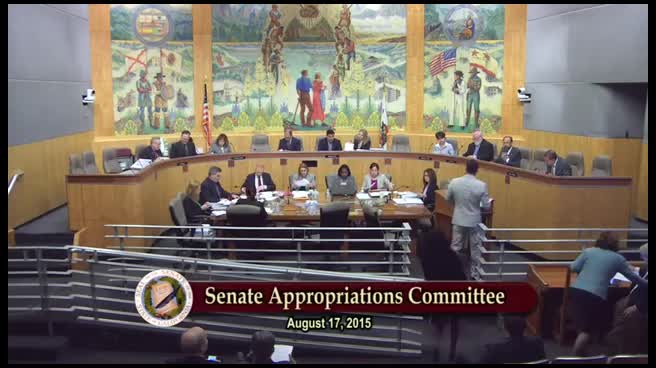
Bill Author








Bill Co-Author(s):