ACR 210: Conservation: Marine Protected Areas.
- Session Year: 2023-2024
- House: Assembly
- Latest Version Date: 2024-09-11
Current Status:
Passed
(2024-09-11: Chaptered by Secretary of State - Res. Chapter 210, Statutes of 2024.)
Introduced
In Committee
First Chamber
In Committee
Second Chamber
Enacted
This measure would call upon the Natural Resources Agency, the Ocean Protection Council, the Fish and Game Commission, and the Department of Fish and Wildlife to prioritize, as supported by science, public process, and the adaptive management process, the expansion of Californias Marine Protected Area Network following its first Decadal Management Review to achieve the states 30x30 marine conservation goals.
This measure would call upon the Natural Resources Agency, the Ocean Protection Council, the Fish and Game Commission, and the Department of Fish and Wildlife to prioritize, as supported by science, public process, and the adaptive management process, the expansion of Californias Marine Protected Area Network following its first Decadal Management Review to achieve the states 30x30 marine conservation goals.
This measure would call upon the Natural Resources Agency, the Ocean Protection Council, the Fish and Game Commission, and the Department of Fish and Wildlife to prioritize the creation of new fully and highly protected Marine Protected Areas through the pathways of strengthened protections within National Marine Sanctuaries and adaptive management of the California prioritize, as supported by science, public process, and the adaptive management process, the expansion of Californias Marine Protected Area Network following its first Decadal Management Review. Review to achieve the states 30x30 marine conservation goals.
This measure would call upon the Natural Resources Agency, the Ocean Protection Council, the Fish and Game Commission, and the Department of Fish and Wildlife to prioritize the creation of new fully and highly protected Marine Protected Areas through the pathways of strengthened protections within National Marine Sanctuaries and adaptive management of the California Marine Protected Area Network following its first Decadal Management Review.
WHEREAS, The State of California recognizes that human existence and well-being depend on healthy and thriving nature; and
WHEREAS, Our identity and well-being as Californians is inextricably tied to the Pacific Ocean and our majestic coastline; and
WHEREAS, Scientists have warned for decades that warming needs to stay below 1.5 degrees Celsius above preindustrial levels and it is estimated that the planet could reach 1.5 degrees Celsius of warming above preindustrial levels in a decade, with a substantial possibility of global temperature rise crossing the 2-degree threshold by midcentury, even with significant global efforts to bring down planet-warming pollution; and
WHEREAS, The United Nations Intergovernmental Panel on Climate Change (IPCC) report from January 2023 showed that if that limit is breached, some changes will be irreversible for hundreds, if not thousands, of years; and
WHEREAS, To stem biodiversity loss and protect against the impacts of climate change, we must conserve 30 percent of representative ecosystems by the year 2030, which has come to be known as 30x30; and
WHEREAS, California took bold action to combat the biodiversity crisis and create equitable access to nature for all Californians with Executive Order No. N-82-20 by codifying the 30x30 goal into state law with Senate Bill 337 of the 202324 Regular Session; and
WHEREAS, California advanced the global climate effort with its Ocean-Climate Contribution at COP24 to support the Paris Climate Agreement and showcased how the ocean offers critical solutions to climate change, listing the California Marine Protected Area Network as an adaptation action; and
WHEREAS, California joined the High Ambition Coalition Subnational Task Force at COP15, which will support 30x30 across the world; and
WHEREAS, Current and emerging threats are impacting, and will continue to impact, marine biodiversity and habitats; and
WHEREAS, Although all Californians should have access to the outdoors, regardless of their background or location, many communities feel they are being excluded from decisionmaking opportunities regarding ocean health; and
WHEREAS, The ocean holds social, cultural, and traditional significance, especially to the original stewards of this land, the indigenous communities of California, who have protected the ocean since time immemorial; and
WHEREAS, The California Marine Protected Area Network offers a proven model to safeguard marine habitat and wildlife from climate and extractive stressors; and
WHEREAS, The Ocean Protection Council is advancing four key strategies to reach the 30-percent goal by 2030 in coastal waters; and
WHEREAS, State marine reserves (fully protected) and certain limited-take state marine conservation areas (highly protected) are key ways the state can protect biodiversity and promote climate resilience for Californias marine ecosystems; now, therefore, be it
Resolved by the Assembly of the State of California, the Senate thereof concurring, That the Legislature calls upon the Natural Resources Agency, the Ocean Protection Council, the Fish and Game Commission, and the Department of Fish and Wildlife to prioritize, as supported by science, public process, and the adaptive management process, the expansion of Californias Marine Protected Area Network following its first Decadal Management Review to achieve the states 30x30 marine conservation goals; and be it further
Resolved, That the Chief Clerk of the Assembly transmit copies of this resolution to the author for appropriate distribution.
WHEREAS, The State of California recognizes that human existence and well-being depend on healthy and thriving nature; and
WHEREAS, Our identity and well-being as Californians is inextricably tied to the Pacific Ocean and our majestic coastline; and
WHEREAS, Scientists have warned for decades that warming needs to stay below 1.5 degrees Celsius above preindustrial levels and it is estimated that the planet could reach 1.5 degrees Celsius of warming above preindustrial levels in a decade, with a substantial possibility of global temperature rise crossing the 2-degree threshold by midcentury, even with significant global efforts to bring down planet-warming pollution; and
WHEREAS, The United Nations Intergovernmental Panel on Climate Change (IPCC) report from January 2023 showed that if that limit is breached, some changes will be irreversible for hundreds, if not thousands, of years; and
WHEREAS, To stem biodiversity loss and protect against the impacts of climate change, we must conserve 30 percent of representative ecosystems by the year 2030, which has come to be known as 30x30; and
WHEREAS, California took bold action to combat the biodiversity crisis and create equitable access to nature for all Californians with Executive Order No. N-82-20 by codifying the 30x30 goal into state law with Senate Bill 337 of the 202324 Regular Session; and
WHEREAS, California advanced the global climate effort with its Ocean-Climate Contribution at COP24 to support the Paris Climate Agreement and showcased how the ocean offers critical solutions to climate change, listing the California Marine Protected Area Network as an adaptation action; and
WHEREAS, California joined the High Ambition Coalition Subnational Task Force at COP15, which will support 30x30 across the world; and
WHEREAS, Current and emerging threats are impacting, and will continue to impact, marine biodiversity and habitats; and
WHEREAS, Although all Californians should have access to the outdoors, regardless of their background or location, many communities feel they are being excluded from decisionmaking opportunities regarding ocean health; and
WHEREAS, The ocean holds social, cultural, and traditional significance, especially to the original stewards of this land, the indigenous communities of California, who have protected the ocean for centuries; since time immemorial; and
WHEREAS, The California Marine Protected Area Network offers a proven model to safeguard marine habitat and wildlife from climate and extractive stressors; and
WHEREAS, The Ocean Protection Council is advancing four key strategies to reach the 30-percent goal by 2030 in coastal waters; and
WHEREAS, Creating state State marine reserves (fully protected) and certain limited-take state marine conservation areas (highly protected) is the best way are key ways the state can protect biodiversity and promote climate resilience for Californias marine ecosystems; now, therefore, be it
Resolved by the Assembly of the State of California, the Senate thereof concurring, That the Legislature calls upon the Natural Resources Agency, the Ocean Protection Council, the Fish and Game Commission, and the Department of Fish and Wildlife to prioritize the creation of new fully and highly protected Marine Protected Areas through the pathways of strengthened protections within National Marine Sanctuaries and adaptive management of the California prioritize, as supported by science, public process, and the adaptive management process, the expansion of Californias Marine Protected Area Network following its first Decadal Management Review; Review to achieve the states 30x30 marine conservation goals; and be it further
Resolved, That the Chief Clerk of the Assembly transmit copies of this resolution to the author for appropriate distribution.
WHEREAS, The State of California recognizes that human existence and well-being depend on healthy and thriving nature; and
WHEREAS, Our identity and well-being as Californians is inextricably tied to the Pacific Ocean and our majestic coastline; and
WHEREAS, Scientists have warned for decades that warming needs to stay below 1.5 degrees Celsius above preindustrial levels and it is estimated that the planet could reach 1.5 degrees Celsius of warming above preindustrial levels in a decade, with a substantial possibility of global temperature rise crossing the 2-degree threshold by midcentury, even with significant global efforts to bring down planet-warming pollution; and
WHEREAS, The United Nations Intergovernmental Panel on Climate Change (IPCC) report from January 2023 showed that if that limit is breached, some changes will be irreversible for hundreds, if not thousands, of years; and
WHEREAS, To stem biodiversity loss and protect against the impacts of climate change, we must conserve 30 percent of representative ecosystems by the year 2030, which has come to be known as 30x30; and
WHEREAS, California took bold action to combat the biodiversity crisis and create equitable access to nature for all Californians with Executive Order No. N-82-20 by codifying the 30x30 goal into state law with Senate Bill 337 of the 202324 Regular Session; and
WHEREAS, California advanced the global climate effort with its Ocean-Climate Contribution at COP24 to support the Paris Climate Agreement and showcased how the ocean offers critical solutions to climate change, listing the California Marine Protected Area Network as an adaptation action; and
WHEREAS, California joined the High Ambition Coalition Subnational Task Force at COP15, which will support 30x30 across the world; and
WHEREAS, Current and emerging threats are impacting, and will continue to impact, marine biodiversity and habitats; and
WHEREAS, Although all Californians should have access to the outdoors, regardless of their background or location, many communities feel they are being excluded from decisionmaking opportunities regarding ocean health; and
WHEREAS, The ocean holds social, cultural, and traditional significance, especially to the original stewards of this land, the indigenous communities of California, who have protected the ocean for centuries; and
WHEREAS, The California Marine Protected Area Network offers a proven model to safeguard marine habitat and wildlife from climate and extractive stressors; and
WHEREAS, The Ocean Protection Council is advancing four key strategies to reach the 30-percent goal by 2030 in coastal waters; and
WHEREAS, Creating state marine reserves (fully protected) and certain limited-take state marine conservation areas (highly protected) is the best way the state can protect biodiversity and promote climate resilience for Californias marine ecosystems; now, therefore, be it
Resolved by the Assembly of the State of California, the Senate thereof concurring, That the Legislature calls upon the Natural Resources Agency, the Ocean Protection Council, the Fish and Game Commission, and the Department of Fish and Wildlife to prioritize the creation of new fully and highly protected Marine Protected Areas through the pathways of strengthened protections within National Marine Sanctuaries and adaptive management of the California Marine Protected Area Network following its first Decadal Management Review; and be it further
Resolved, That the Chief Clerk of the Assembly transmit copies of this resolution to the author for appropriate distribution.
|
Date
|
Status
|
|---|---|
| Sep 11, 2024 | Chaptered by Secretary of State - Res. Chapter 210, Statutes of 2024. |
| Sep 11, 2024 | Enrolled and filed with the Secretary of State at 3 p.m. |
| Sep 1, 2024 | In Assembly. Ordered to Engrossing and Enrolling. |
| Aug 31, 2024 | Adopted and to Assembly. (Ayes 31. Noes 8.) |
| Aug 30, 2024 | From committee: Be adopted. Ordered to Third Reading. (Ayes 5. Noes 2.) (August 30). |
| Aug 28, 2024 | From committee: Be adopted, and re-refer to Com. on APPR. Re-referred. (Ayes 6. Noes 4.) (August 28). Re-referred to Com. on APPR. |
| Aug 27, 2024 | Joint Rules 61 and 62 suspended. (Ayes 30. Noes 9.) |
| Aug 27, 2024 | Referred to Com. on N.R. & W. |
| Aug 22, 2024 | In Senate. To Com. on RLS. |
| Aug 22, 2024 | Adopted and to Senate. (Ayes 45. Noes 12. Page 6440.) |
| Aug 15, 2024 | From committee: Be adopted. Ordered to Third Reading. (Ayes 11. Noes 3.) (August 15). |
| Aug 7, 2024 | In committee: Referred to APPR. suspense file. |
| Jul 1, 2024 | Re-referred to Com. on APPR. |
| Jun 27, 2024 | Amended. |
| Jun 26, 2024 | From committee: Amend, and be adopted as amended, and re-refer to Com. on APPR. (Ayes 10. Noes 1.) (June 25). |
| Jun 10, 2024 | Referred to Com. on W., P., & W. |
| Jun 7, 2024 | From printer. |
| Jun 6, 2024 | Introduced. To print. |
|
Date
|
Description
|
Location
|
Votes
|
|
|---|---|---|---|---|
| Aug 31, 2024 | Assembly 3rd Reading ACR210 Bennett By Limón | Senate Floor |
Passed |
|
| Aug 30, 2024 | Be adopted. Ordered to third reading | Senate Standing Committee on Appropriations |
Passed |
|
| Aug 28, 2024 | Be adopted, but first be re-referred to the Committee on [Appropriations] | Senate Standing Committee on Natural Resources and Water |
Passed |
|
| Aug 22, 2024 | ACR 210 Bennett Assembly Third Reading | Assembly Floor |
Passed |
|
| Aug 15, 2024 | Be adopted. To third reading. | Assembly Standing Committee on Appropriations |
Passed |
|
| Jun 25, 2024 | Be adopted as amended, and re-refer to the Committee on [Appropriations] | Assembly Standing Committee on Water, Parks, and Wildlife |
Passed |
This list shows positions taken on this bill by organizations on the date displayed, which is linked to the original source.
Positions by individuals are not included.
|
Organization
|
Position
|
Date
|
|---|---|---|
| Alliance of Communities for Sustainable Fisheries | ** Against | |
| All Waters Protection and Access Coalition | ** Against | |
| American Sportfishing Association | ** Against | |
| Audubon California | ** Support | |
| Azul | ** Support | |
| Backcountry Hunters and Anglers | ** Against | |
| California Coastkeeper Alliance | ** Support | |
| California Fishermen’s Resiliency Association | ** Against | |
| California Institute for Biodiversity | ** Support | |
| cleanearth4kids.org | ** Support | |
| Clean Water Action | ** Support | |
| Coastal Conservation Association Of California | ** Against | |
| Coastside Fishing Club | ** Against | |
| EarthEcho International | ** Support | |
| Environmental Action Committee of West Marin | ** Support | |
| Environmental Center of San Diego | ** Support | |
| Environmental Defense Center | ** Support | |
| Environmental Protection Information Center | ** Support | |
| Environment California | ** Support | |
| Fish On | ** Support | |
| Marine Conservation Institute | ** Support | |
| Natural Resources Defense Council | ** Support | |
| Pacific Coast Federation Of Fishermen'S Associations | ** Against | |
| Pacific Environment | ** Support | |
| Planning And Conservation League | ** Support | |
| San Diego Fishermen's Working Group | ** Against | |
| San Diego Zoo Wildlife Alliance | ** Support | |
| save the waves coalition | ** Support | |
| SoCal 350 Climate Action | ** Support | |
| Ventura County Commercial Fisherman's Association | ** Against | |
| West Coast Fisheries Consultants | ** Against | |
| Wildcoast | ** Support |
SENATE COMMITTEE ON APPROPRIATIONS
Senator Anna Caballero, Chair
2023 - 2024 Regular Session
ACR 210 (Bennett) - Conservation: Marine Protected Areas
Version: June 27, 2024 | Policy Vote: N.R. & W. 6 - 4 |
Urgency: | Mandate: |
Hearing Date: August 30, 2024 | Consultant: Ashley Ames |
Bill Summary:
This resolution would call upon certain state agencies to prioritize the expansion of California’s Marine Protected Area (MPA) Network to achieve the state’s 30x30 marine conservation goals, as specified.
Fiscal Impact:
- The California Natural Resources Agency (CNRA) estimates ongoing costs of about $200,000 annually (General Fund) for one position to prioritize the MPA network expansion as specified by this bill.
- To the extent this bill results in an expansion of California’s MPA Network, unknown but potentially significant cost pressures (General Fund and possibly other funds) to the Department of Fish and Wildlife (DFW) in order to enforce MPA regulations within additional areas, as well as to various state entities to provide funding for and perform activities related to the restoration and management of additional areas.
Background:
California's coastline, stretching over 1,100 miles and covering 3.4 million acres of coastal waters, is a diverse and vital ecosystem supporting a $51.3 billion marine economy. However, it faces significant threats from climate change and biodiversity loss, including marine heatwaves, sea level rise, ocean acidification, and habitat destruction. The state has lost about 90% of its coastal wetlands, highlighting the urgent need for conservation efforts.
To address these issues, California aims to conserve 30% of its land and coastal waters by 2030. In 2020, Governor Newsom issued Executive Order N-82-20, which adopted the 30X30 conservation goal. SB 337 (Min, Chapter 392, Statutes of 2023) later codified this goal. The state has already conserved 16.2% of its coastal waters through its MPA Network and 24.4% of lands. To reach the goal, it must conserve approximately 500,000 more acres of coastal waters, either through Marine Protected Areas or other options, like partnering with federal and tribal partners on marine conservation programs.
Marine protected areas (MPAs). Under existing law, there are marine managed areas, which include MPAs. Marine managed areas are named, discrete geographic marine or estuarine areas along the California coast designated by law or administrative action, and intended to protect, conserve, or otherwise manage a variety of resources and their uses, including living marine resources and their habitats, scenic views, water quality, recreational values, and cultural or geological resources.
MPAs are a subset of marine managed areas that are specifically designated to protect or conserve marine life and habitat. There are three main types of MPAs: state marine reserves, state marine parks, and state marine conservation areas. In general, state marine reserves do not allow any type of extractive activities, including fishing or kelp harvesting, except for scientific collecting under a permit. State marine parks do not allow any commercial extraction. State marine conservation areas restrict some types of commercial and/or recreational extraction.
As noted above, 16.2% of the state’s coastal waters are located within 124 MPAs, making this system the largest ecologically-connected MPA Network in the world. These state-managed MPAs regulate fishing; approximately half of the MPAs are “no take” and half are open to limited fishing. Thirty-five MPAs are located adjacent to 42 coastal State Parks units. The network locates MPAs in strategic proximity to each other, encompasses the full range of marine habitats found in California waters, and seeks to help preserve the connections and flow of life between marine ecosystems.
MPA Network roles and responsibilities. The Fish and Game Commission (FGC) is the primary decision-making authority for California’s MPA Network. It has authority to establish, modify, and abolish MPAs, and it regulates activities within MPAs, including commercial and recreational fishing and any other take of marine species.
CDFW is the lead managing agency for the MPA Network, implementing and enforcing regulations set by the FGC. Existing law require CDFW to develop, and FGC to adopt, a master plan, which is subject to peer review, for the design, implementation, and management of California’s MPA Network. The 2016 master plan formally established the MPA Management Program and a 10-year adaptive management review cycle to evaluate the ecological, socioeconomic, and governance aspects of the MPA Program and MPA Network. CDFW prepares the decadal management reviews with input from the FGC and other stakeholders. The first review was finalized in 2023. Based on the review, FGC may take adaptive management actions if data and information support such changes.
The Ocean Protection Council (OPC), since July 1, 2013, is the state’s lead regarding MPA policy. OPC convenes the MPA Statewide Leadership Team to help guide program activities and ensure communication, collaboration, and coordination among entities that have significant authority, mandates, or interests that relate to the MPA Network.
MPA Network Decadal Management Review (DMR). California reviews its MPA Network every 10 years. CDFW, in partnership with OPC, finalized the first DMR in 2023. While measuring the MPA’s general performance will take decades, the DMR provided compelling scientific evidence that MPAs are helping protect coastal and marine biodiversity while also highlighting the need for continued monitoring and evaluation.
30x30 coastal waters strategies. To achieve the state’s 30x30 coastal waters goal, the state must conserve another 500,000 acres of its coastal waters. According to the Senate Natural Resources & Water Committee, California has the following options:
- Expand the MPA Network by creating new MPAs and/or expanding existing MPAs.
- Partner with the federal government to strengthen biodiversity protections in National Marine Sanctuaries, which cover over 1.4 million acres or 40.6% of state waters.
- Partner with Native American tribes to create indigenous marine stewardship areas.
- Explore opportunities for other effective area-based conservation measures.
In 2022, CNRA published Pathways to 30x30 California: Accelerating Conservation of California’s Nature (Pathways), which identifies strategies and priority actions to achieve 30x30. Given the areas of exceptionally high biodiversity in National Marine Sanctuaries off of California’s coast, Pathways identifies these areas as offering a natural place to focus conservation efforts and providing a pathway for the state to meet or exceed the 30x30 target while maintaining access and sustainable use. According to Pathways, the state plans to prioritize a focus on strengthening biodiversity protections in these waters.
Regarding MPAs, Pathways states that these protected areas are not the only way to achieve conservation in coastal waters. In particular, the state does not consider sustainable commercial or recreational fishing to necessarily be incompatible with conservation of the state’s coastal and marine biodiversity. Pathways further notes that the MPA Network only restricts fishing, which is just one of a multitude of threats and stressors faced by coastal and ocean ecosystems. These statements suggest expanding MPAs may not be a significant strategy from the Newsom Administration’s perspective to get to the goal.
This resolution would call upon relevant state agencies to take a different approach to prioritize the expansion of California’s MPA Network to achieve the state’s 30x30 marine conservation goals.
Proposed Law:
This resolution would call upon specified state agencies to prioritize—as supported by science, public process, and the adaptive management process—the expansion of California’s MPA Network following its first Decadal Management Review to achieve the state’s 30x30 marine conservation goals. Specifically, it would:
- Call upon CNRA, OPC, FGC, and CDFW to prioritize—as supported by science, public process, and the adaptive management process—the expansion of California’s MPA Network following its first DMR to achieve the state’s 30x30 marine conservation goals.
- Make various findings, including that the California MPA Network offers a proven model to safeguard marine habitat and wildlife from climate and extractive stressors.
Related Legislation:
SB 1402 (Min, 2024) would have directed all state agencies, departments, boards, offices, commissions, and conservancies to consider the 30x30 goal when adopting, revising, or establishing plans, policies, or regulations that directly affect the use of coastal waters or land, management of natural resources, or biodiversity conservation. This bill was held in the Assembly Appropriations Committee.
SB 377 (Min, Chapter 392, Statutes of 2023) established a state goal to conserve at least 30 percent of California’s land and coastal waters by 2030, which codified this goal from Executive Order No. N-82-20.
AB 2278 (Kalra, Chapter 349, Statutes of 2022) required CNRA to annually report, beginning on or before March 31, 2024, to the Legislature on the progress made during the prior calendar year toward achieving the goal to conserve 30 percent of state lands and coastal waters by 2030, as established by Executive Order No. N-82-20.
-- END --
SENATE RULES COMMITTEE Office of Senate Floor Analyses (916) 651-1520 Fax: (916) 327-4478 | ACR 210 |
THIRD READING
Bill No: ACR 210
Author: Bennett (D)
Amended: 6/27/24 in Assembly
Vote: 21
SENATE NATURAL RES. & WATER COMMITTEE: 6-4, 8/28/24
AYES: Min, Allen, Laird, Limón, Padilla, Stern
NOES: Seyarto, Dahle, Eggman, Grove
NO VOTE RECORDED: Hurtado
SENATE APPROPRIATIONS COMMITTEE: 5-2, 8/30/24
AYES: Caballero, Ashby, Becker, Bradford, Wahab
NOES: Jones, Seyarto
ASSEMBLY FLOOR: 45-12, 8/22/24 - See last page for vote
SUBJECT: Conservation: Marine Protected Areas
SOURCE: Azul
Environment California
Environmental Defense Center
Natural Resources Defense Council
DIGEST:
This resolution calls upon specified state agencies to prioritize, as supported by science, public process, and the adaptive management process, the expansion of California’s Marine Protected Area Network following its first Decadal Management Review to achieve the state’s 30x30 marine conservation goals.
ANALYSIS:
Existing law:
- Establishes a goal of the state to conserve at least 30 percent of California’s lands and coastal waters by 2030. This is known as the “30x30 goal.” Public Resources Code (PRC) §71450.
- Directs the California Natural Resources Agency (CNRA) to prioritize certain actions in implementing the 30x30 goal, including supporting tribal engagement and leadership in implementing the 30x30 goal and partnering with federal agencies to leverage strategic funding and resources in achieving the 30x30 goal, among others. PRC §71451.
- Directs the CNRA secretary to prepare and submit, on or before March 31, 2024, and annually thereafter, a report to the Legislature on the progress made in the prior calendar year toward achieving the 30x30 goal. PRC §71452.
This resolution:
- Calls upon CNRA, the Ocean Protection Council (OPC), the Fish and Game Commission (FGC), and the California Department of Fish and Wildlife (CDFW) to prioritize, as supported by science, public process, and the adaptive management process, the expansion of California’s Marine Protected Area Network following its first Decadal Management Review to achieve the state’s 30x30 marine conservation goals.
- Makes various findings, including that the California Marine Protected Area Network offers a proven model to safeguard marine habitat and wildlife from climate and extractive stressors.
Background
30x30. Conserving the Earth’s lands and waters can help to prevent extinctions and protect the biodiversity and ecosystem services upon which humanity depends. Specifically, the scientific community has identified a need to protect 50% of the Earth’s surface by 2050 to achieve these goals. Scientists have called for a step goal of 30% by 2030 to help spur and measure progress toward the 2050 goal. Importantly, protections must be combined with restoration and management efforts to protect the function and services of the Earth’s ecosystems. Also, conservation, restoration, and improved management can avoid and reduce greenhouse gas emissions and sequester carbon, helping to advance climate goals.
California’s coast and ocean are threatened by the twin crises of climate change and biodiversity loss. To combat the biodiversity crisis in California, Governor Newsom issued Executive Order N-82-20 in 2020, which adopted a goal to conserve at least 30% of California’s land and coastal waters by 2030. SB 337 (Min, Chapter 392, Statutes of 2023) later codified this goal. The state has already conserved 16.2% of its coastal waters through its Marine Protected Areas Network and 24.4% of lands. To reach the goal, it must conserve approximately 500,000 more acres of coastal waters, either through Marine Protected Areas or other options, like partnering with federal and tribal partners on marine conservation programs.
Marine protected areas (MPAs). Under existing law, there are marine managed areas, which include MPAs. Marine managed areas are named, discrete geographic marine or estuarine areas along the California coast designated by law or administrative action, and intended to protect, conserve, or otherwise manage a variety of resources and their uses, including living marine resources and their habitats, scenic views, water quality, recreational values, and cultural or geological resources.
MPAs are a subset of marine managed areas that are specifically designated to protect or conserve marine life and habitat. There are three main types of MPAs: state marine reserves, state marine parks, and state marine conservation areas. In general, state marine reserves do not allow any type of extractive activities, including fishing or kelp harvesting, except for scientific collecting under a permit. State marine parks do not allow any commercial extraction. State marine conservation areas restrict some types of commercial and/or recreational extraction.
According to CNRA, 16.2% of the state’s coastal waters are located within 124 MPAs, making this system the largest ecologically-connected MPA Network in the world. These state-managed MPAs regulate fishing; approximately half of the MPAs are “no take” and half are open to limited fishing. Thirty-five MPAs are located adjacent to 42 coastal State Parks units. The network locates MPAs in strategic proximity to each other, encompasses the full range of marine habitats found in California waters, and seeks to help preserve the connections and flow of life between marine ecosystems.
Comments
30x30 coastal waters strategies. To achieve the state’s 30x30 coastal waters goal, the state must conserve another 500,000 acres of its coastal waters. California has the following options to meet this goal:
- Expand the MPA Network by creating new MPAs and/or expanding existing MPAs.
- Partner with the federal government to strengthen biodiversity protections in National Marine Sanctuaries, which cover over 1.4 million acres or 40.6% of state waters.
- Partner with Native American tribes to create indigenous marine stewardship areas.
- Explore opportunities for other effective area-based conservation measures.
- A combination of these four options.
In 2022, CNRA published Pathways to 30x30 California: Accelerating Conservation of California’s Nature (Pathways), which identifies strategies and priority actions to achieve 30x30. Given the areas of exceptionally high biodiversity in National Marine Sanctuaries off of California’s coast, Pathways identifies these areas as offering a natural place to focus conservation efforts and providing a pathway for the state to meet or exceed the 30x30 target while maintaining access and sustainable use. According to Pathways, the state plans to prioritize a focus on strengthening biodiversity protections in these waters.
Regarding MPAs, Pathways states that these protected areas are not the only way to achieve conservation in coastal waters. In particular, the state does not consider sustainable commercial or recreational fishing to necessarily be incompatible with conservation of the state’s coastal and marine biodiversity. Pathways further notes that the MPA Network only restricts fishing, which is just one of a multitude of threats and stressors faced by coastal and ocean ecosystems. These statements suggest expanding MPAs may not be a significant strategy from the Newsom Administration’s perspective to get to the goal.
This resolution calls upon relevant state agencies to take a different approach to prioritize the expansion of California’s MPA Network to achieve the state’s 30x30 marine conservation goals.
FISCAL EFFECT: Appropriation: No Fiscal Com.: No Local: No
According to the Senate Appropriations Committee:
- The California Natural Resources Agency (CNRA) estimates ongoing costs of about $200,000 annually (General Fund) for one position to prioritize the MPA network expansion as specified by this bill.
- To the extent this bill results in an expansion of California’s MPA Network, unknown but potentially significant cost pressures (General Fund and possibly other funds) to the Department of Fish and Wildlife (DFW) in order to enforce MPA regulations within additional areas, as well as to various state entities to provide funding for and perform activities related to the restoration and management of additional areas.
SUPPORT: (Verified 8/28/24)
Azul (co-source)
Environment California (co-source)
Environmental Defense Center (co-source)
Natural Resources Defense Council (co-source)
Audubon California
California Coastkeeper Alliance
California Institute for Biodiversity
CleanEarth4Kids.org
Clean Water Action
Earth Echo International
Environmental Action Committee of West Marin
Environmental Center of San Diego
Environmental Protection Information Center
Fish On
Marine Conservation Institute
Pacific Environment
Planning and Conservation League
San Diego Zoo Wildlife Alliance
Save the Waves Coalition
SoCal 350 Climate Action
WILDCOAST
OPPOSITION: (Verified 8/28/24)
Alliance of Communities for Sustainable Fisheries
All Waters Protection and Access Coalition
American Sportfishing Association
Backcountry Hunters and Anglers
California Fishermen’s Resiliency Association
Coastal Conservation Association of California
Coastside Fishing Club
Pacific Coast Federation of Fishermen's Associations
San Diego Fishermen's Working Group
Ventura County Commercial Fishermen's Association
West Coast Fisheries Consultants
ARGUMENTS IN SUPPORT: According to the author, “As the climate continues to change, we must do all we can to protect sensitive areas and ecosystems both on land and in water. Marine Protection Areas have been shown to bolster ocean ecosystem health and improve the resilience of fisheries. They also store carbon, creating a valuable site to help combat the climate crisis.”
According to a coalition of supporters, “As the state begins to assess what will count toward the additional 500,000 acres needed to conserve 30% of coastal waters by 2030, the quality of protection is key to ensuring that 30x30 effectively safeguards California’s marine biodiversity. Science shows that fully and highly protected MPAs have the greatest potential to protect biodiversity, confer resilience, and benefit species and ecosystems. Indeed, State Marine Reserves, which are fully protected, form the backbone of California’s MPA network. Additionally, effective marine protections are a prerequisite to equitable access. By making the ocean healthier and more resilient to climate change, stronger marine protections preserve everyone’s ability to enjoy the ocean through various activities far into the future. Given the state’s limited resources and the impending threats to our ocean and communities, state agencies should prioritize creating, strengthening, and expanding fully and highly protected areas to meet the 30x30 goal in coastal waters.”
“ACR 210 is needed to help California continue to set a high bar for effective marine conservation measures. At the 2023 Convention on Biological Diversity Conference of the Parties, California joined the sub-national 30x30 High Ambition Coalition. Prioritizing the creation of fully and highly protected MPAs is a concrete way for our state to lead the world in showcasing strong 30x30 implementation. As noted in California’s Pathways to Achieve 30x30 report, current regulations within the state’s National Marine Sanctuaries are not enough to stem the threats to biodiversity that California’s coastal waters are experiencing and will face. Moreover, the first Decadal Management Review showed that California’s MPA Network is effectively working to conserve biodiversity and support climate resilience. The state has an opportunity and a responsibility to California communities to strengthen protections within National Marine Sanctuaries and ensure the MPA Network is strengthened and continues to effectively conserve biodiversity through adaptive management.”
ARGUMENTS IN OPPOSITION: According to the Pacific Coast Federation of Fishermen’s Associations, “This resolution disregards the robust, transparent, and inclusive processes already underway by [CDFW], the [FGC] and [OPC], who have been entrusted by the [State] to do this work and are currently working on two separate but related projects to meet the goals of the [MLPA] and Executive Order No. N-82-20 (30x30).”
“OPC has been entrusted to determine a science-based approach to 30x30. This process has included the creation of a Pathways to 30x30 plan and is currently undergoing a review of the decision-making framework to evaluate how to best achieve California’s 30x30 goals. Adaptive management of the MPA network is only one of four strategies to achieve 30x30 in coastal waters. We support this work and are committed to engaging with and respecting the State’s position that ‘MPAs are not the only way to achieve conservation in coastal waters, and the state does not consider sustainable commercial or recreational fishing to necessarily be incompatible with conservation of the state’s coastal and marine biodiversity.’”
“In addition, California has led the way in developing a network of [MPAs] as was reported in the CDFW MPA Decadal Review in 2023. Moving forward, a transparent process through the [FGC] allowed opportunities for any groups interested in petitioning for changes to the MPA network. A 3-phase approach for evaluating these MPA petitions was approved by the [FGC] in February 2024, and Phase 1 is scheduled to be presented to the [FGC’s] Marine Resources Committee on July 17, 2024, for further discussion. This process remains open for public input and is the appropriate venue for groups to provide comments.”
A coalition writes in opposition, with particular emphasis on “the language in the resolution that calls for more blanket fishing closures, in the form of “fully protected” and “highly protected” [MPAs]... We agree that our ocean’s biodiversity faces many challenges and strongly support the aim of both 30x30 and the MLPA. We fully agree with 30x30’s goals of protecting and enhancing biodiversity, expanding equitable access to nature, and building resilience to climate change. However, there are many stressors to ocean ecosystems far beyond the impact of angling, such as failing municipal sewage treatment infrastructure causing almost constant coastal water contamination, municipal storm drainage systems carrying toxic street runoff to the sea, micro plastics getting to the point that they have been estimated to one day outnumber plankton, herbicide and pesticide used in agriculture finding their way into the marine environment, ocean temperature rise, ocean acidification, and much more. ACR 210, with its specific focus on angling, does not address or propose solutions to any of these broader more systemic issues.”
ASSEMBLY FLOOR: 45-12, 8/22/24
AYES: Alvarez, Arambula, Bains, Bennett, Berman, Boerner, Bryan, Calderon, Juan Carrillo, Wendy Carrillo, Connolly, Friedman, Gabriel, Garcia, Gipson, Grayson, Hart, Jackson, Jones-Sawyer, Kalra, Lee, Lowenthal, Maienschein, Muratsuchi, Stephanie Nguyen, Pacheco, Papan, Pellerin, Quirk-Silva, Ramos, Rendon, Reyes, Luz Rivas, Rodriguez, Blanca Rubio, Santiago, Schiavo, Soria, Ting, Valencia, Villapudua, Ward, Wood, Zbur, Robert Rivas
NOES: Megan Dahle, Dixon, Essayli, Gallagher, Hoover, Lackey, Mathis, Jim Patterson, Joe Patterson, Sanchez, Ta, Wallis
NO VOTE RECORDED: Addis, Aguiar-Curry, Alanis, Bauer-Kahan, Bonta, Cervantes, Chen, Davies, Flora, Mike Fong, Haney, Holden, Irwin, Low, McCarty, McKinnor, Ortega, Petrie-Norris, Waldron, Weber, Wicks, Wilson
Prepared by: Catherine Baxter / N.R. & W. / (916) 651-4116
8/30/24 17:27:03
**** END ****
SENATE COMMITTEE ON NATURAL RESOURCES AND WATER
Senator Dave Min, Chair
2023 - 2024 Regular
Bill No: ACR Hearing Date: August 28, 2024
Author: | Bennett | ||
Version: | June 27, 2024 Amended | ||
Urgency: |
| Fiscal: | Yes |
Consultant: | Catherine Baxter | ||
Subject: Conservation: Marine Protected Areas
SUMMARY
This resolution calls upon specified state agencies to prioritize, as supported by science, public process, and the adaptive management process, the expansion of California’s Marine Protected Area Network following its first Decadal Management Review to achieve the state’s 30x30 marine conservation goals.
BACKGROUND AND EXISTING LAW
Background:
California’s ocean and coast. California is home to one of the most diverse coastal and ocean ecosystems in the world, with over 1,100 miles of coastline. California’s coastal waters, which cover 3.4 million acres, are defined as state waters extending from the mean high tide line to three nautical miles offshore, including estuaries, bays, and offshore islands. The coast and ocean are treasured by residents and visitors, and supported a marine economy of $51.3 billion in 2021, according to data from a 2024 report issued by the National Oceanic and Atmospheric Administration (NOAA).
California’s coast and ocean are threatened by the twin crises of climate change and biodiversity loss. In particular, California’s coastal and marine ecosystems face threats from more frequent and intense disturbance (marine heatwaves, storms, etc.), sea level rise, ocean acidification, oxygen loss (hypoxia), disease, invasive species, harmful algal blooms, pollution, habitat destruction and loss, and, in some cases, overharvest of marine resources. For example, the state has already lost around 90% of its coastal wetlands due primarily to habitat destruction. Threats to the state’s ocean and coastal ecosystems fit into a larger global trend of losses of ecosystems and ecosystem services, and rapid rates of species’ extinctions. A United Nations report estimates that a quarter of all species face extinction, many within decades.
30x30. Conserving the Earth’s lands and waters can help to prevent extinctions and protect the biodiversity and ecosystem services upon which humanity depends. Specifically, the scientific community has identified a need to protect 50% of the Earth’s surface by 2050 to achieve these goals. Scientists have called for a step goal of 30% by 2030 to help spur and measure progress toward the 2050 goal. Importantly, protections must be combined with restoration and management efforts to protect the function and services of the Earth’s ecosystems. Also, conservation, restoration, and improved management can avoid and reduce greenhouse gas emissions and sequester carbon, helping to advance climate goals.
To combat the biodiversity crisis in California, Governor Newsom issued Executive Order N-82-20 in 2020, which adopted a goal to conserve at least 30% of California’s land and coastal waters by 2030. SB 337 (Min, Chapter 392, Statutes of 2023) later codified this goal. The state has already conserved 16.2% of its coastal waters through its Marine Protected Areas Network and 24.4% of lands. To reach the goal, it must conserve approximately 500,000 more acres of coastal waters, either through Marine Protected Areas or other options, like partnering with federal and tribal partners on marine conservation programs.
Marine protected areas (MPAs). Under existing law, there are marine managed areas, which include MPAs. Marine managed areas are named, discrete geographic marine or estuarine areas along the California coast designated by law or administrative action, and intended to protect, conserve, or otherwise manage a variety of resources and their uses, including living marine resources and their habitats, scenic views, water quality, recreational values, and cultural or geological resources.
MPAs are a subset of marine managed areas that are specifically designated to protect or conserve marine life and habitat. There are three main types of MPAs: state marine reserves, state marine parks, and state marine conservation areas. In general, state marine reserves do not allow any type of extractive activities, including fishing or kelp harvesting, except for scientific collecting under a permit. State marine parks do not allow any commercial extraction. State marine conservation areas restrict some types of commercial and/or recreational extraction.
As noted above, 16.2% of the state’s coastal waters are located within 124 MPAs, making this system the largest ecologically-connected MPA Network in the world. These state-managed MPAs regulate fishing; approximately half of the MPAs are “no take” and half are open to limited fishing. Thirty-five MPAs are located adjacent to 42 coastal State Parks units. The network locates MPAs in strategic proximity to each other, encompasses the full range of marine habitats found in California waters, and seeks to help preserve the connections and flow of life between marine ecosystems.
MPA Network roles and responsibilities. The Fish and Game Commission (FGC) is the primary decision-making authority for California’s MPA Network. It has authority to establish, modify, and abolish MPAs, and it regulates activities within MPAs, including commercial and recreational fishing and any other take of marine species.
The California Department of Fish and Wildlife (CDFW) is the lead managing agency for the MPA Network, implementing and enforcing regulations set by the FGC. Existing law require CDFW to develop, and FGC to adopt, a master plan, which is subject to peer review, for the design, implementation, and management of California’s MPA Network. The 2016 master plan formally established the MPA Management Program and a 10-year adaptive management review cycle to evaluate the ecological, socioeconomic, and governance aspects of the MPA Program and MPA Network. CDFW prepares the decadal management reviews with input from the FGC and other stakeholders. The first review was finalized in 2023. Based on the review, FGC may take adaptive management actions if data and information support such changes.
The Ocean Protection Council (OPC), since July 1, 2013, is the state’s lead regarding MPA policy. OPC convenes the MPA Statewide Leadership Team to help guide program activities and ensure communication, collaboration, and coordination among entities that have significant authority, mandates, or interests that relate to the MPA Network.
MPA Network Decadal Management Review (DMR). California reviews its MPA Network every 10 years. CDFW, in partnership with OPC, finalized the first DMR in 2023. While measuring the MPA’s general performance will take decades, the DMR provided compelling scientific evidence that MPAs are helping protect coastal and marine biodiversity while also highlighting the need for continued monitoring and evaluation. Among other findings, the DMR found that:
- While the detection of many MPA effects is expected to take time, results already suggest that, for some species and habitats, California’s MPAs support populations of bigger and/or more abundant fish and invertebrates. In particular, MPA age was strongly linked to an increase in the biomass of fished species: older MPAs tended to contain larger fish. Also, even where species size or abundance increased both inside and outside MPAs, the rate of increase was often higher inside MPAs.
- Some ecological communities demonstrated greater resiliency inside MPAs during a 2014-16 marine heat wave compared to those outside of MPAs and recovered more quickly after the heatwave.
Existing law:
- Establishes a goal of the state to conserve at least 30 percent of California’s lands and coastal waters by 2030. This is known as the “30x30 goal.” Public Resources Code (PRC) §71450.
- Directs the California Natural Resources Agency (CNRA) to prioritize certain actions in implementing the 30x30 goal, including supporting tribal engagement and leadership in implementing the 30x30 goal and partnering with federal agencies to leverage strategic funding and resources in achieving the 30x30 goal, among others. PRC §71451.
- Directs the CNRA secretary to prepare and submit, on or before March 31, 2024, and annually thereafter, a report to the Legislature on the progress made in the prior calendar year toward achieving the 30x30 goal. PRC §71452.
PROPOSED LAW
This resolution:
- Calls upon CNRA, OPC, FGC, and CDFW to prioritize, as supported by science, public process, and the adaptive management process, the expansion of California’s MPA Network following its first Decadal Management Review to achieve the state’s 30x30 marine conservation goals.
- Makes various findings, including that the California MPA Network offers a proven model to safeguard marine habitat and wildlife from climate and extractive stressors.
ARGUMENTS IN SUPPORT
According to the author, “As the climate continues to change, we must do all we can to protect sensitive areas and ecosystems both on land and in water. Marine Protection Areas have been shown to bolster ocean ecosystem health and improve the resilience of fisheries. They also store carbon, creating a valuable site to help combat the climate crisis.”
According to a coalition of supporters, “As the state begins to assess what will count toward the additional 500,000 acres needed to conserve 30% of coastal waters by 2030, the quality of protection is key to ensuring that 30x30 effectively safeguards California’s marine biodiversity. Science shows that fully and highly protected MPAs have the greatest potential to protect biodiversity, confer resilience, and benefit species and ecosystems. Indeed, State Marine Reserves, which are fully protected, form the backbone of California’s MPA network. Additionally, effective marine protections are a prerequisite to equitable access. By making the ocean healthier and more resilient to climate change, stronger marine protections preserve everyone’s ability to enjoy the ocean through various activities far into the future. Given the state’s limited resources and the impending threats to our ocean and communities, state agencies should prioritize creating, strengthening, and expanding fully and highly protected areas to meet the 30x30 goal in coastal waters.”
“ACR 210 is needed to help California continue to set a high bar for effective marine conservation measures. At the 2023 Convention on Biological Diversity Conference of the Parties, California joined the sub-national 30x30 High Ambition Coalition. Prioritizing the creation of fully and highly protected MPAs is a concrete way for our state to lead the world in showcasing strong 30x30 implementation. As noted in California’s Pathways to Achieve 30x30 report, current regulations within the state’s National Marine Sanctuaries are not enough to stem the threats to biodiversity that California’s coastal waters are experiencing and will face. Moreover, the first Decadal Management Review showed that California’s MPA Network is effectively working to conserve biodiversity and support climate resilience. The state has an opportunity and a responsibility to California communities to strengthen protections within National Marine Sanctuaries and ensure the MPA Network is strengthened and continues to effectively conserve biodiversity through adaptive management.”
ARGUMENTS IN OPPOSITION
According to the Pacific Coast Federation of Fishermen’s Associations, “This resolution disregards the robust, transparent, and inclusive processes already underway by [CDFW], the [FGC] and [OPC], who have been entrusted by the [State] to do this work and are currently working on two separate but related projects to meet the goals of the [MLPA] and Executive Order No. N-82-20 (30x30).”
“OPC has been entrusted to determine a science-based approach to 30x30. This process has included the creation of a Pathways to 30x30 plan and is currently undergoing a review of the decision-making framework to evaluate how to best achieve California’s 30x30 goals. Adaptive management of the MPA network is only one of four strategies to achieve 30x30 in coastal waters. We support this work and are committed to engaging with and respecting the State’s position that ‘MPAs are not the only way to achieve conservation in coastal waters, and the state does not consider sustainable commercial or recreational fishing to necessarily be incompatible with conservation of the state’s coastal and marine biodiversity.’”
“In addition, California has led the way in developing a network of [MPAs] as was reported in the CDFW MPA Decadal Review in 2023. Moving forward, a transparent process through the [FGC] allowed opportunities for any groups interested in petitioning for changes to the MPA network. A 3-phase approach for evaluating these MPA petitions was approved by the [FGC] in February 2024, and Phase 1 is scheduled to be presented to the [FGC’s] Marine Resources Committee on July 17, 2024, for further discussion. This process remains open for public input and is the appropriate venue for groups to provide comments.”
A coalition writes in opposition, with particular emphasis on “the language in the resolution that calls for more blanket fishing closures, in the form of “fully protected” and “highly protected” [MPAs]... We agree that our ocean’s biodiversity faces many challenges and strongly support the aim of both 30x30 and the MLPA. We fully agree with 30x30’s goals of protecting and enhancing biodiversity, expanding equitable access to nature, and building resilience to climate change. However, there are many stressors to ocean ecosystems far beyond the impact of angling, such as failing municipal sewage treatment infrastructure causing almost constant coastal water contamination, municipal storm drainage systems carrying toxic street runoff to the sea, micro plastics getting to the point that they have been estimated to one day outnumber plankton, herbicide and pesticide used in agriculture finding their way into the marine environment, ocean temperature rise, ocean acidification, and much more. ACR 210, with its specific focus on angling, does not address or propose solutions to any of these broader more systemic issues.”
COMMENTS
30x30 coastal waters strategies. To achieve the state’s 30x30 coastal waters goal, the state must conserve another 500,000 acres of its coastal waters. California has the following options to meet this goal:
- Expand the MPA Network by creating new MPAs and/or expanding existing MPAs.
- Partner with the federal government to strengthen biodiversity protections in National Marine Sanctuaries, which cover over 1.4 million acres or 40.6% of state waters.
- Partner with Native American tribes to create indigenous marine stewardship areas.
- Explore opportunities for other effective area-based conservation measures.
- A combination of these four options.
In 2022, CNRA published Pathways to 30x30 California: Accelerating Conservation of California’s Nature (Pathways), which identifies strategies and priority actions to achieve 30x30. Given the areas of exceptionally high biodiversity in National Marine Sanctuaries off of California’s coast, Pathways identifies these areas as offering a natural place to focus conservation efforts and providing a pathway for the state to meet or exceed the 30x30 target while maintaining access and sustainable use. According to Pathways, the state plans to prioritize a focus on strengthening biodiversity protections in these waters.
Regarding MPAs, Pathways states that these protected areas are not the only way to achieve conservation in coastal waters. In particular, the state does not consider sustainable commercial or recreational fishing to necessarily be incompatible with conservation of the state’s coastal and marine biodiversity. Pathways further notes that the MPA Network only restricts fishing, which is just one of a multitude of threats and stressors faced by coastal and ocean ecosystems. These statements suggest expanding MPAs may not be a significant strategy from the Newsom Administration’s perspective to get to the goal.
This resolution calls upon relevant state agencies to take a different approach to prioritize the expansion of California’s MPA Network to achieve the state’s 30x30 marine conservation goals.
Related legislation.
SB 1402 (Min, 2024) would have directed all state agencies, departments, boards, offices, commissions, and conservancies to consider the 30x30 goal when adopting, revising, or establishing plans, policies, or regulations that directly affect the use of coastal waters or land, management of natural resources, or biodiversity conservation. This bill was held in the Assembly Appropriations Committee.
SB 377 (Min, Chapter 392, Statutes of 2023) established a state goal to conserve at least 30 percent of California’s land and coastal waters by 2030, which codified this goal from Executive Order No. N-82-20.
AB 2278 (Kalra, Chapter 349, Statutes of 2022) required CNRA to annually report, beginning on or before March 31, 2024, to the Legislature on the progress made during the prior calendar year toward achieving the goal to conserve 30 percent of state lands and coastal waters by 2030, as established by Executive Order No. N-82-20.
SUPPORT
Azul (co-sponsor)
Environment California (co-sponsor)
Environmental Defense Center (co-sponsor)
Natural Resources Defense Council (co-sponsor)
Audubon California
California Coastkeeper Alliance
California Institute for Biodiversity
CleanEarth4Kids.org
Clean Water Action
Earth Echo International
Environmental Action Committee of West Marin
Environmental Center of San Diego
Environmental Protection Information Center
Fish On
Marine Conservation Institute
Pacific Environment
Planning and Conservation League
San Diego Zoo Wildlife Alliance
Save the Waves Coalition
SoCal 350 Climate Action
WILDCOAST
OPPOSITION
Alliance of Communities for Sustainable Fisheries
All Waters Protection and Access Coalition
American Sportfishing Association
Backcountry Hunters and Anglers
California Fishermen’s Resiliency Association
Coastal Conservation Association of California
Coastside Fishing Club
Pacific Coast Federation of Fishermen's Associations
San Diego Fishermen's Working Group
Ventura County Commercial Fishermen's Association
West Coast Fisheries Consultants
-- END --
ASSEMBLY THIRD READING
ATR Bill Id:ACR 210
Author:(Bennett)
As Amended Ver:June 27, 2024
Majority vote
SUMMARY
Calls upon the relevant state entities to prioritize the creation of Marine Protected Areas (MPAs), as supported by science, public process, and an adaptive management process.
Major Provisions
COMMENTS
MPAs are a subset of Marine Managed Areas. MPAs generally permit all form of non-extractive recreation, are a mechanism used by the state to durably protect and conserve coastal waters, and count toward the states 30x30 goal. There are three MPA designations:
- State Marine Reserves: An MPA classification that prohibits damage or take of all marine resources (living, geologic, or cultural), including recreational and commercial take.
- State Marine Parks: An MPA classification that prohibits damage or take of any marine resources for commercial purposes (restrictions vary).
- State Marine Conservation Areas: An MPA classification that may allow some recreational and/or commercial take of marine resources (restrictions vary).
Marine Life Protection Act (MLPA). In 1999, the Legislature passed MLPA, which mandated the redesign of California's pre-existing patchwork of MPAs and required the new assemblage of MPAs to be designed and adaptively managed as an ecologically connected network. The MLPA also sets up a process to establish MPAs using scientific data and encourages many levels of public participation.
The Fish and Game Commission (Commission) is the primary decision-making authority for MPA regulations and designating MPAs. The Department of Fish and Wildlife (DFW) is responsible for managing the MPA network, providing biological data and expertise to inform Commission decisions, and enforcing MPA regulations. The Ocean Protection Council is the lead for guiding the policy direction for the MPA network and works broadly to advance the Governor's priorities for healthy coastal and ocean ecosystems.
Every ten years DFW solicits input from stakeholders to inform the MPA Management Program, called the Decadal Management Review. The first Decadal Management Review was completed in 2022 and is the first comprehensive evaluation of the entire statewide MPA network. The report indicates that there is evidence of MPA protections benefiting key species and habitats, although it is still considered too early to determine the full scope and efficacy of the MPA network. Other research efforts have indicated that California's MPAs have led to increased fish biomass, but do not necessarily indicate increased biodiversity. The Decadal Management Review also recommended 28 adaptive management recommendations and associated potential management actions. None of the recommendations call for the expansion of the MPA network.
Expansions to the MPA network. The creation of new MPAs, expanding boundaries of existing MPAs, or increasing protections in MPAs must follow the MPA adaptive management process which requires all actions to be science-based and community-driven. Briefly, the process to petition for changes to MPAs involves regional stakeholder groups who develop MPA proposals that are reviewed and evaluated by DFW. Then, based on these evaluations and public input, DFW makes recommendations to the Commission—the sole authority empowered to adopt and implement MPAs.
The Commission is currently evaluating petitions to change MPA regulations, which have all been referred to DFW for review, and will continue to be discussed in the Commission's Marine Resources Committee. These petitions include non-regulatory items, expansion and limitation of take of certain sea creatures, adjusting boundaries of MPAs, and establishing new MPAs.
According to the Author
According to the author, "As the climate continues to change, we must do all we can to protect sensitive areas and ecosystems both on land and in water. Marine Protection Areas have been shown to bolster ocean ecosystem health and improve the resilience of fisheries. They also store carbon, creating a valuable site to help combat the climate crisis."
Arguments in Support
A coalition of environmental organizations write, "By making the ocean healthier and more resilient to climate change, stronger marine protections preserve everyone's ability to enjoy the ocean through various activities far into the future. Given the state's limited resources and the impending threats to our ocean and communities, state agencies should prioritize creating, strengthening, and expanding fully and highly protected areas to meet the 30x30 goal in coastal waters. […] The state has an opportunity and a responsibility to California communities to strengthen protections within National Marine Sanctuaries and ensure the MPA network is strengthened and continues to effectively conserve biodiversity through adaptive management."
Arguments in Opposition
A collection of commercial and recreational fishing associations voice opposition to this resolution. Concerns include 1) promoting MPAs before their effectiveness is well established and 2) that this resolution is biasing the scientific and public process that has been underway for the last several years at the Commission. One letter states, "We also are very concerned that the resolution circumvents the established mechanisms of the MPA Decadal Management Review, MLPA, and Executive Order No. N-82-20 (30x30), which both include JEDI governance so all voices in this public process have identical access and carry equal weight, and instead applies pressure to influence outcomes of these processes directly through legislative action." These groups support the goals of 30x30 noting that "there are few other groups whose present and future are more deeply connected to the persistent health of our marine ecosystems." They also call attention to the other pressures on ocean wildlife that do not stem from fishing, namely pollution and climate change impacts.
FISCAL COMMENTS
According to the Assembly Appropriations Committee, this resolution will have the following fiscal impact:
The Natural Resources Agency reports General Fund costs of $200,000 annually ongoing for one permanent full-time position at the senior environmental scientist level.
The DFW reports no fiscal impact from this bill, stating that the resolution is not a mandate and that DFW and the Commission already prioritize MPAs and consider 30x30 goals in all actions.
VOTES
ASM WATER, PARKS, AND WILDLIFE: 10-1-4
YES: Papan, Addis, Alvarez, Bennett, Garcia, Hart, Luz Rivas, Schiavo, Villapudua, Weber
NO: Gallagher
ABS, ABST OR NV: Mathis, Alanis, Bonta, Davies
ASM APPROPRIATIONS: 11-3-1
YES: Wicks, Arambula, Bryan, Calderon, Wendy Carrillo, Mike Fong, Grayson, Haney, Hart, Pellerin, Villapudua
NO: Sanchez, Dixon, Ta
ABS, ABST OR NV: Jim Patterson
UPDATED
VERSION: June 27, 2024
CONSULTANT: Stephanie Mitchell / W., P., & W. / (916) 319-2096 FN: 0003935
Date of Hearing: August 7, 2024
ASSEMBLY COMMITTEE ON APPROPRIATIONS
Buffy Wicks, Chair
ABPCA Bill Id:ACR 210
Author:(Bennett) – As Amended Ver:June 27, 2024
Policy Committee: | Water, Parks and Wildlife | Vote: | 10 - 1 |
|
| ||
|
|
Urgency: State Mandated Local Program: Reimbursable: No
SUMMARY:
This measure calls upon the Natural Resources Agency (NRA), Ocean Protection Council (OPC), Fish and Game Commission (Commission), and Department of Fish and Wildlife (DFW) to prioritize, as supported by science, public process, and the adaptive management process, the expansion of California’s Marine Protected Area (MPA) network following its first Decadal Management Review to achieve the state’s 30x30 marine conservation goals.
Specifically, this resolution:
- States a number of findings, including:
- Our identity and well-being as Californians is inextricably tied to the Pacific Ocean and our majestic coastline.
- The changes that would occur by exceeding the two-degree threshold of global temperatures will be irreversible for hundreds of years.
- The state’s MPA network offers a proven model to safeguard marine habitat and wildlife from climate and extractive stressors.
- The OPC is advancing four key strategies to reach the 30% goal by 2030 in coastal waters.
- Creating state marine reserves and certain limited-take state marine conservation areas is the best way the state can protect biodiversity and promote climate resilience for California’s marine ecosystems.
FISCAL EFFECT:
The NRA reports General Fund costs of $200,000 annually ongoing for one permanent full-time position at the senior environmental scientist level.
The DFW reports no fiscal impact from this bill, stating that the resolution is not a mandate and that DFW and the Commission already prioritize MPAs and consider 30x30 goals in all actions.
According to the Legislative Analyst’s Office, the General Fund faces a structural deficit in the tens of billions of dollars over the next several fiscal years.
COMMENTS:
- Purpose. According to the author:
As the climate continues to change, we must do all we can to protect sensitive areas and ecosystems both on land and in water. [MPAs] have been shown to bolster ocean ecosystem health and improve the resilience of fisheries. They also store carbon, creating a valuable site to help combat the climate crisis.
- Background. Existing law defines MPA as a named, discrete geographic marine or estuarine area seaward of the mean high tide line or the mouth of a coastal river, including any area of intertidal or subtidal terrain, together with its overlying water and associated flora and fauna that has been designated by law or administrative action. MPAs are primarily intended to protect or conserve marine life and habitat. MPAs generally permit all form of non-extractive recreation and are a mechanism used by the state to durably protect and conserve coastal waters and count toward the states 30x30 goal.
The Commission is the primary decision-making authority for MPA regulations and designating MPAs. DFW is responsible for managing the MPA network, providing biological data and expertise to inform Commission decisions, and enforcing MPA regulations. OPC is the lead for guiding the policy direction for the MPA network and works broadly to advance the Governor’s priorities for healthy coastal and ocean ecosystems.
Every 10 years DFW solicits input from stakeholders to inform the MPA Management Program, called the Decadal Management Review. The first Decadal Management Review was completed in 2022 and is the first comprehensive evaluation of the entire statewide MPA network. The report indicates that there is evidence of MPA protections benefiting key species and habitats, although it is still considered too early to determine the full scope and efficacy of the MPA network. The report made 28 recommendations, but did not recommend expansion of the MPA network. As stated by the Assembly Committee on Water, Parks and Wildlife, this resolution puts a finger on the scale regarding changes to the MPA network outside of an established governance process.
- Prior Legislation. SB 337 (Min), Chapter 392, Statutes of 2023, codifies the 30x30 state goal of conserving 30% of California’s lands and coastal waters by 2030.
- Related Legislation. SB 1402 (Min), of the current legislative session, requires all state agencies, boards, offices, commissions, and conservancies to consider the 30x30 goal when adopting, revising, or establishing plans, policies, or regulations that directly affect the use of coastal waters or land, management of natural resources, or biodiversity conservation. SB 1402 is pending in this committee.
Analysis Prepared by: Jacqueline Kinney / APPR. / (916) 319-2081
Date of Hearing: June 25, 2024
ASSEMBLY COMMITTEE ON WATER, PARKS, AND WILDLIFE
Diane Papan, Chair
ABPCA Bill Id:ACR 210 (
Author:Bennett) – As Introduced Ver:June 6, 2024
SUBJECT: Conservation: Marine Protected Areas
SUMMARY: Calls upon the relevant state entities to prioritize the creation of Marine Protected Areas (MPAs). Specifically, this bill:
- States a number of findings, including:
- Our identity and well-being as Californians is inextricably tied to the Pacific Ocean and our majestic coastline;
- That the changes that would occur by exceeding the two-degree threshold of global temperatures will be irreversible for hundreds of years;
- That the state’s MPA network offers a proven model to safeguard marine habitat and wildlife from climate and extractive stressors;
- The Ocean Protection Council (OPC) is advancing four key strategies to reach the 30% goal by 2030 in coastal waters; and
- Creating state marine reserves and certain limited-take state marine conservation areas is the best way the state can protect biodiversity and promote climate resilience for California’s marine ecosystems.
- Calls upon California Natural Resources Agency (CNRA), OPC, the Fish and Game Commission (Commission), and the Department of Fish and Wildlife (DFW) to prioritize the creation of new fully and highly protected MPAs through the pathways of strengthened protections within National Marine Sanctuaries (NMS) and adaptive management of the California MPA network following its first Decadal Management Review
EXISTING LAW:
- Directs CNRA to combat the biodiversity and climate crisis by, among other things, establishing the California Biodiversity Collaborative and establishing the 30x30 goal, which is to conserve 30% of California’s lands and coastal waters by 2030 (Executive Order No. N-82-20).
- Codifies the 30x30 goal [Public Resources Code (PRC) § 71450].
- Establishes the Marine Life Protection Act (MLPA), which, among other things, requires that OPC assume the responsibility for the direction of policy of MPAs, makes finding and declarations about MPAs, and requires that the master plan that guides the adoption and implementation of MLPA use the best readily available scientific information and engage the public [Fish and Game Code (FGC) § 2850 et. seq.].
- Declares the six goals of MLPA:
- To protect the natural diversity and abundance of marine life, and the structure, function, and integrity of marine ecosystems;
- To help sustain, conserve, and protect marine life populations, including those of economic value, and rebuild those that are depleted;
- To improve recreational, educational, and study opportunities provided by marine ecosystems that are subject to minimal human disturbance, and to manage these uses in a manner consistent with protecting biodiversity;
- To protect marine natural heritage, including protection of representative and unique marine life habitats in California waters for their intrinsic value;
- To ensure that California’s MPAs have clearly defined objectives, effective management measures, and adequate enforcement, and are based on sound scientific guidelines; and
- To ensure that the state’s MPAs are designed and managed, to the extent possible, as a network (FGC § 2853).
- Defines MPA as a named, discrete geographic marine or estuarine area seaward of the mean high tide line or the mouth of a coastal river, including any area of intertidal or subtidal terrain, together with its overlying water and associated flora and fauna that has been designated by law or administrative action to protect or conserve marine life and habitat. MPAs are primarily intended to protect or conserve marine life and habitat, and are therefore a subset of marine managed areas (MMAs) [FGC § 2852(c) and PRC § 36602].
- Describe the six classification of MMAs and the process for proposing new MMAs (PRC § 36600 et seq.).
- Makes commercial fishing in MPAs a misdemeanor (FGC § 12012.5).
FISCAL EFFECT: Unknown. This resolution is keyed fiscal.
COMMENTS:
- Purpose of this resolution. According to the author, “As the climate continues to change, we must do all we can to protect sensitive areas and ecosystems both on land and in water. [MPAs] have been shown to bolster ocean ecosystem health and improve the resilience of fisheries. They also store carbon, creating a valuable site to help combat the climate crisis.”
- Background. MPAs are a subset of MMAs. MPAs generally permit all form of non-extractive recreation and are a mechanism used by the state to durably protect and conserve coastal waters and count toward the states 30x30 goal. There are three MPA designations:
- State Marine Reserves: An MPA classification that prohibits damage or take of all marine resources (living, geologic, or cultural), including recreational and commercial take.
- State Marine Parks: An MPA classification that prohibits damage or take of any marine resources for commercial purposes (restrictions vary)
- State Marine Conservation Areas: An MPA classification that may allow some recreational and/or commercial take of marine resources (restrictions vary)
Other MMAs include State Marine Recreational Management Areas and special closure areas that are not designated as MPAs.
MLPA. In 1999, the Legislature passed MLPA, which mandated the redesign of California’s pre-existing patchwork of MPAs and required the new assemblage of MPAs to be designed and adaptively managed as an ecologically connected network (see the six goals in Existing Law #4). The MLPA also sets up a process to establish MPAs using scientific data and encourages many levels of public participation.
The Commission is the primary decision-making authority for MPA regulations and designating MPAs. DFW is responsible for managing the MPA network, providing biological data and expertise to inform Commission decisions, and enforcing MPA regulations. OPC is the lead for guiding the policy direction for the MPA network and works broadly to advance the Governor’s priorities for healthy coastal and ocean ecosystems.
Every 10 years DFW solicits input from stakeholders to inform the MPA Management Program, called the Decadal Management Review. The first Decadal Management Review was completed in 2022 and is the first comprehensive evaluation of the entire statewide MPA network. The report indicates that there is evidence of MPA protections benefiting key species and habitats, although it is still considered too early to determine the full scope and efficacy of the MPA network. Other research efforts have indicated that California’s MPAs have led to increased fish biomass, but do not necessarily indicate increased biodiversity.[1] The Decadal Management Review also recommended 28 adaptive management recommendations and associated potential management actions.[2] None of the recommendations call for the expansion of the MPA network.
30x30 in coastal waters. OPC is leading implementation of 30x30 in coastal waters. Currently, California has 124 MPAs, which cover approximately 852 square miles of state waters, which equates to about 16% of all coastal waters. To conserve an additional 13.8% of coastal waters by 2030, OPC suggests four actions:[3]
- Action #1: Adaptively managing the state’s MPA network;
- Action #2: Strengthening biodiversity conservation in California’s federally-managed NMS;
- Action #3: Supporting tribally-led conservation, including through the creation of Indigenous Marine Stewardship Areas (IMSA); and
- Actions #4: Exploring the role of other MMAs beyond MPAs and NMSs in conserving biodiversity.
In regards to MPAs, the adaptive management process includes making changes to MPA laws or regulations for better functioning and management of the MPA network. Petitions for changes to MPAs go through a public process at the Commission (see below). Adaptive management of the existing MPA network may include changes to MPA boundaries and designation, but these expansions are not explicitly called out as a method for achieving 30x30 in coastal waters. Creation of new MPAs is also not explicitly mentioned in OPC’s decision-making framework. Expanding the MPA network has not been considered a component of achieving the state’s 30x30 marine conservation goals in the Pathways strategy, especially prior to release of the decadal management review.[4]
There are additional forms of conservation in California coastal waters. This includes four NMS, three of which cover nearly 41% of state waters (Greater Farallones NMS, Monterey Bay NMS, and Channel Islands NMS). Since each NMS has different regulations and policies, each will need to be separately assessed to determine if they meet the state’s 30x30 definition of conserved. As noted in action #2, OPC is working with federal partners to determine if additional measures could be added to existing NMS management plans so they may be included in the state’s efforts.
OPC is also in the early stages of developing policies to support IMSAs (action #3), which is also an established priority action in the Pathways strategy. OPC is also in the process of generating a comprehensive inventory of other effective area-based conservation measures to evaluate if these too may meet the state’s definition of conserved.
Expansions to the MPA network. The creation of new MPAs, expanding boundaries of existing MPAs, or increasing protections in MPAs must follow the MPA adaptive management process which requires all actions to be science-based and community-driven. Briefly, the process to petition for changes to MPAs involves regional stakeholder groups who develop MPA proposals that were reviewed and evaluated by DFW. Then, based on these evaluations and public input, DFW makes recommendations to the Commission—the sole authority empowered to adopt and implement MPAs.
The Commission is currently evaluating petitions to change MPA regulations, which have all been referred to DFW for review, and will be discussed at the July 2024 meeting of the Commission’s Marine Resources Committee.[5] These petitions include non-regulatory items, expansion and limitation of take of certain sea creatures, adjusting boundaries of MPAs, and establishing new MPAs.[6]
- Policy considerations. Any new proposals regarding MPAs as called for in this resolution will need to undergo the process outlined above. However, this does put a finger on the scale on how changes to the MPA network (i.e., the creation of new MPAs, expansion of existing MPAs, or strengthening protections on existing MPAs) which is a currently under consideration at the Commission. The question before this Committee is if it wants to prioritize expansions of the MPA network when there are three other actions being considered to achieve California’s 30x30 marine conservation goals.
- Proposed committee amendments. To provide clarity about the role of MPAs and how they are evaluated, the Committee may wish the author to consider the following amendments:
WHEREAS, The ocean holds social, cultural, and traditional significance, especially to the original stewards of this land, the indigenous communities of California, who have protected the ocean since time immemorial for centuries; and
WHEREAS, The California Marine Protected Area Network offers a proven model to safeguard marine habitat and wildlife from climate and extractive stressors; and
WHEREAS, The Ocean Protection Council is advancing four key strategies to reach the 30-percent goal by 2030 in coastal waters; and
WHEREAS, Creating stateState marine reserves (“fully” protected) and certain limited-take state marine conservation areas (“highly” protected) are key ways is the best way the state can protect biodiversity and promote climate resilience for California’s marine ecosystems; now, therefore, be it
Resolved by the Assembly of the State of California, the Senate thereof concurring, That the Legislature calls upon the Natural Resources Agency, the Ocean Protection Council, the Fish and Game Commission, and the Department of Fish and Wildlife to prioritize, as supported by science, public process, and the adaptive management process, the expansion of California’s creation of new fully and highly protected Marine Protected Areas through the pathways of strengthened protections within National Marine Sanctuaries and adaptive management of the California Marine Protected Area Network following its first Decadal Management Review to achieve the state’s 30x30 marine conservation goals; and be it further
- Arguments in support. A coalition of environmental organizations write, “By making the ocean healthier and more resilient to climate change, stronger marine protections preserve everyone’s ability to enjoy the ocean through various activities far into the future. Given the state’s limited resources and the impending threats to our ocean and communities, state agencies should prioritize creating, strengthening, and expanding fully and highly protected areas to meet the 30x30 goal in coastal waters. […] The state has an opportunity and a responsibility to California communities to strengthen protections within National Marine Sanctuaries and ensure the MPA network is strengthened and continues to effectively conserve biodiversity through adaptive management.”
- Arguments in opposition. A collection of commercial and recreational fishing associations voice opposition to this resolution. Concerns include (1) promoting MPAs before their effectiveness is well established and (2) that this resolution is biasing the scientific and public process that has been underway for the last several years at the Commission. One letter states, “We also are very concerned that the resolution circumvents the established mechanisms of the MPA Decadal Management Review, MLPA, and Executive Order No. N-82-20 (30x30), which both include JEDI governance so all voices in this public process have identical access and carry equal weight, and instead applies pressure to influence outcomes of these processes directly through legislative action.” These groups support the goals of 30x30 noting that “there are few other groups whose present and future are more deeply connected to the persistent health of our marine ecosystems.” They also call attention to the other pressures on ocean wildlife that do not stem from fishing, namely pollution and climate change impacts.
- Related legislation. SB 337 (Min), Chapter 392, Statutes of 2023, codifies the 30x30 goal.
AB 2220 (Bennett) of the current legislative session would have made several changes to commercial fishing laws, including prohibiting DFW from issuing an new gill net or trammel net permits and expanding the prohibition of their use to all ocean waters of the state. AB 2220 was held in this Committee at the request of the author.
AJR 47 (Bloom) of 2018, would have affirmed legislative support for science-based action to conserve, protect, restore, and effectively manage California’s coastal and ocean ecosystems and urged both federal and state government entities to take certain actions. AJR 47 was held in the Senate Rules Committee.
REGISTERED SUPPORT / OPPOSITION:
Support
Azul (Co-Sponsor)
Environment California (Co-Sponsor)
Environmental Defense Center (Co-Sponsor)
Natural Resources Defense Council (Co-Sponsor)
Audobon California
California Coastkeeper Alliance
California Institute for Biodiversity
Clean Earth 4 Kids
Clean Water Action
Earth Echo International
Environmental Action Committee of West Marin
Environmental Center of San Diego
Environmental Protection Information Center
Fish On
Marine Conservation Institute
Pacific Environment
Planning and Conservation League
San Diego Zoo Wildlife Alliance
Save the Waves Coalition
So Cal 350 Climate Action
Wildcoast
Opposition
All Waters Protection and Access Coalition
American Sportfishing Association
Backcountry Hunters & Anglers
California Fishermen’s Resiliency Association
Coastal Conservation Association of California
Coastside Fishing Club
Pacific Coast Federation of Fishermen's Associations
San Diego Fishermen's Working Group
Ventura County Commercial Fishermen's Association
West Coast Fisheries Consultants
Analysis Prepared by: Stephanie Mitchell / W., P., & W. / (916) 319-2096
California Collaborative Fisheries Research Program— Monitoring and Evaluation of California MPAs ↑
DFW, California’s Marine Protected Area Network Decadal Management Review (2022) ↑
OPC, 30x30 Draft Decision-Making Framework for Coastal Waters (2024) ↑
Pathways to 30x30 (2022) ↑
Fish and Game Commission, Marine Resources Committee, Staff Summary regarding MPAs. https://nrm.dfg.ca.gov/FileHandler.ashx?DocumentID=220333&inline ↑
Fish and Game Commission, Marine Resources Committee, Regulation Change Petition Items. https://nrm.dfg.ca.gov/FileHandler.ashx?DocumentID=219990&inline ↑
Date of Hearing: June 25, 2024
ASSEMBLY COMMITTEE ON WATER, PARKS, AND WILDLIFE
Diane Papan, Chair
ABPCA Bill Id:ACR 210 (
Author:Bennett) – As Introduced Ver:June 6, 2024
SUBJECT: Conservation: Marine Protected Areas
SUMMARY: Calls upon the relevant state entities to prioritize the creation of Marine Protected Areas (MPAs). Specifically, this bill:
- States a number of findings, including:
- Our identity and well-being as Californians is inextricably tied to the Pacific Ocean and our majestic coastline;
- That the changes that would occur by exceeding the two-degree threshold of global temperatures will be irreversible for hundreds of years;
- That the state’s MPA network offers a proven model to safeguard marine habitat and wildlife from climate and extractive stressors;
- The Ocean Protection Council (OPC) is advancing four key strategies to reach the 30% goal by 2030 in coastal waters; and
- Creating state marine reserves and certain limited-take state marine conservation areas is the best way the state can protect biodiversity and promote climate resilience for California’s marine ecosystems.
- Calls upon California Natural Resources Agency (CNRA), OPC, the Fish and Game Commission (Commission), and the Department of Fish and Wildlife (DFW) to prioritize the creation of new fully and highly protected MPAs through the pathways of strengthened protections within National Marine Sanctuaries (NMS) and adaptive management of the California MPA network following its first Decadal Management Review
EXISTING LAW:
- Directs CNRA to combat the biodiversity and climate crisis by, among other things, establishing the California Biodiversity Collaborative and establishing the 30x30 goal, which is to conserve 30% of California’s lands and coastal waters by 2030 (Executive Order No. N-82-20).
- Codifies the 30x30 goal [Public Resources Code (PRC) § 71450].
- Establishes the Marine Life Protection Act (MLPA), which, among other things, requires that OPC assume the responsibility for the direction of policy of MPAs, makes finding and declarations about MPAs, and requires that the master plan that guides the adoption and implementation of MLPA use the best readily available scientific information and engage the public [Fish and Game Code (FGC) § 2850 et. seq.].
- Declares the six goals of MLPA:
- To protect the natural diversity and abundance of marine life, and the structure, function, and integrity of marine ecosystems;
- To help sustain, conserve, and protect marine life populations, including those of economic value, and rebuild those that are depleted;
- To improve recreational, educational, and study opportunities provided by marine ecosystems that are subject to minimal human disturbance, and to manage these uses in a manner consistent with protecting biodiversity;
- To protect marine natural heritage, including protection of representative and unique marine life habitats in California waters for their intrinsic value;
- To ensure that California’s MPAs have clearly defined objectives, effective management measures, and adequate enforcement, and are based on sound scientific guidelines; and
- To ensure that the state’s MPAs are designed and managed, to the extent possible, as a network (FGC § 2853).
- Defines MPA as a named, discrete geographic marine or estuarine area seaward of the mean high tide line or the mouth of a coastal river, including any area of intertidal or subtidal terrain, together with its overlying water and associated flora and fauna that has been designated by law or administrative action to protect or conserve marine life and habitat. MPAs are primarily intended to protect or conserve marine life and habitat, and are therefore a subset of marine managed areas (MMAs) [FGC § 2852(c) and PRC § 36602].
- Describe the six classification of MMAs and the process for proposing new MMAs (PRC § 36600 et seq.).
- Makes commercial fishing in MPAs a misdemeanor (FGC § 12012.5).
FISCAL EFFECT: Unknown. This resolution is keyed fiscal.
COMMENTS:
- Purpose of this resolution. According to the author, “As the climate continues to change, we must do all we can to protect sensitive areas and ecosystems both on land and in water. [MPAs] have been shown to bolster ocean ecosystem health and improve the resilience of fisheries. They also store carbon, creating a valuable site to help combat the climate crisis.”
- Background. MPAs are a subset of MMAs. MPAs generally permit all form of non-extractive recreation and are a mechanism used by the state to durably protect and conserve coastal waters and count toward the states 30x30 goal. There are three MPA designations:
- State Marine Reserves: An MPA classification that prohibits damage or take of all marine resources (living, geologic, or cultural), including recreational and commercial take.
- State Marine Parks: An MPA classification that prohibits damage or take of any marine resources for commercial purposes (restrictions vary)
- State Marine Conservation Areas: An MPA classification that may allow some recreational and/or commercial take of marine resources (restrictions vary)
Other MMAs include State Marine Recreational Management Areas and special closure areas that are not designated as MPAs.
MLPA. In 1999, the Legislature passed MLPA, which mandated the redesign of California’s pre-existing patchwork of MPAs and required the new assemblage of MPAs to be designed and adaptively managed as an ecologically connected network (see the six goals in Existing Law #4). The MLPA also sets up a process to establish MPAs using scientific data and encourages many levels of public participation.
The Commission is the primary decision-making authority for MPA regulations and designating MPAs. DFW is responsible for managing the MPA network, providing biological data and expertise to inform Commission decisions, and enforcing MPA regulations. OPC is the lead for guiding the policy direction for the MPA network and works broadly to advance the Governor’s priorities for healthy coastal and ocean ecosystems.
Every 10 years DFW solicits input from stakeholders to inform the MPA Management Program, called the Decadal Management Review. The first Decadal Management Review was completed in 2022 and is the first comprehensive evaluation of the entire statewide MPA network. The report indicates that there is evidence of MPA protections benefiting key species and habitats, although it is still considered too early to determine the full scope and efficacy of the MPA network. Other research efforts have indicated that California’s MPAs have led to increased fish biomass, but do not necessarily indicate increased biodiversity.[1] The Decadal Management Review also recommended 28 adaptive management recommendations and associated potential management actions.[2] None of the recommendations call for the expansion of the MPA network.
30x30 in coastal waters. OPC is leading implementation of 30x30 in coastal waters. Currently, California has 124 MPAs, which cover approximately 852 square miles of state waters, which equates to about 16% of all coastal waters. To conserve an additional 13.8% of coastal waters by 2030, OPC suggests four actions:[3]
- Action #1: Adaptively managing the state’s MPA network;
- Action #2: Strengthening biodiversity conservation in California’s federally-managed NMS;
- Action #3: Supporting tribally-led conservation, including through the creation of Indigenous Marine Stewardship Areas (IMSA); and
- Actions #4: Exploring the role of other MMAs beyond MPAs and NMSs in conserving biodiversity.
In regards to MPAs, the adaptive management process includes making changes to MPA laws or regulations for better functioning and management of the MPA network. Petitions for changes to MPAs go through a public process at the Commission (see below). Adaptive management of the existing MPA network may include changes to MPA boundaries and designation, but these expansions are not explicitly called out as a method for achieving 30x30 in coastal waters. Creation of new MPAs is also not explicitly mentioned in OPC’s decision-making framework. Expanding the MPA network has not been considered a component of achieving the state’s 30x30 marine conservation goals in the Pathways strategy, especially prior to release of the decadal management review.[4]
There are additional forms of conservation in California coastal waters. This includes four NMS, three of which cover nearly 41% of state waters (Greater Farallones NMS, Monterey Bay NMS, and Channel Islands NMS). Since each NMS has different regulations and policies, each will need to be separately assessed to determine if they meet the state’s 30x30 definition of conserved. As noted in action #2, OPC is working with federal partners to determine if additional measures could be added to existing NMS management plans so they may be included in the state’s efforts.
OPC is also in the early stages of developing policies to support IMSAs (action #3), which is also an established priority action in the Pathways strategy. OPC is also in the process of generating a comprehensive inventory of other effective area-based conservation measures to evaluate if these too may meet the state’s definition of conserved.
Expansions to the MPA network. The creation of new MPAs, expanding boundaries of existing MPAs, or increasing protections in MPAs must follow the MPA adaptive management process which requires all actions to be science-based and community-driven. Briefly, the process to petition for changes to MPAs involves regional stakeholder groups who develop MPA proposals that were reviewed and evaluated by DFW. Then, based on these evaluations and public input, DFW makes recommendations to the Commission—the sole authority empowered to adopt and implement MPAs.
The Commission is currently evaluating petitions to change MPA regulations, which have all been referred to DFW for review, and will be discussed at the July 2024 meeting of the Commission’s Marine Resources Committee.[5] These petitions include non-regulatory items, expansion and limitation of take of certain sea creatures, adjusting boundaries of MPAs, and establishing new MPAs.[6]
- Policy considerations. Any new proposals regarding MPAs as called for in this resolution will need to undergo the process outlined above. However, this does put a finger on the scale on how changes to the MPA network (i.e., the creation of new MPAs, expansion of existing MPAs, or strengthening protections on existing MPAs) which is a currently under consideration at the Commission. The question before this Committee is if it wants to prioritize expansions of the MPA network when there are three other actions being considered to achieve California’s 30x30 marine conservation goals.
- Proposed committee amendments. To provide clarity about the role of MPAs and how they are evaluated, the Committee may wish the author to consider the following amendments:
WHEREAS, The ocean holds social, cultural, and traditional significance, especially to the original stewards of this land, the indigenous communities of California, who have protected the ocean since time immemorial for centuries; and
WHEREAS, The California Marine Protected Area Network offers a proven model to safeguard marine habitat and wildlife from climate and extractive stressors; and
WHEREAS, The Ocean Protection Council is advancing four key strategies to reach the 30-percent goal by 2030 in coastal waters; and
WHEREAS, Creating stateState marine reserves (“fully” protected) and certain limited-take state marine conservation areas (“highly” protected) are key ways is the best way the state can protect biodiversity and promote climate resilience for California’s marine ecosystems; now, therefore, be it
Resolved by the Assembly of the State of California, the Senate thereof concurring, That the Legislature calls upon the Natural Resources Agency, the Ocean Protection Council, the Fish and Game Commission, and the Department of Fish and Wildlife to prioritize, as supported by science, public process, and the adaptive management process, the expansion of California’s creation of new fully and highly protected Marine Protected Areas through the pathways of strengthened protections within National Marine Sanctuaries and adaptive management of the California Marine Protected Area Network following its first Decadal Management Review to achieve the state’s 30x30 marine conservation goals; and be it further
- Arguments in support. A coalition of environmental organizations write, “By making the ocean healthier and more resilient to climate change, stronger marine protections preserve everyone’s ability to enjoy the ocean through various activities far into the future. Given the state’s limited resources and the impending threats to our ocean and communities, state agencies should prioritize creating, strengthening, and expanding fully and highly protected areas to meet the 30x30 goal in coastal waters. […] The state has an opportunity and a responsibility to California communities to strengthen protections within National Marine Sanctuaries and ensure the MPA network is strengthened and continues to effectively conserve biodiversity through adaptive management.”
- Arguments in opposition. A collection of commercial fishing associations voice opposition to this resolution. Concerns include (1) promoting MPAs before their effectiveness is well established and (2) that this resolution is biasing the scientific and public process that has been underway for the last several years at the Commission. One letter states, “We also are very concerned that the resolution circumvents the established mechanisms of the MPA Decadal Management Review, MLPA, and Executive Order No. N-82-20 (30x30), which both include JEDI governance so all voices in this public process have identical access and carry equal weight, and instead applies pressure to influence outcomes of these processes directly through legislative action.” These groups support the goals of 30x30 noting that “there are few other groups whose present and future are more deeply connected to the persistent health of our marine ecosystems.” They also call attention to the other pressures on ocean wildlife that do not stem from fishing, namely pollution and climate change impacts.
- Related legislation. SB 337 (Min), Chapter 392, Statutes of 2023, codifies the 30x30 goal.
AB 2220 (Bennett) of the current legislative session would have made several changes to commercial fishing laws, including prohibiting DFW from issuing an new gill net or trammel net permits and expanding the prohibition of their use to all ocean waters of the state. AB 2220 was held in this Committee at the request of the author.
AJR 47 (Bloom) of 2018, would have affirmed legislative support for science-based action to conserve, protect, restore, and effectively manage California’s coastal and ocean ecosystems and urged both federal and state government entities to take certain actions. AJR 47 was held in the Senate Rules Committee.
REGISTERED SUPPORT / OPPOSITION:
Support
Azul (Co-Sponsor)
Environment California (Co-Sponsor)
Environmental Defense Center (Co-Sponsor)
Natural Resources Defense Council (Co-Sponsor)
Audobon California
California Coastkeeper Alliance
California Institute for Biodiversity
Clean Earth 4 Kids
Clean Water Action
Earth Echo International
Environmental Action Committee of West Marin
Environmental Center of San Diego
Environmental Protection Information Center
Fish On
Marine Conservation Institute
Pacific Environment
Planning and Conservation League
San Diego Zoo Wildlife Alliance
Save the Waves Coalition
So Cal 350 Climate Action
Wildcoast
Opposition
All Waters Protection and Access Coalition
American Sportfishing Association
Backcountry Hunters & Anglers
California Fishermen’s Resiliency Association
Coastal Conservation Association of California
Coastside Fishing Club
Pacific Coast Federation of Fishermen's Associations
San Diego Fishermen's Working Group
Ventura County Commercial Fishermen's Association
West Coast Fisheries Consultants
Analysis Prepared by: Stephanie Mitchell / W., P., & W. / (916) 319-2096
California Collaborative Fisheries Research Program— Monitoring and Evaluation of California MPAs ↑
DFW, California’s Marine Protected Area Network Decadal Management Review (2022) ↑
OPC, 30x30 Draft Decision-Making Framework for Coastal Waters (2024) ↑
Pathways to 30x30 (2022) ↑
Fish and Game Commission, Marine Resources Committee, Staff Summary regarding MPAs. https://nrm.dfg.ca.gov/FileHandler.ashx?DocumentID=220333&inline ↑
Fish and Game Commission, Marine Resources Committee, Regulation Change Petition Items. https://nrm.dfg.ca.gov/FileHandler.ashx?DocumentID=219990&inline ↑
Discussed in Hearing
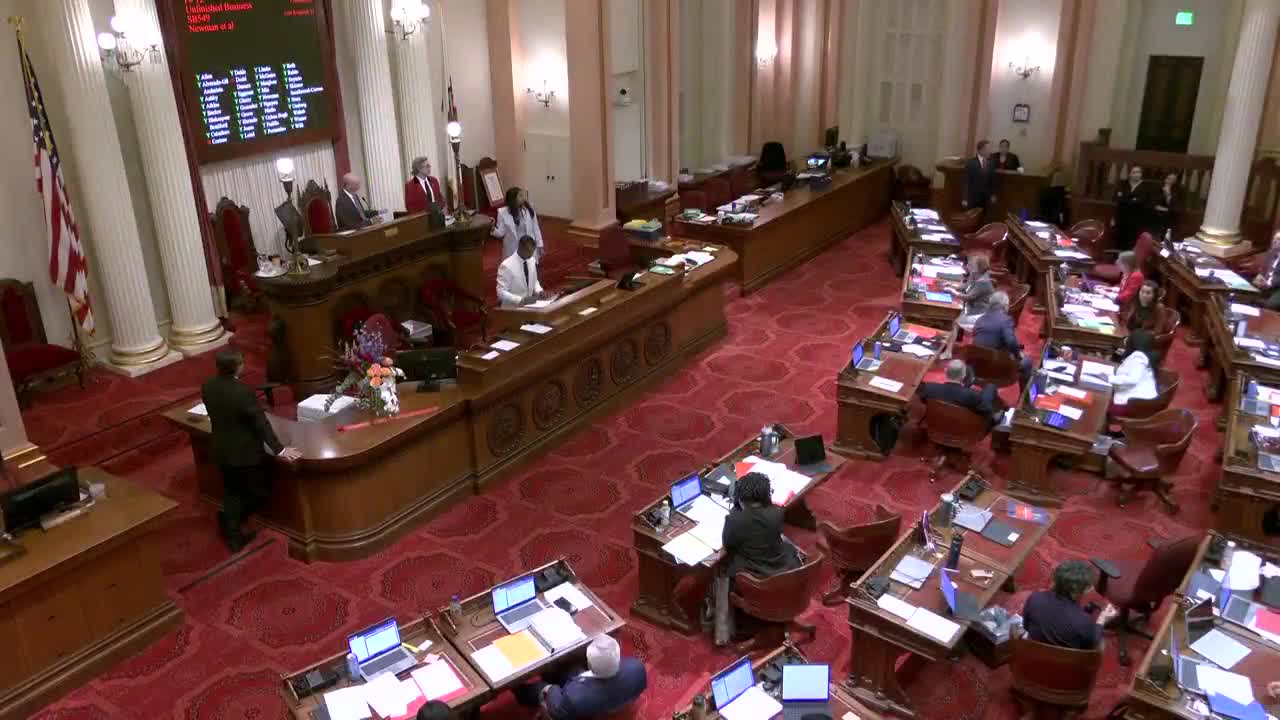 2MIN
Senate Floor
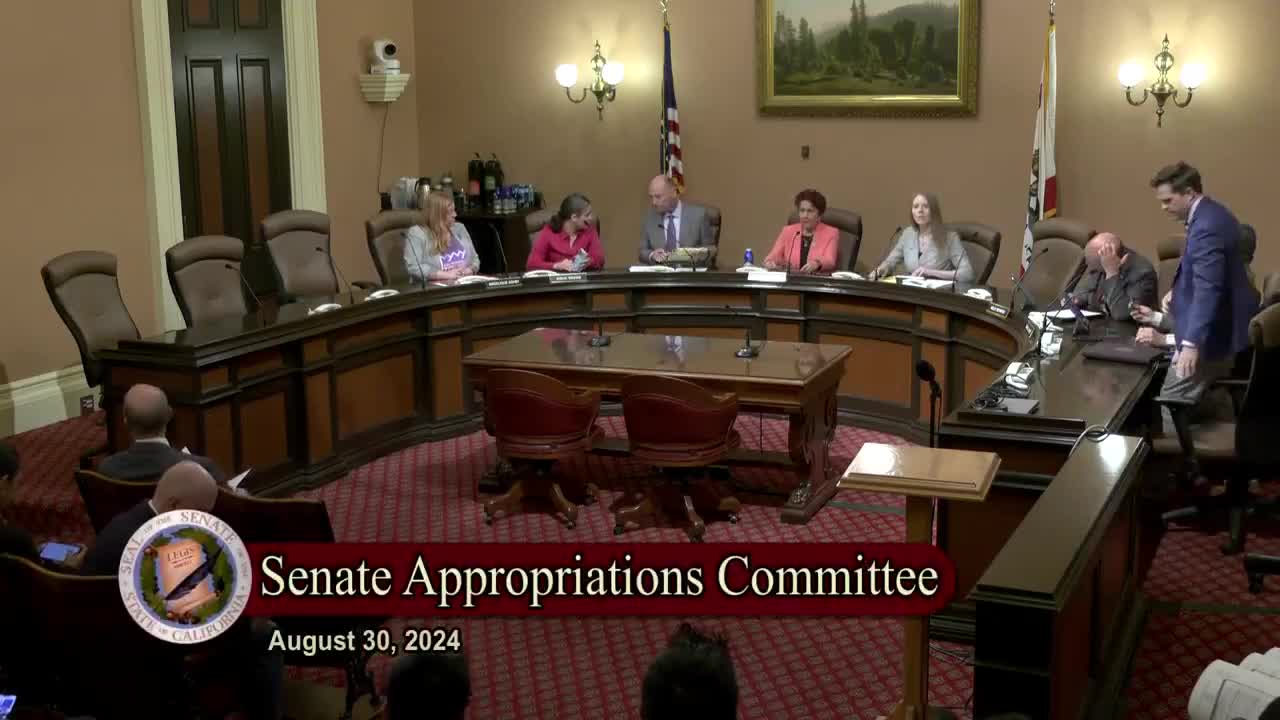 2MIN
Senate Standing Committee on Appropriations
 27MIN
Senate Standing Committee on Natural Resources and Water
 2MIN
Assembly Floor
 13SEC
Assembly Standing Committee on Appropriations
 25MIN
Assembly Standing Committee on Water, Parks, and Wildlife
Bill Author

Bill Co-Author(s):