ACR 222: Historically Black Colleges and Universities Week.
- Session Year: 2023-2024
- House: Assembly
- Latest Version Date: 2024-08-28
Current Status:
Passed
(2024-08-28: Chaptered by Secretary of State - Res. Chapter 194, Statutes of 2024.)
Introduced
In Committee
First Chamber
In Committee
Second Chamber
Enacted
This measure would annually designate the 4th week of September as Historically Black Colleges and Universities Week.
This measure would annually designate the 4th week of September as Historically Black Colleges and Universities Week.
This measure would annually designate the 4th week of September as Historically Black Colleges and Universities Week.
WHEREAS, In 1896, the United States Supreme Court ruled in Plessy v. Ferguson (1896) 163 U.S. 537 that segregation of the races at public facilities was legal so long as these facilities were separate but equal, which legitimized segregated public schools and provided an impetus for Jim Crow legislative restrictions and barriers that were upheld for nearly seven decades; and
WHEREAS, Historically Black Colleges and Universities (HBCUs) were established in the United States in the 19th century due to restrictive state policies against Black student admission through legitimized segregation and racial discrimination; and
WHEREAS, HBCUs are dedicated to providing a supportive educational environment that is built on creating diverse academic opportunities, celebrating cultural awareness, and elevating positive racial identity; and
WHEREAS, Dating back to the landmark United States Supreme Court case of Brown v. Board of Education of Topeka (1954) 347 U.S. 483, in which the United States Supreme Court declared that segregated schools were unconstitutional, funding allocations have been earmarked to address the longstanding disparities in educational outcomes between Black and African American students and their non-Black peers; and
WHEREAS, Title III of the federal Higher Education Act of 1965, as amended, defines an HBCU as an institution that was established prior to 1964, whose principal mission was, and is, the education of Black Americans, and that is accredited by a nationally recognized agency or association determined by the Secretary of Education; and
WHEREAS, On September 22, 2023, President Joseph R. Biden proclaimed the week of September 24, 2023, through September 30, 2023, inclusive, as National Historically Black Colleges and Universities Week, and also reestablished the White House Initiative on Advancing Educational Equity, Excellence, and Economic Opportunity for HBCUs to increase their participation in federal programs that offer greater access to funding; and
WHEREAS, On October 24, 2023, stemming from the collaboration of Umoja, a community and critical resource dedicated to enhancing the cultural and educational experiences of African American and other students, a resolution established the Los Angeles Community College District and Los Angeles Unified School District Historical Black Colleges and Universities Day; and
WHEREAS, California has 116 community colleges spanning 73 districts that are located in urban and rural communities that served nearly 2.1 million students from diverse backgrounds during the 201920 academic year; and
WHEREAS, In 2022, the Joint Center for Political and Economic Studies research brief, The State of Black Students at Community Colleges, reported that more than 36 percent, which is more than one-third, of all Black undergraduate students are attending community colleges; and
WHEREAS, The National Center for Education Statistics reports that in the 202122 academic year, of the degrees conferred by HBCUs, Black students earned 44 percent of the 5,300 associate degrees, 81 percent of the 32,800 baccalaureate degrees, 70 percent of the 7,600 masters degrees, and 61 percent of the 3,000 doctoral degrees; and
WHEREAS, A July 30, 2021, article from the McKinsey Institute for Black Economic Mobility reports that HBCUs have an opportunity to accelerate Black economic mobility if attention and funding could be sustained and increased and estimates that a strong HBCU network could increase Black worker incomes by an estimated $10,000,000,000 in addition to strengthening the economy with $1,200,000,000 in incremental business profit, $300,000,000 in decreased student-loan debt, and $1,000,000,000 in additional consumer expenditures; and
WHEREAS, According to the Thurgood Marshall College Fund, HBCUs have played a significant role in producing black professionals and have graduated 40 percent of all Black engineers, 40 percent of all Black Representatives in the United States Congress, 50 percent of all Black lawyers, 50 percent of all Black doctors, and 80 percent of all Black judges; and
WHEREAS, The Cal Grant B awards extend financial aid grant awards to low-income students and are supported by the College Access Tax Credit Fund (CATCF), which provides tax credits to taxpayers and businesses who make charitable contributions to support California Community College transfer students attending partnered HBCUs; and
WHEREAS, A Transfer Guarantee Pathway Agreement was signed on March 17, 2015, between the office of the Chancellor of the California Community Colleges and select, regionally accredited HBCUs, which offers community college students who complete certain academic requirements, as specified, a guaranteed transfer to a participating HBCU; and
WHEREAS, In the 202122 fiscal year, a total of 53 California Community Colleges transfer students enrolled at 39 HBCUs that have associate degree for transfer memoranda of understanding on file with the office of the Chancellor of the California Community Colleges; and
WHEREAS, Recognizing that Assembly Bill 1400 (Chapter 278, Statutes of 2023), authored by Assembly Member Isaac Bryan, signed by Governor Gavin Newsom, and chaptered on September 30, 2023, requires the CATCF moneys continuously appropriated to the Student Aid Commission to be used for awards for qualifying community college student transfers to regionally accredited HBCUs that have associate degree for transfer memoranda of understanding on file with the office of the Chancellor of the California Community Colleges; and
WHEREAS, Assembly Bill 1400 (Chapter 278, Statutes of 2023) reduces the pool of eligible CATCF-funded grant applicants to less than 100 students, which enables the CATCF program to issue awards of up to $5,000; and
WHEREAS, It is important to support Black students in pursuit of baccalaureate and postgraduate degree attainment by cultivating equitable financial, social, and academic supports, which will help to advance socioeconomic mobility, political participation, and community empowerment; now, therefore, be it
Resolved by the Assembly of the State of California, the Senate thereof concurring,That the Legislature hereby proclaims that the fourth week of September in 2024, and annually thereafter, be known as Historically Black Colleges and Universities Week in the State of California; and be it further
Resolved, That the Chief Clerk of the Assembly transmit copies of this resolution to the author for appropriate distribution.
|
Date
|
Status
|
|---|---|
| Aug 28, 2024 | Chaptered by Secretary of State - Res. Chapter 194, Statutes of 2024. |
| Aug 28, 2024 | Enrolled and filed with the Secretary of State at 4 p.m. |
| Aug 22, 2024 | In Assembly. Ordered to Engrossing and Enrolling. |
| Aug 22, 2024 | Adopted and to Assembly. (Ayes 33. Noes 0. Page 5299.) |
| Aug 20, 2024 | Ordered to special consent calendar. |
| Aug 14, 2024 | From committee: Ordered to third reading. |
| Aug 12, 2024 | In Senate. To Com. on RLS. |
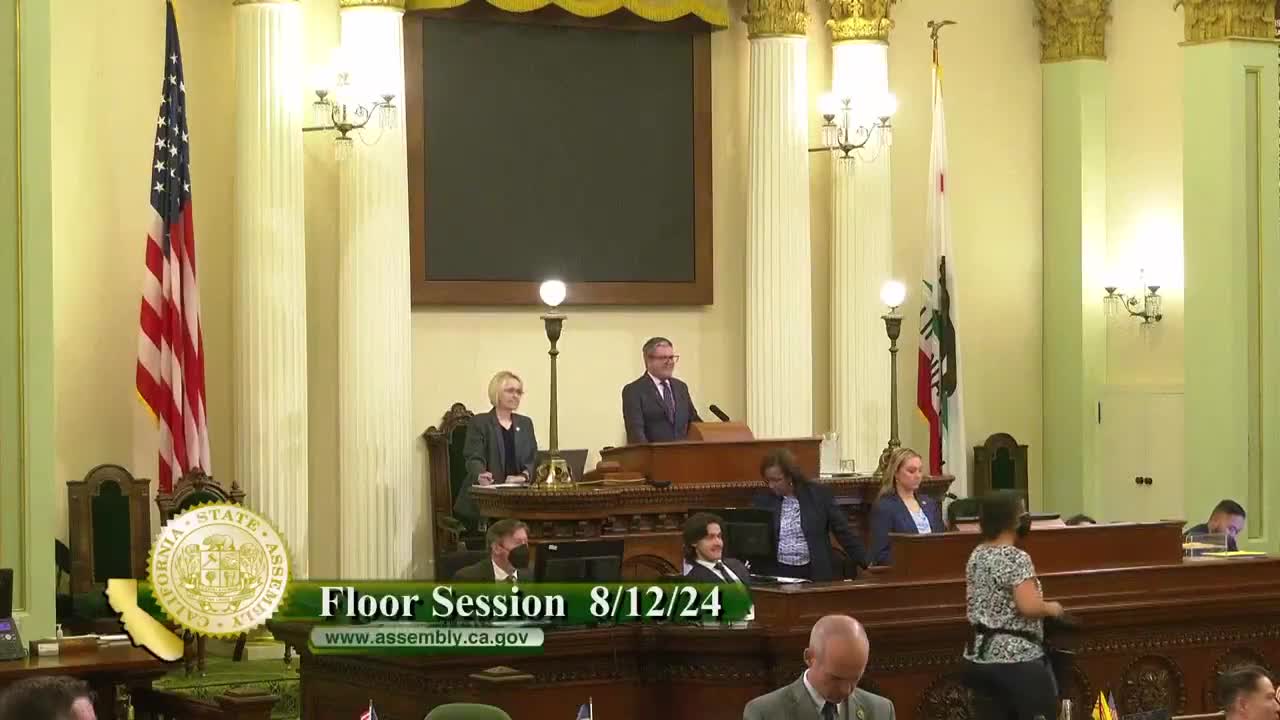
| Aug 12, 2024 | Adopted and to Senate. (Ayes 76. Noes 0. Page 6272.) |
| Aug 5, 2024 | From committee: Be adopted. Ordered to Third Reading. (Ayes 10. Noes 0.) (August 5). |
| Aug 5, 2024 | Referred to Com. on RLS. |
| Jul 3, 2024 | From printer. |
| Jul 2, 2024 | Introduced. To print. |
|
Date
|
Description
|
Location
|
Votes
|
|
|---|---|---|---|---|
| Aug 22, 2024 | Special Consent ACR222 Weber | Senate Floor |
Passed |
|
| Aug 12, 2024 | ACR 222 Weber Assembly Third Reading | Assembly Floor |
Passed |
|
| Aug 5, 2024 | Be adopted. To third reading. | Assembly Standing Committee on Rules |
Passed |
This list shows positions taken on this bill by organizations on the date displayed, which is linked to the original source.
Positions by individuals are not included.
|
Organization
|
Position
|
Date
|
|---|---|---|
| California Community College Chancellor’s Office | ** Support |
SENATE RULES COMMITTEE Office of Senate Floor Analyses (916) 651-1520 Fax: (916) 327-4478 | ACR 222 |
THIRD READING
Bill No: ACR 222
Author: Weber (D)
Introduced: 7/2/24
Vote: 21
ASSEMBLY FLOOR: 76-0, 8/12/24 - See last page for vote
SUBJECT: Historically Black Colleges and Universities Week
SOURCE: Author
DIGEST:
This resolution designates the 4th week of September as Historically Black Colleges and Universities Week.
ANALYSIS: This resolution makes the following legislative findings:
- In 1896, the United States Supreme Court ruled in Plessy v. Ferguson (1896) 163 U.S. 537 that segregation of the races at public facilities was legal so long as these facilities were “separate but equal,” which legitimized segregated public schools and provided an impetus for Jim Crow legislative restrictions and barriers that were upheld for nearly seven decades.
- Historically Black Colleges and Universities (HBCUs) were established in the United States in the 19th century due to restrictive state policies against Black student admission through legitimized segregation and racial discrimination.
- HBCUs are dedicated to providing a supportive educational environment that is built on creating diverse academic opportunities, celebrating cultural awareness, and elevating positive racial identity.
- The Cal Grant B awards extend financial aid grant awards to low-income students and are supported by the College Access Tax Credit Fund (CATCF), which provides tax credits to taxpayers and businesses who make charitable contributions to support California Community College transfer students attending partnered HBCUs.
- A Transfer Guarantee Pathway Agreement was signed on March 17, 2015, between the office of the Chancellor of the California Community Colleges and select, regionally accredited HBCUs, which offers community college students who complete certain academic requirements, as specified, a guaranteed transfer to a participating HBCU.
- In the 2021–22 fiscal year, a total of 53 California Community Colleges transfer students enrolled at 39 HBCUs that have associate degree for transfer memoranda of understanding on file with the office of the Chancellor of the California Community Colleges.
FISCAL EFFECT: Appropriation: No Fiscal Com.: No Local: No
SUPPORT: (Verified 8/14/24)
California Community Colleges Chancellor’s Office
OPPOSITION: (Verified 8/14/24)
None received
ASSEMBLY FLOOR: 76-0, 8/12/24
AYES: Addis, Aguiar-Curry, Alanis, Alvarez, Arambula, Bains, Bauer-Kahan, Berman, Boerner, Bonta, Bryan, Calderon, Juan Carrillo, Wendy Carrillo, Cervantes, Chen, Connolly, Megan Dahle, Davies, Dixon, Flora, Mike Fong, Friedman, Gabriel, Gallagher, Garcia, Gipson, Grayson, Haney, Hart, Hoover, Irwin, Jackson, Jones-Sawyer, Kalra, Lackey, Lee, Low, Lowenthal, Maienschein, Mathis, McCarty, McKinnor, Muratsuchi, Stephanie Nguyen, Ortega, Pacheco, Papan, Jim Patterson, Joe Patterson, Pellerin, Petrie-Norris, Quirk-Silva, Ramos, Rendon, Reyes, Luz Rivas, Rodriguez, Blanca Rubio, Sanchez, Santiago, Schiavo, Soria, Ta, Ting, Valencia, Villapudua, Waldron, Wallis, Ward, Weber, Wicks, Wilson, Wood, Zbur, Robert Rivas
NO VOTE RECORDED: Bennett, Essayli, Holden
Prepared by: Aizenia Randhawa / SFA / (916) 651-1520
8/14/24 14:03:19
**** END ****
ASSEMBLY THIRD READING
ATR Bill Id:ACR 222
Author:(Weber)
As Introduced Ver:July 2, 2024
Majority vote
SUMMARY
Designates the fourth week of September in 2024, and annually thereafter, as Historically Black Colleges and Universities Week in the State of California.
Major Provisions
- Historically Black Colleges and Universities (HBCUs) were established in the United States in the 19th century due to restrictive state policies against Black student admission through legitimized segregation and racial discrimination.
- HBCUs are dedicated to providing a supportive educational environment that is built on creating diverse academic opportunities, celebrating cultural awareness, and elevating positive racial identity.
- Dating back to the landmark United States Supreme Court case of Brown v. Board of Education of Topeka (1954) 347 U.S. 483, in which the United States Supreme Court declared that segregated schools were unconstitutional, funding allocations have been earmarked to address the longstanding disparities in educational outcomes between Black and African American students and their non-Black peers.
- Title III of the federal Higher Education Act of 1965, as amended, defines an HBCU as an institution that was established prior to 1964, whose principal mission was, and is, the education of Black Americans, and that is accredited by a nationally recognized agency or association determined by the Secretary of Education.
- California has 116 community colleges spanning 73 districts that are located in urban and rural communities that served nearly 2.1 million students from diverse backgrounds during the 2019–20 academic year. In 2022, the Joint Center for Political and Economic Studies' research brief, "The State of Black Students at Community Colleges," reported that more than 36%, which is more than one-third, of all Black undergraduate students are attending community colleges.
- The Cal Grant B awards extend financial aid grant awards to low-income students and are supported by the College Access Tax Credit Fund (CATCF), which provides tax credits to taxpayers and businesses who make charitable contributions to support California Community College transfer students attending partnered HBCUs.
- According to the Thurgood Marshall College Fund, HBCUs have played a significant role in producing black professionals and have graduated 40% of all Black engineers, 40% of all Black Representatives in the United States Congress, 50% of all Black lawyers, 50% of all Black doctors, and 80% of all Black judges.
- It is important to support Black students in pursuit of baccalaureate and postgraduate degree attainment by cultivating equitable financial, social, and academic supports, which will help to advance socioeconomic mobility, political participation, and community empowerment.
COMMENTS
According to the Author
This measure aims to commemorate Historically Black Colleges and Universities history and vital role in supporting Black students in pursuit of a baccalaureate and postgraduate degree. The measure would also celebrate the collaboration between California Community Colleges Chancellor's Office and HBCUs in the Transfer Guarantee Pathway Agreement which offer community college students a guaranteed transfer to participating HBCUs.
Arguments in Support
None on file.
Arguments in Opposition
None on file.
FISCAL COMMENTS
No fiscal impact. This resolution is keyed non-fiscal by Legislative Counsel.
VOTES
ASM RULES: 10-0-1
YES: Pacheco, Mathis, Cervantes, Flora, Friedman, Holden, Jones-Sawyer, Low, Maienschein, Arambula
ABS, ABST OR NV: Waldron
UPDATED
VERSION: July 2, 2024
CONSULTANT: Michael Erke / RLS. / (916) 319-2800 FN: 0003744
Date of Hearing: August 5, 2024
ASSEMBLY COMMITTEE ON RULES
Blanca Pacheco, Chair
ABPCA Bill Id:ACR 222 (
Author:Weber) – As Introduced Ver:July 2, 2024
SUBJECT: Historically Black Colleges and Universities Week.
SUMMARY: Designates the fourth week of September in 2024, and annually thereafter, as Historically Black Colleges and Universities Week in the State of California. Specifically, this resolution makes the following legislative findings:
- Historically Black Colleges and Universities (HBCUs) were established in the United States in the 19th century due to restrictive state policies against Black student admission through legitimized segregation and racial discrimination.
- HBCUs are dedicated to providing a supportive educational environment that is built on creating diverse academic opportunities, celebrating cultural awareness, and elevating positive racial identity.
- Dating back to the landmark United States Supreme Court case of Brown v. Board of Education of Topeka (1954) 347 U.S. 483, in which the United States Supreme Court declared that segregated schools were unconstitutional, funding allocations have been earmarked to address the longstanding disparities in educational outcomes between Black and African American students and their non-Black peers.
- Title III of the federal Higher Education Act of 1965, as amended, defines an HBCU as an institution that was established prior to 1964, whose principal mission was, and is, the education of Black Americans, and that is accredited by a nationally recognized agency or association determined by the Secretary of Education.
- California has 116 community colleges spanning 73 districts that are located in urban and rural communities that served nearly 2.1 million students from diverse backgrounds during the 2019–20 academic year. In 2022, the Joint Center for Political and Economic Studies’ research brief, “The State of Black Students at Community Colleges,” reported that more than 36 percent, which is more than one-third, of all Black undergraduate students are attending community colleges.
- The Cal Grant B awards extend financial aid grant awards to low-income students and are supported by the College Access Tax Credit Fund (CATCF), which provides tax credits to taxpayers and businesses who make charitable contributions to support California Community College transfer students attending partnered HBCUs.
- According to the Thurgood Marshall College Fund, HBCUs have played a significant role in producing black professionals and have graduated 40 percent of all Black engineers, 40 percent of all Black Representatives in the United States Congress, 50 percent of all Black lawyers, 50 percent of all Black doctors, and 80 percent of all Black judges.
- It is important to support Black students in pursuit of baccalaureate and postgraduate degree attainment by cultivating equitable financial, social, and academic supports, which will help to advance socioeconomic mobility, political participation, and community empowerment.
FISCAL EFFECT: This resolution is keyed non-fiscal by Legislative Counsel.
REGISTERED SUPPORT / OPPOSITION:
Support
None on file
Opposition
None on file
Analysis Prepared by: Michael Erke / RLS. / (916) 319-2800
Bill Author

Bill Co-Author(s):