AJR 12: Tijuana River: cross-border pollution.
- Session Year: 2023-2024
- House: Assembly
- Latest Version Date: 2024-09-05
Current Status:
Passed
(2024-09-05: Chaptered by Secretary of State - Res. Chapter 201, Statutes of 2024.)
Introduced
In Committee
First Chamber
In Committee
Second Chamber
Enacted
This measure would, among other things, urge the United States Congress and President Joseph R. Biden to fully fund the United States Environmental Protection Agencys Comprehensive Infrastructure Solution for the Tijuana River due to the ongoing impacts to public health, the environment, and the local economy caused by cross-border pollution and would urge President Joseph R. Biden to declare a national emergency due to those ongoing impacts.
This measure would, among other things, urge the United States Congress and President Joseph R. Biden to fully fund the United States Environmental Protection Agencys Comprehensive Infrastructure Solution for the Tijuana River due to the ongoing impacts to public health, the environment, and the local economy caused by cross-border pollution and would urge President Joseph R. Biden to declare a national emergency due to those ongoing impacts.
This measure would, among other things, urge the United States Congress to support and President Joseph R. Bidens $310,000,000 supplemental funding request for the United States Section of the International Boundary and Water Commission Biden to fully fund the United States Environmental Protection Agencys Comprehensive Infrastructure Solution for the Tijuana River due to the ongoing impacts to public health, the environment, and the local economy caused by cross-border pollution in the Tijuana River Valley and would urge President Joseph R. Biden to declare a national emergency due to those ongoing impacts.
This measure would, among other things, urge the United States Congress to support President Joseph R. Bidens $310,000,000 supplemental funding request for the United States Section of the International Boundary and Water Commission due to the ongoing impacts to public health, the environment, and the local economy caused by cross-border pollution in the Tijuana River Valley and would urge President Joseph R. Biden to declare a national emergency due to those ongoing impacts.
This measure would, among other things, urge the United States Congress to support President Joseph R. Bidens $310,000,000 supplemental funding request for the United States Section of the International Boundary and Water Commission due to the ongoing impacts to public health, the environment, and the local economy caused by cross-border pollution in the Tijuana River Valley and would urge President Joseph R. Biden to declare a national emergency due to those ongoing impacts.
This measure would, among other things, urge the United States Congress to support President Joseph R. Bidens $310,000,000 supplemental funding request for the United States Section of the International Boundary and Water Commission due to the ongoing impacts to public health, the environment, and the local economy caused by cross-border pollution in the Tijuana River Valley and would urge President Joseph R. Biden to declare a national emergency due to those ongoing impacts.
WHEREAS, The Tijuana River, which flows east to west from Mexico into California and drains into the Pacific Ocean through the Tijuana River Estuary, has for decades experienced an increased discharge of trash, sediment, and wastewater generated on the Mexico side, which as a result of sewage infrastructure inadequacies has created recurring and worsening pollution problems for the County of San Diego and the southern California coastline; and
WHEREAS, The extent of the cross-border water pollution has been studied for decades and research by the Scripps Institution of Oceanography attributed 34,000 annual illnesses to water quality pollution along the City of Imperial Beach coastline in the County of San Diego, and linked up to 76 percent of bacteria in the City of Imperial Beach air to cross-border water pollution, and data from medical clinics in the City of Imperial Beach shows a significant increase in cases of diarrhea and other intestinal problems during significant cross-border flow events; and
WHEREAS, The City of San Diego has declared a continued state of emergency since 1993 as a result of the escalated discharge of raw sewage from the City of Tijuana, Mexico, that has caused numerous health problems, such as headaches, rashes, infections, and breathing problems; and
WHEREAS, The City of Imperial Beach has declared a continued state of emergency since 2017 as a result of the escalated discharge of raw sewage from the City of Tijuana, Mexico, that has caused numerous health problems and significant beach closure days at the City of Imperial Beach, which include 101 days in 2018, 243 days in 2019, 295 days in 2020, and 246 days in 2021, and the beach has yet to open since December 2021; and
WHEREAS, The beach closures have had a direct effect on the surrounding communities due to decreased tourism, patronage of local businesses, and opportunities for youth recreation and camps, and lower property values; and
WHEREAS, The San Diego County Air Pollution Control District has deployed air monitors in the communities surrounding the Tijuana River Valley that have shown levels of sulfur dioxide and hydrogen sulfide above standards set by the United States Environmental Protection Agency; and
WHEREAS, The County of San Diego, on June 27, 2023, declared a local emergency due to the public health, environmental, and economic impacts of the cross-border pollution disaster; and
WHEREAS, On August 30, 2018, the Legislature approved Senate Joint Resolution 22 to urge the federal government to take immediate action to adequately address cross-border pollution in the Tijuana River Valley; and
WHEREAS, Former Attorney General Xavier Becerra initiated a lawsuit against the United States Section of the International Boundary and Water Commission (USIBWC) that led to the USIBWC committing to comply with the Clean Water Act (33 U.S.C. Sec. 1251 et seq.) along with the appropriation of $300,000,000 through the United States-Mexico-Canada Agreement (USMCA); and
WHEREAS, Since October 2018, the USIBWC has documented the entry of over 200 billion gallons of toxic effluent into the United States through the Tijuana River; and
WHEREAS, The USIBWC has failed to maintain and operate the South Bay International Wastewater Treatment Plant by allocating only $4,000,000 of the estimated $40,000,000 required for maintenance in the 201121, inclusive, time period; and
WHEREAS, The USIBWCs failure to respond is a clear violation of the Federal Water Pollution Control Act and the federal Resource Conservation and Recovery Act of 1976 that has endangered the lives of the people of California and threatened the environmental health and viability of the Tijuana River Valley and its diverse and unique potential as an ecological, recreational, cultural, and educational jewel of the State of California for decades; and
WHEREAS, Urgent funding and commitments are needed to completely implement the preferred Comprehensive Infrastructure Solution for the Tijuana River and address deferred maintenance needs for existing USIBWC infrastructure to bring the International Wastewater Treatment Plant into compliance with the Clean Water Act (33 U.S.C. Sec. 1251 et seq.); and
WHEREAS, The New River, the headwaters of which originate about 15 miles south of the City of Mexicali, Baja California, Mexico, and which crosses the international boundary at Calexico, California, traveling 60 miles through the County of Imperial and emptying into the Salton Sea, has been recognized as one of the most polluted rivers in the nation; and
WHEREAS, California Regional Water Quality Control Board, Colorado River Basin Region 7 has monitored the water quality of the New River since 1975 and has detected pollution by bacteria, silt, nutrients such as nitrate and phosphate, pesticides, and trash; and
WHEREAS, The Legislature has passed laws and appropriated funding to reduce cross-border pollution from the Tijuana River and the New River; and
WHEREAS, The New Rivers pollution problem, recognized since the 1940s, is exacerbated by continued growth of urban areas, industry, and agriculture on both sides of the border; and
WHEREAS, The community surrounding the New River in Calexico, California, is predominantly Latino and ranks in the 92nd percentile for pollution burden and 100th percentile for impaired water bodies according to CalEnviroScreen, Californias environmental justice mapping tool; now, therefore, be it
Resolved by the Assembly and the Senate of the State of California, jointly, That the Legislature urges the United States Congress and President Joseph R. Biden to fully fund the United States Environmental Protection Agencys Comprehensive Infrastructure Solution for the Tijuana River due to the ongoing impacts to public health, the environment, and the local economy caused by cross-border pollution; and be it further
Resolved, That the Legislature urges President Joseph R. Biden to allow all relevant agencies to provide financial and technical support to the United States Environmental Protection Agency and the USIBWC in the implementation of infrastructure solutions, including the projects agreed upon in the USIBWC Minute No. 328; and be it further
Resolved, That the Legislature urges President Joseph R. Biden to declare a national emergency due to the ongoing impacts to public health, the environment, and the local economy caused by cross-border pollution in the Tijuana River Valley; and be it further
Resolved, That the Legislature urges President Joseph R. Biden and Congress to include sufficient ongoing operation and maintenance funding for the South Bay International Wastewater Treatment Plant in future federal budgets; and be it further
Resolved, That the Legislature hereby reinforces its commitment to Section 4 of Article 10 of the California Constitution, and the California Coastal Act of 1976 (Division 20 (commencing with Section 30000) of the Public Resources Code), which guarantee maximum public access to the coast and navigable waters, and that the Legislature strongly urges the federal government to take necessary action to end the 900 consecutive days of beach closures in the City of Imperial Beach; and be it further
Resolved, That the Legislature urges President Joseph R. Biden and Congress to provide funding to address ongoing cross-border pollution impacting the New River; and be it further
Resolved, That the Chief Clerk of the Assembly transmit copies of this resolution to the President and Vice President of the United States, to the Speaker of the United States House of Representatives, to the Majority Leader of the United States Senate, to each Senator and Representative from California in the Congress of the United States, to the Commissioner of the USIBWC, to the Governor, to the California Attorney General, and to the author for appropriate distribution.
WHEREAS, The Tijuana River, which flows east to west from Mexico into California and drains into the Pacific Ocean through the Tijuana River Estuary, has for decades experienced an increased discharge of trash, sediment, and wastewater generated on the Mexico side, which as a result of sewage infrastructure inadequacies has created recurring and worsening pollution problems for the County of San Diego and the southern California coastline; and
WHEREAS, The extent of the cross-border water pollution has been studied for decades and research by the Scripps Institution of Oceanography attributed 34,000 annual illnesses to water quality pollution along the City of Imperial Beach coastline in the County of San Diego, and linked up to 76 percent of bacteria in the City of Imperial Beach air to cross-border water pollution, and data from medical clinics in the City of Imperial Beach shows a significant increase in cases of diarrhea and other intestinal problems during significant cross-border flow events; and
WHEREAS, The City of San Diego has declared a continued state of emergency since 1993 as a result of the escalated discharge of raw sewage from the City of Tijuana, Mexico, that has caused numerous health problems, such as headaches, rashes, infections, and breathing problems; and
WHEREAS, The City of Imperial Beach has declared a continued state of emergency since 2017 as a result of the escalated discharge of raw sewage from the City of Tijuana, Mexico, that has caused numerous health problems and significant beach closure days at the City of Imperial Beach, which include 101 days in 2018, 243 days in 2019, 295 days in 2020, and 246 days in 2021, and the beach has yet to open since December 2021; and
WHEREAS, The beach closures have had a direct effect on the surrounding communities due to decreased tourism, patronage of local businesses, and opportunities for youth recreation and camps, and lower property values; and
WHEREAS, The San Diego County Air Pollution Control District has deployed air monitors in the communities surrounding the Tijuana River Valley that have shown levels of sulfur dioxide and hydrogen sulfide above standards set by the United States Environmental Protection Agency; and
WHEREAS, The County of San Diego, on June 27, 2023, declared a local emergency due to the public health, environmental, and economic impacts of the cross-border pollution disaster; and
WHEREAS, On August 30, 2018, the Legislature approved Senate Joint Resolution 22 to urge the federal government to take immediate action to adequately address cross-border pollution in the Tijuana River Valley; and
WHEREAS, Former Attorney General Xavier Becerra initiated a lawsuit against the United States Section of the International Boundary and Water Commission (USIBWC) that led to the USIBWC committing to comply with the Clean Water Act (33 U.S.C. Sec. 1251 et seq.) along with the appropriation of $300,000,000 through the United States-Mexico-Canada Agreement (USMCA); and
WHEREAS, Since October 2018, the USIBWC has documented the entry of over 200 billion gallons of toxic effluent into the United States through the Tijuana River; and
WHEREAS, The USIBWC has failed to maintain and operate the South Bay International Wastewater Treatment Plant by allocating only $4,000,000 of the estimated $40,000,000 required for maintenance in the 201121, inclusive, time period; and
WHEREAS, The USIBWCs failure to respond is a clear violation of the Federal Water Pollution Control Act and the federal Resource Conservation and Recovery Act of 1976 that has endangered the lives of the people of California and threatened the environmental health and viability of the Tijuana River Valley and its diverse and unique potential as an ecological, recreational, cultural, and educational jewel of the State of California for decades; and
WHEREAS, Urgent funding and commitments are needed to completely implement the preferred Comprehensive Infrastructure Solution for the Tijuana River and address deferred maintenance needs for existing USIBWC infrastructure to bring the International Wastewater Treatment Plant into compliance with the Clean Water Act (33 U.S.C. Sec. 1251 et seq.); and
WHEREAS, The New River, which the headwaters of which originate about 15 miles south of the City of Mexicali, Baja California, Mexico, crossing and which crosses the international boundary at Calexico, California, traveling 60 miles through the County of Imperial and emptying into the Salton Sea, has been recognized as one of the most polluted rivers in the nation; and
WHEREAS, California Regional Water Quality Control Board, Colorado River Basin Region 7 has monitored the water quality of the New River since 1975 and has detected pollution by bacteria, silt, nutrients such as nitrate and phosphate, pesticides, and trash; and
WHEREAS, The Legislature has passed laws and appropriated funding to reduce cross-border pollution from the Tijuana River and the New River; and
WHEREAS, The New Rivers pollution problem, recognized since the 1940s, is exacerbated by continued growth of urban areas, industry, and agriculture on both sides of the border; and
WHEREAS, The community surrounding the New River in Calexico, California, is predominantly Latino and ranks in the 92nd percentile for pollution burden and 100th percentile for impaired water bodies according to CalEnviroScreen, Californias environmental justice mapping tool; now, therefore, be it
Resolved by the Assembly and the Senate of the State of California, jointly, That the Legislature urges the United States Congress to support and President Joseph R. Bidens $310,000,000 supplemental funding request for the USIBWC Biden to fully fund the United States Environmental Protection Agencys Comprehensive Infrastructure Solution for the Tijuana River due to the ongoing impacts to public health, the environment, and the local economy caused by cross-border pollution in the Tijuana River Valley; pollution; and be it further
Resolved, That the Legislature urges President Joseph R. Biden to allow all relevant agencies to provide financial and technical support to the United States Environmental Protection Agency and the USIBWC in the implementation of infrastructure solutions, including the projects agreed upon in the USIBWC Minute No. 328; and be it further
Resolved, That the Legislature urges President Joseph R. Biden to declare a national emergency due to the ongoing impacts to public health, the environment, and the local economy caused by cross-border pollution in the Tijuana River Valley; and be it further
Resolved, That the Legislature urges President Joseph R. Biden and Congress to include sufficient ongoing operation and maintenance funding for the South Bay International Wastewater Treatment Plant in future federal budgets; and be it further
Resolved, That the Legislature hereby reinforces its commitment to Section 4 of Article 10 of the California Constitution, and the California Coastal Act of 1976 (Division 20 (commencing with Section 30000) of the Public Resources Code), which guarantee maximum public access to the coast and navigable waters, and that the Legislature strongly urges the federal government to take necessary action to end the 765 900 consecutive days of beach closures in the City of Imperial Beach; and be it further
RESOLVED,That the Legislature urges President Joseph R. Biden and Congress to provide funding to address ongoing cross-border pollution impacting the New River; and be it further
Resolved, That the Chief Clerk of the Assembly transmit copies of this resolution to the President and Vice President of the United States, to the Speaker of the United States House of Representatives, to the Majority Leader of the United States Senate, to each Senator and Representative from California in the Congress of the United States, to the Commissioner of the USIBWC, to the Governor, to the California Attorney General, and to the author for appropriate distribution.
WHEREAS, The Tijuana River, which flows east to west from Mexico into California and drains into the Pacific Ocean through the Tijuana River Estuary, has for decades experienced an increased discharge of trash, sediment, and wastewater generated on the Mexico side, which as a result of sewage infrastructure inadequacies has created recurring and worsening pollution problems for the County of San Diego and the southern California coastline; and
WHEREAS, The extent of the cross-border water pollution has been studied for decades and research by the Scripps Institution of Oceanography attributed 34,000 annual illnesses to water quality pollution along the City of Imperial Beach coastline in the County of San Diego, and linked up to 76 percent of bacteria in the City of Imperial Beach air to cross-border water pollution, and data from medical clinics in the City of Imperial Beach shows a significant increase in cases of diarrhea and other intestinal problems during significant cross-border flow events; and
WHEREAS, The City of San Diego has declared a continued state of emergency since 1993 as a result of the escalated discharge of raw sewage from the City of Tijuana, Mexico, that has caused numerous health problems, such as headaches, rashes, infections, and breathing problems; and
WHEREAS, The City of Imperial Beach has declared a continued state of emergency since 2017 as a result of the escalated discharge of raw sewage from the City of Tijuana, Mexico, that has caused numerous health problems and significant beach closure days at the City of Imperial Beach, which include 101 days in 2018, 243 days in 2019, 295 days in 2020, and 246 days in 2021, and the beach has yet to open since December 2021; and
WHEREAS, The beach closures have had a direct effect on the surrounding communities due to decreased tourism, patronage of local businesses, and opportunities for youth recreation and camps, and lower property values; and
WHEREAS, The San Diego County Air Pollution Control District has deployed air monitors in the communities surrounding the Tijuana River Valley that have shown levels of sulfur dioxide and hydrogen sulfide above standards set by the United States Environmental Protection Agency; and
WHEREAS, The County of San Diego, on June 27, 2023, declared a local emergency due to the public health, environmental, and economic impacts of the cross-border pollution disaster; and
WHEREAS, On August 30, 2018, the Legislature approved Senate Joint Resolution 22 to urge the federal government to take immediate action to adequately address cross-border pollution in the Tijuana River Valley; and
WHEREAS, Former Attorney General Xavier Becerra initiated a lawsuit against the United States Section of the International Boundary and Water Commission (USIBWC) that led to the USIBWC committing to comply with the Clean Water Act (33 U.S.C. Sec. 1251 et seq.) along with the appropriation of $300,000,000 through the United States-Mexico-Canada Agreement (USMCA); and
WHEREAS, Since October 2018, the USIBWC has documented the entry of over 200 billion gallons of toxic effluent into the United States through the Tijuana River; and
WHEREAS, The USIBWC has failed to maintain and operate the South Bay International Wastewater Treatment Plant by allocating only $4,000,000 of the estimated $40,000,000 required for maintenance in the 201121, inclusive, time period; and
WHEREAS, The USIBWCs failure to respond is a clear violation of the Federal Water Pollution Control Act and the federal Resource Conservation and Recovery Act of 1976 that has endangered the lives of the people of California and threatened the environmental health and viability of the Tijuana River Valley and its diverse and unique potential as an ecological, recreational, cultural, and educational jewel of the State of California for decades; and
WHEREAS, Urgent funding and commitments are needed to completely implement the preferred Comprehensive Infrastructure Solution for the Tijuana River and address deferred maintenance needs for existing USIBWC infrastructure to bring the International Wastewater Treatment Plant into compliance with the Clean Water Act (33 U.S.C. Sec. 1251 et seq.); now, therefore, be it and
WHEREAS, The New River, which headwaters originate about 15 miles south of the City of Mexicali, Baja California, Mexico, crossing the international boundary at Calexico, California, traveling 60 miles through the County of Imperial and emptying into the Salton Sea, has been recognized as one of the most polluted rivers in the nation; and
WHEREAS, California Regional Water Quality Control Board, Colorado River Basin Region 7 has monitored the water quality of the New River since 1975 and has detected pollution by bacteria, silt, nutrients such as nitrate and phosphate, pesticides, and trash; and
WHEREAS, The Legislature has passed laws and appropriated funding to reduce cross-border pollution from the Tijuana River and the New River; and
WHEREAS, The New Rivers pollution problem, recognized since the 1940s, is exacerbated by continued growth of urban areas, industry, and agriculture on both sides of the border; and
WHEREAS, The community surrounding the New River in Calexico, California, is predominantly Latino and ranks in the 92nd percentile for pollution burden and 100th percentile for impaired water bodies according to CalEnviroScreen, Californias environmental justice mapping tool; now, therefore, be it
Resolved by the Assembly and the Senate of the State of California, jointly, That the Legislature urges the United States Congress to support President Joseph R. Bidens $310,000,000 supplemental funding request for the USIBWC due to the ongoing impacts to public health, the environment, and the local economy caused by cross-border pollution in the Tijuana River Valley; and be it further
Resolved, That the Legislature urges President Joseph R. Biden to allow all relevant agencies to provide financial and technical support to the United States Environmental Protection Agency and the USIBWC in the implementation of infrastructure solutions, including the projects agreed upon in the USIBWC Minute No. 328; and be it further
Resolved, That the Legislature urges President Joseph R. Biden to declare a national emergency due to the ongoing impacts to public health, the environment, and the local economy caused by cross-border pollution in the Tijuana River Valley; and be it further
Resolved, That the Legislature urges President Joseph R. Biden and Congress to include sufficient ongoing operation and maintenance funding for the South Bay International Wastewater Treatment Plant in future federal budgets; and be it further
Resolved, That the Legislature hereby reinforces its commitment to Section 4 of Article 10 of the California Constitution, and the California Coastal Act of 1976 (Division 20 (commencing with Section 30000) of the Public Resources Code), which guarantee maximum public access to the coast and navigable waters, and that the Legislature strongly urges the federal government to take necessary action to end the 765 consecutive days of beach closures in the City of Imperial Beach; and be it further
RESOLVED,That the Legislature urges President Joseph R. Biden and Congress to provide funding to address ongoing cross-border pollution impacting the New River; and be it further
Resolved, That the Chief Clerk of the Assembly transmit copies of this resolution to the President and Vice President of the United States, to the Speaker of the United States House of Representatives, to the Majority Leader of the United States Senate, to each Senator and Representative from California in the Congress of the United States, to the Commissioner of the USIBWC, to the Governor, to the California Attorney General, and to the author for appropriate distribution.
WHEREAS, The Tijuana River, which flows east to west from Mexico into California and drains into the Pacific Ocean through the Tijuana River Estuary, has for decades experienced an increased discharge of trash, sediment, and wastewater generated on the Mexico side, which as a result of sewage infrastructure inadequacies has created recurring and worsening pollution problems for the County of San Diego and the southern California coastline; and
WHEREAS, The extent of the cross-border water pollution has been studied for decades and research by the Scripps Institution of Oceanography attributed 34,000 annual illnesses to water quality pollution along the City of Imperial Beach coastline in the County of San Diego, and linked up to 76 percent of bacteria in the City of Imperial Beach air to cross-border water pollution, and data from medical clinics in the City of Imperial Beach shows a significant increase in cases of diarrhea and other intestinal problems during significant cross-border flow events; and
WHEREAS, The City of San Diego has declared a continued state of emergency since 1993 as a result of the escalated discharge of raw sewage from the City of Tijuana, Mexico, that has caused numerous health problems, such as headaches, rashes, infections, and breathing problems; and
WHEREAS, The City of Imperial Beach has declared a continued state of emergency since 2017 as a result of the escalated discharge of raw sewage from the City of Tijuana, Mexico, that has caused numerous health problems and significant beach closure days at the City of Imperial Beach, which include 101 days in 2018, 243 days in 2019, 295 days in 2020, and 246 days in 2021, and the beach has yet to open since December 2021; and
WHEREAS, The beach closures have had a direct effect on the surrounding communities due to decreased tourism, patronage of local businesses, and opportunities for youth recreation and camps, and lower property values; and
WHEREAS, The San Diego County Air Pollution Control District has deployed air monitors in the communities surrounding the Tijuana River Valley that have shown levels of sulfur dioxide and hydrogen sulfide above standards set by the United States Environmental Protection Agency; and
WHEREAS, The County of San Diego, on June 27, 2023, declared a local emergency due to the public health, environmental, and economic impacts of the cross-border pollution disaster; and
WHEREAS, On August 30, 2018, the Legislature approved Senate Joint Resolution 22 to urge the federal government to take immediate action to adequately address cross-border pollution in the Tijuana River Valley; and
WHEREAS, Former Attorney General Xavier Becerra initiated a lawsuit against the United States Section of the International Boundary and Water Commission (USIBWC) that led to the USIBWC committing to comply with the Clean Water Act (33 U.S.C. Sec. 1251 et seq.) along with the appropriation of $300,000,000 through the United States-Mexico-Canada Agreement (USMCA); and
WHEREAS, Since October 2018, the USIBWC has documented the entry of over 200 billion gallons of toxic effluent into the United States through the Tijuana River; and
WHEREAS, The USIBWC has failed to maintain and operate the South Bay International Wastewater Treatment Plant by allocating only $4,000,000 of the estimated $40,000,000 required for maintenance in the 20112012 201121, inclusive, time period; and
WHEREAS, The USIBWCs failure to respond is a clear violation of the Federal Water Pollution Control Act and the federal Resource Conservation and Recovery Act of 1976 that has endangered the lives of the people of California and threatened the environmental health and viability of the Tijuana River Valley and its diverse and unique potential as an ecological, recreational, cultural, and educational jewel of the State of California for decades; and
WHEREAS, Urgent funding and commitments are needed to completely implement the preferred Comprehensive Infrastructure Solution for the Tijuana River and address deferred maintenance needs for existing USIBWC infrastructure to bring the International Wastewater Treatment Plant into compliance with the Clean Water Act (33 U.S.C. Sec. 1251 et seq.); now, therefore, be it
Resolved by the Assembly and the Senate of the State of California, jointly, That the Legislature urges the United States Congress to support President Joseph R. Bidens $310,000,000 supplemental funding request for the USIBWC due to the ongoing impacts to public health, the environment, and the local economy caused by cross-border pollution in the Tijuana River Valley; and be it further
Resolved, That the Legislature urges President Joseph R. Biden to allow all relevant agencies to provide financial and technical support to the United States Environmental Protection Agency and the USIBWC in the implementation of infrastructure solutions, including the projects agreed upon in the USIBWC Minute No. 328; and be it further
Resolved, That the Legislature urges President Joseph R. Biden to declare a national emergency due to the ongoing impacts to public health, the environment, and the local economy caused by cross-border pollution in the Tijuana River Valley; and be it further
Resolved, That the Legislature urges President Joseph R. Biden and Congress to include sufficient ongoing operation and maintenance funding for the South Bay International Wastewater Treatment Plant in future federal budgets; and be it further
Resolved, That the Legislature hereby reinforces its commitment to Section 4 of Article 10 of the California Constitution, and the California Coastal Act of 1976 (Division 20 (commencing with Section 30000) of the Public Resources Code), which guarantee maximum public access to the coast and navigable waters, and that the Legislature strongly urges the federal government to take necessary action to end the 765 consecutive days of beach closures in the City of Imperial Beach; and be it further
Resolved, That the Chief Clerk of the Assembly transmit copies of this resolution to the President and Vice President of the United States, to the Speaker of the United States House of Representatives, to the Majority Leader of the United States Senate, to each Senator and Representative from California in the Congress of the United States, to the Commissioner of the USIBWC, to the Governor, to the California Attorney General, and to the author for appropriate distribution.
WHEREAS, The Tijuana River, which flows east to west from Mexico into California and drains into the Pacific Ocean through the Tijuana River Estuary, has for decades experienced an increased discharge of trash, sediment, and wastewater generated on the Mexico side, which as a result of sewage infrastructure inadequacies has created recurring and worsening pollution problems for the County of San Diego and the southern California coastline; and
WHEREAS, The extent of the cross-border water pollution has been studied for decades and research by the Scripps Institution of Oceanography attributed 34,000 annual illnesses to water quality pollution along the City of Imperial Beach coastline in the County of San Diego, and linked up to 76 percent of bacteria in the City of Imperial Beach air to cross-border water pollution, and data from medical clinics in the City of Imperial Beach shows a significant increase in cases of diarrhea and other intestinal problems during significant cross-border flow events; and
WHEREAS, The City of San Diego has declared a continued state of emergency since 1993 as a result of the escalated discharge of raw sewage from the City of Tijuana, Mexico, that has caused numerous health problems, such as headaches, rashes, infections, and breathing problems; and
WHEREAS, The City of Imperial Beach has declared a continued state of emergency since 2017 as a result of the escalated discharge of raw sewage from the City of Tijuana, Mexico, that has caused numerous health problems and significant beach closure days at the City of Imperial Beach, which include 101 days in 2018, 243 days in 2019, 295 days in 2020, and 246 days in 2021, and the beach has yet to open since December 2021; and
WHEREAS, The beach closures have had a direct effect on the surrounding communities due to decreased tourism, patronage of local businesses, and opportunities for youth recreation and camps, and lower property values; and
WHEREAS, The San Diego County Air Pollution Control District has deployed air monitors in the communities surrounding the Tijuana River Valley that have shown levels of sulfur dioxide and hydrogen sulfide above standards set by the United States Environmental Protection Agency; and
WHEREAS, The County of San Diego, on June 27, 2023, declared a local emergency due to the public health, environmental, and economic impacts of the cross-border pollution disaster; and
WHEREAS, On August 30, 2018, the Legislature approved Senate Joint Resolution 22 to urge the federal government to take immediate action to adequately address cross-border pollution in the Tijuana River Valley; and
WHEREAS, Former Attorney General Xavier Becerra initiated a lawsuit against the United States Section of the International Boundary and Water Commission (USIBWC) that led to the USIBWC committing to comply with the Clean Water Act (33 U.S.C. Sec. 1251 et seq.) along with the appropriation of $300,000,000 through the United States-Mexico-Canada Agreement (USMCA); and
WHEREAS, Since October 2018, the USIBWC has documented the entry of over 200 billion gallons of toxic effluent into the United States through the Tijuana River; and
WHEREAS, The USIBWC has failed to maintain and operate the South Bay International Wastewater Treatment Plant by allocating only $4,000,000 of the estimated $40,000,000 required for maintenance in the 20112012 time period; and
WHEREAS, The USIBWCs failure to respond is a clear violation of the Federal Water Pollution Control Act and the federal Resource Conservation and Recovery Act of 1976 that has endangered the lives of the people of California and threatened the environmental health and viability of the Tijuana River Valley and its diverse and unique potential as an ecological, recreational, cultural, and educational jewel of the State of California for decades; and
WHEREAS, Urgent funding and commitments are needed to completely implement the preferred Comprehensive Infrastructure Solution for the Tijuana River and address deferred maintenance needs for existing USIBWC infrastructure to bring the International Wastewater Treatment Plant into compliance with the Clean Water Act (33 U.S.C. Sec. 1251 et seq.); now, therefore, be it
Resolved by the Assembly and the Senate of the State of California, jointly, That the Legislature urges the United States Congress to support President Joseph R. Bidens $310,000,000 supplemental funding request for the USIBWC due to the ongoing impacts to public health, the environment, and the local economy caused by cross-border pollution in the Tijuana River Valley; and be it further
Resolved, That the Legislature urges President Joseph R. Biden to allow all relevant agencies to provide financial and technical support to the United States Environmental Protection Agency and the USIBWC in the implementation of infrastructure solutions, including the projects agreed upon in the USIBWC Minute No. 328; and be it further
Resolved, That the Legislature urges President Joseph R. Biden to declare a national emergency due to the ongoing impacts to public health, the environment, and the local economy caused by cross-border pollution in the Tijuana River Valley; and be it further
Resolved, That the Legislature urges President Joseph R. Biden and Congress to include sufficient ongoing operation and maintenance funding for the South Bay International Wastewater Treatment Plant in future federal budgets; and be it further
Resolved, That the Legislature hereby reinforces its commitment to Section 4 of Article 10 of the California Constitution, and the California Coastal Act of 1976 (Division 20 (commencing with Section 30000) of the Public Resources Code), which guarantee maximum public access to the coast and navigable waters, and that the Legislature strongly urges the federal government to take necessary action to end the 765 consecutive days of beach closures in the City of Imperial Beach; and be it further
Resolved, That the Chief Clerk of the Assembly transmit copies of this resolution to the President and Vice President of the United States, to the Speaker of the United States House of Representatives, to the Majority Leader of the United States Senate, to each Senator and Representative from California in the Congress of the United States, to the Commissioner of the USIBWC, to the Governor, to the California Attorney General, and to the author for appropriate distribution.
|
Date
|
Status
|
|---|---|
| Sep 5, 2024 | Chaptered by Secretary of State - Res. Chapter 201, Statutes of 2024. |
| Sep 5, 2024 | Enrolled and filed with the Secretary of State at 11:30 p.m. |
| Aug 27, 2024 | Enrolled measure version corrected. |
| Aug 22, 2024 | Senate amendments concurred in. To Engrossing and Enrolling. (Ayes 62. Noes 0. Page 6421.). |
| Jun 13, 2024 | In Assembly. Concurrence in Senate amendments pending. |
| Jun 13, 2024 | Adopted and to Assembly. (Ayes 37. Noes 0. Page 4489.) |
| Jun 6, 2024 | Read second time. Ordered to Consent Calendar. |
| Jun 5, 2024 | From committee: Be adopted. To Consent Calendar. (Ayes 7. Noes 0.) (June 5). |
| May 29, 2024 | From committee chair, with author's amendments: Amend, and re-refer to committee. Read second time, amended, and re-referred to Com. on E.Q. |
| Mar 13, 2024 | Referred to Com. on E.Q. |
| Mar 4, 2024 | In Senate. To Com. on RLS. |
| Feb 29, 2024 | Adopted and to Senate. (Ayes 73. Noes 0.) |
| Feb 29, 2024 | Coauthors revised. |
| Feb 20, 2024 | From committee: Be adopted. Ordered to Third Reading. (Ayes 7. Noes 0.) (February 20). |
| Feb 20, 2024 | Re-referred to Com. on E.S. & T.M. |
| Feb 16, 2024 | From committee chair, with author's amendments: Amend, and re-refer to Com. on E.S. & T.M. Amended. |
| Feb 14, 2024 | Re-referred to Com. on E.S. & T.M. |
| Feb 13, 2024 | From committee chair, with author's amendments: Amend, and re-refer to Com. on E.S. & T.M. Amended. |
| Feb 5, 2024 | Referred to Com. on E.S. & T.M. |
| Jan 25, 2024 | From printer. |
| Jan 24, 2024 | Introduced. To print. |
|
Date
|
Description
|
Location
|
Votes
|
|
|---|---|---|---|---|
| Aug 22, 2024 | AJR 12 Alvarez Concurrence in Senate Amendments | Assembly Floor |
Passed |
|
| Jun 13, 2024 | Consent Calendar 2nd AJR12 Alvarez et al. | Senate Floor |
Passed |
|
| Jun 5, 2024 | Be adopted and be ordered to the Consent Calendar | Senate Standing Committee on Environmental Quality |
Passed |
|
| Feb 29, 2024 | AJR 12 Alvarez Assembly Third Reading | Assembly Floor |
Passed |
|
| Feb 20, 2024 | Be adopted. To third reading. | Assembly Standing Committee on Environmental Safety and Toxic Materials |
Passed |
This list shows positions taken on this bill by organizations on the date displayed, which is linked to the original source.
Positions by individuals are not included.
|
Organization
|
Position
|
Date
|
|---|---|---|
| City of Coronado | ** Support | |
| City Of Imperial Beach | ** Support | |
| City Of San Diego | ** Support | |
| League Of California Cities | ** Support | |
| San Diego County Air Pollution Control District | ** Support | |
| Surfrider Foundation | ** Support | |
| Wildcoast | ** Support | |
| YMCA of San Diego County | ** Support |
CONCURRENCE IN SENATE AMENDMENTS
CSA1 Bill Id:AJR 12
Author:(Alvarez, et al.)
As Amended Ver:May 29, 2024
Majority vote
SUMMARY
This resolution urges the United States Congress and President Joseph R. Biden to fully fund the United States Environmental Protection Agency's (US EPA) Comprehensive Infrastructure Solution for the Tijuana River due to the ongoing impacts to public health, the environment, and the local economy caused by cross-border pollution and would urge President Joseph R. Biden to declare a national emergency due to those ongoing impacts. It also urges the U.S. Congress to secure funding for the New River Project to address the impacts on public health, the environment, and the local economy of Imperial County.
Senate Amendments
- Strike the request for a specified level of funding for Tijuana River and instead urge the United States Congress and President Joseph R. Biden to fully fund the US EPA's Comprehensive Infrastructure Solution for the Tijuana River.
- Update the number of consecutive days of beach closures in the City of Imperial Beach, from 765 to 900 days.
- Add a co-author.
COMMENTS
Tijuana River watershed: According to the San Diego Regional Water Quality Control Board (San Diego Water Board), the Tijuana River watershed is a large binational watershed of approximately 1,750 square miles that lies across the California-Mexico border.
Tijuana River pollution: In the past 30 years, the City of Tijuana, Baja California, Mexico has experienced tremendous population and industrial growth, along with rapid urbanization. This rapid growth has put a strain on aging Mexican sewage infrastructure causing massive flows of untreated sewage affecting the Tijuana River Estuary and adjacent beach coastal waters in South San Diego County.
The pollution in the Tijuana River has impacted beaches, businesses, and is a major public health threat in San Diego County. Shorelines in South San Diego County have been closed due to bacteria levels exceeding health standards. Recent studies have shown that bacteria from the raw, untreated sewage can be airborne and affect people living in close proximity to coastal waters. The US Naval Special Warfare Command and Federal Homeland Security agents assigned to the region have also been affected by the billions of gallons of untreated wastewater that enters San Diego County coastal waters.
The International Boundary and Water Commission (IBWC) and the South Bay International Wastewater Treatment Plant (SBIWTP): The IBWC is responsible for implementing the rights and obligations of boundary and water treaties between the U.S. and Mexico. The SBIWTP is located in the City of San Diego and is funded by the U.S. and Mexico. It is owned and administered by the U.S. component of the IBWC. According to the San Diego Water Board, the SBIWTP treats an average daily flow of 25 million gallons of sewage and other wastewater flows originating from Tijuana.
SBIWTP damages, weather events, and federal action: The SBIWP has been in dire need of updates and repairs. Major storm events have caused an influx of water that exceeded the plant's capacity causing untreated sewage and stormwater discharge in the South Bay Ocean Outfall. Tropical Storm Hilary in 2023 accelerated damage to the already strained plant. The recovery plan to bring back the SBIWTP ability's to fully treat 25 million gallons a day of wastewater and be in compliance with discharge water quality permit parameters was estimated to cost $8 million.
U.S.-Mexico-Canada Agreement: In 2019, the U.S.-Mexico and Canada trade agreement was signed and it included $300 million for the Border Water Infrastructure Program to address the cross-border pollution issue. In 2020, the U.S. government committed funding to the US EPA to be used to address Tijuana River pollution. In fall 2021, US EPA completed an evaluation of the problem and developed a set of project proposals known as the Comprehensive Infrastructure Solution. The estimated costs of the plan were $627 million and approximately $26 million for annual operations and maintenance. The Comprehensive Infrastructure Solution has yet to be completed.
The New River and pollution: The New River originates about 15 miles south of Mexicali, Baja California, Mexico. It flows into the City of Calexico and drains into the Salton Sea. Since the 1940's, the New River has been a pollution problem at the border with a history of fecal coliform detection and foul odor. Mexicali has nearly tripled its population in the last three decades straining the sewage infrastructure and producing homes without adequate sewage draining causing raw sewage to enter the New River. Mexicali has also had industrial growth that contributes to the river's pollution. According to the California Colorado River Basin Regional Water Quality Control Board, the New River carries urban runoff, treated municipal wastes, untreated and partially treated industrial wastes, and agricultural runoff from Mexico's Mexicali Valley into Imperial County. This results in a serious threat to public health and ecosystems, and hinders economic development in the Imperial Valley.
The New River Improvement Project: The New River Improvement Project is a strategic plan developed by a committee within the California-Mexico border Relations Council. The strategic plan was developed to address the serious threat to public and environmental health affecting Imperial Valley by the New River pollution. The original draft of the project was estimated to cost over $80 million. Due to cost concerns, the project was amended in 2016. The amended project proposed to build a pipe that encases dirty water to bypass the City of Calexico and an automated trash screen at the border. The project began construction in October 2023 with a revised cost of $47.9 million. Since construction began, the project has been affected by unforeseen costs such as repairs to damaged pipes in the area and $4 million in damages due to flooding. Additional resources are required to address the New River pollution and work towards developing and maintaining a permanent solution.
This resolution: This resolution would urge the United States Congress and President Joseph R. Biden to fully fund the US EPA's Comprehensive Infrastructure Solution for the Tijuana River. This money will be used to address infrastructure inadequacies and cross-border pollution that threaten public health, the environment, and the local economy near the Tijuana River Valley. It would also urge President Joseph R. Biden to declare a national emergency and to ensure the project has ongoing funds for maintenance and operations. This resolution also urges the U.S. Congress to secure funding for the New River Project to address the impacts on public health, the environment, and the local economy of Imperial County. Any efforts to address the cross-border pollution between the U.S. and Mexico's shared rivers will require sustained financial support and coordination from both countries to ensure its citizens are protected from polluted waters.
According to the Author
"South San Diego is approaching 800 consecutive days of beach closures, and billions of gallons of untreated toxic sewage is impacting public health, our environment, and our local economy. The federal government has failed to comply with the Clean Water Act for years as the environmental disaster continues to worsen. The projects have been identified, now they need to be funded.
Congress must pass the supplemental funding request to implement EPA's [US EPA] Comprehensive Infrastructure Solution, and provide ongoing funding in future budgets to ensure the infrastructure is brought into compliance with the Clean Water Act. To avoid further delays and give federal agencies authority to fast-track the projects, President Biden should issue an emergency declaration.
I respectfully ask the Legislature to send a strong and unified message for Congress to approve President Biden's supplemental funding request to address the cross-border pollution disaster in South San Diego, and for President Biden to declare an emergency due to the ongoing impacts on the economy, environment and public health."
Arguments in Support
According to the City of Coronado and City of Imperial Beach: "The Tijuana River flows from the City of Tijuana, Mexico into the United States just south of the City of Imperial Beach. Due to failing infrastructure and water treatment facilities, the river is highly contaminated with industrial waste, untreated sewage and trash. Heavy rainfall further increases cross-border flows and causes an average of 109 million gallons per day of polluted water to flow across the border into the United States. These flows create significant health risks for communities in the United States. Polluted water flowing north from Mexico has caused numerous regional challenges for both the environment and our community's health. The continuous flow of untreated sewage and toxic waste has resulted in contaminated beaches, polluted air, and compromised water quality. Additionally, United States CBP [Customs and Border Patrol] agents are routinely exposed to highly contaminated water and air when patrolling our southern border in the vicinity of Tijuana. National security operations are compromised when the pollution causes harmful health impacts to CBP officers and personnel working at the border. We need the federal government to dedicate the resources necessary to address this situation now. While there have been recent efforts by both the United States and Mexico to dedicate resources to solve the problem, it is not enough, and millions of gallons of sewage continue to cross the border and impact our community."
Arguments in Opposition
None on file.
FISCAL COMMENTS
This measure is keyed non-fiscal by Office of Legislative Counsel.
VOTES:
ASM ENVIRONMENTAL SAFETY AND TOXIC MATERIALS: 7-0-0
YES: Garcia, Hoover, Connolly, McKinnor, Papan, Reyes, Ta
ASSEMBLY FLOOR: 73-0-7
YES: Aguiar-Curry, Alanis, Alvarez, Arambula, Bains, Bauer-Kahan, Bennett, Berman, Boerner, Bonta, Bryan, Calderon, Juan Carrillo, Wendy Carrillo, Chen, Connolly, Davies, Dixon, Essayli, Flora, Mike Fong, Friedman, Gallagher, Garcia, Gipson, Grayson, Haney, Hart, Holden, Hoover, Irwin, Jackson, Jones-Sawyer, Kalra, Lackey, Lee, Low, Lowenthal, Maienschein, Mathis, McCarty, McKinnor, Muratsuchi, Stephanie Nguyen, Ortega, Pacheco, Jim Patterson, Joe Patterson, Petrie-Norris, Quirk-Silva, Ramos, Rendon, Reyes, Luz Rivas, Rodriguez, Blanca Rubio, Sanchez, Santiago, Schiavo, Soria, Ta, Ting, Valencia, Villapudua, Waldron, Wallis, Ward, Weber, Wicks, Wilson, Wood, Zbur, Robert Rivas
ABS, ABST OR NV: Addis, Cervantes, Megan Dahle, Vince Fong, Gabriel, Papan, Pellerin
SENATE FLOOR: 37-0-3
YES: Allen, Archuleta, Ashby, Atkins, Becker, Blakespear, Bradford, Caballero, Cortese, Dahle, Dodd, Durazo, Eggman, Glazer, Gonzalez, Grove, Hurtado, Jones, Laird, McGuire, Menjivar, Min, Newman, Nguyen, Niello, Ochoa Bogh, Padilla, Portantino, Roth, Rubio, Seyarto, Skinner, Smallwood-Cuevas, Umberg, Wahab, Wiener, Wilk
ABS, ABST OR NV: Alvarado-Gil, Limón, Stern
UPDATED
VERSION: May 29, 2024
CONSULTANT: Brenda Cisneros-Larios / E.S. & T.M. / (916) 319-3965 FN: 0003530
SENATE RULES COMMITTEE Office of Senate Floor Analyses (916) 651-1520 Fax: (916) 327-4478 | AJR 12 |
CONSENT
Bill No: AJR 12
Author: Alvarez (D), Atkins (D), Boerner (D), Davies (R), Jones (R), Maienschein (D), Padilla (D), Ward (D) and Weber (D), et al.
Amended: 5/29/24 in Senate
Vote: 21
SENATE ENVIRONMENTAL QUALITY COMMITTEE: 7-0, 6/5/24
AYES: Gonzalez, Dahle, Hurtado, Laird, Menjivar, Nguyen, Skinner
ASSEMBLY FLOOR: 73-0, 2/29/24 - See last page for vote
SUBJECT: Tijuana River: cross-border pollution
SOURCE: Author
DIGEST: This resolution urges the United States Congress and President Joseph R. Biden to fully fund the United States Environmental Protection Agency’s (US EPA) Comprehensive Infrastructure Solution for the Tijuana River due to the ongoing impacts on public health, the environment, and the local economy caused by cross-border pollution and urges President Joseph R. Biden to declare a national emergency due to those ongoing impacts.
ANALYSIS:
Existing law:
- Establishes the International Boundary Commission (IBC). (Treaty Series 241, Convention between the United States of America and Mexico, 1889)
- Renames the IBC the International Boundary and Water Commission (IBWC) and entrusts the IBWC to give preferential attention to the solution of all border sanitation problems. (Treaty Series 944, Treaty between the United States of America and Mexico, 1944)
- Requires, under the federal Clean Water Act, that each federal agency or department that has jurisdiction over any property or facility, or that is engaged in any activity resulting in, or which may result in, discharge or runoff of pollutants, be subject to all federal, state, interstate, and local requirements, administrative authority, and process and sanctions respecting the control and abatement of water pollution in the same manner, and to the same extent as a nongovernmental entity. (33 United States Code (U.S.C.) § 1323(a))
- Establishes the Porter-Cologne Water Quality Control Act, which prohibits the discharge of pollutants to surface waters unless the discharger obtains a permit from the State Water Board. (Water Code § 1300 et seq.)
- Establishes the California-Mexico Border Relations Council to, among other requirements, coordinate activities of state agencies that are related to cross-border programs, initiatives, projects, and partnerships that exist within state government in order to improve the effectiveness of state and local efforts that are of concern between California and Mexico. (Government Code § 99522, 995523)
- Requires upon an appropriation of funds from the Legislature-California Environmental Protection Agency and the California Natural Resources Agency, including their subsidiary agencies, to collaborate to create a Tijuana River Valley Watershed Action Plan, known as the Tijuana River Plan, as specified. (Public Resource Code § 71107)
This resolution:
- Makes the following findings:
- The Tijuana River, which flows east to west from Mexico into California and drains into the Pacific Ocean through the Tijuana River Estuary, has for decades experienced an increased discharge of trash, sediment, and wastewater generated on the Mexico side, which as a result of sewage infrastructure inadequacies has created recurring and worsening pollution problems for the County of San Diego and the Southern California coastline;
- The extent of the cross-border water pollution has been studied for decades and research by the Scripps Institution of Oceanography attributed 34,000 annual illnesses to water quality pollution along the City of Imperial Beach coastline in the County of San Diego and linked up to 76 percent of bacteria in the City of Imperial Beach air to cross-border water pollution, and data from medical clinics in the City of Imperial Beach shows a significant increase in cases of diarrhea and other intestinal problems during significant cross-border flow events;
- The City of San Diego has declared a continued state of emergency since 1993 as a result of the escalated discharge of raw sewage from the City of Tijuana, Baja California, Mexico, that has caused numerous health problems, such as headaches, rashes, infections, and breathing problems;
- The City of Imperial Beach has declared a continued state of emergency since 2017 as a result of the escalated discharge of raw sewage from Tijuana, Baja California, Mexico, that has caused numerous health problems and significant beach closure days at the City of Imperial Beach, which include 101 days in 2018, 243 days in 2019, 295 days in 2020, and 246 days in 2021, and the beach has yet to open since December 2021;
- The beach closures have had a direct effect on the surrounding communities due to decreased tourism, patronage of local businesses, and opportunities for youth recreation and camps, and lower property values;
- The San Diego County Air Pollution Control District has deployed air monitors in the communities surrounding the Tijuana River Valley that have shown levels of sulfur dioxide and hydrogen sulfide above standards set by the U.S. Environmental Protection Agency (USEPA);
- The County of San Diego, on June 27, 2023, declared a local emergency due to the public health, environmental, and economic impacts of the cross-border pollution disaster;
- On August 30, 2018, the Legislature approved Senate Joint Resolution 22 to urge the federal government to take immediate action to adequately address cross-border pollution in the Tijuana River Valley;
- Former Attorney General Xavier Becerra initiated a lawsuit against the United States International Boundary and Water Commission (USIBWC) that led to the USIBWC committing to comply with the Clean Water Act (33 U.S.C. Sec. 1251 et seq.) along with the appropriation of $300,000,000 through the U.S.-Mexico-Canada Agreement (USMCA);
- Since October 2018, the USIBWC has documented the entry of over 200 billion gallons of toxic effluent into the U.S. through the Tijuana River;
- The USIBWC has failed to maintain and operate the South Bay International Wastewater Treatment Plant by allocating only $4,000,000 of the estimated $40,000,000 required for maintenance in the 2011–21, inclusive, time period;
- The USIBWC’s failure to respond is a clear violation of the Federal Water Pollution Control Act and the Federal Resource Conservation and Recovery Act of 1976 has endangered the lives of the people of California and threatened the environmental health and viability of the Tijuana River Valley and its diverse and unique potential as an ecological, recreational, cultural, and educational jewel of the State of California for decades;
- Urgent funding and commitments are needed to completely implement the preferred Comprehensive Infrastructure Solution for the Tijuana River and address deferred maintenance needs for existing USIBWC infrastructure to bring the International Wastewater Treatment Plant into compliance with the Clean Water Act (33 U.S.C. Sec. 1251 et seq.);
- The New River, whose headwaters originate about 15 miles south of the City of Mexicali, Baja California, Mexico, crossing the international boundary at the City of Calexico, California, traveling 60 miles through the County of Imperial and emptying into the Salton Sea, has been recognized as one of the most polluted rivers in the nation;
- California Regional Water Quality Control Board, Colorado River Basin Region 7 has monitored the water quality of the New River since 1975 and has detected pollution by bacteria, silt, nutrients such as nitrate and phosphate, pesticides, and trash;
- The Legislature has passed laws and appropriated funding to reduce cross-border pollution from the Tijuana River and the New River;
- The New River’s pollution problem, recognized since the 1940s, is exacerbated by continued growth of urban areas, industry, and agriculture on both sides of the border; and
- The community surrounding the New River in the City of Calexico, California, is predominantly Latino and ranks in the 92nd percentile for pollution burden and 100th percentile for impaired water bodies according to CalEnviroScreen, California’s environmental justice mapping tool.
- Resolves, on behalf of the Assembly and the Senate of the State of California, jointly, that:
- The Legislature urges the US Congress and President Joseph R. Biden to fully fund the US EPA’s Comprehensive Infrastructure Solution for the Tijuana River due to the ongoing impacts on public health, the environment, and the local economy caused by cross-border pollution and would urge President Joseph R. Biden to declare a national emergency due to those ongoing impacts; and,
- The Legislature urges President Joseph R. Biden to allow all relevant agencies to provide financial and technical support to the USEPA and the USIBWC in the implementation of infrastructure solutions, including the projects agreed upon in the USIBWC Minute No. 328; and,
- The Legislature urges President Joseph R. Biden to declare a national emergency due to the ongoing impacts to public health, the environment, and the local economy caused by cross-border pollution in the Tijuana River Valley; and,
- The Legislature urges President Joseph R. Biden and Congress to include sufficient ongoing operation and maintenance funding for the South Bay International Wastewater Treatment Plant in future federal budgets; and,
- The Legislature hereby reinforces its commitment to Section 4 of Article 10 of the California Constitution, and the California Coastal Act of 1976 (Division 20 (commencing with Section 30000) of the Public Resources Code), which guarantee maximum public access to the coast and navigable waters, and that the Legislature strongly urges the federal government to take necessary action to end the 900 consecutive days of beach closures in the City of Imperial Beach; and,
- The Legislature urges President Joseph R. Biden and Congress to provide funding to address ongoing cross-border pollution impacting the New River; and,
- The Legislature urges President Joseph R. Biden and Congress to provide funding to address ongoing cross-border pollution impacting the New River; and
- The Chief Clerk of the Assembly transmits copies of this resolution to the President and Vice President of the U.S., to the Speaker of the U.S. House of Representatives, to the Majority Leader of the U.S. Senate, to each Senator and Representative from California in the Congress of the U.S., to the Commissioner of the USIBWC, to the Governor, to the California Attorney General, and to the author for appropriate distribution.
Background
- Tijuana River watershed. According to the San Diego Regional Water Quality Control Board (San Diego Water Board), the Tijuana River watershed is a large binational watershed of approximately 1,750 square miles that lies across the California-Mexico border.
- Tijuana River pollution. In the past 30 years, the City of Tijuana, Baja California, Mexico has experienced tremendous population and industrial growth, along with rapid urbanization. This rapid growth has put a strain on aging Mexican sewage infrastructure causing massive flows of untreated sewage affecting the Tijuana River Estuary and adjacent beach coastal waters in South San Diego County.
The pollution in the Tijuana River has impacted beaches and businesses and is a major public health threat in San Diego County. Shorelines in South San Diego County have been closed due to bacteria levels exceeding health standards. Recent studies have shown that bacteria from the raw, untreated sewage can be airborne and affect people living in close proximity to coastal waters. The US Naval Special Warfare Command and Federal Homeland Security agents assigned to the region have also been affected by the billions of gallons of untreated wastewater that enters San Diego County coastal waters.
- The International Boundary and Water Commission (IBWC) and the South Bay International Wastewater Treatment Plant (SBIWTP). The IBWC is responsible for implementing the rights and obligations of boundary and water treaties between the U.S. and Mexico. The SBIWTP is located in the City of San Diego and is funded by the U.S. and Mexico. It is owned and administered by the U.S. component of the IBWC. According to the San Diego Water Board, the SBIWTP treats an average daily flow of 25 million gallons of sewage and other wastewater flows originating from Tijuana.
- SBIWTP damages, weather events, and federal action. The SBIWP has been in dire need of updates and repairs. Major storm events have caused an influx of water that exceeded the plant's capacity causing untreated sewage and stormwater discharge in the South Bay Ocean Outfall.
Tijuana River watershed: According to the San Diego Regional Water Quality Control Board (San Diego Water Board), the Tijuana River watershed is a large binational watershed of approximately 1,750 square miles that lies across the California-Mexico border.
Tropical Storm Hilary in 2023 accelerated damage to the already strained plant. The recovery plan to bring back the SBIWTP's ability to fully treat 25 million gallons a day of wastewater and be in compliance with discharge water quality permit parameters was estimated to cost $8 million.
- Comprehensive Infrastructure Solution. In 2019, the U.S.-Mexico and Canada trade agreement was signed and it included $300 million for the Border Water Infrastructure Program to address the cross-border pollution issue. In 2020, the U.S. government committed funding to the US EPA to be used to address Tijuana River pollution. In fall 2021, US EPA completed an evaluation of the problem and developed a set of project proposals known as the Comprehensive Infrastructure Solution. The estimated costs of the plan were $627 million and approximately $26 million for annual operations and maintenance. The $300 million in USMCA funding will enable the US EPA to move forward with some projects.
- The New River and pollution. The New River originates about 15 miles south of Mexicali, Baja California, Mexico. It flows into the City of Calexico and drains into the Salton Sea. Since the 1940s, the New River has been a pollution problem at the border with a history of fecal coliform detection and foul odor. Mexicali has nearly tripled its population in the last three decades straining the sewage infrastructure and producing homes without adequate sewage draining causing raw sewage to enter the New River. Mexicali has also had industrial growth that contributes to the river's pollution. According to the California Colorado River Basin Regional Water Quality Control Board, the New River carries urban runoff, treated municipal wastes, untreated and partially treated industrial wastes, and agricultural runoff from Mexico's Mexicali Valley into Imperial County. This results in a serious threat to public health and ecosystems and hinders economic development in the Imperial Valley.
- The New River Improvement Project. The New River Improvement Project is a strategic plan developed by a committee within the California-Mexico Border Relations Council. The strategic plan was developed to address the serious threat to public and environmental health affecting Imperial Valley by the New River pollution. The original draft of the project was estimated to cost over $80 million. Due to cost concerns, the project was amended in 2016. The amended project proposed to build a pipe that encases dirty water to bypass the City of Calexico and an automated trash screen at the border. The project began construction in October 2023 with a revised cost of $47.9 million. Since construction began, the project has been affected by unforeseen costs such as repairs to damaged pipes in the area and $4 million in damages due to flooding. Additional resources are required to address the New River pollution and work towards developing and maintaining a permanent solution.
Comments
Purpose of Bill. According to the author, "South San Diego is approaching 800 consecutive days of beach closures, and billions of gallons of untreated toxic sewage is impacting public health, our environment, and our local economy. The federal government has failed to comply with the Clean Water Act for years as the environmental disaster continues to worsen. The projects have been identified, now they need to be funded.
“Congress must pass the supplemental funding request to implement EPA’s [USEPA] Comprehensive Infrastructure Solution, and provide ongoing funding in future budgets to ensure the infrastructure is brought into compliance with the Clean Water Act. To avoid further delays and give federal agencies the authority to fast-track the projects, President Biden should issue an emergency declaration.
“I respectfully ask the Legislature to send a strong and unified message for Congress to approve President Biden’s supplemental funding request to address the cross-border pollution disaster in South San Diego, and for President Biden to declare an emergency due to the ongoing impacts on the economy, environment and public health."
FISCAL EFFECT: Appropriation: No Fiscal Com.: No Local: No
SUPPORT: (Verified 6/5/24)
California State Lands Commission
City of Carlsbad
Natural Resources Defense Council and NRDC Action Fund
League of California Cities
OPPOSITION: (Verified 6/5/24)
None received
ASSEMBLY FLOOR: 73-0, 2/29/24
AYES: Aguiar-Curry, Alanis, Alvarez, Arambula, Bains, Bauer-Kahan, Bennett, Berman, Boerner, Bonta, Bryan, Calderon, Juan Carrillo, Wendy Carrillo, Chen, Connolly, Davies, Dixon, Essayli, Flora, Mike Fong, Friedman, Gallagher, Garcia, Gipson, Grayson, Haney, Hart, Holden, Hoover, Irwin, Jackson, Jones-Sawyer, Kalra, Lackey, Lee, Low, Lowenthal, Maienschein, Mathis, McCarty, McKinnor, Muratsuchi, Stephanie Nguyen, Ortega, Pacheco, Jim Patterson, Joe Patterson, Petrie-Norris, Quirk-Silva, Ramos, Rendon, Reyes, Luz Rivas, Rodriguez, Blanca Rubio, Sanchez, Santiago, Schiavo, Soria, Ta, Ting, Valencia, Villapudua, Waldron, Wallis, Ward, Weber, Wicks, Wilson, Wood, Zbur, Robert Rivas
NO VOTE RECORDED: Addis, Cervantes, Megan Dahle, Vince Fong, Gabriel, Papan, Pellerin
Prepared by: Gabrielle Meindl / E.Q. / (916) 651-4108
6/5/24 15:09:30
**** END ****
SENATE COMMITTEE ON ENVIRONMENTAL QUALITY
Senator Allen, Chair
2023 - 2024 Regular
Bill No. | AJR 12 | Hearing Date: | 6/5/2024 |
Author: | Alvarez | ||
Version: | 5/29/2024 | ||
Urgency: |
| Fiscal: | No |
Consultant: | Gabrielle Meindl | ||
SUBJECT: Tijuana River: cross-border pollution
DIGEST: Urges the United States Congress and President Joseph R. Biden to fully fund the United States Environmental Protection Agency’s (US EPA) Comprehensive Infrastructure Solution for the Tijuana River due to the ongoing impacts on public health, the environment, and the local economy caused by cross-border pollution and would urge President Joseph R. Biden to declare a national emergency due to those ongoing impacts.
ANALYSIS:
Existing law:
- Establishes the International Boundary Commission. (Treaty Series 241, Convention between the United States of America and Mexico, 1889)
- Renames the IBC the International Boundary and Water Commission (IBWC) and entrusts the IBWC to give preferential attention to the solution of all border sanitation problems. (Treaty Series 944, Treaty between the United States of America and Mexico, 1944)
- Requires, under the federal Clean Water Act, that each federal agency or department that has jurisdiction over any property or facility, or that is engaged in any activity resulting in, or which may result in, discharge or runoff of pollutants, be subject to all federal, state, interstate, and local requirements, administrative authority, and process and sanctions respecting the control and abatement of water pollution in the same manner, and to the same extent as a nongovernmental entity. (33 United States Code (U.S.C.) § 1323(a))
- Establishes the Porter-Cologne Water Quality Control Act, which prohibits the discharge of pollutants to surface waters unless the discharger obtains a permit from the State Water Board. (Water Code § 1300 et seq.)
- Establishes the California-Mexico Border Relations Council to, among other requirements, coordinate activities of state agencies that are related to cross-border programs, initiatives, projects, and partnerships that exist within state government in order to improve the effectiveness of state and local efforts that are of concern between California and Mexico. (Government Code § 99522, 995523)
- Requires upon an appropriation of funds from the Legislature-California Environmental Protection Agency and the California Natural Resources Agency, including their subsidiary agencies, to collaborate to create a Tijuana River Valley Watershed Action Plan, known as the Tijuana River Plan, as specified. (Public Resource Code § 71107)
This Resolution:
- Makes the following findings:
- The Tijuana River, which flows east to west from Mexico into California and drains into the Pacific Ocean through the Tijuana River Estuary, has for decades experienced an increased discharge of trash, sediment, and wastewater generated on the Mexico side, which as a result of sewage infrastructure inadequacies has created recurring and worsening pollution problems for the County of San Diego and the Southern California coastline;
- The extent of the cross-border water pollution has been studied for decades and research by the Scripps Institution of Oceanography attributed 34,000 annual illnesses to water quality pollution along the City of Imperial Beach coastline in the County of San Diego and linked up to 76 percent of bacteria in the City of Imperial Beach air to cross-border water pollution, and data from medical clinics in the City of Imperial Beach shows a significant increase in cases of diarrhea and other intestinal problems during significant cross-border flow events;
- The City of San Diego has declared a continued state of emergency since 1993 as a result of the escalated discharge of raw sewage from the City of Tijuana, Baja California, Mexico, that has caused numerous health problems, such as headaches, rashes, infections, and breathing problems;
- The City of Imperial Beach has declared a continued state of emergency since 2017 as a result of the escalated discharge of raw sewage from Tijuana, Baja California, Mexico, that has caused numerous health problems and significant beach closure days at the City of Imperial Beach, which include 101 days in 2018, 243 days in 2019, 295 days in 2020, and 246 days in 2021, and the beach has yet to open since December 2021;
- The beach closures have had a direct effect on the surrounding communities due to decreased tourism, patronage of local businesses, and opportunities for youth recreation and camps, and lower property values;
- The San Diego County Air Pollution Control District has deployed air monitors in the communities surrounding the Tijuana River Valley that have shown levels of sulfur dioxide and hydrogen sulfide above standards set by the U.S. Environmental Protection Agency (USEPA);
- The County of San Diego, on June 27, 2023, declared a local emergency due to the public health, environmental, and economic impacts of the cross-border pollution disaster;
- On August 30, 2018, the Legislature approved Senate Joint Resolution 22 to urge the federal government to take immediate action to adequately address cross-border pollution in the Tijuana River Valley;
- Former Attorney General Xavier Becerra initiated a lawsuit against the USIBWC that led to the USIBWC committing to comply with the Clean Water Act (33 U.S.C. Sec. 1251 et seq.) along with the appropriation of $300,000,000 through the U.S.-Mexico-Canada Agreement (USMCA);
- Since October 2018, the USIBWC has documented the entry of over 200 billion gallons of toxic effluent into the U.S. through the Tijuana River;
- The USIBWC has failed to maintain and operate the South Bay International Wastewater Treatment Plant by allocating only $4,000,000 of the estimated $40,000,000 required for maintenance in the 2011–21, inclusive, time period;
- The USIBWC’s failure to respond is a clear violation of the Federal Water Pollution Control Act and the Federal Resource Conservation and Recovery Act of 1976 has endangered the lives of the people of California and threatened the environmental health and viability of the Tijuana River Valley and its diverse and unique potential as an ecological, recreational, cultural, and educational jewel of the State of California for decades;
- Urgent funding and commitments are needed to completely implement the preferred Comprehensive Infrastructure Solution for the Tijuana River and address deferred maintenance needs for existing USIBWC infrastructure to bring the International Wastewater Treatment Plant into compliance with the Clean Water Act (33 U.S.C. Sec. 1251 et seq.);
- The New River, whose headwaters originate about 15 miles south of the City of Mexicali, Baja California, Mexico, crossing the international boundary at the City of Calexico, California, traveling 60 miles through the County of Imperial and emptying into the Salton Sea, has been recognized as one of the most polluted rivers in the nation;
- California Regional Water Quality Control Board, Colorado River Basin Region 7 has monitored the water quality of the New River since 1975 and has detected pollution by bacteria, silt, nutrients such as nitrate and phosphate, pesticides, and trash;
- The Legislature has passed laws and appropriated funding to reduce cross-border pollution from the Tijuana River and the New River;
- The New River’s pollution problem, recognized since the 1940s, is exacerbated by continued growth of urban areas, industry, and agriculture on both sides of the border; and
- The community surrounding the New River in the City of Calexico, California, is predominantly Latino and ranks in the 92nd percentile for pollution burden and 100th percentile for impaired water bodies according to CalEnviroScreen, California’s environmental justice mapping tool.
- Resolves, on behalf of the Assembly and the Senate of the State of California, jointly, that:
- The Legislature urges the US Congress and President Joseph R. Biden to fully fund the US EPA’s Comprehensive Infrastructure Solution for the Tijuana River due to the ongoing impacts on public health, the environment, and the local economy caused by cross-border pollution and would urge President Joseph R. Biden to declare a national emergency due to those ongoing impacts; and,
- The Legislature urges President Joseph R. Biden to allow all relevant agencies to provide financial and technical support to the USEPA and the USIBWC in the implementation of infrastructure solutions, including the projects agreed upon in the USIBWC Minute No. 328; and,
- The Legislature urges President Joseph R. Biden to declare a national emergency due to the ongoing impacts to public health, the environment, and the local economy caused by cross-border pollution in the Tijuana River Valley; and,
- The Legislature urges President Joseph R. Biden and Congress to include sufficient ongoing operation and maintenance funding for the South Bay International Wastewater Treatment Plant in future federal budgets; and,
- The Legislature hereby reinforces its commitment to Section 4 of Article 10 of the California Constitution, and the California Coastal Act of 1976 (Division 20 (commencing with Section 30000) of the Public Resources Code), which guarantee maximum public access to the coast and navigable waters, and that the Legislature strongly urges the federal government to take necessary action to end the 900 consecutive days of beach closures in the City of Imperial Beach; and,
- The Legislature urges President Joseph R. Biden and Congress to provide funding to address ongoing cross-border pollution impacting the New River; and,
- The Legislature urges President Joseph R. Biden and Congress to provide funding to address ongoing cross-border pollution impacting the New River; and
- The Chief Clerk of the Assembly transmits copies of this resolution to the President and Vice President of the U.S., to the Speaker of the U.S. House of Representatives, to the Majority Leader of the U.S. Senate, to each Senator and Representative from California in the Congress of the U.S., to the Commissioner of the USIBWC, to the Governor, to the California Attorney General, and to the author for appropriate distribution.
Background
- Tijuana River watershed. According to the San Diego Regional Water Quality Control Board (San Diego Water Board), the Tijuana River watershed is a large binational watershed of approximately 1,750 square miles that lies across the California-Mexico border.
- Tijuana River pollution. In the past 30 years, the City of Tijuana, Baja California, Mexico has experienced tremendous population and industrial growth, along with rapid urbanization. This rapid growth has put a strain on aging Mexican sewage infrastructure causing massive flows of untreated sewage affecting the Tijuana River Estuary and adjacent beach coastal waters in South San Diego County.
The pollution in the Tijuana River has impacted beaches and businesses and is a major public health threat in San Diego County. Shorelines in South San Diego County have been closed due to bacteria levels exceeding health standards. Recent studies have shown that bacteria from the raw, untreated sewage can be airborne and affect people living in close proximity to coastal waters. The US Naval Special Warfare Command and Federal Homeland Security agents assigned to the region have also been affected by the billions of gallons of untreated wastewater that enters San Diego County coastal waters.
- The International Boundary and Water Commission (IBWC) and the South Bay International Wastewater Treatment Plant (SBIWTP). The IBWC is responsible for implementing the rights and obligations of boundary and water treaties between the U.S. and Mexico. The SBIWTP is located in the City of San Diego and is funded by the U.S. and Mexico. It is owned and administered by the U.S. component of the IBWC. According to the San Diego Water Board, the SBIWTP treats an average daily flow of 25 million gallons of sewage and other wastewater flows originating from Tijuana.
- SBIWTP damages, weather events, and federal action. The SBIWP has been in dire need of updates and repairs. Major storm events have caused an influx of water that exceeded the plant's capacity causing untreated sewage and stormwater discharge in the South Bay Ocean Outfall.
Tijuana River watershed: According to the San Diego Regional Water Quality Control Board (San Diego Water Board), the Tijuana River watershed is a large binational watershed of approximately 1,750 square miles that lies across the California-Mexico border.
Tropical Storm Hilary in 2023 accelerated damage to the already strained plant. The recovery plan to bring back the SBIWTP's ability to fully treat 25 million gallons a day of wastewater and be in compliance with discharge water quality permit parameters was estimated to cost $8 million.
- Comprehensive Infrastructure Solution. In 2019, the U.S.-Mexico and Canada trade agreement was signed and it included $300 million for the Border Water Infrastructure Program to address the cross-border pollution issue. In 2020, the U.S. government committed funding to the US EPA to be used to address Tijuana River pollution. In fall 2021, US EPA completed an evaluation of the problem and developed a set of project proposals known as the Comprehensive Infrastructure Solution. The estimated costs of the plan were $627 million and approximately $26 million for annual operations and maintenance. The $300 million in USMCA funding will enable the US EPA to move forward with some projects.
- The New River and pollution. The New River originates about 15 miles south of Mexicali, Baja California, Mexico. It flows into the City of Calexico and drains into the Salton Sea. Since the 1940s, the New River has been a pollution problem at the border with a history of fecal coliform detection and foul odor. Mexicali has nearly tripled its population in the last three decades straining the sewage infrastructure and producing homes without adequate sewage draining causing raw sewage to enter the New River. Mexicali has also had industrial growth that contributes to the river's pollution. According to the California Colorado River Basin Regional Water Quality Control Board, the New River carries urban runoff, treated municipal wastes, untreated and partially treated industrial wastes, and agricultural runoff from Mexico's Mexicali Valley into Imperial County. This results in a serious threat to public health and ecosystems and hinders economic development in the Imperial Valley.
- The New River Improvement Project. The New River Improvement Project is a strategic plan developed by a committee within the California-Mexico border Relations Council. The strategic plan was developed to address the serious threat to public and environmental health affecting Imperial Valley by the New River pollution. The original draft of the project was estimated to cost over $80 million. Due to cost concerns, the project was amended in 2016. The amended project proposed to build a pipe that encases dirty water to bypass the City of Calexico and an automated trash screen at the border. The project began construction in October 2023 with a revised cost of $47.9 million. Since construction began, the project has been affected by unforeseen costs such as repairs to damaged pipes in the area and $4 million in damages due to flooding. Additional resources are required to address the New River pollution and work towards developing and maintaining a permanent solution.
Comments
Purpose of Bill. According to the author, "South San Diego is approaching 800 consecutive days of beach closures, and billions of gallons of untreated toxic sewage is impacting public health, our environment, and our local economy. The federal government has failed to comply with the Clean Water Act for years as the environmental disaster continues to worsen. The projects have been identified, now they need to be funded.
“Congress must pass the supplemental funding request to implement EPA’s [USEPA] Comprehensive Infrastructure Solution, and provide ongoing funding in future budgets to ensure the infrastructure is brought into compliance with the Clean Water Act. To avoid further delays and give federal agencies the authority to fast-track the projects, President Biden should issue an emergency declaration.
“I respectfully ask the Legislature to send a strong and unified message for Congress to approve President Biden’s supplemental funding request to address the cross-border pollution disaster in South San Diego, and for President Biden to declare an emergency due to the ongoing impacts on the economy, environment and public health."
Related/Prior Legislation
AB 1597 (Alvarez, 2023) appropriates $50 million to the North American Development Bank for loans, grants, and direct expenditures that address water quality problems of the California-Mexico cross-border rivers, including the New and Tijuana Rivers; authorizes appropriation of funds to recipients that are authorized to work in Mexico, if recipients are, or consent to be, subject to the jurisdiction of the California courts for enforcement purposes, and if the project will provide water quality benefits to California. This bill is pending before this committee.
AB 1567 (Garcia, 2023) enacts the Safe Drinking Water, Wildfire Prevention, Drought Preparation, Flood Protection, Extreme Heat Mitigation, and Workforce Development Bond Act of 2024, which, if approved by the voters, would authorize the issuance of $15.1 billion in bonds to finance safe drinking water, wildfire prevention, drought preparation, flood protection, extreme heat mitigation, and workforce development program projects. At least $50 million each would be made available for the Tijuana River Border Pollution Control Project and the New River Water Quality, Public Health, and River Parkway Development Program. This bill is pending action before the Senate Natural Resources and Water Committee.
AB 2248 (E. Garcia, Ward, 2022) would have provided $100 million to the State Water Board from the state's General Fund, upon appropriation by the Legislature, for grants and direct expenditures to address water quality problems arising in California-Mexico cross-border rivers. This bill was vetoed by Governor Newsom.
SJR 22 (Hueso, Chapter 241, Statutes of 2018) urges the federal government and the U.S. Section of the IBWC to take immediate action to adequately address cross-border pollution in the Tijuana River Valley.
SOURCE:
SUPPORT:
California State Lands Commission
City of Carlsbad
OPPOSITION:
None received
ARGUMENTS IN SUPPORT:
According to the City of Carlsbad, “Cross-border pollution in the Tijuana River Valley is directly affecting southern California cities, the health of community members, and the local ecosystem. Both the City and County of San Diego, as well as the City of Imperial Beach, have declared a state of emergency in response to increasing levels of pollution, including increased discharge of trash, sediment, and wastewater. The International Boundary and Water Commission has documented that over 200 billion gallons of toxic effluent has flowed into the United States. This pollution has led to an increased number of annual illnesses for residents in the area and the closure of popular city attractions, such as local beaches, that damper local economic activity and harm the quality of life in the region. While this environmental disaster is occurring in southern California, the lack of greater state and federal action could set a precedent for all of California’s coast in complying with necessary state and federal laws…
“The City of Carlsbad supports legislation that allocates state and federal funds for the construction of facilities to capture and treat the flow of raw sewage entering San Diego from Tijuana. AJR 12 would urge federal support to address the devasting impacts occurring in our region. For these reasons, we are pleased to support AJR 12 and thank you for your leadership on this most important issue.”
ARGUMENTS IN OPPOSITION:
None received
Positions reflect letters received by noon one week prior to the hearing.
-- END --
ASSEMBLY THIRD READING
ATR Bill Id:AJR 12
Author:(Alvarez, et al.)
As Amended Ver:February 16, 2024
Majority vote
SUMMARY
This measure would, among other things, urge the United States (U.S.) Congress to support President Joseph R. Biden's $310,000,000 supplemental funding request for the U.S. Section of the International Boundary and Water Commission (USIBWC) due to the ongoing impacts to public health, the environment, and the local economy caused by cross-border pollution in the Tijuana River Valley and would urge President Joseph R. Biden to declare a national emergency due to those ongoing impacts. It also urges the U.S. Congress to secure funding for the New River Project to address the impacts on public health, the environment, and the local economy of Imperial County.
Major Provisions
COMMENTS
Tijuana River watershed: According to the San Diego Regional Water Quality Control Board (San Diego Water Board), the Tijuana River watershed is a large binational watershed of approximately 1,750 square miles that lies across the California-Mexico border.
Tijuana River pollution: In the past 30 years, the City of Tijuana, Baja California, Mexico has experienced tremendous population and industrial growth, along with rapid urbanization. This rapid growth has put a strain on aging Mexican sewage infrastructure causing massive flows of untreated sewage affecting the Tijuana River Estuary and adjacent beach coastal waters in South San Diego County.
The pollution in the Tijuana River has impacted beaches, businesses, and is a major public health threat in San Diego County. Shorelines in South San Diego County have been closed due to bacteria levels exceeding health standards. Recent studies have shown that bacteria from the raw, untreated sewage can be airborne and affect people living in close proximity to coastal waters. The US Naval Special Warfare Command and Federal Homeland Security agents assigned to the region have also been affected by the billions of gallons of untreated wastewater that enters San Diego County coastal waters.
The International Boundary and Water Commission (IBWC) and the South Bay International Wastewater Treatment Plant (SBIWTP): The IBWC is responsible for implementing the rights and obligations of boundary and water treaties between the U.S. and Mexico. The SBIWTP is located in the City of San Diego and is funded by the U.S. and Mexico. It is owned and administered by the U.S. component of the IBWC. According to the San Diego Water Board, the SBIWTP treats an average daily flow of 25 million gallons of sewage and other wastewater flows originating from Tijuana.
SBIWTP damages, weather events, and federal action: The SBIWP has been in dire need of updates and repairs. Major storm events have caused an influx of water that exceeded the plant's capacity causing untreated sewage and stormwater discharge in the South Bay Ocean Outfall. Tropical Storm Hilary in 2023 accelerated damage to the already strained plant. The recovery plan to bring back the SBIWTP's ability to fully treat 25 million gallons a day of wastewater and be in compliance with discharge water quality permit parameters was estimated to cost $8 million.
U.S.-Mexico-Canada Agreement: In 2019, the U.S.-Mexico and Canada trade agreement was signed and it included $300 million for the Border Water Infrastructure Program to address the cross-border pollution issue. In 2020, the U.S. government committed funding to the U.S. Environmental Protection Agency (USEPA) to be used to address Tijuana River pollution. In fall 2021, USEPA completed an evaluation of the problem and developed a set of project proposals known as the Comprehensive Infrastructure Solution. The estimated costs of the plan were $627 million and approximately $26 million for annual operations and maintenance. The Comprehensive Infrastructure Solution has yet to be completed.
The New River and pollution: The New River originates about 15 miles south of Mexicali, Baja California, Mexico. It flows into the City of Calexico and drains into the Salton Sea. Since the 1940's, the New River has been a pollution problem at the border with a history of fecal coliform detection and foul odor. Mexicali has nearly tripled its population in the last three decades straining the sewage infrastructure and producing homes without adequate sewage draining causing raw sewage to enter the New River. Mexicali has also had industrial growth that contributes to the river's pollution. According to the California Colorado River Basin Regional Water Quality Control Board, the New River carries urban runoff, treated municipal wastes, untreated and partially treated industrial wastes, and agricultural runoff from Mexico's Mexicali Valley into Imperial County. This results in a serious threat to public health and ecosystems, and hinders economic development in the Imperial Valley.
The New River Improvement Project: The New River Improvement Project is a strategic plan developed by a committee within the California-Mexico border Relations Council. The strategic plan was developed to address the serious threat to public and environmental health affecting Imperial Valley by the New River pollution. The original draft of the project was estimated to cost over $80 million. Due to cost concerns, the project was amended in 2016. The amended project proposed to build a pipe that encases dirty water to bypass the City of Calexico and an automated trash screen at the border. The project began construction in October 2023 with a revised cost of $47.9 million. Since construction began, the project has been affected by unforeseen costs such as repairs to damaged pipes in the area and $4 million in damages due to flooding. Additional resources are required to address the New River pollution and work towards developing and maintaining a permanent solution.
According to the Author
"South San Diego is approaching 800 consecutive days of beach closures, and billions of gallons of untreated toxic sewage is impacting public health, our environment, and our local economy. The federal government has failed to comply with the Clean Water Act for years as the environmental disaster continues to worsen. The projects have been identified, now they need to be funded.
Congress must pass the supplemental funding request to implement EPA's [USEPA] Comprehensive Infrastructure Solution, and provide ongoing funding in future budgets to ensure the infrastructure is brought into compliance with the Clean Water Act. To avoid further delays and give federal agencies authority to fast-track the projects, President Biden should issue an emergency declaration.
I respectfully ask the Legislature to send a strong and unified message for Congress to approve President Biden's supplemental funding request to address the cross-border pollution disaster in South San Diego, and for President Biden to declare an emergency due to the ongoing impacts on the economy, environment, and public health."
Arguments in Support
According to the City of Coronado and City of Imperial Beach:
"The Tijuana River flows from the City of Tijuana, Mexico into the United States just south of the City of Imperial Beach. Due to failing infrastructure and water treatment facilities, the river is highly contaminated with industrial waste, untreated sewage, and trash. Heavy rainfall further increases cross-border flows and causes an average of 109 million gallons per day of polluted water to flow across the border into the United States. These flows create significant health risks for communities in the United States.
Polluted water flowing north from Mexico has caused numerous regional challenges for both the environment and our community's health. The continuous flow of untreated sewage and toxic waste has resulted in contaminated beaches, polluted air, and compromised water quality. Additionally, United States CBP [Customs and Border Patrol] agents are routinely exposed to highly contaminated water and air when patrolling our southern border in the vicinity of Tijuana. National security operations are compromised when the pollution causes harmful health impacts to CBP officers and personnel working at the border.
We need the federal government to dedicate the resources necessary to address this situation now. While there have been recent efforts by both the United States and Mexico to dedicate resources to solve the problem, it is not enough, and millions of gallons of sewage continue to cross the border and impact our community."
Arguments in Opposition
None on file.
FISCAL COMMENTS
This measure is keyed non-fiscal by Office of Legislative Counsel
VOTES
ASM ENVIRONMENTAL SAFETY AND TOXIC MATERIALS: 7-0-0
YES: Garcia, Hoover, Connolly, McKinnor, Papan, Reyes, Ta
UPDATED
VERSION: February 16, 2024
CONSULTANT: Brenda Cisneros-Larios / E.S. & T.M. / (916) 319-3965 FN: 0002638
Date of Hearing: February 20, 2024
ASSEMBLY COMMITTEE ON ENVIRONMENTAL SAFETY AND TOXIC MATERIALS
Eduardo Garcia, Chair
ABPCA Bill Id:AJR 12 (
Author:Alvarez) – As Amended Ver:February 16, 2024
SUBJECT: Tijuana River: cross-border pollution
SUMMARY: This measure would, among other things, urge the United States (U.S) Congress to support President Joseph R. Biden’s $310,000,000 supplemental funding request for the U.S. Section of the International Boundary and Water Commission (USIBWC) due to the ongoing impacts to public health, the environment, and the local economy caused by cross-border pollution in the Tijuana River Valley and would urge President Joseph R. Biden to declare a national emergency due to those ongoing impacts. It also urges the U.S. Congress to secure funding for the New River Project to address the impacts on public health, the environment, and the local economy of Imperial County. Specifically, this resolution:
- Make the following Legislative findings:
- The Tijuana River, which flows east to west from Mexico into California and drains into the Pacific Ocean through the Tijuana River Estuary, has for decades experienced an increased discharge of trash, sediment, and wastewater generated on the Mexico side, which as a result of sewage infrastructure inadequacies has created recurring and worsening pollution problems for the County of San Diego and the Southern California coastline;
- The extent of the cross-border water pollution has been studied for decades and research by the Scripps Institution of Oceanography attributed 34,000 annual illnesses to water quality pollution along the City of Imperial Beach coastline in the County of San Diego, and linked up to 76 percent of bacteria in the City of Imperial Beach air to cross-border water pollution, and data from medical clinics in the City of Imperial Beach shows a significant increase in cases of diarrhea and other intestinal problems during significant cross-border flow events;
- The City of San Diego has declared a continued state of emergency since 1993 as a result of the escalated discharge of raw sewage from the City of Tijuana, Baja California, Mexico, that has caused numerous health problems, such as headaches, rashes, infections, and breathing problems;
- The City of Imperial Beach has declared a continued state of emergency since 2017 as a result of the escalated discharge of raw sewage from the Tijuana, Baja California, Mexico, that has caused numerous health problems and significant beach closure days at the City of Imperial Beach, which include 101 days in 2018, 243 days in 2019, 295 days in 2020, and 246 days in 2021, and the beach has yet to open since December 2021;
- The beach closures have had a direct effect on the surrounding communities due to decreased tourism, patronage of local businesses, and opportunities for youth recreation and camps, and lower property values;
- The San Diego County Air Pollution Control District has deployed air monitors in the communities surrounding the Tijuana River Valley that have shown levels of sulfur dioxide and hydrogen sulfide above standards set by the U.S. Environmental Protection Agency (USEPA);
- The County of San Diego, on June 27, 2023, declared a local emergency due to the public health, environmental, and economic impacts of the cross-border pollution disaster;
- On August 30, 2018, the Legislature approved Senate Joint Resolution 22 to urge the federal government to take immediate action to adequately address cross-border pollution in the Tijuana River Valley;
- Former Attorney General Xavier Becerra initiated a lawsuit against the USIBWC that led to the USIBWC committing to comply with the Clean Water Act (33 U.S.C. Sec. 1251 et seq.) along with the appropriation of $300,000,000 through the U.S.-Mexico-Canada Agreement (USMCA);
- Since October 2018, the USIBWC has documented the entry of over 200 billion gallons of toxic effluent into the U.S. through the Tijuana River;
- The USIBWC has failed to maintain and operate the South Bay International Wastewater Treatment Plant by allocating only $4,000,000 of the estimated $40,000,000 required for maintenance in the 2011–21, inclusive, time period;
- The USIBWC’s failure to respond is a clear violation of the Federal Water Pollution Control Act and the federal Resource Conservation and Recovery Act of 1976 that has endangered the lives of the people of California and threatened the environmental health and viability of the Tijuana River Valley and its diverse and unique potential as an ecological, recreational, cultural, and educational jewel of the State of California for decades;
- Urgent funding and commitments are needed to completely implement the preferred Comprehensive Infrastructure Solution for the Tijuana River and address deferred maintenance needs for existing USIBWC infrastructure to bring the International Wastewater Treatment Plant into compliance with the Clean Water Act (33 U.S.C. Sec. 1251 et seq.);
- The New River, which headwaters originate about 15 miles south of the City of Mexicali, Baja California, Mexico, crossing the international boundary at City of Calexico, California, traveling 60 miles through the County of Imperial and emptying into the Salton Sea, has been recognized as one of the most polluted rivers in the nation;
- California Regional Water Quality Control Board, Colorado River Basin Region 7 has monitored the water quality of the New River since 1975 and has detected pollution by bacteria, silt, nutrients such as nitrate and phosphate, pesticides, and trash;
- The Legislature has passed laws and appropriated funding to reduce cross-border pollution from the Tijuana River and the New River;
- The New River’s pollution problem, recognized since the 1940s, is exacerbated by continued growth of urban areas, industry, and agriculture on both sides of the border;
- The community surrounding the New River in City of Calexico, California, is predominantly Latino and ranks in the 92nd percentile for pollution burden and 100th percentile for impaired water bodies according to CalEnviroScreen, California’s environmental justice mapping tool;
- Resolves, on behalf of the Assembly and the Senate of the State of California, jointly, that:
- The Legislature urges the U.S. Congress to support President Joseph R. Biden’s $310,000,000 supplemental funding request for the USIBWC due to the ongoing impacts to public health, the environment, and the local economy caused by cross-border pollution in the Tijuana River Valley; and,
- The Legislature urges President Joseph R. Biden to allow all relevant agencies to provide financial and technical support to the USEPA and the USIBWC in the implementation of infrastructure solutions, including the projects agreed upon in the USIBWC Minute No. 328; and,
- The Legislature urges President Joseph R. Biden to declare a national emergency due to the ongoing impacts to public health, the environment, and the local economy caused by cross-border pollution in the Tijuana River Valley; and,
- The Legislature urges President Joseph R. Biden and Congress to include sufficient ongoing operation and maintenance funding for the South Bay International Wastewater Treatment Plant in future federal budgets; and,
- The Legislature hereby reinforces its commitment to Section 4 of Article 10 of the California Constitution, and the California Coastal Act of 1976 (Division 20 (commencing with Section 30000) of the Public Resources Code), which guarantee maximum public access to the coast and navigable waters, and that the Legislature strongly urges the federal government to take necessary action to end the 765 consecutive days of beach closures in the City of Imperial Beach; and,
- The Legislature urges President Joseph R. Biden and Congress to provide funding to address ongoing cross-border pollution impacting the New River; and,
- The Chief Clerk of the Assembly transmit copies of this resolution to the President and Vice President of the U.S., to the Speaker of the U.S. House of Representatives, to the Majority Leader of the U.S. Senate, to each Senator and Representative from California in the Congress of the U.S., to the Commissioner of the USIBWC, to the Governor, to the California Attorney General, and to the author for appropriate distribution.
EXISTING LAW:
- Establishes the International Boundary Commission. (Treaty Series 241, Convention between the United States of America and Mexico, 1889).
- Renames the IBC the International Boundary and Water Commission (IBWC) and entrusts the IBWC to give preferential attention to the solution of all border sanitation problems. (Treaty Series 944, Treaty between the United States of America and Mexico, 1944).
- Requires, under the federal Clean Water Act, that each federal agency or department that has jurisdiction over any property or facility, or that is engaged in any activity resulting in, or which may result in, discharge or runoff of pollutants, be subject to all federal, state, interstate, and local requirements, administrative authority, and process and sanctions respecting the control and abatement of water pollution in the same manner, and to the same extent as a nongovernmental entity. (33 United States Code (U.S.C.) § 1323(a))
- Establishes the Porter-Cologne Water Quality Control Act, which prohibits the discharge of pollutants to surface waters unless the discharger obtains a permit from the State Water Board. (Water Code § 1300 et seq.)
- Establishes the California-Mexico Border Relations Council to, among other requirements, coordinate activities of state agencies that are related to cross-border programs, initiatives, projects, and partnerships that exist within state government in order to improve the effectiveness of state and local efforts that are of concern between California and Mexico. (Government Code § 99522, 995523)
- Requires—upon an appropriation of funds from the Legislature—California Environmental Protection Agency and the California Natural Resources Agency, including their subsidiary agencies, to collaborate to create a Tijuana River Valley Watershed Action Plan, known as the Tijuana River Plan, as specified. (Public Resource Code § 71107)
FISCAL EFFECT: Unknown
COMMENTS:
Need for the resolution: According to the author:
"South San Diego is approaching 800 consecutive days of beach closures, and billions of gallons of untreated toxic sewage is impacting public health, our environment, and our local economy. The federal government has failed to comply with the Clean Water Act for years as the environmental disaster continues to worsen. The projects have been identified, now they need to be funded.
Congress must pass the supplemental funding request to implement EPA’s [USEPA] Comprehensive Infrastructure Solution, and provide ongoing funding in future budgets to ensure the infrastructure is brought into compliance with the Clean Water Act. To avoid further delays and give federal agencies authority to fast-track the projects, President Biden should issue an emergency declaration.
I respectfully ask the Legislature to send a strong and unified message for Congress to approve President Biden’s supplemental funding request to address the cross-border pollution disaster in South San Diego, and for President Biden to declare an emergency due to the ongoing impacts on the economy, environment and public health."
Cross-border pollution: Several waterbodies straddle the international border between the U.S. and Mexico. Among those, the Tijuana River and the New River are recognized polluted rivers that affect both sides of the border and have required state resources to help mitigate the harm to environmental and public health.
Tijuana River watershed: According to the San Diego Regional Water Quality Control Board (San Diego Water Board), the Tijuana River watershed is a large binational watershed of approximately 1,750 square miles that lies across the California-Mexico border. A large portion of the watershed (approximately 75%) is within Mexico and encompasses the densely urbanized city of Tijuana, Baja California, Mexico. The watershed drains into the Tijuana River Estuary in the U.S. and ultimately to the Pacific Ocean in the City of Imperial Beach.
Tijuana River Estuary: According to the California Department of Parks and Recreation, the Tijuana Estuary is the largest coastal wetland in Southern California and it is located on the international border between the U.S. and Mexico. The estuary is primarily a shallow water habitat, though it is often termed an "intermittent estuary," as it is subjected to extreme changes in streamflow at different times of the year. The Tijuana River Estuary is one of the few salt marshes remaining in Southern California. The site is an essential breeding, feeding, and nesting ground and key stopover point on the Pacific Flyway for over 370 species of migratory and native birds, including six endangered species.
Tijuana River pollution: In the past 30 years, the city of Tijuana, Baja California, Mexico has experienced tremendous population and industrial growth, along with rapid urbanization. According to census data presented by the National Institute of Statistics and Geography, an agency of the Mexican Government, the City of Tijuana had a population of 1,922,523 in 2020, representing a 23.3% growth in population compared to 2010 census data. The population in the City of Tijuana has nearly tripled compared to census data from 1990. This rapid growth has put a strain on aging Mexican sewage infrastructure causing serious pollution problems on both sides of the border. A concerning number of homes in the City of Tijuana do not have connection to any wastewater or solid waste collection system. These infrastructure problems result in massive flows of untreated sewage that affect the Tijuana River Estuary and adjacent beach coastal waters.
The pollution in the Tijuana River has impacted beaches, businesses and is a major public health threat in San Diego County. The San Diego Department of Environmental Health and Quality’s Beach and Bay Water Quality Program currently lists five shorelines closed to the public in South San Diego County due to bacteria levels exceeding health standards. These closures date back to December 2021. Local news stations such as, NBC 7 San Diego, have visited numerous businesses in the City of Imperial Beach that stated concerns over their revenue and the future of their small businesses since beach closures have decreased tourism in the area. While beach closures deter the public from entering contaminated waters and prevent illnesses from direct contact, a recent study by the Scripps Institution of Oceanography suggests that bacteria from the raw, untreated sewage can be airborne and affect people living in close proximity to coastal waters. Analyzed data collected demonstrated that up to 76% of the bacteria people breath at the City of Imperial Beach is coming from the aerosolization of raw sewage from the Tijuana River. The Tijuana River Pollution may have farther-reaching health consequences than previously thought. On February 14, 2024, San Diego State University's School of Public Health released a report on the escalating public health crisis due to the Tijuana River pollution. This report was commissioned by the Prebys Foundation at the request of U.S. Representative Scott Peters.
Further studies are needed to understand the impacts on human health and how climate change may contribute to this crisis.
The military is also affected by untreated wastewater that enters San Diego County coastal waters. The US Naval Special Warfare Command trains in the City of Coronado and has had to move ocean training events to different locations in Southern California to protect their personnel and avoid illnesses from polluted waters. Federal Homeland Security agents assigned to the region are also exposed to hazards when patrolling in Tijuana River Valley putting their health at risk. The impact on military and national safety operations further emphasizes the need for a comprehensive plan with proper funding to address the pollution at the border.
On June 28, 2023, members representing San Diego County in the California Legislature wrote a letter addressing Governor Newsom urging him to declare a state of emergency. In their letter, they state that an astonishing 100 billion gallons of untreated toxic wastewater had crossed the border since December 2018. Furthermore, 35 billion gallons had crossed the border in the first 6 months of 2023, demonstrating the environmental disaster has worsened over the years.
The International Boundary and Water Commission (IBWC): The IBWC was established by the Convention of 1889, originally named International Boundary Commission and renamed in the 1944 treaty between the U.S. and Mexico. The IBWC is responsible for implementing the rights and obligations of boundary and water treaties between the U.S. and Mexico. It consists of a U.S. Section and a Mexican Section each headed by an Engineer Commissioner appointed by their respective president. Efforts on both sides of the border have led to the construction and ongoing operation of diversion structures, pump stations, and treatment plants to reduce the frequency, volume, and pollutant levels of transboundary sewage flows.
The South Bay International Wastewater Treatment Plant (SBIWTP): The SBIWTP is located in the City of San Diego and is funded by the U.S. and Mexico. It is owned and administered by the U.S. component of the IBWC. The SBIWTP is operated and maintained by a private contractor, Veolia Water North America –West, LLC (Veolia). According to the San Diego Waterboard, the SBIWTP treats an average daily flow of 25 million gallons of sewage and other wastewater flows originating from Tijuana consisting of sewage flows exceeding the capacity of Tijuana’s sewage treatment and conveyance facilities and transboundary flows collected from five canyon collectors. Treated wastewater by the SBIWTP discharges to the Pacific Ocean through the South Bay Ocean Outfall, a four and one half mile long, 11 foot diameter pipe completed in January 1999. The SBIWTP and its associated facilities operate under, and are subject to the terms of, a National Pollutant Discharge Elimination System (NPDES) permit, under the federal Clean Water Act. The NPDES permit authorizes discharges of pollutants only at the South Bay Ocean Outfall, and only after such pollutants have gone through secondary treatment. All other discharges from the facility are prohibited.
Lawsuits: The USIBWC has consistently failed to stop transboundary flows and protect local communities from exposure to polluted waters. In 2018 several lawsuits were filed against USIBWC. On July 17, 2018, Surfrider Foundation filed a lawsuit against the USIBWC for violations of the federal Clean Water Act and for violations of the NPDES permit. On September 4, 2018, U.S. Attorney General, Xavier Becerra, and the San Diego Water Board also filed a lawsuit against USIBWC. Lastly, on September 12, 2018 the City of Imperial Beach, the City of Chula Vista, and the San Diego Unified Port District filed a lawsuit against USIBWC and Veolia Water North America-West, LLC. The State Lands Commission and the City of San Diego later joined as plaintiffs in the lawsuit. After nearly 4 years of litigation, on April 11, 2022, a resolution was agreed upon by all. The resolution required USIBWC, among other things, to support construction of a main channel temporary berm in the Tijuana River Channel in Mexico to prevent or minimize dry weather flow events; improve canyon collector operations; increase communications, planning, and reporting; and, improve water quality monitoring.
U.S.-Mexico-Canada Agreement: In 2019, the U.S.-Mexico and Canada trade agreement was signed and it included $300 million for the Border Water Infrastructure Program to address the cross-border pollution issue. In 2020, the U.S. government committed funding the USEPA to be used to address Tijuana River pollution and its negative impacts to water quality, public health and the environment. In fall 2021, USEPA completed the evaluation and developed a set of project proposals known as the Comprehensive Infrastructure Solution. This proposal combined several individual projects, on both sides of the border, which collectively would reduce sewage in canyon flows, sewage discharge to the coast at San Antonio de los Buenos Creek, and wastewater in the Tijuana River. Projects included an expansion of the existing SBIWTP by 35 million gallons per day, diverting and treating up to 60 million gallons per day of Tijuana River water at a new facility adjacent to the existing SBIWTP, and installing Tijuana River trash brooms. The estimated costs of the plan were $627 million and approximately $26 million for annual operations and maintenance. This agreement along with the resolution after the USIBWC lawsuit have yet to be completed.
SBIWTP damages, weather events, and federal action: The SBIWP has been in dire need of updates and repairs to ensure San Diego County residents are protected from the Tijuana River pollution. Following Tropical Storm Hilary in 2023, the USIBWC reported that influx of water due to the storm exceeded the plant’s capacity by over 100% for 6 hours and another 320% for 6 hours between August 20th and 21st, 2023. Secondary treatment was also bypassed for nearly half a day causing untreated sewage and stormwater discharge in the South Bay Ocean Outfall. In a press release, the USIBWC identified repairs needed to the SBIWTP as well as a plan to complete the repairs. The tropical storm accelerated damaged to the already strained plant. The recovery plan was estimated to cost $8 million. The repairs are needed to bring back the SBIWTP ability to fully treat 25 million gallons a day of wastewater and be in compliance with discharge water quality permit parameters. Following these events, on September 6, 2023, U.S. House of Representatives (U.S. House) representing San Diego County led a request to the leadership of U.S. House for $310 million in new funding for an emergency supplemental bill- the same request Assembly Joint Resolution 12 is supporting. In the letter, U.S. Representatives state that, "Years of underinvestment have left SBIWTP in dire need of emergency repairs and expansion to treat increased flows resulting from extreme weather events, such as Hurricane Hilary, and population growth in the region."
Securing emergency funding is crucial to rehabilitate and expand the plant in order to protect public health and the environment, and to stop the economic damage the cross-border sewage flows have had on border communities for far too long. On January 29, 2024, Governor Newsom urged Congress to approve the $310 million included in the emergency supplemental bill. His statement came after yet another storm caused an estimated 14.5 billion gallons of raw sewage to flow into California coastal waters at the border. Local officials have also advocated to bring attention and a solution to the ongoing public health crisis at the border. Imperial Beach Mayor Paloma Aguirre, Chula Vista Mayor John McCann, and City of Coronado Councilmember John Duncan met with Congress and the White House in early February 2024 to urge approval of the funds to perform repairs to the SBIWTP.
The New River and pollution: The New River flows at the U.S. and Mexico international boundary originating about 15 miles south of Mexicali, Baja California, Mexico. The New River flows into the City of Calexico and drains into the Salton Sea. Since the 1940’s, the New River has been a pollution problem at the border with a history of fecal coliform detection and foul odor. Census data from Mexico reports that Mexicali’s population in 2020 was 1,049,792, representing a 12.1% increase in population since 2010. Similar to Tijuana, Mexicali has nearly tripled its population in the last three decades straining the sewage infrastructure and producing homes without adequate sewage draining causing raw sewage to enter the New River. Mexicali has also had industrial growth that contributes to the river’s pollution. According to the California Colorado River Basin Regional Water Quality Control Board, the New River carries urban runoff, treated municipal wastes, untreated and partially treated industrial wastes, and agricultural runoff from Mexico’s Mexicali Valley into Imperial County. This results in a serious threat to public health and ecosystems, and hinders economic development in the Imperial Valley.
Binational Technical Committee: As part of the U.S. and Mexico Water Treaty of 1944, the Binational Technical Committee (BTC) was established in 1994. The IBWC established teams of technical personnel and technical advisers from agencies of each country with expertise in wastewater infrastructure. The BTC serves to help identify pollution problems, oversees the development and implementation of the binational sanitation projects agreed upon by Mexico and the U.S., and makes project and policy recommendations to address New River pollution from Mexico.
A series of quick fix sanitation projects were implemented in various locations in Mexicali in 1992 and 2007 as part of the U.S. and Mexico Water Treaty. These projects focused on improvements to the collection system and rehabilitation of pumping plants in 1992, and the construction of a new wastewater treatment plant in 2007. Pollution worsened due to rapid population growth and industrial development in Mexicali. These projects did not account for a rapid population growth resulting in treatment capacity issues. In 2013, new problems began to emerge in Mexicali due to aging infrastructure, inadequate oversight of operations and maintenance, and continued sewage spills. The failing sanitation system in Mexicali continues to discharge raw sewage and other waste into the New River, which in turn threatens the health of Calexico residents, harms wildlife and the ecosystem, and undermines Salton Sea management and restoration efforts.
The New River Improvement Project: The New River Improvement Project is a strategic plan developed by a committee within the California-Mexico border Relations Council. The strategic plan was developed to address the serious threat to public and environmental health affecting Imperial Valley by the New River pollution. The original draft of the project was estimated to cost over $80 million. Due to cost concerns, the project was amended in 2016. Instead of building a disinfection facility, the amended project proposed to build a pipe that encases dirty water to bypass the City of Calexico and an automated trash screen at the border. This pipe would prevent City of Calexico residents to come in contact with polluted water. These adjustments reduced the estimated cost to $28 million. The project began construction in October 2023 with a revised cost of $47.9 million. In December 2023, a repair to damaged pipes in the area became an unforeseen cost to the project. Last month on January 23, 2024, the project was halted as heavy rainfalls in the City of Calexico and the City of Mexicali flooded the project site. In February, city councilmember Raul Ureña stated in a local news television station interview that the project has sustained an estimated $4 million in damages due to the recent flood. Additional resources are required to address the New River pollution and work towards developing and maintaining a permanent solution.
California Legislature’s work on border river water quality: The California Legislature has been considering and addressing water quality in its border rivers for the last 20 years, as water quality issues have evolved. It has passed bills to require state agency projects to improve water quality and held informational hearings on efforts to improve border river water quality. State budgets since 2017 have included appropriations for border river water quality, as follows:
- 2017: Reappropriated $2.1 million from a 2014 California Wildlife, Coastal, and Park Land Conservation Fund of 1988 for acquisition of lands in the Tijuana River Valley;
- 2019: Appropriated $15 million for Tijuana River pollution control;
- 2020: Appropriated $18 million from the General Fund and $10 million from Proposition 68 water bond funds for the New River Project;
- 2021: Appropriated $20 million to improve water quality in border rivers; and,
- 2022: Appropriated $15 million for border rivers cleanup.
Assembly Committee on Environmental Safety and Toxic Materials (ESTM) Oversight Hearings: In 2015, the Assembly ESTM Committee held two oversight hearings on the border rivers – one on the Tijuana River (held in Imperial Beach) and one on the New River (held in Calexico). These hearings allowed legislators to hear from agencies/stakeholders on both rivers. At the hearings, the committee heard updates on:
1) Cross-border projects to build collaboration with governments/communities in Mexico;
2) Memorandum of understanding to Enhance Cooperation on Climate Change and the Environment implementation;
3) Progress and challenges to implement respective strategic plans for the two rivers; and,
4) Potential improvements to advance river restoration and long-term management.
Assembly Joint Resolution 12: This resolution would urge the U.S. Congress to support President Joseph R. Biden’s $310,000,000 supplemental funding request for the U.S. Section of the IBWC. This money will be used to address infrastructure inadequacies and cross-border pollution that threaten public health, the environment, and the local economy near the Tijuana River Valley. It would also urge President Joseph R. Biden to declare a national emergency and to ensure the project has ongoing funds for maintenance and operations. This resolution also urges the U.S. Congress to secure funding for the New River Project to address the impacts on public health, the environment, and the local economy of Imperial County. Any efforts to address the cross-border pollution between the U.S. and Mexico’s shared rivers will require sustained financial support and coordination from both countries to ensure its citizens are protected from polluted waters.
Arguments in Support: According to the City of Coronado and City of Imperial Beach:
"The Tijuana River flows from the City of Tijuana, Mexico into the United States just south of the City of Imperial Beach. Due to failing infrastructure and water treatment facilities, the river is highly contaminated with industrial waste, untreated sewage and trash. Heavy rainfall further increases cross-border flows and causes an average of 109 million gallons per day of polluted water to flow across the border into the United States. These flows create significant health risks for communities in the United States.
Polluted water flowing north from Mexico has caused numerous regional challenges for both the environment and our community’s health. The continuous flow of untreated sewage and toxic waste has resulted in contaminated beaches, polluted air, and compromised water quality. Additionally, United States CBP [Customs and Border Patrol] agents are routinely exposed to highly contaminated water and air when patrolling our southern border in the vicinity of Tijuana. National security operations are compromised when the pollution causes harmful health impacts to CBP officers and personnel working at the border.
We need the federal government to dedicate the resources necessary to address this situation now. While there have been recent efforts by both the United States and Mexico to dedicate resources to solve the problem, it is not enough, and millions of gallons of sewage continue to cross the border and impact our community."
Related Legislation:
- AB 1597 (Alvarez ) Would appropriate $50 million to the North American Development Bank for loans, grants, and direct expenditures that address water quality problems of the California-Mexico cross-border rivers, including the New and Tijuana Rivers; authorizes appropriation of funds to recipients that are authorized to work in Mexico, if recipients are, or consent to be, subject to the jurisdiction of the California courts for enforcement purposes, and if the project will provide water quality benefits to California. This bill is pending action before the Senate Environmental Quality Committee.
- AB 1567 (Garcia) Would enact the Safe Drinking Water, Wildfire Prevention, Drought Preparation, Flood Protection, Extreme Heat Mitigation, and Workforce Development Bond Act of 2024, which, if approved by the voters, would authorize the issuance of $15.1 billion in bonds to finance safe drinking water, wildfire prevention, drought preparation, flood protection, extreme heat mitigation, and workforce development program projects. At least $50 million each would be made available for the Tijuana River Border Pollution Control Project and the New River Water Quality, Public Health, and River Parkway Development Program. This bill is pending action before the Senate Natural Resources and Water Committee.
- AB 2248 (E. Garcia, Ward, 2022). Would have provided $100 million to the State Water Board from the state's General Fund, upon appropriation by the Legislature, for grants and direct expenditures to address water quality problems arising in California-Mexico cross-border rivers. This bill was vetoed by Governor Newsom.
- SJR 22 (Hueso, Chapter 241, Statutes of 2018). Urges the federal government and the U.S. Section of the IBWC to take immediate action to adequately address cross-border pollution in the Tijuana River Valley.
- SB 507 (Hueso, Chapter 542, Statutes of 2017). Authorizes funds granted to the County of San Diego in the 2014 Budget Act to be available for development, improvement, rehabilitation, protection, restoration, and studies of natural and park lands in the Tijuana River Valley.
- AB 1059 (E. Garcia, Chapter 584, Statutes of 2015). Requires the Office of Environmental Health Hazard Assessment to update its CalEnviroScreen 2.0 tool by using any relevant environmental data relating to known impacts of air pollution, water pollution, and toxic sites on the environmental quality of the communities in the California-Mexico border region.
- AB 965 (E. Garcia, Chapter 668, Statutes of 2015). Requires the California-Mexico Border Relations Council to establish the New River Water Quality, Public Health, and River Parkway Development Program to coordinate funding for, and the implementation of, recommendations from the New River Strategic Plan. Provides the Border Relations Council with a consultative and coordinating role on the development, implementation, and funding of specified border-related projects.
- SCR 90 (Hueso, Chapter 80, Statutes of 2014). Declared the Legislature’s intent to work with the Tijuana River Valley Recovery Team to take various actions to protect and preserve the Tijuana River Valley; to encourage collaboration with the team to protect and enhance natural resources through improved management of sediment and trash, flood control, ecosystem management, and recreation and education; and, to promote bilateral ties with Mexico.
- AB 1079 (V. M. Pérez, Chapter 382, Statutes of 2009). Required the Border Relations Council to create a strategic plan to study, monitor, remediate, and enhance the New River’s water quality to protect human health and develop a river parkway suitable for public use and enjoyment.
- AB 1079 (V. M. Pérez, Chapter 382, Statutes of 2009). Required the Border Relations Council to create a strategic plan to study, monitor, remediate, and enhance the New River’s water quality to protect human health and develop a river parkway suitable for public use and enjoyment.
- AB 3021 (Núñez, Chapter 621, Statutes of 2006). Establishes the Border Relations Council to serve as the central organizing body for overseeing and collaborating on California- Mexico border issues.
REGISTERED SUPPORT / OPPOSITION:
Support
City of Coronado
City of Imperial Beach
City of San Diego
League of California Cities
San Diego County Air Pollution Control District
Surfrider Foundation
Wildcoast
YMCA of San Diego County
Opposition
None on file.
Analysis Prepared by: Brenda Cisneros-Larios / E.S. & T.M. /
Date of Hearing: February 20, 2024
ASSEMBLY COMMITTEE ON ENVIRONMENTAL SAFETY AND TOXIC MATERIALS
Eduardo Garcia, Chair
ABPCA Bill Id:AJR 12 (
Author:Alvarez) – As Amended Ver:February 16, 2024
SUBJECT: Tijuana River: cross-border pollution
SUMMARY: This measure would, among other things, urge the United States (U.S) Congress to support President Joseph R. Biden’s $310,000,000 supplemental funding request for the U.S. Section of the International Boundary and Water Commission (USIBWC) due to the ongoing impacts to public health, the environment, and the local economy caused by cross-border pollution in the Tijuana River Valley and would urge President Joseph R. Biden to declare a national emergency due to those ongoing impacts. It also urges the U.S. Congress to secure funding for the New River Project to address the impacts on public health, the environment, and the local economy of Imperial County. Specifically, this resolution:
- Make the following Legislative findings:
- The Tijuana River, which flows east to west from Mexico into California and drains into the Pacific Ocean through the Tijuana River Estuary, has for decades experienced an increased discharge of trash, sediment, and wastewater generated on the Mexico side, which as a result of sewage infrastructure inadequacies has created recurring and worsening pollution problems for the County of San Diego and the Southern California coastline;
- The extent of the cross-border water pollution has been studied for decades and research by the Scripps Institution of Oceanography attributed 34,000 annual illnesses to water quality pollution along the City of Imperial Beach coastline in the County of San Diego, and linked up to 76 percent of bacteria in the City of Imperial Beach air to cross-border water pollution, and data from medical clinics in the City of Imperial Beach shows a significant increase in cases of diarrhea and other intestinal problems during significant cross-border flow events;
- The City of San Diego has declared a continued state of emergency since 1993 as a result of the escalated discharge of raw sewage from the City of Tijuana, Baja California, Mexico, that has caused numerous health problems, such as headaches, rashes, infections, and breathing problems;
- The City of Imperial Beach has declared a continued state of emergency since 2017 as a result of the escalated discharge of raw sewage from the Tijuana, Baja California, Mexico, that has caused numerous health problems and significant beach closure days at the City of Imperial Beach, which include 101 days in 2018, 243 days in 2019, 295 days in 2020, and 246 days in 2021, and the beach has yet to open since December 2021;
- The beach closures have had a direct effect on the surrounding communities due to decreased tourism, patronage of local businesses, and opportunities for youth recreation and camps, and lower property values;
- The San Diego County Air Pollution Control District has deployed air monitors in the communities surrounding the Tijuana River Valley that have shown levels of sulfur dioxide and hydrogen sulfide above standards set by the U.S. Environmental Protection Agency (USEPA);
- The County of San Diego, on June 27, 2023, declared a local emergency due to the public health, environmental, and economic impacts of the cross-border pollution disaster;
- On August 30, 2018, the Legislature approved Senate Joint Resolution 22 to urge the federal government to take immediate action to adequately address cross-border pollution in the Tijuana River Valley;
- Former Attorney General Xavier Becerra initiated a lawsuit against the USIBWC that led to the USIBWC committing to comply with the Clean Water Act (33 U.S.C. Sec. 1251 et seq.) along with the appropriation of $300,000,000 through the U.S.-Mexico-Canada Agreement (USMCA);
- Since October 2018, the USIBWC has documented the entry of over 200 billion gallons of toxic effluent into the U.S. through the Tijuana River;
- The USIBWC has failed to maintain and operate the South Bay International Wastewater Treatment Plant by allocating only $4,000,000 of the estimated $40,000,000 required for maintenance in the 2011–21, inclusive, time period;
- The USIBWC’s failure to respond is a clear violation of the Federal Water Pollution Control Act and the federal Resource Conservation and Recovery Act of 1976 that has endangered the lives of the people of California and threatened the environmental health and viability of the Tijuana River Valley and its diverse and unique potential as an ecological, recreational, cultural, and educational jewel of the State of California for decades;
- Urgent funding and commitments are needed to completely implement the preferred Comprehensive Infrastructure Solution for the Tijuana River and address deferred maintenance needs for existing USIBWC infrastructure to bring the International Wastewater Treatment Plant into compliance with the Clean Water Act (33 U.S.C. Sec. 1251 et seq.);
- The New River, which headwaters originate about 15 miles south of the City of Mexicali, Baja California, Mexico, crossing the international boundary at City of Calexico, California, traveling 60 miles through the County of Imperial and emptying into the Salton Sea, has been recognized as one of the most polluted rivers in the nation;
- California Regional Water Quality Control Board, Colorado River Basin Region 7 has monitored the water quality of the New River since 1975 and has detected pollution by bacteria, silt, nutrients such as nitrate and phosphate, pesticides, and trash;
- The Legislature has passed laws and appropriated funding to reduce cross-border pollution from the Tijuana River and the New River;
- The New River’s pollution problem, recognized since the 1940s, is exacerbated by continued growth of urban areas, industry, and agriculture on both sides of the border;
- The community surrounding the New River in City of Calexico, California, is predominantly Latino and ranks in the 92nd percentile for pollution burden and 100th percentile for impaired water bodies according to CalEnviroScreen, California’s environmental justice mapping tool;
- Resolves, on behalf of the Assembly and the Senate of the State of California, jointly, that:
- The Legislature urges the U.S. Congress to support President Joseph R. Biden’s $310,000,000 supplemental funding request for the USIBWC due to the ongoing impacts to public health, the environment, and the local economy caused by cross-border pollution in the Tijuana River Valley; and,
- The Legislature urges President Joseph R. Biden to allow all relevant agencies to provide financial and technical support to the USEPA and the USIBWC in the implementation of infrastructure solutions, including the projects agreed upon in the USIBWC Minute No. 328; and,
- The Legislature urges President Joseph R. Biden to declare a national emergency due to the ongoing impacts to public health, the environment, and the local economy caused by cross-border pollution in the Tijuana River Valley; and,
- The Legislature urges President Joseph R. Biden and Congress to include sufficient ongoing operation and maintenance funding for the South Bay International Wastewater Treatment Plant in future federal budgets; and,
- The Legislature hereby reinforces its commitment to Section 4 of Article 10 of the California Constitution, and the California Coastal Act of 1976 (Division 20 (commencing with Section 30000) of the Public Resources Code), which guarantee maximum public access to the coast and navigable waters, and that the Legislature strongly urges the federal government to take necessary action to end the 765 consecutive days of beach closures in the City of Imperial Beach; and,
- The Legislature urges President Joseph R. Biden and Congress to provide funding to address ongoing cross-border pollution impacting the New River; and,
- The Chief Clerk of the Assembly transmit copies of this resolution to the President and Vice President of the U.S., to the Speaker of the U.S. House of Representatives, to the Majority Leader of the U.S. Senate, to each Senator and Representative from California in the Congress of the U.S., to the Commissioner of the USIBWC, to the Governor, to the California Attorney General, and to the author for appropriate distribution.
EXISTING LAW:
- Establishes the International Boundary Commission. (Treaty Series 241, Convention between the United States of America and Mexico, 1889).
- Renames the IBC the International Boundary and Water Commission (IBWC) and entrusts the IBWC to give preferential attention to the solution of all border sanitation problems. (Treaty Series 944, Treaty between the United States of America and Mexico, 1944).
- Requires, under the federal Clean Water Act, that each federal agency or department that has jurisdiction over any property or facility, or that is engaged in any activity resulting in, or which may result in, discharge or runoff of pollutants, be subject to all federal, state, interstate, and local requirements, administrative authority, and process and sanctions respecting the control and abatement of water pollution in the same manner, and to the same extent as a nongovernmental entity. (33 United States Code (U.S.C.) § 1323(a))
- Establishes the Porter-Cologne Water Quality Control Act, which prohibits the discharge of pollutants to surface waters unless the discharger obtains a permit from the State Water Board. (Water Code § 1300 et seq.)
- Establishes the California-Mexico Border Relations Council to, among other requirements, coordinate activities of state agencies that are related to cross-border programs, initiatives, projects, and partnerships that exist within state government in order to improve the effectiveness of state and local efforts that are of concern between California and Mexico. (Government Code § 99522, 995523)
- Requires—upon an appropriation of funds from the Legislature—California Environmental Protection Agency and the California Natural Resources Agency, including their subsidiary agencies, to collaborate to create a Tijuana River Valley Watershed Action Plan, known as the Tijuana River Plan, as specified. (Public Resource Code § 71107)
FISCAL EFFECT: Unknown
COMMENTS:
Need for the resolution: According to the author:
"South San Diego is approaching 800 consecutive days of beach closures, and billions of gallons of untreated toxic sewage is impacting public health, our environment, and our local economy. The federal government has failed to comply with the Clean Water Act for years as the environmental disaster continues to worsen. The projects have been identified, now they need to be funded.
Congress must pass the supplemental funding request to implement EPA’s [USEPA] Comprehensive Infrastructure Solution, and provide ongoing funding in future budgets to ensure the infrastructure is brought into compliance with the Clean Water Act. To avoid further delays and give federal agencies authority to fast-track the projects, President Biden should issue an emergency declaration.
I respectfully ask the Legislature to send a strong and unified message for Congress to approve President Biden’s supplemental funding request to address the cross-border pollution disaster in South San Diego, and for President Biden to declare an emergency due to the ongoing impacts on the economy, environment and public health."
Cross-border pollution: Several waterbodies straddle the international border between the U.S. and Mexico. Among those, the Tijuana River and the New River are recognized polluted rivers that affect both sides of the border and have required state resources to help mitigate the harm to environmental and public health.
Tijuana River watershed: According to the San Diego Regional Water Quality Control Board (San Diego Water Board), the Tijuana River watershed is a large binational watershed of approximately 1,750 square miles that lies across the California-Mexico border. A large portion of the watershed (approximately 75%) is within Mexico and encompasses the densely urbanized city of Tijuana, Baja California, Mexico. The watershed drains into the Tijuana River Estuary in the U.S. and ultimately to the Pacific Ocean in the City of Imperial Beach.
Tijuana River Estuary: According to the California Department of Parks and Recreation, the Tijuana Estuary is the largest coastal wetland in Southern California and it is located on the international border between the U.S. and Mexico. The estuary is primarily a shallow water habitat, though it is often termed an "intermittent estuary," as it is subjected to extreme changes in streamflow at different times of the year. The Tijuana River Estuary is one of the few salt marshes remaining in Southern California. The site is an essential breeding, feeding, and nesting ground and key stopover point on the Pacific Flyway for over 370 species of migratory and native birds, including six endangered species.
Tijuana River pollution: In the past 30 years, the city of Tijuana, Baja California, Mexico has experienced tremendous population and industrial growth, along with rapid urbanization. According to census data presented by the National Institute of Statistics and Geography, an agency of the Mexican Government, the City of Tijuana had a population of 1,922,523 in 2020, representing a 23.3% growth in population compared to 2010 census data. The population in the City of Tijuana has nearly tripled compared to census data from 1990. This rapid growth has put a strain on aging Mexican sewage infrastructure causing serious pollution problems on both sides of the border. A concerning number of homes in the City of Tijuana do not have connection to any wastewater or solid waste collection system. These infrastructure problems result in massive flows of untreated sewage that affect the Tijuana River Estuary and adjacent beach coastal waters.
The pollution in the Tijuana River has impacted beaches, businesses and is a major public health threat in San Diego County. The San Diego Department of Environmental Health and Quality’s Beach and Bay Water Quality Program currently lists five shorelines closed to the public in South San Diego County due to bacteria levels exceeding health standards. These closures date back to December 2021. Local news stations such as, NBC 7 San Diego, have visited numerous businesses in the City of Imperial Beach that stated concerns over their revenue and the future of their small businesses since beach closures have decreased tourism in the area. While beach closures deter the public from entering contaminated waters and prevent illnesses from direct contact, a recent study by the Scripps Institution of Oceanography suggests that bacteria from the raw, untreated sewage can be airborne and affect people living in close proximity to coastal waters. Analyzed data collected demonstrated that up to 76% of the bacteria people breath at the City of Imperial Beach is coming from the aerosolization of raw sewage from the Tijuana River. The Tijuana River Pollution may have farther-reaching health consequences than previously thought. On February 14, 2024, San Diego State University's School of Public Health released a report on the escalating public health crisis due to the Tijuana River pollution. This report was commissioned by the Prebys Foundation at the request of U.S. Representative Scott Peters.
Further studies are needed to understand the impacts on human health and how climate change may contribute to this crisis.
On February 14, 2024, San Diego State University's School of Public Health released a report on the escalating public health crisis due to the Tijuana River pollution. This report was commissioned by the Prebys Foundation at the request of U.S. Representative Scott Peters. Researchers reviewed primary literature to examine the environmental and public health concerns in the Tijuana River Valley and Estuary.
The military is also affected by untreated wastewater that enters San Diego County coastal waters. The US Naval Special Warfare Command trains in the City of Coronado and has had to move ocean training events to different locations in Southern California to protect their personnel and avoid illnesses from polluted waters. Federal Homeland Security agents assigned to the region are also exposed to hazards when patrolling in Tijuana River Valley putting their health at risk. The impact on military and national safety operations further emphasizes the need for a comprehensive plan with proper funding to address the pollution at the border.
On June 28, 2023, members representing San Diego County in the California Legislature wrote a letter addressing Governor Newsom urging him to declare a state of emergency. In their letter, they state that an astonishing 100 billion gallons of untreated toxic wastewater had crossed the border since December 2018. Furthermore, 35 billion gallons had crossed the border in the first 6 months of 2023, demonstrating the environmental disaster has worsened over the years.
The International Boundary and Water Commission (IBWC): The IBWC was established by the Convention of 1889, originally named International Boundary Commission and renamed in the 1944 treaty between the U.S. and Mexico. The IBWC is responsible for implementing the rights and obligations of boundary and water treaties between the U.S. and Mexico. It consists of a U.S. Section and a Mexican Section each headed by an Engineer Commissioner appointed by their respective president. Efforts on both sides of the border have led to the construction and ongoing operation of diversion structures, pump stations, and treatment plants to reduce the frequency, volume, and pollutant levels of transboundary sewage flows.
The South Bay International Wastewater Treatment Plant (SBIWTP): The SBIWTP is located in the City of San Diego and is funded by the U.S. and Mexico. It is owned and administered by the U.S. component of the IBWC. The SBIWTP is operated and maintained by a private contractor, Veolia Water North America –West, LLC (Veolia). According to the San Diego Waterboard, the SBIWTP treats an average daily flow of 25 million gallons of sewage and other wastewater flows originating from Tijuana consisting of sewage flows exceeding the capacity of Tijuana’s sewage treatment and conveyance facilities and transboundary flows collected from five canyon collectors. Treated wastewater by the SBIWTP discharges to the Pacific Ocean through the South Bay Ocean Outfall, a four and one half mile long, 11 foot diameter pipe completed in January 1999. The SBIWTP and its associated facilities operate under, and are subject to the terms of, a National Pollutant Discharge Elimination System (NPDES) permit, under the federal Clean Water Act. The NPDES permit authorizes discharges of pollutants only at the South Bay Ocean Outfall, and only after such pollutants have gone through secondary treatment. All other discharges from the facility are prohibited.
Lawsuits: The USIBWC has consistently failed to stop transboundary flows and protect local communities from exposure to polluted waters. In 2018 several lawsuits were filed against USIBWC. On July 17, 2018, Surfrider Foundation filed a lawsuit against the USIBWC for violations of the federal Clean Water Act and for violations of the NPDES permit. On September 4, 2018, U.S. Attorney General, Xavier Becerra, and the San Diego Water Board also filed a lawsuit against USIBWC. Lastly, on September 12, 2018 the City of Imperial Beach, the City of Chula Vista, and the San Diego Unified Port District filed a lawsuit against USIBWC and Veolia Water North America-West, LLC. The State Lands Commission and the City of San Diego later joined as plaintiffs in the lawsuit. After nearly 4 years of litigation, on April 11, 2022, a resolution was agreed upon by all. The resolution required USIBWC, among other things, to support construction of a main channel temporary berm in the Tijuana River Channel in Mexico to prevent or minimize dry weather flow events; improve canyon collector operations; increase communications, planning, and reporting; and, improve water quality monitoring.
U.S.-Mexico-Canada Agreement: In 2019, the U.S.-Mexico and Canada trade agreement was signed and it included $300 million for the Border Water Infrastructure Program to address the cross-border pollution issue. In 2020, the U.S. government committed funding the USEPA to be used to address Tijuana River pollution and its negative impacts to water quality, public health and the environment. In fall 2021, USEPA completed the evaluation and developed a set of project proposals known as the Comprehensive Infrastructure Solution. This proposal combined several individual projects, on both sides of the border, which collectively would reduce sewage in canyon flows, sewage discharge to the coast at San Antonio de los Buenos Creek, and wastewater in the Tijuana River. Projects included an expansion of the existing SBIWTP by 35 million gallons per day, diverting and treating up to 60 million gallons per day of Tijuana River water at a new facility adjacent to the existing SBIWTP, and installing Tijuana River trash brooms. The estimated costs of the plan were $627 million and approximately $26 million for annual operations and maintenance. This agreement along with the resolution after the USIBWC lawsuit have yet to be completed.
SBIWTP damages, weather events, and federal action: The SBIWP has been in dire need of updates and repairs to ensure San Diego County residents are protected from the Tijuana River pollution. Following Tropical Storm Hilary in 2023, the USIBWC reported that influx of water due to the storm exceeded the plant’s capacity by over 100% for 6 hours and another 320% for 6 hours between August 20th and 21st, 2023. Secondary treatment was also bypassed for nearly half a day causing untreated sewage and stormwater discharge in the South Bay Ocean Outfall. In a press release, the USIBWC identified repairs needed to the SBIWTP as well as a plan to complete the repairs. The tropical storm accelerated damaged to the already strained plant. The recovery plan was estimated to cost $8 million. The repairs are needed to bring back the SBIWTP ability to fully treat 25 million gallons a day of wastewater and be in compliance with discharge water quality permit parameters. Following these events, on September 6, 2023, U.S. House of Representatives (U.S. House) representing San Diego County led a request to the leadership of U.S. House for $310 million in new funding for an emergency supplemental bill- the same request Assembly Joint Resolution 12 is supporting. In the letter, U.S. Representatives state that, "Years of underinvestment have left SBIWTP in dire need of emergency repairs and expansion to treat increased flows resulting from extreme weather events, such as Hurricane Hilary, and population growth in the region."
Securing emergency funding is crucial to rehabilitate and expand the plant in order to protect public health and the environment, and to stop the economic damage the cross-border sewage flows have had on border communities for far too long. On January 29, 2024, Governor Newsom urged Congress to approve the $310 million included in the emergency supplemental bill. His statement came after yet another storm caused an estimated 14.5 billion gallons of raw sewage to flow into California coastal waters at the border. Local officials have also advocated to bring attention and a solution to the ongoing public health crisis at the border. Imperial Beach Mayor Paloma Aguirre, Chula Vista Mayor John McCann, and City of Coronado Councilmember John Duncan met with Congress and the White House in early February 2024 to urge approval of the funds to perform repairs to the SBIWTP.
The New River and pollution: The New River flows at the U.S. and Mexico international boundary originating about 15 miles south of Mexicali, Baja California, Mexico. The New River flows into the City of Calexico and drains into the Salton Sea. Since the 1940’s, the New River has been a pollution problem at the border with a history of fecal coliform detection and foul odor. Census data from Mexico reports that Mexicali’s population in 2020 was 1,049,792, representing a 12.1% increase in population since 2010. Similar to Tijuana, Mexicali has nearly tripled its population in the last three decades straining the sewage infrastructure and producing homes without adequate sewage draining causing raw sewage to enter the New River. Mexicali has also had industrial growth that contributes to the river’s pollution. According to the California Colorado River Basin Regional Water Quality Control Board, the New River carries urban runoff, treated municipal wastes, untreated and partially treated industrial wastes, and agricultural runoff from Mexico’s Mexicali Valley into Imperial County. This results in a serious threat to public health and ecosystems, and hinders economic development in the Imperial Valley.
Binational Technical Committee: As part of the U.S. and Mexico Water Treaty of 1944, the Binational Technical Committee (BTC) was established in 1994. The IBWC established teams of technical personnel and technical advisers from agencies of each country with expertise in wastewater infrastructure. The BTC serves to help identify pollution problems, oversees the development and implementation of the binational sanitation projects agreed upon by Mexico and the U.S., and makes project and policy recommendations to address New River pollution from Mexico.
A series of quick fix sanitation projects were implemented in various locations in Mexicali in 1992 and 2007 as part of the U.S. and Mexico Water Treaty. These projects focused on improvements to the collection system and rehabilitation of pumping plants in 1992, and the construction of a new wastewater treatment plant in 2007. Pollution worsened due to rapid population growth and industrial development in Mexicali. These projects did not account for a rapid population growth resulting in treatment capacity issues. In 2013, new problems began to emerge in Mexicali due to aging infrastructure, inadequate oversight of operations and maintenance, and continued sewage spills. The failing sanitation system in Mexicali continues to discharge raw sewage and other waste into the New River, which in turn threatens the health of Calexico residents, harms wildlife and the ecosystem, and undermines Salton Sea management and restoration efforts.
The New River Improvement Project: The New River Improvement Project is a strategic plan developed by a committee within the California-Mexico border Relations Council. The strategic plan was developed to address the serious threat to public and environmental health affecting Imperial Valley by the New River pollution. The original draft of the project was estimated to cost over $80 million. Due to cost concerns, the project was amended in 2016. Instead of building a disinfection facility, the amended project proposed to build a pipe that encases dirty water to bypass the City of Calexico and an automated trash screen at the border. This pipe would prevent City of Calexico residents to come in contact with polluted water. These adjustments reduced the estimated cost to $28 million. The project began construction in October 2023 with a revised cost of $47.9 million. In December 2023, a repair to damaged pipes in the area became an unforeseen cost to the project. Last month on January 23, 2024, the project was halted as heavy rainfalls in the City of Calexico and the City of Mexicali flooded the project site. In February, city councilmember Raul Ureña stated in a local news television station interview that the project has sustained an estimated $4 million in damages due to the recent flood. Additional resources are required to address the New River pollution and work towards developing and maintaining a permanent solution.
California Legislature’s work on border river water quality: The California Legislature has been considering and addressing water quality in its border rivers for the last 20 years, as water quality issues have evolved. It has passed bills to require state agency projects to improve water quality and held informational hearings on efforts to improve border river water quality. State budgets since 2017 have included appropriations for border river water quality, as follows:
- 2017: Reappropriated $2.1 million from a 2014 California Wildlife, Coastal, and Park Land Conservation Fund of 1988 for acquisition of lands in the Tijuana River Valley;
- 2019: Appropriated $15 million for Tijuana River pollution control;
- 2020: Appropriated $18 million from the General Fund and $10 million from Proposition 68 water bond funds for the New River Project;
- 2021: Appropriated $20 million to improve water quality in border rivers; and,
- 2022: Appropriated $15 million for border rivers cleanup.
Assembly Committee on Environmental Safety and Toxic Materials (ESTM) Oversight Hearings: In 2015, the Assembly ESTM Committee held two oversight hearings on the border rivers – one on the Tijuana River (held in Imperial Beach) and one on the New River (held in Calexico). These hearings allowed legislators to hear from agencies/stakeholders on both rivers. At the hearings, the committee heard updates on:
1) Cross-border projects to build collaboration with governments/communities in Mexico;
2) Memorandum of understanding to Enhance Cooperation on Climate Change and the Environment implementation;
3) Progress and challenges to implement respective strategic plans for the two rivers; and,
4) Potential improvements to advance river restoration and long-term management.
Assembly Joint Resolution 12: This resolution would urge the U.S. Congress to support President Joseph R. Biden’s $310,000,000 supplemental funding request for the U.S. Section of the IBWC. This money will be used to address infrastructure inadequacies and cross-border pollution that threaten public health, the environment, and the local economy near the Tijuana River Valley. It would also urge President Joseph R. Biden to declare a national emergency and to ensure the project has ongoing funds for maintenance and operations. This resolution also urges the U.S. Congress to secure funding for the New River Project to address the impacts on public health, the environment, and the local economy of Imperial County. Any efforts to address the cross-border pollution between the U.S. and Mexico’s shared rivers will require sustained financial support and coordination from both countries to ensure its citizens are protected from polluted waters.
Arguments in Support: According to the City of Coronado and City of Imperial Beach:
"The Tijuana River flows from the City of Tijuana, Mexico into the United States just south of the City of Imperial Beach. Due to failing infrastructure and water treatment facilities, the river is highly contaminated with industrial waste, untreated sewage and trash. Heavy rainfall further increases cross-border flows and causes an average of 109 million gallons per day of polluted water to flow across the border into the United States. These flows create significant health risks for communities in the United States.
Polluted water flowing north from Mexico has caused numerous regional challenges for both the environment and our community’s health. The continuous flow of untreated sewage and toxic waste has resulted in contaminated beaches, polluted air, and compromised water quality. Additionally, United States CBP [Customs and Border Patrol] agents are routinely exposed to highly contaminated water and air when patrolling our southern border in the vicinity of Tijuana. National security operations are compromised when the pollution causes harmful health impacts to CBP officers and personnel working at the border.
We need the federal government to dedicate the resources necessary to address this situation now. While there have been recent efforts by both the United States and Mexico to dedicate resources to solve the problem, it is not enough, and millions of gallons of sewage continue to cross the border and impact our community."
Related Legislation:
- AB 1597 (Alvarez ) Would appropriate $50 million to the North American Development Bank for loans, grants, and direct expenditures that address water quality problems of the California-Mexico cross-border rivers, including the New and Tijuana Rivers; authorizes appropriation of funds to recipients that are authorized to work in Mexico, if recipients are, or consent to be, subject to the jurisdiction of the California courts for enforcement purposes, and if the project will provide water quality benefits to California. This bill is pending action before the Senate Environmental Quality Committee.
- AB 1567 (Garcia) Would enact the Safe Drinking Water, Wildfire Prevention, Drought Preparation, Flood Protection, Extreme Heat Mitigation, and Workforce Development Bond Act of 2024, which, if approved by the voters, would authorize the issuance of $15.1 billion in bonds to finance safe drinking water, wildfire prevention, drought preparation, flood protection, extreme heat mitigation, and workforce development program projects. At least $50 million each would be made available for the Tijuana River Border Pollution Control Project and the New River Water Quality, Public Health, and River Parkway Development Program. This bill is pending action before the Senate Natural Resources and Water Committee.
- AB 2248 (E. Garcia, Ward, 2022). Would have provided $100 million to the State Water Board from the state's General Fund, upon appropriation by the Legislature, for grants and direct expenditures to address water quality problems arising in California-Mexico cross-border rivers. This bill was vetoed by Governor Newsom.
- SJR 22 (Hueso, Chapter 241, Statutes of 2018). Urges the federal government and the U.S. Section of the IBWC to take immediate action to adequately address cross-border pollution in the Tijuana River Valley.
- SB 507 (Hueso, Chapter 542, Statutes of 2017). Authorizes funds granted to the County of San Diego in the 2014 Budget Act to be available for development, improvement, rehabilitation, protection, restoration, and studies of natural and park lands in the Tijuana River Valley.
- AB 1059 (E. Garcia, Chapter 584, Statutes of 2015). Requires the Office of Environmental Health Hazard Assessment to update its CalEnviroScreen 2.0 tool by using any relevant environmental data relating to known impacts of air pollution, water pollution, and toxic sites on the environmental quality of the communities in the California-Mexico border region.
- AB 965 (E. Garcia, Chapter 668, Statutes of 2015). Requires the California-Mexico Border Relations Council to establish the New River Water Quality, Public Health, and River Parkway Development Program to coordinate funding for, and the implementation of, recommendations from the New River Strategic Plan. Provides the Border Relations Council with a consultative and coordinating role on the development, implementation, and funding of specified border-related projects.
- SCR 90 (Hueso, Chapter 80, Statutes of 2014). Declared the Legislature’s intent to work with the Tijuana River Valley Recovery Team to take various actions to protect and preserve the Tijuana River Valley; to encourage collaboration with the team to protect and enhance natural resources through improved management of sediment and trash, flood control, ecosystem management, and recreation and education; and, to promote bilateral ties with Mexico.
- AB 1079 (V. M. Pérez, Chapter 382, Statutes of 2009). Required the Border Relations Council to create a strategic plan to study, monitor, remediate, and enhance the New River’s water quality to protect human health and develop a river parkway suitable for public use and enjoyment.
- AB 1079 (V. M. Pérez, Chapter 382, Statutes of 2009). Required the Border Relations Council to create a strategic plan to study, monitor, remediate, and enhance the New River’s water quality to protect human health and develop a river parkway suitable for public use and enjoyment.
- AB 3021 (Núñez, Chapter 621, Statutes of 2006). Establishes the Border Relations Council to serve as the central organizing body for overseeing and collaborating on California- Mexico border issues.
REGISTERED SUPPORT / OPPOSITION:
Support
City of Coronado
City of Imperial Beach
City of San Diego
League of California Cities
San Diego County Air Pollution Control District
Surfrider Foundation
Wildcoast
YMCA of San Diego County
Opposition
None on file.
Analysis Prepared by: Brenda Cisneros-Larios / E.S. & T.M. /
Discussed in Hearing
 3MIN
Assembly Floor
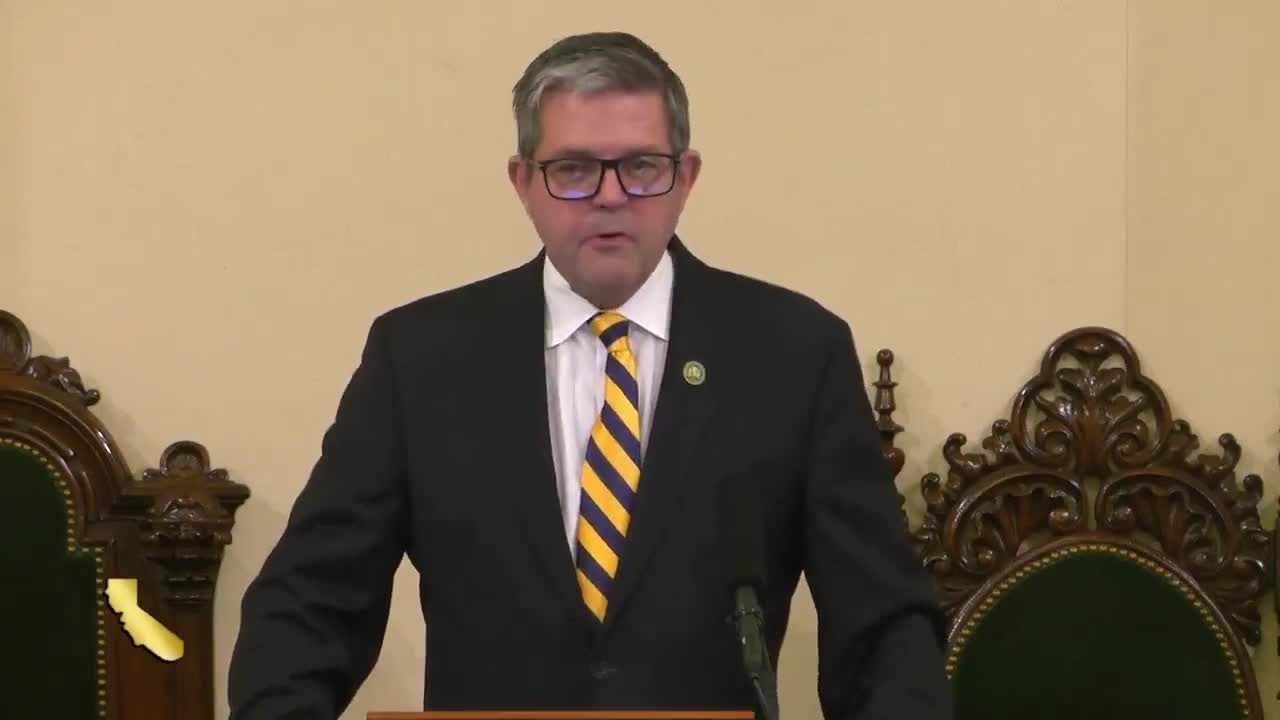 12MIN
Assembly Floor
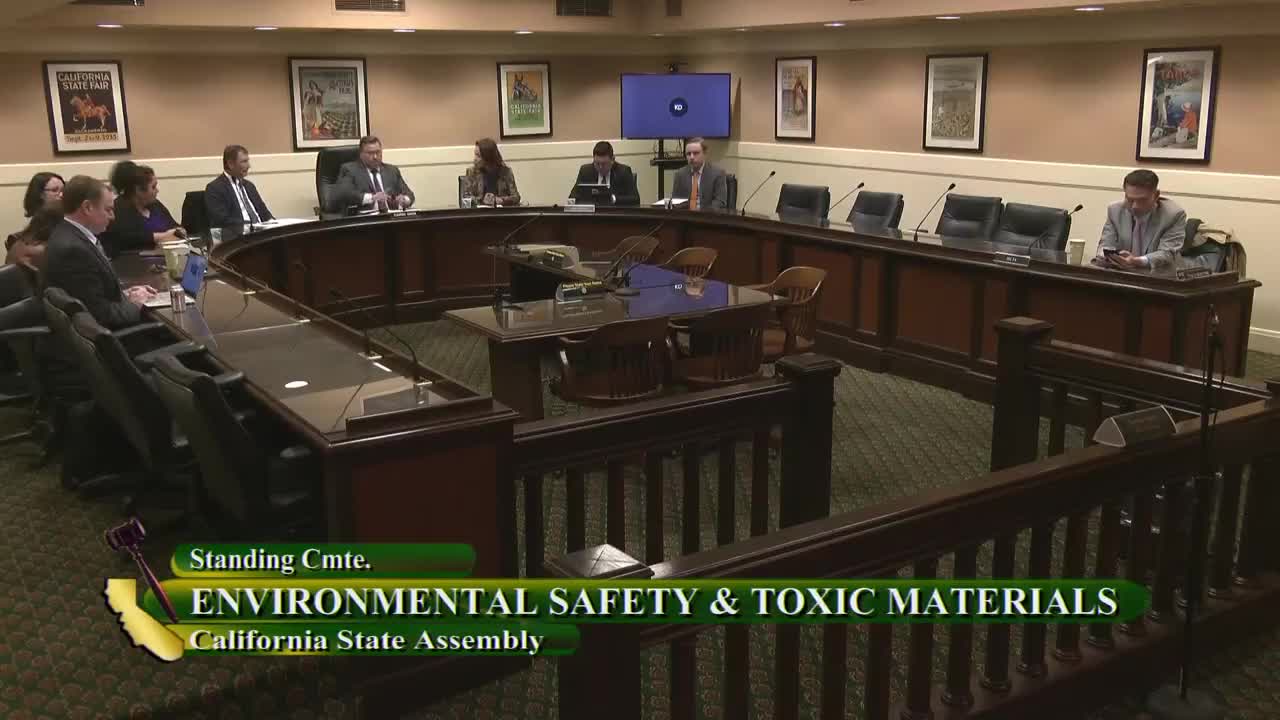 22MIN
Assembly Standing Committee on Environmental Safety and Toxic Materials
Bill Author

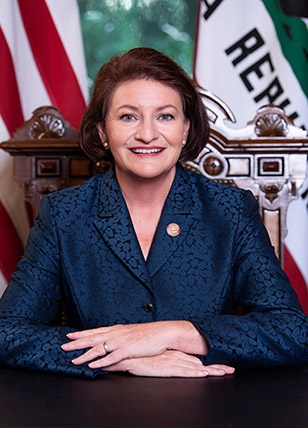







Bill Co-Author(s):